Making work visible in the
theater of service design
Frederick van Amstel @fredvanamstel
Laboratory of Design against Oppression (LADO), UTFPR
www.fredvanamstel.com
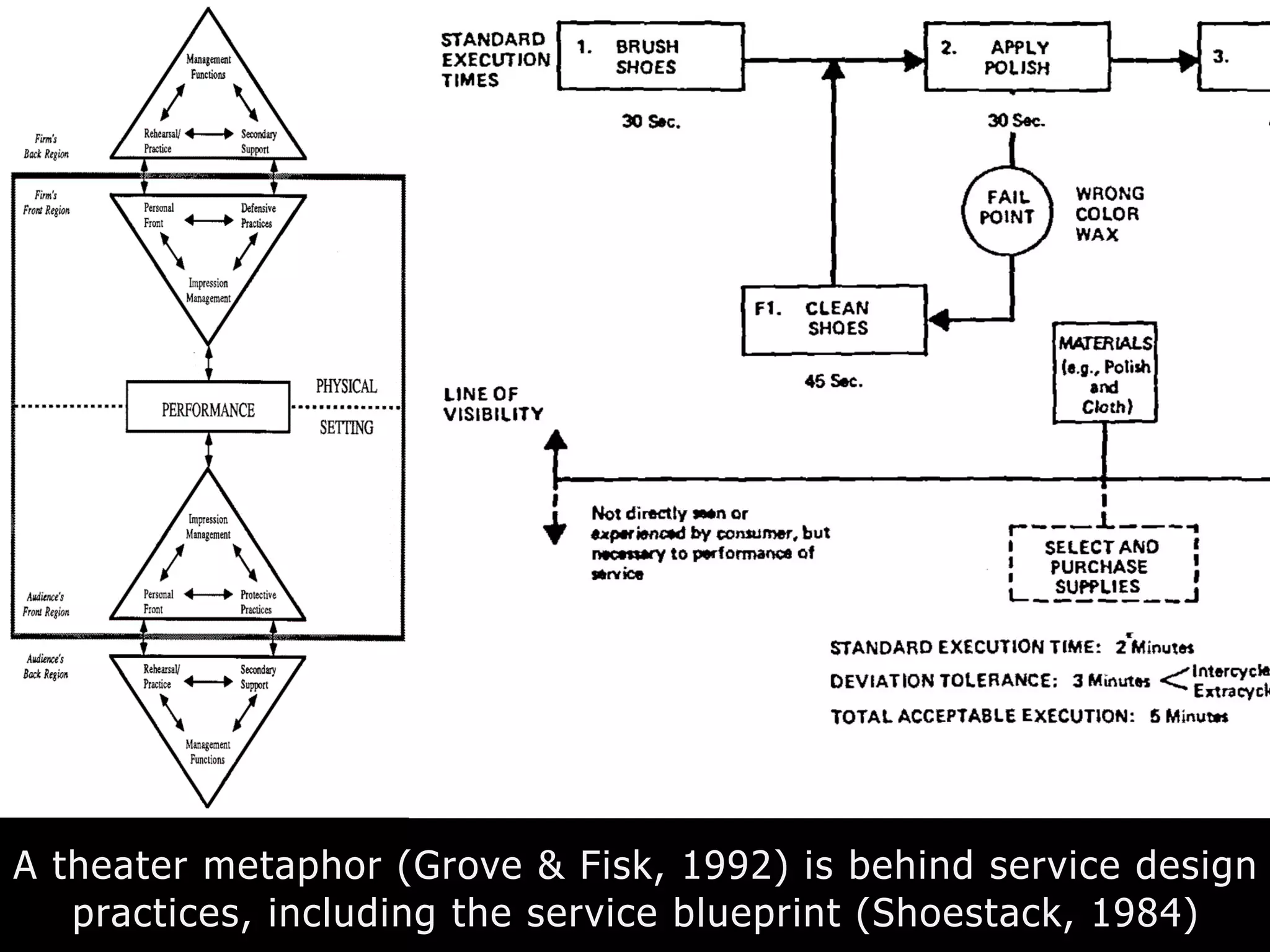
A theater metaphor (Grove & Fisk, 1992) is behind service design
practices, including the service blueprint (Shoestack, 1984)
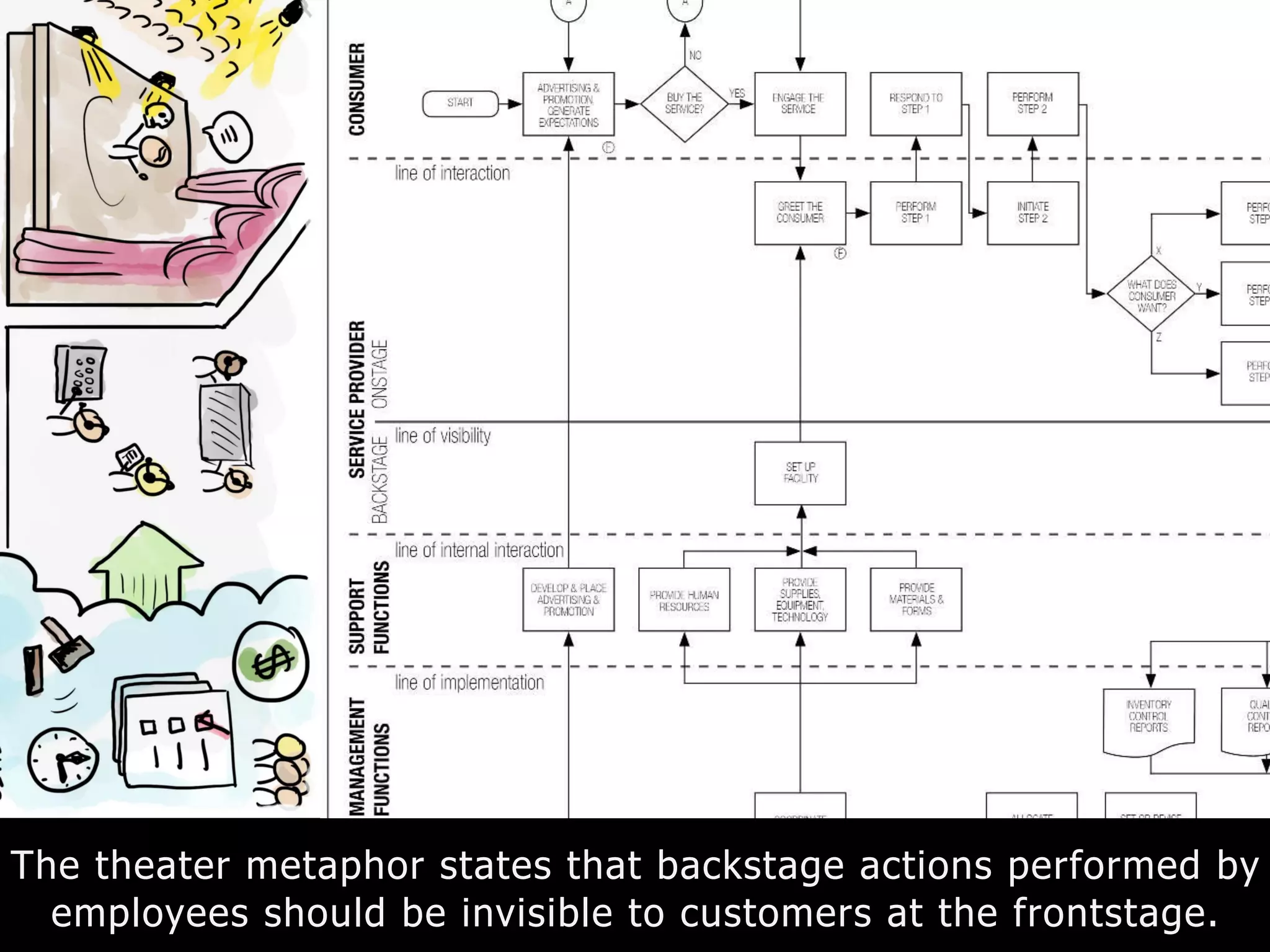
The theater metaphor states that backstage actions performed by
employees should be invisible to customers at the frontstage.
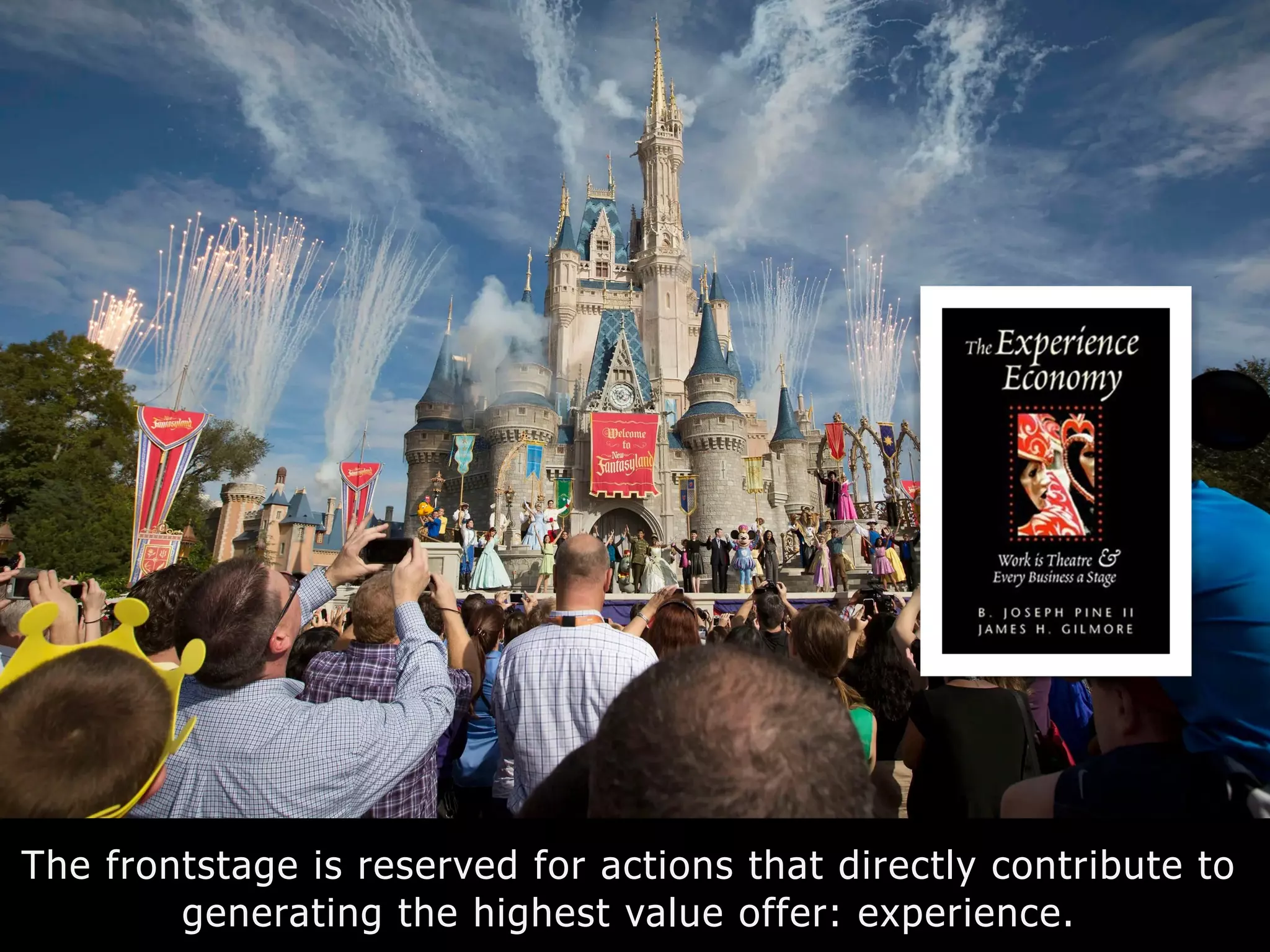
The frontstage is reserved for actions that directly contribute to
generating the highest value offer: experience.
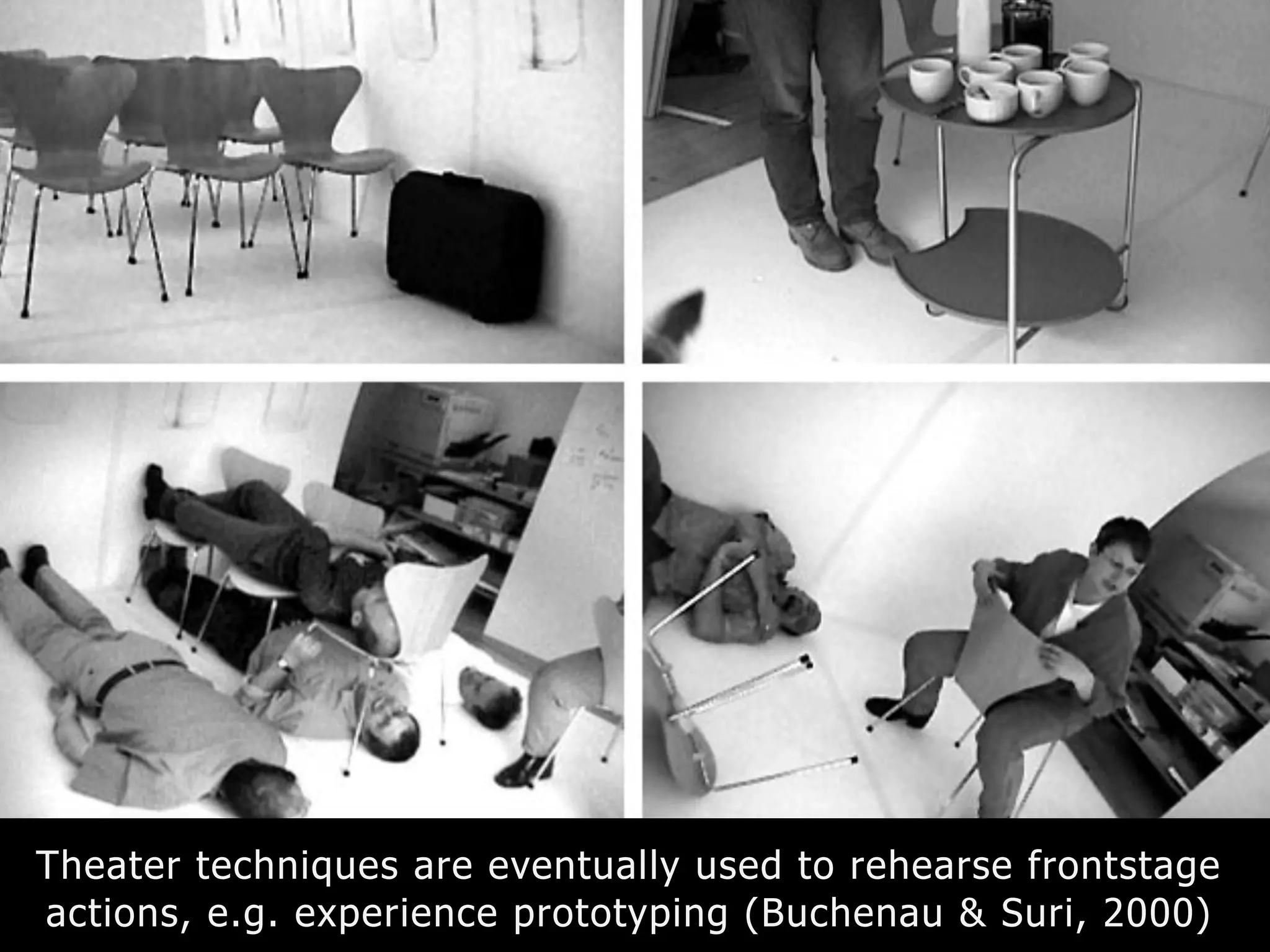
Theater techniques are eventually used to rehearse frontstage
actions, e.g. experience prototyping (Buchenau & Suri, 2000)
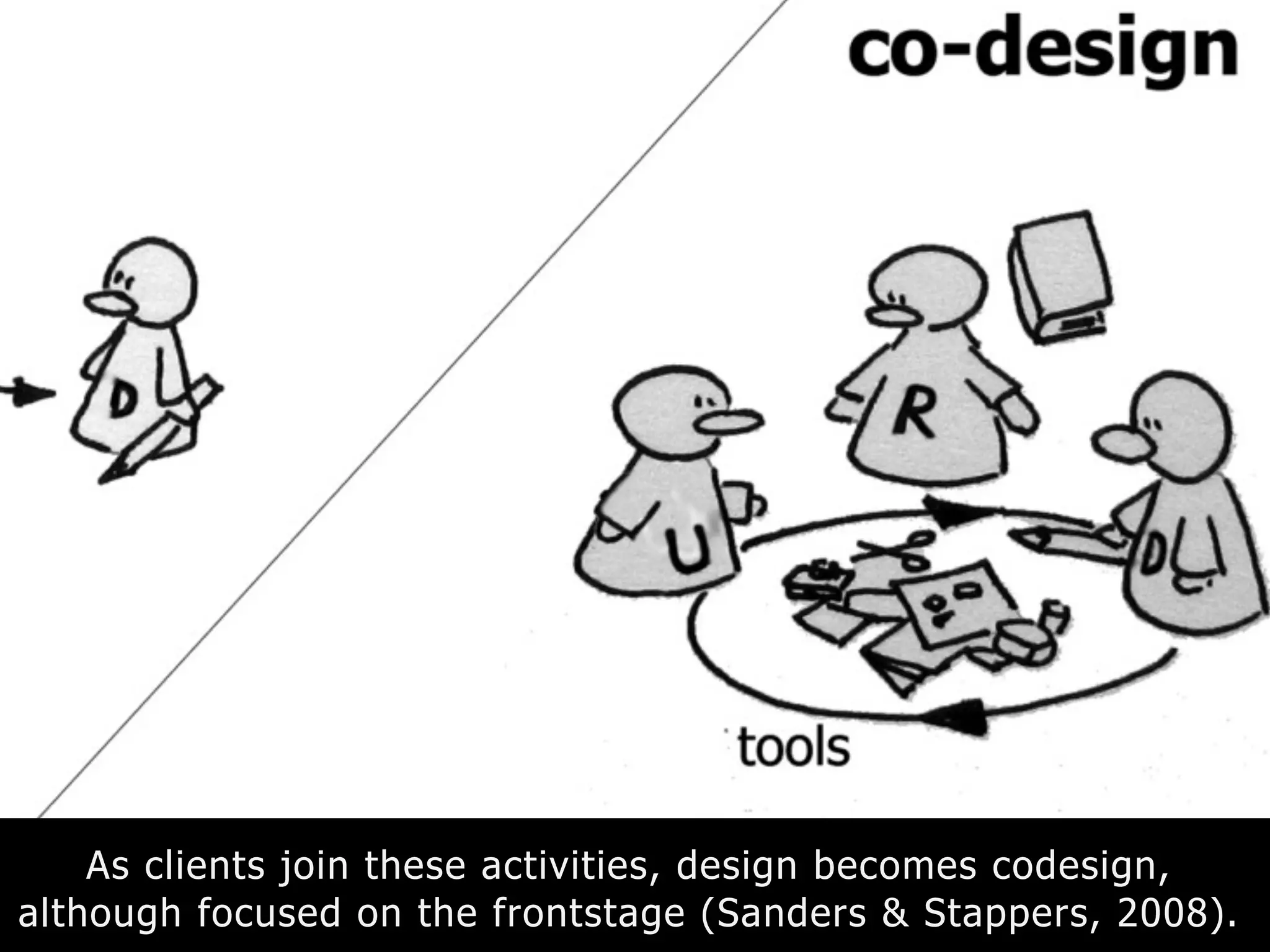
As clients join these activities, design becomes codesign,
although focused on the frontstage (Sanders & Stappers, 2008).
Codesign is rarely seen at the
backstage because service design
reproduces the theatrical (and
capitalist) premise that work
should be invisible and interfaces
should be transparent.
Invisible work is easily divided,
managed, optimized, and
exploited by capitalists, away
from customer scrutiny and
public accountability.
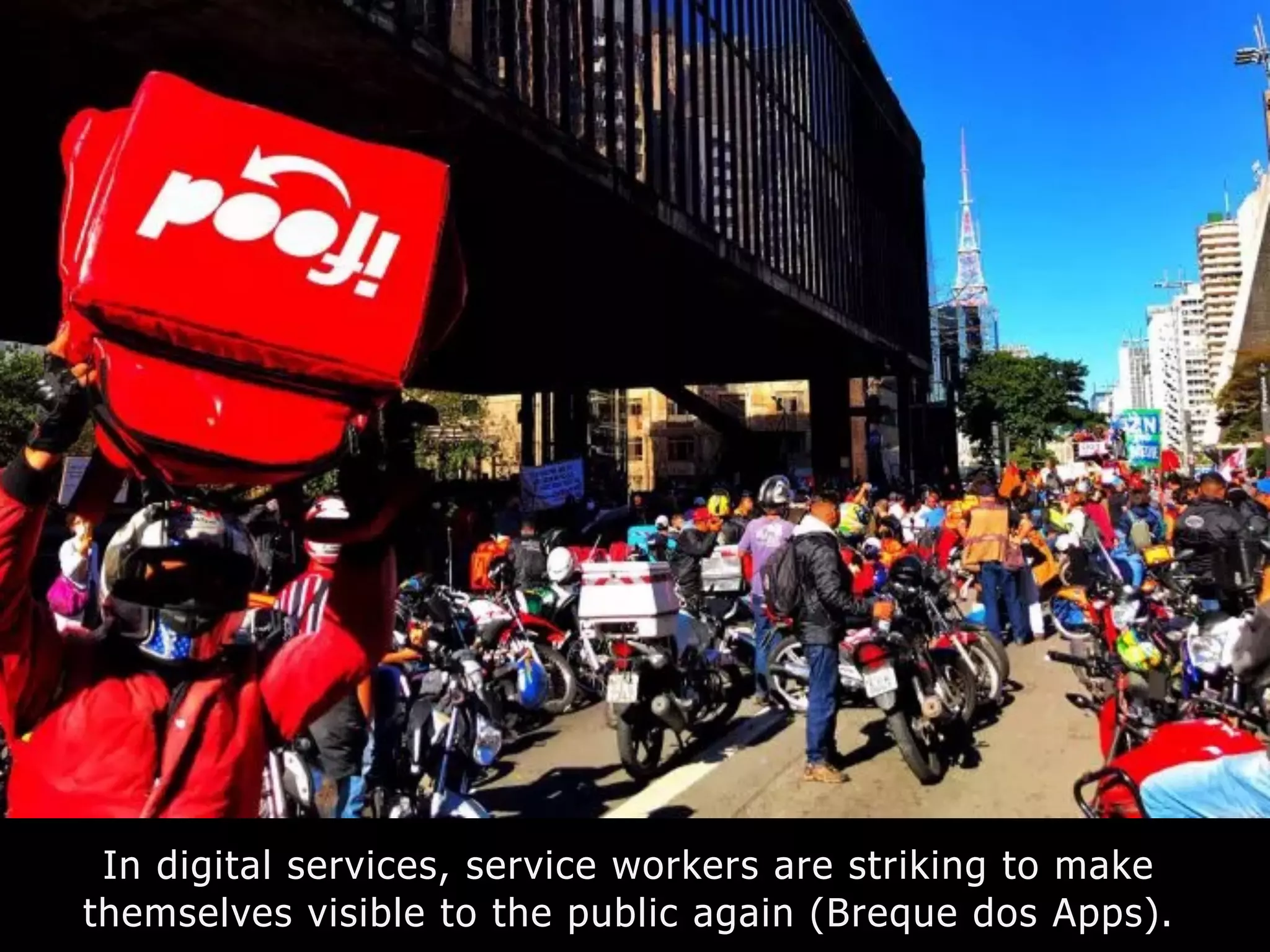
In digital services, service workers are striking to make
themselves visible to the public again (Breque dos Apps).
To make work visible in
service design, we need
another theater metaphor.
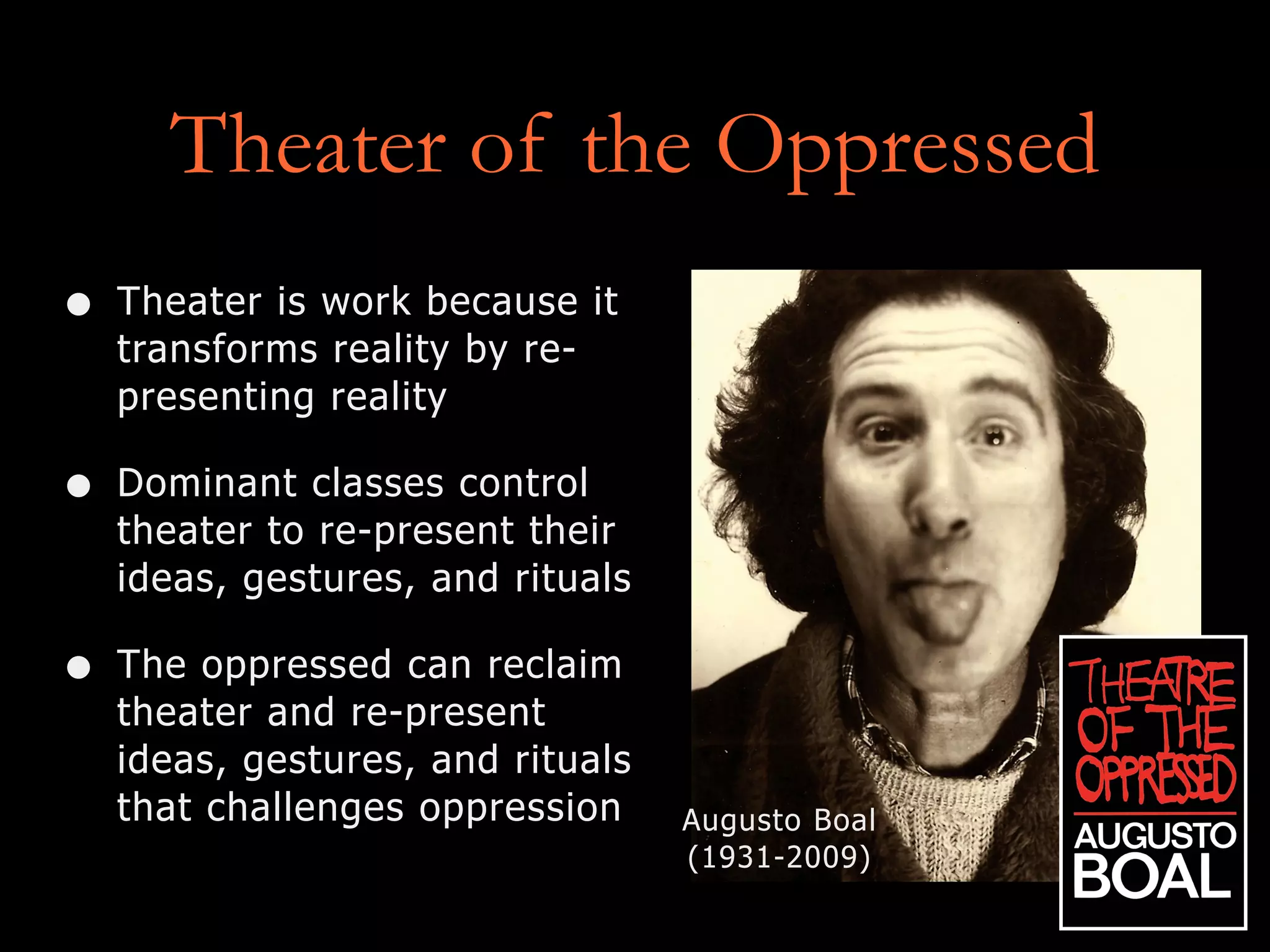
Theater of the Oppressed
• Theater is work because it
transforms reality by re-
presenting reality
• Dominant classes control
theater to re-present their
ideas, gestures, and rituals
• The oppressed can reclaim
theater and re-present
ideas, gestures, and rituals
that challenges oppression Augusto Boal
(1931-2009)
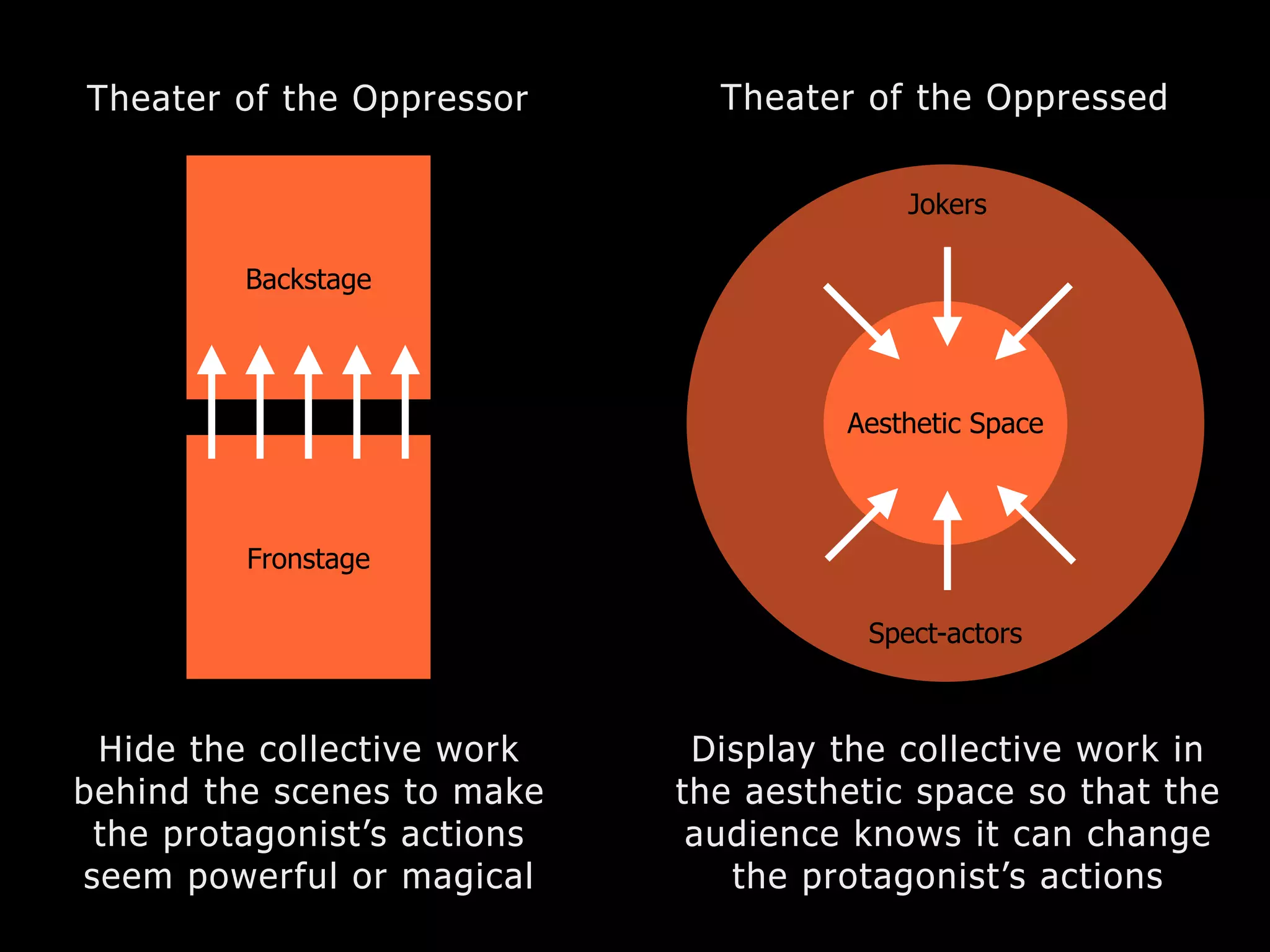
Backstage
Fronstage
Aesthetic Space
Spect-actors
Jokers
Theater of the Oppressor Theater of the Oppressed
Hide the collective work
behind the scenes to make
the protagonist’s actions
seem powerful or magical
Display the collective work in
the aesthetic space so that the
audience knows it can change
the protagonist’s actions
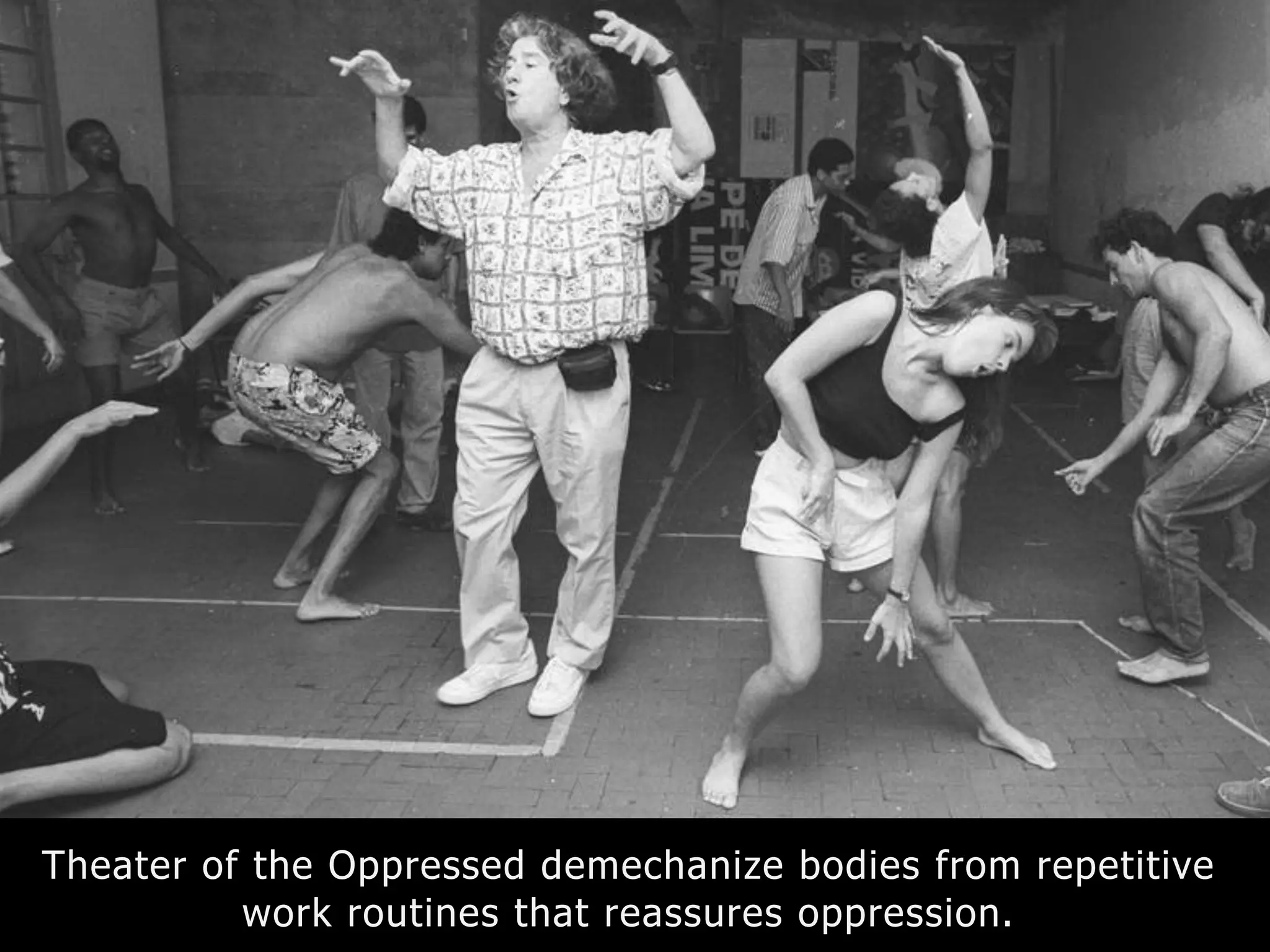
Theater of the Oppressed demechanize bodies from repetitive
work routines that reassures oppression.
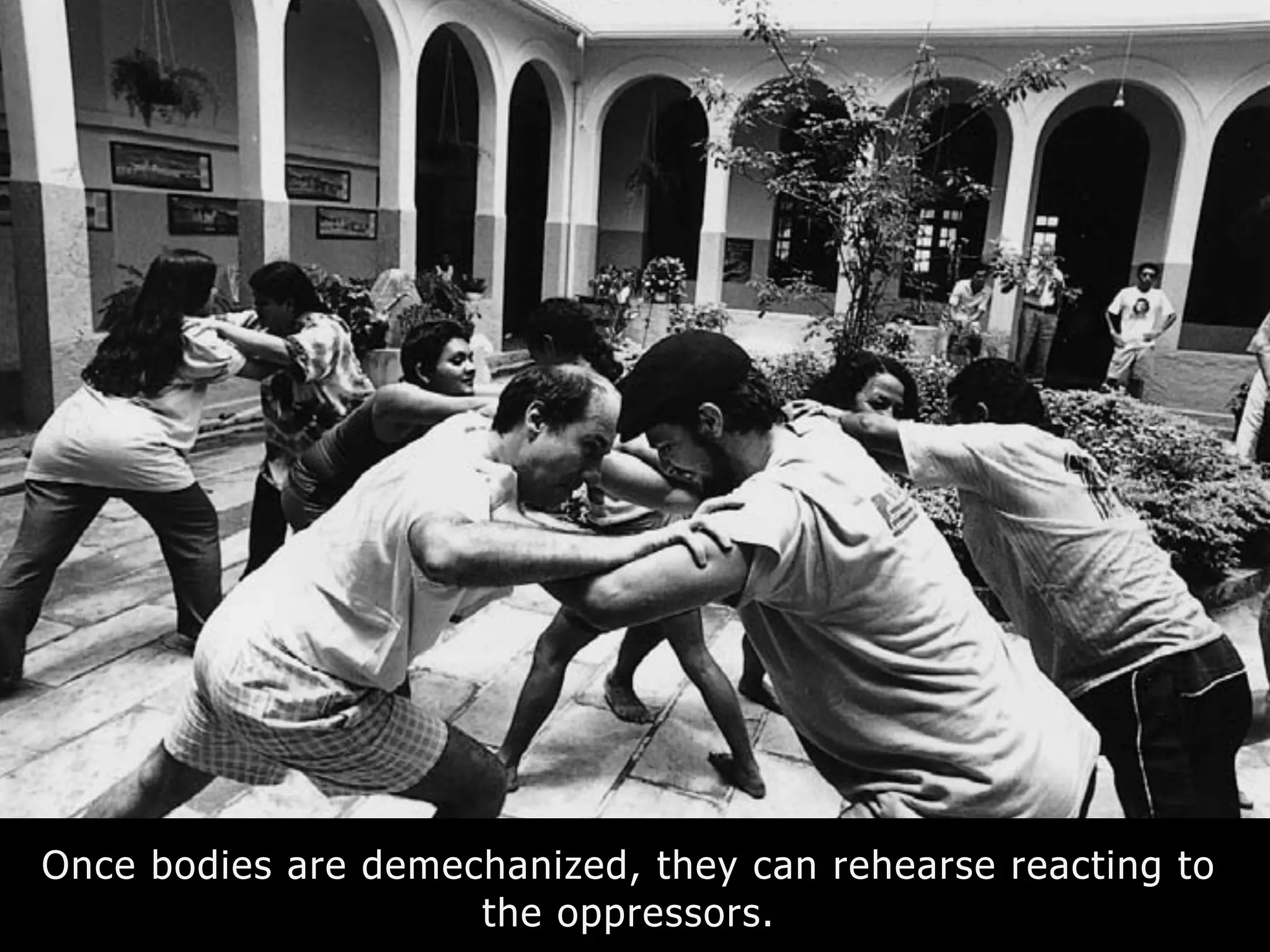
Once bodies are demechanized, they can rehearse reacting to
the oppressors.
Theater of the Oppressed as a
service design practice.
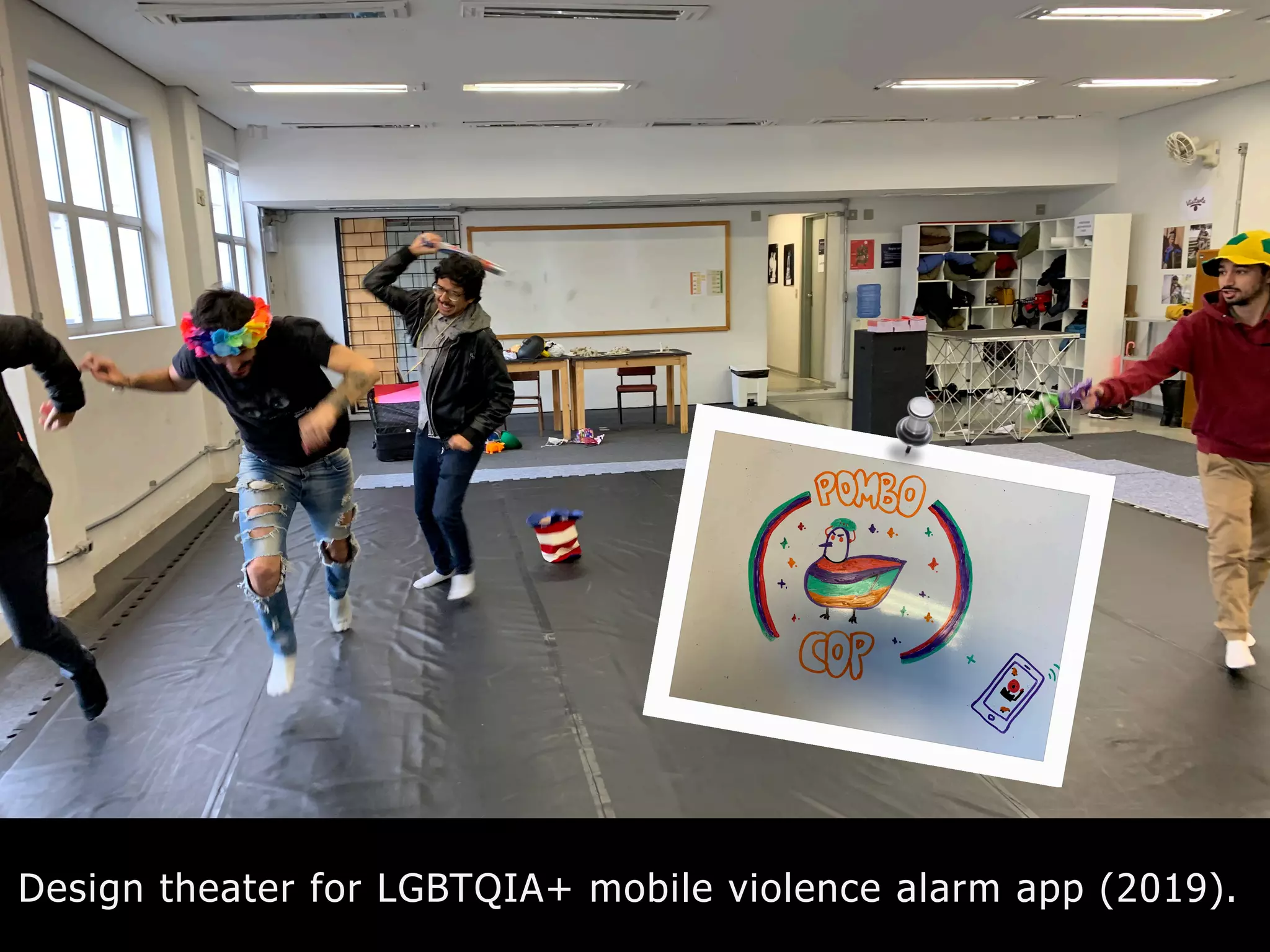
Design theater for LGBTQIA+ mobile violence alarm app (2019).
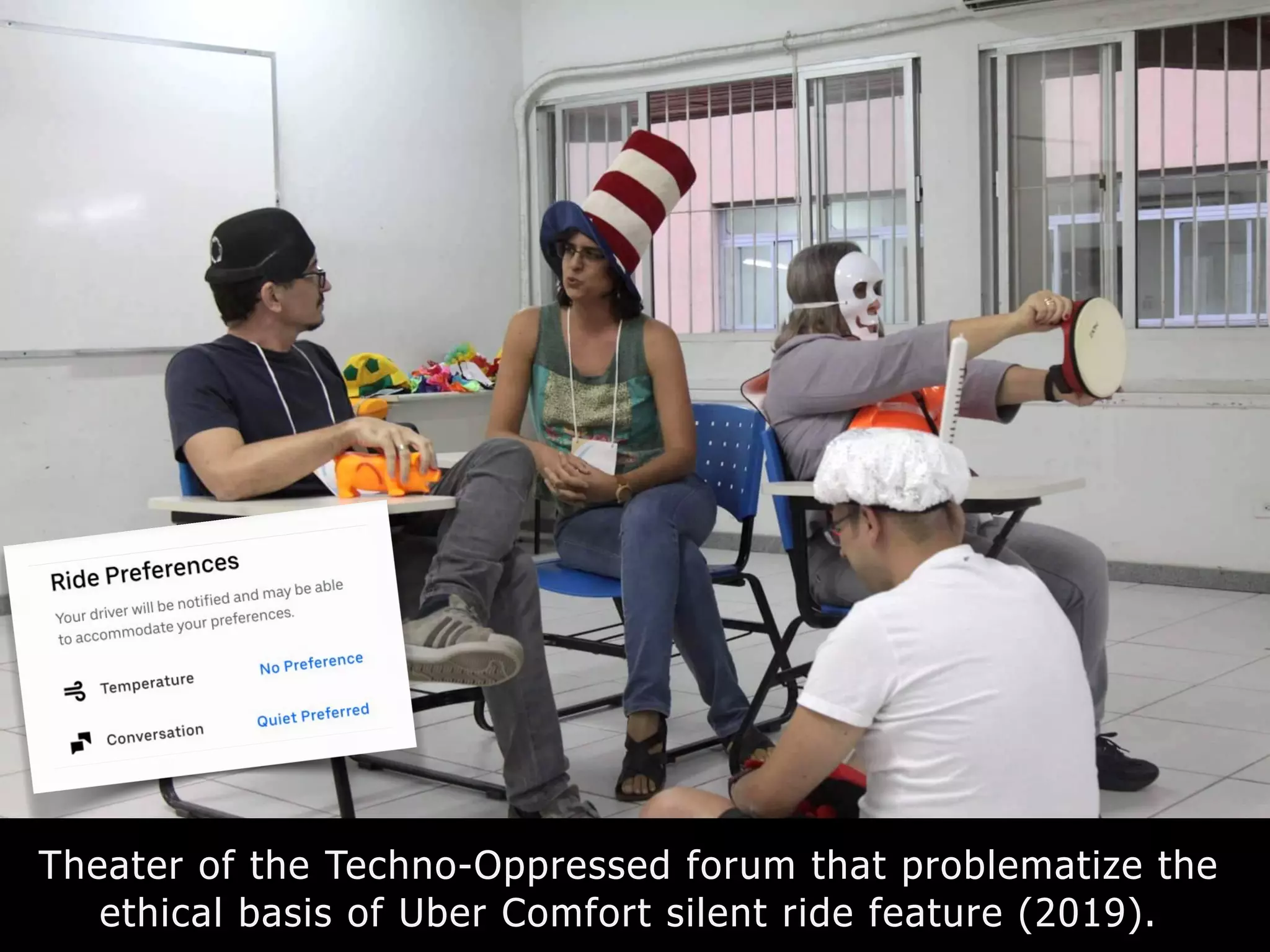
Theater of the Techno-Oppressed forum that problematize the
ethical basis of Uber Comfort silent ride feature (2019).
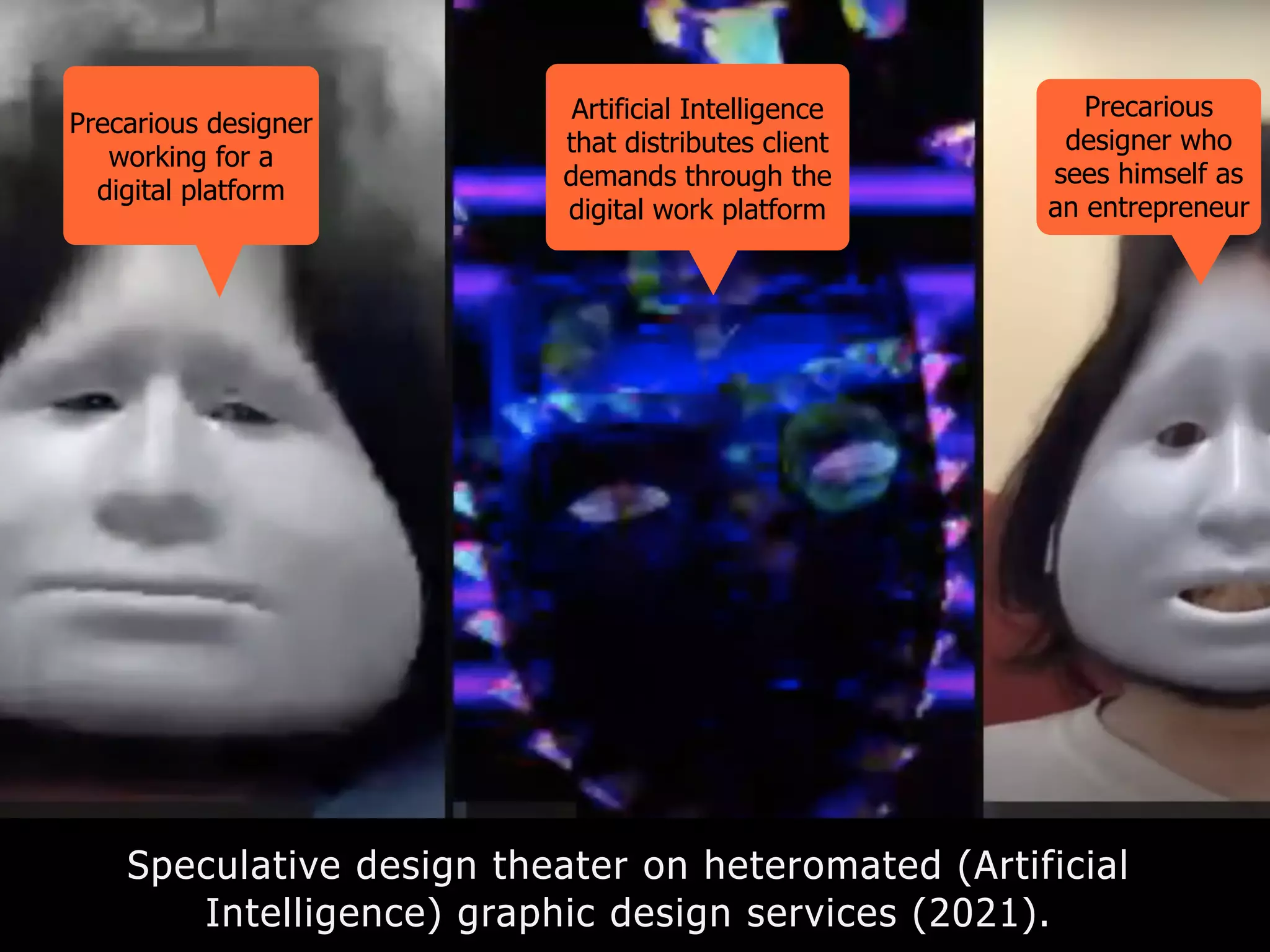
Speculative design theater on heteromated (Artificial
Intelligence) graphic design services (2021).
Artificial Intelligence
that distributes client
demands through the
digital work platform
Precarious designer
working for a
digital platform
Precarious
designer who
sees himself as
an entrepreneur
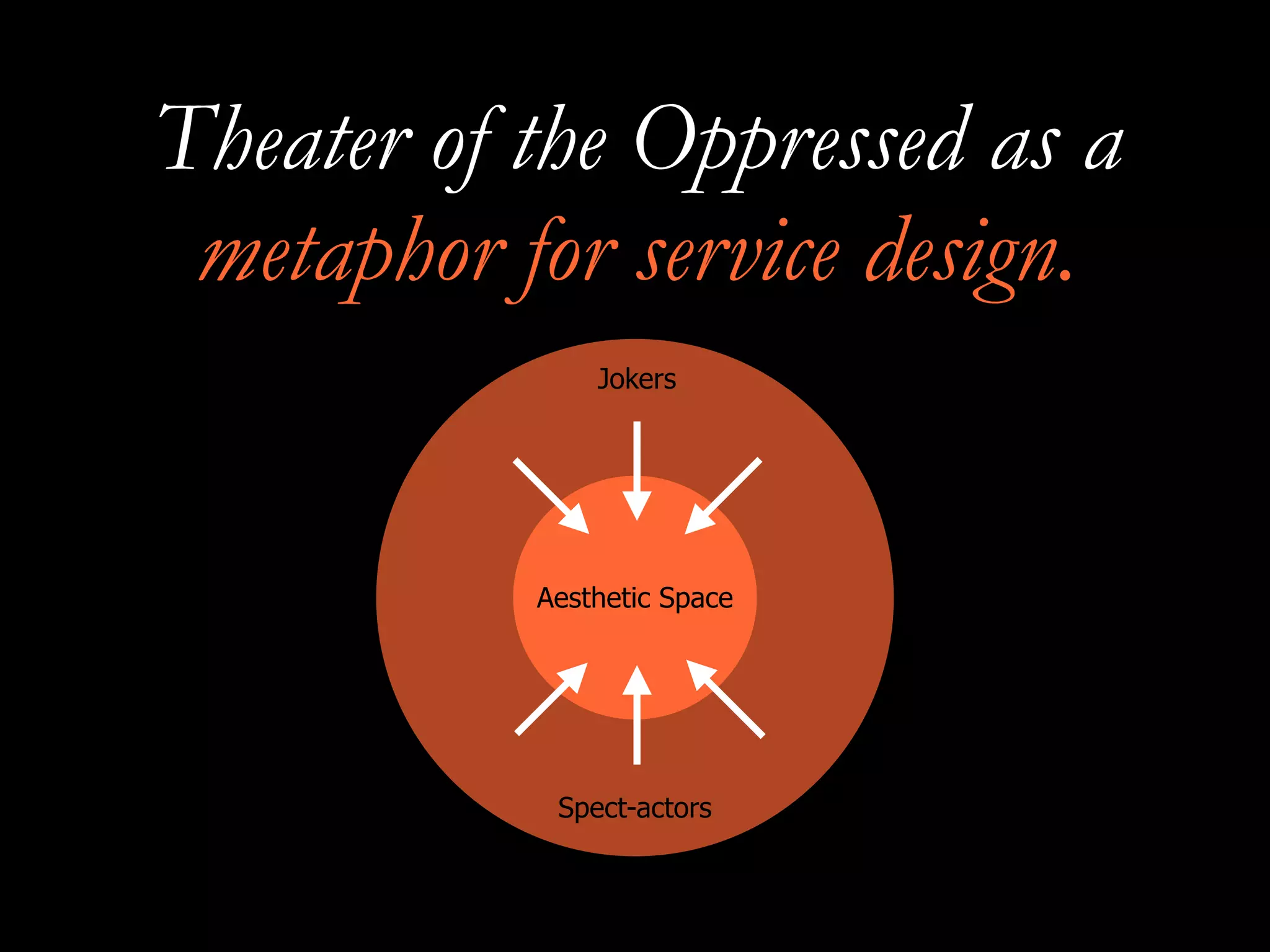
Theater of the Oppressed as a
metaphor for service design.
Aesthetic Space
Spect-actors
Jokers
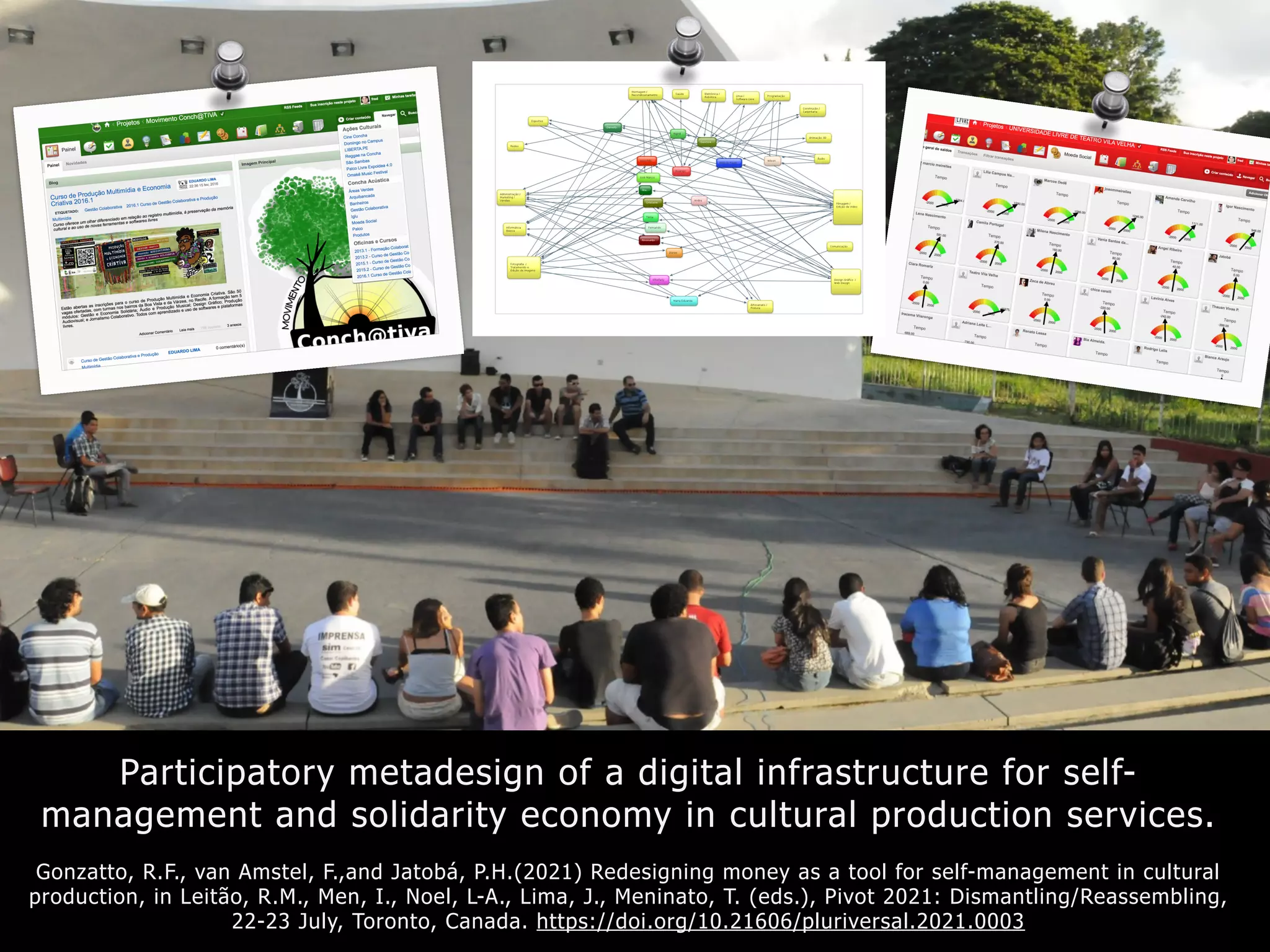
Participatory metadesign of a digital infrastructure for self-
management and solidarity economy in cultural production services.
Gonzatto, R.F., van Amstel, F.,and Jatobá, P.H.(2021) Redesigning money as a tool for self-management in cultural
production, in Leitão, R.M., Men, I., Noel, L-A., Lima, J., Meninato, T. (eds.), Pivot 2021: Dismantling/Reassembling,
22-23 July, Toronto, Canada. https://doi.org/10.21606/pluriversal.2021.0003
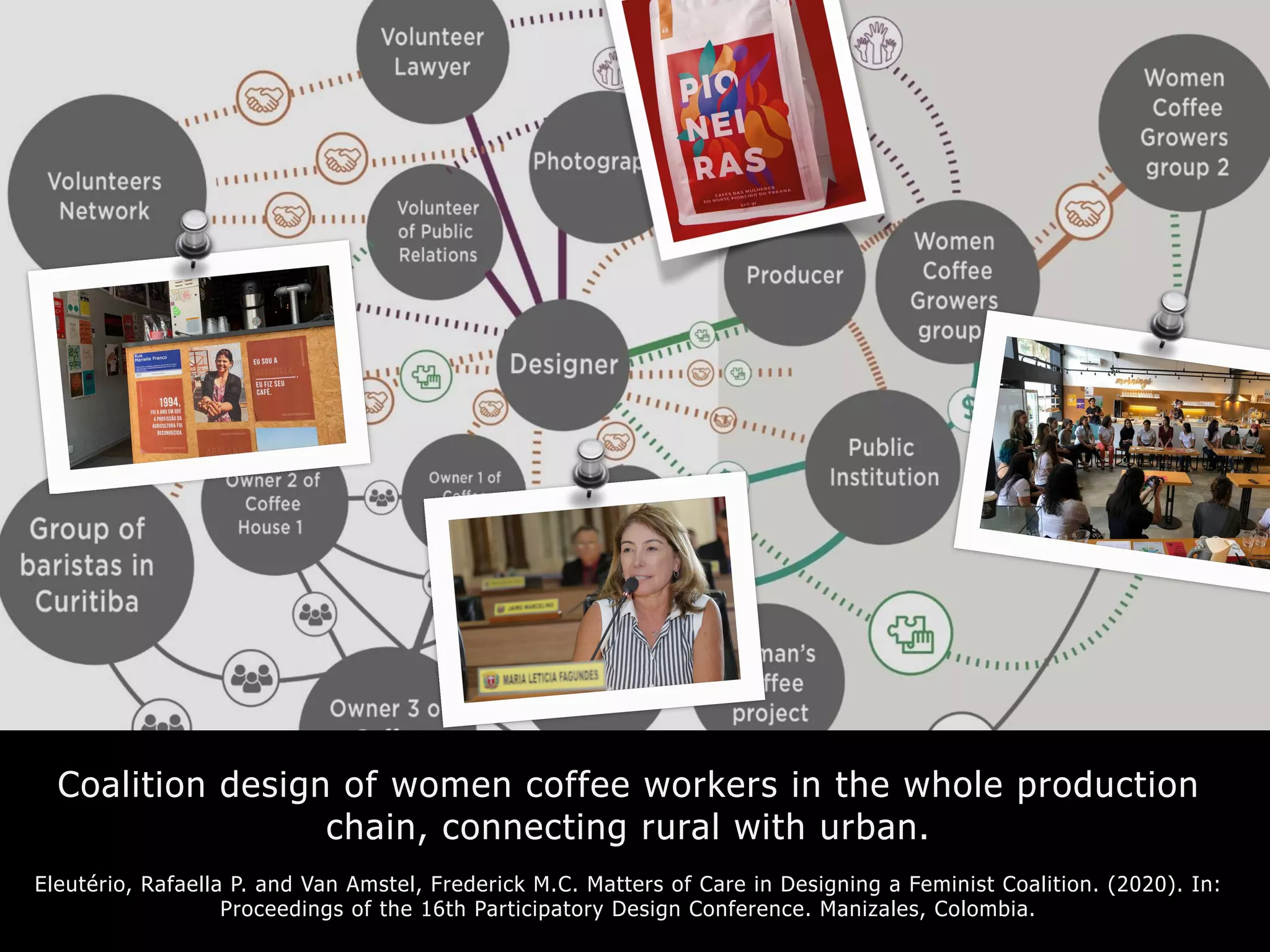
Coalition design of women coffee workers in the whole production
chain, connecting rural with urban.
Eleutério, Rafaella P. and Van Amstel, Frederick M.C. Matters of Care in Designing a Feminist Coalition. (2020). In:
Proceedings of the 16th Participatory Design Conference. Manizales, Colombia.
In the joker system, there is
no division between frontstage
and backstage and everyone
does everything to avoid
expert alienation.
In the joker system, people who
are oppressors can become allies
to the oppressed if they also see
themselves as oppressed, even if
in another oppression relation.
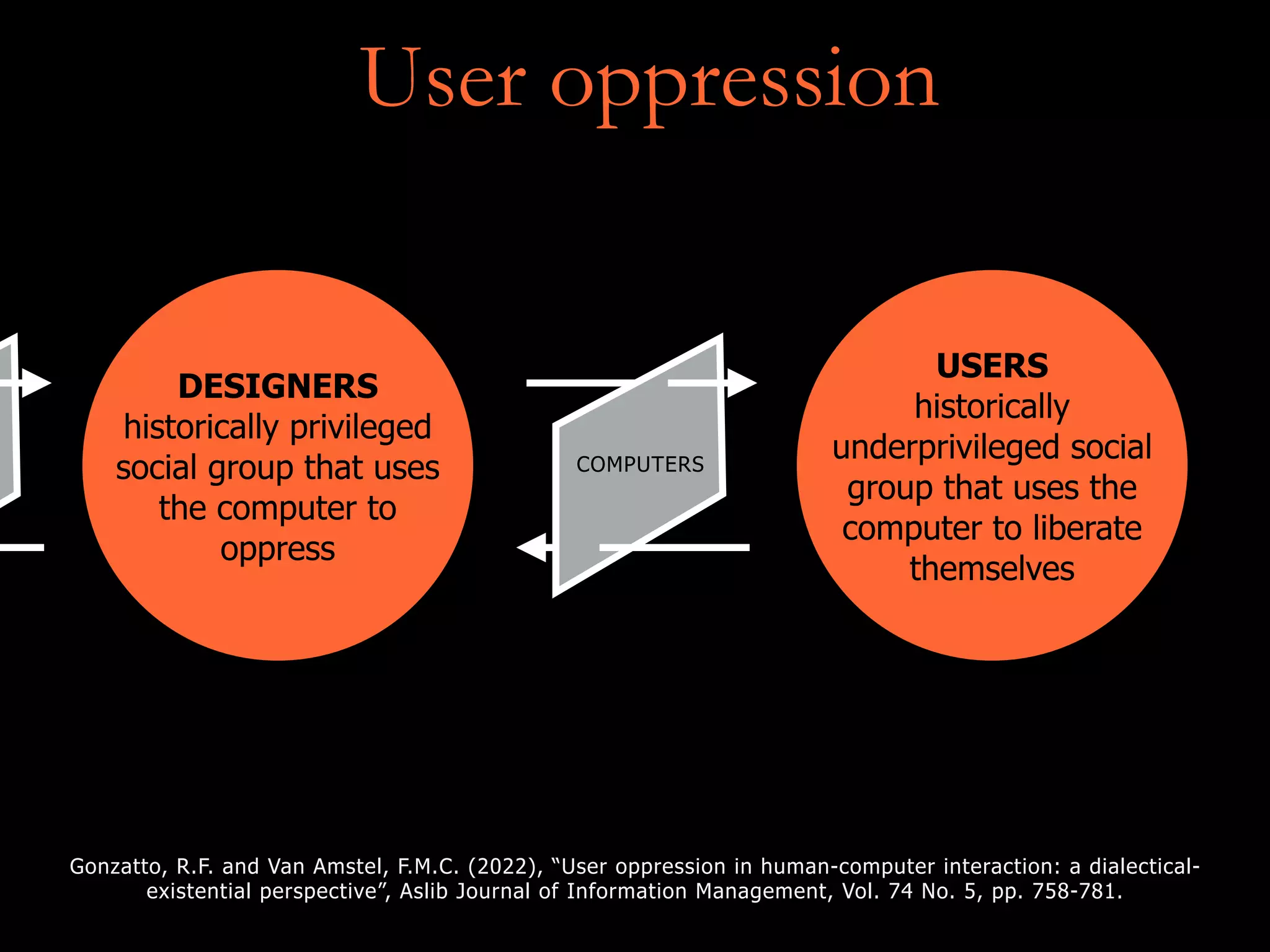
DESIGNERS
historically privileged
social group that uses
the computer to
oppress
USERS
historically
underprivileged social
group that uses the
computer to liberate
themselves
User oppression
COMPUTERS
Gonzatto, R.F. and Van Amstel, F.M.C. (2022), “User oppression in human-computer interaction: a dialectical-
existential perspective”, Aslib Journal of Information Management, Vol. 74 No. 5, pp. 758-781.
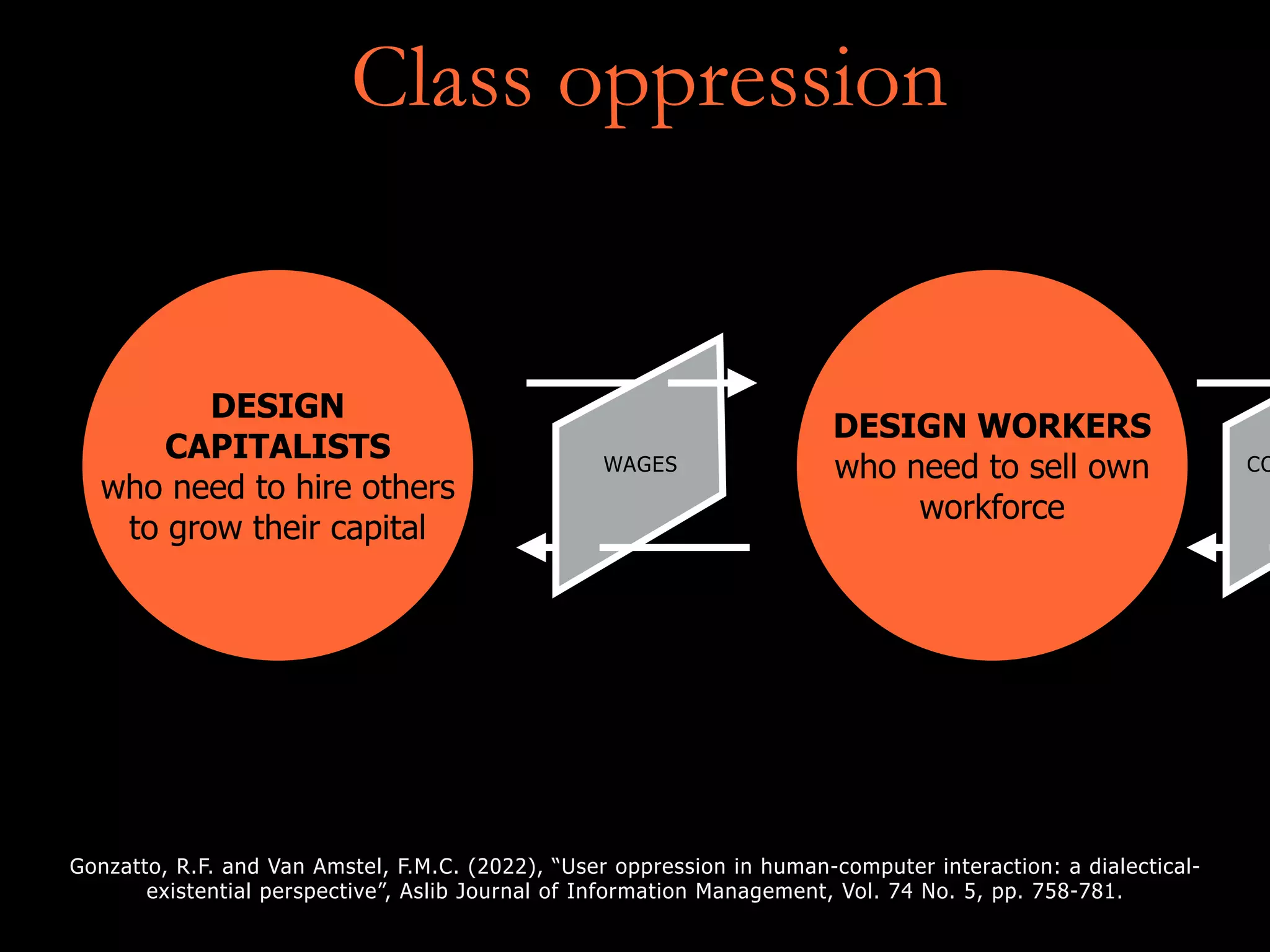
Class oppression
CO
Gonzatto, R.F. and Van Amstel, F.M.C. (2022), “User oppression in human-computer interaction: a dialectical-
existential perspective”, Aslib Journal of Information Management, Vol. 74 No. 5, pp. 758-781.
WAGES
DESIGN
CAPITALISTS
who need to hire others
to grow their capital
DESIGN WORKERS
who need to sell own
workforce
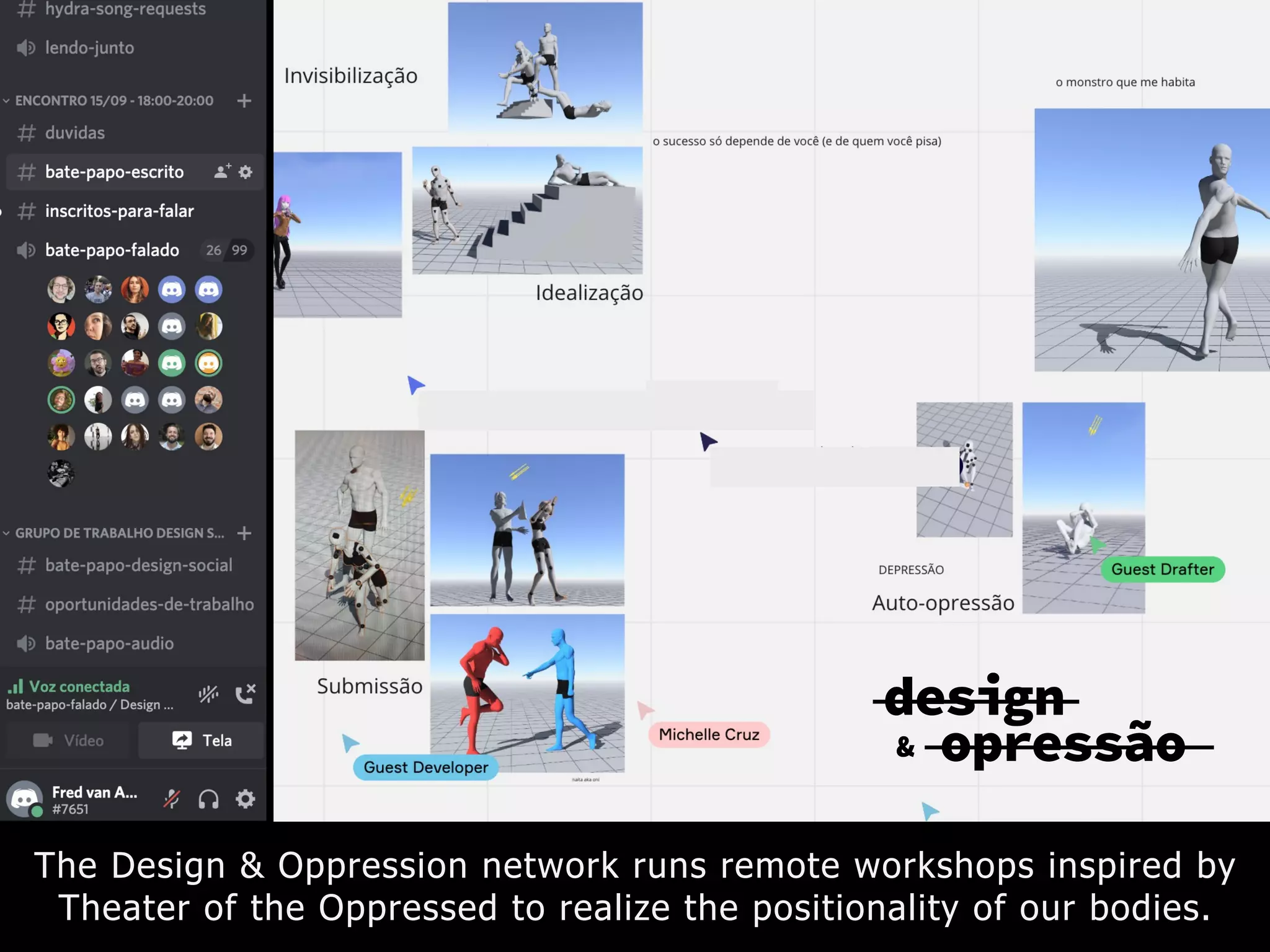
The Design & Oppression network runs remote workshops inspired by
Theater of the Oppressed to realize the positionality of our bodies.
Remote Theater of the
Oppressed is possible, but
in-person is always deeper.
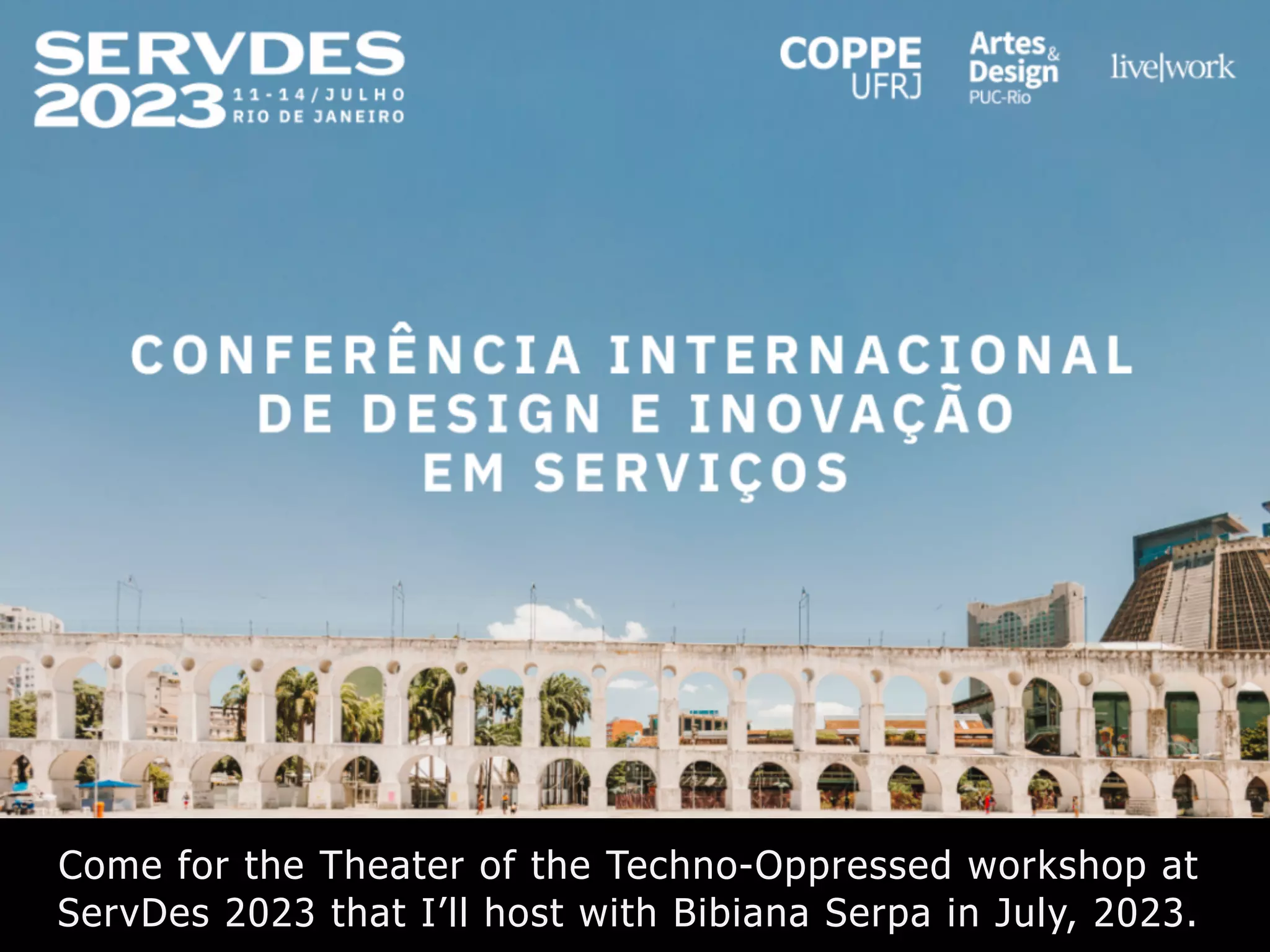
Come for the Theater of the Techno-Oppressed workshop at
ServDes 2023 that I’ll host with Bibiana Serpa in July, 2023.
Dank je wel!
Thank you!
Frederick van Amstel @fredvanamstel
Laboratory of Design against Oppression (LADO), UTFPR
www.fredvanamstel.com

Making work visible in the theater of service design

  • 1.
    Making work visiblein the theater of service design Frederick van Amstel @fredvanamstel Laboratory of Design against Oppression (LADO), UTFPR www.fredvanamstel.com
  • 2.
    A theater metaphor(Grove & Fisk, 1992) is behind service design practices, including the service blueprint (Shoestack, 1984)
  • 3.
    The theater metaphorstates that backstage actions performed by employees should be invisible to customers at the frontstage.
  • 4.
    The frontstage isreserved for actions that directly contribute to generating the highest value offer: experience.
  • 5.
    Theater techniques areeventually used to rehearse frontstage actions, e.g. experience prototyping (Buchenau & Suri, 2000)
  • 6.
    As clients jointhese activities, design becomes codesign, although focused on the frontstage (Sanders & Stappers, 2008).
  • 7.
    Codesign is rarelyseen at the backstage because service design reproduces the theatrical (and capitalist) premise that work should be invisible and interfaces should be transparent.
  • 8.
    Invisible work iseasily divided, managed, optimized, and exploited by capitalists, away from customer scrutiny and public accountability.
  • 9.
    In digital services,service workers are striking to make themselves visible to the public again (Breque dos Apps).
  • 10.
    To make workvisible in service design, we need another theater metaphor.
  • 11.
    Theater of theOppressed • Theater is work because it transforms reality by re- presenting reality • Dominant classes control theater to re-present their ideas, gestures, and rituals • The oppressed can reclaim theater and re-present ideas, gestures, and rituals that challenges oppression Augusto Boal (1931-2009)
  • 12.
    Backstage Fronstage Aesthetic Space Spect-actors Jokers Theater ofthe Oppressor Theater of the Oppressed Hide the collective work behind the scenes to make the protagonist’s actions seem powerful or magical Display the collective work in the aesthetic space so that the audience knows it can change the protagonist’s actions
  • 13.
    Theater of theOppressed demechanize bodies from repetitive work routines that reassures oppression.
  • 14.
    Once bodies aredemechanized, they can rehearse reacting to the oppressors.
  • 15.
    Theater of theOppressed as a service design practice.
  • 16.
    Design theater forLGBTQIA+ mobile violence alarm app (2019).
  • 17.
    Theater of theTechno-Oppressed forum that problematize the ethical basis of Uber Comfort silent ride feature (2019).
  • 18.
    Speculative design theateron heteromated (Artificial Intelligence) graphic design services (2021). Artificial Intelligence that distributes client demands through the digital work platform Precarious designer working for a digital platform Precarious designer who sees himself as an entrepreneur
  • 19.
    Theater of theOppressed as a metaphor for service design. Aesthetic Space Spect-actors Jokers
  • 20.
    Participatory metadesign ofa digital infrastructure for self- management and solidarity economy in cultural production services. Gonzatto, R.F., van Amstel, F.,and Jatobá, P.H.(2021) Redesigning money as a tool for self-management in cultural production, in Leitão, R.M., Men, I., Noel, L-A., Lima, J., Meninato, T. (eds.), Pivot 2021: Dismantling/Reassembling, 22-23 July, Toronto, Canada. https://doi.org/10.21606/pluriversal.2021.0003
  • 21.
    Coalition design ofwomen coffee workers in the whole production chain, connecting rural with urban. Eleutério, Rafaella P. and Van Amstel, Frederick M.C. Matters of Care in Designing a Feminist Coalition. (2020). In: Proceedings of the 16th Participatory Design Conference. Manizales, Colombia.
  • 22.
    In the jokersystem, there is no division between frontstage and backstage and everyone does everything to avoid expert alienation.
  • 23.
    In the jokersystem, people who are oppressors can become allies to the oppressed if they also see themselves as oppressed, even if in another oppression relation.
  • 24.
    DESIGNERS historically privileged social groupthat uses the computer to oppress USERS historically underprivileged social group that uses the computer to liberate themselves User oppression COMPUTERS Gonzatto, R.F. and Van Amstel, F.M.C. (2022), “User oppression in human-computer interaction: a dialectical- existential perspective”, Aslib Journal of Information Management, Vol. 74 No. 5, pp. 758-781.
  • 25.
    Class oppression CO Gonzatto, R.F.and Van Amstel, F.M.C. (2022), “User oppression in human-computer interaction: a dialectical- existential perspective”, Aslib Journal of Information Management, Vol. 74 No. 5, pp. 758-781. WAGES DESIGN CAPITALISTS who need to hire others to grow their capital DESIGN WORKERS who need to sell own workforce
  • 26.
    The Design &Oppression network runs remote workshops inspired by Theater of the Oppressed to realize the positionality of our bodies.
  • 27.
    Remote Theater ofthe Oppressed is possible, but in-person is always deeper.
  • 28.
    Come for theTheater of the Techno-Oppressed workshop at ServDes 2023 that I’ll host with Bibiana Serpa in July, 2023.
  • 29.
    Dank je wel! Thankyou! Frederick van Amstel @fredvanamstel Laboratory of Design against Oppression (LADO), UTFPR www.fredvanamstel.com