Cascading oppression
in design
Frederick van Amstel @fredvanamstel
Laboratory of Design against Oppression (LADO), UTFPR
www.fredvanamstel.com
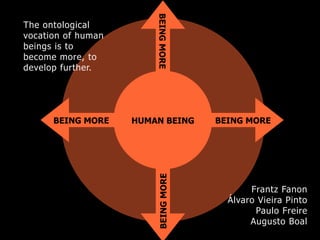
HUMAN BEING BEING MORE
BEING MORE
BEING
MORE
BEING
MORE
Frantz Fanon
Álvaro Vieira Pinto
Paulo Freire
Augusto Boal
The ontological
vocation of human
beings is to
become more, to
develop further.
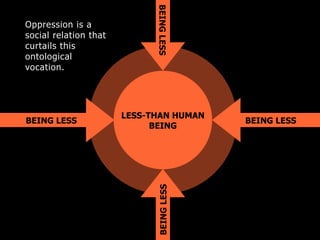
LESS-THAN HUMAN
BEING
BEING LESS
BEING LESS
BEING
LESS
BEING
LESS
Oppression is a
social relation that
curtails this
ontological
vocation.
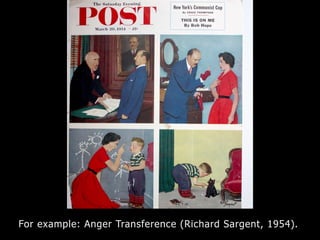
For example: Anger Transference (Richard Sargent, 1954).
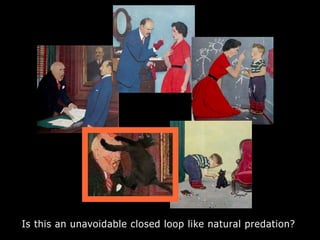
Is this an unavoidable closed loop like natural predation?
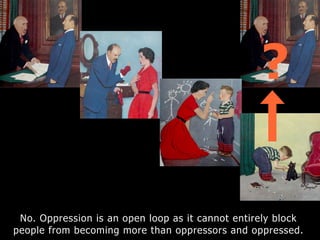
No. Oppression is an open loop as it cannot entirely block
people from becoming more than oppressors and oppressed.
?
OPPRESSED
(less-than-human)
BEING LESS
OPPRESSOR
(human)
BEING MORE
Oppression is an unequal
exchange in the process of
becoming human.
USERS
(less-than-human)
BEING LESS
DESIGNERS
(human)
BEING MORE
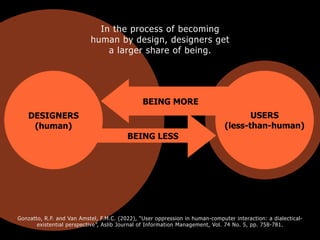
In the process of becoming
human by design, designers get
a larger share of being.
Gonzatto, R.F. and Van Amstel, F.M.C. (2022), “User oppression in human-computer interaction: a dialectical-
existential perspective”, Aslib Journal of Information Management, Vol. 74 No. 5, pp. 758-781.
BEING LESS
BEING LESS
BEING MORE
OPPRESSED
BEING
MORE
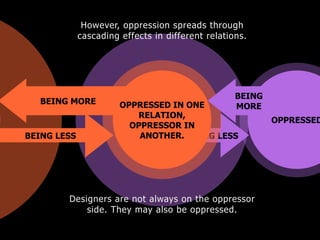
OPPRESSED IN ONE
RELATION,
OPPRESSOR IN
ANOTHER.
However, oppression spreads through
cascading effects in different relations.
Designers are not always on the oppressor
side. They may also be oppressed.
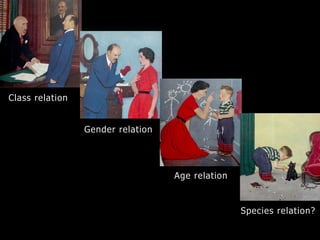
Class relation
Gender relation
Age relation
Species relation?
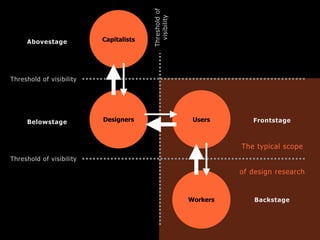
Designers Users
Capitalists
Workers
Threshold of visibility
Backstage
Frontstage
Abovestage
Threshold
of
visibility
Belowstage
The typical scope
of design research
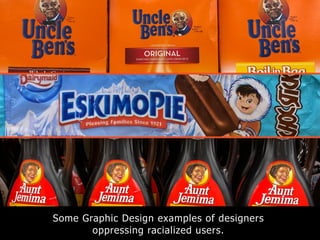
Some Graphic Design examples of designers
oppressing racialized users.
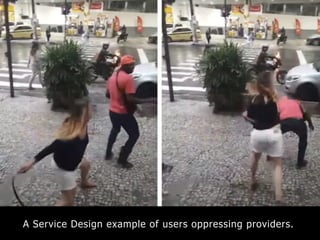
A Service Design example of users oppressing providers.
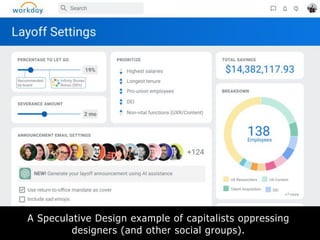
A Speculative Design example of capitalists oppressing
designers (and other social groups).
Oppression is neither a tame
nor a wicked problem.
It is a fundamental
contradiction of modern societies.
When facing strong
contradictions in historical
development, design typically
seeks inspiration from art.
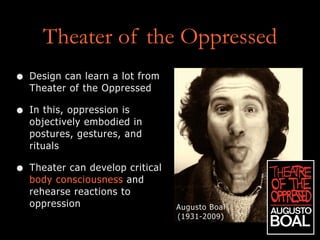
Theater of the Oppressed
• Design can learn a lot from
Theater of the Oppressed
• In this, oppression is
objectively embodied in
postures, gestures, and
rituals
• Theater can develop critical
body consciousness and
rehearse reactions to
oppression Augusto Boal
(1931-2009)
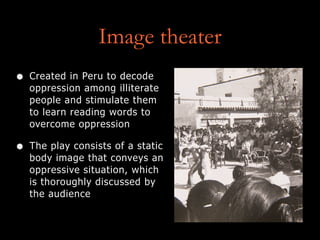
Image theater
• Created in Peru to decode
oppression among illiterate
people and stimulate them
to learn reading words to
overcome oppression
• The play consists of a static
body image that conveys an
oppressive situation, which
is thoroughly discussed by
the audience
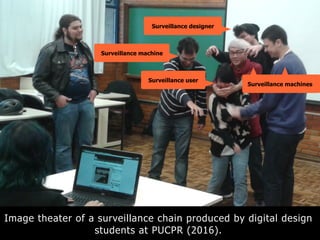
Image theater of a surveillance chain produced by digital design
students at PUCPR (2016).
Surveillance machine
Surveillance designer
Surveillance user
Surveillance machine
Surveillance machines
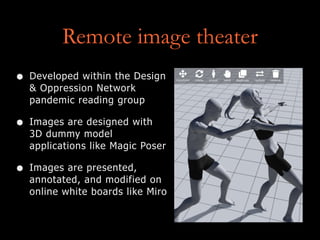
Remote image theater
• Developed within the Design
& Oppression Network
pandemic reading group
• Images are designed with
3D dummy model
applications like Magic Poser
• Images are presented,
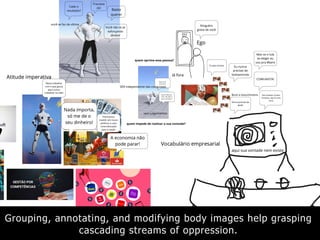
annotated, and modified on
online white boards like Miro
Grouping, annotating, and modifying body images help grasping
cascading streams of oppression.
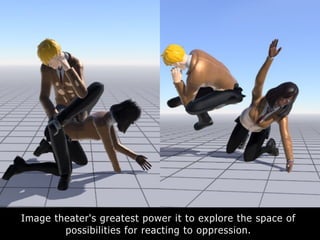
Image theater's greatest power it to explore the space of
possibilities for reacting to oppression.
Cascading oppression can only be
restrained through major
structural changes in society.
Design can contribute to that,
provided that it comes from a
critical form of body consciousness.
Dank je wel!
Thank you!
Frederick van Amstel @fredvanamstel
Laboratory of Design against Oppression (LADO), UTFPR
www.fredvanamstel.com

Cascading oppression in design

  • 1.
    Cascading oppression in design Frederickvan Amstel @fredvanamstel Laboratory of Design against Oppression (LADO), UTFPR www.fredvanamstel.com
  • 2.
    HUMAN BEING BEINGMORE BEING MORE BEING MORE BEING MORE Frantz Fanon Álvaro Vieira Pinto Paulo Freire Augusto Boal The ontological vocation of human beings is to become more, to develop further.
  • 3.
    LESS-THAN HUMAN BEING BEING LESS BEINGLESS BEING LESS BEING LESS Oppression is a social relation that curtails this ontological vocation.
  • 4.
    For example: AngerTransference (Richard Sargent, 1954).
  • 5.
    Is this anunavoidable closed loop like natural predation?
  • 6.
    No. Oppression isan open loop as it cannot entirely block people from becoming more than oppressors and oppressed. ?
  • 7.
    OPPRESSED (less-than-human) BEING LESS OPPRESSOR (human) BEING MORE Oppressionis an unequal exchange in the process of becoming human.
  • 8.
    USERS (less-than-human) BEING LESS DESIGNERS (human) BEING MORE Inthe process of becoming human by design, designers get a larger share of being. Gonzatto, R.F. and Van Amstel, F.M.C. (2022), “User oppression in human-computer interaction: a dialectical- existential perspective”, Aslib Journal of Information Management, Vol. 74 No. 5, pp. 758-781.
  • 9.
    BEING LESS BEING LESS BEINGMORE OPPRESSED BEING MORE OPPRESSED IN ONE RELATION, OPPRESSOR IN ANOTHER. However, oppression spreads through cascading effects in different relations. Designers are not always on the oppressor side. They may also be oppressed.
  • 10.
    Class relation Gender relation Agerelation Species relation?
  • 11.
    Designers Users Capitalists Workers Threshold ofvisibility Threshold of visibility Backstage Frontstage Abovestage Threshold of visibility Belowstage The typical scope of design research
  • 12.
    Some Graphic Designexamples of designers oppressing racialized users.
  • 13.
    A Service Designexample of users oppressing providers.
  • 14.
    A Speculative Designexample of capitalists oppressing designers (and other social groups).
  • 15.
    Oppression is neithera tame nor a wicked problem. It is a fundamental contradiction of modern societies.
  • 16.
    When facing strong contradictionsin historical development, design typically seeks inspiration from art.
  • 17.
    Theater of theOppressed • Design can learn a lot from Theater of the Oppressed • In this, oppression is objectively embodied in postures, gestures, and rituals • Theater can develop critical body consciousness and rehearse reactions to oppression Augusto Boal (1931-2009)
  • 18.
    Image theater • Createdin Peru to decode oppression among illiterate people and stimulate them to learn reading words to overcome oppression • The play consists of a static body image that conveys an oppressive situation, which is thoroughly discussed by the audience
  • 19.
    Image theater ofa surveillance chain produced by digital design students at PUCPR (2016). Surveillance machine Surveillance designer Surveillance user Surveillance machine Surveillance machines
  • 20.
    Remote image theater •Developed within the Design & Oppression Network pandemic reading group • Images are designed with 3D dummy model applications like Magic Poser • Images are presented, annotated, and modified on online white boards like Miro
  • 21.
    Grouping, annotating, andmodifying body images help grasping cascading streams of oppression.
  • 22.
    Image theater's greatestpower it to explore the space of possibilities for reacting to oppression.
  • 23.
    Cascading oppression canonly be restrained through major structural changes in society.
  • 24.
    Design can contributeto that, provided that it comes from a critical form of body consciousness.
  • 25.
    Dank je wel! Thankyou! Frederick van Amstel @fredvanamstel Laboratory of Design against Oppression (LADO), UTFPR www.fredvanamstel.com