Can designers change
systemic oppression?
Frederick van Amstel @fredvanamstel
Laboratory of Design against Oppression (LADO), UTFPR
www.fredvanamstel.com
What is oppression?
Why is it systemic?
What can designers do?
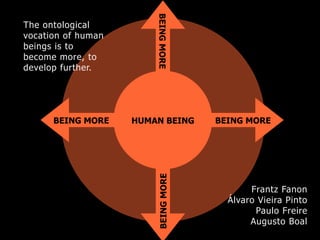
HUMAN BEING BEING MORE
BEING MORE
BEING
MORE
BEING
MORE
Frantz Fanon
Álvaro Vieira Pinto
Paulo Freire
Augusto Boal
The ontological
vocation of human
beings is to
become more, to
develop further.
LESS-THAN HUMAN
BEING
BEING LESS
BEING LESS
BEING
LESS
BEING
LESS
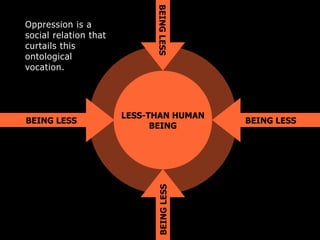
Oppression is a
social relation that
curtails this
ontological
vocation.
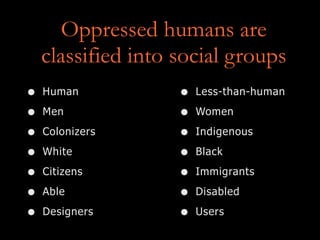
Oppressed humans are
classified into social groups
• Human
• Men
• Colonizers
• White
• Citizens
• Able
• Designers
• Less-than-human
• Women
• Indigenous
• Black
• Immigrants
• Disabled
• Users
OPPRESSED
(less-than-human)
BEING LESS
OPPRESSOR
(human)
BEING MORE
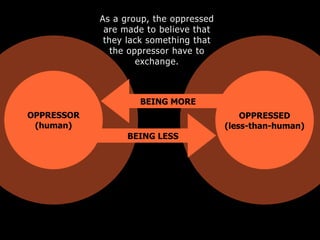
As a group, the oppressed
are made to believe that
they lack something that
the oppressor have to
exchange.
OPPRESSED
(less-than-human)
BEING LESS
OPPRESSOR
(human)
BEING MORE
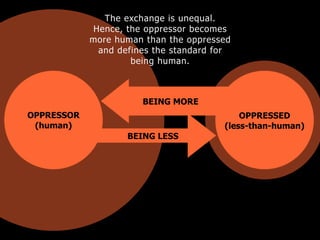
The exchange is unequal.
Hence, the oppressor becomes
more human than the oppressed
and defines the standard for
being human.
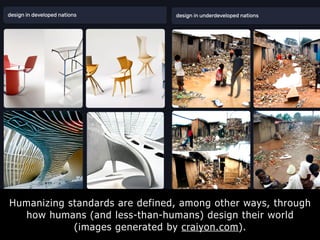
Humanizing standards are defined, among other ways, through
how humans (and less-than-humans) design their world
(images generated by craiyon.com).
Why is oppression systemic?
BEING LESS
BEING LESS
BEING MORE
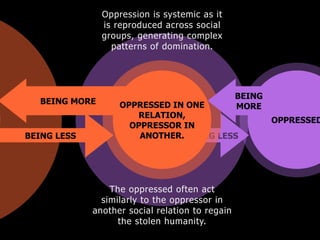
The oppressed often act
similarly to the oppressor in
another social relation to regain
the stolen humanity.
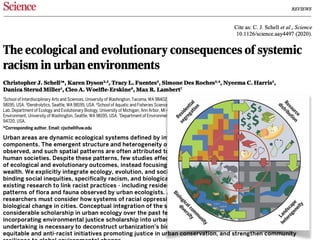
Oppression is systemic as it
is reproduced across social
groups, generating complex
patterns of domination.
OPPRESSED
BEING
MORE
OPPRESSED IN ONE
RELATION,
OPPRESSOR IN
ANOTHER.
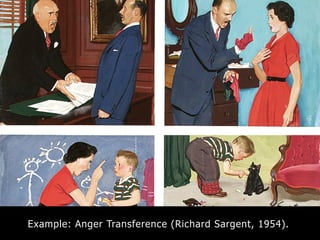
Example: Anger Transference (Richard Sargent, 1954).
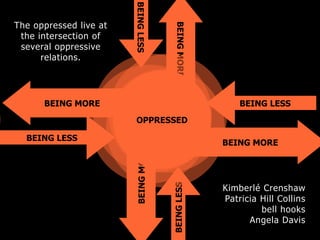
The oppressed live at
the intersection of
several oppressive
relations.
BEING LESS
BEING LESS
BEING
LESS
BEING
LESS
BEING MORE
BEING
MORE
BEING
MORE BEING MORE
OPPRESSED
Kimberlé Crenshaw
Patricia Hill Collins
bell hooks
Angela Davis
OPPRESSED
(less-than-human)
BEING LESS
OPPRESSOR
(human)
BEING MORE
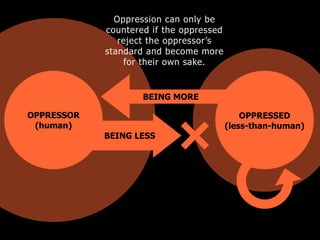
Oppression can only be
countered if the oppressed
reject the oppressor’s
standard and become more
for their own sake.
What can designers do
for the oppressed?
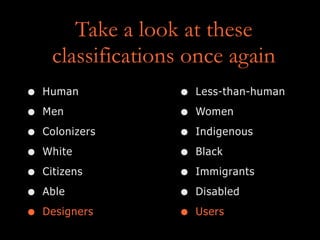
Take a look at these
classifications once again
• Human
• Men
• Colonizers
• White
• Citizens
• Able
• Designers
• Less-than-human
• Women
• Indigenous
• Black
• Immigrants
• Disabled
• Users
Designers are already
systemically oppressing users if
they design for them.
There is not much you
can do against oppression
on the oppressor’s side.
You need to side with the
oppressed to fight
oppression.
Design workers are oppressed, not
because they are designers but because
they are workers.
Women designers are oppressed, not
because they are designers, but
because they are women and workers.
…
Designers should join the
oppressed as an oppressed, not
as an almighty deusigner that
can save them.
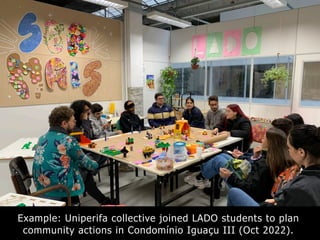
Example: Uniperifa collective joined LADO students to plan
community actions in Condomínio Iguaçu III (Oct 2022).
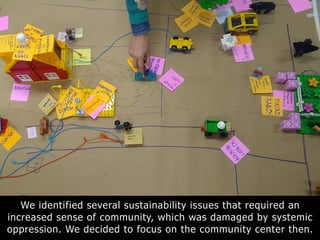
We identified several sustainability issues that required an
increased sense of community, which was damaged by systemic
oppression. We decided to focus on the community center then.
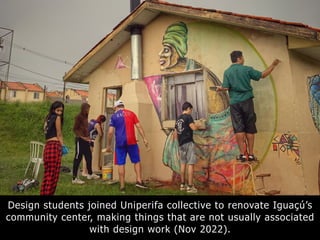
Design students joined Uniperifa collective to renovate Iguaçú’s
community center, making things that are not usually associated
with design work (Nov 2022).
To change systemic oppression,
designers can design and make
things with the oppressed, by the
oppressed, for the oppressed.
Obrigado!
Thank you!
Frederick van Amstel @fredvanamstel
Laboratory of Design against Oppression (LADO), UTFPR
www.fredvanamstel.com

Can designers change systemic oppression?

  • 1.
    Can designers change systemicoppression? Frederick van Amstel @fredvanamstel Laboratory of Design against Oppression (LADO), UTFPR www.fredvanamstel.com
  • 2.
    What is oppression? Whyis it systemic? What can designers do?
  • 3.
    HUMAN BEING BEINGMORE BEING MORE BEING MORE BEING MORE Frantz Fanon Álvaro Vieira Pinto Paulo Freire Augusto Boal The ontological vocation of human beings is to become more, to develop further.
  • 4.
    LESS-THAN HUMAN BEING BEING LESS BEINGLESS BEING LESS BEING LESS Oppression is a social relation that curtails this ontological vocation.
  • 5.
    Oppressed humans are classifiedinto social groups • Human • Men • Colonizers • White • Citizens • Able • Designers • Less-than-human • Women • Indigenous • Black • Immigrants • Disabled • Users
  • 6.
    OPPRESSED (less-than-human) BEING LESS OPPRESSOR (human) BEING MORE Asa group, the oppressed are made to believe that they lack something that the oppressor have to exchange.
  • 7.
    OPPRESSED (less-than-human) BEING LESS OPPRESSOR (human) BEING MORE Theexchange is unequal. Hence, the oppressor becomes more human than the oppressed and defines the standard for being human.
  • 8.
    Humanizing standards aredefined, among other ways, through how humans (and less-than-humans) design their world (images generated by craiyon.com).
  • 9.
  • 10.
    BEING LESS BEING LESS BEINGMORE The oppressed often act similarly to the oppressor in another social relation to regain the stolen humanity. Oppression is systemic as it is reproduced across social groups, generating complex patterns of domination. OPPRESSED BEING MORE OPPRESSED IN ONE RELATION, OPPRESSOR IN ANOTHER.
  • 11.
    Example: Anger Transference(Richard Sargent, 1954).
  • 12.
    The oppressed liveat the intersection of several oppressive relations. BEING LESS BEING LESS BEING LESS BEING LESS BEING MORE BEING MORE BEING MORE BEING MORE OPPRESSED Kimberlé Crenshaw Patricia Hill Collins bell hooks Angela Davis
  • 14.
    OPPRESSED (less-than-human) BEING LESS OPPRESSOR (human) BEING MORE Oppressioncan only be countered if the oppressed reject the oppressor’s standard and become more for their own sake.
  • 15.
    What can designersdo for the oppressed?
  • 16.
    Take a lookat these classifications once again • Human • Men • Colonizers • White • Citizens • Able • Designers • Less-than-human • Women • Indigenous • Black • Immigrants • Disabled • Users
  • 17.
    Designers are already systemicallyoppressing users if they design for them.
  • 19.
    There is notmuch you can do against oppression on the oppressor’s side. You need to side with the oppressed to fight oppression.
  • 20.
    Design workers areoppressed, not because they are designers but because they are workers. Women designers are oppressed, not because they are designers, but because they are women and workers. …
  • 21.
    Designers should jointhe oppressed as an oppressed, not as an almighty deusigner that can save them.
  • 22.
    Example: Uniperifa collectivejoined LADO students to plan community actions in Condomínio Iguaçu III (Oct 2022).
  • 23.
    We identified severalsustainability issues that required an increased sense of community, which was damaged by systemic oppression. We decided to focus on the community center then.
  • 24.
    Design students joinedUniperifa collective to renovate Iguaçú’s community center, making things that are not usually associated with design work (Nov 2022).
  • 25.
    To change systemicoppression, designers can design and make things with the oppressed, by the oppressed, for the oppressed.
  • 26.
    Obrigado! Thank you! Frederick vanAmstel @fredvanamstel Laboratory of Design against Oppression (LADO), UTFPR www.fredvanamstel.com