Making Simple Hydrogen Generator From
A Old Battery
SlideMake.com
Introduction to Hydrogen Generation
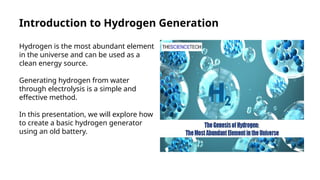
Hydrogen is the most abundant element
in the universe and can be used as a
clean energy source.
Generating hydrogen from water
through electrolysis is a simple and
effective method.
In this presentation, we will explore how
to create a basic hydrogen generator
using an old battery.
Understanding Electrolysis
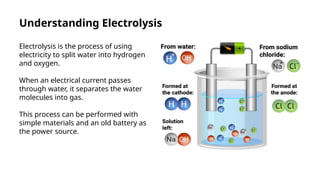
Electrolysis is the process of using
electricity to split water into hydrogen
and oxygen.
When an electrical current passes
through water, it separates the water
molecules into gas.
This process can be performed with
simple materials and an old battery as
the power source.
Materials Needed
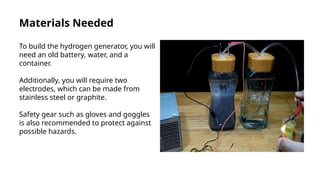
To build the hydrogen generator, you will
need an old battery, water, and a
container.
Additionally, you will require two
electrodes, which can be made from
stainless steel or graphite.
Safety gear such as gloves and goggles
is also recommended to protect against
possible hazards.
Preparing the Container
Select a non-conductive container to
hold the water and electrodes.
Drill or create holes in the container to
securely hold the electrodes in place.
Ensure that the container is large
enough to handle the volume of gas
produced during electrolysis.
Setting Up the Electrodes
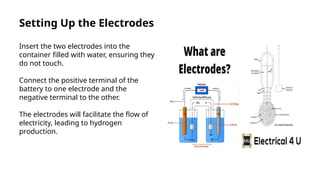
Insert the two electrodes into the
container filled with water, ensuring they
do not touch.
Connect the positive terminal of the
battery to one electrode and the
negative terminal to the other.
The electrodes will facilitate the flow of
electricity, leading to hydrogen
production.
Filling the Container with Water
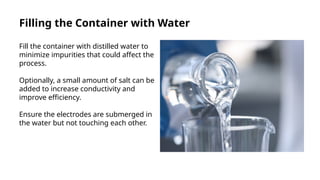
Fill the container with distilled water to
minimize impurities that could affect the
process.
Optionally, a small amount of salt can be
added to increase conductivity and
improve efficiency.
Ensure the electrodes are submerged in
the water but not touching each other.
Initiating the Reaction
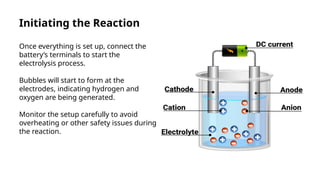
Once everything is set up, connect the
battery’s terminals to start the
electrolysis process.
Bubbles will start to form at the
electrodes, indicating hydrogen and
oxygen are being generated.
Monitor the setup carefully to avoid
overheating or other safety issues during
the reaction.
Collecting Hydrogen
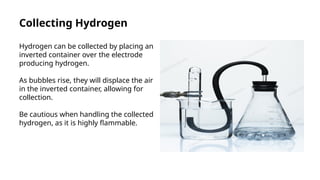
Hydrogen can be collected by placing an
inverted container over the electrode
producing hydrogen.
As bubbles rise, they will displace the air
in the inverted container, allowing for
collection.
Be cautious when handling the collected
hydrogen, as it is highly flammable.
Safety Precautions
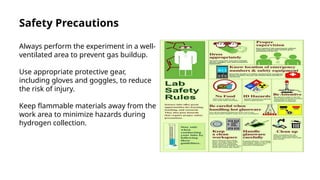
Always perform the experiment in a well-
ventilated area to prevent gas buildup.
Use appropriate protective gear,
including gloves and goggles, to reduce
the risk of injury.
Keep flammable materials away from the
work area to minimize hazards during
hydrogen collection.
Conclusion and Applications
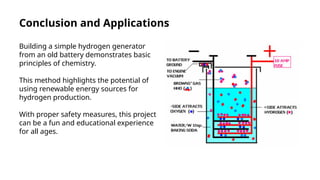
Building a simple hydrogen generator
from an old battery demonstrates basic
principles of chemistry.
This method highlights the potential of
using renewable energy sources for
hydrogen production.
With proper safety measures, this project
can be a fun and educational experience
for all ages.
References
Electrolysis of Water: Principles and
Applications, Chemistry Journal, 2021.
DIY Hydrogen Generator Projects,
Renewable Energy Publications, 2022.
Safety Guidelines for Hydrogen
Experiments, National Laboratory Safety
Board, 2023.

Making Simple Hydrogen Generator From A Old Battery.pptx

  • 1.
    Making Simple HydrogenGenerator From A Old Battery SlideMake.com
  • 2.
    Introduction to HydrogenGeneration Hydrogen is the most abundant element in the universe and can be used as a clean energy source. Generating hydrogen from water through electrolysis is a simple and effective method. In this presentation, we will explore how to create a basic hydrogen generator using an old battery.
  • 3.
    Understanding Electrolysis Electrolysis isthe process of using electricity to split water into hydrogen and oxygen. When an electrical current passes through water, it separates the water molecules into gas. This process can be performed with simple materials and an old battery as the power source.
  • 4.
    Materials Needed To buildthe hydrogen generator, you will need an old battery, water, and a container. Additionally, you will require two electrodes, which can be made from stainless steel or graphite. Safety gear such as gloves and goggles is also recommended to protect against possible hazards.
  • 5.
    Preparing the Container Selecta non-conductive container to hold the water and electrodes. Drill or create holes in the container to securely hold the electrodes in place. Ensure that the container is large enough to handle the volume of gas produced during electrolysis.
  • 6.
    Setting Up theElectrodes Insert the two electrodes into the container filled with water, ensuring they do not touch. Connect the positive terminal of the battery to one electrode and the negative terminal to the other. The electrodes will facilitate the flow of electricity, leading to hydrogen production.
  • 7.
    Filling the Containerwith Water Fill the container with distilled water to minimize impurities that could affect the process. Optionally, a small amount of salt can be added to increase conductivity and improve efficiency. Ensure the electrodes are submerged in the water but not touching each other.
  • 8.
    Initiating the Reaction Onceeverything is set up, connect the battery’s terminals to start the electrolysis process. Bubbles will start to form at the electrodes, indicating hydrogen and oxygen are being generated. Monitor the setup carefully to avoid overheating or other safety issues during the reaction.
  • 9.
    Collecting Hydrogen Hydrogen canbe collected by placing an inverted container over the electrode producing hydrogen. As bubbles rise, they will displace the air in the inverted container, allowing for collection. Be cautious when handling the collected hydrogen, as it is highly flammable.
  • 10.
    Safety Precautions Always performthe experiment in a well- ventilated area to prevent gas buildup. Use appropriate protective gear, including gloves and goggles, to reduce the risk of injury. Keep flammable materials away from the work area to minimize hazards during hydrogen collection.
  • 11.
    Conclusion and Applications Buildinga simple hydrogen generator from an old battery demonstrates basic principles of chemistry. This method highlights the potential of using renewable energy sources for hydrogen production. With proper safety measures, this project can be a fun and educational experience for all ages.
  • 12.
    References Electrolysis of Water:Principles and Applications, Chemistry Journal, 2021. DIY Hydrogen Generator Projects, Renewable Energy Publications, 2022. Safety Guidelines for Hydrogen Experiments, National Laboratory Safety Board, 2023.
Editor's Notes

  • #2 Image source: https://thesciencetech.com/chemistry/the-genesis-of-hydrogen-the-most-abundant-element-in-the-universe/
  • #3 Image source: https://fity.club/lists/e/electrolysis-diagram/
  • #4 Image source: http://kobobuilding.com/how-to-build-a-hydrogen-generator-free-plans/
  • #5 Image source: https://www.businessapac.com/preparing-and-loading-shipping/
  • #6 Image source: https://www.electrical4u.com/electrodes-used-in-medical-applications/
  • #7 Image source: https://waterfilterguru.com/tap-water-vs-distilled-water/
  • #8 Image source: https://guidewiringnelson.z21.web.core.windows.net/electrolysis-set-up-diagram.html
  • #9 Image source: https://www.sciencephoto.com/media/931096/view/collecting-hydrogen-gas-over-water
  • #10 Image source: https://www.pinterest.ca/pin/27936460190298969/
  • #11 Image source: https://mavink.com/explore/Hydrogen-Generator-Diagram