Making Friendly Microservices
Michele
Titolo
Lead Software Engineer,
Capital One
Definition:
/microservice/
Small service that does one thing well

Independent

Owns its own data
Definition:
/friendly/
Helpful 

An ally

Kind

Easy to use, understand

Able to coexist without causing harm
What Makes A
Microservice…
Helpful, An Ally, Kind, Easy to Use, 

Able to Coexist
Why?
Helpful
Documentation
Documentation
Documentation
Version And
Revision History
Historical record of when things changed
and why
Live Documentation
Document
Dependencies
Create A
Dependency Graph
Autogenerate
Documentation
Tools
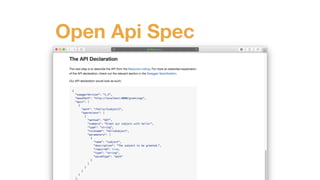
Open API Specification/Swagger

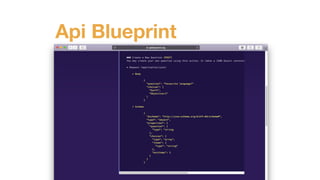
APIBlueprint

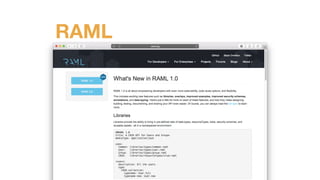
RAML
Open Api Spec
Api Blueprint
RAML
Ally
Integrate
Monitoring Tools
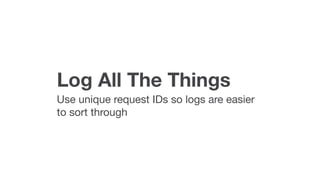
Log All The Things
Use unique request IDs so logs are easier
to sort through
Avoid Playing
Red Light Green Light
What Happens When
A Dependency Fails?
Hint:
Your Service Should
Not Go Down
Macro Dependencies
Micro Dependencies
Help Identify
Bottlenecks
Before They Happen
Communication
Gather Data
Tools
Docker

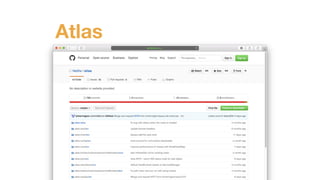
Atlas

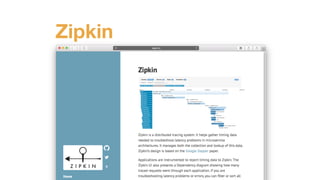
Zipkin
Docker
Atlas
Zipkin
Kind
Make Your Service
Easy To Deploy
And Scale
Consumers Should Be
Able To Hit The API
Directly In A Non-Prod
Environment
Consistent Error
Messaging
HTTP/1.1
206 Partial Content
Do Not Make Others
Setup A Development
Environment To
Troubleshoot Issues
Tools
Docker

Jenkins

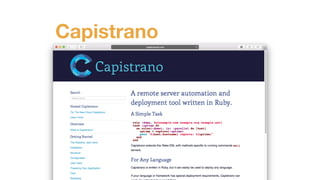
Capistrano
Docker
Containers
Each service should stand alone

Use docker-compose for dependencies 

Swarm and Scale
Use Containers
For Local
Development
Jenkins
Capistrano
Easy To Use
Use One Base URL
For Everything
Use An API Gateway
Or Load Balancer To
Route API Calls
Be Security
Conscious
Cookie Security
Don’t use wildcards

Always use HTTPS and Secure

Set correct domain
Mobile Security
SSL Certificate Pinning
Tools
Docker

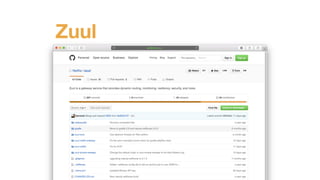
Zuul

NGINIX

HAProxy
Docker
Zuul
NGINIX
HAProxy
Coexist
Consistency
Conventions
How Does Your
Service Fit In With
The Rest?
Services Need To
Work Together
Don’t Take Single
Responsibility
Too Far
Assumptions
Tools
Microservice
Discovery
API Discovery
The Friendly
Microservice
Helpful Documentation

Built With Monitoring And Troubleshooting In Mind

Easily Deployable

Easy To Consume

Coexists With Established Conventions
Thank you!
@micheletitolo
Resources
• https://opencredo.com/rest-api-tooling-review/

• http://www.capitalone.io/blog/delivering-microservices-for-enterprise-with-devops/

• https://medium.com/capital-one-developers/mobile-orchestration-innovation-on-
the-edge-9835e4cbd69e#.vpbsiyqmq

• http://swagger.io/open-source-integrations/

• https://en.wikipedia.org/wiki/List_of_HTTP_status_codes

• https://www.owasp.org/index.php/Testing_for_cookies_attributes_(OTG-SESS-002)

• http://www.onegeek.com.au/articles/waiting-for-dependencies-in-docker-compose

• http://techblog.netflix.com/2014/12/introducing-atlas-netflixs-primary.html

• https://github.com/justone/dockviz
Photo Credits
• https://unsplash.com/photos/h13Y8vyIXNU

• https://unsplash.com/collections/380/petunia-the-pug

• https://www.flickr.com/photos/32179495@N04/21211072432/

• https://www.flickr.com/photos/78134717@N08/7154609638

• https://www.flickr.com/photos/33622296@N04/5870006633/

• https://www.flickr.com/photos/7255089@N05/5415983081

• https://www.flickr.com/photos/95477820@N02/8730925814

• https://www.flickr.com/photos/35137530@N00/16406998986/

Making friendly-microservices