DEPARTMENT OF CIVIL
ENGINEERING
Presented by:
Nandhini V (23SE09)
M.E – Structural Engineering
Strengthening of substructures
P23STP01 – MAINTENANCE AND
REHABILITATION OF STRUCTURES
STRENGTHENING OF SUBSTRUCTURES
Introduction:
 The substructure typically includes the foundation and any supporting elements
below ground level.
 The methods of strengthening the substructure depends on the nature of the
existing substructure issues, soil conditions, and the requirements of the
structure.
 The strength of a substructure, which includes the foundation and supporting
elements below ground level, is influenced by various factors, coupled with
proper engineering analysis and design, is essential for creating a strong and
stable substructure for a building or any other structure.
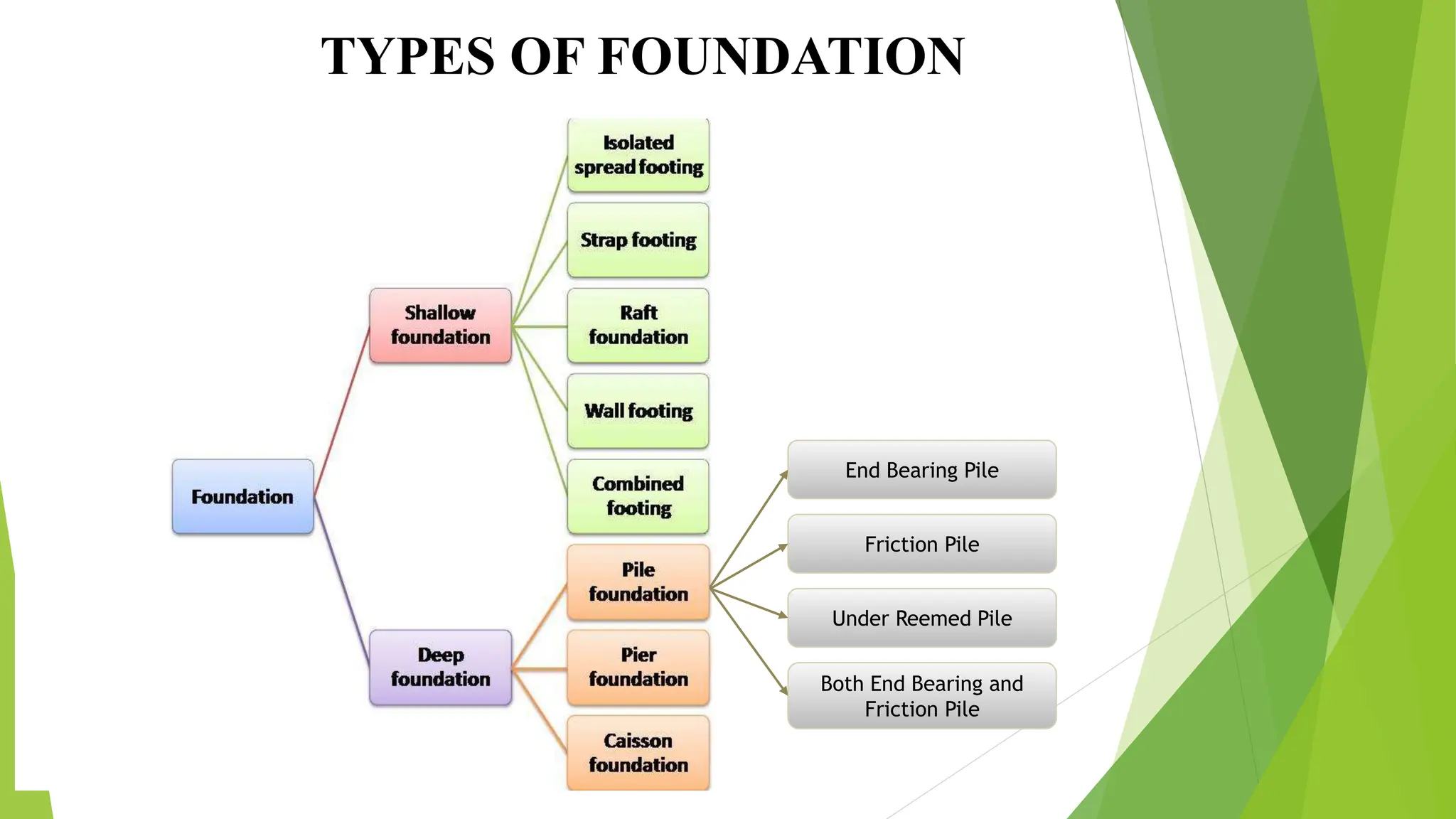
TYPES OF FOUNDATION
End Bearing Pile
Friction Pile
Under Reemed Pile
Both End Bearing and
Friction Pile
Why Strengthening of substructure need?
 Changes in Building Use or Load Requirements
 Foundation Settlement or Movement
 Aging Infrastructure
 Structural Damage or Distress
 Seismic Vulnerability
 Changes in Soil Conditions
 Increased Environmental Loads
 Upgrading to Meet Building Codes
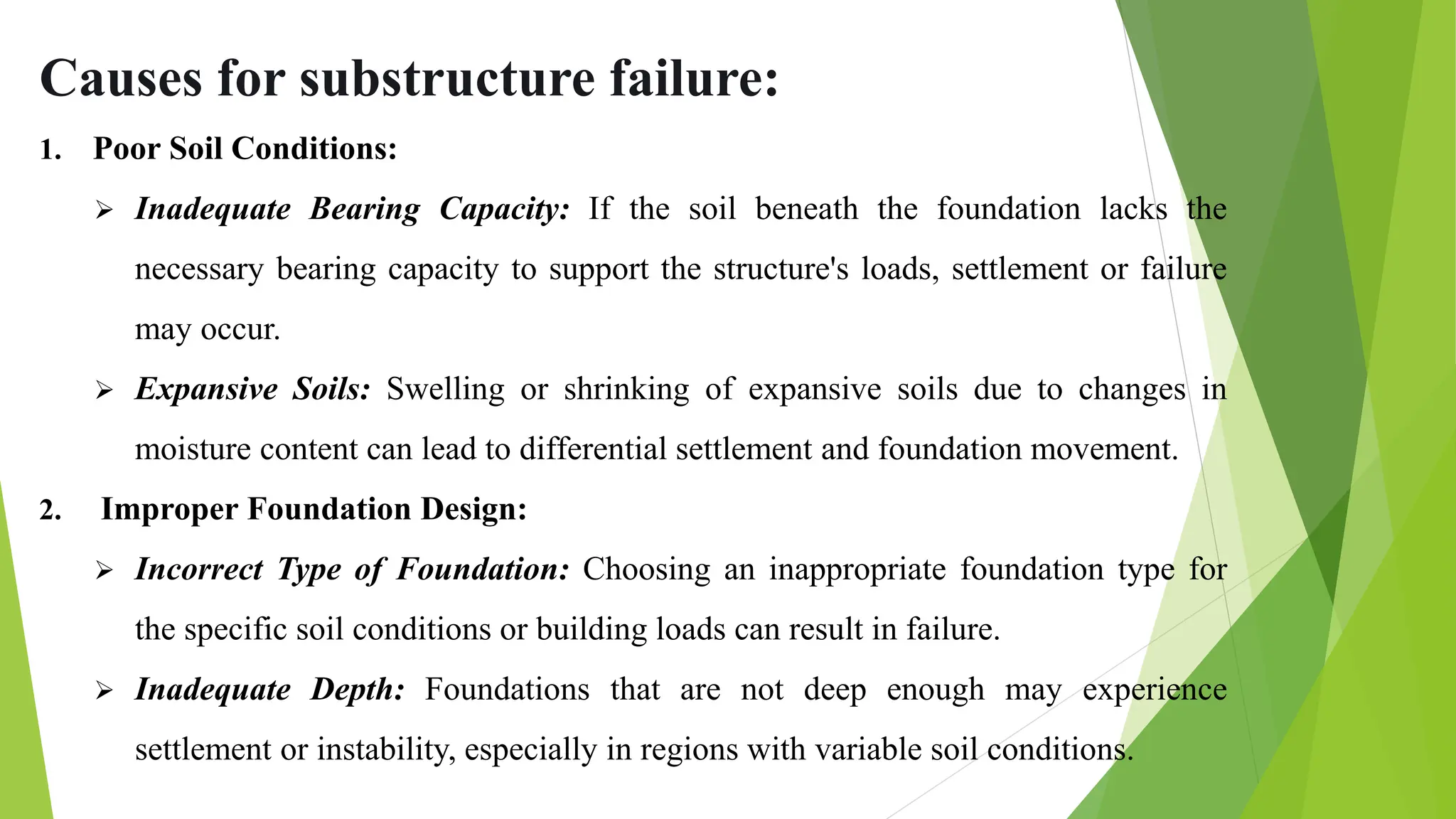
Causes for substructure failure:
1. Poor Soil Conditions:
 Inadequate Bearing Capacity: If the soil beneath the foundation lacks the
necessary bearing capacity to support the structure's loads, settlement or failure
may occur.
 Expansive Soils: Swelling or shrinking of expansive soils due to changes in
moisture content can lead to differential settlement and foundation movement.
2. Improper Foundation Design:
 Incorrect Type of Foundation: Choosing an inappropriate foundation type for
the specific soil conditions or building loads can result in failure.
 Inadequate Depth: Foundations that are not deep enough may experience
settlement or instability, especially in regions with variable soil conditions.
Contd…
3. Construction Issues:
 Poor Construction Practices: Inadequate compaction of fill material, improper
concrete curing, or faulty construction techniques can compromise the strength
and stability of the substructure.
 Insufficient Reinforcement: Inadequate reinforcement in the foundation
elements, such as footings and piles, can lead to structural failure under heavy
loads.
4. Water-related Issues:
 High Groundwater Levels: Elevated groundwater levels can reduce the bearing
capacity of the soil and lead to settlement or instability.
 Poor Drainage: Inadequate drainage around the foundation can result in water
accumulation, soil erosion, and other water-related problems.
Contd…
5. Environmental Factors:
 Freeze-Thaw Cycles: In regions with freezing temperatures, the expansion
and contraction of water in the soil can cause heaving and settlement,
affecting the substructure.
 Seismic Activity: Earthquakes can induce lateral forces and ground
movement, potentially causing foundation failure.
6. Structural Overloading:
 Excessive Loads: Overloading the structure beyond its design capacity can
lead to stress and deformation in the substructure.
 Unanticipated Loads: Changes in building use or renovations without proper
consideration of the additional loads can contribute to failure.
Contd…
7. Lack of Maintenance:
 Neglected Repairs: Ignoring signs of foundation distress or failing to
address minor issues in a timely manner can lead to more severe
problems.
 Vegetation Growth: Roots from nearby trees and shrubs can exert
pressure on foundations and cause damage over time.
8. Geological Factors:
 Natural Subsidence: Some areas may experience natural subsidence due
to geological processes, leading to settlement and structural issues.
 Karst Formation: In regions with karst topography, dissolution of
soluble rocks can result in the formation of sinkholes and instability.
Contd…
9. Age-related Deterioration:
 Material Degradation: Over time, concrete and other construction
materials may degrade due to environmental exposure, leading to a
reduction in strength and stability.
Factors governing strength of substructure:
1. Soil Characteristics
 Type of Soil
 Soil Bearing Capacity
2. Foundation Type
 Type of Foundation
3. Load Characteristics
 Vertical Loads
 Lateral Loads
Contd…
4. Structural Design
 Building Design
 Materials Used
5. Environmental Conditions
 Climate
 Groundwater Level
6. Geotechnical Investigations
 Site Investigation
 Subsurface Conditions
7. Construction Techniques
 Excavation and Backfilling
 Compaction
8. Regulatory Requirements
 Building Codes and Standards
9. Monitoring and Maintenance
 Monitoring Systems
 Regular Maintenance
Contd…
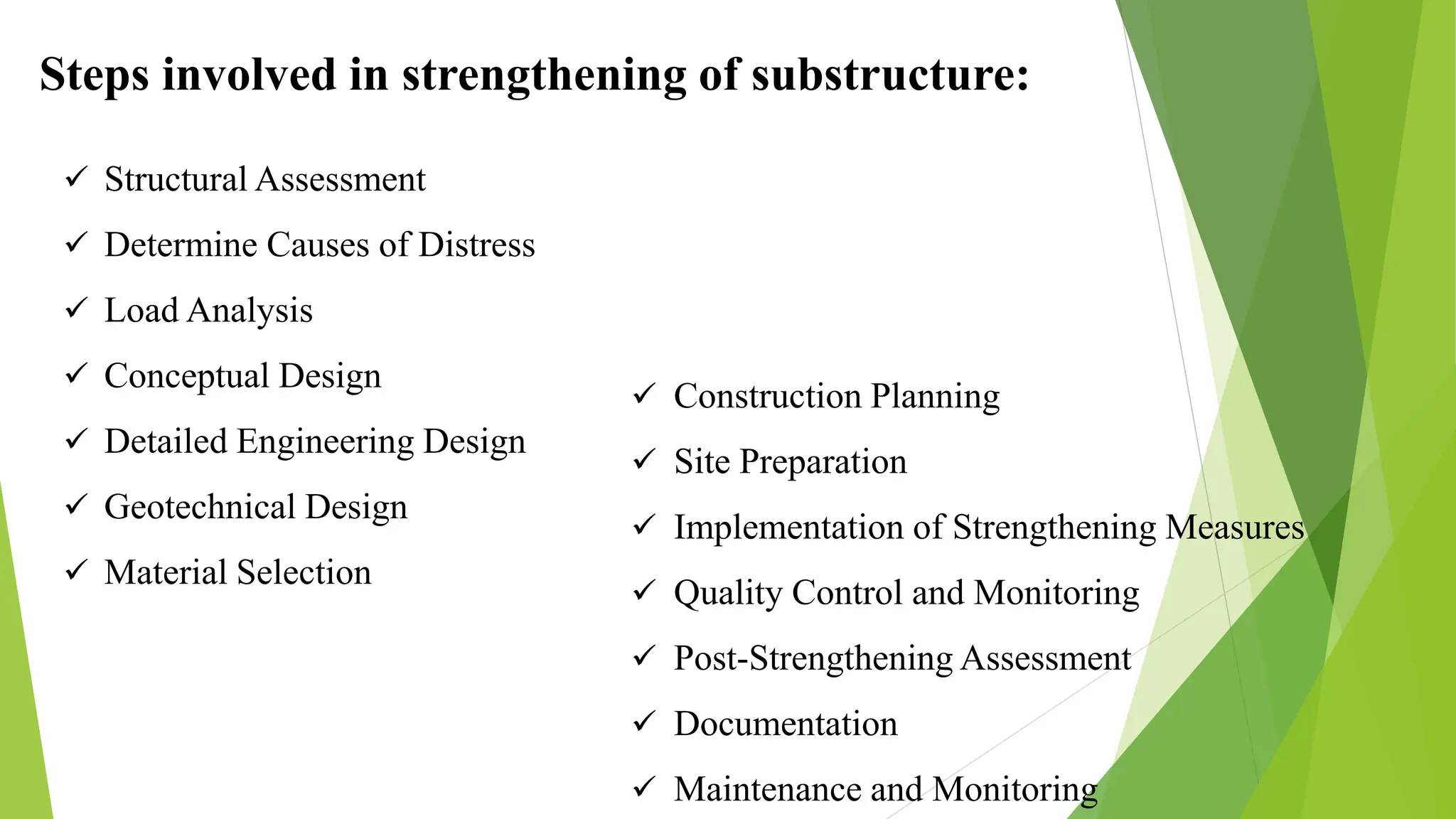
Steps involved in strengthening of substructure:
 Structural Assessment
 Determine Causes of Distress
 Load Analysis
 Conceptual Design
 Detailed Engineering Design
 Geotechnical Design
 Material Selection
 Construction Planning
 Site Preparation
 Implementation of Strengthening Measures
 Quality Control and Monitoring
 Post-Strengthening Assessment
 Documentation
 Maintenance and Monitoring
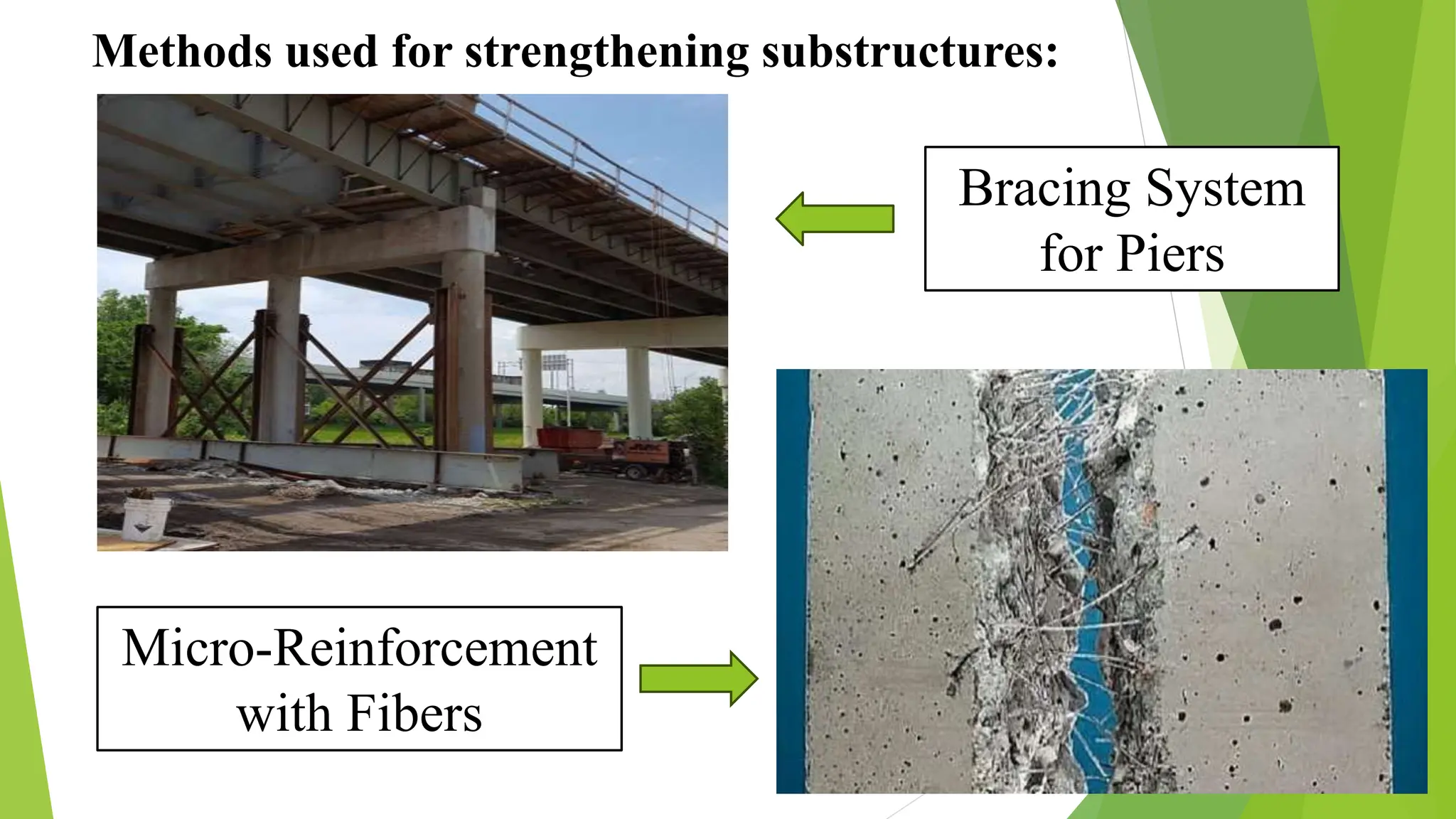
Methods used for strengthening substructures:
 Bracing System for Piers
 Micro-Reinforcement with Fibers
 Localized Foundation
Strengthening
 Underpinning
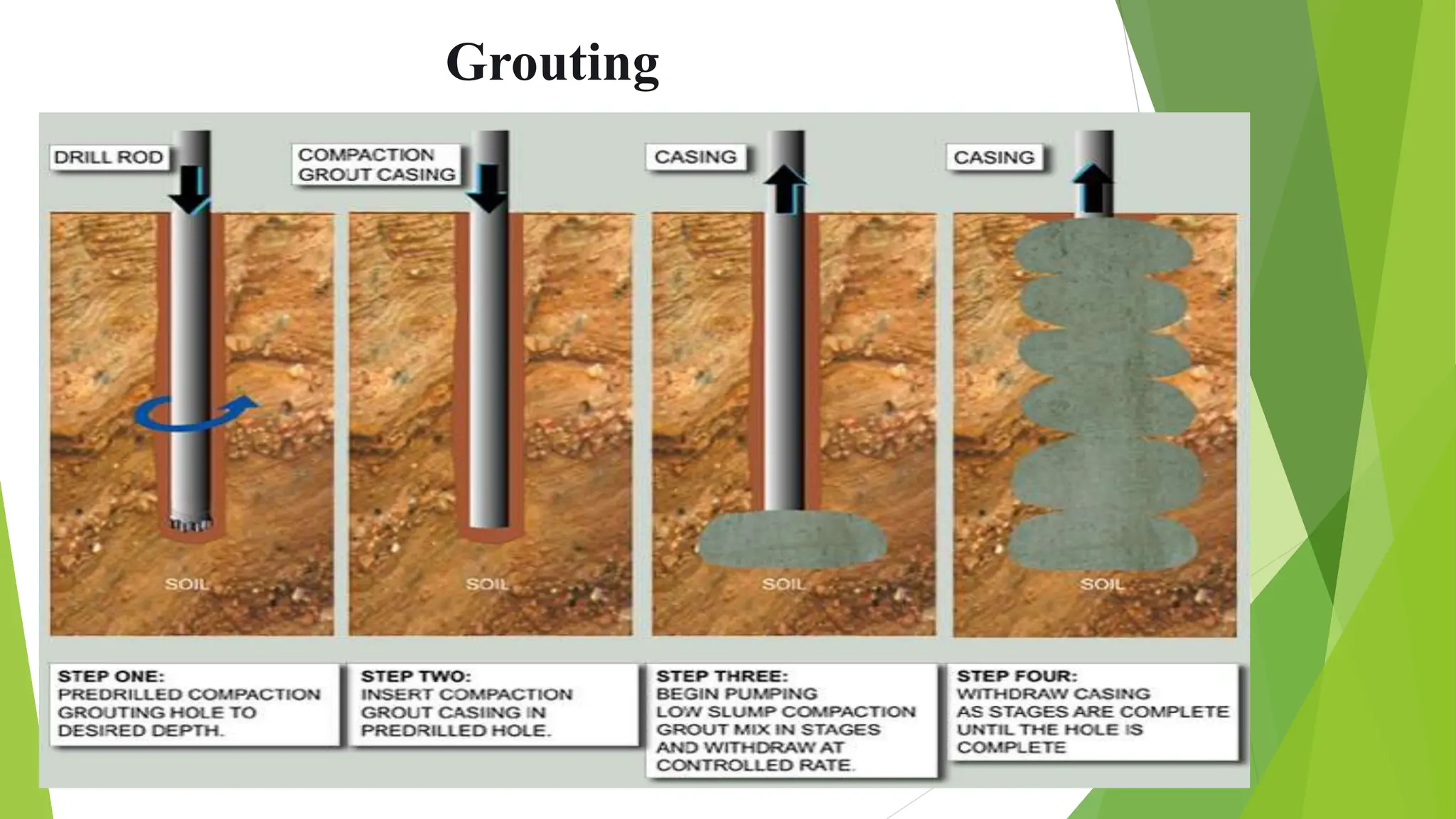
 Grouting
 Micropiles
 Soil Nailing
 Jet Grouting
 Sheet Piling
 Reinforcement with Geotextiles
 Chemical Stabilization
 Slope Stability Measures
 Foundation Replacement
 Tiebacks or Ground Anchors
 Base Isolation
 Concrete Jacketing
 Carbon Fiber Reinforcement
 Steel Plate Bonding
 Strengthening of bridge piers
Micro-Reinforcement
with Fibers
Bracing System
for Piers
Methods used for strengthening substructures:
Underpinning
Localized Foundation
Strengthening
Grouting
Micropiles
Soil Nailing
Jet Grouting
Sheet Piling
Tiebacks or
Ground Anchors
Strengthening of bridge piers
MAINTENANCE AND REHABILITATION OF STRUCTURE.pptx

MAINTENANCE AND REHABILITATION OF STRUCTURE.pptx

  • 1.
    DEPARTMENT OF CIVIL ENGINEERING Presentedby: Nandhini V (23SE09) M.E – Structural Engineering Strengthening of substructures P23STP01 – MAINTENANCE AND REHABILITATION OF STRUCTURES
  • 2.
    STRENGTHENING OF SUBSTRUCTURES Introduction: The substructure typically includes the foundation and any supporting elements below ground level.  The methods of strengthening the substructure depends on the nature of the existing substructure issues, soil conditions, and the requirements of the structure.  The strength of a substructure, which includes the foundation and supporting elements below ground level, is influenced by various factors, coupled with proper engineering analysis and design, is essential for creating a strong and stable substructure for a building or any other structure.
  • 3.
    TYPES OF FOUNDATION EndBearing Pile Friction Pile Under Reemed Pile Both End Bearing and Friction Pile
  • 4.
    Why Strengthening ofsubstructure need?  Changes in Building Use or Load Requirements  Foundation Settlement or Movement  Aging Infrastructure  Structural Damage or Distress  Seismic Vulnerability  Changes in Soil Conditions  Increased Environmental Loads  Upgrading to Meet Building Codes
  • 5.
    Causes for substructurefailure: 1. Poor Soil Conditions:  Inadequate Bearing Capacity: If the soil beneath the foundation lacks the necessary bearing capacity to support the structure's loads, settlement or failure may occur.  Expansive Soils: Swelling or shrinking of expansive soils due to changes in moisture content can lead to differential settlement and foundation movement. 2. Improper Foundation Design:  Incorrect Type of Foundation: Choosing an inappropriate foundation type for the specific soil conditions or building loads can result in failure.  Inadequate Depth: Foundations that are not deep enough may experience settlement or instability, especially in regions with variable soil conditions.
  • 6.
    Contd… 3. Construction Issues: Poor Construction Practices: Inadequate compaction of fill material, improper concrete curing, or faulty construction techniques can compromise the strength and stability of the substructure.  Insufficient Reinforcement: Inadequate reinforcement in the foundation elements, such as footings and piles, can lead to structural failure under heavy loads. 4. Water-related Issues:  High Groundwater Levels: Elevated groundwater levels can reduce the bearing capacity of the soil and lead to settlement or instability.  Poor Drainage: Inadequate drainage around the foundation can result in water accumulation, soil erosion, and other water-related problems.
  • 7.
    Contd… 5. Environmental Factors: Freeze-Thaw Cycles: In regions with freezing temperatures, the expansion and contraction of water in the soil can cause heaving and settlement, affecting the substructure.  Seismic Activity: Earthquakes can induce lateral forces and ground movement, potentially causing foundation failure. 6. Structural Overloading:  Excessive Loads: Overloading the structure beyond its design capacity can lead to stress and deformation in the substructure.  Unanticipated Loads: Changes in building use or renovations without proper consideration of the additional loads can contribute to failure.
  • 8.
    Contd… 7. Lack ofMaintenance:  Neglected Repairs: Ignoring signs of foundation distress or failing to address minor issues in a timely manner can lead to more severe problems.  Vegetation Growth: Roots from nearby trees and shrubs can exert pressure on foundations and cause damage over time. 8. Geological Factors:  Natural Subsidence: Some areas may experience natural subsidence due to geological processes, leading to settlement and structural issues.  Karst Formation: In regions with karst topography, dissolution of soluble rocks can result in the formation of sinkholes and instability.
  • 9.
    Contd… 9. Age-related Deterioration: Material Degradation: Over time, concrete and other construction materials may degrade due to environmental exposure, leading to a reduction in strength and stability.
  • 10.
    Factors governing strengthof substructure: 1. Soil Characteristics  Type of Soil  Soil Bearing Capacity 2. Foundation Type  Type of Foundation 3. Load Characteristics  Vertical Loads  Lateral Loads
  • 11.
    Contd… 4. Structural Design Building Design  Materials Used 5. Environmental Conditions  Climate  Groundwater Level 6. Geotechnical Investigations  Site Investigation  Subsurface Conditions
  • 12.
    7. Construction Techniques Excavation and Backfilling  Compaction 8. Regulatory Requirements  Building Codes and Standards 9. Monitoring and Maintenance  Monitoring Systems  Regular Maintenance Contd…
  • 13.
    Steps involved instrengthening of substructure:  Structural Assessment  Determine Causes of Distress  Load Analysis  Conceptual Design  Detailed Engineering Design  Geotechnical Design  Material Selection  Construction Planning  Site Preparation  Implementation of Strengthening Measures  Quality Control and Monitoring  Post-Strengthening Assessment  Documentation  Maintenance and Monitoring
  • 14.
    Methods used forstrengthening substructures:  Bracing System for Piers  Micro-Reinforcement with Fibers  Localized Foundation Strengthening  Underpinning  Grouting  Micropiles  Soil Nailing  Jet Grouting  Sheet Piling  Reinforcement with Geotextiles  Chemical Stabilization  Slope Stability Measures  Foundation Replacement  Tiebacks or Ground Anchors  Base Isolation  Concrete Jacketing  Carbon Fiber Reinforcement  Steel Plate Bonding  Strengthening of bridge piers
  • 15.
    Micro-Reinforcement with Fibers Bracing System forPiers Methods used for strengthening substructures:
  • 16.
    Methods used forstrengthening substructures: Underpinning Localized Foundation Strengthening
  • 17.
  • 18.
  • 19.
  • 20.
  • 21.
  • 22.