INTRODUCTION TO MAGAZINES
The word ‘magazine’ comes from the French
word ‘magasin’, which means ‘storehouse’. This
is an appropriate word as magazines tend to be
storehouses of information about a particular
subject or area of interest.
The first magazine was ‘The Gentleman’s
Magazine of London’ and was started in 1731.
Magazines are very different to
newspapers
They are:
•Thicker, printed in colour on glossy paper,
•Published less frequently than most newspapers,
•Not about the last day’s events – they may
contain feature material about ‘newsworthy’
people or events, but they do not usually ‘break’
news stories.
During the 1980’s and 1990’s there was a dramatic rise
in the number of magazine titles, between 1986 and
1996 there was:
•A 68% increase in business magazines
•A 38% increase in consumer magazines.
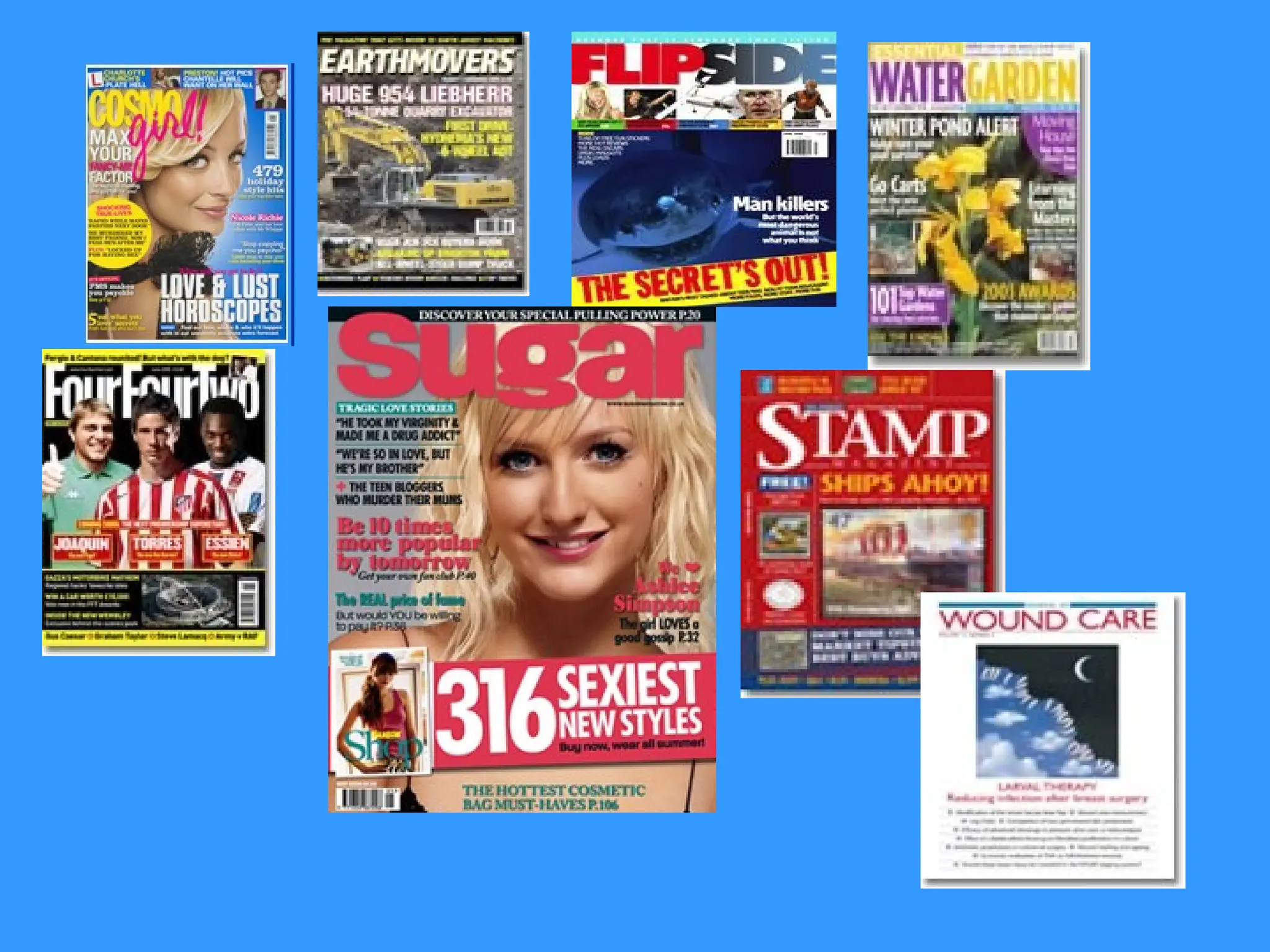
There are now over 7,500 magazines published in the
UK including:
•Over 5,250 business and professional titles, including
Farmers’ Weekly, Taxation Weekly and The Teacher,
•Over 2,500 consumer magazines, including TV Quick,
J17, Sugar, Simply Knitting, Cross Stitch Crazy and
What Car?.
MAGAZINE TOPICS
MAGAZINE TOPICS
There are magazines covering a huge range of topics
and the range is widening all the time. For instance
just twenty years ago there were no lifestyle
magazines specifically directed at men, yet now there
are many – Loaded, GQ, FHM, Zoo.
The magazine market has seen a high degree of
audience fragmentation. The publishing costs are low
so very small readerships can be catered for at a
profit. For instance fishing was originally covered by
just one general magazine – now there are a huge
variety; including Gamefishing, Trout & Salmon, Fly
Fishing & Fly Tying, Total Carp.
Magazine
topics
DIY
GARDENING
CELEBRITY
You can now buy a magazine related to virtually any hobby
you can think of from Cross Stitching Weekly to Teddy
Bear Collector Monthly.
How many magazine topics can you think of?
The front cover of a magazine is very important – it
establishes its identity and differentiates it from
others on sale. These two magazines have very
different styles of front cover; one is glamorous and
glossy, the other is practical and factual.
Cosmo Girl is a lifestyle ‘consumer’ magazine;
Earthmovers is a practical ‘business’ magazine.
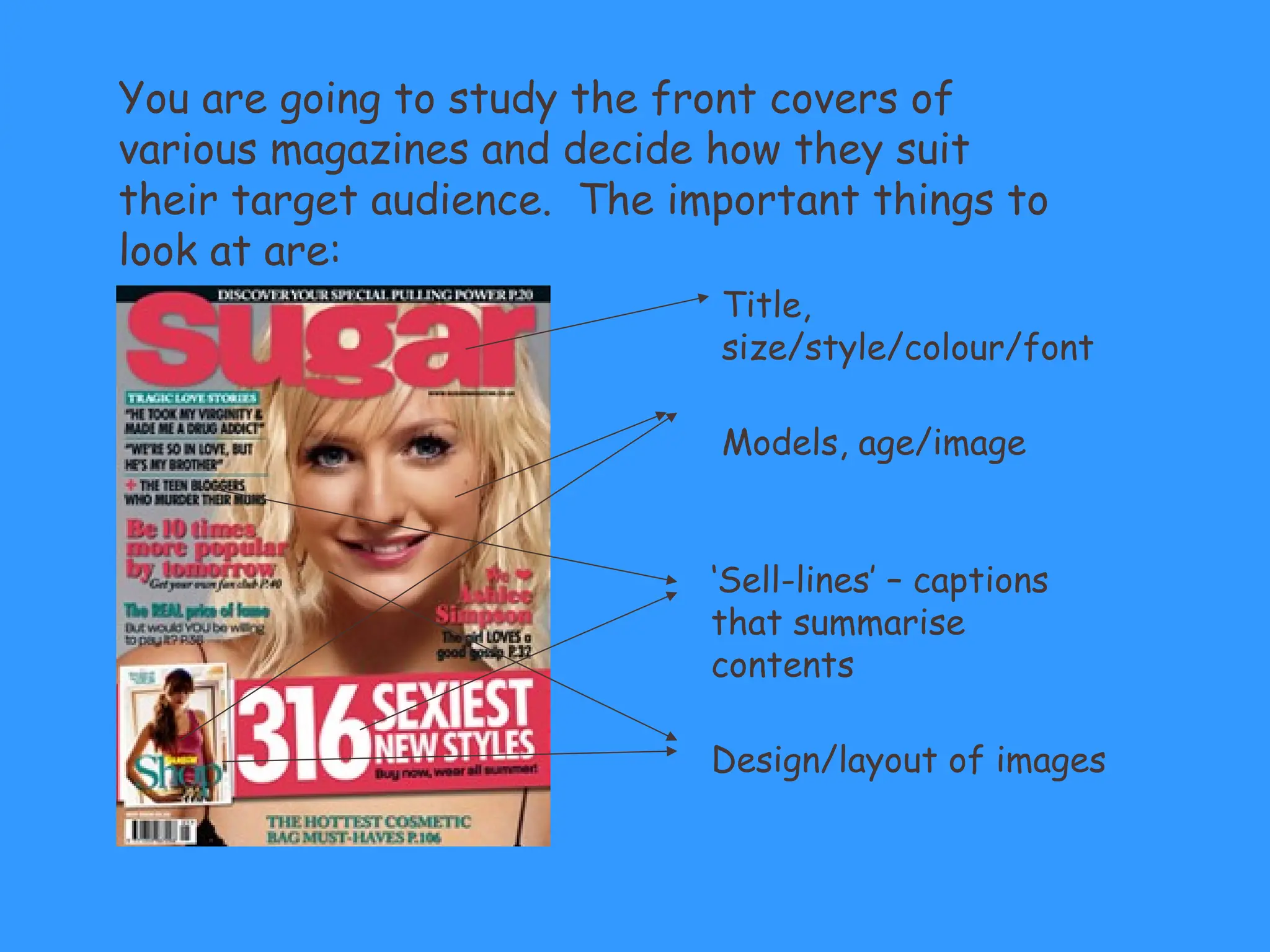
You are going to study the front covers of
various magazines and decide how they suit
their target audience. The important things to
look at are:
Title,
size/style/colour/font
Models, age/image
‘Sell-lines’ – captions
that summarise
contents
Design/layout of images
FRONT COVER ANALYSIS
Title:
Title:
Price:
Price:
Frequency: (weekly/monthly)
Cover:
Cover:
•What does the title suggest? (Font/position/size/name?
What does the title suggest? (Font/position/size/name?
•What does the picture suggest?
What does the picture suggest?
•What information is given about the magazine’s contents? How is
What information is given about the magazine’s contents? How is
this information given?
•What do you think is the target audience?
What do you think is the target audience?
•How does the cover appeal to the target audience?
How does the cover appeal to the target audience?

Magazine analysis, history and introduction

  • 1.
    INTRODUCTION TO MAGAZINES INTRODUCTIONTO MAGAZINES The word ‘magazine’ comes from the French word ‘magasin’, which means ‘storehouse’. This is an appropriate word as magazines tend to be storehouses of information about a particular subject or area of interest. The first magazine was ‘The Gentleman’s Magazine of London’ and was started in 1731.
  • 2.
    Magazines are verydifferent to newspapers They are: •Thicker, printed in colour on glossy paper, •Published less frequently than most newspapers, •Not about the last day’s events – they may contain feature material about ‘newsworthy’ people or events, but they do not usually ‘break’ news stories.
  • 3.
    During the 1980’sand 1990’s there was a dramatic rise in the number of magazine titles, between 1986 and 1996 there was: •A 68% increase in business magazines •A 38% increase in consumer magazines. There are now over 7,500 magazines published in the UK including: •Over 5,250 business and professional titles, including Farmers’ Weekly, Taxation Weekly and The Teacher, •Over 2,500 consumer magazines, including TV Quick, J17, Sugar, Simply Knitting, Cross Stitch Crazy and What Car?.
  • 4.
    MAGAZINE TOPICS MAGAZINE TOPICS Thereare magazines covering a huge range of topics and the range is widening all the time. For instance just twenty years ago there were no lifestyle magazines specifically directed at men, yet now there are many – Loaded, GQ, FHM, Zoo. The magazine market has seen a high degree of audience fragmentation. The publishing costs are low so very small readerships can be catered for at a profit. For instance fishing was originally covered by just one general magazine – now there are a huge variety; including Gamefishing, Trout & Salmon, Fly Fishing & Fly Tying, Total Carp.
  • 5.
    Magazine topics DIY GARDENING CELEBRITY You can nowbuy a magazine related to virtually any hobby you can think of from Cross Stitching Weekly to Teddy Bear Collector Monthly. How many magazine topics can you think of?
  • 6.
    The front coverof a magazine is very important – it establishes its identity and differentiates it from others on sale. These two magazines have very different styles of front cover; one is glamorous and glossy, the other is practical and factual. Cosmo Girl is a lifestyle ‘consumer’ magazine; Earthmovers is a practical ‘business’ magazine.
  • 8.
    You are goingto study the front covers of various magazines and decide how they suit their target audience. The important things to look at are: Title, size/style/colour/font Models, age/image ‘Sell-lines’ – captions that summarise contents Design/layout of images
  • 9.
    FRONT COVER ANALYSIS FRONTCOVER ANALYSIS Title: Title: Price: Price: Frequency: (weekly/monthly) Frequency: (weekly/monthly) Cover: Cover: •What does the title suggest? (Font/position/size/name? What does the title suggest? (Font/position/size/name? •What does the picture suggest? What does the picture suggest? •What information is given about the magazine’s contents? How is What information is given about the magazine’s contents? How is this information given? this information given? •What do you think is the target audience? What do you think is the target audience? •How does the cover appeal to the target audience? How does the cover appeal to the target audience?