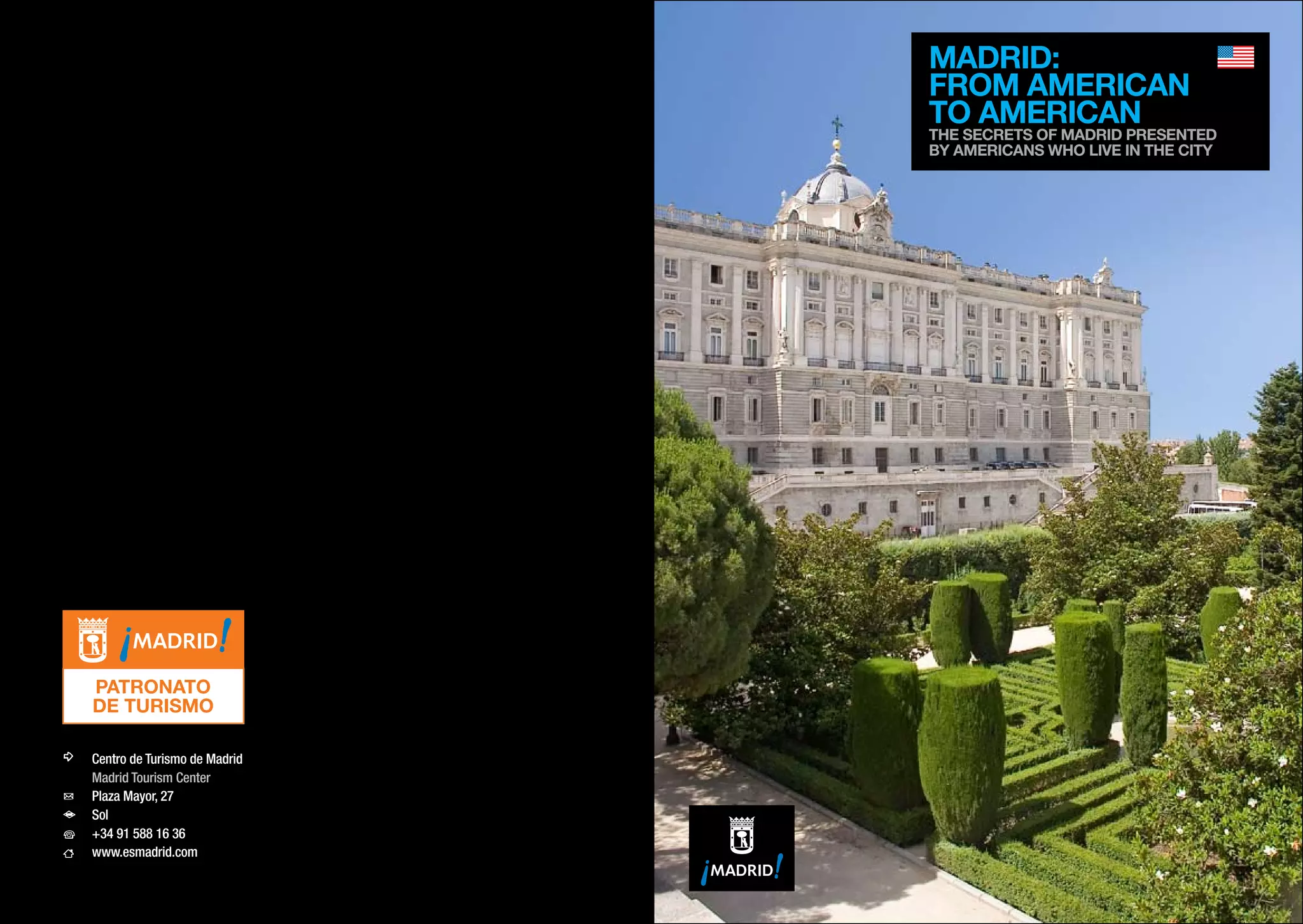
MADRID:
FROM AMERICAN
TO AMERICAN

THE SECRETS OF MADRID PRESENTED
BY AMERICANS WHO LIVE IN THE CITY

i
h
f
b
c

Centro de Turismo de Madrid
Madrid Tourism Center
Plaza Mayor, 27
Sol
+34 91 588 16 36
www.esmadrid.com
MADRID: FROM AMERICAN TO AMERICAN
MADRID TOURIST BOARD
Economy, Employment and Citizen Participation Department
City of Madrid
h Plaza Mayor 27
28012 MADRID
f Sol

Interviews by Andrew Ferren
Design and production: E.M. Promoción Madrid

If you wish to be kept up to date with the very latest news and
events from Madrid, register at www.esmadrid.com/recuerdamadrid.
There you can download the form, fill in your personal
details and send it to recuerdamadridptm@munimadrid.es.
MADRID: FROM AMERICAN TO AMERICAN

index
Prologue by Madrid City Hall (p.02)	
						
INTRODUCTION by THE United States AMBASSADOR in Madrid (p.03)
Tourist information centers (p.04)
“DISCOVER MADRID” GUIDED TOURS PROGRAM (p.05)
					
Historical background (p.06)
Routes around the city (p.10)
							
not to be missed in Madrid (p.14)				
						
Dining out (p.22)
							
Shopping in Madrid	 (p.24)
AMERICANS ON MADRID (p.28)
•
•
•
•
•
•
•
•
•
•
•
•

Seann Brackin
Adam Bresnick	
Louis Bullock
William Derrenger
Peggy Gennatiempo	
Carolina A. Herrera
Robin Hunsucker
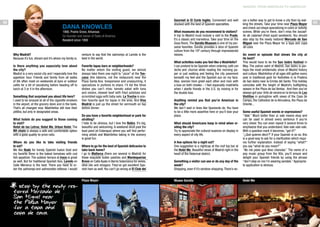
Dana Knowles
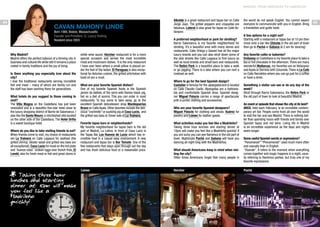
Cavan Mahony Linde
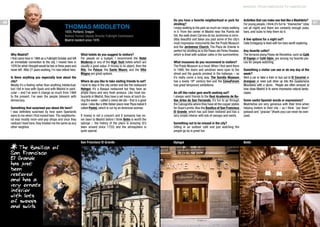
Thomas Middleton
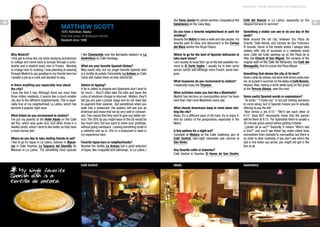
Matthew Scott
George Stolz

List of places recommended (p.52)
	
Safety recommendations (p.64)
MADRID: FROM AMERICAN TO AMERICAN

3

2

Madrid has always been characterized by the ease
with which visitors can adapt themselves to daily life
here. And it is precisely this characteristic that best
defines the city, and is one of the strengths that has
helped Madrid to consolidate its position as one of the
great European capital cities.
Madrid is a visitor-friendly city, a view shared by
visitors from all over the world. And we would like
to establish closer ties with American citizens. The
fact is that Madrid shares fundamental values with
the United States, such as a hard-work ethic, equal
opportunities, the mixture of cultures and social integration as the driving force behind prosperity. And
as such, Madrid, within the framework of Madrid City
Council’s United States Plan, is implementing a series
of initiatives and “mechanisms” through which we
hope to strengthen relations and encourage reciprocal exchange.
This Guide is one of those “mechanisms”. It is a
tourist information guide, but it has been put together
from the viewpoint and with feedback from American
citizens who actually live in Madrid.
Users of the guide will not only be able to access indepth information about the city’s rich cultural and
artistic heritage, its great restaurants, recreational
activities and shopping areas, but they will also get
to know Madrid from a more familiar perspective, as
fellow Americans offer their own perspective on the
city, including their favorite hang-outs.

In my position as the Mayor of Madrid, I would like to
offer them my sincere thanks for their collaboration
and their hard work in the making of this guide, and
at the same time, I would like to take the opportunity to once more offer our thanks and express our
complete satisfaction with the degree of collaboration
and dialogue that we continue to maintain with the
United States of America in Spain, through the American Business Council, the US Chamber of Commerce
in Spain, and the Spain-US Chamber of Commerce.
Without their help, it would have been impossible to
develop all the initiatives with which, as part of the
United States Plan, we are trying to establish this framework for closer relations between Madrid and the
United States of America.
And as for the users of this guide, I would also like to
thank you for having chosen Madrid as your destination city. I am convinced that Madrid will more than
meet your expectations and I hope that you enjoy
your stay in Madrid so much so, that when you do
return home, you do so hoping to one day repeat your
Madrid experience. Because from today onwards, you
are one of us, you are a “Madrileño”.
Welcome to Madrid and thank you again for visiting us!

Alberto Ruiz-Gallardón
Mayor of Madrid

My wife, Susan, and I would like to join the Madrid
city government in welcoming you to Madrid. We
are relatively new arrivals ourselves and have enjoyed exploring all that Madrid has to offer. The City’s
“Madrid: From American to American” guide provides
an excellent introduction. Along with a brief history,
it features tips and suggestions from several Americans living here—including our own Consul General,
Peggy Gennatiempo.
Susan and I wouldn’t want to miss the opportunity
to include here some of our own recommendations.
Among our favorite things to do are wandering along
the charming narrow streets near historic Plaza Mayor
and strolling through Retiro Park. We’ve also enjoyed
sampling tapas at many of the great restaurants here,
visiting the famous museums, and attending “fútbol”
matches at the Bernabéu and Calderón stadiums.
Perhaps more than anything, we have been very impressed by the warmth of the Madrileños and are sure
you will experience the same hospitality as we have.

This guide is an initiative of the City’s Plan USAMadrid, a strategy focused on increasing tourism and
investments by Americans. Among the many proposals
included in the strategy are measures aimed at
meeting the security needs of American tourists. I
applaud the City’s efforts in this regard, since protecting American citizens is one of my top priorities
as U.S. Ambassador to Spain. I encourage you to
check out the safety recommendations included in
this brochure and invite you to visit our website for
information on the services we provide in our Consular Section. Go to http://madrid.usembassy.gov/,
click on U.S. Citizen Services, and be sure to register
with us while you’re at it.
We wish you a wonderful stay in Madrid,

Ambassador Alan D. Solomont
and Susan Solomont
MADRID: FROM AMERICAN TO AMERICAN

TOURIST INFORMATION
CENTERS
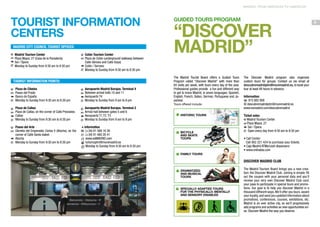
Madrid City Council Tourist Offices:
i Madrid Tourism Center

h Plaza Mayor, 27 (Casa de la Panadería)
f Sol / Ópera
k Monday to Sunday from 9:30 am to 8:30 pm

i Colón Tourism Center

h Plaza de Colón (underground walkway between

“DISCOVER
MADRID”

Calle Génova and Calle Goya)

f Colón / Serrano
k Monday to Sunday from 9:30 am to 8:30 pm

Tourist Information Points:
i Plaza de Cibeles

GUIDED TOURs PROGRAM

i Aeropuerto Madrid Barajas. Terminal 4

h Paseo del Prado
f Banco de España
k Monday to Sunday from 9:30 am to 8:30 pm

h Between arrival halls 10 and 11
f Aeropuerto T4
k Monday to Sunday from 9 am to 8 pm

i Plaza de Callao

i Aeropuerto Madrid Barajas. Terminal 2

The Madrid Tourist Board offers a Guided Tours
Program called “Discover Madrid” with more than
65 visits per week, with tours every day of the year.
Professional guides provide a fun and different way
to get to know Madrid, in seven languages: Spanish,
English, French, Italian, German, Portuguese and Japanese.
Tours offered include:

h Plaza de Callao, on the corner of Calle Preciados
f Callao
k Monday to Sunday from 9:30 am to 8:30 pm

h Arrival hall between gates 5 and 6
f Aeropuerto T1,T2, T3
k Monday to Sunday from 9 am to 8 pm

Historic tours

i Paseo del Arte

+ information
b (+34) 91 588 16 36
(+34) 91 480 20 41
c www.esmadrid.com
a turismoptm@munimadrid.es
k Monday to Sunday from 9:30 am to 8:30 pm

Bicycle
and skate
tours

h Glorieta del Emperador Carlos V (Atocha), on the

corner of Calle Santa Isabel
f Atocha
k Monday to Sunday from 9:30 am to 8:30 pm

The Discover Madrid program also organizes
custom tours for groups. Contact us via email at
descubremadridptm@munimadrid.es, to book your
tour at least 48 hours in advance.
Information
b 915 882 906
@ descubremadridptm@munimadrid.es
www.esmadrid.com/descubremadrid
Ticket sales
i Madrid Tourism Center
h Plaza Mayor, 27
f Sol / Ópera
k Open every day from 9:30 am to 8:30 pm
• Call Center:
Call 902 221 424 to purchase your tickets.
• Caja Madrid ATMs/cash dispensers
• www.entradas.com

Family tours

Discover Madrid Club
Dramatized
and musical
tours

Specially adapted tours
for the physically, mentally
and sensory DISABLED

The Madrid Tourism Board brings you a new creation: the Discover Madrid Club. Joining is simple: fill
out the coupon with your personal data and you’ll
receive your very own Discover Madrid Club card,
your pass to participate in special tours and promotions. Our goal is to help you discover Madrid in a
thousand different ways. We’ll offer you tours, award
your loyalty, and send you updated information about
promotions, conferences, courses, exhibitions, etc.
Madrid is an ever active city, so we’ll progressively
add programs and activities as new opportunities arise. Discover Madrid the way you deserve.

5
MADRID: FROM AMERICAN TO AMERICAN

6

7

HISTORICAL
BACKGROUND
The Origins of Madrid

The Hapsburg Dynasty
(16th – 17th Century)

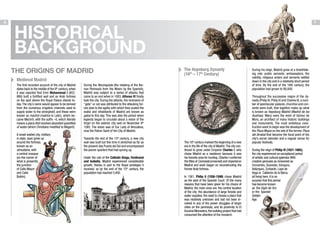
Medieval Madrid
The first recorded account of the city of Madrid
dates back to the middle of the 9th century, when
it was reported that Emir Muhammad I (852886) built a fortified wall and an Arab fortress
on the spot where the Royal Palace stands today. The city´s name would appear to be derived
from the numerous irrigation channels used to
supply water to the stronghold, and these were
known as machrá (matrice in Latin), which became Machrit, with the suffix –it, which literally
means a place that receives abundant quantities
of water (which Christians modified to Magerit).
A small walled city, military
in style, soon grew up
around the fortress,
known as an
almudaina, with
a central mosque
(on the corner of
what is presently
the junction
of Calle Mayor
and Calle
Bailén).

During the Reconquista (the retaking of the Iberian Peninsula from the Moors by the Spanish),
Madrid was subject to a series of attacks that
came to an end when in 1083, Alfonso VI finally
took the city. During the attacks, the nickname of
“gato” or cat was attributed to the attacking forces (due to the agility with which they scaled the
walls) and inhabitants of Madrid are known as
gatos to this day. This was also the period when
legends began to circulate about a vision of the
Virgin on the exterior city wall on November 9th
1085. The vision was of Our Lady of Almudena,
now the Patron Saint of the City of Madrid.
Towards the end of the 13th century, a new city
wall was built but this time it stretched as far as
the present-day Puerta del Sol and encompassed
the poorer quarters that had sprung up.
Under the rule of the Catholic Kings, Ferdinand
and Isabella, Madrid experienced considerable
growth, thanks in part to the Royal privileges it
received, so by the end of the 15th century, the
population had reached 3,400.

The 16th century marked the beginning of a new
era in the life of the city of Madrid. The city continued to grow under Emperor Charles I, who
chose Madrid as a residence because it was
his favorite area for hunting. Charles I conferred
the titles of Coronada (crowned) and Imperial on
Madrid and work began on reconstructing the
former Arab fortress.
In 1561, Philip II (1556-1598) chose Madrid
as the seat of the Spanish Court. Of the many
reasons that have been given for his choice of
Madrid, the main ones are: the central location
of the city; the abundance of large forests and
water supplies; the need to choose a place that
was relatively unknown and had not been involved in any of the power struggles of larger
cities on the peninsula; and its proximity to El
Escorial Monastery, the building project that had
consumed the attention of the monarch.

During his reign, Madrid grew at a breathtaking rate: public servants, ambassadors, the
nobility, religious orders and servants settled
down in the city and in a relatively short period
of time. By the end of the 16th century, the
population had grown to 90,000.
Throughout the successive reigns of the dynasty (Philip III, Philip IV and Charles II), a number of spectacular palaces, churches and convents were built, that together make up what
is known as Hapsburg Madrid (Madrid de los
Austrias). Many were the work of Gómez de
Mora, an architect of many historic buildings
and monuments. The most ambitious construction work to begin was the development of
the Plaza Mayor on the site of the former Plaza
del Arrabal that became the focal point of the
city’s social calendar and a regular venue for
popular festivals.
During the reign of Philip IV (1621-1665),
the city experienced an exceptional period
of artistic and cultural splendor. With
creative geniuses as renowned as
Cervantes, Quevedo, Góngora,
Velázquez, Zurbarán, Lope de
Vega or Calderón de la Barca
all living here, it is no
surprise that this period
has become known
as the Siglo de Oro
or the Spanish
Golden
Age.
MADRID: FROM AMERICAN TO AMERICAN

8

18th Century

20th Century

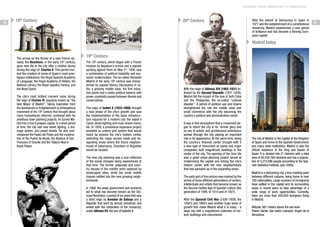
After the advent of Democracy in Spain in
1977 and the establishment of a constitutional
monarchy, Madrid experienced a new period
of brilliance and has become a thriving European capital.

Madrid today

The arrival on the throne of a new French dynasty, the Bourbons, in the early 18th century,
gave new life to the city after a relative slump
during the reign of Charles II. This period marked the creation of some of Spain’s most prestigious institutions: the Royal Spanish Academy
of Language, the Royal Academy of History, the
National Library, the Royal Tapestry Factory, and
the Royal Opera.
The city´s most brilliant moment came during
the reign of Charles III, popularly known as “the
best Mayor of Madrid”. Taking inspiration from
the Iluminación or Enlightenment (a philosophical
movement of the 18th century that brought about
many humanitarian reforms), combined with his
ambitious town planning projects, he turned Madrid into a true European capital. In a short period
of time, the city had new street lighting, a drainage system, and paved streets. He also commissioned the Paseo del Prado and the construction of the Puerta de Alcalá, the Basilica of San
Francisco El Grande and the Palacio Real or
Royal Palace.

19th Century
The 19th century, which began with a French
invasion by Napoleon´s armies and a popular
uprising against them on May 2nd, 1808, saw
a combination of political instability and economic modernization. The so-called Romantic
Madrid of the early 19th century was characterized by popular literary discussions in cafés, a growing middle class, the first industrial plants and a shaky political balance with
power constantly passed between liberals and
conservatives.

The reign of Isabel II (1833-1868) brought
a new phase of the city’s growth and saw
the implementation of the basic infrastructure required for a modern city: the Isabel II
Canal, street lighting and mule-drawn trams,
etc. In 1859, a provisional expansion project
provided an orderly grid system that would
reach far beyond the city’s historic center,
extending the major access roads and designating areas where the future neighborhoods of Salamanca, Chamberí or Argüelles
would be located.
The new city planning was a true reflection
of the social changes being experienced at
that time. The former palacetes and country houses of the nobility were replaced by
landscaped villas, while the small middle
classes settled into the new growing neighborhoods.
In 1868, the weak government and economy
led to what has become known as the Glorious Revolution, a period of six years that saw
a short reign by Amadeo de Saboya and a
Republic that went by almost unnoticed, and
ended with the restoration of the monarchy,
under Alfonso XII, the son of Isabella II.

With the reign of Alfonso XIII (1902-1931) followed by the Second Republic (1931-1939),
Madrid felt the impact of the loss of both Cuba
and the Philippines, the so-called “colonial
disaster”. A period of political ups and downs
strenghtened the role the middle class and
small commerce with the city becoming the
country's political and administrative center.
It was in this atmosphere that a movement began to return the city to its former glory and
an era of artistic and architectural eclecticism
spread through the city playing an important
role in its appearance. At the same time, being
the country´s financial center brought with it
a new type of monument as banks and major
companies built magnificent buildings in the
center of the city. The opening of the Gran Vía
was a great urban-planning project aimed at
modernizing the capital and linking the city’s
historic center with the new neighborhoods
that had sprouted up in the expanding areas.
The early part of the century was marked by the
arrival of three different generations of writers,
intellectuals and artists that became known as
the Second Golden Age of Spanish culture (the
generation of 1898, of 1914 and of 1927).
After the Spanish Civil War (1936-1939), the
1950’s and 1960’s saw another huge wave of
growth that made Madrid what it is today - a
large city with a magnificent collection of historic buildings and monuments.

The city of Madrid is the capital of the Kingdom
of Spain and home to the Spanish Government,
and many state institutions. Madrid is also the
official residence of the King and Queen of
Spain. It is divided into 21 districts with a total
area of 60,430.760 hectares and has a population of 3,273,006 people (according to the Spanish Statistics Institute, year 2009).
Madrid is a welcoming city, a true meeting point
between different cultures, being home to over
180 nationalities. Large numbers of immigrants
have settled in the capital and its surrounding
areas in recent years to take advantage of a
wide range of work opportunities. Currently,
there are more than 500,000 foreigners living
in Madrid.
Altitude: 667 meters above the sea level
Patron Saints: San Isidro Labrador, Virgen de la
Almudena.

9
10

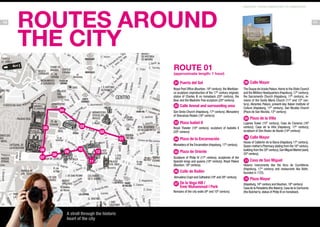
ROUTES AROUND
THE city

MADRID: FROM AMERICAN TO AMERICAN

11

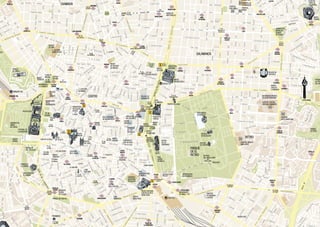
ROUTE 01

(approximate length: 1 hour)

Puerta del Sol
Royal Post Office (Bourbon, 18th century), the Mariblanca sculpture (reproduction of the 17th century original),
statue of Charles III on horseback (20th century), the
Bear and the Madroño Tree sculpture (20th century).

Calle Arenal and surrounding area

04

San Ginés Church (Hapsburg, 17th century), Monastery
of Descalzas Reales (16th century).

Plaza Isabel II

03

05

Royal Theater (19th century), sculpture of Isabella II
(20th century)

02
01

Plaza de la Encarnación
Monastery of the Encarnation (Hapsburg, 17th century).

06
07

08

09

10

12
11

Plaza de Oriente
Sculpture of Philip IV (17th century), sculptures of the
Spanish kings and queens (18th century), Royal Palace
(Bourbon, 18th century).

Calle de Bailén
Almudena Crypt and Cathedral (19th and 20th century).

De la Vega Hill /
Emir Muhammad I Park
Remains of the city walls (9th and 10th century).

A stroll through the historic
heart of the city

Calle Mayor
The Duque de Uceda Palace. Home to the State Council
and the Military Headquarters (Hapsburg, 17th century),
the Sacramento Church (Hapsburg, 17th century), remains of the Santa María Church (11th and 12th century), Abrantes Palace, present-day Italian Institute of
Culture (Hapsburg, 17th century), San Nicolás Church
(Plaza de San Nicolás, 13th century).

Plaza de la Villa
Lujanes Tower (15th century), Casa de Cisneros (16th
century), Casa de la Villa (Hapsburg, 17th century),
sculpture of Don Alvaro de Bazán (19th century)

Calle Mayor
House of Calderón de la Barca (Hapsburg 17th century),
Queen mother’s Pharmacy (dating from the 16th century,
building from the 20th century), San Miguel Market (early
20th century).

Cava de San Miguel
Historic monuments like the Arco de Cuchilleros
(Hapsburg, 17th century) and restaurants like Botin,
founded in 1725.

Plaza Mayor
(Hapsburg, 16th century and Bourbon, 18th century)
Casa de la Panadería (the Bakery), Casa de la Carnicería
(the Butcher’s), statue of Philip III on horseback.

ROUTE 1
Approximate length: 2 hours
MADRID: FROM AMERICAN TO AMERICAN

04
12

03

07

01
02

01

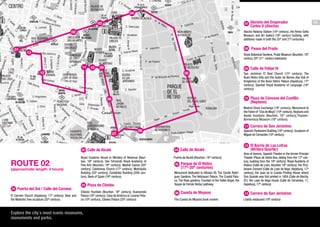
Glorieta del Emperador
Carlos V (Atocha)

Atocha Railway Station (19th century), the Reina Sofia
Museum and Art Gallery (18th century building, with
additions made in both the 20th and 21st centuries)

05

13

08

05
11

10

09

12

05

Paseo del Prado

Royal Botanical Gardens, Prado Museum (Bourbon, 18th
century, 20th-21st century extension).

09 Calle de Felipe IV
San Jerónimo El Real Church (15th century), The
Buen Retiro Villa and the Salón de Reinos (the Hall of
Kingdoms) of the Buen Retiro Palace (Hapsburg, 17th
century), Spanish Royal Academy of Language (19th
century).

Plaza de Cánovas del Castillo
(Neptuno)

08

Madrid Stock Exchange (19th century), Monument to
the Fallen of “Dos de Mayo” (19th century), Neptune and
Apollo fountains (Bourbon, 18th century),ThyssenBornemisza Museum (19th century).

07

Carrera de San Jerónimo

06

Spanish Parliament Building (19th century), Sculpture of
Miguel de Cervantes (19th century).

Calle de Alcalá

Calle de Alcalá

ROUTE 02

(approximate length: 3 hours)

Puerta del Sol / Calle del Carmen
El Carmen Church (Hapsburg, 17 century). Bear and
the Madroño Tree sculpture (20th century).
th

Royal Customs House or Ministry of Revenue (Bourbon, 18th century), San Fernando Royal Academy of
fine Arts (Bourbon, 18th century), Madrid Casino (20th
century), Calatravas Church (17th century), Metrópolis
Building (20th century), Cariátides Building (20th century), Bank of Spain (19th century).

Plaza de Cibeles
Cibeles Fountain (Bourbon, 18th century), Buenavista
Palace (18th century), Casa de América or Linares Palace (19th century), Cibeles Palace (20th century).

Explore the city´s most iconic museums,
monuments and parks.

Puerta de Alcalá (Bourbon, 18th century)

05

Parque de El Retiro
(17th-20th centuries)

Monument dedicated to Alfonso XII, The Cecilio Rodríguez Gardens, The Velázquez Palace, The Crystal Palace, The Rose gardens, Fountain of the Fallen Angel, the
Duque de Fernán Núñez pathway.

06

Cuesta de Moyano

The Cuesta de Moyano book market

12

El Barrio de Las Letras
(Writers´Quarter)

Area of taverns, Spanish Theater or the former Principe
Theater (Plaza de Santa Ana, dating from the 17th century, building from the 19th century), Royal Academy of
History (Calle de León, Bourbon 18th century), the Trinitarians Convent (Calle de Lope de Vega, Hapsburg, 17th
century), the Juan de la Cuesta Printing House where
Don Quixote was first printed in 1604 (Calle de Atocha,
87), the Lope de Vega House (Calle de Cervantes, 11,
Hapsburg, 17th century)

13

Carrera de San Jerónimo

Lhardy restaurant (19th century)

ROUTE 2
Approximate length: 3 hours

13
MADRID: FROM AMERICAN TO AMERICAN

14

NOT TO be MISSED IN MADRID
El Paseo del Arte

A walk along Madrid’s Paseo del Prado provides a visit through one of the most art-dense neighborhoods in the world. In
addition to the city’s three largest museums, the area, which is becoming known as the Paseo del Arte, is also home to the
Royal Botanical Gardens and numerous commercial galleries.

Prado Museum

The Prado Museum is one of the most respected art centers
and is a must-see on any visit to Madrid. Its walls are decked with the best collection of works of art of the Spanish
School from the 16th through to the 18th century. It also
houses large collections from both the Flemish and Venetian schools, as well as smaller collections by German,
French and English artists. The museum has been recently
expanded by architect Rafael Moneo, and now includes the
Claustro de los Jerónimos (Cloister of the Jerónimos).
h Paseo del Prado, s/n
f Banco de España / Atocha
k Tuesday to Sunday from 9 am to 8pm
b 902 107 077
+info: www.museodelprado.es

Thyssen-Bornemisza
MUSEUM

Housed in the Villahermosa Palace, this is one of the
world’s largest private art collections and brings together
some 1,000 works of art that cover seven centuries of art

PLAZA MAYOR

PLAZA DE LA VILLA

(from the 13th through the 20th century). A recent addition
to the palace houses the private collection of the widow of
Baron Thyssen, Carmen Cervera, and contains works of art
from the 17th century through to the 19th century by Spanish
and international artists.
h Paseo del Prado, 8
f Banco de España / Atocha
k Tuesday to Sunday from 10 am to 7pm
b 913 690 151
+info: www.museothyssen.org

Open
Mondays

Reina Sofía NATIONAL
MUSEUM AND ART GALLERY

This renowned museum, as well as housing the Guernica
(1937) by Picasso, is home to works of art by some of the
most important artists of the latter part of the 19th century
to the present-day. Beyond Picasso, it features many works
by Spanish modernists like Dalí, Miró, Juan Gris, Julio
González, Tapies, Chillida...). The museum is located in the
former San Carlos General Hospital, designed by Sabatini
during the reign of Charles III and was restored to its former glory in the 1980s. In September 2005, a new additon
(designed by architect Jean Nouvel) added three buildings
that house galleries and temporary exhibitions, auditoriums
and a library .
h C/ Santa Isabel, 52
f Atocha
k Monday to Saturday from 10 am to 9 pm. Sunday from
10 am to 2:30 pm. Closed Tuesdays.
b 917 741 000
+info: www.museoreinasofia.es

This spectacular porticoed square has been the focal point
of the city since Philip II settled on Madrid as the official
residence of the Spanish Royal Court in 1561. In its lifetime it has been used for a variety of purposes: theater,
civic center, market, etc. The central point is the Casa de
la Panadería (the Bakery). It stands opposite the Casa de
la Carnicería (the Butchers´) and both buildings can be
easily recognized by their characteristic towers.
Over the course of history, the square has suffered three
fires, the last one in 1790 at which time it was rebuilt by
Juan de Villanueva. Where the streets joined, the square
was walled in with half-point arches, and dwellings were
built above them. The only condition for owners of the properties was that they were required to rent out their balconies (presently 237 in total) during celebrations. The higher
the balcony, the higher the rental price.
In the center of the square stands the statue of Philip III on
horseback, work of Flemish sculptors Juan de Bologna and
Pietro Tacca that dates from the 17th century. It was placed
here in 1848, from its former home in the Casa de Campo.
h Plaza Mayor
f Sol

Located in an area of the city popularly known as Hapsburg
Madrid (Madrid de Los Austrias), it is home to buildings
from the 15th, 16th and 17th centuries, namely the Casa de la
Villa, the Lujanes Tower and the Casa de Cisneros.
In the center of the square stands the statue by Mariano
Benlliure of Álvaro de Bazán, Marquis of Santa Cruz, who
was Admiral of the Spanish Armada during the reign of
Philip II. The Casa de la Villa, designed by architect Juan
Gómez de Mora is a two-storey building with towers on
each of its four corners, and has changed little since it was
first built. The only exception is the balcony that now faces
onto Calle Mayor that was built in the 18th century by Juan
de Villanueva so that the Queen would be able to see the
Corpus Christi Processions. The building still has two of its
original doors that date back to the days when it was first
the town hall and later the city jail.
Linked to the Casa de la Villa by a small passageway – built
at the beginning of the 20th century – is the Casa de Cisneros, built in the first third of the 16th century (1537), a great
example of plateresque architecture and commissioned by
the nephew of Cardinal Cisneros. On the left as you enter
the square stands the Lujanes Tower (15th century) in Mudejar style (Spanish/Moorish). It is one of the oldest civic
buildings still standing in the city and according to legend
King Francois I of France was imprisoned there after being
taken prisoner in the Battle of Pavia in 1520.
h Plaza de la Villa
f Sol / Ópera

15
MADRID: FROM AMERICAN TO AMERICAN

Open Mondays

16

Royal Palace and surrounding area

The Palace, built in the 18th century on the orders of the
first king of the Bourbon dynasty (Philip V), houses treasures comparable to other great European palaces. The
surrounding urban landscape is very representative of
Madrid’s colourful history and contains such emblematic
building and gardens as the: Plaza de Oriente, Teatro
Real (Royal Theater), Almudena Cathedral, Campo
del Moro Gardens, Monastery of the Encarnación and
Sabatini Gardens.
The gates of the Royal Palace are the venue for the Relevo Solemne de la Guardia Real (the Solemn Changing
of the Royal Guard) a re-enactment of a ceremony that
used to take place during the reigns of Alfonso XII and Alfonso XIII. It takes place at midday on the first Wednesday
of each month (excluding July, August and September,
and on days of official acts of state or during inclement
weather) with a total of 429 military staff and 105 horses
taking part.
Every Wednesday from 11 am to 2 pm, visitors can also
see the Relevo de la Guardia en la Puerta del Prínci-

THE RETIRO PARK

pe del Palacio Real (the Changing of the Guard at the
Prince’s Gate of the Royal Palace) -excluding days of the
Solemn Changing of the Guard and official acts of state
or during inclement weather. Dressed in regal uniforms,
each “post” (consisting of 2 foot soldiers and 2 riders on
horseback) falls into formation in front of the Puerta del
Príncipe (Prince’s Gate) to the musical accompaniment
of fife and drum. The Presentation of Credentials is one
of the most solemn acts in the life of a diplomat where
the sending Head of State presents the new Ambassador
to the King. The ceremony involves 377 members of the
Royal Guard.
h C/ Bailén, s/n
f Ópera
k WINTER (October-March) Monday to Saturday from
9:30 am to 5 pm. Sundays from 9 am to 2 pm. SUMMER
(April-September) Monday to Saturday from 9 am to 6
pm. Sundays from 9 am to 3 pm. May be closed for official acts of state.
b 914 548 800
+info: www.patrimonionacional.es

Built in the 17th century during the reign of Philip IV, this is
the most important (historically and artistically speaking)
of all the parks in Madrid and is one of the most beautiful
city parks in the world. The park was originally home to a
complex of buildings that comprised a large palace, and
a garden with a host of features: hermitages, grottos, covered paths, ponds, etc. Its most attractive and unrivaled
features are the Cecilio Rodríguez Gardens, the Alfonso
XII Monument, the Retiro Lake, the ruins of the San Isidoro Hermitage, the Velázquez Palace, the Crystal Palace, the Fountain of the Fallen Angel, the Ciprés Calvo
trees (Bald Cypress), and the Alcachofa Fountain.
f Retiro
k WINTER (from October to March): from 7 am to 10 pm
(gates start to open at 6 am, with all gates open by 7 am
and closing starts at 9:30 pm, with all gates closed by 10
pm). SUMMER (from April to September): from 7 am to
midnight (closing starts at 11:30 pm, with all gates closed
by midnight).

17
MADRID: FROM AMERICAN TO AMERICAN

18

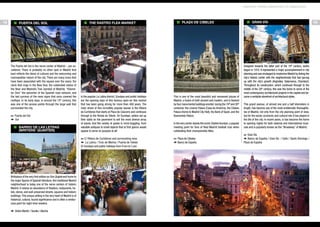
puerta del sol

The Puerta del Sol is the nerve center of Madrid – par excellence. There is probably no other spot in Madrid that
best reflects the blend of cultures and the welcoming and
cosmopolitan nature of the city. There are many icons that
have been associated with the square over the years: the
clock that rings in the New Year, the celebrated statue of
the Bear and Madroño Tree (symbol of Madrid), “Kilometer Zero” the epicenter of the Spanish road network, and
the last survivor of the neon signs that once covered the
rooftops. In its early days, in around the 15th century, this
was one of the access points through the large wall that
surrounded the city.

The Rastro flea market

PLAZA DE CIBELES

Barrio de las Letras
(Writers’ Quarter)

Birthplace of the very first edition on Don Quijote and home to
the major figures of Spanish literature, this traditional Madrid
neighborhood is today one of the nerve centers of historic
Madrid. It retains an abundance of theaters, restaurants, hotels, stores, and well-preserved streets, squares and historic
buildings. This unique setting in the very heart of Madrid is of
historical, cultural, tourist significance and is often a rendezvous point for night-time revelers.
f Antón Martín / Sevilla / Atocha

This is one of the most beautiful and renowned plazas of
Madrid, a fusion of both ancient and modern, and is flanked
by four monumental buildings erected during the 19th and 20th
centuries: the Linares Palace (Casa de América), the Cibeles
Palace (home to Madrid City Hall), the Bank of Spain, and the
Buenavista Palace.

h C/ Ribera de Curtidores and surrounding area
f La Latina / Tirso de Molina / Puerta de Toledo
k Sundays and public holidays from 9 am to 3 pm

h Puerta del Sol
f Sol

In the popular La Latina district, Sundays and public holidays
are the opening days of this famous open-air flea market
that has been going strong for more than 400 years. The
main street of this incredibly popular bazaar is the Ribera
de Curtidores that starts at Plaza de Cascorro and continues
through to the Ronda de Toledo. On Sundays, sellers set up
their stalls on the pavement to sell the most diverse array
of wares. And the variety of goods is mind-boggling: from
valuable antiques to small objects that at first glance would
appear to serve no purpose at all!

h Plaza de Cibeles
f Banco de España

In the very center stands the iconic Cibeles fountain, a popular
meeting point for fans of Real Madrid football club when
celebrating their championship titles.

Gran Vía

Designed towards the latter part of the 19th century, works
began in 1910. It represented a major accomplishment in city
planning and was envisaged to modernize Madrid by linking the
city’s historic center with the neighborhoods that had sprung
up with the city’s growth (Argüelles, Salamanca, Chamberí).
Throughout its construction, which continued through to the
middle of the 20th century, this was the home to some of the
most contemporary architectural projects in the capital and became a veritable storefront of architectural styles.
This grand avenue, of almost one and a half kilometers in
length, has become one of the most emblematic thoroughfares of Madrid, not only from the city planning point of view,
but for the social, economic and cultural role it has played in
the life of the city. In recent years, is has become the home
to opening nights for both national and international musicals and is popularly known as the “Broadway” of Madrid.
h Gran Vía
f Banco de España / Gran Vía / Callo / Santo Domingo /
Plaza de España

19
MADRID: FROM AMERICAN TO AMERICAN

Open Mondays

20

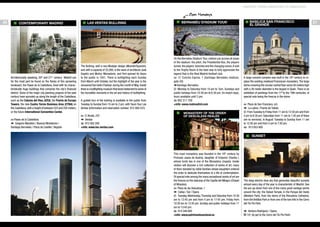
Contemporary Madrid

Architecturally speaking, 20th and 21st- century Madrid can
for the most part be found on the flanks of this sprawling
boulevard, the Paseo de la Castellana, lined with its characteristically huge buildings that comprise the city’s financial
district. Some of the major city planning projects of the past
century have sprouted up along the length of the Castellana,
such as the Colonia del Viso, AZCA, the Puerta de Europa
Towers, the new Cuatro Torres Business Area (CTBA) on
the Castellana, with a height of between 223 and 250 meters,
or the future International Convention Center.
h Paseo de la Castellana
f Gregorio Marañón / Nuevos Ministerios /
Santiago Bernabéu / Plaza de Castilla / Begoña

Las Ventas Bullring

The Bullring, with a neo-Mudejar design (Moorish/Spanish),
and with a capacity of 25,000, is the work of architects José
Espeliú and Muñoz Monasterio, and first opened its doors
to the public in 1931. There is bullfighting each Sunday
from March until October, but the highlight of the year is the
renowned San Isidro Festival, during the month of May. Inside
there is a bullfighting museum that bears testament to some of
the incredible moments in the art and history of bullfighting.
A guided tour of the bullring is available to the public from
Tuesday to Sunday from 10 am to 2 pm, with Tauro Tour Las
Ventas (information and reservation number: 915 569 237).
h C/ Alcalá, 237
f Ventas
b 913 562 200
+info: www.las-ventas.com

Bernabéu stadium tour

On the Bernabéu Stadium Tour, visitors can access all areas
of the stadium: the pitch, the Presidential Box, the players
tunnel, the players’ benches and the changing rooms. A visit
to the Trophy Room is the best way to fully appreciate the
legend that is the Real Madrid football club.
h C/ Concha Espina, 1 (Santiago Bernabéu stadium,
gate 20)
fSantiago Bernabéu
k Monday to Saturday from 10 am to 7pm. Sundays and
public holidays from 10:30 am to 6:30 pm. On match days,
tours available until 2 pm.
b 902 311 709
+info: www.realmadrid.com
MonasterY OF THE ORDER
OF DESCALZAS REALES

BASILICA SAN FRANCISCO
EL GRANDE

A large convent complex was built in the 18th century to replace the existing medieval Franciscan monastery. The large
dome crowning the circular central floor some 58 meters high
with a 38-meter diameter is the largest in Spain. There is an
exhibition of paintings from the 17th to the 19th centuries, of
special note being the frescos in the dome.
h Plaza de San Francisco, s/n
f La Latina / Puerta de Toledo
k From Tuesday to Friday from 11 am to 12:30 pm and from
4 pm to 6:30 pm. Saturdays from 11 am to 1:30 pm (if there
are no services). In August: Tuesday to Sunday from 11 am
to 12:30 pm and from 5 pm to 7:30 pm.
b 913 653 800

SUNSET

This royal monastery was founded in the 16th century by
Princess Juana de Austria, daughter of Emperor Charles I,
whose tomb lies in one of the Monastery chapels. Inside
visitors will discover a rich collection of works of art, many
of them donated by noble families whose daughters entered
the order to dedicate themselves to a life of contemplation.
Of special note among the many exceptional works of art are
the frescos on the stairway of the Capilla del Milagro (Chapel
of Miracles).
h Plaza de las Descalzas, 1
f Callao / Sol / Ópera
k Tuesday, Wednesday, Thursday and Saturday from 10:30
am to 12:45 pm and from 4 pm to 17:45 pm. Friday from
10:30 am to 12:45 pm. Sunday and public holidays from 11
am to 13:45 pm.
b 914 548 800
+info: www.patrimonionacional.es

The deep electric-blue sky that generates beautiful sunsets
almost every day of the year is characteristic of Madrid. See
the sun go down from one of the many great vantage points
around the city: the Debod Temple, in the Parque del Oeste
(Western Park), from the dome of the Almudena Cathedral,
from the Vistillas Park or from one of the low hills in the Cerro
del Tío Pío Park.
f Ventura Rodríguez / Opera
141 (to get to the Cerro del Tío Pío Park)

21
MADRID: FROM AMERICAN TO AMERICAN

22

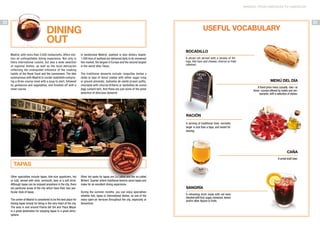
DINING
OUT
Madrid, with more than 3,000 restaurants, offers visitors an unforgettable dining experience. Not only is
there international cuisine, but also a wide selection
of regional dishes, as well as the local delicacies
reflecting the undisputed influence of the cooking
habits of the Royal Court and the commoners. The dish
synonymous with Madrid is cocido madrileño comprising a three-course meal with a soup to start, followed
by garbanzos and vegetables, and finished off with a
meat course.

In landlocked Madrid, seafood is also dietary staple:
1,000 tons of seafood are delivered daily to its renowned
fish market, the largest in Europe and the second largest
in the world after Tokyo.

23

USEFUL VOCABULARY
Bocadillo
A sliced roll served with a variety of fillings, like ham and cheese, chorizo or fried
calamari.

The traditional desserts include rosquillas tontas y
listas (a type of donut coated with either sugar icing
or ground almonds), buñuelos de viento (cream puffs),
chocolate with churros (fritters) or bartolillos de crema
(egg custard tart). And these are just some of the great
selection of delicious desserts.

Menú del día
A fixed-price menu (usually -two –or
three- course) offered by hotels and restaurants, with a selection of dishes.

Ración
A serving of traditional food, normally
larger in size than a tapa, and meant for
sharing.

Caña
A small draft beer.

TAPAS
Other specialties include tapas, bite-size appetizers, hot
or cold, served with wine, vermouth, beer or a soft drink.
Although tapas can be enjoyed anywhere in the city, there
are particular areas of the city which have their own particular style of tapas.
The center of Madrid is considered to be the best place for
having tapas simply for being in the very heart of the city.
The area in and around Puerta del Sol and Plaza Mayor
is a great destination for enjoying tapas in a great atmosphere.

Other hot spots for tapas are La Latina and the so-called
Writers’ Quarter where traditional taverns serve tapas and
make for an excellent dining experience.
During the summer months, you can enjoy specialties
whether fish, tapas or international dishes, on one of the
many open-air terraces throughout the city, especially at
dinnertime.

Sangría
A refreshing drink made with red wine
blended with fruit, sugar, cinnamon, lemon
and/or other liquors or fruits.
MADRID: FROM AMERICAN TO AMERICAN

c

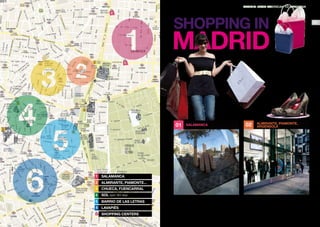
SHOPPING IN

24

MADRID
Madrid boasts a myriad of neighborhoods
in which you can spend a few unforgettable days shopping. You will find
everything here, from international luxury boutiques of leading fashion labels to stores
selling the most alternative
designs and others offering
more traditional items.

c

01

1

Chueca, Fuencarral

4

SOL open 365 days

5

Barrio de las Letras

6

LAVAPIÉS

c

SHOPPING CENTERS

Almirante, Piamonte,
Argensola

Almirante, Piamonte...

3

02

Salamanca

2

Salamanca

Madrid’s famous Golden Mile, the area comprising such
exclusive streets as Ortega y Gasset, Serrano, Goya, Jorge
Juan and Villanueva is home to the world’s most prestigious
fashion brands.
f Serrano / Goya / Velázquez / Núñez de Balboa

These three streets and the area surrounding them from
one of the most charming areas in Madrid, which accommodates leading labels interspersed with a small
multibrand stores.
f Chueca / Colón / Alonso Martínez

25
MADRID: FROM AMERICAN TO AMERICAN

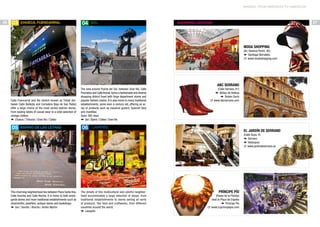
26

03

Chueca, Fuencarral

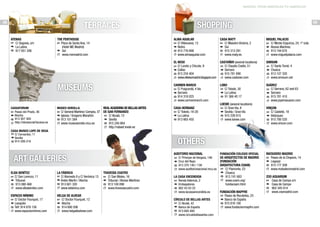
04

SOL

27

SHOPPING CENTERS

Moda Shopping
(Av. General Perón, 40)
f Santiago Bernabéu
c www.modashopping.com

ABC Serrano

Calle Fuencarral and the stretch known as Triball (between Calle Ballesta and Corredera Baja de San Pablo)
offer a large choice of the most varied fashion stores,
from leading labels of casual wear to a wide selection of
vintage clothes.
f Chueca / Tribunal / Gran Vía / Callao

05

Barrio de las Letras

The area around Puerta del Sol, between Gran Vía, Calle
Preciados and Calle Arenal, forms a fashionable and diverse
shopping district lined with large department stores and
popular fashion chains. It is also home to many traditional
establishments, some even a century old, offering an array of products such as classical guitars, Spanish fans
and mantillas.
Open 365 days
f Sol / Ópera / Callao / Gran Vía

06

(Calle Serrano, 61)
f Núñez de Balboa
f Rubén Darío
c www.abcserrano.com

Lavapiés

El Jardín de Serrano
(Calle Goya, 4)
f Serrano
f Velázquez
c www.jardindeserrano.es

This charming neighborhood lies between Plaza Santa Ana,
Calle Huertas and Calle Atocha. It is home to both avantgarde stores and more traditional establishments such as
silversmiths, jewellers, antique stores and bookshops.
f Sol / Sevilla / Atocha / Antón Martín

The streets of this multicultural and colorful neighborhood accommodate a large selection of shops: from
traditional establishments to stores selling all sorts
of products, like food and craftworks, from different
countries around the world.
f Lavapiés

Príncipe Pío
(Paseo de la Florida)
next to Plaza de España
f Príncipe Pío
c www.ccprincipepio.com
MADRID: FROM AMERICAN TO AMERICAN

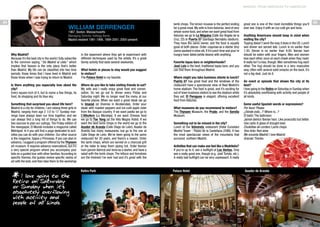
28

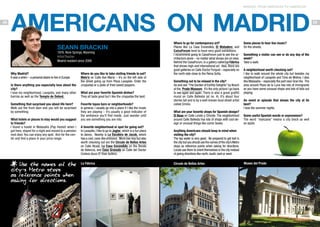
americans oN MADRID
SeanN Brackin
1976, Rock Springs, Wyoming
Artist/Teacher
Madrid resident since 2008

Why Madrid?
It was a whim – a personal desire to live in Europe.
Is there anything you especially love about the
city?
I love my neighborhood, Lavapiés, and many other
barrios as well as the Templo de Debod.
Something that surprised you about life here?
Walk out the front door and you will be surprised
by something.
What hotels or places to stay would you suggest
to friends?
I found a hostel in Malasaña (Pop Hostel) when I
got here, stayed for a night and moved to a pension
next door. You can enjoy any spot. Aim for the center and find a place in your price range.

Use the names of the
city s Metro stops
as reference points when
asking for directions.

Where do you like to take visiting friends to eat?
Melo’s on Calle Ave María – it’s on the left side of
the street going up from Plaza Lavapiés. Order the
croquetas or a plate of fried sweet peppers.
What are your favorite Spanish dishes?
They all taste good but I like the croquetas the best.
Favorite tapas bars or neighborhoods?
In general, I usually go into a place if I like the music
they are playing – it’s usually a good indicator of
the ambience you’ll find inside. Just wander until
you see something you are into.
A favorite neighborhood or spot for going out?
In Lavapiés, I like to go to Juglar, which is a fun place
to dance. Nearby is La Escalera de Jacob, which
has a cool, cave-like entrance. More low-key but also
worth checking out are the Círculo de Bellas Artes
on Calle Alcalá, La Casa Encendida on the Ronda
de Valencia, and Casa Granada on Calle del Doctor
Cortezo (buzz 6th floor button).
La Fábrica

Where to go for contemporary art?
Places like La Casa Encendida, El Matadero, and
CaixaForum tend to have very good exhibitions.
I recommend going to CaixaForum just to see the architecture alone – no matter what shows are on view.
Behind the CaixaForum, is a gallery called La Fábrica
that shows high-end international art. Also, there are
good galleries on Calle Doctor Forquet – especially on
the north side close to the Reina Sofia.
Something not to be missed in the city?
Go and see “The Garden of Earthly Delights” by Bosch
at the Prado Museum. It’s the only picture I go back
to see again and again. There is also a great grafitti
mural on Calle Ballesta (at no. 4). It’s about four
stories tall and is by a well-known local street artist
called Emilio.
What are your favorite shops for Spanish design?
El Beso on Calle Loreto y Chicote. The neighborhood
around Calle Ballesta has lots of shops with cool design or unusual things like comic books.

Some places to hear live music?
On the streets.
Something a visitor can see or do any day of the
week?
Take a walk.
A neighborhood worth checking out?
I like to walk around the whole city but besides my
neighborhood of Lavapiés and Tirso de Molina, I also
like Malasaña – especially the part near Gran Via. The
area around Plaza de la Luna has lots of immigrants
so you have some unusual shops and lots of kids out
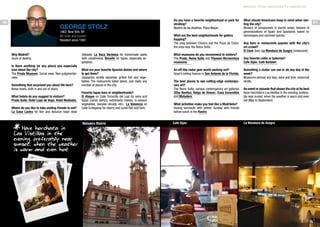
playing.
An event or episode that shows the city at its
best?
I love the summer nights.
Some useful Spanish words or expressions?
The word “manzana” means a city block as well
as apple.

Anything Americans should keep in mind when
visiting the city?
The tap water is very good. Be prepared to get lost in
the city but you should use the names of the city’s Metro
stops as reference points when asking for directions.
Locals use them to orient themselves in the city instead
of giving directions like north, south, east or west.
Círculo de Bellas Artes

Museo del Prado

29
MADRID: FROM AMERICAN TO AMERICAN

30

Adam Bresnick

1966, Huntsville, Alabama
Architect and partner, Estudio Farini-Bresnick, Professor of Studio
Design at EPS (Universidad CEU San Pablo)
Resident since 1990
Why Madrid?
When I was finishing my studies, a lot of new, interesting architecture was being built in Spain. I had
studied Spanish in school so my minimal language
experience combined with my interest in Spanish
architecture made early ‘90’s Madrid an obvious destination.
Is there anything you especially love about
the city?
Madrid as a capital city combines a certain conservative spirit with a real energy, unafraid of change.
Something that surprised you about life here?
What most surprised me is the sense of history. My
first year here, some British friends lived in the building
where Cervantes´s house once stood. Tourists would
stop beneath their windows and talk about Quixote.
Some years later, I lived for 10 years in that same
neighborhood, Barrio de las Letras, where you really
get a sense of the built-up layers of history, that one
lives and works where so many others have before.
What hotels do you suggest to those coming
to visit?
Depending on age and budget: the Room Mate chain
is fun and design-y. Chic and Basic is also great.

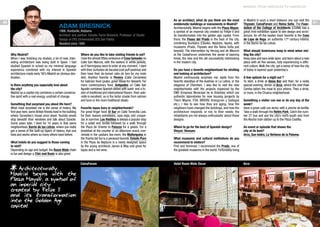
Architecturally,
Madrid begins with the
Plaza Mayor, a symbol of
an imperial city
created by Felipe II
and its transformation
into the Golden Age
capital.

Where do you like to take visiting friends to eat?
I love the almost fifties ambiance of Casa Salvador on
Calle San Marcos, with the waiters in white jackets,
as if Hemingway were to enter at any moment. I start
with their buñuelos de bacalao (cod puff pastries) and
then have their de-boned rabo de toro for my main
dish. Another favorite is Pereira (Calle Cervantes)
for Galician food (pulpo, great filloas for dessert). For
more contemporary food, Antipodes on Calle San
Agustín combines Spanish dishes with sushi and a fusion of traditional and international flavors -their solomillo is excellent, as is the tartar (made from salmon
and tuna or the more traditional steak).
Favorite tapas bars or neighborhoods?
For great finger food: El Sur on Calle Torrecilla Leal,
for their huevos estrellados, ropa vieja, and croquetas. In summer, Las Vistillas is always a popular stop
for a salad and tortilla followed by a walk through
the Plaza de Oriente to Palazzo for a gelato. For a
breakfast at the counter or an afternoon snack (merienda) in the upstairs tea-room, the Mallorquina in
the Puerta del Sol is a personal favorite. Estado Puro
in the Plaza de Neptuno is a newly designed space
by the young architects James & Mau and great for
tapas and a red wine.

CaixaForum

As an architect, what do you think are the most
emblematic buildings or monuments in Madrid?
Architecturally, Madrid begins with the Plaza Mayor,
a symbol of an imperial city created by Felipe II and
its transformation into the golden age capital. From
there, the Paseo del Prado is the best of the city,
combining fountains (Cibeles, Neptuno, Apolo), with
museums (Prado, Thyssen and the Reina Sofia just
beyond). The intervention by Herzog and de Meuron
at the CaixaForum underlines the sense of layering
times, the new and the old successfully interlocking
in the modern city.
Do you have a favorite neighborhood for strolling
and looking at architecture?
Madrid continuously surprises me; aside from the
favorite standbys of the Austrias or La Latina, or the
elegance of Chamberí, I also like to visit the new
neighborhoods with the projects organized by the
EMV (Empresa Municipal de la Vivienda) which are
authentic laboratories for new housing (projects by
Thom Mayne, FOA, MRDRV, Aranguren y Gallegos
etc.). I like to see how they are aging, how the
neighbors have changed the buildings, and how the
architecture responds, or not, to their needs; the
inhabitants are not always enthusiastic about these
designs.
Where to go for the best of Spanish design?
Vinçon, Simsum.
What museums and cultural institutions do you
recommend to visitors?
First and foremost, I recommend the Prado, one of
the greatest museums in the world. Fortunately living

Hotel Room Mate Óscar

in Madrid in such a short distance one can visit the
Thyssen, CaixaForum and Reina Sofía. The Foundation of the College of Architects (COAM) has a
great mini-exhibition space to see design and architecture. An off-the beaten track favorite is the Casa
de Lope de Vega, an authentic 17th century interior,
in the Barrio de las Letras.
What should Americans keep in mind when visiting the city?
Keep eyes and ears wide open, and learn about a new
place with all five senses, fully experiencing a different culture. Walk the city; get a sense of how the city
of today is layered upon yesterday’s.
A few options for a night out ?
To start, a drink at Glass Bar and then, for a really
special evening, dinner at Arce, where the chef Iñaki
Camba tailors the meal to your whims. Then a drink,
or more, in the Chueca neighborhood.
Something a visitor can see or do any day of the
week?
Have a great café con leche, with a pincho de tortilla.
Take a walk through the Retiro Park. Catch the number 27 bus and see the city’s north-south axis from
the Atocha train station up to the Plaza Castilla.
An event or episode that shows the
city at its best?
Arco, San Isidro, La Verbena de la Paloma.

Arce

31
MADRID: FROM AMERICAN TO AMERICAN

32

Louis Bullock
1976, Washington D.C.
Basketball player for Real Madrid
Resident since 2004

Why Madrid?
Basically because when Real Madrid calls, you don’t
say no. We’ve been here for six years and we love
it – it feels like home and my five-year old is already
fluent in Spanish.

Wellington is also a good choice – especially in summer because they have a pool on the roof. Whether
in Madrid or traveling around Spain, the NH Hotels are
always nice and not usually very expensive.

Is there anything you especially love about
the city?
Spaniards really are outdoor people and I always say
that whenever the weather is good – and most of
the year it is good – you’ve got to sit outside to eat
whenever possible. We just love that everyone here
wants to be out in the street and having fun.

What are your favorite restaurants?
My family loves Asian food so we often go to places
like Café Saigon or Thaï Gardens, which have both
great atmosphere and food. But when people come
to visit or we just want Spanish food, we like Casa
Juan or Mesón Txistu. The chef at Txistu also prepares meals for Real Madrid so it’s a popular place
with the athletes.

What hotels do you suggest to those coming to visit?
The Miguel Ángel is always a good bet. They have
an American-style brunch that is a hit with kids. The

If you weren’t training six days a week, where
would you go for exercise?
Most of the city parks, like the Retiro, the Casa de
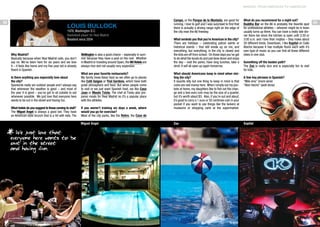
Miguel Ángel

We just love that
everyone here wants to be
out in the street
and having fun.

Campo, or the Parque de la Montaña, are good for
running. I love to golf and I was surprised to find that
there is actually a driving range right on the edge of
the city near the A6 freeway.
What reminds you that you’re American in the city?
There are holidays – celebrating patron saints or
historical events – that still sneak up on me, and
everything, but everything, in the city is closed and
the kids are off from school. On those days you’ve got
to do what the locals do and just slow down and enjoy
the day – visit the parks, have long lunches, take a
stroll. It will all open up again tomorrow.
What should Americans keep in mind when visiting the city?
It sounds silly but one thing to keep in mind is that
coins are real money here. When I empty out my pockets at home, my daughters like to fish out the change and a two-euro coin may be the size of a quarter,
but it’s worth about $3. Also, if you’re out and about,
it’s good to carry a 1 euro or 50 centimes coin in your
pocket if you want to use things like the lockers at
museums or shopping carts at the supermarket.

Zoo

What do you recommend for a night out?
Buddha Bar on the A6 is probably the favorite spot
for professional athletes – whoever might be in town
usually turns up there. You can have a really late dinner there too since the kitchen is open until 2:30 or
3:00 a.m. and I love their mojitos – they make about
20 different kinds. Downtown, I like Kapital on Calle
Atocha because it has multiple floors each with it’s
own type of music so you can find all these different
vibes in one club.
Something off the beaten path?
The Zoo is really nice and is especially fun to visit
for kids.
A few key phrases in Spanish?
“Más vino” (more wine)
“Bien hecho” (well-done)

Kapital

33
MADRID: FROM AMERICAN TO AMERICAN

34

William Derrenger

1967, Boston, Massachusetts
Managing Director, Kellogg Iberia
Madrid resident 1991-1998, 1999-2001, 2005-present

Why Madrid?
Because it’s the best city in the world.I fully subscribe
to the common saying, “De Madrid al cielo,” which
implies that heaven is the only place that’s better
than Madrid. My life can be classified into two time
periods, those times that I have lived in Madrid and
those times when I was trying to return to Madrid.

in the basement where they get to experiment with
different techniques used by the artists. It’s a great
family activity that lasts several weekends.

Is there anything you especially love about the
city?
Every square inch of it, but to name a few things, its
food, its shopping and its blue sky.

Where do you like to take visiting friends to eat?
My wife and I really enjoy great food and conversation. So we go out to dinner every Friday and
Saturday night. We no longer read the menu at our
favorite places. When we want a great steak we go
to Imanol (at Diversia in Alcobendas). Order your
steak with roasted peppers and ice-cold apple cider
from the Basque country. If we want paella we go to
L’Albufera (La Moraleja). If we want Chinese food
we go to Tse Yang (at the Villa Magna Hotel). If we
want the best lamb chops in the world we go to the
Asador de Aranda (Calle Diego de León). Asador de
Aranda has many restaurants, but go to the one at
Calle Diego de León. We’ve been going to the same
restaurant for 20 years, and there’s a reason. Order
the lamb chops, which are served on a charcoal grill
at the table to keep them piping hot. Order Iberian
ham (jamón ibérico) and lomo as a starter, and have a
salad with the lamb chops. The lettuce and tomatoes
are the freshest I’ve ever had and it’s great with the

Something that surprised you about life here?
Madrid is a city for children. I am raising three girls in
Madrid, ranging from age 2 1/2 to 17. Sunday mornings have always been our time together, and we
can always find a long list of things to do. We use
two sources to plan our outings. The Friday edition of
the newspaper, El Mundo includes a magazine called
Metrópoli. In it you will find a page dedicated to activities you can do with your children. Our other source
is the magazine, Sapos y Princesas. If you can plan in
advance, I suggest a program offered by the Thyssen
art museum. It requires advance reservations, but it’s
a very special program where you accompany your
kids on a guided tour with other families. According to
specific themes, the guides review specific works of
art with the kids, and then take them to the workshop

What hotels or places to stay would you suggest
to visitors?
The Palace Hotel is my favorite.

Retiro Park

I love going to the
Retiro on Saturday
or Sunday when it's
absolutely overflowing
with activity and
people of all kinds.

lamb chops. The lemon mousse is the perfect ending
for a great meal. My wife is from Asturias, land of very
whole-some food, and when we want great food from
Asturias we go to La Máquina (Calle Sor Ángela de la
Cruz, 22) or Puerta 57 (Santiago Bernabéu stadium).
They have the same owner, and the food is equally
good at both places. Order coquinas as a starter (tiny
clams sauteed in olive oil). If it’s lunch time and your’re
hungry have fabes (white beans) with anything.
Favorite tapas bars or neighborhoods?
José Luis is the best, traditional tapas bars, and you
can find them throughout Madrid.
Where might you take business clients to lunch?
Puerta 57 has great food and the windows of the
restaurant have a spectacular view of Real Madrid’s
home stadium. The food is great, and it’s exciting for
out of town business visitors to see the stadium while
they eat. El Paraguas is elegant, offering excellent
food from Asturias.
What museums do you recommend to visitors?
The Thyssen Museum, the Prado, and the Sorolla
Museum.
Something not to be missed in the city?
Lunch at the Volvoreta restaurant (Hotel Eurostars
Madrid Tower - Paseo de la Castellana 259B). It has
the most spectacular views of the mountains that
surround northern Madrid.

great one is one of the most incredible things you’ll
ever see. Enjoy it with an ice-cold gin and tonic.
Anything Americans should keep in mind when
visiting the city?
Tipping doesn’t work the way it does in the US. Lunch
and dinner are served late. Lunch is no earlier than
1:30. Dinner is no earlier than 9:00. Iberian ham
should be eaten with your fingers. Men and women
kiss each other, once on each cheek when they meet.
It really isn’t a kiss, though. Men sometimes hug each
other. The hug should be done in a very masculine
way, often with several solid smacks on the back. It’s
not a big deal. Just do it.
An event or episode that shows the city at its
best?
I love going to the Retiro on Saturday or Sunday when
it’s absolutely overflowing with activity and people of
all kinds.
Some useful Spanish words or expressions?
Por favor: Please
¿Dónde está...?: Where is...?
El baño: The bathroom
Jamón ibérico: Iberian ham. Like prosciutto but better.
Una caña: A glass of draught beer.
Chuletitas de cordero: Lamb chops
Vino tinto: Red wine
Me encanta Madrid: I love Madrid
Gracias: Thanks

Activities that can make one feel like a Madrileño?
If you’re up to it, see a bullfight at Las Ventas. Only
see a really good one, though (e.g. José Tomás, etc.).
A really bad bullfight can be very unpleasant. A really

Palace Hotel

Asador de Aranda

35
MADRID: FROM AMERICAN TO AMERICAN

36

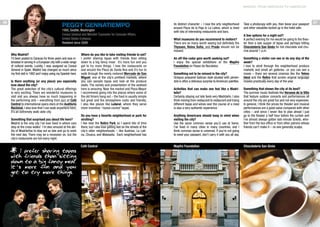
Peggy Gennatiempo

1950, Seattle, Washington
Consul General and Minister Counselor for Consular Affairs,
United States Embassy
Resident since 2009
Why Madrid?
I’d been posted to Caracas for three years and was interested in serving in a European city with a wide range
of cultural events. Luckily, I was assigned as Consul
General in Spain. Madrid has changed so much since
my first visit in 1992 and I enjoy using my Spanish here.
Is there anything (or any place) you especially
love about the city?
The great selection of the city’s cultural offerings
is very exciting. There are wonderful museums to
visit and you always have so much happening in
the performing arts – everything from jazz at Café
Central to international opera stars at the Auditorio
Nacional. I also love that I can walk anywhere here;
it’s an extremely walk-able city.
Something that surprised you about life here?
Madrid is the only city I’ve ever lived in where cars
stop at the cross walks! I’m also amazed at the ability of Madrileños to stay out so late and go to work
the next day. There may be a recession on, but the
city’s restaurants are full every night.

I prefer sharing tapas
with friends than sitting
down to a big fancy meal.
It s more fun and you
get to try more things.

Where do you like to take visiting friends to eat?
I prefer sharing tapas with friends than sitting
down to a big fancy meal. It’s more fun and you
get to try more things. I love the restaurants on
and around the Plaza de Santa Ana and it’s fun to
walk through the newly restored Mercado de San
Miguel, one of the city’s prettiest markets, where
you can sample tapas and look at the produce
stalls. The variety and presentation of the seafood
here is amazing. Near the market and Plaza Mayor
I recommend going into the places where some of
the old timers hang out – the food is usually simple
but great and the atmosphere rustic and friendly.
I also like places like Lateral, where they serve
more inventive “nueva cocina” tapas.

its distinct character – I love the arty neighborhood
around Plaza de la Paja in La Latina, which is lined
with lots of interesting restaurants and bars.
What museums do you recommend to visitors?
There are so many worth seeing but definitely the
Thyssen, Reina Sofía, and Prado should not be
missed.
An off-the-radar gem worth seeking out?
I enjoy the special exhibitions at the Mapfre
Foundation on Paseo de Recoletos.
Something not to be missed in the city?
Octopus prepared Galician style (dusted with pimentón) is often a delicious surprise to American palettes.
Activities that can make one feel like a Madrileño?
Certainly staying out late feels very Madrileño. I also
think moving from restaurant to restaurant and trying
different tapas and wines over the course of a meal
is also a very authentic experience.

Do you have a favorite neighborhood or park for
strolling?
I live near the Retiro Park so I spend lots of time
there, but I also love getting lost on the streets of the
city’s older neighborhoods – like Austrias, La Latina, Chueca, and Malasaña. Each neighborhood has

Anything Americans should keep in mind when
visiting the city?
Use the same common sense you’d use at home.
I’ve lived in many cities in many countries, and I
think common sense is universal. If you’re not going
to need your passport, don’t carry it with you all day.

Café Central

Mapfre Foundation

Take a photocopy with you, then leave your passport
and other valuables locked up in the hotel safe.
A few options for a night out?
A perfect evening for me would be going to the theater then a late supper of tapas and perhaps hitting
Chocolatería San Ginés for hot chocolate and churros around 1 a.m.
Something a visitor can see or do any day of the
week?
I love to stroll through the neighborhood produce
markets and small art galleries -or you can see a
movie – there are several cinemas like the Yelmo
Ideal and the Retiro that screen original language
movies practically every day of the year.
Something that shows the city at its best?
The summer music festivals like Veranos de la Villa
that feature outdoor concerts and performances all
around the city are great fun and not very expensive.
In general, I think the prices for theater and musical
performances are a good value compared with other
cities – and since I never like to plan ahead I just
go to the theater a half hour before the curtain and
I’ve almost always gotten last-minute tickets, whether from the box office or from other patrons whose
friends can’t make it – no one generally scalps.

Chocolatería San Ginés

37
MADRID: FROM AMERICAN TO AMERICAN

Photo: Arthur Elgort

38

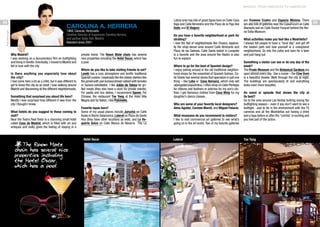
CAROLINA A. HERRERA
1969, Caracas, Venezuela
Creative Director of fragrances Carolina Herrera,
and partner Baby Deli, Madrid
Resident since 2001
Why Madrid?
I was working on a documentary film on bullfighting
and living in Seville. Eventually, I moved to Madrid and
fell in love with the city.
Is there anything you especially love about
the city?
I had come here a lot as a child, but it was different to
get to know the city as an adult. I love walking around
Madrid and discovering all the different neighborhoods.
Something that surprised you about life here?
Mostly I was surprised how different it was from the
city I thought I knew.
What hotels do you suggest to those coming to
visit?
Near the Teatro Real there is a charming small hotel
called Casa de Madrid, which is filled with art and
antiques and really gives the feeling of staying in a

private home. The Room Mate chain has several
nice properties including the Hotel Oscar, which has
a pool.
Where do you like to take visiting friends to eat?
Landó has a cozy atmosphere and terrific traditional
Spanish cuisine. I especially like the classic starters like
the jamón with pan tumaca (bread rubbed with tomato)
or huevos estrellados. I like Julián de Tolosa for grilled meats (they also have a room for private events).
For paella and rice dishes, I recommend Samm. For
Chinese, the restaurant Tse Yang at the Hotel Villa
Magna and for Italian, I like Pulcinella.
Favorite tapas bars?
Some of my usual places include Jurucha on Calle
Ayala in Barrio Salamanca, Lateral on Plaza de Santa
Ana (they have other locations as well), and La Vaquería Suiza on Calle Blanca de Navarra. The La

Hotel Oscar

The Room Mate
chain has several nice
properties including
the Hotel Oscar,
which has a pool.

Latina area has lots of great tapas bars on Calle Cava
Baja and Calle Almendro and the Plaza de la Paja like
Delic and El Viajero.
Do you have a favorite neighborhood or park for
strolling?
I love the feel of neighborhoods like Chueca, especially the shop-dense area around Calle Almirante and
Plaza de las Salesas. Calle Santa Isabel in Lavapiés
is a favorite and the area around the Rastro is also
fun to explore.
Where to go for the best of Spanish design?
I enjoy poking around in the old traditional neighborhood shops for the essentials of Spanish fashion. Calle Toledo has several stores that specialize in just one
thing – like Lobo or Casa Hernanz, which only sell
alpargatas (espadrilles). I often shop on Calle Pontejos
for ribbons and feathers or patches for my son’s clothes. I get flamenco clothes from Casa Maty for my
daughter’s dance classes.
Who are some of your favorite local designers?
Alma Aguilar, Carmen March, and Miguel Palacio.
What museums do you recommend to visitors?
I like to visit commercial art galleries to see what’s
going on in the art world. Two of my favorite galleries

Lateral

are Travesía Cuatro and Espacio Mínimo. There
are also lots of galleries near the CaixaForum on Calle
Alameda and on Calle Doctor Forquet behind the Reina Sofia Museum.
What activities make you feel like a Madrileño?
I always tell people to have a “local day” and get off
the beaten path and lose yourself in a unexplored
neighborhood. Go into the cafes and bars for a beer
and just hang out.
Something a visitor can see or do any day of the
week?
The Prado Museum and the Botanical Gardens are
open almost every day. See a movie – the Cine Doré
is a beautiful theater. Walk through the city at night.
The buildings are spectacularly lit and everything
looks even more beautiful.
An event or episode that shows the city at
its best?
Go to the area around Las Ventas bullring during the
bullfighting season – even if you don’t want to see a
bullfight. Just to be in the environment with the TV
cameras and all the Madrileños out having a drink
and a tapa before or after the “corrida” is exciting and
you feel part of the action.

Tse Yang

39
MADRID: FROM AMERICAN TO AMERICAN

40

Robin Hunsucker
1986, Cincinnati, Ohio
Graduate Student/Teacher
Resident since 2008
Why Madrid?
I chose to come to Madrid because there is so much to
see and do here. There are so many amazing museums,
parks, restaurants, bars and I knew that I would never
be bored (and I’m not!). It has amazing public transportation and it is so easy to move around the city. Also, it
is very easy to travel to other places within Spain on a
bus or on the Renfe, the Spanish rail line, and in Europe
out of Barajas, Madrid’s international airport.
Is there anything (or any place) you especially love
about the city?
I love the architecture and to just wander around the
city. The buildings are all so charming and each one is
different from the next. I can walk around and get lost
for hours. I especially love walking from the Plaza de
Cibeles down Calle Alcalá to the Puerta del Sol.
Something that surprised you about life here?
Even if it is cold outside, it seems the sun is almost
always shining and the streets are always full of
people and full of life. I was very surprised at how
much Spaniards really try to live each day as if there were no tomorrow. They are always out taking a
walk, shopping, sitting out in the terrazas to have a
coffee or a drink. Spanish people have such a zest for
life, and especially for eating and drinking. They really
appreciate quality food, good wine and just eating well
in general. Food and drink are a huge part of Spanish
culture so I recommend taking part and trying as many
things as you can!

What hotels or places to stay would you suggest
to friends?
I have never stayed at a hotel or hostel in Madrid but
I’ve heard that Cat’s Hostel is a very fun place to stay
for young people who are traveling and looking to meet
other people and have a good time.
Where do you like to take visiting friends to eat?
My favorite sit-down restaurant in Madrid is Órdago
which is in Ventas (near the bullring). It is a traditional
Basque restaurant that is family run, has only about
10 tables, and has a very warm and welcoming atmosphere. The entrees change each day and both
the meats and fish are pretty much all great. Start
out with a few plates to share – my favorites are the
alubias de Tolosa (beans) and the almejas a la marinera (clams). They also have very tasty desserts,
especially the flan and cheesecake.
Favorite tapas bars or neighborhoods?
La Latina has a ton of good tapas restaurants right
next to each other so you can try out more than one in
a night. My favorite is Txirimiri. Among other things,
they’ve got a variety of tostadas, slices of toasted
baguette with different toppings, and my favorite is
the jamón serrano with goat cheese and caramelized
onions. A good place to go for free tapas and huge
portions is El Tigre in Chueca. With each drink they
give you a huge plate of food, which is different with
each round. It is always packed, so if you go, try and
get there early.

in La Latina. They play American music, mostly oldies,
and it is a great place to go dancing. Despite the American music, it is not a very touristy place and there are
people of all ages. Other than that I like to go out in
Alonso Martínez or in Chueca.
What museums do you recommend to visitors?
The Reina Sofía is a great museum to go to if you want
to see modern art. There are a lot of pieces by Dalí and
Picasso, most importantly the Guernica by Picasso,
which is a must see. The Prado has more traditional artwork and it takes you through Spain’s history.
Especially for the Prado, I would recommend getting
a guided tour because it is very interesting to hear the
stories that put the paintings into historical context.
Activities that can make one feel like a Madrileño?
I love going to the food markets here in Madrid. They
are mostly inside big buildings and are scattered all
over the city. I really enjoy walking around and looking
at all of the stands and the different things that they
sell. Most of the vendors are very friendly and helpful
and they don’t treat you as if you are a stupid “foreigner.” Often times they will offer you samples or will
throw in something free with your purchase. It’s fun
to ask them for recommendations and try new meats,
cheeses, fruits, etc. that are foreign to you.
Anything Americans should keep in mind when
visiting the city?
Madrid is a very safe place and you can walk around
comfortably just about anywhere, but there are a lot of
pickpockets. You must always be aware of your possessions and never hang your bag on a chair, or keep
important things in your back pockets or have your bag
unzipped. Although you must be conscious of the risk,
there is no need to be worried or scared as long as you
are not careless with your possessions.

Do you have a favorite neighborhood for going out?
My absolute favorite disco in Madrid is Berlín Cabaret
Cat’s Hostel

Food and drink are
a huge part of Spanish
culture so I recommend
taking part and trying
as many things
as you can!

A few options for a night out?
My ideal night out would begin with tapas in La Latina
followed by a drink or two at a bar in that neighborhood
Templo de Debod

called La Taberna Chica, where they make delicious
cocktails with fresh fruit, and end up at Berlín Cabaret.
Some places to hear live music?
My favorite place to listen to live music is called MOE.
Several nights a week they have live bands playing
jazz, funk, blues, etc. and the groups are always very
good (and most of the time they are American!).
Any favorite cafés or bakeries?
The Jardín Secreto is my favorite café to meet with
a friend to hang out and chat. They have a huge selection of teas, coffees, milkshakes, cocktails, and
homemade desserts. This place lives up to the name
“secret garden” as the decoration is very original with
antique chairs, tables, and lamps that are very unique
and create a nice, quaint atmosphere. It is only open in
the evenings and to get a table without a long wait it
is advisable to get there just before five o’clock when
they open.
Something a visitor can see or do any day of
the week?
Take a walk around the center, stroll by the Royal Palace (take a tour if it’s open), and go to the Parque del
Oeste to see the Templo de Debod, an ancient temple that was given to Spain as a gift from Egypt. From
the park there are very nice views of the palace and
gardens below and you can also catch an incredible
sunset.
Some useful Spanish words or expressions?
“Guiri.” A term for a foreigner with pale skin and light
features (English, American, German, etc.)
“Servicios / aseos.” “Bathroom” (in someone’s house
you can say baño)
“Entrada” .“Entrance” or the entrance fee.
“Hasta luego.” “See you later”— for some reason
Spaniards like to say “hasta luego” instead of “adiós”
whether or not they will ever see you again.

MOE

41
MADRID: FROM AMERICAN TO AMERICAN

42

Dana Knowles

1966, Prairie Grove, Arkansas
Co-founder and owner of Taste of America
Resident since 1990

Why Madrid?
Because it’s fun, vibrant and it’s where my family is.

venture to say that the salmorejo at Laredo is the
best in the world.

Is there anything you especially love about
the city?
Madrid is a very social city and I especially love the
appetizer hour. Friends and family from all walks
of life often meet on weekends at bars or outdoor
cafés for a bit of socializing before heading off to
lunch at 3 or 4 in the afternoon.

Favorite tapas bars or neighborhoods?
No matter whom the visiting guest, we almost
always take them one night to “picar” at the Toscana (the taberna, not the restaurant) near the
Plaza Santa Ana. Inexpensive and unassuming, it
specializes in portions to share. I’ll list the three
dishes you can’t miss: tomato salad with tuna
and onions, stewed beef with fried potatoes and
scrambled eggs with baby eels. La Trucha is another favorite spot for tapas in the area. And Viva
Madrid is just up the street for vermouth on tap
before dinner.

Something that surprised you about life here?
I used to be amazed at all of the cigarette smokers
in the airport, at the grocery store and in the bank.
That’s all changed now. Madrileños still love their
pitillos, but only in designated areas.
What hotels do you suggest to those coming
to visit?
Hotel de las Letras, Hotel Me, Urban Hotel. The
NH chain is always a safe and comfortable option
with a good quality-to-price ratio.
Where do you like to take visiting friends
to eat?
We like Nodo for trendy Spanish fusion food and
my favorite there is the baked tomatoes with cod
fish appetizer. The outdoor terrace at Iroco is great
as well. But for traditional Spanish fare, Laredo on
Calle Menorca is the best. There you have to order the salmorejo and salmonetes rellenos. I would

Do you have a favorite neighborhood or park for
strolling?
I hate to be obvious, but I love the Retiro. It’s big,
beautiful and welcoming. A weekend stroll past the
boat pond (el Estanque) where you will find performing artists and Madrileños taking in the scenery
is great fun.
Where to go for the best of Spanish delicacies to
take back home?
I go to Mallorca (there are several in Madrid) for
those exquisite butter pastries and Mantequerías
Bravo on Calle Ayala in Barrio Salamanca for wines,
olive oils and vinegars. They’ve got excellent Spanish ham as well. You can’t go wrong at El Club del
Plaza Mayor

stop by the newly restored Mercado de
San Miguel near
the Plaza Mayor
for a tapa and
copa de cava.

Gourmet in El Corte Inglés. Convenient and well
stocked with the best of Spanish specialties.
What museums do you recommend to visitors?
A trip to Madrid must include a visit to the Prado.
It’s a classic and marvelous. Take your time on the
Goya floors. The Sorolla Museum is one of my personal favorites. Sorolla provides a slice of Spanish
culture from the 19th century through impressionist
visions.
What activities make you feel like a Madrileño?
I can pretend to be Spanish when ordering café con
leche and churros while reading the morning paper or just walking and feeling the city pavement
beneath my feet and the Spanish sun on my face.
Also, women here greet each other and men with
a kiss on both cheeks – I feel especially madrileña
when I startle friends in the U.S. by moving in for
the double kiss.
Anything remind you that you’re American in
the city?
We don’t wait in lines like Spaniards do. You have
to be a little more assertive here or you’ll lose your
place.
What should Americans keep in mind when visiting the city?
Try to appreciate the cultural nuances on display in
every aspect of city life.
A few options for a night out?
One suggestion is a nightcap at the roof top bar at
the Hotel Me. Beautiful views of Madrid right in the
heart of the historical district.
Something a visitor can see or do any day of the
week?
Shopping, even if it’s window-shopping. There’s neMuseo Sorolla

ver a better way to get to know a city than by walking the streets. Take your time near Plaza Mayor
and check out shops specializing in coins or nativity
scenes. While you’re there, don’t miss the bocadillo de calamari (fried squid sandwich). You should
also stop by the newly restored Mercado de San
Miguel near the Plaza Mayor for a tapa and copa
de cava.
An event or episode that shows the city at
its best?
This would have to be the San Isidro festival in
May. The patron saint of Madrid, San Isidro is perhaps the most emblematic show of Madrid history
and culture. Madrileños of all ages still gather every
year in traditional garb for festivities in la Pradera
de San Isidro near la Ermita del Santo. This holiday
coincides with the height of Madrid’s bullfighting
season in the Plaza de las Ventas. And then you’ve
always got your tinto de verano en la terraza de Las
Vistillas in springtime with views of the Casa de
Campo, the Cathedral de la Almudena, the Plaza de
Oriente...
Some useful Spanish words or expressions?
“Vale.” Much better than sí, vale means okay and
can be used in almost every sentence if you’re
very clever. You can even repeat it several times to
emphasize that you understand. Vale vale vale vale.
With a question mark it becomes, “got it?”
“¿Qué quieres decir?” If your Spanish is so so, this
is a good way to ask for a clarification which requires further explanation. Instead of saying “what?”
you say “what do you mean?”
“No me pises que llevo chanclas.” The name of a
pop music group from the 80s, you’ll amaze and
delight your Spanish friends by using the phrase
“don’t step on me I’m wearing sandals.” Appropriate application is obvious.

Hotel Me

43
MADRID: FROM AMERICAN TO AMERICAN

44

Cavan Mahony Linde
Born 1968, Boston, Massachusetts
Founder and President, CL Luxury Holding
Resident since 2003

Why Madrid?
Madrid offers the perfect balance of a thriving city in
business and cultural life while still it remains a place
rooted in family traditions and the joy of living.
Is there anything you especially love about the
city?
I love the traditional restaurants serving incredible
fish and meat – many of which are family run and
the staff has been working there for generations.
What hotels do you suggest to those coming to
visit?
The Villa Magna on the Castellana has just been
renovated and is a beautiful five-star hotel close to
the luxury shopping district of Barrio de Salamanca. I
also like the Santo Mauro, a refurbished villa located
on the other side of the Castellana. The Hotel Orfila
is a sweet boutique hotel.
Where do you like to take visiting friends to eat?
When friends come to visit, my choice of restaurants
are La Trainera on Calle Lagasca for seafood (the
grilled shrimp, lobster salad and grilled sea bass are
all exceptional), Casa Lucio for meat on the hot plate
and ¨huevos rotos¨ -broken eggs over french fries, El
Landó, also for fresh meat or fish and great clams in

Taking three hour
lunches and starting
dinner at 10pm will make
you feel like a
Madrileno
quickly!

white wine sauce. Horcher restaurant is for a more
special occasion and serves the most incredible
meat and mushroom dishes. It is the only restaurant
I have ever been where a small pillow is placed under the feet of the ladies. El Paraguas is also exceptional for Asturian cuisine, the grilled artichokes with
basil oil are a must.
What are your favorite Spanish dishes?
One of my favorite Spanish foods is the Spanish
jamón de bellota, of the semi-wild Iberian black pig,
fed on a diet of acorns. This you can order in most
restaurants. To buy some to take away, go to the
excellent Spanish delicatessen shop Mantequerías
Bravo on Calle Ayala. Other favorites include the delicious “cochinillo” or suckling pig at Casa Lucio, and
the grilled sea bass or Dover sole at La Trainera.

Alkalde is a great restaurant and tapas bar on Calle
Jorge Juan. The grilled peppers and croquetas are
fabulous. Lateral is also great for tapas on Calle Velázquez.
A preferred neighborhood or park for strolling?
Barrio Salamanca is my favorite neighborhood for
strolling. It’s a beautiful area with many stores and
restaurants. Calle Ortega y Gasset has all the major
luxury brands and you can also stroll down some of
the side streets like Calle Lagasca to find luxury as
well as local brands and small bars and restaurants.
The Retiro Park is a beautiful place to take a walk
or go jogging. There is a lake where you can rent a
rowboat as well.
Where to go for the best Spanish design?
Castañer is famous for the alpargatas and is located
on Calle Claudio Coello. Alpargatas are a fashionable and comfortable Spanish shoe. Spanish designer Miguel Palacio carries a range of spectacular
prêt-a-porter clothing and accessories.
Who are your favorite Spanish designers?
Miguel Palacio for clothing and shoes. Suárez for
jewelry and Loewe for leather goods.

Favorite tapas bars or neighborhoods?
My favorite neighborhood for tapas bars is the old
part of Madrid, La Latina. In front of Casa Lucio is
the Tapas Bar Los Huevos de Lucio which has incredible food in a casual easy environment. A new
restaurant and tapas bar is Bar Tomate. One of the
few restaurants that stays open through out the day
and has fresh delicious food at a reasonable price.

What activities make you feel like a Madrileño?
Taking three hour lunches and starting dinner at
10pm will make you feel like a Madrileño quickly! If
you are lucky you can see flamenco in the old part of
town. Nightclubs Pachá and Gabana will have you
dancing all night long with the Madrileños.

Loewe

Horcher

What should Americans keep in mind when visiting the city?
Often times Americans forget that many people in

the world do not speak English. You cannot expect
everyone to communicate with you in English. Bring
a translation and guide book.
A few options for a night out?
Starting with a restaurant or tapas bar at 10 pm then
move onto a bar like Chicote in the old part of town
then go to Pachá or Gabana at 2 am for dancing!
Any favorite cafés or bakeries?
Embassy on Castellana is my favorite place to take a
tea or hot chocolate in the afternoon. There are many
wonderful Mallorcas, my favorites are on Velázquez
and Ayala or Serrano with Columela. There is Le Cafe
on Calle Recoletos where you can go just for a coffee
or have a drink.
Something a visitor can see or do any day of the
week?
Stroll through Barrio Salamanca, the Retiro Park or
the old part of town to look at beautiful Madrid.
An event or episode that shows the city at its best?
ARCO, held each February, is an incredible contemporary art fair. People come from all over the world
to visit the fair and see Madrid. There is nothing better than spending hours with friends and family over
Spanish tapas and red wine. Living life in Madrid
is an incredible experience as the days and nights
seem longer.
Some useful Spanish words or expressions?
“Fenomenal!” “Phenomenal!” used much more often
and casually than in English.
“Duende”. It refers to the moment when everything
comes together and magic happens in a night, usually referring to flamenco parties, but truly one of my
favorite expressions.
Pachá

45
MADRID: FROM AMERICAN TO AMERICAN

46

Thomas Middleton

1933, Portland, Oregon
Retired, Former Deputy Director Fulbright Commission
Madrid resident since 1976

Why Madrid?
I first came here in 1968 as a Fulbright Scholar and felt
an immediate connection to the city. I moved here in
1976 for what I thought would be two or three years and
never left. After 27 years working, I’m now retired here.
Is there anything you especially love about the
city?
Mostly it’s a feeling rather than anything intellectual,
but I fell in love with Spain and with Madrid in particular – and I’ve seen it change so much from 1968
to the present. I’ve seen the people blossom with
democracy.
Something that surprised you about life here?
I was definitely surprised by how open Spaniards
were to me when I first moved here. The neighborhood was mostly mom-and-pop shops and once they
realized I lived here, they treated me the same as any
other neighbor.

What hotels do you suggest to visitors?
For people on a budget, I recommend the Hotel
Moderno or any of the High Tech hotels which are
usually a good value. If money is no object, then the
Ritz, the Palace, the Santo Mauro, and the Villa
Magna are great options.
Where do you like to take visiting friends to eat?
I tend to stay in the city center and like the restaurant
Hylogui, it’s a Basque restaurant but they have an
ample menu and very fresh produce. Like most restaurants in Madrid, they have a set menu at lunch during the week – called a menú del día – that is a good
value. I also like a little Italian place near Plaza Isabel II
called Panini, which is run by an American woman.
If money is not a concern and if someone has never been to Madrid before I think Botín is worth the
splurge – the history of the place is amazing (it’s
been around since 1725) and the atmosphere is
quite special.
San Francisco El Grande

The Basilica of
San Francisco
El Grande
has just
been
restored
and has a
very ornate
interior
with lots
of swoops
and swirls.

Do you have a favorite neighborhood or park for
strolling?
I enjoy walking to the park as much as I enjoy walking
in it. From the center of Madrid near the Puerta del
Sol, the walk down Carrera de los Jerónimos is incredibly beautiful and takes you past some of the city’s
most impressive monuments like the Prado Museum
and the Jerónimos Church. The Plaza de Oriente is
perfect for strolling as is the Paseo del Pintor Rosales,
which is lined with outdoor cafes in the summertime.
What museums do you recommend to visitors?
The Prado Museum is a must. When I first went there
in 1968, the doors and windows were open to the
street and the guards smoked in the hallways – so
it’s really come a long way. The Sorolla Museum
has a lovely 19th century feel and the CaixaForum
has great temporary exhibitions.
An off-the-radar gem worth seeking out?
I always send friends to the Real Academia de Bellas Artes de San Fernando, it’s fun to go through
the Calcografía where they have all the copper plates
for Goya’s prints. Also the Basílica of San Francisco
El Grande, which has just been restored and has a
very ornate interior with lots of swoops and swirls.

Activities that can make one feel like a Madrileño?
For young people, I think it’s fun to “trasnochar” (stay
out all night) and there are certainly enough pubs,
bars, and clubs to help them do it.
A few options for a night out?
Calle Echegaray is lined with fun bars worth exploring.
Any favorite cafés?
The terraces along Paseo de Recoletos, such as Café
El Espejo or Café Gijón, are among my favorite places for people watching.
Something a visitor can see or do any day of the
week?
Rent a car or take a train or bus out to El Escorial or
Aranjuez or even just drive up into the Guadarrama
Mountains with a picnic. People are often amazed at
how close Madrid is to some impressive natural landscapes.
Some useful Spanish words or expressions?
Madrileños are very generous with their time when
helping visitors to their city – so I think “por favor”
(please) and “gracias” (thank you) can never be overused.

Something not to be missed in the city?
Sitting in an outdoor café and just watching the
people go by is great fun.
Hylogui

Botín

47
MADRID: FROM AMERICAN TO AMERICAN

48

Matthew scott
1970, Ketchikan, Alaska
Chef and owner of Restaurant Gumbo
Resident since 1996

Why Madrid?
I first got to know the city while studying architecture
in college and came back to Europe through a scholarship and a student work visa in France. Wanting
to change over to cooking, I was planning on passing
through Madrid to say goodbye to my friends here but
I landed a job as a cook and decided to stay.

I like Chantarella near the Bernabéu stadium or La
Gastroteca on Calle Santiago.

Is there anything you especially love about
the city?
I love the feel it has. Although there are more than
three million residents, it seems like a much smaller
city due to the different neighborhoods. This is especially true of my neighborhood La Latina, which has
become a popular night area.

Advice on tipping?
A tip is called la propina and Spaniards don’t tend to
tip much – they’ll often take the bills and leave the
coins of whatever change is returned. Waiters, they’ll
tell you are paid a proper wage and do not need tips
to augment their salaries. But sometimes when you
walk into a restaurant, the waiters will see you as
American and know that we tip very well in comparison. This means that they tend to give you better service. The 20% tip you might leave in the US would be
too much here, but you want to show your gratitude,
without going overboard. Leaving something small in
a cafeteria and up to 10% in a restaurant is ideal in
my experience here.

What hotels do you recommend to visitors?
I’ve put my parents at the Hotel Abalú on the Calle
del Pez, which was quite nice, and other times in a
weekly rental, which I tend to like better as they have
a more homey feel.
Where do you like to take visiting friends to eat?
I like to go for tapas in La Latina, Galician in Maceiras in Calle Huertas, La Taquería del Alamillo for
Mexican in La Latina. For something more upscale

What are your favorite Spanish dishes?
May sound silly, but my single favorite Spanish dish
is a tortilla de patata. Fortunately, La Ardosa on Calle
Colón still makes them as they should be!

Favorite tapas bars or neighborhoods?
Besides the tortilla, La Ardosa has a good selection
of tapas, like croquetas and salmorejo. In La Latina, I

Café Central

My single favorite
Spanish dish is a
tortilla de patata.

like Toma Jamón for jamón serrano, croquetas at the
Salamanca on the Cava Baja.

Café del Nuncio in La Latina, especially on the
stepped terrace in summer!

Do you have a favorite neighborhood or park for
strolling?
Besides the Retiro to take a walk and see people, my
favorite park to relax and disconnect is the Campo
del Moro behind the Royal Palace.

Something a visitor can see or do any day of the
week?
Walk around the old city, between Sol, Plaza de
Oriente, Calle Arenal, and Carrera de San Francisco
El Grande. Some of the streets where I always take
visitors offer lots of surprises in a relatively small
area: Calle del Codo opening up on the Plaza de la
Villa, the Church of San Miguel, the remains of the
original wall on the Calle del Almendro, the Café del
Monaguillo. And of course the Plaza Mayor.

Where to go for the best of Spanish delicacies to
take back home?
I am usually so busy that I go at the last possible moment to El Corte Inglés. I usually try to take some
jamon, turrón, and although more French, some foiegras.
What museums do you recommend to visitors?
I especially enjoy the Thyssen.
What activities make you feel like a Madrileño?
Madrid has become so cosmopolitan since I’ve been
here that I feel more Madrileño every day.
What should Americans keep in mind when visiting the city?
Relax, it’s a different pace of life here, try to enjoy it.
And be careful of the pickpockets, especially in the
Metro.
A few options for a night out?
Cocktails at Maluca on the Calle Calatrava, jazz at
Café Central, late-night chocolate and churros at
San Ginés.
Any favorite cafés or bakeries?
Café Central in Huertas, El Horno de San Onofre,
Abalú

Something that shows the city at its best?
Have a tinto de verano, red wine with lemon soda over
ice, at sunset in summer on the steps at Café Nuncio.
Heaven. Also, having a drink while lying on the grass
at the Terraza Atenas, near the river.
Some useful Spanish words or expressions?
“Te invito.” “I invite you” is not just inviting someone
to come along, but in Spanish means you´re actually
offering to pay the bill!
“Nos vemos a las 8:15.” “We’ll see each other at
8:15” does NOT necessarily mean that the person
will be there at 8:15. For Spaniards there is usually a
20-minute grace period before getting irritated.
“¿Quién da la vez?” Basically it means “Who’s last
in line?” and you’ll see these big mobs called lines
everywhere from markets to mercadillos, but there is
an order to their madness. If you don’t ask who’s the
last in line when you arrive, you might not get in the
line at all.

Gastroteca

49
MADRID: FROM AMERICAN TO AMERICAN

50

George Stolz

1962, New York, NY
Art Critic and Curator
Resident since 1992

Why Madrid?
Quirk of destiny.
Is there anything (or any place) you especially
love about the city?
The Prado Museum. Social ease. Non-judgmentalness.
Something that surprised you about life here?
Noise levels, both in and out of doors.
What hotels do you suggest to visitors?
Prado Suite; Hotel Lope de Vega; Hotel Mediodía.
Where do you like to take visiting friends to eat?
La Casa Lastra for fish and Asturian bean stew

Have horchata in
Las Vistillas in the
evening, preferably near
sunset, when the weather
is warm and even hot

Do you have a favorite neighborhood or park for
strolling?
Madrid de las Austrias, Plaza Mayor.
What are the best neighborhoods for gallery
hopping?
The area between Chueca and the Plaza de Colón;
the area near the Reina Sofía.

(fabada); La Vaca Verónica for homemade pasta
with carabineros; Bocaíto for tapas, especially vegetables.

What museums do you recommend to visitors?
The Prado, Reina Sofía and Thyssen-Bornemisza
museums.

What are your favorite Spanish dishes and where
to get them?
Gazpacho; tortilla española; grilled fish and vegetables. The restaurants listed above, and really any
number of places in the city.

An off-the-radar gem worth seeking out?
Goya’s ceiling frescos in San Antonio de la Florida.

Favorite tapas bars or neighborhoods?
El Aloque on Calle Torrecilla del Leal for wine and
tapas (cerdo ibérico, extremeño cheese, in-season
vegetables, bacalao dorado, etc). La Venencia on
Calle Echegaray for sherry and cured fish and ham.

Matadero Madrid

The best places to see cutting-edge contemporary art?
The Reina Sofía; various contemporary art galleries
(Elba Benitez, Helga de Alvear), Casa Encendida
and Matadero.
What activities make you feel like a Madrileño?
Having vermouth with seltzer Sunday with friends
before lunch in the Rastro.
Café Gijón

What should Americans keep in mind when visiting the city?
Beware of pickpockets in tourist areas; beware of
generalizations of Spain and Spaniards based on
stereotypes and received opinion.
Any bars or restaurants popular with the city’s
art crowd?
El Cock (bar): La Manduca de Azagra (restaurant).
Any favorite cafés or bakeries?
Cafe Gijón, Café Barbieri.
Something a visitor can see or do any day of the
week?
Museums (almost any day); wine and dine; nocturnal
strolls.
An event or episode that shows the city at its best
Have horchata in Las Vistillas in the evening, preferably near sunset, when the weather is warm and even
hot (May to September).

La Manduca de Azagra

51
MADRID: FROM AMERICAN TO AMERICAN

53

52

PLACES RECOMMENDED

BY THE INTERVIEWEES
Cat’s Hostel Madrid
h C/ Cañizares, 6
f Antón Martín / Tirso de Molina
b 913 692 807
c www.catshostel.com

lODGING
AC Santo Mauro 5*
C/ Zurbano, 36
Ruben Darío
913 196 900
www.ac-hotels.com

Villa Magna 5*
h Paseo de la Castellana, 22
f Rubén Darío
b 915 871 234
c www.hotelvillamagna.com
Wellington 5*
h C/ Velázquez, 8
f Retiro / Príncipe de Vergara
b 915 754 400
Reservation: 914 231 407
c www.hotel-wellington.com

Abalú 3*
h C/ del Pez, 19
f Noviciado
b 915 314 744
c www.hotelabalu.com

h
f
b
c

Orfila 5*
h C/ Orfila, 6
f Alonso Martínez / Colón
b 917 027 770
c www.hotelorfila.com
Ritz 5*
Plaza de la Lealtad, 5
Banco de España
917 016 767
www.ritz.es

h
f
b
c

Urban 5*
Carrera de San Jerónimo, 34
Sol / Sevilla
917 877 770
www.derbyhotels.com/
Urban-Hotel-Madrid

h
f
b
c

The Westin Palace 5*
h Plaza de las Cortes, 7
f Sevilla / Banco de España
b 913 608 000
c www.westinpalacemadrid.com
De Las Letras 4*
h Gran Vía, 11
f Gran Vía / Sevilla
b 915 237 980
Reservation: 902 422 482
c www.hoteldelasletras.com
Lope de Vega 4*
h C/ Lope de Vega, 49
f Antón Martín
b 913 600 011
c www.hotellopedevega.com
Me Madrid 4*
h Plaza de Santa Ana, 14
f Sol / Antón Martín
b 917 016 000
c www.memadrid.com

Moderno 3*
h C/ Arenal, 2
f Sol
b 915 310 900
c www.hotel-moderno.com
Room Mate Oscar 3*
h Plaza Vázquez de Mella, 12
f Gran Vía / Chueca
b 917 011 173
c www.room-matehotels.com
Mediodía 2*
h Plaza Emperador Carlos V, 8
f Atocha
b 915 273 060
c www.mediodiahotel.com
Casa Madrid
h C/ Arrieta, 2 2nd floor
f Ópera
b 915 595 791
c www.casademadrid.com

High Tech Hotels

c www.hthoteles.com

Room Mate chain

NH Hotels
c www.nh-hoteles.es

c www.room-matehotels.com

Suite Prado A.T. 4 llaves
h C/ Manuel Fernández González, 10
f Sol / Antón Martín
b 914 202 318
c www.suiteprado.com

Occidental
Miguel Ángel 5*
h C/ Miguel Ángel, 29-31
f Gregorio Marañón
b 914 420 022
b Reservation:
914 520 529 / 530
c www.miguelangelhotel.com

Chic and Basic chain

c www.chicandbasic.com

restaurants
Casa Lucio

L’Albufera (several locations)
h Avenida Europa, 17 bis
(La Moraleja) Alcobendas
f Ronda de la Comunicación
b 916 625 171
c www.restauranteslaalbufera.com

Bar Tomate
h Fernando El Santo, 26
f Colón
b 917 023 870
c www.grupotragaluz.com

Alkalde
h C/ Jorge Juan, 10
f Serrano
b 915 763 359
c www.alkalderestaurante.com

h C/ Cuchilleros, 17
f Sol / La Latina
b 913 664 217
c www.botin.es

h C/ Barbieri, 12
f Chueca / Banco de España
b 915 214 524

Antípodes
h C/ San Agustín, 18
f Antón Martín
b 914 292 157

Café Saigón (several locations)
h C/ María de Molina, 4
f Gregorio Marañón
b 915 631 566
c www.cafesaigon.es

h C/ Doctor Fleming, 7
f Santiago Bernabéu
b 913 441 004
c www.chantarella.es

Arce
h C/ Augusto Figueroa, 32
f Chueca
b 915 220 440
c www.restaurantearce.com

Casa Juan
h C/ Infanta Mercedes, 111
f Valdeacederas / Plaza de Castilla
b 914 490 380
c www.asadorcasajuan.es

h Pza. Santiago, 1
f Ópera / Sol
b 915 480 707
c www.lagastrotecadesantiago.es

Asador de Aranda
(several locations)
h C/ Diego de León, 9
f Diego de León / Núñez de Balboa
b 915 630 246
c www.asadordearanda.com

Casa Lastra
h C/ Olivar, 3
f Tirso de Molina / Antón Martín
b 913 690 837
c www.casalastra.com

h C/ Ventura de la Vega, 3
f Sevilla / Sol
b 914 297 357
c www.restaurantehylogui.com

Botín

h Cava Baja, 35
f La Latina
b 913 658 217 / 913 653 252
c www.casalucio.es

Casa Salvador

Chantarella

La Gastroteca de Santiago

Hylogui
MADRID: FROM AMERICAN TO AMERICAN

54 Horcher

La Máquina

h C/ Alfonso XII, 6
f Banco de España / Retiro
b 915 220 731
c www.restaurantehorcher.com

h C/ Sor Ángela de la Cruz, 22
f Tetuán / Cuzco
b 915 723 319
c www.grupolamaquina.es

Imanol (several locations)
h Avda. Bruselas, 21 C.C. Diversia
(Alcobendas)
f La Moraleja
b 916 610 982
c www.asadorimanol.com

Mesón Txistu
h Plaza Ángel Carbajo, 6
f Valdeacederas
b 915 709 651 / 915 701 006
c www.mesontxistu.com

Iroco
h C/ Velázquez, 18
f Velázquez / Príncipe de Vergara
b 913 658 210
c www.grupovips.com

h C/ Velázquez, 150
f República Argentina
b 915 644 044
c www.restaurantenodo.es

Julián de Tolosa
h Cava Baja, 18
f La Latina / Tirso de Molina
b 914 317 381
c www.casajuliandetolosa.com
El Landó
h Plaza Gabriel Miró, 8
f La Latina
b 913 667 681/ 913 658 253
c www.casalucio.com
Laredo
h C/ Menorca, 14
f Ibiza
b 915 733 061
c www.tabernalaredo.com
Maceiras
h C/ Huertas, 66
f Antón Martín
b 914 295 818
La Manduca de Azagra
h C/ Sagasta, 14
f Bilbao / Alonso Martínez
b 915 910 112
c www.lamanducadeazagra.com

Nodo

Samm
h C/ Carlos Caamaño, 3
f Pío XII
b 913 453 074
La Taquería del Alamillo
h Plaza del Alamillo, 8
f La Latina
b 913 642 088
Thaï Gardens
h Paseo de la Habana, 3
f Nuevos Ministerios
b 915 778 884
c www.thaigardensgroup.com

Órdago
h C/ Sancho Dávila, 15
f Ventas / Manuel Becerra
b 913 567 185
La Trainera
c www.restauranteordago-madrid. h C/ Lagasca, 60
f Serrano
com
b 915 768 035 / 915 760 575
c www.latrainera.es
Panini
h C/ Campomanes, 11
f Ópera
Tse Yang
b 915 473 404
h Paseo de la Castellana, 22 (Hotel
Villa Magna)
El Paraguas
f Rúben Darío
h C/ Jorge Juan, 16
b 91 431 18 88
f Serrano
c www.cafesaigon.es
b 914 315 950 / 914 315 840
c www.elparaguas.com
La Vaca Verónica
h C/ Moratín, 38
f Antón Martín
Pereira
h C/ Cervantes, 16
b 914 297 827
f Antón Martín
c www.lavacaveronica.es
b 914 293 934 / 914 298 403
c www.restaurantepereira.com
Puerta 57
h C/ Padre Damián, s/n (Puerta 57
Santiago Bernabéu Stadium)
f Santiago Bernabéu
b 91 457 33 61
c www.grupolamaquina.es

55

Pulcinella
h C/ Regueros, 7
f Chueca / Alonso Martínez
b 913 197 363

tapas
El Aloque
h C/ Torrecilla del Leal, 20
f Antón Martín
b 915 283 662
Bocaito
h C/ Libertad, 4-6
f Banco de España / Chueca
b 915 321 219
c www.bocaito.com

José Luis (several locations)
h C/ Rafael Salgado, 11
f Santiago Bernabéu
b 914 588 028
c www.joseluis.es
Jurucha
h C/ Ayala, 19
f Serrano
b 915 750 098

Bodega La Ardosa
h C/ Colón, 13
f Tribunal / Chueca
b 915 214 979
c www.laardosa.com

Lateral (several locations)
h C/ Velázquez, 57
f Serrano
b 914 350 604
c www.cadenalateral.es

Casa Granada
h C/ Doctor Cortezo, 17 (6th floor)
f Tirso de Molina
b 913 693 596

Melo’s
h C/ del Ave María, 44
f Lavapiés
b 915 275 054

Delic
h Costanilla de San Andrés, 14
f La Latina
b 913 645 450

El Sur
h C/ Torrecilla del Leal, 12
f Antón Martín
b 915 278 340

Estado Puro
h Plaza Cánovas del Castillo, 4
(Hotel NH Paseo del Prado)
f Banco de España
b 913 302 400
c www.tapasenestadopuro.com

Taberna Salamanca
h Cava Baja, 31
f La Latina
b 913 663 110

Los Huevos de Lucio
h Cava Baja, 30
f La Latina
b 913 662 984
c www.casalucio.es

Taberna Toscana
h C/ Manuel Fernández y
González, 10
f Sevilla / Sol
b 914 296 031
c www.tabernatoscana.es
El Tigre
h C/ Infantas, 30
f Gran Vía

Toma Jamón (several locations)
h Cava Baja, 10
f La Latina
c www.tomajamon.com
La Trucha
h C/ Manuel Fernández y González, 3
f Sevilla / Sol
b 914 295 833
Txirimiri (several locations)
h C/ Humilladero, 6
f La Latina
b 913 641 196
c www.txirimiri.es
La Vaquería Suiza
h C/ Blanca de Navarra, 8
f Alonso Martínez
b 913 106 242
La Venencia
h C/ Echegaray, 7
f Sevilla
b 914 297 313
El Viajero
h Plaza de la Cebada, 11
f La Latina
b 913 669 064
Viva Madrid
h C/ Manuel Fernández y
González, 7
f Sevilla / Sol
b 914 293 640
c www.barvivamadrid.com
Volvoreta
h Paseo de la Castellana, 259 B
(Hotel Eurostars Madrid Tower)
f Begoña
b 913 342 700
c www.eurostarsmadridtower.com
MADRID: FROM AMERICAN TO AMERICAN

56

CAFÉS
Café de Barbieri
h C/ del Ave María, 45
f Lavapiés
b 915 273 658
Café El Espejo
h Paseo de Recoletos, 31
f Colón
b 913 082 347
(El Pabellón): 913 191 122
c www.restauranteelespejo.com
Café Gijón
h Paseo de Recoletos, 21
f Colón
b 915 215 425
c www.cafegijon.com

Café del Monaguillo

h Plaza de la Cruz Verde, 3
f La Latina
b 915 596 537

Café del Nuncio

h C/ Nuncio, 12
f Tirso de Molina / La Latina
b 913 660 853

Chocolatería San Ginés

h Pasadizo de San Ginés, 5
f Sol
b 913 656 546

Embassy
h Paseo de la Castellana, 12
f Colón
b 914 359 480
c www.embassy.es

bars
LeCafé
h C/ Recoletos, 13
f Retiro
b 917 811 586
c www.lecafe.es

Café Central
h Plaza del Ángel, 10
f Antón Martín/ Sol
b 913 694 143
c www.cafecentralmadrid.com

El Jardín Secreto

Cock Bar
h C/ Reina, 16
f Gran Vía / Sevilla
b 915 322 826
c www.barcock.com

h C/ San Bernardino, 22
f Plaza de España
b 915 418 023

La Mallorquina

Horno de San Onofre
(several locations)
h C/ San Onofre, 3
f Gran Vía
b 915 329 060

Glass Bar
h Carrera de San Jerónimo, 34
(Hotel Urban)
f Sevilla
b 917 877 770
c www.derbyhotels.com/UrbanHotel-Madrid-Restaurants
Maluca

h C/ Calatrava, 13
f Puerta de Toledo
b Telf: 913 650 996

h Puerta del Sol, 8 or C/ Mayor, 2
f Sol
b 915 211 201

Museo Chicote

h C/ Gran Vía, 12
f Gran Vía / Sevilla
b 915 326 737
c www.museo-chicote.com

La Taberna Chica

h Costanilla de San Pedro, 7
f La Latina
b 913 645 348

MOE

h C/ Alberto Alcocer, 32
f Cuzco / Colombia
c www.moeclub.com

nightLIfE

Treats
El Club del Gourmet
(El Corte Inglés)
h C/ Preciados, 3
f Sol
b 902 195 227
c www.elcorteingles.es

57

Mallorca (several locations)
C/ Serrano, 6
Retiro
915 771 859
www.pasteleria-mallorca.com

Mercado de San Miguel

h
f
b
c

h Plaza de San Miguel
f Ópera
b www.mercadodesanmiguel.es

Mantequerías Bravo
(several locations)
h C/ Ayala, 24
f Serrano
b 915 758 072

h C/ Bailén, 11
f Ópera
b 915 425 786

Palazzo (several locations)

Berlín Cabaret
h Costanilla de San Pedro, 11
f La Latina
b 913 662 034
c www.berlincabaret.com
Buddha Bar (Ku-DéTa)
h Carretera de La Coruña (A6)
Km. 8,700
b 913 572 907 / 908
La Escalera de Jacob
h C/ Lavapiés 11
f Tirso de Molina
c www.laescaleradejacob.es

Gabana 1800

h C/ Velázquez, 6
f Retiro / Príncipe de Vergara
c 915 760 686

El Juglar
h C/ Lavapiés, 37
f Lavapiés
b 915 284 381
c www.salajuglar.com
Kapital
h C/ Atocha, 125
f Atocha
b 914 202 906
c www.grupo-kapital.com/kapital

Pachá Madrid ·
Teatro Barceló
h C/ Barceló, 11
f Tribunal
b 915 938 769 (only nights)
c www.pacha.com
MADRID: FROM AMERICAN TO AMERICAN

SHOPPING

TERRACES

58

Atenas

Alma Aguilar
h C/ Villanueva, 13
f Retiro
b 915 776 698
c www.almaaguilar.com

(Hotel ME Madrid)

f Sol
c www.memadrid.com

MUSEUMS
Caixaforum
h Paseo del Prado, 36
f Atocha
b 913 307 300
c http://obrasocial/lacaixa.es

Museo Sorolla
h C/ General Martínez Campos, 37
f Iglesia / Gregorio Marañón
b 913 101 584
c www.museosorolla.mcu.es

Real Academia de Bellas Artes
de San Fernando
h C/ Alcalá, 13
f Sevilla
b 915 240 864
c http://rabasf.insde.es

Miguel Palacio
h C/ Monte Esquinza, 24, 1º izda.
f Alonso Martínez
b 913 194 670
c www.miguelpalacio.com

Castañer (several locations)
h C/ Claudio Coello, 51
f Serrano
b 915 781 890
c www.castaner.com

Simsum
h C/ Santo Tomé, 4
f Chueca
b 913 107 320
c www.simsum.net

Carmen March
h C/ Puigcerdá, 4 bis
f Serrano
b 914 318 025
c www.carmenmarch.com

h Plaza de Santa Ana, 14

Casa Maty
h C/ Maestro Victoria, 2
f Sol
b 915 313 291
c www.maty.es

El Beso
h C/ Loreto y Chicote, 9
f Callao
b 915 234 404
c www.elbesomadrid.blogspot.com

h C/ Segovia, s/n
f La Latina
b 917 651 206

The Penthouse

59

Lobo
h C/ Toledo, 30
f La Latina
b 91 366 40 17

SuÁrez
h C/ Serrano, 62 and 63
f Serrano
b 915 781 410
c www.joyeriasuarez.com

Casa Hernanz
h C/ Toledo, 18-20
f La Latina
b 913 665 450

Casa Museo Lope de Vega
h C/ Cervantes, 11
f Sevilla
b 914 299 216

Loewe (several locations)
h C/ Gran Vía, 8
f Sevilla / Gran Vía
b 915 226 815
c www.loewe.com

Vinçon
h C/ Castelló, 18
f Velázquez
b 915 780 520
c www.vincon.com

OTHERS
Auditorio Nacional

art galleries
Elba Benítez
h C/ San Lorenzo, 11
f Tribunal
b 913 080 468
c www.elbabenitez.com

La Fábrica
h C/ Alameda 9 y C/ Verónica 13
f Antón Martín / Atocha
b 913 601 320
c www.lafabrica.com

Espacio Mínimo
h C/ Doctor Fourquet, 17
f Lavapiés
b Telf: 914 676 156
c www.espaciominimo.com

Helga de Alvear
h C/ Doctor Fourquet, 12
f Atocha
b 914 680 506
c www.helgadealvear.com

h
f
b
c

Travesía Cuatro
h C/ San Mateo, 16
f Tribunal / Alonso Martínez
b 913 100 098
c www.travesiacuatro.com

C/ Príncipe de Vergara, 146
Cruz del Rayo
913 370 140 / 139
www.auditorionacional.mcu.es

La Casa Encendida
h Ronda Valencia, 2
f Embajadores
b 902 43 03 22
c www.lacasaencendida.es
Círculo de Bellas Artes
h C/ Alcalá, 42
f Banco de España
b 913 605 400
c www.circulobellasartes.com

Fundación Colegio Oficial
de Arquitectos de Madrid

(Fundación
Arquitectura COAM)
h C/ Piamonte, 23
f Chueca
b 913 191 683
c www.coam.org/
fundacoam.html

Fundación Mapfre
h Paseo de Recoletos, 23
f Banco de España
b 915 816 100
c www.fundacionmapfre.com

Matadero Madrid
h Paseo de la Chopera, 14
f Legazpi
b 915 177 309
c www.mataderomadrid.com
Zoo Aquarium
h Casa de Campo s/n
f Casa de Campo
b 902 345 014
c www.zoomadrid.com
Montesa

Góm
ez U
lla

C. Roberto

Av. d
e

C. D
r.

C. Antonio Toledano

C. Fuente del Berro

Sá
inz

N

s de
Lo z
an E
oy a
spland
iú

Cal
le

Alcald
e

C. Ma
teo L
ópez

Calle

Dom

C
C.
Fe
rre
rd
el

Maiquez

González
Fernán

Ma
rqu
é

. Ju

C.

’DO

C

ParQue
de roMa

sÁInZ De
baranDa

Vo
lad
or

C.

C. Pez

C. Pez Volador

Nazaret

gen

Día
z

Ganivet
conDe De
casal

C

a

ngel

C. E str ella

DEL

Po

Pl. Conde
de Casal

Calle La Lira

C

C. Perseo

MEDITERRÁNE

CAL
LE
30

arta

. An
ton
io

eC

Camin
lar

en
. Virg María

C a ñ a ba t e

C

de

C. La Cruz del Sur

C.
Rey
es
Mag
os

Av.

Urb
ieta
de

O

Si e
rra

Ca
lle

y

C
ue . Isla
rto
de Sicil
Ta ia
a
ran
có
n

ej

C. V
alde
rriba
s

s

C.
Ad
elfa
s

CT
OR
DO
CA
LL
E

riba

C.

QU
ES

arc
zB
che

Sán

C.

Ga

rez

ER

teg
áiz

tao
Ab

C.

Paja
rito
s

DO

El

vira

ui

ada

Ca

C.
Com
ercio

C. General Lacy

Alcántara

Calle

C. Conde de Peña
lver

Narváez

no
Calle Serra

Calle

Porlier
Díaz
Calle

Calle

S

COL

PAS
SEO
DE R
E

C. Rafael de Riego

Salado

LE O

C. C
ava
nille
s

lle

Ho Four
q
sp
ital uet

Dr.
C.

EZ
A
AB
LA
C
DE
ÍA
AR

TA
M

AN
º. S

Toled
o

Calle

CAL

C.

C. Moneda

C. Á

C.
Jua
n

C.
C.
Sa
Zu
litr
rita
e

VERGARA
DE
PRÍNCIPE

C. G
uten
berg

C. León
C. Ave María

C. M
arqu
é s de Cubas

C. Principe

C.

ETO

.Arg
ens
ola

za

Vir. Peligros

C. M

Cr
uz
La

C. V. de la Vega

onte

ra

C. S
alu
d

C.Carretas

CALLE

Calle Lagasca

Calle Núñez de Balbo
a

LA
DE
PASEO

C. Zurbano

Ca
lle

P
bárl. Sta.
bar
a

CASTELL
ANA

Esquinza
C. Monte

Alm
ag
ro

Calle Fortuny

Calle

ch
Lu
lle

e H
orta
le

Call

C. S
. Bart
olom
é

C. Valverde
Calle
Fuenc
arral
Call
e H
orta
leza

C. Ballesta

C. del Ba
rco

C.
Sa C.
nR
Ma
de
oq
ra
ue

Ms
tro.
Vic
toria

C.

General

H
la
de

an

a

C. San

C. Monteleó
n

RDO
ERNA
SAN B

CALLE

C.
C. Libr eros
Sil
va

C

s

C. B
orda
dore

C. P
elay
o

C.

Call
e

C. Cd
e. de
Rom
anon
es
C. Dr. Co
rtezo

.C.
Mig
uel
Ser
vet

s

Tab
ern
illa

Ca

CALL
E SA
N BE
RNAR
DO

Vallehermoso
Calle

C. del Acue
rdo
C. S. Dim
as
eles

Áng
C. C
ost.
L os

C.

Hile

ras

Ct
a.
Sto
.
mp
o ma
nes

BAILÉN
CALLE
BAILÉN
CALLE

Fernández

C

Gali
Calle

Calle Blasco de Garay

Calle Andrés Mellado

Ven
tura
Rod
rígu
ez

Ca
Tole
do

DEL PU
ERTO

ya
ozo
C. Marqués de L

rvo

ed

aNdÉN Cero

C.
T

vila
C. Sancho Dá

MenénDeZ
Pelayo

ras

as

torreSPaÑa

tray
C. Pilar Millán As

AVENIDA

rrib

ParQue
la fueN
del be

a
Barand
de

C. Pez Austral

ÁL

Palos De
la fronTera

C. Áncora

C.

Pa

as

r
do

C. Pedro Unanúe

C. Palos de la Frontera

C. Va

al

m
Du

Docto
r

de
alos
C. P

ntera
la Fro

Z

or

M
C.

C. Delicias

E
ND
MÉ

s

ne
ati

Ne

ran

C.
Téll
ez

E

acacIas

S
RE
DO
JA
BA
EM
gas
Var
LLE
de
artín
illa
Erc
eM
C.
lle d
Ca

CA

ro

Imperi

d
jan
Ale

DE

LAS

s
uela
Peñ
rel
C.
Lau
C.

Paseo

C.

licos
Melancó

Pl. ortega
y Munilla

S
CIA
ACA

Elvir a

C. V
alde

C. G

LL
CA

los

PirÁMideS
Pase
o

no
Elca
tián
ebas
C. S
era
Herr
tián
ebas
C. S

ado

Pl. Mariano
de Cavia

de HoMbreS
iluStreS

Baham
onde

Calle

de

C. S
an Is
idoro
de S
evilla

Am

ond

C. Murcia

Pl. de
francisco
Morano

C. Diego

HoSPital
beata MarÍa aNa

C. Jesús Aprendiz

C.

C. C

A
ISTIN
A CR
REIN PaNteÓN
DE LA

és d

esTrella

YO
PELA

atoCHa

Pº.

C. DOCTOR ESQUERDO

Z
ÉNDE
MEN

teatro
CirCo PriCe

aTocHa renfe

C. V
izco
nde
de M
e Za
atam
fra
ala

arqu

C. Eduardo Aunós

HoSPital geNeral
gregorio MaraÑÓN

ubre

aTocHa renfe

MoNuMeNto
VÍCtiMaS 11-M

el M

o’Donnell

HoSPital iNfaNtil
NiÑo JeSÚS

C. Poeta Esteban Villegas

MuSeo NaCioNal
CeNtro de arte
reiNa Sofia

rq

Ma

Pº. d

MaterNidad iNfaNtil
gregorio MaraÑÓN

retiro

obSerVatorio
aStroNÓMiCo

aTocHa

d
ués

Ibiza

DE

del

Castelo

C. Menorca

IDA
AVEN

CaSa
RO
eNCeNdida

Doctor

MuSeo
CaSa de
la MoNeda

Samaría

gta.
Ángel Caído
Núñ
roSaleda
ez
ernán
F

jar

dé

on

eM

C.

dia

ere

H
ro

ed

P
C.

Calle Jorge Juan

CALLE O'DONNELL

C. D

eStatua
del ÁNgel CaÍdo

61

venTas

o’Donnell

Oct
oce de

PalaCio
de CriStal

Gayarre

cia

Pase o

NDA

C. Lope de Rueda

e
Duqu

C. Hermosilla

Pl. del Dr. Laguna

n
C. Juliá

n
Vale

HA

TOC
DE A

Pardiñas

ParQue
de el
retiro

o Moyano
C. Claudi
Librerias Cuesta
Moyano

gta. emperador
Carlos V

General

aTocHa

C. GOYA

PalaCio
de VelÁZQueZ

jos
Pº del Marqués de Ponte

o
Pase

á
Panam
Pº de

ca
Améri
a de
Puert

C. Espalter

C. Cartagena

Calle

CoNVeNto
aguStiNaS
deSCalZaS

Castelló

Calle Alfonso XII

de Alarcón

real
CoNSerVatorio
de MÚSiCa

EA

C. Alcalde Sáinz de Baranda

Pº del Parterre

so

Calle

Calle

IbIZa

e
tanqu
el Es
Pº d

C. Ruiz

Pº Argentina

CaiXa foruM

LÁ

A
LC

Manuel
becerra

MuSeo
tauriNo

relló
iz Pe
C. Ru

Pl. de
Manuel
becerra

Calle Ayala

lombia
Pº Co

MoNuMeNto
alfoNSo Xii

real
JardÍN
botÁNiCo

O
PRAD

Ind
elfo
n

C. Alameda

C.
Sa
n

DEL

C. Fúcar

Gobernador
C. Almad
én

cha

C. Doc
tor
Pig
a
C. Argum
teatro
osa
Valle-iNClÁN rería
bre
Som
uet
ourq
r. F
C. D

PASEO

C. Jesús
Calle

Ato

Av.
de
Mé
jico

s
C. Londre
vacerrada
cisco Na
C. Fran
ma
Calle Ro

JardiNeS de
MarÍa eVa
duarte
de PerÓN

Calle Duque de Sesto

LL
NNE

PlaZa de
toroS de
laS VeNtaS

Toreros
los

Toreros

los

de

Calle Jorge Juan

O

E O’D

CALL

r

PalaCio de
dePorteS

Villanueva

reTIro

Puerta de alCalÁ

DIeGo De leÓn

LL

uie

Izq

ll
C
Ca
FROM AMERICAN TO AMERICAN

C. Don Ramón de la Cruz

CA

Goya

C. Columela

igleSia
de loS
JerÓNiMoS
Pl. de
Murillo

núñeZ De
balboa

PríncIPe
De verGara

C. Conde de Aranda

Pl. de la
independencia

C. Academia

lIsTa

Calle Jorge Juan

Velázquez

s

C. Alfonso XI

Jovellanos

filMoteCa
NaCioNal Calle

lavaPIés

eMbaJaDores

ParQue del raStro

aga

Calle

e

ez

rtín

a
.M

velÁZQueZ

Calle

Calle Barquillo

C. Colmenares

C. La Libertad

Pl. de
la Corrala te
re
bre
Som
te
ule
Trib
es
C.
ion
vis
Pro
C.

ín

C. Morat

MuSeo
arQueolÓgiCo

C. Valenzuela

MuSeo
NaCioNal
del Prado

as

a

al
Le

s
apié

ro
pa
Am
C.

aca

loz

leto

Bravo

Goya

C. Montalbán

Calle Huert

. Marí

l
be
Isa
nta
Sa
C.

C. Torrecilla del

r
C. Oliva

C. Lav
a

C. d

a
el C

v
ara

S. O

De esPaña

de Vega

C. Sta

anTÓn
MarTín

C. Olmo

C.

eco

CaSa
de aMÉriCa

ra
C. P

C. Lope

as

ha

rí
Ma

s

sino

PalaCio de
bueNaViSta

C. R

banco

CaSa MuSeo
loPe de Vega

Calle Huert

Atoc

y
ús
es

des
Pare

l
el So
Mira
Calle

C. Ba
rbieri

Calle

C
C.

as

C. Prim

serrano

reColetoS

Pl. del
Marqués de
Salamanca

CALLE GOYA

biblioteCa
NaCioNal

CÍrCulo de De esPaña
PalaCio de
bellaS arteS
CibeleS
teatro
MuSeo
ZarZuela
MuSeo
NaVal
Maura
tHySSeN Plaza de
C. Antonio
Zorrilla
CoNgreSo
la lealtad
de loS
fueNte
diPutadoS
de NePtuNo
do

sevIlla

C. Echegaray

Pl. del
Ángel

MuSeo
de Cera

fueNte
banco de CibeleS

alá

Pl. de teatro
Sta. ana eSPaÑol

C.J

n de
esó
C. M

Oso

C. Almirante

Pl. de
Cibeles

C. Alc

Carrera de San Jerónimo

i. SaN
CayetaNo

Pl. de
Cascorro

d

real aCadeMia
de bellaS arteS
alá

C. Correo

a
iend

om

o
C. R

na

C. Adua

Pl. tirso
C. Magdalena
de Molina TIrso
De MolIna C. Cabeza

Enc

s

Pl. de
Colón

Juan

Calle Padilla

Calle

SalaMaNCa
Pl. de la
Villa de
París

Calle

Calle Padilla

Calle Ayala

VA

HoSPital
SaN CaMilo

Pl. San
Cayetano

so

Era

Av.

Castelló

C. Don Ramón de la Cruz

HoSPital de
la PriNCeSa
MADRID:
HoSPital
ruber

C. Rafael Bonilla

Bravo

núñeZ
De balboa

José Ortega y Gasset

NO

DIeGo De leÓn

s
Santo
isco
anc

Juan

Calle

C. Fernando el Santo

Pl. de i. de laS
las Salesas
C. Bár SaleSaS realeS
bara d
e Brag
anza
C. Piamonte

GRA
N
Gran vía C. Caballe VÍA
ro de G
racia
C. Jardines

Alc
Puerta C.
del Sol

ore
jad
ba
Em

s
Arniche

CO

Puerta
de toledo

en
s
arm
iado
lC
rec

C. P

CI S

la
nzue

AN

C. Carlos

FR

Arga

S.

PuerTa De
ToleDo MerCado

Pl. del
Carmen

i. Sta.
CruZ
PalaCio
Sta. CruZ

lle
Ca

DE

al

Imperi

va
Nie

glorieta
Puerta de
toledo

C. Espart
e ros

VÍA

DE

Paseo

anta
C. S
Alta
Río
a el
ir
C. M

C. Ribera de Curtidores

AN
GR

DA
RON

C.
Santa
María
Real de

C. Calatrava

a

C. Belén
C. S. Gregorio

cHueca
C. Gravina
C. A
ugus
t o Figueroa

fanta

Ab
ad
a

lba
e de A
C. Duqu
Juanelo

el raStro
An

GÉ

eina

sol

Colegiata
de S. iSidro

C.
Fe
rna
nd
oV
I

C. R

istóbal
C. S. Cr

aja

C. In

ncep. Jerónima
giata C. Co

B
MuSeo
ava lta
orÍgeNeS C ava A
C
C. Don P
Pl. Puerta
edro
de Moros
isco
anc
la laTIna
n Fr

Humilladero

Duque

Linneo

OV
IA

uchilleros
C. C

C. Mazarredo

Calle

Calle Juan

SEG

PlaZa
Mayor

Jus
to
cio C. Cole

un
C. N

i. de SaN Pedro

i.de SaN
aNdrÉS

. Sa

SaN fraNCiSCo
el graNde

C. F u
entes

Cuesta de
la Vega

C. S
.

Pl. de
la Paja

C

nal

C. Mayor

PlaZa
de la Villa

C. Seg
ovia

ParQue de
la CorNiSa

C. Are

Pl. de
S. Miguel

CaSa de la Villa

ParQue de
laS ViStillaS

Pl.
S. Martín

iago

C. Mayor

CALLE SEGOVIA

deSCalZaS
realeS

a
a
C. Sant Brígid
C. Farmacia

C. Colón

CeNtro

de

ta

actor
C. F

ant

Ba

era
ed
orr

C.

rie

Ar

ÓPera

Pl. de
Santiago C.
S

lo
ab

de HiStoria
de Madrid

C.

C.

teatro
real

PlaZa de
la arMerÍa

JardiNeS del
CaMPo
del Moro
Catedral de
la alMudeNa

ParQue
ateNaS

Pl. de
oriente

a

i. S. aNtoNio S. P
aleMaNeS ja de

os
anit
Leg
o
C.
ent
om
C. F

MoNaSterio
ola
de la
.B
eNCarNaCiÓN C

C.

Calle

C. Claudio Co
ello

AZ

C. Arriaza

PalaCio real

Lun

sanTo
DoMInGo
C.Jacometrezo
o
callao
ing
om
D
MoNaSterio

C. Torija

NTE
CUESTA DE SA N VICE
JardiNeS
de SabatiNi

alonso
Pl. de
alonso MartínezMarTíneZ

Serrano

RR

FE

PrÍNCiPe PÍo
PríncIPe Pío

TrIbunal MuSeo

Calle Espíritu Santo

C.

C. Zurbarán

Calle

C. de la Pal
ma

na
.A
C. Tesoro
Sta alle
de l V
novIcIaDo
és s de
u
arq sú
C. del P C. M . Je
C
ez

torre de
Madrid edifiCio
MuSeo
eSPaÑa
Cerralbo Pl. de
Pl.
Mostenses
eSPaÑa
MoNuMeNto
PlaZa De
esPaña
a CerVaNteS
C.
Ca
G
da
Sate RAN
rso
VÍ
PalaCio
A
del
SeNado

Irú
n

Divino Pa
stor
Pl. del
dos de Mayo C. Velarde

CALLE
SAGA
STA
C.
Se
rra
no
An
Le
a
gu
qu
ita
C. Apodac
eric
a
ía

A

ES

C.

C.

C. del

Gallego

C. Mej

INC

PR

teMPlo
de debod

C. Novicia
do

C.
San
Be
rna
rdi
no

C. Daoiz

arral
uenc
C. F

Calle Amaniel

C.

or
Tut
C.

PalaCio
de liria
C. Cultural
CoNde duQue

C. Nicasio

gta. de
bilbao
bIlbao

MuSeo de
arte PÚbliCo

rubén Darío
C. de Jenner
C. General Arrando

C. Caracas

Maldonado

rubén Darío
Calle

ros

ANZA

la
Silve

He

ES

e
Call

oval
Sand

gta. de
ruiz Jiménez C. CAR
R

Santa
Cruz
de M
arcen
ado

na
inta
Qu

riCo

C alle

Calle

gta.
rubén darío

ACIA

Calle

san bernarDo

R
ENG

los

Z
RA

DE
UÉS
ARQ
C. M

AGUILERA

bIlbao

e
C. Alburqu erqu

ias
varrub
C. Co

C. ALBERT
O

A
ANT
C. S

arGÜelles

UIJO
URQ

Pedro

lid
C. O

C. Rafael Calvo

Eduardo Dato

aNdÉN Pl. de Pº. de
Cero Chamberí

l
anue
C. M

o
iran
ltam
C. A

San

Pl. de
olavide

lafox
C. Pa

de

or
Tut

ez
iérr

Rodríguez

IGlesIa

r
falga
C. Tra

rtín
Ma

lle
Ca

60

G ut
nito

Calle

Ar a

Calle

l
carra
Fuen
Calle

e
Call

do

oble

QueveDo

gta. de
Quevedo

s
pile

zalo

y Gon

C. Elo

rdiñas

Bueno
C. Meléndez Valdés

CHaMberí

zquez

Católico

ia
Austr
de
uan
C. J

El

os
Cisner
denal
C. Car

El

Calle Fernando

Moncloa

C. Alfons
o

C

C. D
MADRID: FROM AMERICAN TO AMERICAN

63

62

01.2
SAFETY RECOMMENDATIONS
• Follow the same safety precautions you would use
at home, but being in a new city, be more cautious.
• Don’t lose sight of bags and wallets, especially in
large or even small crowds (tourist bus, metro, busy
streets).
• If you are sitting on a terrace, be wary of leaving
valuables like your cell phone, wallet, or camera, etc.
on top of the table. Thieves – sometimes they are
just kids – have many techniques, such a putting a
newspaper down on the table and then walking away
with both the newspaper and your belongings.
• Be wary of hanging your bag on the back of chairs
in bars, restaurants or cafés. Don’t lose sight of it.
• Be careful with your luggage and bags in crowded,
public areas, including a hotel foyer.
• Keep valuable belongings (money, travel documents) in the hotel safe.

Foreign Tourist Assistance Services (SATE)
It´s a service that is based on helping foreign
tourists manage the procedures needed to solve
any incidence that takes place during their visit
to our city. It also provides tourist information
so that their stay, as of that point, continues as
smoothly as posible.

• Be wary of clever distraction techniques - one person asks for directions while the other pickpockets
you.
• Do not withdraw money from ATMs in deserted or
badly lit streets.
• Try not to use credit cards in busy markets or to
pay for small items.
• Avoid playing games of chance in the street. They
are a con.
• Don’t trust suspicious people offering assistance
(warnings of stains on your clothes, vehicle breakdowns, etc.).
• If you plan to drink, do so in moderation. Individuals under the effect of alcohol may become victims of crime, due to their impaired ability to judge
situations and make decisions.

h Calle Leganitos,19 (Police Station)

f Santo Domingo / Plaza de España / Callao
b infosate: 91 548 85 37 / 91 548 80 08
24 hour crime hotline: 902 102 112
k every day from 9 am to midnight
a satemadridptm@munimadrid.es

Madrid de Americano a Americano - From one american to another

  • 1.
    MADRID: FROM AMERICAN TO AMERICAN THESECRETS OF MADRID PRESENTED BY AMERICANS WHO LIVE IN THE CITY i h f b c Centro de Turismo de Madrid Madrid Tourism Center Plaza Mayor, 27 Sol +34 91 588 16 36 www.esmadrid.com
  • 2.
    MADRID: FROM AMERICANTO AMERICAN MADRID TOURIST BOARD Economy, Employment and Citizen Participation Department City of Madrid h Plaza Mayor 27 28012 MADRID f Sol Interviews by Andrew Ferren Design and production: E.M. Promoción Madrid If you wish to be kept up to date with the very latest news and events from Madrid, register at www.esmadrid.com/recuerdamadrid. There you can download the form, fill in your personal details and send it to recuerdamadridptm@munimadrid.es.
  • 3.
    MADRID: FROM AMERICANTO AMERICAN index Prologue by Madrid City Hall (p.02) INTRODUCTION by THE United States AMBASSADOR in Madrid (p.03) Tourist information centers (p.04) “DISCOVER MADRID” GUIDED TOURS PROGRAM (p.05) Historical background (p.06) Routes around the city (p.10) not to be missed in Madrid (p.14) Dining out (p.22) Shopping in Madrid (p.24) AMERICANS ON MADRID (p.28) • • • • • • • • • • • • Seann Brackin Adam Bresnick Louis Bullock William Derrenger Peggy Gennatiempo Carolina A. Herrera Robin Hunsucker Dana Knowles Cavan Mahony Linde Thomas Middleton Matthew Scott George Stolz List of places recommended (p.52) Safety recommendations (p.64)
  • 4.
    MADRID: FROM AMERICANTO AMERICAN 3 2 Madrid has always been characterized by the ease with which visitors can adapt themselves to daily life here. And it is precisely this characteristic that best defines the city, and is one of the strengths that has helped Madrid to consolidate its position as one of the great European capital cities. Madrid is a visitor-friendly city, a view shared by visitors from all over the world. And we would like to establish closer ties with American citizens. The fact is that Madrid shares fundamental values with the United States, such as a hard-work ethic, equal opportunities, the mixture of cultures and social integration as the driving force behind prosperity. And as such, Madrid, within the framework of Madrid City Council’s United States Plan, is implementing a series of initiatives and “mechanisms” through which we hope to strengthen relations and encourage reciprocal exchange. This Guide is one of those “mechanisms”. It is a tourist information guide, but it has been put together from the viewpoint and with feedback from American citizens who actually live in Madrid. Users of the guide will not only be able to access indepth information about the city’s rich cultural and artistic heritage, its great restaurants, recreational activities and shopping areas, but they will also get to know Madrid from a more familiar perspective, as fellow Americans offer their own perspective on the city, including their favorite hang-outs. In my position as the Mayor of Madrid, I would like to offer them my sincere thanks for their collaboration and their hard work in the making of this guide, and at the same time, I would like to take the opportunity to once more offer our thanks and express our complete satisfaction with the degree of collaboration and dialogue that we continue to maintain with the United States of America in Spain, through the American Business Council, the US Chamber of Commerce in Spain, and the Spain-US Chamber of Commerce. Without their help, it would have been impossible to develop all the initiatives with which, as part of the United States Plan, we are trying to establish this framework for closer relations between Madrid and the United States of America. And as for the users of this guide, I would also like to thank you for having chosen Madrid as your destination city. I am convinced that Madrid will more than meet your expectations and I hope that you enjoy your stay in Madrid so much so, that when you do return home, you do so hoping to one day repeat your Madrid experience. Because from today onwards, you are one of us, you are a “Madrileño”. Welcome to Madrid and thank you again for visiting us! Alberto Ruiz-Gallardón Mayor of Madrid My wife, Susan, and I would like to join the Madrid city government in welcoming you to Madrid. We are relatively new arrivals ourselves and have enjoyed exploring all that Madrid has to offer. The City’s “Madrid: From American to American” guide provides an excellent introduction. Along with a brief history, it features tips and suggestions from several Americans living here—including our own Consul General, Peggy Gennatiempo. Susan and I wouldn’t want to miss the opportunity to include here some of our own recommendations. Among our favorite things to do are wandering along the charming narrow streets near historic Plaza Mayor and strolling through Retiro Park. We’ve also enjoyed sampling tapas at many of the great restaurants here, visiting the famous museums, and attending “fútbol” matches at the Bernabéu and Calderón stadiums. Perhaps more than anything, we have been very impressed by the warmth of the Madrileños and are sure you will experience the same hospitality as we have. This guide is an initiative of the City’s Plan USAMadrid, a strategy focused on increasing tourism and investments by Americans. Among the many proposals included in the strategy are measures aimed at meeting the security needs of American tourists. I applaud the City’s efforts in this regard, since protecting American citizens is one of my top priorities as U.S. Ambassador to Spain. I encourage you to check out the safety recommendations included in this brochure and invite you to visit our website for information on the services we provide in our Consular Section. Go to http://madrid.usembassy.gov/, click on U.S. Citizen Services, and be sure to register with us while you’re at it. We wish you a wonderful stay in Madrid, Ambassador Alan D. Solomont and Susan Solomont
  • 5.
    MADRID: FROM AMERICANTO AMERICAN TOURIST INFORMATION CENTERS Madrid City Council Tourist Offices: i Madrid Tourism Center h Plaza Mayor, 27 (Casa de la Panadería) f Sol / Ópera k Monday to Sunday from 9:30 am to 8:30 pm i Colón Tourism Center h Plaza de Colón (underground walkway between “DISCOVER MADRID” Calle Génova and Calle Goya) f Colón / Serrano k Monday to Sunday from 9:30 am to 8:30 pm Tourist Information Points: i Plaza de Cibeles GUIDED TOURs PROGRAM i Aeropuerto Madrid Barajas. Terminal 4 h Paseo del Prado f Banco de España k Monday to Sunday from 9:30 am to 8:30 pm h Between arrival halls 10 and 11 f Aeropuerto T4 k Monday to Sunday from 9 am to 8 pm i Plaza de Callao i Aeropuerto Madrid Barajas. Terminal 2 The Madrid Tourist Board offers a Guided Tours Program called “Discover Madrid” with more than 65 visits per week, with tours every day of the year. Professional guides provide a fun and different way to get to know Madrid, in seven languages: Spanish, English, French, Italian, German, Portuguese and Japanese. Tours offered include: h Plaza de Callao, on the corner of Calle Preciados f Callao k Monday to Sunday from 9:30 am to 8:30 pm h Arrival hall between gates 5 and 6 f Aeropuerto T1,T2, T3 k Monday to Sunday from 9 am to 8 pm Historic tours i Paseo del Arte + information b (+34) 91 588 16 36 (+34) 91 480 20 41 c www.esmadrid.com a turismoptm@munimadrid.es k Monday to Sunday from 9:30 am to 8:30 pm Bicycle and skate tours h Glorieta del Emperador Carlos V (Atocha), on the corner of Calle Santa Isabel f Atocha k Monday to Sunday from 9:30 am to 8:30 pm The Discover Madrid program also organizes custom tours for groups. Contact us via email at descubremadridptm@munimadrid.es, to book your tour at least 48 hours in advance. Information b 915 882 906 @ descubremadridptm@munimadrid.es www.esmadrid.com/descubremadrid Ticket sales i Madrid Tourism Center h Plaza Mayor, 27 f Sol / Ópera k Open every day from 9:30 am to 8:30 pm • Call Center: Call 902 221 424 to purchase your tickets. • Caja Madrid ATMs/cash dispensers • www.entradas.com Family tours Discover Madrid Club Dramatized and musical tours Specially adapted tours for the physically, mentally and sensory DISABLED The Madrid Tourism Board brings you a new creation: the Discover Madrid Club. Joining is simple: fill out the coupon with your personal data and you’ll receive your very own Discover Madrid Club card, your pass to participate in special tours and promotions. Our goal is to help you discover Madrid in a thousand different ways. We’ll offer you tours, award your loyalty, and send you updated information about promotions, conferences, courses, exhibitions, etc. Madrid is an ever active city, so we’ll progressively add programs and activities as new opportunities arise. Discover Madrid the way you deserve. 5
  • 6.
    MADRID: FROM AMERICANTO AMERICAN 6 7 HISTORICAL BACKGROUND The Origins of Madrid The Hapsburg Dynasty (16th – 17th Century) Medieval Madrid The first recorded account of the city of Madrid dates back to the middle of the 9th century, when it was reported that Emir Muhammad I (852886) built a fortified wall and an Arab fortress on the spot where the Royal Palace stands today. The city´s name would appear to be derived from the numerous irrigation channels used to supply water to the stronghold, and these were known as machrá (matrice in Latin), which became Machrit, with the suffix –it, which literally means a place that receives abundant quantities of water (which Christians modified to Magerit). A small walled city, military in style, soon grew up around the fortress, known as an almudaina, with a central mosque (on the corner of what is presently the junction of Calle Mayor and Calle Bailén). During the Reconquista (the retaking of the Iberian Peninsula from the Moors by the Spanish), Madrid was subject to a series of attacks that came to an end when in 1083, Alfonso VI finally took the city. During the attacks, the nickname of “gato” or cat was attributed to the attacking forces (due to the agility with which they scaled the walls) and inhabitants of Madrid are known as gatos to this day. This was also the period when legends began to circulate about a vision of the Virgin on the exterior city wall on November 9th 1085. The vision was of Our Lady of Almudena, now the Patron Saint of the City of Madrid. Towards the end of the 13th century, a new city wall was built but this time it stretched as far as the present-day Puerta del Sol and encompassed the poorer quarters that had sprung up. Under the rule of the Catholic Kings, Ferdinand and Isabella, Madrid experienced considerable growth, thanks in part to the Royal privileges it received, so by the end of the 15th century, the population had reached 3,400. The 16th century marked the beginning of a new era in the life of the city of Madrid. The city continued to grow under Emperor Charles I, who chose Madrid as a residence because it was his favorite area for hunting. Charles I conferred the titles of Coronada (crowned) and Imperial on Madrid and work began on reconstructing the former Arab fortress. In 1561, Philip II (1556-1598) chose Madrid as the seat of the Spanish Court. Of the many reasons that have been given for his choice of Madrid, the main ones are: the central location of the city; the abundance of large forests and water supplies; the need to choose a place that was relatively unknown and had not been involved in any of the power struggles of larger cities on the peninsula; and its proximity to El Escorial Monastery, the building project that had consumed the attention of the monarch. During his reign, Madrid grew at a breathtaking rate: public servants, ambassadors, the nobility, religious orders and servants settled down in the city and in a relatively short period of time. By the end of the 16th century, the population had grown to 90,000. Throughout the successive reigns of the dynasty (Philip III, Philip IV and Charles II), a number of spectacular palaces, churches and convents were built, that together make up what is known as Hapsburg Madrid (Madrid de los Austrias). Many were the work of Gómez de Mora, an architect of many historic buildings and monuments. The most ambitious construction work to begin was the development of the Plaza Mayor on the site of the former Plaza del Arrabal that became the focal point of the city’s social calendar and a regular venue for popular festivals. During the reign of Philip IV (1621-1665), the city experienced an exceptional period of artistic and cultural splendor. With creative geniuses as renowned as Cervantes, Quevedo, Góngora, Velázquez, Zurbarán, Lope de Vega or Calderón de la Barca all living here, it is no surprise that this period has become known as the Siglo de Oro or the Spanish Golden Age.
  • 7.
    MADRID: FROM AMERICANTO AMERICAN 8 18th Century 20th Century After the advent of Democracy in Spain in 1977 and the establishment of a constitutional monarchy, Madrid experienced a new period of brilliance and has become a thriving European capital. Madrid today The arrival on the throne of a new French dynasty, the Bourbons, in the early 18th century, gave new life to the city after a relative slump during the reign of Charles II. This period marked the creation of some of Spain’s most prestigious institutions: the Royal Spanish Academy of Language, the Royal Academy of History, the National Library, the Royal Tapestry Factory, and the Royal Opera. The city´s most brilliant moment came during the reign of Charles III, popularly known as “the best Mayor of Madrid”. Taking inspiration from the Iluminación or Enlightenment (a philosophical movement of the 18th century that brought about many humanitarian reforms), combined with his ambitious town planning projects, he turned Madrid into a true European capital. In a short period of time, the city had new street lighting, a drainage system, and paved streets. He also commissioned the Paseo del Prado and the construction of the Puerta de Alcalá, the Basilica of San Francisco El Grande and the Palacio Real or Royal Palace. 19th Century The 19th century, which began with a French invasion by Napoleon´s armies and a popular uprising against them on May 2nd, 1808, saw a combination of political instability and economic modernization. The so-called Romantic Madrid of the early 19th century was characterized by popular literary discussions in cafés, a growing middle class, the first industrial plants and a shaky political balance with power constantly passed between liberals and conservatives. The reign of Isabel II (1833-1868) brought a new phase of the city’s growth and saw the implementation of the basic infrastructure required for a modern city: the Isabel II Canal, street lighting and mule-drawn trams, etc. In 1859, a provisional expansion project provided an orderly grid system that would reach far beyond the city’s historic center, extending the major access roads and designating areas where the future neighborhoods of Salamanca, Chamberí or Argüelles would be located. The new city planning was a true reflection of the social changes being experienced at that time. The former palacetes and country houses of the nobility were replaced by landscaped villas, while the small middle classes settled into the new growing neighborhoods. In 1868, the weak government and economy led to what has become known as the Glorious Revolution, a period of six years that saw a short reign by Amadeo de Saboya and a Republic that went by almost unnoticed, and ended with the restoration of the monarchy, under Alfonso XII, the son of Isabella II. With the reign of Alfonso XIII (1902-1931) followed by the Second Republic (1931-1939), Madrid felt the impact of the loss of both Cuba and the Philippines, the so-called “colonial disaster”. A period of political ups and downs strenghtened the role the middle class and small commerce with the city becoming the country's political and administrative center. It was in this atmosphere that a movement began to return the city to its former glory and an era of artistic and architectural eclecticism spread through the city playing an important role in its appearance. At the same time, being the country´s financial center brought with it a new type of monument as banks and major companies built magnificent buildings in the center of the city. The opening of the Gran Vía was a great urban-planning project aimed at modernizing the capital and linking the city’s historic center with the new neighborhoods that had sprouted up in the expanding areas. The early part of the century was marked by the arrival of three different generations of writers, intellectuals and artists that became known as the Second Golden Age of Spanish culture (the generation of 1898, of 1914 and of 1927). After the Spanish Civil War (1936-1939), the 1950’s and 1960’s saw another huge wave of growth that made Madrid what it is today - a large city with a magnificent collection of historic buildings and monuments. The city of Madrid is the capital of the Kingdom of Spain and home to the Spanish Government, and many state institutions. Madrid is also the official residence of the King and Queen of Spain. It is divided into 21 districts with a total area of 60,430.760 hectares and has a population of 3,273,006 people (according to the Spanish Statistics Institute, year 2009). Madrid is a welcoming city, a true meeting point between different cultures, being home to over 180 nationalities. Large numbers of immigrants have settled in the capital and its surrounding areas in recent years to take advantage of a wide range of work opportunities. Currently, there are more than 500,000 foreigners living in Madrid. Altitude: 667 meters above the sea level Patron Saints: San Isidro Labrador, Virgen de la Almudena. 9
  • 8.
    10 ROUTES AROUND THE city MADRID:FROM AMERICAN TO AMERICAN 11 ROUTE 01 (approximate length: 1 hour) Puerta del Sol Royal Post Office (Bourbon, 18th century), the Mariblanca sculpture (reproduction of the 17th century original), statue of Charles III on horseback (20th century), the Bear and the Madroño Tree sculpture (20th century). Calle Arenal and surrounding area 04 San Ginés Church (Hapsburg, 17th century), Monastery of Descalzas Reales (16th century). Plaza Isabel II 03 05 Royal Theater (19th century), sculpture of Isabella II (20th century) 02 01 Plaza de la Encarnación Monastery of the Encarnation (Hapsburg, 17th century). 06 07 08 09 10 12 11 Plaza de Oriente Sculpture of Philip IV (17th century), sculptures of the Spanish kings and queens (18th century), Royal Palace (Bourbon, 18th century). Calle de Bailén Almudena Crypt and Cathedral (19th and 20th century). De la Vega Hill / Emir Muhammad I Park Remains of the city walls (9th and 10th century). A stroll through the historic heart of the city Calle Mayor The Duque de Uceda Palace. Home to the State Council and the Military Headquarters (Hapsburg, 17th century), the Sacramento Church (Hapsburg, 17th century), remains of the Santa María Church (11th and 12th century), Abrantes Palace, present-day Italian Institute of Culture (Hapsburg, 17th century), San Nicolás Church (Plaza de San Nicolás, 13th century). Plaza de la Villa Lujanes Tower (15th century), Casa de Cisneros (16th century), Casa de la Villa (Hapsburg, 17th century), sculpture of Don Alvaro de Bazán (19th century) Calle Mayor House of Calderón de la Barca (Hapsburg 17th century), Queen mother’s Pharmacy (dating from the 16th century, building from the 20th century), San Miguel Market (early 20th century). Cava de San Miguel Historic monuments like the Arco de Cuchilleros (Hapsburg, 17th century) and restaurants like Botin, founded in 1725. Plaza Mayor (Hapsburg, 16th century and Bourbon, 18th century) Casa de la Panadería (the Bakery), Casa de la Carnicería (the Butcher’s), statue of Philip III on horseback. ROUTE 1 Approximate length: 2 hours
  • 9.
    MADRID: FROM AMERICANTO AMERICAN 04 12 03 07 01 02 01 Glorieta del Emperador Carlos V (Atocha) Atocha Railway Station (19th century), the Reina Sofia Museum and Art Gallery (18th century building, with additions made in both the 20th and 21st centuries) 05 13 08 05 11 10 09 12 05 Paseo del Prado Royal Botanical Gardens, Prado Museum (Bourbon, 18th century, 20th-21st century extension). 09 Calle de Felipe IV San Jerónimo El Real Church (15th century), The Buen Retiro Villa and the Salón de Reinos (the Hall of Kingdoms) of the Buen Retiro Palace (Hapsburg, 17th century), Spanish Royal Academy of Language (19th century). Plaza de Cánovas del Castillo (Neptuno) 08 Madrid Stock Exchange (19th century), Monument to the Fallen of “Dos de Mayo” (19th century), Neptune and Apollo fountains (Bourbon, 18th century),ThyssenBornemisza Museum (19th century). 07 Carrera de San Jerónimo 06 Spanish Parliament Building (19th century), Sculpture of Miguel de Cervantes (19th century). Calle de Alcalá Calle de Alcalá ROUTE 02 (approximate length: 3 hours) Puerta del Sol / Calle del Carmen El Carmen Church (Hapsburg, 17 century). Bear and the Madroño Tree sculpture (20th century). th Royal Customs House or Ministry of Revenue (Bourbon, 18th century), San Fernando Royal Academy of fine Arts (Bourbon, 18th century), Madrid Casino (20th century), Calatravas Church (17th century), Metrópolis Building (20th century), Cariátides Building (20th century), Bank of Spain (19th century). Plaza de Cibeles Cibeles Fountain (Bourbon, 18th century), Buenavista Palace (18th century), Casa de América or Linares Palace (19th century), Cibeles Palace (20th century). Explore the city´s most iconic museums, monuments and parks. Puerta de Alcalá (Bourbon, 18th century) 05 Parque de El Retiro (17th-20th centuries) Monument dedicated to Alfonso XII, The Cecilio Rodríguez Gardens, The Velázquez Palace, The Crystal Palace, The Rose gardens, Fountain of the Fallen Angel, the Duque de Fernán Núñez pathway. 06 Cuesta de Moyano The Cuesta de Moyano book market 12 El Barrio de Las Letras (Writers´Quarter) Area of taverns, Spanish Theater or the former Principe Theater (Plaza de Santa Ana, dating from the 17th century, building from the 19th century), Royal Academy of History (Calle de León, Bourbon 18th century), the Trinitarians Convent (Calle de Lope de Vega, Hapsburg, 17th century), the Juan de la Cuesta Printing House where Don Quixote was first printed in 1604 (Calle de Atocha, 87), the Lope de Vega House (Calle de Cervantes, 11, Hapsburg, 17th century) 13 Carrera de San Jerónimo Lhardy restaurant (19th century) ROUTE 2 Approximate length: 3 hours 13
  • 10.
    MADRID: FROM AMERICANTO AMERICAN 14 NOT TO be MISSED IN MADRID El Paseo del Arte A walk along Madrid’s Paseo del Prado provides a visit through one of the most art-dense neighborhoods in the world. In addition to the city’s three largest museums, the area, which is becoming known as the Paseo del Arte, is also home to the Royal Botanical Gardens and numerous commercial galleries. Prado Museum The Prado Museum is one of the most respected art centers and is a must-see on any visit to Madrid. Its walls are decked with the best collection of works of art of the Spanish School from the 16th through to the 18th century. It also houses large collections from both the Flemish and Venetian schools, as well as smaller collections by German, French and English artists. The museum has been recently expanded by architect Rafael Moneo, and now includes the Claustro de los Jerónimos (Cloister of the Jerónimos). h Paseo del Prado, s/n f Banco de España / Atocha k Tuesday to Sunday from 9 am to 8pm b 902 107 077 +info: www.museodelprado.es Thyssen-Bornemisza MUSEUM Housed in the Villahermosa Palace, this is one of the world’s largest private art collections and brings together some 1,000 works of art that cover seven centuries of art PLAZA MAYOR PLAZA DE LA VILLA (from the 13th through the 20th century). A recent addition to the palace houses the private collection of the widow of Baron Thyssen, Carmen Cervera, and contains works of art from the 17th century through to the 19th century by Spanish and international artists. h Paseo del Prado, 8 f Banco de España / Atocha k Tuesday to Sunday from 10 am to 7pm b 913 690 151 +info: www.museothyssen.org Open Mondays Reina Sofía NATIONAL MUSEUM AND ART GALLERY This renowned museum, as well as housing the Guernica (1937) by Picasso, is home to works of art by some of the most important artists of the latter part of the 19th century to the present-day. Beyond Picasso, it features many works by Spanish modernists like Dalí, Miró, Juan Gris, Julio González, Tapies, Chillida...). The museum is located in the former San Carlos General Hospital, designed by Sabatini during the reign of Charles III and was restored to its former glory in the 1980s. In September 2005, a new additon (designed by architect Jean Nouvel) added three buildings that house galleries and temporary exhibitions, auditoriums and a library . h C/ Santa Isabel, 52 f Atocha k Monday to Saturday from 10 am to 9 pm. Sunday from 10 am to 2:30 pm. Closed Tuesdays. b 917 741 000 +info: www.museoreinasofia.es This spectacular porticoed square has been the focal point of the city since Philip II settled on Madrid as the official residence of the Spanish Royal Court in 1561. In its lifetime it has been used for a variety of purposes: theater, civic center, market, etc. The central point is the Casa de la Panadería (the Bakery). It stands opposite the Casa de la Carnicería (the Butchers´) and both buildings can be easily recognized by their characteristic towers. Over the course of history, the square has suffered three fires, the last one in 1790 at which time it was rebuilt by Juan de Villanueva. Where the streets joined, the square was walled in with half-point arches, and dwellings were built above them. The only condition for owners of the properties was that they were required to rent out their balconies (presently 237 in total) during celebrations. The higher the balcony, the higher the rental price. In the center of the square stands the statue of Philip III on horseback, work of Flemish sculptors Juan de Bologna and Pietro Tacca that dates from the 17th century. It was placed here in 1848, from its former home in the Casa de Campo. h Plaza Mayor f Sol Located in an area of the city popularly known as Hapsburg Madrid (Madrid de Los Austrias), it is home to buildings from the 15th, 16th and 17th centuries, namely the Casa de la Villa, the Lujanes Tower and the Casa de Cisneros. In the center of the square stands the statue by Mariano Benlliure of Álvaro de Bazán, Marquis of Santa Cruz, who was Admiral of the Spanish Armada during the reign of Philip II. The Casa de la Villa, designed by architect Juan Gómez de Mora is a two-storey building with towers on each of its four corners, and has changed little since it was first built. The only exception is the balcony that now faces onto Calle Mayor that was built in the 18th century by Juan de Villanueva so that the Queen would be able to see the Corpus Christi Processions. The building still has two of its original doors that date back to the days when it was first the town hall and later the city jail. Linked to the Casa de la Villa by a small passageway – built at the beginning of the 20th century – is the Casa de Cisneros, built in the first third of the 16th century (1537), a great example of plateresque architecture and commissioned by the nephew of Cardinal Cisneros. On the left as you enter the square stands the Lujanes Tower (15th century) in Mudejar style (Spanish/Moorish). It is one of the oldest civic buildings still standing in the city and according to legend King Francois I of France was imprisoned there after being taken prisoner in the Battle of Pavia in 1520. h Plaza de la Villa f Sol / Ópera 15
  • 11.
    MADRID: FROM AMERICANTO AMERICAN Open Mondays 16 Royal Palace and surrounding area The Palace, built in the 18th century on the orders of the first king of the Bourbon dynasty (Philip V), houses treasures comparable to other great European palaces. The surrounding urban landscape is very representative of Madrid’s colourful history and contains such emblematic building and gardens as the: Plaza de Oriente, Teatro Real (Royal Theater), Almudena Cathedral, Campo del Moro Gardens, Monastery of the Encarnación and Sabatini Gardens. The gates of the Royal Palace are the venue for the Relevo Solemne de la Guardia Real (the Solemn Changing of the Royal Guard) a re-enactment of a ceremony that used to take place during the reigns of Alfonso XII and Alfonso XIII. It takes place at midday on the first Wednesday of each month (excluding July, August and September, and on days of official acts of state or during inclement weather) with a total of 429 military staff and 105 horses taking part. Every Wednesday from 11 am to 2 pm, visitors can also see the Relevo de la Guardia en la Puerta del Prínci- THE RETIRO PARK pe del Palacio Real (the Changing of the Guard at the Prince’s Gate of the Royal Palace) -excluding days of the Solemn Changing of the Guard and official acts of state or during inclement weather. Dressed in regal uniforms, each “post” (consisting of 2 foot soldiers and 2 riders on horseback) falls into formation in front of the Puerta del Príncipe (Prince’s Gate) to the musical accompaniment of fife and drum. The Presentation of Credentials is one of the most solemn acts in the life of a diplomat where the sending Head of State presents the new Ambassador to the King. The ceremony involves 377 members of the Royal Guard. h C/ Bailén, s/n f Ópera k WINTER (October-March) Monday to Saturday from 9:30 am to 5 pm. Sundays from 9 am to 2 pm. SUMMER (April-September) Monday to Saturday from 9 am to 6 pm. Sundays from 9 am to 3 pm. May be closed for official acts of state. b 914 548 800 +info: www.patrimonionacional.es Built in the 17th century during the reign of Philip IV, this is the most important (historically and artistically speaking) of all the parks in Madrid and is one of the most beautiful city parks in the world. The park was originally home to a complex of buildings that comprised a large palace, and a garden with a host of features: hermitages, grottos, covered paths, ponds, etc. Its most attractive and unrivaled features are the Cecilio Rodríguez Gardens, the Alfonso XII Monument, the Retiro Lake, the ruins of the San Isidoro Hermitage, the Velázquez Palace, the Crystal Palace, the Fountain of the Fallen Angel, the Ciprés Calvo trees (Bald Cypress), and the Alcachofa Fountain. f Retiro k WINTER (from October to March): from 7 am to 10 pm (gates start to open at 6 am, with all gates open by 7 am and closing starts at 9:30 pm, with all gates closed by 10 pm). SUMMER (from April to September): from 7 am to midnight (closing starts at 11:30 pm, with all gates closed by midnight). 17
  • 12.
    MADRID: FROM AMERICANTO AMERICAN 18 puerta del sol The Puerta del Sol is the nerve center of Madrid – par excellence. There is probably no other spot in Madrid that best reflects the blend of cultures and the welcoming and cosmopolitan nature of the city. There are many icons that have been associated with the square over the years: the clock that rings in the New Year, the celebrated statue of the Bear and Madroño Tree (symbol of Madrid), “Kilometer Zero” the epicenter of the Spanish road network, and the last survivor of the neon signs that once covered the rooftops. In its early days, in around the 15th century, this was one of the access points through the large wall that surrounded the city. The Rastro flea market PLAZA DE CIBELES Barrio de las Letras (Writers’ Quarter) Birthplace of the very first edition on Don Quijote and home to the major figures of Spanish literature, this traditional Madrid neighborhood is today one of the nerve centers of historic Madrid. It retains an abundance of theaters, restaurants, hotels, stores, and well-preserved streets, squares and historic buildings. This unique setting in the very heart of Madrid is of historical, cultural, tourist significance and is often a rendezvous point for night-time revelers. f Antón Martín / Sevilla / Atocha This is one of the most beautiful and renowned plazas of Madrid, a fusion of both ancient and modern, and is flanked by four monumental buildings erected during the 19th and 20th centuries: the Linares Palace (Casa de América), the Cibeles Palace (home to Madrid City Hall), the Bank of Spain, and the Buenavista Palace. h C/ Ribera de Curtidores and surrounding area f La Latina / Tirso de Molina / Puerta de Toledo k Sundays and public holidays from 9 am to 3 pm h Puerta del Sol f Sol In the popular La Latina district, Sundays and public holidays are the opening days of this famous open-air flea market that has been going strong for more than 400 years. The main street of this incredibly popular bazaar is the Ribera de Curtidores that starts at Plaza de Cascorro and continues through to the Ronda de Toledo. On Sundays, sellers set up their stalls on the pavement to sell the most diverse array of wares. And the variety of goods is mind-boggling: from valuable antiques to small objects that at first glance would appear to serve no purpose at all! h Plaza de Cibeles f Banco de España In the very center stands the iconic Cibeles fountain, a popular meeting point for fans of Real Madrid football club when celebrating their championship titles. Gran Vía Designed towards the latter part of the 19th century, works began in 1910. It represented a major accomplishment in city planning and was envisaged to modernize Madrid by linking the city’s historic center with the neighborhoods that had sprung up with the city’s growth (Argüelles, Salamanca, Chamberí). Throughout its construction, which continued through to the middle of the 20th century, this was the home to some of the most contemporary architectural projects in the capital and became a veritable storefront of architectural styles. This grand avenue, of almost one and a half kilometers in length, has become one of the most emblematic thoroughfares of Madrid, not only from the city planning point of view, but for the social, economic and cultural role it has played in the life of the city. In recent years, is has become the home to opening nights for both national and international musicals and is popularly known as the “Broadway” of Madrid. h Gran Vía f Banco de España / Gran Vía / Callo / Santo Domingo / Plaza de España 19
  • 13.
    MADRID: FROM AMERICANTO AMERICAN Open Mondays 20 Contemporary Madrid Architecturally speaking, 20th and 21st- century Madrid can for the most part be found on the flanks of this sprawling boulevard, the Paseo de la Castellana, lined with its characteristically huge buildings that comprise the city’s financial district. Some of the major city planning projects of the past century have sprouted up along the length of the Castellana, such as the Colonia del Viso, AZCA, the Puerta de Europa Towers, the new Cuatro Torres Business Area (CTBA) on the Castellana, with a height of between 223 and 250 meters, or the future International Convention Center. h Paseo de la Castellana f Gregorio Marañón / Nuevos Ministerios / Santiago Bernabéu / Plaza de Castilla / Begoña Las Ventas Bullring The Bullring, with a neo-Mudejar design (Moorish/Spanish), and with a capacity of 25,000, is the work of architects José Espeliú and Muñoz Monasterio, and first opened its doors to the public in 1931. There is bullfighting each Sunday from March until October, but the highlight of the year is the renowned San Isidro Festival, during the month of May. Inside there is a bullfighting museum that bears testament to some of the incredible moments in the art and history of bullfighting. A guided tour of the bullring is available to the public from Tuesday to Sunday from 10 am to 2 pm, with Tauro Tour Las Ventas (information and reservation number: 915 569 237). h C/ Alcalá, 237 f Ventas b 913 562 200 +info: www.las-ventas.com Bernabéu stadium tour On the Bernabéu Stadium Tour, visitors can access all areas of the stadium: the pitch, the Presidential Box, the players tunnel, the players’ benches and the changing rooms. A visit to the Trophy Room is the best way to fully appreciate the legend that is the Real Madrid football club. h C/ Concha Espina, 1 (Santiago Bernabéu stadium, gate 20) fSantiago Bernabéu k Monday to Saturday from 10 am to 7pm. Sundays and public holidays from 10:30 am to 6:30 pm. On match days, tours available until 2 pm. b 902 311 709 +info: www.realmadrid.com MonasterY OF THE ORDER OF DESCALZAS REALES BASILICA SAN FRANCISCO EL GRANDE A large convent complex was built in the 18th century to replace the existing medieval Franciscan monastery. The large dome crowning the circular central floor some 58 meters high with a 38-meter diameter is the largest in Spain. There is an exhibition of paintings from the 17th to the 19th centuries, of special note being the frescos in the dome. h Plaza de San Francisco, s/n f La Latina / Puerta de Toledo k From Tuesday to Friday from 11 am to 12:30 pm and from 4 pm to 6:30 pm. Saturdays from 11 am to 1:30 pm (if there are no services). In August: Tuesday to Sunday from 11 am to 12:30 pm and from 5 pm to 7:30 pm. b 913 653 800 SUNSET This royal monastery was founded in the 16th century by Princess Juana de Austria, daughter of Emperor Charles I, whose tomb lies in one of the Monastery chapels. Inside visitors will discover a rich collection of works of art, many of them donated by noble families whose daughters entered the order to dedicate themselves to a life of contemplation. Of special note among the many exceptional works of art are the frescos on the stairway of the Capilla del Milagro (Chapel of Miracles). h Plaza de las Descalzas, 1 f Callao / Sol / Ópera k Tuesday, Wednesday, Thursday and Saturday from 10:30 am to 12:45 pm and from 4 pm to 17:45 pm. Friday from 10:30 am to 12:45 pm. Sunday and public holidays from 11 am to 13:45 pm. b 914 548 800 +info: www.patrimonionacional.es The deep electric-blue sky that generates beautiful sunsets almost every day of the year is characteristic of Madrid. See the sun go down from one of the many great vantage points around the city: the Debod Temple, in the Parque del Oeste (Western Park), from the dome of the Almudena Cathedral, from the Vistillas Park or from one of the low hills in the Cerro del Tío Pío Park. f Ventura Rodríguez / Opera 141 (to get to the Cerro del Tío Pío Park) 21
  • 14.
    MADRID: FROM AMERICANTO AMERICAN 22 DINING OUT Madrid, with more than 3,000 restaurants, offers visitors an unforgettable dining experience. Not only is there international cuisine, but also a wide selection of regional dishes, as well as the local delicacies reflecting the undisputed influence of the cooking habits of the Royal Court and the commoners. The dish synonymous with Madrid is cocido madrileño comprising a three-course meal with a soup to start, followed by garbanzos and vegetables, and finished off with a meat course. In landlocked Madrid, seafood is also dietary staple: 1,000 tons of seafood are delivered daily to its renowned fish market, the largest in Europe and the second largest in the world after Tokyo. 23 USEFUL VOCABULARY Bocadillo A sliced roll served with a variety of fillings, like ham and cheese, chorizo or fried calamari. The traditional desserts include rosquillas tontas y listas (a type of donut coated with either sugar icing or ground almonds), buñuelos de viento (cream puffs), chocolate with churros (fritters) or bartolillos de crema (egg custard tart). And these are just some of the great selection of delicious desserts. Menú del día A fixed-price menu (usually -two –or three- course) offered by hotels and restaurants, with a selection of dishes. Ración A serving of traditional food, normally larger in size than a tapa, and meant for sharing. Caña A small draft beer. TAPAS Other specialties include tapas, bite-size appetizers, hot or cold, served with wine, vermouth, beer or a soft drink. Although tapas can be enjoyed anywhere in the city, there are particular areas of the city which have their own particular style of tapas. The center of Madrid is considered to be the best place for having tapas simply for being in the very heart of the city. The area in and around Puerta del Sol and Plaza Mayor is a great destination for enjoying tapas in a great atmosphere. Other hot spots for tapas are La Latina and the so-called Writers’ Quarter where traditional taverns serve tapas and make for an excellent dining experience. During the summer months, you can enjoy specialties whether fish, tapas or international dishes, on one of the many open-air terraces throughout the city, especially at dinnertime. Sangría A refreshing drink made with red wine blended with fruit, sugar, cinnamon, lemon and/or other liquors or fruits.
  • 15.
    MADRID: FROM AMERICANTO AMERICAN c SHOPPING IN 24 MADRID Madrid boasts a myriad of neighborhoods in which you can spend a few unforgettable days shopping. You will find everything here, from international luxury boutiques of leading fashion labels to stores selling the most alternative designs and others offering more traditional items. c 01 1 Chueca, Fuencarral 4 SOL open 365 days 5 Barrio de las Letras 6 LAVAPIÉS c SHOPPING CENTERS Almirante, Piamonte, Argensola Almirante, Piamonte... 3 02 Salamanca 2 Salamanca Madrid’s famous Golden Mile, the area comprising such exclusive streets as Ortega y Gasset, Serrano, Goya, Jorge Juan and Villanueva is home to the world’s most prestigious fashion brands. f Serrano / Goya / Velázquez / Núñez de Balboa These three streets and the area surrounding them from one of the most charming areas in Madrid, which accommodates leading labels interspersed with a small multibrand stores. f Chueca / Colón / Alonso Martínez 25
  • 16.
    MADRID: FROM AMERICANTO AMERICAN 26 03 Chueca, Fuencarral 04 SOL 27 SHOPPING CENTERS Moda Shopping (Av. General Perón, 40) f Santiago Bernabéu c www.modashopping.com ABC Serrano Calle Fuencarral and the stretch known as Triball (between Calle Ballesta and Corredera Baja de San Pablo) offer a large choice of the most varied fashion stores, from leading labels of casual wear to a wide selection of vintage clothes. f Chueca / Tribunal / Gran Vía / Callao 05 Barrio de las Letras The area around Puerta del Sol, between Gran Vía, Calle Preciados and Calle Arenal, forms a fashionable and diverse shopping district lined with large department stores and popular fashion chains. It is also home to many traditional establishments, some even a century old, offering an array of products such as classical guitars, Spanish fans and mantillas. Open 365 days f Sol / Ópera / Callao / Gran Vía 06 (Calle Serrano, 61) f Núñez de Balboa f Rubén Darío c www.abcserrano.com Lavapiés El Jardín de Serrano (Calle Goya, 4) f Serrano f Velázquez c www.jardindeserrano.es This charming neighborhood lies between Plaza Santa Ana, Calle Huertas and Calle Atocha. It is home to both avantgarde stores and more traditional establishments such as silversmiths, jewellers, antique stores and bookshops. f Sol / Sevilla / Atocha / Antón Martín The streets of this multicultural and colorful neighborhood accommodate a large selection of shops: from traditional establishments to stores selling all sorts of products, like food and craftworks, from different countries around the world. f Lavapiés Príncipe Pío (Paseo de la Florida) next to Plaza de España f Príncipe Pío c www.ccprincipepio.com
  • 17.
    MADRID: FROM AMERICANTO AMERICAN 28 americans oN MADRID SeanN Brackin 1976, Rock Springs, Wyoming Artist/Teacher Madrid resident since 2008 Why Madrid? It was a whim – a personal desire to live in Europe. Is there anything you especially love about the city? I love my neighborhood, Lavapiés, and many other barrios as well as the Templo de Debod. Something that surprised you about life here? Walk out the front door and you will be surprised by something. What hotels or places to stay would you suggest to friends? I found a hostel in Malasaña (Pop Hostel) when I got here, stayed for a night and moved to a pension next door. You can enjoy any spot. Aim for the center and find a place in your price range. Use the names of the city s Metro stops as reference points when asking for directions. Where do you like to take visiting friends to eat? Melo’s on Calle Ave María – it’s on the left side of the street going up from Plaza Lavapiés. Order the croquetas or a plate of fried sweet peppers. What are your favorite Spanish dishes? They all taste good but I like the croquetas the best. Favorite tapas bars or neighborhoods? In general, I usually go into a place if I like the music they are playing – it’s usually a good indicator of the ambience you’ll find inside. Just wander until you see something you are into. A favorite neighborhood or spot for going out? In Lavapiés, I like to go to Juglar, which is a fun place to dance. Nearby is La Escalera de Jacob, which has a cool, cave-like entrance. More low-key but also worth checking out are the Círculo de Bellas Artes on Calle Alcalá, La Casa Encendida on the Ronda de Valencia, and Casa Granada on Calle del Doctor Cortezo (buzz 6th floor button). La Fábrica Where to go for contemporary art? Places like La Casa Encendida, El Matadero, and CaixaForum tend to have very good exhibitions. I recommend going to CaixaForum just to see the architecture alone – no matter what shows are on view. Behind the CaixaForum, is a gallery called La Fábrica that shows high-end international art. Also, there are good galleries on Calle Doctor Forquet – especially on the north side close to the Reina Sofia. Something not to be missed in the city? Go and see “The Garden of Earthly Delights” by Bosch at the Prado Museum. It’s the only picture I go back to see again and again. There is also a great grafitti mural on Calle Ballesta (at no. 4). It’s about four stories tall and is by a well-known local street artist called Emilio. What are your favorite shops for Spanish design? El Beso on Calle Loreto y Chicote. The neighborhood around Calle Ballesta has lots of shops with cool design or unusual things like comic books. Some places to hear live music? On the streets. Something a visitor can see or do any day of the week? Take a walk. A neighborhood worth checking out? I like to walk around the whole city but besides my neighborhood of Lavapiés and Tirso de Molina, I also like Malasaña – especially the part near Gran Via. The area around Plaza de la Luna has lots of immigrants so you have some unusual shops and lots of kids out playing. An event or episode that shows the city at its best? I love the summer nights. Some useful Spanish words or expressions? The word “manzana” means a city block as well as apple. Anything Americans should keep in mind when visiting the city? The tap water is very good. Be prepared to get lost in the city but you should use the names of the city’s Metro stops as reference points when asking for directions. Locals use them to orient themselves in the city instead of giving directions like north, south, east or west. Círculo de Bellas Artes Museo del Prado 29
  • 18.
    MADRID: FROM AMERICANTO AMERICAN 30 Adam Bresnick 1966, Huntsville, Alabama Architect and partner, Estudio Farini-Bresnick, Professor of Studio Design at EPS (Universidad CEU San Pablo) Resident since 1990 Why Madrid? When I was finishing my studies, a lot of new, interesting architecture was being built in Spain. I had studied Spanish in school so my minimal language experience combined with my interest in Spanish architecture made early ‘90’s Madrid an obvious destination. Is there anything you especially love about the city? Madrid as a capital city combines a certain conservative spirit with a real energy, unafraid of change. Something that surprised you about life here? What most surprised me is the sense of history. My first year here, some British friends lived in the building where Cervantes´s house once stood. Tourists would stop beneath their windows and talk about Quixote. Some years later, I lived for 10 years in that same neighborhood, Barrio de las Letras, where you really get a sense of the built-up layers of history, that one lives and works where so many others have before. What hotels do you suggest to those coming to visit? Depending on age and budget: the Room Mate chain is fun and design-y. Chic and Basic is also great. Architecturally, Madrid begins with the Plaza Mayor, a symbol of an imperial city created by Felipe II and its transformation into the Golden Age capital. Where do you like to take visiting friends to eat? I love the almost fifties ambiance of Casa Salvador on Calle San Marcos, with the waiters in white jackets, as if Hemingway were to enter at any moment. I start with their buñuelos de bacalao (cod puff pastries) and then have their de-boned rabo de toro for my main dish. Another favorite is Pereira (Calle Cervantes) for Galician food (pulpo, great filloas for dessert). For more contemporary food, Antipodes on Calle San Agustín combines Spanish dishes with sushi and a fusion of traditional and international flavors -their solomillo is excellent, as is the tartar (made from salmon and tuna or the more traditional steak). Favorite tapas bars or neighborhoods? For great finger food: El Sur on Calle Torrecilla Leal, for their huevos estrellados, ropa vieja, and croquetas. In summer, Las Vistillas is always a popular stop for a salad and tortilla followed by a walk through the Plaza de Oriente to Palazzo for a gelato. For a breakfast at the counter or an afternoon snack (merienda) in the upstairs tea-room, the Mallorquina in the Puerta del Sol is a personal favorite. Estado Puro in the Plaza de Neptuno is a newly designed space by the young architects James & Mau and great for tapas and a red wine. CaixaForum As an architect, what do you think are the most emblematic buildings or monuments in Madrid? Architecturally, Madrid begins with the Plaza Mayor, a symbol of an imperial city created by Felipe II and its transformation into the golden age capital. From there, the Paseo del Prado is the best of the city, combining fountains (Cibeles, Neptuno, Apolo), with museums (Prado, Thyssen and the Reina Sofia just beyond). The intervention by Herzog and de Meuron at the CaixaForum underlines the sense of layering times, the new and the old successfully interlocking in the modern city. Do you have a favorite neighborhood for strolling and looking at architecture? Madrid continuously surprises me; aside from the favorite standbys of the Austrias or La Latina, or the elegance of Chamberí, I also like to visit the new neighborhoods with the projects organized by the EMV (Empresa Municipal de la Vivienda) which are authentic laboratories for new housing (projects by Thom Mayne, FOA, MRDRV, Aranguren y Gallegos etc.). I like to see how they are aging, how the neighbors have changed the buildings, and how the architecture responds, or not, to their needs; the inhabitants are not always enthusiastic about these designs. Where to go for the best of Spanish design? Vinçon, Simsum. What museums and cultural institutions do you recommend to visitors? First and foremost, I recommend the Prado, one of the greatest museums in the world. Fortunately living Hotel Room Mate Óscar in Madrid in such a short distance one can visit the Thyssen, CaixaForum and Reina Sofía. The Foundation of the College of Architects (COAM) has a great mini-exhibition space to see design and architecture. An off-the beaten track favorite is the Casa de Lope de Vega, an authentic 17th century interior, in the Barrio de las Letras. What should Americans keep in mind when visiting the city? Keep eyes and ears wide open, and learn about a new place with all five senses, fully experiencing a different culture. Walk the city; get a sense of how the city of today is layered upon yesterday’s. A few options for a night out ? To start, a drink at Glass Bar and then, for a really special evening, dinner at Arce, where the chef Iñaki Camba tailors the meal to your whims. Then a drink, or more, in the Chueca neighborhood. Something a visitor can see or do any day of the week? Have a great café con leche, with a pincho de tortilla. Take a walk through the Retiro Park. Catch the number 27 bus and see the city’s north-south axis from the Atocha train station up to the Plaza Castilla. An event or episode that shows the city at its best? Arco, San Isidro, La Verbena de la Paloma. Arce 31
  • 19.
    MADRID: FROM AMERICANTO AMERICAN 32 Louis Bullock 1976, Washington D.C. Basketball player for Real Madrid Resident since 2004 Why Madrid? Basically because when Real Madrid calls, you don’t say no. We’ve been here for six years and we love it – it feels like home and my five-year old is already fluent in Spanish. Wellington is also a good choice – especially in summer because they have a pool on the roof. Whether in Madrid or traveling around Spain, the NH Hotels are always nice and not usually very expensive. Is there anything you especially love about the city? Spaniards really are outdoor people and I always say that whenever the weather is good – and most of the year it is good – you’ve got to sit outside to eat whenever possible. We just love that everyone here wants to be out in the street and having fun. What are your favorite restaurants? My family loves Asian food so we often go to places like Café Saigon or Thaï Gardens, which have both great atmosphere and food. But when people come to visit or we just want Spanish food, we like Casa Juan or Mesón Txistu. The chef at Txistu also prepares meals for Real Madrid so it’s a popular place with the athletes. What hotels do you suggest to those coming to visit? The Miguel Ángel is always a good bet. They have an American-style brunch that is a hit with kids. The If you weren’t training six days a week, where would you go for exercise? Most of the city parks, like the Retiro, the Casa de Miguel Ángel We just love that everyone here wants to be out in the street and having fun. Campo, or the Parque de la Montaña, are good for running. I love to golf and I was surprised to find that there is actually a driving range right on the edge of the city near the A6 freeway. What reminds you that you’re American in the city? There are holidays – celebrating patron saints or historical events – that still sneak up on me, and everything, but everything, in the city is closed and the kids are off from school. On those days you’ve got to do what the locals do and just slow down and enjoy the day – visit the parks, have long lunches, take a stroll. It will all open up again tomorrow. What should Americans keep in mind when visiting the city? It sounds silly but one thing to keep in mind is that coins are real money here. When I empty out my pockets at home, my daughters like to fish out the change and a two-euro coin may be the size of a quarter, but it’s worth about $3. Also, if you’re out and about, it’s good to carry a 1 euro or 50 centimes coin in your pocket if you want to use things like the lockers at museums or shopping carts at the supermarket. Zoo What do you recommend for a night out? Buddha Bar on the A6 is probably the favorite spot for professional athletes – whoever might be in town usually turns up there. You can have a really late dinner there too since the kitchen is open until 2:30 or 3:00 a.m. and I love their mojitos – they make about 20 different kinds. Downtown, I like Kapital on Calle Atocha because it has multiple floors each with it’s own type of music so you can find all these different vibes in one club. Something off the beaten path? The Zoo is really nice and is especially fun to visit for kids. A few key phrases in Spanish? “Más vino” (more wine) “Bien hecho” (well-done) Kapital 33
  • 20.
    MADRID: FROM AMERICANTO AMERICAN 34 William Derrenger 1967, Boston, Massachusetts Managing Director, Kellogg Iberia Madrid resident 1991-1998, 1999-2001, 2005-present Why Madrid? Because it’s the best city in the world.I fully subscribe to the common saying, “De Madrid al cielo,” which implies that heaven is the only place that’s better than Madrid. My life can be classified into two time periods, those times that I have lived in Madrid and those times when I was trying to return to Madrid. in the basement where they get to experiment with different techniques used by the artists. It’s a great family activity that lasts several weekends. Is there anything you especially love about the city? Every square inch of it, but to name a few things, its food, its shopping and its blue sky. Where do you like to take visiting friends to eat? My wife and I really enjoy great food and conversation. So we go out to dinner every Friday and Saturday night. We no longer read the menu at our favorite places. When we want a great steak we go to Imanol (at Diversia in Alcobendas). Order your steak with roasted peppers and ice-cold apple cider from the Basque country. If we want paella we go to L’Albufera (La Moraleja). If we want Chinese food we go to Tse Yang (at the Villa Magna Hotel). If we want the best lamb chops in the world we go to the Asador de Aranda (Calle Diego de León). Asador de Aranda has many restaurants, but go to the one at Calle Diego de León. We’ve been going to the same restaurant for 20 years, and there’s a reason. Order the lamb chops, which are served on a charcoal grill at the table to keep them piping hot. Order Iberian ham (jamón ibérico) and lomo as a starter, and have a salad with the lamb chops. The lettuce and tomatoes are the freshest I’ve ever had and it’s great with the Something that surprised you about life here? Madrid is a city for children. I am raising three girls in Madrid, ranging from age 2 1/2 to 17. Sunday mornings have always been our time together, and we can always find a long list of things to do. We use two sources to plan our outings. The Friday edition of the newspaper, El Mundo includes a magazine called Metrópoli. In it you will find a page dedicated to activities you can do with your children. Our other source is the magazine, Sapos y Princesas. If you can plan in advance, I suggest a program offered by the Thyssen art museum. It requires advance reservations, but it’s a very special program where you accompany your kids on a guided tour with other families. According to specific themes, the guides review specific works of art with the kids, and then take them to the workshop What hotels or places to stay would you suggest to visitors? The Palace Hotel is my favorite. Retiro Park I love going to the Retiro on Saturday or Sunday when it's absolutely overflowing with activity and people of all kinds. lamb chops. The lemon mousse is the perfect ending for a great meal. My wife is from Asturias, land of very whole-some food, and when we want great food from Asturias we go to La Máquina (Calle Sor Ángela de la Cruz, 22) or Puerta 57 (Santiago Bernabéu stadium). They have the same owner, and the food is equally good at both places. Order coquinas as a starter (tiny clams sauteed in olive oil). If it’s lunch time and your’re hungry have fabes (white beans) with anything. Favorite tapas bars or neighborhoods? José Luis is the best, traditional tapas bars, and you can find them throughout Madrid. Where might you take business clients to lunch? Puerta 57 has great food and the windows of the restaurant have a spectacular view of Real Madrid’s home stadium. The food is great, and it’s exciting for out of town business visitors to see the stadium while they eat. El Paraguas is elegant, offering excellent food from Asturias. What museums do you recommend to visitors? The Thyssen Museum, the Prado, and the Sorolla Museum. Something not to be missed in the city? Lunch at the Volvoreta restaurant (Hotel Eurostars Madrid Tower - Paseo de la Castellana 259B). It has the most spectacular views of the mountains that surround northern Madrid. great one is one of the most incredible things you’ll ever see. Enjoy it with an ice-cold gin and tonic. Anything Americans should keep in mind when visiting the city? Tipping doesn’t work the way it does in the US. Lunch and dinner are served late. Lunch is no earlier than 1:30. Dinner is no earlier than 9:00. Iberian ham should be eaten with your fingers. Men and women kiss each other, once on each cheek when they meet. It really isn’t a kiss, though. Men sometimes hug each other. The hug should be done in a very masculine way, often with several solid smacks on the back. It’s not a big deal. Just do it. An event or episode that shows the city at its best? I love going to the Retiro on Saturday or Sunday when it’s absolutely overflowing with activity and people of all kinds. Some useful Spanish words or expressions? Por favor: Please ¿Dónde está...?: Where is...? El baño: The bathroom Jamón ibérico: Iberian ham. Like prosciutto but better. Una caña: A glass of draught beer. Chuletitas de cordero: Lamb chops Vino tinto: Red wine Me encanta Madrid: I love Madrid Gracias: Thanks Activities that can make one feel like a Madrileño? If you’re up to it, see a bullfight at Las Ventas. Only see a really good one, though (e.g. José Tomás, etc.). A really bad bullfight can be very unpleasant. A really Palace Hotel Asador de Aranda 35
  • 21.
    MADRID: FROM AMERICANTO AMERICAN 36 Peggy Gennatiempo 1950, Seattle, Washington Consul General and Minister Counselor for Consular Affairs, United States Embassy Resident since 2009 Why Madrid? I’d been posted to Caracas for three years and was interested in serving in a European city with a wide range of cultural events. Luckily, I was assigned as Consul General in Spain. Madrid has changed so much since my first visit in 1992 and I enjoy using my Spanish here. Is there anything (or any place) you especially love about the city? The great selection of the city’s cultural offerings is very exciting. There are wonderful museums to visit and you always have so much happening in the performing arts – everything from jazz at Café Central to international opera stars at the Auditorio Nacional. I also love that I can walk anywhere here; it’s an extremely walk-able city. Something that surprised you about life here? Madrid is the only city I’ve ever lived in where cars stop at the cross walks! I’m also amazed at the ability of Madrileños to stay out so late and go to work the next day. There may be a recession on, but the city’s restaurants are full every night. I prefer sharing tapas with friends than sitting down to a big fancy meal. It s more fun and you get to try more things. Where do you like to take visiting friends to eat? I prefer sharing tapas with friends than sitting down to a big fancy meal. It’s more fun and you get to try more things. I love the restaurants on and around the Plaza de Santa Ana and it’s fun to walk through the newly restored Mercado de San Miguel, one of the city’s prettiest markets, where you can sample tapas and look at the produce stalls. The variety and presentation of the seafood here is amazing. Near the market and Plaza Mayor I recommend going into the places where some of the old timers hang out – the food is usually simple but great and the atmosphere rustic and friendly. I also like places like Lateral, where they serve more inventive “nueva cocina” tapas. its distinct character – I love the arty neighborhood around Plaza de la Paja in La Latina, which is lined with lots of interesting restaurants and bars. What museums do you recommend to visitors? There are so many worth seeing but definitely the Thyssen, Reina Sofía, and Prado should not be missed. An off-the-radar gem worth seeking out? I enjoy the special exhibitions at the Mapfre Foundation on Paseo de Recoletos. Something not to be missed in the city? Octopus prepared Galician style (dusted with pimentón) is often a delicious surprise to American palettes. Activities that can make one feel like a Madrileño? Certainly staying out late feels very Madrileño. I also think moving from restaurant to restaurant and trying different tapas and wines over the course of a meal is also a very authentic experience. Do you have a favorite neighborhood or park for strolling? I live near the Retiro Park so I spend lots of time there, but I also love getting lost on the streets of the city’s older neighborhoods – like Austrias, La Latina, Chueca, and Malasaña. Each neighborhood has Anything Americans should keep in mind when visiting the city? Use the same common sense you’d use at home. I’ve lived in many cities in many countries, and I think common sense is universal. If you’re not going to need your passport, don’t carry it with you all day. Café Central Mapfre Foundation Take a photocopy with you, then leave your passport and other valuables locked up in the hotel safe. A few options for a night out? A perfect evening for me would be going to the theater then a late supper of tapas and perhaps hitting Chocolatería San Ginés for hot chocolate and churros around 1 a.m. Something a visitor can see or do any day of the week? I love to stroll through the neighborhood produce markets and small art galleries -or you can see a movie – there are several cinemas like the Yelmo Ideal and the Retiro that screen original language movies practically every day of the year. Something that shows the city at its best? The summer music festivals like Veranos de la Villa that feature outdoor concerts and performances all around the city are great fun and not very expensive. In general, I think the prices for theater and musical performances are a good value compared with other cities – and since I never like to plan ahead I just go to the theater a half hour before the curtain and I’ve almost always gotten last-minute tickets, whether from the box office or from other patrons whose friends can’t make it – no one generally scalps. Chocolatería San Ginés 37
  • 22.
    MADRID: FROM AMERICANTO AMERICAN Photo: Arthur Elgort 38 CAROLINA A. HERRERA 1969, Caracas, Venezuela Creative Director of fragrances Carolina Herrera, and partner Baby Deli, Madrid Resident since 2001 Why Madrid? I was working on a documentary film on bullfighting and living in Seville. Eventually, I moved to Madrid and fell in love with the city. Is there anything you especially love about the city? I had come here a lot as a child, but it was different to get to know the city as an adult. I love walking around Madrid and discovering all the different neighborhoods. Something that surprised you about life here? Mostly I was surprised how different it was from the city I thought I knew. What hotels do you suggest to those coming to visit? Near the Teatro Real there is a charming small hotel called Casa de Madrid, which is filled with art and antiques and really gives the feeling of staying in a private home. The Room Mate chain has several nice properties including the Hotel Oscar, which has a pool. Where do you like to take visiting friends to eat? Landó has a cozy atmosphere and terrific traditional Spanish cuisine. I especially like the classic starters like the jamón with pan tumaca (bread rubbed with tomato) or huevos estrellados. I like Julián de Tolosa for grilled meats (they also have a room for private events). For paella and rice dishes, I recommend Samm. For Chinese, the restaurant Tse Yang at the Hotel Villa Magna and for Italian, I like Pulcinella. Favorite tapas bars? Some of my usual places include Jurucha on Calle Ayala in Barrio Salamanca, Lateral on Plaza de Santa Ana (they have other locations as well), and La Vaquería Suiza on Calle Blanca de Navarra. The La Hotel Oscar The Room Mate chain has several nice properties including the Hotel Oscar, which has a pool. Latina area has lots of great tapas bars on Calle Cava Baja and Calle Almendro and the Plaza de la Paja like Delic and El Viajero. Do you have a favorite neighborhood or park for strolling? I love the feel of neighborhoods like Chueca, especially the shop-dense area around Calle Almirante and Plaza de las Salesas. Calle Santa Isabel in Lavapiés is a favorite and the area around the Rastro is also fun to explore. Where to go for the best of Spanish design? I enjoy poking around in the old traditional neighborhood shops for the essentials of Spanish fashion. Calle Toledo has several stores that specialize in just one thing – like Lobo or Casa Hernanz, which only sell alpargatas (espadrilles). I often shop on Calle Pontejos for ribbons and feathers or patches for my son’s clothes. I get flamenco clothes from Casa Maty for my daughter’s dance classes. Who are some of your favorite local designers? Alma Aguilar, Carmen March, and Miguel Palacio. What museums do you recommend to visitors? I like to visit commercial art galleries to see what’s going on in the art world. Two of my favorite galleries Lateral are Travesía Cuatro and Espacio Mínimo. There are also lots of galleries near the CaixaForum on Calle Alameda and on Calle Doctor Forquet behind the Reina Sofia Museum. What activities make you feel like a Madrileño? I always tell people to have a “local day” and get off the beaten path and lose yourself in a unexplored neighborhood. Go into the cafes and bars for a beer and just hang out. Something a visitor can see or do any day of the week? The Prado Museum and the Botanical Gardens are open almost every day. See a movie – the Cine Doré is a beautiful theater. Walk through the city at night. The buildings are spectacularly lit and everything looks even more beautiful. An event or episode that shows the city at its best? Go to the area around Las Ventas bullring during the bullfighting season – even if you don’t want to see a bullfight. Just to be in the environment with the TV cameras and all the Madrileños out having a drink and a tapa before or after the “corrida” is exciting and you feel part of the action. Tse Yang 39
  • 23.
    MADRID: FROM AMERICANTO AMERICAN 40 Robin Hunsucker 1986, Cincinnati, Ohio Graduate Student/Teacher Resident since 2008 Why Madrid? I chose to come to Madrid because there is so much to see and do here. There are so many amazing museums, parks, restaurants, bars and I knew that I would never be bored (and I’m not!). It has amazing public transportation and it is so easy to move around the city. Also, it is very easy to travel to other places within Spain on a bus or on the Renfe, the Spanish rail line, and in Europe out of Barajas, Madrid’s international airport. Is there anything (or any place) you especially love about the city? I love the architecture and to just wander around the city. The buildings are all so charming and each one is different from the next. I can walk around and get lost for hours. I especially love walking from the Plaza de Cibeles down Calle Alcalá to the Puerta del Sol. Something that surprised you about life here? Even if it is cold outside, it seems the sun is almost always shining and the streets are always full of people and full of life. I was very surprised at how much Spaniards really try to live each day as if there were no tomorrow. They are always out taking a walk, shopping, sitting out in the terrazas to have a coffee or a drink. Spanish people have such a zest for life, and especially for eating and drinking. They really appreciate quality food, good wine and just eating well in general. Food and drink are a huge part of Spanish culture so I recommend taking part and trying as many things as you can! What hotels or places to stay would you suggest to friends? I have never stayed at a hotel or hostel in Madrid but I’ve heard that Cat’s Hostel is a very fun place to stay for young people who are traveling and looking to meet other people and have a good time. Where do you like to take visiting friends to eat? My favorite sit-down restaurant in Madrid is Órdago which is in Ventas (near the bullring). It is a traditional Basque restaurant that is family run, has only about 10 tables, and has a very warm and welcoming atmosphere. The entrees change each day and both the meats and fish are pretty much all great. Start out with a few plates to share – my favorites are the alubias de Tolosa (beans) and the almejas a la marinera (clams). They also have very tasty desserts, especially the flan and cheesecake. Favorite tapas bars or neighborhoods? La Latina has a ton of good tapas restaurants right next to each other so you can try out more than one in a night. My favorite is Txirimiri. Among other things, they’ve got a variety of tostadas, slices of toasted baguette with different toppings, and my favorite is the jamón serrano with goat cheese and caramelized onions. A good place to go for free tapas and huge portions is El Tigre in Chueca. With each drink they give you a huge plate of food, which is different with each round. It is always packed, so if you go, try and get there early. in La Latina. They play American music, mostly oldies, and it is a great place to go dancing. Despite the American music, it is not a very touristy place and there are people of all ages. Other than that I like to go out in Alonso Martínez or in Chueca. What museums do you recommend to visitors? The Reina Sofía is a great museum to go to if you want to see modern art. There are a lot of pieces by Dalí and Picasso, most importantly the Guernica by Picasso, which is a must see. The Prado has more traditional artwork and it takes you through Spain’s history. Especially for the Prado, I would recommend getting a guided tour because it is very interesting to hear the stories that put the paintings into historical context. Activities that can make one feel like a Madrileño? I love going to the food markets here in Madrid. They are mostly inside big buildings and are scattered all over the city. I really enjoy walking around and looking at all of the stands and the different things that they sell. Most of the vendors are very friendly and helpful and they don’t treat you as if you are a stupid “foreigner.” Often times they will offer you samples or will throw in something free with your purchase. It’s fun to ask them for recommendations and try new meats, cheeses, fruits, etc. that are foreign to you. Anything Americans should keep in mind when visiting the city? Madrid is a very safe place and you can walk around comfortably just about anywhere, but there are a lot of pickpockets. You must always be aware of your possessions and never hang your bag on a chair, or keep important things in your back pockets or have your bag unzipped. Although you must be conscious of the risk, there is no need to be worried or scared as long as you are not careless with your possessions. Do you have a favorite neighborhood for going out? My absolute favorite disco in Madrid is Berlín Cabaret Cat’s Hostel Food and drink are a huge part of Spanish culture so I recommend taking part and trying as many things as you can! A few options for a night out? My ideal night out would begin with tapas in La Latina followed by a drink or two at a bar in that neighborhood Templo de Debod called La Taberna Chica, where they make delicious cocktails with fresh fruit, and end up at Berlín Cabaret. Some places to hear live music? My favorite place to listen to live music is called MOE. Several nights a week they have live bands playing jazz, funk, blues, etc. and the groups are always very good (and most of the time they are American!). Any favorite cafés or bakeries? The Jardín Secreto is my favorite café to meet with a friend to hang out and chat. They have a huge selection of teas, coffees, milkshakes, cocktails, and homemade desserts. This place lives up to the name “secret garden” as the decoration is very original with antique chairs, tables, and lamps that are very unique and create a nice, quaint atmosphere. It is only open in the evenings and to get a table without a long wait it is advisable to get there just before five o’clock when they open. Something a visitor can see or do any day of the week? Take a walk around the center, stroll by the Royal Palace (take a tour if it’s open), and go to the Parque del Oeste to see the Templo de Debod, an ancient temple that was given to Spain as a gift from Egypt. From the park there are very nice views of the palace and gardens below and you can also catch an incredible sunset. Some useful Spanish words or expressions? “Guiri.” A term for a foreigner with pale skin and light features (English, American, German, etc.) “Servicios / aseos.” “Bathroom” (in someone’s house you can say baño) “Entrada” .“Entrance” or the entrance fee. “Hasta luego.” “See you later”— for some reason Spaniards like to say “hasta luego” instead of “adiós” whether or not they will ever see you again. MOE 41
  • 24.
    MADRID: FROM AMERICANTO AMERICAN 42 Dana Knowles 1966, Prairie Grove, Arkansas Co-founder and owner of Taste of America Resident since 1990 Why Madrid? Because it’s fun, vibrant and it’s where my family is. venture to say that the salmorejo at Laredo is the best in the world. Is there anything you especially love about the city? Madrid is a very social city and I especially love the appetizer hour. Friends and family from all walks of life often meet on weekends at bars or outdoor cafés for a bit of socializing before heading off to lunch at 3 or 4 in the afternoon. Favorite tapas bars or neighborhoods? No matter whom the visiting guest, we almost always take them one night to “picar” at the Toscana (the taberna, not the restaurant) near the Plaza Santa Ana. Inexpensive and unassuming, it specializes in portions to share. I’ll list the three dishes you can’t miss: tomato salad with tuna and onions, stewed beef with fried potatoes and scrambled eggs with baby eels. La Trucha is another favorite spot for tapas in the area. And Viva Madrid is just up the street for vermouth on tap before dinner. Something that surprised you about life here? I used to be amazed at all of the cigarette smokers in the airport, at the grocery store and in the bank. That’s all changed now. Madrileños still love their pitillos, but only in designated areas. What hotels do you suggest to those coming to visit? Hotel de las Letras, Hotel Me, Urban Hotel. The NH chain is always a safe and comfortable option with a good quality-to-price ratio. Where do you like to take visiting friends to eat? We like Nodo for trendy Spanish fusion food and my favorite there is the baked tomatoes with cod fish appetizer. The outdoor terrace at Iroco is great as well. But for traditional Spanish fare, Laredo on Calle Menorca is the best. There you have to order the salmorejo and salmonetes rellenos. I would Do you have a favorite neighborhood or park for strolling? I hate to be obvious, but I love the Retiro. It’s big, beautiful and welcoming. A weekend stroll past the boat pond (el Estanque) where you will find performing artists and Madrileños taking in the scenery is great fun. Where to go for the best of Spanish delicacies to take back home? I go to Mallorca (there are several in Madrid) for those exquisite butter pastries and Mantequerías Bravo on Calle Ayala in Barrio Salamanca for wines, olive oils and vinegars. They’ve got excellent Spanish ham as well. You can’t go wrong at El Club del Plaza Mayor stop by the newly restored Mercado de San Miguel near the Plaza Mayor for a tapa and copa de cava. Gourmet in El Corte Inglés. Convenient and well stocked with the best of Spanish specialties. What museums do you recommend to visitors? A trip to Madrid must include a visit to the Prado. It’s a classic and marvelous. Take your time on the Goya floors. The Sorolla Museum is one of my personal favorites. Sorolla provides a slice of Spanish culture from the 19th century through impressionist visions. What activities make you feel like a Madrileño? I can pretend to be Spanish when ordering café con leche and churros while reading the morning paper or just walking and feeling the city pavement beneath my feet and the Spanish sun on my face. Also, women here greet each other and men with a kiss on both cheeks – I feel especially madrileña when I startle friends in the U.S. by moving in for the double kiss. Anything remind you that you’re American in the city? We don’t wait in lines like Spaniards do. You have to be a little more assertive here or you’ll lose your place. What should Americans keep in mind when visiting the city? Try to appreciate the cultural nuances on display in every aspect of city life. A few options for a night out? One suggestion is a nightcap at the roof top bar at the Hotel Me. Beautiful views of Madrid right in the heart of the historical district. Something a visitor can see or do any day of the week? Shopping, even if it’s window-shopping. There’s neMuseo Sorolla ver a better way to get to know a city than by walking the streets. Take your time near Plaza Mayor and check out shops specializing in coins or nativity scenes. While you’re there, don’t miss the bocadillo de calamari (fried squid sandwich). You should also stop by the newly restored Mercado de San Miguel near the Plaza Mayor for a tapa and copa de cava. An event or episode that shows the city at its best? This would have to be the San Isidro festival in May. The patron saint of Madrid, San Isidro is perhaps the most emblematic show of Madrid history and culture. Madrileños of all ages still gather every year in traditional garb for festivities in la Pradera de San Isidro near la Ermita del Santo. This holiday coincides with the height of Madrid’s bullfighting season in the Plaza de las Ventas. And then you’ve always got your tinto de verano en la terraza de Las Vistillas in springtime with views of the Casa de Campo, the Cathedral de la Almudena, the Plaza de Oriente... Some useful Spanish words or expressions? “Vale.” Much better than sí, vale means okay and can be used in almost every sentence if you’re very clever. You can even repeat it several times to emphasize that you understand. Vale vale vale vale. With a question mark it becomes, “got it?” “¿Qué quieres decir?” If your Spanish is so so, this is a good way to ask for a clarification which requires further explanation. Instead of saying “what?” you say “what do you mean?” “No me pises que llevo chanclas.” The name of a pop music group from the 80s, you’ll amaze and delight your Spanish friends by using the phrase “don’t step on me I’m wearing sandals.” Appropriate application is obvious. Hotel Me 43
  • 25.
    MADRID: FROM AMERICANTO AMERICAN 44 Cavan Mahony Linde Born 1968, Boston, Massachusetts Founder and President, CL Luxury Holding Resident since 2003 Why Madrid? Madrid offers the perfect balance of a thriving city in business and cultural life while still it remains a place rooted in family traditions and the joy of living. Is there anything you especially love about the city? I love the traditional restaurants serving incredible fish and meat – many of which are family run and the staff has been working there for generations. What hotels do you suggest to those coming to visit? The Villa Magna on the Castellana has just been renovated and is a beautiful five-star hotel close to the luxury shopping district of Barrio de Salamanca. I also like the Santo Mauro, a refurbished villa located on the other side of the Castellana. The Hotel Orfila is a sweet boutique hotel. Where do you like to take visiting friends to eat? When friends come to visit, my choice of restaurants are La Trainera on Calle Lagasca for seafood (the grilled shrimp, lobster salad and grilled sea bass are all exceptional), Casa Lucio for meat on the hot plate and ¨huevos rotos¨ -broken eggs over french fries, El Landó, also for fresh meat or fish and great clams in Taking three hour lunches and starting dinner at 10pm will make you feel like a Madrileno quickly! white wine sauce. Horcher restaurant is for a more special occasion and serves the most incredible meat and mushroom dishes. It is the only restaurant I have ever been where a small pillow is placed under the feet of the ladies. El Paraguas is also exceptional for Asturian cuisine, the grilled artichokes with basil oil are a must. What are your favorite Spanish dishes? One of my favorite Spanish foods is the Spanish jamón de bellota, of the semi-wild Iberian black pig, fed on a diet of acorns. This you can order in most restaurants. To buy some to take away, go to the excellent Spanish delicatessen shop Mantequerías Bravo on Calle Ayala. Other favorites include the delicious “cochinillo” or suckling pig at Casa Lucio, and the grilled sea bass or Dover sole at La Trainera. Alkalde is a great restaurant and tapas bar on Calle Jorge Juan. The grilled peppers and croquetas are fabulous. Lateral is also great for tapas on Calle Velázquez. A preferred neighborhood or park for strolling? Barrio Salamanca is my favorite neighborhood for strolling. It’s a beautiful area with many stores and restaurants. Calle Ortega y Gasset has all the major luxury brands and you can also stroll down some of the side streets like Calle Lagasca to find luxury as well as local brands and small bars and restaurants. The Retiro Park is a beautiful place to take a walk or go jogging. There is a lake where you can rent a rowboat as well. Where to go for the best Spanish design? Castañer is famous for the alpargatas and is located on Calle Claudio Coello. Alpargatas are a fashionable and comfortable Spanish shoe. Spanish designer Miguel Palacio carries a range of spectacular prêt-a-porter clothing and accessories. Who are your favorite Spanish designers? Miguel Palacio for clothing and shoes. Suárez for jewelry and Loewe for leather goods. Favorite tapas bars or neighborhoods? My favorite neighborhood for tapas bars is the old part of Madrid, La Latina. In front of Casa Lucio is the Tapas Bar Los Huevos de Lucio which has incredible food in a casual easy environment. A new restaurant and tapas bar is Bar Tomate. One of the few restaurants that stays open through out the day and has fresh delicious food at a reasonable price. What activities make you feel like a Madrileño? Taking three hour lunches and starting dinner at 10pm will make you feel like a Madrileño quickly! If you are lucky you can see flamenco in the old part of town. Nightclubs Pachá and Gabana will have you dancing all night long with the Madrileños. Loewe Horcher What should Americans keep in mind when visiting the city? Often times Americans forget that many people in the world do not speak English. You cannot expect everyone to communicate with you in English. Bring a translation and guide book. A few options for a night out? Starting with a restaurant or tapas bar at 10 pm then move onto a bar like Chicote in the old part of town then go to Pachá or Gabana at 2 am for dancing! Any favorite cafés or bakeries? Embassy on Castellana is my favorite place to take a tea or hot chocolate in the afternoon. There are many wonderful Mallorcas, my favorites are on Velázquez and Ayala or Serrano with Columela. There is Le Cafe on Calle Recoletos where you can go just for a coffee or have a drink. Something a visitor can see or do any day of the week? Stroll through Barrio Salamanca, the Retiro Park or the old part of town to look at beautiful Madrid. An event or episode that shows the city at its best? ARCO, held each February, is an incredible contemporary art fair. People come from all over the world to visit the fair and see Madrid. There is nothing better than spending hours with friends and family over Spanish tapas and red wine. Living life in Madrid is an incredible experience as the days and nights seem longer. Some useful Spanish words or expressions? “Fenomenal!” “Phenomenal!” used much more often and casually than in English. “Duende”. It refers to the moment when everything comes together and magic happens in a night, usually referring to flamenco parties, but truly one of my favorite expressions. Pachá 45
  • 26.
    MADRID: FROM AMERICANTO AMERICAN 46 Thomas Middleton 1933, Portland, Oregon Retired, Former Deputy Director Fulbright Commission Madrid resident since 1976 Why Madrid? I first came here in 1968 as a Fulbright Scholar and felt an immediate connection to the city. I moved here in 1976 for what I thought would be two or three years and never left. After 27 years working, I’m now retired here. Is there anything you especially love about the city? Mostly it’s a feeling rather than anything intellectual, but I fell in love with Spain and with Madrid in particular – and I’ve seen it change so much from 1968 to the present. I’ve seen the people blossom with democracy. Something that surprised you about life here? I was definitely surprised by how open Spaniards were to me when I first moved here. The neighborhood was mostly mom-and-pop shops and once they realized I lived here, they treated me the same as any other neighbor. What hotels do you suggest to visitors? For people on a budget, I recommend the Hotel Moderno or any of the High Tech hotels which are usually a good value. If money is no object, then the Ritz, the Palace, the Santo Mauro, and the Villa Magna are great options. Where do you like to take visiting friends to eat? I tend to stay in the city center and like the restaurant Hylogui, it’s a Basque restaurant but they have an ample menu and very fresh produce. Like most restaurants in Madrid, they have a set menu at lunch during the week – called a menú del día – that is a good value. I also like a little Italian place near Plaza Isabel II called Panini, which is run by an American woman. If money is not a concern and if someone has never been to Madrid before I think Botín is worth the splurge – the history of the place is amazing (it’s been around since 1725) and the atmosphere is quite special. San Francisco El Grande The Basilica of San Francisco El Grande has just been restored and has a very ornate interior with lots of swoops and swirls. Do you have a favorite neighborhood or park for strolling? I enjoy walking to the park as much as I enjoy walking in it. From the center of Madrid near the Puerta del Sol, the walk down Carrera de los Jerónimos is incredibly beautiful and takes you past some of the city’s most impressive monuments like the Prado Museum and the Jerónimos Church. The Plaza de Oriente is perfect for strolling as is the Paseo del Pintor Rosales, which is lined with outdoor cafes in the summertime. What museums do you recommend to visitors? The Prado Museum is a must. When I first went there in 1968, the doors and windows were open to the street and the guards smoked in the hallways – so it’s really come a long way. The Sorolla Museum has a lovely 19th century feel and the CaixaForum has great temporary exhibitions. An off-the-radar gem worth seeking out? I always send friends to the Real Academia de Bellas Artes de San Fernando, it’s fun to go through the Calcografía where they have all the copper plates for Goya’s prints. Also the Basílica of San Francisco El Grande, which has just been restored and has a very ornate interior with lots of swoops and swirls. Activities that can make one feel like a Madrileño? For young people, I think it’s fun to “trasnochar” (stay out all night) and there are certainly enough pubs, bars, and clubs to help them do it. A few options for a night out? Calle Echegaray is lined with fun bars worth exploring. Any favorite cafés? The terraces along Paseo de Recoletos, such as Café El Espejo or Café Gijón, are among my favorite places for people watching. Something a visitor can see or do any day of the week? Rent a car or take a train or bus out to El Escorial or Aranjuez or even just drive up into the Guadarrama Mountains with a picnic. People are often amazed at how close Madrid is to some impressive natural landscapes. Some useful Spanish words or expressions? Madrileños are very generous with their time when helping visitors to their city – so I think “por favor” (please) and “gracias” (thank you) can never be overused. Something not to be missed in the city? Sitting in an outdoor café and just watching the people go by is great fun. Hylogui Botín 47
  • 27.
    MADRID: FROM AMERICANTO AMERICAN 48 Matthew scott 1970, Ketchikan, Alaska Chef and owner of Restaurant Gumbo Resident since 1996 Why Madrid? I first got to know the city while studying architecture in college and came back to Europe through a scholarship and a student work visa in France. Wanting to change over to cooking, I was planning on passing through Madrid to say goodbye to my friends here but I landed a job as a cook and decided to stay. I like Chantarella near the Bernabéu stadium or La Gastroteca on Calle Santiago. Is there anything you especially love about the city? I love the feel it has. Although there are more than three million residents, it seems like a much smaller city due to the different neighborhoods. This is especially true of my neighborhood La Latina, which has become a popular night area. Advice on tipping? A tip is called la propina and Spaniards don’t tend to tip much – they’ll often take the bills and leave the coins of whatever change is returned. Waiters, they’ll tell you are paid a proper wage and do not need tips to augment their salaries. But sometimes when you walk into a restaurant, the waiters will see you as American and know that we tip very well in comparison. This means that they tend to give you better service. The 20% tip you might leave in the US would be too much here, but you want to show your gratitude, without going overboard. Leaving something small in a cafeteria and up to 10% in a restaurant is ideal in my experience here. What hotels do you recommend to visitors? I’ve put my parents at the Hotel Abalú on the Calle del Pez, which was quite nice, and other times in a weekly rental, which I tend to like better as they have a more homey feel. Where do you like to take visiting friends to eat? I like to go for tapas in La Latina, Galician in Maceiras in Calle Huertas, La Taquería del Alamillo for Mexican in La Latina. For something more upscale What are your favorite Spanish dishes? May sound silly, but my single favorite Spanish dish is a tortilla de patata. Fortunately, La Ardosa on Calle Colón still makes them as they should be! Favorite tapas bars or neighborhoods? Besides the tortilla, La Ardosa has a good selection of tapas, like croquetas and salmorejo. In La Latina, I Café Central My single favorite Spanish dish is a tortilla de patata. like Toma Jamón for jamón serrano, croquetas at the Salamanca on the Cava Baja. Café del Nuncio in La Latina, especially on the stepped terrace in summer! Do you have a favorite neighborhood or park for strolling? Besides the Retiro to take a walk and see people, my favorite park to relax and disconnect is the Campo del Moro behind the Royal Palace. Something a visitor can see or do any day of the week? Walk around the old city, between Sol, Plaza de Oriente, Calle Arenal, and Carrera de San Francisco El Grande. Some of the streets where I always take visitors offer lots of surprises in a relatively small area: Calle del Codo opening up on the Plaza de la Villa, the Church of San Miguel, the remains of the original wall on the Calle del Almendro, the Café del Monaguillo. And of course the Plaza Mayor. Where to go for the best of Spanish delicacies to take back home? I am usually so busy that I go at the last possible moment to El Corte Inglés. I usually try to take some jamon, turrón, and although more French, some foiegras. What museums do you recommend to visitors? I especially enjoy the Thyssen. What activities make you feel like a Madrileño? Madrid has become so cosmopolitan since I’ve been here that I feel more Madrileño every day. What should Americans keep in mind when visiting the city? Relax, it’s a different pace of life here, try to enjoy it. And be careful of the pickpockets, especially in the Metro. A few options for a night out? Cocktails at Maluca on the Calle Calatrava, jazz at Café Central, late-night chocolate and churros at San Ginés. Any favorite cafés or bakeries? Café Central in Huertas, El Horno de San Onofre, Abalú Something that shows the city at its best? Have a tinto de verano, red wine with lemon soda over ice, at sunset in summer on the steps at Café Nuncio. Heaven. Also, having a drink while lying on the grass at the Terraza Atenas, near the river. Some useful Spanish words or expressions? “Te invito.” “I invite you” is not just inviting someone to come along, but in Spanish means you´re actually offering to pay the bill! “Nos vemos a las 8:15.” “We’ll see each other at 8:15” does NOT necessarily mean that the person will be there at 8:15. For Spaniards there is usually a 20-minute grace period before getting irritated. “¿Quién da la vez?” Basically it means “Who’s last in line?” and you’ll see these big mobs called lines everywhere from markets to mercadillos, but there is an order to their madness. If you don’t ask who’s the last in line when you arrive, you might not get in the line at all. Gastroteca 49
  • 28.
    MADRID: FROM AMERICANTO AMERICAN 50 George Stolz 1962, New York, NY Art Critic and Curator Resident since 1992 Why Madrid? Quirk of destiny. Is there anything (or any place) you especially love about the city? The Prado Museum. Social ease. Non-judgmentalness. Something that surprised you about life here? Noise levels, both in and out of doors. What hotels do you suggest to visitors? Prado Suite; Hotel Lope de Vega; Hotel Mediodía. Where do you like to take visiting friends to eat? La Casa Lastra for fish and Asturian bean stew Have horchata in Las Vistillas in the evening, preferably near sunset, when the weather is warm and even hot Do you have a favorite neighborhood or park for strolling? Madrid de las Austrias, Plaza Mayor. What are the best neighborhoods for gallery hopping? The area between Chueca and the Plaza de Colón; the area near the Reina Sofía. (fabada); La Vaca Verónica for homemade pasta with carabineros; Bocaíto for tapas, especially vegetables. What museums do you recommend to visitors? The Prado, Reina Sofía and Thyssen-Bornemisza museums. What are your favorite Spanish dishes and where to get them? Gazpacho; tortilla española; grilled fish and vegetables. The restaurants listed above, and really any number of places in the city. An off-the-radar gem worth seeking out? Goya’s ceiling frescos in San Antonio de la Florida. Favorite tapas bars or neighborhoods? El Aloque on Calle Torrecilla del Leal for wine and tapas (cerdo ibérico, extremeño cheese, in-season vegetables, bacalao dorado, etc). La Venencia on Calle Echegaray for sherry and cured fish and ham. Matadero Madrid The best places to see cutting-edge contemporary art? The Reina Sofía; various contemporary art galleries (Elba Benitez, Helga de Alvear), Casa Encendida and Matadero. What activities make you feel like a Madrileño? Having vermouth with seltzer Sunday with friends before lunch in the Rastro. Café Gijón What should Americans keep in mind when visiting the city? Beware of pickpockets in tourist areas; beware of generalizations of Spain and Spaniards based on stereotypes and received opinion. Any bars or restaurants popular with the city’s art crowd? El Cock (bar): La Manduca de Azagra (restaurant). Any favorite cafés or bakeries? Cafe Gijón, Café Barbieri. Something a visitor can see or do any day of the week? Museums (almost any day); wine and dine; nocturnal strolls. An event or episode that shows the city at its best Have horchata in Las Vistillas in the evening, preferably near sunset, when the weather is warm and even hot (May to September). La Manduca de Azagra 51
  • 29.
    MADRID: FROM AMERICANTO AMERICAN 53 52 PLACES RECOMMENDED BY THE INTERVIEWEES Cat’s Hostel Madrid h C/ Cañizares, 6 f Antón Martín / Tirso de Molina b 913 692 807 c www.catshostel.com lODGING AC Santo Mauro 5* C/ Zurbano, 36 Ruben Darío 913 196 900 www.ac-hotels.com Villa Magna 5* h Paseo de la Castellana, 22 f Rubén Darío b 915 871 234 c www.hotelvillamagna.com Wellington 5* h C/ Velázquez, 8 f Retiro / Príncipe de Vergara b 915 754 400 Reservation: 914 231 407 c www.hotel-wellington.com Abalú 3* h C/ del Pez, 19 f Noviciado b 915 314 744 c www.hotelabalu.com h f b c Orfila 5* h C/ Orfila, 6 f Alonso Martínez / Colón b 917 027 770 c www.hotelorfila.com Ritz 5* Plaza de la Lealtad, 5 Banco de España 917 016 767 www.ritz.es h f b c Urban 5* Carrera de San Jerónimo, 34 Sol / Sevilla 917 877 770 www.derbyhotels.com/ Urban-Hotel-Madrid h f b c The Westin Palace 5* h Plaza de las Cortes, 7 f Sevilla / Banco de España b 913 608 000 c www.westinpalacemadrid.com De Las Letras 4* h Gran Vía, 11 f Gran Vía / Sevilla b 915 237 980 Reservation: 902 422 482 c www.hoteldelasletras.com Lope de Vega 4* h C/ Lope de Vega, 49 f Antón Martín b 913 600 011 c www.hotellopedevega.com Me Madrid 4* h Plaza de Santa Ana, 14 f Sol / Antón Martín b 917 016 000 c www.memadrid.com Moderno 3* h C/ Arenal, 2 f Sol b 915 310 900 c www.hotel-moderno.com Room Mate Oscar 3* h Plaza Vázquez de Mella, 12 f Gran Vía / Chueca b 917 011 173 c www.room-matehotels.com Mediodía 2* h Plaza Emperador Carlos V, 8 f Atocha b 915 273 060 c www.mediodiahotel.com Casa Madrid h C/ Arrieta, 2 2nd floor f Ópera b 915 595 791 c www.casademadrid.com High Tech Hotels c www.hthoteles.com Room Mate chain NH Hotels c www.nh-hoteles.es c www.room-matehotels.com Suite Prado A.T. 4 llaves h C/ Manuel Fernández González, 10 f Sol / Antón Martín b 914 202 318 c www.suiteprado.com Occidental Miguel Ángel 5* h C/ Miguel Ángel, 29-31 f Gregorio Marañón b 914 420 022 b Reservation: 914 520 529 / 530 c www.miguelangelhotel.com Chic and Basic chain c www.chicandbasic.com restaurants Casa Lucio L’Albufera (several locations) h Avenida Europa, 17 bis (La Moraleja) Alcobendas f Ronda de la Comunicación b 916 625 171 c www.restauranteslaalbufera.com Bar Tomate h Fernando El Santo, 26 f Colón b 917 023 870 c www.grupotragaluz.com Alkalde h C/ Jorge Juan, 10 f Serrano b 915 763 359 c www.alkalderestaurante.com h C/ Cuchilleros, 17 f Sol / La Latina b 913 664 217 c www.botin.es h C/ Barbieri, 12 f Chueca / Banco de España b 915 214 524 Antípodes h C/ San Agustín, 18 f Antón Martín b 914 292 157 Café Saigón (several locations) h C/ María de Molina, 4 f Gregorio Marañón b 915 631 566 c www.cafesaigon.es h C/ Doctor Fleming, 7 f Santiago Bernabéu b 913 441 004 c www.chantarella.es Arce h C/ Augusto Figueroa, 32 f Chueca b 915 220 440 c www.restaurantearce.com Casa Juan h C/ Infanta Mercedes, 111 f Valdeacederas / Plaza de Castilla b 914 490 380 c www.asadorcasajuan.es h Pza. Santiago, 1 f Ópera / Sol b 915 480 707 c www.lagastrotecadesantiago.es Asador de Aranda (several locations) h C/ Diego de León, 9 f Diego de León / Núñez de Balboa b 915 630 246 c www.asadordearanda.com Casa Lastra h C/ Olivar, 3 f Tirso de Molina / Antón Martín b 913 690 837 c www.casalastra.com h C/ Ventura de la Vega, 3 f Sevilla / Sol b 914 297 357 c www.restaurantehylogui.com Botín h Cava Baja, 35 f La Latina b 913 658 217 / 913 653 252 c www.casalucio.es Casa Salvador Chantarella La Gastroteca de Santiago Hylogui
  • 30.
    MADRID: FROM AMERICANTO AMERICAN 54 Horcher La Máquina h C/ Alfonso XII, 6 f Banco de España / Retiro b 915 220 731 c www.restaurantehorcher.com h C/ Sor Ángela de la Cruz, 22 f Tetuán / Cuzco b 915 723 319 c www.grupolamaquina.es Imanol (several locations) h Avda. Bruselas, 21 C.C. Diversia (Alcobendas) f La Moraleja b 916 610 982 c www.asadorimanol.com Mesón Txistu h Plaza Ángel Carbajo, 6 f Valdeacederas b 915 709 651 / 915 701 006 c www.mesontxistu.com Iroco h C/ Velázquez, 18 f Velázquez / Príncipe de Vergara b 913 658 210 c www.grupovips.com h C/ Velázquez, 150 f República Argentina b 915 644 044 c www.restaurantenodo.es Julián de Tolosa h Cava Baja, 18 f La Latina / Tirso de Molina b 914 317 381 c www.casajuliandetolosa.com El Landó h Plaza Gabriel Miró, 8 f La Latina b 913 667 681/ 913 658 253 c www.casalucio.com Laredo h C/ Menorca, 14 f Ibiza b 915 733 061 c www.tabernalaredo.com Maceiras h C/ Huertas, 66 f Antón Martín b 914 295 818 La Manduca de Azagra h C/ Sagasta, 14 f Bilbao / Alonso Martínez b 915 910 112 c www.lamanducadeazagra.com Nodo Samm h C/ Carlos Caamaño, 3 f Pío XII b 913 453 074 La Taquería del Alamillo h Plaza del Alamillo, 8 f La Latina b 913 642 088 Thaï Gardens h Paseo de la Habana, 3 f Nuevos Ministerios b 915 778 884 c www.thaigardensgroup.com Órdago h C/ Sancho Dávila, 15 f Ventas / Manuel Becerra b 913 567 185 La Trainera c www.restauranteordago-madrid. h C/ Lagasca, 60 f Serrano com b 915 768 035 / 915 760 575 c www.latrainera.es Panini h C/ Campomanes, 11 f Ópera Tse Yang b 915 473 404 h Paseo de la Castellana, 22 (Hotel Villa Magna) El Paraguas f Rúben Darío h C/ Jorge Juan, 16 b 91 431 18 88 f Serrano c www.cafesaigon.es b 914 315 950 / 914 315 840 c www.elparaguas.com La Vaca Verónica h C/ Moratín, 38 f Antón Martín Pereira h C/ Cervantes, 16 b 914 297 827 f Antón Martín c www.lavacaveronica.es b 914 293 934 / 914 298 403 c www.restaurantepereira.com Puerta 57 h C/ Padre Damián, s/n (Puerta 57 Santiago Bernabéu Stadium) f Santiago Bernabéu b 91 457 33 61 c www.grupolamaquina.es 55 Pulcinella h C/ Regueros, 7 f Chueca / Alonso Martínez b 913 197 363 tapas El Aloque h C/ Torrecilla del Leal, 20 f Antón Martín b 915 283 662 Bocaito h C/ Libertad, 4-6 f Banco de España / Chueca b 915 321 219 c www.bocaito.com José Luis (several locations) h C/ Rafael Salgado, 11 f Santiago Bernabéu b 914 588 028 c www.joseluis.es Jurucha h C/ Ayala, 19 f Serrano b 915 750 098 Bodega La Ardosa h C/ Colón, 13 f Tribunal / Chueca b 915 214 979 c www.laardosa.com Lateral (several locations) h C/ Velázquez, 57 f Serrano b 914 350 604 c www.cadenalateral.es Casa Granada h C/ Doctor Cortezo, 17 (6th floor) f Tirso de Molina b 913 693 596 Melo’s h C/ del Ave María, 44 f Lavapiés b 915 275 054 Delic h Costanilla de San Andrés, 14 f La Latina b 913 645 450 El Sur h C/ Torrecilla del Leal, 12 f Antón Martín b 915 278 340 Estado Puro h Plaza Cánovas del Castillo, 4 (Hotel NH Paseo del Prado) f Banco de España b 913 302 400 c www.tapasenestadopuro.com Taberna Salamanca h Cava Baja, 31 f La Latina b 913 663 110 Los Huevos de Lucio h Cava Baja, 30 f La Latina b 913 662 984 c www.casalucio.es Taberna Toscana h C/ Manuel Fernández y González, 10 f Sevilla / Sol b 914 296 031 c www.tabernatoscana.es El Tigre h C/ Infantas, 30 f Gran Vía Toma Jamón (several locations) h Cava Baja, 10 f La Latina c www.tomajamon.com La Trucha h C/ Manuel Fernández y González, 3 f Sevilla / Sol b 914 295 833 Txirimiri (several locations) h C/ Humilladero, 6 f La Latina b 913 641 196 c www.txirimiri.es La Vaquería Suiza h C/ Blanca de Navarra, 8 f Alonso Martínez b 913 106 242 La Venencia h C/ Echegaray, 7 f Sevilla b 914 297 313 El Viajero h Plaza de la Cebada, 11 f La Latina b 913 669 064 Viva Madrid h C/ Manuel Fernández y González, 7 f Sevilla / Sol b 914 293 640 c www.barvivamadrid.com Volvoreta h Paseo de la Castellana, 259 B (Hotel Eurostars Madrid Tower) f Begoña b 913 342 700 c www.eurostarsmadridtower.com
  • 31.
    MADRID: FROM AMERICANTO AMERICAN 56 CAFÉS Café de Barbieri h C/ del Ave María, 45 f Lavapiés b 915 273 658 Café El Espejo h Paseo de Recoletos, 31 f Colón b 913 082 347 (El Pabellón): 913 191 122 c www.restauranteelespejo.com Café Gijón h Paseo de Recoletos, 21 f Colón b 915 215 425 c www.cafegijon.com Café del Monaguillo h Plaza de la Cruz Verde, 3 f La Latina b 915 596 537 Café del Nuncio h C/ Nuncio, 12 f Tirso de Molina / La Latina b 913 660 853 Chocolatería San Ginés h Pasadizo de San Ginés, 5 f Sol b 913 656 546 Embassy h Paseo de la Castellana, 12 f Colón b 914 359 480 c www.embassy.es bars LeCafé h C/ Recoletos, 13 f Retiro b 917 811 586 c www.lecafe.es Café Central h Plaza del Ángel, 10 f Antón Martín/ Sol b 913 694 143 c www.cafecentralmadrid.com El Jardín Secreto Cock Bar h C/ Reina, 16 f Gran Vía / Sevilla b 915 322 826 c www.barcock.com h C/ San Bernardino, 22 f Plaza de España b 915 418 023 La Mallorquina Horno de San Onofre (several locations) h C/ San Onofre, 3 f Gran Vía b 915 329 060 Glass Bar h Carrera de San Jerónimo, 34 (Hotel Urban) f Sevilla b 917 877 770 c www.derbyhotels.com/UrbanHotel-Madrid-Restaurants Maluca h C/ Calatrava, 13 f Puerta de Toledo b Telf: 913 650 996 h Puerta del Sol, 8 or C/ Mayor, 2 f Sol b 915 211 201 Museo Chicote h C/ Gran Vía, 12 f Gran Vía / Sevilla b 915 326 737 c www.museo-chicote.com La Taberna Chica h Costanilla de San Pedro, 7 f La Latina b 913 645 348 MOE h C/ Alberto Alcocer, 32 f Cuzco / Colombia c www.moeclub.com nightLIfE Treats El Club del Gourmet (El Corte Inglés) h C/ Preciados, 3 f Sol b 902 195 227 c www.elcorteingles.es 57 Mallorca (several locations) C/ Serrano, 6 Retiro 915 771 859 www.pasteleria-mallorca.com Mercado de San Miguel h f b c h Plaza de San Miguel f Ópera b www.mercadodesanmiguel.es Mantequerías Bravo (several locations) h C/ Ayala, 24 f Serrano b 915 758 072 h C/ Bailén, 11 f Ópera b 915 425 786 Palazzo (several locations) Berlín Cabaret h Costanilla de San Pedro, 11 f La Latina b 913 662 034 c www.berlincabaret.com Buddha Bar (Ku-DéTa) h Carretera de La Coruña (A6) Km. 8,700 b 913 572 907 / 908 La Escalera de Jacob h C/ Lavapiés 11 f Tirso de Molina c www.laescaleradejacob.es Gabana 1800 h C/ Velázquez, 6 f Retiro / Príncipe de Vergara c 915 760 686 El Juglar h C/ Lavapiés, 37 f Lavapiés b 915 284 381 c www.salajuglar.com Kapital h C/ Atocha, 125 f Atocha b 914 202 906 c www.grupo-kapital.com/kapital Pachá Madrid · Teatro Barceló h C/ Barceló, 11 f Tribunal b 915 938 769 (only nights) c www.pacha.com
  • 32.
    MADRID: FROM AMERICANTO AMERICAN SHOPPING TERRACES 58 Atenas Alma Aguilar h C/ Villanueva, 13 f Retiro b 915 776 698 c www.almaaguilar.com (Hotel ME Madrid) f Sol c www.memadrid.com MUSEUMS Caixaforum h Paseo del Prado, 36 f Atocha b 913 307 300 c http://obrasocial/lacaixa.es Museo Sorolla h C/ General Martínez Campos, 37 f Iglesia / Gregorio Marañón b 913 101 584 c www.museosorolla.mcu.es Real Academia de Bellas Artes de San Fernando h C/ Alcalá, 13 f Sevilla b 915 240 864 c http://rabasf.insde.es Miguel Palacio h C/ Monte Esquinza, 24, 1º izda. f Alonso Martínez b 913 194 670 c www.miguelpalacio.com Castañer (several locations) h C/ Claudio Coello, 51 f Serrano b 915 781 890 c www.castaner.com Simsum h C/ Santo Tomé, 4 f Chueca b 913 107 320 c www.simsum.net Carmen March h C/ Puigcerdá, 4 bis f Serrano b 914 318 025 c www.carmenmarch.com h Plaza de Santa Ana, 14 Casa Maty h C/ Maestro Victoria, 2 f Sol b 915 313 291 c www.maty.es El Beso h C/ Loreto y Chicote, 9 f Callao b 915 234 404 c www.elbesomadrid.blogspot.com h C/ Segovia, s/n f La Latina b 917 651 206 The Penthouse 59 Lobo h C/ Toledo, 30 f La Latina b 91 366 40 17 SuÁrez h C/ Serrano, 62 and 63 f Serrano b 915 781 410 c www.joyeriasuarez.com Casa Hernanz h C/ Toledo, 18-20 f La Latina b 913 665 450 Casa Museo Lope de Vega h C/ Cervantes, 11 f Sevilla b 914 299 216 Loewe (several locations) h C/ Gran Vía, 8 f Sevilla / Gran Vía b 915 226 815 c www.loewe.com Vinçon h C/ Castelló, 18 f Velázquez b 915 780 520 c www.vincon.com OTHERS Auditorio Nacional art galleries Elba Benítez h C/ San Lorenzo, 11 f Tribunal b 913 080 468 c www.elbabenitez.com La Fábrica h C/ Alameda 9 y C/ Verónica 13 f Antón Martín / Atocha b 913 601 320 c www.lafabrica.com Espacio Mínimo h C/ Doctor Fourquet, 17 f Lavapiés b Telf: 914 676 156 c www.espaciominimo.com Helga de Alvear h C/ Doctor Fourquet, 12 f Atocha b 914 680 506 c www.helgadealvear.com h f b c Travesía Cuatro h C/ San Mateo, 16 f Tribunal / Alonso Martínez b 913 100 098 c www.travesiacuatro.com C/ Príncipe de Vergara, 146 Cruz del Rayo 913 370 140 / 139 www.auditorionacional.mcu.es La Casa Encendida h Ronda Valencia, 2 f Embajadores b 902 43 03 22 c www.lacasaencendida.es Círculo de Bellas Artes h C/ Alcalá, 42 f Banco de España b 913 605 400 c www.circulobellasartes.com Fundación Colegio Oficial de Arquitectos de Madrid (Fundación Arquitectura COAM) h C/ Piamonte, 23 f Chueca b 913 191 683 c www.coam.org/ fundacoam.html Fundación Mapfre h Paseo de Recoletos, 23 f Banco de España b 915 816 100 c www.fundacionmapfre.com Matadero Madrid h Paseo de la Chopera, 14 f Legazpi b 915 177 309 c www.mataderomadrid.com Zoo Aquarium h Casa de Campo s/n f Casa de Campo b 902 345 014 c www.zoomadrid.com
  • 33.
    Montesa Góm ez U lla C. Roberto Av.d e C. D r. C. Antonio Toledano C. Fuente del Berro Sá inz N s de Lo z an E oy a spland iú Cal le Alcald e C. Ma teo L ópez Calle Dom C C. Fe rre rd el Maiquez González Fernán Ma rqu é . Ju C. ’DO C ParQue de roMa sÁInZ De baranDa Vo lad or C. C. Pez C. Pez Volador Nazaret gen Día z Ganivet conDe De casal C a ngel C. E str ella DEL Po Pl. Conde de Casal Calle La Lira C C. Perseo MEDITERRÁNE CAL LE 30 arta . An ton io eC Camin lar en . Virg María C a ñ a ba t e C de C. La Cruz del Sur C. Rey es Mag os Av. Urb ieta de O Si e rra Ca lle y C ue . Isla rto de Sicil Ta ia a ran có n ej C. V alde rriba s s C. Ad elfa s CT OR DO CA LL E riba C. QU ES arc zB che Sán C. Ga rez ER teg áiz tao Ab C. Paja rito s DO El vira ui ada Ca C. Com ercio C. General Lacy Alcántara Calle C. Conde de Peña lver Narváez no Calle Serra Calle Porlier Díaz Calle Calle S COL PAS SEO DE R E C. Rafael de Riego Salado LE O C. C ava nille s lle Ho Four q sp ital uet Dr. C. EZ A AB LA C DE ÍA AR TA M AN º. S Toled o Calle CAL C. C. Moneda C. Á C. Jua n C. C. Sa Zu litr rita e VERGARA DE PRÍNCIPE C. G uten berg C. León C. Ave María C. M arqu é s de Cubas C. Principe C. ETO .Arg ens ola za Vir. Peligros C. M Cr uz La C. V. de la Vega onte ra C. S alu d C.Carretas CALLE Calle Lagasca Calle Núñez de Balbo a LA DE PASEO C. Zurbano Ca lle P bárl. Sta. bar a CASTELL ANA Esquinza C. Monte Alm ag ro Calle Fortuny Calle ch Lu lle e H orta le Call C. S . Bart olom é C. Valverde Calle Fuenc arral Call e H orta leza C. Ballesta C. del Ba rco C. Sa C. nR Ma de oq ra ue Ms tro. Vic toria C. General H la de an a C. San C. Monteleó n RDO ERNA SAN B CALLE C. C. Libr eros Sil va C s C. B orda dore C. P elay o C. Call e C. Cd e. de Rom anon es C. Dr. Co rtezo .C. Mig uel Ser vet s Tab ern illa Ca CALL E SA N BE RNAR DO Vallehermoso Calle C. del Acue rdo C. S. Dim as eles Áng C. C ost. L os C. Hile ras Ct a. Sto . mp o ma nes BAILÉN CALLE BAILÉN CALLE Fernández C Gali Calle Calle Blasco de Garay Calle Andrés Mellado Ven tura Rod rígu ez Ca Tole do DEL PU ERTO ya ozo C. Marqués de L rvo ed aNdÉN Cero C. T vila C. Sancho Dá MenénDeZ Pelayo ras as torreSPaÑa tray C. Pilar Millán As AVENIDA rrib ParQue la fueN del be a Barand de C. Pez Austral ÁL Palos De la fronTera C. Áncora C. Pa as r do C. Pedro Unanúe C. Palos de la Frontera C. Va al m Du Docto r de alos C. P ntera la Fro Z or M C. C. Delicias E ND MÉ s ne ati Ne ran C. Téll ez E acacIas S RE DO JA BA EM gas Var LLE de artín illa Erc eM C. lle d Ca CA ro Imperi d jan Ale DE LAS s uela Peñ rel C. Lau C. Paseo C. licos Melancó Pl. ortega y Munilla S CIA ACA Elvir a C. V alde C. G LL CA los PirÁMideS Pase o no Elca tián ebas C. S era Herr tián ebas C. S ado Pl. Mariano de Cavia de HoMbreS iluStreS Baham onde Calle de C. S an Is idoro de S evilla Am ond C. Murcia Pl. de francisco Morano C. Diego HoSPital beata MarÍa aNa C. Jesús Aprendiz C. C. C A ISTIN A CR REIN PaNteÓN DE LA és d esTrella YO PELA atoCHa Pº. C. DOCTOR ESQUERDO Z ÉNDE MEN teatro CirCo PriCe aTocHa renfe C. V izco nde de M e Za atam fra ala arqu C. Eduardo Aunós HoSPital geNeral gregorio MaraÑÓN ubre aTocHa renfe MoNuMeNto VÍCtiMaS 11-M el M o’Donnell HoSPital iNfaNtil NiÑo JeSÚS C. Poeta Esteban Villegas MuSeo NaCioNal CeNtro de arte reiNa Sofia rq Ma Pº. d MaterNidad iNfaNtil gregorio MaraÑÓN retiro obSerVatorio aStroNÓMiCo aTocHa d ués Ibiza DE del Castelo C. Menorca IDA AVEN CaSa RO eNCeNdida Doctor MuSeo CaSa de la MoNeda Samaría gta. Ángel Caído Núñ roSaleda ez ernán F jar dé on eM C. dia ere H ro ed P C. Calle Jorge Juan CALLE O'DONNELL C. D eStatua del ÁNgel CaÍdo 61 venTas o’Donnell Oct oce de PalaCio de CriStal Gayarre cia Pase o NDA C. Lope de Rueda e Duqu C. Hermosilla Pl. del Dr. Laguna n C. Juliá n Vale HA TOC DE A Pardiñas ParQue de el retiro o Moyano C. Claudi Librerias Cuesta Moyano gta. emperador Carlos V General aTocHa C. GOYA PalaCio de VelÁZQueZ jos Pº del Marqués de Ponte o Pase á Panam Pº de ca Améri a de Puert C. Espalter C. Cartagena Calle CoNVeNto aguStiNaS deSCalZaS Castelló Calle Alfonso XII de Alarcón real CoNSerVatorio de MÚSiCa EA C. Alcalde Sáinz de Baranda Pº del Parterre so Calle Calle IbIZa e tanqu el Es Pº d C. Ruiz Pº Argentina CaiXa foruM LÁ A LC Manuel becerra MuSeo tauriNo relló iz Pe C. Ru Pl. de Manuel becerra Calle Ayala lombia Pº Co MoNuMeNto alfoNSo Xii real JardÍN botÁNiCo O PRAD Ind elfo n C. Alameda C. Sa n DEL C. Fúcar Gobernador C. Almad én cha C. Doc tor Pig a C. Argum teatro osa Valle-iNClÁN rería bre Som uet ourq r. F C. D PASEO C. Jesús Calle Ato Av. de Mé jico s C. Londre vacerrada cisco Na C. Fran ma Calle Ro JardiNeS de MarÍa eVa duarte de PerÓN Calle Duque de Sesto LL NNE PlaZa de toroS de laS VeNtaS Toreros los Toreros los de Calle Jorge Juan O E O’D CALL r PalaCio de dePorteS Villanueva reTIro Puerta de alCalÁ DIeGo De leÓn LL uie Izq ll C Ca FROM AMERICAN TO AMERICAN C. Don Ramón de la Cruz CA Goya C. Columela igleSia de loS JerÓNiMoS Pl. de Murillo núñeZ De balboa PríncIPe De verGara C. Conde de Aranda Pl. de la independencia C. Academia lIsTa Calle Jorge Juan Velázquez s C. Alfonso XI Jovellanos filMoteCa NaCioNal Calle lavaPIés eMbaJaDores ParQue del raStro aga Calle e ez rtín a .M velÁZQueZ Calle Calle Barquillo C. Colmenares C. La Libertad Pl. de la Corrala te re bre Som te ule Trib es C. ion vis Pro C. ín C. Morat MuSeo arQueolÓgiCo C. Valenzuela MuSeo NaCioNal del Prado as a al Le s apié ro pa Am C. aca loz leto Bravo Goya C. Montalbán Calle Huert . Marí l be Isa nta Sa C. C. Torrecilla del r C. Oliva C. Lav a C. d a el C v ara S. O De esPaña de Vega C. Sta anTÓn MarTín C. Olmo C. eco CaSa de aMÉriCa ra C. P C. Lope as ha rí Ma s sino PalaCio de bueNaViSta C. R banco CaSa MuSeo loPe de Vega Calle Huert Atoc y ús es des Pare l el So Mira Calle C. Ba rbieri Calle C C. as C. Prim serrano reColetoS Pl. del Marqués de Salamanca CALLE GOYA biblioteCa NaCioNal CÍrCulo de De esPaña PalaCio de bellaS arteS CibeleS teatro MuSeo ZarZuela MuSeo NaVal Maura tHySSeN Plaza de C. Antonio Zorrilla CoNgreSo la lealtad de loS fueNte diPutadoS de NePtuNo do sevIlla C. Echegaray Pl. del Ángel MuSeo de Cera fueNte banco de CibeleS alá Pl. de teatro Sta. ana eSPaÑol C.J n de esó C. M Oso C. Almirante Pl. de Cibeles C. Alc Carrera de San Jerónimo i. SaN CayetaNo Pl. de Cascorro d real aCadeMia de bellaS arteS alá C. Correo a iend om o C. R na C. Adua Pl. tirso C. Magdalena de Molina TIrso De MolIna C. Cabeza Enc s Pl. de Colón Juan Calle Padilla Calle SalaMaNCa Pl. de la Villa de París Calle Calle Padilla Calle Ayala VA HoSPital SaN CaMilo Pl. San Cayetano so Era Av. Castelló C. Don Ramón de la Cruz HoSPital de la PriNCeSa MADRID: HoSPital ruber C. Rafael Bonilla Bravo núñeZ De balboa José Ortega y Gasset NO DIeGo De leÓn s Santo isco anc Juan Calle C. Fernando el Santo Pl. de i. de laS las Salesas C. Bár SaleSaS realeS bara d e Brag anza C. Piamonte GRA N Gran vía C. Caballe VÍA ro de G racia C. Jardines Alc Puerta C. del Sol ore jad ba Em s Arniche CO Puerta de toledo en s arm iado lC rec C. P CI S la nzue AN C. Carlos FR Arga S. PuerTa De ToleDo MerCado Pl. del Carmen i. Sta. CruZ PalaCio Sta. CruZ lle Ca DE al Imperi va Nie glorieta Puerta de toledo C. Espart e ros VÍA DE Paseo anta C. S Alta Río a el ir C. M C. Ribera de Curtidores AN GR DA RON C. Santa María Real de C. Calatrava a C. Belén C. S. Gregorio cHueca C. Gravina C. A ugus t o Figueroa fanta Ab ad a lba e de A C. Duqu Juanelo el raStro An GÉ eina sol Colegiata de S. iSidro C. Fe rna nd oV I C. R istóbal C. S. Cr aja C. In ncep. Jerónima giata C. Co B MuSeo ava lta orÍgeNeS C ava A C C. Don P Pl. Puerta edro de Moros isco anc la laTIna n Fr Humilladero Duque Linneo OV IA uchilleros C. C C. Mazarredo Calle Calle Juan SEG PlaZa Mayor Jus to cio C. Cole un C. N i. de SaN Pedro i.de SaN aNdrÉS . Sa SaN fraNCiSCo el graNde C. F u entes Cuesta de la Vega C. S . Pl. de la Paja C nal C. Mayor PlaZa de la Villa C. Seg ovia ParQue de la CorNiSa C. Are Pl. de S. Miguel CaSa de la Villa ParQue de laS ViStillaS Pl. S. Martín iago C. Mayor CALLE SEGOVIA deSCalZaS realeS a a C. Sant Brígid C. Farmacia C. Colón CeNtro de ta actor C. F ant Ba era ed orr C. rie Ar ÓPera Pl. de Santiago C. S lo ab de HiStoria de Madrid C. C. teatro real PlaZa de la arMerÍa JardiNeS del CaMPo del Moro Catedral de la alMudeNa ParQue ateNaS Pl. de oriente a i. S. aNtoNio S. P aleMaNeS ja de os anit Leg o C. ent om C. F MoNaSterio ola de la .B eNCarNaCiÓN C C. Calle C. Claudio Co ello AZ C. Arriaza PalaCio real Lun sanTo DoMInGo C.Jacometrezo o callao ing om D MoNaSterio C. Torija NTE CUESTA DE SA N VICE JardiNeS de SabatiNi alonso Pl. de alonso MartínezMarTíneZ Serrano RR FE PrÍNCiPe PÍo PríncIPe Pío TrIbunal MuSeo Calle Espíritu Santo C. C. Zurbarán Calle C. de la Pal ma na .A C. Tesoro Sta alle de l V novIcIaDo és s de u arq sú C. del P C. M . Je C ez torre de Madrid edifiCio MuSeo eSPaÑa Cerralbo Pl. de Pl. Mostenses eSPaÑa MoNuMeNto PlaZa De esPaña a CerVaNteS C. Ca G da Sate RAN rso VÍ PalaCio A del SeNado Irú n Divino Pa stor Pl. del dos de Mayo C. Velarde CALLE SAGA STA C. Se rra no An Le a gu qu ita C. Apodac eric a ía A ES C. C. C. del Gallego C. Mej INC PR teMPlo de debod C. Novicia do C. San Be rna rdi no C. Daoiz arral uenc C. F Calle Amaniel C. or Tut C. PalaCio de liria C. Cultural CoNde duQue C. Nicasio gta. de bilbao bIlbao MuSeo de arte PÚbliCo rubén Darío C. de Jenner C. General Arrando C. Caracas Maldonado rubén Darío Calle ros ANZA la Silve He ES e Call oval Sand gta. de ruiz Jiménez C. CAR R Santa Cruz de M arcen ado na inta Qu riCo C alle Calle gta. rubén darío ACIA Calle san bernarDo R ENG los Z RA DE UÉS ARQ C. M AGUILERA bIlbao e C. Alburqu erqu ias varrub C. Co C. ALBERT O A ANT C. S arGÜelles UIJO URQ Pedro lid C. O C. Rafael Calvo Eduardo Dato aNdÉN Pl. de Pº. de Cero Chamberí l anue C. M o iran ltam C. A San Pl. de olavide lafox C. Pa de or Tut ez iérr Rodríguez IGlesIa r falga C. Tra rtín Ma lle Ca 60 G ut nito Calle Ar a Calle l carra Fuen Calle e Call do oble QueveDo gta. de Quevedo s pile zalo y Gon C. Elo rdiñas Bueno C. Meléndez Valdés CHaMberí zquez Católico ia Austr de uan C. J El os Cisner denal C. Car El Calle Fernando Moncloa C. Alfons o C C. D
  • 34.
    MADRID: FROM AMERICANTO AMERICAN 63 62 01.2
  • 35.
    SAFETY RECOMMENDATIONS • Followthe same safety precautions you would use at home, but being in a new city, be more cautious. • Don’t lose sight of bags and wallets, especially in large or even small crowds (tourist bus, metro, busy streets). • If you are sitting on a terrace, be wary of leaving valuables like your cell phone, wallet, or camera, etc. on top of the table. Thieves – sometimes they are just kids – have many techniques, such a putting a newspaper down on the table and then walking away with both the newspaper and your belongings. • Be wary of hanging your bag on the back of chairs in bars, restaurants or cafés. Don’t lose sight of it. • Be careful with your luggage and bags in crowded, public areas, including a hotel foyer. • Keep valuable belongings (money, travel documents) in the hotel safe. Foreign Tourist Assistance Services (SATE) It´s a service that is based on helping foreign tourists manage the procedures needed to solve any incidence that takes place during their visit to our city. It also provides tourist information so that their stay, as of that point, continues as smoothly as posible. • Be wary of clever distraction techniques - one person asks for directions while the other pickpockets you. • Do not withdraw money from ATMs in deserted or badly lit streets. • Try not to use credit cards in busy markets or to pay for small items. • Avoid playing games of chance in the street. They are a con. • Don’t trust suspicious people offering assistance (warnings of stains on your clothes, vehicle breakdowns, etc.). • If you plan to drink, do so in moderation. Individuals under the effect of alcohol may become victims of crime, due to their impaired ability to judge situations and make decisions. h Calle Leganitos,19 (Police Station) f Santo Domingo / Plaza de España / Callao b infosate: 91 548 85 37 / 91 548 80 08 24 hour crime hotline: 902 102 112 k every day from 9 am to midnight a satemadridptm@munimadrid.es