Macroscopic and microscopic features – Benign stage
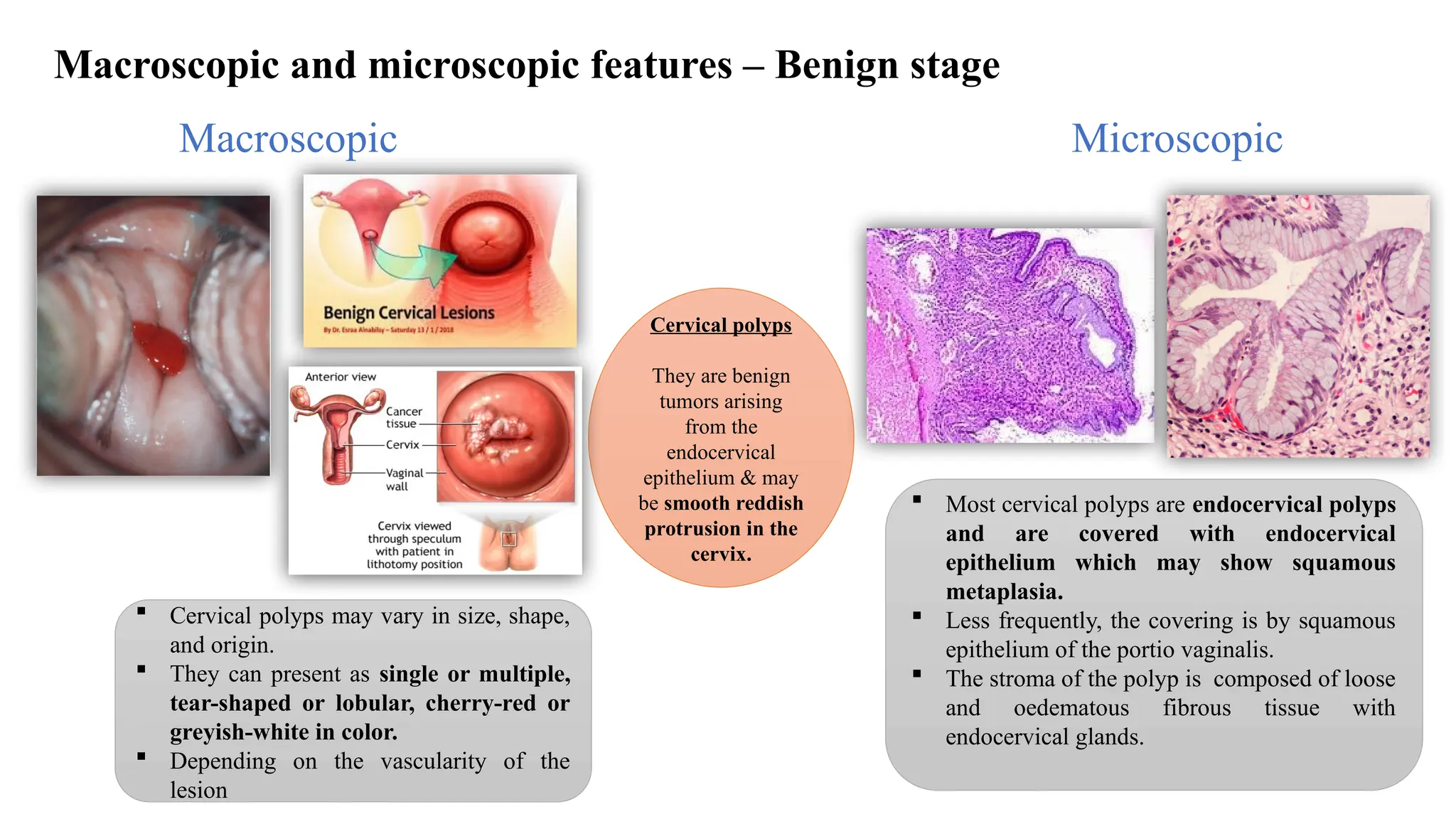
Cervical polyps
They are benign
tumors arising
from the
endocervical
epithelium & may
be smooth reddish
protrusion in the
cervix.
 Cervical polyps may vary in size, shape,
and origin.
 They can present as single or multiple,
tear-shaped or lobular, cherry-red or
greyish-white in color.
 Depending on the vascularity of the
lesion
Macroscopic Microscopic
 Most cervical polyps are endocervical polyps
and are covered with endocervical
epithelium which may show squamous
metaplasia.
 Less frequently, the covering is by squamous
epithelium of the portio vaginalis.
 The stroma of the polyp is composed of loose
and oedematous fibrous tissue with
endocervical glands.
Macroscopic and microscopic features - Pre-invasive stage
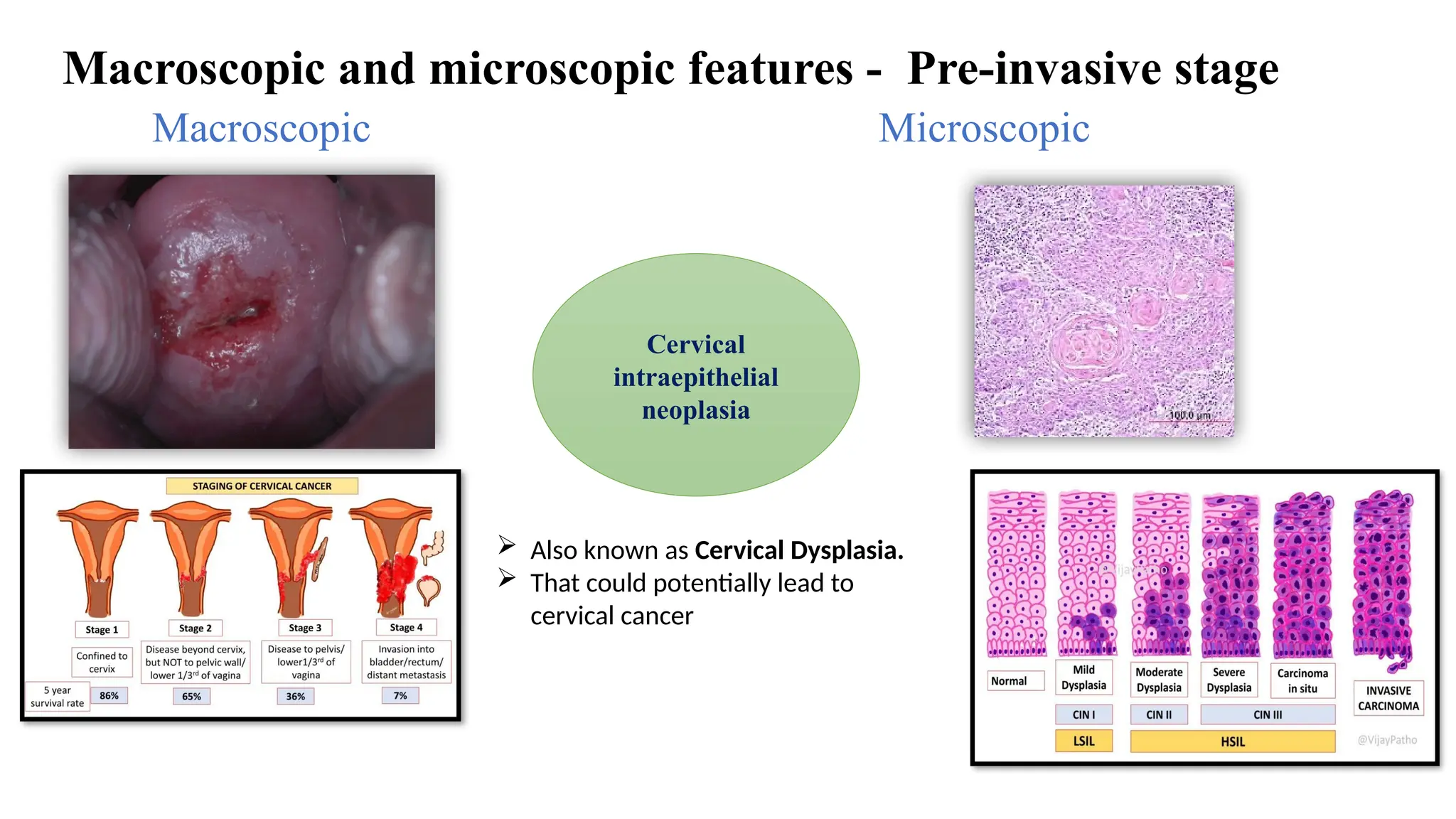
Cervical
intraepithelial
neoplasia
Macroscopic Microscopic
 Also known as Cervical Dysplasia.
 That could potentially lead to
cervical cancer
Macroscopic and microscopic features – Invasive stage
Macroscopic
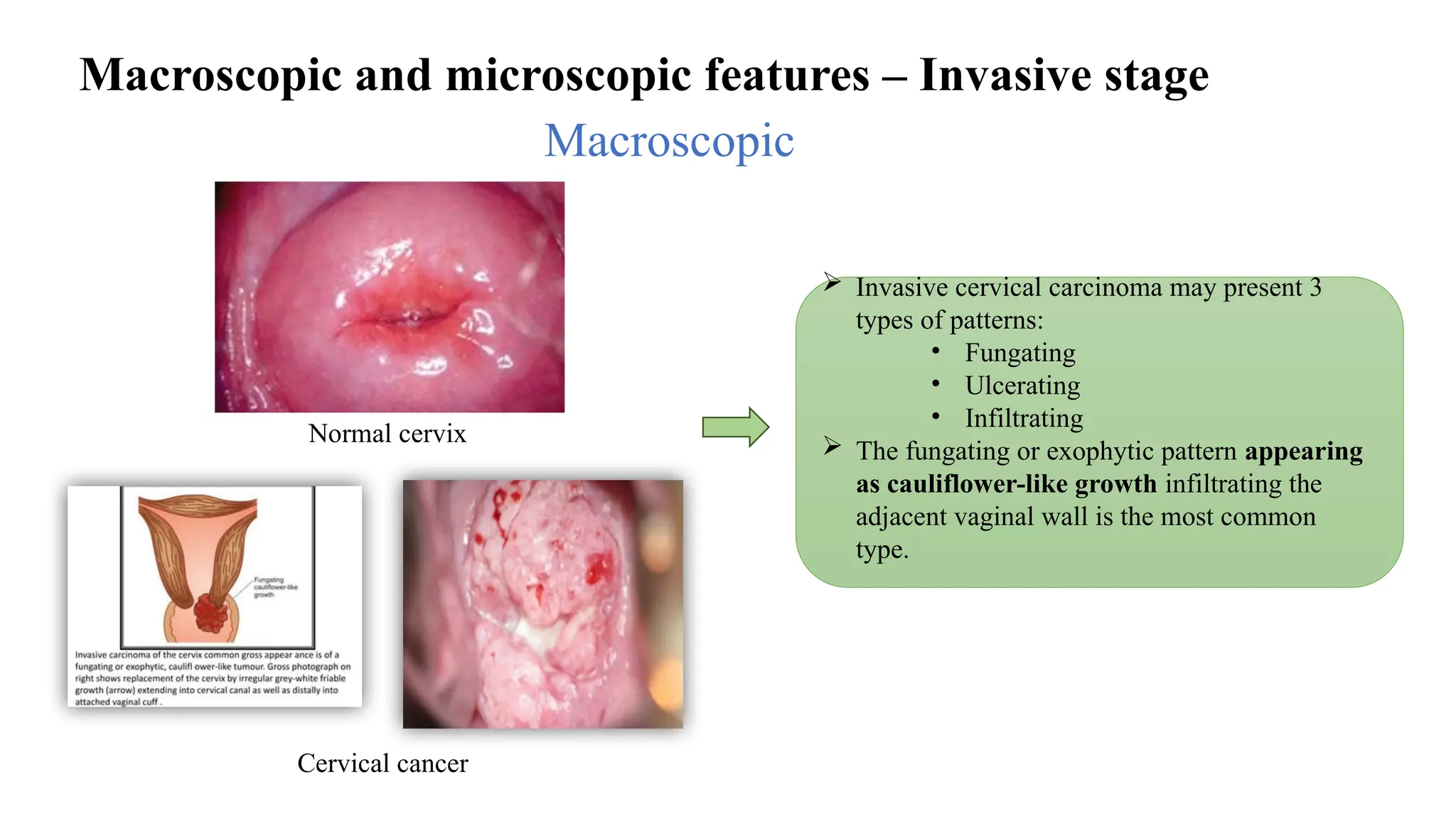
 Invasive cervical carcinoma may present 3
types of patterns:
• Fungating
• Ulcerating
• Infiltrating
 The fungating or exophytic pattern appearing
as cauliflower-like growth infiltrating the
adjacent vaginal wall is the most common
type.
Normal cervix
Cervical cancer
Microscopic
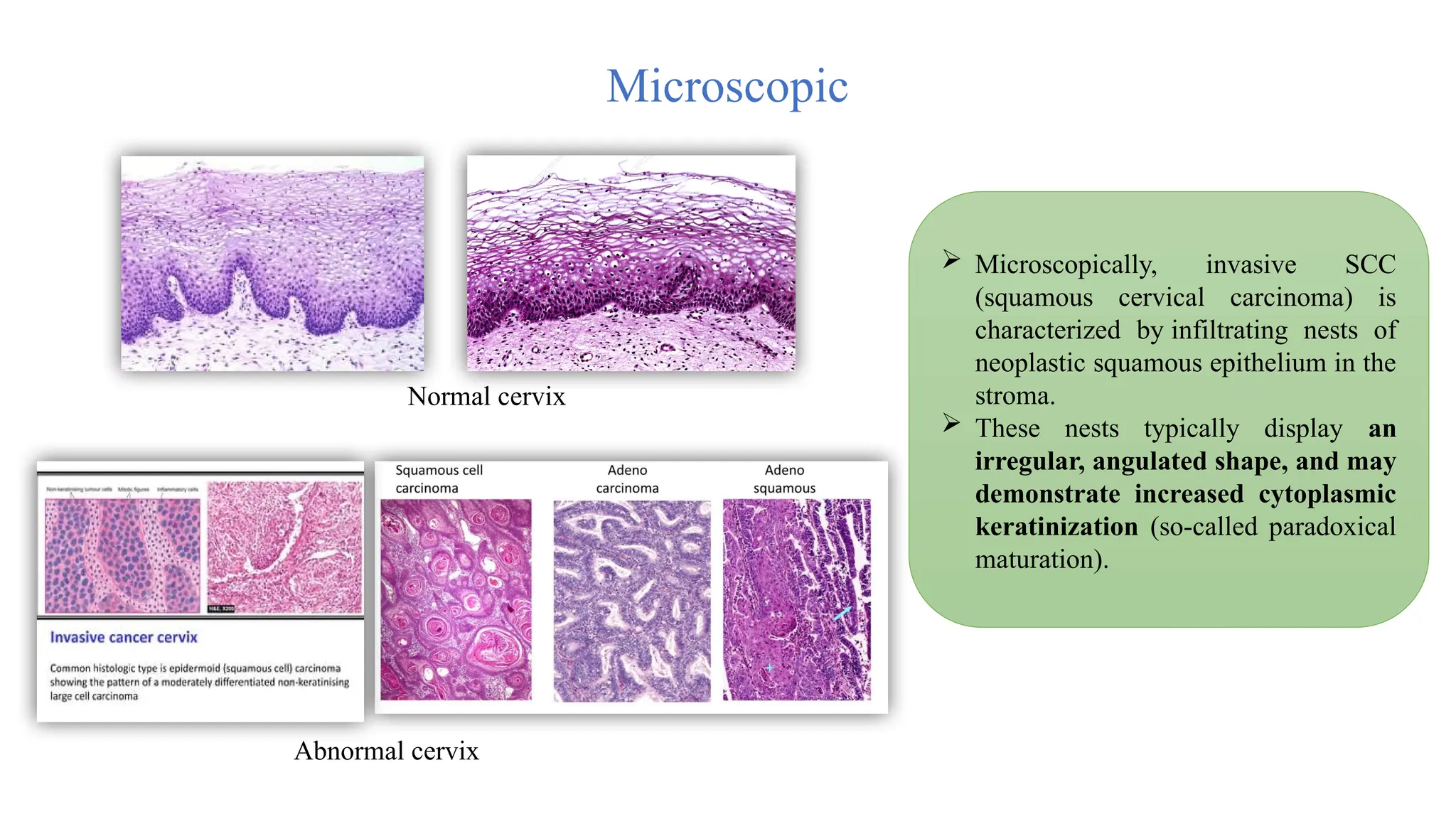
 Microscopically, invasive SCC
(squamous cervical carcinoma) is
characterized by infiltrating nests of
neoplastic squamous epithelium in the
stroma.
 These nests typically display an
irregular, angulated shape, and may
demonstrate increased cytoplasmic
keratinization (so-called paradoxical
maturation).
Normal cervix
Abnormal cervix

Macroscopic and microscopic features NEW.pptx

  • 1.
    Macroscopic and microscopicfeatures – Benign stage Cervical polyps They are benign tumors arising from the endocervical epithelium & may be smooth reddish protrusion in the cervix.  Cervical polyps may vary in size, shape, and origin.  They can present as single or multiple, tear-shaped or lobular, cherry-red or greyish-white in color.  Depending on the vascularity of the lesion Macroscopic Microscopic  Most cervical polyps are endocervical polyps and are covered with endocervical epithelium which may show squamous metaplasia.  Less frequently, the covering is by squamous epithelium of the portio vaginalis.  The stroma of the polyp is composed of loose and oedematous fibrous tissue with endocervical glands.
  • 2.
    Macroscopic and microscopicfeatures - Pre-invasive stage Cervical intraepithelial neoplasia Macroscopic Microscopic  Also known as Cervical Dysplasia.  That could potentially lead to cervical cancer
  • 3.
    Macroscopic and microscopicfeatures – Invasive stage Macroscopic  Invasive cervical carcinoma may present 3 types of patterns: • Fungating • Ulcerating • Infiltrating  The fungating or exophytic pattern appearing as cauliflower-like growth infiltrating the adjacent vaginal wall is the most common type. Normal cervix Cervical cancer
  • 4.
    Microscopic  Microscopically, invasiveSCC (squamous cervical carcinoma) is characterized by infiltrating nests of neoplastic squamous epithelium in the stroma.  These nests typically display an irregular, angulated shape, and may demonstrate increased cytoplasmic keratinization (so-called paradoxical maturation). Normal cervix Abnormal cervix