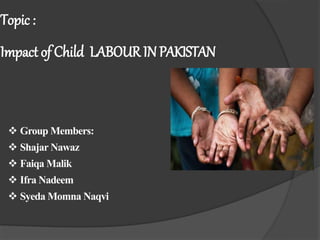
Topic :
Impact of Child LABOUR INPAKISTAN
 Group Members:
 Shajar Nawaz
 Faiqa Malik
 Ifra Nadeem
 Syeda Momna Naqvi
INTRODUCTON
 Child labor has became a major issue throughout the
world but in the developing countries , like pakistan, it
has grown to the maximum level.
 This problem is becoming intense with every passing
day because a large number of children are forced to
work which is completely against the law.
WHATIS CHILD LABOUR?
 The term “ Child labor“ is often defined as;
 Work that deprives children of their childhood, their
potential and that is harmful to physical and mental
development.
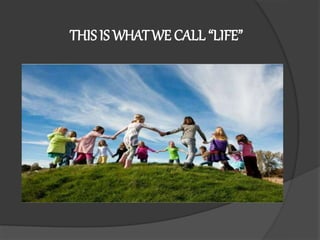
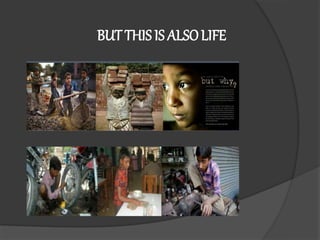
THISIS WHATWE CALL “LIFE”
BUT THISIS ALSOLIFE
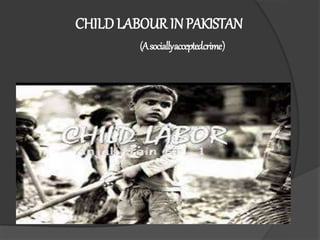
CHILD LABOUR INPAKISTAN
(Asociallyacceptedcrime)
Child Labor in Pakistan
 Child labor is a significant issue in Pakistan.
 According to estimates, there are around 12.5 million child
workers in Pakistan, aged between 5 and 14 years old.
 Poverty and lack of educational opportunities are major
factors contributing to child labor in Pakistan
 According to United nations international children
emergency funds (UNICEF), there are approximately 158M
children aged 5-18 working as child labor worldwide.
CHILDLABOUR IN PAKISTAN
 Child labor is a socio-economic problemof pakistan from the
beginning and is presenting negative effect till now.
UNICEFDEFINES
 According to United Nation International Children’s
Emergency Funds;
 “Child” is anyone below the age of 18.
 “ Child labor” is some type of work performed by
children below age 18.
AFACT
 Pakistan is amongst the top ten countries having the issue of
child labor.
 Children aged 5-15 are 40M in pakistan.
 50% of these economically active are between the age
of 5-10 years.
 Out of 40M ,approximately 4 million ( 73% boys, 27% girls)
are working in agriculture sector.
THE QUESTIONSARISES;
What are the reason behind?
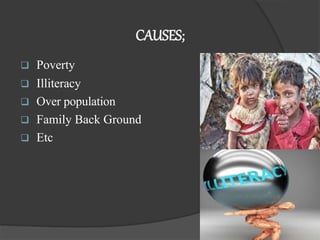
CAUSES;
 Poverty
 Illiteracy
 Over population
 Family Back Ground
 Etc
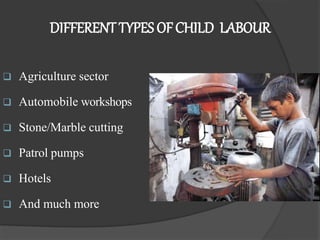
DIFFERENT TYPES OFCHILD LABOUR
 Agriculture sector
 Automobile workshops
 Stone/Marble cutting
 Patrol pumps
 Hotels
 And much more
EFFECT OF CHILDLABOUR;
 Physical effects
Working conditions that are safe and healthy for adults may
not be safe and healthy for children because of their physical
differences.
 Mental effects;
Impact of Child Labor in the Economy
Child labor has significant economic implications for Pakistan’s
economy and GDP.
 Child labor may provide short-term benefits for certain industries
but,
 It has long-term negative consequences for overall economic
development
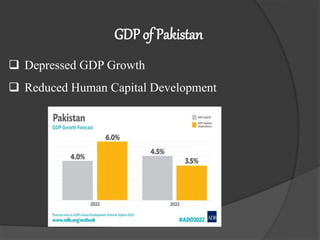
GDP of Pakistan
 Depressed GDP Growth
 Reduced Human Capital Development
 Awareness should be raised .
 Eliminate poverty ratio.
 Laws regarding child labor must be implemented.
 Government must control inflation rate.
 Family planning.
SOLUTION AND SUGGESTIONS
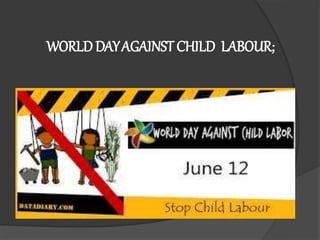
WORLDDAYAGAINST CHILD LABOUR;
PAKISTAN’SEFFORTS
 The employee Children’s Act 1991.
 Punjab compulsory Education’s Act 1994.
 Government gives free books to primary schools so parents
with limited budget are able to send their kids to school.
Macro Economics Presentation.pptx

Macro Economics Presentation.pptx

  • 1.
    Topic : Impact ofChild LABOUR INPAKISTAN  Group Members:  Shajar Nawaz  Faiqa Malik  Ifra Nadeem  Syeda Momna Naqvi
  • 2.
    INTRODUCTON  Child laborhas became a major issue throughout the world but in the developing countries , like pakistan, it has grown to the maximum level.  This problem is becoming intense with every passing day because a large number of children are forced to work which is completely against the law.
  • 3.
    WHATIS CHILD LABOUR? The term “ Child labor“ is often defined as;  Work that deprives children of their childhood, their potential and that is harmful to physical and mental development.
  • 4.
  • 5.
  • 6.
  • 7.
    Child Labor inPakistan  Child labor is a significant issue in Pakistan.  According to estimates, there are around 12.5 million child workers in Pakistan, aged between 5 and 14 years old.  Poverty and lack of educational opportunities are major factors contributing to child labor in Pakistan
  • 8.
     According toUnited nations international children emergency funds (UNICEF), there are approximately 158M children aged 5-18 working as child labor worldwide.
  • 9.
    CHILDLABOUR IN PAKISTAN Child labor is a socio-economic problemof pakistan from the beginning and is presenting negative effect till now.
  • 10.
    UNICEFDEFINES  According toUnited Nation International Children’s Emergency Funds;  “Child” is anyone below the age of 18.  “ Child labor” is some type of work performed by children below age 18.
  • 11.
    AFACT  Pakistan isamongst the top ten countries having the issue of child labor.  Children aged 5-15 are 40M in pakistan.  50% of these economically active are between the age of 5-10 years.  Out of 40M ,approximately 4 million ( 73% boys, 27% girls) are working in agriculture sector.
  • 12.
  • 13.
    CAUSES;  Poverty  Illiteracy Over population  Family Back Ground  Etc
  • 14.
    DIFFERENT TYPES OFCHILDLABOUR  Agriculture sector  Automobile workshops  Stone/Marble cutting  Patrol pumps  Hotels  And much more
  • 15.
    EFFECT OF CHILDLABOUR; Physical effects Working conditions that are safe and healthy for adults may not be safe and healthy for children because of their physical differences.  Mental effects;
  • 16.
    Impact of ChildLabor in the Economy Child labor has significant economic implications for Pakistan’s economy and GDP.  Child labor may provide short-term benefits for certain industries but,  It has long-term negative consequences for overall economic development
  • 17.
    GDP of Pakistan Depressed GDP Growth  Reduced Human Capital Development
  • 18.
     Awareness shouldbe raised .  Eliminate poverty ratio.  Laws regarding child labor must be implemented.  Government must control inflation rate.  Family planning. SOLUTION AND SUGGESTIONS
  • 19.
  • 20.
    PAKISTAN’SEFFORTS  The employeeChildren’s Act 1991.  Punjab compulsory Education’s Act 1994.  Government gives free books to primary schools so parents with limited budget are able to send their kids to school.