Lecture 01: Introduction
Satwat Bashir
What is Machine Learning?
How can we solve a specific problem?
What is Machine Learning?
How can we solve a specific problem?
As computer scientists we write a program that encodes a set of rules that
are useful to solve the problem
Figure: How can we make a robot cook?
What is Machine Learning?
How can we solve a specific problem?
As computer scientists we write a program that encodes a set of rules
that are useful to solve the problem
In many cases is very difficult to specify those rules, e.g., given a
picture determine whether there is a cat in the image
What is Machine Learning?
How can we solve a specific problem?
As computer scientists we write a program that encodes a set of rules
that are useful to solve the problem
In many cases is very difficult to specify those rules, e.g., given a picture
determine whether there is a cat in the image
Learning systems are not directly programmed to solve a problem, instead
develop own program based on:
Examples of how they should behave
From trial-and-error experience trying to solve the problem
Different than standard CS:
Want to implement unknown function, only have access e.g., to sample
input-output pairs (training examples)
Learning simply means incorporating information from the training examples
into the system
Tasks that requires machine learning: What makes a 2?
Tasks that benefits from machine learning: cooking!
Why use learning?
It is very hard to write programs that solve problems like recognizing a
handwritten digit
What distinguishes a 2 from a 7?
How does our brain do it?
Instead of writing a program by hand, we collect examples that specify the
correct output for a given input
A machine learning algorithm then takes these examples and produces a
program that does the job
The program produced by the learning algorithm may look very different
from a typical hand-written program. It may contain millions of
numbers.
If we do it right, the program works for new cases as well as the ones
we trained it on.
Learningalgorithms are useful in many tasks
1. Classification: Determine which discrete category the example is
Examples of Classification
What digit is this?
Examples of Classification
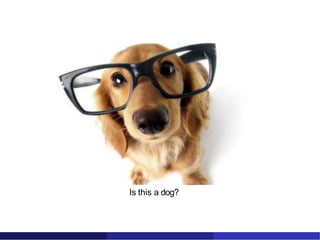
Is this a dog?
Examples of Classification
what about this one?
Examples of Classification
Am I going to pass the exam?
Examples of Classification
Do I have diabetes?
Learning algorithms are useful in many tasks
1. Classification: Determine which discrete category the example is
2. Recognizing patterns: Speech Recognition, facial identity, etc
Examplesof Recognizing patterns
Figure: Siri: https://www.youtube.com/watch?v=8ciagGASro0
Examples of Recognizing patterns
Figure: Photomath: https://photomath.net/
Learning algorithms are useful in other tasks
1. Classification: Determine which discrete category the example is
2. Recognizing patterns: Speech Recognition, facial identity, etc
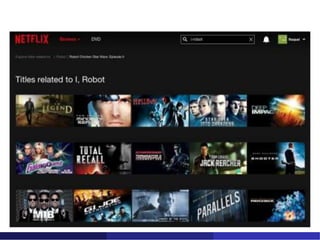
3. Recommender Systems: Noisy data, commercial pay-off (e.g., Amazon,
Netflix).
Examples of Recommendation systems
Learning algorithms are useful in other tasks
1. Classification: Determine which discrete category the example is
2. Recognizing patterns: Speech Recognition, facial identity, etc
3. Recommender Systems: Noisy data, commercial pay-off (e.g., Amazon,
Netflix).
4. Information retrieval: Find documents or images with similar content
Examples of Information Retrieval
Learning algorithms are useful in other tasks
1. Classification: Determine which discrete category the example is
2. Recognizing patterns: Speech Recognition, facial identity, etc
3. Recommender Systems: Noisy data, commercial pay-off (e.g., Amazon,
Netflix).
4. Information retrieval: Find documents or images with similar content
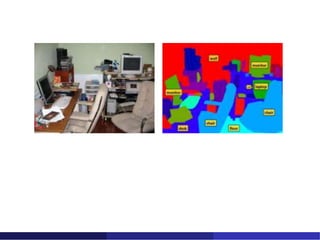
5. Computer vision: detection, segmentation, depth estimation, optical flow,
etc
Computer Vision
Computer Vision
Figure: Kinect: https://www.youtube.com/watch?v=op82fDRRqSY
Computer Vision
[Gatys, Ecker, Bethge. A Neural Algorithm of Artistic Style. Arxiv’15.]
Learning algorithms are useful in other tasks
1. Classification: Determine which discrete category the example is
2. Recognizing patterns: Speech Recognition, facial identity, etc
3. Recommender Systems: Noisy data, commercial pay-off (e.g., Amazon,
Netflix).
4. Information retrieval: Find documents or images with similar content
5. Computer vision: detection, segmentation, depth estimation, optical flow,
etc
6. Robotics: perception, planning, etc
Autonomous Driving
Flying Robots
Figure: Video: https://www.youtube.com/watch?v=YQIMGV5vtd4
Learning algorithms are useful in other tasks
1. Classification: Determine which discrete category the example is
2. Recognizing patterns: Speech Recognition, facial identity, etc
3. Recommender Systems: Noisy data, commercial pay-off (e.g., Amazon,
Netflix).
4. Information retrieval: Find documents or images with similar content
5. Computer vision: detection, segmentation, depth estimation, optical flow,
etc
6. Robotics: perception, planning, etc
7. Learning to play games
Playing Games: Atari
Figure: Video: https://www.youtube.com/watch?v=V1eYniJ0Rnk
Playing Games: Super Mario
Figure: Video: https://www.youtube.com/watch?v=wfL4L_l4U9A
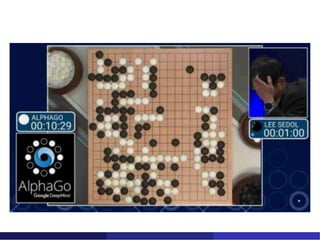
Playing Games: Alpha Go
Learning algorithms are useful in other
tasks
1. Classification: Determine which discrete category the example is
2. Recognizing patterns: Speech Recognition, facial identity, etc
3. Recommender Systems: Noisy data, commercial pay-off (e.g., Amazon,
Netflix).
4. Information retrieval: Find documents or images with similar content
5. Computer vision: detection, segmentation, depth estimation, optical flow,
etc
6. Robotics: perception, planning, etc
7. Learning to play games
8. Recognizing anomalies: Unusual sequences of credit card transactions, panic
situation at an airport
Learning algorithms are useful in other
tasks
1. Classification: Determine which discrete category the example is
2. Recognizing patterns: Speech Recognition, facial identity, etc
3. Recommender Systems: Noisy data, commercial pay-off (e.g., Amazon,
Netflix).
4. Information retrieval: Find documents or images with similar content
5. Computer vision: detection, segmentation, depth estimation, optical flow,
etc
6. Robotics: perception, planning, etc
7. Learning to play games
8. Recognizing anomalies: Unusual sequences of credit card transactions, panic
situation at an airport
9. Spam filtering, fraud detection: The enemy adapts so we must adapt too
Learning algorithms are useful in other
tasks
1. Classification: Determine which discrete category the example is
2. Recognizing patterns: Speech Recognition, facial identity, etc
3. Recommender Systems: Noisy data, commercial pay-off (e.g., Amazon,
Netflix).
4. Information retrieval: Find documents or images with similar content
5. Computer vision: detection, segmentation, depth estimation, optical flow,
etc
6. Robotics: perception, planning, etc
7. Learning to play games
8. Recognizing anomalies: Unusual sequences of credit card transactions, panic
situation at an airport
9. Spam filtering, fraud detection: The enemy adapts so we must adapt too
10. Many more!
Types of learning tasks
Supervised: correct output known for each training example
) Learn to predict output when given an input vector
) Classification: 1-of-N output (speech recognition, object recognition,
medical diagnosis)
) Regression: real-valued output (predicting market prices, customer
rating)
Unsupervised learning
) Create an internal representation of the input, capturing
regularities/structure in data
) Examples: form clusters; extract features
) How do we know if a representation is good?
Reinforcement learning
) Learn action to maximize payoff
) Not much information in a payoff signal
) Payoff is often delayed
Machine Learning vs Statistics
ML uses statistical theory to build models
A lot of ML is rediscovery of things statisticians already knew; often
disguised by differences in terminology
But the emphasis is very different:
Good piece of statistics: Clever proof that relatively simple estimation
procedure is asymptotically unbiased.
Good piece of ML: Demo that a complicated algorithm produces
impressive results on a specific task.
Can view ML as applying computational techniques to statistical problems.
But go beyond typical statistics problems, with different aims (speed vs.
accuracy).
Differences
MACHINE LEARNING
weights
learning
generalization
supervised learning
unsupervised learning
large grant: $1,000,000
conference location:
Snowbird, French Alps
STATISTICS
parameters
fitting
test set performance
regression/classification
density estimation, clustering
large grant: $50,000
conference location: Las Vegas in
August
Brain storming
What grade will I get in this course?
Data: entry survey and marks from this and previous years
Process the data
Split into training set; and test set
Determine representation of input;
Determine the representation of the output;
Choose form of model: linear regression
Decide how to evaluate the system’s performance: objective function
Set model parameters to optimize performance
Evaluate on test set: generalization

Machine Learning.pptx

  • 1.
  • 2.
    What is MachineLearning? How can we solve a specific problem?
  • 3.
    What is MachineLearning? How can we solve a specific problem? As computer scientists we write a program that encodes a set of rules that are useful to solve the problem Figure: How can we make a robot cook?
  • 4.
    What is MachineLearning? How can we solve a specific problem? As computer scientists we write a program that encodes a set of rules that are useful to solve the problem In many cases is very difficult to specify those rules, e.g., given a picture determine whether there is a cat in the image
  • 5.
    What is MachineLearning? How can we solve a specific problem? As computer scientists we write a program that encodes a set of rules that are useful to solve the problem In many cases is very difficult to specify those rules, e.g., given a picture determine whether there is a cat in the image Learning systems are not directly programmed to solve a problem, instead develop own program based on: Examples of how they should behave From trial-and-error experience trying to solve the problem Different than standard CS: Want to implement unknown function, only have access e.g., to sample input-output pairs (training examples) Learning simply means incorporating information from the training examples into the system
  • 6.
    Tasks that requiresmachine learning: What makes a 2?
  • 7.
    Tasks that benefitsfrom machine learning: cooking!
  • 8.
    Why use learning? Itis very hard to write programs that solve problems like recognizing a handwritten digit What distinguishes a 2 from a 7? How does our brain do it? Instead of writing a program by hand, we collect examples that specify the correct output for a given input A machine learning algorithm then takes these examples and produces a program that does the job The program produced by the learning algorithm may look very different from a typical hand-written program. It may contain millions of numbers. If we do it right, the program works for new cases as well as the ones we trained it on.
  • 9.
    Learningalgorithms are usefulin many tasks 1. Classification: Determine which discrete category the example is
  • 10.
  • 11.
  • 12.
  • 13.
    Examples of Classification AmI going to pass the exam?
  • 14.
  • 15.
    Learning algorithms areuseful in many tasks 1. Classification: Determine which discrete category the example is 2. Recognizing patterns: Speech Recognition, facial identity, etc
  • 16.
    Examplesof Recognizing patterns Figure:Siri: https://www.youtube.com/watch?v=8ciagGASro0
  • 17.
    Examples of Recognizingpatterns Figure: Photomath: https://photomath.net/
  • 18.
    Learning algorithms areuseful in other tasks 1. Classification: Determine which discrete category the example is 2. Recognizing patterns: Speech Recognition, facial identity, etc 3. Recommender Systems: Noisy data, commercial pay-off (e.g., Amazon, Netflix).
  • 19.
  • 20.
  • 21.
  • 22.
    Learning algorithms areuseful in other tasks 1. Classification: Determine which discrete category the example is 2. Recognizing patterns: Speech Recognition, facial identity, etc 3. Recommender Systems: Noisy data, commercial pay-off (e.g., Amazon, Netflix). 4. Information retrieval: Find documents or images with similar content
  • 23.
  • 24.
  • 25.
  • 26.
    Learning algorithms areuseful in other tasks 1. Classification: Determine which discrete category the example is 2. Recognizing patterns: Speech Recognition, facial identity, etc 3. Recommender Systems: Noisy data, commercial pay-off (e.g., Amazon, Netflix). 4. Information retrieval: Find documents or images with similar content 5. Computer vision: detection, segmentation, depth estimation, optical flow, etc
  • 27.
  • 28.
    Computer Vision Figure: Kinect:https://www.youtube.com/watch?v=op82fDRRqSY
  • 29.
    Computer Vision [Gatys, Ecker,Bethge. A Neural Algorithm of Artistic Style. Arxiv’15.]
  • 30.
    Learning algorithms areuseful in other tasks 1. Classification: Determine which discrete category the example is 2. Recognizing patterns: Speech Recognition, facial identity, etc 3. Recommender Systems: Noisy data, commercial pay-off (e.g., Amazon, Netflix). 4. Information retrieval: Find documents or images with similar content 5. Computer vision: detection, segmentation, depth estimation, optical flow, etc 6. Robotics: perception, planning, etc
  • 31.
  • 32.
    Flying Robots Figure: Video:https://www.youtube.com/watch?v=YQIMGV5vtd4
  • 33.
    Learning algorithms areuseful in other tasks 1. Classification: Determine which discrete category the example is 2. Recognizing patterns: Speech Recognition, facial identity, etc 3. Recommender Systems: Noisy data, commercial pay-off (e.g., Amazon, Netflix). 4. Information retrieval: Find documents or images with similar content 5. Computer vision: detection, segmentation, depth estimation, optical flow, etc 6. Robotics: perception, planning, etc 7. Learning to play games
  • 34.
    Playing Games: Atari Figure:Video: https://www.youtube.com/watch?v=V1eYniJ0Rnk
  • 35.
    Playing Games: SuperMario Figure: Video: https://www.youtube.com/watch?v=wfL4L_l4U9A
  • 36.
  • 37.
    Learning algorithms areuseful in other tasks 1. Classification: Determine which discrete category the example is 2. Recognizing patterns: Speech Recognition, facial identity, etc 3. Recommender Systems: Noisy data, commercial pay-off (e.g., Amazon, Netflix). 4. Information retrieval: Find documents or images with similar content 5. Computer vision: detection, segmentation, depth estimation, optical flow, etc 6. Robotics: perception, planning, etc 7. Learning to play games 8. Recognizing anomalies: Unusual sequences of credit card transactions, panic situation at an airport
  • 38.
    Learning algorithms areuseful in other tasks 1. Classification: Determine which discrete category the example is 2. Recognizing patterns: Speech Recognition, facial identity, etc 3. Recommender Systems: Noisy data, commercial pay-off (e.g., Amazon, Netflix). 4. Information retrieval: Find documents or images with similar content 5. Computer vision: detection, segmentation, depth estimation, optical flow, etc 6. Robotics: perception, planning, etc 7. Learning to play games 8. Recognizing anomalies: Unusual sequences of credit card transactions, panic situation at an airport 9. Spam filtering, fraud detection: The enemy adapts so we must adapt too
  • 39.
    Learning algorithms areuseful in other tasks 1. Classification: Determine which discrete category the example is 2. Recognizing patterns: Speech Recognition, facial identity, etc 3. Recommender Systems: Noisy data, commercial pay-off (e.g., Amazon, Netflix). 4. Information retrieval: Find documents or images with similar content 5. Computer vision: detection, segmentation, depth estimation, optical flow, etc 6. Robotics: perception, planning, etc 7. Learning to play games 8. Recognizing anomalies: Unusual sequences of credit card transactions, panic situation at an airport 9. Spam filtering, fraud detection: The enemy adapts so we must adapt too 10. Many more!
  • 40.
    Types of learningtasks Supervised: correct output known for each training example ) Learn to predict output when given an input vector ) Classification: 1-of-N output (speech recognition, object recognition, medical diagnosis) ) Regression: real-valued output (predicting market prices, customer rating) Unsupervised learning ) Create an internal representation of the input, capturing regularities/structure in data ) Examples: form clusters; extract features ) How do we know if a representation is good? Reinforcement learning ) Learn action to maximize payoff ) Not much information in a payoff signal ) Payoff is often delayed
  • 41.
    Machine Learning vsStatistics ML uses statistical theory to build models A lot of ML is rediscovery of things statisticians already knew; often disguised by differences in terminology But the emphasis is very different: Good piece of statistics: Clever proof that relatively simple estimation procedure is asymptotically unbiased. Good piece of ML: Demo that a complicated algorithm produces impressive results on a specific task. Can view ML as applying computational techniques to statistical problems. But go beyond typical statistics problems, with different aims (speed vs. accuracy).
  • 42.
    Differences MACHINE LEARNING weights learning generalization supervised learning unsupervisedlearning large grant: $1,000,000 conference location: Snowbird, French Alps STATISTICS parameters fitting test set performance regression/classification density estimation, clustering large grant: $50,000 conference location: Las Vegas in August
  • 43.
    Brain storming What gradewill I get in this course? Data: entry survey and marks from this and previous years Process the data Split into training set; and test set Determine representation of input; Determine the representation of the output; Choose form of model: linear regression Decide how to evaluate the system’s performance: objective function Set model parameters to optimize performance Evaluate on test set: generalization