Luteal Phase Support
Dr Sujoy Dasgupta
MBBS (Gold Medalist, Hons)
MS (OBGY- Gold Medalist)
DNB (New Delhi)
MRCOG (London)
Advanced ART Course for Clinicians (NUHS, Singapore)
M Sc, Sexual and Reproductive Medicine (South Wales, UK)
Clinical Director, Genome Fertility Centre, Kolkata
Managing Committee Member, BOGS, 2024-25
Executive Committee Member, ISAR Bengal, 2022-24
Clinical Examiner, MRCOG Part 3 Examination
Winner, Prof Geoffrey Chamberlain Award, RCOG World Congress, London, 2019
Delivered, Dr Kamini Rao Oration, AICOG, 2024
Peer reviewer-
•Fertility & Sterility
•BMJ Case reports
•JOGI
•Clinical Urology
•Journal of Men’s Health
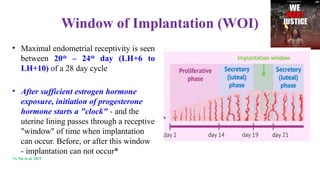
Window of Implantation (WOI)
• Maximal endometrial receptivity is seen
between 20th
– 24th
day (LH+6 to
LH+10) of a 28 day cycle
• After sufficient estrogen hormone
exposure, initiation of progesterone
hormone starts a "clock" - and the
uterine lining passes through a receptive
"window" of time when implantation
can occur. Before, or after this window
- implantation can not occur*
*G Nie et al, 2019
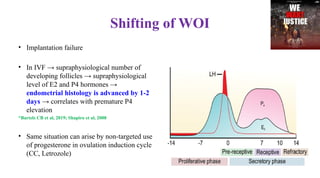
Shifting of WOI
• Implantation failure
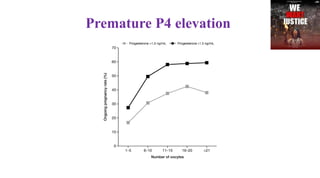
• In IVF → supraphysiological number of
developing follicles → supraphysiological
level of E2 and P4 hormones →
endometrial histology is advanced by 1-2
days → correlates with premature P4
elevation
*Bartels CB et al, 2019; Shapiro et al, 2008
• Same situation can arise by non-targeted use
of progesterone in ovulation induction cycle
(CC, Letrozole)
Rationale for Luteal Support in ART
Fresh embryo transfer cycle
• Follicular aspiration?
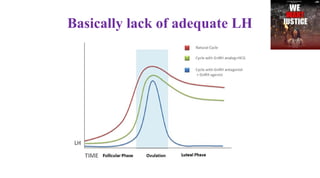
• HCG administered for final oocyte administration- effect on
LH?
• Continued GnRH agonists
• Negative feedback by supraphysiological steroids in ART cycle
Indian J Endocrinol Metab. 2013 Jan;17(1):44-9.
Basically lack of adequate LH
Treatment Options for Luteal Phase Support in
ART
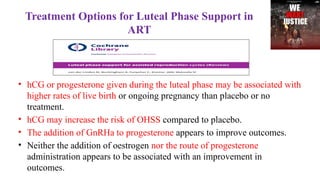
• hCG or progesterone given during the luteal phase may be associated with
higher rates of live birth or ongoing pregnancy than placebo or no
treatment.
• hCG may increase the risk of OHSS compared to placebo.
• The addition of GnRHa to progesterone appears to improve outcomes.
• Neither the addition of oestrogen nor the route of progesterone
administration appears to be associated with an improvement in
outcomes.
Progesterone start and duration
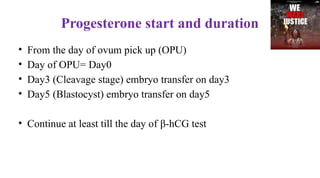
• From the day of ovum pick up (OPU)
• Day of OPU= Day0
• Day3 (Cleavage stage) embryo transfer on day3
• Day5 (Blastocyst) embryo transfer on day5
• Continue at least till the day of β-hCG test
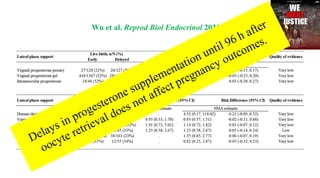
Wu et al. Reprod Biol Endocrinol 2021
Delays in progesterone supplementation until 96 h after
oocyte retrieval does not affect pregnancy outcomes.
Premature P4 elevation
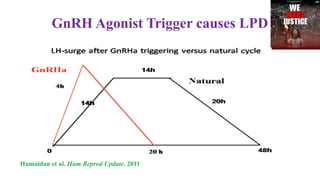
GnRH Agonist Trigger causes LPD
Humaidan et al. Hum Reprod Update. 2011
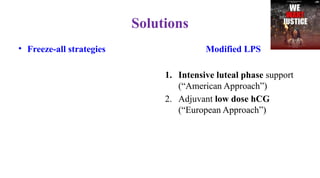
Solutions
• Freeze-all strategies Modified LPS
1. Intensive luteal phase support
(“American Approach”)
2. Adjuvant low dose hCG
(“European Approach”)
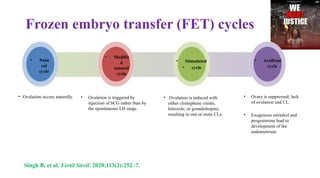
Frozen embryo transfer (FET) cycles
• 0
3
• Ovulation occurs naturally. • Ovulation is triggered by
injection of hCG rather than by
the spontaneous LH surge.
• Ovulation is induced with
either clomiphene citrate,
letrozole, or gonadotropins,
resulting in one or more CLs.
• Ovary is suppressed; lack
of ovulation and CL.
• Exogenous estradiol and
progesterone lead to
development of the
endometrium.
• Natu
ral
cycle
• Modifie
d
natural
cycle
• Stimulated
• cycle
• Artificial
cycle
Singh B, et al. Fertil Steril. 2020;113(2):252–7.
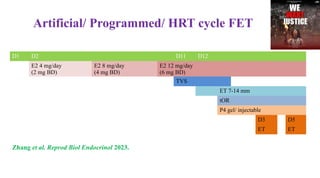
Artificial/ Programmed/ HRT cycle FET
D1 D2 D11 D12
E2 4 mg/day
(2 mg BD)
E2 8 mg/day
(4 mg BD)
E2 12 mg/day
(6 mg BD)
TVS
ET 7-14 mm
tOR
P4 gel/ injectable
D3 D5
ET ET
Zhang et al. Reprod Biol Endocrinol 2023.
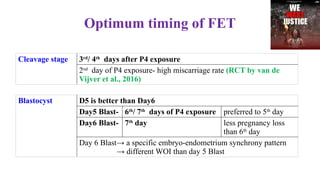
Optimum timing of FET
Cleavage stage 3rd
/ 4th
days after P4 exposure
2nd
day of P4 exposure- high miscarriage rate (RCT by van de
Vijver et al., 2016)
Blastocyst D5 is better than Day6
Day5 Blast- 6th
/ 7th
days of P4 exposure preferred to 5th
day
Day6 Blast- 7th
day less pregnancy loss
than 6th
day
Day 6 Blast→ a specific embryo-endometrium synchrony pattern
→ different WOI than day 5 Blast
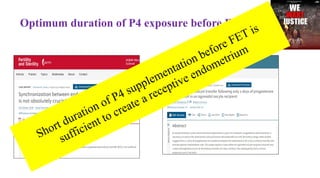
Optimum duration of P4 exposure before FET
Short duration of P4 supplementation before FET is
sufficient to create a receptive endometrium
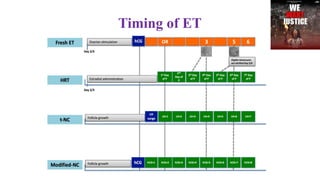
Timing of ET
True natural cycle (tNC)-
Is it flexible?
• Ovulation usually occurs 24–56 h after the spontaneous LH surge.
• Difficult to pinpoint the exact moment of ovulation
• FET outcomes were not significantly different when performed over a range of 3
days
• Vitrified-warmed blastocyst transfer could be scheduled on day 5, 6 or 7 after a
positive LH urine test without having a significant impact on the clinical outcome
(Gavrić Lovrec et al. Reprod Biomed Online. 2022)
• Serum P4 >1.5 ng/ml before LH surge → decreases LBR (Zhang et al. Reprod Biol
Endocrinol. 2023)
• Serum P4 rise ≥2 days before LH surge → decreases LBR (Lee et al. Fertil Steril. 2014
Modified natural cycle (mNC)
• More flexible
• Ovulation is triggered with hCG when the DF >16–20 mm in
diameter.
• hCG can be given if LH is between 15 and 40 IU/L without
affecting the clinical outcome
• Serum P4 >1 ng/ml on the day of hCG trigger → decreases
LBR (Zhang et al. Reprod Biol Endocrinol 2023)
Is LPS required in tNC/ mNC?
• CL is thought to provide all that is needed for embryo
implantation
• Some women undergoing fertility treatment may not produce
enough progesterone
• Embryo-endometrial asynchrony caused by normal
physiological fluctuations or misinterpretation of laboratory
results
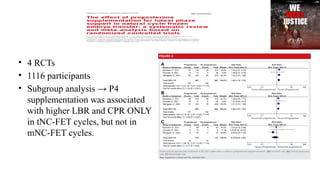
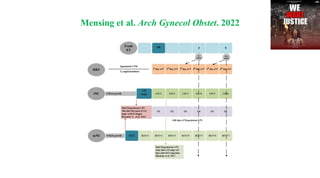
• 4 RCTs
• 1116 participants
• Subgroup analysis → P4
supplementation was associated
with higher LBR and CPR ONLY
in tNC-FET cycles, but not in
mNC-FET cycles.
Mensing et al. Arch Gynecol Obstet. 2022
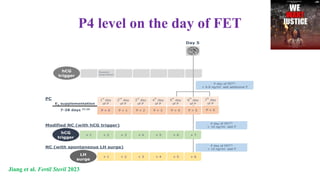
P4 level on the day of FET
Jiang et al. Fertil Steril 2023
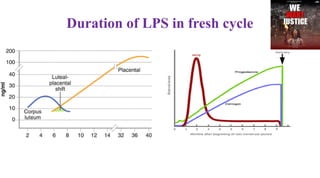
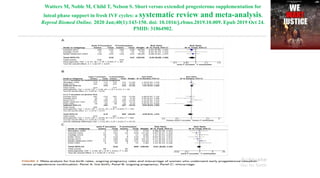
Duration of LPS in fresh cycle
Watters M, Noble M, Child T, Nelson S. Short versus extended progesterone supplementation for
luteal phase support in fresh IVF cycles: a systematic review and meta-analysis.
Reprod Biomed Online. 2020 Jan;40(1):143-150. doi: 10.1016/j.rbmo.2019.10.009. Epub 2019 Oct 24.
PMID: 31864902.
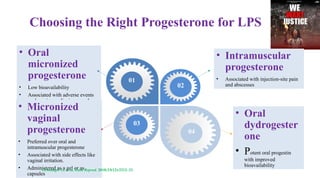
Choosing the Right Progesterone for LPS
• Oral
micronized
progesterone
• Low bioavailability
• Associated with adverse events
as drowsiness, dizziness, and
headaches
• Intramuscular
progesterone
• Associated with injection-site pain
and abscesses
• Micronized
vaginal
progesterone
• Preferred over oral and
intramuscular progesterone
• Associated with side effects like
vaginal irritation.
• Administered as a gel or as
capsules
• Oral
dydrogester
one
• Potent oral progestin
with improved
bioavailability
01
02
04
03
03
Griesinger G, et al. Hum Reprod. 2018;33(12):2212–21.
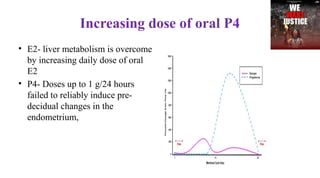
Increasing dose of oral P4
• E2- liver metabolism is overcome
by increasing daily dose of oral
E2
• P4- Doses up to 1 g/24 hours
failed to reliably induce pre-
decidual changes in the
endometrium,
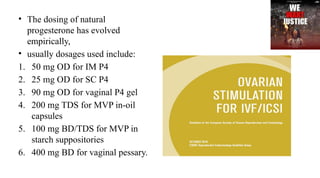
• The dosing of natural
progesterone has evolved
empirically,
• usually dosages used include:
1. 50 mg OD for IM P4
2. 25 mg OD for SC P4
3. 90 mg OD for vaginal P4 gel
4. 200 mg TDS for MVP in-oil
capsules
5. 100 mg BD/TDS for MVP in
starch suppositories
6. 400 mg BD for vaginal pessary.
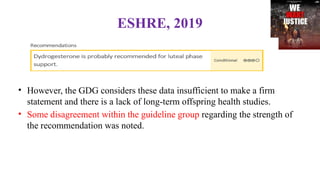
ESHRE, 2019
• However, the GDG considers these data insufficient to make a firm
statement and there is a lack of long-term offspring health studies.
• Some disagreement within the guideline group regarding the strength of
the recommendation was noted.
STUDY QUESTION: Is oral Dydrogesterone 30 mg daily (10 mg three times daily [TID]) non-
inferior to micronized vaginal progesterone (MVP) 600 mg daily (200 mg TID) for luteal
support in in vitro fertilization (IVF), assessed by the presence of fetal heartbeats determined
by transvaginal ultrasound at 12 weeks of gestation?
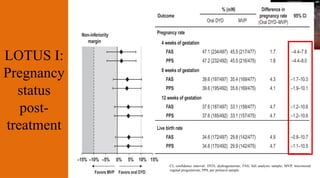
LOTUS I
2017
Human Reproduction, Vol.32, No.5 pp. 1019–1027, 2017
LOTUS I:
Pregnancy
status
post-
treatment
CI, confidence interval; DYD, dydrogesterone; FAS, full analysis sample; MVP, micronized
vaginal progesterone; PPS, per protocol sample.
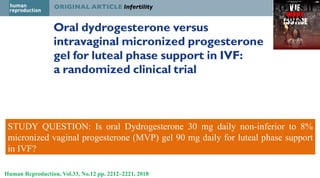
LOTUS II
2018
Human Reproduction, Vol.33, No.12 pp. 2212–2221, 2018
STUDY QUESTION: Is oral Dydrogesterone 30 mg daily non-inferior to 8%
micronized vaginal progesterone (MVP) gel 90 mg daily for luteal phase support
in IVF?
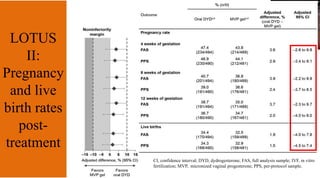
LOTUS
II:
Pregnancy
and live
birth rates
post-
treatment
CI, confidence interval; DYD, dydrogesterone; FAS, full analysis sample; IVF, in vitro
fertilization; MVP, micronized vaginal progesterone; PPS, per-protocol sample.
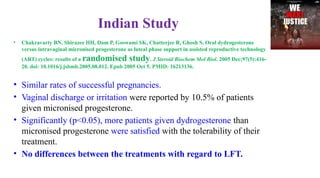
Indian Study
• Chakravarty BN, Shirazee HH, Dam P, Goswami SK, Chatterjee R, Ghosh S. Oral dydrogesterone
versus intravaginal micronised progesterone as luteal phase support in assisted reproductive technology
(ART) cycles: results of a randomised study. J Steroid Biochem Mol Biol. 2005 Dec;97(5):416-
20. doi: 10.1016/j.jsbmb.2005.08.012. Epub 2005 Oct 5. PMID: 16213136.
• Similar rates of successful pregnancies.
• Vaginal discharge or irritation were reported by 10.5% of patients
given micronised progesterone.
• Significantly (p<0.05), more patients given dydrogesterone than
micronised progesterone were satisfied with the tolerability of their
treatment.
• No differences between the treatments with regard to LFT.
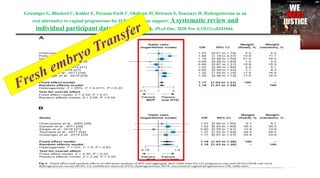
Griesinger G, Blockeel C, Kahler E, Pexman-Fieth C, Olofsson JI, Driessen S, Tournaye H. Dydrogesterone as an
oral alternative to vaginal progesterone for IVF luteal phase support: A systematic review and
individual participant data meta-analysis. PLoS One. 2020 Nov 4;15(11):e0241044.
Fresh embryo Transfer
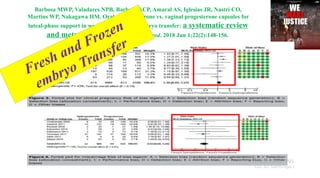
Barbosa MWP, Valadares NPB, Barbosa ACP, Amaral AS, Iglesias JR, Nastri CO,
Martins WP, Nakagawa HM. Oral dydrogesterone vs. vaginal progesterone capsules for
luteal-phase support in women undergoing embryo transfer: a systematic review
and meta-analysis. JBRA Assist Reprod. 2018 Jun 1;22(2):148-156.
Fresh and Frozen
embryo Transfer
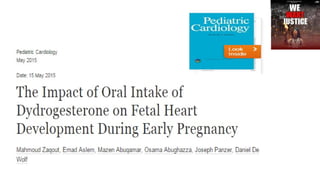
Zaqout M, Aslem E, Abuqamar M, Abughazza O, Panzer J, De Wolf D. The Impact of Oral Intake of
Dydrogesterone on Fetal Heart Development During Early Pregnancy. Pediatr Cardiol. 2015 Oct;36(7):1483-
8. doi: 10.1007/s00246-015-1190-9. Epub 2015 May 15. PMID: 25972284.
• Faulty study design- selection, confounding and information
bias.
• Previous miscarriages are an important risk factor for
congenital heart defects (Tikkanen and Heinonen, 1992; Liu et al., 2009; Shi et al., 2015)
• Relied on the mother's recollection of oral dydrogesterone
usage, which is no guarantee of comparable drug exposure
• Different heart defects were pooled into one group
• Socioeconomic status was ignored, as were comorbidities.
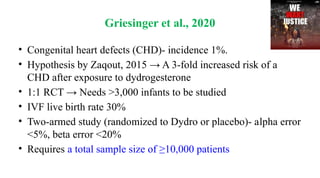
Griesinger et al., 2020
• Congenital heart defects (CHD)- incidence 1%.
• Hypothesis by Zaqout, 2015 → A 3-fold increased risk of a
CHD after exposure to dydrogesterone
• 1:1 RCT → Needs >3,000 infants to be studied
• IVF live birth rate 30%
• Two-armed study (randomized to Dydro or placebo)- alpha error
<5%, beta error <20%
• Requires a total sample size of ≥10,000 patients
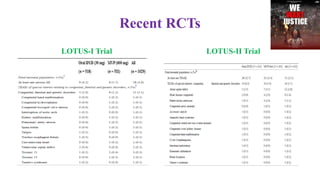
Recent RCTs
LOTUS-I Trial LOTUS-II Trial
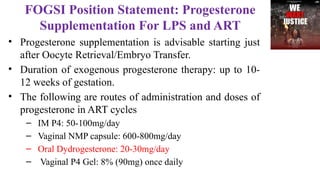
FOGSI Position Statement: Progesterone
Supplementation For LPS and ART
• Progesterone supplementation is advisable starting just
after Oocyte Retrieval/Embryo Transfer.
• Duration of exogenous progesterone therapy: up to 10-
12 weeks of gestation.
• The following are routes of administration and doses of
progesterone in ART cycles
– IM P4: 50-100mg/day
– Vaginal NMP capsule: 600-800mg/day
– Oral Dydrogesterone: 20-30mg/day
– Vaginal P4 Gel: 8% (90mg) once daily
LPS in non-IVF cycle
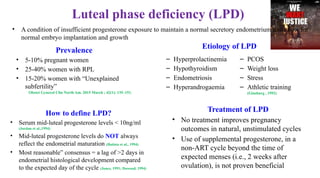
Luteal phase deficiency (LPD)
• A condition of insufficient progesterone exposure to maintain a normal secretory endometrium and allow for
normal embryo implantation and growth
Prevalence
• 5-10% pregnant women
• 25-40% women with RPL
• 15-20% women with “Unexplained
subfertility”
Obstet Gynecol Clin North Am. 2015 March ; 42(1): 135–151.
– Hyperprolactinemia
– Hypothyroidism
– Endometriosis
– Hyperandrogaemia
– PCOS
– Weight loss
– Stress
– Athletic training
(Ginsburg , 1992)
How to define LPD?
• Serum mid-luteal progesterone levels < 10ng/ml
(Jordan et al.,1994)
• Mid-luteal progesterone levels do NOT always
reflect the endometrial maturation (Batista et al., 1994)
• Most reasonable” consensus = a lag of >2 days in
endometrial histological development compared
to the expected day of the cycle (Jones, 1991; Dawood, 1994)
Treatment of LPD
• No treatment improves pregnancy
outcomes in natural, unstimulated cycles
• Use of supplemental progesterone, in a
non-ART cycle beyond the time of
expected menses (i.e., 2 weeks after
ovulation), is not proven beneficial
Etiology of LPD
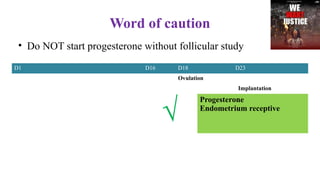
D1 D16 D18 D23
Ovulation
Implantation
√
Progesterone
Endometrium receptive
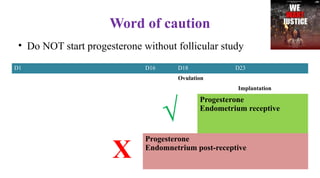
X
Progesterone
Endomnetrium post-receptive
Word of caution
• Do NOT start progesterone without follicular study
D1 D16 D18 D23
Ovulation
Implantation
√
Progesterone
Endometrium receptive
X
Progesterone
Endomnetrium post-receptive
Word of caution
• Do NOT start progesterone without follicular study
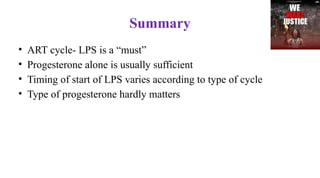
Summary
• ART cycle- LPS is a “must”
• Progesterone alone is usually sufficient
• Timing of start of LPS varies according to type of cycle
• Type of progesterone hardly matters
"Luteal Phase Support"

"Luteal Phase Support"

  • 1.
    Luteal Phase Support DrSujoy Dasgupta MBBS (Gold Medalist, Hons) MS (OBGY- Gold Medalist) DNB (New Delhi) MRCOG (London) Advanced ART Course for Clinicians (NUHS, Singapore) M Sc, Sexual and Reproductive Medicine (South Wales, UK) Clinical Director, Genome Fertility Centre, Kolkata Managing Committee Member, BOGS, 2024-25 Executive Committee Member, ISAR Bengal, 2022-24 Clinical Examiner, MRCOG Part 3 Examination Winner, Prof Geoffrey Chamberlain Award, RCOG World Congress, London, 2019 Delivered, Dr Kamini Rao Oration, AICOG, 2024 Peer reviewer- •Fertility & Sterility •BMJ Case reports •JOGI •Clinical Urology •Journal of Men’s Health
  • 2.
    Window of Implantation(WOI) • Maximal endometrial receptivity is seen between 20th – 24th day (LH+6 to LH+10) of a 28 day cycle • After sufficient estrogen hormone exposure, initiation of progesterone hormone starts a "clock" - and the uterine lining passes through a receptive "window" of time when implantation can occur. Before, or after this window - implantation can not occur* *G Nie et al, 2019
  • 3.
    Shifting of WOI •Implantation failure • In IVF → supraphysiological number of developing follicles → supraphysiological level of E2 and P4 hormones → endometrial histology is advanced by 1-2 days → correlates with premature P4 elevation *Bartels CB et al, 2019; Shapiro et al, 2008 • Same situation can arise by non-targeted use of progesterone in ovulation induction cycle (CC, Letrozole)
  • 4.
    Rationale for LutealSupport in ART Fresh embryo transfer cycle • Follicular aspiration? • HCG administered for final oocyte administration- effect on LH? • Continued GnRH agonists • Negative feedback by supraphysiological steroids in ART cycle Indian J Endocrinol Metab. 2013 Jan;17(1):44-9.
  • 5.
    Basically lack ofadequate LH
  • 6.
    Treatment Options forLuteal Phase Support in ART • hCG or progesterone given during the luteal phase may be associated with higher rates of live birth or ongoing pregnancy than placebo or no treatment. • hCG may increase the risk of OHSS compared to placebo. • The addition of GnRHa to progesterone appears to improve outcomes. • Neither the addition of oestrogen nor the route of progesterone administration appears to be associated with an improvement in outcomes.
  • 7.
    Progesterone start andduration • From the day of ovum pick up (OPU) • Day of OPU= Day0 • Day3 (Cleavage stage) embryo transfer on day3 • Day5 (Blastocyst) embryo transfer on day5 • Continue at least till the day of β-hCG test
  • 8.
    Wu et al.Reprod Biol Endocrinol 2021 Delays in progesterone supplementation until 96 h after oocyte retrieval does not affect pregnancy outcomes.
  • 9.
  • 10.
    GnRH Agonist Triggercauses LPD Humaidan et al. Hum Reprod Update. 2011
  • 11.
    Solutions • Freeze-all strategiesModified LPS 1. Intensive luteal phase support (“American Approach”) 2. Adjuvant low dose hCG (“European Approach”)
  • 12.
    Frozen embryo transfer(FET) cycles • 0 3 • Ovulation occurs naturally. • Ovulation is triggered by injection of hCG rather than by the spontaneous LH surge. • Ovulation is induced with either clomiphene citrate, letrozole, or gonadotropins, resulting in one or more CLs. • Ovary is suppressed; lack of ovulation and CL. • Exogenous estradiol and progesterone lead to development of the endometrium. • Natu ral cycle • Modifie d natural cycle • Stimulated • cycle • Artificial cycle Singh B, et al. Fertil Steril. 2020;113(2):252–7.
  • 13.
    Artificial/ Programmed/ HRTcycle FET D1 D2 D11 D12 E2 4 mg/day (2 mg BD) E2 8 mg/day (4 mg BD) E2 12 mg/day (6 mg BD) TVS ET 7-14 mm tOR P4 gel/ injectable D3 D5 ET ET Zhang et al. Reprod Biol Endocrinol 2023.
  • 14.
    Optimum timing ofFET Cleavage stage 3rd / 4th days after P4 exposure 2nd day of P4 exposure- high miscarriage rate (RCT by van de Vijver et al., 2016) Blastocyst D5 is better than Day6 Day5 Blast- 6th / 7th days of P4 exposure preferred to 5th day Day6 Blast- 7th day less pregnancy loss than 6th day Day 6 Blast→ a specific embryo-endometrium synchrony pattern → different WOI than day 5 Blast
  • 15.
    Optimum duration ofP4 exposure before FET Short duration of P4 supplementation before FET is sufficient to create a receptive endometrium
  • 16.
  • 17.
    True natural cycle(tNC)- Is it flexible? • Ovulation usually occurs 24–56 h after the spontaneous LH surge. • Difficult to pinpoint the exact moment of ovulation • FET outcomes were not significantly different when performed over a range of 3 days • Vitrified-warmed blastocyst transfer could be scheduled on day 5, 6 or 7 after a positive LH urine test without having a significant impact on the clinical outcome (Gavrić Lovrec et al. Reprod Biomed Online. 2022) • Serum P4 >1.5 ng/ml before LH surge → decreases LBR (Zhang et al. Reprod Biol Endocrinol. 2023) • Serum P4 rise ≥2 days before LH surge → decreases LBR (Lee et al. Fertil Steril. 2014
  • 18.
    Modified natural cycle(mNC) • More flexible • Ovulation is triggered with hCG when the DF >16–20 mm in diameter. • hCG can be given if LH is between 15 and 40 IU/L without affecting the clinical outcome • Serum P4 >1 ng/ml on the day of hCG trigger → decreases LBR (Zhang et al. Reprod Biol Endocrinol 2023)
  • 19.
    Is LPS requiredin tNC/ mNC? • CL is thought to provide all that is needed for embryo implantation • Some women undergoing fertility treatment may not produce enough progesterone • Embryo-endometrial asynchrony caused by normal physiological fluctuations or misinterpretation of laboratory results
  • 20.
    • 4 RCTs •1116 participants • Subgroup analysis → P4 supplementation was associated with higher LBR and CPR ONLY in tNC-FET cycles, but not in mNC-FET cycles.
  • 21.
    Mensing et al.Arch Gynecol Obstet. 2022
  • 22.
    P4 level onthe day of FET Jiang et al. Fertil Steril 2023
  • 23.
    Duration of LPSin fresh cycle
  • 24.
    Watters M, NobleM, Child T, Nelson S. Short versus extended progesterone supplementation for luteal phase support in fresh IVF cycles: a systematic review and meta-analysis. Reprod Biomed Online. 2020 Jan;40(1):143-150. doi: 10.1016/j.rbmo.2019.10.009. Epub 2019 Oct 24. PMID: 31864902.
  • 25.
    Choosing the RightProgesterone for LPS • Oral micronized progesterone • Low bioavailability • Associated with adverse events as drowsiness, dizziness, and headaches • Intramuscular progesterone • Associated with injection-site pain and abscesses • Micronized vaginal progesterone • Preferred over oral and intramuscular progesterone • Associated with side effects like vaginal irritation. • Administered as a gel or as capsules • Oral dydrogester one • Potent oral progestin with improved bioavailability 01 02 04 03 03 Griesinger G, et al. Hum Reprod. 2018;33(12):2212–21.
  • 26.
    Increasing dose oforal P4 • E2- liver metabolism is overcome by increasing daily dose of oral E2 • P4- Doses up to 1 g/24 hours failed to reliably induce pre- decidual changes in the endometrium,
  • 27.
    • The dosingof natural progesterone has evolved empirically, • usually dosages used include: 1. 50 mg OD for IM P4 2. 25 mg OD for SC P4 3. 90 mg OD for vaginal P4 gel 4. 200 mg TDS for MVP in-oil capsules 5. 100 mg BD/TDS for MVP in starch suppositories 6. 400 mg BD for vaginal pessary.
  • 28.
    ESHRE, 2019 • However,the GDG considers these data insufficient to make a firm statement and there is a lack of long-term offspring health studies. • Some disagreement within the guideline group regarding the strength of the recommendation was noted.
  • 29.
    STUDY QUESTION: Isoral Dydrogesterone 30 mg daily (10 mg three times daily [TID]) non- inferior to micronized vaginal progesterone (MVP) 600 mg daily (200 mg TID) for luteal support in in vitro fertilization (IVF), assessed by the presence of fetal heartbeats determined by transvaginal ultrasound at 12 weeks of gestation? LOTUS I 2017 Human Reproduction, Vol.32, No.5 pp. 1019–1027, 2017
  • 30.
    LOTUS I: Pregnancy status post- treatment CI, confidenceinterval; DYD, dydrogesterone; FAS, full analysis sample; MVP, micronized vaginal progesterone; PPS, per protocol sample.
  • 31.
    LOTUS II 2018 Human Reproduction,Vol.33, No.12 pp. 2212–2221, 2018 STUDY QUESTION: Is oral Dydrogesterone 30 mg daily non-inferior to 8% micronized vaginal progesterone (MVP) gel 90 mg daily for luteal phase support in IVF?
  • 32.
    LOTUS II: Pregnancy and live birth rates post- treatment CI,confidence interval; DYD, dydrogesterone; FAS, full analysis sample; IVF, in vitro fertilization; MVP, micronized vaginal progesterone; PPS, per-protocol sample.
  • 33.
    Indian Study • ChakravartyBN, Shirazee HH, Dam P, Goswami SK, Chatterjee R, Ghosh S. Oral dydrogesterone versus intravaginal micronised progesterone as luteal phase support in assisted reproductive technology (ART) cycles: results of a randomised study. J Steroid Biochem Mol Biol. 2005 Dec;97(5):416- 20. doi: 10.1016/j.jsbmb.2005.08.012. Epub 2005 Oct 5. PMID: 16213136. • Similar rates of successful pregnancies. • Vaginal discharge or irritation were reported by 10.5% of patients given micronised progesterone. • Significantly (p<0.05), more patients given dydrogesterone than micronised progesterone were satisfied with the tolerability of their treatment. • No differences between the treatments with regard to LFT.
  • 34.
    Griesinger G, BlockeelC, Kahler E, Pexman-Fieth C, Olofsson JI, Driessen S, Tournaye H. Dydrogesterone as an oral alternative to vaginal progesterone for IVF luteal phase support: A systematic review and individual participant data meta-analysis. PLoS One. 2020 Nov 4;15(11):e0241044. Fresh embryo Transfer
  • 35.
    Barbosa MWP, ValadaresNPB, Barbosa ACP, Amaral AS, Iglesias JR, Nastri CO, Martins WP, Nakagawa HM. Oral dydrogesterone vs. vaginal progesterone capsules for luteal-phase support in women undergoing embryo transfer: a systematic review and meta-analysis. JBRA Assist Reprod. 2018 Jun 1;22(2):148-156. Fresh and Frozen embryo Transfer
  • 37.
    Zaqout M, AslemE, Abuqamar M, Abughazza O, Panzer J, De Wolf D. The Impact of Oral Intake of Dydrogesterone on Fetal Heart Development During Early Pregnancy. Pediatr Cardiol. 2015 Oct;36(7):1483- 8. doi: 10.1007/s00246-015-1190-9. Epub 2015 May 15. PMID: 25972284. • Faulty study design- selection, confounding and information bias. • Previous miscarriages are an important risk factor for congenital heart defects (Tikkanen and Heinonen, 1992; Liu et al., 2009; Shi et al., 2015) • Relied on the mother's recollection of oral dydrogesterone usage, which is no guarantee of comparable drug exposure • Different heart defects were pooled into one group • Socioeconomic status was ignored, as were comorbidities.
  • 38.
    Griesinger et al.,2020 • Congenital heart defects (CHD)- incidence 1%. • Hypothesis by Zaqout, 2015 → A 3-fold increased risk of a CHD after exposure to dydrogesterone • 1:1 RCT → Needs >3,000 infants to be studied • IVF live birth rate 30% • Two-armed study (randomized to Dydro or placebo)- alpha error <5%, beta error <20% • Requires a total sample size of ≥10,000 patients
  • 39.
  • 40.
    FOGSI Position Statement:Progesterone Supplementation For LPS and ART • Progesterone supplementation is advisable starting just after Oocyte Retrieval/Embryo Transfer. • Duration of exogenous progesterone therapy: up to 10- 12 weeks of gestation. • The following are routes of administration and doses of progesterone in ART cycles – IM P4: 50-100mg/day – Vaginal NMP capsule: 600-800mg/day – Oral Dydrogesterone: 20-30mg/day – Vaginal P4 Gel: 8% (90mg) once daily
  • 41.
  • 42.
    Luteal phase deficiency(LPD) • A condition of insufficient progesterone exposure to maintain a normal secretory endometrium and allow for normal embryo implantation and growth Prevalence • 5-10% pregnant women • 25-40% women with RPL • 15-20% women with “Unexplained subfertility” Obstet Gynecol Clin North Am. 2015 March ; 42(1): 135–151. – Hyperprolactinemia – Hypothyroidism – Endometriosis – Hyperandrogaemia – PCOS – Weight loss – Stress – Athletic training (Ginsburg , 1992) How to define LPD? • Serum mid-luteal progesterone levels < 10ng/ml (Jordan et al.,1994) • Mid-luteal progesterone levels do NOT always reflect the endometrial maturation (Batista et al., 1994) • Most reasonable” consensus = a lag of >2 days in endometrial histological development compared to the expected day of the cycle (Jones, 1991; Dawood, 1994) Treatment of LPD • No treatment improves pregnancy outcomes in natural, unstimulated cycles • Use of supplemental progesterone, in a non-ART cycle beyond the time of expected menses (i.e., 2 weeks after ovulation), is not proven beneficial Etiology of LPD
  • 43.
    D1 D16 D18D23 Ovulation Implantation √ Progesterone Endometrium receptive X Progesterone Endomnetrium post-receptive Word of caution • Do NOT start progesterone without follicular study
  • 44.
    D1 D16 D18D23 Ovulation Implantation √ Progesterone Endometrium receptive X Progesterone Endomnetrium post-receptive Word of caution • Do NOT start progesterone without follicular study
  • 45.
    Summary • ART cycle-LPS is a “must” • Progesterone alone is usually sufficient • Timing of start of LPS varies according to type of cycle • Type of progesterone hardly matters