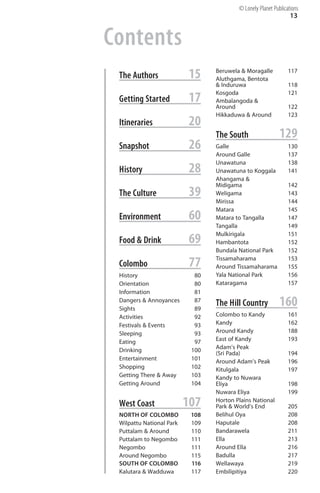
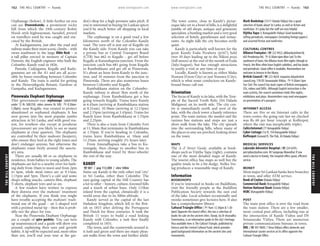
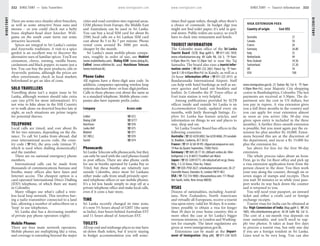
Contents
13
The Authors 15
Getting Started 17
Itineraries 20
Snapshot 26
History 28
The Culture 39
Environment 60
Food & Drink 69
Colombo 77
History 80
Orientation 80
Information 81
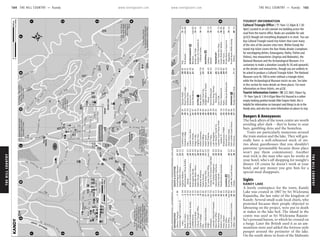
Dangers & Annoyances 87
Sights 89
Activities 92
Festivals & Events 93
Sleeping 93
Eating 97
Drinking 100
Entertainment 101
Shopping 102
Getting There & Away 103
Getting Around 104
West Coast 107
NORTH OF COLOMBO 108
Wilpattu National Park 109
Puttalam & Around 110
Puttalam to Negombo 111
Negombo 111
Around Negombo 115
SOUTH OF COLOMBO 116
Kalutara & Wadduwa 117
Beruwela & Moragalle 117
Aluthgama, Bentota
& Induruwa 118
Kosgoda 121
Ambalangoda &
Around 122
Hikkaduwa & Around 123
The South 129
Galle 130
Around Galle 137
Unawatuna 138
Unawatuna to Koggala 141
Ahangama &
Midigama 142
Weligama 143
Mirissa 144
Matara 145
Matara to Tangalla 147
Tangalla 149
Mulkirigala 151
Hambantota 152
Bundala National Park 152
Tissamaharama 153
Around Tissamaharama 155
Yala National Park 156
Kataragama 157
The Hill Country 160
Colombo to Kandy 161
Kandy 162
Around Kandy 188
East of Kandy 193
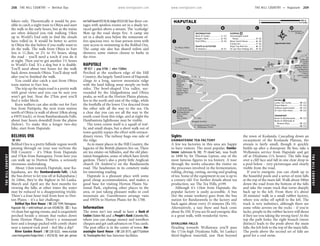
Adam’s Peak
(Sri Pada) 194
Around Adam’s Peak 196
Kitulgala 197
Kandy to Nuwara
Eliya 198
Nuwara Eliya 199
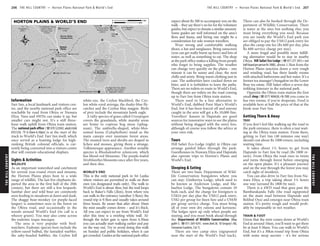
Horton Plains National
Park & World’s End 205
Belihul Oya 208
Haputale 208
Bandarawela 211
Ella 213
Around Ella 216
Badulla 217
Wellawaya 219
Embilipitiya 220
© Lonely Planet Publications
14 C O N T E N T S
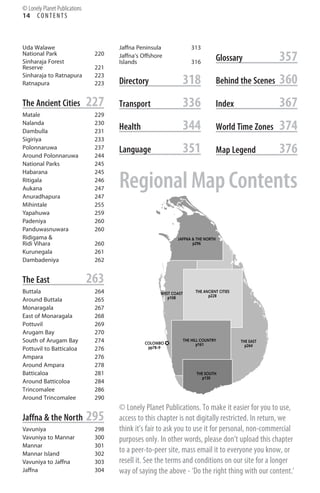
Uda Walawe
National Park 220
Sinharaja Forest
Reserve 221
Sinharaja to Ratnapura 223
Ratnapura 223
The Ancient Cities 227
Matale 229
Nalanda 230
Dambulla 231
Sigiriya 233
Polonnaruwa 237
Around Polonnaruwa 244
National Parks 245
Habarana 245
Ritigala 246
Aukana 247
Anuradhapura 247
Mihintale 255
Yapahuwa 259
Padeniya 260
Panduwasnuwara 260
Ridigama &
Ridi Vihara 260
Kurunegala 261
Dambadeniya 262
The East 263
Buttala 264
Around Buttala 265
Monaragala 267
East of Monaragala 268
Pottuvil 269
Arugam Bay 270
South of Arugam Bay 274
Pottuvil to Batticaloa 276
Ampara 276
Around Ampara 278
Batticaloa 281
Around Batticoloa 284
Trincomalee 286
Around Trincomalee 290
Jaffna & the North 295
Vavuniya 298
Vavuniya to Mannar 300
Mannar 301
Mannar Island 302
Vavuniya to Jaffna 303
Jaffna 304
Jaffna Peninsula 313
Jaffna’s Offshore
Islands 316
Directory 318
Transport 336
Health 344
Language 351
Glossary 357
Behind the Scenes 360
Index 367
World Time Zones 374
Map Legend 376
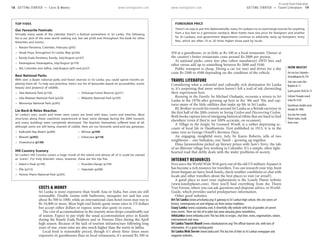
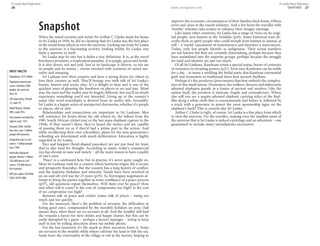
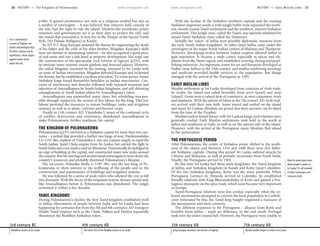
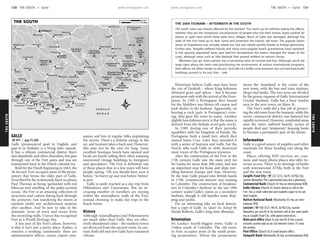
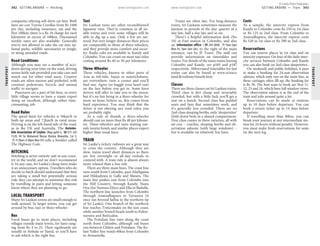
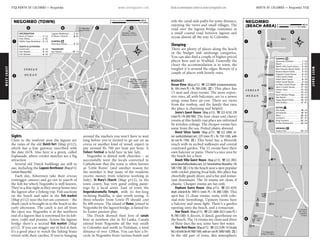
pp78–9
COLOMBO
p108
WEST COAST
p130
THE SOUTH
p264
THE EAST
p161
THE HILL COUNTRY
p228
THE ANCIENT CITIES
p296
JAFFNA & THE NORTH
Regional Map Contents
© Lonely Planet Publications
© Lonely Planet Publications. To make it easier for you to use,
access to this chapter is not digitally restricted. In return, we
think it’s fair to ask you to use it for personal, non-commercial
purposes only. In other words, please don’t upload this chapter
to a peer-to-peer site, mass email it to everyone you know, or
resell it. See the terms and conditions on our site for a longer
way of saying the above - ‘Do the right thing with our content.’
www.lonelyplanet.com 17
While Sri Lanka is arguably the easiest place in which to travel in all of
South Asia, a little advance knowledge and planning will go a long way
towards making your trip more fulfilling, hassle-free and fun.
For the most part you’ll find that larger towns – and even smaller
towns with a highly developed tourism infrastructure – cater to all travel
budgets. In places more off the beaten track, especially those in the Hill
Country and in the North, luxury accommodation and high-standard
dining are relatively hard to find, but the offerings are usually sufficient
for all but the most finicky travellers.
The 12 August 2005 assassination of then foreign minister Lakshman
Kadirgamar by a suspected Tiger sniper heightened political tensions and
security concerns, and violence again broke out in April 2006. Added
caution may therefore be needed when travelling in the North and North-
east; check the situation before leaving.
WHEN TO GO
Climatically speaking, the driest (and best) seasons in Sri Lanka are
from December to March for the west coast, the south coast and the
Hill Country, and from April to September for the ancient cities region
and the east coast.
December through March are also the months when most foreign
tourists visit, the majority of them escaping the European winter. During
the Christmas to New Year holiday season, in particular, accommodation
anywhere on the island can be tight due to the huge influx of foreign
visitors.
July/August is the time of the Kandy Esala Perahera, the 10-day fes-
tival honouring the sacred tooth relic of the Buddha, and also the time
for the Kataragama festival in the South. In both towns accommodation
just before, during and immediately after the festivals is very difficult to
come by, and rates usually double or treble. Be sure to book rooms well
in advance.
Sri Lanka’s climate means that it is always the ‘right’ beach season
somewhere on the coast. The weather doesn’t follow strict rules, though –
it often seems to be raining where it should be sunny, and sunny where
it should be raining. Rainfall tends to be emphatic – streets can become
flooded in what seems like only minutes.
Out-of-season travel has its advantages – not only do the crowds go
away but many air fares and accommodation prices drop right down.
Nor does it rain all the time during the low season.
Getting Started
See Climate Charts (p322)
for more information.
DON’T LEAVE HOME WITHOUT...
Packing a light suitcase – clothes can be readily bought in Colombo, Galle and Kandy.
Bringing along a windbreaker, parka or jumper for cool nights in the Hill Country.
Checking with a Sri Lankan embassy or consulate to see whether you need a visa (p333).
Confirming what medicines or inoculations you need (p344).
Checking government travel advisories for general security issues (p323).
Building up your chilli tolerance.
16
© Lonely Planet Publications
www.lonelyplanet.com www.lonelyplanet.com
COSTS & MONEY
Sri Lanka is more expensive than South Asia or India, but costs are still
reasonable. Double rooms with bathroom, mosquito net and fan cost
about Rs 500 to 1000, while an international-class hotel room may run to
Rs 10,000 or more. Most high-end hotels quote room rates in US dollars
but accept either dollars or rupees; some also quote in euros.
The cost of accommodation in the touristy areas drops considerably out
of season. Expect to pay triple the usual accommodation price in Kandy
during the Kandy Esala Perahera and in Nuwara Eliya during the April
high season. Because of the lack of tourism infrastructure following long
years of war, room rates are also much higher than the norm in Jaffna.
Local food is reasonably priced, though it’s about three times more
expensive in guesthouses than in local restaurants; it’s around Rs 300 to
450 at a guesthouse, or as little as Rs 100 at a local restaurant. Dinner at
the country’s better restaurants costs around Rs 2000 per person.
At national parks, entry fees plus (often mandatory) 4WD hire and
other extras add up to something between Rs 2000 and 5100.
Public transport is cheap. Hiring a car (or van) and driver for a day
costs Rs 2500 to 4500 depending on the condition of the vehicle.
TRAVEL LITERATURE
Considering what a colourful and culturally rich destination Sri Lanka
is, it’s surprising that more writers haven’t left a trail of ink chronicling
their experiences here.
Running in the Family, by Michael Ondaatje, recounts a return to Sri
Lanka in the 1970s after growing up here in the ’40s and ’50s, and cap-
tures many of the little oddities that make up life in Sri Lanka.
RL Brohier records his travels around Sri Lanka as a British surveyor in
the first half of the 20th century in Seeing Ceylon and Discovering Ceylon.
Both books capture lots of intriguing historical titbits that are hard to find
elsewhere (even if they’re not 100% accurate, on occasion).
A Village in the Jungle, by Leonard Woolf, is a rather depressing ac-
count of local life in Hambantota. First published in 1913, it is in the
same vein as George Orwell’s Burmese Days.
An engaging, insightful story, July, by Karen Roberts, tells of two
neighbours – one Sinhalese, one Tamil – growing up together.
Elmo Jayawardena picked up literary prizes with Sam’s Story, the tale
of an illiterate village boy working in Colombo. It’s a simple, often light-
hearted read that deftly deals with the wider problems of society.
INTERNET RESOURCES
Ever since the World Wide Web grew out of the old US military Arpanet it
has become a rich resource for travellers. You can research your trip, hunt
down bargain air fares, book hotels, check weather conditions or chat with
locals and other travellers about the best places to visit (or avoid!).
A good place to start your explorations is the Lonely Planet website
(www.lonelyplanet.com). Here you’ll find everything from the Thorn
Tree Forum, where you can ask questions and dispense advice, to World-
Guide, which provides useful predeparture information.
Other good websites:
Art Sri Lanka (www.artsrilanka.org) A gateway to Sri Lankan high culture, this site covers art
history, contemporary art and religious art from various traditions.
Crazy Lanka (www.crazylanka.com) A cheerfully silly website with lots of parodies of current
news events. There are lots of in-jokes but some amusing gems nonetheless.
InfoLanka (www.infolanka.com) This has links to recipes, chat lines, news, organisations, nature,
entertainment and more.
Sri Lanka Tourist Board (www.srilankatourism.org) The official tourism site, with tons of
information. It’s a good starting point.
Sri Lanka Web Server (www.lanka.net) This has lots of links to Sri Lankan newspaper and
magazine websites.
TOP FIVES
Our Favourite Festivals
Virtually every week of the calendar there’s a festival somewhere in Sri Lanka. The following
list is our pick of the ones worth seeking out, but see p326 and throughout the book for other
festivities and events.
Navam Perahera, Colombo, February (p93)
Vesak Poya, throughout Sri Lanka, May (p326)
Kandy Esala Perahera, Kandy, July/August (p167)
Kataragama, Kataragama, July/August (p159)
Vel, Colombo and Jaffna, July/August (p93 and p327)
Best National Parks
With over a dozen national parks and forest reserves in Sri Lanka, you could spend months ex-
ploring them all. To help you prioritise, here’s our list of favourites based on accessibility, scenic
beauty and presence of wildlife.
Yala National Park (p156) Sinharaja Forest Reserve (p221)
Uda Walawe National Park (p220) Wilpattu National Park (p109)
Minneriya National Park (p245)
Lie-Back-&-Relax Beaches
Sri Lanka’s east, south and lower west coasts are lined with bays, coves and beaches. Most
structures along these coastlines experienced at least some damage during the 2004 tsunami,
and many buildings were completely destroyed. The beaches themselves suffered least of all,
although some are still being cleaned of rubble. Here are our favourite sand-and-sea getaways.
Kalkudah Bay Beach (p284) Mirissa (p144)
Nilaveli (p292) Induruwa (p118)
Unawatuna (p138)
Hill Country Scenery
Sri Lanka’s Hill Country covers a huge chunk of the island and almost all of it could be classed
as ‘scenic’. For truly dramatic views, however, these are the top five.
Adam’s Peak (p194) Knuckles Range (p194)
Ella (p213) Haputale (p208)
Horton Plains National Park (p205)
HOW MUCH?
Air-con bus Colombo–
Anuradhapura Rs 210
2nd-class train Ella–
Badulla Rs 12
Lunch packet (fish) Rs 75
Cultural Triangle round
ticket Rs 4120
Guesthouse double room
(Kandy) Rs 1800
See also the Lonely
Planet Index, inside
front cover.
18 GET TING STARTED •• Costs & Money GET TING STARTED •• Travel Literature 19
FOREIGNER PRICE
There’s no way to put this diplomatically: many Sri Lankans try to overcharge tourists for anything
from a bus fare to a gemstone necklace. Most hotels have one price for foreigners and another
for Sri Lankans, and government departments continue to arbitrarily ramp up foreigners’ entry
fees, which are often 10 or 20 times higher those paid by locals.
© Lonely Planet Publications
20 www.lonelyplanet.com
Itineraries
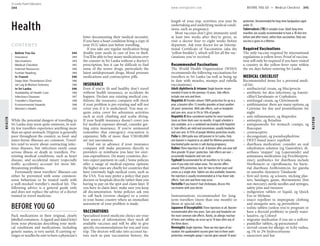
CLASSIC ROUTES
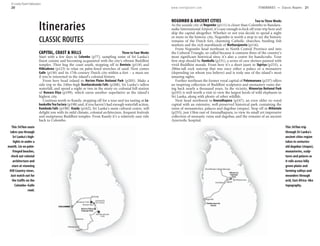
CAPITAL, COAST & HILLS Three to Four Weeks
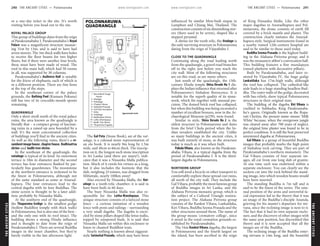
Start with a few days in Colombo (p77), sampling some of Sri Lanka’s
finest cuisine and becoming acquainted with the city’s vibrant Buddhist
temples. Then hug the coast south, stopping off in Bentota (p118) and
Hikkaduwa (p123) to relax on palm-lined stretches of sand. Next comes
Galle (p130) and its 17th-century Dutch city-within-a-fort – a must-see
if you’re interested in the island’s colonial history.
From here head inland to Horton Plains National Park (p205). Make a
side trip to the 240m-high Bambarakanda Falls (p208), Sri Lanka’s tallest
waterfall, and spend a night or two in the misty ex–colonial hill station
of Nuwara Eliya (p199), which earns another superlative as the island’s
highest city.
Continue north to Kandy, stopping off for a tour and tea tasting at La-
bookellieTeaFactory (p198) and, if you haven’t had enough waterfall action,
Ramboda Falls (p198). Kandy (p162), Sri Lanka’s main cultural centre, will
delight you with its mild climate, colonial architecture, frequent festivals
and sumptuous Buddhist temples. From Kandy it’s a relatively easy ride
back to Colombo.
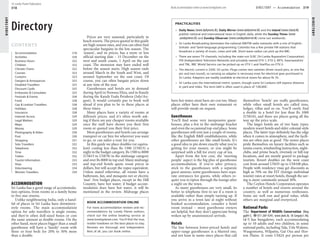
This 547km route
takes you through
Sri Lanka’s high-
lights in under a
month. Lie on palm-
fringed beaches,
check out colonial
architecture and
stare at stunning
Hill Country views.
Just watch out for
the traffic on the
Colombo–Galle
road.
Nuwara Eliya
Galle
Hikkaduwa
Bentota
COLOMBO
Kandy
Falls
Bambarakanda
Tea Factory
Labookellie
National Park
Horton Plains
Ramboda Falls
Capital, Coast & Hills
NEGOMBO & ANCIENT CITIES Two to Three Weeks
As the seaside city of Negombo (p111) is closer than Colombo to Bandara-
naike International Airport, it’s easy enough to kick off your trip here and
skip the capital altogether. Whether or not you decide to spend a night
or more in the historic city, Negombo is worth a stop to see the historic
remains of the Dutch fort, charming Catholic churches, bustling fish
markets and the rich marshlands of Muthurajawela (p116).
From Negombo head northeast to North Central Province and into
the Cultural Triangle, so-called because it contains three of the country’s
most significant historical sites; it’s also a centre for handicrafts. Your
first stop should be Dambulla (p231), a series of cave shrines painted with
vivid Buddhist murals. From here it’s a short jaunt to Sigiriya (p233), a
200m-tall rock outcrop that was once either a palace or a monastery
(depending on whom you believe) and is truly one of the island’s most
amazing sights.
Further northeast the former royal capital of Polonnaruwa (p237) offers
an inspiring collection of Buddhist sculptures and monastery ruins dat-
ing back nearly a thousand years. In the vicinity, Minneriya National Park
(p245) is well worth a visit to view the largest herds of wild elephants in
Sri Lanka, along with plenty of other wildlife.
Next head northwest to Anuradhapura (p247), an even older ex–royal
capital with an extensive, well-preserved historical park containing the
ruins of monasteries, palaces and dagobas (stupas). Stop off in Mihintale
(p255), just 13km east of Anuradhapura, to view its small yet impressive
collection of monastic ruins and dagobas, and the remains of an ancient
Ayurvedic hospital.
This 347km trip
through Sri Lanka’s
ancient cities region
takes in centuries-
old dagobas (stupas),
monasteries, sculp-
tures and palaces as
it rolls across hilly
green plains and
farming valleys and
meanders through
arid, East Africa–like
topography.
Negombo
Dambulla Sigiriya
Polonnaruwa
MihintaleAnuradhapura
Marsh
Muthurajawela
Park
National
Minneriya
Negombo & Ancient Cities
ITINERARIES •• Classic Routes 21
© Lonely Planet Publications
www.lonelyplanet.com www.lonelyplanet.com
ROADS LESS TRAVELLED
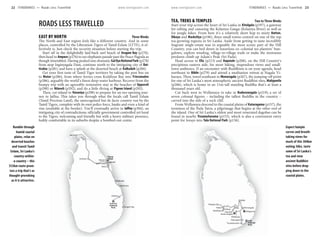
EAST BY NORTH Three Weeks
The North and East region feels like a different country. And in some
places, controlled by the Liberation Tigers of Tamil Eelam (LTTE), it ef-
fectively is. Just check the security situation before starting the trip.
Start off in the delightfully laid-back surf beach of Arugam Bay (p270),
then head to Ampara(p276)to see elephants parade past the Peace Pagoda as
though timetabled. Having peeked into dramatic GalOyaNationalPark(p278)
from atop Inginyagala Dam, continue north to the intriguing city of Bat-
ticaloa (p281) and have a splash at the deserted beach at Kalkudah (p284).
Get your first taste of Tamil Tiger territory by taking the post bus on
to Mutur (p286), from where ferries cross Koddiyar Bay into Trincomalee
(p286), arguably the world’s finest deep-water harbour. Recover from the
bumpy trip with an agreeably restorative stay at the beaches of Uppuveli
(p290) or Nilaveli (p292), and do a little diving at Pigeon Island (p292).
Then, cut inland to Vavuniya (p298) to prepare for an eye-opening jour-
ney to Jaffna. This takes you through what the locals call Tamil Eelam
(Tamil Precious Land), the unrecognised but de facto country run by the
Tamil Tigers, complete with its own police force, banks and even a kind of
visa (available at the border). You’ll eventually arrive in Jaffna (p304), an
intriguing city of contradictions: officially government controlled yet loyal
to the Tigers, welcoming and friendly but with a heavy military presence,
lushly comfortable in its suburbs despite a bombed-out centre.
Rumble through
humid coastal
plains, relax on
deserted beaches
and transit Tamil
Eelam, Sri Lanka’s
country-within-
a-country – this
553km route prom-
ises a trip that’s as
thought-provoking
as it is attractive.
Arugam Bay
Ampara
Batticaloa
Kalkudah
Mutur
Trincomalee
Uppuveli
Nilaveli
Vavuniya
Jaffna
Island
Pigeon
Park
National
Gal Oya
East By North
TEA, TREKS & TEMPLES Two to Three Weeks
Start your trip across the heart of Sri Lanka in Kitulgala (p197), a gateway
for rafting and canoeing the Kelaniya Ganga (Kelaniya River) as well as
for jungle hikes. From here it’s a relatively short hop to misty Hatton,
Dikoya and Maskeliya (p196), three small towns centred on one of the top
tea-growing regions in Sri Lanka. Aside from getting to taste incredibly
fragrant single-estate teas in arguably the most scenic part of the Hill
Country, you can bed down in luxurious ex–colonial tea planters’ bun-
galows, explore winding, village-to-village trails or make the strenuous
predawn climb up Adam’s Peak (Sri Pada).
Head across to Ella (p213) and Haputale (p208), on the Hill Country’s
precipitous eastern side, for more hiking, stupendous views and small-
town ambience. If an encounter with Buddhism is on your agenda, head
northeast to Bibile (p279) and attend a meditation retreat at Nagala Vi-
haraya. Then, travel southeast to Monaragala (p267), the jumping-off point
for one of Sri Lanka’s most atmospheric ancient Buddhist sites, Maligawila
(p266), which is home to an 11m-tall standing Buddha that’s at least a
thousand years old.
Cut back west to Wellawaya to take in Buduruwagala (p219), a set of
seven colossal figures – including the tallest Buddha in the country –
carved into the side of a rock cliff.
From Wellawaya descend to the coastal plains of Kataragama(p157), the
terminus of the Pada Yatra, a pilgrimage that begins at the other end of
the island. One of Sri Lanka’s oldest and most venerated dagobas can be
found in nearby Tissamaharama (p153), which is also a convenient entry
point for forays into Yala National Park (p156).
Expect hairpin
curves and breath-
taking views for
much of this 304km
outing; hike, taste
some of Sri Lanka’s
tea and view
ancient Buddhist
sites before drop-
ping down to the
coastal plains.
Maskeliya
Dikoya
Tissamaharama
Kataragama
Haputale
Wellawaya
Ella Monaragala
Bibile
Hatton
Kitulgala
Buduruwagala
Maligawila
Park
National
Yala
Tea, Treks & Temples
22 ITINERARIES •• Roads Less Travelled ITINERARIES •• Roads Less Travelled 23
www.lonelyplanet.com
TAILORED TRIPS
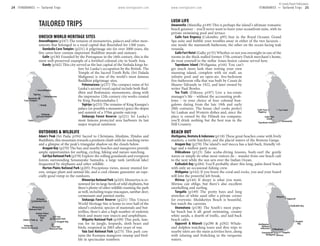
UNESCO WORLD HERITAGE SITES
Anuradhapura (p247) The remains of monasteries, palaces and other mon-
uments that belonged to a royal capital that flourished for 1300 years.
Dambulla Cave Temples (p231) A pilgrimage site for over 2000 years, the
five caves here contain important Buddhist murals and statuary.
Galle (p130) Founded by the Portuguese in the 16th century, this is the
most well-preserved example of a fortified colonial city in South Asia.
Kandy (p162) This city served as the last capital of the Sinhala kings be-
fore Sri Lanka’s occupation by the British. The
Temple of the Sacred Tooth Relic (Sri Dalada
Maligawa) is one of the world’s most famous
Buddhist pilgrimage sites.
Polonnaruwa (p237) The compact ruins of Sri
Lanka’s second royal capital include both Bud-
dhist and Brahmanic monuments, along with
the impressive 12th-century city works created
by King Parakramabahu I.
Sigiriya (p233) The remains of King Kassapa’s
palace (or possibly a monastery) grace the slopes
and summit of a 370m granite outcrop.
Sinharaja Forest Reserve (p221) Sri Lanka’s
most famous protected area harbours its last
major tropical rainforest.
OUTDOORS & WILDLIFE
Adam’s Peak (Sri Pada; p194) Sacred to Christians, Muslims, Hindus and
Buddhists, this mountain rewards a predawn climb with far-reaching views
and a glimpse of the peak’s triangular shadow on the clouds below.
Arugam Bay (p270) The bay and nearby beaches and mangroves provide
ample opportunities for surfing, cycling, hiking and nature-watching.
GalOyaNationalPark(p278) Explore the rolling grasslands and evergreen
forests surrounding Senanayake Samudra, a large tank (artificial lake)
frequented by elephants and other wildlife.
Horton Plains National Park (p205) Precipitous views, mossy stunted for-
ests, unique plant and animal life, and a cool climate guarantee an espe-
cially good romp in the outdoors.
Minneriya National Park (p245) Minneriya is re-
nowned for its large herds of wild elephants, but
there’s plenty of other wildlife roaming the park
as well, including toque macaques, sambar deer,
cormorants and painted storks.
Sinharaja Forest Reserve (p221) This Unesco
World Heritage Site is home to over half of the
island’s endemic species of mammals and but-
terflies; there’s also a high number of endemic
birds and many rare insects and amphibians.
Wilpattu National Park (p109) This park, fam-
ous for its jungle, leopards, sloth bears and
birds, reopened in 2003 after years of war.
Yala East National Park (p275) This park con-
tains the Kumana mangrove swamp and bird-
life in spectacular numbers.
Unesco World Heritage Sites Outdoors & Wildlife
LUSH LIFE
Amanwella (Mawella; p149) This is perhaps the island’s ultimate romantic
beach getaway – you’ll never want to leave your oceanfront suite, with its
private swimming pool and terrace.
Galle Face Regency (Colombo; p95) Stay in the Royal Oceanic Grand
Spa suite and bubble your troubles away in either of the two Jacuzzis –
one inside the mammoth bathroom, the other on the ocean-facing teak
veranda.
GalleFortHotel (Galle; p135) Whether or not you overnight in one of the
rooms in the thick-walled former 17th-century Dutch merchant’s home,
do treat yourself to the stellar Asian-fusion cuisine served here.
Taprobane Island (Weligama; p144) You can’t
get much more lush than renting your own
stunning island, complete with six staff, an
infinity pool and an open-air, five-bedroom
five-bathroom villa that was built by Count de
Mauny-Talvande in 1922, and later owned by
writer Paul Bowles.
Tea Trails (Dikoya; p197) Live a tea-estate
manager’s life – without the accounting prob-
lems – in your choice of four colonial bun-
galows dating from the late 19th and early
20th centuries. The house chef cooks perfect
Sri Lankan and Western dishes and, since the
place is owned by the Dilmah tea company,
you’ll drink nothing but the best teas in the
Hill Country.
BEACH OUT
Aluthgama, Bentota & Induruwa (p118) These great beaches come with lively
markets, a turtle hatchery, and the placid waters of the Bentota Ganga.
Arugam Bay (p270) The island’s surf mecca has a laid-back, friendly vil-
lage and a mellow party scene.
Hikkaduwa (p123) Take scuba-diving lessons, body-surf the gentle
waves or simply do what most visitors do – wander from one beach café
to the next while the sun sets over the Indian Ocean.
Kalkudah Bay (p284) You’ll probably share this long, palm-lined beach
with only an occasional fishing crew.
Midigama (p142) If you brave the coral and rocks, you and your board
will love the powerful left break.
Mirissa (p144) If sleepy is what you want,
Mirissa can oblige, but there’s also excellent
snorkelling and surfing.
Tangalla (p149) The pretty bays and long
stretches of white sand offer a private corner
for everyone. Medaketiya Beach is beautiful,
but watch the currents.
Unawatuna (p138) The South’s most popu-
lar beach has it all: good swimming, creamy
white sands, a dearth of traffic, and laid-back
beach cafés.
Uppuveli & Nilaveli ((p290 & p292) Whale-
and dolphin-watching tours and dive trips to
nearby islets are the main activities here, along
with relaxing and frolicking in the turquoise
waters.
Lush Life Beach Out
Forest Reserve
Sinharaja
Cave Temples
Dambulla
Galle
Kandy
Sigiriya
Polonnaruwa
Anuradhapura
Park
National
Adam's Peak
National Park
Gal Oya
Forest Reserve
Sinharaja
National Park
Yala East
Horton Plains
National Park
Minneriya
National Park
Wilpattu
Arugam Bay
Regency
Galle Face Tea Trails
Hotel
Galle Fort
Amanwella
Taprobane Island
Kalkudah Bay
Bay
Arugam
Tangalla
Bentota
Hikkaduwa
Midigama Mirissa
Unawatuna
Uppuveli
Nilaveli
Induruwa
Aluthgama
24 ITINERARIES •• Tailored Trips ITINERARIES •• Tailored Trips 25www.lonelyplanet.com
© Lonely Planet Publications
26 www.lonelyplanet.com
Snapshot
When the noted scientist and writer Sir Arthur C Clarke made his home
in Sri Lanka in 1956, he did so claiming that Sri Lanka was the best place
in the world from which to view the universe. Looking out from Sri Lanka
to the universe is a fascinating activity; looking within Sri Lanka, one
finds a universe in itself.
Sri Lanka may be tiny but it defies a tiny definition. It is, as the travel
brochures proclaim, a resplendent paradise. It is jungle, green and fertile.
It is also desert, red and arid. Just as its landscape is diverse, so too are
its people and its stories – stories overlaid with centuries of varied nar-
rative and meaning.
Sri Lankans love their country and have a strong desire for others to
love their country as well. They’ll besiege you with talk of Sri Lanka’s
beauty, history and scenic sites. It’s a delight to hear and is one of the
quickest ways of gleaning the lowdown on places to see and stay. Mind
you, the yarn and the reality may be hugely different, but you’ll no doubt
experience something you’d not intended. Living up to the country’s
name (the word serendipity is derived from its earlier title, Serendib),
Sri Lanka is a happy series of unexpected discoveries, whether it’s people
or places, old or new.
Relationships and connections are important to Sri Lankans. Men
will reminisce for hours about the old school tie, the fallout from the
1981 South African cricket tour or the last mass elephant capture in the
1950s. If they weren’t there, they’ve heard the stories and are capable
of passing them on as if they’d had a prime part in the action. And
while recollecting their own schooldays, plans for the next generation’s
schooling are determined with much deliberation. Education is highly
regarded in Sri Lanka.
Rice and hoppers (bowl-shaped pancakes) are not just food for feast;
they’re also food for thought. According to many, today’s commercial
rice has shrunk in taste and variety – all the more reason to have a paddy
of one’s own.
‘Peace’ is a catchword here, but in practice it’s never quite caught on.
Most Sri Lankans wish for a country where harmony reigns, life is secure
and prosperity flourishes. But the country has a long history of conflict,
and the majority Sinhalese and minority Tamils have been involved in
an on-and-off civil war for 25 years (p35). As Norwegian negotiators at-
tempt to bring the parties together in some semblance of a peace process
(p37), old questions repeat themselves. Will there ever be peace? How
and when will it come? Is the cost of compromise too high? Is the cost
of no compromise too high?
Between talk of peace and cricket comes talk of prices – rising too
much and too quickly.
For the moneyed, there’s the problem of servants: the difficulties in
hiring good ones, compounded by the monthly holidays on poya (full
moon) days, when there are no servants at all. And the wealthy still find
the veranda a haven for slow drinks and happy chatter, but this can be
easily disrupted by a guest – perhaps a factory manager – trying to keep
staff in line by yelling directions down his mobile phone.
For the less moneyed, it’s life much as their ancestors knew it. Some
are servants to the wealthy while others cultivate the land or fish the sea.
Some leave the conviviality of the village to toil at the factory, hoping to
improve the economic circumstances of their families back home. Others
serve and clean in the tourist industry. And a few beset the traveller with
‘worthy’ schemes (aka scams) to enhance their meagre earnings.
Like many other countries, Sri Lanka has a range of views on its origi-
nal people, now known as the Veddahs (p43). Some historical texts de-
scribe them as spirit people who could morph from human to animal, at
will – a ‘useful’ assessment of nonexistence and therefore a nonconcern.
Today, only few people identify as indigenous. Their actual numbers
are not known but they are certainly diminishing, perhaps because they
have assimilated into the majority groups, perhaps because the struggle
for land and identity are just too much.
Of all Sri Lankans, Kandyans retain a special status, borne of centuries
of resistance to invading powers (p31). Even non-Kandyans can be noble
for a day – at many a wedding the bridal party don Kandyan ceremonial
garb and drummers in traditional dress beat ancient rhythms.
Perhaps it’s the peraheras (processions) that best embody the complex-
ities of this small nation. Drummers, fire walkers, dancers and elaborately
adorned elephants parade in a fusion of ancient and modern. Like the
nation itself, the perahera is intricate, fragile and contradictory. Where
else will you see a sequin-adorned elephant carrying relics of the Bud-
dha along a white cloth that is ceremoniously laid before it, followed by
a truck with a generator to power the neon sponsorship signs on the
elephant’s back? This is current-day Sri Lanka.
Arthur C Clarke is right, of course. Sri Lanka is a fine place from which
to view the universe. For the traveller, making even the smallest sense of
the universe that is Sri Lanka is indeed a privilege and an adventure – one
guaranteed to include many serendipitous encounters.
FAST FACTS
Population: 19.9 million
Population density per
sq km: Colombo 2500
people, dry zone less
than 50.
Life expectancy: female
75, male 70
Adult literacy: female
90%, male 95%
Year women received the
right to vote: 1931
Tsunami 2004: 30,000
lives lost, over 1 million
people left homeless
Emigration due to civil
unrest: 1 million people
since 1983
Internally displaced
people: Almost 1 million
(362,000 due to civil
unrest, 555,000 due to
the tsunami)
GDP per capita: US$4300
(USA: US$41,800)
SNAPSHOT 27
© Lonely Planet Publications © Lonely Planet Publications
www.lonelyplanet.com
JOE CUMMINGS Coordinating Author, Colombo,
The Hill Country, The Ancient Cities
Born to a military family in New Orleans, Joe was raised in many different
locations. Shortly after earning a master’s degree in South and Southeast Asian
studies, he began updating Lonely Planet’s Asia guides. Joe first travelled to
Sri Lanka in the 1990s to research dagobas (stupas) for Lonely Planet’s Bud-
dhist Stupas in Asia: The Shape of Perfection. When he’s not on the road, Joe
lives next to the ruins of a 15th-century stupa in Chiang Mai.
Joe also wrote the Destination Sri Lanka, Getting Started, Itineraries,
Environment, Directory and Transport chapters for this book.
My Favourite Trip
I’m happiest wandering around the Hill Country, talking to tea-factory
managers about the local teas, and hiking in the hills around Dikoya
(p196) and Hatton (p196). When driving from Colombo I’ll stop off in
Kitulgala (p197) for a swim in the Kelaniya Ganga (Kelaniya River) and
lunch at Plantation Hotel. For another perspective on the local geog-
raphy I’ll hop on a train from Nanu Oya, the train station for Nuwara
Eliya (p199), to Badulla (p217), with a side trip to Ella (p213) or Haputale
(p208), my favourite towns for kicking back and catching up on some
reading. If I have enough time I’ll make a longer detour from Ella to
indulge my passion for Buddhist art at the undervisited Budurwagala
(p219), where Sri Lanka’s tallest Buddha was carved into solid rock over
a thousand years ago.
MARK ELLIOTT The East, Jaffna & the North
When Mark first visited Sri Lanka in 1987, the country was racked by violence:
a bus station had been bombed and the JVP was running amok. However,
meditation retreats, cycling through tea estates, and the ever-welcoming
population created a contrasting sense of calm. Fascinated ever since by this
troubled paradise, Mark jumped at the chance to visit the ‘other Ceylon’ – the
Tamil and Muslim areas that had been effectively off limits for decades.
Between researching travel guides on places that range from Iran to Indo-
nesia to Greenland, Mark lives in blissfully quiet suburban Belgium with his
beloved wife Danielle, who found him at a Turkmenistan camel market.
The Authors
Badulla
Buduruwagala
Haputale
Ella
Eliya
Nuwara
Kitulgala
Hatton
Dikoya;
Authors Favourite Trip
14
© Lonely Planet Publications
16 T H E AU T H O R S www.lonelyplanet.com www.lonelyplanet.com
RYAN VER BERKMOES West Coast, The South
Ryan was first beguiled by Sri Lanka when he read Paul Theroux’ The Great
Railway Bazaar as a teenager. Visiting after the tsunami he was overwhelmed
by the devastation, even after a long career covering wars, disasters and other
calamities. Ryan was happy to return to Sri Lanka to research this book as it
allowed him to catch up with many people he’d met months earlier.
Born in the beach town of Santa Cruz, California, Ryan worked as journalist
for many years before turning his attentions to Lonely Planet. He’s written
scores of guidebooks on places ranging from the Arctic to the equator. He
definitely prefers sand between his toes to ice.
CONTRIBUTING AUTHORS
Teresa Cannon had been stuck for too many years in a suffocating bureaucracy when she felt com-
pelled to escape to the rarefied environment of the Himalayas. There she trekked within century-old
rhododendron forests and traversed the peaks and passes of the western moonscape region. She suc-
cumbed to the gentle and continuing welcome of ‘Namaste’, which flowed like a mantra throughout
the landscape. She wanted to stay. But visas run out and bank balances diminish.
Her love of travel led her overseas several times, especially to Asia. She has written numerous non-
fiction works about Sri Lanka, and this is her sixth project for Lonely Planet. For this book she wrote
the Snapshot, History, Culture and Food & Drink chapters.
Dr Trish Batchelor is a general practitioner and travel medicine specialist who works at the CIWEC Clinic
in Kathmandu, Nepal, as well as being a Medical Advisor to the Travel Doctor New Zealand clinics.
Trish teaches travel medicine through the University of Otago, and is interested in underwater and
high-altitude medicine, and in the impact of tourism on host countries. She has travelled extensively
through Southeast and East Asia and particularly loves high-altitude trekking in the Himalayas.
17
© Lonely Planet Publications
© Lonely Planet Publications. To make it easier for you to use, access to this chapter is not digitally
restricted. In return, we think it’s fair to ask you to use it for personal, non-commercial purposes
only. In other words, please don’t upload this chapter to a peer-to-peer site, mass email it to
everyone you know, or resell it. See the terms and conditions on our site for a longer way of saying
the above - ‘Do the right thing with our content.’
28
TIMELINE
www.lonelyplanet.com
History
PREHISTORY
Legend and history are deeply intertwined in the early accounts of Sri
Lanka: did the Buddha leave his footprint on Adam’s Peak (Sri Pada)
while visiting the island that lay halfway to paradise? Or was it Adam who
left his footprint embedded in the rock while taking a last look at Eden?
Was the chain of islands linking Sri Lanka to India the same chain that
Rama crossed to rescue his wife Sita from the clutches of Rawana, king
of Lanka, in the epic Ramayana?
It is probable that the Ramayana has some fragile basis in reality, for Sri
Lanka’s history recounts many invasions from southern India. Perhaps
some early invasion provided the elements of the story of Rama and Sita,
recounted throughout Asia.
Whatever the legends, the reality is that Sri Lanka’s original inhabitants,
the Veddahs (Wanniyala-aetto), were hunter-gatherers who subsisted on
the island’s natural bounty. Much about their origins is unclear. However,
anthropologists generally believe that Sri Lanka’s original inhabitants are
descendants from the people of the late Stone Age and may have existed
on the island since 16,000 BC. The first Sinhalese, originally from North
India, arrived in Sri Lanka around the 5th or 6th century BC. Traders and
fisherfolk from South India who visited Sri Lanka during the late centuries
BC also made the island their permanent home. The intermingling of the
new arrivals produced a harmonious multicultural society – a state that,
unfortunately, did not continue in the centuries that followed.
THE RISE & FALL OF ANURADHAPURA
According to Sinhalese accounts it was crime and banishment that led
to their settlement in Sri Lanka in the 5th or 6th century BC. Vijaya,
son of a North Indian king, was ousted from his title and kingdom due
to his acts of assault and robbery. With a contingent of 700 men, the
sinha (lion) prince was set adrift on the high seas in dilapidated ships,
to face his destiny – punishment by death. But destiny took a different
turn and as they travelled south, Vijaya and his men were blessed by the
Buddha and (as accounts would have it) came to land on the west coast
of Sri Lanka on the very day that the Buddha attained enlightenment.
Vijaya and his men settled around Anuradhapura, forming the basis of
a Sinhalese kingdom that developed there in the 4th century BC. Later,
the Sinhalese kingdom of Ruhunu was established in the southwest but
Anuradhapura remained the stronger kingdom. Early settlement took
place mainly along rivers, as the aridity of the north was not conducive to
human settlement and the cultivation of crops. No doubt banishment and
the need for survival can be great motivators: Vijaya and his descendants
demonstrated impressive resourcefulness. To overcome the challenges of
climate they constructed water channels and reservoirs (known locally as
tanks) – great feats of engineering and mathematics. Such inventiveness
enabled the early settlements to develop and prosper.
In the 3rd century BC the Indian emperor Ashoka sent his son Ma-
hinda and his daughter Sangamitta to the island to spread the Buddha’s
teachings. Mahinda soon converted the Anuradhapuran king Devan-
ampiya Tissa, an event that is tremendously significant to the Sinhalese
as it deeply influenced their customs, created a sense of national identity
and, by developing scriptures and commentary, instituted a literary trad-
ition. The mountain at Mihintale (p255) marks the spot where the con-
version is said to have occurred. Today 1840 steps lead up the mountain
to the site – it’s a popular pilgrimage place, especially on the June poya
(full moon), the reputed anniversary of the king’s conversion.
Sangamitta brought to Sri Lanka a cutting of the Bodhi Tree under
which the Buddha attained enlightenment. She planted this in Anurad-
hapura, where it still survives today, garlanded with prayer flags and lights
(p250). Other bodhi trees, grown from cuttings of the Anuradhapuran
tree, now spread their branches beside many of the island’s temples.
With the conversion of the king to Buddhism strong ties were estab-
lished between Sri Lankan royalty and Buddhist religious orders. Later,
these ties strengthened as kings, grateful for monastic support, provided
living quarters, tanks and produce to the monasteries. A symbiotic pol-
itical economy between religion and state became consolidated. When
the Sinhalese king Valagambahu fled from South Indian invaders he
was given safe haven by monks who resided in the cave structures at
Dambulla. When he regained his position in about 90 BC he expressed
his gratitude by developing a huge cave-temple complex (p231). Since
that time it has been a centre of Buddhist practice.
Buddhism underwent a major development when the teachings, previ-
ously conveyed orally, were documented in writing. Sri Lankan monks
played a significant role in the documentation process, when, at the Alu-
vihara monastery (p229) in the 1st century BC, they began in-depth com-
mentaries on the teachings. Their work forms the major part of the classical
literature of the Theravada (doctrine of the elders) school of Buddhism
(p44). It was in Sri Lanka that the Theravada school developed, later
spreading to Buddhist countries in Southeast Asia. Even today, Buddhists
of the Theravada school in Myanmar, Thailand and other countries look to
Sri Lanka for spiritual leadership and interpretation of the scriptures.
Another event that served to intensify Buddhism in Sri Lanka was the
arrival of the tooth relic (of the Buddha) at Anuradhapura in AD 371 (see
WHAT’S IN A NAME?
Changing the country’s name from Ceylon to Sri Lanka in 1972 caused considerable confusion for
foreigners. However, for the Sinhalese it has always been known as Lanka and, for the Tamils as
Ilankai; the Ramayana, too, describes the abduction of Sita by the king of Lanka. But the island
has been known by many other names. The Romans knew the island as Taprobane and Muslim
traders talked of Serendib, which means ‘Island of Jewels’. The word Serendib became the root
of the word ‘serendipity’ – the art of making happy and unexpected discoveries. The Portuguese
somehow twisted Sinhala-dvipa (Island of the Sinhalese) into Ceilão. In turn, the Dutch altered
this to Ceylan and the British to Ceylon. In 1972 ‘Lanka’ was restored, with the addition of ‘Sri’,
a respectful title. In the 1980s pedants pushed for the spelling of ‘Shri Lanka’, but ‘Sri Lanka’
now seems entrenched.
The early Sinhalese
are credited with the
invention of the pit valve,
an ingenious irrigation
device that contributed
to their successful early
settlement in Sri Lanka.
The bodhi tree in Anurad-
hapura has a 2000-year
history of human care
and custody, making it
the world’s oldest tree of
this kind.
www.lankalibrary.com
is broad in scope but
sometimes short on facts!
Read it in conjunction
with other material to
form your own view on
anything Sri Lankan.
Prior to 6th century BC
Island is inhabited by the Veddahs (Wanniyala-aetto)
6th–5th century BC
Sinhalese come from northern India to settle in Sri Lanka
4th century BC
The kingdom of Anuradhapura is formed
Late centuries BC
South Indians make Sri Lanka their permanent home
HISTORY •• The Rise & Fall of Anuradhapura 29
© Lonely Planet Publications
www.lonelyplanet.com www.lonelyplanet.com
p166). It gained prominence not only as a religious symbol but also as
a symbol of sovereignty – it was believed that whoever held custody of
the relic had the right to rule the island. Modern-day presidents, prime
ministers and governments see it as their duty to protect the relic and
the rituals that surround it. It now lies in the Temple of the Sacred Tooth
Relic (Sri Dalada Maligawa) in Kandy.
In AD 473, King Kasyapa assumed the throne by engineering the death
of his father and the exile of his elder brother, Mugalan. Kasyapa’s skills
were not limited to eliminating relatives – he also recognised a good piece
of real estate and was a dab hand at property development. His reign saw
the construction of the spectacular rock fortress of Sigiriya (p233), with
its intricate water systems, ornate gardens and frescoed palaces. However,
the exiled Mugalan, incensed by his ousting, returned to Sri Lanka with
an army of Indian mercenaries. Mugalan defeated Kasyapa and reclaimed
the throne, but he established a perilous precedent. To retain power, future
Sinhalese kings found themselves beholden to Indian mercenaries. Cen-
turies of interference and disorder followed with repeated invasions and
takeovers of Anuradhapura by South Indian kingdoms, and self-defeating
entanglements in South Indian affairs by Anuradhapura’s rulers.
Anuradhapura was pummelled many times but rebuilding was pos-
sible through rajakariya, the system of free labour for the king. This free
labour provided the resources to restore buildings, tanks and irrigation
systems, as well as to plant, cultivate and harvest crops.
Finally in 11th century AD, Vijayabahu I, weary of the continual cycle
of conflict, destruction and renovation, abandoned Anuradhapura to
make Polonnaruwa, further southeast, his capital.
THE KINGDOM OF POLONNARUWA
Polonnaruwa (p237) survived as a Sinhalese capital for more than two cen-
turies – a period that provided a further two kings of note. Parakramabahu
I (r 1153–86), nephew of Vijayabahu I, was not content simply to expel the
South Indian Tamil Chola empire from Sri Lanka, but carried the fight to
South India and even made a raid on Myanmar. Domestically he indulged in
an orgy of building in the capital, and constructed many new tanks around
the country. But his warring and architectural extravagances wore down the
country’s resources, and probably shortened Polonnaruwa’s lifespan.
His successor, Nissanka Malla (r 1187–96), was the last king of Po-
lonnaruwa to show interest in the wellbeing of the people and in the
construction and maintenance of buildings and irrigation systems.
He was followed by a series of weak rulers who allowed the city to fall
into disrepair. With the decay of the irrigation system, disease spread and,
like Anuradhapura before it, Polonnaruwa was abandoned. The jungle
reclaimed it within a few decades.
TAMIL KINGDOMS
During Polonnaruwa’s decline the first Tamil kingdom established itself
in Jaffna. Movements of people between India and Sri Lanka had been
happening for centuries but from the 5th and 6th centuries AD resurgent
Hindu Tamil empires such as the Chola, Pallava and Pandya repeatedly
threatened the Buddhist Sinhalese rulers.
With the decline of the Sinhalese northern capitals and the ensuing
Sinhalese migration south, a wide jungle buffer zone separated the north-
ern, mostly coastal Tamil settlements and the southern, interior Sinhalese
settlements. This jungle zone, called the Vanni, was sparsely inhabited by
mixed Tamil-Sinhalese clans called the Vanniyars.
Initially the ‘rulers’ of Jaffna were possibly diplomatic missions from
the early South Indian kingdoms. At other times Jaffna came under the
sovereignty of the major South Indian centres of Madurai and Thanjavur.
However, developing rivalry between Indian empires allowed Jaffna to
gain autonomy. It became a trade centre, especially in spices and ele-
phants from the Vanni region, and established weaving, dyeing and pearl-
fishing industries. An important centre for art and literature developed at
Nallur (near Jaffna) in the 15th century, and studies combining astrology
and medicine provided health services to the population. But things
changed with the arrival of the Portuguese in 1505.
EARLY MUSLIM LINKS
Muslim settlement in Sri Lanka developed from centuries of Arab trade.
In Arabic the island was called Serendib, from seren (jewel) and dwip
(island). Gems were a valued item of commerce, as were cinnamon, ivory
and elephants. With the advent of Islam in the 7th century AD Arab trad-
ers arrived with their new faith. Some stayed and settled on the island
and many Sri Lankan Muslims are proud that their ancestry can be dated
from the time of the Prophet.
Muslim traders found favour with Sri Lankan kings, and relations were
generally cordial. Early Muslim settlements took hold in the north at
Jaffna and southwest at Galle, as well as on the eastern side of the island.
However, with the arrival of the Portuguese many Muslims fled inland
to flee persecution.
THE PORTUGUESE PERIOD
After Polonnaruwa, the centre of Sinhalese power shifted to the south-
west of the island, and between 1253 and 1400 there were five differ-
ent Sinhalese capitals. During this period Sri Lanka suffered attacks by
Chinese and Malayans, as well as periodic incursions from South India.
Finally, the Portuguese arrived in 1505.
By this time Sri Lanka had three main kingdoms: the Tamil kingdom
of Jaffna, and Sinhalese kingdoms in Kandy and Kotte (near Colombo).
Of the two Sinhalese kingdoms, Kotte was the more powerful. When
Portuguese Lorenço de Almeida arrived in Colombo, he established
friendly relations with King Bhuvanekabahu of Kotte and gained a Por-
tuguese monopoly on the spice trade, which soon became very important
in Europe.
Tamil-Portuguese relations were less cordial, especially when the co-
lonial missionaries attempted to convert the local population to Catholi-
cism. Infuriated by this, the Tamil king Sangily organised a massacre of
the missionaries and their converts.
The different responses to the Portuguese – alliance from Kotte and
hostility from Jaffna – made no difference to the end result: Portugal
took over the entire coastal belt. However, the Portuguese were unable to
For a controversial
account of Sigiriya, see
former archaeologist Raja
De Silva’s Sigiriya and its
Significance, which argues
against earlier views
about the site.
3rd century BC
Buddhism arrives in Sri Lanka
4th century AD
The tooth relic of the Buddha arrives in Sri Lanka
5th century AD
King Kasyapa constructs the fortress of Sigiriya
7th century AD
Muslim traders begin to settle in Sri Lanka
30 HISTORY •• The Kingdom of Polonnaruwa HISTORY •• Early Muslim Links 31
Want to understand more
about people’s names in
Sri Lanka? It’s all revealed
at http://asiarecipe.com
/srinames.html.
www.lonelyplanet.com www.lonelyplanet.com
conquer the central highlands, and the kingdom at Kandy resisted several
later Portuguese attempts at capture.
With the Portuguese came religious orders such as the Dominicans
and Jesuits. Many of the Karava fishing communities on the west coast
converted, but reluctance to assume the new faith was often met with
massacres and the destruction of local temples. Buddhist priests and
others fled to Kandy, whose role as a stronghold and haven endowed it
with a special status on the island – one that was consolidated by later
colonial failures to capture it. This status is still cherished today by many
Sri Lankans, especially those from the high country.
The Portuguese tried to entice their compatriots to settle in Sri Lanka.
Some did, intermarrying with locals, and their descendants form part
of the small group known as European Burghers. The Portuguese also
brought slaves from Africa who are today almost totally assimilated.
Known as the Kaffirs, their contribution to Sri Lankan culture is evident
in the bailas – folk tunes based on African rhythms.
THE DUTCH PERIOD
In 1602 the first Dutch ships arrived in Sri Lanka. Like the Arabs and
Portuguese, the Dutch were keen to acquire trade, and they vied with the
Portuguese for the lucrative Indian Ocean spices. For the Kandyan king,
Rajasinha II, the Dutch presence provided an opportunity to rid Sri Lanka
of the Portuguese. A treaty was duly signed, giving the Dutch a monopoly
on the spice trade in return for Sri Lankan autonomy. This, however, only
succeeded in substituting one European power for another. By 1658, 153
years after the first Portuguese contact, the Dutch had taken control of the
coastal areas of the island. During their 140-year rule, the Dutch, like the
Portuguese, made repeated unsuccessful attempts to bring Kandy under
their control. And, just as the Portuguese had done, the Dutch encouraged
their fellow citizens to reside in Sri Lanka. Their descendants, the Dutch
Burghers, comprise a minority group in Sri Lanka today.
The Dutch were much more interested in trade and profits than were
the Portuguese, and developed a canal system along the west coast to
transport cinnamon and other crops. Roman-Dutch law, the legal system
of the Dutch era, still forms part of Sri Lanka’s legal canon.
THE BRITISH PERIOD
The British, concerned that they may be defeated in conflicts with the
French in South India, and requiring a safe port in the area, began to con-
sider the eastern Sri Lankan harbour of Trincomalee. The British ejected
the Dutch in 1796, and in 1802 Sri Lanka became a crown colony. In
1815 the British won control of Kandy, thus becoming the first European
power to rule the whole island. Three years later a unified administration
for the island was set up.
The British conquest deeply unsettled many Sinhalese, who had long
held the view that only the tooth relic custodians had the right to rule
the land. Their apprehension was somewhat relieved when a senior
monk removed the tooth relic from the Temple of the Sacred Tooth
Relic (p166), thereby securing it (and the island’s symbolic sovereignty)
for the Sinhalese people.
In 1832 sweeping changes in property laws opened the doors to British
settlers – at the expense of the Sinhalese, who in the eyes of the British
did not have title to the land. Coffee was the main cash crop but when
leaf blight virtually wiped it out in the 1870s the plantations were quickly
switched over to tea or rubber.
The British, unable to persuade the Sinhalese to labour on the planta-
tions, imported large numbers of Tamil workers from South India. Today
these workers’ descendants, totalling about 850,000 people (5% of the
population), form the larger of the two main Tamil communities. About
700,000 of them still live and work on the estates.
The British influence lingers: the elite private schools with cricket
grounds, the army cantonments and train stations, and the tea-estate
bungalows, not to mention the English language. English was demoted
from being the official language after independence, but the requirements
of a globalised economy have helped bring it back into vogue.
INDEPENDENCE
In the wake of Indian independence, Sri Lanka, or Ceylon as it was then
known, became an independent member of the British Commonwealth
in February 1948. The first independent government was formed by
the United National Party (UNP), led by DS Senanayake. His main
opponents were the northern and plantation Tamil parties, and the
communists.
At first everything went smoothly. The economy remained strong and
the government concentrated on strengthening social services and weak-
ening the opposition. It certainly achieved the latter, as it disenfranchised
the Hill Country Tamils by depriving them of citizenship. Eventually,
deals in the 1960s and 1980s between Sri Lanka and India allowed some
of the Hill Country Tamils to be ‘repatriated’ to India, while others were
granted Sri Lankan citizenship.
DS Senanayake died in 1952 and was succeeded by his son, Dudley.
An attempt a year later to raise the price of rice led to mass riots and
Dudley’s resignation. Sir John Kotelawala, his uncle, replaced him, and
the UNP earned the nickname ‘Uncle Nephew Party’. The UNP was easily
defeated in the 1956 general election by the Mahajana Eksath Peramuna
coalition, led by SWRD Bandaranaike.
THE BANDARANAIKES
The Bandaranaikes were a family of noble Kandyan descent who had
converted to Anglicanism for a time in the 19th century, but who had
returned to the Buddhist fold. The 1956 election coincided with the
2500th anniversary of the Buddha’s enlightenment and an upsurge in
Sinhalese pride, and SWRD Bandaranaike defeated the UNP primarily
on nationalistic issues.
Nearly 10 years after independence, English remained the national
language and the country continued to be ruled by an English-speaking,
mainly Christian, elite. Many Sinhalese thought the elevation of their lan-
guage to ‘official’ status would increase their power and job prospects.
Caught in the middle of this disagreement (English versus Sinhala,
and Christian versus Buddhist) were the Tamils, whose mother tongue is
During the British admin-
istration, Major Thomas
Rogers is reputed to have
killed 1400 elephants.
Sir James Emerson
Tennent’s affable nature
shines through in his
honest and descriptive
writing about 19th-
century Sri Lanka, now
serialised at www.lanka
web.com/news/features
/ceylon.html.
10th century AD
A Tamil kingdom is established in Jaffna, and the Sinhalese capital
moves to Polonnaruwa
1505
Portuguese colonial period begins
1658
Dutch colonial period begins
1796
The British take over Sri Lanka’s rule from the Dutch
32 HISTORY •• The Dutch Period HISTORY •• Independence 33
www.lonelyplanet.com www.lonelyplanet.com
Tamil. When Bandaranaike enacted the ‘Sinhala only’ law, Tamil protests
were followed by violence and deaths on both sides.
The contemporary Sinhalese-Tamil difficulties date from this time.
From the mid-1950s, when the economy slowed, competition for wealth
and work – intensified by the expectations created by Sri Lanka’s fine
education system – exacerbated Sinhalese-Tamil jealousies. The main
political parties, particularly when in opposition, played on the Sinhalese
paranoia that their religion, language and culture could be swamped by
Indians, who were thought to be the natural allies of the Tamils in Sri
Lanka. The Tamils began to see themselves as a threatened minority, and
pressed for a federal system of government with greater local autonomy
in the North and the East, the main Tamil-populated areas.
Despite coming to power on Sinhalese chauvinism, Bandaranaike later
began negotiating with Tamil leaders for a kind of federation – a decision
that resulted in his assassination by a Buddhist monk in 1959. Despite
this, Bandaranaike is still seen by many as a national hero who brought
the government back to the common people.
In the 1960 general election the Sri Lanka Freedom Party (SLFP), led
by SWRD Bandaranaike’s widow, Sirimavo, swept to power. She was the
first female prime minister in the world. Sirimavo pressed on with her
husband’s nationalisation policies, souring relations with the USA by
taking over the Sri Lankan oil companies. Most of the remaining British
tea planters left during this time. The economy weakened, and in the
1965 election Dudley Senanayake and the UNP scraped back into power.
However, Senanyake’s reluctance to turn back the clock on the SLFP’s
nationalisation program lost him much support and the UNP was mas-
sively defeated by the SLFP in the 1970 elections.
Soon after, Sirimavo Bandaranaike took the reins for the second time,
a wave of unrest swept the Sinhalese heartland, feeding on a population
boom and a generation of disaffected young men facing unemployment.
In 1971 a Sinhalese Marxist insurrection broke out, led by a dropout from
Moscow’s Lumumba University, Rohana Wijeweera, under the banner
of the Janatha Vimukthi Peramuna (JVP; People’s Liberation Army). Its
members, mostly students and young men, were quickly and ruthlessly
eradicated by the army. Around 25,000 people died, but the JVP was
later to regroup.
The revolt allowed the government to make sweeping changes, write
a new constitution and create a new name for the country – Sri Lanka.
The bureaucracy became politicised, and some say corruption became
entrenched. Meanwhile, the economy continued to deteriorate and in
the 1977 elections Sirimavo Bandaranaike and the SLFP (in its new guise
as the United Left Front) went down in a stunning defeat at the hands
of the UNP.
TAMIL UNREST
Meanwhile, two pieces of legislation increased Tamil concern. The first
piece, passed in 1970, cut Tamil numbers in universities; previously, Tamils
had won a relatively high proportion of university places. The second was
the constitutional declaration that Buddhism had ‘foremost place’ in Sri
Lanka and that it was the state’s duty to ‘protect and foster’ Buddhism.
Unrest grew among northern Tamils, and a state of emergency was im-
posed on their home regions for several years from 1971. The police and
army that enforced the state of emergency included few Tamils (partly
because of the ‘Sinhala only’ law) and therefore came to be seen by the
Tamils as an enemy force.
In the mid-1970s some young Tamils began fighting for an independ-
ent Tamil state called Eelam (Precious Land). They included Vellupillai
Prabhakaran, who founded and still leads the Liberation Tigers of Tamil
Eelam (LTTE), often referred to as the Tamil Tigers.
OPEN ECONOMY
Elected in 1977, the new UNP prime minister, JR Jayawardene, made an
all-out effort to lure back foreign investment. He attempted to emulate
Singapore’s successful ‘open economy’, and his policies yielded some
successes: unemployment was halved by 1983, Sri Lanka became self-
sufficient in rice production in 1985, and expat Sri Lankans and tourists
began bringing in foreign currency.
Jayawardene introduced a new constitution – Sri Lanka’s third – in
1978, which conferred greatest power on the new post of president, to
which he was elected by parliament.
In 1982 he was re-elected president in national polls (after amending
his own constitution to bring the voting forward by two years) and then,
in the same year, won a referendum to bypass the 1983 general election
and leave the existing parliament in office until 1989. As usual there were
allegations of electoral skulduggery.
ETHNIC VIOLENCE
Jayawardene promoted Tamil to the status of ‘national language’ for of-
ficial work, but only in Tamil-majority areas. Clashes between Tamils and
security forces developed into a pattern of killings, reprisals, reprisals for
reprisals and so on. All too often the victims were civilians. The powder
keg finally exploded in 1983, when an army patrol in the Jaffna region was
ambushed and massacred by militant Tamils. For several days after, mobs
of enraged Sinhalese set about killing Tamils and destroying their property.
Between 400 and 2000 Tamils were killed and some areas with large Tamil
populations – such as Colombo’s Pettah district – were virtually levelled.
The government, the police and the army were either unable or unwill-
ing to stop the violence. There had been small-scale ethnic riots in 1958,
1977 and 1981, but this was the worst and for many it marked the point
of no return. Tens of thousands of Tamils fled to safer, Tamil-majority
areas, while others left the country altogether; many Sinhalese moved
from Jaffna and other Tamil-dominated areas.
Revenge and counter-revenge attacks grew into atrocities and large-
scale massacres. The government was condemned for disappearances
and acts of torture.
The area claimed by the Tamil militants for the independent state of
Eelam covered Sri Lanka’s Northern and Eastern Provinces – equal to
about one-third of Sri Lanka’s land area. Tamils comprised the majority
in the Northern Province, but in eastern Sri Lanka Muslims, Sinhalese
and Tamils were nearly equal in numbers.
William McGowan’s Only
Man is Vile is an incisive,
unrelenting account of
ethnic violence in Sri
Lanka, penetrating deeply
into its complexities.
Not an easy read but an
important one, When
Memory Dies, by A
Sivanandan, is a tale of
the ethnic crisis and its
impact on one family
over three generations.
1815
The British conquer Kandy, the first European colonial power to
do so
1948
Sri Lanka becomes an independent nation
1956
Protests and conflict break out after the ‘Sinhala only’ language
law is passed
1970s
Formation of the Liberation Tigers of Tamil Eelam (LTTE)
34 HISTORY •• Tamil Unrest HISTORY •• Open Economy 35
www.lonelyplanet.com www.lonelyplanet.com
The violence cost the economy dearly. Tourism slumped, the govern-
ment spent crippling amounts on the defence forces, and foreign and
local investment dried up.
INDIAN INTERVENTION
In 1987 government forces pushed the LTTE back into Jaffna. In an
attempt to disarm the Tamil rebels and keep the peace in northern and
eastern Sri Lanka, Jayawardene struck a deal with India for an Indian
Peace Keeping Force (IPKF). A single provincial council would be elected
to govern the region with substantial autonomy for a trial period.
Soon it became clear that the deal suited no-one. The LTTE complied
initially before the Indians tried to isolate it by promoting and arming other
Tamil rebel groups. Opposition to the Indians also came from the Sinhalese,
the reviving JVP (below) and sections of the Sangha (the community of
Buddhist monks). This led to sometimes-violent demonstrations.
Jayawardene was replaced as leader of the UNP by Ranasinghe Prema-
dasa, the first leader from a common background. He promised to re-
move the Indian peacekeepers; when they withdrew in March 1990, they
had lost more than 1000 lives in just three years. In June, however, the
war between the LTTE and the Sri Lankan government began again. By
the end of 1990, the LTTE held Jaffna and much of the North, although
the East was largely back under government control.
RETURN OF THE JVP
The presence of the IPKF pushed the mood of young Sinhalese past boil-
ing point. In 1987 the JVP launched its revolution with political murders
and strikes, which were enforced through the use of death threats. With
16 years to study the failed 1971 revolt, the JVP, still led by Rohana
Wijeweera, had prepared brilliantly. They were tightly organised, with
recruits from students, monks, the unemployed, the police and the
army. It attempted a Khmer Rouge–style takeover, aiming to capture
the countryside and then isolate and pick off the cities.
By late 1988 the country was terrorised, the economy crippled and the
government paralysed. The army struck back with a ruthless counter-
insurgency campaign that still scars the country. Shadowy militias and
army groups matched the JVP’s underground warfare in brutality. They
tracked down the JVP leadership one by one until Rohana Wijeweera was
killed in November 1989. The rebellion subsided, but 30,000 to 60,000
people had died in the three-year insurrection.
Within a few years a new leadership brought the JVP into the political
mainstream, and it now has seats in parliament and supports the current
government and the president, Mahinda Rajapaske.
WAR IN THE 1990s
In May 1991 Rajiv Gandhi was assassinated by an LTTE suicide bomber.
It was generally assumed that Gandhi’s assassination was in retaliation
for his consent to Jayawardene’s 1987 request for the IPKF. Soon after
this, war between the Tamils and the Sinhalese intensified.
Although a high proportion of Tamils and Sinhalese longed for peace,
extremists on both sides pressed on with war. President Premadasa was
assassinated at a May Day rally in 1993; the LTTE was suspected, but
never claimed responsibility.
The following year, the People’s Alliance (PA), a coalition of the main
opposition SLFP and smaller parties, won the parliamentary elections. Its
leader, Chandrika Bandaranaike Kumaratunga, the daughter of former
leader Sirimavo Bandaranaike, won the presidential election and ap-
pointed her mother prime minister.
Although the PA had promised to end the civil war, the conflict con-
tinued in earnest, and Kumaratunga was targeted by a suicide bomber
just days before the December 1999 presidential election. She was injured,
losing sight in her right eye, but won the election. Curiously enough, the
economy was showing signs of life during this period. Garment exports
grew, growth ticked along at 5% to 6% a year between 1995 and 2000, and
the ongoing war partly solved unemployment in the rural south.
In the October 2000 parliamentary elections President Kumaratun-
ga’s PA won a narrow victory. Sirimavo Bandaranaike, the president’s
mother and three-time prime minister of Sri Lanka, died shortly after
casting her vote.
ELUSIVE PEACE
In 2000 a Norwegian peace mission, led by Erik Solheim, brought the
LTTE and the government to the negotiating table, but a cease-fire had
to wait until after the elections of December 2001 – won by the UNP after
the collapse of the short-lived PA government.
Ranil Wickremasinghe became prime minister. He and President Ku-
maratunga (both from different parties) circled each other warily. Under
Wickremasinghe economic growth was strong at 6% per annum and
peace talks appeared to progress. But in late 2003, while Wickremasinghe
was in Washington meeting with George W Bush, Kumaratunga dis-
solved parliament (although it had a mandate to govern until 2007) and
called for elections. By combining with the JVP, Kumaratunga formed a
new party, the United People’s Freedom Alliance, and in the subsequent
elections defeated Wickremasinghe and his UNP.
Peace talks stumbled. Time and talk passed, and the situation became
ever more fraught. Accusations of bias and injustice were hurled from
all sides. In October 2003, the US listed the LTTE as a Foreign Terrorist
Organisation (FTO). Some believed this to be a positive move; others saw
it as an action that would isolate the LTTE, thereby causing further strain
and conflict. In early 2004 a split in LTTE ranks pitched a new dynamic
into the mix. Among killings, insecurity, accusations and ambiguities,
the Norwegians went home in September 2004.
Almost all of Sri Lanka, including most of the Jaffna Peninsula, is now
controlled by the Sri Lankan government. The LTTE controls a small area
south of the peninsula and pockets in the east, but it still has claims on land
in the Jaffna Peninsula and in the northwest and northeast of the island.
TSUNAMI & BEYOND
An event beyond all predictions struck the island on 26 December 2004,
affecting not only the peace process but the entire social fabric of Sri
Lanka. As people celebrated the monthly poya festivities, the mighty
Anil’s Ghost, by Booker
Prize–winner Michael
Ondaatje, is a haunting
novel about turmoil and
disappearances of late-
20th-century Sri Lanka.
The book has received
much international
commendation and some
local condemnation.
At least one million land
mines were laid during
1990s Sri Lankan hostili-
ties. Efforts to clear the
mines have meant that
thousands of displaced
people have been
resettled.
John Richardson applies
his long experience in
international resources
and relationships to
produce his huge tome
Paradise Poisoned.
Important and timely, it
investigates terrorism in
Sri Lanka, with recom-
mendations that can be
applied globally.
1983
Conflict and riots between Sinhalese and Tamils intensify
1987
Indian Peace Keeping Force (IPKF) attempts to establish stability
1987–90
Janatha Vimukthi Peramuna (JVP) creates a rebellion in which
30,000 to 60,000 people die
2000
Norwegian peace mission initiates peace talks between the
government and the LTTE
36 HISTORY •• Indian Intervention HISTORY •• Elusive Peace 37
www.lonelyplanet.com www.lonelyplanet.com
waves of the tsunami cast their fury, killing 30,000 people and leaving
many more injured, homeless and orphaned. Initially there was optimism
that the nation would come together in the face of catastrophe, but the
optimism soon faded into argument over aid distribution, reconstruc-
tion, and land tenure and ownership.
Meanwhile Kumaratunga, seeking to extend her presidential term,
sought to have the constitution altered. However, her plans were thwarted
by a Supreme Court ruling, which directed that presidential elections
occur in 2005. Among the numerous contenders, two candidates were the
most likely victors – the then prime minister, Mahinda Rajapaske, and
the opposition leader, Ranil Wickremasinghe. With an LTTE boycott on
voting, Rajapaske, supported by the JVP and the Jathika Hela Urumaya (a
party of Buddhist monks), won by a narrow margin. The LTTE’s motives
for the boycott were unclear but their actions cost Wickremasinghe an
expected 180,000 votes and the presidency, and, perhaps, the country a
better chance at peace.
As president, Rajapaske pledged to replace the Norwegian peace nego-
tiators with those from the UN and India; to renegotiate a cease-fire with
the LTTE; to reject Tamil autonomy; and to refuse to share tsunami aid
with the LTTE. Such policies did not auger well for future peace. Mean-
while, LTTE leader Prabhakaran insisted on a political settlement during
2006, and threatened to ‘intensify’ action if this did not occur. Within
days of coming to power, Rajapaske reneged on his first undertaking
and invited the Norwegians to continue their negotiations. But tensions
were high and once again Sri Lanka was perched on a precipice. Kill-
ings, assaults, kidnappings and disappearances occurred on both sides,
and commentators predicted the worst. As the first anniversary of the
tsunami approached, world leaders, aid agencies and the global com-
munity pleaded with the government and the LTTE to stop the violence
and return to the peace talks. Both parties agreed, and in February 2006
the Norwegians were able to help negotiate a statement that included
commitments to a cease-fire and to further talks.
Tensions eased, and the country returned to the intricate process of
creating peace. Yet in April 2006, interethnic violence once again threw
Sri Lanka’s future into doubt. For the sake of the island, its peoples and
cultures, one hopes that the peace process can continue.
A candidate for the 2005
presidential elections
sought to impress the
electorate with a promise
to import Indian cows to
Sri Lanka.
2002
Cease-fire begins
2004
The waves of a tsunami hit Sri Lanka, taking 30,000 lives and
leaving many more homeless
38 HISTORY •• Tsunami & Beyond 39
© Lonely Planet Publications
www.lonelyplanet.com 39
The Culture
THE NATIONAL PSYCHE
Visitors to Sri Lanka notice first the gentleness of the land and people.
Life is leisurely. Time moves at a different pace. Rivers make an unhurried
journey to the coast. And at the coast, waves gently lap the sands. Inland,
white-domed dagobas (stupas) send their slim spires high into the skies.
Wattle-and-daub homes and large mansions settle easily within the nat-
ural environment. People wander with flowers to temples. And through-
out the island, people greet visitors with warmth and hospitality.
Markets may bustle. Bus stations may hustle. Yet the sway of sarong,
sari or skirt preserves a pace that is slower and more refined. And the
heat and humidity insist upon it.
Every so often, things are less gentle. Rivers swell, inundating the land
and snatching lives. Tides rise, destroying everything in their path. Ethnic
violence engulfs the people and more lives are lost and shattered.
Yet somehow Sri Lankans continue to overlay this chaos with gentle-
ness. They exude a charismatic charm that is immediately alluring. For
the visitor there is still the warmth of welcome. There is the waiter, bare-
foot and composed, delivering the king coconut to the traveller by the
pool. There is the hand of assistance up the steep steps of Adam’s Peak
(Sri Pada) or Sigiriya. There is the invitation to share home-prepared rice
and curry, or to attend a relative’s monastic initiation.
This island nation has welcomed those from afar for millennia. Differ-
ent faiths and ethnicities have mixed and married, yet clear distinctions
exist. Each is proud, and rightly so, of its heritage. Yet in a nation where a
single statement about an ancient event can shatter the harmony, history
can have an electrifying currency.
Poverty exists beside luxury here, where servants tend their masters
as they have done for centuries. The modern exists beside the ancient as
the young park their 4WDs near rickshaw drivers, whose transport may
be their only home.
But gentleness, especially for the visitor, persists.
LIFESTYLE
Daily life for Sri Lankans depends very much on their position in society.
Monks rise early to chant or meditate. Devotees make an early morning
visit to the temple. Other Sri Lankans walk on the Galle Face Green or visit
the gym. Tea pickers don their colourful clothes and hurry to the leaves.
Servants prepare breakfast for the family. Stockbrokers and engineers are
chauffeured to the office, farmers cultivate their land and stall holders
arrange their kadé (street-side huts) with fruit and goodies.
Sri Lankan Life
Traditional life in Sri Lanka centred on the gamma (village). This was
a highly organised hub of activity, where each knew their role and how
to fulfil it. Agriculture was the mainstay, with rice paddies dotting the
landscape around the village. Buffalo, a source of rich curd, wallowed
in ponds while poultry strutted their stuff beneath jackfruit, mango,
banana and papaya trees. Some villages focused on particular products
such as pots or masks, and still today you’ll pass ‘car-tyre-gamma’ and
‘cane-furniture-gamma’, as well as delicious Cadjugama (Cashew-Nut
Village), where you’ll be hard pressed to resist the cashew sellers.
Culture Shock! Sri Lanka
by Robert Barlas and
Nanda P Wanasundera
gives travellers a
confidence boost by
offering a glimpse
into the unknown and
unfamiliar.
Spice exports from Sri
Lanka create Rs 5700
million (US$56 million)
in revenue annually.
© Lonely Planet Publications
38
www.lonelyplanet.com www.lonelyplanet.com
Modern Sri Lanka, on the other hand, is a fusion of old and new. Twin
towers – tributes to trade – soar above shanty huts. Computers record
stock-market results and machines cultivate land and cut timber. Yet,
in some areas, only 3% of homes have water on tap and only half have
electricity. Many people still live the traditional village life, albeit with a
TV or motorbike.
The belief that Sri Lanka would become another Singapore has not
eventuated. Modern buildings emerge, but their construction on marsh-
land has the inevitable consequences of sewage blockages, flooding, and
transport and pollution problems.
Employment
Aid organisations advise potential volunteers that the Sri Lankan work
ethic is different – it is unhurried. Yet this belies the fact that most Sri
Lankans work long, hard hours.
Villagers traditionally had a strong sense of duty to family, community,
monarch and monk. The rajakariya (labour for the king) ensured the
achievement of massive projects such as temple building and tank con-
struction. When a task was vast, such as harvesting the crops or threshing
rice, it became a community task. Some people had agricultural or home
duties, while others had more specific roles, such as astrologer, medicine
man or toddy tapper. No doubt if astrological or medical counsel failed
the toddy tapper came in handy! This idea of working for the common
good persisted well into the 20th century, and even now public servants
talk of performing rajakariya (although they do get paid).
Today graduates and teachers earning between Rs 3000 and 5000 per
month bemoan the fact that garment workers may earn more than them,
but at Rs 114 per day, garment workers need to work long hours to achieve
such an income. Sri Lanka’s strong jewellery trade and the high profits
associated with it mean that jewellery cutters and polishers can receive
from Rs 6000 to 10,000 per month.
It’s clear that improved economic conditions have mostly benefited
20% of the population, who tend to reside around Colombo. The remain-
ing 80% have seen little benefit, and income inequality is increasing.
Almost 25% of Sri Lankans live below the poverty line and, while unem-
ployment is estimated at 8%, it is generally agreed that many workers,
even those working long hours, do not earn a liveable wage.
The minimum age for employment is 14 unless the child is working
for a parent. In 2002 over 200,000 children were working and not attend-
ing school. Also, the Liberation Tigers of Tamil Eelam (LTTE) recruits
children as young as 13 into its army.
Society & Attitudes
While Sri Lanka may seem to be a conservative society, it displays, as it
has for centuries, a range of attitudes and behaviours.
Traditionally, marriages in Sri Lanka were arranged. Although young
people may now choose their own partners, horoscopes, caste and par-
ental approval are still important factors.
Homosexuality is illegal, although the law is rarely enforced. That said,
discretion is advised – it’s probably best to avoid a 12-year jail term. Cen-
sors are strict – the play Bed of Nettles, by Gratiaen Prize–winner Visakesa
Chandrasekaram, was banned because of its homosexual themes. However,
the gay community is becoming ever more vocal.
The eldery are respected in Sri Lanka, and old age brings increased
security. Elders usually remain an integral part of the extended family.
The caste system has traditionally played an important role for Sri
Lankans, but it now has minimal influence. Although Buddhism discour-
ages distinctions based on caste, a caste system operates among Sinhalese.
About 50% of Sinhalese belong to the highest caste, the Govigama (de-
scendants of landowners and cultivators). Traditionally Govigama were
royal dignitaries and aristocracy. Today they are still the people of power –
politicians and corporate flyers. Lower down the scale come the Karava
(fisherfolk), Hakurus (makers of jaggery sweets), Berawaya (drummers),
Paduvua (palanquin bearers), Radhu (washerfolk) and the Rodiya (beggars
and itinerant entertainers). Today, these distinctions are virtually irrelevant
(indeed, the one place it has any influence is in the marriage market, par-
ticularly in partner-seeking advertisements, where caste is still one of the
many desirable ‘qualities’), and you’re more likely to hear tut-tutting about
Kandyans and low-country Sinhalese (depending on the speaker).
For Hindus, caste has been more important. The Brahmin (priests) is
the highest caste, and other high castes include the Vellalas (landlords
akin to the Govigama), Karaiya (fisherfolk, similar to Karava) and Chetti
(involved in commerce). Artisans and labourers come next, followed by
those involved with butchery and cleaning. The lowest castes, tradition-
ally known as Untouchables, were once forbidden to enter temples and
own land. The Jaffna Tamils, mainly of the Vellala caste, used education
and employment in prestigious positions to increase their influence
throughout the last century. However, the Hill Country Tamils, who
pick the tea, mainly come from lower castes. Some caste customs are still
practised and social problems caused by caste inequity persist. However,
legislation and equality-based social welfare are causing caste distinctions
to fade and many people go about their daily lives happily ignoring caste
and the disparities it may bring.
Ritual & Ceremony
Traditionally, rites of passage, often celebrated with elaborate rituals,
brought families and villagers together. These connections were sealed with
beliefs that linked nature with the supernatural; the land, rivers, trees and
sky were all seen as life-givers and therefore land was tilled with respect and
its produce was received with gratitude and ceremony. Every village had a
protector deity (or several), usually associated with aspects of nature.
Tradition still has an important role at times of life transition. A newborn
child may be named according to an auspicious time and letters, indicated
by the astrologers. The child’s first solid food is kiri bath (coconut-milk rice),
the traditional food of ritual and celebration. It’s common for children to
receive a pancha uda (necklace of five weapons), containing small charms of
a sword, bow, arrow, conch and trident – all symbols of protection.
A custom still practised by some families, especially in villages, is the
daughter’s coming-of-age. During her first period she is separated, usu-
ally in a room of her own. Female family members keep her company
and feed her special foods. At a time determined by the astrologer, she is
bathed and later celebrated with gifts of jewellery and clothes.
The wedding ceremony depends on the religion of the couple, although
it’s usual for mixed-faith couples to marry with customs from both re-
ligions. Buddhist weddings usually take place on a poruwa (square plat-
form) decorated with flowers. Religious stanzas are chanted in Sinhala
and Pali (a dialect of Sanskrit), and the bride and groom pass betel leaves
to their parents as an expression of thanks. The bride’s little finger on her
right hand is tied with thread to the little finger of the groom’s left hand,
the end of the thread is lit and, as it burns towards their hands, water is
Each year the 800,000
Sri Lankans who work
overseas (mainly in the
Middle East) boost the
economy by sending
home US$1 billion.
There is no minimum
wage in Sri Lanka.
Instead, 38 boards
determine basic wages
for each industry.
Although bonded labour
is illegal in Sri Lanka,
some children are bonded
as servants to pay off
family debts.
For gay information
and contacts, visit the
promising www.sricon
nection.net, or the more
accessible www.utopia
-asia.com/spec/sripride
.htm. For lesbians, there’s
www.wsglanka.com.
40 THE CULTURE •• Lifestyle THE CULTURE •• Lifestyle 41
The divorce rate in Sri
Lanka is one of the
lowest in the world, with
just over one divorce per
10,000 people per year.
www.lonelyplanet.com www.lonelyplanet.com
Tamils
The Tamils constitute 18% of the population, are predominantly Hindu
and speak Tamil. About 60 million more Tamils live across the Palk Strait
in India. While connections exist between Sri Lankan and Indian Tamils,
especially for religious rituals and pilgrimages, they generally see each
other as discrete racial groups.
There are two distinct groups of Tamils in Sri Lanka, separated by
geography, history and caste. The Jaffna Tamils are descendants of the
South Indians who settled in northern Sri Lanka during the late centuries
BC. Most still live in the North and some reside with communities of
Sinhalese and Muslims along the northeast coast.
The other Tamils are the ‘Hill Country’ or ‘plantation’ Tamils. Their
ancestors were brought by the British from India in the 19th century to
work on tea plantations.
Muslims
About 9% of the population is Muslim. Most are the so-called Sri Lanka
Moors, who are the descendants of Arab or Indian traders, and whose
presence goes back at least 1000 years. Escaping persecution from the
Portuguese, many moved into the hilly interior, and you’ll still come across
enclaves of Muslims as you travel around the hill towns. They are also scat-
tered all over the island, perhaps more thinly in the South and North.
Muslims have largely steered clear of the Sinhalese-Tamil troubles,
though there has been some conflict in the East.
The Malays are a smaller group of Muslims; their ancestors came with
the Dutch from Java. They still speak Malay and mostly live around
Hambantota. Another small group, the ‘Indian Moors’, are more recent
arrivals from India and Pakistan.
Veddahs
The Veddahs (Hunters), also called the Wanniyala-aetto (People of the
Forest), are the original inhabitants of the country. Like so many other
indigenous groups, the Veddahs have fared badly. Each wave of migra-
tion seized more land, leaving the Veddahs with less forest on which to
subsist. Today their numbers are highly disputed, with estimates ranging
from 200 to thousands. Some people contest Veddah existence, claiming
they long ago integrated into the majority cultures. Only a small (and
diminishing) number of people identify themselves as Veddah and retain
a semblance of their old culture, which emphasised a hunting lifestyle
with close relationships to nature and their ancestors.
When the Dutch arrived in Sri Lanka there were Veddah communities
as far north as Jaffna. Today there are two groups: Kele Weddo (jungle-
dwelling Veddahs) and Can Weddo (village-dwelling Veddahs), living
mainly in the area between Badulla, Batticaloa and Polonnaruwa.
While Sinhalese legends claim the Veddahs were descended from evil
spirits (a view that has certain political uses), it seems they are related
to the Vedas of Kerala, India. Like some traditional Keralan groups, they
have a matrilineal society.
Central to the issues of Veddah identity and land rights are the trad-
itional hunting grounds of the Veddah in the Maduru Oya National
Park, which was created in 1983 as a refuge for wildlife displaced by
the Mahaweli irrigation scheme. Sri Lankan law prohibits hunting and
gathering in national parks and Veddahs have been arrested for such
activities. As they continue to work for the right to follow their customs,
the official line may be softening – due, perhaps, to UN support for the
For an absorbing
insight into historical
and contemporary
Veddah life and customs
see the comprehensive
website http://vedda
.org/index.htm.
poured, extinguishing the light and symbolising their union. The couple
cut the kiri bath, sign the register and join the feast.
Hindu weddings are religious affairs that occur in the temple. The
Hindu wedding takes place around a fire that symbolises Brahman,
the supreme being. As with most new ventures, prayers are offered to
Ganesh, the elephant-headed deity. Sacred texts are recited and the end
of the bride’s sari is tied to outer clothing of the groom. They circle the
fire seven times, a symbol of commitment and union. After exchanging
rings they are usually showered with rice and flowers.
The nikaah (Muslim marriage) is usually a simple affair. There is no
religious ceremony, just an agreement by the couple. Celebrations and
gift-giving depend upon the orthodoxy of the couple – the greater the
orthodoxy, the simpler the event.
At funerals mourners invariably wear white, and white flags are strung
along fences, providing a guided path to the place of cremation.
POPULATION
Unlike other countries, Sri Lankans have not made a marked exodus
from country to city. Twenty-five percent of the population lives in the
city and many of these city dwellers retain close attachments to village
life through family and continued land ownership.
Now with a population of 19.9 million, Sri Lanka’s population doubled
from seven million in the 30 years following the departure of the Brit-
ish in 1948, somewhat giving credence to the old adage, ‘No sex please,
we’re British’.
The social policies of most governments since independence have
given Sri Lanka a creditable literacy and health record. Sinhala and Tamil
are both national languages, with English described as a link language.
Most Sri Lankans are bilingual, even trilingual. See p351 for useful words
and phrases.
Sri Lanka’s ethnic groups have formed around language and religion.
Throughout history, relations among the groups been marked by integra-
tion and cooperation, as well as tension and conflict.
Sinhalese
The Sinhalese constitute about 74% of the population, speak Sinhala and
are predominantly Buddhist. Their forebears came from northern India
in about the 6th century BC.
Sinhalese sometimes divide themselves into ‘low country’ or ‘high
country’ (ie Kandyan). The Kandyan Sinhalese are famously proud,
stemming from the time when the Hill Country was the last bastion of
Sinhalese rule. Today, for Sinhalese Buddhists, Kandy is the spiritual
capital of the island.
Computer literacy in Sri
Lanka ranges from 3% in
some rural areas to 20%
in the Colombo area.
For an interesting and
humorous read see The
Postcolonial Identity of
Sri Lankan English by
English scholar Manique
Gunesekera. Then you’ll
know what’s happening if
you’re called a bittaree!
IN CASE YOU MISSED IT
‘But that’s a case of koheeda yannee mallee pol, no?’
This is actually a case of Singlish – a combination of Sinhala/Tamil and English. Some Sri Lankans
bemoan this development, claiming it is a breakdown of their home culture or an abuse of the
English language. Radio broadcasters have even been criticised over the inclusion of English words
in their programmes. Yet it continues – not usually in print, but certainly in speech.
And what does the above statement mean?
It means ‘[But that’s a case of]...they got the wrong end of the stick.’
Phrase quoted from The Postcolonial Identity of Sri Lankan English by Manique Gunesekera.
42 THE CULTURE •• Population THE CULTURE •• Population 43
www.lonelyplanet.com www.lonelyplanet.com
Veddah cause and the growing recognition that Veddah knowledge is
vital to forest protection.
Other Ethnic Groups
The Burghers are Eurasian, primarily descendants of the Portuguese,
Dutch and British. Even after independence, Burghers had a dispropor-
tionate influence over political and business life, but as growing Sinhalese
nationalism reduced their role in Sri Lankan life, many Burghers emi-
grated to Australia and Canada. It’s estimated that about 34,000 remain
in Sri Lanka. Nevertheless, names such as Fernando, de Silva and Perera
are still common.
There are also small Chinese and European communities, as well as a
few downtrodden South Indians, who perform mostly menial tasks.
RELIGION
Buddhism is the belief system of the Sinhalese, and it is followed by 70%
of the population. It plays a significant role in the country, spiritually,
culturally and politically, and Sri Lanka’s literature, art and architecture
are, to a large extent, a product of its Buddhism. About 15% of the
population, mainly Tamil, is Hindu. Muslims account for about 9% of
the population and Christians about 6%; they include both Sinhalese
and Tamil converts.
There is much mixing among religious groups. Buddhists, Hindus,
Muslims and Christians all venture to some of the same pilgrimage sites –
Adam’s Peak and Kataragama in particular. And a Catholic may well
feel the need to pay respects to the Hindu god Ganesh to ensure that no
obstacles impede a prospective venture. As one Sri Lankan commented, ‘I
praise Lord Buddha, I praise Lord Hindu and I praise Lord Catholic.’
The Sri Lankan government, while seeing Buddhism as the island’s
foremost religion, established ministries representing each of the major
faiths of the island. However, on election in 2005, President Rajapaske
combined these into a ministry for religious affairs. Concerned for its
Buddhist heritage, the primarily Sinhalese government is opposed to
proselytising by other religions, particularly Christianity. This has caused
some tension as Christian groups endeavour to spread their faith.
Buddhism
Strictly speaking, Buddhism is not a religion but a philosophy and moral
code espoused by the Buddha. Born Prince Siddhartha Gautama, on the
border of Nepal and India around 563 BC, the Buddha left his royal
background and developed philosophies and disciplines for understand-
ing and overcoming life’s challenges.
The Buddha taught that suffering is inescapable, and that everyone
will experience suffering as long as they are attached to the sensual and
material aspects of life. Freedom from suffering comes from developing
a higher consciousness, mostly by training the mind through meditation
and by living by a moral code. This is an evolution through many rebirths
and many states of spiritual development until nirvana (enlightenment) is
reached, bringing freedom from the cycle of birth and death.
Central to the doctrine of rebirth is karma; each rebirth results from
the actions one has committed, maybe in a previous life.
In his lifetime the Buddha organised a community of celibate monks,
the Sangha, to spread his dharma (teachings).
The conversion of the Sinhalese king to Buddhism in the 3rd century
BC (p29) ensured that Buddhism became firmly implanted in Sri Lanka.
A strong relationship developed between Sri Lanka’s kings and the Bud-
dhist clergy, creating a Buddhist theocracy.
Worldwide there are two major schools of Buddhism – Theravada and
Mahayana. They have much in common, but Theravada (thera means
‘learned elder’) scriptures are in Pali (the language of the Buddha’s time),
while Mahayana (Large Vehicle) scriptures are in Sanskrit. Theravada is
seen by some as more academic, Mahayana as more universal. The Ma-
hayana school claims to have extended Theravada teachings.
While Mahayana Buddhism is practised and studied in Sri Lanka, it
is the Theravada school that has been widely adopted. There are several
factors that have consolidated the significance of Buddhism (especially
the Theravada stream) in Sri Lanka. Firstly, Sinhalese Buddhists attach
vital meaning to the words of the Mahavamsa (Great Chronicle; one of
their sacred texts), in which the Buddha designates them as the protectors
of the Buddhist teachings. The commitment emanating from this was
fuelled by centuries of conflict between the Sinhalese (mainly Buddhist)
and Tamils (mainly Hindu). For some Sinhalese, Mahayana Buddhism
resembled Hinduism, and therefore defence of the Theravada stream was
crucial. Also, the destruction of many Indian Buddhist sites in the 10th
century AD heightened Sinhalese anxiety – it provided further impetus
for preservation of Buddhism.
Sri Lankan monks took Theravada Buddhism to other Asian countries,
and over the centuries there has been much interaction between the vari-
ous Buddhist schools. Thai and Burmese theras have lived in Sri Lanka
to revive higher ordinations that had lapsed; the order of Buddhist nuns
(the Bhikkuni) was re-established as recently as 1996.
Since the late 19th century an influential strand of ‘militant’ Buddhism
has developed in Sri Lanka, centred on the belief that the Buddha charged
the Sinhalese people with making the island a citadel of Buddhism in its
purest form. It sees threats to Sinhalese Buddhist culture in European
Christianity and Tamil Hinduism.
Sri Lankan Buddhism, historically intertwined with politics, can and
does exert great pressure on politicians. Indeed, it was a Buddhist monk
who, dissatisfied with Prime Minister SWRD Bandaranaike’s ‘drift’ from
a Sinhala-Buddhist focus, assassinated him in 1959 (p33). Today, some
Buddhist monks oppose compromise with the Tamils and not all follow a
virtuous path. On the other hand, many monks are dedicated to the spirit
of Buddhism and are committed to the welfare of devotees.
Besides the festivals and the numerous ways that Buddhism permeates
people’s daily lives, Buddhists gather at temples on poya (full moon)
days to make puja (prayers and offerings) and to hear the ancient truths
from the Sangha.
Translating the Buddhist
scriptures receives
government support in
Sri Lanka.
Each year in May, the
anniversary of the
Buddha’s enlightenment
(Buddha Jayanthi) is
cause for huge celebra-
tion in Sri Lanka. This
was particularly so in
2006, when the 2550th
anniversary occurred.
A Concise Encyclopaedia
of Buddhism, by John
Powers, attempts
a nearly impossible
comprehensiveness,
and covers everything
from Anuradhapura’s
Abhayagiri monastery
to the Tibetan Lama
Tupden Zopa.
POYA DAYS
Poya days fall on each full moon. On these days, devout Buddhists visit a temple, fast after noon
and abstain from entertainment and luxury. At their temple they make offerings, attend teachings
and meditate. These days, which are public holidays in Sri Lanka, have been observed since ancient
times. Each poya day is associated with a particular Buddhist ritual. Some notable days:
Vesak (May) Celebrates the birth and enlightenment of the Buddha.
Poson (June) Commemorates Buddhism’s arrival in Sri Lanka.
Esala (July/August) Sees the huge Kandy festival, which commemorates, among other things, Buddha’s first sermon.
Unduwap (December) Celebrates the visit of Sangamitta, who brought the bodhi tree sapling to Anuradhapura.
Durutu (January) Marks the first visit of the Buddha to the island.
Theravada Buddhism, by
Richard Gombrich, details
the context, history and
practice of Buddhism in
Sri Lanka.
In Buddhism: Beliefs
and Practices in Sri
Lanka, Lynn de Silva
combines lucid writing,
fascinating information
and a scholarly (but
never inaccessible)
approach that casts light
on much that can appear
incomprehensible.
44 THE CULTURE •• Religion THE CULTURE •• Religion 45
www.lonelyplanet.com www.lonelyplanet.com
Hinduism
Tamil kings and their followers from South India brought Hinduism to
northern Sri Lanka. Today there are Hindu communities in Colombo,
Kandy, the tea plantation areas, the North and the East.
Hinduism often appears to be a complex mix of beliefs and gods. Essen-
tially, all Hindus believe in Brahman, the One who is uncreated and infinite.
The myriad deities are simply manifestations of this formless being, where
one may come to understand life and all its facets. Although beliefs and
practices may vary, there are several unifying factors. These include beliefs
in ahimsa (nonviolence), samsara (the recurring cycle of births and deaths
until one reaches a pure state and is reunited with Brahman), karma (the law
of cause and effect) and dharma (teachings about laws for living).
SYMBOLS OF SRI LANKA
In Sri Lanka, symbols are everywhere. Some are
subtle, quiet and unnoticed. Others demand
attention. These symbols are the keys to the
stories and the ideas that have woven their
way through Sri Lankan culture from ancient
times. Interpretations of the symbols vary from
person to person, and from place to place, and
may range from the practical to the profound.
The list here is not exhaustive but it provides
an entrée into the meaning of the symbols and
their cultural significance. However, always ask
if you want more information. And ask again.
The different interpretations you receive will
provide for rich reflection.
Astamangala
Since ancient times the Astamangala (Eight
Auspicious Symbols) have been seen to bring
good luck and happiness. They were often
placed at the base of temples and dagobas
(stupas), and were worn by kings and nobles
for luck and protection. Today the symbols
still have meaning: for the 50th anniversary
of independence, the Central Bank in Sri
Lanka released a coin with the Astamangala.
Buddhist groups differ on the composition of
the Astamangala, but in Sri Lanka the following
generally constitute the eight.
Ankus (elephant goad) The ankus disciplines and
directs the elephant. Likewise, the teachings of the
Buddha discipline the mind and direct the individual to
the right path.
Bhadrapitha (throne) The portrayal of royalty here
is clear. However, the throne also represents the attain-
ment of enlightenment, somewhat akin to royal or noble
status in the spiritual realm.
Camara (fly whisk) The whisk is a gentle deter-
rent. Devotees, too, must be gentle with intrusions or
impediments that may obstruct them their path.
Matsya-yugala (pair of fish) Because fish breed
prolifically, this symbol represents fertility and life.
Originally the two fishes denoted the two great rivers,
the Ganges and the Yamuna, symbolic in themselves of
the sun and moon, and male and female. And because
fish swim freely, they also symbolise the notion that
devotees will not become submerged in life’s difficulties
but will be buoyed by the Buddha’s teachings.
Nandyavaria (swastika) This is a symbol of peace,
of luck and, sometimes, of the Buddha’s heart.
Purna-kalasa (vase) The vase is considered to
encompass wealth and prosperity.
Sankha (conch shell) The sound of the conch
pierces the atmosphere and continues to reverberate.
Similarly, the Buddha’s teachings reach out to all and
continue to resound.
Srivasta (goddess Lakshmi) This goddess is a
symbol of fertility, life and prosperity.
Bodhi Tree
Trees are important symbols in Sri Lanka but
the bodhi tree (also known as pipal, or Ficus re-
ligiosa) is all-important. It was beneath a bodhi
tree that the Buddha achieved enlightenment –
bodhi actually means ‘enlightenment’ – and
a cutting from that sacred tree still grows at
the ancient city of Anuradhapura (p250). Bodhi
trees grace the courtyards of many Sri Lankan
temples, and the incense and lamps burning
beneath the branches of these trees are offerings
that symbolise the light of wisdom.
Dagoba (Stupa)
You’ll see dagobas everywhere throughout
Sri Lanka (p56). Domed structures with fine
spires rising high into the sky, they hold the
relics of a sacred person and are the destin-
ation of many a pilgrimage. Some people say
they represent the body of the Buddha, while
others equate them to the five elements, with
earth represented at the bottom, and water,
fire, air and nothingness rising to the sky.
Elephant
In Hindu mythology elephants were linked with
clouds and, therefore, with rain. As such they
are seen as symbols of water, life and fortune.
They are also seen as noble and gentle, the
qualities achieved when one lives a good life. In
Sri Lanka, only the elephant gets to parade with
the sacred Buddhist relics and Hindu statues. A
little white elephant is associated with Saman,
the deity of Adam’s Peak (Sri Pada).
Footprint
The footprint symbolises a place visited by
a holy person – hence the pilgrimage site at
Adam’s Peak, also known as Sri Pada (Holy
Footprint). Each faith sees the site as sacred;
Buddhists believe it was visited by Buddha;
Christians and Muslims believe it was Adam
who visited; and Hindus hold that it is the
abode of Shiva.
Lamp
Lamps are lit to represent the light that dis-
pels ignorance and evil. They are particularly
evident at the Vesak festival, celebrating the
Buddha’s enlightenment (usually in May) and
Deepavali, celebrating the triumph of good
over evil (usually in October). Any important
event in Sri Lanka begins with the lighting
of the Garuda-headed lamp; Garuda, half
human, half bird, symbolises the banishment
of all evil.
Lion
Seen as a forceful creature, the king of the jun-
gle and the protector of the clan, the lion rep-
resents the knowledgeable beings who protect
the sacred teachings and places. Lion statues
are often seen at the entrance to temples.
Lotus
Rooted in mud, the lotus grows through water
and blossoms in the light above. It symbolises
the human path from the depth of difficulties
through the fluidity of life’s concerns to the
glow of knowledge and enlightenment.
Moonstone (Sandakadapahana)
The moonstone is the semicircular first step in
a flight of steps leading to a sacred site. Ornate
sculptures follow the arced shape of the stone,
and each arc symbolises another step on the
path from human life (the outer arcs) to en-
lightenment (the inner semicircle). The flowers
of the outer arc depict human life, while the
arc of animals (elephant, lion, horse and bull)
represent life’s challenges: birth, disease, old
age and death. The vine that weaves among
these elements depicts the entanglements in
which humans get caught as they are lured
away from an upright path, and the swans
signify the saints and ancestors that may as-
sist along this path. The vine near the centre
represents the cosmic/heavenly spheres and,
finally, the centre with the lotus petals is nir-
vana (enlightenment).
Parasol
The parasol signifies protection from cruelty. It
also indicates royalty and is often seen above
the image of a deity.
Peacock
The peacock is believed to be capable of eat-
ing poison yet surviving. As such, it is symbolic
of great beings who take on the suffering of
others, transmuting it into knowledge and
understanding. The peacock symbolises the
path through challenge to liberation. When
depicted in pairs it represents the duality
that exists in life – good/evil, sickness/health,
black/white. The peacock is the vehicle of the
favoured deity of Kataragama, also known as
Murugan and Skanda.
Sun & Moon
This is the twin representation of truth – the
truth of earthly life and the truth that exists
beyond comprehension.
Vel
Generally associated with Kataragama (Muru-
gan), the vel, with its spearlike point, signifies
warrior strength, as well as the piercing of ig-
norance and the creation of an opening for
knowledge. There are Vel festivals in honour
of Murugan in Jaffna and Colombo around
July/August.
46 THE CULTURE •• Religion THE CULTURE •• Religion 47
www.lonelyplanet.com www.lonelyplanet.com
Hindus believe that living a life according to dharma enhances the
chance of being born into better circumstances. Going the other way,
rebirth may take animal form, but it’s only as a human that one may
gain sufficient self-knowledge to escape the cycle of reincarnation and
achieve moksha (liberation).
For ordinary Hindus, fulfilling one’s ritual and social duties is the main
aim of worldly life. The Hindu text Bhagavad Gita is clear about this;
doing your duty is more important than asserting your individuality.
Hindu worship takes many forms, but has a particular connection
to darshan, the act of seeing and being seen by the deity present in a
shrine.
GODS & GODDESSES
The Hindu pantheon is prolific; some estimates put the number of deities
at 330 million. Brahman is often described as having three facets, known
as the Trimurti: the three deities of Brahma, Vishnu and Shiva. Tamil
Hindus usually revere Vishnu or Shiva but they also pay respect to the
many gods and goddesses of the harvest, the arts and prosperity. Gods
are usually associated with a goddess, who represents shakti, the female
force that gives life to creation.
Brahma & Saraswati
Brahma created the universe. His essence infuses the cosmos, continuing
its creation. His consort, Saraswati, is the goddess of learning, wisdom
and music.
Vishnu & Lakshmi
Known as the preserver, Vishnu is lawful and devout. He is usually
depicted with four arms, which hold a lotus (symbolising the unfolding
of the universe), a conch shell (symbolising the cosmic vibration from
which all existence emanates), a discus (symbolising the mind) and a
mace (symbolising power). Vishnu has 22 incarnations, including Rama
(of the Ramayana) and Krishna, who depicted in blue and is known for
his dalliances with gopis (milkmaids) and his love affair with Radha.
Vishnu’s consort is Lakshmi, goddess of beauty and fortune.
Shiva & Parvati
The destroyer of ignorance and evil, Shiva is often symbolised by the
lingam, a phallic symbol. With 1008 names, Shiva takes many forms. As
Nataraja, lord of the tandava (dance), his graceful movements begin the
creation of the cosmos.
Shiva’s consort, Parvati, is capable of taking many forms, from the uni-
versal mother to the ferocious and destructive Kali. Known as the ‘black
one’, Kali is the most fearsome of the Hindu deities. She manifests power
to destroy life. Kali is often depicted garlanded with human heads, dancing
on a corpse. An odd sect of ascetics propitiates the goddess with mortifying
acts of necromancy – it’s supposed to be a short cut to ego death, but there’s
a high dropout rate into madness. You may come across Kali shrines in Sri
Lanka’s Hill Country.
Other Gods
The elephant-headed Ganesh, chubby, wise and kind, is held in great
affection. The elder son of Shiva and Parvati, he is the lord of beginnings,
remover of obstacles and patron of scribes – he used his broken tusk to
write the Mahabharata.
Murugan (Skanda), the Kataragama deity and the god of war, is the
younger brother of Ganesh. His devotees offer crimson garlands when
they visit his shrine. Under the name Skanda he is viewed as a protective
deity by Buddhists.
Hanuman, the monkey deity, embodies bhakti (devotion). A hero of
the Ramayana and the loyal ally of Rama, it was Hanuman who discov-
ered where the King of Lanka, Rawana, was hiding Sita. There is a cave
at Ella (p216) that is claimed to be the site of her captivity.
The goddess Pattini has been popular with Sri Lankan Buddhists and
Hindus. Elaborate rituals were undertaken in her honour, particularly
when requesting her help to eradicate disease. Pattini’s main shrine, in
Navagamuwa, some 20km south of Colombo, is now somewhat eclipsed
by a Buddhist site. Her devotees are mainly pregnant women seeking
blessings for a safe and healthy birth. There’s a small shrine in Kandy and
a large kovil (Hindu temple) at Vattappalai, near Mullaittivu.
The guardian deity of the popular pilgrimage site Adam’s Peak is
Saman, who is associated with a little white elephant. You’ll see shrines to
Saman as you approach Adam’s Peak. Pilgrims of all religious persuasions
seek his assistance as they make the long climb to the top.
Islam
There are 1.8 million Sri Lankan Muslims, descendants of Arab traders
who settled on the island from the 8th century.
Islam was founded in the 7th century in present-day Saudi Arabia by
the Prophet Mohammed. The Arabic term islam means ‘to surrender’:
believers undertake to surrender to the will of Allah (God), revealed to
Mohammed through the angel Jibreel and recorded in the poetic scrip-
tures of the Quran.
Islam is monotheistic, and believes that everything has been created by
Allah. The purpose of all living things is to submit to divine will. Human-
kind’s weaknesses are its pride and its sense of independence.
After Mohammed’s death a dispute over succession split the movement
into two main branches – the Sunnis and the Shiites. Sunnis emphasise
following and imitating the words and acts of the Prophet, interpreted
by different schools of Islamic law (Maliki, Hanifi, Sha’fi and Hambali).
They look to tradition and the views of the majority of the community.
Shiites believe that only imams (exemplary leaders) are able to reveal the
meaning of the Quran. Most of Sri Lanka’s Muslims are Sunnis, although
small communities of Shiites have migrated more recently from India.
All Muslims believe in the five pillars of Islam: the shahada (declar-
ation of faith: ‘there is no God but Allah; Mohammed is his prophet’);
prayer (ideally five times a day); the zakat (tax, which today is usually a
donation to charity); fasting during the month of Ramadan; and the haj
(pilgrimage) to Mecca.
Christianity
Some Sri Lankan Christians believe that their faith arrived with the Apos-
tle Thomas in the 1st century AD. Certainly, during the early centuries AD
small numbers of Christians established settlements along the coast.
With the Portuguese in 16th century, Christianity, specifically Roman
Catholicism, arrived in force and many fisherfolk converted. Today
Catholicism remains strong among western coastal communities. The
Dutch brought Protestantism and the Dutch Reformed Church, which
mostly has a presence in Colombo. Evidence of the British Christian de-
nominations, such as Protestantism and Anglicanism, can be seen in the
For more information on
Hinduism, avoid the hype
and glitz and go to
www.bbc.co.uk/religion
/religions/hinduism.
Myths of the Hindus
and Buddhists by
Ananda K Coomaraswamy
and Sister Nivedita
converts the ‘bibles’ of Sri
Lanka – the Mahavamsa
and the Ramayana – into
accessible stories that
provide insight into Sri
Lankan beliefs.
48 THE CULTURE •• Religion THE CULTURE •• Religion 49
www.lonelyplanet.com www.lonelyplanet.com
Hill Country, where quaint stone churches dot the landscape. Christian
communities have decreased in numbers in the last 25 years, but Our
Lady of Madhu Church (p301), near Mannar, remains popular, with up
to 300,000 pilgrims visiting every 15 August.
WOMEN IN SRI LANKA
As you travel throughout Sri Lanka you’ll see women participating in
most aspects of Sri Lankan life.
Sri Lanka became the first country in the world to have a female prime
minister when Sirimavo Bandaranaike was elected to office in 1960. In
1994 her daughter Chandrika Bandaranaike Kumaratunga became presi-
dent. This, however, should be viewed more as a continuation of dynasty
than an indicator of gender equality; mother and daughter attained office
in the absence of their husbands, both of whom had been assassinated.
Today, 5% of parliamentary members are women and their representa-
tion in local councils is much less.
Given the importance placed on education in Sri Lanka, girls have op-
portunities to move into all occupational areas. However, the situation for
women depends very much on their position in society. In general they are
responsible for the home – a role that is viewed with respect. A professional
woman may have servants to whom she can delegate such duties, while
poorer women undertake home duties and may also work in the fields.
The ethnic conflict has had catastrophic effects on women. One in
five Sri Lankan households is now headed by women, and human rights
agencies warn that with fewer men and boys for combat, women, and
even young girls, are forcefully enlisted.
For some women, widowhood still remains a stigma. Other women
avoid widows, fearful that they too may suffer the ‘curse’ of solo status.
The practice of a man taking another wife, while not common, is also
not unheard of. This can have distressing effects on the first wife who,
restricted by finance and the potential stigma, remains in an unhappy
marriage. But as more women pursue higher education, careers and
greater freedom, they are less subject to these restrictions.
Sri Lanka’s vibrant feminist movement acts as an umbrella organisa-
tion for several groups that focus on issues to do with peace, missing
relatives, racism, agricultural and factory workers, and refugees from
ethnic conflict.
No matter the status, the education or the position of a woman, in
social situations she is usually demure. Men do most of the talking.
Women do most of the listening, even if discussion is tedious. They nod
in the right places, and laugh appropriately at jokes, even if they’ve heard
them many times before.
But with a high female literacy rate, educational opportunities and a
vibrant feminist discourse, the women of Sri Lanka are well positioned
to take a greater role in determining their country’s future.
ARTS
Dance
Sri Lanka has a rich dance heritage comprising three main schools: Kan-
dyan dance, masked dance-drama and devil dance.
KANDYAN DANCE
This dance form flourished under the Kandyan kings and became so
refined that Buddhist monks admitted it to temple courtyards and it
became an integral part of the Kandy Esala Perahera (p167).
Now considered the national dance of Sri Lanka, there are five types
of Kandyan dance: pantheru, named after a tambourine-like instrument,
which was used as an accompaniment to dances after victory in war and
is associated with the goddess Pattini; udekki, connected to several gods,
involves the dancer singing and drumming; naiyaki, a graceful dance
performed at the lighting of lamps prior to festivals; ves, considered the
most sacred, is the most frequently seen dance, particularly in the Kandy
perahera (procession); and vannamas, inspired by nature and deities.
The best-known costume of male Kandyan dancers is a wide skirtlike
garment. The dancer’s bare chest is covered with necklaces of silver and
ivory, while the arms and ankles wear bangles of beaten silver. The dances
are energetic performances with great leaps and back flips accompanied
by the complex rhythms of the geta bera, a Kandyan tapering double-
ended drum that yields different tones from monkey hide at one end
and cow hide at the other.
MASKED DANCE-DRAMA
There are four folk-drama dance forms: kolam, sokari, nadagam and
pasu. The best known of these is the kolam (Tamil for costume or guise).
Kolam has numerous characters (up to 53), which have many grotesque
and exaggerated deformities, including bulging eyes and nostrils that
issue forth tusks and cobras.
Performances, with a cast of singers and drummers, are traditionally
held over several nights at New Year (late April). After songs in praise of
Buddha, the master of ceremonies explains the origin of the kolam – a
pregnant Indian Queen had cravings to see a masked dance-drama.
Of the many kolam plays, the two best-known are the Sandakinduru
Katava and the Gothayimbala Katava. In the first, a king who is out hunt-
ing kills a man-bird creature who is later restored to life by the Buddha. In
the second, a demon who falls in love with a married woman is beheaded
by her avenging husband. The demon regenerates itself over and over,
until the husband is rescued from the dilemma by a forest deity. You’re
most likely to see kolam and devil dancing at Ambalangoda.
Neloufer de Mel’s Women
and the Nation’s Narrative
probes Sri Lankan 20th-
century history from a
women’s perspective. It’s
an important work that
confronts conventional
views about caste,
colonialism, guerrilla
warfare and morality.
At www.onlinewomen
inpolitics.org/lk/lkorgs
.htm you’ll find listings
of, and links to, women’s
organisations. Although
sometimes out of date,
the sites provide valuable
insight into women’s
issues in Sri Lanka.
Deities and Demons by
Nandadeva Wijesekera
features vivid illustrations
of past (sometimes
enduring) Sri Lankan
customs. For an enjoy-
able read you’ll need to
abandon all notions of
syntax and feminism.
MASKS FOR DANCE & FESTIVALS
There are three basic types of mask: kolam, sanni and raksha.
The kolam mask – a form of disguise – is used in kolam masked dance-dramas, in which all the
characters wear masks. Kolam masks are generally for dance, not for sale to tourists.
The second mask type, sanni, is worn by dancers to impersonate and exorcise disease demons
that range from rheumatism, boils or blindness to gruesome conditions of bile and phlegm.
The whole grotesque ensemble is bordered by two cobras, and other cobras sprout from the
demon’s head.
Raksha masks are used in processions and festivals. There are about 25 varieties, including the
common naga raksha (cobra) masks, in which a demonic face, complete with protruding eyeballs,
lolling tongue and pointed teeth, is topped with a coiffure of writhing cobras. The gurulu raksha
mask developed from the legend of the Rakshasas, an ancient Lankan people ruled by Rawana
of the Ramayana. The Rakshasas assumed the form of cobras to subjugate their enemies, who
pleaded for help from the gurulu, a bird that preyed on snakes.
Most masks are made from a light balsa-type wood called kaduru, which is smoke-dried before
the mask is carved. The mask’s base colour is yellow, with other colours added as desired. Finally,
it is glazed with a mixture of resin powder and oil.
The best place to watch masks being made is Ambalangoda, which also has some museums
that detail the mask-making process (p122).
50 THE CULTURE •• Women in Sri Lanka THE CULTURE •• Arts 51
www.lonelyplanet.com www.lonelyplanet.com
DEVIL DANCE
Traditionally, devil dancing was performed to free a person from evil
spirits or bad luck. There are many types of devil dance: sanni yakku
exorcises the disease demon, kohomba kankariya ensures prosperity, and
the bali honours heavenly beings.
Three beings must be appeased in these ceremonies: demons, deities
and semidemons. Before the dance begins, palm-leaf shrines dedicated
to each of the beings are built outside the victim’s house. The beings
must be tempted out of these and into an arena. The dancers (all men)
go through an astounding athletic routine, costumed in red headdresses
hung with palm leaves and with white cloths wound tightly round their
hips (which stays firm despite their gyrations). All the while, bare-chested
drummers beat out a frantic rhythm on the yak bera (a double-ended,
cylindrical drum). At the climax of their routine the dancers put on masks
representing the demons, and the demon considered to be causing the
distress is questioned and confronted by the chief exorcist. He exhorts,
threatens and sometimes even bribes the demon to force it away.
Theatre
Theatre moved into the cities when a Parsi theatre company from Bom-
bay (Mumbai) introduced nurti (new theatre) to Colombo audiences in
the 19th century. Nurti was a blend of European and Indian theatrical
conventions: stage scenery, painted backdrops and wings, an enclosed
theatre, costumes, and music and song. It was to spawn a new profession –
play writing – with writers drawing inspiration from Sanskrit drama and
other sources, including Shakespeare.
The arrival of cinema almost killed off theatre. However, a breakthrough
came in 1956 with Maname (King’s Name), a play written by university
professor Ediriweera Sarachchandra. It was staged in nadagam, a form of
Sinhalese drama that developed from Catholic pageants. In nadagam the
absence of masks and the inclusion of different musical forms enabled a
greater audience connection with the plays. This combination of familiar
folk tale and accessible staging made the play an instant hit and marked
the beginning of a new era of experimentation and creativity. Sarachchan-
dra is recognised as the father of modern Sri Lankan theatre.
Today, Sri Lankan theatre is undertaking many innovative ventures on
contemporary issues, particularly on the healing of trauma in the after-
math of conflict. Such projects are sponsored by the Alliance Française,
the British Council and the Goethe Institute. It’s worthwhile checking out
what’s on when you arrive in Colombo; see p81 for details.
If you’re in the Hill Country in May look out for Kamankoothu, an
ancient folk drama that depicts the story of Kama, the Hindu god of
love (akin to Cupid). The performance lasts for several days, with whole
villages taking part.
Literature
Sri Lanka has a rich literary tradition drawn from Sinhalese and Tamil
cultures, with colonisation also having a marked influence.
Contemporary writing tends to deal with the trauma of war and with
romance – perhaps as a means of escape from war.
SINHALESE LITERATURE
Sri Lankan literature has never shied away from depicting humanity’s
flaws, as well as its nobility. The first works of Sinhalese literature were
composed by monks, since it was they who were educated and literate.
Without computers and electric light they accomplished extraordinary
feats in recounting the tales of others. The earliest surviving texts date
from the 10th century AD and focus on the study of Pali and Buddhism. In
two major works, the Mahavamsa and the Culavamsa (Minor Chronicle),
the monks recorded Sinhalese history. Generally regarded as part history,
part myth, the chronicles relate the arrival of Vijaya, the lives of the royals
and the coming of Buddhism. The monks demonstrated shrewd insight
into human nature as they depicted centuries of history – relationships,
betrayal, loss, death, patricide, tragedy and drama are all there. The Thupa-
vamsa (Chronicle of the Great Stupa) records the construction of the huge
Ruvanvelisaya Dagoba (p250) in Anuradhapura. In the 13th century the
works of Gurulugomi (who wrote in almost pure Sinhala) began a transi-
tion from Pali to Sinhala in Sri Lankan literature.
Poetry was an early literary form; the graffiti on the Sigiriya mirror
wall (p235) attests to that. The Jatakas, tales of the Buddha’s past lives,
were also recorded in verse. Samdesha, a popular genre originating in
India, centred on themes of love and travel, describing poems that were
transported between lovers on monsoonal winds. Poems also explored
the peace of the Buddha and the ravages of war.
From the mid-19th century, literary endeavours went beyond the
traditional, mostly religious subjects, and towards the end of the cen-
tury, printing presses produced the newspapers, periodicals and the first
novels. The novel Meena appeared in 1905. Written by Aluthgamage
Simon De Silva, its theme of young love was popular with some, con-
troversial with others. Years later this work was translated into English
and published in the USA by the author’s grandson. Works by Buddhist
writer and political activist Piyadasa Sirisena, as well as those by Martin
Wickramasinghe and WA Silva, were very popular in the early part of
the 20th century. Wickramasinghe’s Gamperaliya (Overturning of the
Village), which subsequently developed into a trilogy, received much
critical praise for its exploration of Western influence on village life.
Many European works were translated into Sinhala, including Leonard
Woolf’s A Village in the Jungle.
TAMIL LITERATURE
Tamil writing emanates from a strong literary tradition dating back over
2000 years. It shares its literary origins with Sanskrit, but while Sanskrit
ceased to be a spoken language, Tamil continued and survived – still
voiced and written much as it has been for many centuries. The first
Tamil writing was poetry, possibly derived from songs. One of the most
loved Tamil works, The Kural, was written by the poet Tiruvalur. While
Courageous, poetic and
with a strong sense of
place, Chandani Lokugé’s
novels If the Moon Smiled
and Turtle Nest tackle the
alarming and the elegant
while evoking past and
present Sri Lanka.
Elephant dung is part
of a curious concoction
that is made into paper
for stationery, artwork
and books.
OLA & THE SINHALA SCRIPT
The elegant swirls and flourishes of the 58-letter Sinhala script developed partly due to the nature
of the ola (the young leaves of the talipot palm), Sri Lanka’s first writing material. Tough, with a
distinct fibre, the leaves tend to be split by straight lines, but swirls don’t cause damage.
Before they are used, the ola are boiled, dried, rolled and stretched. A steel-tipped stylus etches
the writing, after which the leaf is buffed with a sticky blend of charcoal and dummala oil, made
from fossilised resin from the paddy fields. Most of the resin is wiped off, emphasising the black-
ened letters. The resin also preserves the leaves, which can last as long as 500 years. The Sinhalese
classics, the Pali canon, the Mahavamsa and numerous Jataka tales were engraved on ola.
You can sometimes see ola being inscribed by students outside the National Museum in
Colombo.
52 THE CULTURE •• Arts THE CULTURE •• Arts 53
www.lonelyplanet.com www.lonelyplanet.com
its writing is dated anywhere from 200 BC to AD 600, its 1330 couplets
advocating compassion are as relevant today as when they were written.
The period from the late centuries BC to early centuries AD was a par-
ticularly fruitful time for Tamil literature, with the Sangam – the academy
of literature in Tamil Nadu (India) – nurturing a rapidly growing liter-
ary scene. Many works from this time are included in Pattuppattu (Ten
Idylls) and Ettuttohai (Eight Anthologies). Sri Lankan Tamils date their
first poet, Eelattu Poothanthevanar, from the Sangam period, his work
being found in the anthologies. Two epics, Silappadhikaram and Man-
imekhalai, considered comparable in distinction with the Ramayana and
Mahabharata, were produced by Tamil poets of the late Sangam period.
As the Sangam period progressed, all the major styles of literature
were in vogue, especially the epic and the poem, which invariably took
a highly moral stance. The sciences, including astrology and medicine,
was also a favoured topic.
Having drawn upon these rich literary beginnings, Sri Lankan Tamil
writing has developed a keen sense of place as well as a strong awareness
of the Tamils’ social and political context. It has also been a significant
influence within the Tamil diaspora. Through the colonial years, particu-
larly the British period, Tamil writing explored and analysed the colonial
experience. Tamil newspapers, begun in the 1930s, were well established
by the 1940s, enabling greater debate and dissemination of views –
important in the preindependence climate.
The two decades post independence saw a lively literary debate that
mostly focused on politics. This vibrant literary movement was hit by a
massive blow in 1981 when the library in Jaffna was burnt down by a Sin-
halese mob. Thousands of works, including ancient ola (the young leaves
of the talipot palm) manuscripts, were lost. Local and global efforts have re-
established the library, which opened in March 2004. However, this attack,
combined with the general ethnic violence has led to Resistance Literature –
writing that aims to not only protect and promote Tamil language and lit-
erature but to explore it as a means of retaining identity and dignity. It aims
further to record violent activity while contesting attempts at suppression.
On declaration of the cease-fire in 2002, Tamils immediately began ac-
tivities to reinvigorate their literary culture. Just 10 months later the Trin-
comalee Literary Festival celebrated Tamil language, literature and culture,
reinforcing the significance of these to Tamil identity and belonging.
CONTEMPORARY LITERATURE
Much of Sri Lanka’s more recent literature centres on romance and ethnic
conflict. Born to Labour by CV Vellupillai describes the lives of tea-estate
workers, while, according to some travellers, Medusa’s Hair by Ganna-
nath Obeyesekere is a must for understanding Kataragama’s fire-walking
ceremony. In fact, Obeyesekere is a good option at any time; although
somewhat verbose, his work provides fascinating insights into the lesser-
known aspects of Sri Lankan culture. For an entrée into the Burgher
community, look at Carl Muller’s The Jam Fruit Tree, for which he won
the 1993 Gratiaen Prize. Jean Arasanayagam’s poetry and short stories
provide vivid and intimate accounts into the upheavals in Sri Lanka.
The country’s best-known writer is Arthur C Clarke, who made his
home here in the 1950s. His The Foundations of Paradise, set on an imagin-
ary island, features places remarkably like Adam’s Peak and Sigiriya.
Sri Lankan children have been raised on the folk tales of Mahadena-
mutta, a village know-all who somehow acquired numerous sycophants.
Mahadenamutta is the ideal character for satirical pieces about the exploits
of current politicians. They’re witty articles that are possibly more reliable
than the actual news. Look out for the articles in newspaper features.
Many Sri Lankan writers have migrated to other lands and written
evocative and courageous works about their native land. Funny Boy and
Cinnamon Gardens by Shyam Selvadurai explore relationships and soci-
etal expectations, particularly in regard to gay issues. Cinnamon Gardens,
at times prescriptive and stereotypical, is a gutsy account of caste life
in early-20th-century Sri Lanka. Selvadurai has done his research and
packed it in – a little too obviously at times. For one Sri Lankan critic,
the ‘feminist’ character was right on the mark because in spite of her
attempts at liberation (bike riding) she still wore pretty saris! His latest
novel, Swimming in the Monsoon Sea, deals with similar subject matter.
Monkfish Moon, a book of nine short stories by Romesh Gunesekera,
provides a diverse glimpse at Sri Lanka’s ethnic conflict. Gunesekera was
nominated for the Booker Prize for his novel Reef, which also examines
lives changed irrevocably by war.
See the sidebar reviews and p19 for more titles.
Cinema
The first Sri Lankan–made film, Kadavunu Poronduwa (Broken Promise),
was shown in Colombo in 1947, allowing audiences to hear Sinhala spo-
ken on screen for the first time. Movies continued to be produced mostly
in Indian studios, though, until director Sirisena Wimalaweera opened a
studio in Sri Lanka in 1951. Lester James Peries’ first feature film, Rekawa
(Line of Destiny), is considered the first truly Sinhalese film. It attempted
to realistically portray Sri Lankan life and used its filming technique to
express this – it was the first film in Sri Lanka shot outside a studio.
Contemporary Sri Lankan directors tend to explore themes directly
related to war. Death on a Full Moon Day, made in 2000 by Prasanna
Vithanage, explores the story of a father who refuses to accept the death
of his soldier son.
Today, in spite of government support, the local film industry struggles
to compete with Indian movies and TV.
Films shot on location in Sri Lanka include Elephant Walk, which
starred Elizabeth Taylor and Peter Finch, and David Lean’s Bridge on the
River Kwai. More recently Sri Lanka has been used as a setting in Indiana
Jones and the Temple of Doom and Mountbatten: The Last Viceroy.
Music
Sri Lankan music has been influenced by Buddhism and Hinduism, the
rhythms of the African slaves, the melodies of Europe and the energy
of India.
Initially bailas (folk tunes with an African beat) were accompanied by
guitar and the beat of drums or handclapping. Now electrified instru-
ments strum the accompaniment. The most popular contemporary baila
singer is Desmond de Silva. Although currently living in England, he still
inspires many Sri Lankan bands, including Shanaka and his Sri Lankan
Vibes, who incorporate baila, hip-hop, pop and classical Sri Lankan
music. You may hear them in Colombo, Kandy or Dambulla.
One of Sri Lanka’s best-known composers is Ananda Samarakone
(1911–62), who wrote the Sri Lankan national anthem. Samarakone stud-
ied in India, where the work of the great poet and composer Tagore, who
had transformed Indian writing and musical composition by refusing to
work within their traditional forms, had a significant impact on him.
Inspired, Samarakone introduced new musical and lyrical forms that
54 THE CULTURE •• Arts THE CULTURE •• Arts 55
In Pradeep Jeganathan’s
At the Water’s Edge you
get to feel Sri Lanka’s
raw edge. The writing in
these seven short stories
is raw too, but it says
much in few words.
To find out what’s hap-
pening with Sri Lankan
rock, go to www
.clublk.us for information,
downloads and blogs.
www.lonelyplanet.com www.lonelyplanet.com
involved great complexity. Today, he is considered to be the inspiration
for much of Sri Lanka’s current music.
Until the late 1990s Sri Lanka’s popular music was mainly film music,
Hindi pop and imitations of Western pop. Many locals longed for a more
home-grown style. For some, their longings materialised when heavy-
metal band Stigmata burst onto the scene. Stigmata’s latest work, Lucid,
while still promoted as heavy metal, is a more placid piece with inter-
esting harmonies. Other popular and influential bands are Bathiya and
Santhush, Iraj and Samitha, and Centigradz, whose Dark Angel jumped
quickly to the top of the charts on release. Most popular music could be
described as hip-hop meets Hindi pop meets soft Western pop. Look for
the Rock Saturday events held regularly at various venues; you’ll see them
listed in the newspapers, and on numerous posters on walls and poles.
For more traditional sounds, be at the Kandy temple at dawn, where
you’ll hear the shrill conch shell as it announces morning puja. There,
and throughout the island, you’ll hear the animated rhythms of the
Kandy drums, particularly at wedding celebrations.
For those with a classical bent, the Sri Lankan Symphony Orchestra (SOSL;
%in Colombo 011-268 2033; solsnet@yahoo.com; 204 De Saram Pl, Col 10) may have little
resonance – nevertheless, it’s still quite an experience! Sadly, the annual
concert for the Pinnawala elephants has ceased. Contact the Orchestra
for a concert schedule.
Architecture
Sri Lankan architecture is an expression of ancient and modern, aesthetic
and functional. The simplest and most economical structure is the cadjan
(coconut-frond matting) dwelling, made from timber frames covered
with woven coconut fronds. No doubt they’re similar to the structures
favoured in ancient times by ordinary people. Particularly suited to Sri
Lanka’s climate, the cadjan dwellings’ availability and low cost made
them especially effective after the 2004 tsunami.
BUDDHIST
One of the most striking features of Sri Lanka’s architectural landscape is the
dagoba – those smooth, lime-washed bell-shaped structures that protrude
above the tree line along the coast and dot the dry zone at Anuradhapura.
The dagoba is actually a chamber for holding ‘relics’, the corporal remains
or possessions of the Buddha or enlightened monks, along with other sacred
material. In ancient times, the hataraes kotuwa, a square structure above the
lower bell shape, contained the relics but later they were lodged in a granite
piece (known as the mystic stone) just below the spire. You can see these
stones at museums in Anuradhapura (p253) and Mihintale (p258).
Rising from the hataraes kotuwa is the furled ceremonial parasol
called the chatta. The dagoba is very often surrounded by a vahalakada
(platform), used by devotees to make a clockwise circuit; stairways to the
vahalakada pass through gates situated at the cardinal points.
Dagobas are made of solid brick, which is then plastered and lime-
washed. Early dagobas were probably simple structures, but they became
increasingly sophisticated. The Ruvanvelisaya and Mirisavatiya Dagobas,
built in the 2nd century in Anuradhapura by King Dutugemunu, had their
foundations established well below ground (stamped down by elephants,
legend has it). The Jetavanarama Dagoba in Anuradhapura, which dates
from the 3rd century and is the focus of a gigantic reconstruction project,
is nearly as high as Egypt’s Great Pyramid of Khufu (Cheops). As it is
mainly a repository for relics, the dagoba is not usually entered.
A uniquely Sinhalese architectural concept is the vatadage (circular
relic house). Today you can see vatadages in Anuradhapura and Polon-
naruwa, but perhaps the finest example is at Medirigiriya. The vatadage
consists of a small central dagoba flanked by images of the Buddha and
encircled by columns. Some people believe that long ago these columns
may have supported a wooden roof, but all traces of early wooden archi-
tecture have disappeared.
Another peculiarly Sinhalese style is the gedige, a hollow temple with
thick walls topped by a trussed roof. Often the walls are so thick that
stairways can be built into them. There are a number of gediges in An-
uradhapura and Polonnaruwa, and a restored one at Nalanda (p230).
The Temple of the Sacred Tooth Relic (p166) is a magnificent example
of Kandyan architecture. Surrounded by a large moat, long since dried
up, from outside its most obvious feature is a pathiruppuwa, an octagonal
structure from where the king traditionally delivered important public com-
munications. Inside, the lower of the temple’s two storeys contains an open
pillared area that leads to several smaller shrines. The Audience Hall is a
large impressive space with columns, edged with paintings and reliefs.
HINDU
In Sri Lanka, Hindu temples, known as kovils, are mostly dedicated to
Shiva or Murugan. They consist of a prayer hall and shrine room, and
there is a covered space that allows worshippers to take the ritual clockwise
walk. The sikhara, a central edifice that is usually dome- or pyramid-
shaped, towers above the shrine room. Walls and domes may be covered
with ornate murals. Some temples also have gopurams (gateway towers).
The gopurams soar towards the heavens in a glitz of sculpted, brightly
painted deities and saints.
EUROPEAN
The colonising Europeans all made an impact on Sri Lanka’s architec-
ture. The Portuguese influence can be seen in the high-pitched roofs and
covered verandas. This style continued well after the Dutch defeated the
Portuguese because, barred from administrative duties, they turned to the
building trade to earn a living. The Dutch influence, characterised by fort
ramparts and the broad sturdy walls of churches and administrative build-
ings, is, however, far more apparent. These solid features are often softened
GEOFFREY BAWA – ‘BRINGING POETRY TO PLACE’
The most famous of Sri Lanka’s architects, Geoffrey Bawa (1919–2003) fused ancient and modern
influences in his work. Architect Ranjith Dayaratne described it as ‘bringing poetry to place’.
Using courtyards and pathways, Bawa developed pleasing connections between the interior
and exterior of his structures. These connections frequently included contemplative spaces, as
well as framed areas that enabled glimpses of spaces yet to be entered.
His designs were based within the environment. And he was not averse to the environment
claiming his structures – at times he encouraged jungle growth along walls and roofs.
While Bawa created aesthetic beauty, he was also concerned with the functional aspects
of architecture, opening and exposing structures to air and light while ensuring shelter and
protection from harsh climatic elements.
His approach was important not only for its originality but also for its influence on architecture
in Sri Lanka and abroad.
Bawa’s work included the new parliament house in Colombo, the Lighthouse Hotel (p136) in
Galle, the Kandalama Hotel (p233) in Dambulla, and Hotel Serendib (p119) in Bentota.
Geoffrey Bawa: The
Complete Works, by
David Robson, is a
comprehensive book
with stunning images.
Detailing the life and
work of the acclaimed
architect, Robson
cleverly demonstrates
how Bawa’s early life
influenced his later work.
To compare the Sri
Lankan stupa with
those in other Buddhist
countries see www.bud
dhamind.info/leftside
/arty/build/styles.htm.
For more-detailed
information on Sri
Lankan art visit
www.artsrilanka.org.
56 THE CULTURE •• Arts THE CULTURE •• Arts 57
www.lonelyplanet.com www.lonelyplanet.com
by ornamental edifices, small arches and, in the case of churches, stained-
glass windows. The historic Fort (p133) in Galle has wonderful examples
of Dutch style. The Dutch changed the Portuguese forts to suit their own
architectural requirements, and the English continued the tradition. The
English style is particularly apparent in the buildings in hill stations such
as Nuwara Eliya, which positively cry out ‘England’.
Painting & Sculpture
Images of the Buddha dominate the work of Sri Lankan sculptors. Lime-
stone, which is plentiful, was used for early works (which means they
haven’t weathered well), but a variety of other materials has been used over
the centuries, including jade, rock crystal, marble, emerald, pink quartz,
ivory, coral and sometimes wood or metal. The Buddha is represented in
three poses – sitting, standing or lying – with his hands arranged in vari-
ous mudras (positions): dhyana mudra, the meditative pose, where hands
rest lightly in the lap, with the right hand on the left hand; abhaya mudra,
with right hand raised, conveying protection; and vitarka mudra, where
the index finger touches the thumb, symbolising teaching.
The staircases at Sri Lanka’s ancient temples and palaces reveal a wealth
of finely sculpted detail, with the elaborately carved moonstones a notable
feature (see Symbols of Sri Lanka, p46). The bottom of either side of a
staircase often has guardstones. A mythical beast, makara (a cross between
a lion, a pig and an elephant) often stretches its form along the balustrade.
Other notable examples of sculpture include the four vahalkadas (solid
panels) at the Kantaka Chetiya (p256) at Mihintale.
Painting, like dance and music, was not encouraged by orthodox Bud-
dhists, yet artists (influenced by Indian conventions) did paint; the best-
known example appears in the form of the shapely nymphs on the walls
of Sigiriya (p235). On the whole, painting centred on sacred themes,
with the best examples to be seen at Dambulla and Polonnaruwa, and
on the walls and ceilings of many temples. By the 13th century, painting
as an art form appears to have declined.
Kolams (also called rangoli), the rice-flour designs that adorn thresholds
in Tamil areas, are much more than mere decoration. Meaning ‘guise’ in
Tamil, kolams are drawn by the women of the household at sunrise. The
rice flour may be eaten by small creatures – symbolising a reverence for all
life, even the most apparently insignificant. This gesture is doubly blessed,
as it is extremely auspicious to give as your first act of the day.
Sri Lanka is rapidly developing a vibrant contemporary art scene.
Locally woven and dyed fabrics are fashioned into striking garments,
while numerous new art galleries, mainly in Colombo, exhibit work that
is uniquely Sri Lankan: strong and evocative, and expressing traditional
themes in modern styles. The Sapumal Foundation (Map pp84-5; 2/34 Barnes Pl,
Col 7; h10am-1pm Thu-Sat) exhibits contemporary Sri Lankan art, while the
GalleryCafe (Mappp84-5;%011-2582162;2AlfredHouseRd) has exhibitions of paint-
ing and photography. See p90 for more art galleries in Colombo. For a
taste of some of Sri Lanka’s stunning textiles and design, visit Barefoot
(Map pp84-5; %011-258 0114; www.barefootceylon.com/home.htm; 704 Galle Rd, Col 3) and
Yolland Collection (Map pp84-5; %011-540300; Crescat Boulevard, 89 Galle Rd, Col 3). See
p102 for details of other shops selling Sri Lankan crafts.
Pottery
The art of crafting pots, often made of red terracotta with symbolic de-
signs, encompasses beauty, utility and unique style. The pottery industry
has recently received a boost with increased government funding.
SPORT
It’s a cliché, but true – cricket is another religion in Sri Lanka. Sri Lankans
may play volleyball, netball, soccer, tennis and other sports, but cricket
outruns them all. Cricketers are current-day deities. Innings, wickets and
scores are mantras throughout the nation, and cricket pitches (including
on road sides and in forest clearings) are temples. Sri Lanka’s 1996 World
Cup win boosted its cricket reputation nationally and internationally.
It’s easy to see a big match – the main venue is the Premadasa Stadium
in Kettarama, Colombo. Other venues include the Sinhalese Sports Club
(SSC) in Cinnamon Gardens, Colombo, and ovals at Moratuwa, Borella
(Sara Stadium), Kandy, Dambulla and Galle. Check the local newspapers
to catch a club match or international game at almost any time of year.
One entirely sedentary sport enjoyed by many Sri Lankans is betting
on British horse and dog racing! With racing in Sri Lanka frowned upon
by the Buddhist establishment, you’ll see people in hole-in-the-wall bet-
ting shops avidly studying the day’s races in Aintree, Ascot and Hackney.
Race commentaries are beamed from Britain starting at about 6pm. This
passion is one reason for the mushrooming of satellite dishes, but the
betting bug may take a dive as the government imposes new taxes.
MEDIA
The media in Sri Lanka comes in Sinhala-, Tamil- and English-language
forms, and is both state and privately owned. After peace negotiations
began in 2002, the government approved a radio license for the formerly
clandestine Tamil radio station ‘Voice of the Tigers’. See the daily news-
papers for radio and TV programmes.
The media is generally seen as open and unafraid to be critical, but
there are also claims of bias. State-controlled media is accused of gov-
ernment propaganda, and counteraccusations are levelled at the private
media. More serious are journalists’ claims that they fear retribution for
their reporting. Sadly their fears are well founded, as they have suffered
assaults, threats and even death. In 2004, three journalists were killed –
two allegedly for articles they had written, and one while on duty.
The journalists’ allegations have been investigated by the international
organisation Reporters without Borders and by the local Free Media
Movement. The results of their investigations have been submitted to the
government, requesting that justice be administered.
Freer than print media and public broadcasts is the Internet, where Sri
Lankans can read and write whatever they like.
For stunning images that
evoke the splendour of
Sri Lanka, its festivals,
architecture, landscape
and much more, see any
of Dominic Sansoni’s
books.
For a fuller listing of Sri
Lankan galleries see
www.leisuretimes.lk
/leisuretimes_files
/galleries.jsp.
The Net teems with
cricket sites where
player pics vie for space
with facts. For tongue-
in-cheek but reliable
information go to news
.bbc.co.uk/sportacademy
/bsp/hi/cricket/rules
/html/default.stm.
RESPONSIBLE TRAVEL
You may see beggars in Sri Lanka, but not often and not many. You may, however, be ap-
proached by people claiming to be collecting money for charity. Children may also ask for
sweets, but if you respond you will encourage begging. It’s best to donate to a reputable charity.
On a sad note, thousands of Sri Lankan children are sexually abused by locals as well as
foreigners. If you suspect that such crimes are happening follow the reporting procedures at
the website for End Child Prostitution & Trafficking (ECPAT; www.ecpat.net).
At temples, always remove shoes (and usually head coverings) and dress respectfully.
Always use your right hand when giving or receiving.
Avoid plastic bags. They’re everywhere in Sri Lanka and badly damage the environment.
For information on responsible hiking, diving and snorkelling, see p64.
Sri Lankans can choose
from eight daily
newspapers, nine radio
stations and 10 TV
channels. For quick links
to the media visit
www.abyznewslinks
.com/srila.htm.
Visit the well-set-up site
www.craftrevival.org
/SouthAsia/SriLanka
/Crafts/Pottery.htm for
information on pottery,
pictures of pots and
places to see them.
58 THE CULTURE •• Arts THE CULTURE •• Sport 59
© Lonely Planet Publications
60 www.lonelyplanet.com
Environment
THE LAND
Shaped like a teardrop falling from the southern end of India, the island
country of Sri Lanka stretches 433km from north to south, and measures
only 244km at its widest point. At 66,000 sq km it is roughly the same
size as Ireland or Tasmania.
The southern centre of the island is dominated by mountains and
hills, which taper down to coastal plains. The highest mountain is broad-
backed Mt Pidurutalagala (2524m), rising above Sri Lanka’s tea-growing
capital, Nuwara Eliya. However, the pyramid profile of 2243m-high
Adam’s Peak (Sri Pada) is better known and far more spectacular.
Hundred of streams and rivers carry rain from the south central moun-
tains down to the rice-growing plains. The Mahaweli Ganga, Sri Lanka’s
longest river, has its source close to Adam’s Peak and runs 860km before
emptying into the sea near Trincomalee.
The rolling plains of the north central and northern Sri Lanka extend
from the Hill Country all the way to the northern tip of the island. This
region is much drier than the rest of the island.
Hundreds of lagoons, marshes and beaches punctuate Sri Lanka’s
Indian Ocean coastline, with the most picturesque beaches found on
the southwest, south and east coasts. A group of low, flat islands lies
off Jaffna.
WILDLIFE
Animals
Sri Lanka boasts 92 mammal species, including leopards, monkeys and
elephants. Other interesting mammals include sloth bears, loris, por-
cupines, jackals, dugongs and flying foxes. In addition the country has
registered 242 species of butterflies, 435 species of birds, 107 species of
fish and 81 species of snakes.
PRIMATES
The common langur, also known as the Hanuman or grey langur, is
a slender, long-tailed monkey that bounds through the tree tops with
remarkable agility. Troops of 15 to 20 forage mostly in the trees but will
descend to the ground to collect fallen fruit. The endemic purple-faced
langur has a black brown body and limbs. It has been proposed that
several species of monkey, including the shaggy bear monkeys of the
mountain forests, are subspecies of the langur. Open forest, dense jungle
and temples are all prime habitats.
Noisy troops of toque macaques occupy most of the island. The mon-
keys’ heads have a distinctive thatch of hair parted down the middle.
The striking slender loris is a small, slow-moving, brown grey primate.
According to superstition, its large, close-set eyes have the power to in-
duce love! It snatches insects, amphibians, reptiles, birds and small mam-
mals with a lightning-quick lunge, and supplements its diet with fruits
and leaves. It is usually solitary, but is occasionally found in pairs.
PREDATORY ANIMALS
The sloth bear is typically black with a white v-shaped blaze across the
chest; its powerful forearms end in great curved claws, which are used
for climbing and ripping apart termite mounds.
The golden jackal is a well-known fringe dweller. Shy and shrewd, it
is mostly nocturnal; eerie howling at dusk signals the beginning of the
night’s activity. Notorious as a scavenger, the jackal is also an opportun-
istic hunter of small mammals, birds, reptiles and insects. Occasionally a
large pack will congregate and run down larger prey, such as deer.
The wide distribution of the leopard attests to the adaptability of this
predator. It is an agile climber and will drag its prey high up a tree to avoid
scavengers. The leopard’s diet can be quite diverse, ranging from insects
and amphibians to large deer, although some leopards become partial to
certain meats. This solitary creature roams within a defined territory, and
most activity, particularly hunting, occurs at dawn or dusk. Sri Lanka has
a subspecies endemic to the country, the Panthera pardus kotika.
Common palm civets are catlike hunters related to weasels. Long-bodied
with short limbs and a very long tail, the palm civet has a speckled grey
coat with indistinct longitudinal stripes or spots of a lighter colour. The
palm civet is also known as the toddy cat because of its taste for ferment-
ing coconut-palm sap.
Mongooses look like ferrets, and have a speckled grey body colour.
They prey on snakes, frogs, birds and small mammals, and also eat fruit
and birds’ eggs. They hunt during both the day and night, usually alone
but sometimes in pairs.
An armour plating of large, overlapping scales distinguishes the Indian
pangolin. The grey scales, made from modified hair, cover the top of its
head and the top and sides of its body. The shy pangolin ventures out at
night to raid termite mounds and ant nests. When threatened, it curls
itself into a ball, its tail tightly enveloping its vulnerable belly.
BOAR & DEER
The omnivorous wild boar of Sri Lanka is closely related to the slightly
hairier wild boar of Europe. A strip of long black bristles, which rises
when the animal is excited, runs down its spine. The elongated tusks of the
upper and lower jaw, more pronounced in the male, are formidable weap-
ons. Wild boars are common in open forests and near cultivated land.
The sambar is a big, brown and shaggy-coated deer with a mane. More
active by night than day, sambar can be observed at dawn and dusk, usu-
ally near water. A matriarch hind will lead a group of 10 to 20 deer. The
mature male, or stag, leads a solitary life apart from the rutting season
(November to December). Prior to the rut he develops antlers, which are
used in ritualistic combat with other males.
Chital deer have reddish brown backs and sides with rows of white
spots. They graze in herds of 10 to 30, which may include two or three
mature stags. Chital frequent open forest and places where forest meets
grassland or cultivated land. Often they can be seen with langurs; the
chital feed on fruit dropped by the monkeys, and both gain security from
the extra eyes, ears and noses.
OTHER MAMMALS
The five-striped palm squirrel has a grey brown body and a long, bushy
grey tail. These squirrels are more commonly seen in gardens and town
parks than native forest. They eat fruit, nuts, flowers, shoots, insects and
birds’ eggs. Their scurrying and bounding is accompanied by shrill, high-
pitched chatter, and much flicking of their bushy tails.
The Indian flying fox is a fruit-eating bat with an impressive 1.2m wing-
span. Camps (groups of roosting bats), most often found in very large trees,
can number up to several hundred bats. They decamp soon after sunset.
The Mahaweli Ganga
drains 16% of the island’s
fresh water and is the
primary source for all
irrigation in the dry zone.
Although the section
on Sri Lanka is rather
small, Field Guide to the
Mammals of the Indian
Subcontinent, by KK
Gurung and Raj Singh,
is one of the few guides
that detail Sri Lankan
mammals.
The Department of
Forestry & Environmental
Science at the University
of Sri Jayewardenepura
maintains www.environ
mentlanka.com, a
website that displays
photos of Sri Lankan
wildlife and essays on key
environmental issues.
ENVIRONMENT •• Wildlife 61
© Lonely Planet Publications
www.lonelyplanet.com www.lonelyplanet.com
REPTILES & FISH
Sri Lanka has many species of large reptiles, including 83 species of
snakes.
Mugger crocodiles can be seen on the banks of rivers, lakes and
marshes. If a pond dries up, muggers will march great distances to reach
water. They feed on fish, amphibians, birds, and mammals such as young
deer. Muggers are social creatures, especially during mating season.
The water monitor is distinguished by its sheer size and colourful
markings – black with yellow dappling on its back and a pale yellow belly.
This scavenger is an expert swimmer, and is particularly fond of crocodile
eggs and bird eggs. It swallows its prey whole, mostly unchewed.
The Indian cobra is the famous hooded snake associated with the sub-
continent’s snake charmers. This highly venomous snake avoids confronta-
tion and will usually retreat if threatened. Cobras are mostly nocturnal and
feed on amphibians, reptiles and mammals, particularly mice and rats.
Some 54 species of fish are found in Sri Lanka’s waterways and marsh-
lands, including prized aquarium varieties such as the red scissor-tail
barb and the ornate paradise fish. The British introduced several kinds
of fish, including trout, which is still common around Horton Plains
National Park (p205). There are myriad colourful tropical marine fish.
Sri Lanka has five species of marine turtle, all endangered: the leather-
back, the olive ridley, the loggerhead, the hawksbill and the green. Though
protected, they face significant threats from poachers, and environmental
hazards caused by pollution and coastal development.
BIRDS
A tropical climate, long isolation from the Asian mainland and a diversity
of habitats have helped endow Sri Lanka with an astonishing abundance
of birdlife. There are more than 400 bird species, 26 of which are unique
to Sri Lanka, while others are found only in Sri Lanka and adjacent South
India. Of the estimated 198 migrant species, most of which stay here
from August to April, the waders (sandpipers, plovers etc) are the long-
distance champions, making the journey from their breeding grounds
in the Arctic tundra.
Reference books on Sri Lanka’s birds include A Selection of the Birds of Sri
Lanka, by John and Judy Banks, a slim, well-illustrated book that’s perfect
for amateur bird-watchers. A Photographic Guide to Birds of Sri Lanka, by
Gehan de Silva Wijeyeratne, Deepal Warakagoda and TSU de Zylva, is a
notch above; it’s a pocket-sized book jam-packed with colour photos. A
Field Guide to the Birds of Sri Lanka, by John Harrison, is a hardback with
colour illustrations; it’s pricey, but is one of the best field guides available.
Cities, Towns & Villages
Food scraps and gardens around dwellings attract insects, which in turn at-
tract many birds. The call of the black house crow (Corvus splendens) is one
of the first bird sounds you’ll hear in Sri Lanka. Like the common myna and
house sparrow, this species is ubiquitous around settlements. The common
swallow (Hirundo rustica) can be seen chasing insects over virtually any
open space, while Loten’s sunbirds (Nectarinia lotenia), little creatures with
iridescent plumage and a sharp down-curved bill, are often seen flitting in
flower gardens. The black-headed oriole (Oriolus xanthornus) has a bright
yellow back and belly, a black head, an orange beak and yellow-and-black
wings. It usually hides in the treetops; its frequent singing is a giveaway.
Some species, such as house swifts (Apus affinis), are so accustomed to
humans that they are only rarely found away from settlements.
You’ll see many bird species at Viharamahadevi Park (p90) in central
Colombo, and the beautiful Peradeniya Botanic Gardens (p188) near
Kandy. Sigiriya village (p233) is also home to dozens of species.
Countryside
A surprising variety of birds can be seen on rice paddies, in open wooded
areas and by the roadside. These birds are often lured by the insects that
crops and livestock attract. The shiny black drongos (Dicrurus macrocer-
cus) have forked tails; noisy and ostentatious, they’re often seen swooping
after flying insects. Tiny black palm swifts (Cypsiurus balasiensis) sweep
low over the fields chasing prey, while white cattle egrets (Bubulcus ibis),
whose breeding plumage is actually fawn coloured, pluck lice from water
buffalo. Egrets also flock around farmers as they plough. Brahminy kites
(Haliastur indus) may be spotted flying overhead. Adults of this species
have a white head and chest and chestnut brown wings and belly. Green
THE ROYAL PACHYDERM
Elephants occupy a special place in Sri Lankan culture. In ancient times elephants were Crown
property and killing one was a terrible offence. Legend has it that elephants stamped down the
foundations of the great dagobas (stupas) at Anuradhapura, and elephant iconography is com-
mon in Sri Lankan religious and secular art. Even today elephants are held in great affection and
the Maligawa tusker, which carries the sacred tooth relic on the final night of the Kandy Esala
Perahera, is perhaps the most venerated of all.
There are some 2500 wild elephants in Sri Lanka (compared with 12,000 in 1900), plus about
300 domesticated elephants (most of which were born in the wild). There are two subspecies
of the Asian elephant: Elephas maximus maximus (Ceylon elephant) and Elephas maximus vilaliya
(Ceylon marsh elephant). The Asian elephant is smaller than the African elephant; it also has a
rounder back, smaller ears, one ‘lip’ rather than two on the tip of its trunk and four nails rather
than three on its hind feet. In Sri Lanka, most females and many males are tuskless. Asian ele-
phants congregate in family groups of up to 10 led by an adult female. Males, banished from
the family group upon maturity, may form bachelor herds.
Farmers in elephant country face an ever present threat from animals that may trample their
crops, destroy their buildings and even take their lives. During the cultivation season farmers
conduct around-the-clock vigils for up to three months to scare off the unwelcome raiders. For
farmers on the breadline, elephants are a luxury they can’t afford; one solution to the problem is
swift and adequate compensation for elephant-inflicted damage. Arming farmers is occasionally
mooted, but this would surely hasten the demise of elephants in Sri Lanka. Creating elephant
corridors is another option, as has been done with the creation of Kaudulla National Park. Problem
elephants are sometimes relocated, but seem to have a knack for finding their way back.
Seven venomous snakes
are found in Sri Lanka:
Russell’s viper, green
pit viper, hump-nosed
viper, saw-scaled viper,
common krait, Ceylon
krait and cobra.
Divers and snorkellers will
find Dr Charles Anderson’s
well-illustrated Common
Reef Fishes of Sri Lanka to
be of interest.
Sri Lanka’s first new bird
discovery in 132 years
occurred in 2001. Many
birders are calling the
small, orange-feathered
owl the Serendib Owl.
TIPS FOR BIRD-WATCHERS
Visit a variety of habitats – rainforest, urban parks, and bodies of water in the dry zone – to see
the full diversity of birdlife in Sri Lanka.
February to March is the best time for bird-watching – you miss the monsoons and the mi-
grant birds are still visiting. Water birds are active for most of the day. Although morning is
always the best time to go bird-watching, you will see noisy flocks of birds preparing to roost
in the evening.
A pair of binoculars is an invaluable tool to help with identification. Small models can be
bought cheaply duty-free and don’t weigh much.
Consider taking a tour with a specialist if you’re keen to see the endemic species and achieve
a healthy bird-watching tally, particularly if time is short.
62 ENVIRONMENT •• Wildlife ENVIRONMENT •• Wildlife 63
www.lonelyplanet.com www.lonelyplanet.com
bee-eaters (Merops orientalis) are often seen in pairs, perched near the
ground or flitting around catching insects. You can identify this bird by
the black stripe on each side of its head, its aqua-coloured throat and
chin, the orange on the back of its head, and its green wings. The Ceylon
junglefowl (Gallus lafayettii), an endemic relative of the domestic chicken,
is widespread in remote areas but rarely found near settlements.
Most of these species are easily spotted from the comfort of a bus seat.
Wetlands, Waterways & Tanks
In the dry regions, bodies of water and their fringe vegetation provide
an important habitat for many birds. You can’t miss the clumsy-looking
painted stork (Mycteria leucocephala), with its distinctive orange face
and pink rump feathers. Great egrets (Casmerodius albus), huge white
birds with yellow beaks, pick off fish with deadly precision. Spoonbills
(Platalea leucorodia) swish their peculiar flattened bills from side to side,
snapping up small creatures.
Little cormorants (Phalacrocorax niger) are regularly seen in large
flocks. The little cormorant is smaller and less heavily built than the
Indian cormorant (Phalacrocorax fuscicollis), and has a shorter neck
and beak. Both birds are dark brown to black and are often seen with
their wings stretched out to dry. Keep an eye out for the Indian darter
(Anhinga melanogaster), which has a lanky brown neck and spears fish
underwater with its daggerlike bill. It is also known as the snake bird
because of its peculiar habit of swimming like a snake.
The common kingfisher (Alcedo atthis), with striking blue plumage and a
tan belly and flank, is often seen skimming the water or watching for fish.
The dark-brown-and-white pheasant-tailed jacana (Hydrophasianus
chirurgus) trots across lily pads on incredibly long, slender toes. Its long
tail feathers are shed after the breeding season.
The greater flamingo (Phoenicopterus ruber) has a short bent beak,
spindly legs and white-and-pink plumage. It is mostly found in Bundala
National Park (p152).
Virtually any tank (artificial lake) or large body of water is host to
a selection of water birds. Try the tanks at Anuradhapura (p247) and
Polonnaruwa (p237). Bundala National Park (p152) and Yala National
Park (p156) are also particularly good spots.
Rainforests & Jungle
Most of Sri Lanka’s endemic birds are found in the rainforests of the hill
zone. A walk in the forest can be eerily quiet until you encounter a feeding
party, and then all hell breaks loose! Birds of many species travel in flocks,
foraging in the forest canopy and among the leaf litter of the forest floor.
Sri Lanka has a large
proportion of endemic
species: 23% of the
flowering plants and
16% of the mammals on
the island are native to
the island.
What Tree Is That?, by
Sriyanie Miththapala
and PA Miththapala,
contains handy sketches
of common trees and
shrubs in Sri Lanka, and
includes English, Sinhala
and botanical names.
RESPONSIBLE ACTIVITIES
RESPONSIBLE DIVING & SNORKELLING
Sri Lanka is a wonderful place for diving and snorkelling, but it is important to observe a few simple
rules to minimise your impact, and help preserve the ecology and beauty of marine areas:
Don’t use anchors on a reef, and take care not to ground boats on coral. Encourage dive
operators and regulatory bodies to establish permanent moorings at popular dive sites.
Avoid touching living marine organisms with your body or dragging equipment across reefs.
Polyps are damaged even by gentle contact. Never stand on corals, even if they look solid
and robust. If you must hold onto the reef, only touch exposed rock or dead coral.
Be conscious of your fins. Even without contact the surge from heavy fin strokes near a reef
can damage delicate organisms. When treading water in shallow reef areas, avoid kicking up
clouds of sand. Settling sand can easily smother delicate organisms.
Practise and maintain proper buoyancy control. Major damage can be done by divers
descending too fast and colliding with the reef. Make sure you’re correctly weighted and that
your weight belt is positioned so you stay horizontal in the water. If you have not dived for a
while, have a practice dive in a pool before heading out. Be aware that buoyancy can change
over the period of an extended trip; initially you may breathe harder and need more weight,
but a few days later you may breathe more easily and need less weight.
Take great care in underwater caves. Spend as little time in them as possible, as your air
bubbles may be caught beneath the roof and leave previously submerged organisms high
and dry. Take turns to inspect the interior of small caves to lessen the chances of contact.
Ensure that you take home all your rubbish and any litter you may find. Plastic in particular is
a serious menace to marine life – turtles can mistake it for jellyfish and eat it.
Resist the temptation to feed the fish. You may disturb their normal eating habits or encourage
aggressive behaviour.
Minimise your disturbance of marine animals. In particular, do not ride on the backs of turtles
as this causes them great anxiety. Similarly, discourage your boat driver from circling around
turtles, which also puts them under stress.
RESPONSIBLE HIKING
Sri Lanka offers plenty of scope for great hiking; please consider the following tips to help
minimise your impact on the environment.
Rubbish
Carry out all your rubbish. Don’t overlook items such as silver paper, orange peel, cigarette
butts and plastic wrappers. Make an effort to carry out rubbish left by others.
Never bury your rubbish; digging disturbs soil and ground cover, and encourages erosion.
Buried rubbish will more than likely be dug up by animals, who may be injured or poisoned
by it. It may also take years to decompose.
Minimise the waste you must carry out by taking minimal packaging and taking no more
food than you need. If you can’t buy in bulk, unpack small-portion packages and combine
their contents in one container before your trip. Take reusable containers or stuff sacks.
On longer walks, don’t rely on plastic water bottles, as their disposal is a major problem.
Use iodine drops or purification tablets instead.
Human Waste Disposal
Contamination of water sources by human faeces can lead to the transmission of hepatitis,
typhoid and intestinal parasites such as giardia and roundworms.
Where there is no toilet, bury your waste. Dig a small hole 15cm (6in) deep and at least 100m
(320ft) from any watercourse. Consider carrying a lightweight trowel for this purpose. Cover
the waste with soil and a rock, and carry out your toilet paper.
Erosion
Hillsides and mountain slopes, especially at high altitudes, are prone to erosion. It is important
to stick to existing tracks and avoid short cuts that bypass a switchback.
If a well-used track passes through a mud patch, walk through the mud; walking around the
edge will increase the size of the patch.
64 ENVIRONMENT •• Wildlife ENVIRONMENT •• Wildlife 65
www.lonelyplanet.com www.lonelyplanet.com
You’ll probably see noisy orange-billed babblers (Turdoides rufescens),
which have brown plumage and orange beaks (hence their name). Then
there’s the Ceylon paradise flycatcher (Terpsiphone paradisi ceylonensis),
which has a distinctive chestnut-coloured back and tail, white chest and
black-crested head. The male of this species has a long, showy tail. You
may also see the black Ceylon crested drongo (Dicrurus paradiseus cey-
lonicus) with its deeply forked tail and noisy chattering, or if you are lucky,
the beautiful blue-and-chestnut Ceylon blue magpie (Urocissa ornata).
Noisy flocks of blossom-headed parakeets (Psittacula cyanocephala) are
often seen flying between patches of forest in the lower hills.
Sinharaja Forest Reserve (p221) contains many endemic species, while
others are found at Horton Plains National Park (p205). Udawattakelle
Sanctuary (p168) in Kandy is also rewarding, and is easy to reach as well.
ENDANGERED SPECIES
Red Databook, produced by the World Conservation Union (formerly the
IUCN), lists 43 animal species as threatened in Sri Lanka. They include the
two subspecies of Asian elephant, the sloth bear and the leopard. All five of
Sri Lanka’s turtle species are threatened, as is the estuarine crocodile and
the mild-mannered dugong, both of which are killed for their meat. Also
under threat are several species of birds, fish and insects.
Plants
The southwestern wet zone is tropical rainforest with dense undergrowth
and a tall canopy of hardwood trees, including ebony, teak and silkwood.
Here also are some of the most spectacular orchids and many of the
plants used in traditional Ayurvedic medicine. The central hill zone has
cloud forests and some rare highland areas populated by hardy grasslands
and elfin (stunted) forests. The remainder of the island forms the arid dry
zone, with a sparser cover of trees and shrubs, and grasslands that may
erupt into bloom with the first rains.
The sacred bodhi tree (Ficus religiosa) was brought from India when
Mahinda introduced the teachings of the Buddha to Sri Lanka. Saplings
are planted in most Buddhist temples in Sri Lanka. The shape of a turned-
over leaf is said to have inspired the shape of the dagoba (stupa). Also often
found around Buddhist temples is the sal, also known as the cannonball
tree. You’ll understand how the tree got its name when you see the huge
woody fruits clinging to the trunk. The frangipani is common throughout
the island; its sweet-scented white, pink or yellow flowers are used as
Buddhist temple offerings. You’ll also see plenty of scarlet and magenta
bougainvilleas in gardens. In the Hill Country there are many eucalyptus
trees, which have often been planted to provide shade at tea estates.
Fruit trees such as mangoes, papayas and bananas grow in many private
gardens in Sri Lanka, but the jackfruit and the del (breadfruit) will catch
your eye in particular. The jackfruit is a tall evergreen with the world’s
largest fruit; green and knobbly skinned, the fruit weigh up to 30kg and
hang close to the trunk. The del is the jackfruit’s smaller relative.
NATIONAL PARKS & RESERVES
More than 2000 years ago royalty ensured certain areas were protected
from any human activity by declaring them sanctuaries. The oldest of
these, Mihintale, was created by King Devanampiya Tissa in the 3rd
century BC and was the first wildlife sanctuary in the world. Almost every
province in the kingdom of Kandy had such udawattakelle (sanctuaries).
All animals and plants in these sanctuaries were left undisturbed.
Today’s system of parks and reserves is mostly a synthesis of tradi-
tionally protected areas and those established by the British. There are
100 areas protected by the government, covering 8% of the island and
divided into three types: national parks, strict nature reserves (where no
visitors are allowed) and nature reserves, in which human habitation
is permitted. Some parks in the northern and northeastern parts of Sri
Lanka are currently unprotected; they have no onsite rangers and are
being exploited by armed poachers and loggers. See above for specific
details on Sri Lanka’s national parks.
ENVIRONMENTAL ISSUES
At the beginning of the 20th century about 70% of the island was covered
by natural forest. By 1998 this had shrunk to about 24%. Chena (shifting
cultivation) is blamed for a good part of this deforestation, but irriga-
tion schemes and clearance for cultivation have also been contributing
factors. In recent decades the biggest danger to the island’s forests has
been illegal logging.
MAJOR NATIONAL PARKS & RESERVES
Park Area Features Best Time
to Visit
Bundala National Park 6216 hectares coastal lagoon, migratory birds, May-Sep
(p152) elephants
Gal Oya National Park 62,936 hectares grasslands, evergreen forest, deer, Dec-Sep
(p278) Senanayake Samudra (tank),
elephants, sloth bears, leopards,
water buffaloes
Horton Plains National 3160 hectares mossy forests, marshy grasslands, Jan-Mar
Park (p205) World’s End precipice
Kaudulla National 6656 hectares Kaudulla Tank, evergreen forest, Jan-Mar
Park p245) scrub jungle, grassy plains,
elephants, leopards, sambar deer,
fishing cats, rusty spotted cats,
sloth bears
Minneriya National 8890 hectares Minneriya Tank, toque macaque, Jun-Sep
Park (p245) sambar deer, elephant, waterfowl
Sinharaja Forest 18,899 hectares Unesco World Heritage Site, sambar, Aug-Sep,
Reserve (p221) rainforest, leopard, purple-faced Jan-Mar
langurs, barking deer, 147 recorded
bird species
Uda Walawe National 30,821 hectares grassland, thorn scrub, elephants, May-Sep
Park (p220) spotted deer, water buffaloes,
wild boar
Wilpattu National 131,693 hectares dense jungle, scrub, saltgrass, Jan-Mar
Park (p109) elephants, leopards, sloth bears,
deer, crocodiles
Yala East National 18,149 hectares grassland, jungle, lagoons, mangrove Dec-Sep
Park (p275) swamp, waterfowl
Yala National Park 14,101 hectares tropical thornforest, lagoons, coral May-Sep
(p156) reef, elephants, sloth bears, leopards,
water buffaloes, crested serpent
eagles, lesser flamingos
Supporting conserva-
tion and environmental
awareness, the Green
Movement of Sri Lanka
is a consortium of 147
Sri Lankan groups that
are involved in natural
resource management;
check out its website at
www.greensl.net.
66 ENVIRONMENT •• National Parks & Reserves ENVIRONMENT •• Environmental Issues 67
www.lonelyplanet.com www.lonelyplanet.com
Gem mining, sand mining and the destruction of coral reefs to feed
lime kilns have also degraded the environment. On the west coast, prawn
farming has done major damage to the coastal ecology between Chilaw
and Puttalam.
Eighty-two per cent of the land is controlled by the state in some
form or other; the majority of natural forests are under state jurisdiction.
There is a raft of legislation to combat destructive activity and to protect
sensitive areas. Sri Lanka is a signatory to the Ramsar Convention on
Wetlands and Bundala National Park (p152) has been recognised inter-
nationally under this convention. Sinharaja Forest Reserve (p221) is a
World Heritage Site – saved after being logged during the early 1970s.
Sri Lanka has two marine sanctuaries: the Bar Reef (west of Kalpitiya
peninsula) and the Hikkaduwa Marine Sanctuary.
Although the 2004 tsunami had catastrophic consequences for human
society along Sri Lanka’s coasts, its effects on marine life were minimal.
Damage to coral reefs, for example, has been estimated at 5% or less. In
a few cases the tsunami altered the shapes of lagoons, coves and other
coastal features, but most mangroves survived and the flora and fauna
habituated to these areas live on relatively unperturbed.
In 1991, Sri Lanka
became one of the first
countries in the world
to impose a total ban
on genetically modified
foods.
68 ENVIRONMENT •• Environmental Issues 69
© Lonely Planet Publications
www.lonelyplanet.com 69
Food & Drink
Sri Lanka boasts a unique and exciting cuisine, shaped by the bounty of
the island and the varied tastes introduced by traders and invaders. Yet,
in spite of this, Sri Lankan cuisine is little known and often confused with
other culinary styles. The distinctiveness of the island’s cuisine comes
from the freshness of its herbs and spices and the methods used to grind,
pound, roast, temper and combine. Roasting the spices a little more, or
a little less, delivers a very different outcome. The oil that distributes the
flavours throughout the dish may be vegetable, sesame or, for a richer taste,
coconut. Varieties of rice offer different textures, fragrances and flavours.
Curries may be prepared within delicious sauces, or they may be ‘dry’.
Regional differences in cuisine are more about availability of ingredi-
ents than ethnicity. In the North, the palmyra tree reigns, and its roots,
flowers, fruits and seeds produce dishes ranging from curries to syrups,
sweets, cakes and snacks. In the South, rice is considered indispensable;
fish and jackfruit are popular too. In the fertile Hill Country there are
vegetables and mutton, but fewer fish and fewer spices.
But it’s really the personal touch that creates the food’s uniqueness. The
same ingredients and the same methods produce radically different results
as each cook conjures up a cuisine with their own particular magic.
STAPLES & SPECIALITIES
Rice is the main staple of Sri Lankan cuisine, and it is served in numerous
ways – plain, spiced, in meat juices, with curd (buffalo-milk yoghurt) or
tamarind, or with milk. It’s usually eaten, in some form or other, at every
meal. Rice flour often forms the basis of two popular Sri Lankan dishes:
hoppers (also called ah-ppa or appam), which are bowl-shaped pancakes,
and dosas (thosai), the paper-thin pancakes that are often served stuffed
with spiced vegetables.
Popular breakfasts include hoppers, bread dipped in curry, and pittu
(puttu in Tamil) – the latter a mixture of rice flour and coconut steamed
in a bamboo mould. Kola kanda (porridge of rice, coconut, green vege-
tables and herbs) is nutritious, and although it has fallen from favour it
is now regaining popularity.
At lunch or dinner you can try some short eats (p72), eat from a
streetside hut, or dine on a banquet of rice and curry.
Rice & Curry
Sri Lankan rice and curry usually includes a variety of small spiced
dishes made from vegetables, meat or fish. They’re generally served with
accompaniments like chutney and sambol – a term that describes any
condiment made from ingredients pounded with chilli.
Local spices flavour Sri Lankan curry, and most curries include chilli,
turmeric, cinnamon, cardamom, coriander, rampe (pandanus leaves), curry
leaves, mustard, tamarind and coconut milk; dried fish is also frequently
used to season dishes.
The many varieties of rice are often cooked with subtle spices.
Sri Lankan food is slow to prepare, hot to consume. Having endured
centuries of Western whinging about spicy food, Sri Lankans have tem-
pered it for Western palates, but if you like it hot, they’ll oblige. If it’s not
hot enough just add some pol sambol, a condiment of chilli and coconut. If
you don’t like it hot, you’ll still have a range of delicious possibilities – the
In text and images,
Vinodini de Silva’s Cultural
Rhapsody, Ceremonial Food
and Rituals of Sri Lanka
celebrates the cuisine
customs of Sri Lanka
across cultures, religions
and regions.
The beautifully produced
Sri Lankan Flavours, by
talented chef Channa
Dassanayaka, offers
recipes and personal
stories of Sinhalese
people and food.
68
© Lonely Planet Publications
www.lonelyplanet.com www.lonelyplanet.com
lighter the colour the lighter the heat. But if your mouth suddenly explodes
from chilli fire, just have some rice, yoghurt or cucumber. Alcohol’s a good
antidote, too, as it dissolves chilli oil – maybe the British lager louts, with
their vindaloo and beer extravaganzas, have got it right!
Because Sri Lankan food takes some time to prepare, order early, state
exactly what you want and leave the cooks to work their magic.
Fish & Seafood
After the 2004 tsunami many people naturally avoided seafood, but they’re
gradually returning to the produce of the sea. Excellent fish and prawns
are widespread, and in many coastal towns you’ll find crab and lobster.
Seer, a tuna-type fish, is always a favourite. A southern speciality is the
popular ambulthiyal (sour fish curry), made with goraka, a sour fruit.
Other Specialities
Sri Lankans love their hoppers. These bowl-shaped pancakes are skilfully
fried over a high flame and are sometimes served with an egg or banana
in the middle. String hoppers are tangles of steamed noodles, often used
instead of rice as a curry dip.
Chilli lovers will thrive on ‘devilled’ dishes, where meat is infused with
chilli. Lamprais is made from rice, meat and vegetables, all slowly baked in
a banana leaf; open the leaf to release the aroma and tempt the senses.
Desserts & Sweets
Sri Lankans love to indulge their sweet tooths; sweets were traditionally
eaten at the beginning of the meal but this is rare now. Wattalappam
(vattalappam in Tamil), a coconut-milk and egg pudding with jaggery
and cardamom, is a favourite dessert, while curd with kitul (syrup from
the kitul palm; also called treacle) is good at any time. You can buy curd
in clay pots with a handy carry rope; the pots are so attractive you’ll
want to keep them. Hardened kitul is jaggery, a candy and all-purpose
sweetener. See p75 for a list of other desserts and sweets.
Fruit
Sri Lanka has a wide variety of fruit: passion fruit, avocados, mangoes,
melons, pineapples and guavas are just a few. Try a sweet red banana or
papaya with lime for a delicious start to the day, or check out some of
the many products of the ever-versatile coconut (p110).
The wooden-shelled woodapple is used for refreshing drinks, dessert
toppings and jam. The infamous spiky-skinned durian smells – but doesn’t
taste – like a blocked sewer. Rambutan is so sought after that growers guard
their trees to outwit poachers. Mangosteen tastes like strawberries and
grapes combined, and Queen Victoria is said to have offered a consider-
able prize for one. You’ll get one (and more) from July to September. The
jackfruit, with its orange-yellow segments, is the world’s biggest fruit. It
tastes good fresh, or in curry.
DRINKS
Nonalcoholic Drinks
In Sri Lanka’s heat it’s always wise to have water with you, whether boiled
or bottled. Guesthouses will usually arrange the boiling for you. Sri Lanka
also has a ready supply of bottled water.
Most Sri Lankans drink tea with plenty of sugar. If you don’t have a
sweet tooth you’ll need to be assertive just to lower the dose. When made
with fresh tea leaves, it’s a wonderfully aromatic drink.
Sri Lankans don’t drink coffee, so it may be best if you don’t drink it
either; unless you’re staying in a top-end hotel, Colombo is the only place
you’ll get a good espresso.
Lime juice is excellent. Have it with soda water (but ask for the salt
or sugar to be separate, otherwise you could be in for another major
sugar kick). And the local Elephant House ginger beer is not just a thirst
quencher – it’s marketed as having Ayurvedic qualities (see p320 for
more information on Ayurveda). Another favourite drink is faluda, a
syrup and milk drink that often contains jelly pieces.
A refreshing, natural option is thambili (king coconut), for sale at
stalls everywhere.
Alcoholic Drinks
Local (Lion Lager, Carlsberg and Three Coins) and imported beers are
available; Three Coins is a premium beer, and therefore will cost a little
more. The local wines are syrupy sweet.
Other local alcoholic beverages include toddy, a drink made from the
sap of palm trees. It has a bitter (or sharp) taste a bit like cider. There are
three types of toddy: toddy made from coconut palms, toddy from kitul
palms, and toddy from palmyras. Toddy dens are on village outskirts,
where men can drink without disturbing others.
Fermented and refined toddy becomes arrack. It’s produced in a var-
iety of qualities – some are real firewater. Kalutara, 40km south of Co-
lombo, is the toddy and arrack capital. The best mixer for arrack is the
local ginger ale.
If you like a drink, remember that alcohol isn’t sold on poya (full
moon) holidays.
CELEBRATIONS
As a symbol of life and fertility, rice is the food for festivities. The Bud-
dha is said to have derived energy from kiri bath (coconut-milk rice) and
subsequently achieved nirvana. Kiri bath is the baby’s first solid food;
it’s also the food the new bride and groom feed each other, and it’s the
festive food for New Year.
Dumplings are a popular celebration food, but imagine them landing
on your head! This is a custom in the north involving kolukattai (dump-
lings with edges pressed to resemble teeth) being dropped gently on a
toddler’s head while the family make wishes for the infant to develop
healthy teeth. Dumplings are also a favourite of Ganesh; sweet dump-
lings, mothagam, are offered to him in prayer.
Hindus celebrate the harvest at Thai Pongal, in January. Pongal (milk
boiled with rice and jaggery) is offered to the sun god in thanksgiving.
Later, the rice is eaten in celebration of the harvest and its life-sustaining
qualities.
Ramadan ends with the breaking of the fast and the Eid-ul-Fitr festi-
val. Muslims eat dates in memory of the Prophet Mohammed, and then
congee (rice cooked with spices, coconut milk and meat). The food itself
is not as important as its significance – a reminder to strive for equality
for all. On Eid-ul-Fitr, Muslims share food (often the rice dish biryani)
with family, friends and neighbours.
Aurudu (Sri Lankan New Year) is another time for celebration. After
the sacred activities, feasting begins with kiri bath followed by kaung (oil
cake), a Sri Lankan favourite. Try it, if you enjoy sweet oil coating your
palate! Once again it’s not the food that’s important but its significance –
reconciliation and harmony among family, friends and neighbours.
Sri Lanka exports over
11 million metric tons per
year of seafood; almost
400 tons of that is crab
and lobster.
Recipes of the Jaffna
Tamils, edited by Nesa
Eliezer, is a culinary
journey through Tamil
Sri Lanka. It is lovingly
compiled from recipes
and stories of spice-laden
dishes contributed by
local and expat Tamils.
Sri Lanka produces over
12,000 metric tons per
year of cinnamon –
two-thirds of the world’s
supply. It’s mostly
cultivated on land plots
that are smaller than
2 hectares.
Toddy (prior to fermenta-
tion) is an excellent
animal food. In recent
years, Sri Lankan toddy
tappers have shared their
expertise with farmers in
Vietnam, whose animals
can now take advantage
of this excellent food
source.
Toddy tappers can tap up
to 100 trees per day, and
each tree may yield from
550L to 800L per year.
Many Sri Lankans value
the gotukola plant for its
medicinal properties; it
has been used to treat
AIDS, restore memory loss
and promote intelligence.
70 FOOD & DRINK •• Drinks FOOD & DRINK •• Celebrations 71
www.lonelyplanet.com www.lonelyplanet.com
WHERE TO EAT & DRINK
There’s absolutely no doubt that the best place to eat in Sri Lanka is the
home. Whether rich or poor, luxurious or simple, home-prepared food has
a variety and zing that excites and satisfies. Perhaps this is why Sri Lanka
has not traditionally had a restaurant culture. Tourism has changed this,
and in the cities you’ll find the usual restaurants, cafés and bars. Outside
the cities you’ll find numerous places, often aesthetically located and con-
structed, where you’ll enjoy a range of local and Western dishes. Family-
run guesthouses are the next best thing to home dining. No amount of
trouble is spared in satisfying guests, so just explain your likes and dislikes,
and enjoy the result. In the larger upmarket hotels, traditional-style ban-
quets are very popular. And in most places you can dine as quickly or as
slowly as you like, feeling at ease whether you’re alone or with others.
Except in Colombo, most places close early so it’s best to check if
you’re planning to eat late. Most sit-down restaurants add 15% tax to the
bill, and many also add a 10% service charge.However, the people waiting
on you earn minuscule salaries and tips are usually appreciated.
Quick Eats
If you’re in a hurry try some short eats. These are a selection of meat-
stuffed rolls, meat-and-vegetable patties (called cutlets), pastries and
vadai (called vaddai in Sinhala, these are deep-fried doughnut-shaped
snacks made from lentil flour and spices) – they’re placed on the table,
you eat what you want and the bill is totalled according to what’s left.
Streetside huts (called kadé or boutiques by the Sinhalese, and una-
vakam by Tamils) sell kotthu rotti, a doughy pancake that is chopped and
fried with fillings ranging from chilli and onion to bacon and egg. You’ll
soon become attuned to the evening chop-chop sounds of the kotthu
rotti maker.
Also available from the kadé are lunch packets, a real Sri Lankan fa-
vourite. These are food parcels and are sold all over the country between
11am and 2pm. Inside you’ll usually find rice, curry (generally chicken,
fish or beef, though if you’re vegetarian you’ll get an egg), curried vege-
tables and sambol.
VEGETARIANS & VEGANS
Vegetarian food is widely available, and there are appetising vegetable
curries made from banana (ash plantain), banana flower, breadfruit,
jackfruit, mangoes, potatoes, beans and pumpkins, to name just a few.
An accompaniment of mallung (spiced green leaves, lightly stir-fried) is
common, as is parripu curry (paruppa kari in Tamil), a pulse curry. Some
dishes have dried Maldive fish in them, so you may wish to check this if
fish is not part of your diet.
EATING WITH KIDS
Sri Lankans love children and children are welcome almost anywhere.
They may thrive on the local food but if not, Sri Lankan hospitality
means that people will go to any length to please them. Most places
have Western-style dishes and there are the usual pizza, hamburger and
chicken outlets in Colombo.
If you’re wanting to introduce your children to Sri Lankan food and
you’re meeting some resistance, try a breakfast of pittu; the coconut-
rice combination will be kind to their palates and the round shape may
entice them. Also try hoppers (either the pancake or the string variety).
Cashew nut curry is another possibility, and curd and treacle make an
excellent dessert. A bonda (deep-fried ball made from lentil flour and
spices) makes a good snack.
For more information on travelling with children, see p322.
HABITS & CUSTOMS
Eating Sri Lankan style is one of life’s greatest pleasures. It may be a
breakfast hopper at the open-air kadé, where the hopper maker, squat-
ting beside a fire, gently flips the pancake from the griddle. Do you want
banana? If so, a banana will be removed from the hand hanging near
your head and carefully placed within the hopper. You can then devour
the light, crunchy hopper and the fleshy fruit. Wash it down with hot tea
and you have the perfect breakfast in a perfect setting.
The rice and curry meal is a banquet par excellence. Social events usu-
ally begin with light eats and chatter. The main food comes later (often
much later), when rice and myriad small curries are set out before you in
an artistic display that is visually and aromatically stunning.
Sri Lankans say that it’s only by eating with fingers that you can fully
enjoy the texture of the food. If you want to try this, there’s a particular
etiquette. Once everyone is served you can use the fingertips of your right
hand to eat the food on your plate. Separate a little rice and gradually
add some curry to form a mouthful-sized wad of food. Lift the wad and
place it all in your mouth. Don’t let the food pass the middle knuckles on
your fingers and try not to drop any on the way to your mouth. This may
sound difficult, but you’ll soon become adept at it. Don’t take a bone to
your mouth to remove meat; remove the meat first with your fingers and
only take mouthful-sized quantities to your mouth. In the more upmarket
places you’ll receive a finger bowl, but otherwise just visit the washroom.
In traditional homes men and visitors may eat first, while the women
will eat later. It’s normal to take a small gift (chocolates, biscuits or ar-
rack) if you’re invited home for a meal. Don’t be concerned if it’s put
aside, as gifts are not usually opened in front of the giver. And if you’re
out to talk business, it’s customary to talk first, then eat.
European custom may suggest a slow end to the dining experience.
Not so in Sri Lanka, where they up and leave immediately after they’ve
finished eating.
EAT YOUR WORDS
Getting the food you want in Sri Lanka is not so hard, as many people
speak English. But if you’d like to try the local lingo, here are a few
phrases. For guidance on pronunciation take a look at p351. Just re-
member that language and culture are of vital importance to many Sri
Lankans, so try to speak Sinhala to Sinhalese and Tamil to Tamils.
Interested in the amount
of manganese in tea,
the annual production
of okra, or the major
markets for desiccated
coconut? Then visit www
.srilankabusiness.com.
Within this slow and
convoluted portal are
some statistical gems.
For heaps of Sri Lankan
recipes visit www.info
lanka.com/recipes. New
recipes are continually
coming online, and there
are a few other cuisines
tossed in as well.
DOS & DON’TS
Always use your right hand to give and to receive.
It’s acceptable to use or to ask for cutlery. However, if eating with your hand, always use your
right hand.
It’s acceptable to drink holding a glass in your left hand.
Always wash your hands before you eat, for the sake of courtesy as well as hygiene.
If you’re invited home for a meal, remove your shoes before entering the home (although
some people no longer follow this custom).
Sri Lanka is the third-
largest producer of tea
in the world – 300,000
tons per year. For more
interesting facts on Sri
Lanka’s tea, visit www
.pureceylontea.com
/srilankatea.htm.
Wanting to know more
about curry ingredients?
Visit www.asiafood.org
for detailed information
on spices, staples and
specialities.
FOOD & DRINK •• Habits & Customs 7372 FOOD & DRINK •• Where to Eat & Drink
If you want to try your
hand at Sri Lankan
cooking you’ll find over
200 recipes at www
.lankalink.net/cgi-bin
/recipes/srilankan/book
.cgi?Display.
www.lonelyplanet.com www.lonelyplanet.com
Useful Phrases
Sinhala phrases are shown first, followed by Tamil phrases.
May we see the menu?
menoo eka balanna puluvandha? unavu pattiyalai paarppomaa?
What’s the local speciality?
mehe visheshayen hadhana dhe ingu kidaikkak koodiya visheida unavu
monavaadha? enna?
Could you recommend something?
monavadha hondha kiyala obata kiyanna neengal ethaiyum shifaarsu seivingala?
puluvandha?
What dishes are available today, please?
kahmata monarada thiyennay? sappida enna irukkiradu?
I’d like to order rice and curry, please
bahth denna sorum kariyum tharungal
I’m vegetarian
mama elavalu vitharai kanne naan shaiva unavu shaappidupavan
I don’t eat meat
mama mas kanne naha naan iraichchi shappiduvathillai
I don’t eat chicken, fish or ham
mama kukul mas, maalu, ho ham kanne naha naan koli, meen, pandri iraichchi
shaapiduvathillai
I’m allergic to (peanuts)
mata (ratakaju) apathyayi (nilak kadalai) enakku alejee
No ice in my drink, please
karunaakarala maghe beema ekata ais enadu paanaththil ais poda vendaam
dhamanna epaa
That was delicious!
eka harima rasai! adhu nalla rushi!
Please bring a/the ...
... karunaakarala gennah ... konda varungal
bill
bila bill
fork
gaarappuvak mul karandi
glass of water
vathura veedhuruvak thanni oru glass
knife
pihiyak kaththi
plate
pingaanak oru plate
Food Glossary
Food items are shown with the Sinhala name first, then the Tamil name,
followed by a definition. Some foods only have a Tamil name, while others
are the same in both languages.
RICE & BREADS
ah-ppa appam hopper (bowl-shaped pancake)
doon thel bath nei choru ghee rice with green peas
kiri bath paat choru coconut-milk rice
kotthu rotti kotthu rotti rotti chopped and fried with meat and
vegetables
maalu paan maalu paan bread rolls stuffed with fish
masala dosa masala dosa dosa stuffed with spiced vegetables
pittu puttu rice flour and coconut steamed in a
bamboo mould
rotti rotti doughy pancake
— thayir saatham curd (buffalo-milk yoghurt) rice
thosai dosa paper-thin rice- and lentil-flour pancake
VEGETABLE & FRUIT DISHES
ala thel dala urulakkilangu poriyal fried spicy potatoes
alukehelkan uyala vaalaikkal kari green banana curry
kangkung pashali keerai kari spinach with chilli
kiri kos palaakkai kari young jackfruit curry
— marakari mixed vegetables in a mild creamy sauce
murungah curry murungakkaai kari drumstick (fruit of the kelor tree) curry
nelum ala uyala thaamarai kilangu kari lotus roots in curry
parripu curry paruppa kari thick curry made from pulses
pathola curry pidalanggaai kari snake-gourd curry
umbah uyala maanggaai kari mango curry
MEAT
elu mus curry aattiraichi kari mutton curry
kukul mas hodhi kodzhi kari chicken curry
lamprais lamprais meat and vegetables baked with rice in
a banana leaf
ooru mas miris badun pandri iraichi kari devilled pork
FISH
dhallo uyala kanawa meen kari cuttlefish black curry
kakuluwo uyala nandu kari crab curry
dhallo badhun kanavaai potiyal fried squid
— kool a dish akin to soup, combining many
ingredients
malu hodhi meen kari fish curry
SIDE DISHES & ACCOMPANIMENTS
— kekkairikkal thayir pachadi cucumber and yoghurt
lunu miris maashi sambol onion and fish sambol
mallung sundal spiced green leaves, lightly stir-fried
pol sambol thengaapu sambol coconut sambol
sambol sambol chilli condiment
seeni sambol seeni sambol sweet onion sambol
— semparathappu-thayir pachadi hibiscus flower and yoghurt
SWEETS
ali gyata pera butter fruit dessert avocado dessert
kiri aluwa alva sweetmeat made from rice flour, treacle
and sometimes cashews
kiri dodol dhodhal coconut-milk, cashew and jaggery sweets
— laddu balls of flour sweetened with jaggery and
deep-fried
— payasam sago cooked in coconut milk and jaggery
(may contain nuts)
— rasavalli kilangu pudding yam pudding
thala guli ellu pahu sesame sweet balls
wattalappam vattalappam coconut milk, egg, cardamom and jaggery
pudding
74 FOOD & DRINK •• Eat Your Words FOOD & DRINK •• Eat Your Words 75
www.lonelyplanet.com www.lonelyplanet.com
SNACKS
bhoodhi bonda deep-fried ball made from lentil flour
and spices
godambah rolles meat and vegetables wrapped in pastry
mas patis iraichi patis deep-fried beef pasties
polos cutlets pinchu pilaakkai cutlets jackfruit cutlets
vaddai vadai deep-fried doughnut-shaped snack of
spiced lentil flour
GENERAL
co-ppuwa glass glass
han-duh karandi spoon
kiri paal milk
koh-pi kahpee coffee
lunu uppu salt
palathuru paadham fruit
seeni seeree sugar
thay te-neer/plan-tea tea
vathura than-neer water
vendhuwa kooppai bowl
76 FOOD & DRINK •• Eat Your Words 77
© Lonely Planet Publications
© Lonely Planet Publications. To make it easier for you to use, access to this chapter is not digitally
restricted. In return, we think it’s fair to ask you to use it for personal, non-commercial purposes
only. In other words, please don’t upload this chapter to a peer-to-peer site, mass email it to
everyone you know, or resell it. See the terms and conditions on our site for a longer way of saying
the above - ‘Do the right thing with our content.’
www.lonelyplanet.com
COLOMBO
77
Colombo
Colombo, Sri Lanka’s capital, biggest city and major port, draws together all the colours
and cultures that make up this island nation, condenses them into a patchwork of markets,
gardens and buildings both humble and grand, and knocks them against a narrow slab of
beachfront.
Many visitors will appreciate Colombo’s colonial heritage, its fine dining and shopping
opportunities, and the dash of urban buzz in an overwhelmingly rural country. Others will
tire quickly of the diesel fumes and the modern buildings on Galle Rd, the city’s main artery.
If you’re only on a short trip to Sri Lanka, you may wish to pass by Colombo, but if you
have the time – say at least two days – there are plenty of cultural and historical attractions
in areas such as Fort, Cinnamon Gardens and Pettah.
Colombo is the political, economic and cultural centre of Sri Lanka, so if you need to
extend your visa or buy a plane ticket, you’ll find yourself here. The city was the scene of
quite a few bombings during the war years, but security has been relaxed since a cease-fire
was declared and peace talks began.
TELEPHONE CODE: 011 POPULATION: 2.2 MILLION
HIGHLIGHTS
Chewing, sipping and slurping your way
through the huge variety of food (p97)
on offer
Elbowing your way through the street-stall
‘boutiques’ in Pettah (p89)
Relishing peaceful Viharamahadevi Park
(p90) after navigating the darting three-
wheelers and the jungle of streets
Taking a sunset promenade on Galle Face
Green (p90)
Visiting Hindu kovils (p91) during the Thai
Pongal festival or watching elephants and
dancers parade during the Navam Perahera
at Gangaramaya Temple (p91)
Temple
Gangaramaya Park
Viharamahadevi
Green
Galle Face
Pettah
76
© Lonely Planet Publications
COLOMBO www.lonelyplanet.com
COLOMBO
www.lonelyplanet.com
ὈὈὈὈὈ
ὈὈὈὈὈὈὈὈὈ
ὈὈ
ὈὈὈὈὈ
ὈὈὈὈὈὈὈὈὈὈὈὈὈὈὈὈὈὈὈὈὈὈ
ToGrandpass(1km);
Mutwal(2km);
ToKelaniyaRaja
MahaVihara(7km);
PahanaGuesthouse
ToSt
Lucia's
Cathedral
(1km)
KandubodaMeditation
Centre(25km)
(12km);Bandaranaike
InternationalAirport
(30km);Negombo
(40km)
ToWater'sEdge
Golf&Country
Club(6km)
KOLLUPITIYA
ISLAND
SLAVE
KOSWATTA
BORELLA
ETULKOTTE
MARADANA
DEMATAGODA
HULFTSDORP
PETTAH
FORT
(COL1)
(COL2)
(COL11)
(COL12)
(COL10)
(COL9)
(COL8)
(COL3)
CINNAMON
GARDENS
(COL7)
Harbour
TrainStation
Kollupitiya
TrainStation
Vidiya
Station
Train
Kompanna
Maradana
TrainStation
CottaRd
Station
Train
BaselineRd
SecretariatHalt
TrainStation
FortTrain
Station
Colombo
University
Premadasa
Cricket
Stadium
Viharamahadevi
Park
Royal
Colombo
GolfClub
Beira
Lake
Beira
Lake
SeeColomboFort&PettahMap(p82)
SeeKollupitiya,CinnamonGardens&BorellaMap(pp84–5)
NorrisCanalRd
VidyaM
w
BagatalleRd
StAnthony'sMw
M
aitland Pl
Guild
drof
Cres
Park St
DawsonSt
eStnniGle
RosmeadPl
Wijerama Mw
PeraheraM
w
Independence
Ave
Sri Uttarananda Mw
Kovil
Vidiya
BarnesPl
Gregory'sRd
EW
PereraMw
RA de Mel Mw
DharmapalaMw
Sir Ernest de Silva Mw
27th La
5thLa
AlfredPl
Cambridge
rCA
Pl
trebl
se
P
sirie
wM
Sir James
DeSaram
Pl
Kynsey
Rd
ronJayatilaka
LotusRd
ChathamSt
SirB
Mw
a
WijewardeneMw
DR
Sarana Rd
Dam
St
M
aradana
Rd
Galle Face Centre Rd
HortonPl
AnandaCoomaraswamyMw(GreenPath)
UnionPl
Galle Rd
WardPl
Kularatne
M
w
DanisterdeSilvaMw ElvitigalaMw
Bauddhaloka
M
w
M
aradana
Rd
MainSt
M
w
Olcott
CentralRd
COLOMBO0800m
00.5miles
ὈὈὈὈ
ὈὈ
ὈὈὈὈὈ
ToRatnapura
(90km)
ToMtLavinia
(5km);Galle
(100km)
KIRILLAPONE
PAMANKADE
WELLAWATTA
KOHUWALA
NARAHENPITA
ELADUWA
BAMBALAPITIYA
NUGEGODA
(COL4)
(COL6)
HAVELOCK
TOWN
(COL5)
INDIAN
OCEAN
Wellawatta
TrainStation
Kirillapone
HaltingPl
Bambalapitiya
TrainStation
Narahenpita
TrainStation
Nugegoda
TrainStation
Apollo
Hospital
Colombo
Dehiwala
Zoo
SeeBambalapitiya&
WellawattaMap(p88)
SeeDehiwala&
MtLaviniaMap(p89)
FrankfurtPl
42ndLa
FrancesRd
ArethusaLa
DhammaramaRd
RetreatRd
QueensRd
Jawatta Rd
AllanAve
WaidyRd
Anderson Rd
a
RajasingheRd
KirulaRd
Torri
tonAve
ng
ReidAve
H
Silva
WA
ospitalRd
IsipathanaMw
Dickman'sRd
Vajira
Rd
(Duplication Rd)
StanleyTillakaratneM
w
DutugemunuSt
Mw
Galle Rd
Rd
Haveloc
k
Rd
BauddhalokaMw
Galle Rd
M
aya Ave
HighLevel
78 COLOMBO •• RunningSubhead
Colombo Colombo
COLOMBO 79
COLOMBO www.lonelyplanet.com
COLOMBO
www.lonelyplanet.com
HISTORY
As far back as the 5th century, Colombo
served as a sea port for trade between Asia
and the West. During the 8th century, Arab
traders settled near the port and, in 1505,
the Portuguese arrived. By the mid-17th
century the Dutch had taken over, grow-
ing cinnamon in the area now known as
Cinnamon Gardens, but it wasn’t until the
British arrived that the town became a city.
In 1815 Colombo was proclaimed the capi-
tal of Ceylon.
During the 1870s the breakwaters were
built and Fort was created by flooding sur-
rounding wetlands. Colombo was peace-
fully handed over when Sri Lanka achieved
independence in 1948. A new parliament
was built in Sri Jayawardenepura-Kotte, an
outer suburb of Colombo, in 1982.
Isolated Liberation Tigers of Tamil Eelam
(LTTE) bomb attacks in Fort during the
1990s caused Colombo’s major businesses
and institutions to disperse across the city.
These days Colombo is spreading north
and south along the coast as people migrate
to the city to work.
ORIENTATION
Colombo is split into 15 postal code areas,
which are often used to identify the specific
districts. Pettah, for example, is also referred
to as Colombo 11 (or just Col 11), Slave
Island is referred to as Col 2, and so on. See
right for a full listing of codes. Once you’ve
got a few directions down, it is relatively
easy to find your way around the city. From
the visitor’s point of view, Colombo is a long
coastal strip extending about 12km south
from Fort (Col 1). The spine of this strip
is Galle Rd. Colombo’s main train station,
Fort, is actually in Pettah, as are the main
bus stations – all 10 or 15 minutes’ walk
from Fort itself. The domestic airport is at
Ratmalana Air Force Base, south of central
Colombo, while Bandaranaike International
Airport is at Katunayake, 30km north of the
city. For details on getting to/from the air-
port and bus and train stations, see p104.
Travelling south down Galle Face Rd
from Fort you come to a large oceanfront
lawn area called Galle Face Green. Inland
from here is Slave Island, which isn’t really
an island at all as only two of its three sides
are surrounded by water (though it really
was used for keeping slaves in the Dutch
colonial era). South is neighbouring Kol-
lupitiya, followed by Bambalapitiya, Wella-
watta, Dehiwala and finally the old beach
resort of Mt Lavinia, which isn’t officially
part of Colombo but is definitely within its
urban sprawl.
If you turn inland (east) from Kollupi-
tiya you’ll soon find yourself in Cinnamon
Gardens, home of the national art gallery,
museum, university, Viharamahadevi Park,
some of the most exclusive residential quar-
ters and many embassies.
Finding addresses is complicated by the
fact that street numbers start again each
time you move into a new district. Thus
there will be a ‘100 Galle Rd’ in several dif-
ferent neighbourhoods.
Some Colombo streets have both an
old English name and a postindependence
Sinhala name. Ananda Coomaraswamy
Mawatha is also known as Green Path, for
example, while RA de Mel Mawatha is also
still known as Duplication Rd.
Throughout Sri Lanka, Mw is an abbre-
viation for Mawatha, meaning ‘Avenue’.
Maps
If you’re going to be spending some time
in Colombo, the 96-page A–Z Street Guide
(Rs 400) extends as far south as Mt Lavinia
and as far inland as Kelaniya, and covers
Galle, Kandy, Nuwara Eliya, Anuradha-
pura and Polonnaruwa. It also includes
information on Colombo’s suburban and
inner-city buses. Its main competitor, A
to Z Colombo (Rs 170), has only 45 pages
and doesn’t cover Mt Lavinia, but for cen-
tral Colombo it is more detailed and more
accurate. Both publications are available
from bookshops.
INFORMATION
Bookshops
Colombo has some excellent bookshops.
Top-end hotels also often have bookshops
where you’ll find up-to-date foreign maga-
zines and newspapers.
Barefoot (Map pp84-5; %258 9305; 704 Galle Rd,
Col 3) Better known for its textiles, this shop carries a
broad range of quality books on local art, culture, travel
and literature.
Bibliomania (Map p82; %243 2881; 32 Hospital St, Col 1)
Jam-packed with a random selection of second-hand fiction
and a mixed bag of magazines, educational books and more.
Most are in English. Prices are often the best in the city.
Bookland (Map pp84-5; %256 5248; 430-432 Galle Rd,
Col 3) Offers the usual range of books about Sri Lanka, plus
English titles and magazines.
Buddhist Book Centre (Map pp84-5; %268 9786;
380 Bauddhaloka Mawatha, Col 7) Filled with books on
Buddhism; about a third of the stock is in English.
Lake House Bookshop (Map pp84-5; %257 4418;
Liberty Plaza, RA de Mel Mawatha, Col 3) Colombo’s oldest
bookshop has an extensive range of books, along with
foreign and local magazines and newspapers.
MD Gunasena Bookshop (Map p88; %255 3379;
27 Galle Rd, Col 4) Gunasena’s ambitious-looking outlet is
opposite Majestic City; it carries a decent selection of titles.
Vijitha Yapa Bookshop Crescat Boulevard (Map pp84-5;
89 Galle Rd, Col 3); Unity Plaza (Map p88; %259 6960; Galle
Rd, Col 4) Stocks a comprehensive collection of foreign and
local novels, magazines and pictorial tomes on Sri Lanka. The
branch in Crescat Boulevard shopping centre is smaller.
Cultural Centres
Alliance Française (Map pp84-5; %269 4162; 11
Barnes Pl, Col 7) Hosts seminars, and shows films at 3pm
on Tuesday and 6pm on Wednesday. Has a library.
American Information Resource Center (Map pp84-
5; %233 2725; 44 Galle Rd, Col 3) Periodically hosts films
and seminars, and offers a library and Internet access (per
day Rs 100).
COLOMBO’S SUBURB CODES
Zone Suburb
Colombo 1 Fort
Colombo 2 Slave Island
Colombo 3 Kollupitiya
Colombo 4 Bambalapitiya
Colombo 5 Havelock Town
Colombo 6 Wellawatta
Colombo 7 Cinnamon Gardens
Colombo 8 Borella
Colombo 9 Dematagoda
Colombo 10 Maradana
Colombo 11 Pettah
Colombo 12 Hulftsdorp
Colombo 13 Kotahena
Colombo 14 Grandpass
Colombo 15 Mutwal
COLOMBO IN…
One Day
Start off the day while it’s still relatively cool with a ramble through the aromatic markets of
Pettah (p89), testing fruit for ripeness, buying fresh coconut juice and watching the locals haggle.
While you’re in the neighbourhood, learn about Sri Lanka’s colonial history at the Dutch Period
Museum (p89) and enjoy this restored mansion’s garden.
Kill the proverbial two birds with lunch at Gallery Cafe (p99) after perusing the arts and
crafts at Paradise Road Cafe (p100), both housed in the former offices of acclaimed Sri Lankan
architect Geoffrey Bawa.
In the afternoon take in the Colombo’s most visually impressive Buddhist temple, Kelaniya
Raja Maha Vihara (p91). Take a stroll along the oceanfront with Sri Lankan families at Galle
Face Green (p90) as the sun sets, followed by a cold Lion Lager or cocktail at the courtyard bar
of Galle Face Hotel (p95).
Two Days
Breakfast with Colombo’s high society at Barista (p98) or grab a kotthu rotti (doughy pancakes
chopped and fried with a variety of ingredients) on the street before tackling the recently reno-
vated National Museum (p90). Clear your head of historical overload with a walk across adjacent
Viharamahadevi Park (p90).
If you have time for two temples, explore the contrasts between the humble Bawa-designed
Seema Malakaya (p91) on Beira Lake, and the grand Gangaramaya Temple (p91) nearby. Go
native for lunch with South Indian idlis (spongy fermented rice cakes) and dosas (paper-thin rice
and lentil-flour pancakes) at Amaravathi (p98) or Sri Lankan hoppers (bowl-shaped pancakes)
and pittu (rice flour and coconut steamed in a bamboo mould) at Palmyrah (p98).
To get an idea of how British Colombo looked at its zenith, take a walk north along York St
in Fort (p89), past row after row of grand Victorian shop-houses, to the Grand Oriental Hotel
(p93). Have a drink at the hotel’s Harbour Room (p97) and check out the namesake views.
80 COLOMBO •• History COLOMBO •• Information 81
COLOMBO www.lonelyplanet.com
COLOMBO
www.lonelyplanet.com
British Council (Map pp84-5; %258 1171; 49 Alfred
House Gardens, Col 3) Puts on regular free cultural events,
including films (usually Friday and Saturday), exhibitions,
concerts and lectures. There is a library as well.
Goethe Institut (Map pp84-5; %269 4562; 39 Gregory’s
Rd, Col 7) Offers German language courses, screens German
films and puts on music concerts, seminars and more.
Russian Centre (Map pp84-5; %268 5440; 10 Inde-
pendence Ave, Col 7) Has one of the city’s best auditori-
ums, which is often used by visiting musical performers.
Emergency Services
Accident Service (%269 1111)
Fire & Rescue Service (%242 2222)
Medi-Calls Ambulance (%257 5475)
Police (%243 3333)
Red Cross Ambulance (%269 5434, 269 1095)
Tourist Police (Map p82; %243 3342; Bank of Ceylon
Mawatha, Col 1) Has its main office at the police station
in Fort.
Internet Access
Shops offering Internet services are found
all over the city. On Galle Rd you’re rarely
more than walking distance from one, and
each shopping centre has at least one. Ac-
cess is cheap; most places charge around
Rs 60 per hour. A few places we’ve found
especially accommodating:
Berty’s Cyber Cafe (Map pp84-5; 380 Galle Rd, Col 3)
Bristol Cyber Cafe (Map p82; 8/3/4 Bristol St, Col 1)
Opposite the YMCA.
Cafe@Internet (Map pp84-5; 491 Galle Rd, Col 3)
Infotech Internet (Map p88; 46 Galle Rd, Col 6)
Rainbow Travels (Map pp84-5; 113 Chatham St, Col 1)
Colombohasrecentlybegunsproutingpub-
lic wi-fi spots. Some allow free wi-fi access,
while others require the purchase of access
codes. So far it’s available at Bandaranaike
International Airport, Gallery Cafe (p99),
Barista (p98), Barefoot Garden Cafe (p99)
and Cricket Club Cafe (p99).
Left Luggage
Left luggage services are available at the Fort
train station’s cloakroom (Map p82; per bag per day
Rs 20; h4.30am-11.30pm). As you approach the
station from Olcott Mawatha it’s on the
extreme left of the building, up a flight of
stairs.
Media
LT, distributed free at hotels, shops, bars
and restaurants aiming for the expat mar-
ket, carries listings of bars, clubs, restau-
rants, galleries and cultural events. Linc is a
comparatively inferior free magazine with a
smattering of information tucked between
advertisements and advertorials. Travel
Lanka has information about concerts,
plays, and lectures held by cultural centres.
Hands on Colombo, updated annually by
Dinesh Kulatunga and Peter Kamps, and
the American Women’s Association’s Col-
ombo Handbook, serve the expat commu-
nity with listings and reviews of everything
from dentists to jewellers.
Medical Services
Avoid government hospitals such as Col-
ombo General, if you can. The following
private hospitals have relatively high stand-
ards and English-speaking doctors.
Apollo Hospital Colombo (Map pp78-9; %453
0000; cnr Vijaya Kumaratunga Mawatha & Park Rd, Col 5)
Established in 2002, this medical facility contains a bank
and food centre as well as the usual.
Asha Central Hospital Colombo (%269 6411;
57 Horton Pl, Col 7)
Nawaloka Hospital (Map pp84-5; %254 4444; 23 Sri
Saugathodaya Mawatha, Col 2)
Osu Sala (Map pp84-5; %269 4716; 255 Union Pl, Col
2; h24hr) This is the only nonhospital pharmacy open
round the clock.
Money
There are banks and ATMs all over the city,
and several 24-hour bank branches in the
arrivals hall at the Bandaranaike Interna-
tional Airport.
There are several moneychangers in Fort;
their offices are concentrated in and around
Chatham St and Mudalige Mawatha. Their
cash-only rates are a little higher than you
would get in a bank. You can change cash
or travellers cheques at reduced rates in the
main hotels.
NationsTrust Bank/American Express (Map
pp84-5; %441 4141; 104 Dharmapala Mawatha, Col 7)
sells travellers cheques.
Post
SriLankaPost (Mapp82;DRWijewardhanaMawatha,Col1;
h7am-6pm, poste restante 7am-9pm, stamps & telephone
24hr)was moved out of its historic premises on
Janadhipathi Mawatha for security reasons
in 2000 and has changed locations several
times since then. The poste restante holds
mail for two months – call %232 6203 to see
ὈὈὈ
1
2
3
4
FEDCBA
Station(1.3km)
ToMaradanaTrain
Church
Kovil;StAnthony's
Muthumariamman
VanesarKovil;Sri
SriPonnambalam
ToKotahena(600m);
Airport(30km);
BandaranaikeInternational
Negombo(40km)
MahaVihara(6.5km);
(1.5km);KelaniyaRaja
ToStLucia'sCathedral
(900m)
ToSriKailawasanathar
SwamiDevasthanam
TrainStation(2km)
Kollupitiya
Green(150m);
ToGalleFace
(COL2)
(COL3)
(COL1)
(COL11)
KOLLUPITIYA
ISLAND
SLAVE
FORT
PETTAH
OCEAN
INDIAN
Harbour
Fort
Colombo
Halt
Secretariat
Lighthouse
BeiraLake
BeiraLake
ClockTower
Tower
KhanClock
TrafficPolice
SeeKollupitiya,CinnamonGardens&BorellaMap(pp84–5)
alLa it
spHo
La
hal
end
Wolf
St
Andival
Front St
Mw
CeylonBankof
FlagstaffSt
Rd
Bastian
Leyden
4thCrossSt
St
san
ire
Kath
Sri
BankshallSt
SeaSt
WharfRd
Rd
Buck
Galle
Vivekananda Hill
SaundersPl
Mosque La
Husainia St
RatnajothiSaravanamuttuMw
DiasPl
OldMoorSt
NewMoorSt
Kosala La
BodhirajaMw
5thCrossSt
2nd Cross St
1st Cross St
KeyzerSt
PrinceSt
MalibanSt
EWBastianMw
HospitalSt
Marine Dr
DukeSt
BristolSt
MudaligeMw
ChurchSt
Centre RdGalle Face
Gardiner
A
MwOlcott
Sir
WijewardeneMw
DR
Mw
SirBaronJayatilaka
M
w
Chittampalam
OlcottMw
CentralRd
Dam
St
NHM
AbdulCaderRd
MainSt
Lotus Rd
LotusRd
JanadhipathiMw
ChathamSt
MainSt
YorkSt
28
35
32
27
34
33
2
12
11
41
38
39
40
3
18
24
22
20
26
21
25
23
9
29
31
30
13
14
15
16
7
19
17
36
37
42
4
6
1
810
5
42
41
40
39
38
37
36
TRANSPORT
35
34
33
SHOPPING
32
ENTERTAINMENT
31
30
29
28
27
EATING
26
25
24
23
22
21
20
SLEEPING
19
18
17
16
15
14
13
SIGHTS&ACTIVITIES
12
11
10
9
8
7
6
5
4
3
2
1
INFORMATION
SriLankanAirlines...................(see35)
SaundersPlBusStation............D2
MalaysiaAirlines......................B2
LTUInternational.....................B2
KuwaitAirways........................A3
IndianAirlines...........................B2
CentralBusStation..................D3
BastianMawathaBusStation...D3
Exchange..............................B3
SriLankaGem&Jewellery
OdelUnlimited......................(see26)
Millers......................................B2
Laksala.....................................B3
Regal........................................B4
Library...................................(see26)
Boom.....................................(see22)
BlueElephant.........................(see24)
Seafish.....................................B4
PagodaTeaRoom....................B3
MoghulGhar.........................(see24)
IlPonteRestaurant...................B3
HarbourRoom.......................(see23)
GinzaHohsen........................(see24)
CurryLeaf..............................(see24)
Chettinad.................................D1
Cargills.....................................B2
TransAsiaHotel......................C4
Institute................................B3
SriLankaEx-Servicemen's
HiltonColombo........................B3
GrandOrientalHotel................B2
GaladariHotel..........................A3
ColomboYMCA.......................B3
CeylonContinentalHotel.........A3
WolvendaalChurch..................E1
SambodhiChaitiya...................A2
StPeter'sChurch......................B2
OldKathiresanKovil..............(see16)
NewKathiresanKovil...............D1
Jami-Ul-AlfarMosque.............D2
GrandMosque..........................E1
DutchPeriodMuseum.............C2
TouristPolice............................B3
Centre..................................B3
SurveyDepartmentMapSales
Bank.....................................B2
StandardCharteredGrindlays
SriLankaPost............................C3
SeylanBank................................B2
RainbowTravels.........................B3
People'sBank.............................B4
HSBCBank.................................B2
CommercialBank(ATM)............B3
BristolCyberCafe.......................B3
Bibliomania.................................B3
BankofCeylon..........................A3
Roadblocks
COLOMBOFORT&PETTAHCOLOMBOFORT&PETTAH0.3miles0
500m0
82 COLOMBO •• Colombo Fort & Pettah COLOMBO •• Information 83
Colombo & Fort Pettah
COLOMBO www.lonelyplanet.com
COLOMBO
www.lonelyplanet.com
ὈὈὈὈὈὈὈ
ὈὈὈὈ
ὈὈ
ὈὈ
ὈὈ
ὈὈὈὈ
ὈὈὈὈ
ὈὈὈὈὈὈὈὈ
ὈὈTo Bambalapitiya
(0.2km); Mt
Lavinia (7km)
KOLLUPITIYA
ISLAND
SLAVE
MARADANA
(COL 2)
(COL 10)
(COL 3)
I N D I A N
O C E A N
Kollupitiya
Vidiya
Kompanna
Natural History
Museum
Viharamahadevi
Park
Galle Face
Green
Beira
Lake
Lake
See Colombo Fort & Pettah Map (p82)
St Michael's Rd
Rotunda Gdns
Mile Post Ave
ColonelJG
JayawardenaChelsea
Gdns
Deal Pl
BaladakshaMw
Mw
RAdeMelMw
Dharmapala Mw
SirErnestdeSilvaMw
27thLa
Bagatalle Rd
5th La
Alfred Pl
St Anthony's Mw
CambridgePl
ReidAve
Cres
Guildford
Albert
Cres
ParkSt
DawsonSt
SriUttaranandaMw
SirJamesPeirisMw
Queens Rd
Perahera Mw
Braybrooke
Pl
Sri Jina
ratana
BraybrookeSt
StapleSt
Vaux
Adam's Ave
Temple La
Palmyrah Av
Alfred House Gdn
Alfred
HouseRd
CharlesPl
Rheinland Pl
Walukarama Rd
Nawam Mw
Glennie St
hall St
Mw
Kovil
Vidiya
St Kilda's
La
KollupitiyaRd
SnSaugathodaya
Mw
Raj
akeeya
15th St
Sir Mohamed
Macan Markar
Mw
FR Senanayaka Mw
GalleFaceCentreRd
Ananda Coomaraswamy Mw (Green Path)
Union Pl
GalleRd
Bauddhaloka Mw
KumaranRatnamRd
Marcus
Fer
nando
Mw
18
29
83
67
68
76
70
7175
69
63
77
66
65
73
4
32
20
7
3
44
43
25
28
9
38
37
36
80
79
92
87
48
61
50
53
62
47
51
56
52
33
42
82
6
13
96
5
23
95
19
103
104
86
94
101
105
31
2
81
45
97
24
89
91
46
90
26
102
39
16
49
85
64
100
98
99
74
6
5
4
3
2
1
A B C D
KOLLUPITIYA, CINNAMON GARDENS & BORELLA
ὈὈὈὈὈὈ
ὈὈ ὈὈ
ὈὈὈὈὈ
ὈὈὈὈὈὈ
ὈὈὈὈ
ὈὈὈὈ
Ὀ
BORELLA
(COL 8)
CINNAMON
GARDENS
(COL 7)
Maradana
Cotta Rd
Baseline Rd
Narahenpita
Junction
Punchi Borella
Sports
Field
Gregory's
Ave
Norris Canal Rd
Barnes Pl
Vidya M
w
Gregory's Rd
EW
Perera Mw
M
aitlandPl
Rosmead Pl
De Saram
Pl
SaranaRd
WijeramaMw
Kynsey
Rd
JawattaRd
TorringtonAve
Independence
Ave
KarlshrueGdn
Mw
Vipulasena
Ananda Rajakaruna Mw
Dean'sRd
Ananda Mw
Austin Pl
KynseyRd
Hedges Ct
M
aitlandCr
Horton Pl
Ward Pl
DanisterdeSilvaMw
ElvitigalaMw
Bauddhaloka
M
w
M
aradana
Rd
AlexandraPl
DSSenanayakeMw
Dudley Senanayake Mw
De Soysa
(Lipton)
Circus
72
15
10 22
14
30
41
78
60
59
58
57
55
54
34
35
8
21
88
93
27
84
1
12
17
40
11
6
5
4
3
2
1
E F HG
0 1 km
0 0.5 miles
84 COLOMBO •• Kollupitiya, Cinnamon Gardens & Borella COLOMBO •• Kollupitiya, Cinnamon Gardens & Borella 85
Kollupitya, Cinnamon Gardens & Borella Kollupitya, Cinnamon Gardens & Borella
COLOMBO www.lonelyplanet.com
COLOMBO
www.lonelyplanet.com
if there’s anything awaiting you. See p330 for
postal and parcel rates.
If you are sending home anything of par-
ticular value you should consider using a
courier service. Reliable couriers:
DHL Worldwide Express (Map pp84-5; %230 4304;
Keells, 130 Glennie St, Col 2)
IML (Map pp84-5; %233 7733; 140 Vauxhall St, Col 2)
UPS agent.
Mountain Hawk Express (Map pp84-5; %252 2222;
300 Galle Rd, Col 3) FedEx agent.
TNT Express (Ace Cargo; Map pp84-5; %244 5331;
315 Vauxhall St, Col 2)
Telephone & Fax
For international calls there are many rela-
tively pricey private communication bureaus
(which often have fax machines). A cheaper
option is using the card-operated interna-
tional direct dialling (IDD) telephones, of
which there are many in Colombo.
Most Internet centres in Colombo offer
web-phone services, which cost about the
same as regular Internet access.
All five-star hotels have business centres
that offer a range of communication serv-
ices, from email and fax to telephone.
For domestic calls, Sri Lanka Post (Map p82;
DR Wijewardhana Mawatha, Col 1; h7am-6pm, telephone
24hr) sells Sri Lanka Telecom phonecards;
calls from these cardphones (found in post
offices only) are slighter cheaper than those
from the private cardphones. However, it’s
probably more convenient to use one of the
yellow Lanka Pay or Tritel cardphones.
See p332 for general information on
phone services.
Tourist Information
Sri Lanka Tourist Board (SLTB; Map pp84-5; %243
7059; www.srilankatourism.org; 80 Galle Rd, Col 3;
h9am-4.45pm Mon-Fri, 9am-12.30pm Sat) The
country’s national tourism office. The staff can help with
hotel bookings, answer questions and hand out leaflets. It
also maintains a 24-hour booth at the international airport.
Travel Agencies
Colombo’s plethora of travel agencies can
help organise car hire, city tours or tours
elsewhere in Sri Lanka. Following are some
of the biggest operators, plus some recom-
mended niche-market companies.
A Baur & Co Ltd (%244 8087; www.baurs.com; Baur’s
Bldg, 5 Upper Chatham St, Col 1) One of the few companies
specialising in bird-watching tours.
Adventure Asia (%536 8468; 338 TB Jaya Mawatha,
Col 10) A relatively young company specialising in white-
water rafting, kayaking and bicycling tours.
Adventure Sports Lanka (%279 1584; http://action
lanka.com; 366/3 Rendapola Horagahakanda Lane, Talagama,
Koswatta) Arranges outdoor activities including white-water
rafting, kayaking, diving, mountain biking and walks.
Aitken Spence Travels (%230 8021; www.aitken
spencetravels.com; Vauxhall Bldg, 305 Vauxhall St, Col 2)
One of the biggest tour operators; organises tour packages,
hires out cars and drivers, and books hotels.
Jetwing Travels (%234 5700; www.jetwing.net;
Jetwing House, 46/26 Nawam Mawatha, Col 2) Another
big operator; has a large chain of upmarket hotels and
organises tours within Sri Lanka and to the Maldives.
JF Tours & Travels (%258 7996; www.jftours.com;
189 Bauddhaloka Mawatha, Col 4) Specialises in steam-train
tours (groups only), and booking train tickets in general.
Quickshaws Tours (%258 3133; www.quickshaws
.com; 3 Kalinga Pl, Col 5) Organises standard tours but
specialises in personalised tours with a car and driver.
DANGERS & ANNOYANCES
Crime
While violence towards foreigners is un-
common, it helps to tell someone where you
are going and when to expect you back.
Women in particular are urged to take
care at night. Even couples should be very
cautious about walking along lonely beach
areas, such as those near Mt Lavinia, after
dark.
Solo women should be careful when tak-
ing taxis and three-wheelers at night; if,
as sometimes happens, your taxi turns up
with two men inside, call another. Travel-
lers should also avoid taking three-wheelers
between the airport and Colombo at night;
robberies are not unknown.
Watch out for pickpockets when on pub-
lic transport. Never get on a bus or train
with your shoulder bag unzipped – in fact,
don’t even walk down the road with it in
that state. If you are carrying valuables such
as a passport, travellers cheques or reason-
ably large amounts of cash, keep them out
of sight and out of reach in a money belt
or a pouch under your clothes. Bum bags,
besides being a fashion error, are far too
conspicuous.
See p334 for tips for women travellers
riding buses and trains in Colombo and
elsewhere in Sri Lanka.
Ethnic Tension
Since the February 2002 cease-fire no ci-
vilian areas of Colombo have been hit by
(alleged) LTTE bombings. However, in July
2004 a woman detonated a bomb in a Kol-
lupitiya police station, killing herself and
four policemen, and critically injuring 11
people. There have been no additional in-
cidents since then, but if hostilities should
flare up again, the Fort and Pettah areas are
the traditional targets.
Scams
Touts (sometimes disguised as officials)
gather inside the second arrivals hall wait-
ing for jet-lagged visitors to emerge. You
may be approached with claims that, for
some reason or another (eg a bomb’s just
gone off somewhere), it’s dangerous to
travel any further unaccompanied. The
pitch is that the tourists should, for their
own safety, sign up for a tour on the spot.
This can end up being a convenient scam
if you do want to take a tour, but if you
want to travel independently double-check
the current security situation with the Sri
Lanka Tourist Board’s information desk in
the first arrivals hall.
INFORMATION
1
2
3
4
5
6
7
8
9
10
11
12
13
14
15
16
17
18
19
20
21
22
23
24
25
26
27
28
29
30
31
32
SIGHTS & ACTIVITIES
33
34
35
36
37
38
39
40
41
42
43
44
45
46
SLEEPING
47
48
49
50
51
52
53
54
55
56
57
58
59
60
61
62
EATING
63
64
65
66
67
68
69
70
71
72
73
74
75
76
77
DRINKING
78
79
80
ENTERTAINMENT
81
82
83
84
85
SHOPPING
86
87
88
89
90
91
92
93
94
95
96
TRANSPORT
97
98
99
100
101
102
103
104
105
F3Alliance Française........................
American Information Resource
A2Center....................................
D4Australian High Commission.......
B5Berty's Cyber Cafe......................
B5Bookland.....................................
C6British Council.............................
B3British High Commission..............
F5Buddhist Book Centre..................
C6Cafe@Internet............................
E4Canadian Embassy....................
Department of Archaeology....(see 38)
G6
Department of Wildlife
E4Conservation.........................
A1DHL Worldwide Express............
E6Dutch Embassy..........................
F3French Embassy.........................
C6German Embassy......................
E4Goethe Institut..........................
C6HSBC Bank...............................
HSBC......................................(see 51)
C2IML...........................................
A2Indian High Commission...........
E6Italian Embassy..........................
E4Japanese Embassy.....................
Lake House Bookshop.............(see 92)
B4Mountain Hawk Express...........
Nations Trust Bank/American
C3Express.................................
C2Nawaloka Hospital....................
D3Osu Sala...................................
E4Russian Centre..........................
A3Sri Lanka Tourist Board.............
Standard Chartered Grindlays
C6Bank.....................................
F6Swedish Embassy......................
D2TNT Express.............................
B3US Embassy...............................
Vijitha Yapa Bookshop............(see 87)
Wildlife Trust..........................(see 12)
C3Gangaramaya Temple...............
H3Gotami Vihara..........................
E5Independence Hall....................
D5Lionel Wendt Centre................
D4National Art Gallery..................
D4National Museum.....................
D3Old Town Hall..........................
H5Royal Colombo Golf Club.........
E3Sapumal Foundation.................
C3Seema Malakaya......................
Sri Kailawasanathar Swami
C1Devasthanam........................
Sri Shiva Subramaniam Swami
B1Kovil......................................
B3Temple Trees............................
D5University of Colombo..............
B3Cinnamon Grand Hotel.............
C5Colombo House........................
A2Galle Face Court Suites.............
Galle Face Hotel & Galle Face
A2Regency................................
C2Hilton Colombo Residence........
A2Holiday Inn...............................
Hotel Renuka & Renuka City
B4Hotel.....................................
H3Mrs A Jayawardhana’s..............
G2Mrs Chitrangi de Fonseka's......
C4Mrs Padmini Nanayakkara's.....
F2Mrs Swarna Jayaratne's.............
F3Parisare.....................................
E6Ranjit Samarasinghe's................
Rendlesham Tourist
E2Accommodation....................
A2Taj Samudra.............................
B3
1864.......................................(see 50)
B4Amaravathi...............................
Barista.....................................(see 50)
B4Beema.......................................
C5Chesa Swiss..............................
C4Commons.................................
C6Cricket Club Cafe.....................
Delifrance...............................(see 87)
Delifrance...............................(see 93)
Fab.........................................(see 96)
C6Gallery Cafe.............................
A2German Restaurant...................
C6Green Cabin.............................
C5Kafé Kent.................................
Keells......................................(see 87)
Keells......................................(see 92)
G4Le Palace..................................
D3Lotus Leaf.................................
Mahout Café..........................(see 88)
Namaste.................................(see 53)
D4Number 18...............................
Palmyrah................................(see 53)
B5Sakura.......................................
Sea Spray................................(see 50)
D6Shanti Vihar.............................
B4Siam House...............................
E4Clancy's Irish Pub......................
B2
B2White Horse..............................
B4Bally's Casino............................
Cascades................................(see 47)
D1Elphinstone Theatre..................
B4Liberty Cinema..........................
My Kind of Place....................(see 61)
E5Sri Lanka Cricket.......................
B4Star Dust...................................
C6Barefoot...................................
B3Crescat Boulevard.....................
F3Elephant Walk...........................
C4Kandyan Antiques....................
D5Lakpahana................................
C6Lanka Hands.............................
B4Liberty Plaza.............................
Mlesna Tea Centre.................(see 87)
Mlesna Tea Centre.................(see 92)
E3Odel Unlimited..........................
D3Paradise Road...........................
B4Photo Technica.........................
Photo Technica.......................(see 92)
B5Photoflex..................................
Yolland Collection..................(see 87)
Automobile Association of
B2Ceylon..................................
C2Cathay Pacific...........................
C3Condor.....................................
B2Czech Airlines.........................
D3Emirates..................................
B5Expo Aviation..........................
C4Qatar Airways........................
C5Royal Jordanian......................
D2Singapore Airlines...................
Thai Airways...........................(see 51)
Molly's Irish Pub &
Restaurant.............................
Department of Motor
Traffic.....................................
YWCA National
Headquarters.........................
86 COLOMBO •• Information COLOMBO •• Dangers & Annoyances 87
Kollupitya, Cinnamon Gardens & Borella
COLOMBO www.lonelyplanet.com
COLOMBO
www.lonelyplanet.com
Touts
Colombo has its share of touts and con art-
ists. Fort train station is a favourite hang-
out and the touts here are particularly
skilful and persuasive. Galle Face Green is
another favourite hunting ground. You are
likely to be approached at some stage by
someone who, after striking up a conversa-
tion, asks for a donation for a school for the
blind or some such cause – these people are
invariably con artists.
SIGHTS
Wags may claim there’s nothing to see in
Colombo but most people will find plenty
of diversion. The Fort district is where
most of the historical sights are concen-
trated, Pettah is the place for street mar-
kets and bazaars, while almost everything
else – including temples and churches –
is scattered around the city.
Fort
During the European era Fort (Map p82)
was indeed a fort, surrounded by the sea on
two sides and a moat on the landward sides.
Today it’s a curious mix of brash modern
structures such as the World Trade Center,
venerable red-brick institutions such as
Cargills and Millers, and buildings from a
variety of other eras. The security presence
is heavy here, curtailing vehicle access and
some pedestrian access. Fort can be eerily
quiet in spots, though vendors still line the
Cargills side of York St, selling everything
from fluorescent alarm clocks to padded
bras. The lack of traffic at least makes it easy
to take a walk around.
There’s also a harbour (off limits) and
the large white dagoba (stupa) of Sambodhi
Chaitiya, perched about 20m off the ground
on stilts – a landmark for sea travellers.
A good landmark in Fort is the clock
tower at the junction of Chatham St and
Janadhipathi Mawatha (once Queen St),
which was originally a lighthouse.
Pettah
Immediately inland from Fort, the bustling
bazaar of Pettah (Map p82) is one of the
oldest districts in Colombo and one of the
most ethnically mixed places in the country.
You name it, and a boutique (street stall)
will be selling it in Pettah. Each thorough-
fare has its own speciality; Gabo’s Lane and
5th Cross St specialise in Ayurvedic medi-
cines, while jewellery stores line 2nd Cross
St. Leading up to major holidays such as
Christmas, the Pettah crowds reach Biblical
proportions. If crowds leave you cold, poya
(full moon) days are a good time to have
a look around. Pettah also harbours many
religious buildings (p91).
The Dutch Period Museum (Map p82; %244
8466; 95 Prince St; adult/child Rs 65/35; h9am-5pm
Sat-Thu) was originally the 17th-century resi-
dence of the Dutch governor and has since
been used as a Catholic seminary, a military
hospital, a police station and a post office.
The well-restored mansion contains a lovely
garden courtyard. Exhibits include Dutch
colonial furniture and other artefacts.
ὈὈὈὈὈ
ὈὈ
5
4
6
D
1
3
2
BA C
(2km)
To Mt Lavinia
(COL 6)
(COL 4)
BAMBALAPITIYA
NARAHENPITA
WELLAWATTA
PAMANKADE
(COL 6)
(COL 5)
WELLAWATTA
TOWN
HAVELOCK
O C E A N
I N D I A N
Bambalapitiya
Wellawatta
Canal
Kirillapone
Trelawney Pl
Rd
Kirula
Rajasinghe Rd
Retreat Rd
arama Rd
Dhamm
Arethusa La
Frances Rd
42nd La
Frankfurt Pl
Melbourne Ave
Daisy Villa Ave
Havelock Pl
DeFonsekaRd
Joseph's La
Kotelawela Ave
Janaki La
Clifford Pl
Fredrica Rd
Adamaly Pl
Buchanan St
Station Rd
Lauries Rd
De Vos Ave
Visak Rd
Castle La
Davidson Rd
Macleod Rd
Shrubbery Gdns
Milagiriya Ave
Alexandra Rd
Lily Ave
StationAve
(DuplicationRd)
Vajira Rd
Dickman's Rd
Isipathana Mw
WA Silva Mw
RAdeMelMw
Rd
Fife
Rda
asyay
rig
Thimbi
Ave
M
aya
GalleRd
lock Rd
Have
GalleRd
6
19
28
21
25
26
20
5
1
23
18
8
22
2
7
4
3
11
10
9
13
12
17
14
15
16
27
24
28
TRANSPORT
27
26
25
24
23
SHOPPING
22
21
20
19
18
ENTERTAINMENT
17
16
15
14
EATING
13
12
11
10
9
SLEEPING
8
7
SIGHTS & ACTIVITIES
6
5
4
3
2
1
INFORMATION
Immigration........................
Department of
Commission.......................
Maldivian High
AeroLanka......................... C6
Unity Plaza......................... A1
Raux Brothers..................... B2
Photo Technica................(see 24)
Odel Unlimited................(see 24)
Oasis Company.................. A1
Mlesna Tea Centre..........(see 24)
Millers.............................(see 24)
Majestic City...................... A1
House of Fashion............... B2
Savoy................................. B3
Rhythm & Blues.................. B1
MGM Casino..................... A1
Majestic Cinema..............(see 24)
Lumbini Theatre................. C2
Bistro Latino....................... B1
Sapid.................................. B1
Greenlands Hotel............... A2
Chinese Dragon Cafe......... A2
Cargills Food City............(see 24)
Beach Wadiya.................... B4
Ottery Tourist Inn.............. A2
Settupathy's.................. A2
Mrs Marie Barbara
Hotel Sapphire................... C5
Havelock Place Bungalow.. C2
Chanuka Guest House......... B4
Vajiraramaya Temple............ B1
Isipathanaramaya Temple.... C2
Vijitha Yapa Bookshop.....(see 27)
Surveyor General's Office.... D1
MD Gunasena Bookshop..... A1
D4
Infotech Internet.................. B4
HSBC Bank........................... B4
A1
BAMBALAPITIYA & WELLAWATTA 0.5 miles0
1 km0
὇὇὇὇
4
3
2
1
Air Force Base
To Ratmalana
(500m)
Hospital
Ayurveda
To Siddhalepa
Zoo (1.2km)
To Dehiwala
Dehiwala
Mt Lavinia
Dehiwala
O C E A N
I N D I A N
Mt Lavinia
Dehiwala
Junction
Dehiwala
PlDe Alwis
Rd
ory
g
Gre
Rd
Waidya
ana RdKawd
Aponsu Ave
Terrence Ave
De Zoysa Mw Cross Rd
Rdiont
Sta
Rd
Old Quarry
Ave
Mount
HotelRd
Beach Rd
Barnes Ave
College Ave
DeSaramRd
Rd
Templer
Hill St
Rd
Station
GalleRd
GalleRd
GalleRd
13
12
1
3
8
5
7
24
6
9
11
10
13
DRINKING
12
11
10
9
EATING
8
7
6
5
4
3
2
1
SLEEPING
Lion Pub.................... B3
Seafood Cove............(see 6)
Golden Mile.............. A3
Garden.................. A3
Frankfurt Lavinia Beer
Fisherman's Villa....... A4
Angler......................... B4
Tropic Inn.................... B3
Mrs Lyn Mendis'......... B3
Mount Lavinia Hotel... A4
Ivory Inn...................... B3
Haus Chandra............. A3
Cottage Gardens......... B3
Blue Seas Guest House.. B3
Beach Hotel.............. A3
Berjaya Mount Royal
BA
DEHIWALA & MT LAVINIA
0.5 miles0
800 m0
88 COLOMBO •• Bambalapitiya & Wellawatta COLOMBO •• Sights 89
Bambalapitiya & Wellawatta Dehiwala & Mt Lavia
COLOMBO www.lonelyplanet.com
COLOMBO
www.lonelyplanet.com
National Museum
Housed in a fine 1877-vintage building
in Viharamahadevi Park, the museum (Map
pp84-5; Albert Cres, Col 7; adult/child Rs 500/250; h9am-
5pm Sat-Thu) displays a collection of ancient
royal regalia, Sinhalese artwork (sculptures,
carvings and so on), antique furniture and
china, and ola (leaves of the talipot palm)
manuscripts. There are fascinating 19th-
century reproductions of English paintings
of Sri Lanka, and an excellent collection of
antique demon masks.
Galle Face Green
Immediately south of Fort is Galle Face
Green (Map pp84–5), a long stretch of lawn
facing the sea. It was originally cleared by
the Dutch to give the cannons of Fort a clear
line of fire. Today its broad lawns are a popu-
lar rendezvous spot; on weekdays it’s dotted
with joggers, kite flyers and walkers, and on
weekends (especially Sunday evenings) food
vendors gather to feed the hordes.
The remaining structures of the 19th-
century Colombo Club face the green from
the grounds of Taj Samudra hotel; the club’s
rooms are still used for functions. At op-
posite ends of the green are delightful old
Galle Face Hotel and monolithic Ceylon
Continental Hotel.
Cinnamon Gardens
About 5km south of Fort and 2km inland,
Cinnamon Gardens (Map pp84–5) is Col-
ombo’s ritziest address. A century ago it was
covered in cinnamon plantations. Today it
contains elegant tree-lined streets and the
posh mansions of the wealthy and power-
ful, as well as the city’s biggest park, several
sports grounds and a cluster of museums
and galleries.
The centrepiece of Cinnamon Gardens is
the 50-acre University of Colombo (also called
the University of Ceylon) campus, which
originally opened as the Ceylon Medical
School in 1870.
VIHARAMAHADEVI PARK
This is Colombo’s biggest park, originally
called Victoria Park but renamed in the
1950s after the mother of King Dutugemunu
(see p153). It’s notable for its superb flower-
ing trees, which bloom in March, April and
early May. The broad Ananda Coomara-
swamy Mawatha cuts across the middle of
the park, while Colombo’s white-domed Old
Town Hall (also called White House) over-
looks the park from the northeast. Working
elephants sometimes spend the night in the
park, happily chomping on palm branches.
INDEPENDENCE HALL
Critics lambast this modern recreation of a
Kandyan audience hall as a concrete non-
entity, but it’s a rather impressive structure
nonetheless, and makes a good photo op-
portunity. As the name suggests, it was built
to commemorate Sri Lanka’s independence
in 1948. The parkland surrounding it is
painstakingly well kept.
Art Galleries
The National Art Gallery (Map pp84-5; 106 Ananda
Coomaraswamy Mawatha, Col 7; admission free; h9am-
5pm, closed poya days) is next door to the Natural
History Museum in Viharamahadevi Park.
The permanent collection mostly consists of
portraits, but there are also some temporary
exhibitions by Sri Lankan artists.
The stylish Lionel Wendt Centre (Map pp84-5;
18 Guildford Cres, Col 7; admission varies; h9am-1pm &
2-4pm Mon-Fri) has contemporary art and craft
exhibitions. It stages musical performances
and has occasional sales of antiques and
other items.
The Sapumal Foundation (Map pp84-5; 2/34
Barnes Pl, Col 7; admission free; h10am-1pm Thu-Sat)
is located in what was once the home of
artist Harry Pieris. Today this rambling tile-
roofed bungalow is packed with some of the
best examples of Sri Lankan art from the
1920s onwards.
Art galleries are sometimes attached to
upmarket cafés, including Gallery Cafe (p99)
and Commons (p100).
Dehiwala Zoo
By the standards of the developing world,
this zoo (%2712751;Dehiwala;adult/childRs500/250;
h8.30am-6pm), 10km south of Fort, treats
its animals well enough. Over the last five
years the 70-year-old zoo has undergone
a much-needed face-lift, developing facili-
ties for smaller animals, including a walk-
in aviary and a butterfly park. The major
attraction is the elephant show at 5.15pm,
when elephants troop on stage in true
trunk-to-tail fashion and perform a series
of feats of elephantine agility. An aquarium
displays over 500 varieties of aquatic life. A
new veterinary hospital is due to be com-
pleted by the end of 2006.
You can get to the zoo on bus 118 from
Dehiwala train station.
Galle Road
Galle Rd – the ‘backbone’ of Colombo –
runs from north to south along practi-
cally the entire length of the city. Yes, it
can be choked with air pollution (depend-
ing on sea breezes), and it is lined with
some of the city’s worst architecture. But
hold your breath and launch in – you’ll
find some yummy restaurants, shopping
centres brimming with goodies and, near
the northern end, the Indian and British
high commissions, the US embassy and the
prime minister’s fortified official residence,
Temple Trees (Map pp84–5).
Places of Worship
BUDDHIST TEMPLES
Most of Colombo’s Buddhist temples date
from the late 19th-century Buddhist Re-
vival, a period when Sri Lankan Buddhists
resisted the flooding of the island by Chris-
tian missionaries.
The most important Buddhist centre is
the Kelaniya Raja Maha Vihara, 7km northeast
of Fort, just off the Kandy road. Even if the
thought of seeing yet another temple sends
you reaching for the arrack, this one is worth
the effort. The original temple was destroyed
by Indian invaders, restored, destroyed again
by the Portuguese, and restored again in the
18th and 19th centuries. It’s mostly known
for its very fine reclining Buddha. The
dagoba, which (unusually) is hollow, is the
focus of the Duruthu Perahera (Duruthu
Procession) in January each year. To reach
the temple take bus 235 from in front of the
traffic-police station, which is just northeast
of the Bastian Mawatha bus station.
Another important Buddhist centre is
the sprawling Gangaramaya Temple (Map pp84-5;
%2439505;SriJinaratanaRd,Col2), near Beira Lake.
Run by one of Sri Lanka’s more politically
adept monks, the ever expanding temple
complex has a library, a museum (donationRs100)
and an extraordinarily eclectic array of be-
jewelled and gilded gifts presented by devo-
tees and well-wishers over the years. Most of
the Buddha images on display in the temple
were donated by Buddhists from Thailand,
Myanmar and Japan. Gangaramaya is the
focus of the Navam Perahera (p93) on the
February poya day each year.
The small but captivating Seema Malakaya
(Map pp84–5) on Beira Lake comprises two
island pavilions, designed by Geoffrey Bawa
in 1985 and run by Gangaramaya Temple.
The pavilions – one filled with Thai bronze
Buddhas, the other centred on a bodhi tree
and four Brahmanist images – are especially
striking when illuminated at night.
The Vajiraramaya Temple (Map p88; Vajira Rd,
Col 4) has been a centre of Buddhist learning
since 1901. From here Sri Lankan monks
have taken the Buddha’s message to West-
ern countries, and on Sundays the complex
is thronged with thousands of children tak-
ing Buddhism school.
The modern Gotami Vihara (Map pp84–5),
6km southeast of Fort near Cotta Rd train
station in Borella, has some outstanding
Jataka (Buddha life stories) murals by mod-
ern artist George Keyt. The Isipathanaramaya
Temple (Map p88; Isipathana Mawatha, Col 5) has par-
ticularly beautiful frescoes.
HINDU TEMPLES
Known as kovil, Hindu temples are numer-
ous in Colombo. On Sea St, the goldsmiths’
street in Pettah, New Kathiresan Kovil (Map
p82) and Old Kathiresan Kovil, both dedicated
to the war god Murugan (Skanda), are the
starting point for the annual Hindu Vel fes-
tival held in July/August, when the huge vel
(trident) chariot is dragged to various kovils
on Galle Rd in Bambalapitiya.
In Kotahena, northeast of Fort, you’ll
find the Sri Ponnambalam Vanesar Kovil, which
is built of South Indian granite, and the Sri
Muthumariamman Kovil (Kotahena St, Col 13). The
Sri Kailawasanathar Swami Devasthanam (Map
pp84–5), apparently the oldest Hindu tem-
ple in Colombo, has shrines to Shiva and
Ganesh; it’s at Captain’s Gardens, 600m west
of Maradana station off DR Wijewardena
Mawatha. There is also the huge SriShivaSub-
ramaniam Swami Kovil (Map pp84-5; Kew Rd, Col 2).
During the harvest festival of Thai Pon-
gal (held in January) devotees flock to these
temples, which become even more colour-
ful and lively.
MOSQUES
The Grand Mosque (Map p82; New Moor St, Col 11)
is the most important of Colombo’s many
mosques. In Pettah you’ll also find the
90 COLOMBO •• Sights COLOMBO •• Sights 91
COLOMBO www.lonelyplanet.com
COLOMBO
www.lonelyplanet.com
decorative 1909 Jami-Ul-Alfar Mosque (Map
p82; cnr 2nd Cross & Bankshall Sts, Col 11), which has
candy-striped red-and-white brickwork.
There are many mosques in Slave Island,
dating from the British days, when a Malay
army regiment was stationed here.
CHURCHES
The 1749 Wolvendaal Church (Map p82; Wolvendaal
Lane,Col11) is the most important Dutch build-
ing in Sri Lanka. When the church was built,
this now-crowded inner-city district was a
wilderness beyond the city walls. The Euro-
peans mistook the packs of roaming jackals
for wolves, and the area became known as
Wolf’s Dale, or Wolvendaal in Dutch. The
church is in the form of a Greek cross, with
walls 1.5m thick, but the real treasure is its
Dutch furniture. The Dutch governors had a
special pew made with elegant carved ebony
chairs, and the workmanship in the wooden
pulpit, baptismal font and lectern is just as
beautiful. The stone floor includes the elab-
orate tombstones of five Dutch governors,
moved here from an older Dutch church in
Fort in 1813. The congregation dwindled
as the Burghers emigrated, but it still holds
services – in Sinhala, English and Tamil – on
Sunday mornings.
StPeter’sChurch(Map p82), near the Grand
Oriental Hotel in Fort, was converted from
the Dutch governor’s banquet hall and was
first used as a church in 1804.
The enormous St Lucia’s Cathedral (St Lucia’s
St, Kotahena) lies in the Catholic heart of the
Kotahena district. The biggest church in
Sri Lanka, it can hold up to 5000 worship-
pers. The interior is plain but the immense
domed mass of the church is impressive.
One of the city’s most interesting shrines
is St Anthony’s Church (St Anthony’s Mawatha, Ko-
tahena). Outside it looks like a typical Por-
tuguese Catholic church, but inside the
atmosphere is distinctly subcontinental.
There are queues of devotees offering puja
(prayers or offerings) to a dozen ornate
statues behind glass cases; a statue of St An-
thony endowed with miraculous qualities
is the centre of devotions. Mothers often
bring pubescent daughters here to pray for
protection from evil spirits that might take
advantage of the girl’s nascent sexuality.
The church seems to be as popular with
Hindu and Buddhist mothers as it is with
Catholics. Photography is frowned upon.
ACTIVITIES
Swimming
The only Colombo beach where you’d con-
sider swimming is in Mt Lavinia, a somewhat
faded resort area 11km south of Fort – and
even that’s borderline, with a severe under-
tow at times and some foul waterways issuing
into the ocean just to the north.
Visitors can use the pools at several top-
end Colombo hotels for a fee. One of the
nicest spots is the outdoor saltwater pool
right by the seafront at Galle Face Hotel (Map
pp84-5; 2KollupitiyaRd); it costs nonguests Rs 250.
A dip in the magnificently positioned pool
at Mount Lavinia Hotel (Map p89; 100 Hotel Rd) will
cost Rs 500 and includes access to the hotel’s
private stretch of beach. Or head to Berjaya
Mount Royal Beach Hotel (%273 9610; 36 College
Ave), which charges nonguests Rs 350.
The large pool at Water’s Edge Golf & Coun-
try Club (%440 2302; 316 Etul Kotte Rd, Battaramulla;
nonmember club admission per day adult/child US$10/8)
is also open to the public.
Meditation
Kanduboda Meditation Centre (%244 5518, 2570
306; kandubod@sltnet.lk), 25km outside Colombo
in Delgoda, is a major centre for meditation
instruction in the style of the late Mahasi
Sayadaw. Accommodation and meals are
offered free of charge, though donations are
expected. Most meditators stay for an ini-
tial three-week training period, after which
they can meditate on their own for as long
as they like. White clothing (available on
loan at no charge) must be worn. The Pu-
goda bus 224 passes the centre.
Golf
Royal Colombo Golf Club (Map pp84-5; %269
5431; Borella; greens fee weekday/weekend & holiday
Rs 2500/3500, club hire Rs 600-1000, caddy Rs 350) has
an 18-hole golf course at the Ridgeway
Golf Links dating from 1879 – it was the
third club in the British Empire to earn
the ‘royal’ appellation. It’s quite an insti-
tution, with 300-odd staff. The links are
in good condition. Visitors are welcome,
but ring in advance to let the club know
that you’re coming. Caddies are compul-
sory. Men must wear collars, decent shorts
or trousers with zippers, while for women
there’s a one-word dress code: decency. The
elegant clubhouse has a bar, a restaurant
and a broad veranda.
Water’s Edge Golf & Country Club (%440 2302;
316 Etul Kotte Rd, Battaramulla; greens fee US$14), in
Kotte on the eastern edge of Colombo, has
a modern 18-hole golf course.
Ayurveda & Spas
Siddhalepa Ayurveda Hospital (%273 8622; Tem-
plers Rd) in Mount Lavinia is a full-service
Ayurvedic health centre.
The relatively new 450-sq-m Aryana Spa
(%4402302;316EtulKotteRd,Battaramulla), at Water’s
Edge Golf & Country Club, offers a menu of
Sri Lankan, Thai and Balinese treatments at
very reasonable rates. Taj Airport Garden Hotel
(%225 2950; www.tajairportgardensrilanka.com), out
near Bandaranaike International Airport,
houses another Aryana Spa.
FESTIVALS & EVENTS
The Duruthu Perahera is held at the Kelaniya
Raja Maha Vihara (p91) on the January poya.
The Navam Perahera, on the February poya, is
led by 50 elephants; it starts from the Gan-
garamaya Temple (p91) and is held around
Viharamahadevi Park and Beira Lake. Dur-
ing the Vel, the gilded chariot of Murugan
(Skanda), the Hindu war god, is ceremonially
hauled from the Kathiresan kovil in Sea St,
Pettah, to a kovil at Bambalapitiya.
See p326 for more information on festi-
vals in Colombo.
SLEEPING
Colombo has a range of accommodation
options: there are cheapies (some of which
are forlorn and overpriced), a small but
growing collection of midrange places, and
so many top-end options you won’t know
where to start. Rates for top-end hotels in
the city fluctuate widely depending on time
of year, whether there are any conventions
in town and how far in advance you book.
Budget and midrange places tend to have
more-stable room pricing.
If you head to Fort you’ll find the big
hotels and their fancy restaurants and
nightclubs, plus some spartan budget digs.
Slave Island has hectic streets, a heavy po-
lice presence and small dwellings jammed
in between office blocks.
Kollupitiya covers Galle Face Green, the
ritziest stretch of Galle Rd with the high-
est security. The other chunk of Kollupitiya
follows noisy Galle Rd south, and is lined
with larger shops, restaurants and busi-
nesses; inland, expensive dwellings mix
with commercial buildings.
Moving into Bambalapitiya, Galle Rd
starts losing some of its gloss: the buildings
are smaller, footpaths are busier, and shops
abound. By Wellawatta, Galle Rd has lost all
pretentiousness. Here, small shops and el-
bowing shoppers vie for space, and even the
odd cow wends its way through the busy
traffic. It’s one of the most colourful parts
of Colombo.
Within leafy Cinnamon Gardens you’ll
find stately public buildings, posh houses
and embassies.
Borella and Maradana are a bit out of the
way but give an idea of what life is like in
middle-class Colombo.
Mt Lavinia is an ageing beach resort with
a beachfront lined with restaurants. This is
a decent spot to avoid busy Colombo and,
with Fort’s skyline visible from the end of
the beach, you’ll feel like you’re close to
the action.
Fort & Slave Island
BUDGET
Colombo YMCA (Map p82; %232 5252; fax 243 6263;
39 Bristol St, Col 1; dm/s Rs 200/250, s/d with fan Rs
400/500, r with fan & bathroom Rs 800) This is a
basic institutional place with cramped 16-
bed male-only dorms, and a few single and
double rooms that are open to both men
and women. There are no lockers, so you’ll
have to chain up your gear it or risk it.
There’s a Rs 10 daily membership charge as
well as a Rs 100 key deposit. Billiard tables,
a gym and other facilities are available (for
a fee), and there’s an inexpensive cafeteria
that serves Sri Lankan and Western food
(meals Rs 100 to 150); it’s open for lunch.
Sri Lanka Ex-Servicemen’s Institute (Map p82;
%242 2650; Bristol St, Col 1; dm/s/d Rs 200/400/850)
Virtually next door to the YMCA, this is
an option for male travellers if the YMCA
is full. It has rickety bunks in a basic 10-bed
dorm and coffinlike double rooms. The bar
sells the cheapest beer in the Fort.
MIDRANGE & TOP END
Grand Oriental Hotel (Map p82; %232 0391/2;
goh@sltnet.lk; 2 York St, Col 1; s/d/ste US$60/70/110)
Opposite the harbour, this was Colombo’s
finest hotel 100 years ago when Bella Sidney
Woolf wrote ‘if you waited long enough in
the hall…you would meet everyone worth
92 COLOMBO •• Activities COLOMBO •• Festivals & Events 93
COLOMBO www.lonelyplanet.com
COLOMBO
www.lonelyplanet.com
knowing.’ Most rooms have been stripped
of original features and renovated like a
Spanish motel; the suites are pleasant but
the standard rooms are boxy. There are su-
perb views from the 4th-floor restaurant,
Harbour Room (p97).
Hilton Colombo Residence (Map pp84-5; %230
0613; colomboresidence@hilton.com; 200 Union Pl, Col 2;
2-/3-bedroom apt per month from US$2520/2990;
ais) The city’s most luxurious full-
service apartment complex, the Hilton offers
175 fully furnished apartments in a 34-storey
tower. Amenities include parking for guests,
a tennis court, pool, squash court, gym and
private restaurant and bar. There is a shop-
ping arcade on the ground floor.
Galadari Hotel (Map p82; %254 4544; www.gala
darihotel.lk; 64 Lotus Rd, Col 1; s US$80-100, d US$90-120,
ste US$140-160; ais) This hotel is very
popular with travellers from India, Malaysia
and the Middle East. Although the décor is
a bit tacky, the 446 rooms are comfortable
and offer good city views. Restaurants in-
clude the Sheherezade Arabic Restaurant,
and the Crab Claw (Chinese cuisine). The
lobby-level nightclub, Boom, is one of the
city’s busiest.
Ceylon Continental Hotel (Map p82; %242 1221;
www.colombocontinental.com; 48 Janadhipathi Mawatha;
s/d/steUS$85/90/140;is) Beautifully located,
the 250-room Continental faces the sea on
one side and the north end of Galle Face
Green on another. The rooms are very com-
fortable but a tad on the small side.
Hilton Colombo (Map p82; %249 2492; www.hil
ton.com; 2 Sir Chittampalam A Gardiner Mawatha, Col 2;
s/d standard US$180/200, executive US$215/225; s)
Among business travellers this place is
known as the city’s most efficient and
most comfortable business hotel. With six
restaurants (one of which is open round
the clock), a karaoke bar, a disco, a pub, a
24-hour business centre, a fully equipped
sports-and-fitness club and even a masseur
at hand, you needn’t even leave the hotel.
Trans Asia Hotel (Map p82; %249 1000; www
.transasiahotel.com; 115 Sir Chittampalam A Gardiner Ma-
watha, Col 2; r US$150-180, ste US$240-260; ais)
This modern, function-oriented hotel is a fa-
voured location for conventions. The lobby
is particularly grandiose, and the swimming
pool is huge. The hotel’s Library nightclub
and Royal Thai restaurant are popular with
moneyed locals. Lower rates may be available
if you book through the hotel’s website.
Kollupitiya
BUDGET
YWCA National Headquarters (Map pp84-5; %232
3498;fax2434575;natywca@sltnet.lk;7RotundaGardens;s/
dinclbreakfastwomenonlyRs400/800,mixedRs1000/1700)
This place has eight tidy, basic rooms that
surround a leafy courtyard. It’s a secure,
homely refuge for female travellers; men
can stay if they’re with a female companion.
There are women-only rooms with shared
bathroom, while mixed rooms have private
bathrooms. There’s a cheap cafeteria (meals
Rs 100 to 150), open from Monday to Satur-
day for breakfast, lunch and dinner.
MIDRANGE
Colombo House (Map pp84-5; %257 4900; colombo
hse@eureka.lk; 26 Charles Pl; s/d/tr Rs 1500/1900/2000,
with air-con Rs 2000/2400/2500; a) Lying on a
quiet leafy street not far from the Univer-
sity of Colombo, this ageing but attractive
mansion has four large rooms.
Mrs Padmini Nanayakkara’s (Map pp84-5; %071
278758;20ChelseaGardens;s/dinclbreakfastRs1500/2250)
This place offers three cute rooms in one
of Colombo’s classier neighbourhoods.
The house has some elegant furniture and
a pretty little garden. Mrs Nanayakkara
speaks fluent French.
Hotel Renuka & Renuka City Hotel (Map pp84-
5; %257 3598; www.renukahotel.com; 328 Galle Rd;
s/d US$55/75; as) Possibly the best-value
midrange hotel in Colombo, the Renuka is
split into the older Hotel Renuka and the
newer Renuka City Hotel. Although the
80 spotless rooms a little dated, they are
in good condition. Added to this are two
excellent, reasonably priced restaurants:
Palmyrah (p98), serving Sri Lankan cuis-
ine, and Namaste (p98), serving North In-
dian food. The swimming pool is around
50m from the hotel towards the sea.
Galle Face Court Suites (Map pp84-5; %239 6666;
miguel@srilankainstyle.com; 23 Galle Face Crt II; r US$60)
Centrally located off Galle Rd, almost op-
posite the High Commission of India, Galle
Face Court Suites has two comfortably dec-
orated rooms with a good-sized living-and-
entertaining area. This would be a good
choice for someone needing a very private
serviced apartment.
TOP END
Holiday Inn (Map pp84-5; %242 2001-10; holiday@sri
.lanka.net; 30 Sir Mohamed Macan Markar Mawatha; s/d
US$94/114; ais) A step down from most
other top-end hotels, this hotel has all the
mod cons but is smaller and less grandiose.
It has 94 rooms. Discounts are fairly easy to
come by if you book in advance, lowering
the cost of doubles to around US$80.
Taj Samudra (Map pp84-5; %244 6622; www.taj
hotels.com; 25 Galle Face Centre Rd; s/d with pool views
US$90/98, with sea views US$120/140; ais) This
is a vast edifice with elegant public areas and
a well-tended 12-acre garden. The remaining
buildings of the colonial-era Colombo Club
still stand near the entrance. The hotel has
a 24-hour coffee shop, a restaurant serving
North Indian cuisine, another with Canton-
ese and Sichuan dishes, and a steak house.
Cinnamon Grand Hotel (Map pp84-5; %243 7437;
www.cinnamonhotels.com; 77 Galle Rd; s/d US$116/132;
ais) Formerly the Colombo Plaza
Hotel and, before that, the Lanka Oberoi,
this five-star hotel occupies 10 acres and was
completely refurbished in 2005. It’s a short
distance from Galle Face Green.
Bambalapitiya, Havelock Town &
Wellawatta
Mrs Marie Barbara Settupathy’s (Map p88; %258
7964; jbs@slt.lk; 23/2 Shrubbery Gardens, Col 4; s/d incl
breakfast Rs 850/1000) The Settupathys offer five
clean and tidy rooms. There’s a sitting area
with a TV and a minuscule pebble court-
yard. To find the Settupathys’ house, look
for the church on the left as you come down
Shrubbery Gardens. The guesthouse is at
the end of the alley next to the church.
Chanuka Guest House (Map p88; %258 5883;
29 Frances Rd, Col 6; s/d Rs 550/660, r with hot water Rs
800) Though the five rooms are bland they’re
very clean and the owners are friendly.
Ottery Tourist Inn (Map p88; %258 3727; 29 Mel-
bourne Ave, Col 4; s/d Rs 350/700) This 1920s-era
lodging house is a short walk from the
coast. It’s run-down and the staff is dif-
fident at best, but the eight rooms are spa-
cious, and it’s doubtful you’ll find closer to
the sea for this price.
Havelock Place Bungalow (Map p88; %258 5191;
www.bungalow.lk;6-8HavelockPl,Col5;r/steUS$100/140;
ais) This handsome boutique hotel
has six rooms, refined décor, comfy lounge
areas and a garden. The outdoor café here
is also well worth a visit.
Hotel Sapphire (Map p88; %238 3306; sapphire@
slt.lk; 371 Galle Rd, Col 6; s/d/tr incl breakfast US$68/81/96;
ais) The 40 rooms here have fridge
and satellite TV as well as an overwhelm-
ing 1970s feel.
Cinnamon Gardens
Parisare (Map pp84-5; %269 4749; sunsep@visualnet
.lk;97/1RosmeadPl;s/dRs750/1500,deluxeRs1000/2000)
This modern home houses two upstairs
rooms and a deluxe downstairs room with
a private garden. All rooms have hot water.
Parisare is very popular – book ahead.
Ranjit Samarasinghe’s (Map pp84-5; %250 2403,
0712347400;ranjitksam@hotmail.com;53/19TorringtonAve;
s/d Rs 1600/2000, with air-con Rs 2200/2500; a) This
guesthouse is modern and airy with a small
leafy courtyard and a wealth of books on
Buddhism. There are three homely rooms,
two with attached bathrooms. All rooms
have air-con, though you have to pay extra
to use it. Finding the house is a bit tricky.
Coming down Torrington Ave from Baud-
dhaloka Mawatha, look for the mosque on
the right, then take the first left at a small
playground, and then the first right. It’s the
second house on the left.
Borella & Maradana
Mrs A Jayawardhana’s (Map pp84-5; %269 3820;
samera@sri.lanka.net; 42 Kuruppu Rd, Col 8; r Rs 850-1000)
This is an unpretentious family home with
three tidy rooms, a large garden, an excel-
lent library of books on Buddhism and good
Sinhalese food. Two rooms share a bathroom
THE AUTHOR’S CHOICE
Galle Face Hotel & Galle Face Regency
(Map pp84-5; %254 1010-6; www.gallefacehotel
.com; 2 Kollupitiya Rd; hotel r US$94-120, regency
ste US$263-1260; as) The hotel that epito-
mises Colombo is this 142-year-old grande
dame, facing Galle Face Green to the north
and the sea to the west. The sweeping stair-
ways, high ceilings and grass courtyard buf-
feted by sea breezes look much the same as
they did nearly 100 years ago. Just about
everyone who visits Colombo shows up for
a drink at the Veranda bar at some point,
whether or not they stay at the hotel. While
the northern wing still maintains an atmos-
phere of faded decadence, the southern
wing has recently undergone a total reno-
vation and now caters to discerning tastes
with a wine lounge, a state-of-the-art spa,
and a fusion restaurant, 1864 (p98).
94 COLOMBO •• Sleeping COLOMBO •• Sleeping 95
COLOMBO www.lonelyplanet.com
COLOMBO
www.lonelyplanet.com
while the other room has a private bathroom.
The guesthouse is a bit out of the way: you
can get here by train to Cotta Rd train sta-
tion, or catch a bus from Fort (bus 168, 174
or 177). A three-wheeler from Fort will cost
about Rs 350; ask the driver to head to the
Cotta Rd train station. If you ring, the family
may be able to arrange to pick you up from
the Pettah bus stations or Fort train station.
Mrs Swarna Jayaratne’s (Map pp84-5; %269
5665; indcom@sltnet.lk; 70 Ananda Rajakaruna Mawatha,
Col8;s/dRs1050/1350,withair-con1550/1850;a) Mrs
Jayaratne’s guesthouse features two clean
rooms with a shared bathroom. There’s an
attached guest sitting area with satellite TV,
a balcony and a small patch of lawn. To get
here catch bus 103 or 171 (Rs 6 from Fort
train station) and get off at Punchi Borella
Junction.
Rendlesham Tourist Accommodation (Map pp84-
5; %268 4985; 165 Vipulasena Mawatha, Col 10; s/d incl
breakfast Rs 1800/2400; a) This is a fine old
villa packed with antiques. The handsome
guest rooms have air-con, and the garden is
crammed with parrots and pot plants. The
glamorous owner, Mrs Suriya de Livera, is
a fashion designer. Rendlesham is situated
on a little alley that runs off Vipulasena Ma-
watha, close to the corner of Hedges Ct.
Mrs Chitrangi de Fonseka’s (Map pp84-5; %/fax
269 7919; 7 Karlshrue Gardens, Col 10; r US$40-65; a)
This is a modern home bubbling with ec-
centricity, including chintzy décor, lots of
porcelain and an indoor fountain. The three
spacious rooms have TV, air-con, and lap-
top and phone connections, and there’s a
fully equipped guest kitchen. Bus 103 or 171
from Fort will take you nearby; get off at
Punchi Borella Junction.
Mt Lavinia
BUDGET
Blue Seas Guest House (Map p89; %271 6298; 6/9 De
Saram Rd; s/d/tr incl breakfast Rs 1035/1380/1725) This
large house down a quiet lane has 12 clean,
simple and spacious rooms, some with bal-
conies. There’s a large sitting room decked
out with colonial furniture, and a garden.
Guests praise the staff members for their
helpful attitude.
MIDRANGE
Haus Chandra (Map p89; %273 2755; hauschandra@
wow.lk; 37 Beach Rd; s/d/ste/villas US$33/46/65/125, all
incl breakfast; ais) This place has a mix-
ture of suites, a colonial villa and standard
hotel rooms with air-con, TV, telephone
and fridge; some rooms can be cramped
so check them out before you book in. The
two-person suites have antique furnish-
ings, carpets and a fully equipped kitchen.
The charming villa – an older Colombo-
style house – sleeps six and comes with
a kitchen.
Mrs Lyn Mendis’ (Map p89; %273 2446; ranmal@
bigfoot.com;11CollegeAve;s/dinclbreakfastRs1750/2000;
a) Opposite Tropic Inn, Mrs Mendis’ is
a clean, peaceful and friendly guesthouse.
There’s a light-filled guest sitting area and a
kitchen complete with stove and fridge.
Tropic Inn (Map p89; %273 8653; www.tropicinn
.com; 30 College Ave; s/d incl breakfast US$23/25; ai)
This multistorey hotel features 20 clean
rooms in a simple, stylish building. There’s
an internal courtyard and many of the rooms
have a balcony; all rooms have cable TV.
Cottage Gardens (Map p89; %273 2478; aquila@
eureka.lk;42-48CollegeAve;bungalowsUS$21) This place
offers five charming self-contained bunga-
lows – each equipped with cooking facilities
and a fridge – set in a small garden.
Ivory Inn (Map p89; %271 5006; 21 Barnes Ave; s/d
Rs 1500/2500, with air-con Rs 1650/2750, all incl breakfast;
a) This a motel-like place that has 16 basic
rooms with balconies; some have a view to
the sea. There’s a small garden but, overall,
this place lacks character.
TOP END
Mount Lavinia Hotel (Map p89; %271 5221-7; www
.mountlaviniahotel.com; 100 Hotel Rd; governor’s wing
s US$100-120, d US$120-140, s/d sea & garden wing
US$130/150, bay wing US$160/180; as) Built in
1836 as the residence of the British governor,
this magnificently marbled hotel overlooks
the sea. About a third of the hotel – the
part referred to as the ‘governor’s wing’ –
has colonial architecture; the remainder is
modern. There’s a private sandy beach and
a beautifully positioned pool and terrace.
Many of the staff members are students at
the hotel school on the premises. Locals still
refer to this hotel as ‘Galkissa’, the district
name before Mt Lavinia was established.
Berjaya Mount Royal Beach Hotel (Map p89;
%273 9610-5; www.berjayaresorts.com; 36 College Ave;
s/d US$75/80; as) This is a fading 1970s
resort hotel where the rooms are dated but
comfortable. In a nutshell, you’re paying for
its prime beach position.
Airport
Hotel Goodwood Plaza (%225 2561; Canada Friend-
ship Rd, Katunayake; s/d incl breakfast Rs 2000/2200)
The basic motel-like rooms here are decent
value, given the proximity to the airport.
The hotel offers a shuttle (Rs 200) to and
from the airport.
Taj Airport Garden (%225 2950; www.tajairport
gardensrilanka.com; s/d US$105/110; ais) The
120-room Taj is 10 minutes’ drive from the
airport in the free hotel shuttle. The hotel
has a 24-hour coffee shop, a Chinese res-
taurant and a pub. Lower rates are available
through the hotel’s website.
EATING
Colombo unsurprisingly boasts the best
selection of restaurants in Sri Lanka. In ad-
dition to good Sri Lankan food, you’ll find
North and South Indian, German, Swiss,
French, Italian, Malaysian, Japanese, Chi-
nese and Korean cuisines. Some of the best
restaurants are in the five-star hotels, but
the real innovation is coming from the in-
dependent cafés and restaurants that are
bringing a mix of cuisines to Colombo’s
wealthier classes.
For cheap, tasty food it’s hard to beat
a lunch packet. Sold between about 11am
and 2pm on street corners and footpaths all
over the city, the lunch packet contains rice
and curry, usually made from vegetables,
with fish or chicken as optional extras. It
generally costs between Rs 75 and Rs 100.
Restaurants will also prepare your meal for
you to take away; ask for a parcel.
Fort, Pettah & Slave Island
BUDGET
Colombo YMCA (Map p82; 39 Bristol St, Col 1; meals
Rs 100-150; hlunch) The cheap cafeteria at this
hostel (p93) serves tasty Sri Lankan and
Western dishes.
Pagoda Tea Room (Map p82; %232 5252; 105
Chatham St, Col 1; dishes Rs 75-150) Hungry like the
wolf? Duran Duran filmed its classic 1980s
video for that very song in this venerable
establishment. It’s one of the oldest eating
establishments in Fort and the service is
graciously old-fashioned. Although there’s
a variety of Sri Lankan, Malaysian, Chinese
and Western dishes, the main focus on its
inexpensive pastries. This is a sister estab-
lishment to Green Cabin (p98), where most
of the food is prepared.
Chettinad (Map p82; 293 Sea St, Col 11; rice & curry
Rs 60-70; a) Enjoy cheap South Indian and
Sri Lankan food at this place in the heart
of Pettah. The downstairs dining room is
open to the street, and the menu is veg only.
Upstairs is air-con and offers both veg and
nonveg meals; prices are about Rs 10 more
than those downstairs. Bombay sweets are
sold from a glass case in the lobby.
Cargills (Map p82; York St, Col 1) The original
store of this countrywide chain has a food
court offering Sri Lankan, Indian, Thai,
Malay and Chinese cuisines, all scooped
from steam trays.
MIDRANGE
Harbour Room (Map p82; %232 0391/2; 2 York St, Col 1;
dishes Rs 350-600, buffets Rs 800) Overlooking the
city harbour from the 4th floor of Grand
Oriental Hotel, this blandly decorated hotel
dining room is worth visiting for its superb
views. The menu covers all the usual Sri
Lankan, Chinese and Western bases. Inex-
pensive lunch buffets are served on week-
days; there are dinner buffets daily.
Seafish (Mapp82;%2326915;15SirChittampalamA
GardinerMawatha,Col1;mainsRs700-1400) At the end
of an alley on the southern edge of Fort, the
venerable Seafish serves honest seafood in a
faded colonial-club setting.
Lotus Leaf (Map pp84-5; %479 3100; 466 Union Pl,
Col 2; dishes Rs 75-150; a) This brasserie-style
eatery, popular with students, serves fresh,
reasonably priced Sri Lankan cuisine. The
upstairs dining room has air-con.
Il Ponte (Map p82; %249 2492; 2 Sir Chittampalam
A Gardiner Mawatha, Col 1; mains Rs 600-800) This
light, airy restaurant in Hilton Colombo
has a range of Italian and continental
dishes, imported wines and beers, and a
good salad bar.
TOP END
Hilton Colombo has possibly the best array
of upscale international restaurants in the
city. Curry Leaf (Map p82; %249 2492; 2 Sir Chittam-
palam A Gardiner Mawatha, Col 1; buffet Rs 950; hdinner
only), tucked away in a lovely garden that
recreates the atmosphere of a traditional
village, serves excellent Sri Lankan food.
It also has an arrack bar. Moghul Ghar (mains
Rs 600-1000) specialises in Pakistani halal
cuisine, and Ginza Hohsen (dishes Rs 1000-1600)
serves sushi and other Japanese fare (made
with all-imported ingredients).
96 COLOMBO •• Sleeping COLOMBO •• Eating 97
COLOMBO www.lonelyplanet.com
COLOMBO
www.lonelyplanet.com
Kollupitiya
BUDGET
YWCA National Headquarters (Map pp84-5; %232
3498; 7 Rotunda Gardens; dishes Rs 100-150) The busy
cafeteria at this hostel (p94) offers a wide
variety of dirt-cheap eats.
Amaravathi (Map pp84-5; %257 7418; 2 Mile Post
Ave; meals from Rs 125; a) This place offers at-
tentive service and arguably the best South
Indian cuisine in the capital for very rea-
sonable prices. The menu includes three
different vegetarian thalis (‘all-you-can-eat’
plates of rice, curries and accompaniments),
plus a varied selection of veg and nonveg
Madras- and Andhra-style dishes.
Crescat Boulevard (Map pp84-5; 89 Galle Rd; dishes
Rs135-250;a) A couple of minutes from Cin-
namon Grand Hotel, this shopping centre
has a good food hall downstairs. You have
a choice of Sri Lankan, Chinese, Malaysian
or Indian cuisine – or burgers. Service is
efficient, the surroundings are clean (with
clean toilets nearby), and the prices are
moderate.
Fab (Map pp84-5; %257 3348; 474 Galle Rd; pastries
Rs 25-45, dishes Rs 65-150) Upper-middle-class
Colombo residents fill the Fab in the after-
noon for tea, pastries, cakes and Western
and Eastern snacks, all of which are cut
above the similar fare at Green Cabin and
Pagoda Tea Room. There are four other
branches around the city, but this is the
original and the most popular.
Green Cabin (Map pp84-5; %258 8811; 453 Galle
Rd; dishes Rs 75-300) This place is a bit of an
institution in the local restaurant trade.
It’s well known for both its baked goods
and its inexpensive Sri Lankan, Indian and
Chinese dishes; the lunchtime buffet is ex-
cellent value – the mango curry, if it’s on,
is very good. For a snack try the vegetable
pastries or the bacon-and-egg pies.
Self-caterers can head to Beema(Mappp84-5;
RA de Mel Mawatha) on the 2nd floor of the big
market building near Liberty Plaza. It’s an
indoor place with fruit, vegetables and a
good range of imported foods at very com-
petitive prices. Keells (Map pp84-5; Crescat Boulevard
89 Galle Rd; LibertyPlaza RA de Mel Mawatha) is a super-
market popular with expats.
MIDRANGE
Palmyrah (Map pp84-5; 328 Galle Rd; dishes Rs 200-500;
a) In a nondescript kitchen in the base-
ment of Hotel Renuka a chef is whipping
up some of the finest Sri Lankan curries in
Colombo, along with a selection of South
Indian specialities. Don’t miss the stellar
wattalappam (coconut milk, egg, carda-
mom and jaggery pudding).
Namaste (Map pp84-5; 328 Galle Rd; dishes Rs 300-
600) This recent addition to Hotel Renuka
does for North Indian cuisine what the
Palmyrah does for Sri Lankan and South
Indian food – it provides the highest stand-
ards at affordable prices.
Siam House (Map pp84-5; %257 6993; 55 Abdul
Gaffour Mawatha; dishes Rs 250-500) The décor at
this great place is simple but the Thai food
is excellent and the service is good. It’s lo-
cated in a villa on a side street off RA de
Mel Mawatha.
Chesa Swiss (Map pp84-5; %257 3877; 3 Deal Pl;
mainsfromRs400;h7-11pmTue-Sun) This place at-
tracts regulars with sturdy Swiss fare (such
as sliced venison in Cognac-pepper sauce),
efficient service and its cosy, clean atmos-
phere. A good selection of imported wines
and beers is available.
Sakura (Map pp84-5; %257 3877; 15 Rheinland Pl;
dishes Rs 250-350) The food at Sakura, Colom-
bo’s oldest Japanese restaurant, is simply
prepared yet very tasty. If you sit at the bar
you can switch between watching the sushi
chef and the delightfully weird Japanese
game shows on the TV. Occasionally there
are karaoke videos. There is also a private
dining room with tatami mats.
German Restaurant (Map pp84-5; %242 1577; 11
Sir Mohamed Macan Markar Mawatha; dishes Rs 400-600;
h6pm-midnight) Opposite Galle Face Hotel,
this simply named eatery does all things
German. You may wish to visit during the
happy hour (7pm to 8pm) to sample the
draught German beer and wines.
Kafé Kent (Kent Cafe; Map pp84-5; %255 2837; 35
Bagatalle Rd; dishes Rs 200-500) This cosy restau-
rant includes several areas for a drink, and
multiple dining rooms for a quiet dinner.
It’s a good spot for women travellers.
TOP END
1864 (Map pp84-5; %254 1010; 2 Kollupitiya Rd, Col 3;
mains around Rs 1500) One of the most talked-
about restaurant debuts in Colombo, this
place in Galle Face Regency wows its cus-
tomers with a fusion of Indian, Italian and
Japanese cuisines.
Barista (Map pp84-5; %535 8849; The Piazza, 2 Kol-
lupitiya Rd, Col 3; coffees Rs 45-75, sandwiches Rs 375; i)
Sip perfect cappuccinos alongside the city’s
young, beautiful and wealthy in this large
espresso bar and deli that’s attached to the
new shopping wing of Galle Face Regency.
GalleryCafe (Mappp84-5;%2582162;2AlfredHouse
Rd; mains Rs 420-1100; i) The historic building
that houses Gallery Cafe used to be an of-
fice for Sri Lanka’s most famous architect,
Geoffrey Bawa. Entry is through a series of
colonnaded courtyards featuring ornamen-
tal pools; from the outer latticed gate you can
gaze right through to the inner courtyard.
There are exhibitions of paintings and pho-
tography in the courtyards, as well as in the
building. The open-air café area looks over
a pebbled courtyard, while the lounge-bar is
where Bawa’s old office used to be – in fact,
his desk is still there. It’s definitely one of
the places to be seen in Colombo, but more
importantly it’s a stunning spot and a terrific
retreat from the bustle of Colombo. On a
par with the décor, the Sri Lankan–inspired
dishes focus on fresh ingredients and bold,
clean flavours.As a cheaper option, come for
an afternoon coffee.
Cricket Club Cafe (Map pp84-5; %250 1384; 34
Queens Rd; meals Rs 600-900; h11.30am-2am; i)
This older-style bungalow with a garden and
veranda is one of Colombo’s most popular
places to meet, drink and eat. It is packed with
cricket memorabilia, needless to say.Options
range from pasta to seafood to burgers with
salad and chips. There’s a good bar and an
excellent selection of beers and wines.
Sea Spray (Map pp84-5; %254 1010; 2 Kollupitiya Rd;
buffetlunch/dinnerRs600/900) This quaint oceanside
restaurant in Galle Face Hotel specialises in
barbecued seafood. The outside tables are
close enough to the sea to hear the surf.
Barefoot Garden Cafe (Map pp84-5; %258 9305;
704 Galle Rd; sandwiches Rs 300-500, meals Rs 600-800;
i) Located in the courtyard of the well-
known Barefoot gallery (p102), this café
serves sandwiches, snacks such as falafel
in pita bread, and daily specials that usu-
ally include one Sri Lankan, one Thai, one
Malay-Indonesian and several Western
dishes. There’s also a wine list.
Bambalapitiya, Havelock Town &
Wellawatta
Greenlands Hotel (Map p88; %258 1986; 3A Shrub-
bery Gardens, Col 4; meals from Rs 120; a) Despite
its hospital-ward-like interior, Greenlands
whips up very good, fresh South Indian
food. Divided in to a busy semi-open-air
canteen area and a separate air-con dining
room, this place is popular with locals. The
prices are so low you won’t mind that you
may have to beg to be served.
Shanti Vihar (Map pp84-5; %258 02243; Havelock
Rd, Col 5; meals Rs 90-145; a) This place’s deli-
ciously spicy vegetarian food and very rea-
sonable prices make it popular with locals
and foreigners alike. It’s a basic, well-worn
eatery, though there is a fancier air-con sec-
tion. The menu’s South Indian offerings
are especially good: masala dosa (curried
vegetables inside a paper-thin lentil-flour
pancake) for Rs 60, curd vadai (a deep-fried
lentil-flour patty with yoghurt) for Rs 25
and Madras thalis for Rs 90. Shanti Vihar
also has a home-delivery service.
Sapid (Map p88; 145 Galle Rd, Col 4; dishes Rs 100-300;
a) From the outside, Sapid’s glassed-in
dining rooms gives the place the look of a
New York deli, but inside it’s tasty and fast
Sri Lankan food.
ChineseDragonCafe (Mapp88;%2503637;11Mi-
lagiriyaAve,Col4;dishesRs200-400) Colombo prob-
ably has more Chinese restaurants than Sri
Lankan ones, and this spot, housed in an
old mansion, is one of the more popular
because of its inexpensive rice and noodle
dishes.
Majestic City (Map p88; Galle Rd, Col 4; a) A
good spot for a cheap but reasonable qual-
ity lunch is the food hall in the basement of
this shopping centre, where you can choose
from Malaysian, Chinese, Sri Lankan, West-
ern fast food and Indian. There’s a play area
for children next to the eating area, and the
complex also has a good Cargills Food City
on the ground floor.
THE AUTHOR’S CHOICE
Beach Wadiya (Mapp88;%2588568;2Station
Ave, Col 6; mains from Rs 400) Maybe it’s the way
the staff greets every arriving diner as if they
were family. Or it might be because you feel
equally welcome whether you’re wearing a
T-shirt or a tux. Whatever the appeal, come
early to pick a table inside the weather-
beaten beach shack or outside in the sand,
order a chilled Three Coins beer while a
waiter fills you in on the day’s catch, and
receive your specially customised grilled or
fried seafood platter.
98 COLOMBO •• Eating COLOMBO •• Eating 99
COLOMBO www.lonelyplanet.com
COLOMBO
www.lonelyplanet.com
Cinnamon Gardens
MIDRANGE
Paradise Road Cafe (Map pp84-5; %268 6043; 213
Dharmapala Mawatha; light meals Rs 250-450) Part of
the shop of the same name (p103), this café
serves great coffee, milk shakes, cakes and
light meals (such as quiche and spaghetti)
in an airy veranda-style atmosphere up-
stairs. It’s just southwest of De Soysa (Lip-
ton) Circus.
Delifrance (Map pp84-5; coffee & lunch Rs 500; Crescat
Boulevard 89 Galle Rd, Col 3; Odel Unlimited 5 Alexandra Pl, Col
7) This busy café, on the ground floor of the
very popular Odel Unlimited store, is de-
lighted to siphon off your shopping change.
There’s also an outlet in Crescat Boulevard.
Mahout Café (Map pp84-5; %269 1056; 61 Ward
Place; light meals Rs 400-500) In the mezzanine of
Elephant Walk, this is a pleasantly casual
spot for lunch or afternoon tea. The menu
emphasises Mediterranean and Sri Lankan
cuisines.
Commons (Map pp84-5; %257 4384; 74A Dhar-
mapala Mawatha; light meals Rs 400-500) Part gar-
den, part gallery and part café (with large,
soft sofas), this is a safe retreat for women
and for tired visitors generally. It’s a perfect
spot to take a break or to settle in with
a sandwich and coffee while reading the
Sunday papers. There’s a good selection for
the sweet-toothed, including fudge brown-
ies and a delicious brunch that features
pancakes, bacon and syrup.
TOP END
Number 18 (Map pp84-5; %269 4000; 18 Cambridge
Pl; dishes Rs 500-1500) Local designer and ho-
telier Taru Fanseca has transformed this
‘60s-vintage bank governor’s residence into
a chic eatery with minimalist décor. Aus-
tralian Russell Gronow is the man behind
the menu, which blends Pacific Rim and
Mediterranean influences. Also available is
a variety of wines and exotic cocktails, in-
cluding the Turkish delight martini.
Le Palace (Map pp84-5; %269 5920; 79 Gregory’s
Rd; dishes Rs 600-900) In a beautiful old mansion
in one of Colombo’s most exclusive streets,
this place specialises in first-class pastries
and baked goods, and has 15 international
set menus ranging from Mexican to Ma-
laysian. If you are coming here by taxi or
three-wheeler, ask the driver to take you via
the Kynsey Rd entrance; much of the street
is closed to traffic.
Mt Lavinia
The beachfront here is lined with restau-
rants focusing on what most Mt Lavinia
visitors expect: fresh seafood. Note that
some restaurants have limited menus on
weekdays because most local tourists come
on the weekend.
Angler (Map p89; 71 Hotel Rd; dishes Rs 350-1000)
Casual and friendly, this is a good choice
for reliable and reasonably priced seafood,
and a range of Sri Lankan and Western
dishes.
Frankfurt Lavinia Beer Garden (Map p89; %271
6034; 34/8A De Saram Rd; mains Rs 400-1000) As the
name suggests, German food – including
delicious home-made sausages – is the spe-
ciality here. It’s on the same lane as Blue
Seas Guest House.
Fisherman’s Villa (Map p89; %074 202821; 43/19
College Ave, Mt Lavinia; mains Rs 500-1500) Set in a
wooden pavilion, this beachfront restaurant
offers well-prepared seafood dishes cooked
in Western, Sri Lankan and Thai styles.
GoldenMile(Mapp89;%2733997;43/14CollegeRd;
mains Rs 600-1700) In a timber-framed, partially
open-air building right on the beach, Golden
Mile has become the most popular evening
hang-out in Mt Lavinia for well-funded Sri
Lankan weekenders. While the seafood and
modern Sri Lankan menu (including a few
vegetarian items) isn’t stellar, the snappy
service keeps them coming back.
Seafood Cove (Map p89; %271 5221-7; 100 Hotel
Rd; mains Rs 800-2100) Enjoy Mt Lavinia’s pretti-
est ocean view at Mt Lavinia Hotel’s elegant
beachfront restaurant.
DRINKING
Galle Face Hotel (Map pp84-5; 2 Kollupitiya Rd, Col 3;
h11am-midnight) Favourite gathering spots
for a drink at this venerable institution
(p95) include Veranda, a no-nonsense bar
on the inside veranda, and the Checker-
board, a cluster of tables on the courtyard
lawn facing the sea. Or go the whole hog
and quaff imported wine while smoking
Cuban cigars and nibbling French cheeses
in the hotel’s new wine lounge.
Clancy’s Irish Pub (Map pp84-5; %268 2945; 29
Maitland Cres, Col 7; h11am-3.30am) Colombo’s
stab at Irishness offers pub grub and a var-
iety of beers and ales, including Guinness.
It’s a popular spot, with regular quiz nights,
live music on weekends and a few couches
to sink into. Upstairs, Shooters Sports &
Music Lounge has several billiards tables,
a bar and a 150-inch TV screen for sport
fans. All drinks are discounted 50% during
the daily 6pm to 8pm happy hour.
Molly’s Irish Pub & Restaurant (Map pp84-5;
%254 3966; 46/38 Nawam Mawatha, Col 2; h10.30am-
3.30am) Like Clancy’s, this pub (tucked away
in a small office area) has regular quiz
nights, live music, pub meals, happy hours
and retro dance nights.
White Horse (Map pp84-5; %230 4922; 2 Nawam
Mawatha, Col 2; h10am-2pm) Close enough to
Molly’s that you could lead a conga line be-
tween them, White Horse is a sparse, mod-
ern space with stainless–steel décor, and
low couches and tables. On Friday nights
the mixed crowd of locals and expats often
spills out onto the street.
Bistro Latino (Map p88;%258 0063; 21 RA de Mel
Mawatha, Col 4; h6.30pm-2am) This wine bar
serves tapas (Rs 300 to 800) and plays re-
corded Latin jazz and salsa. The staff offers
free salsa-dancing lessons.
Cricket Club Cafe (Map pp84-5; 34 Queens Rd, Col 3;
h11.30am-2am) This café (p99) has yet an-
other bar in which you can drink to colonial
nostalgia, in this case while surrounded by
cricket memorabilia.
Sri Lanka Ex-Servicemen’s Institute (Map p82;
29 Bristol St, Col 1; h11am-11pm) The plain bar at
the back of this hostel’s (p93) lobby serves
Lion Lager at about the lowest prices you’ll
find outside a grocery store, but you’re not
paying for atmosphere. Solo women travel-
lers are advised against drinking here.
Lion Pub (Map p89; Galle Rd, Mt Lavinia; h11am-
2am) Locals and tourists alike neck Lion
Lager at this casual little bar that’s not far
from the beach.
ENTERTAINMENT
Although the long years of war put a damp-
ener on Colombo’s nightlife, since the 2002
cease-fire a small but vigorous group of
clubs has loosened up the city’s young and
wealthy. A big night out might start at a
restaurant or pub, segue into revelry at a
nightclub, and finally collapse in a heap
at a casino.
Casinos
Gaming is legal in Colombo, but only for
foreign passport–holders. All five of the
city’s casinos are found in Bambalapitiya
and Kollupitiya. Incentives to lure punt-
ers include free meals and drinks, plus free
transport to and from the casino; bets at
most tables start at Rs 500. Most casinos
are open 24 hours. Despite bearing identi-
cal names, those listed alphabetically below
have no relationship with the casinos in
Las Vegas.
Bally’s Casino (Map pp84-5; %257 3497; 14 Dhar-
mapala Mawatha, Col 3) Near Liberty Plaza.
Bellagio Casino (%257 5271; 430 RA de Mel Mawatha,
Col 3)
MGM Casino (Map p88; %259 1319; 772 Galle Rd, Col 4)
Near Majestic City.
Ritz Club (%234 1496; 5 Galle Face Terrace, Col 3)
Star Dust (Map pp84-5; %257 3493;15th Lane, Galle
Rd, Col 3)
Cinemas
TV and video have largely killed off the
cinema scene – many old movie houses are
hanging on by catering to the raincoat bri-
gade with lurid skin flicks such as Craving
Desire and House of Pleasure; if the title
doesn’t tip you off, a notice on the marquee
reading ‘Strictly for Adults’ will. Most of
these films are either Hollywood backlot
or B-grade Indian (both Hindi and Tamil)
productions, often featuring the story of a
busty victim seeking vengeance with heavy
weaponry. Expensive scenes (explosions
etc) are spliced in from other films. Sin-
halese films are also popular, but produc-
tion values are similarly low.
There are four nonsleazy cinemas that
show Hollywood blockbusters, although
often quite a while after they’ve been re-
leased elsewhere in the world. The air-con
systems and volume tend to be turned up
high. Majestic Cinema (Map p88; %258 1759; 4th
fl, Majestic City, Galle Rd, Col 4) is the most mod-
ern and has the best screens. Liberty Cinema
(Map pp84-5; %232 5264; Dharmapala Mawatha, Col 3),
Savoy (Map p88; %258 9621; Galle Rd, Col 6) and
Regal (Map p82; %243 2936; 8 Sir Chittampalam A Gar-
diner Mawatha, Col 2), opposite the original Lake
House Bookshop, are also safe bets. Shows
run in the morning and evening (usually
starting at 6.30pm or 7pm). Tickets cost
Rs 150 for adults and Rs 100 for children
under 12.
The foreign cultural centres show art-
house films; see LT, Travel Lanka and the
Linc for what’s on. Regal, which is oppo-
site colonial-era Lake House, is a common
screening location for local film festivals.
100 COLOMBO •• Drinking COLOMBO •• Entertainment 101
COLOMBO www.lonelyplanet.com
COLOMBO
www.lonelyplanet.com
Nightclubs
Most of Colombo’s dance-oriented nightlife
centres on the top hotels. All clubs have a
cover charge of about Rs 500 to 600 (which
usually includes one drink). The dress code
is fashion-conscious but casual; entry is usu-
ally restricted to mixed couples and single
women. Things get going at about 11pm
and continue through to 6am.
Blue Elephant (Map p82; Hilton Colombo, 2 Sir Chittam-
palam A Gardiner Mawatha, Col 1)
Boom (Map p82; Galadari Hotel, 64 Lotus Rd, Col 1)
Cascades (Map pp84-5; Cinnamon Grand Hotel, 77 Galle
Rd, Col 3)
Library (Map p82; Trans Asia Hotel, Sir Chittampalam A
Gardiner Mawatha, Col 2)
My Kind of Place (Map pp84-5; Taj Samudra, 25 Galle
Face Centre Rd, Col 3)
Live music
Both Molly’s Irish Pub & Restaurant (p101)
and Clancy’s Irish Pub(p100) host live local
bands most nights, while Rhythm & Blues
(Map p88; 19/1 Daisy Villa Ave, Col 4; weekend cover charge
Rs 500) has live rock, R&B and blues nightly.
Despite the Daisy Villa Ave address, Rhythm
& Blues is on Duplication Rd.
Sport
Sri Lanka Cricket (%472 2235; sl.cricinfo.com; 35 Mait-
land Pl, Col 7) The top sport in Sri Lanka is,
without a doubt, cricket. You can buy tick-
ets for major games from Sri Lanka Cricket,
either online or at the office next to Sin-
halese Sports Club.
Theatre
Foreign cultural centres such as the Brit-
ish Council occasionally host live theatre
performances. These are advertised in
newspapers and magazines such as LT, as
well as at cafés and hotels frequented by
expats. The following places, listed alpha-
betically, are some other notable theatres
in Colombo.
Elphinstone Theatre (Map pp84-5; %243 3635;
Maradana Rd, Col 7) This finely restored 80-year-old
theatre maintains a busy programme that includes music,
theatre and films.
Lionel Wendt Centre (Map pp84-5; %269 5794;
18 Guilford Cres, Col 10) Among other events, this gallery
(p90) occasionally hosts live theatre.
Lumbini Theatre (Map p88; Havelock Rd, Col 5) This is
the city’s oldest theatre and one of the only places where
you’ll find modern Sinhala performances.
SHOPPING
Handicrafts
If you missed out on buying Sri Lanka’s
plentiful handicrafts while travelling, don’t
worry – just about everything is available
in Colombo. The better shops can easily
arrange shipping.
Laksala (Map p82; %232 9247; 60 York St, Col 1)
Run by the Sri Lankan Handicraft Board (a
government institute promoting traditional
craft skills), Laksala has two floors showcas-
ing all manner of traditional Sri Lankan
crafts, including leather goods, silverwork,
furniture, brass, batik and woodcarvings.
The prices are decent and clearly marked,
so there’s no need to bargain.
Lanka Hands (Map pp84-5; %451 2311; 135 Baud-
dhaloka Mawatha, Col 4) Here you’ll find a good
variety of local crafts including jewellery, Sin-
halese masks, brightly painted wooden toys
and puzzles, cane furniture and basketry,
drums and more. The prices are reasonable.
Lakpahana (Map pp84-5; %269 8211; 21 Rajakeeya
Mawatha, Col 7) As with Laksala and Lanka
Hands, this Cinnamon Gardens showroom
carries traditionally crafted items, includ-
ing lacework, jewellery, batik and masks,
as well as tea.
Fabrics & Clothing
Sri Lanka has a thriving weaving industry
that produces both hand- and machine-
woven fabrics, and is a major garment
manufacturer. All manner of clothing,
ranging from beach wear to padded jack-
ets, is sold in Colombo. Many of the items
are Western-style clothes – you’d be able to
find them in department stores all over the
world – while others you’ll only find here.
Barefoot (Map pp84-5; %258 0114; www.barefoot
ceylon.com/home.htm; 704 Galle Rd, Col 3) Designer
Barbara Sansoni’s beautifully laid-out shop,
located in an old villa, is justly popular for
its bright hand-loomed textiles, which are
fashioned into bedspreads, cushions, servi-
ettes and other household items (or sold by
the metre). You’ll also find textile-covered
notebooks, lamp shades and albums, and
a large selection of stylish, simple clothing.
Oasis Company (Map p88; %269 7097; 18 Station
Rd, Col 4) You’ll find goods similar those of
Barefoot here, but some of the textiles are
block-printed; there are carpets, too.
Odel Unlimited (Cinnamon Gardens Map pp84-5; 5
Alexandra Pl, Col 7; Majestic City Map p88; Galle Rd, Col 4;
Trans Asia Hotel Map p82; 115 Sir Chittampalam Gardiner
A Mawatha, Col 2) Head here to shop with the
glamorous. You’ll find everything from
homewares, designer-label clothing and
sportswear to banana soap.
House of Fashion (Map p88; %250 4639; cnr RA de
MelMawatha&VisakRd,Col4) This three-storey sur-
plus outlet for the nation’s garment industry
is the place to go for serious clothes shop-
ping. Many items are hugely discounted.
Collectables
Paradise Road (Map pp84-5; %268 6043; 213 Dhar-
mapala Mawatha, Col 7) In addition to a variety
of colonial and Sri Lankan antiques you’ll
find a good selection of original houseware
here. Paradise Road’s Gallery Cafe (p99)
carries a similar array of collectables. Both
are excellent places to look for small gifts
to take home.
Elephant Walk (Map pp84-5; %269 1056; 61 Ward
Pl, Col 7) Similar in scope to Paradise Road,
this well-decorated shop housed in a Bawa-
designed bungalow carries hand-crafted
houseware, furniture, lamps and stationery,
and gourmet food items.
Raux Brothers (Map p88; %533 9016; 7 De Fon-
seka Rd, Col 5) This 45-year-old antiques show-
room, located in a large, beautiful colonial
house, stocks an impressive range of fur-
niture, and artworks crafted from wood.
There are genuine antiques and handcrafted
new pieces. This is the best antique house in
the city, if you can afford it.
KandyanAntiques (Mappp84-5;%4510981;36Sir
ErnestdeSilvaMawatha,Col7) Some of the antiques
here are genuine, while others are skilful
copies; the staff can tell you which is which
if the price tags don’t make it obvious.
There’s also a good selection of Buddhist
and Hindu religious art.
Gems & Jewellery
There are many gem dealers and jewellers
along Galle Rd and RA de Mel Mawatha,
and on Sea St, Pettah, where the shops can
be on a tiny scale. The biggest outlets em-
ploy the most silver-tongued salespeople in
the business.
Sri Lanka Gem & Jewellery Exchange (Map p82;
%239 1132; www.slgemexchange.com; 4th & 5th fl, East
Low Block, World Trade Center, Bank of Ceylon Mw, Col 1)
This is your safest bet for price and authen-
ticity. It contains 41 government-approved
shops plus a gem-testing laboratory.
Tea
Ceylon tea is sold in just about every place
that sells foodstuffs, from minimarts to su-
permarkets. For the best quality and selec-
tion head to a Mlesna Tea Centre (Crescat Boulevard
Map pp84-5; 89 Galle Rd, Col 3; Liberty Plaza Map pp84-5; RA
de Mel Mawatha, Col 3; Majestic City Map p88; Galle Rd, Col
4) or a Dilmah Tea Shop, located inside Odel
Unlimited (Cinnamon Gardens Map pp84-5; 5 Alexandra Pl,
Col 7; Majestic City Map p88; Galle Rd, Col 4; Trans Asia Hotel
Map p82; 115 Sir Chittampalam Gardiner A Mawatha, Col 2).
In these outlets you’ll find a variety of teas
packed in airtight canisters, ceramic con-
tainers and wooden or cardboard boxes,
along with strainers, china and other tea-
making paraphernalia.
Photographic Supplies & Repairs
The following places, listed in alphabetical
order, sell photographic supplies such as
film and memory cards; also try stores in
luxury hotels.
Crescat Boulevard (Map pp84-5; 89 Galle Rd, Col 3)
Liberty Plaza (Map pp84-5; RA de Mel Mawatha, Col 3)
Majestic City (Map p88; Galle Rd, Col 4)
Millers (Fort Map p82; %232 9151; York St; Majestic City
Map p88; Galle Rd, Col 4) For print and slide film.
The following stores have been recom-
mended for camera repairs.
Photoflex (Map pp84-5; %258 7824; 1st fl, 451/2,
Galle Rd, Col 3)
Photo Technica (Kollupitiya Map pp84-5; %257 6271;
288 Galle Rd, Col 3; Liberty Plaza Map pp84-5; RA de Mel
Mawatha, Col 3; Majestic City Map p88; Galle Rd, Col 4)
GETTING THERE & AWAY
Colombo is the international gateway to
Sri Lanka, and it is also the centre of the
island’s bus and rail networks. You may
find leaving Colombo by train is easier
than by bus, though trains are usually less
frequent and a little more expensive than
buses. There’s more order at the train sta-
tions than at the bus stations, and there’s
often less overcrowding once on board.
Air
Colombo’s domestic airport is at Ratmalana
Air Force Base, south of Mt Lavinia. There
is no public transport to or from this air-
port, but AeroLanka runs its own shuttle
bus. Because of the air force presence secur-
ity is heavy and you need to check in two
hours before takeoff.
102 COLOMBO •• Shopping COLOMBO •• Getting There & Away 103
COLOMBO www.lonelyplanet.com
COLOMBO
www.lonelyplanet.com
Expo Aviation (Map pp84-5; %257 6941; info@
expoavi.com;464GalleRd,Col3) and AeroLanka(%250
5632; www.aerolanka.com; 500 Galle Rd, Col 6) operate
flights between Colombo and Jaffna (one
way Rs 6900), while AeroLanka also flies to
Trincomalee (one way Rs 4890). At the time
of writing, however, AeroLanka had tempo-
rarily suspended flights to Trinco.
Bandaranaike International Airport is at
Katunayake, 30km north of the city and
about 2km east of the Colombo–Negombo
road. For information on international
flights see p336.
Bus
Colombo has three main bus terminals, all
just east of Fort train station on the south
edge of Pettah (Map p82). Long-distance
buses leave from chaotic Bastian Mawatha
station and Saunders Pl station; Central Bus
Station on Olcott Mawatha is where many
suburban buses start and stop. See left for
details of selected services.
Train
The main train station, Colombo Fort, is
within walking distance of the city centre.
Trains in transit often stop only for two or
three minutes. See opposite for details of
services.
There’s an information office (%244 0048;
h9am-5pmMon-Fri,9am-1pmSat), in fact a branch
office of JF Tours, at the front of Fort sta-
tion. The helpful staff know everything
about transport in and out of Colombo. Or
you could try the information desk in the
station. There is left-luggage storage at the
station’s cloakroom (perbagperdayRs20;h4.30am-
11.30pm). Fort station is crawling with touts
waiting to hook you up with their ‘uncle’s’
hotel in Kandy or down the coast.
GETTING AROUND
To/From the Airport
To get to the domestic airport at Ratmalana
Air Force Base AeroLanka offers free shut-
tle service if you hold its tickets; otherwise
you’ll have to take a taxi.
Taxis and buses are the most convenient
forms of transport to and from Bandara-
naike International Airport. If you’re ar-
riving in the dead of the night it’s best to
book a room and let the hotel or guest-
house know what time you’ll be arriving.
Staff should be able to organise a driver to
pick you up from the airport, though it’s
easy enough to jump in a taxi. Bus 187 to
the airport departs the Bastian Mawatha
station from 6am until 9pm (Rs 25). The
buses are easy to find, as there are men
screaming out ‘Airport! Airport!’ when-
ever one is filling up. From the airport they
leave every 30 minutes between 4.30am and
11pm. Taxi drivers will tell you there is no
public transport.
There is no bus directly to Negombo from
the airport but you can catch an air-con bus
to Katunayake junction (Rs 8), from where
you can catch a bus to Negombo (inter-
city express Rs 15). Buses from Negombo
head to the airport every 15 to 20 minutes
from about 5am to 9pm – again, change
buses at the junction. The trip takes about
45 minutes.
It’s possible, although not particularly
convenient, to catch a commuter train to
Colombo. The station is near the turn-off
from the main road, about 500m from the
terminal.
If you want a taxi, head to the Ceylon
Tourist Board’s information desk (h24hr), in
the first arrivals hall after you exit through
customs, and find out the latest fixed rates.
At the time of writing a one-way fare was
Rs 1010 to Colombo (40 minutes to 1½
hours); Rs 600 to Negombo (20 minutes);
and Rs 3300 to Kandy (two to three hours).
After you’ve exited the second arrivals hall
that’s full of hotel and hire-car agencies,
you’ll be pounced on by an army of taxi
drivers – take your pick, as you’ll know
what to pay. Taxis to the airport cost more –
around Rs 1500 from Colombo (Rs 1800
from Mt Lavinia), Rs 800 from Negombo
and Rs 3500 from Kandy.
Avoid taking a three-wheeler between
the airport and Colombo; it’s a long, mis-
erable journey and you’ll be sucking in
exhaust fumes all the way. Three-wheeler
fares between the airport and Negombo
should be around Rs 400 (30 minutes).
Three-wheelers may not pick up passen-
gers from the terminal but you can catch
one on the road outside the airport.
Public Transport
BUS
The A–Z Street Guide contains a detailed
table and a map showing bus routes in Co-
lombo. The Central Transport Board (CTB)
SELECTED BUS DESTINATIONS FROM
COLOMBO
From Bastian Mawatha
Ambalangoda Rs 36, two hours.
Galle Regular/air-con Rs 63/130, three hours.
Hikkaduwa Regular/air-con Rs 54/110, two to
three hours.
Kandy Regular Rs 70 to 120, air-con Rs 140, 2½
to 3½ hours.
Kataragama Regular/air-con Rs 146/280, 10
hours.
Matara Regular/air-con Rs 84/170, four to five
hours.
Nuwara Eliya Rs 220, six hours.
Tangalla Regular/air-con Rs 104/210, six hours.
Trincomalee Regular/air-con Rs 200/240, six to
seven hours.
From Saunders Pl
Anuradhapura CTB/intercity bus Rs 107/210,
five hours.
Badulla Rs 22, seven hours.
Haputale Rs 265, six hours.
Kurunegala Regular/intercity Rs 45/84, four to
five hours.
Negombo Regular/air-con Rs 28/42, one to two
hours.
Ratnapura CTB/intercity bus Rs 46/100, three
hours.
Polonnaruwa Regular/air-con Rs 170/230, six
hours.
MAIN TRAINS FROM FORT
Destination Departure time Fare (Rs) Duration
3rd class 2nd class 1st class (hr)
Anuradhapura 5.45am, 2pm 120 215 420 5
Anuradhapura 3.55pm 160 290 520 4
(Intercity Express)
Anuradhapura 9.30pm 175 309 520 5
(Night Mail)
Batticaloa 7.30pm 218 393 697 9-10
(Intercity Express)
Badulla via Kandy 5.55am 190 343 580 9
(Podi Menike)
Badulla via Peradeniya 9.45am 190 343 580 9
Junction (Udarata
Menike)
Badulla (Night Mail) 7.40pm, 10pm 190 343 580 9
Kandy via Peradeniya 7am, 3.25pm 80 125 250 2½
Junction
Kandy via Rambukkana 5.55am, 10.30am, 12.40pm, 61 150 — 3
4.55pm, 5.50pm, 7.40pm
Matara via Bentota, 7.10am, 9am, 4pm, 10.30am, 72 180 — 4
Hikkaduwa & Galle 2.05pm, 5pm, 5.52pm
Negombo 4.30am, 5.20am, 6am, 21 — — 2
8.40am, 9.25am, 1pm,
1.45pm, 2.50pm, 4.55pm,
5.20pm, 5.35pm, 5.40pm,
6.20pm, 6.55pm, 8.20pm
Polonnaruwa 6.15am, 10.30pm 54 147 331 6-9
Trincomalee 6.15am, 10.30pm 194 347 587 8
Vavuniya via 5.45am, 2pm 120 218 420 6
Anuradhapura
Vavuniya 3.55pm 160 290 560 4
(Intercity Express)
104 COLOMBO •• Getting Around COLOMBO •• Getting Around 105
COLOMBO www.lonelyplanet.com www.lonelyplanet.com
and private bus companies operate parallel
services. A timetable is not necessary – the
buses can hardly be described as running
to one. Buses going down Galle Rd from
Fort or Pettah include 100, 101, 102 and
400, and can be picked up at the Central
Bus Station. Fares vary from Rs 4 to 25,
depending on distance.
Private semiluxury and luxury buses are
a recent addition to the Galle Rd service,
although they are far fewer in number than
the regular buses. Sometimes they have a
destination sign in English in the front
window. Generally they have curtains and
soft seats. The fare is about twice that for
ordinary buses, but still a bargain.
TRAIN
You can use the train to get to the sub-
urbs dotted along Galle Rd – Kollupitiya,
Bambalapitiya, Wellawatta, Dehiwala and
Mt Lavinia – and to avoid the smog, noise
and hassle of bus travel. The Kelani Val-
ley line could be used to get to outlying
suburbs such as Narahenpita (via Cotta Rd
station) from Fort. Timetables are clearly
marked at the stations, though if you just
turn up you shouldn’t have to wait long.
If you board the train at Fort train station,
double-check that it stops at all stations or
you may end up speeding to Galle. Train
fares are fixed and are usually marginally
lower than bus fares. A taxi from Fort train
station to Galle Face Hotel (a little over
2km) should cost about Rs 150 (less if a
meter is used).
Taxi
Some taxis are metered, but often the driver
won’t use the meter – agree on the fare be-
fore setting off. Getting to Mt Lavinia, for
example, should cost around Rs 650.
A less fraught alternative is using one of
Colombo’s radio cab companies; they take
anywhere from five to 20 minutes to ar-
rive. All have air-con cars with meters and
average Rs 40 to 44 per kilometre. Reliable
companies include AceCabs (%2818818), GNTC
(%268 8688) and Cool Kangaroo (%258 8588).
Three-Wheeler
Everywhere you look you’ll see a three-
wheeler, often referred to as Bajaj after
one of the Indian manufacturers. Darting
through traffic in one of these might be
called exhilarating by some and downright
reckless by others.
As a rule of thumb you should pay no
more than Rs 40 per kilometre, but agree
on a fare before getting in. At times three-
wheeler drivers will try their luck by ask-
ing for a ridiculous initial fare in the hope
that you haven’t got a clue. Try rolling your
eyes and heading for another three-wheeler.
From Fort, expect to pay Rs 150 to 200 to
get to Cinnamon Gardens, Rs 300 to Bam-
balapitiya and Rs 500 to 550 to Mt Lavinia.
You’ll generally get a better price hailing
a three-wheeler on the street than using one
that’s waiting outside a hotel or sitting at a
three-wheeler stand.
Keep in mind that it’s often cheaper and
less frustrating to take a metered taxi.
106 COLOMBO •• Getting Around 107
© Lonely Planet Publications
© Lonely Planet Publications. To make it easier for you to use, access to this chapter is not digitally
restricted. In return, we think it’s fair to ask you to use it for personal, non-commercial purposes
only. In other words, please don’t upload this chapter to a peer-to-peer site, mass email it to
everyone you know, or resell it. See the terms and conditions on our site for a longer way of saying
the above - ‘Do the right thing with our content.’
www.lonelyplanet.com
WESTCOAST
107
West Coast
Sri Lanka’s west coast has two personalities, split figuratively and literally by the behemoth
that is Colombo. In the north, the old beach town of Negombo still welcomes travellers
looking for a sandy respite near the airport. Head further north, however, and you enter
a sparsely populated land of coconut plantations and fishing villages. Past the old market
town of Puttalam is Wilpattu National Park, a remarkable place of elephants and leopards
that is re-emerging as an important destination after years of war.
Going south from Colombo, the capital seems to drag on forever. But after about 40km
the traffic thins enough to create a sense of open road, and you begin to see stretches of
the beautiful coast, lined with rocks, sand or both. Simple guesthouses intermingle with
resorts. Some visitors cleanse their bodies at Ayurvedic spas, while others use their beach-
side idyll to cleanse their soul.
The tsunami hit hard here, especially in the low-lying areas beyond Ambalangoda, but the
region is working hard on its long-term recovery and travellers are welcomed. Hikkaduwa
was the country’s original laid-back backpacker town, and it continues to exude a mellow
vibe. Its long beaches inspire relaxation, while those looking for more activity can enjoy
snorkelling and diving amid coral – or try riding some of the often-excellent waves.
Whether it’s exploring the outer regions to the north or joining the sun seekers in the
south, the west coast has much to offer travellers. If you’re pushing on to the South, you
may find your plans delayed by your discoveries here.
HIGHLIGHTS
Discovering the animal treasures of Wilpattu
National Park (p109)
Escaping the modern age in the sparsely popu-
lated North (p108)
Plunging – literally – into the pleasures of Nego-
mbo beach (p111) after a long flight
Relaxing at the many resorts, grand and modest,
around Bentota (p119)
Releasing a baby turtle into the sea near Kosgoda
(p121)
Picking out the perfect devil’s mask in Ambalan-
goda (p122)
Seeing coral in the morning, surfing in the af-
ternoon and making new friends at night in
Hikkaduwa (p123) Hikkaduwa
Ambalangoda
Kosgoda
Bentota
Negombo Beach
Wilpattu National Park
106
© Lonely Planet Publications
WESTCOAST www.lonelyplanet.com
WESTCOAST
www.lonelyplanet.com
Dangers & Annoyances
All along the west coast you have to watch
out for dangerous currents, undertows and
rip tides, particularly with the bigger seas
during the wet season, which runs from
April or May to October or November.
Watch where other people are swimming
or ask reliable locals about when or where
to go for a dip. In some places sea pollu-
tion is another deterrent – the further you
are from town centres, especially Colombo,
the better.
NORTH OF COLOMBO
The A3 heads north out of Colombo, skirt-
ing old Dutch canals, sandy beaches and
wildlife refuges. Close to the Bandaranaike
International Airport, on the outskirts of
Colombo, the pleasant beach town of Nego-
mbo makes a good first stop for many visi-
tors to the country, while further north the
west coast is rural and green – just watch
out for coconuts falling in the many palm
plantations. In the far north of this region
the chief attraction is Wilpattu National
Park and its myriad animals.
WILPATTU NATIONAL PARK
Covered in dense pockets of jungle scrub
interspersed with small clearings, and tanks
that shrink in the dry season and swell in the
monsoon, Wilpattu National Park (admission per
person Rs 600, plus per vehicle Rs 120, plus per group service
charge Rs 600, plus 15% tax; h6am-6pm) is home to
up to 50 elephants and 50 or more leopards,
as well as spotted deer, sloth bears, wild pigs,
crocodiles and more. At 1085 sq km, it is Sri
Lanka’s largest national park.
Like much of the country, recent his-
tory has not been kind to the park. At one
time it was the most visited in the country,
but it was closed due to ethnic violence in
1985. In the following years it was a base for
rebels and poaching was rife. However, the
park reopened with a new visitors centre
and an enthusiastic staff in 2003.
Research on the park’s animals is only
just starting again, so animal counts are
more speculative than factual. But visitors
usually have a good chance of seeing some
wildlife, especially from January to May. In
fact, on the drive to the park from Puttalam,
you’ll see fences designed to keep maraud-
ing elephants out of farmland (you’ll also
see lots of abandoned homes). Peacocks
and mongooses are everywhere.
This national park is definitely worth a
visit if you enjoy animal spotting, albeit in
primitive conditions. It still remains very
uncrowded.
Information
The park office (%025-225 7893; h6am-4.30pm)
has helpful staff, a few displays and a snack
stand. Elephants often visit the nearby tank
at dusk. Be sure to pick up a copy of the
excellent colour map.
Guides are essential. Fees for a guide and a
4WD vehicle (which seats up to four) are ne-
gotiable but should run to roughly Rs 2000
for a half-day and Rs 4000 for a full day. You
can arrange them through your accommo-
dation in Puttalam or Anuradhapura, or you
will find some waiting at the turn-off from
the Puttalam–Anuradhapura Rd.
Sights & Activities
There are 100km of very rugged roads inside
the park, and another 200km of trails. In the
park’s centre there is a grouping of tanks and
lakes that is the focus for most visitors, as it
has the greatest concentration of wildlife. A
visit to this area can be accomplished in half
a day. In a full day’s journey you can cover a
good portion of the park, including a visit to
the remote beach at Kudiramale Point.
Throughout the park expect to see vil-
lus, depressions in the ground that fill with
water in the rainy season and then contract
or disappear during the dry season (May to
September). These are magnets for animals
and numerous bird species. There’s some
good tropical forest near the entrance.
Sleeping
Many visitors base themselves in either
Puttalam or Anuradhapura, where hotels
can easily arrange guides and visits. Alter-
natively, groups of up to 10 can camp inside
the park at one of five primitive sites for
Rs 690 per night. Book at the park office.
You’ll need to bring your own gear.
Like Yala National Park, Wilpattu has
some rather expensive bungalows. These
are scattered around the park, but tend to
be about 15km from the park office, and
situated near water. Costs (after park admis-
sion) are US$24 per person per night, plus
US$2 per person for linens and US$30 per
group for ‘service’. These basic huts come
with drinking water and don’t have elec-
tricity. Reservations are made through the
Department of Wildlife Conservation (Map pp84-5;
%011-269 4241; www.dwlc.lk; 18 Gregory’s Rd, Col 7).
At the park’s turn-off on the Puttalam–
Anuradhapura Rd, Preshamel Safari Hotel
(%in Anuradhapura 025-225 7699, in Colombo 011-252
1866; preshmel@sltnet.lk; r per person incl breakfast Rs 1500)
has five rooms that define ‘basic’. There’s
food available at night. Management will or-
ganise all-inclusive two-day camping safaris
into the park for Rs 10,000 per two people.
Getting There & Away
The turn-off to the park on the rough but
paved Puttalam–Anuradhapura Rd (A12)
is 26km northeast of Puttalam and 20km
southwest of Anuradhapura. A further 8km
of rough road leads to the park entrance
and office at the barely discernable village
of Hunuwilagama.
Buses on the main road between Putta-
lam and Anuradhapura stop at the junction
(Rs 25, one hour), which is approximately
halfway between the two towns. One of the
waiting guides will be more than happy to
take you into the park for a negotiable fee.
THE 2004 TSUNAMI – AFTERMATH IN
THE WEST
The tsunami caused significant damage at
many places along the coast south of Co-
lombo. However, the waters were fickle,
and some beachside places were untouched
while others were completely wiped out.
Damage can be found around Beruwela,
Bentota, Kosgoda and Ambalangoda. Be-
tween Ambalangoda and Hikkaduwa is
where some of the most significant loss
of life occurred. It was here that a train
was trapped and thousands of people lost
their lives. The land will look scoured and
scarred for a long time to come, and it will
also take years for many people to live in
proper homes once again.
Expect more hotels and guesthouses to
open each year as damaged places begin
to rebuild. Initial efforts to enforce a buffer
zone between the sea and developed areas
have mostly been abandoned, though many
beaches now sport highly unattractive pro-
tective berms.
ὈὈ
Ὀ
ὈὈὈὈὈ
ὈὈὈὈ
ὈὈ
(25km)
To Matara
(20km)
To Kandy
(75km)
Badulla
To
O C E A N
Bay
Portugal
I N D I A N
AREA
LTTE-CONTROLLED
Town
Dharga
Udappuwa
Munneswaram
Akurala
Kotalawala
Veyangoda
Kochchikade
Sellankandal
Migahatenna
Udugama
Elpitiya
Kosgoda
Balapitiya
Makola
Ingiriya
Parakaduwa
Anguruwella
Weliweriya
Marawila
Avissawella
Horana
Sri Jayawardenepura-Kotte
Kelaniya
Wattala
Matugama Agalawatta
Ja-Ela
Hunuwilagama
Kala Oya
Tantirimalai
Paymadu
Madhu Road
Madhu
Maragahawewa
Morawaka
Mt Lavinia
Maho
Katunayake
Padeniya
Madurankuli
Galgamuwa
Talawila
Panadura
Polgahawela
Wariyapola
Gampaha
Ratnapura
Kegalle
Kurunegala
Anuradhapura
Galle
Hikkaduwa
Ambalangoda
Ahungala
Induruwa
Bentota
Aluthgama
Beruwela
Moragalle
Kalutara
Wadduwa
Negombo
COLOMBO
Waikkal
Mahawewa
Chilaw
Puttalam
Kalpitiya
Sanctuary
Marine
Hikkaduwa
Reserve
Forest
Sinharaja
National Park
Wilpattu
Tank
Giant’s
Bar Reef
Karaitivu
Pamunugama
Marsh
Muthurajawela
Oya
Maha
Ganga
Gin
Dutch
Bay
M
alwatu
O
ya
Base
Air Force
Ratmalana
Airport
International
Bandaranaike
Panduwasnuwara
Yapahuwa
A17
A8
A2
A4 A4
A7
A21
A1
A1
A3
A6
A6
A10
A28
A12
WEST COAST 0 30 km
0 20 miles
108 NORTH OF COLOMBO NORTH OF COLOMBO •• Wilpattu National Park 109
West Coast
WESTCOAST www.lonelyplanet.com
WESTCOAST
www.lonelyplanet.com
PUTTALAM & AROUND
%032 / pop 42,000
The old trading, pearling and fishing town
of Puttalam is a scruffy, neglected market
town in its modern incarnation. You can
use it as a base for trips into Wilpattu Na-
tional Park, but you will probably prefer
Anuradhapura.
A Portuguese regiment of soldiers from
Mozambique originally settled the village
of Sellankandal, about 10km inland from
Puttalam. As late as the 1930s, Sellankan-
dal villagers still spoke a version of Por-
tuguese and sang Afro-Portuguese bailas
(folk songs). You might see some people of
mixed-African descent in Puttulam; there
is also a large Muslim population.
The turn-off to the peninsula towns of
Kalpitiya and Talawila is south of Puttalam,
and leads past saltpans and a salt factory.
The somewhat preserved Dutch fort on the
peninsula road dates from 1670 and is still
manned by the Sri Lankan army. To the
north of Kalpitiya a string of islands guards
Dutch Bay and Portugal Bay. The saltpans
and thin coconut plantations on the penin-
sula are home to a herd of wild donkeys.
At Talawila there’s a Catholic shrine to St
Anne. The church features satinwood pillars
and is pleasantly situated on the seafront.
Thousands of pilgrims come here in March
and July, when major festivals honouring St
Anne are held. The festivals include huge
processions, healing services and a fair.
Accommodation in Puttalam is basic.
SenatilakeGuestInn (%2265403;81AKurunegala
Rd; r Rs 800-1800; a) has 10 rooms, some of
which are fan-only; the restaurant is good
and the bus station is some 300m away.
It feels like the country at the 14-room
Dammika Holiday Resort (%226 5192; 51 Good
Shed Rd; r with/without air-con Rs 1650/1000; a),
1km south of the town centre off the Co-
lombo road and 100m from the train sta-
tion. Meals in the pleasant dining rooms
cost about Rs 300.
You can sit on the shady verandas of the
Rest House (%/fax 226 5299; Beach Rd; r with/without
air-con Rs 1500/1000; a) and watch cows graze
on the grounds. The eight large rooms in
this old place are gloomy but clean. The
bar-restaurant is popular; the bus station
is 500m away.
There are frequent buses to Colombo
(regular/air-con Rs 71/140, three hours).
For Anuradhapura (Rs 45, two hours) you
may have to change at Kala Oya, on the
boundary between Western Province and
North-Central Province.
There’s infrequent train service to and
from Colombo (2nd/3rd class Rs 127/68, 3½
hours). The station is 1km south of town.
PUTTALAM TO NEGOMBO
Although the A3 stays close to the coast,
there are few ocean views from the road.
Rather, when heading south to Negombo
you pass through an endless series of co-
conut plantations, which have their own
rhythmic beauty. Look for the coconut
harvesters using knives mounted on sticks
as tall as the trees. Other sights include
numerous large rivers and lots of green
countryside. The road itself, which lacks
the killer traffic found between Negombo
and Colombo, is in excellent condition.
Udappuwa, south of Puttalam, has an im-
portant temple and also features a complex
of three shrines. A colourful festival is held
here in August, when devotees test their
strength by walking on red-hot coals.
Twelve kilometres to the south of Udap-
puwa, Chilaw has a strong Roman Catholic
flavour, and has elaborate statues to religious
figures and local cardinals in the centre.
Munneswaram, 5km to the east of Chilaw,
has a rather interesting Hindu temple that
is an important centre of pilgrimage. There
are three shrines at this complex; the central
one is dedicated to Shiva. A major festival,
also featuring fire walking, occurs here in
August.
Thirty kilometres north from Negombo is
Mahawewa, a village renowned for its batiks
while, further south, the towns of Waikkal
and Marawila have a few package-tour beach
hotels. Just north of Negombo, Kochchikade is
home to numerous large roof-tile factories,
whose smoky furnaces are fuelled by a dwin-
dling supply of firewood.
Buses are frequent all along the A3.
NEGOMBO
%031 / pop 125,000
Negombo is a modest beach town located
close to Bandaranaike International Airport.
In many ways it is a more salubrious in-
troduction to the country than Colombo,
and it’s a pleasant alternative to the monster
traffic into and through the capital. In fact,
some budget-conscious sun seekers just stay
here, although doing this means missing the
much nicer beaches to the south.
Bustling Negombo town is a historically
interesting place, strongly influenced by the
Catholic Church. The narrow strip of land
to the south of the lagoon and the many
canals make for good exploring.
The Dutch captured the town from the
Portuguese in 1640, lost it, then captured it
again in 1644. The British then took it from
them in 1796 without a struggle. Negombo
was one of the most important sources of
cinnamon during the Dutch era, and there
are still reminders of the European days.
Orientation
The busy centre of Negombo town lies to
the west of the bus and train stations. Most
places to stay, however, line the main road
that heads north from the town centre, run-
ning almost parallel to the beach. Closer to
town, the road is called Lewis Pl; going 1km
north of the centre, it becomes Porutota Rd.
Called Ethukala, this neighbourhood has
cafés, restaurants and tourist shops. As you
go north the hotels become generally pricier
and nicer. Along most of road are footpaths
that are good for relaxed strolling.
A breakwater divides the beach; to the
north, hotels regularly clean the sand and
it’s all very neat. To the south, the beach is
a bit more natural; it’s not as clean and is
often covered with various weeds.
Information
In the centre of town you’ll find the post
office (Map p112), a Bank of Ceylon (Map p112;
Broadway) and a Vijitha Yapa Bookshop (Map p112;
135 Broadway), which has English-language
novels, magazines, guidebooks and maps.
There are numerous Internet and telephone
offices scattered along Lewis Pl and Porutota
Rd, as well as near the bus and train stations.
If this is your first stop in Sri Lanka, hotels
can fix you up with guides and drivers for
trips elsewhere in the country.
101 USES FOR A COCONUT
Sri Lankan cuisine wouldn’t be the same without the rich, white flesh of the coconut kernel.
Grated coconut is made into pol sambol (pol means coconut in Sinhala), a fiery condiment laced
with chilli. But minus the chilli it can be sprinkled over a curry to reduce it to something less
explosive. Dried, the scrapings are known as copra, which is exported and used to make con-
fectionery. Coconut oil is extracted from copra, and poonac (the desiccated residue) is used as
fodder for animals.
The flesh of a newly opened coconut can be squeezed to produce a creamy white milk that
adds a silky richness to curries; pol hodda, for example, is a spicy gravy made from coconut milk.
Delicious kiri bath (rice cooked in coconut milk) is traditionally the first solid food fed to a baby
and is essential at weddings and other celebrations.
The bud on top of the coconut’s stem, called the bada, can be pickled and eaten.
Piles of thambili (king coconuts) are a familiar sight along roadsides. The liquid they contain
is sweet and refreshing, and cheaper than a soft drink. Kurumba (young green coconuts) are
slightly less sweet.
To make the drink known as toddy, agile toddy tappers move from coconut palm to coconut
palm like tightrope artists, extracting the trees’ sap. Toddy trees are not permitted to bear fruit;
the opened flowers are bound and bent over, and their sap is drawn off after about three weeks.
Every morning and evening the toddy tappers go from flower to flower, changing the pots. One
palm yields an average of 270L of toddy annually, and a good tapper can get about a month’s
sap from one flower. Fermented and distilled, toddy becomes arrack, a popular honey-coloured
alcoholic drink that causes many a curse the morning after.
In rural areas you can still see cadjan (coconut-frond matting) roofing, fencing made from dried
coconut palm branches, and roof supports made from coconut wood. The coconut’s fibrous husk
yields fibres that can be woven into rope, matting and upholstery, while ekel brooms are made
from the tough mid-rib of the coconut frond.
The shells are sculpted into tacky souvenirs such as monkeys and elephants, and bowls made
from polished coconut shells are widely available. The versatile shells also fulfil a spiritual role
– they’re often smashed at temples to bring good fortune.
110 NORTH OF COLOMBO •• Puttalam & Around NORTH OF COLOMBO •• Puttalam to Negombo 111
WESTCOAST www.lonelyplanet.com
WESTCOAST
www.lonelyplanet.com
Sights
Close to the seafront near the lagoon are
the ruins of the old Dutch fort (Map p112),
which has a fine gateway inscribed with
the date 1678. Also here is a green, called
Esplanade, where cricket matches are a big
attraction.
Several old Dutch buildings are still in
use, including the Lagoon Resthouse (Map p112;
Custom House Rd).
Each day, fishermen take their oruvas
(outrigger canoes) and go out in search of
the fish for which Negombo is well known.
They’re a fine sight as they sweep home into
the lagoon after a fishing trip. Fish auctions
on the beach and sales at the fish market
(Map p112) near the fort are common – the
shark catch is brought in to the beach in the
early afternoon. The catch is not all from
the open sea: Negombo is at the northern
end of a lagoon that is renowned for its lob-
sters, crabs and prawns. Across the lagoon
bridge there’s a second fish market (Map
p112). If you can stagger out of bed at 6am
it’s a good place to watch the fishing boats
return with their catches. If you’re hanging
around the markets you won’t have to wait
long before you’re invited to go out on an
oruva or another kind of vessel; expect to
pay around Rs 700 per boat per hour. A
Fishers’ Festival is held here in late July.
Negombo is dotted with churches – so
successfully were the locals converted to
Catholicism that the town is often known
as ‘Little Rome’ (and another reason for
the moniker is that many of the residents
receive money from relatives working in
Italy). St Mary’s Church (Map p112), in the
town centre, has very good ceiling paint-
ings by a local artist. East of town the
Angurukaramulla Temple, with its 6m-long
reclining Buddha, is also worth seeing. A
three-wheeler from Lewis Pl should cost
Rs 400 return. The island of Duwa, joined to
Negombo by the lagoon bridge, is famed for
its Easter passion play.
The Dutch showed their love of canals
here as nowhere else in Sri Lanka. Canals
extend from Negombo all the way south
to Colombo and north to Puttalam, a total
distance of over 120km. You can hire a bi-
cycle in Negombo from various hotels and
ride the canal-side paths for some distance,
enjoying the views and small villages. The
road over the lagoon bridge continues as
a small coastal road between lagoon and
ocean almost all the way to Colombo.
Sleeping
There are plenty of places along the beach
in the budget and midrange categories.
You can also find a couple of higher-priced
places here and in Waikkal. Generally the
closer the accommodation is to town, the
rougher it is around the edges. Beware of a
couple of places with hourly rates.
BUDGET
Ocean View (Map p112; %223 8689; oceanview@wow.
lk; 104 Lewis Pl; r Rs 700-2200; a) This place has
13 neat and clean rooms. The more expen-
sive ones, all with balconies, are in a newer
wing; some have air-con. There are views
from the rooftop, and the family that runs
the place is charming and helpful.
Jeero’s Guest House (Map p113; %223 4210; 239
Lewis Pl; r Rs 800-900) The four clean and cheery
rooms at this family-run place are enlivened
by wooden ceilings. The cheaper rooms face
away from the sea. Potted plants abound.
Hotel Silver Sands (Map p113; %222 2880; sil-
ver sands@dialogsl.net; 229 Lewis Pl; r Rs 750-1200, with
air-con Rs 1700; a) This hotel has a Moorish
touch with its arched walkways and central
courtyard garden. The 15 rooms have their
own balcony or patio. There’s a nice area by
the beach for a beer.
Beach Villa Guest House (Map p113; %222 2833;
www.beachvillasrilanka.com; 3/2 Senavirathna Mawatha; r Rs
500-1700;a) On the beach near a spot popular
with cricket-playing local kids, this place has
cheerfully gaudy décor, and a bar and restau-
rant downstairs. The 16 rooms are clean, if
chaotic. Cheaper rooms are fan only.
Dephani Guest House (Map p113; %223 4359;
deph anie@slt.lk; 189/15 Lewis Pl; r Rs 880-1200) This
spot has 12 clean rooms, some with colo-
nial-style furnishings. Upstairs rooms have
a balcony and more light. There’s a garden
opening onto the beach, and a restaurant.
Star Beach (Map p113; %222 2606; 83/3 Lewis Pl; r
Rs 700-1200) A decent, if dated, guesthouse on
the beach. The 14 rooms are clean and three
of these face the sea; some have hot water.
New Rest House (Map p112; %222 2299; 14 Circular
Rd;s/dwithfanRs900/1500,withair-conRs1000/1600;a)
In the old part of town, this atmospheric
ὈὈὈὈὈὈ
1
3
2
DBA C
Marawila (23 km)
Waikkal (13km);
ToBeach (1km)
To Negombo
(18km)
Visitor Centre
Muthurajawela
Palma (17km);
(15km); Villa
Villa Temple Flower
To Duwa (500m);
(40km)
To Colombo
Colombo (40km)
Airport (10km);
Fernando's (2km);
Temple (1km); Mr Srilal
To Angurukaramulla
LagoonNegombo
NegomboEsplanade
O C E A N
I N D I A N
Canal
Hamilton
Tower
Clock
Rd
Circular
Broadway
Rajapakse
St
GreenSt
Main St
Sea St
King
George's Dr
M
w
Marcus
Nicholas
RdHouse
Custom
MankuliyaRd
Chilaw
Rd
SeaSt
St Joseph's St
Main St
ColomboRd
3
6
7
5
9
2 8
4
10
1
10
TRANSPORT
9
SLEEPING
8
7
6
5
4
SIGHTS & ACTIVITIES
3
2
1
INFORMATION
Bus Station.................. C3
New Rest House............ A2
St Mary's Church........... B2
Lagoon Resthouse......... B3
Fish Market..................... A2
Fish Market..................... A3
Dutch Fort....................... A3
Vijitha Yapa Bookshop.... C2
Post Office....................... B2
Bank of Ceylon................ C2
NEGOMBO (TOWN) 0.3 miles0
500 m0
ὅὅὅὅὅὅὅὅ
ὄὄὄὄ
ὄὄὄὄὄὄ
ὄὄὄὄὄὄ
tttt
tttt
3
5
4
6
1
2
Rd (1km);
(41km)
Colombo
To Colombo
Town (1.5km)
To Negombo
Ethukala
O C E A N
I N D I A N
Breakwater
Canal
Perera Pl
Mw
Senavirathna
Rosary Rd
LewisPl
PorutotaRd
CemeteryRd
19
1
20
18
21
24
13
11
15
3
17
10
9
12
6
8
5
16
4
2
7
14
23
22
24
DRINKING
23
22
21
20
19
18
EATING
17
16
15
14
13
12
11
10
9
8
7
6
5
4
3
2
1
SLEEPING
Rodeo Pub......................... A2
Pri-Kin Restaurant.............. A3
King Coconut..................... A3
Gemma's........................... A1
Bijou.................................. A2
Ammehula........................ A4
Alta Italia........................... A3
Villa Araliya........................ B1
Topaz Beach Hotel............ A3
Star Beach......................... A6
Rani Holiday Village........... A1
Pearl.................................. A3
Ocean View...................... A6
Jeero's Guest House.......... A5
Ice Bear Guest House......... A6
Hotel Sunset Beach.............. A6
Hotel Silver Sands................ A5
Goldi Sands Hotel................ A1
Dephani Guest House.......... A5
Browns Beach Hotel............. A4
Blue Oceanic Beach Hotel.... A2
Beach Villa Guest House...... A6
Beach................................... A2
Ayurveda Pavilions.............. A3
A B
(BEACH AREA)
NEGOMBO
0 400 m
0 0.2 miles
112 NORTH OF COLOMBO •• Negombo NORTH OF COLOMBO •• Negombo 113
Negombo (Town) Negombo (Beach Area)
WESTCOAST www.lonelyplanet.com
WESTCOAST
www.lonelyplanet.com
relic has lots of history and colonial charm
(Queen Elizabeth II stayed in no 7 in 1958).
The 25 rooms are bare and simple, but some
have balconies looking over the sea – and the
fish market.
Mr Srilal Fernando’s (%222 2481; 67 Parakrama Rd,
Kurana; d Rs 750-1250) There are six clean rooms
in this handsome family home that has a
vaguely Pompeian courtyard and garden.
The genial owner does a good Truman Ca-
pote impression, while the name may put
the ABBA tune in your mind. It’s in a quiet
neighbourhood near the airport. Pick-ups
from the airport cost Rs 550; you can also
take a Colombo–Negombo bus to the RAC
Motors Kurana bus stop and walk 700m
east. Dinner costs Rs 450, breakfast Rs 250.
MIDRANGE
Ice Bear Guest House (Map p113; %223 3862; www.
icebearhotel.com; 103/2 Lewis Pl; r incl breakfast US$14-35;
a) A gorgeous traditional villa with lots of
colour and flair (or ‘Swissness’, as the sign
says). The beautiful gardens face the beach
and there are regular tastings of produce
from the coconut tree. The décor is delight-
fully funky, and the more expensive rooms
have fridges and air-con. Muesli in the
morning is home-made; elaborate seafood
dinners (Rs 545) feature at night.
Villa Araliya (Map p113; %227 7650; villa.
aralia@wow.lk; 154/10 Porutota Rd; r Rs 2200-5000, apt Rs
8000-11,000;as) Run by a charming Dutch–
Sri Lankan couple, this tidy guesthouse has
12 rooms and five apartments in two-storey
brick buildings away from the beach. The
smart décor includes nice tile floors. The
restaurant is good and features pasta.
Pearl (Map p113; %487 2824; www.pearl-negombo.
com; 13 Porutota Rd; s/d US$36/50; a) A great little
beach hotel that belies its concrete exterior.
The six spacious rooms are excellent; room
6 has a tub with a spectacular beach view
(others have showers). All come with a CD
player and fridge. The restaurant serves ex-
cellent seafood.
Browns Beach Hotel (Mapp113;%2222031;www.
aitkenspencehotels.com; 175 Lewis Pl; s/d US$70-80; a
s) This 1970s place is so well-preserved
that in a couple more years it will be styl-
ishly retro. The 140 rooms all have views,
balconies, satellite TVs and fridges. There’s
a private beach area with a bar on the sand, a
popular lunch buffet (Rs 750) and, on many
nights, live music and DJs.
Goldi Sands Hotel (Map p113; %227 9021; www.
goldisands.com; Porutota Rd; s/d US$50/55; as) A re-
modelled lobby complete with jellyfish mural
fronts 70 standard rooms. All have a fridge,
a satellite TV and a balcony with garden or
beach views. The swimming pool boasts an
all-too-rare water slide. Breakfast is US$5.
Topaz Beach Hotel (Map p113; %227 9265;
topaz@sltnet.lk; 21 Porutota Rd; r US$25-60; as)
The plain exterior of this four-storey L-
shaped block hints at the 30 clean but bland
rooms inside. Some have air-con; all feature
balconies, views and an earnest staff.
Hotel Sunset Beach (Map p113; %222 2350; www.
hotelsunsetbeach.com; 5 Senavirathna Mawatha; r US$40-
48; as) The rooms in these three-storey
blocks enjoy a beachfront pool (though
avoid the rooms hidden by the pool struc-
ture). Most rooms have balconies and ter-
races with sea views. It’s a sparkling white,
busy place, but it lacks character.
Rani Holiday Village (Map p113; %074 870718;
ranihv@slt.net.lk; 154/9 Porutota Rd; r Rs 3500-5000;
as) Off the beach, this place has modern
studio apartments set around a small pool.
The double-room villas have hot water and
kitchens with a fridge; the 33 units each
have satellite TV, hot water and a fridge.
TOP END
Ayurveda Pavilions (Map p113; %487 0764; www.
ayurvedapavilions.com; Porutota Rd; villas from US$250;
as) There are 12 villas in this walled
compound that’s across from the beach.
The units are large, with minimalist yet
luxurious furnishings and huge bathrooms.
Rates include various treatments and spa
sessions, yoga and cooking classes.
Beach (Map p113; %227 3500; www.jetwingho-
tels.com; Porutota Rd; r US$90-200; ais) The
décor here is as minimalist as the name.
The priciest place in Negombo may be a
bit too pricey unless you get a deal. Still,
the 73 rooms at this massively rebuilt older
hotel are attractive, with beige and natural
wood décor. Luxuries include DVD players,
a library, high-speed Internet and balconies
with views. There’s also a good spa.
Blue Oceanic Beach Hotel (Map p113; %227
9000; www.jetwinghotels.com; Porutota Rd; r US$85-180;
as) This standard resort hotel of early-
’80s vintage has 108 rooms with balconies
or terraces in three-storey blocks. The
décor is an attractive mix of gold and blue.
The grounds are shady.
Eating & Drinking
There are lots of restaurants and cafés of
varying quality along Porutota Rd and
Lewis Pl. Some are rather good.
Alta Italia (Map p113; %227 9206; 36 Porutota Rd;
meals Rs 300-1000; hlunch & dinner) The best res-
taurant in town, this Italian-run place is a
tropical trattoria complete with lovely rat-
tan chairs and a long menu that includes
fresh pasta, seafood grills and pizza. Try the
authentic risotto and finish with a limoncello
or grappa. Or sample from the espresso ma-
chine, steaming behind the counter.
Bijou (Map p113; %531 9577; Porutota Rd; mains
Rs 300-1000) You’ll know this place is Swiss-
owned when you see fondue on the menu.
But the real star is the massive lobster plat-
ter (Rs 850). There’s a long list of Western
and German specialities.
Pri-Kin Restaurant (Map p113; %227 8646; 10
Porutota Rd; mains Rs 250-450) Chinese cuisine is
the real focus of this open-air place, al-
though you can also get Western and local
meals. For dessert, don’t pass up the fried
bananas and ice cream.
Ammehula(Mapp113;%4873065;286LewisPl;meals
Rs 200-400) The young owners of this café cre-
ate a delightful and playful vibe. They claim
the name means ‘Go Away!’ and the menu
features a cartoon turtle cussing about how
all the good fish come here. Besides seafood
dishes there are sandwiches and a long break-
fast menu that includes Dutch pancakes. The
bar stays open as late 2am some nights.
Gemma’s (Map p113; %077 627 7852; 154 Porutota
Rd; dishes Rs 150-400; h10am-6pm) A bright and
airy coffee-and-tea shop with home-made
cakes and sandwiches.
Rodeo Pub (Map p113; %077 774 6474; 35 Porutota
Rd; dishes Rs 300-700) Blathering expats quaffing
cheap brews are the highlight of this cheery
open-air dive. ‘Riders on the Storm’ seems to
be on continuous loop, and the small menu
includes steaks and breakfasts. Go for one of
the pavement tables near the cactus out the
front. Depending on the condition of the
patrons, this place can stay open past 1am.
KingCoconut (Mapp113;%2278043;11PorutotaRd,
mains Rs 300-1000) This is a lively, popular spot
beside the beach. There’s a menu of curries
and seafood, but this place is probably best
just for enjoying a drink and the view.
The larger hotels have standard resort
fare. For excellent food try the restaurants
at the smaller Ice Bear Guest House (Map p113;
%223 3862; www.icebearhotel.com; 103/2 Lewis Pl;
mains Rs 300-1000), Villa Araliya (Map p113; %227
7650; villa.aralia@wow.lk; 154/10 Porutota Rd; mains Rs
300- 1000) and Pearl (Map p113; %487 2824; www.
pearl -negombo.com; 13 Porutota Rd; mains Rs 300-1000).
Getting There & Away
Central Transport Board (CTB), private and
intercity express buses run between Nego-
mbo and Saunders Pl, Colombo (regular/air-
con Rs 28/42, one to two hours, every 20
minutes). Long queues form at the bus sta-
tion on weekend evenings, when day-trippers
return to the capital. There are also trains
to Colombo (Rs 21, 1½ hours), but they’re
slower and rarer than the buses. You can
get a taxi between Negombo and Colombo
for about Rs 2500. Any hotel, guesthouse or
travel agent will arrange a taxi for you.
For Kandy take a bus to Veyangoda (Rs 20,
two hours) and change to a Kandy train.
Getting Around
Bus 270, for the Bandaranaike International
Airport (Rs 11, 45 minutes), leaves every
15 minutes from about 5am to 9pm. A taxi
costs about Rs 700; the journey takes about
20 minutes.
To get from the bus station to Lewis Pl or
Porutota Rd, you can catch a Kochchikade-
bound bus.
A three-wheeler costs about Rs 150 to
the middle of Lewis Pl from either the bus
or train stations.
AROUND NEGOMBO
Waikkal & Marawila
%031
The towns of Waikkal and Marawila lie
about 3km inland of the coast on the A3.
There are several mostly upmarket water-
side hotels, which are self-contained and
walled off from the local communities. It’s a
very different scene from the bars and tour-
ist shops at Negombo. On the plus side, the
nearby beaches are long and golden, and
the terrain flat and palm covered.
On the coast near Waikkal, Ranweli Holi-
day Village (%222 2136; http://ecoclub.com/ranweli/; r
US$90-120) is a spacious beach resort with an
ecological bent; it boasts of its recycling and
other ecofriendly practices. Reached by a
short ferry punt across the old Dutch canal,
the hotel arranges canoeing, bird-watching
tours, nature walks and other environmental
114 NORTH OF COLOMBO •• Negombo NORTH OF COLOMBO •• Around Negombo 115
WESTCOAST www.lonelyplanet.com
WESTCOAST
www.lonelyplanet.com
activities. Most of the rooms are in separate
bungalows with a small lounge, balcony, and
lagoon or sea views.
Club Hotel Dolphin (%227 8565; www.serendiblei
sure.com;rfromUS$80;as) is a vast beachfront
resort near Waikkal, with 76 rooms and 50
cottages on spacious grounds. There’s a gi-
gantic pool and a palm-studded lawn. Ac-
tivities include resort standards like karaoke,
and there are buffet meals.
Heading north towards Marawila, San-
meli Beach Hotel (%225 4766; fax 225 4768; r from
US$30; as) is an older 20-room place on
a remote stretch of coast. It’s a good place
to come if you’re on the lam or get a very
good deal. Rooms are a bit tatty.
The hotel furthest north is massive,
all-inclusive Club Palm Bay (%225 4956; palm
bay@lankacom.net;Talwilawella;rfromUS$120;a s),
about 3.5km off the main road (from Tal-
wilawella junction). The resort’s 104 rooms
are on huge grounds flanked by beaches and
lagoons. Many of the clientele seem to pass
the day in the enormous swimming pool (in
between bouts at the buffet).
Most people reach Waikkal and Maraw-
ila by taxi or car and driver.
South of Negombo
The narrow belt of land between the gulf
and lagoon south of Negombo is sometimes
called Pamunugama, after its biggest settle-
ment. It’s a lovely strip of coconut palms,
old Portuguese-style churches, cross-dotted
cemeteries on dunes, and pockets of tidy
houses. There are some small hotels along
here. The beach is steep, and swimming
could be perilous – consult the locals be-
fore wading in.
This is also home to one of the best
stretches of the old and straight-as-an-
arrow Dutch Canal that runs along this en-
tire length of coast. It’s lined with small
factories, fishing villages, mansions, nature
areas and more. Hiring a bike in Negombo
is an ideal way to tour this area.
Muthurajawela Marsh (which evocatively
translates as ‘Supreme Field of Pearls’) is a
little-known gem of a wetland at the south-
ern end of Negombo’s lagoon. The area had
been a rich rice-growing basin before the
Portuguese constructed a canal that ruined
the fields with sea water. Over the centuries,
Mother Nature turned Muthurajawela into
Sri Lanka’s biggest saline wetland, home to
purple herons, cormorants and kingfishers.
However, the marsh is under pressure from
encroaching industrial development. The
Muthurajawela Visitor Centre (%in Colombo 011-
483 0150; Indigaslanda, Bopitiya, Pamunugama; h7am-
6pm) is at the southern end of the road along
Pamunugama, next to the Hamilton Canal.
It has displays and a 25-minute video show
on the wetland’s fauna; it also runs boat
trips. A two-hour guided boat ride (Rs 650
per person) through the wetland is highly
recommended. You can expect to see over
75 bird species, monkeys, crocs and more.
On the ocean side of the road, 15km
south of Negombo, Villa Temple Flower (%in
Colombo 011-223 6755; Pamunugama; r Rs 1600-2000;
a) has lush gardens, a swimming pool and
an ebullient owner. The eight simple and
comfy rooms each have a small veranda;
two have air-con.
Eighteen kilometres south from Negom-
bo, Villa Palma (%in Colombo 011-223 6619; www.
villa-palma.de; Beach Rd, Pamunugama; r from Rs 3000;
as) is located right next to the sea. The
18 rooms are simple, although lurid statu-
ary provides spice. There’s a secluded area
around the swimming pool that is popular
with guests inspired by the statues.
A modern hotel close to the airport, Taj
Airport Garden (%in Colombo 011-225 2950; www.
tajairportgardensrilanka.com; 234-238 Colombo-Negombo
Rd; r US$60-100; ais) provides a good
service for business travellers who don’t
want to make the journey into the heart
of Colombo. It’s nothing special, but it is
good if you have a late or early departure or
arrival. The hotel provides free transfers for
the five-minute ride to or from the airport.
Arrange in advance.
SOUTH OF COLOMBO
Driving south on Galle Rd (A2), you’ll
think that Colombo will never end. But
about 30km from Colombo’s Fort you’ll
feel you’ve escaped the capital and its hub-
bub. Beginning with Wadduwa, there are
beach towns big and small along the coast.
Most travellers focus on Hikkaduwa, but at
some point along the coast you should find
a cove, bay or stretch of sand to suit you.
Accommodation comes in all shapes, sizes
and styles, and Ayurvedic health centres
are common. The Galle Rd is generally in
good shape, but roads leading off it are often
in miserable condition. Look carefully for
signs marking tracks leading to hotels. Note
that this entire stretch of coast was heavily
affected by the tsunami (p108).
KALUTARA & WADDUWA
%034
The town of Kalutara was an important
spice-trading centre controlled at vari-
ous times by the Portuguese, Dutch and
British. Today it has a reputation for fine
basketware and for the best mangosteens
on the island. The fine beaches along here
boast some good hotels.
Immediately south of the Kalu Ganga
bridge on the main road is the impres-
sive Gangatilaka Vihara, which has a hollow
dagoba (stupa) with an interesting painted
interior. By the road there’s a small shrine
and bodhi tree where drivers often stop to
make offerings to ensure a safe journey.
Kalutara and Wadduwa, located 8km to
the north of Kalutara, have a number of re-
sorts, but there’s little to halt travellers who
are en route to more laid-back beach spots
further south. All the places below are well
off Galle Rd, and are on the beach.
The slick Siddhalepa Ayurveda Health Resort
(%229 6967; www.ayurvedaresort.com; Samanthara Rd,
Wadduwa; 1-week packages from US$1200; as) is
run by Siddhalepa, the respected Ayurvedic
hospital in Mt Lavinia. It offers everything
from stress relief to detoxification, and sets
the mood with piped sitar music. Prices in-
clude all meals, treatments and accommoda-
tion in plush rooms with satellite TV etc.
The following four hotels are near the
38km marker.
Tangerine Beach Hotel (%222 2982; www.
tang erinehotels.com; De Abrew Rd, Waskaduwa, Kalu-
tara North; r incl half-board from Rs 3500; as) is a
busy, friendly place with 172 comfy mod-
ern rooms set around a large pool. The ho-
tel’s entrance is beautified by lotus flowers
blooming in small ponds.
Run by the same company as the Tan-
gerine Beach Hotel, Royal Palms Hotel (%222
8113; www.tangerinehotels.com; De Abrew Rd, Kalutara
North; s/d US$100/103; ais) has 123 im-
maculate rooms. It has lavish gardens and
feels a bit formal with its air-con lobby.
The great value Hibiscus Beach Hotel (%558
2271; www.hibiscusbeachhotel.com; De Abrew Rd, Kalu-
tara North; r US$35-75; ais) has 56 smallish
rooms with satellite TVs and fridges. The
hotel is 500m north of the Royal Palms.
Blue Water (%038-223 5067; www.bluewatersri-
lanka.com;Thalpitiya,Wadduwa;rUS$110-200;ais)
Following the current fad for Asian mini-
malism, the Blue Water is serene and el-
egant. The 100 rooms are spare in décor and
feature slick tile floors, although note that
some face away from the beach. The pool
is enormous, and facilities include squash,
tennis and a health club. There’s wi-fi.
There are frequent buses to Kalutara and
Wadduwa along the main coastal road.
BERUWELA & MORAGALLE
%034
Beruwela and Bentota have been developed
into Sri Lanka’s chief package-tour-resort
zone. There’s little to attract independent
travellers here. Moragalle is technically
slightly north of Beruwela, but the towns
have practically merged. Throughout this
area there is a lot of tsunami damage; many
hotels are closed for good. Large fishing
boats washed far inland are destined to be-
come part of the landscape.
The first recorded Muslim settlement on
the island took place at Beruwela in 1024.
The Kechimalai Mosque, on a headland north
of the hotel strip, is said to be built on the
site of the landing and is the focus for a
major Eid-ul-Fitr festival at the end of Ram-
adan. It’s part of a fascinating collection of
mosques, churches and temples out by the
fishing port and beach.
Sleeping
The tourist hotels are all very much aimed
at the package groups that come to Sri
Lanka to escape from the European winter.
The hotels have various facilities including
tennis and water sports.
YpsylonGuestHouse (%2276132;www.ypsylon-sri
lanka.de;Beruwela;s/d€24/42;s) On a rocky patch
of the shore, the two-storey buildings here
house 25 clean rooms, all with sea views. The
restaurant is good and many people come
for the dive shop. It charges €25 per dive.
Hotel Sumadai (%227 6404; info@sumadai.com;
61 Maradana Rd, Beruwela; s/d incl half-board €27/39;
a) Split in two buildings – one facing the
ocean and the other a large lagoon – the
20 rooms here are spotless and basic. Four
with air-con cost an extra Rs 500. Some
have balconies with views.
116 SOUTH OF COLOMBO SOUTH OF COLOMBO •• Kalutara & Wadduwa 117
WESTCOAST www.lonelyplanet.com
WESTCOAST
www.lonelyplanet.com
Barberyn Beach Ayurveda Resort (%227 6036;
www.barberyn.com; Moragalle) This beachside Ay-
urvedic resort has bags of character. Mid-
range in price, it was heavily damaged by the
tsunami but should reopen during 2006.
TropicalVillasHotel (%2276780;www.jetwing.net;
GalleRd,Moragalle;rUS$85-110;ais) Thisplace
does not have direct access to the beach, but
it has a good pool. The 52 rooms are stylish;
set around a quiet, leafy garden, each has a
separate lounge with satellite TV.
Getting There & Away
Aluthgama is the main transport hub serv-
ing Beruwela and Moragalle. See p121 for
details. Local buses link all the towns along
Galle Rd.
ALUTHGAMA, BENTOTA & INDURUWA
%034
Bentota’s beach is one of the best on the
west coast, protected from Galle Rd by the
broad sweep of the Bentota Ganga. While it
is dominated by big package hotels, it also
has a number of smaller places catering to
independent travellers. There are more such
places in Aluthgama, a small town on the
main road between Beruwela and Bentota.
Aluthgama has a raucous fish market,
local shops and the main train station in the
area. Induruwa doesn’t really have a centre
– it’s spread out along the coast.
Orientation
Just south of the town centre of Aluthgama,
the main road crosses the Bentota Ganga
into Bentota, where there’s the Bentota re-
sort centre on the seaward side, with tour-
ist facilities, shops and a few restaurants.
From the bridge, the river turns north to
flow parallel to the coast for a few hundred
metres, divided from the sea only by a nar-
row spit of land that is home to some resorts
(they’re reachable by boat across the river).
Induruwa is 5km south of Bentota.
Information
There are Internet facilities in the big ho-
tels, and others are sprinkled throughout
the towns. A good one is the eponymous
Internet Cafe (%227 5003; 201 Galle Rd; per min Rs
4) in Aluthgama. Just north of the river, the
Commercial Bank (339 Galle Rd) has an interna-
tional ATM. At the Bentota resort centre
there’s a post office. The Cargills Food City
(%227 1921; 331 Galle Rd, Aluthgama) sells a wide
range of goods and has a pharmacy.
Sights
In addition to beaches that are as fine as
those at Beruwela, Bentota and Aluthgama
enjoy the calm waters of the Bentota Ganga,
which are good for water sports.
Aluthgama has a bustling market every
Monday, located across the train line, to-
wards Dharga Town. A few kilometres in-
land on the south bank of the river is the
Galapota Temple, said to date from the 12th
century. To reach it, cross the bridge and
take the side road to your left after 500m.
The temple is signposted.
Fine beaches continue several kilometres
south from Bentota. Induruwa has a small
cluster of places to stay on a lovely, quiet
length of beach, at the north end of which
is the Turtle Research Project, one of the turtle
hatcheries in the area (p121).
Ten kilometres inland from Bentota is the
pretty Brief Garden (%227 0462; admission Rs 125;
h8am-5pm). It used to be the home of Bevis
Bawa, brother of renowned architect Geof-
frey Bawa. Bawa’s house is the highlight,
and it has an eclectic range of artwork on
display – from homoerotic sculpture to a
wonderful mural of Sri Lankan life in the
style of Marc Chagall. The mural was cre-
ated by Australian artist Donald Friend,
who originally came for six days but stayed
six years. Other, more short-term, guests in-
cluded Vivien Leigh and Laurence Olivier,
who stayed here during the filming of El-
ephant Walk in 1953. The beautiful garden
covers 2 hectares. To get here follow the
road south from Aluthgama to Matagama
Rd and turn inland to the Muslim village of
Dharga Town. From here you will periodi-
cally see yellow signs saying ‘Brief’, but as
everyone knows this place, it’s easy enough
to ask directions. You do need your own
transport, though – a three-wheeler from
Aluthgama should cost about Rs 500 return
and a taxi about Rs 700 return.
Activities
The vast lagoon and river mouth make this
an excellent area for water sports. Windsurf-
ing, water-skiing, jet-skiing, deep-sea fishing
and everything else watery are offered by
local operators. Sunshine Water Sports Center
(%428 9379; River Ave, Aluthgama) is an independ-
ent shop right on the water near the Hotel
Sunil Lanka. Besides renting out a wide
range of equipment, the shop runs courses
include windsurfing (Rs 8500, six hours).
There are also snorkelling tours.
All the large resorts have their own water-
sports operators. Club Inter Sport (%227 5176),
in the Bentota Beach Hotel, is open to non-
guests and offers everything from squash
and archery to banana-boat rides (Rs 2000
per ride) and surfing lessons.
Boat journeys along the Bentota Ganga
are quite popular. Tours travel through the
intricate coves and islands on the lower
stretches of the river, which is home to more
than 100 bird species plus a wide variety of
amphibian and reptile species. Most trips
go for three hours and charge Rs 500 to 700
per person, with a minimum of five people
per boat. There are also five-hour dinner
cruises for around US$20 per person. All
hotels can point you to operators.
One attraction of this part of the coast
is the huge variety of fish (including large
specimens such as barracuda), which seem
unperturbed by the presence of divers.
Major hotels in the area can provide details
of local diving outfits.
Sleeping
Accommodation is scattered all along the
coast from Aluthgama to Induruwa. Budget
places to sleep are not plentiful, but there
are plenty of choices further south in
Hikkaduwa.
ALUTHGAMA
Hotel Sunil Lanka (%558 2535; http://www.boutique
srilanka.com/hotel-overview.php?HotelId=545; River Ave;
r Rs 2300-2500; a) This river-side hotel has
six sparkling-white rooms, four with air-
con. One room has a waterbed, so you can
feel the motion of the ocean. There’s a nice
grassy common area.
Terrena Lodge (%428 9015; terrenalodge@sltnet.
lk; River Ave; s/d Rs 1900/2000) Handsomely fur-
nished, this place has five colourful, clean
rooms. There is a pretty garden leading
down to a river-side dining area, and the
Austrian owners have installed a tiny but
properly woodsy Austrian bar.
Hotel Hemadan (%227 5320; www.hemadan.dk;
25RiverAve;rRs1400-2100;a) This nice, Danish-
owned property has 10 large, clean rooms
in an ageing building. There’s a leafy court-
yard and prime river-viewing opportuni-
ties. Better rooms have balconies and/or
air-con. There are free boat shuttles across
the river to the ocean-side beach.
Hotel Ceysands (%227 5073; ceysandsgm@sltnet.
lk; r from US$75; as) This large resort hotel
has a prime position on the spit of land be-
tween the ocean and the river. It’s popular
with tour groups, who seem to never leave
the sand. You arrive and leave via a five-
minute boat ride.
BENTOTA
Midrange
HotelSusantha (%2275324;www.hotelsusanthas.com;
Holiday Resort Rd; r US$24-40; ai) This place has
18 clean, moderately sized rooms (some of
which are bungalows) in a leafy garden set-
ting. More-expensive rooms include air-con
and fridge; older rooms have comfy rattan
loungers. It’s only a short walk over the train
tracks to the beach. The restaurant is justifi-
ably popular for its Western and local food.
Southern Palm Villa (%227 0752; www.spvhotel.
com; r Rs 1700-3500; a) Behind Taj Exotica (and
across the train tracks), this simple place has
15 clean rooms (with linens for the ‘Eden
Hotel’), some with air-con. It’s not the new-
est building around, but it’s kept tidy and
the grounds are spacious. Some rooms have
balconies from which you can hear – but not
see – the surf. It’s a short walk to the beach.
Ayubowan (%227 5913; www.ayubowan.ch; 171
Galle Rd, Bentota South; r €20-35; ais) This
place isn’t right beside the beach but the
four large, spotless bungalows are set in a
pretty garden that has a large pool and views
across rice fields. It’s a good place for dinner,
and has an interesting Swiss-Italian-Asian
menu. There’s a resident masseur, as well.
One room has air-con, and all have fridge.
Lihiniya Surf Hotel (%227 5126; www.thesurfho-
tel.com; r incl half-board US$50-80; ais) This is
a middle-of-the-range package-tour resort,
and the 86 rooms are clean but bland.
Top End
Hotel Serendib (%227 5248; www.serendibleisure.
com; r US$55-90; ais) Designed by noted
Sri Lankan architect Geoffrey Bawa (p56),
this hotel has 90 distinctive rooms. Some
have vast terraces with trees bisecting the
roof, while others have balconies. All have
beach views and fridge, but none have
TV – which is part of the charm. There’s
118 SOUTH OF COLOMBO •• Aluthgama, Bentota & Induruwa SOUTH OF COLOMBO •• Aluthgama, Bentota & Induruwa 119
WESTCOAST www.lonelyplanet.com
WESTCOAST
www.lonelyplanet.com
dramatic sculpture around a pond off the
entrance. All in all a good value package-
oriented hotel.
Bentota Beach Hotel (%227 5176; www.johnkeells
hotels.com; r from US$150; ais) This is an-
other Bawa-designed hotel. The 133 rooms
are large and of top-end standard, and all
have beach views from a balcony or terrace.
The lobby has a dramatic entrance and col-
ourful batik lining the ceiling. Nonguests can
use the swimming pool here for Rs 275.
Taj Exotica (%227 5650; www.tajhotels.com; r
US$140-250; ais) Although it lacks the
architectural panache of Hotel Serendib or
Bentota Beach Hotel, this 162-room hotel
is plenty luxurious. There’s lots of marble,
fountains, and rooms with satellite TV,
fridge etc. Brass and rattan abounds.
Club Villa (%227 5312; www.club-villa.com; 138/15
Galle Rd; r incl half-board US$65-150; ais) This
is a spacious, elegant, 19th-century Dutch-
style villa with a big coconut-grove garden,
gentle fountains and a swimming pool. The
15 rooms are luxurious yet restrained; the
best ones have balconies and air-con. It’s
located near the 63km marker of Galle Rd;
the beach is a two-minute walk away.
Villa Mohotti Walauwa (%428 7008; www.villa
mohotti.com; 138/18 Galle Rd; r from US$195; as)
Next door to Club Villa, this is a stunning
19th-century villa done up in traditional
style with discreet modern details. The 10
rooms are large, elegantly furnished and at-
tentively cared for. This was the beach home
of Geoffrey Bawa for a while, so his touches
are everywhere. The swimming pool is tiny;
the beach a short walk away.
Taruvillas Taprobana (%0777 748 064; www.
taruvillas.com; 146/4 Galle Rd; r from US$120; ais)
One of the best boutique hotels in Sri Lanka,
this place has the Hip Hotel shtick down.
There are nine designer rooms with clas-
sic black-and-white photographs hung on
whitewashed walls. It’s like staying at your
publisher’s tasteful beachside retreat.
AyurvedaWalauwa(%2275372;www.sribudhasa.
com; 1-week packages from US$1300; ais) Just
south of Club Villa, this walled resort is on
the land side of Galle Rd – but the lack of
a beach may help you concentrate on your
Ayurvedic cure. The 20 rooms are basic,
with tile floors and a good sitting area.
Bathrooms have numerous rolls of toilet
paper. This health centre tempers its regi-
men with extras like a large pool.
INDURUWA
Niroga Herbal Resort (%227 0312; 14-day packages
from €1000) As unadorned as your colon after
a good enema, Niroga is easily the most
intense and authentic Ayurvedic centre on
the coast. The eight rooms are fan-only be-
cause air-con conflicts with the treatments.
The staff are genial and caring, and you can
take internally and externally cleansed body
down to the beach out the front.
LongBeachCottage (%2275773;hanjayas@yahoo.
de; 550 Galle Rd; r Rs 800) About 200m north of
Induruwa train station, this has five slightly
faded rooms (three upstairs with shared
balcony, and two downstairs) with four-
poster beds. There’s a pretty, albeit chaotic,
garden fronting the beach. The lovely hosts
will arrange pick-ups in Aluthgama.
Induruwa Beach Resort (%227 5445; www.villa
oceanhotels.com; Kaikawala; s/d US$45/48; ais)
Revel in this oxymoronic ‘modern’ hotel
that’s become old-fashioned. The 90 large
rooms are comfortable.
Saman Villas (%227 5435; www.samanvilla.com;
Aturuwella; units from US$180; ais) There
are 27 luxury suites at this superb little
boutique hotel, which has a Japanese-style
garden with cascading ponds, great views
and a superbly sited pool. The plush chalets
have a private garden, open-air bathroom,
CD player and satellite TV.
Eating
Hotel Susantha (%227 5324; Holiday Resort Rd; mains
Rs200-1000) The restaurant at this hotel (p119)
serves excellent Eastern and Western food.
You can enjoy seafood specialities under
the stars. This is one hotel restaurant that
draws large crowds of nonguests.
GoldenGrill (%2275455;Bentota;mealsRs250-750)
This traditional-style Chinese seafood place
has a pleasant spot beside the river, near the
resorts. Waiters in bow ties lend an elegant
air. The best tables overlook the water.
Many places offer only half- and full-
board packages, discouraging customers
from seeking food outside their friendly
confines. However, many of the hotels, es-
pecially the top-end ones, have great res-
taurants that feature evening buffets. Hotel
Serendib (%227 5248; www.serendiblei sure.com),
for instance, has a fine Italian buffet many
nights. Among the more modest places, Ay-
ubowan (%227 5913; www.ayubowan.ch; 171 Galle Rd,
Bentota South) has a good restaurant.
Getting There & Around
Beruwela and Bentota are both on the main
Colombo–Matara railway line, but Aluth-
gama, the town sandwiched between them,
is the station to go to as many trains do not
make stops at these smaller stations. Aluth-
gama has five or six express trains daily to
Colombo (2nd/3rd class Rs 64/32, 1½ to two
hours), and a similar number to Hikkaduwa
(2nd/3rd class Rs 35/23, one hour), Galle
(2nd/3rd class Rs 64/32, 1½ hours) and Ma-
tara. There is also service to Kandy (2nd/3rd
class Rs 90/170, 1½ to two hours). Avoid the
other, slower trains.
When you get off the train at the unu-
sual middle-platform station you’ll hear the
usual boring tales from the touts and fix-
ers that the hotel of your choice is ‘closed’,
‘washed away’ and/or ‘putrid’. Just ignore
them.
Aluthgama is also the best place to pick
up a bus, although there is no trouble get-
ting off any bus anywhere along the Galle
Rd. There is frequent service to both Co-
lombo (regular/air-con Rs 32/60, one to 1½
hours) and Galle (regular/air-con Rs 40/70,
1½ hours).
Three-wheelers are available from Aluth-
gama; fees range from Rs 50 for a local trip
to Rs 300 for the jaunt to Induruwa.
KOSGODA
The tsunami was hard on the coast around
Kosgoda, which is about 5km south of In-
duruwa. Villages suffered but the impact on
tourism was limited as this attractive stretch
of beach and coast had seen little develop-
ment. The exception to this was the grave
damage suffered by the local turtle hatcher-
ies, the area’s one big tourism draw.
HATCHING TURTLES
Five species of sea turtles lay eggs along the coasts of Sri Lanka. The green turtle is the most
common, followed by the olive ridley and the hawksbill. The leatherback and loggerhead are
both huge, reaching 2m and more in length. During what should be long lives (if they don’t end
up in a net, soup pot etc), turtles make numerous visits to the beaches of the south coast to lay
eggs in the sand. A few weeks later, hundreds of baby turtles make, as the many lurid nature
specials will tell you, what is a perilous journey back to the water.
Most of the tiny turtles are quickly gobbled up by birds, fish, people and other critters with
gullets. And many never hatch at all, since human egg poachers work overtime to satisfy the
demand for turtle omelettes. The turtle hatcheries on the coast aim to increase the odds for
the turtles by paying locals for the eggs at a rate slightly above what they fetch in the market
(roughly Rs 5 to 10). The eggs are then incubated by the hatchery until they hatch. After a short
stay in a tank (supposedly for protection against parasites), the babies are released under the
cover of darkness to foil at least some of the birds.
The Kosgoda turtle hatcheries were all wiped out by the tsunami. But each is rebuilding with
the help of volunteers. While some naysayers in the scientific community question the benefits
of the hatcheries, there’s no denying that turtles of any age are awfully cute and make for an
entertaining visit. Three of the following hatcheries are in and around Kosgoda; the fourth is
north of Kosgoda, near Induwara. They’re sufficiently different from each other, so you could
easily take in all four. Visits rarely last more than about 20 minutes. Expect to see babies, as well
as veterans who have been injured by nets and other calamities.
Kosgoda Turtle Centre (%077 683 5427; admission Rs 100; h8am-6pm) Located behind a group of new
homes built by a German woman for tsunami victims, this very basic place is hands-on and has some charming staff.
There’s an old albino turtle that has survived both man (nets) and nature (tsunami). Look for a sign on the west side
of the Galle Rd, 500m south of the 73km marker.
Kosgoda Turtle Conservation Project (%226 4567; admission Rs 200; h8am-6pm) On the beach side
of Galle Rd, just north of Kosgoda, this volunteer-run operation has been here for 18 years. It’s a very simple affair.
Kosgoda Turtle Hatchery (%225 8667; admission Rs 200; h7am-7pm) Turn down a small track at the
73km marker to find this operation, located in a quiet spot right on the beach. Arrive at 6.30pm and you can help
release the day’s hatchlings into the ocean.
Turtle Research Project (%227 1062; Induwara; admission Rs 200; h6am-6.30pm) Undamaged by the
tsunami, this facility feels more commercial and established than the Kosgoda operations.
120 SOUTH OF COLOMBO •• Aluthgama, Bentota & Induruwa SOUTH OF COLOMBO •• Kosgoda 121
WESTCOAST www.lonelyplanet.com
WESTCOAST
www.lonelyplanet.com
AMBALANGODA & AROUND
%091
Ambalangoda is a fair-sized town, but its
touristy near-neighbour, Hikkaduwa, over-
shadows it as a destination. It does, however,
have a beautiful sweep of sandy beach to
its north, some famous mask carvers, local
cultural centres and a bustling fish market.
Crafts include hand-woven cotton and finely
carved wooden doors, screens and lintels.
If you want to see a traditional dance per-
formance (p50), Ambalangoda is the place
to go. Genuine devil dances – which drive
out spirits causing illness – still occur ir-
regularly in the hinterland villages. Visitors
are welcome, though you do have to expect
more curiosity and less English from the vil-
lagers. The real catch is finding one of these
dances, but ask around and count on good
luck from the gods.
This coast was hit hard by the tsunami.
The proximity of the Galle Rd, with its vil-
lages and the railway along the coast, meant
that the waves caused enormous damage and
loss of life. Evidence of the tragedy is continu-
ous from the 88km to 94km markers.
The barren land between the 94km and
96km markers was once densely populated
and covered with thick foliage. One of the
starkest reminders of the disaster is near the
95km marker: three cars from a train that
was inundated by the waters, killing up to
1500 passengers. The area is now a staging
zone for long-term relief efforts, and there
are many refugee camps here. The battered
red train cars are both a popular tourist at-
traction and a shrine. Desperate locals post
signs, which include phrases like ‘Need help
rebuilding’ and ‘Entire family lost’. No-one
questions their validity.
Information
In Ambalangoda town, the Commercial Bank
(Galle Rd) has an international ATM.
Sights & Activities
Ambalangoda is the centre of much of Sri
Lanka’s traditional culture. There are two
mask shops (with free museums) on either
side of the intersection of Galle Rd and
Main St, 800m north of the train and bus
stations. Each is owned by a son of the fa-
mous mask-carver Ariyapala. The Ariyapala
Mask Museum (cnr Galle Rd & Main St; h8.30am-
5.30pm) is the better museum, with dioramas
and explanations in English. It also sells the
booklet The Ambalangoda Mask Museum,
if you want to delve into the mysterious
world of dance, legend and exorcism, and
the psychology behind the masks. Ariyapala
Traditional Masks (432 Galle Rd; h9am-5pm) is the
other shop. The pieces on sale at both are
rather expensive.
MH Mettananda (%225 8810; Galle Rd; h9am-
5pm), who has a shop about 500m north of
the stations, is one of the good mask carvers
in Ambalangoda.
Dudley Silva (%225 9411; 53 Elpitiya Rd; h9am-
5.30pm) is a good place for batik – and the
140-year-old house is an attraction in itself.
There’s a signpost a little past MH Mettan-
anda’s shop as you head south towards the
centre of town.
School of Dance (%225 8948; bandu@sri.lanka.net;
cnrGalleRd&MainSt) teaches the southern forms
of dance such as kolam (masked dance-
drama) as well as South Indian dance trad-
itions. It’s located across the intersection
from the Ariyapala Mask Museum, with
which it’s affiliated. The school is run by
Bandu Wijesuriya, a descendant of a long
line of famous mask carvers. Anyone can
join the classes; there’s a fee of Rs 500 per
hour for foreigners. Wijesuriya also teaches
mask carving and painting, as well as tra-
ditional drumming and singing. Students
can stay in hostel-style rooms for Rs 750
per night.
Sailatalarama Vihara lies 7km inland from
Ambalangoda. This temple sits on a domed
hill with broad views over plantations and
lakes towards the ranges of the Province of
Sabaragamuwa. The temple has a 35m-long
sleeping Buddha statue, built by donations.
Pilgrims approach the dagobas and devales
(shrines) via 208 steps, but there’s also a
road to the top. The statue is new and not
the most outstanding example of its type, but
it’s worth coming here for the rural scenery
and the views. A taxi from Ambalangoda
should cost about Rs 700 return, plus extra
for waiting time of an hour or so.
Sleeping & Eating
Most places are north of the centre – note
that Main St is one block west of Galle Rd,
but the streets also intersect at the very north
end of Main St, where Galle Rd veers west.
Sumudu Tourist Guest House (%225 8832; 418
Main St, Patabendimulla; r with fan/air-con Rs 850/1200;
a) Near the intersection with Galle Rd,
this large, cool, old-style house is run by a
friendly family. There are six pleasant, clean
rooms, one of which has hot water. Meals
are available. It’s a 10-minute walk to the
beach; a three-wheeler to or from the bus
station should cost Rs 70.
Piya Nivasa (%225 8146; Galle Rd; s/d Rs 500/750)
About halfway between Ambalangoda and
Hikkaduwa, this 19th-century colonial
mansion was one of the few structures in
the area to survive the tsunami. It’s op-
posite the beach. The six clean rooms are
great value, and you can eat your meals in
the family’s sitting room. From the Ambal-
angoda bus or train station a three-wheeler
should cost around Rs 100. Otherwise you
can catch a Hikkaduwa-bound bus and ask
the driver to let you off at the doorstep (the
house is easily spotted).
Shangrela (%225 8342; 38 Sea Beach Rd; r Rs 750-
1500) A modern, spotless place in an area
of many refugee encampments. It has 25
rooms and sweeping views of the beach
across the dirt road. Meals are available,
and the manager can arrange boat trips and
tours to waterfalls.
Dream Beach Resort (%225 8873; dbra@sltnet.lk;
509 Galle Rd; s/d Rs 2200/2900; s) Close to a pho-
togenic stretch of beach, this hotel has some
truly strange mushroom-shaped lamps in
the lobby. It also has a wide garden and a
pool under coconut palms. The 25 rooms,
situated in a multistorey building, are plain
and spacious with balconies.
Getting There & Away
Ambalangoda is on the main transport
route between Colombo and Hikkaduwa,
Galle and the South. Buses to and from
Colombo (Rs 36, two hours) are common.
Trains to Colombo (2nd/3rd class Rs 66/34,
two hours) stop here less often. There are
frequent buses to and from Hikkaduwa
(Rs 12, 15 minutes) and beyond.
HIKKADUWA & AROUND
%091
Hikkaduwa has long been among the most
popular of Sri Lanka’s beach spots. Its prox-
imity to the capital (98km from the Fort)
helps – many people come here direct from
the airport to start their classic Asian beach
holiday. And it’s got a definite fun vibe,
especially at its southern end, where there
are dozens of affordable guesthouses built
along a beautiful stretch of wide beach. At
night, backpackers wander the sand from
one café to the next, enjoying the sunset
and the pleasures beyond.
This popularity has caused Hikkaduwa
to swallow the villages south of it for a
distance of more than 4km. The downside
of this is that busy Galle Rd ploughs right
through the middle of everything, which
makes strolling amid the shops and restau-
rants along the road unpleasant.
People in search of watery fun will find
many choices. There’s a variety of beaches,
sea-coral for snorkellers, and good waves for
board- and body-surfers. During the May to
October monsoon season many places close
and the water can get quite rough.
Although Hikkaduwa was damaged by
the tsunami – especially the commercial
parts at the north end – it escaped the dev-
astation of places further north.
Orientation
Services such as the train and bus stations,
banks, the post office and non-tourist-
oriented shops congregate in the north-
ern end of Hikkaduwa proper, which was
the original settlement. Further south is
where the first tourist hotels, guesthouses
and restaurants opened up, but this area
now seems overdeveloped and unappeal-
ing compared with Wewala and Narigama
(around 2km south of the stations), where
most independent travellers stay. These
areas are more relaxed and spread out,
and have better beaches than Hikkaduwa
proper. South of Narigama the waters tend
to be rougher and less safe for bathing – but
there are even more guesthouses scattered
along the beach and on the road as far as
Dodanduwa, only 14km from Galle.
Information
Fittingly located in the commercial dis-
trict, Commercial Bank (Galle Rd) has an inter-
national ATM, and you can change money
or travellers cheques at the nearby Bank
of Ceylon (Galle Rd). There are various mon-
eychangers along Galle Rd that are open
daily, but it may pay to check the exchange
rate in a newspaper beforehand, and to
count your money.
The main post office (Baddegama Rd) is a five-
minute walk inland from the bus station.
122 SOUTH OF COLOMBO •• Ambalangoda & Around SOUTH OF COLOMBO •• Hikkaduwa & Around 123
WESTCOAST www.lonelyplanet.com
WESTCOAST
www.lonelyplanet.com
There are numerous IDD telephone bur-
eaus on Hikkaduwa’s main street, many
of them with Internet facilities. Sri Lanka
Travels & Tours (%227 7354; 371 Galle Rd) offers
Internet (Rs 2 per minute) and, like many
other places in town, organises tours of the
island.
Tharindu Pharmacy (%545 1426; 238 Galle Rd)
has a basic selection of medicines.
From tourist libraries along Galle Rd
you can borrow books written in numer-
ous European languages. There’s usually a
small fee (Rs 100) per read, plus a deposit
(say Rs 300), which is refunded on the safe
return of the book. Shops selling all man-
ner of souvenirs and cheap cotton clothes
can be found along Galle Rd.
Sights & Activities
For many people a visit to Hikkaduwa be-
gins and ends on the beach – especially if
they’ve just arrived from somewhere cold.
The widest bit of sand extends north and
south from Narigama. Here you’ll find a
few simple lounge chairs that you can rent
– or even use for free if they’re part of a café.
But don’t expect a chaotic scene – there are
a few vendors but it’s pretty relaxed.
The sands at Wewala are narrower and
steeper, but this is where you’ll see surfers
in action.
CORAL SANCTUARY
Hikkaduwa’s over-exploited ‘coral sanctu-
ary’ stretches out from the string of ‘Coral’
hotels at the north end of the strip to a group
of rocks a couple of hundred metres off-
shore. You can swim out to the rocks from
the Coral Gardens Hotel, where the reef runs
straight out from the shore. The water over
the reef is never more than 3m or 4m deep.
Many visitors have been disappointed with
the coral and the lack of fish; in many places
the coral has died due to being disturbed
or broken. Bleaching caused by oceanic and
atmospheric conditions struck the reef in
1998, affecting about half the coral, but it is
now recovering. The tsunami caused some
further damage, but the real problem was
the enormous amount of debris that ended
up in the coral when the waters receded. For-
tunately the local diving community spent
months cleaning things up.
It’s easy to see the coral. Dive shops and
many hotels and guesthouses rent out snor-
kelling gear for around Rs 200 a day, or
less. Stay alert in the water so you don’t,
say, get run over by a glass-bottomed boat
(not a recommended vehicle for viewing
the reef anyway, given the boats’ running-
into-coral proclivities).
SCUBA DIVING
The diving season runs from November to
April. Both the companies listed here offer
Professional Association of Diving Instruc-
tors (PADI) courses for similar prices (open
water for US$320, advanced for US$220),
plus a selection of dives such as wreck dives,
night dives and trips for those who just want
to try out diving. The tsunami and the ensu-
ing drop in business took a toll on opera-
tors, but as business returns there should be
many more places than those listed here.
Because many people use Hikkaduwa as
a base for exploring the country, dive shops
also offer tours to other parts of Sri Lanka.
Blue Deep Dive Centre (%074 383190;
bluedeepdive@yahoo.co.uk; 332 Galle Rd) This centre, at
Hotel Blue Corals, runs PADI courses and two-day discovery
courses (US$70, equipment included).
Poseiden Diving Station (%227 7294; www.diving-
sri lanka.com; Galle Rd) This large school and dive shop has
its own guesthouse and offers a full range of PADI courses.
Single dives are US$25.
WATER SPORTS
Wewala, south of the coral sanctuary, has
good surfing from November to April. The
action draws surfers – serious and beginner –
from around the globe. This, combined
with the nice beaches and casually energetic
nightlife, makes Hikkaduwa Sri Lanka’s most
popular surf spot. One note: be sure to find
out where the coral lies before you head out –
it’s just centimetres below the surface.
A Frame Surf Shop (%545 8131; www.mambo.nu;
434 Galle Rd), located in A Frame Surf Shop
guesthouse (p126), repairs boards and has a
large selection of surfing gear. It rents out a
variety of boards in good shape from Rs 600
per day. It also offers surfing tours through-
out the island under the moniker ‘Mambo
Surf Tours’. The staff here is quite friendly
and in addition to the large shop, there’s a
cool café. Surfers: if you’re heading anywhere
in the south, this is the last place where you
can get gear or essentials like wax.
Many places to stay, such as Why Not
(%438 3325; Galle Rd; r Rs 1000-1500), also rent
out boards.
Body-surfing is popular through much
of the year and you can pretty much seek
out the waves of your choice all along the
beach.
Kitesurfing is growing in popularity,
especially in the months when the waves
are mild. Lucky Dolphin (%227 5272; info@kiten.
nl; 533 Galle Rd), a guesthouse in Narigama
(p126), rents out kitesurfing gear and of-
fers lessons (four hours for US$50).
INLAND ATTRACTIONS
To take a break from the beach scene just
walk or cycle along any of the minor roads
heading inland. They lead to a calmer, com-
pletely different, rural world. Just off Bad-
degama Rd is Gangarama Maha Vihara. This is
an interesting Buddhist temple that has lots
of popular educational paintings that are the
work of one man over nearly a decade. The
monks are happy to show you around. A fur-
ther 2km along Baddegama Rd you come to
HikkaduwaLake, home to monitor lizards and
a lot of birdlife. Boat tours can sometimes be
organised on the lake; ask around.
About 2km north of Hikkaduwa is the
Seenigama Vihara, perched on its own island.
It’s one of only two temples in the country
where victims of theft can seek retribu-
tion. People who have been robbed visit
the temple and buy a specially prepared oil
made with chilli and pepper. With the oil
they light a lamp in their homes and recite
a mantra. Sooner or later, maybe within
ὄὄὄὄ
ὄὄὄὄὄὄὄὄὄὄὄὄὄὄ
4
1
3
2
DBA C
Firefly (3km);
Colombo (98km)
Ambalangoda (12km);
Vihara (2km);
To Seenigama
To Patuwata (500m);
Dodanduwa (2.5km);
Galle (17km);
Matara (62km)
THIRANAGAMA
NARIGAMA
WEWALA
HIKKADUWA
O C E A N
I N D I A N
Harbour
Hikkaduwa
Lake
Hikkaduwa
Coral
Sanctuary
A2
A2
PathanaRd
Narigama
oda Rd
Nanakkara
M
w
PanvilaRd
Wewalg
WewelaRd
Mw
Susilachara
Sri
Rd
M
iddle
lagoda
Wau
Waulagoda Rd
Pinkanda Rd
Baddegama Rd
GalleRd
5
7
15
9
4
25
6
27
8
17
21
22
19
23
11
16
1014
20
18
13
12
3
24
26
28
1
2
28
TRANSPORT
27
DRINKING
26
25
24
EATING
23
22
21
20
19
18
17
16
15
14
13
12
11
10
9
8
SLEEPING
7
6
SIGHTS & ACTIVITIES
5
4
3
2
1
INFORMATION
Bus Station............................. B1
Sam's Surfers......................... C3
Sea View Pizza House............ B2
Roti Restaurant...................... B3
Cool Spot............................... B3
Chill Space Café.....................(see 8)
Why Not.............................(see 15)
Sunil's Beach Hotel................ C4
Suite Lanka............................ C4
Royal Beach Guest House....(see 15)
Rita's Guesthouse.................. C4
Richard's Son Beach Villa........ B3
Ocean View Cottage............. C4
Nippon Villa........................... B3
Neela's................................... C4
Moon Beam Hotel.................. B3
Lucky Dolphin........................ B4
Hotel Blue Note...................... B3
Hotel Blue Corals.................... B2
Coral Gardens Hotel............... B3
Casalanka............................... B3
Bright Sunshine...................... C3
Amaya Reef............................. B3
A Frame Surf Shop................... B3
Poseidon Diving Station........... B2
Gangarama Maha Vihara.......... B1
Blue Deep Dive Centre.........(see 13)
Tharindu Pharmacy.................. B3
Sri Lanka Travels & Tours......... B3
Post Office............................... B1
Commercial Bank..................... B2
Bank of Ceylon......................... B2
HIKKADUWA & AROUND 0.5 miles0
1 km0
124 SOUTH OF COLOMBO •• Hikkaduwa & Around SOUTH OF COLOMBO •• Hikkaduwa & Around 125
Hikkaduwa & Around
WESTCOAST www.lonelyplanet.com
WESTCOAST
www.lonelyplanet.com
weeks, the thief will be identified when
they’re struck down with misfortune, such
as having a bicycle accident or being hit on
the head by a falling coconut.
Sleeping
Virtually all of Hikkaduwa’s places to stay
are strung out along Galle Rd. The best way
to find something to suit is simply to wander
down the road (or beach) and look at a va-
riety of rooms. All budget accommodation
prices can be bargained over. Those given
here are what you’d expect to pay in the
high season; out of season the same room
may go for half the quoted price. Prices also
vary according to which stretch of the strip
you’re on – down the Narigama end, where
the sands are wider, room rates tend to be
higher. In the high season the best-value,
smaller places fill up quickly; you may need
to make a booking a few days ahead.
Most plots of land along the strip are quite
narrow, which means that guesthouses will
only have a few pricey rooms with views of
the water. In contrast, rooms closest to the
road get a lot of noise, so be sure to get a
room well away from the traffic. Many places
are jammed right up against each other.
Finally, Hikkaduwa is not a place for
those looking for a top-end resort. There’s
a collection of ageing resort-style hotels at
the north end of the strip (all of which have
‘Coral’ in the name), but you’ll have a more
enjoyable experience at the guesthouses to
the south.
BUDGET
Unless otherwise noted, expect fans, mos-
quito nets, cold water and private bath-
rooms at these places.
Richard’sSonBeachVilla (%2277184;GalleRd;rRs
600-800) Unlike most places locally, this small
one-storey guesthouse has a huge garden
planted with coconut palms and other trees.
There are hammocks hanging about, and an
overall mellow vibe. The eight rooms are
small but clean. There’s no food.
Lucky Dolphin (%227 5272; info@kiten.nl; 533 Galle
Rd;rRs800-1500,aptRs1500-2500) You may well feel
like a propitious porpoise at this good value
place. The standard rooms are in bungalows
and are large and have hot water. The apart-
ment, however, is the real steal: it’s huge,
sleeps numerous folks (bring on the keg!)
and has a full kitchen, plus good views.
Poseiden Diving Station (%227 7294; www.
diving srilanka.com; Galle Rd; r US$12-21) This popu-
lar dive school (p125) has 12 basic rooms.
Those upstairs have views and nicely tiled
bathrooms.
Bright Sunshine (%077 902 1921; 501 Galle Rd; s/d
Rs 800/1200) This place has six very clean and
airy rooms. Although there’s no garden and
it’s across the road from the beach, the own-
ers are delightful and very keen to please.
Why Not (%438 3325; Galle Rd; r Rs 1000-1500)
Well, why not? This place is very good
value. The five rooms are large and set in
a mellow one-storey compound. There are
whimsical touches about, like the elephant
doorstops. Surfboards are available for rent
from the surfer owners.
Neela’s (%227 7496; ritas@sltnet.lk; 634 Galle Rd; r
Rs 1000-2000) The six rooms here are basic but
comfortable and clean. The real draw, how-
ever, is the location in the heart of the Nari-
gama beach scene. The café is popular.
MIDRANGE
Many places in the midrange category are
not far removed from their budget guest-
house roots. Room quality can vary wildly
as a result of years of piecemeal additions.
Unless otherwise noted, expect hot water
in rooms.
Moon Beam Hotel (%545 0657; hotelmoonbeam@
hotmail.com; 548/1 Galle Rd; r Rs 2500-4000; a) A
friendly, professional operation. There are
20 rooms on the narrow site, with three
having great beach views. More-expensive
rooms have air-con, but ask to see a few.
There’s a big tree out the front, which pro-
vides some cover from Galle Rd. The res-
taurant is highly recommended.
A Frame Surf Shop (%545 8131; www.mambo.nu;
434 Galle Rd; r 2000-4800; a) A growing empire
of 15 rooms, this is also home to the popu-
lar surf shop and the even more popular
Chill Space Café. The great variety of rooms
are large and clean; more money buys you
air-con and better views. Ask to see several
rooms. There are cheap long-term rates
available for surfers.
OceanViewCottage (%2277237;www.oceanview
cottage.net; Galle Rd; r Rs 1500-4000; a) The large
grassy expanse leading down to the beach is
the real attraction here. There are 12 rooms
in this three-storey, family-run block; six
have air-con and all have fridge. Everything
is spotless.
Suite Lanka (%227 7136; suitelanka@hotmail.
com; Galle Rd; r €50-70; as) This is a small,
friendly hotel with seven very good rooms.
The small pool is set in a shaded garden
next to the beachfront. Rooms have colo-
nial touches; those upstairs are brighter.
Royal Beach Guest House (%545 8485; Galle Rd;
r Rs 1500-2500; a) This low-key place has 12
rooms (six with air-con) in one-storey blocks
set around an open yard. Although the place
itself is quiet, you couldn’t get more in the
middle of the Narigama action if you tried.
Hotel Blue Note (%227 7016; bluenote@eureka.lk;
424GalleRd;rRs1500-2000) Not as claustrophobic
as the rooms in some other places, those
here are in bungalows set around a sandy
garden. Everything is clean, though noth-
ing special, and rooms only have cold water
and fans. The roadside café is popular.
Amaya Reef (%438 3244; www.amayaresorts.com;
400 Galle Rd; r US$75; as) The closest thing
Hikkaduwa has to a top-end resort, the
Amaya is an older hotel that was rebuilt
and reopened in 2005. It features the cur-
rently de rigueur Asian minimalist style
throughout. Rooms are good value and
have flat-screen TVs, fridges, desks and
stylish bathrooms. Fans of the original Star
Trek series will note the pool’s resemblance
to the Starfleet insignia.
Rita’s Guesthouse (%227 7496; Galle Rd; r Rs 1800-
3000) There are 28 rooms in two- and three-
storey blocks on this rather tight site. Better
rooms have little sitting areas outside. Budget
rooms are not such good value, as they lack
hot water.
Sunil’s Beach Hotel (%227 7186; www.sunilbeach.
com;GalleRd;r€18-25;as) This is a standard-
issue package-tour complex with a fenced
garden surrounding an L-shaped pool. The
62 rooms are large and have a balcony (air-
con adds €8 to room rates). There is less
character here than at the better family-run
places.
Nippon Villa (%227 7103; 412 Galle Rd; r Rs 2000-
5000; a) This place has a small courtyard in
a colourful, quite handsome building. The
23 rooms are airy and clean but slightly over-
priced – especially the six with air-con.
Hotel Blue Corals (%227 7679; bluecorals@itmin.
com;332GalleRd;s/dUS$40/50;as) A busy, older
resort-style hotel with a pool and 42 rooms.
The rooms with balconies are good value;
the ones without aren’t. This end of town is
away from the groovy beach scene.
Coral Gardens Hotel (%227 7023; www.johnkeells
hotels.com; s/d from US$64/78; as) The rapidly
ageing ’80s décor goes with the package-tour
vibe at this five-storey resort-style hotel. The
only elevators in town serve 154 large rooms
with views but, sadly, no balconies.
Eating & Drinking
Most of Hikkaduwa’s best places to eat
are connected to hotels and guesthouses.
Down on the sandy shores of Narigama you
can table-hop from one spot to the next
through the night. Many places are good
just for a drink and a few stay open past
11pm – but don’t expect any raves here.
Moon Beam Restaurant (%545 0657; 548/1 Galle
Rd; mains Rs 300-500) This hotel (opposite) has
the most attractive restaurant on the beach.
It has a salty, open-air nautical décor, and
tables where you can curl your toes in the
sand. The seafood is excellent. It’s also a
good place for a sunset drink.
Hotel Blue Note (%227 7016; 424 Galle Rd; mains
Rs 300-800) The NASA-sized satellite dish on
the roof tells you that this roadside café,
located at the hotel of the same name (left),
is a couch potato’s dream. Enjoy over 500
channels of TV joy while you sample local
and Western foods. As a bonus, there’s
draught beer on tap. Now you just need to
get control of the remote.
Cool Spot (327 Galle Rd; mains Rs 200-800) This
family-run place has been serving up fresh
seafood from a vintage roadside house
at the north end of the strip since 1972.
There’s a cool porch where you can peruse
the blackboard menu and delight to speci-
alities like garlic prawns and the bulging
seafood platter.
Chill Space Café (%545 8131; 434 Galle Rd; meals
Rs 100-1000) This popular beachside café in
the A Frame Surf Shop (opposite) features
shakes, snacks, seafood and more. There
are free beach chairs and showers for swim-
mers, while under the roof there’s a pool
table and a skateboard ramp. It’s a fun,
popular spot; some nights there’s music.
Firefly (%077 302 7559; 364 Galle Rd; meals Rs 300-
1300) Set in an old Dutch colonial building,
Firefly hopes to be Hikkaduwa’s hippest
joint. Of course, first you have to find it
(between the 104km and 105km markers
in Dodanduwa). Following the trend in
distinctly trendier locales, Firefly is a place
where you can get a meal, chill on sofas or
126 SOUTH OF COLOMBO •• Hikkaduwa & Around SOUTH OF COLOMBO •• Hikkaduwa & Around 127
WESTCOAST www.lonelyplanet.com www.lonelyplanet.com
have a drink at the bar. Lunch sees paninis;
dinner, a complex Asian-fusion menu.
Neela’s (%2275312;634GalleRd;mainsRs150-400)
The café here is as simple as the adjoining
guesthouse (p126), but that doesn’t mean
it skimps on quality. Seafood treats like ca-
lamari are delicious. Many people laze away
the hours here over snacks and beers.
Sea View Pizza House (%227 7014; 297 Galle Rd;
mains around Rs 200) This welcoming spot has a
short list of pizzas, plus decent pastas and
seafood. It’s a real find at the north end
of town.
Roti Restaurant (%491 1540; 373 Galle Rd; meals Rs
70) A hole in the wall right on the road, it sells
59 kinds of rottis (doughy pancakes), ranging
from garlic chicken to banana. There are also
fresh, good shakes and lassis.
Sam’sSurfers(Roger’sGarage;403GalleRd) A laid-
back bar that shows recent movies every
night at 7.30pm. At other times, conspiracy
fans rejoice as Fox News is shown via satel-
lite dish. There’s a pool table, and cheap
beer and snacks.
Getting There & Away
BUS
There are frequent buses from Colombo
(regular/air-con Rs 54/110, two to three
hours). Buses also operate frequently to
Ambalangoda (Rs 13, 15 minutes) and Galle
(Rs 13, 30 minutes). Buses to Galle or be-
yond will drop you south of the bus station
along the guesthouse strip. When leaving
Hikkaduwa you stand more chance of a seat
if you start at the bus station.
MOTORCYCLE
Motorcycles are readily available for rent in
Hikkaduwa. Depending on the size of the
machine and your negotiating skills expect
to pay roughly Rs 600 to 1500 per day; ask
at your hotel or guesthouse.
TAXI
Most of the taxis in Hikkaduwa are mini-
buses able to hold about eight passengers,
so they can be quite cheap if there’s a group
of you. Most gather in front of the top-
end hotels. Some sample fares are Galle
Rs 1000, Unawatuna Rs 1200, Tangalla Rs
2000 to 2400, Colombo Rs 2000 to 2400,
and Bandaranaike International Airport
Rs 2800.
TRAIN
The trains can get very crowded; avoid
the really slow ones that stop everywhere.
Check at the station for express departure
times. Service on the coast line is fairly fre-
quent; some destinations include Colombo
(2nd/3rd class Rs 91/43, two to three hours),
Galle (2nd/3rd class Rs 19/10, 30 minutes)
and beyond to Matara.
There’s one direct express to Kandy each
day (2nd/3rd class Rs 200/107, six hours).
Getting Around
A three-wheeler from the train or bus sta-
tions to Wewala or Narigama costs about
Rs 100. Once you’re settled in, a bicycle is
a nice way to get around; it’s easy to hire a
bike for Rs 100 to 150 a day.
128 SOUTH OF COLOMBO •• Hikkaduwa & Around 129
© Lonely Planet Publications
© Lonely Planet Publications. To make it easier for you to use, access to this chapter is not digitally
restricted. In return, we think it’s fair to ask you to use it for personal, non-commercial purposes
only. In other words, please don’t upload this chapter to a peer-to-peer site, mass email it to
everyone you know, or resell it. See the terms and conditions on our site for a longer way of saying
the above - ‘Do the right thing with our content.’
www.lonelyplanet.com
THESOUTH
129
The South
The South needs to figure prominently in any traveller’s visit to Sri Lanka. The Unesco-
listed old port town of Galle is fast gaining international fame as one of the best-preserved
examples of colonial life in Asia. The streets of the 17th-century Fort are lined with old,
unrestored buildings that vividly show the influences of the Dutch, Portuguese, British,
Muslims and the many other peoples and cultures that have passed through. As upmarket
hotels open, Galle is on the cusp of becoming something much bigger.
Just around a rocky headland from Galle, Unawatuna has shaken off the devastation of
the tsunami (even if the memories linger) and continues to be the idyllic beach town of
many a traveller’s dreams. The perfect crescent of sand inspires a languor that can last for
days, if not weeks. Just east, luxurious, picture-perfect villas welcome the well-heeled.
Among the smattering of villages and coastal towns between Unawatuna and Tangalla
there are bare-bones guesthouses fronting the amazing surfing breaks at Midigama, and
character-filled family-run resorts on their own little coves. The popular beach town of
Tangalla, with its long stretches of white sands, will be reborn as the tsunami devastation
recedes over time. At the far corner of the island, Yala National Park is the place to see
leopards, elephants, monkeys and much more amid its remote savanna plains.
As you head east along the south coast the road becomes less and less crowded, and
it becomes easier and easier to feel part of local life. Stretches of dramatic coast alternate
with the lush green interior, and there are many important places of local culture, like the
temples at Kataragama.
HIGHLIGHTS
Wandering the atmospheric streets of
Galle (p130)
Living the colonial life in a restored Galle
mansion such as Galle Fort Hotel (p135)
Lounging away the days on the white
sand of Unawatuna (p138)
Finding your own perfect hidden resort
along the coast west of Tangalla (p147)
Surfing the breaks at Midigama (p142)
Taking a yoghurt break on the road to
Tissamaharama (p152)
Spotting big game in Yala National Park (p156)
Making your penance at the Kataragama festival (p159)
Park
Yala National
Kataragama
Tissamaharama
Tangalla
Midigama
Unawatuna
Galle
128
© Lonely Planet Publications
THESOUTH www.lonelyplanet.com
THESOUTH
www.lonelyplanet.com
GALLE
%091 / pop 91,000
Galle (pronounced gawl in English, and
gaar-le in Sinhala) is a living time capsule.
It has a vibrant commercial district that’s
also shambolic and often charmless, but pass
through one of the Fort gates and you are
transported back to the Dutch colonial era.
Built by the Dutch beginning in 1663, the
36-hectare Fort occupies most of the prom-
ontory that forms the older part of Galle.
Described by the notoriously hard-to-please
Paul Theroux as being ‘garlanded with red
hibiscus and smelling of the palm-scented
ocean,’ the Fort is an amazing collection of
structures and culture dating back through
the centuries. Just wandering the streets at
random yields one architectural surprise
after another. And be sure to take in the
dramatic views of town and ocean from
the encircling walls. Unesco has recognised
Fort as a World Heritage Site.
A key part of the Fort’s allure, however,
is that it isn’t just a pretty place. Rather, it
remains a working community: there are
administrative offices, courts, export com-
panies and lots of regular folks populating
the streets. There’s a definite energy in the
air, and tourism takes a back seat. However,
this may not be the case for long. Some
excellent boutique hotels have opened and
locals are busily selling their often amazing
unrestored vintage buildings to foreigners
and speculators. The Fort is definitely one
of those places that in a few years will have
people saying: ‘Oh you should have seen it
before.’ So hurry up and visit before ‘before’
is past.
Galle is easily reached as a day trip from
Hikkaduwa and Unawatuna. But an in-
creasing number of travellers are staying
within the atmospheric walls of the Fort,
instead choosing to make day trips to the
beach towns.
History
Although Anuradhapura and Polonnaruwa
are much older than Galle, they are effec-
tively abandoned cities – the modern towns
are divorced from the ancient ruins. In con-
trast, both old and new Galle have remained
vibrant.
Historians believe Galle may have been
the city of Tarshish – where King Solomon
obtained gems and spices – but it became
prominent only with the arrival of the Euro-
peans. In 1505 a Portuguese fleet bound
for the Maldives was blown off course and
took shelter in the harbour. Apparently, on
hearing a cock (galo in Portuguese) crow-
ing, they gave the town its name. Another
slightly less dubious story is that the name is
derived from the Sinhala word gala (rock).
In 1589, during one of their periodic
squabbles with the kingdom of Kandy, the
Portuguese built a small fort, which they
named Santa Cruz. Later they extended it
with a series of bastions and walls, but the
Dutch, who took Galle in 1640, destroyed
most traces of the Portuguese presence.
After the construction of the Fort in the
17th century Galle was the main port for
Sri Lanka for more than 200 years, and was
an important stop for boats and ships trav-
elling between Europe and Asia. However,
by the time Galle passed into British hands
in 1796, commercial interest was turning
to Colombo. The construction of breakwa-
ters in Colombo’s harbour in the late 19th
century sealed Galle’s status as a secondary
harbour, though it still handles some ship-
ping and yachts.
For an interesting take on local history,
buy a copy of Galle: As Quiet As Asleep by
Norah Roberts, Galle’s long-time librarian.
Orientation
Sri Lanka’s fourth-biggest town, Galle is
116km south of Colombo. The old town,
or Fort, occupies most of the south-point-
ing promontory. Where the promontory
meets the ‘mainland’ is the centre of the
new town, with the bus and train stations,
shops and banks. The two areas are divided
by the grassy expanse of Galle International
Cricket Stadium. Galle has a busy market
area in the new town, on Main St.
The Fort’s walls did a fine job of protect-
ing the old town from the tsunami, while the
newer commercial district was battered but
rapidly recovered. However, residential areas
near the water suffered heavily, scores of
people died and ‘temporary’ housing looks
to become a permanent part of the future.
Information
Galle is a good source of supplies and other
essentials for those heading east along the
coast.
Places offering IDD services are com-
mon, and many phone places also offer In-
ternet access. There is no shortage of banks
with international ATMs, both in the Fort
and the new town.
Cargills Food City (%223 3212; 3rd fl, 26 P&J City,
Gamini Mawatha) This supermarket also has a pharmacy.
Commercial Bank (Church St) Has an international ATM.
Galle Library (Church St) Seems almost as old as the
Fort. Has a small collection and students eager to try out
their English.
Hatton National Bank (Wackwella St) Has an inter-
national ATM.
Lexcom (%438 5521; 4th fl, 26 P&J City, Gamini
Mawatha; per min Rs 4) An Internet café in the same build-
ing as Cargills Food City, with good connections.
Main post office (Main St; per min Rs 4) Has a poste
restante counter and an air-con Internet centre. It’s near
the market.
Post Office (Church St) A small branch office.
Sampath Bank (Wackwella St) Has an international ATM.
ὈὈ
Ὀ
ὈὈὈὈὈὈColombo
To
(106km)
(15km)
To Monaragala
O C E A N
I N D I A N
Bay
Weligama
Galge
Kuda Oya
Tanamalwila
Elpitiya
Wellawaya
Dondra
Beliatta
Wiraketiya
Ambalantota
Palatupana
Morawaka
Talgahadigane
Watta
Kirinda
Balangoda
Pasgoda
Gulanawatta
Kalawana
Rangedara
Agalawatta
Palawela
EmbilipitiyaDeniyaya
Rakwana
Madampe
Pelmadulla
Baddegama
Nagoda
Hiniduma
Akuressa
Hulandawa
Ratnapura
Middeniya
Galle
Kataragama Katagamuwa
Debarawewa
Tissamaharama
Kirinda
HambantotaMulkirigala
Rekawa
Tangalla
Mawella
Dikwella
Matara
Mirissa
Weligama
Midigama
Ahangama
Koggala
Habaraduwa
Dalawella
Unawatuna
Head
Dondra
Blowhole
Ho-o-maniya
Reserve
Forest
Forest
Conservation
Kottawa
Sinharaja
Bird Sanctuary
Wirawila Wewa
Reserve
Nature
Yala Strict
Park
National
National Park
National Park
Uda Walawe
Bundala
Yala
Peak (424m)
Kataragama
(1358m)
Gongala
Wewa
Yada
Karawila
Wewa
Badagiriya
Tank
Tank
Udakiriwila
Lake
Reservoir
Wewa
Reservoir
Wewa
Tank
Uda Walawe
Chandrika
Ridiyagama
Koggala
Lunuganwehera
Wirawila
Tissa Wewa
Ganga
W
alawe
Ganga
Nilwawa
A2
A2
A24
A17
A17
A18
A18
THE SOUTH 12 miles0
20 km0
THE 2004 TSUNAMI – AFTERMATH IN THE SOUTH
The south coast was heavily affected by the tsunami. You won’t go far without seeing the effects,
whether they are the ‘temporary’ encampments of people who lost their homes, boats washed far
ashore or open land where there were once villages. Much of Galle was damaged, although the
walls of the Fort lived up to their name and protected the historic old town. The popular beach
resort of Unawatuna was virtually wiped out, but was rebuilt quickly thanks to foreign generosity.
Further east, Tangalla suffered heavily and many once-popular beach guesthouses have vanished.
In the sparsely populated areas past hard-hit Hambantota the waters changed the shape of the
coast, although areas such as Yala National Park proved resilient to nature’s forces.
Wherever you go, every person has a harrowing story of survival and loss. Although you’ll see
large signs along the main road proclaiming the involvement of various international programs,
their efforts are often harder to discern. And talk of a buffer zone between the surf and beachside
buildings proved to be just that – talk.
130 THE SOUTH •• Galle THE SOUTH •• Galle 131
The South
THESOUTH www.lonelyplanet.com
THESOUTH
www.lonelyplanet.com
SriLankan Airlines (%224 6942; 3rd fl, 16 Gamini
Mawatha) You can book flights here; it also offers a full
range of travel services.
Vijitha Yapa Bookshop (%238 1181; 170 Main St)
Small shop with novels, magazines, maps and guidebooks.
Dangers & Annoyances
Galle has legions of bamboozlers, fixers,
flimflammers and other characters looking
to pull a scam. Be prepared to fend off all
sorts of fabricated stories, such as the Fort is
closed, or there are no buses to Unawatuna,
or predictably, tsunami tragedies. The usual
aim is to set you up for the centuries-old
gem scam, where you pay absurdly high
prices for gemstones, or buy a fake, or are
asked to buy gems and resell them for a
profit in other countries.
Numerous touts hang around the train
and bus stations. But you’ll also find them
in the Fort and along the walls. A firm ‘I
have no interest in anything you have to
offer,’ should do the trick – at least by the
fourth repetition.
Sights
The Fort area is home to about 400 houses,
churches, mosques, temples and many old
commercial and government buildings. To
really experience it, wander the walls and
streets, making your own discoveries as you
go. And don’t neglect the new town: there
are all manner of interesting shops and
markets along Main St and Matara Rd.
THE FORT WALLS
One of the most pleasant strolls you can take
in town is the circuit of the Fort walls at
dusk. As the daytime heat fades away, you
can walk almost the complete circuit of the
Fort along the top of the wall in an easy hour
or two. You’ll be in the company of a few
other travellers, lots of locals, shyly courting
couples and plenty of kids diving into the
protected waters. The views are great.
The Main Gate in the northern stretch of
the wall is a comparatively recent addition –
it was built by the British in 1873 to handle
the heavier flow of traffic into the old town.
This part of the wall, the most heavily forti-
fied because it faced the land, was origin-
ally built with a moat by the Portuguese,
and was then substantially enlarged by the
Dutch, who in 1667 split the wall into sepa-
rate Star, Moon and Sun Bastions.
Following the Fort wall clockwise you
soon come to the Old Gate. The British coat
of arms tops the entrance on the outer side.
Inside, the letters VOC, standing for Ve-
renigde Oostindische Compagnie (Dutch
East India Company), are inscribed in the
stone with the date 1669, flanked by two
lions and topped by a cock. Just beyond
the gate is the Zwart Bastion (Black Bastion),
thought to be Portuguese-built and the old-
est of the Fort bastions.
The eastern section of the wall ends at
the Point Utrecht Bastion, close to the powder
magazine. The bastion is topped by an 18m-
high lighthouse, which was built in 1938.
Flag Rock, at the end of the next stretch of
wall, was once a Portuguese bastion. During
the Dutch period approaching ships were
signalled from the bastion, warning them of
dangerous rocks – hence its name. Musket
shots were fired from Pigeon Island, close
to the rock, to further alert ships to the dan-
ger. On the Triton Bastion there used to be a
windmill that drew up sea water, which was
sprayed from carts to keep the dust down
on the city streets. This part of the wall is a
great place to be at sunset. There’s a series
of other bastions, as well as the tomb of a
Muslim saint outside the wall, before you
arrive back at your starting point.
INSIDE THE FORT
Most of the older buildings within the Fort
date from the Dutch era. Many of the streets
still bear their Dutch names, or are direct
translations. The Dutch also built an intri-
cate sewer system that was flushed out daily
by the tide. With true colonial efficiency,
they then bred musk rats in the sewers,
which were exported for their musk oil.
There’s a large Muslim community living
and working inside the Fort, particularly at
the southern end of the walled town. Many
shops close for a couple of hours around
noon on Friday for prayer time.
The Dutch Reformed Church (Groote Kerk, Great
Church; cnr Church & Middle Sts; h9am-5pm), near
New Oriental Hotel, was originally built in
1640, but the present building dates from
1752 to 1755. Its floor is paved with grave-
stones from the old Dutch cemetery (the
oldest dates from 1662); the friendly care-
taker will tell you where remains are held
in the walls and under the floor. The organ
from 1760 still sits in the building and the
ttttttttttttὈὈὈὈὈὈ
ὈὈὈ
ὈὈὈ
ὈὈὈὈ
ὈὈὈὈὈὈ
ὈὈὈὈ ὈὈὈὈ
5
4
6
D
1
3
2
BA C
Peace Pagoda (5km);
Raja MahaViharaya (4km);
Jungle Beach (4km); Yatagala
Matara (44km)
Kaduruduwa Temple 20km;
Conservation Forest (15km);
Tea Factory (10km); Kottawa
Unawatuna (5km); Walahanduwa
(116km)
Colombo
(17km);
Hikkaduwa
Hotel (2km);
Lighthouse
To SCIA (1km);
To Closenberg Hotel (3km);
Lady Hill (300m)
Dutch House (250m);
To Sun House (250m);
O C E A N
I N D I A N
Harbour
Galle
Galle
Area,
Military
Bounds
out of
Bridge
Butterfly
Bastion
Bastion
Neptune
Aeolus
Bastion
Clippenberg
Bastion
Aurora
Bastion
Akersloot
Bastion
Sun
Bastion
Moon
Bastion
Star
Market
Park
Dharmapala
Cricket Stadium
Galle International
Pigeon Island
Tomb
Saint's
Muslim
St
Queens
Wackwella
partSt
Ram
Cross St
Front
Mid
e 1
Gamini Mw
New Lane 2
New Lan
M
w
Baladaksha
Rd
Esplanade
St
dle Middle
St
Church Cross St
Pedlar St
Rampart St
HospitalSt
LeynBaanSt
ChurchSt
LighthouseSt
RampartSt
HavelockPl
Matara Rd
Main St
Samudradisi M
w
(Sea St)
M
ain
St
Colombo Rd
13
15
35
20
47
10
9
23
18
22
12
21
6
24
32
49
48
38
25
42
50
45
40
44
46
41
26
43
19
36
8
14
31
34
30
27
2928
33
4
3
39
37
16
17
7
11
51
5
1
2
51
TRANSPORT
50
49
48
47
46
45
44
43
42
SHOPPING
41
40
39
38
37
36
35
EATING
34
33
32
31
30
29
28
27
26
25
24
23
SLEEPING
22
21
20
19
18
17
16
15
14
13
12
11
10
9
SIGHTS & ACTIVITIES
8
7
6
5
4
3
2
1
INFORMATION
Museum............................
National Maritime
Bus Station........................... B2
Thowfeek............................ D1
Suthuvili Gallery................... C5
Shoba Display Gallery.......... B5
Olanda................................ C4
Laksana............................... C5
Kanthisiri.............................. C1
Ibrahim Jewelry.................... C5
Elephant Walk...................... B5
Dutch Market...................... D1
Association...................... B4
Young Men's Buddhist
South Ceylon Bakery............ B2
Rampart Hotel..................... A5
Pedlar's Inn Cafe.................. B5
New Chinese........................ A1
Galleria Pub & Restaurant.... A1
Cargill's Food City.............(see 36)
Anura’s Restaurant............... B3
Rampart View...................... B5
Rampart House.................... B3
Ocean View Guest House.... B5
New Old Dutch House........ A4
House.............................. B5
Mrs Wijenayake’s Guest
Mrs Khalid’s Guest House.... A5
House.............................. A5
Mr RK Kodikara’s Guest
Hotel Weltevreden.............. A5
Galle Fort Hotel................... B4
Fort Printers......................... B5
Fort Inn............................... C5
Amangalla........................... B4
Zwart Bastion...................... C3
Triton Bastion...................... A5
Point Utrecht Bastion........... C6
Old Lloyd's Office................ B4
Old Gate............................. C4
National Museum................ B4
C4
Main Gate............................ B3
Historical Mansion............... C4
Galle Library........................ B4
Flag Rock............................. B6
Dutch Reformed Church...... B4
Dutch Government House... B4
Bell Tower.............................. B4
Vijitha Yapa Bookshop........... D1
Tourist Information Centre.... A2
SriLankan Airlines................... A1
Sampath Bank........................ B1
Post Office............................. B4
Main Post Office................... C2
Lexcom Internet.................(see 36)
Hatton National Bank............. B2
Commercial Bank................... B4
GALLE 0.1 miles0
200 m0
132 THE SOUTH •• Galle THE SOUTH •• Galle 133
Galle
THESOUTH www.lonelyplanet.com
THESOUTH
www.lonelyplanet.com
impressive pulpit, made from calamander
wood from Malaysia, is an interesting piece.
Services are held each Sunday. The Dutch
government has helped restore many parts,
including the brilliant azure ceiling, to their
original lustre.
The ultraposh hotel Amangalla (opposite)
was built in 1684 to house the Dutch gover-
nor and officers. As New Oriental Hotel it was
the lodging of choice for first-class P&O
passengers travelling to and from Europe
in the 19th century.
Near the Dutch Reformed Church are a
bell tower (built in 1901) and the old Dutch
Government House, now awaiting refurbish-
ment. A slab over the doorway bears the
date 1683 and Galle’s ubiquitous cock sym-
bol. Look for the Old Lloyd’s Office, with its
preserved ship arrival board, in the 19th-
century commercial building just north of
Galle Fort Hotel.
Entered via the Old Gate, the National
Maritime Museum (admission Rs 65; h9am-5pm Sat-
Wed) is inside the thick, solid walls of former
storehouses. The dusty exhibits are poorly
displayed, but have a certain kitsch appeal:
fibreglass whales, pickled sea creatures,
models of catamarans. There’s an exhibit
on the pilgrimages that fishermen from this
area once made to Kataragama in the hope
that they could increase their catches.
The National Museum (Church St; admission Rs 45;
h9am-5pmWed-Sun) is housed in an old Dutch
building near the Main Gate. It has sad dis-
plays of traditional masks, information on
the lace-making process, a few examples of
the luxury items that once passed through
the port, and religious items, including a
relic casket.
The Historical Mansion (31-39 Leyn Baan St;
h9am-5.30pm Mon-Thu, Sat & Sun, 10am-noon & 2.30-
5.30pm Fri), in a well-restored Dutch house,
is not really a museum, as many of the
exhibits have price tags. It’s a junkyard of
colonial artefacts, including collections of
antique typewriters, VOC china, spectacles
and jewellery. There’s also a gem shop.
Tours
Somebody’s going to start offering walking
tours of Galle and make a killing. Until then
you can explore on your own.
Across from the train station you’ll see
a small building bearing the sign ‘Tour-
ist Information Centre’. It’s official status
has been in doubt since the tsunami, but
inside you’ll find guides ready to offer their
services and arrange tours of the region (for
a price).
Sleeping
As testament to Galle’s fast-rising star, there
are several new boutique hotels inside the
Fort. The Fort is also a bastion of character-
filled guesthouses, where the real characters
are often the owners. There are some nice
upmarket places in the hills above town and
along the coast in both directions.
FORT
Budget
Mrs Wijenayake’s Guest House (Beach Haven; %223
4663;thalith@sri.lanka.net;65LighthouseSt;rRs600-3000;
a) This is a modern home with 10 tidy
rooms and a rooftop deck. The cheaper
rooms are in the family home, and the
larger, more expensive ones are upstairs at
the back, with sitting areas on the balcony.
The family is welcoming and still remem-
bers the extended stay by Lonely Planet
cofounder Tony Wheeler in 1977.
HotelWeltevreden (%2222650;piyasen2@sltnet.lk;
104PedlarSt;s/dRs600/750) A heritage-listed Dutch
building, Hotel Weltevreden has character-
ful rooms surrounding a leafy central court-
yard, and a pretty garden. The welcoming
hosts are happy to make your meals.
Mr RK Kodikara’s Guest House (%222 2351; kodi
.galle@penpal.lk; 29 Rampart St; r Rs 600-1100) This is a
charming ramshackle mansion overlooking
the ramparts. There are four clean, simple
rooms downstairs, a suite upstairs, and two
value-for-money rooms with views over the
ramparts. If you’re tall, Mr Kodikara (a real
charmer) has made 2m-long beds with tim-
ber from the old roof.
Rampart House (%223 4448; 3 Rampart St; r from
Rs 500) This is a large 1970s home with a
variety of rooms; the triples have a view of
the ramparts. One room has a small study,
another has a small balcony, bathtub and
hot water, and there’s a single downstairs.
There isn’t a sign outside; look for the street
number on the fence post.
Rampart View (%438 0566; rampartview@hotmail
.com; 37 Rampart St; r Rs 1300-2000; a) This place,
in a prime corner location, has some of
Galle’s best views of the ramparts. The five
rooms are basic, although the pricier ones
have air-con.
Midrange
FortInn(%2248094,0777394820;rasikafortinn@yahoo
.com; 31 Pedlar St; r Rs 1500) The three rooms are
smallish at this simple, family-run place.
But the welcome is warm and you can ob-
serve the lively Pedlar St action from the
large balcony out the front.
New Old Dutch House (%438 5032; www.newold
dutchhouse.lk; 21 Middle St; r US$25-45; a) An old
new place close to the sea where you can
enjoy breakfast under papaw trees and lis-
ten to the ocean’s waves break on the rocks
below the ramparts. The eight suite rooms
are modern, all-white and come with satel-
lite TV and fridge. Cheaper rooms share
bathrooms and are fan only.
Mrs Khalid’s Guest House (Huize Bruisen de Zee;
%223 4907; sabrik@sltnet.lk; 102 Pedlar St; r Rs 1500-
2500) This tastefully restored Dutch house
has a stylish sitting area. There are four hot-
water rooms, two of which have balconies
and sea views. The guesthouse is popular
with nongovernmental organisation (NGO)
workers, and Mrs Khalid’s meals get good
reviews.
Ocean View Guest House (%224 2717; 80 Light-
house St; r from Rs 2800; a) Two of the six com-
fortable and modern rooms here have views
over the ramparts. The cheapest are fan
only. There’s a fine patio for relaxing. The
guesthouse is entered from Rampart St.
Top End
The Fort is regaining some of the upmarket
cachet it enjoyed during the colonial era.
Fort Printers (%224 7977; www.thefortprinters
.com; 39 Pedlar St; ste US$200-250; ais) This
18th-century mansion was once used by
printers, and you can still see the enormous
wooden beams used to support the presses.
There are five large suites here, each with an
enormous tub and open bathroom. Luxur-
ies include satellite TV, and vast and stylish
public spaces.
Amangalla(%2233388;www.amanresorts.com;cnr
Middle&ChurchSts;rUS$450-650;ais) There’s
nary a backpacker here now, although they
once roamed the halls of the grand old New
Oriental Hotel. The Amanresorts group has
massively restored and rebuilt the property,
paying homage to its 19th-century status
as one of the most luxurious hotels in Asia.
Several old rooms have been combined into
each of the 27 large suites, which have trad-
itional décor accented by period fittings.
New areas past the gardens hold a huge
pool and spa. Service is top end as well and,
even if the hotel is not in your budget, you
may at least want to hang out in the lobby
for a drink.
OUT OF TOWN
Midrange
Lady Hill (%224 4322; www.ladyhillsl.com; 29 Upper
Dickson Rd; r from US$60; as) This excellent-
value hotel combines a 19th-century vicar-
age with good rooms and a modern wing
of 12 spotless rooms with balconies and
sweeping views of Galle. Situated in the
quiet hills above the new town, five minutes
away by three-wheeler, it’s a cool, shaded
and airy place. There’s also a rooftop bar-
restaurant, and all rooms include satellite
TV and fridge.
Closenberg Hotel (%222 4313; www.closenburg
hotel.com; 11 Closenberg Rd; r incl breakfast US$50-125;
a) Built as a 19th-century P&O captain’s
residence in the heyday of British mercan-
tile supremacy, this lovely bougainvillea-
bedecked hotel, east of the centre, sits out
on a promontory with views over Galle
beach and the Fort. Four rooms in the
original building are filled with antiques
and are a real step back in time, while the
16 rooms in a modern wing have balconies
overlooking the beach. Breakfast is served
on the wide, shady veranda.
THE AUTHOR’S CHOICE
Galle Fort Hotel (%223 2870; www.gallefort
hotel.com;28ChurchSt;rUS$150-250;ais)
Christopher Ong and Karl Steinberg have
transformed a derelict 17th-century Dutch
merchant’s house into one of the finest bou-
tique hotels in Sri Lanka. The 14 rooms are all
different, with each room’s design reflecting
the part of the vast L-shaped structure it oc-
cupies. Some have two levels, others stretch
across entire floors, and all are very comfort-
able. Linens are exquisite and there are an-
tiques everywhere. What you won’t find are
distractions like TVs – rather, you can enjoy
the large courtyard pool and the hospitality
of the accommodating owners and smooth-
as-silk staff. The restaurant serves excellent
food and the bar is a stylish meeting place.
The hotel also rents out several luxurious
villas and has its own spa.
134 THE SOUTH •• Galle THE SOUTH •• Galle 135
THESOUTH www.lonelyplanet.com
THESOUTH
www.lonelyplanet.com
Top End
SunHouse (%2222624;www.thesunhouse.com;18Up-
per Dickson Rd; r from US$150; as) This gracious
old villa, built in the 1860s by a Scottish
spice merchant, has been renovated with
superb taste and attention to detail. Located
on the shady hill above the new town, the
hotel has wonderful views towards the
Fort on one side and the port on the other.
There’s a large, well-kept garden that’s
popular with hummingbirds. The food is
excellent, and so is the hospitality.
Dutch House (Doornberg; %438 0275; www.thesun
house.com/doornberg.html; 23 Upper Dickson Rd; ste
US$350;as) A former residence of a Dutch
admiral, this place was built in 1712 and has
been beautifully restored with colonial fur-
niture. The four suites each have a private
garden, Fort views, a bathtub and a romantic
net-covered four-poster bed. There’s a pool,
a croquet green, garden dining and more.
Owned by the same people as Sun House
(who also manage lovely Taprobane Island –
see p144), Dutch House sits on the same
shady hill as its sibling property.
LighthouseHotel (%2223744;www.jetwinghotels
.com; Galle Rd; r US$230-350; as) Designed by
Geoffrey Bawa, this 63-room resort has a
prime position on the seafront, 2km from
town on the Colombo side. It beautifully
blends Dutch colonial style with modern
design. Check out the vast staircase sculp-
ture The Portuguese Arriving in Ceylon
under a Cloud, which features a Nero-like
king at the top. The bar is very attractive,
and the restaurant has great views.
Eating & Drinking
Many of the places to stay in Galle have
good places to eat. As the scene heats up in
the Fort, expect the options there to multi-
ply. Nightlife remains very subdued.
FORT
Galle Fort Hotel (%223 2870; 28 Church St; meals from
US$10) The restaurant at this hotel (p135)
serves superb Asian fusion cuisine at tables
set along the deep inner veranda. The dinner
menu changes nightly. At other times there
are baked goods, classic breakfast dishes,
salads and sandwiches. The bar, overlook-
ing Church St, feels like a colonial retreat.
It’s popular with the expat community.
Pedlar’s Inn Cafe (%077 314 1477; 92 Pedlar St;
meals Rs 120-220) A groovy little place in an old
colonial house. Shakes, coffees and sand-
wiches can be enjoyed at long tables that
are good for lounging.
Anura’s Restaurant (%222 4354; 9 Lighthouse
St; mains Rs 220-300) This friendly, family-run
hang-out serves local food and pizza from
a tiny kitchen sheltered by beads.
Young Men’s Buddhist Association (YMBA; Light-
house St; meals Rs 50-100; hlunch) Housed in
another mouldering colonial gem of a build-
ing, the YMBA is a local social club that has
a wonderful café hidden away on the main
floor. The superb curries are served at com-
munal tables.
Mrs Khalid’s Guest House (Huize Bruisen de Zee;
%223 4907; 102 Pedlar St; meals from Rs 300; hdinner)
Mrs Khalid’s meals get the thumbs up from
travellers; she’ll cook Persian and Moroccan
food as well as rice, curry and other local
treats. Located at the guesthouse (p135),
this restaurant does not permit alcohol.
You must book in advance.
RampartHotel (%074380103;31RampartSt;mains
from Rs 300) This ancient place has an ornately
carved wooden staircase that would make
redevelopers drool. But you won’t drool over
the long menu of dull Chinese, local and
Western fare served in the cavernous dining
room on the 2nd floor. Rather, come here for
a drink and the amazing sunset views.
NEW TOWN
Galleria Pub & Restaurant (%438 5555; 26 P&J City,
Gamini Mawatha; meals Rs 200-400) Locals and trav-
ellers are attracted to this top-floor restau-
rant overlooking the cricket stadium and
Fort. Pizza, pasta and sandwiches are the
main items on the menu. You can enjoy
your drinks under the air-con breeze inside
or under the stars outside. On weekends
there’s music.
South Ceylon Bakery (%223 4500; 6 Gamini Ma-
watha; mains Rs 50-200) Opposite the bus station,
this open-air place serves casual fare in a
tidy setting. The chicken soup is balm for
the soul and there are many other fresh
items on display.
New Chinese (%222 3091; 14 Havelock Pl; mains
Rs 120-250) A budget stand-by by the train
tracks, this has very reasonable and filling
Western, Chinese and Sri Lankan food.
Cargills Food City (%223 3212; 3rd fl, 26 P&J City,
Gamini Mawatha) This is a good spot to stock
up on supplies for your journey through
the South.
OUT OF TOWN
Lady Hill (%224 4322; 29 Upper Dickson Rd; meals from
Rs 600; hlunch & dinner) This charming hotel
(p135) serves meals in the old vicarage, or
up on the roof with its panoramic views.
The food’s also worth a second look.
Lighthouse Hotel (%222 3744; Galle Rd; mains
from US$8) The Cinnamon Room restaurant
at this resort (opposite) smells just like its
namesake spice. It serves elaborate versions
of local specialities in a stunning room with
views of the surf crashing on the rocks.
Book ahead.
Shopping
Galle’s history makes it a natural spot for
antique shopping, and you’ll find several
places inside the Fort. Besides the requisite
gem shops, there’s a growing number of
boutique shops and galleries.
Olanda (%223 4398; 30 Leyn Baan St) Dutch-
period furniture and reproductions, includ-
ing carved window and door lintels, are
among the treasures you’ll find here. Brass
door hinges, Buddhist and Hindu statues,
and ceramic door knobs (from Rs 150) will
be easier to take home.
Laksana (30 Hospital St) Another place with a
good selection of antiques and art works.
Elephant Walk (30 Church St) Fragrant spices
and potions, fine paper goods and high-end
collectable art works make this gem of a
shop a browser’s treat.
Shoba Display Gallery (%222 4351; 67 Pedlar St)
Handcrafted art works and other fine items –
80% made right in the shop – are the speci-
alities here. It’s a serene and beautiful place.
Suthuvili Gallery (Pedlar St) This small shop
has simple displays of elaborate and beauti-
ful polychromatic masks.
Ibrahim Jewelry (%223 4253; Church St) A rec-
ommended jeweller that is several cuts above
(ahem) the omnipresent gemstone vendors.
Kanthisiri (%223 4361; 19-23 Main St) This is a
huge and bustling fabric vendor. The cottons
are top quality and come in a dizzying array
of patterns. Six metres of fine silk is a mere
Rs 3500 and, best of all, prices are fixed.
Thowfeek (%238 4002; 108-110 Main St) Ex-
ceptionally cheap prices on name-brand
clothes. The store is above a vendor selling
cheap kitchenware.
South Ceylon Industrial Agency & Handicraft
Factories (SCIA;%2234304;73AKandewattaRd) This
place employs traditional craftspeople from
villages that specialise in the various handi-
crafts.Youcanwatchjewellery,leatherwork,
batik, lace and machine embroidery being
created. And yes, gemstones are polished.
Prices are negotiable. A three-wheeler from
the station costs about Rs 100.
Look for the Dutch Market (Main St), which
sells Galle’s freshest fruits and vegetables
under a 300-year-old columned roof. There
are other fresh food markets along Main
St, as well as a busy row of shops, many
selling excellent merchandise at dirt-cheap
prices. The entire area is worth a wander
and a browse.
Getting There & Around
There are plenty of buses linking the towns
along the coastal road. They leave from the
bus station in the centre of Galle, opposite
the cricket stadium. Major destinations in-
clude Colombo (regular/air-con Rs 63/130,
three hours), Hikkaduwa (Rs 17, 30 min-
utes), Unawatuna (Rs 10, 10 minutes) and
Matara (Rs 26, one hour).
There are express passenger trains to Co-
lombo’s Maradana station (2nd/3rd class
Rs 108/58, three hours) from the town’s
vaguely art deco train station. Local trains
serveHikkaduwa(2nd/3rdclassRs19/10,30
minutes) and Matara (2nd/3rd class Rs 42/
23, one to 1½ hours). There’s a daily ex-
press to Kandy (2nd/3rd class Rs 217/115,
6½ hours).
A three-wheeler between Galle and any-
where in Unawatuna costs about Rs 200
to 250.
Although you won’t need one for the Fort,
a three-wheeler eases covering distances in
the heat of the day, and makes it simple
to navigate the town and nearby sights. At
your accommodation arrange for one with
an English-speaking driver or find your own
(well, they’ll find you). Expect to pay Rs 350
to 400 per hour – negotiable, of course.
AROUND GALLE
Huge and glistening, the Peace Pagoda was
the gift of a Japanese Buddhist monk in
2005. It can be seen on a precipice at the
east end of the bay. Take the first turn after
the water ends as you drive east and fol-
low a tree-lined track for about 1km. Along
the way, you can visit isolated Jungle Beach,
which can be reached down a steep path
that begins by a huge tree (see Map p139).
136 THE SOUTH •• Galle THE SOUTH •• Around Galle 137
THESOUTH www.lonelyplanet.com
THESOUTH
www.lonelyplanet.com
The road heading north passes the Ko-
ttawa Conservation Forest, a 14-hectare wet
evergreen forest about 15km northeast of
Galle. There are walking tracks in the for-
est, but first get permission from the forest
department office near the gate. Wear good
walking shoes and trousers: the leeches are
ferocious. Trees are identified with their
botanical names, making this a good op-
portunity to get to know your Sri Lankan
flora. In the small-sized park is a swimming
spot fed by a waterfall.
On the way to the forest you can stop
at Walahanduwa Tea Factory (%438 1856; admis-
sion Rs 200; h7am-5pm Mon-Sat), a huge govern-
ment-run complex that reeks of its produce.
Closer to the park you’ll find yet more tea
factories tucked away in the hills. Some
offer tastings.
About 10km east of Kottawa the 10m-
high seated Buddha at Kaduruduwa Temple
(donation Rs 100) rises above the surrounding
paddy fields.
Just 4km inland from Unawatuna the
Yatagala Raja Maha Viharaya (donation Rs 100)
is a quiet rock temple with a 9m reclin-
ing Buddha. The mural-covered walls are
painted in the typical style of the Kandyan
period. The site is reached by almost 100
steps; monks have been living here for at
least 1500 years.
UNAWATUNA
%091
Lying behind a crescent of beach lapped by
turquoise waters, Unawatuna’s setting is so
perfect it could be a cliché. Easily the most
popular beach town in the South, Unawa-
tuna doesn’t offer the same opportunities
for surfing or diving as other parts of the
coast but the waves are good for swimming
and the sands are clean and white.
Unawatuna has a classic mellow traveller
vibe and pretty much every bit of develop-
ment is aimed at the mostly young visitors
who flock here. With the coast road a kilo-
metre away, Unawatuna isn’t plagued by
the same kinds of traffic irritations found at
many other beach towns. It’s quiet, which
only adds to the allure. At night people
wander the beach, sipping cold beers at the
many simple beachside cafés.
In late 2004, however, this idyllic scene
turned horrible. The tsunami caused major
damage, washing away many of the guest-
houses and killing hundreds. Thanks to
generous donations from foreigners who
had vacationed here, as well as the efforts
of teams of foreign volunteers, who were
drawn by Unawatuna’s natural allures, re-
construction happened faster here than any
other place in Sri Lanka.
Unfortunately, the calamity was not
turned into an opportunity to right some
of the previous excesses of development.
Business owners ignored plans for a set-
back from the water and rebuilt their places
right on the sand. Some guesthouses sit on
the high-tide mark. This, coupled with an
unsightly pile of rocks dumped in the mid-
dle of the beach, detracts from the area’s
natural beauty.
Orientation & Information
Unawatuna is mostly strung along small
Wella Dewala Rd and its tributaries, which
lead off the main Galle–Matara coast road.
Formal names for these little tracks are not
commonly used.
For most goods and services you’ll have
to make the short trip to Galle, as there are
only a couple of rudimentary huts selling
bottled water and crisps. Many places offer
Internet access; Full Moon Resort (%223 3091;
h9am-midnight) has the fastest connections
in town (Rs 4 per minute).
Sights & Activities
Most people spend a lot of their time lying
around the beach or slouching in cafés. To
actually see something requires activity.
WATER SPORTS
Unawatuna has active surf much of the
year, making body-surfing a popular – and
cheap – activity. All the regular cautions
about rip tides and suchlike apply.
You can hire snorkelling equipment from
some of the beachfront places (or borrow it
from guesthouses) to explore a small reef
that’s a short distance from the west end
of the beach.
There are several interesting wreck dives
around Unawatuna, as well as reef and cave
diving. The wreck dives include the Lord
Nelson, a cargo ship wrecked about 10 years
ago, which has a 15m-long cabin to explore.
The 33m-long Rangoon is one hour south
of Unawatuna. The following places run
diving courses and trips.
Submarine Diving School (%0777 196753) Rents
out snorkelling gear for Rs 150 per hour or Rs 700 per day,
and offers tours from Rs 2000. A Professional Association of
Diving Instructors’ (PADI) Open Water course costs US$300,
while one dive costs US$30. A picture on the wall shows
the many family members lost to the tsunami.
Unawatuna Diving Centre (%0777 903430; www
.unawatunadiving.com) Runs PADI courses from €300. Also
rents out equipment and offers single dives. It has a good
café on the water.
WALKING
You can take some interesting walks over
the rocks rising from the west end of the
beach or up the hill behind Yaddehimulla
Rd to catch views to the other side of the
promontory. The rocky outcrop on the
west end of the beach, Rumassala, is known
for its protected medicinal herbs – legend
has it that Hanuman dropped herbs car-
ried from the Himalaya here. The temple
right on the promontory is fenced off, but
you can wander up to the dagoba (stupa)
on top of the hill and on to the huge Peace
Pagoda and isolated Jungle Beach; see p137
for more details.
Sleeping
Unawatuna is packed with budget places to
stay. Modest midrange places are becom-
ing more common; for top-end places and
villas continue a bit east along the coast
towards Koggala.
BUDGET
Stay a few metres away from the beach
for big savings. Unless noted all the places
below are cold-water only.
Peacock Seafood Restaurant (%075 384998; r
Rs 1000-1200) Right on the beach, this place
has stunning views, making the six other-
wise plain rooms good value.
Surfcity Internet Cafe (%224 6305/6; www.surf
city1.net; r Rs 1200-1800) There are nine rooms
above the namesake café. Three have hot
water and all have places to sit outside and
relax, although views are limited.
Village Inn (%/fax 222 5375; r Rs 500-1000) This
inn has an assortment of 13 rooms spread
over three buildings. The picks of the bunch
are the rooms with balconies or verandas.
The owners have some harrowing tsunami
stories and welcome guests gratefully.
ὄὄὄὄ
ὄὄὄὄὄὄὄὄὄὄὄὄ
ὄὄὄὄὄὄ
ὄὄὄὄὄὄ
1
3
2
DBA C
(12km)
(2km); Koggala
To Dalawella
(5km)
To Galle
(1.5km)
Matara Rd
To Galle–
(4km)
To Galle
Rumassala
Unawatuna Bay
Marker
122kmRd
Dew
ala
lla
We
Galle–MataraRd
YaddehimullaRd
Rd
ala
Dev
33
3
2
11
20
32
28
1
4
6
23
8
26
17
9
25
16
19
7
18
12
24
13
22
21
27
10
14
15
30
31
29
5
34
34
33
TRANSPORT
32
31
30
29
28
EATING
27
26
25
24
23
22
21
20
19
18
17
16
15
14
13
12
11
10
9
8
7
SLEEPING
6
5
4
3
2
1
SIGHTS & ACTIVITIES
Bus Stop.................................. D1
Bus Stop................................. D2
Wimal's Restaurant................. D2
Villa Hotel.............................(see 26)
Sunil Garden........................... B2
King Fisher’s Restaurant.......... A2
Hot Rock................................. B2
Happy Banana........................ C2
Village Inn............................... A1
Villa Hotel............................... B2
Unawatuna Beach Bungalow... D2
Thaproban............................. B2
Surfcity Internet Cafe............. D2
Sun N Sea.............................. D2
Strand..................................... B1
Shangri La.............................. D1
Secret Garden......................... B1
Sea View Guest House............ A2
Saadhana Bird House.............. B1
Peacock Seafood Restaurant... D2
Nooit Gedacht........................ D1
Neptune Bay Guest House...... B1
Hotel Flower Garden............... D1
Golden Ente............................ A2
Full Moon Resort.................... C2
Dream House......................... B1
Blue Swan Inn.......................... D1
Blue Eyes Inn........................... D2
Banana Garden........................ D2
Unawatuna Diving Centre....... D2
Temple.................................... A2
Submarine Diving School......... A2
Peace Pagoda.......................... A2
Jungle Beach............................ A2
Dagoba.................................... A2
UNAWATUNA 0.4 miles0
600 m0
138 THE SOUTH •• Unawatuna THE SOUTH •• Unawatuna 139
Unawatuna
THESOUTH www.lonelyplanet.com
THESOUTH
www.lonelyplanet.com
Golden Ente (%074 381228; Devala Rd; r Rs 700-
1000) The nine neat and simple rooms in
this three-storey block each have their own
balcony or veranda. It’s good value.
SaadhanaBirdHouse (%2224953;birdhouse_una
watuna@hotmail.com; r Rs 1000-1500) Located away
from the beach, this family-run place has
pretty basic rooms, although personality is
provided by the bug-eyed Bratz character
sheets. The room on the top floor, with a
rooftop lawn and peekaboo bathroom, can
be your own bird house.
MIDRANGE
Rooms can vary greatly in quality at these
places, and some are more worthy of their
rates than others. Ask to see several.
Sun N Sea (%228 3200; muharam@sltnet.lk; r US$25-
100; a) The most stylish accommodation in
Unawatuna, Sun N Sea has 10 rooms in a
simple building right above the water. The
views across the bay are superb. Furnish-
ings are in easy-on-the-eye beiges, while the
furniture is easy-on-the-backside rattan. A
remnant of a door is displayed in the lobby –
the charismatic owner Muharam Perera
clung to it during the tsunami. There’s also a
decent restaurant.
Nooit Gedacht (%222 3449; nooitged@sltnet.lk;
Galle-MataraRd;rRs2000-3000;ais) Set back
from Galle–Matara Rd, this 1735 Dutch co-
lonial mansion has lovely gardens and a
small pool, as well as lots of antique fur-
niture, heavy timber panelling and loads
of character. A four-bed family apartment,
costing Rs 6000, is large and airy. The hotel
is affiliated with a Dutch archaeology or-
ganisation doing work in Galle harbour.
Full Moon Resort (%223 3091; r Rs 1200-2400;
ai) Built so close to the beach that some
rooms have water at the door, the Full Moon
has a range of 19 rooms, including some with
air-con. The manager, Andrea Quintarelli,
became a celebrity in Italy after his story of
surviving the tsunami became a media sensa-
tion. The resort has a good restaurant.
Shangri La (%438 4252; www.shangrila.lk; r from
Rs 1500; i) A large compound set among
coconut palms, the ever-growing Shangri
La has four rooms and four cabanas. The
personable owners have created a delight-
ful atmosphere that’s popular with NGO
workers and long-term visitors. There’s a
spa with flotation tanks, a good bar with a
pool table, and a sun deck.
Strand(%2224358;www.lanka.net/strand;rRs1000-
5000; a) This is an attractive early-20th-
century house set in large gardens. There
are five charming rooms, and an apartment,
ideal for families, that’s furnished with at-
mospheric colonial-style furniture. One
unit has air-con; the ‘Nest’ (Rs 3000) has a
wrap-around veranda and is the pick of the
bunch. The owner is a hoot.
Blue Swan Inn (%/fax 222 4691; Wella Dewala Rd;
r Rs 1500-2000; a) A large, modern and spa-
cious family home with four nice rooms.
The best room has air-con, though the
profusion of potted plants means that the
breezes aren’t great.
Thaproban (%438 1722; r Rs 2800-4500; ai)
A three-storey place right on the beach, this
has eight nicely furnished rooms, including
four with air-con. Some rooms have good
sea views and there’s a small spa.
Villa Hotel (%224 7253; thevilla@slt.lk; r incl break-
fast Rs 6300; ai) A three-storey hotel, set
almost in the surf. All rooms have satellite
TV, large fridge, attractive wooden floors
and comfy loungers. There’s also a popular
beachside restaurant.
Neptune Bay Guest House (%223 4014; www
.neptunebayhotel.com; r Rs 1500-4000; ais) The
most ambitious hotel in the heart of Unawa-
tuna, this imposing three-storey block has 24
large rooms with balconies and an elevated
pool with views of the surf. More-expensive
rooms have satellite TV and air-con.
HotelFlowerGarden (%2225286;www.hotelflow
ergarden.com; Wella Dewala Rd; r Rs 1500-3000; as)
There are lots of flowers growing in the
gardens of this popular place, located 300m
from the beach. It has 25 rooms spread
among several cabanas; more money buys
you more room. The pool is quite large.
Banana Garden (%438 1089; www.banana-garden
.com;rRs1800-5000;a) The 10 rooms here vary
greatly in quality. The cheaper ones only
have cold water, but some of these have
truly stunning views across the bay. More-
expensive rooms come with hot water and
air-con.
Sea View Guest House (%222 4376; www.seaview
.slt.lk; r Rs 2000-5000; a) One of Unawatuna’s
longest-running guesthouses, this has 16
comfortable rooms spread over one- and
two-storey buildings. The grounds are spa-
cious and rooms have balconies or patios;
some rooms have air-con. During the high
season, rates include half-board.
Unawatuna Beach Bungalow (%222 4327; una-
watunabeachbungalow@yahoo.com; r Rs 1100-3000; a)
This place has a garden and eight well-kept
rooms with beach-facing balconies. The sin-
gles are good value, and the doubles come
with air-con.
Secret Garden (%472 1007; www.secretgardenvil
la.lk; r US$36-84) Past a prominent sign, this
pleasant, old-style place is really only semi-
secret, although the garden is nice. It has
four big bedrooms and two cute bungalows,
and there’s a domed meditation pagoda.
Dream House (%438 1541; dreamhouse@libero.it;
r incl breakfast US$50) A delightful Italian-run
guesthouse that has four spacious rooms
with colonial ambience, four-poster beds,
private balconies and a profusion of pillows
in a panoply of colours. It’s well back from
the beach and very private.
Blue Eyes Inn (%438 0445; Galle-Matara Rd; r
Rs 1500-2500) At the east end of the beach,
Blue Eyes is very well run. It has six large
rooms, and the apartment is good for fami-
lies. The food is recommended.
Eating & Drinking
Almost all places to stay provide meals or
have restaurants. The best way to choose
from the many places on the beach may be
to simply stroll around and see what looks
good. Most places are good for a drink – see
which ones are in favour when you’re there.
Just don’t expect much past midnight.
Sun N Sea (%228 3200; meals from Rs 500) The
dining area at this hotel (opposite) looks
across the bay. Meals are a few cuts above
the norm and focus on salads and seafood.
The bar is a good place for a G&T.
Happy Banana (%223 2776; meals Rs 300-1000) A
fairly elaborate beachfront restaurant with
plenty of appeal. The menu consist of a
long list of seafood treats, and meals are
well prepared. Ready to move beyond Lion
Lager? Champagne is Rs 3000.
Full Moon Resort (%223 3091; meals Rs 250-800)
Thanks to the Italian owners, the standard
of pasta is high at this café, located on the
sand in front of the resort (opposite). It’s a
good place to take a new friend for dinner.
SunilGarden (%0777472441;mealsRs200-500) Set
back from the beach, the Garden is busily re-
growing after the tsunami. Sunil is a delight
and he sets a festive mood while cooking up
seafood, pasta and more. On many nights he
leads live music. This is the place for a beer.
King Fisher’s Restaurant (meals Rs 250-1000) It
doesn’t get much more simple than this
thatched-roof place, right on the sand. The
seafood, however, is more complex, includ-
ing some excellent lobster dishes.
Wimal’s Restaurant (%077 301 6655; mains
Rs 200-400) A simple seafood and sandwich
place with great banana smoothies. It has
a great location right above the surf and
sand.
Hot Rock (%224 2685; meals Rs 250-350) A clas-
sic bare-bones beachside seafood restaurant
with delightful owners.
Villa Hotel (%224 7253; mains Rs 200-1000) The
food at this hotel (opposite) is good, and
there’s plenty to choose from as the menu
is long even by the we’ll-cook-anything-
you’ll-pay-for standard. The only down-
side to the prime beachfront location is the
unsightly fence. Perhaps suggest the hotel
removes it.
Getting There & Away
Coming by bus from Galle (Rs 10, 10 min-
utes) you can get off at the small road that
leads into town, or get off at the next stop,
where the ocean meets the main road, and
walk in along the beach. A three-wheeler
to or from Galle costs Rs 200 to 250. A taxi
from Unawatuna to Bandaranaike Interna-
tional Airport costs from Rs 3500 and can
take up to five hours, depending on traffic
through Colombo.
UNAWATUNA TO KOGGALA
%091
Beyond Unawatuna the road runs close to
the coast through Dalawella, Koggala and
on to Ahangama and beyond. There are
numerous beautiful stretches of beach and
picturesque coves in this area, as well as
a number of attractive, secluded places to
stay (including many renowned villas).
Along this part of the coast you will
see stilt fishermen if the tides are running
right (often around 6am to 8.30am, and
4pm to 6pm). Each fisherman has a pole
firmly embedded in the sea bottom, close
to the shore. When the sea and fish are
flowing in the right direction the fisher-
men perch on their poles and cast their
lines. Stilt positions are passed down from
father to son and are highly coveted. The
fishermen expect payment if you photo-
graph them.
140 THE SOUTH •• Unawatuna THE SOUTH •• Unawatuna to Koggala 141
THESOUTH www.lonelyplanet.com
THESOUTH
www.lonelyplanet.com
Sights & Activities
Just before Koggala there’s a WWII airstrip.
Beside the airstrip a small road turns in-
land, past a FreeTradeZone. The large Koggala
Lake, next to the road, is alive with birdlife
and dotted with islands, one of which fea-
tures a Buddhist temple that attracts many
visitors on poya (full moon) days. You can
take a catamaran ride on the lake for Rs 400
per person per hour.
A visit to the lake’s Ananda spice garden
(%2283805;h7am-7pm) will provide you with
the chance to buy all manner of home rem-
edies and to see how cinnamon is grown.
The catamaran and spice garden are man-
aged by the same people. The return trip
(including waiting time) by three-wheeler
from Unawatuna to the spice garden should
cost Rs 500.
Near the beachside behemoth called Hotel
Horizon and the 113km marker, west of Kog-
gala, is the Martin Wickramasinghe Folk Art Mu-
seum (admission Rs 50; h9am-5pm), set back from
the road. It includes the house where this
respected Sinhalese author was born. The
exhibits are interesting and well displayed,
with information in English and Sinhala.
Among them is a good section on dance (in-
cluding costumes and instruments), puppets,
kolam (masked dance-drama) masks, kitchen
utensils and carriages (including one to be
pulled by an elephant). The bookshop sells
the author’s works, many of which deal with
local culture.
Just east of Koggala the Kataluwa Purwa-
ramatemplefeels like the temple time forgot.
Dating from the 13th century, it has some
recently restored murals. A friendly monk
will open the building and explain the mu-
rals, if you ask. Some of the Jataka tales
(episodes from the Buddha’s lives) painted
here are said to be 200 years old. The turn-
off to the temple is in Kataluwa – you’ll see
the signs on the inland side of the road.
Continue a couple of kilometres inland and
ask for directions.
Sleeping & Eating
Sri Gemunu Guest House (%228 3202; www.sri
-gemunu.com; r incl half-board Rs 3200-4400; a) This
slightly stylish place has 21 rooms in new and
old two- and three-storey blocks. There’s a
pleasant garden and a small beach. Cheaper
rooms are fan only, while more expensive
ones have satellite TV and air-con.
Wijaya Beach Cottage (%228 3610; lizinsrilanka@
yahoo.co.uk; r incl breakfast Rs 1800-2200) A few hun-
dred metres on from the Sri Gemunu, this
place has 18 pleasant rooms and cabanas.
Enjoy the sandy, palm tree–shaded garden,
swim at the small beach or chill on the ter-
race with the friendly owners.
Apa Villa (%438 1411; www.villa-srilanka.com; ste
US$195-660; ais) This glamorous com-
pound has seven luxurious suites in a spa-
cious and relaxed complex of villas right on
the beach. The design is minimalist yet also
posh. The pool runs right out to the private
beach, and the library is well-stocked with
guidebooks, due to the owner’s association
with a Singapore publisher.
Some of the walled beachside compounds
on the road east of Unawatuna are rental
villas where you and your best friends can
enjoy a luxurious holiday in chic surround-
ings with your own staff to serve you. Some
are so large that you’ll need a lot of best
friends. Villa-srilanka.com (%228 2372; www.villa
-srilanka.com) is a Galle-based management
company that represents many of the vil-
las. Although not cheap, many can become
reasonable deals with several couples.
Frequent buses stop along the main road.
AHANGAMA & MIDIGAMA
%091
This is Sri Lanka’s surfers’ paradise, known
for its powerful left break. For the best surf-
ing in Ahangama, head straight out from
Kabalana Beach Hotel; in Midigama, look
for the breaks near the 139km marker. The
whole area is popular with surfers as it’s
cheap to stay here and the breaks are never
crowded. But apart from surfing, the area
doesn’t have wide appeal; the beaches can
be pretty thin and there’s no real concentra-
tion of places that appeal to travellers.
Note that the water covers lots of rocks,
coral and other hazards. Also, besides a few
guesthouses offering battered boards for rent
(Rs 450 to 600 per day), there are no places
selling surf gear or offering repairs – you’ll
have to go to Hikkaduwa.
One worthwhile stop on this stretch of
coast is the Sea Turtle Farm & Hatchery (%0777
836115; admission Rs 150; h7am-7pm), midway be-
tween the 128km and 129km posts, where
you can see baby turtles that are ready for
release into the ocean here. For a descrip-
tion of turtle hatcheries, see p121.
Sleeping & Eating
AHANGAMA
Many surfers stay in Ahangama and ride
the waves in Midigama.
Ahangama Easy Beach (%228 2028; easyb@sltnet
.lk; r Rs 2100-3800; a) A Norwegian-run place
close to a couple of surfing points, this has
views of the beach, eight bright and beachy
rooms, Italian coffee and a good restaurant.
The best rooms are in cabanas with air-con.
Snorkelling gear, boogie boards and surf-
boards may be rented.
Kabalana Beach Hotel (%223 6365; www.kabal
anahotel.com; s/d US$40/45; as) One of the
best surf breaks is right in front of this at-
tractive 23-room hotel. Antiques mix with
amenities such as satellite TVs in the ho-
tel’s large rooms; ask for one with a view.
There’s not much beach but that makes it
all the more easy to start paddling out on
one of the rental boards.
Villa Gaetano (%228 3968; vgaetano@sltnet.lk; r
US$8-19; ai) Just after the 137km post,
this place is right on the beach. The rooms
are large and the four rooms upstairs at
the front have balconies and great views.
Some rooms have air-con and hot water.
Surfboards are available.
Surfers Dream (%0777 551614; r Rs 1200) If a
surfer dreams of a cheap, clean bed then
this place, run by the owners of Villa Gae-
tano, is a dream come true. The house, set
back from the road, has four basic rooms
featuring surfing décor.
HotelClubLanka (%2283296;fax2283361;rUS$35-
45; as) On the beach, this no-frills resort
has 32 simple but stylish rooms; eight have
air-con, and most have ocean views. There’s
a large pool and grassy gardens, a nice beach
and stilt fishermen out the front.
MIDIGAMA
There are a couple of cheap guesthouses
at the prime surfing break at the 139km
marker, but not much else. The tsunami
washed much away.
Jayaniki Surf Dreams (%0777 239955; r Rs 530)
Seven rooms share bathrooms at this family-
run joint right on the water. It is as basic as
you can get. Rental surfboards are available.
Hot Tuna (%228 3411; r with/without bathroom
Rs 500/400) This is a friendly family home
with slightly dark but reasonable rooms.
Villa Samsara (%225 1144; members.aon.at/sam
sara; r per person incl full board €77) At the 140km
marker, this is a walled country house.
Austrian-owned, it has four spotless rooms
furnished in colonial style. There’s a large
tranquil sitting area, and a palm-studded
lawn that fronts the beach. Ring in advance
as it’s not set up for drop-ins.
Getting There & Away
There are frequent buses along the south-
ern coastal road connecting Ahangama and
Midigama with other towns between Galle
and Matara, and points beyond. The bus
from Galle costs Rs 15 to Midigama. Many
Colombo–Matara trains stop at Ahangama.
Only a few local trains stop at Midigama.
WELIGAMA
%041
About 30km east of Galle, the town of Weli-
gama (which means ‘Sandy Village’) has a
fine sandy sweep of bay – just as its name
suggests. It’s a busy fishing town, and you
could easily spend a day wandering around,
getting a feel for local life. The commercial
area is small but vibrant; the fish stalls are
both smelly and interesting.
Close to the shore – so close you can walk
out to it at low tide – is a tiny island known
as Taprobane. It looks like an ideal artist’s
or writer’s retreat, which indeed it once
was: novelist Paul Bowles wrote The Spi-
der’s House here in the 1950s. Even better,
the island was once owned by the French
Count de Maunay-Talvande. You can stay
here (p144).
The road divides to go through Weligama,
with one branch running along the coast,
and the other running parallel through the
town centre, a short distance inland. To
reach the centre from the coast road, turn
inland 500m east of Taprobane. The bus and
train stations are in the middle of town.
Sights & Activities
Scenic though the bay is, Weligama beach is
a bit shabby and not geared for sunbathers.
It’s primarily a fishing village, with catama-
rans lining the western end of the bay. You
can organise an hour-long ride in one –
expect to pay Rs 2000 per catamaran – by
approaching a fisherman along the beach.
Fishermen will also take you out in motor-
boats to see sharks and dolphins. This four-
hour trip costs about Rs 5000 per person,
but that’s highly negotiable.
142 THE SOUTH •• Ahangama & Midigama THE SOUTH •• Weligama 143
THESOUTH www.lonelyplanet.com
THESOUTH
www.lonelyplanet.com
Snorkelling at Weligama is good, or you
can scuba dive. Bavarian Divers (%225 2708;
www.cbg.de/bavariandivers), in Bay Beach Hotel,
runs PADI courses (US$350) as well as
excursions such as wreck dives. These can
include the sunken yacht that belonged to
the shop’s amiable owner.
Turning inland west of the centre takes
you to Kustaraja, a large rock-carved figure
in a peaceful small park. The statue, said
to date from the 8th century, may repre-
sent a king who was mysteriously cured of
leprosy, or it may represent Avalokitesvara,
the most beloved of the Bodhisattvas (the
divine beings who seek to help others reach
enlightenment).
Weligama is known for its lacework, and
stalls are located on the main road along the
coast. You can spend anything from Rs 100
for a small lace doily to Rs 5000 for a large,
finely worked tablecloth.
Sleeping & Eating
Taprobane Island (%in Galle 091-222 2624; www
.taprobaneisland.com; island US$1000; s) Your own
island, and this one comes with a staff of
six and an infinity swimming pool! There
are five large bedrooms here, so five couples
could bring the rate closer to earth (and
that’s before you bargain). Run by the same
people who manage the posh Sun House in
Galle, this is a fantasy property with stun-
ning views, balconies and verandas galore,
antiques and more. You shuttle to shore
via boat, but most guests never leave (until
check-out time that is).
Bay Beach Hotel (%225 0201; www.baybeachhotel
.com; r Rs 3800; as) On the Galle end of the
bay, this has an attractive swimming pool
and extensive gardens. The 40 standard
rooms are plain but have good views of the
fishing boats out the front.
Weligama Bay Inn (%225 0299; 247 New Matara
Rd; r incl breakfast US$26-36; a) This is a simple
and modern place near Taprobane Island. It
has a wide veranda and pleasant green gar-
dens; some rooms have air-con and views
across the busy road to the sea.
Samaru Beach House (%225 1417; 544 New
Matara Rd; r Rs 800-1200) Located at about the
middle of the bay, this eight-room place
is close to the beach. The better rooms
have a veranda. Bikes and surfboards may
be rented; the latter can be used right out
the front.
Neptune Guest House (%225 0803; r Rs 1500-
4500; a) There’s a range of units at this
attractive place right on the beach. Older
units are fan only while newer rooms are
in two-storey units with views. The bar-
restaurant is a cut above average and has
an elaborate nautical theme, complete with
lots of brass and polished wood. Have a
few cold ones and make believe you’re a
salty pirate.
Crystal Villa (%225 0635; www.holidays-srilanka
.com; Matara Rd; r US$50-60, bungalows US$60-70, all incl
half-board; as) This is a modern place fac-
ing the sea. Set on spacious grounds with a
huge pool, it has four rooms and two bun-
galows with fairly basic furnishings.
Getting There & Away
There are frequent buses to Galle (Rs 15,
one hour) and Matara (Rs 19, 30 minutes).
Weligama is on the Colombo–Matara train
line; destinations include Colombo (2nd/
3rd class Rs 136/73, four hours), Galle
(2nd/3rd class Rs 29/16, one hour) and Ma-
tara (2nd/3rd class Rs 40/18, 30 minutes).
MIRISSA
%041
Sleepy Mirissa, 4km southeast of Weli-
gama on the Matara road, has a headland
dividing its small fishing harbour from a
beautiful curve of sandy beach with calm,
clear waters. It’s a low-key, peaceful spot
that was once the preserve of backpack-
ers but is now becoming more popular
as travellers seek out quieter alternatives
to Unawatuna and Hikkaduwa. The tsu-
nami caused much damage along the coast
here.
Most of the places to stay are on the
beach. You’ll need to go to Matara for most
services, although there are Internet and
phone places, and small markets near the
149km marker.
Sights & Activities
The water at Mirissa is clear and excel-
lent for snorkelling. The best stretch is at
the west end of the bay, along the jagged
coastline, where there are many fish. The
south side of the bay yields flat-bottom
coral and, sometimes, sea turtles. Surfing
is also good at the west end of the bay. Ask
your guesthouse or hotel if it has gear that
you can rent.
The rocky outcrop to the east of the bay,
Parrot Rock, is the perfect place to watch the
sunset, and it’s also a popular fishing spot.
There are pleasant walks around Mirissa.
One heads up a steep series of steps from the
main road to the small Kandavahari temple,
while the headland is a good spot to view
Weligama Bay. About 6km inland there’s a
snake farm with an Ayurvedic practitioner.
Ask your guesthouse how to get there.
Some guesthouses organise boat trips on
a lake that’s about 2km inland.
Sleeping & Eating
Meals are available at all of these places.
Unless noted, rooms only have cold water.
Look for signs along the main road.
Villa Sea View (%077 604 6653; r Rs 1000-1500)
The seven rooms at this hillside place are
pretty simple, but what separates them are
the views. The Rs 1500 rooms have idyl-
lic views over palm trees to the bay below
(though note that some of these rooms bake
in the morning sun). There’s a veranda and
a nice garden swing.
Calm Rest (%/fax 225 2546; Suranda Rd; r/cabanas
incl breakfast Rs 1500/2500) The place is exactly
as it’s named. Four good-quality cabanas
and seven rooms are set in a peaceful and
immaculate garden about 300m from the
beach. Fans are available on request.
Ocean Moon (%225 2328; r/cabanas Rs 550/1100)
A very simple place that has nine cabanas
with verandas set on a lawn leading to the
beach. The three rooms are inside the fam-
ily home.
Mirissa Beach Inn (%225 0410; beachinn@sltnet
.lk; r Rs 900-1400) This inn has bungalows close
to the beach, as well as rooms in a three-
storey building – you can just about pick
the coconuts from the balcony. The newer
upstairs rooms are best.
Amarasinghe’s (%225 1204; chana7@sltnet.lk; r
Rs 300-1500) This pleasant, lush spot is away
from the guesthouse hub on the beach.
There are 10 rooms; the cheapest share
bathrooms. Three bungalows are spacious
and comfortable and have fridges. Herbs
are labelled in the garden and the meals
are superb. It’s signposted from the main
road; a three-wheeler from the turn-off
costs Rs 40.
MountGarden (%2251079;rRs500-1400;ai)
This superfriendly family home, set back
from the beach, has 10 rooms; the better
ones have air-con and hot water. It’s sign-
posted on an inland road near the eastern
end of Mirissa.
Giragala Village (%225 0496; nissanka.g@lycosmail
.com; r €17-20) Almost opposite the road head-
ing to Mount Garden, this simple place has a
stunning setting that fronts Parrot Rock. The
17 rooms (only some have hot water) look
onto the large, palm tree–shaded grounds.
Grab a hammock and enjoy the view.
Getting There & Away
The bus fare from Weligama is Rs 10; a
three-wheeler costs Rs 200. From Matara
the bus far is Rs 12; a three-wheeler costs
Rs 300. If you’re heading to Colombo it’s
better to catch a bus to Matara and change,
as many buses will be full by the time they
pass through Mirissa.
MATARA
%041 / pop 44,000
Matara, 160km from Colombo, is a busy,
sprawling commercial town. The main at-
tractions are its ramparts and well-preserved
Dutch fort. Beaches in Matara proper are
nothing special, but the one in Polhena, 3km
towards Colombo, is clean, white and invit-
ing. Polhena has a good coral reef that you
can snorkel to, and there’s a surfing point.
Swimming in the Nilwala Ganga (Nilwala
River) is not recommended; crocodiles are
active and hungry.
The tsunami caused much damage lo-
cally; Polhena was hit hard, as was the old
town inside the ramparts.
Orientation & Information
Matara is bisected by the Nilwala Ganga.
Shops are located along Anagarika Dhar-
mapala Mawatha, and Old Tangalla and
New Tangalla Rds.
Cargills Food City (%222 9815) Near Bandaranayaka
Mawatha, this place has traveller supplies and a pharmacy.
Commercial Bank (Station Rd) Has an international
ATM.
Mighty Vision Computer Systems (%222 0330;
171 Anagarika Dharmapala Mawatha; per hour Rs 180)
Offers Internet facilities.
Post office (New Tangalla Rd) Near the bus station.
Sampath Bank (Anagarika Dharmapala Mawatha) Has
an international ATM.
Vijitha Yapa Bookshop (25A 1/1 Anagarika Dharmapala
Mawatha) Good selection of novels, magazines, maps and
guidebooks.
144 THE SOUTH •• Mirissa THE SOUTH •• Matara 145
THESOUTH www.lonelyplanet.com
THESOUTH
www.lonelyplanet.com
Sights
Seeing all Matara has to offer shouldn’t take
more than an hour or two. A pedestrian
bridge near the bus station leads to a small
island, Parey Dewa (Rock in Water), which
is home to a tiny Buddhist temple. Four
monks live out here and you can stop by
and say hello.
The smallish Dutch rampart occupies the
promontory separating the Nilwala Ganga
from the sea. Built in the 18th century to
protect the VOC’s kachcheri (administra-
tive office), its structure is a little peculiar –
it was originally meant to be a fort, but
cost-cutting dictated otherwise. Inside the
rampart are quiet vestiges of old Matara.
Wander the few streets and you’ll see the
odd colonial gem – though its real charm is
that it is quieter than modern Matara.
The Star Fort (h10am-5pm), about 350m
from the main rampart gate, was built by
the Dutch to compensate for deficiencies
in the rampart. However, it’s so small it
could only have protected a handful of bur-
eaucrats. The date of construction (1765)
is embossed over the main gate, along with
the VOC company insignia and the coat of
arms of the governor of the day. Look for
the two carved lions that guard the entrance
gates. You can also spot the slots that once
secured the drawbridge beams.
The fort, built for 12 large cannons, is sur-
rounded by a stagnant moat. Inside there’s
a dusty model replica of the site, a well, and
the remains of the original quarters. There
are also two eerie prisoners’ quarters. For
a tip, a guide will show you around the fort
(this takes five minutes). The Star Fort was
used as an administrative building and was
never attacked. It was the last major defen-
sive construction by the VOC in Sri Lanka.
Sleeping
MATARA
Matara has several places to stay, but most
are not very nice.
River Inn (%222 2215; 96/1 Wilfred Gunasekera
Mawatha; s/d from Rs 440/660) There are eight tidy
cold-water rooms in this three-storey build-
ing in the old town. Rooms upstairs have
river views. It’s peaceful and shady, and you’d
never know you were next to the city jail.
POLHENA
Many travellers stay in Polhena, about 3km
southwest of the centre. Most places serve
meals and have cold water and fans. Note
that the area is a warren of small tracks, so
you may need to ask for directions. A three-
wheeler from Matara costs Rs 200.
Sabine (%2227951;BeachRd;rRs500) In a prime
spot right at the surf, this small place has
three rooms in bungalows, as well as ham-
mocks and cheap eats. The charmer of an
owner organises snorkelling tours and other
trips.
Hotel TK Green Garden (%222 2603; 116/1 Beach
Rd; s/d from Rs 660/990) This hotel has 11 neat
and tidy rooms and a large grassy garden.
Rooms in the two-storey block have balco-
nies or patios.
Sunny Lanka Guest House & Restaurant (%222
3504;93PolhenaRd;s/dRs400/440) This is a friendly,
relaxed place set in small compound. The
six rooms are basic and clean. You can rent
scuba-diving and snorkelling gear, as well
as bicycles.
Sunil Rest Guest House & Restaurant (%222
1983;16/3ASecondCrossRd;rRs400-1000) The delight-
ful family running this place has extended
its empire over several buildings. Cheaper
rooms are in the buildings (one quite tall!)
set back from the beach down a track. Two
other buildings are right at the surf. You can
organise diving trips and gear rental here.
Eating
Just north of the bridge on the main road
you’ll see food markets and several fruit
vendors with gorgeous displays of produce.
Otherwise, dining choices are limited to
some simple joints along the main road.
Galle Oriental Bakery Restaurant (41 Anagarika
Dharmapala Mawatha; mains from Rs 50) The best op-
tion in the centre is a classic old place with
a carved wooden interior and display cases
bulging with baked and savoury treats. The
soups and curries are good.
Shopping
Matara has two places that are a dream
come true for anyone interested in batik. Jez
Look Batiks (%222 2142; 12 St Yehiya Mawatha) has
large displays and offers lessons. Art Batiks
(%222 4488; 58/6 Udyana Rd) is run by an older
couple who have dedicated a good part of
their house to batik displays. Both places
sell fabric at good prices.
Getting There & Away
BUS
The Matara bus station is a vast multilevel
place. Look for tiny destination signs over
the various queuing pens. As Matara is a
regional transport hub, service is frequent
in all directions. The following are some of
the major destinations.
Amapara Rs 168, eight hours.
Badulla Rs 135, 5½ hours.
Colombo Regular/air-con Rs 84/170, four to five hours.
Galle Rs 26, two hours.
Ratnapura Rs 105, 4½ hours.
Tangalla Rs 23, 1½ to two hours.
TRAIN
Matara’s train station (%222 2271) is the end
of the coastal railway line. Destinations in-
clude Galle (2nd/3rd class Rs 42/23, one
to 1½ hours) and Colombo (1st/2nd/3rd
class Rs 270/148/79, four hours), as well as
Vavuniya (for Anuradhapura; 2nd/3rd class
Rs 372/194, 10 hours) and Kandy (2nd/3rd
class Rs 255/135, seven hours).
MATARA TO TANGALLA
There are several other places of interest just
off the 35km of road from Matara to Tan-
galla, including two superb examples of what
one visitor labelled ‘neo-Buddhist kitsch’.
Another impressive sight is the Ruhuna Uni-
versity campus at Meddawatte, on the main
road a few kilometres east of Matara.
Overall, this stretch of road is in good
shape, and verdant inland views alternate
with stretches of coast. Dikwella is a small
market town midway along the route.
Sights & Activities
WEHERAHENA TEMPLE
Just as you leave the outskirts of Matara,
a turn inland will take you to this gaudy
temple (admission by donation), where an artificial
cave is decorated with about 200 comic-
book-like scenes from the Buddha’s life.
There’s also a huge Buddha statue.
At the time of the late November or early
December poya, a perahera (procession) of
dancers and elephants is held at the temple
to celebrate the anniversary of its founding.
Foreigners should pay Rs 1000 to 1500 for
tickets.
You can get here from Matara on bus
349; a three-wheeler will charge Rs 300
from Matara’s bus station.
ὄὄ ὈὈὈ
ὈὈ1
3
2
DBA C
(160km)
Colombo
(45km);
(15km); Galle
To Weligama
(35km)
Tangalla
Dikwella (22km);
Dondra (5km);
Temple (4km);
To Weherahena
Polhena
Matara
Jail
Stadium
Uyanwatta
Kachcheri
Duwa
Kiralapana
feeR
l
a
r
o
C
Ganga
Nilwala
Mw
raGunasekeredfil
W
oss Rd
Cr
2nd
nsikarama
mawa
SriDhar
StYehiyaMw
Rd
dhanaMwAbayagunawar
Sunanda Rd
Rahula Rd
Mw
na Rd
Polhe
Beach
Rd
Old Tangalla Rd
anaRdUdy
StationRd
Bathutha
Rd
sa
Kalida
Kachcheri Rd
Main St
AraliyaMw
Sea Beach Rd
Totamune
Rd
JayamahaVihaayaRd
garika Dharmapala Mw
Ana
RdTangallaNew
AkuressaRd
anayakaMw
Bandar
Kumarathunga Mw
Galle Rd
8
10
1
6 11
17
9
7
12
13
15
16
14
4
18
3
19
5
2
19
TRANSPORT
18
17
EATING
16
15
14
13
12
SLEEPING
11
10
9
8
7
SIGHTS & ACTIVITIES
6
5
4
3
2
1
INFORMATION
Garden.............................
Hotel TK Green
Bus Station.......................... D2
Restaurant........................ C1
Galle Oriental Bakery
Food Markets...................... C2
Restaurant....................... A2
Sunny Lanka Guest House &
Restaurant........................ B2
Sunil Rest Guest House &
Sabine................................. A3
River Inn.............................. C2
A3
Star Fort............................... D1
Parey Duwa......................... D2
Jez Look Batiks....................... C1
Dutch Rampart...................... C2
Art Batiks............................... D1
Vijitha Yapa Bookshop........... C1
Sampath Bank........................ C1
Post Office............................ D2
Systems.............................. B1
Mighty Vision Computer
Commercial Bank................... C1
Cargills Food City................... C1
not depicted
Some minor roads
MATARA 0.5 miles0
1 km0
146 THE SOUTH •• Matara THE SOUTH •• Matara to Tangalla 147
Mantara
THESOUTH www.lonelyplanet.com
THESOUTH
www.lonelyplanet.com
DONDRA
About 5km southeast of Matara you come
to the town of Dondra. Travel south from
the main road for 1.2km and you’ll reach
the lighthouse at the southernmost point of
Sri Lanka. There are good views from here,
and a humdrum café nearby.
Buses from Matara will drop you in the
centre of Dondra. From here you can three-
wheel it or walk to the lighthouse.
WEWURUKANNALA VIHARA
If the Weherahena Temple is ‘Marvel Com-
ics meets Lord Buddha’, then here it’s Walt
Disney who runs into him. At the town of
Dikwella, 22km from Matara, a road turns
inland towards Beliatta. About 1.5km along
you come to a 50m-high seated Buddha
figure – the largest in Sri Lanka.
The temple (admission Rs 50) has three parts.
The oldest is about 250 years old but is
of no particular interest. The next part, a
real hall of horrors, has life-sized models of
demons and sinners shown in gory detail.
Punishments include being dunked in boil-
ing cauldrons, sawn in half, disembowelled
and so on. Finally there’s the gigantic seated
figure, which was constructed in the 1960s.
As if to prove that it really is as high as an
eight-storey building, what should be right
behind it but an eight-storey building? You
can climb up inside and peer right into the
Buddha’s head. The walls of the backing
building have been painted with hundreds
of scenes of events in the Buddha’s lives.
There’s also an interesting clock in the ad-
joining building, made by a prisoner over
70 years ago.
Puja (offerings or prayers) is held every
morning and evening. There’s usually a
resident monk here to show you around.
Tips are appreciated.
You can reach the temple on any Matara–
Tangalla bus that goes via Beliatta. The fare
from either town is Rs 15.
HO-O-MANIYA BLOWHOLE
About 6km northeast of Dikwella, near the
186km post, a road heads off for 1km to
the (sometimes) spectacular Ho-o-maniya
blowhole. During the southwest monsoon
(June is the best time) high seas can force
water 23m up through a natural chimney
in the rocks, then up to 18m in the air. At
other times the blowhole is disappointing.
Sleeping & Eating
There are places to stay in all categories
scattered along this stretch of coast. Some
are quite nice, and are isolated from the
main road. Look for signs and watch the
kilometre markers as you go; the following
places are listed in the order you will reach
them when travelling to Tangalla.
Dickwella Village Resort (%041-225 5271;
www.dickwellavillage.net; r incl half-board US$70-120;
ais) A spectacularly sited resort on
a headland on the Matara side of Dikwella.
The 67 comfortably stylish rooms have been
entirely rebuilt since the tsunami and fea-
ture terraces and stunning sea views. This
place has buckets more personality than
many large resorts – there’s even a candle-
lit guitar pavilion and lots of spa and healing
services. It’s near the 178km marker.
Claughton (%041-225 5087; www.srilankayellow
pages.com/claughton; r incl half-board US$90-120;
ais) This beautiful villa sits on a knoll
and has a distinctly Mediterranean flavour.
The garden runs down to a secluded beach
and there’s a fine swimming pool with
sweeping views. The décor combines black
and white, which contrasts nicely with the
lush foliage and azure waters beyond. One
of the three rooms has air-con, and the
bathrooms are large with great tubs. You
can rent out the entire property. The turn-
off is 500m east of the 184km marker.
Nugaya Restaurant (%041-225 5087; meals
Rs 150-500) Down the hill a little from the
Claughton and owned by the same people,
this restaurant has good views and serves
well-prepared seafood dishes.
KadolanaBeachResort(%041-2256140;rRs2000-
3300; a) The eight large rooms at this mel-
low place are right on the beach. Views
from the two-storey block are great, with
the Ho-o-maniya blowhole in the distance.
There’s a small café. The turn-off is the
same as for Claughton.
Manahara Beach Cottage & Cabanas (%/fax
047-224 0585; r incl half-board US$35-45; as) Just
west of the 189km post and about 6km west
of Tangalla, this has 10 spacious cabanas
and rooms. There’s also a large leafy gar-
den, a big pool and beach frontage. It’s a
quiet spot and makes a good getaway.
Surya Garden (%0777 147818; srilankas@tiscalinet
.it; r €30-35) Sri Lankan charm meats Italian
flair at this personable little place, set 100m
back from the beach. The three cabanas
have large, open bathrooms with plants, hot
water and large sinks. Not surprisingly, the
menu features a lot of very tasty pastas. The
turn-off is at the 189km marker.
EvaLanka (%047-2240940;www.eva.lk;s/dchalets
inclhalf-boardUS$120/132;ais) This Italian-
owned hotel has 29 stylish rooms and cha-
lets in a beautiful setting on the beach. There
are three swimming pools throughout the
lush multilevel garden, a water slide, sports,
games and a restaurant, which includes a
pizzeria. There are elaborate shell mosaics
made by the owner’s mother throughout
the property, and the hotel is wheelchair-
friendly. The turn-off to the steep entrance
is at the 191km marker.
Amanwella (%047-224 1333; www.amanresorts
.com; ste from US$550; ais) Easily the most
luxurious resort in Sri Lanka, the Aman-
wella opened in 2005. Each of the 30 suites
has its own private pool and is comfortable
to such an extent that you may need to be
prised out on check-out day. The design is
dramatic; the open-air bathrooms are all
natural stone. All of the units have ocean
views, and some are right on the beach.
Service is superb, and the food and bev-
erages are as you’d expect. The resort en-
trance is near the 193km marker.
TANGALLA
%047
Situated 195km from Colombo, Tangalla
(also spelt Tangalle, but usually pronounced
ten-gol) is one of the nicest spots along the
coast, particularly if you just want some-
where to relax and soak up the sun. The
town itself is an easy-going place with some
reminders of Dutch days.
From Tangalla the white sands of Meda-
ketiya Beach stretch for more than 3km
northeast. Heading southwest there is a
whole series of smaller bays and beaches.
From a distance it looks idyllic, but up
close it is another story. Tangalla suffered
grievously from the tsunami. Thousands
died in the area and hundreds of homes
were destroyed, especially going northeast
from the Kirama Oya. Scores of oceanfront
guesthouses (with owners, guests and staff)
were washed away along Medaketiya Beach.
Rebuilding has been very slow, although at
some point more places to stay should reap-
pear along this gorgeous beach. In the mean-
time, everybody has their own tale of loss.
Information
Shopping is fairly limited. The main post of-
fice is west of the Rest House and there is an
agency post office opposite the main bus sta-
tion. HattonNationalBank (MainRd) has an inter-
national ATM. There are Internet and phone
places on Main Rd near the bus station.
Sights & Activities
There are some reminders of the colonial
era on the knoll just south of the centre.
The shady Rest House was once home for the
Dutch administrators. It’s one of the oldest
resthouses in the country, originally built
(as a plate on the front steps indicates) in
1774. As you round the head, note the many
large boats now permanently stranded high
above the surf – this will give an idea of how
far inland the tsunami came here.
Out by Matara Rd, a pond covered with
lotus flowers offers a serene respite from
development.
The bay just on the town side of Tan-
galla Bay Hotel is probably the most shel-
tered beach, although right beside the Rest
House there is a tiny bay with a swimming
area that is shallow and generally calm.
There are some basic changing rooms on
the grass, and it’s popular with snorkellers.
There is a picturesque and fairly secluded
bay by Palm Paradise Cabanas, near the
village of Goyambokka. Medaketiya Beach
is beautiful but it drops off sharply and can
have dangerous currents.
Sleeping
Most of the places to stay on the Matara
side of Tangalla survived the 2004 tsunami,
helped by their locations on hills and on
protected bays. It will take several years
for a new group of guesthouses to emerge
along Medaketiya Beach, although a few
places rebuilt fairly quickly.
MEDAKETIYA BEACH
Lagoon Paradise Beach Resort (%224 2509; fax 224
2286; r Rs 1500-2500) Near the lagoon at the far
end of the beach, 3km from town, this re-
built place has 10 rooms and two cabanas
done up in cheery shades of orange. Rooms
have cold-water bathrooms. The friendly
staff serves good food in the café. A three-
wheeler from town costs Rs 100.
King Fisher (%224 2472; r Rs 500-650) This is
a colourful German-run place close to the
148 THE SOUTH •• Matara to Tangalla THE SOUTH •• Tangalla 149
THESOUTH www.lonelyplanet.com
THESOUTH
www.lonelyplanet.com
beach. Its rooms are neat and the indoor-
outdoor dining room has lovely views.
Better rooms have their own cold-water
bathrooms.
Wavy Ocean Hotel (%224 2680; r Rs 700-1100)
This hotel has a range of very simple rooms
with their own bathrooms. The beach – and
a permanently beached trawler – is right
outside the door. The guys running the
place have energy to spare.
BlueHorizonGuestHouse(%2240721;rRs1000-
1500) The six cold-water rooms here are in a
multilevel building across from the beach.
There are elevated open-air common areas
where you can have a snack or just hang.
Ravindu Guest House (%567 0560; r Rs 500)
There are five very simple rooms here. A
shrine to the owner’s family – lost to the
tsunami – is at the front.
Sarath Guest House & Restaurant (%224 2630;
r Rs 800) This is a lively family home with six
clean, neat rooms and shared bathrooms.
TANGALLA
The following options are above the beach,
just south of the centre.
BayviewRestaurant&Guesthouse (%2242431;
230 Matara Rd; r Rs 650-1200) With excellent views
over the bay, this place has two rooms and
a cabana. The young owner, Ruwan, runs
a hopping café.
Nugasewana Eden Guest House (%224 0389;
www.nugasewana.com; Matara Rd; r from Rs 440, s/d with
air-con Rs 1430/1650; ai) The former Tourist
Guest House is opposite the big Tangalla
Bay Hotel. It has eight stylish rooms with
hot water, including some with sea-facing
balconies and air-con.
Touristen Gasthaus (%224 0370; wkapila@sltnet
.lk; 19 Pallikkudawa Rd; r Rs 1100-2500; a) This
guesthouse has a leafy garden and six spot-
less rooms, including three with balconies
facing the sea. One of the rooms has a
kitchen; another has air-con.
Chalet Restaurant & Guest House (%224 0452;
Matara Rd; r Rs 800-1200) There are three simple
rooms at this restaurant (right), each with
a cold-water bathroom and postcard-ready
views of the bay.
Tangalla Bay Hotel (%224 0683; accountstbh@
sltnet.lk;rUS$23-32;as) A 1970s monstrosity
built to look like a boat (you can get lost
for hours looking for the poop deck), it’s
kitsch and dated in an endearing kind of
way. It certainly has a great location right
on a promontory, and the service is good
and the pool has a view. The 28 rooms vary
in quality (all have hot water, some have
air-con); ask to see several.
GOYAMBOKKA
About 3km towards Matara on the main
road you’ll come to a signposted turn-off
at Goyambokka, and a road lined with sev-
eral guesthouses. This is a quiet leafy area
with a beach that feels private. You can ask
any Matara-bound bus to drop you at the
turn-off. A three-wheeler from Tangalla bus
station costs Rs 150.
Rocky Point Beach Bungalows (%224 0834;
rockypointbeach@yahoo.com; r incl breakfast US$25-30)
At the end of the road, this popular, relaxed
spot has great views overlooking a small
beach. The five rooms and three bungalows
are in a large garden. There’s a restaurant
(with board games), and you can rent boo-
gie boards.
Palm Paradise Cabanas (%224 0338; www.palm
paradisecabanas.net; s/d incl half-board €30/40; i)
There are 22 lovely cabanas here, scattered
around a secluded beachside palm grove.
All have their own sitting area, breezy ver-
anda and hot water. There’s an open-air
bar and a good restaurant. Bicycles can be
rented here for Rs 200 per day.
Goyambokka Guest House (%/fax 224 0838;
r incl breakfast Rs 1000-1600) Further on from
Palm Paradise Cabanas, this place has four
small, spotless rooms with screens on the
windows. It’s away from the beach, but
there’s a pretty garden and a small shared
veranda.
CalmGardenCabanas (%2240523;rinclbreakfast
Rs 1000-1600) This is a family-run affair, back
from the beach. The three cabanas are pretty
simple, and there’s a large garden. It’s about
200m up the track from the turn-off.
Eating
Just about all guesthouses serve food. The
following places are central.
BayviewGuesthouse&Restaurant (%2242431;
230 Matara Rd; r Rs 650-1200) The energetic vibe at
this guesthouse-café keeps the place packed
out with travellers, NGO workers and oth-
ers. It’s the place in town for a beer.
Wijethunga Restaurant (Matara Rd; meals Rs 50-
150) This is a local place with good rice and
curry. It’s just near the popular lookout
spot on the Matara road.
Chalet Restaurant & Guest House (%224 0452;
Matara Rd; mains Rs 175-320) A popular lunch stop
with an extensive seafood menu and great
views across the bay (ignore Tangalla Bay
Hotel). Omelettes, sandwiches and other
casual fare are also available.
Further afield, try Lagoon Paradise Beach
Resort (%224 2509; fax 224 2286; mains Rs 200-800)
and Palm Paradise Cabanas (%224 0338; www
.palmparadisecabanas.net; mains Rs 200-800).
Getting There & Away
Tangalla is serviced by bus; the following
are some of the major destinations.
Colombo Regular/air-con Rs 104/210, six hours.
Galle Regular/air-con Rs 48/100, two hours.
Hambantota Rs 24, one hour.
Matara Rs 23, 1½ to two hours.
Tissamaharama Rs 54, three hours.
MULKIRIGALA
The rock temple at Mulkirigala (admissionRs100;
h6am-6pm), about 16km northwest of Tan-
galla, has a little of Dambulla and Sigiriya
about it. Steps lead up to a series of cleftlike
caves in the huge rock. As with Dambulla,
the caves shelter large reclining Buddhas,
together with other, smaller, sitting and
standing figures, and wall paintings. You
can then continue on your barefoot way to
a dagoba perched on top of the rock, where
there are fine views over the surrounding
country. There is a Buddhist school for
young monks nearby.
ὄὄὄὄ
ὄὄὄὄ
ὄὄὄὄὄὄ
ttttttὈὈ
tttt
4
1
3
2
DBA C
(35km)
(3km); Matara
To Goyambokka
Mulkirigala (15km)
To Beliatta (8km);
(42km)
Hambantota
Sanctuary (20km);
Kalametiya Bird
To Rekawa (10km);
Beach Resort (3km)
To Lagoon Paradise
O C E A N
I N D I A N
Harbour
Lagoon
Lagoon
Medaketiya
Beach
KiramaOya
Tower
Clock
Cemetery
Pallikkudawa Rd
tiya
Rd
ke
Meda
Vijaya
Rd
am Rda
akr
Par
Rd
M
atara
H
am
bantota
Rd
Main
Rd
6
4
11
15
5
12
7
9
13
10
14
8
3
1
17
16
18
2
18
TRANSPORT
17
16
EATING
15
14
13
12
11
10
9
8
7
SLEEPING
6
5
4
SIGHTS & ACTIVITIES
3
2
1
INFORMATION
Bus Station....................................... B2
Wijethunga Restaurant..................... B4
Chalet Restaurant & Guest House.... A4
Wavy Ocean Hotel........................... C1
Touristen Gasthaus.......................... A4
Tangalla Bay Hotel........................... A4
Sarath Guest House & Restaurant.... C2
Ravindu Guest House....................... B2
Nugasewana Eden Guest House....... A4
King Fisher......................................... D1
Blue Horizon Guest House.................. D1
Bayview Restaurant & Guesthouse..... A4
Swimming Area.................................. C3
Rest House......................................... C3
Pond................................................... B3
Main Post Office................................ B3
Hatton National Bank......................... B2
Agency Post Office............................. B2
TANGALLA 0 300 m
0 0.2 miles
150 THE SOUTH •• Tangalla THE SOUTH •• Mulkirigala 151
THESOUTH www.lonelyplanet.com
THESOUTH
www.lonelyplanet.com
Pali manuscripts found in the monastic
library by a British official in 1826 were
used for the first translation of the Maha-
vamsa (Great Chronicle), which unlocked
Sri Lanka’s early history for Europeans.
Mulkirigala can be reached by bus from
Tangalla via either Beliatta or Wiraketiya
(depending on the departures, it might be
quicker to go via Wiraketiya than to wait for
the Beliatta bus). A three-wheeler from Tan-
galla costs about Rs 600 for a return trip.
HAMBANTOTA
%047 / pop 11,200
Travelling between Tangalla and Hamban-
tota you move from a wet zone into a dry
zone, which continues right across Yala Na-
tional Park. Hambantota is a commercial
town with little going for it, although there
are some magnificent sweeps of beach both
east and west of the town’s small promon-
tory. A large collection of outrigger fishing
boats is often beached on the sands. The fish
market near the bus station is interesting.
Hambantota’s main claim to fame is that
it was home to Leonard Woolf, the hus-
band of Virginia Woolf, when he served as
government agent from 1908 to 1911. He
documented some of his experiences in A
Village in the Jungle.
Hambantota has a large number of Malay
Muslims, many of whom speak Malay as
well as Tamil and Sinhala. A major indus-
try is the production of salt by evaporating
sea water from shallow saltpans. You will
see these pans alongside the road on the
east side of Hambantota as you turn inland
from the coast.
The tsunami was hard on locals. Much
of the area north of the centre was wiped
clean, along with the area’s minimal tourist
infrastructure.
The HattonNationalBank (47WilmotSt), about
200m up from the clock tower, has an inter-
national ATM. Cargills Food City (%222 2267;
Main Rd) has the usual travellers’ supplies and
a pharmacy.
Hambantota has a few touts angling to
take travellers to Bundala or Yala National
Parks. Ignore them as this is best arranged
with your guesthouse in Tissamaharama.
Hambantota Rest House (%/fax 222 0299; r
US$24-36; a) is nicely situated on the prom-
ontory overlooking the town and beach,
about 300m south of the bus station. The
rooms in the historic wing are slightly pa-
latial, definitely musty and are certainly the
pick of the bunch. The restaurant is the best
eating choice locally. A three-wheeler from
the centre costs Rs 30.
Oasis Hotel (%222 0650; www.oasis-ayurveda.de;
Sisilasagama; s/d US$60/70; as) is a modern,
well-run resort with 52 rooms. There’s a large
swimming pool and sloping gardens shel-
tered from the beach by dunes. Various meal
plans are available and there’s an on-site spa.
It’s about 7km along the main road before
you reach Hambantota from Tangalla.
The bus station is by the fish market in
the town centre. Destinations include Tan-
galla (Rs 24, one hour) and Tissamaharama
(Rs 21, one hour).
BUNDALA NATIONAL PARK
Bundala is an important wetland sanctuary
(adult/child US$8.40/4.20, plus per vehicle Rs 72, plus per
group Rs 144) that has been recognised under
the Ramsar Convention on Wetlands, but
it has always been less visited than Yala. It
shelters some 150 species of bird within its
62-sq-km area, with many birds journeying
from Siberia and the Rann of Kutch in India
to winter here, arriving between August and
April. It’s also a winter home to the greater
flamingo, and up to 2000 have been recorded
here at one time. At most times you can see
wild peacocks crossing the road.
As well as sheltering a small population
of elephants (between 25 and 60 depending
on the season), Bundala provides sanctu-
ary to civets, giant squirrels and crocodiles.
Between October and January four of Sri
Lanka’s five species of marine turtle (olive
ridley, green, leatherback and loggerhead)
lay their eggs on the coast.
Bundala’s lagoons, beaches, sand dunes
and scrubby jungle stretch nearly 20km along
a coastal strip, starting just east of Hamban-
tota. The main road east of Hambantota
passes along Bundala’s northern boundary,
but it was severely damaged by the tsunami,
and access is difficult. On the road to Tis-
samaharama look for the parking area near
the signposted entrance to the park. You will
usually see some guides and drivers here; a
four-hour, five-person 4WD trip costs a ne-
gotiable Rs 2500, plus the entry fees.
Between Hambantota and Tissa are a
number of roadside stalls selling delicious
curd (buffalo-milk yoghurt) and treacle.
TISSAMAHARAMA
%047
Usually called Tissa, the busy town of Tis-
samaharama is surrounded by rice paddies
that are dotted with ancient temples. Yala
National Park is the main reason most visi-
tors come to Tissa, so there are plenty of
‘safari’ touts lurking at guesthouses and bus
stops, and everybody else trying to get their
cut of the safari business.
Orientation
If you’re coming via Hambantota or Wella-
waya you’ll pass the village of Deberawewa
(look for the clock tower) about 2km before
Tissa. Ignore the ‘Tissamaharama’ signs
here and the accommodation touts who
board buses and advise travellers to get off
because ‘this is Tissa’. Most places to stay
are closer to the real Tissa, so go there.
Information
Nearly all the facilities are on Main Rd,
where you’ll find an agency post office.
There’s not much in the way of shopping
but there are some useful services. Hatton
NationalBank (MainRd) and PeoplesBank (MainRd)
have international ATMs. Internet connec-
tions are slow but Dhammika Communication
(%223 9185; Main Rd; per min Rs 5) and Sakura Com-
munication (%223 7915; Main Rd; per min Rs 5) are
friendly places for surfing and phone calls.
Sights
The Tissa Wewa (Tissa Tank), about 1.5km
from the town centre, is thought to date
from the 3rd century BC.
The large white restored dagoba between
Tissa town centre and the wewa is believed
to have been built by Kavantissa, a king of
the kingdom of Ruhunu, which centred on
Tissamaharama. The dagoba has a circum-
ference of 165m and stands 55.8m high. It
is thought to have held a sacred tooth relic
and forehead bone relic. A small bookshop
sells books on Buddhism.
Next to the dagoba is a statue of Queen
Viharamahadevi. According to legend, Vi-
haramahadevi was sent to sea by her father,
King Devanampiya Tissa, as penance after
he killed a monk. Unharmed, the daugh-
ter landed at Kirinda, about 10km south of
1
3
2
DBA C
Bird Sanctuary (5km);
To Wirawila Wewa
Wellawaya (43km)
To Tissa Inn (200m);
(21km)
National Park
Yala West (Ruhuna)
To Kirinda (10km);
(16km)
To Kataragama
Hambantota (20km) Tissamaharama
Deberawewa
Rice Paddies
Rice Paddies
Rice Paddies
Tissa Wewa
8km Post
Tower
Clock
ViharaMw
W
ellaw
aya
Rd
Main Rd
Main
Rd
8
6
9
4
7
10
17
21
14
19
13
12
11 15
1618
20
1 23
2224
2
5
26
25
3
26
25
TRANSPORT
24
23
22
EATING
21
20
19
18
17
16
15
14
13
12
11
SLEEPING
10
9
8
7
SIGHTS & ACTIVITIES
6
5
4
3
2
1
INFORMATION
Bus Stop.......................... A2
Bus Station....................... B3
Roots Restaurant............. C3
Centre......................... C3
Jayanee Pastry & Food
Hasindu Food Fair............ C3
Traveller’s Home.............. B3
Tissamaharama Resort..... C2
Tissa Guest House............ B3
Singha Tourist Inn........... C2
Sakura Guesthouse............ A3
Refresh Hotel..................... D2
Priyankara Hotel................ D1
New Queen’s Resthouse.... B3
Lake Side Tourist Inn.......... C2
Hotel Chandrika................. D1
Happy Kent Hotel.............. D1
Yatala Wehera................... B3
Sandagiri Wehera..............(see 7)
Safari Tours......................... A2
Safari Tours....................... C2
Tissa Dagoba..................... C3
Tharanga Studio................ B3
Sakura Communication..... C3
Peoples Bank..................... C3
Hatton National Bank........ C3
Communication............. C3
Dhammika
Agency Post Office............ C3
TISSAMAHARAMA 0.5 miles0
1 km0
Approximate Scale
152 THE SOUTH •• Hambantota THE SOUTH •• Tissamaharama 153
Tissamaharama
THESOUTH www.lonelyplanet.com
THESOUTH
www.lonelyplanet.com
Tissa, and subsequently married Kavantissa.
Their son, Dutugemunu, was the Sinhalese
hero who liberated Anuradhapura from In-
dian invaders in the 2nd century BC.
The Sandagiri Wehera, an unrestored da-
goba set behind the Tissa dagoba, is also
credited to Kavantissa. A walk around the
dagoba will give you insight into the con-
struction of the great dagobas.
Next to the Tissa–Deberawewa road is
Yatala Wehera, built 2300 years ago by King
Yatala Tissa, who fled Anuradhapura after a
palace plot and founded the Ruhunu king-
dom. There’s a small museum (admission free)
next to the dagoba; its hours vary.
Tours
Tours of Yala National Park are easily ar-
ranged in Tissa. Perhaps too easily. Touts
push safaris from the moment you arrive in
Tissa. The easiest thing to do is to arrange a
safari through your accommodation, as this
gives you a bit more certainty that the guide
will do a good job. Alternatively, you can go
to one of the gatherings of safari touts at
Tissa Wewa and at the clock tower, but this
can be a bit of a carnival-like experience.
Generally expect to pay about Rs 2500
to 3000 for a half-day safari for up to four
people (not including the raft of park fees).
This will get you the services of a guide,
who should also double as a driver. There’s
no need to hire both a guide and a driver,
as you’ll need to hire an animal tracker
once in Yala anyway. Check out the 4WD
before you book a safari; obviously avoid
rust buckets, but also look for some of the
newer and grander models, which feature
elevated, open seats that help with spotting
animals. Good drivers provide binoculars.
Expect to leave your hotel about 5.30am
so as to catch the animals at dawn. It’s also
possible to arrange dusk safaris and over-
night trips into the park.
Sleeping
There’s no particular reason to be near the
centre, so you might consider the pretty
area around Tissa Wewa – the best places
are on the road to Kataragama. Just about
every place has a restaurant.
TOWN CENTRE
Traveller’s Home (%223 7958; supuncj@sltnet.lk; r
Rs 350-1800; a) Surrounded by rice paddies,
this is just off Main Rd, about halfway be-
tween Tissa and Deberawewa. It’s friendly,
neat and basic. The seven varying rooms
have features ranging from shared bath to
posh air-con. There are free bicycles for
guests, and a safari display.
New Queen’s Resthouse (%223 7264; s/d Rs 550/
650, with air-con Rs 1000/1100; a) Off Main Rd,
this is an eclectic building with a nice ter-
race and seven basic rooms, although the
bidets lend continental flair. It’s an easy
walk from the bus station.
Tissa Guest House (%223 7057; Molawatte Rd; r
Rs 850) Found near the bus station, this is a
pleasant family home, with four clean guest
rooms and a colourful garden. Check in at
the owner’s photography shop, Tharanga
Studio, on Main Rd near the bus station.
TISSA WEWA
Most of Tissa’s accommodation is near the
Tissa Wewa, about 1.5km from the centre
of Tissa. It’s easy enough to get into town
by bus (Rs 10) or by three-wheeler (Rs 70)
from this area.
Hotel Chandrika (%223 7143; www.chandrikaho
tels.com; Kataragama Rd; s/d Rs 1700/2100, with air-con
Rs 2200/2600; a) This is a quiet and comfort-
able place with 20 rooms facing a lovely
colonnaded veranda and a courtyard-style
garden. There are rumours of a pool. The
restaurant is a tad formal but good.
Happy Kent Hotel (%223 7085; r Rs 1700-2700;
as) This growing place has 14 decent
rooms (some with air-con) in cottages and
a main building. The owner is helpful and
the raised pool is a nice reward after a day’s
safari.
Refresh Hotel (%223 7357; refresh@sri.lanka.net;
Kataragama Rd; s/d Rs 1800/2200, with air-con Rs 2400/
2800; a) The spot has five colourful, stylish
and quiet rooms facing a small courtyard.
The restaurant’s food is delicious.
PriyankaraHotel (%2237206;priyankarahotel.com;
Kataragama Rd; r US$29-40; a) This modern place
has 30 rooms served by a copious number
of staff. Each room has a small balcony with
views over rice paddies, and some have sat-
ellite TV and fridge. The restaurant has a
Western menu; it’s popular with groups.
Tissamaharama Resort (%223 7299; www.cey
lonhotels.lk; Kataragama Rd; r US$44-64; as) This
old guesthouse is delightfully situated, right
on the banks of the Tissa Wewa. It has 57
comfortable rooms (some with air-con) in a
three-storey block, a pool (Rs 200 for non-
guests) and a pleasant open-air restaurant
and bar. This place is the number one choice
for groups, so it pays to book ahead.
Singha Tourist Inn (%223 7090; s/d Rs 500/850,
with air-con Rs 1150/1550; a) A no-frills place
with a palm-studded lawn reaching down
to the tank’s edge. It has 11 basic rooms
(some are a bit dark).
Lake Side Tourist Inn (%223 7216; s/d Rs 900/
1200, with air-con Rs 1250/1650; a) This spot has
views to the tank from some of its 24 rooms.
The rooms have simple furniture but vary
in quality, so check out a few. This place is
quite popular with groups.
DEBERAWEWA
It’s fairly relaxed at the west end of Tissa.
Tissa Inn (%223 7233; tissainn@sltnet.lk; Wellawaya
Rd; s/d Rs 850/950; ai) Fifteen hundred me-
tres from the Deberawewa clock tower, this
has a touch of class for a very reasonable
price. The newer rooms have French win-
dows and a balcony, while the older rooms
have a veranda. There are tables under the
trees, and the guesthouse is popular with
wedding parties.
Sakura Guesthouse (%223 7198; s/d from Rs 400/
600, cottages Rs 750) Near a creek, this spot is a
friendly, traditional family home set in spa-
cious, quiet grounds. There are three cold-
water rooms plus two ‘cottages’ that sleep
three. The family will pick you up (for free)
from the bus station in Tissa or Debera-
wewa. A three-wheeler from the Tissa bus
station will cost Rs 100.
Eating
Refresh Hotel (%223 7357; Kataragama Rd; mains
Rs 200-450) The menu is down-to-earth but
the preparation is stellar at this hotel’s (op-
posite) restaurant. Curries, omelettes and
sandwiches are presented with colour and
flair. It does big business with nonguests
and is a good place for a Lion Lager.
Jayanee Pastry & Food Centre (Main St; mains
Rs 60-120) Run by a friendly young family,
this small, simple place has a Rs 75 lunch
buffet and very good rice and curry for din-
ner, as well as fresh juices.
Hasindu Food Fair (12 Vihara Mawatha; mains Rs 50-
100) A dark and cool lunch spot in the centre
of town, with tasty rice and curry.
Roots Restaurant (%437 8755; mains Rs 60-250)
Set a few metres off Main Rd, this very re-
laxed open-air place serves rice and curry.
It’s a good spot to have a chat and down a
Lion Lager.
Getting There & Away
The road from Hambantota is sealed but
pretty rough. Few buses go directly to the
Hill Country, and if you can’t get one you’ll
need to change at Wirawila junction (Rs 11,
30 minutes) and/or at Wellawaya (Rs 44).
There are no buses to Yala National Park.
Other major bus destinations from Tissa in-
clude Colombo (regular/air-con Rs 138/210,
nine hours), Hambantota (Rs 21, one hour)
and Kataragama (Rs 18, one hour).
AROUND TISSAMAHARAMA
Wirawila Wewa Bird Sanctuary
Between the northern and southern turn-
offs to Tissa, the Hambantota–Wellawaya
road runs on a causeway across the large
Wirawila Wewa. This extensive sheet of
water forms the Wirawila Wewa Bird Sanc-
tuary. The best time for bird-watching is
early morning. See p62 for information on
the bird species found in the area.
From Hambantota or Tissa you can get a
bus to Wirawila junction on the south side
of the tank and walk north; from Tissa you
can also go to Pandegamu on the north side
and walk south.
Kirinda
About 10km south of Tissa, Kirinda has a
fine beach and a Buddhist shrine on the
huge round rocks. Kirinda was used as a
land base by Arthur Clarke’s party when
diving for the Great Basses wreck (see
Clarke’s The Treasure of the Reef). It can
make an interesting pause on the way to or
from Yala. The road here passes through sa-
vanna; it’s flat and feels remote. A few cattle
graze and dunes shimmer in the distance.
Suduweli (%072-263 1059; r Rs 400, with bathroom
fromRs700,bungalowsRs1000-1500) is on a peaceful
farm with a shady garden. The bungalows’
verandas look towards the paddy and lake.
The friendly Sri Lankan–German couple
and their dogs will share their home and
local expertise (the dogs got bushes down!).
There’s a motorcycle and a bicycle available,
and a 4WD for safaris into Yala.
There is a bus from Tissa to Kirinda every
half-hour or so (Rs 10). A three-wheeler
from Tissa costs about Rs 500.
154 THE SOUTH •• Tissamaharama THE SOUTH •• Around Tissamaharama 155
THESOUTH www.lonelyplanet.com
THESOUTH
www.lonelyplanet.com
YALA NATIONAL PARK
It’s not Kenya, but Yala National Park (also
known as Ruhunu) is a major draw in Sri
Lanka for its opportunity to see herds of
elephants, leopards and an array of other
animals, including reptiles and birds. For
many people, a safari here is an essential
part of their visit to the island.
Information
The entrance fees for Yala National Park (adult/
child US$14/7, plus per vehicle tracker fee Rs 120, service
charge US$6, plus overall tax 15%; h6am-6.30pm 16 Oct-
31 Aug) are payable at the main office, which
is near the entrance, some 21km from Tissa.
There are a few displays here of the pickled
and stuffed variety. The road from Tissa
is rough but passable, although a 4WD is
necessary once in the park. Realistically the
only way to visit the park is as part of a
safari (see p154). Part of the entrance fee
includes the services of an animal tracker;
their quality varies. Tips are both expected
and usually earned; Rs 100 to 200 each for
the tracker and driver is average.
Sights
Yala combines a strict nature reserve with a
national park, bringing the total protected
area to 126,786 hectares of scrub, plains,
brackish lagoons and rocky outcrops. It is
divided into five blocks, with the most vis-
ited being Block I (14,101 hectares). Also
known as Yala West, this block was origin-
ally a reserve for hunters, and was given
over to conservation in 1938.
With over 35 leopards, Yala West has one
of the world’s densest leopard populations.
Panthera pardus kotiya, the subspecies you
may well see, is unique to Sri Lanka. The
best time to spot leopards is February to
June or July, when the water levels in the
park are low. Elephants are also well-known
inhabitants (the best time to spot them is
also between February and July), and you’ll
probably see sloth bears, sambars, spotted
deer, boars, crocodiles, buffaloes, mon-
gooses, jackals and monkeys.
Around 150 species of birds have been
recorded at Yala, many of which are visitors
escaping the northern winter. These birds
include white-winged black terns, curlews
and pintails. Locals include jungle fowl,
hornbills and orioles.
If you visit between October and De-
cember you’re guaranteed to see a lot of
birdlife, deer and crocodiles – anything else
will be a bonus. Whatever the season, dawn
and dusk are the best times of day to view
animals.
Yala contains the remains of a once thriv-
ing human community. A monastic settle-
ment, Situlpahuwa, appears to have housed
12,000 inhabitants. Now restored, it’s an
important pilgrimage site. A 1st-century
BC vihara (Buddhist complex) – Magul
Maha Vihara – and a 2nd-century BC chetiya
(Buddhist shrine) – Akasa Chetiya – point
to a well-established community, believed
to have been part of the ancient Ruhunu
kingdom.
Sleeping
Although most of the park was untouched
by the tsunami, two resorts near the shore
were demolished.
There are six appallingly expensive bun-
galows scattered about inside the park.
Costs (after park admission) are US$24 per
person per night plus US$2 per person for
linens and US$30 per group for ‘service’.
The basic huts come with drinking water
and don’t have electricity. You can make
reservations through the Department of Wild-
life Conservation (%011-269 4241; www.dwlc.lk;
18 Gregory’s Rd, Col 7).
Alternatively, groups up to 10 people can
camp inside the park at one of two primi-
tive sites for Rs 690 per night. Book at the
park office. You’ll need to bring your own
supplies and gear.
Just outside of the entrance, Yala Village
Hotel (%047-223 9450; www.johnkeellshotels.com; s/d
US$90/95, full board per person US$30; as) of-
fers posh accommodation amid the sand
dunes near the rugged coast. Rooms are
in individual bungalows, which come with
satellite TV and fridge. A blackboard near
the entrance lists the day’s animal sight-
ings, and there’s a cool rooftop bar that
has views in all directions. There’s little else
out here.
KATARAGAMA
%047
Fifteen kilometres northeast of Tissa (past
lots of woodcarving stands) is Kataragama.
Along with Adam’s Peak (Sri Pada), this is
the most important religious pilgrimage site
in Sri Lanka. It is a holy place for Buddhists,
Muslims and Hindus, and the sprawling
religious complex across the Menik Ganga
contains buildings of all three religions. It is
difficult to sort fact from legend at Katarag-
ama. Many believe that King Dutugemunu
built a shrine to the Kataragama Deviyo
(the resident god) here in the 2nd century
BC, and the Buddhist Kirivehera dagoba
dates back to the 1st century BC, but the
site has been significant for longer.
In July and August, the predominantly
Hindu Kataragama festival draws thousands
of devotees, who make the pilgrimage over
a two-week period (see The Long Walk to
Kataragama, p159).
Apart from festival time, the town is bus-
iest at weekends and on poya days. At these
times it may be difficult to find accommo-
dation, and the place will be buzzing. At
other times it can feel like a ghost town. If
you’re staying in Tissamaharama you may
just want to visit on a day trip.
Information
There’s a BankofCeylon (TissaRd), which has an
international ATM, and a post office (Tissa Rd).
Don’t expect much help from the informa-
tion office in the religious complex.
Sights
The most important shrine is the Maha Dev-
ale, which supposedly contains the lance
of the six-faced, 12-armed Hindu war god,
Murugan (Skanda), who is seen as identical
tttttttttttttt
ὈὈὈὈὈὈὈὈὈὈὈὈὈὈὈ
ὈὈὈὈὈὈὈὈὈὈ
ὈὈὈὈ
ὈὈὈ
ὈὈὈὈὈὈὈὈὈὈὈὈ
ὈὈὈὈὈὈ
(18km)
Tissamaharama
To Kirinda (8km);
(3km)
To Kataragama
O C E A N
I N D I A N
ganGaenikM
Amaduwa
Palatupana
Yala
Chetiya
Akasa
Bungalow
New Butawa
Bungalow
Warahana Camp Sites
Bungalow
Thalgasmankada
Bungalow
Ondatjee
Bungalow
Mahaseelawa
Bungalow
Heen Wewa
Office
Park
Main Gate
Vihara
Magul Maha
Situlpahuwa
Yala
National Park
Wewa
Diggana
Wewa
Koma
Wewa
Gonagala
Wewa
Mahaseelawa
Wewa
Wilapala
Wewa
Butawa
Andunoruwa
Wewa
Korawaka
Wewa
Kotabandu
Wewa
Gallukada
Wewa
Pannagamuwa
Wewa
Bandu
BLOCK III
BLOCK II
BLOCK I
Hotel
Yala Village Block BorderBlock Border
YALA NATIONAL PARK 0 2 km
0 1 mile
156 THE SOUTH •• Yala National Park THE SOUTH •• Kataragama 157
Yala National Park
THESOUTH www.lonelyplanet.com
THESOUTH
www.lonelyplanet.com
to the Kataragama Deviyo. Followers make
offerings at daily pujas at 4.30am, 10.30am
and 6.30pm (no 4.30am offering on Satur-
day). The Kirivehara and Sivam Kovil shrines
are dedicated to the Buddha and Ganesh
(the remover of obstacles and champion of
intellectual pursuits) respectively; there is
also a bodhi tree.
The Muslim area, close to the entrance,
features a beautiful small mosque with col-
oured tilework and wooden lintels, and
tombs of two holy men.
Apart from the shrines, there are some
other points of interest inside the temple
complex. An archaeological museum (admission
by donation; h10.30am-12.30pm & 6.30-9pm) has a
collection of Hindu and Buddhist religious
items, as well as huge fibreglass models of
statues from around Sri Lanka. A small mu-
seum has a display of Buddhist statues.
Sleeping & Eating
The first two places are in town, while the
rest are on Tissa Rd.
CeybankRestHouse (%2235229,reservations011-
2544315;TissaRd;s/dRs1250/1500) An airy, well-run
place with 22 simple, clean rooms. Some
rooms have views across to Kataragama
mountain and others overlook the town.
You’re supposed to reserve your room from
Colombo but there are often on-the-spot
vacancies. You’ll need to book in for the
vegetarian food (no alcohol, meat, fish or
eggs allowed). It’s close to the temples.
Sunil’s Rest (%2235300;61TissaRd;rwith/without
air-con Rs 1800/900; a) This clean, family-run
place has three rooms, a pleasant garden
and an elaborate waterfall feature.
Rosen Renaissance Hotel (%223 6030-3; www
.rosenhotelsrilanka.com; Tissa Rd; s/d US$40/50; as)
This posh two-storey hotel attracts a lot of
tour groups. The 52 rooms have satellite TV
and fridge. There’s a swimming pool with
an underwater music system – requests
taken. Pool use for nonguests is Rs 300.
Hotel Chamila (%223 5217; r with/without air-con
Rs1600/1100;a)Two- and three-storey blocks
hold 40 modern rooms at this kid-friendly
(there’s a playground!) hotel. The grounds
are pretty and the rooms clean and func-
tional. Boozers, note that there’s no drink-
ing in the TV lounge, only in the bar.
Robinson Rest (%223 5175; anjulaj@sltnet.lk; Tissa
Rd; r with/without air-con Rs 1300/900; a) Situated
about 2km south of Kataragama on the
road to Tissa, this place has 20 basic rooms
with balconies and verandas. There’s also a
bar and restaurant.
Jayasinghe Holiday Resort (%223 5146; www
.jayasinghehotels.com; Tissa Rd; r with/without air-con
US$31/26; as) This place, 3km from town,
has a swimming pool (which can be used by
nonguests for Rs 100) and 25 clean, basic
rooms. It’s well back from the road.
ὈὈὈὈὈὈὈ
ὈὈὈ
ὈὈὈ
ὈὈὈὈὈὈὈὈὈὈὈὈ
ὈὈὈὈὈὈ
὆὆὆὆
1
3
2
DBA C
Robinson Rest (2km);
To Hotel Chamila (2km);
Tissamaharama (15km)
Jayasinghe Holiday Resort (3km);
Rosen Renaissence Hotel (2.7km);
Peak (4km)
To Kataragama
(55km)
Wellawaya
To
ga
Gan
M
enik
Ghats
Bathing
Wewa
Detagamuwa
NagahaSt
M
ain
St
HospitalRd
Pussadewa Mw
Saddhatissa Mw
DhammarakkhitaMw
KawantissaRd
Sellakataragama Rd
Tissa Rd
Rd
ahuwa
Sithulp
Depot Rd
11
2
5
6
8
12
13
3
10
4
9
7
14
1
14
TRANSPORT
13
12
SLEEPING
11
10
9
8
7
6
5
4
SIGHTS & ACTIVITIES
3
2
1
INFORMATION
Bus Station........................... B3
Sunil’s Rest........................... B3
Ceybank Rest House............ B3
Sivam Kovil.......................... C3
Museum............................... B1
Mosque................................. C2
Main Entrance........................ B3
Maha Devale......................... B2
Kirivehera............................... B1
Bodhi Tree.............................. B2
Archaeological Museum......... B2
Post Office............................. B3
Information Office................. B2
Bank of Ceylon (ATM)........... B3
KATARAGAMA 0.3 miles0
500 m0
Getting There & Away
To reach Pottuvil (for Arugam Bay), change
at Monaragala (Rs 55, two hours). the fol-
lowing are some other major bus destin-
ations from Kataragama.
Colombo Regular/air-con Rs 146/280, 10 hours.
Ella Rs 116, three hours.
Kandy Rs 172, eight hours.
Matara Rs 71, 3½ hours.
Nuwara Eliya Rs 116, five hours.
Tissamaharama Rs 18, one hour.
Wellawaya Rs 49, two hours.
THE LONG WALK TO KATARAGAMA
Forty-five days before the annual Kataragama festival starts on the Esala poya (full moon), a
group of Kataragama devotees start walking the length of Sri Lanka for the Pada Yatra pilgrim-
age. Seeking spiritual development, the pilgrims believe they are walking in the steps of the god
Kataragama (also known as Murugan), and the Veddahs, who made the first group pilgrimage
on this route.
The route follows the east coast from the Jaffna peninsula, via Trincomalee and Batticaloa to
Okanda, then through Yala National Park to Kataragama. It’s an arduous trip, and the pilgrims
rely on the hospitality of the communities and temples they pass for their food and lodging.
During the war, the risks to them were great and the walk was not completed between 1983
and 2002.
Pilgrims arrive in time for the festival’s feverish activity. Elephants parade, drummers drum.
Vows are made and favours sought by devotees, who demonstrate their sincerity by performing
extraordinary acts of penance and self-mortification on one particular night: some swing from
hooks that pierce their skin; others roll half-naked over the hot sands near the temple. A few
perform the act of walking on beds of red-hot cinders – treading the flowers, as it’s called. The
fire walkers fast, meditate and pray, bathe in the Menik Ganga (Menik River) and then worship
at the Maha Devale before facing their ordeal. Then, fortified by their faith, they step out onto
the glowing path while the audience cries out encouragement. The festival officially ends with
a water-cutting ceremony (said to bring rain for the harvest) in the Menik Ganga.
158 THE SOUTH •• Kataragama THE SOUTH •• Kataragama 159
© Lonely Planet Publications
© Lonely Planet Publications. To make it easier for you to use, access to this chapter is not digitally
restricted. In return, we think it’s fair to ask you to use it for personal, non-commercial purposes
only. In other words, please don’t upload this chapter to a peer-to-peer site, mass email it to
everyone you know, or resell it. See the terms and conditions on our site for a longer way of saying
the above - ‘Do the right thing with our content.’
THEHILLCOUNTRY 160
THEHILLCOUNTRY
www.lonelyplanet.com
The Hill Country
The Hill Country lives in a cool, perpetual spring, away from the often enervating heat
and heavy air of the coastal regions or the hot dry air of the central and northern plains.
Everything here is green and lush, and much of the region is carpeted with the glowing
green of the tea plantations, with montane forest hugging the higher slopes.
Although Sinhalese culture was born in the north of Sri Lanka, following the decline of
the Polonnaruwa dynasties in the early 13th century, power shifted southwest to Kotte (near
Colombo) and to the Hill Country. The kingdom of Kandy resisted European takeover for more
than 300 years after the coastal regions first succumbed to the Portuguese in the 17th century,
and the city of Kandy remains the Sinhalese cultural and spiritual centre.
Since the 19th century the region has become home to a large number of Tamils, brought
from India by the British to labour on the tea estates. The Tamil culture in the Hill Country
is very different from that found in northern Sri Lanka; the Hinduism practiced here is not
as strict and there is much less support for the Liberation Tigers of Tamil Eelam (LTTE).
The Hill Country is a relaxed area where it’s very easy to find the days just drifting by.
Higher up into the hills are many towns that are worth a visit, and an abundance of walks
and climbs, refreshing waterfalls and historic sites.
COLOMBO TO KANDY
The Henerathgoda Botanic Gardens (%033-222
2316)near Gampaha, off the Colombo–Kandy
road about 30km northwest of Colombo,
was where the first rubber trees planted in
Asia were carefully grown and their poten-
tial was proved – some of those original
rubber trees are still in the 37-acre gardens
today, along with around 400 other plant
varieties. It’s worth a stop if you have the
time and an interest in botany.
Some 47km from Colombo is the village
of Pasyala, where there’s a turn-off leading
to the Pasgama tourism village (%033-228 5183;
admission US$10), about 1.5km from the main
road. This privately owned venture is an at-
tempt to bring to life a pre-1940 settlement
showcasing craftspeople, dancers and other
features of traditional village life. Some
enjoy this place while others see it as corny
commercialism – few are delighted by the
entry fee. There’s a shop selling handicrafts.
Hire a three-wheeler from Pasyala to get to
the tourism village; it should cost Rs 150
each way.
About 3km further towards Kandy from
Pasyala is Cadjugama, a village famous for its
cashew nuts. Stalls line the road, and brightly
clad cashew-nut sellers beckon passing mo-
torists. At the 48km post is Radawaduwa,
where all sorts of cane items are woven and
displayed for sale at roadside stalls.
Kegalle, located 77km from Colombo, is
the nearest town to the Pinnewala Elephant
HIGHLIGHTS
Watching the throbbing throng of
elephants, drummers and dancers at the
Kandy Esala Perahera (p167)
Meandering around Kandy Lake (p165) in
the evening
Slogging up Adam’s Peak (Sri Pada; p194)
to be rewarded by a perfect sunrise
Rattling through the high tea plantations in a
Hill Country train; the trip between Haputale
and Ella (p216) is particularly lovely
Hiking through the countryside around Ella
(p217) while enjoying the views to the plains
Exploring the pristine Sinharaja Forest
Reserve (p221) with an expert guide
Digging up the perfect gem in one of
Ratnapura’s gem shops (p224)
Rising early to walk through Horton Plains
National Park (p205) and peer over
stunning World’s End
National Park
Horton Plains
Haputale
Reserve
Forest
Sinharaja
Ratnapura
Adam's Peak
Ella
Kandy
ὈὈὈὈ
ὈὈὈὈὈ
ὈὈὈὈὈὈ
Monaragala;
To
Park
National
Gal Oya
Arugam Bay;
(100km)
To Batticoloa
(45km)
To Hambantota
(15km)
To Colombo
Galle (55km)
To Akuressa (20km);
(15km)
To Colombo
OCEAN
INDIAN
Hunasgiriya
Ragalla
Kotapola
Weddagala
Wattegama
Elkaduwa
Madugoda
Norton Bridge
Gilimale
Gampola
Uduwela
Galaha
Tanamalwila
Dalhousie
Madampe
Balangoda
Village
Tourism
Pasgama
Avissawella
Welimada
Kalawana
Morgala
Kiriella
Horana
Hanwella
Beruwela
Kalutara
Ahungala
Induruwa
Bentota
Ramboda
Pasyala
Ratnapura
Badulla
Mahiyangana
Haputale
Bandarawela
Ella
Wellawaya
Embilipitiya
Kudawa
Mederapitiya
Deniyaya
Rakwana
Pelmadulla
Belihul Oya
Ohiya
Maskeliya
Dickoya
Hatton
Nanu Oya
Hakgala
Pussellawa
Kitulgala
Kadugannawa
Mawanella
Rambukkana
Cadjugama
Kandy
Nuwara Eliya
Kegalle
Gampaha
World's EndEstate
Carney
Orphanage
Elephant
Pinnewala
Buduruwagala
Sanctuary
Randenigala
Victoria-
Botanic Gardens
Sanctuary
Peak Wilderness
Horton Plains
National Park
Henerathgoda
National Park
Uda Walawe
Forest Reserve
Sinharaja
(1863m)
Knuckles Range
(2387m)
Kirigalpotta
(2361m)
Totapola
(1171m)
(2524m)
(Mt Pedro)
Pidurutalagala
(2243m)
(798m)
Bible Rock
(Sri Pada)
Adam’s Peak
Utuwankandu
Hinipitigala
Reservoir
Kothmale
Castlereigh
Reservoir
Reservoir
Maussakelle
Reservoir
Victoria
Reservoir
Randenigala
Tank
Handapangala
Falls
Bambarakanda
Falls
Diyaluma Falls
Falls
Dunhinda
Ramboda
lan
Ke
Ganga
Mahaweli
Ganga
Bentota
WalaweGanga
WeliOya
Badulu Oya
UmaOya
Ganga
iya
Kalu Ganga
Ganga
Kuda
Falls
Kiruwananaganga
A26
A5
A23
A16
A5
A5
A4
A2
A4
A18
A17
A18
A8
A4
A4
A7A7
A21
A19
A1
A10
A9
A1
A6
A6
THE HILL COUNTRY 0 20 km
0 12 miles
THE HILL COUNTRY •• Colombo to Kandy 161
The Hill Country
© Lonely Planet Publications
THEHILLCOUNTRY www.lonelyplanet.com
THEHILLCOUNTRY
www.lonelyplanet.com
Orphanage (below). A little further on you
can see Utuwankandu, a prominent rocky
hill from which the 19th-century Robin
Hood–style highwayman, Saradiel, preyed
on travellers until he was caught and exe-
cuted by the British.
At Kadugannawa, just after the road and
railway make their most scenic climbs – with
views southwest to the large Bible Rock – is
a tall pillar erected in memory of Captain
Dawson, the English engineer who built the
Colombo–Kandy road in 1826.
Pasyala, Cadjugama, Kegalle and Kadu-
gannawa are on the A1 and are all acces-
sible by buses travelling between Colombo
and Kandy. The train is useful for getting
to the Henerathgoda Botanic Gardens at
Gampaha, and Kadugannawa.
Pinnewala Elephant Orphanage
This government-run orphanage (adult/child
under 12 Rs 500/250, video camera Rs 500; h8.30am-
5.30pm), near Kegalle, was created to protect
abandoned or orphaned elephants. It has
now grown into the most popular jumbo
attraction in Sri Lanka, and with good rea-
son, for nowhere else except at peraheras
(processions) are you likely to see so many
elephants at close quarters. The elephants
are controlled by their mahouts (keepers),
who ensure they feed at the right times and
don’t endanger anyone, but otherwise the
elephants roam freely around the sanctu-
ary area.
There are usually 60 or so elephants in
residence, from babies to young adults. The
elephants are led to a nearby river for bath-
ing daily from 10am to noon and from 2pm
to 4pm, while meal times are at 9.15am,
1.15pm and 5pm. There’s a café and some
shops selling snacks, camera film, elephant
T-shirts, elephant toys and so on.
A few readers have written to express
their distress over the mahouts’ treatment
of the elephants. If you think you might
have trouble accepting the mahouts’ tradi-
tional use of the goad – an L-shaped tool
with a pointed metal tip – then this is prob-
ably not the place for you.
Near the Pinnewala Elephant Orphanage
are a couple of spice gardens. You can turn
up unannounced and a guide will show you
around, explaining their uses and growth
habits. A tip will be expected and, more often
than not, you’ll end your tour at the gar-
den’s shop for a high-pressure sales pitch. If
you’re interested in buying Sri Lankan spices
you’d be much better off shopping in local
markets.
The orphanage is on a good road a few
kilometres north of the Colombo–Kandy
road. The turn-off is just out of Kegalle on
the Kandy side. From Kandy you can take
a private bus or Central Transport Board
(CTB) bus 662 to Kegalle – get off before
Kegalle at Karandupona junction. From the
junction catch bus 681 going from Kegalle
to Rambukkana and get off at Pinnewala.
It’s about an hour from Kandy to the junc-
tion, and 10 minutes from the junction to
Pinnewala. There are also numerous buses
between Colombo and Kegalle.
Rambukkana station on the Colombo–
Kandy railway is about 3km north of the
orphanage. From Rambukkana get a bus
going towards Kegalle. Trains leave Kandy
at 6.45am (arriving at Rambukkana station
at 8.21am), 10.30am (arriving at 12.13pm)
and 2.15pm (arriving at 3.43pm). Trains for
Kandy leave from Rambukkana at 1.55pm
and 2.25pm.
There is also a train from Colombo Fort
at 11.30am that terminates in Rambukkana
at 1.55pm. If you’re heading to Colombo,
trains leave Rambukkana at 10am and
11.25am, arriving roughly 2½ hours later.
From Anuradhapura take a bus to Ku-
runegala, then change to another bus to
Rambukkana and travel by three-wheeler
the rest of the way.
KANDY
%081 / pop 112,000 / elev 500m
Some say Kandy is the only other real ‘city’
in Sri Lanka, other than Colombo. The
easy-going capital of the Hill Country has
a lot to offer – history, culture, forested hills
and a touch of urban buzz. Only 115km
inland from the capital, climatically it is a
world away due to its 500m altitude.
Kandy served as the capital of the last
Sinhalese kingdom, which fell to the Brit-
ish in 1815 after defying the Portuguese
and Dutch for three centuries. It took the
British 11 years to build a road linking
Kandy with Colombo, a task they finally
completed in 1831.
The town, and the countryside around it,
is lush and green and there are many pleas-
ant walks from the town and further afield.
The town centre, close to Kandy’s pictur-
esque lake set in a bowl of hills, is a delightful
jumble of old shops, antique and gemstone
specialists, a bustling market and a very good
selection of hotels, guesthouses and restau-
rants. As night falls the city becomes eerily
quiet.
Kandy is particularly well known for the
great Kandy Esala Perahera (p167), held
over 10 days leading up to the Nikini poya
(full moon) at the end of the month of Esala
(July/August), but has enough attractions
to justify a visit at any time of year.
Locally, Kandy is known as either Maha
Nuwara (Great City) or just Nuwara (City),
which is what some conductors on Kandy-
bound buses call out.
Orientation
The focus of Kandy is its lake, with the Tem-
ple of the Sacred Tooth Relic (Sri Dalada
Maligawa) on its north side. The city cen-
tre is immediately north and west of the
lake, with the clock tower a handy reference
point. The train station, the market and the
various bus stations and stops are just a
short walk from the lake. The city spreads
into the surrounding hills, where many of
the places to stay are perched, looking down
on the town.
MAPS
The A–Z Street Guide, available at book-
shops such as Vijitha Yapa (right), contains
one of the most detailed maps of Kandy.
The tourist office has maps as well but the
quality tends to be a bit dodgy. Nelles Ver-
lag produces a reasonable map of Kandy.
Information
BOOKSHOPS
If you’re interested in books on Buddhism,
visit the friendly people at the Buddhist
Publication Society towards the east end
of the lake. Local scholars occasionally and
monks sometimes give lectures here. It also
has a comprehensive library.
Cultural Triangle Office (h9am-12.30pm & 1.30-
4pm) Opposite the tourist office, this has a selection of
books for sale on the ancient cities. Kandy, by Dr Anuradha
Seneviratna, is an informative guide to the city’s heritage.
Also available here is The Cultural Triangle, published by
Unesco and the Central Cultural Fund, which provides
good background information on the ancient sites and
monuments.
Mark Bookshop (151/1 Dalada Vidiya) Has a good
selection of books about Sri Lanka, as well as fiction and
nonfiction. It’s poky but the staff are very helpful.
Vijitha Yapa (5 Kotugodelle Vidiya) Good bookshop
selling periodicals, newspapers (including foreign papers)
and assorted fiction and nonfiction.
CULTURAL CENTRES
Alliance Française (%222 4432; allikandy@sltnet.lk;
642 Peradeniya Rd; h8.30am-6pm Mon-Sat) To the
southwest of town, the Alliance hosts film nights (though in
French, the films often have English subtitles), and has books
and periodicals. Good coffee is available. Nonmembers are
welcome to browse in the library.
British Council (%223 4634; enquiries.kdy@british
council.org; 178 DS Senanayake Vidiya; h9.30am-5pm
Tue-Sat) The council has back copies of British newspapers,
CDs, videos and DVDs. Although English instruction is the
main activity, the council sometimes holds film nights,
exhibitions and plays. Nonmembers may read newspapers
on presentation of a passport.
INTERNET ACCESS
There are five or six Internet cafés in the
town centre; the going rate last we checked
was Rs 60 per hour (except at Koffeepot,
where the rate was inexplicably triple).
Café@Internet (77 Kotugodelle Vidiya)
Cyber Cottage (1st fl, 154 Kotugodelle Vidiya)
Koffeepot (Ground fl, The Pub, 36 Dalada Vidiya)
MEDICAL SERVICES
Lakeside Adventist Hospital (%224 6295;
percydias@yahoo.com; 40 Sangaraja Mawatha) If you
need a doctor in Kandy, this hospital offers good, efficient
service.
MONEY
Most major Sri Lankan banks have branches
in town, and offer ATM service.
Bank of Ceylon (Dalada Vidiya)
Commercial Bank (Kotugodelle Vidiya)
Hatton National Bank (Dalada Vidiya)
HSBC (Kotugodelle Vidiya)
POST
The main post office is over the road from
the train station. There are a few smaller,
more central post offices, including one at
the intersection of Kande Vidiya and DS
Senanayake Vidiya. There are numerous
private communications bureaus in town.
DHL (%447 9684; 7 Deva Vidiya) offers domestic and
international courier services at its office opposite the
Cultural Triangle Office.
162 THE HILL COUNTRY •• Kandy THE HILL COUNTRY •• Kandy 163
THEHILLCOUNTRY www.lonelyplanet.com
THEHILLCOUNTRY
www.lonelyplanet.com
TOURIST INFORMATION
Cultural Triangle Office (h9am-12.30pm & 1.30-
4pm) Located in an old colonial-era building across the
road from the tourist office. Books are available for sale
(p163) though not everything displayed is in stock. You can
buy Cultural Triangle round-trip tickets that cover many
of the sites of the ancient cities here. Within Kandy the
round-trip ticket covers the four Hindu devales (complexes
for worshipping deities; Kataragama, Natha, Pattini and
Vishnu), two monasteries (Asgiriya and Malwatte), the
National Museum and the Archaeological Museum. It is
customary to make a donation (usually Rs 50 and upwards)
at the devales and monasteries, though you are unlikely to
be asked to produce a Cultural Triangle ticket. The National
Museum costs Rs 100 to enter without a triangle ticket,
while the Archaeological Museum insists on one. See later
in this section for more details on these places. For more
information on these tickets, see p228.
Tourist Information Centre (%222 2661; Palace Sq;
h9am-1pm & 1.30-4.45pm Mon-Fri) Housed in a rather
empty-looking pavilion beside Olde Empire Hotel, this is
helpful for information on transport and things to do in the
Kandy area, and also has some information on places to stay.
Dangers & Annoyances
The back alleys of the town centre are worth
avoiding after dark – they’re home to sour
bars, gambling dens and the homeless.
Touts are particularly numerous around
the train station and the lake. They will gen-
erally have a well-rehearsed stock of sto-
ries about guesthouses that you shouldn’t
patronise (presumably because those place
won’t pay them commission). Another
neat trick is the man who says he works at
your hotel, who’s off shopping for tonight’s
dinner. Of course he doesn’t work at your
hotel, and any money you give him for a
special meal disappears.
Sights
KANDY LAKE
A lovely centrepiece for the town, Kandy
Lake was created in 1807 by Sri Wickrama
Rajasinha, the last ruler of the kingdom of
Kandy. Several small-scale local chiefs, who
protested because their people objected to
labouring on the project, were put to death
at stakes in the lake bed. The island in the
centre was used as Sri Wickrama Rajasin-
ha’s personal harem, to which he crossed on
a barge. Later the British used it as an am-
munition store and added the fortress-style
parapet around the perimeter of the lake.
On the south shore in front of the Malwatte
ὈὈὈὈὈὈὈὈ
ὈὈὈὈ
ὈὈὈὈ
ὈὈὈὈ
Ὀ
ὈὈὈὈ
὆὆὆὆὆὆
὆὆὆὆὆὆὆὆὆
DhammaKutaVipassana
ToTeaMuseum(4km);
Centre(13km)
(10km);NilambeMeditation
DreamCottageHolidayHome
Sanctuary
Udawattakelle
Entranceto
Dambulla(72km)
(2.5km);Matale(22km);
ToMahaweliReachHotel
MeditationCentre(10km);
Negombo(99km);Bandaranaike
InternationalAirport(99km);
Colombo(115km)
ToForestGlen(1km);
BlueHavenGuest
House(2km)
ToAmpitiya(3km);
SriJemiesonInternational
MeditationCentre(4km)
ToGemInnII(1km);
NittawellaRugby
Stadium(2km);
Earl'sRegency
(5km)
ToAmayaHills(5km);
UniversityofPeradeniya(8km);
Mahaweli
Ganga
Kandy
Stataion
Train
Grounds
Bogambara
KandyLake
Island
Tower
Clock
SeeEnlargement
Yatinuwara Vidiya
Kotugodelle Vidiya
Railw
ay
Approach
rdale
Rd
New Rive
Raja
Hanthana Rd
BennetSoysaVidiya(CrossSt)
Lake
Rd
PusSrihpadana
Muslim
Mw
Rajapihilla
Sang
ReservoirRd
thi
Sri
Keer
ara
dR
Rd
ood
Mw
Hillw
ajaarMw
kananSar
TempleSt
RajaVidiya
iyaPallRd
PalaceSq
Rajapihilla
Mw
LouisPeiris
MahamayaMw
Mw
Dharmaraja
Rd
Sanmiga
M
w
tta
Lover
Lady
Horton's
Dr
Kuda
RukkaramaMw
Srim
ath
Mw
w Ratatte
Mwgala
Matale
Mw
Lad
Rd
HarasVidiya
KandeVidiya
Suma
War
la
Sri
o
ap
iy
Mwgan
AADh
Old
(HillSt)
mmada
Dha
Mwssi
Gordon's
y
Rd
soka
a
Gallop
s' Walk
M
w
Dharm
Green
SriSuman
singh
e
arm
asena
Bahira
wak
anda
Victoria
Rd
Anniewatta Rd
GeorgeEDeSilvaMw
DS Senanayake Vidiya
m
Gopallawa
Bandaranaike
M
w
)
Peradeniya
Rd
(Sirim
avo
W
illia
Station
Rd
Mw
DaladaVidiya
Hew
aheta
Rd
Mw
Katugastota Rd
Anagarika
Dharmapala
42
74
52
44
57
1
46
4914
56
7879
80
67
77
17
2
37
61
41
40
27
21
3229
35
59
54
13
47
50
71
25
48
73
60
38
66
22
247
12
18
9
36
34
4
5
75
31
76
53
23
33
62
CBAEDF
2
1
4
3
1
4
3
2
Vidiya
Kotugodelle
BennetSoysaVidiya(CrossSt)
RajaVidiya
TempleSt
Yatinuwara Vidiya
DaladaVidiya
DS Senanayake Vidiya
63
10
20
15
8
3028
6955
6
64
3
26
58
45
1165
19
16
68
70
72
0
0.1miles0
200m
KANDY0
0
0.3miles
500m
M
w
AmpitiyaRd
Rajapihilla Mw
5143
39INFORMATION
1
2
3
4
5
6
7
8
9
10
11
12
13
14
15
16
17
18
19
20
SIGHTS&ACTIVITIES
21
22
23
24
25
26
27
28
29
30
31
32
33
34
35
SLEEPING
36
37
38
39
40
41
42
43
44
45
46
47
48
49
50
51
52
53
54
55
56
57
58
59
60
61
62
EATING
63
64
65
66
67
68
69
70
DRINKING
71
72
ENTERTAINMENT
73
74
SHOPPING
75
76
TRANSPORT
77
78
79
80
B4AllianceFrançaise...........................
AssistantHighCommissionof
D4India..........................................
A3BankofCeylon...............................
D2BritishCouncil................................
E4BuddhistPublicationSociety...........
A3Café@Internet................................
C2CommercialBank...........................
B3CulturalTriangleOffice..................
C2CyberCottage...............................
B3DHL..............................................
A3HattonNationalBank...................
C2HSBC...........................................
Koffeepot...................................(see72)
E4LakesideAdventistHospital..........
C3MainPostOffice..........................
A3MarkBookshop............................
B3Nation'sTrust...............................
C3PoliceStation...............................
D2PostOffice...................................
PostOffice.................................(see55)
B3TouristInformationCentre...........
A3VijithaYapa.................................
D3ArchaelogicalMuseum................
C2AsgiriyaMahaVihara...................
C2AsgiriyaStadium..........................
BahiravakandaViharaBuddha
C2Statue......................................
D3BritishGarrisonCemetery.............
A3KataragamaDevale......................
D3MalwatteMahaVihara................
B3NathaDevale................................
D3NationalMuseum........................
B3PattiniDevale...............................
C4RoyalPalacePark.........................
SriLankaCricketOffice..............(see23)
TempleoftheSacredToothRelic
D3(SriDaladaMaligawa)..............
D2UdawattakelleSanctuary..............
D3VishnuDevale.............................
E4WedameduraAyurveda...............
C2BurmeseRest...............................
D4CastleHillGuestHouse...............
A1Citadel..........................................
E5ComfortLodge.............................
D4FreedomLodge............................
D4Glen............................................
GoldenViewRest......................(see41)
E3GreenWoods...............................
E5Helga'sFolly.................................
D4HighestView...............................
A3HotelCasamara............................
B4HotelHilltop.................................
E4HotelSuisse..................................
E3HotelThilanka..............................
A3HotelTopaz.................................
D4LakeBungalow............................
E5LakeMountTouristInn................
LakshmiGuestHouse(Palm
D4Garden2)................................
C3MahanuwaraYMBA....................
D4McLeodInn.................................
B3OldeEmpireHotel........................
B4PalmGardenGuestHouse............
D4PinkHouse..................................
B3QueensHotel...............................
E4RoyalTouristLodge......................
F3SenkadaRest................................
D4SharonInn...................................
B2SwissResidence............................
BakeHouse................................(see72)
A3CargillsFoodCity.........................
A3
A3DevonRestaurant........................
C2
C3LyonCafé....................................
A3Paiva'sRestaurant........................
B3Rams............................................
A3WhiteHouseRestaurant..............
E4KandyGardenClub......................
A3Pub..............................................
PubRoyale.................................(see58)
Blackout.....................................(see62)
E3KandyLakeClub...........................
KandyanArtAssociation&
D3CulturalCentre........................
C3Laksala.........................................
C3Market.........................................
C3ClockTowerBusStop..................
B4GoodsShedBusStation...............
MalikTours................................(see56)
PrivateBusestoAirport&
C4Negombo.................................
PrivateBusesWithinKandy
C4District.....................................
FlowerSongChinese
Restaurant................................
DelightBakers&Sweet
House.......................................
6
5
6
5
164 THE HILL COUNTRY •• Kandy THE HILL COUNTRY •• Kandy 165
Kandy Kandy
THEHILLCOUNTRY www.lonelyplanet.com
THEHILLCOUNTRY
www.lonelyplanet.com
Maha Vihara there’s a circular enclosure
that is the monks’ bathhouse.
A cement footpath dotted with benches
encircles the lake and is a favourite venue
for early-evening strolls.
TEMPLE OF THE SACRED TOOTH RELIC
(SRI DALADA MALIGAWA)
Just north of the lake, the Temple of the Sa-
cred Tooth Relic (admission Rs 500, still/video camera
Rs 150/350; h6am-5pm, puja 5.30am, 10.15am & 7.15pm)
houses Sri Lanka’s most important Buddhist
relic – a tooth of the Buddha. The temple was
damaged when a bomb was detonated – by
the Liberation Tigers of Tamil Eelam, ac-
cording to the government – near the main
entrance in early 1998, but the scars have
been repaired.
The tooth is said to have been snatched
from the flames of the Buddha’s funeral
pyre in 543 BC, and was smuggled into Sri
Lanka during the 4th century AD, hidden in
the hair of a princess. At first it was taken to
Anuradhapura, but with the ups and downs
of Sri Lankan history it moved from place to
place before eventually ending up at Kandy.
In 1283 it was carried back to India by an
invading army but was soon brought back
again by King Parakramabahu III.
Gradually, the tooth came to assume
more and more importance as a symbol of
sovereignty; it was believed that whoever
had custody of the tooth relic had the right
to rule the island. In the 16th century the
Portuguese, in one of their worst spoilsport
moods, apparently seized the tooth, took it
away and burnt it with Catholic fervour in
Goa. ‘Not so’, say the Sinhalese; the Por-
tuguese had been fobbed off with a replica
tooth and the real incisor remained safe.
Even today there are rumours that the real
tooth is hidden somewhere secure, and that
the tooth kept here is a replica.
The Temple of the Sacred Tooth Relic was
constructed mainly under Kandyan kings
from 1687 to 1707 and from 1747 to 1782,
and, in fact, the entire temple complex was
part of the Kandyan royal palace. It is an
imposing pink structure surrounded by a
deep moat. The octagonal tower in the moat
was built by Sri Wickrama Rajasinha and
used to house an important collection of ola
(talipot-palm leaf) manuscripts. However,
this section of the temple was heavily dam-
aged in the 1998 bomb blast.
The main tooth shrine – a two-storey
rectangular building known as the Vaha-
hitina Maligawa – occupies the centre of a
paved courtyard. The eye-catching gilded
roof over the relic chamber was added by
President Ranasinghe Premadasa and paid
for by Japanese donors. The bomb blast of
1998 has exposed part of the front wall to
reveal at least three layers of 18th- to 20th-
century paintings depicting the perahera
and various Jataka (Buddha life stories).
It is impossible to overestimate the im-
portance of this temple to most Sri Lankan
Buddhists, who believe they must complete
at least one pilgrimage to the temple in
their lifetime. Worshipping at the temple
is thought to improve one’s karmic lot im-
measurably.
The tooth shrine itself receives a constant
flow of worshippers and flocks of tourists,
with fewer tourists in the morning than in
the evening. Wear clothes that cover your
legs and your shoulders and remove your
shoes (which are kept by shoe minders near
the entrance).
During pujas (offerings or prayers), the
heavily guarded room housing the tooth
is open to devotees and tourists. However,
you don’t actually see the tooth. It’s kept in
a gold casket shaped like a dagoba (stupa),
which contains a series of six dagoba cas-
kets of diminishing size and eventually the
tooth itself.
Most visitors are only allowed to view the
dagboa casket from the doorway, which is
around 3m from the actual altar. Guards
keep the queue moving so that no-one gets
more than 10 or 15 seconds to see the in-
side of the shrine room. Occasionally you’ll
see VIPs being invited to enter the inner
sanctum for a closer look. Thai and Japanese
nationals – because of their country’s gen-
erous temple donations – may be allowed
into the tooth room upon advance request
to the temple guardians.
Behind the shrine stands the three-storey
Alut Maligawa, a newer and larger shrine hall
displaying dozens of bronze sitting Buddhas
donated by Thai devotees. In fact, the de-
sign of this floor is intended to resemble
a Thai Buddhist shrine hall as a tribute to
the fact that Thai monks re-established Sri
Lanka’s ordination lineage during the reign
of King Kirti Sri Rajasinha. The upper two
floors of the Alut Maligawa contain the Sri
DaladaMuseum (admissionRs100;h9am-5pm) with
a stunning array of gilded and bejewelled
reliquaries and gifts to the temple. There is
also a sobering display of photographs of the
damage caused by the truck bomb in 1988.
To the north inside the compound, and
accessible only via the Temple of the Sacred
Tooth Relic, is the 19th-century Audience
Hall, an open-air pavilion with stone col-
umns carved to look like wooden pillars.
Adjacent to this, in the Rajah Tusker Hall,
you can view the stuffed remains of Rajah,
the Maligawa tusker who died in 1988 (see
Kandy Esala Perahera, above).
NATIONAL MUSEUM
This museum (adult/child under 12 Rs 100/50, camera
Rs 150; h9am-5pm Sun-Thu) was once the quar-
ters for Kandyan royal concubines and
now houses royal regalia and reminders of
pre-European Sinhalese life. On display is
a copy of the 1815 agreement that handed
over the Kandyan provinces to British rule.
This document announces a major reason
for the event.
…the cruelties and oppressions of the
Malabar ruler, in the arbitrary and
unjust infliction of bodily tortures
and pains of death without trial, and
sometimes without accusation or the
possibility of a crime, and in the gen-
eral contempt and contravention of
all civil rights, have become flagrant,
enormous and intolerable.
Sri Wickrama Rajasinha was therefore de-
clared, ‘by the habitual violation of the chief
and most sacred duties of a sovereign’, to be
‘fallen and deposed from office of king’ and
‘dominion of the Kandyan provinces’ was
‘vested in...the British Empire’.
The audience hall, notable for the tall pil-
lars supporting its roof, was the site for the
convention of Kandyan chiefs that ceded
the kingdom to Britain in 1815.
The National Museum, along with the
less-interesting Archaeological Museum
behind the temple, four devales and two
monasteries – but not the Temple of the Sa-
cred Tooth Relic itself – together make up
KANDY ESALA PERAHERA
This perahera (procession) is held in Kandy to honour the sacred tooth enshrined in the Temple of
the Sacred Tooth Relic. It runs for 10 days in the full-moon month of Esala (July/August), ending
on the Nikini poya (full moon). The big night of the year in Kandy comes at the culmination of
these 10 days of increasingly frenetic activity.
The first six nights are relatively low-key; on the seventh things start to take off as the route
lengthens, the procession becomes more and more splendid and accommodation prices go
right through the roof.
The procession is actually a combination of five separate peraheras. Four of them come from
the four Kandy devales (complexes for worshipping Hindu or Sri Lankan deities, who are also
devotees and servants of the Buddha): Natha, Vishnu, Kataragama and Pattini. The fifth and most
splendid perahera is that of the Sri Dalada Maligawa itself.
The procession is led by thousands of Kandyan dancers and drummers beating thousands of
drums, cracking whips and waving colourful banners. Then come long processions of elephants –
50 or more of them. The brilliantly caparisoned Maligawa tusker is the most splendid of them
all – decorated from trunk to toe, he carries a huge canopy that shelters, on the final night, a
replica of the sacred relic cask. A carpet-way of white linen is laid in front of the elephant so
that he does not step in the dirt.
The Kandy Esala Perahera is the most magnificent annual spectacle in Sri Lanka, and one of
the most famous in Asia. It has been an annual event for many centuries and is described by
Robert Knox in his 1681 book An Historical Relation of Ceylon. There is also a smaller procession
on the poya day in June, and special peraheras may be put on for important occasions. It’s es-
sential to book roadside seats for the perahera at least a week in advance; prices for such seats
range from Rs 3750 to 4750. Once the festival starts, you may be able to get seats about halfway
back in the stands quite cheaply.
There’s a daylight procession on the first day of the Nikini poya month, which marks the end
of the Kandy Esala Perahera.
166 THE HILL COUNTRY •• Kandy THE HILL COUNTRY •• Kandy 167
THEHILLCOUNTRY www.lonelyplanet.com
THEHILLCOUNTRY
www.lonelyplanet.com
one of Sri Lanka’s Cultural Triangle sites.
You can buy a Cultural Triangle round-trip
ticket at the office across the road from the
tourist office (p165).
BRITISH GARRISON CEMETERY
This cemetery (donation appreciated; h8am-5pm
Mon-Sat) is a short walk uphill behind the Na-
tional Museum. There are 163 graves and
probably 500 burials in total here, lovingly
cared for by the friends of the cemetery.
The amusing and friendly caretaker is more
than happy to show people around and pro-
vide information about many of the graves.
Some of the demises were due to sudden
sunstroke, or elephants, or jungle fever. The
Cargills of supermarket fame lie here. James
McGlashan survived the battle of Waterloo
but disregarded instructions given on mos-
quitoes, which ultimately proved deadlier.
The office, once the chapel of rest, has
pamphlets and the old cemetery records.
DEVALES
There are four Kandyan devales (complexes
for worshipping Hindu or local Sri Lankan
deities) to the gods who are followers of Bud-
dha and who protect Sri Lanka. Three of the
four devales stand close to the Temple of the
Sacred Tooth Relic. The 14th-century Natha
Devale is the oldest. It perches on a stone
terrace with a fine vahalkada (solid panel of
sculpture) gateway. Bodhi trees and dagobas
stand in the devale grounds, and there’s a fine
icon in the main shrine. Next to the Natha
Devale is the simple Pattini Devale, dedicated
to the goddess of chastity. The Vishnu Devale
on the other side of Raja Vidiya is reached by
carved steps and features a drumming hall.
Vishnu is the guardian of Sri Lanka and an
indicator of the intermingling of Hindu and
Buddhist beliefs, since he is also one of the
three great Hindu gods.
The Kataragama Devale is a little way from
the others – a brightly painted tower gate-
way fights for attention with the bustle on
Kotugodelle Vidiya. Murugan, the god of
war (also called Skanda), appears here with
six heads, 12 hands wielding weapons, and
riding a peacock.
MONASTERIES
The principal viharas (Buddhist complexes)
in Kandy have considerable importance – the
high priests of the two best known, Malwatte
and Asgiriya, are the most important in Sri
Lanka. These temples are the headquarters of
two of the main Nikayas (orders of monks).
The head monks also play an important role
in the administration and operation of the
Temple of the Sacred Tooth Relic. The Mal-
watte Maha Vihara is directly across the lake
from the Temple of the Sacred Tooth Relic,
while the Asgiriya Maha Vihara is on the hill
off Wariyapola Sri Sumanga Mawatha to the
northwest of the town centre, and has a large
reclining Buddha image.
ELEPHANTS
Elephants can often be seen in and around
Kandy. Working elephants might be spotted
anywhere, and you may catch the Temple of
the Sacred Tooth Relic elephant chained up
along the lakeside near the temple. There
are elephants in the Riverside Elephant
Park (p191) as well.
From Kandy it’s a fairly easy trip to the
Pinnewala Elephant Orphanage (p162).
UDAWATTAKELLE SANCTUARY
North of the lake is this cool and pleasant
forest (adult/child under 12 Rs 600/300; h7am-5pm).
There are lots of huge trees, much bird- and
insect life and many monkeys, but visitors
are advised to be careful in this woodland if
they’re alone. Muggers are rare in Sri Lanka
but not unknown, and single women espe-
cially should take care.
Entry to the sanctuary is seriously over-
priced. You enter through the gate, which
you reach by turning right after the post
office on DS Senanayake Vidiya (there’s a
sign at the junction). There are clear paths,
but it’s worth paying attention to the map
at the entrance.
TEA MUSEUM
Thisrecentlyopenedmuseum(Mapp189;%070-
280 3204; admission Rs 250; h8.15am-4.45pm) occu-
pies the 1925-vintage Hanthana Tea Factory,
4km south of Kandy on the Hanthana road.
Abandoned for over a decade, it was refur-
bished as a museum by the Sri Lanka Tea
Board and the Planters’ Association of Sri
Lanka. In addition to a good collection of
19th-century rollers, dryers and other typi-
cal tea-factory equipment in their original
settings, the museum contains exhibits on
the lives and work of tea pioneers James
Taylor and Thomas Lipton.
UNIVERSITY OF PERADENIYA
Ten years after the 1842 founding of the Uni-
versity of Ceylon in Colombo, the bulk of the
university (Map p189) moved to Peradeniya,
8km south of Kandy. Today around 7800
students are typically enrolled at any given
time. The Mahaweli Ganga (Mahaweli River)
flows through the leafy green campus.
Activities
AYURVEDA
Wedamedura Ayurveda (%074 479484; www.ayurve
dawedamura.com; 7 Mahamaya Mawatha; 1hr massage
Rs 800, 2½hr full treatment Rs 4000), southeast of the
lake, is a fully licensed Ayurveda treatment
facility with both male and female masseurs.
Week-long residential packages, including
accommodation and food, are also available.
You could also splurge at the Ayurvedic
treatment centre at AmayaHills (Mapp189;%223
3521; amayahills@amayaresorts.com; Heerassagala; facial
Rs 1000, oil massage & steam bath Rs 2500). The body
oil massage and steam bath takes 1½ hours –
the bath is very hot. The 40-minute facial
treatment includes a massage, sandalwood/
turmeric mask and steam. Although Amaya
Hills (p193) is a bit far from town you can
relax around the pool after the treatment
with a drink, and make an afternoon (or
morning) of it. A three-wheeler from Kandy
should cost Rs 800 return.
GOLF
The Victoria Golf & Country Resort (%237 5570;
www.srilankagolf.com; green fees US$35, club hire Rs 1000,
caddy per round Rs 350) is 20km east of Kandy.
Surrounded on three sides by the Victoria
Reservoir and with the Knuckles Range as
a backdrop, it’s worth coming out here for
lunch at the clubhouse just to savour the
views. Claimed to be the best golf course
in the subcontinent, it’s a fairly challenging
18 holes.
MEDITATION
Visitors can learn or practise meditation
and study Buddhism at several places in
the Kandy area. Ask at the Buddhist Publica-
tion Society (%223 7283; www.bps.lk; 54 Sangharaja
Mawatha; h9am-4.30pm Mon-Fri, 9am-12.30pm Sat),
by the lake, for details about courses. Many
centres offer free courses but they’d obvi-
ously appreciate a donation. Give what
you’d normally be paying per day for food
and accommodation in Sri Lanka. For
details of some of the centres that offer
courses, see p192.
SWIMMING
South of Kandy lake, Hotel Suisse (%223 3024;
30 Sangaraja Mawatha; pool fee Rs 150) charges non-
guests to use the pool (towels included), lo-
cated in a garden. In the town, Queens Hotel
(%223 3290; Dalada Vidiya; pool fee Rs 150) also has
an OK pool and a pretty garden. There are
some stunningly positioned pools around
Kandy, including at: Hotel Thilanka (%223
2429; 3 Sanghamitta Mawatha; pool fee Rs 200) on a ter-
race looking down on the lake; Hotel Hilltop
(%222 4162; 200/21 Bahirawakanda; pool fee Rs 150);
Swiss Residence (%447 9054; 23 Bahirawakanda; pool
fee Rs 100), the least expensive in town; and
AmayaHills(%2233521;amayahills@amayaresorts.com;
Heerassagala; pool fee Rs 200), southwest of Kandy,
from whose terrace you get great views over
the countryside.
WALKING
There are many walks around the centre of
Kandy, such as up to the RoyalPalacePark (ad-
mission Rs 50; h8.30am-4.30pm), also constructed
by Sri Wickrama Rajasinha, overlooking the
lake. Further up the hill on Rajapihilla Ma-
watha there are even better views over the
lake, the town and the surrounding hills,
which disappear in a series of gentle ranges
stretching far into the distance. If you’re in
the mood for a longer walk there are also
a couple of paths, along from Rajapihilla
Mawatha, that head up into the hills.
Looming over Kandy, the huge concrete
Bahiravokanda Vihara Buddha Statue (admission
Rs 150) can be reached by walking 20 minutes
uphill from near the police station on Perad-
eniya Rd. Save your sweat and money – there
are no views from the top and the statue is
unremarkable.
Sleeping
Kandy has heaps of good guesthouses. In
the middle and top brackets there are some
lovely, luxurious houses and an increasing
number of good hotels. Many places are set
on the hills surrounding the town – in some
cases 3km or more from the centre – but
because of their outstanding locations and
views they are worth the effort to get there.
See p192 for details.
At the time of the Kandy Esala Perahera,
roompricesinKandycantrebleorquadruple;
168 THE HILL COUNTRY •• Kandy THE HILL COUNTRY •• Kandy 169
THEHILLCOUNTRY www.lonelyplanet.com
THEHILLCOUNTRY
www.lonelyplanet.com
even worse, you may not be able to find a
room at all. If you’re intent on coming to see
the perahera, booking far ahead may secure
you a more reasonable price.
You’ll find the highest concentration of
places to stay along or just off Anagarika
Dharmapala Mawatha; buses 654, 655 and
698 (or just ask for ‘Sanghamitta Mawatha’
at the clock tower bus stop) will get you to
this area and beyond.
Kandy Hoteliers Association (www.kandyhotels
.com) maintains a useful website with details
on midrange and top-end accommodation
in the city.
BUDGET
Lakshmi Guest House (Palm Garden 2) (%222
2154; www.lakshmipg2.lkguide.com; 57/1/1 Saranankara
Rd; r Rs 800-1500) This art deco guesthouse was
recently taken over by the friendly owners
of Palm Garden and has been completely
refurbished. Eleven rooms, ranging in size
from relatively small to large, all very clean,
are available; six have attached bathrooms.
Reasonably priced meals are served on a
terrace overlooking the town. Guests have
access to Internet. Cars and motorcycles are
available for hire.
Pink House (%077 780 9173; 15 Saranankara Rd; r
with/without bathroom Rs 700/400) This old stand-
by occupies a quaint, one-storey rambling
bungalow around a courtyard. The facilities
are basic and the rooms well-worn. Choose
from seven rooms with shared bathrooms
and one with a private bathroom. The own-
ers are very friendly and helpful.
Glen (%223 5342; 58 Saranankara Rd; r with/without
bathroomRs700/500) This place has clean, homey
rooms, two with shared bathroom and one
with private bathroom. The couple who own
the place are friendly and maintain a pretty
garden for use of the guests.
Lake Mount Tourist Inn (%223 3204; hirokow@
sltnet.lk; 195A Rajapihilla Mawatha; r with/without bath-
room Rs 1300/1000) Clinical and tidy, and run
by a Sri Lankan–Japanese husband and
wife, this inn features a variety of rooms
and some quiet, tidy lounge areas. Free
transport from the bus or train stations is
available if you call upon arrival.
LakeBungalow (%2222075;shiyan_d@ispkandyan
.lk; 22/2B Sangaraja Mawatha; r Rs 550-880, apt Rs 2500)
This place offers six clean, cheerful rooms
in a multistorey building that looks like a
school. In fact, there’s a preschool on the
ground floor – here’s hoping you like kids.
All rooms are decorated with floral prints
and have hot water and kitchenettes. You
can rent a floor with three bedrooms as an
apartment. The rooms look out over the villa
of the head abbot of the Malwatte Maha Vi-
hara. It’s on a lane off Sangaraja Mawatha,
just one street along from Saranankara Rd.
Olde Empire Hotel (%222 4284; fernandovja@
eureka.lk;21TempleSt;rRs400-500) Run by the same
family for over a century, this colonial hotel
has oodles of faded ambience. Most rooms
are very basic and come with shared bath-
rooms (cold water only); two have attached
bathroom. Some of the rooms at the back
are a little dingy, but there’s a great balcony
with old chairs and tables at the front, over-
looking the lake. There’s a good, dirt-cheap
restaurant here. The clientele tends to be Sri
Lankan males, and solo female travellers
may want to give it a miss unless they’re
prepared for extra attention.
Mahanuwara YMBA (Young Men’s Buddhist Asso-
ciation; %223 3444; 5 Rajapihilla Mawatha; r with/without
bathroom Rs 1150/690) Well located near the lake
and town centre, the local YMBA offers 32
basic rooms (only six with attached bath-
room) in a three-storey building. There’s a
small, inexpensive cafeteria on the premises.
McLeod Inn (%222 2832; mcleod@sltnet.lk; 65A Ra-
japihilla Mawatha; r with/without view Rs 950/1300) Fea-
turing six clean rooms with hot water, some
with stunning views, this is a modern place
with pleasant lounge areas, good food and a
steady following.
FreedomLodge (%2223506;freedomamead@yahoo
.com;30SaranankaraRd;rRs1000-1250) Further up on
the other side of the road, this place (owned
by Tamil Catholics) has three spotless, bright
rooms, all with hot water. The double up-
stairs has a balcony and attracts a higher
price. There’s a small garden and the hosts
are very welcoming.
Green Woods (%223 2970; greenwoodkusum@slt
net.lk; 34A Sanghamitta Mawatha; r with/without hot
water Rs 1000/800) This quiet house with six
guestrooms (only two with hot water) sits
on the green verge of Udawattakelle Sanc-
tuary and is popular with birders. The
kindly owner keeps a log of birdlife spotted
from the balcony and has recently added a
rooftop terrace dedicated to bird-watching.
The food is excellent, too.
Palm Garden Guest House(%223 3903; www.palm
gardenkandy.com; 8 Bogodawatte Rd, Suduhumpola; r
Rs 1000-1500) Owned by a very friendly and
industrious Kandy family, this modern and
comfortable guesthouse offers 12 spacious
rooms, each with its own balcony. The rooms
at the back are quieter than those facing the
street. The rooftop restaurant-bar is a great
spot to relax, and the food – Sri Lankan, In-
dian and Western – may be the best guest-
house fare in Kandy. The guesthouse also
offers reliable car hire (Rs 2750 per day) and
personalised tours anywhere in Sri Lanka. It’s
a Rs 400 three-wheeler ride from the centre
of town, on the road to Peradeniya.
Burmese Rest (DS Senanayake Vidiya; s/d Rs 150/
300) This former pilgrims’ guesthouse, still
the cheapest place to stay in Kandy, has six
very basic rooms downstairs with shared
bathrooms – no showers, just small plas-
tic buckets. Upstairs are four larger rooms
with better shared toilet and shower facil-
ities. With advance permission you may
use the kitchen to prepare your own food.
The monks living here are friendly, and the
crumbling courtyard has its charms.
MIDRANGE & TOP END
Sharon Inn (%222 2416; sharon@sltnet.lk; 59 Saranan-
kara Rd; r incl breakfast Rs 2200; i) At the top of
Saranankara Rd, this is a particularly well-
managed guesthouse. The owners, a Sri
Lankan–German couple, keep everything
scrupulously clean and are very helpful. The
newer rooms upstairs have better views,
while the older rooms on the 1st floor are a
little more spacious. The guesthouse serves
nightly Sri Lankan buffets (Rs 400).
Senkada Rest (%222 9291; www.senkadarest.com;
108 Hewaheta Rd; r Rs1500-1750) A multistorey
building tucked into a hillside, Senkada Rest
offers a combination of helpful service and
well-kept spacious rooms. The owners are
happy to arrange free transport to or from
your arrival point, with advance notice.
HotelCasamara (%2224688;12KotugodelleVidiya;
s/d Rs 2500/3000; a) Conveniently located
near the town centre, restaurants and lake,
the Casamara features comfortable modern
rooms with TV and minibar, plus a rooftop
bar with cityscape views.
Golden View Rest (%223 9418; goldenview@sltnet
.lk; 46 Saranankara Rd; r with/without view Rs 1000/800,
apt with/without air-con Rs 3000/1800) This large
family-owned house offers nine very clean,
quiet rooms, Chinese food, email access,
an Ayurveda treatment room and even a
piano. On the top floor the owners have re-
cently added three new air-con rooms with
a shared pantry, outdoor dining area and
Finnish sauna. The rooms can be rented
individually or together as an apartment.
Highest View (%/fax 223 3778; 129/3 Saranankara
Rd; r Rs 600-1200) This place has clean, plainly
decorated rooms with hot water, and a bal-
cony with good views. The rooms without
balconies are cheaper; the only complaint is
that they’re a bit small.
Royal Tourist Lodge (%222 2534; www.royal
lodge.srilankaads.com; 201 Rajapihilla Mawatha; r Rs 1250-
2000;i) This lodge is a comfortable, modern
middle-class home with three guestrooms.
The more expensive room has a balcony,
and all have hot water. Meals are available
if you order in advance.
Comfort Lodge (%074 473707; www.lanka.net
/comfort; 197 Rajapihilla Mawatha; s/d Rs 1300/1800)
This place has six modern, smallish rooms
with all mod cons, including hot water, TV
and telephone. There’s a large sitting area, a
roof garden and cooking facilities.
CastleHillGuestHouse (%2224376;ayoni@sltnet
.lk; 22 Rajapihilla Mawatha; r Rs 2750) Overlook-
ing the lake, this is a lovely art deco villa-
turned-guesthouse with four rooms, all with
THE AUTHOR’S CHOICE
Queens Hotel (%223 3290; queens@kandy
.ccom.lk;DaladaVidiya;s/d/trUS$30/40/50;as)
If you’re assessing comfort-per-rupee, Kandy
offers several comfortable yet bland options,
but for ambience and location nothing else
compares with this 165-year-old Raj relic.
Having thus far escaped being taken over
and gussied up by an international hotel
franchise, the Queens harbours the lost-in-
time feel that Yangon’s Strand and Bang-
kok’s Oriental long ago relinquished to the
accountants. The large rooms have polished
floorboards, old-style furniture (bedspreads
your grandmother would probably love),
telephone, TV and modern bathrooms. This
is the place to be during the Kandy Esala Pe-
rahera (see p167), but any time of year it is
a perfect base for exploring Kandy’s quaint-
cum-seedy town centre, plus it’s only a short
walk from the Temple of the Sacred Tooth
Relic and Royal Palace compound. Kick back
with a cold Three Coins at night at the
equally antique Pub Royale next door.
170 THE HILL COUNTRY •• Kandy THE HILL COUNTRY •• Kandy 171
THEHILLCOUNTRY www.lonelyplanet.com
THEHILLCOUNTRY
www.lonelyplanet.com
bathroom. The rooms are immense, and
the lounge room has a piano and French
doors to the gardens.
Helga’s Folly (%223 4571; www.helgasfolly.com;
32 Frederick E de Silva Mawatha; r US$75-100, ste US$130;
as) Off Rajapihilla Mawatha, this is a
deeply eccentric place crammed with pala-
tial furnishings, puffed with comfy cushions
and partially lit by wax-dripping candela-
bras. A long list of celebs stayed here in
the post-WWII era; the Stereophonics
composed the song ‘Madame Helga’ after a
memorable stay here. It’s possibly the only
hotel in the world that discourages having
too many guests, and package tourists are
banned. All rooms have attached bathrooms
and private balconies. There’s a pool sur-
rounded by fairy statues, and a restaurant
where merely curious nonguests can dine.
Hotel Hilltop (%282 2416; hilltop@ispkandyan.lk;
200/21 Bahirawakanda; s/d incl breakfast US$42/54;
as) A five-minute walk off Peradeniya
Rd, the Hilltop has 81 colourful rooms,
great views over the town and surrounding
hills, a peaceful garden with a good-sized,
clean swimming pool and a modest Ay-
urvedic health centre.
Hotel Swiss Residence (%447 9054; jethot@sri
.lanka.net;23Bahirawakanda;s/d/trinclbreakfastUS$50/55/60;
as) This multistorey, 40-room hotel sits
atop one of the city’s highest hills, so virtu-
ally every room has a great view. All rooms
are equipped with IDD phone, satellite TV
and balcony or terrace.
Hotel Suisse (%223 3024; suisse@kandy.ccom.lk;
30 Sangaraja Mawatha; s/d US$55/67; s) South of
the lake, this was once a British governor’s
house before sprouting extra ballrooms and
billiards rooms and turning into a rambling
hotel. The original wing dates back to the
1840s. The rooms have been updated with
satellite TV, minibar and comfy chairs, but
six rooms have antique or reproduction
furniture for the full colonial attack. Be
forewarned that, for such a palatial spot,
the beds tend to be rather hard and the
pillows rather flat. Although a bit far from
the town centre, one can stroll around the
lake to the town centre. There are spacious
public areas, including a snooker room and
a fine garden. On weekends, when Kandy-
ans host wedding parties here, it can be
rather busy.
Thilanka (%223 2429; www.hotelthilanka.com;
3 Sanghamitta Mawatha; s/d US$40/45; as) This
rather large but very welcoming hotel over-
looks the lake. The older rooms are a bit
dark and neglected, while the newer wing
offers light, airy rooms and great views. The
oldest part of the hotel, including the recep-
tion hall, still boasts some of the original
features, including elegant tiles and furni-
ture. From the pool area, guests have a good
view over the town and lake.
Hotel Topaz (%223 2326; topaz@eureka.lk; Annie-
watte; s/d US$58/66; ais) Way up on top of
a hill overlooking the town from the west,
about 2km up from Peradeniya Rd, Topaz
has 75 rooms (most with air-con). It’s rather
bland but the superb views and swimming
pool help justify the prices.
Citadel (Map pp164-5%223 4365/6; htlres@keells
.com;124SrimathKudaRatwatteMawatha;s/dwithair-con
US$101/115; as) A mostly package-tour re-
sort beside the Mahaweli Ganga, 5km west
of the town centre, Citadel has 121 rooms
with balconies overlooking the river. The
swimming pool is worth a visit. A taxi from
Kandy costs Rs 400.
Eating
Lyon Café (%222 3073; 27 Peradeniya Rd; dishes
Rs60-120;h8am-11pm)Among locals this is one
of Kandy’s most famous restaurants. There
are three dining rooms, a fan-cooled room
downstairs and two slightly fancier, air-
con rooms on two separate floors upstairs.
About two-thirds of the menu is Chinese, a
third Sri Lankan, but for dinner just about
everyone orders the Sino-Sinhalese ‘Lyon
Special’, a huge platter of fried rice, boiled
eggs and your choice of devilled meats. One
plate will easily feed two or three people
(though that doesn’t stop most Sri Lankan
patrons from downing one platter each).
History Restaurant (%220 2109; 27A Anagarika
Dharmapala Mawatha; mains from Rs 300; h8am-11pm)
A high-concept restaurant owned by the
same family that owns Bake House and Pub,
History is named for the hundreds of black-
and-white photos – taken during the 100-
year period between 1860 and 1960 – that
decorate its walls. The menu offers an ec-
lectic variety of European, Thai, Malay and
Italian dishes. The restaurant occupies the
2nd floor of a new building close to the lake.
As you climb the stairs, stop off at the 1st
floor to see Sri Lanka’s first ‘show kitchen’.
Flower Song Chinese Restaurant (%222 3628;
137 Kotugodella Vidiya; dishes Rs 400-700) Another
local family favourite, Flower Song does Sri
Lankan–style Chinese with old-fashioned
service in clean, air-con surroundings.
OldeEmpireHotel (%2224284;21TempleSt;dishes
Rs 75-150) This hotel’s (p170) modest dining
hall is full of character and still serves deli-
cious rice and curry, and lunch packets.
Bake House (%223 4868; 36 Dalada Vidiya; dishes
Rs 70-150) Downstairs from Pub, and under
the same ownership, Bake House is a quick
counter-service place with pastries and
short eats (plates of pastries and savour-
ies). The bacon-and-egg roll is a good bet
any time of day.
Devon Restaurant (Dalada Vidiya; dishes Rs 80-350)
Popular with both visitors and locals, the
chrome-and-Formica Devon Restaurant of-
fers a wide range of Chinese, Western and
Sri Lankan dishes.
White House Restaurant (Dalada Vidiya; mains
Rs 100-250) Down the street from Devon, this
restaurant is tacky but cheap. It has snacks,
drinks and ice cream, or you can fill up on
meals such as mixed fried rice, chicken fried
noodles and sweet-and-sour chicken.
Paiva’s Restaurant (37 Yatinuwara Vidiya; dishes
Rs 70-300) Featuring a North Indian menu,
Chinese menu and bakery, Paiva’s Restau-
rant offers a seating choice between the
airy, busy section downstairs or the office-
like surroundings upstairs. There’s also an
inexpensive lunchtime rice and curry.
Rams (11 DS Senanayake Vidiya; mains Rs 150-250;
h7.30am-10pm) In a new, larger location,
Rams continues to serve good South Indian
food, including vegetarian thalis (‘all-you-
can-eat’ meals consisting of rice with vege-
table curries and pappadams) and a variety
of dosas (paper-thin rice- and lentil-flour
pancakes) in a wonderfully colourful set-
ting featuring Hindu devotional art.
Delight Bakers & Sweet House (Dalada Vidiya;
dishes Rs 60-150) Similar to Bake House, De-
light has reasonable bread, pastries, cakes
and short eats, and dozens of sweets waiting
to march out the door.
Cargills Food City (Dalada Vidiya) Self-caterers
can shop for groceries or cheap prepack-
aged meals here.
Many people eat in their guesthouses,
where some of Kandy’s tastiest food is to be
had. Particular kudos go to the kitchens at
Golden View Rest (%223 9418; 46 Saranankara Rd),
Sharon Inn (%222 2416; 59 Saranankara Rd; buffet
Rs 400), Palm Garden Guest House (%223 3903;
8 Bogodawatte Rd, Suduhumpola) and Lakshmi Guest
House (%222 2154; 57/1/1 Saranankara Rd). Non-
guests are welcome, but should call ahead
to make sure there’s enough food to go
around.
Drinking
In this sacred city the zoning and licensing
for pubs, bars and discos is very strict –
the typical Kandyan goes to bed early, and
looks down on recreational drinking. As
well as the places listed below, the top hotels
all have bars.
Pub(%2324868;36DaladaVidiya;h4pm-midnight)
This pub, with a balcony overlooking the
street below, is a good place to unwind and
meet other travellers over a beer. Stick to
beer and cocktails; on our last couple of visits
we found the food to be of below-average
quality, yet overpriced – and rather slow to
arrive.
Pub Royale (Dalada Vidiya; h5pm-midnight) Be-
side Queens Hotel, this is a large airy bar
with old-fashioned flavour. It’s a place for a
quiet drink, with relatively low prices.
Kandy Garden Club (%222 2675; Sangaraja Ma-
watha; h5pm-late) At the far end of the lake,
this venerable gentlemen’s club is open to
visitors, and for a temporary membership
fee (Rs 100) you can relax in the bar or on
the veranda with a Lion Lager and fried
devilled cashews. For a fee, rack up on the
old tables in the billiards room, still some-
thing of a male bastion.
Entertainment
NIGHTCLUBS
Kandy’s two nightclubs are found in hotels.
At both, entry for women is free, for mixed
couples Rs 400 to 500, and there’s usually
no entry allowed for men from outside the
hotel. Expect dress codes to turn away any-
one in shorts, sandals or baseball caps.
Blackout (%447 9054; Swiss Residence, 23 Ba-
hirawakanda) Located in Swiss Residence, this
is the only dance club within city limits.
Le Garage (Map p189; %223 3521-2; Amaya Hills,
Heerassagala; h9pm-2am Fri, to 3am Sat). Twenty
minutes’ drive southwest of town by three-
wheeler (Rs 500), the Amaya Hills disco is
open Friday and Saturday nights only.
172 THE HILL COUNTRY •• Kandy THE HILL COUNTRY •• Kandy 185
(Continued on page 185)
(Continued from page 172)
THEHILLCOUNTRY www.lonelyplanet.com
THEHILLCOUNTRY
www.lonelyplanet.com
KANDYAN DANCERS & DRUMMERS
The famed Kandyan dancers are not princi-
pally a theatrical performance, but you can
see them go through their athletic routines
each night at three locales around Kandy.
KandyLakeClub (admissionRs300) Located 300m
up Sanghamitta Mawatha, this club starts its
show at 7pm. It’s very popular; the finale is
a display of fire-walking. The front seats are
usually reserved for groups and if you want
to get good seats, turn up at least 20 minutes
early. Kandy Lake Club is also a casino.
Kandyan Art Association & Cultural Centre (ad-
mission Rs 300) There are shows here at 6pm,
which culminate in fire-walking. The audi-
torium makes it easier to take photographs
than at Kandy Lake Club. It’s on the north-
ern lake shore.
Mahanuwara YMBA (%223 3444; 5 Rajapihilla Ma-
watha; admission Rs 300) Southwest of the lake, the
YMBA guesthouse (p170) hosts dance shows
at 5.45pm.
You can also hear Kandyan drummers
every day at the Temple of the Sacred Tooth
Relic (p166) and the other temples sur-
rounding it – their drumming signals the
start and finish of the daily puja.
SPORT
The modest Asgiriya Stadium, north of the
town centre, hosts crowds of up to 10,000
cheering fans at international one-day and
test matches. Ticket prices depend on the
popularity of the two teams. India versus
Sri Lanka matches are the most valued; seats
in the grandstand can cost up to Rs 2000,
while standing room in the public areas will
cost Rs 120. Tickets are also sold on the
day, or you can book grandstand seats up
to a month in advance through the Sri Lanka
Cricketoffice (%2238533;sl.cricinfo.com) at the sta-
dium or online.
If you’re a rugby fan and are in Kandy
between May and September, you can take
in a game or two at the Nittawella rugby
grounds. Check with the tourist office for
details on who’s playing when.
Shopping
The Kandyan Art Association & Cultural
Centre (above) has a good selection of local
lacquerwork, brassware and other craft
items in a colonial-era showroom covered
in a patina of age. There are some crafts-
people working on the spot.
There’s a government-run Laksala arts
and crafts shop to the west of the lake that
has cheaper prices than those of the Art
Association & Cultural Centre, but it has
nothing on the big Laksala in Colombo.
Central Kandy has a number of shops sell-
ing antique jewellery, silver belts and other
items. You can also buy crafts in and around
the colourful mainmarket (StationRd). Kandy has
a number of batik manufacturers; some of
the best and most original are the batik pic-
tures made by Upali Jayakody (Peradeniya Rd) and
by Fresco Batiks (Peradeniya Rd) outside Kandy.
You’ll find several showrooms purveying an-
tiques and curios in the same general vicinity,
including Dharshana Lanka Arts (Peradeniya Rd).
Getting There & Away
BUS
Kandy has one main bus station (the manic
Goods Shed) and a series of bus stops near
the clock tower. It can be hard to work out
which one to head to. A rule of thumb worth
following is that the Goods Shed has long-
distance buses, while local buses, such as to
Peradeniya, Ampitiya, Matale and Kegalle,
leave from near the clock tower. However,
some private intercity express buses (to the
airport, Negombo and Colombo, for ex-
ample) leave from Station Rd between the
clock tower and the train station. If you’re
still confused, ask a passer-by.
Colombo
CTB buses run from the Goods Shed bus
station every half-hour till 8.30pm (Rs 70,
3½ hours). There are also ordinary private
buses (Rs 80 to 120, three hours), and air-
con intercity express buses (Rs 140, 2½ to
three hours); both services start at 5.15am
and leave when full throughout the day (on
average every 45 minutes). The express and
ordinary buses leave from stand No 1.
International Airport & Negombo
Private intercity express buses to Bandara-
naike International Airport and Negombo
leave from the Station Rd bus stop. CTB
buses leave from the Goods Shed. The first
intercity bus departs at about 6.30am and
the last at about 5.30pm. They tend to leave
when full, every 20 to 30 minutes. The fare
for the three- to 3½-hour journey is Rs 64
for the CTB bus and Rs 140 for the air-con
express bus.
Nuwara Eliya & Hatton
Private air-con buses go to Nuwara Eliya, and
some go on to Hatton (or you can change in
Nuwara Eliya for Hatton). They leave from
the Goods Shed bus station every half-hour
between 5am and 5pm. The fare is Rs 125.
Haputale & Ella
Change buses at Nuwara Eliya for these
destinations.
Ratnapura
Ordinary buses to Ratnapura leave from the
Goods Shed every 45 minutes, from 5.30pm
to 3.45am; the fare is Rs 67.
Anuradhapura
Buses leave from the Goods Shed bus sta-
tion. Air-con intercity express buses start
running at about 4.30am and depart roughly
every half-hour until 6.30pm. The trip takes
three hours and costs Rs 150. Ordinary
buses take about 30 minutes longer and
cost Rs 75. You can also catch an air-con
Anuradhapura-bound bus to Dambulla,
but you must pay the full amount regard-
less. The trip to Dambulla on an ordinary
private bus costs Rs 40.
Polonnaruwa
Ordinary buses leave the Goods Shed bus
station from 4.30am and go roughly every
20 minutes until 6pm. Tickets are Rs 90
and the journey takes three hours, with a
change of bus in Dambulla (included in
the ticket price). Air-con buses leave three
times daily at 9.30am, 11.30am and 1pm
and cost Rs 150.
Sigiriya
There’s a CTB bus to Sigiriya from the
Goods Shed bus station at 10.30am, which
returns at 5.30pm (Rs 45). There are a cou-
ple of ordinary private buses per day for
Rs 52. You can also take one of the more-
frequent Polonnaruwa-bound buses, then
get off at the Sigiriya junction and take
another bus the final 9km to Sigiriya.
TAXI
Many long-distance taxi drivers hang around
the Temple of the Sacred Tooth Relic, wait-
ing for work. Your guesthouse or hotel can
organise taxi tours but you may be able to
get a cheaper deal if you organise it through
these chaps. Cars can generally be hired,
with a driver and petrol, for approximately
MAIN TRAINS FROM KANDY
Destination Departure time 3rd-class 2nd-class 1st-class Duration
fares (Rs) fares (Rs) fares (Rs) (hr)
Badulla 8.24am, 11.10am 92 171 341 7½
(Podi Menike)
Bandarawela 8.24am, 11.10am 76 141 270 6
(Podi Menike)
Colombo 6.25am, 3pm 80 125 250 2½
(Intercity Express)
Colombo via 1.40am, 6.40am, 10.30am, 61 114 — 3
Rambukkana 3pm, 4.10pm
Ella (Podi Menike) 8.24am, 11.10am 82 152 310 6½
Haputale 8.24am, 11.10am 70 121 268 5½
(Podi Menike)
Hatton 8.24am, 11.10am 35 64 245 2½
(Podi Menike)
Matale 5.10am, 7.05am, 10.05am, 13 — — 1½
2.25pm, 5.20pm, 6.55pm
Matara via 5.20am 135 225 — 6
Bentota & Galle
Nanu Oya 8.24am, 11.10am 51 94 289 4
(for Nuwara Eliya)
(Podi Menike)
186 THE HILL COUNTRY •• Kandy THE HILL COUNTRY •• Kandy 187
THEHILLCOUNTRY www.lonelyplanet.com
THEHILLCOUNTRY
www.lonelyplanet.com
Rs 2000 to 2500 per day. For a whole van
you should expect to pay around Rs 2800
per day.
Some guesthouses advertise day trips to
all three Cultural Triangle destinations (Si-
giriya, Anuradhapura and Polonnaruwa) but
this is an exhausting itinerary for both driver
and passengers, and one that encourages
manic driving. At least one overnight stay
in Anuradhapura, Sigiriya or Polonnaruwa
would be a saner – and safer – option.
A taxi to Bandaranaike International Air-
port costs about Rs 4000 and to Colombo
about Rs 3200.
TRAIN
For details of the train services from Kandy
see p187. Tickets can be bought and reserved
up to 10 days in advance at Kandy’s train
station from counter 1, which is open from
5.30am to 5.30pm.
Seats are very popular in the 1st-class
observation saloon on the Badulla-bound
train, which originates in Colombo and after
Kandy stops in Hatton (near Adam’s Peak),
Nanu Oya, Haputale and Ella, yet the official
allocation for Kandy boarding is limited to a
mere four seats. If you’re unable to reserve a
seat at the ticket window, it’s worth checking
with the stationmaster, who has the author-
ity to release further seating for tourists.
Getting Around
BICYCLE
You can hire bicycles from Malik Tours(%220
3513; www.palmgardenkandy.com; Palm Garden Guest
House,8BogodawatteRd,Suduhumpola)for Rs 150 per
day. Some guesthouses can arrange bicycle
hire, as well.
BUS
Buses to outlying parts of Kandy and nearby
towns such as Peradeniya, Ampitiya, Ma-
tale and Kegalle leave from near the clock
tower.
CAR & MOTORCYCLE
You can hire cars and motorcycles for self-
drive from Malik Tours (%220 3513; www.palm
gardenkandy.com; Palm Garden Guest House, 8 Bogoda-
watte Rd, Suduhumpola). This well-run company
hires out Nissan Charades or Toyota Co-
rollas for Rs 2500 per day with unlimited
kilometres. A Honda 250cc motorcycle or
similar costs Rs 1250 per day, discounted
to Rs 1000 per day for hires of five days
or more. The price includes a helmet and
insurance – but double-check with the
company. Malik also leads tours around
the island and is fluent in French.
TAXI
With metered air-con taxis, RadioCabs (%223
3322) is a comfortable alternative to three-
wheelers. However, be aware that you may
have to wait some time for your cab, espe-
cially if it’s raining and demand is heavy.
With taxis (vans) that are not metered, settle
on a price before you start your journey. On
average, taxis cost Rs 40 to 45 per kilometre.
THREE-WHEELER
The standard cost to take a three-wheeler
from the train station to places towards the
southeast end of the lake is Rs 60 to 100,
and as much as Rs 120 to 200 to places a
bit further out such as Green Woods. Driv-
ers will ask foreign tourists for much more
than this, but if you stick to your guns you’ll
get the local price.
AROUND KANDY
%081
There are a few things worth seeing around
Kandy that can be done in a morning or
afternoon trip or – if you’re not in a rush –
you could take the day.
Sights & Activities
PERADENIYA BOTANIC GARDENS
The gardens (adult/student/child under 12 Rs 300/200/
200; h7.30am-4.30pm) are 6km from Kandy.
Before the British arrived these were royal
pleasure gardens; today they’re the largest
botanic gardens in Sri Lanka, covering 60
hectares and bounded on three sides by a
loop of the Mahaweli Ganga. They’re beau-
tiful and well worth a visit.
There’s a fine collection of orchids and
a stately avenue of royal palms that was
planted in 1950. A major attraction is the
giant Javan fig tree on the great lawn –
it covers 1600 sq m. There’s an avenue of
cannon ball trees and another of cabbage
palms. Don’t miss the avenue of double
coconut palms (coco de mer) – each coco-
nut weighs from 10kg to 20kg. The spice
garden, near the entrance, allows you to
see nutmeg, cinnamon, cloves and more.
The snake creeper close by is also well
188 THE HILL COUNTRY •• Around Kandy THE HILL COUNTRY •• Around Kandy 189
Around Kandy
ὈὈ
ὈὈ
1
2
3
4
FEDCBA
Polonnaruwa(140km)
Anuradhapura(138km);
Sigiriya(92km);
Dambulla(70km);
Haputale(206km)
Ratnapura(142km);
Ella(133km);
Hatton(75km);
NuwaraEliya(65km);
ToGampola(3km);
Resort(16km)
VictoriaGolf&Country
(2.5km);Galaha(3km)
MeditationCentre
ToNillambe
Colombo(105km)
Kegalle(30km);
(36km)
ToKurunegala
ToMatale(20km);
Centre(6km);
Buddhist
International
ToParamita
ToDigana(10km);
Mahiyangana(60km)
ToHanguranketa(15km);
Elkaduwa(27km)
ToWattegama(5km);
Junction
Perideniya
Embiligama
SarasavUvana
Kandy
Embekka
TalatuOya
Kundasale
Uduwela
Ampitiya
Katugastota
KANDY
Footbridge
Dam
Sanctuary
Udawattakelle
Peradeniya
Gardens
Botanic
KnucklesRange
li
Mahawe
Ganga
Ganga
M
ahaweli
Ganga
M
ahaweli
SeeKandyMap(pp164-5)
Map(p190)
BotanicGardens
SeePeradeniya
A26
A26
A10
A1
A5
Rd
Oya
-Talatu
itiya
Amp
14
9
8
6
5
3
1
4
7
16
12
15
13
10
11
2
ENTERTAINMENT
16
15
14
13
12
11
10
SLEEPING
9
8
7
6
5
4
3
2
1
SIGHTS&ACTIVITIES
LeGarage..........................(see10)
MahaweliReachHotel.........D1
GemInnII............................E2
ForestGlen..........................D1
Earl'sRegency......................E2
Home...............................E4
DreamCottageHoliday
BlueHavenGuestHouse......D1
AmayaHills.........................C3
UniversityofPeradeniya........C3
TeaMuseum.........................D3
MeditationCentre..............E2
SriJemiesonInternational
RiversideElephantPark..........C2
LankatilakeTemple................B4
KandyGarrisonCemetery......C2
GadaladeniyaTemple............A3
EmbekkaDevale....................B4
MeditationCentre.............C4
DhammaKutaVipassana
AROUNDKANDY2miles0
4km0
THEHILLCOUNTRY www.lonelyplanet.com
THEHILLCOUNTRY
www.lonelyplanet.com
worth seeing. Then there are the giant bam-
boo and Assam rubber trees, and who could
resist hunting down the sausage tree? You
can easily spend a whole day wandering
around these gardens.
The Royal Botanical Garden Café (dishes
Rs 300 to 600), about 500m north of the en-
trance, serves good à la carte meals (West-
ern and Sri Lankan) at tables on a roofed
veranda. Inside the café is a gift shop with
locally made clothes and fabrics.
At the entrance you can buy a copy of
the Illustrated Guide, Royal Botanic Gar-
dens, which has a map and suggested walks
through the gardens. There are other books
available too – all decently priced.
Bus 654 from the clock tower bus stop
in Kandy will take you to the gardens for
Rs 4.50. A three-wheeler from the centre
of Kandy to the gardens will set you back
about Rs 600 (return trip) and a van will
cost Rs 1000.
KANDY GARRISON CEMETERY
This beautifully kept garden cemetery (De-
veni Rajasinghe; donations accepted; h10am-noon,
1-6pm) was founded in 1817 for the inter-
ment of British-era colonists and is today
managed by the Commonwealth War
Graves Commission. Although there are
many 19th-century grave sites, most of the
203 graves date from WWII. The most fa-
mous permanent resident of the cemetery
is Sir John D’Oyly, a colonial official who
planned the bloodless British capture of
Kandy in 1815 and then succumbed to
cholera in 1824.
This peaceful, rather sad place is close to
the River Side Elephant Park, 2km south-
west of Kandy.
RIVERSIDE ELEPHANT PARK
Those who don’t plan to visit the Pinnewala
Elephant Orphanage can engage in close
encounters with pachyderms at this park
(admission Rs 400; h7.30am-4.30pm) 4km south-
west of Kandy on the Mahaweli Ganga. On
our last visit there were six elephants on
hand. The admission price includes a short
ride, while Rs 1000 buys a longer ride, very
popular with Sri Lankan visitors in par-
ticular. An ‘elephant safari’ to Kandy and
back costs Rs 2000. The elephants knock
off work at around noon and bathe in the
river.
A TEMPLE LOOP FROM KANDY
Visiting some of the many temples around
Kandy gives you a chance to see a little rural
life as well as observe Sri Lankan culture.
This particularly pleasant loop will take
you to three 14th-century Hindu-Buddhist
temples and back, via the botanic gardens.
There’s quite a bit of walking involved so if
you’re not in the mood you could narrow
down your visit to one or two of the temples
listed or take a taxi trip to all three; expect
to pay Rs 1500 to 1800 from Kandy.
The first stop is the Embekka Devale (admis-
sion Rs 100), for which you need to catch bus
643 (to Vatadeniya via Embekka) from near
the clock tower in Kandy. The buses run
about three times an hour and the village of
Embekka is about seven twisting and turn-
ing kilometres beyond the botanic gardens,
a ride of around an hour from Kandy. From
the village you’ve got a pleasant countryside
stroll of about 1km to the temple, built in
the 14th century. Its carved wooden pillars,
thought to have come from a royal audi-
ence hall in the city, are said to be the finest
ὈὈὈὈὈὈὈὈὈὈ
ὈὈὈὈὈὈὈὈὈὈὈὈὈὈὈ
ὈὈὈὈὈὈὈὈὈὈὈὈὈὈὈ
ὈὈ
Ὀ
ὈὈὈὈ
ὈὈ
ὈὈὈὈὈὈὈὈὈὈὈ
Ὀ
ὈὈ
ὈὈὈὈὈ
Ὀ
ὈὈὈὈ
ᝲᝲᝲᝲᝲᝲᝲᝲ
ᝲᝲᝲ
ᝲᝲᝲᝲᝲᝲᝲᝲᝲᝲᝲᝲᝲᝲᝲᝲᝲᝲᝲ
ᝲᝲ
ᝲ
ᝲᝲᝲᝲ
ᝲᝲ
ᝲᝲᝲᝲ
Ὀ5
4
6
D
1
3
2
BA C
(8km)
To Gampola
(110km)
To Colombo
(6km)
To Kandy
Lake
Mahaweli Ganga
Rest House
Peradeniya
(Fruit Bats)
Woodlands
Walkway
Colonnaded
Covered
Garden
Students'
Cycads
Pines
Lawn
Great
Fruit Trees
Trees
Memorial
Circle
Great
Collection
Ficus
TreeAve
ll
Baon
Cann
Cook'sPineAve
Double Coconut Palm Ave
RoyalPalmAve
CabbagePalmAve
Palmyra Palm Ave
9
16
1
10
35
5 31
19
17
7
30
36
6
2413
37
3
2
22
14
32
15
18
20
12
34
8
21
33
4
11
38
27
25
26
28
29
23
39
39
TRANSPORT
38
EATING
37
36
35
34
33
32
31
30
29
28
27
26
25
24
23
22
21
20
19
18
17
16
15
14
13
12
11
10
9
8
7
6
5
4
3
2
1
SIGHTS & ACTIVITIES
Bus Stop............................ C5
Cafe............................... B4
Royal Botanical Gardens
Ticket Office & Entrance.... C5
Spice Garden..................... C5
Snake Creeper................... C4
Sausage Tree..................... D3
Satinwood Tree.................. B2
Rockery.............................. B5
Red Cotton Tree................ D4
Plant House....................... C5
Pagoda.............................. B5
Pagoda.............................. C3
Pagoda.............................. B2
Pagoda.............................. A1
Orchid House.................... C4
Museum & Herbarium....... B4
Medicinal Garden.............. B5
Mahogany Tree................. B3
Java Fig............................. B4
Java Almond..................... C4
Japanese Garden............... C4
Jackfruit............................ D4
Grasses.............................. B6
Giant Kauri Pine................. B4
Giant Bamboo.................... B5
Flower Garden................... C4
Fernery.............................. C4
Cloves................................ B2
Ceylon Ironwood............... C3
Cannon Ball Trees................ B2
Calabash Tree...................... B3
Calabash Nutmeg................ C3
Cactus House...................... C4
Bread Fruit........................... C4
Baobab Tree......................... B2
Bamboo Collection............... B6
Assam Rubber Trees............ B5
Aquatic & Marsh Plants....... B6
PERADENIYA BOTANIC GARDENS 0.1 miles0
200 m0
PAINTING THE BUDDHA’S EYES
In making a Buddha image, craftsmen leave the netra pinkama (eye ritual) until last, and then
only paint them in at an auspicious moment, painstakingly charted out by astrologers.
The act of creating the eyes consecrates the Buddha statue. For the netra pinkama, the painter,
from the Sittaru subcaste of temple craftsmen and artists, is locked into the shrine with an as-
sistant. Rather than looking directly at the face of the image, the painter adds the eyes using a
mirror. When the eyes are finished, the painter is blindfolded and led outside to a place where
his first gaze can be upon something that can be symbolically destroyed, such as a pool of water,
which can be hit with a stick. There is quite a fear of dire consequences if there’s a slip-up in the
netra pinkama. In the 16th century Robert Knox explained the ritual this way: ‘Before the eyes
are made, it is not accounted a God, but a lump of ordinary metal…the eyes being formed, it
is thenceforward a God.’
190 THE HILL COUNTRY •• Peradeniya Botanic Gardens THE HILL COUNTRY •• Around Kandy 191
Peradeniya Botanic Gardens
THEHILLCOUNTRY www.lonelyplanet.com
THEHILLCOUNTRY
www.lonelyplanet.com
in the Kandy region. The carvings include
swans, eagles, wrestling men and dancing
women. A local elephant perahera is held
here in September.
From here to the Lankatilake Temple (ad-
mission Rs 100) is a 1.5km stroll along a path
through the rice paddies until you see the
blue temple loom on the left. From Kandy
you can go directly to the Lankatilake Tem-
ple on bus 666 or take a Kiribathkumbara or
Pilimatalawa bus from the same stop as the
Embekka buses. It’s a Buddhist and Hindu
temple with fine views of the countryside,
featuring a Buddha image, Kandy-period
paintings, rock-face inscriptions and stone
elephant figures. A caretaker will unlock the
shrine if it’s not already open. A perahera is
held here in August.
It’s a further 3km walk from here to the
GadaladeniyaTemple (admissionRs100), or you can
catch a bus from Kandy (bus 644, among
others, will take you there). Built on a rocky
outcrop and covered with small pools, the
temple is reached by a series of steps cut
into the rock. This Buddhist temple with a
Hindu annexe dates from a similar period
to that of the Lankatilake Temple and the
Embekka Devale. A moonstone (carved
stone ‘doorstep’) marks the entrance. The
shrine’s murals and some of the statues
have been nicely restored. A resident artist
will be happy to show you around.
The main Colombo–Kandy road is less
than 2km from Gadaladeniya Temple –
you reach the road close to the 105km post.
It’s a pleasant stroll, and from the main road
almost any bus will take you to the Perad-
eniya Botanic Gardens or on to Kandy.
MEDITATION
Nilambe Meditation Centre (%077 775 7216; upul
nilambe@yahoo.com), close to Nilambe Bungalow
Junction about 13km south of Kandy, can
be reached by bus (catch a Delthota bus via
Galaha and get off at Office Junction; the trip
takes about an hour). It’s a pretty spot, with
great views. There’s a daily schedule of medi-
tation classes, and basic accommodation for
about 40 people. You can stay for Rs 400 per
day (including food), and although blankets
are supplied you may wish to bring a sleep-
ing bag. There’s no electricity, so bring a
torch. To reach Nilambe from Office Junc-
tion you have a steep 3km walk through tea
plantations (or a three-wheeler may be at
the junction to take you for Rs 150). A taxi
to/from Kandy costs Rs 750. The road up to
the centre is a narrow, partially sealed track,
so you might want to summon a van rather
than a sedan.
Near Ampitiya, 4km southeast of Kandy,
the Sri Jemieson International Meditation Centre
(%222 5057; Ampitiya Samadhi Mawatha) runs free
five- and 10-day courses. Phone to find out
when the next course starts. There are eight
rooms for male students only – this is a
monastery and temple. Women must stay
off-campus but are welcome to meditate
here during the day. To get here catch a Ta-
latu Oya bus from the clock tower bus stop
in Kandy. Look for the sign on the right-
hand side about 3km along the Ampitiya–
Talatu Oya road. There’s a 1.2km walk up
a winding track to the centre.
Dhamma Kuta Vipassana Meditation Centre
(%223 4649; www.beyondthenet.net/dhammakuta;
Mowbray, Hindagala) offers free 10-day courses
following the SN Goenka system of medi-
tation, but you must book – you can’t just
turn up. There’s dorm accommodation
for about 90 students, with separate male
and female quarters. Retreat schedules are
posted at the Buddhist Publication Society
in Kandy. Take a Mahakanda-bound bus
from the clock tower bus stop in Kandy
and get off at the last stop. There’s a small
sign at the bottom of the track to the cen-
tre. It’s a very steep 2km walk, or you can
catch a three-wheeler for Rs 150. A taxi
from Kandy should cost Rs 400 to 500.
The Paramita International Buddhist Centre
(%257 0732) at the top of the Bolana Pass,
1km past Kadugannawa on the Colombo
road, is another meditation centre. It runs
two free fortnight-long meditation pro-
grams per month, starting every second
Saturday. It has clean accommodation for
15 people (men and women), lush gardens
and a library. A typical day kicks off at 4am.
Several teachers, including a Dutch monk,
lead courses in SN Goenka’s Vipassana. A
three-wheeler from here to Kadugannawa’s
train or bus stations will cost Rs 50.
Sleeping
If you want quiet days spent wandering
along shaded tracks, with views of rolling
hills, then stay just out of Kandy. It’s always
easy to get into town should you want to – a
taxi or three-wheeler is never far away.
BUDGET
GemInnII (%2224239;www.geminn.com;102/90Hewa-
heta Rd, Talwatta; r Rs 600-1400) About 2.5km south-
east of Kandy’s town centre, this guesthouse
is perched on a hillside with wonderful views
over the Mahaweli Ganga and the Knuckles
Range. There are seven rooms, all looking
a bit tired; most have their own balcony.
There’s a large garden and good food.
Blue Haven Guest House (%223 2453; bluehav
travels@sltnet.lk; 30/2 Poorna Lane; s Rs 500-800, d Rs 1000-
1200; i) On the north side of the Udawat-
takelle Sanctuary in Kandy, each of the five
rooms has florid décor, hot water and a
large airy balcony overlooking the jungle
setting. The owner can arrange road trips
and walks around Kandy and into the
Knuckles Range.
Forest Glen (%222 2239; forestglen@ids.lk; 150/6
Lady Gordon’s Dr, Sri Dalada Thapowana Mawatha; r Rs 900-
1500;a) Tucked away on a winding road on
the edge of Udawattakelle Sanctuary, this
is a welcoming guesthouse with good food.
The eight rooms feature fans, spotless bath-
rooms and views over a leafy little valley.
Rooms with balconies cost the most.
MIDRANGE & TOP END
DreamCottageHolidayHome (%071283626;siribas@
sltnet.lk; Uduwela; s/d Rs 1500/1800) This modern
villa is 10km south of Kandy (the road here
leads through tea estates), set in the country-
side at the foot of the Uragala Range. It has
intriguing architecture, incorporating two
huge boulders, and are three rooms, or you
can rent out the whole place for Rs 5000 –
it has room for eight. There are frequent
minibuses from the clock tower to Uduwela;
from there a three-wheeler costs Rs 350. It’s
on the site of the former Metiyagulla Tea
Estate, so ask for that name if no-one in
Uduwela seems to have heard of the place.
Mahaweli Reach Hotel (%074 472727; www.ma
haweli.com; 35 PBA Weerakoon Mawatha; s/d US$135/150,
ste US$250-500; as) Vying for the honour
of being Kandy’s best hotel, this palatial
white building occupies a beautiful spot on
the banks of the Mahaweli Ganga north of
town. The 115 spacious rooms have recently
been renovated. Facilities include elegant
restaurants, tennis and squash courts and a
particularly nice swimming pool. Interna-
tional cricket teams stay here, and the hotel
sometimes hosts concerts (jazz or classical
music, typically).
Amaya Hills (%223 3521; amayahills@amayaresorts
.com; Heerassagala; r/ste US$96/184; as) This
imposing, V-shaped hotel sits on a grassy
slope high in the hills, 20 minutes’ drive
southwest of Kandy. The rooms are decor-
ated with Kandyan craftwork, and there’s
an inviting pool with superb views and a
well-equipped Ayurvedic centre, which is
also open to nonguests. A disco, Le Garage,
is open Saturday nights only.
Earl’s Regency (%242 2122; erhotel@sltnet.lk; s/d
US$120/140; ais) Near Kundasale, this
is a substantial hotel with all mod cons,
great views and immaculate rooms. The
rooms have a slick black bathroom and
polished floorboards, and most have a bal-
cony. The only drawback is that it’s very
popular with tour groups, and since there
are no restaurants nearby, you may find
yourself queuing for buffet meals.
EAST OF KANDY
Most travellers from Kandy go west to Col-
ombo, north to the ancient cities or south to
the rest of the Hill Country. It’s also possible
to go east to Mahiyangana, beyond which
you will find Badulla on the edge of the
Hill Country and Monaragala on the way
to Arugam Bay, Gal Oya National Park and,
further north, Batticaloa on the east coast;
all are reachable by bus from Kandy.
The Buddha is said to have preached at
Mahiyangana and there’s a dagoba here to
mark the spot. There are two roads to Ma-
hiyangana, on either side of the Mahaweli
Ganga and the Victoria and Randenigala
Reservoirs. The A26 north road goes past
the Victoria Golf Club and the Victoria Res-
ervoir to Madugoda, before twisting through
no less than 18 hairpin bends, a dramatic
exit from the Hill Country to the Mahaweli
lowlands and the dry-zone plains. From the
top you have a magnificent view of the Ma-
haweli Development Project. It makes for
one of the country’s hairiest bus rides – on
the way up you worry about overheating
and on the way down you try not to think
about the brakes. You usually pass at least
one 4WD or truck that didn’t make it and
that now lies in the jungle beneath.
Drivers prefer the road along the south-
ern shores of the Victoria and Randenigala
Reservoirs, which is much faster and in
better condition. This road closes at dusk,
however, because wild elephants from the
192 THE HILL COUNTRY •• Around Kandy THE HILL COUNTRY •• East of Kandy 193
THEHILLCOUNTRY www.lonelyplanet.com
THEHILLCOUNTRY
www.lonelyplanet.com
nature reserve are attracted to headlights.
To travel from Kandy to the hills of Uva
Province (including towns such as Ella and
Haputale), it’s quicker to take this road and
then the route south to Badulla than to go
via Nuwara Eliya.
Mahiyangana
%055
The town was laid out to serve the new ir-
rigation districts, so it’s sprawling and not
very densely settled. Besides the Mahiyangana
dagoba (where, according to legend, the Bud-
dha on his first visit to Lanka preached to the
primitive people who then inhabited these
parts) there are a couple of passable hotels.
Venjinn Guest House (%225 7151; 42 Rest House
Rd; r Rs 500-1200, with air-con Rs 1400-1800; a) This
place has 10 fairly ordinary rooms, plus an
outdoor restaurant and a bar. It’s a short
three-wheeler ride from the bus station.
Tharuka Inn (%225 7631; 89/1 Padiyathalawa Rd;
s/d Rs 1000/1400) About 1km from the bus sta-
tion on the Ampara road, this is a multi-
storey building with slow country service.
The clean bland rooms (cold water only)
will do for a night.
Mahiyangana Rest House (%/fax 225 7099; r
Rs 1800-2500, with air-con Rs 2500-3000; a) On the
banks of the Mahaweli Ganga, this is a low-
rise building in reasonably clean condition.
The rooms with air-con are more spacious
than the fan rooms.
Sorabora Village Inn (%225 7149; info@vanity
holidays.com;rRs500-1700; a) This15-roomhotel,
restaurant and bar is a popular local option
for wedding receptions on weekends, but
during the week it’s a good, quiet choice.
Mahiyangana is something of a transport
hub for the area, and there are regular buses
to Badulla (CTB Rs 45), Polonnaruwa (pri-
vate bus Rs 64), Ampara (CTB and private
bus Rs 70), Monaragala (CTB Rs 49) and
Kandy (private bus Rs 45, three hours).
Travellers from Mahiyangana to Monara-
gala may need to change buses at Bibile.
Knuckles Range
So named because the range’s peaks look
like a closed fist, this 1500m-high massif
is home to pockets of rare montane forest.
The area, which offers some pleasant walks,
has been declared a Unesco World Heri-
tage Conservation Area. The Rs 575 entry
fee is collected at Hunasgiriya, 27km from
Kandy. Hotels and resorts in the Knuckles
Range can organise guided hiking trips.
Green View (%077 781 1881; bluehavtravels@slt
net.lk; Elkaduwa Rd, Elkaduwa; s Rs 800-1000, d Rs 1000-
1200) This seven-room hillside lodge offers
spectacular views into a forested mountain
valley, with rice fields below. It’s a particu-
larly good spot for walks as there is a good
network of trails nearby. Nature tours are
also available. The Sri Lankan fare here is
good, and reasonably priced. By advance
arrangement the owners can pick you up at
the train or bus stations in Kandy.
Rangala House (%081-240 0294; anewman@sltnet
.lk; 92B Bobebila Rd, Makuldeniya, Teldeniya; villa US$340)
This former tea planter’s bungalow en-
sconced on a steep forested hillside contains
three double rooms, each with attached
bath, plus large living and dining room with
a fireplace. Guests can prepare their own
meals in the large Western-style kitchen or
have the resident cook do the work; either
way you pay only the actual costs of the raw
ingredients purchased. A large swimming
pool on the premises is solar-heated.
Hunas Falls Hotel (%081-247 0041, 081-247 6402;
www.hunasfallshotel.com; Elkaduwa; r US$120, ste from
US$160;as) A luxury hotel with one of the
most spectacular settings in the country, it’s
27km out of Kandy, high up in a tea estate at
Elkaduwa. It has all the mod cons, including
a tennis court, a well-stocked fish pool and
plenty of walks in the surrounding hills.
A taxi from Kandy to Elkaduwa should
cost Rs 800. Alternatively, take a bus to Wat-
tegama (from near the clock tower in Kandy)
and then catch another to Elkaduwa.
ADAM’S PEAK (SRI PADA)
elev 2243m
Located in a beautiful and fascinating area
of the southern Hill Country, this lofty
peak has sparked the imagination for cen-
turies. It is variously known as Adam’s
Peak (the place where Adam first set foot
on earth after being cast out of heaven), Sri
Pada (Sacred Footprint, left by the Bud-
dha as he headed towards paradise) or Sa-
manalakande (Butterfly Mountain, where
butterflies go to die). Some believe the huge
‘footprint’ on the top of the 2243m peak to
be that of St Thomas, the early apostle of
India, or even of Lord Shiva.
Whichever legend you care to believe,
this place has been a pilgrimage centre for
over 1000 years. King Parakramabahu and
King Nissanka Malla of Polonnaruwa pro-
vided ambalamas (resting places to shelter
weary pilgrims) up the mountain.
These days the pilgrimage season begins
on poya day in December and runs until
Vesak festival in May. The busiest period is
January and February. At other times the
temple on the summit is unused, and be-
tween May and October the peak is obscured
by clouds for much of the time. During the
pilgrimage season a steady stream of pil-
grims (and the odd tourist) makes the climb
up the countless steps to the top. They leave
from the small settlement of Dalhousie (del-
house), 33km by road southwest of the tea
town of Hatton, which is on the Colombo–
Kandy–Nuwara Eliya railway and road. The
route is illuminated in season by a string of
lights, which look very pretty as they snake
up the mountainside. Out of season you can
still do the walk; you’ll just need a torch.
Many pilgrims prefer to make the longer,
much more tiring – but equally well-marked
and lit – seven-hour climb from Ratnapura
via the Carney Estate, because of the greater
merit thus gained.
It’s not only the sacred footprint that pil-
grims seek. As the first rays of dawn light
up the holy mountain you’re treated to an
extremely fine view – the Hill Country rises
to the east, while to the west the land slopes
away to the sea. Colombo, 65km away, is
easily visible on a clear day. It’s little won-
der that English author John Stills, in his
book Jungle Tide, described the peak as ‘one
of the vastest and most reverenced cathe-
drals of the human race’.
Interesting as the ascent is, and beauti-
ful as the dawn is, Adam’s Peak saves its
pièce de résistance for a few minutes after
dawn. The sun casts a perfect shadow of the
peak onto the misty clouds down towards
the coast. As the sun rises higher this eerie
triangular shadow races back towards the
peak, eventually disappearing into its base.
Activities
You can start the 7km climb from Dalhou-
sie soon after dark – in which case you’ll
need at least a good sleeping bag to keep
you warm overnight at the top – or you
can wait till about 2am to start. The climb
is up steps most of the way (about 5200 of
them), and with plenty of rest stops you’ll
get to the top in 2½ to four hours. A 2.30am
start will easily get you there before dawn,
which is around 6.30am. Start on a poya
day, though, and the throng of pilgrims
might add hours to your climb.
From the car park the slope is gradual for
the first half-hour or so. You pass under an
entrance arch, then by the Japan–Sri Lanka
Friendship Dagoba. The pathway then gets
steeper and steeper until it becomes a con-
tinuous flight of stairs. There are tea houses
for rest and refreshments all the way to the
top, some of which are open through the
night. A handful are open out of season.
The authorities have banned litter, alcohol,
cigarettes, meat and recorded music so that
the atmosphere remains suitably reverent.
Since it can get pretty cold on top, there’s
little sense in getting to the top too long be-
fore the dawn and then having to sit around
shivering. Bring warm clothes in any case,
including something extra for when you get
to the summit, and bring plenty of water
with you. Some pilgrims wait for the priests
to make a morning offering before they de-
scend, but the sun quickly rises (as does the
heat), so it pays not to linger too long.
Many people find the hardest part is
coming down again. The endless steps can
shake the strongest knees, and if your shoes
don’t fit well then toe-jam starts to hurt,
too. It’s a good idea to take a hat – the
morning sun gets strong quite fast. Try to
remember to stretch your leg muscles, or
you’ll be limping for the next few days.
Between June and November, when the
pathway isn’t illuminated and there aren’t
many people around, travellers are urged
to do the hike at least in pairs. Expect to
pay around Rs 500 for a guide.
Leeches may be about. A popular method
of deterring these unpleasant little beasties
is an Ayurvedic balm produced by Sid-
dhalepa Ayurveda Hospital. From the way
climbers enthusiastically smear it on, one
would think it does for leeches what garlic
does for vampires. It costs only a few rupees
and is available in Dalhousie and indeed
throughout Sri Lanka.
Sleeping & Eating
The area surrounding Adam’s Peak has a
handful of places to stay. Dalhousie is the
best place to start the climb, and it also has
the best budget accommodation in the area.
194 THE HILL COUNTRY •• Adam’s Peak (Sri Pada) THE HILL COUNTRY •• Adam’s Peak (Sri Pada) 195
THEHILLCOUNTRY www.lonelyplanet.com
THEHILLCOUNTRY
www.lonelyplanet.com
Head to Dikoya (see right) if you’re seeking
midrange and top-end choices.
Out of pilgrimage season the bus driver
may dump you in Dalhousie’s bare main
square, but during the season the buses stop
near the beginning of the walk. In the season
there are a few tea shops, some of which stay
open all night, where you can get something
to eat, buy provisions for the climb, or get
a place to sleep (before you start the climb).
About 1.5km before you get to the place
where the buses stop, there are a handful of
guesthouses (on your left as you approach
Adam’s Peak). Most are open only during
the pilgrimage season.
White House (s/d Rs 400/500) About 100m be-
yond the River View Wathsala Inn (below),
this newer guesthouse has basic but clean
rooms. It also has friendly owners who not
only lead Adam’s Peak climbs but can take
visitors trekking down the opposite side of
the peak to Ratnapura. Like many guest-
houses here it opens only during the main
tourist season (December to May). You can
swim in the river behind the guesthouse.
Sri Pale (s/d Rs 400/600) The four rooms here
are very rustic but have a nice location by a
small river. The hosts are a congenial local
farming family. It’s open only during the
pilgrimage season.
YellowHouse (%/fax051-2223958;s/dRs400/500)
Continuing with the colour/name theme,
this place next to Sri Pale offers 12 basic
rooms, which are open seasonally.
PunsisiRest (%070521101;rRs400) Further up
the road, closer to the bus stop and above
a shop, Punsisi has nine small rooms with
hot water. The rooms on the top floor are
the best but the stairs are steep and narrow.
This one is usually open year-round.
Green House (%051-222 3956; r Rs 400) This is
across the bridge at the start of the walking
path, and, yes, it’s painted green. There are
simple clean rooms in a characterful little
house. There’s also a pretty garden and the
host can prepare a herbal bath (Rs 150)
for an après-pilgrimage soak. The manage-
ment offers an ‘Adam’s Peak full-service
package’ for Rs 2000 that includes a night’s
accommodation, meals and guided climb.
It’s open seasonally.
River View Wathsala Inn (%051-222 5261; www
.wathsalainn.net; r Rs 800-2000) This modern, ram-
bling place has 14 large rooms with hot
water, and unlike most of the other Dal-
housie places it’s open year-round. The
cheapest rooms have shared bathrooms.
The recently expanded restaurant here is
popular with tour groups. Rafting and ca-
noeing trips can be arranged.
Getting There & Away
Reaching the base of Adam’s Peak is quite
simple, and if you’re making a night ascent
you’ve got all day to arrive. Buses run to
Dalhousie from Kandy (from the Goods
Shed bus station), Nuwara Eliya and Col-
ombo in the pilgrimage season. Other-
wise, you need first to get to Hatton or to
Maskeliya (which is about 20km along the
Hatton–Dalhousie road).
Throughout the year there are service to
Hatton from Colombo, Kandy (three hours)
or Nuwara Eliya. There are also some direct
buses from Nuwara Eliya and Colombo to
Maskeliya, which enables you to avoid stop-
ping in Hatton, if you wish.
There are buses from Hatton to Dal-
housie via Maskeliya every 30 minutes in
the pilgrimage season (CTB/private bus
Rs 28/40, two hours). Otherwise, you have
to take a bus from Hatton to Maskeliya
(Rs 12, last departure about 7pm), then
another to Dalhousie (Rs 12, last depar-
ture about 8.30pm). There are usually hotel
touts on, in, above and beside the bus when
it terminates at Dalhousie.
The Podi Menike and Udarata Menike
trains from Colombo arrive in Hatton at
11.30am and 2.15pm, respectively. These
trains continue to Nanu Oya (for Nuwara
Eliya), as do the local trains that leave Hat-
ton at 7.35am and 4.20pm. In the other
direction (to Colombo) the Podi Menike
passes through Haputale and Nanu Oya
and reaches Hatton at 2.13pm; the Udarata
Menike leaves Hatton at 10.55am. Mail
train 46 leaves at 10.52pm.
A taxi from Hatton to Dalhousie should
cost Rs 600 to 700.
AROUND ADAM’S PEAK
Other than making the pilgrimage up the
famous peak, visitors to the area can ar-
range easier hikes through forests and con-
necting tea plantations in Dikoya, Hatton
and Maskeliya, or do a little boating and
fishing on the Castlereagh or Maussakelle
Reservoirs. Local tea-estate bungalows can
handle the arrangements.
A few tea factories in these districts also
offer tours and cuppings (tea tastings). The
charming19th-centuryAnglicanchurchbuilt
on a promontory overlooking the Castlereagh
Reservoir is worth a visit for its quaint stone
architecture, tiny but atmospheric colonial
cemetery and sweeping views of the reservoir
and adjoining tea plantations.
Hatton, the main train junction in the
area, is a bustling tea-trading town with
narrow, crowded streets, a market and a few
drinking houses.
Sleeping & Eating
At elevations of around 1200m to 1400m,
the area around Dikoya has the Hill Coun-
try’s best selection of converted tea-estate
bungalows. There are a couple of grimy
local inns near the train station in Hatton
and one or two in Maskeliya, but these are
best avoided except as a last resort. If you
have your own transport it is possible to do
Adam’s Peak from Dikoya without needing
to stay overnight in Dalhousie.
Upper Glencairn (%051-222 2348; Dikoya; s/d
Rs 1250/1500) A grand old place, built in 1906,
surrounded by gardens and a working tea
estate. The five rooms all have attached hot-
water bathrooms. There’s a bar and leather
couches to sink into in the lounge. Meals are
available (breakfast Rs 150, à la carte lunch
and dinner around Rs 300 per dish).
Lower Glencairn (%051-222 2342; Dikoya; s/d
Rs 1250/1500) Below the main road, this one is
rather jaded and shabby compared with its
Upper counterpart, but the garden is nice,
as are the views. Meals aren’t served here
but rather at Upper Glencairn, a short walk
away.
Castlereagh Family Cottages (%051-222 3607;
castle@sltnet.lk; Norton Bridge Rd, Dikoya; cottages Rs 2500-
5000) Further along the road to Hatton, look
for the sign for this place just after a bridge.
The cottages are in a lovely spot under euca-
lyptus trees on the edge of the Castlereagh
Reservoir. The smaller cottage has a double
bed and a room with two bunks. The big-
ger one has three double rooms, plus a kids’
room that could fit six to 10. Both have kitch-
ens and hot water, and are nicely decorated.
Tea Trails (%011-230 3888, 051-492 0401; www.tea
trails.com;Dikoya;rUS$188-240,steUS$236-405) Partially
owned by Dilmah Tea, one of Sri Lanka’s
largest tea companies, Tea Trails comprises
a collection of four colonial-style bungalows
built for British tea-estate managers in the
late 19th and early 20th centuries. Com-
pletely refurbished and opened to visitors
in 2005, the bungalows feature four to six
large bedrooms each, along with spacious
dining and living areas, verandas and gar-
dens with views over Castlereagh Reservoir.
Rates include sumptuous Western and Sri
Lankan meals prepared by a professional resi-
dent chef, along with complimentary wines
and single-estate teas. Also on staff are an
experienced guide who can lead hikes from
bungalow to bungalow (or beyond), and a
tea expert who can enlighten guests on the
processes involved in growing, picking and
curing Ceylon tea.
Getting There & Away
Upper and Lower Glencairn and Castle-
reagh Family Cottages are along the main
road between Hatton and Dikoya and can
thus be reached by bus. Tea Trails will ar-
range pick-up for its guests in Colombo,
Kandy or Hatton. A taxi from Hatton to
any of these accommodations should cost
around Rs 700 to 900.
KITULGALA
%036
Southwest of Kandy and north of Adam’s
Peak, Kitulgala’s main claim to fame is that
David Lean filmed his 1957 Oscar-winning
epic Bridge on the River Kwai here. You
can walk down a paved pathway to the
site where the filming took place along the
banks of the Kelaniya Ganga. The pathway
is signposted on the main road, about 1km
from Plantation Hotel in the direction of
Adam’s Peak. It is virtually impossible to
head down the path without attracting an
entourage of ‘guides’ who expect a consid-
eration for their troubles. If you know the
film you’ll recognise some of the places.
Kitulgala’s second claim to fame is white-
water rafting along the Kelaniya Ganga. The
typical trip takes in seven Class 2–3 rapids
in 7km for US$30 per person, including
transport and lunch. Experienced rafters
can opt for more difficult Class 4–5 rapids
by special arrangement. You can organise
this through Rafter’s Retreat (p198) or
Plantation Hotel (p198).
The Kelaniya Ganga also has some good
swimming spots – a popular hole is beside
Plantation Hotel.
196 THE HILL COUNTRY •• Around Adam’s Peak THE HILL COUNTRY •• Kitulgala 197
THEHILLCOUNTRY www.lonelyplanet.com
THEHILLCOUNTRY
www.lonelyplanet.com
The area is also famous for birding. Ac-
cording to Rafter’s Retreat, 23 of Sri Lanka’s
27 endemic bird species inhabit the sur-
rounding forest.
One corner of the dining room at Kitul-
gala Rest House (%/fax 228 7528; www.ceylonhotels
.lk/kith.html; r with/without air-con US$48/36; a) is
a veritable shrine to the David Lean epic;
black-and-white photos of the stars dec-
orate the walls. Each of the 20 large rooms
here has a veranda facing the river. White-
water rafting and river canoeing can be ar-
ranged here.
Further towards Adam’s Peak than the
Kitulgala Rest House, the eight stylish rooms
at Plantation Hotel (%228 7575; hauschandra@wow
.lk; Kalukohutenna; r with/without air-con US$48/36; a)
are very comfortable; there’s also a restaur-
ant serving ‘Western and Eastern’ cusine
beside the river. Bird-watching and rafting
trips can be arranged.
Plantation Hotel also manages Plantation
Resort (Royal River Resort; %272 4692; hauschandra@
wow.lk; Eduru Ella; s/d US$48/60; a), a collection
of open-air dining areas and plush guest
rooms built alongside the Ing Oya rapids
of the river. All rooms come with fireplaces
and river views. The restaurant is popular
with day-trippers and tour groups.
Rafter’s Retreat (%228 7598; channap@itmin
.com; r/cottages incl half-board US$35/54) A beautiful
85-year-old colonial tea-estate bungalow
serves as the centre for this guesthouse-
cum-rafting outfit. Guests don’t stay in the
old house but rather in three rooms in an
adjacent house, or in 11 rustic wood-plank
cottages facing the river. The Rafter’s Re-
treat management can arrange rafting, hik-
ing and birding trips.
It’s easy enough to have a quick stop at
Kitulgala even if you are travelling by bus. If
you’re coming from Ratnapura you’ll have
to change at Avissawella; catch the bus to
Hatton and get off at Kitulgala (Rs 32).
When you’re over Kitulgala, flag a bus to
Hatton from the main road (Rs 40).
KANDY TO NUWARA ELIYA
The road from Kandy to Nuwara Eliya
climbs nearly 1400m as it winds through
jade green tea plantations and past crystal-
line reservoirs. The 80km of asphalt allows
for plenty of stops at waterfalls and tea out-
lets, not to mention Tamil and Sinhalese
villages along the way.
At Pussellawa, 45km from Kandy, the
120-year-old Pussellawa Rest House (%031-
247 8397; ceylonhotels.lk; r with/without air-con US$35/25;
a) has four reasonably well-maintained
rooms in a colonial-style bungalow with
fine views.
Kothmale Reservoir (also known as Puna
Oya Reservoir) can be looked down on
from a little further up the road. It’s a large
place created as part of the Mahaweli De-
velopment Project, and partly blamed by
some locals for unusual climatic conditions
in recent years. Ramboda Falls (108m), about
1.5km from the road, is a double waterfall
created by converging brooks.
Ramboda Falls Hotel (%052-225 9582; r from
US$18), about 58km from Kandy, by Ram-
boda Falls and near the Kothmale Res-
ervoir, is down a very steep driveway to
your right as you travel from Kandy. The
view you get of the falls from here is quite
marvellous and there’s a restaurant with a
pleasant veranda from which to view them.
Tasty and reasonably priced meals are avail-
able. If you want to venture further, there’s
also a narrow path to the falls. Some of the
16 rooms are a bit musty but others are
airy and bright with balconies, so do have
a look before checking in. Indian movie
superstar Amitabh Bachchan once stayed
here, and there are photos of him looking
inscrutably cool.
On the A5, 5km before Nuwara Eliya,
the Labookellie Tea Factory (h8am-6.30pm) is a
convenient factory to visit as it’s right on
the roadside and staff will willingly show
you around. You can buy boxes of good
tea cheaply here and enjoy a free cup of
tea with a slice (or two) of their delicious
chocolate cake.
Closer to Nuwara Eliya are roadside stalls
overflowing with all manner of vegetables, a
legacy of Samuel Baker, who first came to
the area in 1846 and decided it would make
a pleasant summer retreat. He introduced a
variety of vegetables here, and they’re still
grown in abundance today. Also grown in
abundance are flowers, which are trans-
ported to Colombo and abroad. Along the
steep roadside approach to Nuwara Eliya
you’ll come across children selling flowers.
If you don’t buy their wares, they hurtle
down a path to meet you at each and every
hairpin turn until (hopefully) you fork out
some cash.
NUWARA ELIYA
%052 / pop 25,966 / elev 1889m
The summer resort of Nuwara Eliya (nu-rel-
iya, meaning ‘City of Light’) keeps its colo-
nial hill station atmosphere more completely
than any place in the subcontinent. The town
centre is a concrete tangle but the outskirts
still keep the atmosphere of a misplaced Brit-
ish village, with hedges, rose gardens and red-
roofed bungalows sporting twee names. It
was a favoured stomping ground for the tea
planters – the ‘wild men of the hills’ as one
British governor called them. The old post
office, the racecourse, the English country
house–styled Hill Club with its hunting pic-
tures, mounted fish and hunting trophies and
the 18-hole golf course all somehow seem
more British than Britain itself.
Nuwara Eliya has a fair assortment of
country-style houses with large gardens –
many have been turned over to vegetables,
making this one of Sri Lanka’s main market-
gardening centres.
Come prepared for the evening cool –
Nuwara Eliya is much higher than Kandy.
In January and February you may find
yourself needing to sleep with two blankets
and all your clothes on. The town can be
grey and grim in a peculiarly Scottish way
on rainy days. Nuwara Eliya is the ‘in place’
for socialites during April, around the Sri
Lankan New Year. At that time of year the
cost of accommodation – if you can find
any at all – goes through the roof. Horse
races are held on the picturesque semider-
elict racecourse then, too.
The town has an abundance of touts an-
gling to get a commission for a guesthouse
or hotel.
History
Originally an uninhabited system of forests
and meadows lying in the shadow of Pidu-
rutalagala (aka Mt Pedro, 2524m), Nuwara
Eliya became a singularly British creation,
having been ‘discovered’ by colonial officer
John Davy in 1819 and chosen as the site
for a sanatorium a decade later. The sana-
torium’s reputation became such that Sir J
E Tennent wrote in Ceylon in 1859 that ‘In
the eyes of the European and the invalid,
Nuwara Eliya is the Elysium of Ceylon.’
Later the district became known as a spot
where ‘English’ vegetables and fruits such as
THE TEA HILLS
Tea remains a cornerstone of the Sri Lankan economy and a major export. Tea came to Sri
Lanka as an emergency substitute for coffee when the extensive coffee plantations were all but
destroyed by a devastating disease in the 19th century. The first Sri Lankan tea was grown in
1867 at the Loolecondera Estate, a little southeast of Kandy, by one James Taylor. Tea needs a
warm climate, altitude and sloping terrain – a perfect description of the Hill Country – and today
the area is virtually one big tea plantation.
Tea grows on a bush; if it isn’t cut it can grow up to 10m high. Tea bushes are pruned back
to about 1m in height and squads of Tamil tea pluckers (all women) move through the rows of
bushes picking the leaves and buds. These are then ‘withered’ (demoisturised by blowing air at
a fixed temperature through them) either in the old-fashioned multistorey tea factories, where
the leaves are spread out on hessian mats, or in modern mechanised troughs. The partly dried
leaves are then crushed, which starts a fermentation process. The art in tea production comes
in knowing when to stop the fermentation, by ‘firing’ the tea to produce the final, brown-black
leaf. Tours of tea plantations and factories are readily available all over Sri Lanka.
There is a large number of types and varieties of teas, which are graded both by size (from
cheap ‘dust’ through fannings and broken grades to ‘leaf’ tea) and by quality (with names such
as flowery, pekoe or souchong). Tea is further categorised into low-grown, mid-grown or high-
grown. The low-grown teas (under 600m) grow strongly and are high in ‘body’ but low in ‘flavour’.
The high-grown teas (over 1200m) grow more slowly and are renowned for their subtle flavour.
Mid-grown tea is something between the two. Regular commercial teas are usually made by
blending various types – a bit of this for flavour, a bit of that for body.
Sri Lanka may grow some very fine tea but most of the best is exported. Only in a small
number of hotels, guesthouses and restaurants will you get a quality cup. But you can buy fine
teas from plantations or shops to take home with you.
198 THE HILL COUNTRY •• Kandy to Nuwara Eliya THE HILL COUNTRY •• Nuwara Eliya 199
THEHILLCOUNTRY www.lonelyplanet.com
THEHILLCOUNTRY
www.lonelyplanet.com
lettuce and strawberries could be success-
fully grown for consumption by the colo-
nists. Coffee was one of the first crops grown
here, but after the island’s coffee plantations
failed due to disease, the colonists switched
to tea. The first tea leaves harvested in Sri
Lanka were planted at Loolecondera Estate,
in the mountains between Nuwara Eliya and
Kandy. As tea experiments proved success-
ful, the town quickly found itself becoming
the Hill Country’s ‘tea capital’, a title still
proudly borne.
As elsewhere in the Hill Country, most
of the labourers on the tea plantations were
Tamils, brought from southern India by the
British. Although the descendants of these
‘plantation Tamils’ (as they are sometimes
called to distinguish them from Tamils in
northern Sri Lanka) have usually stayed out
of the ethnic strife endemic to Jaffna and the
north, there have been occasional outbreaks
of tension between the local Sinhalese and
Tamils. The town was partially ransacked
during 1983 riots, but the damage has long
since been invisible to anyone unaware of
what the place looked like previously.
Orientation
CTB buses leave from Railway Station Rd
and from the private bus station on New
Bazaar St. Over the road is Victoria Park.
Further north along New Bazaar St is the
central market and a collection of cheap
eateries. At the top of the street is the Wind-
sor Hotel and nearby is Bank of Ceylon. If
you veer left into Kandy Rd, you will come
to Cargills Food City (you can see the golf
course on your left). If you head south from
the bus station along New Bazaar St, you
will enter Queen Elizabeth Rd (also known
as Badulla Rd) – many of the cheaper guest-
houses are clustered nearby.
Information
The major banks in town can exchange
travellers cheques, but only People’s Bank
has an ATM.
Bank of Ceylon (Lawson Rd)
Commercial Bank (Park Rd)
Hatton National Bank (Badulla Rd)
People’s Bank (Park Rd)
Post office (Badulla Rd; h7am-8pm Mon-Sat, closed
public holidays) Aside from buying stamps or mailing
letters and postcards, you can also conveniently make
long-distance phone calls here.
Seylan Bank (Park Rd)
Vijitha Graphics (%223 4966; vijithak@sltnet.lk;
28 Daily Fair Trade Complex, Kandy Rd) Internet access.
Sights
The lovely Victoria Park (admission Rs 10; hdawn-
dusk) at the centre of town comes alive with
flowers around March to May, and August
and September. It’s also home to quite a
number of Hill Country bird species, in-
cluding the Kashmir flycatcher, Indian pitta
and grey tit.
If you’re keen to see where a good, strong
cuppa comes from, head to the Pedro Tea
Estate (admission Rs 50; h8.30am-12.30pm & 2-5pm)
about 3.5km east of Nuwara Eliya on the way
to Kandapola. Guided tours of the factory,
which was originally built in 1885 and still
contains much 19th-century engineering to
marvel at, run for about a half-hour. Over-
looking the plantations there’s a pleasant
tea house where you can have a tea break.
A three-wheeler from Nuwara Eliya should
cost Rs 400 to 500 return, including wait-
ing time. Alternatively you could hop on a
Ragalla-bound bus (bus 743) from the main
bus station in Nuwara Eliya. On the way out
you’ll pass Hawa Eliya, the site of the Lion
brewery (alas, no tours). A side road takes
you up to what’s locally known as LoversLeap
(there are various stories as to who the lov-
ers actually were). From here you get a good
view of the countryside.
The Hakgala Gardens (adult/student Rs 300/200;
h7.30am-5pm), 10km southeast of Nuwara
Eliya (and about 200m lower), was origin-
ally a plantation of cinchona, the plant from
which the antimalarial drug quinine is ex-
tracted. Later, the gardens were used for ex-
periments in acclimatising temperate-zone
plants to life in the tropics, and were run by
the same family for three generations until
the 1940s. Today Hakgala is a delightful
garden of over 27 hectares, famed for its
roses, ferns and medicinal plants.
Legend has it that Hanuman, the monkey
god, was sent by Rama to the Himalayas to
find a particular medicinal herb. He forgot
which herb he was looking for and decided
to bring a chunk of the Himalayas back in
his jaw, hoping the herb was growing on it.
The gardens grow on a rock called Hakgala,
which means ‘jaw-rock’.
The Hakgala Gardens is a short bus ride
from Nuwara Eliya (take a Welimada-bound
ὈὈὈὈὈὈὈὈὈ
ὈὈὈὈὈὈ
ὈὈὈ
ὈὈὈὈὈὈ
ὈὈὈ
ὈὈὈὈὈὈ
Ὀ
5
4
6
D
1
3
2
BA C
Ragalla (12km);
Kandapola (8km);
Colombo (180km)
Park (32km);
Horton Plains National
To Nanu Oya (9km);
Kandy (80km)
Factory (15km);
Labookellie; Tea
Pidurutalagala (5km);
Guest House (4km);
To Palm Foundation
Badulla (56km)
Hakgala Gardens (8.8km);
Seetha Amman Temple (8km);
Lion Guesthouse
To Rising
To Boathouse Restaurant (1km);
(1.7km)
Tree Hill
To Single
(5km)
to Pidurutalagala
Walking Track
(700m)
Hotel (14km)
Tea Factory
Estate (3.5km);
To Pedro Tea
Race Course
Nuwara Eliya
Forest Reserve
Pidurutalagala
Course
Golf
Park
Victoria
Golf Course
Golf Course
Lake Gregory
Nanu Oya
Grandstand
LakeRd
Upper
Waterfield
Dr
GemunuMw
JayathilakaMw
CrossSt
Haddon Hill Rd
Unique View RdView
Rd
Unique
Hill St
Lawson Rd
Badulla Rd
Railway Station Rd
ParkRd
W
edderburn
Rd
Rd
rn
rbu
Wedde
KeenaRd
GrandHotelRd
Rd
ews
ndr
St.A
UdaPussellawaRdUdaPussellawaRd
ChurchRd
ChapelSt
M
cCallum
'sDr
Lady
nKa dy Rd
Mw
aike
Bandaran
Long
Rd
ellawa
Uda Puss
Badulla Rd
donRd
QueenElizabethRd(BadullaRd)
NewBazaarSt
26
27
7
4
18
3
10
9
8
31
17
11
24
16
15
12
21
13
22
20
14
19
25
23
5
28
29
30
33
32
2
6
1
33
32
TRANSPORT
31
DRINKING
30
29
28
27
26
EATING
25
24
23
22
21
20
19
18
17
16
15
14
13
12
11
SLEEPING
10
9
8
SIGHTS & ACTIVITIES
7
6
5
4
3
2
1
INFORMATION
Private Bus Station.................... B3
CTB Bus Station........................ B3
Lion Pub................................... B3
Milano Restaurant.................... B3
King Prawn Restaurant...........(see 20)
Grand Indian........................... A4
De Silva Food Centre................ B3
Central Market......................... B3
Cargill's Food City.................... B2
Windsor Hotel.......................... B2
Single Tree Hotel...................... B5
St Andrew's Hotel.................... A1
Hotel Tree of Life..................... C4
Hotel Sunhill............................ A5
Hotel Glendower...................... B4
Hill Club................................... A3
Heritage................................... B4
Hellenic Holiday Home............ A5
Haddon Hill Hotel.................... B5
Grosvenor Hotel....................... B5
Grand Hotel............................. A4
Collingwood Hotel................... B5
Ascot Hotel & Restaurant......... B5
Alpine Hotel............................. B5
Entrance............................... B3
Victoria Park Ticket Office &
Pony Rides................................. B5
Nuwara Eliya Golf Club.............. A3
Alpine Adventurers................(see 11)
Vijitha Graphics.......................... B2
Seylan Bank................................ B3
Post Office................................. B3
People's Bank............................. B3
Hatton National Bank................. B3
Commercial Bank....................... B3
Bank of Ceylon........................... B2
NUWARA ELIYA 0 400 m
0 0.2 miles
200 THE HILL COUNTRY •• Nuwara Eliya THE HILL COUNTRY •• Nuwara Eliya 201
Nuwara Eliya
THEHILLCOUNTRY www.lonelyplanet.com
THEHILLCOUNTRY
www.lonelyplanet.com
bus). There are some accommodation op-
tions nearby.
On the way out to Hakgala Gardens, near
the 83km post, stop off to see the colourful
Hindu Seetha Amman Temple at Sita Eliya. It’s
said to mark the spot where Sita was held
captive by the demon king Rawana, and
where she prayed daily for Rama to come
and rescue her. On the rock face across the
stream are a number of circular depressions
said to be the footprints of Rawana’s ele-
phant. Tamil wedding parties make it a
point to stop here for pujas.
Activities
Grand Hotel, St Andrew’s Hotel and Hotel
Glendower all have snooker rooms; non-
guests can usually play for around Rs 125
to 200 per hour. Holidaying Sri Lankans
like to give their children pony rides on
the racecourse.
GOLF
Nuwara Eliya Golf Club (%223 4360; fax 222 2835;
green fees weekdays till 3pm/weekends & holidays Rs 1900/
2300,caddiefeeper3hrRs700), which spreads north
from Grand Hotel Rd, is beautifully kept. It
didn’t take the tea planters long to lay out
land for drives and putts in their holiday
town, and the club was founded in 1889.
The club has been through tough times but
survives to this day. Water – in the form of
rivers and streams – comes into play on six
holes. You can become a temporary member
by paying Rs 100 per day. On weekdays after
3pm green fees drop to less than half for six
holes. You can hire golf clubs for Rs 400
per day and golf shoes for Rs 150 per day.
The club expects a certain dress code: shirt
with collar and slacks or shorts (of a decent
length), socks and shoes. Women can wear
‘decent’ golf attire. The club has a convivial
wood-lined bar that almost encourages you
to talk in a fake Oxbridge accent. Also on the
grounds are a badminton hall and billiard
room. Dinner in the dining room includes
classic bland English cuisine such as grilled
chops with mint for around Rs 300.
CYCLING
Fat-tyre fans will find plenty of steep dirt
trails radiating into the hills from the
outskirts of town. Most hotels and guest-
houses can arrange for mountain-bike rental
(per day Rs 500).
HORSE RACING
The Sri Lanka Turf Club sponsors horse rac-
ing at the 1875-vintage Nuwara Eliya Race
Course and during the December–January
and April–May high seasons the stands
are filled with Sinhalese, Indian and Arab
horse-racing fanatics. The most important
event every year is the Governor’s Cup race,
held over the April New Year season. The
races usually begin around 10.30am; bets
start at Rs 250.
WALKING
Sri Lanka’s highest mountain, Pidurutala-
gala (2524m), rises behind the town. On top
stands the island’s main TV transmitter,
which means the peak is out of bounds to
the public. You can walk about 4km up as
far as a concrete water tank; beyond here is
a high-security zone. Follow the path from
Keena Rd, which leads along a little ravine
through the exotic eucalyptus forest (which
keeps the town supplied with firewood) and
into the rare, indigenous cloud-forest. There
are a few leopards on the mountain, which
sometimes descend to the edges of town
and devour some unfortunate pooch.
An alternative walk is to go to Single Tree
Hill (2100m), which takes about 90 minutes.
To get here walk south out of Nuwara Eliya
on Queen Elizabeth Rd, go up Haddon Hill
Rd as far as the communications tower and
then take the left-hand path.
TENNIS
There are tennis courts at the HillClub (%222
2653; hillclub@eureka.lk; per hr Rs 250). The fee in-
cludes balls and racquet hire.
Tours
Most hotels and guesthouses in town can
arrange day trips by car or 4WD to Horton
Plains National Park and World’s End. The
standard price for up to five passengers is
Rs 1700. One of the better 4WD tours is
based at Single Tree Hotel (%222 3009; 1/8 Had-
don Hill Rd). The road is better than it used to
be and the trip takes about 1½ hours one
way. It costs about the same from Haputale.
For more information on this destination,
see p205.
Alpine Adventurers (%222 3500; Alpine Hotel,
4 Haddon Hill Rd) specialises in trekking, camp-
ing, mountaineering and rafting tours in
the area.
Sleeping
Nuwara Eliya is a place where it’s worth
being a bit choosy about where you lodge,
as the budget hotels can be on the dreary
side. You’ll need blankets to keep warm at
night at almost any time of year, owing to
the altitude. All places to stay claim to have
hot water, but in many you have to wait for
it to heat up; only a handful have a 24-hour
hot-water service. Another way of keep-
ing warm is to get a fire lit in your room,
for which you’ll be asked to pay Rs 100 or
more. Make sure the room has ventilation
or an open window, or you may get carbon
monoxide poisoning (which can be fatal).
During the ‘season’, around Sri Lankan
New Year in April, rooms are three to five
times their normal price. Prices also in-
crease during long-weekend holidays and
in August when package tours descend
from abroad.
BUDGET
Guesthouses with historic architecture and
antique furniture charge higher rates than
the more-modern places but aren’t neces-
sarily more comfortable.
Single Tree Hotel (%222 3009; 178 Haddon Hill
Rd; s/d Rs 1000/1200) The 10 rooms here were
recently renovated with lots of wood pan-
elling (upstairs rooms are best), and the
helpful owner can arrange all manner of
local and regional tours.
Collingwood Hotel (%222 3550; fax 223 4500; 112
QueenElizabethRd;s/d/fRs750/1200/3000) The rooms
at the front are the best in this colonial-era
home that’s filled with antique furniture.
The family room sleeps six.
Haddon Hill Hotel (%222 3500; 8B Haddon Hill
Rd; s/d Rs 900/1200) It won’t win prizes for ar-
chitecture but the rooms are nice and clean
and guests can use the kitchen. Some of the
rooms have a small balcony.
AscotHotel&Restaurant (%2222708;120Queen
Elizabeth Rd; r Rs 950) This is one of the least ex-
pensive inns in town. Despite an uninviting
dirt front yard, it’s basically an OK place to
stay and all the rooms now have hot water.
The owners are very friendly.
MIDRANGE
Hotel Glendower (%222 2501; hotel_glendower@
hotmail.com; 5 Grand Hotel Rd; r/ste Rs 1800/3000; i)
This rambling colonial house with sizable
rooms is a definite cut above its rivals, with
helpful, friendly staff, a pretty garden with a
croquet set, a large lounge with soft couches
and a fireplace, a cosy English-style bar and
a good snooker room upstairs.
Heritage (%222 3053; hritage@slnet.lk; r US$45-55,
steUS$70-85) Formerly Ceybank Rest, and once
the British governor’s mansion, this huge, re-
cently renovated hotel behind Victoria Park
and opposite the Nuwara Eliya Race Course
offers large airy rooms with colonial-style
teak furnishings. A good bar, billiard room
and restaurant round out the package. The
service seems a bit better and more genu-
inely friendly than that found at the old posh
stand-bys like St Andrew’s and Hill Club.
Palm Foundation Guesthouse (%222 4033, 222
2839;www.palmfoundationsrilanka.org;485/5Toppass-Kandy
Rd; r Rs 1500) This new place outside of town
on the road to Kandy offers basic, homey
accommodations several kilometres north
and several hundred metres above Nuwara
Eliya proper. Sunsets and sunrises from the
organic garden in the front yard are sub-
lime. Possible adventures include hikes into
the surrounding forest and tea gardens. All
proceeds go toward the holistic community
development activities of Palm Foundation,
a local NGO that accepts skilled volunteers
with advance notice.
Hotel Sunhill (%222 2878; sunhill@itmin.com;
18 Unique View Rd; r standard/deluxe Rs 1300/2000) This
place has boxlike standard rooms but bet-
ter-value deluxe rooms. The bar has a ka-
raoke machine and can get rather noisy on
weekend evenings.
Alpine Hotel (%222 3500; www.alpineecotravels
.com;4HaddonHillRd;s/d/trRs3600/4300/5000;ia)
The inn has 25 passably decent rooms and
a large restaurant. Mountain bikes can be
hired for Rs 500 per day. The front desk can
arrange hiking, trekking and bird-watching
tours for guests.
Grosvenor Hotel (%222 2307; 6 Haddon Hill Rd; s/d
incl breakfast Rs 1650/1980) More than 100 years
old and once belonging to a colonial gover-
nor, the Grosvenor has 10 spacious, simple
rooms and a comfortable lounge room.
Hotel Tree of Life (%222 3684; hoteltreeoflife.com;
2 Wedderburn Rd; s/d/tr US$24/32/38; s) This 106-
year-old colonial-style bungalow features
a lovely garden and six well-furnished but
faded rooms.
Rising Lion Guesthouse (%222 2083; fax 223
4042; 3 Sri Piyatissapura; r Rs 900-1800) Perched high
above town, this place has cheerfully odd
202 THE HILL COUNTRY •• Nuwara Eliya THE HILL COUNTRY •• Nuwara Eliya 203
THEHILLCOUNTRY www.lonelyplanet.com
THEHILLCOUNTRY
taste in furnishings and art. The hosts are
very personable and have lots of advice on
interesting side trips in the area. The 13
clean, homely rooms all have fireplaces
ready, and the more expensive ones have
spiffy views. If you ring ahead the staff will
pick you up from the bus station for free,
or from Nanu Oya for Rs 200.
Hellenic Holiday Home (%/fax 223 5872; 49/1
Unique View Rd; s/d Rs 1500/2000) This well-situated
place has superb views and 10 modern, car-
peted rooms of reasonable quality. A three-
wheeler here from the bus station should
cost Rs 100.
TOP END
St Andrew’s Hotel (%222 2445; www.jetwing.net
/andrews; 10 St Andrew’s Dr; r US$84-108; i) North
of town on a beautifully groomed rise over-
looking the golf course, this was once a
planter’s club. There are terraced lawns with
white cast-iron furniture, and five-course
European dinners are served in the dining
room beneath a pressed-copper roof. The
rooms are immaculate; during bouts of cold
weather the staff offers hot-water bottles for
the beds. The difference between the less ex-
pensive and more expensive rooms is more
substantial than the rates suggest.
Windsor Hotel (%222 2554; fax 222 2889; 2 Kandy
Rd; r US$50) One of Nuwara Eliya’s landmarks
in the middle of town, the Windsor looks a
bit jaded from the outside but the interior
is more tasteful. The rooms are clean and
the staff is friendly.
Hill Club (%222 2653; www.hillclubsrilanka.com;
29 Grand Hotel Rd; r US$40-100, f US$115, ste US$115-140;
i) A preserve of the British male until
1970, Hill Club now admits Sri Lankans and
women but remains very much in the colo-
nial tradition. It’s like a living museum of
British colonial male privilege – and, in fact,
the current members have reciprocal rights
with London clubs. Temporary members
(Rs 100 per day) are welcome to help keep
the tills ringing. Tennis courts are available
to guests and nonguests, and the lawns and
gardens are immaculate. The suites are very
charming but the regular rooms are small and
have substandard furnishings given the price.
Hence, if you can’t afford the suites you’ll be
better off at Heritage or St Andrew’s.
Grand Hotel (%222 2881-7; tangerinetours@eureka
.lk; s/d in old wing US$74/92, in new wing US$101/127)
Right by the golf course, this is a vast mock-
Tudor pile with immaculate lawns, a read-
ing lounge and a wood-panelled billiards
room. However, the rooms have lost most
of their original features, and the service
could still use improvement.
Tea Factory Hotel (%222 3600; ashmres@aitkens
pence.lk; Kandapola; s/d US$106/141) This tea fac-
tory, 14km east of Nuwara Eliya, has been
transformed into a 57-room hotel, leaving
bits and pieces of factory machinery as part
of the décor. The views from the hotel and
the walks around it are very pleasant and
from the front desk there’s plenty of infor-
mation available on what to see and do.
Eating & Drinking
Guesthouses and hotels are among the
safest bets when it comes to eating and
drinking in Nuwara Eliya, as most stand-
alone restaurants in the town centre aren’t
particularly inspiring. Collingwood Hotel,
Alpine Hotel and Hotel Sunhill are all good
choices in this department.
Grand Indian (Grand Hotel Rd; dishes Rs 150-300)
Out the front of Grand Hotel, this modern,
glass-walled cafeteria serves excellent and
inexpensive Indian food, with northern and
southern dishes. Try a cone-shaped kheema
dosa (dosa with mince) for Rs 215, or a
vegetarian thali for Rs 210.
King Prawn Restaurant (Hotel Glendower, 5 Grand
Hotel Rd; dishes Rs 250-500) The relaxed dining
room of Hotel Glendower serves the best
Chinese food in town, perhaps the best
outside of Colombo and the beach resorts.
All the Chinese standard menu items are
available, and the restaurant caters to vege-
tarians, as well.
De Silva Food Centre (90 New Bazaar St; dishes
Rs 120-250) This inexpensive eatery located
along a busy main street serves Sri Lankan
and Chinese fare.
Milano Restaurant (94 New Bazaar St; dishes Rs 150-
350) This is a more middle-class version of
De Silva Food Centre, with friendly service
and a reliable menu of Sri Lankan, Western
and Chinese dishes.
Boathouse Restaurant (Badulla Rd, Lake Gregory;
dishes Rs 125-300) Open only during the July–
August, December–January and April peak
seasons, this is a popular local lakeside bar
and restaurant with a nautical theme. There
are carrom (a cross between snooker, mar-
bles and air hockey – you flick disks into
corner pockets) boards to pass the time.
Hill Club (%222 2653; 29 Grand Hotel Rd; set course
dinner US$17, à la carte from US$5) Dinner at Hill
Club (opposite) is an event in itself. The
five-course set menu focuses on roast beef,
rack of lamb and the like, served with all the
trimmings promptly at 8pm. You can also
order off the à la carte menu for consider-
ably less, but you still have to eat at 8pm.
The whole thing is carried off with faded
colonial panache: gloved waiters, candles,
and linen tablecloths and serviettes. Men
must wear a tie and jacket (there are a few
on hand, but they sometimes run out) or Sri
Lankan national dress. Women must also
be suitably attired in a dress or dress slacks;
some turn up in evening wear. If you’re not
staying the night here, you’ll have to pay
a Rs 100 temporary joining fee. The food
doesn’t live up to everyone’s expectations,
especially with such a relatively high price
tag, but most people enjoy the experience.
St Andrew’s Hotel (%222 2445; 10 St Andrew’s Dr;
mains Rs 500-1100) Another colonial nostalgia
evening-out option is the airy dining room
at this hotel (opposite), minus the temporary
membership and dress code of Hill Club. As
at the latter, the emphasis is on stolid culi-
nary pillars of the British Empire.
Tea Factory Hotel (%222 3600; Kandapola; mains
Rs 400-600) Behind the corrugated-iron walls
and green doors of the factory-turned-hotel
is a cosy bar and restaurant serving quite
passable Western and Sri Lankan food. You
can work up an appetite by going for a walk
in the surrounding tea estate. A taxi here
and back costs Rs 700 to 800.
Lion Pub (Lawson St) Almost every town of
size in Sri Lanka seems to have a ‘Lion Pub’,
and this version sitting at the edge of the
town centre is as good a spot as any for
draught lager at local prices.
Self-caterers should head for the central
market for fresh produce and to Cargills
Food City for canned goods.
Getting There & Away
BUS
The trip from Kandy takes about four hours
and costs Rs 125 in a private intercity express
bus or van. It’s a spectacular climb. Buses
leave every 30 minutes to an hour. There
are also buses to/from Colombo (intercity
express Rs 220, six hours). There are direct
CTB buses to Haputale (Rs 50, 2½ hours) a
few times daily, or more frequent departures
to Welimada (Rs 23, one hour), where you
can change to a Haputale-bound bus (Rs 22).
Similarly, for Bandarawela you have a choice
of direct CTB bus (Rs 44, three hours) or you
can change local buses at Welimada. To get
to Matara on the south coast, one intercity
express bus (Rs 260, seven to eight hours)
leaves each morning around 7.30am.
TRAIN
Nuwara Eliya does not have its own train
station, but is served by Nanu Oya, about
9km along the road towards Hatton and
Colombo. Buses (Rs 13 to Nuwara Eliya)
meet the main trains, so don’t get sucked
in by touts. You can also always take a taxi
(Rs 250 to 300) from the station.
The 8.56am Podi Menike from Colombo
(via Kandy) reaches Nanu Oya at 1pm. The
9.45am Udarata Menike from Colombo
(not via Kandy) reaches Nanu Oya at
about 3.40pm. Fares onwards to Badulla in
3rd/2nd/1st class cost Rs 30/119/155. Going
west, the Udarata Menike to Colombo (but
not stopping in Kandy) leaves Nanu Oya at
9.35am; the Podi Menike leaves at 12.55pm,
reaching Kandy at 4.35pm before continu-
ing on to Colombo. Fares to Kandy in 3rd/
2nd/1st class cost Rs 51/94/240.
HORTON PLAINS NATIONAL PARK &
WORLD’S END
The Horton Plains is a beautiful, silent,
strange world with some excellent hikes in
the shadows of Sri Lanka’s second- and third-
highest mountains – Kirigalpotta (2395m)
and Totapola (2359m), rearing up from the
edges of the plateau. The ‘plains’ themselves
form an undulating plateau over 2000m high,
covered by wild grasslands and interspersed
with patches of thick forest, rocky outcrops,
filigree waterfalls and misty lakes.
The plateau comes to a sudden end at
World’s End, a stunning escarpment that
drops almost straight down for 880m. Un-
fortunately the view from World’s End is
often obscured by mist, particularly dur-
ing the rainy season from April to Sep-
tember. The early morning (between 6am
and 10am) is the best time to visit, before
the clouds roll in. In the evening and early
morning you’ll need long trousers and a
sweater, but the plains quickly warm up, so
take a hat as well. January to March are usu-
ally the clearest months, weatherwise.
204 THE HILL COUNTRY •• Nuwara Eliya THE HILL COUNTRY •• Horton Plains National Park & World’s End 205
THEHILLCOUNTRY
THEHILLCOUNTRY
Information
Farr Inn, a local landmark and visitors cen-
tre, and the nearby national park office are
reachable by road from Ohiya or Nuwara
Eliya. Vans and 4WDs can make it up, but
smaller cars might not. It’s a stiff three-
hour walk uphill from Ohiya train station.
The national park office (%070 522042; adult/child
US$12/6; h6.30am-6.30pm) is at the start of the
track to World’s End. Farr Inn itself, which
once served as a hunting lodge for high-
ranking British colonial officials, is cur-
rently being converted into a visitors centre
that will contain educational displays.
Sights & Activities
WILDLIFE
As an important watershed and catchment
for several year-round rivers and streams,
the Horton Plains plays host to a wide
range of wildlife. The last few elephants de-
parted the area in the first half of the 20th
century, but there are still a few leopards.
Sambar deer and wild boar are commonly
seen feeding in meadows at dawn and dusk.
The shaggy bear-monkey (or purple-faced
langur) is sometimes seen in the forest on
the Ohiya road, and occasionally in the
woods around World’s End (its call is a
wheezy grunt). You may also come across
the endemic toque macaque.
The area is very popular with bird-
watchers. Endemic species here include the
yellow-eared bulbul, the fantailed warbler,
the ashy-headed babbler, the Ceylon hill
white-eye, the Ceylon blackbird, the Cey-
lon white-eyed arrenga, the dusky-blue fly-
catcher and the Ceylon blue magpie. Birds
of prey include the mountain hawk eagle.
A tufty species of grass called Crosypogon
covers the grasslands, while marshy areas
are home to copious bog moss (sphag-
num). The umbrella-shaped, white-blos-
somed keena (Calophyllum) stand as the
main canopy over montane forest areas.
The stunted trees and shrubs are draped in
lichen and mosses, giving them a strange,
Tolkienesque appearance. Another notable
species is Rhododendron zelanicum, which
has blood-red blossoms. The purple-leafed
Strobilanthes blossoms once after five years,
and then dies.
WORLD’S END
This is the only national park in Sri Lanka
where visitors are permitted to walk on their
own (on designated trails only). The walk to
World’s End is about 4km, but the trail loops
back to Baker’s Falls (2km), from where you
can walk to the entrance (another 3.5km); the
round trip is 9.5km and usually takes around
three hours. Be aware that after about 10am
the mist usually comes down – and it’s thick.
All you can expect to see from World’s End
after this time is a swirling white wall. Al-
though the ticket gate is open from 6.30am
you can actually start walking earlier and pay
on the way out. Try to avoid doing this walk
on Sunday and public holidays, when it can
get crowded. Guides at the national park office
expect about Rs 500 to accompany you on the
walk – they say there’s no fee for the volunteer
guides, but expect to donate a similar amount.
Some guides are well informed on the area’s
flora and fauna, and hiring one might be a
consideration for solo women travellers.
Wear strong and comfortable walking
shoes, a hat and sunglasses. Bring sunscreen
(you can get really burnt up here) and lots of
water, as well as something to eat. The shop
at the park office makes a killing from people
who forget to bring supplies. The weather
can change very quickly on the plains – one
minute it can be sunny and clear, the next
chilly and misty. Bring warm clothing just in
case. The authorities have cracked down on
litter, and it is forbidden to leave the paths.
There are no toilets en route to World’s End,
though there are toilets on the road coming
up to Farr Inn from Ohiya train station.
There used to be a free alternative to
World’s End, dubbed Poor Man’s World’s
End, but it has been fenced off and anyone
caught in the area will get a Rs 10,000 fine.
Travellers’ haunts in Haputale are good
sources for innovative ways to see the plains
without being slugged with the entry fees,
although of course you follow the advice at
your own risk.
Tours
Hill Safari Eco-Lodge (right) in Ohiya can
arrange guided hikes through the park.
Guesthouses in Nuwara Eliya and Haputale
also operate trips to Horton’s Plains and
World’s End.
Sleeping & Eating
There are two basic Department of Wild-
life Conservation bungalows where you
can stay: Giniheriya Lodge, which used to
be known as Anderson Lodge, and Ma-
haeliya Lodge. The bungalows contain 10
beds each, and the charge for foreigners is
US$24 per day plus the US$12 park entry,
US$2 per group for linen hire and a US$30
per group service charge. You must bring
all of your own dry rations and kerosene.
The lodges open up only when people are
staying, and you must book ahead through
the Department of Wildlife Conservation (Map
pp84-5; %011-269 4241; www.dwlc.lk; 18 Gregory’s Rd,
Cinnamon Gardens, Col 7).
There are two camp sites (signposted
near the start of the World’s End track).
These can also be booked through the De-
partment of Wildlife Conservation. There
is water at the sites but nothing else; you
must bring everything you need. Because
you are inside the World’s End park you
are obliged to pay the US$12 park entry fee
plus the camp-site fee (Rs 600 per day, plus
Rs 600 service charge per stay).
A more frugal and possibly more fulfill-
ing alternative would be to stay in nearby
Ohiya. Hill Safari Eco-Lodge (%071-277 2451; r incl
half-boardperpersonRs1000), about 1.5km from the
Horton Plains junction down a very rough
and winding road, has three family rooms
with attached bathrooms and hot water. It’s a
former tea manager’s bungalow on the Lower
Bray tea estate. Hill Safari offers a seven-day
trekking itinerary in the national park.
Opposite the Ohiya train station the first
small shop (%0777404658;rRs700) you come to
has two rooms, if you’re desperate. Food is
available here at half the price of that at the
kiosk near Farr Inn.
Getting There & Away
TAXI
If you don’t feel like walking up the road to
the park entrance, there is often a taxi wait-
ing at the Ohiya train station. From there,
getting to Farr Inn (40 minutes one way)
should cost about Rs 1000 return, including
waiting time.
It takes about 1½ hours to get from
Haputale to Farr Inn by road (Rs 1800 re-
turn). From Ohiya the road rises in twists
and turns through forest before emerging
on the open plains. It’s a pleasant journey
and on the way through the forest you may
catch sight of monkeys.
You can also drive to Farr Inn from Nu-
wara Eliya, a trip taking about 1½ hours
one way (around Rs 1800 by taxi).
There is a 4WD road that goes past the
Bambarakanda Falls (the road signposted
on the main road between Haputale and
Belihul Oya) and emerges near Ohiya train
station. It’s pretty rough and would prob-
ably be impassable in wet weather.
TRAIN & FOOT
Given that the mist comes down at World’s
End at around 10am, you’ll want to get there
by at least 9.30am. You can walk to World’s
End, but it’s a 30km round trip from Ohiya
with some steep ascents – it’s for serious
ὈὈὈὈὈὈὈὈὈὈ
ὈὈὈὈὈ
ὈὈὈὈὈ
ὈὈὈὈtttttt
(32km)
Nuwara Eliya
To Ohiya (4km);
(6km)
Diyagama
To
(17km)
To Haputale
(21km)
Nuwara Eliya
Station (6km);
To Pattipola Train
Haputale (15km)
Belihul Oya (12km);
To Main Rd (A4) (2km);
Plains
Horton
OhiyaLodge
Mahaeliya
Camp Sites
(out of bounds)
World's End
Poor Man's
Post
22km
30km Post
Shop
Office; Kiosk
National Park
Farr Inn
World's End
Lodge
Giniheriya
Little World's End
National Park
Horton Plains
Tea Plantation
Udaviriya
Falls
Baker’s
Bambarakanda Falls
Tunnel
HORTON PLAINS & WORLD'S END 1 mile0
2 km0
206 THE HILL COUNTRY •• Horton Plains National Park & World’s End THE HILL COUNTRY •• Horton Plains National Park & World’s End 207
Horton Plains & World’s End
THEHILLCOUNTRY www.lonelyplanet.com
THEHILLCOUNTRY
www.lonelyplanet.com
hikers only. Theoretically it would be pos-
sible to catch a night train to Ohiya and start
the walk in the early hours, but as the trains
are often delayed you risk walking 15km
up to World’s End only to find the clouds
have rolled in. It would be better to arrive
in Ohiya the day before if you really want to
do the walk. The walk from Ohiya to Farr
Inn is 11.2km, or 2½ to 3½ hours, along
the road – you’ll need a torch if you do it
at night. Then you’ve got another 1½ hours
to World’s End. It’s a slog but it is doable.
You’ll need about two hours for the walk
back down towards Ohiya. You’ll sleep well
after you’ve finished the walk.
You could also catch a taxi from Ohiya
train station to Farr Inn.
The trip up the main road is a pretty walk
with great views and you can be sure you
won’t get lost. Near the 27km post you’ll
find a toilet block.
Keen walkers can also strike out for Farr
Inn from Pattipola, the next train station
north of Ohiya (a walk of about 10km along
a 4WD track), or from Bambarakanda Falls,
about four hours downhill from the plains
(below). To make this a longer two-day
hike, start from Haputale.
BELIHUL OYA
%045
Belihul Oya is a pretty hillside region worth
passing through on your way to/from the
Hill Country – it’s 35km from Haputale
and 57km from Ratnapura. From here you
can walk up to Horton Plains, a seriously
strenuous undertaking.
About 11km towards Haputale, near Ka-
lupahana, are the Bambarakanda Falls. (Ask
the bus driver to let you off at Kalupahana.)
At 240m, they’re the highest in Sri Lanka.
March and April are the best months for
viewing the falls; at other times the water
may be reduced to a disappointing trickle.
There’s a four-hour trail from here to Hor-
ton Plains – it’s a fair challenge.
Belihul Oya Rest House (%228 7599; Ratnapura-
Haputale Rd; r with/without air-con US$48/30; a) has
14 clean but ageing rooms, and is exquisitely
perched beside a stream that rushes down
from Horton Plains. There’s a restaurant
here and a lounge packed with comfy chairs
near a natural rock pool – feel like a dip?
River Garden Resort (%228 0222; www.ecoclub
.com/rivergarden/lodge.html; r US$18.50, tent per person
inclhalf-boardUS$18.50,lodgeUS$24.50) has three cot-
tages with spotless rooms set in a shady ter-
raced garden above a stream. The ‘ecolodge’
9km up the road sleeps five. A camp site
set in a shady area below the restaurant of-
fers spacious two- to four-person tents with
easy access to swimming in the Belihul Oya.
The camp site also has shared toilets and
showers; some visitors choose to bathe in
the river.
HAPUTALE
%057 / pop 4706 / elev 1580m
Perched at the southern edge of the Hill
Country, the largely Tamil town of Haputale
clings to a long, narrow mountain ridge
with the land falling away steeply on both
sides. The bowl-shaped Uva valley, sur-
rounded by the Idalgashinna and Ohiya
peaks, as well as the Horton Plains plateau,
lies to the north and east of the ridge, while
the foothills of the lower Uva descend from
the other side all the way to the sea. On
a clear day you can see all the way to the
south coast from this ridge, and at night the
Hambantota lighthouse may be visible.
The town centre itself is a squall of traf-
fic and small shops, but a short walk out of
town quickly repays the effort with extraor-
dinary views. The railway hugs one side of
the ridge.
As in many places in the Hill Country, the
legacies of the British planters live on. There
are tea estates on hillsides, and the old plan-
tation bungalows, some of which have lovely
gardens. There’s also a pretty little Anglican
church (St Andrew’s) on the Bandarawela
road. The headstones in its cemetery make
for interesting reading.
Haputale is a pleasant place with some
good cheap accommodation, and makes a
good base for visiting Horton Plains Na-
tional Park, exploring other places in the
area, or just taking pleasant walks in cool
mountain air. Guesthouses arrange vans
and 4WDs to Horton Plains for Rs 1700.
Information
The town isn’t too small to have a Bank of
Ceylon (Station Rd) and a People’s Bank (Colombo Rd),
where you can change money and travellers
cheques and get cash advances on Visa cards.
The post office is in the centre of town. Am-
arasinghe Guest House (%226 8175; agh777@sltnet
.lk; Thambapillai Ave) has Internet facilities.
Sights
DAMBATENNE TEA FACTORY
A few tea factories in this area are happy
to have visitors. The most popular, Damba-
tenne (admission Rs 180; hclosed Sun), was built
in 1890 by Sir Thomas Lipton, one of the
most famous figures in tea history. A tour
through the works educates the visitor on
the processes involved in the fermentation,
rolling, drying, cutting, sieving and grading
of tea. Some of the equipment in use is up to
a century old. For further details about tea
production, see The Tea Hills, p199.
Although it’s 11km from Haputale, the
popular factory is easily accessible. A bus
(for the estate workers) goes from the bus
station for Bandarawela to the factory and
back again about every 25 minutes (Rs 10).
Alternatively, a taxi there and back costs
about Rs 350. If you are fit and energetic this
is a great walk, with wonderful views.
DIYALUMA FALLS
Heading towards Wellawaya you’ll pass
the 171m-high Diyaluma Falls, Sri Lanka’s
third-highest waterfall, just 5km beyond
the town of Koslanda. Cascading down an
escarpment of the Koslanda Plateau, the
stream is fairly small, though it quickly
builds up after a downpour. By bus, take a
Wellawaya service from Haputale and get
off at Diyaluma (1¼ hours). The falls leap
over a cliff face and fall in one clear drop to
a pool below – very picturesque and clearly
visible from the road.
If you’re energetic you can climb up to
the beautiful pools and a series of mini falls
at the top of the main fall. Walk about 500m
down the road from the bottom of the falls
and take the estate track that turns sharply
back up to the left. From there it’s about
20 minutes’ walk to a small rubber factory,
where you strike off uphill to the left. The
track is very indistinct, although there are
some white arrows on the rocks – if you’re
lucky, people in the rubber factory will shout
if they see you taking the wrong turn! At the
top the path forks: the right branch (more
distinct) leads to the pools above the main
falls, the left fork to the top of the main falls.
The pools above the second set of falls are
good for a cool swim.
1
3
2
DBA C
(19km)
Lipton's Seat
(11km);
Wellawaya (32km)
To Diyaluma Falls (17km);
(36km)
National Park
Horton Plains
Ohiya (17km);
(14km);
Pattipola
(2km);
Monastery
(1km); Adisham
To Tangamalai
Dias Rest (3km);
White Monkey/
(2km);
To Ohiya (15km)
(7km)
To Idalgashinna
Oya (23km)
Belihul
Falls (12km);
Bambarakanda
Guest House (8km);
To Mountfield
(9.5km)
To Bandarawela
Tea Factory
Dambatenne
Tea Estate
Kelburne
To
1km
Haputale
Beragala Junction
Depot
oodRdw
re
Sh
Station Rd
Ave
Thambapillai
mDa
enne Rd
bat
Temple Rd
Colombo Rd
12 11
15
10
16
5
6 9
7
8
3
13
4
14
2
1
16
15
14
TRANSPORT
13
12
11
10
EATING
9
8
7
6
5
SLEEPING
4
SIGHTS & ACTIVITIES
3
2
1
INFORMATION
House..............................
Amarasinghe Guest
Taxis.................................. D2
Nuwara Eliya.................. D2
Buses to Welimada &
Buses to Bandarawela........ D2
Sri Vani Vilas Hotel............ D2
Sathosa Supermarket......... D2
Risara Bakers..................... D2
Lanka Tea Centre.............. D2
Sri Lak View Holiday Inn...... D2
Royal Top Rest Inn............... C2
Cuesta Inn........................... A2
Bawa Guest House............... A2
A2
St Andrew's......................... D1
Post Office.......................... D2
People's Bank...................... D2
Bank of Ceylon.................... C2
HAPUTALE
Approximate Scale
0 500 m
0 0.3 miles
208 THE HILL COUNTRY •• Belihul Oya THE HILL COUNTRY •• Haputale 209
Haputale
THEHILLCOUNTRY www.lonelyplanet.com
THEHILLCOUNTRY
www.lonelyplanet.com
ADISHAM MONASTERY
This Benedictine monastery (admission Rs 60;
h9am-12.30pm & 1.30-4.30pm Sat & Sun, poya days &
school holidays) is about 3km west of Haputale.
Follow Temple Rd along the ridge until you
reach the sign at the Adisham turn-off. The
stone-block monastery once belonged to
tea planter Sir Thomas Lester Villiers. This
is one of only 18 monasteries in the world
belonging to the Sylvestrine Congregation,
a suborder of the Benedictine fraternity
founded in the 13th century. The industri-
ous monks have added lots of stonework,
including garden walls, steps and terrac-
ing. Inside, visitors are allowed to see the
living room and library, and occasionally
a couple more rooms. There’s a small shop
selling produce from the monastery’s lovely
gardens and orchards. A taxi should cost
Rs 300 return, including waiting time.
Before you reach Adisham the road
passes through Tangamalai, a bird sanctuary
and nature reserve. Although it’s off limits
to visitors, around sunset you’ll still be able
to see many birds, even sambar deer on oc-
casion, by the roadside.
OTHER ATTRACTIONS
If you can’t get enough of the views, take
the train to Idalgashinna train station, 8km
along the railway west of Haputale. You can
walk back beside the train tracks enjoying a
spectacular view because the land falls away
steeply for a great distance on both sides.
Near the Dambatenne tea factory, the Lip-
ton’s Seat lookout has some claiming that it
rivals the views from World’s End (and it’s
free). Take the signed narrow paved road
from the tea factory, and climb about 7km
through lush tea plantations to the lookout.
From the tea factory the ascent should take
about 2½ hours.
Some visitors hike along the train lines
from Haputale to Pattipola (14km, an all-
day hike), the highest railway station in Sri
Lanka. If you decide to do this, bring along
a torch for the long railway tunnels. From
Pattipola you can continue via foot or taxi
to Ohiya railway station, and from there to
the Horton Plains.
Sleeping & Eating
Royal Top Rest Inn (%226 8178; 22 Station Rd; r with/
without bathroom Rs 650/550) A short walk from
the railway station, this is a friendly place
with pleasant views, a cheerfully gaudy
living room and simple but clean rooms.
There’s a restaurant, a small outdoor area
and a little sunny shared balcony.
Cuesta Inn (%226 8110; kacp@sltnet.lk; 118 Temple
Rd;rRs750) This inn has five basic rooms, each
with a small balcony, and the large sitting
room has superb views over tea plantations.
The hosts are welcoming and will happily
arrange excursions around the area.
Bawa Guest House (%226 8260; 32 Thambapillai
Ave; s Rs 250-350, d Rs 550-600) Run by a friendly
Muslim family, this is a basic house nestled
on the hillside. There are five cosy rooms
with tolerable shared bathrooms in the
original building, and two rooms with pri-
vate bathrooms in the newer building next
door. Inexpensive, filling meals (Rs 250 to
400) are available. There’s lots of good in-
formation in its guest books.
AmarasingheGuestHouse (%2268175;agh777@
sltnet.lk;ThambapillaiAve;rwith/withouthotwaterRs880/
660) This terrific guesthouse, located in a
neat white home, has two rooms in a separ-
ate block and four modern spotless rooms
(with balconies) in the house. The food here
(meals Rs 250 to 400) is very good. Mr Am-
arasinghe will pick you up from the train
station if you ring, and he keeps a guest
book with some interesting comments and
advice.
If you’re arriving at the Bawa Guest House
or Amarasinghe Guest House by foot, follow
Temple Rd until you see a yellow Bawa Guest
House sign to the south, just off the side of
the road. Go down the first flight of stairs
and head along the path (past the mangy
truck) for about 250m. You’ll come to Bawa
first; a further flight of steps will take you in
the back way to Amarasinghe Guest House.
Mountfield Guest House (%226 8463; Haldu-
mulla; r Rs 750, whole lodge Rs 2000) Located on the
Belihul Oya road, 9km from Haputale, this
stone lodge stands close to the road in a lit-
tle plantation. It has two rooms, both with
kitchenettes.
Kelburne Tea Estate (%226 8029; kelburne@eur
eka.lk; bungalows Rs 4000-5000) About 2km east of
Haputale train station, this is an absolute
gem and would be a fine place to unwind
for a few days. Three estate bungalows have
been made available to visitors, complete
with staff (including a cook) and all the
trimmings. There’s one bungalow with two
bedrooms and two bungalows with three
bedrooms. Each bungalow comes with huge
bathrooms, overstuffed couches and lots of
magazines. Meals cost Rs 450 to 600. You
must book ahead. A taxi from the train sta-
tion will cost about Rs 150.
White Monkey/Dias Rest (%071 259 1361; mailva
ganamdias@yahoo.co.uk; Thotulagala; s/d incl breakfast
Rs 500/700) Three kilometres east of the train
station, in Thotulagala, a Tamil family has
opened a new guesthouse with one cottage
so far. Meals (Rs 200 to 400) are available
at reasonable prices. The owner is an experi-
enced guide and has lots of information on
local hikes.
Sri Lak View Holiday Inn (%226 8125; Sherwood
Rd; r Rs 800-1000) The more expensive rooms at
this 11-room lodge have unimpeded views
down the back side of the ridge, but general
standards seem to drop with every pass-
ing year. Only recommended if every other
place is full.
You’re best off eating in your guesthouse,
but there are a number of OK places in town
for short eats, dosas, rottis (doughy pan-
cakes), and rice and curry, such as the Lanka
Tea Centre (Temple Rd), opposite the Welimada
and Nuwara Eliya bus stand, and the Sri Vani
VilasHotel (DambatenneRd), near the Bandarawela
bus station. There’s also a Sathosa supermar-
ket tucked away on the road to the train sta-
tion, if you want to buy your own supplies.
Getting There & Away
BUS
There are direct buses to Nuwara Eliya at 7am
and 2pm (Rs 50, 3½ hours), but if you miss
these buses you’ll have to go to Welimada
(private bus Rs 30, two hours) and get an
onward service. To/from Bandarawela there
are frequent buses (Rs 18, one hour) that run
into the early evening. There are also express
buses to Colombo (Rs 265, six hours).
For the south coast you usually have to
change at Wellawaya (Rs 40), 1½ hours down
the hill from Haputale. The last bus from
Haputale to Wellawaya leaves at about 5pm.
TRAIN
Haputale is on the Colombo–Badulla line,
so you can travel directly by train to and
from Kandy or Nanu Oya (for Nuwara
Eliya). It’s 8½ to nine hours to Colombo,
5½ hours to Kandy, 1½ hours to Nanu
Oya (3rd/2nd class, Rs 22/40), 40 min-
utes to Ohiya, 30 minutes to Bandarawela
(3rd/2nd class, Rs 6/11) and two hours to
Badulla (3rd/2nd class, Rs 24/44).
The daily train departures in the Badulla
direction are at 4.29am, 6.44am, 12.16am,
2.12pm (on Podi Menike) and 5.32pm (on
Udarata Menike). In the Colombo direc-
tion the trains depart at 7.56am (Udarata
Menike), 10.51am (Podi Menike), 8.09pm
(on the night mail) and 9.30pm. The Udar-
ata Menike doesn’t go via Kandy.
BANDARAWELA
%057 / pop 7188 / elev 1230m
Bandarawela, 10km north of Haputale but
noticeably warmer, is a busy market town
that makes a good base for exploring the sur-
rounding area. Due to its agreeable climate,
it’s a popular area to retire to. Each Sunday
morning the town has a lively market.
The focal point of the town is the busy
junction just north of the train station. From
here Haputale Rd goes southwest; Welimada
Rd heads northwest then turns sharply left by
a mosque; and Badulla Rd, with the main bus
and taxi stops, heads downhill to the east.
Information
The main post office is near the Bandarawela
Hotel, and there are plenty of telephone of-
fices on the main streets. Micro Services,
located off Welimada Rd, provides Internet
access.
Bank of Ceylon (Badulla Rd) Has an ATM.
Commercial Bank (Badulla Rd) Has an ATM.
Hatton National Bank (Badulla Rd) Has an ATM; gives
cash advances on MasterCard and Visa.
Woodlands Network (%223 2668; woodlands@sltnet
.lk; 38/1C Esplanade Rd) This nonprofit ecotourism centre
(p212) has Internet access.
Sights & Activities
DOWA TEMPLE
About 6km east of Bandarawela on the road
to Badulla, the charming Dowa Temple is
pleasantly situated close to a stream on the
right-hand side of the road, with a beautiful
4m-high standing Buddha cut into the rock
face below the road. The walls of adjacent
cave shrine, cut from solid rock, are covered
with excellent Sri Lankan–style Buddhist
murals. The temple is easy to miss if you’re
coming by bus, so ask the bus conductor to
tell you when to get off. A three-wheeler or
taxi from Bandarawela should cost Rs 400
to 500 return, including waiting time.
210 THE HILL COUNTRY •• Haputale THE HILL COUNTRY •• Bandarawela 211
THEHILLCOUNTRY www.lonelyplanet.com
THEHILLCOUNTRY
www.lonelyplanet.com
WOODLANDS NETWORK
Founded by the late Dutch priest Harry
Haas in 1992, Woodlands Network (%223 2668;
woodlands@sltnet.lk; 38/1C Esplanade Rd) is one of the
most exemplary local-initiative tourism and
social action organisations in Sri Lanka.
Now headed by Sarojinie Ellawela, the cen-
tre offers a wide range of alternative tourism
services in the Hill Country. The friendly
staff can arrange local and jungle walks, Sri
Lankan cooking lessons, meditation classes
and visits to temples, forest hermitages, tea
plantations, farms and waterfalls. Volunteer
work is also available, and the centre sells
spices, teas and local handicrafts. It also has
a few hostel rooms (right) and can also ar-
range home stays for groups or individuals.
AYURVEDA
About 3.5km from Bandarawela is an Ay-
urvedic treatment centre called Suwa Madhu
(%/fax 222 2504; Badulla Rd; head massage Rs 600, full
treatment Rs 2600; h8am-8pm). It’s a large, plush
place that caters to tourists. The 1½-hour
programme includes a 45-minute oil mas-
sage, a steam and a herbal sauna.
Sleeping & Eating
BUDGET
Woodlands Hostel (%223 2668; woodlands@sltnet.lk;
38/1C Esplanade Rd; Rs 500) There are a few simple,
clean rooms with shared bathroom in the
house that contains this ecotourism centre
(left). Guests may use the kitchen; with ad-
vance notice meals can also be arranged.
Chinese Union Hotel (%222 2502; 8 Mt Pleas-
ant Rd; r Rs 750, f Rs 1500) Founded by a Chi-
nese immigrant over 60 years ago, this is
an old-fashioned place offering five clean
rooms in a setting that has changed lit-
tle over the decades. The restaurant serves
good Chinese food ranging from Rs 130 to
260 per dish.
New Chinese Hotel (%223 1767; 32 Esplanade Rd;
s/d/tr Rs 850/850/950) This three-storey motel-
like structure contains spotless modern
rooms that make up in comfort what they
lack in character.
Hillside Holiday Inn (%222 2212; 34/10 Welimada
Rd; s/d Rs 850/1000) Just off Welimada Rd, this
charming old colonial villa has clean, spa-
cious rooms with finely carved wooden
doors.
Malindee Country Life Inn (%222 3124; Badulla
Rd,Bindunuwela;s/dRs900/1200) Rather close to the
road, 2km east of town, this is a family-run
inn with lots of marble and brass on display.
The staff is nice and the foyer–living room is
an intriguing place to relax. A three-wheeler
from town should cost Rs 75.
MIDRANGE
Orient Hotel (%222 2407; www.orienthotelsl.com; 12
Dharmapala Mawatha; s/d/tr US$27/30/32) The most
popular hotel in town with tour groups,
the Orient Hotel provides 50 comfortable
rooms, along with a billiards hall, karaoke
lounge, fitness centre, restaurant and bar.
Bandarawela Rest House (%222 2299; fax 222
2718; s/d/f Rs 1200/1750/2100) This is a quiet
spot with nine rooms, a pretty garden and
friendly service. The five clean but bland
rooms in the newer wing have a shared bal-
cony with a view over the town. There are
two decent family rooms in the older wing.
Bandarawela Hotel (%222 2501; bwhotel@sltnet
.lk; 14 Welimada Rd; s/d US$47/59) Formerly the tea
planters’ club, this large chalet-style place
opened in 1893 and stopped updating its
furnishings around the 1930s. There are
vast easy chairs to sink into in the lounge,
and bathrooms with lots of hot water in 33
spacious rooms. There is a little courtyard
garden with tortoises, as well as a restaurant
and bar.
Getting There & Away
BUS
There are infrequent direct buses to Nuwara
Eliya (Rs 44) or you can hop on one of the
more frequent buses to Welimada (Rs 23)
and continue on to Nuwara Eliya (Rs 21)
from there. There also are regular buses to
Haputale (Rs 18), Ella (Rs 13) and Badulla
(Rs 27). Long-distance services include runs
to Colombo (Rs 200, six hours), Tissama-
harama, Tangalla and Galle. Buses to Tissa,
Tangalla and Galle leave from the long-dis-
tance station on Esplanade Rd. You can also
change at Wellawaya for buses to Tissa or
the south coast.
TRAIN
Bandarawela is on the Colombo–Badulla
railway line. Trains to Colombo (via Hapu-
tale) leave at 7.25am (on Udarata Menike),
10.20am (on Podi Menike, via Kandy),
2.20pm, 7.33pm and 8.56pm. Trains to Ba-
dulla (via Ella) leave at 5am, 7.15am, 1pm,
2.38pm, 3pm, 5.58pm and 7.15pm.
Destinations include Kandy (3rd/2nd/1st
class Rs 31/85/149), Badulla (3rd/2nd/1st
class Rs 7.50/19.50/34), Nanu Oya (for Nu-
wara Eliya; 3rd/2nd class Rs 24/67), Polon-
naruwa (3rd/2nd/1st class Rs 76/210/356)
and Ella (3rd class only, Rs 7).
ELLA
%057
Sri Lanka is liberally endowed with beauti-
ful views, and Ella has one of the best. The
sleepy village is nestled in a valley peer-
ing straight through Ella Gap to the plain
nearly 1000m below, and across to the
coast where, on a clear night, you can see
the Great Basses lighthouse. And as if the
views weren’t enough, Ella is surrounded
by hills perfect for walks through tea plan-
tations to temples and waterfalls. Ella only
received electricity in 1984.
Information
There’s a post office in the centre of the
town, but for banking you will need travel
to Bandarawela. Rodrigo Communications
and RMS Communications on Main St
both have Internet and IDD facilities. Rod-
rigo Communications is also a good source
of travel information.
Activities
Ella is a great base for keen walkers who
want to explore the surrounding country-
side – the views can be spectacular. For
more information, see p217.
Sleeping
Touts might approach you on the train with
tales that the hotel of your choice is too
expensive, closed down, or rat-infested. In
fact, every place we visited in Ella was quite
acceptable, so don’t believe them.
BUDGET
Ella Holiday Inn (%222 8615; tourinfo@sltnet.lk; s/d/tr
Rs 800/1000/1500) Recently opened by the same
family that runs Rodrigo Communications,
this three-storey inn sits in the middle of
town and is reached by a footbridge from
the main street. Rooms are clean and com-
fortable, the staff is friendly and the dining
room serves good, inexpensive Sri Lankan
and Western food.
ὈὈὈ
1
3
2
DBA C
Badulla (28km)
Dowa Temple (5.5km);
Suwa Madhu (3km);
Life Inn (1.5km);
To Malindee Country
Eliya (48km)
To Welimada
(21km); Nuwara
To
(10km)
Haputale
Bandarawela
Playground
Children’s
Play Field
Tower
Clock
ant
Pleas
Mt
Rd
Senanay
Mw
ake
Poonagala
Rd
DharmapalaMw
ullaBad Rd
RdWelimada
Esplanade Rd
Haputale
Rd
Welimada Rd
20
7
2
3
14 1
1918
10
13
17
9
8
16
6
15
11
5
4
12
20
19
18
17
16
15
14
TRANSPORT
13
12
11
10
9
8
SLEEPING
7
SIGHTS & ACTIVITIES
6
5
4
3
2
1
INFORMATION
Three-Wheeler Stand........ C2
Taxis................................. D2
Long−Distance Buses......... B1
Buses to Welimada............ C2
Colombo....................... C3
Buses to Haputale &
Wellawaya.................... D2
Buses to Ella, Badulla &
Orient Hotel....................... B1
New Chinese Hotel............ B2
Hillside Holiday Inn............ B2
Chinese Union Hotel.......... C1
Bandarawela Rest House...... B1
Bandarawela Hotel............... C2
Woodlands Hostel................ B1
Post Office........................... C2
People's Bank....................... B2
Micro Services..................... A2
Hatton National Bank.......... D2
Commercial Bank................ D2
Bank of Ceylon.................... D2
BANDARAWELA 500 m
0.3 miles0
0
212 THE HILL COUNTRY •• Bandarawela THE HILL COUNTRY •• Ella 213
Bandarawela
THEHILLCOUNTRY www.lonelyplanet.com
THEHILLCOUNTRY
www.lonelyplanet.com
Lizzie Villa Guest House (%222 8643; s/d/tr
Rs 600/1000/1500) Lizzie’s is one of the longest-
running establishments in Ella. Signposted
on the main road, and reached on a 200m
dirt track, this place has a hilltop location, a
spice garden (the source of much of the home
cooking), a shady veranda, and 10 simple,
clean rooms with hot water.
Garden View Inn (%222 8792; s/d Rs 500/700)
This inn offers three simple rooms with
bright, clean bathrooms in a family home.
The owner has lots of info on walks in the
area. Rice-and-curry meals here are inex-
pensive, so all in all it’s very good value.
BeautyMountTouristInn (%2228799;r/cottages
Rs 500/900) This unpretentious little guest-
house has five rooms, as well as a cute little
cottage up the hill, with a kitchen, fridge,
one large bedroom and lots of privacy. The
owner is a particularly good-natured fellow
who likes to serve up home-grown coffee.
The rooms are clean enough and the food
is cheap.
Rainbow Inn (%222 8788; s/d Rs 500/600, with
hot water Rs 550/650) The friendly family here
rents out five clean rooms, each painted a
different colour (hence the name). The food
is tasty and inexpensive.
Ella Highest Inn (%222 8608; s/d Rs 550/750) Set
in a tea plantation, this place is a hike up the
track from the main road, but it’s worth it –
you’ll get great views of the hilly countryside.
The rooms are basic, with small bathrooms.
Soorya Guest Inn (%222 8906; s/d Rs 500/700)
This is a clean little place with three rooms,
a common balcony and a guest kitchen.
Rock View Guest House (%222 8561; r Rs 600-
1000) This is a large old Sri Lankan–style
house with four clean but worn rooms set
around a large living area. From the terrace
there are views to Ella Gap.
Hill Top Guest House (%222 8780; s Rs 600-700,
d Rs 800-950) Hill Top has downstairs rooms
with verandas surrounded by a garden, as
well as upstairs rooms that share a balcony
with superb views of Ella Gap. Good Sri
Lankan meals are available.
Rawana Holiday Resort (%222 8794; nalan
kumara@yahoo.com; r Rs 800-1000) Perched high on
a hillside overlooking Ella, this family-run
hotel contains six balcony rooms with views,
plus four less expensive interior rooms. The
Sri Lankan couple who owns the place is
friendly, and the husband cooks very good
Sri Lankan cuisine. The house speciality is
a delicious garlic-based curry.
Forest Paradise Guest House (%222 8797; forest
paradise@123india.com;s/dRs800/900) Backed onto a
pine forest, this guesthouse has four rooms
in a handsome bungalow with clean pri-
vate bathrooms. The owner arranges trips
into the Namunugala Hills, 16km away, for
Rs 1000 per person, including a BBQ lunch
(minimum three people).
MIDRANGE
Ravana Heights (%222 8888; jith@ravanaheights.com;
r US$45) Opposite the 27km post on the Ella–
Wellawayaroad,thisisaterrificlittleboutique
guesthouse with four superclean rooms. It’s a
stylish, modern home with great service and
friendly Sri Lankan–Thai owners. There’s a
veranda and a pretty garden, and the owners
offer various organised excursions. The food
is lovely too – if you ring ahead you can have
Sri Lankan, Western or Thai dinner here for
US$7.50 per person.
Hotel Country Comfort (%222 8500; info@hotel
countrycomfort.lk; Police Station Rd; r old Rs 800-100, new
Rs 1700-2200) This is an older building with
a new annexe. The original building is a
beautifully maintained 60-year-old villa, but
the rooms here are smaller. The newer wing
positively gleams, and the rooms have lots
of space, bay windows and modern bath-
rooms. It’s a great choice if you want a little
more comfort. It also has a restaurant.
Ambiante (%222 8867; hansasurf.tripod.com/ambi
ante/ambiante.htm; Kitalella Rd; r Rs 1200-2000) At the
top of a hill, the motel-like row of rooms
here all have ample balconies and good
views down Ella Gap. It’s quite a steep walk
from the centre of town; a three-wheeler
from the train station should cost Rs 150.
Ella Gap Tourist Inn (%222 8528; Passara Rd;
r Rs 1600-2250) This seven-room inn has a
very pleasant outdoor restaurant and leafy
gardens linking the rooms. The five older
rooms are larger and have more charm than
the two smaller, newer rooms.
Tea Garden Holiday Inn (%222 8860; s Rs 1000-
1500, d Rs 1500-2200) Near Rawana Holiday Re-
sort, this place offers nine clean, spacious
rooms. The cheaper rooms are a bit small;
the more expensive rooms share a roomy
balcony. There are also friendly hosts, ex-
cellent food and a leafy communal balcony
with pleasant views to the small Rawana
Falls (and decent views through Ella Gap).
Grand Ella Motel (%222 8655; ceylonhotels.lk; s/d/tr
old US$51/56/63, new US$72/82/91, all incl breakfast) For-
merly Ella Resthouse, Grand Ella Motel has a
superb location with great views through Ella
Gap from the front lawn. It’s run by the gov-
ernment-owned Ceylon Hotels Corporation,
and the service tends to be rather uninspired.
This place pays hefty commissions so don’t
be surprised if your driver suggests you stay
here. The less expensive rooms are in a rather
dark building on the property’s lower level.
Ella Adventure Park (%228 7263; wildernesslanka
.com; r/treehouses US$55/60) About 9km southeast
of Ella on the Wellawaya road, this place
is different to the usual cardboard-cut-out
hotels. It has log furniture, natural-toned
décor, Flintstonesque stone features and a
quiet bush setting. The treehouses, though
cute, are in need of repair; the cabins are a
bit nicer, but the per-day rates are bit over
the top. The management organises para-
gliding, canoeing, rock climbing, abseiling,
camping and more. Most guests book in as
part of a six-night package (US$1200) that
includes all of these activities. A restaurant
serves traditional Sri Lankan food.
Eating & Drinking
Ella offers very little in the way of decent
restaurants outside of those in the places to
stay. All of the guesthouses and hotels serve
food, but most ask for at least four hours’ ad-
vance notice. Our favourites include Ravana
Heights, Rawana Holiday Inn, Ambiante and
Hotel Country Comfort. The garden dining
area at Ella Gap Tourist Inn is especially good
for Sri Lankan cuisine, and has perhaps the
nicest ambience of any place in town.
Curd (buffalo-milk yoghurt) and treacle
(syrup from the kitul palm; sometimes mis-
named ‘honey’) is a much advertised local
speciality, but, frankly, the shops that serve
it here are not very clean and tend to fill up
with local drunks.
Udayanga Restaurant (dishes Rs 120-180) This
friendly and clean spot has good Sri Lankan
and Western food at low prices.
Ella View Restaurant & Bar (dishes Rs 150-300)
This dark roadside restaurant is popular
with locals and tourists alike, and is one of
the only places open past 8pm. Solo female
travellers may attract unwanted attention
from local men in their cups.
1
3
2
DBA C
Rawana Ella Falls (6km);
To Ella Rock (4km);
(6km); Uva Halpewaththa
To Dowa Temple
Badulla (20km)
Bandarawela (11km);
Tea Factory (6km);
Passara (29km)
Peak (2km);
To Little Adam's
Wellawaya (27km)
Ella Adventure Park (8km);
Ella
27km Post
Rawana Falls
Stream
PoliceStationRd
Kitalella
Rd
MainSt
Passara Rd
22
9
17
12
21
18
20
19
13
11
16
6
7
10
15
14
5
8
2
1
23
4
3
24
24
TRANSPORT
23
22
EATING
21
20
19
18
17
16
15
14
13
12
11
10
9
8
7
6
5
SLEEPING
4
3
2
1
INFORMATION
Bus Stop..................................... C2
Udayanga Restaurant................. B1
Ella View Restaurant & Bar.......... B1
Tea Garden Holiday Inn............. B2
Soorya Guest Inn....................... C2
Rock View Guest House............. C2
Rawana Holiday Resort.............. B2
Ravana Heights.......................... B2
Rainbow Inn............................... C1
Lizzie Villa Guest House.............. C1
Hotel Country Comfort............... B1
Hill Top Guest House.................. B2
Grand Ella Motel........................ C2
Garden View Inn........................ B1
Forest Paradise Guest House...... D1
Ella Holiday Inn............................ C1
Ella Highest Inn............................. B1
Ella Gap Tourist Inn...................... C1
Beauty Mount Tourist Inn............ C2
Ambiante..................................... A2
Rodrigo Communications..... C1
RMS Communications.......... C1
Post Office........................... B1
Police................................... B1
ELLA 0.2 miles0
300 m0
Approximate Scale
214 THE HILL COUNTRY •• Ella THE HILL COUNTRY •• Ella 215
Ella
THEHILLCOUNTRY www.lonelyplanet.com
THEHILLCOUNTRY
www.lonelyplanet.com
Getting There & Away
BUS & TAXI
The road to Ella leaves the Bandarawela–
Badulla road about 9km out of Bandarawela.
Buses change schedule fairly often. A cou-
ple of old rogues hang around the bus stop
asking for foreign coins and occasionally
taking money from people to buy bus tick-
ets – don’t trust them.
Buses to Bandarawela cost Rs 13 and are
fairly frequent. There are infrequent buses to
Badulla, although you can always get a bus to
Bandarawela and change there for Badulla. It
is advisable to catch intercity express buses
to Bandarawela, Wellawaya and Badulla. To
or from Kandy you must change at Badulla.
Alternatively, you could go to Wellawaya,
catch the intercity to Nuwara Eliya and then
change again for Kandy.
Buses to Matara (CTB/intercity express
Rs 80/150) stop at Ella around every hour
from about 6.30am until about 2.30pm. The
buses are likely to be quite full by the time
they reach Ella, though the buses around
noon are usually less busy. You can al-
ways catch a bus to Wellawaya (Rs 21) and
change there for a service to the South or
for Monaragala (for Arugam Bay).
It costs Rs 400 to go by taxi from Ella to
Bandarawela.
TRAIN
Ella is an hour from Haputale and Badulla
on the Colombo–Badulla line. The stretch
from Haputale (through Bandarawela) has
particularly lovely scenery. Roughly 10km
north of Ella, at Demodara, the line per-
forms a complete loop around a hillside and
tunnels under itself at a level 30m lower.
Ella’s train station is quaint, and the fares
and timetables well posted.
The main trains to Colombo depart at
6.52am (Udarata Menike) and 9.47am (Podi
Menike). These have a 1st-class observation
car; seats inside the car should be booked
ahead. Other trains to Colombo depart at
6.50am and 8.23pm (2nd class Rs 230); trains
to Kandy (2nd class Rs 152) include depar-
tures at 1.07pm and 6.50pm. Destinations on
the Kandy line include Bandarawela (Rs 13),
Haputale (Rs 23), Nanu Oya (for Nuwara
Eliya; Rs 63) and Hatton (Rs 92). Badulla
(2nd class Rs 18) departures are at 5.28am,
7.55am, 1.47pm, 3.08pm, 3.28pm (Podi
Menike) and 6.09pm (Udarata Menike).
AROUND ELLA
Some people like to visit the Dowa Temple
from Ella; for more information, see p211.
Another option is to visit a tea factory; Uva
Halpewaththa Tea Factory runs tours (Rs 150).
To get here catch a bus to Bandarawela, get off
at Kumbawela junction and flag a bus going
to Badulla. Get off just after the 27km post,
near the Halpe temple. From here you’ve got
a 2km walk to the factory. A three-wheeler
from Ella will charge Rs 250 return.
The 19m-high Rawana Ella Falls are about
6km down Ella Gap towards Wellawaya. Dur-
ing rainy months the water comes leaping
down the mountain-side in what is claimed
to be the wildest-looking fall in Sri Lanka, but
during the dry season it may not flow at all.
There are vendors selling food and trinkets,
and the invariable array of ‘guides’ wanting
to point out ‘the waterfall’. Buses from Ella
cost Rs 6 and a three-wheeler will cost Rs 30
return, including waiting time.
Further up the road and to your left as you
approach Ella, a side road takes you to a little
temple and a cave that is associated with the
Ramayana story. You may visit the temple,
which is part of a monastery, but remember
to remove your shoes and hat, and to cover
your legs and arms. The cave, located in a
cleft in the mountain that rises to Ella Rock,
is said to be the very one in which the king
of Lanka held Sita captive. Boys often ma-
terialise to show you where the track up to
the cave starts, but the track is steep, over-
grown and slippery. Most people find the
cave itself to be a disappointment.
Ella is a great place for walks though it
would be inadvisable for women to head off
walking alone. A gentle walk will take you
to what is locally dubbed Little Adam’s Peak.
Go down the Passara road until you get to
the plant shop on your right, just past the
1km post. Follow the track that is on your
left as you face the garden shop; Little Ad-
am’s Peak is the biggest hill on your right.
Take the second path that turns off to your
right and follow it to the top of the hill.
Part of this path passes through a tea estate.
The approximately 4.5km round trip takes
about 45 minutes each way.
Walking to Ella Rock is rather more de-
manding. Head along the train tracks (to-
wards Bandarawela) for about 2.5km until
you come to the metal bridge where you
can see the small Rawana Falls. After passing
the bridge, turn left towards the falls, cross
a log bridge and follow the track up to Ella
Rock, where you’ll be rewarded with stun-
ning views. The walk (approximately 9km
in total) takes about two hours each way.
BADULLA
%055 / pop 42,572 / elev 680m
Badulla marks the southeast extremity of
the Hill Country and is a gateway to the
east coast. It is one of Sri Lanka’s oldest
towns, and has a local reputation as a base
for black marketeers. The Portuguese occu-
pied it briefly, then torched it upon leaving.
For the British it was an important social
centre, although the teeming roads have
changed the atmosphere quite drastically
today. The railway through the Hill Coun-
try from Colombo terminates here.
Information
You can change money at Bank of Ceylon
(Bank Rd), and buy stamps or mail letters at
the post office (Post Office Rd). Opposite Bank of
Ceylon, Cybrain Computer Systems (40/1 Bank Rd)
offers inexpensive Internet access.
Sights
PLACES OF WORSHIP
Most Sri Lankans visiting Badulla stop at
either Muthiyagana Vihara or Kataragama
Devale. Muthiyagana Vihara is a large Bud-
dhist complex, and includes a whitewashed
dagoba that occupies spacious grounds in
the southeast quarter of town. During fes-
tivals the resident elephant may be paraded
around.
At Kataragama Devale the main objects of
veneration are statues of the gods Katarag-
ama, Saman and Vishnu. Uniquely, the dev-
ale was constructed in Kandyan style rather
than South Indian Tamil style, with a long
wooden shrine hall painted with murals de-
picting a perahera.
If you are a history buff, take a look
through St Mark’s Church and peruse the old
headstones. Inside the church is a plaque
commemorating the elephant hunter Major
Rogers, who was killed by lightning.
DUNHINDA FALLS
Five kilometres north of Badulla are the
63m-high Dunhinda Falls (admission Rs 25), said
to be the most awe-inspiring in the coun-
try. The best time to see them is June and
July, but they’re worth a visit at any time.
It’s a good spot for a picnic, but watch out
for monkeys with lightning reflexes! Buses
leave every 30 minutes from Badulla (Rs 16).
From the bus stop the falls are about 1km
along a clearly defined path. It can be a bit
of a scramble, so wear suitable shoes. You
can see a lower waterfall on the walk, and
there’s a good observation spot at the end
of the path. There are many snack places
on the main road and along the trail. Avoid
public holidays and weekends, when the
place can get packed. A three-wheeler from
town charges Rs 350 for the return trip.
Sleeping & Eating
River Side Holiday Inn (%222 2090; rahinn@sltnet.lk;
27 Lower King St; d/f Rs 990/1650) Badulla’s nicest
and most efficiently run hotel is a modern
affair with a variety of rooms. Some are very
good value, others just so-so (although all
are clean), so have a look before commit-
ting. Also on the premises are a karaoke
lounge, a snooker room, plenty of parking
and a cheery restaurant serving good Sri
Lankan and Chinese cuisine. This is where
most tour groups stay.
(19km)
Passara
To
(6km)
To Bandarawela
Wellawaya (20.5km)
Park (1.5km);
To Ella Adventure
(11.5km)
To Badulla
Ella
Ella
Demodara
Temple
Halpe
Temple
Dowa
Tea Factory
Halpewaththa
Uva
Junction
Kumbawela
Temple
Peak
Adam’s
Little
Cave
Rock
Ella
Ella Falls
Rawana
See Ella Map (p214)
A23
A16
AROUND ELLA
1 mile0
2 km0
216 THE HILL COUNTRY •• Around Ella THE HILL COUNTRY •• Badulla 217
Around Ella
THEHILLCOUNTRY www.lonelyplanet.com
THEHILLCOUNTRY
www.lonelyplanet.com
Badulla Rest House (Uda Rest House; %222 2299;
s/d Rs 500/700) Smack in the centre of Badulla,
this colonial-era rest house has faded rooms
with shared bathrooms (no hot water) set
around a grassy courtyard. Inexpensive Sri
Lankan meals are available in an adjacent
canteen.
Peace Haven Inn (%222 2523; 18 Old St Bedes Rd;
s/dRs500/700,rwithhotwaterRs800) At the western
edge of town, this is a modern place with
slightly tatty rooms, although it’s quieter
than Badulla Rest House. A three-wheeler
costs about Rs 60 from the bus station, or
Rs 100 from the train station. Meals are
available.
Eagles Nest Holiday Inn (%222 2841; 159 Lower
St; s/d Rs 500/750) This is a no-frills place with
quaint rooms set around a courtyard.
There’s also a bar and liquor outlet, which
attracts a clientele that might make a lone
woman feel uncomfortable.
Green Woods Holiday Inn (%223 1358; 301 Ban-
darawela Rd; r with/without air-con Rs 1850/1250; a)
The third place in Badulla bearing the pop-
ular ‘Holiday Inn’ moniker, this one can be
found about 3km from the centre of town
on the road to Bandarawela. The rooms
have ceiling-to-floor windows looking out
to the countryside, and all have hot water.
The rooms by the road are a bit noisy, so try
to get a room towards the rear of the hotel.
Decent Sri Lankan, Chinese and Western
meals are available.
Dunhinda Sisila Lodge (%223 1302; Mahiyangana
Rd; s/d Rs 500/900) Close to the falls, this is a
curious jumble of buildings by a river – one
room has a tree poking through it. There’s a
natural swimming hole close by. To find it,
follow the Dunhinda Falls road past the falls
for a further 2.3km. Meals are available.
Shan Holiday Inn (%222 4889; Mahiyangana Rd;
r/cottages Rs 2000/2500) Just 300m past the falls
entrance, this relatively new establishment
has a large open-air restaurant with views of
the valley below. Underneath the restaurant
are three older cement-walled rooms, while
above the restaurant stand three simple cot-
tages with earthen walls.
There are many local nosheries along
Lower St, near the intersection with Bazaar
St. Self-caterers can buy groceries at Cargills
Food City (Post Office Rd).
Getting There & Away
BUS
Buses run to Nuwara Eliya (CTB Rs 52) every
40 minutes until 4.30pm, to Bandarawela
(private bus Rs 17) every 20 minutes from
6am until 4.50pm, and to Ella (private bus
Rs 23) approximately every two hours until
5pm. There are also buses to Colombo (inter-
city express Rs 22) until 10pm, and to Kandy
(CTB/intercity express Rs 100/190) until
2pm. For Monaragala (private bus Rs 64),
buses leave every hour until 5.30pm.
TRAIN
The main daily services to Colombo depart
Badullaat5.55am(UdarataMenike),8.50am
(Podi Menike via Kandy), 5.50pm (with
sleeperettes) and 7.15pm (a slow train).
Tickets to Colombo cost Rs 152/268/580
in 3rd/2nd/1st class; tickets to Kandy cost
Rs 92/171/380.
WELLAWAYA
%055
By Wellawaya you have left the Hill Coun-
try and descended to the dry plains that
were once home to the ancient Sinhalese
kingdom of Ruhunu. Wellawaya is simply
a small crossroads town and, apart from
the nearby Buduruwagala carvings, there’s
not much of interest in the area. Roads run
north through the spectacular Ella Gap to
the Hill Country; south to Tissamaharama
and the coast; east to the coast; and west
to Colombo.
Information
There are branches of Hatton National Bank
and Bank of Ceylon near the bus station.
Sights
About 5km south of Wellawaya, a side road
branches west off the Tissa road to the rock-
cut Buddha figures of Buduruwagala (admis-
sion Rs 100). A small signpost points the way
along a 4km road.
The name Buduruwagala is derived from
the words for Buddha (Budu), images (ruva)
and stone (gala). The figures are thought
to date from around the 10th century, and
belong to the Mahayana Buddhist school,
which enjoyed a brief heyday in Sri Lanka
during this time. The gigantic standing Bud-
dha – at 15m the tallest on the island – in
the centre still bears traces of its original
stuccoed robe, and a long streak of orange
suggests it was once brightly painted.
The central of the three figures to the
Buddha’s right is thought to be the Ma-
hayana Buddhist figure Avalokitesvara (the
Bodhisattva of compassion). To the left of
this white-painted figure is a female fig-
ure who is thought to be his consort, Tara.
Local legend says the third figure represents
Prince Sudhana.
The three figures on the Buddha’s left
-hand side appear, to an inexpert eye, to
be of a rather different style. The crowned
figure at the centre of the group is thought
to be Maitreya, the future Buddha. To his
left stands Vajrapani, who holds a vajra (an
hourglass-shaped thunderbolt symbol) –
an unusual example of the Tantric side of
Buddhism in Sri Lanka. The figure to the
left may be either Vishnu or Sahampath
Brahma. Several of the figures hold up their
right hands with two fingers bent down to
the palm – a beckoning gesture. You may be
joined by a guide, who will expect a tip.
A three-wheeler from Wellawaya costs
about Rs 250 return and a taxi Rs 350 to
450 return.
Sleeping & Eating
Little Rose (101 Tissa Rd; r Rs 500-1000) About 1km
south of town opposite the road sign an-
nouncing Wellawaya, this country home is
surrounded by rice paddies and operated by
a jolly, welcoming family. Good, inexpen-
sive meals are available. A three-wheeler
from the bus station costs about Rs 50.
Wellawaya Rest House (%227 4899; Ella Rd; r
with/without air-con Rs 1500/850; a) On the road
to Ella, this spot has basic but reasonably
clean rooms, and an outdoor café.
Getting There & Away
Wellawaya is a common staging point be-
tween the Hill Country and the south and
east coasts; you can usually find a connection
here until mid-afternoon. Buses to Haputale
(Rs 40) start running at around 5am, and
the last bus leaves at about 5.30pm. There
are regular buses to Monaragala (Rs 28, one
hour), with the last bus leaving at about
6.30pm. Buses to Ella (Rs 24) run roughly
every 30 minutes until 6pm. If you want to
go to Kandy you must catch a bus to Nu-
wara Eliya and change there. For Tissamaha-
rama you must change at Pannegamanuwa
ὈὈὈὈὈὈὈὈ὇὇὇὇὇὇὇὇὇὇὇὇὇὇὇
὇὇὇὇὇ ὆὆὆὆὆὆὆὆
὆὆὆὆
὆὆὆὆
1
3
2
DBA C
Dunhinda Sisila Lodge (7km)
Shan Holiday Inn (5km);
To Dunhinda Falls (4.7km);
Station (300m)
To Badulla Train
To Green Woods
Holiday Inn (2km);
Bandarawela (28km)
(230km)
Colombo
To
BaduluOya
Stadium
Vincent Dias
General
Cemetery
Cemetery
MuslimPark
Veall’s
Tower
Clock
Tower
Clock
Hunukottuwa Path
's
Old St Bede
St
LowerKing
LibraryRd
CocowattaRd
ya
Rd
i
ir
Med
Rd
a LaVihar
Deiyannewela
Rd
Mw
Udayaraja
Bazaar St
Church Rd
St
RdtiyaBadulupi
Race Course Rd
Rd
uwa
Eladal
Bank Rd
Rd
Passara
GangabodaRd
Post Office Rd
RailwayStationRd
LowerKingSt
KingSt
Bandarawela
Rd
LowerSt
Ward (Dewala)
RdpolaatiKap
11
10
5
8
7
9
3
4
2
6
12
1
12
TRANSPORT
11
EATING
10
9
8
7
SLEEPING
6
5
4
SIGHTS & ACTIVITIES
3
2
1
INFORMATION
Bus Station........................... B2
Cargill's Food City............... C2
River Side Holiday Inn.......... C3
Peace Haven Inn.................... A1
Eagles Nest Holiday Inn......... C2
Badulla Rest House................. B1
St Mark's Church.................... B1
Muthiyagana Vihara.............. C3
Kataragama Devale................ B2
Post Office............................. B2
Cybrain Computer Systems.... C3
Bank of Ceylon...................... C3
BADULLA 0.2 miles0
400 m0
218 THE HILL COUNTRY •• Badulla THE HILL COUNTRY •• Wellawaya 219
Badulla
THEHILLCOUNTRY www.lonelyplanet.com
THEHILLCOUNTRY
www.lonelyplanet.com
Junction. There are also buses to Tangalla
(Rs 54, three hours) and Colombo (intercity
express Rs 225, seven hours).
EMBILIPITIYA
%047
Embilipitiya is a good base for tours to Uda
Walawe National Park, as it’s only 21km
south of the park’s ticket office. It’s a busy,
modern town built to service the surround-
ing irrigated paddy fields and sugar-cane
plantations.
The bus station stands on the main road, in
the centre of town. You’ll also find branches
of Seylan Bank, People’s Bank, Commercial
Bank and Sampath Bank, all of which have
ATMs and can arrange Visa cash advances.
On the main road, about 200m south of
the bus station and opposite People’s Bank,
Sarathchandra Tourist Guest House (%223 0044; r
with/without air-con Rs 1200/900; a) offers an as-
sortment of clean rooms in the main build-
ing as well as in separate cottages. There’s
also a restaurant and a billiards table. It’s
a friendly, well-run spot, and offers Uda
Walawe tours for Rs 2000 per person (mini-
mum of three people).
Around 1.5km south of the town centre,
and 600m south of Sarathchandra Tourist
Guest House, Centauria Tourist Hotel (%223
0514; centuria@sltnet.lk; s/d/tr Rs 3000/3300/3600;
as) is modern in design yet has an old-
fashioned, rambling air. The facilities are
excellent – tiled floors, balconies, billiards
room and an inviting pool. The restaurant
offers buffets when tours stay, otherwise
there’s à la carte rice and curry, spaghetti
bolognaise and more. Uda Walawe 4WD
tours cost Rs 2000 per person. A three-
wheeler to the hotel from the bus station
costs Rs 150.
Buses leave regularly for most destinations
from, or near, the bus station. There are CTB
buses to Tangalla (Rs 28), Matara (Rs 44)
and Ratnapura (Rs 43); the intercity buses
cost about twice as much. Colombo intercity
buses leave every 30 minutes (Rs 180).
UDA WALAWE NATIONAL PARK
With herds of elephants, wild buffalo, sam-
bar deer and leopards, Uda Walawe is the
Sri Lankan national park that best rivals the
savanna reserves of Africa. The park’s 30,821
hectares centre on the large Uda Walawe
Reservoir, fed by the Walawe Ganga.
The entrance to the park (per person US$12,
plus tracker per vehicle Rs 600; h6.30am-6.30pm) is
12km from the Ratnapura–Hambantota
road turn-off, and 21km from Embilipitiya.
Although most people prefer to take a tour
organised by their guesthouse or hotel, if
you select a 4WD from one of the many
gathered outside the gate, you can expect to
pay Rs 1500 for a half-day for up to eight
people with driver. Last tickets are usually
sold at about 5pm.
Apart from stands of teak near the river,
there’s little forest in the park. The tall
pohon grass, which grows in place of the
forest, can make wildlife-watching difficult,
except during dry months.
This is one of the best places in Sri Lanka
to see elephants – there are about 500 in
the park in herds of up to 100. There’s an
elephant-proof fence around the perimeter
of the park, preventing elephants from get-
ting out and cattle from getting in. The
best time to observe elephant herds is from
6.30am to 10am and again from 4pm to
6.30pm; they’re usually near water.
Other creatures that call Uda Walawe
home are sambar deer, wild buffaloes (their
numbers boosted by domesticated buffa-
loes), mongooses, bandicoots, foxes, water
monitor lizards, crocodiles, sloth bears
and the occasional leopard. There are 30
varieties of snake and a wealth of birdlife;
northern migrants join the residents be-
tween November and April.
A reasonably good little lodge with sim-
ple rooms and spacious grounds, Walawa
Park View Hotel (%047-223 3312; Tanamalwila Rd; r
with/without air-con Rs 1400/1000; a) is about 8km
from the park on the Embilipitiya road. A
4WD safari costs a reasonable Rs 1500 per
half-day.
Walawa Safari Village (%047-223 3201; kinjou@
dialogsl.net; RB Canal Rd; s/d US$15/18, with air-con
US$24/28, all incl breakfast; a) is located 3km
south of a small junction on the road from
Embilipitiya to Uda Walawe – you’ll see the
sign – and 10km from the park entrance.
The clean and basic rooms come in a gar-
den setting. Trips to the park from here also
cost Rs 1200 per half-day.
The park has four bungalows and three
camp sites along the reservoir and the Wal-
awa Ganga. You must prebook with the
Department of Wildlife Conservation (Map pp84-5;
%011-269 4241; www.dwlc.lk; 18 Gregory’s Rd, Col 7)
in Colombo. The bungalows each contain
10 beds; the charge is US$24 per person
per day, plus the US$12 park entry, US$2
per group for linen hire and a US$30 per
group service charge. You must bring all of
your own dry rations and kerosene. Camp
sites cost US$6 per site per day, plus a US$6
service charge per trip. Students and chil-
dren aged between six and 12 years of age
pay half-price (kiddies under six are free).
If you’re staying at Embilipitiya and wish
to organise a tour at the park, catch a bus
heading to Tanamalwila (CTB/intercity ex-
press Rs 37/80) and ask to be dropped at the
gate to the park.
SINHARAJA FOREST RESERVE
The last major undisturbed area of rainfor-
est in Sri Lanka, this forest reserve occupies
a broad ridge at the heart of the island’s
wet zone. On most days the forest conjures
copious rain-clouds that replenish its deep
soils and balance water resources for much
of southwestern Sri Lanka. Recognising
its importance to the island’s ecosystem,
Unesco declared the reserve a World Heri-
tage Site in 1989.
Sinharaja (Lion King) is bordered by riv-
ers: the Koskulana Ganga in the north and
the Gin Ganga in the south. An old foot track
that goes past the Beverley Estate marks the
eastern border, close to the highest peak in
the forest, Hinipitigala (1171m). Towards
the west the land decreases in elevation.
The reserve comprises 18,899 hectares
of natural and modified forest, measuring
about 21km east to west and 3.7km north to
south. It was once a royal reserve, and some
colonial records refer to it as Rajasinghe
Forest. It may have been the last redoubt
of the Sri Lankan lion.
In 1840 the forest became British crown
land and from that time efforts were made to
preserve at least some of it. However, in 1971
loggers moved in and began what was called
selective logging. The logged native hard-
woods were replaced with mahogany (which
does not occur naturally here), logging roads
and trails snaked into the forest, and a wood-
chip mill was built. Conservationists lobbied
hard for an end to the destruction. In 1977
the government called a halt to all logging;
the machinery was dismantled and taken out
of the forest, the roads gradually grew over
and Sinharaja was saved. Much of the rest
of Sri Lanka’s rainforest stands on mountain
ridges within a 20km radius of the forest.
There are 22 villages around the forest, and
locals are permitted to enter the area to tap
palms to make jaggery (a hard brown sweet)
and treacle, and to collect dead wood and
leaves for fuel and construction. Medicinal
plants are collected during specific seasons.
Rattan collection is of more concern, as the
demand for cane is high. Sinharaja attracts
illegal gem miners too, whose abandoned
open pits pose a danger to humans and ani-
mals and cause erosion. There is also some
poaching of wild animals.
Information
Tickets (adult/child Rs 575/290, plus com-
pulsory guide Rs 300) are sold at the main
Forest Department office at Kudawa; they’re
also sold as Deodawa, 5km from Deniyaya
on the Matara road. The department offers
basic dormlike accommodation.
There are several park access points, but
the most relevant to travellers are those via
Kudawa in the northwest and via Med-
erapitiya (reached from Deniyaya) in the
southeast.
The drier months (August and Septem-
ber, and January to early April) are the
best times to visit the reserve. Hinipitigala
stands for most of the year under a con-
stant drizzle, if not an outright downpour,
as Sinharaja receives between 3500mm and
5000mm of rain annually, with a minimum
of 50mm in even the driest months. There’s
little seasonal variation in the temperature,
which averages about 24°C inside the forest,
with humidity at about 87%.
Sights & Activities
WILDLIFE
Sinharaja has a wild profusion of flora,
which is still being studied. The canopy
trees reach heights of up to 45m, with the
next layer down topping 30m. Nearly all the
subcanopy trees found here are rare or en-
dangered. More than 65% of the 217 types
of trees and woody climbers endemic to Sri
Lanka’s rainforest are found in Sinharaja.
The largest carnivore here is the leopard.
Its presence can usually be gauged only by
droppings and tracks, as it is seldom seen.
Even rarer are rusty spotted cats and fishing
cats. Sambar, barking deer and wild boar
can be found on the forest floor. Groups
220 THE HILL COUNTRY •• Embilipitiya THE HILL COUNTRY •• Sinharaja Forest Reserve 221
THEHILLCOUNTRY www.lonelyplanet.com
THEHILLCOUNTRY
www.lonelyplanet.com
of 10 to 14 purple-faced langurs are fairly
common. There are three kinds of squirrel:
the flame-striped jungle squirrel, the dusky-
striped jungle squirrel and the western giant
squirrel. Porcupines and pangolins waddle
around the forest floor, mostly unseen. Civ-
ets and mongooses are nocturnal, though
you may glimpse the occasional mongoose
darting through the foliage during the day.
Six species of bat have been recorded here.
There are 45 species of reptiles here, 21
of them endemic. Venomous snakes include
the green pit viper (which inhabits trees),
the hump-nosed viper, and the krait, which
lives on the forest floor. One of the most fre-
quently found amphibians is the wrinkled
frog, whose croaking is often heard at night.
There is a wealth of birdlife: 147 species
have been recorded, with 18 of Sri Lanka’s
20 endemic species seen here.
Sinharaja has leeches in abundance. It
would be most unusual to walk through the
forest and not attract one or more of these
unpleasant little critters. In colonial times the
British, Dutch and Portuguese armies rated
leeches as their worst enemy when they tried
to conquer the hinterland (which was then
much more forested), and one British writer
claimed leeches caused more casualties than
all the other animals put together. These days
you needn’t suffer as much because all guides
carry antileech preparations that can be ap-
plied to the extremities.
DENIYAYA & AROUND
Kotapola, 6km south of Deniyaya, has a su-
perb early-17th-century rock temple. It’s well
worth the climb. The Kiruwananaganga Falls,
some of the largest in Sri Lanka (60m high
and up to 60m wide), are 5km east of Ko-
tapola on the road towards Urubokka. The
Kolawenigama Temple, 3km from Pallegama
(which is 3km from Deniyaya), is of modest
proportionsbuthasauniquestructurethatre-
sembles Kandy’s Temple of the Sacred Tooth
Relic. It was built by King Buwanekabahu
VII in recognition of the protection given to
the tooth relic by the villagers. The shrine has
Kandyan-style frescoes.
Sleeping & Eating
It’s more convenient to visit the reserve from
Deniyaya if you don’t have your own wheels,
although Kudawa has better accommoda-
tion options. Sena Serasinghe (%071 200727), a
local guide, is a good source of information
on tours of Sinharaja and can help arrange
local bed-and-breakfast accommodation.
DENIYAYA
Sinharaja Rest (%041-227 3368; fax 227 3368; Temple
Rd; s/d Rs 600/900) Staying here saves a lot of
hassle as you can arrange a rainforest walk
with Palitha Ratnayaka, a certified guide
who is very knowledgeable about the forest.
The six rooms at his home are fairly basic,
but there’s good home cooking and loads
of information on Sinharaja. A trip to Sin-
haraja with Palitha costs Rs 600 per person
per day, plus the entry fee and a Rs 800
per person 4WD ride up to Mederapitiya.
Nonguests can take his tours, too.
Deniyaya Rest House (%041-227 3600; r Rs 850)
Like most rest houses in Deniyaya, this
place has a plum position to check out the
town’s great views; in this case, overlooking
the town and the countryside. The large,
quaint rooms are in fair condition, if a bit
dimly lit, and there’s a bar and restaurant
on the premises. Staff arrange forest tours
through Sinharaja Rest.
Sathmala Ella Rest (%041-227 3481; Pallegama; r
Rs 1000-1200) This is a handsome middle-class
homeinavillageabout3.5kmfromDeniyaya.
Run by a friendly family, the guesthouse has
10 modern rooms with private bathrooms;
hot water adds Rs 200 to the room price. The
staff can arrange tours into the forest for Rs
600 per person, plus entry fees and Rs 800 per
group for transport. There’s a waterfall about
2km away. A three-wheeler from Deniyaya
should cost Rs 150.
KUDAWA
Martin Wijesinghe’s (Forest View; r Rs 600) Right on
the park’s boundary near Kudawa, this is
a basic but congenial place. It’s about 4km
from the ticket office. You can contact Mar-
tin by leaving a phone message at the Wedda-
gala post office (%045-222 5528). Martin is
an expert on Sinharaja, having worked as a
ranger here for years, and is a mine of infor-
mation. You can get a good rice and curry
meal here – vegetarian, as there’s no fridge –
but if you are coming with your own car it
would be a courtesy to bring your own food,
which the family will cook for you.
Blue Magpie (%045-250 9391; 115 Pirivena Rd; r
Rs 600) This relatively new lodge stands close
to the park offices where the road ends.
As at Martin Wijesinghe’s, rooms are basic
but comfortable. Sri Lankan meals here are
excellent.
Singraj Rest (%045-225 5201; Koswatta; r Rs 1500)
At Koswatta, 3km from Kalawana, this is
a country hotel with seven rooms, a res-
taurant and a bar – the latter is just about
the only entertainment in these parts. The
rooms are quite decent, though there’s cold
water only. Staff can arrange taxis to Sin-
haraja for Rs 1800 per day. A three-wheeler
here from Kalawana costs about Rs 200.
BoulderGarden (%045-2255812; www.bouldergar
den.com; Sinharaja Rd, Koswatta; s/d US$213/252; s)
This brilliantly designed ecoresort offers 10
rustic suites – two of them in actual caves –
built among boulders and streams. The staff
run bird-watching tours and hiking trips
around 10 hectares of rainforest. Meals are
available in a beautiful garden restaurant.
The Forest Department at Kudawa has
some bungalows with fairly basic accom-
modation. Contact the Forest Department HQ
(%011-286 6633; forest@slt.lk; 82 Rajamalwatte Rd, Bat-
taramulla), in Colombo, for information.
It is far simpler and cheaper to stay with
one of the guides based at Kudawa. Sunil
Handuwila is one guide who offers accom-
modation; you can stay at his house (one
spare room) for Rs 400 per night.
Getting There & Away
BUS
From Ratnapura to Deniyaya (CTB Rs 80)
there are buses roughly every hour from
6.45am until the afternoon. There are also
several buses to/from Galle (CTB Rs 80),
although you can always catch one of the
more frequent buses to Akuressa (Rs 21
from Deniyaya) and change there.
There’s an intercity express bus to and
from Colombo (Rs 200, 5½ hours); if you
want a CTB bus you’re better off going to
Akuressa or Pelmadulla and changing. For
Ella and Nuwara Eliya you must catch a bus
to Pelmadulla and change there.
To reach Kalawana you can take a bus
from Ratnapura (Rs 60 for an express).
For Kudawa you can get a bus all the way
from Colombo to Weddagala (4km be-
fore Kudawa, Rs 190), and then change in
Weddagala to a Kudawa-bound bus.
Wherever you start, try to get moving as
early as you can because the roads are often
damaged by flooding.
CAR & MOTORCYCLE
If you have a car, the road through Hayes
Tea Estate, north of Deniyaya en route to
Madampe and Balangoda (for Belihul Oya,
Haputale or Ratnapura), is very scenic.
SINHARAJA TO RATNAPURA
The A17 goes north from Deniyaya and
passes through Rakwana. The view from
above the town gives a sweeping panorama
across the plains of Uda Walawe National
Park, with the escarpment of the Peak Wil-
derness Sanctuary to the north.
The best place to stay is the Rakwana Rest
House (%045-224 6299; r Rs 1050), a British-era
bungalow with four pleasant rooms, a fine
veranda, dining and drinks.
From Rakwana the road reaches a south-
ern spur of the Hill (and tea) Country be-
fore hitting the important junction town
of Pelmadulla, located between Ratnapura
and Haputale.
There are around four buses per day
between Rakwana and Ratnapura (Rs 27,
two hours), and four between Rakwana and
Deniyaya (Rs 48, 3½ hours).
RATNAPURA
%045 / pop 48,230
Sitting near the centre of a number of richly
watered valleys between Adam’s Peak and
Sinharaja Forest Reserve, busy Ratnapura
(‘City of Gems’ in Sanskrit) is famous as
a trade hub for the area’s ancient wealth
of gemstones. The region’s wet and humid
climate encourages the formation of river
beds, which are in turn the perfect environ-
ment for gemstones to develop.
The rural scenery surrounding the town
is often underappreciated – paddy fields
cloak the valley floors, while rubber trees
and tea bushes grow on the hills. Many vil-
lagers keep old Sinhalese traditions, such
as leaving candles outside the front door at
dusk to prevent evil spirits from entering.
Ratnapura was the traditional start of the
toughest pilgrimages up to Adam’s Peak.
In clear weather it can be the best place for
appreciating the full height of the sacred
mountain, since the Hatton side – now the
preferred starting point – sits at a higher
elevation.
The attractive road route from Ratnapura
to Haputale skirts the southern edge of the
Hill Country before ascending into the hills.
222 THE HILL COUNTRY •• Sinharaja Forest Reserve THE HILL COUNTRY •• Sinharaja to Ratnapura 223
THEHILLCOUNTRY www.lonelyplanet.com
THEHILLCOUNTRY
www.lonelyplanet.com
Sights
The town’s National Museum (%222 2451; adult/
child Rs 50/25; h9am-5pm Sat-Wed) displays the
fossilised remains of various animals (in-
cluding rhinos and elephants) discovered in
gem pits. There are items of local culture as
well, including gems, fabrics and jewellery.
There are several ‘gem museums’, which
contain modest displays on gem lore along
with less than modest showrooms where
you’re encouraged to purchase ‘local’ gems
at ‘local’ prices. One place with relatively
low sales pressure is Ratnapura Gem Bureau,
Museum & Laboratory (%222 2469; Pothgulvihara
Mawatha, Getangama; admission free; h9am-4pm).
There’s a good display of local minerals and
gems, as well as information on mining and
polishing. A return three-wheeler trip from
the centre of town should cost about Rs 250
(including waiting time).
The Maha Saman Devale, 4km west of the
city, is an architectural treasure well worth
visiting. Perched on a small hill, it boasts a
handsome series of broad courtyards and
multiroofed whitewashed pavilions in the
Kandyan style. Originally built in the 13th
century, the temple was destroyed by the
Portuguese and then rebuilt during Dutch
colonial times. The main sanctuary is dedi-
cated to Saman, while side shrines honour
the Buddha and Pattini. The major festival
is a perahera on Esala poya (July/August);
it’s not as well known as the Kandy Esala
Perahera, with which it coincides. You can
take a three-wheeler from the town centre
for about Rs 80; no need to have the driver
wait as there are usually three-wheelers at
the temple.
The outskirts of town are dotted with
gem mines and, although none cater to tour-
ists per se, your guesthouse should be able
to organise a visit. You can also observe gem
merchants selling their wares along Saviya
St northeast of the clock tower. The biggest
local gem market, however, convenes most
mornings (poya days being an exception)
in Newitigala, a 40-minute drive away (hir-
ing a taxi for half a day should cost around
Rs 1500). Both markets usually run out of
steam by 3pm.
There’s a full-sized replica of the Aukana
Buddha at the Gnanasiha Tapowana Vihara,
on top of a hill overlooking the town; you
can walk to it through Pompakelle For-
est Park. There are some caves at Kosgala,
about 8km from town.
You can also use Ratnapura as a base
for a day trip to Sinharaja Forest Reserve.
Expect to pay around Rs 4500 for up to four
people. You’ll also be offered day trips to
Uda Walawe National Park but it’s really
too long a journey to do in a day.
Activities
GEMOLOGY
Ratna Gem Halt (%222 3745; www.ratnapura-online
.com; 153/5 Outer Circular Rd; courses per day Rs 2000) of-
fers a five-day basic gemology course that
teaches students skills, including how to cut
and polish gemstones.
GEMS
In Ratnapura, gems are still found by ancient methods. Gem miners look for seams of illama, a
gravel-bearing stratum likely to hold gemstones. It’s usually found in the upper reaches of newly
buried river beds, as the gems are heavier than gravel so aren’t carried to the lower reaches of
rivers. On the Colombo–Ratnapura road you’ll see countless gem-mining operations in paddy fields
beside the road, but there are many more off in the hills and fields around Ratnapura. Different
areas have different specialities – villages sometimes have weekly gem markets.
Gem mining is a cooperative effort, requiring men to dig out the illama, work the pump and
wash the muddy gravel as well as an expert to search through the pebbles. If a stone is found,
the profit is divided between all the members of the coop, from the person who supplies the
finances to the one up to his neck in mud and water. Children are sometimes sent down the
shafts, which can be vertical or horizontal, depending on which way the illama runs.
Types of Gems
Every other person you meet in Ratnapura’s streets is likely to whisper that they have an unbe-
lievable bargain wrapped up in their pocket. If you’re no expert on gemstones the bargain will
be on their part, not yours. Synthetic stones are very hard to spot, even for experts.
It’s a peculiarity of Sri Lankan gemming that a variety of stones is almost always found in the
same pit. A stone’s value depends on a number of factors, including rarity, hardness and beauty.
Gems are still cut and polished by hand, although modern methods are also coming into use.
Some stones are cut and faceted (en cabochon), while others are simply polished. The division
between precious and semiprecious stones is purely arbitrary – there is no clear definition of what
makes one stone a precious stone and another only semiprecious. Some of the more popular
types of stone are listed here.
Corundrums are a group that includes sapphires and rubies, both precious stones and second
only to the diamond in hardness. The best and most valuable rubies are red, but these are not
found in Sri Lanka in commercial quantities. You will, however, see pink rubies, which are also
correctly called pink sapphires. Rubies and sapphires are the same type of stone, with gradations
of colour depending on the precise proportions of the chemicals in their make-up. Star rubies and
star sapphires are a feature of the Ratnapura gem industry. The stones are comparatively dull, but
under light a starburst appears within the gem. Other sapphires can be yellow, orange, white and,
most valuably, blue. Sri Lanka has produced three of the world’s largest blue sapphires, including
the Star of India (displayed at the New York Museum of Natural History). Beware of pink or blue
spinels being passed off as sapphires. You can often find corundrums containing ‘silk’: minute
inclusions that give the stone a star effect, particularly with a single light source.
Cat’s-eyes and alexandrite are the best-known gems in the chrysoberyl group. Cat’s-eyes, with
their catlike ray known as chatoyancy, vary from green through a honey colour to brown; look
for translucence and the clarity and glow of the single ray. Alexandrite is valued for its colour
change under natural and artificial light. One rip-off to watch for is tourmalines, which are far
less valuable, being sold as cat’s-eyes.
The best-known stone in the beryl group, the emerald, is not found in Sri Lanka. Aquamarine
is found here, and is quite reasonably priced since it is not as hard or lustrous as other stones.
The appearance of a zircon can approach that of a diamond, although it is a comparatively soft
stone. Zircon comes in a variety of colours, from yellow through orange to brown and green.
Quartz varies from transparent to opaque, and is usually quite well priced. Quartz also var-
ies widely in colour, from purple amethyst to brown smoky quartz, right through to yellow or
orange citron.
The moonstone (feldspar), is Sri Lanka’s special gem. Usually a smooth, grey colour, it can
also be found with a slight shade of blue, although this colouring is rarer.
Among the other precious stones, spinels are fairly common but are also quite hard and
rather attractive. They come in a variety of colours and can be transparent or opaque. Garnets
are a sort of poor person’s ruby; light-brown garnets are often used in local rings. Topaz isn’t
found in Sri Lanka – if someone offers it to you it’ll probably be quartz.
ὈὈ
DB C
1
2
A
(30km)
(1.5km); Newitigala
Museum & Laboratory
To Ratnapura Gem Bureau,
Avissawella
To
Katugas Falls (2.5km)
Health Resort (1.9km);
Kalavati Holiday &
Halt (800m);
To Traveller's
(18km)
Pelmadulla
Estate (15km);
(8km; Carney
To Gilimale
(38km)
Inns (6km); Kosgala (8km)
Rathnaloka Tour
Devale (3.5km);
To Maha Saman
Halt (400m)
To Ratna Gem
anga
G
lu
Ka
tu
Ka
gasEla
Market
Market
Forest Park
Pompakelle
Clock Tower
ala Mwp
Mw
Zaviya
Warakatota Rd
Dharma
Rd
Circular
re
Inn
SaviyaStMw
Pothgulvihara
Good Shed RdBandaranayaka Mw
Mw
Senanayaka
M
ain
St
Main St
6
1
2
4
5
3
7
7
TRANSPORT
6
EATING
5
4
SLEEPING
3
2
1
SIGHTS & ACTIVITIES
Bus Station................... C1
Cargills Food City........ C2
Ratnapura Rest House.. C1
Nilani Lodge................ B2
National Museum......... B1
Vihara..................... D1
Gnanasiha Tapowana
Gem Merchants.......... C2
RATNAPURA 0.2 miles0
300 m0
224 THE HILL COUNTRY •• Ratnapura THE HILL COUNTRY •• Gems 225
Ratnapura
THEHILLCOUNTRY www.lonelyplanet.com www.lonelyplanet.com
WALKING
One of the oldest routes up Adam’s Peak
once started at the Maha Saman Devale with
the worship of Saman, the patron deity of
the trek up the holy mountain. Peak-baggers
and pilgrims today pick up the Gilimalai
pilgrimage route from the roadhead at Car-
ney Estate, 15km or one hour away from
Ratnapura by bus. It takes six to eight hours
to reach the top of the peak, and five to
seven hours to descend. Leeches are a par-
ticular menace on this trail. Before the road
was built, the village of Gilimalai (‘Swallowed
Mountain’ – there’s no view from here) was
the first ambalama on the journey. The next
stop was at Pallebadole (elevation 600m),
a hill village with a dagoba and pilgrims’
lodgings. Further uphill is Nilihela, a gorge;
pilgrims tell a story of a woman named Nili
who tried to save her child from falling over
the edge, but fell herself. Pilgrims pause to
call out her name, and the eerie echoes send
out her answer, ever more faintly. The trail
winds up to Diyabetma on the saddle of a
ridge, then up the steep final ascent to the
footprint on the summit.
Much closer to town there are less ar-
duous walks than to Adam’s Peak. Three
kilometres north of town are the 6m-high
KatugasFalls, which are quite pleasant but are
crowded on Sundays and public holidays.
The lush Pompakelle Forest Park lies behind
Ratnapura Rest House, and is laced with
walking trails through this lush forest.
Sleeping & Eating
Ratnapura Rest House (%222 2299; udarest@stlnet
.lk; r incl breakfast Rs 3300) This rest house has the
best site in town, right on top of the hill
that dominates Ratnapura. The colonial-
style rooms are large and bare. Still, the
place has heaps of charm with its spacious
veranda, bar and grassy garden.
Ratna Gem Halt (%222 3745; www.ratnapura
-online.com; 153/5 Outer Circular Rd, r Rs 550-1500) This
family-run, seven-room guesthouse north
of town wins plaudits for its hospitality,
good Sri Lankan food and fine views. The
rooms are priced according to which floor
they’re on – the higher the room the more
expensive it is. It’s run by a gem dealer, who
naturally also has a gem showroom.
Travellers Halt (%222 3092; 30 Outer Circular Rd; r
Rs 700-900, with air-con Rs 1200; a) Just over 1km
out of town in the direction of Polhengoda
Village, this has nine rooms, two with air-
con. The rooms are clean and pleasant and
management is keen to arrange tours. A
three-wheeler from the bus station should
cost Rs 70.
NilaniLodge(%2222170;hashani@sltnet.lk;21Dhar-
mapala Mawatha; s/d Rs 1300/1500, with air-con Rs 1600/
1800; ai) This 1970s-era concrete three-
storey building has 10 clean, comfy rooms
with hot water. The management seems
very friendly.
Kalavati Holiday & Health Resort (%222 2465;
fax 222 3657; Polhengoda Village; r with/without air-con
Rs 2000/1300; a) An Ayurvedic centre 2.5km
from the Ratnapura bus station, Kalavati
boasts an extensive herb garden and is
kitted out with antique furniture. One of
the treatments at the Ayurvedic centres is
‘gem therapy’. The rooms are basic and
could use some treatment themselves,
but the gardens help make it a pleasant
place to stay. The restaurant has quite an
extensive menu, and good food. A three-
wheeler from the bus station costs about
Rs 100 to 150.
Rathnaloka Tour Inns (%222 2455; ratnaloka@
eureka.lk;Kosgala/Kahangama;rstandard/deluxeUS$32/45;
as) This midrange place 6km from town
was built by a gem magnate. Like many of
the buildings around town funded by gem
wealth, it strives to make a statement, but
there’s a large garden, an inviting pool, at-
tentive service and a good restaurant. A taxi
from Ratnapura should cost Rs 600, a three-
wheeler half as much.
There are several eateries around Main St
that serve reasonable rice and curry for low
prices. There’s also a Cargills Food City.
Getting There & Away
Any bus coming from Colombo (CTB/
intercity express Rs 46/100, four hours)
is likely to be jam-packed. For Hatton or
Nuwara Eliya you’ll have to catch a bus to
Avissawella (Rs 19) and then change there.
If you’re going to Haputale, Ella and Ba-
dulla, you’ll probably first have to catch a
bus to Balangoda (Rs 28). The CTB bus
to Embilipitiya (for Uda Walawe National
Park) costs Rs 43. To get to Galle you must
change at Matara (Rs 100, 4½ hours). There
are also direct buses to and from Kandy
(Rs 67, six hours).
226 THE HILL COUNTRY •• Ratnapura 227
© Lonely Planet Publications
© Lonely Planet Publications. To make it easier for you to use, access to this chapter is not digitally
restricted. In return, we think it’s fair to ask you to use it for personal, non-commercial purposes
only. In other words, please don’t upload this chapter to a peer-to-peer site, mass email it to
everyone you know, or resell it. See the terms and conditions on our site for a longer way of saying
the above - ‘Do the right thing with our content.’
www.lonelyplanet.com
THEANCIENTCITIES
227
The Ancient Cities
North of the Hill Country, in one of the driest parts of the country, lies the original heart
of Sri Lankan civilisation. During the golden age of Sinhalese civilisation, it was called
Rajarata – the Land of Kings. For 1500 years of dynasties, wars, invasions and religious
missions to Asia, increasingly ambitious dams and irrigation systems supported two great
cities – Anuradhapura and Polonnaruwa – and many other magnificent examples of the
region’s Buddhist culture. For almost a thousand years the jungle did its best to reclaim
them, but major archaeological excavations over the past century have partially restored
their glory. Engineers, too, have patched the irrigation system, marvelling at the skill of
the original builders.
A long-running partnership between the Sri Lankan government and Unesco contin-
ues to restore the region’s ancient sites. The Cultural Triangle project centres on the old
capitals of Kandy, Anuradhapura and Polonnaruwa, which are the focus of much local and
international tourism.
Kandy is a good starting point for visiting the ancient cities; afterwards you could also
continue up the east coast through Ampara, or inland along the fine roads of the Mahaweli
irrigation scheme area. You can comfortably explore the area while staying in either An-
uradhapura or Polonnaruwa, or you could easily spend a few days in each. Some visitors
base themselves Sigiriya or Habarana, which are more or less centrally located for visiting
the sites.
HIGHLIGHTS
Pondering the enigma of Sigiriya (p233)
while climbing its near-vertical rock face.
Enjoying the panoramic view of
Anuradhapura’s great dagoba (stupa)
from the top of the sacred hill at
Mihintale (p255)
Cycling through the trees and gardens
surrounding the 1000-year-old ruins of
Polonnaruwa (p237) and basking in the
serene gaze of the Gal Vihara Buddha
Admiring the intensely painted murals
inside the rock cave temples in Dambulla
(p231)
Pausing in the shade of Anuradhapura’s
Sri Maha Bodhi (p250), the sacred bodhi
tree and living Buddha relic
National Park
Minneriya
Sigiriya
Dambulla
Mihintale
Anuradhapura
Polonnaruwa
226
© Lonely Planet Publications
THEANCIENTCITIES www.lonelyplanet.com
THEANCIENTCITIES
www.lonelyplanet.com
Information
Foreign visitors must purchase tickets to
visit the major Cultural Triangle sites as
well as a few of the minor ones. You can
buy either a ‘round ticket’ that covers most
of the major sites, or individual tickets at
the sites themselves. Currently a round
ticket costs US$40 (payable either in US
dollars or in the rupee equivalent) and cov-
ers the following: Anuradhapura, Polon-
naruwa, Sigiriya, Ritigala, Medirigiriya and
Nalanda, plus a few sites in Kandy (but not
the Temple of the Sacred Tooth Relic).
The round ticket is valid for 60 days
from the date of purchase, and you must
finish using your ticket within 14 days of
the first time you use it. The ticket entitles
you to one day’s entry only – if you wish
to spend a second day at any site, you pay
the full day’s fee. If paid for individually,
the tickets cost US$20 each for Anurad-
hapura, Polonnaruwa and Sigiriya; US$10
for Medirigiriya; and US$5 for Ritigala and
Nalanda. All foreign nationals and even
foreigners with resident visas must pay the
full amount. There are no student discounts
on the round ticket, though sometimes you
can get half-price tickets for individual sites
if you sweet-talk the ticket seller. Children
under 12 years are charged half price, while
those under six get in for free.
Many Buddhist shrines within the Cul-
tural Triangle area, including the Dambulla
cave shrines, Sri Maha Bodhi and Mihintale,
are run by the Sangha (the community of
Buddhist monks) and charge separate entry
fees, varying from Rs 100 to 500.
Round tickets can be bought at the An-
uradhapura, Polonnaruwa and Nalanda
ticket offices. You can also buy them at the
Colombo Cultural Triangle office (%011-258 7912;
212 Bauddhaloka Mawatha, Col 7) and the Cultural
Triangle office in Kandy (p165).
Getting Around
The towns and cities of the Cultural Trian-
gle are well connected by public and private
bus, and in some cases by train. Distances
are not great and most roads are sealed,
so getting around by public transport is
relatively comfortable (although buses can
be very crowded certain times of day and
during holiday periods). Departures be-
tween major towns and tourist sites are
fairly frequent – you generally won’t find
yourself waiting hours and hours for a bus
or train to depart.
On the other hand, many visitors hire a
car and driver to visit the ancient cities. A
sedan that can comfortably carry three pas-
sengers (four if you don’t have much lug-
gage) will cost around Rs 2500 to 2800 per
day. For more than four people, a minivan
is a better choice; these cost around Rs 3000
to 3500 per day.
MATALE
%066 / pop 37,700
This midsized regional city at the heart of
the island lies in a broad, fertile valley at
an elevation of 300m. The road to Kandy,
24km south, ascends past paddy fields,
areca palm plantations and pepper vines.
Other regional specialities include vanilla,
rubber, cinchona and cardamom. The area
is also famous for kohila (a type of water-
cress) and small, mild chillies. The town’s
pleasant park includes a monument to the
leaders of the 1848 Matale Rebellion – one
of the less famous contributions to the Year
of Revolutions!
Sights
Not far north of the bus stop for Kandy is
an interesting Hindu temple, the Sri Muthu-
mariamman Thevasthanam (admission Rs 45). A
priest will show you the five enormous,
colourful ceremonial chariots pulled along
by people during an annual festival.
A drive east through Knuckles Range, east
of Matale, presents some remarkable moun-
tain views. The B38 heads uphill from the
north end of town to a pass near Rattota,
while other roads head southwest to the hill
villages of Elkaduwa and Karagahandala
before winding down to Kandy and the
Victoria Reservoir. For more details about
Knuckles Range, see p194.
ALUVIHARA
The rock monastery of Aluvihara (also spelt
Aluvihare) sits beside the Kandy–Dambulla
road, 3km north of Matale. The monastery
caves are picturesquely situated among
rocks that have fallen from the mountains
high above the valley. Legend has it that a
giant used three of the rocks as a base for
his cooking pot, and the name Aluvihara
(Ash Monastery) refers to the ashes from
the cooking fire. Ancient drip ledges line the
rocks above the frescoed caves, while bats
rustle in sheltered corners of the rocks.
The first cave you come to contains a
10m reclining Buddha and impressive
lotus-pattern murals on the ceiling. An-
other is filled with cartoonlike murals of
the realms of hell – if you’re considering
straying from the straight and narrow, you
may think twice after seeing the statues
of devils meting out an inventive range of
punishment to sinners in the afterlife. One
scene shows a sexual sinner with his skull
cut open and his brains being ladled out by
two demons.
Up a flight of rock steps is a cave dedicated
to Buddhagosa, the Indian scholar who is
supposed to have spent several years here
while working on the Tipitaka (Buddhist
canon written in Pali, a dialect of Sanskrit).
Although histories affirm that Buddhagosa
lived in Anuradhapura in the 6th century
AD, there’s no clear evidence he stayed at
Aluvihara. Nonetheless the cave walls are
painted with scenes showing Buddhagosa
working on ola (palm-leaf) manuscripts.
Stairs continue to the summit of the rock
bluff, where you’ll find a dagoba (stupa) and
sweeping views of the surrounding valley.
The Tipitaka was first transcribed from
oral and Sinhalese sources into Pali text by
a council of monks held at Aluvihara in the
1st century BC. Two thousand years later,
in 1848, the monk’s library was destroyed
by British troops putting down a revolt.
ὈὈὈὈ
ὈὈὈὈὈὈὈὈὈὈ
ὈὈὈ
ὈὈὈ
ὈὈὈὈ
(35km)
To Tantirimalai
(190km)
To Jaffna
(60km)
(55km)
(27km)(55km)
(40km)
To Puttalam
To
Batticaloa
To Colombo
(70km)
Batticaloa
To
To TrincomaleeTo Trincomalee
Karagahandala
Elkaduwa
Rattota
Madagalla
Galenbindunuwewa
Peradeniya
Pallegama
Kantale
Kandalama
Dambagolla
Hingurakgoda
Rambukkana
Kegalle
Polgahawela
Panavitiya
Mahiyangana
Wariyapola
Panduwasnuwara
Malwatagama
Naula
Inamaluwa
Daladagima
Talawa
Kalawewa
Ambagaswewa Minneriya
Mannampitiya
Galewela
Ridigama
Ibbagamuwa
Melsiripura
Rambe
Maho
Padeniya
Kurunegala
Sigiriya
Nalanda
Dambulla
Kaduruwela
Giritale
Medirigiriya
Junction
Gal Oya
Gal Oya
HabaranaSasseruwa
Giratalana
Kekirawa
Gunnawalpule Ritigala
Galkulama
Mihintale
Anuradhapura
Polonnaruwa
Matale
Kandy
Ridi Vihara
Dimbulagala
Dambadeniya
Arankele
Yapahuwa
Fortress
Sigiriya Rock
Aluvihara
Temples
Cave
Vatadage
Medirigiriya
Buddha
Aukana
Nature Reserve
Ritigala Strict
Park
National
Kaudulla
National Park
Flood Plains
National Park
Park
Wasgomuwa
National
Park
Maduru Oya
National
Sanctuary
Chaitiya
Somawathiya
Minneriya
(1863m)
Range
Knuckles
Giritale Tank
Tank
Kaudulla
Samudra
Parakrama
Wewa
Pimburettawa
Wewa
Kala
Tank
Kandalama
MahaweliGanga
Tank
Kantale
Reservoir
Oya
Maduru
Reservoir
Ratkinda
Reservoir
Ulhitiya
Reservoir
Victoria
Oya Tank
Hakwatuna
Tank
Nachchaduwa
Wewa
Hurulu
A11
A11
A5
A26
A1
A9
A6
A10
A10
A6
A28
A9
A6
A9
A13
A20
A12
THE ANCIENT CITIES 0 24 km
0 14 miles
228 THE ANCIENT CITIES •• Information THE ANCIENT CITIES •• Matale 229
The Ancient Cities
THEANCIENTCITIES
THEANCIENTCITIES
www.lonelyplanet.com
The long process of replacing the ola manu-
scripts still occupies monks, scribes and
craftsmen today. You can see their work-
shop (admission Rs 100); the price includes hav-
ing your name inscribed on a small length
of ola. See p53 for information about ola
manuscripts.
A three-wheeler from Matale to Aluvi-
hara will cost about Rs 280 return plus wait-
ing time, and a bus will cost Rs 4.
MATALE HERITAGE CENTRE
About 2km north of Matale, this heritage
centre (%222 2404; 33 Sir Richard Aluvihara Mawatha)
draws on the rich craft traditions of the
area, producing quality batik, embroidery,
carpentry and brasswork. It occupies a
sprawling compound of bungalows, work-
shops and gardens. The centre’s Aluvihare
Kitchens does meals for groups of four or
more, if you book by phone a day ahead; it
costs Rs 550 per person for a banquet with
three kinds of rice and up to 25 different
curries. A three-wheeler from Matale will
cost about Rs 250 return plus waiting time,
while a bus will cost Rs 4.
There are many spice gardens and several
batik showrooms along the road between
Matale and Aluvihara. The various treats
you can expect on a tour of the gardens
include milkless cocoa tea sweetened with
vanilla and banana, and various creams
and potions claimed to make hair shine or
cure flatulence. Prices at some spice gar-
den shops are high, so check in a market
before you set out so that you can compare
prices.
Sleeping & Eating
Rock House Hotel (%222 3239; 17/16A Hulangamuwa
Rd; with/without air-con Rs 2000/1200; a) Set in a
pretty garden, this is a semimodern place
just to the south of the Matale Rest House
(it is signposted on the main road). There
are seven plain rooms sharing a broad bal-
cony, but considering they don’t have hot
water they’re a bit overpriced.
Matale Rest House (%222 2299; thilanka@ids.lk;
Park Rd; s/d Rs 1000/1200, r with air-con Rs 1700; a)
There are 14 clean doubles (with hot water)
in this rather institutional building, which
lies south of the town centre in the old can-
tonment (British garrison) area. The rest-
house has a broad front lawn and a garden
centring on a lovely bodhi tree that predates
the hotel. The restaurant’s menu includes a
lunch buffet if there are enough guests, a
mixed grill and a few Chinese dishes; meals
cost Rs 300 to 500.
A&C Restaurant (%223 3619; 3/5 Sir Richard
Aluvihara Mawatha; meals Rs 250-500; hlunch) This
very special eatery is found on the same
turn-off as the Matale Heritage Centre, but
you’ll need to take a sharp left rather than
the road to the centre if you’re coming
from Matale. With tables on a sheltered
veranda, it’s an excellent place to stop for
lunch if you’re travelling by car or van. It’s
slightly expensive, but the menu is huge
and focuses on lots of fresh local produce.
Service is excellent.
Getting There & Away
Bus 594 to Matale (private bus/intercity
express Rs 33/19) leaves from beside the
central clock tower in Kandy. Dambulla or
Anuradhapura buses from Kandy or Mat-
ale will drop you at Aluvihara or the spice
gardens. There are six daily trains on the
pretty 28km spur line between Matale and
Kandy (Rs 9, 1½ hours).
NALANDA
%066
Nalanda is known for the venerable Nalanda
Gedige (adult/child US$5/2.50), about 25km north
of Matale and 20km before Dambulla. Built
in the style of a South Indian Hindu temple,
it consists of an entrance hall connected
to a taller shikara (holy image sanctuary),
with a courtyard for circumambulations.
There is no sign of Hindu gods, however,
and the temple is said to have been used by
Buddhists. This is one of the earliest stone
buildings constructed in Sri Lanka.
The temple’s richly decorated stone-block
walls, reassembled from ruins in 1975, are
thought to have been fashioned during the
8th to 11th centuries. The plinth bears some
of Tantric carvings with sexual poses –
the only such sculptures in Sri Lanka –
but before you get excited, the carvings
are weather beaten and it’s difficult to see
much. Entry is included in the Cultural Tri-
angle round ticket (see p228).
The site is beside a tank (artificial lake)
1km east of the main road – a sign marks
the turn-off near the 49km post. Anurad-
hapura buses from Kandy or Matale will
drop you at the turn-off.
DAMBULLA
%066 / pop 68,200
A service-oriented town at the junction of
highways A6 and A9, Dambulla is most well
known for the impressive cave temples (offi-
cially known as the Royal Rock Temple) atop
a massive hill on the edge of town. You can
visit it as a day trip on public transport from
Kandy, or stop by on your way to or from
Sigiriya. If you decide to stay the night, there
is decent accommodation for all budgets.
Sights
CAVE TEMPLES
The beautiful Royal Rock Temple (adult/child Rs
500/free; h7am-7pm) sits 100m to 150m above
the road in the southern part of Dambulla.
The hike up to the temples begins along a
vast, sloping rock face with steps in some
places. The ticket office is at the gate near
the monstrous Golden Temple, and your
receipt is checked at the entrance at the base
of the hill; the Cultural Triangle ticket isn’t
valid here. Photography is allowed inside
the caves, but you’re not allowed to photo-
graph people. There are superb views over
the surrounding countryside from the level
of the caves; Sigiriya is clearly visible.
The caves’ history as a place of worship is
thought to date from around the 1st century
BC, when King Valagamba (Vattajamini
Ahhaya), driven out of Anuradhapura, took
refuge here. When he regained his throne,
he had the interior of the caves carved into
magnificent rock temples. Further improve-
ments were made by later kings, including
King Nissanka Malla, who had the caves’
interiors gilded, earning the place the name
Ran Giri (Golden Rock).
There are five separate caves contain-
ing about 150 Buddha images. Most of the
paintings in the temples date from the 19th
century.
At the foot of the hill facing the high-
way stands the modern Golden Temple, a
very kitschy structure completed in 2000
using Japanese donations. On top of the
cube-shaped building sits a 30m-high Bud-
dha image in the dhammachakka mudra
(dhamma-turning pose). Signs claim it’s
the largest Buddha in the world, but it’s
not even the largest in Sri Lanka. A museum
(adult/child Rs 100/50; h7.30am-11.30pm) displays
replicas of the cave paintings, imported
Buddha images and little else, with only
brief labels in Sinhala. Attached is an In-
ternet café and a Buddhist publications
bookshop.
Cave I (Devaraja Viharaya)
The first cave, the Temple of the King of
the Gods, has a 15m-long reclining Buddha.
Ananda, the Buddha’s loyal disciple, and
other seated Buddhas are depicted nearby.
A statue of Vishnu is held in a small shrine
within the cave, but it’s usually closed.
Cave II (Maharaja Viharaya)
The Temple of the Great King is arguably the
most spectacular of the caves. It measures
52m from east to west and 23m from the
entrance to the back wall; the highest point
tttttttt4
3
2
1
Sigiriya (20km);
Pelwehera Village (3km);
Gimanhala Hotel (300m);
Anuradhapura (66km);
Habarana (21km);
To Commercial Bank ATM (100m);
Nalanda (20km);
To
(10km)
Kandalama Hotel
Amaya Lake (9km);
To Little Dream (8km);
Polonnaruwa (66km)
Colombo (92km)
To Kurunegala (55km);
Kandy (72km)
Clock Tower
Centre
Economic
MataleRd
2
6
7
3 8
9
5
10
1
11
4
12
13
14
15
15
14
13
12
TRANSPORT
11
EATING
10
9
8
7
6
5
SLEEPING
4
3
SIGHTS & ACTIVITIES
2
1
INFORMATION
Centre................................
Oasis Tourist Welfare
Local Bus Stop.................... B3
Polonnaruwa.................. A1
Anuradhapura &
Buses to Sigiriya, Trincomalee,
Colombo....................... A2
Buses to Kurunegala &
Buses to Kandy.................. A2
JBS Hotel........................... A1
Sena Tourist Inn................. B4
Saman’s Guest House.......... B4
B3
Healey Tourist Inn................ B3
Dambulla Rest House........... B3
Chamara Guest House......... B4
Museum............................(see 4)
Golden Temple.................... B3
Cave Temples...................... A3
Buddha Statue...................(see 4)
Ticket Office........................ B3
Post Office........................... A3
BA
DAMBULLA 0.3 miles0
500 m0
230 THE ANCIENT CITIES •• Nalanda THE ANCIENT CITIES •• Dambulla 231
Dambulla
THEANCIENTCITIES
THEANCIENTCITIES
www.lonelyplanet.com
of the ceiling is 7m. This cave is named after
the two statues of kings it contains. There is
a painted wooden statue of Valagamba on the
left as you enter, and another statue further
inside of Nissanka Malla. The cave’s main
Buddha statue, which appears to have once
been covered in gold leaf, is situated under
a makara torana (archway decorated with
dragons), with the right hand raised in ab-
haya mudra (a pose conveying protection).
Hindu deities are also represented. The vessel
inside the cave collects water that constantly
drips from the ceiling of the temple – even
during droughts – which is used for sacred
rituals. There are brilliantly coloured frescoes
of Buddhism’s arrival in Sri Lanka, meritori-
ous deeds done by kings and great battles.
Cave III (Maha Alut Viharaya)
This cave, the New Great Temple, was said
to have been converted from a storeroom
in the 18th century by King Kirti Sri Raja-
singhe of Kandy, one of the last of the
Kandyan monarchs. This cave, too, is filled
with Buddha statues, including a beautiful
reclining Buddha, and is separated from
Cave II by only a masonry wall.
Cave IV (Pachima Viharaya)
The relatively small Western Cave is not
the most westerly cave – that position be-
longs to Cave V. The central Buddha figure
is seated under a makara torana, with its
hands in dhyana mudra (a meditative pose
in which the hands are cupped). The small
dagoba in the centre was broken into by
thieves who believed that it contained jewe-
llery belonging to Queen Somawathie.
Cave V (Devana Alut Viharaya)
This newer cave was once used as a store-
house, but it’s now called the Second New
Temple. It features a reclining Buddha;
Hindu deities including Kataragama (Mu-
rugan) and Vishnu are also present.
Sleeping
Because it’s an important highway junction
as well as a tourist destination, Dambulla
boasts a good variety of places to stay.
BUDGET
Healey Tourist Inn (%228 4940; Matale Rd; s/d Rs 400/
600) Well located near the post office and
within walking distance of the caves and bus
station, Healey has good value rooms and
friendly management.
Chamara Guest House (%228 4488; Matale Rd;
r Rs 900) This is a relaxed place with basic
but clean rooms, friendly management and
good Sri Lankan food.
Sena Tourist Inn (%228 4421; Matale Rd; s/d
Rs 600/800) This inn has six basic rooms in a
friendly family house.
Little Dream (%072 618871; s/d Rs 440/660) This
is a friendly, laid-back place where you can
swim in the nearby Kandalama Tank, bathe
in the river or snooze in a hammock. It’s
about 8km along the road to Amaya Lake
(opposite) – a three-wheeler costs Rs 500
from the temple and about Rs 200 from
the clock tower, or you can look for the
guesthouse’s three-wheeler.
Saman’s Guest House (%228 4412; Matale Rd; r
Rs 700) This little guesthouse has four simple
rooms sitting off a central hallway, which is
cluttered with antique stuff from the shop
at the front.
Oasis Tourist Welfare Centre (%228 4388; r from
Rs 400) A cheap place almost directly op-
posite the entrance to the temple car park,
this is dark and rough, but all rooms share
a reasonable bathroom. One room with at-
tached bathroom is available.
MIDRANGE
Dambulla Rest House (%222 2299; Matale Rd; d/tr
US$25/28, with air-con US$35/38; a) A one-storey
affair of semimodern design, this Ceylon
Hotels Corporation–operated resthouse of-
fers four large, comfortable rooms, plus a
reliable restaurant (meals Rs 500 to 700)
and bar. Reader feedback says the food is
very good.
GimanhalaHotel(%2284864;gimanhala@sltnet.lk;
754 Anuradhapura Rd; r with/without air-con Rs 4300/3400;
ais) About 800m beyond the Co-
lombo junction on the north edge of town,
this is a good value midrange hotel. The
staff are helpful, the rooms sparkle and
there’s a swimming pool. The restaurant’s
daily lunch buffet is popular with tour
groups.
Pelwehera Village (%228 4281; r US$20-40; a)
Three kilometres north of Dambulla (at
Bullagala Junction) and just off the main
road, this is a modern place with 10 spot-
less, bare rooms with hot water. The restau-
rant serves good food too – it’s a nice place
to stop for a bite to eat.
TOP END
AmayaLake(%4468100;www.amayaresorts.com;villas
from US$153; as) Formerly Culture Club,
Amaya Lake is a huge, breezy complex
comprising 92 stylish villas set in beautiful
gardens. Facilities include a pool, tennis and
badminton courts, cricket pitch, Ayurvedic
spa and bird-watching trails. There are also
11 ‘ecolodges’, which were built with tra-
ditional materials and methods, and have
solar hot water, adjacent to a traditional vil-
lage. On the resort premises are two restau-
rants, one of which serves Ayurvedic cuisine
using herbs and vegetables cultivated in the
village. The resort can be reached by follow-
ing the Kandalama road for about 3km from
Dambulla and then veering left for another
6km or so.
Kandalama Hotel (%228 4100; www.aitkenspen
cehotels.com; s/d/tr US$150/175/235; as) If you’re
interested in modern Sri Lankan architec-
ture, this Geoffrey Bawa–designed place
will set your heart racing. It’s a huge es-
tablishment – 1km from end to end, with
162 rooms and three swimming pools –
but the design beautifully complements the
landscape. The whole place underwent a
major renovation in 2005. The staff offer
bird-watching walks and 4WD safaris, and
as at Amaya Lake, there’s a hotel-supported
traditional village, Puranagama.
Eating
JBS Hotel (Anuradhapura Rd; dishes Rs 70-250; h24hr)
Upstairs in a shop-house next to the Singer
store, JBS serves tasty Sri Lankan and Chi-
nese food.
All of the accommodation listed have
restaurants. Those with food worth recom-
mending include Dambulla Rest House (%222
2299; Matale Rd; meals Rs 500-700), Chamara Guest
House (%228 4488; Matale Rd), Pelwehera Village
(%228 4281) and Gimanhala Hotel (%228 4864;
754 Anuradhapura Rd).
Getting There & Away
Dambulla is 72km north of Kandy on the
road to Anuradhapura. The Colombo to
Trincomalee road meets this road 2km
north of the cave temple, then splits off
from it a couple of kilometres further north,
leading to Sigiriya and Polonnaruwa. Be-
cause Dambulla is on so many major
routes, plenty of buses pass through with
varying frequency. However, the nearest
train station is at Habarana, 23km to the
north, from where you can catch a Kandy-
bound bus to get to Dambulla.
By bus it takes 1½ hours to get to Pol-
onnaruwa (Rs 40, 66km), two hours to An-
uradhapura (Rs 40, 68km), and two hours to
Kandy (Rs 40). There are buses to Sigiriya
(Rs 14, 40 minutes) roughly every 30 minutes.
Touts will tell you otherwise to get you into
a three-wheeler. The bus takes four hours to
get to Colombo (normal/air-con Rs 85/170).
You can flag buses plying this busy route
to go between the two parts of Dambulla, or
take a three-wheeler for Rs 50.
SIGIRIYA
%066 / pop 1000
Rising 200m straight up over the dusty
plains of north central Sri Lanka, the flat-
topped rock formation of Sigiriya is not
only one of the island’s most impressive
geological formations but also one of its
greatest archaeological legacies. The leafy
village that has grown up near its base
serves the comings and goings of tour-
ists and pilgrims and is of relatively recent
origin.
History
Originally called Sihagiri (Remembrance
Rock) and later dubbed Sigiriya (Lion
Rock), the rock mass is actually the hardened
magma plug of an extinct volcano that long
ago eroded away. Pocked with natural cave
shelters and rock overhangs – supplemented
over the centuries by numerous hand-hewn
additions and modifications – the rock may
have been inhabited in prehistoric times.
Popular myth says that the formation
served royal and military functions during
the reign of King Kassapa (AD 477–495),
who allegedly built a garden and palace
on the summit. According to this theory,
King Kassapa sought out an unassailable
new residence after overthrowing and mur-
dering his own father, King Dhatusena of
Anuradhapura.
A new theory, supported by archaeologi-
cal, literary, religious and cultural evidence
rather than local legend, says that Sigiriya
was never a fortress or palace, but rather
a long-standing Mahayana and Theravada
Buddhist monastery built several centuries
before the time of King Kassapa. Monks
were using it as a mountain hermitage by
232 THE ANCIENT CITIES •• Dambulla THE ANCIENT CITIES •• Sigiriya 233
THEANCIENTCITIES www.lonelyplanet.com
THEANCIENTCITIES
www.lonelyplanet.com
the 3rd century BC, and there is abundant
evidence to show it had become an impor-
tant monastery by the 10th century AD.
According to Sigiriya and its Significance:
A Mahayana-Theravada Buddhist Mon-
astery, by Dr Raja De Silva, Sri Lanka’s
former archaeological commissioner, the
ancient site’s much treasured frescoes of
buxom women were not portraying ladies
from Kassapa’s court, as was popularly be-
lieved. Instead, they were intended to rep-
resent Tara Devi, an important Mahayana
Buddhist goddess.
After the 14th century, the monastery
complex was abandoned. British archae-
ologist HCP Bell discovered the ruins in
1898, which were further excavated by Brit-
ish explorer John Still in 1907. Whatever
exact purposes Sigiriya may have served in
the past, the visible ruins today suggest a
significant urban site complete with rela-
tively sophisticated architecture, engineer-
ing, urban planning, hydraulic technology,
gardening and art.
Unesco declared Sigiriya a World Heritage
Site in 1982.
Orientation
The village, on the south side of the rock,
is just a collection of grocery stores, guest-
houses and small restaurants.
Information
The Centre for Eco-Cultural Studies (CES; www.ces
srilanka.org) and Sigiriya Ecocultural Tour Guide
Association (Setga; Hotel Rd; h8am-6pm) have an
information desk with brochures on the
region’s fauna. These organisations run a
range of wildlife and cultural expeditions,
including tours of the Sigiriya rock.
Sights
Sigiriya is covered by the Cultural Triangle
round ticket (p228); if you don’t already
have one of these, a single ticket costs
US$20 or the rupee equivalent. Both single
and round tickets are sold near the site en-
trance and at Sigiriya Rest House (p236).
Hopeful guides hang around the entrance
to the site and will also approach you once
you’re inside. CES/Setga does a three- to
four-hour tour of the royal complex for Rs
350 per person. On a relatively busy day
you can overhear the commentaries given
to tour groups, as long as you can find one
in your language.
The site’s archaeological museum (admission
free; h8am-5pm Wed-Mon), near the entrance, is
in poor condition. A small bookstand (h8am-
4pm) is outside.
An early or late ascent of the rock avoids
the main crowds and the fierce heat. Allow at
least two hours for the return trip, and more
on very busy days. Bring plenty of water and
wear a hat, as it’s often too windy near the
summit to carry an umbrella. The ascent in-
volves a steep climb, so if you’re not fit it
may be tough. Beware of ‘helpers’ who latch
onto visitors who look as if they may have
difficulty. Drinks are available at stalls near
the lion’s paws for inflated prices.
The verifiable theory that the Sigiriya
rock complex was always a Buddhist mon-
astery has not caught on with the locals.
Hence the terms traditionally used to de-
scribe the various features on the rock city
assume it was once a royal palace.
ROYAL GARDENS
The landscaped gardens around Sigiriya
consist of water gardens, boulder gardens
and terraced gardens.
The usual approach to the rock is through
the western (and most elaborate) gate. This
takes you through beautiful symmetrical
watergardens, which extend from the western
foot of the rock; bathing pools, little islands
with pavilions that were used as dry-season
palaces, and trees frame the approach to the
rock. The rock rises sheer and mysterious
from the jungle. A series of steps leads up
through the boulders at its base to the west-
ern face, then ascends it steeply.
The boulder gardens, closer to the rock,
feature rocks that once formed the bases of
buildings. The steplike depressions in the
sides of boulders were the foundations of
brick walls and timber columns. The cistern
and audience hall rocks are impressive.
The base of Sigiriya has been landscaped
to produce the terraced gardens.
COBRA HOOD CAVE
This rocky projection earned its name be-
cause the overhang resembles a fully opened
cobra’s hood. Generally you will pass by this
cave after descending the rock on your way
to the south gate and the car park. Below the
drip ledge is a 2nd-century-BC inscription
that indicates it belonged to Chief Naguli,
who would have donated it to a monk. The
plastered interior of the cave was once em-
bellished with floral and animal paintings.
FRESCOES
About halfway up the rock there is a mod-
ern spiral stairway that leads up from the
main route to a long, sheltered gallery in the
sheer rock face.
In this niche is a series of paintings of
buxom, wasp-waisted women, popularly
believed to represent either apsaras (celes-
tial nymphs) or King Kassapa’s concubines.
Modern theory suggests the female forms
represent aspects of Tara Devi, the consort
of Avalokitesvara – a Bodhisattva (a divine
being who chooses to remain on the human
plane to help others reach enlightenment)
and one of the most important figures in
Tantric Buddhism. They are similar in style
to the rock paintings at Ajanta in India,
but have a specific character in their clas-
sical realist style. No one knows the exact
dates of the impressive frescoes, though it’s
unlikely they date as far back as the 5th
century (when King Kassapa reigned).
Although there may have been as many
as 500 portraits at one time, only 22 remain
today – several were badly damaged by a
vandal in 1967. Today security is quite tight
on the approach to this section of the rock.
Protected from the sun in the sheltered gal-
lery, the paintings remain in remarkably
good condition, their colours still glowing.
They’re at their best in the late afternoon
light. Flash photography is not allowed.
MIRROR WALL
Beyond the fresco gallery the path clings to
the sheer side of the rock and is protected
on the outside by a 3m-high wall.
This wall was coated with a smooth glaze
upon which visitors of 1000 years ago felt
impelled to note their impressions of the
women in the gallery above – or so says
local legend. The graffiti were inscribed be-
tween the 6th and 14th centuries, and 685 of
them have been deciphered and published
in a two-volume edition, Sigiri Graffiti, by
Dr S Paranavitana. The graffiti are of great
interest to scholars because they show the
development of the Sinhala language and
script, and because they demonstrate an
tttttt
tttttttttttttttt
ὈὈὈὈὈὈὄὄὄὄtttttttttttttttt
tttttttttttt
tt
tttttttt
tttt
1
3
2
DBA C
Dambulla (22km)
Ancient Villa (11.5km);
Elephant Corridor (9.8km);
Globetrotter Tourist Inn (9km);
Holiday Resort (8.5km);
Inamaluwa (10km);
Hotel Eden Garden (9.9km);
Sigiri Holiday Inn (9.5km);
To Grand Tourist
Sigiri Wewa
Ramparts
Ramparts
Moats
Outer Moat
MoatInner
City
Inner
Exit
Main
Stalls
Souvenir
Island
Moated
Office
Ticket
Island
Moated
Main Entrance
Hotel Rd
8
7
2
4
5
10
13
12
9
11 14
6
1
3
15
15
TRANSPORT
14
EATING
13
12
11
10
9
SLEEPING
8
7
6
5
4
3
2
SIGHTS & ACTIVITIES
1
INFORMATION
Bus Stop............................. B3
New Sigiri Café.................. A3
Sigiriya Village................... C3
Sigiriya Rest House............ A3
Nilmini Lodge.................... A3
Hotel Sigiriya..................... C3
Flower Inn........................... A3
Water Gardens.................... A2
Stone Seat & Ponds...........(see 7)
Rock-top Palace................... B2
Museum.............................. A2
Mirror Wall & Frescoes......... B2
top Palace........................ B1
Lion’s Paws & Stairs to Rock-
Cobra Hood Cave................ B2
Boulder Gardens................... B1
Setga.................................... B3
SIGIRIYA 0.3 miles0
500 m0
234 THE ANCIENT CITIES •• Sigiriya THE ANCIENT CITIES •• Sigiriya 235
Sigiriya
THEANCIENTCITIES www.lonelyplanet.com
THEANCIENTCITIES
www.lonelyplanet.com
appreciation of art and beauty. You’ll have
to look hard beyond the modern mess to see
the ancient messages.
One typical graffito reads, ‘The ladies
who wear golden chains on their breasts
beckon me. As I have seen the resplendent
ladies, heaven appears to me as not good.’
Another, by a female scribbler, reads, ‘A
deer-eyed young woman of the mountain
side arouses anger in my mind. In her hand
she had taken a string of pearls and in her
looks she has assumed rivalry with us.’
LION’S PAWS
At the northern end of the rock the narrow
pathway emerges on to the large platform
from which the rock derives its later name –
the Lion Rock, Sigiriya. HCP Bell, the British
archaeologist responsible for an enormous
amount of discovery in Sri Lanka, found the
two enormous lion paws when excavating
here in 1898. At one time a gigantic brick
lion sat at this end of the rock, and the final
ascent to the top commenced with a stairway
that led between the lion’s paws and into its
mouth. The lion symbolism serves as a re-
minder to devotees ascending the rock that
Buddha was Sakya-Simha (Lion of the Sakya
Clan), and that the truths he spoke of were as
powerful as the sound of a lion’s roar.
The 5th-century lion has since disap-
peared, apart from the first steps and the
paws. Reaching the top means clambering
up across a series of grooves cut into the
rock; fortunately there is a handrail.
SUMMIT
The top of the rock covers 1.6 hectares. At
one time it was covered with buildings, but
only the foundations remain today. The
design of this so-called palace, and the
magnificent views it commands, suggests
that Sigiriya was more a place of residence
than a fortress. A 27m-by-21m pond hewn
out of the rock looks for all the world like
a modern swimming pool, although it may
have been used merely for water storage.
De Silva has pointed out that there is
no archaeological evidence of a palacelike
structure anywhere on the summit. In par-
ticular there is a complete absence of stone
bases, post holes, visible foundations for
cross walls or window sashes, and a lack of
lavatory facilities. Instead what you see is an
enclosed terrace lying next to the ruins of
a dagoba, suggesting it was a spot reserved
for meditation.
A smooth stone slab (the so-called king’s
throne, possibly another meditation spot)
sits 30m away from the ruins of a dagoba.
You can sit and gaze across the surrounding
jungle as Kassapa – or the Buddhist monks –
probably did over 1500 years ago.
Sleeping
BUDGET
NilminiLodge (%2233313;nilmini_lodge@yahoo.com;r
with shared/private bathroom Rs 500/800) In the family
home here there are six small but comfort-
able rooms, and a front porch from which
you can watch the world go by. The hosts
are friendly and the food is good. Guests
can use bicycles for free, and the proprietor
also offers taxi service in his well-maintained
1957 Morris Minor.
Flower Inn (%078 875 3683; s/d Rs 450/600, r with
air-conRs1500;a) On the same side of the rock
as the Sigiriya Rest House and down a path,
this six-room lodge is run by a friendly fam-
ily and has a pretty garden. Living up to its
name, the décor is dominated by floral mo-
tifs. Good Sri Lankan meals are inexpensive.
Sigiri Holiday Inn (%072 251 5210; sholidayinn@
yahoo.com; Sigiriya Rd; r with/without hot water Rs 1500/
800) This is a compact and friendly place
500m from the Inamaluwa junction on
Sigiriya Rd. With spotless bathrooms and
an outdoor restaurant, it’s a pleasant spot.
Rooms downstairs are smaller and don’t
have hot water. Keep your windows closed,
as monkeys roam the area.
Ancient Villa (%228 5322; ancient@sltnet.lk; r incl
breakfastRs900-1500) Rustic cabins with antique
furniture set the theme here. It’s near the
2km post on Sigiriya Rd, about 1.5km from
the Inamaluwa junction.
MIDRANGE
Globetrotter Tourist Inn (%078 875 4350; rajaguna8@
sltnet.lk; Sigiriya Rd, Inamaluwa; r with/without air-con
Rs 1500/1000; a) This relatively new place fea-
tures friendly father-and-son management
and five rooms in separate earthen cottages.
Sigiriya Rest House (%223 1899; ceylonhotels
.lk; r with/without air-con US$36/26; a) Only about
400m from one side of the rock, this place
has a great location. It’s one of the Cey-
lon Hotels Corporation’s better-looking
resthouses, and the 17 rooms are clean
and tastefully decorated in faux colonial.
There’s a large, airy restaurant with friendly
but slow service. You can buy tickets to the
rock here.
Hotel Sigiriya (%228 4811; inquiries@serendible
isure.lk; s/d incl breakfast Rs 4600/6300; s) Popular
with birders, this 80-room tourist hotel is
also a good choice for the splendid views of
the rock from the dining room and a large
pool (Rs 250 for nonguests), as well as all the
usual facilities and comfortable, airy rooms.
It’s about 1km past the Sigiriya Rest House.
Hotel Eden Garden (%/fax 228 4635; eden@digi
tech.lk; Sigiriya Rd, Inamaluwa; r Rs 3000, with air-con Rs
3600-4600;as) Despite the rather ungainly
façade, this is a good spot – large, clean
rooms, some with balconies, overlook a
well-kept garden. There’s a pool (Rs 150
for nonguests). Hotel Eden Garden is 100m
from the junction, at Inamaluwa.
GrandTouristHolidayResort (%5670136;Sigiriya
Rd;rwith/withoutair-conRs1500/1000;a) In a peace-
ful garden setting down a track about 4km
from Inamaluwa junction, the resort offers
spacious rooms with hot water, and the res-
taurant, roofed with cadjan (coconut-frond
matting), serves very good Sri Lankan food.
TOP END
Sigiriya Village (%223 1803; www.sigiriyavillage.lk; r
US$152; s) This accommodation has clus-
ters of luxurious rooms in leafy landscaped
grounds. The pool (Rs 200 for nonguests)
has views of the rock, and an organic garden
supplies the hotel’s kitchen. It’s in the same
vicinity as Hotel Sigiriya.
Elephant Corridor (%223 1950; hotel@elephant
corridor.com; Kibissa; ste from US$275) It’s a cliché
to say ‘if you have to ask the price, you
can’t afford it’, but truthfully this is one of
those occasions. Hidden away on 200 acres
of unfenced grasslands wedged between
the Kandalama Hills and Pothana Lake,
this boutique resort takes its name from
the wild elephants that can often be seen
wandering through the area. Each of the
21 cavernous, high-ceilinged suites comes
equipped with giant-screen TV, a DVD
player, binoculars, an artist’s easel and pas-
tels, and a private plunge pool. Breakfast/
lunch/dinner cost US$8/10/20. Facilities in-
clude a spa, a swimming pool, horse riding
and a private helipad. The turn-off is 4km
from the Inamaluwa junction en route to
Sigiriya, down a dirt track and just beyond
the Grand Tourist Holiday Resort.
Eating
New Sigiri Café (dishes Rs 125-280) This rustic
open-air restaurant caters to tour groups,
but the varied menu offering Sri Lankan
and Western food is good.
Guesthouses offer meals of home-cooked
rice and curry for around Rs 350. Flower
Inn (%078 875 3683), Nilmini Lodge (%223 3313),
Globetrotter Tourist Inn (%078 875 4350; Sigiriya Rd,
Inamaluwa) andGrandHolidayTouristResort(%567
0136; Sigiriya Rd) have especially good food.
Getting There & Away
Sigiriya is about 10km east of the main road
between Dambulla and Habarana. The turn-
off is at Inamaluwa. In the morning buses run
from Dambulla about every 30 minutes from
around 7am (Rs 14, 40 minutes), but they are
less frequent in the afternoon. The last bus
back to Dambulla leaves at around 7pm (but
double-check this). A three-wheeler from
Dambulla to Sigiriya costs about Rs 400.
POLONNARUWA
%027 / pop 106,000
Once the site of an important royal capital,
this town in northeastern central Sri Lanka
blossomed into a medium-sized city due
to its location along the most important
land transport route between Colombo and
Batticaloa, and more famously because of
its ancient city site, well preserved as a his-
torical park. The fact that it’s conveniently
close to several national parks also draws a
number of visitors.
History
For three centuries Polonnaruwa was a
royal capital of both the Chola and Sin-
halese kingdoms. Although nearly 1000
years old, it is much younger than Anurad-
hapura and generally in better repair. The
monuments are arranged in a reasonably
compact garden setting and their develop-
ment is easier to follow. All in all, you’ll
probably find Polonnaruwa the easier of the
two ancient capitals to appreciate. It is best
to explore by bicycle, which you can rent
from several places in town.
The South Indian Chola dynasty made
its capital at Polonnaruwa after conquering
Anuradhapura in the late 10th century, as
Polonnaruwa was a strategically better place
to guard against any rebellion from the Ru-
hunu Sinhalese kingdom in the southeast.
236 THE ANCIENT CITIES •• Sigiriya THE ANCIENT CITIES •• Polonnaruwa 237
THEANCIENTCITIES www.lonelyplanet.com
THEANCIENTCITIES
www.lonelyplanet.com
It also, apparently, had fewer mosquitoes!
When the Sinhalese king Vijayabahu I drove
the Cholas off the island in 1070, he kept
Polonnaruwa as his capital.
Under King Parakramabahu I (r 1153–
86), Polonnaruwa reached its zenith. The
king erected huge buildings, planned beau-
tiful parks and, as a crowning achievement,
created a 2500-hectare tank, which was
so large that it was named the Parakrama
Samudra (Sea of Parakrama). The present
lake incorporates three older tanks, so it
may not be the actual tank he created.
ParakramabahuIwasfollowedbyNissanka
Malla (r 1187–96), who virtually bankrupted
the kingdom through his attempts to match
his predecessors’ achievements. By the early
13th century, Polonnaruwa was beginning
to prove as susceptible to Indian invasion
as Anuradhapura, and eventually it too was
abandoned and the centre of Sinhalese power
shifted to the western side of the island.
In 1982, Unesco added the ancient city of
Polonnaruwa to its World Heritage list.
Orientation
Polonnaruwa has both an old town and, to its
south, a sprawling new town. The main areas
of ruins start on the northern edge of the old
town and spread north. Accommodation is
mostly in and around the old town. The main
bus and train stations are in Kaduruwela, a
few kilometres east of the old town on Bat-
ticaloa Rd. However, buses from anywhere
except the east go through the old town on
their way in, so you can get off there.
The ruins can be conveniently divided
into five groups: a small group near the Pol-
onnaruwa Rest House on the banks of the
tank; the royal palace group to the east of
the Polonnaruwa Rest House; a very com-
pact group a short distance north of the
royal palace group, usually known as the
quadrangle; a number of structures spread
over a wide area further north, known as
the northern group; and the small southern
group, towards the new town. There are
also a few other scattered ruins.
Information
The Cultural Triangle round ticket (p228)
is valid for Polonnaruwa. There’s an infor-
mation counter (%222 4850; h7.30am-6pm) at
the museum, near the Polonnaruwa Rest
House. You can get maps and brochures
and buy tickets to the site; individual entry
costs US$20/10 for an adult/child. Near the
museum entrance is a well-stocked book-
shop. Officially the site closes at 6pm, but
in practice you can stay till dark. Tickets
are not checked at the Polonnaruwa Rest
House group or at the southern group, but
the other three groups are within a single
big enclosure, which you have to enter from
Habarana Rd, just north of the royal palace.
Although the ticket technically allows you
only one entrance, you can ask a ticket col-
lector to sign and date your ticket so you
can enter again. This way you could visit
the site in the morning, take a break over
midday to avoid the heat, and head back to
the site in the late afternoon. Don’t believe
three-wheeler drivers who say you don’t
need a ticket if you travel with them.
There’s a Seylan Bank near the channel.
In Kaduruwela, there are several banks on
Batticaloa Rd within 350m of the bus sta-
tion on the new town side. All banks listed
below have ATMs.
Commercial Bank (Batticaloa Rd)
Hatton National Bank (Batticaloa Rd)
Lucky Communication (Kaduruwela) Internet access;
opposite the bus station.
People’s Bank (Batticaloa Rd)
Post office (Batticaloa Rd) In the centre of the old town.
Sachira Communication Centre (70B Habarana Rd)
Internet access.
Seylan Bank (Habarana Rd)
Sights
ARCHAEOLOGICAL MUSEUM
The Archaeological Museum (h9am-6pm), near
the Polonnaruwa Rest House, is first class.
It’s designed so you walk from one end to
the other, passing through a series of rooms,
each dedicated to a particular theme: the
citadel, the outer city, the monastery area
and the periphery, and Hindu monuments.
The latter room contains a wonderful selec-
tion of bronzes. Of particular interest are
the scale models of buildings, including
the vatadage (circular relic house), which
show how they might have looked in their
heyday – if you follow the theory that they
once had wooden roofs. Towards the back
of the museum is a small bookshop with
a good selection of reading on Sri Lankan
archaeology and history, as well as folio-
sized books containing temple drawings.
To enter, you’ll need a current round ticket
238 THE ANCIENT CITIES •• Polonnaruwa THE ANCIENT CITIES •• Polonnaruwa 239
ᝲ
ᝲᝲᝲ
ᝲᝲᝲᝲᝲᝲᝲᝲᝲᝲᝲᝲᝲᝲᝲᝲᝲᝲᝲᝲᝲᝲᝲᝲᝲᝲᝲᝲᝲᝲᝲᝲᝲᝲᝲᝲ
5
4
6
D
1
3
2
BA C
(95km)
To Batticaloa
To Giritale (12km);
Habarana (40km);
Dambulla (64km);
Anuradhapura (98km)
Kaduruwela
Old
Town
Town
New
Kaduruwela
(Parakrama Samudra)
Topa Wewa
Drink
StallsExit
Drink Stalls
to Ruins
Entrance
Drinks
Stalls
Entry Gate
A11
A11
Church Rd
Rd
PotgulMw
Circular
1st
Channel Rd
nelRd
2nd
Chan
Som
awatiya
Rd
HatamunaRd
Habarana Rd
Batticaloa Rd
New
Tow
n
Rd 3
25
34
19
15
1
2
6
50
17
14
18
26
20
3133
22
35
29
32
36
11
12
5
43
38
28
13
16
45
21
27
41 8
46
7
48
44
39
10
42
9 49
37
4
30
23
40
24
47
50
TRANSPORT
49
48
EATING
47
46
45
44
43
42
41
40
39
38
37
SLEEPING
36
35
34
33
32
31
30
29
28
27
26
25
24
23
22
21
20
19
18
17
16
15
14
13
12
11
10
SIGHTS & ACTIVITIES
9
8
7
6
5
4
3
2
1
INFORMATION
Bus Station............................ D5
Sathosa.................................. A4
New Araliya Sinhala Hotel...... A4
Village Polonnaruwa.............. A6
Samudra Guest House........... A4
Polonnaruwa Rest House....... A4
Orchid Guest House.............. A4
Nirmala Guest House............. B4
Manel Guest House............... A5
Lake Inn Guesthouse............. A4
Hotel Sudu Araliya................. A6
Gajaba Hotel......................... A4
Devi Tourist Home................. B5
Restaurant......................... A4
Aruna Guesthouse & Chinese
Vishnu Devale No 4............... A2
Vishnu Devale No 2............... B3
Tivanka Image House............. B1
Shiva Devale No 7.................. B3
Shiva Devale No 5................. A2
Shiva Devale No 2.................. B3
Shiva Devale No 1................. A4
Shiva Devale.......................... B3
Royal Palace.......................... A4
Royal Baths............................ A4
Rankot Vihara........................ B3
Quadrangle........................... A4
Potgul Vihara Statue.............. A6
Potgul Vihara......................... A6
Pabula Vihara......................... B3
Nissanka Malla’s Palace......... A4
Menik Vihara......................... B3
Lotus Pond............................. B1
Lankatilaka............................. B2
Kiri Vihara.............................. B2
King’s Council Chamber......... A4
Gal Vihara.............................. B2
Buddha Seema Prasada.......... B2
Bookshop............................... A4
Bathing Pool........................... B4
Audience Hall........................ A4
Archaeological Museum........ A4
Tourist Police............................... A4
Seylan Bank................................. A4
Sachira Communication Centre.... A4
Post Office................................... D5
Post Office................................... B4
People’s Bank.............................. A4
Lucky Communication................. D5
Information Counter................(see 10)
Hatton National Bank.................. D5
Commercial Bank.......................... D5
Some minor roads
not depicted
POLONNARUWA 0.5 miles
1 km
0
0
Polonnaruwa
THEANCIENTCITIES www.lonelyplanet.com
THEANCIENTCITIES
www.lonelyplanet.com
or a one-day ticket to the site. It’s worth
visiting before you head out to the site.
ROYAL PALACE GROUP
This group of buildings dates from the reign
of Parakramabahu I. Parakramabahu’s Royal
Palace was a magnificent structure measur-
ing 31m by 13m, and is said to have had
seven storeys. The 3m-thick walls have holes
to receive the floor beams for two higher
floors, but if there were another four levels,
these must have been made of wood. The
roof in this main hall, which had 50 rooms
in all, was supported by 30 columns.
Parakramabahu’s Audience Hall is notable
for the frieze of elephants, each of which is
in a different position. There are fine lions
at the top of the steps.
In the southeast corner of the palace
grounds, the Bathing Pool (Kumara Pokuna)
still has two of its crocodile-mouth spouts
remaining.
QUADRANGLE
Only a short stroll north of the royal palace
ruins, the area known as the quadrangle is
literally that – a compact group of fascinat-
ing ruins in a raised-up area bounded by a
wall. It’s the most concentrated collection
of buildings you’ll find in the ancient cities.
As well as the following ruins, there’s a re-
cumbentimagehouse, chapterhouse, Bodhisattva
shrine and bodhi tree shrine.
In the southeast of the quadrangle, the
vatadage is typical of its kind. Its outermost
terrace is 18m in diameter and the second
terrace has four entrances flanked by par-
ticularly fine guardstones. The moonstone
at the northern entrance is reckoned to be
the finest in Polonnaruwa, although not
of the same standard as some at Anurad-
hapura. The four entrances lead to the
central dagoba with its four Buddhas. The
stone screen is thought to be a later addi-
tion, probably by Nissanka Malla.
At the southern end of the quadrangle,
the Thuparama Gedige is the smallest gedige
(hollow Buddhist temple with thick walls)
in Polonnaruwa, but is also one of the best –
and the only one with its roof intact. The
building shows a strong Hindu influence
and is thought to date from the reign of
Parakramabahu I. There are several Buddha
images in the inner chamber, but they’re
barely visible in the late afternoon light.
The Gal Pota (Stone Book), ast of the vat-
adage, is a colossal stone representation of
an ola book. It is nearly 9m long by 1.5m
wide, and 40cm to 66cm thick. The inscrip-
tion on it, the longest such stone inscription
in Sri Lanka (and there are many!), indi-
cates that it was a Nissanka Malla publica-
tion. Much of it extols his virtues as a king,
but it also includes the footnote that the
slab, weighing 25 tonnes, was dragged from
Mihintale, nearly 100km away!
Also erected by Nissanka Malla, the Hat-
adage is a tooth-relic chamber; it is said to
have been built in 60 days.
The busy Nissanka Malla was also re-
sponsible for the Latha-Mandapaya. This
unique structure consists of a latticed stone
fence – a curious imitation of a wooden
fence with posts and railings – surrounding
a very small dagoba. The dagoba is encir-
cled by stone pillars shaped like lotus stalks,
topped by unopened buds. It is said that
Nissanka Malla sat within this enclosure to
listen to chanted Buddhist texts.
Nearly nothing is known about ziggurat-
style Satmahal Prasada, which may have been
influenced by similar Mon-built stupas in
Lamphun and Chiang Mai, Thailand. The
constructionconsistsofsixdiminishingstor-
eys (there used to be seven), shaped like a
stepped pyramid.
A shrine for the tooth relic, the Atadage is
the only surviving structure in Polonnaruwa
dating from the reign of Vijayabahu I.
CLOSE TO THE QUADRANGLE
Continuing along the road leading north
from the quadrangle, a gravel road branches
off to the right, just before you reach the
city wall. Most of the following structures
are on this road, as are many others.
Just south of the quadrangle, the 13th-
century Hindu temple Shiva Devale No 1 dis-
plays the Indian influence that returned after
Polonnaruwa’s Sinhalese florescence. It is
notable for the superb quality of its stone-
work, which fits together with unusual pre-
cision. The domed brick roof has collapsed,
but when this building was being excavated a
number of excellent bronzes, now in the Ar-
chaeological Museum (p239), were found.
Similar in style, Shiva Devale No 2 is the
oldest structure in Polonnaruwa and dates
from the brief Chola period when the In-
dian invaders established the city. Unlike
so many buildings in the ancient cities, it
was built entirely of stone, so the structure
today is much as it was when built.
PabulaVihara, also known as the Parakram-
abahu Vihara, is a typical dagoba from the
period of Parakramabahu I. It is the third-
largest dagoba in Polonnaruwa.
NORTHERN GROUP
You will need a bicycle or other transport to
comfortably explore these spread-out ruins,
all north of the city wall. They include the
GalVihara,probablythemostfamousgroup
of Buddha images in Sri Lanka, and the
Alahana Pirivena monastic group, which is
the subject of a Cultural Triangle restora-
tion project. The Alahana Pirivena group
consists of the Rankot Vihara, Lankatilaka,
Kiri Vihara, Buddha Seema Prasada and the
other structures around them. The name of
the group means ‘crematory college’, since
it stood in the royal cremation grounds es-
tablished by Parakramabahu.
The 54m Rankot Vihara dagoba, the largest
in Polonnaruwa and the fourth largest on
the island, has been ascribed to the reign
of King Nissanka Malla. Like the other
major dagobas in Anuradhapura and Pol-
onnaruwa, the dome consists of earth fill
covered by a brick mantle and plaster. The
construction clearly imitates the Anurad-
hapura style. Surgical instruments found in
a nearby ruined 12th-century hospital are
said to be similar to those used today.
Buddha Seema Prasada is the highest build-
ing in the Alahana Pirivena group, and it
was the monastery abbot’s convocation hall.
This building features a fine mandapaya
(raised platform with decorative pillars).
Built by Parakramabahu, and later re-
stored by Vijayabahu IV, the huge gedige
Lankatilaka has 17m-high walls, although
the roof has collapsed. The cathedral-like
aisle leads to a huge standing headless Bud-
dha. The outer walls of the gedige, decorated
with bas-reliefs, show typical Polonnaruwa
structures in their original state.
The building of the dagoba Kiri Vihara is
credited to Subhadra, King Parakramaba-
hu’s queen. Originally known as the Rupa-
vati Chetiya, the present name means ‘Milk
White’ because, when the overgrown jungle
was cleared away after 700 years of neglect,
the original lime plaster was found to be in
perfect condition. It is still the best preserved
unrestored dagoba at Polonnaruwa.
Gal Vihara is a group of beautiful Buddha
images that probably marks the high point
of Sinhalese rock carving. They are part of
Parakramabahu’s northern monastery. The
Gal Vihara consists of four separate im-
ages, all cut from one long slab of granite.
At one time each was enshrined within a
separate enclosure. You can clearly see the
sockets cut into the rock behind the stand-
ing image, into which wooden beams would
have been inserted.
The standing Buddha is 7m tall and is
said to be the finest of the series. The unu-
sual position of the arms and sorrowful fa-
cial expression led to the theory that it was
an image of the Buddha’s disciple Ananda,
grieving for his master’s departure for nir-
vana, since the reclining image is next to it.
The fact that it had its own separate enclo-
sure, and the discovery of other images with
the same arm position, has discredited this
theory and it is now accepted that all the
images are of the Buddha.
The reclining image of the Buddha enter-
ing nirvana is 14m long, and the beautiful
240 THE ANCIENT CITIES •• Polonnaruwa THE ANCIENT CITIES •• Polonnaruwa 241
5
4
6
7
32
9
10
1
12
11
8
House
1 Recumbent Image
9 Bodhisattva Shrine
10 Latha-Mandapaya
11 Bodhi Tree Shrine
12 Thuparama Dagoba
2 Atadage
3 Hatadage
4 Chapter House
5 Satmahal Prasada
6 Gal Pota Inscription
7 Entry
8 Vatadage
QUADRANGLE
POLONNARUWA
20 40m0
Approximate Scale
Polonnaruwa Quadrangle
THEANCIENTCITIES www.lonelyplanet.com
THEANCIENTCITIES
www.lonelyplanet.com
grain of the stone of the image’s face is the
most impressive aspect of the Gal Vihara
group for many people. Notice the subtle
depression in the pillow under the head and
the sun-wheel symbol on the pillow end.
The other two images are both of the seated
Buddha. The one in the small rock cavity is
smaller and of inferior quality.
Unfortunately authorities have con-
structed a very unsightly metal roof struc-
ture over the Buddhas at Gal Vihara. This
means that some portion of the each statue
is always in shade and it’s impossible to take
a well-exposed photograph.
A track to the left from the northern
stretch of road leads to unusual Lotus Pond,
nearly 8m in diameter, which has five con-
centric, descending rings of eight petals each.
The pool was probably used by monks.
The northern road ends at Tivanka Image
House. This spectacular image house is, like
the Lotus Pond, one of the few surviving
structures of the Jetavanarama monastery.
Its name means ‘thrice bent’, and refers to
the fact that the Buddha image within is in
a three-curve position normally reserved for
female statues. The building is notable for
the carvings of energetic dwarfs cavorting
around the outside, and for the fine frescoes
within – the only Polonnaruwa murals to
have survived. Some of these date from a
later attempt by Parakramabahu III to restore
Polonnaruwa, but others are much older.
SOUTHERN GROUP
The small southern group is close to the
compound of top-end hotels. By bicycle it’s
a pleasant ride along the bund of the Topa
Wewa (Topa Tank).
Also known as the library dagoba, the
Potgul Vihara is an unusual structure. A
thick-walled, hollow, dagoba-like building,
it is thought to have been used to store sa-
cred books. It’s effectively a circular gedige,
and four smaller solid dagobas arranged
around this central dome form the popu-
lar Sinhalese quincunx arrangement of five
objects in the shape of a rectangle – one at
each corner and one in the middle.
Another interesting structure in the south-
ern group is the statue at the northern end.
Standing nearly 4m high, it’s an unusually
lifelike human representation, in contrast
to the normally idealised or stylised Bud-
dha figures. Exactly whom it represents is a
subject of some controversy. Some say that
the object he is holding is a book and thus
the statue is of Agastaya, the Indian religious
teacher. The more popular theory is that it
is a yoke representing the ‘yoke of kingship’
and that the bearded, stately figure is Para-
kramabahu I. The irreverent joke is that the
king is really holding a piece of papaya.
REST HOUSE GROUP
A delightful place for a postsightseeing drink
is the Polonnaruwa Rest House, situated on a
small promontory jutting out into the Topa
Wewa. Concentrated a few steps to the north
of the Polonnaruwa Rest House are the ruins
of the Nissanka Malla’s palace, which aren’t in
anywhere near the same state of preservation
as the royal palace group.
The Royal Baths are the ruins nearest to
Polonnaruwa Rest House. Farthest north is
the King’s Council Chamber, where the king’s
throne, in the shape of a stone lion, once
stood. It is now in the Colombo’s National
Museum (p90). Inscribed into each column
in the chamber is the name of the minister
whose seat was once beside it. The mound
nearby becomes an island when the waters
of the tank are high; on it are the ruins of a
small summer house used by the king.
Sleeping
BUDGET
Devi Tourist Home (%222 3181; fax 222 3947; Lake
ViewWatte;s/d/trRs550/650/800,rwithhotwaterRs1800,
with air-con Rs 1900; a) Featuring five spotless
rooms around a shady garden, this guest-
house is about 1km south of the old town
centre and down Church Rd (there’s a sign
on the main road). The friendly owner is
one of Sri Lanka’s small Malay population.
Bicycles are available for Rs 175 per day.
Lake Inn Guesthouse (%222 3220; 1 1st Channel
Rd; r with/without air-con r Rs 900/1200; a) Just off
the main road in the Old Town and next
to Seylan Bank, Lake Inn has four dim but
passable rooms. Rice and curry meals here
cost just Rs 250. The friendly owners hire
bicycles for Rs 150 per day.
SamudraGuestHouse (%2222817;HabaranaRd;r
Rs500-800) In the old town, this has a range of
rooms, including a garden room and cabana
at the bottom of the garden. The hosts can
organise trips to Minneriya National Park
(p245) and Kaudulla National Park (p245).
Bicycles can be hired for Rs 150.
Orchid Guest House (%222 5253; 70 Habarana Rd;
s/d/f Rs 400/600/750) Near the Samudra, this is
not the cleanest option in town, but it’s one
of the cheapest.
Nirmala Guest House (%222 5163; 65 Circular Rd;
s Rs 620, d with/without air-con Rs 1020/740; a) This
place has clean rooms in both the modern
family home and separate buildings.
ArunaGuesthouse&ChineseRestaurant (%222
4661;HabaranaRd;rRs600-900) This place has box-
like rooms along a long corridor behind a
Chinese restaurant. The food is not bad.
Manel Guest House (%222 2481, 077 743 5358;
New Town Rd; r Rs 700-900) In a quiet spot just
outside the old-town wall, friendly Manel’s
spacious rooms differ in price according to
the bathroom standards. Very good meals
are served under the veranda.
MIDRANGE & TOP END
Gajaba Hotel (%222 2394; Kuruppu Gardens, Lake
Rd; s/d Rs 875/1250, d/tr with air-con Rs 1500/1875; a)
In the old town beside the tank, this is a
friendly and popular hotel. It has a lovely
leafy garden and 23 rooms, of which five
come with air-con and two with hot water.
Good Sri Lankan food is available. You can
hire bicycles for Rs 200 per day.
Polonnaruwa Rest House (%222 2299; http://cey
lonhotels.lk; Potgul Mawatha; s/d US$53/58, with view
US$71/76, f US$100) On a promontory by the
tank and just a short distance from the
heart of the ancient city, this resthouse has
superb views over the water from the ver-
anda and some of the rooms. There’s a fine
terrace overlooking the lake where you can
sip or sup. The rooms, all with hot water
and some with a bathtub, are large and well
kept. You may even be able to book the
‘Queen’s Room’, where Queen Elizabeth II
kipped in 1954. It has a bar and a restaurant
with tasty food and prompt service; break-
fast/lunch/dinner costs US$5/7/9.
Village Polonnaruwa (%222 2405; fax 222 5100;
PotgulMawatha;s/d/trUS$95/102/126;as) On the
lakeside just over 2km south of the old town,
upmarket Village Polonnaruwa consists of
57 rooms, some of them around a pleasant
central courtyard and others in large brick
bungalows. Nonguests may use the pool if
they purchase a drink or a meal. Also on the
premises are a tennis court and a spa.
Hotel Sudu Araliya (%222 4849; www.lanka.net/sudu
araliya/; Potgul Mawatha; s/d US$48/60; ais) Set
by the tank amid lovely landscaped gardens,
this hotel looks good at first pass, but the
rooms aren’t very well maintained con-
sidering the price. It offers an Ayurvedic
treatment centre, an overpriced restaurant,
bicycle hire and boat trips on the tank.
Eating
New Araliya Sinhala Hotel (Habarana Rd; dishes Rs
50-150) This popular local eatery serves Sri
Lankan meals for breakfast, lunch and din-
ner, including rice and curry, and kotthu
rotti (doughy pancake chopped and fried
with meat and vegetables).
Sathosa (h24hr) This supermarket is op-
posite the People’s Bank.
Guesthouses and hotels are safe bets for
good eating in Polonnaruwa, a town not
exactly renowned for cuisine. Among the
better hotel and guesthouse dining rooms
are Devi Tourist Home (%222 3181; Lake View
Watte), Gajaba Hotel (%222 2394; Kuruppu Gardens,
LakeRd), PolonnaruwaRestHouse (%2222299;Pot-
gul Mawatha), Manel Guest House ((%222 2481, 077
743 5358; New Town Rd) and Lake Inn Guest House
(%222 3220; 1 1st Channel Rd).
Getting There & Away
BUS
Polonnaruwa’s main bus station is actually
in Kaduruwela, a few kilometres east of the
old town on Batticaloa Rd. Buses to and
from the west pass through the old-town
centre, but if you’re leaving Polonnaruwa
and want to make sure of a seat, it’s best to
start off at Kaduruwela.
Central Transport Board (CTB) buses run
regularly to Kandy (Rs 78). Air-con intercity
buses to Kandy (Rs 150, four hours) run until
4pm via Dambulla and Habarana. If you want
to get to Dambulla, catch this bus.
CTB buses for Anuradhapura (Rs 60,
three hours) leave regularly from 5.15am to
4.15pm; there are no air-con buses. Alter-
natively, you can go to Habarana and pick
up another bus there, but a lot of people do
this and seats are rare.
There are regular CTB buses to Colombo
(Rs 170, six hours) until 7.15pm. The inter-
city air-con buses (Rs 230) leave every 30
minutes during the day.
TRAIN
Polonnaruwa is on the Colombo–Batticaloa
railway line, and is about 30km southeast
of Gal Oya, where the line splits from the
242 THE ANCIENT CITIES •• Polonnaruwa THE ANCIENT CITIES •• Polonnaruwa 243
THEANCIENTCITIES www.lonelyplanet.com
THEANCIENTCITIES
www.lonelyplanet.com
Colombo–Trincomalee line. The train sta-
tion is at Kaduruwela, near the bus station,
and in fact the sign over the station entrance
reads Kaduruwela Railway Station.
Trains to Colombo (six to seven hours)
depart at 8.13am, 8.40pm and 11.27pm.
Tickets cost Rs 335 in a 2nd-class sleeper
(seat only Rs 285), Rs 560 (seat only Rs
490) in 1st class. For Trincomalee there is a
direct train at 3.15pm or you can catch the
8.13am Colombo train and change at Gal
Oya for a 12.30pm Trinco-bound train.
Getting Around
There are frequent buses (Rs 8) between
the Old Town and Kaduruwela, where the
bus and train stations are located. A three-
wheeler costs Rs 100.
Bicycles are the ideal transport for getting
around Polonnaruwa’s monuments, which
are surrounded by shady woodland. Bicycles
with gears can be hired for about Rs 200 a
day from a couple of places in the town’s
main street. Some guesthouses also hire bi-
cycles (usually gearless) from Rs 150 a day.
For around Rs 500, a car and driver or
three-wheeler can be hired for about three
hours, which is long enough to have a quick
look around the ruins.
AROUND POLONNARUWA
Dimbulagala
Set off the Polonnaruwa–Batticaloa road,
about 8km south of Mannampitiya, a rock
called Dimbulagala or Gunners Quoin stands
545m above the surrounding scrub. There
are hundreds of caves cut out of the rock
in a Buddhist hermitage that has been oc-
cupied almost continuously since the 3rd
century BC. The temple at the base of the
rock is the first of 15 cave temples that ad-
venturous visitors can explore on their way
to the dagoba at the top of the rock.
Giritale
%027 / pop 14,300
Twelve kilometres northwest of Polon-
naruwa on the Habarana road, Giritale is
a sleepy village alongside the 7th-century
Giritale Tank. It’s a good base for visiting
Polonnaruwa and Minneriya National Park,
especially if you have your own transport
A simple place near the tank, WoodsideTour
Inn (%224 6307; Polonnaruwa Rd; s/d Rs 600/800) has a
pretty garden setting and a big mango tree.
The 10 older rooms are bare but fine, and the
five new rooms upstairs have balconies from
which you can almost smell the mangoes.
Set around a big veranda and a grassed
area, HotelHemalee (%2246257;PolonnaruwaRd;s/d
Rs 1500/1850; a) has 15 rooms, three of which
come with air-con. Discounts are available
for stays of more than two nights. The res-
taurant is a bit pricey (rice and curry costs
Rs 400) for a hotel in this range.
GiritaleHotel (%2246311;s/d/trUS$60/71/80,allincl
breakfast; a) has plain but good value rooms
and eight luxury rooms. The restaurant has
great views of the Giritale Tank, even if the
food is rather mediocre.
The modern Royal Lotus (%224 6316; www
.lanka.net/jinasena/hotels/royallotus; s/d US$45/52, top fl
US$62/69,steUS$67/74;as) sits high on a hill-
side, and every room has views of Giritale
Tank below. Rooms are large and comfort-
able, and the public areas are breezy and
open, as befits the warm, dry climate.
Several steps up from The Royal Lotus
in the posh stake, Deer Park (%224 6272; deer
park@angsana.com; cottages US$146-228, ste US$702, all
inclbreakfast;as) has 77 well-furnished cot-
tages in single units, duplexes and four-unit
blocks. All have lovely garden sitting areas,
while the most expensive have views of
Giritale Tank. The grounds are beautifully
maintained. Also on the premises are two
restaurants (Sri Lankan and international),
a fitness centre, a squash court, a new spa
with Ayurvedic, Thai and Balinese treat-
ments, and the Mahout Adventure Club
(an ecotourism agency). The resort offers
a number of innovative excursions, from
a ‘champagne and sky’ picnic (US$50) to
elephant-viewing safaris (US$45) in nearby
Minneriya National Park (opposite).
Mandalagiri Vihara
Near Medirigiriya, about 30km north of
Polonnaruwa, is the Mandalagiri Vihara, a
vatadage virtually identical to the one at Pol-
onnaruwa. Whereas the Polonnaruwa vatad-
age is crowded among many other structures,
the Mandalagiri Vihara stands alone atop a
low hill. Some find it a disappointment, but
the site’s isolation means that it doesn’t attract
as many visitors as Polonnaruwa.
An earlier structure may have been built
here around the 2nd century, but the one
that stands today was constructed in the 7th
century by Aggabodhi IV. A granite flight of
steps leads up to the vatadage, which has
concentric circles of 16, 20 and 32 pillars
around the dagoba. Four large Buddhas face
the four cardinal directions. This vatadage
is noted for its fine stone screens. There was
once a hospital next to the vatadage – look
for the bath shaped like a coffin.
The site is included in the Cultural Tri-
angle round ticket (p228), or individual
tickets cost US$8/4 for an adult/child; it’s
rare, however, that anyone materialises to
check your ticket. Tickets are not sold at the
site, so buy one from the museum (p239) in
Polonnaruwa before you come.
Mandalagiri Vihara is best visited as a day
trip. There are no places to stay or eat, nor
are there any worth mentioning in nearby
Medirigiriya.
Without your own transport, getting to
Medirigiriya is time consuming. It’s located
about 24km northeast of Minneriya village,
which is on the Polonnaruwa–Habarana
road. To reach Medirigiriya by bus from Pol-
onnaruwa, Habarana or Dambulla involves
at least one change at Giritale, Minneriya or
Hingurakgoda, from where you can catch a
bus or maybe a three-wheeler. The vatadage
is 3km from the Medirigiriya bus stop.
NATIONAL PARKS
The national parks situated around Polon-
naruwa and Habarana offer excellent access
to elephants and other animals without the
crowds of Yala National Park. To visit ei-
ther Minneriya or Kaudulla, you must be
accompanied by a licensed guide and you
must enter and leave by vehicle. Both parks
are well served by tours. Prices range from
US$25 to US$35 per person including entry
fees and snacks for a four-hour trip from
Habarana; more expensive trips usually fea-
ture better food and drink or nicer vehicles.
From Polonnaruwa, Sigiriya and Giritale,
you’ll pay about Rs 2000 to Rs 3000 for
the 4WD, excluding entry fees. The cost
of getting to either park is about the same.
However, Habarana is closer to Kaudulla
and Polonnaruwa is closer to Minneriya;
the less time you spend travelling the longer
you have in your chosen park.
Minneriya National Park
Dominated by the ancient Minneriya Tank,
this nationalpark (adult/childUS$12/6,plusservicecharge
US$6,pluspervehiclechargeRs150) has plenty of scrub
and light forest in its 8890 hectares to provide
shelter for its toque macaques, sambar deer,
leopards and elephants – to name a few. The
dry season, from June to September, is the
best time to visit. By then, water in the tank
has dried up, exposing grasses and shoots to
grazing animals; elephants, which number up
to 150, come to feed and bathe; and flocks of
birds, such as little cormorants and painted
storks, fish in the shallow waters.
The park entrance is along the Habarana–
Polonnaruwa road. A new visitor centre near
the entrance sells tickets and offers a variety
of exhibits about the park’s natural history.
Kaudulla National Park
This park (adult/child US$6/3, plus service charge US$6,
plus vehicle charge Rs 150) was opened in 2002
around the ancient Kaudulla Tank. It estab-
lished a 6656-hectare elephant corridor be-
tween Somawathiya Chaitiya National Park
and Minneriya National Park. Just 6km off
the Habarana–Trincomalee road at Gal Oya
junction, it is already a popular safari tour
from Polonnaruwa and Habarana because
of the good chance of getting up close and
personal with elephants. In October there
are up to 250 elephants in the park, includ-
ing herds of juvenile males. There are also
leopards, fishing cats, sambar deer, endan-
gered rusty spotted cats and sloth bears.
The best time to visit is from August
to December. A catamaran is available for
boat rides on the tank.
HABARANA
%066
The highlights of this small village are a
small tank and its central location between
all the main sites. It is also a good base
for visits to the Minneriya and Kaudulla
National Parks, and has a midrange to top-
end group of hotels principally aimed at
package tourists. Habarana has the nearest
train station to Dambulla and Sigiriya.
Elephant rides around the tank can be
arranged for a pricey US$20 to US$30 per
person per hour. If you’re spending the night
here, the only free entertainment is to wan-
der along the tank bund spotting birds.
One of the more reliable outfitters for an
organised national park trip (which is the
only way you can visit the park) is Piya Spe-
cial Green Track Elephant & Jeep Safari (%086-227
0225; Dambulla Rd).
244 THE ANCIENT CITIES •• Around Polonnaruwa THE ANCIENT CITIES •• National Parks 245
THEANCIENTCITIES www.lonelyplanet.com
THEANCIENTCITIES
www.lonelyplanet.com
Sleeping & Eating
Habarana Inn (%227 0010; Dambulla Rd; d/f Rs 1200/
2000) This basic place is the town’s cheapest
place to sleep. The seven rooms are fine but
nothing special. It’s just past the Lodge, on
the Dambulla road. The restaurant serves
Sri Lankan (rice and curry Rs 395), Western
and Chinese dishes.
HabaranaRestHouse (%2270003;ceylonhotels.lk;
rwith/withoutair-conUS$35/25;a) This one-storey
resthouse, set in a pleasant garden, has four
rooms fronted by a long shaded veranda.
It’s right on the crossroads where the buses
congregate. Meals are available (curry and
rice Rs 450).
Both of Habarana’s neighbouring top-
end resort hotels are part of the Keells
group and offer similar services and facili-
ties – pools, bird-watching walks, 4WD and
elephant safaris, Ayurvedic treatments and
views to the tank.
Village (%227 0046; village@keells.com; s/d from
US$63/75; as) This nice place offers spa-
cious terraced rooms with verandas. The
restaurant looks over the swimming pool,
and there are also badminton and tennis.
The lakefront setting makes for easy bird-
watching before breakfast.
Lodge (%227 0011; lodge@keells.com; s/d/tr US$76/
88/133; a) The 150 spacious rooms come in
vaguely Portuguese colonial-style duplexes
stacked side by side or in two levels, and set
in 11 hectares of lush landscaping. A nature
trail leads to a treehouse platform for view-
ing birds and monkeys.
Getting There & Away
Buses leave from the crossroads outside
the Habarana Rest House. A direct inter-
city bus from Colombo costs RS 88. From
Habarana there are very frequent depar-
tures in all directions; for example, you can
pick up the air-con Trinco–Colombo bus,
or buses travelling between Anuradhapura
and Ampara, Batticaloa and Colombo, or
Kandy (via Dambulla) and Trincomalee,
but you’re not guaranteed a seat. If you are
embarking on a long-haul trip, it’s best to
start as early as possible.
The train station is 1km out of town
on the Trincomalee road. There are trains
leaving for Polonnaruwa (3rd/2nd class
Rs 14/35) and Batticaloa (3rd/2nd class
Rs 18/65) at 11.34am, and for Colombo at
12.33am (3rd/2nd class Rs 64/150).
RITIGALA
Deep inside the Ritigala Strict Nature Re-
serve, off the Anuradhapura–Habarana
road, are the partially restored ruins of an
extensive monastic and cave complex. The
ruins lie on a hill, which at 766m isn’t ex-
actly high, but is nevertheless a striking fea-
ture in the flat, dry landscape surrounding
it. The 24-hectare site is isolated and almost
deserted. The site is included in the Cultural
Triangle round ticket (p228), or individual
tickets cost US$8/4 for an adult/child.
The true meaning of the name Ritigala
remains unclear – gala means rock in Sin-
hala, but riti may come from the Pali arit-
tha, meaning ‘safety’. Thus Ritigala was
probably a place of refuge, including for
kings as long ago as the 4th century BC.
Ritigala also has a place in mythology.
It’s claimed to be the spot from where Ha-
numan (the monkey king) leapt to India
to tell Rama that he had discovered where
Sita was being held by the king of Lanka.
Mythology also offers an explanation for
the abundance of healing herbs and plants
found in Ritigala. It’s said that Hanuman,
on his way back to Lanka with healing
Himalayan herbs for Rama’s wounded
brother, dropped some over Ritigala.
Monks found Ritigala’s caves ideal for
a ascetic existence, and more than 70 such
caves have been discovered. Royals proved
generous patrons, especially King Sena I,
who in the 9th century made an endow-
ment of a monastery to the pamsukulika
(rag robes) monks.
Ritigala was abandoned following the
Chola invasions in the 10th and 11th cen-
turies, after which it lay deserted and largely
forgotten until it was rediscovered by Brit-
ish surveyors in the 19th century. It was ex-
plored and mapped by HCP Bell in 1893.
Sights
Ritigala has none of the usual icons: no
bodhi tree, no relic house and no Buddha
images. The only embellishments are on the
urinals at the forest monastery – it’s been
conjectured that by urinating on the fine
stone carving the monks were demonstrat-
ing their contempt for worldly things.
Near the Archaeology Department bun-
galow are the remains of a banda pokuna
(tank), which apparently fills with water
during the rainy season. From here it’s a
scramble along a forest path via a dona-
tions hall to a ruinedpalace and the monastery
hospital, where you can still see the grinding
stones and huge stone baths. A flagstone
path leads upwards; a short detour takes
you to what is often described as a stone
fort – or, more accurately, a lookout.
The next group of ruins of note are the
double-platform structures so characteris-
tic of forest monasteries. Here you can see
the urinal stones, although they almost cer-
tainly weren’t always in this exact spot. The
two raised stone platforms are supported
by stone retaining walls. The platform ori-
ented to the east is rectangular, while the
western one is smaller and square; unlike its
counterpart, it may have had a roof of some
sort. Scholars think they were used for med-
itation, teaching and ceremony. Someone
from the Archaeology Department bunga-
low will accompany you (and will expect a
tip, say Rs 300) but may be reluctant to take
you beyond this point – although the ruins
extend right up to the top – because of wild
animals and dense vegetation.
You’ll need at least 1½ hours to see the
site properly. Staff at the Archaeology De-
partment bungalow sell tickets to the site
and staff check all tickets, although there’s
no-one present after about 4pm.
Getting There & Away
Ritigala is 14km northwest of Habarana and
42km southeast of Anuradhapura. If you’re
coming from Habarana, the turn-off is near
the 14km post. It’s a further 9km to get
to the Archaeology Department bungalow
(which is 2km past the turn-off at the Wild-
life Department bungalow). You need your
own transport to get here and the road may
be impassable in the wet season (October to
January). As this is a very isolated area, you
are advised to go in a group.
AUKANA
According to legend, the magnificent 12m-
high standing Aukana Buddha (admission Rs 250)
was sculpted during the reign of Dhatusena
in the 5th century, though some sources
date it to the 12th or 13th century. Kala
Wewa, one of the many gigantic tanks he
constructed, is only a couple of kilometres
from the statue, and the road to Aukana
from the Kekirawa runs along the tank
bund for several kilometres. Aukana means
‘sun-eating’, and dawn, when the first rays
light up the huge statue’s finely carved fea-
tures, is the best time to see it.
Note that although the statue is still nar-
rowly joined at the back to the rock face it is
cut from, the lotus plinth on which it stands
is a separate piece. The Buddha’s pose, ashiva
mudra, signifies blessings, while the burst of
fire above his head represents the power of
total enlightenment. There’s a local story that
the statue was so finely carved that a drop of
water from its nose would fall (without any
breeze) directly between Buddha’s feet.
The Aukana Buddha is well known and
often visited despite its isolation. Fewer
people travel on to another image, also 12m
high, although incomplete and of inferior
craftwork, at Sasseruwa, the site of an an-
cient cave monastery in the jungle. A legend
relates that the two Buddhas were carved
at the same time in a competition between
master and student. The master’s more
detailed Aukana Buddha was finished first
and the Sasseruwa image was abandoned
by the conceding student. Buddha’s ges-
ture here is abhaya mudra, conveying pro-
tection. This statue, sometimes called the
Resvehera Buddha, stands in a rectangular
hollow in the rock. Sasseruwa is 11km west
of Aukana, reached by a rough road.
It’s easy to catch a bus from Dambulla
or Anuradhapura to Kekirawa, and another
from there to Aukana. There are five or six
buses a day between Kekirawa and Aukana.
Aukana is on the railway line from Colombo
to Trincomalee and Polonnaruwa, and the
station is just a short walk from the statue.
Four trains a day (2nd and 3rd class only)
stop here. A van from Kekirawa will set you
back about Rs 1500 for a Kekirawa–Aukana–
Kalawewa (or back to Kekirawa) circuit; a
three-wheeler costs about Rs 700. From
Habarana, a van to Aukana will cost about
Rs 2000 return.
ANURADHAPURA
%025 / pop 56,600
For over 1000 years, Sinhalese kings – and
occasional South Indian interlopers – ruled
from the palaces of Anuradhapura. It was
the most extensive and important of the Sri
Lankan royal capitals, but its size and the
length of its history, and the length of time
since its downfall make it more difficult
to comprehend than younger, shorter-lived
246 THE ANCIENT CITIES •• Ritigala THE ANCIENT CITIES •• Aukana 247
THEANCIENTCITIES www.lonelyplanet.com
THEANCIENTCITIES
www.lonelyplanet.com
Polonnaruwa. Current-day Anuradhapura
is a rather pleasant, planned city. Mature
trees shade the main guesthouse areas, and
the main street is orderly compared to the
ugly concrete agglomerations seen in so
many other regional centres.
The modern town was developed in the
20th century. In recent years a seamier side
of the sacred city has emerged; the large
army population (the town was a stag-
ing post for the northern battlefields) has
brought an influx of prostitutes. The town
has a huge number of guesthouses, many of
which cater to the rent-by-the-hour mar-
ket. The ones listed in this book (hopefully)
don’t attract that sort of business. The town
was also a centre for war profiteering: polit-
ical and business alliances conspired to loot
the nearby forests of valuable timber. Some
of the timber came from areas controlled
by the Liberation Tigers of Tamil Eelam
(LTTE) – evidently the Tigers were happy
to cooperate in return for a cut.
History
Anuradhapura first became a capital in 380
BC under Pandukabhaya, but it was under
Devanampiya Tissa (r 247–207 BC), during
whose reign Buddhism reached Sri Lanka,
that it first rose to great importance. Soon
Anuradhapura became a great and glittering
city, only to fall before a South Indian inva-
sion – a fate that was to befall it repeatedly
for more than 1000 years. But before long
the Sinhalese hero Dutugemunu led an army
from a refuge in the far south to recapture
Anuradhapura. The ‘Dutu’ part of his name,
incidentally, means ‘undutiful’, because his
father, fearing for his son’s safety, forbade
him to attempt to recapture Anuradhapura.
Dutugemunu disobeyed him, and later sent
his father a woman’s ornament to indicate
what he thought of his courage.
Dutugemunu (r 161–137 BC) set in mo-
tion a vast building program that included
some of the most impressive monuments
in Anuradhapura today. Other important
kings who followed him included Valag-
amba, who lost his throne in another In-
dian invasion but later regained it, and
Mahasena (r AD 276–303), the last ‘great’
king of Anuradhapura, who was the builder
of the colossal Jetavanarama Dagoba. He
also held the record for tank construction,
building 16 of them in all, plus a major
canal. Anuradhapura was to survive for
another 500 years before finally being re-
placed by Polonnaruwa, but it was harassed
by invasions from South India again and
again – invasions made easier by the cleared
lands and great roads that were a product
of Anuradhapura’s importance.
Orientation
The ancient city lies to the northwest of the
modern town of Anuradhapura. The main
road from Kandy, Dambulla and Polon-
naruwa enters the town on the northeastern
side then travels south to the centre, which
is a spread-out affair with two bus stations –
the old bus station (intercity express buses
leave from near this station) and the new
bus station 2km further south. Buses head-
ing for the new bus station usually call at the
old one on the way through, and will also let
you off anywhere else along their route.
There are also two train stations. If you’re
just arriving by train, the northern station is
the one most convenient for places to stay
and the ruins.
The ancient city is rather spread out.
There is one important starting point for
exploring it, and that is the Sri Maha Bodhi
(the sacred bodhi tree) and the cluster of
buildings around it. Because of roadblocks
around Sri Maha Bodhi, a bicycle is the best
way to explore Anuradhapura. However,
you can’t take a bicycle everywhere; near
the bodhi tree shrine you will have to park
your bike and walk. There are plenty of cold
drink stalls scattered around the site, as well
as plenty of people willing to act as a guide.
Most guesthouses in town rent bicycles for
around Rs 200 per day.
Remember to remove your shoes and hat
before approaching a dagoba or the sacred
bodhi tree.
Information
A US$20 entry ticket (or a round ticket for
the Cultural Triangle – see p228) is required
by foreigners visiting the northern areas of
the ancient city. Both types of ticket can be
bought at two places: the ticket office (h7am-
7.30pm) near the Archaeological Museum
(p253) on the west side of the city, and a booth
(Trincomalee Rd; h7am-7.30pm) near Sri Maha
Bodhi. Unfortunately your ticket, whether
single or round, is valid for one day’s visit
only. This is a real shame considering the
ὈὈὈ
ὈὈ ὈὈὈ5
4
6
D
1
3
2
BA C
(116km)
Kurunegala
Padeniya (90km);
(4.5km)
Village Hotel
Garden
(5km)
Lake Sojourn
To Nimnara
Kandy (166km)
Trincomalee (110km);
(2km); Mihintale (11km);
To Hotel Nuwara Wewa
Tantirimalai (45km)
(800m); Nikawewa (25km);
To Western Monasteries
Village Hotel (4km);
To Palm Garden
To Palm
Wewa
Nuwara Wewa
Tissa
Anuradhapura
New Town
Anuradhapura
Citadel
Kulama
Et Pokuna
Kulama
Kumbichchan
Wanniyan
Kulama
Poncran
Pond
Basawakkulama
HalpanEla
Oya
atu
w
Mal
Halpan
Ela
Pillar
Lion
Ruins
Tholuvila
Vihara
Nakha
Pabatta
Kujjatissa
Dagoba
Dhakkhina
Clocktower
Hindu Kovil
Kaparamaya
Asoka La
Dharma
M
w
Jayanthi
Godage
Mw
Rd
am
tal
Put
DhamapalaMw
M
w
Harischandra
Rd
Wewa
Dakunu
DagobaMw
Tissa Mw
NewRd
Arippu Rd
Sri Maha Bodhi Mw
dana
Rd
ManVata
Rd
Mw
mittahaSang
rama
Lanka
MainSt
Hospital Rd
Senanayake
M
w
M
aithnipala
RestHouse
Rd
Freem
an
M
w
Kurunegala
Rd
Trincom
alee
Rd
SwamamaliMw
VataMandanaRd
AnulaMw
8
13
26
22
38
23
18
27
30
9
29
20
17
31
28
14
21
16
19
24
25
12
32
33
41
37
34 39
40
36
43
35
42
44
5
4
45
47
46
11
15
10
7
2
50
49
48
6
1
3
47
46
45
EATING
44
43
42
41
40
39
38
37
36
35
34
33
SLEEPING
32
31
30
29
28
27
26
25
24
23
22
21
20
19
18
17
16
15
14
13
12
11
10
9
SIGHTS & ACTIVITIES
8
7
6
5
4
3
2
1
INFORMATION
50
49
48
TRANSPORT
SHOPPING
Salgado Hotel & Bakery....... C5
Casserole............................. C4
Anzu's Restaurant & Rest.... D5
Tissawewa Rest House........ A4
Samanal Lake View Resort... D5
Nuwarawewa Rest House.... C4
House.............................. C5
Lake View Tourist Guest
Kondhamalie Hotel.............. C5
Hotel Shalini........................ C5
Hotel Randiya...................... D5
Resort.............................. C5
Grand Tourist Holiday
Galway Miridiya Lodge........ D5
Galway Mindiya Lodge........ D5
Cottage Tourist Rest............ C5
Boa Vista............................. A4
Vessagiriya Ruins................. A5
Triangle).......................... B3
Ticket Booth (Cultural
Thuparama Dagoba............. B2
Tree)................................ B4
Sri Maha Bodhi (Sacred Bodhi
Samadhi Buddha Statue........ B1
Ruvanvelisaya Dagoba......... B3
Royal Pleasure Gardens....... A4
Royal Palace......................... B2
Ratnaprasada....................... A1
Moonstone Site.................(see 22)
Mirisavatiya Dagoba............ A4
Mahasena's Palace............... A1
Mahapali Refectory.............. B2
Lankarama........................... A1
Ponds).............................. B1
Kuttam Pokuna (Twin
Jetavanarama Dagoba.......... B3
Isurumuniya Vihara.............. A5
Gedige................................. B2
Folk Museum....................... A3
Dalada Maligawa................. B2
Buddhist Railing................... B3
Brazen Palace....................... B3
Archaeological Museum...... A3
Abhayagiri Museum............. A1
Abhayagiri Dagoba................ A1
Vijai Bookshop..................... C5
Tourist Information Office... C4
Ticket Office....................(see 11)
Seylan Bank......................... C5
Post Office.......................... C5
Police Station....................... C5
People's Bank...................... C4
MM Jewellers...................... C5
Bank of Ceylon.................... C5
Old Bus Station............... C4
New Bus Station.............. B6
Kurunegala.................. C4
CTB Buses to Colombo &
Supermarket..................(see 46)
ANURADHAPURA 0.3 miles0
500 m0
248 THE ANCIENT CITIES •• Anuradhapura THE ANCIENT CITIES •• Anuradhapura 249
Anuradhapura
THEANCIENTCITIES www.lonelyplanet.com
THEANCIENTCITIES
www.lonelyplanet.com
ancient city remains are easily worth two or
more days of exploration.
You must pay an extra Rs 30 to visit the
nearby Folk Museum (p253), and Rs 50 for
the Isurumuniya Vihara (p252). Entry to
the Sri Maha Bodhi compound area costs
Rs 100, but if things aren’t busy you may
not be approached for the money.
Hotel Shalini (%222 2425; 41/388 Harischandra
Mawatha) Has Internet facilities, as do a few other hotels
and guesthouses.
People’s Bank Changes travellers cheques.
Post Office (Main St)
Seylan Bank (Main St) ATM.
Tourist Information Office (%222 4546; Sri Maha
Bodhi Mawatha; h9am-4.45pm Mon-Fri, 9am-1pm Sat)
Offers a rather ordinary map and a couple of brochures,
but little else.
Vijai Bookshop (Main St) Has a small but interesting
selection of English-language titles in a back room.
Sights
SRI MAHA BODHI
The Sri Maha Bodhi, the sacred bodhi tree, is
central to Anuradhapura in both a spiritual
and physical sense. The huge tree has grown
from a cutting brought from Bodhgaya in
India by the Princess Sangamitta, sister of
Mahinda (who introduced the Buddha’s
teachings to Sri Lanka), so it has a connec-
tion to the very basis of the Sinhalese religion.
This sacred tree serves as a reminder of the
force that inspired the creation of all the great
buildings at Anuradhapura, and is within
walking distance of many of the most inter-
esting monuments. The whole area around
the Sri Maha Bodhi, the Brazen Palace and
Ruvanvelisaya Dagoba was once probably
part of the Maha Vihara (Great Temple).
The sacred bodhi tree is the oldest histori-
cally authenticated tree in the world, for it has
been tended by an uninterrupted succession
of guardians for over 2000 years, even during
the periods of Indian occupation. There are
not one but many bodhi trees here; the oldest
and holiest stands on the top platform. The
steps leading up to the tree’s platform are
very old, but the golden railing around it is
quite modern. The railing and other struc-
tures around the trees are festooned with
prayer flags. Thousands of devotees come to
make offerings at weekends and particularly
on poya (full-moon) days. April is a particu-
larly busy month as pilgrims converge on the
site for snana puja (offerings or prayers). You
must remove your shoes and your hat before
entering this site.
BRAZEN PALACE
So called because it once had a bronze roof,
the ruins of the Brazen Palace stand close
to the bodhi tree. The remains of 1600 col-
umns are all that is left of this huge palace,
said to have had nine storeys and accom-
modation for 1000 monks and attendants.
It was originally built by Dutugemunu
more than 2000 years ago, but through the
ages was rebuilt many times, each time a
little less grandiosely. The current stand of
pillars (now fenced off) is all that remains
from the last rebuild – that of Parakrama-
bahu around the 12th century.
RUVANVELISAYA DAGOBA
Behind the Folk Museum, this fine white
dagoba is guarded by a wall with a frieze of
hundreds of elephants standing shoulder
to shoulder. Apart from a few beside the
western entrance, most are modern replace-
ments for the originals from 140 BC.
This dagoba is said to be King Dutugemu-
nu’s finest construction, but he didn’t live to
see its completion. However, as he lay on his
deathbed, a false bamboo-and-cloth finish to
the dagoba was organised by his brother, so
that Dutugemunu’s final sight could be of
his ‘completed’ masterpiece. Today, after in-
curring much damage from invading Indian
forces, it rises 55m, considerably less than
its original height; nor is its form the same
as the earlier ‘bubble’ shape. A limestone
statue south of the great dagoba is popularly
thought to be of Dutugemunu.
The land around the dagoba is rather
like a pleasant green park, dotted with
patches of ruins, the remains of ponds and
pools, and collections of columns and pil-
lars, all picturesquely leaning in different
directions. Slightly southeast of the dagoba,
you can see one of Anuradhapura’s many
monks’ refectories. Keeping such a number
of monks fed and happy was a full-time job
for the lay followers.
THUPARAMA DAGOBA
In a beautiful woodland setting north of
the Ruvanvelisaya Dagoba, the Thuparama
Dagoba is the oldest dagoba in Sri Lanka –
indeed, probably the oldest visible stupa in
the world. It was constructed by Devan-
ampiya Tissa in the 3rd century BC and is
said to contain the right collarbone of the
Buddha. Its ‘heap-of-paddy-rice’ shape was
restored in 1862 in a more conventional bell
shape and to a height of 19m.
The surrounding vatadage’s slender, capi-
tal-topped pillars, perhaps the dagoba’s most
unique feature, enclose the structure in four
concentric circles. Impressions on the dagoba
pedimentsindicatethepillarsoriginallynum-
bered 176, of which 41 still stand. Although
some Sri Lankan scholars believe these once
supported a conical wooden roof, there is no
archaeological evidence for this theory, nor
does it follow any known antecedent in south
India, whose dagobas were the prototypes for
virtually all Sinhalese dagobas.
NORTHERN RUINS
There is quite a long stretch of road, which
startsasAnulaMawatha,runningnorthfrom
the Thuparama Dagoba to the next clump of
ruins. Coming back you can take an alterna-
tive route through the Royal Palace site and
then visit the Jetavanarama Dagoba.
Abhayagiri Dagoba
This huge dagoba (confused by some books
and maps with the Jetavanarama), created
in the 1st or 2nd century BC, was the cen-
trepiece of a monastery of 5000 monks. The
name means ‘Hill of Protection’ or ‘Fear-
less Hill’ (though some local guides mis-
takenly claim ‘Giri’ was the name of a local
Jain monk). The monastery was part of the
‘School of the Secret Forest’, a heretical sect
that studied both Mahayana and Theravada
Buddhism. Chinese traveller Faxian (also
spelt Fa Hsien) visited in AD 412.
The dagoba was probably rebuilt several
times to reach its peak 75m height. It has
some interesting bas-reliefs, including one
near the western stairway of an elephant
pulling up a tree. A large slab with a Buddha
footprint can be seen on the northern side
of the dagoba, and the eastern and western
steps have unusual moonstones made from
concentric stone slabs.
Mahasena’s Palace
This ruined palace northwest of the Ab-
hayagiri is notable for having the finest
carved moonstone in Sri Lanka. Photog-
raphers will be disappointed that the rail-
ing around it makes it almost impossible
to achieve an unshadowed picture. This is
a peaceful wooded area full of butterflies,
and makes a good place to stop and cool
off during a tour of the ruins.
Ratnaprasada
Follow the loop road a little further and you
will find the finest guardstones in Anurad-
hapura. Dating from the 8th century, they
depict a cobra king, and demonstrate the
final refinement of guardstone design. You
can see examples of much earlier guardstone
design at the Mirisavatiya Dagoba (p252).
In the 8th century a new order of tapo-
vana (ascetic) monks settled in the fringes
of the city, among the lowest castes, the
rubbish dumps and the burial places. These
monasteries were simple but grand struc-
tures; ornamentation was saved for toilets,
now displayed at the Archaeology Museum
(p253). The monks of Ratnaprasada (Gem
Palace) monastery gave sanctuary to people
in trouble with the authorities, and this led to
a major conflict with the king. When court
officials at odds with the king took sanctu-
ary in the Ratnaprasada, the king sent his
supporters to capture and execute them. The
monks, disgusted at this invasion of a sacred
place, departed en masse. The general popu-
lace, equally disgusted, besieged the Ratna-
prasada, captured and executed the king’s
supporters and forced the king to apologise
to the departed monks in order to bring the
monks back to the city and restore peace.
To the south of the Ratnaprasada is the
Lankarama, a 1st-century-BC vatadage.
Samadhi Buddha
After your investigations of guardstones
and moonstones, you can continue east
from the Abhayagiri to this 4th-century
statue, seated in the meditation pose and
regarded as one of the finest Buddha statues
in Sri Lanka. Pandit Nehru, a prominent
leader in India’s independence movement,
is said to have maintained his composure
while imprisoned by the British by regular
contemplation of a photo of this statue.
Localauthoritiesrecentlyerectedamodern
metal roof over the statue, somewhat spoiling
the artistic integrity of this masterpiece.
Kuttam Pokuna (Twin Ponds)
The swimming-pool-like Twin Ponds, the
finest bathing tanks in Anuradhapura, are
250 THE ANCIENT CITIES •• Anuradhapura THE ANCIENT CITIES •• Anuradhapura 251
THEANCIENTCITIES www.lonelyplanet.com
THEANCIENTCITIES
www.lonelyplanet.com
east of Sanghamitta Mawatha. They were
likely used by monks from the monastery
attached to Abhayagiri Dagoba. Although
they are referred to as twins, the southern
pond, 28m in length, is smaller than the 40m-
long northern pond. Water entered the larger
pond through the mouth of a makara (myth-
ical multispecies beast) and then flowed to
the smaller pond through an underground
pipe. Note the five-headed cobra figure close
to the makara and the water-filter system at
the northwestern end of the ponds.
Royal Palace
If you return south along Sanghamitta Ma-
watha, after about 1.5km you’ll pass through
the Royal Palace site. Built by Vijayabahu I
in the 12th century, after Anuradhapura’s
fall as the Sinhalese capital, the palace is
indicative of the attempts made to retain at
least a foothold in the old capital.
Close to it are a deep and ancient well and
the Mahapali refectory, notable for its im-
mense trough (nearly 3m long and 2m wide)
that the lay followers filled with rice for the
monks. In the Royal Palace area you can
also find the Dalada Maligawa, a tooth-relic
temple that may have been the first Temple
of the Tooth. The sacred Buddha’s tooth
originally came to Sri Lanka in AD 313.
JETAVANARAMA DAGOBA
The Jetavanarama Dagoba’s massive dome
rises from a clearing back towards the Sri
Maha Bodhi. Built in the 3rd century by
Mahasena, it may have originally stood over
100m high, but today is about 70m, a simi-
lar height to the Abhayagiri, with which it
is sometimes confused. At the time it was
built it was the third-tallest monument
in the world, the first two being Egyptian
pyramids. An early British guidebook cal-
culated that there were enough bricks in the
dagoba’s brick core to make a 3m-high wall
stretching from London to Edinburgh.
Behind it stand the ruins of a monastery,
which housed 3000 monks. One building
has door jambs over 8m high still stand-
ing, with another 3m underground. At one
time, massive doors opened to reveal a large
Buddha image.
BUDDHIST RAILING
A little south of the Jetavanarama Dagoba,
and on the other side of the road, there is a
stone railing built in imitation of a log wall.
It encloses a site 42m by 34m, but the build-
ing within has long disappeared.
MIRISAVATIYA DAGOBA
Mirisavatiya Dagoba is one of three very in-
teresting sites that can be visited in a stroll
or ride along the banks of the Tissa Wewa.
This huge dagoba, the first built by Dutuge-
munu after he captured the city, is across
the road from the Tissawewa Rest House.
The story goes that Dutugemunu went to
bathe in the tank, leaving his ornate sceptre
implanted in the bank. When he emerged
he found his sceptre, which contained a
relic of the Buddha, impossible to pull out.
Taking this as an auspicious sign he had
the dagoba built. To its northeast was yet
another monks’ refectory, complete with
the usual huge stone troughs into which the
faithful poured boiled rice.
ROYAL PLEASURE GARDENS
If you start down the Tissa Wewa bund
from the Mirisavatiya, you soon come to the
extensive royal pleasure gardens. Known as
the Park of the Goldfish, the gardens cover
14 hectares and contain two ponds skilfully
designed to fit around the huge boulders
in the park. The ponds have fine reliefs of
elephants on their sides. It was here that
Prince Saliya, the son of Dutugemunu, was
said to have met a commoner, Asokamala,
whom he married, thereby forsaking his
right to the throne.
ISURUMUNIYA VIHARA
This rock temple, dating from the reign of
Devanampiya Tissa (r 247–207 BC), has
some very fine carvings. One or two of these
(including one of elephants playfully splash-
ing water) remain in their original place on
the rock face beside a square pool fed from
the Tissa Wewa, but most of them have
been moved into a small museum within
the temple. Best known of the sculptures is
the ‘lovers’, which dates from around the 5th
century AD and is built in the artistic style
of the Indian Gupta dynasty of the 4th and
5th centuries. It was probably brought here
from elsewhere, since it was carved into a
separate slab. Popular legend holds that it
shows Prince Saliya and Asokamala.
One bas-relief shows a palace scene said
to be of Dutugemunu, with Saliya and
Asokamala flanking him, and a third figure,
possibly a servant, behind them. There is
also a fine sculpture showing a man and the
head of a horse. The image house south of
the pond has a reclining Buddha cut from
the rock. The view over the tank from the
top of the temple is superb at sunset. You
can’t miss the resident colony of bats. You’ll
be asked for a ‘donation’ of Rs 50.
South of the Isurumuniya Vihara are
extensive remains of the Vessagiriya cave
monastery complex, which dates from
much the same time.
MUSEUMS
Anuradhapura’s Archaeological Museum (ad-
mission with Cultural Triangle or Anuradhapura ticket free;
h8am-5pm Wed-Mon, closed public holidays) also
houses a ticket office for the ancient city.
It’s worth visiting for the museum’s gor-
geous old building, let alone the exhibits
inside. It has a restored relic chamber, as
found during the excavation of the Kantaka
Chetiya Dagoba at nearby Mihintale, and a
large-scale model of Thuparama Dagoba’s
vatadage as it might have been if a wooden
roof (for which there is no physical or epi-
graphic evidence) had existed.
In the museum’s grounds are the carved
squatting plates from Anuradhapura’s
western monasteries, whose monks had
forsaken the luxurious monasteries of their
more worldly brothers. To show their con-
tempt for the effete, luxury-loving monks,
the monks of the western monasteries
carved beautiful stone squat-style toilets,
with their brother monks’ monasteries rep-
resented on the bottom! Their urinals illus-
trated the god of wealth showering handfuls
of coins down the hole.
A short distance north of the Archaeo-
logical Museum there’s a Folk Museum (ad-
mission Rs 50; h8.30am-5pm Sat-Wed, closed public
holidays) with dusty exhibits of country life
in Sri Lanka’s North Central Province.
The Chinese-funded Abhayagiri Museum
(admission free; h10am-5pm), just to the south of
the Abhayagiri Dagoba, commemorates the
5th-century visit of Chinese Buddhist monk
Faxian to Anuradhapura. Faxian spent some
time living at the Abhayagiri monastery,
translating Buddhist texts, which he later
brought back to China. The museum, argu-
ably the most interesting in Anuradhapura,
contains a collection of squatting plates,
jewellery, pottery and religious sculpture
from the site. There is a bookshop selling
Cultural Triangle publications.
TANKS
Anuradhapura has three great tanks. Nuwara
Wewa, on the east side of the city, is the larg-
est, covering about 1200 hectares. It was built
around 20 BC and is well away from most
of the old city. The 160-hectare Tissa Wewa is
the southern tank in the old city. The old-
est tank, probably dating from around the
4th century BC, is the 120-hectare Basawak-
kulama (the Tamil word for tank is kulam)
to the north. Off to the northwest of the
Basawakkulama are the ruins of the west-
ern monasteries, where the monks dressed in
scraps of clothing taken from corpses and,
it’s claimed, lived only on rice.
Sleeping
Anuradhapura has a good choice of accom-
modation, with the greatest concentration of
places to stay found off Harischandra Ma-
watha near the Nuwara Wewa. If you’re tak-
ing the train to Anuradhapura, be aware that
touts begin boarding a few stations before ar-
rival, and will try very hard to steer you away
from places not paying them a commission.
BUDGET
Lake View Tourist Guest House (%222 1593; 4C/4
Lake Rd; s/d Rs 700/900, with air-con Rs 1250/1400; a)
On a lane off Harischandra Mawatha, al-
most opposite the Cottage Tourist Rest, this
is a friendly place with 10 rooms, some with
hot water; the ones in the front of the build-
ing looking out towards Mihintale are best.
The owners are cheerful, and the Sri Lankan
food is good. Bicycle hire is Rs 150 to 200.
Grand Tourist Holiday Resort (%223 5173; the
granddami@yahoo.com; 4B/2 Lake Rd; r with/without air-
conRs1500/700;a) Though grandly titled, this
is really a large house converted to a tourist
bungalow with nine rooms. There’s an un-
obstructed view of Nuwara Wewa from an
attractive veranda. Meals are available, and
it’s a quiet spot.
Samanal Lake View Resort (%222 5092; 388/5
Lake Rd; s/d Rs 900/1100, with air-con Rs 1200/1500; a)
Nearby the Grand Tourist Holiday Resort,
this friendly three-storey guesthouse offers
clean rooms with balconies that have views of
the lake, city and temples. It hires out bicycles
and offers home-cooked meals as well.
252 THE ANCIENT CITIES •• Anuradhapura THE ANCIENT CITIES •• Anuradhapura 253
THEANCIENTCITIES www.lonelyplanet.com
THEANCIENTCITIES
www.lonelyplanet.com
Hotel Shalini (%222 2425; www.hotelshalini.com;
41/388 Harischandra Mawatha; s Rs 559-1305, d Rs 808-
1553, r with air-con Rs 1926; ai) This place has
a cute gingerbread-house-like annexe with a
pleasant open-air restaurant, rooftop garden
and Internet café. Rooms with hot water are
available. You can rent bicycles for Rs 150 a
day, or take a tour of Anuradhapura’s an-
cient city for Rs 750 (Rs 1500 for Mihintale
and Anuradhapura combined). The friendly
owners will pick you up (or drop you off) for
free at the bus or train station if you make
arrangements in advance.
Milano Tourist Rest (%222 2364; www.milanot
rest.com; 596/40 JR Jaya Mawatha; s/d Rs 650/750, r with
air-con Rs 1600; a) Milano features 12 clean,
modern and relatively spacious rooms
along with a restaurant serving Sri Lankan,
Western and Chinese food. You can hire
bicycles for Rs 200 per day.
Cottage Tourist Rest (%223 5363; 38/538 Har-
ischandra Mawatha; s/d/tr Rs 500/750/950) Just past
the roundabout, this is a cheap family-run
guesthouse with spartan rooms – it might
get some street noise.
Kondhamalie Hotel (%222 2029; 42/388 Haris-
chandra Mawatha; r Rs 1250) This hotel has 32 as-
sorted rooms – the rooms in the newer wing
are better value than the faded rooms in
the older house. Bicycles can be hired, and
inexpensive food is available.
Boa Vista (%223 5052; 142 Old Puttalam Rd; s/d/tr
Rs 1000/1500/2000, r with air-con Rs 3500; a) A
sparsely furnished but exceptionally clean
hotel run by a Canadian–Sri Lankan cou-
ple, who sometimes put people up in their
modern flat if there are only a few guests.
The location close to the Tissa Wewa and
the royal pleasure gardens is a bonus, and
the owners offer Sri Lankan and Western
meals. Boa Vista doesn’t pay touts commis-
sions, so many three-wheeler drivers will
tell you the guesthouse is full or closed.
Nimnara Lake Sojourn (%/fax 074 580256; www
.hotelnimnara.com; 21/146 Wijaya Mawatha, Attikulama;
r from Rs 600, with air-con Rs 1500; a) On the
banks of the Nuwara Wewa 6km south of
town, it offers 11 rooms in a new building.
The grounds of the guesthouse are rich in
birdlife, and there are views across to Mi-
hintale. The owners are helpful and expe-
rienced, and the food is noteworthy. There
are bicycles for hire. A three-wheeler from
town should cost Rs 140, or you can call
and the owners will pick you up.
HotelNuwaraWewa (%2235339;s/dRs750/1300)
With a charming rural location 3km from
Anuradhapura (signposted on the left as
you head for Mihintale), this three-storey
building has nine clean rooms, plus veran-
das with chairs on each floor overlooking
the fields and trees. It is run by an affable
family, but not much English is spoken. A
three-wheeler from town will cost Rs 100.
MIDRANGE & TOP END
Hotel Randiya (%222 2868; www.hotelrandiya.com;
394/19A Muditha Mawatha; s/d/tr US$17/20/24) A
pleasant new addition to the city’s lodging
choices, the 14-room Hotel Randiya imi-
tates walawwa (minor palace) bungalow-
style architecture.
Galway Miridiya Lodge (%222 2519; miridiya@slt
net.lk; Wasaladantha Mawatha; s/d US$43/46; as)
This is a modest two-storey, 39-room mod-
ern hotel with a pretty garden running down
to the tank. Nonguests may use the pool for
Rs 150. This place is popular with groups.
Tissawewa Rest House (%222 2299; hotels@quick
shaws.com; d/tr US$35/40, all incl breakfast; a) A
Raj-era relic with a style all its own, the
century-old Tissawewa is authentic right
down to the shower railings and claw-foot
baths. Besides high-ceilinged lounge areas
and verandas, it has 4.4 hectares of gardens
with mahogany and teak trees. It also has
the advantage of being right in there with
the ruins. Since the resthouse stands inside
the ‘sacred area’ alcohol can’t be sold, al-
though you can bring your own with you. A
big veranda looks out on gardens with lots
of monkeys, which have no qualms about
stealing your afternoon tea. The 25 quaint
rooms are mostly enormous, but try to
avoid the annexe, where the shabby rooms
are not good value. You can hire bicycles
here. As with all resthouses, the set menu
is relatively pricey, but the à la carte menu
is reasonably priced. Guests can use the
swimming pool at the Nuwarawewa Rest
House. The hotel is popular with groups,
so it would be wise to book ahead.
Nuwarawewa Rest House (%222 3265; hotels@
quickshaws.com; r US$40; as) This place, An-
uradhapura’s other resthouse, backs on to
theNuwaraWewa.It’spleasant,eventhough
it resembles a 1960s hospital. The 60 rooms
cost the same whether or not they face the
tank. It has a good, clean pool in the garden –
nonguests can swim for Rs 250.
PalmGardenVillageHotel (%2223961;www.palm
gardenvillage.com; Puttalam Rd, Pandulagama; r US$90, villas
US$118; as) Accommodation at Anurad-
hapura’s top hotel, 6km west of town, is in
very spacious rooms in well-designed duplex
units or separate villas set in 38 hectares of
gardens complete with tennis courts, an Ay-
urvedic centre, a fitness centre and a Catho-
lic chapel – not to mention resident deer,
peacocks and the occasional elephant. The
centrepiece is a stunning swimming pool –
nonguests can use it for Rs 250 per day. The
suites are almost the same as the standard
rooms, except for a bathtub, a TV with local
channels and a four-poster bed. A three-
wheeler from town costs Rs 350.
Eating
There’s little in the way of eating places
apart from the guesthouses and hotels.
Anzu’s Restaurant (%222 5678; 394/25A Haris-
chandraMawatha;dishesRs175-350) A relaxed house
restaurant that’s actually down a side street
called Dharma Asoka Lane, this place is run
by chefs from northern China, which gives
it an authenticity that sets it apart from
nearly all of the Chinese restaurants out in
the provinces.
Salgado Hotel & Bakery (Main St; dishes Rs 35-75)
This is an old-fashioned place serving Sri
Lankan breakfasts, short eats and biscuits.
Casserole (279MainSt,dishesRs70-250;a) A busy,
very clean air-con spot serving Sri Lankan,
Chinese and Western meals. There’s a super-
market downstairs.
Getting There & Away
BUS
Anuradhapura has ‘old’ and ‘new’ bus sta-
tions – the old bus station is further north,
closer to the train station. Private express
buses leave from near the old bus station.
Buses heading south start at the old bus sta-
tion and call by the new bus station, while
buses heading north to Vavuniya and east to
Trincomalee start from the new bus station.
It is easier to get a good seat from the start-
ing point. There are departures to Trinco (Rs
47, 3½ hours) from early morning; to Kandy
(CTB/intercity bus Rs 75/150, three hours),
via Kekirawa and Dambulla, every hour or so
until about 5pm; and to Polonnaruwa (Rs 46,
three hours) every hour from around 5.30am
to 6pm. Buses to Kurunegala (CTB/intercity
bus Rs 45/100, two hours) leave every 30
minutes from about 6am; those to Colombo
(CTB/intercity bus Rs 107/210, five hours)
leave every 30 minutes between 4.30am and
7pm. For Puttalam you may have to catch a
bus to Kala Oya (private bus Rs 20), and then
another bus on to Puttalam (Rs 27). Buses
to Kala Oya go past the road to Wilpattu
National Park (get off at Maragahawewa and
change for Hunuwilagama).
TRAIN
Anuradhapura has two train stations; the
main Anuradhapura station and the smaller
Anuradhapura New Town further to the
south. Trains to Colombo depart at 7am,
8.40am, 2.30pm and 11.40pm. First-class
seats are available on the 7am intercity ex-
press and the 2.30pm and 11.40pm trains. It
takes four to five hours to reach Colombo,
all being well. Prices are Rs 102 for a seat in
3rd class, Rs 191/309 in 2nd class for a seat/
sleeper and Rs 420/520 in 1st class for a seat/
sleeper. For Matara (9½ hours) and Galle
(3rd/2nd class Rs 154/291, 8½ hours) catch
the Rajarata Rajini at 5am. You can also
travel between Anuradhapura and Kandy by
any train, changing at Polgahawela.
Getting Around
The city is too spread out to investigate on
foot. A three-hour taxi trip costs about Rs
900 and a three-wheeler about Rs 650, but a
bicycle (Rs 150 to Rs 200 a day) is the nicest
and most leisurely way to explore the ruins.
There’s also a terrific bike track along the
bund of Nuwara Wewa. You can hire bicy-
cles at resthouses and several guesthouses.
Numerous buses run between the old
and new bus stations, via Main St.
MIHINTALE
%025
Thirteen kilometres east of Anuradhapura
on the Trinco road, Mihintale is of enor-
mous significance to the Sinhalese because it
is where Buddhism originated in Sri Lanka.
In 247 BC, King Devanampiya Tissa of An-
uradhapura met Mahinda, son of the great
Indian Buddhist emperor Ashoka, while deer
hunting around the hill at Mihintale, and was
converted to Buddhism.
Exploring Mihintale does involve quite
a climb, so you would be wise to visit it
early in the morning or late in the afternoon
to avoid the midday heat. There are seven
254 THE ANCIENT CITIES •• Anuradhapura THE ANCIENT CITIES •• Mihintale 255
THEANCIENTCITIES www.lonelyplanet.com
THEANCIENTCITIES
www.lonelyplanet.com
authorised guides, who charge around Rs
350 for a ton of information over two hours
or so. It pays off if you have a deep interest
in Buddhism and the site’s history.
Each year a great festival, the Poson Poya,
is held at Mihintale on the Poson full-moon
night (usually in June).
Sights
HOSPITAL
A ruined hospital and the remains of a quin-
cunx of buildings, laid out like the five dots
on a dice, flank the roadway before you reach
the base of the steps. The hospital consisted
of a number of cells. A bat oruwa (large stone
trough) sits among the ruins. The interior is
carved in the shape of a human form, and
the patient would climb into this to be im-
mersed in healing oils. There are more exam-
ples of these troughs in the museum (p258).
Clay urns, used for storing herbs and grind-
ing stones, from the site can be seen in the
museum. Inscriptions have revealed that the
hospital had its specialists – there is reference
to a mandova, a bone and muscle specialist,
and to a puhunda vedek, a leech doctor.
STAIRWAY
In a series of flights, 1840 ancient granite
slab steps lead majestically up the hillside.
The first flight is the widest and shallow-
est. Higher up the steps are narrower and
steeper. If you have a problem with stairs,
Old Rd from the west avoids most of them.
KANTAKA CHETIYA
At the first landing a smaller flight of steps
leads to this partly ruined dagoba off to the
right. It’s 12m high (originally it was higher
than 30m) and 130m around at its base. A
Brahmi inscription found nearby records
donations for the dagoba. While exactly
who built it is open to conjecture, Devan-
ampiya Tissa (r 247–207 BC) had 68 cave
monasteries built, and the dagoba would
have been constructed near these. King
Laji Tissa (r 59–50 BC) enlarged it. So the
dagoba was built sometime in between, and
is certainly one of the oldest at Mihintale. It
is noteworthy for its friezes (see opposite).
Four stone flower altars stand at each of the
cardinal points, and surrounding these are
well-preserved sculptures of dwarfs, geese
and other figures. Excavation of the dagoba
began in 1934, at which time there was vir-
tually no sign of it to the untrained eye.
You can see a reconstruction of its interior
design in the museum in Anuradhapura.
South of the Kantaka Chetiya, where a
big boulder is cleft by a cave, if you look
up you’ll see what is thought to be the old-
est inscription in Sri Lanka, predating Pali.
The inscription dedicates the mountain’s
shelters to meditation, now and for eternity.
Through the cave, ledges on the cliff face
acted as meditation retreats for the numer-
ous monks once resident here. There are
around 70 different sites for contemplation.
RELIC HOUSE & MONKS’ REFECTORY
At the top of the next flight of steps, on
the second landing, is the monks’ refectory
with huge stone troughs that the lay follow-
ers kept filled with rice for the monks.
Nearby, at a place identified as the mon-
astery’s relic house, are two inscribed stone
slabs erected during the reign of King Ma-
hinda IV (r 975–91). The inscriptions lay
down the rules relating to the relic house
and the conduct of those responsible for it.
One inscription clearly states that nothing
belonging to the relic house shall be lent or
sold. Another confirms the amount of land
to be given in exchange for a reliable sup-
ply of oil and wicks for lamps and flowers
for offerings. Also known as the Mihintale
tablets, these inscribed stones define the
duties of the monastery’s many servants:
which servants gather firewood and cook,
which servants cook but only on firewood
gathered by others, and so on. There are
also rules for monks: they should rise at
dawn, clean their teeth, put on their robes,
meditate and then go to have their breakfast
(boiled rice) at the refectory, but only after
reciting certain portions of the scriptures.
Looking back from the relic house you get
an excellent view of Anuradhapura.
ASSEMBLY HALL
On the same level as the relic house, this hall,
also known as the convocation hall, is where
monks met to discuss matters of common
interest. The most senior monk would have
presided over the discussions, and the raised
dais in the middle of the hall was apparently
where this person sat. Sixty-four stone pillars
once supported the roof. Conservation of
this site began in 1948. The main path to the
Ambasthale Dagoba leads from here.
SINHA POKUNA
Just below the monks’ refectory on the sec-
ond landing, and near the entrance if you
are coming via the old road, is a small pool
surmounted by a 2m-high rampant lion,
reckoned to be one of the best pieces of ani-
mal carving in the country. Anyone placing
one hand on each paw would be right in
line for the stream of water from the lion’s
mouth. There are some fine friezes around
this pool.
AMBASTHALE DAGOBA
The final steep stairway, lined with frangi-
pani trees, leads to the place where Mahinda
and the king met. The Ambasthale Dagoba
1
3
2
DBA C
(160km)
Kandy
To
(11km)
Anuradhapura
Mihintale (500m);
To Hotel
(98km)
To Trincomalee
Pokuna
Kaludiya
Entrance
Main
Ticket Office
Old Rd
22
19
13
2
12
14
16
5
6
21
7
17
10
9
20
3
18
1
8
15
4
11
14
13
12
11
10
9
8
7
6
5
4
3
2
1
SIGHTS & ACTIVITIES
22
21
20
19
18
17
16
15
Monks' Refectory..........(see 19)
Monastic Dagoba............ C3
Mahinda's Cave............... D1
Mahaseya Dagoba.......... C2
King's Statue................... C2
Kantaka Chetiya............... B2
Indikatu Seya Complex...... A2
Hospital (Ruin)................... B1
Giribandhu Chetiya............ B2
Et Vihara............................ C3
Buddha Temple................. C3
Buddha Statue................... C2
Bodhi Tree......................... C2
Assembly Hall................(see 19)
Rock)............................. D2
Aradhana Gala (Meditation
Ambasthale Dagoba.......... D2
Small Temple & Devale.... C2
Sinha Pokuna................... B3
Sela Chetiya.................... D2
Tablets......................... B2
Relic House & Mihintale
Rajagirilena...................... A2
Quincunx......................... B2
Naga Pokuna................... C3
Museum........................... B1
MIHINTALE 0.2 miles0
300 m0
SCULPTURAL SYMBOLISM
The four vahalkadas (solid panels of sculpture) at the Kantaka Chetiya are among the oldest and
best preserved in the country, and are the only ones to be found at Mihintale.
Vahalkadas face each of the four cardinal directions and comprise a series of bands, each
containing some sort of ornamentation. The upper part usually contained niches in which were
placed sculptures of divine beings. At either end of each vahalkada is a pillar topped with the
figure of an animal, such as an elephant or a lion. How or why these sculptural creations came
into being is subject to speculation, but one theory is that they evolved from simple flower altars.
Others suggest they were an adaptation from Hindu temple design.
The cardinal points in traditional sculptural work are represented by specific animals: an ele-
phant on the east, a horse on the west, a lion on the north, and a bull on the south. In addition
to these beasts, sculptures also feature dwarfs (sometimes depicted with animal heads), geese
(said to have the power to choose between good and evil), elephants (often shown as though
supporting the full weight of the superstructure), and naga (serpents, said to possess magical
powers). Floral designs, apart from the lotus, are said to be primarily ornamental.
256 THE ANCIENT CITIES •• Mihintale THE ANCIENT CITIES •• Mihintale 257
Mihintale
THEANCIENTCITIES www.lonelyplanet.com
THEANCIENTCITIES
www.lonelyplanet.com
(admission Rs 250) is built over the spot where
Mahinda stood. Nearby stands a statue of
the king in the place where he stood. On
the opposite side of the dagoba from the
statue is a cloister, and behind that a large,
white sitting Buddha. Stone pillars sur-
round the dagoba and may once have been
used to hold offerings (or if you believe the
local theory, to support a wooden roof).
You must remove your shoes and hat, and
umbrellas aren’t allowed. The shoe minders
expect a compensation of around Rs 15.
The name Ambasthale means ‘Mango
Tree’ and refers to a riddle that Mahinda
used to test the king’s intelligence (above).
Nearby is the Sela Chetiya, which has a
stone rendering of the Buddha’s footprint.
It’s surrounded by a railing festooned with
prayer flags left by pilgrims, who have also
scattered coins here.
MAHASEYA DAGOBA
A stone pathway to the southwest of the
Ambasthale Dagoba leads up to a higher
dagoba (arguably the largest at Mihintale),
thought to have been built to house relics
of Mahinda. The bodhi tree to the left of the
base of the steps is said to be one of the old-
est surviving ones. From here there is a view
over the lakes and trees to Anuradhapura, a
horizon studded with the domes and spikes
of all the massive dagobas. The sunsets here
are something else. A small temple at the
foot of the dagoba has a reclining Buddha
and Technicolor modern frescoes – dona-
tions are anticipated. A room at the side is
a devale (Hindu complex) with statues of
major gods – Ganesh, Vishnu, Murugan
(Skanda) and Saman.
MAHINDA’S CAVE
There is a path leading northeast from the
Ambasthale Dagoba down to a cave where
there is a large flat stone. This is said to be
where Mahinda lived and the stone is claimed
to be where he rested. The track to the cave is
hard on tender bare feet.
ARADHANA GALA
To the east of the Ambasthale Dagoba is a
steep path over sun-heated rock leading up
to a point where there are great views. A
railing goes up most of the way. Aradhana
Gala means ‘Meditation Rock’.
NAGA POKUNA
Halfway back down the steep flight of steps
from the Ambasthale Dagoba, a path leads to
the left, around the side of the hill topped by
the Mahaseya Dagoba. Here you’ll find the
Naga Pokuna (Snake Pool), so called because
of a five-headed cobra carved in low relief
on the rock face of the pool. Its tail is said to
reach down to the bottom of the pool. If you
continue on from here you eventually loop
back to the second landing.
ET VIHARA
At an even higher elevation (309m) than
the Mahaseya Dagoba are the remains of a
dagoba called Et Vihara (literally, ‘Elephant
Temple’). The origin of the name is open
to conjecture, but it may have been named
after the monastery nearby. The Mihintale
tablets mention Et Vihara and its image
house. There are good views from here, es-
pecially of Kaludiya Pokuna (opposite).
MUSEUM
There is a small museum (admission free; h9am-
5pm Wed-Mon, closed public holidays) on the road
leading to the stairs, virtually opposite the
ruins of the hospital. There are several
rooms, each one dedicated to particular
finds, including bronze figurines, fragments
of frescoes and remnants of stone tubs
from the hospital. The collection includes
a replica of the interior of an 8th-century
dagoba and a 9th-century gold-plated ola
manuscript. Pottery fragments from China
and Persia are also on display.
INDIKATU SEYA COMPLEX
Back on the road leading to Old Rd, and
outside the site proper, are the remains of
a monastery enclosed in the ruins of a stone
wall. Inside are two dagobas, the larger
known as Indikatu Seya (Dagoba of the
Needle). Evidence suggests that this monas-
tery was active in fostering Mahayana Bud-
dhism. The main dagoba’s structure differs
from others in Mihintale; for example, it’s
built on a square platform.
Nearby is a hill that’s been dubbed Raja-
girilena (Royal Cave Hill) after the caves
found here with Brahmi inscriptions in
them. One of the caves bears the name of
Devanampiya Tissa. A flight of steps leads
up to the caves.
KALUDIYA POKUNA
Further south along the same road is the
Kaludiya Pokuna (Dark Water Pool). This
artificial pool was carefully constructed to
look realistic, and features a rock-carved
bathhouse and the ruins of a small monas-
tery. It’s a peaceful place.
Sleeping & Eating
Hotel Mihintale (%226 6599; ceylonhotels.lk; r with/
without air-con US$36/26; a) Run by the Ceylon
Hotels Corporation, this is on the main road
near the turn-off to the site. This is the only
hotel in Mihintale. There are 10 mostly large
and clean rooms, and the staff are slightly
hapless but friendly. The setting is pleasant.
Moderately priced meals are available. The
pavilion café at the front is a good place to
pause for a cool drink and a toilet stop.
Getting There & Away
It’s a fairly short bus ride (Rs 10) from An-
uradhapura’s new bus station to Mihintale.
A taxi there and back, with two hours to
climb the stairs, costs about Rs 800; a three-
wheeler is about Rs 600. It takes less than
an hour to cycle here.
YAPAHUWA
Although it’s only roughly half the height of
Sigiriya and receives far fewer tourists, this
rock fortress (admission Rs 200) rising 100m from
the surrounding plain is quite impressive
in its own right. The granite outcropping
of Yapahuwa (pronounced yaa-pow-a), also
known as Fire Rock, was used in the early
13th century as a defensible refuge against
the invading South Indian armies. Between
1272 and 1284, King Bhuvanekabahu I used
the rock as his capital and kept Sri Lanka’s
sacred Buddha tooth relic here. Indian in-
vaders from the Pandavan dynasty captured
Yapahuwa in 2184 and carried the tooth relic
to south India, only for it to be recovered in
1288 by King Parakramabahu I.
Yapahuwa’s steep ornamental staircase,
which led up to the ledge holding the tooth
temple, is one of its finest features. One of the
lions near the top of the staircase appears on
the Rs 10 note. The porches on the stairway
had very fine pierced-stone windows, one of
which is now in the museum in Colombo;
the other is in the museum on site. Reliefs of
dancers, musicians and animals are evidence
of South Indian influence. The view from the
top of the staircase is wonderful. Climbing
right up to the top of the rock is not really
feasible as it’s very overgrown.
There is a museum of sorts to the right
of the site entrance. On display are stone
sculptures of Vishnu and Kali, fragments
of pottery and the carved stone screen, but
signs are in Sinhala. Behind the museum is
something more fascinating – a cave temple
that contains some 13th-century frescoes.
The repetition of images across a geomet-
ric grid also appears in Indian Buddhist
sites, such as Ajanta (inland from Mumbai)
and Alchi (in Ladakh). Also in the temple
are wooden Buddha images and an image
made of bronze. The temple is usually
locked, but a monk will open it for you if
you ask, although you are expected to make
a donation. Photography is not allowed.
A guide will attach himself to you in an-
ticipation of a tip.
Yapahuwa is 4km from Maho railway
junction, where the Trincomalee line splits
from the Colombo–Anuradhapura line,
and about 5km from the Anuradhapura–
Kurunegala road. It’s possible to take a
three-wheeler from the Anuradhapura–
Kurunegala road to the site, although oc-
casional buses do travel to here from Maho.
A three-wheeler from Maho costs Rs 200
one way. A three-wheeler from the main
road and back would cost about Rs 600
with waiting time. Most trains going to and
from Colombo stop at Maho.
MAHINDA’S RIDDLE
Before Mahinda initiated King Devanampiya
Tissa into Buddhism, he needed to gauge
the king’s intelligence. He decided to test
the king with a riddle. Pointing to a tree he
asked him the name of the tree. ‘This tree is
called a mango’, replied the king. ‘Is there yet
another mango beside this?’ asked Mahinda.
‘There are many mango trees’, responded
the king. ‘And are there yet other trees be-
sides this mango and the other mangoes?’
asked Mahinda. ‘There are many trees, but
those are trees which are not mangoes’, said
the king. ‘And are there, besides the other
mangoes and those trees which are not man-
goes, yet other trees?’ asked Mahinda. ‘There
is this mango tree’, said the king, who as a
result passed the test.
258 THE ANCIENT CITIES •• Mihintale THE ANCIENT CITIES •• Yapahuwa 259
THEANCIENTCITIES www.lonelyplanet.com
THEANCIENTCITIES
www.lonelyplanet.com
PADENIYA
About 85km south of Anuradhapura and
25km northwest of Kurunegala, where the
Puttalam and Anuradhapura roads branch
off, is the Kandyan-style Padeniya Raja Ma-
havihara (donations appreciated), which is worth
popping into if you’re passing by. It’s a
pretty, medieval temple with 28 carved pil-
lars and a stunning elaborate door (said
to be the largest in Sri Lanka) to the main
shrine. There is also a clay image house and
a library, as well as a preaching hall with an
unusual carved wooden pulpit.
PANDUWASNUWARA
About 17km southwest of Padeniya, on the
road between Wariyapola and Chilaw, are
the 12th-century remains of the temporary
capital of Parakramabahu I. It’s nothing on
the scale of Anuradhapura or Polonnaruwa,
but it’s worth stopping in if you’re heading
past. The sprawling site, covering some 20
hectares, hasn’t been fully excavated. The
turn-off to the site is at Panduwasnuwara
village, where there is a small museum (donation
expected). Most of the signs are in Sinhala.
Approaching the site, the first thing you’ll
see is the moat and the massive citadel wall.
After that the road swings to the right and
past the remains of the palace, where there
are signs in English and Sinhala. Nearby, and
indeed throughout the site, are the remains
of image houses and dagobas as well as evi-
dence of living quarters for monks. Follow
the road past the school and veer left; you
will shortly come to a restored tooth tem-
ple with a bodhi tree and, beyond that, the
remains of a round palace (apparently once
multistoreyed) enclosed in a circular moat.
There are many stories about who lived in
this palace and why it was built. Legend has
it that it kept the king’s daughter away from
men who would desire her, as it had been
prophesised that if she bore a son, he would
eventually claim the throne. Another story
is that it was built to house the king’s wives
and, intriguingly, that there was once a se-
cret tunnel that led from the king’s palace
and under the moat to the queens’ palace.
However attractive these stories are, they are
merely that, and the fact remains that no-
one really knows why this place was built.
Buses run between Kurunegala (via War-
iyapola) and Chilaw on a regular basis, and
it would be possible to be dropped off at
Panduwasnuwara village and to walk the re-
maining 1km. However, it’s far more prac-
tical to come with your own transport.
RIDIGAMA & RIDI VIHARA
Literally the ‘Silver Temple’, Ridi Vihara (dona-
tion Rs 100) is so named because it was here
that silver ore was discovered in the 2nd
century BC. Although not on the beaten
track, it’s well worth a visit to see its won-
derful frescoes and the unusual Dutch
(Delft) tiles in the main cave.
Legend has it that King Dutugemunu,
who reigned in the 2nd century BC, lacked
the funds to finish an important dagoba in
Anuradhapura. The discovery of silver ore at
the place now known as Ridigama allowed
him to complete the work, and as a token
of his gratitude he established a temple in
the cave where the ore was discovered, and
to put in this cave a gold-plated statue of
the Buddha. The golden statue is still in the
main cave, called the Pahala Vihara (Lower
Temple). Also within the Pahala Vihara is
a 9m recumbent Buddha that rests on a
platform decorated with a series of blue-
and-white tiles, which were a gift from the
Dutch consul. The tiles depict scenes from
the Bible, including Adam and Eve being
banished from the Garden of Eden, and the
transfiguration of Christ. You can also see
what remains of a beautiful piece of ivory
carving over the lintel. Unfortunately, this
and other pieces of art have been subject to
vandalism over the years.
The nearby Uda Vihara (Upper Temple)
was built by King Kirthi Sri Rajasinghe. The
entrance has a Kandyan-period moonstone.
It’s interesting to try to pick out some of the
clever visual tricks used by the fresco artists;
in one case, what appears to be an elephant
at a distance reveals itself on closer inspec-
tion to be a formation of nine maidens.
Hindu deities and images of the Buddha
are represented in the caves.
The huge boulder that looms over the
whole temple complex is attractive to the
local wild bee population; you can see their
nests bulging below the overhang. It’s said
that those who enter the temple with im-
pure hearts will get stung, so watch out.
Just beyond the temple courtyard is what
used to be a hermit’s retreat. It now houses
only a small shrine, but there’s a skilfully
carved pillared porch.
Although there are no signs banning
flash photography, you should, of course,
refrain from using a flash inside the caves in
order to preserve the frescoes. Remember,
this is not an entertainment for tourists but
a working temple, and you should dress and
behave appropriately. Cover your shoulders
and legs, remove your shoes and hat and
conduct yourself as you would be expected
to in a place of worship.
Outside the temple complex you can
see an abandoned dagoba at the top of a
smooth rocky outcrop. On the way up, to
your right, is an ancient inscription in the
stone, said to have been etched on King
Dutugemunu’s behalf. An easy 10-minute
walk starts to the right of this abandoned
dagoba (as you are walking up to it). Head
past a modern pavilion to an abandoned
bungalow; nearby, on the top of the cliff,
is a slab from which you get the most mag-
nificent views.
Ridi Vihara is east of the Kurunegala–
Dambulla road. If you are coming by car
from Kurunegala, the turn-off to Ridigama
village is on your right just past Ibbagamuwa
village. The temple is about 2km from Ri-
digama via Temple Junction. Buses run be-
tween Kurunegala and Ridigama village (Rs
14, approximately every 45 minutes). From
the village you can take a three-wheeler to
the temple (approximately Rs 400 return,
including waiting time).
KURUNEGALA
%037 / pop 29,000
Kurunegala is an important crossroads
town on the routes between Colombo and
Anuradhapura, and Kandy and Puttalam.
The town itself is not particularly interest-
ing, but the region around Kurunegala is
rich in archaeological sites and temples.
The large, smooth rocky outcrops that
loom over the low-rise buildings are a
striking feature of this city. Named for the
animals they appear to resemble (Tortoise
Rock, Lion Rock etc), the outcrops are, un-
surprisingly, endowed with mythological
status; it’s said that they were formed when
animals that were endangering the free
supply of water to the town were turned
into stone.
tt
tttttttttt
tttt
tt
tttt
tt
tttt
tt
tttt
tt
tttttttttttt
tttttttttttt
tttttttttttt ὈὈ
1
3
2
DBA C
(87km)
Puttalam
To
(55km)
To Dambulla
(41km)
To Kandy
(94km)
To Colombo
BeuEla
W
eli Ela
Kurunegala
Stadium
Welegedara
(Rock)
Hill
Magazine
W
angala (Rock)
(Rock)
Hungangala
Heenukgala
(Rock)
Etagala
(Rock)
Andhagala
(Rock)
(Rock)
Kuruviniyagala
Pond
Pond
Kurunegala Tank
Tower
Clock
A6
Rd
North
Lake
umba St
Parak
Main
St
M
w
Suratissa
Rd
Kachcheri
South
Circular Rd
W
est
Circular Rd
Rd
Bamununegara
GetuwanaCircularRd
Rd
Colom
bo
Puttalam
Rd
Negombo Rd
Kandy Rd
D
am
bulla
Rd
11
6
7
10
9
8
4
3
13
12
1
5
2
13
12
TRANSPORT
11
ENTERTAINMENT
10
9
8
SLEEPING
7
6
SIGHTS & ACTIVITIES
5
4
3
2
1
INFORMATION
Intercity Express Bus Stand... B2
Bus Station........................... B2
Imperial Cinema................... C2
Viveka Hotel......................... B1
Oliver's Inn............................ C1
Hotel Diya Dahara.................. C1
Ibbagala Vihara.................... C2
Etagala Temple.................... C2
Seylan Bank......................... B2
Post Office........................... B2
Nexus Cyber Café................ C2
Commercial Bank................. C2
Bank of Ceylon.................... C2
KURUNEGALA 0.3 miles0
500 m0
260 THE ANCIENT CITIES •• Padeniya THE ANCIENT CITIES •• Kurunegala 261
Kurungala
THEANCIENTCITIES www.lonelyplanet.com www.lonelyplanet.com
Information
Bank of Ceylon (Kachcheri Rd) Changes travellers
cheques; it’s 450m north of the post office.
Commercial Bank (Suratissa Mawatha) ATM.
Nexus Cyber Café (60 Kandy Rd) Internet access.
Post office (Colombo Rd) In town.
Seylan Bank (Colombo Rd) ATM.
Sights
There’s a road going up Etagala, a large black
boulder on the eastern side of the city. The
views are extensive from here. On the way up
you pass a small shrine, IbbagalaVihara, and at
the head of the road there is a temple named
after the rock itself. The town also boasts the
fine old Imperial Cinema, which still pulls a
crowd to dramas and romance today.
Sleeping & Eating
There are a few hotels around town, but the
most pleasant are around the lake. A three-
wheeler to these places from town should
cost Rs 60 to 100 from the train station.
Oliver’sInn (%2223452;fax2220092;2Bamunune-
garaRd;rwith/withoutair-conRs1000/550; a) This is
a 1960s suburban kit home with five rooms,
one of them with air-con. The manager is
a friendly old chap and the staff are helpful
too. It’s just around the corner from Hotel
Diya Dahara.
Hotel Diya Dahara (%526 6662; diyadahara2004@
yahoo.com; 7 North Lake Rd; s/d Rs 1200/1750) Featuring
seven rooms with hot water and balcony, it’s
a little expensive for what you get in terms of
the rooms alone, but there’s a pretty garden,
and a good restaurant beside the lake. The
grandiose building across the road is under
the same management, and has a honeymoon
suite for Rs 3850 and large singles/doubles
with air-con for Rs 1650/2200.
Hotel Viveka (%222 2897; www.hotelviveka.com; 64
North Lake Rd; r with/without air-con Rs 2200/1500; a)
This 150-year-old villa, kept up with lots of
spit and polish, boasts an elegant veranda
looking over the lake. The six rooms are spar-
tan cubes with new bathrooms. Some inter-
esting framed photographs grace the main
room, and the hotel has Kurunegala’s most
convivial bar and restaurant. Weddings are
often held here on weekends.
Getting There & Away
Intercity buses depart from a yard behind
the clock tower. You may be dropped here
when you arrive. Intercity express buses
heading to Anuradhapura (CTB/express Rs
45/100, two hours) leave every 30 minutes
between 6am and 5.30pm. CTB buses for
Chilaw (Rs 35, 2½ hours) leave every 30
minutes between 6am and 7pm. There are
CTB and express buses to Colombo (express
Rs 84, four to five hours) and Kandy (express
Rs 64, one hour). Local buses and buses to
Negombo (Rs 60, 3½ hours) leave from the
nearby bus station on Puttalam Rd.
The train station, 2km from the town
centre, sees frequent visits from trains on
the Northern Line. There are eight trains
between Kurunegala and Colombo daily
(2nd/1st class Rs 98/150, two to three hours)
and four trains daily to Anuradhapura
(2nd/1st class Rs 84/125, three hours).
DAMBADENIYA
For a short time in the mid-13th century this
small town was the site of the capital of Par-
akramabahu II (r 1236–70). Apart from six
ponds, there is little to see in terms of palace
remains. About 400m east of the centre of
town is a temple (Vijayasundarama) with wall
paintings said to date from when Dambad-
eniya served as a capital (but there is a huge
amount of recent ‘restorative’ paint work).
The temple is also where the tooth relic was
exhibited. More archaeological excavation
work in this area has been scheduled.
If you have your own transport you may
enjoy a detour to a little-visited site called
Panavitiya, where an ambalama (rest hall) was
built in the 18th century. The ambalama be-
longed to an era when people travelled long
distances on foot. The structure is very sim-
ple; a stone platform (4m by 3m) supports
a wooden pillar frame, with raised planks
running around the sides so people could
(and still can) sit facing into the centre.
The 26 carved wooden pillars support a
modern tiled roof. The original also had a
roof, judging by the tile fragments that were
buried in the ground. Unfortunately white
ants have invaded some pillars. The carv-
ings depict lotus flowers, wrestlers, women
greeting one another, snakes in combat,
dancers, men chatting and deer.
To get to Panavitiya, look carefully for
the Quinco Highland Sales Outlet sign
(there’s a white milk bottle with the sign)
4km north of Dambadeniya. The turn-off is
opposite this sign. Panavitiya is 3km down
this road, near a temple.
262 THE ANCIENT CITIES •• Dambadeniya 263
© Lonely Planet Publications. To make it easier for you to use, access to this chapter is not digitally
restricted. In return, we think it’s fair to ask you to use it for personal, non-commercial purposes
only. In other words, please don’t upload this chapter to a peer-to-peer site, mass email it to
everyone you know, or resell it. See the terms and conditions on our site for a longer way of saying
the above - ‘Do the right thing with our content.’
© Lonely Planet Publications
www.lonelyplanet.com
THEEAST
263
The East
Visiting eastern Sri Lanka is travelling as it used to be: tropical lushness, unexplored beaches
and scattered jungle ruins that feel way off the beaten track. The main tourist draw is Aru-
gam Bay, a laid-back hang-out that’s also Sri Lanka’s top surfing spot. The hinterland is full
of wildlife, and you’re virtually assured of seeing wild elephants at Ampara. Eccentrically
craggy forest-scapes tumble into mesmerising vistas of paddy fields as you head north.
The coastline leads on to Batticaloa and Trincomalee via chaotic strip villages and beautiful
lagoons, uncleared tsunami debris and paradisal beaches. The best-developed beaches are
at Uppuveli and Nilaveli, and you can find some real accommodation bargains here in the
rainy low season, which runs from October to April. But while swimming is OK in the low
season, stick to the dry season (May to September) for surfing or snorkelling.
So few foreign travellers bother to visit the east coast that you’re likely to find a very
heartfelt welcome and a great generosity of spirit. But you’ll need to tread gently. Ethnic
conflicts remain unresolved – not just between Sinhalese and Tamils, but also between Tamils
and Muslims, and between Tamil factions. For inquisitive travellers, learning about these
complex interrelationships is part of the excitement. But sensitivity and tact are crucial.
Meanwhile, some roads remain closed or controlled by the Liberation Tigers of Tamil
Eelam (LTTE). Checkpoints are common. At the time of research, soldiers gave us grins and
merry waves rather than shakedowns or body searches. But keep an eye on the situation –
as the recent violence has shown, renewed civil war is not entirely off the menu.
Kudimbigala
Arugam Bay
Ampara
Batticaloa
Trincomalee
262
© Lonely Planet Publications
THEEAST www.lonelyplanet.com
THEEAST
www.lonelyplanet.com
BUTTALA
%055
Little more than an overgrown crossroads,
Buttala is ideal for viewing the lovely scen-
ery and visiting the uncrowded temples and
ruins in the vicinity. Historically this area
was part of the ancient Ruhunu kingdom,
and is believed to have been an important
staging point before King Dutugemunu’s
much hyped battle with the Tamil king
Elara. The name means ‘Rice Mound’, in
reference to the area’s agricultural bounty.
Today the main industry is sugar cane.
Buttala’s attractions lie in the surround-
ing countryside, but it’s worth strolling up
picturesque little Temple Rd to visit the
idyllically peaceful Dolapeela Vihara (a vi-
hara is a Buddhist complex), with its small
whitewashed dagoba (stupa), 800-year-old
bodhi tree and worn old moonstone.
Information
ButtalaPharmacy (BadalkumburaRd;h8am-9.30pm)
at the central crossroads offers IDD phone
calls and one slow Internet computer (Rs 6
per minute).
Sleeping
Lakanji Holiday Inn (%227 3691/2; Temple Rd; d with
fan Rs 650-850, with air-con Rs 1450) The four best
upper-floor rooms are all newly built with
clean, well-tiled floors and a shared balcony
looking down on mango and palm trees.
It’s delightfully quiet, despite being a mere
200m north of the town centre, but the
access lane is very dark at night. Cheaper
rooms are much more tatty.
TouristHome (%2273919;10/7TempleRd;trRs450)
Large, good value, if slightly musty, rooms
fill a large bungalow in the garden beside
the Lakjani. Each has toilet, shower and fan.
Darmakirti, the manager, speaks good Eng-
lish and is relatively knowledgeable about
the area.
Hansika Guest Inn (%227 3443; Wellawaya Rd; d
Rs650-1000) This recently built low-rise house
at the western edge of town has five neat,
clean fan-cooled rooms. It’s 1km from the
crossroads, and 200m west of a checkpoint
chicane. Attractively surrounded by paddy
fields, it’s great for watching the clouds of
giant fruit bats at sunset. Room prices vary
by size, not quality. Nets are new and effec-
tive against predictably prevalent mosqui-
toes. A reasonable variety of food is served
in the large, if rather characterless, dining
room (mains Rs 130 to 300).
Eating
LankaChinese (%4920315;OkampitiyaRd;mainsfrom
Rs 140; h9am-midnight) This restaurant’s beau-
tifully inviting porch drips with foliage and
naturally artistic contorted branches. In-
side, the atmosphere is much less special,
with underlit dining booths set behind a
central drinking den. Nonetheless the food
is tasty and the portions are generous. Beer
is available (Rs 100), but it’s not cold.
DissanayakaRestaurant (%2273876;mainsfrom
Rs 120; h8am-10.30pm) This place has a bland
atmosphere but serves great devilled dishes.
It’s in an alley off the central crossroads.
New Atheela Hotel (Wellawaya Rd; meals from Rs 50;
h6am-10pm) One of several cheap places that
serves fresh hoppers (bowl-shaped pancakes)
in the evenings.
Getting There & Away
Buttala is the logical junction for transfer-
ring between the Hill Country or east coast
and Kataragama in the South. Frequent
Wellawaya–Monaragala buses intersect here
with ten daily Badalkumbura–Kataragama
buses. The last buses to Kataragama (Rs 40,
1¼ hours) leave at 4pm and (some days) at
5.30pm.
AROUND BUTTALA
Yudaganawa (Udhagannawa)
One of the biggest yet least known of Sri
Lanka’s Buddhist dagobas lies quietly hid-
den in a forest clearing at Yudaganawa, just
3km west of Buttala. Only the bottom third
remains, topped with cadjan (matting made
from coconut fronds), but the setting is
charming. It’s 1.5km off Wellawaya Rd. Just
before reaching the main site you’ll pass the
moss-encrusted ruins of the much smaller
12th-century Chulangani Vihara, with a
pudding-shaped dagoba and fragments of
a decapitated 7th-century Buddha.
THE 2004 TSUNAMI – AFTERMATH IN THE EAST
The East bore the brunt of the December 2004 tsunami, yet it seems to have received the least
help in rebuilding. Certainly, there are still dozens of NGO workers racing about in huge 4WDs,
and donations of fishing dinghies have been so overgenerous that some villagers have report-
edly gathered a small fleet. However, rehousing has been relatively slow and highly controversial;
what use is a home 8km inland to a fisherman who has no transport to reach the sea? Such
sites were originally chosen because of a blanket exclusion zone preventing rebuilding within
200m of the sea. However, in the lead up to the November 2005 election the 200m rule was
softened or removed altogether in many places. That only added to the nightmare for rebuilding
planners, whose carefully surveyed inland resettlement-village sites now seem irrelevant. The
complex relationships between Muslim and Tamil villagers has compounded the difficulties of
reconstruction. Meanwhile, aid workers preferring to operate from the perceived safety of mostly
Sinhalese Ampara are sometimes seen as out of touch with local realities.
For years to come you’re likely to see ruined beachside buildings, especially in hard-hit areas
like Kalmunai. Much more has been done to rebuild Arugam Bay’s sea-facing properties, but
considerable destruction remains. Central Batticaloa and Trincomalee both survived fairly intact,
but Nilaveli beach has only recently scrabbled back to life and Kalkudah beach remains virtually
deserted. Some owners of reconstructed beach hotels keep photos of their tsunami-wrecked build-
ings, and Hotel Club Oceanic in rebuilt Uppuveli marks the tsunami high-water line on its wall.
ὈὈὈὈ
ὈὈ
ὈὈ
ὈὈὈὈὈὈὈὈὈὈ
ὈὈὈὈὈὈὈ
(50km)
Trincomalee
(54km)
To Habarana
(14km);
To Kantale
Mahiyangana
To
(20km)
O C E A N
I N D I A N
Vandeloos Bay
Passekudah Bay
Bay
Kalkudah
Bay
Koddiyar
Bay
Arugam
AREA
LTTE-CONTROLLED
Ulannugeh
Panichchankeni
Crocodile Lake
Okkampitiya
Siyambulanduwa
Galabede
Sella
Buttala
Badalkumbura
Passara
Buddama
Ekgaloya
HinguranaPolowate
Sammanthurai
MullegamaPadiyatalawa
Kotabakina
Dambana
Chenkalady
Mankerni
Vakarai
Kathiarveli
Verugal
Palathoppur
Kilaveddy
Kinniyai
Maligawila
Eravur
Karadiyanaru
Kattankudi
Cheddipalaiyam
Karativu
Tirrukkovil
Kumana
Tanamalwila
Telulla
Kotiyagala
Magandena
Wadinagala
Kalmunai
Unnichchai
Kalkudah
Okanda
Panama
Komari
Hambantota
Bibile
Pottuvil
Lahugala
Akkaraipattu
Inginiyagala
Monaragala
Kataragama
Kirinda
Tissamaharama
Wirawila
Maha Oya
Ampara
Batticaloa
Mutur
Uppuveli
Nilaveli
Trincomalee
Vihara
Magul Maha
Forest Hermitage
Kudimbigala
Hot Wells
Kanniyai
Velgam Vihara
Dimbulagala
Park
National
Park
National
Flood Plains
National Park
Bundala
Yala Strict
Natural
Reserve
Yala
National Park
Maduru Oya
National Park
Lahugala
Park
National
Gal Oya
Park
National
Yala East
Sanctuary
Natural Reserve
Tirikonamadu
Chaitiya
Somawathiya
Govindahela (558m)
(666m)
Wadinahela
Kokagala (687m)
Tank
Namal Oya
Aru Tank
Navakiri
Tank
Rugam
Unnichchai
Tank
Reservoir
Maduru Oya
Samudra
Senanayake
Reservoir
Lunuganwehera
Lagoon
Uppar
Pigeon Island
Little
Basses
Basses
Great
Foul Point
ura Oya
dMa
Wila Oya
ayO
nakkubmuK
Deegawapi
Monastery
Badullagama
Seruwawila
Hermitage
Rock
Buddhangala
Viharaya
NigalaKotasera
Vihara
Dematal
(Army Camp)
Galge
See Inset
A2
A2
A4
A25
A22
A5
A31
A26
A4
A5
A27
A11
A15
Junction
Nine Mile
(25km)
Batticaloa
To
(98km)
To Mutur
Bay
Kalkudah
Village
Kalkudah
Valaichchenai
Kumburumoolai
Army Camp
Beach
Passekudah
Bay Beach
Kalkudah
1 mile0
2 km0
Scale
Approximate
THE EAST 20 miles0
30 km0
2
1
(17km)
Maligawila
(9km);
Okampitiya
To Dematal
Tree Tops (8km);
Vihara (6km);
(16km)
Wellawaya
(3km);
Eco-lodge (15.5km);
Gala (13km); Galapita
To Galapita
Kataragama (45km)
access path (2km);
To Rahatangala
Monaragala (17km)
Badulla (44km)
To Badalkumbura (16km);
Vihara (600m)
To Dolapeela
Yudaganawa
House (800m);
To Hansika Guest
Arch
Gateway
Concrete
Market
Okampitiya Rd
TempleRd
Badalkumbura
Rd
(Main St) Wellawaya Rd
7
1
5
3
2
4
6
7
TRANSPORT
6
5
4
EATING
3
2
SLEEPING
1
INFORMATION
Bus Station................... A1
New Atheela Hotel...... A1
Lanka Chinese............. A2
Restaurant............... A1
Dissanayaka
Tourist Home............... A1
Lakanji Holiday Inn...... A1
Buttala Pharmacy......... A1
BA
BUTTALA 0.1 miles0
200 m0
264 THE EAST •• Buttala THE EAST •• Around Buttala 265
The East Buttala
THEEAST www.lonelyplanet.com
THEEAST
www.lonelyplanet.com
Maligawila & Dematal Vihara
Two inscrutable ancient statues (admission free;
hdawn-dusk) stand in an appealingly shady
forest glade at Maligawila (mali-ga-wila).
The site is delightful and the village so dif-
fuse that it’s virtually invisible apart from the
archaeological site’s car park. A path from
the back of the car park burrows between
stalls selling fruit and offerings, continuing
into the partly manicured woodland. Here
are the extensive 7th-century remnants of
Pathma Vihara. To reach the statues, walk
five minutes to a five-way junction, where
you meet the degraded asphalt of Siyawasa
Mawatha. Turn right up that track to reach
the first statue, the 10m-high Maitreya Bo-
dhisattva (Avalokitesvara), which stands very
impressively atop a great five-storey stone
temple tower. It was reconstituted between
1989 and 1991 from over 100 fragments un-
earthed in the 1950s. Sadly, it’s shaded by a
banal corrugated canopy.
Walk 10 minutes in the opposite direction
to find an 11m-tall Buddha statue, consid-
ered by some to be the tallest freestanding
ancient Buddha in existence. Free of ugly
modern covers, he elegantly commands an
enclosure containing very aged bricks and
a moonstone.
Maligawila is 9km southeast of Okkam-
pitiya, a small village famous for its small-
scale gem pits. Direct Maligawila buses run
surprisingly frequently from Monaragala
(Rs 23, 70 minutes, last bus at 5.30pm),
and six times daily from Buttala, which is
slightly nearer (last bus at 4.45pm). Of the
latter, four go via Kumbukkana, but two use
the shorter, narrower and much more sce-
nic road passing delightful Dematal Vihara, a
gorgeous temple lost in a sea of picturesque
rural paddy fields.
Weliara Ridge
The spiky Weliara Ridge leading south from
near Buttala is dotted with barely visible
ruins and many caves. Most were Buddhist
retreats in the era of the Ruhunu kingdom,
and some are now used again for the same
purpose. One of the best known is Rahatan-
gala, two hours’ hike by an initially well-
trodden trail that starts beside a temple
2km east of Buttala on the Monaragala
road. Further south, Arhat Kanda, the scenic
‘Hills of Enlightenment’, can be accessed on
guided hikes ($14) from Tree Tops (right).
Staying at Tree Tops (%077 703 6554; www.tree
topsjunglelodge.com; per person all-inclusive US$49), an
extraordinarily isolated eco-lodge at base
of the Weliara Ridge, 8km from Buttala, is
a philosophical statement. This is intensely
personal communing with nature: enjoy the
starlight, and listen for wild elephants in
the ebony trees right behind the sole twin-
bed bungalow. That bungalow is simple (no
electricity) but comfy, and has hammocks
on the terrace. If you’re the type who finds
it liberating rather than invasive to bathe
at a private open-air well with great for-
est views, Tree Tops is your kind of place.
While prices seem high, remember that the
whole place is likely to be working just for
you. Food (vegetarian, except by special
request) and drinks (including an evening
cocktail) are included in the price.
At a pinch, two more guests could oc-
cupy a tiny, delightfully wobbly tree house
if they value views over space and don’t
suffer from vertigo. But this version of a
chena perch (used by farmer-guards trying
to protect their fields), offers no more than
a mattress and mosquito net in a tree.
Dropping in to Tree Tops without res-
ervations is neither wise nor welcomed, as
food and staff won’t be ready; send an email
at least a week in advance. There’s no phone
signal at Tree Tops, so phoning will only
work if the owner happens to go into town.
A three-wheeler to Tree Tops from But-
tala costs Rs 350. If the track degrades, as
it has in previous years, you might have to
walk the last kilometre or two, especially in
the rainy season.
Buttala to Kataragama
Roughly following the course of the Menik
Ganga (River of Gems), this road is espe-
cially scenic in its northern section, where
it runs parallel to a spiky dragon’s-back
ridge of forest-topped mini mountains.
These reach a curious crescendo at Galapita
Gala (Rock on a Rock). Here a weird rocky
hook, shaped like a giant cashew, is plonked
on a bigger outcrop, creating a silhouette
that looks something like a huge tortoise’s
head. As with most such formations, there’s
a small Buddhist hermit’s retreat on top.
A couple of kilometres away, located in
splendid, idyllic isolation, is Galapita Eco-
lodge (%077 316 4167; www.galapita.com; full board
per person US$70). Although it’s actually very
simple (there’s no electricity), the elegant
design gives this place the feeling of a multi-
star getaway. The adobe-finished rooms and
tree houses mostly overlook the lily-pond-
flanked river as it cuts into living rock. One
of the outdoor showers is fashioned out of
hollow tree branches. Although there’s little
to do here, that’s really the point. You can
wander the sugar-cane fields or take a guided
hike up to Galapita Gala, but just splash-
ing in the river or groping for gemstones is
pleasure enough for a day or two. Bookings
are made through Colombo’s Paradise Lanka
(Map p88; %011-250 8755; paradiselanka@sltnet.lk; 62
Havelock Rd, Col 5). Galapita Eco-lodge is 1.5km
west of the 31km marker.
Further south the land becomes flat, and
all habitation peters out as the road cuts
through the scrubby forest of Yala National
Park. There’s no permit required, assuming
you stay on the road, though if you want to
enter the park proper from the gate beside
the Galge army camp you’ll have to pay.
MONARAGALA
%055
Dripping with green foliage, the centre of
Monaragala nestles beneath Peacock Rock,
a round-topped hunk of forest-covered
mountain. The town then straggles 3km
west along Wellawaya Rd (A4) to Hulan-
duwa Junction, where the road meets the
A22 to Bibile and Badulla.
Mainly seen as a transit point for reach-
ing Arugam Bay, the town is nonetheless a
friendly and attractive place once you get
off the busy main road. It’s also an alterna-
tive place from which to visit the impressive
statues and ruins at Maligawila.
Information
Commercial Bank (Bus Station Rd) and several
other banks dotted along Wellawaya Rd
all have ATMs. In the market area, Samu-
dura Communications (%227 6765; per hr Rs 80;
h7.30am-8pm) has the cheapest Internet
connection for miles around.
Sights & Activities
An easy but beautiful hike starts near the
bus station; walk five minutes past a colour-
ful little Hindu Ganesh Temple to the ageing
rubber factory, then veer left to a charming
rock-paved footpath that climbs between at-
tractive boulder fields through Monaragala’s
famous rubber plantations.
If you’re at a loose end, visit PopunagalaVi-
hara, located at the 249km post, 1km west of
Hulanduwa Junction. Here, on a low rocky
outcrop, a blindingly white 14m-tall Buddha
statue is ‘growing’ out of a concrete lotus.
Sleeping & Eating
Victory Inn (%/fax 227 6100; 65 Wellawaya Rd; s with
fanRs1210,dwithfan/air-conRs1420/2970;a) Mona-
ragala’s main hotel complex offers small but
neatly, tiled modern boxlike rooms above a
decent restaurant (which serves beer). The
takeaway out the front offers pretty much
the same food at cheaper prices.
DB C
1
2
A
Factory (100m)
Pottuvil (69km)
Siyambulanduwa (50km);
To Rubber
To Galabede (11km);
Vihara (3km);
Popunagala
Junction (2km);
To Hulanduwa
Maligawila (23km)
Buttala (17km);
Market
Tower
Clock
Humanity
Habitat for
Hospital
Uva
Temple
Rd
Rd
ation
tBusS
Main
St
Rd
ma
na
Maha
TissaRd
M
numu
Dutuge
PottuvilRd
Wellawaya Rd
10
4
3
5
1
8
9
2
7
6
10
TRANSPORT
9
8
7
6
5
SLEEPING
4
SIGHTS & ACTIVITIES
3
2
1
INFORMATION
Bus Station........................... C2
Wellassa Inn Rest House......... B1
Victory Inn............................. B1
Silvas Guest House................. A1
Kanda Land............................ A1
Asiri Guest House................... C1
Ganesh Temple..................... D2
Samudura Communications... C2
People's Bank........................ A2
Commercial Bank................... C1
MONARAGALA 0.1 miles0
200 m0
266 THE EAST •• Around Buttala THE EAST •• Monaragala 267
Monaragala
THEEAST www.lonelyplanet.com
THEEAST
www.lonelyplanet.com
Wellassa Inn Rest House (%227 6815; Wellawaya
Rd;twRs650) Set behind a lovingly tended gar-
den, this older place has a few functional,
slightly worn but sensibly priced rooms.
They have little sitting areas out the back
but no views. Served around a small or-
namental pool, meals are available if you
order ahead.
Kanda Land (%2276925;twRs300) These ultra-
basic, ageing rooms have bucket baths in the
shared bathrooms, but they are cheap and
very clean. The owners speak English, and
their son can lead guided walks in the rubber
plantations. The unmarked building is oppo-
site Habitat for Humanity in a dead-end lane
off Wellawaya Rd.
SilvasGuestHouse(%2276296;WellawayaRd;tw/tr
Rs500/600) This place has very ordinary rooms
with mosquito nets, and bathrooms whose
toilets don’t always flush too efficiently.
Asiri Guest House (%227 6618; d/tr Rs 500/600)
This guesthouse is central yet reasonably
quiet, but the toilets and fans are dodgy and
the clientele isn’t always salubrious. The at-
tached beer garden is relatively pleasant for
a sunset drink.
For very cheap meals there are various fly-
friendly dives around the bus station area.
Getting There & Away
The most reliable buses to Pottuvil (for Aru-
gam Bay) depart at 8.30am, 11.15am and
12.15pm. Alternatively, take a bus to Siyam-
bulanduwa and change. To Ampara, buses
leave roughly twice-hourly until 2.45pm
using two possible routes: via Siyambulan-
duwa (for Arugam Bay) or via Inginyagala
(for the Gal Oya National Park). Colombo-
bound intercity buses (Rs 220, seven hours)
run at roughly 45-minute intervals until late,
though there are gaps in the schedule. For
the south coast, buses leave roughly hourly
to Matara (4½ hours). Services run very fre-
quently to Wellawaya (Rs 40, 50 minutes)
for the Hill Country, passing though Buttala;
change in Buttala for Kataragama.
EAST OF MONARAGALA
The A4 winds laboriously east around the
forested bulk of Peacock Rock, passing end-
less habitation – although houses are so hid-
den by trees that you’d hardly notice even a
village. At Galabede(Galabadda,Bisokotuwa;admission
free) there’s a gently attractive step well, the
remnant of a 12th-century palace complex.
It’s 100m south of the road, between the
264km and 265km posts.
Siyambulanduwa
The bus stand of Siyambulanduwa (often
abbreviated to Siyambulan – pronounced
syam-bulan) is where the A4 and A25 roads
meet. There’s nothing to see, but coming
here improves your options for transport
to Pottuvil and Arugam Bay.
If you’re stranded overnight, Nethmini
Guest&Rest(%0722507523;AmparaRd;sRs1000,tw
Rs750-1000;a) is very acceptable, guarded by
concrete mini-elephants on a manicured,
suburban-style lawn. Rooms 3 and 4 are air-
conditioned at no extra charge. The Rs 750
rooms share a bathroom. It’s on the A25,
around 1.5km north of the bus stand.
There’s a cheap drink-and-snacks ‘hotel’
at the bus stand. Just 100m north, thatched
Ilukgedara Restaurant (Ampara Rd; beers Rs 100;
h8am-10pm) looks misleadingly inviting. In
fact, this is primarily an arrack-drinking
den, but check out the ageing poster of the
Spice Girls, Hindu bindis added to each
forehead.
Last buses depart for Ampara at 4pm, for
Panama (via Arugam Bay) at 5pm, and for
Monaragala at 9.10pm. A three-wheeler to
Arugam Bay costs Rs 600, or around Rs 1000
with side trips to the various sites en route.
Siyambulanduwa to Ampara
Forest-smothered rocky outcrops soar
above the road for the first 20km of this
lushly gorgeous route. This is most dramatic
around Nine Mile Junction, where the vast
cliff face of Govindahela rises above the road
to the east. Once a refuge used by the 13th-
century king Buvenekabahu, the moun-
tain so impressed colonial Brits that they
nicknamed it Westminster Abbey. Another
rather grand outcrop occurs at Wadinagala
(wadi-nag-ala). Just north of the town (at
the 27km post), a small but asphalted road
short-cuts to Inginyagala. Around 3.5km up
that side road, the modest Panathgoda Rock
Temple offers bucolic views across the paddy
fields from its pretty little lily pond. The site
is unmarked, 300m west of the road.
At the 36km post on the A25, the pho-
togenic Ekgal Aru Reservoir is overlooked by
the beautifully situated but spartan and
old-fashioned Ekgaloya Circuit Bungalow (s/d/
tr US$75/100/130). Even if it weren’t so over-
priced, the fact that you must prepay at the
Department of Wildlife Conservation (Map pp84-5;
%011-269 4241; www.dwlc.lk; 18 Gregory’s Rd, Col 7) is
enough to put off most tourists from over-
nighting here.
Public transport to Ampara veers east
at the sugar-processing town of Hingurana
rather than following the A25 through Vari-
pattanchenai. So jump off the bus at Hin-
gurana if you want to find a three-wheeler
to Deegawapi (p278).
Siyambulanduwa to Pottuvil
Though tourists rarely bother stopping,
there are several minor attractions en route
to Pottuvil. The Tharulengala Cave Temple at
Ulannugeh has concrete steps leading up
to a very eroded reclining Buddha, fash-
ioned from ancient mud. The site is fairly
pretty, though dense foliage limits views
of the tank (artificial lake) and the paddy
fields below. It’s 1.5km north of the A4 at
the 299km marker. Further east the road
passes through the small Lahugala National
Park. Although the park itself is not open to
tourists, large groups of elephants are often
visible across the tank that lies just behind
Lahugala hospital (at the 306km post).
About 12km before Pottuvil lies an evoca-
tive ‘lost-in-the-jungle’ ruin called the Magul
Maha Vihara (donation requested). Built by King
Dathusena (473–453 BC), the ruin is often
(if mistakenly) described as the wedding
site of Queen Viharamahadevi. The ruins
feature a vatadage (circular relic house) in
a cross-shaped raised area at the southwest
corner. Large stones at the base are carved
as crouched lions. The site is 1km south of
the A4 between 308km and 309km posts.
To reach the ruins, walk five minutes south
from the car park, passing hefty stone slabs
that lead down to an ancient tank.
POTTUVIL
%063
Majority-Muslim Pottuvil is the southern-
most sizable town on the east coast. For
most tourists it’s simply the transport hub
for reaching Arugam Bay, just 3km fur-
ther south, where all the accommodation
is located. However, Pottuvil does have two
banks near the bus stand (no ATMs), and
a decent market; its main post office (Panama
Rd; h8am-5pm Mon-Sat) has Internet (Rs 8 per
minute).
Hidden away in the backstreets are the
ancient ruins of Mudu Maha Vihara. This de-
lightful little site, partly submerged in the
encroaching sand dunes, features a fine 3m-
high standing Buddha statue whose eroded
face stares at two smaller, better-conserved
Bodhisattva figures. The beach just behind
is wide, beautiful and undeveloped, though
unshaded. Access from the southbound main
road towards Arugam Bay is via the second
street to the left (east) after the 1km post
(signed in bright yellow in local script). Pass
a small green mosque, and at the T-junction
beyond turn left then immediately right.
A hexagonal ecology information hut by the
lagoon in Pottuvil’s northernmost Kottukal
area is the starting point for delightful two-
hour mangrove tours (www.arugambay.com/pages
/eco.html;toursperpersonRs1500). Outrigger canoes
take pairs of visitors across the lagoon –
a peaceful punt with lovely heron-watching
opportunities. You get dropped off at an en-
vironmentally important, if dull, mangrove
nursery and (much more interestingly) on
a deserted sand bar dotted with handsome
rocks, located in front of a beautiful curve
of beach. This point is also accessible by a
sandy road, and the nearby headland is well
known to surfers as Pottuvil Point. Note that
mangrove tours are much easier to arrange
from the ArugamBayHilltonGuestHouse (%/fax
224 8189; www.arugambay.lk) – the price includes
transfers from there anyway.
Buses depart for Colombo (Rs 320,
10 hours) via Monaragala at 6.45am and
ὈὈὈὈὈὈ
Monaragala
(35km);
Siyambulanduwa
To
(67km)
Batticaloa (113km)
To Akkaraipattu (49km);
Arugam Bay (3km)
To Post Office (600m);
(1km)
To Beach
Point (2km)
To Pottuvil
Hidayapuram
Kottukal
Market
Lagoon
Pottuvil
Stand
Bus
College
School
1km Post
Vihara
Maha
Mudu
Mosque
Green
Beach
Hut
Information
Ecology
Office
Sub–Post
Office
Sub–Post
CollegeRd
Centre
Rd
imaa naiVell
CentralRd
School RdDharul Falah
Rd
ama
Pan
POTTUVIL 0.3 miles0
500 m0
268 THE EAST •• East of Monaragala THE EAST •• Pottuvil 269
Pottuvil
THEEAST www.lonelyplanet.com
THEEAST
www.lonelyplanet.com
5.30pm. Otherwise take one of several daily
departures to Monaragala or Siyambulan-
duwa (Rs 40, 1½ hours) and change.
To Batticaloa there’s a bus at noon, or
make short hops via Akkaraipattu (Rs 40,
1½ hours) and Kalmunai.
Buses heading to Panama via Arugam
Bay (Rs 20) run when full, but as it’s only
Rs 100 to Arugam Bay by three-wheeler it’s
rarely worth the wait. However, if you’re
arriving on a bus from Siyambulanduwa or
Monaragala bound for Panama via Arugam
bay, don’t believe touts who say the bus will
wait an hour in Pottuvil. It usually contin-
ues on within 10 minutes.
ARUGAM BAY
%063
Lovely Arugam Bay (aru-gam-beh) is the
east coast’s most traveller-friendly destina-
tion. It’s basically a single laid-back strip
of beach accommodation, following the
Panama road and backed by the Muslim
village of Sinna Ulla.
From April to October it has the best surf-
ing waves in Sri Lanka, but Arugam Bay is
also a great place to unwind, eat seafood and
enjoy a mellow party scene. During the low
season (November to April) things get very
quiet, though NGO types still come for week-
end getaways and the sea is better for swim-
ming. At any time of year the surrounding
region offers some superb opportunities for
viewing birdlife, crocodiles and elephants.
Information
At the time of writing the nearest banks
were in Pottuvil, though a Bank of Ceylon
was being built into the front of Siam View
Beach Hotel beside the beautifully air-con-
ditioned, if fiercely expensive, Internet Café
(%224 8195; per min Rs 10; h9am-1.30pm & 3-9pm;
a). Surf & Sun’s surf shop also plans to
provide Internet access. The nearest post of-
fice is 500m southwest, between Arugam Bay
and Pasarichenai.
Dangers & Annoyances
Single women might receive unwanted at-
tention on the beaches, and there have been
some cases of attempted sexual assault in
secluded areas, particularly south behind
the surf point. Use normal common sense.
There is a tourist police post on the beach
behind Siam View.
Activities
SURFING
Arugam Bay offers consistent surf from
April to September, with some good days
until November. The surf does not produce
high-performance waves but there are good
right-breaking waves of up to 1.6m, and
it’s a good place to learn to surf. With a
water temperature of 24°C to 28°C year-
round, you don’t need a wet suit. The main
promontory on the south curl of Arugam
Bay (near Mambo’s) is arguably the best
surf spot: it’s easy to reach and has a long,
sectioned wave rolling north. But there are
many more breaks of similar quality, in-
cluding Pottuvil Point, to the north of Aru-
gam Bay (Rs 800 return by three-wheeler);
Pasarichenai Beach, near Crocodile Rock
(Rs 250, 3km south of Arugam Bay); and
various others further south, including Pea-
nut Farm, Panama and Okanda.
From November till early March the
waves die off but you might find surf a few
days a month off the main beach.
Places that rent out boards:
A-bay Surf Shop (%077 707 0307, 077 958 5008; boogie
boards Rs 250-300, surfboards Rs 400-500) Rents out boards,
fixes broken fins, and arranges scooter and motorbike hire.
Aloha (boogie boards Rs 450, surfboards Rs 700-1200)
This guesthouse (p273) has about the best quality boards
available. Johnson, the manager, is a local surf champion.
Surf & Sun (short/long boards per half-day Rs 250/400)
The very surf-savvy owners of this guesthouse (p273)
organise various surfing excursions, including multiday
trips using their own Land Rovers.
Mambos (boogie/surfboards per hr Rs 100/200) The
boards at this guesthouse (p272) are expensive, but OK for
beginners wanting just a quick splash.
SWIMMING
Seas are OK for swimming during the low
season, but ask local advice before plun-
ging in at lesser-known beaches where rips
might be strong.
WALKING & CYCLING
It’s possible to walk right around the surf
point and down the mostly undeveloped
Pasarichenai Beach to long, low Crocodile
Rock. When water levels are low you can
ford the nearby creek and continue to Ele-
phant Rock, which you can climb for beach
views and the possibility of spotting ele-
phants, especially at dusk. Further inland,
reached by a confusing, twisting track south
of Elephant Rock, is the ancient if some-
what underwhelming cave-temple complex
of Shastrawela. Like so many places in the
region, this spot is mythically linked with
Queen Viharamahadevi. With a bicycle it’s
accessible from the Panama road, though
the last section (behind an army camp) gets
rough and steep. The Panama road makes
for pleasant, if very hot, cycling.
NATURE-WATCHING
The highly recommended mangrove tours
(Rs 1500 including transfers) on Pottuvil
Lagoon (p269) are sold from the Arugam
Bay Hillton Guest House (p273). This
splendid grass-roots initiative supplements
the incomes of local fishermen, and a per-
centage of profits is donated to an impor-
tant mangrove replanting programme.
The Hillton also plans sea safaris (around
Rs 2000) to see whales and dolphins, but
you can organise the trip for yourself by
calling the United Deep Sea Fishermen’s Co-
operative Society (%0777 845266).
Several guesthouses offer tours to the
Yala East National Park, but these get pretty
expensive and, unless you have a special-
ist interest, the excellent wildlife-watching
possibilities outside the park will probably
satisfy you at a vastly lower cost.
Ask guesthouses about crocodile tours
or just head to Panama and take a three-
wheeler to Crocodile Lake. Along the way
there’s a high chance of seeing elephants.
There’s a good chance of seeing crocodiles
and elephants around Crocodile Rock on
Pasarichenai Beach, just south of Arugam
Bay proper. To see bigger groups of ele-
phants, although at greater distance, head
to Lahugala National Park (p269).
For bird-watching, the various nearby la-
goons are marvellous for waterfowl and
waders, while brahminy kites regularly soar
above the surf point.
TAMIL LESSONS
Inquire at Sea Rock Guesthouse (%224 8341)
about Tamil lessons.
GAMES & PASTIMES
Aloha (%224 8379) has table football, Galaxy
Beach (%224 8415) has a badminton set and
1
3
2
DBA C
Elephant Rock (3km)
Crocodile Rock (2km);
Kudakalliya (1.5km);
Beach (1.5km);
To Pasarichenai(35km)
Kudimbigala
Panama (18km);
Elephant Rock (8km);
To Shastrawela (8km);
(18km)
(3km); Lahugala
(1km); Pottuvil
Post Office
To Pottuvil
Arugam Bay
Sand Bar
Seasonal
SandBar
Lagoon
Arugam
Surf Point
4km
Post
Post
5km
Beach Hotel
Tsunami
Beach
Pasarichenai
8
1
2
13
29
27
12
18
10
22
19
320
11
26
6
23
15
25
28
16
4
17
14
24
5
7
9
21
29
28
DRINKING
27
26
25
EATING
24
23
22
21
20
19
18
17
16
15
14
13
12
11
10
9
8
7
6
5
4
SLEEPING
3
SIGHTS & ACTIVITIES
2
1
INFORMATION
Palm Grove Guest House........... A3
Lucky Leprechaun Surfer............ A2
Ruwangi Place............................ B3
Café del Mar.............................. A2
Ali's........................................... A2
Water Music.............................. A2
Tropicana.................................(see 14)
Tri Star Beach Hotel................... A2
Surf & Sun................................. A3
Stardust Beach Hotel.................. A1
Sooriya's Beach Hut................... A2
Siam View Beach Hotel.............. B2
Restaurant.............................. B3
Rupa's Beach Hotel &
Rock View.................................. A2
Roccos....................................... A2
New Tri Star............................... A2
Mid Bay Hotel............................ A2
Mambo's.................................... B3
Lahiru’s Place............................. B3
Hideaway................................... A2
Hang Loose................................ A3
Galaxy Beach............................... A1
Beach Hut (reception area)........... A1
Beach Hut.................................... A1
Arugam Bay Hillton Guest House... A2
Arugam Bay Beach Resort.............. A1
Aloha............................................. A2
Sea Rock Guesthouse.................(see 16)
A-bay Surf Shop............................. B2
Tourist Police.................................. B2
Sub–Post Office............................. A3
ARUGAM BAY 0 800 m
0 0.5 miles
270 THE EAST •• Arugam Bay THE EAST •• Arugam Bay 271
Arugam Bay
THEEAST www.lonelyplanet.com
THEEAST
www.lonelyplanet.com
several guesthouses keep a selection of
board games and reading books. Hideaway
(%224 8259) has a little library that includes
some practical bird-watching guides.
Sleeping
Note that many of the restaurants have
rooms, and most of the guesthouses serve
meals; the line between the two is blurred.
Many other places were under construction
or reconstruction at the time of writing, so
expect plenty of new alternatives. Spookily,
the Tsunami Beach Hotel was named well
before the 2004 disaster. It should soon be
up and running again soon.
The term ‘cabana’ is applied to anything
from ultrabasic plank or cadjan huts to
rather luxurious full-facility concrete bunga-
lows. Prices quoted are for high season (May
to September). Off-season discounts of 20%
to 35% are common. Come prepared for
power cuts with a torch for cheaper places,
which usually don’t have generators.
BUDGET
Many locals have erected a cabana or two or
rent out cheap rooms to tourists. Some of
the people most affected by the tsunami ask
for donations of mattresses or equipment;
while perhaps understandable, this makes
for an uncomfortable atmosphere and such
places have not been reviewed here.
Beach Hut (%224 8202; cabanas Rs 350-800) It’s
hard to beat this place for atmosphere,
budget-level great value, excellent food and
thoroughly friendly management. The re-
ception area is slightly set back from the
beach with a few rooms, including two
two-storey cadjan affairs with a bathroom
downstairs and an airy bedroom above. The
tightly grouped knot of basic shared-facility
huts has an even better location – they’re
right on the beachfront. Remarkably, some
of these well-designed high-stilt cabanas
survived the tsunami, which washed under-
neath. Lamps are somewhat understrength.
Free bicycle use for guests.
Lahiru’s Place (%077 900 5322; d Rs 350-650) Ex-
tremely basic, but this place is popular for
having the cheapest huts close to the surf
point. Many guests rave about the iced cof-
fee and the mashed potatoes.
Mambo’s (%077 782 2524; s/d Rs 1000/2000)
Uniquely located right next to the main surf
point, the four single-bed cabanas here are
ultrarough bare-plank shacks, but the three
doubles are solid new affairs with toilet and
fan. The café closes during the low season,
requiring you to make a dark trek across the
beach to find your dinner.
RockView (%0776424616;tw/cabanaRs700/1500)
This guesthouse’s sturdy, concrete-floored
cabana, sleeping three or four people, is
right on the beach. Its private bathroom is
appealingly decorated with shell fragments.
Cheaper rooms are tucked behind the quiet
restaurant.
Rupa’s Beach Hotel & Restaurant (%077 666
0934; cabanas Rs 1000-1200, bungalows Rs 2000) Loca-
tion is the key for this somewhat overhud-
dled selection of basic cabanas, which have
solid concreted floors, small double beds
and shared bathrooms. Each cabana has a
table on the small porch area. The sturdier
concrete bungalows with tiled floors and
private facilities are not the best option in
the price range. The café has Western food,
but the potentially lovely view of the fishing
beach is marred by chicken wire.
Sooriya’s Beach Hut (%224 8232; s with/without
bathroom Rs 600/400, tw with/without bathroom Rs 900/
600) The boxy old rooms in the main
concrete house are sensibly priced, if
charmless. One of the two top-floor basic
cadjan-walled rooms surveys the town,
with glimpses of beach. Ram, the wise and
charming owner, is a fascinating character
with the looks of a sadhu. The phone line
is awaiting reconnection.
Other recommendations:
Hang Loose (%224 8225, 077 606 5097; d with shared
toilet Rs 400, d/tr with private toilet Rs 800/900) Bare
bulbs, fan and shared showers. There are no mosquito nets.
The restaurant closes during Ramadan.
Tropicana (%224 8242; tw Rs 800) Five basic but fresh,
brand-new fan-cooled huts with outside WC. Near, but not
on the beach.
Mid Bay Hotel (%224 8390; d Rs 1000) Big unadorned
fan-cooled rooms with private bathrooms but no mosquito
nets. Prices halve during the low season.
Arugam Bay Beach Resort (%224 8405; d Rs 1000-
1500) Reasonable, if somewhat roughly finished, concrete
cabanas without beach views.
MIDRANGE
Hideaway (%224 8259; tissara@eureka.lk; d/cabanas/
bungalows Rs 2200/2500/3000) This recommended
NGO favourite has attractive rooms set off
lovely wide verandas that drip with bougain-
villea. Pleasantly shaped cabanas are bright
and have hammocks, while bungalows are
more solid and spacious with a chaise longue
and a shower that runs off the stonework like
a waterfall. It’s easy to miss Hideaway because
it’s hidden at the back of a lush garden.
Surf & Sun (%077 606 5099; www.surfnsunarugam
bay.com; cabanas Rs 2500) At night, clever lighting
makes this one of the strip’s most alluring
choices. Comfortable, sturdy double caba-
nas with tiled floors have that desert island
feel, with hammocks on the porch facing
the coconut palms. A few cheaper wooden-
stilt cabanas are also available. Boss Saman
is a delightfully obliging yet laid-back local
surfer dude who knows all the breaks on the
coast. Internet connection is planned.
Aloha (%224 8379; www.aloha-arugambay.com;
cabanas Rs 1500-1800) The characterful cabanas
here have straw hats as lamp shades, banana
trees growing in some private bath yards,
and brilliant upper-storey sitting areas.
Lockable chests are ideal for your valuables.
There’s limited food availability.
Galaxy Beach (%224 8415; d Rs 2500) This nice
spot has six very likeable cabanas, as well
as some artistry in towel presentation. Each
has a lookout-cum-terrace overlooking the
beach.
Water Music (%077 905 9064; d with/without bath-
room Rs 1600/1200) Two great cadjan cabanas
with open-air private bathrooms are right
on the rock-pocked beach, with wide views
round to the distant surf point. Rooms with
shared (salty-water) bathrooms are tucked
behind the open restaurant area.
Arugam Bay Hillton Guest House (%/fax 224
8189; www.arugambay.lk; cabanas Rs 1300, tw Rs 1500-
2700, q Rs 3000) Very clean, tiled rooms are
somewhat small and dark downstairs, but
brighter and with surf-point glimpses up-
stairs. One cabana is right on the beach,
while the other is set back but has a upper-
storey view platform. Both are made from
cadjan but have private bathrooms. The
Hillton is a popular meeting place and also
offers a range of tours (p271).
Tri Star Beach Hotel (%224 8404; bungalows/tw
Rs 2500/4500; sa) Newer rooms are oddly
paired in semidetached concrete cottages
alongside Arugam Bay’s only swimming
pool. Each room has hot water, BBC World
TV and (somewhat weak) air-con, but
light bulbs come bare and some terraces
face walls. The drastically overpriced older
bungalows are due for replacement.
Siam View Beach Hotel (%224 8195; www.arugam
.com;rRs2500-4000;a) This place was only par-
tially complete at the time of writing, but
the beautifully tiled rooms that were opera-
tional were impressive. Rooms have stone-
floor bathrooms, while fish tanks built into
the hotel’s southern wall add character. It
is German-owned and the subject of much
local gossip and jealousy.
Roccos(%0776642991;www.roccoshotel.com;dfrom
Rs 2000) Eye-catching lamps made of recycled
bottles draw you in at night, and the rear
rooms are spacious and well built. Those
further forward are more cramped but have
sea-facing terraces.
TOP END
Stardust Beach Hotel (%224 8191; www.arugambay
.com; d downstairs/upstairs Rs 5400/6400, cabanas Rs 2400)
This sturdily attractive, Danish-owned hotel
commands a wide area of beach at the lagoon
end of the strip. Upstairs rooms have a fridge
and a beach-view balcony, while the cadjan-
walled cabanas have brick floors, desks and
lamp shades. The whole place is quietly styl-
ish – but so it should be at these prices. The
food is widely recommended (p274), and the
yoga hall is being reconstructed.
Kudakalliya (%224 8636; Pasarichenai Beach) This
is a luxurious self-contained holiday home
quite separate from the rest of Arugam Bay.
Located towards Crocodile Rock, it will sleep
up to four couples (when completed). Watch
crocodiles in the creek behind the house,
or survey the wide undeveloped beach from
the water-tower lookout point. Beyond two
basic shops catering to resettled tsunami vic-
tims, there are no dining facilities anywhere
near so the kitchen will be useful.
New Tri Star (%224 8454; fax 224 8011; tw Rs 5500;
a) This is a discordantly modern hotel
that enforces strict halal, no-alcohol rules
for its predominantly Muslim clientele. A
foyer with marble tables and a stylish café
ends in glass doors to the beach. Painted in
startling turquoise, rooms are new and well
equipped, if slightly undersized.
Eating
Beach Hut (%077 317 9594; meals Rs 100-150, lobster
dinner Rs 600) Order ahead and join the con-
vivial communal meal at this guesthouse
(opposite). Food here is delicious and su-
perb value. Ranga’s occasional seafood or
lobster beach barbecues are legendary.
272 THE EAST •• Arugam Bay THE EAST •• Arugam Bay 273
THEEAST www.lonelyplanet.com
THEEAST
www.lonelyplanet.com
RuwangiPlace(mealsRs100;hfrom1pm&7.30pm)
This is a single, simple cadjan room offer-
ing ‘The Best Rice and Curry (I Think)’. We
agree. The communal all-you-can-eat set
vegetarian meal is cheap yet superb. Local
pensioner-singer ‘Jimmy’ often arrives in
an arrack haze to informally serenade din-
ers. ‘Thanks for pot smoking’ says another
sign; it’s not a spelling mistake. Booking
ahead is wise.
Surf&Sun(%0776065099;www.surfnsunarugambay
.com;mainsRs280-450) Feast on superb ginger fish
(Rs 320) and OK pizza (Rs 380 to 600) in
the comfortable mood-lit, surfer-orientated
reggae bar-café at this guesthouse (p273). It’s
open-sided but there are no sea views.
Stardust Beach Restaurant (%224 8191; mains
Rs 700-1050) The restaurant at Stardust Beach
(above) has a wide menu of consistently
excellent international dishes, ranging from
paella (Rs 736) to Danish-style burgers (Rs
862), albeit at almost European prices.
Café del Mar (mains Rs 350-600) This is an
open-sided five-table restaurant facing the
fishing beach, with hammocks, swing seats
and a few chill-out cushions. Follow ginger
chicken satay (Rs 350) with a rum-pineapple
flambé (Rs 200) and the bay’s only Lavazza
espresso (Rs 150).
Galaxy Beach (%224 8415; mains Rs 350-400)
This likeable hotel (p273) serves a flexible
menu of Western-fusion cooking from a
superclean modern kitchen. It has the best
lime-papaya juice (Rs 90) on the beach.
Siam View Beach Hotel (%224 8195; www.arugam
.com;mainsRs350-600) Pizza and authentic, if not
truly memorable, Thai food is served at this
atmospheric hotel-restaurant (p273). How-
ever, the manager’s monkey is annoying.
Ali’s (%077 917 3961; meals Rs 45-130; h7.30am-
10pm, Ramadan dusk-10pm) One of several local
eateries dotted along the main road offer-
ing great breakfast rottis (doughy pancakes)
and gut-busting yet complexly tasty chicken
kotthu rottis (rottis chopped and fried with
a variety of ingredients). On request, staff
can also marinate and cook up fish that
you’ve bought from Pottuvil market.
Drinking & Entertainment
Arugam Bay is small: ask other travellers
for the party place of the moment.
Siam View Beach Hotel (%224 8195; beers Rs 150;
h4pm-late) The café-bar in this hotel (p273)
serves great locally brewed draught beers
and has a superb two-storey beach bar; the
upper-storey Ladies’ Lounge is decked out in
cushions and is limited to women or ‘loving
couples’. The hotel is also a long-standing
organiser of Thai-style beach parties.
Lucky Leprechaun Surfer (%077 635 1965; beers
R150-200; h7.30am-10.30pm) Raised high above
the beach with fantastic views, this is a
great place to watch the waves while being
served by Fasmeen, a remarkable Freddie
Mercury lookalike. Hammock in centre,
whiffs of weed.
Roccos (%077 664 2991) Located in Roccos
hotel (p273), this Brit-managed beachside
bar-restaurant has music that swerves
somewhat schizophrenically from trance-
house to soft jazz.
Palm Grove Guest House (%224 8457; beers
Rs 110, arrack shots Rs 55; h10am-10pm) This is a
surprisingly airy place to get slammed with
local boozers.
Mambo’s (%077 782 2524; hMay-Sep) In sea-
son, this hotel (p272) is the place for week-
end beach parties.
Getting There & Around
Buses to Colombo and Badulla pick up in
Arugam Bay at around 6.30am and 12.30pm
respectively. Otherwise take a three-wheeler
to Pottuvil (whole vehicle Rs 100, per person
shared Rs 20) and continue from there.
It’s possible to rent motorcycles from
some guesthouses and from A-bay Surf Shop
(%077 707 0307, 077 958 5008; per hr Rs 350). Prices
are somewhat random. Order one day
ahead.
SOUTH OF ARUGAM BAY
Arugam Bay to Panama
Kilometres of untouched sandy beaches
stretch south of Arugam Bay. The roughly
asphalted lane to Panama stays somewhat
inland but intersects with lagoons where
you can spot waterfowl, wading birds, wal-
lowing water buffalo and even the odd ele-
phant. Panama is a sleepy little place with an
attractive new white dagoba at the entry to
the village. Panama’s wide but unshaded arc
of sandy beach is a kilometre east through
town, skirting a lagoon and passing a grave-
yard. There’s a surf break but seas are usu-
ally too heavy for safe swimming.
The NGO Sewalanka (www.sewalanka.org) is
planning home stays, but as yet there’s no
accommodation.
The road from Arugam Bay to Panama
is low in places and may be under water
in the wet season (beware of crocodiles). If
it’s not too bad, you can make the trip in a
three-wheeler (one way Rs 400) or wait for
rare leaving-when-full buses.
Panama to Okanda
The road to Okanda is not asphalted, but
it has been newly regraded. Just south of
Panama village it crosses paddy fields and
a marshy patch that attracts crocodiles. How-
ever, to see many more crocs, take the un-
marked right fork soon after this marsh (the
left fork is signed to Kumana). Continue
along the sometimes sandy road for 2.5km
to fabled Crocodile Lake (Kimbulawala), an
attractive ancient tank where dozens of the
creatures are menacingly visible at dusk.
Continuing on the Okanda road, around
9km from Panama is a tiny but lovingly
tended Ganesh (Pillaiyar) shrine. The rocky
outcrop behind the shrine is topped with a
new Buddha image called Sanyasi Mulai in
Tamil or Veheregama in Sinhala. Ancient
steps in the rock suggest considerable an-
tiquity; scurry up for views of the larger-
scale rocks at Kudimbigala.
The superb 4700-hectare site of Kudim-
bigalaForestHermitage is a marvellous jumble
of Sigiriya-style outcrops set in dense jun-
gle. Over 200 shrines and hermits’ lodgings
are set in caves or sealed rocky overhangs
here. While none is individually especially
interesting, the dagoba-topped summit of
the highest rock offers marvellous pano-
ramas across the eccentric landscape and
expansive forest canopy. There are glimpses
of lagoon and sand bars towards the shore,
and the far southwestern horizon is dis-
tantly serrated by the spiky Weliara Ridge.
The Kudimbigala access track leads 2km
west of the main Okanda track; although
the sign at the junction of the road and the
initial path has been ripped down, the turn-
ing is obvious enough. At the track’s end
take the path between the single pilgrims’
rest building and the dagoba. The cave lip
above the first whitewashed shrine has curi-
ous 2000-year-old Brahmi runes inscribed
across it. From here bear right to find the
steep, grooved steps to the highest summit.
A metal guide rope helps, but descending
could be dangerous in rain. If you’re keen,
there is a maze of smaller tracks linking
other caves, rocks, and even a wooden ‘gong’
fashioned from a hollow tree trunk.
No buses go beyond Panama, but the vil-
lage has its own three-wheeler stand, 200m
east of the Okanda junction; drivers ask
around Rs 1500 for a half-day excursion
to Okanda.
Okanda
The Arugam–Okanda road ends at the entry
gate for Yala East National Park. Immedi-
ately east of the gate, Okanda is a seasonal
settlement for local fishermen and home to
the Murugan Devale (a devale is a complex
designed for worshipping a Hindu or Sri
Lankan deity). Though relatively small, the
main temple has a very colourful gopuram
(gateway tower), which survived the 2004
tsunami and is a major point on the Pada
Yatra pilgrimage to Kataragama (see boxed
text, p159). In trouble-free years, thousands
of pilgrims gather here during the two weeks
before the July poya (full moon) before at-
tempting the last, and most dangerous, five-
day leg of the 45-day trek from Jaffna.
The temple is of great spiritual importance
as it marks the supposed point at which Mu-
rugan (Skanda) and his consort Valli arrived
in Sri Lanka on stone boats. On the front
frieze of the temple you’ll see Murugan rid-
ing a peacock, with Valli and Dewani (a sec-
ond consort of Murugan) at his side. He’s
watched by his mischievous brother Ganesh.
Valli has her own tiny shrine on the Okanda
Malairocks, which rise directly above the main
temple. Folds in those rocks create over 30
small teertham (holy pools), in which Valli
is believed to have bathed. Pilgrims do the
same, despite the water’s rather green and
stagnant appearance.
Just five minutes’ walk from the temple
is a sweeping beige white surfing beach. It’s
bracketed by two rocky promontories that
devotees consider to be the remnants of
Murugan’s and Valli’s divine stone boats.
Surfers often camp on the dunes.
Yala East National Park
& Kumana Reserve
This 18,149-hectare park (admissionpermitsaround
Rs 1600; h5.30am-6pm) is much less frequently
visited than its busy neighbour, Yala Na-
tional Park. For the visitor, the result is a
less ‘zoolike’ experience. However, with less
manpower to prevent poaching, the range
274 THE EAST •• South of Arugam Bay THE EAST •• South of Arugam Bay 275
THEEAST www.lonelyplanet.com
THEEAST
www.lonelyplanet.com
and density of animals is also less. The best-
known feature is the 200-hectare Kumana
bird reserve, an ornithologically rich man-
grove swamp some 22km beyond Okanda.
May to June is nesting season. The park
also includes ruins, deer, elephants and
touted-but-rare leopards. There have been
sightings of Sri Lanka’s very rare black-
necked stork. The most famous resident is
Okandaraja, a crossed-tusk elephant.
Nonspecialist visitors may find that the
permit-free surrounding area has enough
crocodiles, elephants and birdlife to render a
trip into the park an unnecessary expense.
The park information centre (%063-224 8623)
at the Okanda gate has a three-dimensional
map and reptile-identification posters, but
is not enormously helpful.
Some agencies, including Colombo-based
Eco Team (%in Colombo 011-553 3330; www.srilanka
ecotourism.com)and ArugamBayHilltonGuestHouse
(%/fax in Arugam Bay 063-224 8189; www.arugambay.lk)
can arrange camping within the park, start-
ing from Rs 4000 above basic trip costs.
Visits to Yala East get expensive because
you’ll need to rent a jeep (typically Rs 8000
per day on top of permit charges). No mo-
torcycles are allowed.
POTTUVIL TO BATTICALOA
You can head north from Pottuvil in rela-
tively easy minibus hops via the predomi-
nantly Muslim towns of Akkaraipattu and
Kalmunai. Although the route parallels the
coast, sea views are minimal, and from Pot-
tuvil to Batticaloa villages have merged to
form what is virtually one unattractive strip
town. Add the still considerable tsunami
damage plus Akkaraipattu’s communal ten-
sions (which saw grenade attacks between
LTTE forces and Muslims in November
2005) and the area doesn’t make for an ideal
destination. The longer route via Ampara is
more picturesque and has more sights; see
p268, p269 and p280 for more details.
AMPARA
%063
This reasonably prosperous district capital,
patchily dappled with paddy fields, lakes
and palm groves, is a possible base for visits
to the Gal Oya National Park and various
beautiful lakes and tanks in the surrounding
countryside. It’s a local transport hub, and is
currently the base for many NGO workers,
who find the town’s workmanlike hospitality,
good order and lack of Islamic restrictions
much easier than the ravaged coastal towns.
Orientation & Information
Ampara is very spread out. DS Senanayake
Rd is the main commercial street.
Chan Computer House (%077 717 3987; 75 DS
Senanayake Rd; per min Rs 8; h9am-6pm) Friendly
Internet place. You can prepare your emails for free.
Commercial Bank (DS Senanayake Rd; h9am-3pm
Mon-Fri) Has ATM, and changes money. Several other
banks towards the clock tower also have ATMs.
Maura Communications (DS Senanayake Rd; per min
Rs 8; h8am-9pm) Internet place. You can also make
telephone calls here.
Sights
West beyond the clock tower and bus sta-
tion, DS Senanayake Rd leads towards Ing-
inyagala, passing scenic Ampara Tank. After
about 2km (just after the 25km marker), a
short right turn brings you to the graceful
Japanese Peace Pagoda. Come here just before
dusk for an almost certain chance of seeing
wild elephants. As though on command, they
pass as through a narrow passageway right
in front of the pagoda. The point is even
marked ‘Wild Elephant Crossing’. But this
is no circus show. There is a palpable sense
of awe among those who come to watch;
after all, wild elephants killed five humans
around Ampara in 2005 alone.
The central Buddhist Mandala Mahavihara
(Kachcheri Rd) has a large pagoda. Its interior
is somewhat tackily painted with Buddhist
scenes and a cloud-dotted ‘sky’, but it’s
worth a visit to listen to the eerie echoes.
Sri Manika Pillaiyar (Inginyagala Rd) gives Ganesh
a lovely view across Ampara Tank; it’s at
the 24km post.
Although it was once known as Diga-
madulla, after founding king Digayu, to-
day’s Ampara shows few signs of its great
antiquity. However, one minor historical
curiosity is the inscription stone housed in
the foyer of the kachcheri (administrative
office). Found at Kondawatawana 5km to
the west, it instructs villagers on how to pun-
ish crimes (and ploughing errors!).
Sleeping
MontyGuestHouse(%2222169;C321stAve;rRs650-
4000; a) The top choice has obliging staff
and 50 rooms of varying quality. The best
are full-facility air-con suites with lovely
sitting areas from where you can gaze out
across the paddy fields. These have hot
water, coffee-making facilities and mini-
bars, and are often booked out by NGO
workers. The cheapest rooms are contrast-
ingly basic, with very worn paintwork and
dodgy shared showers. Rooms in between
include drab air-con twins from Rs 1500.
Monty’s is hidden away in a peaceful, green
residential area that’s a 10-minute stroll
south of Commercial Bank.
Rest House (%222 3612; Dutugemunu Rd; dm
Rs 220-303) The five beds in these dorm-style
rooms are charged according to how many
people sleep in the room; prices range from
Rs 303 for one bed to Rs 1028 for all five.
It’s clean, if institutional, with recently re-
decorated bathrooms and a peaceful yet
central location. To find it, walk two blocks
north up Kandy Rd from the clock tower,
then turn right. It has a basic bar and din-
ing room.
Ariyasiri Rest (%222 3282; 3rd Ave; s Rs 400, tw
500-900, tr Rs 850-950) This place is visible from
DS Senanayake Rd, but is entered through
a squalidly narrow crack in the wall of the
side street. The entry is enough to put off
all but the hardiest customer. Yet, if you
dare to squeeze through the first building of
demoralisingly cramped dosshouse rooms,
you’ll find a surprisingly pleasant second
house in the rear garden. Rooms here are
neat and clean, set off a communal upstairs
dining area. Some share sparklingly clean
new bathrooms, others have private facil-
ities but are mustier.
SMC Guest House (%222 3589; 1st Ave; d Rs 500)
This small fall-back next door to Monty’s
tends to attract noisy arrack drinkers and
by-the-hour custom.
Eating
Chinese & Western Food Court (%222 2215; Gabada
Rd; mains Rs 200-450; h11.30am-3pm & 6-10.30pm)
Set in a tropical garden, this is far-and-away
Ampara’s most alluring dining place. The
wide range of well-cooked dishes includes
good stir-fried cuttlefish and excellent
‘crumb chicken’ – think Kentucky smeared
with crushed garlic.
Monty Guest House (%222 2169; buffet Rs 350;
h6.30-10pm) The six-dish buffet dinners
served around a lily-covered pool and
bamboo grove at this guesthouse (left) are
great for meeting expat visitors. It’s reliably
WE’RE NOT IN KANSAS ANYMORE
Anyone venturing into this region should
not forget that most of the east coast re-
mains a potential conflict zone. At the risk
of spelling out the blindingly obvious, don’t
snap unauthorised photographs of soldiers,
checkpoints, military posts or potentially
strategic sites like ports and bridges. Be
aware that many locals will be too nervous
to speak openly in public about politics, es-
pecially if that involves implied criticism of
the feared LTTE. Patience and understand-
ing pay off.
4
3
2
1
Inginyagala (18km)
Polowate; (16km);
Kondawatawana (5km);
Kandy (185km)
Dambana (99km);
Oya (58km);
To Maha
Hermitage (7km)
Buddhangala Rock
To Kachcheri (350m);
Arugam Bay (90km)
Siyambulanduwa (56km);
Akiraipattu (43km);
Kalmunai (29 km);
To Deegawapi (23km);
Pagoda (2km);
Japanese Peace
Pilliyar (1km);
To Manika
Tank
Ampara
Tower
Clock
A31
Rd
daba
Ga
6thAve
5thAve
4thAve
3rdAve
2ndAve
1st Ave
1stAveKachcheriRd
RdCinema
Dutugemunu Rd
KandyRd
DS Senanayke Rd
11
10
9
4
3
2
1
8 6
5
7
11
TRANSPORT
10
9
EATING
8
7
6
5
SLEEPING
4
SIGHTS & ACTIVITIES
3
2
1
INFORMATION
Bus Station....................................... A2
New City Food Cabin....................... A2
Chinese & Western Food Court.......... B2
SMC Guest House.............................. B3
Rest House......................................... A1
Monty Guest House........................... B3
Ariyasiri Rest....................................... B2
Mandala Mahavihara.......................... B2
Maura Communications..................... A2
Commercial Bank................................ B2
Chan Computer House....................... B2
BA
CENTRAL AMPARA
0 500 m
0 0.3 miles
276 THE EAST •• Pottuvil to Batticaloa THE EAST •• Ampara 277
Central Ampara
THEEAST www.lonelyplanet.com
THEEAST
www.lonelyplanet.com
tasty, though there’s little variation night
after night. Don’t confuse it with poky little
Monty Restaurant on DS Senanayake Rd.
New City Food Cabin (meals Rs 50-130; h7am-
9pm) The brightest of several budget eater-
ies around the clock tower, this place rings
with the deafening knifework of the kotthu
rotti maker each evening. It also serves tasty
fish rolls (Rs 18) and cutlet balls (Rs 12).
Getting There & Away
AIR
For scenic, weather-dependent hops to Col-
ombo’s Bandaranaike International Airport,
Sri Lankan Air Taxi (%019-733 3355; www.srilankan
.aero/airtaxi) flies from a small military airport
5km northwest of Ampara town. Planes
leave according to demand, most frequently
on Mondays and Fridays. It’s US$200 per
person (50 minutes), or US$800 for the
whole plane.
BUS
The bus station is directly south of the clock
tower. For Kandy, intercity buses (Rs 255,
4½ hours) leave every 45 minutes from
5.30am; normal buses (Rs 98, six hours) take
longer. Buses to Colombo (Rs 300, 10 hours)
leave regularly between 4pm and 8pm, some
looping north via Kandy, others passing
through Monaragala and Ratnapura. The
Colombo buses can be prebooked.
For Arugam Bay you could minibus-hop
via Akkaraipattu (Rs 32) and Pottuvil. Or,
more attractively, leave before 1.15pm on
any southbound bus to Siyambulanduwa
and change there. For Batticaloa, minibus-
hop via Kalmunai (Rs 30).
For the Hill Country there’s a 2.30pm
service to Nuwara Eliya (Rs 80, 2½ hours),
while 6.10am and 2pm buses to Badulla
take a superbly scenic country route via Bi-
bile. There are 10 daily buses to Buttala and
Monaragala, several continuing to Matara
on the south coast.
AROUND AMPARA
%063
Buddhangala
When approached through the secondary-
growth scrub from Ampara or viewed across
the paddies from the Ampara–Kalmunai
road, Buddhangala Rock Hermitage (%222 2030;
donation appropriate) looks to be little more than
a slight bump on the horizon. Yet at around
150m tall, it’s the highest point in the area:
from the top there’s a wide panorama of
surprisingly impressive views. Thanks to a
very conscientious monk-guide and a useful
explanatory pamphlet in English, the site’s
special spiritual relevance comes to life.
Within an ancient cave overhang there’s a
small but interesting case of museum-style
treasures. Revered Buddha relics are con-
creted into the sizable whitewashed dagoba.
Beside the dagoba a squat and unaesthetic
concrete building has an eight-frame ‘his-
tory’ of Buddhism in Sri Lanka painted on
the ceiling. Frame six shows Dutugemunu’s
army heading for battle; armed with picnic
skewers, the soldiers look rather fey, but the
scene is controversial for it’s political (rather
than religious) focus. Ignoring all this is a
large seated Buddha resembling Boy George,
complete with karma chameleon aura.
The hermitage is 7km from Ampara;
three-wheelers cost Rs 400 return.
Deegawapi
Deegawapi (Dighavapi Cetiya) is the one
place in southeastern Sri Lanka that the
Buddha supposedly visited in person – and
three times at that – making the place of
particular spiritual importance to Bud-
dhists. It was built during the reign of King
Saddartissa (137–119 BC) and patched up
in the 2nd and 18th centuries AD before
becoming lost in the jungle. Rediscovered
in 1916, it has for decades been at the centre
of disputes with the area’s predominantly
Muslim population, who fear the site could
become a bridgehead for Sinhalese coloni-
sation. Deegawapi’s aged chief monk was
killed in one such spat in 1952.
For many tourists the site isn’t quite in-
teresting enough to warrant the lengthy de-
tour. While the vast central dagoba stub is
intriguingly massive, its ancient red bricks
lack the appealing forest setting of similar
Yudaganawa. Nonetheless there is the com-
pensation of a small archaeological museum
(admission free; h8.30am-3.30pm Wed-Mon), and
numerous ancient flower altars and jum-
bled Buddha and elephant carvings ranged
around the dagoba’s circumference.
Gal Oya National Park & Inginyagala
Scenic rock-pocked and forested hills create
a marvellously impressive horizon behind
the waters of SenanayakeSamudra, Sri Lanka’s
biggest reservoir. The easiest way to view
the scene is to climb the 40m-high dam,
accessed at a small guard post opposite the
hydropower station, 1km west of the Ingin-
yagala roundabout (at the 41km post). The
78-sq-km sea, formed by the dam in 1948,
is the main feature of the 62,936-hectare Gal
Oya National Park. It supports a local fishing
industry, water birds (notably cormorants)
and a wide variety of wildlife, including
plenty of elephants, which can be spotted
in unusually large groups here.
To enter the park you’ll need to arrange
things with the park office (%224 2002; permits
per day US$14; h24hr), which is in woodland
off the main road between the dam and the
roundabout. Minimal English is spoken.
The ideal way to visit the park is by boat;
however, the park authorities don’t allow
tourists to charter fishing boats and the
park’s own craft is currently out of com-
mission. Eventually you should be able to
arrange tours through Safari Inn (%224 2147;
prem_lake@yahoo.com), which is rebuilding, to
ambitious standards, a decrepit old hotel
300m south of the Inginyagala roundabout.
Some ecotour agents advertise Gal Oya trips
(see, for example, www.srilankaecotourism.
com/galoya_national_park.htm), but in re-
ality departures are rare.
While in Inginyagala, take a look at the
well-signed Fatima Shrine, whose naive-style
Christian statuary fills an attractive garden.
It culminates in a Madonna statue on a tall
brick pillar, half lost in the tentacles of a
banyan tree.
From Ampara several buses per hour
run to Inginyagala (Rs 18, 40 minutes) via
Polowate. Six daily buses continue to Wadi-
nagala, including the 6pm to Colombo via
Siyambulanduwa and Monaragala.
Inginyagala to Bibile
Just 2km east of Inginyagala on the A31
is Polowate village, where the recently ex-
cavated Owagiriya Ruins are 200m south of
the main road. Thought to date from King
Saddartissa’s reign (2nd century BC), they
include a 2m decapitated Buddha torso and
several pillar stubs, but there’s minimal vis-
ual wow factor.
The very peaceful B527 jungle road from
Polowate to Bibile is one of the most attract-
ive in the region. Some 8km from Polowate
it crosses the bund of the picturesque Namal
Oya Tank, which still sprouts the stumps of
drowned trees. Beyond, it follows the Gal
Oya National Park boundary, and after
Mullegama there are wonderfully jumbled
rocky outcrops draped in lush forest.
Two daily Ampara–Bibile buses (Rs 80,
2½ hours), eventually bound for Badulla,
use this road, departing Ampara at 6.15am
and 2pm.
Bibile
%055
Busy little Bibile is a typical junction town,
but it has a handful of ‘ancient’ temples,
each around 5km from the town centre.
Essentially, the temples are relatively mod-
ern rural monasteries around some fairly
minimal ruins – their charm lies in their
peaceful settings and the local monks’ total
surprise to see tourists at all. The ruins at
Kotasera are flanked by two curious lemon-
yellow prayer houses that look more like
Vietnamese Cao Dai churches, while its
200-year-old image house, in front of the
main dagoba, has some beast and demon
reliefs. The approach road through mossy
rubber trees and across mountain-backed
rice paddies has a few briefly spectacular
sections. En route you can make a rough
1km detour to Badullagamma Monastery,
which has a degraded 500-year old reclin-
ing Buddha torso and some faded murals.
Appealingly situated Nagala Viharaya
(%226 5603) is also very historic, but it is
most interesting for offering meditation re-
treats, due to start in 2006. These will be run
in a brand-new prayer hall with six simple
guest rooms. Before arriving, arrange details
with Reverend Sumonasara, who has a Dalai
Lama sense of humour and studied at Cat-
ford in London. Nagala’s Cobra Rock, named
for its snakes, not its shape, slopes down to a
bucolic tank. It’s an idyllic spot to watch ox
ploughs working the paddies, with the Hill
Country rising up as a wide backdrop.
Of Bibile’s three guesthouses, the best is
SisilaRestInn (%2265691;PitakumburaRd;trRs550),
about 200m down the B527 towards Am-
para. The five rooms have clean bathrooms
and food available if you order in advance.
No English is spoken.
Mecency Chinese (%226 5279; Badulla Rd; meals
Rs 55-150; h11.30am-2.30pm & 5-9.30pm), above
the Abans Electronics store, is marginally
Bibile’s best eatery. Décor is limited to two
278 THE EAST •• Around Ampara THE EAST •• Around Ampara 279
THEEAST www.lonelyplanet.com
THEEAST
www.lonelyplanet.com
drooping palm fronds, but the egg fried rice
(Rs 90) is uncommonly excellent.
With twice-hourly buses to Monaragala
(1¼ hours), Badulla (Rs 50, 2½ hours), and
Mahiyangana (1¾ hours), Bibile is a handy
transport hub. The Badulla run is scenically
magnificent. Badulla–Batticaloa buses also
pass through. The main bus station is at
the town’s southern edge, 200m south of
the Monaragala junction, but most buses
trawl through town to the market before
finally departing.
Ampara to Mahiyangana
In contrast to the beautiful southerly roads,
this route lacks any real scenic splendour.
There is eerily deserted scrubland between
Uhana and tiny Maha Oya, whose one ‘at-
traction’ is Kunuwaturebubule, a handful of
entirely dull volcanically heated wells 2km
north of town. If stranded in Maha Oya, Wi-
jewickrama Restaurant (%063-224 4001; Kandy Rd;
tw Rs 650) has three rooms, one with a grubby
private bathroom and noises in the roof.
Regions flanking the A5 and the A26 be-
yond are much more heavily populated. The
latter skirts the southern edge of the Maduru
OyaNationalPark, created to protect the water-
catchment area of the big Mahaweli Dam
project, which irrigates a vast new settlement
area and was so significant that it featured
on some Rs 2 coins. However, the park’s
creation mean that the Veddahs (p43), Sri
Lanka’s indigenous peoples, were suddenly
branded as poachers for continuing their
millennia-old hunter-gatherer lifestyle.
DAMBANA
The easiest way to encounter Veddah people
is to visit Dambana, just 5km off the A26.
Dambana comprises four subvillages, but
you’ll inevitably be brought to Kotabakina,
where there are 10 traditional-style Veddah
homes with thatched roofs and mud floors.
On arrival you’re likely to encounter a gag-
gle of long-bearded Veddah men beckoning
you in. If the chief, Ururuwarige Wanniya-
Laeto, is in residence, you’ll first be intro-
duced to him. He sits surrounded by photos
of his meetings with minor celebrities and
of his revered father (ancestors are gods
in Veddah religion). The correct Veddah
greeting is to say ‘Honda Mai’ while grab-
bing the other’s forearms (proving that you
are unarmed!). After this, the men will typi-
cally whisk you off to another house to see
dancing and archery displays, while trying to
flog you honey, leopards’ teeth and rough-
hewn medicine cups. Especially without a
translator this can feel uncomfortably voy-
euristic, somewhat like hill-tribe tours in
Thailand. In a well-intentioned but as yet
unproven attempt to improve the present
situation, an impressive Veddah Heritage Cen-
tre (Wariga Rukul Pojja; h7am-5pm), between Ko-
tabakina and Dambana school, is nearing
completion. The site includes an authenti-
cally styled Veddah house and tree hut, and
plans to highlight the tribe’s ecofriendly
lifestyle, make comparisons with other ab-
original peoples and even offer tastings of
potu-pojja (stone-baked rotti). The idea is
to celebrate and perpetuate Veddah culture,
though almost by definition any commer-
cialisation of that culture is liable to have
the opposite effect.
Although ethnically Sinhalese, casual
guide GEM Jaisundara (%077 314 2419) speaks
Veddah language and some English, and
can take keen visitors to Veddah haunts
deep in the jungle.
Ampara–Kandy buses and very slow
Maha Oya–Mahiyangana minibuses stop
at the 90km marker on the A26. Waiting
three-wheelers charge Rs 150 return to Ko-
tabakina. A three-wheeler from Mahiyan-
gana costs Rs 350 return.
Ampara to Batticaloa
KALMUNAI
%067
The only reason most tourists stop in Kal-
munai is to change buses on the way between
Batticaloa and Ampara or Pottuvil. The town
does have a strikingly attractive arc of palm-
backed beach. However, the whole foreshore
is still littered with tsunami-wrecked build-
ing foundations, hardly creating a holiday
atmosphere. And strong Islamic mores don’t
exactly encourage bikinis. The easiest beach
access is 1km down Rest House Rd, the first
asphalted street to the right if you’re walking
north from the minibus station – the Central
Transport Board (CTB) bus station is just
across a Y-junction from that minibus sta-
tion, facing People’s Bank.
New Superstar Tourist Inn (%222 9022; 23/1
YardRd;dRs1500-2000;a), in a houselike build-
ing, has fresh, air-conditioned rooms, most
with hot water units in spacious private
bathrooms. Simpler Rs 1500 rooms share a
bathroom. Yard Rd is on the left-hand side
of Rest House Rd, halfway to the beach.
Wind north for around 700m and you’ll
find the inn set in an attractive garden to
the right.
New London Guest House (%222 4525; 103 Rest
HouseRd;dwithfan/air-conRs1500/2500;a) is better
known but less appealing than Superstar,
with clean rooms ranged around an un-
exotic eating area that can get noisy. The
cheaper fan rooms are pretty small and tend
to overheat. All have a small bathroom. The
beer garden out the front is popular.
KALMUNAI TO BATTICALOA
Minibuses fill rapidly, but the mere 39km
takes around 1½ hours. The journey is te-
diously slow through almost continuous
strip villages; you’ll get glimpses of lagoon
and beach only when crossing the cause-
ways. Many concrete-box Hindu temples
along the way have typically colourful décor,
including one with a five-headed giant
cobra licking a lingam (phallic symbol) at
Koddaikallar.
BATTICALOA
%065
Batticaloa, Batti for short, has no must-see
sights. Nonetheless the relatively compact,
steamy centre oozes an intangible charm,
magnified by the palm-filtered sunlight
glancing off the surrounding lagoons.
Around town, the beaches are gorgeous if
utterly undeveloped.
Orientation
Central Old Batti is a bridge-linked island
sheltered within a complex lagoon system.
It’s gripped from the north by a double-
pronged peninsula; the eastern prong (Kod-
damunai) shares the commercial centre and
hosts the train station. Koddamunai itself
is linked by a big bridge to a long, beach-
edged southern peninsula (Kallady), down
which New Batti extends for some 10km
towards Kalmunai.
Information
Bank of Ceylon (Covington Rd; h9am-3pm Mon-Fri)
Commercial Bank (Bar Rd; h9am-3pm Mon-Fri) Has
an ATM.
Internet Café (22 Lloyds Ave; per hr Rs 50; h8.30am-
8.30pm) The very friendly owner speaks Dutch and English.
People’s Bank (Advocate’s Rd; h8.30am-3pm Mon-Fri)
Post office (Post Office Rd) One of the colonial-era post
boxes here is over 90 years old.
Wisdom Cafe (%222 2963; 70/1 Bar Rd; per 20 min Rs
20-30; h7.30am-8.30pm) Internet café.
Sights & Activities
OLD BATTI
Wandering around Old Batti is particularly
atmospheric late at night: cicadas scream
and water drips, but not a soul stirs on the
eerily empty streets. Dim street lamps give
lugubrious form to shadows in the various
colonial edifices like St Joseph’s Convent (St
Mary’s St), St Michael’s College (Central Rd) or the
sturdy 1838 Methodist Church (Post Office Rd).
Of the dozens of churches, the most eye-
catching are the huge, unfinished Our Lady
of Sorrows (Trinco Rd), the vaguely Mexican,
earth-toned St Anthony’s (St Anthony’s St) and
the grand, turquoise St Mary’s Cathedral (St
Mary’s St). St Mary’s was rebuilt in 1994 fol-
lowing its partial destruction during fight-
ing between local Tamils and Muslims.
Beside Kallady Bridge is the fairly modern
St Sebastian’s Church (Kalmunai Rd), built in the
shape of a whale.
Of the many Hindu temples, Anipandi Si-
tivigniswara Alayar (Hospital Rd) is visually the
finest, with a magnificent gopuram that’s
decorated with a riotous festival of inter-
twined god figures.
The 6m-thick walls of Batti’s Dutch fort
(Bazaar St) surround the rambling kachcheri.
The walls themselves are not especially
beautiful but they do have a 1707 VOC inscrip-
tion, standing for Verenigde Oostindische
Compagnie (Dutch East India Company),
which you can view while walking along
the east-facing battlements. Be sure that
you ask permission before approaching the
fort and again before climbing the walls
as parts remain under military control and
the whole zone can sometimes become off
limits.
A great place to observe the fort is from
across the water, beside the tiny Auliya
Mosque (Lady Manning Dr), with its curious green
minaret.
The Butterfly Peace Garden (%222 3492;
1A Jesuit St; admission free; h9am-6.30pm Mon-Tue,
5.30-6.30pm Wed-Sun) is a peaceful little oasis
for children, though it primarily aims to
provide play therapy for those affected by
war and the tsunami.
280 THE EAST •• Around Ampara THE EAST •• Batticaloa 281
THEEAST www.lonelyplanet.com
THEEAST
www.lonelyplanet.com
KALLADY
Kallady has an idyllic strip of beach, but the
rubble of tsunami damage remains every-
where. Notice the colourful TiruchendurMuru-
ganAlayamtemple (NavaladyRd), which sits near
the beach between Third and Fourth Cross
Streets. Built in 1984 as a stopping point on
the Pada Yatra pilgrimage to Kataragama, its
Murugan image is reputed to have opened
its own eyes before the painter could do
the job. The structure was slammed by the
tsunami, leaving its small gopuram leaning
at an alarming angle. While visiting the site
might seem like car-crash voyeurism, tour-
ists are encouraged – their donations will
eventually help to right the tower.
THE LAGOON
Bizarrely, Batti is famous for its ‘singing
fish’. Some describe the noise as a dolphin-
like clicking and chirruping. Others have
likened it to the sound produced by rub-
bing a moistened finger around the rim of
a glass. Whether these were ‘sung’ by shoals
of catfish, clusters of shellfish or various
musical crustaceans, nobody’s sure. In fact,
since the 1960s very few locals have heard
the ‘singing’ at all. Nonetheless the whole
comical palaver can be amusing whether or
not you actually hear anything; put a nylon
string to your ear and dangle the other end
in the lagoon water – ideally from a boat.
Some 5km north of central Batti, the 1913
Palameenmadu lighthouse was sturdy enough
to survive the tsunami. It’s not spectacu-
lar but its lagoon setting is lovely. To get
to the lighthouse, follow Pioneer Rd north
then wind along the attractive lagoonside,
passing a palm-shaded landing point where
outrigger fishermen bring home the catch
around noon.
Sleeping
There’s nowhere luxurious to stay in Batti.
Many options are decidedly poor value by
Sri Lankan standards but most are fully
booked anyway so reservations are wise.
CENTRAL BATTI
Subaraj Inn (%222 5983; 6/1 Lloyds Ave; s/tw
Rs1230/1980;a) In Only Man Is Vile, William
McGowan gets smuggled into Batti around
1987 to find Subaraj as the only hotel, its
outside wall chipped and pocked with
bullets fired by the ‘peacekeeping’ Indian
army. These days things are much calmer
and the air-conditioned Subaraj is a popu-
lar place. The bar and dining area certainly
makes it the cosiest central option, but the
rooms are damp and often windowless.
Beneath new paint the walls have peeling
sections. Subaraj 2, the unmarked annex on
1A Upstair Rd, has fresher, more appealing
rooms, though they’re still somewhat bare
and gloomy. Check in at the Subaraj.
Hotel Ananthkishok (%222 7283; top fl, 32 Bar
Rd; s Rs 1500; a) Because this place is new
it’s currently in great shape. Unfussy box-
like rooms have shiny tiled floors, great
air-conditioning and beds just about large
enough for a cosy couple. However, many
lamp bulbs are already missing, attached
toilets get sprayed by the shower and there’s
a slight concern with privacy as the flimsy
curtains flap open when the fan is running.
Management is haphazard.
YMCA (%222 2495; Boundary Rd; tr/5-bed r Rs 900/
2000;a) The five-bed dormitory-style rooms
here have good air-conditioning but are not
available on a per-bed basis. The triples are
fan-cooled. All have OK private bathrooms,
and the position close to the lagoon is at-
tractive, if mosquito prone.
Lake View Inn (%222 2339; 6B Lloyds Ave; tw with/
without bathroom Rs 650/550, with bathroom & air-con
Rs 1350; a) They’re hardly appealing but the
simplest rooms here are survivable, despite
missing window slats – assuming you can
persuade the boss to string up a mosquito
net. The shared bathrooms aren’t jolly.
Ground-floor air-con rooms are particu-
larly miserable, dark and musty.
Hamsha(%2223632;2LloydsAve;twRs900)There
are no nets in these grubby rooms with wet,
uncleaned private bathrooms. Entry is via
a flimsy metal staircase above a beer shop,
and the reception is the 3rd-floor bar. Only
the location recommends this place.
Hotel Royal Lanka (%077 326 8279; 155 Trinco
Rd; tw from Rs 400) The Rs 600 room with at-
tached bathroom is the least depressing in
this drably ordinary local hotel.
KALLADY
Peaceful and walkably close to the beach,
these places are a Rs 100 three-wheeler ride
from the town centre.
ὄὄὄὄὄὄ
(39km)
To Kalmunai
(500m)
To Batticaloa
O C E A N
I N D I A N
Lagoon
Resort
Riviera
Hotel
View
Bridge
Temple
Alayam
Murugan
Tiruchendur
Beach
5th Cross St
9th Cross St
8th Cross St
7th Cross St
6th Cross St
4th Cross St
3rd Cross St
2nd Cross St
NewBarRd
NavaladyRd
Kallady Bridge
KALLADY 0.3 miles0
500 m0
Ὀ
Ὀ
ὈὈὈὈ
Ὀ
5
4
D
1
3
2
BA C
Lighthouse (4km)
To Palameenmadu
Habarana (139km);
Polonaruwa (95km);
Trincomalee (225km)
To Kalkudah (38km);
Kalmunai
(1km);
To Kallady
Passekudah (40km)
(40km)
Koddamunai
Old Batti
Market
Area
Military
Area
Military
Lagoon
Lagoon
Batticaloa
Statue
Scout
Tower
Clock
Notary La
Dias La
O
live
La
La
Thom
as
Collette La
St
ary's
StM
mta
a Gandhi Rd)
Bazaar St (Mah
Green
St
PostOfficeRd
MoorSt
La
Love
StCasi
MudaliyarSt
AdigarsSt
Hospital Rd
Rd
Angle
CovingtonRd
Upstair Rd
Rd
Central
Main
St
St
St Cecilia's
JesuitSt
tes Rd
Advoca
el'sSt
StM
icha
y's St
St Anthon
FriendshipRd
Munich-Vittoria
St
miths
Golds
LadyManning
Dr
stian St
St Seba
akerai Rd
Thamar
StationRd
BoundaryRd
ai Rd
Mun
Lake Rd
Kannagiamman Rd
Lloyds
Ave
PioneerRd
Bailey
Rd
Kalmunai Rd
Bar
Rd
Trinco
Rd
Bridge
Kallady
16
14
7
23
27
9
5
11
10
18
4
1
15
13
33
26
29
30
32
28
17
8
20
6
2
19
22
24
3
31
12
25
21
33
32
31
30
29
28
TRANSPORT
27
26
EATING
25
24
23
22
21
20
19
SLEEPING
18
17
16
15
14
13
12
11
10
9
8
7
SIGHTS & ACTIVITIES
6
5
4
3
2
1
INFORMATION
Away...........................
RN Buffet & Take
Surena Travels................. A3
Private Bus Stand............. B3
Nazeera Travels................ B2
Minibus Stand.................. B3
Lambert Travels............... B3
CBT Bus Station............... A3
A4
Lakshmi Diner.................. B3
YMCA............................. A2
Subaraj Inn...................... B3
Subaraj 2......................... A4
Lake View Inn.................. B3
Hotel Royal Lanka........... A2
Hotel Ananthkishok......... C2
Hamsha........................... B3
VOC Inscription.............. C4
St Sebastian’s Church...... D2
St Michael’s College......... B4
St Mary’s Cathedral......... B4
St Joseph’s Convent......... B4
St Anthony’s.................... B3
Our Lady of Sorrows........ B2
Methodist Church............ B4
Dutch Fort....................... C4
Butterfly Peace Garden.... A4
Auliya Mosque................ C3
Alayar......................... A5
Anipandi Sitivigniswara
Wisdom Cafe.................. C2
Post Office....................... B4
People’s Bank.................. A4
Internet Café.................... B3
Commercial Bank............ C2
Bank of Ceylon................ A4
BATTICALOA 0.5 miles0
1 km0
282 THE EAST •• Batticaloa THE EAST •• Batticaloa 283
Batticaloa Kallady
THEEAST www.lonelyplanet.com
THEEAST
www.lonelyplanet.com
Riviera Resort (%222 2164; New Dutch Bar Rd; s
Rs 770, tw Rs 1100-1650) Perched at the water’s
edge with views of Kallady Bridge and the
lagoon, this peaceful spot offers neat and
clean, if unsophisticated, double rooms
with prices that vary according to lagoon
proximity. The Rs 1430 options are possibly
the nicest, sharing an old-fashioned dining
area, but the Rs 1650 twins each have a lit-
tle terrace area of their own. Check out the
tsunami photo album.
Bridge View Hotel (%222 3723; 63/24 New Dutch
Bar Rd; tw with fan/air-con Rs 1000/1800; a) This is
good value by Batti standards but less ap-
pealing than the Riviera; any bridge views
are imagined. The ground-floor rooms be-
side the restaurant are somewhat nicer than
those upstairs.
Eating & Drinking
RNBuffet&TakeAway(%2222684;42CovingtonRd;
lunch buffets Rs 275, mains Rs 110-286; h11am-3.30pm
& 7-10.30pm; a) This superclean little eatery
above a grocery shop offers a six-dish lunch
buffet that’s not excessively spiced. Dinner
is à la carte with devilled dishes, noodles
and curries.
Lakshmi Diner (23 Munai Rd; rice & curry Rs 50;
h5.30am-9pm; a) There’s no English sign,
but this place, facing a scout statue, is easy
to spot. Flies and rubbish-laden floors look
off-putting, but the eat-with-your-fingers
vegetarian curries are cheap and excellent.
MadrasCafe (TrincoRd;mealsfromRs60;h5.30am-
11.30pm; a) Late-night kotthu rotti.
The guesthouses Riviera Resort (%222 2164;
New Dutch Bar Rd; mains Rs 150-350) and Subaraj Inn
(%222 5983; 6/1 Lloyds Ave; mains Rs 110-400) have
recommended places to eat that serve fair
local, Chinese and occasional Western op-
tions. Both have decent little bars.
Getting There & Away
BUS
CTB buses, private buses and minibuses
all have separate but adjacent bus stations
on Munai Rd. To prebook Colombo de-
partures (Rs 250, seven hours), use one of
several specialist booking offices, including
Lambert Travels (%222 7204; 60 Bazaar St) and
Surena Travels (%222 6152; Munai St).
For Polonnaruwa (Rs 50, two hours)
there’s a noon CTB bus and plenty of private
services bound for a variety of eventual des-
tinations. Badulla-bound buses at 6.15am
and 11.30am go via Maha Oya. For Arugam
Bay or Ampara go in hops via Kalmunai
(Rs 30, 1½ hours); there are frequent buses
and minibuses. Post buses to Mutur leave
at 6.15am and 12.30pm, taking the LTTE-
controlled coast road. Trinco buses travel
via Habarana; there’s a 6am express service
(Rs 180, 5½ hours) that departs from out-
side Nazeera Travels (%077 634 0351; 261 Trinco
Rd); book your ticket at the agency.
TRAIN
You’ll need to book one to 10 days ahead
for berths or sleeperettes on the 7.15pm
overnight train to Colombo (3rd/2nd/1st
class Rs 310/420/700) via Polonnaruwa and
Valaichchenai. A day train departs for Col-
ombo at 6.40am.
AROUND BATTICALOA
Kalkudah & Passekudah Beaches
%065
To the north of Batticaloa, two fine curves
of swimming beach nuzzle either side of
the palm-tipped Kalkudah headland. Long
touted as the east coast’s touristic crown
jewels, they had been recovering from years
of civil-war damage when the 2004 tsunami
obliterated everything. One day this lovely
area is likely to be redeveloped, but for now
the few who venture out here have virtually
the whole place to themselves.
The smaller, safer, if less majestic, beach
is Passekudah,to the north. There’s a ghoul-
ish fascination in exploring the concrete
skeletons of two former resort hotels that
had been sabotaged by the LTTE during
the civil war to prevent their use as army
strongholds. They’re probably free of land
mines but it definitely pays to be cautious.
The longer, creamier-coloured Kalkudah
Bay Beach is one of those paradisal postcard-
perfect scenes dotted with occasional fish-
ing boats and backed by palm plantations.
The easiest beach approach is now blocked
by an army camp at the end of the Valaich-
chenai–Kalkudah road. To reach the sand,
bypass the camp and use the partly rebuilt
beach-access lane 800m further southwest.
SLEEPING & EATING
The road southwest from Kalkudah village
was once lined with modest hotels. Now only
rubble remains amid the palms. The only
accommodation now is a pair of basic guest-
houses, set back about 2km from the beaches
on the Kalkudah–Valaichchenai road. Food
is available by advance request.
NewPearlInn (%2257987;d/twRs700/700) This
place has six unremarkable but acceptable
rooms with fan, nets and clean bathrooms,
ranged behind a pleasantly airy, if plain,
old sitting area.
Simla Inn (%225 7184; r without bathroom Rs 400)
Victoria, the owner of Simla Inn, is legend-
ary for her great curries and her incred-
ible perseverance in adversity. Her Simla
Inn was the only guesthouse to sit out
the raging battles of the 1990s civil war.
Then, having finally patched up all the
bullet holes, the building got flattened by
the 2004 tsunami. Unperturbed, Simla has
risen again, 100m west of New Pearl. It’s
an ultrasimple pair of breeze-block houses
without plaster or adornment. Nonethe-
less the four small rooms are clean and the
shared bathrooms functional.
GETTING THERE & AWAY
Three daily buses from Batticaloa (at 8.50am,
11.50am and 3.30pm) run to Kalkudah, pass-
ing Simla and New Pearl Inns. The last cer-
tain return is 1.30pm, though a 4pm service
might run. Slow but much more frequent
buses serve Valaichchenai (Rs 28, 1½ hours),
which is 5km from the beaches. These get
excruciatingly overcrowded between Eravur
and Sittandy. Get off in Valaichchenai’s mar-
ket area; although the bus station is 1.5km
closer to Kalkudah, finding three-wheelers
(Rs 100) is harder there.
Buses on the Colombo–Polonnaruwa–
Batti route might drop you off at the Valaich-
chenai junction on the A15. It’s 2km south
of Valaichchenai market but just 100m from
Valaichchenai train station, where Colombo–
Batticaloa trains stop twice daily. Be aware
that there is a different train station called
Kalkudah: it’s tiny and very isolated, 2km
southwest of Kalkudah beach on the seldom-
used short-cut road from Kumburumoolai.
Should you jump off a train here, turn right
(north) and walk through the well-marked
minefield towards the beach-access road.
Batticaloa to Trincomalee
From Valaichchenai most Trinco-bound
traffic cuts inland via Habarana and Kan-
tale, where virtually everyone stops to buy
clay pots of locally famous buffalo curd. Al-
ternatively, twice-daily post buses take the
coast road to Mutur, from where ferries
cross Koddiyar Bay to Trinco. The road be-
tween Valaichchenai and Mutur has mini-
mal views but does provide the frisson of
crossing LTTE territory.
COASTAL ROUTE TO MUTUR
The surprisingly low-key LTTE ‘border’
(h6am-7pm) is just north of Mankerni, whose
unusual modern church (Mutur Rd) has a door-
way shaped like a silver fish mouth; look
east from bus windows. It survived the 2004
tsunami, which hit during the Boxing Day
service; virtually the whole village popula-
tion was safe inside while their houses were
washed into oblivion.
At Panichchankeni the road crosses a very
flimsy causeway – attractive but unreliable
in bad weather. The two biggest settlements
in the LTTE zone are Vakerai (va-hair-ra)
and Kathiravely, both of which have LTTE
martyr memorials. Severe postwar and post-
tsunami poverty means that many people
are living in wattle-and-daub or cadjan
huts. Government control resumes at Ma-
hindapura, where checks can be stringent.
Gently charming features of the trip in-
clude the two river-crossings at Verugal and
Kiliveddy, where photogenic little ferries, just
big enough for the bus, are pulled across
by hand, using metal wires. At Palatoppu,
three-wheelers await to whisk pilgrims to
Seruwawila, where the ancient dagoba is be-
lieved to contain a fragment of Buddha’s
ROAD WRECKS
None of Sri Lanka’s roads are motorways.
But in the east, war and neglect mean
some supposed ‘highways’ are actually pot-
holed wrecks with collapsed bridges that
are often bypassed rather than repaired.
Post-tsunami donors have been eagerly
signing up to rebuild roads across the
region (see www.humanitarianinfo.org/sri
lanka/docs/Annex-II.pdf), so expect a big
improvement by 2008. However, nobody
seems keen to rebuild the Mutur–Trinco
road – it’s now so appalling that buses are
routed in a vast loop via Alyuru Junction
and Kantale. For tourists, the happy result
is an excuse to take the quietly attractive
ferry ride across Koddiyar Bay.
284 THE EAST •• Around Batticaloa THE EAST •• Around Batticaloa 285
THEEAST www.lonelyplanet.com
THEEAST
www.lonelyplanet.com
forehead. It’s briefly, if distantly, visible
from the main road.
Beware that there is nowhere to stay be-
tween Valaichchenai and Mutur, and there
was only very basic local kadé (streetside
huts) for rather sorry snacks.
MUTUR
%026
The vibrant Muslim village of Mutur (moo-
d’r) is not an attraction in itself. However,
the Trincomalee boat ride is pleasant, espe-
cially in the late afternoon with the low light
sparkling off Koddiyar Bay. If stranded in
Mutur, the Jaleel Guesthouse (%223 8444; Tariq
St; tr Rs 600) is survivable, if hardly ideal for
single women. It’s totally unmarked behind
Jaleel Shop on an unpaved street roughly
1km from the port – around halfway to the
market where the Batticaloa buses terminate.
Ask for directions at the first snack shop to
the right on exiting the ferry jetty, or at Jaleel
Hotel (a cheap eatery in the market).
Buses to Batticaloa–Mutur (Rs 82, six
hours) run twice daily, departing Mutur
at 5.30am and 12.45pm, and Batticaloa at
6.15am and 12.30pm. There’s a meal stop at
Valaichchenai bus station – helpful if you’re
coming from the Kalkudah beaches.
There’s no passable Mutur–Trinco road.
Go by boat (Rs 50, one hour); launches cur-
rently depart at 7.30am, 11am, 3pm and
4.30pm in both directions, though schedules
change fairly regularly. Half an hour before
departure, collect a metal tag to guarantee
your place in case of overcrowding.
TRINCOMALEE
%026 / pop 57,000
Trincomalee (Trinco) appeals to tour-
ists primarily as the gateway to the fine
Uppuveli and Nilaveli beaches. Possibly
the site of historic Gokana in the Maha-
vamsa (Great Chronicle), the town itself
is mildly attractive and is situated around
several picturesque bays and rocky penin-
sulas. Its economic trump card is a superb
deep-water port, considered to be one of
the world’s finest. However, this has made
it the target for all manner of foreign at-
tacks: the Danish preceded the Portuguese,
who desecrated the city’s holiest Hindu
shrine before losing Trinco to the Dutch.
By the British takeover in 1795, the city
had changed hands another seven times. It
suffered further attacks in WWII, this time
from Japanese bombing raids.
Today the population is a potentially
explosive mix of Tamils, Sinhalese and
Muslims. Although the city was safe and
enjoyably vibrant at the time of research,
interethnic tensions erupted again in April
2006, so keep your ear to the ground.
Orientation
Trinco’s commercial heart is squeezed into
a narrow isthmus that leads south to a large
out-of-bounds peninsula occupied by the
navy. Historic Trinco is a small thumb of
rock jutting northeast, guarded by the rem-
nant walls of Fort Frederick.
Information
Of the several banks along Central Rd, Com-
mercial Bank (193 Central Rd) and Sampath Bank
(262 Central Rd) have the most reliable ATMs.
Moneychanger Thassim Jewellers (Dockyard Rd;
h9am-7.30pm) opens longer and offers bet-
ter, commission-free exchange rates than
the banks for cash and travellers cheques.
Places offering Internet access:
EdgeNet@Cafe (81A Rajavarothayam St; per hr Rs 50;
h7am-10.30pm)
JSP Internet Cafe (380 Court Rd; per hr Rs 60;
h8am-9pm)
PC Home (358 Court Rd; per hr Rs 60; h7am-9pm;
a) Usually the most reliable option.
Sights & Activities
FORT FREDERICK AREA
Built by the Portuguese, Fort Frederick was
rebuilt by the Dutch. Today, British insig-
nias crowns the tunnel-like gateway that
pierces the fort’s massively stout walls.
Parts of the fortress are under military
jurisdiction, but a stroll up to the big new
standing Buddha statue at the Gokana Temple
offers unhampered access to one stretch of
the fortifications. Colonial-era buildings
within the eastern section now house the
kachcheri. The road beyond ends at Swami
Rock, a 130m-high cliff nicknamed Lovers’
Leap. On top is revered Koneswaram Kovil
(hlingam viewing 7am-11.30pm & 4-6pm) Although
not especially photogenic, it houses the
rescued Swayambhu Lingam (p288), making
it one of Sri Lanka’s most spiritually im-
portant Hindu sites. The whole area is holy
ground so, despite the painful gravel under-
foot, you’ll need to leave your shoes at the
car park, located beside a dramatic narrow
cleft in the rocks. Geologists can’t confirm
whether this was created by a divine karate
chop from the demon king Rawana.
OTHER RELIGIOUS SIGHTS
KaliKovil (DockyardRd) has the most impressive,
eye-catching gopuram of Trinco’s many
Hindu temples. Most others are outwardly
rather plain, including the important Kan-
dasamy Kovil (Kandasamy Kovil Rd), dedicated to
Murugan. However, at sunset puja (prayer
or offerings) times, chanting and incense
billow forth atmospherically from many
more.
The biggest Buddhist temple in Trinco,
Jayasumanarama, is quicker to visit than to
pronounce, but it does have a fine bodhi
tree and a pretty whitewashed dagoba. A
new seated Buddha statue was erected in
2005, right at the busy bus station area.
Given finely balanced interethnic relations
this was considered a deliberate provoca-
tion by local non-Buddhists. Grenades were
thrown, tit-for-tat assassinations followed
and there were frequent hartals (general
strikes) for a couple of months. However,
the statue remains, wreathed in razor wire
and guarded by army gun emplacements.
The scene would be make a great photo –
however, snapping such a picture would
very likely get you interrogated or shot.
Of the churches the 1852 Catholic St
Mary’s Cathedral (St Mary’s St) is particularly
ὄὄὄὄὄὄὄὄὄ tt
ὈὈὈὈὈὈ
ὈὈὈὈὈὈὈὈὈὈὈὈ
ὈὈὈὈὈ ὆὆὆὆὆὆
4
1
3
2
DBA C
To Mutur
Kanniyai Hot Wells (7km);
To Airport (China Bay);
Habarana (91km);
Velgam Vihara (10km);
Nilaveli (15km)
To Uppuveli (6km);To Colombo (255km)
Kandy (182km)
Anuradhapura (106km);
Manayaweli
Bay
B E N G A L
B A Y O F
Bay
Dutch
Back Bay
Inner Harbour
Trincomalee
Area
Closed Navel
Tidal Causeway
Jetty
Oval
Stadium
McHayzer
Tank
Dhoby
Island
Powder
Cove
Manayaweli
Rock
Swami
Gateway
Clock Tower
Mast
Radio
Kachcheri
h
nt
no
r
Thi
La
Lavender
Rd
O
rr'sHillCentral
RdBayyd
San
Nevile
Rd
Rd
Cathedral
Fatim
aSt
eLa
akSn
KandasamyKovilRd
agiri St
Arun
Rd
Telecom
Rd
Green
CemeteryRd
St
College
y's
St
ASt
St
New
Moor
SarathaSt
RajavarothayamSt
St
Vidiyalayam
St
Huskison
St
klavansagar
aniM
Stlamu
Rd
Channel
Rd
nApproach
W
ellingto
Rd
School
School La
n
St
Siva
adiLa
Sam
ri Rdu
Sivap
en
sapurum
Rd
Ko
3rd
La
4th
La
illH
O
rr's
Low
erRd
St
Dyke
Rd
Customs
Mosque Rd
Station Rd
Rd
Vihara
Mary's St
St
O
rr's H
ill Low
er Rd
Sea
View
Rd
CourtRd
n
Mai St
ourRd
InnerHarb
Rd
Central
Coast
Rd
North
DockyardRd
Sam
antharRd
ram
Rd)
NC
Rd(Ehampa
FrederickRd
Post Office Rd
DockyardRd
CourtRd
Konesar Rd
30
17
8
13
4
27
26
25
19
21
24
22
14
16
15
18
10
12
9
6
2
7
3
23
20
5
11
29
28
1
30
29
28
TRANSPORT
27
26
EATING
25
24
23
22
21
20
19
SLEEPING
18
17
16
15
14
13
12
11
10
9
8
SIGHTS & ACTIVITIES
7
6
5
4
3
2
1
INFORMATION
Sri Lankan Air Taxi Agency.... C3
Ferry to Mutur....................... B3
Bus Station............................. C2
Geeth Me.............................. C2
Family Needs......................... C3
6 to 9....................................(see 4)
Welcombe Hotel.................... A3
Sunflower.............................. C3
Medway Hotel....................... B2
Kumars.............................. C3
House............................ A2
Harbour View Guest
Dyke Corner Inn................ D3
Chinese Guesthouse.......... C3
Seated Buddha Statue........ C2
St Stephen's Cemetery....... C3
St Nicholas........................ C4
St Mary’s Cathedral........... C3
Our Lady of Guadalupe...... B1
Koneswaram Kovil............. C3
Kandasamy Kovil................ D1
Kali Kovil............................ C2
Jayasumanarama................ B1
Gokana Temple................... D2
Fort Frederick...................... D2
Thassim Jewellers........ C4
Sampath Bank............. B2
Post Office.................. C3
PC Home..................... C3
JSP Internet Cafe.......(see 4)
EdgeNet@Cafe............ C2
Commercial Bank........ C2
Bank of Ceylon............ C2
TRINCOMALEE 0 500 m
0 0.3 miles
286 THE EAST •• Trincomalee THE EAST •• Trincomalee 287
Trincomalee
THEEAST www.lonelyplanet.com
THEEAST
www.lonelyplanet.com
attractive, with a sky blue neobaroque
frontage and a tiled, towered rear. Anglican
church St Nicholas (Kandasamy Kovil Rd) is also ap-
pealing, while the church Our Lady of Guada-
lupe (NC Rd) rises discordantly from the ruins
of its bombed-out former self.
BEACHES & WHALE-WATCHING
Trinco’s most famous beaches are at Up-
puveli and Nilaveli, but right in the cen-
tre, picturesque Dutch Bay is also attractive.
Swimming is possible despite sometimes-
dangerous undertows. However, it’s more
a place for strolling, and ice-cream sellers
cater to the evening passeggiata. Don’t
consider bathing in Inner Harbour, where the
water is so polluted that at times fish die
off en smelly masse. Manayaweli Cove is an
appealing curl of fishing beach reached by
strolling past Dhoby Tank, where local wash-
erwomen do their laundry.
You can try organising a whale-watching
trip from here, though it’s generally easier
from Uppuveli, where boatmen are more
familiar with tourist interests.
A peculiarity of Seaview Road is that if you
stand in the middle you can see the sea at
either end of the street.
Sleeping
BUDGET
If you just want a bed there are all manner of
sordid little dosshouses. These include rooms
behind basic restaurants on Central and NC
Rds, several places of dubious repute near
the bus station and more-attractive places in
the back alleys of Green St (though they’re
ultrabasic and full of transient Indian men).
Many Western visitors don’t stay in town at
all, preferring the accommodation in Up-
puveli (p291), just 6km north.
Kumars (%222 7792; 102/2 Post Office Rd; s/d with
fan Rs 450/500, tw with air-con Rs 900; a) These are
neat, good-value rooms located above a
prize-winning ‘cream-house’ café opposite
Sihara Cinema.
Sunflower (%222 2963; 154 Post Office Rd; tw
with fan/air con Rs 800/1800; a) Located above
a bakery-café are these rooms, which are
pleasant and new, albeit slightly underlit.
Harbour View Guest House (%222 2284; 22 Orr’s
HillLowerRd;trwithfan/air-conRs1100/1650;a) These
rooms are basic but clean with big bath-
rooms. The best feature is the ramshackle
little terrace café area with nice bay views.
Chinese Guesthouse (%222 2455; 312 Dyke Rd; tr
Rs 400-500) There are no nets here, and the
cheaper downstairs room have a slight
‘prison feel’ with black-green walls and win-
dow bars. However, the upstairs rooms are
breezy and newly decorated, and there’s a
wonderful view of Fort Frederick ramparts
from the shared terrace area. Good value.
Dyke Corner Inn (%222 0318; 210/1 Dyke St; s/tw
Rs 400/800) This place has small, basic but
clean and reasonably bright rooms right
on the beach. The bathrooms are shared
for now.
MIDRANGE
Welcombe Hotel (%222 3885; welcombe@sltnet.lk;
66 Orr’s Hill Lower Rd; s/d/tr US$45/45/60; asp)
By far the most creative architectural state-
ment in Trinco’s hospitality industry, the
upmarket Welcombe’s semi-Japanese taste
for modern angles and lines looks great.
However, style doesn’t always prove com-
fortable, as you’ll find from your wooden-
board armchairs. There’s a good restaurant
and a wood-panelled pub. The swimming
pool could use more-regular cleaning. In a
previous incarnation this site was a secretive
naval centre rumoured to have harboured a
torture chamber.
Medway Hotel (%222 7655; fax 222 2582; jrstrinc@
slt.lk; 250 Inner Harbour Rd; tw/tr Rs 3025/3575; ap)
The eight sizable rooms here veer towards
comfortable with 24-channel TV and (un-
reliable) hot water. The fragrant frangipani-
and-hibiscus garden shades you from the
views and smells of Inner Harbour bay.
Eating & Drinking
Basic eateries are dotted all over town, es-
pecially on NC Rd, Main St and in the busy
block of Court St between Customs and
Post Office Rds. There are also a couple of
comical local party-night restaurants 2km
northwest up the road to Anuradhapura,
including Hotel Prasand with its zoo of
concrete animals. However, few really de-
serve recommendation. Hotels at nearby
Uppuveli (p292) offer a more cosmopolitan
alternative.
WelcombeHotel(%2223885;welcombe@sltnet.lk;
66 Orr’s Hill Lower Rd; mains Rs 500-750) The ap-
pealing restaurant at this hotel (opposite)
serves some original and mostly success-
ful Western dishes, including lamb chop in
wine and rosemary, and jumbo prawns in
lemon-garlic butter.
Family Needs (%222 7314; 145A Dockyard Rd;
mains Rs 35-200; h7-10am, noon-2.30pm & 5-9.30pm)
This shack-fronted rice-and-curry place,
which you’d never look at twice, actually
bakes the east coast’s best pizza (Rs 200),
with thick, leavened crust and not too much
hot pepper. Order well ahead to get it fresh
from the oven; availability is irregular.
6 to 9 (360 Court Rd; meals from Rs 60; h7am-2pm
& 5-9pm) This is a very slight notch above
most typical eateries, with a few attempts
at décor including dangling plastic chillies
and unusual green-and-red checkerboard
walls. Serves typical noodles, curries and
devilled dishes.
Geeth Me (%222 2378; 25 NC Rd; meals Rs 150-600)
A rare place offering beer (Rs 100) with
meals. Food is fairly standard ‘Chinese’, but
if you dare to wade through the dingy local
drinking den at the front there’s the un-
derlit luxury of a two-table air-con dining
room; it feels like the venue for a late-night
poker session in a crime movie.
Getting There & Away
AIR
Scheduled AeroLanka flights to Jaffna and
Colombo have been suspended. With a
minimum of four passengers, Sri Lanka Air
Taxi (%019-733 3355; www.srilankan.aero/airtaxi)
will fly to Colombo’s Bandaranaike Inter-
national Airport from Trincomalee’s China
Bay airport (one way US$225). However,
customers are relatively rare so you may
have to charter the whole plane (one way
US$900). You can book tickets in Trinco
through the Sri Lanka Air Taxi agency (252
Dockyard Rd).
BUS
Private buses to Colombo (Rs 200, seven
hours) leave Trinco from 5.30am to 5pm,
and from 9pm to midnight. Air-con buses
RAWANA & THE SWAYAMBHU
LINGAM
The radio-mast hill opposite Swami Rock is
considered to be the site of the mythical
palace of the 10-headed demon king
Rawana. He’s the Hindu antihero of the
Ramayana, infamous for kidnapping Rama’s
wife Sita. Along with Sita, he supposedly
carried to Lanka the Swayambhu Lingam,
taken from a Tibetan mountaintop. This
lingam (phallic symbol) became the object
of enormous veneration. However, in 1624,
the proselytising Catholic-Portuguese de-
stroyed the surrounding cliff-top temple,
tipping the whole structure, lingam and all,
into the ocean. It was only retrieved in 1962
by a scuba-diving team that included writer
Arthur C Clarke. Clarke described the dis-
covery in The Reefs of Taprobane. For cam-
eraman Mike Wilson, who first spotted the
lingam, the experience proved so profound
that he renounced his career and family to
become Hindu Swami Siva Kalki (see http
://kataragama.org/sivakalki.htm).
TRINCO’S CELEBRITY CONNECTIONS
In 1775 young Horatio Nelson, future admiral and column topper, visited Trincomalee (Trinco)
and described it as the world’s finest port. In 1800 Arthur Wellesley, future Duke of Wellington,
arrived in Trinco thinking he was due to lead an attack on the French island of Réunion. Discover-
ing that he was, in fact, to be sent to Egypt, he pre-empted London’s command and organised
a force to depart for the Middle East from Bombay in advance of orders. However, just before
departure he fell ill and didn’t join the mission. That proved lucky for him because the Susannah,
in which he was due to travel, sank without survivors in the Red Sea. Perhaps Napoleon would
have won at Waterloo without Wellesley’s timely bout of Bombay belly. Locals can’t agree where
exactly in Trinco Wellesley lodged, but it was probably within Fort Frederick. The Iron Duke is
now honoured by a city-centre street named Wellington Approach Rd.
Some minor celebrities are supposedly buried in the rather overgrown St Stephen’s cemetery
(Dockyard Rd). These include author Jane Austen’s younger brother (Admiral Sir Charles Austen)
and PB Molesworth, a Ceylon railway manager whose amateur astronomy led him to discover
Jupiter’s Red Spot. If their graves are still there, seeking them out is frustratingly fruitless. The
name plates on the headstones have since disappeared, and the Anglican church records that
once showed where each grave was have been lost.
288 THE EAST •• Trincomalee THE EAST •• Trincomalee 289
THEEAST www.lonelyplanet.com
THEEAST
www.lonelyplanet.com
(Rs 240, six hours) leave approximately
every 45 minutes until midnight. You can
use these to get anywhere en route, includ-
ing Habarana, Dambulla or Kurunegala.
For Anuradhapura there are CTB buses
at 7am, 9.50am and less reliably at 12.30pm.
The last of the eight daily buses to Kandy
(six hours) leaves at 2.30pm. Private and
CTB buses to Vavuniya (for Jaffna) depart
approximately hourly between 5am and
4pm (Rs 80, 4½ hours) using a very rough
road. The 1.30pm bus continues to Mannar
(Rs 130, seven hours).
Most private buses heading to Batticaloa
(5½ hours) leave early in the morning, trav-
elling via Habarana. For the rough coastal
route start with the ferry to Mutur (p286).
TRAIN
There are two trains daily between Trinco
and Colombo Fort via Habarana. The use-
ful overnight sleeper service leaves Trinco
at 8pm (3rd/2nd/1st class Rs 194/347/587,
nine hours).
AROUND TRINCOMALEE
%026
Apart from Arugam Bay, the only east
coast beaches with any tourist infrastruc-
ture are north of Trinco at Nilaveli and
Uppuveli. There’s much more choice at
Uppuveli (6km from Trinco), where you
can café-hop along the attractive arc of
beach and enjoy horizons that extend
south to Swami Rock. Nilaveli is further
from Trinco (16km to 18km) and hotels
are too spread out to walk easily walk be-
tween them all. Nilaveli beach is straighter
with a wilder, more deserted feel and is
much closer to Pigeon Island, where you
can snorkel and dive.
Beaches have golden and grey sands;
the 2004 tsunami scoured off the famous
powder-white layer that tourist brochures
once touted.
From Trinco, or more conveniently from
Uppuveli, you can make a mildly interest-
ing excursion to the Velgam Vihara ruins
and take a comical splash at the Kanniyai
hotel wells.
Uppuveli
Uppuveli is at once a great beach getaway
and a sensible, relaxed base for visiting
Trinco. Although there are plenty of fairly
comfortable accommodation options, this
remains a village at heart. Ox carts rumble
down the rough local tracks between the
palm trees, a palmyra production centre
has old ladies weaving baskets, and teams
of fishermen use the beach for hauling in
huge loops of netting.
INFORMATION
There are no banks. As yet the only Inter-
net is a dismally slow, exorbitantly expen-
sive connection at Hotel Club Oceanic (per 15
min Rs 150-175).
St Joseph’s Medical Service (h24hr) is build-
ing an around-the-clock medical centre just
south of Uppuveli’s hotel area. Payment is
mostly donation based.
SIGHTS
If the beach isn’t holding your attention
you can stroll up to the beautifully kept
Commonwealth War Cemetery (Nilaveli Rd; dona-
tions appreciated; hdawn to dusk). This is the
last resting place for over 600 servicemen
who died at Trinco during WWII, most
of them during a Japanese raid on 9 April
1942 that sank over a dozen vessels. The
caretaker likes to show you photographs of
a 1995 tree-planting ceremony to mark the
replacement of several headstones that were
damaged during the 1980s civil war. The
hat in the foreground supposedly shades
the head of Britain’s Princess Anne.
Beachfront Salli Muthumariamunam Kovil
is 4km by road from Uppuveli but only
the shortest hop by boat; it’s directly across
Fishermen’s Creek, masked from view by
green-topped rocks. Locals claim that the
unexotic breeze-block guard hut on the
rocks dates from WWII.
ACTIVITIES
Local boatmen (or hoteliers acting on
their behalf) organise whale-and-dolphin-
watching trips (Rs 2000) departing at dawn,
when sea conditions allow. A popular alter-
native boat trip takes you out to Pigeon
Island (p292) for around Rs 3000, includ-
ing snorkelling gear. That’s not much more
than doing the trip via Nilaveli, and it of-
fers the bonus of seeing the whole beach-
lined coast en route. Scuba-diving trips also
focus on Pigeon Island, but Uppuveli has
the coast’s two dive shops so it is the place
to start. Consistently recommended by
readers is Diving the Snake (www.divingthesnake
.com; hMay-Sep), based at the French Garden
Pragash guesthouse. Between October to
April the seas are rarely suitable for any of
the previously mentioned activities.
Swimming is pleasant in the ever-warm
seas. When waves are too strong, nonguests
can take a dip at the pool of Hotel Club Oce-
anic (%222 2307, 232 0862; Sampaltive Post) for the
(relatively hefty) cost of a drink. The Oce-
anic also has a pool table (Rs 400 per hour),
souvenir shop, and an Ayurvedic massage
centre.
SLEEPING
Given the heat and humidity here you
might find an air-conditioner worth the
extra expense.
Budget
LilyMotel (%2227422;twRs600) This pleasantly
airy family house–hotel set in a flower gar-
den has clean, simple rooms with fan and
bathroom. Although the house is on the
main road, the beach is less than 10 min-
utes’ stroll away.
French Garden Pragash (%222 4546; rajfrench
garden@yahoo.com;twwithfan/air-conRs1000/1500;a)
These unsophisticated but mostly well-kept
boxlike rooms have terraces facing directly
onto the beach. The east coast’s best diving
outfit is based here during the high season,
Internet is planned for 2006 and there’s a
little playground for small children.
French Garden Anton (%078 979 1024; d Rs 500)
Uppuveli’s cheapest offers basic rooms with
small bathrooms and narrow queen-sized
beds. Some have mosquito nets.
Nema Beach House (%222 7613; Irakkandy Rd;
tw from Rs 1000) The darkish rooms here are
prone to flooding in the wet season.
Midrange & Top End
Hotel Club Oceanic (%222 2307, 232 0862; www
.johnkeellshotels.com; Sampaltive Post; s/d/tr standard
US$68/84/99,superiorUS$76/91/106,chaletUS$99/137/175;
aps) Uppuveli’s real resort hotel, Club
Oceanic commands a fine stretch of curv-
ing beach. Located in a two-storey, concrete
V-shaped building, the hotel has generally
impressive standards of room and service.
All rooms have air-con, hot water supplied
by new Grohe taps, and closable shower
booths (even in the standard rooms). Slight
gripes if you’re paying full price are the thin
walls and lack of in-room safe. However,
low-season prices (November to April) as
low as US$25 per person are outstanding
value, especially for singles.
Lotus Park (%222 5327; www.lotustrinco.com;
s/d Rs 3750/4000; as) Second only to Club
Oceanic, this is Uppuveli’s top spot for resi-
dent foreigners and NGO types. Best are the
comfortable bungalows that are splashing
distance from the waves; they’re the same
price as the rooms. All accommodation is
air-conditioned and has hot water in the cur-
tainless showers. The irregularly shaped pool
is rather too small for serious swimmers.
Palm Beach (%222 1250; tw/tr with fan Rs 1300/
1500, with air-con 1750/2000, all incl breakfast; a) The
attractively tiled, neat new rooms face a
garden where squirrels play with lizards on
the palm trees. There’s an access path to the
4
3
2
1
Trincomalee (6km)
Medical Service (500m);
To St Joseph’s
Nilaveli (10km)
Vihara (8km);
To Velgam
Hot Wells (8km)
To Kanniyai
Pond
Palmyra
Beach
Beach
Creek
Fishermen’s
Post
6km
Navy Compound
Shop
Guard Hut
Breeze–Block
15
2
65
13
12
11
9
1
14
10
8
4
7
3
15
DRINKING
14
EATING
13
12
11
10
9
8
7
6
5
4
SLEEPING
3
2
1
SIGHTS & ACTIVITIES
Silver Beach Guest House.................. B1
Hotel Aqua Inn................................. B2
Shiva’s Beach Resort & Restaurant.... B2
Palm Beach....................................... B2
Nema Beach House.......................... A2
Lotus Park........................................ B2
Lily Motel........................................... A2
Jaysh Beach Resort............................. A2
Hotel Club Oceanic............................ A1
French Garden Pragash....................... B2
French Garden Anton......................... B2
Beach Bangol...................................... B2
Salli Muthumariamunam Kovil............ B1
Diving the Snake................................. B3
Commonwealth War Cemetery.......... A2
BA
UPPUVELI 0 400 m
0 0.2 miles
290 THE EAST •• Around Trincomalee THE EAST •• Around Trincomalee 291
Uppuveli
THEEAST www.lonelyplanet.com
THEEAST
www.lonelyplanet.com
beach but no direct beach frontage. Food
by order.
Shiva’s Beach Resort & Restaurant (%078 879
1725;twwithfanRs1400,withair-conRs1750-2000,allincl
breakfast; a) These clean, neat, tile-floored
rooms here don’t have mosquito nets and
are rather underlit. An attraction is the sim-
ple, thatched beach bar and a hammock
amid the coco palms.
Beach Bangol (%222 7599; tw with fan/air-con
Rs 1000/2500; a) Don’t be put off by the bat-
tered old building at the approach, as rooms
are, in fact, in sturdy new low-rise bunga-
lows. All have sunrise beach views through
coconut palms. Air-con rooms have a fridge.
The dining room lacks any atmosphere but
the food (mains Rs 85 to 200) is decent and
the gentlemanly owner is urbane. Foreign
students get a 25% discount.
Jaysh Beach Resort (%222 4043; s/tw with fan
Rs 2000/3000, with air-con Rs 2500/3500; a) This is
a new yet somewhat jerry-built place that
might be worth considering if you can bar-
gain rates to half-price.
EATING & DRINKING
The only restaurants are in hotels and
guesthouses.
Hotel Club Oceanic (%222 2307; www.johnkeells
hotels.com; buffet Rs 950) The excellent dinner
buffet at this top-end hotel (p291) offers
very high standards of Western and local
foods, and is a favourite of NGO workers
for miles around. Drinks cost (a lot) extra.
There’s also an à la carte beachfront café.
Lotus Park (%222 5327; www.lotustrinco.com;
mains Rs 250-500) Beachfront dining at this
hotel (p291) includes some curious, almost-
Western dishes like spaghetti with chips. Al-
though our steak was tough as boot leather,
other diners reported good experiences.
Hotel Aqua Inn (%222 6302; meals Rs 125-300;
h7.30-10am, 1-2.30pm & 5.30-10.30pm) A pleas-
ant six-table beach café nuzzling against the
sand at this otherwise dreary hotel.
Silver Beach Guest House (%222 6305; beers
Rs125) The main attraction of the bare eating
area between concrete pillars is that drinks
cost less than half the price of those at Club
Oceanic next door. Faces the beach.
GETTING THERE & AWAY
Irakkandy-bound minibuses from Trinco’s
bus terminal run roughly every half-hour,
supplemented by occasional small CTB
buses. All pass through Uppuveli (Rs 10, 20
minutes) and Nilaveli (Rs 25, 45 minutes).
Three-wheelers from Uppuveli cost Rs 150
to Trinco (Rs 200 at night), Rs 250 to Ni-
laveli, Rs 400 return to Kanniyai hot wells,
and around Rs 1000 to loop via Kanniyai to
Velgam Vihara and back.
Nilaveli
When Singapore fell to the Japanese during
WWII, the British Indian Ocean Fleet re-
treated to Trincomalee, setting up a massive
communications base at Nilaveli. Today
there’s little left to see, but war hounds can
sniff out the stubs of once-huge pylon sup-
ports and an engine room (Navy Rd) whose
squat, humidity-blackened concrete shell is
hidden behind a local house and filled with
bats. Fernando at H&U guesthouse (op-
posite) can show you where it is. Of vastly
more interest is the beach, which stretches
several kilometres on either side.
SIGHTS & ACTIVITIES
Nilaveli Beach
For years Nilaveli has been considered one of
Sri Lanka’s most perfect beaches. It certainly
has that feeling of paradise-island remote-
ness, with plenty of bending palms sway-
ing over the golden sand. Post-tsunami, the
beach is no longer powdery white and a gully
at the back of the beach can form somewhat
unsightly pools after rain. Nonetheless the
beach remains impressively long and has the
off-shore visual focus of Pigeon Island. If
you don’t need much in the way of entertain-
ment, this could be your kind of getaway.
Pigeon Island
The most common day trip from Nilaveli
or Uppuveli is to the dumbbell-shaped Pi-
geon Island, a short boat hop east of Nilaveli
Beach Hotel. Here sands remain powdery
white, if littered with broken coral frag-
ments. However, it’s rather a victim of
its own popularity, with graffiti-covered
rocks and dozens of picnickers during the
high season making this ‘desert island’ the
most crowded place in Nilaveli. Reports
are mixed on the quality of Pigeon Island’s
snorkelling, best from May to September.
We saw mostly damaged coral and rela-
tively few fish, but were hampered by rough
seas and turbid, low-season waters here and
at nearby Red Rocks (Coral Island), where
there’s only boat-based snorkelling. Regular
divers are more enthusiastic.
Boats organised through guesthouses
or directly from fishermen typically cost
Rs 1500 for a two- to three-hour trip. Add
around Rs 200 rental per snorkel or pair
of fins. Reportedly there is some appealing
scuba diving between May and September
off Pigeon Island’s coast, with good chances
to see manta rays. Currently, the nearest
dive operations are based in Uppuveli.
Irakkandy Lagoon
Around 4km north of Nilaveli the main road
crosses the mouth of an extensive lagoon
system. Views are pleasant from the long
narrow bridge (check with the army guard
point before walking across). Look to the
east for a sand bar and crashing waves, west
for mangroves and fishermen in outrigger
canoes. Some guesthouses can arrange la-
goon boat trips.
SLEEPING & EATING
Note that all Nilaveli accommodation is at
least a 400m walk east of the main road, start-
ing from the approximate kilometre point
noted. At the time of writing, the places re-
viewed represent all available options. How-
ever, more are likely to be (re)developed,
including the nearly complete former Ni-
laveli Beach Hotel. Guesthouses can arrange
boat trips and food but there are no alterna-
tive dining options.
Mauro (%4595323,0788791639;s/d/tr/steRs3080/
3300/3630/4620; as) This long two-storey
building faces a narrow, neatly manicured
garden that extends past a very tempting
swimming pool to possibly the most attrac-
tive stretch of beach, facing Pigeon Island.
The comfy new rooms are relatively luxuri-
ous, with hot water, stylishly folded towels
and stripy bed covers. Save Rs 660 if you
don’t want air-conditioning, but add Rs 300
per person for breakfast or Rs 700 for half-
board. There’s a beach-view bar.
Sea View (%492 0016, 071 418 2538) Situated
right on the beach, the two-storey Sea View
has rooms above an isolated dining-room
with luridly blue windows. Views from the
rooftop are the best in Nilaveli, though the
neat, well-appointed rooms only spy the sea
from across access balcony–walkways.
Hotel Nilaveli Garden Inn (%/fax 223 2228; www
.hotel-garden-inn.de; d with fan/air-con Rs 1870/2970;
a) Although set back from the beach
about 200m, the Nilaveli Garden offers a
touch of style that’s lacking in most of the
region’s hotels. There’s lots of airy, open
space, the bar-restaurant is decked out with
lifebelts, nets and paddles, and the air-con,
hot-water rooms are decorated in a taste-
ful choice of colours and fabrics. The fan
rooms are much more ordinary. When the
occasional small German tour group visits,
an attached Ayurvedic herbal massage cen-
tre operates. Ask about scuba-diving trips
and all-inclusive packages.
H & U (%222 6254, 0777 54390; www.guesthou
se-nilaveli.com; tw Rs 500-900) Just 200m before
reaching Nilaveli Beach Hotel, an arch of
bougainvillea welcomes you into the tiny
H&U, Nilaveli’s only backpacker place.
Rooms are simple but clean, and have at-
tached bathrooms and mosquito nets. The
owner speaks great English and German,
and is a knowledgeable local guide.
Hotel Coral Bay (%223 2272; fax 223 2202; d with
fan/air-con Rs 2000/2500; as) This is a beach-
facing, low-rise blockhouse where each of
the 10 rooms has views towards the ocean
Wells (15km)
Kanniyai Hot
Trincomalee (13km);
(5km); Uppuveli (7km);
To Velgam Vihara
(1.7km)
To Red Rocks
Island (800m)
To Pigeon
(2km)
To Irakkandy
O C E A N
I N D I A N
Village
Nilaveli
Lagoon
Irakkandy
View
Sea
Coral Bay
Hotel
Mauro
H&U
Garden Inn
Hotel Nilaveli
Shahira
Support Stubs
Pylon
Post
16km
Post
Lotus
Beach Hotel
Former Nilaveli
Shop
Snack
Room
Engine
Post
18km
Post
17km
Post
15km
Post
14km
Beach
NILAVELI 0.5 miles0
1 km0
292 THE EAST •• Around Trincomalee THE EAST •• Around Trincomalee 293
Nilaveli
THEEAST www.lonelyplanet.com www.lonelyplanet.com
and a little sitting area complete with rattan
chairs. Rooms are neat but lack mosquito
nets. The swimming pool is possibly the
best on the east coast, but it lacks any shade
or surrounding decoration and the beach is
somewhat scraggy. The other slightly off-
putting aspect is that without transport you
can feel a little stranded here as it’s miles
from any other guesthouse.
Shahira Hotel (%223 2224, 071 309 0393; tw
Rs1650) Ranged around a garden that’s about
150m inland, these 18 simple, clean, if
somewhat dark, rooms have veranda sitting
areas, fans and towels. The bright dining-
room mural survived the tsunami, but the
photo album shows how little else did.
GETTING THERE & AWAY
Buses and minbuses to Irakkandy leave
Trinco’s bus terminal about every half-
hour. All pass through Uppuveli (Rs 10)
and Nilaveli (Rs 25).
A three-wheeler between Nilaveli and
Uppuveli costs Rs 250.
Velgam Vihara
A rough track leads west of the main coast
road around halfway between Uppuveli
and Nilaveli and bumps a few kilometres
through former-war-zone scrub to the
pretty Velgam Wewa (Velgam Tank). Just
beyond, the isolated Buddhist Velgam Vihara
(%222 6258; www.geocities.com/welgamweharaya; do-
nation appreciated) dates from around the 2nd
century BC, and was embellished in the
10th century AD. There’s a moss-crusted,
ancient, brick dagoba shaped like a pudding
dish. But the most striking feature is the
human-sized standing Buddha carving sur-
veying some valuable inscription stones.
A new two-man monastic centre displays
gory photos of an attack by the LTTE in
2000.
A 4km-long asphalt access road connects
Velgam Vihara to the A12 at the 174km
post. This allows you to loop back to Up-
puveli or Trinco with a quick side trip to
the nearby Kanniyai hot wells and a glimpse
of the rocky cockscomb ridge of Warodiyan-
agar, near the 178km post.
Kanniyai Hot Wells
Located some 1.5km southwest of the
176km post on the A12, the Kanniyai hot
wells (admission Rs 25; h7.30am-12.30pm & 1.30-
6pm) were reputedly created by Vishnu to
distract the demon king Rawana during
a complex episode of Hindu mythology.
You’ll need a guide who’s a really good
storyteller to make this place seem at all
interesting. Nonetheless it’s mildly amus-
ing to watch horse-playing youths sloshing
each other with buckets of the naturally
warm water, which rises up into seven to-
tally unaesthetic tiled square pools. There
are changing rooms for those who want
to join in, and a shedlike ‘temple’ should
the experience move you spiritually. Several
war-ruined structures remain brutally bul-
let pocked. Parking is Rs 10.
294 THE EAST •• Around Trincomalee 295
© Lonely Planet Publications
© Lonely Planet Publications. To make it easier for you to use, access to this chapter is not digitally
restricted. In return, we think it’s fair to ask you to use it for personal, non-commercial purposes
only. In other words, please don’t upload this chapter to a peer-to-peer site, mass email it to
everyone you know, or resell it. See the terms and conditions on our site for a longer way of saying
the above - ‘Do the right thing with our content.’
www.lonelyplanet.com
JAFFNA&THENORTH
295
Jaffna & the North
Toweringly gaudy Hindu temples, the rapid-fire staccato of spoken Tamil, cupolas heaped on
oversized churches, sombrero-sized masala dosas cooking on open-air griddles… Welcome
to a different world. The North is a vast cultural contrast to the rest of Sri Lanka. Its flat,
low-lying scenery has a sprinkling of minor sights and even a few far-from-home baobab
trees, but meeting the industrious, highly educated locals is the most memorable part of
a visit. Conversations here fascinatingly underline the gulf of misunderstanding between
the Tamil heartland and the Sinhalese South. And seeing battle-scarred Jaffna for yourself
vividly brings into relief the reasons for Sri Lanka’s intractable conflict.
Tourists are very rare up here. In government-held areas, the myriad checkpoints and army
camps can feel intimidating for first-time visitors. But foreigners are rarely stopped. Meanwhile,
most of the Vanni region is efficiently run by the Liberation Tigers of Tamil Eelam (LTTE) as
virtually a separate country. Crossing this strange statelike entity adds an intriguing frisson to
reaching Jaffna. The LTTE’s ‘terrorist’ image needn’t scare you off, but sensitivity, tact and open-
mindedness are key items for your backpack. So too is a hefty umbrella if you come during
the northeastern monsoon (October to January); the rest of the year the region is hot and dry,
verging on arid. In sweaty August Jaffna, goes wild during the extraordinary Nallur festival.
At the time of writing there was no sense of danger for travellers in government- or rebel-
held zones. However, tensions have since flared again in Sri Lanka, so keep a very careful
eye on the news and fast-changing politics of the region.
Delft
Nainativu
Jaffna
The Vanni
294
© Lonely Planet Publications
JAFFNA&THENORTH www.lonelyplanet.com
JAFFNA&THENORTH
www.lonelyplanet.com
History
When Arab traveller Ibn Batuta visited Cey-
lon in 1344 he reported that the powerful
Hindu-Tamil kingdom of Jaffna extended
south as far as Puttalam. Over several cen-
turies territories expanded and retreated,
but even under colonial regimes Jaffna, like
Kandy, remained highly autonomous. This
lasted until the 19th century, when British
bureaucrats decided it would be more con-
venient to administer the whole of Ceylon
as a single unit. By independence in 1948
the idea of breaking the island into different
states would have seemed preposterous to
Sinhalese and Tamil citizens alike. Yet barely
50 years later, insensitive politics and two
decades of ferocious civil war has almost
had that effect. For the sake of peace nego-
tiations, the LTTE now claims that it will
accept autonomy within a federal Sri Lanka
rather than outright independence. But the
Vanni region it administers (Tamil Eelam)
acts almost as a separate nation, leaving the
Jaffna peninsula, controlled by the Sri Lanka
Army (SLA), physically cut off from the rest
of government-held Sri Lanka.
GROWING CONFLICT
As with many world problems, it’s easy –
if simplistic – to blame the Brits. British
managers found Tamils to be agreeably ca-
pable at learning English and fulfilling the
needs of the colonial administration. This
apparent ‘favouritism’ meant that Tamil
candidates were soon overrepresented in
universities and public service jobs, creat-
ing Sinhalese resentment and contributing
to anti-Tamil sentiment in the 1950s. This
led eventually to the infamous 1956 ‘Sin-
hala only’ language policy (p34).
Now it was the Tamils’ turn to feel dis-
criminated against. As passions on both
sides rose, one of the defining moments
came in 1981 when a Sinhalese mob burnt
down Jaffna’s library, complete with irre-
placeable Tamil documents (p309). To the
horror of Tamils everywhere this atrocity
received minimal public criticism, and thus
the seeds were sown for civil war. Small-
scale reprisals/terrorism followed. But the
world only noticed two years later in 1983,
when full-scale anti-Tamil massacres broke
out in Colombo.
The horror of this ‘Black July’ created a
groundswell of sympathy for the multiple
Tamil resistance groups, and brought nota-
ble funding from fellow Tamils in southern
India. The LTTE, increasingly the best-
organised Tamil resistance group, came
to virtually control the North for a while.
However, the SLA had pushed it back to
Jaffna by 1987, when Sri Lanka welcomed
an Indian Peace Keeping Force (IPKF). The
welcome didn’t last long. The LTTE refused
to be disarmed and goaded the Indians into
battle, resulting in more ferocious fighting.
Human rights nightmares were perpetrated
on Tamil civilians by their Indian would-
be protectors. Meanwhile, the Sri Lankan
government faced vociferous criticism and
a Janatha Vimukthi Peramuna (JVP) ter-
rorist backlash for allowing in the Indians
at all (p36). In a series of bizarre Machi-
avellian twists, the Sri Lankan government
briefly started supplying arms to the LTTE
to get rid of the Indians! The IPKF finally
left in 1990. The LTTE, who had hidden
out in jungle tunnels based on Vietcong
and Rambo originals, battled its way back
into Jaffna.
Failed attempts at national reconciliation
in 1995 resulted in a third phase of war
that saw the Tigers once again ejected from
Jaffna, where LTTE monuments and grave-
yards were unceremoniously bulldozed. As
ever, the Tigers regrouped in the jungles
and mounted renewed terrorist strikes. In
2000, to general astonishment, it launched
a full-scale military assault, managing to
grab Elephant Pass (the Jaffna peninsula
causeway), which it still holds.
APPROXIMATE PEACE
Following a Norwegian-brokered cease-fire
of 2002, a certain optimism reigned. Over
a quarter of the 800,000 refugees and inter-
nally displaced persons who had fled the
area since 1983 began to return, bringing
an economic boost to devastated Jaffna.
Nongovernmental organisations (NGOs)
began to deal with an estimated two mil-
lion land mines.
But large swaths of the Vanni remain
too dangerous to farm, and the SLA’s nerv-
ously tentative hold on the Jaffna peninsula
has led to the creation of despised High
Security Zones – beaches are no-go areas,
ὈὈ
ὈὈὈὈὈὈ(235km)
Colombo
(160km);
To Kandy (30km)
Trincomalee
To
Lagoon
Jaffna
Palk Bay
B E N G A L
B A Y O F
Mannar
Gulf of
Palk Strait
AREA
LTTE-CONTROLLED
Uyilankulam
Pedro
Point
Kebitigollewa
Padawiya
Murukandy
Puliyamkulam
Murunkan
Silavatturai
Arippu
Vankala
Mukamalai
Pallai
Mantai
Chempankundu
Pallavarayankaddu
Nallur
Paranthan
Pesalai
Omantai
Pooneryn
Chavakachcheri
Horowupotana
Madhu
Madhu Road
Alut Hammillewa
Tanniyuttu
Pallamadu
Vellankulam
Tantirimalai
Chempiyanpattu
Oddusuddan
Nedunkeni
Kumulamunai
Puthukkudiyiruppu
Theravilkulam
Tunukkai
Palampiddi
Veravil
Jaffna
Medawachchiya
Mullaittivu
Kilinochchi
Vavuniya
Mannar
Mankulam
Talaimannar
Church
Madhu
Lagoon
Kokkilai
Lagoon
Kadal
NanthiKulam
Iranamadu
Kulam
Akkarayan
Tank
Wahalkada
Tank
Padawiya
Tank
Giant’s
Island
(Karainagar)
Karaitivu
North
Iranaitivu
South
Iranaitivu
Bridge
Adam’s
Island
Mannar
PalaitivuDelft
Airport
Palali
Temple
Amman
Salli Palace ruins
See Jaffna Peninsula Map (p304)
A34
A9
A29
A30
A14
A32
A35
Pass
Elephant
JAFFNA & THE NORTH 12 miles0
20 km0
THE 2004 TSUNAMI – AFTERMATH IN
THE NORTH
The 2004 tsunami absolutely devastated
the northeastern coast. The LTTE strong-
hold of Mullaittivu was especially badly
ravaged, barely two years after rebuilding
itself from the rubble of war. However, as
that zone is out of bounds to tourists, the
only place you’re likely to see tsunami scars
in the North is at a few small villages around
Manalkadu.
BEHIND THE CADJAN CURTAIN
The Soviets had their Iron Curtain. Mao
closed a Bamboo one. Now Sri Lanka has
the Cadjan Curtain. Behind it lies the LTTE-
controlled Vanni region, which they call
Tamil Eelam (Tamil Precious Land). There’s
a Tamil Eelam Bank, an Eelam Law College
and a fully developed administration, includ-
ing customs officers and neatly uniformed
police – many of the female agents sport
distinctive loops of plaited hair. Until Colom-
bo’s recent decision to move the country’s
clocks back by half an hour, the region even
had its own time zone. On the week lead-
ing up to Martyr’s Day (the ‘national’ festival
on 27 November), red and yellow flags ap-
pear everywhere and families flock to LTTE
graveyards to honour those who have died
in the separatist struggle. Just as the Queen’s
speech marks a British Christmas, Martyr’s
Day culmin
lonely_planet_sri_lanka

lonely_planet_sri_lanka

  • 2.
    Contents 13 The Authors 15 GettingStarted 17 Itineraries 20 Snapshot 26 History 28 The Culture 39 Environment 60 Food & Drink 69 Colombo 77 History 80 Orientation 80 Information 81 Dangers & Annoyances 87 Sights 89 Activities 92 Festivals & Events 93 Sleeping 93 Eating 97 Drinking 100 Entertainment 101 Shopping 102 Getting There & Away 103 Getting Around 104 West Coast 107 NORTH OF COLOMBO 108 Wilpattu National Park 109 Puttalam & Around 110 Puttalam to Negombo 111 Negombo 111 Around Negombo 115 SOUTH OF COLOMBO 116 Kalutara & Wadduwa 117 Beruwela & Moragalle 117 Aluthgama, Bentota & Induruwa 118 Kosgoda 121 Ambalangoda & Around 122 Hikkaduwa & Around 123 The South 129 Galle 130 Around Galle 137 Unawatuna 138 Unawatuna to Koggala 141 Ahangama & Midigama 142 Weligama 143 Mirissa 144 Matara 145 Matara to Tangalla 147 Tangalla 149 Mulkirigala 151 Hambantota 152 Bundala National Park 152 Tissamaharama 153 Around Tissamaharama 155 Yala National Park 156 Kataragama 157 The Hill Country 160 Colombo to Kandy 161 Kandy 162 Around Kandy 188 East of Kandy 193 Adam’s Peak (Sri Pada) 194 Around Adam’s Peak 196 Kitulgala 197 Kandy to Nuwara Eliya 198 Nuwara Eliya 199 Horton Plains National Park & World’s End 205 Belihul Oya 208 Haputale 208 Bandarawela 211 Ella 213 Around Ella 216 Badulla 217 Wellawaya 219 Embilipitiya 220 © Lonely Planet Publications
  • 3.
    14 C ON T E N T S Uda Walawe National Park 220 Sinharaja Forest Reserve 221 Sinharaja to Ratnapura 223 Ratnapura 223 The Ancient Cities 227 Matale 229 Nalanda 230 Dambulla 231 Sigiriya 233 Polonnaruwa 237 Around Polonnaruwa 244 National Parks 245 Habarana 245 Ritigala 246 Aukana 247 Anuradhapura 247 Mihintale 255 Yapahuwa 259 Padeniya 260 Panduwasnuwara 260 Ridigama & Ridi Vihara 260 Kurunegala 261 Dambadeniya 262 The East 263 Buttala 264 Around Buttala 265 Monaragala 267 East of Monaragala 268 Pottuvil 269 Arugam Bay 270 South of Arugam Bay 274 Pottuvil to Batticaloa 276 Ampara 276 Around Ampara 278 Batticaloa 281 Around Batticoloa 284 Trincomalee 286 Around Trincomalee 290 Jaffna & the North 295 Vavuniya 298 Vavuniya to Mannar 300 Mannar 301 Mannar Island 302 Vavuniya to Jaffna 303 Jaffna 304 Jaffna Peninsula 313 Jaffna’s Offshore Islands 316 Directory 318 Transport 336 Health 344 Language 351 Glossary 357 Behind the Scenes 360 Index 367 World Time Zones 374 Map Legend 376 pp78–9 COLOMBO p108 WEST COAST p130 THE SOUTH p264 THE EAST p161 THE HILL COUNTRY p228 THE ANCIENT CITIES p296 JAFFNA & THE NORTH Regional Map Contents © Lonely Planet Publications © Lonely Planet Publications. To make it easier for you to use, access to this chapter is not digitally restricted. In return, we think it’s fair to ask you to use it for personal, non-commercial purposes only. In other words, please don’t upload this chapter to a peer-to-peer site, mass email it to everyone you know, or resell it. See the terms and conditions on our site for a longer way of saying the above - ‘Do the right thing with our content.’
  • 4.
    www.lonelyplanet.com 17 While SriLanka is arguably the easiest place in which to travel in all of South Asia, a little advance knowledge and planning will go a long way towards making your trip more fulfilling, hassle-free and fun. For the most part you’ll find that larger towns – and even smaller towns with a highly developed tourism infrastructure – cater to all travel budgets. In places more off the beaten track, especially those in the Hill Country and in the North, luxury accommodation and high-standard dining are relatively hard to find, but the offerings are usually sufficient for all but the most finicky travellers. The 12 August 2005 assassination of then foreign minister Lakshman Kadirgamar by a suspected Tiger sniper heightened political tensions and security concerns, and violence again broke out in April 2006. Added caution may therefore be needed when travelling in the North and North- east; check the situation before leaving. WHEN TO GO Climatically speaking, the driest (and best) seasons in Sri Lanka are from December to March for the west coast, the south coast and the Hill Country, and from April to September for the ancient cities region and the east coast. December through March are also the months when most foreign tourists visit, the majority of them escaping the European winter. During the Christmas to New Year holiday season, in particular, accommodation anywhere on the island can be tight due to the huge influx of foreign visitors. July/August is the time of the Kandy Esala Perahera, the 10-day fes- tival honouring the sacred tooth relic of the Buddha, and also the time for the Kataragama festival in the South. In both towns accommodation just before, during and immediately after the festivals is very difficult to come by, and rates usually double or treble. Be sure to book rooms well in advance. Sri Lanka’s climate means that it is always the ‘right’ beach season somewhere on the coast. The weather doesn’t follow strict rules, though – it often seems to be raining where it should be sunny, and sunny where it should be raining. Rainfall tends to be emphatic – streets can become flooded in what seems like only minutes. Out-of-season travel has its advantages – not only do the crowds go away but many air fares and accommodation prices drop right down. Nor does it rain all the time during the low season. Getting Started See Climate Charts (p322) for more information. DON’T LEAVE HOME WITHOUT... Packing a light suitcase – clothes can be readily bought in Colombo, Galle and Kandy. Bringing along a windbreaker, parka or jumper for cool nights in the Hill Country. Checking with a Sri Lankan embassy or consulate to see whether you need a visa (p333). Confirming what medicines or inoculations you need (p344). Checking government travel advisories for general security issues (p323). Building up your chilli tolerance. 16 © Lonely Planet Publications
  • 5.
    www.lonelyplanet.com www.lonelyplanet.com COSTS &MONEY Sri Lanka is more expensive than South Asia or India, but costs are still reasonable. Double rooms with bathroom, mosquito net and fan cost about Rs 500 to 1000, while an international-class hotel room may run to Rs 10,000 or more. Most high-end hotels quote room rates in US dollars but accept either dollars or rupees; some also quote in euros. The cost of accommodation in the touristy areas drops considerably out of season. Expect to pay triple the usual accommodation price in Kandy during the Kandy Esala Perahera and in Nuwara Eliya during the April high season. Because of the lack of tourism infrastructure following long years of war, room rates are also much higher than the norm in Jaffna. Local food is reasonably priced, though it’s about three times more expensive in guesthouses than in local restaurants; it’s around Rs 300 to 450 at a guesthouse, or as little as Rs 100 at a local restaurant. Dinner at the country’s better restaurants costs around Rs 2000 per person. At national parks, entry fees plus (often mandatory) 4WD hire and other extras add up to something between Rs 2000 and 5100. Public transport is cheap. Hiring a car (or van) and driver for a day costs Rs 2500 to 4500 depending on the condition of the vehicle. TRAVEL LITERATURE Considering what a colourful and culturally rich destination Sri Lanka is, it’s surprising that more writers haven’t left a trail of ink chronicling their experiences here. Running in the Family, by Michael Ondaatje, recounts a return to Sri Lanka in the 1970s after growing up here in the ’40s and ’50s, and cap- tures many of the little oddities that make up life in Sri Lanka. RL Brohier records his travels around Sri Lanka as a British surveyor in the first half of the 20th century in Seeing Ceylon and Discovering Ceylon. Both books capture lots of intriguing historical titbits that are hard to find elsewhere (even if they’re not 100% accurate, on occasion). A Village in the Jungle, by Leonard Woolf, is a rather depressing ac- count of local life in Hambantota. First published in 1913, it is in the same vein as George Orwell’s Burmese Days. An engaging, insightful story, July, by Karen Roberts, tells of two neighbours – one Sinhalese, one Tamil – growing up together. Elmo Jayawardena picked up literary prizes with Sam’s Story, the tale of an illiterate village boy working in Colombo. It’s a simple, often light- hearted read that deftly deals with the wider problems of society. INTERNET RESOURCES Ever since the World Wide Web grew out of the old US military Arpanet it has become a rich resource for travellers. You can research your trip, hunt down bargain air fares, book hotels, check weather conditions or chat with locals and other travellers about the best places to visit (or avoid!). A good place to start your explorations is the Lonely Planet website (www.lonelyplanet.com). Here you’ll find everything from the Thorn Tree Forum, where you can ask questions and dispense advice, to World- Guide, which provides useful predeparture information. Other good websites: Art Sri Lanka (www.artsrilanka.org) A gateway to Sri Lankan high culture, this site covers art history, contemporary art and religious art from various traditions. Crazy Lanka (www.crazylanka.com) A cheerfully silly website with lots of parodies of current news events. There are lots of in-jokes but some amusing gems nonetheless. InfoLanka (www.infolanka.com) This has links to recipes, chat lines, news, organisations, nature, entertainment and more. Sri Lanka Tourist Board (www.srilankatourism.org) The official tourism site, with tons of information. It’s a good starting point. Sri Lanka Web Server (www.lanka.net) This has lots of links to Sri Lankan newspaper and magazine websites. TOP FIVES Our Favourite Festivals Virtually every week of the calendar there’s a festival somewhere in Sri Lanka. The following list is our pick of the ones worth seeking out, but see p326 and throughout the book for other festivities and events. Navam Perahera, Colombo, February (p93) Vesak Poya, throughout Sri Lanka, May (p326) Kandy Esala Perahera, Kandy, July/August (p167) Kataragama, Kataragama, July/August (p159) Vel, Colombo and Jaffna, July/August (p93 and p327) Best National Parks With over a dozen national parks and forest reserves in Sri Lanka, you could spend months ex- ploring them all. To help you prioritise, here’s our list of favourites based on accessibility, scenic beauty and presence of wildlife. Yala National Park (p156) Sinharaja Forest Reserve (p221) Uda Walawe National Park (p220) Wilpattu National Park (p109) Minneriya National Park (p245) Lie-Back-&-Relax Beaches Sri Lanka’s east, south and lower west coasts are lined with bays, coves and beaches. Most structures along these coastlines experienced at least some damage during the 2004 tsunami, and many buildings were completely destroyed. The beaches themselves suffered least of all, although some are still being cleaned of rubble. Here are our favourite sand-and-sea getaways. Kalkudah Bay Beach (p284) Mirissa (p144) Nilaveli (p292) Induruwa (p118) Unawatuna (p138) Hill Country Scenery Sri Lanka’s Hill Country covers a huge chunk of the island and almost all of it could be classed as ‘scenic’. For truly dramatic views, however, these are the top five. Adam’s Peak (p194) Knuckles Range (p194) Ella (p213) Haputale (p208) Horton Plains National Park (p205) HOW MUCH? Air-con bus Colombo– Anuradhapura Rs 210 2nd-class train Ella– Badulla Rs 12 Lunch packet (fish) Rs 75 Cultural Triangle round ticket Rs 4120 Guesthouse double room (Kandy) Rs 1800 See also the Lonely Planet Index, inside front cover. 18 GET TING STARTED •• Costs & Money GET TING STARTED •• Travel Literature 19 FOREIGNER PRICE There’s no way to put this diplomatically: many Sri Lankans try to overcharge tourists for anything from a bus fare to a gemstone necklace. Most hotels have one price for foreigners and another for Sri Lankans, and government departments continue to arbitrarily ramp up foreigners’ entry fees, which are often 10 or 20 times higher those paid by locals. © Lonely Planet Publications
  • 6.
    20 www.lonelyplanet.com Itineraries CLASSIC ROUTES CAPITAL,COAST & HILLS Three to Four Weeks Start with a few days in Colombo (p77), sampling some of Sri Lanka’s finest cuisine and becoming acquainted with the city’s vibrant Buddhist temples. Then hug the coast south, stopping off in Bentota (p118) and Hikkaduwa (p123) to relax on palm-lined stretches of sand. Next comes Galle (p130) and its 17th-century Dutch city-within-a-fort – a must-see if you’re interested in the island’s colonial history. From here head inland to Horton Plains National Park (p205). Make a side trip to the 240m-high Bambarakanda Falls (p208), Sri Lanka’s tallest waterfall, and spend a night or two in the misty ex–colonial hill station of Nuwara Eliya (p199), which earns another superlative as the island’s highest city. Continue north to Kandy, stopping off for a tour and tea tasting at La- bookellieTeaFactory (p198) and, if you haven’t had enough waterfall action, Ramboda Falls (p198). Kandy (p162), Sri Lanka’s main cultural centre, will delight you with its mild climate, colonial architecture, frequent festivals and sumptuous Buddhist temples. From Kandy it’s a relatively easy ride back to Colombo. This 547km route takes you through Sri Lanka’s high- lights in under a month. Lie on palm- fringed beaches, check out colonial architecture and stare at stunning Hill Country views. Just watch out for the traffic on the Colombo–Galle road. Nuwara Eliya Galle Hikkaduwa Bentota COLOMBO Kandy Falls Bambarakanda Tea Factory Labookellie National Park Horton Plains Ramboda Falls Capital, Coast & Hills NEGOMBO & ANCIENT CITIES Two to Three Weeks As the seaside city of Negombo (p111) is closer than Colombo to Bandara- naike International Airport, it’s easy enough to kick off your trip here and skip the capital altogether. Whether or not you decide to spend a night or more in the historic city, Negombo is worth a stop to see the historic remains of the Dutch fort, charming Catholic churches, bustling fish markets and the rich marshlands of Muthurajawela (p116). From Negombo head northeast to North Central Province and into the Cultural Triangle, so-called because it contains three of the country’s most significant historical sites; it’s also a centre for handicrafts. Your first stop should be Dambulla (p231), a series of cave shrines painted with vivid Buddhist murals. From here it’s a short jaunt to Sigiriya (p233), a 200m-tall rock outcrop that was once either a palace or a monastery (depending on whom you believe) and is truly one of the island’s most amazing sights. Further northeast the former royal capital of Polonnaruwa (p237) offers an inspiring collection of Buddhist sculptures and monastery ruins dat- ing back nearly a thousand years. In the vicinity, Minneriya National Park (p245) is well worth a visit to view the largest herds of wild elephants in Sri Lanka, along with plenty of other wildlife. Next head northwest to Anuradhapura (p247), an even older ex–royal capital with an extensive, well-preserved historical park containing the ruins of monasteries, palaces and dagobas (stupas). Stop off in Mihintale (p255), just 13km east of Anuradhapura, to view its small yet impressive collection of monastic ruins and dagobas, and the remains of an ancient Ayurvedic hospital. This 347km trip through Sri Lanka’s ancient cities region takes in centuries- old dagobas (stupas), monasteries, sculp- tures and palaces as it rolls across hilly green plains and farming valleys and meanders through arid, East Africa–like topography. Negombo Dambulla Sigiriya Polonnaruwa MihintaleAnuradhapura Marsh Muthurajawela Park National Minneriya Negombo & Ancient Cities ITINERARIES •• Classic Routes 21 © Lonely Planet Publications
  • 7.
    www.lonelyplanet.com www.lonelyplanet.com ROADS LESSTRAVELLED EAST BY NORTH Three Weeks The North and East region feels like a different country. And in some places, controlled by the Liberation Tigers of Tamil Eelam (LTTE), it ef- fectively is. Just check the security situation before starting the trip. Start off in the delightfully laid-back surf beach of Arugam Bay (p270), then head to Ampara(p276)to see elephants parade past the Peace Pagoda as though timetabled. Having peeked into dramatic GalOyaNationalPark(p278) from atop Inginyagala Dam, continue north to the intriguing city of Bat- ticaloa (p281) and have a splash at the deserted beach at Kalkudah (p284). Get your first taste of Tamil Tiger territory by taking the post bus on to Mutur (p286), from where ferries cross Koddiyar Bay into Trincomalee (p286), arguably the world’s finest deep-water harbour. Recover from the bumpy trip with an agreeably restorative stay at the beaches of Uppuveli (p290) or Nilaveli (p292), and do a little diving at Pigeon Island (p292). Then, cut inland to Vavuniya (p298) to prepare for an eye-opening jour- ney to Jaffna. This takes you through what the locals call Tamil Eelam (Tamil Precious Land), the unrecognised but de facto country run by the Tamil Tigers, complete with its own police force, banks and even a kind of visa (available at the border). You’ll eventually arrive in Jaffna (p304), an intriguing city of contradictions: officially government controlled yet loyal to the Tigers, welcoming and friendly but with a heavy military presence, lushly comfortable in its suburbs despite a bombed-out centre. Rumble through humid coastal plains, relax on deserted beaches and transit Tamil Eelam, Sri Lanka’s country-within- a-country – this 553km route prom- ises a trip that’s as thought-provoking as it is attractive. Arugam Bay Ampara Batticaloa Kalkudah Mutur Trincomalee Uppuveli Nilaveli Vavuniya Jaffna Island Pigeon Park National Gal Oya East By North TEA, TREKS & TEMPLES Two to Three Weeks Start your trip across the heart of Sri Lanka in Kitulgala (p197), a gateway for rafting and canoeing the Kelaniya Ganga (Kelaniya River) as well as for jungle hikes. From here it’s a relatively short hop to misty Hatton, Dikoya and Maskeliya (p196), three small towns centred on one of the top tea-growing regions in Sri Lanka. Aside from getting to taste incredibly fragrant single-estate teas in arguably the most scenic part of the Hill Country, you can bed down in luxurious ex–colonial tea planters’ bun- galows, explore winding, village-to-village trails or make the strenuous predawn climb up Adam’s Peak (Sri Pada). Head across to Ella (p213) and Haputale (p208), on the Hill Country’s precipitous eastern side, for more hiking, stupendous views and small- town ambience. If an encounter with Buddhism is on your agenda, head northeast to Bibile (p279) and attend a meditation retreat at Nagala Vi- haraya. Then, travel southeast to Monaragala (p267), the jumping-off point for one of Sri Lanka’s most atmospheric ancient Buddhist sites, Maligawila (p266), which is home to an 11m-tall standing Buddha that’s at least a thousand years old. Cut back west to Wellawaya to take in Buduruwagala (p219), a set of seven colossal figures – including the tallest Buddha in the country – carved into the side of a rock cliff. From Wellawaya descend to the coastal plains of Kataragama(p157), the terminus of the Pada Yatra, a pilgrimage that begins at the other end of the island. One of Sri Lanka’s oldest and most venerated dagobas can be found in nearby Tissamaharama (p153), which is also a convenient entry point for forays into Yala National Park (p156). Expect hairpin curves and breath- taking views for much of this 304km outing; hike, taste some of Sri Lanka’s tea and view ancient Buddhist sites before drop- ping down to the coastal plains. Maskeliya Dikoya Tissamaharama Kataragama Haputale Wellawaya Ella Monaragala Bibile Hatton Kitulgala Buduruwagala Maligawila Park National Yala Tea, Treks & Temples 22 ITINERARIES •• Roads Less Travelled ITINERARIES •• Roads Less Travelled 23
  • 8.
    www.lonelyplanet.com TAILORED TRIPS UNESCO WORLDHERITAGE SITES Anuradhapura (p247) The remains of monasteries, palaces and other mon- uments that belonged to a royal capital that flourished for 1300 years. Dambulla Cave Temples (p231) A pilgrimage site for over 2000 years, the five caves here contain important Buddhist murals and statuary. Galle (p130) Founded by the Portuguese in the 16th century, this is the most well-preserved example of a fortified colonial city in South Asia. Kandy (p162) This city served as the last capital of the Sinhala kings be- fore Sri Lanka’s occupation by the British. The Temple of the Sacred Tooth Relic (Sri Dalada Maligawa) is one of the world’s most famous Buddhist pilgrimage sites. Polonnaruwa (p237) The compact ruins of Sri Lanka’s second royal capital include both Bud- dhist and Brahmanic monuments, along with the impressive 12th-century city works created by King Parakramabahu I. Sigiriya (p233) The remains of King Kassapa’s palace (or possibly a monastery) grace the slopes and summit of a 370m granite outcrop. Sinharaja Forest Reserve (p221) Sri Lanka’s most famous protected area harbours its last major tropical rainforest. OUTDOORS & WILDLIFE Adam’s Peak (Sri Pada; p194) Sacred to Christians, Muslims, Hindus and Buddhists, this mountain rewards a predawn climb with far-reaching views and a glimpse of the peak’s triangular shadow on the clouds below. Arugam Bay (p270) The bay and nearby beaches and mangroves provide ample opportunities for surfing, cycling, hiking and nature-watching. GalOyaNationalPark(p278) Explore the rolling grasslands and evergreen forests surrounding Senanayake Samudra, a large tank (artificial lake) frequented by elephants and other wildlife. Horton Plains National Park (p205) Precipitous views, mossy stunted for- ests, unique plant and animal life, and a cool climate guarantee an espe- cially good romp in the outdoors. Minneriya National Park (p245) Minneriya is re- nowned for its large herds of wild elephants, but there’s plenty of other wildlife roaming the park as well, including toque macaques, sambar deer, cormorants and painted storks. Sinharaja Forest Reserve (p221) This Unesco World Heritage Site is home to over half of the island’s endemic species of mammals and but- terflies; there’s also a high number of endemic birds and many rare insects and amphibians. Wilpattu National Park (p109) This park, fam- ous for its jungle, leopards, sloth bears and birds, reopened in 2003 after years of war. Yala East National Park (p275) This park con- tains the Kumana mangrove swamp and bird- life in spectacular numbers. Unesco World Heritage Sites Outdoors & Wildlife LUSH LIFE Amanwella (Mawella; p149) This is perhaps the island’s ultimate romantic beach getaway – you’ll never want to leave your oceanfront suite, with its private swimming pool and terrace. Galle Face Regency (Colombo; p95) Stay in the Royal Oceanic Grand Spa suite and bubble your troubles away in either of the two Jacuzzis – one inside the mammoth bathroom, the other on the ocean-facing teak veranda. GalleFortHotel (Galle; p135) Whether or not you overnight in one of the rooms in the thick-walled former 17th-century Dutch merchant’s home, do treat yourself to the stellar Asian-fusion cuisine served here. Taprobane Island (Weligama; p144) You can’t get much more lush than renting your own stunning island, complete with six staff, an infinity pool and an open-air, five-bedroom five-bathroom villa that was built by Count de Mauny-Talvande in 1922, and later owned by writer Paul Bowles. Tea Trails (Dikoya; p197) Live a tea-estate manager’s life – without the accounting prob- lems – in your choice of four colonial bun- galows dating from the late 19th and early 20th centuries. The house chef cooks perfect Sri Lankan and Western dishes and, since the place is owned by the Dilmah tea company, you’ll drink nothing but the best teas in the Hill Country. BEACH OUT Aluthgama, Bentota & Induruwa (p118) These great beaches come with lively markets, a turtle hatchery, and the placid waters of the Bentota Ganga. Arugam Bay (p270) The island’s surf mecca has a laid-back, friendly vil- lage and a mellow party scene. Hikkaduwa (p123) Take scuba-diving lessons, body-surf the gentle waves or simply do what most visitors do – wander from one beach café to the next while the sun sets over the Indian Ocean. Kalkudah Bay (p284) You’ll probably share this long, palm-lined beach with only an occasional fishing crew. Midigama (p142) If you brave the coral and rocks, you and your board will love the powerful left break. Mirissa (p144) If sleepy is what you want, Mirissa can oblige, but there’s also excellent snorkelling and surfing. Tangalla (p149) The pretty bays and long stretches of white sand offer a private corner for everyone. Medaketiya Beach is beautiful, but watch the currents. Unawatuna (p138) The South’s most popu- lar beach has it all: good swimming, creamy white sands, a dearth of traffic, and laid-back beach cafés. Uppuveli & Nilaveli ((p290 & p292) Whale- and dolphin-watching tours and dive trips to nearby islets are the main activities here, along with relaxing and frolicking in the turquoise waters. Lush Life Beach Out Forest Reserve Sinharaja Cave Temples Dambulla Galle Kandy Sigiriya Polonnaruwa Anuradhapura Park National Adam's Peak National Park Gal Oya Forest Reserve Sinharaja National Park Yala East Horton Plains National Park Minneriya National Park Wilpattu Arugam Bay Regency Galle Face Tea Trails Hotel Galle Fort Amanwella Taprobane Island Kalkudah Bay Bay Arugam Tangalla Bentota Hikkaduwa Midigama Mirissa Unawatuna Uppuveli Nilaveli Induruwa Aluthgama 24 ITINERARIES •• Tailored Trips ITINERARIES •• Tailored Trips 25www.lonelyplanet.com © Lonely Planet Publications
  • 9.
    26 www.lonelyplanet.com Snapshot When thenoted scientist and writer Sir Arthur C Clarke made his home in Sri Lanka in 1956, he did so claiming that Sri Lanka was the best place in the world from which to view the universe. Looking out from Sri Lanka to the universe is a fascinating activity; looking within Sri Lanka, one finds a universe in itself. Sri Lanka may be tiny but it defies a tiny definition. It is, as the travel brochures proclaim, a resplendent paradise. It is jungle, green and fertile. It is also desert, red and arid. Just as its landscape is diverse, so too are its people and its stories – stories overlaid with centuries of varied nar- rative and meaning. Sri Lankans love their country and have a strong desire for others to love their country as well. They’ll besiege you with talk of Sri Lanka’s beauty, history and scenic sites. It’s a delight to hear and is one of the quickest ways of gleaning the lowdown on places to see and stay. Mind you, the yarn and the reality may be hugely different, but you’ll no doubt experience something you’d not intended. Living up to the country’s name (the word serendipity is derived from its earlier title, Serendib), Sri Lanka is a happy series of unexpected discoveries, whether it’s people or places, old or new. Relationships and connections are important to Sri Lankans. Men will reminisce for hours about the old school tie, the fallout from the 1981 South African cricket tour or the last mass elephant capture in the 1950s. If they weren’t there, they’ve heard the stories and are capable of passing them on as if they’d had a prime part in the action. And while recollecting their own schooldays, plans for the next generation’s schooling are determined with much deliberation. Education is highly regarded in Sri Lanka. Rice and hoppers (bowl-shaped pancakes) are not just food for feast; they’re also food for thought. According to many, today’s commercial rice has shrunk in taste and variety – all the more reason to have a paddy of one’s own. ‘Peace’ is a catchword here, but in practice it’s never quite caught on. Most Sri Lankans wish for a country where harmony reigns, life is secure and prosperity flourishes. But the country has a long history of conflict, and the majority Sinhalese and minority Tamils have been involved in an on-and-off civil war for 25 years (p35). As Norwegian negotiators at- tempt to bring the parties together in some semblance of a peace process (p37), old questions repeat themselves. Will there ever be peace? How and when will it come? Is the cost of compromise too high? Is the cost of no compromise too high? Between talk of peace and cricket comes talk of prices – rising too much and too quickly. For the moneyed, there’s the problem of servants: the difficulties in hiring good ones, compounded by the monthly holidays on poya (full moon) days, when there are no servants at all. And the wealthy still find the veranda a haven for slow drinks and happy chatter, but this can be easily disrupted by a guest – perhaps a factory manager – trying to keep staff in line by yelling directions down his mobile phone. For the less moneyed, it’s life much as their ancestors knew it. Some are servants to the wealthy while others cultivate the land or fish the sea. Some leave the conviviality of the village to toil at the factory, hoping to improve the economic circumstances of their families back home. Others serve and clean in the tourist industry. And a few beset the traveller with ‘worthy’ schemes (aka scams) to enhance their meagre earnings. Like many other countries, Sri Lanka has a range of views on its origi- nal people, now known as the Veddahs (p43). Some historical texts de- scribe them as spirit people who could morph from human to animal, at will – a ‘useful’ assessment of nonexistence and therefore a nonconcern. Today, only few people identify as indigenous. Their actual numbers are not known but they are certainly diminishing, perhaps because they have assimilated into the majority groups, perhaps because the struggle for land and identity are just too much. Of all Sri Lankans, Kandyans retain a special status, borne of centuries of resistance to invading powers (p31). Even non-Kandyans can be noble for a day – at many a wedding the bridal party don Kandyan ceremonial garb and drummers in traditional dress beat ancient rhythms. Perhaps it’s the peraheras (processions) that best embody the complex- ities of this small nation. Drummers, fire walkers, dancers and elaborately adorned elephants parade in a fusion of ancient and modern. Like the nation itself, the perahera is intricate, fragile and contradictory. Where else will you see a sequin-adorned elephant carrying relics of the Bud- dha along a white cloth that is ceremoniously laid before it, followed by a truck with a generator to power the neon sponsorship signs on the elephant’s back? This is current-day Sri Lanka. Arthur C Clarke is right, of course. Sri Lanka is a fine place from which to view the universe. For the traveller, making even the smallest sense of the universe that is Sri Lanka is indeed a privilege and an adventure – one guaranteed to include many serendipitous encounters. FAST FACTS Population: 19.9 million Population density per sq km: Colombo 2500 people, dry zone less than 50. Life expectancy: female 75, male 70 Adult literacy: female 90%, male 95% Year women received the right to vote: 1931 Tsunami 2004: 30,000 lives lost, over 1 million people left homeless Emigration due to civil unrest: 1 million people since 1983 Internally displaced people: Almost 1 million (362,000 due to civil unrest, 555,000 due to the tsunami) GDP per capita: US$4300 (USA: US$41,800) SNAPSHOT 27 © Lonely Planet Publications © Lonely Planet Publications
  • 10.
    www.lonelyplanet.com JOE CUMMINGS CoordinatingAuthor, Colombo, The Hill Country, The Ancient Cities Born to a military family in New Orleans, Joe was raised in many different locations. Shortly after earning a master’s degree in South and Southeast Asian studies, he began updating Lonely Planet’s Asia guides. Joe first travelled to Sri Lanka in the 1990s to research dagobas (stupas) for Lonely Planet’s Bud- dhist Stupas in Asia: The Shape of Perfection. When he’s not on the road, Joe lives next to the ruins of a 15th-century stupa in Chiang Mai. Joe also wrote the Destination Sri Lanka, Getting Started, Itineraries, Environment, Directory and Transport chapters for this book. My Favourite Trip I’m happiest wandering around the Hill Country, talking to tea-factory managers about the local teas, and hiking in the hills around Dikoya (p196) and Hatton (p196). When driving from Colombo I’ll stop off in Kitulgala (p197) for a swim in the Kelaniya Ganga (Kelaniya River) and lunch at Plantation Hotel. For another perspective on the local geog- raphy I’ll hop on a train from Nanu Oya, the train station for Nuwara Eliya (p199), to Badulla (p217), with a side trip to Ella (p213) or Haputale (p208), my favourite towns for kicking back and catching up on some reading. If I have enough time I’ll make a longer detour from Ella to indulge my passion for Buddhist art at the undervisited Budurwagala (p219), where Sri Lanka’s tallest Buddha was carved into solid rock over a thousand years ago. MARK ELLIOTT The East, Jaffna & the North When Mark first visited Sri Lanka in 1987, the country was racked by violence: a bus station had been bombed and the JVP was running amok. However, meditation retreats, cycling through tea estates, and the ever-welcoming population created a contrasting sense of calm. Fascinated ever since by this troubled paradise, Mark jumped at the chance to visit the ‘other Ceylon’ – the Tamil and Muslim areas that had been effectively off limits for decades. Between researching travel guides on places that range from Iran to Indo- nesia to Greenland, Mark lives in blissfully quiet suburban Belgium with his beloved wife Danielle, who found him at a Turkmenistan camel market. The Authors Badulla Buduruwagala Haputale Ella Eliya Nuwara Kitulgala Hatton Dikoya; Authors Favourite Trip 14 © Lonely Planet Publications
  • 11.
    16 T HE AU T H O R S www.lonelyplanet.com www.lonelyplanet.com RYAN VER BERKMOES West Coast, The South Ryan was first beguiled by Sri Lanka when he read Paul Theroux’ The Great Railway Bazaar as a teenager. Visiting after the tsunami he was overwhelmed by the devastation, even after a long career covering wars, disasters and other calamities. Ryan was happy to return to Sri Lanka to research this book as it allowed him to catch up with many people he’d met months earlier. Born in the beach town of Santa Cruz, California, Ryan worked as journalist for many years before turning his attentions to Lonely Planet. He’s written scores of guidebooks on places ranging from the Arctic to the equator. He definitely prefers sand between his toes to ice. CONTRIBUTING AUTHORS Teresa Cannon had been stuck for too many years in a suffocating bureaucracy when she felt com- pelled to escape to the rarefied environment of the Himalayas. There she trekked within century-old rhododendron forests and traversed the peaks and passes of the western moonscape region. She suc- cumbed to the gentle and continuing welcome of ‘Namaste’, which flowed like a mantra throughout the landscape. She wanted to stay. But visas run out and bank balances diminish. Her love of travel led her overseas several times, especially to Asia. She has written numerous non- fiction works about Sri Lanka, and this is her sixth project for Lonely Planet. For this book she wrote the Snapshot, History, Culture and Food & Drink chapters. Dr Trish Batchelor is a general practitioner and travel medicine specialist who works at the CIWEC Clinic in Kathmandu, Nepal, as well as being a Medical Advisor to the Travel Doctor New Zealand clinics. Trish teaches travel medicine through the University of Otago, and is interested in underwater and high-altitude medicine, and in the impact of tourism on host countries. She has travelled extensively through Southeast and East Asia and particularly loves high-altitude trekking in the Himalayas. 17 © Lonely Planet Publications © Lonely Planet Publications. To make it easier for you to use, access to this chapter is not digitally restricted. In return, we think it’s fair to ask you to use it for personal, non-commercial purposes only. In other words, please don’t upload this chapter to a peer-to-peer site, mass email it to everyone you know, or resell it. See the terms and conditions on our site for a longer way of saying the above - ‘Do the right thing with our content.’
  • 12.
    28 TIMELINE www.lonelyplanet.com History PREHISTORY Legend and historyare deeply intertwined in the early accounts of Sri Lanka: did the Buddha leave his footprint on Adam’s Peak (Sri Pada) while visiting the island that lay halfway to paradise? Or was it Adam who left his footprint embedded in the rock while taking a last look at Eden? Was the chain of islands linking Sri Lanka to India the same chain that Rama crossed to rescue his wife Sita from the clutches of Rawana, king of Lanka, in the epic Ramayana? It is probable that the Ramayana has some fragile basis in reality, for Sri Lanka’s history recounts many invasions from southern India. Perhaps some early invasion provided the elements of the story of Rama and Sita, recounted throughout Asia. Whatever the legends, the reality is that Sri Lanka’s original inhabitants, the Veddahs (Wanniyala-aetto), were hunter-gatherers who subsisted on the island’s natural bounty. Much about their origins is unclear. However, anthropologists generally believe that Sri Lanka’s original inhabitants are descendants from the people of the late Stone Age and may have existed on the island since 16,000 BC. The first Sinhalese, originally from North India, arrived in Sri Lanka around the 5th or 6th century BC. Traders and fisherfolk from South India who visited Sri Lanka during the late centuries BC also made the island their permanent home. The intermingling of the new arrivals produced a harmonious multicultural society – a state that, unfortunately, did not continue in the centuries that followed. THE RISE & FALL OF ANURADHAPURA According to Sinhalese accounts it was crime and banishment that led to their settlement in Sri Lanka in the 5th or 6th century BC. Vijaya, son of a North Indian king, was ousted from his title and kingdom due to his acts of assault and robbery. With a contingent of 700 men, the sinha (lion) prince was set adrift on the high seas in dilapidated ships, to face his destiny – punishment by death. But destiny took a different turn and as they travelled south, Vijaya and his men were blessed by the Buddha and (as accounts would have it) came to land on the west coast of Sri Lanka on the very day that the Buddha attained enlightenment. Vijaya and his men settled around Anuradhapura, forming the basis of a Sinhalese kingdom that developed there in the 4th century BC. Later, the Sinhalese kingdom of Ruhunu was established in the southwest but Anuradhapura remained the stronger kingdom. Early settlement took place mainly along rivers, as the aridity of the north was not conducive to human settlement and the cultivation of crops. No doubt banishment and the need for survival can be great motivators: Vijaya and his descendants demonstrated impressive resourcefulness. To overcome the challenges of climate they constructed water channels and reservoirs (known locally as tanks) – great feats of engineering and mathematics. Such inventiveness enabled the early settlements to develop and prosper. In the 3rd century BC the Indian emperor Ashoka sent his son Ma- hinda and his daughter Sangamitta to the island to spread the Buddha’s teachings. Mahinda soon converted the Anuradhapuran king Devan- ampiya Tissa, an event that is tremendously significant to the Sinhalese as it deeply influenced their customs, created a sense of national identity and, by developing scriptures and commentary, instituted a literary trad- ition. The mountain at Mihintale (p255) marks the spot where the con- version is said to have occurred. Today 1840 steps lead up the mountain to the site – it’s a popular pilgrimage place, especially on the June poya (full moon), the reputed anniversary of the king’s conversion. Sangamitta brought to Sri Lanka a cutting of the Bodhi Tree under which the Buddha attained enlightenment. She planted this in Anurad- hapura, where it still survives today, garlanded with prayer flags and lights (p250). Other bodhi trees, grown from cuttings of the Anuradhapuran tree, now spread their branches beside many of the island’s temples. With the conversion of the king to Buddhism strong ties were estab- lished between Sri Lankan royalty and Buddhist religious orders. Later, these ties strengthened as kings, grateful for monastic support, provided living quarters, tanks and produce to the monasteries. A symbiotic pol- itical economy between religion and state became consolidated. When the Sinhalese king Valagambahu fled from South Indian invaders he was given safe haven by monks who resided in the cave structures at Dambulla. When he regained his position in about 90 BC he expressed his gratitude by developing a huge cave-temple complex (p231). Since that time it has been a centre of Buddhist practice. Buddhism underwent a major development when the teachings, previ- ously conveyed orally, were documented in writing. Sri Lankan monks played a significant role in the documentation process, when, at the Alu- vihara monastery (p229) in the 1st century BC, they began in-depth com- mentaries on the teachings. Their work forms the major part of the classical literature of the Theravada (doctrine of the elders) school of Buddhism (p44). It was in Sri Lanka that the Theravada school developed, later spreading to Buddhist countries in Southeast Asia. Even today, Buddhists of the Theravada school in Myanmar, Thailand and other countries look to Sri Lanka for spiritual leadership and interpretation of the scriptures. Another event that served to intensify Buddhism in Sri Lanka was the arrival of the tooth relic (of the Buddha) at Anuradhapura in AD 371 (see WHAT’S IN A NAME? Changing the country’s name from Ceylon to Sri Lanka in 1972 caused considerable confusion for foreigners. However, for the Sinhalese it has always been known as Lanka and, for the Tamils as Ilankai; the Ramayana, too, describes the abduction of Sita by the king of Lanka. But the island has been known by many other names. The Romans knew the island as Taprobane and Muslim traders talked of Serendib, which means ‘Island of Jewels’. The word Serendib became the root of the word ‘serendipity’ – the art of making happy and unexpected discoveries. The Portuguese somehow twisted Sinhala-dvipa (Island of the Sinhalese) into Ceilão. In turn, the Dutch altered this to Ceylan and the British to Ceylon. In 1972 ‘Lanka’ was restored, with the addition of ‘Sri’, a respectful title. In the 1980s pedants pushed for the spelling of ‘Shri Lanka’, but ‘Sri Lanka’ now seems entrenched. The early Sinhalese are credited with the invention of the pit valve, an ingenious irrigation device that contributed to their successful early settlement in Sri Lanka. The bodhi tree in Anurad- hapura has a 2000-year history of human care and custody, making it the world’s oldest tree of this kind. www.lankalibrary.com is broad in scope but sometimes short on facts! Read it in conjunction with other material to form your own view on anything Sri Lankan. Prior to 6th century BC Island is inhabited by the Veddahs (Wanniyala-aetto) 6th–5th century BC Sinhalese come from northern India to settle in Sri Lanka 4th century BC The kingdom of Anuradhapura is formed Late centuries BC South Indians make Sri Lanka their permanent home HISTORY •• The Rise & Fall of Anuradhapura 29 © Lonely Planet Publications
  • 13.
    www.lonelyplanet.com www.lonelyplanet.com p166). Itgained prominence not only as a religious symbol but also as a symbol of sovereignty – it was believed that whoever held custody of the relic had the right to rule the island. Modern-day presidents, prime ministers and governments see it as their duty to protect the relic and the rituals that surround it. It now lies in the Temple of the Sacred Tooth Relic (Sri Dalada Maligawa) in Kandy. In AD 473, King Kasyapa assumed the throne by engineering the death of his father and the exile of his elder brother, Mugalan. Kasyapa’s skills were not limited to eliminating relatives – he also recognised a good piece of real estate and was a dab hand at property development. His reign saw the construction of the spectacular rock fortress of Sigiriya (p233), with its intricate water systems, ornate gardens and frescoed palaces. However, the exiled Mugalan, incensed by his ousting, returned to Sri Lanka with an army of Indian mercenaries. Mugalan defeated Kasyapa and reclaimed the throne, but he established a perilous precedent. To retain power, future Sinhalese kings found themselves beholden to Indian mercenaries. Cen- turies of interference and disorder followed with repeated invasions and takeovers of Anuradhapura by South Indian kingdoms, and self-defeating entanglements in South Indian affairs by Anuradhapura’s rulers. Anuradhapura was pummelled many times but rebuilding was pos- sible through rajakariya, the system of free labour for the king. This free labour provided the resources to restore buildings, tanks and irrigation systems, as well as to plant, cultivate and harvest crops. Finally in 11th century AD, Vijayabahu I, weary of the continual cycle of conflict, destruction and renovation, abandoned Anuradhapura to make Polonnaruwa, further southeast, his capital. THE KINGDOM OF POLONNARUWA Polonnaruwa (p237) survived as a Sinhalese capital for more than two cen- turies – a period that provided a further two kings of note. Parakramabahu I (r 1153–86), nephew of Vijayabahu I, was not content simply to expel the South Indian Tamil Chola empire from Sri Lanka, but carried the fight to South India and even made a raid on Myanmar. Domestically he indulged in an orgy of building in the capital, and constructed many new tanks around the country. But his warring and architectural extravagances wore down the country’s resources, and probably shortened Polonnaruwa’s lifespan. His successor, Nissanka Malla (r 1187–96), was the last king of Po- lonnaruwa to show interest in the wellbeing of the people and in the construction and maintenance of buildings and irrigation systems. He was followed by a series of weak rulers who allowed the city to fall into disrepair. With the decay of the irrigation system, disease spread and, like Anuradhapura before it, Polonnaruwa was abandoned. The jungle reclaimed it within a few decades. TAMIL KINGDOMS During Polonnaruwa’s decline the first Tamil kingdom established itself in Jaffna. Movements of people between India and Sri Lanka had been happening for centuries but from the 5th and 6th centuries AD resurgent Hindu Tamil empires such as the Chola, Pallava and Pandya repeatedly threatened the Buddhist Sinhalese rulers. With the decline of the Sinhalese northern capitals and the ensuing Sinhalese migration south, a wide jungle buffer zone separated the north- ern, mostly coastal Tamil settlements and the southern, interior Sinhalese settlements. This jungle zone, called the Vanni, was sparsely inhabited by mixed Tamil-Sinhalese clans called the Vanniyars. Initially the ‘rulers’ of Jaffna were possibly diplomatic missions from the early South Indian kingdoms. At other times Jaffna came under the sovereignty of the major South Indian centres of Madurai and Thanjavur. However, developing rivalry between Indian empires allowed Jaffna to gain autonomy. It became a trade centre, especially in spices and ele- phants from the Vanni region, and established weaving, dyeing and pearl- fishing industries. An important centre for art and literature developed at Nallur (near Jaffna) in the 15th century, and studies combining astrology and medicine provided health services to the population. But things changed with the arrival of the Portuguese in 1505. EARLY MUSLIM LINKS Muslim settlement in Sri Lanka developed from centuries of Arab trade. In Arabic the island was called Serendib, from seren (jewel) and dwip (island). Gems were a valued item of commerce, as were cinnamon, ivory and elephants. With the advent of Islam in the 7th century AD Arab trad- ers arrived with their new faith. Some stayed and settled on the island and many Sri Lankan Muslims are proud that their ancestry can be dated from the time of the Prophet. Muslim traders found favour with Sri Lankan kings, and relations were generally cordial. Early Muslim settlements took hold in the north at Jaffna and southwest at Galle, as well as on the eastern side of the island. However, with the arrival of the Portuguese many Muslims fled inland to flee persecution. THE PORTUGUESE PERIOD After Polonnaruwa, the centre of Sinhalese power shifted to the south- west of the island, and between 1253 and 1400 there were five differ- ent Sinhalese capitals. During this period Sri Lanka suffered attacks by Chinese and Malayans, as well as periodic incursions from South India. Finally, the Portuguese arrived in 1505. By this time Sri Lanka had three main kingdoms: the Tamil kingdom of Jaffna, and Sinhalese kingdoms in Kandy and Kotte (near Colombo). Of the two Sinhalese kingdoms, Kotte was the more powerful. When Portuguese Lorenço de Almeida arrived in Colombo, he established friendly relations with King Bhuvanekabahu of Kotte and gained a Por- tuguese monopoly on the spice trade, which soon became very important in Europe. Tamil-Portuguese relations were less cordial, especially when the co- lonial missionaries attempted to convert the local population to Catholi- cism. Infuriated by this, the Tamil king Sangily organised a massacre of the missionaries and their converts. The different responses to the Portuguese – alliance from Kotte and hostility from Jaffna – made no difference to the end result: Portugal took over the entire coastal belt. However, the Portuguese were unable to For a controversial account of Sigiriya, see former archaeologist Raja De Silva’s Sigiriya and its Significance, which argues against earlier views about the site. 3rd century BC Buddhism arrives in Sri Lanka 4th century AD The tooth relic of the Buddha arrives in Sri Lanka 5th century AD King Kasyapa constructs the fortress of Sigiriya 7th century AD Muslim traders begin to settle in Sri Lanka 30 HISTORY •• The Kingdom of Polonnaruwa HISTORY •• Early Muslim Links 31 Want to understand more about people’s names in Sri Lanka? It’s all revealed at http://asiarecipe.com /srinames.html.
  • 14.
    www.lonelyplanet.com www.lonelyplanet.com conquer thecentral highlands, and the kingdom at Kandy resisted several later Portuguese attempts at capture. With the Portuguese came religious orders such as the Dominicans and Jesuits. Many of the Karava fishing communities on the west coast converted, but reluctance to assume the new faith was often met with massacres and the destruction of local temples. Buddhist priests and others fled to Kandy, whose role as a stronghold and haven endowed it with a special status on the island – one that was consolidated by later colonial failures to capture it. This status is still cherished today by many Sri Lankans, especially those from the high country. The Portuguese tried to entice their compatriots to settle in Sri Lanka. Some did, intermarrying with locals, and their descendants form part of the small group known as European Burghers. The Portuguese also brought slaves from Africa who are today almost totally assimilated. Known as the Kaffirs, their contribution to Sri Lankan culture is evident in the bailas – folk tunes based on African rhythms. THE DUTCH PERIOD In 1602 the first Dutch ships arrived in Sri Lanka. Like the Arabs and Portuguese, the Dutch were keen to acquire trade, and they vied with the Portuguese for the lucrative Indian Ocean spices. For the Kandyan king, Rajasinha II, the Dutch presence provided an opportunity to rid Sri Lanka of the Portuguese. A treaty was duly signed, giving the Dutch a monopoly on the spice trade in return for Sri Lankan autonomy. This, however, only succeeded in substituting one European power for another. By 1658, 153 years after the first Portuguese contact, the Dutch had taken control of the coastal areas of the island. During their 140-year rule, the Dutch, like the Portuguese, made repeated unsuccessful attempts to bring Kandy under their control. And, just as the Portuguese had done, the Dutch encouraged their fellow citizens to reside in Sri Lanka. Their descendants, the Dutch Burghers, comprise a minority group in Sri Lanka today. The Dutch were much more interested in trade and profits than were the Portuguese, and developed a canal system along the west coast to transport cinnamon and other crops. Roman-Dutch law, the legal system of the Dutch era, still forms part of Sri Lanka’s legal canon. THE BRITISH PERIOD The British, concerned that they may be defeated in conflicts with the French in South India, and requiring a safe port in the area, began to con- sider the eastern Sri Lankan harbour of Trincomalee. The British ejected the Dutch in 1796, and in 1802 Sri Lanka became a crown colony. In 1815 the British won control of Kandy, thus becoming the first European power to rule the whole island. Three years later a unified administration for the island was set up. The British conquest deeply unsettled many Sinhalese, who had long held the view that only the tooth relic custodians had the right to rule the land. Their apprehension was somewhat relieved when a senior monk removed the tooth relic from the Temple of the Sacred Tooth Relic (p166), thereby securing it (and the island’s symbolic sovereignty) for the Sinhalese people. In 1832 sweeping changes in property laws opened the doors to British settlers – at the expense of the Sinhalese, who in the eyes of the British did not have title to the land. Coffee was the main cash crop but when leaf blight virtually wiped it out in the 1870s the plantations were quickly switched over to tea or rubber. The British, unable to persuade the Sinhalese to labour on the planta- tions, imported large numbers of Tamil workers from South India. Today these workers’ descendants, totalling about 850,000 people (5% of the population), form the larger of the two main Tamil communities. About 700,000 of them still live and work on the estates. The British influence lingers: the elite private schools with cricket grounds, the army cantonments and train stations, and the tea-estate bungalows, not to mention the English language. English was demoted from being the official language after independence, but the requirements of a globalised economy have helped bring it back into vogue. INDEPENDENCE In the wake of Indian independence, Sri Lanka, or Ceylon as it was then known, became an independent member of the British Commonwealth in February 1948. The first independent government was formed by the United National Party (UNP), led by DS Senanayake. His main opponents were the northern and plantation Tamil parties, and the communists. At first everything went smoothly. The economy remained strong and the government concentrated on strengthening social services and weak- ening the opposition. It certainly achieved the latter, as it disenfranchised the Hill Country Tamils by depriving them of citizenship. Eventually, deals in the 1960s and 1980s between Sri Lanka and India allowed some of the Hill Country Tamils to be ‘repatriated’ to India, while others were granted Sri Lankan citizenship. DS Senanayake died in 1952 and was succeeded by his son, Dudley. An attempt a year later to raise the price of rice led to mass riots and Dudley’s resignation. Sir John Kotelawala, his uncle, replaced him, and the UNP earned the nickname ‘Uncle Nephew Party’. The UNP was easily defeated in the 1956 general election by the Mahajana Eksath Peramuna coalition, led by SWRD Bandaranaike. THE BANDARANAIKES The Bandaranaikes were a family of noble Kandyan descent who had converted to Anglicanism for a time in the 19th century, but who had returned to the Buddhist fold. The 1956 election coincided with the 2500th anniversary of the Buddha’s enlightenment and an upsurge in Sinhalese pride, and SWRD Bandaranaike defeated the UNP primarily on nationalistic issues. Nearly 10 years after independence, English remained the national language and the country continued to be ruled by an English-speaking, mainly Christian, elite. Many Sinhalese thought the elevation of their lan- guage to ‘official’ status would increase their power and job prospects. Caught in the middle of this disagreement (English versus Sinhala, and Christian versus Buddhist) were the Tamils, whose mother tongue is During the British admin- istration, Major Thomas Rogers is reputed to have killed 1400 elephants. Sir James Emerson Tennent’s affable nature shines through in his honest and descriptive writing about 19th- century Sri Lanka, now serialised at www.lanka web.com/news/features /ceylon.html. 10th century AD A Tamil kingdom is established in Jaffna, and the Sinhalese capital moves to Polonnaruwa 1505 Portuguese colonial period begins 1658 Dutch colonial period begins 1796 The British take over Sri Lanka’s rule from the Dutch 32 HISTORY •• The Dutch Period HISTORY •• Independence 33
  • 15.
    www.lonelyplanet.com www.lonelyplanet.com Tamil. WhenBandaranaike enacted the ‘Sinhala only’ law, Tamil protests were followed by violence and deaths on both sides. The contemporary Sinhalese-Tamil difficulties date from this time. From the mid-1950s, when the economy slowed, competition for wealth and work – intensified by the expectations created by Sri Lanka’s fine education system – exacerbated Sinhalese-Tamil jealousies. The main political parties, particularly when in opposition, played on the Sinhalese paranoia that their religion, language and culture could be swamped by Indians, who were thought to be the natural allies of the Tamils in Sri Lanka. The Tamils began to see themselves as a threatened minority, and pressed for a federal system of government with greater local autonomy in the North and the East, the main Tamil-populated areas. Despite coming to power on Sinhalese chauvinism, Bandaranaike later began negotiating with Tamil leaders for a kind of federation – a decision that resulted in his assassination by a Buddhist monk in 1959. Despite this, Bandaranaike is still seen by many as a national hero who brought the government back to the common people. In the 1960 general election the Sri Lanka Freedom Party (SLFP), led by SWRD Bandaranaike’s widow, Sirimavo, swept to power. She was the first female prime minister in the world. Sirimavo pressed on with her husband’s nationalisation policies, souring relations with the USA by taking over the Sri Lankan oil companies. Most of the remaining British tea planters left during this time. The economy weakened, and in the 1965 election Dudley Senanayake and the UNP scraped back into power. However, Senanyake’s reluctance to turn back the clock on the SLFP’s nationalisation program lost him much support and the UNP was mas- sively defeated by the SLFP in the 1970 elections. Soon after, Sirimavo Bandaranaike took the reins for the second time, a wave of unrest swept the Sinhalese heartland, feeding on a population boom and a generation of disaffected young men facing unemployment. In 1971 a Sinhalese Marxist insurrection broke out, led by a dropout from Moscow’s Lumumba University, Rohana Wijeweera, under the banner of the Janatha Vimukthi Peramuna (JVP; People’s Liberation Army). Its members, mostly students and young men, were quickly and ruthlessly eradicated by the army. Around 25,000 people died, but the JVP was later to regroup. The revolt allowed the government to make sweeping changes, write a new constitution and create a new name for the country – Sri Lanka. The bureaucracy became politicised, and some say corruption became entrenched. Meanwhile, the economy continued to deteriorate and in the 1977 elections Sirimavo Bandaranaike and the SLFP (in its new guise as the United Left Front) went down in a stunning defeat at the hands of the UNP. TAMIL UNREST Meanwhile, two pieces of legislation increased Tamil concern. The first piece, passed in 1970, cut Tamil numbers in universities; previously, Tamils had won a relatively high proportion of university places. The second was the constitutional declaration that Buddhism had ‘foremost place’ in Sri Lanka and that it was the state’s duty to ‘protect and foster’ Buddhism. Unrest grew among northern Tamils, and a state of emergency was im- posed on their home regions for several years from 1971. The police and army that enforced the state of emergency included few Tamils (partly because of the ‘Sinhala only’ law) and therefore came to be seen by the Tamils as an enemy force. In the mid-1970s some young Tamils began fighting for an independ- ent Tamil state called Eelam (Precious Land). They included Vellupillai Prabhakaran, who founded and still leads the Liberation Tigers of Tamil Eelam (LTTE), often referred to as the Tamil Tigers. OPEN ECONOMY Elected in 1977, the new UNP prime minister, JR Jayawardene, made an all-out effort to lure back foreign investment. He attempted to emulate Singapore’s successful ‘open economy’, and his policies yielded some successes: unemployment was halved by 1983, Sri Lanka became self- sufficient in rice production in 1985, and expat Sri Lankans and tourists began bringing in foreign currency. Jayawardene introduced a new constitution – Sri Lanka’s third – in 1978, which conferred greatest power on the new post of president, to which he was elected by parliament. In 1982 he was re-elected president in national polls (after amending his own constitution to bring the voting forward by two years) and then, in the same year, won a referendum to bypass the 1983 general election and leave the existing parliament in office until 1989. As usual there were allegations of electoral skulduggery. ETHNIC VIOLENCE Jayawardene promoted Tamil to the status of ‘national language’ for of- ficial work, but only in Tamil-majority areas. Clashes between Tamils and security forces developed into a pattern of killings, reprisals, reprisals for reprisals and so on. All too often the victims were civilians. The powder keg finally exploded in 1983, when an army patrol in the Jaffna region was ambushed and massacred by militant Tamils. For several days after, mobs of enraged Sinhalese set about killing Tamils and destroying their property. Between 400 and 2000 Tamils were killed and some areas with large Tamil populations – such as Colombo’s Pettah district – were virtually levelled. The government, the police and the army were either unable or unwill- ing to stop the violence. There had been small-scale ethnic riots in 1958, 1977 and 1981, but this was the worst and for many it marked the point of no return. Tens of thousands of Tamils fled to safer, Tamil-majority areas, while others left the country altogether; many Sinhalese moved from Jaffna and other Tamil-dominated areas. Revenge and counter-revenge attacks grew into atrocities and large- scale massacres. The government was condemned for disappearances and acts of torture. The area claimed by the Tamil militants for the independent state of Eelam covered Sri Lanka’s Northern and Eastern Provinces – equal to about one-third of Sri Lanka’s land area. Tamils comprised the majority in the Northern Province, but in eastern Sri Lanka Muslims, Sinhalese and Tamils were nearly equal in numbers. William McGowan’s Only Man is Vile is an incisive, unrelenting account of ethnic violence in Sri Lanka, penetrating deeply into its complexities. Not an easy read but an important one, When Memory Dies, by A Sivanandan, is a tale of the ethnic crisis and its impact on one family over three generations. 1815 The British conquer Kandy, the first European colonial power to do so 1948 Sri Lanka becomes an independent nation 1956 Protests and conflict break out after the ‘Sinhala only’ language law is passed 1970s Formation of the Liberation Tigers of Tamil Eelam (LTTE) 34 HISTORY •• Tamil Unrest HISTORY •• Open Economy 35
  • 16.
    www.lonelyplanet.com www.lonelyplanet.com The violencecost the economy dearly. Tourism slumped, the govern- ment spent crippling amounts on the defence forces, and foreign and local investment dried up. INDIAN INTERVENTION In 1987 government forces pushed the LTTE back into Jaffna. In an attempt to disarm the Tamil rebels and keep the peace in northern and eastern Sri Lanka, Jayawardene struck a deal with India for an Indian Peace Keeping Force (IPKF). A single provincial council would be elected to govern the region with substantial autonomy for a trial period. Soon it became clear that the deal suited no-one. The LTTE complied initially before the Indians tried to isolate it by promoting and arming other Tamil rebel groups. Opposition to the Indians also came from the Sinhalese, the reviving JVP (below) and sections of the Sangha (the community of Buddhist monks). This led to sometimes-violent demonstrations. Jayawardene was replaced as leader of the UNP by Ranasinghe Prema- dasa, the first leader from a common background. He promised to re- move the Indian peacekeepers; when they withdrew in March 1990, they had lost more than 1000 lives in just three years. In June, however, the war between the LTTE and the Sri Lankan government began again. By the end of 1990, the LTTE held Jaffna and much of the North, although the East was largely back under government control. RETURN OF THE JVP The presence of the IPKF pushed the mood of young Sinhalese past boil- ing point. In 1987 the JVP launched its revolution with political murders and strikes, which were enforced through the use of death threats. With 16 years to study the failed 1971 revolt, the JVP, still led by Rohana Wijeweera, had prepared brilliantly. They were tightly organised, with recruits from students, monks, the unemployed, the police and the army. It attempted a Khmer Rouge–style takeover, aiming to capture the countryside and then isolate and pick off the cities. By late 1988 the country was terrorised, the economy crippled and the government paralysed. The army struck back with a ruthless counter- insurgency campaign that still scars the country. Shadowy militias and army groups matched the JVP’s underground warfare in brutality. They tracked down the JVP leadership one by one until Rohana Wijeweera was killed in November 1989. The rebellion subsided, but 30,000 to 60,000 people had died in the three-year insurrection. Within a few years a new leadership brought the JVP into the political mainstream, and it now has seats in parliament and supports the current government and the president, Mahinda Rajapaske. WAR IN THE 1990s In May 1991 Rajiv Gandhi was assassinated by an LTTE suicide bomber. It was generally assumed that Gandhi’s assassination was in retaliation for his consent to Jayawardene’s 1987 request for the IPKF. Soon after this, war between the Tamils and the Sinhalese intensified. Although a high proportion of Tamils and Sinhalese longed for peace, extremists on both sides pressed on with war. President Premadasa was assassinated at a May Day rally in 1993; the LTTE was suspected, but never claimed responsibility. The following year, the People’s Alliance (PA), a coalition of the main opposition SLFP and smaller parties, won the parliamentary elections. Its leader, Chandrika Bandaranaike Kumaratunga, the daughter of former leader Sirimavo Bandaranaike, won the presidential election and ap- pointed her mother prime minister. Although the PA had promised to end the civil war, the conflict con- tinued in earnest, and Kumaratunga was targeted by a suicide bomber just days before the December 1999 presidential election. She was injured, losing sight in her right eye, but won the election. Curiously enough, the economy was showing signs of life during this period. Garment exports grew, growth ticked along at 5% to 6% a year between 1995 and 2000, and the ongoing war partly solved unemployment in the rural south. In the October 2000 parliamentary elections President Kumaratun- ga’s PA won a narrow victory. Sirimavo Bandaranaike, the president’s mother and three-time prime minister of Sri Lanka, died shortly after casting her vote. ELUSIVE PEACE In 2000 a Norwegian peace mission, led by Erik Solheim, brought the LTTE and the government to the negotiating table, but a cease-fire had to wait until after the elections of December 2001 – won by the UNP after the collapse of the short-lived PA government. Ranil Wickremasinghe became prime minister. He and President Ku- maratunga (both from different parties) circled each other warily. Under Wickremasinghe economic growth was strong at 6% per annum and peace talks appeared to progress. But in late 2003, while Wickremasinghe was in Washington meeting with George W Bush, Kumaratunga dis- solved parliament (although it had a mandate to govern until 2007) and called for elections. By combining with the JVP, Kumaratunga formed a new party, the United People’s Freedom Alliance, and in the subsequent elections defeated Wickremasinghe and his UNP. Peace talks stumbled. Time and talk passed, and the situation became ever more fraught. Accusations of bias and injustice were hurled from all sides. In October 2003, the US listed the LTTE as a Foreign Terrorist Organisation (FTO). Some believed this to be a positive move; others saw it as an action that would isolate the LTTE, thereby causing further strain and conflict. In early 2004 a split in LTTE ranks pitched a new dynamic into the mix. Among killings, insecurity, accusations and ambiguities, the Norwegians went home in September 2004. Almost all of Sri Lanka, including most of the Jaffna Peninsula, is now controlled by the Sri Lankan government. The LTTE controls a small area south of the peninsula and pockets in the east, but it still has claims on land in the Jaffna Peninsula and in the northwest and northeast of the island. TSUNAMI & BEYOND An event beyond all predictions struck the island on 26 December 2004, affecting not only the peace process but the entire social fabric of Sri Lanka. As people celebrated the monthly poya festivities, the mighty Anil’s Ghost, by Booker Prize–winner Michael Ondaatje, is a haunting novel about turmoil and disappearances of late- 20th-century Sri Lanka. The book has received much international commendation and some local condemnation. At least one million land mines were laid during 1990s Sri Lankan hostili- ties. Efforts to clear the mines have meant that thousands of displaced people have been resettled. John Richardson applies his long experience in international resources and relationships to produce his huge tome Paradise Poisoned. Important and timely, it investigates terrorism in Sri Lanka, with recom- mendations that can be applied globally. 1983 Conflict and riots between Sinhalese and Tamils intensify 1987 Indian Peace Keeping Force (IPKF) attempts to establish stability 1987–90 Janatha Vimukthi Peramuna (JVP) creates a rebellion in which 30,000 to 60,000 people die 2000 Norwegian peace mission initiates peace talks between the government and the LTTE 36 HISTORY •• Indian Intervention HISTORY •• Elusive Peace 37
  • 17.
    www.lonelyplanet.com www.lonelyplanet.com waves ofthe tsunami cast their fury, killing 30,000 people and leaving many more injured, homeless and orphaned. Initially there was optimism that the nation would come together in the face of catastrophe, but the optimism soon faded into argument over aid distribution, reconstruc- tion, and land tenure and ownership. Meanwhile Kumaratunga, seeking to extend her presidential term, sought to have the constitution altered. However, her plans were thwarted by a Supreme Court ruling, which directed that presidential elections occur in 2005. Among the numerous contenders, two candidates were the most likely victors – the then prime minister, Mahinda Rajapaske, and the opposition leader, Ranil Wickremasinghe. With an LTTE boycott on voting, Rajapaske, supported by the JVP and the Jathika Hela Urumaya (a party of Buddhist monks), won by a narrow margin. The LTTE’s motives for the boycott were unclear but their actions cost Wickremasinghe an expected 180,000 votes and the presidency, and, perhaps, the country a better chance at peace. As president, Rajapaske pledged to replace the Norwegian peace nego- tiators with those from the UN and India; to renegotiate a cease-fire with the LTTE; to reject Tamil autonomy; and to refuse to share tsunami aid with the LTTE. Such policies did not auger well for future peace. Mean- while, LTTE leader Prabhakaran insisted on a political settlement during 2006, and threatened to ‘intensify’ action if this did not occur. Within days of coming to power, Rajapaske reneged on his first undertaking and invited the Norwegians to continue their negotiations. But tensions were high and once again Sri Lanka was perched on a precipice. Kill- ings, assaults, kidnappings and disappearances occurred on both sides, and commentators predicted the worst. As the first anniversary of the tsunami approached, world leaders, aid agencies and the global com- munity pleaded with the government and the LTTE to stop the violence and return to the peace talks. Both parties agreed, and in February 2006 the Norwegians were able to help negotiate a statement that included commitments to a cease-fire and to further talks. Tensions eased, and the country returned to the intricate process of creating peace. Yet in April 2006, interethnic violence once again threw Sri Lanka’s future into doubt. For the sake of the island, its peoples and cultures, one hopes that the peace process can continue. A candidate for the 2005 presidential elections sought to impress the electorate with a promise to import Indian cows to Sri Lanka. 2002 Cease-fire begins 2004 The waves of a tsunami hit Sri Lanka, taking 30,000 lives and leaving many more homeless 38 HISTORY •• Tsunami & Beyond 39 © Lonely Planet Publications
  • 18.
    www.lonelyplanet.com 39 The Culture THENATIONAL PSYCHE Visitors to Sri Lanka notice first the gentleness of the land and people. Life is leisurely. Time moves at a different pace. Rivers make an unhurried journey to the coast. And at the coast, waves gently lap the sands. Inland, white-domed dagobas (stupas) send their slim spires high into the skies. Wattle-and-daub homes and large mansions settle easily within the nat- ural environment. People wander with flowers to temples. And through- out the island, people greet visitors with warmth and hospitality. Markets may bustle. Bus stations may hustle. Yet the sway of sarong, sari or skirt preserves a pace that is slower and more refined. And the heat and humidity insist upon it. Every so often, things are less gentle. Rivers swell, inundating the land and snatching lives. Tides rise, destroying everything in their path. Ethnic violence engulfs the people and more lives are lost and shattered. Yet somehow Sri Lankans continue to overlay this chaos with gentle- ness. They exude a charismatic charm that is immediately alluring. For the visitor there is still the warmth of welcome. There is the waiter, bare- foot and composed, delivering the king coconut to the traveller by the pool. There is the hand of assistance up the steep steps of Adam’s Peak (Sri Pada) or Sigiriya. There is the invitation to share home-prepared rice and curry, or to attend a relative’s monastic initiation. This island nation has welcomed those from afar for millennia. Differ- ent faiths and ethnicities have mixed and married, yet clear distinctions exist. Each is proud, and rightly so, of its heritage. Yet in a nation where a single statement about an ancient event can shatter the harmony, history can have an electrifying currency. Poverty exists beside luxury here, where servants tend their masters as they have done for centuries. The modern exists beside the ancient as the young park their 4WDs near rickshaw drivers, whose transport may be their only home. But gentleness, especially for the visitor, persists. LIFESTYLE Daily life for Sri Lankans depends very much on their position in society. Monks rise early to chant or meditate. Devotees make an early morning visit to the temple. Other Sri Lankans walk on the Galle Face Green or visit the gym. Tea pickers don their colourful clothes and hurry to the leaves. Servants prepare breakfast for the family. Stockbrokers and engineers are chauffeured to the office, farmers cultivate their land and stall holders arrange their kadé (street-side huts) with fruit and goodies. Sri Lankan Life Traditional life in Sri Lanka centred on the gamma (village). This was a highly organised hub of activity, where each knew their role and how to fulfil it. Agriculture was the mainstay, with rice paddies dotting the landscape around the village. Buffalo, a source of rich curd, wallowed in ponds while poultry strutted their stuff beneath jackfruit, mango, banana and papaya trees. Some villages focused on particular products such as pots or masks, and still today you’ll pass ‘car-tyre-gamma’ and ‘cane-furniture-gamma’, as well as delicious Cadjugama (Cashew-Nut Village), where you’ll be hard pressed to resist the cashew sellers. Culture Shock! Sri Lanka by Robert Barlas and Nanda P Wanasundera gives travellers a confidence boost by offering a glimpse into the unknown and unfamiliar. Spice exports from Sri Lanka create Rs 5700 million (US$56 million) in revenue annually. © Lonely Planet Publications 38
  • 19.
    www.lonelyplanet.com www.lonelyplanet.com Modern SriLanka, on the other hand, is a fusion of old and new. Twin towers – tributes to trade – soar above shanty huts. Computers record stock-market results and machines cultivate land and cut timber. Yet, in some areas, only 3% of homes have water on tap and only half have electricity. Many people still live the traditional village life, albeit with a TV or motorbike. The belief that Sri Lanka would become another Singapore has not eventuated. Modern buildings emerge, but their construction on marsh- land has the inevitable consequences of sewage blockages, flooding, and transport and pollution problems. Employment Aid organisations advise potential volunteers that the Sri Lankan work ethic is different – it is unhurried. Yet this belies the fact that most Sri Lankans work long, hard hours. Villagers traditionally had a strong sense of duty to family, community, monarch and monk. The rajakariya (labour for the king) ensured the achievement of massive projects such as temple building and tank con- struction. When a task was vast, such as harvesting the crops or threshing rice, it became a community task. Some people had agricultural or home duties, while others had more specific roles, such as astrologer, medicine man or toddy tapper. No doubt if astrological or medical counsel failed the toddy tapper came in handy! This idea of working for the common good persisted well into the 20th century, and even now public servants talk of performing rajakariya (although they do get paid). Today graduates and teachers earning between Rs 3000 and 5000 per month bemoan the fact that garment workers may earn more than them, but at Rs 114 per day, garment workers need to work long hours to achieve such an income. Sri Lanka’s strong jewellery trade and the high profits associated with it mean that jewellery cutters and polishers can receive from Rs 6000 to 10,000 per month. It’s clear that improved economic conditions have mostly benefited 20% of the population, who tend to reside around Colombo. The remain- ing 80% have seen little benefit, and income inequality is increasing. Almost 25% of Sri Lankans live below the poverty line and, while unem- ployment is estimated at 8%, it is generally agreed that many workers, even those working long hours, do not earn a liveable wage. The minimum age for employment is 14 unless the child is working for a parent. In 2002 over 200,000 children were working and not attend- ing school. Also, the Liberation Tigers of Tamil Eelam (LTTE) recruits children as young as 13 into its army. Society & Attitudes While Sri Lanka may seem to be a conservative society, it displays, as it has for centuries, a range of attitudes and behaviours. Traditionally, marriages in Sri Lanka were arranged. Although young people may now choose their own partners, horoscopes, caste and par- ental approval are still important factors. Homosexuality is illegal, although the law is rarely enforced. That said, discretion is advised – it’s probably best to avoid a 12-year jail term. Cen- sors are strict – the play Bed of Nettles, by Gratiaen Prize–winner Visakesa Chandrasekaram, was banned because of its homosexual themes. However, the gay community is becoming ever more vocal. The eldery are respected in Sri Lanka, and old age brings increased security. Elders usually remain an integral part of the extended family. The caste system has traditionally played an important role for Sri Lankans, but it now has minimal influence. Although Buddhism discour- ages distinctions based on caste, a caste system operates among Sinhalese. About 50% of Sinhalese belong to the highest caste, the Govigama (de- scendants of landowners and cultivators). Traditionally Govigama were royal dignitaries and aristocracy. Today they are still the people of power – politicians and corporate flyers. Lower down the scale come the Karava (fisherfolk), Hakurus (makers of jaggery sweets), Berawaya (drummers), Paduvua (palanquin bearers), Radhu (washerfolk) and the Rodiya (beggars and itinerant entertainers). Today, these distinctions are virtually irrelevant (indeed, the one place it has any influence is in the marriage market, par- ticularly in partner-seeking advertisements, where caste is still one of the many desirable ‘qualities’), and you’re more likely to hear tut-tutting about Kandyans and low-country Sinhalese (depending on the speaker). For Hindus, caste has been more important. The Brahmin (priests) is the highest caste, and other high castes include the Vellalas (landlords akin to the Govigama), Karaiya (fisherfolk, similar to Karava) and Chetti (involved in commerce). Artisans and labourers come next, followed by those involved with butchery and cleaning. The lowest castes, tradition- ally known as Untouchables, were once forbidden to enter temples and own land. The Jaffna Tamils, mainly of the Vellala caste, used education and employment in prestigious positions to increase their influence throughout the last century. However, the Hill Country Tamils, who pick the tea, mainly come from lower castes. Some caste customs are still practised and social problems caused by caste inequity persist. However, legislation and equality-based social welfare are causing caste distinctions to fade and many people go about their daily lives happily ignoring caste and the disparities it may bring. Ritual & Ceremony Traditionally, rites of passage, often celebrated with elaborate rituals, brought families and villagers together. These connections were sealed with beliefs that linked nature with the supernatural; the land, rivers, trees and sky were all seen as life-givers and therefore land was tilled with respect and its produce was received with gratitude and ceremony. Every village had a protector deity (or several), usually associated with aspects of nature. Tradition still has an important role at times of life transition. A newborn child may be named according to an auspicious time and letters, indicated by the astrologers. The child’s first solid food is kiri bath (coconut-milk rice), the traditional food of ritual and celebration. It’s common for children to receive a pancha uda (necklace of five weapons), containing small charms of a sword, bow, arrow, conch and trident – all symbols of protection. A custom still practised by some families, especially in villages, is the daughter’s coming-of-age. During her first period she is separated, usu- ally in a room of her own. Female family members keep her company and feed her special foods. At a time determined by the astrologer, she is bathed and later celebrated with gifts of jewellery and clothes. The wedding ceremony depends on the religion of the couple, although it’s usual for mixed-faith couples to marry with customs from both re- ligions. Buddhist weddings usually take place on a poruwa (square plat- form) decorated with flowers. Religious stanzas are chanted in Sinhala and Pali (a dialect of Sanskrit), and the bride and groom pass betel leaves to their parents as an expression of thanks. The bride’s little finger on her right hand is tied with thread to the little finger of the groom’s left hand, the end of the thread is lit and, as it burns towards their hands, water is Each year the 800,000 Sri Lankans who work overseas (mainly in the Middle East) boost the economy by sending home US$1 billion. There is no minimum wage in Sri Lanka. Instead, 38 boards determine basic wages for each industry. Although bonded labour is illegal in Sri Lanka, some children are bonded as servants to pay off family debts. For gay information and contacts, visit the promising www.sricon nection.net, or the more accessible www.utopia -asia.com/spec/sripride .htm. For lesbians, there’s www.wsglanka.com. 40 THE CULTURE •• Lifestyle THE CULTURE •• Lifestyle 41 The divorce rate in Sri Lanka is one of the lowest in the world, with just over one divorce per 10,000 people per year.
  • 20.
    www.lonelyplanet.com www.lonelyplanet.com Tamils The Tamilsconstitute 18% of the population, are predominantly Hindu and speak Tamil. About 60 million more Tamils live across the Palk Strait in India. While connections exist between Sri Lankan and Indian Tamils, especially for religious rituals and pilgrimages, they generally see each other as discrete racial groups. There are two distinct groups of Tamils in Sri Lanka, separated by geography, history and caste. The Jaffna Tamils are descendants of the South Indians who settled in northern Sri Lanka during the late centuries BC. Most still live in the North and some reside with communities of Sinhalese and Muslims along the northeast coast. The other Tamils are the ‘Hill Country’ or ‘plantation’ Tamils. Their ancestors were brought by the British from India in the 19th century to work on tea plantations. Muslims About 9% of the population is Muslim. Most are the so-called Sri Lanka Moors, who are the descendants of Arab or Indian traders, and whose presence goes back at least 1000 years. Escaping persecution from the Portuguese, many moved into the hilly interior, and you’ll still come across enclaves of Muslims as you travel around the hill towns. They are also scat- tered all over the island, perhaps more thinly in the South and North. Muslims have largely steered clear of the Sinhalese-Tamil troubles, though there has been some conflict in the East. The Malays are a smaller group of Muslims; their ancestors came with the Dutch from Java. They still speak Malay and mostly live around Hambantota. Another small group, the ‘Indian Moors’, are more recent arrivals from India and Pakistan. Veddahs The Veddahs (Hunters), also called the Wanniyala-aetto (People of the Forest), are the original inhabitants of the country. Like so many other indigenous groups, the Veddahs have fared badly. Each wave of migra- tion seized more land, leaving the Veddahs with less forest on which to subsist. Today their numbers are highly disputed, with estimates ranging from 200 to thousands. Some people contest Veddah existence, claiming they long ago integrated into the majority cultures. Only a small (and diminishing) number of people identify themselves as Veddah and retain a semblance of their old culture, which emphasised a hunting lifestyle with close relationships to nature and their ancestors. When the Dutch arrived in Sri Lanka there were Veddah communities as far north as Jaffna. Today there are two groups: Kele Weddo (jungle- dwelling Veddahs) and Can Weddo (village-dwelling Veddahs), living mainly in the area between Badulla, Batticaloa and Polonnaruwa. While Sinhalese legends claim the Veddahs were descended from evil spirits (a view that has certain political uses), it seems they are related to the Vedas of Kerala, India. Like some traditional Keralan groups, they have a matrilineal society. Central to the issues of Veddah identity and land rights are the trad- itional hunting grounds of the Veddah in the Maduru Oya National Park, which was created in 1983 as a refuge for wildlife displaced by the Mahaweli irrigation scheme. Sri Lankan law prohibits hunting and gathering in national parks and Veddahs have been arrested for such activities. As they continue to work for the right to follow their customs, the official line may be softening – due, perhaps, to UN support for the For an absorbing insight into historical and contemporary Veddah life and customs see the comprehensive website http://vedda .org/index.htm. poured, extinguishing the light and symbolising their union. The couple cut the kiri bath, sign the register and join the feast. Hindu weddings are religious affairs that occur in the temple. The Hindu wedding takes place around a fire that symbolises Brahman, the supreme being. As with most new ventures, prayers are offered to Ganesh, the elephant-headed deity. Sacred texts are recited and the end of the bride’s sari is tied to outer clothing of the groom. They circle the fire seven times, a symbol of commitment and union. After exchanging rings they are usually showered with rice and flowers. The nikaah (Muslim marriage) is usually a simple affair. There is no religious ceremony, just an agreement by the couple. Celebrations and gift-giving depend upon the orthodoxy of the couple – the greater the orthodoxy, the simpler the event. At funerals mourners invariably wear white, and white flags are strung along fences, providing a guided path to the place of cremation. POPULATION Unlike other countries, Sri Lankans have not made a marked exodus from country to city. Twenty-five percent of the population lives in the city and many of these city dwellers retain close attachments to village life through family and continued land ownership. Now with a population of 19.9 million, Sri Lanka’s population doubled from seven million in the 30 years following the departure of the Brit- ish in 1948, somewhat giving credence to the old adage, ‘No sex please, we’re British’. The social policies of most governments since independence have given Sri Lanka a creditable literacy and health record. Sinhala and Tamil are both national languages, with English described as a link language. Most Sri Lankans are bilingual, even trilingual. See p351 for useful words and phrases. Sri Lanka’s ethnic groups have formed around language and religion. Throughout history, relations among the groups been marked by integra- tion and cooperation, as well as tension and conflict. Sinhalese The Sinhalese constitute about 74% of the population, speak Sinhala and are predominantly Buddhist. Their forebears came from northern India in about the 6th century BC. Sinhalese sometimes divide themselves into ‘low country’ or ‘high country’ (ie Kandyan). The Kandyan Sinhalese are famously proud, stemming from the time when the Hill Country was the last bastion of Sinhalese rule. Today, for Sinhalese Buddhists, Kandy is the spiritual capital of the island. Computer literacy in Sri Lanka ranges from 3% in some rural areas to 20% in the Colombo area. For an interesting and humorous read see The Postcolonial Identity of Sri Lankan English by English scholar Manique Gunesekera. Then you’ll know what’s happening if you’re called a bittaree! IN CASE YOU MISSED IT ‘But that’s a case of koheeda yannee mallee pol, no?’ This is actually a case of Singlish – a combination of Sinhala/Tamil and English. Some Sri Lankans bemoan this development, claiming it is a breakdown of their home culture or an abuse of the English language. Radio broadcasters have even been criticised over the inclusion of English words in their programmes. Yet it continues – not usually in print, but certainly in speech. And what does the above statement mean? It means ‘[But that’s a case of]...they got the wrong end of the stick.’ Phrase quoted from The Postcolonial Identity of Sri Lankan English by Manique Gunesekera. 42 THE CULTURE •• Population THE CULTURE •• Population 43
  • 21.
    www.lonelyplanet.com www.lonelyplanet.com Veddah causeand the growing recognition that Veddah knowledge is vital to forest protection. Other Ethnic Groups The Burghers are Eurasian, primarily descendants of the Portuguese, Dutch and British. Even after independence, Burghers had a dispropor- tionate influence over political and business life, but as growing Sinhalese nationalism reduced their role in Sri Lankan life, many Burghers emi- grated to Australia and Canada. It’s estimated that about 34,000 remain in Sri Lanka. Nevertheless, names such as Fernando, de Silva and Perera are still common. There are also small Chinese and European communities, as well as a few downtrodden South Indians, who perform mostly menial tasks. RELIGION Buddhism is the belief system of the Sinhalese, and it is followed by 70% of the population. It plays a significant role in the country, spiritually, culturally and politically, and Sri Lanka’s literature, art and architecture are, to a large extent, a product of its Buddhism. About 15% of the population, mainly Tamil, is Hindu. Muslims account for about 9% of the population and Christians about 6%; they include both Sinhalese and Tamil converts. There is much mixing among religious groups. Buddhists, Hindus, Muslims and Christians all venture to some of the same pilgrimage sites – Adam’s Peak and Kataragama in particular. And a Catholic may well feel the need to pay respects to the Hindu god Ganesh to ensure that no obstacles impede a prospective venture. As one Sri Lankan commented, ‘I praise Lord Buddha, I praise Lord Hindu and I praise Lord Catholic.’ The Sri Lankan government, while seeing Buddhism as the island’s foremost religion, established ministries representing each of the major faiths of the island. However, on election in 2005, President Rajapaske combined these into a ministry for religious affairs. Concerned for its Buddhist heritage, the primarily Sinhalese government is opposed to proselytising by other religions, particularly Christianity. This has caused some tension as Christian groups endeavour to spread their faith. Buddhism Strictly speaking, Buddhism is not a religion but a philosophy and moral code espoused by the Buddha. Born Prince Siddhartha Gautama, on the border of Nepal and India around 563 BC, the Buddha left his royal background and developed philosophies and disciplines for understand- ing and overcoming life’s challenges. The Buddha taught that suffering is inescapable, and that everyone will experience suffering as long as they are attached to the sensual and material aspects of life. Freedom from suffering comes from developing a higher consciousness, mostly by training the mind through meditation and by living by a moral code. This is an evolution through many rebirths and many states of spiritual development until nirvana (enlightenment) is reached, bringing freedom from the cycle of birth and death. Central to the doctrine of rebirth is karma; each rebirth results from the actions one has committed, maybe in a previous life. In his lifetime the Buddha organised a community of celibate monks, the Sangha, to spread his dharma (teachings). The conversion of the Sinhalese king to Buddhism in the 3rd century BC (p29) ensured that Buddhism became firmly implanted in Sri Lanka. A strong relationship developed between Sri Lanka’s kings and the Bud- dhist clergy, creating a Buddhist theocracy. Worldwide there are two major schools of Buddhism – Theravada and Mahayana. They have much in common, but Theravada (thera means ‘learned elder’) scriptures are in Pali (the language of the Buddha’s time), while Mahayana (Large Vehicle) scriptures are in Sanskrit. Theravada is seen by some as more academic, Mahayana as more universal. The Ma- hayana school claims to have extended Theravada teachings. While Mahayana Buddhism is practised and studied in Sri Lanka, it is the Theravada school that has been widely adopted. There are several factors that have consolidated the significance of Buddhism (especially the Theravada stream) in Sri Lanka. Firstly, Sinhalese Buddhists attach vital meaning to the words of the Mahavamsa (Great Chronicle; one of their sacred texts), in which the Buddha designates them as the protectors of the Buddhist teachings. The commitment emanating from this was fuelled by centuries of conflict between the Sinhalese (mainly Buddhist) and Tamils (mainly Hindu). For some Sinhalese, Mahayana Buddhism resembled Hinduism, and therefore defence of the Theravada stream was crucial. Also, the destruction of many Indian Buddhist sites in the 10th century AD heightened Sinhalese anxiety – it provided further impetus for preservation of Buddhism. Sri Lankan monks took Theravada Buddhism to other Asian countries, and over the centuries there has been much interaction between the vari- ous Buddhist schools. Thai and Burmese theras have lived in Sri Lanka to revive higher ordinations that had lapsed; the order of Buddhist nuns (the Bhikkuni) was re-established as recently as 1996. Since the late 19th century an influential strand of ‘militant’ Buddhism has developed in Sri Lanka, centred on the belief that the Buddha charged the Sinhalese people with making the island a citadel of Buddhism in its purest form. It sees threats to Sinhalese Buddhist culture in European Christianity and Tamil Hinduism. Sri Lankan Buddhism, historically intertwined with politics, can and does exert great pressure on politicians. Indeed, it was a Buddhist monk who, dissatisfied with Prime Minister SWRD Bandaranaike’s ‘drift’ from a Sinhala-Buddhist focus, assassinated him in 1959 (p33). Today, some Buddhist monks oppose compromise with the Tamils and not all follow a virtuous path. On the other hand, many monks are dedicated to the spirit of Buddhism and are committed to the welfare of devotees. Besides the festivals and the numerous ways that Buddhism permeates people’s daily lives, Buddhists gather at temples on poya (full moon) days to make puja (prayers and offerings) and to hear the ancient truths from the Sangha. Translating the Buddhist scriptures receives government support in Sri Lanka. Each year in May, the anniversary of the Buddha’s enlightenment (Buddha Jayanthi) is cause for huge celebra- tion in Sri Lanka. This was particularly so in 2006, when the 2550th anniversary occurred. A Concise Encyclopaedia of Buddhism, by John Powers, attempts a nearly impossible comprehensiveness, and covers everything from Anuradhapura’s Abhayagiri monastery to the Tibetan Lama Tupden Zopa. POYA DAYS Poya days fall on each full moon. On these days, devout Buddhists visit a temple, fast after noon and abstain from entertainment and luxury. At their temple they make offerings, attend teachings and meditate. These days, which are public holidays in Sri Lanka, have been observed since ancient times. Each poya day is associated with a particular Buddhist ritual. Some notable days: Vesak (May) Celebrates the birth and enlightenment of the Buddha. Poson (June) Commemorates Buddhism’s arrival in Sri Lanka. Esala (July/August) Sees the huge Kandy festival, which commemorates, among other things, Buddha’s first sermon. Unduwap (December) Celebrates the visit of Sangamitta, who brought the bodhi tree sapling to Anuradhapura. Durutu (January) Marks the first visit of the Buddha to the island. Theravada Buddhism, by Richard Gombrich, details the context, history and practice of Buddhism in Sri Lanka. In Buddhism: Beliefs and Practices in Sri Lanka, Lynn de Silva combines lucid writing, fascinating information and a scholarly (but never inaccessible) approach that casts light on much that can appear incomprehensible. 44 THE CULTURE •• Religion THE CULTURE •• Religion 45
  • 22.
    www.lonelyplanet.com www.lonelyplanet.com Hinduism Tamil kingsand their followers from South India brought Hinduism to northern Sri Lanka. Today there are Hindu communities in Colombo, Kandy, the tea plantation areas, the North and the East. Hinduism often appears to be a complex mix of beliefs and gods. Essen- tially, all Hindus believe in Brahman, the One who is uncreated and infinite. The myriad deities are simply manifestations of this formless being, where one may come to understand life and all its facets. Although beliefs and practices may vary, there are several unifying factors. These include beliefs in ahimsa (nonviolence), samsara (the recurring cycle of births and deaths until one reaches a pure state and is reunited with Brahman), karma (the law of cause and effect) and dharma (teachings about laws for living). SYMBOLS OF SRI LANKA In Sri Lanka, symbols are everywhere. Some are subtle, quiet and unnoticed. Others demand attention. These symbols are the keys to the stories and the ideas that have woven their way through Sri Lankan culture from ancient times. Interpretations of the symbols vary from person to person, and from place to place, and may range from the practical to the profound. The list here is not exhaustive but it provides an entrée into the meaning of the symbols and their cultural significance. However, always ask if you want more information. And ask again. The different interpretations you receive will provide for rich reflection. Astamangala Since ancient times the Astamangala (Eight Auspicious Symbols) have been seen to bring good luck and happiness. They were often placed at the base of temples and dagobas (stupas), and were worn by kings and nobles for luck and protection. Today the symbols still have meaning: for the 50th anniversary of independence, the Central Bank in Sri Lanka released a coin with the Astamangala. Buddhist groups differ on the composition of the Astamangala, but in Sri Lanka the following generally constitute the eight. Ankus (elephant goad) The ankus disciplines and directs the elephant. Likewise, the teachings of the Buddha discipline the mind and direct the individual to the right path. Bhadrapitha (throne) The portrayal of royalty here is clear. However, the throne also represents the attain- ment of enlightenment, somewhat akin to royal or noble status in the spiritual realm. Camara (fly whisk) The whisk is a gentle deter- rent. Devotees, too, must be gentle with intrusions or impediments that may obstruct them their path. Matsya-yugala (pair of fish) Because fish breed prolifically, this symbol represents fertility and life. Originally the two fishes denoted the two great rivers, the Ganges and the Yamuna, symbolic in themselves of the sun and moon, and male and female. And because fish swim freely, they also symbolise the notion that devotees will not become submerged in life’s difficulties but will be buoyed by the Buddha’s teachings. Nandyavaria (swastika) This is a symbol of peace, of luck and, sometimes, of the Buddha’s heart. Purna-kalasa (vase) The vase is considered to encompass wealth and prosperity. Sankha (conch shell) The sound of the conch pierces the atmosphere and continues to reverberate. Similarly, the Buddha’s teachings reach out to all and continue to resound. Srivasta (goddess Lakshmi) This goddess is a symbol of fertility, life and prosperity. Bodhi Tree Trees are important symbols in Sri Lanka but the bodhi tree (also known as pipal, or Ficus re- ligiosa) is all-important. It was beneath a bodhi tree that the Buddha achieved enlightenment – bodhi actually means ‘enlightenment’ – and a cutting from that sacred tree still grows at the ancient city of Anuradhapura (p250). Bodhi trees grace the courtyards of many Sri Lankan temples, and the incense and lamps burning beneath the branches of these trees are offerings that symbolise the light of wisdom. Dagoba (Stupa) You’ll see dagobas everywhere throughout Sri Lanka (p56). Domed structures with fine spires rising high into the sky, they hold the relics of a sacred person and are the destin- ation of many a pilgrimage. Some people say they represent the body of the Buddha, while others equate them to the five elements, with earth represented at the bottom, and water, fire, air and nothingness rising to the sky. Elephant In Hindu mythology elephants were linked with clouds and, therefore, with rain. As such they are seen as symbols of water, life and fortune. They are also seen as noble and gentle, the qualities achieved when one lives a good life. In Sri Lanka, only the elephant gets to parade with the sacred Buddhist relics and Hindu statues. A little white elephant is associated with Saman, the deity of Adam’s Peak (Sri Pada). Footprint The footprint symbolises a place visited by a holy person – hence the pilgrimage site at Adam’s Peak, also known as Sri Pada (Holy Footprint). Each faith sees the site as sacred; Buddhists believe it was visited by Buddha; Christians and Muslims believe it was Adam who visited; and Hindus hold that it is the abode of Shiva. Lamp Lamps are lit to represent the light that dis- pels ignorance and evil. They are particularly evident at the Vesak festival, celebrating the Buddha’s enlightenment (usually in May) and Deepavali, celebrating the triumph of good over evil (usually in October). Any important event in Sri Lanka begins with the lighting of the Garuda-headed lamp; Garuda, half human, half bird, symbolises the banishment of all evil. Lion Seen as a forceful creature, the king of the jun- gle and the protector of the clan, the lion rep- resents the knowledgeable beings who protect the sacred teachings and places. Lion statues are often seen at the entrance to temples. Lotus Rooted in mud, the lotus grows through water and blossoms in the light above. It symbolises the human path from the depth of difficulties through the fluidity of life’s concerns to the glow of knowledge and enlightenment. Moonstone (Sandakadapahana) The moonstone is the semicircular first step in a flight of steps leading to a sacred site. Ornate sculptures follow the arced shape of the stone, and each arc symbolises another step on the path from human life (the outer arcs) to en- lightenment (the inner semicircle). The flowers of the outer arc depict human life, while the arc of animals (elephant, lion, horse and bull) represent life’s challenges: birth, disease, old age and death. The vine that weaves among these elements depicts the entanglements in which humans get caught as they are lured away from an upright path, and the swans signify the saints and ancestors that may as- sist along this path. The vine near the centre represents the cosmic/heavenly spheres and, finally, the centre with the lotus petals is nir- vana (enlightenment). Parasol The parasol signifies protection from cruelty. It also indicates royalty and is often seen above the image of a deity. Peacock The peacock is believed to be capable of eat- ing poison yet surviving. As such, it is symbolic of great beings who take on the suffering of others, transmuting it into knowledge and understanding. The peacock symbolises the path through challenge to liberation. When depicted in pairs it represents the duality that exists in life – good/evil, sickness/health, black/white. The peacock is the vehicle of the favoured deity of Kataragama, also known as Murugan and Skanda. Sun & Moon This is the twin representation of truth – the truth of earthly life and the truth that exists beyond comprehension. Vel Generally associated with Kataragama (Muru- gan), the vel, with its spearlike point, signifies warrior strength, as well as the piercing of ig- norance and the creation of an opening for knowledge. There are Vel festivals in honour of Murugan in Jaffna and Colombo around July/August. 46 THE CULTURE •• Religion THE CULTURE •• Religion 47
  • 23.
    www.lonelyplanet.com www.lonelyplanet.com Hindus believethat living a life according to dharma enhances the chance of being born into better circumstances. Going the other way, rebirth may take animal form, but it’s only as a human that one may gain sufficient self-knowledge to escape the cycle of reincarnation and achieve moksha (liberation). For ordinary Hindus, fulfilling one’s ritual and social duties is the main aim of worldly life. The Hindu text Bhagavad Gita is clear about this; doing your duty is more important than asserting your individuality. Hindu worship takes many forms, but has a particular connection to darshan, the act of seeing and being seen by the deity present in a shrine. GODS & GODDESSES The Hindu pantheon is prolific; some estimates put the number of deities at 330 million. Brahman is often described as having three facets, known as the Trimurti: the three deities of Brahma, Vishnu and Shiva. Tamil Hindus usually revere Vishnu or Shiva but they also pay respect to the many gods and goddesses of the harvest, the arts and prosperity. Gods are usually associated with a goddess, who represents shakti, the female force that gives life to creation. Brahma & Saraswati Brahma created the universe. His essence infuses the cosmos, continuing its creation. His consort, Saraswati, is the goddess of learning, wisdom and music. Vishnu & Lakshmi Known as the preserver, Vishnu is lawful and devout. He is usually depicted with four arms, which hold a lotus (symbolising the unfolding of the universe), a conch shell (symbolising the cosmic vibration from which all existence emanates), a discus (symbolising the mind) and a mace (symbolising power). Vishnu has 22 incarnations, including Rama (of the Ramayana) and Krishna, who depicted in blue and is known for his dalliances with gopis (milkmaids) and his love affair with Radha. Vishnu’s consort is Lakshmi, goddess of beauty and fortune. Shiva & Parvati The destroyer of ignorance and evil, Shiva is often symbolised by the lingam, a phallic symbol. With 1008 names, Shiva takes many forms. As Nataraja, lord of the tandava (dance), his graceful movements begin the creation of the cosmos. Shiva’s consort, Parvati, is capable of taking many forms, from the uni- versal mother to the ferocious and destructive Kali. Known as the ‘black one’, Kali is the most fearsome of the Hindu deities. She manifests power to destroy life. Kali is often depicted garlanded with human heads, dancing on a corpse. An odd sect of ascetics propitiates the goddess with mortifying acts of necromancy – it’s supposed to be a short cut to ego death, but there’s a high dropout rate into madness. You may come across Kali shrines in Sri Lanka’s Hill Country. Other Gods The elephant-headed Ganesh, chubby, wise and kind, is held in great affection. The elder son of Shiva and Parvati, he is the lord of beginnings, remover of obstacles and patron of scribes – he used his broken tusk to write the Mahabharata. Murugan (Skanda), the Kataragama deity and the god of war, is the younger brother of Ganesh. His devotees offer crimson garlands when they visit his shrine. Under the name Skanda he is viewed as a protective deity by Buddhists. Hanuman, the monkey deity, embodies bhakti (devotion). A hero of the Ramayana and the loyal ally of Rama, it was Hanuman who discov- ered where the King of Lanka, Rawana, was hiding Sita. There is a cave at Ella (p216) that is claimed to be the site of her captivity. The goddess Pattini has been popular with Sri Lankan Buddhists and Hindus. Elaborate rituals were undertaken in her honour, particularly when requesting her help to eradicate disease. Pattini’s main shrine, in Navagamuwa, some 20km south of Colombo, is now somewhat eclipsed by a Buddhist site. Her devotees are mainly pregnant women seeking blessings for a safe and healthy birth. There’s a small shrine in Kandy and a large kovil (Hindu temple) at Vattappalai, near Mullaittivu. The guardian deity of the popular pilgrimage site Adam’s Peak is Saman, who is associated with a little white elephant. You’ll see shrines to Saman as you approach Adam’s Peak. Pilgrims of all religious persuasions seek his assistance as they make the long climb to the top. Islam There are 1.8 million Sri Lankan Muslims, descendants of Arab traders who settled on the island from the 8th century. Islam was founded in the 7th century in present-day Saudi Arabia by the Prophet Mohammed. The Arabic term islam means ‘to surrender’: believers undertake to surrender to the will of Allah (God), revealed to Mohammed through the angel Jibreel and recorded in the poetic scrip- tures of the Quran. Islam is monotheistic, and believes that everything has been created by Allah. The purpose of all living things is to submit to divine will. Human- kind’s weaknesses are its pride and its sense of independence. After Mohammed’s death a dispute over succession split the movement into two main branches – the Sunnis and the Shiites. Sunnis emphasise following and imitating the words and acts of the Prophet, interpreted by different schools of Islamic law (Maliki, Hanifi, Sha’fi and Hambali). They look to tradition and the views of the majority of the community. Shiites believe that only imams (exemplary leaders) are able to reveal the meaning of the Quran. Most of Sri Lanka’s Muslims are Sunnis, although small communities of Shiites have migrated more recently from India. All Muslims believe in the five pillars of Islam: the shahada (declar- ation of faith: ‘there is no God but Allah; Mohammed is his prophet’); prayer (ideally five times a day); the zakat (tax, which today is usually a donation to charity); fasting during the month of Ramadan; and the haj (pilgrimage) to Mecca. Christianity Some Sri Lankan Christians believe that their faith arrived with the Apos- tle Thomas in the 1st century AD. Certainly, during the early centuries AD small numbers of Christians established settlements along the coast. With the Portuguese in 16th century, Christianity, specifically Roman Catholicism, arrived in force and many fisherfolk converted. Today Catholicism remains strong among western coastal communities. The Dutch brought Protestantism and the Dutch Reformed Church, which mostly has a presence in Colombo. Evidence of the British Christian de- nominations, such as Protestantism and Anglicanism, can be seen in the For more information on Hinduism, avoid the hype and glitz and go to www.bbc.co.uk/religion /religions/hinduism. Myths of the Hindus and Buddhists by Ananda K Coomaraswamy and Sister Nivedita converts the ‘bibles’ of Sri Lanka – the Mahavamsa and the Ramayana – into accessible stories that provide insight into Sri Lankan beliefs. 48 THE CULTURE •• Religion THE CULTURE •• Religion 49
  • 24.
    www.lonelyplanet.com www.lonelyplanet.com Hill Country,where quaint stone churches dot the landscape. Christian communities have decreased in numbers in the last 25 years, but Our Lady of Madhu Church (p301), near Mannar, remains popular, with up to 300,000 pilgrims visiting every 15 August. WOMEN IN SRI LANKA As you travel throughout Sri Lanka you’ll see women participating in most aspects of Sri Lankan life. Sri Lanka became the first country in the world to have a female prime minister when Sirimavo Bandaranaike was elected to office in 1960. In 1994 her daughter Chandrika Bandaranaike Kumaratunga became presi- dent. This, however, should be viewed more as a continuation of dynasty than an indicator of gender equality; mother and daughter attained office in the absence of their husbands, both of whom had been assassinated. Today, 5% of parliamentary members are women and their representa- tion in local councils is much less. Given the importance placed on education in Sri Lanka, girls have op- portunities to move into all occupational areas. However, the situation for women depends very much on their position in society. In general they are responsible for the home – a role that is viewed with respect. A professional woman may have servants to whom she can delegate such duties, while poorer women undertake home duties and may also work in the fields. The ethnic conflict has had catastrophic effects on women. One in five Sri Lankan households is now headed by women, and human rights agencies warn that with fewer men and boys for combat, women, and even young girls, are forcefully enlisted. For some women, widowhood still remains a stigma. Other women avoid widows, fearful that they too may suffer the ‘curse’ of solo status. The practice of a man taking another wife, while not common, is also not unheard of. This can have distressing effects on the first wife who, restricted by finance and the potential stigma, remains in an unhappy marriage. But as more women pursue higher education, careers and greater freedom, they are less subject to these restrictions. Sri Lanka’s vibrant feminist movement acts as an umbrella organisa- tion for several groups that focus on issues to do with peace, missing relatives, racism, agricultural and factory workers, and refugees from ethnic conflict. No matter the status, the education or the position of a woman, in social situations she is usually demure. Men do most of the talking. Women do most of the listening, even if discussion is tedious. They nod in the right places, and laugh appropriately at jokes, even if they’ve heard them many times before. But with a high female literacy rate, educational opportunities and a vibrant feminist discourse, the women of Sri Lanka are well positioned to take a greater role in determining their country’s future. ARTS Dance Sri Lanka has a rich dance heritage comprising three main schools: Kan- dyan dance, masked dance-drama and devil dance. KANDYAN DANCE This dance form flourished under the Kandyan kings and became so refined that Buddhist monks admitted it to temple courtyards and it became an integral part of the Kandy Esala Perahera (p167). Now considered the national dance of Sri Lanka, there are five types of Kandyan dance: pantheru, named after a tambourine-like instrument, which was used as an accompaniment to dances after victory in war and is associated with the goddess Pattini; udekki, connected to several gods, involves the dancer singing and drumming; naiyaki, a graceful dance performed at the lighting of lamps prior to festivals; ves, considered the most sacred, is the most frequently seen dance, particularly in the Kandy perahera (procession); and vannamas, inspired by nature and deities. The best-known costume of male Kandyan dancers is a wide skirtlike garment. The dancer’s bare chest is covered with necklaces of silver and ivory, while the arms and ankles wear bangles of beaten silver. The dances are energetic performances with great leaps and back flips accompanied by the complex rhythms of the geta bera, a Kandyan tapering double- ended drum that yields different tones from monkey hide at one end and cow hide at the other. MASKED DANCE-DRAMA There are four folk-drama dance forms: kolam, sokari, nadagam and pasu. The best known of these is the kolam (Tamil for costume or guise). Kolam has numerous characters (up to 53), which have many grotesque and exaggerated deformities, including bulging eyes and nostrils that issue forth tusks and cobras. Performances, with a cast of singers and drummers, are traditionally held over several nights at New Year (late April). After songs in praise of Buddha, the master of ceremonies explains the origin of the kolam – a pregnant Indian Queen had cravings to see a masked dance-drama. Of the many kolam plays, the two best-known are the Sandakinduru Katava and the Gothayimbala Katava. In the first, a king who is out hunt- ing kills a man-bird creature who is later restored to life by the Buddha. In the second, a demon who falls in love with a married woman is beheaded by her avenging husband. The demon regenerates itself over and over, until the husband is rescued from the dilemma by a forest deity. You’re most likely to see kolam and devil dancing at Ambalangoda. Neloufer de Mel’s Women and the Nation’s Narrative probes Sri Lankan 20th- century history from a women’s perspective. It’s an important work that confronts conventional views about caste, colonialism, guerrilla warfare and morality. At www.onlinewomen inpolitics.org/lk/lkorgs .htm you’ll find listings of, and links to, women’s organisations. Although sometimes out of date, the sites provide valuable insight into women’s issues in Sri Lanka. Deities and Demons by Nandadeva Wijesekera features vivid illustrations of past (sometimes enduring) Sri Lankan customs. For an enjoy- able read you’ll need to abandon all notions of syntax and feminism. MASKS FOR DANCE & FESTIVALS There are three basic types of mask: kolam, sanni and raksha. The kolam mask – a form of disguise – is used in kolam masked dance-dramas, in which all the characters wear masks. Kolam masks are generally for dance, not for sale to tourists. The second mask type, sanni, is worn by dancers to impersonate and exorcise disease demons that range from rheumatism, boils or blindness to gruesome conditions of bile and phlegm. The whole grotesque ensemble is bordered by two cobras, and other cobras sprout from the demon’s head. Raksha masks are used in processions and festivals. There are about 25 varieties, including the common naga raksha (cobra) masks, in which a demonic face, complete with protruding eyeballs, lolling tongue and pointed teeth, is topped with a coiffure of writhing cobras. The gurulu raksha mask developed from the legend of the Rakshasas, an ancient Lankan people ruled by Rawana of the Ramayana. The Rakshasas assumed the form of cobras to subjugate their enemies, who pleaded for help from the gurulu, a bird that preyed on snakes. Most masks are made from a light balsa-type wood called kaduru, which is smoke-dried before the mask is carved. The mask’s base colour is yellow, with other colours added as desired. Finally, it is glazed with a mixture of resin powder and oil. The best place to watch masks being made is Ambalangoda, which also has some museums that detail the mask-making process (p122). 50 THE CULTURE •• Women in Sri Lanka THE CULTURE •• Arts 51
  • 25.
    www.lonelyplanet.com www.lonelyplanet.com DEVIL DANCE Traditionally,devil dancing was performed to free a person from evil spirits or bad luck. There are many types of devil dance: sanni yakku exorcises the disease demon, kohomba kankariya ensures prosperity, and the bali honours heavenly beings. Three beings must be appeased in these ceremonies: demons, deities and semidemons. Before the dance begins, palm-leaf shrines dedicated to each of the beings are built outside the victim’s house. The beings must be tempted out of these and into an arena. The dancers (all men) go through an astounding athletic routine, costumed in red headdresses hung with palm leaves and with white cloths wound tightly round their hips (which stays firm despite their gyrations). All the while, bare-chested drummers beat out a frantic rhythm on the yak bera (a double-ended, cylindrical drum). At the climax of their routine the dancers put on masks representing the demons, and the demon considered to be causing the distress is questioned and confronted by the chief exorcist. He exhorts, threatens and sometimes even bribes the demon to force it away. Theatre Theatre moved into the cities when a Parsi theatre company from Bom- bay (Mumbai) introduced nurti (new theatre) to Colombo audiences in the 19th century. Nurti was a blend of European and Indian theatrical conventions: stage scenery, painted backdrops and wings, an enclosed theatre, costumes, and music and song. It was to spawn a new profession – play writing – with writers drawing inspiration from Sanskrit drama and other sources, including Shakespeare. The arrival of cinema almost killed off theatre. However, a breakthrough came in 1956 with Maname (King’s Name), a play written by university professor Ediriweera Sarachchandra. It was staged in nadagam, a form of Sinhalese drama that developed from Catholic pageants. In nadagam the absence of masks and the inclusion of different musical forms enabled a greater audience connection with the plays. This combination of familiar folk tale and accessible staging made the play an instant hit and marked the beginning of a new era of experimentation and creativity. Sarachchan- dra is recognised as the father of modern Sri Lankan theatre. Today, Sri Lankan theatre is undertaking many innovative ventures on contemporary issues, particularly on the healing of trauma in the after- math of conflict. Such projects are sponsored by the Alliance Française, the British Council and the Goethe Institute. It’s worthwhile checking out what’s on when you arrive in Colombo; see p81 for details. If you’re in the Hill Country in May look out for Kamankoothu, an ancient folk drama that depicts the story of Kama, the Hindu god of love (akin to Cupid). The performance lasts for several days, with whole villages taking part. Literature Sri Lanka has a rich literary tradition drawn from Sinhalese and Tamil cultures, with colonisation also having a marked influence. Contemporary writing tends to deal with the trauma of war and with romance – perhaps as a means of escape from war. SINHALESE LITERATURE Sri Lankan literature has never shied away from depicting humanity’s flaws, as well as its nobility. The first works of Sinhalese literature were composed by monks, since it was they who were educated and literate. Without computers and electric light they accomplished extraordinary feats in recounting the tales of others. The earliest surviving texts date from the 10th century AD and focus on the study of Pali and Buddhism. In two major works, the Mahavamsa and the Culavamsa (Minor Chronicle), the monks recorded Sinhalese history. Generally regarded as part history, part myth, the chronicles relate the arrival of Vijaya, the lives of the royals and the coming of Buddhism. The monks demonstrated shrewd insight into human nature as they depicted centuries of history – relationships, betrayal, loss, death, patricide, tragedy and drama are all there. The Thupa- vamsa (Chronicle of the Great Stupa) records the construction of the huge Ruvanvelisaya Dagoba (p250) in Anuradhapura. In the 13th century the works of Gurulugomi (who wrote in almost pure Sinhala) began a transi- tion from Pali to Sinhala in Sri Lankan literature. Poetry was an early literary form; the graffiti on the Sigiriya mirror wall (p235) attests to that. The Jatakas, tales of the Buddha’s past lives, were also recorded in verse. Samdesha, a popular genre originating in India, centred on themes of love and travel, describing poems that were transported between lovers on monsoonal winds. Poems also explored the peace of the Buddha and the ravages of war. From the mid-19th century, literary endeavours went beyond the traditional, mostly religious subjects, and towards the end of the cen- tury, printing presses produced the newspapers, periodicals and the first novels. The novel Meena appeared in 1905. Written by Aluthgamage Simon De Silva, its theme of young love was popular with some, con- troversial with others. Years later this work was translated into English and published in the USA by the author’s grandson. Works by Buddhist writer and political activist Piyadasa Sirisena, as well as those by Martin Wickramasinghe and WA Silva, were very popular in the early part of the 20th century. Wickramasinghe’s Gamperaliya (Overturning of the Village), which subsequently developed into a trilogy, received much critical praise for its exploration of Western influence on village life. Many European works were translated into Sinhala, including Leonard Woolf’s A Village in the Jungle. TAMIL LITERATURE Tamil writing emanates from a strong literary tradition dating back over 2000 years. It shares its literary origins with Sanskrit, but while Sanskrit ceased to be a spoken language, Tamil continued and survived – still voiced and written much as it has been for many centuries. The first Tamil writing was poetry, possibly derived from songs. One of the most loved Tamil works, The Kural, was written by the poet Tiruvalur. While Courageous, poetic and with a strong sense of place, Chandani Lokugé’s novels If the Moon Smiled and Turtle Nest tackle the alarming and the elegant while evoking past and present Sri Lanka. Elephant dung is part of a curious concoction that is made into paper for stationery, artwork and books. OLA & THE SINHALA SCRIPT The elegant swirls and flourishes of the 58-letter Sinhala script developed partly due to the nature of the ola (the young leaves of the talipot palm), Sri Lanka’s first writing material. Tough, with a distinct fibre, the leaves tend to be split by straight lines, but swirls don’t cause damage. Before they are used, the ola are boiled, dried, rolled and stretched. A steel-tipped stylus etches the writing, after which the leaf is buffed with a sticky blend of charcoal and dummala oil, made from fossilised resin from the paddy fields. Most of the resin is wiped off, emphasising the black- ened letters. The resin also preserves the leaves, which can last as long as 500 years. The Sinhalese classics, the Pali canon, the Mahavamsa and numerous Jataka tales were engraved on ola. You can sometimes see ola being inscribed by students outside the National Museum in Colombo. 52 THE CULTURE •• Arts THE CULTURE •• Arts 53
  • 26.
    www.lonelyplanet.com www.lonelyplanet.com its writingis dated anywhere from 200 BC to AD 600, its 1330 couplets advocating compassion are as relevant today as when they were written. The period from the late centuries BC to early centuries AD was a par- ticularly fruitful time for Tamil literature, with the Sangam – the academy of literature in Tamil Nadu (India) – nurturing a rapidly growing liter- ary scene. Many works from this time are included in Pattuppattu (Ten Idylls) and Ettuttohai (Eight Anthologies). Sri Lankan Tamils date their first poet, Eelattu Poothanthevanar, from the Sangam period, his work being found in the anthologies. Two epics, Silappadhikaram and Man- imekhalai, considered comparable in distinction with the Ramayana and Mahabharata, were produced by Tamil poets of the late Sangam period. As the Sangam period progressed, all the major styles of literature were in vogue, especially the epic and the poem, which invariably took a highly moral stance. The sciences, including astrology and medicine, was also a favoured topic. Having drawn upon these rich literary beginnings, Sri Lankan Tamil writing has developed a keen sense of place as well as a strong awareness of the Tamils’ social and political context. It has also been a significant influence within the Tamil diaspora. Through the colonial years, particu- larly the British period, Tamil writing explored and analysed the colonial experience. Tamil newspapers, begun in the 1930s, were well established by the 1940s, enabling greater debate and dissemination of views – important in the preindependence climate. The two decades post independence saw a lively literary debate that mostly focused on politics. This vibrant literary movement was hit by a massive blow in 1981 when the library in Jaffna was burnt down by a Sin- halese mob. Thousands of works, including ancient ola (the young leaves of the talipot palm) manuscripts, were lost. Local and global efforts have re- established the library, which opened in March 2004. However, this attack, combined with the general ethnic violence has led to Resistance Literature – writing that aims to not only protect and promote Tamil language and lit- erature but to explore it as a means of retaining identity and dignity. It aims further to record violent activity while contesting attempts at suppression. On declaration of the cease-fire in 2002, Tamils immediately began ac- tivities to reinvigorate their literary culture. Just 10 months later the Trin- comalee Literary Festival celebrated Tamil language, literature and culture, reinforcing the significance of these to Tamil identity and belonging. CONTEMPORARY LITERATURE Much of Sri Lanka’s more recent literature centres on romance and ethnic conflict. Born to Labour by CV Vellupillai describes the lives of tea-estate workers, while, according to some travellers, Medusa’s Hair by Ganna- nath Obeyesekere is a must for understanding Kataragama’s fire-walking ceremony. In fact, Obeyesekere is a good option at any time; although somewhat verbose, his work provides fascinating insights into the lesser- known aspects of Sri Lankan culture. For an entrée into the Burgher community, look at Carl Muller’s The Jam Fruit Tree, for which he won the 1993 Gratiaen Prize. Jean Arasanayagam’s poetry and short stories provide vivid and intimate accounts into the upheavals in Sri Lanka. The country’s best-known writer is Arthur C Clarke, who made his home here in the 1950s. His The Foundations of Paradise, set on an imagin- ary island, features places remarkably like Adam’s Peak and Sigiriya. Sri Lankan children have been raised on the folk tales of Mahadena- mutta, a village know-all who somehow acquired numerous sycophants. Mahadenamutta is the ideal character for satirical pieces about the exploits of current politicians. They’re witty articles that are possibly more reliable than the actual news. Look out for the articles in newspaper features. Many Sri Lankan writers have migrated to other lands and written evocative and courageous works about their native land. Funny Boy and Cinnamon Gardens by Shyam Selvadurai explore relationships and soci- etal expectations, particularly in regard to gay issues. Cinnamon Gardens, at times prescriptive and stereotypical, is a gutsy account of caste life in early-20th-century Sri Lanka. Selvadurai has done his research and packed it in – a little too obviously at times. For one Sri Lankan critic, the ‘feminist’ character was right on the mark because in spite of her attempts at liberation (bike riding) she still wore pretty saris! His latest novel, Swimming in the Monsoon Sea, deals with similar subject matter. Monkfish Moon, a book of nine short stories by Romesh Gunesekera, provides a diverse glimpse at Sri Lanka’s ethnic conflict. Gunesekera was nominated for the Booker Prize for his novel Reef, which also examines lives changed irrevocably by war. See the sidebar reviews and p19 for more titles. Cinema The first Sri Lankan–made film, Kadavunu Poronduwa (Broken Promise), was shown in Colombo in 1947, allowing audiences to hear Sinhala spo- ken on screen for the first time. Movies continued to be produced mostly in Indian studios, though, until director Sirisena Wimalaweera opened a studio in Sri Lanka in 1951. Lester James Peries’ first feature film, Rekawa (Line of Destiny), is considered the first truly Sinhalese film. It attempted to realistically portray Sri Lankan life and used its filming technique to express this – it was the first film in Sri Lanka shot outside a studio. Contemporary Sri Lankan directors tend to explore themes directly related to war. Death on a Full Moon Day, made in 2000 by Prasanna Vithanage, explores the story of a father who refuses to accept the death of his soldier son. Today, in spite of government support, the local film industry struggles to compete with Indian movies and TV. Films shot on location in Sri Lanka include Elephant Walk, which starred Elizabeth Taylor and Peter Finch, and David Lean’s Bridge on the River Kwai. More recently Sri Lanka has been used as a setting in Indiana Jones and the Temple of Doom and Mountbatten: The Last Viceroy. Music Sri Lankan music has been influenced by Buddhism and Hinduism, the rhythms of the African slaves, the melodies of Europe and the energy of India. Initially bailas (folk tunes with an African beat) were accompanied by guitar and the beat of drums or handclapping. Now electrified instru- ments strum the accompaniment. The most popular contemporary baila singer is Desmond de Silva. Although currently living in England, he still inspires many Sri Lankan bands, including Shanaka and his Sri Lankan Vibes, who incorporate baila, hip-hop, pop and classical Sri Lankan music. You may hear them in Colombo, Kandy or Dambulla. One of Sri Lanka’s best-known composers is Ananda Samarakone (1911–62), who wrote the Sri Lankan national anthem. Samarakone stud- ied in India, where the work of the great poet and composer Tagore, who had transformed Indian writing and musical composition by refusing to work within their traditional forms, had a significant impact on him. Inspired, Samarakone introduced new musical and lyrical forms that 54 THE CULTURE •• Arts THE CULTURE •• Arts 55 In Pradeep Jeganathan’s At the Water’s Edge you get to feel Sri Lanka’s raw edge. The writing in these seven short stories is raw too, but it says much in few words. To find out what’s hap- pening with Sri Lankan rock, go to www .clublk.us for information, downloads and blogs.
  • 27.
    www.lonelyplanet.com www.lonelyplanet.com involved greatcomplexity. Today, he is considered to be the inspiration for much of Sri Lanka’s current music. Until the late 1990s Sri Lanka’s popular music was mainly film music, Hindi pop and imitations of Western pop. Many locals longed for a more home-grown style. For some, their longings materialised when heavy- metal band Stigmata burst onto the scene. Stigmata’s latest work, Lucid, while still promoted as heavy metal, is a more placid piece with inter- esting harmonies. Other popular and influential bands are Bathiya and Santhush, Iraj and Samitha, and Centigradz, whose Dark Angel jumped quickly to the top of the charts on release. Most popular music could be described as hip-hop meets Hindi pop meets soft Western pop. Look for the Rock Saturday events held regularly at various venues; you’ll see them listed in the newspapers, and on numerous posters on walls and poles. For more traditional sounds, be at the Kandy temple at dawn, where you’ll hear the shrill conch shell as it announces morning puja. There, and throughout the island, you’ll hear the animated rhythms of the Kandy drums, particularly at wedding celebrations. For those with a classical bent, the Sri Lankan Symphony Orchestra (SOSL; %in Colombo 011-268 2033; solsnet@yahoo.com; 204 De Saram Pl, Col 10) may have little resonance – nevertheless, it’s still quite an experience! Sadly, the annual concert for the Pinnawala elephants has ceased. Contact the Orchestra for a concert schedule. Architecture Sri Lankan architecture is an expression of ancient and modern, aesthetic and functional. The simplest and most economical structure is the cadjan (coconut-frond matting) dwelling, made from timber frames covered with woven coconut fronds. No doubt they’re similar to the structures favoured in ancient times by ordinary people. Particularly suited to Sri Lanka’s climate, the cadjan dwellings’ availability and low cost made them especially effective after the 2004 tsunami. BUDDHIST One of the most striking features of Sri Lanka’s architectural landscape is the dagoba – those smooth, lime-washed bell-shaped structures that protrude above the tree line along the coast and dot the dry zone at Anuradhapura. The dagoba is actually a chamber for holding ‘relics’, the corporal remains or possessions of the Buddha or enlightened monks, along with other sacred material. In ancient times, the hataraes kotuwa, a square structure above the lower bell shape, contained the relics but later they were lodged in a granite piece (known as the mystic stone) just below the spire. You can see these stones at museums in Anuradhapura (p253) and Mihintale (p258). Rising from the hataraes kotuwa is the furled ceremonial parasol called the chatta. The dagoba is very often surrounded by a vahalakada (platform), used by devotees to make a clockwise circuit; stairways to the vahalakada pass through gates situated at the cardinal points. Dagobas are made of solid brick, which is then plastered and lime- washed. Early dagobas were probably simple structures, but they became increasingly sophisticated. The Ruvanvelisaya and Mirisavatiya Dagobas, built in the 2nd century in Anuradhapura by King Dutugemunu, had their foundations established well below ground (stamped down by elephants, legend has it). The Jetavanarama Dagoba in Anuradhapura, which dates from the 3rd century and is the focus of a gigantic reconstruction project, is nearly as high as Egypt’s Great Pyramid of Khufu (Cheops). As it is mainly a repository for relics, the dagoba is not usually entered. A uniquely Sinhalese architectural concept is the vatadage (circular relic house). Today you can see vatadages in Anuradhapura and Polon- naruwa, but perhaps the finest example is at Medirigiriya. The vatadage consists of a small central dagoba flanked by images of the Buddha and encircled by columns. Some people believe that long ago these columns may have supported a wooden roof, but all traces of early wooden archi- tecture have disappeared. Another peculiarly Sinhalese style is the gedige, a hollow temple with thick walls topped by a trussed roof. Often the walls are so thick that stairways can be built into them. There are a number of gediges in An- uradhapura and Polonnaruwa, and a restored one at Nalanda (p230). The Temple of the Sacred Tooth Relic (p166) is a magnificent example of Kandyan architecture. Surrounded by a large moat, long since dried up, from outside its most obvious feature is a pathiruppuwa, an octagonal structure from where the king traditionally delivered important public com- munications. Inside, the lower of the temple’s two storeys contains an open pillared area that leads to several smaller shrines. The Audience Hall is a large impressive space with columns, edged with paintings and reliefs. HINDU In Sri Lanka, Hindu temples, known as kovils, are mostly dedicated to Shiva or Murugan. They consist of a prayer hall and shrine room, and there is a covered space that allows worshippers to take the ritual clockwise walk. The sikhara, a central edifice that is usually dome- or pyramid- shaped, towers above the shrine room. Walls and domes may be covered with ornate murals. Some temples also have gopurams (gateway towers). The gopurams soar towards the heavens in a glitz of sculpted, brightly painted deities and saints. EUROPEAN The colonising Europeans all made an impact on Sri Lanka’s architec- ture. The Portuguese influence can be seen in the high-pitched roofs and covered verandas. This style continued well after the Dutch defeated the Portuguese because, barred from administrative duties, they turned to the building trade to earn a living. The Dutch influence, characterised by fort ramparts and the broad sturdy walls of churches and administrative build- ings, is, however, far more apparent. These solid features are often softened GEOFFREY BAWA – ‘BRINGING POETRY TO PLACE’ The most famous of Sri Lanka’s architects, Geoffrey Bawa (1919–2003) fused ancient and modern influences in his work. Architect Ranjith Dayaratne described it as ‘bringing poetry to place’. Using courtyards and pathways, Bawa developed pleasing connections between the interior and exterior of his structures. These connections frequently included contemplative spaces, as well as framed areas that enabled glimpses of spaces yet to be entered. His designs were based within the environment. And he was not averse to the environment claiming his structures – at times he encouraged jungle growth along walls and roofs. While Bawa created aesthetic beauty, he was also concerned with the functional aspects of architecture, opening and exposing structures to air and light while ensuring shelter and protection from harsh climatic elements. His approach was important not only for its originality but also for its influence on architecture in Sri Lanka and abroad. Bawa’s work included the new parliament house in Colombo, the Lighthouse Hotel (p136) in Galle, the Kandalama Hotel (p233) in Dambulla, and Hotel Serendib (p119) in Bentota. Geoffrey Bawa: The Complete Works, by David Robson, is a comprehensive book with stunning images. Detailing the life and work of the acclaimed architect, Robson cleverly demonstrates how Bawa’s early life influenced his later work. To compare the Sri Lankan stupa with those in other Buddhist countries see www.bud dhamind.info/leftside /arty/build/styles.htm. For more-detailed information on Sri Lankan art visit www.artsrilanka.org. 56 THE CULTURE •• Arts THE CULTURE •• Arts 57
  • 28.
    www.lonelyplanet.com www.lonelyplanet.com by ornamentaledifices, small arches and, in the case of churches, stained- glass windows. The historic Fort (p133) in Galle has wonderful examples of Dutch style. The Dutch changed the Portuguese forts to suit their own architectural requirements, and the English continued the tradition. The English style is particularly apparent in the buildings in hill stations such as Nuwara Eliya, which positively cry out ‘England’. Painting & Sculpture Images of the Buddha dominate the work of Sri Lankan sculptors. Lime- stone, which is plentiful, was used for early works (which means they haven’t weathered well), but a variety of other materials has been used over the centuries, including jade, rock crystal, marble, emerald, pink quartz, ivory, coral and sometimes wood or metal. The Buddha is represented in three poses – sitting, standing or lying – with his hands arranged in vari- ous mudras (positions): dhyana mudra, the meditative pose, where hands rest lightly in the lap, with the right hand on the left hand; abhaya mudra, with right hand raised, conveying protection; and vitarka mudra, where the index finger touches the thumb, symbolising teaching. The staircases at Sri Lanka’s ancient temples and palaces reveal a wealth of finely sculpted detail, with the elaborately carved moonstones a notable feature (see Symbols of Sri Lanka, p46). The bottom of either side of a staircase often has guardstones. A mythical beast, makara (a cross between a lion, a pig and an elephant) often stretches its form along the balustrade. Other notable examples of sculpture include the four vahalkadas (solid panels) at the Kantaka Chetiya (p256) at Mihintale. Painting, like dance and music, was not encouraged by orthodox Bud- dhists, yet artists (influenced by Indian conventions) did paint; the best- known example appears in the form of the shapely nymphs on the walls of Sigiriya (p235). On the whole, painting centred on sacred themes, with the best examples to be seen at Dambulla and Polonnaruwa, and on the walls and ceilings of many temples. By the 13th century, painting as an art form appears to have declined. Kolams (also called rangoli), the rice-flour designs that adorn thresholds in Tamil areas, are much more than mere decoration. Meaning ‘guise’ in Tamil, kolams are drawn by the women of the household at sunrise. The rice flour may be eaten by small creatures – symbolising a reverence for all life, even the most apparently insignificant. This gesture is doubly blessed, as it is extremely auspicious to give as your first act of the day. Sri Lanka is rapidly developing a vibrant contemporary art scene. Locally woven and dyed fabrics are fashioned into striking garments, while numerous new art galleries, mainly in Colombo, exhibit work that is uniquely Sri Lankan: strong and evocative, and expressing traditional themes in modern styles. The Sapumal Foundation (Map pp84-5; 2/34 Barnes Pl, Col 7; h10am-1pm Thu-Sat) exhibits contemporary Sri Lankan art, while the GalleryCafe (Mappp84-5;%011-2582162;2AlfredHouseRd) has exhibitions of paint- ing and photography. See p90 for more art galleries in Colombo. For a taste of some of Sri Lanka’s stunning textiles and design, visit Barefoot (Map pp84-5; %011-258 0114; www.barefootceylon.com/home.htm; 704 Galle Rd, Col 3) and Yolland Collection (Map pp84-5; %011-540300; Crescat Boulevard, 89 Galle Rd, Col 3). See p102 for details of other shops selling Sri Lankan crafts. Pottery The art of crafting pots, often made of red terracotta with symbolic de- signs, encompasses beauty, utility and unique style. The pottery industry has recently received a boost with increased government funding. SPORT It’s a cliché, but true – cricket is another religion in Sri Lanka. Sri Lankans may play volleyball, netball, soccer, tennis and other sports, but cricket outruns them all. Cricketers are current-day deities. Innings, wickets and scores are mantras throughout the nation, and cricket pitches (including on road sides and in forest clearings) are temples. Sri Lanka’s 1996 World Cup win boosted its cricket reputation nationally and internationally. It’s easy to see a big match – the main venue is the Premadasa Stadium in Kettarama, Colombo. Other venues include the Sinhalese Sports Club (SSC) in Cinnamon Gardens, Colombo, and ovals at Moratuwa, Borella (Sara Stadium), Kandy, Dambulla and Galle. Check the local newspapers to catch a club match or international game at almost any time of year. One entirely sedentary sport enjoyed by many Sri Lankans is betting on British horse and dog racing! With racing in Sri Lanka frowned upon by the Buddhist establishment, you’ll see people in hole-in-the-wall bet- ting shops avidly studying the day’s races in Aintree, Ascot and Hackney. Race commentaries are beamed from Britain starting at about 6pm. This passion is one reason for the mushrooming of satellite dishes, but the betting bug may take a dive as the government imposes new taxes. MEDIA The media in Sri Lanka comes in Sinhala-, Tamil- and English-language forms, and is both state and privately owned. After peace negotiations began in 2002, the government approved a radio license for the formerly clandestine Tamil radio station ‘Voice of the Tigers’. See the daily news- papers for radio and TV programmes. The media is generally seen as open and unafraid to be critical, but there are also claims of bias. State-controlled media is accused of gov- ernment propaganda, and counteraccusations are levelled at the private media. More serious are journalists’ claims that they fear retribution for their reporting. Sadly their fears are well founded, as they have suffered assaults, threats and even death. In 2004, three journalists were killed – two allegedly for articles they had written, and one while on duty. The journalists’ allegations have been investigated by the international organisation Reporters without Borders and by the local Free Media Movement. The results of their investigations have been submitted to the government, requesting that justice be administered. Freer than print media and public broadcasts is the Internet, where Sri Lankans can read and write whatever they like. For stunning images that evoke the splendour of Sri Lanka, its festivals, architecture, landscape and much more, see any of Dominic Sansoni’s books. For a fuller listing of Sri Lankan galleries see www.leisuretimes.lk /leisuretimes_files /galleries.jsp. The Net teems with cricket sites where player pics vie for space with facts. For tongue- in-cheek but reliable information go to news .bbc.co.uk/sportacademy /bsp/hi/cricket/rules /html/default.stm. RESPONSIBLE TRAVEL You may see beggars in Sri Lanka, but not often and not many. You may, however, be ap- proached by people claiming to be collecting money for charity. Children may also ask for sweets, but if you respond you will encourage begging. It’s best to donate to a reputable charity. On a sad note, thousands of Sri Lankan children are sexually abused by locals as well as foreigners. If you suspect that such crimes are happening follow the reporting procedures at the website for End Child Prostitution & Trafficking (ECPAT; www.ecpat.net). At temples, always remove shoes (and usually head coverings) and dress respectfully. Always use your right hand when giving or receiving. Avoid plastic bags. They’re everywhere in Sri Lanka and badly damage the environment. For information on responsible hiking, diving and snorkelling, see p64. Sri Lankans can choose from eight daily newspapers, nine radio stations and 10 TV channels. For quick links to the media visit www.abyznewslinks .com/srila.htm. Visit the well-set-up site www.craftrevival.org /SouthAsia/SriLanka /Crafts/Pottery.htm for information on pottery, pictures of pots and places to see them. 58 THE CULTURE •• Arts THE CULTURE •• Sport 59 © Lonely Planet Publications
  • 29.
    60 www.lonelyplanet.com Environment THE LAND Shapedlike a teardrop falling from the southern end of India, the island country of Sri Lanka stretches 433km from north to south, and measures only 244km at its widest point. At 66,000 sq km it is roughly the same size as Ireland or Tasmania. The southern centre of the island is dominated by mountains and hills, which taper down to coastal plains. The highest mountain is broad- backed Mt Pidurutalagala (2524m), rising above Sri Lanka’s tea-growing capital, Nuwara Eliya. However, the pyramid profile of 2243m-high Adam’s Peak (Sri Pada) is better known and far more spectacular. Hundred of streams and rivers carry rain from the south central moun- tains down to the rice-growing plains. The Mahaweli Ganga, Sri Lanka’s longest river, has its source close to Adam’s Peak and runs 860km before emptying into the sea near Trincomalee. The rolling plains of the north central and northern Sri Lanka extend from the Hill Country all the way to the northern tip of the island. This region is much drier than the rest of the island. Hundreds of lagoons, marshes and beaches punctuate Sri Lanka’s Indian Ocean coastline, with the most picturesque beaches found on the southwest, south and east coasts. A group of low, flat islands lies off Jaffna. WILDLIFE Animals Sri Lanka boasts 92 mammal species, including leopards, monkeys and elephants. Other interesting mammals include sloth bears, loris, por- cupines, jackals, dugongs and flying foxes. In addition the country has registered 242 species of butterflies, 435 species of birds, 107 species of fish and 81 species of snakes. PRIMATES The common langur, also known as the Hanuman or grey langur, is a slender, long-tailed monkey that bounds through the tree tops with remarkable agility. Troops of 15 to 20 forage mostly in the trees but will descend to the ground to collect fallen fruit. The endemic purple-faced langur has a black brown body and limbs. It has been proposed that several species of monkey, including the shaggy bear monkeys of the mountain forests, are subspecies of the langur. Open forest, dense jungle and temples are all prime habitats. Noisy troops of toque macaques occupy most of the island. The mon- keys’ heads have a distinctive thatch of hair parted down the middle. The striking slender loris is a small, slow-moving, brown grey primate. According to superstition, its large, close-set eyes have the power to in- duce love! It snatches insects, amphibians, reptiles, birds and small mam- mals with a lightning-quick lunge, and supplements its diet with fruits and leaves. It is usually solitary, but is occasionally found in pairs. PREDATORY ANIMALS The sloth bear is typically black with a white v-shaped blaze across the chest; its powerful forearms end in great curved claws, which are used for climbing and ripping apart termite mounds. The golden jackal is a well-known fringe dweller. Shy and shrewd, it is mostly nocturnal; eerie howling at dusk signals the beginning of the night’s activity. Notorious as a scavenger, the jackal is also an opportun- istic hunter of small mammals, birds, reptiles and insects. Occasionally a large pack will congregate and run down larger prey, such as deer. The wide distribution of the leopard attests to the adaptability of this predator. It is an agile climber and will drag its prey high up a tree to avoid scavengers. The leopard’s diet can be quite diverse, ranging from insects and amphibians to large deer, although some leopards become partial to certain meats. This solitary creature roams within a defined territory, and most activity, particularly hunting, occurs at dawn or dusk. Sri Lanka has a subspecies endemic to the country, the Panthera pardus kotika. Common palm civets are catlike hunters related to weasels. Long-bodied with short limbs and a very long tail, the palm civet has a speckled grey coat with indistinct longitudinal stripes or spots of a lighter colour. The palm civet is also known as the toddy cat because of its taste for ferment- ing coconut-palm sap. Mongooses look like ferrets, and have a speckled grey body colour. They prey on snakes, frogs, birds and small mammals, and also eat fruit and birds’ eggs. They hunt during both the day and night, usually alone but sometimes in pairs. An armour plating of large, overlapping scales distinguishes the Indian pangolin. The grey scales, made from modified hair, cover the top of its head and the top and sides of its body. The shy pangolin ventures out at night to raid termite mounds and ant nests. When threatened, it curls itself into a ball, its tail tightly enveloping its vulnerable belly. BOAR & DEER The omnivorous wild boar of Sri Lanka is closely related to the slightly hairier wild boar of Europe. A strip of long black bristles, which rises when the animal is excited, runs down its spine. The elongated tusks of the upper and lower jaw, more pronounced in the male, are formidable weap- ons. Wild boars are common in open forests and near cultivated land. The sambar is a big, brown and shaggy-coated deer with a mane. More active by night than day, sambar can be observed at dawn and dusk, usu- ally near water. A matriarch hind will lead a group of 10 to 20 deer. The mature male, or stag, leads a solitary life apart from the rutting season (November to December). Prior to the rut he develops antlers, which are used in ritualistic combat with other males. Chital deer have reddish brown backs and sides with rows of white spots. They graze in herds of 10 to 30, which may include two or three mature stags. Chital frequent open forest and places where forest meets grassland or cultivated land. Often they can be seen with langurs; the chital feed on fruit dropped by the monkeys, and both gain security from the extra eyes, ears and noses. OTHER MAMMALS The five-striped palm squirrel has a grey brown body and a long, bushy grey tail. These squirrels are more commonly seen in gardens and town parks than native forest. They eat fruit, nuts, flowers, shoots, insects and birds’ eggs. Their scurrying and bounding is accompanied by shrill, high- pitched chatter, and much flicking of their bushy tails. The Indian flying fox is a fruit-eating bat with an impressive 1.2m wing- span. Camps (groups of roosting bats), most often found in very large trees, can number up to several hundred bats. They decamp soon after sunset. The Mahaweli Ganga drains 16% of the island’s fresh water and is the primary source for all irrigation in the dry zone. Although the section on Sri Lanka is rather small, Field Guide to the Mammals of the Indian Subcontinent, by KK Gurung and Raj Singh, is one of the few guides that detail Sri Lankan mammals. The Department of Forestry & Environmental Science at the University of Sri Jayewardenepura maintains www.environ mentlanka.com, a website that displays photos of Sri Lankan wildlife and essays on key environmental issues. ENVIRONMENT •• Wildlife 61 © Lonely Planet Publications
  • 30.
    www.lonelyplanet.com www.lonelyplanet.com REPTILES &FISH Sri Lanka has many species of large reptiles, including 83 species of snakes. Mugger crocodiles can be seen on the banks of rivers, lakes and marshes. If a pond dries up, muggers will march great distances to reach water. They feed on fish, amphibians, birds, and mammals such as young deer. Muggers are social creatures, especially during mating season. The water monitor is distinguished by its sheer size and colourful markings – black with yellow dappling on its back and a pale yellow belly. This scavenger is an expert swimmer, and is particularly fond of crocodile eggs and bird eggs. It swallows its prey whole, mostly unchewed. The Indian cobra is the famous hooded snake associated with the sub- continent’s snake charmers. This highly venomous snake avoids confronta- tion and will usually retreat if threatened. Cobras are mostly nocturnal and feed on amphibians, reptiles and mammals, particularly mice and rats. Some 54 species of fish are found in Sri Lanka’s waterways and marsh- lands, including prized aquarium varieties such as the red scissor-tail barb and the ornate paradise fish. The British introduced several kinds of fish, including trout, which is still common around Horton Plains National Park (p205). There are myriad colourful tropical marine fish. Sri Lanka has five species of marine turtle, all endangered: the leather- back, the olive ridley, the loggerhead, the hawksbill and the green. Though protected, they face significant threats from poachers, and environmental hazards caused by pollution and coastal development. BIRDS A tropical climate, long isolation from the Asian mainland and a diversity of habitats have helped endow Sri Lanka with an astonishing abundance of birdlife. There are more than 400 bird species, 26 of which are unique to Sri Lanka, while others are found only in Sri Lanka and adjacent South India. Of the estimated 198 migrant species, most of which stay here from August to April, the waders (sandpipers, plovers etc) are the long- distance champions, making the journey from their breeding grounds in the Arctic tundra. Reference books on Sri Lanka’s birds include A Selection of the Birds of Sri Lanka, by John and Judy Banks, a slim, well-illustrated book that’s perfect for amateur bird-watchers. A Photographic Guide to Birds of Sri Lanka, by Gehan de Silva Wijeyeratne, Deepal Warakagoda and TSU de Zylva, is a notch above; it’s a pocket-sized book jam-packed with colour photos. A Field Guide to the Birds of Sri Lanka, by John Harrison, is a hardback with colour illustrations; it’s pricey, but is one of the best field guides available. Cities, Towns & Villages Food scraps and gardens around dwellings attract insects, which in turn at- tract many birds. The call of the black house crow (Corvus splendens) is one of the first bird sounds you’ll hear in Sri Lanka. Like the common myna and house sparrow, this species is ubiquitous around settlements. The common swallow (Hirundo rustica) can be seen chasing insects over virtually any open space, while Loten’s sunbirds (Nectarinia lotenia), little creatures with iridescent plumage and a sharp down-curved bill, are often seen flitting in flower gardens. The black-headed oriole (Oriolus xanthornus) has a bright yellow back and belly, a black head, an orange beak and yellow-and-black wings. It usually hides in the treetops; its frequent singing is a giveaway. Some species, such as house swifts (Apus affinis), are so accustomed to humans that they are only rarely found away from settlements. You’ll see many bird species at Viharamahadevi Park (p90) in central Colombo, and the beautiful Peradeniya Botanic Gardens (p188) near Kandy. Sigiriya village (p233) is also home to dozens of species. Countryside A surprising variety of birds can be seen on rice paddies, in open wooded areas and by the roadside. These birds are often lured by the insects that crops and livestock attract. The shiny black drongos (Dicrurus macrocer- cus) have forked tails; noisy and ostentatious, they’re often seen swooping after flying insects. Tiny black palm swifts (Cypsiurus balasiensis) sweep low over the fields chasing prey, while white cattle egrets (Bubulcus ibis), whose breeding plumage is actually fawn coloured, pluck lice from water buffalo. Egrets also flock around farmers as they plough. Brahminy kites (Haliastur indus) may be spotted flying overhead. Adults of this species have a white head and chest and chestnut brown wings and belly. Green THE ROYAL PACHYDERM Elephants occupy a special place in Sri Lankan culture. In ancient times elephants were Crown property and killing one was a terrible offence. Legend has it that elephants stamped down the foundations of the great dagobas (stupas) at Anuradhapura, and elephant iconography is com- mon in Sri Lankan religious and secular art. Even today elephants are held in great affection and the Maligawa tusker, which carries the sacred tooth relic on the final night of the Kandy Esala Perahera, is perhaps the most venerated of all. There are some 2500 wild elephants in Sri Lanka (compared with 12,000 in 1900), plus about 300 domesticated elephants (most of which were born in the wild). There are two subspecies of the Asian elephant: Elephas maximus maximus (Ceylon elephant) and Elephas maximus vilaliya (Ceylon marsh elephant). The Asian elephant is smaller than the African elephant; it also has a rounder back, smaller ears, one ‘lip’ rather than two on the tip of its trunk and four nails rather than three on its hind feet. In Sri Lanka, most females and many males are tuskless. Asian ele- phants congregate in family groups of up to 10 led by an adult female. Males, banished from the family group upon maturity, may form bachelor herds. Farmers in elephant country face an ever present threat from animals that may trample their crops, destroy their buildings and even take their lives. During the cultivation season farmers conduct around-the-clock vigils for up to three months to scare off the unwelcome raiders. For farmers on the breadline, elephants are a luxury they can’t afford; one solution to the problem is swift and adequate compensation for elephant-inflicted damage. Arming farmers is occasionally mooted, but this would surely hasten the demise of elephants in Sri Lanka. Creating elephant corridors is another option, as has been done with the creation of Kaudulla National Park. Problem elephants are sometimes relocated, but seem to have a knack for finding their way back. Seven venomous snakes are found in Sri Lanka: Russell’s viper, green pit viper, hump-nosed viper, saw-scaled viper, common krait, Ceylon krait and cobra. Divers and snorkellers will find Dr Charles Anderson’s well-illustrated Common Reef Fishes of Sri Lanka to be of interest. Sri Lanka’s first new bird discovery in 132 years occurred in 2001. Many birders are calling the small, orange-feathered owl the Serendib Owl. TIPS FOR BIRD-WATCHERS Visit a variety of habitats – rainforest, urban parks, and bodies of water in the dry zone – to see the full diversity of birdlife in Sri Lanka. February to March is the best time for bird-watching – you miss the monsoons and the mi- grant birds are still visiting. Water birds are active for most of the day. Although morning is always the best time to go bird-watching, you will see noisy flocks of birds preparing to roost in the evening. A pair of binoculars is an invaluable tool to help with identification. Small models can be bought cheaply duty-free and don’t weigh much. Consider taking a tour with a specialist if you’re keen to see the endemic species and achieve a healthy bird-watching tally, particularly if time is short. 62 ENVIRONMENT •• Wildlife ENVIRONMENT •• Wildlife 63
  • 31.
    www.lonelyplanet.com www.lonelyplanet.com bee-eaters (Meropsorientalis) are often seen in pairs, perched near the ground or flitting around catching insects. You can identify this bird by the black stripe on each side of its head, its aqua-coloured throat and chin, the orange on the back of its head, and its green wings. The Ceylon junglefowl (Gallus lafayettii), an endemic relative of the domestic chicken, is widespread in remote areas but rarely found near settlements. Most of these species are easily spotted from the comfort of a bus seat. Wetlands, Waterways & Tanks In the dry regions, bodies of water and their fringe vegetation provide an important habitat for many birds. You can’t miss the clumsy-looking painted stork (Mycteria leucocephala), with its distinctive orange face and pink rump feathers. Great egrets (Casmerodius albus), huge white birds with yellow beaks, pick off fish with deadly precision. Spoonbills (Platalea leucorodia) swish their peculiar flattened bills from side to side, snapping up small creatures. Little cormorants (Phalacrocorax niger) are regularly seen in large flocks. The little cormorant is smaller and less heavily built than the Indian cormorant (Phalacrocorax fuscicollis), and has a shorter neck and beak. Both birds are dark brown to black and are often seen with their wings stretched out to dry. Keep an eye out for the Indian darter (Anhinga melanogaster), which has a lanky brown neck and spears fish underwater with its daggerlike bill. It is also known as the snake bird because of its peculiar habit of swimming like a snake. The common kingfisher (Alcedo atthis), with striking blue plumage and a tan belly and flank, is often seen skimming the water or watching for fish. The dark-brown-and-white pheasant-tailed jacana (Hydrophasianus chirurgus) trots across lily pads on incredibly long, slender toes. Its long tail feathers are shed after the breeding season. The greater flamingo (Phoenicopterus ruber) has a short bent beak, spindly legs and white-and-pink plumage. It is mostly found in Bundala National Park (p152). Virtually any tank (artificial lake) or large body of water is host to a selection of water birds. Try the tanks at Anuradhapura (p247) and Polonnaruwa (p237). Bundala National Park (p152) and Yala National Park (p156) are also particularly good spots. Rainforests & Jungle Most of Sri Lanka’s endemic birds are found in the rainforests of the hill zone. A walk in the forest can be eerily quiet until you encounter a feeding party, and then all hell breaks loose! Birds of many species travel in flocks, foraging in the forest canopy and among the leaf litter of the forest floor. Sri Lanka has a large proportion of endemic species: 23% of the flowering plants and 16% of the mammals on the island are native to the island. What Tree Is That?, by Sriyanie Miththapala and PA Miththapala, contains handy sketches of common trees and shrubs in Sri Lanka, and includes English, Sinhala and botanical names. RESPONSIBLE ACTIVITIES RESPONSIBLE DIVING & SNORKELLING Sri Lanka is a wonderful place for diving and snorkelling, but it is important to observe a few simple rules to minimise your impact, and help preserve the ecology and beauty of marine areas: Don’t use anchors on a reef, and take care not to ground boats on coral. Encourage dive operators and regulatory bodies to establish permanent moorings at popular dive sites. Avoid touching living marine organisms with your body or dragging equipment across reefs. Polyps are damaged even by gentle contact. Never stand on corals, even if they look solid and robust. If you must hold onto the reef, only touch exposed rock or dead coral. Be conscious of your fins. Even without contact the surge from heavy fin strokes near a reef can damage delicate organisms. When treading water in shallow reef areas, avoid kicking up clouds of sand. Settling sand can easily smother delicate organisms. Practise and maintain proper buoyancy control. Major damage can be done by divers descending too fast and colliding with the reef. Make sure you’re correctly weighted and that your weight belt is positioned so you stay horizontal in the water. If you have not dived for a while, have a practice dive in a pool before heading out. Be aware that buoyancy can change over the period of an extended trip; initially you may breathe harder and need more weight, but a few days later you may breathe more easily and need less weight. Take great care in underwater caves. Spend as little time in them as possible, as your air bubbles may be caught beneath the roof and leave previously submerged organisms high and dry. Take turns to inspect the interior of small caves to lessen the chances of contact. Ensure that you take home all your rubbish and any litter you may find. Plastic in particular is a serious menace to marine life – turtles can mistake it for jellyfish and eat it. Resist the temptation to feed the fish. You may disturb their normal eating habits or encourage aggressive behaviour. Minimise your disturbance of marine animals. In particular, do not ride on the backs of turtles as this causes them great anxiety. Similarly, discourage your boat driver from circling around turtles, which also puts them under stress. RESPONSIBLE HIKING Sri Lanka offers plenty of scope for great hiking; please consider the following tips to help minimise your impact on the environment. Rubbish Carry out all your rubbish. Don’t overlook items such as silver paper, orange peel, cigarette butts and plastic wrappers. Make an effort to carry out rubbish left by others. Never bury your rubbish; digging disturbs soil and ground cover, and encourages erosion. Buried rubbish will more than likely be dug up by animals, who may be injured or poisoned by it. It may also take years to decompose. Minimise the waste you must carry out by taking minimal packaging and taking no more food than you need. If you can’t buy in bulk, unpack small-portion packages and combine their contents in one container before your trip. Take reusable containers or stuff sacks. On longer walks, don’t rely on plastic water bottles, as their disposal is a major problem. Use iodine drops or purification tablets instead. Human Waste Disposal Contamination of water sources by human faeces can lead to the transmission of hepatitis, typhoid and intestinal parasites such as giardia and roundworms. Where there is no toilet, bury your waste. Dig a small hole 15cm (6in) deep and at least 100m (320ft) from any watercourse. Consider carrying a lightweight trowel for this purpose. Cover the waste with soil and a rock, and carry out your toilet paper. Erosion Hillsides and mountain slopes, especially at high altitudes, are prone to erosion. It is important to stick to existing tracks and avoid short cuts that bypass a switchback. If a well-used track passes through a mud patch, walk through the mud; walking around the edge will increase the size of the patch. 64 ENVIRONMENT •• Wildlife ENVIRONMENT •• Wildlife 65
  • 32.
    www.lonelyplanet.com www.lonelyplanet.com You’ll probablysee noisy orange-billed babblers (Turdoides rufescens), which have brown plumage and orange beaks (hence their name). Then there’s the Ceylon paradise flycatcher (Terpsiphone paradisi ceylonensis), which has a distinctive chestnut-coloured back and tail, white chest and black-crested head. The male of this species has a long, showy tail. You may also see the black Ceylon crested drongo (Dicrurus paradiseus cey- lonicus) with its deeply forked tail and noisy chattering, or if you are lucky, the beautiful blue-and-chestnut Ceylon blue magpie (Urocissa ornata). Noisy flocks of blossom-headed parakeets (Psittacula cyanocephala) are often seen flying between patches of forest in the lower hills. Sinharaja Forest Reserve (p221) contains many endemic species, while others are found at Horton Plains National Park (p205). Udawattakelle Sanctuary (p168) in Kandy is also rewarding, and is easy to reach as well. ENDANGERED SPECIES Red Databook, produced by the World Conservation Union (formerly the IUCN), lists 43 animal species as threatened in Sri Lanka. They include the two subspecies of Asian elephant, the sloth bear and the leopard. All five of Sri Lanka’s turtle species are threatened, as is the estuarine crocodile and the mild-mannered dugong, both of which are killed for their meat. Also under threat are several species of birds, fish and insects. Plants The southwestern wet zone is tropical rainforest with dense undergrowth and a tall canopy of hardwood trees, including ebony, teak and silkwood. Here also are some of the most spectacular orchids and many of the plants used in traditional Ayurvedic medicine. The central hill zone has cloud forests and some rare highland areas populated by hardy grasslands and elfin (stunted) forests. The remainder of the island forms the arid dry zone, with a sparser cover of trees and shrubs, and grasslands that may erupt into bloom with the first rains. The sacred bodhi tree (Ficus religiosa) was brought from India when Mahinda introduced the teachings of the Buddha to Sri Lanka. Saplings are planted in most Buddhist temples in Sri Lanka. The shape of a turned- over leaf is said to have inspired the shape of the dagoba (stupa). Also often found around Buddhist temples is the sal, also known as the cannonball tree. You’ll understand how the tree got its name when you see the huge woody fruits clinging to the trunk. The frangipani is common throughout the island; its sweet-scented white, pink or yellow flowers are used as Buddhist temple offerings. You’ll also see plenty of scarlet and magenta bougainvilleas in gardens. In the Hill Country there are many eucalyptus trees, which have often been planted to provide shade at tea estates. Fruit trees such as mangoes, papayas and bananas grow in many private gardens in Sri Lanka, but the jackfruit and the del (breadfruit) will catch your eye in particular. The jackfruit is a tall evergreen with the world’s largest fruit; green and knobbly skinned, the fruit weigh up to 30kg and hang close to the trunk. The del is the jackfruit’s smaller relative. NATIONAL PARKS & RESERVES More than 2000 years ago royalty ensured certain areas were protected from any human activity by declaring them sanctuaries. The oldest of these, Mihintale, was created by King Devanampiya Tissa in the 3rd century BC and was the first wildlife sanctuary in the world. Almost every province in the kingdom of Kandy had such udawattakelle (sanctuaries). All animals and plants in these sanctuaries were left undisturbed. Today’s system of parks and reserves is mostly a synthesis of tradi- tionally protected areas and those established by the British. There are 100 areas protected by the government, covering 8% of the island and divided into three types: national parks, strict nature reserves (where no visitors are allowed) and nature reserves, in which human habitation is permitted. Some parks in the northern and northeastern parts of Sri Lanka are currently unprotected; they have no onsite rangers and are being exploited by armed poachers and loggers. See above for specific details on Sri Lanka’s national parks. ENVIRONMENTAL ISSUES At the beginning of the 20th century about 70% of the island was covered by natural forest. By 1998 this had shrunk to about 24%. Chena (shifting cultivation) is blamed for a good part of this deforestation, but irriga- tion schemes and clearance for cultivation have also been contributing factors. In recent decades the biggest danger to the island’s forests has been illegal logging. MAJOR NATIONAL PARKS & RESERVES Park Area Features Best Time to Visit Bundala National Park 6216 hectares coastal lagoon, migratory birds, May-Sep (p152) elephants Gal Oya National Park 62,936 hectares grasslands, evergreen forest, deer, Dec-Sep (p278) Senanayake Samudra (tank), elephants, sloth bears, leopards, water buffaloes Horton Plains National 3160 hectares mossy forests, marshy grasslands, Jan-Mar Park (p205) World’s End precipice Kaudulla National 6656 hectares Kaudulla Tank, evergreen forest, Jan-Mar Park p245) scrub jungle, grassy plains, elephants, leopards, sambar deer, fishing cats, rusty spotted cats, sloth bears Minneriya National 8890 hectares Minneriya Tank, toque macaque, Jun-Sep Park (p245) sambar deer, elephant, waterfowl Sinharaja Forest 18,899 hectares Unesco World Heritage Site, sambar, Aug-Sep, Reserve (p221) rainforest, leopard, purple-faced Jan-Mar langurs, barking deer, 147 recorded bird species Uda Walawe National 30,821 hectares grassland, thorn scrub, elephants, May-Sep Park (p220) spotted deer, water buffaloes, wild boar Wilpattu National 131,693 hectares dense jungle, scrub, saltgrass, Jan-Mar Park (p109) elephants, leopards, sloth bears, deer, crocodiles Yala East National 18,149 hectares grassland, jungle, lagoons, mangrove Dec-Sep Park (p275) swamp, waterfowl Yala National Park 14,101 hectares tropical thornforest, lagoons, coral May-Sep (p156) reef, elephants, sloth bears, leopards, water buffaloes, crested serpent eagles, lesser flamingos Supporting conserva- tion and environmental awareness, the Green Movement of Sri Lanka is a consortium of 147 Sri Lankan groups that are involved in natural resource management; check out its website at www.greensl.net. 66 ENVIRONMENT •• National Parks & Reserves ENVIRONMENT •• Environmental Issues 67
  • 33.
    www.lonelyplanet.com www.lonelyplanet.com Gem mining,sand mining and the destruction of coral reefs to feed lime kilns have also degraded the environment. On the west coast, prawn farming has done major damage to the coastal ecology between Chilaw and Puttalam. Eighty-two per cent of the land is controlled by the state in some form or other; the majority of natural forests are under state jurisdiction. There is a raft of legislation to combat destructive activity and to protect sensitive areas. Sri Lanka is a signatory to the Ramsar Convention on Wetlands and Bundala National Park (p152) has been recognised inter- nationally under this convention. Sinharaja Forest Reserve (p221) is a World Heritage Site – saved after being logged during the early 1970s. Sri Lanka has two marine sanctuaries: the Bar Reef (west of Kalpitiya peninsula) and the Hikkaduwa Marine Sanctuary. Although the 2004 tsunami had catastrophic consequences for human society along Sri Lanka’s coasts, its effects on marine life were minimal. Damage to coral reefs, for example, has been estimated at 5% or less. In a few cases the tsunami altered the shapes of lagoons, coves and other coastal features, but most mangroves survived and the flora and fauna habituated to these areas live on relatively unperturbed. In 1991, Sri Lanka became one of the first countries in the world to impose a total ban on genetically modified foods. 68 ENVIRONMENT •• Environmental Issues 69 © Lonely Planet Publications
  • 34.
    www.lonelyplanet.com 69 Food &Drink Sri Lanka boasts a unique and exciting cuisine, shaped by the bounty of the island and the varied tastes introduced by traders and invaders. Yet, in spite of this, Sri Lankan cuisine is little known and often confused with other culinary styles. The distinctiveness of the island’s cuisine comes from the freshness of its herbs and spices and the methods used to grind, pound, roast, temper and combine. Roasting the spices a little more, or a little less, delivers a very different outcome. The oil that distributes the flavours throughout the dish may be vegetable, sesame or, for a richer taste, coconut. Varieties of rice offer different textures, fragrances and flavours. Curries may be prepared within delicious sauces, or they may be ‘dry’. Regional differences in cuisine are more about availability of ingredi- ents than ethnicity. In the North, the palmyra tree reigns, and its roots, flowers, fruits and seeds produce dishes ranging from curries to syrups, sweets, cakes and snacks. In the South, rice is considered indispensable; fish and jackfruit are popular too. In the fertile Hill Country there are vegetables and mutton, but fewer fish and fewer spices. But it’s really the personal touch that creates the food’s uniqueness. The same ingredients and the same methods produce radically different results as each cook conjures up a cuisine with their own particular magic. STAPLES & SPECIALITIES Rice is the main staple of Sri Lankan cuisine, and it is served in numerous ways – plain, spiced, in meat juices, with curd (buffalo-milk yoghurt) or tamarind, or with milk. It’s usually eaten, in some form or other, at every meal. Rice flour often forms the basis of two popular Sri Lankan dishes: hoppers (also called ah-ppa or appam), which are bowl-shaped pancakes, and dosas (thosai), the paper-thin pancakes that are often served stuffed with spiced vegetables. Popular breakfasts include hoppers, bread dipped in curry, and pittu (puttu in Tamil) – the latter a mixture of rice flour and coconut steamed in a bamboo mould. Kola kanda (porridge of rice, coconut, green vege- tables and herbs) is nutritious, and although it has fallen from favour it is now regaining popularity. At lunch or dinner you can try some short eats (p72), eat from a streetside hut, or dine on a banquet of rice and curry. Rice & Curry Sri Lankan rice and curry usually includes a variety of small spiced dishes made from vegetables, meat or fish. They’re generally served with accompaniments like chutney and sambol – a term that describes any condiment made from ingredients pounded with chilli. Local spices flavour Sri Lankan curry, and most curries include chilli, turmeric, cinnamon, cardamom, coriander, rampe (pandanus leaves), curry leaves, mustard, tamarind and coconut milk; dried fish is also frequently used to season dishes. The many varieties of rice are often cooked with subtle spices. Sri Lankan food is slow to prepare, hot to consume. Having endured centuries of Western whinging about spicy food, Sri Lankans have tem- pered it for Western palates, but if you like it hot, they’ll oblige. If it’s not hot enough just add some pol sambol, a condiment of chilli and coconut. If you don’t like it hot, you’ll still have a range of delicious possibilities – the In text and images, Vinodini de Silva’s Cultural Rhapsody, Ceremonial Food and Rituals of Sri Lanka celebrates the cuisine customs of Sri Lanka across cultures, religions and regions. The beautifully produced Sri Lankan Flavours, by talented chef Channa Dassanayaka, offers recipes and personal stories of Sinhalese people and food. 68 © Lonely Planet Publications
  • 35.
    www.lonelyplanet.com www.lonelyplanet.com lighter thecolour the lighter the heat. But if your mouth suddenly explodes from chilli fire, just have some rice, yoghurt or cucumber. Alcohol’s a good antidote, too, as it dissolves chilli oil – maybe the British lager louts, with their vindaloo and beer extravaganzas, have got it right! Because Sri Lankan food takes some time to prepare, order early, state exactly what you want and leave the cooks to work their magic. Fish & Seafood After the 2004 tsunami many people naturally avoided seafood, but they’re gradually returning to the produce of the sea. Excellent fish and prawns are widespread, and in many coastal towns you’ll find crab and lobster. Seer, a tuna-type fish, is always a favourite. A southern speciality is the popular ambulthiyal (sour fish curry), made with goraka, a sour fruit. Other Specialities Sri Lankans love their hoppers. These bowl-shaped pancakes are skilfully fried over a high flame and are sometimes served with an egg or banana in the middle. String hoppers are tangles of steamed noodles, often used instead of rice as a curry dip. Chilli lovers will thrive on ‘devilled’ dishes, where meat is infused with chilli. Lamprais is made from rice, meat and vegetables, all slowly baked in a banana leaf; open the leaf to release the aroma and tempt the senses. Desserts & Sweets Sri Lankans love to indulge their sweet tooths; sweets were traditionally eaten at the beginning of the meal but this is rare now. Wattalappam (vattalappam in Tamil), a coconut-milk and egg pudding with jaggery and cardamom, is a favourite dessert, while curd with kitul (syrup from the kitul palm; also called treacle) is good at any time. You can buy curd in clay pots with a handy carry rope; the pots are so attractive you’ll want to keep them. Hardened kitul is jaggery, a candy and all-purpose sweetener. See p75 for a list of other desserts and sweets. Fruit Sri Lanka has a wide variety of fruit: passion fruit, avocados, mangoes, melons, pineapples and guavas are just a few. Try a sweet red banana or papaya with lime for a delicious start to the day, or check out some of the many products of the ever-versatile coconut (p110). The wooden-shelled woodapple is used for refreshing drinks, dessert toppings and jam. The infamous spiky-skinned durian smells – but doesn’t taste – like a blocked sewer. Rambutan is so sought after that growers guard their trees to outwit poachers. Mangosteen tastes like strawberries and grapes combined, and Queen Victoria is said to have offered a consider- able prize for one. You’ll get one (and more) from July to September. The jackfruit, with its orange-yellow segments, is the world’s biggest fruit. It tastes good fresh, or in curry. DRINKS Nonalcoholic Drinks In Sri Lanka’s heat it’s always wise to have water with you, whether boiled or bottled. Guesthouses will usually arrange the boiling for you. Sri Lanka also has a ready supply of bottled water. Most Sri Lankans drink tea with plenty of sugar. If you don’t have a sweet tooth you’ll need to be assertive just to lower the dose. When made with fresh tea leaves, it’s a wonderfully aromatic drink. Sri Lankans don’t drink coffee, so it may be best if you don’t drink it either; unless you’re staying in a top-end hotel, Colombo is the only place you’ll get a good espresso. Lime juice is excellent. Have it with soda water (but ask for the salt or sugar to be separate, otherwise you could be in for another major sugar kick). And the local Elephant House ginger beer is not just a thirst quencher – it’s marketed as having Ayurvedic qualities (see p320 for more information on Ayurveda). Another favourite drink is faluda, a syrup and milk drink that often contains jelly pieces. A refreshing, natural option is thambili (king coconut), for sale at stalls everywhere. Alcoholic Drinks Local (Lion Lager, Carlsberg and Three Coins) and imported beers are available; Three Coins is a premium beer, and therefore will cost a little more. The local wines are syrupy sweet. Other local alcoholic beverages include toddy, a drink made from the sap of palm trees. It has a bitter (or sharp) taste a bit like cider. There are three types of toddy: toddy made from coconut palms, toddy from kitul palms, and toddy from palmyras. Toddy dens are on village outskirts, where men can drink without disturbing others. Fermented and refined toddy becomes arrack. It’s produced in a var- iety of qualities – some are real firewater. Kalutara, 40km south of Co- lombo, is the toddy and arrack capital. The best mixer for arrack is the local ginger ale. If you like a drink, remember that alcohol isn’t sold on poya (full moon) holidays. CELEBRATIONS As a symbol of life and fertility, rice is the food for festivities. The Bud- dha is said to have derived energy from kiri bath (coconut-milk rice) and subsequently achieved nirvana. Kiri bath is the baby’s first solid food; it’s also the food the new bride and groom feed each other, and it’s the festive food for New Year. Dumplings are a popular celebration food, but imagine them landing on your head! This is a custom in the north involving kolukattai (dump- lings with edges pressed to resemble teeth) being dropped gently on a toddler’s head while the family make wishes for the infant to develop healthy teeth. Dumplings are also a favourite of Ganesh; sweet dump- lings, mothagam, are offered to him in prayer. Hindus celebrate the harvest at Thai Pongal, in January. Pongal (milk boiled with rice and jaggery) is offered to the sun god in thanksgiving. Later, the rice is eaten in celebration of the harvest and its life-sustaining qualities. Ramadan ends with the breaking of the fast and the Eid-ul-Fitr festi- val. Muslims eat dates in memory of the Prophet Mohammed, and then congee (rice cooked with spices, coconut milk and meat). The food itself is not as important as its significance – a reminder to strive for equality for all. On Eid-ul-Fitr, Muslims share food (often the rice dish biryani) with family, friends and neighbours. Aurudu (Sri Lankan New Year) is another time for celebration. After the sacred activities, feasting begins with kiri bath followed by kaung (oil cake), a Sri Lankan favourite. Try it, if you enjoy sweet oil coating your palate! Once again it’s not the food that’s important but its significance – reconciliation and harmony among family, friends and neighbours. Sri Lanka exports over 11 million metric tons per year of seafood; almost 400 tons of that is crab and lobster. Recipes of the Jaffna Tamils, edited by Nesa Eliezer, is a culinary journey through Tamil Sri Lanka. It is lovingly compiled from recipes and stories of spice-laden dishes contributed by local and expat Tamils. Sri Lanka produces over 12,000 metric tons per year of cinnamon – two-thirds of the world’s supply. It’s mostly cultivated on land plots that are smaller than 2 hectares. Toddy (prior to fermenta- tion) is an excellent animal food. In recent years, Sri Lankan toddy tappers have shared their expertise with farmers in Vietnam, whose animals can now take advantage of this excellent food source. Toddy tappers can tap up to 100 trees per day, and each tree may yield from 550L to 800L per year. Many Sri Lankans value the gotukola plant for its medicinal properties; it has been used to treat AIDS, restore memory loss and promote intelligence. 70 FOOD & DRINK •• Drinks FOOD & DRINK •• Celebrations 71
  • 36.
    www.lonelyplanet.com www.lonelyplanet.com WHERE TOEAT & DRINK There’s absolutely no doubt that the best place to eat in Sri Lanka is the home. Whether rich or poor, luxurious or simple, home-prepared food has a variety and zing that excites and satisfies. Perhaps this is why Sri Lanka has not traditionally had a restaurant culture. Tourism has changed this, and in the cities you’ll find the usual restaurants, cafés and bars. Outside the cities you’ll find numerous places, often aesthetically located and con- structed, where you’ll enjoy a range of local and Western dishes. Family- run guesthouses are the next best thing to home dining. No amount of trouble is spared in satisfying guests, so just explain your likes and dislikes, and enjoy the result. In the larger upmarket hotels, traditional-style ban- quets are very popular. And in most places you can dine as quickly or as slowly as you like, feeling at ease whether you’re alone or with others. Except in Colombo, most places close early so it’s best to check if you’re planning to eat late. Most sit-down restaurants add 15% tax to the bill, and many also add a 10% service charge.However, the people waiting on you earn minuscule salaries and tips are usually appreciated. Quick Eats If you’re in a hurry try some short eats. These are a selection of meat- stuffed rolls, meat-and-vegetable patties (called cutlets), pastries and vadai (called vaddai in Sinhala, these are deep-fried doughnut-shaped snacks made from lentil flour and spices) – they’re placed on the table, you eat what you want and the bill is totalled according to what’s left. Streetside huts (called kadé or boutiques by the Sinhalese, and una- vakam by Tamils) sell kotthu rotti, a doughy pancake that is chopped and fried with fillings ranging from chilli and onion to bacon and egg. You’ll soon become attuned to the evening chop-chop sounds of the kotthu rotti maker. Also available from the kadé are lunch packets, a real Sri Lankan fa- vourite. These are food parcels and are sold all over the country between 11am and 2pm. Inside you’ll usually find rice, curry (generally chicken, fish or beef, though if you’re vegetarian you’ll get an egg), curried vege- tables and sambol. VEGETARIANS & VEGANS Vegetarian food is widely available, and there are appetising vegetable curries made from banana (ash plantain), banana flower, breadfruit, jackfruit, mangoes, potatoes, beans and pumpkins, to name just a few. An accompaniment of mallung (spiced green leaves, lightly stir-fried) is common, as is parripu curry (paruppa kari in Tamil), a pulse curry. Some dishes have dried Maldive fish in them, so you may wish to check this if fish is not part of your diet. EATING WITH KIDS Sri Lankans love children and children are welcome almost anywhere. They may thrive on the local food but if not, Sri Lankan hospitality means that people will go to any length to please them. Most places have Western-style dishes and there are the usual pizza, hamburger and chicken outlets in Colombo. If you’re wanting to introduce your children to Sri Lankan food and you’re meeting some resistance, try a breakfast of pittu; the coconut- rice combination will be kind to their palates and the round shape may entice them. Also try hoppers (either the pancake or the string variety). Cashew nut curry is another possibility, and curd and treacle make an excellent dessert. A bonda (deep-fried ball made from lentil flour and spices) makes a good snack. For more information on travelling with children, see p322. HABITS & CUSTOMS Eating Sri Lankan style is one of life’s greatest pleasures. It may be a breakfast hopper at the open-air kadé, where the hopper maker, squat- ting beside a fire, gently flips the pancake from the griddle. Do you want banana? If so, a banana will be removed from the hand hanging near your head and carefully placed within the hopper. You can then devour the light, crunchy hopper and the fleshy fruit. Wash it down with hot tea and you have the perfect breakfast in a perfect setting. The rice and curry meal is a banquet par excellence. Social events usu- ally begin with light eats and chatter. The main food comes later (often much later), when rice and myriad small curries are set out before you in an artistic display that is visually and aromatically stunning. Sri Lankans say that it’s only by eating with fingers that you can fully enjoy the texture of the food. If you want to try this, there’s a particular etiquette. Once everyone is served you can use the fingertips of your right hand to eat the food on your plate. Separate a little rice and gradually add some curry to form a mouthful-sized wad of food. Lift the wad and place it all in your mouth. Don’t let the food pass the middle knuckles on your fingers and try not to drop any on the way to your mouth. This may sound difficult, but you’ll soon become adept at it. Don’t take a bone to your mouth to remove meat; remove the meat first with your fingers and only take mouthful-sized quantities to your mouth. In the more upmarket places you’ll receive a finger bowl, but otherwise just visit the washroom. In traditional homes men and visitors may eat first, while the women will eat later. It’s normal to take a small gift (chocolates, biscuits or ar- rack) if you’re invited home for a meal. Don’t be concerned if it’s put aside, as gifts are not usually opened in front of the giver. And if you’re out to talk business, it’s customary to talk first, then eat. European custom may suggest a slow end to the dining experience. Not so in Sri Lanka, where they up and leave immediately after they’ve finished eating. EAT YOUR WORDS Getting the food you want in Sri Lanka is not so hard, as many people speak English. But if you’d like to try the local lingo, here are a few phrases. For guidance on pronunciation take a look at p351. Just re- member that language and culture are of vital importance to many Sri Lankans, so try to speak Sinhala to Sinhalese and Tamil to Tamils. Interested in the amount of manganese in tea, the annual production of okra, or the major markets for desiccated coconut? Then visit www .srilankabusiness.com. Within this slow and convoluted portal are some statistical gems. For heaps of Sri Lankan recipes visit www.info lanka.com/recipes. New recipes are continually coming online, and there are a few other cuisines tossed in as well. DOS & DON’TS Always use your right hand to give and to receive. It’s acceptable to use or to ask for cutlery. However, if eating with your hand, always use your right hand. It’s acceptable to drink holding a glass in your left hand. Always wash your hands before you eat, for the sake of courtesy as well as hygiene. If you’re invited home for a meal, remove your shoes before entering the home (although some people no longer follow this custom). Sri Lanka is the third- largest producer of tea in the world – 300,000 tons per year. For more interesting facts on Sri Lanka’s tea, visit www .pureceylontea.com /srilankatea.htm. Wanting to know more about curry ingredients? Visit www.asiafood.org for detailed information on spices, staples and specialities. FOOD & DRINK •• Habits & Customs 7372 FOOD & DRINK •• Where to Eat & Drink If you want to try your hand at Sri Lankan cooking you’ll find over 200 recipes at www .lankalink.net/cgi-bin /recipes/srilankan/book .cgi?Display.
  • 37.
    www.lonelyplanet.com www.lonelyplanet.com Useful Phrases Sinhalaphrases are shown first, followed by Tamil phrases. May we see the menu? menoo eka balanna puluvandha? unavu pattiyalai paarppomaa? What’s the local speciality? mehe visheshayen hadhana dhe ingu kidaikkak koodiya visheida unavu monavaadha? enna? Could you recommend something? monavadha hondha kiyala obata kiyanna neengal ethaiyum shifaarsu seivingala? puluvandha? What dishes are available today, please? kahmata monarada thiyennay? sappida enna irukkiradu? I’d like to order rice and curry, please bahth denna sorum kariyum tharungal I’m vegetarian mama elavalu vitharai kanne naan shaiva unavu shaappidupavan I don’t eat meat mama mas kanne naha naan iraichchi shappiduvathillai I don’t eat chicken, fish or ham mama kukul mas, maalu, ho ham kanne naha naan koli, meen, pandri iraichchi shaapiduvathillai I’m allergic to (peanuts) mata (ratakaju) apathyayi (nilak kadalai) enakku alejee No ice in my drink, please karunaakarala maghe beema ekata ais enadu paanaththil ais poda vendaam dhamanna epaa That was delicious! eka harima rasai! adhu nalla rushi! Please bring a/the ... ... karunaakarala gennah ... konda varungal bill bila bill fork gaarappuvak mul karandi glass of water vathura veedhuruvak thanni oru glass knife pihiyak kaththi plate pingaanak oru plate Food Glossary Food items are shown with the Sinhala name first, then the Tamil name, followed by a definition. Some foods only have a Tamil name, while others are the same in both languages. RICE & BREADS ah-ppa appam hopper (bowl-shaped pancake) doon thel bath nei choru ghee rice with green peas kiri bath paat choru coconut-milk rice kotthu rotti kotthu rotti rotti chopped and fried with meat and vegetables maalu paan maalu paan bread rolls stuffed with fish masala dosa masala dosa dosa stuffed with spiced vegetables pittu puttu rice flour and coconut steamed in a bamboo mould rotti rotti doughy pancake — thayir saatham curd (buffalo-milk yoghurt) rice thosai dosa paper-thin rice- and lentil-flour pancake VEGETABLE & FRUIT DISHES ala thel dala urulakkilangu poriyal fried spicy potatoes alukehelkan uyala vaalaikkal kari green banana curry kangkung pashali keerai kari spinach with chilli kiri kos palaakkai kari young jackfruit curry — marakari mixed vegetables in a mild creamy sauce murungah curry murungakkaai kari drumstick (fruit of the kelor tree) curry nelum ala uyala thaamarai kilangu kari lotus roots in curry parripu curry paruppa kari thick curry made from pulses pathola curry pidalanggaai kari snake-gourd curry umbah uyala maanggaai kari mango curry MEAT elu mus curry aattiraichi kari mutton curry kukul mas hodhi kodzhi kari chicken curry lamprais lamprais meat and vegetables baked with rice in a banana leaf ooru mas miris badun pandri iraichi kari devilled pork FISH dhallo uyala kanawa meen kari cuttlefish black curry kakuluwo uyala nandu kari crab curry dhallo badhun kanavaai potiyal fried squid — kool a dish akin to soup, combining many ingredients malu hodhi meen kari fish curry SIDE DISHES & ACCOMPANIMENTS — kekkairikkal thayir pachadi cucumber and yoghurt lunu miris maashi sambol onion and fish sambol mallung sundal spiced green leaves, lightly stir-fried pol sambol thengaapu sambol coconut sambol sambol sambol chilli condiment seeni sambol seeni sambol sweet onion sambol — semparathappu-thayir pachadi hibiscus flower and yoghurt SWEETS ali gyata pera butter fruit dessert avocado dessert kiri aluwa alva sweetmeat made from rice flour, treacle and sometimes cashews kiri dodol dhodhal coconut-milk, cashew and jaggery sweets — laddu balls of flour sweetened with jaggery and deep-fried — payasam sago cooked in coconut milk and jaggery (may contain nuts) — rasavalli kilangu pudding yam pudding thala guli ellu pahu sesame sweet balls wattalappam vattalappam coconut milk, egg, cardamom and jaggery pudding 74 FOOD & DRINK •• Eat Your Words FOOD & DRINK •• Eat Your Words 75
  • 38.
    www.lonelyplanet.com www.lonelyplanet.com SNACKS bhoodhi bondadeep-fried ball made from lentil flour and spices godambah rolles meat and vegetables wrapped in pastry mas patis iraichi patis deep-fried beef pasties polos cutlets pinchu pilaakkai cutlets jackfruit cutlets vaddai vadai deep-fried doughnut-shaped snack of spiced lentil flour GENERAL co-ppuwa glass glass han-duh karandi spoon kiri paal milk koh-pi kahpee coffee lunu uppu salt palathuru paadham fruit seeni seeree sugar thay te-neer/plan-tea tea vathura than-neer water vendhuwa kooppai bowl 76 FOOD & DRINK •• Eat Your Words 77 © Lonely Planet Publications © Lonely Planet Publications. To make it easier for you to use, access to this chapter is not digitally restricted. In return, we think it’s fair to ask you to use it for personal, non-commercial purposes only. In other words, please don’t upload this chapter to a peer-to-peer site, mass email it to everyone you know, or resell it. See the terms and conditions on our site for a longer way of saying the above - ‘Do the right thing with our content.’
  • 39.
    www.lonelyplanet.com COLOMBO 77 Colombo Colombo, Sri Lanka’scapital, biggest city and major port, draws together all the colours and cultures that make up this island nation, condenses them into a patchwork of markets, gardens and buildings both humble and grand, and knocks them against a narrow slab of beachfront. Many visitors will appreciate Colombo’s colonial heritage, its fine dining and shopping opportunities, and the dash of urban buzz in an overwhelmingly rural country. Others will tire quickly of the diesel fumes and the modern buildings on Galle Rd, the city’s main artery. If you’re only on a short trip to Sri Lanka, you may wish to pass by Colombo, but if you have the time – say at least two days – there are plenty of cultural and historical attractions in areas such as Fort, Cinnamon Gardens and Pettah. Colombo is the political, economic and cultural centre of Sri Lanka, so if you need to extend your visa or buy a plane ticket, you’ll find yourself here. The city was the scene of quite a few bombings during the war years, but security has been relaxed since a cease-fire was declared and peace talks began. TELEPHONE CODE: 011 POPULATION: 2.2 MILLION HIGHLIGHTS Chewing, sipping and slurping your way through the huge variety of food (p97) on offer Elbowing your way through the street-stall ‘boutiques’ in Pettah (p89) Relishing peaceful Viharamahadevi Park (p90) after navigating the darting three- wheelers and the jungle of streets Taking a sunset promenade on Galle Face Green (p90) Visiting Hindu kovils (p91) during the Thai Pongal festival or watching elephants and dancers parade during the Navam Perahera at Gangaramaya Temple (p91) Temple Gangaramaya Park Viharamahadevi Green Galle Face Pettah 76 © Lonely Planet Publications
  • 40.
    COLOMBO www.lonelyplanet.com COLOMBO www.lonelyplanet.com ὈὈὈὈὈ ὈὈὈὈὈὈὈὈὈ ὈὈ ὈὈὈὈὈ ὈὈὈὈὈὈὈὈὈὈὈὈὈὈὈὈὈὈὈὈὈὈ ToGrandpass(1km); Mutwal(2km); ToKelaniyaRaja MahaVihara(7km); PahanaGuesthouse ToSt Lucia's Cathedral (1km) KandubodaMeditation Centre(25km) (12km);Bandaranaike InternationalAirport (30km);Negombo (40km) ToWater'sEdge Golf&Country Club(6km) KOLLUPITIYA ISLAND SLAVE KOSWATTA BORELLA ETULKOTTE MARADANA DEMATAGODA HULFTSDORP PETTAH FORT (COL1) (COL2) (COL11) (COL12) (COL10) (COL9) (COL8) (COL3) CINNAMON GARDENS (COL7) Harbour TrainStation Kollupitiya TrainStation Vidiya Station Train Kompanna Maradana TrainStation CottaRd Station Train BaselineRd SecretariatHalt TrainStation FortTrain Station Colombo University Premadasa Cricket Stadium Viharamahadevi Park Royal Colombo GolfClub Beira Lake Beira Lake SeeColomboFort&PettahMap(p82) SeeKollupitiya,CinnamonGardens&BorellaMap(pp84–5) NorrisCanalRd VidyaM w BagatalleRd StAnthony'sMw M aitland Pl Guild drof Cres ParkSt DawsonSt eStnniGle RosmeadPl Wijerama Mw PeraheraM w Independence Ave Sri Uttarananda Mw Kovil Vidiya BarnesPl Gregory'sRd EW PereraMw RA de Mel Mw DharmapalaMw Sir Ernest de Silva Mw 27th La 5thLa AlfredPl Cambridge rCA Pl trebl se P sirie wM Sir James DeSaram Pl Kynsey Rd ronJayatilaka LotusRd ChathamSt SirB Mw a WijewardeneMw DR Sarana Rd Dam St M aradana Rd Galle Face Centre Rd HortonPl AnandaCoomaraswamyMw(GreenPath) UnionPl Galle Rd WardPl Kularatne M w DanisterdeSilvaMw ElvitigalaMw Bauddhaloka M w M aradana Rd MainSt M w Olcott CentralRd COLOMBO0800m 00.5miles ὈὈὈὈ ὈὈ ὈὈὈὈὈ ToRatnapura (90km) ToMtLavinia (5km);Galle (100km) KIRILLAPONE PAMANKADE WELLAWATTA KOHUWALA NARAHENPITA ELADUWA BAMBALAPITIYA NUGEGODA (COL4) (COL6) HAVELOCK TOWN (COL5) INDIAN OCEAN Wellawatta TrainStation Kirillapone HaltingPl Bambalapitiya TrainStation Narahenpita TrainStation Nugegoda TrainStation Apollo Hospital Colombo Dehiwala Zoo SeeBambalapitiya& WellawattaMap(p88) SeeDehiwala& MtLaviniaMap(p89) FrankfurtPl 42ndLa FrancesRd ArethusaLa DhammaramaRd RetreatRd QueensRd Jawatta Rd AllanAve WaidyRd Anderson Rd a RajasingheRd KirulaRd Torri tonAve ng ReidAve H Silva WA ospitalRd IsipathanaMw Dickman'sRd Vajira Rd (Duplication Rd) StanleyTillakaratneM w DutugemunuSt Mw Galle Rd Rd Haveloc k Rd BauddhalokaMw Galle Rd M aya Ave HighLevel 78 COLOMBO •• RunningSubhead Colombo Colombo COLOMBO 79
  • 41.
    COLOMBO www.lonelyplanet.com COLOMBO www.lonelyplanet.com HISTORY As farback as the 5th century, Colombo served as a sea port for trade between Asia and the West. During the 8th century, Arab traders settled near the port and, in 1505, the Portuguese arrived. By the mid-17th century the Dutch had taken over, grow- ing cinnamon in the area now known as Cinnamon Gardens, but it wasn’t until the British arrived that the town became a city. In 1815 Colombo was proclaimed the capi- tal of Ceylon. During the 1870s the breakwaters were built and Fort was created by flooding sur- rounding wetlands. Colombo was peace- fully handed over when Sri Lanka achieved independence in 1948. A new parliament was built in Sri Jayawardenepura-Kotte, an outer suburb of Colombo, in 1982. Isolated Liberation Tigers of Tamil Eelam (LTTE) bomb attacks in Fort during the 1990s caused Colombo’s major businesses and institutions to disperse across the city. These days Colombo is spreading north and south along the coast as people migrate to the city to work. ORIENTATION Colombo is split into 15 postal code areas, which are often used to identify the specific districts. Pettah, for example, is also referred to as Colombo 11 (or just Col 11), Slave Island is referred to as Col 2, and so on. See right for a full listing of codes. Once you’ve got a few directions down, it is relatively easy to find your way around the city. From the visitor’s point of view, Colombo is a long coastal strip extending about 12km south from Fort (Col 1). The spine of this strip is Galle Rd. Colombo’s main train station, Fort, is actually in Pettah, as are the main bus stations – all 10 or 15 minutes’ walk from Fort itself. The domestic airport is at Ratmalana Air Force Base, south of central Colombo, while Bandaranaike International Airport is at Katunayake, 30km north of the city. For details on getting to/from the air- port and bus and train stations, see p104. Travelling south down Galle Face Rd from Fort you come to a large oceanfront lawn area called Galle Face Green. Inland from here is Slave Island, which isn’t really an island at all as only two of its three sides are surrounded by water (though it really was used for keeping slaves in the Dutch colonial era). South is neighbouring Kol- lupitiya, followed by Bambalapitiya, Wella- watta, Dehiwala and finally the old beach resort of Mt Lavinia, which isn’t officially part of Colombo but is definitely within its urban sprawl. If you turn inland (east) from Kollupi- tiya you’ll soon find yourself in Cinnamon Gardens, home of the national art gallery, museum, university, Viharamahadevi Park, some of the most exclusive residential quar- ters and many embassies. Finding addresses is complicated by the fact that street numbers start again each time you move into a new district. Thus there will be a ‘100 Galle Rd’ in several dif- ferent neighbourhoods. Some Colombo streets have both an old English name and a postindependence Sinhala name. Ananda Coomaraswamy Mawatha is also known as Green Path, for example, while RA de Mel Mawatha is also still known as Duplication Rd. Throughout Sri Lanka, Mw is an abbre- viation for Mawatha, meaning ‘Avenue’. Maps If you’re going to be spending some time in Colombo, the 96-page A–Z Street Guide (Rs 400) extends as far south as Mt Lavinia and as far inland as Kelaniya, and covers Galle, Kandy, Nuwara Eliya, Anuradha- pura and Polonnaruwa. It also includes information on Colombo’s suburban and inner-city buses. Its main competitor, A to Z Colombo (Rs 170), has only 45 pages and doesn’t cover Mt Lavinia, but for cen- tral Colombo it is more detailed and more accurate. Both publications are available from bookshops. INFORMATION Bookshops Colombo has some excellent bookshops. Top-end hotels also often have bookshops where you’ll find up-to-date foreign maga- zines and newspapers. Barefoot (Map pp84-5; %258 9305; 704 Galle Rd, Col 3) Better known for its textiles, this shop carries a broad range of quality books on local art, culture, travel and literature. Bibliomania (Map p82; %243 2881; 32 Hospital St, Col 1) Jam-packed with a random selection of second-hand fiction and a mixed bag of magazines, educational books and more. Most are in English. Prices are often the best in the city. Bookland (Map pp84-5; %256 5248; 430-432 Galle Rd, Col 3) Offers the usual range of books about Sri Lanka, plus English titles and magazines. Buddhist Book Centre (Map pp84-5; %268 9786; 380 Bauddhaloka Mawatha, Col 7) Filled with books on Buddhism; about a third of the stock is in English. Lake House Bookshop (Map pp84-5; %257 4418; Liberty Plaza, RA de Mel Mawatha, Col 3) Colombo’s oldest bookshop has an extensive range of books, along with foreign and local magazines and newspapers. MD Gunasena Bookshop (Map p88; %255 3379; 27 Galle Rd, Col 4) Gunasena’s ambitious-looking outlet is opposite Majestic City; it carries a decent selection of titles. Vijitha Yapa Bookshop Crescat Boulevard (Map pp84-5; 89 Galle Rd, Col 3); Unity Plaza (Map p88; %259 6960; Galle Rd, Col 4) Stocks a comprehensive collection of foreign and local novels, magazines and pictorial tomes on Sri Lanka. The branch in Crescat Boulevard shopping centre is smaller. Cultural Centres Alliance Française (Map pp84-5; %269 4162; 11 Barnes Pl, Col 7) Hosts seminars, and shows films at 3pm on Tuesday and 6pm on Wednesday. Has a library. American Information Resource Center (Map pp84- 5; %233 2725; 44 Galle Rd, Col 3) Periodically hosts films and seminars, and offers a library and Internet access (per day Rs 100). COLOMBO’S SUBURB CODES Zone Suburb Colombo 1 Fort Colombo 2 Slave Island Colombo 3 Kollupitiya Colombo 4 Bambalapitiya Colombo 5 Havelock Town Colombo 6 Wellawatta Colombo 7 Cinnamon Gardens Colombo 8 Borella Colombo 9 Dematagoda Colombo 10 Maradana Colombo 11 Pettah Colombo 12 Hulftsdorp Colombo 13 Kotahena Colombo 14 Grandpass Colombo 15 Mutwal COLOMBO IN… One Day Start off the day while it’s still relatively cool with a ramble through the aromatic markets of Pettah (p89), testing fruit for ripeness, buying fresh coconut juice and watching the locals haggle. While you’re in the neighbourhood, learn about Sri Lanka’s colonial history at the Dutch Period Museum (p89) and enjoy this restored mansion’s garden. Kill the proverbial two birds with lunch at Gallery Cafe (p99) after perusing the arts and crafts at Paradise Road Cafe (p100), both housed in the former offices of acclaimed Sri Lankan architect Geoffrey Bawa. In the afternoon take in the Colombo’s most visually impressive Buddhist temple, Kelaniya Raja Maha Vihara (p91). Take a stroll along the oceanfront with Sri Lankan families at Galle Face Green (p90) as the sun sets, followed by a cold Lion Lager or cocktail at the courtyard bar of Galle Face Hotel (p95). Two Days Breakfast with Colombo’s high society at Barista (p98) or grab a kotthu rotti (doughy pancakes chopped and fried with a variety of ingredients) on the street before tackling the recently reno- vated National Museum (p90). Clear your head of historical overload with a walk across adjacent Viharamahadevi Park (p90). If you have time for two temples, explore the contrasts between the humble Bawa-designed Seema Malakaya (p91) on Beira Lake, and the grand Gangaramaya Temple (p91) nearby. Go native for lunch with South Indian idlis (spongy fermented rice cakes) and dosas (paper-thin rice and lentil-flour pancakes) at Amaravathi (p98) or Sri Lankan hoppers (bowl-shaped pancakes) and pittu (rice flour and coconut steamed in a bamboo mould) at Palmyrah (p98). To get an idea of how British Colombo looked at its zenith, take a walk north along York St in Fort (p89), past row after row of grand Victorian shop-houses, to the Grand Oriental Hotel (p93). Have a drink at the hotel’s Harbour Room (p97) and check out the namesake views. 80 COLOMBO •• History COLOMBO •• Information 81
  • 42.
    COLOMBO www.lonelyplanet.com COLOMBO www.lonelyplanet.com British Council(Map pp84-5; %258 1171; 49 Alfred House Gardens, Col 3) Puts on regular free cultural events, including films (usually Friday and Saturday), exhibitions, concerts and lectures. There is a library as well. Goethe Institut (Map pp84-5; %269 4562; 39 Gregory’s Rd, Col 7) Offers German language courses, screens German films and puts on music concerts, seminars and more. Russian Centre (Map pp84-5; %268 5440; 10 Inde- pendence Ave, Col 7) Has one of the city’s best auditori- ums, which is often used by visiting musical performers. Emergency Services Accident Service (%269 1111) Fire & Rescue Service (%242 2222) Medi-Calls Ambulance (%257 5475) Police (%243 3333) Red Cross Ambulance (%269 5434, 269 1095) Tourist Police (Map p82; %243 3342; Bank of Ceylon Mawatha, Col 1) Has its main office at the police station in Fort. Internet Access Shops offering Internet services are found all over the city. On Galle Rd you’re rarely more than walking distance from one, and each shopping centre has at least one. Ac- cess is cheap; most places charge around Rs 60 per hour. A few places we’ve found especially accommodating: Berty’s Cyber Cafe (Map pp84-5; 380 Galle Rd, Col 3) Bristol Cyber Cafe (Map p82; 8/3/4 Bristol St, Col 1) Opposite the YMCA. Cafe@Internet (Map pp84-5; 491 Galle Rd, Col 3) Infotech Internet (Map p88; 46 Galle Rd, Col 6) Rainbow Travels (Map pp84-5; 113 Chatham St, Col 1) Colombohasrecentlybegunsproutingpub- lic wi-fi spots. Some allow free wi-fi access, while others require the purchase of access codes. So far it’s available at Bandaranaike International Airport, Gallery Cafe (p99), Barista (p98), Barefoot Garden Cafe (p99) and Cricket Club Cafe (p99). Left Luggage Left luggage services are available at the Fort train station’s cloakroom (Map p82; per bag per day Rs 20; h4.30am-11.30pm). As you approach the station from Olcott Mawatha it’s on the extreme left of the building, up a flight of stairs. Media LT, distributed free at hotels, shops, bars and restaurants aiming for the expat mar- ket, carries listings of bars, clubs, restau- rants, galleries and cultural events. Linc is a comparatively inferior free magazine with a smattering of information tucked between advertisements and advertorials. Travel Lanka has information about concerts, plays, and lectures held by cultural centres. Hands on Colombo, updated annually by Dinesh Kulatunga and Peter Kamps, and the American Women’s Association’s Col- ombo Handbook, serve the expat commu- nity with listings and reviews of everything from dentists to jewellers. Medical Services Avoid government hospitals such as Col- ombo General, if you can. The following private hospitals have relatively high stand- ards and English-speaking doctors. Apollo Hospital Colombo (Map pp78-9; %453 0000; cnr Vijaya Kumaratunga Mawatha & Park Rd, Col 5) Established in 2002, this medical facility contains a bank and food centre as well as the usual. Asha Central Hospital Colombo (%269 6411; 57 Horton Pl, Col 7) Nawaloka Hospital (Map pp84-5; %254 4444; 23 Sri Saugathodaya Mawatha, Col 2) Osu Sala (Map pp84-5; %269 4716; 255 Union Pl, Col 2; h24hr) This is the only nonhospital pharmacy open round the clock. Money There are banks and ATMs all over the city, and several 24-hour bank branches in the arrivals hall at the Bandaranaike Interna- tional Airport. There are several moneychangers in Fort; their offices are concentrated in and around Chatham St and Mudalige Mawatha. Their cash-only rates are a little higher than you would get in a bank. You can change cash or travellers cheques at reduced rates in the main hotels. NationsTrust Bank/American Express (Map pp84-5; %441 4141; 104 Dharmapala Mawatha, Col 7) sells travellers cheques. Post SriLankaPost (Mapp82;DRWijewardhanaMawatha,Col1; h7am-6pm, poste restante 7am-9pm, stamps & telephone 24hr)was moved out of its historic premises on Janadhipathi Mawatha for security reasons in 2000 and has changed locations several times since then. The poste restante holds mail for two months – call %232 6203 to see ὈὈὈ 1 2 3 4 FEDCBA Station(1.3km) ToMaradanaTrain Church Kovil;StAnthony's Muthumariamman VanesarKovil;Sri SriPonnambalam ToKotahena(600m); Airport(30km); BandaranaikeInternational Negombo(40km) MahaVihara(6.5km); (1.5km);KelaniyaRaja ToStLucia'sCathedral (900m) ToSriKailawasanathar SwamiDevasthanam TrainStation(2km) Kollupitiya Green(150m); ToGalleFace (COL2) (COL3) (COL1) (COL11) KOLLUPITIYA ISLAND SLAVE FORT PETTAH OCEAN INDIAN Harbour Fort Colombo Halt Secretariat Lighthouse BeiraLake BeiraLake ClockTower Tower KhanClock TrafficPolice SeeKollupitiya,CinnamonGardens&BorellaMap(pp84–5) alLa it spHo La hal end Wolf St Andival Front St Mw CeylonBankof FlagstaffSt Rd Bastian Leyden 4thCrossSt St san ire Kath Sri BankshallSt SeaSt WharfRd Rd Buck Galle Vivekananda Hill SaundersPl Mosque La Husainia St RatnajothiSaravanamuttuMw DiasPl OldMoorSt NewMoorSt Kosala La BodhirajaMw 5thCrossSt 2nd Cross St 1st Cross St KeyzerSt PrinceSt MalibanSt EWBastianMw HospitalSt Marine Dr DukeSt BristolSt MudaligeMw ChurchSt Centre RdGalle Face Gardiner A MwOlcott Sir WijewardeneMw DR Mw SirBaronJayatilaka M w Chittampalam OlcottMw CentralRd Dam St NHM AbdulCaderRd MainSt Lotus Rd LotusRd JanadhipathiMw ChathamSt MainSt YorkSt 28 35 32 27 34 33 2 12 11 41 38 39 40 3 18 24 22 20 26 21 25 23 9 29 31 30 13 14 15 16 7 19 17 36 37 42 4 6 1 810 5 42 41 40 39 38 37 36 TRANSPORT 35 34 33 SHOPPING 32 ENTERTAINMENT 31 30 29 28 27 EATING 26 25 24 23 22 21 20 SLEEPING 19 18 17 16 15 14 13 SIGHTS&ACTIVITIES 12 11 10 9 8 7 6 5 4 3 2 1 INFORMATION SriLankanAirlines...................(see35) SaundersPlBusStation............D2 MalaysiaAirlines......................B2 LTUInternational.....................B2 KuwaitAirways........................A3 IndianAirlines...........................B2 CentralBusStation..................D3 BastianMawathaBusStation...D3 Exchange..............................B3 SriLankaGem&Jewellery OdelUnlimited......................(see26) Millers......................................B2 Laksala.....................................B3 Regal........................................B4 Library...................................(see26) Boom.....................................(see22) BlueElephant.........................(see24) Seafish.....................................B4 PagodaTeaRoom....................B3 MoghulGhar.........................(see24) IlPonteRestaurant...................B3 HarbourRoom.......................(see23) GinzaHohsen........................(see24) CurryLeaf..............................(see24) Chettinad.................................D1 Cargills.....................................B2 TransAsiaHotel......................C4 Institute................................B3 SriLankaEx-Servicemen's HiltonColombo........................B3 GrandOrientalHotel................B2 GaladariHotel..........................A3 ColomboYMCA.......................B3 CeylonContinentalHotel.........A3 WolvendaalChurch..................E1 SambodhiChaitiya...................A2 StPeter'sChurch......................B2 OldKathiresanKovil..............(see16) NewKathiresanKovil...............D1 Jami-Ul-AlfarMosque.............D2 GrandMosque..........................E1 DutchPeriodMuseum.............C2 TouristPolice............................B3 Centre..................................B3 SurveyDepartmentMapSales Bank.....................................B2 StandardCharteredGrindlays SriLankaPost............................C3 SeylanBank................................B2 RainbowTravels.........................B3 People'sBank.............................B4 HSBCBank.................................B2 CommercialBank(ATM)............B3 BristolCyberCafe.......................B3 Bibliomania.................................B3 BankofCeylon..........................A3 Roadblocks COLOMBOFORT&PETTAHCOLOMBOFORT&PETTAH0.3miles0 500m0 82 COLOMBO •• Colombo Fort & Pettah COLOMBO •• Information 83 Colombo & Fort Pettah
  • 43.
    COLOMBO www.lonelyplanet.com COLOMBO www.lonelyplanet.com ὈὈὈὈὈὈὈ ὈὈὈὈ ὈὈ ὈὈ ὈὈ ὈὈὈὈ ὈὈὈὈ ὈὈὈὈὈὈὈὈ ὈὈTo Bambalapitiya (0.2km);Mt Lavinia (7km) KOLLUPITIYA ISLAND SLAVE MARADANA (COL 2) (COL 10) (COL 3) I N D I A N O C E A N Kollupitiya Vidiya Kompanna Natural History Museum Viharamahadevi Park Galle Face Green Beira Lake Lake See Colombo Fort & Pettah Map (p82) St Michael's Rd Rotunda Gdns Mile Post Ave ColonelJG JayawardenaChelsea Gdns Deal Pl BaladakshaMw Mw RAdeMelMw Dharmapala Mw SirErnestdeSilvaMw 27thLa Bagatalle Rd 5th La Alfred Pl St Anthony's Mw CambridgePl ReidAve Cres Guildford Albert Cres ParkSt DawsonSt SriUttaranandaMw SirJamesPeirisMw Queens Rd Perahera Mw Braybrooke Pl Sri Jina ratana BraybrookeSt StapleSt Vaux Adam's Ave Temple La Palmyrah Av Alfred House Gdn Alfred HouseRd CharlesPl Rheinland Pl Walukarama Rd Nawam Mw Glennie St hall St Mw Kovil Vidiya St Kilda's La KollupitiyaRd SnSaugathodaya Mw Raj akeeya 15th St Sir Mohamed Macan Markar Mw FR Senanayaka Mw GalleFaceCentreRd Ananda Coomaraswamy Mw (Green Path) Union Pl GalleRd Bauddhaloka Mw KumaranRatnamRd Marcus Fer nando Mw 18 29 83 67 68 76 70 7175 69 63 77 66 65 73 4 32 20 7 3 44 43 25 28 9 38 37 36 80 79 92 87 48 61 50 53 62 47 51 56 52 33 42 82 6 13 96 5 23 95 19 103 104 86 94 101 105 31 2 81 45 97 24 89 91 46 90 26 102 39 16 49 85 64 100 98 99 74 6 5 4 3 2 1 A B C D KOLLUPITIYA, CINNAMON GARDENS & BORELLA ὈὈὈὈὈὈ ὈὈ ὈὈ ὈὈὈὈὈ ὈὈὈὈὈὈ ὈὈὈὈ ὈὈὈὈ Ὀ BORELLA (COL 8) CINNAMON GARDENS (COL 7) Maradana Cotta Rd Baseline Rd Narahenpita Junction Punchi Borella Sports Field Gregory's Ave Norris Canal Rd Barnes Pl Vidya M w Gregory's Rd EW Perera Mw M aitlandPl Rosmead Pl De Saram Pl SaranaRd WijeramaMw Kynsey Rd JawattaRd TorringtonAve Independence Ave KarlshrueGdn Mw Vipulasena Ananda Rajakaruna Mw Dean'sRd Ananda Mw Austin Pl KynseyRd Hedges Ct M aitlandCr Horton Pl Ward Pl DanisterdeSilvaMw ElvitigalaMw Bauddhaloka M w M aradana Rd AlexandraPl DSSenanayakeMw Dudley Senanayake Mw De Soysa (Lipton) Circus 72 15 10 22 14 30 41 78 60 59 58 57 55 54 34 35 8 21 88 93 27 84 1 12 17 40 11 6 5 4 3 2 1 E F HG 0 1 km 0 0.5 miles 84 COLOMBO •• Kollupitiya, Cinnamon Gardens & Borella COLOMBO •• Kollupitiya, Cinnamon Gardens & Borella 85 Kollupitya, Cinnamon Gardens & Borella Kollupitya, Cinnamon Gardens & Borella
  • 44.
    COLOMBO www.lonelyplanet.com COLOMBO www.lonelyplanet.com if there’sanything awaiting you. See p330 for postal and parcel rates. If you are sending home anything of par- ticular value you should consider using a courier service. Reliable couriers: DHL Worldwide Express (Map pp84-5; %230 4304; Keells, 130 Glennie St, Col 2) IML (Map pp84-5; %233 7733; 140 Vauxhall St, Col 2) UPS agent. Mountain Hawk Express (Map pp84-5; %252 2222; 300 Galle Rd, Col 3) FedEx agent. TNT Express (Ace Cargo; Map pp84-5; %244 5331; 315 Vauxhall St, Col 2) Telephone & Fax For international calls there are many rela- tively pricey private communication bureaus (which often have fax machines). A cheaper option is using the card-operated interna- tional direct dialling (IDD) telephones, of which there are many in Colombo. Most Internet centres in Colombo offer web-phone services, which cost about the same as regular Internet access. All five-star hotels have business centres that offer a range of communication serv- ices, from email and fax to telephone. For domestic calls, Sri Lanka Post (Map p82; DR Wijewardhana Mawatha, Col 1; h7am-6pm, telephone 24hr) sells Sri Lanka Telecom phonecards; calls from these cardphones (found in post offices only) are slighter cheaper than those from the private cardphones. However, it’s probably more convenient to use one of the yellow Lanka Pay or Tritel cardphones. See p332 for general information on phone services. Tourist Information Sri Lanka Tourist Board (SLTB; Map pp84-5; %243 7059; www.srilankatourism.org; 80 Galle Rd, Col 3; h9am-4.45pm Mon-Fri, 9am-12.30pm Sat) The country’s national tourism office. The staff can help with hotel bookings, answer questions and hand out leaflets. It also maintains a 24-hour booth at the international airport. Travel Agencies Colombo’s plethora of travel agencies can help organise car hire, city tours or tours elsewhere in Sri Lanka. Following are some of the biggest operators, plus some recom- mended niche-market companies. A Baur & Co Ltd (%244 8087; www.baurs.com; Baur’s Bldg, 5 Upper Chatham St, Col 1) One of the few companies specialising in bird-watching tours. Adventure Asia (%536 8468; 338 TB Jaya Mawatha, Col 10) A relatively young company specialising in white- water rafting, kayaking and bicycling tours. Adventure Sports Lanka (%279 1584; http://action lanka.com; 366/3 Rendapola Horagahakanda Lane, Talagama, Koswatta) Arranges outdoor activities including white-water rafting, kayaking, diving, mountain biking and walks. Aitken Spence Travels (%230 8021; www.aitken spencetravels.com; Vauxhall Bldg, 305 Vauxhall St, Col 2) One of the biggest tour operators; organises tour packages, hires out cars and drivers, and books hotels. Jetwing Travels (%234 5700; www.jetwing.net; Jetwing House, 46/26 Nawam Mawatha, Col 2) Another big operator; has a large chain of upmarket hotels and organises tours within Sri Lanka and to the Maldives. JF Tours & Travels (%258 7996; www.jftours.com; 189 Bauddhaloka Mawatha, Col 4) Specialises in steam-train tours (groups only), and booking train tickets in general. Quickshaws Tours (%258 3133; www.quickshaws .com; 3 Kalinga Pl, Col 5) Organises standard tours but specialises in personalised tours with a car and driver. DANGERS & ANNOYANCES Crime While violence towards foreigners is un- common, it helps to tell someone where you are going and when to expect you back. Women in particular are urged to take care at night. Even couples should be very cautious about walking along lonely beach areas, such as those near Mt Lavinia, after dark. Solo women should be careful when tak- ing taxis and three-wheelers at night; if, as sometimes happens, your taxi turns up with two men inside, call another. Travel- lers should also avoid taking three-wheelers between the airport and Colombo at night; robberies are not unknown. Watch out for pickpockets when on pub- lic transport. Never get on a bus or train with your shoulder bag unzipped – in fact, don’t even walk down the road with it in that state. If you are carrying valuables such as a passport, travellers cheques or reason- ably large amounts of cash, keep them out of sight and out of reach in a money belt or a pouch under your clothes. Bum bags, besides being a fashion error, are far too conspicuous. See p334 for tips for women travellers riding buses and trains in Colombo and elsewhere in Sri Lanka. Ethnic Tension Since the February 2002 cease-fire no ci- vilian areas of Colombo have been hit by (alleged) LTTE bombings. However, in July 2004 a woman detonated a bomb in a Kol- lupitiya police station, killing herself and four policemen, and critically injuring 11 people. There have been no additional in- cidents since then, but if hostilities should flare up again, the Fort and Pettah areas are the traditional targets. Scams Touts (sometimes disguised as officials) gather inside the second arrivals hall wait- ing for jet-lagged visitors to emerge. You may be approached with claims that, for some reason or another (eg a bomb’s just gone off somewhere), it’s dangerous to travel any further unaccompanied. The pitch is that the tourists should, for their own safety, sign up for a tour on the spot. This can end up being a convenient scam if you do want to take a tour, but if you want to travel independently double-check the current security situation with the Sri Lanka Tourist Board’s information desk in the first arrivals hall. INFORMATION 1 2 3 4 5 6 7 8 9 10 11 12 13 14 15 16 17 18 19 20 21 22 23 24 25 26 27 28 29 30 31 32 SIGHTS & ACTIVITIES 33 34 35 36 37 38 39 40 41 42 43 44 45 46 SLEEPING 47 48 49 50 51 52 53 54 55 56 57 58 59 60 61 62 EATING 63 64 65 66 67 68 69 70 71 72 73 74 75 76 77 DRINKING 78 79 80 ENTERTAINMENT 81 82 83 84 85 SHOPPING 86 87 88 89 90 91 92 93 94 95 96 TRANSPORT 97 98 99 100 101 102 103 104 105 F3Alliance Française........................ American Information Resource A2Center.................................... D4Australian High Commission....... B5Berty's Cyber Cafe...................... B5Bookland..................................... C6British Council............................. B3British High Commission.............. F5Buddhist Book Centre.................. C6Cafe@Internet............................ E4Canadian Embassy.................... Department of Archaeology....(see 38) G6 Department of Wildlife E4Conservation......................... A1DHL Worldwide Express............ E6Dutch Embassy.......................... F3French Embassy......................... C6German Embassy...................... E4Goethe Institut.......................... C6HSBC Bank............................... HSBC......................................(see 51) C2IML........................................... A2Indian High Commission........... E6Italian Embassy.......................... E4Japanese Embassy..................... Lake House Bookshop.............(see 92) B4Mountain Hawk Express........... Nations Trust Bank/American C3Express................................. C2Nawaloka Hospital.................... D3Osu Sala................................... E4Russian Centre.......................... A3Sri Lanka Tourist Board............. Standard Chartered Grindlays C6Bank..................................... F6Swedish Embassy...................... D2TNT Express............................. B3US Embassy............................... Vijitha Yapa Bookshop............(see 87) Wildlife Trust..........................(see 12) C3Gangaramaya Temple............... H3Gotami Vihara.......................... E5Independence Hall.................... D5Lionel Wendt Centre................ D4National Art Gallery.................. D4National Museum..................... D3Old Town Hall.......................... H5Royal Colombo Golf Club......... E3Sapumal Foundation................. C3Seema Malakaya...................... Sri Kailawasanathar Swami C1Devasthanam........................ Sri Shiva Subramaniam Swami B1Kovil...................................... B3Temple Trees............................ D5University of Colombo.............. B3Cinnamon Grand Hotel............. C5Colombo House........................ A2Galle Face Court Suites............. Galle Face Hotel & Galle Face A2Regency................................ C2Hilton Colombo Residence........ A2Holiday Inn............................... Hotel Renuka & Renuka City B4Hotel..................................... H3Mrs A Jayawardhana’s.............. G2Mrs Chitrangi de Fonseka's...... C4Mrs Padmini Nanayakkara's..... F2Mrs Swarna Jayaratne's............. F3Parisare..................................... E6Ranjit Samarasinghe's................ Rendlesham Tourist E2Accommodation.................... A2Taj Samudra............................. B3 1864.......................................(see 50) B4Amaravathi............................... Barista.....................................(see 50) B4Beema....................................... C5Chesa Swiss.............................. C4Commons................................. C6Cricket Club Cafe..................... Delifrance...............................(see 87) Delifrance...............................(see 93) Fab.........................................(see 96) C6Gallery Cafe............................. A2German Restaurant................... C6Green Cabin............................. C5Kafé Kent................................. Keells......................................(see 87) Keells......................................(see 92) G4Le Palace.................................. D3Lotus Leaf................................. Mahout Café..........................(see 88) Namaste.................................(see 53) D4Number 18............................... Palmyrah................................(see 53) B5Sakura....................................... Sea Spray................................(see 50) D6Shanti Vihar............................. B4Siam House............................... E4Clancy's Irish Pub...................... B2 B2White Horse.............................. B4Bally's Casino............................ Cascades................................(see 47) D1Elphinstone Theatre.................. B4Liberty Cinema.......................... My Kind of Place....................(see 61) E5Sri Lanka Cricket....................... B4Star Dust................................... C6Barefoot................................... B3Crescat Boulevard..................... F3Elephant Walk........................... C4Kandyan Antiques.................... D5Lakpahana................................ C6Lanka Hands............................. B4Liberty Plaza............................. Mlesna Tea Centre.................(see 87) Mlesna Tea Centre.................(see 92) E3Odel Unlimited.......................... D3Paradise Road........................... B4Photo Technica......................... Photo Technica.......................(see 92) B5Photoflex.................................. Yolland Collection..................(see 87) Automobile Association of B2Ceylon.................................. C2Cathay Pacific........................... C3Condor..................................... B2Czech Airlines......................... D3Emirates.................................. B5Expo Aviation.......................... C4Qatar Airways........................ C5Royal Jordanian...................... D2Singapore Airlines................... Thai Airways...........................(see 51) Molly's Irish Pub & Restaurant............................. Department of Motor Traffic..................................... YWCA National Headquarters......................... 86 COLOMBO •• Information COLOMBO •• Dangers & Annoyances 87 Kollupitya, Cinnamon Gardens & Borella
  • 45.
    COLOMBO www.lonelyplanet.com COLOMBO www.lonelyplanet.com Touts Colombo hasits share of touts and con art- ists. Fort train station is a favourite hang- out and the touts here are particularly skilful and persuasive. Galle Face Green is another favourite hunting ground. You are likely to be approached at some stage by someone who, after striking up a conversa- tion, asks for a donation for a school for the blind or some such cause – these people are invariably con artists. SIGHTS Wags may claim there’s nothing to see in Colombo but most people will find plenty of diversion. The Fort district is where most of the historical sights are concen- trated, Pettah is the place for street mar- kets and bazaars, while almost everything else – including temples and churches – is scattered around the city. Fort During the European era Fort (Map p82) was indeed a fort, surrounded by the sea on two sides and a moat on the landward sides. Today it’s a curious mix of brash modern structures such as the World Trade Center, venerable red-brick institutions such as Cargills and Millers, and buildings from a variety of other eras. The security presence is heavy here, curtailing vehicle access and some pedestrian access. Fort can be eerily quiet in spots, though vendors still line the Cargills side of York St, selling everything from fluorescent alarm clocks to padded bras. The lack of traffic at least makes it easy to take a walk around. There’s also a harbour (off limits) and the large white dagoba (stupa) of Sambodhi Chaitiya, perched about 20m off the ground on stilts – a landmark for sea travellers. A good landmark in Fort is the clock tower at the junction of Chatham St and Janadhipathi Mawatha (once Queen St), which was originally a lighthouse. Pettah Immediately inland from Fort, the bustling bazaar of Pettah (Map p82) is one of the oldest districts in Colombo and one of the most ethnically mixed places in the country. You name it, and a boutique (street stall) will be selling it in Pettah. Each thorough- fare has its own speciality; Gabo’s Lane and 5th Cross St specialise in Ayurvedic medi- cines, while jewellery stores line 2nd Cross St. Leading up to major holidays such as Christmas, the Pettah crowds reach Biblical proportions. If crowds leave you cold, poya (full moon) days are a good time to have a look around. Pettah also harbours many religious buildings (p91). The Dutch Period Museum (Map p82; %244 8466; 95 Prince St; adult/child Rs 65/35; h9am-5pm Sat-Thu) was originally the 17th-century resi- dence of the Dutch governor and has since been used as a Catholic seminary, a military hospital, a police station and a post office. The well-restored mansion contains a lovely garden courtyard. Exhibits include Dutch colonial furniture and other artefacts. ὈὈὈὈὈ ὈὈ 5 4 6 D 1 3 2 BA C (2km) To Mt Lavinia (COL 6) (COL 4) BAMBALAPITIYA NARAHENPITA WELLAWATTA PAMANKADE (COL 6) (COL 5) WELLAWATTA TOWN HAVELOCK O C E A N I N D I A N Bambalapitiya Wellawatta Canal Kirillapone Trelawney Pl Rd Kirula Rajasinghe Rd Retreat Rd arama Rd Dhamm Arethusa La Frances Rd 42nd La Frankfurt Pl Melbourne Ave Daisy Villa Ave Havelock Pl DeFonsekaRd Joseph's La Kotelawela Ave Janaki La Clifford Pl Fredrica Rd Adamaly Pl Buchanan St Station Rd Lauries Rd De Vos Ave Visak Rd Castle La Davidson Rd Macleod Rd Shrubbery Gdns Milagiriya Ave Alexandra Rd Lily Ave StationAve (DuplicationRd) Vajira Rd Dickman's Rd Isipathana Mw WA Silva Mw RAdeMelMw Rd Fife Rda asyay rig Thimbi Ave M aya GalleRd lock Rd Have GalleRd 6 19 28 21 25 26 20 5 1 23 18 8 22 2 7 4 3 11 10 9 13 12 17 14 15 16 27 24 28 TRANSPORT 27 26 25 24 23 SHOPPING 22 21 20 19 18 ENTERTAINMENT 17 16 15 14 EATING 13 12 11 10 9 SLEEPING 8 7 SIGHTS & ACTIVITIES 6 5 4 3 2 1 INFORMATION Immigration........................ Department of Commission....................... Maldivian High AeroLanka......................... C6 Unity Plaza......................... A1 Raux Brothers..................... B2 Photo Technica................(see 24) Odel Unlimited................(see 24) Oasis Company.................. A1 Mlesna Tea Centre..........(see 24) Millers.............................(see 24) Majestic City...................... A1 House of Fashion............... B2 Savoy................................. B3 Rhythm & Blues.................. B1 MGM Casino..................... A1 Majestic Cinema..............(see 24) Lumbini Theatre................. C2 Bistro Latino....................... B1 Sapid.................................. B1 Greenlands Hotel............... A2 Chinese Dragon Cafe......... A2 Cargills Food City............(see 24) Beach Wadiya.................... B4 Ottery Tourist Inn.............. A2 Settupathy's.................. A2 Mrs Marie Barbara Hotel Sapphire................... C5 Havelock Place Bungalow.. C2 Chanuka Guest House......... B4 Vajiraramaya Temple............ B1 Isipathanaramaya Temple.... C2 Vijitha Yapa Bookshop.....(see 27) Surveyor General's Office.... D1 MD Gunasena Bookshop..... A1 D4 Infotech Internet.................. B4 HSBC Bank........................... B4 A1 BAMBALAPITIYA & WELLAWATTA 0.5 miles0 1 km0 ὇὇὇὇ 4 3 2 1 Air Force Base To Ratmalana (500m) Hospital Ayurveda To Siddhalepa Zoo (1.2km) To Dehiwala Dehiwala Mt Lavinia Dehiwala O C E A N I N D I A N Mt Lavinia Dehiwala Junction Dehiwala PlDe Alwis Rd ory g Gre Rd Waidya ana RdKawd Aponsu Ave Terrence Ave De Zoysa Mw Cross Rd Rdiont Sta Rd Old Quarry Ave Mount HotelRd Beach Rd Barnes Ave College Ave DeSaramRd Rd Templer Hill St Rd Station GalleRd GalleRd GalleRd 13 12 1 3 8 5 7 24 6 9 11 10 13 DRINKING 12 11 10 9 EATING 8 7 6 5 4 3 2 1 SLEEPING Lion Pub.................... B3 Seafood Cove............(see 6) Golden Mile.............. A3 Garden.................. A3 Frankfurt Lavinia Beer Fisherman's Villa....... A4 Angler......................... B4 Tropic Inn.................... B3 Mrs Lyn Mendis'......... B3 Mount Lavinia Hotel... A4 Ivory Inn...................... B3 Haus Chandra............. A3 Cottage Gardens......... B3 Blue Seas Guest House.. B3 Beach Hotel.............. A3 Berjaya Mount Royal BA DEHIWALA & MT LAVINIA 0.5 miles0 800 m0 88 COLOMBO •• Bambalapitiya & Wellawatta COLOMBO •• Sights 89 Bambalapitiya & Wellawatta Dehiwala & Mt Lavia
  • 46.
    COLOMBO www.lonelyplanet.com COLOMBO www.lonelyplanet.com National Museum Housedin a fine 1877-vintage building in Viharamahadevi Park, the museum (Map pp84-5; Albert Cres, Col 7; adult/child Rs 500/250; h9am- 5pm Sat-Thu) displays a collection of ancient royal regalia, Sinhalese artwork (sculptures, carvings and so on), antique furniture and china, and ola (leaves of the talipot palm) manuscripts. There are fascinating 19th- century reproductions of English paintings of Sri Lanka, and an excellent collection of antique demon masks. Galle Face Green Immediately south of Fort is Galle Face Green (Map pp84–5), a long stretch of lawn facing the sea. It was originally cleared by the Dutch to give the cannons of Fort a clear line of fire. Today its broad lawns are a popu- lar rendezvous spot; on weekdays it’s dotted with joggers, kite flyers and walkers, and on weekends (especially Sunday evenings) food vendors gather to feed the hordes. The remaining structures of the 19th- century Colombo Club face the green from the grounds of Taj Samudra hotel; the club’s rooms are still used for functions. At op- posite ends of the green are delightful old Galle Face Hotel and monolithic Ceylon Continental Hotel. Cinnamon Gardens About 5km south of Fort and 2km inland, Cinnamon Gardens (Map pp84–5) is Col- ombo’s ritziest address. A century ago it was covered in cinnamon plantations. Today it contains elegant tree-lined streets and the posh mansions of the wealthy and power- ful, as well as the city’s biggest park, several sports grounds and a cluster of museums and galleries. The centrepiece of Cinnamon Gardens is the 50-acre University of Colombo (also called the University of Ceylon) campus, which originally opened as the Ceylon Medical School in 1870. VIHARAMAHADEVI PARK This is Colombo’s biggest park, originally called Victoria Park but renamed in the 1950s after the mother of King Dutugemunu (see p153). It’s notable for its superb flower- ing trees, which bloom in March, April and early May. The broad Ananda Coomara- swamy Mawatha cuts across the middle of the park, while Colombo’s white-domed Old Town Hall (also called White House) over- looks the park from the northeast. Working elephants sometimes spend the night in the park, happily chomping on palm branches. INDEPENDENCE HALL Critics lambast this modern recreation of a Kandyan audience hall as a concrete non- entity, but it’s a rather impressive structure nonetheless, and makes a good photo op- portunity. As the name suggests, it was built to commemorate Sri Lanka’s independence in 1948. The parkland surrounding it is painstakingly well kept. Art Galleries The National Art Gallery (Map pp84-5; 106 Ananda Coomaraswamy Mawatha, Col 7; admission free; h9am- 5pm, closed poya days) is next door to the Natural History Museum in Viharamahadevi Park. The permanent collection mostly consists of portraits, but there are also some temporary exhibitions by Sri Lankan artists. The stylish Lionel Wendt Centre (Map pp84-5; 18 Guildford Cres, Col 7; admission varies; h9am-1pm & 2-4pm Mon-Fri) has contemporary art and craft exhibitions. It stages musical performances and has occasional sales of antiques and other items. The Sapumal Foundation (Map pp84-5; 2/34 Barnes Pl, Col 7; admission free; h10am-1pm Thu-Sat) is located in what was once the home of artist Harry Pieris. Today this rambling tile- roofed bungalow is packed with some of the best examples of Sri Lankan art from the 1920s onwards. Art galleries are sometimes attached to upmarket cafés, including Gallery Cafe (p99) and Commons (p100). Dehiwala Zoo By the standards of the developing world, this zoo (%2712751;Dehiwala;adult/childRs500/250; h8.30am-6pm), 10km south of Fort, treats its animals well enough. Over the last five years the 70-year-old zoo has undergone a much-needed face-lift, developing facili- ties for smaller animals, including a walk- in aviary and a butterfly park. The major attraction is the elephant show at 5.15pm, when elephants troop on stage in true trunk-to-tail fashion and perform a series of feats of elephantine agility. An aquarium displays over 500 varieties of aquatic life. A new veterinary hospital is due to be com- pleted by the end of 2006. You can get to the zoo on bus 118 from Dehiwala train station. Galle Road Galle Rd – the ‘backbone’ of Colombo – runs from north to south along practi- cally the entire length of the city. Yes, it can be choked with air pollution (depend- ing on sea breezes), and it is lined with some of the city’s worst architecture. But hold your breath and launch in – you’ll find some yummy restaurants, shopping centres brimming with goodies and, near the northern end, the Indian and British high commissions, the US embassy and the prime minister’s fortified official residence, Temple Trees (Map pp84–5). Places of Worship BUDDHIST TEMPLES Most of Colombo’s Buddhist temples date from the late 19th-century Buddhist Re- vival, a period when Sri Lankan Buddhists resisted the flooding of the island by Chris- tian missionaries. The most important Buddhist centre is the Kelaniya Raja Maha Vihara, 7km northeast of Fort, just off the Kandy road. Even if the thought of seeing yet another temple sends you reaching for the arrack, this one is worth the effort. The original temple was destroyed by Indian invaders, restored, destroyed again by the Portuguese, and restored again in the 18th and 19th centuries. It’s mostly known for its very fine reclining Buddha. The dagoba, which (unusually) is hollow, is the focus of the Duruthu Perahera (Duruthu Procession) in January each year. To reach the temple take bus 235 from in front of the traffic-police station, which is just northeast of the Bastian Mawatha bus station. Another important Buddhist centre is the sprawling Gangaramaya Temple (Map pp84-5; %2439505;SriJinaratanaRd,Col2), near Beira Lake. Run by one of Sri Lanka’s more politically adept monks, the ever expanding temple complex has a library, a museum (donationRs100) and an extraordinarily eclectic array of be- jewelled and gilded gifts presented by devo- tees and well-wishers over the years. Most of the Buddha images on display in the temple were donated by Buddhists from Thailand, Myanmar and Japan. Gangaramaya is the focus of the Navam Perahera (p93) on the February poya day each year. The small but captivating Seema Malakaya (Map pp84–5) on Beira Lake comprises two island pavilions, designed by Geoffrey Bawa in 1985 and run by Gangaramaya Temple. The pavilions – one filled with Thai bronze Buddhas, the other centred on a bodhi tree and four Brahmanist images – are especially striking when illuminated at night. The Vajiraramaya Temple (Map p88; Vajira Rd, Col 4) has been a centre of Buddhist learning since 1901. From here Sri Lankan monks have taken the Buddha’s message to West- ern countries, and on Sundays the complex is thronged with thousands of children tak- ing Buddhism school. The modern Gotami Vihara (Map pp84–5), 6km southeast of Fort near Cotta Rd train station in Borella, has some outstanding Jataka (Buddha life stories) murals by mod- ern artist George Keyt. The Isipathanaramaya Temple (Map p88; Isipathana Mawatha, Col 5) has par- ticularly beautiful frescoes. HINDU TEMPLES Known as kovil, Hindu temples are numer- ous in Colombo. On Sea St, the goldsmiths’ street in Pettah, New Kathiresan Kovil (Map p82) and Old Kathiresan Kovil, both dedicated to the war god Murugan (Skanda), are the starting point for the annual Hindu Vel fes- tival held in July/August, when the huge vel (trident) chariot is dragged to various kovils on Galle Rd in Bambalapitiya. In Kotahena, northeast of Fort, you’ll find the Sri Ponnambalam Vanesar Kovil, which is built of South Indian granite, and the Sri Muthumariamman Kovil (Kotahena St, Col 13). The Sri Kailawasanathar Swami Devasthanam (Map pp84–5), apparently the oldest Hindu tem- ple in Colombo, has shrines to Shiva and Ganesh; it’s at Captain’s Gardens, 600m west of Maradana station off DR Wijewardena Mawatha. There is also the huge SriShivaSub- ramaniam Swami Kovil (Map pp84-5; Kew Rd, Col 2). During the harvest festival of Thai Pon- gal (held in January) devotees flock to these temples, which become even more colour- ful and lively. MOSQUES The Grand Mosque (Map p82; New Moor St, Col 11) is the most important of Colombo’s many mosques. In Pettah you’ll also find the 90 COLOMBO •• Sights COLOMBO •• Sights 91
  • 47.
    COLOMBO www.lonelyplanet.com COLOMBO www.lonelyplanet.com decorative 1909Jami-Ul-Alfar Mosque (Map p82; cnr 2nd Cross & Bankshall Sts, Col 11), which has candy-striped red-and-white brickwork. There are many mosques in Slave Island, dating from the British days, when a Malay army regiment was stationed here. CHURCHES The 1749 Wolvendaal Church (Map p82; Wolvendaal Lane,Col11) is the most important Dutch build- ing in Sri Lanka. When the church was built, this now-crowded inner-city district was a wilderness beyond the city walls. The Euro- peans mistook the packs of roaming jackals for wolves, and the area became known as Wolf’s Dale, or Wolvendaal in Dutch. The church is in the form of a Greek cross, with walls 1.5m thick, but the real treasure is its Dutch furniture. The Dutch governors had a special pew made with elegant carved ebony chairs, and the workmanship in the wooden pulpit, baptismal font and lectern is just as beautiful. The stone floor includes the elab- orate tombstones of five Dutch governors, moved here from an older Dutch church in Fort in 1813. The congregation dwindled as the Burghers emigrated, but it still holds services – in Sinhala, English and Tamil – on Sunday mornings. StPeter’sChurch(Map p82), near the Grand Oriental Hotel in Fort, was converted from the Dutch governor’s banquet hall and was first used as a church in 1804. The enormous St Lucia’s Cathedral (St Lucia’s St, Kotahena) lies in the Catholic heart of the Kotahena district. The biggest church in Sri Lanka, it can hold up to 5000 worship- pers. The interior is plain but the immense domed mass of the church is impressive. One of the city’s most interesting shrines is St Anthony’s Church (St Anthony’s Mawatha, Ko- tahena). Outside it looks like a typical Por- tuguese Catholic church, but inside the atmosphere is distinctly subcontinental. There are queues of devotees offering puja (prayers or offerings) to a dozen ornate statues behind glass cases; a statue of St An- thony endowed with miraculous qualities is the centre of devotions. Mothers often bring pubescent daughters here to pray for protection from evil spirits that might take advantage of the girl’s nascent sexuality. The church seems to be as popular with Hindu and Buddhist mothers as it is with Catholics. Photography is frowned upon. ACTIVITIES Swimming The only Colombo beach where you’d con- sider swimming is in Mt Lavinia, a somewhat faded resort area 11km south of Fort – and even that’s borderline, with a severe under- tow at times and some foul waterways issuing into the ocean just to the north. Visitors can use the pools at several top- end Colombo hotels for a fee. One of the nicest spots is the outdoor saltwater pool right by the seafront at Galle Face Hotel (Map pp84-5; 2KollupitiyaRd); it costs nonguests Rs 250. A dip in the magnificently positioned pool at Mount Lavinia Hotel (Map p89; 100 Hotel Rd) will cost Rs 500 and includes access to the hotel’s private stretch of beach. Or head to Berjaya Mount Royal Beach Hotel (%273 9610; 36 College Ave), which charges nonguests Rs 350. The large pool at Water’s Edge Golf & Coun- try Club (%440 2302; 316 Etul Kotte Rd, Battaramulla; nonmember club admission per day adult/child US$10/8) is also open to the public. Meditation Kanduboda Meditation Centre (%244 5518, 2570 306; kandubod@sltnet.lk), 25km outside Colombo in Delgoda, is a major centre for meditation instruction in the style of the late Mahasi Sayadaw. Accommodation and meals are offered free of charge, though donations are expected. Most meditators stay for an ini- tial three-week training period, after which they can meditate on their own for as long as they like. White clothing (available on loan at no charge) must be worn. The Pu- goda bus 224 passes the centre. Golf Royal Colombo Golf Club (Map pp84-5; %269 5431; Borella; greens fee weekday/weekend & holiday Rs 2500/3500, club hire Rs 600-1000, caddy Rs 350) has an 18-hole golf course at the Ridgeway Golf Links dating from 1879 – it was the third club in the British Empire to earn the ‘royal’ appellation. It’s quite an insti- tution, with 300-odd staff. The links are in good condition. Visitors are welcome, but ring in advance to let the club know that you’re coming. Caddies are compul- sory. Men must wear collars, decent shorts or trousers with zippers, while for women there’s a one-word dress code: decency. The elegant clubhouse has a bar, a restaurant and a broad veranda. Water’s Edge Golf & Country Club (%440 2302; 316 Etul Kotte Rd, Battaramulla; greens fee US$14), in Kotte on the eastern edge of Colombo, has a modern 18-hole golf course. Ayurveda & Spas Siddhalepa Ayurveda Hospital (%273 8622; Tem- plers Rd) in Mount Lavinia is a full-service Ayurvedic health centre. The relatively new 450-sq-m Aryana Spa (%4402302;316EtulKotteRd,Battaramulla), at Water’s Edge Golf & Country Club, offers a menu of Sri Lankan, Thai and Balinese treatments at very reasonable rates. Taj Airport Garden Hotel (%225 2950; www.tajairportgardensrilanka.com), out near Bandaranaike International Airport, houses another Aryana Spa. FESTIVALS & EVENTS The Duruthu Perahera is held at the Kelaniya Raja Maha Vihara (p91) on the January poya. The Navam Perahera, on the February poya, is led by 50 elephants; it starts from the Gan- garamaya Temple (p91) and is held around Viharamahadevi Park and Beira Lake. Dur- ing the Vel, the gilded chariot of Murugan (Skanda), the Hindu war god, is ceremonially hauled from the Kathiresan kovil in Sea St, Pettah, to a kovil at Bambalapitiya. See p326 for more information on festi- vals in Colombo. SLEEPING Colombo has a range of accommodation options: there are cheapies (some of which are forlorn and overpriced), a small but growing collection of midrange places, and so many top-end options you won’t know where to start. Rates for top-end hotels in the city fluctuate widely depending on time of year, whether there are any conventions in town and how far in advance you book. Budget and midrange places tend to have more-stable room pricing. If you head to Fort you’ll find the big hotels and their fancy restaurants and nightclubs, plus some spartan budget digs. Slave Island has hectic streets, a heavy po- lice presence and small dwellings jammed in between office blocks. Kollupitiya covers Galle Face Green, the ritziest stretch of Galle Rd with the high- est security. The other chunk of Kollupitiya follows noisy Galle Rd south, and is lined with larger shops, restaurants and busi- nesses; inland, expensive dwellings mix with commercial buildings. Moving into Bambalapitiya, Galle Rd starts losing some of its gloss: the buildings are smaller, footpaths are busier, and shops abound. By Wellawatta, Galle Rd has lost all pretentiousness. Here, small shops and el- bowing shoppers vie for space, and even the odd cow wends its way through the busy traffic. It’s one of the most colourful parts of Colombo. Within leafy Cinnamon Gardens you’ll find stately public buildings, posh houses and embassies. Borella and Maradana are a bit out of the way but give an idea of what life is like in middle-class Colombo. Mt Lavinia is an ageing beach resort with a beachfront lined with restaurants. This is a decent spot to avoid busy Colombo and, with Fort’s skyline visible from the end of the beach, you’ll feel like you’re close to the action. Fort & Slave Island BUDGET Colombo YMCA (Map p82; %232 5252; fax 243 6263; 39 Bristol St, Col 1; dm/s Rs 200/250, s/d with fan Rs 400/500, r with fan & bathroom Rs 800) This is a basic institutional place with cramped 16- bed male-only dorms, and a few single and double rooms that are open to both men and women. There are no lockers, so you’ll have to chain up your gear it or risk it. There’s a Rs 10 daily membership charge as well as a Rs 100 key deposit. Billiard tables, a gym and other facilities are available (for a fee), and there’s an inexpensive cafeteria that serves Sri Lankan and Western food (meals Rs 100 to 150); it’s open for lunch. Sri Lanka Ex-Servicemen’s Institute (Map p82; %242 2650; Bristol St, Col 1; dm/s/d Rs 200/400/850) Virtually next door to the YMCA, this is an option for male travellers if the YMCA is full. It has rickety bunks in a basic 10-bed dorm and coffinlike double rooms. The bar sells the cheapest beer in the Fort. MIDRANGE & TOP END Grand Oriental Hotel (Map p82; %232 0391/2; goh@sltnet.lk; 2 York St, Col 1; s/d/ste US$60/70/110) Opposite the harbour, this was Colombo’s finest hotel 100 years ago when Bella Sidney Woolf wrote ‘if you waited long enough in the hall…you would meet everyone worth 92 COLOMBO •• Activities COLOMBO •• Festivals & Events 93
  • 48.
    COLOMBO www.lonelyplanet.com COLOMBO www.lonelyplanet.com knowing.’ Mostrooms have been stripped of original features and renovated like a Spanish motel; the suites are pleasant but the standard rooms are boxy. There are su- perb views from the 4th-floor restaurant, Harbour Room (p97). Hilton Colombo Residence (Map pp84-5; %230 0613; colomboresidence@hilton.com; 200 Union Pl, Col 2; 2-/3-bedroom apt per month from US$2520/2990; ais) The city’s most luxurious full- service apartment complex, the Hilton offers 175 fully furnished apartments in a 34-storey tower. Amenities include parking for guests, a tennis court, pool, squash court, gym and private restaurant and bar. There is a shop- ping arcade on the ground floor. Galadari Hotel (Map p82; %254 4544; www.gala darihotel.lk; 64 Lotus Rd, Col 1; s US$80-100, d US$90-120, ste US$140-160; ais) This hotel is very popular with travellers from India, Malaysia and the Middle East. Although the décor is a bit tacky, the 446 rooms are comfortable and offer good city views. Restaurants in- clude the Sheherezade Arabic Restaurant, and the Crab Claw (Chinese cuisine). The lobby-level nightclub, Boom, is one of the city’s busiest. Ceylon Continental Hotel (Map p82; %242 1221; www.colombocontinental.com; 48 Janadhipathi Mawatha; s/d/steUS$85/90/140;is) Beautifully located, the 250-room Continental faces the sea on one side and the north end of Galle Face Green on another. The rooms are very com- fortable but a tad on the small side. Hilton Colombo (Map p82; %249 2492; www.hil ton.com; 2 Sir Chittampalam A Gardiner Mawatha, Col 2; s/d standard US$180/200, executive US$215/225; s) Among business travellers this place is known as the city’s most efficient and most comfortable business hotel. With six restaurants (one of which is open round the clock), a karaoke bar, a disco, a pub, a 24-hour business centre, a fully equipped sports-and-fitness club and even a masseur at hand, you needn’t even leave the hotel. Trans Asia Hotel (Map p82; %249 1000; www .transasiahotel.com; 115 Sir Chittampalam A Gardiner Ma- watha, Col 2; r US$150-180, ste US$240-260; ais) This modern, function-oriented hotel is a fa- voured location for conventions. The lobby is particularly grandiose, and the swimming pool is huge. The hotel’s Library nightclub and Royal Thai restaurant are popular with moneyed locals. Lower rates may be available if you book through the hotel’s website. Kollupitiya BUDGET YWCA National Headquarters (Map pp84-5; %232 3498;fax2434575;natywca@sltnet.lk;7RotundaGardens;s/ dinclbreakfastwomenonlyRs400/800,mixedRs1000/1700) This place has eight tidy, basic rooms that surround a leafy courtyard. It’s a secure, homely refuge for female travellers; men can stay if they’re with a female companion. There are women-only rooms with shared bathroom, while mixed rooms have private bathrooms. There’s a cheap cafeteria (meals Rs 100 to 150), open from Monday to Satur- day for breakfast, lunch and dinner. MIDRANGE Colombo House (Map pp84-5; %257 4900; colombo hse@eureka.lk; 26 Charles Pl; s/d/tr Rs 1500/1900/2000, with air-con Rs 2000/2400/2500; a) Lying on a quiet leafy street not far from the Univer- sity of Colombo, this ageing but attractive mansion has four large rooms. Mrs Padmini Nanayakkara’s (Map pp84-5; %071 278758;20ChelseaGardens;s/dinclbreakfastRs1500/2250) This place offers three cute rooms in one of Colombo’s classier neighbourhoods. The house has some elegant furniture and a pretty little garden. Mrs Nanayakkara speaks fluent French. Hotel Renuka & Renuka City Hotel (Map pp84- 5; %257 3598; www.renukahotel.com; 328 Galle Rd; s/d US$55/75; as) Possibly the best-value midrange hotel in Colombo, the Renuka is split into the older Hotel Renuka and the newer Renuka City Hotel. Although the 80 spotless rooms a little dated, they are in good condition. Added to this are two excellent, reasonably priced restaurants: Palmyrah (p98), serving Sri Lankan cuis- ine, and Namaste (p98), serving North In- dian food. The swimming pool is around 50m from the hotel towards the sea. Galle Face Court Suites (Map pp84-5; %239 6666; miguel@srilankainstyle.com; 23 Galle Face Crt II; r US$60) Centrally located off Galle Rd, almost op- posite the High Commission of India, Galle Face Court Suites has two comfortably dec- orated rooms with a good-sized living-and- entertaining area. This would be a good choice for someone needing a very private serviced apartment. TOP END Holiday Inn (Map pp84-5; %242 2001-10; holiday@sri .lanka.net; 30 Sir Mohamed Macan Markar Mawatha; s/d US$94/114; ais) A step down from most other top-end hotels, this hotel has all the mod cons but is smaller and less grandiose. It has 94 rooms. Discounts are fairly easy to come by if you book in advance, lowering the cost of doubles to around US$80. Taj Samudra (Map pp84-5; %244 6622; www.taj hotels.com; 25 Galle Face Centre Rd; s/d with pool views US$90/98, with sea views US$120/140; ais) This is a vast edifice with elegant public areas and a well-tended 12-acre garden. The remaining buildings of the colonial-era Colombo Club still stand near the entrance. The hotel has a 24-hour coffee shop, a restaurant serving North Indian cuisine, another with Canton- ese and Sichuan dishes, and a steak house. Cinnamon Grand Hotel (Map pp84-5; %243 7437; www.cinnamonhotels.com; 77 Galle Rd; s/d US$116/132; ais) Formerly the Colombo Plaza Hotel and, before that, the Lanka Oberoi, this five-star hotel occupies 10 acres and was completely refurbished in 2005. It’s a short distance from Galle Face Green. Bambalapitiya, Havelock Town & Wellawatta Mrs Marie Barbara Settupathy’s (Map p88; %258 7964; jbs@slt.lk; 23/2 Shrubbery Gardens, Col 4; s/d incl breakfast Rs 850/1000) The Settupathys offer five clean and tidy rooms. There’s a sitting area with a TV and a minuscule pebble court- yard. To find the Settupathys’ house, look for the church on the left as you come down Shrubbery Gardens. The guesthouse is at the end of the alley next to the church. Chanuka Guest House (Map p88; %258 5883; 29 Frances Rd, Col 6; s/d Rs 550/660, r with hot water Rs 800) Though the five rooms are bland they’re very clean and the owners are friendly. Ottery Tourist Inn (Map p88; %258 3727; 29 Mel- bourne Ave, Col 4; s/d Rs 350/700) This 1920s-era lodging house is a short walk from the coast. It’s run-down and the staff is dif- fident at best, but the eight rooms are spa- cious, and it’s doubtful you’ll find closer to the sea for this price. Havelock Place Bungalow (Map p88; %258 5191; www.bungalow.lk;6-8HavelockPl,Col5;r/steUS$100/140; ais) This handsome boutique hotel has six rooms, refined décor, comfy lounge areas and a garden. The outdoor café here is also well worth a visit. Hotel Sapphire (Map p88; %238 3306; sapphire@ slt.lk; 371 Galle Rd, Col 6; s/d/tr incl breakfast US$68/81/96; ais) The 40 rooms here have fridge and satellite TV as well as an overwhelm- ing 1970s feel. Cinnamon Gardens Parisare (Map pp84-5; %269 4749; sunsep@visualnet .lk;97/1RosmeadPl;s/dRs750/1500,deluxeRs1000/2000) This modern home houses two upstairs rooms and a deluxe downstairs room with a private garden. All rooms have hot water. Parisare is very popular – book ahead. Ranjit Samarasinghe’s (Map pp84-5; %250 2403, 0712347400;ranjitksam@hotmail.com;53/19TorringtonAve; s/d Rs 1600/2000, with air-con Rs 2200/2500; a) This guesthouse is modern and airy with a small leafy courtyard and a wealth of books on Buddhism. There are three homely rooms, two with attached bathrooms. All rooms have air-con, though you have to pay extra to use it. Finding the house is a bit tricky. Coming down Torrington Ave from Baud- dhaloka Mawatha, look for the mosque on the right, then take the first left at a small playground, and then the first right. It’s the second house on the left. Borella & Maradana Mrs A Jayawardhana’s (Map pp84-5; %269 3820; samera@sri.lanka.net; 42 Kuruppu Rd, Col 8; r Rs 850-1000) This is an unpretentious family home with three tidy rooms, a large garden, an excel- lent library of books on Buddhism and good Sinhalese food. Two rooms share a bathroom THE AUTHOR’S CHOICE Galle Face Hotel & Galle Face Regency (Map pp84-5; %254 1010-6; www.gallefacehotel .com; 2 Kollupitiya Rd; hotel r US$94-120, regency ste US$263-1260; as) The hotel that epito- mises Colombo is this 142-year-old grande dame, facing Galle Face Green to the north and the sea to the west. The sweeping stair- ways, high ceilings and grass courtyard buf- feted by sea breezes look much the same as they did nearly 100 years ago. Just about everyone who visits Colombo shows up for a drink at the Veranda bar at some point, whether or not they stay at the hotel. While the northern wing still maintains an atmos- phere of faded decadence, the southern wing has recently undergone a total reno- vation and now caters to discerning tastes with a wine lounge, a state-of-the-art spa, and a fusion restaurant, 1864 (p98). 94 COLOMBO •• Sleeping COLOMBO •• Sleeping 95
  • 49.
    COLOMBO www.lonelyplanet.com COLOMBO www.lonelyplanet.com while theother room has a private bathroom. The guesthouse is a bit out of the way: you can get here by train to Cotta Rd train sta- tion, or catch a bus from Fort (bus 168, 174 or 177). A three-wheeler from Fort will cost about Rs 350; ask the driver to head to the Cotta Rd train station. If you ring, the family may be able to arrange to pick you up from the Pettah bus stations or Fort train station. Mrs Swarna Jayaratne’s (Map pp84-5; %269 5665; indcom@sltnet.lk; 70 Ananda Rajakaruna Mawatha, Col8;s/dRs1050/1350,withair-con1550/1850;a) Mrs Jayaratne’s guesthouse features two clean rooms with a shared bathroom. There’s an attached guest sitting area with satellite TV, a balcony and a small patch of lawn. To get here catch bus 103 or 171 (Rs 6 from Fort train station) and get off at Punchi Borella Junction. Rendlesham Tourist Accommodation (Map pp84- 5; %268 4985; 165 Vipulasena Mawatha, Col 10; s/d incl breakfast Rs 1800/2400; a) This is a fine old villa packed with antiques. The handsome guest rooms have air-con, and the garden is crammed with parrots and pot plants. The glamorous owner, Mrs Suriya de Livera, is a fashion designer. Rendlesham is situated on a little alley that runs off Vipulasena Ma- watha, close to the corner of Hedges Ct. Mrs Chitrangi de Fonseka’s (Map pp84-5; %/fax 269 7919; 7 Karlshrue Gardens, Col 10; r US$40-65; a) This is a modern home bubbling with ec- centricity, including chintzy décor, lots of porcelain and an indoor fountain. The three spacious rooms have TV, air-con, and lap- top and phone connections, and there’s a fully equipped guest kitchen. Bus 103 or 171 from Fort will take you nearby; get off at Punchi Borella Junction. Mt Lavinia BUDGET Blue Seas Guest House (Map p89; %271 6298; 6/9 De Saram Rd; s/d/tr incl breakfast Rs 1035/1380/1725) This large house down a quiet lane has 12 clean, simple and spacious rooms, some with bal- conies. There’s a large sitting room decked out with colonial furniture, and a garden. Guests praise the staff members for their helpful attitude. MIDRANGE Haus Chandra (Map p89; %273 2755; hauschandra@ wow.lk; 37 Beach Rd; s/d/ste/villas US$33/46/65/125, all incl breakfast; ais) This place has a mix- ture of suites, a colonial villa and standard hotel rooms with air-con, TV, telephone and fridge; some rooms can be cramped so check them out before you book in. The two-person suites have antique furnish- ings, carpets and a fully equipped kitchen. The charming villa – an older Colombo- style house – sleeps six and comes with a kitchen. Mrs Lyn Mendis’ (Map p89; %273 2446; ranmal@ bigfoot.com;11CollegeAve;s/dinclbreakfastRs1750/2000; a) Opposite Tropic Inn, Mrs Mendis’ is a clean, peaceful and friendly guesthouse. There’s a light-filled guest sitting area and a kitchen complete with stove and fridge. Tropic Inn (Map p89; %273 8653; www.tropicinn .com; 30 College Ave; s/d incl breakfast US$23/25; ai) This multistorey hotel features 20 clean rooms in a simple, stylish building. There’s an internal courtyard and many of the rooms have a balcony; all rooms have cable TV. Cottage Gardens (Map p89; %273 2478; aquila@ eureka.lk;42-48CollegeAve;bungalowsUS$21) This place offers five charming self-contained bunga- lows – each equipped with cooking facilities and a fridge – set in a small garden. Ivory Inn (Map p89; %271 5006; 21 Barnes Ave; s/d Rs 1500/2500, with air-con Rs 1650/2750, all incl breakfast; a) This a motel-like place that has 16 basic rooms with balconies; some have a view to the sea. There’s a small garden but, overall, this place lacks character. TOP END Mount Lavinia Hotel (Map p89; %271 5221-7; www .mountlaviniahotel.com; 100 Hotel Rd; governor’s wing s US$100-120, d US$120-140, s/d sea & garden wing US$130/150, bay wing US$160/180; as) Built in 1836 as the residence of the British governor, this magnificently marbled hotel overlooks the sea. About a third of the hotel – the part referred to as the ‘governor’s wing’ – has colonial architecture; the remainder is modern. There’s a private sandy beach and a beautifully positioned pool and terrace. Many of the staff members are students at the hotel school on the premises. Locals still refer to this hotel as ‘Galkissa’, the district name before Mt Lavinia was established. Berjaya Mount Royal Beach Hotel (Map p89; %273 9610-5; www.berjayaresorts.com; 36 College Ave; s/d US$75/80; as) This is a fading 1970s resort hotel where the rooms are dated but comfortable. In a nutshell, you’re paying for its prime beach position. Airport Hotel Goodwood Plaza (%225 2561; Canada Friend- ship Rd, Katunayake; s/d incl breakfast Rs 2000/2200) The basic motel-like rooms here are decent value, given the proximity to the airport. The hotel offers a shuttle (Rs 200) to and from the airport. Taj Airport Garden (%225 2950; www.tajairport gardensrilanka.com; s/d US$105/110; ais) The 120-room Taj is 10 minutes’ drive from the airport in the free hotel shuttle. The hotel has a 24-hour coffee shop, a Chinese res- taurant and a pub. Lower rates are available through the hotel’s website. EATING Colombo unsurprisingly boasts the best selection of restaurants in Sri Lanka. In ad- dition to good Sri Lankan food, you’ll find North and South Indian, German, Swiss, French, Italian, Malaysian, Japanese, Chi- nese and Korean cuisines. Some of the best restaurants are in the five-star hotels, but the real innovation is coming from the in- dependent cafés and restaurants that are bringing a mix of cuisines to Colombo’s wealthier classes. For cheap, tasty food it’s hard to beat a lunch packet. Sold between about 11am and 2pm on street corners and footpaths all over the city, the lunch packet contains rice and curry, usually made from vegetables, with fish or chicken as optional extras. It generally costs between Rs 75 and Rs 100. Restaurants will also prepare your meal for you to take away; ask for a parcel. Fort, Pettah & Slave Island BUDGET Colombo YMCA (Map p82; 39 Bristol St, Col 1; meals Rs 100-150; hlunch) The cheap cafeteria at this hostel (p93) serves tasty Sri Lankan and Western dishes. Pagoda Tea Room (Map p82; %232 5252; 105 Chatham St, Col 1; dishes Rs 75-150) Hungry like the wolf? Duran Duran filmed its classic 1980s video for that very song in this venerable establishment. It’s one of the oldest eating establishments in Fort and the service is graciously old-fashioned. Although there’s a variety of Sri Lankan, Malaysian, Chinese and Western dishes, the main focus on its inexpensive pastries. This is a sister estab- lishment to Green Cabin (p98), where most of the food is prepared. Chettinad (Map p82; 293 Sea St, Col 11; rice & curry Rs 60-70; a) Enjoy cheap South Indian and Sri Lankan food at this place in the heart of Pettah. The downstairs dining room is open to the street, and the menu is veg only. Upstairs is air-con and offers both veg and nonveg meals; prices are about Rs 10 more than those downstairs. Bombay sweets are sold from a glass case in the lobby. Cargills (Map p82; York St, Col 1) The original store of this countrywide chain has a food court offering Sri Lankan, Indian, Thai, Malay and Chinese cuisines, all scooped from steam trays. MIDRANGE Harbour Room (Map p82; %232 0391/2; 2 York St, Col 1; dishes Rs 350-600, buffets Rs 800) Overlooking the city harbour from the 4th floor of Grand Oriental Hotel, this blandly decorated hotel dining room is worth visiting for its superb views. The menu covers all the usual Sri Lankan, Chinese and Western bases. Inex- pensive lunch buffets are served on week- days; there are dinner buffets daily. Seafish (Mapp82;%2326915;15SirChittampalamA GardinerMawatha,Col1;mainsRs700-1400) At the end of an alley on the southern edge of Fort, the venerable Seafish serves honest seafood in a faded colonial-club setting. Lotus Leaf (Map pp84-5; %479 3100; 466 Union Pl, Col 2; dishes Rs 75-150; a) This brasserie-style eatery, popular with students, serves fresh, reasonably priced Sri Lankan cuisine. The upstairs dining room has air-con. Il Ponte (Map p82; %249 2492; 2 Sir Chittampalam A Gardiner Mawatha, Col 1; mains Rs 600-800) This light, airy restaurant in Hilton Colombo has a range of Italian and continental dishes, imported wines and beers, and a good salad bar. TOP END Hilton Colombo has possibly the best array of upscale international restaurants in the city. Curry Leaf (Map p82; %249 2492; 2 Sir Chittam- palam A Gardiner Mawatha, Col 1; buffet Rs 950; hdinner only), tucked away in a lovely garden that recreates the atmosphere of a traditional village, serves excellent Sri Lankan food. It also has an arrack bar. Moghul Ghar (mains Rs 600-1000) specialises in Pakistani halal cuisine, and Ginza Hohsen (dishes Rs 1000-1600) serves sushi and other Japanese fare (made with all-imported ingredients). 96 COLOMBO •• Sleeping COLOMBO •• Eating 97
  • 50.
    COLOMBO www.lonelyplanet.com COLOMBO www.lonelyplanet.com Kollupitiya BUDGET YWCA NationalHeadquarters (Map pp84-5; %232 3498; 7 Rotunda Gardens; dishes Rs 100-150) The busy cafeteria at this hostel (p94) offers a wide variety of dirt-cheap eats. Amaravathi (Map pp84-5; %257 7418; 2 Mile Post Ave; meals from Rs 125; a) This place offers at- tentive service and arguably the best South Indian cuisine in the capital for very rea- sonable prices. The menu includes three different vegetarian thalis (‘all-you-can-eat’ plates of rice, curries and accompaniments), plus a varied selection of veg and nonveg Madras- and Andhra-style dishes. Crescat Boulevard (Map pp84-5; 89 Galle Rd; dishes Rs135-250;a) A couple of minutes from Cin- namon Grand Hotel, this shopping centre has a good food hall downstairs. You have a choice of Sri Lankan, Chinese, Malaysian or Indian cuisine – or burgers. Service is efficient, the surroundings are clean (with clean toilets nearby), and the prices are moderate. Fab (Map pp84-5; %257 3348; 474 Galle Rd; pastries Rs 25-45, dishes Rs 65-150) Upper-middle-class Colombo residents fill the Fab in the after- noon for tea, pastries, cakes and Western and Eastern snacks, all of which are cut above the similar fare at Green Cabin and Pagoda Tea Room. There are four other branches around the city, but this is the original and the most popular. Green Cabin (Map pp84-5; %258 8811; 453 Galle Rd; dishes Rs 75-300) This place is a bit of an institution in the local restaurant trade. It’s well known for both its baked goods and its inexpensive Sri Lankan, Indian and Chinese dishes; the lunchtime buffet is ex- cellent value – the mango curry, if it’s on, is very good. For a snack try the vegetable pastries or the bacon-and-egg pies. Self-caterers can head to Beema(Mappp84-5; RA de Mel Mawatha) on the 2nd floor of the big market building near Liberty Plaza. It’s an indoor place with fruit, vegetables and a good range of imported foods at very com- petitive prices. Keells (Map pp84-5; Crescat Boulevard 89 Galle Rd; LibertyPlaza RA de Mel Mawatha) is a super- market popular with expats. MIDRANGE Palmyrah (Map pp84-5; 328 Galle Rd; dishes Rs 200-500; a) In a nondescript kitchen in the base- ment of Hotel Renuka a chef is whipping up some of the finest Sri Lankan curries in Colombo, along with a selection of South Indian specialities. Don’t miss the stellar wattalappam (coconut milk, egg, carda- mom and jaggery pudding). Namaste (Map pp84-5; 328 Galle Rd; dishes Rs 300- 600) This recent addition to Hotel Renuka does for North Indian cuisine what the Palmyrah does for Sri Lankan and South Indian food – it provides the highest stand- ards at affordable prices. Siam House (Map pp84-5; %257 6993; 55 Abdul Gaffour Mawatha; dishes Rs 250-500) The décor at this great place is simple but the Thai food is excellent and the service is good. It’s lo- cated in a villa on a side street off RA de Mel Mawatha. Chesa Swiss (Map pp84-5; %257 3877; 3 Deal Pl; mainsfromRs400;h7-11pmTue-Sun) This place at- tracts regulars with sturdy Swiss fare (such as sliced venison in Cognac-pepper sauce), efficient service and its cosy, clean atmos- phere. A good selection of imported wines and beers is available. Sakura (Map pp84-5; %257 3877; 15 Rheinland Pl; dishes Rs 250-350) The food at Sakura, Colom- bo’s oldest Japanese restaurant, is simply prepared yet very tasty. If you sit at the bar you can switch between watching the sushi chef and the delightfully weird Japanese game shows on the TV. Occasionally there are karaoke videos. There is also a private dining room with tatami mats. German Restaurant (Map pp84-5; %242 1577; 11 Sir Mohamed Macan Markar Mawatha; dishes Rs 400-600; h6pm-midnight) Opposite Galle Face Hotel, this simply named eatery does all things German. You may wish to visit during the happy hour (7pm to 8pm) to sample the draught German beer and wines. Kafé Kent (Kent Cafe; Map pp84-5; %255 2837; 35 Bagatalle Rd; dishes Rs 200-500) This cosy restau- rant includes several areas for a drink, and multiple dining rooms for a quiet dinner. It’s a good spot for women travellers. TOP END 1864 (Map pp84-5; %254 1010; 2 Kollupitiya Rd, Col 3; mains around Rs 1500) One of the most talked- about restaurant debuts in Colombo, this place in Galle Face Regency wows its cus- tomers with a fusion of Indian, Italian and Japanese cuisines. Barista (Map pp84-5; %535 8849; The Piazza, 2 Kol- lupitiya Rd, Col 3; coffees Rs 45-75, sandwiches Rs 375; i) Sip perfect cappuccinos alongside the city’s young, beautiful and wealthy in this large espresso bar and deli that’s attached to the new shopping wing of Galle Face Regency. GalleryCafe (Mappp84-5;%2582162;2AlfredHouse Rd; mains Rs 420-1100; i) The historic building that houses Gallery Cafe used to be an of- fice for Sri Lanka’s most famous architect, Geoffrey Bawa. Entry is through a series of colonnaded courtyards featuring ornamen- tal pools; from the outer latticed gate you can gaze right through to the inner courtyard. There are exhibitions of paintings and pho- tography in the courtyards, as well as in the building. The open-air café area looks over a pebbled courtyard, while the lounge-bar is where Bawa’s old office used to be – in fact, his desk is still there. It’s definitely one of the places to be seen in Colombo, but more importantly it’s a stunning spot and a terrific retreat from the bustle of Colombo. On a par with the décor, the Sri Lankan–inspired dishes focus on fresh ingredients and bold, clean flavours.As a cheaper option, come for an afternoon coffee. Cricket Club Cafe (Map pp84-5; %250 1384; 34 Queens Rd; meals Rs 600-900; h11.30am-2am; i) This older-style bungalow with a garden and veranda is one of Colombo’s most popular places to meet, drink and eat. It is packed with cricket memorabilia, needless to say.Options range from pasta to seafood to burgers with salad and chips. There’s a good bar and an excellent selection of beers and wines. Sea Spray (Map pp84-5; %254 1010; 2 Kollupitiya Rd; buffetlunch/dinnerRs600/900) This quaint oceanside restaurant in Galle Face Hotel specialises in barbecued seafood. The outside tables are close enough to the sea to hear the surf. Barefoot Garden Cafe (Map pp84-5; %258 9305; 704 Galle Rd; sandwiches Rs 300-500, meals Rs 600-800; i) Located in the courtyard of the well- known Barefoot gallery (p102), this café serves sandwiches, snacks such as falafel in pita bread, and daily specials that usu- ally include one Sri Lankan, one Thai, one Malay-Indonesian and several Western dishes. There’s also a wine list. Bambalapitiya, Havelock Town & Wellawatta Greenlands Hotel (Map p88; %258 1986; 3A Shrub- bery Gardens, Col 4; meals from Rs 120; a) Despite its hospital-ward-like interior, Greenlands whips up very good, fresh South Indian food. Divided in to a busy semi-open-air canteen area and a separate air-con dining room, this place is popular with locals. The prices are so low you won’t mind that you may have to beg to be served. Shanti Vihar (Map pp84-5; %258 02243; Havelock Rd, Col 5; meals Rs 90-145; a) This place’s deli- ciously spicy vegetarian food and very rea- sonable prices make it popular with locals and foreigners alike. It’s a basic, well-worn eatery, though there is a fancier air-con sec- tion. The menu’s South Indian offerings are especially good: masala dosa (curried vegetables inside a paper-thin lentil-flour pancake) for Rs 60, curd vadai (a deep-fried lentil-flour patty with yoghurt) for Rs 25 and Madras thalis for Rs 90. Shanti Vihar also has a home-delivery service. Sapid (Map p88; 145 Galle Rd, Col 4; dishes Rs 100-300; a) From the outside, Sapid’s glassed-in dining rooms gives the place the look of a New York deli, but inside it’s tasty and fast Sri Lankan food. ChineseDragonCafe (Mapp88;%2503637;11Mi- lagiriyaAve,Col4;dishesRs200-400) Colombo prob- ably has more Chinese restaurants than Sri Lankan ones, and this spot, housed in an old mansion, is one of the more popular because of its inexpensive rice and noodle dishes. Majestic City (Map p88; Galle Rd, Col 4; a) A good spot for a cheap but reasonable qual- ity lunch is the food hall in the basement of this shopping centre, where you can choose from Malaysian, Chinese, Sri Lankan, West- ern fast food and Indian. There’s a play area for children next to the eating area, and the complex also has a good Cargills Food City on the ground floor. THE AUTHOR’S CHOICE Beach Wadiya (Mapp88;%2588568;2Station Ave, Col 6; mains from Rs 400) Maybe it’s the way the staff greets every arriving diner as if they were family. Or it might be because you feel equally welcome whether you’re wearing a T-shirt or a tux. Whatever the appeal, come early to pick a table inside the weather- beaten beach shack or outside in the sand, order a chilled Three Coins beer while a waiter fills you in on the day’s catch, and receive your specially customised grilled or fried seafood platter. 98 COLOMBO •• Eating COLOMBO •• Eating 99
  • 51.
    COLOMBO www.lonelyplanet.com COLOMBO www.lonelyplanet.com Cinnamon Gardens MIDRANGE ParadiseRoad Cafe (Map pp84-5; %268 6043; 213 Dharmapala Mawatha; light meals Rs 250-450) Part of the shop of the same name (p103), this café serves great coffee, milk shakes, cakes and light meals (such as quiche and spaghetti) in an airy veranda-style atmosphere up- stairs. It’s just southwest of De Soysa (Lip- ton) Circus. Delifrance (Map pp84-5; coffee & lunch Rs 500; Crescat Boulevard 89 Galle Rd, Col 3; Odel Unlimited 5 Alexandra Pl, Col 7) This busy café, on the ground floor of the very popular Odel Unlimited store, is de- lighted to siphon off your shopping change. There’s also an outlet in Crescat Boulevard. Mahout Café (Map pp84-5; %269 1056; 61 Ward Place; light meals Rs 400-500) In the mezzanine of Elephant Walk, this is a pleasantly casual spot for lunch or afternoon tea. The menu emphasises Mediterranean and Sri Lankan cuisines. Commons (Map pp84-5; %257 4384; 74A Dhar- mapala Mawatha; light meals Rs 400-500) Part gar- den, part gallery and part café (with large, soft sofas), this is a safe retreat for women and for tired visitors generally. It’s a perfect spot to take a break or to settle in with a sandwich and coffee while reading the Sunday papers. There’s a good selection for the sweet-toothed, including fudge brown- ies and a delicious brunch that features pancakes, bacon and syrup. TOP END Number 18 (Map pp84-5; %269 4000; 18 Cambridge Pl; dishes Rs 500-1500) Local designer and ho- telier Taru Fanseca has transformed this ‘60s-vintage bank governor’s residence into a chic eatery with minimalist décor. Aus- tralian Russell Gronow is the man behind the menu, which blends Pacific Rim and Mediterranean influences. Also available is a variety of wines and exotic cocktails, in- cluding the Turkish delight martini. Le Palace (Map pp84-5; %269 5920; 79 Gregory’s Rd; dishes Rs 600-900) In a beautiful old mansion in one of Colombo’s most exclusive streets, this place specialises in first-class pastries and baked goods, and has 15 international set menus ranging from Mexican to Ma- laysian. If you are coming here by taxi or three-wheeler, ask the driver to take you via the Kynsey Rd entrance; much of the street is closed to traffic. Mt Lavinia The beachfront here is lined with restau- rants focusing on what most Mt Lavinia visitors expect: fresh seafood. Note that some restaurants have limited menus on weekdays because most local tourists come on the weekend. Angler (Map p89; 71 Hotel Rd; dishes Rs 350-1000) Casual and friendly, this is a good choice for reliable and reasonably priced seafood, and a range of Sri Lankan and Western dishes. Frankfurt Lavinia Beer Garden (Map p89; %271 6034; 34/8A De Saram Rd; mains Rs 400-1000) As the name suggests, German food – including delicious home-made sausages – is the spe- ciality here. It’s on the same lane as Blue Seas Guest House. Fisherman’s Villa (Map p89; %074 202821; 43/19 College Ave, Mt Lavinia; mains Rs 500-1500) Set in a wooden pavilion, this beachfront restaurant offers well-prepared seafood dishes cooked in Western, Sri Lankan and Thai styles. GoldenMile(Mapp89;%2733997;43/14CollegeRd; mains Rs 600-1700) In a timber-framed, partially open-air building right on the beach, Golden Mile has become the most popular evening hang-out in Mt Lavinia for well-funded Sri Lankan weekenders. While the seafood and modern Sri Lankan menu (including a few vegetarian items) isn’t stellar, the snappy service keeps them coming back. Seafood Cove (Map p89; %271 5221-7; 100 Hotel Rd; mains Rs 800-2100) Enjoy Mt Lavinia’s pretti- est ocean view at Mt Lavinia Hotel’s elegant beachfront restaurant. DRINKING Galle Face Hotel (Map pp84-5; 2 Kollupitiya Rd, Col 3; h11am-midnight) Favourite gathering spots for a drink at this venerable institution (p95) include Veranda, a no-nonsense bar on the inside veranda, and the Checker- board, a cluster of tables on the courtyard lawn facing the sea. Or go the whole hog and quaff imported wine while smoking Cuban cigars and nibbling French cheeses in the hotel’s new wine lounge. Clancy’s Irish Pub (Map pp84-5; %268 2945; 29 Maitland Cres, Col 7; h11am-3.30am) Colombo’s stab at Irishness offers pub grub and a var- iety of beers and ales, including Guinness. It’s a popular spot, with regular quiz nights, live music on weekends and a few couches to sink into. Upstairs, Shooters Sports & Music Lounge has several billiards tables, a bar and a 150-inch TV screen for sport fans. All drinks are discounted 50% during the daily 6pm to 8pm happy hour. Molly’s Irish Pub & Restaurant (Map pp84-5; %254 3966; 46/38 Nawam Mawatha, Col 2; h10.30am- 3.30am) Like Clancy’s, this pub (tucked away in a small office area) has regular quiz nights, live music, pub meals, happy hours and retro dance nights. White Horse (Map pp84-5; %230 4922; 2 Nawam Mawatha, Col 2; h10am-2pm) Close enough to Molly’s that you could lead a conga line be- tween them, White Horse is a sparse, mod- ern space with stainless–steel décor, and low couches and tables. On Friday nights the mixed crowd of locals and expats often spills out onto the street. Bistro Latino (Map p88;%258 0063; 21 RA de Mel Mawatha, Col 4; h6.30pm-2am) This wine bar serves tapas (Rs 300 to 800) and plays re- corded Latin jazz and salsa. The staff offers free salsa-dancing lessons. Cricket Club Cafe (Map pp84-5; 34 Queens Rd, Col 3; h11.30am-2am) This café (p99) has yet an- other bar in which you can drink to colonial nostalgia, in this case while surrounded by cricket memorabilia. Sri Lanka Ex-Servicemen’s Institute (Map p82; 29 Bristol St, Col 1; h11am-11pm) The plain bar at the back of this hostel’s (p93) lobby serves Lion Lager at about the lowest prices you’ll find outside a grocery store, but you’re not paying for atmosphere. Solo women travel- lers are advised against drinking here. Lion Pub (Map p89; Galle Rd, Mt Lavinia; h11am- 2am) Locals and tourists alike neck Lion Lager at this casual little bar that’s not far from the beach. ENTERTAINMENT Although the long years of war put a damp- ener on Colombo’s nightlife, since the 2002 cease-fire a small but vigorous group of clubs has loosened up the city’s young and wealthy. A big night out might start at a restaurant or pub, segue into revelry at a nightclub, and finally collapse in a heap at a casino. Casinos Gaming is legal in Colombo, but only for foreign passport–holders. All five of the city’s casinos are found in Bambalapitiya and Kollupitiya. Incentives to lure punt- ers include free meals and drinks, plus free transport to and from the casino; bets at most tables start at Rs 500. Most casinos are open 24 hours. Despite bearing identi- cal names, those listed alphabetically below have no relationship with the casinos in Las Vegas. Bally’s Casino (Map pp84-5; %257 3497; 14 Dhar- mapala Mawatha, Col 3) Near Liberty Plaza. Bellagio Casino (%257 5271; 430 RA de Mel Mawatha, Col 3) MGM Casino (Map p88; %259 1319; 772 Galle Rd, Col 4) Near Majestic City. Ritz Club (%234 1496; 5 Galle Face Terrace, Col 3) Star Dust (Map pp84-5; %257 3493;15th Lane, Galle Rd, Col 3) Cinemas TV and video have largely killed off the cinema scene – many old movie houses are hanging on by catering to the raincoat bri- gade with lurid skin flicks such as Craving Desire and House of Pleasure; if the title doesn’t tip you off, a notice on the marquee reading ‘Strictly for Adults’ will. Most of these films are either Hollywood backlot or B-grade Indian (both Hindi and Tamil) productions, often featuring the story of a busty victim seeking vengeance with heavy weaponry. Expensive scenes (explosions etc) are spliced in from other films. Sin- halese films are also popular, but produc- tion values are similarly low. There are four nonsleazy cinemas that show Hollywood blockbusters, although often quite a while after they’ve been re- leased elsewhere in the world. The air-con systems and volume tend to be turned up high. Majestic Cinema (Map p88; %258 1759; 4th fl, Majestic City, Galle Rd, Col 4) is the most mod- ern and has the best screens. Liberty Cinema (Map pp84-5; %232 5264; Dharmapala Mawatha, Col 3), Savoy (Map p88; %258 9621; Galle Rd, Col 6) and Regal (Map p82; %243 2936; 8 Sir Chittampalam A Gar- diner Mawatha, Col 2), opposite the original Lake House Bookshop, are also safe bets. Shows run in the morning and evening (usually starting at 6.30pm or 7pm). Tickets cost Rs 150 for adults and Rs 100 for children under 12. The foreign cultural centres show art- house films; see LT, Travel Lanka and the Linc for what’s on. Regal, which is oppo- site colonial-era Lake House, is a common screening location for local film festivals. 100 COLOMBO •• Drinking COLOMBO •• Entertainment 101
  • 52.
    COLOMBO www.lonelyplanet.com COLOMBO www.lonelyplanet.com Nightclubs Most ofColombo’s dance-oriented nightlife centres on the top hotels. All clubs have a cover charge of about Rs 500 to 600 (which usually includes one drink). The dress code is fashion-conscious but casual; entry is usu- ally restricted to mixed couples and single women. Things get going at about 11pm and continue through to 6am. Blue Elephant (Map p82; Hilton Colombo, 2 Sir Chittam- palam A Gardiner Mawatha, Col 1) Boom (Map p82; Galadari Hotel, 64 Lotus Rd, Col 1) Cascades (Map pp84-5; Cinnamon Grand Hotel, 77 Galle Rd, Col 3) Library (Map p82; Trans Asia Hotel, Sir Chittampalam A Gardiner Mawatha, Col 2) My Kind of Place (Map pp84-5; Taj Samudra, 25 Galle Face Centre Rd, Col 3) Live music Both Molly’s Irish Pub & Restaurant (p101) and Clancy’s Irish Pub(p100) host live local bands most nights, while Rhythm & Blues (Map p88; 19/1 Daisy Villa Ave, Col 4; weekend cover charge Rs 500) has live rock, R&B and blues nightly. Despite the Daisy Villa Ave address, Rhythm & Blues is on Duplication Rd. Sport Sri Lanka Cricket (%472 2235; sl.cricinfo.com; 35 Mait- land Pl, Col 7) The top sport in Sri Lanka is, without a doubt, cricket. You can buy tick- ets for major games from Sri Lanka Cricket, either online or at the office next to Sin- halese Sports Club. Theatre Foreign cultural centres such as the Brit- ish Council occasionally host live theatre performances. These are advertised in newspapers and magazines such as LT, as well as at cafés and hotels frequented by expats. The following places, listed alpha- betically, are some other notable theatres in Colombo. Elphinstone Theatre (Map pp84-5; %243 3635; Maradana Rd, Col 7) This finely restored 80-year-old theatre maintains a busy programme that includes music, theatre and films. Lionel Wendt Centre (Map pp84-5; %269 5794; 18 Guilford Cres, Col 10) Among other events, this gallery (p90) occasionally hosts live theatre. Lumbini Theatre (Map p88; Havelock Rd, Col 5) This is the city’s oldest theatre and one of the only places where you’ll find modern Sinhala performances. SHOPPING Handicrafts If you missed out on buying Sri Lanka’s plentiful handicrafts while travelling, don’t worry – just about everything is available in Colombo. The better shops can easily arrange shipping. Laksala (Map p82; %232 9247; 60 York St, Col 1) Run by the Sri Lankan Handicraft Board (a government institute promoting traditional craft skills), Laksala has two floors showcas- ing all manner of traditional Sri Lankan crafts, including leather goods, silverwork, furniture, brass, batik and woodcarvings. The prices are decent and clearly marked, so there’s no need to bargain. Lanka Hands (Map pp84-5; %451 2311; 135 Baud- dhaloka Mawatha, Col 4) Here you’ll find a good variety of local crafts including jewellery, Sin- halese masks, brightly painted wooden toys and puzzles, cane furniture and basketry, drums and more. The prices are reasonable. Lakpahana (Map pp84-5; %269 8211; 21 Rajakeeya Mawatha, Col 7) As with Laksala and Lanka Hands, this Cinnamon Gardens showroom carries traditionally crafted items, includ- ing lacework, jewellery, batik and masks, as well as tea. Fabrics & Clothing Sri Lanka has a thriving weaving industry that produces both hand- and machine- woven fabrics, and is a major garment manufacturer. All manner of clothing, ranging from beach wear to padded jack- ets, is sold in Colombo. Many of the items are Western-style clothes – you’d be able to find them in department stores all over the world – while others you’ll only find here. Barefoot (Map pp84-5; %258 0114; www.barefoot ceylon.com/home.htm; 704 Galle Rd, Col 3) Designer Barbara Sansoni’s beautifully laid-out shop, located in an old villa, is justly popular for its bright hand-loomed textiles, which are fashioned into bedspreads, cushions, servi- ettes and other household items (or sold by the metre). You’ll also find textile-covered notebooks, lamp shades and albums, and a large selection of stylish, simple clothing. Oasis Company (Map p88; %269 7097; 18 Station Rd, Col 4) You’ll find goods similar those of Barefoot here, but some of the textiles are block-printed; there are carpets, too. Odel Unlimited (Cinnamon Gardens Map pp84-5; 5 Alexandra Pl, Col 7; Majestic City Map p88; Galle Rd, Col 4; Trans Asia Hotel Map p82; 115 Sir Chittampalam Gardiner A Mawatha, Col 2) Head here to shop with the glamorous. You’ll find everything from homewares, designer-label clothing and sportswear to banana soap. House of Fashion (Map p88; %250 4639; cnr RA de MelMawatha&VisakRd,Col4) This three-storey sur- plus outlet for the nation’s garment industry is the place to go for serious clothes shop- ping. Many items are hugely discounted. Collectables Paradise Road (Map pp84-5; %268 6043; 213 Dhar- mapala Mawatha, Col 7) In addition to a variety of colonial and Sri Lankan antiques you’ll find a good selection of original houseware here. Paradise Road’s Gallery Cafe (p99) carries a similar array of collectables. Both are excellent places to look for small gifts to take home. Elephant Walk (Map pp84-5; %269 1056; 61 Ward Pl, Col 7) Similar in scope to Paradise Road, this well-decorated shop housed in a Bawa- designed bungalow carries hand-crafted houseware, furniture, lamps and stationery, and gourmet food items. Raux Brothers (Map p88; %533 9016; 7 De Fon- seka Rd, Col 5) This 45-year-old antiques show- room, located in a large, beautiful colonial house, stocks an impressive range of fur- niture, and artworks crafted from wood. There are genuine antiques and handcrafted new pieces. This is the best antique house in the city, if you can afford it. KandyanAntiques (Mappp84-5;%4510981;36Sir ErnestdeSilvaMawatha,Col7) Some of the antiques here are genuine, while others are skilful copies; the staff can tell you which is which if the price tags don’t make it obvious. There’s also a good selection of Buddhist and Hindu religious art. Gems & Jewellery There are many gem dealers and jewellers along Galle Rd and RA de Mel Mawatha, and on Sea St, Pettah, where the shops can be on a tiny scale. The biggest outlets em- ploy the most silver-tongued salespeople in the business. Sri Lanka Gem & Jewellery Exchange (Map p82; %239 1132; www.slgemexchange.com; 4th & 5th fl, East Low Block, World Trade Center, Bank of Ceylon Mw, Col 1) This is your safest bet for price and authen- ticity. It contains 41 government-approved shops plus a gem-testing laboratory. Tea Ceylon tea is sold in just about every place that sells foodstuffs, from minimarts to su- permarkets. For the best quality and selec- tion head to a Mlesna Tea Centre (Crescat Boulevard Map pp84-5; 89 Galle Rd, Col 3; Liberty Plaza Map pp84-5; RA de Mel Mawatha, Col 3; Majestic City Map p88; Galle Rd, Col 4) or a Dilmah Tea Shop, located inside Odel Unlimited (Cinnamon Gardens Map pp84-5; 5 Alexandra Pl, Col 7; Majestic City Map p88; Galle Rd, Col 4; Trans Asia Hotel Map p82; 115 Sir Chittampalam Gardiner A Mawatha, Col 2). In these outlets you’ll find a variety of teas packed in airtight canisters, ceramic con- tainers and wooden or cardboard boxes, along with strainers, china and other tea- making paraphernalia. Photographic Supplies & Repairs The following places, listed in alphabetical order, sell photographic supplies such as film and memory cards; also try stores in luxury hotels. Crescat Boulevard (Map pp84-5; 89 Galle Rd, Col 3) Liberty Plaza (Map pp84-5; RA de Mel Mawatha, Col 3) Majestic City (Map p88; Galle Rd, Col 4) Millers (Fort Map p82; %232 9151; York St; Majestic City Map p88; Galle Rd, Col 4) For print and slide film. The following stores have been recom- mended for camera repairs. Photoflex (Map pp84-5; %258 7824; 1st fl, 451/2, Galle Rd, Col 3) Photo Technica (Kollupitiya Map pp84-5; %257 6271; 288 Galle Rd, Col 3; Liberty Plaza Map pp84-5; RA de Mel Mawatha, Col 3; Majestic City Map p88; Galle Rd, Col 4) GETTING THERE & AWAY Colombo is the international gateway to Sri Lanka, and it is also the centre of the island’s bus and rail networks. You may find leaving Colombo by train is easier than by bus, though trains are usually less frequent and a little more expensive than buses. There’s more order at the train sta- tions than at the bus stations, and there’s often less overcrowding once on board. Air Colombo’s domestic airport is at Ratmalana Air Force Base, south of Mt Lavinia. There is no public transport to or from this air- port, but AeroLanka runs its own shuttle bus. Because of the air force presence secur- ity is heavy and you need to check in two hours before takeoff. 102 COLOMBO •• Shopping COLOMBO •• Getting There & Away 103
  • 53.
    COLOMBO www.lonelyplanet.com COLOMBO www.lonelyplanet.com Expo Aviation(Map pp84-5; %257 6941; info@ expoavi.com;464GalleRd,Col3) and AeroLanka(%250 5632; www.aerolanka.com; 500 Galle Rd, Col 6) operate flights between Colombo and Jaffna (one way Rs 6900), while AeroLanka also flies to Trincomalee (one way Rs 4890). At the time of writing, however, AeroLanka had tempo- rarily suspended flights to Trinco. Bandaranaike International Airport is at Katunayake, 30km north of the city and about 2km east of the Colombo–Negombo road. For information on international flights see p336. Bus Colombo has three main bus terminals, all just east of Fort train station on the south edge of Pettah (Map p82). Long-distance buses leave from chaotic Bastian Mawatha station and Saunders Pl station; Central Bus Station on Olcott Mawatha is where many suburban buses start and stop. See left for details of selected services. Train The main train station, Colombo Fort, is within walking distance of the city centre. Trains in transit often stop only for two or three minutes. See opposite for details of services. There’s an information office (%244 0048; h9am-5pmMon-Fri,9am-1pmSat), in fact a branch office of JF Tours, at the front of Fort sta- tion. The helpful staff know everything about transport in and out of Colombo. Or you could try the information desk in the station. There is left-luggage storage at the station’s cloakroom (perbagperdayRs20;h4.30am- 11.30pm). Fort station is crawling with touts waiting to hook you up with their ‘uncle’s’ hotel in Kandy or down the coast. GETTING AROUND To/From the Airport To get to the domestic airport at Ratmalana Air Force Base AeroLanka offers free shut- tle service if you hold its tickets; otherwise you’ll have to take a taxi. Taxis and buses are the most convenient forms of transport to and from Bandara- naike International Airport. If you’re ar- riving in the dead of the night it’s best to book a room and let the hotel or guest- house know what time you’ll be arriving. Staff should be able to organise a driver to pick you up from the airport, though it’s easy enough to jump in a taxi. Bus 187 to the airport departs the Bastian Mawatha station from 6am until 9pm (Rs 25). The buses are easy to find, as there are men screaming out ‘Airport! Airport!’ when- ever one is filling up. From the airport they leave every 30 minutes between 4.30am and 11pm. Taxi drivers will tell you there is no public transport. There is no bus directly to Negombo from the airport but you can catch an air-con bus to Katunayake junction (Rs 8), from where you can catch a bus to Negombo (inter- city express Rs 15). Buses from Negombo head to the airport every 15 to 20 minutes from about 5am to 9pm – again, change buses at the junction. The trip takes about 45 minutes. It’s possible, although not particularly convenient, to catch a commuter train to Colombo. The station is near the turn-off from the main road, about 500m from the terminal. If you want a taxi, head to the Ceylon Tourist Board’s information desk (h24hr), in the first arrivals hall after you exit through customs, and find out the latest fixed rates. At the time of writing a one-way fare was Rs 1010 to Colombo (40 minutes to 1½ hours); Rs 600 to Negombo (20 minutes); and Rs 3300 to Kandy (two to three hours). After you’ve exited the second arrivals hall that’s full of hotel and hire-car agencies, you’ll be pounced on by an army of taxi drivers – take your pick, as you’ll know what to pay. Taxis to the airport cost more – around Rs 1500 from Colombo (Rs 1800 from Mt Lavinia), Rs 800 from Negombo and Rs 3500 from Kandy. Avoid taking a three-wheeler between the airport and Colombo; it’s a long, mis- erable journey and you’ll be sucking in exhaust fumes all the way. Three-wheeler fares between the airport and Negombo should be around Rs 400 (30 minutes). Three-wheelers may not pick up passen- gers from the terminal but you can catch one on the road outside the airport. Public Transport BUS The A–Z Street Guide contains a detailed table and a map showing bus routes in Co- lombo. The Central Transport Board (CTB) SELECTED BUS DESTINATIONS FROM COLOMBO From Bastian Mawatha Ambalangoda Rs 36, two hours. Galle Regular/air-con Rs 63/130, three hours. Hikkaduwa Regular/air-con Rs 54/110, two to three hours. Kandy Regular Rs 70 to 120, air-con Rs 140, 2½ to 3½ hours. Kataragama Regular/air-con Rs 146/280, 10 hours. Matara Regular/air-con Rs 84/170, four to five hours. Nuwara Eliya Rs 220, six hours. Tangalla Regular/air-con Rs 104/210, six hours. Trincomalee Regular/air-con Rs 200/240, six to seven hours. From Saunders Pl Anuradhapura CTB/intercity bus Rs 107/210, five hours. Badulla Rs 22, seven hours. Haputale Rs 265, six hours. Kurunegala Regular/intercity Rs 45/84, four to five hours. Negombo Regular/air-con Rs 28/42, one to two hours. Ratnapura CTB/intercity bus Rs 46/100, three hours. Polonnaruwa Regular/air-con Rs 170/230, six hours. MAIN TRAINS FROM FORT Destination Departure time Fare (Rs) Duration 3rd class 2nd class 1st class (hr) Anuradhapura 5.45am, 2pm 120 215 420 5 Anuradhapura 3.55pm 160 290 520 4 (Intercity Express) Anuradhapura 9.30pm 175 309 520 5 (Night Mail) Batticaloa 7.30pm 218 393 697 9-10 (Intercity Express) Badulla via Kandy 5.55am 190 343 580 9 (Podi Menike) Badulla via Peradeniya 9.45am 190 343 580 9 Junction (Udarata Menike) Badulla (Night Mail) 7.40pm, 10pm 190 343 580 9 Kandy via Peradeniya 7am, 3.25pm 80 125 250 2½ Junction Kandy via Rambukkana 5.55am, 10.30am, 12.40pm, 61 150 — 3 4.55pm, 5.50pm, 7.40pm Matara via Bentota, 7.10am, 9am, 4pm, 10.30am, 72 180 — 4 Hikkaduwa & Galle 2.05pm, 5pm, 5.52pm Negombo 4.30am, 5.20am, 6am, 21 — — 2 8.40am, 9.25am, 1pm, 1.45pm, 2.50pm, 4.55pm, 5.20pm, 5.35pm, 5.40pm, 6.20pm, 6.55pm, 8.20pm Polonnaruwa 6.15am, 10.30pm 54 147 331 6-9 Trincomalee 6.15am, 10.30pm 194 347 587 8 Vavuniya via 5.45am, 2pm 120 218 420 6 Anuradhapura Vavuniya 3.55pm 160 290 560 4 (Intercity Express) 104 COLOMBO •• Getting Around COLOMBO •• Getting Around 105
  • 54.
    COLOMBO www.lonelyplanet.com www.lonelyplanet.com andprivate bus companies operate parallel services. A timetable is not necessary – the buses can hardly be described as running to one. Buses going down Galle Rd from Fort or Pettah include 100, 101, 102 and 400, and can be picked up at the Central Bus Station. Fares vary from Rs 4 to 25, depending on distance. Private semiluxury and luxury buses are a recent addition to the Galle Rd service, although they are far fewer in number than the regular buses. Sometimes they have a destination sign in English in the front window. Generally they have curtains and soft seats. The fare is about twice that for ordinary buses, but still a bargain. TRAIN You can use the train to get to the sub- urbs dotted along Galle Rd – Kollupitiya, Bambalapitiya, Wellawatta, Dehiwala and Mt Lavinia – and to avoid the smog, noise and hassle of bus travel. The Kelani Val- ley line could be used to get to outlying suburbs such as Narahenpita (via Cotta Rd station) from Fort. Timetables are clearly marked at the stations, though if you just turn up you shouldn’t have to wait long. If you board the train at Fort train station, double-check that it stops at all stations or you may end up speeding to Galle. Train fares are fixed and are usually marginally lower than bus fares. A taxi from Fort train station to Galle Face Hotel (a little over 2km) should cost about Rs 150 (less if a meter is used). Taxi Some taxis are metered, but often the driver won’t use the meter – agree on the fare be- fore setting off. Getting to Mt Lavinia, for example, should cost around Rs 650. A less fraught alternative is using one of Colombo’s radio cab companies; they take anywhere from five to 20 minutes to ar- rive. All have air-con cars with meters and average Rs 40 to 44 per kilometre. Reliable companies include AceCabs (%2818818), GNTC (%268 8688) and Cool Kangaroo (%258 8588). Three-Wheeler Everywhere you look you’ll see a three- wheeler, often referred to as Bajaj after one of the Indian manufacturers. Darting through traffic in one of these might be called exhilarating by some and downright reckless by others. As a rule of thumb you should pay no more than Rs 40 per kilometre, but agree on a fare before getting in. At times three- wheeler drivers will try their luck by ask- ing for a ridiculous initial fare in the hope that you haven’t got a clue. Try rolling your eyes and heading for another three-wheeler. From Fort, expect to pay Rs 150 to 200 to get to Cinnamon Gardens, Rs 300 to Bam- balapitiya and Rs 500 to 550 to Mt Lavinia. You’ll generally get a better price hailing a three-wheeler on the street than using one that’s waiting outside a hotel or sitting at a three-wheeler stand. Keep in mind that it’s often cheaper and less frustrating to take a metered taxi. 106 COLOMBO •• Getting Around 107 © Lonely Planet Publications © Lonely Planet Publications. To make it easier for you to use, access to this chapter is not digitally restricted. In return, we think it’s fair to ask you to use it for personal, non-commercial purposes only. In other words, please don’t upload this chapter to a peer-to-peer site, mass email it to everyone you know, or resell it. See the terms and conditions on our site for a longer way of saying the above - ‘Do the right thing with our content.’
  • 55.
    www.lonelyplanet.com WESTCOAST 107 West Coast Sri Lanka’swest coast has two personalities, split figuratively and literally by the behemoth that is Colombo. In the north, the old beach town of Negombo still welcomes travellers looking for a sandy respite near the airport. Head further north, however, and you enter a sparsely populated land of coconut plantations and fishing villages. Past the old market town of Puttalam is Wilpattu National Park, a remarkable place of elephants and leopards that is re-emerging as an important destination after years of war. Going south from Colombo, the capital seems to drag on forever. But after about 40km the traffic thins enough to create a sense of open road, and you begin to see stretches of the beautiful coast, lined with rocks, sand or both. Simple guesthouses intermingle with resorts. Some visitors cleanse their bodies at Ayurvedic spas, while others use their beach- side idyll to cleanse their soul. The tsunami hit hard here, especially in the low-lying areas beyond Ambalangoda, but the region is working hard on its long-term recovery and travellers are welcomed. Hikkaduwa was the country’s original laid-back backpacker town, and it continues to exude a mellow vibe. Its long beaches inspire relaxation, while those looking for more activity can enjoy snorkelling and diving amid coral – or try riding some of the often-excellent waves. Whether it’s exploring the outer regions to the north or joining the sun seekers in the south, the west coast has much to offer travellers. If you’re pushing on to the South, you may find your plans delayed by your discoveries here. HIGHLIGHTS Discovering the animal treasures of Wilpattu National Park (p109) Escaping the modern age in the sparsely popu- lated North (p108) Plunging – literally – into the pleasures of Nego- mbo beach (p111) after a long flight Relaxing at the many resorts, grand and modest, around Bentota (p119) Releasing a baby turtle into the sea near Kosgoda (p121) Picking out the perfect devil’s mask in Ambalan- goda (p122) Seeing coral in the morning, surfing in the af- ternoon and making new friends at night in Hikkaduwa (p123) Hikkaduwa Ambalangoda Kosgoda Bentota Negombo Beach Wilpattu National Park 106 © Lonely Planet Publications
  • 56.
    WESTCOAST www.lonelyplanet.com WESTCOAST www.lonelyplanet.com Dangers &Annoyances All along the west coast you have to watch out for dangerous currents, undertows and rip tides, particularly with the bigger seas during the wet season, which runs from April or May to October or November. Watch where other people are swimming or ask reliable locals about when or where to go for a dip. In some places sea pollu- tion is another deterrent – the further you are from town centres, especially Colombo, the better. NORTH OF COLOMBO The A3 heads north out of Colombo, skirt- ing old Dutch canals, sandy beaches and wildlife refuges. Close to the Bandaranaike International Airport, on the outskirts of Colombo, the pleasant beach town of Nego- mbo makes a good first stop for many visi- tors to the country, while further north the west coast is rural and green – just watch out for coconuts falling in the many palm plantations. In the far north of this region the chief attraction is Wilpattu National Park and its myriad animals. WILPATTU NATIONAL PARK Covered in dense pockets of jungle scrub interspersed with small clearings, and tanks that shrink in the dry season and swell in the monsoon, Wilpattu National Park (admission per person Rs 600, plus per vehicle Rs 120, plus per group service charge Rs 600, plus 15% tax; h6am-6pm) is home to up to 50 elephants and 50 or more leopards, as well as spotted deer, sloth bears, wild pigs, crocodiles and more. At 1085 sq km, it is Sri Lanka’s largest national park. Like much of the country, recent his- tory has not been kind to the park. At one time it was the most visited in the country, but it was closed due to ethnic violence in 1985. In the following years it was a base for rebels and poaching was rife. However, the park reopened with a new visitors centre and an enthusiastic staff in 2003. Research on the park’s animals is only just starting again, so animal counts are more speculative than factual. But visitors usually have a good chance of seeing some wildlife, especially from January to May. In fact, on the drive to the park from Puttalam, you’ll see fences designed to keep maraud- ing elephants out of farmland (you’ll also see lots of abandoned homes). Peacocks and mongooses are everywhere. This national park is definitely worth a visit if you enjoy animal spotting, albeit in primitive conditions. It still remains very uncrowded. Information The park office (%025-225 7893; h6am-4.30pm) has helpful staff, a few displays and a snack stand. Elephants often visit the nearby tank at dusk. Be sure to pick up a copy of the excellent colour map. Guides are essential. Fees for a guide and a 4WD vehicle (which seats up to four) are ne- gotiable but should run to roughly Rs 2000 for a half-day and Rs 4000 for a full day. You can arrange them through your accommo- dation in Puttalam or Anuradhapura, or you will find some waiting at the turn-off from the Puttalam–Anuradhapura Rd. Sights & Activities There are 100km of very rugged roads inside the park, and another 200km of trails. In the park’s centre there is a grouping of tanks and lakes that is the focus for most visitors, as it has the greatest concentration of wildlife. A visit to this area can be accomplished in half a day. In a full day’s journey you can cover a good portion of the park, including a visit to the remote beach at Kudiramale Point. Throughout the park expect to see vil- lus, depressions in the ground that fill with water in the rainy season and then contract or disappear during the dry season (May to September). These are magnets for animals and numerous bird species. There’s some good tropical forest near the entrance. Sleeping Many visitors base themselves in either Puttalam or Anuradhapura, where hotels can easily arrange guides and visits. Alter- natively, groups of up to 10 can camp inside the park at one of five primitive sites for Rs 690 per night. Book at the park office. You’ll need to bring your own gear. Like Yala National Park, Wilpattu has some rather expensive bungalows. These are scattered around the park, but tend to be about 15km from the park office, and situated near water. Costs (after park admis- sion) are US$24 per person per night, plus US$2 per person for linens and US$30 per group for ‘service’. These basic huts come with drinking water and don’t have elec- tricity. Reservations are made through the Department of Wildlife Conservation (Map pp84-5; %011-269 4241; www.dwlc.lk; 18 Gregory’s Rd, Col 7). At the park’s turn-off on the Puttalam– Anuradhapura Rd, Preshamel Safari Hotel (%in Anuradhapura 025-225 7699, in Colombo 011-252 1866; preshmel@sltnet.lk; r per person incl breakfast Rs 1500) has five rooms that define ‘basic’. There’s food available at night. Management will or- ganise all-inclusive two-day camping safaris into the park for Rs 10,000 per two people. Getting There & Away The turn-off to the park on the rough but paved Puttalam–Anuradhapura Rd (A12) is 26km northeast of Puttalam and 20km southwest of Anuradhapura. A further 8km of rough road leads to the park entrance and office at the barely discernable village of Hunuwilagama. Buses on the main road between Putta- lam and Anuradhapura stop at the junction (Rs 25, one hour), which is approximately halfway between the two towns. One of the waiting guides will be more than happy to take you into the park for a negotiable fee. THE 2004 TSUNAMI – AFTERMATH IN THE WEST The tsunami caused significant damage at many places along the coast south of Co- lombo. However, the waters were fickle, and some beachside places were untouched while others were completely wiped out. Damage can be found around Beruwela, Bentota, Kosgoda and Ambalangoda. Be- tween Ambalangoda and Hikkaduwa is where some of the most significant loss of life occurred. It was here that a train was trapped and thousands of people lost their lives. The land will look scoured and scarred for a long time to come, and it will also take years for many people to live in proper homes once again. Expect more hotels and guesthouses to open each year as damaged places begin to rebuild. Initial efforts to enforce a buffer zone between the sea and developed areas have mostly been abandoned, though many beaches now sport highly unattractive pro- tective berms. ὈὈ Ὀ ὈὈὈὈὈ ὈὈὈὈ ὈὈ (25km) To Matara (20km) To Kandy (75km) Badulla To O C E A N Bay Portugal I N D I A N AREA LTTE-CONTROLLED Town Dharga Udappuwa Munneswaram Akurala Kotalawala Veyangoda Kochchikade Sellankandal Migahatenna Udugama Elpitiya Kosgoda Balapitiya Makola Ingiriya Parakaduwa Anguruwella Weliweriya Marawila Avissawella Horana Sri Jayawardenepura-Kotte Kelaniya Wattala Matugama Agalawatta Ja-Ela Hunuwilagama Kala Oya Tantirimalai Paymadu Madhu Road Madhu Maragahawewa Morawaka Mt Lavinia Maho Katunayake Padeniya Madurankuli Galgamuwa Talawila Panadura Polgahawela Wariyapola Gampaha Ratnapura Kegalle Kurunegala Anuradhapura Galle Hikkaduwa Ambalangoda Ahungala Induruwa Bentota Aluthgama Beruwela Moragalle Kalutara Wadduwa Negombo COLOMBO Waikkal Mahawewa Chilaw Puttalam Kalpitiya Sanctuary Marine Hikkaduwa Reserve Forest Sinharaja National Park Wilpattu Tank Giant’s Bar Reef Karaitivu Pamunugama Marsh Muthurajawela Oya Maha Ganga Gin Dutch Bay M alwatu O ya Base Air Force Ratmalana Airport International Bandaranaike Panduwasnuwara Yapahuwa A17 A8 A2 A4 A4 A7 A21 A1 A1 A3 A6 A6 A10 A28 A12 WEST COAST 0 30 km 0 20 miles 108 NORTH OF COLOMBO NORTH OF COLOMBO •• Wilpattu National Park 109 West Coast
  • 57.
    WESTCOAST www.lonelyplanet.com WESTCOAST www.lonelyplanet.com PUTTALAM &AROUND %032 / pop 42,000 The old trading, pearling and fishing town of Puttalam is a scruffy, neglected market town in its modern incarnation. You can use it as a base for trips into Wilpattu Na- tional Park, but you will probably prefer Anuradhapura. A Portuguese regiment of soldiers from Mozambique originally settled the village of Sellankandal, about 10km inland from Puttalam. As late as the 1930s, Sellankan- dal villagers still spoke a version of Por- tuguese and sang Afro-Portuguese bailas (folk songs). You might see some people of mixed-African descent in Puttulam; there is also a large Muslim population. The turn-off to the peninsula towns of Kalpitiya and Talawila is south of Puttalam, and leads past saltpans and a salt factory. The somewhat preserved Dutch fort on the peninsula road dates from 1670 and is still manned by the Sri Lankan army. To the north of Kalpitiya a string of islands guards Dutch Bay and Portugal Bay. The saltpans and thin coconut plantations on the penin- sula are home to a herd of wild donkeys. At Talawila there’s a Catholic shrine to St Anne. The church features satinwood pillars and is pleasantly situated on the seafront. Thousands of pilgrims come here in March and July, when major festivals honouring St Anne are held. The festivals include huge processions, healing services and a fair. Accommodation in Puttalam is basic. SenatilakeGuestInn (%2265403;81AKurunegala Rd; r Rs 800-1800; a) has 10 rooms, some of which are fan-only; the restaurant is good and the bus station is some 300m away. It feels like the country at the 14-room Dammika Holiday Resort (%226 5192; 51 Good Shed Rd; r with/without air-con Rs 1650/1000; a), 1km south of the town centre off the Co- lombo road and 100m from the train sta- tion. Meals in the pleasant dining rooms cost about Rs 300. You can sit on the shady verandas of the Rest House (%/fax 226 5299; Beach Rd; r with/without air-con Rs 1500/1000; a) and watch cows graze on the grounds. The eight large rooms in this old place are gloomy but clean. The bar-restaurant is popular; the bus station is 500m away. There are frequent buses to Colombo (regular/air-con Rs 71/140, three hours). For Anuradhapura (Rs 45, two hours) you may have to change at Kala Oya, on the boundary between Western Province and North-Central Province. There’s infrequent train service to and from Colombo (2nd/3rd class Rs 127/68, 3½ hours). The station is 1km south of town. PUTTALAM TO NEGOMBO Although the A3 stays close to the coast, there are few ocean views from the road. Rather, when heading south to Negombo you pass through an endless series of co- conut plantations, which have their own rhythmic beauty. Look for the coconut harvesters using knives mounted on sticks as tall as the trees. Other sights include numerous large rivers and lots of green countryside. The road itself, which lacks the killer traffic found between Negombo and Colombo, is in excellent condition. Udappuwa, south of Puttalam, has an im- portant temple and also features a complex of three shrines. A colourful festival is held here in August, when devotees test their strength by walking on red-hot coals. Twelve kilometres to the south of Udap- puwa, Chilaw has a strong Roman Catholic flavour, and has elaborate statues to religious figures and local cardinals in the centre. Munneswaram, 5km to the east of Chilaw, has a rather interesting Hindu temple that is an important centre of pilgrimage. There are three shrines at this complex; the central one is dedicated to Shiva. A major festival, also featuring fire walking, occurs here in August. Thirty kilometres north from Negombo is Mahawewa, a village renowned for its batiks while, further south, the towns of Waikkal and Marawila have a few package-tour beach hotels. Just north of Negombo, Kochchikade is home to numerous large roof-tile factories, whose smoky furnaces are fuelled by a dwin- dling supply of firewood. Buses are frequent all along the A3. NEGOMBO %031 / pop 125,000 Negombo is a modest beach town located close to Bandaranaike International Airport. In many ways it is a more salubrious in- troduction to the country than Colombo, and it’s a pleasant alternative to the monster traffic into and through the capital. In fact, some budget-conscious sun seekers just stay here, although doing this means missing the much nicer beaches to the south. Bustling Negombo town is a historically interesting place, strongly influenced by the Catholic Church. The narrow strip of land to the south of the lagoon and the many canals make for good exploring. The Dutch captured the town from the Portuguese in 1640, lost it, then captured it again in 1644. The British then took it from them in 1796 without a struggle. Negombo was one of the most important sources of cinnamon during the Dutch era, and there are still reminders of the European days. Orientation The busy centre of Negombo town lies to the west of the bus and train stations. Most places to stay, however, line the main road that heads north from the town centre, run- ning almost parallel to the beach. Closer to town, the road is called Lewis Pl; going 1km north of the centre, it becomes Porutota Rd. Called Ethukala, this neighbourhood has cafés, restaurants and tourist shops. As you go north the hotels become generally pricier and nicer. Along most of road are footpaths that are good for relaxed strolling. A breakwater divides the beach; to the north, hotels regularly clean the sand and it’s all very neat. To the south, the beach is a bit more natural; it’s not as clean and is often covered with various weeds. Information In the centre of town you’ll find the post office (Map p112), a Bank of Ceylon (Map p112; Broadway) and a Vijitha Yapa Bookshop (Map p112; 135 Broadway), which has English-language novels, magazines, guidebooks and maps. There are numerous Internet and telephone offices scattered along Lewis Pl and Porutota Rd, as well as near the bus and train stations. If this is your first stop in Sri Lanka, hotels can fix you up with guides and drivers for trips elsewhere in the country. 101 USES FOR A COCONUT Sri Lankan cuisine wouldn’t be the same without the rich, white flesh of the coconut kernel. Grated coconut is made into pol sambol (pol means coconut in Sinhala), a fiery condiment laced with chilli. But minus the chilli it can be sprinkled over a curry to reduce it to something less explosive. Dried, the scrapings are known as copra, which is exported and used to make con- fectionery. Coconut oil is extracted from copra, and poonac (the desiccated residue) is used as fodder for animals. The flesh of a newly opened coconut can be squeezed to produce a creamy white milk that adds a silky richness to curries; pol hodda, for example, is a spicy gravy made from coconut milk. Delicious kiri bath (rice cooked in coconut milk) is traditionally the first solid food fed to a baby and is essential at weddings and other celebrations. The bud on top of the coconut’s stem, called the bada, can be pickled and eaten. Piles of thambili (king coconuts) are a familiar sight along roadsides. The liquid they contain is sweet and refreshing, and cheaper than a soft drink. Kurumba (young green coconuts) are slightly less sweet. To make the drink known as toddy, agile toddy tappers move from coconut palm to coconut palm like tightrope artists, extracting the trees’ sap. Toddy trees are not permitted to bear fruit; the opened flowers are bound and bent over, and their sap is drawn off after about three weeks. Every morning and evening the toddy tappers go from flower to flower, changing the pots. One palm yields an average of 270L of toddy annually, and a good tapper can get about a month’s sap from one flower. Fermented and distilled, toddy becomes arrack, a popular honey-coloured alcoholic drink that causes many a curse the morning after. In rural areas you can still see cadjan (coconut-frond matting) roofing, fencing made from dried coconut palm branches, and roof supports made from coconut wood. The coconut’s fibrous husk yields fibres that can be woven into rope, matting and upholstery, while ekel brooms are made from the tough mid-rib of the coconut frond. The shells are sculpted into tacky souvenirs such as monkeys and elephants, and bowls made from polished coconut shells are widely available. The versatile shells also fulfil a spiritual role – they’re often smashed at temples to bring good fortune. 110 NORTH OF COLOMBO •• Puttalam & Around NORTH OF COLOMBO •• Puttalam to Negombo 111
  • 58.
    WESTCOAST www.lonelyplanet.com WESTCOAST www.lonelyplanet.com Sights Close tothe seafront near the lagoon are the ruins of the old Dutch fort (Map p112), which has a fine gateway inscribed with the date 1678. Also here is a green, called Esplanade, where cricket matches are a big attraction. Several old Dutch buildings are still in use, including the Lagoon Resthouse (Map p112; Custom House Rd). Each day, fishermen take their oruvas (outrigger canoes) and go out in search of the fish for which Negombo is well known. They’re a fine sight as they sweep home into the lagoon after a fishing trip. Fish auctions on the beach and sales at the fish market (Map p112) near the fort are common – the shark catch is brought in to the beach in the early afternoon. The catch is not all from the open sea: Negombo is at the northern end of a lagoon that is renowned for its lob- sters, crabs and prawns. Across the lagoon bridge there’s a second fish market (Map p112). If you can stagger out of bed at 6am it’s a good place to watch the fishing boats return with their catches. If you’re hanging around the markets you won’t have to wait long before you’re invited to go out on an oruva or another kind of vessel; expect to pay around Rs 700 per boat per hour. A Fishers’ Festival is held here in late July. Negombo is dotted with churches – so successfully were the locals converted to Catholicism that the town is often known as ‘Little Rome’ (and another reason for the moniker is that many of the residents receive money from relatives working in Italy). St Mary’s Church (Map p112), in the town centre, has very good ceiling paint- ings by a local artist. East of town the Angurukaramulla Temple, with its 6m-long reclining Buddha, is also worth seeing. A three-wheeler from Lewis Pl should cost Rs 400 return. The island of Duwa, joined to Negombo by the lagoon bridge, is famed for its Easter passion play. The Dutch showed their love of canals here as nowhere else in Sri Lanka. Canals extend from Negombo all the way south to Colombo and north to Puttalam, a total distance of over 120km. You can hire a bi- cycle in Negombo from various hotels and ride the canal-side paths for some distance, enjoying the views and small villages. The road over the lagoon bridge continues as a small coastal road between lagoon and ocean almost all the way to Colombo. Sleeping There are plenty of places along the beach in the budget and midrange categories. You can also find a couple of higher-priced places here and in Waikkal. Generally the closer the accommodation is to town, the rougher it is around the edges. Beware of a couple of places with hourly rates. BUDGET Ocean View (Map p112; %223 8689; oceanview@wow. lk; 104 Lewis Pl; r Rs 700-2200; a) This place has 13 neat and clean rooms. The more expen- sive ones, all with balconies, are in a newer wing; some have air-con. There are views from the rooftop, and the family that runs the place is charming and helpful. Jeero’s Guest House (Map p113; %223 4210; 239 Lewis Pl; r Rs 800-900) The four clean and cheery rooms at this family-run place are enlivened by wooden ceilings. The cheaper rooms face away from the sea. Potted plants abound. Hotel Silver Sands (Map p113; %222 2880; sil- ver sands@dialogsl.net; 229 Lewis Pl; r Rs 750-1200, with air-con Rs 1700; a) This hotel has a Moorish touch with its arched walkways and central courtyard garden. The 15 rooms have their own balcony or patio. There’s a nice area by the beach for a beer. Beach Villa Guest House (Map p113; %222 2833; www.beachvillasrilanka.com; 3/2 Senavirathna Mawatha; r Rs 500-1700;a) On the beach near a spot popular with cricket-playing local kids, this place has cheerfully gaudy décor, and a bar and restau- rant downstairs. The 16 rooms are clean, if chaotic. Cheaper rooms are fan only. Dephani Guest House (Map p113; %223 4359; deph anie@slt.lk; 189/15 Lewis Pl; r Rs 880-1200) This spot has 12 clean rooms, some with colo- nial-style furnishings. Upstairs rooms have a balcony and more light. There’s a garden opening onto the beach, and a restaurant. Star Beach (Map p113; %222 2606; 83/3 Lewis Pl; r Rs 700-1200) A decent, if dated, guesthouse on the beach. The 14 rooms are clean and three of these face the sea; some have hot water. New Rest House (Map p112; %222 2299; 14 Circular Rd;s/dwithfanRs900/1500,withair-conRs1000/1600;a) In the old part of town, this atmospheric ὈὈὈὈὈὈ 1 3 2 DBA C Marawila (23 km) Waikkal (13km); ToBeach (1km) To Negombo (18km) Visitor Centre Muthurajawela Palma (17km); (15km); Villa Villa Temple Flower To Duwa (500m); (40km) To Colombo Colombo (40km) Airport (10km); Fernando's (2km); Temple (1km); Mr Srilal To Angurukaramulla LagoonNegombo NegomboEsplanade O C E A N I N D I A N Canal Hamilton Tower Clock Rd Circular Broadway Rajapakse St GreenSt Main St Sea St King George's Dr M w Marcus Nicholas RdHouse Custom MankuliyaRd Chilaw Rd SeaSt St Joseph's St Main St ColomboRd 3 6 7 5 9 2 8 4 10 1 10 TRANSPORT 9 SLEEPING 8 7 6 5 4 SIGHTS & ACTIVITIES 3 2 1 INFORMATION Bus Station.................. C3 New Rest House............ A2 St Mary's Church........... B2 Lagoon Resthouse......... B3 Fish Market..................... A2 Fish Market..................... A3 Dutch Fort....................... A3 Vijitha Yapa Bookshop.... C2 Post Office....................... B2 Bank of Ceylon................ C2 NEGOMBO (TOWN) 0.3 miles0 500 m0 ὅὅὅὅὅὅὅὅ ὄὄὄὄ ὄὄὄὄὄὄ ὄὄὄὄὄὄ tttt tttt 3 5 4 6 1 2 Rd (1km); (41km) Colombo To Colombo Town (1.5km) To Negombo Ethukala O C E A N I N D I A N Breakwater Canal Perera Pl Mw Senavirathna Rosary Rd LewisPl PorutotaRd CemeteryRd 19 1 20 18 21 24 13 11 15 3 17 10 9 12 6 8 5 16 4 2 7 14 23 22 24 DRINKING 23 22 21 20 19 18 EATING 17 16 15 14 13 12 11 10 9 8 7 6 5 4 3 2 1 SLEEPING Rodeo Pub......................... A2 Pri-Kin Restaurant.............. A3 King Coconut..................... A3 Gemma's........................... A1 Bijou.................................. A2 Ammehula........................ A4 Alta Italia........................... A3 Villa Araliya........................ B1 Topaz Beach Hotel............ A3 Star Beach......................... A6 Rani Holiday Village........... A1 Pearl.................................. A3 Ocean View...................... A6 Jeero's Guest House.......... A5 Ice Bear Guest House......... A6 Hotel Sunset Beach.............. A6 Hotel Silver Sands................ A5 Goldi Sands Hotel................ A1 Dephani Guest House.......... A5 Browns Beach Hotel............. A4 Blue Oceanic Beach Hotel.... A2 Beach Villa Guest House...... A6 Beach................................... A2 Ayurveda Pavilions.............. A3 A B (BEACH AREA) NEGOMBO 0 400 m 0 0.2 miles 112 NORTH OF COLOMBO •• Negombo NORTH OF COLOMBO •• Negombo 113 Negombo (Town) Negombo (Beach Area)
  • 59.
    WESTCOAST www.lonelyplanet.com WESTCOAST www.lonelyplanet.com relic haslots of history and colonial charm (Queen Elizabeth II stayed in no 7 in 1958). The 25 rooms are bare and simple, but some have balconies looking over the sea – and the fish market. Mr Srilal Fernando’s (%222 2481; 67 Parakrama Rd, Kurana; d Rs 750-1250) There are six clean rooms in this handsome family home that has a vaguely Pompeian courtyard and garden. The genial owner does a good Truman Ca- pote impression, while the name may put the ABBA tune in your mind. It’s in a quiet neighbourhood near the airport. Pick-ups from the airport cost Rs 550; you can also take a Colombo–Negombo bus to the RAC Motors Kurana bus stop and walk 700m east. Dinner costs Rs 450, breakfast Rs 250. MIDRANGE Ice Bear Guest House (Map p113; %223 3862; www. icebearhotel.com; 103/2 Lewis Pl; r incl breakfast US$14-35; a) A gorgeous traditional villa with lots of colour and flair (or ‘Swissness’, as the sign says). The beautiful gardens face the beach and there are regular tastings of produce from the coconut tree. The décor is delight- fully funky, and the more expensive rooms have fridges and air-con. Muesli in the morning is home-made; elaborate seafood dinners (Rs 545) feature at night. Villa Araliya (Map p113; %227 7650; villa. aralia@wow.lk; 154/10 Porutota Rd; r Rs 2200-5000, apt Rs 8000-11,000;as) Run by a charming Dutch– Sri Lankan couple, this tidy guesthouse has 12 rooms and five apartments in two-storey brick buildings away from the beach. The smart décor includes nice tile floors. The restaurant is good and features pasta. Pearl (Map p113; %487 2824; www.pearl-negombo. com; 13 Porutota Rd; s/d US$36/50; a) A great little beach hotel that belies its concrete exterior. The six spacious rooms are excellent; room 6 has a tub with a spectacular beach view (others have showers). All come with a CD player and fridge. The restaurant serves ex- cellent seafood. Browns Beach Hotel (Mapp113;%2222031;www. aitkenspencehotels.com; 175 Lewis Pl; s/d US$70-80; a s) This 1970s place is so well-preserved that in a couple more years it will be styl- ishly retro. The 140 rooms all have views, balconies, satellite TVs and fridges. There’s a private beach area with a bar on the sand, a popular lunch buffet (Rs 750) and, on many nights, live music and DJs. Goldi Sands Hotel (Map p113; %227 9021; www. goldisands.com; Porutota Rd; s/d US$50/55; as) A re- modelled lobby complete with jellyfish mural fronts 70 standard rooms. All have a fridge, a satellite TV and a balcony with garden or beach views. The swimming pool boasts an all-too-rare water slide. Breakfast is US$5. Topaz Beach Hotel (Map p113; %227 9265; topaz@sltnet.lk; 21 Porutota Rd; r US$25-60; as) The plain exterior of this four-storey L- shaped block hints at the 30 clean but bland rooms inside. Some have air-con; all feature balconies, views and an earnest staff. Hotel Sunset Beach (Map p113; %222 2350; www. hotelsunsetbeach.com; 5 Senavirathna Mawatha; r US$40- 48; as) The rooms in these three-storey blocks enjoy a beachfront pool (though avoid the rooms hidden by the pool struc- ture). Most rooms have balconies and ter- races with sea views. It’s a sparkling white, busy place, but it lacks character. Rani Holiday Village (Map p113; %074 870718; ranihv@slt.net.lk; 154/9 Porutota Rd; r Rs 3500-5000; as) Off the beach, this place has modern studio apartments set around a small pool. The double-room villas have hot water and kitchens with a fridge; the 33 units each have satellite TV, hot water and a fridge. TOP END Ayurveda Pavilions (Map p113; %487 0764; www. ayurvedapavilions.com; Porutota Rd; villas from US$250; as) There are 12 villas in this walled compound that’s across from the beach. The units are large, with minimalist yet luxurious furnishings and huge bathrooms. Rates include various treatments and spa sessions, yoga and cooking classes. Beach (Map p113; %227 3500; www.jetwingho- tels.com; Porutota Rd; r US$90-200; ais) The décor here is as minimalist as the name. The priciest place in Negombo may be a bit too pricey unless you get a deal. Still, the 73 rooms at this massively rebuilt older hotel are attractive, with beige and natural wood décor. Luxuries include DVD players, a library, high-speed Internet and balconies with views. There’s also a good spa. Blue Oceanic Beach Hotel (Map p113; %227 9000; www.jetwinghotels.com; Porutota Rd; r US$85-180; as) This standard resort hotel of early- ’80s vintage has 108 rooms with balconies or terraces in three-storey blocks. The décor is an attractive mix of gold and blue. The grounds are shady. Eating & Drinking There are lots of restaurants and cafés of varying quality along Porutota Rd and Lewis Pl. Some are rather good. Alta Italia (Map p113; %227 9206; 36 Porutota Rd; meals Rs 300-1000; hlunch & dinner) The best res- taurant in town, this Italian-run place is a tropical trattoria complete with lovely rat- tan chairs and a long menu that includes fresh pasta, seafood grills and pizza. Try the authentic risotto and finish with a limoncello or grappa. Or sample from the espresso ma- chine, steaming behind the counter. Bijou (Map p113; %531 9577; Porutota Rd; mains Rs 300-1000) You’ll know this place is Swiss- owned when you see fondue on the menu. But the real star is the massive lobster plat- ter (Rs 850). There’s a long list of Western and German specialities. Pri-Kin Restaurant (Map p113; %227 8646; 10 Porutota Rd; mains Rs 250-450) Chinese cuisine is the real focus of this open-air place, al- though you can also get Western and local meals. For dessert, don’t pass up the fried bananas and ice cream. Ammehula(Mapp113;%4873065;286LewisPl;meals Rs 200-400) The young owners of this café cre- ate a delightful and playful vibe. They claim the name means ‘Go Away!’ and the menu features a cartoon turtle cussing about how all the good fish come here. Besides seafood dishes there are sandwiches and a long break- fast menu that includes Dutch pancakes. The bar stays open as late 2am some nights. Gemma’s (Map p113; %077 627 7852; 154 Porutota Rd; dishes Rs 150-400; h10am-6pm) A bright and airy coffee-and-tea shop with home-made cakes and sandwiches. Rodeo Pub (Map p113; %077 774 6474; 35 Porutota Rd; dishes Rs 300-700) Blathering expats quaffing cheap brews are the highlight of this cheery open-air dive. ‘Riders on the Storm’ seems to be on continuous loop, and the small menu includes steaks and breakfasts. Go for one of the pavement tables near the cactus out the front. Depending on the condition of the patrons, this place can stay open past 1am. KingCoconut (Mapp113;%2278043;11PorutotaRd, mains Rs 300-1000) This is a lively, popular spot beside the beach. There’s a menu of curries and seafood, but this place is probably best just for enjoying a drink and the view. The larger hotels have standard resort fare. For excellent food try the restaurants at the smaller Ice Bear Guest House (Map p113; %223 3862; www.icebearhotel.com; 103/2 Lewis Pl; mains Rs 300-1000), Villa Araliya (Map p113; %227 7650; villa.aralia@wow.lk; 154/10 Porutota Rd; mains Rs 300- 1000) and Pearl (Map p113; %487 2824; www. pearl -negombo.com; 13 Porutota Rd; mains Rs 300-1000). Getting There & Away Central Transport Board (CTB), private and intercity express buses run between Nego- mbo and Saunders Pl, Colombo (regular/air- con Rs 28/42, one to two hours, every 20 minutes). Long queues form at the bus sta- tion on weekend evenings, when day-trippers return to the capital. There are also trains to Colombo (Rs 21, 1½ hours), but they’re slower and rarer than the buses. You can get a taxi between Negombo and Colombo for about Rs 2500. Any hotel, guesthouse or travel agent will arrange a taxi for you. For Kandy take a bus to Veyangoda (Rs 20, two hours) and change to a Kandy train. Getting Around Bus 270, for the Bandaranaike International Airport (Rs 11, 45 minutes), leaves every 15 minutes from about 5am to 9pm. A taxi costs about Rs 700; the journey takes about 20 minutes. To get from the bus station to Lewis Pl or Porutota Rd, you can catch a Kochchikade- bound bus. A three-wheeler costs about Rs 150 to the middle of Lewis Pl from either the bus or train stations. AROUND NEGOMBO Waikkal & Marawila %031 The towns of Waikkal and Marawila lie about 3km inland of the coast on the A3. There are several mostly upmarket water- side hotels, which are self-contained and walled off from the local communities. It’s a very different scene from the bars and tour- ist shops at Negombo. On the plus side, the nearby beaches are long and golden, and the terrain flat and palm covered. On the coast near Waikkal, Ranweli Holi- day Village (%222 2136; http://ecoclub.com/ranweli/; r US$90-120) is a spacious beach resort with an ecological bent; it boasts of its recycling and other ecofriendly practices. Reached by a short ferry punt across the old Dutch canal, the hotel arranges canoeing, bird-watching tours, nature walks and other environmental 114 NORTH OF COLOMBO •• Negombo NORTH OF COLOMBO •• Around Negombo 115
  • 60.
    WESTCOAST www.lonelyplanet.com WESTCOAST www.lonelyplanet.com activities. Mostof the rooms are in separate bungalows with a small lounge, balcony, and lagoon or sea views. Club Hotel Dolphin (%227 8565; www.serendiblei sure.com;rfromUS$80;as) is a vast beachfront resort near Waikkal, with 76 rooms and 50 cottages on spacious grounds. There’s a gi- gantic pool and a palm-studded lawn. Ac- tivities include resort standards like karaoke, and there are buffet meals. Heading north towards Marawila, San- meli Beach Hotel (%225 4766; fax 225 4768; r from US$30; as) is an older 20-room place on a remote stretch of coast. It’s a good place to come if you’re on the lam or get a very good deal. Rooms are a bit tatty. The hotel furthest north is massive, all-inclusive Club Palm Bay (%225 4956; palm bay@lankacom.net;Talwilawella;rfromUS$120;a s), about 3.5km off the main road (from Tal- wilawella junction). The resort’s 104 rooms are on huge grounds flanked by beaches and lagoons. Many of the clientele seem to pass the day in the enormous swimming pool (in between bouts at the buffet). Most people reach Waikkal and Maraw- ila by taxi or car and driver. South of Negombo The narrow belt of land between the gulf and lagoon south of Negombo is sometimes called Pamunugama, after its biggest settle- ment. It’s a lovely strip of coconut palms, old Portuguese-style churches, cross-dotted cemeteries on dunes, and pockets of tidy houses. There are some small hotels along here. The beach is steep, and swimming could be perilous – consult the locals be- fore wading in. This is also home to one of the best stretches of the old and straight-as-an- arrow Dutch Canal that runs along this en- tire length of coast. It’s lined with small factories, fishing villages, mansions, nature areas and more. Hiring a bike in Negombo is an ideal way to tour this area. Muthurajawela Marsh (which evocatively translates as ‘Supreme Field of Pearls’) is a little-known gem of a wetland at the south- ern end of Negombo’s lagoon. The area had been a rich rice-growing basin before the Portuguese constructed a canal that ruined the fields with sea water. Over the centuries, Mother Nature turned Muthurajawela into Sri Lanka’s biggest saline wetland, home to purple herons, cormorants and kingfishers. However, the marsh is under pressure from encroaching industrial development. The Muthurajawela Visitor Centre (%in Colombo 011- 483 0150; Indigaslanda, Bopitiya, Pamunugama; h7am- 6pm) is at the southern end of the road along Pamunugama, next to the Hamilton Canal. It has displays and a 25-minute video show on the wetland’s fauna; it also runs boat trips. A two-hour guided boat ride (Rs 650 per person) through the wetland is highly recommended. You can expect to see over 75 bird species, monkeys, crocs and more. On the ocean side of the road, 15km south of Negombo, Villa Temple Flower (%in Colombo 011-223 6755; Pamunugama; r Rs 1600-2000; a) has lush gardens, a swimming pool and an ebullient owner. The eight simple and comfy rooms each have a small veranda; two have air-con. Eighteen kilometres south from Negom- bo, Villa Palma (%in Colombo 011-223 6619; www. villa-palma.de; Beach Rd, Pamunugama; r from Rs 3000; as) is located right next to the sea. The 18 rooms are simple, although lurid statu- ary provides spice. There’s a secluded area around the swimming pool that is popular with guests inspired by the statues. A modern hotel close to the airport, Taj Airport Garden (%in Colombo 011-225 2950; www. tajairportgardensrilanka.com; 234-238 Colombo-Negombo Rd; r US$60-100; ais) provides a good service for business travellers who don’t want to make the journey into the heart of Colombo. It’s nothing special, but it is good if you have a late or early departure or arrival. The hotel provides free transfers for the five-minute ride to or from the airport. Arrange in advance. SOUTH OF COLOMBO Driving south on Galle Rd (A2), you’ll think that Colombo will never end. But about 30km from Colombo’s Fort you’ll feel you’ve escaped the capital and its hub- bub. Beginning with Wadduwa, there are beach towns big and small along the coast. Most travellers focus on Hikkaduwa, but at some point along the coast you should find a cove, bay or stretch of sand to suit you. Accommodation comes in all shapes, sizes and styles, and Ayurvedic health centres are common. The Galle Rd is generally in good shape, but roads leading off it are often in miserable condition. Look carefully for signs marking tracks leading to hotels. Note that this entire stretch of coast was heavily affected by the tsunami (p108). KALUTARA & WADDUWA %034 The town of Kalutara was an important spice-trading centre controlled at vari- ous times by the Portuguese, Dutch and British. Today it has a reputation for fine basketware and for the best mangosteens on the island. The fine beaches along here boast some good hotels. Immediately south of the Kalu Ganga bridge on the main road is the impres- sive Gangatilaka Vihara, which has a hollow dagoba (stupa) with an interesting painted interior. By the road there’s a small shrine and bodhi tree where drivers often stop to make offerings to ensure a safe journey. Kalutara and Wadduwa, located 8km to the north of Kalutara, have a number of re- sorts, but there’s little to halt travellers who are en route to more laid-back beach spots further south. All the places below are well off Galle Rd, and are on the beach. The slick Siddhalepa Ayurveda Health Resort (%229 6967; www.ayurvedaresort.com; Samanthara Rd, Wadduwa; 1-week packages from US$1200; as) is run by Siddhalepa, the respected Ayurvedic hospital in Mt Lavinia. It offers everything from stress relief to detoxification, and sets the mood with piped sitar music. Prices in- clude all meals, treatments and accommoda- tion in plush rooms with satellite TV etc. The following four hotels are near the 38km marker. Tangerine Beach Hotel (%222 2982; www. tang erinehotels.com; De Abrew Rd, Waskaduwa, Kalu- tara North; r incl half-board from Rs 3500; as) is a busy, friendly place with 172 comfy mod- ern rooms set around a large pool. The ho- tel’s entrance is beautified by lotus flowers blooming in small ponds. Run by the same company as the Tan- gerine Beach Hotel, Royal Palms Hotel (%222 8113; www.tangerinehotels.com; De Abrew Rd, Kalutara North; s/d US$100/103; ais) has 123 im- maculate rooms. It has lavish gardens and feels a bit formal with its air-con lobby. The great value Hibiscus Beach Hotel (%558 2271; www.hibiscusbeachhotel.com; De Abrew Rd, Kalu- tara North; r US$35-75; ais) has 56 smallish rooms with satellite TVs and fridges. The hotel is 500m north of the Royal Palms. Blue Water (%038-223 5067; www.bluewatersri- lanka.com;Thalpitiya,Wadduwa;rUS$110-200;ais) Following the current fad for Asian mini- malism, the Blue Water is serene and el- egant. The 100 rooms are spare in décor and feature slick tile floors, although note that some face away from the beach. The pool is enormous, and facilities include squash, tennis and a health club. There’s wi-fi. There are frequent buses to Kalutara and Wadduwa along the main coastal road. BERUWELA & MORAGALLE %034 Beruwela and Bentota have been developed into Sri Lanka’s chief package-tour-resort zone. There’s little to attract independent travellers here. Moragalle is technically slightly north of Beruwela, but the towns have practically merged. Throughout this area there is a lot of tsunami damage; many hotels are closed for good. Large fishing boats washed far inland are destined to be- come part of the landscape. The first recorded Muslim settlement on the island took place at Beruwela in 1024. The Kechimalai Mosque, on a headland north of the hotel strip, is said to be built on the site of the landing and is the focus for a major Eid-ul-Fitr festival at the end of Ram- adan. It’s part of a fascinating collection of mosques, churches and temples out by the fishing port and beach. Sleeping The tourist hotels are all very much aimed at the package groups that come to Sri Lanka to escape from the European winter. The hotels have various facilities including tennis and water sports. YpsylonGuestHouse (%2276132;www.ypsylon-sri lanka.de;Beruwela;s/d€24/42;s) On a rocky patch of the shore, the two-storey buildings here house 25 clean rooms, all with sea views. The restaurant is good and many people come for the dive shop. It charges €25 per dive. Hotel Sumadai (%227 6404; info@sumadai.com; 61 Maradana Rd, Beruwela; s/d incl half-board €27/39; a) Split in two buildings – one facing the ocean and the other a large lagoon – the 20 rooms here are spotless and basic. Four with air-con cost an extra Rs 500. Some have balconies with views. 116 SOUTH OF COLOMBO SOUTH OF COLOMBO •• Kalutara & Wadduwa 117
  • 61.
    WESTCOAST www.lonelyplanet.com WESTCOAST www.lonelyplanet.com Barberyn BeachAyurveda Resort (%227 6036; www.barberyn.com; Moragalle) This beachside Ay- urvedic resort has bags of character. Mid- range in price, it was heavily damaged by the tsunami but should reopen during 2006. TropicalVillasHotel (%2276780;www.jetwing.net; GalleRd,Moragalle;rUS$85-110;ais) Thisplace does not have direct access to the beach, but it has a good pool. The 52 rooms are stylish; set around a quiet, leafy garden, each has a separate lounge with satellite TV. Getting There & Away Aluthgama is the main transport hub serv- ing Beruwela and Moragalle. See p121 for details. Local buses link all the towns along Galle Rd. ALUTHGAMA, BENTOTA & INDURUWA %034 Bentota’s beach is one of the best on the west coast, protected from Galle Rd by the broad sweep of the Bentota Ganga. While it is dominated by big package hotels, it also has a number of smaller places catering to independent travellers. There are more such places in Aluthgama, a small town on the main road between Beruwela and Bentota. Aluthgama has a raucous fish market, local shops and the main train station in the area. Induruwa doesn’t really have a centre – it’s spread out along the coast. Orientation Just south of the town centre of Aluthgama, the main road crosses the Bentota Ganga into Bentota, where there’s the Bentota re- sort centre on the seaward side, with tour- ist facilities, shops and a few restaurants. From the bridge, the river turns north to flow parallel to the coast for a few hundred metres, divided from the sea only by a nar- row spit of land that is home to some resorts (they’re reachable by boat across the river). Induruwa is 5km south of Bentota. Information There are Internet facilities in the big ho- tels, and others are sprinkled throughout the towns. A good one is the eponymous Internet Cafe (%227 5003; 201 Galle Rd; per min Rs 4) in Aluthgama. Just north of the river, the Commercial Bank (339 Galle Rd) has an interna- tional ATM. At the Bentota resort centre there’s a post office. The Cargills Food City (%227 1921; 331 Galle Rd, Aluthgama) sells a wide range of goods and has a pharmacy. Sights In addition to beaches that are as fine as those at Beruwela, Bentota and Aluthgama enjoy the calm waters of the Bentota Ganga, which are good for water sports. Aluthgama has a bustling market every Monday, located across the train line, to- wards Dharga Town. A few kilometres in- land on the south bank of the river is the Galapota Temple, said to date from the 12th century. To reach it, cross the bridge and take the side road to your left after 500m. The temple is signposted. Fine beaches continue several kilometres south from Bentota. Induruwa has a small cluster of places to stay on a lovely, quiet length of beach, at the north end of which is the Turtle Research Project, one of the turtle hatcheries in the area (p121). Ten kilometres inland from Bentota is the pretty Brief Garden (%227 0462; admission Rs 125; h8am-5pm). It used to be the home of Bevis Bawa, brother of renowned architect Geof- frey Bawa. Bawa’s house is the highlight, and it has an eclectic range of artwork on display – from homoerotic sculpture to a wonderful mural of Sri Lankan life in the style of Marc Chagall. The mural was cre- ated by Australian artist Donald Friend, who originally came for six days but stayed six years. Other, more short-term, guests in- cluded Vivien Leigh and Laurence Olivier, who stayed here during the filming of El- ephant Walk in 1953. The beautiful garden covers 2 hectares. To get here follow the road south from Aluthgama to Matagama Rd and turn inland to the Muslim village of Dharga Town. From here you will periodi- cally see yellow signs saying ‘Brief’, but as everyone knows this place, it’s easy enough to ask directions. You do need your own transport, though – a three-wheeler from Aluthgama should cost about Rs 500 return and a taxi about Rs 700 return. Activities The vast lagoon and river mouth make this an excellent area for water sports. Windsurf- ing, water-skiing, jet-skiing, deep-sea fishing and everything else watery are offered by local operators. Sunshine Water Sports Center (%428 9379; River Ave, Aluthgama) is an independ- ent shop right on the water near the Hotel Sunil Lanka. Besides renting out a wide range of equipment, the shop runs courses include windsurfing (Rs 8500, six hours). There are also snorkelling tours. All the large resorts have their own water- sports operators. Club Inter Sport (%227 5176), in the Bentota Beach Hotel, is open to non- guests and offers everything from squash and archery to banana-boat rides (Rs 2000 per ride) and surfing lessons. Boat journeys along the Bentota Ganga are quite popular. Tours travel through the intricate coves and islands on the lower stretches of the river, which is home to more than 100 bird species plus a wide variety of amphibian and reptile species. Most trips go for three hours and charge Rs 500 to 700 per person, with a minimum of five people per boat. There are also five-hour dinner cruises for around US$20 per person. All hotels can point you to operators. One attraction of this part of the coast is the huge variety of fish (including large specimens such as barracuda), which seem unperturbed by the presence of divers. Major hotels in the area can provide details of local diving outfits. Sleeping Accommodation is scattered all along the coast from Aluthgama to Induruwa. Budget places to sleep are not plentiful, but there are plenty of choices further south in Hikkaduwa. ALUTHGAMA Hotel Sunil Lanka (%558 2535; http://www.boutique srilanka.com/hotel-overview.php?HotelId=545; River Ave; r Rs 2300-2500; a) This river-side hotel has six sparkling-white rooms, four with air- con. One room has a waterbed, so you can feel the motion of the ocean. There’s a nice grassy common area. Terrena Lodge (%428 9015; terrenalodge@sltnet. lk; River Ave; s/d Rs 1900/2000) Handsomely fur- nished, this place has five colourful, clean rooms. There is a pretty garden leading down to a river-side dining area, and the Austrian owners have installed a tiny but properly woodsy Austrian bar. Hotel Hemadan (%227 5320; www.hemadan.dk; 25RiverAve;rRs1400-2100;a) This nice, Danish- owned property has 10 large, clean rooms in an ageing building. There’s a leafy court- yard and prime river-viewing opportuni- ties. Better rooms have balconies and/or air-con. There are free boat shuttles across the river to the ocean-side beach. Hotel Ceysands (%227 5073; ceysandsgm@sltnet. lk; r from US$75; as) This large resort hotel has a prime position on the spit of land be- tween the ocean and the river. It’s popular with tour groups, who seem to never leave the sand. You arrive and leave via a five- minute boat ride. BENTOTA Midrange HotelSusantha (%2275324;www.hotelsusanthas.com; Holiday Resort Rd; r US$24-40; ai) This place has 18 clean, moderately sized rooms (some of which are bungalows) in a leafy garden set- ting. More-expensive rooms include air-con and fridge; older rooms have comfy rattan loungers. It’s only a short walk over the train tracks to the beach. The restaurant is justifi- ably popular for its Western and local food. Southern Palm Villa (%227 0752; www.spvhotel. com; r Rs 1700-3500; a) Behind Taj Exotica (and across the train tracks), this simple place has 15 clean rooms (with linens for the ‘Eden Hotel’), some with air-con. It’s not the new- est building around, but it’s kept tidy and the grounds are spacious. Some rooms have balconies from which you can hear – but not see – the surf. It’s a short walk to the beach. Ayubowan (%227 5913; www.ayubowan.ch; 171 Galle Rd, Bentota South; r €20-35; ais) This place isn’t right beside the beach but the four large, spotless bungalows are set in a pretty garden that has a large pool and views across rice fields. It’s a good place for dinner, and has an interesting Swiss-Italian-Asian menu. There’s a resident masseur, as well. One room has air-con, and all have fridge. Lihiniya Surf Hotel (%227 5126; www.thesurfho- tel.com; r incl half-board US$50-80; ais) This is a middle-of-the-range package-tour resort, and the 86 rooms are clean but bland. Top End Hotel Serendib (%227 5248; www.serendibleisure. com; r US$55-90; ais) Designed by noted Sri Lankan architect Geoffrey Bawa (p56), this hotel has 90 distinctive rooms. Some have vast terraces with trees bisecting the roof, while others have balconies. All have beach views and fridge, but none have TV – which is part of the charm. There’s 118 SOUTH OF COLOMBO •• Aluthgama, Bentota & Induruwa SOUTH OF COLOMBO •• Aluthgama, Bentota & Induruwa 119
  • 62.
    WESTCOAST www.lonelyplanet.com WESTCOAST www.lonelyplanet.com dramatic sculpturearound a pond off the entrance. All in all a good value package- oriented hotel. Bentota Beach Hotel (%227 5176; www.johnkeells hotels.com; r from US$150; ais) This is an- other Bawa-designed hotel. The 133 rooms are large and of top-end standard, and all have beach views from a balcony or terrace. The lobby has a dramatic entrance and col- ourful batik lining the ceiling. Nonguests can use the swimming pool here for Rs 275. Taj Exotica (%227 5650; www.tajhotels.com; r US$140-250; ais) Although it lacks the architectural panache of Hotel Serendib or Bentota Beach Hotel, this 162-room hotel is plenty luxurious. There’s lots of marble, fountains, and rooms with satellite TV, fridge etc. Brass and rattan abounds. Club Villa (%227 5312; www.club-villa.com; 138/15 Galle Rd; r incl half-board US$65-150; ais) This is a spacious, elegant, 19th-century Dutch- style villa with a big coconut-grove garden, gentle fountains and a swimming pool. The 15 rooms are luxurious yet restrained; the best ones have balconies and air-con. It’s located near the 63km marker of Galle Rd; the beach is a two-minute walk away. Villa Mohotti Walauwa (%428 7008; www.villa mohotti.com; 138/18 Galle Rd; r from US$195; as) Next door to Club Villa, this is a stunning 19th-century villa done up in traditional style with discreet modern details. The 10 rooms are large, elegantly furnished and at- tentively cared for. This was the beach home of Geoffrey Bawa for a while, so his touches are everywhere. The swimming pool is tiny; the beach a short walk away. Taruvillas Taprobana (%0777 748 064; www. taruvillas.com; 146/4 Galle Rd; r from US$120; ais) One of the best boutique hotels in Sri Lanka, this place has the Hip Hotel shtick down. There are nine designer rooms with clas- sic black-and-white photographs hung on whitewashed walls. It’s like staying at your publisher’s tasteful beachside retreat. AyurvedaWalauwa(%2275372;www.sribudhasa. com; 1-week packages from US$1300; ais) Just south of Club Villa, this walled resort is on the land side of Galle Rd – but the lack of a beach may help you concentrate on your Ayurvedic cure. The 20 rooms are basic, with tile floors and a good sitting area. Bathrooms have numerous rolls of toilet paper. This health centre tempers its regi- men with extras like a large pool. INDURUWA Niroga Herbal Resort (%227 0312; 14-day packages from €1000) As unadorned as your colon after a good enema, Niroga is easily the most intense and authentic Ayurvedic centre on the coast. The eight rooms are fan-only be- cause air-con conflicts with the treatments. The staff are genial and caring, and you can take internally and externally cleansed body down to the beach out the front. LongBeachCottage (%2275773;hanjayas@yahoo. de; 550 Galle Rd; r Rs 800) About 200m north of Induruwa train station, this has five slightly faded rooms (three upstairs with shared balcony, and two downstairs) with four- poster beds. There’s a pretty, albeit chaotic, garden fronting the beach. The lovely hosts will arrange pick-ups in Aluthgama. Induruwa Beach Resort (%227 5445; www.villa oceanhotels.com; Kaikawala; s/d US$45/48; ais) Revel in this oxymoronic ‘modern’ hotel that’s become old-fashioned. The 90 large rooms are comfortable. Saman Villas (%227 5435; www.samanvilla.com; Aturuwella; units from US$180; ais) There are 27 luxury suites at this superb little boutique hotel, which has a Japanese-style garden with cascading ponds, great views and a superbly sited pool. The plush chalets have a private garden, open-air bathroom, CD player and satellite TV. Eating Hotel Susantha (%227 5324; Holiday Resort Rd; mains Rs200-1000) The restaurant at this hotel (p119) serves excellent Eastern and Western food. You can enjoy seafood specialities under the stars. This is one hotel restaurant that draws large crowds of nonguests. GoldenGrill (%2275455;Bentota;mealsRs250-750) This traditional-style Chinese seafood place has a pleasant spot beside the river, near the resorts. Waiters in bow ties lend an elegant air. The best tables overlook the water. Many places offer only half- and full- board packages, discouraging customers from seeking food outside their friendly confines. However, many of the hotels, es- pecially the top-end ones, have great res- taurants that feature evening buffets. Hotel Serendib (%227 5248; www.serendiblei sure.com), for instance, has a fine Italian buffet many nights. Among the more modest places, Ay- ubowan (%227 5913; www.ayubowan.ch; 171 Galle Rd, Bentota South) has a good restaurant. Getting There & Around Beruwela and Bentota are both on the main Colombo–Matara railway line, but Aluth- gama, the town sandwiched between them, is the station to go to as many trains do not make stops at these smaller stations. Aluth- gama has five or six express trains daily to Colombo (2nd/3rd class Rs 64/32, 1½ to two hours), and a similar number to Hikkaduwa (2nd/3rd class Rs 35/23, one hour), Galle (2nd/3rd class Rs 64/32, 1½ hours) and Ma- tara. There is also service to Kandy (2nd/3rd class Rs 90/170, 1½ to two hours). Avoid the other, slower trains. When you get off the train at the unu- sual middle-platform station you’ll hear the usual boring tales from the touts and fix- ers that the hotel of your choice is ‘closed’, ‘washed away’ and/or ‘putrid’. Just ignore them. Aluthgama is also the best place to pick up a bus, although there is no trouble get- ting off any bus anywhere along the Galle Rd. There is frequent service to both Co- lombo (regular/air-con Rs 32/60, one to 1½ hours) and Galle (regular/air-con Rs 40/70, 1½ hours). Three-wheelers are available from Aluth- gama; fees range from Rs 50 for a local trip to Rs 300 for the jaunt to Induruwa. KOSGODA The tsunami was hard on the coast around Kosgoda, which is about 5km south of In- duruwa. Villages suffered but the impact on tourism was limited as this attractive stretch of beach and coast had seen little develop- ment. The exception to this was the grave damage suffered by the local turtle hatcher- ies, the area’s one big tourism draw. HATCHING TURTLES Five species of sea turtles lay eggs along the coasts of Sri Lanka. The green turtle is the most common, followed by the olive ridley and the hawksbill. The leatherback and loggerhead are both huge, reaching 2m and more in length. During what should be long lives (if they don’t end up in a net, soup pot etc), turtles make numerous visits to the beaches of the south coast to lay eggs in the sand. A few weeks later, hundreds of baby turtles make, as the many lurid nature specials will tell you, what is a perilous journey back to the water. Most of the tiny turtles are quickly gobbled up by birds, fish, people and other critters with gullets. And many never hatch at all, since human egg poachers work overtime to satisfy the demand for turtle omelettes. The turtle hatcheries on the coast aim to increase the odds for the turtles by paying locals for the eggs at a rate slightly above what they fetch in the market (roughly Rs 5 to 10). The eggs are then incubated by the hatchery until they hatch. After a short stay in a tank (supposedly for protection against parasites), the babies are released under the cover of darkness to foil at least some of the birds. The Kosgoda turtle hatcheries were all wiped out by the tsunami. But each is rebuilding with the help of volunteers. While some naysayers in the scientific community question the benefits of the hatcheries, there’s no denying that turtles of any age are awfully cute and make for an entertaining visit. Three of the following hatcheries are in and around Kosgoda; the fourth is north of Kosgoda, near Induwara. They’re sufficiently different from each other, so you could easily take in all four. Visits rarely last more than about 20 minutes. Expect to see babies, as well as veterans who have been injured by nets and other calamities. Kosgoda Turtle Centre (%077 683 5427; admission Rs 100; h8am-6pm) Located behind a group of new homes built by a German woman for tsunami victims, this very basic place is hands-on and has some charming staff. There’s an old albino turtle that has survived both man (nets) and nature (tsunami). Look for a sign on the west side of the Galle Rd, 500m south of the 73km marker. Kosgoda Turtle Conservation Project (%226 4567; admission Rs 200; h8am-6pm) On the beach side of Galle Rd, just north of Kosgoda, this volunteer-run operation has been here for 18 years. It’s a very simple affair. Kosgoda Turtle Hatchery (%225 8667; admission Rs 200; h7am-7pm) Turn down a small track at the 73km marker to find this operation, located in a quiet spot right on the beach. Arrive at 6.30pm and you can help release the day’s hatchlings into the ocean. Turtle Research Project (%227 1062; Induwara; admission Rs 200; h6am-6.30pm) Undamaged by the tsunami, this facility feels more commercial and established than the Kosgoda operations. 120 SOUTH OF COLOMBO •• Aluthgama, Bentota & Induruwa SOUTH OF COLOMBO •• Kosgoda 121
  • 63.
    WESTCOAST www.lonelyplanet.com WESTCOAST www.lonelyplanet.com AMBALANGODA &AROUND %091 Ambalangoda is a fair-sized town, but its touristy near-neighbour, Hikkaduwa, over- shadows it as a destination. It does, however, have a beautiful sweep of sandy beach to its north, some famous mask carvers, local cultural centres and a bustling fish market. Crafts include hand-woven cotton and finely carved wooden doors, screens and lintels. If you want to see a traditional dance per- formance (p50), Ambalangoda is the place to go. Genuine devil dances – which drive out spirits causing illness – still occur ir- regularly in the hinterland villages. Visitors are welcome, though you do have to expect more curiosity and less English from the vil- lagers. The real catch is finding one of these dances, but ask around and count on good luck from the gods. This coast was hit hard by the tsunami. The proximity of the Galle Rd, with its vil- lages and the railway along the coast, meant that the waves caused enormous damage and loss of life. Evidence of the tragedy is continu- ous from the 88km to 94km markers. The barren land between the 94km and 96km markers was once densely populated and covered with thick foliage. One of the starkest reminders of the disaster is near the 95km marker: three cars from a train that was inundated by the waters, killing up to 1500 passengers. The area is now a staging zone for long-term relief efforts, and there are many refugee camps here. The battered red train cars are both a popular tourist at- traction and a shrine. Desperate locals post signs, which include phrases like ‘Need help rebuilding’ and ‘Entire family lost’. No-one questions their validity. Information In Ambalangoda town, the Commercial Bank (Galle Rd) has an international ATM. Sights & Activities Ambalangoda is the centre of much of Sri Lanka’s traditional culture. There are two mask shops (with free museums) on either side of the intersection of Galle Rd and Main St, 800m north of the train and bus stations. Each is owned by a son of the fa- mous mask-carver Ariyapala. The Ariyapala Mask Museum (cnr Galle Rd & Main St; h8.30am- 5.30pm) is the better museum, with dioramas and explanations in English. It also sells the booklet The Ambalangoda Mask Museum, if you want to delve into the mysterious world of dance, legend and exorcism, and the psychology behind the masks. Ariyapala Traditional Masks (432 Galle Rd; h9am-5pm) is the other shop. The pieces on sale at both are rather expensive. MH Mettananda (%225 8810; Galle Rd; h9am- 5pm), who has a shop about 500m north of the stations, is one of the good mask carvers in Ambalangoda. Dudley Silva (%225 9411; 53 Elpitiya Rd; h9am- 5.30pm) is a good place for batik – and the 140-year-old house is an attraction in itself. There’s a signpost a little past MH Mettan- anda’s shop as you head south towards the centre of town. School of Dance (%225 8948; bandu@sri.lanka.net; cnrGalleRd&MainSt) teaches the southern forms of dance such as kolam (masked dance- drama) as well as South Indian dance trad- itions. It’s located across the intersection from the Ariyapala Mask Museum, with which it’s affiliated. The school is run by Bandu Wijesuriya, a descendant of a long line of famous mask carvers. Anyone can join the classes; there’s a fee of Rs 500 per hour for foreigners. Wijesuriya also teaches mask carving and painting, as well as tra- ditional drumming and singing. Students can stay in hostel-style rooms for Rs 750 per night. Sailatalarama Vihara lies 7km inland from Ambalangoda. This temple sits on a domed hill with broad views over plantations and lakes towards the ranges of the Province of Sabaragamuwa. The temple has a 35m-long sleeping Buddha statue, built by donations. Pilgrims approach the dagobas and devales (shrines) via 208 steps, but there’s also a road to the top. The statue is new and not the most outstanding example of its type, but it’s worth coming here for the rural scenery and the views. A taxi from Ambalangoda should cost about Rs 700 return, plus extra for waiting time of an hour or so. Sleeping & Eating Most places are north of the centre – note that Main St is one block west of Galle Rd, but the streets also intersect at the very north end of Main St, where Galle Rd veers west. Sumudu Tourist Guest House (%225 8832; 418 Main St, Patabendimulla; r with fan/air-con Rs 850/1200; a) Near the intersection with Galle Rd, this large, cool, old-style house is run by a friendly family. There are six pleasant, clean rooms, one of which has hot water. Meals are available. It’s a 10-minute walk to the beach; a three-wheeler to or from the bus station should cost Rs 70. Piya Nivasa (%225 8146; Galle Rd; s/d Rs 500/750) About halfway between Ambalangoda and Hikkaduwa, this 19th-century colonial mansion was one of the few structures in the area to survive the tsunami. It’s op- posite the beach. The six clean rooms are great value, and you can eat your meals in the family’s sitting room. From the Ambal- angoda bus or train station a three-wheeler should cost around Rs 100. Otherwise you can catch a Hikkaduwa-bound bus and ask the driver to let you off at the doorstep (the house is easily spotted). Shangrela (%225 8342; 38 Sea Beach Rd; r Rs 750- 1500) A modern, spotless place in an area of many refugee encampments. It has 25 rooms and sweeping views of the beach across the dirt road. Meals are available, and the manager can arrange boat trips and tours to waterfalls. Dream Beach Resort (%225 8873; dbra@sltnet.lk; 509 Galle Rd; s/d Rs 2200/2900; s) Close to a pho- togenic stretch of beach, this hotel has some truly strange mushroom-shaped lamps in the lobby. It also has a wide garden and a pool under coconut palms. The 25 rooms, situated in a multistorey building, are plain and spacious with balconies. Getting There & Away Ambalangoda is on the main transport route between Colombo and Hikkaduwa, Galle and the South. Buses to and from Colombo (Rs 36, two hours) are common. Trains to Colombo (2nd/3rd class Rs 66/34, two hours) stop here less often. There are frequent buses to and from Hikkaduwa (Rs 12, 15 minutes) and beyond. HIKKADUWA & AROUND %091 Hikkaduwa has long been among the most popular of Sri Lanka’s beach spots. Its prox- imity to the capital (98km from the Fort) helps – many people come here direct from the airport to start their classic Asian beach holiday. And it’s got a definite fun vibe, especially at its southern end, where there are dozens of affordable guesthouses built along a beautiful stretch of wide beach. At night, backpackers wander the sand from one café to the next, enjoying the sunset and the pleasures beyond. This popularity has caused Hikkaduwa to swallow the villages south of it for a distance of more than 4km. The downside of this is that busy Galle Rd ploughs right through the middle of everything, which makes strolling amid the shops and restau- rants along the road unpleasant. People in search of watery fun will find many choices. There’s a variety of beaches, sea-coral for snorkellers, and good waves for board- and body-surfers. During the May to October monsoon season many places close and the water can get quite rough. Although Hikkaduwa was damaged by the tsunami – especially the commercial parts at the north end – it escaped the dev- astation of places further north. Orientation Services such as the train and bus stations, banks, the post office and non-tourist- oriented shops congregate in the north- ern end of Hikkaduwa proper, which was the original settlement. Further south is where the first tourist hotels, guesthouses and restaurants opened up, but this area now seems overdeveloped and unappeal- ing compared with Wewala and Narigama (around 2km south of the stations), where most independent travellers stay. These areas are more relaxed and spread out, and have better beaches than Hikkaduwa proper. South of Narigama the waters tend to be rougher and less safe for bathing – but there are even more guesthouses scattered along the beach and on the road as far as Dodanduwa, only 14km from Galle. Information Fittingly located in the commercial dis- trict, Commercial Bank (Galle Rd) has an inter- national ATM, and you can change money or travellers cheques at the nearby Bank of Ceylon (Galle Rd). There are various mon- eychangers along Galle Rd that are open daily, but it may pay to check the exchange rate in a newspaper beforehand, and to count your money. The main post office (Baddegama Rd) is a five- minute walk inland from the bus station. 122 SOUTH OF COLOMBO •• Ambalangoda & Around SOUTH OF COLOMBO •• Hikkaduwa & Around 123
  • 64.
    WESTCOAST www.lonelyplanet.com WESTCOAST www.lonelyplanet.com There arenumerous IDD telephone bur- eaus on Hikkaduwa’s main street, many of them with Internet facilities. Sri Lanka Travels & Tours (%227 7354; 371 Galle Rd) offers Internet (Rs 2 per minute) and, like many other places in town, organises tours of the island. Tharindu Pharmacy (%545 1426; 238 Galle Rd) has a basic selection of medicines. From tourist libraries along Galle Rd you can borrow books written in numer- ous European languages. There’s usually a small fee (Rs 100) per read, plus a deposit (say Rs 300), which is refunded on the safe return of the book. Shops selling all man- ner of souvenirs and cheap cotton clothes can be found along Galle Rd. Sights & Activities For many people a visit to Hikkaduwa be- gins and ends on the beach – especially if they’ve just arrived from somewhere cold. The widest bit of sand extends north and south from Narigama. Here you’ll find a few simple lounge chairs that you can rent – or even use for free if they’re part of a café. But don’t expect a chaotic scene – there are a few vendors but it’s pretty relaxed. The sands at Wewala are narrower and steeper, but this is where you’ll see surfers in action. CORAL SANCTUARY Hikkaduwa’s over-exploited ‘coral sanctu- ary’ stretches out from the string of ‘Coral’ hotels at the north end of the strip to a group of rocks a couple of hundred metres off- shore. You can swim out to the rocks from the Coral Gardens Hotel, where the reef runs straight out from the shore. The water over the reef is never more than 3m or 4m deep. Many visitors have been disappointed with the coral and the lack of fish; in many places the coral has died due to being disturbed or broken. Bleaching caused by oceanic and atmospheric conditions struck the reef in 1998, affecting about half the coral, but it is now recovering. The tsunami caused some further damage, but the real problem was the enormous amount of debris that ended up in the coral when the waters receded. For- tunately the local diving community spent months cleaning things up. It’s easy to see the coral. Dive shops and many hotels and guesthouses rent out snor- kelling gear for around Rs 200 a day, or less. Stay alert in the water so you don’t, say, get run over by a glass-bottomed boat (not a recommended vehicle for viewing the reef anyway, given the boats’ running- into-coral proclivities). SCUBA DIVING The diving season runs from November to April. Both the companies listed here offer Professional Association of Diving Instruc- tors (PADI) courses for similar prices (open water for US$320, advanced for US$220), plus a selection of dives such as wreck dives, night dives and trips for those who just want to try out diving. The tsunami and the ensu- ing drop in business took a toll on opera- tors, but as business returns there should be many more places than those listed here. Because many people use Hikkaduwa as a base for exploring the country, dive shops also offer tours to other parts of Sri Lanka. Blue Deep Dive Centre (%074 383190; bluedeepdive@yahoo.co.uk; 332 Galle Rd) This centre, at Hotel Blue Corals, runs PADI courses and two-day discovery courses (US$70, equipment included). Poseiden Diving Station (%227 7294; www.diving- sri lanka.com; Galle Rd) This large school and dive shop has its own guesthouse and offers a full range of PADI courses. Single dives are US$25. WATER SPORTS Wewala, south of the coral sanctuary, has good surfing from November to April. The action draws surfers – serious and beginner – from around the globe. This, combined with the nice beaches and casually energetic nightlife, makes Hikkaduwa Sri Lanka’s most popular surf spot. One note: be sure to find out where the coral lies before you head out – it’s just centimetres below the surface. A Frame Surf Shop (%545 8131; www.mambo.nu; 434 Galle Rd), located in A Frame Surf Shop guesthouse (p126), repairs boards and has a large selection of surfing gear. It rents out a variety of boards in good shape from Rs 600 per day. It also offers surfing tours through- out the island under the moniker ‘Mambo Surf Tours’. The staff here is quite friendly and in addition to the large shop, there’s a cool café. Surfers: if you’re heading anywhere in the south, this is the last place where you can get gear or essentials like wax. Many places to stay, such as Why Not (%438 3325; Galle Rd; r Rs 1000-1500), also rent out boards. Body-surfing is popular through much of the year and you can pretty much seek out the waves of your choice all along the beach. Kitesurfing is growing in popularity, especially in the months when the waves are mild. Lucky Dolphin (%227 5272; info@kiten. nl; 533 Galle Rd), a guesthouse in Narigama (p126), rents out kitesurfing gear and of- fers lessons (four hours for US$50). INLAND ATTRACTIONS To take a break from the beach scene just walk or cycle along any of the minor roads heading inland. They lead to a calmer, com- pletely different, rural world. Just off Bad- degama Rd is Gangarama Maha Vihara. This is an interesting Buddhist temple that has lots of popular educational paintings that are the work of one man over nearly a decade. The monks are happy to show you around. A fur- ther 2km along Baddegama Rd you come to HikkaduwaLake, home to monitor lizards and a lot of birdlife. Boat tours can sometimes be organised on the lake; ask around. About 2km north of Hikkaduwa is the Seenigama Vihara, perched on its own island. It’s one of only two temples in the country where victims of theft can seek retribu- tion. People who have been robbed visit the temple and buy a specially prepared oil made with chilli and pepper. With the oil they light a lamp in their homes and recite a mantra. Sooner or later, maybe within ὄὄὄὄ ὄὄὄὄὄὄὄὄὄὄὄὄὄὄ 4 1 3 2 DBA C Firefly (3km); Colombo (98km) Ambalangoda (12km); Vihara (2km); To Seenigama To Patuwata (500m); Dodanduwa (2.5km); Galle (17km); Matara (62km) THIRANAGAMA NARIGAMA WEWALA HIKKADUWA O C E A N I N D I A N Harbour Hikkaduwa Lake Hikkaduwa Coral Sanctuary A2 A2 PathanaRd Narigama oda Rd Nanakkara M w PanvilaRd Wewalg WewelaRd Mw Susilachara Sri Rd M iddle lagoda Wau Waulagoda Rd Pinkanda Rd Baddegama Rd GalleRd 5 7 15 9 4 25 6 27 8 17 21 22 19 23 11 16 1014 20 18 13 12 3 24 26 28 1 2 28 TRANSPORT 27 DRINKING 26 25 24 EATING 23 22 21 20 19 18 17 16 15 14 13 12 11 10 9 8 SLEEPING 7 6 SIGHTS & ACTIVITIES 5 4 3 2 1 INFORMATION Bus Station............................. B1 Sam's Surfers......................... C3 Sea View Pizza House............ B2 Roti Restaurant...................... B3 Cool Spot............................... B3 Chill Space Café.....................(see 8) Why Not.............................(see 15) Sunil's Beach Hotel................ C4 Suite Lanka............................ C4 Royal Beach Guest House....(see 15) Rita's Guesthouse.................. C4 Richard's Son Beach Villa........ B3 Ocean View Cottage............. C4 Nippon Villa........................... B3 Neela's................................... C4 Moon Beam Hotel.................. B3 Lucky Dolphin........................ B4 Hotel Blue Note...................... B3 Hotel Blue Corals.................... B2 Coral Gardens Hotel............... B3 Casalanka............................... B3 Bright Sunshine...................... C3 Amaya Reef............................. B3 A Frame Surf Shop................... B3 Poseidon Diving Station........... B2 Gangarama Maha Vihara.......... B1 Blue Deep Dive Centre.........(see 13) Tharindu Pharmacy.................. B3 Sri Lanka Travels & Tours......... B3 Post Office............................... B1 Commercial Bank..................... B2 Bank of Ceylon......................... B2 HIKKADUWA & AROUND 0.5 miles0 1 km0 124 SOUTH OF COLOMBO •• Hikkaduwa & Around SOUTH OF COLOMBO •• Hikkaduwa & Around 125 Hikkaduwa & Around
  • 65.
    WESTCOAST www.lonelyplanet.com WESTCOAST www.lonelyplanet.com weeks, thethief will be identified when they’re struck down with misfortune, such as having a bicycle accident or being hit on the head by a falling coconut. Sleeping Virtually all of Hikkaduwa’s places to stay are strung out along Galle Rd. The best way to find something to suit is simply to wander down the road (or beach) and look at a va- riety of rooms. All budget accommodation prices can be bargained over. Those given here are what you’d expect to pay in the high season; out of season the same room may go for half the quoted price. Prices also vary according to which stretch of the strip you’re on – down the Narigama end, where the sands are wider, room rates tend to be higher. In the high season the best-value, smaller places fill up quickly; you may need to make a booking a few days ahead. Most plots of land along the strip are quite narrow, which means that guesthouses will only have a few pricey rooms with views of the water. In contrast, rooms closest to the road get a lot of noise, so be sure to get a room well away from the traffic. Many places are jammed right up against each other. Finally, Hikkaduwa is not a place for those looking for a top-end resort. There’s a collection of ageing resort-style hotels at the north end of the strip (all of which have ‘Coral’ in the name), but you’ll have a more enjoyable experience at the guesthouses to the south. BUDGET Unless otherwise noted, expect fans, mos- quito nets, cold water and private bath- rooms at these places. Richard’sSonBeachVilla (%2277184;GalleRd;rRs 600-800) Unlike most places locally, this small one-storey guesthouse has a huge garden planted with coconut palms and other trees. There are hammocks hanging about, and an overall mellow vibe. The eight rooms are small but clean. There’s no food. Lucky Dolphin (%227 5272; info@kiten.nl; 533 Galle Rd;rRs800-1500,aptRs1500-2500) You may well feel like a propitious porpoise at this good value place. The standard rooms are in bungalows and are large and have hot water. The apart- ment, however, is the real steal: it’s huge, sleeps numerous folks (bring on the keg!) and has a full kitchen, plus good views. Poseiden Diving Station (%227 7294; www. diving srilanka.com; Galle Rd; r US$12-21) This popu- lar dive school (p125) has 12 basic rooms. Those upstairs have views and nicely tiled bathrooms. Bright Sunshine (%077 902 1921; 501 Galle Rd; s/d Rs 800/1200) This place has six very clean and airy rooms. Although there’s no garden and it’s across the road from the beach, the own- ers are delightful and very keen to please. Why Not (%438 3325; Galle Rd; r Rs 1000-1500) Well, why not? This place is very good value. The five rooms are large and set in a mellow one-storey compound. There are whimsical touches about, like the elephant doorstops. Surfboards are available for rent from the surfer owners. Neela’s (%227 7496; ritas@sltnet.lk; 634 Galle Rd; r Rs 1000-2000) The six rooms here are basic but comfortable and clean. The real draw, how- ever, is the location in the heart of the Nari- gama beach scene. The café is popular. MIDRANGE Many places in the midrange category are not far removed from their budget guest- house roots. Room quality can vary wildly as a result of years of piecemeal additions. Unless otherwise noted, expect hot water in rooms. Moon Beam Hotel (%545 0657; hotelmoonbeam@ hotmail.com; 548/1 Galle Rd; r Rs 2500-4000; a) A friendly, professional operation. There are 20 rooms on the narrow site, with three having great beach views. More-expensive rooms have air-con, but ask to see a few. There’s a big tree out the front, which pro- vides some cover from Galle Rd. The res- taurant is highly recommended. A Frame Surf Shop (%545 8131; www.mambo.nu; 434 Galle Rd; r 2000-4800; a) A growing empire of 15 rooms, this is also home to the popu- lar surf shop and the even more popular Chill Space Café. The great variety of rooms are large and clean; more money buys you air-con and better views. Ask to see several rooms. There are cheap long-term rates available for surfers. OceanViewCottage (%2277237;www.oceanview cottage.net; Galle Rd; r Rs 1500-4000; a) The large grassy expanse leading down to the beach is the real attraction here. There are 12 rooms in this three-storey, family-run block; six have air-con and all have fridge. Everything is spotless. Suite Lanka (%227 7136; suitelanka@hotmail. com; Galle Rd; r €50-70; as) This is a small, friendly hotel with seven very good rooms. The small pool is set in a shaded garden next to the beachfront. Rooms have colo- nial touches; those upstairs are brighter. Royal Beach Guest House (%545 8485; Galle Rd; r Rs 1500-2500; a) This low-key place has 12 rooms (six with air-con) in one-storey blocks set around an open yard. Although the place itself is quiet, you couldn’t get more in the middle of the Narigama action if you tried. Hotel Blue Note (%227 7016; bluenote@eureka.lk; 424GalleRd;rRs1500-2000) Not as claustrophobic as the rooms in some other places, those here are in bungalows set around a sandy garden. Everything is clean, though noth- ing special, and rooms only have cold water and fans. The roadside café is popular. Amaya Reef (%438 3244; www.amayaresorts.com; 400 Galle Rd; r US$75; as) The closest thing Hikkaduwa has to a top-end resort, the Amaya is an older hotel that was rebuilt and reopened in 2005. It features the cur- rently de rigueur Asian minimalist style throughout. Rooms are good value and have flat-screen TVs, fridges, desks and stylish bathrooms. Fans of the original Star Trek series will note the pool’s resemblance to the Starfleet insignia. Rita’s Guesthouse (%227 7496; Galle Rd; r Rs 1800- 3000) There are 28 rooms in two- and three- storey blocks on this rather tight site. Better rooms have little sitting areas outside. Budget rooms are not such good value, as they lack hot water. Sunil’s Beach Hotel (%227 7186; www.sunilbeach. com;GalleRd;r€18-25;as) This is a standard- issue package-tour complex with a fenced garden surrounding an L-shaped pool. The 62 rooms are large and have a balcony (air- con adds €8 to room rates). There is less character here than at the better family-run places. Nippon Villa (%227 7103; 412 Galle Rd; r Rs 2000- 5000; a) This place has a small courtyard in a colourful, quite handsome building. The 23 rooms are airy and clean but slightly over- priced – especially the six with air-con. Hotel Blue Corals (%227 7679; bluecorals@itmin. com;332GalleRd;s/dUS$40/50;as) A busy, older resort-style hotel with a pool and 42 rooms. The rooms with balconies are good value; the ones without aren’t. This end of town is away from the groovy beach scene. Coral Gardens Hotel (%227 7023; www.johnkeells hotels.com; s/d from US$64/78; as) The rapidly ageing ’80s décor goes with the package-tour vibe at this five-storey resort-style hotel. The only elevators in town serve 154 large rooms with views but, sadly, no balconies. Eating & Drinking Most of Hikkaduwa’s best places to eat are connected to hotels and guesthouses. Down on the sandy shores of Narigama you can table-hop from one spot to the next through the night. Many places are good just for a drink and a few stay open past 11pm – but don’t expect any raves here. Moon Beam Restaurant (%545 0657; 548/1 Galle Rd; mains Rs 300-500) This hotel (opposite) has the most attractive restaurant on the beach. It has a salty, open-air nautical décor, and tables where you can curl your toes in the sand. The seafood is excellent. It’s also a good place for a sunset drink. Hotel Blue Note (%227 7016; 424 Galle Rd; mains Rs 300-800) The NASA-sized satellite dish on the roof tells you that this roadside café, located at the hotel of the same name (left), is a couch potato’s dream. Enjoy over 500 channels of TV joy while you sample local and Western foods. As a bonus, there’s draught beer on tap. Now you just need to get control of the remote. Cool Spot (327 Galle Rd; mains Rs 200-800) This family-run place has been serving up fresh seafood from a vintage roadside house at the north end of the strip since 1972. There’s a cool porch where you can peruse the blackboard menu and delight to speci- alities like garlic prawns and the bulging seafood platter. Chill Space Café (%545 8131; 434 Galle Rd; meals Rs 100-1000) This popular beachside café in the A Frame Surf Shop (opposite) features shakes, snacks, seafood and more. There are free beach chairs and showers for swim- mers, while under the roof there’s a pool table and a skateboard ramp. It’s a fun, popular spot; some nights there’s music. Firefly (%077 302 7559; 364 Galle Rd; meals Rs 300- 1300) Set in an old Dutch colonial building, Firefly hopes to be Hikkaduwa’s hippest joint. Of course, first you have to find it (between the 104km and 105km markers in Dodanduwa). Following the trend in distinctly trendier locales, Firefly is a place where you can get a meal, chill on sofas or 126 SOUTH OF COLOMBO •• Hikkaduwa & Around SOUTH OF COLOMBO •• Hikkaduwa & Around 127
  • 66.
    WESTCOAST www.lonelyplanet.com www.lonelyplanet.com havea drink at the bar. Lunch sees paninis; dinner, a complex Asian-fusion menu. Neela’s (%2275312;634GalleRd;mainsRs150-400) The café here is as simple as the adjoining guesthouse (p126), but that doesn’t mean it skimps on quality. Seafood treats like ca- lamari are delicious. Many people laze away the hours here over snacks and beers. Sea View Pizza House (%227 7014; 297 Galle Rd; mains around Rs 200) This welcoming spot has a short list of pizzas, plus decent pastas and seafood. It’s a real find at the north end of town. Roti Restaurant (%491 1540; 373 Galle Rd; meals Rs 70) A hole in the wall right on the road, it sells 59 kinds of rottis (doughy pancakes), ranging from garlic chicken to banana. There are also fresh, good shakes and lassis. Sam’sSurfers(Roger’sGarage;403GalleRd) A laid- back bar that shows recent movies every night at 7.30pm. At other times, conspiracy fans rejoice as Fox News is shown via satel- lite dish. There’s a pool table, and cheap beer and snacks. Getting There & Away BUS There are frequent buses from Colombo (regular/air-con Rs 54/110, two to three hours). Buses also operate frequently to Ambalangoda (Rs 13, 15 minutes) and Galle (Rs 13, 30 minutes). Buses to Galle or be- yond will drop you south of the bus station along the guesthouse strip. When leaving Hikkaduwa you stand more chance of a seat if you start at the bus station. MOTORCYCLE Motorcycles are readily available for rent in Hikkaduwa. Depending on the size of the machine and your negotiating skills expect to pay roughly Rs 600 to 1500 per day; ask at your hotel or guesthouse. TAXI Most of the taxis in Hikkaduwa are mini- buses able to hold about eight passengers, so they can be quite cheap if there’s a group of you. Most gather in front of the top- end hotels. Some sample fares are Galle Rs 1000, Unawatuna Rs 1200, Tangalla Rs 2000 to 2400, Colombo Rs 2000 to 2400, and Bandaranaike International Airport Rs 2800. TRAIN The trains can get very crowded; avoid the really slow ones that stop everywhere. Check at the station for express departure times. Service on the coast line is fairly fre- quent; some destinations include Colombo (2nd/3rd class Rs 91/43, two to three hours), Galle (2nd/3rd class Rs 19/10, 30 minutes) and beyond to Matara. There’s one direct express to Kandy each day (2nd/3rd class Rs 200/107, six hours). Getting Around A three-wheeler from the train or bus sta- tions to Wewala or Narigama costs about Rs 100. Once you’re settled in, a bicycle is a nice way to get around; it’s easy to hire a bike for Rs 100 to 150 a day. 128 SOUTH OF COLOMBO •• Hikkaduwa & Around 129 © Lonely Planet Publications © Lonely Planet Publications. To make it easier for you to use, access to this chapter is not digitally restricted. In return, we think it’s fair to ask you to use it for personal, non-commercial purposes only. In other words, please don’t upload this chapter to a peer-to-peer site, mass email it to everyone you know, or resell it. See the terms and conditions on our site for a longer way of saying the above - ‘Do the right thing with our content.’
  • 67.
    www.lonelyplanet.com THESOUTH 129 The South The Southneeds to figure prominently in any traveller’s visit to Sri Lanka. The Unesco- listed old port town of Galle is fast gaining international fame as one of the best-preserved examples of colonial life in Asia. The streets of the 17th-century Fort are lined with old, unrestored buildings that vividly show the influences of the Dutch, Portuguese, British, Muslims and the many other peoples and cultures that have passed through. As upmarket hotels open, Galle is on the cusp of becoming something much bigger. Just around a rocky headland from Galle, Unawatuna has shaken off the devastation of the tsunami (even if the memories linger) and continues to be the idyllic beach town of many a traveller’s dreams. The perfect crescent of sand inspires a languor that can last for days, if not weeks. Just east, luxurious, picture-perfect villas welcome the well-heeled. Among the smattering of villages and coastal towns between Unawatuna and Tangalla there are bare-bones guesthouses fronting the amazing surfing breaks at Midigama, and character-filled family-run resorts on their own little coves. The popular beach town of Tangalla, with its long stretches of white sands, will be reborn as the tsunami devastation recedes over time. At the far corner of the island, Yala National Park is the place to see leopards, elephants, monkeys and much more amid its remote savanna plains. As you head east along the south coast the road becomes less and less crowded, and it becomes easier and easier to feel part of local life. Stretches of dramatic coast alternate with the lush green interior, and there are many important places of local culture, like the temples at Kataragama. HIGHLIGHTS Wandering the atmospheric streets of Galle (p130) Living the colonial life in a restored Galle mansion such as Galle Fort Hotel (p135) Lounging away the days on the white sand of Unawatuna (p138) Finding your own perfect hidden resort along the coast west of Tangalla (p147) Surfing the breaks at Midigama (p142) Taking a yoghurt break on the road to Tissamaharama (p152) Spotting big game in Yala National Park (p156) Making your penance at the Kataragama festival (p159) Park Yala National Kataragama Tissamaharama Tangalla Midigama Unawatuna Galle 128 © Lonely Planet Publications
  • 68.
    THESOUTH www.lonelyplanet.com THESOUTH www.lonelyplanet.com GALLE %091 /pop 91,000 Galle (pronounced gawl in English, and gaar-le in Sinhala) is a living time capsule. It has a vibrant commercial district that’s also shambolic and often charmless, but pass through one of the Fort gates and you are transported back to the Dutch colonial era. Built by the Dutch beginning in 1663, the 36-hectare Fort occupies most of the prom- ontory that forms the older part of Galle. Described by the notoriously hard-to-please Paul Theroux as being ‘garlanded with red hibiscus and smelling of the palm-scented ocean,’ the Fort is an amazing collection of structures and culture dating back through the centuries. Just wandering the streets at random yields one architectural surprise after another. And be sure to take in the dramatic views of town and ocean from the encircling walls. Unesco has recognised Fort as a World Heritage Site. A key part of the Fort’s allure, however, is that it isn’t just a pretty place. Rather, it remains a working community: there are administrative offices, courts, export com- panies and lots of regular folks populating the streets. There’s a definite energy in the air, and tourism takes a back seat. However, this may not be the case for long. Some excellent boutique hotels have opened and locals are busily selling their often amazing unrestored vintage buildings to foreigners and speculators. The Fort is definitely one of those places that in a few years will have people saying: ‘Oh you should have seen it before.’ So hurry up and visit before ‘before’ is past. Galle is easily reached as a day trip from Hikkaduwa and Unawatuna. But an in- creasing number of travellers are staying within the atmospheric walls of the Fort, instead choosing to make day trips to the beach towns. History Although Anuradhapura and Polonnaruwa are much older than Galle, they are effec- tively abandoned cities – the modern towns are divorced from the ancient ruins. In con- trast, both old and new Galle have remained vibrant. Historians believe Galle may have been the city of Tarshish – where King Solomon obtained gems and spices – but it became prominent only with the arrival of the Euro- peans. In 1505 a Portuguese fleet bound for the Maldives was blown off course and took shelter in the harbour. Apparently, on hearing a cock (galo in Portuguese) crow- ing, they gave the town its name. Another slightly less dubious story is that the name is derived from the Sinhala word gala (rock). In 1589, during one of their periodic squabbles with the kingdom of Kandy, the Portuguese built a small fort, which they named Santa Cruz. Later they extended it with a series of bastions and walls, but the Dutch, who took Galle in 1640, destroyed most traces of the Portuguese presence. After the construction of the Fort in the 17th century Galle was the main port for Sri Lanka for more than 200 years, and was an important stop for boats and ships trav- elling between Europe and Asia. However, by the time Galle passed into British hands in 1796, commercial interest was turning to Colombo. The construction of breakwa- ters in Colombo’s harbour in the late 19th century sealed Galle’s status as a secondary harbour, though it still handles some ship- ping and yachts. For an interesting take on local history, buy a copy of Galle: As Quiet As Asleep by Norah Roberts, Galle’s long-time librarian. Orientation Sri Lanka’s fourth-biggest town, Galle is 116km south of Colombo. The old town, or Fort, occupies most of the south-point- ing promontory. Where the promontory meets the ‘mainland’ is the centre of the new town, with the bus and train stations, shops and banks. The two areas are divided by the grassy expanse of Galle International Cricket Stadium. Galle has a busy market area in the new town, on Main St. The Fort’s walls did a fine job of protect- ing the old town from the tsunami, while the newer commercial district was battered but rapidly recovered. However, residential areas near the water suffered heavily, scores of people died and ‘temporary’ housing looks to become a permanent part of the future. Information Galle is a good source of supplies and other essentials for those heading east along the coast. Places offering IDD services are com- mon, and many phone places also offer In- ternet access. There is no shortage of banks with international ATMs, both in the Fort and the new town. Cargills Food City (%223 3212; 3rd fl, 26 P&J City, Gamini Mawatha) This supermarket also has a pharmacy. Commercial Bank (Church St) Has an international ATM. Galle Library (Church St) Seems almost as old as the Fort. Has a small collection and students eager to try out their English. Hatton National Bank (Wackwella St) Has an inter- national ATM. Lexcom (%438 5521; 4th fl, 26 P&J City, Gamini Mawatha; per min Rs 4) An Internet café in the same build- ing as Cargills Food City, with good connections. Main post office (Main St; per min Rs 4) Has a poste restante counter and an air-con Internet centre. It’s near the market. Post Office (Church St) A small branch office. Sampath Bank (Wackwella St) Has an international ATM. ὈὈ Ὀ ὈὈὈὈὈὈColombo To (106km) (15km) To Monaragala O C E A N I N D I A N Bay Weligama Galge Kuda Oya Tanamalwila Elpitiya Wellawaya Dondra Beliatta Wiraketiya Ambalantota Palatupana Morawaka Talgahadigane Watta Kirinda Balangoda Pasgoda Gulanawatta Kalawana Rangedara Agalawatta Palawela EmbilipitiyaDeniyaya Rakwana Madampe Pelmadulla Baddegama Nagoda Hiniduma Akuressa Hulandawa Ratnapura Middeniya Galle Kataragama Katagamuwa Debarawewa Tissamaharama Kirinda HambantotaMulkirigala Rekawa Tangalla Mawella Dikwella Matara Mirissa Weligama Midigama Ahangama Koggala Habaraduwa Dalawella Unawatuna Head Dondra Blowhole Ho-o-maniya Reserve Forest Forest Conservation Kottawa Sinharaja Bird Sanctuary Wirawila Wewa Reserve Nature Yala Strict Park National National Park National Park Uda Walawe Bundala Yala Peak (424m) Kataragama (1358m) Gongala Wewa Yada Karawila Wewa Badagiriya Tank Tank Udakiriwila Lake Reservoir Wewa Reservoir Wewa Tank Uda Walawe Chandrika Ridiyagama Koggala Lunuganwehera Wirawila Tissa Wewa Ganga W alawe Ganga Nilwawa A2 A2 A24 A17 A17 A18 A18 THE SOUTH 12 miles0 20 km0 THE 2004 TSUNAMI – AFTERMATH IN THE SOUTH The south coast was heavily affected by the tsunami. You won’t go far without seeing the effects, whether they are the ‘temporary’ encampments of people who lost their homes, boats washed far ashore or open land where there were once villages. Much of Galle was damaged, although the walls of the Fort lived up to their name and protected the historic old town. The popular beach resort of Unawatuna was virtually wiped out, but was rebuilt quickly thanks to foreign generosity. Further east, Tangalla suffered heavily and many once-popular beach guesthouses have vanished. In the sparsely populated areas past hard-hit Hambantota the waters changed the shape of the coast, although areas such as Yala National Park proved resilient to nature’s forces. Wherever you go, every person has a harrowing story of survival and loss. Although you’ll see large signs along the main road proclaiming the involvement of various international programs, their efforts are often harder to discern. And talk of a buffer zone between the surf and beachside buildings proved to be just that – talk. 130 THE SOUTH •• Galle THE SOUTH •• Galle 131 The South
  • 69.
    THESOUTH www.lonelyplanet.com THESOUTH www.lonelyplanet.com SriLankan Airlines(%224 6942; 3rd fl, 16 Gamini Mawatha) You can book flights here; it also offers a full range of travel services. Vijitha Yapa Bookshop (%238 1181; 170 Main St) Small shop with novels, magazines, maps and guidebooks. Dangers & Annoyances Galle has legions of bamboozlers, fixers, flimflammers and other characters looking to pull a scam. Be prepared to fend off all sorts of fabricated stories, such as the Fort is closed, or there are no buses to Unawatuna, or predictably, tsunami tragedies. The usual aim is to set you up for the centuries-old gem scam, where you pay absurdly high prices for gemstones, or buy a fake, or are asked to buy gems and resell them for a profit in other countries. Numerous touts hang around the train and bus stations. But you’ll also find them in the Fort and along the walls. A firm ‘I have no interest in anything you have to offer,’ should do the trick – at least by the fourth repetition. Sights The Fort area is home to about 400 houses, churches, mosques, temples and many old commercial and government buildings. To really experience it, wander the walls and streets, making your own discoveries as you go. And don’t neglect the new town: there are all manner of interesting shops and markets along Main St and Matara Rd. THE FORT WALLS One of the most pleasant strolls you can take in town is the circuit of the Fort walls at dusk. As the daytime heat fades away, you can walk almost the complete circuit of the Fort along the top of the wall in an easy hour or two. You’ll be in the company of a few other travellers, lots of locals, shyly courting couples and plenty of kids diving into the protected waters. The views are great. The Main Gate in the northern stretch of the wall is a comparatively recent addition – it was built by the British in 1873 to handle the heavier flow of traffic into the old town. This part of the wall, the most heavily forti- fied because it faced the land, was origin- ally built with a moat by the Portuguese, and was then substantially enlarged by the Dutch, who in 1667 split the wall into sepa- rate Star, Moon and Sun Bastions. Following the Fort wall clockwise you soon come to the Old Gate. The British coat of arms tops the entrance on the outer side. Inside, the letters VOC, standing for Ve- renigde Oostindische Compagnie (Dutch East India Company), are inscribed in the stone with the date 1669, flanked by two lions and topped by a cock. Just beyond the gate is the Zwart Bastion (Black Bastion), thought to be Portuguese-built and the old- est of the Fort bastions. The eastern section of the wall ends at the Point Utrecht Bastion, close to the powder magazine. The bastion is topped by an 18m- high lighthouse, which was built in 1938. Flag Rock, at the end of the next stretch of wall, was once a Portuguese bastion. During the Dutch period approaching ships were signalled from the bastion, warning them of dangerous rocks – hence its name. Musket shots were fired from Pigeon Island, close to the rock, to further alert ships to the dan- ger. On the Triton Bastion there used to be a windmill that drew up sea water, which was sprayed from carts to keep the dust down on the city streets. This part of the wall is a great place to be at sunset. There’s a series of other bastions, as well as the tomb of a Muslim saint outside the wall, before you arrive back at your starting point. INSIDE THE FORT Most of the older buildings within the Fort date from the Dutch era. Many of the streets still bear their Dutch names, or are direct translations. The Dutch also built an intri- cate sewer system that was flushed out daily by the tide. With true colonial efficiency, they then bred musk rats in the sewers, which were exported for their musk oil. There’s a large Muslim community living and working inside the Fort, particularly at the southern end of the walled town. Many shops close for a couple of hours around noon on Friday for prayer time. The Dutch Reformed Church (Groote Kerk, Great Church; cnr Church & Middle Sts; h9am-5pm), near New Oriental Hotel, was originally built in 1640, but the present building dates from 1752 to 1755. Its floor is paved with grave- stones from the old Dutch cemetery (the oldest dates from 1662); the friendly care- taker will tell you where remains are held in the walls and under the floor. The organ from 1760 still sits in the building and the ttttttttttttὈὈὈὈὈὈ ὈὈὈ ὈὈὈ ὈὈὈὈ ὈὈὈὈὈὈ ὈὈὈὈ ὈὈὈὈ 5 4 6 D 1 3 2 BA C Peace Pagoda (5km); Raja MahaViharaya (4km); Jungle Beach (4km); Yatagala Matara (44km) Kaduruduwa Temple 20km; Conservation Forest (15km); Tea Factory (10km); Kottawa Unawatuna (5km); Walahanduwa (116km) Colombo (17km); Hikkaduwa Hotel (2km); Lighthouse To SCIA (1km); To Closenberg Hotel (3km); Lady Hill (300m) Dutch House (250m); To Sun House (250m); O C E A N I N D I A N Harbour Galle Galle Area, Military Bounds out of Bridge Butterfly Bastion Bastion Neptune Aeolus Bastion Clippenberg Bastion Aurora Bastion Akersloot Bastion Sun Bastion Moon Bastion Star Market Park Dharmapala Cricket Stadium Galle International Pigeon Island Tomb Saint's Muslim St Queens Wackwella partSt Ram Cross St Front Mid e 1 Gamini Mw New Lane 2 New Lan M w Baladaksha Rd Esplanade St dle Middle St Church Cross St Pedlar St Rampart St HospitalSt LeynBaanSt ChurchSt LighthouseSt RampartSt HavelockPl Matara Rd Main St Samudradisi M w (Sea St) M ain St Colombo Rd 13 15 35 20 47 10 9 23 18 22 12 21 6 24 32 49 48 38 25 42 50 45 40 44 46 41 26 43 19 36 8 14 31 34 30 27 2928 33 4 3 39 37 16 17 7 11 51 5 1 2 51 TRANSPORT 50 49 48 47 46 45 44 43 42 SHOPPING 41 40 39 38 37 36 35 EATING 34 33 32 31 30 29 28 27 26 25 24 23 SLEEPING 22 21 20 19 18 17 16 15 14 13 12 11 10 9 SIGHTS & ACTIVITIES 8 7 6 5 4 3 2 1 INFORMATION Museum............................ National Maritime Bus Station........................... B2 Thowfeek............................ D1 Suthuvili Gallery................... C5 Shoba Display Gallery.......... B5 Olanda................................ C4 Laksana............................... C5 Kanthisiri.............................. C1 Ibrahim Jewelry.................... C5 Elephant Walk...................... B5 Dutch Market...................... D1 Association...................... B4 Young Men's Buddhist South Ceylon Bakery............ B2 Rampart Hotel..................... A5 Pedlar's Inn Cafe.................. B5 New Chinese........................ A1 Galleria Pub & Restaurant.... A1 Cargill's Food City.............(see 36) Anura’s Restaurant............... B3 Rampart View...................... B5 Rampart House.................... B3 Ocean View Guest House.... B5 New Old Dutch House........ A4 House.............................. B5 Mrs Wijenayake’s Guest Mrs Khalid’s Guest House.... A5 House.............................. A5 Mr RK Kodikara’s Guest Hotel Weltevreden.............. A5 Galle Fort Hotel................... B4 Fort Printers......................... B5 Fort Inn............................... C5 Amangalla........................... B4 Zwart Bastion...................... C3 Triton Bastion...................... A5 Point Utrecht Bastion........... C6 Old Lloyd's Office................ B4 Old Gate............................. C4 National Museum................ B4 C4 Main Gate............................ B3 Historical Mansion............... C4 Galle Library........................ B4 Flag Rock............................. B6 Dutch Reformed Church...... B4 Dutch Government House... B4 Bell Tower.............................. B4 Vijitha Yapa Bookshop........... D1 Tourist Information Centre.... A2 SriLankan Airlines................... A1 Sampath Bank........................ B1 Post Office............................. B4 Main Post Office................... C2 Lexcom Internet.................(see 36) Hatton National Bank............. B2 Commercial Bank................... B4 GALLE 0.1 miles0 200 m0 132 THE SOUTH •• Galle THE SOUTH •• Galle 133 Galle
  • 70.
    THESOUTH www.lonelyplanet.com THESOUTH www.lonelyplanet.com impressive pulpit,made from calamander wood from Malaysia, is an interesting piece. Services are held each Sunday. The Dutch government has helped restore many parts, including the brilliant azure ceiling, to their original lustre. The ultraposh hotel Amangalla (opposite) was built in 1684 to house the Dutch gover- nor and officers. As New Oriental Hotel it was the lodging of choice for first-class P&O passengers travelling to and from Europe in the 19th century. Near the Dutch Reformed Church are a bell tower (built in 1901) and the old Dutch Government House, now awaiting refurbish- ment. A slab over the doorway bears the date 1683 and Galle’s ubiquitous cock sym- bol. Look for the Old Lloyd’s Office, with its preserved ship arrival board, in the 19th- century commercial building just north of Galle Fort Hotel. Entered via the Old Gate, the National Maritime Museum (admission Rs 65; h9am-5pm Sat- Wed) is inside the thick, solid walls of former storehouses. The dusty exhibits are poorly displayed, but have a certain kitsch appeal: fibreglass whales, pickled sea creatures, models of catamarans. There’s an exhibit on the pilgrimages that fishermen from this area once made to Kataragama in the hope that they could increase their catches. The National Museum (Church St; admission Rs 45; h9am-5pmWed-Sun) is housed in an old Dutch building near the Main Gate. It has sad dis- plays of traditional masks, information on the lace-making process, a few examples of the luxury items that once passed through the port, and religious items, including a relic casket. The Historical Mansion (31-39 Leyn Baan St; h9am-5.30pm Mon-Thu, Sat & Sun, 10am-noon & 2.30- 5.30pm Fri), in a well-restored Dutch house, is not really a museum, as many of the exhibits have price tags. It’s a junkyard of colonial artefacts, including collections of antique typewriters, VOC china, spectacles and jewellery. There’s also a gem shop. Tours Somebody’s going to start offering walking tours of Galle and make a killing. Until then you can explore on your own. Across from the train station you’ll see a small building bearing the sign ‘Tour- ist Information Centre’. It’s official status has been in doubt since the tsunami, but inside you’ll find guides ready to offer their services and arrange tours of the region (for a price). Sleeping As testament to Galle’s fast-rising star, there are several new boutique hotels inside the Fort. The Fort is also a bastion of character- filled guesthouses, where the real characters are often the owners. There are some nice upmarket places in the hills above town and along the coast in both directions. FORT Budget Mrs Wijenayake’s Guest House (Beach Haven; %223 4663;thalith@sri.lanka.net;65LighthouseSt;rRs600-3000; a) This is a modern home with 10 tidy rooms and a rooftop deck. The cheaper rooms are in the family home, and the larger, more expensive ones are upstairs at the back, with sitting areas on the balcony. The family is welcoming and still remem- bers the extended stay by Lonely Planet cofounder Tony Wheeler in 1977. HotelWeltevreden (%2222650;piyasen2@sltnet.lk; 104PedlarSt;s/dRs600/750) A heritage-listed Dutch building, Hotel Weltevreden has character- ful rooms surrounding a leafy central court- yard, and a pretty garden. The welcoming hosts are happy to make your meals. Mr RK Kodikara’s Guest House (%222 2351; kodi .galle@penpal.lk; 29 Rampart St; r Rs 600-1100) This is a charming ramshackle mansion overlooking the ramparts. There are four clean, simple rooms downstairs, a suite upstairs, and two value-for-money rooms with views over the ramparts. If you’re tall, Mr Kodikara (a real charmer) has made 2m-long beds with tim- ber from the old roof. Rampart House (%223 4448; 3 Rampart St; r from Rs 500) This is a large 1970s home with a variety of rooms; the triples have a view of the ramparts. One room has a small study, another has a small balcony, bathtub and hot water, and there’s a single downstairs. There isn’t a sign outside; look for the street number on the fence post. Rampart View (%438 0566; rampartview@hotmail .com; 37 Rampart St; r Rs 1300-2000; a) This place, in a prime corner location, has some of Galle’s best views of the ramparts. The five rooms are basic, although the pricier ones have air-con. Midrange FortInn(%2248094,0777394820;rasikafortinn@yahoo .com; 31 Pedlar St; r Rs 1500) The three rooms are smallish at this simple, family-run place. But the welcome is warm and you can ob- serve the lively Pedlar St action from the large balcony out the front. New Old Dutch House (%438 5032; www.newold dutchhouse.lk; 21 Middle St; r US$25-45; a) An old new place close to the sea where you can enjoy breakfast under papaw trees and lis- ten to the ocean’s waves break on the rocks below the ramparts. The eight suite rooms are modern, all-white and come with satel- lite TV and fridge. Cheaper rooms share bathrooms and are fan only. Mrs Khalid’s Guest House (Huize Bruisen de Zee; %223 4907; sabrik@sltnet.lk; 102 Pedlar St; r Rs 1500- 2500) This tastefully restored Dutch house has a stylish sitting area. There are four hot- water rooms, two of which have balconies and sea views. The guesthouse is popular with nongovernmental organisation (NGO) workers, and Mrs Khalid’s meals get good reviews. Ocean View Guest House (%224 2717; 80 Light- house St; r from Rs 2800; a) Two of the six com- fortable and modern rooms here have views over the ramparts. The cheapest are fan only. There’s a fine patio for relaxing. The guesthouse is entered from Rampart St. Top End The Fort is regaining some of the upmarket cachet it enjoyed during the colonial era. Fort Printers (%224 7977; www.thefortprinters .com; 39 Pedlar St; ste US$200-250; ais) This 18th-century mansion was once used by printers, and you can still see the enormous wooden beams used to support the presses. There are five large suites here, each with an enormous tub and open bathroom. Luxur- ies include satellite TV, and vast and stylish public spaces. Amangalla(%2233388;www.amanresorts.com;cnr Middle&ChurchSts;rUS$450-650;ais) There’s nary a backpacker here now, although they once roamed the halls of the grand old New Oriental Hotel. The Amanresorts group has massively restored and rebuilt the property, paying homage to its 19th-century status as one of the most luxurious hotels in Asia. Several old rooms have been combined into each of the 27 large suites, which have trad- itional décor accented by period fittings. New areas past the gardens hold a huge pool and spa. Service is top end as well and, even if the hotel is not in your budget, you may at least want to hang out in the lobby for a drink. OUT OF TOWN Midrange Lady Hill (%224 4322; www.ladyhillsl.com; 29 Upper Dickson Rd; r from US$60; as) This excellent- value hotel combines a 19th-century vicar- age with good rooms and a modern wing of 12 spotless rooms with balconies and sweeping views of Galle. Situated in the quiet hills above the new town, five minutes away by three-wheeler, it’s a cool, shaded and airy place. There’s also a rooftop bar- restaurant, and all rooms include satellite TV and fridge. Closenberg Hotel (%222 4313; www.closenburg hotel.com; 11 Closenberg Rd; r incl breakfast US$50-125; a) Built as a 19th-century P&O captain’s residence in the heyday of British mercan- tile supremacy, this lovely bougainvillea- bedecked hotel, east of the centre, sits out on a promontory with views over Galle beach and the Fort. Four rooms in the original building are filled with antiques and are a real step back in time, while the 16 rooms in a modern wing have balconies overlooking the beach. Breakfast is served on the wide, shady veranda. THE AUTHOR’S CHOICE Galle Fort Hotel (%223 2870; www.gallefort hotel.com;28ChurchSt;rUS$150-250;ais) Christopher Ong and Karl Steinberg have transformed a derelict 17th-century Dutch merchant’s house into one of the finest bou- tique hotels in Sri Lanka. The 14 rooms are all different, with each room’s design reflecting the part of the vast L-shaped structure it oc- cupies. Some have two levels, others stretch across entire floors, and all are very comfort- able. Linens are exquisite and there are an- tiques everywhere. What you won’t find are distractions like TVs – rather, you can enjoy the large courtyard pool and the hospitality of the accommodating owners and smooth- as-silk staff. The restaurant serves excellent food and the bar is a stylish meeting place. The hotel also rents out several luxurious villas and has its own spa. 134 THE SOUTH •• Galle THE SOUTH •• Galle 135
  • 71.
    THESOUTH www.lonelyplanet.com THESOUTH www.lonelyplanet.com Top End SunHouse(%2222624;www.thesunhouse.com;18Up- per Dickson Rd; r from US$150; as) This gracious old villa, built in the 1860s by a Scottish spice merchant, has been renovated with superb taste and attention to detail. Located on the shady hill above the new town, the hotel has wonderful views towards the Fort on one side and the port on the other. There’s a large, well-kept garden that’s popular with hummingbirds. The food is excellent, and so is the hospitality. Dutch House (Doornberg; %438 0275; www.thesun house.com/doornberg.html; 23 Upper Dickson Rd; ste US$350;as) A former residence of a Dutch admiral, this place was built in 1712 and has been beautifully restored with colonial fur- niture. The four suites each have a private garden, Fort views, a bathtub and a romantic net-covered four-poster bed. There’s a pool, a croquet green, garden dining and more. Owned by the same people as Sun House (who also manage lovely Taprobane Island – see p144), Dutch House sits on the same shady hill as its sibling property. LighthouseHotel (%2223744;www.jetwinghotels .com; Galle Rd; r US$230-350; as) Designed by Geoffrey Bawa, this 63-room resort has a prime position on the seafront, 2km from town on the Colombo side. It beautifully blends Dutch colonial style with modern design. Check out the vast staircase sculp- ture The Portuguese Arriving in Ceylon under a Cloud, which features a Nero-like king at the top. The bar is very attractive, and the restaurant has great views. Eating & Drinking Many of the places to stay in Galle have good places to eat. As the scene heats up in the Fort, expect the options there to multi- ply. Nightlife remains very subdued. FORT Galle Fort Hotel (%223 2870; 28 Church St; meals from US$10) The restaurant at this hotel (p135) serves superb Asian fusion cuisine at tables set along the deep inner veranda. The dinner menu changes nightly. At other times there are baked goods, classic breakfast dishes, salads and sandwiches. The bar, overlook- ing Church St, feels like a colonial retreat. It’s popular with the expat community. Pedlar’s Inn Cafe (%077 314 1477; 92 Pedlar St; meals Rs 120-220) A groovy little place in an old colonial house. Shakes, coffees and sand- wiches can be enjoyed at long tables that are good for lounging. Anura’s Restaurant (%222 4354; 9 Lighthouse St; mains Rs 220-300) This friendly, family-run hang-out serves local food and pizza from a tiny kitchen sheltered by beads. Young Men’s Buddhist Association (YMBA; Light- house St; meals Rs 50-100; hlunch) Housed in another mouldering colonial gem of a build- ing, the YMBA is a local social club that has a wonderful café hidden away on the main floor. The superb curries are served at com- munal tables. Mrs Khalid’s Guest House (Huize Bruisen de Zee; %223 4907; 102 Pedlar St; meals from Rs 300; hdinner) Mrs Khalid’s meals get the thumbs up from travellers; she’ll cook Persian and Moroccan food as well as rice, curry and other local treats. Located at the guesthouse (p135), this restaurant does not permit alcohol. You must book in advance. RampartHotel (%074380103;31RampartSt;mains from Rs 300) This ancient place has an ornately carved wooden staircase that would make redevelopers drool. But you won’t drool over the long menu of dull Chinese, local and Western fare served in the cavernous dining room on the 2nd floor. Rather, come here for a drink and the amazing sunset views. NEW TOWN Galleria Pub & Restaurant (%438 5555; 26 P&J City, Gamini Mawatha; meals Rs 200-400) Locals and trav- ellers are attracted to this top-floor restau- rant overlooking the cricket stadium and Fort. Pizza, pasta and sandwiches are the main items on the menu. You can enjoy your drinks under the air-con breeze inside or under the stars outside. On weekends there’s music. South Ceylon Bakery (%223 4500; 6 Gamini Ma- watha; mains Rs 50-200) Opposite the bus station, this open-air place serves casual fare in a tidy setting. The chicken soup is balm for the soul and there are many other fresh items on display. New Chinese (%222 3091; 14 Havelock Pl; mains Rs 120-250) A budget stand-by by the train tracks, this has very reasonable and filling Western, Chinese and Sri Lankan food. Cargills Food City (%223 3212; 3rd fl, 26 P&J City, Gamini Mawatha) This is a good spot to stock up on supplies for your journey through the South. OUT OF TOWN Lady Hill (%224 4322; 29 Upper Dickson Rd; meals from Rs 600; hlunch & dinner) This charming hotel (p135) serves meals in the old vicarage, or up on the roof with its panoramic views. The food’s also worth a second look. Lighthouse Hotel (%222 3744; Galle Rd; mains from US$8) The Cinnamon Room restaurant at this resort (opposite) smells just like its namesake spice. It serves elaborate versions of local specialities in a stunning room with views of the surf crashing on the rocks. Book ahead. Shopping Galle’s history makes it a natural spot for antique shopping, and you’ll find several places inside the Fort. Besides the requisite gem shops, there’s a growing number of boutique shops and galleries. Olanda (%223 4398; 30 Leyn Baan St) Dutch- period furniture and reproductions, includ- ing carved window and door lintels, are among the treasures you’ll find here. Brass door hinges, Buddhist and Hindu statues, and ceramic door knobs (from Rs 150) will be easier to take home. Laksana (30 Hospital St) Another place with a good selection of antiques and art works. Elephant Walk (30 Church St) Fragrant spices and potions, fine paper goods and high-end collectable art works make this gem of a shop a browser’s treat. Shoba Display Gallery (%222 4351; 67 Pedlar St) Handcrafted art works and other fine items – 80% made right in the shop – are the speci- alities here. It’s a serene and beautiful place. Suthuvili Gallery (Pedlar St) This small shop has simple displays of elaborate and beauti- ful polychromatic masks. Ibrahim Jewelry (%223 4253; Church St) A rec- ommended jeweller that is several cuts above (ahem) the omnipresent gemstone vendors. Kanthisiri (%223 4361; 19-23 Main St) This is a huge and bustling fabric vendor. The cottons are top quality and come in a dizzying array of patterns. Six metres of fine silk is a mere Rs 3500 and, best of all, prices are fixed. Thowfeek (%238 4002; 108-110 Main St) Ex- ceptionally cheap prices on name-brand clothes. The store is above a vendor selling cheap kitchenware. South Ceylon Industrial Agency & Handicraft Factories (SCIA;%2234304;73AKandewattaRd) This place employs traditional craftspeople from villages that specialise in the various handi- crafts.Youcanwatchjewellery,leatherwork, batik, lace and machine embroidery being created. And yes, gemstones are polished. Prices are negotiable. A three-wheeler from the station costs about Rs 100. Look for the Dutch Market (Main St), which sells Galle’s freshest fruits and vegetables under a 300-year-old columned roof. There are other fresh food markets along Main St, as well as a busy row of shops, many selling excellent merchandise at dirt-cheap prices. The entire area is worth a wander and a browse. Getting There & Around There are plenty of buses linking the towns along the coastal road. They leave from the bus station in the centre of Galle, opposite the cricket stadium. Major destinations in- clude Colombo (regular/air-con Rs 63/130, three hours), Hikkaduwa (Rs 17, 30 min- utes), Unawatuna (Rs 10, 10 minutes) and Matara (Rs 26, one hour). There are express passenger trains to Co- lombo’s Maradana station (2nd/3rd class Rs 108/58, three hours) from the town’s vaguely art deco train station. Local trains serveHikkaduwa(2nd/3rdclassRs19/10,30 minutes) and Matara (2nd/3rd class Rs 42/ 23, one to 1½ hours). There’s a daily ex- press to Kandy (2nd/3rd class Rs 217/115, 6½ hours). A three-wheeler between Galle and any- where in Unawatuna costs about Rs 200 to 250. Although you won’t need one for the Fort, a three-wheeler eases covering distances in the heat of the day, and makes it simple to navigate the town and nearby sights. At your accommodation arrange for one with an English-speaking driver or find your own (well, they’ll find you). Expect to pay Rs 350 to 400 per hour – negotiable, of course. AROUND GALLE Huge and glistening, the Peace Pagoda was the gift of a Japanese Buddhist monk in 2005. It can be seen on a precipice at the east end of the bay. Take the first turn after the water ends as you drive east and fol- low a tree-lined track for about 1km. Along the way, you can visit isolated Jungle Beach, which can be reached down a steep path that begins by a huge tree (see Map p139). 136 THE SOUTH •• Galle THE SOUTH •• Around Galle 137
  • 72.
    THESOUTH www.lonelyplanet.com THESOUTH www.lonelyplanet.com The roadheading north passes the Ko- ttawa Conservation Forest, a 14-hectare wet evergreen forest about 15km northeast of Galle. There are walking tracks in the for- est, but first get permission from the forest department office near the gate. Wear good walking shoes and trousers: the leeches are ferocious. Trees are identified with their botanical names, making this a good op- portunity to get to know your Sri Lankan flora. In the small-sized park is a swimming spot fed by a waterfall. On the way to the forest you can stop at Walahanduwa Tea Factory (%438 1856; admis- sion Rs 200; h7am-5pm Mon-Sat), a huge govern- ment-run complex that reeks of its produce. Closer to the park you’ll find yet more tea factories tucked away in the hills. Some offer tastings. About 10km east of Kottawa the 10m- high seated Buddha at Kaduruduwa Temple (donation Rs 100) rises above the surrounding paddy fields. Just 4km inland from Unawatuna the Yatagala Raja Maha Viharaya (donation Rs 100) is a quiet rock temple with a 9m reclin- ing Buddha. The mural-covered walls are painted in the typical style of the Kandyan period. The site is reached by almost 100 steps; monks have been living here for at least 1500 years. UNAWATUNA %091 Lying behind a crescent of beach lapped by turquoise waters, Unawatuna’s setting is so perfect it could be a cliché. Easily the most popular beach town in the South, Unawa- tuna doesn’t offer the same opportunities for surfing or diving as other parts of the coast but the waves are good for swimming and the sands are clean and white. Unawatuna has a classic mellow traveller vibe and pretty much every bit of develop- ment is aimed at the mostly young visitors who flock here. With the coast road a kilo- metre away, Unawatuna isn’t plagued by the same kinds of traffic irritations found at many other beach towns. It’s quiet, which only adds to the allure. At night people wander the beach, sipping cold beers at the many simple beachside cafés. In late 2004, however, this idyllic scene turned horrible. The tsunami caused major damage, washing away many of the guest- houses and killing hundreds. Thanks to generous donations from foreigners who had vacationed here, as well as the efforts of teams of foreign volunteers, who were drawn by Unawatuna’s natural allures, re- construction happened faster here than any other place in Sri Lanka. Unfortunately, the calamity was not turned into an opportunity to right some of the previous excesses of development. Business owners ignored plans for a set- back from the water and rebuilt their places right on the sand. Some guesthouses sit on the high-tide mark. This, coupled with an unsightly pile of rocks dumped in the mid- dle of the beach, detracts from the area’s natural beauty. Orientation & Information Unawatuna is mostly strung along small Wella Dewala Rd and its tributaries, which lead off the main Galle–Matara coast road. Formal names for these little tracks are not commonly used. For most goods and services you’ll have to make the short trip to Galle, as there are only a couple of rudimentary huts selling bottled water and crisps. Many places offer Internet access; Full Moon Resort (%223 3091; h9am-midnight) has the fastest connections in town (Rs 4 per minute). Sights & Activities Most people spend a lot of their time lying around the beach or slouching in cafés. To actually see something requires activity. WATER SPORTS Unawatuna has active surf much of the year, making body-surfing a popular – and cheap – activity. All the regular cautions about rip tides and suchlike apply. You can hire snorkelling equipment from some of the beachfront places (or borrow it from guesthouses) to explore a small reef that’s a short distance from the west end of the beach. There are several interesting wreck dives around Unawatuna, as well as reef and cave diving. The wreck dives include the Lord Nelson, a cargo ship wrecked about 10 years ago, which has a 15m-long cabin to explore. The 33m-long Rangoon is one hour south of Unawatuna. The following places run diving courses and trips. Submarine Diving School (%0777 196753) Rents out snorkelling gear for Rs 150 per hour or Rs 700 per day, and offers tours from Rs 2000. A Professional Association of Diving Instructors’ (PADI) Open Water course costs US$300, while one dive costs US$30. A picture on the wall shows the many family members lost to the tsunami. Unawatuna Diving Centre (%0777 903430; www .unawatunadiving.com) Runs PADI courses from €300. Also rents out equipment and offers single dives. It has a good café on the water. WALKING You can take some interesting walks over the rocks rising from the west end of the beach or up the hill behind Yaddehimulla Rd to catch views to the other side of the promontory. The rocky outcrop on the west end of the beach, Rumassala, is known for its protected medicinal herbs – legend has it that Hanuman dropped herbs car- ried from the Himalaya here. The temple right on the promontory is fenced off, but you can wander up to the dagoba (stupa) on top of the hill and on to the huge Peace Pagoda and isolated Jungle Beach; see p137 for more details. Sleeping Unawatuna is packed with budget places to stay. Modest midrange places are becom- ing more common; for top-end places and villas continue a bit east along the coast towards Koggala. BUDGET Stay a few metres away from the beach for big savings. Unless noted all the places below are cold-water only. Peacock Seafood Restaurant (%075 384998; r Rs 1000-1200) Right on the beach, this place has stunning views, making the six other- wise plain rooms good value. Surfcity Internet Cafe (%224 6305/6; www.surf city1.net; r Rs 1200-1800) There are nine rooms above the namesake café. Three have hot water and all have places to sit outside and relax, although views are limited. Village Inn (%/fax 222 5375; r Rs 500-1000) This inn has an assortment of 13 rooms spread over three buildings. The picks of the bunch are the rooms with balconies or verandas. The owners have some harrowing tsunami stories and welcome guests gratefully. ὄὄὄὄ ὄὄὄὄὄὄὄὄὄὄὄὄ ὄὄὄὄὄὄ ὄὄὄὄὄὄ 1 3 2 DBA C (12km) (2km); Koggala To Dalawella (5km) To Galle (1.5km) Matara Rd To Galle– (4km) To Galle Rumassala Unawatuna Bay Marker 122kmRd Dew ala lla We Galle–MataraRd YaddehimullaRd Rd ala Dev 33 3 2 11 20 32 28 1 4 6 23 8 26 17 9 25 16 19 7 18 12 24 13 22 21 27 10 14 15 30 31 29 5 34 34 33 TRANSPORT 32 31 30 29 28 EATING 27 26 25 24 23 22 21 20 19 18 17 16 15 14 13 12 11 10 9 8 7 SLEEPING 6 5 4 3 2 1 SIGHTS & ACTIVITIES Bus Stop.................................. D1 Bus Stop................................. D2 Wimal's Restaurant................. D2 Villa Hotel.............................(see 26) Sunil Garden........................... B2 King Fisher’s Restaurant.......... A2 Hot Rock................................. B2 Happy Banana........................ C2 Village Inn............................... A1 Villa Hotel............................... B2 Unawatuna Beach Bungalow... D2 Thaproban............................. B2 Surfcity Internet Cafe............. D2 Sun N Sea.............................. D2 Strand..................................... B1 Shangri La.............................. D1 Secret Garden......................... B1 Sea View Guest House............ A2 Saadhana Bird House.............. B1 Peacock Seafood Restaurant... D2 Nooit Gedacht........................ D1 Neptune Bay Guest House...... B1 Hotel Flower Garden............... D1 Golden Ente............................ A2 Full Moon Resort.................... C2 Dream House......................... B1 Blue Swan Inn.......................... D1 Blue Eyes Inn........................... D2 Banana Garden........................ D2 Unawatuna Diving Centre....... D2 Temple.................................... A2 Submarine Diving School......... A2 Peace Pagoda.......................... A2 Jungle Beach............................ A2 Dagoba.................................... A2 UNAWATUNA 0.4 miles0 600 m0 138 THE SOUTH •• Unawatuna THE SOUTH •• Unawatuna 139 Unawatuna
  • 73.
    THESOUTH www.lonelyplanet.com THESOUTH www.lonelyplanet.com Golden Ente(%074 381228; Devala Rd; r Rs 700- 1000) The nine neat and simple rooms in this three-storey block each have their own balcony or veranda. It’s good value. SaadhanaBirdHouse (%2224953;birdhouse_una watuna@hotmail.com; r Rs 1000-1500) Located away from the beach, this family-run place has pretty basic rooms, although personality is provided by the bug-eyed Bratz character sheets. The room on the top floor, with a rooftop lawn and peekaboo bathroom, can be your own bird house. MIDRANGE Rooms can vary greatly in quality at these places, and some are more worthy of their rates than others. Ask to see several. Sun N Sea (%228 3200; muharam@sltnet.lk; r US$25- 100; a) The most stylish accommodation in Unawatuna, Sun N Sea has 10 rooms in a simple building right above the water. The views across the bay are superb. Furnish- ings are in easy-on-the-eye beiges, while the furniture is easy-on-the-backside rattan. A remnant of a door is displayed in the lobby – the charismatic owner Muharam Perera clung to it during the tsunami. There’s also a decent restaurant. Nooit Gedacht (%222 3449; nooitged@sltnet.lk; Galle-MataraRd;rRs2000-3000;ais) Set back from Galle–Matara Rd, this 1735 Dutch co- lonial mansion has lovely gardens and a small pool, as well as lots of antique fur- niture, heavy timber panelling and loads of character. A four-bed family apartment, costing Rs 6000, is large and airy. The hotel is affiliated with a Dutch archaeology or- ganisation doing work in Galle harbour. Full Moon Resort (%223 3091; r Rs 1200-2400; ai) Built so close to the beach that some rooms have water at the door, the Full Moon has a range of 19 rooms, including some with air-con. The manager, Andrea Quintarelli, became a celebrity in Italy after his story of surviving the tsunami became a media sensa- tion. The resort has a good restaurant. Shangri La (%438 4252; www.shangrila.lk; r from Rs 1500; i) A large compound set among coconut palms, the ever-growing Shangri La has four rooms and four cabanas. The personable owners have created a delight- ful atmosphere that’s popular with NGO workers and long-term visitors. There’s a spa with flotation tanks, a good bar with a pool table, and a sun deck. Strand(%2224358;www.lanka.net/strand;rRs1000- 5000; a) This is an attractive early-20th- century house set in large gardens. There are five charming rooms, and an apartment, ideal for families, that’s furnished with at- mospheric colonial-style furniture. One unit has air-con; the ‘Nest’ (Rs 3000) has a wrap-around veranda and is the pick of the bunch. The owner is a hoot. Blue Swan Inn (%/fax 222 4691; Wella Dewala Rd; r Rs 1500-2000; a) A large, modern and spa- cious family home with four nice rooms. The best room has air-con, though the profusion of potted plants means that the breezes aren’t great. Thaproban (%438 1722; r Rs 2800-4500; ai) A three-storey place right on the beach, this has eight nicely furnished rooms, including four with air-con. Some rooms have good sea views and there’s a small spa. Villa Hotel (%224 7253; thevilla@slt.lk; r incl break- fast Rs 6300; ai) A three-storey hotel, set almost in the surf. All rooms have satellite TV, large fridge, attractive wooden floors and comfy loungers. There’s also a popular beachside restaurant. Neptune Bay Guest House (%223 4014; www .neptunebayhotel.com; r Rs 1500-4000; ais) The most ambitious hotel in the heart of Unawa- tuna, this imposing three-storey block has 24 large rooms with balconies and an elevated pool with views of the surf. More-expensive rooms have satellite TV and air-con. HotelFlowerGarden (%2225286;www.hotelflow ergarden.com; Wella Dewala Rd; r Rs 1500-3000; as) There are lots of flowers growing in the gardens of this popular place, located 300m from the beach. It has 25 rooms spread among several cabanas; more money buys you more room. The pool is quite large. Banana Garden (%438 1089; www.banana-garden .com;rRs1800-5000;a) The 10 rooms here vary greatly in quality. The cheaper ones only have cold water, but some of these have truly stunning views across the bay. More- expensive rooms come with hot water and air-con. Sea View Guest House (%222 4376; www.seaview .slt.lk; r Rs 2000-5000; a) One of Unawatuna’s longest-running guesthouses, this has 16 comfortable rooms spread over one- and two-storey buildings. The grounds are spa- cious and rooms have balconies or patios; some rooms have air-con. During the high season, rates include half-board. Unawatuna Beach Bungalow (%222 4327; una- watunabeachbungalow@yahoo.com; r Rs 1100-3000; a) This place has a garden and eight well-kept rooms with beach-facing balconies. The sin- gles are good value, and the doubles come with air-con. Secret Garden (%472 1007; www.secretgardenvil la.lk; r US$36-84) Past a prominent sign, this pleasant, old-style place is really only semi- secret, although the garden is nice. It has four big bedrooms and two cute bungalows, and there’s a domed meditation pagoda. Dream House (%438 1541; dreamhouse@libero.it; r incl breakfast US$50) A delightful Italian-run guesthouse that has four spacious rooms with colonial ambience, four-poster beds, private balconies and a profusion of pillows in a panoply of colours. It’s well back from the beach and very private. Blue Eyes Inn (%438 0445; Galle-Matara Rd; r Rs 1500-2500) At the east end of the beach, Blue Eyes is very well run. It has six large rooms, and the apartment is good for fami- lies. The food is recommended. Eating & Drinking Almost all places to stay provide meals or have restaurants. The best way to choose from the many places on the beach may be to simply stroll around and see what looks good. Most places are good for a drink – see which ones are in favour when you’re there. Just don’t expect much past midnight. Sun N Sea (%228 3200; meals from Rs 500) The dining area at this hotel (opposite) looks across the bay. Meals are a few cuts above the norm and focus on salads and seafood. The bar is a good place for a G&T. Happy Banana (%223 2776; meals Rs 300-1000) A fairly elaborate beachfront restaurant with plenty of appeal. The menu consist of a long list of seafood treats, and meals are well prepared. Ready to move beyond Lion Lager? Champagne is Rs 3000. Full Moon Resort (%223 3091; meals Rs 250-800) Thanks to the Italian owners, the standard of pasta is high at this café, located on the sand in front of the resort (opposite). It’s a good place to take a new friend for dinner. SunilGarden (%0777472441;mealsRs200-500) Set back from the beach, the Garden is busily re- growing after the tsunami. Sunil is a delight and he sets a festive mood while cooking up seafood, pasta and more. On many nights he leads live music. This is the place for a beer. King Fisher’s Restaurant (meals Rs 250-1000) It doesn’t get much more simple than this thatched-roof place, right on the sand. The seafood, however, is more complex, includ- ing some excellent lobster dishes. Wimal’s Restaurant (%077 301 6655; mains Rs 200-400) A simple seafood and sandwich place with great banana smoothies. It has a great location right above the surf and sand. Hot Rock (%224 2685; meals Rs 250-350) A clas- sic bare-bones beachside seafood restaurant with delightful owners. Villa Hotel (%224 7253; mains Rs 200-1000) The food at this hotel (opposite) is good, and there’s plenty to choose from as the menu is long even by the we’ll-cook-anything- you’ll-pay-for standard. The only down- side to the prime beachfront location is the unsightly fence. Perhaps suggest the hotel removes it. Getting There & Away Coming by bus from Galle (Rs 10, 10 min- utes) you can get off at the small road that leads into town, or get off at the next stop, where the ocean meets the main road, and walk in along the beach. A three-wheeler to or from Galle costs Rs 200 to 250. A taxi from Unawatuna to Bandaranaike Interna- tional Airport costs from Rs 3500 and can take up to five hours, depending on traffic through Colombo. UNAWATUNA TO KOGGALA %091 Beyond Unawatuna the road runs close to the coast through Dalawella, Koggala and on to Ahangama and beyond. There are numerous beautiful stretches of beach and picturesque coves in this area, as well as a number of attractive, secluded places to stay (including many renowned villas). Along this part of the coast you will see stilt fishermen if the tides are running right (often around 6am to 8.30am, and 4pm to 6pm). Each fisherman has a pole firmly embedded in the sea bottom, close to the shore. When the sea and fish are flowing in the right direction the fisher- men perch on their poles and cast their lines. Stilt positions are passed down from father to son and are highly coveted. The fishermen expect payment if you photo- graph them. 140 THE SOUTH •• Unawatuna THE SOUTH •• Unawatuna to Koggala 141
  • 74.
    THESOUTH www.lonelyplanet.com THESOUTH www.lonelyplanet.com Sights &Activities Just before Koggala there’s a WWII airstrip. Beside the airstrip a small road turns in- land, past a FreeTradeZone. The large Koggala Lake, next to the road, is alive with birdlife and dotted with islands, one of which fea- tures a Buddhist temple that attracts many visitors on poya (full moon) days. You can take a catamaran ride on the lake for Rs 400 per person per hour. A visit to the lake’s Ananda spice garden (%2283805;h7am-7pm) will provide you with the chance to buy all manner of home rem- edies and to see how cinnamon is grown. The catamaran and spice garden are man- aged by the same people. The return trip (including waiting time) by three-wheeler from Unawatuna to the spice garden should cost Rs 500. Near the beachside behemoth called Hotel Horizon and the 113km marker, west of Kog- gala, is the Martin Wickramasinghe Folk Art Mu- seum (admission Rs 50; h9am-5pm), set back from the road. It includes the house where this respected Sinhalese author was born. The exhibits are interesting and well displayed, with information in English and Sinhala. Among them is a good section on dance (in- cluding costumes and instruments), puppets, kolam (masked dance-drama) masks, kitchen utensils and carriages (including one to be pulled by an elephant). The bookshop sells the author’s works, many of which deal with local culture. Just east of Koggala the Kataluwa Purwa- ramatemplefeels like the temple time forgot. Dating from the 13th century, it has some recently restored murals. A friendly monk will open the building and explain the mu- rals, if you ask. Some of the Jataka tales (episodes from the Buddha’s lives) painted here are said to be 200 years old. The turn- off to the temple is in Kataluwa – you’ll see the signs on the inland side of the road. Continue a couple of kilometres inland and ask for directions. Sleeping & Eating Sri Gemunu Guest House (%228 3202; www.sri -gemunu.com; r incl half-board Rs 3200-4400; a) This slightly stylish place has 21 rooms in new and old two- and three-storey blocks. There’s a pleasant garden and a small beach. Cheaper rooms are fan only, while more expensive ones have satellite TV and air-con. Wijaya Beach Cottage (%228 3610; lizinsrilanka@ yahoo.co.uk; r incl breakfast Rs 1800-2200) A few hun- dred metres on from the Sri Gemunu, this place has 18 pleasant rooms and cabanas. Enjoy the sandy, palm tree–shaded garden, swim at the small beach or chill on the ter- race with the friendly owners. Apa Villa (%438 1411; www.villa-srilanka.com; ste US$195-660; ais) This glamorous com- pound has seven luxurious suites in a spa- cious and relaxed complex of villas right on the beach. The design is minimalist yet also posh. The pool runs right out to the private beach, and the library is well-stocked with guidebooks, due to the owner’s association with a Singapore publisher. Some of the walled beachside compounds on the road east of Unawatuna are rental villas where you and your best friends can enjoy a luxurious holiday in chic surround- ings with your own staff to serve you. Some are so large that you’ll need a lot of best friends. Villa-srilanka.com (%228 2372; www.villa -srilanka.com) is a Galle-based management company that represents many of the vil- las. Although not cheap, many can become reasonable deals with several couples. Frequent buses stop along the main road. AHANGAMA & MIDIGAMA %091 This is Sri Lanka’s surfers’ paradise, known for its powerful left break. For the best surf- ing in Ahangama, head straight out from Kabalana Beach Hotel; in Midigama, look for the breaks near the 139km marker. The whole area is popular with surfers as it’s cheap to stay here and the breaks are never crowded. But apart from surfing, the area doesn’t have wide appeal; the beaches can be pretty thin and there’s no real concentra- tion of places that appeal to travellers. Note that the water covers lots of rocks, coral and other hazards. Also, besides a few guesthouses offering battered boards for rent (Rs 450 to 600 per day), there are no places selling surf gear or offering repairs – you’ll have to go to Hikkaduwa. One worthwhile stop on this stretch of coast is the Sea Turtle Farm & Hatchery (%0777 836115; admission Rs 150; h7am-7pm), midway be- tween the 128km and 129km posts, where you can see baby turtles that are ready for release into the ocean here. For a descrip- tion of turtle hatcheries, see p121. Sleeping & Eating AHANGAMA Many surfers stay in Ahangama and ride the waves in Midigama. Ahangama Easy Beach (%228 2028; easyb@sltnet .lk; r Rs 2100-3800; a) A Norwegian-run place close to a couple of surfing points, this has views of the beach, eight bright and beachy rooms, Italian coffee and a good restaurant. The best rooms are in cabanas with air-con. Snorkelling gear, boogie boards and surf- boards may be rented. Kabalana Beach Hotel (%223 6365; www.kabal anahotel.com; s/d US$40/45; as) One of the best surf breaks is right in front of this at- tractive 23-room hotel. Antiques mix with amenities such as satellite TVs in the ho- tel’s large rooms; ask for one with a view. There’s not much beach but that makes it all the more easy to start paddling out on one of the rental boards. Villa Gaetano (%228 3968; vgaetano@sltnet.lk; r US$8-19; ai) Just after the 137km post, this place is right on the beach. The rooms are large and the four rooms upstairs at the front have balconies and great views. Some rooms have air-con and hot water. Surfboards are available. Surfers Dream (%0777 551614; r Rs 1200) If a surfer dreams of a cheap, clean bed then this place, run by the owners of Villa Gae- tano, is a dream come true. The house, set back from the road, has four basic rooms featuring surfing décor. HotelClubLanka (%2283296;fax2283361;rUS$35- 45; as) On the beach, this no-frills resort has 32 simple but stylish rooms; eight have air-con, and most have ocean views. There’s a large pool and grassy gardens, a nice beach and stilt fishermen out the front. MIDIGAMA There are a couple of cheap guesthouses at the prime surfing break at the 139km marker, but not much else. The tsunami washed much away. Jayaniki Surf Dreams (%0777 239955; r Rs 530) Seven rooms share bathrooms at this family- run joint right on the water. It is as basic as you can get. Rental surfboards are available. Hot Tuna (%228 3411; r with/without bathroom Rs 500/400) This is a friendly family home with slightly dark but reasonable rooms. Villa Samsara (%225 1144; members.aon.at/sam sara; r per person incl full board €77) At the 140km marker, this is a walled country house. Austrian-owned, it has four spotless rooms furnished in colonial style. There’s a large tranquil sitting area, and a palm-studded lawn that fronts the beach. Ring in advance as it’s not set up for drop-ins. Getting There & Away There are frequent buses along the south- ern coastal road connecting Ahangama and Midigama with other towns between Galle and Matara, and points beyond. The bus from Galle costs Rs 15 to Midigama. Many Colombo–Matara trains stop at Ahangama. Only a few local trains stop at Midigama. WELIGAMA %041 About 30km east of Galle, the town of Weli- gama (which means ‘Sandy Village’) has a fine sandy sweep of bay – just as its name suggests. It’s a busy fishing town, and you could easily spend a day wandering around, getting a feel for local life. The commercial area is small but vibrant; the fish stalls are both smelly and interesting. Close to the shore – so close you can walk out to it at low tide – is a tiny island known as Taprobane. It looks like an ideal artist’s or writer’s retreat, which indeed it once was: novelist Paul Bowles wrote The Spi- der’s House here in the 1950s. Even better, the island was once owned by the French Count de Maunay-Talvande. You can stay here (p144). The road divides to go through Weligama, with one branch running along the coast, and the other running parallel through the town centre, a short distance inland. To reach the centre from the coast road, turn inland 500m east of Taprobane. The bus and train stations are in the middle of town. Sights & Activities Scenic though the bay is, Weligama beach is a bit shabby and not geared for sunbathers. It’s primarily a fishing village, with catama- rans lining the western end of the bay. You can organise an hour-long ride in one – expect to pay Rs 2000 per catamaran – by approaching a fisherman along the beach. Fishermen will also take you out in motor- boats to see sharks and dolphins. This four- hour trip costs about Rs 5000 per person, but that’s highly negotiable. 142 THE SOUTH •• Ahangama & Midigama THE SOUTH •• Weligama 143
  • 75.
    THESOUTH www.lonelyplanet.com THESOUTH www.lonelyplanet.com Snorkelling atWeligama is good, or you can scuba dive. Bavarian Divers (%225 2708; www.cbg.de/bavariandivers), in Bay Beach Hotel, runs PADI courses (US$350) as well as excursions such as wreck dives. These can include the sunken yacht that belonged to the shop’s amiable owner. Turning inland west of the centre takes you to Kustaraja, a large rock-carved figure in a peaceful small park. The statue, said to date from the 8th century, may repre- sent a king who was mysteriously cured of leprosy, or it may represent Avalokitesvara, the most beloved of the Bodhisattvas (the divine beings who seek to help others reach enlightenment). Weligama is known for its lacework, and stalls are located on the main road along the coast. You can spend anything from Rs 100 for a small lace doily to Rs 5000 for a large, finely worked tablecloth. Sleeping & Eating Taprobane Island (%in Galle 091-222 2624; www .taprobaneisland.com; island US$1000; s) Your own island, and this one comes with a staff of six and an infinity swimming pool! There are five large bedrooms here, so five couples could bring the rate closer to earth (and that’s before you bargain). Run by the same people who manage the posh Sun House in Galle, this is a fantasy property with stun- ning views, balconies and verandas galore, antiques and more. You shuttle to shore via boat, but most guests never leave (until check-out time that is). Bay Beach Hotel (%225 0201; www.baybeachhotel .com; r Rs 3800; as) On the Galle end of the bay, this has an attractive swimming pool and extensive gardens. The 40 standard rooms are plain but have good views of the fishing boats out the front. Weligama Bay Inn (%225 0299; 247 New Matara Rd; r incl breakfast US$26-36; a) This is a simple and modern place near Taprobane Island. It has a wide veranda and pleasant green gar- dens; some rooms have air-con and views across the busy road to the sea. Samaru Beach House (%225 1417; 544 New Matara Rd; r Rs 800-1200) Located at about the middle of the bay, this eight-room place is close to the beach. The better rooms have a veranda. Bikes and surfboards may be rented; the latter can be used right out the front. Neptune Guest House (%225 0803; r Rs 1500- 4500; a) There’s a range of units at this attractive place right on the beach. Older units are fan only while newer rooms are in two-storey units with views. The bar- restaurant is a cut above average and has an elaborate nautical theme, complete with lots of brass and polished wood. Have a few cold ones and make believe you’re a salty pirate. Crystal Villa (%225 0635; www.holidays-srilanka .com; Matara Rd; r US$50-60, bungalows US$60-70, all incl half-board; as) This is a modern place fac- ing the sea. Set on spacious grounds with a huge pool, it has four rooms and two bun- galows with fairly basic furnishings. Getting There & Away There are frequent buses to Galle (Rs 15, one hour) and Matara (Rs 19, 30 minutes). Weligama is on the Colombo–Matara train line; destinations include Colombo (2nd/ 3rd class Rs 136/73, four hours), Galle (2nd/3rd class Rs 29/16, one hour) and Ma- tara (2nd/3rd class Rs 40/18, 30 minutes). MIRISSA %041 Sleepy Mirissa, 4km southeast of Weli- gama on the Matara road, has a headland dividing its small fishing harbour from a beautiful curve of sandy beach with calm, clear waters. It’s a low-key, peaceful spot that was once the preserve of backpack- ers but is now becoming more popular as travellers seek out quieter alternatives to Unawatuna and Hikkaduwa. The tsu- nami caused much damage along the coast here. Most of the places to stay are on the beach. You’ll need to go to Matara for most services, although there are Internet and phone places, and small markets near the 149km marker. Sights & Activities The water at Mirissa is clear and excel- lent for snorkelling. The best stretch is at the west end of the bay, along the jagged coastline, where there are many fish. The south side of the bay yields flat-bottom coral and, sometimes, sea turtles. Surfing is also good at the west end of the bay. Ask your guesthouse or hotel if it has gear that you can rent. The rocky outcrop to the east of the bay, Parrot Rock, is the perfect place to watch the sunset, and it’s also a popular fishing spot. There are pleasant walks around Mirissa. One heads up a steep series of steps from the main road to the small Kandavahari temple, while the headland is a good spot to view Weligama Bay. About 6km inland there’s a snake farm with an Ayurvedic practitioner. Ask your guesthouse how to get there. Some guesthouses organise boat trips on a lake that’s about 2km inland. Sleeping & Eating Meals are available at all of these places. Unless noted, rooms only have cold water. Look for signs along the main road. Villa Sea View (%077 604 6653; r Rs 1000-1500) The seven rooms at this hillside place are pretty simple, but what separates them are the views. The Rs 1500 rooms have idyl- lic views over palm trees to the bay below (though note that some of these rooms bake in the morning sun). There’s a veranda and a nice garden swing. Calm Rest (%/fax 225 2546; Suranda Rd; r/cabanas incl breakfast Rs 1500/2500) The place is exactly as it’s named. Four good-quality cabanas and seven rooms are set in a peaceful and immaculate garden about 300m from the beach. Fans are available on request. Ocean Moon (%225 2328; r/cabanas Rs 550/1100) A very simple place that has nine cabanas with verandas set on a lawn leading to the beach. The three rooms are inside the fam- ily home. Mirissa Beach Inn (%225 0410; beachinn@sltnet .lk; r Rs 900-1400) This inn has bungalows close to the beach, as well as rooms in a three- storey building – you can just about pick the coconuts from the balcony. The newer upstairs rooms are best. Amarasinghe’s (%225 1204; chana7@sltnet.lk; r Rs 300-1500) This pleasant, lush spot is away from the guesthouse hub on the beach. There are 10 rooms; the cheapest share bathrooms. Three bungalows are spacious and comfortable and have fridges. Herbs are labelled in the garden and the meals are superb. It’s signposted from the main road; a three-wheeler from the turn-off costs Rs 40. MountGarden (%2251079;rRs500-1400;ai) This superfriendly family home, set back from the beach, has 10 rooms; the better ones have air-con and hot water. It’s sign- posted on an inland road near the eastern end of Mirissa. Giragala Village (%225 0496; nissanka.g@lycosmail .com; r €17-20) Almost opposite the road head- ing to Mount Garden, this simple place has a stunning setting that fronts Parrot Rock. The 17 rooms (only some have hot water) look onto the large, palm tree–shaded grounds. Grab a hammock and enjoy the view. Getting There & Away The bus fare from Weligama is Rs 10; a three-wheeler costs Rs 200. From Matara the bus far is Rs 12; a three-wheeler costs Rs 300. If you’re heading to Colombo it’s better to catch a bus to Matara and change, as many buses will be full by the time they pass through Mirissa. MATARA %041 / pop 44,000 Matara, 160km from Colombo, is a busy, sprawling commercial town. The main at- tractions are its ramparts and well-preserved Dutch fort. Beaches in Matara proper are nothing special, but the one in Polhena, 3km towards Colombo, is clean, white and invit- ing. Polhena has a good coral reef that you can snorkel to, and there’s a surfing point. Swimming in the Nilwala Ganga (Nilwala River) is not recommended; crocodiles are active and hungry. The tsunami caused much damage lo- cally; Polhena was hit hard, as was the old town inside the ramparts. Orientation & Information Matara is bisected by the Nilwala Ganga. Shops are located along Anagarika Dhar- mapala Mawatha, and Old Tangalla and New Tangalla Rds. Cargills Food City (%222 9815) Near Bandaranayaka Mawatha, this place has traveller supplies and a pharmacy. Commercial Bank (Station Rd) Has an international ATM. Mighty Vision Computer Systems (%222 0330; 171 Anagarika Dharmapala Mawatha; per hour Rs 180) Offers Internet facilities. Post office (New Tangalla Rd) Near the bus station. Sampath Bank (Anagarika Dharmapala Mawatha) Has an international ATM. Vijitha Yapa Bookshop (25A 1/1 Anagarika Dharmapala Mawatha) Good selection of novels, magazines, maps and guidebooks. 144 THE SOUTH •• Mirissa THE SOUTH •• Matara 145
  • 76.
    THESOUTH www.lonelyplanet.com THESOUTH www.lonelyplanet.com Sights Seeing allMatara has to offer shouldn’t take more than an hour or two. A pedestrian bridge near the bus station leads to a small island, Parey Dewa (Rock in Water), which is home to a tiny Buddhist temple. Four monks live out here and you can stop by and say hello. The smallish Dutch rampart occupies the promontory separating the Nilwala Ganga from the sea. Built in the 18th century to protect the VOC’s kachcheri (administra- tive office), its structure is a little peculiar – it was originally meant to be a fort, but cost-cutting dictated otherwise. Inside the rampart are quiet vestiges of old Matara. Wander the few streets and you’ll see the odd colonial gem – though its real charm is that it is quieter than modern Matara. The Star Fort (h10am-5pm), about 350m from the main rampart gate, was built by the Dutch to compensate for deficiencies in the rampart. However, it’s so small it could only have protected a handful of bur- eaucrats. The date of construction (1765) is embossed over the main gate, along with the VOC company insignia and the coat of arms of the governor of the day. Look for the two carved lions that guard the entrance gates. You can also spot the slots that once secured the drawbridge beams. The fort, built for 12 large cannons, is sur- rounded by a stagnant moat. Inside there’s a dusty model replica of the site, a well, and the remains of the original quarters. There are also two eerie prisoners’ quarters. For a tip, a guide will show you around the fort (this takes five minutes). The Star Fort was used as an administrative building and was never attacked. It was the last major defen- sive construction by the VOC in Sri Lanka. Sleeping MATARA Matara has several places to stay, but most are not very nice. River Inn (%222 2215; 96/1 Wilfred Gunasekera Mawatha; s/d from Rs 440/660) There are eight tidy cold-water rooms in this three-storey build- ing in the old town. Rooms upstairs have river views. It’s peaceful and shady, and you’d never know you were next to the city jail. POLHENA Many travellers stay in Polhena, about 3km southwest of the centre. Most places serve meals and have cold water and fans. Note that the area is a warren of small tracks, so you may need to ask for directions. A three- wheeler from Matara costs Rs 200. Sabine (%2227951;BeachRd;rRs500) In a prime spot right at the surf, this small place has three rooms in bungalows, as well as ham- mocks and cheap eats. The charmer of an owner organises snorkelling tours and other trips. Hotel TK Green Garden (%222 2603; 116/1 Beach Rd; s/d from Rs 660/990) This hotel has 11 neat and tidy rooms and a large grassy garden. Rooms in the two-storey block have balco- nies or patios. Sunny Lanka Guest House & Restaurant (%222 3504;93PolhenaRd;s/dRs400/440) This is a friendly, relaxed place set in small compound. The six rooms are basic and clean. You can rent scuba-diving and snorkelling gear, as well as bicycles. Sunil Rest Guest House & Restaurant (%222 1983;16/3ASecondCrossRd;rRs400-1000) The delight- ful family running this place has extended its empire over several buildings. Cheaper rooms are in the buildings (one quite tall!) set back from the beach down a track. Two other buildings are right at the surf. You can organise diving trips and gear rental here. Eating Just north of the bridge on the main road you’ll see food markets and several fruit vendors with gorgeous displays of produce. Otherwise, dining choices are limited to some simple joints along the main road. Galle Oriental Bakery Restaurant (41 Anagarika Dharmapala Mawatha; mains from Rs 50) The best op- tion in the centre is a classic old place with a carved wooden interior and display cases bulging with baked and savoury treats. The soups and curries are good. Shopping Matara has two places that are a dream come true for anyone interested in batik. Jez Look Batiks (%222 2142; 12 St Yehiya Mawatha) has large displays and offers lessons. Art Batiks (%222 4488; 58/6 Udyana Rd) is run by an older couple who have dedicated a good part of their house to batik displays. Both places sell fabric at good prices. Getting There & Away BUS The Matara bus station is a vast multilevel place. Look for tiny destination signs over the various queuing pens. As Matara is a regional transport hub, service is frequent in all directions. The following are some of the major destinations. Amapara Rs 168, eight hours. Badulla Rs 135, 5½ hours. Colombo Regular/air-con Rs 84/170, four to five hours. Galle Rs 26, two hours. Ratnapura Rs 105, 4½ hours. Tangalla Rs 23, 1½ to two hours. TRAIN Matara’s train station (%222 2271) is the end of the coastal railway line. Destinations in- clude Galle (2nd/3rd class Rs 42/23, one to 1½ hours) and Colombo (1st/2nd/3rd class Rs 270/148/79, four hours), as well as Vavuniya (for Anuradhapura; 2nd/3rd class Rs 372/194, 10 hours) and Kandy (2nd/3rd class Rs 255/135, seven hours). MATARA TO TANGALLA There are several other places of interest just off the 35km of road from Matara to Tan- galla, including two superb examples of what one visitor labelled ‘neo-Buddhist kitsch’. Another impressive sight is the Ruhuna Uni- versity campus at Meddawatte, on the main road a few kilometres east of Matara. Overall, this stretch of road is in good shape, and verdant inland views alternate with stretches of coast. Dikwella is a small market town midway along the route. Sights & Activities WEHERAHENA TEMPLE Just as you leave the outskirts of Matara, a turn inland will take you to this gaudy temple (admission by donation), where an artificial cave is decorated with about 200 comic- book-like scenes from the Buddha’s life. There’s also a huge Buddha statue. At the time of the late November or early December poya, a perahera (procession) of dancers and elephants is held at the temple to celebrate the anniversary of its founding. Foreigners should pay Rs 1000 to 1500 for tickets. You can get here from Matara on bus 349; a three-wheeler will charge Rs 300 from Matara’s bus station. ὄὄ ὈὈὈ ὈὈ1 3 2 DBA C (160km) Colombo (45km); (15km); Galle To Weligama (35km) Tangalla Dikwella (22km); Dondra (5km); Temple (4km); To Weherahena Polhena Matara Jail Stadium Uyanwatta Kachcheri Duwa Kiralapana feeR l a r o C Ganga Nilwala Mw raGunasekeredfil W oss Rd Cr 2nd nsikarama mawa SriDhar StYehiyaMw Rd dhanaMwAbayagunawar Sunanda Rd Rahula Rd Mw na Rd Polhe Beach Rd Old Tangalla Rd anaRdUdy StationRd Bathutha Rd sa Kalida Kachcheri Rd Main St AraliyaMw Sea Beach Rd Totamune Rd JayamahaVihaayaRd garika Dharmapala Mw Ana RdTangallaNew AkuressaRd anayakaMw Bandar Kumarathunga Mw Galle Rd 8 10 1 6 11 17 9 7 12 13 15 16 14 4 18 3 19 5 2 19 TRANSPORT 18 17 EATING 16 15 14 13 12 SLEEPING 11 10 9 8 7 SIGHTS & ACTIVITIES 6 5 4 3 2 1 INFORMATION Garden............................. Hotel TK Green Bus Station.......................... D2 Restaurant........................ C1 Galle Oriental Bakery Food Markets...................... C2 Restaurant....................... A2 Sunny Lanka Guest House & Restaurant........................ B2 Sunil Rest Guest House & Sabine................................. A3 River Inn.............................. C2 A3 Star Fort............................... D1 Parey Duwa......................... D2 Jez Look Batiks....................... C1 Dutch Rampart...................... C2 Art Batiks............................... D1 Vijitha Yapa Bookshop........... C1 Sampath Bank........................ C1 Post Office............................ D2 Systems.............................. B1 Mighty Vision Computer Commercial Bank................... C1 Cargills Food City................... C1 not depicted Some minor roads MATARA 0.5 miles0 1 km0 146 THE SOUTH •• Matara THE SOUTH •• Matara to Tangalla 147 Mantara
  • 77.
    THESOUTH www.lonelyplanet.com THESOUTH www.lonelyplanet.com DONDRA About 5kmsoutheast of Matara you come to the town of Dondra. Travel south from the main road for 1.2km and you’ll reach the lighthouse at the southernmost point of Sri Lanka. There are good views from here, and a humdrum café nearby. Buses from Matara will drop you in the centre of Dondra. From here you can three- wheel it or walk to the lighthouse. WEWURUKANNALA VIHARA If the Weherahena Temple is ‘Marvel Com- ics meets Lord Buddha’, then here it’s Walt Disney who runs into him. At the town of Dikwella, 22km from Matara, a road turns inland towards Beliatta. About 1.5km along you come to a 50m-high seated Buddha figure – the largest in Sri Lanka. The temple (admission Rs 50) has three parts. The oldest is about 250 years old but is of no particular interest. The next part, a real hall of horrors, has life-sized models of demons and sinners shown in gory detail. Punishments include being dunked in boil- ing cauldrons, sawn in half, disembowelled and so on. Finally there’s the gigantic seated figure, which was constructed in the 1960s. As if to prove that it really is as high as an eight-storey building, what should be right behind it but an eight-storey building? You can climb up inside and peer right into the Buddha’s head. The walls of the backing building have been painted with hundreds of scenes of events in the Buddha’s lives. There’s also an interesting clock in the ad- joining building, made by a prisoner over 70 years ago. Puja (offerings or prayers) is held every morning and evening. There’s usually a resident monk here to show you around. Tips are appreciated. You can reach the temple on any Matara– Tangalla bus that goes via Beliatta. The fare from either town is Rs 15. HO-O-MANIYA BLOWHOLE About 6km northeast of Dikwella, near the 186km post, a road heads off for 1km to the (sometimes) spectacular Ho-o-maniya blowhole. During the southwest monsoon (June is the best time) high seas can force water 23m up through a natural chimney in the rocks, then up to 18m in the air. At other times the blowhole is disappointing. Sleeping & Eating There are places to stay in all categories scattered along this stretch of coast. Some are quite nice, and are isolated from the main road. Look for signs and watch the kilometre markers as you go; the following places are listed in the order you will reach them when travelling to Tangalla. Dickwella Village Resort (%041-225 5271; www.dickwellavillage.net; r incl half-board US$70-120; ais) A spectacularly sited resort on a headland on the Matara side of Dikwella. The 67 comfortably stylish rooms have been entirely rebuilt since the tsunami and fea- ture terraces and stunning sea views. This place has buckets more personality than many large resorts – there’s even a candle- lit guitar pavilion and lots of spa and healing services. It’s near the 178km marker. Claughton (%041-225 5087; www.srilankayellow pages.com/claughton; r incl half-board US$90-120; ais) This beautiful villa sits on a knoll and has a distinctly Mediterranean flavour. The garden runs down to a secluded beach and there’s a fine swimming pool with sweeping views. The décor combines black and white, which contrasts nicely with the lush foliage and azure waters beyond. One of the three rooms has air-con, and the bathrooms are large with great tubs. You can rent out the entire property. The turn- off is 500m east of the 184km marker. Nugaya Restaurant (%041-225 5087; meals Rs 150-500) Down the hill a little from the Claughton and owned by the same people, this restaurant has good views and serves well-prepared seafood dishes. KadolanaBeachResort(%041-2256140;rRs2000- 3300; a) The eight large rooms at this mel- low place are right on the beach. Views from the two-storey block are great, with the Ho-o-maniya blowhole in the distance. There’s a small café. The turn-off is the same as for Claughton. Manahara Beach Cottage & Cabanas (%/fax 047-224 0585; r incl half-board US$35-45; as) Just west of the 189km post and about 6km west of Tangalla, this has 10 spacious cabanas and rooms. There’s also a large leafy gar- den, a big pool and beach frontage. It’s a quiet spot and makes a good getaway. Surya Garden (%0777 147818; srilankas@tiscalinet .it; r €30-35) Sri Lankan charm meats Italian flair at this personable little place, set 100m back from the beach. The three cabanas have large, open bathrooms with plants, hot water and large sinks. Not surprisingly, the menu features a lot of very tasty pastas. The turn-off is at the 189km marker. EvaLanka (%047-2240940;www.eva.lk;s/dchalets inclhalf-boardUS$120/132;ais) This Italian- owned hotel has 29 stylish rooms and cha- lets in a beautiful setting on the beach. There are three swimming pools throughout the lush multilevel garden, a water slide, sports, games and a restaurant, which includes a pizzeria. There are elaborate shell mosaics made by the owner’s mother throughout the property, and the hotel is wheelchair- friendly. The turn-off to the steep entrance is at the 191km marker. Amanwella (%047-224 1333; www.amanresorts .com; ste from US$550; ais) Easily the most luxurious resort in Sri Lanka, the Aman- wella opened in 2005. Each of the 30 suites has its own private pool and is comfortable to such an extent that you may need to be prised out on check-out day. The design is dramatic; the open-air bathrooms are all natural stone. All of the units have ocean views, and some are right on the beach. Service is superb, and the food and bev- erages are as you’d expect. The resort en- trance is near the 193km marker. TANGALLA %047 Situated 195km from Colombo, Tangalla (also spelt Tangalle, but usually pronounced ten-gol) is one of the nicest spots along the coast, particularly if you just want some- where to relax and soak up the sun. The town itself is an easy-going place with some reminders of Dutch days. From Tangalla the white sands of Meda- ketiya Beach stretch for more than 3km northeast. Heading southwest there is a whole series of smaller bays and beaches. From a distance it looks idyllic, but up close it is another story. Tangalla suffered grievously from the tsunami. Thousands died in the area and hundreds of homes were destroyed, especially going northeast from the Kirama Oya. Scores of oceanfront guesthouses (with owners, guests and staff) were washed away along Medaketiya Beach. Rebuilding has been very slow, although at some point more places to stay should reap- pear along this gorgeous beach. In the mean- time, everybody has their own tale of loss. Information Shopping is fairly limited. The main post of- fice is west of the Rest House and there is an agency post office opposite the main bus sta- tion. HattonNationalBank (MainRd) has an inter- national ATM. There are Internet and phone places on Main Rd near the bus station. Sights & Activities There are some reminders of the colonial era on the knoll just south of the centre. The shady Rest House was once home for the Dutch administrators. It’s one of the oldest resthouses in the country, originally built (as a plate on the front steps indicates) in 1774. As you round the head, note the many large boats now permanently stranded high above the surf – this will give an idea of how far inland the tsunami came here. Out by Matara Rd, a pond covered with lotus flowers offers a serene respite from development. The bay just on the town side of Tan- galla Bay Hotel is probably the most shel- tered beach, although right beside the Rest House there is a tiny bay with a swimming area that is shallow and generally calm. There are some basic changing rooms on the grass, and it’s popular with snorkellers. There is a picturesque and fairly secluded bay by Palm Paradise Cabanas, near the village of Goyambokka. Medaketiya Beach is beautiful but it drops off sharply and can have dangerous currents. Sleeping Most of the places to stay on the Matara side of Tangalla survived the 2004 tsunami, helped by their locations on hills and on protected bays. It will take several years for a new group of guesthouses to emerge along Medaketiya Beach, although a few places rebuilt fairly quickly. MEDAKETIYA BEACH Lagoon Paradise Beach Resort (%224 2509; fax 224 2286; r Rs 1500-2500) Near the lagoon at the far end of the beach, 3km from town, this re- built place has 10 rooms and two cabanas done up in cheery shades of orange. Rooms have cold-water bathrooms. The friendly staff serves good food in the café. A three- wheeler from town costs Rs 100. King Fisher (%224 2472; r Rs 500-650) This is a colourful German-run place close to the 148 THE SOUTH •• Matara to Tangalla THE SOUTH •• Tangalla 149
  • 78.
    THESOUTH www.lonelyplanet.com THESOUTH www.lonelyplanet.com beach. Itsrooms are neat and the indoor- outdoor dining room has lovely views. Better rooms have their own cold-water bathrooms. Wavy Ocean Hotel (%224 2680; r Rs 700-1100) This hotel has a range of very simple rooms with their own bathrooms. The beach – and a permanently beached trawler – is right outside the door. The guys running the place have energy to spare. BlueHorizonGuestHouse(%2240721;rRs1000- 1500) The six cold-water rooms here are in a multilevel building across from the beach. There are elevated open-air common areas where you can have a snack or just hang. Ravindu Guest House (%567 0560; r Rs 500) There are five very simple rooms here. A shrine to the owner’s family – lost to the tsunami – is at the front. Sarath Guest House & Restaurant (%224 2630; r Rs 800) This is a lively family home with six clean, neat rooms and shared bathrooms. TANGALLA The following options are above the beach, just south of the centre. BayviewRestaurant&Guesthouse (%2242431; 230 Matara Rd; r Rs 650-1200) With excellent views over the bay, this place has two rooms and a cabana. The young owner, Ruwan, runs a hopping café. Nugasewana Eden Guest House (%224 0389; www.nugasewana.com; Matara Rd; r from Rs 440, s/d with air-con Rs 1430/1650; ai) The former Tourist Guest House is opposite the big Tangalla Bay Hotel. It has eight stylish rooms with hot water, including some with sea-facing balconies and air-con. Touristen Gasthaus (%224 0370; wkapila@sltnet .lk; 19 Pallikkudawa Rd; r Rs 1100-2500; a) This guesthouse has a leafy garden and six spot- less rooms, including three with balconies facing the sea. One of the rooms has a kitchen; another has air-con. Chalet Restaurant & Guest House (%224 0452; Matara Rd; r Rs 800-1200) There are three simple rooms at this restaurant (right), each with a cold-water bathroom and postcard-ready views of the bay. Tangalla Bay Hotel (%224 0683; accountstbh@ sltnet.lk;rUS$23-32;as) A 1970s monstrosity built to look like a boat (you can get lost for hours looking for the poop deck), it’s kitsch and dated in an endearing kind of way. It certainly has a great location right on a promontory, and the service is good and the pool has a view. The 28 rooms vary in quality (all have hot water, some have air-con); ask to see several. GOYAMBOKKA About 3km towards Matara on the main road you’ll come to a signposted turn-off at Goyambokka, and a road lined with sev- eral guesthouses. This is a quiet leafy area with a beach that feels private. You can ask any Matara-bound bus to drop you at the turn-off. A three-wheeler from Tangalla bus station costs Rs 150. Rocky Point Beach Bungalows (%224 0834; rockypointbeach@yahoo.com; r incl breakfast US$25-30) At the end of the road, this popular, relaxed spot has great views overlooking a small beach. The five rooms and three bungalows are in a large garden. There’s a restaurant (with board games), and you can rent boo- gie boards. Palm Paradise Cabanas (%224 0338; www.palm paradisecabanas.net; s/d incl half-board €30/40; i) There are 22 lovely cabanas here, scattered around a secluded beachside palm grove. All have their own sitting area, breezy ver- anda and hot water. There’s an open-air bar and a good restaurant. Bicycles can be rented here for Rs 200 per day. Goyambokka Guest House (%/fax 224 0838; r incl breakfast Rs 1000-1600) Further on from Palm Paradise Cabanas, this place has four small, spotless rooms with screens on the windows. It’s away from the beach, but there’s a pretty garden and a small shared veranda. CalmGardenCabanas (%2240523;rinclbreakfast Rs 1000-1600) This is a family-run affair, back from the beach. The three cabanas are pretty simple, and there’s a large garden. It’s about 200m up the track from the turn-off. Eating Just about all guesthouses serve food. The following places are central. BayviewGuesthouse&Restaurant (%2242431; 230 Matara Rd; r Rs 650-1200) The energetic vibe at this guesthouse-café keeps the place packed out with travellers, NGO workers and oth- ers. It’s the place in town for a beer. Wijethunga Restaurant (Matara Rd; meals Rs 50- 150) This is a local place with good rice and curry. It’s just near the popular lookout spot on the Matara road. Chalet Restaurant & Guest House (%224 0452; Matara Rd; mains Rs 175-320) A popular lunch stop with an extensive seafood menu and great views across the bay (ignore Tangalla Bay Hotel). Omelettes, sandwiches and other casual fare are also available. Further afield, try Lagoon Paradise Beach Resort (%224 2509; fax 224 2286; mains Rs 200-800) and Palm Paradise Cabanas (%224 0338; www .palmparadisecabanas.net; mains Rs 200-800). Getting There & Away Tangalla is serviced by bus; the following are some of the major destinations. Colombo Regular/air-con Rs 104/210, six hours. Galle Regular/air-con Rs 48/100, two hours. Hambantota Rs 24, one hour. Matara Rs 23, 1½ to two hours. Tissamaharama Rs 54, three hours. MULKIRIGALA The rock temple at Mulkirigala (admissionRs100; h6am-6pm), about 16km northwest of Tan- galla, has a little of Dambulla and Sigiriya about it. Steps lead up to a series of cleftlike caves in the huge rock. As with Dambulla, the caves shelter large reclining Buddhas, together with other, smaller, sitting and standing figures, and wall paintings. You can then continue on your barefoot way to a dagoba perched on top of the rock, where there are fine views over the surrounding country. There is a Buddhist school for young monks nearby. ὄὄὄὄ ὄὄὄὄ ὄὄὄὄὄὄ ttttttὈὈ tttt 4 1 3 2 DBA C (35km) (3km); Matara To Goyambokka Mulkirigala (15km) To Beliatta (8km); (42km) Hambantota Sanctuary (20km); Kalametiya Bird To Rekawa (10km); Beach Resort (3km) To Lagoon Paradise O C E A N I N D I A N Harbour Lagoon Lagoon Medaketiya Beach KiramaOya Tower Clock Cemetery Pallikkudawa Rd tiya Rd ke Meda Vijaya Rd am Rda akr Par Rd M atara H am bantota Rd Main Rd 6 4 11 15 5 12 7 9 13 10 14 8 3 1 17 16 18 2 18 TRANSPORT 17 16 EATING 15 14 13 12 11 10 9 8 7 SLEEPING 6 5 4 SIGHTS & ACTIVITIES 3 2 1 INFORMATION Bus Station....................................... B2 Wijethunga Restaurant..................... B4 Chalet Restaurant & Guest House.... A4 Wavy Ocean Hotel........................... C1 Touristen Gasthaus.......................... A4 Tangalla Bay Hotel........................... A4 Sarath Guest House & Restaurant.... C2 Ravindu Guest House....................... B2 Nugasewana Eden Guest House....... A4 King Fisher......................................... D1 Blue Horizon Guest House.................. D1 Bayview Restaurant & Guesthouse..... A4 Swimming Area.................................. C3 Rest House......................................... C3 Pond................................................... B3 Main Post Office................................ B3 Hatton National Bank......................... B2 Agency Post Office............................. B2 TANGALLA 0 300 m 0 0.2 miles 150 THE SOUTH •• Tangalla THE SOUTH •• Mulkirigala 151
  • 79.
    THESOUTH www.lonelyplanet.com THESOUTH www.lonelyplanet.com Pali manuscriptsfound in the monastic library by a British official in 1826 were used for the first translation of the Maha- vamsa (Great Chronicle), which unlocked Sri Lanka’s early history for Europeans. Mulkirigala can be reached by bus from Tangalla via either Beliatta or Wiraketiya (depending on the departures, it might be quicker to go via Wiraketiya than to wait for the Beliatta bus). A three-wheeler from Tan- galla costs about Rs 600 for a return trip. HAMBANTOTA %047 / pop 11,200 Travelling between Tangalla and Hamban- tota you move from a wet zone into a dry zone, which continues right across Yala Na- tional Park. Hambantota is a commercial town with little going for it, although there are some magnificent sweeps of beach both east and west of the town’s small promon- tory. A large collection of outrigger fishing boats is often beached on the sands. The fish market near the bus station is interesting. Hambantota’s main claim to fame is that it was home to Leonard Woolf, the hus- band of Virginia Woolf, when he served as government agent from 1908 to 1911. He documented some of his experiences in A Village in the Jungle. Hambantota has a large number of Malay Muslims, many of whom speak Malay as well as Tamil and Sinhala. A major indus- try is the production of salt by evaporating sea water from shallow saltpans. You will see these pans alongside the road on the east side of Hambantota as you turn inland from the coast. The tsunami was hard on locals. Much of the area north of the centre was wiped clean, along with the area’s minimal tourist infrastructure. The HattonNationalBank (47WilmotSt), about 200m up from the clock tower, has an inter- national ATM. Cargills Food City (%222 2267; Main Rd) has the usual travellers’ supplies and a pharmacy. Hambantota has a few touts angling to take travellers to Bundala or Yala National Parks. Ignore them as this is best arranged with your guesthouse in Tissamaharama. Hambantota Rest House (%/fax 222 0299; r US$24-36; a) is nicely situated on the prom- ontory overlooking the town and beach, about 300m south of the bus station. The rooms in the historic wing are slightly pa- latial, definitely musty and are certainly the pick of the bunch. The restaurant is the best eating choice locally. A three-wheeler from the centre costs Rs 30. Oasis Hotel (%222 0650; www.oasis-ayurveda.de; Sisilasagama; s/d US$60/70; as) is a modern, well-run resort with 52 rooms. There’s a large swimming pool and sloping gardens shel- tered from the beach by dunes. Various meal plans are available and there’s an on-site spa. It’s about 7km along the main road before you reach Hambantota from Tangalla. The bus station is by the fish market in the town centre. Destinations include Tan- galla (Rs 24, one hour) and Tissamaharama (Rs 21, one hour). BUNDALA NATIONAL PARK Bundala is an important wetland sanctuary (adult/child US$8.40/4.20, plus per vehicle Rs 72, plus per group Rs 144) that has been recognised under the Ramsar Convention on Wetlands, but it has always been less visited than Yala. It shelters some 150 species of bird within its 62-sq-km area, with many birds journeying from Siberia and the Rann of Kutch in India to winter here, arriving between August and April. It’s also a winter home to the greater flamingo, and up to 2000 have been recorded here at one time. At most times you can see wild peacocks crossing the road. As well as sheltering a small population of elephants (between 25 and 60 depending on the season), Bundala provides sanctu- ary to civets, giant squirrels and crocodiles. Between October and January four of Sri Lanka’s five species of marine turtle (olive ridley, green, leatherback and loggerhead) lay their eggs on the coast. Bundala’s lagoons, beaches, sand dunes and scrubby jungle stretch nearly 20km along a coastal strip, starting just east of Hamban- tota. The main road east of Hambantota passes along Bundala’s northern boundary, but it was severely damaged by the tsunami, and access is difficult. On the road to Tis- samaharama look for the parking area near the signposted entrance to the park. You will usually see some guides and drivers here; a four-hour, five-person 4WD trip costs a ne- gotiable Rs 2500, plus the entry fees. Between Hambantota and Tissa are a number of roadside stalls selling delicious curd (buffalo-milk yoghurt) and treacle. TISSAMAHARAMA %047 Usually called Tissa, the busy town of Tis- samaharama is surrounded by rice paddies that are dotted with ancient temples. Yala National Park is the main reason most visi- tors come to Tissa, so there are plenty of ‘safari’ touts lurking at guesthouses and bus stops, and everybody else trying to get their cut of the safari business. Orientation If you’re coming via Hambantota or Wella- waya you’ll pass the village of Deberawewa (look for the clock tower) about 2km before Tissa. Ignore the ‘Tissamaharama’ signs here and the accommodation touts who board buses and advise travellers to get off because ‘this is Tissa’. Most places to stay are closer to the real Tissa, so go there. Information Nearly all the facilities are on Main Rd, where you’ll find an agency post office. There’s not much in the way of shopping but there are some useful services. Hatton NationalBank (MainRd) and PeoplesBank (MainRd) have international ATMs. Internet connec- tions are slow but Dhammika Communication (%223 9185; Main Rd; per min Rs 5) and Sakura Com- munication (%223 7915; Main Rd; per min Rs 5) are friendly places for surfing and phone calls. Sights The Tissa Wewa (Tissa Tank), about 1.5km from the town centre, is thought to date from the 3rd century BC. The large white restored dagoba between Tissa town centre and the wewa is believed to have been built by Kavantissa, a king of the kingdom of Ruhunu, which centred on Tissamaharama. The dagoba has a circum- ference of 165m and stands 55.8m high. It is thought to have held a sacred tooth relic and forehead bone relic. A small bookshop sells books on Buddhism. Next to the dagoba is a statue of Queen Viharamahadevi. According to legend, Vi- haramahadevi was sent to sea by her father, King Devanampiya Tissa, as penance after he killed a monk. Unharmed, the daugh- ter landed at Kirinda, about 10km south of 1 3 2 DBA C Bird Sanctuary (5km); To Wirawila Wewa Wellawaya (43km) To Tissa Inn (200m); (21km) National Park Yala West (Ruhuna) To Kirinda (10km); (16km) To Kataragama Hambantota (20km) Tissamaharama Deberawewa Rice Paddies Rice Paddies Rice Paddies Tissa Wewa 8km Post Tower Clock ViharaMw W ellaw aya Rd Main Rd Main Rd 8 6 9 4 7 10 17 21 14 19 13 12 11 15 1618 20 1 23 2224 2 5 26 25 3 26 25 TRANSPORT 24 23 22 EATING 21 20 19 18 17 16 15 14 13 12 11 SLEEPING 10 9 8 7 SIGHTS & ACTIVITIES 6 5 4 3 2 1 INFORMATION Bus Stop.......................... A2 Bus Station....................... B3 Roots Restaurant............. C3 Centre......................... C3 Jayanee Pastry & Food Hasindu Food Fair............ C3 Traveller’s Home.............. B3 Tissamaharama Resort..... C2 Tissa Guest House............ B3 Singha Tourist Inn........... C2 Sakura Guesthouse............ A3 Refresh Hotel..................... D2 Priyankara Hotel................ D1 New Queen’s Resthouse.... B3 Lake Side Tourist Inn.......... C2 Hotel Chandrika................. D1 Happy Kent Hotel.............. D1 Yatala Wehera................... B3 Sandagiri Wehera..............(see 7) Safari Tours......................... A2 Safari Tours....................... C2 Tissa Dagoba..................... C3 Tharanga Studio................ B3 Sakura Communication..... C3 Peoples Bank..................... C3 Hatton National Bank........ C3 Communication............. C3 Dhammika Agency Post Office............ C3 TISSAMAHARAMA 0.5 miles0 1 km0 Approximate Scale 152 THE SOUTH •• Hambantota THE SOUTH •• Tissamaharama 153 Tissamaharama
  • 80.
    THESOUTH www.lonelyplanet.com THESOUTH www.lonelyplanet.com Tissa, andsubsequently married Kavantissa. Their son, Dutugemunu, was the Sinhalese hero who liberated Anuradhapura from In- dian invaders in the 2nd century BC. The Sandagiri Wehera, an unrestored da- goba set behind the Tissa dagoba, is also credited to Kavantissa. A walk around the dagoba will give you insight into the con- struction of the great dagobas. Next to the Tissa–Deberawewa road is Yatala Wehera, built 2300 years ago by King Yatala Tissa, who fled Anuradhapura after a palace plot and founded the Ruhunu king- dom. There’s a small museum (admission free) next to the dagoba; its hours vary. Tours Tours of Yala National Park are easily ar- ranged in Tissa. Perhaps too easily. Touts push safaris from the moment you arrive in Tissa. The easiest thing to do is to arrange a safari through your accommodation, as this gives you a bit more certainty that the guide will do a good job. Alternatively, you can go to one of the gatherings of safari touts at Tissa Wewa and at the clock tower, but this can be a bit of a carnival-like experience. Generally expect to pay about Rs 2500 to 3000 for a half-day safari for up to four people (not including the raft of park fees). This will get you the services of a guide, who should also double as a driver. There’s no need to hire both a guide and a driver, as you’ll need to hire an animal tracker once in Yala anyway. Check out the 4WD before you book a safari; obviously avoid rust buckets, but also look for some of the newer and grander models, which feature elevated, open seats that help with spotting animals. Good drivers provide binoculars. Expect to leave your hotel about 5.30am so as to catch the animals at dawn. It’s also possible to arrange dusk safaris and over- night trips into the park. Sleeping There’s no particular reason to be near the centre, so you might consider the pretty area around Tissa Wewa – the best places are on the road to Kataragama. Just about every place has a restaurant. TOWN CENTRE Traveller’s Home (%223 7958; supuncj@sltnet.lk; r Rs 350-1800; a) Surrounded by rice paddies, this is just off Main Rd, about halfway be- tween Tissa and Deberawewa. It’s friendly, neat and basic. The seven varying rooms have features ranging from shared bath to posh air-con. There are free bicycles for guests, and a safari display. New Queen’s Resthouse (%223 7264; s/d Rs 550/ 650, with air-con Rs 1000/1100; a) Off Main Rd, this is an eclectic building with a nice ter- race and seven basic rooms, although the bidets lend continental flair. It’s an easy walk from the bus station. Tissa Guest House (%223 7057; Molawatte Rd; r Rs 850) Found near the bus station, this is a pleasant family home, with four clean guest rooms and a colourful garden. Check in at the owner’s photography shop, Tharanga Studio, on Main Rd near the bus station. TISSA WEWA Most of Tissa’s accommodation is near the Tissa Wewa, about 1.5km from the centre of Tissa. It’s easy enough to get into town by bus (Rs 10) or by three-wheeler (Rs 70) from this area. Hotel Chandrika (%223 7143; www.chandrikaho tels.com; Kataragama Rd; s/d Rs 1700/2100, with air-con Rs 2200/2600; a) This is a quiet and comfort- able place with 20 rooms facing a lovely colonnaded veranda and a courtyard-style garden. There are rumours of a pool. The restaurant is a tad formal but good. Happy Kent Hotel (%223 7085; r Rs 1700-2700; as) This growing place has 14 decent rooms (some with air-con) in cottages and a main building. The owner is helpful and the raised pool is a nice reward after a day’s safari. Refresh Hotel (%223 7357; refresh@sri.lanka.net; Kataragama Rd; s/d Rs 1800/2200, with air-con Rs 2400/ 2800; a) The spot has five colourful, stylish and quiet rooms facing a small courtyard. The restaurant’s food is delicious. PriyankaraHotel (%2237206;priyankarahotel.com; Kataragama Rd; r US$29-40; a) This modern place has 30 rooms served by a copious number of staff. Each room has a small balcony with views over rice paddies, and some have sat- ellite TV and fridge. The restaurant has a Western menu; it’s popular with groups. Tissamaharama Resort (%223 7299; www.cey lonhotels.lk; Kataragama Rd; r US$44-64; as) This old guesthouse is delightfully situated, right on the banks of the Tissa Wewa. It has 57 comfortable rooms (some with air-con) in a three-storey block, a pool (Rs 200 for non- guests) and a pleasant open-air restaurant and bar. This place is the number one choice for groups, so it pays to book ahead. Singha Tourist Inn (%223 7090; s/d Rs 500/850, with air-con Rs 1150/1550; a) A no-frills place with a palm-studded lawn reaching down to the tank’s edge. It has 11 basic rooms (some are a bit dark). Lake Side Tourist Inn (%223 7216; s/d Rs 900/ 1200, with air-con Rs 1250/1650; a) This spot has views to the tank from some of its 24 rooms. The rooms have simple furniture but vary in quality, so check out a few. This place is quite popular with groups. DEBERAWEWA It’s fairly relaxed at the west end of Tissa. Tissa Inn (%223 7233; tissainn@sltnet.lk; Wellawaya Rd; s/d Rs 850/950; ai) Fifteen hundred me- tres from the Deberawewa clock tower, this has a touch of class for a very reasonable price. The newer rooms have French win- dows and a balcony, while the older rooms have a veranda. There are tables under the trees, and the guesthouse is popular with wedding parties. Sakura Guesthouse (%223 7198; s/d from Rs 400/ 600, cottages Rs 750) Near a creek, this spot is a friendly, traditional family home set in spa- cious, quiet grounds. There are three cold- water rooms plus two ‘cottages’ that sleep three. The family will pick you up (for free) from the bus station in Tissa or Debera- wewa. A three-wheeler from the Tissa bus station will cost Rs 100. Eating Refresh Hotel (%223 7357; Kataragama Rd; mains Rs 200-450) The menu is down-to-earth but the preparation is stellar at this hotel’s (op- posite) restaurant. Curries, omelettes and sandwiches are presented with colour and flair. It does big business with nonguests and is a good place for a Lion Lager. Jayanee Pastry & Food Centre (Main St; mains Rs 60-120) Run by a friendly young family, this small, simple place has a Rs 75 lunch buffet and very good rice and curry for din- ner, as well as fresh juices. Hasindu Food Fair (12 Vihara Mawatha; mains Rs 50- 100) A dark and cool lunch spot in the centre of town, with tasty rice and curry. Roots Restaurant (%437 8755; mains Rs 60-250) Set a few metres off Main Rd, this very re- laxed open-air place serves rice and curry. It’s a good spot to have a chat and down a Lion Lager. Getting There & Away The road from Hambantota is sealed but pretty rough. Few buses go directly to the Hill Country, and if you can’t get one you’ll need to change at Wirawila junction (Rs 11, 30 minutes) and/or at Wellawaya (Rs 44). There are no buses to Yala National Park. Other major bus destinations from Tissa in- clude Colombo (regular/air-con Rs 138/210, nine hours), Hambantota (Rs 21, one hour) and Kataragama (Rs 18, one hour). AROUND TISSAMAHARAMA Wirawila Wewa Bird Sanctuary Between the northern and southern turn- offs to Tissa, the Hambantota–Wellawaya road runs on a causeway across the large Wirawila Wewa. This extensive sheet of water forms the Wirawila Wewa Bird Sanc- tuary. The best time for bird-watching is early morning. See p62 for information on the bird species found in the area. From Hambantota or Tissa you can get a bus to Wirawila junction on the south side of the tank and walk north; from Tissa you can also go to Pandegamu on the north side and walk south. Kirinda About 10km south of Tissa, Kirinda has a fine beach and a Buddhist shrine on the huge round rocks. Kirinda was used as a land base by Arthur Clarke’s party when diving for the Great Basses wreck (see Clarke’s The Treasure of the Reef). It can make an interesting pause on the way to or from Yala. The road here passes through sa- vanna; it’s flat and feels remote. A few cattle graze and dunes shimmer in the distance. Suduweli (%072-263 1059; r Rs 400, with bathroom fromRs700,bungalowsRs1000-1500) is on a peaceful farm with a shady garden. The bungalows’ verandas look towards the paddy and lake. The friendly Sri Lankan–German couple and their dogs will share their home and local expertise (the dogs got bushes down!). There’s a motorcycle and a bicycle available, and a 4WD for safaris into Yala. There is a bus from Tissa to Kirinda every half-hour or so (Rs 10). A three-wheeler from Tissa costs about Rs 500. 154 THE SOUTH •• Tissamaharama THE SOUTH •• Around Tissamaharama 155
  • 81.
    THESOUTH www.lonelyplanet.com THESOUTH www.lonelyplanet.com YALA NATIONALPARK It’s not Kenya, but Yala National Park (also known as Ruhunu) is a major draw in Sri Lanka for its opportunity to see herds of elephants, leopards and an array of other animals, including reptiles and birds. For many people, a safari here is an essential part of their visit to the island. Information The entrance fees for Yala National Park (adult/ child US$14/7, plus per vehicle tracker fee Rs 120, service charge US$6, plus overall tax 15%; h6am-6.30pm 16 Oct- 31 Aug) are payable at the main office, which is near the entrance, some 21km from Tissa. There are a few displays here of the pickled and stuffed variety. The road from Tissa is rough but passable, although a 4WD is necessary once in the park. Realistically the only way to visit the park is as part of a safari (see p154). Part of the entrance fee includes the services of an animal tracker; their quality varies. Tips are both expected and usually earned; Rs 100 to 200 each for the tracker and driver is average. Sights Yala combines a strict nature reserve with a national park, bringing the total protected area to 126,786 hectares of scrub, plains, brackish lagoons and rocky outcrops. It is divided into five blocks, with the most vis- ited being Block I (14,101 hectares). Also known as Yala West, this block was origin- ally a reserve for hunters, and was given over to conservation in 1938. With over 35 leopards, Yala West has one of the world’s densest leopard populations. Panthera pardus kotiya, the subspecies you may well see, is unique to Sri Lanka. The best time to spot leopards is February to June or July, when the water levels in the park are low. Elephants are also well-known inhabitants (the best time to spot them is also between February and July), and you’ll probably see sloth bears, sambars, spotted deer, boars, crocodiles, buffaloes, mon- gooses, jackals and monkeys. Around 150 species of birds have been recorded at Yala, many of which are visitors escaping the northern winter. These birds include white-winged black terns, curlews and pintails. Locals include jungle fowl, hornbills and orioles. If you visit between October and De- cember you’re guaranteed to see a lot of birdlife, deer and crocodiles – anything else will be a bonus. Whatever the season, dawn and dusk are the best times of day to view animals. Yala contains the remains of a once thriv- ing human community. A monastic settle- ment, Situlpahuwa, appears to have housed 12,000 inhabitants. Now restored, it’s an important pilgrimage site. A 1st-century BC vihara (Buddhist complex) – Magul Maha Vihara – and a 2nd-century BC chetiya (Buddhist shrine) – Akasa Chetiya – point to a well-established community, believed to have been part of the ancient Ruhunu kingdom. Sleeping Although most of the park was untouched by the tsunami, two resorts near the shore were demolished. There are six appallingly expensive bun- galows scattered about inside the park. Costs (after park admission) are US$24 per person per night plus US$2 per person for linens and US$30 per group for ‘service’. The basic huts come with drinking water and don’t have electricity. You can make reservations through the Department of Wild- life Conservation (%011-269 4241; www.dwlc.lk; 18 Gregory’s Rd, Col 7). Alternatively, groups up to 10 people can camp inside the park at one of two primi- tive sites for Rs 690 per night. Book at the park office. You’ll need to bring your own supplies and gear. Just outside of the entrance, Yala Village Hotel (%047-223 9450; www.johnkeellshotels.com; s/d US$90/95, full board per person US$30; as) of- fers posh accommodation amid the sand dunes near the rugged coast. Rooms are in individual bungalows, which come with satellite TV and fridge. A blackboard near the entrance lists the day’s animal sight- ings, and there’s a cool rooftop bar that has views in all directions. There’s little else out here. KATARAGAMA %047 Fifteen kilometres northeast of Tissa (past lots of woodcarving stands) is Kataragama. Along with Adam’s Peak (Sri Pada), this is the most important religious pilgrimage site in Sri Lanka. It is a holy place for Buddhists, Muslims and Hindus, and the sprawling religious complex across the Menik Ganga contains buildings of all three religions. It is difficult to sort fact from legend at Katarag- ama. Many believe that King Dutugemunu built a shrine to the Kataragama Deviyo (the resident god) here in the 2nd century BC, and the Buddhist Kirivehera dagoba dates back to the 1st century BC, but the site has been significant for longer. In July and August, the predominantly Hindu Kataragama festival draws thousands of devotees, who make the pilgrimage over a two-week period (see The Long Walk to Kataragama, p159). Apart from festival time, the town is bus- iest at weekends and on poya days. At these times it may be difficult to find accommo- dation, and the place will be buzzing. At other times it can feel like a ghost town. If you’re staying in Tissamaharama you may just want to visit on a day trip. Information There’s a BankofCeylon (TissaRd), which has an international ATM, and a post office (Tissa Rd). Don’t expect much help from the informa- tion office in the religious complex. Sights The most important shrine is the Maha Dev- ale, which supposedly contains the lance of the six-faced, 12-armed Hindu war god, Murugan (Skanda), who is seen as identical tttttttttttttt ὈὈὈὈὈὈὈὈὈὈὈὈὈὈὈ ὈὈὈὈὈὈὈὈὈὈ ὈὈὈὈ ὈὈὈ ὈὈὈὈὈὈὈὈὈὈὈὈ ὈὈὈὈὈὈ (18km) Tissamaharama To Kirinda (8km); (3km) To Kataragama O C E A N I N D I A N ganGaenikM Amaduwa Palatupana Yala Chetiya Akasa Bungalow New Butawa Bungalow Warahana Camp Sites Bungalow Thalgasmankada Bungalow Ondatjee Bungalow Mahaseelawa Bungalow Heen Wewa Office Park Main Gate Vihara Magul Maha Situlpahuwa Yala National Park Wewa Diggana Wewa Koma Wewa Gonagala Wewa Mahaseelawa Wewa Wilapala Wewa Butawa Andunoruwa Wewa Korawaka Wewa Kotabandu Wewa Gallukada Wewa Pannagamuwa Wewa Bandu BLOCK III BLOCK II BLOCK I Hotel Yala Village Block BorderBlock Border YALA NATIONAL PARK 0 2 km 0 1 mile 156 THE SOUTH •• Yala National Park THE SOUTH •• Kataragama 157 Yala National Park
  • 82.
    THESOUTH www.lonelyplanet.com THESOUTH www.lonelyplanet.com to theKataragama Deviyo. Followers make offerings at daily pujas at 4.30am, 10.30am and 6.30pm (no 4.30am offering on Satur- day). The Kirivehara and Sivam Kovil shrines are dedicated to the Buddha and Ganesh (the remover of obstacles and champion of intellectual pursuits) respectively; there is also a bodhi tree. The Muslim area, close to the entrance, features a beautiful small mosque with col- oured tilework and wooden lintels, and tombs of two holy men. Apart from the shrines, there are some other points of interest inside the temple complex. An archaeological museum (admission by donation; h10.30am-12.30pm & 6.30-9pm) has a collection of Hindu and Buddhist religious items, as well as huge fibreglass models of statues from around Sri Lanka. A small mu- seum has a display of Buddhist statues. Sleeping & Eating The first two places are in town, while the rest are on Tissa Rd. CeybankRestHouse (%2235229,reservations011- 2544315;TissaRd;s/dRs1250/1500) An airy, well-run place with 22 simple, clean rooms. Some rooms have views across to Kataragama mountain and others overlook the town. You’re supposed to reserve your room from Colombo but there are often on-the-spot vacancies. You’ll need to book in for the vegetarian food (no alcohol, meat, fish or eggs allowed). It’s close to the temples. Sunil’s Rest (%2235300;61TissaRd;rwith/without air-con Rs 1800/900; a) This clean, family-run place has three rooms, a pleasant garden and an elaborate waterfall feature. Rosen Renaissance Hotel (%223 6030-3; www .rosenhotelsrilanka.com; Tissa Rd; s/d US$40/50; as) This posh two-storey hotel attracts a lot of tour groups. The 52 rooms have satellite TV and fridge. There’s a swimming pool with an underwater music system – requests taken. Pool use for nonguests is Rs 300. Hotel Chamila (%223 5217; r with/without air-con Rs1600/1100;a)Two- and three-storey blocks hold 40 modern rooms at this kid-friendly (there’s a playground!) hotel. The grounds are pretty and the rooms clean and func- tional. Boozers, note that there’s no drink- ing in the TV lounge, only in the bar. Robinson Rest (%223 5175; anjulaj@sltnet.lk; Tissa Rd; r with/without air-con Rs 1300/900; a) Situated about 2km south of Kataragama on the road to Tissa, this place has 20 basic rooms with balconies and verandas. There’s also a bar and restaurant. Jayasinghe Holiday Resort (%223 5146; www .jayasinghehotels.com; Tissa Rd; r with/without air-con US$31/26; as) This place, 3km from town, has a swimming pool (which can be used by nonguests for Rs 100) and 25 clean, basic rooms. It’s well back from the road. ὈὈὈὈὈὈὈ ὈὈὈ ὈὈὈ ὈὈὈὈὈὈὈὈὈὈὈὈ ὈὈὈὈὈὈ ὆὆὆὆ 1 3 2 DBA C Robinson Rest (2km); To Hotel Chamila (2km); Tissamaharama (15km) Jayasinghe Holiday Resort (3km); Rosen Renaissence Hotel (2.7km); Peak (4km) To Kataragama (55km) Wellawaya To ga Gan M enik Ghats Bathing Wewa Detagamuwa NagahaSt M ain St HospitalRd Pussadewa Mw Saddhatissa Mw DhammarakkhitaMw KawantissaRd Sellakataragama Rd Tissa Rd Rd ahuwa Sithulp Depot Rd 11 2 5 6 8 12 13 3 10 4 9 7 14 1 14 TRANSPORT 13 12 SLEEPING 11 10 9 8 7 6 5 4 SIGHTS & ACTIVITIES 3 2 1 INFORMATION Bus Station........................... B3 Sunil’s Rest........................... B3 Ceybank Rest House............ B3 Sivam Kovil.......................... C3 Museum............................... B1 Mosque................................. C2 Main Entrance........................ B3 Maha Devale......................... B2 Kirivehera............................... B1 Bodhi Tree.............................. B2 Archaeological Museum......... B2 Post Office............................. B3 Information Office................. B2 Bank of Ceylon (ATM)........... B3 KATARAGAMA 0.3 miles0 500 m0 Getting There & Away To reach Pottuvil (for Arugam Bay), change at Monaragala (Rs 55, two hours). the fol- lowing are some other major bus destin- ations from Kataragama. Colombo Regular/air-con Rs 146/280, 10 hours. Ella Rs 116, three hours. Kandy Rs 172, eight hours. Matara Rs 71, 3½ hours. Nuwara Eliya Rs 116, five hours. Tissamaharama Rs 18, one hour. Wellawaya Rs 49, two hours. THE LONG WALK TO KATARAGAMA Forty-five days before the annual Kataragama festival starts on the Esala poya (full moon), a group of Kataragama devotees start walking the length of Sri Lanka for the Pada Yatra pilgrim- age. Seeking spiritual development, the pilgrims believe they are walking in the steps of the god Kataragama (also known as Murugan), and the Veddahs, who made the first group pilgrimage on this route. The route follows the east coast from the Jaffna peninsula, via Trincomalee and Batticaloa to Okanda, then through Yala National Park to Kataragama. It’s an arduous trip, and the pilgrims rely on the hospitality of the communities and temples they pass for their food and lodging. During the war, the risks to them were great and the walk was not completed between 1983 and 2002. Pilgrims arrive in time for the festival’s feverish activity. Elephants parade, drummers drum. Vows are made and favours sought by devotees, who demonstrate their sincerity by performing extraordinary acts of penance and self-mortification on one particular night: some swing from hooks that pierce their skin; others roll half-naked over the hot sands near the temple. A few perform the act of walking on beds of red-hot cinders – treading the flowers, as it’s called. The fire walkers fast, meditate and pray, bathe in the Menik Ganga (Menik River) and then worship at the Maha Devale before facing their ordeal. Then, fortified by their faith, they step out onto the glowing path while the audience cries out encouragement. The festival officially ends with a water-cutting ceremony (said to bring rain for the harvest) in the Menik Ganga. 158 THE SOUTH •• Kataragama THE SOUTH •• Kataragama 159 © Lonely Planet Publications © Lonely Planet Publications. To make it easier for you to use, access to this chapter is not digitally restricted. In return, we think it’s fair to ask you to use it for personal, non-commercial purposes only. In other words, please don’t upload this chapter to a peer-to-peer site, mass email it to everyone you know, or resell it. See the terms and conditions on our site for a longer way of saying the above - ‘Do the right thing with our content.’
  • 83.
    THEHILLCOUNTRY 160 THEHILLCOUNTRY www.lonelyplanet.com The HillCountry The Hill Country lives in a cool, perpetual spring, away from the often enervating heat and heavy air of the coastal regions or the hot dry air of the central and northern plains. Everything here is green and lush, and much of the region is carpeted with the glowing green of the tea plantations, with montane forest hugging the higher slopes. Although Sinhalese culture was born in the north of Sri Lanka, following the decline of the Polonnaruwa dynasties in the early 13th century, power shifted southwest to Kotte (near Colombo) and to the Hill Country. The kingdom of Kandy resisted European takeover for more than 300 years after the coastal regions first succumbed to the Portuguese in the 17th century, and the city of Kandy remains the Sinhalese cultural and spiritual centre. Since the 19th century the region has become home to a large number of Tamils, brought from India by the British to labour on the tea estates. The Tamil culture in the Hill Country is very different from that found in northern Sri Lanka; the Hinduism practiced here is not as strict and there is much less support for the Liberation Tigers of Tamil Eelam (LTTE). The Hill Country is a relaxed area where it’s very easy to find the days just drifting by. Higher up into the hills are many towns that are worth a visit, and an abundance of walks and climbs, refreshing waterfalls and historic sites. COLOMBO TO KANDY The Henerathgoda Botanic Gardens (%033-222 2316)near Gampaha, off the Colombo–Kandy road about 30km northwest of Colombo, was where the first rubber trees planted in Asia were carefully grown and their poten- tial was proved – some of those original rubber trees are still in the 37-acre gardens today, along with around 400 other plant varieties. It’s worth a stop if you have the time and an interest in botany. Some 47km from Colombo is the village of Pasyala, where there’s a turn-off leading to the Pasgama tourism village (%033-228 5183; admission US$10), about 1.5km from the main road. This privately owned venture is an at- tempt to bring to life a pre-1940 settlement showcasing craftspeople, dancers and other features of traditional village life. Some enjoy this place while others see it as corny commercialism – few are delighted by the entry fee. There’s a shop selling handicrafts. Hire a three-wheeler from Pasyala to get to the tourism village; it should cost Rs 150 each way. About 3km further towards Kandy from Pasyala is Cadjugama, a village famous for its cashew nuts. Stalls line the road, and brightly clad cashew-nut sellers beckon passing mo- torists. At the 48km post is Radawaduwa, where all sorts of cane items are woven and displayed for sale at roadside stalls. Kegalle, located 77km from Colombo, is the nearest town to the Pinnewala Elephant HIGHLIGHTS Watching the throbbing throng of elephants, drummers and dancers at the Kandy Esala Perahera (p167) Meandering around Kandy Lake (p165) in the evening Slogging up Adam’s Peak (Sri Pada; p194) to be rewarded by a perfect sunrise Rattling through the high tea plantations in a Hill Country train; the trip between Haputale and Ella (p216) is particularly lovely Hiking through the countryside around Ella (p217) while enjoying the views to the plains Exploring the pristine Sinharaja Forest Reserve (p221) with an expert guide Digging up the perfect gem in one of Ratnapura’s gem shops (p224) Rising early to walk through Horton Plains National Park (p205) and peer over stunning World’s End National Park Horton Plains Haputale Reserve Forest Sinharaja Ratnapura Adam's Peak Ella Kandy ὈὈὈὈ ὈὈὈὈὈ ὈὈὈὈὈὈ Monaragala; To Park National Gal Oya Arugam Bay; (100km) To Batticoloa (45km) To Hambantota (15km) To Colombo Galle (55km) To Akuressa (20km); (15km) To Colombo OCEAN INDIAN Hunasgiriya Ragalla Kotapola Weddagala Wattegama Elkaduwa Madugoda Norton Bridge Gilimale Gampola Uduwela Galaha Tanamalwila Dalhousie Madampe Balangoda Village Tourism Pasgama Avissawella Welimada Kalawana Morgala Kiriella Horana Hanwella Beruwela Kalutara Ahungala Induruwa Bentota Ramboda Pasyala Ratnapura Badulla Mahiyangana Haputale Bandarawela Ella Wellawaya Embilipitiya Kudawa Mederapitiya Deniyaya Rakwana Pelmadulla Belihul Oya Ohiya Maskeliya Dickoya Hatton Nanu Oya Hakgala Pussellawa Kitulgala Kadugannawa Mawanella Rambukkana Cadjugama Kandy Nuwara Eliya Kegalle Gampaha World's EndEstate Carney Orphanage Elephant Pinnewala Buduruwagala Sanctuary Randenigala Victoria- Botanic Gardens Sanctuary Peak Wilderness Horton Plains National Park Henerathgoda National Park Uda Walawe Forest Reserve Sinharaja (1863m) Knuckles Range (2387m) Kirigalpotta (2361m) Totapola (1171m) (2524m) (Mt Pedro) Pidurutalagala (2243m) (798m) Bible Rock (Sri Pada) Adam’s Peak Utuwankandu Hinipitigala Reservoir Kothmale Castlereigh Reservoir Reservoir Maussakelle Reservoir Victoria Reservoir Randenigala Tank Handapangala Falls Bambarakanda Falls Diyaluma Falls Falls Dunhinda Ramboda lan Ke Ganga Mahaweli Ganga Bentota WalaweGanga WeliOya Badulu Oya UmaOya Ganga iya Kalu Ganga Ganga Kuda Falls Kiruwananaganga A26 A5 A23 A16 A5 A5 A4 A2 A4 A18 A17 A18 A8 A4 A4 A7A7 A21 A19 A1 A10 A9 A1 A6 A6 THE HILL COUNTRY 0 20 km 0 12 miles THE HILL COUNTRY •• Colombo to Kandy 161 The Hill Country © Lonely Planet Publications
  • 84.
    THEHILLCOUNTRY www.lonelyplanet.com THEHILLCOUNTRY www.lonelyplanet.com Orphanage (below).A little further on you can see Utuwankandu, a prominent rocky hill from which the 19th-century Robin Hood–style highwayman, Saradiel, preyed on travellers until he was caught and exe- cuted by the British. At Kadugannawa, just after the road and railway make their most scenic climbs – with views southwest to the large Bible Rock – is a tall pillar erected in memory of Captain Dawson, the English engineer who built the Colombo–Kandy road in 1826. Pasyala, Cadjugama, Kegalle and Kadu- gannawa are on the A1 and are all acces- sible by buses travelling between Colombo and Kandy. The train is useful for getting to the Henerathgoda Botanic Gardens at Gampaha, and Kadugannawa. Pinnewala Elephant Orphanage This government-run orphanage (adult/child under 12 Rs 500/250, video camera Rs 500; h8.30am- 5.30pm), near Kegalle, was created to protect abandoned or orphaned elephants. It has now grown into the most popular jumbo attraction in Sri Lanka, and with good rea- son, for nowhere else except at peraheras (processions) are you likely to see so many elephants at close quarters. The elephants are controlled by their mahouts (keepers), who ensure they feed at the right times and don’t endanger anyone, but otherwise the elephants roam freely around the sanctu- ary area. There are usually 60 or so elephants in residence, from babies to young adults. The elephants are led to a nearby river for bath- ing daily from 10am to noon and from 2pm to 4pm, while meal times are at 9.15am, 1.15pm and 5pm. There’s a café and some shops selling snacks, camera film, elephant T-shirts, elephant toys and so on. A few readers have written to express their distress over the mahouts’ treatment of the elephants. If you think you might have trouble accepting the mahouts’ tradi- tional use of the goad – an L-shaped tool with a pointed metal tip – then this is prob- ably not the place for you. Near the Pinnewala Elephant Orphanage are a couple of spice gardens. You can turn up unannounced and a guide will show you around, explaining their uses and growth habits. A tip will be expected and, more often than not, you’ll end your tour at the gar- den’s shop for a high-pressure sales pitch. If you’re interested in buying Sri Lankan spices you’d be much better off shopping in local markets. The orphanage is on a good road a few kilometres north of the Colombo–Kandy road. The turn-off is just out of Kegalle on the Kandy side. From Kandy you can take a private bus or Central Transport Board (CTB) bus 662 to Kegalle – get off before Kegalle at Karandupona junction. From the junction catch bus 681 going from Kegalle to Rambukkana and get off at Pinnewala. It’s about an hour from Kandy to the junc- tion, and 10 minutes from the junction to Pinnewala. There are also numerous buses between Colombo and Kegalle. Rambukkana station on the Colombo– Kandy railway is about 3km north of the orphanage. From Rambukkana get a bus going towards Kegalle. Trains leave Kandy at 6.45am (arriving at Rambukkana station at 8.21am), 10.30am (arriving at 12.13pm) and 2.15pm (arriving at 3.43pm). Trains for Kandy leave from Rambukkana at 1.55pm and 2.25pm. There is also a train from Colombo Fort at 11.30am that terminates in Rambukkana at 1.55pm. If you’re heading to Colombo, trains leave Rambukkana at 10am and 11.25am, arriving roughly 2½ hours later. From Anuradhapura take a bus to Ku- runegala, then change to another bus to Rambukkana and travel by three-wheeler the rest of the way. KANDY %081 / pop 112,000 / elev 500m Some say Kandy is the only other real ‘city’ in Sri Lanka, other than Colombo. The easy-going capital of the Hill Country has a lot to offer – history, culture, forested hills and a touch of urban buzz. Only 115km inland from the capital, climatically it is a world away due to its 500m altitude. Kandy served as the capital of the last Sinhalese kingdom, which fell to the Brit- ish in 1815 after defying the Portuguese and Dutch for three centuries. It took the British 11 years to build a road linking Kandy with Colombo, a task they finally completed in 1831. The town, and the countryside around it, is lush and green and there are many pleas- ant walks from the town and further afield. The town centre, close to Kandy’s pictur- esque lake set in a bowl of hills, is a delightful jumble of old shops, antique and gemstone specialists, a bustling market and a very good selection of hotels, guesthouses and restau- rants. As night falls the city becomes eerily quiet. Kandy is particularly well known for the great Kandy Esala Perahera (p167), held over 10 days leading up to the Nikini poya (full moon) at the end of the month of Esala (July/August), but has enough attractions to justify a visit at any time of year. Locally, Kandy is known as either Maha Nuwara (Great City) or just Nuwara (City), which is what some conductors on Kandy- bound buses call out. Orientation The focus of Kandy is its lake, with the Tem- ple of the Sacred Tooth Relic (Sri Dalada Maligawa) on its north side. The city cen- tre is immediately north and west of the lake, with the clock tower a handy reference point. The train station, the market and the various bus stations and stops are just a short walk from the lake. The city spreads into the surrounding hills, where many of the places to stay are perched, looking down on the town. MAPS The A–Z Street Guide, available at book- shops such as Vijitha Yapa (right), contains one of the most detailed maps of Kandy. The tourist office has maps as well but the quality tends to be a bit dodgy. Nelles Ver- lag produces a reasonable map of Kandy. Information BOOKSHOPS If you’re interested in books on Buddhism, visit the friendly people at the Buddhist Publication Society towards the east end of the lake. Local scholars occasionally and monks sometimes give lectures here. It also has a comprehensive library. Cultural Triangle Office (h9am-12.30pm & 1.30- 4pm) Opposite the tourist office, this has a selection of books for sale on the ancient cities. Kandy, by Dr Anuradha Seneviratna, is an informative guide to the city’s heritage. Also available here is The Cultural Triangle, published by Unesco and the Central Cultural Fund, which provides good background information on the ancient sites and monuments. Mark Bookshop (151/1 Dalada Vidiya) Has a good selection of books about Sri Lanka, as well as fiction and nonfiction. It’s poky but the staff are very helpful. Vijitha Yapa (5 Kotugodelle Vidiya) Good bookshop selling periodicals, newspapers (including foreign papers) and assorted fiction and nonfiction. CULTURAL CENTRES Alliance Française (%222 4432; allikandy@sltnet.lk; 642 Peradeniya Rd; h8.30am-6pm Mon-Sat) To the southwest of town, the Alliance hosts film nights (though in French, the films often have English subtitles), and has books and periodicals. Good coffee is available. Nonmembers are welcome to browse in the library. British Council (%223 4634; enquiries.kdy@british council.org; 178 DS Senanayake Vidiya; h9.30am-5pm Tue-Sat) The council has back copies of British newspapers, CDs, videos and DVDs. Although English instruction is the main activity, the council sometimes holds film nights, exhibitions and plays. Nonmembers may read newspapers on presentation of a passport. INTERNET ACCESS There are five or six Internet cafés in the town centre; the going rate last we checked was Rs 60 per hour (except at Koffeepot, where the rate was inexplicably triple). Café@Internet (77 Kotugodelle Vidiya) Cyber Cottage (1st fl, 154 Kotugodelle Vidiya) Koffeepot (Ground fl, The Pub, 36 Dalada Vidiya) MEDICAL SERVICES Lakeside Adventist Hospital (%224 6295; percydias@yahoo.com; 40 Sangaraja Mawatha) If you need a doctor in Kandy, this hospital offers good, efficient service. MONEY Most major Sri Lankan banks have branches in town, and offer ATM service. Bank of Ceylon (Dalada Vidiya) Commercial Bank (Kotugodelle Vidiya) Hatton National Bank (Dalada Vidiya) HSBC (Kotugodelle Vidiya) POST The main post office is over the road from the train station. There are a few smaller, more central post offices, including one at the intersection of Kande Vidiya and DS Senanayake Vidiya. There are numerous private communications bureaus in town. DHL (%447 9684; 7 Deva Vidiya) offers domestic and international courier services at its office opposite the Cultural Triangle Office. 162 THE HILL COUNTRY •• Kandy THE HILL COUNTRY •• Kandy 163
  • 85.
    THEHILLCOUNTRY www.lonelyplanet.com THEHILLCOUNTRY www.lonelyplanet.com TOURIST INFORMATION CulturalTriangle Office (h9am-12.30pm & 1.30- 4pm) Located in an old colonial-era building across the road from the tourist office. Books are available for sale (p163) though not everything displayed is in stock. You can buy Cultural Triangle round-trip tickets that cover many of the sites of the ancient cities here. Within Kandy the round-trip ticket covers the four Hindu devales (complexes for worshipping deities; Kataragama, Natha, Pattini and Vishnu), two monasteries (Asgiriya and Malwatte), the National Museum and the Archaeological Museum. It is customary to make a donation (usually Rs 50 and upwards) at the devales and monasteries, though you are unlikely to be asked to produce a Cultural Triangle ticket. The National Museum costs Rs 100 to enter without a triangle ticket, while the Archaeological Museum insists on one. See later in this section for more details on these places. For more information on these tickets, see p228. Tourist Information Centre (%222 2661; Palace Sq; h9am-1pm & 1.30-4.45pm Mon-Fri) Housed in a rather empty-looking pavilion beside Olde Empire Hotel, this is helpful for information on transport and things to do in the Kandy area, and also has some information on places to stay. Dangers & Annoyances The back alleys of the town centre are worth avoiding after dark – they’re home to sour bars, gambling dens and the homeless. Touts are particularly numerous around the train station and the lake. They will gen- erally have a well-rehearsed stock of sto- ries about guesthouses that you shouldn’t patronise (presumably because those place won’t pay them commission). Another neat trick is the man who says he works at your hotel, who’s off shopping for tonight’s dinner. Of course he doesn’t work at your hotel, and any money you give him for a special meal disappears. Sights KANDY LAKE A lovely centrepiece for the town, Kandy Lake was created in 1807 by Sri Wickrama Rajasinha, the last ruler of the kingdom of Kandy. Several small-scale local chiefs, who protested because their people objected to labouring on the project, were put to death at stakes in the lake bed. The island in the centre was used as Sri Wickrama Rajasin- ha’s personal harem, to which he crossed on a barge. Later the British used it as an am- munition store and added the fortress-style parapet around the perimeter of the lake. On the south shore in front of the Malwatte ὈὈὈὈὈὈὈὈ ὈὈὈὈ ὈὈὈὈ ὈὈὈὈ Ὀ ὈὈὈὈ ὆὆὆὆὆὆ ὆὆὆὆὆὆὆὆὆ DhammaKutaVipassana ToTeaMuseum(4km); Centre(13km) (10km);NilambeMeditation DreamCottageHolidayHome Sanctuary Udawattakelle Entranceto Dambulla(72km) (2.5km);Matale(22km); ToMahaweliReachHotel MeditationCentre(10km); Negombo(99km);Bandaranaike InternationalAirport(99km); Colombo(115km) ToForestGlen(1km); BlueHavenGuest House(2km) ToAmpitiya(3km); SriJemiesonInternational MeditationCentre(4km) ToGemInnII(1km); NittawellaRugby Stadium(2km); Earl'sRegency (5km) ToAmayaHills(5km); UniversityofPeradeniya(8km); Mahaweli Ganga Kandy Stataion Train Grounds Bogambara KandyLake Island Tower Clock SeeEnlargement Yatinuwara Vidiya Kotugodelle Vidiya Railw ay Approach rdale Rd New Rive Raja Hanthana Rd BennetSoysaVidiya(CrossSt) Lake Rd PusSrihpadana Muslim Mw Rajapihilla Sang ReservoirRd thi Sri Keer ara dR Rd ood Mw Hillw ajaarMw kananSar TempleSt RajaVidiya iyaPallRd PalaceSq Rajapihilla Mw LouisPeiris MahamayaMw Mw Dharmaraja Rd Sanmiga M w tta Lover Lady Horton's Dr Kuda RukkaramaMw Srim ath Mw w Ratatte Mwgala Matale Mw Lad Rd HarasVidiya KandeVidiya Suma War la Sri o ap iy Mwgan AADh Old (HillSt) mmada Dha Mwssi Gordon's y Rd soka a Gallop s' Walk M w Dharm Green SriSuman singh e arm asena Bahira wak anda Victoria Rd Anniewatta Rd GeorgeEDeSilvaMw DS Senanayake Vidiya m Gopallawa Bandaranaike M w ) Peradeniya Rd (Sirim avo W illia Station Rd Mw DaladaVidiya Hew aheta Rd Mw Katugastota Rd Anagarika Dharmapala 42 74 52 44 57 1 46 4914 56 7879 80 67 77 17 2 37 61 41 40 27 21 3229 35 59 54 13 47 50 71 25 48 73 60 38 66 22 247 12 18 9 36 34 4 5 75 31 76 53 23 33 62 CBAEDF 2 1 4 3 1 4 3 2 Vidiya Kotugodelle BennetSoysaVidiya(CrossSt) RajaVidiya TempleSt Yatinuwara Vidiya DaladaVidiya DS Senanayake Vidiya 63 10 20 15 8 3028 6955 6 64 3 26 58 45 1165 19 16 68 70 72 0 0.1miles0 200m KANDY0 0 0.3miles 500m M w AmpitiyaRd Rajapihilla Mw 5143 39INFORMATION 1 2 3 4 5 6 7 8 9 10 11 12 13 14 15 16 17 18 19 20 SIGHTS&ACTIVITIES 21 22 23 24 25 26 27 28 29 30 31 32 33 34 35 SLEEPING 36 37 38 39 40 41 42 43 44 45 46 47 48 49 50 51 52 53 54 55 56 57 58 59 60 61 62 EATING 63 64 65 66 67 68 69 70 DRINKING 71 72 ENTERTAINMENT 73 74 SHOPPING 75 76 TRANSPORT 77 78 79 80 B4AllianceFrançaise........................... AssistantHighCommissionof D4India.......................................... A3BankofCeylon............................... D2BritishCouncil................................ E4BuddhistPublicationSociety........... A3Café@Internet................................ C2CommercialBank........................... B3CulturalTriangleOffice.................. C2CyberCottage............................... B3DHL.............................................. A3HattonNationalBank................... C2HSBC........................................... Koffeepot...................................(see72) E4LakesideAdventistHospital.......... C3MainPostOffice.......................... A3MarkBookshop............................ B3Nation'sTrust............................... C3PoliceStation............................... D2PostOffice................................... PostOffice.................................(see55) B3TouristInformationCentre........... A3VijithaYapa................................. D3ArchaelogicalMuseum................ C2AsgiriyaMahaVihara................... C2AsgiriyaStadium.......................... BahiravakandaViharaBuddha C2Statue...................................... D3BritishGarrisonCemetery............. A3KataragamaDevale...................... D3MalwatteMahaVihara................ B3NathaDevale................................ D3NationalMuseum........................ B3PattiniDevale............................... C4RoyalPalacePark......................... SriLankaCricketOffice..............(see23) TempleoftheSacredToothRelic D3(SriDaladaMaligawa).............. D2UdawattakelleSanctuary.............. D3VishnuDevale............................. E4WedameduraAyurveda............... C2BurmeseRest............................... D4CastleHillGuestHouse............... A1Citadel.......................................... E5ComfortLodge............................. D4FreedomLodge............................ D4Glen............................................ GoldenViewRest......................(see41) E3GreenWoods............................... E5Helga'sFolly................................. D4HighestView............................... A3HotelCasamara............................ B4HotelHilltop................................. E4HotelSuisse.................................. E3HotelThilanka.............................. A3HotelTopaz................................. D4LakeBungalow............................ E5LakeMountTouristInn................ LakshmiGuestHouse(Palm D4Garden2)................................ C3MahanuwaraYMBA.................... D4McLeodInn................................. B3OldeEmpireHotel........................ B4PalmGardenGuestHouse............ D4PinkHouse.................................. B3QueensHotel............................... E4RoyalTouristLodge...................... F3SenkadaRest................................ D4SharonInn................................... B2SwissResidence............................ BakeHouse................................(see72) A3CargillsFoodCity......................... A3 A3DevonRestaurant........................ C2 C3LyonCafé.................................... A3Paiva'sRestaurant........................ B3Rams............................................ A3WhiteHouseRestaurant.............. E4KandyGardenClub...................... A3Pub.............................................. PubRoyale.................................(see58) Blackout.....................................(see62) E3KandyLakeClub........................... KandyanArtAssociation& D3CulturalCentre........................ C3Laksala......................................... C3Market......................................... C3ClockTowerBusStop.................. B4GoodsShedBusStation............... MalikTours................................(see56) PrivateBusestoAirport& C4Negombo................................. PrivateBusesWithinKandy C4District..................................... FlowerSongChinese Restaurant................................ DelightBakers&Sweet House....................................... 6 5 6 5 164 THE HILL COUNTRY •• Kandy THE HILL COUNTRY •• Kandy 165 Kandy Kandy
  • 86.
    THEHILLCOUNTRY www.lonelyplanet.com THEHILLCOUNTRY www.lonelyplanet.com Maha Viharathere’s a circular enclosure that is the monks’ bathhouse. A cement footpath dotted with benches encircles the lake and is a favourite venue for early-evening strolls. TEMPLE OF THE SACRED TOOTH RELIC (SRI DALADA MALIGAWA) Just north of the lake, the Temple of the Sa- cred Tooth Relic (admission Rs 500, still/video camera Rs 150/350; h6am-5pm, puja 5.30am, 10.15am & 7.15pm) houses Sri Lanka’s most important Buddhist relic – a tooth of the Buddha. The temple was damaged when a bomb was detonated – by the Liberation Tigers of Tamil Eelam, ac- cording to the government – near the main entrance in early 1998, but the scars have been repaired. The tooth is said to have been snatched from the flames of the Buddha’s funeral pyre in 543 BC, and was smuggled into Sri Lanka during the 4th century AD, hidden in the hair of a princess. At first it was taken to Anuradhapura, but with the ups and downs of Sri Lankan history it moved from place to place before eventually ending up at Kandy. In 1283 it was carried back to India by an invading army but was soon brought back again by King Parakramabahu III. Gradually, the tooth came to assume more and more importance as a symbol of sovereignty; it was believed that whoever had custody of the tooth relic had the right to rule the island. In the 16th century the Portuguese, in one of their worst spoilsport moods, apparently seized the tooth, took it away and burnt it with Catholic fervour in Goa. ‘Not so’, say the Sinhalese; the Por- tuguese had been fobbed off with a replica tooth and the real incisor remained safe. Even today there are rumours that the real tooth is hidden somewhere secure, and that the tooth kept here is a replica. The Temple of the Sacred Tooth Relic was constructed mainly under Kandyan kings from 1687 to 1707 and from 1747 to 1782, and, in fact, the entire temple complex was part of the Kandyan royal palace. It is an imposing pink structure surrounded by a deep moat. The octagonal tower in the moat was built by Sri Wickrama Rajasinha and used to house an important collection of ola (talipot-palm leaf) manuscripts. However, this section of the temple was heavily dam- aged in the 1998 bomb blast. The main tooth shrine – a two-storey rectangular building known as the Vaha- hitina Maligawa – occupies the centre of a paved courtyard. The eye-catching gilded roof over the relic chamber was added by President Ranasinghe Premadasa and paid for by Japanese donors. The bomb blast of 1998 has exposed part of the front wall to reveal at least three layers of 18th- to 20th- century paintings depicting the perahera and various Jataka (Buddha life stories). It is impossible to overestimate the im- portance of this temple to most Sri Lankan Buddhists, who believe they must complete at least one pilgrimage to the temple in their lifetime. Worshipping at the temple is thought to improve one’s karmic lot im- measurably. The tooth shrine itself receives a constant flow of worshippers and flocks of tourists, with fewer tourists in the morning than in the evening. Wear clothes that cover your legs and your shoulders and remove your shoes (which are kept by shoe minders near the entrance). During pujas (offerings or prayers), the heavily guarded room housing the tooth is open to devotees and tourists. However, you don’t actually see the tooth. It’s kept in a gold casket shaped like a dagoba (stupa), which contains a series of six dagoba cas- kets of diminishing size and eventually the tooth itself. Most visitors are only allowed to view the dagboa casket from the doorway, which is around 3m from the actual altar. Guards keep the queue moving so that no-one gets more than 10 or 15 seconds to see the in- side of the shrine room. Occasionally you’ll see VIPs being invited to enter the inner sanctum for a closer look. Thai and Japanese nationals – because of their country’s gen- erous temple donations – may be allowed into the tooth room upon advance request to the temple guardians. Behind the shrine stands the three-storey Alut Maligawa, a newer and larger shrine hall displaying dozens of bronze sitting Buddhas donated by Thai devotees. In fact, the de- sign of this floor is intended to resemble a Thai Buddhist shrine hall as a tribute to the fact that Thai monks re-established Sri Lanka’s ordination lineage during the reign of King Kirti Sri Rajasinha. The upper two floors of the Alut Maligawa contain the Sri DaladaMuseum (admissionRs100;h9am-5pm) with a stunning array of gilded and bejewelled reliquaries and gifts to the temple. There is also a sobering display of photographs of the damage caused by the truck bomb in 1988. To the north inside the compound, and accessible only via the Temple of the Sacred Tooth Relic, is the 19th-century Audience Hall, an open-air pavilion with stone col- umns carved to look like wooden pillars. Adjacent to this, in the Rajah Tusker Hall, you can view the stuffed remains of Rajah, the Maligawa tusker who died in 1988 (see Kandy Esala Perahera, above). NATIONAL MUSEUM This museum (adult/child under 12 Rs 100/50, camera Rs 150; h9am-5pm Sun-Thu) was once the quar- ters for Kandyan royal concubines and now houses royal regalia and reminders of pre-European Sinhalese life. On display is a copy of the 1815 agreement that handed over the Kandyan provinces to British rule. This document announces a major reason for the event. …the cruelties and oppressions of the Malabar ruler, in the arbitrary and unjust infliction of bodily tortures and pains of death without trial, and sometimes without accusation or the possibility of a crime, and in the gen- eral contempt and contravention of all civil rights, have become flagrant, enormous and intolerable. Sri Wickrama Rajasinha was therefore de- clared, ‘by the habitual violation of the chief and most sacred duties of a sovereign’, to be ‘fallen and deposed from office of king’ and ‘dominion of the Kandyan provinces’ was ‘vested in...the British Empire’. The audience hall, notable for the tall pil- lars supporting its roof, was the site for the convention of Kandyan chiefs that ceded the kingdom to Britain in 1815. The National Museum, along with the less-interesting Archaeological Museum behind the temple, four devales and two monasteries – but not the Temple of the Sa- cred Tooth Relic itself – together make up KANDY ESALA PERAHERA This perahera (procession) is held in Kandy to honour the sacred tooth enshrined in the Temple of the Sacred Tooth Relic. It runs for 10 days in the full-moon month of Esala (July/August), ending on the Nikini poya (full moon). The big night of the year in Kandy comes at the culmination of these 10 days of increasingly frenetic activity. The first six nights are relatively low-key; on the seventh things start to take off as the route lengthens, the procession becomes more and more splendid and accommodation prices go right through the roof. The procession is actually a combination of five separate peraheras. Four of them come from the four Kandy devales (complexes for worshipping Hindu or Sri Lankan deities, who are also devotees and servants of the Buddha): Natha, Vishnu, Kataragama and Pattini. The fifth and most splendid perahera is that of the Sri Dalada Maligawa itself. The procession is led by thousands of Kandyan dancers and drummers beating thousands of drums, cracking whips and waving colourful banners. Then come long processions of elephants – 50 or more of them. The brilliantly caparisoned Maligawa tusker is the most splendid of them all – decorated from trunk to toe, he carries a huge canopy that shelters, on the final night, a replica of the sacred relic cask. A carpet-way of white linen is laid in front of the elephant so that he does not step in the dirt. The Kandy Esala Perahera is the most magnificent annual spectacle in Sri Lanka, and one of the most famous in Asia. It has been an annual event for many centuries and is described by Robert Knox in his 1681 book An Historical Relation of Ceylon. There is also a smaller procession on the poya day in June, and special peraheras may be put on for important occasions. It’s es- sential to book roadside seats for the perahera at least a week in advance; prices for such seats range from Rs 3750 to 4750. Once the festival starts, you may be able to get seats about halfway back in the stands quite cheaply. There’s a daylight procession on the first day of the Nikini poya month, which marks the end of the Kandy Esala Perahera. 166 THE HILL COUNTRY •• Kandy THE HILL COUNTRY •• Kandy 167
  • 87.
    THEHILLCOUNTRY www.lonelyplanet.com THEHILLCOUNTRY www.lonelyplanet.com one ofSri Lanka’s Cultural Triangle sites. You can buy a Cultural Triangle round-trip ticket at the office across the road from the tourist office (p165). BRITISH GARRISON CEMETERY This cemetery (donation appreciated; h8am-5pm Mon-Sat) is a short walk uphill behind the Na- tional Museum. There are 163 graves and probably 500 burials in total here, lovingly cared for by the friends of the cemetery. The amusing and friendly caretaker is more than happy to show people around and pro- vide information about many of the graves. Some of the demises were due to sudden sunstroke, or elephants, or jungle fever. The Cargills of supermarket fame lie here. James McGlashan survived the battle of Waterloo but disregarded instructions given on mos- quitoes, which ultimately proved deadlier. The office, once the chapel of rest, has pamphlets and the old cemetery records. DEVALES There are four Kandyan devales (complexes for worshipping Hindu or local Sri Lankan deities) to the gods who are followers of Bud- dha and who protect Sri Lanka. Three of the four devales stand close to the Temple of the Sacred Tooth Relic. The 14th-century Natha Devale is the oldest. It perches on a stone terrace with a fine vahalkada (solid panel of sculpture) gateway. Bodhi trees and dagobas stand in the devale grounds, and there’s a fine icon in the main shrine. Next to the Natha Devale is the simple Pattini Devale, dedicated to the goddess of chastity. The Vishnu Devale on the other side of Raja Vidiya is reached by carved steps and features a drumming hall. Vishnu is the guardian of Sri Lanka and an indicator of the intermingling of Hindu and Buddhist beliefs, since he is also one of the three great Hindu gods. The Kataragama Devale is a little way from the others – a brightly painted tower gate- way fights for attention with the bustle on Kotugodelle Vidiya. Murugan, the god of war (also called Skanda), appears here with six heads, 12 hands wielding weapons, and riding a peacock. MONASTERIES The principal viharas (Buddhist complexes) in Kandy have considerable importance – the high priests of the two best known, Malwatte and Asgiriya, are the most important in Sri Lanka. These temples are the headquarters of two of the main Nikayas (orders of monks). The head monks also play an important role in the administration and operation of the Temple of the Sacred Tooth Relic. The Mal- watte Maha Vihara is directly across the lake from the Temple of the Sacred Tooth Relic, while the Asgiriya Maha Vihara is on the hill off Wariyapola Sri Sumanga Mawatha to the northwest of the town centre, and has a large reclining Buddha image. ELEPHANTS Elephants can often be seen in and around Kandy. Working elephants might be spotted anywhere, and you may catch the Temple of the Sacred Tooth Relic elephant chained up along the lakeside near the temple. There are elephants in the Riverside Elephant Park (p191) as well. From Kandy it’s a fairly easy trip to the Pinnewala Elephant Orphanage (p162). UDAWATTAKELLE SANCTUARY North of the lake is this cool and pleasant forest (adult/child under 12 Rs 600/300; h7am-5pm). There are lots of huge trees, much bird- and insect life and many monkeys, but visitors are advised to be careful in this woodland if they’re alone. Muggers are rare in Sri Lanka but not unknown, and single women espe- cially should take care. Entry to the sanctuary is seriously over- priced. You enter through the gate, which you reach by turning right after the post office on DS Senanayake Vidiya (there’s a sign at the junction). There are clear paths, but it’s worth paying attention to the map at the entrance. TEA MUSEUM Thisrecentlyopenedmuseum(Mapp189;%070- 280 3204; admission Rs 250; h8.15am-4.45pm) occu- pies the 1925-vintage Hanthana Tea Factory, 4km south of Kandy on the Hanthana road. Abandoned for over a decade, it was refur- bished as a museum by the Sri Lanka Tea Board and the Planters’ Association of Sri Lanka. In addition to a good collection of 19th-century rollers, dryers and other typi- cal tea-factory equipment in their original settings, the museum contains exhibits on the lives and work of tea pioneers James Taylor and Thomas Lipton. UNIVERSITY OF PERADENIYA Ten years after the 1842 founding of the Uni- versity of Ceylon in Colombo, the bulk of the university (Map p189) moved to Peradeniya, 8km south of Kandy. Today around 7800 students are typically enrolled at any given time. The Mahaweli Ganga (Mahaweli River) flows through the leafy green campus. Activities AYURVEDA Wedamedura Ayurveda (%074 479484; www.ayurve dawedamura.com; 7 Mahamaya Mawatha; 1hr massage Rs 800, 2½hr full treatment Rs 4000), southeast of the lake, is a fully licensed Ayurveda treatment facility with both male and female masseurs. Week-long residential packages, including accommodation and food, are also available. You could also splurge at the Ayurvedic treatment centre at AmayaHills (Mapp189;%223 3521; amayahills@amayaresorts.com; Heerassagala; facial Rs 1000, oil massage & steam bath Rs 2500). The body oil massage and steam bath takes 1½ hours – the bath is very hot. The 40-minute facial treatment includes a massage, sandalwood/ turmeric mask and steam. Although Amaya Hills (p193) is a bit far from town you can relax around the pool after the treatment with a drink, and make an afternoon (or morning) of it. A three-wheeler from Kandy should cost Rs 800 return. GOLF The Victoria Golf & Country Resort (%237 5570; www.srilankagolf.com; green fees US$35, club hire Rs 1000, caddy per round Rs 350) is 20km east of Kandy. Surrounded on three sides by the Victoria Reservoir and with the Knuckles Range as a backdrop, it’s worth coming out here for lunch at the clubhouse just to savour the views. Claimed to be the best golf course in the subcontinent, it’s a fairly challenging 18 holes. MEDITATION Visitors can learn or practise meditation and study Buddhism at several places in the Kandy area. Ask at the Buddhist Publica- tion Society (%223 7283; www.bps.lk; 54 Sangharaja Mawatha; h9am-4.30pm Mon-Fri, 9am-12.30pm Sat), by the lake, for details about courses. Many centres offer free courses but they’d obvi- ously appreciate a donation. Give what you’d normally be paying per day for food and accommodation in Sri Lanka. For details of some of the centres that offer courses, see p192. SWIMMING South of Kandy lake, Hotel Suisse (%223 3024; 30 Sangaraja Mawatha; pool fee Rs 150) charges non- guests to use the pool (towels included), lo- cated in a garden. In the town, Queens Hotel (%223 3290; Dalada Vidiya; pool fee Rs 150) also has an OK pool and a pretty garden. There are some stunningly positioned pools around Kandy, including at: Hotel Thilanka (%223 2429; 3 Sanghamitta Mawatha; pool fee Rs 200) on a ter- race looking down on the lake; Hotel Hilltop (%222 4162; 200/21 Bahirawakanda; pool fee Rs 150); Swiss Residence (%447 9054; 23 Bahirawakanda; pool fee Rs 100), the least expensive in town; and AmayaHills(%2233521;amayahills@amayaresorts.com; Heerassagala; pool fee Rs 200), southwest of Kandy, from whose terrace you get great views over the countryside. WALKING There are many walks around the centre of Kandy, such as up to the RoyalPalacePark (ad- mission Rs 50; h8.30am-4.30pm), also constructed by Sri Wickrama Rajasinha, overlooking the lake. Further up the hill on Rajapihilla Ma- watha there are even better views over the lake, the town and the surrounding hills, which disappear in a series of gentle ranges stretching far into the distance. If you’re in the mood for a longer walk there are also a couple of paths, along from Rajapihilla Mawatha, that head up into the hills. Looming over Kandy, the huge concrete Bahiravokanda Vihara Buddha Statue (admission Rs 150) can be reached by walking 20 minutes uphill from near the police station on Perad- eniya Rd. Save your sweat and money – there are no views from the top and the statue is unremarkable. Sleeping Kandy has heaps of good guesthouses. In the middle and top brackets there are some lovely, luxurious houses and an increasing number of good hotels. Many places are set on the hills surrounding the town – in some cases 3km or more from the centre – but because of their outstanding locations and views they are worth the effort to get there. See p192 for details. At the time of the Kandy Esala Perahera, roompricesinKandycantrebleorquadruple; 168 THE HILL COUNTRY •• Kandy THE HILL COUNTRY •• Kandy 169
  • 88.
    THEHILLCOUNTRY www.lonelyplanet.com THEHILLCOUNTRY www.lonelyplanet.com even worse,you may not be able to find a room at all. If you’re intent on coming to see the perahera, booking far ahead may secure you a more reasonable price. You’ll find the highest concentration of places to stay along or just off Anagarika Dharmapala Mawatha; buses 654, 655 and 698 (or just ask for ‘Sanghamitta Mawatha’ at the clock tower bus stop) will get you to this area and beyond. Kandy Hoteliers Association (www.kandyhotels .com) maintains a useful website with details on midrange and top-end accommodation in the city. BUDGET Lakshmi Guest House (Palm Garden 2) (%222 2154; www.lakshmipg2.lkguide.com; 57/1/1 Saranankara Rd; r Rs 800-1500) This art deco guesthouse was recently taken over by the friendly owners of Palm Garden and has been completely refurbished. Eleven rooms, ranging in size from relatively small to large, all very clean, are available; six have attached bathrooms. Reasonably priced meals are served on a terrace overlooking the town. Guests have access to Internet. Cars and motorcycles are available for hire. Pink House (%077 780 9173; 15 Saranankara Rd; r with/without bathroom Rs 700/400) This old stand- by occupies a quaint, one-storey rambling bungalow around a courtyard. The facilities are basic and the rooms well-worn. Choose from seven rooms with shared bathrooms and one with a private bathroom. The own- ers are very friendly and helpful. Glen (%223 5342; 58 Saranankara Rd; r with/without bathroomRs700/500) This place has clean, homey rooms, two with shared bathroom and one with private bathroom. The couple who own the place are friendly and maintain a pretty garden for use of the guests. Lake Mount Tourist Inn (%223 3204; hirokow@ sltnet.lk; 195A Rajapihilla Mawatha; r with/without bath- room Rs 1300/1000) Clinical and tidy, and run by a Sri Lankan–Japanese husband and wife, this inn features a variety of rooms and some quiet, tidy lounge areas. Free transport from the bus or train stations is available if you call upon arrival. LakeBungalow (%2222075;shiyan_d@ispkandyan .lk; 22/2B Sangaraja Mawatha; r Rs 550-880, apt Rs 2500) This place offers six clean, cheerful rooms in a multistorey building that looks like a school. In fact, there’s a preschool on the ground floor – here’s hoping you like kids. All rooms are decorated with floral prints and have hot water and kitchenettes. You can rent a floor with three bedrooms as an apartment. The rooms look out over the villa of the head abbot of the Malwatte Maha Vi- hara. It’s on a lane off Sangaraja Mawatha, just one street along from Saranankara Rd. Olde Empire Hotel (%222 4284; fernandovja@ eureka.lk;21TempleSt;rRs400-500) Run by the same family for over a century, this colonial hotel has oodles of faded ambience. Most rooms are very basic and come with shared bath- rooms (cold water only); two have attached bathroom. Some of the rooms at the back are a little dingy, but there’s a great balcony with old chairs and tables at the front, over- looking the lake. There’s a good, dirt-cheap restaurant here. The clientele tends to be Sri Lankan males, and solo female travellers may want to give it a miss unless they’re prepared for extra attention. Mahanuwara YMBA (Young Men’s Buddhist Asso- ciation; %223 3444; 5 Rajapihilla Mawatha; r with/without bathroom Rs 1150/690) Well located near the lake and town centre, the local YMBA offers 32 basic rooms (only six with attached bath- room) in a three-storey building. There’s a small, inexpensive cafeteria on the premises. McLeod Inn (%222 2832; mcleod@sltnet.lk; 65A Ra- japihilla Mawatha; r with/without view Rs 950/1300) Fea- turing six clean rooms with hot water, some with stunning views, this is a modern place with pleasant lounge areas, good food and a steady following. FreedomLodge (%2223506;freedomamead@yahoo .com;30SaranankaraRd;rRs1000-1250) Further up on the other side of the road, this place (owned by Tamil Catholics) has three spotless, bright rooms, all with hot water. The double up- stairs has a balcony and attracts a higher price. There’s a small garden and the hosts are very welcoming. Green Woods (%223 2970; greenwoodkusum@slt net.lk; 34A Sanghamitta Mawatha; r with/without hot water Rs 1000/800) This quiet house with six guestrooms (only two with hot water) sits on the green verge of Udawattakelle Sanc- tuary and is popular with birders. The kindly owner keeps a log of birdlife spotted from the balcony and has recently added a rooftop terrace dedicated to bird-watching. The food is excellent, too. Palm Garden Guest House(%223 3903; www.palm gardenkandy.com; 8 Bogodawatte Rd, Suduhumpola; r Rs 1000-1500) Owned by a very friendly and industrious Kandy family, this modern and comfortable guesthouse offers 12 spacious rooms, each with its own balcony. The rooms at the back are quieter than those facing the street. The rooftop restaurant-bar is a great spot to relax, and the food – Sri Lankan, In- dian and Western – may be the best guest- house fare in Kandy. The guesthouse also offers reliable car hire (Rs 2750 per day) and personalised tours anywhere in Sri Lanka. It’s a Rs 400 three-wheeler ride from the centre of town, on the road to Peradeniya. Burmese Rest (DS Senanayake Vidiya; s/d Rs 150/ 300) This former pilgrims’ guesthouse, still the cheapest place to stay in Kandy, has six very basic rooms downstairs with shared bathrooms – no showers, just small plas- tic buckets. Upstairs are four larger rooms with better shared toilet and shower facil- ities. With advance permission you may use the kitchen to prepare your own food. The monks living here are friendly, and the crumbling courtyard has its charms. MIDRANGE & TOP END Sharon Inn (%222 2416; sharon@sltnet.lk; 59 Saranan- kara Rd; r incl breakfast Rs 2200; i) At the top of Saranankara Rd, this is a particularly well- managed guesthouse. The owners, a Sri Lankan–German couple, keep everything scrupulously clean and are very helpful. The newer rooms upstairs have better views, while the older rooms on the 1st floor are a little more spacious. The guesthouse serves nightly Sri Lankan buffets (Rs 400). Senkada Rest (%222 9291; www.senkadarest.com; 108 Hewaheta Rd; r Rs1500-1750) A multistorey building tucked into a hillside, Senkada Rest offers a combination of helpful service and well-kept spacious rooms. The owners are happy to arrange free transport to or from your arrival point, with advance notice. HotelCasamara (%2224688;12KotugodelleVidiya; s/d Rs 2500/3000; a) Conveniently located near the town centre, restaurants and lake, the Casamara features comfortable modern rooms with TV and minibar, plus a rooftop bar with cityscape views. Golden View Rest (%223 9418; goldenview@sltnet .lk; 46 Saranankara Rd; r with/without view Rs 1000/800, apt with/without air-con Rs 3000/1800) This large family-owned house offers nine very clean, quiet rooms, Chinese food, email access, an Ayurveda treatment room and even a piano. On the top floor the owners have re- cently added three new air-con rooms with a shared pantry, outdoor dining area and Finnish sauna. The rooms can be rented individually or together as an apartment. Highest View (%/fax 223 3778; 129/3 Saranankara Rd; r Rs 600-1200) This place has clean, plainly decorated rooms with hot water, and a bal- cony with good views. The rooms without balconies are cheaper; the only complaint is that they’re a bit small. Royal Tourist Lodge (%222 2534; www.royal lodge.srilankaads.com; 201 Rajapihilla Mawatha; r Rs 1250- 2000;i) This lodge is a comfortable, modern middle-class home with three guestrooms. The more expensive room has a balcony, and all have hot water. Meals are available if you order in advance. Comfort Lodge (%074 473707; www.lanka.net /comfort; 197 Rajapihilla Mawatha; s/d Rs 1300/1800) This place has six modern, smallish rooms with all mod cons, including hot water, TV and telephone. There’s a large sitting area, a roof garden and cooking facilities. CastleHillGuestHouse (%2224376;ayoni@sltnet .lk; 22 Rajapihilla Mawatha; r Rs 2750) Overlook- ing the lake, this is a lovely art deco villa- turned-guesthouse with four rooms, all with THE AUTHOR’S CHOICE Queens Hotel (%223 3290; queens@kandy .ccom.lk;DaladaVidiya;s/d/trUS$30/40/50;as) If you’re assessing comfort-per-rupee, Kandy offers several comfortable yet bland options, but for ambience and location nothing else compares with this 165-year-old Raj relic. Having thus far escaped being taken over and gussied up by an international hotel franchise, the Queens harbours the lost-in- time feel that Yangon’s Strand and Bang- kok’s Oriental long ago relinquished to the accountants. The large rooms have polished floorboards, old-style furniture (bedspreads your grandmother would probably love), telephone, TV and modern bathrooms. This is the place to be during the Kandy Esala Pe- rahera (see p167), but any time of year it is a perfect base for exploring Kandy’s quaint- cum-seedy town centre, plus it’s only a short walk from the Temple of the Sacred Tooth Relic and Royal Palace compound. Kick back with a cold Three Coins at night at the equally antique Pub Royale next door. 170 THE HILL COUNTRY •• Kandy THE HILL COUNTRY •• Kandy 171
  • 89.
    THEHILLCOUNTRY www.lonelyplanet.com THEHILLCOUNTRY www.lonelyplanet.com bathroom. Therooms are immense, and the lounge room has a piano and French doors to the gardens. Helga’s Folly (%223 4571; www.helgasfolly.com; 32 Frederick E de Silva Mawatha; r US$75-100, ste US$130; as) Off Rajapihilla Mawatha, this is a deeply eccentric place crammed with pala- tial furnishings, puffed with comfy cushions and partially lit by wax-dripping candela- bras. A long list of celebs stayed here in the post-WWII era; the Stereophonics composed the song ‘Madame Helga’ after a memorable stay here. It’s possibly the only hotel in the world that discourages having too many guests, and package tourists are banned. All rooms have attached bathrooms and private balconies. There’s a pool sur- rounded by fairy statues, and a restaurant where merely curious nonguests can dine. Hotel Hilltop (%282 2416; hilltop@ispkandyan.lk; 200/21 Bahirawakanda; s/d incl breakfast US$42/54; as) A five-minute walk off Peradeniya Rd, the Hilltop has 81 colourful rooms, great views over the town and surrounding hills, a peaceful garden with a good-sized, clean swimming pool and a modest Ay- urvedic health centre. Hotel Swiss Residence (%447 9054; jethot@sri .lanka.net;23Bahirawakanda;s/d/trinclbreakfastUS$50/55/60; as) This multistorey, 40-room hotel sits atop one of the city’s highest hills, so virtu- ally every room has a great view. All rooms are equipped with IDD phone, satellite TV and balcony or terrace. Hotel Suisse (%223 3024; suisse@kandy.ccom.lk; 30 Sangaraja Mawatha; s/d US$55/67; s) South of the lake, this was once a British governor’s house before sprouting extra ballrooms and billiards rooms and turning into a rambling hotel. The original wing dates back to the 1840s. The rooms have been updated with satellite TV, minibar and comfy chairs, but six rooms have antique or reproduction furniture for the full colonial attack. Be forewarned that, for such a palatial spot, the beds tend to be rather hard and the pillows rather flat. Although a bit far from the town centre, one can stroll around the lake to the town centre. There are spacious public areas, including a snooker room and a fine garden. On weekends, when Kandy- ans host wedding parties here, it can be rather busy. Thilanka (%223 2429; www.hotelthilanka.com; 3 Sanghamitta Mawatha; s/d US$40/45; as) This rather large but very welcoming hotel over- looks the lake. The older rooms are a bit dark and neglected, while the newer wing offers light, airy rooms and great views. The oldest part of the hotel, including the recep- tion hall, still boasts some of the original features, including elegant tiles and furni- ture. From the pool area, guests have a good view over the town and lake. Hotel Topaz (%223 2326; topaz@eureka.lk; Annie- watte; s/d US$58/66; ais) Way up on top of a hill overlooking the town from the west, about 2km up from Peradeniya Rd, Topaz has 75 rooms (most with air-con). It’s rather bland but the superb views and swimming pool help justify the prices. Citadel (Map pp164-5%223 4365/6; htlres@keells .com;124SrimathKudaRatwatteMawatha;s/dwithair-con US$101/115; as) A mostly package-tour re- sort beside the Mahaweli Ganga, 5km west of the town centre, Citadel has 121 rooms with balconies overlooking the river. The swimming pool is worth a visit. A taxi from Kandy costs Rs 400. Eating Lyon Café (%222 3073; 27 Peradeniya Rd; dishes Rs60-120;h8am-11pm)Among locals this is one of Kandy’s most famous restaurants. There are three dining rooms, a fan-cooled room downstairs and two slightly fancier, air- con rooms on two separate floors upstairs. About two-thirds of the menu is Chinese, a third Sri Lankan, but for dinner just about everyone orders the Sino-Sinhalese ‘Lyon Special’, a huge platter of fried rice, boiled eggs and your choice of devilled meats. One plate will easily feed two or three people (though that doesn’t stop most Sri Lankan patrons from downing one platter each). History Restaurant (%220 2109; 27A Anagarika Dharmapala Mawatha; mains from Rs 300; h8am-11pm) A high-concept restaurant owned by the same family that owns Bake House and Pub, History is named for the hundreds of black- and-white photos – taken during the 100- year period between 1860 and 1960 – that decorate its walls. The menu offers an ec- lectic variety of European, Thai, Malay and Italian dishes. The restaurant occupies the 2nd floor of a new building close to the lake. As you climb the stairs, stop off at the 1st floor to see Sri Lanka’s first ‘show kitchen’. Flower Song Chinese Restaurant (%222 3628; 137 Kotugodella Vidiya; dishes Rs 400-700) Another local family favourite, Flower Song does Sri Lankan–style Chinese with old-fashioned service in clean, air-con surroundings. OldeEmpireHotel (%2224284;21TempleSt;dishes Rs 75-150) This hotel’s (p170) modest dining hall is full of character and still serves deli- cious rice and curry, and lunch packets. Bake House (%223 4868; 36 Dalada Vidiya; dishes Rs 70-150) Downstairs from Pub, and under the same ownership, Bake House is a quick counter-service place with pastries and short eats (plates of pastries and savour- ies). The bacon-and-egg roll is a good bet any time of day. Devon Restaurant (Dalada Vidiya; dishes Rs 80-350) Popular with both visitors and locals, the chrome-and-Formica Devon Restaurant of- fers a wide range of Chinese, Western and Sri Lankan dishes. White House Restaurant (Dalada Vidiya; mains Rs 100-250) Down the street from Devon, this restaurant is tacky but cheap. It has snacks, drinks and ice cream, or you can fill up on meals such as mixed fried rice, chicken fried noodles and sweet-and-sour chicken. Paiva’s Restaurant (37 Yatinuwara Vidiya; dishes Rs 70-300) Featuring a North Indian menu, Chinese menu and bakery, Paiva’s Restau- rant offers a seating choice between the airy, busy section downstairs or the office- like surroundings upstairs. There’s also an inexpensive lunchtime rice and curry. Rams (11 DS Senanayake Vidiya; mains Rs 150-250; h7.30am-10pm) In a new, larger location, Rams continues to serve good South Indian food, including vegetarian thalis (‘all-you- can-eat’ meals consisting of rice with vege- table curries and pappadams) and a variety of dosas (paper-thin rice- and lentil-flour pancakes) in a wonderfully colourful set- ting featuring Hindu devotional art. Delight Bakers & Sweet House (Dalada Vidiya; dishes Rs 60-150) Similar to Bake House, De- light has reasonable bread, pastries, cakes and short eats, and dozens of sweets waiting to march out the door. Cargills Food City (Dalada Vidiya) Self-caterers can shop for groceries or cheap prepack- aged meals here. Many people eat in their guesthouses, where some of Kandy’s tastiest food is to be had. Particular kudos go to the kitchens at Golden View Rest (%223 9418; 46 Saranankara Rd), Sharon Inn (%222 2416; 59 Saranankara Rd; buffet Rs 400), Palm Garden Guest House (%223 3903; 8 Bogodawatte Rd, Suduhumpola) and Lakshmi Guest House (%222 2154; 57/1/1 Saranankara Rd). Non- guests are welcome, but should call ahead to make sure there’s enough food to go around. Drinking In this sacred city the zoning and licensing for pubs, bars and discos is very strict – the typical Kandyan goes to bed early, and looks down on recreational drinking. As well as the places listed below, the top hotels all have bars. Pub(%2324868;36DaladaVidiya;h4pm-midnight) This pub, with a balcony overlooking the street below, is a good place to unwind and meet other travellers over a beer. Stick to beer and cocktails; on our last couple of visits we found the food to be of below-average quality, yet overpriced – and rather slow to arrive. Pub Royale (Dalada Vidiya; h5pm-midnight) Be- side Queens Hotel, this is a large airy bar with old-fashioned flavour. It’s a place for a quiet drink, with relatively low prices. Kandy Garden Club (%222 2675; Sangaraja Ma- watha; h5pm-late) At the far end of the lake, this venerable gentlemen’s club is open to visitors, and for a temporary membership fee (Rs 100) you can relax in the bar or on the veranda with a Lion Lager and fried devilled cashews. For a fee, rack up on the old tables in the billiards room, still some- thing of a male bastion. Entertainment NIGHTCLUBS Kandy’s two nightclubs are found in hotels. At both, entry for women is free, for mixed couples Rs 400 to 500, and there’s usually no entry allowed for men from outside the hotel. Expect dress codes to turn away any- one in shorts, sandals or baseball caps. Blackout (%447 9054; Swiss Residence, 23 Ba- hirawakanda) Located in Swiss Residence, this is the only dance club within city limits. Le Garage (Map p189; %223 3521-2; Amaya Hills, Heerassagala; h9pm-2am Fri, to 3am Sat). Twenty minutes’ drive southwest of town by three- wheeler (Rs 500), the Amaya Hills disco is open Friday and Saturday nights only. 172 THE HILL COUNTRY •• Kandy THE HILL COUNTRY •• Kandy 185 (Continued on page 185) (Continued from page 172)
  • 90.
    THEHILLCOUNTRY www.lonelyplanet.com THEHILLCOUNTRY www.lonelyplanet.com KANDYAN DANCERS& DRUMMERS The famed Kandyan dancers are not princi- pally a theatrical performance, but you can see them go through their athletic routines each night at three locales around Kandy. KandyLakeClub (admissionRs300) Located 300m up Sanghamitta Mawatha, this club starts its show at 7pm. It’s very popular; the finale is a display of fire-walking. The front seats are usually reserved for groups and if you want to get good seats, turn up at least 20 minutes early. Kandy Lake Club is also a casino. Kandyan Art Association & Cultural Centre (ad- mission Rs 300) There are shows here at 6pm, which culminate in fire-walking. The audi- torium makes it easier to take photographs than at Kandy Lake Club. It’s on the north- ern lake shore. Mahanuwara YMBA (%223 3444; 5 Rajapihilla Ma- watha; admission Rs 300) Southwest of the lake, the YMBA guesthouse (p170) hosts dance shows at 5.45pm. You can also hear Kandyan drummers every day at the Temple of the Sacred Tooth Relic (p166) and the other temples sur- rounding it – their drumming signals the start and finish of the daily puja. SPORT The modest Asgiriya Stadium, north of the town centre, hosts crowds of up to 10,000 cheering fans at international one-day and test matches. Ticket prices depend on the popularity of the two teams. India versus Sri Lanka matches are the most valued; seats in the grandstand can cost up to Rs 2000, while standing room in the public areas will cost Rs 120. Tickets are also sold on the day, or you can book grandstand seats up to a month in advance through the Sri Lanka Cricketoffice (%2238533;sl.cricinfo.com) at the sta- dium or online. If you’re a rugby fan and are in Kandy between May and September, you can take in a game or two at the Nittawella rugby grounds. Check with the tourist office for details on who’s playing when. Shopping The Kandyan Art Association & Cultural Centre (above) has a good selection of local lacquerwork, brassware and other craft items in a colonial-era showroom covered in a patina of age. There are some crafts- people working on the spot. There’s a government-run Laksala arts and crafts shop to the west of the lake that has cheaper prices than those of the Art Association & Cultural Centre, but it has nothing on the big Laksala in Colombo. Central Kandy has a number of shops sell- ing antique jewellery, silver belts and other items. You can also buy crafts in and around the colourful mainmarket (StationRd). Kandy has a number of batik manufacturers; some of the best and most original are the batik pic- tures made by Upali Jayakody (Peradeniya Rd) and by Fresco Batiks (Peradeniya Rd) outside Kandy. You’ll find several showrooms purveying an- tiques and curios in the same general vicinity, including Dharshana Lanka Arts (Peradeniya Rd). Getting There & Away BUS Kandy has one main bus station (the manic Goods Shed) and a series of bus stops near the clock tower. It can be hard to work out which one to head to. A rule of thumb worth following is that the Goods Shed has long- distance buses, while local buses, such as to Peradeniya, Ampitiya, Matale and Kegalle, leave from near the clock tower. However, some private intercity express buses (to the airport, Negombo and Colombo, for ex- ample) leave from Station Rd between the clock tower and the train station. If you’re still confused, ask a passer-by. Colombo CTB buses run from the Goods Shed bus station every half-hour till 8.30pm (Rs 70, 3½ hours). There are also ordinary private buses (Rs 80 to 120, three hours), and air- con intercity express buses (Rs 140, 2½ to three hours); both services start at 5.15am and leave when full throughout the day (on average every 45 minutes). The express and ordinary buses leave from stand No 1. International Airport & Negombo Private intercity express buses to Bandara- naike International Airport and Negombo leave from the Station Rd bus stop. CTB buses leave from the Goods Shed. The first intercity bus departs at about 6.30am and the last at about 5.30pm. They tend to leave when full, every 20 to 30 minutes. The fare for the three- to 3½-hour journey is Rs 64 for the CTB bus and Rs 140 for the air-con express bus. Nuwara Eliya & Hatton Private air-con buses go to Nuwara Eliya, and some go on to Hatton (or you can change in Nuwara Eliya for Hatton). They leave from the Goods Shed bus station every half-hour between 5am and 5pm. The fare is Rs 125. Haputale & Ella Change buses at Nuwara Eliya for these destinations. Ratnapura Ordinary buses to Ratnapura leave from the Goods Shed every 45 minutes, from 5.30pm to 3.45am; the fare is Rs 67. Anuradhapura Buses leave from the Goods Shed bus sta- tion. Air-con intercity express buses start running at about 4.30am and depart roughly every half-hour until 6.30pm. The trip takes three hours and costs Rs 150. Ordinary buses take about 30 minutes longer and cost Rs 75. You can also catch an air-con Anuradhapura-bound bus to Dambulla, but you must pay the full amount regard- less. The trip to Dambulla on an ordinary private bus costs Rs 40. Polonnaruwa Ordinary buses leave the Goods Shed bus station from 4.30am and go roughly every 20 minutes until 6pm. Tickets are Rs 90 and the journey takes three hours, with a change of bus in Dambulla (included in the ticket price). Air-con buses leave three times daily at 9.30am, 11.30am and 1pm and cost Rs 150. Sigiriya There’s a CTB bus to Sigiriya from the Goods Shed bus station at 10.30am, which returns at 5.30pm (Rs 45). There are a cou- ple of ordinary private buses per day for Rs 52. You can also take one of the more- frequent Polonnaruwa-bound buses, then get off at the Sigiriya junction and take another bus the final 9km to Sigiriya. TAXI Many long-distance taxi drivers hang around the Temple of the Sacred Tooth Relic, wait- ing for work. Your guesthouse or hotel can organise taxi tours but you may be able to get a cheaper deal if you organise it through these chaps. Cars can generally be hired, with a driver and petrol, for approximately MAIN TRAINS FROM KANDY Destination Departure time 3rd-class 2nd-class 1st-class Duration fares (Rs) fares (Rs) fares (Rs) (hr) Badulla 8.24am, 11.10am 92 171 341 7½ (Podi Menike) Bandarawela 8.24am, 11.10am 76 141 270 6 (Podi Menike) Colombo 6.25am, 3pm 80 125 250 2½ (Intercity Express) Colombo via 1.40am, 6.40am, 10.30am, 61 114 — 3 Rambukkana 3pm, 4.10pm Ella (Podi Menike) 8.24am, 11.10am 82 152 310 6½ Haputale 8.24am, 11.10am 70 121 268 5½ (Podi Menike) Hatton 8.24am, 11.10am 35 64 245 2½ (Podi Menike) Matale 5.10am, 7.05am, 10.05am, 13 — — 1½ 2.25pm, 5.20pm, 6.55pm Matara via 5.20am 135 225 — 6 Bentota & Galle Nanu Oya 8.24am, 11.10am 51 94 289 4 (for Nuwara Eliya) (Podi Menike) 186 THE HILL COUNTRY •• Kandy THE HILL COUNTRY •• Kandy 187
  • 91.
    THEHILLCOUNTRY www.lonelyplanet.com THEHILLCOUNTRY www.lonelyplanet.com Rs 2000to 2500 per day. For a whole van you should expect to pay around Rs 2800 per day. Some guesthouses advertise day trips to all three Cultural Triangle destinations (Si- giriya, Anuradhapura and Polonnaruwa) but this is an exhausting itinerary for both driver and passengers, and one that encourages manic driving. At least one overnight stay in Anuradhapura, Sigiriya or Polonnaruwa would be a saner – and safer – option. A taxi to Bandaranaike International Air- port costs about Rs 4000 and to Colombo about Rs 3200. TRAIN For details of the train services from Kandy see p187. Tickets can be bought and reserved up to 10 days in advance at Kandy’s train station from counter 1, which is open from 5.30am to 5.30pm. Seats are very popular in the 1st-class observation saloon on the Badulla-bound train, which originates in Colombo and after Kandy stops in Hatton (near Adam’s Peak), Nanu Oya, Haputale and Ella, yet the official allocation for Kandy boarding is limited to a mere four seats. If you’re unable to reserve a seat at the ticket window, it’s worth checking with the stationmaster, who has the author- ity to release further seating for tourists. Getting Around BICYCLE You can hire bicycles from Malik Tours(%220 3513; www.palmgardenkandy.com; Palm Garden Guest House,8BogodawatteRd,Suduhumpola)for Rs 150 per day. Some guesthouses can arrange bicycle hire, as well. BUS Buses to outlying parts of Kandy and nearby towns such as Peradeniya, Ampitiya, Ma- tale and Kegalle leave from near the clock tower. CAR & MOTORCYCLE You can hire cars and motorcycles for self- drive from Malik Tours (%220 3513; www.palm gardenkandy.com; Palm Garden Guest House, 8 Bogoda- watte Rd, Suduhumpola). This well-run company hires out Nissan Charades or Toyota Co- rollas for Rs 2500 per day with unlimited kilometres. A Honda 250cc motorcycle or similar costs Rs 1250 per day, discounted to Rs 1000 per day for hires of five days or more. The price includes a helmet and insurance – but double-check with the company. Malik also leads tours around the island and is fluent in French. TAXI With metered air-con taxis, RadioCabs (%223 3322) is a comfortable alternative to three- wheelers. However, be aware that you may have to wait some time for your cab, espe- cially if it’s raining and demand is heavy. With taxis (vans) that are not metered, settle on a price before you start your journey. On average, taxis cost Rs 40 to 45 per kilometre. THREE-WHEELER The standard cost to take a three-wheeler from the train station to places towards the southeast end of the lake is Rs 60 to 100, and as much as Rs 120 to 200 to places a bit further out such as Green Woods. Driv- ers will ask foreign tourists for much more than this, but if you stick to your guns you’ll get the local price. AROUND KANDY %081 There are a few things worth seeing around Kandy that can be done in a morning or afternoon trip or – if you’re not in a rush – you could take the day. Sights & Activities PERADENIYA BOTANIC GARDENS The gardens (adult/student/child under 12 Rs 300/200/ 200; h7.30am-4.30pm) are 6km from Kandy. Before the British arrived these were royal pleasure gardens; today they’re the largest botanic gardens in Sri Lanka, covering 60 hectares and bounded on three sides by a loop of the Mahaweli Ganga. They’re beau- tiful and well worth a visit. There’s a fine collection of orchids and a stately avenue of royal palms that was planted in 1950. A major attraction is the giant Javan fig tree on the great lawn – it covers 1600 sq m. There’s an avenue of cannon ball trees and another of cabbage palms. Don’t miss the avenue of double coconut palms (coco de mer) – each coco- nut weighs from 10kg to 20kg. The spice garden, near the entrance, allows you to see nutmeg, cinnamon, cloves and more. The snake creeper close by is also well 188 THE HILL COUNTRY •• Around Kandy THE HILL COUNTRY •• Around Kandy 189 Around Kandy ὈὈ ὈὈ 1 2 3 4 FEDCBA Polonnaruwa(140km) Anuradhapura(138km); Sigiriya(92km); Dambulla(70km); Haputale(206km) Ratnapura(142km); Ella(133km); Hatton(75km); NuwaraEliya(65km); ToGampola(3km); Resort(16km) VictoriaGolf&Country (2.5km);Galaha(3km) MeditationCentre ToNillambe Colombo(105km) Kegalle(30km); (36km) ToKurunegala ToMatale(20km); Centre(6km); Buddhist International ToParamita ToDigana(10km); Mahiyangana(60km) ToHanguranketa(15km); Elkaduwa(27km) ToWattegama(5km); Junction Perideniya Embiligama SarasavUvana Kandy Embekka TalatuOya Kundasale Uduwela Ampitiya Katugastota KANDY Footbridge Dam Sanctuary Udawattakelle Peradeniya Gardens Botanic KnucklesRange li Mahawe Ganga Ganga M ahaweli Ganga M ahaweli SeeKandyMap(pp164-5) Map(p190) BotanicGardens SeePeradeniya A26 A26 A10 A1 A5 Rd Oya -Talatu itiya Amp 14 9 8 6 5 3 1 4 7 16 12 15 13 10 11 2 ENTERTAINMENT 16 15 14 13 12 11 10 SLEEPING 9 8 7 6 5 4 3 2 1 SIGHTS&ACTIVITIES LeGarage..........................(see10) MahaweliReachHotel.........D1 GemInnII............................E2 ForestGlen..........................D1 Earl'sRegency......................E2 Home...............................E4 DreamCottageHoliday BlueHavenGuestHouse......D1 AmayaHills.........................C3 UniversityofPeradeniya........C3 TeaMuseum.........................D3 MeditationCentre..............E2 SriJemiesonInternational RiversideElephantPark..........C2 LankatilakeTemple................B4 KandyGarrisonCemetery......C2 GadaladeniyaTemple............A3 EmbekkaDevale....................B4 MeditationCentre.............C4 DhammaKutaVipassana AROUNDKANDY2miles0 4km0
  • 92.
    THEHILLCOUNTRY www.lonelyplanet.com THEHILLCOUNTRY www.lonelyplanet.com worth seeing.Then there are the giant bam- boo and Assam rubber trees, and who could resist hunting down the sausage tree? You can easily spend a whole day wandering around these gardens. The Royal Botanical Garden Café (dishes Rs 300 to 600), about 500m north of the en- trance, serves good à la carte meals (West- ern and Sri Lankan) at tables on a roofed veranda. Inside the café is a gift shop with locally made clothes and fabrics. At the entrance you can buy a copy of the Illustrated Guide, Royal Botanic Gar- dens, which has a map and suggested walks through the gardens. There are other books available too – all decently priced. Bus 654 from the clock tower bus stop in Kandy will take you to the gardens for Rs 4.50. A three-wheeler from the centre of Kandy to the gardens will set you back about Rs 600 (return trip) and a van will cost Rs 1000. KANDY GARRISON CEMETERY This beautifully kept garden cemetery (De- veni Rajasinghe; donations accepted; h10am-noon, 1-6pm) was founded in 1817 for the inter- ment of British-era colonists and is today managed by the Commonwealth War Graves Commission. Although there are many 19th-century grave sites, most of the 203 graves date from WWII. The most fa- mous permanent resident of the cemetery is Sir John D’Oyly, a colonial official who planned the bloodless British capture of Kandy in 1815 and then succumbed to cholera in 1824. This peaceful, rather sad place is close to the River Side Elephant Park, 2km south- west of Kandy. RIVERSIDE ELEPHANT PARK Those who don’t plan to visit the Pinnewala Elephant Orphanage can engage in close encounters with pachyderms at this park (admission Rs 400; h7.30am-4.30pm) 4km south- west of Kandy on the Mahaweli Ganga. On our last visit there were six elephants on hand. The admission price includes a short ride, while Rs 1000 buys a longer ride, very popular with Sri Lankan visitors in par- ticular. An ‘elephant safari’ to Kandy and back costs Rs 2000. The elephants knock off work at around noon and bathe in the river. A TEMPLE LOOP FROM KANDY Visiting some of the many temples around Kandy gives you a chance to see a little rural life as well as observe Sri Lankan culture. This particularly pleasant loop will take you to three 14th-century Hindu-Buddhist temples and back, via the botanic gardens. There’s quite a bit of walking involved so if you’re not in the mood you could narrow down your visit to one or two of the temples listed or take a taxi trip to all three; expect to pay Rs 1500 to 1800 from Kandy. The first stop is the Embekka Devale (admis- sion Rs 100), for which you need to catch bus 643 (to Vatadeniya via Embekka) from near the clock tower in Kandy. The buses run about three times an hour and the village of Embekka is about seven twisting and turn- ing kilometres beyond the botanic gardens, a ride of around an hour from Kandy. From the village you’ve got a pleasant countryside stroll of about 1km to the temple, built in the 14th century. Its carved wooden pillars, thought to have come from a royal audi- ence hall in the city, are said to be the finest ὈὈὈὈὈὈὈὈὈὈ ὈὈὈὈὈὈὈὈὈὈὈὈὈὈὈ ὈὈὈὈὈὈὈὈὈὈὈὈὈὈὈ ὈὈ Ὀ ὈὈὈὈ ὈὈ ὈὈὈὈὈὈὈὈὈὈὈ Ὀ ὈὈ ὈὈὈὈὈ Ὀ ὈὈὈὈ ᝲᝲᝲᝲᝲᝲᝲᝲ ᝲᝲᝲ ᝲᝲᝲᝲᝲᝲᝲᝲᝲᝲᝲᝲᝲᝲᝲᝲᝲᝲᝲ ᝲᝲ ᝲ ᝲᝲᝲᝲ ᝲᝲ ᝲᝲᝲᝲ Ὀ5 4 6 D 1 3 2 BA C (8km) To Gampola (110km) To Colombo (6km) To Kandy Lake Mahaweli Ganga Rest House Peradeniya (Fruit Bats) Woodlands Walkway Colonnaded Covered Garden Students' Cycads Pines Lawn Great Fruit Trees Trees Memorial Circle Great Collection Ficus TreeAve ll Baon Cann Cook'sPineAve Double Coconut Palm Ave RoyalPalmAve CabbagePalmAve Palmyra Palm Ave 9 16 1 10 35 5 31 19 17 7 30 36 6 2413 37 3 2 22 14 32 15 18 20 12 34 8 21 33 4 11 38 27 25 26 28 29 23 39 39 TRANSPORT 38 EATING 37 36 35 34 33 32 31 30 29 28 27 26 25 24 23 22 21 20 19 18 17 16 15 14 13 12 11 10 9 8 7 6 5 4 3 2 1 SIGHTS & ACTIVITIES Bus Stop............................ C5 Cafe............................... B4 Royal Botanical Gardens Ticket Office & Entrance.... C5 Spice Garden..................... C5 Snake Creeper................... C4 Sausage Tree..................... D3 Satinwood Tree.................. B2 Rockery.............................. B5 Red Cotton Tree................ D4 Plant House....................... C5 Pagoda.............................. B5 Pagoda.............................. B5 Pagoda.............................. C3 Pagoda.............................. B2 Pagoda.............................. A1 Orchid House.................... C4 Museum & Herbarium....... B4 Medicinal Garden.............. B5 Mahogany Tree................. B3 Java Fig............................. B4 Java Almond..................... C4 Japanese Garden............... C4 Jackfruit............................ D4 Grasses.............................. B6 Giant Kauri Pine................. B4 Giant Bamboo.................... B5 Flower Garden................... C4 Fernery.............................. C4 Cloves................................ B2 Ceylon Ironwood............... C3 Cannon Ball Trees................ B2 Calabash Tree...................... B3 Calabash Nutmeg................ C3 Cactus House...................... C4 Bread Fruit........................... C4 Baobab Tree......................... B2 Bamboo Collection............... B6 Assam Rubber Trees............ B5 Aquatic & Marsh Plants....... B6 PERADENIYA BOTANIC GARDENS 0.1 miles0 200 m0 PAINTING THE BUDDHA’S EYES In making a Buddha image, craftsmen leave the netra pinkama (eye ritual) until last, and then only paint them in at an auspicious moment, painstakingly charted out by astrologers. The act of creating the eyes consecrates the Buddha statue. For the netra pinkama, the painter, from the Sittaru subcaste of temple craftsmen and artists, is locked into the shrine with an as- sistant. Rather than looking directly at the face of the image, the painter adds the eyes using a mirror. When the eyes are finished, the painter is blindfolded and led outside to a place where his first gaze can be upon something that can be symbolically destroyed, such as a pool of water, which can be hit with a stick. There is quite a fear of dire consequences if there’s a slip-up in the netra pinkama. In the 16th century Robert Knox explained the ritual this way: ‘Before the eyes are made, it is not accounted a God, but a lump of ordinary metal…the eyes being formed, it is thenceforward a God.’ 190 THE HILL COUNTRY •• Peradeniya Botanic Gardens THE HILL COUNTRY •• Around Kandy 191 Peradeniya Botanic Gardens
  • 93.
    THEHILLCOUNTRY www.lonelyplanet.com THEHILLCOUNTRY www.lonelyplanet.com in theKandy region. The carvings include swans, eagles, wrestling men and dancing women. A local elephant perahera is held here in September. From here to the Lankatilake Temple (ad- mission Rs 100) is a 1.5km stroll along a path through the rice paddies until you see the blue temple loom on the left. From Kandy you can go directly to the Lankatilake Tem- ple on bus 666 or take a Kiribathkumbara or Pilimatalawa bus from the same stop as the Embekka buses. It’s a Buddhist and Hindu temple with fine views of the countryside, featuring a Buddha image, Kandy-period paintings, rock-face inscriptions and stone elephant figures. A caretaker will unlock the shrine if it’s not already open. A perahera is held here in August. It’s a further 3km walk from here to the GadaladeniyaTemple (admissionRs100), or you can catch a bus from Kandy (bus 644, among others, will take you there). Built on a rocky outcrop and covered with small pools, the temple is reached by a series of steps cut into the rock. This Buddhist temple with a Hindu annexe dates from a similar period to that of the Lankatilake Temple and the Embekka Devale. A moonstone (carved stone ‘doorstep’) marks the entrance. The shrine’s murals and some of the statues have been nicely restored. A resident artist will be happy to show you around. The main Colombo–Kandy road is less than 2km from Gadaladeniya Temple – you reach the road close to the 105km post. It’s a pleasant stroll, and from the main road almost any bus will take you to the Perad- eniya Botanic Gardens or on to Kandy. MEDITATION Nilambe Meditation Centre (%077 775 7216; upul nilambe@yahoo.com), close to Nilambe Bungalow Junction about 13km south of Kandy, can be reached by bus (catch a Delthota bus via Galaha and get off at Office Junction; the trip takes about an hour). It’s a pretty spot, with great views. There’s a daily schedule of medi- tation classes, and basic accommodation for about 40 people. You can stay for Rs 400 per day (including food), and although blankets are supplied you may wish to bring a sleep- ing bag. There’s no electricity, so bring a torch. To reach Nilambe from Office Junc- tion you have a steep 3km walk through tea plantations (or a three-wheeler may be at the junction to take you for Rs 150). A taxi to/from Kandy costs Rs 750. The road up to the centre is a narrow, partially sealed track, so you might want to summon a van rather than a sedan. Near Ampitiya, 4km southeast of Kandy, the Sri Jemieson International Meditation Centre (%222 5057; Ampitiya Samadhi Mawatha) runs free five- and 10-day courses. Phone to find out when the next course starts. There are eight rooms for male students only – this is a monastery and temple. Women must stay off-campus but are welcome to meditate here during the day. To get here catch a Ta- latu Oya bus from the clock tower bus stop in Kandy. Look for the sign on the right- hand side about 3km along the Ampitiya– Talatu Oya road. There’s a 1.2km walk up a winding track to the centre. Dhamma Kuta Vipassana Meditation Centre (%223 4649; www.beyondthenet.net/dhammakuta; Mowbray, Hindagala) offers free 10-day courses following the SN Goenka system of medi- tation, but you must book – you can’t just turn up. There’s dorm accommodation for about 90 students, with separate male and female quarters. Retreat schedules are posted at the Buddhist Publication Society in Kandy. Take a Mahakanda-bound bus from the clock tower bus stop in Kandy and get off at the last stop. There’s a small sign at the bottom of the track to the cen- tre. It’s a very steep 2km walk, or you can catch a three-wheeler for Rs 150. A taxi from Kandy should cost Rs 400 to 500. The Paramita International Buddhist Centre (%257 0732) at the top of the Bolana Pass, 1km past Kadugannawa on the Colombo road, is another meditation centre. It runs two free fortnight-long meditation pro- grams per month, starting every second Saturday. It has clean accommodation for 15 people (men and women), lush gardens and a library. A typical day kicks off at 4am. Several teachers, including a Dutch monk, lead courses in SN Goenka’s Vipassana. A three-wheeler from here to Kadugannawa’s train or bus stations will cost Rs 50. Sleeping If you want quiet days spent wandering along shaded tracks, with views of rolling hills, then stay just out of Kandy. It’s always easy to get into town should you want to – a taxi or three-wheeler is never far away. BUDGET GemInnII (%2224239;www.geminn.com;102/90Hewa- heta Rd, Talwatta; r Rs 600-1400) About 2.5km south- east of Kandy’s town centre, this guesthouse is perched on a hillside with wonderful views over the Mahaweli Ganga and the Knuckles Range. There are seven rooms, all looking a bit tired; most have their own balcony. There’s a large garden and good food. Blue Haven Guest House (%223 2453; bluehav travels@sltnet.lk; 30/2 Poorna Lane; s Rs 500-800, d Rs 1000- 1200; i) On the north side of the Udawat- takelle Sanctuary in Kandy, each of the five rooms has florid décor, hot water and a large airy balcony overlooking the jungle setting. The owner can arrange road trips and walks around Kandy and into the Knuckles Range. Forest Glen (%222 2239; forestglen@ids.lk; 150/6 Lady Gordon’s Dr, Sri Dalada Thapowana Mawatha; r Rs 900- 1500;a) Tucked away on a winding road on the edge of Udawattakelle Sanctuary, this is a welcoming guesthouse with good food. The eight rooms feature fans, spotless bath- rooms and views over a leafy little valley. Rooms with balconies cost the most. MIDRANGE & TOP END DreamCottageHolidayHome (%071283626;siribas@ sltnet.lk; Uduwela; s/d Rs 1500/1800) This modern villa is 10km south of Kandy (the road here leads through tea estates), set in the country- side at the foot of the Uragala Range. It has intriguing architecture, incorporating two huge boulders, and are three rooms, or you can rent out the whole place for Rs 5000 – it has room for eight. There are frequent minibuses from the clock tower to Uduwela; from there a three-wheeler costs Rs 350. It’s on the site of the former Metiyagulla Tea Estate, so ask for that name if no-one in Uduwela seems to have heard of the place. Mahaweli Reach Hotel (%074 472727; www.ma haweli.com; 35 PBA Weerakoon Mawatha; s/d US$135/150, ste US$250-500; as) Vying for the honour of being Kandy’s best hotel, this palatial white building occupies a beautiful spot on the banks of the Mahaweli Ganga north of town. The 115 spacious rooms have recently been renovated. Facilities include elegant restaurants, tennis and squash courts and a particularly nice swimming pool. Interna- tional cricket teams stay here, and the hotel sometimes hosts concerts (jazz or classical music, typically). Amaya Hills (%223 3521; amayahills@amayaresorts .com; Heerassagala; r/ste US$96/184; as) This imposing, V-shaped hotel sits on a grassy slope high in the hills, 20 minutes’ drive southwest of Kandy. The rooms are decor- ated with Kandyan craftwork, and there’s an inviting pool with superb views and a well-equipped Ayurvedic centre, which is also open to nonguests. A disco, Le Garage, is open Saturday nights only. Earl’s Regency (%242 2122; erhotel@sltnet.lk; s/d US$120/140; ais) Near Kundasale, this is a substantial hotel with all mod cons, great views and immaculate rooms. The rooms have a slick black bathroom and polished floorboards, and most have a bal- cony. The only drawback is that it’s very popular with tour groups, and since there are no restaurants nearby, you may find yourself queuing for buffet meals. EAST OF KANDY Most travellers from Kandy go west to Col- ombo, north to the ancient cities or south to the rest of the Hill Country. It’s also possible to go east to Mahiyangana, beyond which you will find Badulla on the edge of the Hill Country and Monaragala on the way to Arugam Bay, Gal Oya National Park and, further north, Batticaloa on the east coast; all are reachable by bus from Kandy. The Buddha is said to have preached at Mahiyangana and there’s a dagoba here to mark the spot. There are two roads to Ma- hiyangana, on either side of the Mahaweli Ganga and the Victoria and Randenigala Reservoirs. The A26 north road goes past the Victoria Golf Club and the Victoria Res- ervoir to Madugoda, before twisting through no less than 18 hairpin bends, a dramatic exit from the Hill Country to the Mahaweli lowlands and the dry-zone plains. From the top you have a magnificent view of the Ma- haweli Development Project. It makes for one of the country’s hairiest bus rides – on the way up you worry about overheating and on the way down you try not to think about the brakes. You usually pass at least one 4WD or truck that didn’t make it and that now lies in the jungle beneath. Drivers prefer the road along the south- ern shores of the Victoria and Randenigala Reservoirs, which is much faster and in better condition. This road closes at dusk, however, because wild elephants from the 192 THE HILL COUNTRY •• Around Kandy THE HILL COUNTRY •• East of Kandy 193
  • 94.
    THEHILLCOUNTRY www.lonelyplanet.com THEHILLCOUNTRY www.lonelyplanet.com nature reserveare attracted to headlights. To travel from Kandy to the hills of Uva Province (including towns such as Ella and Haputale), it’s quicker to take this road and then the route south to Badulla than to go via Nuwara Eliya. Mahiyangana %055 The town was laid out to serve the new ir- rigation districts, so it’s sprawling and not very densely settled. Besides the Mahiyangana dagoba (where, according to legend, the Bud- dha on his first visit to Lanka preached to the primitive people who then inhabited these parts) there are a couple of passable hotels. Venjinn Guest House (%225 7151; 42 Rest House Rd; r Rs 500-1200, with air-con Rs 1400-1800; a) This place has 10 fairly ordinary rooms, plus an outdoor restaurant and a bar. It’s a short three-wheeler ride from the bus station. Tharuka Inn (%225 7631; 89/1 Padiyathalawa Rd; s/d Rs 1000/1400) About 1km from the bus sta- tion on the Ampara road, this is a multi- storey building with slow country service. The clean bland rooms (cold water only) will do for a night. Mahiyangana Rest House (%/fax 225 7099; r Rs 1800-2500, with air-con Rs 2500-3000; a) On the banks of the Mahaweli Ganga, this is a low- rise building in reasonably clean condition. The rooms with air-con are more spacious than the fan rooms. Sorabora Village Inn (%225 7149; info@vanity holidays.com;rRs500-1700; a) This15-roomhotel, restaurant and bar is a popular local option for wedding receptions on weekends, but during the week it’s a good, quiet choice. Mahiyangana is something of a transport hub for the area, and there are regular buses to Badulla (CTB Rs 45), Polonnaruwa (pri- vate bus Rs 64), Ampara (CTB and private bus Rs 70), Monaragala (CTB Rs 49) and Kandy (private bus Rs 45, three hours). Travellers from Mahiyangana to Monara- gala may need to change buses at Bibile. Knuckles Range So named because the range’s peaks look like a closed fist, this 1500m-high massif is home to pockets of rare montane forest. The area, which offers some pleasant walks, has been declared a Unesco World Heri- tage Conservation Area. The Rs 575 entry fee is collected at Hunasgiriya, 27km from Kandy. Hotels and resorts in the Knuckles Range can organise guided hiking trips. Green View (%077 781 1881; bluehavtravels@slt net.lk; Elkaduwa Rd, Elkaduwa; s Rs 800-1000, d Rs 1000- 1200) This seven-room hillside lodge offers spectacular views into a forested mountain valley, with rice fields below. It’s a particu- larly good spot for walks as there is a good network of trails nearby. Nature tours are also available. The Sri Lankan fare here is good, and reasonably priced. By advance arrangement the owners can pick you up at the train or bus stations in Kandy. Rangala House (%081-240 0294; anewman@sltnet .lk; 92B Bobebila Rd, Makuldeniya, Teldeniya; villa US$340) This former tea planter’s bungalow en- sconced on a steep forested hillside contains three double rooms, each with attached bath, plus large living and dining room with a fireplace. Guests can prepare their own meals in the large Western-style kitchen or have the resident cook do the work; either way you pay only the actual costs of the raw ingredients purchased. A large swimming pool on the premises is solar-heated. Hunas Falls Hotel (%081-247 0041, 081-247 6402; www.hunasfallshotel.com; Elkaduwa; r US$120, ste from US$160;as) A luxury hotel with one of the most spectacular settings in the country, it’s 27km out of Kandy, high up in a tea estate at Elkaduwa. It has all the mod cons, including a tennis court, a well-stocked fish pool and plenty of walks in the surrounding hills. A taxi from Kandy to Elkaduwa should cost Rs 800. Alternatively, take a bus to Wat- tegama (from near the clock tower in Kandy) and then catch another to Elkaduwa. ADAM’S PEAK (SRI PADA) elev 2243m Located in a beautiful and fascinating area of the southern Hill Country, this lofty peak has sparked the imagination for cen- turies. It is variously known as Adam’s Peak (the place where Adam first set foot on earth after being cast out of heaven), Sri Pada (Sacred Footprint, left by the Bud- dha as he headed towards paradise) or Sa- manalakande (Butterfly Mountain, where butterflies go to die). Some believe the huge ‘footprint’ on the top of the 2243m peak to be that of St Thomas, the early apostle of India, or even of Lord Shiva. Whichever legend you care to believe, this place has been a pilgrimage centre for over 1000 years. King Parakramabahu and King Nissanka Malla of Polonnaruwa pro- vided ambalamas (resting places to shelter weary pilgrims) up the mountain. These days the pilgrimage season begins on poya day in December and runs until Vesak festival in May. The busiest period is January and February. At other times the temple on the summit is unused, and be- tween May and October the peak is obscured by clouds for much of the time. During the pilgrimage season a steady stream of pil- grims (and the odd tourist) makes the climb up the countless steps to the top. They leave from the small settlement of Dalhousie (del- house), 33km by road southwest of the tea town of Hatton, which is on the Colombo– Kandy–Nuwara Eliya railway and road. The route is illuminated in season by a string of lights, which look very pretty as they snake up the mountainside. Out of season you can still do the walk; you’ll just need a torch. Many pilgrims prefer to make the longer, much more tiring – but equally well-marked and lit – seven-hour climb from Ratnapura via the Carney Estate, because of the greater merit thus gained. It’s not only the sacred footprint that pil- grims seek. As the first rays of dawn light up the holy mountain you’re treated to an extremely fine view – the Hill Country rises to the east, while to the west the land slopes away to the sea. Colombo, 65km away, is easily visible on a clear day. It’s little won- der that English author John Stills, in his book Jungle Tide, described the peak as ‘one of the vastest and most reverenced cathe- drals of the human race’. Interesting as the ascent is, and beauti- ful as the dawn is, Adam’s Peak saves its pièce de résistance for a few minutes after dawn. The sun casts a perfect shadow of the peak onto the misty clouds down towards the coast. As the sun rises higher this eerie triangular shadow races back towards the peak, eventually disappearing into its base. Activities You can start the 7km climb from Dalhou- sie soon after dark – in which case you’ll need at least a good sleeping bag to keep you warm overnight at the top – or you can wait till about 2am to start. The climb is up steps most of the way (about 5200 of them), and with plenty of rest stops you’ll get to the top in 2½ to four hours. A 2.30am start will easily get you there before dawn, which is around 6.30am. Start on a poya day, though, and the throng of pilgrims might add hours to your climb. From the car park the slope is gradual for the first half-hour or so. You pass under an entrance arch, then by the Japan–Sri Lanka Friendship Dagoba. The pathway then gets steeper and steeper until it becomes a con- tinuous flight of stairs. There are tea houses for rest and refreshments all the way to the top, some of which are open through the night. A handful are open out of season. The authorities have banned litter, alcohol, cigarettes, meat and recorded music so that the atmosphere remains suitably reverent. Since it can get pretty cold on top, there’s little sense in getting to the top too long be- fore the dawn and then having to sit around shivering. Bring warm clothes in any case, including something extra for when you get to the summit, and bring plenty of water with you. Some pilgrims wait for the priests to make a morning offering before they de- scend, but the sun quickly rises (as does the heat), so it pays not to linger too long. Many people find the hardest part is coming down again. The endless steps can shake the strongest knees, and if your shoes don’t fit well then toe-jam starts to hurt, too. It’s a good idea to take a hat – the morning sun gets strong quite fast. Try to remember to stretch your leg muscles, or you’ll be limping for the next few days. Between June and November, when the pathway isn’t illuminated and there aren’t many people around, travellers are urged to do the hike at least in pairs. Expect to pay around Rs 500 for a guide. Leeches may be about. A popular method of deterring these unpleasant little beasties is an Ayurvedic balm produced by Sid- dhalepa Ayurveda Hospital. From the way climbers enthusiastically smear it on, one would think it does for leeches what garlic does for vampires. It costs only a few rupees and is available in Dalhousie and indeed throughout Sri Lanka. Sleeping & Eating The area surrounding Adam’s Peak has a handful of places to stay. Dalhousie is the best place to start the climb, and it also has the best budget accommodation in the area. 194 THE HILL COUNTRY •• Adam’s Peak (Sri Pada) THE HILL COUNTRY •• Adam’s Peak (Sri Pada) 195
  • 95.
    THEHILLCOUNTRY www.lonelyplanet.com THEHILLCOUNTRY www.lonelyplanet.com Head toDikoya (see right) if you’re seeking midrange and top-end choices. Out of pilgrimage season the bus driver may dump you in Dalhousie’s bare main square, but during the season the buses stop near the beginning of the walk. In the season there are a few tea shops, some of which stay open all night, where you can get something to eat, buy provisions for the climb, or get a place to sleep (before you start the climb). About 1.5km before you get to the place where the buses stop, there are a handful of guesthouses (on your left as you approach Adam’s Peak). Most are open only during the pilgrimage season. White House (s/d Rs 400/500) About 100m be- yond the River View Wathsala Inn (below), this newer guesthouse has basic but clean rooms. It also has friendly owners who not only lead Adam’s Peak climbs but can take visitors trekking down the opposite side of the peak to Ratnapura. Like many guest- houses here it opens only during the main tourist season (December to May). You can swim in the river behind the guesthouse. Sri Pale (s/d Rs 400/600) The four rooms here are very rustic but have a nice location by a small river. The hosts are a congenial local farming family. It’s open only during the pilgrimage season. YellowHouse (%/fax051-2223958;s/dRs400/500) Continuing with the colour/name theme, this place next to Sri Pale offers 12 basic rooms, which are open seasonally. PunsisiRest (%070521101;rRs400) Further up the road, closer to the bus stop and above a shop, Punsisi has nine small rooms with hot water. The rooms on the top floor are the best but the stairs are steep and narrow. This one is usually open year-round. Green House (%051-222 3956; r Rs 400) This is across the bridge at the start of the walking path, and, yes, it’s painted green. There are simple clean rooms in a characterful little house. There’s also a pretty garden and the host can prepare a herbal bath (Rs 150) for an après-pilgrimage soak. The manage- ment offers an ‘Adam’s Peak full-service package’ for Rs 2000 that includes a night’s accommodation, meals and guided climb. It’s open seasonally. River View Wathsala Inn (%051-222 5261; www .wathsalainn.net; r Rs 800-2000) This modern, ram- bling place has 14 large rooms with hot water, and unlike most of the other Dal- housie places it’s open year-round. The cheapest rooms have shared bathrooms. The recently expanded restaurant here is popular with tour groups. Rafting and ca- noeing trips can be arranged. Getting There & Away Reaching the base of Adam’s Peak is quite simple, and if you’re making a night ascent you’ve got all day to arrive. Buses run to Dalhousie from Kandy (from the Goods Shed bus station), Nuwara Eliya and Col- ombo in the pilgrimage season. Other- wise, you need first to get to Hatton or to Maskeliya (which is about 20km along the Hatton–Dalhousie road). Throughout the year there are service to Hatton from Colombo, Kandy (three hours) or Nuwara Eliya. There are also some direct buses from Nuwara Eliya and Colombo to Maskeliya, which enables you to avoid stop- ping in Hatton, if you wish. There are buses from Hatton to Dal- housie via Maskeliya every 30 minutes in the pilgrimage season (CTB/private bus Rs 28/40, two hours). Otherwise, you have to take a bus from Hatton to Maskeliya (Rs 12, last departure about 7pm), then another to Dalhousie (Rs 12, last depar- ture about 8.30pm). There are usually hotel touts on, in, above and beside the bus when it terminates at Dalhousie. The Podi Menike and Udarata Menike trains from Colombo arrive in Hatton at 11.30am and 2.15pm, respectively. These trains continue to Nanu Oya (for Nuwara Eliya), as do the local trains that leave Hat- ton at 7.35am and 4.20pm. In the other direction (to Colombo) the Podi Menike passes through Haputale and Nanu Oya and reaches Hatton at 2.13pm; the Udarata Menike leaves Hatton at 10.55am. Mail train 46 leaves at 10.52pm. A taxi from Hatton to Dalhousie should cost Rs 600 to 700. AROUND ADAM’S PEAK Other than making the pilgrimage up the famous peak, visitors to the area can ar- range easier hikes through forests and con- necting tea plantations in Dikoya, Hatton and Maskeliya, or do a little boating and fishing on the Castlereagh or Maussakelle Reservoirs. Local tea-estate bungalows can handle the arrangements. A few tea factories in these districts also offer tours and cuppings (tea tastings). The charming19th-centuryAnglicanchurchbuilt on a promontory overlooking the Castlereagh Reservoir is worth a visit for its quaint stone architecture, tiny but atmospheric colonial cemetery and sweeping views of the reservoir and adjoining tea plantations. Hatton, the main train junction in the area, is a bustling tea-trading town with narrow, crowded streets, a market and a few drinking houses. Sleeping & Eating At elevations of around 1200m to 1400m, the area around Dikoya has the Hill Coun- try’s best selection of converted tea-estate bungalows. There are a couple of grimy local inns near the train station in Hatton and one or two in Maskeliya, but these are best avoided except as a last resort. If you have your own transport it is possible to do Adam’s Peak from Dikoya without needing to stay overnight in Dalhousie. Upper Glencairn (%051-222 2348; Dikoya; s/d Rs 1250/1500) A grand old place, built in 1906, surrounded by gardens and a working tea estate. The five rooms all have attached hot- water bathrooms. There’s a bar and leather couches to sink into in the lounge. Meals are available (breakfast Rs 150, à la carte lunch and dinner around Rs 300 per dish). Lower Glencairn (%051-222 2342; Dikoya; s/d Rs 1250/1500) Below the main road, this one is rather jaded and shabby compared with its Upper counterpart, but the garden is nice, as are the views. Meals aren’t served here but rather at Upper Glencairn, a short walk away. Castlereagh Family Cottages (%051-222 3607; castle@sltnet.lk; Norton Bridge Rd, Dikoya; cottages Rs 2500- 5000) Further along the road to Hatton, look for the sign for this place just after a bridge. The cottages are in a lovely spot under euca- lyptus trees on the edge of the Castlereagh Reservoir. The smaller cottage has a double bed and a room with two bunks. The big- ger one has three double rooms, plus a kids’ room that could fit six to 10. Both have kitch- ens and hot water, and are nicely decorated. Tea Trails (%011-230 3888, 051-492 0401; www.tea trails.com;Dikoya;rUS$188-240,steUS$236-405) Partially owned by Dilmah Tea, one of Sri Lanka’s largest tea companies, Tea Trails comprises a collection of four colonial-style bungalows built for British tea-estate managers in the late 19th and early 20th centuries. Com- pletely refurbished and opened to visitors in 2005, the bungalows feature four to six large bedrooms each, along with spacious dining and living areas, verandas and gar- dens with views over Castlereagh Reservoir. Rates include sumptuous Western and Sri Lankan meals prepared by a professional resi- dent chef, along with complimentary wines and single-estate teas. Also on staff are an experienced guide who can lead hikes from bungalow to bungalow (or beyond), and a tea expert who can enlighten guests on the processes involved in growing, picking and curing Ceylon tea. Getting There & Away Upper and Lower Glencairn and Castle- reagh Family Cottages are along the main road between Hatton and Dikoya and can thus be reached by bus. Tea Trails will ar- range pick-up for its guests in Colombo, Kandy or Hatton. A taxi from Hatton to any of these accommodations should cost around Rs 700 to 900. KITULGALA %036 Southwest of Kandy and north of Adam’s Peak, Kitulgala’s main claim to fame is that David Lean filmed his 1957 Oscar-winning epic Bridge on the River Kwai here. You can walk down a paved pathway to the site where the filming took place along the banks of the Kelaniya Ganga. The pathway is signposted on the main road, about 1km from Plantation Hotel in the direction of Adam’s Peak. It is virtually impossible to head down the path without attracting an entourage of ‘guides’ who expect a consid- eration for their troubles. If you know the film you’ll recognise some of the places. Kitulgala’s second claim to fame is white- water rafting along the Kelaniya Ganga. The typical trip takes in seven Class 2–3 rapids in 7km for US$30 per person, including transport and lunch. Experienced rafters can opt for more difficult Class 4–5 rapids by special arrangement. You can organise this through Rafter’s Retreat (p198) or Plantation Hotel (p198). The Kelaniya Ganga also has some good swimming spots – a popular hole is beside Plantation Hotel. 196 THE HILL COUNTRY •• Around Adam’s Peak THE HILL COUNTRY •• Kitulgala 197
  • 96.
    THEHILLCOUNTRY www.lonelyplanet.com THEHILLCOUNTRY www.lonelyplanet.com The areais also famous for birding. Ac- cording to Rafter’s Retreat, 23 of Sri Lanka’s 27 endemic bird species inhabit the sur- rounding forest. One corner of the dining room at Kitul- gala Rest House (%/fax 228 7528; www.ceylonhotels .lk/kith.html; r with/without air-con US$48/36; a) is a veritable shrine to the David Lean epic; black-and-white photos of the stars dec- orate the walls. Each of the 20 large rooms here has a veranda facing the river. White- water rafting and river canoeing can be ar- ranged here. Further towards Adam’s Peak than the Kitulgala Rest House, the eight stylish rooms at Plantation Hotel (%228 7575; hauschandra@wow .lk; Kalukohutenna; r with/without air-con US$48/36; a) are very comfortable; there’s also a restaur- ant serving ‘Western and Eastern’ cusine beside the river. Bird-watching and rafting trips can be arranged. Plantation Hotel also manages Plantation Resort (Royal River Resort; %272 4692; hauschandra@ wow.lk; Eduru Ella; s/d US$48/60; a), a collection of open-air dining areas and plush guest rooms built alongside the Ing Oya rapids of the river. All rooms come with fireplaces and river views. The restaurant is popular with day-trippers and tour groups. Rafter’s Retreat (%228 7598; channap@itmin .com; r/cottages incl half-board US$35/54) A beautiful 85-year-old colonial tea-estate bungalow serves as the centre for this guesthouse- cum-rafting outfit. Guests don’t stay in the old house but rather in three rooms in an adjacent house, or in 11 rustic wood-plank cottages facing the river. The Rafter’s Re- treat management can arrange rafting, hik- ing and birding trips. It’s easy enough to have a quick stop at Kitulgala even if you are travelling by bus. If you’re coming from Ratnapura you’ll have to change at Avissawella; catch the bus to Hatton and get off at Kitulgala (Rs 32). When you’re over Kitulgala, flag a bus to Hatton from the main road (Rs 40). KANDY TO NUWARA ELIYA The road from Kandy to Nuwara Eliya climbs nearly 1400m as it winds through jade green tea plantations and past crystal- line reservoirs. The 80km of asphalt allows for plenty of stops at waterfalls and tea out- lets, not to mention Tamil and Sinhalese villages along the way. At Pussellawa, 45km from Kandy, the 120-year-old Pussellawa Rest House (%031- 247 8397; ceylonhotels.lk; r with/without air-con US$35/25; a) has four reasonably well-maintained rooms in a colonial-style bungalow with fine views. Kothmale Reservoir (also known as Puna Oya Reservoir) can be looked down on from a little further up the road. It’s a large place created as part of the Mahaweli De- velopment Project, and partly blamed by some locals for unusual climatic conditions in recent years. Ramboda Falls (108m), about 1.5km from the road, is a double waterfall created by converging brooks. Ramboda Falls Hotel (%052-225 9582; r from US$18), about 58km from Kandy, by Ram- boda Falls and near the Kothmale Res- ervoir, is down a very steep driveway to your right as you travel from Kandy. The view you get of the falls from here is quite marvellous and there’s a restaurant with a pleasant veranda from which to view them. Tasty and reasonably priced meals are avail- able. If you want to venture further, there’s also a narrow path to the falls. Some of the 16 rooms are a bit musty but others are airy and bright with balconies, so do have a look before checking in. Indian movie superstar Amitabh Bachchan once stayed here, and there are photos of him looking inscrutably cool. On the A5, 5km before Nuwara Eliya, the Labookellie Tea Factory (h8am-6.30pm) is a convenient factory to visit as it’s right on the roadside and staff will willingly show you around. You can buy boxes of good tea cheaply here and enjoy a free cup of tea with a slice (or two) of their delicious chocolate cake. Closer to Nuwara Eliya are roadside stalls overflowing with all manner of vegetables, a legacy of Samuel Baker, who first came to the area in 1846 and decided it would make a pleasant summer retreat. He introduced a variety of vegetables here, and they’re still grown in abundance today. Also grown in abundance are flowers, which are trans- ported to Colombo and abroad. Along the steep roadside approach to Nuwara Eliya you’ll come across children selling flowers. If you don’t buy their wares, they hurtle down a path to meet you at each and every hairpin turn until (hopefully) you fork out some cash. NUWARA ELIYA %052 / pop 25,966 / elev 1889m The summer resort of Nuwara Eliya (nu-rel- iya, meaning ‘City of Light’) keeps its colo- nial hill station atmosphere more completely than any place in the subcontinent. The town centre is a concrete tangle but the outskirts still keep the atmosphere of a misplaced Brit- ish village, with hedges, rose gardens and red- roofed bungalows sporting twee names. It was a favoured stomping ground for the tea planters – the ‘wild men of the hills’ as one British governor called them. The old post office, the racecourse, the English country house–styled Hill Club with its hunting pic- tures, mounted fish and hunting trophies and the 18-hole golf course all somehow seem more British than Britain itself. Nuwara Eliya has a fair assortment of country-style houses with large gardens – many have been turned over to vegetables, making this one of Sri Lanka’s main market- gardening centres. Come prepared for the evening cool – Nuwara Eliya is much higher than Kandy. In January and February you may find yourself needing to sleep with two blankets and all your clothes on. The town can be grey and grim in a peculiarly Scottish way on rainy days. Nuwara Eliya is the ‘in place’ for socialites during April, around the Sri Lankan New Year. At that time of year the cost of accommodation – if you can find any at all – goes through the roof. Horse races are held on the picturesque semider- elict racecourse then, too. The town has an abundance of touts an- gling to get a commission for a guesthouse or hotel. History Originally an uninhabited system of forests and meadows lying in the shadow of Pidu- rutalagala (aka Mt Pedro, 2524m), Nuwara Eliya became a singularly British creation, having been ‘discovered’ by colonial officer John Davy in 1819 and chosen as the site for a sanatorium a decade later. The sana- torium’s reputation became such that Sir J E Tennent wrote in Ceylon in 1859 that ‘In the eyes of the European and the invalid, Nuwara Eliya is the Elysium of Ceylon.’ Later the district became known as a spot where ‘English’ vegetables and fruits such as THE TEA HILLS Tea remains a cornerstone of the Sri Lankan economy and a major export. Tea came to Sri Lanka as an emergency substitute for coffee when the extensive coffee plantations were all but destroyed by a devastating disease in the 19th century. The first Sri Lankan tea was grown in 1867 at the Loolecondera Estate, a little southeast of Kandy, by one James Taylor. Tea needs a warm climate, altitude and sloping terrain – a perfect description of the Hill Country – and today the area is virtually one big tea plantation. Tea grows on a bush; if it isn’t cut it can grow up to 10m high. Tea bushes are pruned back to about 1m in height and squads of Tamil tea pluckers (all women) move through the rows of bushes picking the leaves and buds. These are then ‘withered’ (demoisturised by blowing air at a fixed temperature through them) either in the old-fashioned multistorey tea factories, where the leaves are spread out on hessian mats, or in modern mechanised troughs. The partly dried leaves are then crushed, which starts a fermentation process. The art in tea production comes in knowing when to stop the fermentation, by ‘firing’ the tea to produce the final, brown-black leaf. Tours of tea plantations and factories are readily available all over Sri Lanka. There is a large number of types and varieties of teas, which are graded both by size (from cheap ‘dust’ through fannings and broken grades to ‘leaf’ tea) and by quality (with names such as flowery, pekoe or souchong). Tea is further categorised into low-grown, mid-grown or high- grown. The low-grown teas (under 600m) grow strongly and are high in ‘body’ but low in ‘flavour’. The high-grown teas (over 1200m) grow more slowly and are renowned for their subtle flavour. Mid-grown tea is something between the two. Regular commercial teas are usually made by blending various types – a bit of this for flavour, a bit of that for body. Sri Lanka may grow some very fine tea but most of the best is exported. Only in a small number of hotels, guesthouses and restaurants will you get a quality cup. But you can buy fine teas from plantations or shops to take home with you. 198 THE HILL COUNTRY •• Kandy to Nuwara Eliya THE HILL COUNTRY •• Nuwara Eliya 199
  • 97.
    THEHILLCOUNTRY www.lonelyplanet.com THEHILLCOUNTRY www.lonelyplanet.com lettuce andstrawberries could be success- fully grown for consumption by the colo- nists. Coffee was one of the first crops grown here, but after the island’s coffee plantations failed due to disease, the colonists switched to tea. The first tea leaves harvested in Sri Lanka were planted at Loolecondera Estate, in the mountains between Nuwara Eliya and Kandy. As tea experiments proved success- ful, the town quickly found itself becoming the Hill Country’s ‘tea capital’, a title still proudly borne. As elsewhere in the Hill Country, most of the labourers on the tea plantations were Tamils, brought from southern India by the British. Although the descendants of these ‘plantation Tamils’ (as they are sometimes called to distinguish them from Tamils in northern Sri Lanka) have usually stayed out of the ethnic strife endemic to Jaffna and the north, there have been occasional outbreaks of tension between the local Sinhalese and Tamils. The town was partially ransacked during 1983 riots, but the damage has long since been invisible to anyone unaware of what the place looked like previously. Orientation CTB buses leave from Railway Station Rd and from the private bus station on New Bazaar St. Over the road is Victoria Park. Further north along New Bazaar St is the central market and a collection of cheap eateries. At the top of the street is the Wind- sor Hotel and nearby is Bank of Ceylon. If you veer left into Kandy Rd, you will come to Cargills Food City (you can see the golf course on your left). If you head south from the bus station along New Bazaar St, you will enter Queen Elizabeth Rd (also known as Badulla Rd) – many of the cheaper guest- houses are clustered nearby. Information The major banks in town can exchange travellers cheques, but only People’s Bank has an ATM. Bank of Ceylon (Lawson Rd) Commercial Bank (Park Rd) Hatton National Bank (Badulla Rd) People’s Bank (Park Rd) Post office (Badulla Rd; h7am-8pm Mon-Sat, closed public holidays) Aside from buying stamps or mailing letters and postcards, you can also conveniently make long-distance phone calls here. Seylan Bank (Park Rd) Vijitha Graphics (%223 4966; vijithak@sltnet.lk; 28 Daily Fair Trade Complex, Kandy Rd) Internet access. Sights The lovely Victoria Park (admission Rs 10; hdawn- dusk) at the centre of town comes alive with flowers around March to May, and August and September. It’s also home to quite a number of Hill Country bird species, in- cluding the Kashmir flycatcher, Indian pitta and grey tit. If you’re keen to see where a good, strong cuppa comes from, head to the Pedro Tea Estate (admission Rs 50; h8.30am-12.30pm & 2-5pm) about 3.5km east of Nuwara Eliya on the way to Kandapola. Guided tours of the factory, which was originally built in 1885 and still contains much 19th-century engineering to marvel at, run for about a half-hour. Over- looking the plantations there’s a pleasant tea house where you can have a tea break. A three-wheeler from Nuwara Eliya should cost Rs 400 to 500 return, including wait- ing time. Alternatively you could hop on a Ragalla-bound bus (bus 743) from the main bus station in Nuwara Eliya. On the way out you’ll pass Hawa Eliya, the site of the Lion brewery (alas, no tours). A side road takes you up to what’s locally known as LoversLeap (there are various stories as to who the lov- ers actually were). From here you get a good view of the countryside. The Hakgala Gardens (adult/student Rs 300/200; h7.30am-5pm), 10km southeast of Nuwara Eliya (and about 200m lower), was origin- ally a plantation of cinchona, the plant from which the antimalarial drug quinine is ex- tracted. Later, the gardens were used for ex- periments in acclimatising temperate-zone plants to life in the tropics, and were run by the same family for three generations until the 1940s. Today Hakgala is a delightful garden of over 27 hectares, famed for its roses, ferns and medicinal plants. Legend has it that Hanuman, the monkey god, was sent by Rama to the Himalayas to find a particular medicinal herb. He forgot which herb he was looking for and decided to bring a chunk of the Himalayas back in his jaw, hoping the herb was growing on it. The gardens grow on a rock called Hakgala, which means ‘jaw-rock’. The Hakgala Gardens is a short bus ride from Nuwara Eliya (take a Welimada-bound ὈὈὈὈὈὈὈὈὈ ὈὈὈὈὈὈ ὈὈὈ ὈὈὈὈὈὈ ὈὈὈ ὈὈὈὈὈὈ Ὀ 5 4 6 D 1 3 2 BA C Ragalla (12km); Kandapola (8km); Colombo (180km) Park (32km); Horton Plains National To Nanu Oya (9km); Kandy (80km) Factory (15km); Labookellie; Tea Pidurutalagala (5km); Guest House (4km); To Palm Foundation Badulla (56km) Hakgala Gardens (8.8km); Seetha Amman Temple (8km); Lion Guesthouse To Rising To Boathouse Restaurant (1km); (1.7km) Tree Hill To Single (5km) to Pidurutalagala Walking Track (700m) Hotel (14km) Tea Factory Estate (3.5km); To Pedro Tea Race Course Nuwara Eliya Forest Reserve Pidurutalagala Course Golf Park Victoria Golf Course Golf Course Lake Gregory Nanu Oya Grandstand LakeRd Upper Waterfield Dr GemunuMw JayathilakaMw CrossSt Haddon Hill Rd Unique View RdView Rd Unique Hill St Lawson Rd Badulla Rd Railway Station Rd ParkRd W edderburn Rd Rd rn rbu Wedde KeenaRd GrandHotelRd Rd ews ndr St.A UdaPussellawaRdUdaPussellawaRd ChurchRd ChapelSt M cCallum 'sDr Lady nKa dy Rd Mw aike Bandaran Long Rd ellawa Uda Puss Badulla Rd donRd QueenElizabethRd(BadullaRd) NewBazaarSt 26 27 7 4 18 3 10 9 8 31 17 11 24 16 15 12 21 13 22 20 14 19 25 23 5 28 29 30 33 32 2 6 1 33 32 TRANSPORT 31 DRINKING 30 29 28 27 26 EATING 25 24 23 22 21 20 19 18 17 16 15 14 13 12 11 SLEEPING 10 9 8 SIGHTS & ACTIVITIES 7 6 5 4 3 2 1 INFORMATION Private Bus Station.................... B3 CTB Bus Station........................ B3 Lion Pub................................... B3 Milano Restaurant.................... B3 King Prawn Restaurant...........(see 20) Grand Indian........................... A4 De Silva Food Centre................ B3 Central Market......................... B3 Cargill's Food City.................... B2 Windsor Hotel.......................... B2 Single Tree Hotel...................... B5 St Andrew's Hotel.................... A1 Hotel Tree of Life..................... C4 Hotel Sunhill............................ A5 Hotel Glendower...................... B4 Hill Club................................... A3 Heritage................................... B4 Hellenic Holiday Home............ A5 Haddon Hill Hotel.................... B5 Grosvenor Hotel....................... B5 Grand Hotel............................. A4 Collingwood Hotel................... B5 Ascot Hotel & Restaurant......... B5 Alpine Hotel............................. B5 Entrance............................... B3 Victoria Park Ticket Office & Pony Rides................................. B5 Nuwara Eliya Golf Club.............. A3 Alpine Adventurers................(see 11) Vijitha Graphics.......................... B2 Seylan Bank................................ B3 Post Office................................. B3 People's Bank............................. B3 Hatton National Bank................. B3 Commercial Bank....................... B3 Bank of Ceylon........................... B2 NUWARA ELIYA 0 400 m 0 0.2 miles 200 THE HILL COUNTRY •• Nuwara Eliya THE HILL COUNTRY •• Nuwara Eliya 201 Nuwara Eliya
  • 98.
    THEHILLCOUNTRY www.lonelyplanet.com THEHILLCOUNTRY www.lonelyplanet.com bus). Thereare some accommodation op- tions nearby. On the way out to Hakgala Gardens, near the 83km post, stop off to see the colourful Hindu Seetha Amman Temple at Sita Eliya. It’s said to mark the spot where Sita was held captive by the demon king Rawana, and where she prayed daily for Rama to come and rescue her. On the rock face across the stream are a number of circular depressions said to be the footprints of Rawana’s ele- phant. Tamil wedding parties make it a point to stop here for pujas. Activities Grand Hotel, St Andrew’s Hotel and Hotel Glendower all have snooker rooms; non- guests can usually play for around Rs 125 to 200 per hour. Holidaying Sri Lankans like to give their children pony rides on the racecourse. GOLF Nuwara Eliya Golf Club (%223 4360; fax 222 2835; green fees weekdays till 3pm/weekends & holidays Rs 1900/ 2300,caddiefeeper3hrRs700), which spreads north from Grand Hotel Rd, is beautifully kept. It didn’t take the tea planters long to lay out land for drives and putts in their holiday town, and the club was founded in 1889. The club has been through tough times but survives to this day. Water – in the form of rivers and streams – comes into play on six holes. You can become a temporary member by paying Rs 100 per day. On weekdays after 3pm green fees drop to less than half for six holes. You can hire golf clubs for Rs 400 per day and golf shoes for Rs 150 per day. The club expects a certain dress code: shirt with collar and slacks or shorts (of a decent length), socks and shoes. Women can wear ‘decent’ golf attire. The club has a convivial wood-lined bar that almost encourages you to talk in a fake Oxbridge accent. Also on the grounds are a badminton hall and billiard room. Dinner in the dining room includes classic bland English cuisine such as grilled chops with mint for around Rs 300. CYCLING Fat-tyre fans will find plenty of steep dirt trails radiating into the hills from the outskirts of town. Most hotels and guest- houses can arrange for mountain-bike rental (per day Rs 500). HORSE RACING The Sri Lanka Turf Club sponsors horse rac- ing at the 1875-vintage Nuwara Eliya Race Course and during the December–January and April–May high seasons the stands are filled with Sinhalese, Indian and Arab horse-racing fanatics. The most important event every year is the Governor’s Cup race, held over the April New Year season. The races usually begin around 10.30am; bets start at Rs 250. WALKING Sri Lanka’s highest mountain, Pidurutala- gala (2524m), rises behind the town. On top stands the island’s main TV transmitter, which means the peak is out of bounds to the public. You can walk about 4km up as far as a concrete water tank; beyond here is a high-security zone. Follow the path from Keena Rd, which leads along a little ravine through the exotic eucalyptus forest (which keeps the town supplied with firewood) and into the rare, indigenous cloud-forest. There are a few leopards on the mountain, which sometimes descend to the edges of town and devour some unfortunate pooch. An alternative walk is to go to Single Tree Hill (2100m), which takes about 90 minutes. To get here walk south out of Nuwara Eliya on Queen Elizabeth Rd, go up Haddon Hill Rd as far as the communications tower and then take the left-hand path. TENNIS There are tennis courts at the HillClub (%222 2653; hillclub@eureka.lk; per hr Rs 250). The fee in- cludes balls and racquet hire. Tours Most hotels and guesthouses in town can arrange day trips by car or 4WD to Horton Plains National Park and World’s End. The standard price for up to five passengers is Rs 1700. One of the better 4WD tours is based at Single Tree Hotel (%222 3009; 1/8 Had- don Hill Rd). The road is better than it used to be and the trip takes about 1½ hours one way. It costs about the same from Haputale. For more information on this destination, see p205. Alpine Adventurers (%222 3500; Alpine Hotel, 4 Haddon Hill Rd) specialises in trekking, camp- ing, mountaineering and rafting tours in the area. Sleeping Nuwara Eliya is a place where it’s worth being a bit choosy about where you lodge, as the budget hotels can be on the dreary side. You’ll need blankets to keep warm at night at almost any time of year, owing to the altitude. All places to stay claim to have hot water, but in many you have to wait for it to heat up; only a handful have a 24-hour hot-water service. Another way of keep- ing warm is to get a fire lit in your room, for which you’ll be asked to pay Rs 100 or more. Make sure the room has ventilation or an open window, or you may get carbon monoxide poisoning (which can be fatal). During the ‘season’, around Sri Lankan New Year in April, rooms are three to five times their normal price. Prices also in- crease during long-weekend holidays and in August when package tours descend from abroad. BUDGET Guesthouses with historic architecture and antique furniture charge higher rates than the more-modern places but aren’t neces- sarily more comfortable. Single Tree Hotel (%222 3009; 178 Haddon Hill Rd; s/d Rs 1000/1200) The 10 rooms here were recently renovated with lots of wood pan- elling (upstairs rooms are best), and the helpful owner can arrange all manner of local and regional tours. Collingwood Hotel (%222 3550; fax 223 4500; 112 QueenElizabethRd;s/d/fRs750/1200/3000) The rooms at the front are the best in this colonial-era home that’s filled with antique furniture. The family room sleeps six. Haddon Hill Hotel (%222 3500; 8B Haddon Hill Rd; s/d Rs 900/1200) It won’t win prizes for ar- chitecture but the rooms are nice and clean and guests can use the kitchen. Some of the rooms have a small balcony. AscotHotel&Restaurant (%2222708;120Queen Elizabeth Rd; r Rs 950) This is one of the least ex- pensive inns in town. Despite an uninviting dirt front yard, it’s basically an OK place to stay and all the rooms now have hot water. The owners are very friendly. MIDRANGE Hotel Glendower (%222 2501; hotel_glendower@ hotmail.com; 5 Grand Hotel Rd; r/ste Rs 1800/3000; i) This rambling colonial house with sizable rooms is a definite cut above its rivals, with helpful, friendly staff, a pretty garden with a croquet set, a large lounge with soft couches and a fireplace, a cosy English-style bar and a good snooker room upstairs. Heritage (%222 3053; hritage@slnet.lk; r US$45-55, steUS$70-85) Formerly Ceybank Rest, and once the British governor’s mansion, this huge, re- cently renovated hotel behind Victoria Park and opposite the Nuwara Eliya Race Course offers large airy rooms with colonial-style teak furnishings. A good bar, billiard room and restaurant round out the package. The service seems a bit better and more genu- inely friendly than that found at the old posh stand-bys like St Andrew’s and Hill Club. Palm Foundation Guesthouse (%222 4033, 222 2839;www.palmfoundationsrilanka.org;485/5Toppass-Kandy Rd; r Rs 1500) This new place outside of town on the road to Kandy offers basic, homey accommodations several kilometres north and several hundred metres above Nuwara Eliya proper. Sunsets and sunrises from the organic garden in the front yard are sub- lime. Possible adventures include hikes into the surrounding forest and tea gardens. All proceeds go toward the holistic community development activities of Palm Foundation, a local NGO that accepts skilled volunteers with advance notice. Hotel Sunhill (%222 2878; sunhill@itmin.com; 18 Unique View Rd; r standard/deluxe Rs 1300/2000) This place has boxlike standard rooms but bet- ter-value deluxe rooms. The bar has a ka- raoke machine and can get rather noisy on weekend evenings. Alpine Hotel (%222 3500; www.alpineecotravels .com;4HaddonHillRd;s/d/trRs3600/4300/5000;ia) The inn has 25 passably decent rooms and a large restaurant. Mountain bikes can be hired for Rs 500 per day. The front desk can arrange hiking, trekking and bird-watching tours for guests. Grosvenor Hotel (%222 2307; 6 Haddon Hill Rd; s/d incl breakfast Rs 1650/1980) More than 100 years old and once belonging to a colonial gover- nor, the Grosvenor has 10 spacious, simple rooms and a comfortable lounge room. Hotel Tree of Life (%222 3684; hoteltreeoflife.com; 2 Wedderburn Rd; s/d/tr US$24/32/38; s) This 106- year-old colonial-style bungalow features a lovely garden and six well-furnished but faded rooms. Rising Lion Guesthouse (%222 2083; fax 223 4042; 3 Sri Piyatissapura; r Rs 900-1800) Perched high above town, this place has cheerfully odd 202 THE HILL COUNTRY •• Nuwara Eliya THE HILL COUNTRY •• Nuwara Eliya 203
  • 99.
    THEHILLCOUNTRY www.lonelyplanet.com THEHILLCOUNTRY taste infurnishings and art. The hosts are very personable and have lots of advice on interesting side trips in the area. The 13 clean, homely rooms all have fireplaces ready, and the more expensive ones have spiffy views. If you ring ahead the staff will pick you up from the bus station for free, or from Nanu Oya for Rs 200. Hellenic Holiday Home (%/fax 223 5872; 49/1 Unique View Rd; s/d Rs 1500/2000) This well-situated place has superb views and 10 modern, car- peted rooms of reasonable quality. A three- wheeler here from the bus station should cost Rs 100. TOP END St Andrew’s Hotel (%222 2445; www.jetwing.net /andrews; 10 St Andrew’s Dr; r US$84-108; i) North of town on a beautifully groomed rise over- looking the golf course, this was once a planter’s club. There are terraced lawns with white cast-iron furniture, and five-course European dinners are served in the dining room beneath a pressed-copper roof. The rooms are immaculate; during bouts of cold weather the staff offers hot-water bottles for the beds. The difference between the less ex- pensive and more expensive rooms is more substantial than the rates suggest. Windsor Hotel (%222 2554; fax 222 2889; 2 Kandy Rd; r US$50) One of Nuwara Eliya’s landmarks in the middle of town, the Windsor looks a bit jaded from the outside but the interior is more tasteful. The rooms are clean and the staff is friendly. Hill Club (%222 2653; www.hillclubsrilanka.com; 29 Grand Hotel Rd; r US$40-100, f US$115, ste US$115-140; i) A preserve of the British male until 1970, Hill Club now admits Sri Lankans and women but remains very much in the colo- nial tradition. It’s like a living museum of British colonial male privilege – and, in fact, the current members have reciprocal rights with London clubs. Temporary members (Rs 100 per day) are welcome to help keep the tills ringing. Tennis courts are available to guests and nonguests, and the lawns and gardens are immaculate. The suites are very charming but the regular rooms are small and have substandard furnishings given the price. Hence, if you can’t afford the suites you’ll be better off at Heritage or St Andrew’s. Grand Hotel (%222 2881-7; tangerinetours@eureka .lk; s/d in old wing US$74/92, in new wing US$101/127) Right by the golf course, this is a vast mock- Tudor pile with immaculate lawns, a read- ing lounge and a wood-panelled billiards room. However, the rooms have lost most of their original features, and the service could still use improvement. Tea Factory Hotel (%222 3600; ashmres@aitkens pence.lk; Kandapola; s/d US$106/141) This tea fac- tory, 14km east of Nuwara Eliya, has been transformed into a 57-room hotel, leaving bits and pieces of factory machinery as part of the décor. The views from the hotel and the walks around it are very pleasant and from the front desk there’s plenty of infor- mation available on what to see and do. Eating & Drinking Guesthouses and hotels are among the safest bets when it comes to eating and drinking in Nuwara Eliya, as most stand- alone restaurants in the town centre aren’t particularly inspiring. Collingwood Hotel, Alpine Hotel and Hotel Sunhill are all good choices in this department. Grand Indian (Grand Hotel Rd; dishes Rs 150-300) Out the front of Grand Hotel, this modern, glass-walled cafeteria serves excellent and inexpensive Indian food, with northern and southern dishes. Try a cone-shaped kheema dosa (dosa with mince) for Rs 215, or a vegetarian thali for Rs 210. King Prawn Restaurant (Hotel Glendower, 5 Grand Hotel Rd; dishes Rs 250-500) The relaxed dining room of Hotel Glendower serves the best Chinese food in town, perhaps the best outside of Colombo and the beach resorts. All the Chinese standard menu items are available, and the restaurant caters to vege- tarians, as well. De Silva Food Centre (90 New Bazaar St; dishes Rs 120-250) This inexpensive eatery located along a busy main street serves Sri Lankan and Chinese fare. Milano Restaurant (94 New Bazaar St; dishes Rs 150- 350) This is a more middle-class version of De Silva Food Centre, with friendly service and a reliable menu of Sri Lankan, Western and Chinese dishes. Boathouse Restaurant (Badulla Rd, Lake Gregory; dishes Rs 125-300) Open only during the July– August, December–January and April peak seasons, this is a popular local lakeside bar and restaurant with a nautical theme. There are carrom (a cross between snooker, mar- bles and air hockey – you flick disks into corner pockets) boards to pass the time. Hill Club (%222 2653; 29 Grand Hotel Rd; set course dinner US$17, à la carte from US$5) Dinner at Hill Club (opposite) is an event in itself. The five-course set menu focuses on roast beef, rack of lamb and the like, served with all the trimmings promptly at 8pm. You can also order off the à la carte menu for consider- ably less, but you still have to eat at 8pm. The whole thing is carried off with faded colonial panache: gloved waiters, candles, and linen tablecloths and serviettes. Men must wear a tie and jacket (there are a few on hand, but they sometimes run out) or Sri Lankan national dress. Women must also be suitably attired in a dress or dress slacks; some turn up in evening wear. If you’re not staying the night here, you’ll have to pay a Rs 100 temporary joining fee. The food doesn’t live up to everyone’s expectations, especially with such a relatively high price tag, but most people enjoy the experience. St Andrew’s Hotel (%222 2445; 10 St Andrew’s Dr; mains Rs 500-1100) Another colonial nostalgia evening-out option is the airy dining room at this hotel (opposite), minus the temporary membership and dress code of Hill Club. As at the latter, the emphasis is on stolid culi- nary pillars of the British Empire. Tea Factory Hotel (%222 3600; Kandapola; mains Rs 400-600) Behind the corrugated-iron walls and green doors of the factory-turned-hotel is a cosy bar and restaurant serving quite passable Western and Sri Lankan food. You can work up an appetite by going for a walk in the surrounding tea estate. A taxi here and back costs Rs 700 to 800. Lion Pub (Lawson St) Almost every town of size in Sri Lanka seems to have a ‘Lion Pub’, and this version sitting at the edge of the town centre is as good a spot as any for draught lager at local prices. Self-caterers should head for the central market for fresh produce and to Cargills Food City for canned goods. Getting There & Away BUS The trip from Kandy takes about four hours and costs Rs 125 in a private intercity express bus or van. It’s a spectacular climb. Buses leave every 30 minutes to an hour. There are also buses to/from Colombo (intercity express Rs 220, six hours). There are direct CTB buses to Haputale (Rs 50, 2½ hours) a few times daily, or more frequent departures to Welimada (Rs 23, one hour), where you can change to a Haputale-bound bus (Rs 22). Similarly, for Bandarawela you have a choice of direct CTB bus (Rs 44, three hours) or you can change local buses at Welimada. To get to Matara on the south coast, one intercity express bus (Rs 260, seven to eight hours) leaves each morning around 7.30am. TRAIN Nuwara Eliya does not have its own train station, but is served by Nanu Oya, about 9km along the road towards Hatton and Colombo. Buses (Rs 13 to Nuwara Eliya) meet the main trains, so don’t get sucked in by touts. You can also always take a taxi (Rs 250 to 300) from the station. The 8.56am Podi Menike from Colombo (via Kandy) reaches Nanu Oya at 1pm. The 9.45am Udarata Menike from Colombo (not via Kandy) reaches Nanu Oya at about 3.40pm. Fares onwards to Badulla in 3rd/2nd/1st class cost Rs 30/119/155. Going west, the Udarata Menike to Colombo (but not stopping in Kandy) leaves Nanu Oya at 9.35am; the Podi Menike leaves at 12.55pm, reaching Kandy at 4.35pm before continu- ing on to Colombo. Fares to Kandy in 3rd/ 2nd/1st class cost Rs 51/94/240. HORTON PLAINS NATIONAL PARK & WORLD’S END The Horton Plains is a beautiful, silent, strange world with some excellent hikes in the shadows of Sri Lanka’s second- and third- highest mountains – Kirigalpotta (2395m) and Totapola (2359m), rearing up from the edges of the plateau. The ‘plains’ themselves form an undulating plateau over 2000m high, covered by wild grasslands and interspersed with patches of thick forest, rocky outcrops, filigree waterfalls and misty lakes. The plateau comes to a sudden end at World’s End, a stunning escarpment that drops almost straight down for 880m. Un- fortunately the view from World’s End is often obscured by mist, particularly dur- ing the rainy season from April to Sep- tember. The early morning (between 6am and 10am) is the best time to visit, before the clouds roll in. In the evening and early morning you’ll need long trousers and a sweater, but the plains quickly warm up, so take a hat as well. January to March are usu- ally the clearest months, weatherwise. 204 THE HILL COUNTRY •• Nuwara Eliya THE HILL COUNTRY •• Horton Plains National Park & World’s End 205
  • 100.
    THEHILLCOUNTRY THEHILLCOUNTRY Information Farr Inn, alocal landmark and visitors cen- tre, and the nearby national park office are reachable by road from Ohiya or Nuwara Eliya. Vans and 4WDs can make it up, but smaller cars might not. It’s a stiff three- hour walk uphill from Ohiya train station. The national park office (%070 522042; adult/child US$12/6; h6.30am-6.30pm) is at the start of the track to World’s End. Farr Inn itself, which once served as a hunting lodge for high- ranking British colonial officials, is cur- rently being converted into a visitors centre that will contain educational displays. Sights & Activities WILDLIFE As an important watershed and catchment for several year-round rivers and streams, the Horton Plains plays host to a wide range of wildlife. The last few elephants de- parted the area in the first half of the 20th century, but there are still a few leopards. Sambar deer and wild boar are commonly seen feeding in meadows at dawn and dusk. The shaggy bear-monkey (or purple-faced langur) is sometimes seen in the forest on the Ohiya road, and occasionally in the woods around World’s End (its call is a wheezy grunt). You may also come across the endemic toque macaque. The area is very popular with bird- watchers. Endemic species here include the yellow-eared bulbul, the fantailed warbler, the ashy-headed babbler, the Ceylon hill white-eye, the Ceylon blackbird, the Cey- lon white-eyed arrenga, the dusky-blue fly- catcher and the Ceylon blue magpie. Birds of prey include the mountain hawk eagle. A tufty species of grass called Crosypogon covers the grasslands, while marshy areas are home to copious bog moss (sphag- num). The umbrella-shaped, white-blos- somed keena (Calophyllum) stand as the main canopy over montane forest areas. The stunted trees and shrubs are draped in lichen and mosses, giving them a strange, Tolkienesque appearance. Another notable species is Rhododendron zelanicum, which has blood-red blossoms. The purple-leafed Strobilanthes blossoms once after five years, and then dies. WORLD’S END This is the only national park in Sri Lanka where visitors are permitted to walk on their own (on designated trails only). The walk to World’s End is about 4km, but the trail loops back to Baker’s Falls (2km), from where you can walk to the entrance (another 3.5km); the round trip is 9.5km and usually takes around three hours. Be aware that after about 10am the mist usually comes down – and it’s thick. All you can expect to see from World’s End after this time is a swirling white wall. Al- though the ticket gate is open from 6.30am you can actually start walking earlier and pay on the way out. Try to avoid doing this walk on Sunday and public holidays, when it can get crowded. Guides at the national park office expect about Rs 500 to accompany you on the walk – they say there’s no fee for the volunteer guides, but expect to donate a similar amount. Some guides are well informed on the area’s flora and fauna, and hiring one might be a consideration for solo women travellers. Wear strong and comfortable walking shoes, a hat and sunglasses. Bring sunscreen (you can get really burnt up here) and lots of water, as well as something to eat. The shop at the park office makes a killing from people who forget to bring supplies. The weather can change very quickly on the plains – one minute it can be sunny and clear, the next chilly and misty. Bring warm clothing just in case. The authorities have cracked down on litter, and it is forbidden to leave the paths. There are no toilets en route to World’s End, though there are toilets on the road coming up to Farr Inn from Ohiya train station. There used to be a free alternative to World’s End, dubbed Poor Man’s World’s End, but it has been fenced off and anyone caught in the area will get a Rs 10,000 fine. Travellers’ haunts in Haputale are good sources for innovative ways to see the plains without being slugged with the entry fees, although of course you follow the advice at your own risk. Tours Hill Safari Eco-Lodge (right) in Ohiya can arrange guided hikes through the park. Guesthouses in Nuwara Eliya and Haputale also operate trips to Horton’s Plains and World’s End. Sleeping & Eating There are two basic Department of Wild- life Conservation bungalows where you can stay: Giniheriya Lodge, which used to be known as Anderson Lodge, and Ma- haeliya Lodge. The bungalows contain 10 beds each, and the charge for foreigners is US$24 per day plus the US$12 park entry, US$2 per group for linen hire and a US$30 per group service charge. You must bring all of your own dry rations and kerosene. The lodges open up only when people are staying, and you must book ahead through the Department of Wildlife Conservation (Map pp84-5; %011-269 4241; www.dwlc.lk; 18 Gregory’s Rd, Cinnamon Gardens, Col 7). There are two camp sites (signposted near the start of the World’s End track). These can also be booked through the De- partment of Wildlife Conservation. There is water at the sites but nothing else; you must bring everything you need. Because you are inside the World’s End park you are obliged to pay the US$12 park entry fee plus the camp-site fee (Rs 600 per day, plus Rs 600 service charge per stay). A more frugal and possibly more fulfill- ing alternative would be to stay in nearby Ohiya. Hill Safari Eco-Lodge (%071-277 2451; r incl half-boardperpersonRs1000), about 1.5km from the Horton Plains junction down a very rough and winding road, has three family rooms with attached bathrooms and hot water. It’s a former tea manager’s bungalow on the Lower Bray tea estate. Hill Safari offers a seven-day trekking itinerary in the national park. Opposite the Ohiya train station the first small shop (%0777404658;rRs700) you come to has two rooms, if you’re desperate. Food is available here at half the price of that at the kiosk near Farr Inn. Getting There & Away TAXI If you don’t feel like walking up the road to the park entrance, there is often a taxi wait- ing at the Ohiya train station. From there, getting to Farr Inn (40 minutes one way) should cost about Rs 1000 return, including waiting time. It takes about 1½ hours to get from Haputale to Farr Inn by road (Rs 1800 re- turn). From Ohiya the road rises in twists and turns through forest before emerging on the open plains. It’s a pleasant journey and on the way through the forest you may catch sight of monkeys. You can also drive to Farr Inn from Nu- wara Eliya, a trip taking about 1½ hours one way (around Rs 1800 by taxi). There is a 4WD road that goes past the Bambarakanda Falls (the road signposted on the main road between Haputale and Belihul Oya) and emerges near Ohiya train station. It’s pretty rough and would prob- ably be impassable in wet weather. TRAIN & FOOT Given that the mist comes down at World’s End at around 10am, you’ll want to get there by at least 9.30am. You can walk to World’s End, but it’s a 30km round trip from Ohiya with some steep ascents – it’s for serious ὈὈὈὈὈὈὈὈὈὈ ὈὈὈὈὈ ὈὈὈὈὈ ὈὈὈὈtttttt (32km) Nuwara Eliya To Ohiya (4km); (6km) Diyagama To (17km) To Haputale (21km) Nuwara Eliya Station (6km); To Pattipola Train Haputale (15km) Belihul Oya (12km); To Main Rd (A4) (2km); Plains Horton OhiyaLodge Mahaeliya Camp Sites (out of bounds) World's End Poor Man's Post 22km 30km Post Shop Office; Kiosk National Park Farr Inn World's End Lodge Giniheriya Little World's End National Park Horton Plains Tea Plantation Udaviriya Falls Baker’s Bambarakanda Falls Tunnel HORTON PLAINS & WORLD'S END 1 mile0 2 km0 206 THE HILL COUNTRY •• Horton Plains National Park & World’s End THE HILL COUNTRY •• Horton Plains National Park & World’s End 207 Horton Plains & World’s End
  • 101.
    THEHILLCOUNTRY www.lonelyplanet.com THEHILLCOUNTRY www.lonelyplanet.com hikers only.Theoretically it would be pos- sible to catch a night train to Ohiya and start the walk in the early hours, but as the trains are often delayed you risk walking 15km up to World’s End only to find the clouds have rolled in. It would be better to arrive in Ohiya the day before if you really want to do the walk. The walk from Ohiya to Farr Inn is 11.2km, or 2½ to 3½ hours, along the road – you’ll need a torch if you do it at night. Then you’ve got another 1½ hours to World’s End. It’s a slog but it is doable. You’ll need about two hours for the walk back down towards Ohiya. You’ll sleep well after you’ve finished the walk. You could also catch a taxi from Ohiya train station to Farr Inn. The trip up the main road is a pretty walk with great views and you can be sure you won’t get lost. Near the 27km post you’ll find a toilet block. Keen walkers can also strike out for Farr Inn from Pattipola, the next train station north of Ohiya (a walk of about 10km along a 4WD track), or from Bambarakanda Falls, about four hours downhill from the plains (below). To make this a longer two-day hike, start from Haputale. BELIHUL OYA %045 Belihul Oya is a pretty hillside region worth passing through on your way to/from the Hill Country – it’s 35km from Haputale and 57km from Ratnapura. From here you can walk up to Horton Plains, a seriously strenuous undertaking. About 11km towards Haputale, near Ka- lupahana, are the Bambarakanda Falls. (Ask the bus driver to let you off at Kalupahana.) At 240m, they’re the highest in Sri Lanka. March and April are the best months for viewing the falls; at other times the water may be reduced to a disappointing trickle. There’s a four-hour trail from here to Hor- ton Plains – it’s a fair challenge. Belihul Oya Rest House (%228 7599; Ratnapura- Haputale Rd; r with/without air-con US$48/30; a) has 14 clean but ageing rooms, and is exquisitely perched beside a stream that rushes down from Horton Plains. There’s a restaurant here and a lounge packed with comfy chairs near a natural rock pool – feel like a dip? River Garden Resort (%228 0222; www.ecoclub .com/rivergarden/lodge.html; r US$18.50, tent per person inclhalf-boardUS$18.50,lodgeUS$24.50) has three cot- tages with spotless rooms set in a shady ter- raced garden above a stream. The ‘ecolodge’ 9km up the road sleeps five. A camp site set in a shady area below the restaurant of- fers spacious two- to four-person tents with easy access to swimming in the Belihul Oya. The camp site also has shared toilets and showers; some visitors choose to bathe in the river. HAPUTALE %057 / pop 4706 / elev 1580m Perched at the southern edge of the Hill Country, the largely Tamil town of Haputale clings to a long, narrow mountain ridge with the land falling away steeply on both sides. The bowl-shaped Uva valley, sur- rounded by the Idalgashinna and Ohiya peaks, as well as the Horton Plains plateau, lies to the north and east of the ridge, while the foothills of the lower Uva descend from the other side all the way to the sea. On a clear day you can see all the way to the south coast from this ridge, and at night the Hambantota lighthouse may be visible. The town centre itself is a squall of traf- fic and small shops, but a short walk out of town quickly repays the effort with extraor- dinary views. The railway hugs one side of the ridge. As in many places in the Hill Country, the legacies of the British planters live on. There are tea estates on hillsides, and the old plan- tation bungalows, some of which have lovely gardens. There’s also a pretty little Anglican church (St Andrew’s) on the Bandarawela road. The headstones in its cemetery make for interesting reading. Haputale is a pleasant place with some good cheap accommodation, and makes a good base for visiting Horton Plains Na- tional Park, exploring other places in the area, or just taking pleasant walks in cool mountain air. Guesthouses arrange vans and 4WDs to Horton Plains for Rs 1700. Information The town isn’t too small to have a Bank of Ceylon (Station Rd) and a People’s Bank (Colombo Rd), where you can change money and travellers cheques and get cash advances on Visa cards. The post office is in the centre of town. Am- arasinghe Guest House (%226 8175; agh777@sltnet .lk; Thambapillai Ave) has Internet facilities. Sights DAMBATENNE TEA FACTORY A few tea factories in this area are happy to have visitors. The most popular, Damba- tenne (admission Rs 180; hclosed Sun), was built in 1890 by Sir Thomas Lipton, one of the most famous figures in tea history. A tour through the works educates the visitor on the processes involved in the fermentation, rolling, drying, cutting, sieving and grading of tea. Some of the equipment in use is up to a century old. For further details about tea production, see The Tea Hills, p199. Although it’s 11km from Haputale, the popular factory is easily accessible. A bus (for the estate workers) goes from the bus station for Bandarawela to the factory and back again about every 25 minutes (Rs 10). Alternatively, a taxi there and back costs about Rs 350. If you are fit and energetic this is a great walk, with wonderful views. DIYALUMA FALLS Heading towards Wellawaya you’ll pass the 171m-high Diyaluma Falls, Sri Lanka’s third-highest waterfall, just 5km beyond the town of Koslanda. Cascading down an escarpment of the Koslanda Plateau, the stream is fairly small, though it quickly builds up after a downpour. By bus, take a Wellawaya service from Haputale and get off at Diyaluma (1¼ hours). The falls leap over a cliff face and fall in one clear drop to a pool below – very picturesque and clearly visible from the road. If you’re energetic you can climb up to the beautiful pools and a series of mini falls at the top of the main fall. Walk about 500m down the road from the bottom of the falls and take the estate track that turns sharply back up to the left. From there it’s about 20 minutes’ walk to a small rubber factory, where you strike off uphill to the left. The track is very indistinct, although there are some white arrows on the rocks – if you’re lucky, people in the rubber factory will shout if they see you taking the wrong turn! At the top the path forks: the right branch (more distinct) leads to the pools above the main falls, the left fork to the top of the main falls. The pools above the second set of falls are good for a cool swim. 1 3 2 DBA C (19km) Lipton's Seat (11km); Wellawaya (32km) To Diyaluma Falls (17km); (36km) National Park Horton Plains Ohiya (17km); (14km); Pattipola (2km); Monastery (1km); Adisham To Tangamalai Dias Rest (3km); White Monkey/ (2km); To Ohiya (15km) (7km) To Idalgashinna Oya (23km) Belihul Falls (12km); Bambarakanda Guest House (8km); To Mountfield (9.5km) To Bandarawela Tea Factory Dambatenne Tea Estate Kelburne To 1km Haputale Beragala Junction Depot oodRdw re Sh Station Rd Ave Thambapillai mDa enne Rd bat Temple Rd Colombo Rd 12 11 15 10 16 5 6 9 7 8 3 13 4 14 2 1 16 15 14 TRANSPORT 13 12 11 10 EATING 9 8 7 6 5 SLEEPING 4 SIGHTS & ACTIVITIES 3 2 1 INFORMATION House.............................. Amarasinghe Guest Taxis.................................. D2 Nuwara Eliya.................. D2 Buses to Welimada & Buses to Bandarawela........ D2 Sri Vani Vilas Hotel............ D2 Sathosa Supermarket......... D2 Risara Bakers..................... D2 Lanka Tea Centre.............. D2 Sri Lak View Holiday Inn...... D2 Royal Top Rest Inn............... C2 Cuesta Inn........................... A2 Bawa Guest House............... A2 A2 St Andrew's......................... D1 Post Office.......................... D2 People's Bank...................... D2 Bank of Ceylon.................... C2 HAPUTALE Approximate Scale 0 500 m 0 0.3 miles 208 THE HILL COUNTRY •• Belihul Oya THE HILL COUNTRY •• Haputale 209 Haputale
  • 102.
    THEHILLCOUNTRY www.lonelyplanet.com THEHILLCOUNTRY www.lonelyplanet.com ADISHAM MONASTERY ThisBenedictine monastery (admission Rs 60; h9am-12.30pm & 1.30-4.30pm Sat & Sun, poya days & school holidays) is about 3km west of Haputale. Follow Temple Rd along the ridge until you reach the sign at the Adisham turn-off. The stone-block monastery once belonged to tea planter Sir Thomas Lester Villiers. This is one of only 18 monasteries in the world belonging to the Sylvestrine Congregation, a suborder of the Benedictine fraternity founded in the 13th century. The industri- ous monks have added lots of stonework, including garden walls, steps and terrac- ing. Inside, visitors are allowed to see the living room and library, and occasionally a couple more rooms. There’s a small shop selling produce from the monastery’s lovely gardens and orchards. A taxi should cost Rs 300 return, including waiting time. Before you reach Adisham the road passes through Tangamalai, a bird sanctuary and nature reserve. Although it’s off limits to visitors, around sunset you’ll still be able to see many birds, even sambar deer on oc- casion, by the roadside. OTHER ATTRACTIONS If you can’t get enough of the views, take the train to Idalgashinna train station, 8km along the railway west of Haputale. You can walk back beside the train tracks enjoying a spectacular view because the land falls away steeply for a great distance on both sides. Near the Dambatenne tea factory, the Lip- ton’s Seat lookout has some claiming that it rivals the views from World’s End (and it’s free). Take the signed narrow paved road from the tea factory, and climb about 7km through lush tea plantations to the lookout. From the tea factory the ascent should take about 2½ hours. Some visitors hike along the train lines from Haputale to Pattipola (14km, an all- day hike), the highest railway station in Sri Lanka. If you decide to do this, bring along a torch for the long railway tunnels. From Pattipola you can continue via foot or taxi to Ohiya railway station, and from there to the Horton Plains. Sleeping & Eating Royal Top Rest Inn (%226 8178; 22 Station Rd; r with/ without bathroom Rs 650/550) A short walk from the railway station, this is a friendly place with pleasant views, a cheerfully gaudy living room and simple but clean rooms. There’s a restaurant, a small outdoor area and a little sunny shared balcony. Cuesta Inn (%226 8110; kacp@sltnet.lk; 118 Temple Rd;rRs750) This inn has five basic rooms, each with a small balcony, and the large sitting room has superb views over tea plantations. The hosts are welcoming and will happily arrange excursions around the area. Bawa Guest House (%226 8260; 32 Thambapillai Ave; s Rs 250-350, d Rs 550-600) Run by a friendly Muslim family, this is a basic house nestled on the hillside. There are five cosy rooms with tolerable shared bathrooms in the original building, and two rooms with pri- vate bathrooms in the newer building next door. Inexpensive, filling meals (Rs 250 to 400) are available. There’s lots of good in- formation in its guest books. AmarasingheGuestHouse (%2268175;agh777@ sltnet.lk;ThambapillaiAve;rwith/withouthotwaterRs880/ 660) This terrific guesthouse, located in a neat white home, has two rooms in a separ- ate block and four modern spotless rooms (with balconies) in the house. The food here (meals Rs 250 to 400) is very good. Mr Am- arasinghe will pick you up from the train station if you ring, and he keeps a guest book with some interesting comments and advice. If you’re arriving at the Bawa Guest House or Amarasinghe Guest House by foot, follow Temple Rd until you see a yellow Bawa Guest House sign to the south, just off the side of the road. Go down the first flight of stairs and head along the path (past the mangy truck) for about 250m. You’ll come to Bawa first; a further flight of steps will take you in the back way to Amarasinghe Guest House. Mountfield Guest House (%226 8463; Haldu- mulla; r Rs 750, whole lodge Rs 2000) Located on the Belihul Oya road, 9km from Haputale, this stone lodge stands close to the road in a lit- tle plantation. It has two rooms, both with kitchenettes. Kelburne Tea Estate (%226 8029; kelburne@eur eka.lk; bungalows Rs 4000-5000) About 2km east of Haputale train station, this is an absolute gem and would be a fine place to unwind for a few days. Three estate bungalows have been made available to visitors, complete with staff (including a cook) and all the trimmings. There’s one bungalow with two bedrooms and two bungalows with three bedrooms. Each bungalow comes with huge bathrooms, overstuffed couches and lots of magazines. Meals cost Rs 450 to 600. You must book ahead. A taxi from the train sta- tion will cost about Rs 150. White Monkey/Dias Rest (%071 259 1361; mailva ganamdias@yahoo.co.uk; Thotulagala; s/d incl breakfast Rs 500/700) Three kilometres east of the train station, in Thotulagala, a Tamil family has opened a new guesthouse with one cottage so far. Meals (Rs 200 to 400) are available at reasonable prices. The owner is an experi- enced guide and has lots of information on local hikes. Sri Lak View Holiday Inn (%226 8125; Sherwood Rd; r Rs 800-1000) The more expensive rooms at this 11-room lodge have unimpeded views down the back side of the ridge, but general standards seem to drop with every pass- ing year. Only recommended if every other place is full. You’re best off eating in your guesthouse, but there are a number of OK places in town for short eats, dosas, rottis (doughy pan- cakes), and rice and curry, such as the Lanka Tea Centre (Temple Rd), opposite the Welimada and Nuwara Eliya bus stand, and the Sri Vani VilasHotel (DambatenneRd), near the Bandarawela bus station. There’s also a Sathosa supermar- ket tucked away on the road to the train sta- tion, if you want to buy your own supplies. Getting There & Away BUS There are direct buses to Nuwara Eliya at 7am and 2pm (Rs 50, 3½ hours), but if you miss these buses you’ll have to go to Welimada (private bus Rs 30, two hours) and get an onward service. To/from Bandarawela there are frequent buses (Rs 18, one hour) that run into the early evening. There are also express buses to Colombo (Rs 265, six hours). For the south coast you usually have to change at Wellawaya (Rs 40), 1½ hours down the hill from Haputale. The last bus from Haputale to Wellawaya leaves at about 5pm. TRAIN Haputale is on the Colombo–Badulla line, so you can travel directly by train to and from Kandy or Nanu Oya (for Nuwara Eliya). It’s 8½ to nine hours to Colombo, 5½ hours to Kandy, 1½ hours to Nanu Oya (3rd/2nd class, Rs 22/40), 40 min- utes to Ohiya, 30 minutes to Bandarawela (3rd/2nd class, Rs 6/11) and two hours to Badulla (3rd/2nd class, Rs 24/44). The daily train departures in the Badulla direction are at 4.29am, 6.44am, 12.16am, 2.12pm (on Podi Menike) and 5.32pm (on Udarata Menike). In the Colombo direc- tion the trains depart at 7.56am (Udarata Menike), 10.51am (Podi Menike), 8.09pm (on the night mail) and 9.30pm. The Udar- ata Menike doesn’t go via Kandy. BANDARAWELA %057 / pop 7188 / elev 1230m Bandarawela, 10km north of Haputale but noticeably warmer, is a busy market town that makes a good base for exploring the sur- rounding area. Due to its agreeable climate, it’s a popular area to retire to. Each Sunday morning the town has a lively market. The focal point of the town is the busy junction just north of the train station. From here Haputale Rd goes southwest; Welimada Rd heads northwest then turns sharply left by a mosque; and Badulla Rd, with the main bus and taxi stops, heads downhill to the east. Information The main post office is near the Bandarawela Hotel, and there are plenty of telephone of- fices on the main streets. Micro Services, located off Welimada Rd, provides Internet access. Bank of Ceylon (Badulla Rd) Has an ATM. Commercial Bank (Badulla Rd) Has an ATM. Hatton National Bank (Badulla Rd) Has an ATM; gives cash advances on MasterCard and Visa. Woodlands Network (%223 2668; woodlands@sltnet .lk; 38/1C Esplanade Rd) This nonprofit ecotourism centre (p212) has Internet access. Sights & Activities DOWA TEMPLE About 6km east of Bandarawela on the road to Badulla, the charming Dowa Temple is pleasantly situated close to a stream on the right-hand side of the road, with a beautiful 4m-high standing Buddha cut into the rock face below the road. The walls of adjacent cave shrine, cut from solid rock, are covered with excellent Sri Lankan–style Buddhist murals. The temple is easy to miss if you’re coming by bus, so ask the bus conductor to tell you when to get off. A three-wheeler or taxi from Bandarawela should cost Rs 400 to 500 return, including waiting time. 210 THE HILL COUNTRY •• Haputale THE HILL COUNTRY •• Bandarawela 211
  • 103.
    THEHILLCOUNTRY www.lonelyplanet.com THEHILLCOUNTRY www.lonelyplanet.com WOODLANDS NETWORK Foundedby the late Dutch priest Harry Haas in 1992, Woodlands Network (%223 2668; woodlands@sltnet.lk; 38/1C Esplanade Rd) is one of the most exemplary local-initiative tourism and social action organisations in Sri Lanka. Now headed by Sarojinie Ellawela, the cen- tre offers a wide range of alternative tourism services in the Hill Country. The friendly staff can arrange local and jungle walks, Sri Lankan cooking lessons, meditation classes and visits to temples, forest hermitages, tea plantations, farms and waterfalls. Volunteer work is also available, and the centre sells spices, teas and local handicrafts. It also has a few hostel rooms (right) and can also ar- range home stays for groups or individuals. AYURVEDA About 3.5km from Bandarawela is an Ay- urvedic treatment centre called Suwa Madhu (%/fax 222 2504; Badulla Rd; head massage Rs 600, full treatment Rs 2600; h8am-8pm). It’s a large, plush place that caters to tourists. The 1½-hour programme includes a 45-minute oil mas- sage, a steam and a herbal sauna. Sleeping & Eating BUDGET Woodlands Hostel (%223 2668; woodlands@sltnet.lk; 38/1C Esplanade Rd; Rs 500) There are a few simple, clean rooms with shared bathroom in the house that contains this ecotourism centre (left). Guests may use the kitchen; with ad- vance notice meals can also be arranged. Chinese Union Hotel (%222 2502; 8 Mt Pleas- ant Rd; r Rs 750, f Rs 1500) Founded by a Chi- nese immigrant over 60 years ago, this is an old-fashioned place offering five clean rooms in a setting that has changed lit- tle over the decades. The restaurant serves good Chinese food ranging from Rs 130 to 260 per dish. New Chinese Hotel (%223 1767; 32 Esplanade Rd; s/d/tr Rs 850/850/950) This three-storey motel- like structure contains spotless modern rooms that make up in comfort what they lack in character. Hillside Holiday Inn (%222 2212; 34/10 Welimada Rd; s/d Rs 850/1000) Just off Welimada Rd, this charming old colonial villa has clean, spa- cious rooms with finely carved wooden doors. Malindee Country Life Inn (%222 3124; Badulla Rd,Bindunuwela;s/dRs900/1200) Rather close to the road, 2km east of town, this is a family-run inn with lots of marble and brass on display. The staff is nice and the foyer–living room is an intriguing place to relax. A three-wheeler from town should cost Rs 75. MIDRANGE Orient Hotel (%222 2407; www.orienthotelsl.com; 12 Dharmapala Mawatha; s/d/tr US$27/30/32) The most popular hotel in town with tour groups, the Orient Hotel provides 50 comfortable rooms, along with a billiards hall, karaoke lounge, fitness centre, restaurant and bar. Bandarawela Rest House (%222 2299; fax 222 2718; s/d/f Rs 1200/1750/2100) This is a quiet spot with nine rooms, a pretty garden and friendly service. The five clean but bland rooms in the newer wing have a shared bal- cony with a view over the town. There are two decent family rooms in the older wing. Bandarawela Hotel (%222 2501; bwhotel@sltnet .lk; 14 Welimada Rd; s/d US$47/59) Formerly the tea planters’ club, this large chalet-style place opened in 1893 and stopped updating its furnishings around the 1930s. There are vast easy chairs to sink into in the lounge, and bathrooms with lots of hot water in 33 spacious rooms. There is a little courtyard garden with tortoises, as well as a restaurant and bar. Getting There & Away BUS There are infrequent direct buses to Nuwara Eliya (Rs 44) or you can hop on one of the more frequent buses to Welimada (Rs 23) and continue on to Nuwara Eliya (Rs 21) from there. There also are regular buses to Haputale (Rs 18), Ella (Rs 13) and Badulla (Rs 27). Long-distance services include runs to Colombo (Rs 200, six hours), Tissama- harama, Tangalla and Galle. Buses to Tissa, Tangalla and Galle leave from the long-dis- tance station on Esplanade Rd. You can also change at Wellawaya for buses to Tissa or the south coast. TRAIN Bandarawela is on the Colombo–Badulla railway line. Trains to Colombo (via Hapu- tale) leave at 7.25am (on Udarata Menike), 10.20am (on Podi Menike, via Kandy), 2.20pm, 7.33pm and 8.56pm. Trains to Ba- dulla (via Ella) leave at 5am, 7.15am, 1pm, 2.38pm, 3pm, 5.58pm and 7.15pm. Destinations include Kandy (3rd/2nd/1st class Rs 31/85/149), Badulla (3rd/2nd/1st class Rs 7.50/19.50/34), Nanu Oya (for Nu- wara Eliya; 3rd/2nd class Rs 24/67), Polon- naruwa (3rd/2nd/1st class Rs 76/210/356) and Ella (3rd class only, Rs 7). ELLA %057 Sri Lanka is liberally endowed with beauti- ful views, and Ella has one of the best. The sleepy village is nestled in a valley peer- ing straight through Ella Gap to the plain nearly 1000m below, and across to the coast where, on a clear night, you can see the Great Basses lighthouse. And as if the views weren’t enough, Ella is surrounded by hills perfect for walks through tea plan- tations to temples and waterfalls. Ella only received electricity in 1984. Information There’s a post office in the centre of the town, but for banking you will need travel to Bandarawela. Rodrigo Communications and RMS Communications on Main St both have Internet and IDD facilities. Rod- rigo Communications is also a good source of travel information. Activities Ella is a great base for keen walkers who want to explore the surrounding country- side – the views can be spectacular. For more information, see p217. Sleeping Touts might approach you on the train with tales that the hotel of your choice is too expensive, closed down, or rat-infested. In fact, every place we visited in Ella was quite acceptable, so don’t believe them. BUDGET Ella Holiday Inn (%222 8615; tourinfo@sltnet.lk; s/d/tr Rs 800/1000/1500) Recently opened by the same family that runs Rodrigo Communications, this three-storey inn sits in the middle of town and is reached by a footbridge from the main street. Rooms are clean and com- fortable, the staff is friendly and the dining room serves good, inexpensive Sri Lankan and Western food. ὈὈὈ 1 3 2 DBA C Badulla (28km) Dowa Temple (5.5km); Suwa Madhu (3km); Life Inn (1.5km); To Malindee Country Eliya (48km) To Welimada (21km); Nuwara To (10km) Haputale Bandarawela Playground Children’s Play Field Tower Clock ant Pleas Mt Rd Senanay Mw ake Poonagala Rd DharmapalaMw ullaBad Rd RdWelimada Esplanade Rd Haputale Rd Welimada Rd 20 7 2 3 14 1 1918 10 13 17 9 8 16 6 15 11 5 4 12 20 19 18 17 16 15 14 TRANSPORT 13 12 11 10 9 8 SLEEPING 7 SIGHTS & ACTIVITIES 6 5 4 3 2 1 INFORMATION Three-Wheeler Stand........ C2 Taxis................................. D2 Taxis................................. D2 Long−Distance Buses......... B1 Buses to Welimada............ C2 Colombo....................... C3 Buses to Haputale & Wellawaya.................... D2 Buses to Ella, Badulla & Orient Hotel....................... B1 New Chinese Hotel............ B2 Hillside Holiday Inn............ B2 Chinese Union Hotel.......... C1 Bandarawela Rest House...... B1 Bandarawela Hotel............... C2 Woodlands Hostel................ B1 Post Office........................... C2 People's Bank....................... B2 Micro Services..................... A2 Hatton National Bank.......... D2 Commercial Bank................ D2 Bank of Ceylon.................... D2 BANDARAWELA 500 m 0.3 miles0 0 212 THE HILL COUNTRY •• Bandarawela THE HILL COUNTRY •• Ella 213 Bandarawela
  • 104.
    THEHILLCOUNTRY www.lonelyplanet.com THEHILLCOUNTRY www.lonelyplanet.com Lizzie VillaGuest House (%222 8643; s/d/tr Rs 600/1000/1500) Lizzie’s is one of the longest- running establishments in Ella. Signposted on the main road, and reached on a 200m dirt track, this place has a hilltop location, a spice garden (the source of much of the home cooking), a shady veranda, and 10 simple, clean rooms with hot water. Garden View Inn (%222 8792; s/d Rs 500/700) This inn offers three simple rooms with bright, clean bathrooms in a family home. The owner has lots of info on walks in the area. Rice-and-curry meals here are inex- pensive, so all in all it’s very good value. BeautyMountTouristInn (%2228799;r/cottages Rs 500/900) This unpretentious little guest- house has five rooms, as well as a cute little cottage up the hill, with a kitchen, fridge, one large bedroom and lots of privacy. The owner is a particularly good-natured fellow who likes to serve up home-grown coffee. The rooms are clean enough and the food is cheap. Rainbow Inn (%222 8788; s/d Rs 500/600, with hot water Rs 550/650) The friendly family here rents out five clean rooms, each painted a different colour (hence the name). The food is tasty and inexpensive. Ella Highest Inn (%222 8608; s/d Rs 550/750) Set in a tea plantation, this place is a hike up the track from the main road, but it’s worth it – you’ll get great views of the hilly countryside. The rooms are basic, with small bathrooms. Soorya Guest Inn (%222 8906; s/d Rs 500/700) This is a clean little place with three rooms, a common balcony and a guest kitchen. Rock View Guest House (%222 8561; r Rs 600- 1000) This is a large old Sri Lankan–style house with four clean but worn rooms set around a large living area. From the terrace there are views to Ella Gap. Hill Top Guest House (%222 8780; s Rs 600-700, d Rs 800-950) Hill Top has downstairs rooms with verandas surrounded by a garden, as well as upstairs rooms that share a balcony with superb views of Ella Gap. Good Sri Lankan meals are available. Rawana Holiday Resort (%222 8794; nalan kumara@yahoo.com; r Rs 800-1000) Perched high on a hillside overlooking Ella, this family-run hotel contains six balcony rooms with views, plus four less expensive interior rooms. The Sri Lankan couple who owns the place is friendly, and the husband cooks very good Sri Lankan cuisine. The house speciality is a delicious garlic-based curry. Forest Paradise Guest House (%222 8797; forest paradise@123india.com;s/dRs800/900) Backed onto a pine forest, this guesthouse has four rooms in a handsome bungalow with clean pri- vate bathrooms. The owner arranges trips into the Namunugala Hills, 16km away, for Rs 1000 per person, including a BBQ lunch (minimum three people). MIDRANGE Ravana Heights (%222 8888; jith@ravanaheights.com; r US$45) Opposite the 27km post on the Ella– Wellawayaroad,thisisaterrificlittleboutique guesthouse with four superclean rooms. It’s a stylish, modern home with great service and friendly Sri Lankan–Thai owners. There’s a veranda and a pretty garden, and the owners offer various organised excursions. The food is lovely too – if you ring ahead you can have Sri Lankan, Western or Thai dinner here for US$7.50 per person. Hotel Country Comfort (%222 8500; info@hotel countrycomfort.lk; Police Station Rd; r old Rs 800-100, new Rs 1700-2200) This is an older building with a new annexe. The original building is a beautifully maintained 60-year-old villa, but the rooms here are smaller. The newer wing positively gleams, and the rooms have lots of space, bay windows and modern bath- rooms. It’s a great choice if you want a little more comfort. It also has a restaurant. Ambiante (%222 8867; hansasurf.tripod.com/ambi ante/ambiante.htm; Kitalella Rd; r Rs 1200-2000) At the top of a hill, the motel-like row of rooms here all have ample balconies and good views down Ella Gap. It’s quite a steep walk from the centre of town; a three-wheeler from the train station should cost Rs 150. Ella Gap Tourist Inn (%222 8528; Passara Rd; r Rs 1600-2250) This seven-room inn has a very pleasant outdoor restaurant and leafy gardens linking the rooms. The five older rooms are larger and have more charm than the two smaller, newer rooms. Tea Garden Holiday Inn (%222 8860; s Rs 1000- 1500, d Rs 1500-2200) Near Rawana Holiday Re- sort, this place offers nine clean, spacious rooms. The cheaper rooms are a bit small; the more expensive rooms share a roomy balcony. There are also friendly hosts, ex- cellent food and a leafy communal balcony with pleasant views to the small Rawana Falls (and decent views through Ella Gap). Grand Ella Motel (%222 8655; ceylonhotels.lk; s/d/tr old US$51/56/63, new US$72/82/91, all incl breakfast) For- merly Ella Resthouse, Grand Ella Motel has a superb location with great views through Ella Gap from the front lawn. It’s run by the gov- ernment-owned Ceylon Hotels Corporation, and the service tends to be rather uninspired. This place pays hefty commissions so don’t be surprised if your driver suggests you stay here. The less expensive rooms are in a rather dark building on the property’s lower level. Ella Adventure Park (%228 7263; wildernesslanka .com; r/treehouses US$55/60) About 9km southeast of Ella on the Wellawaya road, this place is different to the usual cardboard-cut-out hotels. It has log furniture, natural-toned décor, Flintstonesque stone features and a quiet bush setting. The treehouses, though cute, are in need of repair; the cabins are a bit nicer, but the per-day rates are bit over the top. The management organises para- gliding, canoeing, rock climbing, abseiling, camping and more. Most guests book in as part of a six-night package (US$1200) that includes all of these activities. A restaurant serves traditional Sri Lankan food. Eating & Drinking Ella offers very little in the way of decent restaurants outside of those in the places to stay. All of the guesthouses and hotels serve food, but most ask for at least four hours’ ad- vance notice. Our favourites include Ravana Heights, Rawana Holiday Inn, Ambiante and Hotel Country Comfort. The garden dining area at Ella Gap Tourist Inn is especially good for Sri Lankan cuisine, and has perhaps the nicest ambience of any place in town. Curd (buffalo-milk yoghurt) and treacle (syrup from the kitul palm; sometimes mis- named ‘honey’) is a much advertised local speciality, but, frankly, the shops that serve it here are not very clean and tend to fill up with local drunks. Udayanga Restaurant (dishes Rs 120-180) This friendly and clean spot has good Sri Lankan and Western food at low prices. Ella View Restaurant & Bar (dishes Rs 150-300) This dark roadside restaurant is popular with locals and tourists alike, and is one of the only places open past 8pm. Solo female travellers may attract unwanted attention from local men in their cups. 1 3 2 DBA C Rawana Ella Falls (6km); To Ella Rock (4km); (6km); Uva Halpewaththa To Dowa Temple Badulla (20km) Bandarawela (11km); Tea Factory (6km); Passara (29km) Peak (2km); To Little Adam's Wellawaya (27km) Ella Adventure Park (8km); Ella 27km Post Rawana Falls Stream PoliceStationRd Kitalella Rd MainSt Passara Rd 22 9 17 12 21 18 20 19 13 11 16 6 7 10 15 14 5 8 2 1 23 4 3 24 24 TRANSPORT 23 22 EATING 21 20 19 18 17 16 15 14 13 12 11 10 9 8 7 6 5 SLEEPING 4 3 2 1 INFORMATION Bus Stop..................................... C2 Udayanga Restaurant................. B1 Ella View Restaurant & Bar.......... B1 Tea Garden Holiday Inn............. B2 Soorya Guest Inn....................... C2 Rock View Guest House............. C2 Rawana Holiday Resort.............. B2 Ravana Heights.......................... B2 Rainbow Inn............................... C1 Lizzie Villa Guest House.............. C1 Hotel Country Comfort............... B1 Hill Top Guest House.................. B2 Grand Ella Motel........................ C2 Garden View Inn........................ B1 Forest Paradise Guest House...... D1 Ella Holiday Inn............................ C1 Ella Highest Inn............................. B1 Ella Gap Tourist Inn...................... C1 Beauty Mount Tourist Inn............ C2 Ambiante..................................... A2 Rodrigo Communications..... C1 RMS Communications.......... C1 Post Office........................... B1 Police................................... B1 ELLA 0.2 miles0 300 m0 Approximate Scale 214 THE HILL COUNTRY •• Ella THE HILL COUNTRY •• Ella 215 Ella
  • 105.
    THEHILLCOUNTRY www.lonelyplanet.com THEHILLCOUNTRY www.lonelyplanet.com Getting There& Away BUS & TAXI The road to Ella leaves the Bandarawela– Badulla road about 9km out of Bandarawela. Buses change schedule fairly often. A cou- ple of old rogues hang around the bus stop asking for foreign coins and occasionally taking money from people to buy bus tick- ets – don’t trust them. Buses to Bandarawela cost Rs 13 and are fairly frequent. There are infrequent buses to Badulla, although you can always get a bus to Bandarawela and change there for Badulla. It is advisable to catch intercity express buses to Bandarawela, Wellawaya and Badulla. To or from Kandy you must change at Badulla. Alternatively, you could go to Wellawaya, catch the intercity to Nuwara Eliya and then change again for Kandy. Buses to Matara (CTB/intercity express Rs 80/150) stop at Ella around every hour from about 6.30am until about 2.30pm. The buses are likely to be quite full by the time they reach Ella, though the buses around noon are usually less busy. You can al- ways catch a bus to Wellawaya (Rs 21) and change there for a service to the South or for Monaragala (for Arugam Bay). It costs Rs 400 to go by taxi from Ella to Bandarawela. TRAIN Ella is an hour from Haputale and Badulla on the Colombo–Badulla line. The stretch from Haputale (through Bandarawela) has particularly lovely scenery. Roughly 10km north of Ella, at Demodara, the line per- forms a complete loop around a hillside and tunnels under itself at a level 30m lower. Ella’s train station is quaint, and the fares and timetables well posted. The main trains to Colombo depart at 6.52am (Udarata Menike) and 9.47am (Podi Menike). These have a 1st-class observation car; seats inside the car should be booked ahead. Other trains to Colombo depart at 6.50am and 8.23pm (2nd class Rs 230); trains to Kandy (2nd class Rs 152) include depar- tures at 1.07pm and 6.50pm. Destinations on the Kandy line include Bandarawela (Rs 13), Haputale (Rs 23), Nanu Oya (for Nuwara Eliya; Rs 63) and Hatton (Rs 92). Badulla (2nd class Rs 18) departures are at 5.28am, 7.55am, 1.47pm, 3.08pm, 3.28pm (Podi Menike) and 6.09pm (Udarata Menike). AROUND ELLA Some people like to visit the Dowa Temple from Ella; for more information, see p211. Another option is to visit a tea factory; Uva Halpewaththa Tea Factory runs tours (Rs 150). To get here catch a bus to Bandarawela, get off at Kumbawela junction and flag a bus going to Badulla. Get off just after the 27km post, near the Halpe temple. From here you’ve got a 2km walk to the factory. A three-wheeler from Ella will charge Rs 250 return. The 19m-high Rawana Ella Falls are about 6km down Ella Gap towards Wellawaya. Dur- ing rainy months the water comes leaping down the mountain-side in what is claimed to be the wildest-looking fall in Sri Lanka, but during the dry season it may not flow at all. There are vendors selling food and trinkets, and the invariable array of ‘guides’ wanting to point out ‘the waterfall’. Buses from Ella cost Rs 6 and a three-wheeler will cost Rs 30 return, including waiting time. Further up the road and to your left as you approach Ella, a side road takes you to a little temple and a cave that is associated with the Ramayana story. You may visit the temple, which is part of a monastery, but remember to remove your shoes and hat, and to cover your legs and arms. The cave, located in a cleft in the mountain that rises to Ella Rock, is said to be the very one in which the king of Lanka held Sita captive. Boys often ma- terialise to show you where the track up to the cave starts, but the track is steep, over- grown and slippery. Most people find the cave itself to be a disappointment. Ella is a great place for walks though it would be inadvisable for women to head off walking alone. A gentle walk will take you to what is locally dubbed Little Adam’s Peak. Go down the Passara road until you get to the plant shop on your right, just past the 1km post. Follow the track that is on your left as you face the garden shop; Little Ad- am’s Peak is the biggest hill on your right. Take the second path that turns off to your right and follow it to the top of the hill. Part of this path passes through a tea estate. The approximately 4.5km round trip takes about 45 minutes each way. Walking to Ella Rock is rather more de- manding. Head along the train tracks (to- wards Bandarawela) for about 2.5km until you come to the metal bridge where you can see the small Rawana Falls. After passing the bridge, turn left towards the falls, cross a log bridge and follow the track up to Ella Rock, where you’ll be rewarded with stun- ning views. The walk (approximately 9km in total) takes about two hours each way. BADULLA %055 / pop 42,572 / elev 680m Badulla marks the southeast extremity of the Hill Country and is a gateway to the east coast. It is one of Sri Lanka’s oldest towns, and has a local reputation as a base for black marketeers. The Portuguese occu- pied it briefly, then torched it upon leaving. For the British it was an important social centre, although the teeming roads have changed the atmosphere quite drastically today. The railway through the Hill Coun- try from Colombo terminates here. Information You can change money at Bank of Ceylon (Bank Rd), and buy stamps or mail letters at the post office (Post Office Rd). Opposite Bank of Ceylon, Cybrain Computer Systems (40/1 Bank Rd) offers inexpensive Internet access. Sights PLACES OF WORSHIP Most Sri Lankans visiting Badulla stop at either Muthiyagana Vihara or Kataragama Devale. Muthiyagana Vihara is a large Bud- dhist complex, and includes a whitewashed dagoba that occupies spacious grounds in the southeast quarter of town. During fes- tivals the resident elephant may be paraded around. At Kataragama Devale the main objects of veneration are statues of the gods Katarag- ama, Saman and Vishnu. Uniquely, the dev- ale was constructed in Kandyan style rather than South Indian Tamil style, with a long wooden shrine hall painted with murals de- picting a perahera. If you are a history buff, take a look through St Mark’s Church and peruse the old headstones. Inside the church is a plaque commemorating the elephant hunter Major Rogers, who was killed by lightning. DUNHINDA FALLS Five kilometres north of Badulla are the 63m-high Dunhinda Falls (admission Rs 25), said to be the most awe-inspiring in the coun- try. The best time to see them is June and July, but they’re worth a visit at any time. It’s a good spot for a picnic, but watch out for monkeys with lightning reflexes! Buses leave every 30 minutes from Badulla (Rs 16). From the bus stop the falls are about 1km along a clearly defined path. It can be a bit of a scramble, so wear suitable shoes. You can see a lower waterfall on the walk, and there’s a good observation spot at the end of the path. There are many snack places on the main road and along the trail. Avoid public holidays and weekends, when the place can get packed. A three-wheeler from town charges Rs 350 for the return trip. Sleeping & Eating River Side Holiday Inn (%222 2090; rahinn@sltnet.lk; 27 Lower King St; d/f Rs 990/1650) Badulla’s nicest and most efficiently run hotel is a modern affair with a variety of rooms. Some are very good value, others just so-so (although all are clean), so have a look before commit- ting. Also on the premises are a karaoke lounge, a snooker room, plenty of parking and a cheery restaurant serving good Sri Lankan and Chinese cuisine. This is where most tour groups stay. (19km) Passara To (6km) To Bandarawela Wellawaya (20.5km) Park (1.5km); To Ella Adventure (11.5km) To Badulla Ella Ella Demodara Temple Halpe Temple Dowa Tea Factory Halpewaththa Uva Junction Kumbawela Temple Peak Adam’s Little Cave Rock Ella Ella Falls Rawana See Ella Map (p214) A23 A16 AROUND ELLA 1 mile0 2 km0 216 THE HILL COUNTRY •• Around Ella THE HILL COUNTRY •• Badulla 217 Around Ella
  • 106.
    THEHILLCOUNTRY www.lonelyplanet.com THEHILLCOUNTRY www.lonelyplanet.com Badulla RestHouse (Uda Rest House; %222 2299; s/d Rs 500/700) Smack in the centre of Badulla, this colonial-era rest house has faded rooms with shared bathrooms (no hot water) set around a grassy courtyard. Inexpensive Sri Lankan meals are available in an adjacent canteen. Peace Haven Inn (%222 2523; 18 Old St Bedes Rd; s/dRs500/700,rwithhotwaterRs800) At the western edge of town, this is a modern place with slightly tatty rooms, although it’s quieter than Badulla Rest House. A three-wheeler costs about Rs 60 from the bus station, or Rs 100 from the train station. Meals are available. Eagles Nest Holiday Inn (%222 2841; 159 Lower St; s/d Rs 500/750) This is a no-frills place with quaint rooms set around a courtyard. There’s also a bar and liquor outlet, which attracts a clientele that might make a lone woman feel uncomfortable. Green Woods Holiday Inn (%223 1358; 301 Ban- darawela Rd; r with/without air-con Rs 1850/1250; a) The third place in Badulla bearing the pop- ular ‘Holiday Inn’ moniker, this one can be found about 3km from the centre of town on the road to Bandarawela. The rooms have ceiling-to-floor windows looking out to the countryside, and all have hot water. The rooms by the road are a bit noisy, so try to get a room towards the rear of the hotel. Decent Sri Lankan, Chinese and Western meals are available. Dunhinda Sisila Lodge (%223 1302; Mahiyangana Rd; s/d Rs 500/900) Close to the falls, this is a curious jumble of buildings by a river – one room has a tree poking through it. There’s a natural swimming hole close by. To find it, follow the Dunhinda Falls road past the falls for a further 2.3km. Meals are available. Shan Holiday Inn (%222 4889; Mahiyangana Rd; r/cottages Rs 2000/2500) Just 300m past the falls entrance, this relatively new establishment has a large open-air restaurant with views of the valley below. Underneath the restaurant are three older cement-walled rooms, while above the restaurant stand three simple cot- tages with earthen walls. There are many local nosheries along Lower St, near the intersection with Bazaar St. Self-caterers can buy groceries at Cargills Food City (Post Office Rd). Getting There & Away BUS Buses run to Nuwara Eliya (CTB Rs 52) every 40 minutes until 4.30pm, to Bandarawela (private bus Rs 17) every 20 minutes from 6am until 4.50pm, and to Ella (private bus Rs 23) approximately every two hours until 5pm. There are also buses to Colombo (inter- city express Rs 22) until 10pm, and to Kandy (CTB/intercity express Rs 100/190) until 2pm. For Monaragala (private bus Rs 64), buses leave every hour until 5.30pm. TRAIN The main daily services to Colombo depart Badullaat5.55am(UdarataMenike),8.50am (Podi Menike via Kandy), 5.50pm (with sleeperettes) and 7.15pm (a slow train). Tickets to Colombo cost Rs 152/268/580 in 3rd/2nd/1st class; tickets to Kandy cost Rs 92/171/380. WELLAWAYA %055 By Wellawaya you have left the Hill Coun- try and descended to the dry plains that were once home to the ancient Sinhalese kingdom of Ruhunu. Wellawaya is simply a small crossroads town and, apart from the nearby Buduruwagala carvings, there’s not much of interest in the area. Roads run north through the spectacular Ella Gap to the Hill Country; south to Tissamaharama and the coast; east to the coast; and west to Colombo. Information There are branches of Hatton National Bank and Bank of Ceylon near the bus station. Sights About 5km south of Wellawaya, a side road branches west off the Tissa road to the rock- cut Buddha figures of Buduruwagala (admis- sion Rs 100). A small signpost points the way along a 4km road. The name Buduruwagala is derived from the words for Buddha (Budu), images (ruva) and stone (gala). The figures are thought to date from around the 10th century, and belong to the Mahayana Buddhist school, which enjoyed a brief heyday in Sri Lanka during this time. The gigantic standing Bud- dha – at 15m the tallest on the island – in the centre still bears traces of its original stuccoed robe, and a long streak of orange suggests it was once brightly painted. The central of the three figures to the Buddha’s right is thought to be the Ma- hayana Buddhist figure Avalokitesvara (the Bodhisattva of compassion). To the left of this white-painted figure is a female fig- ure who is thought to be his consort, Tara. Local legend says the third figure represents Prince Sudhana. The three figures on the Buddha’s left -hand side appear, to an inexpert eye, to be of a rather different style. The crowned figure at the centre of the group is thought to be Maitreya, the future Buddha. To his left stands Vajrapani, who holds a vajra (an hourglass-shaped thunderbolt symbol) – an unusual example of the Tantric side of Buddhism in Sri Lanka. The figure to the left may be either Vishnu or Sahampath Brahma. Several of the figures hold up their right hands with two fingers bent down to the palm – a beckoning gesture. You may be joined by a guide, who will expect a tip. A three-wheeler from Wellawaya costs about Rs 250 return and a taxi Rs 350 to 450 return. Sleeping & Eating Little Rose (101 Tissa Rd; r Rs 500-1000) About 1km south of town opposite the road sign an- nouncing Wellawaya, this country home is surrounded by rice paddies and operated by a jolly, welcoming family. Good, inexpen- sive meals are available. A three-wheeler from the bus station costs about Rs 50. Wellawaya Rest House (%227 4899; Ella Rd; r with/without air-con Rs 1500/850; a) On the road to Ella, this spot has basic but reasonably clean rooms, and an outdoor café. Getting There & Away Wellawaya is a common staging point be- tween the Hill Country and the south and east coasts; you can usually find a connection here until mid-afternoon. Buses to Haputale (Rs 40) start running at around 5am, and the last bus leaves at about 5.30pm. There are regular buses to Monaragala (Rs 28, one hour), with the last bus leaving at about 6.30pm. Buses to Ella (Rs 24) run roughly every 30 minutes until 6pm. If you want to go to Kandy you must catch a bus to Nu- wara Eliya and change there. For Tissamaha- rama you must change at Pannegamanuwa ὈὈὈὈὈὈὈὈ὇὇὇὇὇὇὇὇὇὇὇὇὇὇὇ ὇὇὇὇὇ ὆὆὆὆὆὆὆὆ ὆὆὆὆ ὆὆὆὆ 1 3 2 DBA C Dunhinda Sisila Lodge (7km) Shan Holiday Inn (5km); To Dunhinda Falls (4.7km); Station (300m) To Badulla Train To Green Woods Holiday Inn (2km); Bandarawela (28km) (230km) Colombo To BaduluOya Stadium Vincent Dias General Cemetery Cemetery MuslimPark Veall’s Tower Clock Tower Clock Hunukottuwa Path 's Old St Bede St LowerKing LibraryRd CocowattaRd ya Rd i ir Med Rd a LaVihar Deiyannewela Rd Mw Udayaraja Bazaar St Church Rd St RdtiyaBadulupi Race Course Rd Rd uwa Eladal Bank Rd Rd Passara GangabodaRd Post Office Rd RailwayStationRd LowerKingSt KingSt Bandarawela Rd LowerSt Ward (Dewala) RdpolaatiKap 11 10 5 8 7 9 3 4 2 6 12 1 12 TRANSPORT 11 EATING 10 9 8 7 SLEEPING 6 5 4 SIGHTS & ACTIVITIES 3 2 1 INFORMATION Bus Station........................... B2 Cargill's Food City............... C2 River Side Holiday Inn.......... C3 Peace Haven Inn.................... A1 Eagles Nest Holiday Inn......... C2 Badulla Rest House................. B1 St Mark's Church.................... B1 Muthiyagana Vihara.............. C3 Kataragama Devale................ B2 Post Office............................. B2 Cybrain Computer Systems.... C3 Bank of Ceylon...................... C3 BADULLA 0.2 miles0 400 m0 218 THE HILL COUNTRY •• Badulla THE HILL COUNTRY •• Wellawaya 219 Badulla
  • 107.
    THEHILLCOUNTRY www.lonelyplanet.com THEHILLCOUNTRY www.lonelyplanet.com Junction. Thereare also buses to Tangalla (Rs 54, three hours) and Colombo (intercity express Rs 225, seven hours). EMBILIPITIYA %047 Embilipitiya is a good base for tours to Uda Walawe National Park, as it’s only 21km south of the park’s ticket office. It’s a busy, modern town built to service the surround- ing irrigated paddy fields and sugar-cane plantations. The bus station stands on the main road, in the centre of town. You’ll also find branches of Seylan Bank, People’s Bank, Commercial Bank and Sampath Bank, all of which have ATMs and can arrange Visa cash advances. On the main road, about 200m south of the bus station and opposite People’s Bank, Sarathchandra Tourist Guest House (%223 0044; r with/without air-con Rs 1200/900; a) offers an as- sortment of clean rooms in the main build- ing as well as in separate cottages. There’s also a restaurant and a billiards table. It’s a friendly, well-run spot, and offers Uda Walawe tours for Rs 2000 per person (mini- mum of three people). Around 1.5km south of the town centre, and 600m south of Sarathchandra Tourist Guest House, Centauria Tourist Hotel (%223 0514; centuria@sltnet.lk; s/d/tr Rs 3000/3300/3600; as) is modern in design yet has an old- fashioned, rambling air. The facilities are excellent – tiled floors, balconies, billiards room and an inviting pool. The restaurant offers buffets when tours stay, otherwise there’s à la carte rice and curry, spaghetti bolognaise and more. Uda Walawe 4WD tours cost Rs 2000 per person. A three- wheeler to the hotel from the bus station costs Rs 150. Buses leave regularly for most destinations from, or near, the bus station. There are CTB buses to Tangalla (Rs 28), Matara (Rs 44) and Ratnapura (Rs 43); the intercity buses cost about twice as much. Colombo intercity buses leave every 30 minutes (Rs 180). UDA WALAWE NATIONAL PARK With herds of elephants, wild buffalo, sam- bar deer and leopards, Uda Walawe is the Sri Lankan national park that best rivals the savanna reserves of Africa. The park’s 30,821 hectares centre on the large Uda Walawe Reservoir, fed by the Walawe Ganga. The entrance to the park (per person US$12, plus tracker per vehicle Rs 600; h6.30am-6.30pm) is 12km from the Ratnapura–Hambantota road turn-off, and 21km from Embilipitiya. Although most people prefer to take a tour organised by their guesthouse or hotel, if you select a 4WD from one of the many gathered outside the gate, you can expect to pay Rs 1500 for a half-day for up to eight people with driver. Last tickets are usually sold at about 5pm. Apart from stands of teak near the river, there’s little forest in the park. The tall pohon grass, which grows in place of the forest, can make wildlife-watching difficult, except during dry months. This is one of the best places in Sri Lanka to see elephants – there are about 500 in the park in herds of up to 100. There’s an elephant-proof fence around the perimeter of the park, preventing elephants from get- ting out and cattle from getting in. The best time to observe elephant herds is from 6.30am to 10am and again from 4pm to 6.30pm; they’re usually near water. Other creatures that call Uda Walawe home are sambar deer, wild buffaloes (their numbers boosted by domesticated buffa- loes), mongooses, bandicoots, foxes, water monitor lizards, crocodiles, sloth bears and the occasional leopard. There are 30 varieties of snake and a wealth of birdlife; northern migrants join the residents be- tween November and April. A reasonably good little lodge with sim- ple rooms and spacious grounds, Walawa Park View Hotel (%047-223 3312; Tanamalwila Rd; r with/without air-con Rs 1400/1000; a) is about 8km from the park on the Embilipitiya road. A 4WD safari costs a reasonable Rs 1500 per half-day. Walawa Safari Village (%047-223 3201; kinjou@ dialogsl.net; RB Canal Rd; s/d US$15/18, with air-con US$24/28, all incl breakfast; a) is located 3km south of a small junction on the road from Embilipitiya to Uda Walawe – you’ll see the sign – and 10km from the park entrance. The clean and basic rooms come in a gar- den setting. Trips to the park from here also cost Rs 1200 per half-day. The park has four bungalows and three camp sites along the reservoir and the Wal- awa Ganga. You must prebook with the Department of Wildlife Conservation (Map pp84-5; %011-269 4241; www.dwlc.lk; 18 Gregory’s Rd, Col 7) in Colombo. The bungalows each contain 10 beds; the charge is US$24 per person per day, plus the US$12 park entry, US$2 per group for linen hire and a US$30 per group service charge. You must bring all of your own dry rations and kerosene. Camp sites cost US$6 per site per day, plus a US$6 service charge per trip. Students and chil- dren aged between six and 12 years of age pay half-price (kiddies under six are free). If you’re staying at Embilipitiya and wish to organise a tour at the park, catch a bus heading to Tanamalwila (CTB/intercity ex- press Rs 37/80) and ask to be dropped at the gate to the park. SINHARAJA FOREST RESERVE The last major undisturbed area of rainfor- est in Sri Lanka, this forest reserve occupies a broad ridge at the heart of the island’s wet zone. On most days the forest conjures copious rain-clouds that replenish its deep soils and balance water resources for much of southwestern Sri Lanka. Recognising its importance to the island’s ecosystem, Unesco declared the reserve a World Heri- tage Site in 1989. Sinharaja (Lion King) is bordered by riv- ers: the Koskulana Ganga in the north and the Gin Ganga in the south. An old foot track that goes past the Beverley Estate marks the eastern border, close to the highest peak in the forest, Hinipitigala (1171m). Towards the west the land decreases in elevation. The reserve comprises 18,899 hectares of natural and modified forest, measuring about 21km east to west and 3.7km north to south. It was once a royal reserve, and some colonial records refer to it as Rajasinghe Forest. It may have been the last redoubt of the Sri Lankan lion. In 1840 the forest became British crown land and from that time efforts were made to preserve at least some of it. However, in 1971 loggers moved in and began what was called selective logging. The logged native hard- woods were replaced with mahogany (which does not occur naturally here), logging roads and trails snaked into the forest, and a wood- chip mill was built. Conservationists lobbied hard for an end to the destruction. In 1977 the government called a halt to all logging; the machinery was dismantled and taken out of the forest, the roads gradually grew over and Sinharaja was saved. Much of the rest of Sri Lanka’s rainforest stands on mountain ridges within a 20km radius of the forest. There are 22 villages around the forest, and locals are permitted to enter the area to tap palms to make jaggery (a hard brown sweet) and treacle, and to collect dead wood and leaves for fuel and construction. Medicinal plants are collected during specific seasons. Rattan collection is of more concern, as the demand for cane is high. Sinharaja attracts illegal gem miners too, whose abandoned open pits pose a danger to humans and ani- mals and cause erosion. There is also some poaching of wild animals. Information Tickets (adult/child Rs 575/290, plus com- pulsory guide Rs 300) are sold at the main Forest Department office at Kudawa; they’re also sold as Deodawa, 5km from Deniyaya on the Matara road. The department offers basic dormlike accommodation. There are several park access points, but the most relevant to travellers are those via Kudawa in the northwest and via Med- erapitiya (reached from Deniyaya) in the southeast. The drier months (August and Septem- ber, and January to early April) are the best times to visit the reserve. Hinipitigala stands for most of the year under a con- stant drizzle, if not an outright downpour, as Sinharaja receives between 3500mm and 5000mm of rain annually, with a minimum of 50mm in even the driest months. There’s little seasonal variation in the temperature, which averages about 24°C inside the forest, with humidity at about 87%. Sights & Activities WILDLIFE Sinharaja has a wild profusion of flora, which is still being studied. The canopy trees reach heights of up to 45m, with the next layer down topping 30m. Nearly all the subcanopy trees found here are rare or en- dangered. More than 65% of the 217 types of trees and woody climbers endemic to Sri Lanka’s rainforest are found in Sinharaja. The largest carnivore here is the leopard. Its presence can usually be gauged only by droppings and tracks, as it is seldom seen. Even rarer are rusty spotted cats and fishing cats. Sambar, barking deer and wild boar can be found on the forest floor. Groups 220 THE HILL COUNTRY •• Embilipitiya THE HILL COUNTRY •• Sinharaja Forest Reserve 221
  • 108.
    THEHILLCOUNTRY www.lonelyplanet.com THEHILLCOUNTRY www.lonelyplanet.com of 10to 14 purple-faced langurs are fairly common. There are three kinds of squirrel: the flame-striped jungle squirrel, the dusky- striped jungle squirrel and the western giant squirrel. Porcupines and pangolins waddle around the forest floor, mostly unseen. Civ- ets and mongooses are nocturnal, though you may glimpse the occasional mongoose darting through the foliage during the day. Six species of bat have been recorded here. There are 45 species of reptiles here, 21 of them endemic. Venomous snakes include the green pit viper (which inhabits trees), the hump-nosed viper, and the krait, which lives on the forest floor. One of the most fre- quently found amphibians is the wrinkled frog, whose croaking is often heard at night. There is a wealth of birdlife: 147 species have been recorded, with 18 of Sri Lanka’s 20 endemic species seen here. Sinharaja has leeches in abundance. It would be most unusual to walk through the forest and not attract one or more of these unpleasant little critters. In colonial times the British, Dutch and Portuguese armies rated leeches as their worst enemy when they tried to conquer the hinterland (which was then much more forested), and one British writer claimed leeches caused more casualties than all the other animals put together. These days you needn’t suffer as much because all guides carry antileech preparations that can be ap- plied to the extremities. DENIYAYA & AROUND Kotapola, 6km south of Deniyaya, has a su- perb early-17th-century rock temple. It’s well worth the climb. The Kiruwananaganga Falls, some of the largest in Sri Lanka (60m high and up to 60m wide), are 5km east of Ko- tapola on the road towards Urubokka. The Kolawenigama Temple, 3km from Pallegama (which is 3km from Deniyaya), is of modest proportionsbuthasauniquestructurethatre- sembles Kandy’s Temple of the Sacred Tooth Relic. It was built by King Buwanekabahu VII in recognition of the protection given to the tooth relic by the villagers. The shrine has Kandyan-style frescoes. Sleeping & Eating It’s more convenient to visit the reserve from Deniyaya if you don’t have your own wheels, although Kudawa has better accommoda- tion options. Sena Serasinghe (%071 200727), a local guide, is a good source of information on tours of Sinharaja and can help arrange local bed-and-breakfast accommodation. DENIYAYA Sinharaja Rest (%041-227 3368; fax 227 3368; Temple Rd; s/d Rs 600/900) Staying here saves a lot of hassle as you can arrange a rainforest walk with Palitha Ratnayaka, a certified guide who is very knowledgeable about the forest. The six rooms at his home are fairly basic, but there’s good home cooking and loads of information on Sinharaja. A trip to Sin- haraja with Palitha costs Rs 600 per person per day, plus the entry fee and a Rs 800 per person 4WD ride up to Mederapitiya. Nonguests can take his tours, too. Deniyaya Rest House (%041-227 3600; r Rs 850) Like most rest houses in Deniyaya, this place has a plum position to check out the town’s great views; in this case, overlooking the town and the countryside. The large, quaint rooms are in fair condition, if a bit dimly lit, and there’s a bar and restaurant on the premises. Staff arrange forest tours through Sinharaja Rest. Sathmala Ella Rest (%041-227 3481; Pallegama; r Rs 1000-1200) This is a handsome middle-class homeinavillageabout3.5kmfromDeniyaya. Run by a friendly family, the guesthouse has 10 modern rooms with private bathrooms; hot water adds Rs 200 to the room price. The staff can arrange tours into the forest for Rs 600 per person, plus entry fees and Rs 800 per group for transport. There’s a waterfall about 2km away. A three-wheeler from Deniyaya should cost Rs 150. KUDAWA Martin Wijesinghe’s (Forest View; r Rs 600) Right on the park’s boundary near Kudawa, this is a basic but congenial place. It’s about 4km from the ticket office. You can contact Mar- tin by leaving a phone message at the Wedda- gala post office (%045-222 5528). Martin is an expert on Sinharaja, having worked as a ranger here for years, and is a mine of infor- mation. You can get a good rice and curry meal here – vegetarian, as there’s no fridge – but if you are coming with your own car it would be a courtesy to bring your own food, which the family will cook for you. Blue Magpie (%045-250 9391; 115 Pirivena Rd; r Rs 600) This relatively new lodge stands close to the park offices where the road ends. As at Martin Wijesinghe’s, rooms are basic but comfortable. Sri Lankan meals here are excellent. Singraj Rest (%045-225 5201; Koswatta; r Rs 1500) At Koswatta, 3km from Kalawana, this is a country hotel with seven rooms, a res- taurant and a bar – the latter is just about the only entertainment in these parts. The rooms are quite decent, though there’s cold water only. Staff can arrange taxis to Sin- haraja for Rs 1800 per day. A three-wheeler here from Kalawana costs about Rs 200. BoulderGarden (%045-2255812; www.bouldergar den.com; Sinharaja Rd, Koswatta; s/d US$213/252; s) This brilliantly designed ecoresort offers 10 rustic suites – two of them in actual caves – built among boulders and streams. The staff run bird-watching tours and hiking trips around 10 hectares of rainforest. Meals are available in a beautiful garden restaurant. The Forest Department at Kudawa has some bungalows with fairly basic accom- modation. Contact the Forest Department HQ (%011-286 6633; forest@slt.lk; 82 Rajamalwatte Rd, Bat- taramulla), in Colombo, for information. It is far simpler and cheaper to stay with one of the guides based at Kudawa. Sunil Handuwila is one guide who offers accom- modation; you can stay at his house (one spare room) for Rs 400 per night. Getting There & Away BUS From Ratnapura to Deniyaya (CTB Rs 80) there are buses roughly every hour from 6.45am until the afternoon. There are also several buses to/from Galle (CTB Rs 80), although you can always catch one of the more frequent buses to Akuressa (Rs 21 from Deniyaya) and change there. There’s an intercity express bus to and from Colombo (Rs 200, 5½ hours); if you want a CTB bus you’re better off going to Akuressa or Pelmadulla and changing. For Ella and Nuwara Eliya you must catch a bus to Pelmadulla and change there. To reach Kalawana you can take a bus from Ratnapura (Rs 60 for an express). For Kudawa you can get a bus all the way from Colombo to Weddagala (4km be- fore Kudawa, Rs 190), and then change in Weddagala to a Kudawa-bound bus. Wherever you start, try to get moving as early as you can because the roads are often damaged by flooding. CAR & MOTORCYCLE If you have a car, the road through Hayes Tea Estate, north of Deniyaya en route to Madampe and Balangoda (for Belihul Oya, Haputale or Ratnapura), is very scenic. SINHARAJA TO RATNAPURA The A17 goes north from Deniyaya and passes through Rakwana. The view from above the town gives a sweeping panorama across the plains of Uda Walawe National Park, with the escarpment of the Peak Wil- derness Sanctuary to the north. The best place to stay is the Rakwana Rest House (%045-224 6299; r Rs 1050), a British-era bungalow with four pleasant rooms, a fine veranda, dining and drinks. From Rakwana the road reaches a south- ern spur of the Hill (and tea) Country be- fore hitting the important junction town of Pelmadulla, located between Ratnapura and Haputale. There are around four buses per day between Rakwana and Ratnapura (Rs 27, two hours), and four between Rakwana and Deniyaya (Rs 48, 3½ hours). RATNAPURA %045 / pop 48,230 Sitting near the centre of a number of richly watered valleys between Adam’s Peak and Sinharaja Forest Reserve, busy Ratnapura (‘City of Gems’ in Sanskrit) is famous as a trade hub for the area’s ancient wealth of gemstones. The region’s wet and humid climate encourages the formation of river beds, which are in turn the perfect environ- ment for gemstones to develop. The rural scenery surrounding the town is often underappreciated – paddy fields cloak the valley floors, while rubber trees and tea bushes grow on the hills. Many vil- lagers keep old Sinhalese traditions, such as leaving candles outside the front door at dusk to prevent evil spirits from entering. Ratnapura was the traditional start of the toughest pilgrimages up to Adam’s Peak. In clear weather it can be the best place for appreciating the full height of the sacred mountain, since the Hatton side – now the preferred starting point – sits at a higher elevation. The attractive road route from Ratnapura to Haputale skirts the southern edge of the Hill Country before ascending into the hills. 222 THE HILL COUNTRY •• Sinharaja Forest Reserve THE HILL COUNTRY •• Sinharaja to Ratnapura 223
  • 109.
    THEHILLCOUNTRY www.lonelyplanet.com THEHILLCOUNTRY www.lonelyplanet.com Sights The town’sNational Museum (%222 2451; adult/ child Rs 50/25; h9am-5pm Sat-Wed) displays the fossilised remains of various animals (in- cluding rhinos and elephants) discovered in gem pits. There are items of local culture as well, including gems, fabrics and jewellery. There are several ‘gem museums’, which contain modest displays on gem lore along with less than modest showrooms where you’re encouraged to purchase ‘local’ gems at ‘local’ prices. One place with relatively low sales pressure is Ratnapura Gem Bureau, Museum & Laboratory (%222 2469; Pothgulvihara Mawatha, Getangama; admission free; h9am-4pm). There’s a good display of local minerals and gems, as well as information on mining and polishing. A return three-wheeler trip from the centre of town should cost about Rs 250 (including waiting time). The Maha Saman Devale, 4km west of the city, is an architectural treasure well worth visiting. Perched on a small hill, it boasts a handsome series of broad courtyards and multiroofed whitewashed pavilions in the Kandyan style. Originally built in the 13th century, the temple was destroyed by the Portuguese and then rebuilt during Dutch colonial times. The main sanctuary is dedi- cated to Saman, while side shrines honour the Buddha and Pattini. The major festival is a perahera on Esala poya (July/August); it’s not as well known as the Kandy Esala Perahera, with which it coincides. You can take a three-wheeler from the town centre for about Rs 80; no need to have the driver wait as there are usually three-wheelers at the temple. The outskirts of town are dotted with gem mines and, although none cater to tour- ists per se, your guesthouse should be able to organise a visit. You can also observe gem merchants selling their wares along Saviya St northeast of the clock tower. The biggest local gem market, however, convenes most mornings (poya days being an exception) in Newitigala, a 40-minute drive away (hir- ing a taxi for half a day should cost around Rs 1500). Both markets usually run out of steam by 3pm. There’s a full-sized replica of the Aukana Buddha at the Gnanasiha Tapowana Vihara, on top of a hill overlooking the town; you can walk to it through Pompakelle For- est Park. There are some caves at Kosgala, about 8km from town. You can also use Ratnapura as a base for a day trip to Sinharaja Forest Reserve. Expect to pay around Rs 4500 for up to four people. You’ll also be offered day trips to Uda Walawe National Park but it’s really too long a journey to do in a day. Activities GEMOLOGY Ratna Gem Halt (%222 3745; www.ratnapura-online .com; 153/5 Outer Circular Rd; courses per day Rs 2000) of- fers a five-day basic gemology course that teaches students skills, including how to cut and polish gemstones. GEMS In Ratnapura, gems are still found by ancient methods. Gem miners look for seams of illama, a gravel-bearing stratum likely to hold gemstones. It’s usually found in the upper reaches of newly buried river beds, as the gems are heavier than gravel so aren’t carried to the lower reaches of rivers. On the Colombo–Ratnapura road you’ll see countless gem-mining operations in paddy fields beside the road, but there are many more off in the hills and fields around Ratnapura. Different areas have different specialities – villages sometimes have weekly gem markets. Gem mining is a cooperative effort, requiring men to dig out the illama, work the pump and wash the muddy gravel as well as an expert to search through the pebbles. If a stone is found, the profit is divided between all the members of the coop, from the person who supplies the finances to the one up to his neck in mud and water. Children are sometimes sent down the shafts, which can be vertical or horizontal, depending on which way the illama runs. Types of Gems Every other person you meet in Ratnapura’s streets is likely to whisper that they have an unbe- lievable bargain wrapped up in their pocket. If you’re no expert on gemstones the bargain will be on their part, not yours. Synthetic stones are very hard to spot, even for experts. It’s a peculiarity of Sri Lankan gemming that a variety of stones is almost always found in the same pit. A stone’s value depends on a number of factors, including rarity, hardness and beauty. Gems are still cut and polished by hand, although modern methods are also coming into use. Some stones are cut and faceted (en cabochon), while others are simply polished. The division between precious and semiprecious stones is purely arbitrary – there is no clear definition of what makes one stone a precious stone and another only semiprecious. Some of the more popular types of stone are listed here. Corundrums are a group that includes sapphires and rubies, both precious stones and second only to the diamond in hardness. The best and most valuable rubies are red, but these are not found in Sri Lanka in commercial quantities. You will, however, see pink rubies, which are also correctly called pink sapphires. Rubies and sapphires are the same type of stone, with gradations of colour depending on the precise proportions of the chemicals in their make-up. Star rubies and star sapphires are a feature of the Ratnapura gem industry. The stones are comparatively dull, but under light a starburst appears within the gem. Other sapphires can be yellow, orange, white and, most valuably, blue. Sri Lanka has produced three of the world’s largest blue sapphires, including the Star of India (displayed at the New York Museum of Natural History). Beware of pink or blue spinels being passed off as sapphires. You can often find corundrums containing ‘silk’: minute inclusions that give the stone a star effect, particularly with a single light source. Cat’s-eyes and alexandrite are the best-known gems in the chrysoberyl group. Cat’s-eyes, with their catlike ray known as chatoyancy, vary from green through a honey colour to brown; look for translucence and the clarity and glow of the single ray. Alexandrite is valued for its colour change under natural and artificial light. One rip-off to watch for is tourmalines, which are far less valuable, being sold as cat’s-eyes. The best-known stone in the beryl group, the emerald, is not found in Sri Lanka. Aquamarine is found here, and is quite reasonably priced since it is not as hard or lustrous as other stones. The appearance of a zircon can approach that of a diamond, although it is a comparatively soft stone. Zircon comes in a variety of colours, from yellow through orange to brown and green. Quartz varies from transparent to opaque, and is usually quite well priced. Quartz also var- ies widely in colour, from purple amethyst to brown smoky quartz, right through to yellow or orange citron. The moonstone (feldspar), is Sri Lanka’s special gem. Usually a smooth, grey colour, it can also be found with a slight shade of blue, although this colouring is rarer. Among the other precious stones, spinels are fairly common but are also quite hard and rather attractive. They come in a variety of colours and can be transparent or opaque. Garnets are a sort of poor person’s ruby; light-brown garnets are often used in local rings. Topaz isn’t found in Sri Lanka – if someone offers it to you it’ll probably be quartz. ὈὈ DB C 1 2 A (30km) (1.5km); Newitigala Museum & Laboratory To Ratnapura Gem Bureau, Avissawella To Katugas Falls (2.5km) Health Resort (1.9km); Kalavati Holiday & Halt (800m); To Traveller's (18km) Pelmadulla Estate (15km); (8km; Carney To Gilimale (38km) Inns (6km); Kosgala (8km) Rathnaloka Tour Devale (3.5km); To Maha Saman Halt (400m) To Ratna Gem anga G lu Ka tu Ka gasEla Market Market Forest Park Pompakelle Clock Tower ala Mwp Mw Zaviya Warakatota Rd Dharma Rd Circular re Inn SaviyaStMw Pothgulvihara Good Shed RdBandaranayaka Mw Mw Senanayaka M ain St Main St 6 1 2 4 5 3 7 7 TRANSPORT 6 EATING 5 4 SLEEPING 3 2 1 SIGHTS & ACTIVITIES Bus Station................... C1 Cargills Food City........ C2 Ratnapura Rest House.. C1 Nilani Lodge................ B2 National Museum......... B1 Vihara..................... D1 Gnanasiha Tapowana Gem Merchants.......... C2 RATNAPURA 0.2 miles0 300 m0 224 THE HILL COUNTRY •• Ratnapura THE HILL COUNTRY •• Gems 225 Ratnapura
  • 110.
    THEHILLCOUNTRY www.lonelyplanet.com www.lonelyplanet.com WALKING Oneof the oldest routes up Adam’s Peak once started at the Maha Saman Devale with the worship of Saman, the patron deity of the trek up the holy mountain. Peak-baggers and pilgrims today pick up the Gilimalai pilgrimage route from the roadhead at Car- ney Estate, 15km or one hour away from Ratnapura by bus. It takes six to eight hours to reach the top of the peak, and five to seven hours to descend. Leeches are a par- ticular menace on this trail. Before the road was built, the village of Gilimalai (‘Swallowed Mountain’ – there’s no view from here) was the first ambalama on the journey. The next stop was at Pallebadole (elevation 600m), a hill village with a dagoba and pilgrims’ lodgings. Further uphill is Nilihela, a gorge; pilgrims tell a story of a woman named Nili who tried to save her child from falling over the edge, but fell herself. Pilgrims pause to call out her name, and the eerie echoes send out her answer, ever more faintly. The trail winds up to Diyabetma on the saddle of a ridge, then up the steep final ascent to the footprint on the summit. Much closer to town there are less ar- duous walks than to Adam’s Peak. Three kilometres north of town are the 6m-high KatugasFalls, which are quite pleasant but are crowded on Sundays and public holidays. The lush Pompakelle Forest Park lies behind Ratnapura Rest House, and is laced with walking trails through this lush forest. Sleeping & Eating Ratnapura Rest House (%222 2299; udarest@stlnet .lk; r incl breakfast Rs 3300) This rest house has the best site in town, right on top of the hill that dominates Ratnapura. The colonial- style rooms are large and bare. Still, the place has heaps of charm with its spacious veranda, bar and grassy garden. Ratna Gem Halt (%222 3745; www.ratnapura -online.com; 153/5 Outer Circular Rd, r Rs 550-1500) This family-run, seven-room guesthouse north of town wins plaudits for its hospitality, good Sri Lankan food and fine views. The rooms are priced according to which floor they’re on – the higher the room the more expensive it is. It’s run by a gem dealer, who naturally also has a gem showroom. Travellers Halt (%222 3092; 30 Outer Circular Rd; r Rs 700-900, with air-con Rs 1200; a) Just over 1km out of town in the direction of Polhengoda Village, this has nine rooms, two with air- con. The rooms are clean and pleasant and management is keen to arrange tours. A three-wheeler from the bus station should cost Rs 70. NilaniLodge(%2222170;hashani@sltnet.lk;21Dhar- mapala Mawatha; s/d Rs 1300/1500, with air-con Rs 1600/ 1800; ai) This 1970s-era concrete three- storey building has 10 clean, comfy rooms with hot water. The management seems very friendly. Kalavati Holiday & Health Resort (%222 2465; fax 222 3657; Polhengoda Village; r with/without air-con Rs 2000/1300; a) An Ayurvedic centre 2.5km from the Ratnapura bus station, Kalavati boasts an extensive herb garden and is kitted out with antique furniture. One of the treatments at the Ayurvedic centres is ‘gem therapy’. The rooms are basic and could use some treatment themselves, but the gardens help make it a pleasant place to stay. The restaurant has quite an extensive menu, and good food. A three- wheeler from the bus station costs about Rs 100 to 150. Rathnaloka Tour Inns (%222 2455; ratnaloka@ eureka.lk;Kosgala/Kahangama;rstandard/deluxeUS$32/45; as) This midrange place 6km from town was built by a gem magnate. Like many of the buildings around town funded by gem wealth, it strives to make a statement, but there’s a large garden, an inviting pool, at- tentive service and a good restaurant. A taxi from Ratnapura should cost Rs 600, a three- wheeler half as much. There are several eateries around Main St that serve reasonable rice and curry for low prices. There’s also a Cargills Food City. Getting There & Away Any bus coming from Colombo (CTB/ intercity express Rs 46/100, four hours) is likely to be jam-packed. For Hatton or Nuwara Eliya you’ll have to catch a bus to Avissawella (Rs 19) and then change there. If you’re going to Haputale, Ella and Ba- dulla, you’ll probably first have to catch a bus to Balangoda (Rs 28). The CTB bus to Embilipitiya (for Uda Walawe National Park) costs Rs 43. To get to Galle you must change at Matara (Rs 100, 4½ hours). There are also direct buses to and from Kandy (Rs 67, six hours). 226 THE HILL COUNTRY •• Ratnapura 227 © Lonely Planet Publications © Lonely Planet Publications. To make it easier for you to use, access to this chapter is not digitally restricted. In return, we think it’s fair to ask you to use it for personal, non-commercial purposes only. In other words, please don’t upload this chapter to a peer-to-peer site, mass email it to everyone you know, or resell it. See the terms and conditions on our site for a longer way of saying the above - ‘Do the right thing with our content.’
  • 111.
    www.lonelyplanet.com THEANCIENTCITIES 227 The Ancient Cities Northof the Hill Country, in one of the driest parts of the country, lies the original heart of Sri Lankan civilisation. During the golden age of Sinhalese civilisation, it was called Rajarata – the Land of Kings. For 1500 years of dynasties, wars, invasions and religious missions to Asia, increasingly ambitious dams and irrigation systems supported two great cities – Anuradhapura and Polonnaruwa – and many other magnificent examples of the region’s Buddhist culture. For almost a thousand years the jungle did its best to reclaim them, but major archaeological excavations over the past century have partially restored their glory. Engineers, too, have patched the irrigation system, marvelling at the skill of the original builders. A long-running partnership between the Sri Lankan government and Unesco contin- ues to restore the region’s ancient sites. The Cultural Triangle project centres on the old capitals of Kandy, Anuradhapura and Polonnaruwa, which are the focus of much local and international tourism. Kandy is a good starting point for visiting the ancient cities; afterwards you could also continue up the east coast through Ampara, or inland along the fine roads of the Mahaweli irrigation scheme area. You can comfortably explore the area while staying in either An- uradhapura or Polonnaruwa, or you could easily spend a few days in each. Some visitors base themselves Sigiriya or Habarana, which are more or less centrally located for visiting the sites. HIGHLIGHTS Pondering the enigma of Sigiriya (p233) while climbing its near-vertical rock face. Enjoying the panoramic view of Anuradhapura’s great dagoba (stupa) from the top of the sacred hill at Mihintale (p255) Cycling through the trees and gardens surrounding the 1000-year-old ruins of Polonnaruwa (p237) and basking in the serene gaze of the Gal Vihara Buddha Admiring the intensely painted murals inside the rock cave temples in Dambulla (p231) Pausing in the shade of Anuradhapura’s Sri Maha Bodhi (p250), the sacred bodhi tree and living Buddha relic National Park Minneriya Sigiriya Dambulla Mihintale Anuradhapura Polonnaruwa 226 © Lonely Planet Publications
  • 112.
    THEANCIENTCITIES www.lonelyplanet.com THEANCIENTCITIES www.lonelyplanet.com Information Foreign visitorsmust purchase tickets to visit the major Cultural Triangle sites as well as a few of the minor ones. You can buy either a ‘round ticket’ that covers most of the major sites, or individual tickets at the sites themselves. Currently a round ticket costs US$40 (payable either in US dollars or in the rupee equivalent) and cov- ers the following: Anuradhapura, Polon- naruwa, Sigiriya, Ritigala, Medirigiriya and Nalanda, plus a few sites in Kandy (but not the Temple of the Sacred Tooth Relic). The round ticket is valid for 60 days from the date of purchase, and you must finish using your ticket within 14 days of the first time you use it. The ticket entitles you to one day’s entry only – if you wish to spend a second day at any site, you pay the full day’s fee. If paid for individually, the tickets cost US$20 each for Anurad- hapura, Polonnaruwa and Sigiriya; US$10 for Medirigiriya; and US$5 for Ritigala and Nalanda. All foreign nationals and even foreigners with resident visas must pay the full amount. There are no student discounts on the round ticket, though sometimes you can get half-price tickets for individual sites if you sweet-talk the ticket seller. Children under 12 years are charged half price, while those under six get in for free. Many Buddhist shrines within the Cul- tural Triangle area, including the Dambulla cave shrines, Sri Maha Bodhi and Mihintale, are run by the Sangha (the community of Buddhist monks) and charge separate entry fees, varying from Rs 100 to 500. Round tickets can be bought at the An- uradhapura, Polonnaruwa and Nalanda ticket offices. You can also buy them at the Colombo Cultural Triangle office (%011-258 7912; 212 Bauddhaloka Mawatha, Col 7) and the Cultural Triangle office in Kandy (p165). Getting Around The towns and cities of the Cultural Trian- gle are well connected by public and private bus, and in some cases by train. Distances are not great and most roads are sealed, so getting around by public transport is relatively comfortable (although buses can be very crowded certain times of day and during holiday periods). Departures be- tween major towns and tourist sites are fairly frequent – you generally won’t find yourself waiting hours and hours for a bus or train to depart. On the other hand, many visitors hire a car and driver to visit the ancient cities. A sedan that can comfortably carry three pas- sengers (four if you don’t have much lug- gage) will cost around Rs 2500 to 2800 per day. For more than four people, a minivan is a better choice; these cost around Rs 3000 to 3500 per day. MATALE %066 / pop 37,700 This midsized regional city at the heart of the island lies in a broad, fertile valley at an elevation of 300m. The road to Kandy, 24km south, ascends past paddy fields, areca palm plantations and pepper vines. Other regional specialities include vanilla, rubber, cinchona and cardamom. The area is also famous for kohila (a type of water- cress) and small, mild chillies. The town’s pleasant park includes a monument to the leaders of the 1848 Matale Rebellion – one of the less famous contributions to the Year of Revolutions! Sights Not far north of the bus stop for Kandy is an interesting Hindu temple, the Sri Muthu- mariamman Thevasthanam (admission Rs 45). A priest will show you the five enormous, colourful ceremonial chariots pulled along by people during an annual festival. A drive east through Knuckles Range, east of Matale, presents some remarkable moun- tain views. The B38 heads uphill from the north end of town to a pass near Rattota, while other roads head southwest to the hill villages of Elkaduwa and Karagahandala before winding down to Kandy and the Victoria Reservoir. For more details about Knuckles Range, see p194. ALUVIHARA The rock monastery of Aluvihara (also spelt Aluvihare) sits beside the Kandy–Dambulla road, 3km north of Matale. The monastery caves are picturesquely situated among rocks that have fallen from the mountains high above the valley. Legend has it that a giant used three of the rocks as a base for his cooking pot, and the name Aluvihara (Ash Monastery) refers to the ashes from the cooking fire. Ancient drip ledges line the rocks above the frescoed caves, while bats rustle in sheltered corners of the rocks. The first cave you come to contains a 10m reclining Buddha and impressive lotus-pattern murals on the ceiling. An- other is filled with cartoonlike murals of the realms of hell – if you’re considering straying from the straight and narrow, you may think twice after seeing the statues of devils meting out an inventive range of punishment to sinners in the afterlife. One scene shows a sexual sinner with his skull cut open and his brains being ladled out by two demons. Up a flight of rock steps is a cave dedicated to Buddhagosa, the Indian scholar who is supposed to have spent several years here while working on the Tipitaka (Buddhist canon written in Pali, a dialect of Sanskrit). Although histories affirm that Buddhagosa lived in Anuradhapura in the 6th century AD, there’s no clear evidence he stayed at Aluvihara. Nonetheless the cave walls are painted with scenes showing Buddhagosa working on ola (palm-leaf) manuscripts. Stairs continue to the summit of the rock bluff, where you’ll find a dagoba (stupa) and sweeping views of the surrounding valley. The Tipitaka was first transcribed from oral and Sinhalese sources into Pali text by a council of monks held at Aluvihara in the 1st century BC. Two thousand years later, in 1848, the monk’s library was destroyed by British troops putting down a revolt. ὈὈὈὈ ὈὈὈὈὈὈὈὈὈὈ ὈὈὈ ὈὈὈ ὈὈὈὈ (35km) To Tantirimalai (190km) To Jaffna (60km) (55km) (27km)(55km) (40km) To Puttalam To Batticaloa To Colombo (70km) Batticaloa To To TrincomaleeTo Trincomalee Karagahandala Elkaduwa Rattota Madagalla Galenbindunuwewa Peradeniya Pallegama Kantale Kandalama Dambagolla Hingurakgoda Rambukkana Kegalle Polgahawela Panavitiya Mahiyangana Wariyapola Panduwasnuwara Malwatagama Naula Inamaluwa Daladagima Talawa Kalawewa Ambagaswewa Minneriya Mannampitiya Galewela Ridigama Ibbagamuwa Melsiripura Rambe Maho Padeniya Kurunegala Sigiriya Nalanda Dambulla Kaduruwela Giritale Medirigiriya Junction Gal Oya Gal Oya HabaranaSasseruwa Giratalana Kekirawa Gunnawalpule Ritigala Galkulama Mihintale Anuradhapura Polonnaruwa Matale Kandy Ridi Vihara Dimbulagala Dambadeniya Arankele Yapahuwa Fortress Sigiriya Rock Aluvihara Temples Cave Vatadage Medirigiriya Buddha Aukana Nature Reserve Ritigala Strict Park National Kaudulla National Park Flood Plains National Park Park Wasgomuwa National Park Maduru Oya National Sanctuary Chaitiya Somawathiya Minneriya (1863m) Range Knuckles Giritale Tank Tank Kaudulla Samudra Parakrama Wewa Pimburettawa Wewa Kala Tank Kandalama MahaweliGanga Tank Kantale Reservoir Oya Maduru Reservoir Ratkinda Reservoir Ulhitiya Reservoir Victoria Oya Tank Hakwatuna Tank Nachchaduwa Wewa Hurulu A11 A11 A5 A26 A1 A9 A6 A10 A10 A6 A28 A9 A6 A9 A13 A20 A12 THE ANCIENT CITIES 0 24 km 0 14 miles 228 THE ANCIENT CITIES •• Information THE ANCIENT CITIES •• Matale 229 The Ancient Cities
  • 113.
    THEANCIENTCITIES THEANCIENTCITIES www.lonelyplanet.com The long processof replacing the ola manu- scripts still occupies monks, scribes and craftsmen today. You can see their work- shop (admission Rs 100); the price includes hav- ing your name inscribed on a small length of ola. See p53 for information about ola manuscripts. A three-wheeler from Matale to Aluvi- hara will cost about Rs 280 return plus wait- ing time, and a bus will cost Rs 4. MATALE HERITAGE CENTRE About 2km north of Matale, this heritage centre (%222 2404; 33 Sir Richard Aluvihara Mawatha) draws on the rich craft traditions of the area, producing quality batik, embroidery, carpentry and brasswork. It occupies a sprawling compound of bungalows, work- shops and gardens. The centre’s Aluvihare Kitchens does meals for groups of four or more, if you book by phone a day ahead; it costs Rs 550 per person for a banquet with three kinds of rice and up to 25 different curries. A three-wheeler from Matale will cost about Rs 250 return plus waiting time, while a bus will cost Rs 4. There are many spice gardens and several batik showrooms along the road between Matale and Aluvihara. The various treats you can expect on a tour of the gardens include milkless cocoa tea sweetened with vanilla and banana, and various creams and potions claimed to make hair shine or cure flatulence. Prices at some spice gar- den shops are high, so check in a market before you set out so that you can compare prices. Sleeping & Eating Rock House Hotel (%222 3239; 17/16A Hulangamuwa Rd; with/without air-con Rs 2000/1200; a) Set in a pretty garden, this is a semimodern place just to the south of the Matale Rest House (it is signposted on the main road). There are seven plain rooms sharing a broad bal- cony, but considering they don’t have hot water they’re a bit overpriced. Matale Rest House (%222 2299; thilanka@ids.lk; Park Rd; s/d Rs 1000/1200, r with air-con Rs 1700; a) There are 14 clean doubles (with hot water) in this rather institutional building, which lies south of the town centre in the old can- tonment (British garrison) area. The rest- house has a broad front lawn and a garden centring on a lovely bodhi tree that predates the hotel. The restaurant’s menu includes a lunch buffet if there are enough guests, a mixed grill and a few Chinese dishes; meals cost Rs 300 to 500. A&C Restaurant (%223 3619; 3/5 Sir Richard Aluvihara Mawatha; meals Rs 250-500; hlunch) This very special eatery is found on the same turn-off as the Matale Heritage Centre, but you’ll need to take a sharp left rather than the road to the centre if you’re coming from Matale. With tables on a sheltered veranda, it’s an excellent place to stop for lunch if you’re travelling by car or van. It’s slightly expensive, but the menu is huge and focuses on lots of fresh local produce. Service is excellent. Getting There & Away Bus 594 to Matale (private bus/intercity express Rs 33/19) leaves from beside the central clock tower in Kandy. Dambulla or Anuradhapura buses from Kandy or Mat- ale will drop you at Aluvihara or the spice gardens. There are six daily trains on the pretty 28km spur line between Matale and Kandy (Rs 9, 1½ hours). NALANDA %066 Nalanda is known for the venerable Nalanda Gedige (adult/child US$5/2.50), about 25km north of Matale and 20km before Dambulla. Built in the style of a South Indian Hindu temple, it consists of an entrance hall connected to a taller shikara (holy image sanctuary), with a courtyard for circumambulations. There is no sign of Hindu gods, however, and the temple is said to have been used by Buddhists. This is one of the earliest stone buildings constructed in Sri Lanka. The temple’s richly decorated stone-block walls, reassembled from ruins in 1975, are thought to have been fashioned during the 8th to 11th centuries. The plinth bears some of Tantric carvings with sexual poses – the only such sculptures in Sri Lanka – but before you get excited, the carvings are weather beaten and it’s difficult to see much. Entry is included in the Cultural Tri- angle round ticket (see p228). The site is beside a tank (artificial lake) 1km east of the main road – a sign marks the turn-off near the 49km post. Anurad- hapura buses from Kandy or Matale will drop you at the turn-off. DAMBULLA %066 / pop 68,200 A service-oriented town at the junction of highways A6 and A9, Dambulla is most well known for the impressive cave temples (offi- cially known as the Royal Rock Temple) atop a massive hill on the edge of town. You can visit it as a day trip on public transport from Kandy, or stop by on your way to or from Sigiriya. If you decide to stay the night, there is decent accommodation for all budgets. Sights CAVE TEMPLES The beautiful Royal Rock Temple (adult/child Rs 500/free; h7am-7pm) sits 100m to 150m above the road in the southern part of Dambulla. The hike up to the temples begins along a vast, sloping rock face with steps in some places. The ticket office is at the gate near the monstrous Golden Temple, and your receipt is checked at the entrance at the base of the hill; the Cultural Triangle ticket isn’t valid here. Photography is allowed inside the caves, but you’re not allowed to photo- graph people. There are superb views over the surrounding countryside from the level of the caves; Sigiriya is clearly visible. The caves’ history as a place of worship is thought to date from around the 1st century BC, when King Valagamba (Vattajamini Ahhaya), driven out of Anuradhapura, took refuge here. When he regained his throne, he had the interior of the caves carved into magnificent rock temples. Further improve- ments were made by later kings, including King Nissanka Malla, who had the caves’ interiors gilded, earning the place the name Ran Giri (Golden Rock). There are five separate caves contain- ing about 150 Buddha images. Most of the paintings in the temples date from the 19th century. At the foot of the hill facing the high- way stands the modern Golden Temple, a very kitschy structure completed in 2000 using Japanese donations. On top of the cube-shaped building sits a 30m-high Bud- dha image in the dhammachakka mudra (dhamma-turning pose). Signs claim it’s the largest Buddha in the world, but it’s not even the largest in Sri Lanka. A museum (adult/child Rs 100/50; h7.30am-11.30pm) displays replicas of the cave paintings, imported Buddha images and little else, with only brief labels in Sinhala. Attached is an In- ternet café and a Buddhist publications bookshop. Cave I (Devaraja Viharaya) The first cave, the Temple of the King of the Gods, has a 15m-long reclining Buddha. Ananda, the Buddha’s loyal disciple, and other seated Buddhas are depicted nearby. A statue of Vishnu is held in a small shrine within the cave, but it’s usually closed. Cave II (Maharaja Viharaya) The Temple of the Great King is arguably the most spectacular of the caves. It measures 52m from east to west and 23m from the entrance to the back wall; the highest point tttttttt4 3 2 1 Sigiriya (20km); Pelwehera Village (3km); Gimanhala Hotel (300m); Anuradhapura (66km); Habarana (21km); To Commercial Bank ATM (100m); Nalanda (20km); To (10km) Kandalama Hotel Amaya Lake (9km); To Little Dream (8km); Polonnaruwa (66km) Colombo (92km) To Kurunegala (55km); Kandy (72km) Clock Tower Centre Economic MataleRd 2 6 7 3 8 9 5 10 1 11 4 12 13 14 15 15 14 13 12 TRANSPORT 11 EATING 10 9 8 7 6 5 SLEEPING 4 3 SIGHTS & ACTIVITIES 2 1 INFORMATION Centre................................ Oasis Tourist Welfare Local Bus Stop.................... B3 Polonnaruwa.................. A1 Anuradhapura & Buses to Sigiriya, Trincomalee, Colombo....................... A2 Buses to Kurunegala & Buses to Kandy.................. A2 JBS Hotel........................... A1 Sena Tourist Inn................. B4 Saman’s Guest House.......... B4 B3 Healey Tourist Inn................ B3 Dambulla Rest House........... B3 Chamara Guest House......... B4 Museum............................(see 4) Golden Temple.................... B3 Cave Temples...................... A3 Buddha Statue...................(see 4) Ticket Office........................ B3 Post Office........................... A3 BA DAMBULLA 0.3 miles0 500 m0 230 THE ANCIENT CITIES •• Nalanda THE ANCIENT CITIES •• Dambulla 231 Dambulla
  • 114.
    THEANCIENTCITIES THEANCIENTCITIES www.lonelyplanet.com of the ceilingis 7m. This cave is named after the two statues of kings it contains. There is a painted wooden statue of Valagamba on the left as you enter, and another statue further inside of Nissanka Malla. The cave’s main Buddha statue, which appears to have once been covered in gold leaf, is situated under a makara torana (archway decorated with dragons), with the right hand raised in ab- haya mudra (a pose conveying protection). Hindu deities are also represented. The vessel inside the cave collects water that constantly drips from the ceiling of the temple – even during droughts – which is used for sacred rituals. There are brilliantly coloured frescoes of Buddhism’s arrival in Sri Lanka, meritori- ous deeds done by kings and great battles. Cave III (Maha Alut Viharaya) This cave, the New Great Temple, was said to have been converted from a storeroom in the 18th century by King Kirti Sri Raja- singhe of Kandy, one of the last of the Kandyan monarchs. This cave, too, is filled with Buddha statues, including a beautiful reclining Buddha, and is separated from Cave II by only a masonry wall. Cave IV (Pachima Viharaya) The relatively small Western Cave is not the most westerly cave – that position be- longs to Cave V. The central Buddha figure is seated under a makara torana, with its hands in dhyana mudra (a meditative pose in which the hands are cupped). The small dagoba in the centre was broken into by thieves who believed that it contained jewe- llery belonging to Queen Somawathie. Cave V (Devana Alut Viharaya) This newer cave was once used as a store- house, but it’s now called the Second New Temple. It features a reclining Buddha; Hindu deities including Kataragama (Mu- rugan) and Vishnu are also present. Sleeping Because it’s an important highway junction as well as a tourist destination, Dambulla boasts a good variety of places to stay. BUDGET Healey Tourist Inn (%228 4940; Matale Rd; s/d Rs 400/ 600) Well located near the post office and within walking distance of the caves and bus station, Healey has good value rooms and friendly management. Chamara Guest House (%228 4488; Matale Rd; r Rs 900) This is a relaxed place with basic but clean rooms, friendly management and good Sri Lankan food. Sena Tourist Inn (%228 4421; Matale Rd; s/d Rs 600/800) This inn has six basic rooms in a friendly family house. Little Dream (%072 618871; s/d Rs 440/660) This is a friendly, laid-back place where you can swim in the nearby Kandalama Tank, bathe in the river or snooze in a hammock. It’s about 8km along the road to Amaya Lake (opposite) – a three-wheeler costs Rs 500 from the temple and about Rs 200 from the clock tower, or you can look for the guesthouse’s three-wheeler. Saman’s Guest House (%228 4412; Matale Rd; r Rs 700) This little guesthouse has four simple rooms sitting off a central hallway, which is cluttered with antique stuff from the shop at the front. Oasis Tourist Welfare Centre (%228 4388; r from Rs 400) A cheap place almost directly op- posite the entrance to the temple car park, this is dark and rough, but all rooms share a reasonable bathroom. One room with at- tached bathroom is available. MIDRANGE Dambulla Rest House (%222 2299; Matale Rd; d/tr US$25/28, with air-con US$35/38; a) A one-storey affair of semimodern design, this Ceylon Hotels Corporation–operated resthouse of- fers four large, comfortable rooms, plus a reliable restaurant (meals Rs 500 to 700) and bar. Reader feedback says the food is very good. GimanhalaHotel(%2284864;gimanhala@sltnet.lk; 754 Anuradhapura Rd; r with/without air-con Rs 4300/3400; ais) About 800m beyond the Co- lombo junction on the north edge of town, this is a good value midrange hotel. The staff are helpful, the rooms sparkle and there’s a swimming pool. The restaurant’s daily lunch buffet is popular with tour groups. Pelwehera Village (%228 4281; r US$20-40; a) Three kilometres north of Dambulla (at Bullagala Junction) and just off the main road, this is a modern place with 10 spot- less, bare rooms with hot water. The restau- rant serves good food too – it’s a nice place to stop for a bite to eat. TOP END AmayaLake(%4468100;www.amayaresorts.com;villas from US$153; as) Formerly Culture Club, Amaya Lake is a huge, breezy complex comprising 92 stylish villas set in beautiful gardens. Facilities include a pool, tennis and badminton courts, cricket pitch, Ayurvedic spa and bird-watching trails. There are also 11 ‘ecolodges’, which were built with tra- ditional materials and methods, and have solar hot water, adjacent to a traditional vil- lage. On the resort premises are two restau- rants, one of which serves Ayurvedic cuisine using herbs and vegetables cultivated in the village. The resort can be reached by follow- ing the Kandalama road for about 3km from Dambulla and then veering left for another 6km or so. Kandalama Hotel (%228 4100; www.aitkenspen cehotels.com; s/d/tr US$150/175/235; as) If you’re interested in modern Sri Lankan architec- ture, this Geoffrey Bawa–designed place will set your heart racing. It’s a huge es- tablishment – 1km from end to end, with 162 rooms and three swimming pools – but the design beautifully complements the landscape. The whole place underwent a major renovation in 2005. The staff offer bird-watching walks and 4WD safaris, and as at Amaya Lake, there’s a hotel-supported traditional village, Puranagama. Eating JBS Hotel (Anuradhapura Rd; dishes Rs 70-250; h24hr) Upstairs in a shop-house next to the Singer store, JBS serves tasty Sri Lankan and Chi- nese food. All of the accommodation listed have restaurants. Those with food worth recom- mending include Dambulla Rest House (%222 2299; Matale Rd; meals Rs 500-700), Chamara Guest House (%228 4488; Matale Rd), Pelwehera Village (%228 4281) and Gimanhala Hotel (%228 4864; 754 Anuradhapura Rd). Getting There & Away Dambulla is 72km north of Kandy on the road to Anuradhapura. The Colombo to Trincomalee road meets this road 2km north of the cave temple, then splits off from it a couple of kilometres further north, leading to Sigiriya and Polonnaruwa. Be- cause Dambulla is on so many major routes, plenty of buses pass through with varying frequency. However, the nearest train station is at Habarana, 23km to the north, from where you can catch a Kandy- bound bus to get to Dambulla. By bus it takes 1½ hours to get to Pol- onnaruwa (Rs 40, 66km), two hours to An- uradhapura (Rs 40, 68km), and two hours to Kandy (Rs 40). There are buses to Sigiriya (Rs 14, 40 minutes) roughly every 30 minutes. Touts will tell you otherwise to get you into a three-wheeler. The bus takes four hours to get to Colombo (normal/air-con Rs 85/170). You can flag buses plying this busy route to go between the two parts of Dambulla, or take a three-wheeler for Rs 50. SIGIRIYA %066 / pop 1000 Rising 200m straight up over the dusty plains of north central Sri Lanka, the flat- topped rock formation of Sigiriya is not only one of the island’s most impressive geological formations but also one of its greatest archaeological legacies. The leafy village that has grown up near its base serves the comings and goings of tour- ists and pilgrims and is of relatively recent origin. History Originally called Sihagiri (Remembrance Rock) and later dubbed Sigiriya (Lion Rock), the rock mass is actually the hardened magma plug of an extinct volcano that long ago eroded away. Pocked with natural cave shelters and rock overhangs – supplemented over the centuries by numerous hand-hewn additions and modifications – the rock may have been inhabited in prehistoric times. Popular myth says that the formation served royal and military functions during the reign of King Kassapa (AD 477–495), who allegedly built a garden and palace on the summit. According to this theory, King Kassapa sought out an unassailable new residence after overthrowing and mur- dering his own father, King Dhatusena of Anuradhapura. A new theory, supported by archaeologi- cal, literary, religious and cultural evidence rather than local legend, says that Sigiriya was never a fortress or palace, but rather a long-standing Mahayana and Theravada Buddhist monastery built several centuries before the time of King Kassapa. Monks were using it as a mountain hermitage by 232 THE ANCIENT CITIES •• Dambulla THE ANCIENT CITIES •• Sigiriya 233
  • 115.
    THEANCIENTCITIES www.lonelyplanet.com THEANCIENTCITIES www.lonelyplanet.com the 3rdcentury BC, and there is abundant evidence to show it had become an impor- tant monastery by the 10th century AD. According to Sigiriya and its Significance: A Mahayana-Theravada Buddhist Mon- astery, by Dr Raja De Silva, Sri Lanka’s former archaeological commissioner, the ancient site’s much treasured frescoes of buxom women were not portraying ladies from Kassapa’s court, as was popularly be- lieved. Instead, they were intended to rep- resent Tara Devi, an important Mahayana Buddhist goddess. After the 14th century, the monastery complex was abandoned. British archae- ologist HCP Bell discovered the ruins in 1898, which were further excavated by Brit- ish explorer John Still in 1907. Whatever exact purposes Sigiriya may have served in the past, the visible ruins today suggest a significant urban site complete with rela- tively sophisticated architecture, engineer- ing, urban planning, hydraulic technology, gardening and art. Unesco declared Sigiriya a World Heritage Site in 1982. Orientation The village, on the south side of the rock, is just a collection of grocery stores, guest- houses and small restaurants. Information The Centre for Eco-Cultural Studies (CES; www.ces srilanka.org) and Sigiriya Ecocultural Tour Guide Association (Setga; Hotel Rd; h8am-6pm) have an information desk with brochures on the region’s fauna. These organisations run a range of wildlife and cultural expeditions, including tours of the Sigiriya rock. Sights Sigiriya is covered by the Cultural Triangle round ticket (p228); if you don’t already have one of these, a single ticket costs US$20 or the rupee equivalent. Both single and round tickets are sold near the site en- trance and at Sigiriya Rest House (p236). Hopeful guides hang around the entrance to the site and will also approach you once you’re inside. CES/Setga does a three- to four-hour tour of the royal complex for Rs 350 per person. On a relatively busy day you can overhear the commentaries given to tour groups, as long as you can find one in your language. The site’s archaeological museum (admission free; h8am-5pm Wed-Mon), near the entrance, is in poor condition. A small bookstand (h8am- 4pm) is outside. An early or late ascent of the rock avoids the main crowds and the fierce heat. Allow at least two hours for the return trip, and more on very busy days. Bring plenty of water and wear a hat, as it’s often too windy near the summit to carry an umbrella. The ascent in- volves a steep climb, so if you’re not fit it may be tough. Beware of ‘helpers’ who latch onto visitors who look as if they may have difficulty. Drinks are available at stalls near the lion’s paws for inflated prices. The verifiable theory that the Sigiriya rock complex was always a Buddhist mon- astery has not caught on with the locals. Hence the terms traditionally used to de- scribe the various features on the rock city assume it was once a royal palace. ROYAL GARDENS The landscaped gardens around Sigiriya consist of water gardens, boulder gardens and terraced gardens. The usual approach to the rock is through the western (and most elaborate) gate. This takes you through beautiful symmetrical watergardens, which extend from the western foot of the rock; bathing pools, little islands with pavilions that were used as dry-season palaces, and trees frame the approach to the rock. The rock rises sheer and mysterious from the jungle. A series of steps leads up through the boulders at its base to the west- ern face, then ascends it steeply. The boulder gardens, closer to the rock, feature rocks that once formed the bases of buildings. The steplike depressions in the sides of boulders were the foundations of brick walls and timber columns. The cistern and audience hall rocks are impressive. The base of Sigiriya has been landscaped to produce the terraced gardens. COBRA HOOD CAVE This rocky projection earned its name be- cause the overhang resembles a fully opened cobra’s hood. Generally you will pass by this cave after descending the rock on your way to the south gate and the car park. Below the drip ledge is a 2nd-century-BC inscription that indicates it belonged to Chief Naguli, who would have donated it to a monk. The plastered interior of the cave was once em- bellished with floral and animal paintings. FRESCOES About halfway up the rock there is a mod- ern spiral stairway that leads up from the main route to a long, sheltered gallery in the sheer rock face. In this niche is a series of paintings of buxom, wasp-waisted women, popularly believed to represent either apsaras (celes- tial nymphs) or King Kassapa’s concubines. Modern theory suggests the female forms represent aspects of Tara Devi, the consort of Avalokitesvara – a Bodhisattva (a divine being who chooses to remain on the human plane to help others reach enlightenment) and one of the most important figures in Tantric Buddhism. They are similar in style to the rock paintings at Ajanta in India, but have a specific character in their clas- sical realist style. No one knows the exact dates of the impressive frescoes, though it’s unlikely they date as far back as the 5th century (when King Kassapa reigned). Although there may have been as many as 500 portraits at one time, only 22 remain today – several were badly damaged by a vandal in 1967. Today security is quite tight on the approach to this section of the rock. Protected from the sun in the sheltered gal- lery, the paintings remain in remarkably good condition, their colours still glowing. They’re at their best in the late afternoon light. Flash photography is not allowed. MIRROR WALL Beyond the fresco gallery the path clings to the sheer side of the rock and is protected on the outside by a 3m-high wall. This wall was coated with a smooth glaze upon which visitors of 1000 years ago felt impelled to note their impressions of the women in the gallery above – or so says local legend. The graffiti were inscribed be- tween the 6th and 14th centuries, and 685 of them have been deciphered and published in a two-volume edition, Sigiri Graffiti, by Dr S Paranavitana. The graffiti are of great interest to scholars because they show the development of the Sinhala language and script, and because they demonstrate an tttttt tttttttttttttttt ὈὈὈὈὈὈὄὄὄὄtttttttttttttttt tttttttttttt tt tttttttt tttt 1 3 2 DBA C Dambulla (22km) Ancient Villa (11.5km); Elephant Corridor (9.8km); Globetrotter Tourist Inn (9km); Holiday Resort (8.5km); Inamaluwa (10km); Hotel Eden Garden (9.9km); Sigiri Holiday Inn (9.5km); To Grand Tourist Sigiri Wewa Ramparts Ramparts Moats Outer Moat MoatInner City Inner Exit Main Stalls Souvenir Island Moated Office Ticket Island Moated Main Entrance Hotel Rd 8 7 2 4 5 10 13 12 9 11 14 6 1 3 15 15 TRANSPORT 14 EATING 13 12 11 10 9 SLEEPING 8 7 6 5 4 3 2 SIGHTS & ACTIVITIES 1 INFORMATION Bus Stop............................. B3 New Sigiri Café.................. A3 Sigiriya Village................... C3 Sigiriya Rest House............ A3 Nilmini Lodge.................... A3 Hotel Sigiriya..................... C3 Flower Inn........................... A3 Water Gardens.................... A2 Stone Seat & Ponds...........(see 7) Rock-top Palace................... B2 Museum.............................. A2 Mirror Wall & Frescoes......... B2 top Palace........................ B1 Lion’s Paws & Stairs to Rock- Cobra Hood Cave................ B2 Boulder Gardens................... B1 Setga.................................... B3 SIGIRIYA 0.3 miles0 500 m0 234 THE ANCIENT CITIES •• Sigiriya THE ANCIENT CITIES •• Sigiriya 235 Sigiriya
  • 116.
    THEANCIENTCITIES www.lonelyplanet.com THEANCIENTCITIES www.lonelyplanet.com appreciation ofart and beauty. You’ll have to look hard beyond the modern mess to see the ancient messages. One typical graffito reads, ‘The ladies who wear golden chains on their breasts beckon me. As I have seen the resplendent ladies, heaven appears to me as not good.’ Another, by a female scribbler, reads, ‘A deer-eyed young woman of the mountain side arouses anger in my mind. In her hand she had taken a string of pearls and in her looks she has assumed rivalry with us.’ LION’S PAWS At the northern end of the rock the narrow pathway emerges on to the large platform from which the rock derives its later name – the Lion Rock, Sigiriya. HCP Bell, the British archaeologist responsible for an enormous amount of discovery in Sri Lanka, found the two enormous lion paws when excavating here in 1898. At one time a gigantic brick lion sat at this end of the rock, and the final ascent to the top commenced with a stairway that led between the lion’s paws and into its mouth. The lion symbolism serves as a re- minder to devotees ascending the rock that Buddha was Sakya-Simha (Lion of the Sakya Clan), and that the truths he spoke of were as powerful as the sound of a lion’s roar. The 5th-century lion has since disap- peared, apart from the first steps and the paws. Reaching the top means clambering up across a series of grooves cut into the rock; fortunately there is a handrail. SUMMIT The top of the rock covers 1.6 hectares. At one time it was covered with buildings, but only the foundations remain today. The design of this so-called palace, and the magnificent views it commands, suggests that Sigiriya was more a place of residence than a fortress. A 27m-by-21m pond hewn out of the rock looks for all the world like a modern swimming pool, although it may have been used merely for water storage. De Silva has pointed out that there is no archaeological evidence of a palacelike structure anywhere on the summit. In par- ticular there is a complete absence of stone bases, post holes, visible foundations for cross walls or window sashes, and a lack of lavatory facilities. Instead what you see is an enclosed terrace lying next to the ruins of a dagoba, suggesting it was a spot reserved for meditation. A smooth stone slab (the so-called king’s throne, possibly another meditation spot) sits 30m away from the ruins of a dagoba. You can sit and gaze across the surrounding jungle as Kassapa – or the Buddhist monks – probably did over 1500 years ago. Sleeping BUDGET NilminiLodge (%2233313;nilmini_lodge@yahoo.com;r with shared/private bathroom Rs 500/800) In the family home here there are six small but comfort- able rooms, and a front porch from which you can watch the world go by. The hosts are friendly and the food is good. Guests can use bicycles for free, and the proprietor also offers taxi service in his well-maintained 1957 Morris Minor. Flower Inn (%078 875 3683; s/d Rs 450/600, r with air-conRs1500;a) On the same side of the rock as the Sigiriya Rest House and down a path, this six-room lodge is run by a friendly fam- ily and has a pretty garden. Living up to its name, the décor is dominated by floral mo- tifs. Good Sri Lankan meals are inexpensive. Sigiri Holiday Inn (%072 251 5210; sholidayinn@ yahoo.com; Sigiriya Rd; r with/without hot water Rs 1500/ 800) This is a compact and friendly place 500m from the Inamaluwa junction on Sigiriya Rd. With spotless bathrooms and an outdoor restaurant, it’s a pleasant spot. Rooms downstairs are smaller and don’t have hot water. Keep your windows closed, as monkeys roam the area. Ancient Villa (%228 5322; ancient@sltnet.lk; r incl breakfastRs900-1500) Rustic cabins with antique furniture set the theme here. It’s near the 2km post on Sigiriya Rd, about 1.5km from the Inamaluwa junction. MIDRANGE Globetrotter Tourist Inn (%078 875 4350; rajaguna8@ sltnet.lk; Sigiriya Rd, Inamaluwa; r with/without air-con Rs 1500/1000; a) This relatively new place fea- tures friendly father-and-son management and five rooms in separate earthen cottages. Sigiriya Rest House (%223 1899; ceylonhotels .lk; r with/without air-con US$36/26; a) Only about 400m from one side of the rock, this place has a great location. It’s one of the Cey- lon Hotels Corporation’s better-looking resthouses, and the 17 rooms are clean and tastefully decorated in faux colonial. There’s a large, airy restaurant with friendly but slow service. You can buy tickets to the rock here. Hotel Sigiriya (%228 4811; inquiries@serendible isure.lk; s/d incl breakfast Rs 4600/6300; s) Popular with birders, this 80-room tourist hotel is also a good choice for the splendid views of the rock from the dining room and a large pool (Rs 250 for nonguests), as well as all the usual facilities and comfortable, airy rooms. It’s about 1km past the Sigiriya Rest House. Hotel Eden Garden (%/fax 228 4635; eden@digi tech.lk; Sigiriya Rd, Inamaluwa; r Rs 3000, with air-con Rs 3600-4600;as) Despite the rather ungainly façade, this is a good spot – large, clean rooms, some with balconies, overlook a well-kept garden. There’s a pool (Rs 150 for nonguests). Hotel Eden Garden is 100m from the junction, at Inamaluwa. GrandTouristHolidayResort (%5670136;Sigiriya Rd;rwith/withoutair-conRs1500/1000;a) In a peace- ful garden setting down a track about 4km from Inamaluwa junction, the resort offers spacious rooms with hot water, and the res- taurant, roofed with cadjan (coconut-frond matting), serves very good Sri Lankan food. TOP END Sigiriya Village (%223 1803; www.sigiriyavillage.lk; r US$152; s) This accommodation has clus- ters of luxurious rooms in leafy landscaped grounds. The pool (Rs 200 for nonguests) has views of the rock, and an organic garden supplies the hotel’s kitchen. It’s in the same vicinity as Hotel Sigiriya. Elephant Corridor (%223 1950; hotel@elephant corridor.com; Kibissa; ste from US$275) It’s a cliché to say ‘if you have to ask the price, you can’t afford it’, but truthfully this is one of those occasions. Hidden away on 200 acres of unfenced grasslands wedged between the Kandalama Hills and Pothana Lake, this boutique resort takes its name from the wild elephants that can often be seen wandering through the area. Each of the 21 cavernous, high-ceilinged suites comes equipped with giant-screen TV, a DVD player, binoculars, an artist’s easel and pas- tels, and a private plunge pool. Breakfast/ lunch/dinner cost US$8/10/20. Facilities in- clude a spa, a swimming pool, horse riding and a private helipad. The turn-off is 4km from the Inamaluwa junction en route to Sigiriya, down a dirt track and just beyond the Grand Tourist Holiday Resort. Eating New Sigiri Café (dishes Rs 125-280) This rustic open-air restaurant caters to tour groups, but the varied menu offering Sri Lankan and Western food is good. Guesthouses offer meals of home-cooked rice and curry for around Rs 350. Flower Inn (%078 875 3683), Nilmini Lodge (%223 3313), Globetrotter Tourist Inn (%078 875 4350; Sigiriya Rd, Inamaluwa) andGrandHolidayTouristResort(%567 0136; Sigiriya Rd) have especially good food. Getting There & Away Sigiriya is about 10km east of the main road between Dambulla and Habarana. The turn- off is at Inamaluwa. In the morning buses run from Dambulla about every 30 minutes from around 7am (Rs 14, 40 minutes), but they are less frequent in the afternoon. The last bus back to Dambulla leaves at around 7pm (but double-check this). A three-wheeler from Dambulla to Sigiriya costs about Rs 400. POLONNARUWA %027 / pop 106,000 Once the site of an important royal capital, this town in northeastern central Sri Lanka blossomed into a medium-sized city due to its location along the most important land transport route between Colombo and Batticaloa, and more famously because of its ancient city site, well preserved as a his- torical park. The fact that it’s conveniently close to several national parks also draws a number of visitors. History For three centuries Polonnaruwa was a royal capital of both the Chola and Sin- halese kingdoms. Although nearly 1000 years old, it is much younger than Anurad- hapura and generally in better repair. The monuments are arranged in a reasonably compact garden setting and their develop- ment is easier to follow. All in all, you’ll probably find Polonnaruwa the easier of the two ancient capitals to appreciate. It is best to explore by bicycle, which you can rent from several places in town. The South Indian Chola dynasty made its capital at Polonnaruwa after conquering Anuradhapura in the late 10th century, as Polonnaruwa was a strategically better place to guard against any rebellion from the Ru- hunu Sinhalese kingdom in the southeast. 236 THE ANCIENT CITIES •• Sigiriya THE ANCIENT CITIES •• Polonnaruwa 237
  • 117.
    THEANCIENTCITIES www.lonelyplanet.com THEANCIENTCITIES www.lonelyplanet.com It also,apparently, had fewer mosquitoes! When the Sinhalese king Vijayabahu I drove the Cholas off the island in 1070, he kept Polonnaruwa as his capital. Under King Parakramabahu I (r 1153– 86), Polonnaruwa reached its zenith. The king erected huge buildings, planned beau- tiful parks and, as a crowning achievement, created a 2500-hectare tank, which was so large that it was named the Parakrama Samudra (Sea of Parakrama). The present lake incorporates three older tanks, so it may not be the actual tank he created. ParakramabahuIwasfollowedbyNissanka Malla (r 1187–96), who virtually bankrupted the kingdom through his attempts to match his predecessors’ achievements. By the early 13th century, Polonnaruwa was beginning to prove as susceptible to Indian invasion as Anuradhapura, and eventually it too was abandoned and the centre of Sinhalese power shifted to the western side of the island. In 1982, Unesco added the ancient city of Polonnaruwa to its World Heritage list. Orientation Polonnaruwa has both an old town and, to its south, a sprawling new town. The main areas of ruins start on the northern edge of the old town and spread north. Accommodation is mostly in and around the old town. The main bus and train stations are in Kaduruwela, a few kilometres east of the old town on Bat- ticaloa Rd. However, buses from anywhere except the east go through the old town on their way in, so you can get off there. The ruins can be conveniently divided into five groups: a small group near the Pol- onnaruwa Rest House on the banks of the tank; the royal palace group to the east of the Polonnaruwa Rest House; a very com- pact group a short distance north of the royal palace group, usually known as the quadrangle; a number of structures spread over a wide area further north, known as the northern group; and the small southern group, towards the new town. There are also a few other scattered ruins. Information The Cultural Triangle round ticket (p228) is valid for Polonnaruwa. There’s an infor- mation counter (%222 4850; h7.30am-6pm) at the museum, near the Polonnaruwa Rest House. You can get maps and brochures and buy tickets to the site; individual entry costs US$20/10 for an adult/child. Near the museum entrance is a well-stocked book- shop. Officially the site closes at 6pm, but in practice you can stay till dark. Tickets are not checked at the Polonnaruwa Rest House group or at the southern group, but the other three groups are within a single big enclosure, which you have to enter from Habarana Rd, just north of the royal palace. Although the ticket technically allows you only one entrance, you can ask a ticket col- lector to sign and date your ticket so you can enter again. This way you could visit the site in the morning, take a break over midday to avoid the heat, and head back to the site in the late afternoon. Don’t believe three-wheeler drivers who say you don’t need a ticket if you travel with them. There’s a Seylan Bank near the channel. In Kaduruwela, there are several banks on Batticaloa Rd within 350m of the bus sta- tion on the new town side. All banks listed below have ATMs. Commercial Bank (Batticaloa Rd) Hatton National Bank (Batticaloa Rd) Lucky Communication (Kaduruwela) Internet access; opposite the bus station. People’s Bank (Batticaloa Rd) Post office (Batticaloa Rd) In the centre of the old town. Sachira Communication Centre (70B Habarana Rd) Internet access. Seylan Bank (Habarana Rd) Sights ARCHAEOLOGICAL MUSEUM The Archaeological Museum (h9am-6pm), near the Polonnaruwa Rest House, is first class. It’s designed so you walk from one end to the other, passing through a series of rooms, each dedicated to a particular theme: the citadel, the outer city, the monastery area and the periphery, and Hindu monuments. The latter room contains a wonderful selec- tion of bronzes. Of particular interest are the scale models of buildings, including the vatadage (circular relic house), which show how they might have looked in their heyday – if you follow the theory that they once had wooden roofs. Towards the back of the museum is a small bookshop with a good selection of reading on Sri Lankan archaeology and history, as well as folio- sized books containing temple drawings. To enter, you’ll need a current round ticket 238 THE ANCIENT CITIES •• Polonnaruwa THE ANCIENT CITIES •• Polonnaruwa 239 ᝲ ᝲᝲᝲ ᝲᝲᝲᝲᝲᝲᝲᝲᝲᝲᝲᝲᝲᝲᝲᝲᝲᝲᝲᝲᝲᝲᝲᝲᝲᝲᝲᝲᝲᝲᝲᝲᝲᝲᝲᝲ 5 4 6 D 1 3 2 BA C (95km) To Batticaloa To Giritale (12km); Habarana (40km); Dambulla (64km); Anuradhapura (98km) Kaduruwela Old Town Town New Kaduruwela (Parakrama Samudra) Topa Wewa Drink StallsExit Drink Stalls to Ruins Entrance Drinks Stalls Entry Gate A11 A11 Church Rd Rd PotgulMw Circular 1st Channel Rd nelRd 2nd Chan Som awatiya Rd HatamunaRd Habarana Rd Batticaloa Rd New Tow n Rd 3 25 34 19 15 1 2 6 50 17 14 18 26 20 3133 22 35 29 32 36 11 12 5 43 38 28 13 16 45 21 27 41 8 46 7 48 44 39 10 42 9 49 37 4 30 23 40 24 47 50 TRANSPORT 49 48 EATING 47 46 45 44 43 42 41 40 39 38 37 SLEEPING 36 35 34 33 32 31 30 29 28 27 26 25 24 23 22 21 20 19 18 17 16 15 14 13 12 11 10 SIGHTS & ACTIVITIES 9 8 7 6 5 4 3 2 1 INFORMATION Bus Station............................ D5 Sathosa.................................. A4 New Araliya Sinhala Hotel...... A4 Village Polonnaruwa.............. A6 Samudra Guest House........... A4 Polonnaruwa Rest House....... A4 Orchid Guest House.............. A4 Nirmala Guest House............. B4 Manel Guest House............... A5 Lake Inn Guesthouse............. A4 Hotel Sudu Araliya................. A6 Gajaba Hotel......................... A4 Devi Tourist Home................. B5 Restaurant......................... A4 Aruna Guesthouse & Chinese Vishnu Devale No 4............... A2 Vishnu Devale No 2............... B3 Tivanka Image House............. B1 Shiva Devale No 7.................. B3 Shiva Devale No 5................. A2 Shiva Devale No 2.................. B3 Shiva Devale No 1................. A4 Shiva Devale.......................... B3 Royal Palace.......................... A4 Royal Baths............................ A4 Rankot Vihara........................ B3 Quadrangle........................... A4 Potgul Vihara Statue.............. A6 Potgul Vihara......................... A6 Pabula Vihara......................... B3 Nissanka Malla’s Palace......... A4 Menik Vihara......................... B3 Lotus Pond............................. B1 Lankatilaka............................. B2 Kiri Vihara.............................. B2 King’s Council Chamber......... A4 Gal Vihara.............................. B2 Buddha Seema Prasada.......... B2 Bookshop............................... A4 Bathing Pool........................... B4 Audience Hall........................ A4 Archaeological Museum........ A4 Tourist Police............................... A4 Seylan Bank................................. A4 Sachira Communication Centre.... A4 Post Office................................... D5 Post Office................................... B4 People’s Bank.............................. A4 Lucky Communication................. D5 Information Counter................(see 10) Hatton National Bank.................. D5 Commercial Bank.......................... D5 Some minor roads not depicted POLONNARUWA 0.5 miles 1 km 0 0 Polonnaruwa
  • 118.
    THEANCIENTCITIES www.lonelyplanet.com THEANCIENTCITIES www.lonelyplanet.com or aone-day ticket to the site. It’s worth visiting before you head out to the site. ROYAL PALACE GROUP This group of buildings dates from the reign of Parakramabahu I. Parakramabahu’s Royal Palace was a magnificent structure measur- ing 31m by 13m, and is said to have had seven storeys. The 3m-thick walls have holes to receive the floor beams for two higher floors, but if there were another four levels, these must have been made of wood. The roof in this main hall, which had 50 rooms in all, was supported by 30 columns. Parakramabahu’s Audience Hall is notable for the frieze of elephants, each of which is in a different position. There are fine lions at the top of the steps. In the southeast corner of the palace grounds, the Bathing Pool (Kumara Pokuna) still has two of its crocodile-mouth spouts remaining. QUADRANGLE Only a short stroll north of the royal palace ruins, the area known as the quadrangle is literally that – a compact group of fascinat- ing ruins in a raised-up area bounded by a wall. It’s the most concentrated collection of buildings you’ll find in the ancient cities. As well as the following ruins, there’s a re- cumbentimagehouse, chapterhouse, Bodhisattva shrine and bodhi tree shrine. In the southeast of the quadrangle, the vatadage is typical of its kind. Its outermost terrace is 18m in diameter and the second terrace has four entrances flanked by par- ticularly fine guardstones. The moonstone at the northern entrance is reckoned to be the finest in Polonnaruwa, although not of the same standard as some at Anurad- hapura. The four entrances lead to the central dagoba with its four Buddhas. The stone screen is thought to be a later addi- tion, probably by Nissanka Malla. At the southern end of the quadrangle, the Thuparama Gedige is the smallest gedige (hollow Buddhist temple with thick walls) in Polonnaruwa, but is also one of the best – and the only one with its roof intact. The building shows a strong Hindu influence and is thought to date from the reign of Parakramabahu I. There are several Buddha images in the inner chamber, but they’re barely visible in the late afternoon light. The Gal Pota (Stone Book), ast of the vat- adage, is a colossal stone representation of an ola book. It is nearly 9m long by 1.5m wide, and 40cm to 66cm thick. The inscrip- tion on it, the longest such stone inscription in Sri Lanka (and there are many!), indi- cates that it was a Nissanka Malla publica- tion. Much of it extols his virtues as a king, but it also includes the footnote that the slab, weighing 25 tonnes, was dragged from Mihintale, nearly 100km away! Also erected by Nissanka Malla, the Hat- adage is a tooth-relic chamber; it is said to have been built in 60 days. The busy Nissanka Malla was also re- sponsible for the Latha-Mandapaya. This unique structure consists of a latticed stone fence – a curious imitation of a wooden fence with posts and railings – surrounding a very small dagoba. The dagoba is encir- cled by stone pillars shaped like lotus stalks, topped by unopened buds. It is said that Nissanka Malla sat within this enclosure to listen to chanted Buddhist texts. Nearly nothing is known about ziggurat- style Satmahal Prasada, which may have been influenced by similar Mon-built stupas in Lamphun and Chiang Mai, Thailand. The constructionconsistsofsixdiminishingstor- eys (there used to be seven), shaped like a stepped pyramid. A shrine for the tooth relic, the Atadage is the only surviving structure in Polonnaruwa dating from the reign of Vijayabahu I. CLOSE TO THE QUADRANGLE Continuing along the road leading north from the quadrangle, a gravel road branches off to the right, just before you reach the city wall. Most of the following structures are on this road, as are many others. Just south of the quadrangle, the 13th- century Hindu temple Shiva Devale No 1 dis- plays the Indian influence that returned after Polonnaruwa’s Sinhalese florescence. It is notable for the superb quality of its stone- work, which fits together with unusual pre- cision. The domed brick roof has collapsed, but when this building was being excavated a number of excellent bronzes, now in the Ar- chaeological Museum (p239), were found. Similar in style, Shiva Devale No 2 is the oldest structure in Polonnaruwa and dates from the brief Chola period when the In- dian invaders established the city. Unlike so many buildings in the ancient cities, it was built entirely of stone, so the structure today is much as it was when built. PabulaVihara, also known as the Parakram- abahu Vihara, is a typical dagoba from the period of Parakramabahu I. It is the third- largest dagoba in Polonnaruwa. NORTHERN GROUP You will need a bicycle or other transport to comfortably explore these spread-out ruins, all north of the city wall. They include the GalVihara,probablythemostfamousgroup of Buddha images in Sri Lanka, and the Alahana Pirivena monastic group, which is the subject of a Cultural Triangle restora- tion project. The Alahana Pirivena group consists of the Rankot Vihara, Lankatilaka, Kiri Vihara, Buddha Seema Prasada and the other structures around them. The name of the group means ‘crematory college’, since it stood in the royal cremation grounds es- tablished by Parakramabahu. The 54m Rankot Vihara dagoba, the largest in Polonnaruwa and the fourth largest on the island, has been ascribed to the reign of King Nissanka Malla. Like the other major dagobas in Anuradhapura and Pol- onnaruwa, the dome consists of earth fill covered by a brick mantle and plaster. The construction clearly imitates the Anurad- hapura style. Surgical instruments found in a nearby ruined 12th-century hospital are said to be similar to those used today. Buddha Seema Prasada is the highest build- ing in the Alahana Pirivena group, and it was the monastery abbot’s convocation hall. This building features a fine mandapaya (raised platform with decorative pillars). Built by Parakramabahu, and later re- stored by Vijayabahu IV, the huge gedige Lankatilaka has 17m-high walls, although the roof has collapsed. The cathedral-like aisle leads to a huge standing headless Bud- dha. The outer walls of the gedige, decorated with bas-reliefs, show typical Polonnaruwa structures in their original state. The building of the dagoba Kiri Vihara is credited to Subhadra, King Parakramaba- hu’s queen. Originally known as the Rupa- vati Chetiya, the present name means ‘Milk White’ because, when the overgrown jungle was cleared away after 700 years of neglect, the original lime plaster was found to be in perfect condition. It is still the best preserved unrestored dagoba at Polonnaruwa. Gal Vihara is a group of beautiful Buddha images that probably marks the high point of Sinhalese rock carving. They are part of Parakramabahu’s northern monastery. The Gal Vihara consists of four separate im- ages, all cut from one long slab of granite. At one time each was enshrined within a separate enclosure. You can clearly see the sockets cut into the rock behind the stand- ing image, into which wooden beams would have been inserted. The standing Buddha is 7m tall and is said to be the finest of the series. The unu- sual position of the arms and sorrowful fa- cial expression led to the theory that it was an image of the Buddha’s disciple Ananda, grieving for his master’s departure for nir- vana, since the reclining image is next to it. The fact that it had its own separate enclo- sure, and the discovery of other images with the same arm position, has discredited this theory and it is now accepted that all the images are of the Buddha. The reclining image of the Buddha enter- ing nirvana is 14m long, and the beautiful 240 THE ANCIENT CITIES •• Polonnaruwa THE ANCIENT CITIES •• Polonnaruwa 241 5 4 6 7 32 9 10 1 12 11 8 House 1 Recumbent Image 9 Bodhisattva Shrine 10 Latha-Mandapaya 11 Bodhi Tree Shrine 12 Thuparama Dagoba 2 Atadage 3 Hatadage 4 Chapter House 5 Satmahal Prasada 6 Gal Pota Inscription 7 Entry 8 Vatadage QUADRANGLE POLONNARUWA 20 40m0 Approximate Scale Polonnaruwa Quadrangle
  • 119.
    THEANCIENTCITIES www.lonelyplanet.com THEANCIENTCITIES www.lonelyplanet.com grain ofthe stone of the image’s face is the most impressive aspect of the Gal Vihara group for many people. Notice the subtle depression in the pillow under the head and the sun-wheel symbol on the pillow end. The other two images are both of the seated Buddha. The one in the small rock cavity is smaller and of inferior quality. Unfortunately authorities have con- structed a very unsightly metal roof struc- ture over the Buddhas at Gal Vihara. This means that some portion of the each statue is always in shade and it’s impossible to take a well-exposed photograph. A track to the left from the northern stretch of road leads to unusual Lotus Pond, nearly 8m in diameter, which has five con- centric, descending rings of eight petals each. The pool was probably used by monks. The northern road ends at Tivanka Image House. This spectacular image house is, like the Lotus Pond, one of the few surviving structures of the Jetavanarama monastery. Its name means ‘thrice bent’, and refers to the fact that the Buddha image within is in a three-curve position normally reserved for female statues. The building is notable for the carvings of energetic dwarfs cavorting around the outside, and for the fine frescoes within – the only Polonnaruwa murals to have survived. Some of these date from a later attempt by Parakramabahu III to restore Polonnaruwa, but others are much older. SOUTHERN GROUP The small southern group is close to the compound of top-end hotels. By bicycle it’s a pleasant ride along the bund of the Topa Wewa (Topa Tank). Also known as the library dagoba, the Potgul Vihara is an unusual structure. A thick-walled, hollow, dagoba-like building, it is thought to have been used to store sa- cred books. It’s effectively a circular gedige, and four smaller solid dagobas arranged around this central dome form the popu- lar Sinhalese quincunx arrangement of five objects in the shape of a rectangle – one at each corner and one in the middle. Another interesting structure in the south- ern group is the statue at the northern end. Standing nearly 4m high, it’s an unusually lifelike human representation, in contrast to the normally idealised or stylised Bud- dha figures. Exactly whom it represents is a subject of some controversy. Some say that the object he is holding is a book and thus the statue is of Agastaya, the Indian religious teacher. The more popular theory is that it is a yoke representing the ‘yoke of kingship’ and that the bearded, stately figure is Para- kramabahu I. The irreverent joke is that the king is really holding a piece of papaya. REST HOUSE GROUP A delightful place for a postsightseeing drink is the Polonnaruwa Rest House, situated on a small promontory jutting out into the Topa Wewa. Concentrated a few steps to the north of the Polonnaruwa Rest House are the ruins of the Nissanka Malla’s palace, which aren’t in anywhere near the same state of preservation as the royal palace group. The Royal Baths are the ruins nearest to Polonnaruwa Rest House. Farthest north is the King’s Council Chamber, where the king’s throne, in the shape of a stone lion, once stood. It is now in the Colombo’s National Museum (p90). Inscribed into each column in the chamber is the name of the minister whose seat was once beside it. The mound nearby becomes an island when the waters of the tank are high; on it are the ruins of a small summer house used by the king. Sleeping BUDGET Devi Tourist Home (%222 3181; fax 222 3947; Lake ViewWatte;s/d/trRs550/650/800,rwithhotwaterRs1800, with air-con Rs 1900; a) Featuring five spotless rooms around a shady garden, this guest- house is about 1km south of the old town centre and down Church Rd (there’s a sign on the main road). The friendly owner is one of Sri Lanka’s small Malay population. Bicycles are available for Rs 175 per day. Lake Inn Guesthouse (%222 3220; 1 1st Channel Rd; r with/without air-con r Rs 900/1200; a) Just off the main road in the Old Town and next to Seylan Bank, Lake Inn has four dim but passable rooms. Rice and curry meals here cost just Rs 250. The friendly owners hire bicycles for Rs 150 per day. SamudraGuestHouse (%2222817;HabaranaRd;r Rs500-800) In the old town, this has a range of rooms, including a garden room and cabana at the bottom of the garden. The hosts can organise trips to Minneriya National Park (p245) and Kaudulla National Park (p245). Bicycles can be hired for Rs 150. Orchid Guest House (%222 5253; 70 Habarana Rd; s/d/f Rs 400/600/750) Near the Samudra, this is not the cleanest option in town, but it’s one of the cheapest. Nirmala Guest House (%222 5163; 65 Circular Rd; s Rs 620, d with/without air-con Rs 1020/740; a) This place has clean rooms in both the modern family home and separate buildings. ArunaGuesthouse&ChineseRestaurant (%222 4661;HabaranaRd;rRs600-900) This place has box- like rooms along a long corridor behind a Chinese restaurant. The food is not bad. Manel Guest House (%222 2481, 077 743 5358; New Town Rd; r Rs 700-900) In a quiet spot just outside the old-town wall, friendly Manel’s spacious rooms differ in price according to the bathroom standards. Very good meals are served under the veranda. MIDRANGE & TOP END Gajaba Hotel (%222 2394; Kuruppu Gardens, Lake Rd; s/d Rs 875/1250, d/tr with air-con Rs 1500/1875; a) In the old town beside the tank, this is a friendly and popular hotel. It has a lovely leafy garden and 23 rooms, of which five come with air-con and two with hot water. Good Sri Lankan food is available. You can hire bicycles for Rs 200 per day. Polonnaruwa Rest House (%222 2299; http://cey lonhotels.lk; Potgul Mawatha; s/d US$53/58, with view US$71/76, f US$100) On a promontory by the tank and just a short distance from the heart of the ancient city, this resthouse has superb views over the water from the ver- anda and some of the rooms. There’s a fine terrace overlooking the lake where you can sip or sup. The rooms, all with hot water and some with a bathtub, are large and well kept. You may even be able to book the ‘Queen’s Room’, where Queen Elizabeth II kipped in 1954. It has a bar and a restaurant with tasty food and prompt service; break- fast/lunch/dinner costs US$5/7/9. Village Polonnaruwa (%222 2405; fax 222 5100; PotgulMawatha;s/d/trUS$95/102/126;as) On the lakeside just over 2km south of the old town, upmarket Village Polonnaruwa consists of 57 rooms, some of them around a pleasant central courtyard and others in large brick bungalows. Nonguests may use the pool if they purchase a drink or a meal. Also on the premises are a tennis court and a spa. Hotel Sudu Araliya (%222 4849; www.lanka.net/sudu araliya/; Potgul Mawatha; s/d US$48/60; ais) Set by the tank amid lovely landscaped gardens, this hotel looks good at first pass, but the rooms aren’t very well maintained con- sidering the price. It offers an Ayurvedic treatment centre, an overpriced restaurant, bicycle hire and boat trips on the tank. Eating New Araliya Sinhala Hotel (Habarana Rd; dishes Rs 50-150) This popular local eatery serves Sri Lankan meals for breakfast, lunch and din- ner, including rice and curry, and kotthu rotti (doughy pancake chopped and fried with meat and vegetables). Sathosa (h24hr) This supermarket is op- posite the People’s Bank. Guesthouses and hotels are safe bets for good eating in Polonnaruwa, a town not exactly renowned for cuisine. Among the better hotel and guesthouse dining rooms are Devi Tourist Home (%222 3181; Lake View Watte), Gajaba Hotel (%222 2394; Kuruppu Gardens, LakeRd), PolonnaruwaRestHouse (%2222299;Pot- gul Mawatha), Manel Guest House ((%222 2481, 077 743 5358; New Town Rd) and Lake Inn Guest House (%222 3220; 1 1st Channel Rd). Getting There & Away BUS Polonnaruwa’s main bus station is actually in Kaduruwela, a few kilometres east of the old town on Batticaloa Rd. Buses to and from the west pass through the old-town centre, but if you’re leaving Polonnaruwa and want to make sure of a seat, it’s best to start off at Kaduruwela. Central Transport Board (CTB) buses run regularly to Kandy (Rs 78). Air-con intercity buses to Kandy (Rs 150, four hours) run until 4pm via Dambulla and Habarana. If you want to get to Dambulla, catch this bus. CTB buses for Anuradhapura (Rs 60, three hours) leave regularly from 5.15am to 4.15pm; there are no air-con buses. Alter- natively, you can go to Habarana and pick up another bus there, but a lot of people do this and seats are rare. There are regular CTB buses to Colombo (Rs 170, six hours) until 7.15pm. The inter- city air-con buses (Rs 230) leave every 30 minutes during the day. TRAIN Polonnaruwa is on the Colombo–Batticaloa railway line, and is about 30km southeast of Gal Oya, where the line splits from the 242 THE ANCIENT CITIES •• Polonnaruwa THE ANCIENT CITIES •• Polonnaruwa 243
  • 120.
    THEANCIENTCITIES www.lonelyplanet.com THEANCIENTCITIES www.lonelyplanet.com Colombo–Trincomalee line.The train sta- tion is at Kaduruwela, near the bus station, and in fact the sign over the station entrance reads Kaduruwela Railway Station. Trains to Colombo (six to seven hours) depart at 8.13am, 8.40pm and 11.27pm. Tickets cost Rs 335 in a 2nd-class sleeper (seat only Rs 285), Rs 560 (seat only Rs 490) in 1st class. For Trincomalee there is a direct train at 3.15pm or you can catch the 8.13am Colombo train and change at Gal Oya for a 12.30pm Trinco-bound train. Getting Around There are frequent buses (Rs 8) between the Old Town and Kaduruwela, where the bus and train stations are located. A three- wheeler costs Rs 100. Bicycles are the ideal transport for getting around Polonnaruwa’s monuments, which are surrounded by shady woodland. Bicycles with gears can be hired for about Rs 200 a day from a couple of places in the town’s main street. Some guesthouses also hire bi- cycles (usually gearless) from Rs 150 a day. For around Rs 500, a car and driver or three-wheeler can be hired for about three hours, which is long enough to have a quick look around the ruins. AROUND POLONNARUWA Dimbulagala Set off the Polonnaruwa–Batticaloa road, about 8km south of Mannampitiya, a rock called Dimbulagala or Gunners Quoin stands 545m above the surrounding scrub. There are hundreds of caves cut out of the rock in a Buddhist hermitage that has been oc- cupied almost continuously since the 3rd century BC. The temple at the base of the rock is the first of 15 cave temples that ad- venturous visitors can explore on their way to the dagoba at the top of the rock. Giritale %027 / pop 14,300 Twelve kilometres northwest of Polon- naruwa on the Habarana road, Giritale is a sleepy village alongside the 7th-century Giritale Tank. It’s a good base for visiting Polonnaruwa and Minneriya National Park, especially if you have your own transport A simple place near the tank, WoodsideTour Inn (%224 6307; Polonnaruwa Rd; s/d Rs 600/800) has a pretty garden setting and a big mango tree. The 10 older rooms are bare but fine, and the five new rooms upstairs have balconies from which you can almost smell the mangoes. Set around a big veranda and a grassed area, HotelHemalee (%2246257;PolonnaruwaRd;s/d Rs 1500/1850; a) has 15 rooms, three of which come with air-con. Discounts are available for stays of more than two nights. The res- taurant is a bit pricey (rice and curry costs Rs 400) for a hotel in this range. GiritaleHotel (%2246311;s/d/trUS$60/71/80,allincl breakfast; a) has plain but good value rooms and eight luxury rooms. The restaurant has great views of the Giritale Tank, even if the food is rather mediocre. The modern Royal Lotus (%224 6316; www .lanka.net/jinasena/hotels/royallotus; s/d US$45/52, top fl US$62/69,steUS$67/74;as) sits high on a hill- side, and every room has views of Giritale Tank below. Rooms are large and comfort- able, and the public areas are breezy and open, as befits the warm, dry climate. Several steps up from The Royal Lotus in the posh stake, Deer Park (%224 6272; deer park@angsana.com; cottages US$146-228, ste US$702, all inclbreakfast;as) has 77 well-furnished cot- tages in single units, duplexes and four-unit blocks. All have lovely garden sitting areas, while the most expensive have views of Giritale Tank. The grounds are beautifully maintained. Also on the premises are two restaurants (Sri Lankan and international), a fitness centre, a squash court, a new spa with Ayurvedic, Thai and Balinese treat- ments, and the Mahout Adventure Club (an ecotourism agency). The resort offers a number of innovative excursions, from a ‘champagne and sky’ picnic (US$50) to elephant-viewing safaris (US$45) in nearby Minneriya National Park (opposite). Mandalagiri Vihara Near Medirigiriya, about 30km north of Polonnaruwa, is the Mandalagiri Vihara, a vatadage virtually identical to the one at Pol- onnaruwa. Whereas the Polonnaruwa vatad- age is crowded among many other structures, the Mandalagiri Vihara stands alone atop a low hill. Some find it a disappointment, but the site’s isolation means that it doesn’t attract as many visitors as Polonnaruwa. An earlier structure may have been built here around the 2nd century, but the one that stands today was constructed in the 7th century by Aggabodhi IV. A granite flight of steps leads up to the vatadage, which has concentric circles of 16, 20 and 32 pillars around the dagoba. Four large Buddhas face the four cardinal directions. This vatadage is noted for its fine stone screens. There was once a hospital next to the vatadage – look for the bath shaped like a coffin. The site is included in the Cultural Tri- angle round ticket (p228), or individual tickets cost US$8/4 for an adult/child; it’s rare, however, that anyone materialises to check your ticket. Tickets are not sold at the site, so buy one from the museum (p239) in Polonnaruwa before you come. Mandalagiri Vihara is best visited as a day trip. There are no places to stay or eat, nor are there any worth mentioning in nearby Medirigiriya. Without your own transport, getting to Medirigiriya is time consuming. It’s located about 24km northeast of Minneriya village, which is on the Polonnaruwa–Habarana road. To reach Medirigiriya by bus from Pol- onnaruwa, Habarana or Dambulla involves at least one change at Giritale, Minneriya or Hingurakgoda, from where you can catch a bus or maybe a three-wheeler. The vatadage is 3km from the Medirigiriya bus stop. NATIONAL PARKS The national parks situated around Polon- naruwa and Habarana offer excellent access to elephants and other animals without the crowds of Yala National Park. To visit ei- ther Minneriya or Kaudulla, you must be accompanied by a licensed guide and you must enter and leave by vehicle. Both parks are well served by tours. Prices range from US$25 to US$35 per person including entry fees and snacks for a four-hour trip from Habarana; more expensive trips usually fea- ture better food and drink or nicer vehicles. From Polonnaruwa, Sigiriya and Giritale, you’ll pay about Rs 2000 to Rs 3000 for the 4WD, excluding entry fees. The cost of getting to either park is about the same. However, Habarana is closer to Kaudulla and Polonnaruwa is closer to Minneriya; the less time you spend travelling the longer you have in your chosen park. Minneriya National Park Dominated by the ancient Minneriya Tank, this nationalpark (adult/childUS$12/6,plusservicecharge US$6,pluspervehiclechargeRs150) has plenty of scrub and light forest in its 8890 hectares to provide shelter for its toque macaques, sambar deer, leopards and elephants – to name a few. The dry season, from June to September, is the best time to visit. By then, water in the tank has dried up, exposing grasses and shoots to grazing animals; elephants, which number up to 150, come to feed and bathe; and flocks of birds, such as little cormorants and painted storks, fish in the shallow waters. The park entrance is along the Habarana– Polonnaruwa road. A new visitor centre near the entrance sells tickets and offers a variety of exhibits about the park’s natural history. Kaudulla National Park This park (adult/child US$6/3, plus service charge US$6, plus vehicle charge Rs 150) was opened in 2002 around the ancient Kaudulla Tank. It estab- lished a 6656-hectare elephant corridor be- tween Somawathiya Chaitiya National Park and Minneriya National Park. Just 6km off the Habarana–Trincomalee road at Gal Oya junction, it is already a popular safari tour from Polonnaruwa and Habarana because of the good chance of getting up close and personal with elephants. In October there are up to 250 elephants in the park, includ- ing herds of juvenile males. There are also leopards, fishing cats, sambar deer, endan- gered rusty spotted cats and sloth bears. The best time to visit is from August to December. A catamaran is available for boat rides on the tank. HABARANA %066 The highlights of this small village are a small tank and its central location between all the main sites. It is also a good base for visits to the Minneriya and Kaudulla National Parks, and has a midrange to top- end group of hotels principally aimed at package tourists. Habarana has the nearest train station to Dambulla and Sigiriya. Elephant rides around the tank can be arranged for a pricey US$20 to US$30 per person per hour. If you’re spending the night here, the only free entertainment is to wan- der along the tank bund spotting birds. One of the more reliable outfitters for an organised national park trip (which is the only way you can visit the park) is Piya Spe- cial Green Track Elephant & Jeep Safari (%086-227 0225; Dambulla Rd). 244 THE ANCIENT CITIES •• Around Polonnaruwa THE ANCIENT CITIES •• National Parks 245
  • 121.
    THEANCIENTCITIES www.lonelyplanet.com THEANCIENTCITIES www.lonelyplanet.com Sleeping &Eating Habarana Inn (%227 0010; Dambulla Rd; d/f Rs 1200/ 2000) This basic place is the town’s cheapest place to sleep. The seven rooms are fine but nothing special. It’s just past the Lodge, on the Dambulla road. The restaurant serves Sri Lankan (rice and curry Rs 395), Western and Chinese dishes. HabaranaRestHouse (%2270003;ceylonhotels.lk; rwith/withoutair-conUS$35/25;a) This one-storey resthouse, set in a pleasant garden, has four rooms fronted by a long shaded veranda. It’s right on the crossroads where the buses congregate. Meals are available (curry and rice Rs 450). Both of Habarana’s neighbouring top- end resort hotels are part of the Keells group and offer similar services and facili- ties – pools, bird-watching walks, 4WD and elephant safaris, Ayurvedic treatments and views to the tank. Village (%227 0046; village@keells.com; s/d from US$63/75; as) This nice place offers spa- cious terraced rooms with verandas. The restaurant looks over the swimming pool, and there are also badminton and tennis. The lakefront setting makes for easy bird- watching before breakfast. Lodge (%227 0011; lodge@keells.com; s/d/tr US$76/ 88/133; a) The 150 spacious rooms come in vaguely Portuguese colonial-style duplexes stacked side by side or in two levels, and set in 11 hectares of lush landscaping. A nature trail leads to a treehouse platform for view- ing birds and monkeys. Getting There & Away Buses leave from the crossroads outside the Habarana Rest House. A direct inter- city bus from Colombo costs RS 88. From Habarana there are very frequent depar- tures in all directions; for example, you can pick up the air-con Trinco–Colombo bus, or buses travelling between Anuradhapura and Ampara, Batticaloa and Colombo, or Kandy (via Dambulla) and Trincomalee, but you’re not guaranteed a seat. If you are embarking on a long-haul trip, it’s best to start as early as possible. The train station is 1km out of town on the Trincomalee road. There are trains leaving for Polonnaruwa (3rd/2nd class Rs 14/35) and Batticaloa (3rd/2nd class Rs 18/65) at 11.34am, and for Colombo at 12.33am (3rd/2nd class Rs 64/150). RITIGALA Deep inside the Ritigala Strict Nature Re- serve, off the Anuradhapura–Habarana road, are the partially restored ruins of an extensive monastic and cave complex. The ruins lie on a hill, which at 766m isn’t ex- actly high, but is nevertheless a striking fea- ture in the flat, dry landscape surrounding it. The 24-hectare site is isolated and almost deserted. The site is included in the Cultural Triangle round ticket (p228), or individual tickets cost US$8/4 for an adult/child. The true meaning of the name Ritigala remains unclear – gala means rock in Sin- hala, but riti may come from the Pali arit- tha, meaning ‘safety’. Thus Ritigala was probably a place of refuge, including for kings as long ago as the 4th century BC. Ritigala also has a place in mythology. It’s claimed to be the spot from where Ha- numan (the monkey king) leapt to India to tell Rama that he had discovered where Sita was being held by the king of Lanka. Mythology also offers an explanation for the abundance of healing herbs and plants found in Ritigala. It’s said that Hanuman, on his way back to Lanka with healing Himalayan herbs for Rama’s wounded brother, dropped some over Ritigala. Monks found Ritigala’s caves ideal for a ascetic existence, and more than 70 such caves have been discovered. Royals proved generous patrons, especially King Sena I, who in the 9th century made an endow- ment of a monastery to the pamsukulika (rag robes) monks. Ritigala was abandoned following the Chola invasions in the 10th and 11th cen- turies, after which it lay deserted and largely forgotten until it was rediscovered by Brit- ish surveyors in the 19th century. It was ex- plored and mapped by HCP Bell in 1893. Sights Ritigala has none of the usual icons: no bodhi tree, no relic house and no Buddha images. The only embellishments are on the urinals at the forest monastery – it’s been conjectured that by urinating on the fine stone carving the monks were demonstrat- ing their contempt for worldly things. Near the Archaeology Department bun- galow are the remains of a banda pokuna (tank), which apparently fills with water during the rainy season. From here it’s a scramble along a forest path via a dona- tions hall to a ruinedpalace and the monastery hospital, where you can still see the grinding stones and huge stone baths. A flagstone path leads upwards; a short detour takes you to what is often described as a stone fort – or, more accurately, a lookout. The next group of ruins of note are the double-platform structures so characteris- tic of forest monasteries. Here you can see the urinal stones, although they almost cer- tainly weren’t always in this exact spot. The two raised stone platforms are supported by stone retaining walls. The platform ori- ented to the east is rectangular, while the western one is smaller and square; unlike its counterpart, it may have had a roof of some sort. Scholars think they were used for med- itation, teaching and ceremony. Someone from the Archaeology Department bunga- low will accompany you (and will expect a tip, say Rs 300) but may be reluctant to take you beyond this point – although the ruins extend right up to the top – because of wild animals and dense vegetation. You’ll need at least 1½ hours to see the site properly. Staff at the Archaeology De- partment bungalow sell tickets to the site and staff check all tickets, although there’s no-one present after about 4pm. Getting There & Away Ritigala is 14km northwest of Habarana and 42km southeast of Anuradhapura. If you’re coming from Habarana, the turn-off is near the 14km post. It’s a further 9km to get to the Archaeology Department bungalow (which is 2km past the turn-off at the Wild- life Department bungalow). You need your own transport to get here and the road may be impassable in the wet season (October to January). As this is a very isolated area, you are advised to go in a group. AUKANA According to legend, the magnificent 12m- high standing Aukana Buddha (admission Rs 250) was sculpted during the reign of Dhatusena in the 5th century, though some sources date it to the 12th or 13th century. Kala Wewa, one of the many gigantic tanks he constructed, is only a couple of kilometres from the statue, and the road to Aukana from the Kekirawa runs along the tank bund for several kilometres. Aukana means ‘sun-eating’, and dawn, when the first rays light up the huge statue’s finely carved fea- tures, is the best time to see it. Note that although the statue is still nar- rowly joined at the back to the rock face it is cut from, the lotus plinth on which it stands is a separate piece. The Buddha’s pose, ashiva mudra, signifies blessings, while the burst of fire above his head represents the power of total enlightenment. There’s a local story that the statue was so finely carved that a drop of water from its nose would fall (without any breeze) directly between Buddha’s feet. The Aukana Buddha is well known and often visited despite its isolation. Fewer people travel on to another image, also 12m high, although incomplete and of inferior craftwork, at Sasseruwa, the site of an an- cient cave monastery in the jungle. A legend relates that the two Buddhas were carved at the same time in a competition between master and student. The master’s more detailed Aukana Buddha was finished first and the Sasseruwa image was abandoned by the conceding student. Buddha’s ges- ture here is abhaya mudra, conveying pro- tection. This statue, sometimes called the Resvehera Buddha, stands in a rectangular hollow in the rock. Sasseruwa is 11km west of Aukana, reached by a rough road. It’s easy to catch a bus from Dambulla or Anuradhapura to Kekirawa, and another from there to Aukana. There are five or six buses a day between Kekirawa and Aukana. Aukana is on the railway line from Colombo to Trincomalee and Polonnaruwa, and the station is just a short walk from the statue. Four trains a day (2nd and 3rd class only) stop here. A van from Kekirawa will set you back about Rs 1500 for a Kekirawa–Aukana– Kalawewa (or back to Kekirawa) circuit; a three-wheeler costs about Rs 700. From Habarana, a van to Aukana will cost about Rs 2000 return. ANURADHAPURA %025 / pop 56,600 For over 1000 years, Sinhalese kings – and occasional South Indian interlopers – ruled from the palaces of Anuradhapura. It was the most extensive and important of the Sri Lankan royal capitals, but its size and the length of its history, and the length of time since its downfall make it more difficult to comprehend than younger, shorter-lived 246 THE ANCIENT CITIES •• Ritigala THE ANCIENT CITIES •• Aukana 247
  • 122.
    THEANCIENTCITIES www.lonelyplanet.com THEANCIENTCITIES www.lonelyplanet.com Polonnaruwa. Current-dayAnuradhapura is a rather pleasant, planned city. Mature trees shade the main guesthouse areas, and the main street is orderly compared to the ugly concrete agglomerations seen in so many other regional centres. The modern town was developed in the 20th century. In recent years a seamier side of the sacred city has emerged; the large army population (the town was a stag- ing post for the northern battlefields) has brought an influx of prostitutes. The town has a huge number of guesthouses, many of which cater to the rent-by-the-hour mar- ket. The ones listed in this book (hopefully) don’t attract that sort of business. The town was also a centre for war profiteering: polit- ical and business alliances conspired to loot the nearby forests of valuable timber. Some of the timber came from areas controlled by the Liberation Tigers of Tamil Eelam (LTTE) – evidently the Tigers were happy to cooperate in return for a cut. History Anuradhapura first became a capital in 380 BC under Pandukabhaya, but it was under Devanampiya Tissa (r 247–207 BC), during whose reign Buddhism reached Sri Lanka, that it first rose to great importance. Soon Anuradhapura became a great and glittering city, only to fall before a South Indian inva- sion – a fate that was to befall it repeatedly for more than 1000 years. But before long the Sinhalese hero Dutugemunu led an army from a refuge in the far south to recapture Anuradhapura. The ‘Dutu’ part of his name, incidentally, means ‘undutiful’, because his father, fearing for his son’s safety, forbade him to attempt to recapture Anuradhapura. Dutugemunu disobeyed him, and later sent his father a woman’s ornament to indicate what he thought of his courage. Dutugemunu (r 161–137 BC) set in mo- tion a vast building program that included some of the most impressive monuments in Anuradhapura today. Other important kings who followed him included Valag- amba, who lost his throne in another In- dian invasion but later regained it, and Mahasena (r AD 276–303), the last ‘great’ king of Anuradhapura, who was the builder of the colossal Jetavanarama Dagoba. He also held the record for tank construction, building 16 of them in all, plus a major canal. Anuradhapura was to survive for another 500 years before finally being re- placed by Polonnaruwa, but it was harassed by invasions from South India again and again – invasions made easier by the cleared lands and great roads that were a product of Anuradhapura’s importance. Orientation The ancient city lies to the northwest of the modern town of Anuradhapura. The main road from Kandy, Dambulla and Polon- naruwa enters the town on the northeastern side then travels south to the centre, which is a spread-out affair with two bus stations – the old bus station (intercity express buses leave from near this station) and the new bus station 2km further south. Buses head- ing for the new bus station usually call at the old one on the way through, and will also let you off anywhere else along their route. There are also two train stations. If you’re just arriving by train, the northern station is the one most convenient for places to stay and the ruins. The ancient city is rather spread out. There is one important starting point for exploring it, and that is the Sri Maha Bodhi (the sacred bodhi tree) and the cluster of buildings around it. Because of roadblocks around Sri Maha Bodhi, a bicycle is the best way to explore Anuradhapura. However, you can’t take a bicycle everywhere; near the bodhi tree shrine you will have to park your bike and walk. There are plenty of cold drink stalls scattered around the site, as well as plenty of people willing to act as a guide. Most guesthouses in town rent bicycles for around Rs 200 per day. Remember to remove your shoes and hat before approaching a dagoba or the sacred bodhi tree. Information A US$20 entry ticket (or a round ticket for the Cultural Triangle – see p228) is required by foreigners visiting the northern areas of the ancient city. Both types of ticket can be bought at two places: the ticket office (h7am- 7.30pm) near the Archaeological Museum (p253) on the west side of the city, and a booth (Trincomalee Rd; h7am-7.30pm) near Sri Maha Bodhi. Unfortunately your ticket, whether single or round, is valid for one day’s visit only. This is a real shame considering the ὈὈὈ ὈὈ ὈὈὈ5 4 6 D 1 3 2 BA C (116km) Kurunegala Padeniya (90km); (4.5km) Village Hotel Garden (5km) Lake Sojourn To Nimnara Kandy (166km) Trincomalee (110km); (2km); Mihintale (11km); To Hotel Nuwara Wewa Tantirimalai (45km) (800m); Nikawewa (25km); To Western Monasteries Village Hotel (4km); To Palm Garden To Palm Wewa Nuwara Wewa Tissa Anuradhapura New Town Anuradhapura Citadel Kulama Et Pokuna Kulama Kumbichchan Wanniyan Kulama Poncran Pond Basawakkulama HalpanEla Oya atu w Mal Halpan Ela Pillar Lion Ruins Tholuvila Vihara Nakha Pabatta Kujjatissa Dagoba Dhakkhina Clocktower Hindu Kovil Kaparamaya Asoka La Dharma M w Jayanthi Godage Mw Rd am tal Put DhamapalaMw M w Harischandra Rd Wewa Dakunu DagobaMw Tissa Mw NewRd Arippu Rd Sri Maha Bodhi Mw dana Rd ManVata Rd Mw mittahaSang rama Lanka MainSt Hospital Rd Senanayake M w M aithnipala RestHouse Rd Freem an M w Kurunegala Rd Trincom alee Rd SwamamaliMw VataMandanaRd AnulaMw 8 13 26 22 38 23 18 27 30 9 29 20 17 31 28 14 21 16 19 24 25 12 32 33 41 37 34 39 40 36 43 35 42 44 5 4 45 47 46 11 15 10 7 2 50 49 48 6 1 3 47 46 45 EATING 44 43 42 41 40 39 38 37 36 35 34 33 SLEEPING 32 31 30 29 28 27 26 25 24 23 22 21 20 19 18 17 16 15 14 13 12 11 10 9 SIGHTS & ACTIVITIES 8 7 6 5 4 3 2 1 INFORMATION 50 49 48 TRANSPORT SHOPPING Salgado Hotel & Bakery....... C5 Casserole............................. C4 Anzu's Restaurant & Rest.... D5 Tissawewa Rest House........ A4 Samanal Lake View Resort... D5 Nuwarawewa Rest House.... C4 House.............................. C5 Lake View Tourist Guest Kondhamalie Hotel.............. C5 Hotel Shalini........................ C5 Hotel Randiya...................... D5 Resort.............................. C5 Grand Tourist Holiday Galway Miridiya Lodge........ D5 Galway Mindiya Lodge........ D5 Cottage Tourist Rest............ C5 Boa Vista............................. A4 Vessagiriya Ruins................. A5 Triangle).......................... B3 Ticket Booth (Cultural Thuparama Dagoba............. B2 Tree)................................ B4 Sri Maha Bodhi (Sacred Bodhi Samadhi Buddha Statue........ B1 Ruvanvelisaya Dagoba......... B3 Royal Pleasure Gardens....... A4 Royal Palace......................... B2 Ratnaprasada....................... A1 Moonstone Site.................(see 22) Mirisavatiya Dagoba............ A4 Mahasena's Palace............... A1 Mahapali Refectory.............. B2 Lankarama........................... A1 Ponds).............................. B1 Kuttam Pokuna (Twin Jetavanarama Dagoba.......... B3 Isurumuniya Vihara.............. A5 Gedige................................. B2 Folk Museum....................... A3 Dalada Maligawa................. B2 Buddhist Railing................... B3 Brazen Palace....................... B3 Archaeological Museum...... A3 Abhayagiri Museum............. A1 Abhayagiri Dagoba................ A1 Vijai Bookshop..................... C5 Tourist Information Office... C4 Ticket Office....................(see 11) Seylan Bank......................... C5 Post Office.......................... C5 Police Station....................... C5 People's Bank...................... C4 MM Jewellers...................... C5 Bank of Ceylon.................... C5 Old Bus Station............... C4 New Bus Station.............. B6 Kurunegala.................. C4 CTB Buses to Colombo & Supermarket..................(see 46) ANURADHAPURA 0.3 miles0 500 m0 248 THE ANCIENT CITIES •• Anuradhapura THE ANCIENT CITIES •• Anuradhapura 249 Anuradhapura
  • 123.
    THEANCIENTCITIES www.lonelyplanet.com THEANCIENTCITIES www.lonelyplanet.com ancient cityremains are easily worth two or more days of exploration. You must pay an extra Rs 30 to visit the nearby Folk Museum (p253), and Rs 50 for the Isurumuniya Vihara (p252). Entry to the Sri Maha Bodhi compound area costs Rs 100, but if things aren’t busy you may not be approached for the money. Hotel Shalini (%222 2425; 41/388 Harischandra Mawatha) Has Internet facilities, as do a few other hotels and guesthouses. People’s Bank Changes travellers cheques. Post Office (Main St) Seylan Bank (Main St) ATM. Tourist Information Office (%222 4546; Sri Maha Bodhi Mawatha; h9am-4.45pm Mon-Fri, 9am-1pm Sat) Offers a rather ordinary map and a couple of brochures, but little else. Vijai Bookshop (Main St) Has a small but interesting selection of English-language titles in a back room. Sights SRI MAHA BODHI The Sri Maha Bodhi, the sacred bodhi tree, is central to Anuradhapura in both a spiritual and physical sense. The huge tree has grown from a cutting brought from Bodhgaya in India by the Princess Sangamitta, sister of Mahinda (who introduced the Buddha’s teachings to Sri Lanka), so it has a connec- tion to the very basis of the Sinhalese religion. This sacred tree serves as a reminder of the force that inspired the creation of all the great buildings at Anuradhapura, and is within walking distance of many of the most inter- esting monuments. The whole area around the Sri Maha Bodhi, the Brazen Palace and Ruvanvelisaya Dagoba was once probably part of the Maha Vihara (Great Temple). The sacred bodhi tree is the oldest histori- cally authenticated tree in the world, for it has been tended by an uninterrupted succession of guardians for over 2000 years, even during the periods of Indian occupation. There are not one but many bodhi trees here; the oldest and holiest stands on the top platform. The steps leading up to the tree’s platform are very old, but the golden railing around it is quite modern. The railing and other struc- tures around the trees are festooned with prayer flags. Thousands of devotees come to make offerings at weekends and particularly on poya (full-moon) days. April is a particu- larly busy month as pilgrims converge on the site for snana puja (offerings or prayers). You must remove your shoes and your hat before entering this site. BRAZEN PALACE So called because it once had a bronze roof, the ruins of the Brazen Palace stand close to the bodhi tree. The remains of 1600 col- umns are all that is left of this huge palace, said to have had nine storeys and accom- modation for 1000 monks and attendants. It was originally built by Dutugemunu more than 2000 years ago, but through the ages was rebuilt many times, each time a little less grandiosely. The current stand of pillars (now fenced off) is all that remains from the last rebuild – that of Parakrama- bahu around the 12th century. RUVANVELISAYA DAGOBA Behind the Folk Museum, this fine white dagoba is guarded by a wall with a frieze of hundreds of elephants standing shoulder to shoulder. Apart from a few beside the western entrance, most are modern replace- ments for the originals from 140 BC. This dagoba is said to be King Dutugemu- nu’s finest construction, but he didn’t live to see its completion. However, as he lay on his deathbed, a false bamboo-and-cloth finish to the dagoba was organised by his brother, so that Dutugemunu’s final sight could be of his ‘completed’ masterpiece. Today, after in- curring much damage from invading Indian forces, it rises 55m, considerably less than its original height; nor is its form the same as the earlier ‘bubble’ shape. A limestone statue south of the great dagoba is popularly thought to be of Dutugemunu. The land around the dagoba is rather like a pleasant green park, dotted with patches of ruins, the remains of ponds and pools, and collections of columns and pil- lars, all picturesquely leaning in different directions. Slightly southeast of the dagoba, you can see one of Anuradhapura’s many monks’ refectories. Keeping such a number of monks fed and happy was a full-time job for the lay followers. THUPARAMA DAGOBA In a beautiful woodland setting north of the Ruvanvelisaya Dagoba, the Thuparama Dagoba is the oldest dagoba in Sri Lanka – indeed, probably the oldest visible stupa in the world. It was constructed by Devan- ampiya Tissa in the 3rd century BC and is said to contain the right collarbone of the Buddha. Its ‘heap-of-paddy-rice’ shape was restored in 1862 in a more conventional bell shape and to a height of 19m. The surrounding vatadage’s slender, capi- tal-topped pillars, perhaps the dagoba’s most unique feature, enclose the structure in four concentric circles. Impressions on the dagoba pedimentsindicatethepillarsoriginallynum- bered 176, of which 41 still stand. Although some Sri Lankan scholars believe these once supported a conical wooden roof, there is no archaeological evidence for this theory, nor does it follow any known antecedent in south India, whose dagobas were the prototypes for virtually all Sinhalese dagobas. NORTHERN RUINS There is quite a long stretch of road, which startsasAnulaMawatha,runningnorthfrom the Thuparama Dagoba to the next clump of ruins. Coming back you can take an alterna- tive route through the Royal Palace site and then visit the Jetavanarama Dagoba. Abhayagiri Dagoba This huge dagoba (confused by some books and maps with the Jetavanarama), created in the 1st or 2nd century BC, was the cen- trepiece of a monastery of 5000 monks. The name means ‘Hill of Protection’ or ‘Fear- less Hill’ (though some local guides mis- takenly claim ‘Giri’ was the name of a local Jain monk). The monastery was part of the ‘School of the Secret Forest’, a heretical sect that studied both Mahayana and Theravada Buddhism. Chinese traveller Faxian (also spelt Fa Hsien) visited in AD 412. The dagoba was probably rebuilt several times to reach its peak 75m height. It has some interesting bas-reliefs, including one near the western stairway of an elephant pulling up a tree. A large slab with a Buddha footprint can be seen on the northern side of the dagoba, and the eastern and western steps have unusual moonstones made from concentric stone slabs. Mahasena’s Palace This ruined palace northwest of the Ab- hayagiri is notable for having the finest carved moonstone in Sri Lanka. Photog- raphers will be disappointed that the rail- ing around it makes it almost impossible to achieve an unshadowed picture. This is a peaceful wooded area full of butterflies, and makes a good place to stop and cool off during a tour of the ruins. Ratnaprasada Follow the loop road a little further and you will find the finest guardstones in Anurad- hapura. Dating from the 8th century, they depict a cobra king, and demonstrate the final refinement of guardstone design. You can see examples of much earlier guardstone design at the Mirisavatiya Dagoba (p252). In the 8th century a new order of tapo- vana (ascetic) monks settled in the fringes of the city, among the lowest castes, the rubbish dumps and the burial places. These monasteries were simple but grand struc- tures; ornamentation was saved for toilets, now displayed at the Archaeology Museum (p253). The monks of Ratnaprasada (Gem Palace) monastery gave sanctuary to people in trouble with the authorities, and this led to a major conflict with the king. When court officials at odds with the king took sanctu- ary in the Ratnaprasada, the king sent his supporters to capture and execute them. The monks, disgusted at this invasion of a sacred place, departed en masse. The general popu- lace, equally disgusted, besieged the Ratna- prasada, captured and executed the king’s supporters and forced the king to apologise to the departed monks in order to bring the monks back to the city and restore peace. To the south of the Ratnaprasada is the Lankarama, a 1st-century-BC vatadage. Samadhi Buddha After your investigations of guardstones and moonstones, you can continue east from the Abhayagiri to this 4th-century statue, seated in the meditation pose and regarded as one of the finest Buddha statues in Sri Lanka. Pandit Nehru, a prominent leader in India’s independence movement, is said to have maintained his composure while imprisoned by the British by regular contemplation of a photo of this statue. Localauthoritiesrecentlyerectedamodern metal roof over the statue, somewhat spoiling the artistic integrity of this masterpiece. Kuttam Pokuna (Twin Ponds) The swimming-pool-like Twin Ponds, the finest bathing tanks in Anuradhapura, are 250 THE ANCIENT CITIES •• Anuradhapura THE ANCIENT CITIES •• Anuradhapura 251
  • 124.
    THEANCIENTCITIES www.lonelyplanet.com THEANCIENTCITIES www.lonelyplanet.com east ofSanghamitta Mawatha. They were likely used by monks from the monastery attached to Abhayagiri Dagoba. Although they are referred to as twins, the southern pond, 28m in length, is smaller than the 40m- long northern pond. Water entered the larger pond through the mouth of a makara (myth- ical multispecies beast) and then flowed to the smaller pond through an underground pipe. Note the five-headed cobra figure close to the makara and the water-filter system at the northwestern end of the ponds. Royal Palace If you return south along Sanghamitta Ma- watha, after about 1.5km you’ll pass through the Royal Palace site. Built by Vijayabahu I in the 12th century, after Anuradhapura’s fall as the Sinhalese capital, the palace is indicative of the attempts made to retain at least a foothold in the old capital. Close to it are a deep and ancient well and the Mahapali refectory, notable for its im- mense trough (nearly 3m long and 2m wide) that the lay followers filled with rice for the monks. In the Royal Palace area you can also find the Dalada Maligawa, a tooth-relic temple that may have been the first Temple of the Tooth. The sacred Buddha’s tooth originally came to Sri Lanka in AD 313. JETAVANARAMA DAGOBA The Jetavanarama Dagoba’s massive dome rises from a clearing back towards the Sri Maha Bodhi. Built in the 3rd century by Mahasena, it may have originally stood over 100m high, but today is about 70m, a simi- lar height to the Abhayagiri, with which it is sometimes confused. At the time it was built it was the third-tallest monument in the world, the first two being Egyptian pyramids. An early British guidebook cal- culated that there were enough bricks in the dagoba’s brick core to make a 3m-high wall stretching from London to Edinburgh. Behind it stand the ruins of a monastery, which housed 3000 monks. One building has door jambs over 8m high still stand- ing, with another 3m underground. At one time, massive doors opened to reveal a large Buddha image. BUDDHIST RAILING A little south of the Jetavanarama Dagoba, and on the other side of the road, there is a stone railing built in imitation of a log wall. It encloses a site 42m by 34m, but the build- ing within has long disappeared. MIRISAVATIYA DAGOBA Mirisavatiya Dagoba is one of three very in- teresting sites that can be visited in a stroll or ride along the banks of the Tissa Wewa. This huge dagoba, the first built by Dutuge- munu after he captured the city, is across the road from the Tissawewa Rest House. The story goes that Dutugemunu went to bathe in the tank, leaving his ornate sceptre implanted in the bank. When he emerged he found his sceptre, which contained a relic of the Buddha, impossible to pull out. Taking this as an auspicious sign he had the dagoba built. To its northeast was yet another monks’ refectory, complete with the usual huge stone troughs into which the faithful poured boiled rice. ROYAL PLEASURE GARDENS If you start down the Tissa Wewa bund from the Mirisavatiya, you soon come to the extensive royal pleasure gardens. Known as the Park of the Goldfish, the gardens cover 14 hectares and contain two ponds skilfully designed to fit around the huge boulders in the park. The ponds have fine reliefs of elephants on their sides. It was here that Prince Saliya, the son of Dutugemunu, was said to have met a commoner, Asokamala, whom he married, thereby forsaking his right to the throne. ISURUMUNIYA VIHARA This rock temple, dating from the reign of Devanampiya Tissa (r 247–207 BC), has some very fine carvings. One or two of these (including one of elephants playfully splash- ing water) remain in their original place on the rock face beside a square pool fed from the Tissa Wewa, but most of them have been moved into a small museum within the temple. Best known of the sculptures is the ‘lovers’, which dates from around the 5th century AD and is built in the artistic style of the Indian Gupta dynasty of the 4th and 5th centuries. It was probably brought here from elsewhere, since it was carved into a separate slab. Popular legend holds that it shows Prince Saliya and Asokamala. One bas-relief shows a palace scene said to be of Dutugemunu, with Saliya and Asokamala flanking him, and a third figure, possibly a servant, behind them. There is also a fine sculpture showing a man and the head of a horse. The image house south of the pond has a reclining Buddha cut from the rock. The view over the tank from the top of the temple is superb at sunset. You can’t miss the resident colony of bats. You’ll be asked for a ‘donation’ of Rs 50. South of the Isurumuniya Vihara are extensive remains of the Vessagiriya cave monastery complex, which dates from much the same time. MUSEUMS Anuradhapura’s Archaeological Museum (ad- mission with Cultural Triangle or Anuradhapura ticket free; h8am-5pm Wed-Mon, closed public holidays) also houses a ticket office for the ancient city. It’s worth visiting for the museum’s gor- geous old building, let alone the exhibits inside. It has a restored relic chamber, as found during the excavation of the Kantaka Chetiya Dagoba at nearby Mihintale, and a large-scale model of Thuparama Dagoba’s vatadage as it might have been if a wooden roof (for which there is no physical or epi- graphic evidence) had existed. In the museum’s grounds are the carved squatting plates from Anuradhapura’s western monasteries, whose monks had forsaken the luxurious monasteries of their more worldly brothers. To show their con- tempt for the effete, luxury-loving monks, the monks of the western monasteries carved beautiful stone squat-style toilets, with their brother monks’ monasteries rep- resented on the bottom! Their urinals illus- trated the god of wealth showering handfuls of coins down the hole. A short distance north of the Archaeo- logical Museum there’s a Folk Museum (ad- mission Rs 50; h8.30am-5pm Sat-Wed, closed public holidays) with dusty exhibits of country life in Sri Lanka’s North Central Province. The Chinese-funded Abhayagiri Museum (admission free; h10am-5pm), just to the south of the Abhayagiri Dagoba, commemorates the 5th-century visit of Chinese Buddhist monk Faxian to Anuradhapura. Faxian spent some time living at the Abhayagiri monastery, translating Buddhist texts, which he later brought back to China. The museum, argu- ably the most interesting in Anuradhapura, contains a collection of squatting plates, jewellery, pottery and religious sculpture from the site. There is a bookshop selling Cultural Triangle publications. TANKS Anuradhapura has three great tanks. Nuwara Wewa, on the east side of the city, is the larg- est, covering about 1200 hectares. It was built around 20 BC and is well away from most of the old city. The 160-hectare Tissa Wewa is the southern tank in the old city. The old- est tank, probably dating from around the 4th century BC, is the 120-hectare Basawak- kulama (the Tamil word for tank is kulam) to the north. Off to the northwest of the Basawakkulama are the ruins of the west- ern monasteries, where the monks dressed in scraps of clothing taken from corpses and, it’s claimed, lived only on rice. Sleeping Anuradhapura has a good choice of accom- modation, with the greatest concentration of places to stay found off Harischandra Ma- watha near the Nuwara Wewa. If you’re tak- ing the train to Anuradhapura, be aware that touts begin boarding a few stations before ar- rival, and will try very hard to steer you away from places not paying them a commission. BUDGET Lake View Tourist Guest House (%222 1593; 4C/4 Lake Rd; s/d Rs 700/900, with air-con Rs 1250/1400; a) On a lane off Harischandra Mawatha, al- most opposite the Cottage Tourist Rest, this is a friendly place with 10 rooms, some with hot water; the ones in the front of the build- ing looking out towards Mihintale are best. The owners are cheerful, and the Sri Lankan food is good. Bicycle hire is Rs 150 to 200. Grand Tourist Holiday Resort (%223 5173; the granddami@yahoo.com; 4B/2 Lake Rd; r with/without air- conRs1500/700;a) Though grandly titled, this is really a large house converted to a tourist bungalow with nine rooms. There’s an un- obstructed view of Nuwara Wewa from an attractive veranda. Meals are available, and it’s a quiet spot. Samanal Lake View Resort (%222 5092; 388/5 Lake Rd; s/d Rs 900/1100, with air-con Rs 1200/1500; a) Nearby the Grand Tourist Holiday Resort, this friendly three-storey guesthouse offers clean rooms with balconies that have views of the lake, city and temples. It hires out bicycles and offers home-cooked meals as well. 252 THE ANCIENT CITIES •• Anuradhapura THE ANCIENT CITIES •• Anuradhapura 253
  • 125.
    THEANCIENTCITIES www.lonelyplanet.com THEANCIENTCITIES www.lonelyplanet.com Hotel Shalini(%222 2425; www.hotelshalini.com; 41/388 Harischandra Mawatha; s Rs 559-1305, d Rs 808- 1553, r with air-con Rs 1926; ai) This place has a cute gingerbread-house-like annexe with a pleasant open-air restaurant, rooftop garden and Internet café. Rooms with hot water are available. You can rent bicycles for Rs 150 a day, or take a tour of Anuradhapura’s an- cient city for Rs 750 (Rs 1500 for Mihintale and Anuradhapura combined). The friendly owners will pick you up (or drop you off) for free at the bus or train station if you make arrangements in advance. Milano Tourist Rest (%222 2364; www.milanot rest.com; 596/40 JR Jaya Mawatha; s/d Rs 650/750, r with air-con Rs 1600; a) Milano features 12 clean, modern and relatively spacious rooms along with a restaurant serving Sri Lankan, Western and Chinese food. You can hire bicycles for Rs 200 per day. Cottage Tourist Rest (%223 5363; 38/538 Har- ischandra Mawatha; s/d/tr Rs 500/750/950) Just past the roundabout, this is a cheap family-run guesthouse with spartan rooms – it might get some street noise. Kondhamalie Hotel (%222 2029; 42/388 Haris- chandra Mawatha; r Rs 1250) This hotel has 32 as- sorted rooms – the rooms in the newer wing are better value than the faded rooms in the older house. Bicycles can be hired, and inexpensive food is available. Boa Vista (%223 5052; 142 Old Puttalam Rd; s/d/tr Rs 1000/1500/2000, r with air-con Rs 3500; a) A sparsely furnished but exceptionally clean hotel run by a Canadian–Sri Lankan cou- ple, who sometimes put people up in their modern flat if there are only a few guests. The location close to the Tissa Wewa and the royal pleasure gardens is a bonus, and the owners offer Sri Lankan and Western meals. Boa Vista doesn’t pay touts commis- sions, so many three-wheeler drivers will tell you the guesthouse is full or closed. Nimnara Lake Sojourn (%/fax 074 580256; www .hotelnimnara.com; 21/146 Wijaya Mawatha, Attikulama; r from Rs 600, with air-con Rs 1500; a) On the banks of the Nuwara Wewa 6km south of town, it offers 11 rooms in a new building. The grounds of the guesthouse are rich in birdlife, and there are views across to Mi- hintale. The owners are helpful and expe- rienced, and the food is noteworthy. There are bicycles for hire. A three-wheeler from town should cost Rs 140, or you can call and the owners will pick you up. HotelNuwaraWewa (%2235339;s/dRs750/1300) With a charming rural location 3km from Anuradhapura (signposted on the left as you head for Mihintale), this three-storey building has nine clean rooms, plus veran- das with chairs on each floor overlooking the fields and trees. It is run by an affable family, but not much English is spoken. A three-wheeler from town will cost Rs 100. MIDRANGE & TOP END Hotel Randiya (%222 2868; www.hotelrandiya.com; 394/19A Muditha Mawatha; s/d/tr US$17/20/24) A pleasant new addition to the city’s lodging choices, the 14-room Hotel Randiya imi- tates walawwa (minor palace) bungalow- style architecture. Galway Miridiya Lodge (%222 2519; miridiya@slt net.lk; Wasaladantha Mawatha; s/d US$43/46; as) This is a modest two-storey, 39-room mod- ern hotel with a pretty garden running down to the tank. Nonguests may use the pool for Rs 150. This place is popular with groups. Tissawewa Rest House (%222 2299; hotels@quick shaws.com; d/tr US$35/40, all incl breakfast; a) A Raj-era relic with a style all its own, the century-old Tissawewa is authentic right down to the shower railings and claw-foot baths. Besides high-ceilinged lounge areas and verandas, it has 4.4 hectares of gardens with mahogany and teak trees. It also has the advantage of being right in there with the ruins. Since the resthouse stands inside the ‘sacred area’ alcohol can’t be sold, al- though you can bring your own with you. A big veranda looks out on gardens with lots of monkeys, which have no qualms about stealing your afternoon tea. The 25 quaint rooms are mostly enormous, but try to avoid the annexe, where the shabby rooms are not good value. You can hire bicycles here. As with all resthouses, the set menu is relatively pricey, but the à la carte menu is reasonably priced. Guests can use the swimming pool at the Nuwarawewa Rest House. The hotel is popular with groups, so it would be wise to book ahead. Nuwarawewa Rest House (%222 3265; hotels@ quickshaws.com; r US$40; as) This place, An- uradhapura’s other resthouse, backs on to theNuwaraWewa.It’spleasant,eventhough it resembles a 1960s hospital. The 60 rooms cost the same whether or not they face the tank. It has a good, clean pool in the garden – nonguests can swim for Rs 250. PalmGardenVillageHotel (%2223961;www.palm gardenvillage.com; Puttalam Rd, Pandulagama; r US$90, villas US$118; as) Accommodation at Anurad- hapura’s top hotel, 6km west of town, is in very spacious rooms in well-designed duplex units or separate villas set in 38 hectares of gardens complete with tennis courts, an Ay- urvedic centre, a fitness centre and a Catho- lic chapel – not to mention resident deer, peacocks and the occasional elephant. The centrepiece is a stunning swimming pool – nonguests can use it for Rs 250 per day. The suites are almost the same as the standard rooms, except for a bathtub, a TV with local channels and a four-poster bed. A three- wheeler from town costs Rs 350. Eating There’s little in the way of eating places apart from the guesthouses and hotels. Anzu’s Restaurant (%222 5678; 394/25A Haris- chandraMawatha;dishesRs175-350) A relaxed house restaurant that’s actually down a side street called Dharma Asoka Lane, this place is run by chefs from northern China, which gives it an authenticity that sets it apart from nearly all of the Chinese restaurants out in the provinces. Salgado Hotel & Bakery (Main St; dishes Rs 35-75) This is an old-fashioned place serving Sri Lankan breakfasts, short eats and biscuits. Casserole (279MainSt,dishesRs70-250;a) A busy, very clean air-con spot serving Sri Lankan, Chinese and Western meals. There’s a super- market downstairs. Getting There & Away BUS Anuradhapura has ‘old’ and ‘new’ bus sta- tions – the old bus station is further north, closer to the train station. Private express buses leave from near the old bus station. Buses heading south start at the old bus sta- tion and call by the new bus station, while buses heading north to Vavuniya and east to Trincomalee start from the new bus station. It is easier to get a good seat from the start- ing point. There are departures to Trinco (Rs 47, 3½ hours) from early morning; to Kandy (CTB/intercity bus Rs 75/150, three hours), via Kekirawa and Dambulla, every hour or so until about 5pm; and to Polonnaruwa (Rs 46, three hours) every hour from around 5.30am to 6pm. Buses to Kurunegala (CTB/intercity bus Rs 45/100, two hours) leave every 30 minutes from about 6am; those to Colombo (CTB/intercity bus Rs 107/210, five hours) leave every 30 minutes between 4.30am and 7pm. For Puttalam you may have to catch a bus to Kala Oya (private bus Rs 20), and then another bus on to Puttalam (Rs 27). Buses to Kala Oya go past the road to Wilpattu National Park (get off at Maragahawewa and change for Hunuwilagama). TRAIN Anuradhapura has two train stations; the main Anuradhapura station and the smaller Anuradhapura New Town further to the south. Trains to Colombo depart at 7am, 8.40am, 2.30pm and 11.40pm. First-class seats are available on the 7am intercity ex- press and the 2.30pm and 11.40pm trains. It takes four to five hours to reach Colombo, all being well. Prices are Rs 102 for a seat in 3rd class, Rs 191/309 in 2nd class for a seat/ sleeper and Rs 420/520 in 1st class for a seat/ sleeper. For Matara (9½ hours) and Galle (3rd/2nd class Rs 154/291, 8½ hours) catch the Rajarata Rajini at 5am. You can also travel between Anuradhapura and Kandy by any train, changing at Polgahawela. Getting Around The city is too spread out to investigate on foot. A three-hour taxi trip costs about Rs 900 and a three-wheeler about Rs 650, but a bicycle (Rs 150 to Rs 200 a day) is the nicest and most leisurely way to explore the ruins. There’s also a terrific bike track along the bund of Nuwara Wewa. You can hire bicy- cles at resthouses and several guesthouses. Numerous buses run between the old and new bus stations, via Main St. MIHINTALE %025 Thirteen kilometres east of Anuradhapura on the Trinco road, Mihintale is of enor- mous significance to the Sinhalese because it is where Buddhism originated in Sri Lanka. In 247 BC, King Devanampiya Tissa of An- uradhapura met Mahinda, son of the great Indian Buddhist emperor Ashoka, while deer hunting around the hill at Mihintale, and was converted to Buddhism. Exploring Mihintale does involve quite a climb, so you would be wise to visit it early in the morning or late in the afternoon to avoid the midday heat. There are seven 254 THE ANCIENT CITIES •• Anuradhapura THE ANCIENT CITIES •• Mihintale 255
  • 126.
    THEANCIENTCITIES www.lonelyplanet.com THEANCIENTCITIES www.lonelyplanet.com authorised guides,who charge around Rs 350 for a ton of information over two hours or so. It pays off if you have a deep interest in Buddhism and the site’s history. Each year a great festival, the Poson Poya, is held at Mihintale on the Poson full-moon night (usually in June). Sights HOSPITAL A ruined hospital and the remains of a quin- cunx of buildings, laid out like the five dots on a dice, flank the roadway before you reach the base of the steps. The hospital consisted of a number of cells. A bat oruwa (large stone trough) sits among the ruins. The interior is carved in the shape of a human form, and the patient would climb into this to be im- mersed in healing oils. There are more exam- ples of these troughs in the museum (p258). Clay urns, used for storing herbs and grind- ing stones, from the site can be seen in the museum. Inscriptions have revealed that the hospital had its specialists – there is reference to a mandova, a bone and muscle specialist, and to a puhunda vedek, a leech doctor. STAIRWAY In a series of flights, 1840 ancient granite slab steps lead majestically up the hillside. The first flight is the widest and shallow- est. Higher up the steps are narrower and steeper. If you have a problem with stairs, Old Rd from the west avoids most of them. KANTAKA CHETIYA At the first landing a smaller flight of steps leads to this partly ruined dagoba off to the right. It’s 12m high (originally it was higher than 30m) and 130m around at its base. A Brahmi inscription found nearby records donations for the dagoba. While exactly who built it is open to conjecture, Devan- ampiya Tissa (r 247–207 BC) had 68 cave monasteries built, and the dagoba would have been constructed near these. King Laji Tissa (r 59–50 BC) enlarged it. So the dagoba was built sometime in between, and is certainly one of the oldest at Mihintale. It is noteworthy for its friezes (see opposite). Four stone flower altars stand at each of the cardinal points, and surrounding these are well-preserved sculptures of dwarfs, geese and other figures. Excavation of the dagoba began in 1934, at which time there was vir- tually no sign of it to the untrained eye. You can see a reconstruction of its interior design in the museum in Anuradhapura. South of the Kantaka Chetiya, where a big boulder is cleft by a cave, if you look up you’ll see what is thought to be the old- est inscription in Sri Lanka, predating Pali. The inscription dedicates the mountain’s shelters to meditation, now and for eternity. Through the cave, ledges on the cliff face acted as meditation retreats for the numer- ous monks once resident here. There are around 70 different sites for contemplation. RELIC HOUSE & MONKS’ REFECTORY At the top of the next flight of steps, on the second landing, is the monks’ refectory with huge stone troughs that the lay follow- ers kept filled with rice for the monks. Nearby, at a place identified as the mon- astery’s relic house, are two inscribed stone slabs erected during the reign of King Ma- hinda IV (r 975–91). The inscriptions lay down the rules relating to the relic house and the conduct of those responsible for it. One inscription clearly states that nothing belonging to the relic house shall be lent or sold. Another confirms the amount of land to be given in exchange for a reliable sup- ply of oil and wicks for lamps and flowers for offerings. Also known as the Mihintale tablets, these inscribed stones define the duties of the monastery’s many servants: which servants gather firewood and cook, which servants cook but only on firewood gathered by others, and so on. There are also rules for monks: they should rise at dawn, clean their teeth, put on their robes, meditate and then go to have their breakfast (boiled rice) at the refectory, but only after reciting certain portions of the scriptures. Looking back from the relic house you get an excellent view of Anuradhapura. ASSEMBLY HALL On the same level as the relic house, this hall, also known as the convocation hall, is where monks met to discuss matters of common interest. The most senior monk would have presided over the discussions, and the raised dais in the middle of the hall was apparently where this person sat. Sixty-four stone pillars once supported the roof. Conservation of this site began in 1948. The main path to the Ambasthale Dagoba leads from here. SINHA POKUNA Just below the monks’ refectory on the sec- ond landing, and near the entrance if you are coming via the old road, is a small pool surmounted by a 2m-high rampant lion, reckoned to be one of the best pieces of ani- mal carving in the country. Anyone placing one hand on each paw would be right in line for the stream of water from the lion’s mouth. There are some fine friezes around this pool. AMBASTHALE DAGOBA The final steep stairway, lined with frangi- pani trees, leads to the place where Mahinda and the king met. The Ambasthale Dagoba 1 3 2 DBA C (160km) Kandy To (11km) Anuradhapura Mihintale (500m); To Hotel (98km) To Trincomalee Pokuna Kaludiya Entrance Main Ticket Office Old Rd 22 19 13 2 12 14 16 5 6 21 7 17 10 9 20 3 18 1 8 15 4 11 14 13 12 11 10 9 8 7 6 5 4 3 2 1 SIGHTS & ACTIVITIES 22 21 20 19 18 17 16 15 Monks' Refectory..........(see 19) Monastic Dagoba............ C3 Mahinda's Cave............... D1 Mahaseya Dagoba.......... C2 King's Statue................... C2 Kantaka Chetiya............... B2 Indikatu Seya Complex...... A2 Hospital (Ruin)................... B1 Giribandhu Chetiya............ B2 Et Vihara............................ C3 Buddha Temple................. C3 Buddha Statue................... C2 Bodhi Tree......................... C2 Assembly Hall................(see 19) Rock)............................. D2 Aradhana Gala (Meditation Ambasthale Dagoba.......... D2 Small Temple & Devale.... C2 Sinha Pokuna................... B3 Sela Chetiya.................... D2 Tablets......................... B2 Relic House & Mihintale Rajagirilena...................... A2 Quincunx......................... B2 Naga Pokuna................... C3 Museum........................... B1 MIHINTALE 0.2 miles0 300 m0 SCULPTURAL SYMBOLISM The four vahalkadas (solid panels of sculpture) at the Kantaka Chetiya are among the oldest and best preserved in the country, and are the only ones to be found at Mihintale. Vahalkadas face each of the four cardinal directions and comprise a series of bands, each containing some sort of ornamentation. The upper part usually contained niches in which were placed sculptures of divine beings. At either end of each vahalkada is a pillar topped with the figure of an animal, such as an elephant or a lion. How or why these sculptural creations came into being is subject to speculation, but one theory is that they evolved from simple flower altars. Others suggest they were an adaptation from Hindu temple design. The cardinal points in traditional sculptural work are represented by specific animals: an ele- phant on the east, a horse on the west, a lion on the north, and a bull on the south. In addition to these beasts, sculptures also feature dwarfs (sometimes depicted with animal heads), geese (said to have the power to choose between good and evil), elephants (often shown as though supporting the full weight of the superstructure), and naga (serpents, said to possess magical powers). Floral designs, apart from the lotus, are said to be primarily ornamental. 256 THE ANCIENT CITIES •• Mihintale THE ANCIENT CITIES •• Mihintale 257 Mihintale
  • 127.
    THEANCIENTCITIES www.lonelyplanet.com THEANCIENTCITIES www.lonelyplanet.com (admission Rs250) is built over the spot where Mahinda stood. Nearby stands a statue of the king in the place where he stood. On the opposite side of the dagoba from the statue is a cloister, and behind that a large, white sitting Buddha. Stone pillars sur- round the dagoba and may once have been used to hold offerings (or if you believe the local theory, to support a wooden roof). You must remove your shoes and hat, and umbrellas aren’t allowed. The shoe minders expect a compensation of around Rs 15. The name Ambasthale means ‘Mango Tree’ and refers to a riddle that Mahinda used to test the king’s intelligence (above). Nearby is the Sela Chetiya, which has a stone rendering of the Buddha’s footprint. It’s surrounded by a railing festooned with prayer flags left by pilgrims, who have also scattered coins here. MAHASEYA DAGOBA A stone pathway to the southwest of the Ambasthale Dagoba leads up to a higher dagoba (arguably the largest at Mihintale), thought to have been built to house relics of Mahinda. The bodhi tree to the left of the base of the steps is said to be one of the old- est surviving ones. From here there is a view over the lakes and trees to Anuradhapura, a horizon studded with the domes and spikes of all the massive dagobas. The sunsets here are something else. A small temple at the foot of the dagoba has a reclining Buddha and Technicolor modern frescoes – dona- tions are anticipated. A room at the side is a devale (Hindu complex) with statues of major gods – Ganesh, Vishnu, Murugan (Skanda) and Saman. MAHINDA’S CAVE There is a path leading northeast from the Ambasthale Dagoba down to a cave where there is a large flat stone. This is said to be where Mahinda lived and the stone is claimed to be where he rested. The track to the cave is hard on tender bare feet. ARADHANA GALA To the east of the Ambasthale Dagoba is a steep path over sun-heated rock leading up to a point where there are great views. A railing goes up most of the way. Aradhana Gala means ‘Meditation Rock’. NAGA POKUNA Halfway back down the steep flight of steps from the Ambasthale Dagoba, a path leads to the left, around the side of the hill topped by the Mahaseya Dagoba. Here you’ll find the Naga Pokuna (Snake Pool), so called because of a five-headed cobra carved in low relief on the rock face of the pool. Its tail is said to reach down to the bottom of the pool. If you continue on from here you eventually loop back to the second landing. ET VIHARA At an even higher elevation (309m) than the Mahaseya Dagoba are the remains of a dagoba called Et Vihara (literally, ‘Elephant Temple’). The origin of the name is open to conjecture, but it may have been named after the monastery nearby. The Mihintale tablets mention Et Vihara and its image house. There are good views from here, es- pecially of Kaludiya Pokuna (opposite). MUSEUM There is a small museum (admission free; h9am- 5pm Wed-Mon, closed public holidays) on the road leading to the stairs, virtually opposite the ruins of the hospital. There are several rooms, each one dedicated to particular finds, including bronze figurines, fragments of frescoes and remnants of stone tubs from the hospital. The collection includes a replica of the interior of an 8th-century dagoba and a 9th-century gold-plated ola manuscript. Pottery fragments from China and Persia are also on display. INDIKATU SEYA COMPLEX Back on the road leading to Old Rd, and outside the site proper, are the remains of a monastery enclosed in the ruins of a stone wall. Inside are two dagobas, the larger known as Indikatu Seya (Dagoba of the Needle). Evidence suggests that this monas- tery was active in fostering Mahayana Bud- dhism. The main dagoba’s structure differs from others in Mihintale; for example, it’s built on a square platform. Nearby is a hill that’s been dubbed Raja- girilena (Royal Cave Hill) after the caves found here with Brahmi inscriptions in them. One of the caves bears the name of Devanampiya Tissa. A flight of steps leads up to the caves. KALUDIYA POKUNA Further south along the same road is the Kaludiya Pokuna (Dark Water Pool). This artificial pool was carefully constructed to look realistic, and features a rock-carved bathhouse and the ruins of a small monas- tery. It’s a peaceful place. Sleeping & Eating Hotel Mihintale (%226 6599; ceylonhotels.lk; r with/ without air-con US$36/26; a) Run by the Ceylon Hotels Corporation, this is on the main road near the turn-off to the site. This is the only hotel in Mihintale. There are 10 mostly large and clean rooms, and the staff are slightly hapless but friendly. The setting is pleasant. Moderately priced meals are available. The pavilion café at the front is a good place to pause for a cool drink and a toilet stop. Getting There & Away It’s a fairly short bus ride (Rs 10) from An- uradhapura’s new bus station to Mihintale. A taxi there and back, with two hours to climb the stairs, costs about Rs 800; a three- wheeler is about Rs 600. It takes less than an hour to cycle here. YAPAHUWA Although it’s only roughly half the height of Sigiriya and receives far fewer tourists, this rock fortress (admission Rs 200) rising 100m from the surrounding plain is quite impressive in its own right. The granite outcropping of Yapahuwa (pronounced yaa-pow-a), also known as Fire Rock, was used in the early 13th century as a defensible refuge against the invading South Indian armies. Between 1272 and 1284, King Bhuvanekabahu I used the rock as his capital and kept Sri Lanka’s sacred Buddha tooth relic here. Indian in- vaders from the Pandavan dynasty captured Yapahuwa in 2184 and carried the tooth relic to south India, only for it to be recovered in 1288 by King Parakramabahu I. Yapahuwa’s steep ornamental staircase, which led up to the ledge holding the tooth temple, is one of its finest features. One of the lions near the top of the staircase appears on the Rs 10 note. The porches on the stairway had very fine pierced-stone windows, one of which is now in the museum in Colombo; the other is in the museum on site. Reliefs of dancers, musicians and animals are evidence of South Indian influence. The view from the top of the staircase is wonderful. Climbing right up to the top of the rock is not really feasible as it’s very overgrown. There is a museum of sorts to the right of the site entrance. On display are stone sculptures of Vishnu and Kali, fragments of pottery and the carved stone screen, but signs are in Sinhala. Behind the museum is something more fascinating – a cave temple that contains some 13th-century frescoes. The repetition of images across a geomet- ric grid also appears in Indian Buddhist sites, such as Ajanta (inland from Mumbai) and Alchi (in Ladakh). Also in the temple are wooden Buddha images and an image made of bronze. The temple is usually locked, but a monk will open it for you if you ask, although you are expected to make a donation. Photography is not allowed. A guide will attach himself to you in an- ticipation of a tip. Yapahuwa is 4km from Maho railway junction, where the Trincomalee line splits from the Colombo–Anuradhapura line, and about 5km from the Anuradhapura– Kurunegala road. It’s possible to take a three-wheeler from the Anuradhapura– Kurunegala road to the site, although oc- casional buses do travel to here from Maho. A three-wheeler from Maho costs Rs 200 one way. A three-wheeler from the main road and back would cost about Rs 600 with waiting time. Most trains going to and from Colombo stop at Maho. MAHINDA’S RIDDLE Before Mahinda initiated King Devanampiya Tissa into Buddhism, he needed to gauge the king’s intelligence. He decided to test the king with a riddle. Pointing to a tree he asked him the name of the tree. ‘This tree is called a mango’, replied the king. ‘Is there yet another mango beside this?’ asked Mahinda. ‘There are many mango trees’, responded the king. ‘And are there yet other trees be- sides this mango and the other mangoes?’ asked Mahinda. ‘There are many trees, but those are trees which are not mangoes’, said the king. ‘And are there, besides the other mangoes and those trees which are not man- goes, yet other trees?’ asked Mahinda. ‘There is this mango tree’, said the king, who as a result passed the test. 258 THE ANCIENT CITIES •• Mihintale THE ANCIENT CITIES •• Yapahuwa 259
  • 128.
    THEANCIENTCITIES www.lonelyplanet.com THEANCIENTCITIES www.lonelyplanet.com PADENIYA About 85kmsouth of Anuradhapura and 25km northwest of Kurunegala, where the Puttalam and Anuradhapura roads branch off, is the Kandyan-style Padeniya Raja Ma- havihara (donations appreciated), which is worth popping into if you’re passing by. It’s a pretty, medieval temple with 28 carved pil- lars and a stunning elaborate door (said to be the largest in Sri Lanka) to the main shrine. There is also a clay image house and a library, as well as a preaching hall with an unusual carved wooden pulpit. PANDUWASNUWARA About 17km southwest of Padeniya, on the road between Wariyapola and Chilaw, are the 12th-century remains of the temporary capital of Parakramabahu I. It’s nothing on the scale of Anuradhapura or Polonnaruwa, but it’s worth stopping in if you’re heading past. The sprawling site, covering some 20 hectares, hasn’t been fully excavated. The turn-off to the site is at Panduwasnuwara village, where there is a small museum (donation expected). Most of the signs are in Sinhala. Approaching the site, the first thing you’ll see is the moat and the massive citadel wall. After that the road swings to the right and past the remains of the palace, where there are signs in English and Sinhala. Nearby, and indeed throughout the site, are the remains of image houses and dagobas as well as evi- dence of living quarters for monks. Follow the road past the school and veer left; you will shortly come to a restored tooth tem- ple with a bodhi tree and, beyond that, the remains of a round palace (apparently once multistoreyed) enclosed in a circular moat. There are many stories about who lived in this palace and why it was built. Legend has it that it kept the king’s daughter away from men who would desire her, as it had been prophesised that if she bore a son, he would eventually claim the throne. Another story is that it was built to house the king’s wives and, intriguingly, that there was once a se- cret tunnel that led from the king’s palace and under the moat to the queens’ palace. However attractive these stories are, they are merely that, and the fact remains that no- one really knows why this place was built. Buses run between Kurunegala (via War- iyapola) and Chilaw on a regular basis, and it would be possible to be dropped off at Panduwasnuwara village and to walk the re- maining 1km. However, it’s far more prac- tical to come with your own transport. RIDIGAMA & RIDI VIHARA Literally the ‘Silver Temple’, Ridi Vihara (dona- tion Rs 100) is so named because it was here that silver ore was discovered in the 2nd century BC. Although not on the beaten track, it’s well worth a visit to see its won- derful frescoes and the unusual Dutch (Delft) tiles in the main cave. Legend has it that King Dutugemunu, who reigned in the 2nd century BC, lacked the funds to finish an important dagoba in Anuradhapura. The discovery of silver ore at the place now known as Ridigama allowed him to complete the work, and as a token of his gratitude he established a temple in the cave where the ore was discovered, and to put in this cave a gold-plated statue of the Buddha. The golden statue is still in the main cave, called the Pahala Vihara (Lower Temple). Also within the Pahala Vihara is a 9m recumbent Buddha that rests on a platform decorated with a series of blue- and-white tiles, which were a gift from the Dutch consul. The tiles depict scenes from the Bible, including Adam and Eve being banished from the Garden of Eden, and the transfiguration of Christ. You can also see what remains of a beautiful piece of ivory carving over the lintel. Unfortunately, this and other pieces of art have been subject to vandalism over the years. The nearby Uda Vihara (Upper Temple) was built by King Kirthi Sri Rajasinghe. The entrance has a Kandyan-period moonstone. It’s interesting to try to pick out some of the clever visual tricks used by the fresco artists; in one case, what appears to be an elephant at a distance reveals itself on closer inspec- tion to be a formation of nine maidens. Hindu deities and images of the Buddha are represented in the caves. The huge boulder that looms over the whole temple complex is attractive to the local wild bee population; you can see their nests bulging below the overhang. It’s said that those who enter the temple with im- pure hearts will get stung, so watch out. Just beyond the temple courtyard is what used to be a hermit’s retreat. It now houses only a small shrine, but there’s a skilfully carved pillared porch. Although there are no signs banning flash photography, you should, of course, refrain from using a flash inside the caves in order to preserve the frescoes. Remember, this is not an entertainment for tourists but a working temple, and you should dress and behave appropriately. Cover your shoulders and legs, remove your shoes and hat and conduct yourself as you would be expected to in a place of worship. Outside the temple complex you can see an abandoned dagoba at the top of a smooth rocky outcrop. On the way up, to your right, is an ancient inscription in the stone, said to have been etched on King Dutugemunu’s behalf. An easy 10-minute walk starts to the right of this abandoned dagoba (as you are walking up to it). Head past a modern pavilion to an abandoned bungalow; nearby, on the top of the cliff, is a slab from which you get the most mag- nificent views. Ridi Vihara is east of the Kurunegala– Dambulla road. If you are coming by car from Kurunegala, the turn-off to Ridigama village is on your right just past Ibbagamuwa village. The temple is about 2km from Ri- digama via Temple Junction. Buses run be- tween Kurunegala and Ridigama village (Rs 14, approximately every 45 minutes). From the village you can take a three-wheeler to the temple (approximately Rs 400 return, including waiting time). KURUNEGALA %037 / pop 29,000 Kurunegala is an important crossroads town on the routes between Colombo and Anuradhapura, and Kandy and Puttalam. The town itself is not particularly interest- ing, but the region around Kurunegala is rich in archaeological sites and temples. The large, smooth rocky outcrops that loom over the low-rise buildings are a striking feature of this city. Named for the animals they appear to resemble (Tortoise Rock, Lion Rock etc), the outcrops are, un- surprisingly, endowed with mythological status; it’s said that they were formed when animals that were endangering the free supply of water to the town were turned into stone. tt tttttttttt tttt tt tttt tt tttt tt tttt tt tttttttttttt tttttttttttt tttttttttttt ὈὈ 1 3 2 DBA C (87km) Puttalam To (55km) To Dambulla (41km) To Kandy (94km) To Colombo BeuEla W eli Ela Kurunegala Stadium Welegedara (Rock) Hill Magazine W angala (Rock) (Rock) Hungangala Heenukgala (Rock) Etagala (Rock) Andhagala (Rock) (Rock) Kuruviniyagala Pond Pond Kurunegala Tank Tower Clock A6 Rd North Lake umba St Parak Main St M w Suratissa Rd Kachcheri South Circular Rd W est Circular Rd Rd Bamununegara GetuwanaCircularRd Rd Colom bo Puttalam Rd Negombo Rd Kandy Rd D am bulla Rd 11 6 7 10 9 8 4 3 13 12 1 5 2 13 12 TRANSPORT 11 ENTERTAINMENT 10 9 8 SLEEPING 7 6 SIGHTS & ACTIVITIES 5 4 3 2 1 INFORMATION Intercity Express Bus Stand... B2 Bus Station........................... B2 Imperial Cinema................... C2 Viveka Hotel......................... B1 Oliver's Inn............................ C1 Hotel Diya Dahara.................. C1 Ibbagala Vihara.................... C2 Etagala Temple.................... C2 Seylan Bank......................... B2 Post Office........................... B2 Nexus Cyber Café................ C2 Commercial Bank................. C2 Bank of Ceylon.................... C2 KURUNEGALA 0.3 miles0 500 m0 260 THE ANCIENT CITIES •• Padeniya THE ANCIENT CITIES •• Kurunegala 261 Kurungala
  • 129.
    THEANCIENTCITIES www.lonelyplanet.com www.lonelyplanet.com Information Bankof Ceylon (Kachcheri Rd) Changes travellers cheques; it’s 450m north of the post office. Commercial Bank (Suratissa Mawatha) ATM. Nexus Cyber Café (60 Kandy Rd) Internet access. Post office (Colombo Rd) In town. Seylan Bank (Colombo Rd) ATM. Sights There’s a road going up Etagala, a large black boulder on the eastern side of the city. The views are extensive from here. On the way up you pass a small shrine, IbbagalaVihara, and at the head of the road there is a temple named after the rock itself. The town also boasts the fine old Imperial Cinema, which still pulls a crowd to dramas and romance today. Sleeping & Eating There are a few hotels around town, but the most pleasant are around the lake. A three- wheeler to these places from town should cost Rs 60 to 100 from the train station. Oliver’sInn (%2223452;fax2220092;2Bamunune- garaRd;rwith/withoutair-conRs1000/550; a) This is a 1960s suburban kit home with five rooms, one of them with air-con. The manager is a friendly old chap and the staff are helpful too. It’s just around the corner from Hotel Diya Dahara. Hotel Diya Dahara (%526 6662; diyadahara2004@ yahoo.com; 7 North Lake Rd; s/d Rs 1200/1750) Featuring seven rooms with hot water and balcony, it’s a little expensive for what you get in terms of the rooms alone, but there’s a pretty garden, and a good restaurant beside the lake. The grandiose building across the road is under the same management, and has a honeymoon suite for Rs 3850 and large singles/doubles with air-con for Rs 1650/2200. Hotel Viveka (%222 2897; www.hotelviveka.com; 64 North Lake Rd; r with/without air-con Rs 2200/1500; a) This 150-year-old villa, kept up with lots of spit and polish, boasts an elegant veranda looking over the lake. The six rooms are spar- tan cubes with new bathrooms. Some inter- esting framed photographs grace the main room, and the hotel has Kurunegala’s most convivial bar and restaurant. Weddings are often held here on weekends. Getting There & Away Intercity buses depart from a yard behind the clock tower. You may be dropped here when you arrive. Intercity express buses heading to Anuradhapura (CTB/express Rs 45/100, two hours) leave every 30 minutes between 6am and 5.30pm. CTB buses for Chilaw (Rs 35, 2½ hours) leave every 30 minutes between 6am and 7pm. There are CTB and express buses to Colombo (express Rs 84, four to five hours) and Kandy (express Rs 64, one hour). Local buses and buses to Negombo (Rs 60, 3½ hours) leave from the nearby bus station on Puttalam Rd. The train station, 2km from the town centre, sees frequent visits from trains on the Northern Line. There are eight trains between Kurunegala and Colombo daily (2nd/1st class Rs 98/150, two to three hours) and four trains daily to Anuradhapura (2nd/1st class Rs 84/125, three hours). DAMBADENIYA For a short time in the mid-13th century this small town was the site of the capital of Par- akramabahu II (r 1236–70). Apart from six ponds, there is little to see in terms of palace remains. About 400m east of the centre of town is a temple (Vijayasundarama) with wall paintings said to date from when Dambad- eniya served as a capital (but there is a huge amount of recent ‘restorative’ paint work). The temple is also where the tooth relic was exhibited. More archaeological excavation work in this area has been scheduled. If you have your own transport you may enjoy a detour to a little-visited site called Panavitiya, where an ambalama (rest hall) was built in the 18th century. The ambalama be- longed to an era when people travelled long distances on foot. The structure is very sim- ple; a stone platform (4m by 3m) supports a wooden pillar frame, with raised planks running around the sides so people could (and still can) sit facing into the centre. The 26 carved wooden pillars support a modern tiled roof. The original also had a roof, judging by the tile fragments that were buried in the ground. Unfortunately white ants have invaded some pillars. The carv- ings depict lotus flowers, wrestlers, women greeting one another, snakes in combat, dancers, men chatting and deer. To get to Panavitiya, look carefully for the Quinco Highland Sales Outlet sign (there’s a white milk bottle with the sign) 4km north of Dambadeniya. The turn-off is opposite this sign. Panavitiya is 3km down this road, near a temple. 262 THE ANCIENT CITIES •• Dambadeniya 263 © Lonely Planet Publications. To make it easier for you to use, access to this chapter is not digitally restricted. In return, we think it’s fair to ask you to use it for personal, non-commercial purposes only. In other words, please don’t upload this chapter to a peer-to-peer site, mass email it to everyone you know, or resell it. See the terms and conditions on our site for a longer way of saying the above - ‘Do the right thing with our content.’ © Lonely Planet Publications
  • 130.
    www.lonelyplanet.com THEEAST 263 The East Visiting easternSri Lanka is travelling as it used to be: tropical lushness, unexplored beaches and scattered jungle ruins that feel way off the beaten track. The main tourist draw is Aru- gam Bay, a laid-back hang-out that’s also Sri Lanka’s top surfing spot. The hinterland is full of wildlife, and you’re virtually assured of seeing wild elephants at Ampara. Eccentrically craggy forest-scapes tumble into mesmerising vistas of paddy fields as you head north. The coastline leads on to Batticaloa and Trincomalee via chaotic strip villages and beautiful lagoons, uncleared tsunami debris and paradisal beaches. The best-developed beaches are at Uppuveli and Nilaveli, and you can find some real accommodation bargains here in the rainy low season, which runs from October to April. But while swimming is OK in the low season, stick to the dry season (May to September) for surfing or snorkelling. So few foreign travellers bother to visit the east coast that you’re likely to find a very heartfelt welcome and a great generosity of spirit. But you’ll need to tread gently. Ethnic conflicts remain unresolved – not just between Sinhalese and Tamils, but also between Tamils and Muslims, and between Tamil factions. For inquisitive travellers, learning about these complex interrelationships is part of the excitement. But sensitivity and tact are crucial. Meanwhile, some roads remain closed or controlled by the Liberation Tigers of Tamil Eelam (LTTE). Checkpoints are common. At the time of research, soldiers gave us grins and merry waves rather than shakedowns or body searches. But keep an eye on the situation – as the recent violence has shown, renewed civil war is not entirely off the menu. Kudimbigala Arugam Bay Ampara Batticaloa Trincomalee 262 © Lonely Planet Publications
  • 131.
    THEEAST www.lonelyplanet.com THEEAST www.lonelyplanet.com BUTTALA %055 Little morethan an overgrown crossroads, Buttala is ideal for viewing the lovely scen- ery and visiting the uncrowded temples and ruins in the vicinity. Historically this area was part of the ancient Ruhunu kingdom, and is believed to have been an important staging point before King Dutugemunu’s much hyped battle with the Tamil king Elara. The name means ‘Rice Mound’, in reference to the area’s agricultural bounty. Today the main industry is sugar cane. Buttala’s attractions lie in the surround- ing countryside, but it’s worth strolling up picturesque little Temple Rd to visit the idyllically peaceful Dolapeela Vihara (a vi- hara is a Buddhist complex), with its small whitewashed dagoba (stupa), 800-year-old bodhi tree and worn old moonstone. Information ButtalaPharmacy (BadalkumburaRd;h8am-9.30pm) at the central crossroads offers IDD phone calls and one slow Internet computer (Rs 6 per minute). Sleeping Lakanji Holiday Inn (%227 3691/2; Temple Rd; d with fan Rs 650-850, with air-con Rs 1450) The four best upper-floor rooms are all newly built with clean, well-tiled floors and a shared balcony looking down on mango and palm trees. It’s delightfully quiet, despite being a mere 200m north of the town centre, but the access lane is very dark at night. Cheaper rooms are much more tatty. TouristHome (%2273919;10/7TempleRd;trRs450) Large, good value, if slightly musty, rooms fill a large bungalow in the garden beside the Lakjani. Each has toilet, shower and fan. Darmakirti, the manager, speaks good Eng- lish and is relatively knowledgeable about the area. Hansika Guest Inn (%227 3443; Wellawaya Rd; d Rs650-1000) This recently built low-rise house at the western edge of town has five neat, clean fan-cooled rooms. It’s 1km from the crossroads, and 200m west of a checkpoint chicane. Attractively surrounded by paddy fields, it’s great for watching the clouds of giant fruit bats at sunset. Room prices vary by size, not quality. Nets are new and effec- tive against predictably prevalent mosqui- toes. A reasonable variety of food is served in the large, if rather characterless, dining room (mains Rs 130 to 300). Eating LankaChinese (%4920315;OkampitiyaRd;mainsfrom Rs 140; h9am-midnight) This restaurant’s beau- tifully inviting porch drips with foliage and naturally artistic contorted branches. In- side, the atmosphere is much less special, with underlit dining booths set behind a central drinking den. Nonetheless the food is tasty and the portions are generous. Beer is available (Rs 100), but it’s not cold. DissanayakaRestaurant (%2273876;mainsfrom Rs 120; h8am-10.30pm) This place has a bland atmosphere but serves great devilled dishes. It’s in an alley off the central crossroads. New Atheela Hotel (Wellawaya Rd; meals from Rs 50; h6am-10pm) One of several cheap places that serves fresh hoppers (bowl-shaped pancakes) in the evenings. Getting There & Away Buttala is the logical junction for transfer- ring between the Hill Country or east coast and Kataragama in the South. Frequent Wellawaya–Monaragala buses intersect here with ten daily Badalkumbura–Kataragama buses. The last buses to Kataragama (Rs 40, 1¼ hours) leave at 4pm and (some days) at 5.30pm. AROUND BUTTALA Yudaganawa (Udhagannawa) One of the biggest yet least known of Sri Lanka’s Buddhist dagobas lies quietly hid- den in a forest clearing at Yudaganawa, just 3km west of Buttala. Only the bottom third remains, topped with cadjan (matting made from coconut fronds), but the setting is charming. It’s 1.5km off Wellawaya Rd. Just before reaching the main site you’ll pass the moss-encrusted ruins of the much smaller 12th-century Chulangani Vihara, with a pudding-shaped dagoba and fragments of a decapitated 7th-century Buddha. THE 2004 TSUNAMI – AFTERMATH IN THE EAST The East bore the brunt of the December 2004 tsunami, yet it seems to have received the least help in rebuilding. Certainly, there are still dozens of NGO workers racing about in huge 4WDs, and donations of fishing dinghies have been so overgenerous that some villagers have report- edly gathered a small fleet. However, rehousing has been relatively slow and highly controversial; what use is a home 8km inland to a fisherman who has no transport to reach the sea? Such sites were originally chosen because of a blanket exclusion zone preventing rebuilding within 200m of the sea. However, in the lead up to the November 2005 election the 200m rule was softened or removed altogether in many places. That only added to the nightmare for rebuilding planners, whose carefully surveyed inland resettlement-village sites now seem irrelevant. The complex relationships between Muslim and Tamil villagers has compounded the difficulties of reconstruction. Meanwhile, aid workers preferring to operate from the perceived safety of mostly Sinhalese Ampara are sometimes seen as out of touch with local realities. For years to come you’re likely to see ruined beachside buildings, especially in hard-hit areas like Kalmunai. Much more has been done to rebuild Arugam Bay’s sea-facing properties, but considerable destruction remains. Central Batticaloa and Trincomalee both survived fairly intact, but Nilaveli beach has only recently scrabbled back to life and Kalkudah beach remains virtually deserted. Some owners of reconstructed beach hotels keep photos of their tsunami-wrecked build- ings, and Hotel Club Oceanic in rebuilt Uppuveli marks the tsunami high-water line on its wall. ὈὈὈὈ ὈὈ ὈὈ ὈὈὈὈὈὈὈὈὈὈ ὈὈὈὈὈὈὈ (50km) Trincomalee (54km) To Habarana (14km); To Kantale Mahiyangana To (20km) O C E A N I N D I A N Vandeloos Bay Passekudah Bay Bay Kalkudah Bay Koddiyar Bay Arugam AREA LTTE-CONTROLLED Ulannugeh Panichchankeni Crocodile Lake Okkampitiya Siyambulanduwa Galabede Sella Buttala Badalkumbura Passara Buddama Ekgaloya HinguranaPolowate Sammanthurai MullegamaPadiyatalawa Kotabakina Dambana Chenkalady Mankerni Vakarai Kathiarveli Verugal Palathoppur Kilaveddy Kinniyai Maligawila Eravur Karadiyanaru Kattankudi Cheddipalaiyam Karativu Tirrukkovil Kumana Tanamalwila Telulla Kotiyagala Magandena Wadinagala Kalmunai Unnichchai Kalkudah Okanda Panama Komari Hambantota Bibile Pottuvil Lahugala Akkaraipattu Inginiyagala Monaragala Kataragama Kirinda Tissamaharama Wirawila Maha Oya Ampara Batticaloa Mutur Uppuveli Nilaveli Trincomalee Vihara Magul Maha Forest Hermitage Kudimbigala Hot Wells Kanniyai Velgam Vihara Dimbulagala Park National Park National Flood Plains National Park Bundala Yala Strict Natural Reserve Yala National Park Maduru Oya National Park Lahugala Park National Gal Oya Park National Yala East Sanctuary Natural Reserve Tirikonamadu Chaitiya Somawathiya Govindahela (558m) (666m) Wadinahela Kokagala (687m) Tank Namal Oya Aru Tank Navakiri Tank Rugam Unnichchai Tank Reservoir Maduru Oya Samudra Senanayake Reservoir Lunuganwehera Lagoon Uppar Pigeon Island Little Basses Basses Great Foul Point ura Oya dMa Wila Oya ayO nakkubmuK Deegawapi Monastery Badullagama Seruwawila Hermitage Rock Buddhangala Viharaya NigalaKotasera Vihara Dematal (Army Camp) Galge See Inset A2 A2 A4 A25 A22 A5 A31 A26 A4 A5 A27 A11 A15 Junction Nine Mile (25km) Batticaloa To (98km) To Mutur Bay Kalkudah Village Kalkudah Valaichchenai Kumburumoolai Army Camp Beach Passekudah Bay Beach Kalkudah 1 mile0 2 km0 Scale Approximate THE EAST 20 miles0 30 km0 2 1 (17km) Maligawila (9km); Okampitiya To Dematal Tree Tops (8km); Vihara (6km); (16km) Wellawaya (3km); Eco-lodge (15.5km); Gala (13km); Galapita To Galapita Kataragama (45km) access path (2km); To Rahatangala Monaragala (17km) Badulla (44km) To Badalkumbura (16km); Vihara (600m) To Dolapeela Yudaganawa House (800m); To Hansika Guest Arch Gateway Concrete Market Okampitiya Rd TempleRd Badalkumbura Rd (Main St) Wellawaya Rd 7 1 5 3 2 4 6 7 TRANSPORT 6 5 4 EATING 3 2 SLEEPING 1 INFORMATION Bus Station................... A1 New Atheela Hotel...... A1 Lanka Chinese............. A2 Restaurant............... A1 Dissanayaka Tourist Home............... A1 Lakanji Holiday Inn...... A1 Buttala Pharmacy......... A1 BA BUTTALA 0.1 miles0 200 m0 264 THE EAST •• Buttala THE EAST •• Around Buttala 265 The East Buttala
  • 132.
    THEEAST www.lonelyplanet.com THEEAST www.lonelyplanet.com Maligawila &Dematal Vihara Two inscrutable ancient statues (admission free; hdawn-dusk) stand in an appealingly shady forest glade at Maligawila (mali-ga-wila). The site is delightful and the village so dif- fuse that it’s virtually invisible apart from the archaeological site’s car park. A path from the back of the car park burrows between stalls selling fruit and offerings, continuing into the partly manicured woodland. Here are the extensive 7th-century remnants of Pathma Vihara. To reach the statues, walk five minutes to a five-way junction, where you meet the degraded asphalt of Siyawasa Mawatha. Turn right up that track to reach the first statue, the 10m-high Maitreya Bo- dhisattva (Avalokitesvara), which stands very impressively atop a great five-storey stone temple tower. It was reconstituted between 1989 and 1991 from over 100 fragments un- earthed in the 1950s. Sadly, it’s shaded by a banal corrugated canopy. Walk 10 minutes in the opposite direction to find an 11m-tall Buddha statue, consid- ered by some to be the tallest freestanding ancient Buddha in existence. Free of ugly modern covers, he elegantly commands an enclosure containing very aged bricks and a moonstone. Maligawila is 9km southeast of Okkam- pitiya, a small village famous for its small- scale gem pits. Direct Maligawila buses run surprisingly frequently from Monaragala (Rs 23, 70 minutes, last bus at 5.30pm), and six times daily from Buttala, which is slightly nearer (last bus at 4.45pm). Of the latter, four go via Kumbukkana, but two use the shorter, narrower and much more sce- nic road passing delightful Dematal Vihara, a gorgeous temple lost in a sea of picturesque rural paddy fields. Weliara Ridge The spiky Weliara Ridge leading south from near Buttala is dotted with barely visible ruins and many caves. Most were Buddhist retreats in the era of the Ruhunu kingdom, and some are now used again for the same purpose. One of the best known is Rahatan- gala, two hours’ hike by an initially well- trodden trail that starts beside a temple 2km east of Buttala on the Monaragala road. Further south, Arhat Kanda, the scenic ‘Hills of Enlightenment’, can be accessed on guided hikes ($14) from Tree Tops (right). Staying at Tree Tops (%077 703 6554; www.tree topsjunglelodge.com; per person all-inclusive US$49), an extraordinarily isolated eco-lodge at base of the Weliara Ridge, 8km from Buttala, is a philosophical statement. This is intensely personal communing with nature: enjoy the starlight, and listen for wild elephants in the ebony trees right behind the sole twin- bed bungalow. That bungalow is simple (no electricity) but comfy, and has hammocks on the terrace. If you’re the type who finds it liberating rather than invasive to bathe at a private open-air well with great for- est views, Tree Tops is your kind of place. While prices seem high, remember that the whole place is likely to be working just for you. Food (vegetarian, except by special request) and drinks (including an evening cocktail) are included in the price. At a pinch, two more guests could oc- cupy a tiny, delightfully wobbly tree house if they value views over space and don’t suffer from vertigo. But this version of a chena perch (used by farmer-guards trying to protect their fields), offers no more than a mattress and mosquito net in a tree. Dropping in to Tree Tops without res- ervations is neither wise nor welcomed, as food and staff won’t be ready; send an email at least a week in advance. There’s no phone signal at Tree Tops, so phoning will only work if the owner happens to go into town. A three-wheeler to Tree Tops from But- tala costs Rs 350. If the track degrades, as it has in previous years, you might have to walk the last kilometre or two, especially in the rainy season. Buttala to Kataragama Roughly following the course of the Menik Ganga (River of Gems), this road is espe- cially scenic in its northern section, where it runs parallel to a spiky dragon’s-back ridge of forest-topped mini mountains. These reach a curious crescendo at Galapita Gala (Rock on a Rock). Here a weird rocky hook, shaped like a giant cashew, is plonked on a bigger outcrop, creating a silhouette that looks something like a huge tortoise’s head. As with most such formations, there’s a small Buddhist hermit’s retreat on top. A couple of kilometres away, located in splendid, idyllic isolation, is Galapita Eco- lodge (%077 316 4167; www.galapita.com; full board per person US$70). Although it’s actually very simple (there’s no electricity), the elegant design gives this place the feeling of a multi- star getaway. The adobe-finished rooms and tree houses mostly overlook the lily-pond- flanked river as it cuts into living rock. One of the outdoor showers is fashioned out of hollow tree branches. Although there’s little to do here, that’s really the point. You can wander the sugar-cane fields or take a guided hike up to Galapita Gala, but just splash- ing in the river or groping for gemstones is pleasure enough for a day or two. Bookings are made through Colombo’s Paradise Lanka (Map p88; %011-250 8755; paradiselanka@sltnet.lk; 62 Havelock Rd, Col 5). Galapita Eco-lodge is 1.5km west of the 31km marker. Further south the land becomes flat, and all habitation peters out as the road cuts through the scrubby forest of Yala National Park. There’s no permit required, assuming you stay on the road, though if you want to enter the park proper from the gate beside the Galge army camp you’ll have to pay. MONARAGALA %055 Dripping with green foliage, the centre of Monaragala nestles beneath Peacock Rock, a round-topped hunk of forest-covered mountain. The town then straggles 3km west along Wellawaya Rd (A4) to Hulan- duwa Junction, where the road meets the A22 to Bibile and Badulla. Mainly seen as a transit point for reach- ing Arugam Bay, the town is nonetheless a friendly and attractive place once you get off the busy main road. It’s also an alterna- tive place from which to visit the impressive statues and ruins at Maligawila. Information Commercial Bank (Bus Station Rd) and several other banks dotted along Wellawaya Rd all have ATMs. In the market area, Samu- dura Communications (%227 6765; per hr Rs 80; h7.30am-8pm) has the cheapest Internet connection for miles around. Sights & Activities An easy but beautiful hike starts near the bus station; walk five minutes past a colour- ful little Hindu Ganesh Temple to the ageing rubber factory, then veer left to a charming rock-paved footpath that climbs between at- tractive boulder fields through Monaragala’s famous rubber plantations. If you’re at a loose end, visit PopunagalaVi- hara, located at the 249km post, 1km west of Hulanduwa Junction. Here, on a low rocky outcrop, a blindingly white 14m-tall Buddha statue is ‘growing’ out of a concrete lotus. Sleeping & Eating Victory Inn (%/fax 227 6100; 65 Wellawaya Rd; s with fanRs1210,dwithfan/air-conRs1420/2970;a) Mona- ragala’s main hotel complex offers small but neatly, tiled modern boxlike rooms above a decent restaurant (which serves beer). The takeaway out the front offers pretty much the same food at cheaper prices. DB C 1 2 A Factory (100m) Pottuvil (69km) Siyambulanduwa (50km); To Rubber To Galabede (11km); Vihara (3km); Popunagala Junction (2km); To Hulanduwa Maligawila (23km) Buttala (17km); Market Tower Clock Humanity Habitat for Hospital Uva Temple Rd Rd ation tBusS Main St Rd ma na Maha TissaRd M numu Dutuge PottuvilRd Wellawaya Rd 10 4 3 5 1 8 9 2 7 6 10 TRANSPORT 9 8 7 6 5 SLEEPING 4 SIGHTS & ACTIVITIES 3 2 1 INFORMATION Bus Station........................... C2 Wellassa Inn Rest House......... B1 Victory Inn............................. B1 Silvas Guest House................. A1 Kanda Land............................ A1 Asiri Guest House................... C1 Ganesh Temple..................... D2 Samudura Communications... C2 People's Bank........................ A2 Commercial Bank................... C1 MONARAGALA 0.1 miles0 200 m0 266 THE EAST •• Around Buttala THE EAST •• Monaragala 267 Monaragala
  • 133.
    THEEAST www.lonelyplanet.com THEEAST www.lonelyplanet.com Wellassa InnRest House (%227 6815; Wellawaya Rd;twRs650) Set behind a lovingly tended gar- den, this older place has a few functional, slightly worn but sensibly priced rooms. They have little sitting areas out the back but no views. Served around a small or- namental pool, meals are available if you order ahead. Kanda Land (%2276925;twRs300) These ultra- basic, ageing rooms have bucket baths in the shared bathrooms, but they are cheap and very clean. The owners speak English, and their son can lead guided walks in the rubber plantations. The unmarked building is oppo- site Habitat for Humanity in a dead-end lane off Wellawaya Rd. SilvasGuestHouse(%2276296;WellawayaRd;tw/tr Rs500/600) This place has very ordinary rooms with mosquito nets, and bathrooms whose toilets don’t always flush too efficiently. Asiri Guest House (%227 6618; d/tr Rs 500/600) This guesthouse is central yet reasonably quiet, but the toilets and fans are dodgy and the clientele isn’t always salubrious. The at- tached beer garden is relatively pleasant for a sunset drink. For very cheap meals there are various fly- friendly dives around the bus station area. Getting There & Away The most reliable buses to Pottuvil (for Aru- gam Bay) depart at 8.30am, 11.15am and 12.15pm. Alternatively, take a bus to Siyam- bulanduwa and change. To Ampara, buses leave roughly twice-hourly until 2.45pm using two possible routes: via Siyambulan- duwa (for Arugam Bay) or via Inginyagala (for the Gal Oya National Park). Colombo- bound intercity buses (Rs 220, seven hours) run at roughly 45-minute intervals until late, though there are gaps in the schedule. For the south coast, buses leave roughly hourly to Matara (4½ hours). Services run very fre- quently to Wellawaya (Rs 40, 50 minutes) for the Hill Country, passing though Buttala; change in Buttala for Kataragama. EAST OF MONARAGALA The A4 winds laboriously east around the forested bulk of Peacock Rock, passing end- less habitation – although houses are so hid- den by trees that you’d hardly notice even a village. At Galabede(Galabadda,Bisokotuwa;admission free) there’s a gently attractive step well, the remnant of a 12th-century palace complex. It’s 100m south of the road, between the 264km and 265km posts. Siyambulanduwa The bus stand of Siyambulanduwa (often abbreviated to Siyambulan – pronounced syam-bulan) is where the A4 and A25 roads meet. There’s nothing to see, but coming here improves your options for transport to Pottuvil and Arugam Bay. If you’re stranded overnight, Nethmini Guest&Rest(%0722507523;AmparaRd;sRs1000,tw Rs750-1000;a) is very acceptable, guarded by concrete mini-elephants on a manicured, suburban-style lawn. Rooms 3 and 4 are air- conditioned at no extra charge. The Rs 750 rooms share a bathroom. It’s on the A25, around 1.5km north of the bus stand. There’s a cheap drink-and-snacks ‘hotel’ at the bus stand. Just 100m north, thatched Ilukgedara Restaurant (Ampara Rd; beers Rs 100; h8am-10pm) looks misleadingly inviting. In fact, this is primarily an arrack-drinking den, but check out the ageing poster of the Spice Girls, Hindu bindis added to each forehead. Last buses depart for Ampara at 4pm, for Panama (via Arugam Bay) at 5pm, and for Monaragala at 9.10pm. A three-wheeler to Arugam Bay costs Rs 600, or around Rs 1000 with side trips to the various sites en route. Siyambulanduwa to Ampara Forest-smothered rocky outcrops soar above the road for the first 20km of this lushly gorgeous route. This is most dramatic around Nine Mile Junction, where the vast cliff face of Govindahela rises above the road to the east. Once a refuge used by the 13th- century king Buvenekabahu, the moun- tain so impressed colonial Brits that they nicknamed it Westminster Abbey. Another rather grand outcrop occurs at Wadinagala (wadi-nag-ala). Just north of the town (at the 27km post), a small but asphalted road short-cuts to Inginyagala. Around 3.5km up that side road, the modest Panathgoda Rock Temple offers bucolic views across the paddy fields from its pretty little lily pond. The site is unmarked, 300m west of the road. At the 36km post on the A25, the pho- togenic Ekgal Aru Reservoir is overlooked by the beautifully situated but spartan and old-fashioned Ekgaloya Circuit Bungalow (s/d/ tr US$75/100/130). Even if it weren’t so over- priced, the fact that you must prepay at the Department of Wildlife Conservation (Map pp84-5; %011-269 4241; www.dwlc.lk; 18 Gregory’s Rd, Col 7) is enough to put off most tourists from over- nighting here. Public transport to Ampara veers east at the sugar-processing town of Hingurana rather than following the A25 through Vari- pattanchenai. So jump off the bus at Hin- gurana if you want to find a three-wheeler to Deegawapi (p278). Siyambulanduwa to Pottuvil Though tourists rarely bother stopping, there are several minor attractions en route to Pottuvil. The Tharulengala Cave Temple at Ulannugeh has concrete steps leading up to a very eroded reclining Buddha, fash- ioned from ancient mud. The site is fairly pretty, though dense foliage limits views of the tank (artificial lake) and the paddy fields below. It’s 1.5km north of the A4 at the 299km marker. Further east the road passes through the small Lahugala National Park. Although the park itself is not open to tourists, large groups of elephants are often visible across the tank that lies just behind Lahugala hospital (at the 306km post). About 12km before Pottuvil lies an evoca- tive ‘lost-in-the-jungle’ ruin called the Magul Maha Vihara (donation requested). Built by King Dathusena (473–453 BC), the ruin is often (if mistakenly) described as the wedding site of Queen Viharamahadevi. The ruins feature a vatadage (circular relic house) in a cross-shaped raised area at the southwest corner. Large stones at the base are carved as crouched lions. The site is 1km south of the A4 between 308km and 309km posts. To reach the ruins, walk five minutes south from the car park, passing hefty stone slabs that lead down to an ancient tank. POTTUVIL %063 Majority-Muslim Pottuvil is the southern- most sizable town on the east coast. For most tourists it’s simply the transport hub for reaching Arugam Bay, just 3km fur- ther south, where all the accommodation is located. However, Pottuvil does have two banks near the bus stand (no ATMs), and a decent market; its main post office (Panama Rd; h8am-5pm Mon-Sat) has Internet (Rs 8 per minute). Hidden away in the backstreets are the ancient ruins of Mudu Maha Vihara. This de- lightful little site, partly submerged in the encroaching sand dunes, features a fine 3m- high standing Buddha statue whose eroded face stares at two smaller, better-conserved Bodhisattva figures. The beach just behind is wide, beautiful and undeveloped, though unshaded. Access from the southbound main road towards Arugam Bay is via the second street to the left (east) after the 1km post (signed in bright yellow in local script). Pass a small green mosque, and at the T-junction beyond turn left then immediately right. A hexagonal ecology information hut by the lagoon in Pottuvil’s northernmost Kottukal area is the starting point for delightful two- hour mangrove tours (www.arugambay.com/pages /eco.html;toursperpersonRs1500). Outrigger canoes take pairs of visitors across the lagoon – a peaceful punt with lovely heron-watching opportunities. You get dropped off at an en- vironmentally important, if dull, mangrove nursery and (much more interestingly) on a deserted sand bar dotted with handsome rocks, located in front of a beautiful curve of beach. This point is also accessible by a sandy road, and the nearby headland is well known to surfers as Pottuvil Point. Note that mangrove tours are much easier to arrange from the ArugamBayHilltonGuestHouse (%/fax 224 8189; www.arugambay.lk) – the price includes transfers from there anyway. Buses depart for Colombo (Rs 320, 10 hours) via Monaragala at 6.45am and ὈὈὈὈὈὈ Monaragala (35km); Siyambulanduwa To (67km) Batticaloa (113km) To Akkaraipattu (49km); Arugam Bay (3km) To Post Office (600m); (1km) To Beach Point (2km) To Pottuvil Hidayapuram Kottukal Market Lagoon Pottuvil Stand Bus College School 1km Post Vihara Maha Mudu Mosque Green Beach Hut Information Ecology Office Sub–Post Office Sub–Post CollegeRd Centre Rd imaa naiVell CentralRd School RdDharul Falah Rd ama Pan POTTUVIL 0.3 miles0 500 m0 268 THE EAST •• East of Monaragala THE EAST •• Pottuvil 269 Pottuvil
  • 134.
    THEEAST www.lonelyplanet.com THEEAST www.lonelyplanet.com 5.30pm. Otherwisetake one of several daily departures to Monaragala or Siyambulan- duwa (Rs 40, 1½ hours) and change. To Batticaloa there’s a bus at noon, or make short hops via Akkaraipattu (Rs 40, 1½ hours) and Kalmunai. Buses heading to Panama via Arugam Bay (Rs 20) run when full, but as it’s only Rs 100 to Arugam Bay by three-wheeler it’s rarely worth the wait. However, if you’re arriving on a bus from Siyambulanduwa or Monaragala bound for Panama via Arugam bay, don’t believe touts who say the bus will wait an hour in Pottuvil. It usually contin- ues on within 10 minutes. ARUGAM BAY %063 Lovely Arugam Bay (aru-gam-beh) is the east coast’s most traveller-friendly destina- tion. It’s basically a single laid-back strip of beach accommodation, following the Panama road and backed by the Muslim village of Sinna Ulla. From April to October it has the best surf- ing waves in Sri Lanka, but Arugam Bay is also a great place to unwind, eat seafood and enjoy a mellow party scene. During the low season (November to April) things get very quiet, though NGO types still come for week- end getaways and the sea is better for swim- ming. At any time of year the surrounding region offers some superb opportunities for viewing birdlife, crocodiles and elephants. Information At the time of writing the nearest banks were in Pottuvil, though a Bank of Ceylon was being built into the front of Siam View Beach Hotel beside the beautifully air-con- ditioned, if fiercely expensive, Internet Café (%224 8195; per min Rs 10; h9am-1.30pm & 3-9pm; a). Surf & Sun’s surf shop also plans to provide Internet access. The nearest post of- fice is 500m southwest, between Arugam Bay and Pasarichenai. Dangers & Annoyances Single women might receive unwanted at- tention on the beaches, and there have been some cases of attempted sexual assault in secluded areas, particularly south behind the surf point. Use normal common sense. There is a tourist police post on the beach behind Siam View. Activities SURFING Arugam Bay offers consistent surf from April to September, with some good days until November. The surf does not produce high-performance waves but there are good right-breaking waves of up to 1.6m, and it’s a good place to learn to surf. With a water temperature of 24°C to 28°C year- round, you don’t need a wet suit. The main promontory on the south curl of Arugam Bay (near Mambo’s) is arguably the best surf spot: it’s easy to reach and has a long, sectioned wave rolling north. But there are many more breaks of similar quality, in- cluding Pottuvil Point, to the north of Aru- gam Bay (Rs 800 return by three-wheeler); Pasarichenai Beach, near Crocodile Rock (Rs 250, 3km south of Arugam Bay); and various others further south, including Pea- nut Farm, Panama and Okanda. From November till early March the waves die off but you might find surf a few days a month off the main beach. Places that rent out boards: A-bay Surf Shop (%077 707 0307, 077 958 5008; boogie boards Rs 250-300, surfboards Rs 400-500) Rents out boards, fixes broken fins, and arranges scooter and motorbike hire. Aloha (boogie boards Rs 450, surfboards Rs 700-1200) This guesthouse (p273) has about the best quality boards available. Johnson, the manager, is a local surf champion. Surf & Sun (short/long boards per half-day Rs 250/400) The very surf-savvy owners of this guesthouse (p273) organise various surfing excursions, including multiday trips using their own Land Rovers. Mambos (boogie/surfboards per hr Rs 100/200) The boards at this guesthouse (p272) are expensive, but OK for beginners wanting just a quick splash. SWIMMING Seas are OK for swimming during the low season, but ask local advice before plun- ging in at lesser-known beaches where rips might be strong. WALKING & CYCLING It’s possible to walk right around the surf point and down the mostly undeveloped Pasarichenai Beach to long, low Crocodile Rock. When water levels are low you can ford the nearby creek and continue to Ele- phant Rock, which you can climb for beach views and the possibility of spotting ele- phants, especially at dusk. Further inland, reached by a confusing, twisting track south of Elephant Rock, is the ancient if some- what underwhelming cave-temple complex of Shastrawela. Like so many places in the region, this spot is mythically linked with Queen Viharamahadevi. With a bicycle it’s accessible from the Panama road, though the last section (behind an army camp) gets rough and steep. The Panama road makes for pleasant, if very hot, cycling. NATURE-WATCHING The highly recommended mangrove tours (Rs 1500 including transfers) on Pottuvil Lagoon (p269) are sold from the Arugam Bay Hillton Guest House (p273). This splendid grass-roots initiative supplements the incomes of local fishermen, and a per- centage of profits is donated to an impor- tant mangrove replanting programme. The Hillton also plans sea safaris (around Rs 2000) to see whales and dolphins, but you can organise the trip for yourself by calling the United Deep Sea Fishermen’s Co- operative Society (%0777 845266). Several guesthouses offer tours to the Yala East National Park, but these get pretty expensive and, unless you have a special- ist interest, the excellent wildlife-watching possibilities outside the park will probably satisfy you at a vastly lower cost. Ask guesthouses about crocodile tours or just head to Panama and take a three- wheeler to Crocodile Lake. Along the way there’s a high chance of seeing elephants. There’s a good chance of seeing crocodiles and elephants around Crocodile Rock on Pasarichenai Beach, just south of Arugam Bay proper. To see bigger groups of ele- phants, although at greater distance, head to Lahugala National Park (p269). For bird-watching, the various nearby la- goons are marvellous for waterfowl and waders, while brahminy kites regularly soar above the surf point. TAMIL LESSONS Inquire at Sea Rock Guesthouse (%224 8341) about Tamil lessons. GAMES & PASTIMES Aloha (%224 8379) has table football, Galaxy Beach (%224 8415) has a badminton set and 1 3 2 DBA C Elephant Rock (3km) Crocodile Rock (2km); Kudakalliya (1.5km); Beach (1.5km); To Pasarichenai(35km) Kudimbigala Panama (18km); Elephant Rock (8km); To Shastrawela (8km); (18km) (3km); Lahugala (1km); Pottuvil Post Office To Pottuvil Arugam Bay Sand Bar Seasonal SandBar Lagoon Arugam Surf Point 4km Post Post 5km Beach Hotel Tsunami Beach Pasarichenai 8 1 2 13 29 27 12 18 10 22 19 320 11 26 6 23 15 25 28 16 4 17 14 24 5 7 9 21 29 28 DRINKING 27 26 25 EATING 24 23 22 21 20 19 18 17 16 15 14 13 12 11 10 9 8 7 6 5 4 SLEEPING 3 SIGHTS & ACTIVITIES 2 1 INFORMATION Palm Grove Guest House........... A3 Lucky Leprechaun Surfer............ A2 Ruwangi Place............................ B3 Café del Mar.............................. A2 Ali's........................................... A2 Water Music.............................. A2 Tropicana.................................(see 14) Tri Star Beach Hotel................... A2 Surf & Sun................................. A3 Stardust Beach Hotel.................. A1 Sooriya's Beach Hut................... A2 Siam View Beach Hotel.............. B2 Restaurant.............................. B3 Rupa's Beach Hotel & Rock View.................................. A2 Roccos....................................... A2 New Tri Star............................... A2 Mid Bay Hotel............................ A2 Mambo's.................................... B3 Lahiru’s Place............................. B3 Hideaway................................... A2 Hang Loose................................ A3 Galaxy Beach............................... A1 Beach Hut (reception area)........... A1 Beach Hut.................................... A1 Arugam Bay Hillton Guest House... A2 Arugam Bay Beach Resort.............. A1 Aloha............................................. A2 Sea Rock Guesthouse.................(see 16) A-bay Surf Shop............................. B2 Tourist Police.................................. B2 Sub–Post Office............................. A3 ARUGAM BAY 0 800 m 0 0.5 miles 270 THE EAST •• Arugam Bay THE EAST •• Arugam Bay 271 Arugam Bay
  • 135.
    THEEAST www.lonelyplanet.com THEEAST www.lonelyplanet.com several guesthouseskeep a selection of board games and reading books. Hideaway (%224 8259) has a little library that includes some practical bird-watching guides. Sleeping Note that many of the restaurants have rooms, and most of the guesthouses serve meals; the line between the two is blurred. Many other places were under construction or reconstruction at the time of writing, so expect plenty of new alternatives. Spookily, the Tsunami Beach Hotel was named well before the 2004 disaster. It should soon be up and running again soon. The term ‘cabana’ is applied to anything from ultrabasic plank or cadjan huts to rather luxurious full-facility concrete bunga- lows. Prices quoted are for high season (May to September). Off-season discounts of 20% to 35% are common. Come prepared for power cuts with a torch for cheaper places, which usually don’t have generators. BUDGET Many locals have erected a cabana or two or rent out cheap rooms to tourists. Some of the people most affected by the tsunami ask for donations of mattresses or equipment; while perhaps understandable, this makes for an uncomfortable atmosphere and such places have not been reviewed here. Beach Hut (%224 8202; cabanas Rs 350-800) It’s hard to beat this place for atmosphere, budget-level great value, excellent food and thoroughly friendly management. The re- ception area is slightly set back from the beach with a few rooms, including two two-storey cadjan affairs with a bathroom downstairs and an airy bedroom above. The tightly grouped knot of basic shared-facility huts has an even better location – they’re right on the beachfront. Remarkably, some of these well-designed high-stilt cabanas survived the tsunami, which washed under- neath. Lamps are somewhat understrength. Free bicycle use for guests. Lahiru’s Place (%077 900 5322; d Rs 350-650) Ex- tremely basic, but this place is popular for having the cheapest huts close to the surf point. Many guests rave about the iced cof- fee and the mashed potatoes. Mambo’s (%077 782 2524; s/d Rs 1000/2000) Uniquely located right next to the main surf point, the four single-bed cabanas here are ultrarough bare-plank shacks, but the three doubles are solid new affairs with toilet and fan. The café closes during the low season, requiring you to make a dark trek across the beach to find your dinner. RockView (%0776424616;tw/cabanaRs700/1500) This guesthouse’s sturdy, concrete-floored cabana, sleeping three or four people, is right on the beach. Its private bathroom is appealingly decorated with shell fragments. Cheaper rooms are tucked behind the quiet restaurant. Rupa’s Beach Hotel & Restaurant (%077 666 0934; cabanas Rs 1000-1200, bungalows Rs 2000) Loca- tion is the key for this somewhat overhud- dled selection of basic cabanas, which have solid concreted floors, small double beds and shared bathrooms. Each cabana has a table on the small porch area. The sturdier concrete bungalows with tiled floors and private facilities are not the best option in the price range. The café has Western food, but the potentially lovely view of the fishing beach is marred by chicken wire. Sooriya’s Beach Hut (%224 8232; s with/without bathroom Rs 600/400, tw with/without bathroom Rs 900/ 600) The boxy old rooms in the main concrete house are sensibly priced, if charmless. One of the two top-floor basic cadjan-walled rooms surveys the town, with glimpses of beach. Ram, the wise and charming owner, is a fascinating character with the looks of a sadhu. The phone line is awaiting reconnection. Other recommendations: Hang Loose (%224 8225, 077 606 5097; d with shared toilet Rs 400, d/tr with private toilet Rs 800/900) Bare bulbs, fan and shared showers. There are no mosquito nets. The restaurant closes during Ramadan. Tropicana (%224 8242; tw Rs 800) Five basic but fresh, brand-new fan-cooled huts with outside WC. Near, but not on the beach. Mid Bay Hotel (%224 8390; d Rs 1000) Big unadorned fan-cooled rooms with private bathrooms but no mosquito nets. Prices halve during the low season. Arugam Bay Beach Resort (%224 8405; d Rs 1000- 1500) Reasonable, if somewhat roughly finished, concrete cabanas without beach views. MIDRANGE Hideaway (%224 8259; tissara@eureka.lk; d/cabanas/ bungalows Rs 2200/2500/3000) This recommended NGO favourite has attractive rooms set off lovely wide verandas that drip with bougain- villea. Pleasantly shaped cabanas are bright and have hammocks, while bungalows are more solid and spacious with a chaise longue and a shower that runs off the stonework like a waterfall. It’s easy to miss Hideaway because it’s hidden at the back of a lush garden. Surf & Sun (%077 606 5099; www.surfnsunarugam bay.com; cabanas Rs 2500) At night, clever lighting makes this one of the strip’s most alluring choices. Comfortable, sturdy double caba- nas with tiled floors have that desert island feel, with hammocks on the porch facing the coconut palms. A few cheaper wooden- stilt cabanas are also available. Boss Saman is a delightfully obliging yet laid-back local surfer dude who knows all the breaks on the coast. Internet connection is planned. Aloha (%224 8379; www.aloha-arugambay.com; cabanas Rs 1500-1800) The characterful cabanas here have straw hats as lamp shades, banana trees growing in some private bath yards, and brilliant upper-storey sitting areas. Lockable chests are ideal for your valuables. There’s limited food availability. Galaxy Beach (%224 8415; d Rs 2500) This nice spot has six very likeable cabanas, as well as some artistry in towel presentation. Each has a lookout-cum-terrace overlooking the beach. Water Music (%077 905 9064; d with/without bath- room Rs 1600/1200) Two great cadjan cabanas with open-air private bathrooms are right on the rock-pocked beach, with wide views round to the distant surf point. Rooms with shared (salty-water) bathrooms are tucked behind the open restaurant area. Arugam Bay Hillton Guest House (%/fax 224 8189; www.arugambay.lk; cabanas Rs 1300, tw Rs 1500- 2700, q Rs 3000) Very clean, tiled rooms are somewhat small and dark downstairs, but brighter and with surf-point glimpses up- stairs. One cabana is right on the beach, while the other is set back but has a upper- storey view platform. Both are made from cadjan but have private bathrooms. The Hillton is a popular meeting place and also offers a range of tours (p271). Tri Star Beach Hotel (%224 8404; bungalows/tw Rs 2500/4500; sa) Newer rooms are oddly paired in semidetached concrete cottages alongside Arugam Bay’s only swimming pool. Each room has hot water, BBC World TV and (somewhat weak) air-con, but light bulbs come bare and some terraces face walls. The drastically overpriced older bungalows are due for replacement. Siam View Beach Hotel (%224 8195; www.arugam .com;rRs2500-4000;a) This place was only par- tially complete at the time of writing, but the beautifully tiled rooms that were opera- tional were impressive. Rooms have stone- floor bathrooms, while fish tanks built into the hotel’s southern wall add character. It is German-owned and the subject of much local gossip and jealousy. Roccos(%0776642991;www.roccoshotel.com;dfrom Rs 2000) Eye-catching lamps made of recycled bottles draw you in at night, and the rear rooms are spacious and well built. Those further forward are more cramped but have sea-facing terraces. TOP END Stardust Beach Hotel (%224 8191; www.arugambay .com; d downstairs/upstairs Rs 5400/6400, cabanas Rs 2400) This sturdily attractive, Danish-owned hotel commands a wide area of beach at the lagoon end of the strip. Upstairs rooms have a fridge and a beach-view balcony, while the cadjan- walled cabanas have brick floors, desks and lamp shades. The whole place is quietly styl- ish – but so it should be at these prices. The food is widely recommended (p274), and the yoga hall is being reconstructed. Kudakalliya (%224 8636; Pasarichenai Beach) This is a luxurious self-contained holiday home quite separate from the rest of Arugam Bay. Located towards Crocodile Rock, it will sleep up to four couples (when completed). Watch crocodiles in the creek behind the house, or survey the wide undeveloped beach from the water-tower lookout point. Beyond two basic shops catering to resettled tsunami vic- tims, there are no dining facilities anywhere near so the kitchen will be useful. New Tri Star (%224 8454; fax 224 8011; tw Rs 5500; a) This is a discordantly modern hotel that enforces strict halal, no-alcohol rules for its predominantly Muslim clientele. A foyer with marble tables and a stylish café ends in glass doors to the beach. Painted in startling turquoise, rooms are new and well equipped, if slightly undersized. Eating Beach Hut (%077 317 9594; meals Rs 100-150, lobster dinner Rs 600) Order ahead and join the con- vivial communal meal at this guesthouse (opposite). Food here is delicious and su- perb value. Ranga’s occasional seafood or lobster beach barbecues are legendary. 272 THE EAST •• Arugam Bay THE EAST •• Arugam Bay 273
  • 136.
    THEEAST www.lonelyplanet.com THEEAST www.lonelyplanet.com RuwangiPlace(mealsRs100;hfrom1pm&7.30pm) This isa single, simple cadjan room offer- ing ‘The Best Rice and Curry (I Think)’. We agree. The communal all-you-can-eat set vegetarian meal is cheap yet superb. Local pensioner-singer ‘Jimmy’ often arrives in an arrack haze to informally serenade din- ers. ‘Thanks for pot smoking’ says another sign; it’s not a spelling mistake. Booking ahead is wise. Surf&Sun(%0776065099;www.surfnsunarugambay .com;mainsRs280-450) Feast on superb ginger fish (Rs 320) and OK pizza (Rs 380 to 600) in the comfortable mood-lit, surfer-orientated reggae bar-café at this guesthouse (p273). It’s open-sided but there are no sea views. Stardust Beach Restaurant (%224 8191; mains Rs 700-1050) The restaurant at Stardust Beach (above) has a wide menu of consistently excellent international dishes, ranging from paella (Rs 736) to Danish-style burgers (Rs 862), albeit at almost European prices. Café del Mar (mains Rs 350-600) This is an open-sided five-table restaurant facing the fishing beach, with hammocks, swing seats and a few chill-out cushions. Follow ginger chicken satay (Rs 350) with a rum-pineapple flambé (Rs 200) and the bay’s only Lavazza espresso (Rs 150). Galaxy Beach (%224 8415; mains Rs 350-400) This likeable hotel (p273) serves a flexible menu of Western-fusion cooking from a superclean modern kitchen. It has the best lime-papaya juice (Rs 90) on the beach. Siam View Beach Hotel (%224 8195; www.arugam .com;mainsRs350-600) Pizza and authentic, if not truly memorable, Thai food is served at this atmospheric hotel-restaurant (p273). How- ever, the manager’s monkey is annoying. Ali’s (%077 917 3961; meals Rs 45-130; h7.30am- 10pm, Ramadan dusk-10pm) One of several local eateries dotted along the main road offer- ing great breakfast rottis (doughy pancakes) and gut-busting yet complexly tasty chicken kotthu rottis (rottis chopped and fried with a variety of ingredients). On request, staff can also marinate and cook up fish that you’ve bought from Pottuvil market. Drinking & Entertainment Arugam Bay is small: ask other travellers for the party place of the moment. Siam View Beach Hotel (%224 8195; beers Rs 150; h4pm-late) The café-bar in this hotel (p273) serves great locally brewed draught beers and has a superb two-storey beach bar; the upper-storey Ladies’ Lounge is decked out in cushions and is limited to women or ‘loving couples’. The hotel is also a long-standing organiser of Thai-style beach parties. Lucky Leprechaun Surfer (%077 635 1965; beers R150-200; h7.30am-10.30pm) Raised high above the beach with fantastic views, this is a great place to watch the waves while being served by Fasmeen, a remarkable Freddie Mercury lookalike. Hammock in centre, whiffs of weed. Roccos (%077 664 2991) Located in Roccos hotel (p273), this Brit-managed beachside bar-restaurant has music that swerves somewhat schizophrenically from trance- house to soft jazz. Palm Grove Guest House (%224 8457; beers Rs 110, arrack shots Rs 55; h10am-10pm) This is a surprisingly airy place to get slammed with local boozers. Mambo’s (%077 782 2524; hMay-Sep) In sea- son, this hotel (p272) is the place for week- end beach parties. Getting There & Around Buses to Colombo and Badulla pick up in Arugam Bay at around 6.30am and 12.30pm respectively. Otherwise take a three-wheeler to Pottuvil (whole vehicle Rs 100, per person shared Rs 20) and continue from there. It’s possible to rent motorcycles from some guesthouses and from A-bay Surf Shop (%077 707 0307, 077 958 5008; per hr Rs 350). Prices are somewhat random. Order one day ahead. SOUTH OF ARUGAM BAY Arugam Bay to Panama Kilometres of untouched sandy beaches stretch south of Arugam Bay. The roughly asphalted lane to Panama stays somewhat inland but intersects with lagoons where you can spot waterfowl, wading birds, wal- lowing water buffalo and even the odd ele- phant. Panama is a sleepy little place with an attractive new white dagoba at the entry to the village. Panama’s wide but unshaded arc of sandy beach is a kilometre east through town, skirting a lagoon and passing a grave- yard. There’s a surf break but seas are usu- ally too heavy for safe swimming. The NGO Sewalanka (www.sewalanka.org) is planning home stays, but as yet there’s no accommodation. The road from Arugam Bay to Panama is low in places and may be under water in the wet season (beware of crocodiles). If it’s not too bad, you can make the trip in a three-wheeler (one way Rs 400) or wait for rare leaving-when-full buses. Panama to Okanda The road to Okanda is not asphalted, but it has been newly regraded. Just south of Panama village it crosses paddy fields and a marshy patch that attracts crocodiles. How- ever, to see many more crocs, take the un- marked right fork soon after this marsh (the left fork is signed to Kumana). Continue along the sometimes sandy road for 2.5km to fabled Crocodile Lake (Kimbulawala), an attractive ancient tank where dozens of the creatures are menacingly visible at dusk. Continuing on the Okanda road, around 9km from Panama is a tiny but lovingly tended Ganesh (Pillaiyar) shrine. The rocky outcrop behind the shrine is topped with a new Buddha image called Sanyasi Mulai in Tamil or Veheregama in Sinhala. Ancient steps in the rock suggest considerable an- tiquity; scurry up for views of the larger- scale rocks at Kudimbigala. The superb 4700-hectare site of Kudim- bigalaForestHermitage is a marvellous jumble of Sigiriya-style outcrops set in dense jun- gle. Over 200 shrines and hermits’ lodgings are set in caves or sealed rocky overhangs here. While none is individually especially interesting, the dagoba-topped summit of the highest rock offers marvellous pano- ramas across the eccentric landscape and expansive forest canopy. There are glimpses of lagoon and sand bars towards the shore, and the far southwestern horizon is dis- tantly serrated by the spiky Weliara Ridge. The Kudimbigala access track leads 2km west of the main Okanda track; although the sign at the junction of the road and the initial path has been ripped down, the turn- ing is obvious enough. At the track’s end take the path between the single pilgrims’ rest building and the dagoba. The cave lip above the first whitewashed shrine has curi- ous 2000-year-old Brahmi runes inscribed across it. From here bear right to find the steep, grooved steps to the highest summit. A metal guide rope helps, but descending could be dangerous in rain. If you’re keen, there is a maze of smaller tracks linking other caves, rocks, and even a wooden ‘gong’ fashioned from a hollow tree trunk. No buses go beyond Panama, but the vil- lage has its own three-wheeler stand, 200m east of the Okanda junction; drivers ask around Rs 1500 for a half-day excursion to Okanda. Okanda The Arugam–Okanda road ends at the entry gate for Yala East National Park. Immedi- ately east of the gate, Okanda is a seasonal settlement for local fishermen and home to the Murugan Devale (a devale is a complex designed for worshipping a Hindu or Sri Lankan deity). Though relatively small, the main temple has a very colourful gopuram (gateway tower), which survived the 2004 tsunami and is a major point on the Pada Yatra pilgrimage to Kataragama (see boxed text, p159). In trouble-free years, thousands of pilgrims gather here during the two weeks before the July poya (full moon) before at- tempting the last, and most dangerous, five- day leg of the 45-day trek from Jaffna. The temple is of great spiritual importance as it marks the supposed point at which Mu- rugan (Skanda) and his consort Valli arrived in Sri Lanka on stone boats. On the front frieze of the temple you’ll see Murugan rid- ing a peacock, with Valli and Dewani (a sec- ond consort of Murugan) at his side. He’s watched by his mischievous brother Ganesh. Valli has her own tiny shrine on the Okanda Malairocks, which rise directly above the main temple. Folds in those rocks create over 30 small teertham (holy pools), in which Valli is believed to have bathed. Pilgrims do the same, despite the water’s rather green and stagnant appearance. Just five minutes’ walk from the temple is a sweeping beige white surfing beach. It’s bracketed by two rocky promontories that devotees consider to be the remnants of Murugan’s and Valli’s divine stone boats. Surfers often camp on the dunes. Yala East National Park & Kumana Reserve This 18,149-hectare park (admissionpermitsaround Rs 1600; h5.30am-6pm) is much less frequently visited than its busy neighbour, Yala Na- tional Park. For the visitor, the result is a less ‘zoolike’ experience. However, with less manpower to prevent poaching, the range 274 THE EAST •• South of Arugam Bay THE EAST •• South of Arugam Bay 275
  • 137.
    THEEAST www.lonelyplanet.com THEEAST www.lonelyplanet.com and densityof animals is also less. The best- known feature is the 200-hectare Kumana bird reserve, an ornithologically rich man- grove swamp some 22km beyond Okanda. May to June is nesting season. The park also includes ruins, deer, elephants and touted-but-rare leopards. There have been sightings of Sri Lanka’s very rare black- necked stork. The most famous resident is Okandaraja, a crossed-tusk elephant. Nonspecialist visitors may find that the permit-free surrounding area has enough crocodiles, elephants and birdlife to render a trip into the park an unnecessary expense. The park information centre (%063-224 8623) at the Okanda gate has a three-dimensional map and reptile-identification posters, but is not enormously helpful. Some agencies, including Colombo-based Eco Team (%in Colombo 011-553 3330; www.srilanka ecotourism.com)and ArugamBayHilltonGuestHouse (%/fax in Arugam Bay 063-224 8189; www.arugambay.lk) can arrange camping within the park, start- ing from Rs 4000 above basic trip costs. Visits to Yala East get expensive because you’ll need to rent a jeep (typically Rs 8000 per day on top of permit charges). No mo- torcycles are allowed. POTTUVIL TO BATTICALOA You can head north from Pottuvil in rela- tively easy minibus hops via the predomi- nantly Muslim towns of Akkaraipattu and Kalmunai. Although the route parallels the coast, sea views are minimal, and from Pot- tuvil to Batticaloa villages have merged to form what is virtually one unattractive strip town. Add the still considerable tsunami damage plus Akkaraipattu’s communal ten- sions (which saw grenade attacks between LTTE forces and Muslims in November 2005) and the area doesn’t make for an ideal destination. The longer route via Ampara is more picturesque and has more sights; see p268, p269 and p280 for more details. AMPARA %063 This reasonably prosperous district capital, patchily dappled with paddy fields, lakes and palm groves, is a possible base for visits to the Gal Oya National Park and various beautiful lakes and tanks in the surrounding countryside. It’s a local transport hub, and is currently the base for many NGO workers, who find the town’s workmanlike hospitality, good order and lack of Islamic restrictions much easier than the ravaged coastal towns. Orientation & Information Ampara is very spread out. DS Senanayake Rd is the main commercial street. Chan Computer House (%077 717 3987; 75 DS Senanayake Rd; per min Rs 8; h9am-6pm) Friendly Internet place. You can prepare your emails for free. Commercial Bank (DS Senanayake Rd; h9am-3pm Mon-Fri) Has ATM, and changes money. Several other banks towards the clock tower also have ATMs. Maura Communications (DS Senanayake Rd; per min Rs 8; h8am-9pm) Internet place. You can also make telephone calls here. Sights West beyond the clock tower and bus sta- tion, DS Senanayake Rd leads towards Ing- inyagala, passing scenic Ampara Tank. After about 2km (just after the 25km marker), a short right turn brings you to the graceful Japanese Peace Pagoda. Come here just before dusk for an almost certain chance of seeing wild elephants. As though on command, they pass as through a narrow passageway right in front of the pagoda. The point is even marked ‘Wild Elephant Crossing’. But this is no circus show. There is a palpable sense of awe among those who come to watch; after all, wild elephants killed five humans around Ampara in 2005 alone. The central Buddhist Mandala Mahavihara (Kachcheri Rd) has a large pagoda. Its interior is somewhat tackily painted with Buddhist scenes and a cloud-dotted ‘sky’, but it’s worth a visit to listen to the eerie echoes. Sri Manika Pillaiyar (Inginyagala Rd) gives Ganesh a lovely view across Ampara Tank; it’s at the 24km post. Although it was once known as Diga- madulla, after founding king Digayu, to- day’s Ampara shows few signs of its great antiquity. However, one minor historical curiosity is the inscription stone housed in the foyer of the kachcheri (administrative office). Found at Kondawatawana 5km to the west, it instructs villagers on how to pun- ish crimes (and ploughing errors!). Sleeping MontyGuestHouse(%2222169;C321stAve;rRs650- 4000; a) The top choice has obliging staff and 50 rooms of varying quality. The best are full-facility air-con suites with lovely sitting areas from where you can gaze out across the paddy fields. These have hot water, coffee-making facilities and mini- bars, and are often booked out by NGO workers. The cheapest rooms are contrast- ingly basic, with very worn paintwork and dodgy shared showers. Rooms in between include drab air-con twins from Rs 1500. Monty’s is hidden away in a peaceful, green residential area that’s a 10-minute stroll south of Commercial Bank. Rest House (%222 3612; Dutugemunu Rd; dm Rs 220-303) The five beds in these dorm-style rooms are charged according to how many people sleep in the room; prices range from Rs 303 for one bed to Rs 1028 for all five. It’s clean, if institutional, with recently re- decorated bathrooms and a peaceful yet central location. To find it, walk two blocks north up Kandy Rd from the clock tower, then turn right. It has a basic bar and din- ing room. Ariyasiri Rest (%222 3282; 3rd Ave; s Rs 400, tw 500-900, tr Rs 850-950) This place is visible from DS Senanayake Rd, but is entered through a squalidly narrow crack in the wall of the side street. The entry is enough to put off all but the hardiest customer. Yet, if you dare to squeeze through the first building of demoralisingly cramped dosshouse rooms, you’ll find a surprisingly pleasant second house in the rear garden. Rooms here are neat and clean, set off a communal upstairs dining area. Some share sparklingly clean new bathrooms, others have private facil- ities but are mustier. SMC Guest House (%222 3589; 1st Ave; d Rs 500) This small fall-back next door to Monty’s tends to attract noisy arrack drinkers and by-the-hour custom. Eating Chinese & Western Food Court (%222 2215; Gabada Rd; mains Rs 200-450; h11.30am-3pm & 6-10.30pm) Set in a tropical garden, this is far-and-away Ampara’s most alluring dining place. The wide range of well-cooked dishes includes good stir-fried cuttlefish and excellent ‘crumb chicken’ – think Kentucky smeared with crushed garlic. Monty Guest House (%222 2169; buffet Rs 350; h6.30-10pm) The six-dish buffet dinners served around a lily-covered pool and bamboo grove at this guesthouse (left) are great for meeting expat visitors. It’s reliably WE’RE NOT IN KANSAS ANYMORE Anyone venturing into this region should not forget that most of the east coast re- mains a potential conflict zone. At the risk of spelling out the blindingly obvious, don’t snap unauthorised photographs of soldiers, checkpoints, military posts or potentially strategic sites like ports and bridges. Be aware that many locals will be too nervous to speak openly in public about politics, es- pecially if that involves implied criticism of the feared LTTE. Patience and understand- ing pay off. 4 3 2 1 Inginyagala (18km) Polowate; (16km); Kondawatawana (5km); Kandy (185km) Dambana (99km); Oya (58km); To Maha Hermitage (7km) Buddhangala Rock To Kachcheri (350m); Arugam Bay (90km) Siyambulanduwa (56km); Akiraipattu (43km); Kalmunai (29 km); To Deegawapi (23km); Pagoda (2km); Japanese Peace Pilliyar (1km); To Manika Tank Ampara Tower Clock A31 Rd daba Ga 6thAve 5thAve 4thAve 3rdAve 2ndAve 1st Ave 1stAveKachcheriRd RdCinema Dutugemunu Rd KandyRd DS Senanayke Rd 11 10 9 4 3 2 1 8 6 5 7 11 TRANSPORT 10 9 EATING 8 7 6 5 SLEEPING 4 SIGHTS & ACTIVITIES 3 2 1 INFORMATION Bus Station....................................... A2 New City Food Cabin....................... A2 Chinese & Western Food Court.......... B2 SMC Guest House.............................. B3 Rest House......................................... A1 Monty Guest House........................... B3 Ariyasiri Rest....................................... B2 Mandala Mahavihara.......................... B2 Maura Communications..................... A2 Commercial Bank................................ B2 Chan Computer House....................... B2 BA CENTRAL AMPARA 0 500 m 0 0.3 miles 276 THE EAST •• Pottuvil to Batticaloa THE EAST •• Ampara 277 Central Ampara
  • 138.
    THEEAST www.lonelyplanet.com THEEAST www.lonelyplanet.com tasty, thoughthere’s little variation night after night. Don’t confuse it with poky little Monty Restaurant on DS Senanayake Rd. New City Food Cabin (meals Rs 50-130; h7am- 9pm) The brightest of several budget eater- ies around the clock tower, this place rings with the deafening knifework of the kotthu rotti maker each evening. It also serves tasty fish rolls (Rs 18) and cutlet balls (Rs 12). Getting There & Away AIR For scenic, weather-dependent hops to Col- ombo’s Bandaranaike International Airport, Sri Lankan Air Taxi (%019-733 3355; www.srilankan .aero/airtaxi) flies from a small military airport 5km northwest of Ampara town. Planes leave according to demand, most frequently on Mondays and Fridays. It’s US$200 per person (50 minutes), or US$800 for the whole plane. BUS The bus station is directly south of the clock tower. For Kandy, intercity buses (Rs 255, 4½ hours) leave every 45 minutes from 5.30am; normal buses (Rs 98, six hours) take longer. Buses to Colombo (Rs 300, 10 hours) leave regularly between 4pm and 8pm, some looping north via Kandy, others passing through Monaragala and Ratnapura. The Colombo buses can be prebooked. For Arugam Bay you could minibus-hop via Akkaraipattu (Rs 32) and Pottuvil. Or, more attractively, leave before 1.15pm on any southbound bus to Siyambulanduwa and change there. For Batticaloa, minibus- hop via Kalmunai (Rs 30). For the Hill Country there’s a 2.30pm service to Nuwara Eliya (Rs 80, 2½ hours), while 6.10am and 2pm buses to Badulla take a superbly scenic country route via Bi- bile. There are 10 daily buses to Buttala and Monaragala, several continuing to Matara on the south coast. AROUND AMPARA %063 Buddhangala When approached through the secondary- growth scrub from Ampara or viewed across the paddies from the Ampara–Kalmunai road, Buddhangala Rock Hermitage (%222 2030; donation appropriate) looks to be little more than a slight bump on the horizon. Yet at around 150m tall, it’s the highest point in the area: from the top there’s a wide panorama of surprisingly impressive views. Thanks to a very conscientious monk-guide and a useful explanatory pamphlet in English, the site’s special spiritual relevance comes to life. Within an ancient cave overhang there’s a small but interesting case of museum-style treasures. Revered Buddha relics are con- creted into the sizable whitewashed dagoba. Beside the dagoba a squat and unaesthetic concrete building has an eight-frame ‘his- tory’ of Buddhism in Sri Lanka painted on the ceiling. Frame six shows Dutugemunu’s army heading for battle; armed with picnic skewers, the soldiers look rather fey, but the scene is controversial for it’s political (rather than religious) focus. Ignoring all this is a large seated Buddha resembling Boy George, complete with karma chameleon aura. The hermitage is 7km from Ampara; three-wheelers cost Rs 400 return. Deegawapi Deegawapi (Dighavapi Cetiya) is the one place in southeastern Sri Lanka that the Buddha supposedly visited in person – and three times at that – making the place of particular spiritual importance to Bud- dhists. It was built during the reign of King Saddartissa (137–119 BC) and patched up in the 2nd and 18th centuries AD before becoming lost in the jungle. Rediscovered in 1916, it has for decades been at the centre of disputes with the area’s predominantly Muslim population, who fear the site could become a bridgehead for Sinhalese coloni- sation. Deegawapi’s aged chief monk was killed in one such spat in 1952. For many tourists the site isn’t quite in- teresting enough to warrant the lengthy de- tour. While the vast central dagoba stub is intriguingly massive, its ancient red bricks lack the appealing forest setting of similar Yudaganawa. Nonetheless there is the com- pensation of a small archaeological museum (admission free; h8.30am-3.30pm Wed-Mon), and numerous ancient flower altars and jum- bled Buddha and elephant carvings ranged around the dagoba’s circumference. Gal Oya National Park & Inginyagala Scenic rock-pocked and forested hills create a marvellously impressive horizon behind the waters of SenanayakeSamudra, Sri Lanka’s biggest reservoir. The easiest way to view the scene is to climb the 40m-high dam, accessed at a small guard post opposite the hydropower station, 1km west of the Ingin- yagala roundabout (at the 41km post). The 78-sq-km sea, formed by the dam in 1948, is the main feature of the 62,936-hectare Gal Oya National Park. It supports a local fishing industry, water birds (notably cormorants) and a wide variety of wildlife, including plenty of elephants, which can be spotted in unusually large groups here. To enter the park you’ll need to arrange things with the park office (%224 2002; permits per day US$14; h24hr), which is in woodland off the main road between the dam and the roundabout. Minimal English is spoken. The ideal way to visit the park is by boat; however, the park authorities don’t allow tourists to charter fishing boats and the park’s own craft is currently out of com- mission. Eventually you should be able to arrange tours through Safari Inn (%224 2147; prem_lake@yahoo.com), which is rebuilding, to ambitious standards, a decrepit old hotel 300m south of the Inginyagala roundabout. Some ecotour agents advertise Gal Oya trips (see, for example, www.srilankaecotourism. com/galoya_national_park.htm), but in re- ality departures are rare. While in Inginyagala, take a look at the well-signed Fatima Shrine, whose naive-style Christian statuary fills an attractive garden. It culminates in a Madonna statue on a tall brick pillar, half lost in the tentacles of a banyan tree. From Ampara several buses per hour run to Inginyagala (Rs 18, 40 minutes) via Polowate. Six daily buses continue to Wadi- nagala, including the 6pm to Colombo via Siyambulanduwa and Monaragala. Inginyagala to Bibile Just 2km east of Inginyagala on the A31 is Polowate village, where the recently ex- cavated Owagiriya Ruins are 200m south of the main road. Thought to date from King Saddartissa’s reign (2nd century BC), they include a 2m decapitated Buddha torso and several pillar stubs, but there’s minimal vis- ual wow factor. The very peaceful B527 jungle road from Polowate to Bibile is one of the most attract- ive in the region. Some 8km from Polowate it crosses the bund of the picturesque Namal Oya Tank, which still sprouts the stumps of drowned trees. Beyond, it follows the Gal Oya National Park boundary, and after Mullegama there are wonderfully jumbled rocky outcrops draped in lush forest. Two daily Ampara–Bibile buses (Rs 80, 2½ hours), eventually bound for Badulla, use this road, departing Ampara at 6.15am and 2pm. Bibile %055 Busy little Bibile is a typical junction town, but it has a handful of ‘ancient’ temples, each around 5km from the town centre. Essentially, the temples are relatively mod- ern rural monasteries around some fairly minimal ruins – their charm lies in their peaceful settings and the local monks’ total surprise to see tourists at all. The ruins at Kotasera are flanked by two curious lemon- yellow prayer houses that look more like Vietnamese Cao Dai churches, while its 200-year-old image house, in front of the main dagoba, has some beast and demon reliefs. The approach road through mossy rubber trees and across mountain-backed rice paddies has a few briefly spectacular sections. En route you can make a rough 1km detour to Badullagamma Monastery, which has a degraded 500-year old reclin- ing Buddha torso and some faded murals. Appealingly situated Nagala Viharaya (%226 5603) is also very historic, but it is most interesting for offering meditation re- treats, due to start in 2006. These will be run in a brand-new prayer hall with six simple guest rooms. Before arriving, arrange details with Reverend Sumonasara, who has a Dalai Lama sense of humour and studied at Cat- ford in London. Nagala’s Cobra Rock, named for its snakes, not its shape, slopes down to a bucolic tank. It’s an idyllic spot to watch ox ploughs working the paddies, with the Hill Country rising up as a wide backdrop. Of Bibile’s three guesthouses, the best is SisilaRestInn (%2265691;PitakumburaRd;trRs550), about 200m down the B527 towards Am- para. The five rooms have clean bathrooms and food available if you order in advance. No English is spoken. Mecency Chinese (%226 5279; Badulla Rd; meals Rs 55-150; h11.30am-2.30pm & 5-9.30pm), above the Abans Electronics store, is marginally Bibile’s best eatery. Décor is limited to two 278 THE EAST •• Around Ampara THE EAST •• Around Ampara 279
  • 139.
    THEEAST www.lonelyplanet.com THEEAST www.lonelyplanet.com drooping palmfronds, but the egg fried rice (Rs 90) is uncommonly excellent. With twice-hourly buses to Monaragala (1¼ hours), Badulla (Rs 50, 2½ hours), and Mahiyangana (1¾ hours), Bibile is a handy transport hub. The Badulla run is scenically magnificent. Badulla–Batticaloa buses also pass through. The main bus station is at the town’s southern edge, 200m south of the Monaragala junction, but most buses trawl through town to the market before finally departing. Ampara to Mahiyangana In contrast to the beautiful southerly roads, this route lacks any real scenic splendour. There is eerily deserted scrubland between Uhana and tiny Maha Oya, whose one ‘at- traction’ is Kunuwaturebubule, a handful of entirely dull volcanically heated wells 2km north of town. If stranded in Maha Oya, Wi- jewickrama Restaurant (%063-224 4001; Kandy Rd; tw Rs 650) has three rooms, one with a grubby private bathroom and noises in the roof. Regions flanking the A5 and the A26 be- yond are much more heavily populated. The latter skirts the southern edge of the Maduru OyaNationalPark, created to protect the water- catchment area of the big Mahaweli Dam project, which irrigates a vast new settlement area and was so significant that it featured on some Rs 2 coins. However, the park’s creation mean that the Veddahs (p43), Sri Lanka’s indigenous peoples, were suddenly branded as poachers for continuing their millennia-old hunter-gatherer lifestyle. DAMBANA The easiest way to encounter Veddah people is to visit Dambana, just 5km off the A26. Dambana comprises four subvillages, but you’ll inevitably be brought to Kotabakina, where there are 10 traditional-style Veddah homes with thatched roofs and mud floors. On arrival you’re likely to encounter a gag- gle of long-bearded Veddah men beckoning you in. If the chief, Ururuwarige Wanniya- Laeto, is in residence, you’ll first be intro- duced to him. He sits surrounded by photos of his meetings with minor celebrities and of his revered father (ancestors are gods in Veddah religion). The correct Veddah greeting is to say ‘Honda Mai’ while grab- bing the other’s forearms (proving that you are unarmed!). After this, the men will typi- cally whisk you off to another house to see dancing and archery displays, while trying to flog you honey, leopards’ teeth and rough- hewn medicine cups. Especially without a translator this can feel uncomfortably voy- euristic, somewhat like hill-tribe tours in Thailand. In a well-intentioned but as yet unproven attempt to improve the present situation, an impressive Veddah Heritage Cen- tre (Wariga Rukul Pojja; h7am-5pm), between Ko- tabakina and Dambana school, is nearing completion. The site includes an authenti- cally styled Veddah house and tree hut, and plans to highlight the tribe’s ecofriendly lifestyle, make comparisons with other ab- original peoples and even offer tastings of potu-pojja (stone-baked rotti). The idea is to celebrate and perpetuate Veddah culture, though almost by definition any commer- cialisation of that culture is liable to have the opposite effect. Although ethnically Sinhalese, casual guide GEM Jaisundara (%077 314 2419) speaks Veddah language and some English, and can take keen visitors to Veddah haunts deep in the jungle. Ampara–Kandy buses and very slow Maha Oya–Mahiyangana minibuses stop at the 90km marker on the A26. Waiting three-wheelers charge Rs 150 return to Ko- tabakina. A three-wheeler from Mahiyan- gana costs Rs 350 return. Ampara to Batticaloa KALMUNAI %067 The only reason most tourists stop in Kal- munai is to change buses on the way between Batticaloa and Ampara or Pottuvil. The town does have a strikingly attractive arc of palm- backed beach. However, the whole foreshore is still littered with tsunami-wrecked build- ing foundations, hardly creating a holiday atmosphere. And strong Islamic mores don’t exactly encourage bikinis. The easiest beach access is 1km down Rest House Rd, the first asphalted street to the right if you’re walking north from the minibus station – the Central Transport Board (CTB) bus station is just across a Y-junction from that minibus sta- tion, facing People’s Bank. New Superstar Tourist Inn (%222 9022; 23/1 YardRd;dRs1500-2000;a), in a houselike build- ing, has fresh, air-conditioned rooms, most with hot water units in spacious private bathrooms. Simpler Rs 1500 rooms share a bathroom. Yard Rd is on the left-hand side of Rest House Rd, halfway to the beach. Wind north for around 700m and you’ll find the inn set in an attractive garden to the right. New London Guest House (%222 4525; 103 Rest HouseRd;dwithfan/air-conRs1500/2500;a) is better known but less appealing than Superstar, with clean rooms ranged around an un- exotic eating area that can get noisy. The cheaper fan rooms are pretty small and tend to overheat. All have a small bathroom. The beer garden out the front is popular. KALMUNAI TO BATTICALOA Minibuses fill rapidly, but the mere 39km takes around 1½ hours. The journey is te- diously slow through almost continuous strip villages; you’ll get glimpses of lagoon and beach only when crossing the cause- ways. Many concrete-box Hindu temples along the way have typically colourful décor, including one with a five-headed giant cobra licking a lingam (phallic symbol) at Koddaikallar. BATTICALOA %065 Batticaloa, Batti for short, has no must-see sights. Nonetheless the relatively compact, steamy centre oozes an intangible charm, magnified by the palm-filtered sunlight glancing off the surrounding lagoons. Around town, the beaches are gorgeous if utterly undeveloped. Orientation Central Old Batti is a bridge-linked island sheltered within a complex lagoon system. It’s gripped from the north by a double- pronged peninsula; the eastern prong (Kod- damunai) shares the commercial centre and hosts the train station. Koddamunai itself is linked by a big bridge to a long, beach- edged southern peninsula (Kallady), down which New Batti extends for some 10km towards Kalmunai. Information Bank of Ceylon (Covington Rd; h9am-3pm Mon-Fri) Commercial Bank (Bar Rd; h9am-3pm Mon-Fri) Has an ATM. Internet Café (22 Lloyds Ave; per hr Rs 50; h8.30am- 8.30pm) The very friendly owner speaks Dutch and English. People’s Bank (Advocate’s Rd; h8.30am-3pm Mon-Fri) Post office (Post Office Rd) One of the colonial-era post boxes here is over 90 years old. Wisdom Cafe (%222 2963; 70/1 Bar Rd; per 20 min Rs 20-30; h7.30am-8.30pm) Internet café. Sights & Activities OLD BATTI Wandering around Old Batti is particularly atmospheric late at night: cicadas scream and water drips, but not a soul stirs on the eerily empty streets. Dim street lamps give lugubrious form to shadows in the various colonial edifices like St Joseph’s Convent (St Mary’s St), St Michael’s College (Central Rd) or the sturdy 1838 Methodist Church (Post Office Rd). Of the dozens of churches, the most eye- catching are the huge, unfinished Our Lady of Sorrows (Trinco Rd), the vaguely Mexican, earth-toned St Anthony’s (St Anthony’s St) and the grand, turquoise St Mary’s Cathedral (St Mary’s St). St Mary’s was rebuilt in 1994 fol- lowing its partial destruction during fight- ing between local Tamils and Muslims. Beside Kallady Bridge is the fairly modern St Sebastian’s Church (Kalmunai Rd), built in the shape of a whale. Of the many Hindu temples, Anipandi Si- tivigniswara Alayar (Hospital Rd) is visually the finest, with a magnificent gopuram that’s decorated with a riotous festival of inter- twined god figures. The 6m-thick walls of Batti’s Dutch fort (Bazaar St) surround the rambling kachcheri. The walls themselves are not especially beautiful but they do have a 1707 VOC inscrip- tion, standing for Verenigde Oostindische Compagnie (Dutch East India Company), which you can view while walking along the east-facing battlements. Be sure that you ask permission before approaching the fort and again before climbing the walls as parts remain under military control and the whole zone can sometimes become off limits. A great place to observe the fort is from across the water, beside the tiny Auliya Mosque (Lady Manning Dr), with its curious green minaret. The Butterfly Peace Garden (%222 3492; 1A Jesuit St; admission free; h9am-6.30pm Mon-Tue, 5.30-6.30pm Wed-Sun) is a peaceful little oasis for children, though it primarily aims to provide play therapy for those affected by war and the tsunami. 280 THE EAST •• Around Ampara THE EAST •• Batticaloa 281
  • 140.
    THEEAST www.lonelyplanet.com THEEAST www.lonelyplanet.com KALLADY Kallady hasan idyllic strip of beach, but the rubble of tsunami damage remains every- where. Notice the colourful TiruchendurMuru- ganAlayamtemple (NavaladyRd), which sits near the beach between Third and Fourth Cross Streets. Built in 1984 as a stopping point on the Pada Yatra pilgrimage to Kataragama, its Murugan image is reputed to have opened its own eyes before the painter could do the job. The structure was slammed by the tsunami, leaving its small gopuram leaning at an alarming angle. While visiting the site might seem like car-crash voyeurism, tour- ists are encouraged – their donations will eventually help to right the tower. THE LAGOON Bizarrely, Batti is famous for its ‘singing fish’. Some describe the noise as a dolphin- like clicking and chirruping. Others have likened it to the sound produced by rub- bing a moistened finger around the rim of a glass. Whether these were ‘sung’ by shoals of catfish, clusters of shellfish or various musical crustaceans, nobody’s sure. In fact, since the 1960s very few locals have heard the ‘singing’ at all. Nonetheless the whole comical palaver can be amusing whether or not you actually hear anything; put a nylon string to your ear and dangle the other end in the lagoon water – ideally from a boat. Some 5km north of central Batti, the 1913 Palameenmadu lighthouse was sturdy enough to survive the tsunami. It’s not spectacu- lar but its lagoon setting is lovely. To get to the lighthouse, follow Pioneer Rd north then wind along the attractive lagoonside, passing a palm-shaded landing point where outrigger fishermen bring home the catch around noon. Sleeping There’s nowhere luxurious to stay in Batti. Many options are decidedly poor value by Sri Lankan standards but most are fully booked anyway so reservations are wise. CENTRAL BATTI Subaraj Inn (%222 5983; 6/1 Lloyds Ave; s/tw Rs1230/1980;a) In Only Man Is Vile, William McGowan gets smuggled into Batti around 1987 to find Subaraj as the only hotel, its outside wall chipped and pocked with bullets fired by the ‘peacekeeping’ Indian army. These days things are much calmer and the air-conditioned Subaraj is a popu- lar place. The bar and dining area certainly makes it the cosiest central option, but the rooms are damp and often windowless. Beneath new paint the walls have peeling sections. Subaraj 2, the unmarked annex on 1A Upstair Rd, has fresher, more appealing rooms, though they’re still somewhat bare and gloomy. Check in at the Subaraj. Hotel Ananthkishok (%222 7283; top fl, 32 Bar Rd; s Rs 1500; a) Because this place is new it’s currently in great shape. Unfussy box- like rooms have shiny tiled floors, great air-conditioning and beds just about large enough for a cosy couple. However, many lamp bulbs are already missing, attached toilets get sprayed by the shower and there’s a slight concern with privacy as the flimsy curtains flap open when the fan is running. Management is haphazard. YMCA (%222 2495; Boundary Rd; tr/5-bed r Rs 900/ 2000;a) The five-bed dormitory-style rooms here have good air-conditioning but are not available on a per-bed basis. The triples are fan-cooled. All have OK private bathrooms, and the position close to the lagoon is at- tractive, if mosquito prone. Lake View Inn (%222 2339; 6B Lloyds Ave; tw with/ without bathroom Rs 650/550, with bathroom & air-con Rs 1350; a) They’re hardly appealing but the simplest rooms here are survivable, despite missing window slats – assuming you can persuade the boss to string up a mosquito net. The shared bathrooms aren’t jolly. Ground-floor air-con rooms are particu- larly miserable, dark and musty. Hamsha(%2223632;2LloydsAve;twRs900)There are no nets in these grubby rooms with wet, uncleaned private bathrooms. Entry is via a flimsy metal staircase above a beer shop, and the reception is the 3rd-floor bar. Only the location recommends this place. Hotel Royal Lanka (%077 326 8279; 155 Trinco Rd; tw from Rs 400) The Rs 600 room with at- tached bathroom is the least depressing in this drably ordinary local hotel. KALLADY Peaceful and walkably close to the beach, these places are a Rs 100 three-wheeler ride from the town centre. ὄὄὄὄὄὄ (39km) To Kalmunai (500m) To Batticaloa O C E A N I N D I A N Lagoon Resort Riviera Hotel View Bridge Temple Alayam Murugan Tiruchendur Beach 5th Cross St 9th Cross St 8th Cross St 7th Cross St 6th Cross St 4th Cross St 3rd Cross St 2nd Cross St NewBarRd NavaladyRd Kallady Bridge KALLADY 0.3 miles0 500 m0 Ὀ Ὀ ὈὈὈὈ Ὀ 5 4 D 1 3 2 BA C Lighthouse (4km) To Palameenmadu Habarana (139km); Polonaruwa (95km); Trincomalee (225km) To Kalkudah (38km); Kalmunai (1km); To Kallady Passekudah (40km) (40km) Koddamunai Old Batti Market Area Military Area Military Lagoon Lagoon Batticaloa Statue Scout Tower Clock Notary La Dias La O live La La Thom as Collette La St ary's StM mta a Gandhi Rd) Bazaar St (Mah Green St PostOfficeRd MoorSt La Love StCasi MudaliyarSt AdigarsSt Hospital Rd Rd Angle CovingtonRd Upstair Rd Rd Central Main St St St Cecilia's JesuitSt tes Rd Advoca el'sSt StM icha y's St St Anthon FriendshipRd Munich-Vittoria St miths Golds LadyManning Dr stian St St Seba akerai Rd Thamar StationRd BoundaryRd ai Rd Mun Lake Rd Kannagiamman Rd Lloyds Ave PioneerRd Bailey Rd Kalmunai Rd Bar Rd Trinco Rd Bridge Kallady 16 14 7 23 27 9 5 11 10 18 4 1 15 13 33 26 29 30 32 28 17 8 20 6 2 19 22 24 3 31 12 25 21 33 32 31 30 29 28 TRANSPORT 27 26 EATING 25 24 23 22 21 20 19 SLEEPING 18 17 16 15 14 13 12 11 10 9 8 7 SIGHTS & ACTIVITIES 6 5 4 3 2 1 INFORMATION Away........................... RN Buffet & Take Surena Travels................. A3 Private Bus Stand............. B3 Nazeera Travels................ B2 Minibus Stand.................. B3 Lambert Travels............... B3 CBT Bus Station............... A3 A4 Lakshmi Diner.................. B3 YMCA............................. A2 Subaraj Inn...................... B3 Subaraj 2......................... A4 Lake View Inn.................. B3 Hotel Royal Lanka........... A2 Hotel Ananthkishok......... C2 Hamsha........................... B3 VOC Inscription.............. C4 St Sebastian’s Church...... D2 St Michael’s College......... B4 St Mary’s Cathedral......... B4 St Joseph’s Convent......... B4 St Anthony’s.................... B3 Our Lady of Sorrows........ B2 Methodist Church............ B4 Dutch Fort....................... C4 Butterfly Peace Garden.... A4 Auliya Mosque................ C3 Alayar......................... A5 Anipandi Sitivigniswara Wisdom Cafe.................. C2 Post Office....................... B4 People’s Bank.................. A4 Internet Café.................... B3 Commercial Bank............ C2 Bank of Ceylon................ A4 BATTICALOA 0.5 miles0 1 km0 282 THE EAST •• Batticaloa THE EAST •• Batticaloa 283 Batticaloa Kallady
  • 141.
    THEEAST www.lonelyplanet.com THEEAST www.lonelyplanet.com Riviera Resort(%222 2164; New Dutch Bar Rd; s Rs 770, tw Rs 1100-1650) Perched at the water’s edge with views of Kallady Bridge and the lagoon, this peaceful spot offers neat and clean, if unsophisticated, double rooms with prices that vary according to lagoon proximity. The Rs 1430 options are possibly the nicest, sharing an old-fashioned dining area, but the Rs 1650 twins each have a lit- tle terrace area of their own. Check out the tsunami photo album. Bridge View Hotel (%222 3723; 63/24 New Dutch Bar Rd; tw with fan/air-con Rs 1000/1800; a) This is good value by Batti standards but less ap- pealing than the Riviera; any bridge views are imagined. The ground-floor rooms be- side the restaurant are somewhat nicer than those upstairs. Eating & Drinking RNBuffet&TakeAway(%2222684;42CovingtonRd; lunch buffets Rs 275, mains Rs 110-286; h11am-3.30pm & 7-10.30pm; a) This superclean little eatery above a grocery shop offers a six-dish lunch buffet that’s not excessively spiced. Dinner is à la carte with devilled dishes, noodles and curries. Lakshmi Diner (23 Munai Rd; rice & curry Rs 50; h5.30am-9pm; a) There’s no English sign, but this place, facing a scout statue, is easy to spot. Flies and rubbish-laden floors look off-putting, but the eat-with-your-fingers vegetarian curries are cheap and excellent. MadrasCafe (TrincoRd;mealsfromRs60;h5.30am- 11.30pm; a) Late-night kotthu rotti. The guesthouses Riviera Resort (%222 2164; New Dutch Bar Rd; mains Rs 150-350) and Subaraj Inn (%222 5983; 6/1 Lloyds Ave; mains Rs 110-400) have recommended places to eat that serve fair local, Chinese and occasional Western op- tions. Both have decent little bars. Getting There & Away BUS CTB buses, private buses and minibuses all have separate but adjacent bus stations on Munai Rd. To prebook Colombo de- partures (Rs 250, seven hours), use one of several specialist booking offices, including Lambert Travels (%222 7204; 60 Bazaar St) and Surena Travels (%222 6152; Munai St). For Polonnaruwa (Rs 50, two hours) there’s a noon CTB bus and plenty of private services bound for a variety of eventual des- tinations. Badulla-bound buses at 6.15am and 11.30am go via Maha Oya. For Arugam Bay or Ampara go in hops via Kalmunai (Rs 30, 1½ hours); there are frequent buses and minibuses. Post buses to Mutur leave at 6.15am and 12.30pm, taking the LTTE- controlled coast road. Trinco buses travel via Habarana; there’s a 6am express service (Rs 180, 5½ hours) that departs from out- side Nazeera Travels (%077 634 0351; 261 Trinco Rd); book your ticket at the agency. TRAIN You’ll need to book one to 10 days ahead for berths or sleeperettes on the 7.15pm overnight train to Colombo (3rd/2nd/1st class Rs 310/420/700) via Polonnaruwa and Valaichchenai. A day train departs for Col- ombo at 6.40am. AROUND BATTICALOA Kalkudah & Passekudah Beaches %065 To the north of Batticaloa, two fine curves of swimming beach nuzzle either side of the palm-tipped Kalkudah headland. Long touted as the east coast’s touristic crown jewels, they had been recovering from years of civil-war damage when the 2004 tsunami obliterated everything. One day this lovely area is likely to be redeveloped, but for now the few who venture out here have virtually the whole place to themselves. The smaller, safer, if less majestic, beach is Passekudah,to the north. There’s a ghoul- ish fascination in exploring the concrete skeletons of two former resort hotels that had been sabotaged by the LTTE during the civil war to prevent their use as army strongholds. They’re probably free of land mines but it definitely pays to be cautious. The longer, creamier-coloured Kalkudah Bay Beach is one of those paradisal postcard- perfect scenes dotted with occasional fish- ing boats and backed by palm plantations. The easiest beach approach is now blocked by an army camp at the end of the Valaich- chenai–Kalkudah road. To reach the sand, bypass the camp and use the partly rebuilt beach-access lane 800m further southwest. SLEEPING & EATING The road southwest from Kalkudah village was once lined with modest hotels. Now only rubble remains amid the palms. The only accommodation now is a pair of basic guest- houses, set back about 2km from the beaches on the Kalkudah–Valaichchenai road. Food is available by advance request. NewPearlInn (%2257987;d/twRs700/700) This place has six unremarkable but acceptable rooms with fan, nets and clean bathrooms, ranged behind a pleasantly airy, if plain, old sitting area. Simla Inn (%225 7184; r without bathroom Rs 400) Victoria, the owner of Simla Inn, is legend- ary for her great curries and her incred- ible perseverance in adversity. Her Simla Inn was the only guesthouse to sit out the raging battles of the 1990s civil war. Then, having finally patched up all the bullet holes, the building got flattened by the 2004 tsunami. Unperturbed, Simla has risen again, 100m west of New Pearl. It’s an ultrasimple pair of breeze-block houses without plaster or adornment. Nonethe- less the four small rooms are clean and the shared bathrooms functional. GETTING THERE & AWAY Three daily buses from Batticaloa (at 8.50am, 11.50am and 3.30pm) run to Kalkudah, pass- ing Simla and New Pearl Inns. The last cer- tain return is 1.30pm, though a 4pm service might run. Slow but much more frequent buses serve Valaichchenai (Rs 28, 1½ hours), which is 5km from the beaches. These get excruciatingly overcrowded between Eravur and Sittandy. Get off in Valaichchenai’s mar- ket area; although the bus station is 1.5km closer to Kalkudah, finding three-wheelers (Rs 100) is harder there. Buses on the Colombo–Polonnaruwa– Batti route might drop you off at the Valaich- chenai junction on the A15. It’s 2km south of Valaichchenai market but just 100m from Valaichchenai train station, where Colombo– Batticaloa trains stop twice daily. Be aware that there is a different train station called Kalkudah: it’s tiny and very isolated, 2km southwest of Kalkudah beach on the seldom- used short-cut road from Kumburumoolai. Should you jump off a train here, turn right (north) and walk through the well-marked minefield towards the beach-access road. Batticaloa to Trincomalee From Valaichchenai most Trinco-bound traffic cuts inland via Habarana and Kan- tale, where virtually everyone stops to buy clay pots of locally famous buffalo curd. Al- ternatively, twice-daily post buses take the coast road to Mutur, from where ferries cross Koddiyar Bay to Trinco. The road be- tween Valaichchenai and Mutur has mini- mal views but does provide the frisson of crossing LTTE territory. COASTAL ROUTE TO MUTUR The surprisingly low-key LTTE ‘border’ (h6am-7pm) is just north of Mankerni, whose unusual modern church (Mutur Rd) has a door- way shaped like a silver fish mouth; look east from bus windows. It survived the 2004 tsunami, which hit during the Boxing Day service; virtually the whole village popula- tion was safe inside while their houses were washed into oblivion. At Panichchankeni the road crosses a very flimsy causeway – attractive but unreliable in bad weather. The two biggest settlements in the LTTE zone are Vakerai (va-hair-ra) and Kathiravely, both of which have LTTE martyr memorials. Severe postwar and post- tsunami poverty means that many people are living in wattle-and-daub or cadjan huts. Government control resumes at Ma- hindapura, where checks can be stringent. Gently charming features of the trip in- clude the two river-crossings at Verugal and Kiliveddy, where photogenic little ferries, just big enough for the bus, are pulled across by hand, using metal wires. At Palatoppu, three-wheelers await to whisk pilgrims to Seruwawila, where the ancient dagoba is be- lieved to contain a fragment of Buddha’s ROAD WRECKS None of Sri Lanka’s roads are motorways. But in the east, war and neglect mean some supposed ‘highways’ are actually pot- holed wrecks with collapsed bridges that are often bypassed rather than repaired. Post-tsunami donors have been eagerly signing up to rebuild roads across the region (see www.humanitarianinfo.org/sri lanka/docs/Annex-II.pdf), so expect a big improvement by 2008. However, nobody seems keen to rebuild the Mutur–Trinco road – it’s now so appalling that buses are routed in a vast loop via Alyuru Junction and Kantale. For tourists, the happy result is an excuse to take the quietly attractive ferry ride across Koddiyar Bay. 284 THE EAST •• Around Batticaloa THE EAST •• Around Batticaloa 285
  • 142.
    THEEAST www.lonelyplanet.com THEEAST www.lonelyplanet.com forehead. It’sbriefly, if distantly, visible from the main road. Beware that there is nowhere to stay be- tween Valaichchenai and Mutur, and there was only very basic local kadé (streetside huts) for rather sorry snacks. MUTUR %026 The vibrant Muslim village of Mutur (moo- d’r) is not an attraction in itself. However, the Trincomalee boat ride is pleasant, espe- cially in the late afternoon with the low light sparkling off Koddiyar Bay. If stranded in Mutur, the Jaleel Guesthouse (%223 8444; Tariq St; tr Rs 600) is survivable, if hardly ideal for single women. It’s totally unmarked behind Jaleel Shop on an unpaved street roughly 1km from the port – around halfway to the market where the Batticaloa buses terminate. Ask for directions at the first snack shop to the right on exiting the ferry jetty, or at Jaleel Hotel (a cheap eatery in the market). Buses to Batticaloa–Mutur (Rs 82, six hours) run twice daily, departing Mutur at 5.30am and 12.45pm, and Batticaloa at 6.15am and 12.30pm. There’s a meal stop at Valaichchenai bus station – helpful if you’re coming from the Kalkudah beaches. There’s no passable Mutur–Trinco road. Go by boat (Rs 50, one hour); launches cur- rently depart at 7.30am, 11am, 3pm and 4.30pm in both directions, though schedules change fairly regularly. Half an hour before departure, collect a metal tag to guarantee your place in case of overcrowding. TRINCOMALEE %026 / pop 57,000 Trincomalee (Trinco) appeals to tour- ists primarily as the gateway to the fine Uppuveli and Nilaveli beaches. Possibly the site of historic Gokana in the Maha- vamsa (Great Chronicle), the town itself is mildly attractive and is situated around several picturesque bays and rocky penin- sulas. Its economic trump card is a superb deep-water port, considered to be one of the world’s finest. However, this has made it the target for all manner of foreign at- tacks: the Danish preceded the Portuguese, who desecrated the city’s holiest Hindu shrine before losing Trinco to the Dutch. By the British takeover in 1795, the city had changed hands another seven times. It suffered further attacks in WWII, this time from Japanese bombing raids. Today the population is a potentially explosive mix of Tamils, Sinhalese and Muslims. Although the city was safe and enjoyably vibrant at the time of research, interethnic tensions erupted again in April 2006, so keep your ear to the ground. Orientation Trinco’s commercial heart is squeezed into a narrow isthmus that leads south to a large out-of-bounds peninsula occupied by the navy. Historic Trinco is a small thumb of rock jutting northeast, guarded by the rem- nant walls of Fort Frederick. Information Of the several banks along Central Rd, Com- mercial Bank (193 Central Rd) and Sampath Bank (262 Central Rd) have the most reliable ATMs. Moneychanger Thassim Jewellers (Dockyard Rd; h9am-7.30pm) opens longer and offers bet- ter, commission-free exchange rates than the banks for cash and travellers cheques. Places offering Internet access: EdgeNet@Cafe (81A Rajavarothayam St; per hr Rs 50; h7am-10.30pm) JSP Internet Cafe (380 Court Rd; per hr Rs 60; h8am-9pm) PC Home (358 Court Rd; per hr Rs 60; h7am-9pm; a) Usually the most reliable option. Sights & Activities FORT FREDERICK AREA Built by the Portuguese, Fort Frederick was rebuilt by the Dutch. Today, British insig- nias crowns the tunnel-like gateway that pierces the fort’s massively stout walls. Parts of the fortress are under military jurisdiction, but a stroll up to the big new standing Buddha statue at the Gokana Temple offers unhampered access to one stretch of the fortifications. Colonial-era buildings within the eastern section now house the kachcheri. The road beyond ends at Swami Rock, a 130m-high cliff nicknamed Lovers’ Leap. On top is revered Koneswaram Kovil (hlingam viewing 7am-11.30pm & 4-6pm) Although not especially photogenic, it houses the rescued Swayambhu Lingam (p288), making it one of Sri Lanka’s most spiritually im- portant Hindu sites. The whole area is holy ground so, despite the painful gravel under- foot, you’ll need to leave your shoes at the car park, located beside a dramatic narrow cleft in the rocks. Geologists can’t confirm whether this was created by a divine karate chop from the demon king Rawana. OTHER RELIGIOUS SIGHTS KaliKovil (DockyardRd) has the most impressive, eye-catching gopuram of Trinco’s many Hindu temples. Most others are outwardly rather plain, including the important Kan- dasamy Kovil (Kandasamy Kovil Rd), dedicated to Murugan. However, at sunset puja (prayer or offerings) times, chanting and incense billow forth atmospherically from many more. The biggest Buddhist temple in Trinco, Jayasumanarama, is quicker to visit than to pronounce, but it does have a fine bodhi tree and a pretty whitewashed dagoba. A new seated Buddha statue was erected in 2005, right at the busy bus station area. Given finely balanced interethnic relations this was considered a deliberate provoca- tion by local non-Buddhists. Grenades were thrown, tit-for-tat assassinations followed and there were frequent hartals (general strikes) for a couple of months. However, the statue remains, wreathed in razor wire and guarded by army gun emplacements. The scene would be make a great photo – however, snapping such a picture would very likely get you interrogated or shot. Of the churches the 1852 Catholic St Mary’s Cathedral (St Mary’s St) is particularly ὄὄὄὄὄὄὄὄὄ tt ὈὈὈὈὈὈ ὈὈὈὈὈὈὈὈὈὈὈὈ ὈὈὈὈὈ ὆὆὆὆὆὆ 4 1 3 2 DBA C To Mutur Kanniyai Hot Wells (7km); To Airport (China Bay); Habarana (91km); Velgam Vihara (10km); Nilaveli (15km) To Uppuveli (6km);To Colombo (255km) Kandy (182km) Anuradhapura (106km); Manayaweli Bay B E N G A L B A Y O F Bay Dutch Back Bay Inner Harbour Trincomalee Area Closed Navel Tidal Causeway Jetty Oval Stadium McHayzer Tank Dhoby Island Powder Cove Manayaweli Rock Swami Gateway Clock Tower Mast Radio Kachcheri h nt no r Thi La Lavender Rd O rr'sHillCentral RdBayyd San Nevile Rd Rd Cathedral Fatim aSt eLa akSn KandasamyKovilRd agiri St Arun Rd Telecom Rd Green CemeteryRd St College y's St ASt St New Moor SarathaSt RajavarothayamSt St Vidiyalayam St Huskison St klavansagar aniM Stlamu Rd Channel Rd nApproach W ellingto Rd School School La n St Siva adiLa Sam ri Rdu Sivap en sapurum Rd Ko 3rd La 4th La illH O rr's Low erRd St Dyke Rd Customs Mosque Rd Station Rd Rd Vihara Mary's St St O rr's H ill Low er Rd Sea View Rd CourtRd n Mai St ourRd InnerHarb Rd Central Coast Rd North DockyardRd Sam antharRd ram Rd) NC Rd(Ehampa FrederickRd Post Office Rd DockyardRd CourtRd Konesar Rd 30 17 8 13 4 27 26 25 19 21 24 22 14 16 15 18 10 12 9 6 2 7 3 23 20 5 11 29 28 1 30 29 28 TRANSPORT 27 26 EATING 25 24 23 22 21 20 19 SLEEPING 18 17 16 15 14 13 12 11 10 9 8 SIGHTS & ACTIVITIES 7 6 5 4 3 2 1 INFORMATION Sri Lankan Air Taxi Agency.... C3 Ferry to Mutur....................... B3 Bus Station............................. C2 Geeth Me.............................. C2 Family Needs......................... C3 6 to 9....................................(see 4) Welcombe Hotel.................... A3 Sunflower.............................. C3 Medway Hotel....................... B2 Kumars.............................. C3 House............................ A2 Harbour View Guest Dyke Corner Inn................ D3 Chinese Guesthouse.......... C3 Seated Buddha Statue........ C2 St Stephen's Cemetery....... C3 St Nicholas........................ C4 St Mary’s Cathedral........... C3 Our Lady of Guadalupe...... B1 Koneswaram Kovil............. C3 Kandasamy Kovil................ D1 Kali Kovil............................ C2 Jayasumanarama................ B1 Gokana Temple................... D2 Fort Frederick...................... D2 Thassim Jewellers........ C4 Sampath Bank............. B2 Post Office.................. C3 PC Home..................... C3 JSP Internet Cafe.......(see 4) EdgeNet@Cafe............ C2 Commercial Bank........ C2 Bank of Ceylon............ C2 TRINCOMALEE 0 500 m 0 0.3 miles 286 THE EAST •• Trincomalee THE EAST •• Trincomalee 287 Trincomalee
  • 143.
    THEEAST www.lonelyplanet.com THEEAST www.lonelyplanet.com attractive, witha sky blue neobaroque frontage and a tiled, towered rear. Anglican church St Nicholas (Kandasamy Kovil Rd) is also ap- pealing, while the church Our Lady of Guada- lupe (NC Rd) rises discordantly from the ruins of its bombed-out former self. BEACHES & WHALE-WATCHING Trinco’s most famous beaches are at Up- puveli and Nilaveli, but right in the cen- tre, picturesque Dutch Bay is also attractive. Swimming is possible despite sometimes- dangerous undertows. However, it’s more a place for strolling, and ice-cream sellers cater to the evening passeggiata. Don’t consider bathing in Inner Harbour, where the water is so polluted that at times fish die off en smelly masse. Manayaweli Cove is an appealing curl of fishing beach reached by strolling past Dhoby Tank, where local wash- erwomen do their laundry. You can try organising a whale-watching trip from here, though it’s generally easier from Uppuveli, where boatmen are more familiar with tourist interests. A peculiarity of Seaview Road is that if you stand in the middle you can see the sea at either end of the street. Sleeping BUDGET If you just want a bed there are all manner of sordid little dosshouses. These include rooms behind basic restaurants on Central and NC Rds, several places of dubious repute near the bus station and more-attractive places in the back alleys of Green St (though they’re ultrabasic and full of transient Indian men). Many Western visitors don’t stay in town at all, preferring the accommodation in Up- puveli (p291), just 6km north. Kumars (%222 7792; 102/2 Post Office Rd; s/d with fan Rs 450/500, tw with air-con Rs 900; a) These are neat, good-value rooms located above a prize-winning ‘cream-house’ café opposite Sihara Cinema. Sunflower (%222 2963; 154 Post Office Rd; tw with fan/air con Rs 800/1800; a) Located above a bakery-café are these rooms, which are pleasant and new, albeit slightly underlit. Harbour View Guest House (%222 2284; 22 Orr’s HillLowerRd;trwithfan/air-conRs1100/1650;a) These rooms are basic but clean with big bath- rooms. The best feature is the ramshackle little terrace café area with nice bay views. Chinese Guesthouse (%222 2455; 312 Dyke Rd; tr Rs 400-500) There are no nets here, and the cheaper downstairs room have a slight ‘prison feel’ with black-green walls and win- dow bars. However, the upstairs rooms are breezy and newly decorated, and there’s a wonderful view of Fort Frederick ramparts from the shared terrace area. Good value. Dyke Corner Inn (%222 0318; 210/1 Dyke St; s/tw Rs 400/800) This place has small, basic but clean and reasonably bright rooms right on the beach. The bathrooms are shared for now. MIDRANGE Welcombe Hotel (%222 3885; welcombe@sltnet.lk; 66 Orr’s Hill Lower Rd; s/d/tr US$45/45/60; asp) By far the most creative architectural state- ment in Trinco’s hospitality industry, the upmarket Welcombe’s semi-Japanese taste for modern angles and lines looks great. However, style doesn’t always prove com- fortable, as you’ll find from your wooden- board armchairs. There’s a good restaurant and a wood-panelled pub. The swimming pool could use more-regular cleaning. In a previous incarnation this site was a secretive naval centre rumoured to have harboured a torture chamber. Medway Hotel (%222 7655; fax 222 2582; jrstrinc@ slt.lk; 250 Inner Harbour Rd; tw/tr Rs 3025/3575; ap) The eight sizable rooms here veer towards comfortable with 24-channel TV and (un- reliable) hot water. The fragrant frangipani- and-hibiscus garden shades you from the views and smells of Inner Harbour bay. Eating & Drinking Basic eateries are dotted all over town, es- pecially on NC Rd, Main St and in the busy block of Court St between Customs and Post Office Rds. There are also a couple of comical local party-night restaurants 2km northwest up the road to Anuradhapura, including Hotel Prasand with its zoo of concrete animals. However, few really de- serve recommendation. Hotels at nearby Uppuveli (p292) offer a more cosmopolitan alternative. WelcombeHotel(%2223885;welcombe@sltnet.lk; 66 Orr’s Hill Lower Rd; mains Rs 500-750) The ap- pealing restaurant at this hotel (opposite) serves some original and mostly success- ful Western dishes, including lamb chop in wine and rosemary, and jumbo prawns in lemon-garlic butter. Family Needs (%222 7314; 145A Dockyard Rd; mains Rs 35-200; h7-10am, noon-2.30pm & 5-9.30pm) This shack-fronted rice-and-curry place, which you’d never look at twice, actually bakes the east coast’s best pizza (Rs 200), with thick, leavened crust and not too much hot pepper. Order well ahead to get it fresh from the oven; availability is irregular. 6 to 9 (360 Court Rd; meals from Rs 60; h7am-2pm & 5-9pm) This is a very slight notch above most typical eateries, with a few attempts at décor including dangling plastic chillies and unusual green-and-red checkerboard walls. Serves typical noodles, curries and devilled dishes. Geeth Me (%222 2378; 25 NC Rd; meals Rs 150-600) A rare place offering beer (Rs 100) with meals. Food is fairly standard ‘Chinese’, but if you dare to wade through the dingy local drinking den at the front there’s the un- derlit luxury of a two-table air-con dining room; it feels like the venue for a late-night poker session in a crime movie. Getting There & Away AIR Scheduled AeroLanka flights to Jaffna and Colombo have been suspended. With a minimum of four passengers, Sri Lanka Air Taxi (%019-733 3355; www.srilankan.aero/airtaxi) will fly to Colombo’s Bandaranaike Inter- national Airport from Trincomalee’s China Bay airport (one way US$225). However, customers are relatively rare so you may have to charter the whole plane (one way US$900). You can book tickets in Trinco through the Sri Lanka Air Taxi agency (252 Dockyard Rd). BUS Private buses to Colombo (Rs 200, seven hours) leave Trinco from 5.30am to 5pm, and from 9pm to midnight. Air-con buses RAWANA & THE SWAYAMBHU LINGAM The radio-mast hill opposite Swami Rock is considered to be the site of the mythical palace of the 10-headed demon king Rawana. He’s the Hindu antihero of the Ramayana, infamous for kidnapping Rama’s wife Sita. Along with Sita, he supposedly carried to Lanka the Swayambhu Lingam, taken from a Tibetan mountaintop. This lingam (phallic symbol) became the object of enormous veneration. However, in 1624, the proselytising Catholic-Portuguese de- stroyed the surrounding cliff-top temple, tipping the whole structure, lingam and all, into the ocean. It was only retrieved in 1962 by a scuba-diving team that included writer Arthur C Clarke. Clarke described the dis- covery in The Reefs of Taprobane. For cam- eraman Mike Wilson, who first spotted the lingam, the experience proved so profound that he renounced his career and family to become Hindu Swami Siva Kalki (see http ://kataragama.org/sivakalki.htm). TRINCO’S CELEBRITY CONNECTIONS In 1775 young Horatio Nelson, future admiral and column topper, visited Trincomalee (Trinco) and described it as the world’s finest port. In 1800 Arthur Wellesley, future Duke of Wellington, arrived in Trinco thinking he was due to lead an attack on the French island of Réunion. Discover- ing that he was, in fact, to be sent to Egypt, he pre-empted London’s command and organised a force to depart for the Middle East from Bombay in advance of orders. However, just before departure he fell ill and didn’t join the mission. That proved lucky for him because the Susannah, in which he was due to travel, sank without survivors in the Red Sea. Perhaps Napoleon would have won at Waterloo without Wellesley’s timely bout of Bombay belly. Locals can’t agree where exactly in Trinco Wellesley lodged, but it was probably within Fort Frederick. The Iron Duke is now honoured by a city-centre street named Wellington Approach Rd. Some minor celebrities are supposedly buried in the rather overgrown St Stephen’s cemetery (Dockyard Rd). These include author Jane Austen’s younger brother (Admiral Sir Charles Austen) and PB Molesworth, a Ceylon railway manager whose amateur astronomy led him to discover Jupiter’s Red Spot. If their graves are still there, seeking them out is frustratingly fruitless. The name plates on the headstones have since disappeared, and the Anglican church records that once showed where each grave was have been lost. 288 THE EAST •• Trincomalee THE EAST •• Trincomalee 289
  • 144.
    THEEAST www.lonelyplanet.com THEEAST www.lonelyplanet.com (Rs 240,six hours) leave approximately every 45 minutes until midnight. You can use these to get anywhere en route, includ- ing Habarana, Dambulla or Kurunegala. For Anuradhapura there are CTB buses at 7am, 9.50am and less reliably at 12.30pm. The last of the eight daily buses to Kandy (six hours) leaves at 2.30pm. Private and CTB buses to Vavuniya (for Jaffna) depart approximately hourly between 5am and 4pm (Rs 80, 4½ hours) using a very rough road. The 1.30pm bus continues to Mannar (Rs 130, seven hours). Most private buses heading to Batticaloa (5½ hours) leave early in the morning, trav- elling via Habarana. For the rough coastal route start with the ferry to Mutur (p286). TRAIN There are two trains daily between Trinco and Colombo Fort via Habarana. The use- ful overnight sleeper service leaves Trinco at 8pm (3rd/2nd/1st class Rs 194/347/587, nine hours). AROUND TRINCOMALEE %026 Apart from Arugam Bay, the only east coast beaches with any tourist infrastruc- ture are north of Trinco at Nilaveli and Uppuveli. There’s much more choice at Uppuveli (6km from Trinco), where you can café-hop along the attractive arc of beach and enjoy horizons that extend south to Swami Rock. Nilaveli is further from Trinco (16km to 18km) and hotels are too spread out to walk easily walk be- tween them all. Nilaveli beach is straighter with a wilder, more deserted feel and is much closer to Pigeon Island, where you can snorkel and dive. Beaches have golden and grey sands; the 2004 tsunami scoured off the famous powder-white layer that tourist brochures once touted. From Trinco, or more conveniently from Uppuveli, you can make a mildly interest- ing excursion to the Velgam Vihara ruins and take a comical splash at the Kanniyai hotel wells. Uppuveli Uppuveli is at once a great beach getaway and a sensible, relaxed base for visiting Trinco. Although there are plenty of fairly comfortable accommodation options, this remains a village at heart. Ox carts rumble down the rough local tracks between the palm trees, a palmyra production centre has old ladies weaving baskets, and teams of fishermen use the beach for hauling in huge loops of netting. INFORMATION There are no banks. As yet the only Inter- net is a dismally slow, exorbitantly expen- sive connection at Hotel Club Oceanic (per 15 min Rs 150-175). St Joseph’s Medical Service (h24hr) is build- ing an around-the-clock medical centre just south of Uppuveli’s hotel area. Payment is mostly donation based. SIGHTS If the beach isn’t holding your attention you can stroll up to the beautifully kept Commonwealth War Cemetery (Nilaveli Rd; dona- tions appreciated; hdawn to dusk). This is the last resting place for over 600 servicemen who died at Trinco during WWII, most of them during a Japanese raid on 9 April 1942 that sank over a dozen vessels. The caretaker likes to show you photographs of a 1995 tree-planting ceremony to mark the replacement of several headstones that were damaged during the 1980s civil war. The hat in the foreground supposedly shades the head of Britain’s Princess Anne. Beachfront Salli Muthumariamunam Kovil is 4km by road from Uppuveli but only the shortest hop by boat; it’s directly across Fishermen’s Creek, masked from view by green-topped rocks. Locals claim that the unexotic breeze-block guard hut on the rocks dates from WWII. ACTIVITIES Local boatmen (or hoteliers acting on their behalf) organise whale-and-dolphin- watching trips (Rs 2000) departing at dawn, when sea conditions allow. A popular alter- native boat trip takes you out to Pigeon Island (p292) for around Rs 3000, includ- ing snorkelling gear. That’s not much more than doing the trip via Nilaveli, and it of- fers the bonus of seeing the whole beach- lined coast en route. Scuba-diving trips also focus on Pigeon Island, but Uppuveli has the coast’s two dive shops so it is the place to start. Consistently recommended by readers is Diving the Snake (www.divingthesnake .com; hMay-Sep), based at the French Garden Pragash guesthouse. Between October to April the seas are rarely suitable for any of the previously mentioned activities. Swimming is pleasant in the ever-warm seas. When waves are too strong, nonguests can take a dip at the pool of Hotel Club Oce- anic (%222 2307, 232 0862; Sampaltive Post) for the (relatively hefty) cost of a drink. The Oce- anic also has a pool table (Rs 400 per hour), souvenir shop, and an Ayurvedic massage centre. SLEEPING Given the heat and humidity here you might find an air-conditioner worth the extra expense. Budget LilyMotel (%2227422;twRs600) This pleasantly airy family house–hotel set in a flower gar- den has clean, simple rooms with fan and bathroom. Although the house is on the main road, the beach is less than 10 min- utes’ stroll away. French Garden Pragash (%222 4546; rajfrench garden@yahoo.com;twwithfan/air-conRs1000/1500;a) These unsophisticated but mostly well-kept boxlike rooms have terraces facing directly onto the beach. The east coast’s best diving outfit is based here during the high season, Internet is planned for 2006 and there’s a little playground for small children. French Garden Anton (%078 979 1024; d Rs 500) Uppuveli’s cheapest offers basic rooms with small bathrooms and narrow queen-sized beds. Some have mosquito nets. Nema Beach House (%222 7613; Irakkandy Rd; tw from Rs 1000) The darkish rooms here are prone to flooding in the wet season. Midrange & Top End Hotel Club Oceanic (%222 2307, 232 0862; www .johnkeellshotels.com; Sampaltive Post; s/d/tr standard US$68/84/99,superiorUS$76/91/106,chaletUS$99/137/175; aps) Uppuveli’s real resort hotel, Club Oceanic commands a fine stretch of curv- ing beach. Located in a two-storey, concrete V-shaped building, the hotel has generally impressive standards of room and service. All rooms have air-con, hot water supplied by new Grohe taps, and closable shower booths (even in the standard rooms). Slight gripes if you’re paying full price are the thin walls and lack of in-room safe. However, low-season prices (November to April) as low as US$25 per person are outstanding value, especially for singles. Lotus Park (%222 5327; www.lotustrinco.com; s/d Rs 3750/4000; as) Second only to Club Oceanic, this is Uppuveli’s top spot for resi- dent foreigners and NGO types. Best are the comfortable bungalows that are splashing distance from the waves; they’re the same price as the rooms. All accommodation is air-conditioned and has hot water in the cur- tainless showers. The irregularly shaped pool is rather too small for serious swimmers. Palm Beach (%222 1250; tw/tr with fan Rs 1300/ 1500, with air-con 1750/2000, all incl breakfast; a) The attractively tiled, neat new rooms face a garden where squirrels play with lizards on the palm trees. There’s an access path to the 4 3 2 1 Trincomalee (6km) Medical Service (500m); To St Joseph’s Nilaveli (10km) Vihara (8km); To Velgam Hot Wells (8km) To Kanniyai Pond Palmyra Beach Beach Creek Fishermen’s Post 6km Navy Compound Shop Guard Hut Breeze–Block 15 2 65 13 12 11 9 1 14 10 8 4 7 3 15 DRINKING 14 EATING 13 12 11 10 9 8 7 6 5 4 SLEEPING 3 2 1 SIGHTS & ACTIVITIES Silver Beach Guest House.................. B1 Hotel Aqua Inn................................. B2 Shiva’s Beach Resort & Restaurant.... B2 Palm Beach....................................... B2 Nema Beach House.......................... A2 Lotus Park........................................ B2 Lily Motel........................................... A2 Jaysh Beach Resort............................. A2 Hotel Club Oceanic............................ A1 French Garden Pragash....................... B2 French Garden Anton......................... B2 Beach Bangol...................................... B2 Salli Muthumariamunam Kovil............ B1 Diving the Snake................................. B3 Commonwealth War Cemetery.......... A2 BA UPPUVELI 0 400 m 0 0.2 miles 290 THE EAST •• Around Trincomalee THE EAST •• Around Trincomalee 291 Uppuveli
  • 145.
    THEEAST www.lonelyplanet.com THEEAST www.lonelyplanet.com beach butno direct beach frontage. Food by order. Shiva’s Beach Resort & Restaurant (%078 879 1725;twwithfanRs1400,withair-conRs1750-2000,allincl breakfast; a) These clean, neat, tile-floored rooms here don’t have mosquito nets and are rather underlit. An attraction is the sim- ple, thatched beach bar and a hammock amid the coco palms. Beach Bangol (%222 7599; tw with fan/air-con Rs 1000/2500; a) Don’t be put off by the bat- tered old building at the approach, as rooms are, in fact, in sturdy new low-rise bunga- lows. All have sunrise beach views through coconut palms. Air-con rooms have a fridge. The dining room lacks any atmosphere but the food (mains Rs 85 to 200) is decent and the gentlemanly owner is urbane. Foreign students get a 25% discount. Jaysh Beach Resort (%222 4043; s/tw with fan Rs 2000/3000, with air-con Rs 2500/3500; a) This is a new yet somewhat jerry-built place that might be worth considering if you can bar- gain rates to half-price. EATING & DRINKING The only restaurants are in hotels and guesthouses. Hotel Club Oceanic (%222 2307; www.johnkeells hotels.com; buffet Rs 950) The excellent dinner buffet at this top-end hotel (p291) offers very high standards of Western and local foods, and is a favourite of NGO workers for miles around. Drinks cost (a lot) extra. There’s also an à la carte beachfront café. Lotus Park (%222 5327; www.lotustrinco.com; mains Rs 250-500) Beachfront dining at this hotel (p291) includes some curious, almost- Western dishes like spaghetti with chips. Al- though our steak was tough as boot leather, other diners reported good experiences. Hotel Aqua Inn (%222 6302; meals Rs 125-300; h7.30-10am, 1-2.30pm & 5.30-10.30pm) A pleas- ant six-table beach café nuzzling against the sand at this otherwise dreary hotel. Silver Beach Guest House (%222 6305; beers Rs125) The main attraction of the bare eating area between concrete pillars is that drinks cost less than half the price of those at Club Oceanic next door. Faces the beach. GETTING THERE & AWAY Irakkandy-bound minibuses from Trinco’s bus terminal run roughly every half-hour, supplemented by occasional small CTB buses. All pass through Uppuveli (Rs 10, 20 minutes) and Nilaveli (Rs 25, 45 minutes). Three-wheelers from Uppuveli cost Rs 150 to Trinco (Rs 200 at night), Rs 250 to Ni- laveli, Rs 400 return to Kanniyai hot wells, and around Rs 1000 to loop via Kanniyai to Velgam Vihara and back. Nilaveli When Singapore fell to the Japanese during WWII, the British Indian Ocean Fleet re- treated to Trincomalee, setting up a massive communications base at Nilaveli. Today there’s little left to see, but war hounds can sniff out the stubs of once-huge pylon sup- ports and an engine room (Navy Rd) whose squat, humidity-blackened concrete shell is hidden behind a local house and filled with bats. Fernando at H&U guesthouse (op- posite) can show you where it is. Of vastly more interest is the beach, which stretches several kilometres on either side. SIGHTS & ACTIVITIES Nilaveli Beach For years Nilaveli has been considered one of Sri Lanka’s most perfect beaches. It certainly has that feeling of paradise-island remote- ness, with plenty of bending palms sway- ing over the golden sand. Post-tsunami, the beach is no longer powdery white and a gully at the back of the beach can form somewhat unsightly pools after rain. Nonetheless the beach remains impressively long and has the off-shore visual focus of Pigeon Island. If you don’t need much in the way of entertain- ment, this could be your kind of getaway. Pigeon Island The most common day trip from Nilaveli or Uppuveli is to the dumbbell-shaped Pi- geon Island, a short boat hop east of Nilaveli Beach Hotel. Here sands remain powdery white, if littered with broken coral frag- ments. However, it’s rather a victim of its own popularity, with graffiti-covered rocks and dozens of picnickers during the high season making this ‘desert island’ the most crowded place in Nilaveli. Reports are mixed on the quality of Pigeon Island’s snorkelling, best from May to September. We saw mostly damaged coral and rela- tively few fish, but were hampered by rough seas and turbid, low-season waters here and at nearby Red Rocks (Coral Island), where there’s only boat-based snorkelling. Regular divers are more enthusiastic. Boats organised through guesthouses or directly from fishermen typically cost Rs 1500 for a two- to three-hour trip. Add around Rs 200 rental per snorkel or pair of fins. Reportedly there is some appealing scuba diving between May and September off Pigeon Island’s coast, with good chances to see manta rays. Currently, the nearest dive operations are based in Uppuveli. Irakkandy Lagoon Around 4km north of Nilaveli the main road crosses the mouth of an extensive lagoon system. Views are pleasant from the long narrow bridge (check with the army guard point before walking across). Look to the east for a sand bar and crashing waves, west for mangroves and fishermen in outrigger canoes. Some guesthouses can arrange la- goon boat trips. SLEEPING & EATING Note that all Nilaveli accommodation is at least a 400m walk east of the main road, start- ing from the approximate kilometre point noted. At the time of writing, the places re- viewed represent all available options. How- ever, more are likely to be (re)developed, including the nearly complete former Ni- laveli Beach Hotel. Guesthouses can arrange boat trips and food but there are no alterna- tive dining options. Mauro (%4595323,0788791639;s/d/tr/steRs3080/ 3300/3630/4620; as) This long two-storey building faces a narrow, neatly manicured garden that extends past a very tempting swimming pool to possibly the most attrac- tive stretch of beach, facing Pigeon Island. The comfy new rooms are relatively luxuri- ous, with hot water, stylishly folded towels and stripy bed covers. Save Rs 660 if you don’t want air-conditioning, but add Rs 300 per person for breakfast or Rs 700 for half- board. There’s a beach-view bar. Sea View (%492 0016, 071 418 2538) Situated right on the beach, the two-storey Sea View has rooms above an isolated dining-room with luridly blue windows. Views from the rooftop are the best in Nilaveli, though the neat, well-appointed rooms only spy the sea from across access balcony–walkways. Hotel Nilaveli Garden Inn (%/fax 223 2228; www .hotel-garden-inn.de; d with fan/air-con Rs 1870/2970; a) Although set back from the beach about 200m, the Nilaveli Garden offers a touch of style that’s lacking in most of the region’s hotels. There’s lots of airy, open space, the bar-restaurant is decked out with lifebelts, nets and paddles, and the air-con, hot-water rooms are decorated in a taste- ful choice of colours and fabrics. The fan rooms are much more ordinary. When the occasional small German tour group visits, an attached Ayurvedic herbal massage cen- tre operates. Ask about scuba-diving trips and all-inclusive packages. H & U (%222 6254, 0777 54390; www.guesthou se-nilaveli.com; tw Rs 500-900) Just 200m before reaching Nilaveli Beach Hotel, an arch of bougainvillea welcomes you into the tiny H&U, Nilaveli’s only backpacker place. Rooms are simple but clean, and have at- tached bathrooms and mosquito nets. The owner speaks great English and German, and is a knowledgeable local guide. Hotel Coral Bay (%223 2272; fax 223 2202; d with fan/air-con Rs 2000/2500; as) This is a beach- facing, low-rise blockhouse where each of the 10 rooms has views towards the ocean Wells (15km) Kanniyai Hot Trincomalee (13km); (5km); Uppuveli (7km); To Velgam Vihara (1.7km) To Red Rocks Island (800m) To Pigeon (2km) To Irakkandy O C E A N I N D I A N Village Nilaveli Lagoon Irakkandy View Sea Coral Bay Hotel Mauro H&U Garden Inn Hotel Nilaveli Shahira Support Stubs Pylon Post 16km Post Lotus Beach Hotel Former Nilaveli Shop Snack Room Engine Post 18km Post 17km Post 15km Post 14km Beach NILAVELI 0.5 miles0 1 km0 292 THE EAST •• Around Trincomalee THE EAST •• Around Trincomalee 293 Nilaveli
  • 146.
    THEEAST www.lonelyplanet.com www.lonelyplanet.com anda little sitting area complete with rattan chairs. Rooms are neat but lack mosquito nets. The swimming pool is possibly the best on the east coast, but it lacks any shade or surrounding decoration and the beach is somewhat scraggy. The other slightly off- putting aspect is that without transport you can feel a little stranded here as it’s miles from any other guesthouse. Shahira Hotel (%223 2224, 071 309 0393; tw Rs1650) Ranged around a garden that’s about 150m inland, these 18 simple, clean, if somewhat dark, rooms have veranda sitting areas, fans and towels. The bright dining- room mural survived the tsunami, but the photo album shows how little else did. GETTING THERE & AWAY Buses and minbuses to Irakkandy leave Trinco’s bus terminal about every half- hour. All pass through Uppuveli (Rs 10) and Nilaveli (Rs 25). A three-wheeler between Nilaveli and Uppuveli costs Rs 250. Velgam Vihara A rough track leads west of the main coast road around halfway between Uppuveli and Nilaveli and bumps a few kilometres through former-war-zone scrub to the pretty Velgam Wewa (Velgam Tank). Just beyond, the isolated Buddhist Velgam Vihara (%222 6258; www.geocities.com/welgamweharaya; do- nation appreciated) dates from around the 2nd century BC, and was embellished in the 10th century AD. There’s a moss-crusted, ancient, brick dagoba shaped like a pudding dish. But the most striking feature is the human-sized standing Buddha carving sur- veying some valuable inscription stones. A new two-man monastic centre displays gory photos of an attack by the LTTE in 2000. A 4km-long asphalt access road connects Velgam Vihara to the A12 at the 174km post. This allows you to loop back to Up- puveli or Trinco with a quick side trip to the nearby Kanniyai hot wells and a glimpse of the rocky cockscomb ridge of Warodiyan- agar, near the 178km post. Kanniyai Hot Wells Located some 1.5km southwest of the 176km post on the A12, the Kanniyai hot wells (admission Rs 25; h7.30am-12.30pm & 1.30- 6pm) were reputedly created by Vishnu to distract the demon king Rawana during a complex episode of Hindu mythology. You’ll need a guide who’s a really good storyteller to make this place seem at all interesting. Nonetheless it’s mildly amus- ing to watch horse-playing youths sloshing each other with buckets of the naturally warm water, which rises up into seven to- tally unaesthetic tiled square pools. There are changing rooms for those who want to join in, and a shedlike ‘temple’ should the experience move you spiritually. Several war-ruined structures remain brutally bul- let pocked. Parking is Rs 10. 294 THE EAST •• Around Trincomalee 295 © Lonely Planet Publications © Lonely Planet Publications. To make it easier for you to use, access to this chapter is not digitally restricted. In return, we think it’s fair to ask you to use it for personal, non-commercial purposes only. In other words, please don’t upload this chapter to a peer-to-peer site, mass email it to everyone you know, or resell it. See the terms and conditions on our site for a longer way of saying the above - ‘Do the right thing with our content.’
  • 147.
    www.lonelyplanet.com JAFFNA&THENORTH 295 Jaffna & theNorth Toweringly gaudy Hindu temples, the rapid-fire staccato of spoken Tamil, cupolas heaped on oversized churches, sombrero-sized masala dosas cooking on open-air griddles… Welcome to a different world. The North is a vast cultural contrast to the rest of Sri Lanka. Its flat, low-lying scenery has a sprinkling of minor sights and even a few far-from-home baobab trees, but meeting the industrious, highly educated locals is the most memorable part of a visit. Conversations here fascinatingly underline the gulf of misunderstanding between the Tamil heartland and the Sinhalese South. And seeing battle-scarred Jaffna for yourself vividly brings into relief the reasons for Sri Lanka’s intractable conflict. Tourists are very rare up here. In government-held areas, the myriad checkpoints and army camps can feel intimidating for first-time visitors. But foreigners are rarely stopped. Meanwhile, most of the Vanni region is efficiently run by the Liberation Tigers of Tamil Eelam (LTTE) as virtually a separate country. Crossing this strange statelike entity adds an intriguing frisson to reaching Jaffna. The LTTE’s ‘terrorist’ image needn’t scare you off, but sensitivity, tact and open- mindedness are key items for your backpack. So too is a hefty umbrella if you come during the northeastern monsoon (October to January); the rest of the year the region is hot and dry, verging on arid. In sweaty August Jaffna, goes wild during the extraordinary Nallur festival. At the time of writing there was no sense of danger for travellers in government- or rebel- held zones. However, tensions have since flared again in Sri Lanka, so keep a very careful eye on the news and fast-changing politics of the region. Delft Nainativu Jaffna The Vanni 294 © Lonely Planet Publications
  • 148.
    JAFFNA&THENORTH www.lonelyplanet.com JAFFNA&THENORTH www.lonelyplanet.com History When Arabtraveller Ibn Batuta visited Cey- lon in 1344 he reported that the powerful Hindu-Tamil kingdom of Jaffna extended south as far as Puttalam. Over several cen- turies territories expanded and retreated, but even under colonial regimes Jaffna, like Kandy, remained highly autonomous. This lasted until the 19th century, when British bureaucrats decided it would be more con- venient to administer the whole of Ceylon as a single unit. By independence in 1948 the idea of breaking the island into different states would have seemed preposterous to Sinhalese and Tamil citizens alike. Yet barely 50 years later, insensitive politics and two decades of ferocious civil war has almost had that effect. For the sake of peace nego- tiations, the LTTE now claims that it will accept autonomy within a federal Sri Lanka rather than outright independence. But the Vanni region it administers (Tamil Eelam) acts almost as a separate nation, leaving the Jaffna peninsula, controlled by the Sri Lanka Army (SLA), physically cut off from the rest of government-held Sri Lanka. GROWING CONFLICT As with many world problems, it’s easy – if simplistic – to blame the Brits. British managers found Tamils to be agreeably ca- pable at learning English and fulfilling the needs of the colonial administration. This apparent ‘favouritism’ meant that Tamil candidates were soon overrepresented in universities and public service jobs, creat- ing Sinhalese resentment and contributing to anti-Tamil sentiment in the 1950s. This led eventually to the infamous 1956 ‘Sin- hala only’ language policy (p34). Now it was the Tamils’ turn to feel dis- criminated against. As passions on both sides rose, one of the defining moments came in 1981 when a Sinhalese mob burnt down Jaffna’s library, complete with irre- placeable Tamil documents (p309). To the horror of Tamils everywhere this atrocity received minimal public criticism, and thus the seeds were sown for civil war. Small- scale reprisals/terrorism followed. But the world only noticed two years later in 1983, when full-scale anti-Tamil massacres broke out in Colombo. The horror of this ‘Black July’ created a groundswell of sympathy for the multiple Tamil resistance groups, and brought nota- ble funding from fellow Tamils in southern India. The LTTE, increasingly the best- organised Tamil resistance group, came to virtually control the North for a while. However, the SLA had pushed it back to Jaffna by 1987, when Sri Lanka welcomed an Indian Peace Keeping Force (IPKF). The welcome didn’t last long. The LTTE refused to be disarmed and goaded the Indians into battle, resulting in more ferocious fighting. Human rights nightmares were perpetrated on Tamil civilians by their Indian would- be protectors. Meanwhile, the Sri Lankan government faced vociferous criticism and a Janatha Vimukthi Peramuna (JVP) ter- rorist backlash for allowing in the Indians at all (p36). In a series of bizarre Machi- avellian twists, the Sri Lankan government briefly started supplying arms to the LTTE to get rid of the Indians! The IPKF finally left in 1990. The LTTE, who had hidden out in jungle tunnels based on Vietcong and Rambo originals, battled its way back into Jaffna. Failed attempts at national reconciliation in 1995 resulted in a third phase of war that saw the Tigers once again ejected from Jaffna, where LTTE monuments and grave- yards were unceremoniously bulldozed. As ever, the Tigers regrouped in the jungles and mounted renewed terrorist strikes. In 2000, to general astonishment, it launched a full-scale military assault, managing to grab Elephant Pass (the Jaffna peninsula causeway), which it still holds. APPROXIMATE PEACE Following a Norwegian-brokered cease-fire of 2002, a certain optimism reigned. Over a quarter of the 800,000 refugees and inter- nally displaced persons who had fled the area since 1983 began to return, bringing an economic boost to devastated Jaffna. Nongovernmental organisations (NGOs) began to deal with an estimated two mil- lion land mines. But large swaths of the Vanni remain too dangerous to farm, and the SLA’s nerv- ously tentative hold on the Jaffna peninsula has led to the creation of despised High Security Zones – beaches are no-go areas, ὈὈ ὈὈὈὈὈὈ(235km) Colombo (160km); To Kandy (30km) Trincomalee To Lagoon Jaffna Palk Bay B E N G A L B A Y O F Mannar Gulf of Palk Strait AREA LTTE-CONTROLLED Uyilankulam Pedro Point Kebitigollewa Padawiya Murukandy Puliyamkulam Murunkan Silavatturai Arippu Vankala Mukamalai Pallai Mantai Chempankundu Pallavarayankaddu Nallur Paranthan Pesalai Omantai Pooneryn Chavakachcheri Horowupotana Madhu Madhu Road Alut Hammillewa Tanniyuttu Pallamadu Vellankulam Tantirimalai Chempiyanpattu Oddusuddan Nedunkeni Kumulamunai Puthukkudiyiruppu Theravilkulam Tunukkai Palampiddi Veravil Jaffna Medawachchiya Mullaittivu Kilinochchi Vavuniya Mannar Mankulam Talaimannar Church Madhu Lagoon Kokkilai Lagoon Kadal NanthiKulam Iranamadu Kulam Akkarayan Tank Wahalkada Tank Padawiya Tank Giant’s Island (Karainagar) Karaitivu North Iranaitivu South Iranaitivu Bridge Adam’s Island Mannar PalaitivuDelft Airport Palali Temple Amman Salli Palace ruins See Jaffna Peninsula Map (p304) A34 A9 A29 A30 A14 A32 A35 Pass Elephant JAFFNA & THE NORTH 12 miles0 20 km0 THE 2004 TSUNAMI – AFTERMATH IN THE NORTH The 2004 tsunami absolutely devastated the northeastern coast. The LTTE strong- hold of Mullaittivu was especially badly ravaged, barely two years after rebuilding itself from the rubble of war. However, as that zone is out of bounds to tourists, the only place you’re likely to see tsunami scars in the North is at a few small villages around Manalkadu. BEHIND THE CADJAN CURTAIN The Soviets had their Iron Curtain. Mao closed a Bamboo one. Now Sri Lanka has the Cadjan Curtain. Behind it lies the LTTE- controlled Vanni region, which they call Tamil Eelam (Tamil Precious Land). There’s a Tamil Eelam Bank, an Eelam Law College and a fully developed administration, includ- ing customs officers and neatly uniformed police – many of the female agents sport distinctive loops of plaited hair. Until Colom- bo’s recent decision to move the country’s clocks back by half an hour, the region even had its own time zone. On the week lead- ing up to Martyr’s Day (the ‘national’ festival on 27 November), red and yellow flags ap- pear everywhere and families flock to LTTE graveyards to honour those who have died in the separatist struggle. Just as the Queen’s speech marks a British Christmas, Martyr’s Day culmin