House prices in
London have
approximately
doubled
in the past decade
London’s housing crisis and what it means for business
20%
Average rents have
risen in the past five
years by:
Housing affordability index
London could
become a
no-go zone for
employees
across all
sectors and at
almost all
levels
In 2015 nearly
£1.2bn
The economy is missing out on
almost
11,000
more jobs would have been
supported by business if the
cost of housing in London was
more managable
Source: ‘London housing - a crisis for businesses too’, Centre for Economics and Business Research for Fifty Thousand Homes
5%
But wages
have only risen
by:
a year as people spend
money on housing
costs that would
otherwise have been
spent on goods and
services
Occupation Rent:Salary
Sales 141%
Care workers 113%
Skilled agricultural trades 83%
Textiles, printing trades 83%
Customer service 79%
1. Shanghai
2. Hong Kong
3. New York
4. London
5. Dubai
6. Tokyo
7. Paris
8. Sao Paulo
9. Sydney
10. Frankfurt
London is the least afforadable
city in Europe to live in
In 2015 London business will
pay a housing-related wage
premium of:
By 2020 this is forecast to rise to:
£5.4 bn
£6.1 bn
£2.7 bn hig
her
if London accomodation costs
grew at the rate of inflation
since 2005
Consumer spending
would be:
Campaign Statement
London is one of the world’s leading cities, giving the UK a place on
the global stage and acting as a gateway to investment across the
country.
But the capital has a serious housing shortage that is starting to
limit its competitiveness.
Substantial increases in house prices and rental costs mean people
from all walks of life are struggling to find accommodation.
London’s success is built on attracting talent – both home-grown
and from across the world. The business community is becoming
increasingly concerned that a growing number of talented people
across all levels of income are being forced away, or put off coming
to the capital in the first place.
We need to build at least 50,000 homes a year to sustain a
population that is growing by a million people a decade. New
homes of all types are needed, particularly homes that most
Londoners can afford. However, we are currently building at half
that rate.
The business community welcomes the focus that candidates for
the 2016 Mayoral elections have placed on increased
housebuilding. But as London elects a new Mayor we need to hear
more than aspirations.
We need determined political leadership, credible plans and, above
all, strong action that will deliver at least 50,000 new homes a year
by 2020.
Founding Partners
@50000homesWeb: fiftythousandhomes.london

London First housing infographic

  • 1.
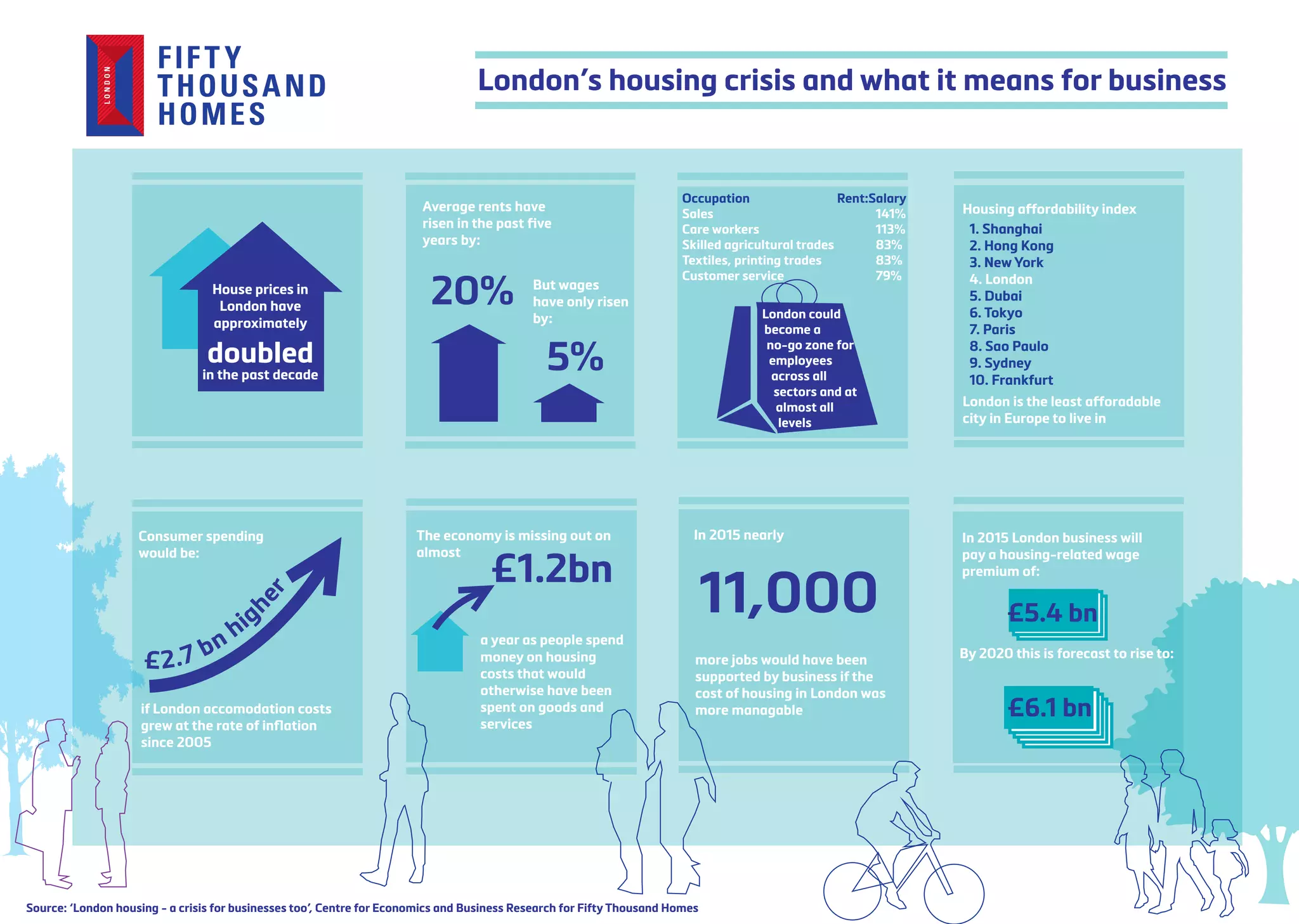
    House prices in Londonhave approximately doubled in the past decade London’s housing crisis and what it means for business 20% Average rents have risen in the past five years by: Housing affordability index London could become a no-go zone for employees across all sectors and at almost all levels In 2015 nearly £1.2bn The economy is missing out on almost 11,000 more jobs would have been supported by business if the cost of housing in London was more managable Source: ‘London housing - a crisis for businesses too’, Centre for Economics and Business Research for Fifty Thousand Homes 5% But wages have only risen by: a year as people spend money on housing costs that would otherwise have been spent on goods and services Occupation Rent:Salary Sales 141% Care workers 113% Skilled agricultural trades 83% Textiles, printing trades 83% Customer service 79% 1. Shanghai 2. Hong Kong 3. New York 4. London 5. Dubai 6. Tokyo 7. Paris 8. Sao Paulo 9. Sydney 10. Frankfurt London is the least afforadable city in Europe to live in In 2015 London business will pay a housing-related wage premium of: By 2020 this is forecast to rise to: £5.4 bn £6.1 bn £2.7 bn hig her if London accomodation costs grew at the rate of inflation since 2005 Consumer spending would be:
  • 2.
    Campaign Statement London isone of the world’s leading cities, giving the UK a place on the global stage and acting as a gateway to investment across the country. But the capital has a serious housing shortage that is starting to limit its competitiveness. Substantial increases in house prices and rental costs mean people from all walks of life are struggling to find accommodation. London’s success is built on attracting talent – both home-grown and from across the world. The business community is becoming increasingly concerned that a growing number of talented people across all levels of income are being forced away, or put off coming to the capital in the first place. We need to build at least 50,000 homes a year to sustain a population that is growing by a million people a decade. New homes of all types are needed, particularly homes that most Londoners can afford. However, we are currently building at half that rate. The business community welcomes the focus that candidates for the 2016 Mayoral elections have placed on increased housebuilding. But as London elects a new Mayor we need to hear more than aspirations. We need determined political leadership, credible plans and, above all, strong action that will deliver at least 50,000 new homes a year by 2020. Founding Partners @50000homesWeb: fiftythousandhomes.london