LOGIC CIRCUITS AND DESIGN
PREPARED BY: TELESFORO M. ABA, JR.
COURSE OBJECTIVES
1. To understand the concepts and techniques associated with the number systems
and codes
2. To understand the simplification methods (Boolean algebra & postulates, k-map
method and tabular method) to simplify the given Boolean function.
3. To understand the fundamentals of digital logic and to design various
combinational and sequential circuits.
4. To understand the concepts of programmable logic devices(PLDs)
5. To understand formal procedure for the analysis and design of synchronous and
asynchronous sequential logic
COURSE OUTCOMES
After completion of the course the student will be able to:
1. Understand the concepts and techniques of number systems and codes in
representing numerical values in various number systems and perform
number conversions between different number systems and codes.
2. Apply the simplification methods to simplify the given Boolean function
(Boolean algebra, k-map and Tabular method).
3. Implement given Boolean function using logic gates, MSI circuits and/ or
PLD’s.
4. Design and analyze various combinational circuits like decoders, encoders,
multiplexers, and de-multiplexers, arithmetic circuits (half adder, full adder,
multiplier etc).
5. Design and analyze various sequential circuits like flip-flops, registers,
counters etc.
6. Analyze and Design synchronous and asynchronous sequential circuits.
INTRODUCTORY CONCEPTS
(Number systems, Base conversions)
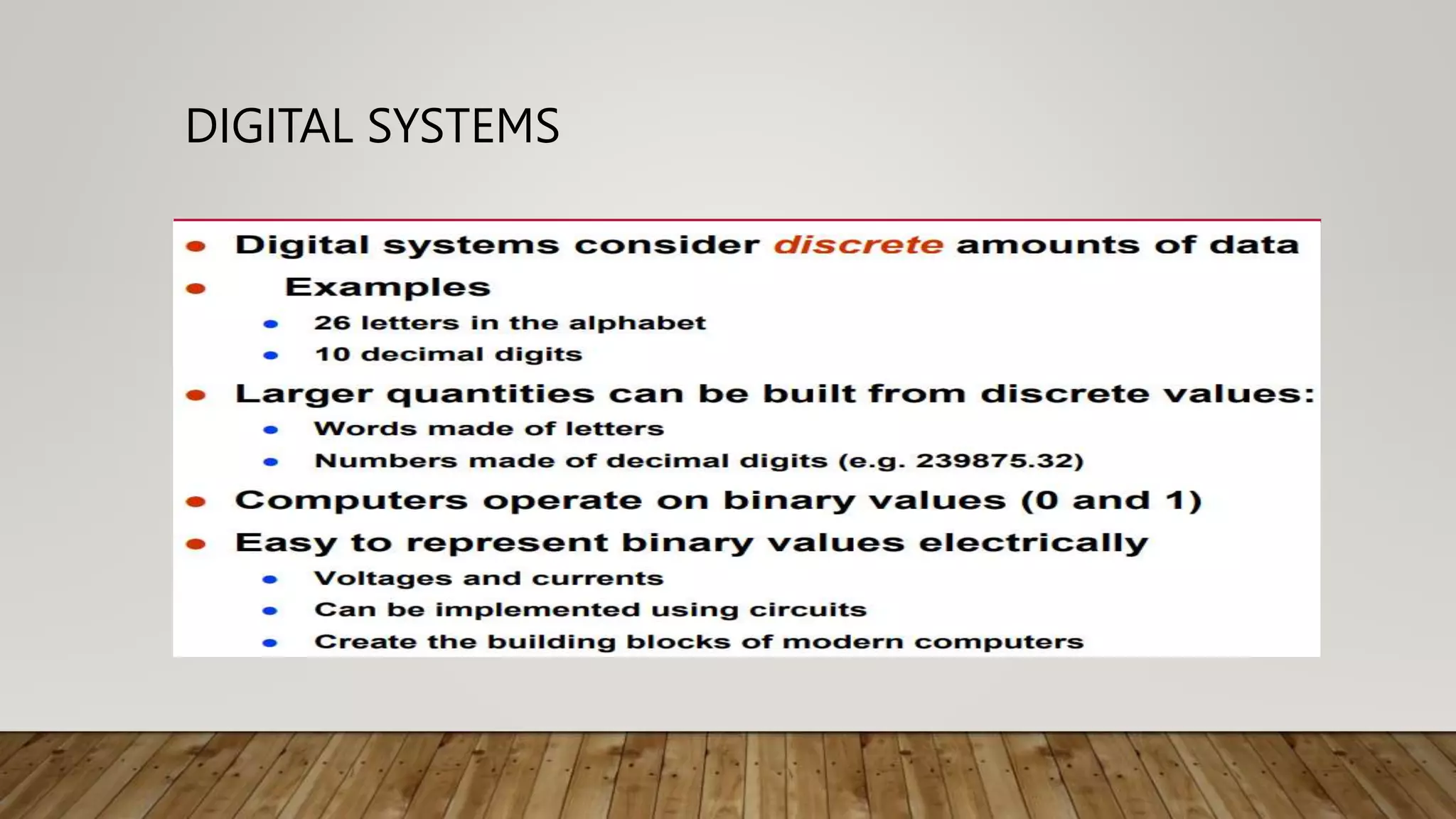
DIGITAL SYSTEMS
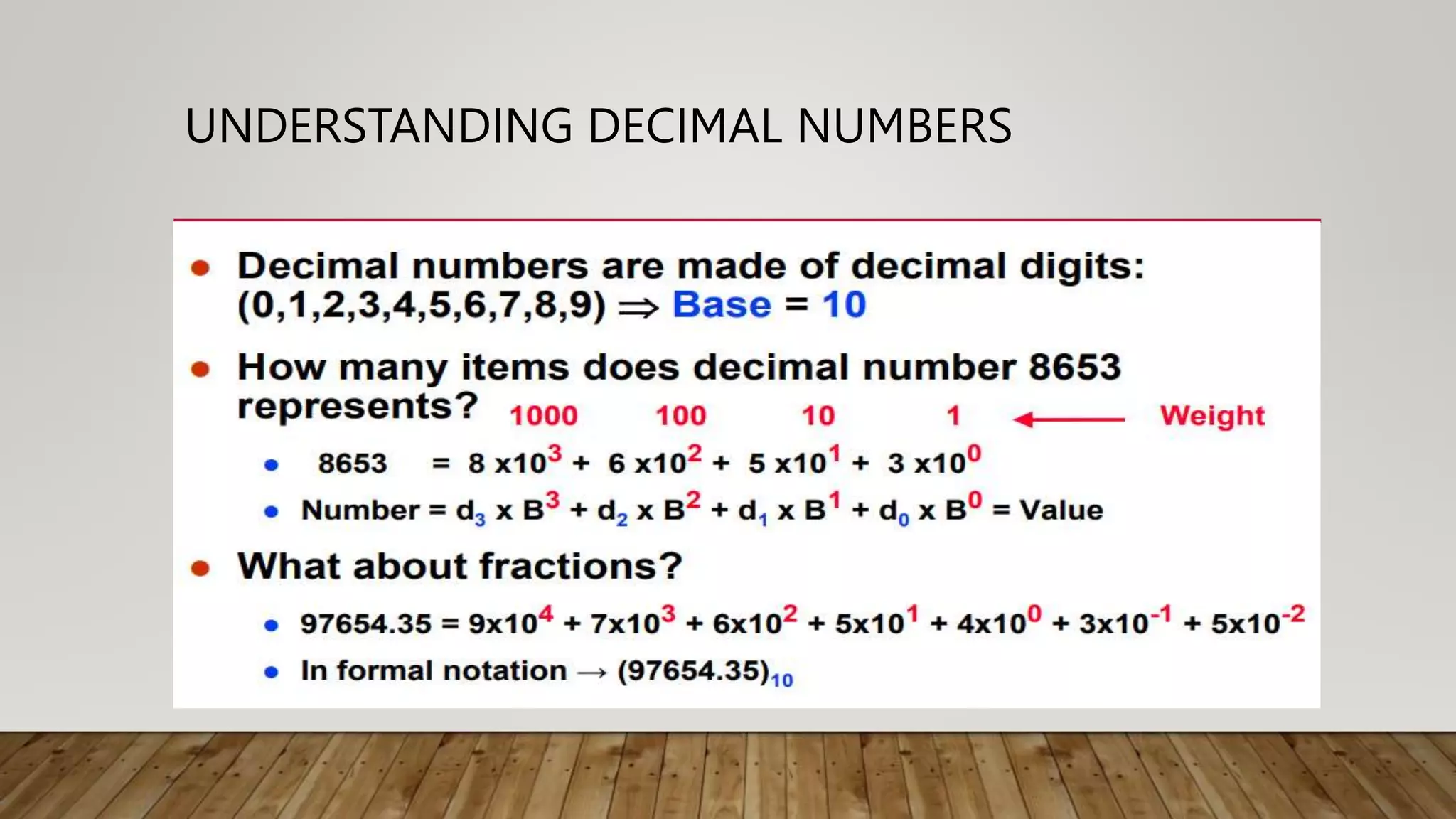
UNDERSTANDING DECIMAL NUMBERS
● Decimal numbers are made of decimal digits: (0,1,2,3,4,5,6,7,8,9) Base/Radix = 10
● How many items does decimal number 8653 represents?
● 8653 = 8 x10³ + 6 x10² + 5 x101 + 3 x100 ● Number = d3 x B3 + d2 x B2 + d1 x B1 +
d0 x B0 = Value ● What about fractions? ● 97654.35 = 9x10⁴ + 7x10³ + 6x10² + 5x101 +
4x100 + 3x10⁻¹ + 5x10⁻² ● In formal notation → (97654.35)10
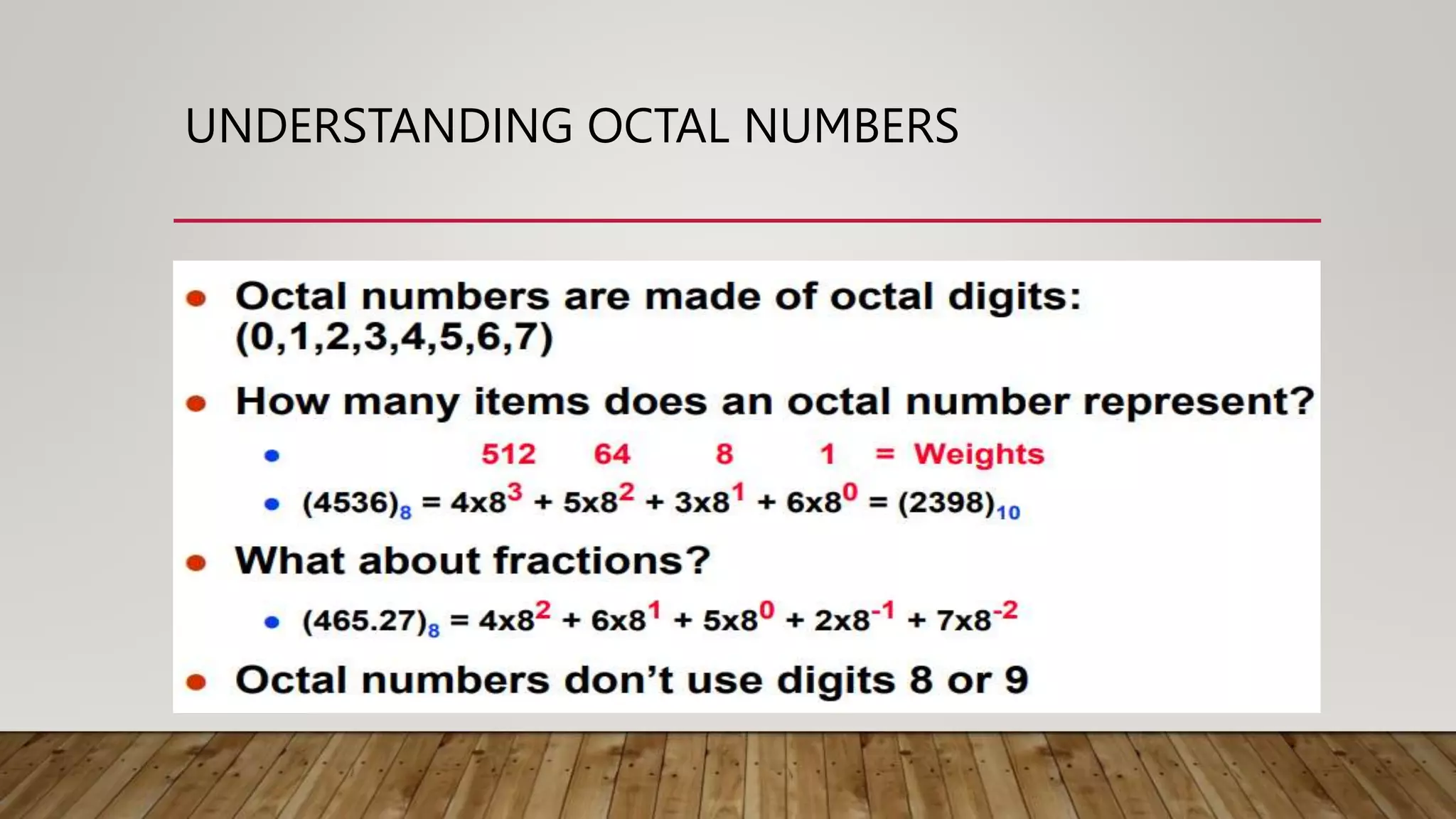
UNDERSTANDING OCTAL NUMBERS
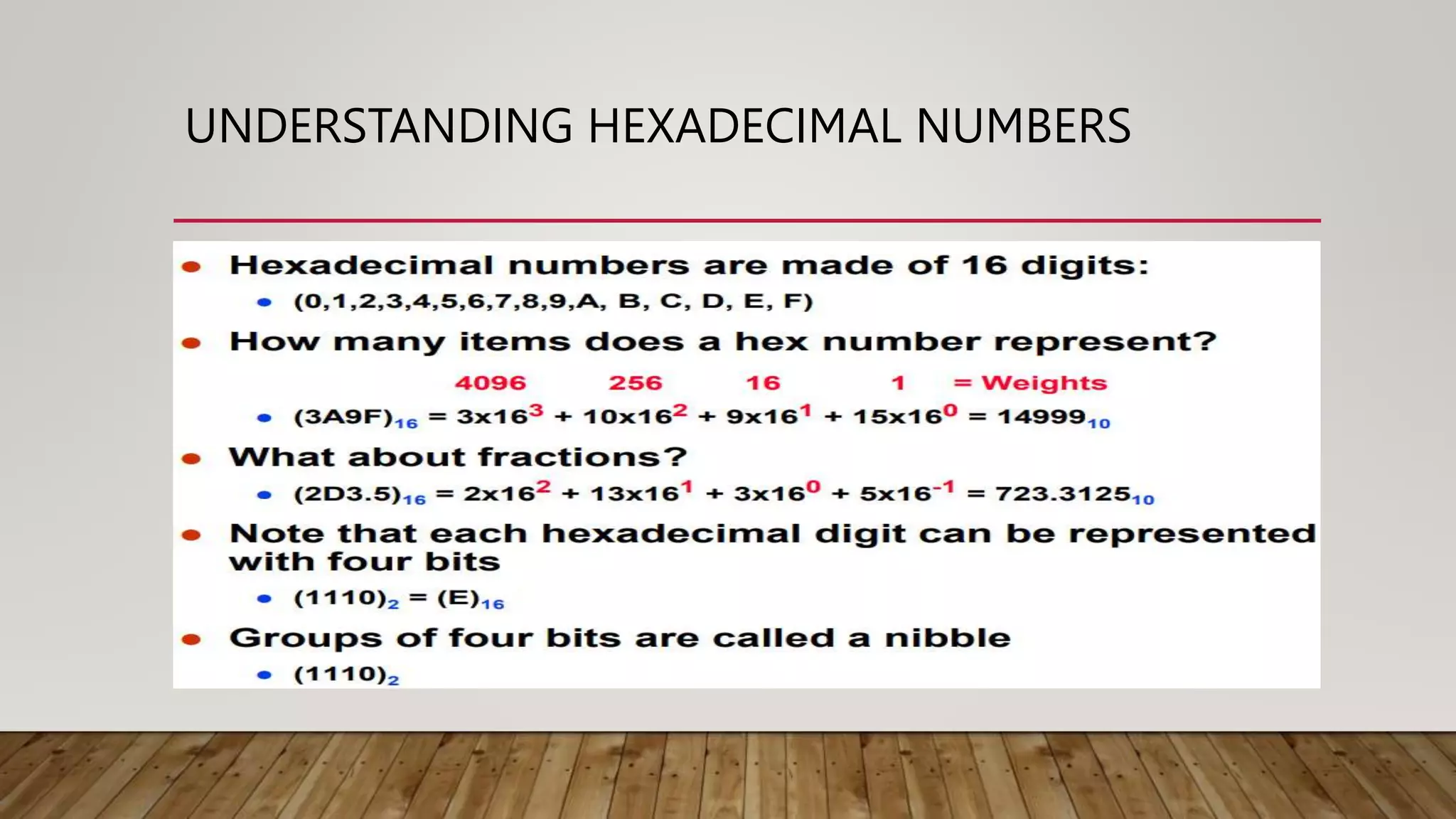
UNDERSTANDING HEXADECIMAL NUMBERS
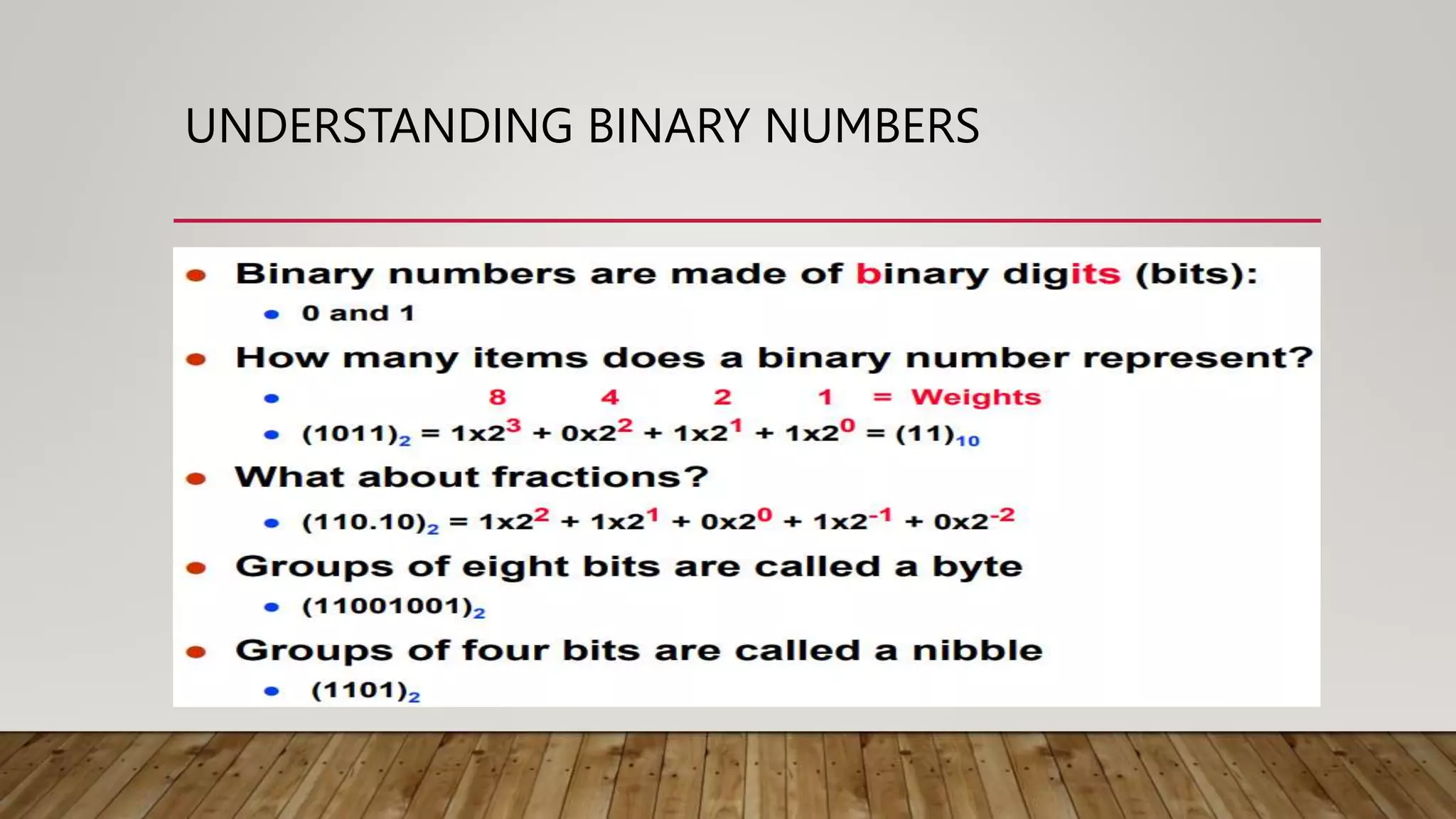
UNDERSTANDING BINARY NUMBERS
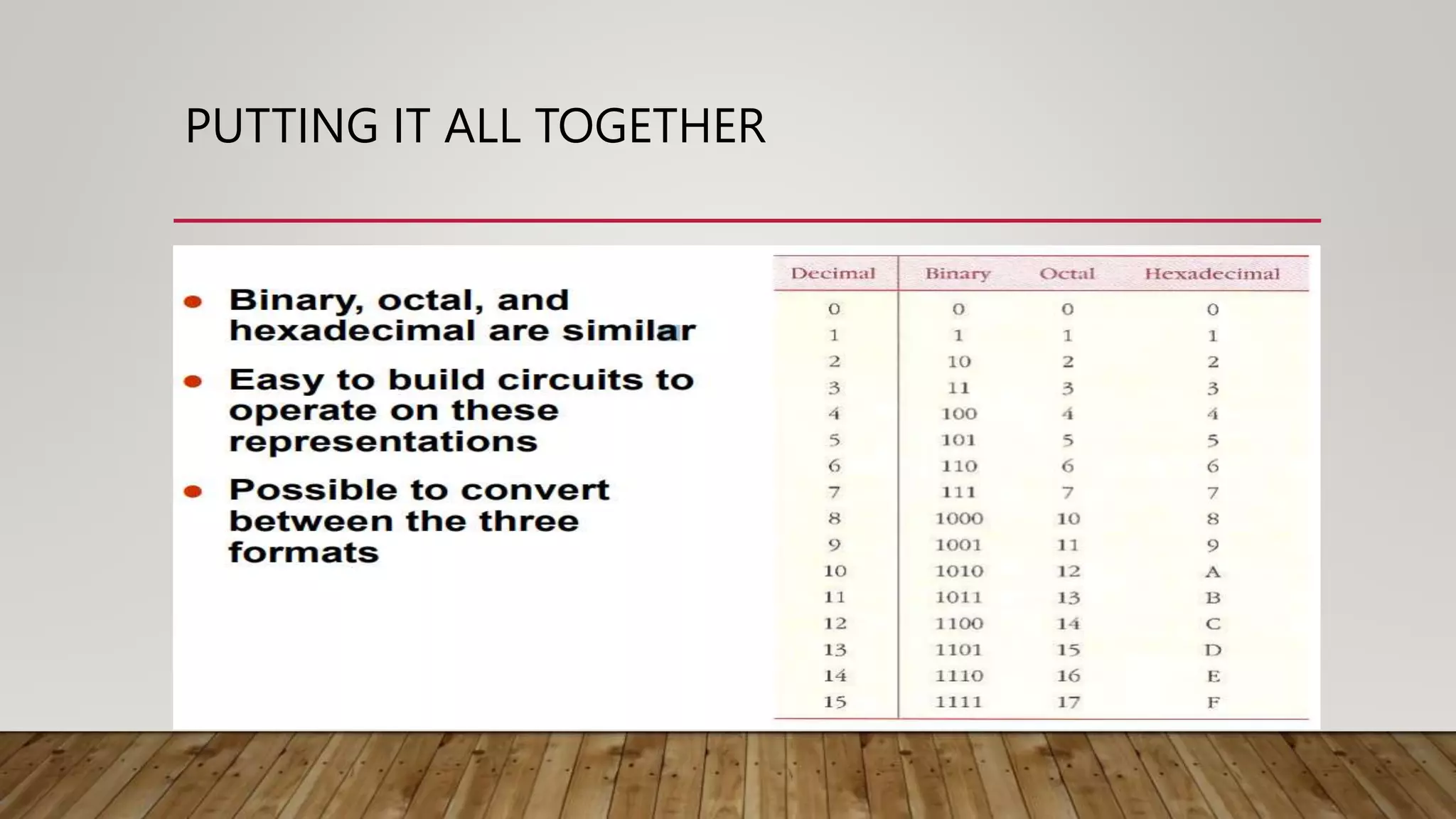
PUTTING IT ALL TOGETHER
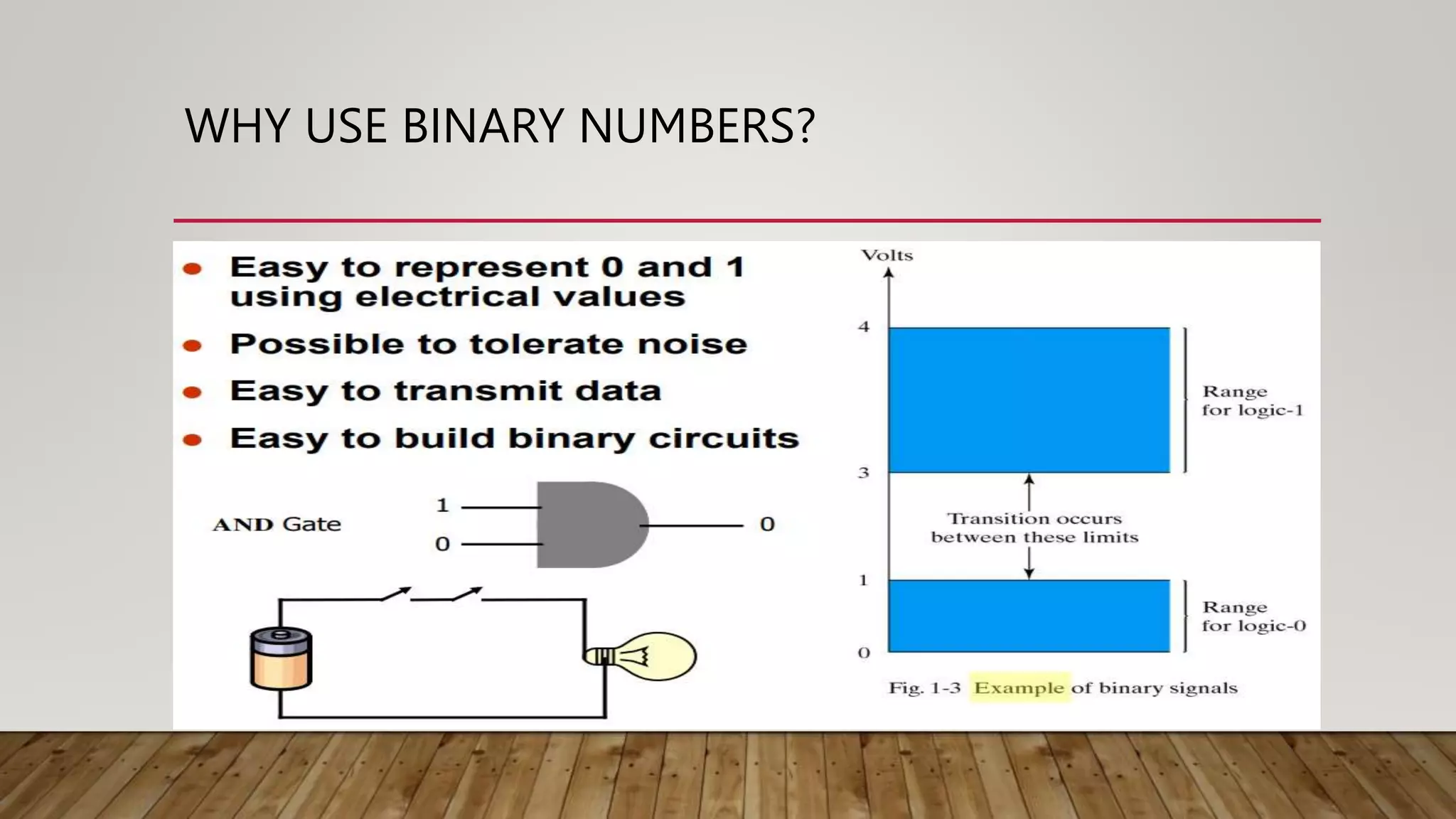
WHY USE BINARY NUMBERS?
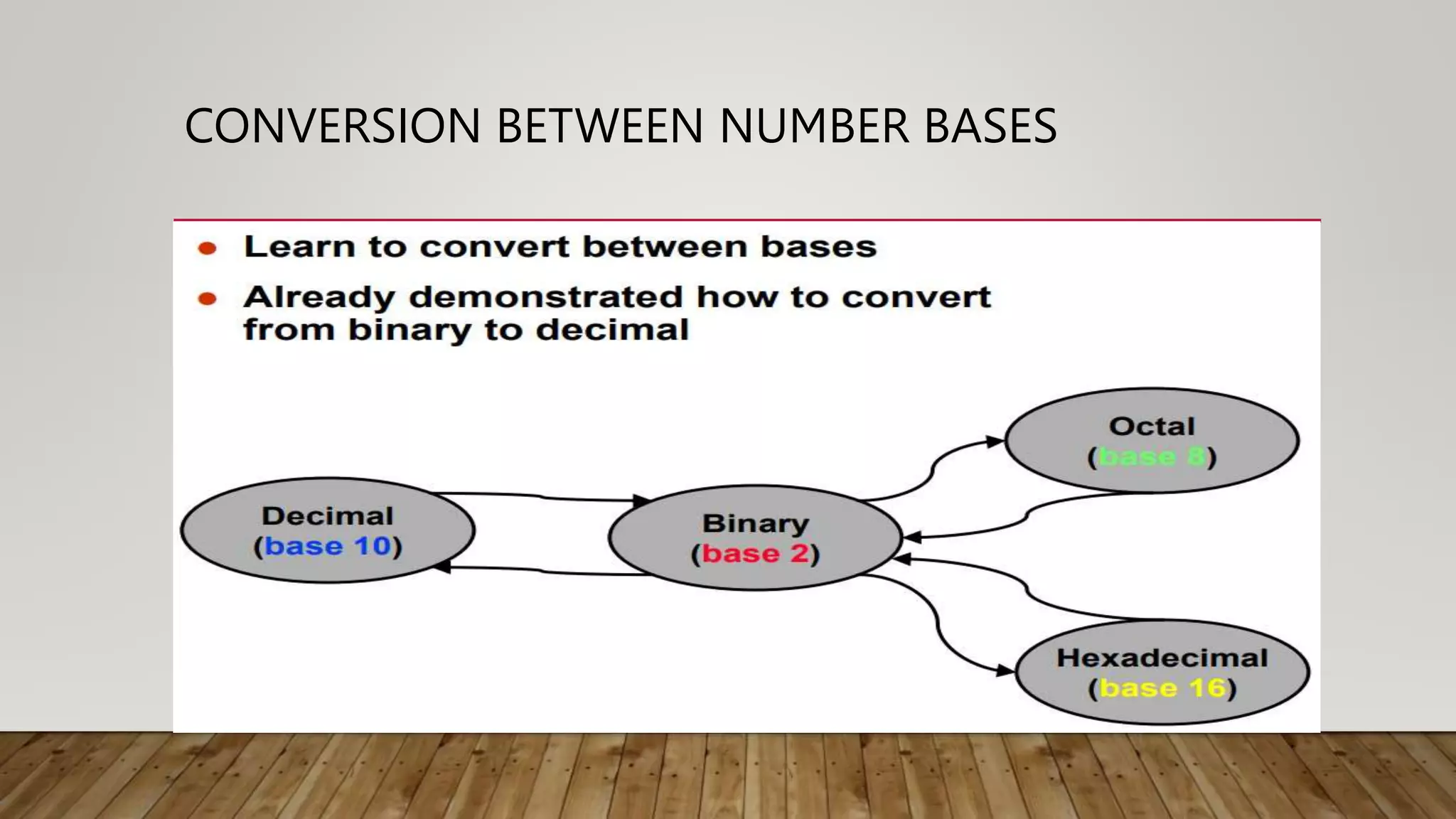
CONVERSION BETWEEN NUMBER BASES
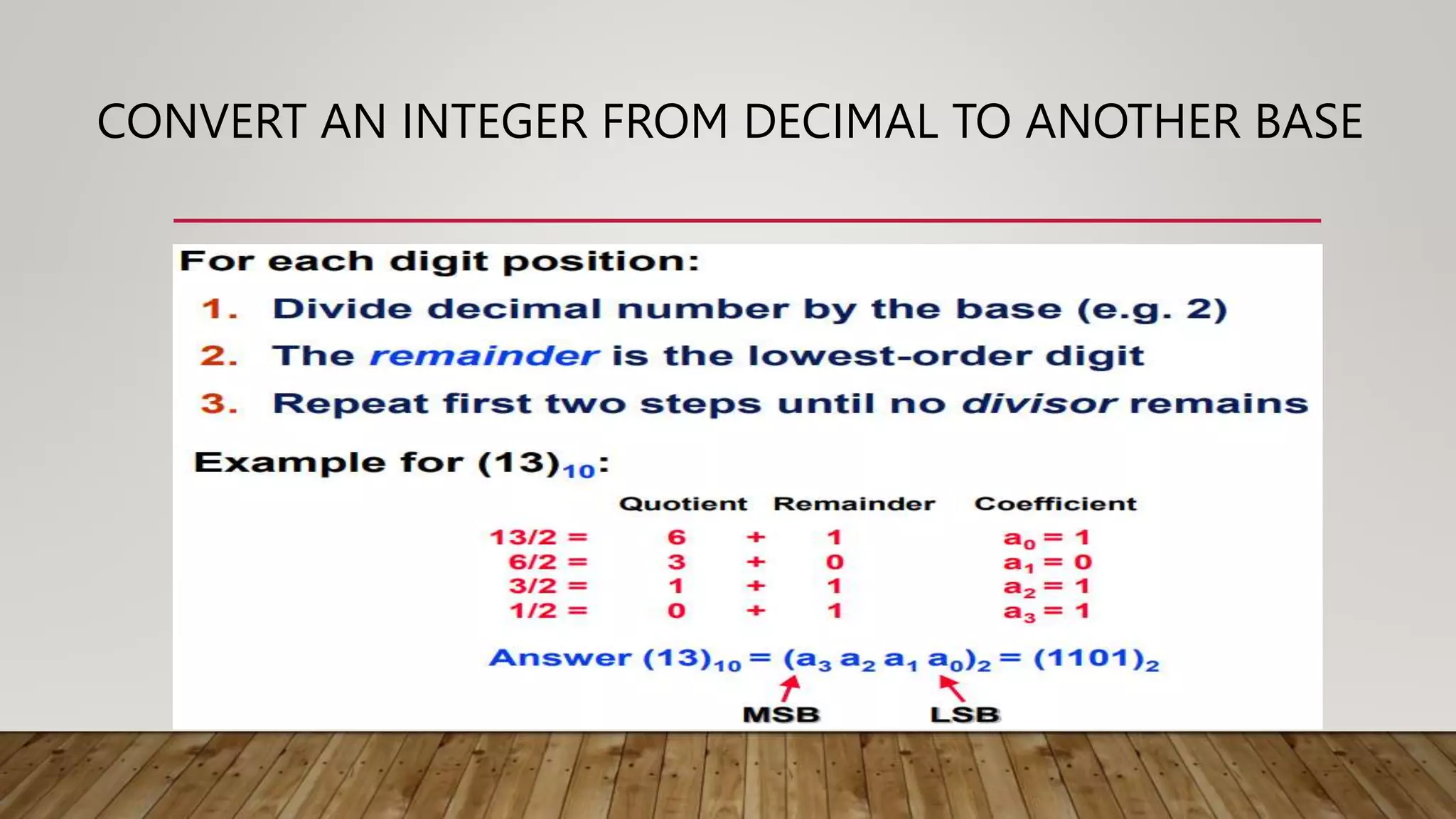
CONVERT AN INTEGER FROM DECIMAL TO ANOTHER BASE
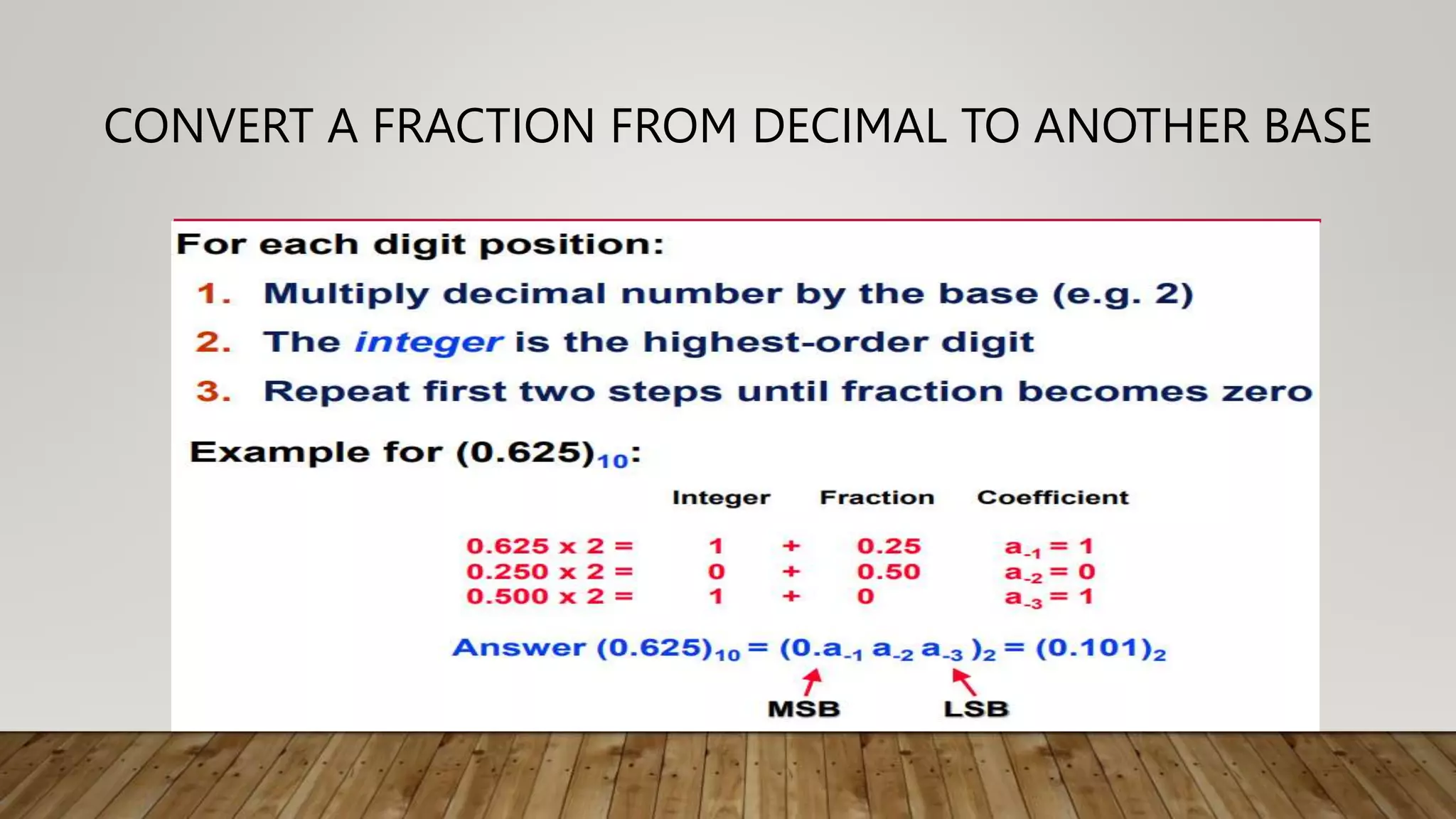
CONVERT A FRACTION FROM DECIMAL TO ANOTHER BASE
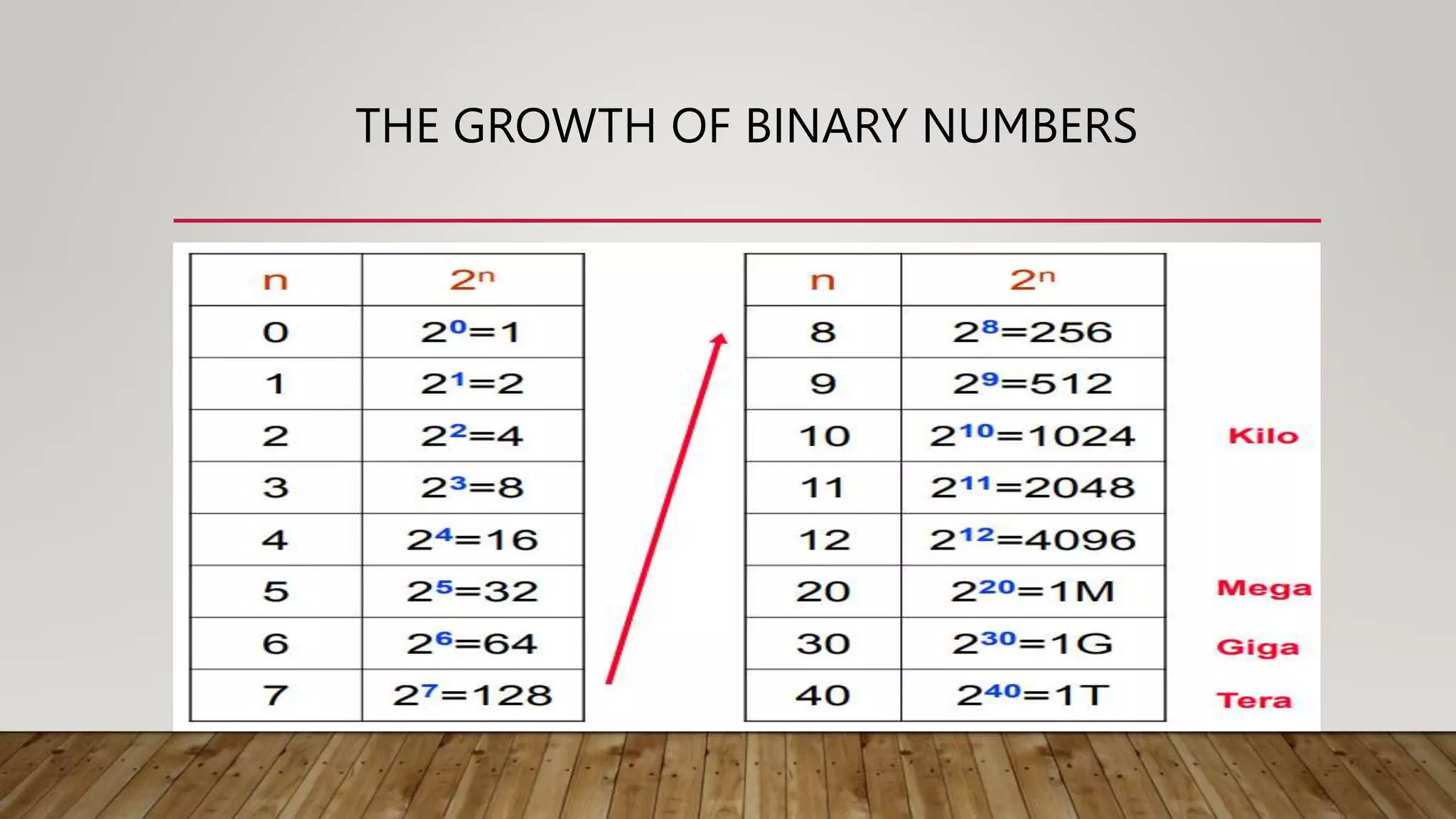
THE GROWTH OF BINARY NUMBERS
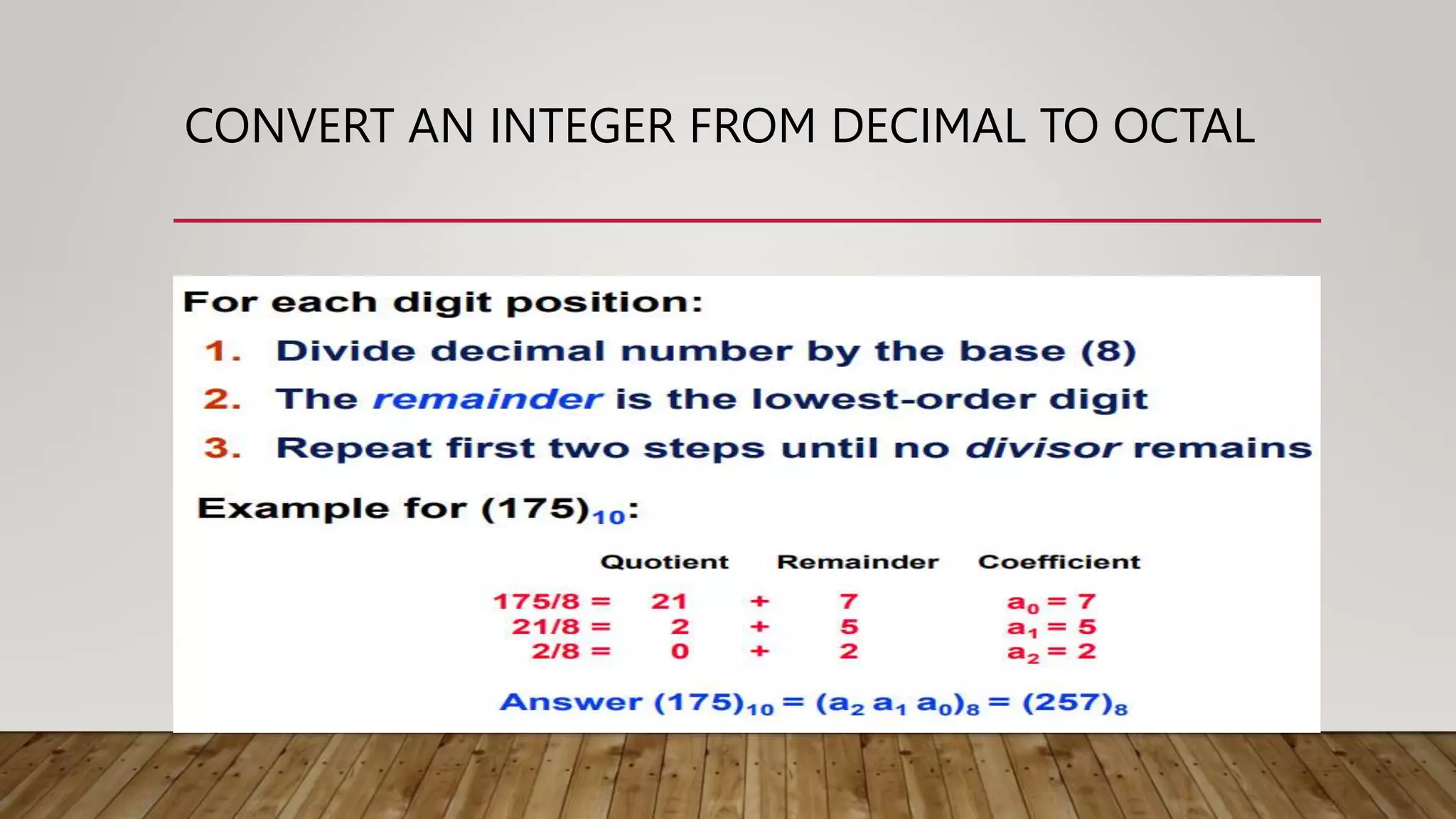
CONVERT AN INTEGER FROM DECIMAL TO OCTAL
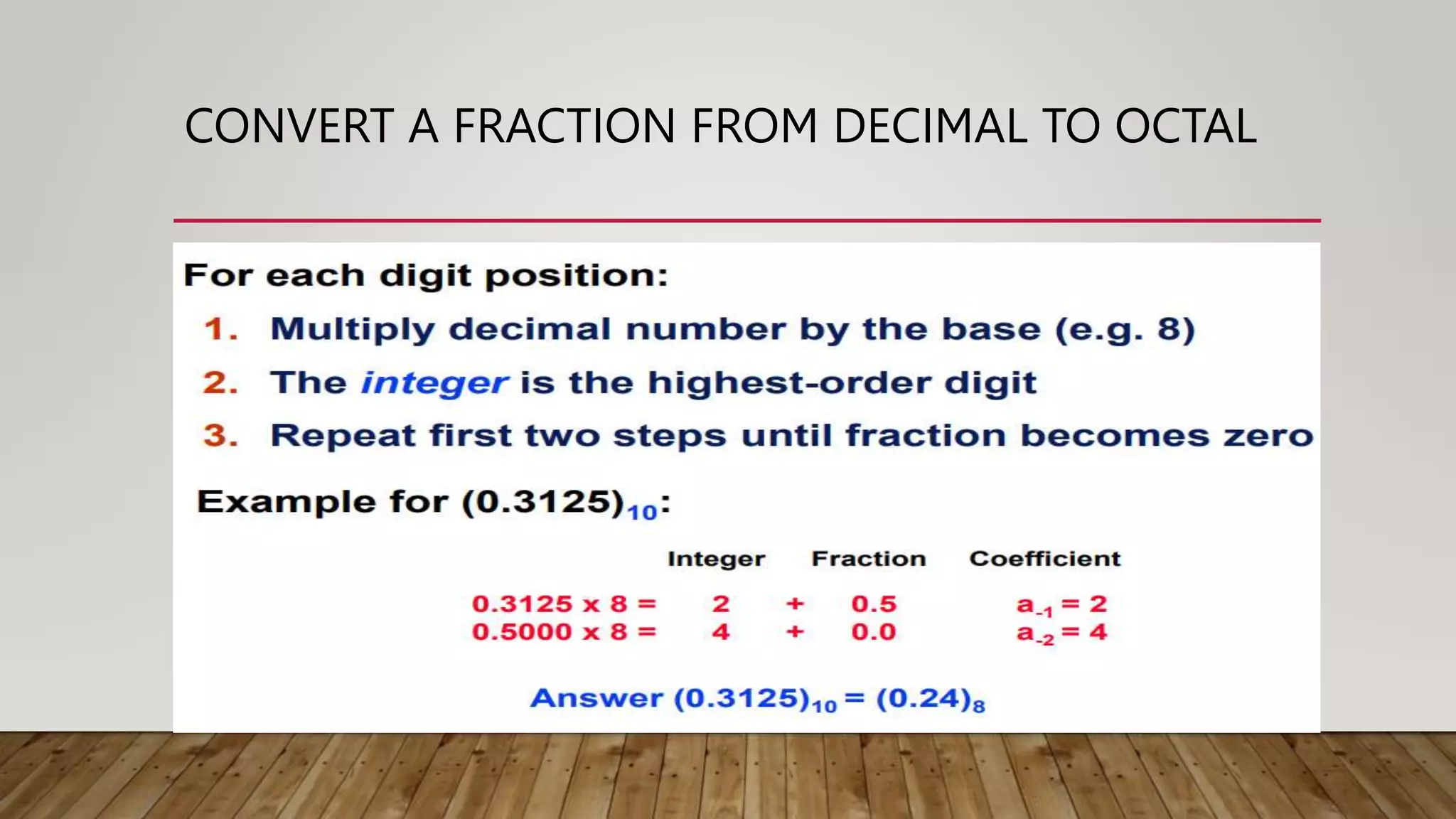
CONVERT A FRACTION FROM DECIMAL TO OCTAL
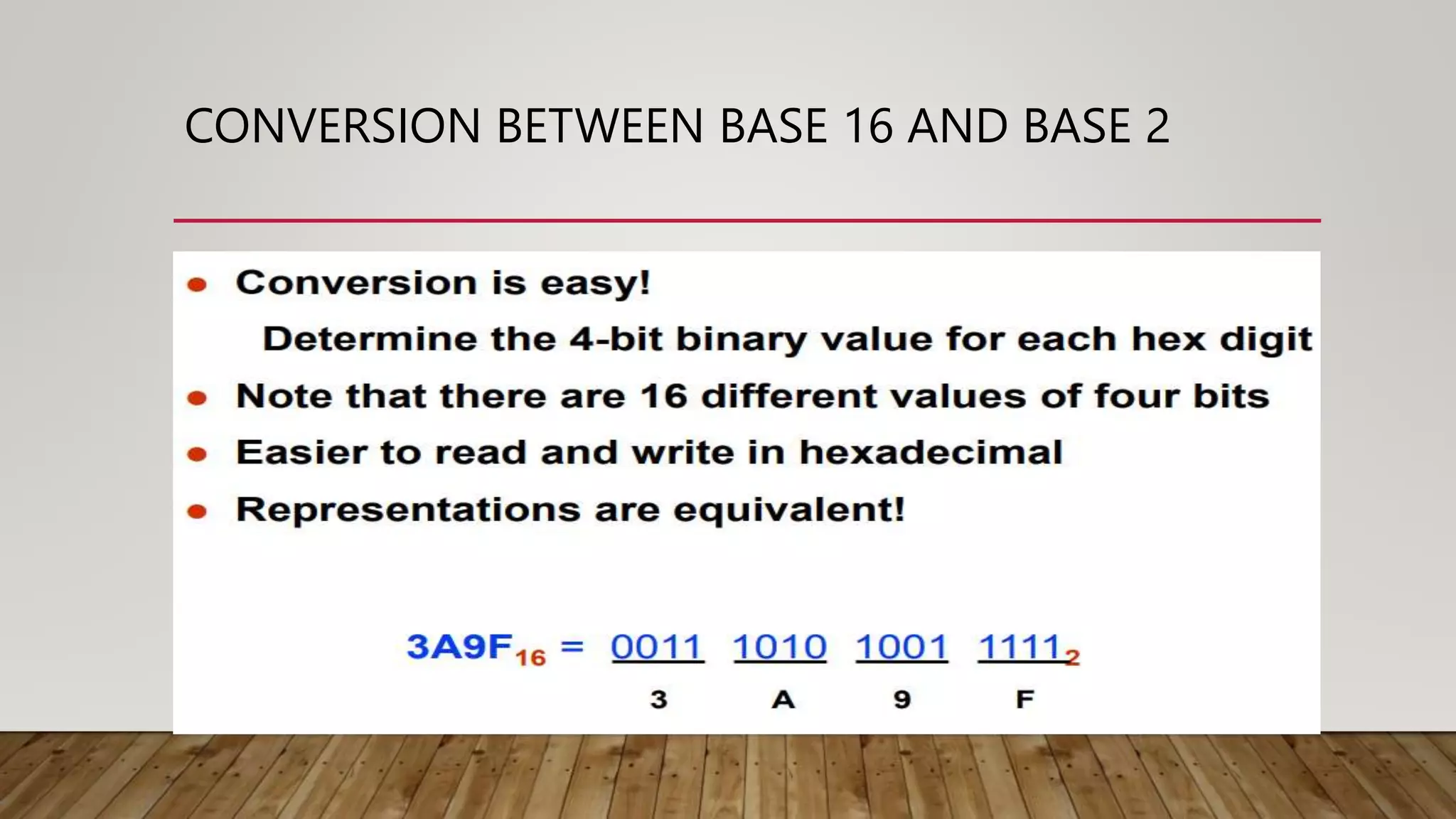
CONVERSION BETWEEN BASE 16 AND BASE 2
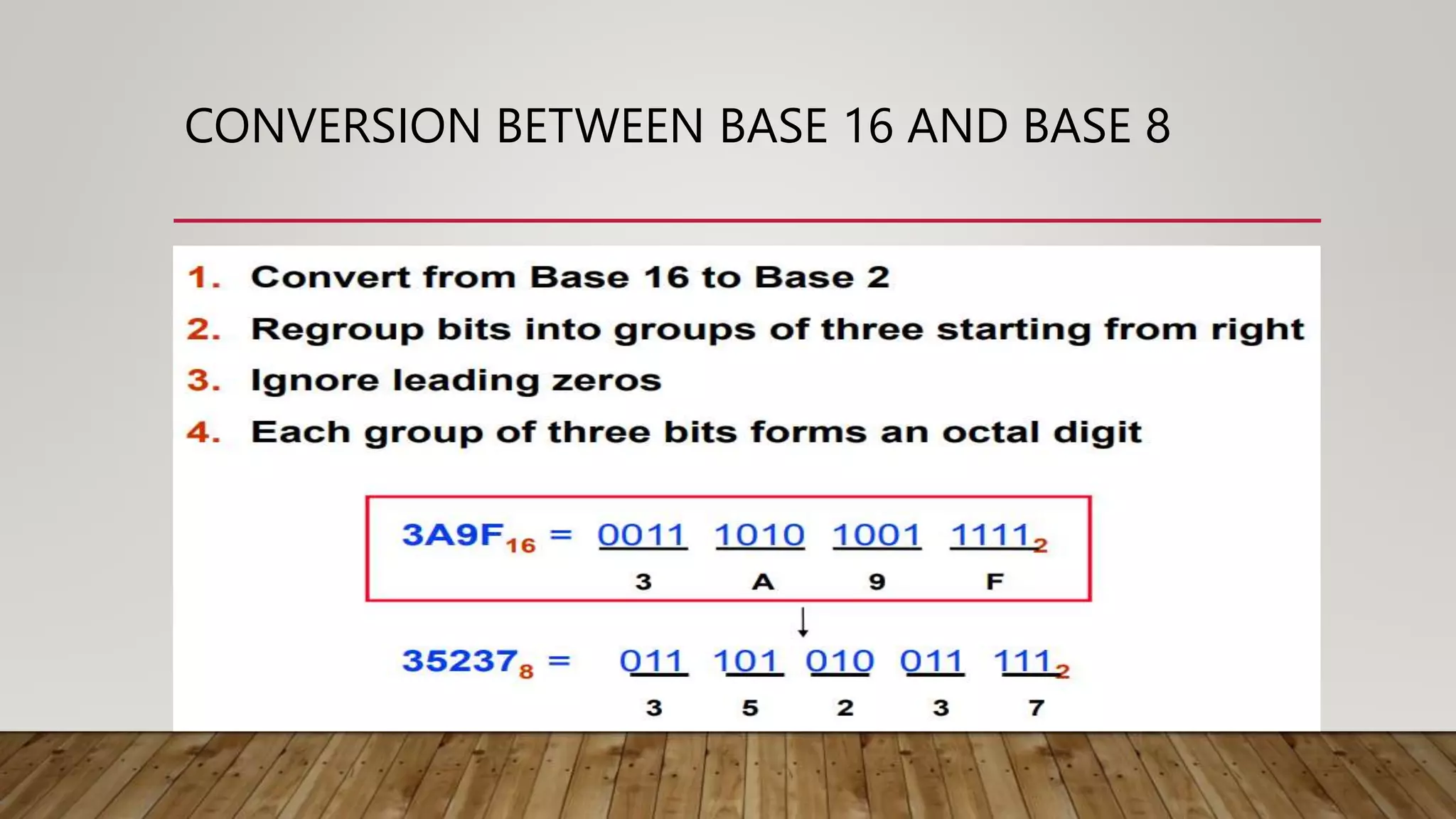
CONVERSION BETWEEN BASE 16 AND BASE 8
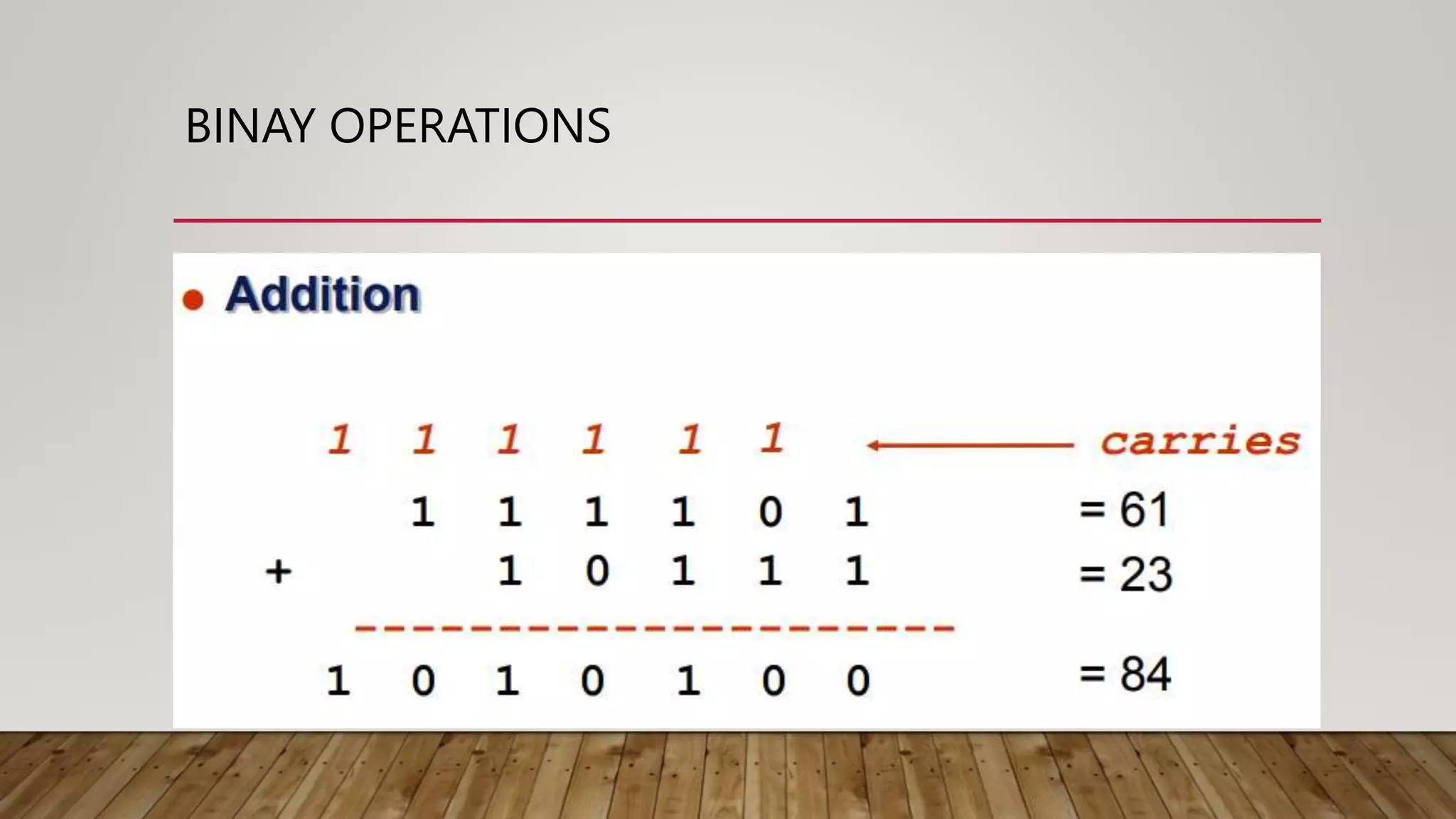
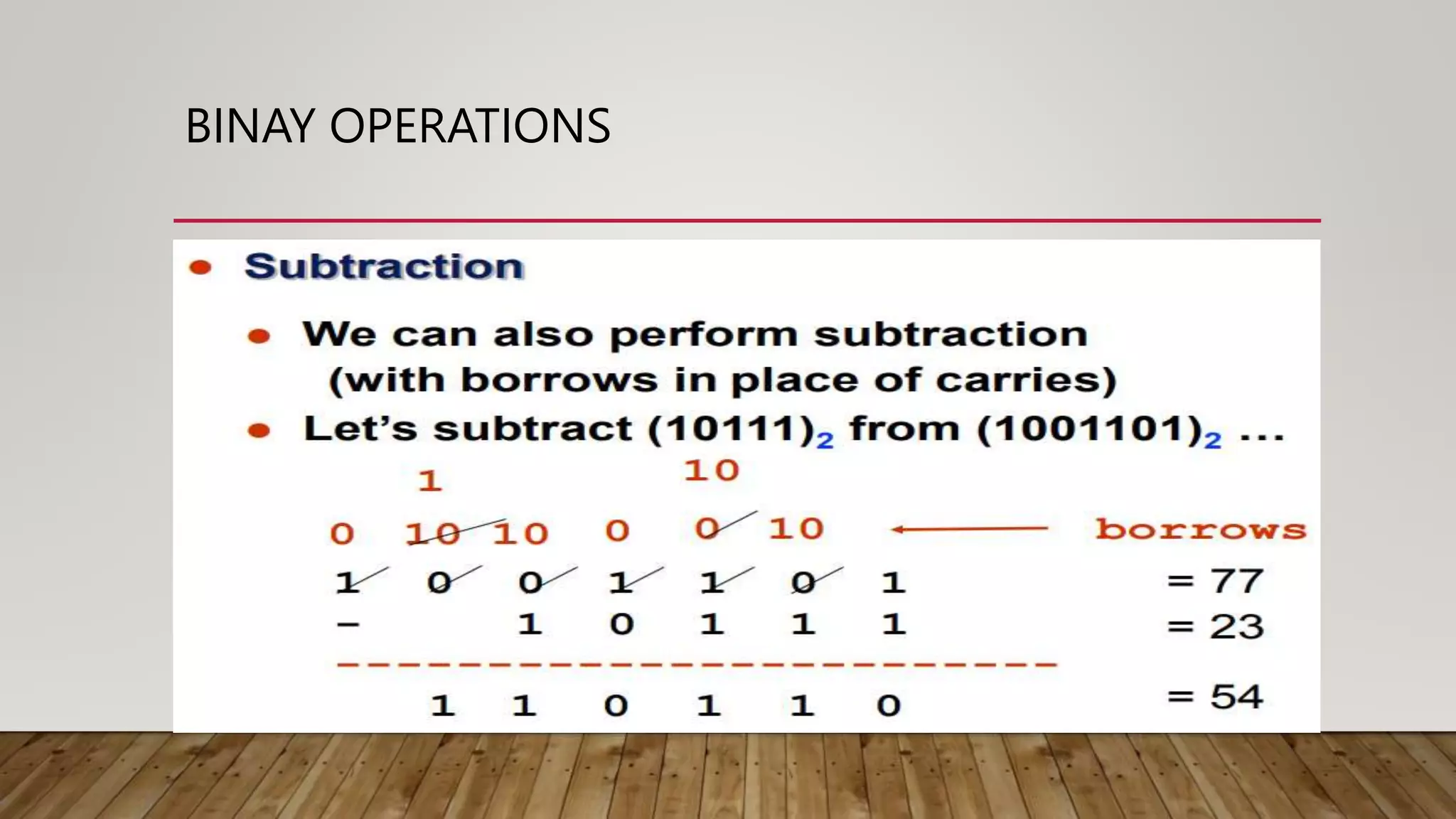
BINAY OPERATIONS
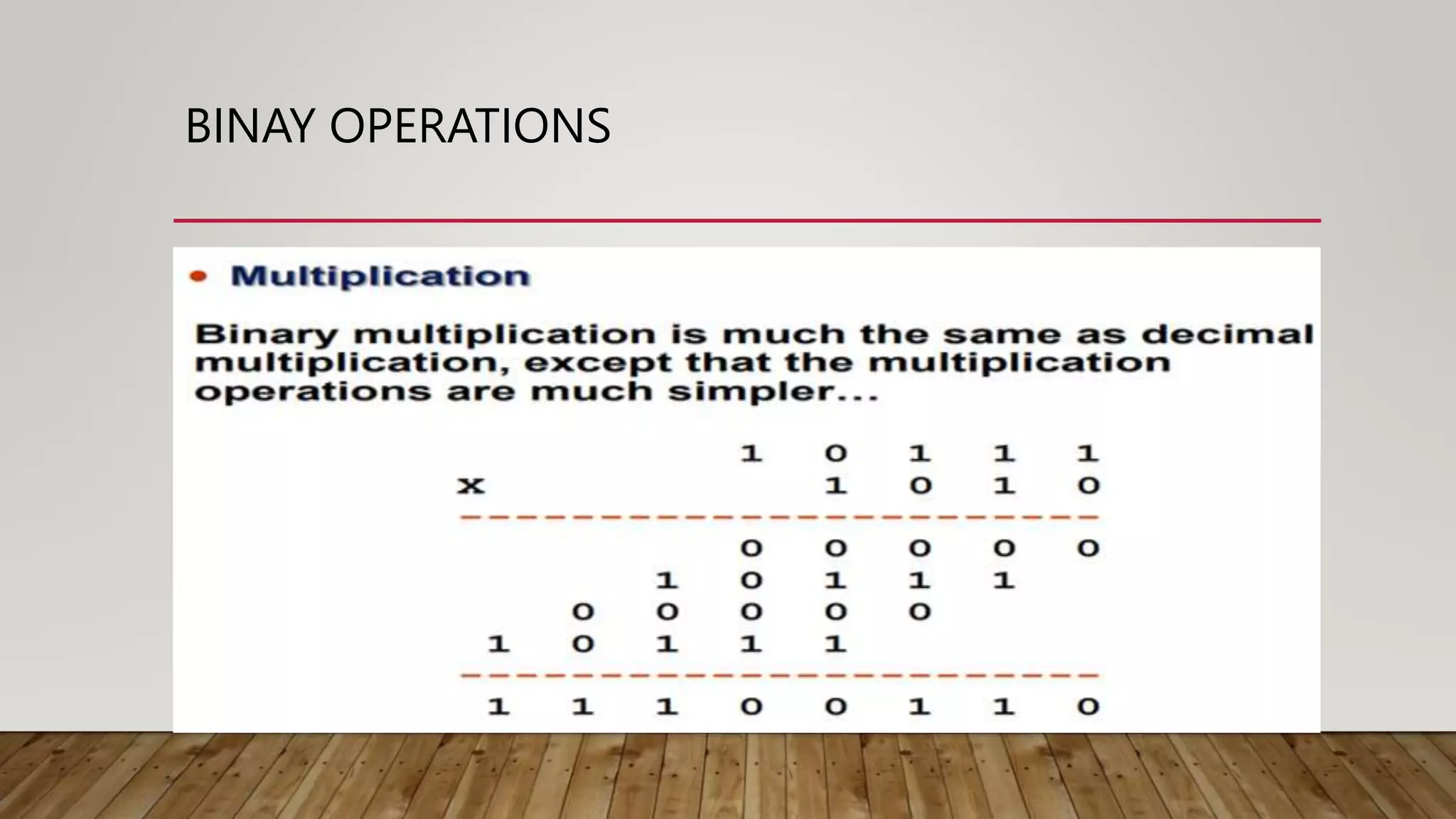
BINAY OPERATIONS
BINAY OPERATIONS
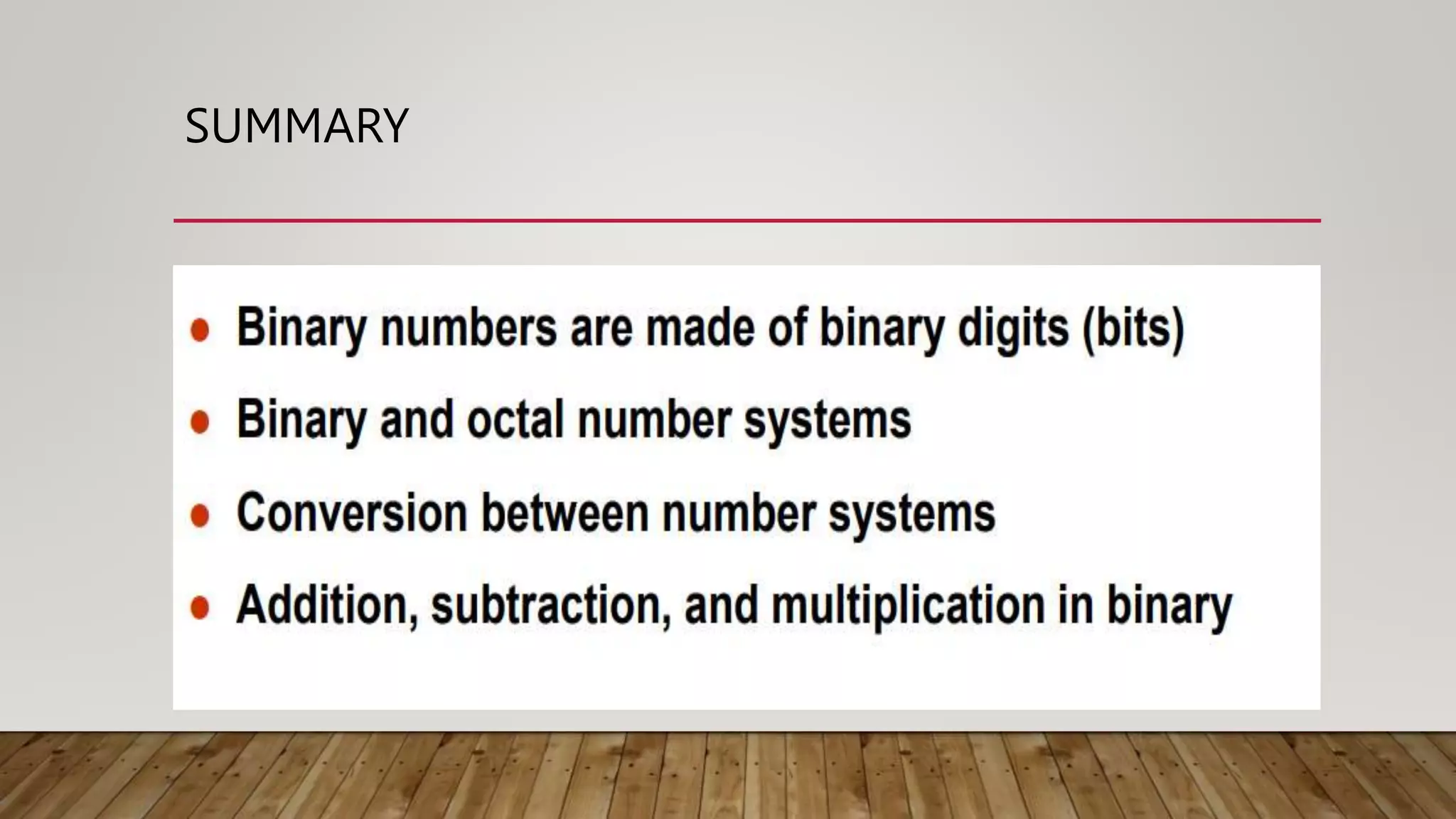
SUMMARY
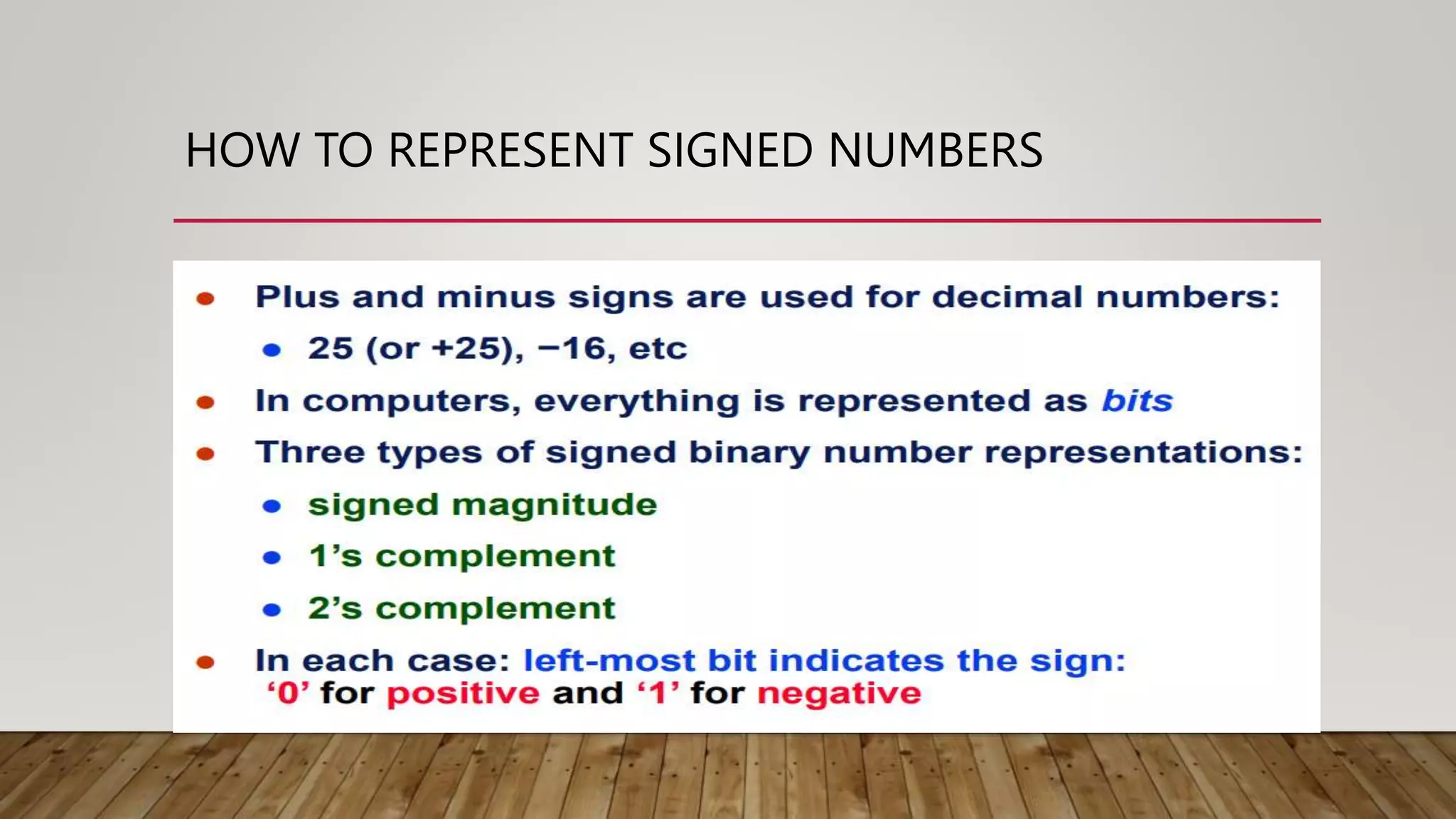
HOW TO REPRESENT SIGNED NUMBERS
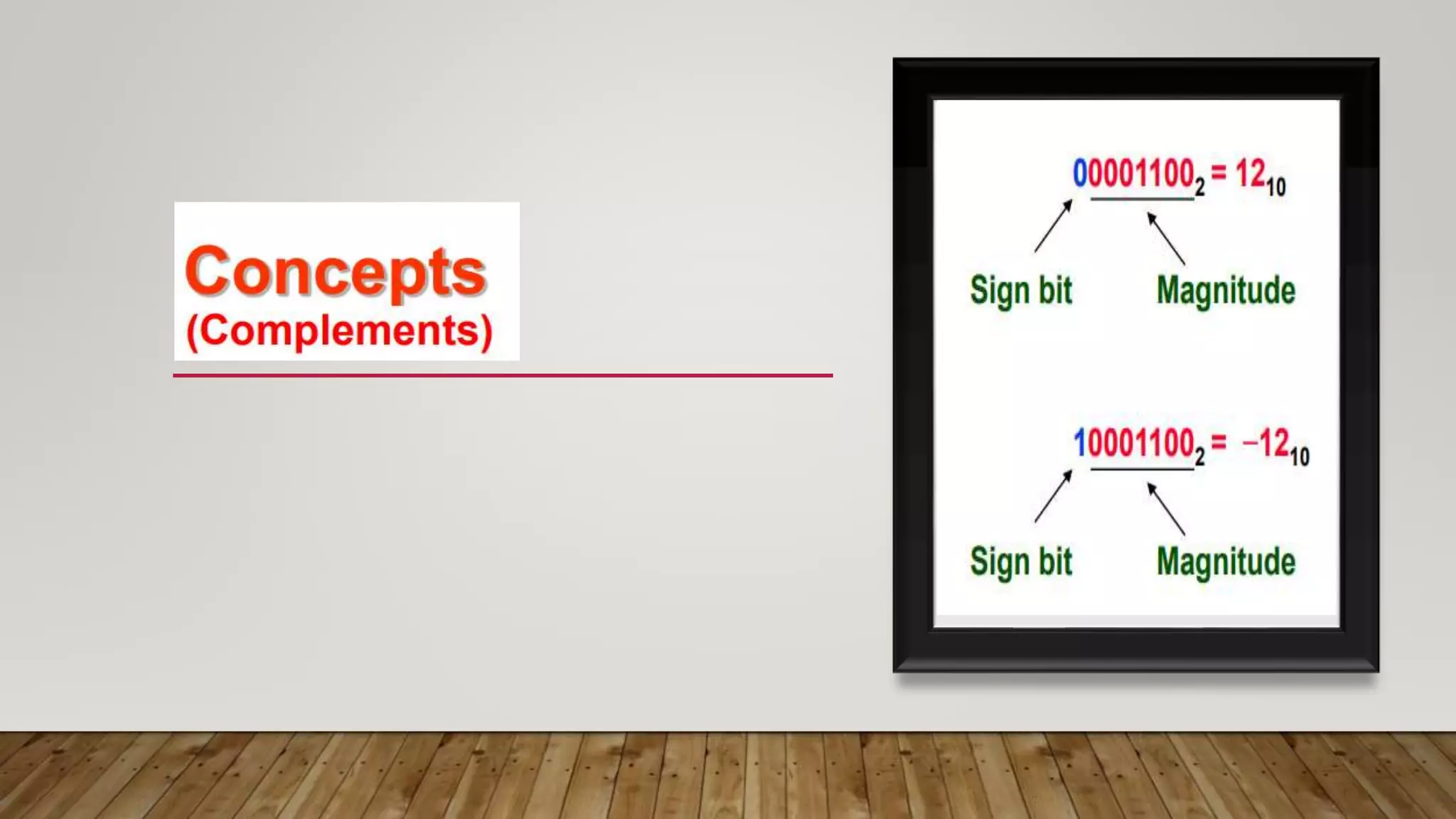
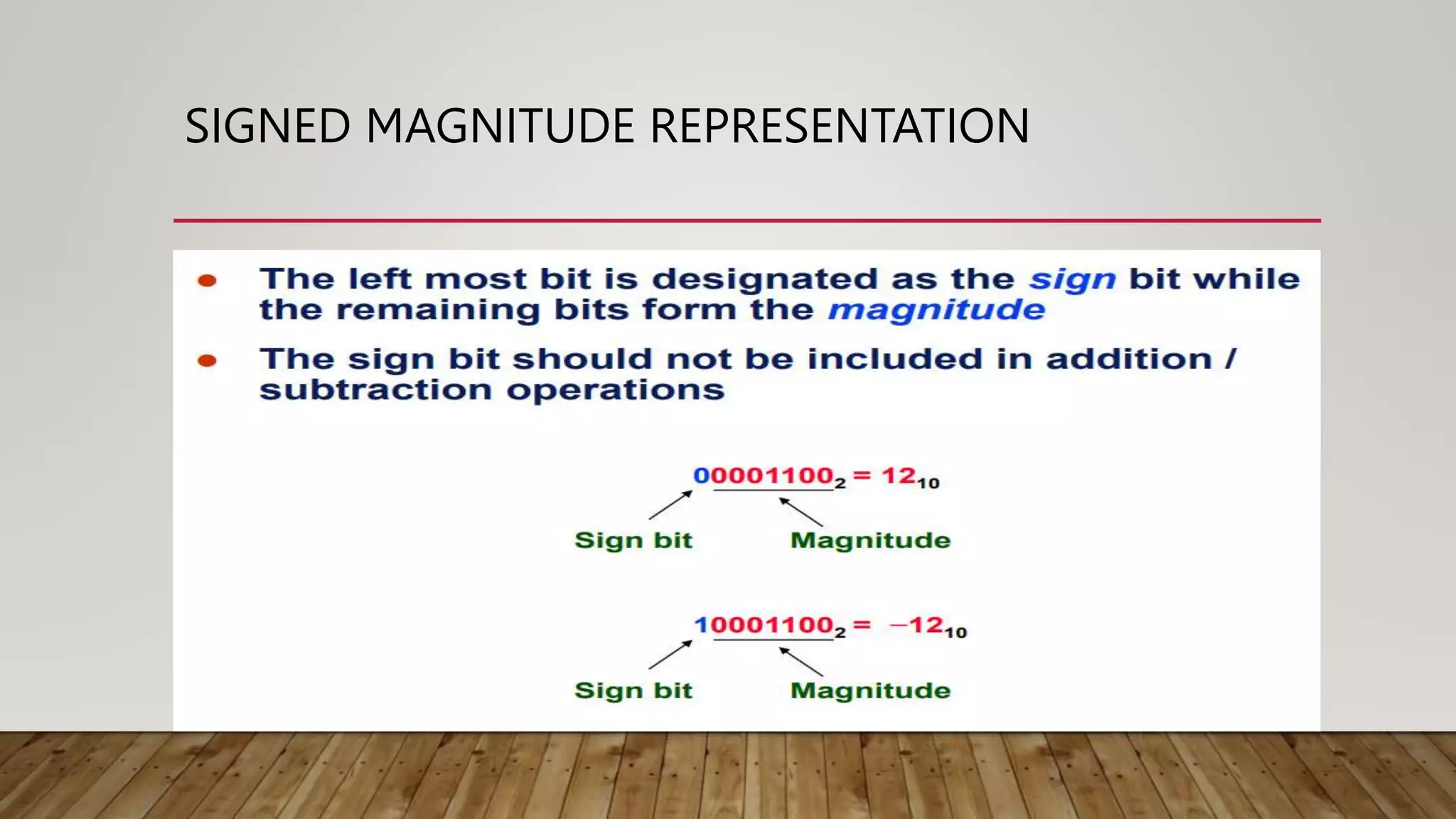
SIGNED MAGNITUDE REPRESENTATION
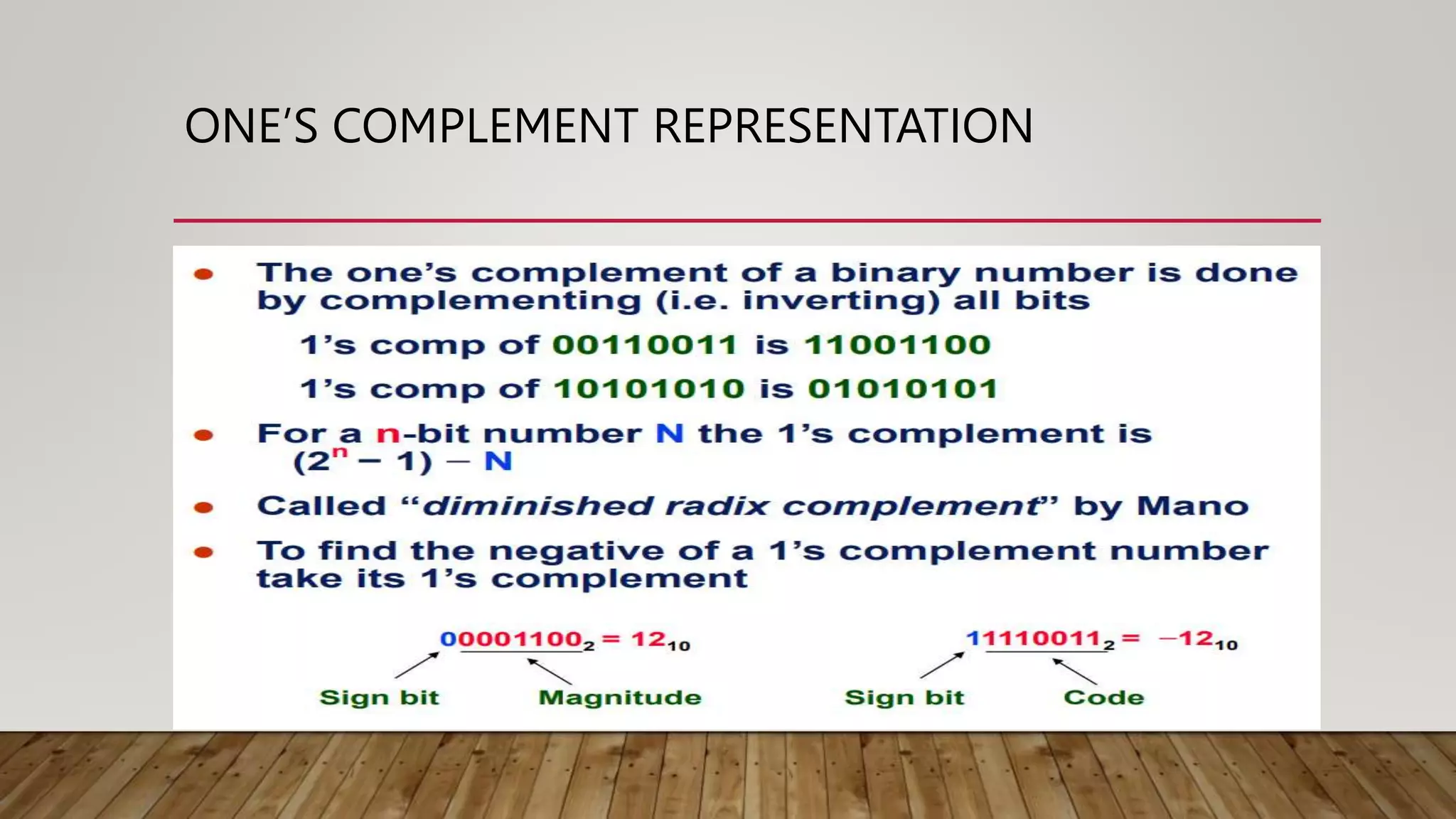
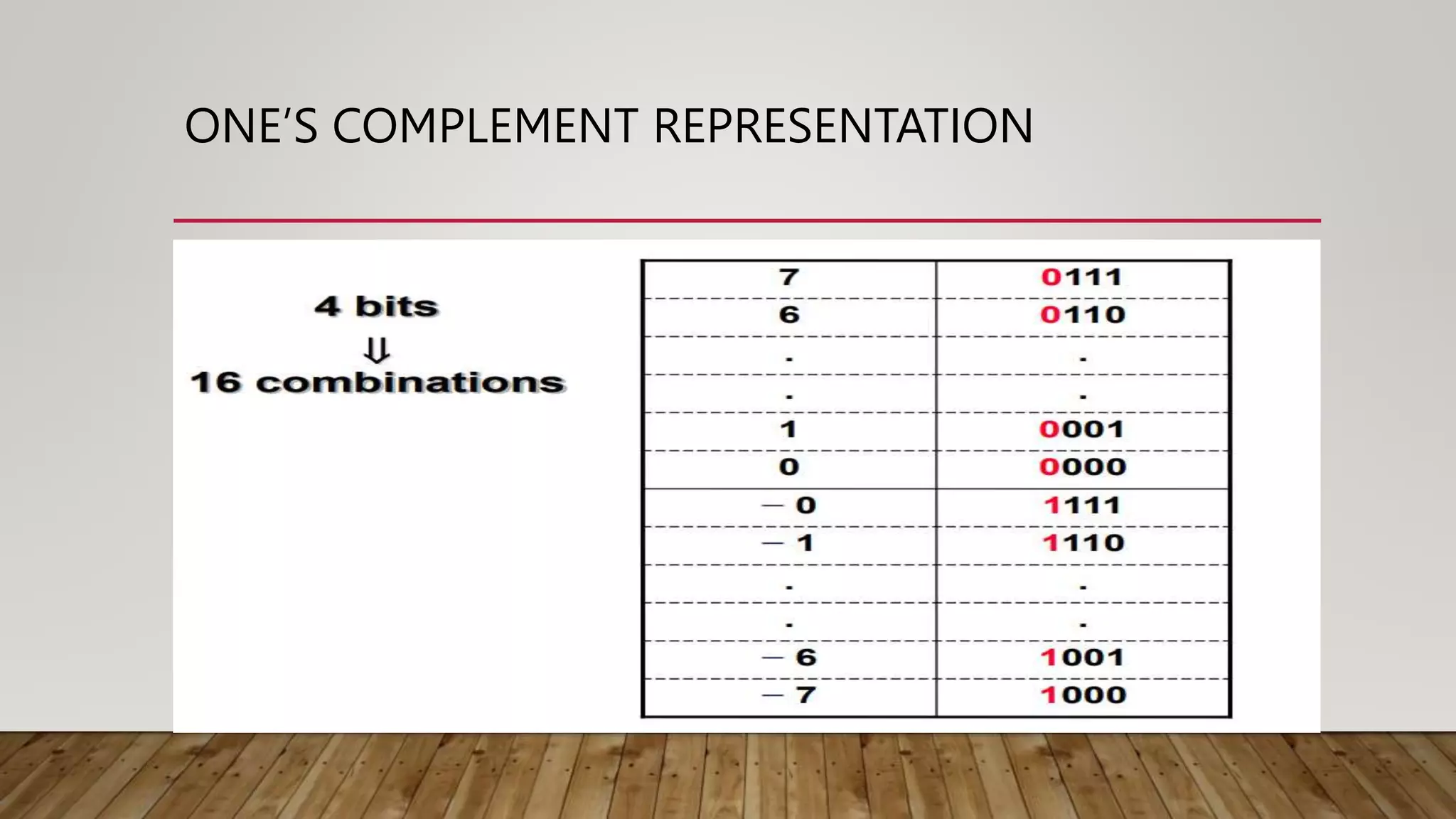
ONE’S COMPLEMENT REPRESENTATION
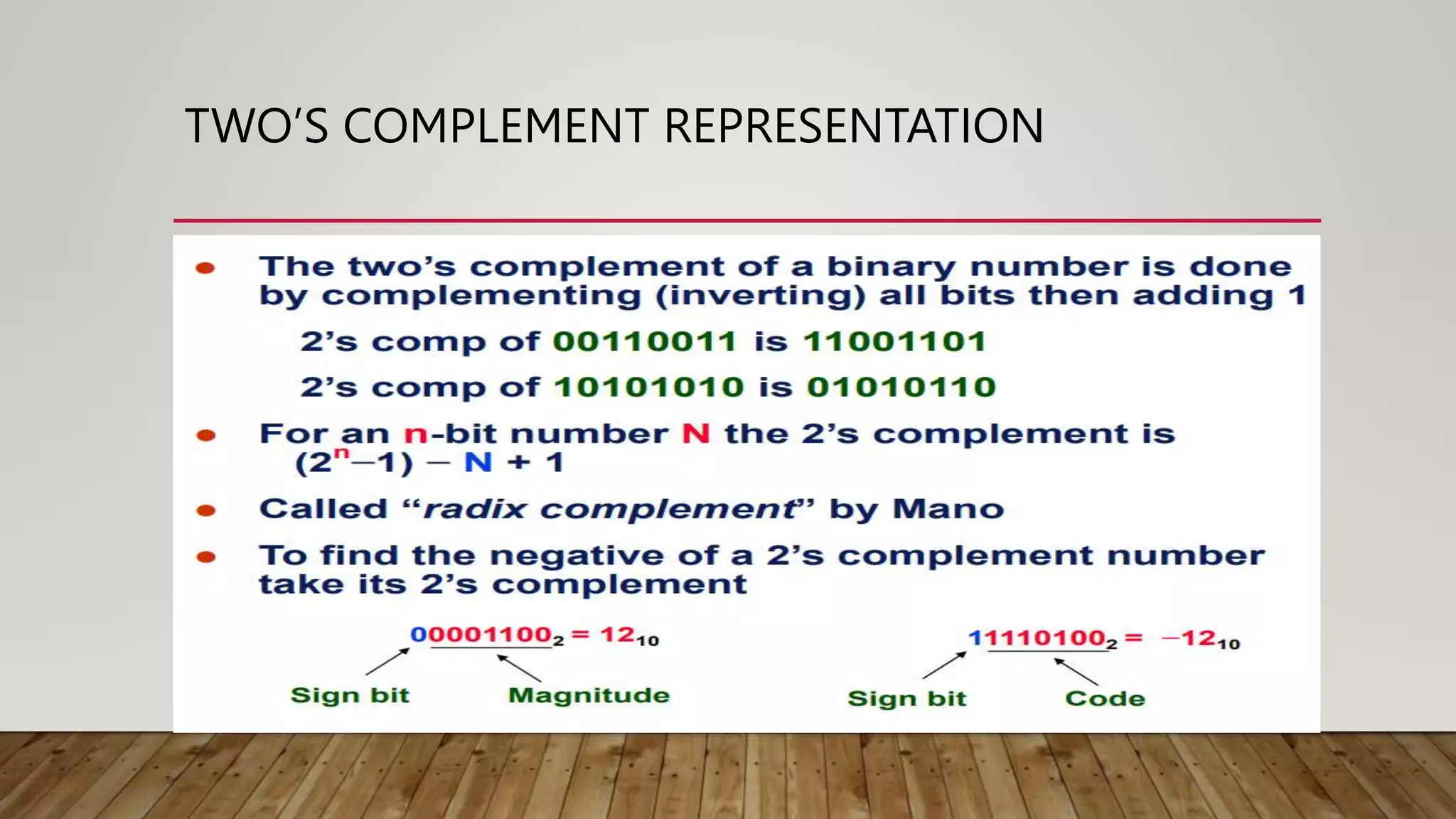
TWO’S COMPLEMENT REPRESENTATION
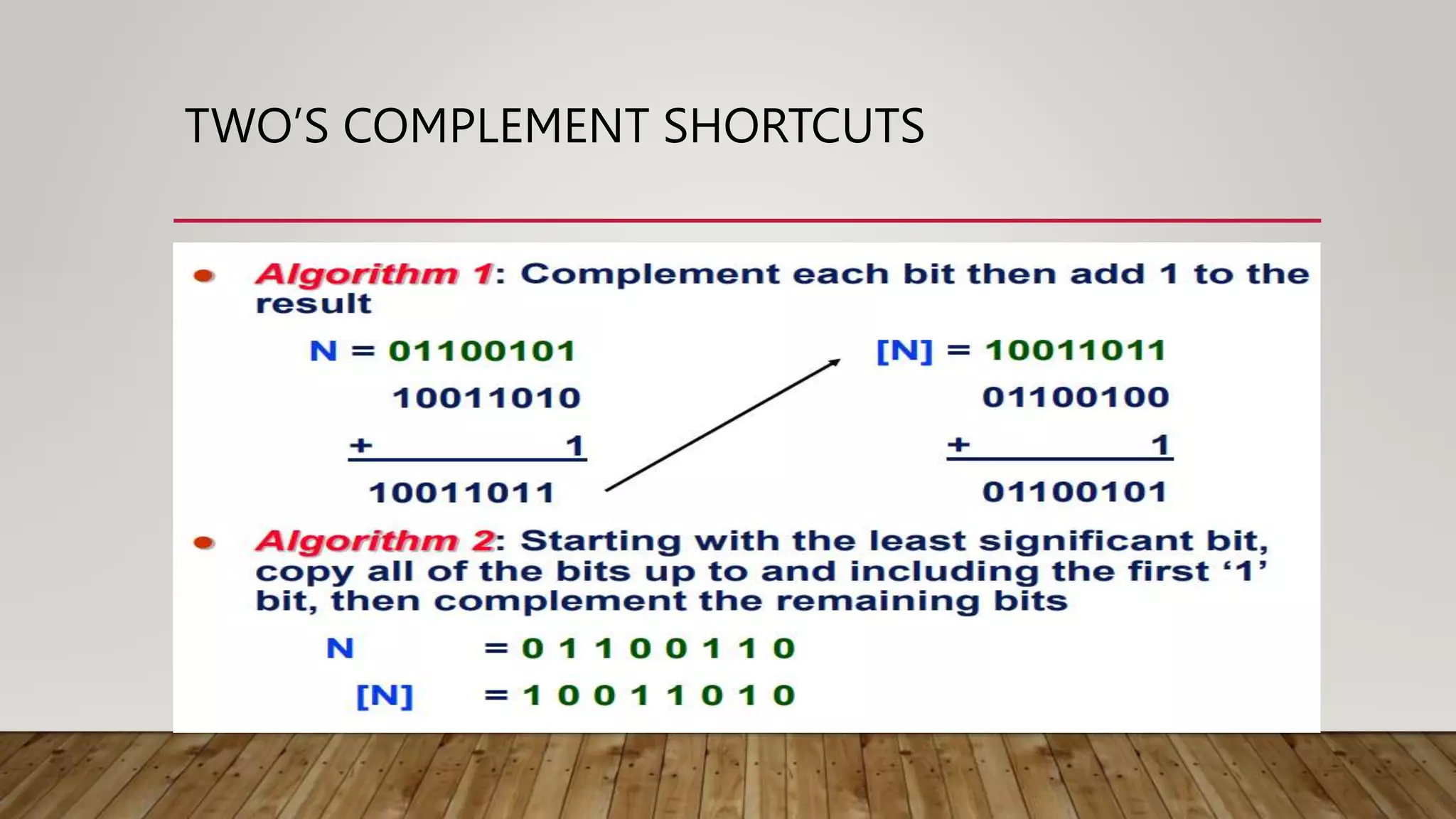
TWO’S COMPLEMENT SHORTCUTS
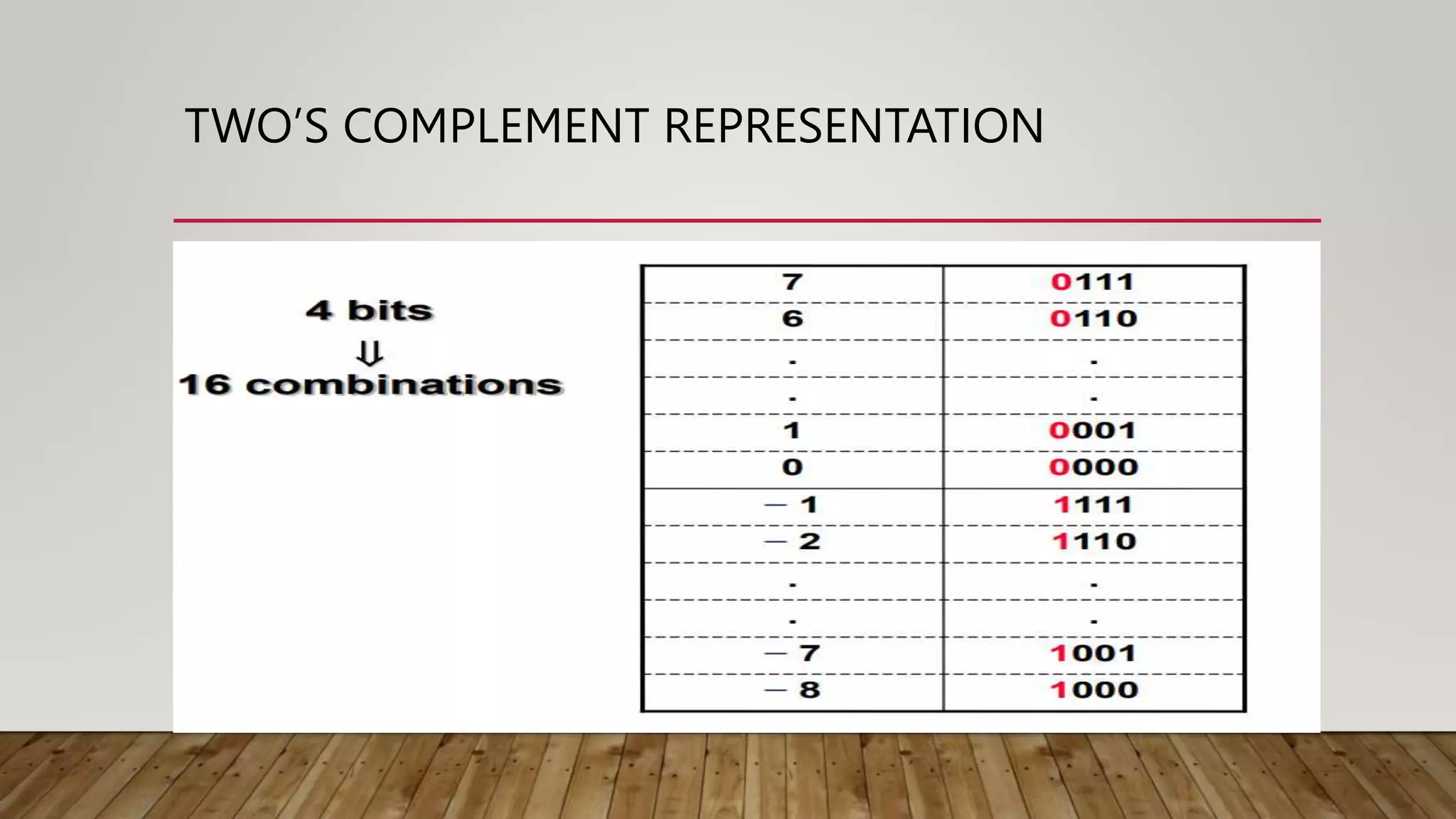
TWO’S COMPLEMENT REPRESENTATION
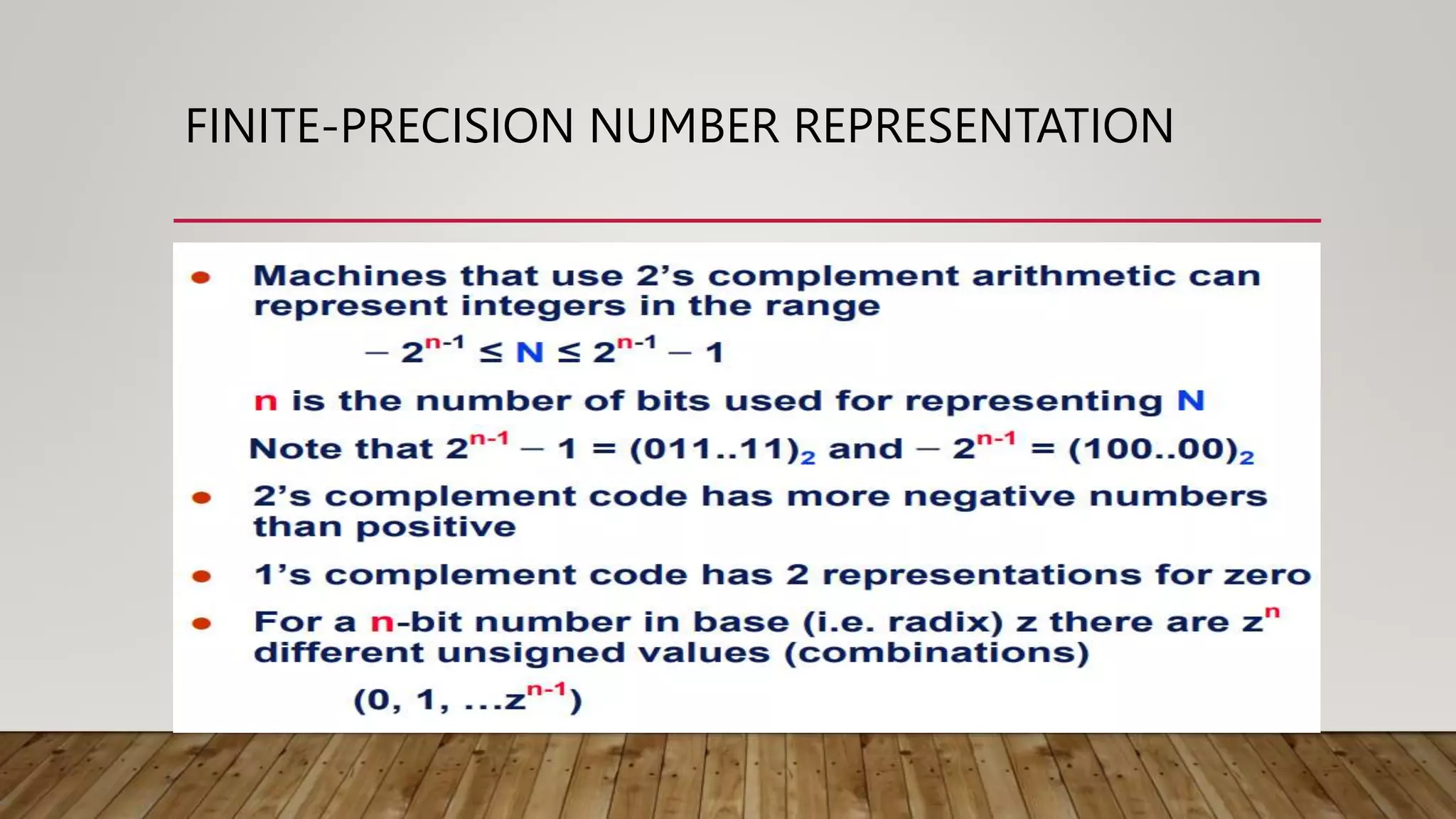
FINITE-PRECISION NUMBER REPRESENTATION
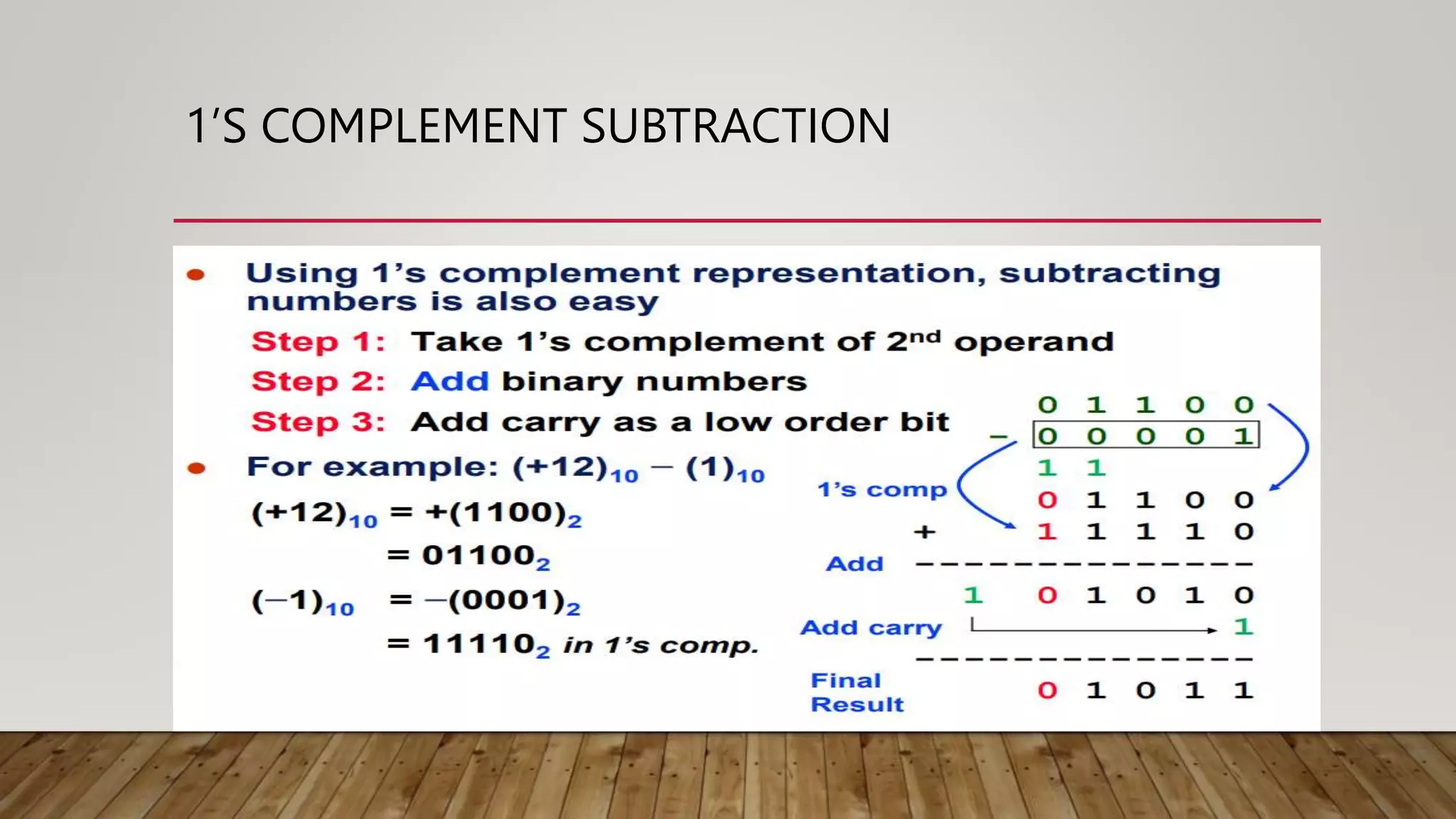
1’S COMPLEMENT SUBTRACTION
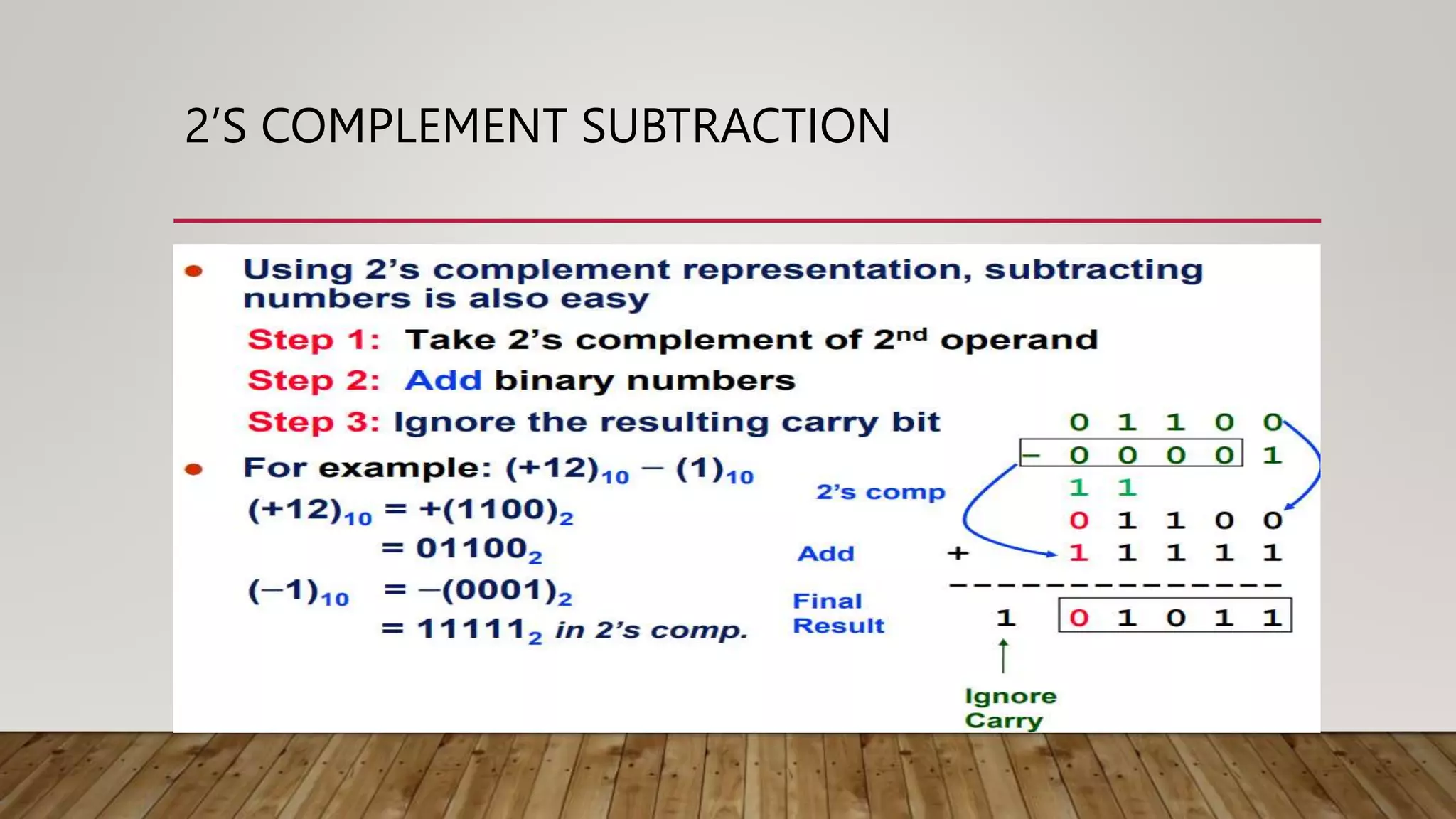
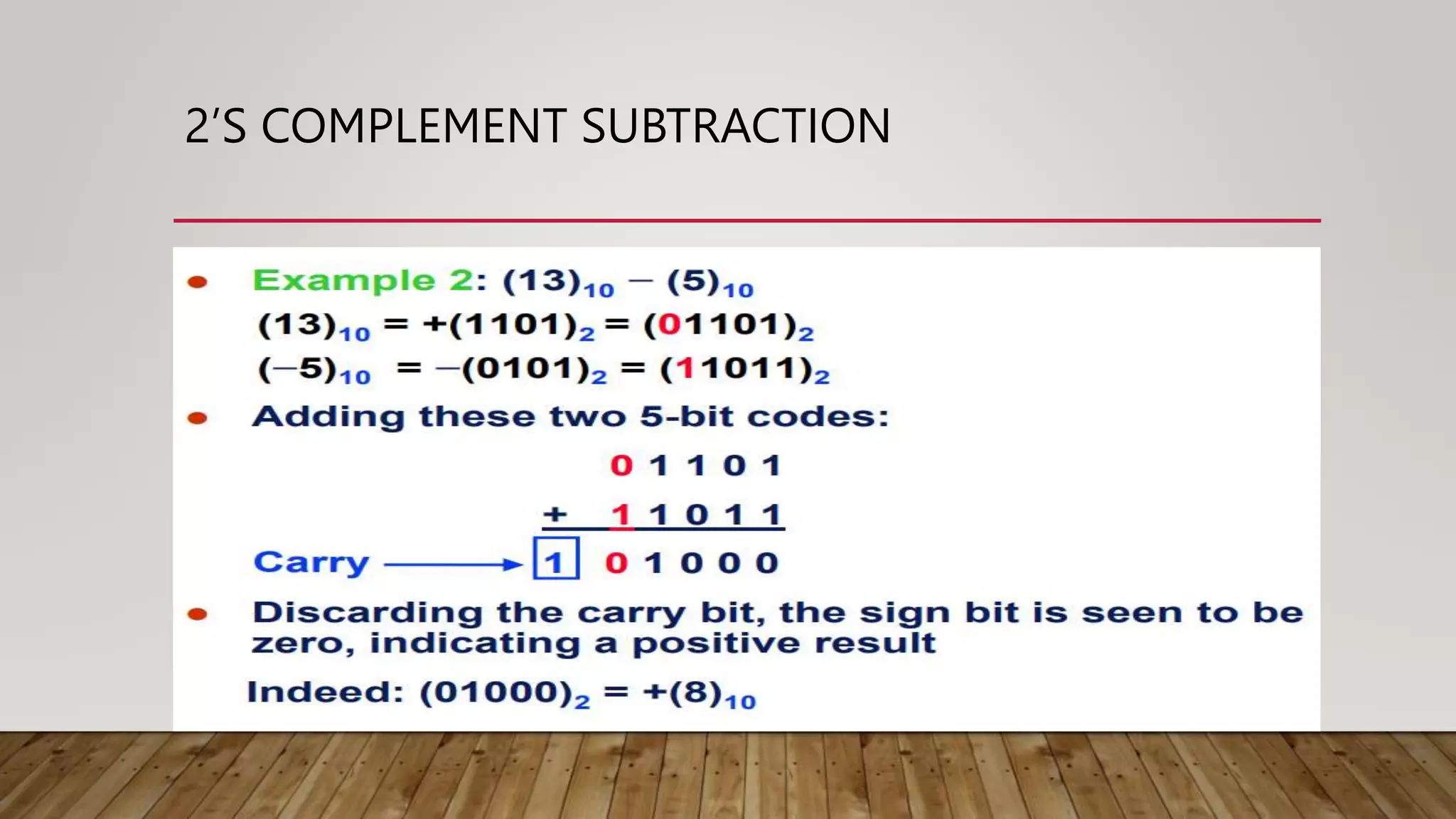
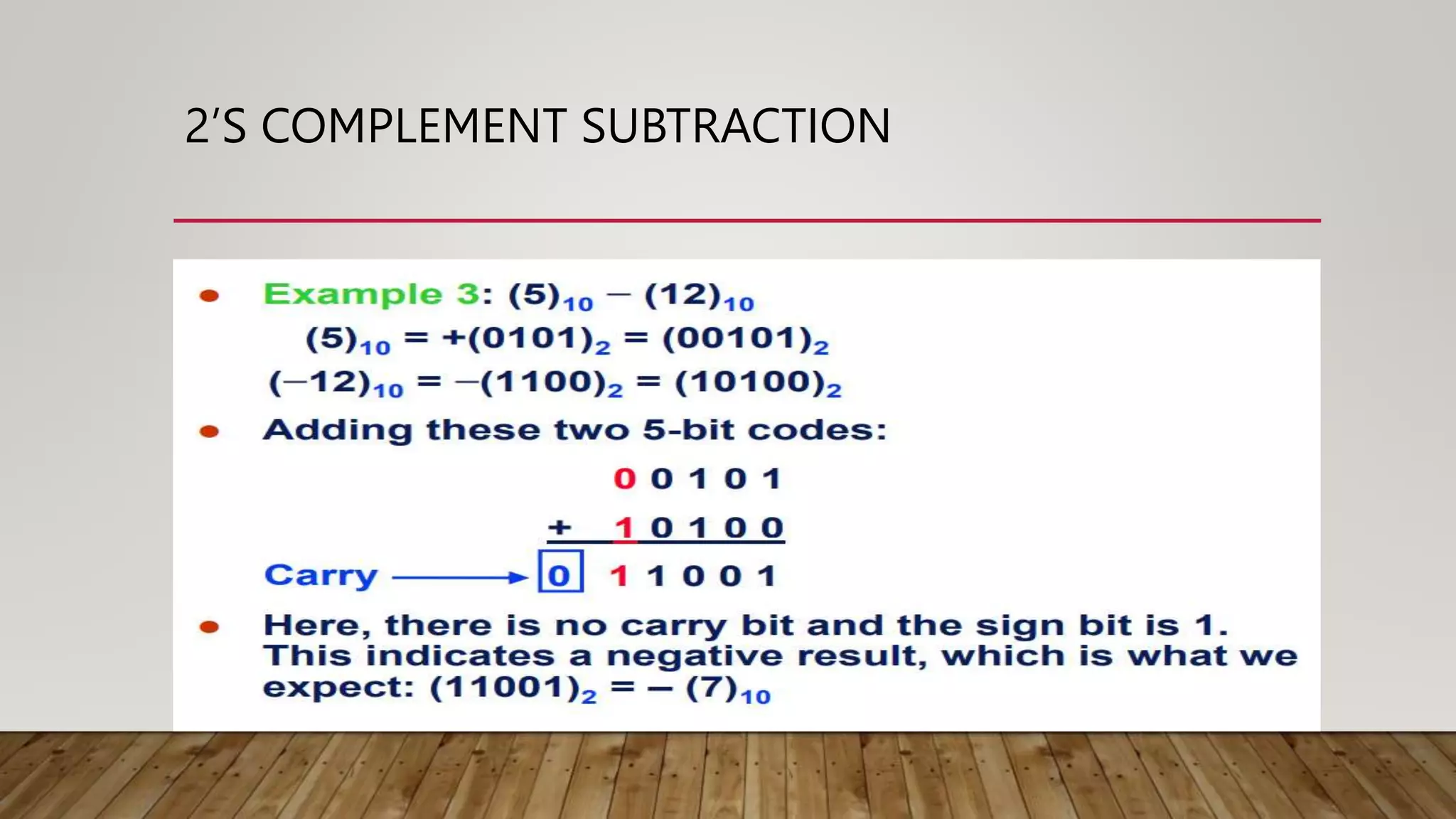
2’S COMPLEMENT SUBTRACTION
Logic circuits and design PART 1.pptx

Logic circuits and design PART 1.pptx