D R . S R U T HI
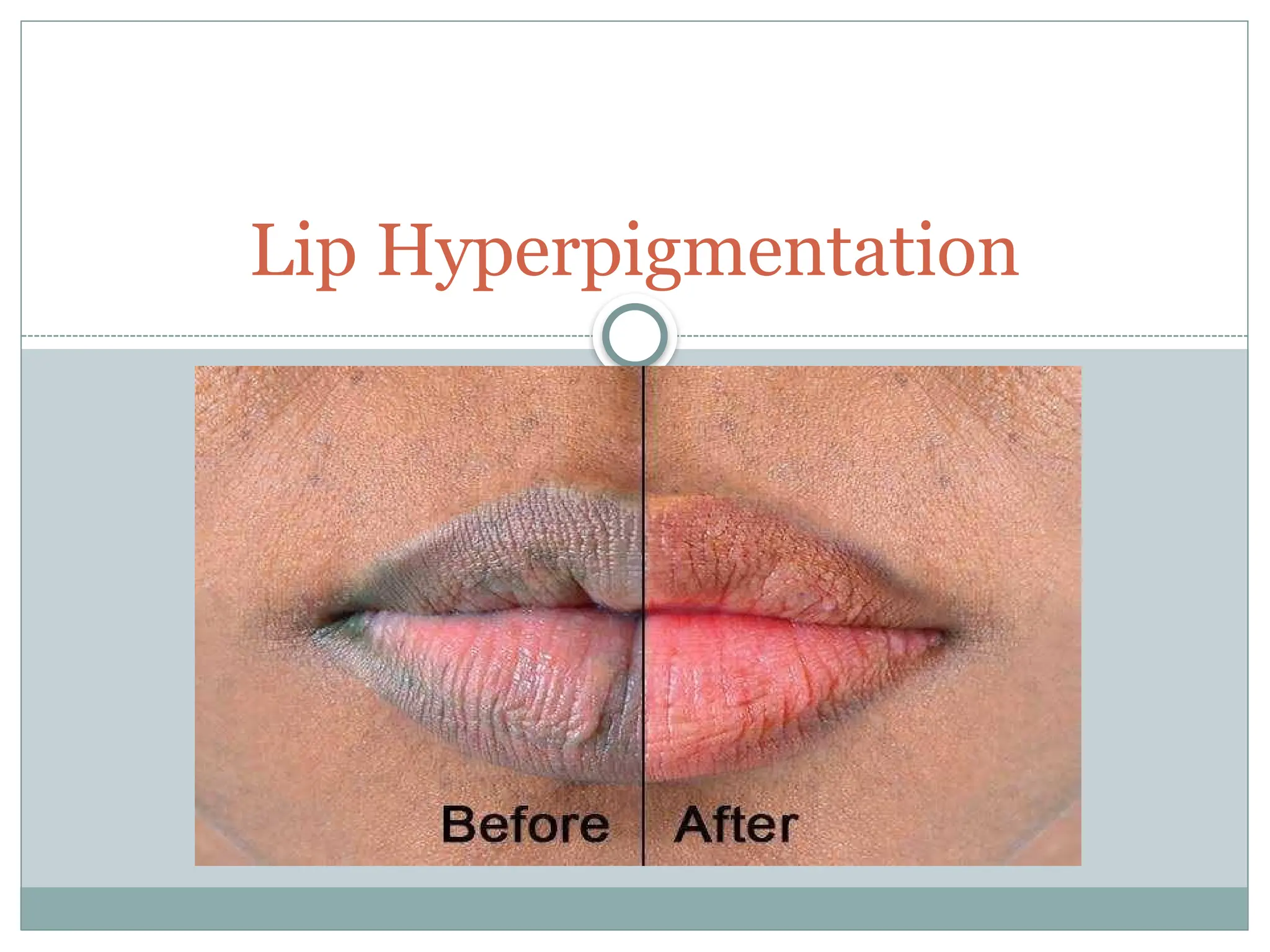
Lip Hyperpigmentation
AVAILABLE TREATMENT OPTIONS
 Medical treatment for discolored lips may involve treating
the underlying condition causing your lip discoloration. If
caused by a medication, speak to your doctor about
changing to another medication.
 Medical treatment for some skin discoloration may include:
 laser therapy
 intense pulse light (IPL)
 cryotherapy
 photodynamic therapy
 surgery
 topical medicated agents
 Blue lips can be an indicator of decreased oxygen in the blood
which can be caused by several conditions affecting the heart,
circulatory system, and lungs. Possible causes of blue lips
include:
 choking
 a lung disease, such as asthma, emphysema, and pneumonia
 heart failure
 shock
 a blood clot in the lungs
 blood poisoning (sepsis)
 poisoning from toxins such as insecticides, nitrates, and nitrites
 extremely cold temperatures (acrocyanosis)
 Black lips
 The following are possible causes of black lips, or hyperpigmentation of
the lips:
 Smoking. Smoking can cause your lips and gums to darken. A 2013
studyTrusted Source of smokers found that all of the smokers in the
study had lip and gingival pigmentation.
 Trauma or injury. A bruise can form on one or both lips following an
injury. This can cause your lips to be partly or entirely purple or black.
Dry, cracked, and severely damaged lips, including burns, can also turn
lips dark.
 Addison’s disease. Addison’s disease occurs when your adrenal
gland doesn’t produce enough cortisol and, sometimes, aldosterone. It
can cause hyperpigmentation of the skin and lips, causing them to look
dark or black on the inside and sometimes the outside.
 White or pale lips are often accompanied by general paleness affecting the face, lining of the eyes,
inside of the mouth, and the nails.
 This is usually caused by anemia, which is a low red blood cell count. Anemia that causes pale or white lips is
severe and requires immediate medical attention. Any of the following may lead to anemia:
 a diet low in iron
 a diet low in vitamin B-12 or folate
 blood loss from heavy menstrual periods
 bleeding in the intestinal tract
 Another common cause of white lips is oral thrush (oral candidiasis). Candida is an organism that usually
exists in low numbers in your mouth.
 If an overgrowth of Candida occurs, you end up with oral thrush, which can cause white lesions. Though the
lesions usually grow on the tongue or inner cheeks, they can also appear on your inner lips, as well as the roof
of your mouth, tonsils, and gums.
 Other conditions that may cause pale or white lips include:
 low blood sugar
 circulatory problems
 chronic diseases
 frostbite
 vitamin deficiencies
 certain medications
 Spotted lips
 Discolored lips can include spotting, too. The causes of spotted
lips range from harmless sunspots to spots that are a symptom
of a medical condition.
 The possible causes include:
 Sunspots
 Sunspots are dark spots that develop on parts of the body that
get the most sun exposure, such as the face and hands.
 These spots can also form on the lips and range in color from
beige to dark brown. However, it’s important to have any new
lip spots checked because there are other conditions, such as
skin cancer, that can look similar.
hemochromatosis
 It is a disorder in which the body stores too much
iron. It affects over 1 million Americans.
 Hyperpigmentation of the skin is also a common
sign, and some people develop dark gray or brown
patches on the skin and lips.
 Laugier –hunzeiker syndromeThis is a benign skin condition
that involves the oral cavity, mainly the lower lip.
 It causes brown or black macules on the lips that can range
from 1 to 5 millimeters in size. The condition often causes
black lines on the nails, as well.
 Peutz-Jeghers syndrome
 This inherited disorder causes a number of noncancerous
growths in the gastrointestinal tract and increases the risk of
certain types of cancer.
 These spots can affect the lips and mouth, along with the skin
around the eyes, nose, hands, and feet. Children with the
condition can develop tiny dark spots that may fade with age.
 Carney complex
 This is a rare disorder, also called LAMB syndrome, which is
characterized by an increased risk of different types of tumors. The
condition often causes changes in skin pigmentation.
 People with the condition have a higher risk of developing
noncancerous tumors in the heart and other parts of the body,
including the skin around the eyes and lips.
 Cancer
 Sometimes, a dark spot on the lip can be a cancerous growth,
particularly melanoma.
 Spots that are new, have an irregular shape or color, increase in size
rapidly, bleed, or have a scar-like appearance are considered
suspicious and should be evaluated by a doctor.
MEDICATIONS
 Certain medications can cause dark spots on your
lips, such as cytotoxic drugs used to treat cancer,
antipsychotic drugs, such as chlorpromazine, and
others.
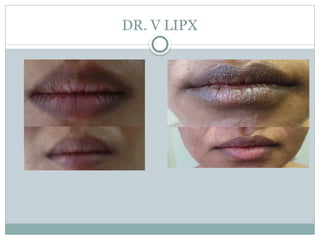
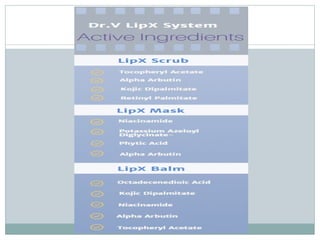
DR. V LIPX
LIP VX TREATMENT
 The World’s ONLY Lip Pigmentation Treatment
 The only options currently available are lip tattoos, laser and peels. These
can all inflame the skin and lead to more pigmentation in skin of colour
(Olive, Asian & African skin). Our unique 3 step LipX system calms down
hyperactive, stubborn melanocytes without irritating the skin.
 The Dr.V LipX 3 Step System:
 Step 1: LipX Scrub ( 3 night/week) – Gently removes dead,
impenetrable keratinocytes (skin cells) for better absorption of active
ingredients.
 Step 2: LipX Mask (3 nights/ week for 30 mins) – 35% active
ingredients to slow down the rate of melanin production in the
melanocytes (pigment producing cells)
 Step 3: LipX Balm (Every Night) – 25% active ingredients in a soothing
balm to continue to reduce melanocyte hyperactivity all night.
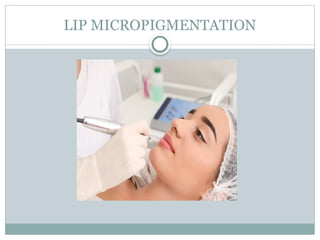
LIP MICROPIGMENTATION

Lip Hyperpigmentation.pptx defines anatomy causes

  • 1.
    D R .S R U T HI Lip Hyperpigmentation
  • 2.
    AVAILABLE TREATMENT OPTIONS Medical treatment for discolored lips may involve treating the underlying condition causing your lip discoloration. If caused by a medication, speak to your doctor about changing to another medication.  Medical treatment for some skin discoloration may include:  laser therapy  intense pulse light (IPL)  cryotherapy  photodynamic therapy  surgery  topical medicated agents
  • 3.
     Blue lipscan be an indicator of decreased oxygen in the blood which can be caused by several conditions affecting the heart, circulatory system, and lungs. Possible causes of blue lips include:  choking  a lung disease, such as asthma, emphysema, and pneumonia  heart failure  shock  a blood clot in the lungs  blood poisoning (sepsis)  poisoning from toxins such as insecticides, nitrates, and nitrites  extremely cold temperatures (acrocyanosis)
  • 4.
     Black lips The following are possible causes of black lips, or hyperpigmentation of the lips:  Smoking. Smoking can cause your lips and gums to darken. A 2013 studyTrusted Source of smokers found that all of the smokers in the study had lip and gingival pigmentation.  Trauma or injury. A bruise can form on one or both lips following an injury. This can cause your lips to be partly or entirely purple or black. Dry, cracked, and severely damaged lips, including burns, can also turn lips dark.  Addison’s disease. Addison’s disease occurs when your adrenal gland doesn’t produce enough cortisol and, sometimes, aldosterone. It can cause hyperpigmentation of the skin and lips, causing them to look dark or black on the inside and sometimes the outside.
  • 5.
     White orpale lips are often accompanied by general paleness affecting the face, lining of the eyes, inside of the mouth, and the nails.  This is usually caused by anemia, which is a low red blood cell count. Anemia that causes pale or white lips is severe and requires immediate medical attention. Any of the following may lead to anemia:  a diet low in iron  a diet low in vitamin B-12 or folate  blood loss from heavy menstrual periods  bleeding in the intestinal tract  Another common cause of white lips is oral thrush (oral candidiasis). Candida is an organism that usually exists in low numbers in your mouth.  If an overgrowth of Candida occurs, you end up with oral thrush, which can cause white lesions. Though the lesions usually grow on the tongue or inner cheeks, they can also appear on your inner lips, as well as the roof of your mouth, tonsils, and gums.  Other conditions that may cause pale or white lips include:  low blood sugar  circulatory problems  chronic diseases  frostbite  vitamin deficiencies  certain medications
  • 6.
     Spotted lips Discolored lips can include spotting, too. The causes of spotted lips range from harmless sunspots to spots that are a symptom of a medical condition.  The possible causes include:  Sunspots  Sunspots are dark spots that develop on parts of the body that get the most sun exposure, such as the face and hands.  These spots can also form on the lips and range in color from beige to dark brown. However, it’s important to have any new lip spots checked because there are other conditions, such as skin cancer, that can look similar.
  • 7.
    hemochromatosis  It isa disorder in which the body stores too much iron. It affects over 1 million Americans.  Hyperpigmentation of the skin is also a common sign, and some people develop dark gray or brown patches on the skin and lips.
  • 8.
     Laugier –hunzeikersyndromeThis is a benign skin condition that involves the oral cavity, mainly the lower lip.  It causes brown or black macules on the lips that can range from 1 to 5 millimeters in size. The condition often causes black lines on the nails, as well.  Peutz-Jeghers syndrome  This inherited disorder causes a number of noncancerous growths in the gastrointestinal tract and increases the risk of certain types of cancer.  These spots can affect the lips and mouth, along with the skin around the eyes, nose, hands, and feet. Children with the condition can develop tiny dark spots that may fade with age.
  • 9.
     Carney complex This is a rare disorder, also called LAMB syndrome, which is characterized by an increased risk of different types of tumors. The condition often causes changes in skin pigmentation.  People with the condition have a higher risk of developing noncancerous tumors in the heart and other parts of the body, including the skin around the eyes and lips.  Cancer  Sometimes, a dark spot on the lip can be a cancerous growth, particularly melanoma.  Spots that are new, have an irregular shape or color, increase in size rapidly, bleed, or have a scar-like appearance are considered suspicious and should be evaluated by a doctor.
  • 10.
    MEDICATIONS  Certain medicationscan cause dark spots on your lips, such as cytotoxic drugs used to treat cancer, antipsychotic drugs, such as chlorpromazine, and others.
  • 11.
  • 12.
    LIP VX TREATMENT The World’s ONLY Lip Pigmentation Treatment  The only options currently available are lip tattoos, laser and peels. These can all inflame the skin and lead to more pigmentation in skin of colour (Olive, Asian & African skin). Our unique 3 step LipX system calms down hyperactive, stubborn melanocytes without irritating the skin.  The Dr.V LipX 3 Step System:  Step 1: LipX Scrub ( 3 night/week) – Gently removes dead, impenetrable keratinocytes (skin cells) for better absorption of active ingredients.  Step 2: LipX Mask (3 nights/ week for 30 mins) – 35% active ingredients to slow down the rate of melanin production in the melanocytes (pigment producing cells)  Step 3: LipX Balm (Every Night) – 25% active ingredients in a soothing balm to continue to reduce melanocyte hyperactivity all night.
  • 14.