22CE530-CONCRETE TECHNOLOGY
LIGHT WEIGHT CONCRETE
BY :
PRASANNA KUMAR
917722B070
What is Lightweight Concrete?
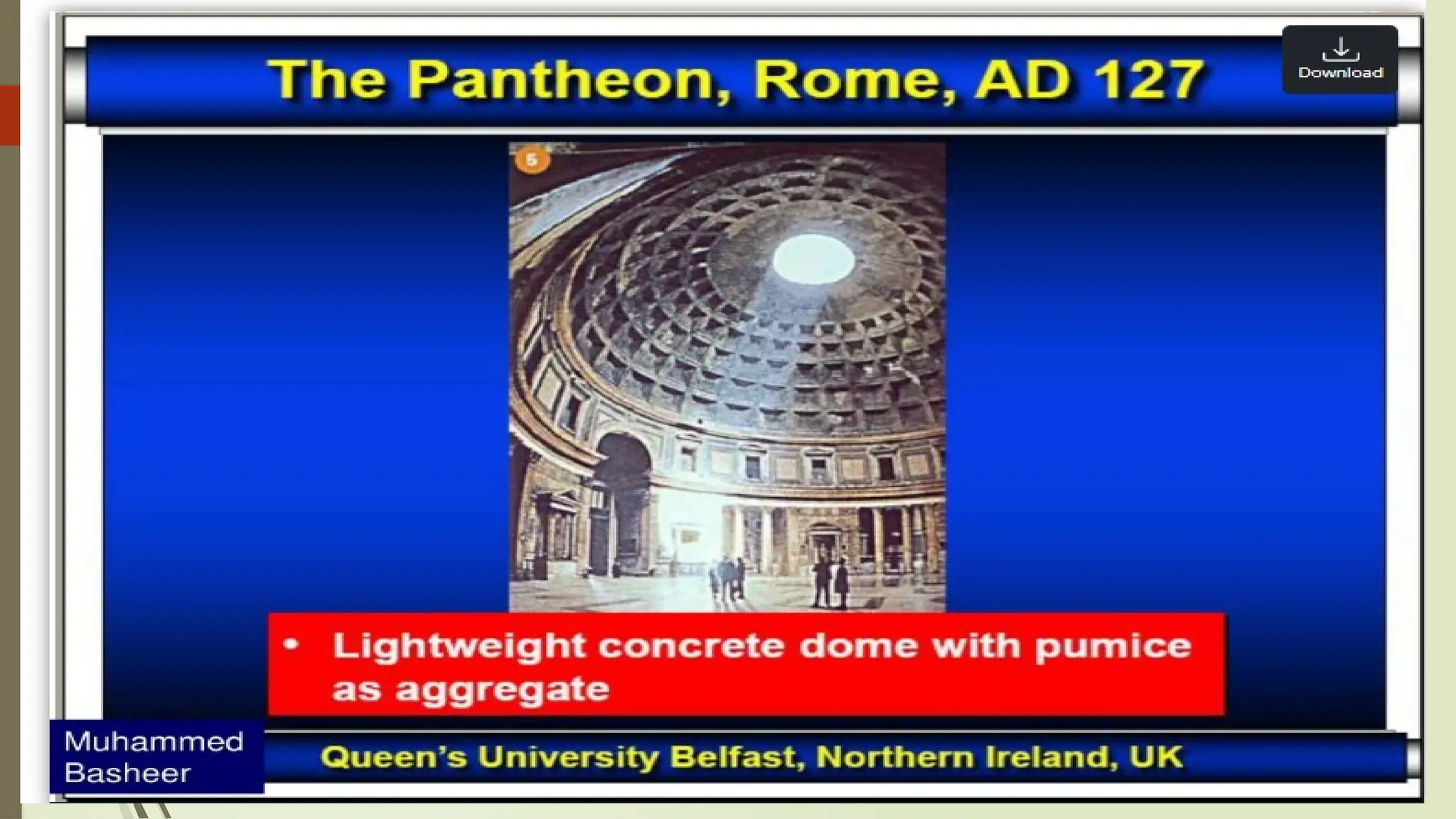
 Lightweight concrete is a type of concrete that uses lightweight
aggregates such as expanded clay, shale, or pumice, reducing its
density and weight. Key characteristics include:
 Density: 1,400 – 1,800 kg/m³ (lower than regular concrete).
 Reduced Weight: Easier to transport and handle, especially in
construction of high-rise buildings and bridges.
 Enhanced Insulation: Offers better thermal and acoustic insulation.
 Applications: Used in both structural (walls, beams) and non-
structural elements (insulation, sound barriers).
Introduction to Lightweight Aggregates
 What are Lightweight Aggregates?
Aggregates that have lower density than conventional
aggregates.
Typically used in the production of lightweight concrete.
Common materials include pumice, expanded shale, and clay
Importance of Lightweight Aggregates
 Why Use Lightweight Aggregates?
Reduced weight: Lowers the dead load in structural
components.
Thermal insulation: Improves energy efficiency in buildings.
Acoustic properties: Better sound absorption.
Economical: Reduces transportation costs due to lower density.
Properties of Lightweight Aggregates
 Density:
Generally below 2,000 kg/m³.
Lightweight aggregates range from 800 to 1,600 kg/m³.
 Porosity:
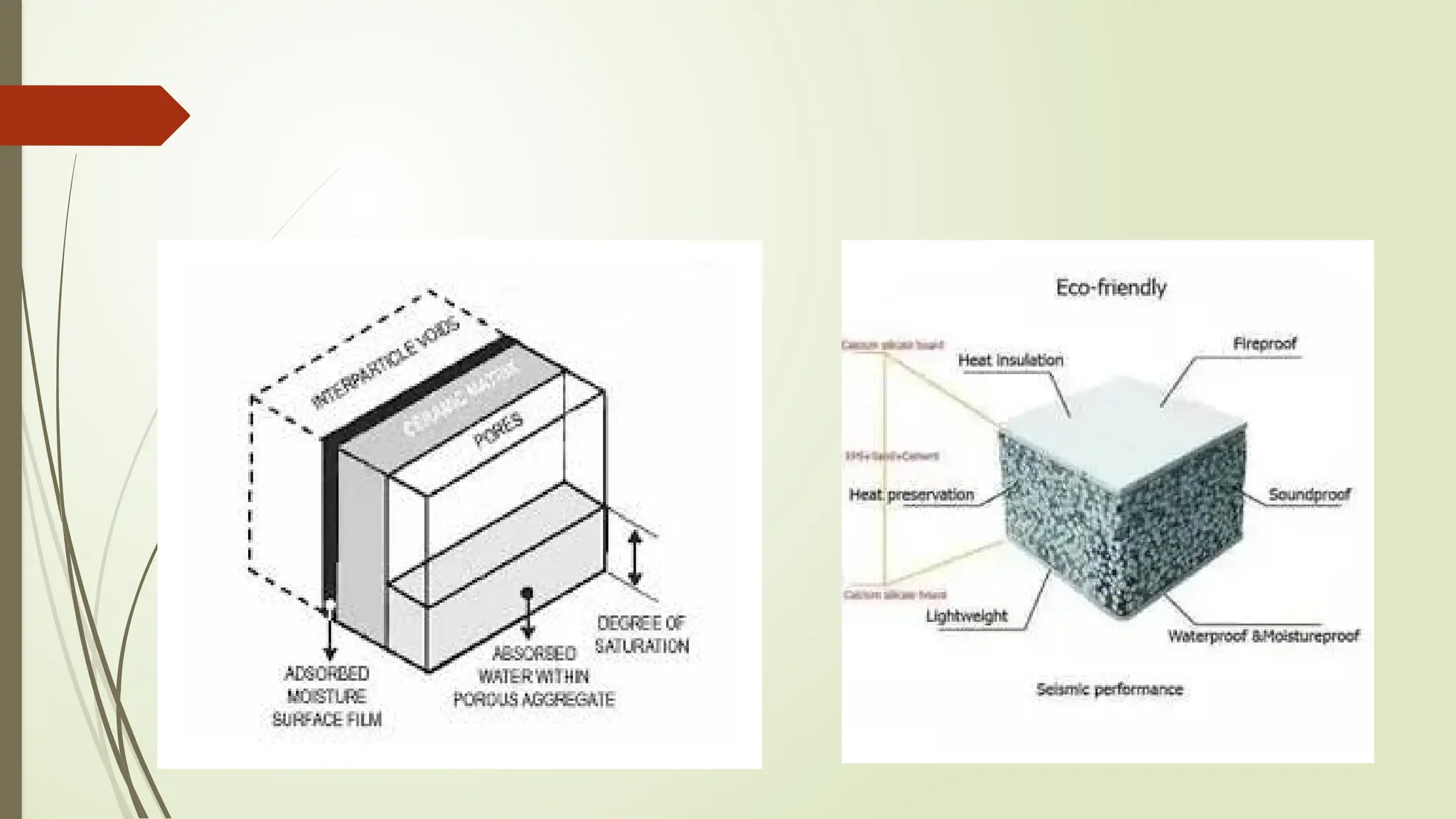
High porosity compared to normal aggregates.
Improves thermal insulation and reduces density.
 Shape:
Typically rounded or irregular, affecting workability.
 Water Absorption:
High absorption rate due to the porous structure.
Must consider water content in concrete mix design.
Applications of Lightweight Aggregates
 Structural Lightweight Concrete:
Used in building high-rise structures, bridges, and marine platforms.
 Insulation Concrete:
For heat and sound insulation in walls, roofs, and floors.
 Precast Concrete Products:
Lightweight blocks, panels, and other precast components.
 Geotechnical Applications:
Lightweight fill material in embankments and retaining walls.
Why Use Lightweight Concrete?
 Key Advantages:
Reduced Weight: Easier to handle and transport.
Lower Dead Loads: Ideal for high-rise buildings and bridges.
Improved Thermal Insulation: Reduces energy consumption.
Sound Insulation: Useful for acoustic applications.
Types of Lightweight Concrete
 Lightweight Aggregate Concrete
Uses lightweight aggregates like expanded clay, shale, pumice.
Common in building construction.
 Foamed Concrete
Uses a foaming agent to create air bubbles in the concrete mix.
Ideal for insulation and lightweight structural applications.
 Autoclaved Aerated Concrete (AAC)
Contains air voids for better insulation.
Used in prefabricated blocks and panels.
Properties of Lightweight Concrete
 Density: 1,400 – 1,800 kg/m³.
 Compressive Strength: Lower than normal concrete (10 - 40 MPa).
 Thermal Conductivity: Reduced compared to traditional concrete.
 Workability: Easier to place, but may require special handling.
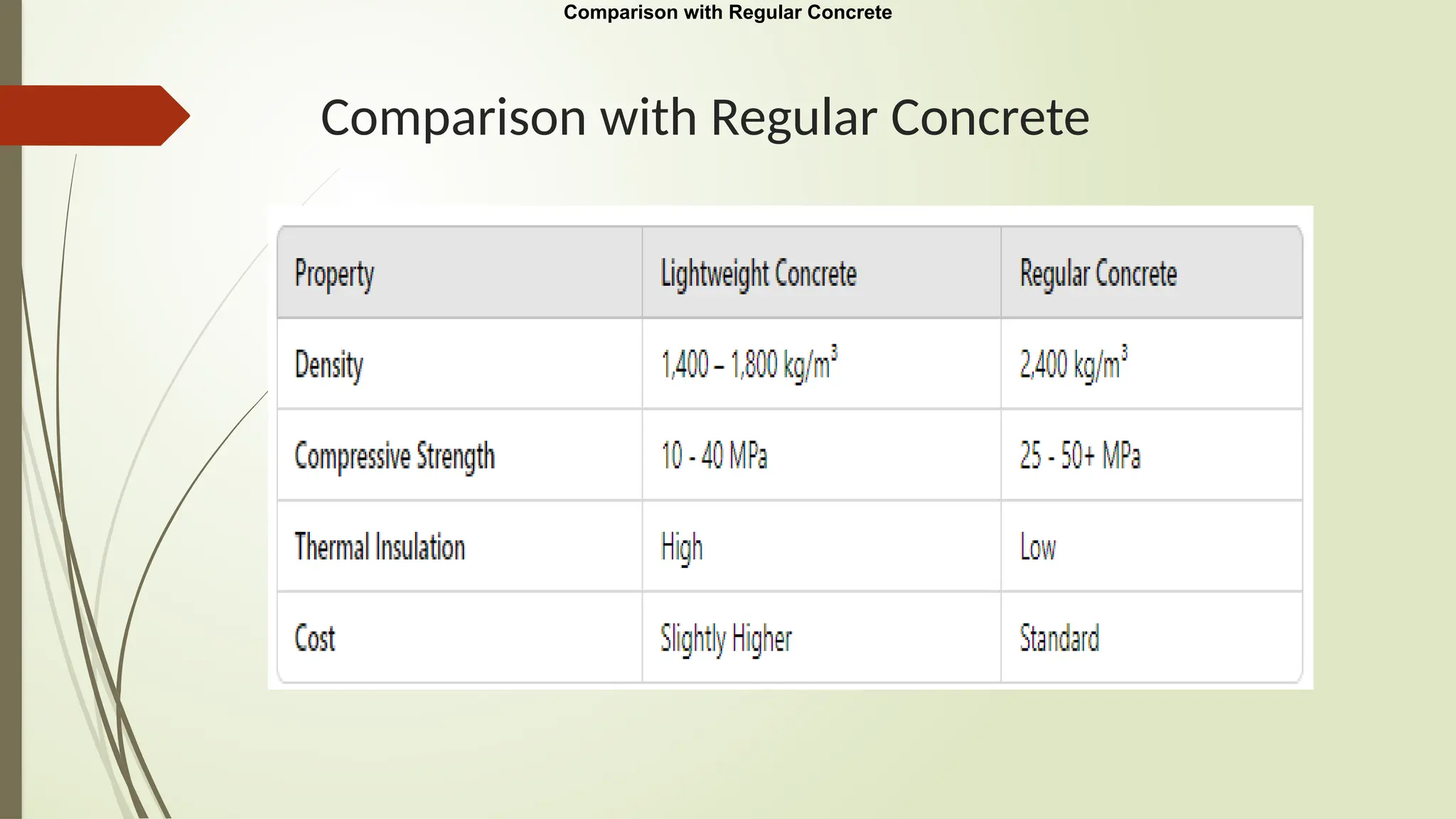
Comparison with Regular Concrete
Production Process
 Mix Design
Use of lightweight aggregates (e.g., perlite, vermiculite).
Water-cement ratio control is crucial.
 Foaming Process
For foamed concrete, air bubbles are introduced into the mix.
 Curing
Typically requires slower, more controlled curing processes for
uniform strength
Applications
 Structural Applications:
Used in bridges, high-rise buildings, long-span structures.
 Non-Structural Applications:
Sound barriers, insulation walls, roofing, and flooring systems.
 Marine and Offshore Structures:
Its low permeability and light weight make it ideal for floating
structures.
Advantages and Disadvantages
 Advantages:
Lightweight, easy to transport and handle.
Better thermal and acoustic properties.
Reduces overall construction weight.
 Disadvantages:
Lower strength compared to normal concrete.
Higher cost due to special aggregates.
Requires specific curing techniques.
Future of Lightweight Concrete
 Growing use in sustainable construction.
 Innovation in lightweight aggregates and foaming agents.
 Potential for 3D printing in construction.
 Lightweight concrete offers a range of benefits, particularly in reducing
weight and enhancing insulation.
 Its applications are expanding in both structural and non-structural areas.
 Continued research and innovation will likely increase its adoption in the
future.
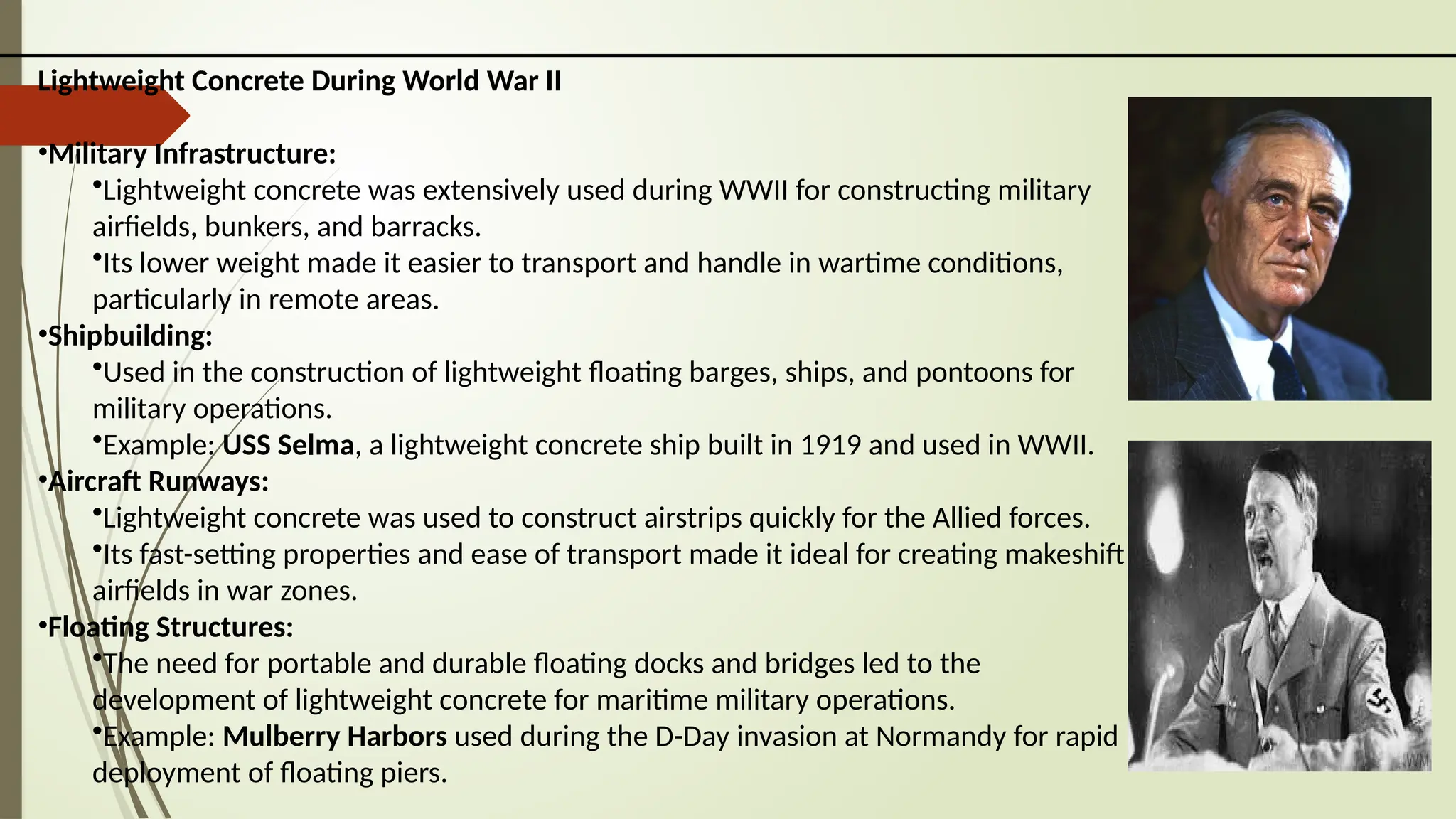
Lightweight Concrete During World War II
•Military Infrastructure:
•Lightweight concrete was extensively used during WWII for constructing military
airfields, bunkers, and barracks.
•Its lower weight made it easier to transport and handle in wartime conditions,
particularly in remote areas.
•Shipbuilding:
•Used in the construction of lightweight floating barges, ships, and pontoons for
military operations.
•Example: USS Selma, a lightweight concrete ship built in 1919 and used in WWII.
•Aircraft Runways:
•Lightweight concrete was used to construct airstrips quickly for the Allied forces.
•Its fast-setting properties and ease of transport made it ideal for creating makeshift
airfields in war zones.
•Floating Structures:
•The need for portable and durable floating docks and bridges led to the
development of lightweight concrete for maritime military operations.
•Example: Mulberry Harbors used during the D-Day invasion at Normandy for rapid
deployment of floating piers.
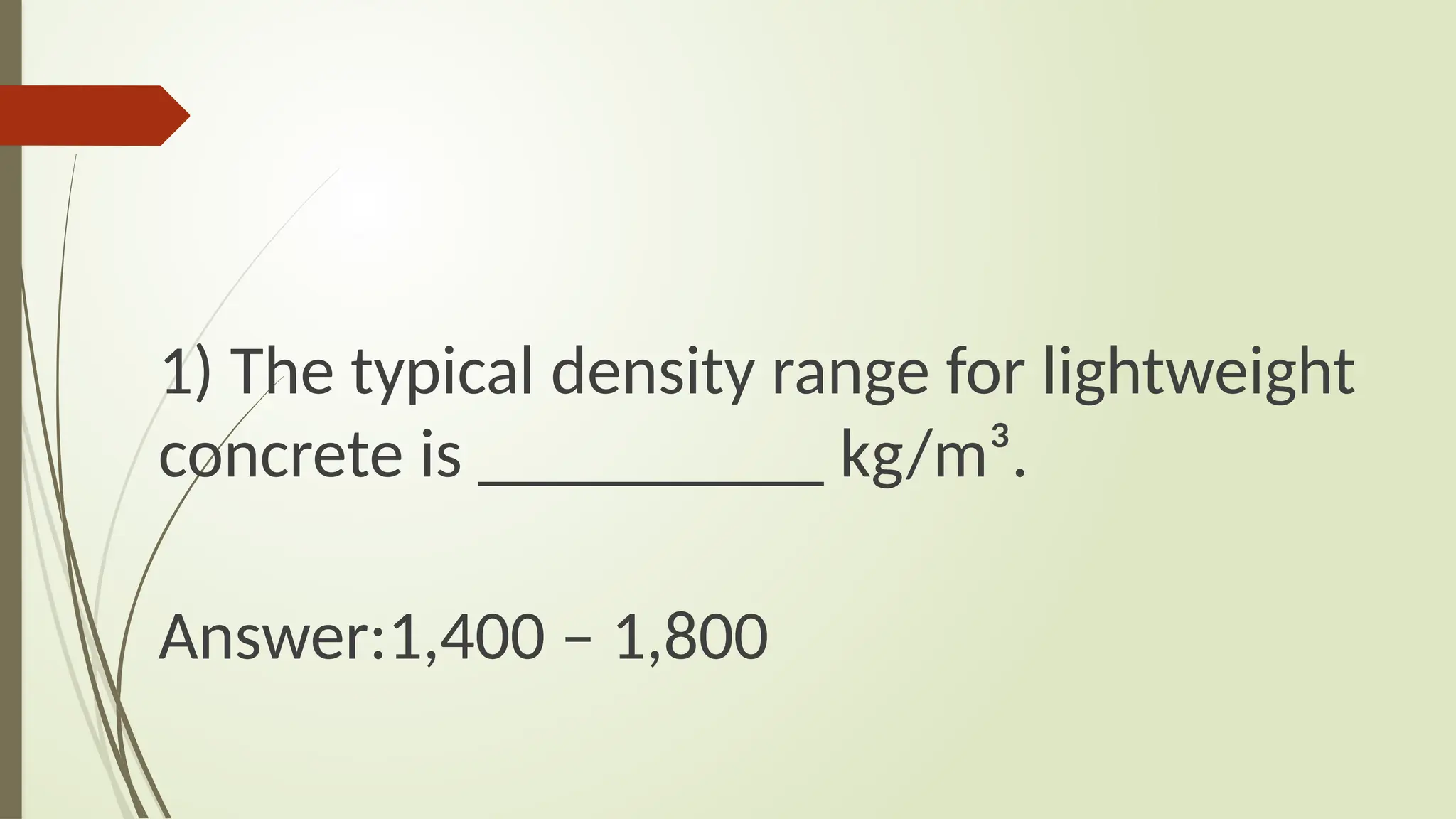
1) The typical density range for lightweight
concrete is __________ kg/m³.
1) The typical density range for lightweight
concrete is __________ kg/m³.
Answer:1,400 – 1,800
2)One of the key advantages of lightweight
concrete is its ability to reduce __________
loads in structures
2)One of the key advantages of lightweight
concrete is its ability to reduce __________
loads in structures.
Answer: dead
3)In foamed concrete, __________ are
introduced into the mix to reduce the
density
3)In foamed concrete, __________ are
introduced into the mix to reduce the
density.
Answer: air bubbles
4)Compared to regular concrete, lightweight concrete
has __________ compressive strength and is generally
more expensive due to the use of special aggregates.
4)Compared to regular concrete, lightweight concrete
has __________ compressive strength and is generally
more expensive due to the use of special aggregates.
Answer: lower
5)Lightweight concrete is often used in
__________ and offshore structures due to its
low weight and resistance to harsh conditions.
5)Lightweight concrete is often used in
__________ and offshore structures due to its
low weight and resistance to harsh conditions.
Answer: marine
THANK YOU FOR
EVERYTHING

Light weight Concrete-CONCRETE TECHNOLOGY.

  • 1.
    22CE530-CONCRETE TECHNOLOGY LIGHT WEIGHTCONCRETE BY : PRASANNA KUMAR 917722B070
  • 2.
    What is LightweightConcrete?  Lightweight concrete is a type of concrete that uses lightweight aggregates such as expanded clay, shale, or pumice, reducing its density and weight. Key characteristics include:  Density: 1,400 – 1,800 kg/m³ (lower than regular concrete).  Reduced Weight: Easier to transport and handle, especially in construction of high-rise buildings and bridges.  Enhanced Insulation: Offers better thermal and acoustic insulation.  Applications: Used in both structural (walls, beams) and non- structural elements (insulation, sound barriers).
  • 3.
    Introduction to LightweightAggregates  What are Lightweight Aggregates? Aggregates that have lower density than conventional aggregates. Typically used in the production of lightweight concrete. Common materials include pumice, expanded shale, and clay
  • 5.
    Importance of LightweightAggregates  Why Use Lightweight Aggregates? Reduced weight: Lowers the dead load in structural components. Thermal insulation: Improves energy efficiency in buildings. Acoustic properties: Better sound absorption. Economical: Reduces transportation costs due to lower density.
  • 6.
    Properties of LightweightAggregates  Density: Generally below 2,000 kg/m³. Lightweight aggregates range from 800 to 1,600 kg/m³.  Porosity: High porosity compared to normal aggregates. Improves thermal insulation and reduces density.  Shape: Typically rounded or irregular, affecting workability.  Water Absorption: High absorption rate due to the porous structure. Must consider water content in concrete mix design.
  • 7.
    Applications of LightweightAggregates  Structural Lightweight Concrete: Used in building high-rise structures, bridges, and marine platforms.  Insulation Concrete: For heat and sound insulation in walls, roofs, and floors.  Precast Concrete Products: Lightweight blocks, panels, and other precast components.  Geotechnical Applications: Lightweight fill material in embankments and retaining walls.
  • 8.
    Why Use LightweightConcrete?  Key Advantages: Reduced Weight: Easier to handle and transport. Lower Dead Loads: Ideal for high-rise buildings and bridges. Improved Thermal Insulation: Reduces energy consumption. Sound Insulation: Useful for acoustic applications.
  • 9.
    Types of LightweightConcrete  Lightweight Aggregate Concrete Uses lightweight aggregates like expanded clay, shale, pumice. Common in building construction.  Foamed Concrete Uses a foaming agent to create air bubbles in the concrete mix. Ideal for insulation and lightweight structural applications.  Autoclaved Aerated Concrete (AAC) Contains air voids for better insulation. Used in prefabricated blocks and panels.
  • 12.
    Properties of LightweightConcrete  Density: 1,400 – 1,800 kg/m³.  Compressive Strength: Lower than normal concrete (10 - 40 MPa).  Thermal Conductivity: Reduced compared to traditional concrete.  Workability: Easier to place, but may require special handling.
  • 13.
    Comparison with RegularConcrete Comparison with Regular Concrete
  • 14.
    Production Process  MixDesign Use of lightweight aggregates (e.g., perlite, vermiculite). Water-cement ratio control is crucial.  Foaming Process For foamed concrete, air bubbles are introduced into the mix.  Curing Typically requires slower, more controlled curing processes for uniform strength
  • 15.
    Applications  Structural Applications: Usedin bridges, high-rise buildings, long-span structures.  Non-Structural Applications: Sound barriers, insulation walls, roofing, and flooring systems.  Marine and Offshore Structures: Its low permeability and light weight make it ideal for floating structures.
  • 16.
    Advantages and Disadvantages Advantages: Lightweight, easy to transport and handle. Better thermal and acoustic properties. Reduces overall construction weight.  Disadvantages: Lower strength compared to normal concrete. Higher cost due to special aggregates. Requires specific curing techniques.
  • 17.
    Future of LightweightConcrete  Growing use in sustainable construction.  Innovation in lightweight aggregates and foaming agents.  Potential for 3D printing in construction.  Lightweight concrete offers a range of benefits, particularly in reducing weight and enhancing insulation.  Its applications are expanding in both structural and non-structural areas.  Continued research and innovation will likely increase its adoption in the future.
  • 18.
    Lightweight Concrete DuringWorld War II •Military Infrastructure: •Lightweight concrete was extensively used during WWII for constructing military airfields, bunkers, and barracks. •Its lower weight made it easier to transport and handle in wartime conditions, particularly in remote areas. •Shipbuilding: •Used in the construction of lightweight floating barges, ships, and pontoons for military operations. •Example: USS Selma, a lightweight concrete ship built in 1919 and used in WWII. •Aircraft Runways: •Lightweight concrete was used to construct airstrips quickly for the Allied forces. •Its fast-setting properties and ease of transport made it ideal for creating makeshift airfields in war zones. •Floating Structures: •The need for portable and durable floating docks and bridges led to the development of lightweight concrete for maritime military operations. •Example: Mulberry Harbors used during the D-Day invasion at Normandy for rapid deployment of floating piers.
  • 19.
    1) The typicaldensity range for lightweight concrete is __________ kg/m³.
  • 20.
    1) The typicaldensity range for lightweight concrete is __________ kg/m³. Answer:1,400 – 1,800
  • 21.
    2)One of thekey advantages of lightweight concrete is its ability to reduce __________ loads in structures
  • 22.
    2)One of thekey advantages of lightweight concrete is its ability to reduce __________ loads in structures. Answer: dead
  • 23.
    3)In foamed concrete,__________ are introduced into the mix to reduce the density
  • 24.
    3)In foamed concrete,__________ are introduced into the mix to reduce the density. Answer: air bubbles
  • 25.
    4)Compared to regularconcrete, lightweight concrete has __________ compressive strength and is generally more expensive due to the use of special aggregates.
  • 26.
    4)Compared to regularconcrete, lightweight concrete has __________ compressive strength and is generally more expensive due to the use of special aggregates. Answer: lower
  • 27.
    5)Lightweight concrete isoften used in __________ and offshore structures due to its low weight and resistance to harsh conditions.
  • 28.
    5)Lightweight concrete isoften used in __________ and offshore structures due to its low weight and resistance to harsh conditions. Answer: marine
  • 29.