Part 1:
How to reverse engineer a
competitors SEO strategy in
one hour.
Part 2:
How to implement these
findings into a killer SEO
strategy.
How to reverse engineer
a competitors SEO
strategy in one hour.
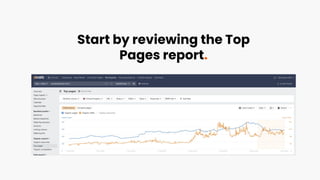
Start by reviewing the Top
Pages report.
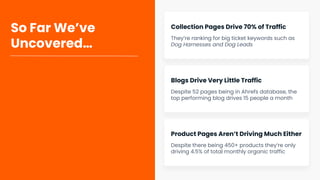
So Far We’ve
Uncovered…
Collection Pages Drive 70% of Traffic
They’re ranking for big ticket keywords such as
Dog Harnesses and Dog Leads
Blogs Drive Very Little Traffic
Despite 52 pages being in Ahrefs database, the
top performing blog drives 15 people a month
Product Pages Aren’t Driving Much Either
Despite there being 450+ products they’re only
driving 4.5% of total monthly organic traffic
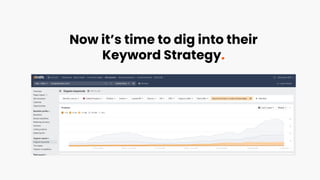
Now it’s time to dig into their
Keyword Strategy.
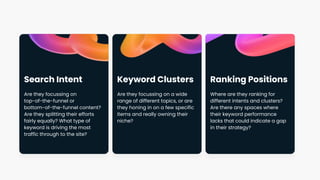
Search Intent
Are they focussing on
top-of-the-funnel or
bottom-of-the-funnel content?
Are they splitting their efforts
fairly equally? What type of
keyword is driving the most
traffic through to the site?
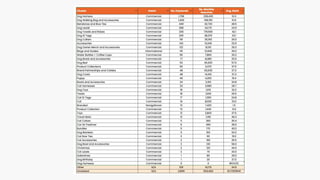
Keyword Clusters
Are they focussing on a wide
range of different topics, or are
they honing in on a few specific
items and really owning their
niche?
Ranking Positions
Where are they ranking for
different intents and clusters?
Are there any spaces where
their keyword performance
lacks that could indicate a gap
in their strategy?
Time Saving Hacks….
● Utilise search intent categories in Keyword Reports
● To speed up Keyword Clustering, split the ranking URLs by a
trailing slash to isolate subfolders and use this as a launch
pad
● You could also use Chat GPT to help you with this process
although I typically find that it takes longer than manually
running through
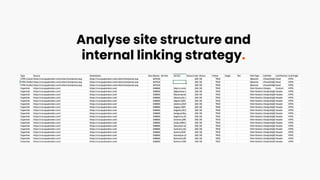
Analyse site structure and
internal linking strategy.
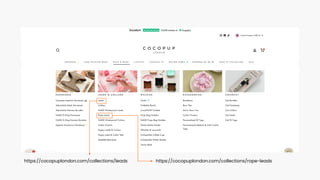
https://cocopuplondon.com/collections/leads https://cocopuplondon.com/collections/rope-leads
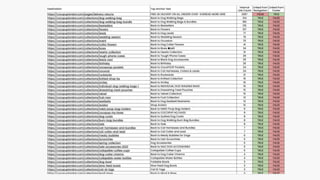
You can also use Screaming Frog to
crawl the site and get an
understanding of site structure and
internal linking
How to get a
clearer view of
inlinks
● Remove self referencing internal
links
● Strip out the main navigation,
footer and header links instead
opting for a simple True / False
column
● Remove multiple instances of the
same source liking to the same
destination
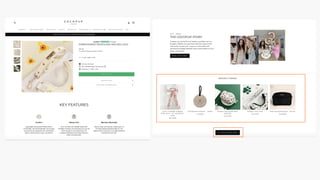
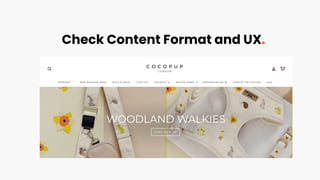
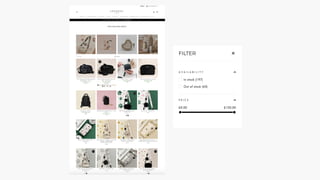
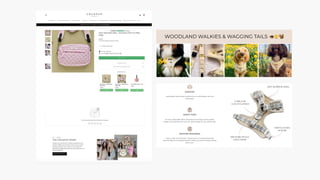
Check Content Format and UX.
Visuals and
Multimedia
Check if your competitors use
video content, infographics, or
interactive elements on key
pages
Layout and
Readability
Look at how the content is
organised. Are headings,
subheadings, bullet points, and
white space used effectively to
make the content easy to scan?
Engagement
Cues and CTAs
Examine if the content is
designed to keep users on the
page. Are there compelling
CTAs, internal links, or interactive
elements that invite further
exploration?
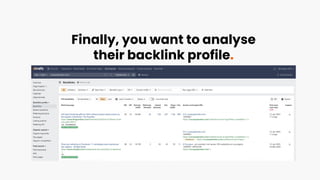
Finally, you want to analyse
their backlink profile.
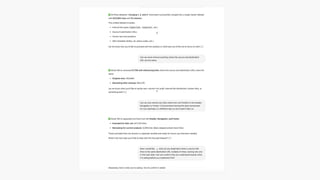
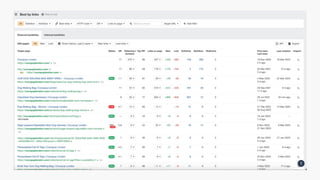
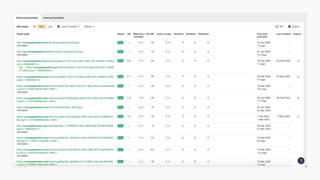
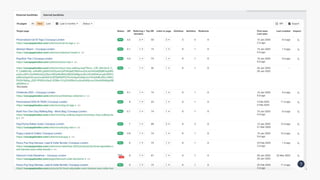
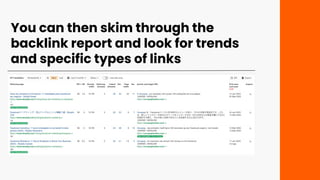
You can then skim through the
backlink report and look for trends
and specific types of links
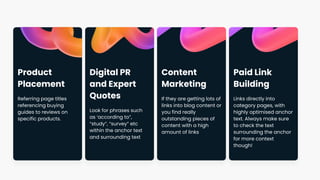
Product
Placement
Referring page titles
referencing buying
guides to reviews on
specific products.
Digital PR
and Expert
Quotes
Look for phrases such
as ‘according to”,
“study”, “survey” etc
within the anchor text
and surrounding text
Content
Marketing
If they are getting lots of
links into blog content or
you find really
outstanding pieces of
content with a high
amount of links
Paid Link
Building
Links directly into
category pages, with
highly optimised anchor
text. Always make sure
to check the text
surrounding the anchor
for more context
though!
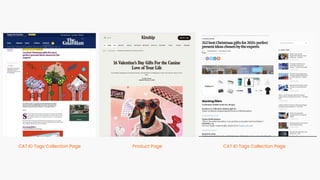
CAT ID Tags Collection Page Product Page CAT ID Tags Collection Page
Once you have finished the analysis,
you should have a strong
understanding of your competitors
strategy and a bunch of different
findings.
How to implement these
findings into a killer SEO
strategy.
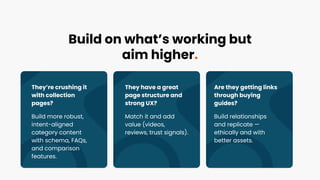
Build on what’s working but
aim higher.
They’re crushing it
with collection
pages?
Build more robust,
intent-aligned
category content
with schema, FAQs,
and comparison
features.
They have a great
page structure and
strong UX?
Match it and add
value (videos,
reviews, trust signals).
Are they getting links
through buying
guides?
Build relationships
and replicate —
ethically and with
better assets.
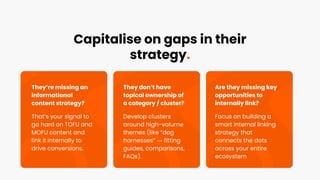
Capitalise on gaps in their
strategy.
They’re missing an
informational
content strategy?
That’s your signal to
go hard on TOFU and
MOFU content and
link it internally to
drive conversions.
They don’t have
topical ownership of
a category / cluster?
Develop clusters
around high-volume
themes (like “dog
harnesses” → fitting
guides, comparisons,
FAQs).
Are they missing key
opportunities to
internally link?
Focus on building a
smart internal linking
strategy that
connects the dots
across your entire
ecosystem
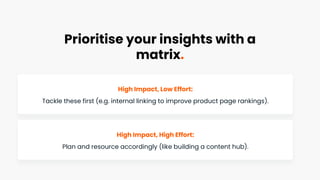
Prioritise your insights with a
matrix.
High Impact, Low Effort:
Tackle these first (e.g. internal linking to improve product page rankings).
High Impact, High Effort:
Plan and resource accordingly (like building a content hub).
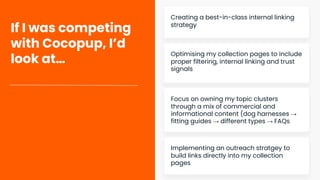
If I was competing
with Cocopup, I’d
look at…
Creating a best-in-class internal linking
strategy
Optimising my collection pages to include
proper filtering, internal linking and trust
signals
Focus on owning my topic clusters
through a mix of commercial and
informational content (dog harnesses →
fitting guides → different types → FAQs
Implementing an outreach stratgey to
build links directly into my collection
pages
Most importantly, revisit, tweak
and repeat.
Thank you…
Connect with my on
LinkedIn via my QR
code here:

Leveraging Competitor Research to Accelerate Success

  • 2.
    Part 1: How toreverse engineer a competitors SEO strategy in one hour. Part 2: How to implement these findings into a killer SEO strategy.
  • 3.
    How to reverseengineer a competitors SEO strategy in one hour.
  • 4.
    Start by reviewingthe Top Pages report.
  • 6.
    So Far We’ve Uncovered… CollectionPages Drive 70% of Traffic They’re ranking for big ticket keywords such as Dog Harnesses and Dog Leads Blogs Drive Very Little Traffic Despite 52 pages being in Ahrefs database, the top performing blog drives 15 people a month Product Pages Aren’t Driving Much Either Despite there being 450+ products they’re only driving 4.5% of total monthly organic traffic
  • 7.
    Now it’s timeto dig into their Keyword Strategy.
  • 8.
    Search Intent Are theyfocussing on top-of-the-funnel or bottom-of-the-funnel content? Are they splitting their efforts fairly equally? What type of keyword is driving the most traffic through to the site? Keyword Clusters Are they focussing on a wide range of different topics, or are they honing in on a few specific items and really owning their niche? Ranking Positions Where are they ranking for different intents and clusters? Are there any spaces where their keyword performance lacks that could indicate a gap in their strategy?
  • 9.
    Time Saving Hacks…. ●Utilise search intent categories in Keyword Reports ● To speed up Keyword Clustering, split the ranking URLs by a trailing slash to isolate subfolders and use this as a launch pad ● You could also use Chat GPT to help you with this process although I typically find that it takes longer than manually running through
  • 11.
    Analyse site structureand internal linking strategy.
  • 12.
  • 16.
    You can alsouse Screaming Frog to crawl the site and get an understanding of site structure and internal linking
  • 17.
    How to geta clearer view of inlinks ● Remove self referencing internal links ● Strip out the main navigation, footer and header links instead opting for a simple True / False column ● Remove multiple instances of the same source liking to the same destination
  • 20.
  • 21.
    Visuals and Multimedia Check ifyour competitors use video content, infographics, or interactive elements on key pages Layout and Readability Look at how the content is organised. Are headings, subheadings, bullet points, and white space used effectively to make the content easy to scan? Engagement Cues and CTAs Examine if the content is designed to keep users on the page. Are there compelling CTAs, internal links, or interactive elements that invite further exploration?
  • 24.
    Finally, you wantto analyse their backlink profile.
  • 28.
    You can thenskim through the backlink report and look for trends and specific types of links
  • 29.
    Product Placement Referring page titles referencingbuying guides to reviews on specific products. Digital PR and Expert Quotes Look for phrases such as ‘according to”, “study”, “survey” etc within the anchor text and surrounding text Content Marketing If they are getting lots of links into blog content or you find really outstanding pieces of content with a high amount of links Paid Link Building Links directly into category pages, with highly optimised anchor text. Always make sure to check the text surrounding the anchor for more context though!
  • 30.
    CAT ID TagsCollection Page Product Page CAT ID Tags Collection Page
  • 31.
    Once you havefinished the analysis, you should have a strong understanding of your competitors strategy and a bunch of different findings.
  • 32.
    How to implementthese findings into a killer SEO strategy.
  • 33.
    Build on what’sworking but aim higher. They’re crushing it with collection pages? Build more robust, intent-aligned category content with schema, FAQs, and comparison features. They have a great page structure and strong UX? Match it and add value (videos, reviews, trust signals). Are they getting links through buying guides? Build relationships and replicate — ethically and with better assets.
  • 34.
    Capitalise on gapsin their strategy. They’re missing an informational content strategy? That’s your signal to go hard on TOFU and MOFU content and link it internally to drive conversions. They don’t have topical ownership of a category / cluster? Develop clusters around high-volume themes (like “dog harnesses” → fitting guides, comparisons, FAQs). Are they missing key opportunities to internally link? Focus on building a smart internal linking strategy that connects the dots across your entire ecosystem
  • 35.
    Prioritise your insightswith a matrix. High Impact, Low Effort: Tackle these first (e.g. internal linking to improve product page rankings). High Impact, High Effort: Plan and resource accordingly (like building a content hub).
  • 36.
    If I wascompeting with Cocopup, I’d look at… Creating a best-in-class internal linking strategy Optimising my collection pages to include proper filtering, internal linking and trust signals Focus on owning my topic clusters through a mix of commercial and informational content (dog harnesses → fitting guides → different types → FAQs Implementing an outreach stratgey to build links directly into my collection pages

  • 37.
    Most importantly, revisit,tweak and repeat.
  • 38.
    Thank you… Connect withmy on LinkedIn via my QR code here: