LEVERAGING EXISTING
SOURCES
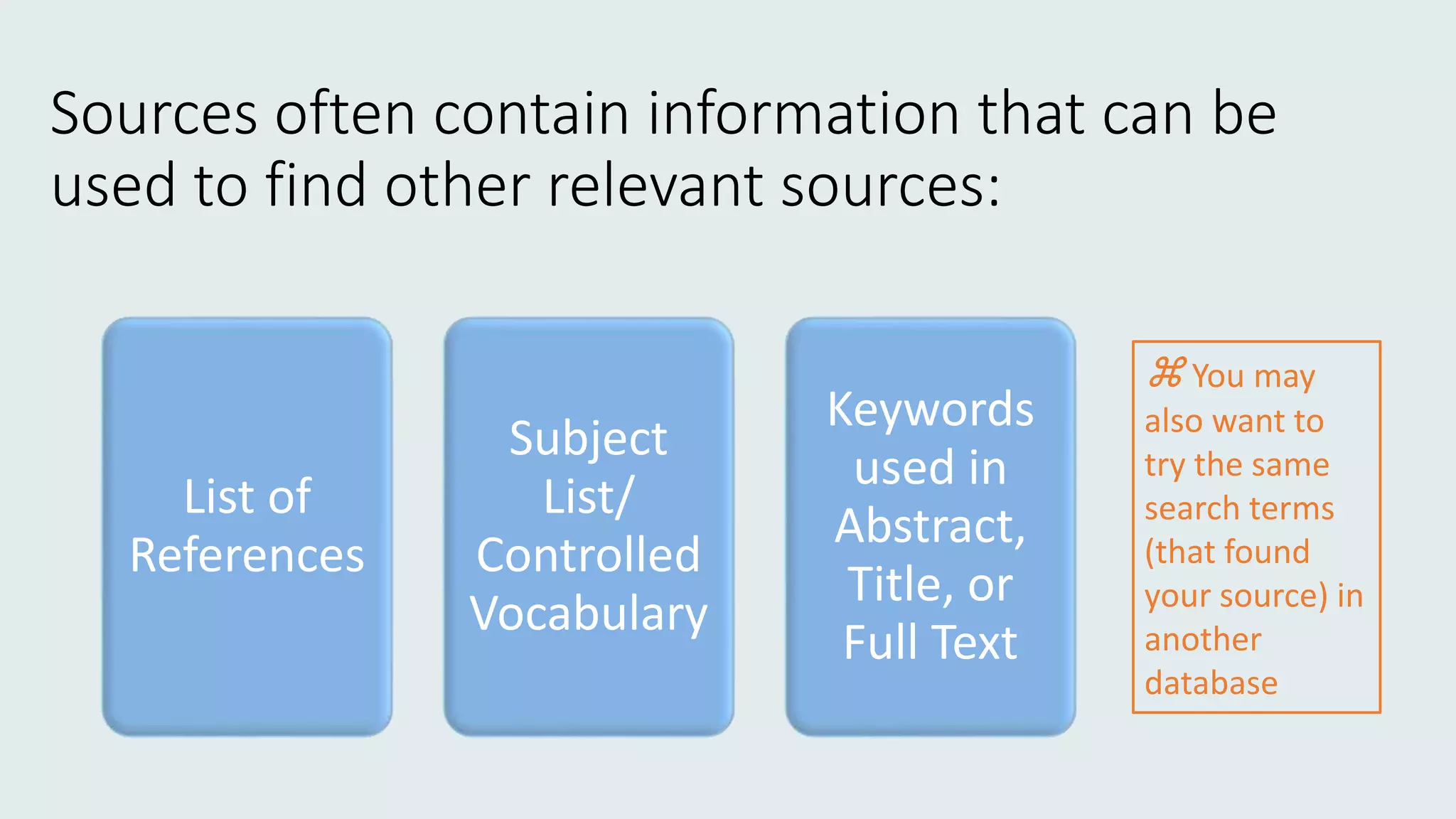
Sources often contain information that can be
used to find other relevant sources:
z You may
also want to
try the same
search terms
(that found
your source) in
another
database
List of
References
Subject
List/
Controlled
Vocabulary
Keywords
used in
Abstract,
Title, or
Full Text
In addition, each source is linked to other sources
through their lists of references:
z Databases
that track who
references
whom are
called “citation
indexes”
SOURCE
References
OLDER SOURCESNEWER SOURCES
• You can use these links to find related sources.
v
When you are finished viewing this material, please
close this tab on your browser and return to the
Decision-based Learning tab.
v

Leveraging articles

  • 1.
  • 2.
    Sources often containinformation that can be used to find other relevant sources: z You may also want to try the same search terms (that found your source) in another database List of References Subject List/ Controlled Vocabulary Keywords used in Abstract, Title, or Full Text
  • 3.
    In addition, eachsource is linked to other sources through their lists of references: z Databases that track who references whom are called “citation indexes” SOURCE References OLDER SOURCESNEWER SOURCES • You can use these links to find related sources.
  • 4.
    v When you arefinished viewing this material, please close this tab on your browser and return to the Decision-based Learning tab. v