Levendary Café – should it
resurrect from a
culture shock?
An analysis.
The Story.
• Howard Leventhal was the beloved
founder of the popular chain of 3500
cafes.
• During 2008, company’s domestic growth
was slowing so they wanted to explore
opportunities overseas.
• After a green flag from the research team,
china was going to be their next target.
• Term starting September 2009, Louis
Chen is named the CEO of Levendary
café china on an annual contract basis
that lasts for 2 years.
• January 2011, they go for an IPO. Howard
quits to pursue other interests.
• Mia Foster is named as it new CEO.
The problem?
Levendary China’s income statement(2010)
- a loss of 143,620$
 Did the research team miss something?
 Was china market not ready for an american stylized
café – conflicts of culture?
 Was Louis Chen an incompetent leader?
 Did the organizational structure hamper the decision
making to prevent such loss?
Market research - China
• A population of 1.4 billion.
• Urban population rose from 36.2% in 2000
to 46.6% in 2010.
• By 2010, a new middle class emerged
whose per capita income surged.
• KFC was successfully running 3,000
restaurants and McDonalds had 1,100
outlets in 110 cities in China.
The levendary ‘concept’ of a
cafe
• A healthful, wholesome eating. Tasty fresh
goodness. A rich experience.
• A quick-casual restaurant. Healthy diet
with an informal self-serve dining
experience. Sales driven by core items.
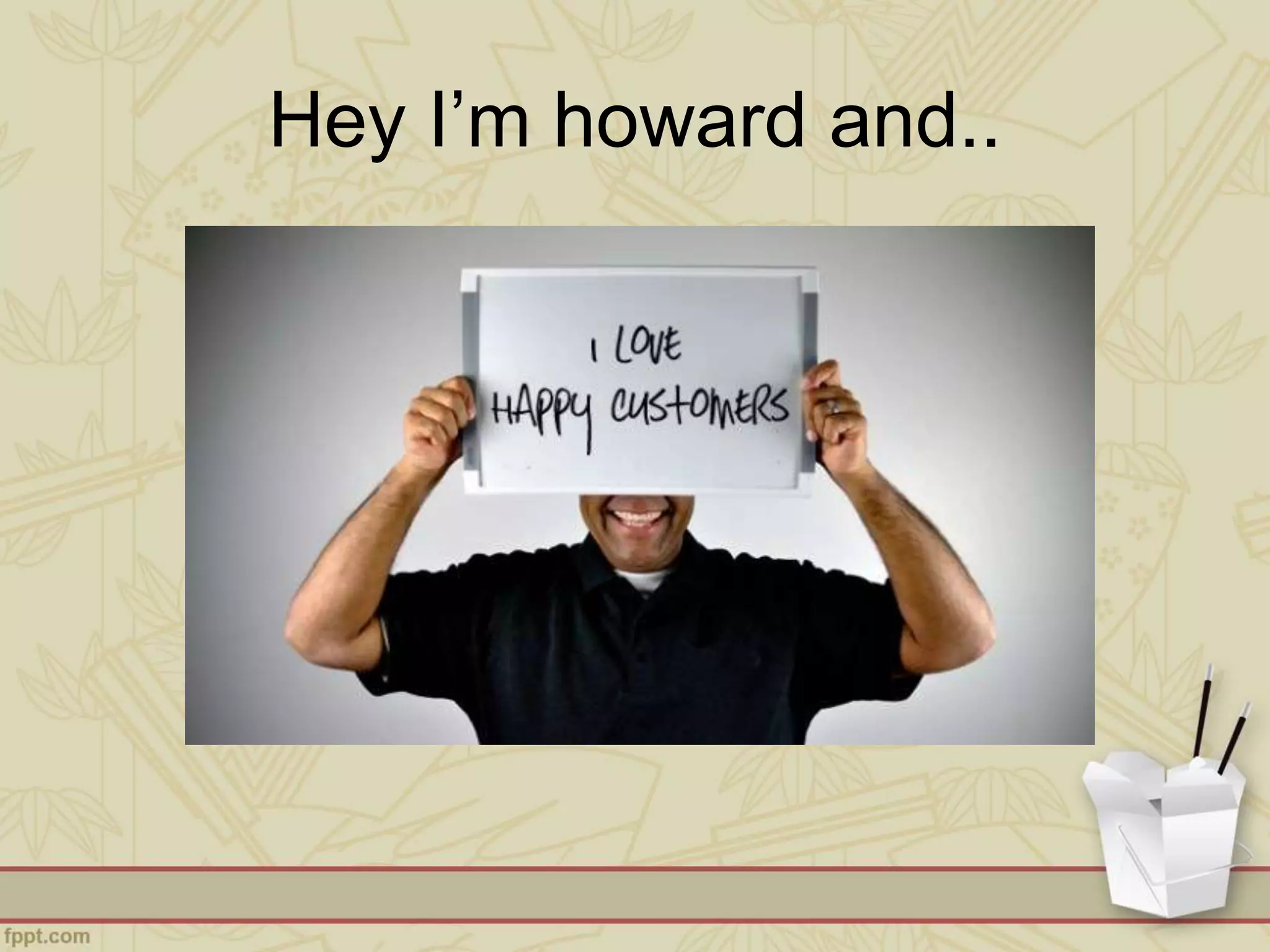
• Howard was usually heard saying, “let’s
forget about profits today. Let’s just make
the customers happy”
Hey I’m howard and..
Louis Chen and the issues
about standardization.
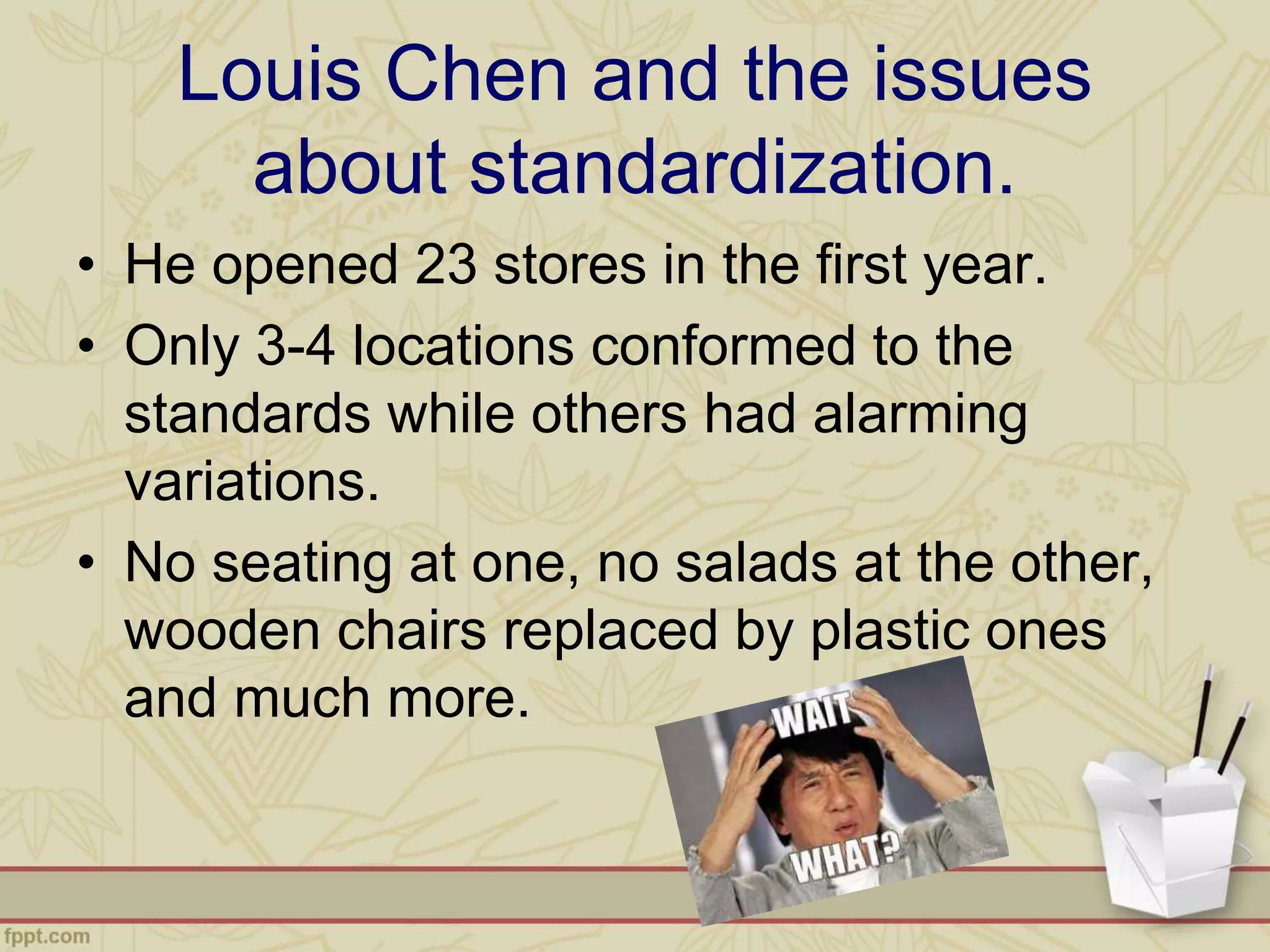
• He opened 23 stores in the first year.
• Only 3-4 locations conformed to the
standards while others had alarming
variations.
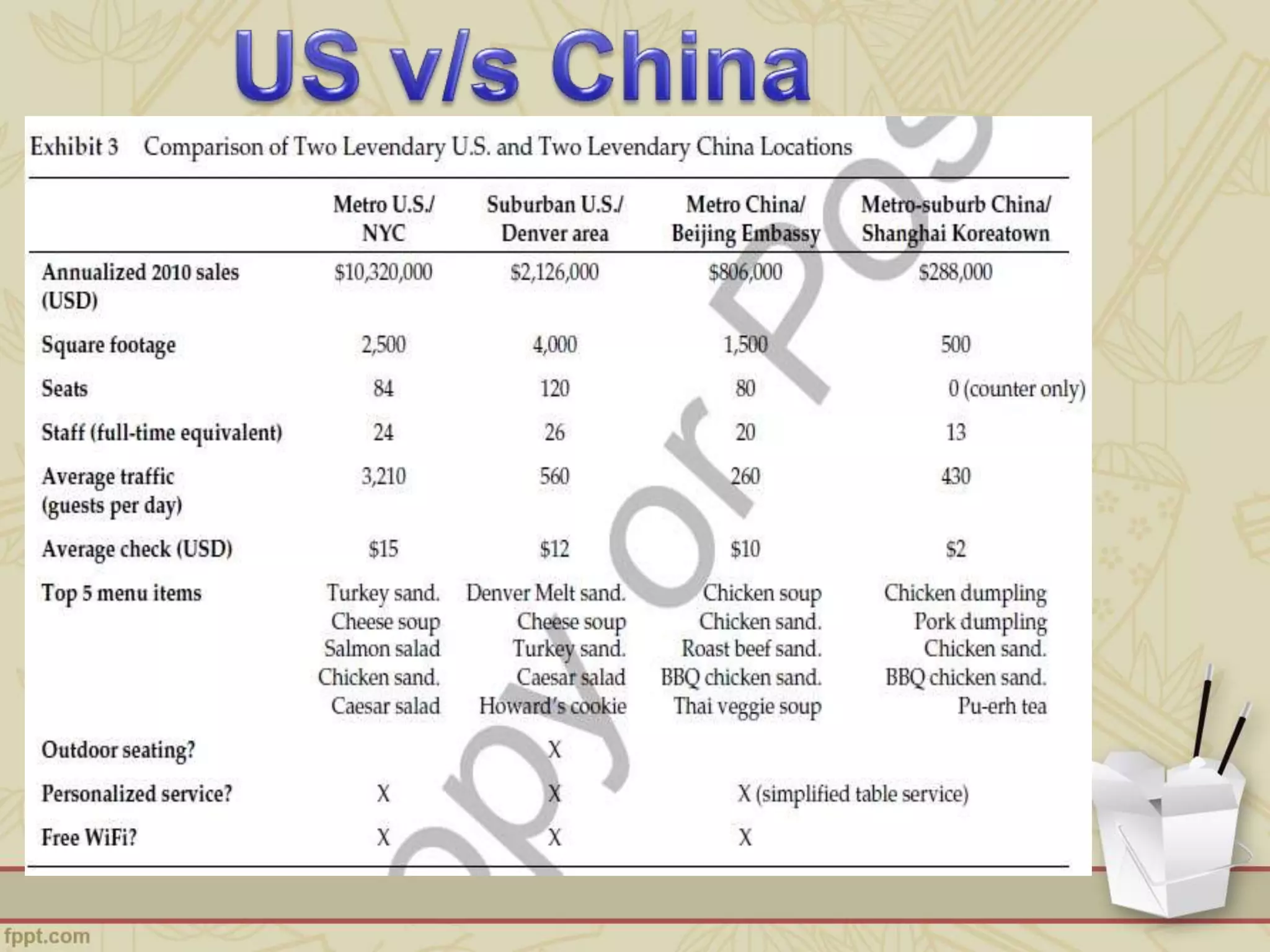
• No seating at one, no salads at the other,
wooden chairs replaced by plastic ones
and much more.
• Means oriented v/s goal oriented.
– Goal oriented. Impersonal results
– Relates better with ‘what’ than ‘how’.
• Internally driven v/s externally driven
– Externally driven. Customer oriented.
– Less regard for business ethics and honesty
– Pragmatism overpowers ethical attitude.
Culture dimensions - Hofstede
• Local v/s professional
– Local. Identify with the boss.
– Less regard for the profession.
– No cross check with the standards or
specifications of a particular job.
• The degree of acceptance of a leadership
style
– Chen’s leadership style not in line with his
immediate boss’s (Mia’s) preference.
– Too negative and obnoxious attitude.
Levendary café – should it resurrect from a

Levendary café – should it resurrect from a

  • 1.
    Levendary Café –should it resurrect from a culture shock? An analysis.
  • 2.
    The Story. • HowardLeventhal was the beloved founder of the popular chain of 3500 cafes. • During 2008, company’s domestic growth was slowing so they wanted to explore opportunities overseas. • After a green flag from the research team, china was going to be their next target.
  • 3.
    • Term startingSeptember 2009, Louis Chen is named the CEO of Levendary café china on an annual contract basis that lasts for 2 years. • January 2011, they go for an IPO. Howard quits to pursue other interests. • Mia Foster is named as it new CEO.
  • 4.
  • 5.
    Levendary China’s incomestatement(2010) - a loss of 143,620$  Did the research team miss something?  Was china market not ready for an american stylized café – conflicts of culture?  Was Louis Chen an incompetent leader?  Did the organizational structure hamper the decision making to prevent such loss?
  • 6.
    Market research -China • A population of 1.4 billion. • Urban population rose from 36.2% in 2000 to 46.6% in 2010. • By 2010, a new middle class emerged whose per capita income surged. • KFC was successfully running 3,000 restaurants and McDonalds had 1,100 outlets in 110 cities in China.
  • 7.
    The levendary ‘concept’of a cafe • A healthful, wholesome eating. Tasty fresh goodness. A rich experience. • A quick-casual restaurant. Healthy diet with an informal self-serve dining experience. Sales driven by core items. • Howard was usually heard saying, “let’s forget about profits today. Let’s just make the customers happy”
  • 8.
  • 9.
    Louis Chen andthe issues about standardization. • He opened 23 stores in the first year. • Only 3-4 locations conformed to the standards while others had alarming variations. • No seating at one, no salads at the other, wooden chairs replaced by plastic ones and much more.
  • 11.
    • Means orientedv/s goal oriented. – Goal oriented. Impersonal results – Relates better with ‘what’ than ‘how’. • Internally driven v/s externally driven – Externally driven. Customer oriented. – Less regard for business ethics and honesty – Pragmatism overpowers ethical attitude. Culture dimensions - Hofstede
  • 12.
    • Local v/sprofessional – Local. Identify with the boss. – Less regard for the profession. – No cross check with the standards or specifications of a particular job. • The degree of acceptance of a leadership style – Chen’s leadership style not in line with his immediate boss’s (Mia’s) preference. – Too negative and obnoxious attitude.