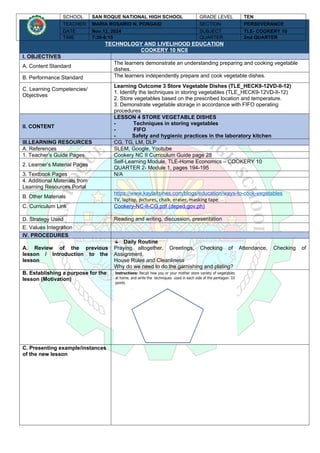
TECHNOLOGY AND LIVELIHOOD EDUCATION
COOKERY 10 NCII
I. OBJECTIVES
A. Content Standard
The learners demonstrate an understanding preparing and cooking vegetable
dishes.
B. Performance Standard The learners independently prepare and cook vegetable dishes.
C. Learning Competencies/
Objectives
Learning Outcome 3 Store Vegetable Dishes (TLE_HECK9-12VD-II-12)
1. Identify the techniques in storing vegetables (TLE_HECK9-12VD-II-12)
2. Store vegetables based on the prescribed location and temperature.
3. Demonstrate vegetable storage in accordance with FIFO operating
procedures
II. CONTENT
LESSON 4 STORE VEGETABLE DISHES
- Techniques in storing vegetables
- FIFO
- Safety and hygienic practices in the laboratory kitchen
III.LEARNING RESOURCES CG, TG, LM, DLP
A. References SLEM, Google, Youtube
1. Teacher’s Guide Pages Cookery NC II Curriculum Guide page 28
2. Learner’s Material Pages
Self-Learning Module, TLE-Home Economics – COOKERY 10
QUARTER 2- Module 1, pages 194-195
3. Textbook Pages N/A
4. Additional Materials from
Learning Resources Portal
B. Other Materials
https://www.kaylaitsines.com/blogs/education/ways-to-cook-vegetables
TV, laptop, pictures, chalk, eraser, masking tape
C. Curriculum Link Cookery-NC-II-CG.pdf (deped.gov.ph)
D. Strategy Used Reading and writing, discussion, presentation
E. Values Integration
IV. PROCEDURES
A. Review of the previous
lesson / Introduction to the
lesson
Daily Routine
Praying altogether, Greetings, Checking of Attendance, Checking of
Assignment,
House Rules and Cleanliness
Why do we need to do the garnishing and plating?
B. Establishing a purpose for the
lesson (Motivation)
C. Presenting example/instances
of the new lesson
` SCHOOL SAN ROQUE NATIONAL HIGH SCHOOL GRADE LEVEL TEN
TEACHER MARIA ROSARIO N. PONGASI SECTION PERSEVERANCE
DATE Nov.12, 2024 SUBJECT TLE- COOKERY 10
TIME 7:30-8:15 QUARTER 2nd QUARTER
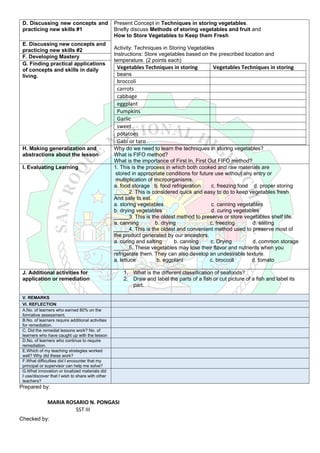
Present Concept in Techniques in storing vegetables.
Briefly discuss Methods of storing vegetables and fruit and
How to Store Vegetables to Keep them Fresh
Activity: Techniques in Storing Vegetables
Instructions: Store vegetables based on the prescribed location and
temperature. (2 points each)
Vegetables Techniques in storing Vegetables Techniques in storing
beans
broccoli
carrots
cabbage
eggplant
Pumpkins
Garlic
sweet
potatoes
Gabi or taro
D. Discussing new concepts and
practicing new skills #1
E. Discussing new concepts and
practicing new skills #2
F. Developing Mastery
G. Finding practical applications
of concepts and skills in daily
living.
H. Making generalization and
abstractions about the lesson
Why do we need to learn the techniques in storing vegetables?
What is FIFO method?
What is the importance of First In, First Out FIFO method?
I. Evaluating Learning 1. This is the process in which both cooked and raw materials are
stored in appropriate conditions for future use without any entry or
multiplication of microorganisms.
a. food storage b. food refrigeration c. freezing food d. proper storing
_____2. This is considered quick and easy to do to keep vegetables fresh
And safe to eat.
a. storing vegetables c. canning vegetables
b. drying vegetables d. curing vegetables
_____3. This is the oldest method to preserve or store vegetables shelf life.
a. canning b. drying c. freezing d. salting
_____4. This is the oldest and convenient method used to preserve most of
the product generated by our ancestors.
a. curing and salting b. canning c. Drying d. common storage
_____5. These vegetables may lose their flavor and nutrients when you
refrigerate them. They can also develop an undesirable texture.
a. lettuce b. eggplant c. broccoli d. tomato
J. Additional activities for
application or remediation
1. What is the different classification of seafoods?
2. Draw and label the parts of a fish or cut picture of a fish and label its
part.
V. REMARKS
VI. REFLECTION
A.No. of learners who earned 80% on the
formative assessment.
B.No. of learners require additional activities
for remediation.
C. Did the remedial lessons work? No. of
learners who have caught up with the lesson
D.No. of learners who continue to require
remediation.
E.Which of my teaching strategies worked
well? Why did these work?
F.What difficulties did I encounter that my
principal or supervisor can help me solve?
G.What innovation or localized materials did
I use/discover that I wish to share with other
teachers?
Prepared by:
Checked by:
MARIA ROSARIO N. PONGASI
SST III
MARVIN C. HIPOLITO OLIVAL B. CRUZ. EdD ADELWIZA SILVESTRE
TLE DEPARTMENT HEAD PRINCIPAL IV TLE MASTER TEACHER

lesson plan in Present-Vegetables-Dishes.docx

  • 1.
    TECHNOLOGY AND LIVELIHOODEDUCATION COOKERY 10 NCII I. OBJECTIVES A. Content Standard The learners demonstrate an understanding preparing and cooking vegetable dishes. B. Performance Standard The learners independently prepare and cook vegetable dishes. C. Learning Competencies/ Objectives Learning Outcome 3 Store Vegetable Dishes (TLE_HECK9-12VD-II-12) 1. Identify the techniques in storing vegetables (TLE_HECK9-12VD-II-12) 2. Store vegetables based on the prescribed location and temperature. 3. Demonstrate vegetable storage in accordance with FIFO operating procedures II. CONTENT LESSON 4 STORE VEGETABLE DISHES - Techniques in storing vegetables - FIFO - Safety and hygienic practices in the laboratory kitchen III.LEARNING RESOURCES CG, TG, LM, DLP A. References SLEM, Google, Youtube 1. Teacher’s Guide Pages Cookery NC II Curriculum Guide page 28 2. Learner’s Material Pages Self-Learning Module, TLE-Home Economics – COOKERY 10 QUARTER 2- Module 1, pages 194-195 3. Textbook Pages N/A 4. Additional Materials from Learning Resources Portal B. Other Materials https://www.kaylaitsines.com/blogs/education/ways-to-cook-vegetables TV, laptop, pictures, chalk, eraser, masking tape C. Curriculum Link Cookery-NC-II-CG.pdf (deped.gov.ph) D. Strategy Used Reading and writing, discussion, presentation E. Values Integration IV. PROCEDURES A. Review of the previous lesson / Introduction to the lesson Daily Routine Praying altogether, Greetings, Checking of Attendance, Checking of Assignment, House Rules and Cleanliness Why do we need to do the garnishing and plating? B. Establishing a purpose for the lesson (Motivation) C. Presenting example/instances of the new lesson ` SCHOOL SAN ROQUE NATIONAL HIGH SCHOOL GRADE LEVEL TEN TEACHER MARIA ROSARIO N. PONGASI SECTION PERSEVERANCE DATE Nov.12, 2024 SUBJECT TLE- COOKERY 10 TIME 7:30-8:15 QUARTER 2nd QUARTER
  • 2.
    Present Concept inTechniques in storing vegetables. Briefly discuss Methods of storing vegetables and fruit and How to Store Vegetables to Keep them Fresh Activity: Techniques in Storing Vegetables Instructions: Store vegetables based on the prescribed location and temperature. (2 points each) Vegetables Techniques in storing Vegetables Techniques in storing beans broccoli carrots cabbage eggplant Pumpkins Garlic sweet potatoes Gabi or taro D. Discussing new concepts and practicing new skills #1 E. Discussing new concepts and practicing new skills #2 F. Developing Mastery G. Finding practical applications of concepts and skills in daily living. H. Making generalization and abstractions about the lesson Why do we need to learn the techniques in storing vegetables? What is FIFO method? What is the importance of First In, First Out FIFO method? I. Evaluating Learning 1. This is the process in which both cooked and raw materials are stored in appropriate conditions for future use without any entry or multiplication of microorganisms. a. food storage b. food refrigeration c. freezing food d. proper storing _____2. This is considered quick and easy to do to keep vegetables fresh And safe to eat. a. storing vegetables c. canning vegetables b. drying vegetables d. curing vegetables _____3. This is the oldest method to preserve or store vegetables shelf life. a. canning b. drying c. freezing d. salting _____4. This is the oldest and convenient method used to preserve most of the product generated by our ancestors. a. curing and salting b. canning c. Drying d. common storage _____5. These vegetables may lose their flavor and nutrients when you refrigerate them. They can also develop an undesirable texture. a. lettuce b. eggplant c. broccoli d. tomato J. Additional activities for application or remediation 1. What is the different classification of seafoods? 2. Draw and label the parts of a fish or cut picture of a fish and label its part. V. REMARKS VI. REFLECTION A.No. of learners who earned 80% on the formative assessment. B.No. of learners require additional activities for remediation. C. Did the remedial lessons work? No. of learners who have caught up with the lesson D.No. of learners who continue to require remediation. E.Which of my teaching strategies worked well? Why did these work? F.What difficulties did I encounter that my principal or supervisor can help me solve? G.What innovation or localized materials did I use/discover that I wish to share with other teachers? Prepared by: Checked by: MARIA ROSARIO N. PONGASI SST III
  • 3.
    MARVIN C. HIPOLITOOLIVAL B. CRUZ. EdD ADELWIZA SILVESTRE TLE DEPARTMENT HEAD PRINCIPAL IV TLE MASTER TEACHER