Brooke Hammer
 Geography 300
 March 22, 2012
Environmental Living Program
Students will stay at the Pioneer History Center at
Yosemite National Park. They will assume the roles of
historical people from the 19th and 20th century.
 During an overnight visit, students will confront the
  problems and decisions of the pioneers by performing
  tasks such as chopping wood, blacksmithing, cooking on a
  wood stove, and working with horses.
 The main focus of the program is the history of land
  management in Yosemite. Through a simulated experience
  of a historic period in Yosemite, students will discover that
  land use issues of the past are similar to land use issues and
  park management conflicts today.
3.3 Students draw from historical and community
resources to organize the sequence of local historical
events and describe how each period of settlement left its
mark on the land.
     2. Describe the economics established by settlers and
their influence on the present-day economy, with
emphasis on the importance of private property and
entrepreneurship.
Human Systems
12. The process, patterns, and functions
of human settlement.
Environment and Society
16. The changes that occur in the meaning, use,
distribution, and of importance of resources.
The Uses of Geography
17. How to apply geography to interpret the past.
 National Park Service fees ($400.00)
 Teacher, Parents or Volunteers , Students
 Transportation
 Food
 Supplies
 Requirement: Teachers are required to attend a specific
  training workshop held the preceding autumn (adult helpers
  must also attend).
 There are three different handbooks to help you make your way
  to a great Environmental Living program experience. These
  include the: Program, Curriculum, and Historical Figure
  Biographies Handbooks – all of which have all been prepared
  to assist you in planning and conducting the program.
Lesson One: In the Classroom
   Students will spend time before the trip discussing
    historical times.
   They will research the 19th and 20th century and
    discover how people lived in these times.
   Students will then talk about their research and what
    they found.
   Students will also be able to ask questions on things
    they did not understand.
Lesson Two: Outside the
      Classroom into Nature.
   Students will take a trip to
    Yosemite National Park.
   For 24 hours students will
    then learn and live like
    pioneers did in the 19th
    and 20th Century.
   Students will have certain
    materials that will help
    them through this time.
   At the end of the 24 hours
    Students will talk about
    their experience.
 This Trip and overall experience is intended to show
  students how pioneers live. It will give them a chance
  to experience a new or in a sense an old way of living.
  This is a way of life that these students will never really
  understand until it is done first hand.
 Students will be able to share what they thought of
  this experience. They will talk about what it was like to
  live this way. Did they like this experience? Why or
  Why not?
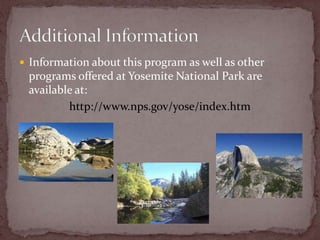
 Information about this program as well as other
 programs offered at Yosemite National Park are
 available at:
         http://www.nps.gov/yose/index.htm

Lesson plan

  • 1.
    Brooke Hammer Geography300 March 22, 2012
  • 2.
    Environmental Living Program Studentswill stay at the Pioneer History Center at Yosemite National Park. They will assume the roles of historical people from the 19th and 20th century.
  • 3.
     During anovernight visit, students will confront the problems and decisions of the pioneers by performing tasks such as chopping wood, blacksmithing, cooking on a wood stove, and working with horses.  The main focus of the program is the history of land management in Yosemite. Through a simulated experience of a historic period in Yosemite, students will discover that land use issues of the past are similar to land use issues and park management conflicts today.
  • 4.
    3.3 Students drawfrom historical and community resources to organize the sequence of local historical events and describe how each period of settlement left its mark on the land. 2. Describe the economics established by settlers and their influence on the present-day economy, with emphasis on the importance of private property and entrepreneurship.
  • 5.
    Human Systems 12. Theprocess, patterns, and functions of human settlement. Environment and Society 16. The changes that occur in the meaning, use, distribution, and of importance of resources. The Uses of Geography 17. How to apply geography to interpret the past.
  • 6.
     National ParkService fees ($400.00)  Teacher, Parents or Volunteers , Students  Transportation  Food  Supplies  Requirement: Teachers are required to attend a specific training workshop held the preceding autumn (adult helpers must also attend).  There are three different handbooks to help you make your way to a great Environmental Living program experience. These include the: Program, Curriculum, and Historical Figure Biographies Handbooks – all of which have all been prepared to assist you in planning and conducting the program.
  • 7.
    Lesson One: Inthe Classroom  Students will spend time before the trip discussing historical times.  They will research the 19th and 20th century and discover how people lived in these times.  Students will then talk about their research and what they found.  Students will also be able to ask questions on things they did not understand.
  • 8.
    Lesson Two: Outsidethe Classroom into Nature.  Students will take a trip to Yosemite National Park.  For 24 hours students will then learn and live like pioneers did in the 19th and 20th Century.  Students will have certain materials that will help them through this time.  At the end of the 24 hours Students will talk about their experience.
  • 9.
     This Tripand overall experience is intended to show students how pioneers live. It will give them a chance to experience a new or in a sense an old way of living. This is a way of life that these students will never really understand until it is done first hand.  Students will be able to share what they thought of this experience. They will talk about what it was like to live this way. Did they like this experience? Why or Why not?
  • 10.
     Information aboutthis program as well as other programs offered at Yosemite National Park are available at: http://www.nps.gov/yose/index.htm