Lesson One: Food Labels
 Lorna Stremcha
 Excerpts from Lose the Baggage,
Lose the Weight
 www.losethebaggage-
losetheweight.com
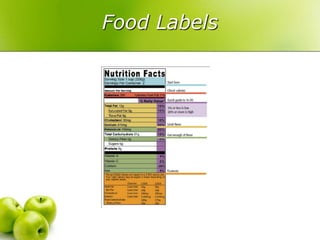
Food Labels
What the food label tells you
 serving size
 familiar units like a cup(s) or a count
and are followed by the metric unit in
grams.
 size and how many servings are in a
package, container, or item
Breaking the label down
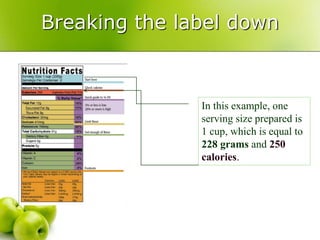
In this example, one
serving size prepared is
1 cup, which is equal to
228 grams and 250
calories.
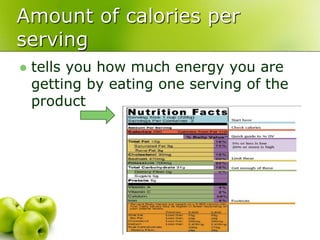
 tells you how much energy you are
getting by eating one serving of the
product
Amount of calories per
serving
Serving Per Container
In this example, one
serving equals 250 calories.
Use these guidelines when
you are shopping
 Low caloric: 40 calories
 Moderate: 100 calories
 High caloric: >= 400 calories
High Fat Matters
 High fat servings can halt weight loss
 increase the risk of obesity increase
the risk of cardiovascular disease and
other health issues
More about fat per serving
 No more than 35 percent of your daily
caloric intake should be from fat.
 If you are trying to lose weight, eat
no more than 20 percent.
Fat per serving
 To find the percentage of fat per
serving, divide the calories from fat
by 100.
Stop the confusion
 Do not confuse the calories from fat
number with the percentage, which is
discussed next.
 Aim for products that include no more
than 20–35 percent of fat, and
preferably of unsaturated fat.
% Daily Value (%DV)
There is a recommended daily
amount for each nutrient. The
percentage shown represents how
well the product meets that
recommended amount (based on a
2000-calorie diet).
“less than” & “at least”
Some nutrients are
labeled to eat “less than”
and the other two, total
carbohydrates and fiber,
are suggesting you eat “at
least” that amount daily.
Simply Put
 read food labels of foods
 pay close attention to the amount of
calories per serving as well as the fat
content
The End of Label Lesson
 Lesson Two coming soon
Lesson one lables

Lesson one lables

  • 1.
    Lesson One: FoodLabels  Lorna Stremcha  Excerpts from Lose the Baggage, Lose the Weight  www.losethebaggage- losetheweight.com
  • 2.
  • 3.
    What the foodlabel tells you  serving size  familiar units like a cup(s) or a count and are followed by the metric unit in grams.  size and how many servings are in a package, container, or item
  • 4.
    Breaking the labeldown In this example, one serving size prepared is 1 cup, which is equal to 228 grams and 250 calories.
  • 5.
     tells youhow much energy you are getting by eating one serving of the product Amount of calories per serving
  • 6.
    Serving Per Container Inthis example, one serving equals 250 calories.
  • 7.
    Use these guidelineswhen you are shopping  Low caloric: 40 calories  Moderate: 100 calories  High caloric: >= 400 calories
  • 8.
    High Fat Matters High fat servings can halt weight loss  increase the risk of obesity increase the risk of cardiovascular disease and other health issues
  • 9.
    More about fatper serving  No more than 35 percent of your daily caloric intake should be from fat.  If you are trying to lose weight, eat no more than 20 percent.
  • 10.
    Fat per serving To find the percentage of fat per serving, divide the calories from fat by 100.
  • 11.
    Stop the confusion Do not confuse the calories from fat number with the percentage, which is discussed next.  Aim for products that include no more than 20–35 percent of fat, and preferably of unsaturated fat.
  • 12.
    % Daily Value(%DV) There is a recommended daily amount for each nutrient. The percentage shown represents how well the product meets that recommended amount (based on a 2000-calorie diet).
  • 13.
    “less than” &“at least” Some nutrients are labeled to eat “less than” and the other two, total carbohydrates and fiber, are suggesting you eat “at least” that amount daily.
  • 14.
    Simply Put  readfood labels of foods  pay close attention to the amount of calories per serving as well as the fat content
  • 15.
    The End ofLabel Lesson  Lesson Two coming soon