Just The FactsUnderstanding The Nutrition  Facts Label on Foods
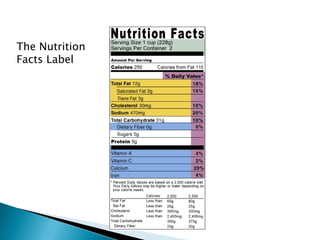
The Nutrition Facts Label
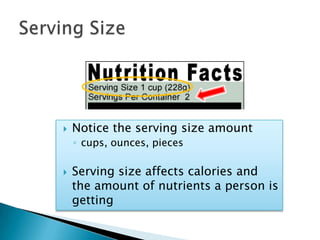
Serving SizeNotice the serving size amountcups, ounces, piecesServing size affects calories and the amount of nutrients a person is getting
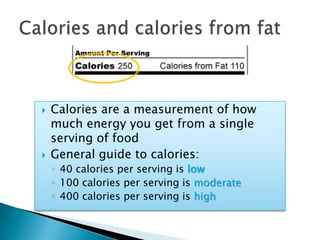
Calories and calories from fatCalories are a measurement of how much energy you get from a single serving of foodGeneral guide to calories:40 calories per serving is low100 calories per serving is moderate400 calories per serving is high
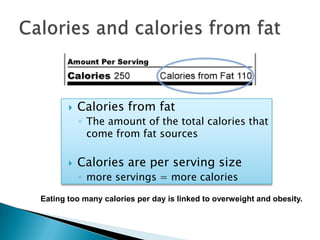
Calories from fatThe amount of the total calories that come from fat sourcesCalories are per serving sizemore servings = more caloriesCalories and calories from fatEating too many calories per day is linked to overweight and obesity.
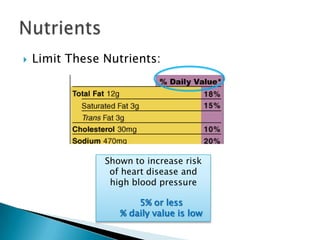
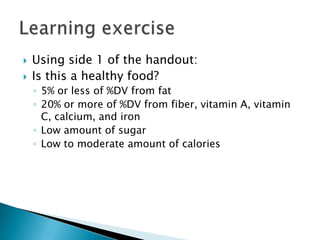
Limit These Nutrients:NutrientsShown to increase risk of heart disease and high blood pressure5% or less% daily value is low
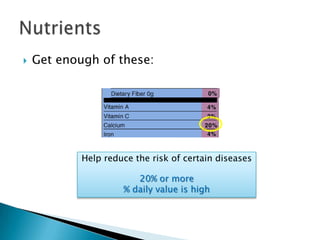
Get enough of these:NutrientsHelp reduce the risk of certain diseases20% or more % daily value is high
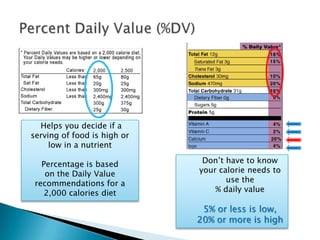
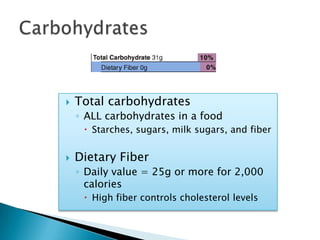
Percent Daily Value (%DV) Helps you decide if a serving of food is high or low in a nutrientPercentage is based on the Daily Value recommendations for a 2,000 calories dietDon’t have to know your calorie needs to use the % daily value5% or less is low, 20% or more is high
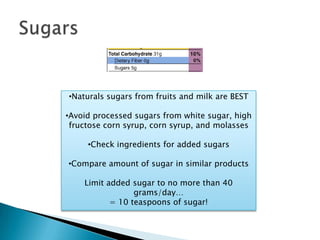
SugarsNaturals sugars from fruits and milk are BEST
Avoid processed sugars from white sugar, high fructose corn syrup, corn syrup, and molasses
Check ingredients for added sugars
Compare amount of sugar in similar productsLimit added sugar to no more than 40 grams/day… = 10 teaspoons of sugar!
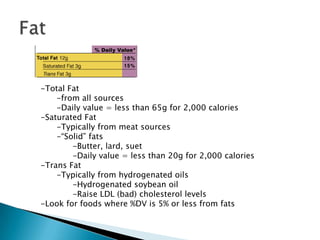
FatTotal Fat
from all sources
Daily value = less than 65g for 2,000 calories
Saturated Fat

Nutrtition facts label_presentation11

  • 1.
    Just The FactsUnderstandingThe Nutrition Facts Label on Foods
  • 2.
  • 3.
    Serving SizeNotice theserving size amountcups, ounces, piecesServing size affects calories and the amount of nutrients a person is getting
  • 4.
    Calories and caloriesfrom fatCalories are a measurement of how much energy you get from a single serving of foodGeneral guide to calories:40 calories per serving is low100 calories per serving is moderate400 calories per serving is high
  • 5.
    Calories from fatTheamount of the total calories that come from fat sourcesCalories are per serving sizemore servings = more caloriesCalories and calories from fatEating too many calories per day is linked to overweight and obesity.
  • 6.
    Limit These Nutrients:NutrientsShownto increase risk of heart disease and high blood pressure5% or less% daily value is low
  • 7.
    Get enough ofthese:NutrientsHelp reduce the risk of certain diseases20% or more % daily value is high
  • 8.
    Percent Daily Value(%DV) Helps you decide if a serving of food is high or low in a nutrientPercentage is based on the Daily Value recommendations for a 2,000 calories dietDon’t have to know your calorie needs to use the % daily value5% or less is low, 20% or more is high
  • 9.
    SugarsNaturals sugars fromfruits and milk are BEST
  • 10.
    Avoid processed sugarsfrom white sugar, high fructose corn syrup, corn syrup, and molasses
  • 11.
  • 12.
    Compare amount ofsugar in similar productsLimit added sugar to no more than 40 grams/day… = 10 teaspoons of sugar!
  • 13.
  • 14.
  • 15.
    Daily value =less than 65g for 2,000 calories
  • 16.

Editor's Notes

  • #7 This label doesn’t have any of it’s % DV less than 5%...need a different label in this example
  • #8 Need to fix text – maybe put in a box, like on slide 8
  • #10 Change label to show two different labels with varying amounts of sugar, maybe kids cereal would be good?
  • #11 Too much text on this s – slide – need to reformat
  • #12 Need label with some fiber on it/ use circles to identify what you want audience to look atTell other benefits of high fiber…such as weight control, constipation
  • #13 Need same foods from handout on your slides, so it is easier to follow along
  • #14 Show answerrather than tell
  • #15 Need same foods from handout on your slides, so it is easier to follow along
  • #16 Show answerrather than tell