ART IN THE
PHILIPPINES
Objectives:
1. appreciate the history of the
art in the Philippines
2. define contemporary arts
3. familiarize with the significant
development in the Philippine art
what is art?
it is a diverse range of human activities that
involves creative or imaginative expression,
often intended to evoke an emotional or
aesthetic response. The Different kinds
of arts are drawing,
painting,sculpting, and etc.
what is the value of art, and how can value be put in an
artpiece?
To give meaning to an artwork, it should be express not only
by the storkes or movement, yet it should be also expressed
with emotions that carry a significant, sentimental, and
relatable meaning. That is the true essence of a work of art.
where does art in the Philippines
came from?
—Someone Famous
“This is a quote, words full of
wisdom that someone
important said and inspire
anyone who reads them.”
THREE (3) MAJOR TRADITIONS
DEVELOPMENT OF PHILLIPPINE ART
1. Ethnic Tradition
2. Spanish Colonial Tradition
3. American Colonial /
Contemporary Traditions
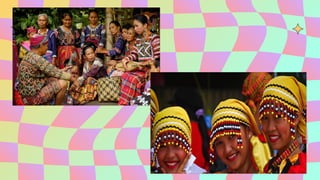
The origin of art in a particular country is
from the people itself. The tradition of the
first poppulation passed down to its
descendants of the current generation to
either expand, prolong, remember or
improve the art itself.
ETHNIC TRADITION
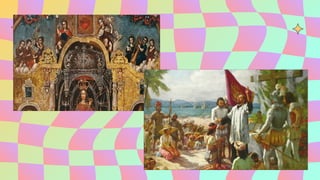
This type of art style is given to us from the
colonization from the Spanish era. The reign
of Spanish here in the Philippines for
333years have brought a very deep marked
art style that isnt easy to erase or forget
SPANISH
COLONIAL ART
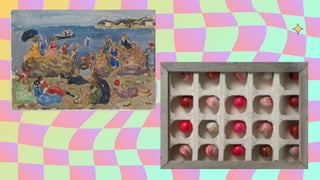
This artform is now depicted as the most widely
known artform in our country. The American Colonial
Contemporary Artform is brought to the Philippines
when the reign of Americans was still on full effect
right after the colonization of the Spanishs. The
difference is that the American is still widely used till
this day as it is contemporary.
AMERICAN COLONIAL
CONTEMPORARY ART
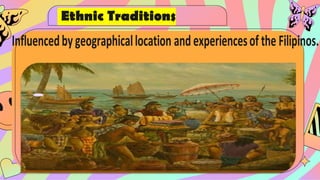
Ethnic Traditions
Do you know what helps you make your point clear?
Lists like this one:
They’re simple
You can organize your ideas clearly
You’ll never forget to buy milk!
And the most important thing: the audience won’t
miss the point of your presentation
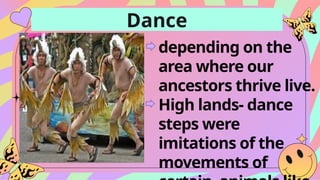
Dance
depending on the
area where our
ancestors thrive live.
High lands- dance
steps were
imitations of the
movements of
Visual arts
examples:, pottery, weaving,
wood carving and metal
crafting.
- they used available
materials surroundings
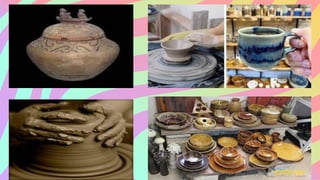
one of the oldest and most
widespread of the decorative arts,
consisting of objects made of clay and
hardened with heat.
Pottery
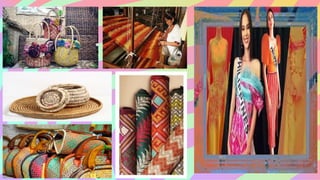
Weaving is a method of textile
production in which two distinct sets of
yarns or threads are interlaced at right
angles to form a fabric or cloth.
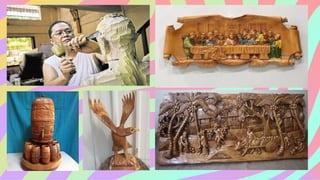
Wood carving is a type of woodworking
in which people use knives, chisels, and
other hand-held wood carving tools to
create figures
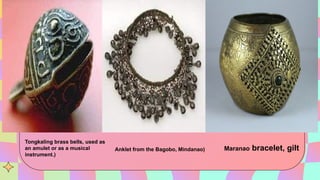
Metal Crafting
The craft of metalworking involves
shaping, cutting and joining metal
material to form an object.
Tongkaling brass bells, used as
an amulet or as a musical
instrument.)
Anklet from the Bagobo, Mindanao) Maranao bracelet, gilt
Architecture
they used local materials
such as, anahaw, bamboo,
cogon, cane, rattan and light
constructing materials were
accessible in their area.
Folk literature
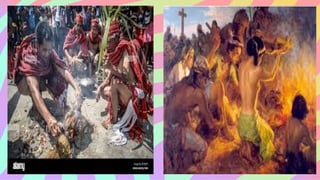
includes folk speeches,
songs, and folk narratives
( verbalized their experiences
)
Theater art
tribal presentations and
rituals was the early
theatrical performances
depicting their beliefs.
Music
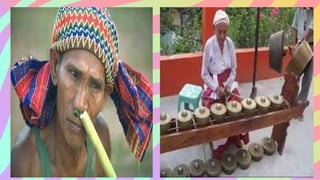
our ancestors also have
their indigenous musical
instruments like the bamboo
flutes
and brass gongs.
they tend to replaced
the Philippine indigenous
arts into Western art forms.
Spanish colonial
Religion and secularization
(transformation) greatly influence the
art in the Philippines.
Friars- members of new religious
Augustinians, Carmelites, Dominicans
and Franciscans.
- ones supervising the practice of
arts in the country through
propagating Christianity and
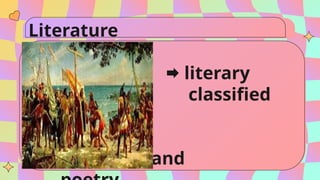
Literature
literary
works classified
into:
religious and
secular prose and
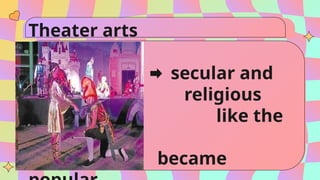
Theater arts
secular and
and religious
plays like the
“komedya”
became
Choreography
religious dances-
performed to
venerate patrons
and saints
proliferated.
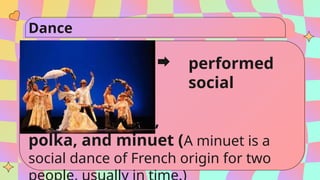
Dance
performed
in social
functions:
valse, fandango,
polka, and minuet (A minuet is a
social dance of French origin for two
TINIKLING
Philippine dance which involves two
individual performers hitting bamboo
poles, using them to beat, tap, and
slide on the ground, in co- ordination
with one or more dancers who steps
over and in between poles
Cariñosa
A Philippine national
dance from the María
Clara suite of Philippine
folk dances
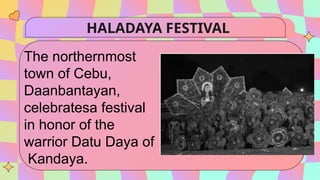
HALADAYA FESTIVAL
The northernmost
town of Cebu,
Daanbantayan,
celebratesa festival
in honor of the
warrior Datu Daya of
Kandaya.
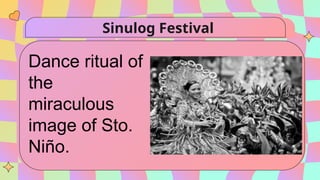
Sinulog Festival
Dance ritual of
the
miraculous
image of Sto.
Niño.
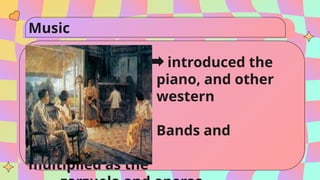
Music
introduced the
piano, and other
western
instruments.
Bands and
Orchestra
multiplied as the
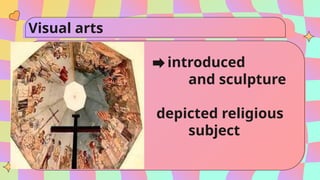
Visual arts
introduced
painting and sculpture
mostly
depicted religious
subject
matter.
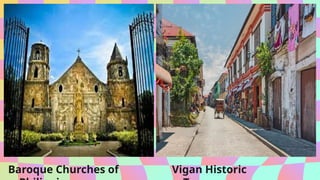
Architecture
stones and bricks used in
constructing building like
churches, houses, and
government offices.
Baroque Churches of Vigan Historic
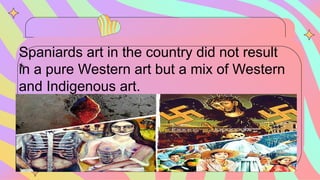
Spaniards art in the country did not result
in a pure Western art but a mix of Western
and Indigenous art.
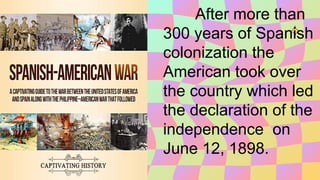
After more than
300 years of Spanish
colonization the
American took over
the country which led
the declaration of the
independence on
June 12, 1898.
American period
they brought
many changes
in the politics,
economy, education,
and culture of the
Philippines.
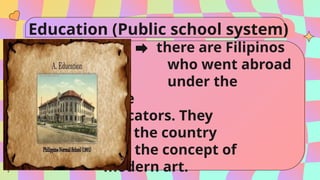
Education (Public school system)
there are Filipinos
who went abroad
to study under the
tutelage of the
American educators. They
came back to the country
carrying the concept of
modern art.
Modern art
refers to the practice of
art in the 1860’s- 1960’s.
Urbanization,
consumerism, rise of the
middle class, change in
the political system,
secularization, and
technology way art of
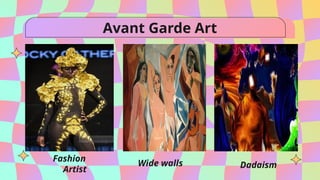
Avant Garde in nature- a group of
people
- who develop new forms
expressions surprising ideas in art,
literature, etc.
- modern art develop even after
World War II, which led to
Contemporary way of art making
Avant Garde Art
Fashion
Artist
Wide walls Dadaism
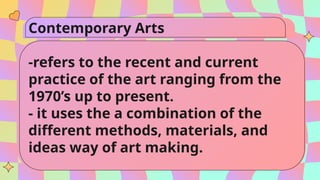
Contemporary Arts
-refers to the recent and current
practice of the art ranging from the
1970’s up to present.
- it uses the a combination of the
different methods, materials, and
ideas way of art making.
LESSON-1-HISTORICAL-BACKGROUND-LESSON (1).pptx

LESSON-1-HISTORICAL-BACKGROUND-LESSON (1).pptx

  • 1.
  • 2.
    Objectives: 1. appreciate thehistory of the art in the Philippines 2. define contemporary arts 3. familiarize with the significant development in the Philippine art
  • 3.
    what is art? itis a diverse range of human activities that involves creative or imaginative expression, often intended to evoke an emotional or aesthetic response. The Different kinds of arts are drawing, painting,sculpting, and etc.
  • 4.
    what is thevalue of art, and how can value be put in an artpiece? To give meaning to an artwork, it should be express not only by the storkes or movement, yet it should be also expressed with emotions that carry a significant, sentimental, and relatable meaning. That is the true essence of a work of art.
  • 5.
    where does artin the Philippines came from?
  • 6.
    —Someone Famous “This isa quote, words full of wisdom that someone important said and inspire anyone who reads them.” THREE (3) MAJOR TRADITIONS DEVELOPMENT OF PHILLIPPINE ART 1. Ethnic Tradition 2. Spanish Colonial Tradition 3. American Colonial / Contemporary Traditions
  • 7.
    The origin ofart in a particular country is from the people itself. The tradition of the first poppulation passed down to its descendants of the current generation to either expand, prolong, remember or improve the art itself. ETHNIC TRADITION
  • 9.
    This type ofart style is given to us from the colonization from the Spanish era. The reign of Spanish here in the Philippines for 333years have brought a very deep marked art style that isnt easy to erase or forget SPANISH COLONIAL ART
  • 11.
    This artform isnow depicted as the most widely known artform in our country. The American Colonial Contemporary Artform is brought to the Philippines when the reign of Americans was still on full effect right after the colonization of the Spanishs. The difference is that the American is still widely used till this day as it is contemporary. AMERICAN COLONIAL CONTEMPORARY ART
  • 13.
    Ethnic Traditions Do youknow what helps you make your point clear? Lists like this one: They’re simple You can organize your ideas clearly You’ll never forget to buy milk! And the most important thing: the audience won’t miss the point of your presentation
  • 14.
    Dance depending on the areawhere our ancestors thrive live. High lands- dance steps were imitations of the movements of
  • 16.
    Visual arts examples:, pottery,weaving, wood carving and metal crafting. - they used available materials surroundings
  • 17.
    one of theoldest and most widespread of the decorative arts, consisting of objects made of clay and hardened with heat. Pottery
  • 19.
    Weaving is amethod of textile production in which two distinct sets of yarns or threads are interlaced at right angles to form a fabric or cloth.
  • 21.
    Wood carving isa type of woodworking in which people use knives, chisels, and other hand-held wood carving tools to create figures
  • 23.
    Metal Crafting The craftof metalworking involves shaping, cutting and joining metal material to form an object.
  • 24.
    Tongkaling brass bells,used as an amulet or as a musical instrument.) Anklet from the Bagobo, Mindanao) Maranao bracelet, gilt
  • 25.
    Architecture they used localmaterials such as, anahaw, bamboo, cogon, cane, rattan and light constructing materials were accessible in their area.
  • 27.
    Folk literature includes folkspeeches, songs, and folk narratives ( verbalized their experiences )
  • 29.
    Theater art tribal presentationsand rituals was the early theatrical performances depicting their beliefs.
  • 31.
    Music our ancestors alsohave their indigenous musical instruments like the bamboo flutes and brass gongs.
  • 33.
    they tend toreplaced the Philippine indigenous arts into Western art forms. Spanish colonial
  • 34.
    Religion and secularization (transformation)greatly influence the art in the Philippines. Friars- members of new religious Augustinians, Carmelites, Dominicans and Franciscans. - ones supervising the practice of arts in the country through propagating Christianity and
  • 35.
  • 36.
    Theater arts secular and andreligious plays like the “komedya” became
  • 37.
  • 38.
    Dance performed in social functions: valse, fandango, polka,and minuet (A minuet is a social dance of French origin for two
  • 39.
    TINIKLING Philippine dance whichinvolves two individual performers hitting bamboo poles, using them to beat, tap, and slide on the ground, in co- ordination with one or more dancers who steps over and in between poles
  • 40.
    Cariñosa A Philippine national dancefrom the María Clara suite of Philippine folk dances
  • 41.
    HALADAYA FESTIVAL The northernmost townof Cebu, Daanbantayan, celebratesa festival in honor of the warrior Datu Daya of Kandaya.
  • 42.
    Sinulog Festival Dance ritualof the miraculous image of Sto. Niño.
  • 43.
    Music introduced the piano, andother western instruments. Bands and Orchestra multiplied as the
  • 44.
    Visual arts introduced painting andsculpture mostly depicted religious subject matter.
  • 45.
    Architecture stones and bricksused in constructing building like churches, houses, and government offices.
  • 46.
    Baroque Churches ofVigan Historic
  • 47.
    Spaniards art inthe country did not result in a pure Western art but a mix of Western and Indigenous art.
  • 48.
    After more than 300years of Spanish colonization the American took over the country which led the declaration of the independence on June 12, 1898.
  • 49.
    American period they brought manychanges in the politics, economy, education, and culture of the Philippines.
  • 50.
    Education (Public schoolsystem) there are Filipinos who went abroad to study under the tutelage of the American educators. They came back to the country carrying the concept of modern art.
  • 51.
    Modern art refers tothe practice of art in the 1860’s- 1960’s. Urbanization, consumerism, rise of the middle class, change in the political system, secularization, and technology way art of
  • 52.
    Avant Garde innature- a group of people - who develop new forms expressions surprising ideas in art, literature, etc. - modern art develop even after World War II, which led to Contemporary way of art making
  • 53.
  • 54.
    Contemporary Arts -refers tothe recent and current practice of the art ranging from the 1970’s up to present. - it uses the a combination of the different methods, materials, and ideas way of art making.