DIPLOMADO DE ENSEÑANZA DEL INGLÉS  MODULO III METHODOLOGY AND PRACTICUM IN  ENGLISH TEACHING II “ INSTRUCTIONAL PLAN” COURSE INSTRUCTOR: MARÍA ISABEL HERNÁNDEZ  ROMERO UNIVERSIDAD DE QUINTANA ROO División de Ciencias Políticas y Humanidades Departamento de Lengua y Comunicación
INTRODUCTION  The purpose of this e-portfolio is to give a brief demonstration how important is the technology in teaching learning process specially to students of bachilleres giving them some tools necessary for their learning. In this workshop we use some vocabulary, grammar in past tense and some exercises, according with the topic.
Instructional  Plan
LEARNER OBJETIVE The students  identify the regular and irregular verbs in past tense, using a short model text. For developing the reading and writing skills.
RATIONALE In a real context the students need to communicate in different situations, the use of past tense is very required when they want to situate an action in the past. They need to distinguish from regular and irregular verbs, so they can make the necessary changes, without making mistakes in the form of the past tense of the different verbs.
BRIDGING In this lesson the students will identify the verbs from regular to irregular ones, this can be done because in their previous classes they have already made some written and listened exercises of verbs, so they can make an effort and identify the regular from the irregular verbs.
PRE-ASSESMENT The teacher writes in the whiteboard some verbs in present simple and ask their students:What is the past tense of be? (was / were_ irregular verb)What is the past tense of want? (wanted_ regular verb)What is the difference between the past tense of the two verbs?
AIDS Copies, reading materials,(any article  in past tense), whiteboard.
TIME 50 minutes
INSTRUCTOR ACTIVITIES The teacher asks the students some questions in past tense. What did you do yesterday? Did you go to the cinema last weekend? The teacher explains the activities, giving them the handouts of the article to read. The teacher monitors the activities. Checking that the students are reading  the article.
The teacher gives the instructions: “Please underline the regular and irregular verbs found in the text”. The teacher asks the students to classify the regular and irregular verbs in the text, putting them in a table. To end this class the students will write a short paragraph about past events, using the verbs listed in the last activity; reading two or three examples.
LEARNER  ACTIVITIES Learners answer the teacher questions in past tense.  What did you do yesterday? Did you go to the cinema last weekend? The students receive the instructions given by the teacher.  The learners read the article and underline the regular and irregular verbs found in the text.
The students classify the verbs underlined in regular and irregular verbs using a table. Learners will write a short paragraph in past tense using the verbs from the text And at the end 2 or 3 students read their composition.
SUMMARY Make sure the students recognise the differences between regular and irregular verbs.
POST ASSESSMENT   Check the students practice and reinforce the knowledge, by questions.
LINKAGES  The next class the students will study the past tense in WH- questions. Luis Angel Yam Cruz. Emsad San Pedro Peralta Miguel Caamal Palomo. Plantel Nicolas Bravo Rafael Nuñez Garcia. Plantel Rio Hondo Gilberto Mora Hernandez. EMSaD Zamora
Classroom management  Plan
CLASSROOM ENVIRONMENT Comfortable, neat, and clean classroom;  20 to 25 students in group work organization .
PHILOSOPHY STATEMENT We believe students need to develop a feeling of responsibility.  The classroom needs to be a safe and secure environment for all students before positive learning can begin. The strengths of students need to be understood and utilized and weaknesses need to be addressed in a positive way. Discipline is the responsibility of the person to him or her self and to the greater community.  Discipline is being respectful to one’s self and to others.
CLASSROOM ORGANIZATION In a  lockstep organization  the students receive the instructions of the teacher, this is because all of them will get the same information, this is for the first part of the session when the teacher explains the activities and gives the handouts.  The teacher will organize the next activities (reading and underlining) in an  individual work.  In group work  the students will  classify the regular and irregular verbs in the text, putting them in a table. In pair work the  students will write a short paragraph about past events.
CLASSROOM PRESENCE AND CONTROL The instructions given by the teacher will be in a clear way for the students, using vocabulary they have already mastered. The instructions will be written in the whiteboard. Motivate students for taking the risk to speak.
TEACHERS ROLES Organizer.  The teacher will organize carefully all the activities done in class by students. Giving the correct instructions. Guide and monitor:   in this stage the teacher will monitor the reading solving any doubt, to correct mistakes and guide  the next activities.
ENRICHING THE ATMOSPHERE The teacher will create a positive classroom climate, creating an effective learning environment, creating confidence in the students so they can take the risk and participate in class. Motivating the students using dynamics and strategies. Even though some times we have many students, we need to take a look at the students in an individual way, calling them by their names and establish limits in the relationship.
Lesson planning  principles can be applied to the design of effective English Lenguaje lessons. Lesson planning is an essential tool that every beginning teacher must exercise because of many reasons: Lead you through the class, have something tangible to come back o wherever you feel lost.  To  review any teaching point( grammar, vocabulary etc.) Combine different activities or exercises thinking about the students characteristics. There are conditions that need to be addressed include thoughts on physical conditions of the classroom , noise, seating, lighting, taking notes. In the lesson planning we must identify strategies to facilitate learning in large groups; strategies to manage the dynamics of discusión. Strategies that involve cooperative/collaborative learning in the classroom. Conclusions and reflections
Different formats for lesson planning are used by different institutions, lesson are different in structures  and style. It is important  to decide which component you should include in your plan. A plan can be a medicanism  for decisión making, helping the teacher think about content, materials, sequencing, timing, and activities. The two most important principles behind good lesson planning are variety and flexibility. An effective classroom management  identify and demostrate knowledge of principles and a range of strategies to promote positive relationship, cooperation and purposeful leraning in the class. The physical conditions of the classroom should be the best posible, so students feel comfortable.  Every teaching  situation is going to have advantages and disadvantages. The classroom  should be heat, clean and orderly in appearence. Blackboards should be erased. Chairs are appropiately arranged take advantage of visuals. The classroom should be free of external noises.
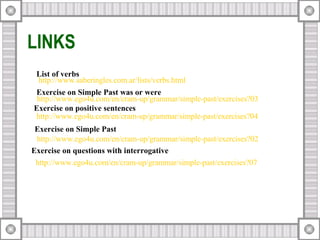
http://www.ego4u.com/en/cram-up/grammar/simple-past/exercises?03 LINKS  Exercise on Simple Past was or were Exercise on positive sentences http://www.ego4u.com/en/cram-up/grammar/simple-past/exercises?04 http://www.ego4u.com/en/cram-up/grammar/simple-past/exercises?02 Exercise on Simple Past  Exercise on questions with interrogative http://www.ego4u.com/en/cram-up/grammar/simple-past/exercises?07 http://www.saberingles.com.ar/lists/verbs.html List of verbs

LessóN Pl[1]..

  • 1.
    DIPLOMADO DE ENSEÑANZADEL INGLÉS MODULO III METHODOLOGY AND PRACTICUM IN ENGLISH TEACHING II “ INSTRUCTIONAL PLAN” COURSE INSTRUCTOR: MARÍA ISABEL HERNÁNDEZ ROMERO UNIVERSIDAD DE QUINTANA ROO División de Ciencias Políticas y Humanidades Departamento de Lengua y Comunicación
  • 2.
    INTRODUCTION Thepurpose of this e-portfolio is to give a brief demonstration how important is the technology in teaching learning process specially to students of bachilleres giving them some tools necessary for their learning. In this workshop we use some vocabulary, grammar in past tense and some exercises, according with the topic.
  • 3.
  • 4.
    LEARNER OBJETIVE Thestudents identify the regular and irregular verbs in past tense, using a short model text. For developing the reading and writing skills.
  • 5.
    RATIONALE In areal context the students need to communicate in different situations, the use of past tense is very required when they want to situate an action in the past. They need to distinguish from regular and irregular verbs, so they can make the necessary changes, without making mistakes in the form of the past tense of the different verbs.
  • 6.
    BRIDGING In thislesson the students will identify the verbs from regular to irregular ones, this can be done because in their previous classes they have already made some written and listened exercises of verbs, so they can make an effort and identify the regular from the irregular verbs.
  • 7.
    PRE-ASSESMENT The teacherwrites in the whiteboard some verbs in present simple and ask their students:What is the past tense of be? (was / were_ irregular verb)What is the past tense of want? (wanted_ regular verb)What is the difference between the past tense of the two verbs?
  • 8.
    AIDS Copies, readingmaterials,(any article in past tense), whiteboard.
  • 9.
  • 10.
    INSTRUCTOR ACTIVITIES Theteacher asks the students some questions in past tense. What did you do yesterday? Did you go to the cinema last weekend? The teacher explains the activities, giving them the handouts of the article to read. The teacher monitors the activities. Checking that the students are reading the article.
  • 11.
    The teacher givesthe instructions: “Please underline the regular and irregular verbs found in the text”. The teacher asks the students to classify the regular and irregular verbs in the text, putting them in a table. To end this class the students will write a short paragraph about past events, using the verbs listed in the last activity; reading two or three examples.
  • 12.
    LEARNER ACTIVITIESLearners answer the teacher questions in past tense. What did you do yesterday? Did you go to the cinema last weekend? The students receive the instructions given by the teacher. The learners read the article and underline the regular and irregular verbs found in the text.
  • 13.
    The students classifythe verbs underlined in regular and irregular verbs using a table. Learners will write a short paragraph in past tense using the verbs from the text And at the end 2 or 3 students read their composition.
  • 14.
    SUMMARY Make surethe students recognise the differences between regular and irregular verbs.
  • 15.
    POST ASSESSMENT Check the students practice and reinforce the knowledge, by questions.
  • 16.
    LINKAGES Thenext class the students will study the past tense in WH- questions. Luis Angel Yam Cruz. Emsad San Pedro Peralta Miguel Caamal Palomo. Plantel Nicolas Bravo Rafael Nuñez Garcia. Plantel Rio Hondo Gilberto Mora Hernandez. EMSaD Zamora
  • 17.
  • 18.
    CLASSROOM ENVIRONMENT Comfortable,neat, and clean classroom; 20 to 25 students in group work organization .
  • 19.
    PHILOSOPHY STATEMENT Webelieve students need to develop a feeling of responsibility. The classroom needs to be a safe and secure environment for all students before positive learning can begin. The strengths of students need to be understood and utilized and weaknesses need to be addressed in a positive way. Discipline is the responsibility of the person to him or her self and to the greater community. Discipline is being respectful to one’s self and to others.
  • 20.
    CLASSROOM ORGANIZATION Ina lockstep organization the students receive the instructions of the teacher, this is because all of them will get the same information, this is for the first part of the session when the teacher explains the activities and gives the handouts. The teacher will organize the next activities (reading and underlining) in an individual work. In group work the students will classify the regular and irregular verbs in the text, putting them in a table. In pair work the students will write a short paragraph about past events.
  • 21.
    CLASSROOM PRESENCE ANDCONTROL The instructions given by the teacher will be in a clear way for the students, using vocabulary they have already mastered. The instructions will be written in the whiteboard. Motivate students for taking the risk to speak.
  • 22.
    TEACHERS ROLES Organizer. The teacher will organize carefully all the activities done in class by students. Giving the correct instructions. Guide and monitor: in this stage the teacher will monitor the reading solving any doubt, to correct mistakes and guide the next activities.
  • 23.
    ENRICHING THE ATMOSPHEREThe teacher will create a positive classroom climate, creating an effective learning environment, creating confidence in the students so they can take the risk and participate in class. Motivating the students using dynamics and strategies. Even though some times we have many students, we need to take a look at the students in an individual way, calling them by their names and establish limits in the relationship.
  • 24.
    Lesson planning principles can be applied to the design of effective English Lenguaje lessons. Lesson planning is an essential tool that every beginning teacher must exercise because of many reasons: Lead you through the class, have something tangible to come back o wherever you feel lost. To review any teaching point( grammar, vocabulary etc.) Combine different activities or exercises thinking about the students characteristics. There are conditions that need to be addressed include thoughts on physical conditions of the classroom , noise, seating, lighting, taking notes. In the lesson planning we must identify strategies to facilitate learning in large groups; strategies to manage the dynamics of discusión. Strategies that involve cooperative/collaborative learning in the classroom. Conclusions and reflections
  • 25.
    Different formats forlesson planning are used by different institutions, lesson are different in structures and style. It is important to decide which component you should include in your plan. A plan can be a medicanism for decisión making, helping the teacher think about content, materials, sequencing, timing, and activities. The two most important principles behind good lesson planning are variety and flexibility. An effective classroom management identify and demostrate knowledge of principles and a range of strategies to promote positive relationship, cooperation and purposeful leraning in the class. The physical conditions of the classroom should be the best posible, so students feel comfortable. Every teaching situation is going to have advantages and disadvantages. The classroom should be heat, clean and orderly in appearence. Blackboards should be erased. Chairs are appropiately arranged take advantage of visuals. The classroom should be free of external noises.
  • 26.
    http://www.ego4u.com/en/cram-up/grammar/simple-past/exercises?03 LINKS Exercise on Simple Past was or were Exercise on positive sentences http://www.ego4u.com/en/cram-up/grammar/simple-past/exercises?04 http://www.ego4u.com/en/cram-up/grammar/simple-past/exercises?02 Exercise on Simple Past Exercise on questions with interrogative http://www.ego4u.com/en/cram-up/grammar/simple-past/exercises?07 http://www.saberingles.com.ar/lists/verbs.html List of verbs