In the media industry, there are many laws made
up of contracts, ethics and legal rights.

In the following slides, I will explain contracts,
ethics and legal rights in detail.
Legal & Contractual
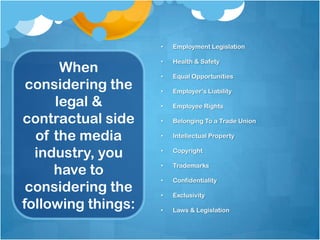
•   Employment Legislation

                    •   Health & Safety
      When          •   Equal Opportunities
 considering the    •   Employer’s Liability

     legal &        •   Employee Rights

contractual side    •   Belonging To a Trade Union

  of the media      •   Intellectual Property


  industry, you     •   Copyright


     have to        •   Trademarks

                    •   Confidentiality
 considering the    •   Exclusivity
following things:   •   Laws & Legislation
Employment Legislation
Employment legislation are all of the laws
which keep all of the employees safe,
comfortable and out of danger. These laws
are also made to avoid employees being
discriminated and bullied by issues such as
racism, sexism, homophobia and age
discrimination
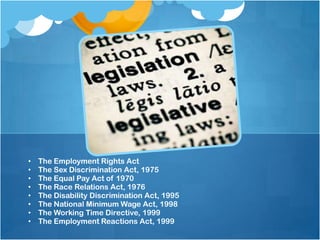
•   The Employment Rights Act
•   The Sex Discrimination Act, 1975
•   The Equal Pay Act of 1970
•   The Race Relations Act, 1976
•   The Disability Discrimination Act, 1995
•   The National Minimum Wage Act, 1998
•   The Working Time Directive, 1999
•   The Employment Reactions Act, 1999
Contracts
There are two types of contracts in
the media industry, those are:


     Exclusivity         Confidentiality
Exclusivity

An exclusivity contract is a contract
which allows you to work and deal
with just the company you are working
for and no other company until your
contract ends.
Confidentiality
Confidentiality contracts are contracts in
which you sign to agree that you will not
discuss or reveal any details of the project
you’re working on to anyone who isn’t
working on the project due to the project
you’re working on being a secret.
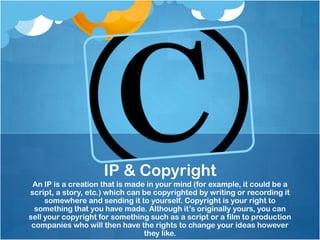
IP & Copyright
 An IP is a creation that is made in your mind (for example, it could be a
script, a story, etc.) which can be copyrighted by writing or recording it
     somewhere and sending it to yourself. Copyright is your right to
  something that you have made. Although it’s originally yours, you can
sell your copyright for something such as a script or a film to production
 companies who will then have the rights to change your ideas however
                                 they like.
Codes of Practice
Codes of Practice are rules that are set by the company you are
working for which say how you can act in your workplace. These
   rules are set to make sure that every worker is behaving
appropriately and making the company have a good reputation.
Representations & Ethics
The codes of practice help out towards the
representation of the company you’re working for
because whilst people are following the codes of
practice they are being ethical and avoiding
racism, homophobia, sexism, etc. Companies do
this by creating guidelines.

Legal, Ethical & Contractual Assignment

  • 2.
    In the mediaindustry, there are many laws made up of contracts, ethics and legal rights. In the following slides, I will explain contracts, ethics and legal rights in detail.
  • 3.
  • 4.
    Employment Legislation • Health & Safety When • Equal Opportunities considering the • Employer’s Liability legal & • Employee Rights contractual side • Belonging To a Trade Union of the media • Intellectual Property industry, you • Copyright have to • Trademarks • Confidentiality considering the • Exclusivity following things: • Laws & Legislation
  • 5.
    Employment Legislation Employment legislationare all of the laws which keep all of the employees safe, comfortable and out of danger. These laws are also made to avoid employees being discriminated and bullied by issues such as racism, sexism, homophobia and age discrimination
  • 7.
    The Employment Rights Act • The Sex Discrimination Act, 1975 • The Equal Pay Act of 1970 • The Race Relations Act, 1976 • The Disability Discrimination Act, 1995 • The National Minimum Wage Act, 1998 • The Working Time Directive, 1999 • The Employment Reactions Act, 1999
  • 8.
  • 9.
    There are twotypes of contracts in the media industry, those are: Exclusivity Confidentiality
  • 10.
    Exclusivity An exclusivity contractis a contract which allows you to work and deal with just the company you are working for and no other company until your contract ends.
  • 11.
    Confidentiality Confidentiality contracts arecontracts in which you sign to agree that you will not discuss or reveal any details of the project you’re working on to anyone who isn’t working on the project due to the project you’re working on being a secret.
  • 12.
    IP & Copyright An IP is a creation that is made in your mind (for example, it could be a script, a story, etc.) which can be copyrighted by writing or recording it somewhere and sending it to yourself. Copyright is your right to something that you have made. Although it’s originally yours, you can sell your copyright for something such as a script or a film to production companies who will then have the rights to change your ideas however they like.
  • 13.
    Codes of Practice Codesof Practice are rules that are set by the company you are working for which say how you can act in your workplace. These rules are set to make sure that every worker is behaving appropriately and making the company have a good reputation.
  • 14.
    Representations & Ethics Thecodes of practice help out towards the representation of the company you’re working for because whilst people are following the codes of practice they are being ethical and avoiding racism, homophobia, sexism, etc. Companies do this by creating guidelines.