Drainage:
Drainage of highway is important because water damage
highway structure in many ways. The water which are
dangerous for highways are:
1. Rainwater: Cause erosion on surface or may seep
downward and damage pavement (surface drains)
2. Groundwater: May rise by capillary action and damage
pavement (sub-surface damage)
3. Water body: May cross a road (river/stream) and may
damage road (cross drainage)
Pavement and shoulder
The highway engineer should ensure that:
1. the precipitation is removed from the
pavement as soon as possible
2. the highway drainage is done efficiently.
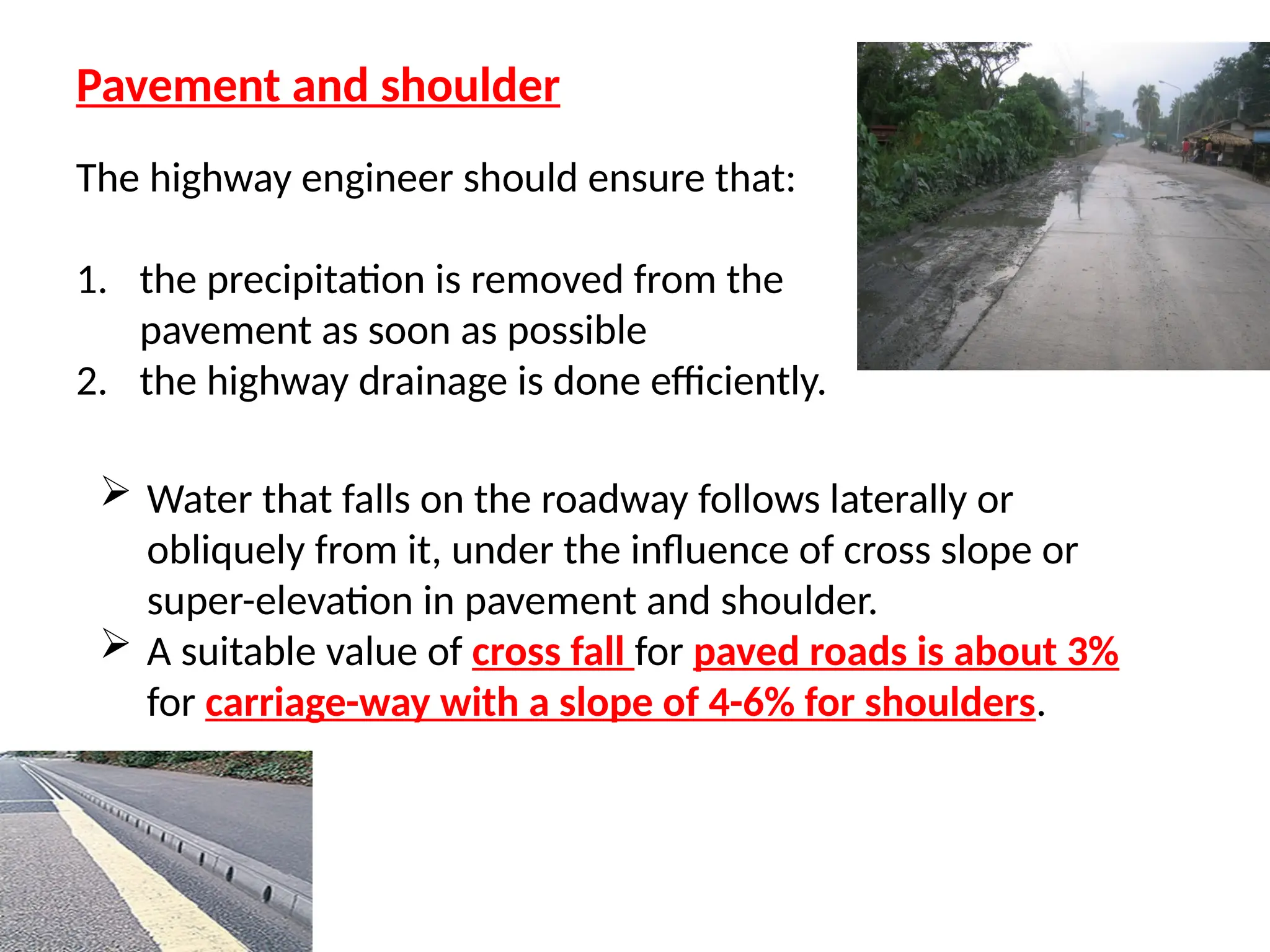
 Water that falls on the roadway follows laterally or
obliquely from it, under the influence of cross slope or
super-elevation in pavement and shoulder.
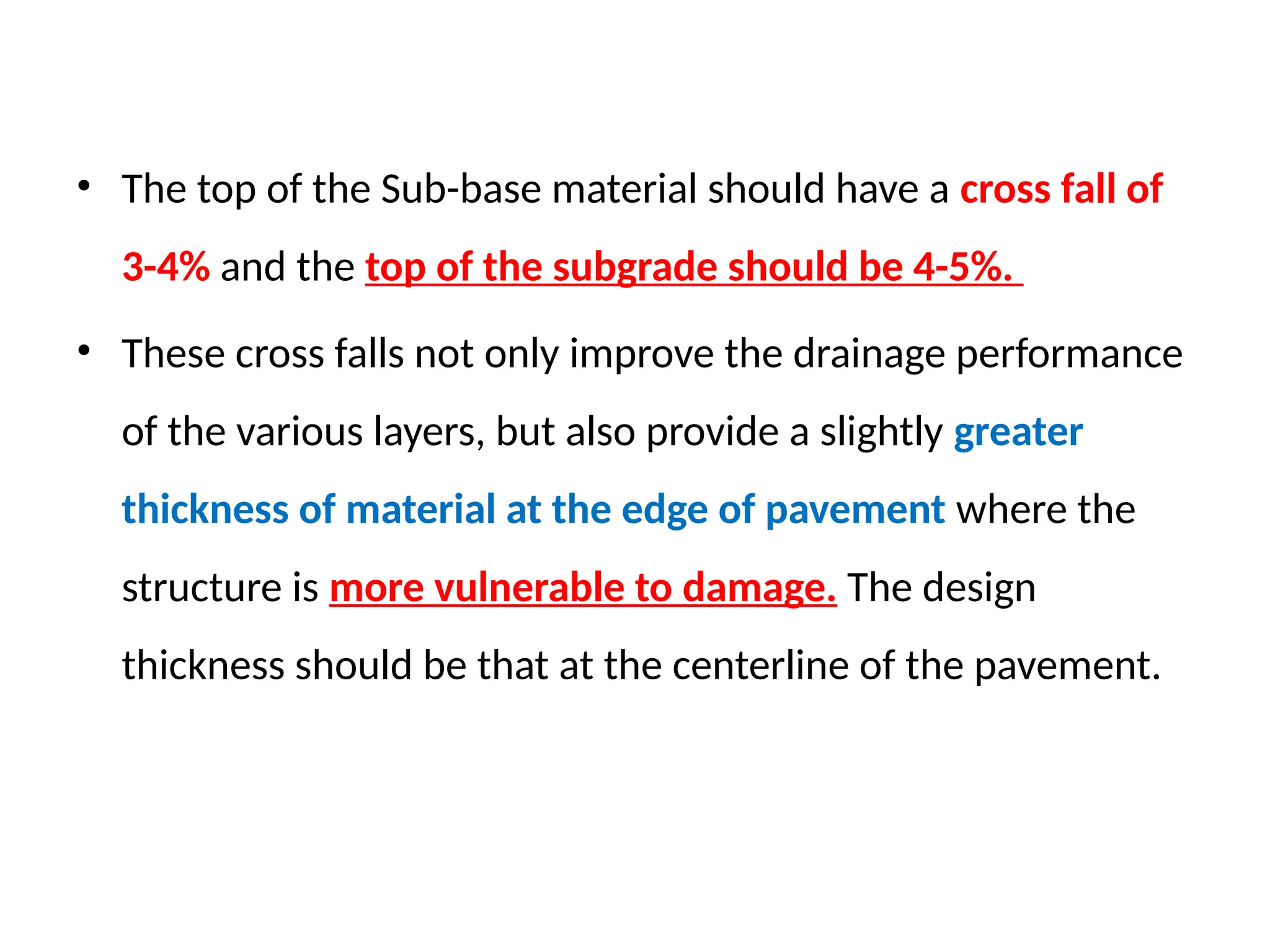
 A suitable value of cross fall for paved roads is about 3%
for carriage-way with a slope of 4-6% for shoulders.
Pavement layers is an essential element of structural design
because the strength of the subgrade used for design
purposes . This depends on the moisture content during the
most likely adverse conditions.
It is evident that benefits are derived from applying steeper
cross falls to layers at successive depths in the pavement.
Drainage with pavement layers:
• The top of the Sub-base material should have a cross fall of
3-4% and the top of the subgrade should be 4-5%.
• These cross falls not only improve the drainage performance
of the various layers, but also provide a slightly greater
thickness of material at the edge of pavement where the
structure is more vulnerable to damage. The design
thickness should be that at the centerline of the pavement.
Roadway Drainage in Fill(Embankment):
Most common practice is to let the flow continue of the
shoulder and down the slope to the natural ground. This
will cause little erosion. If the slopes are protected by turf
or if the water flows across the roadway and down the
slope as a sheet.
- The unprotected slopes wash badly.
- Irregularities in shoulder or pavement concentrate
water into small streams causing erosion e.g. at low points
of sag.
- One way of preventing washing out of side slope is
to retain the water at the outer edge of shoulder.
Highway Drainage of Run-Off in Cut Section:
Water from traveled way and back slope is collected in
roadside channel, trapezoidal or triangular in section.
-Design is based on slow to be accommodated.
- Intercepting channel (sometimes called crown
ditch) may be employed at the top of cut slope.
Advantages of Highway drainage in cut
1. It prevents erosion of the back slope by runoff from
the hill above.
2. it intercepts water, not allowing it to enter side
drain which may cause greater discharge in the side
drains.
Roadway Drainage in Urban Areas:
Water falling on the road surface generally flows along the
gutter to curbs or gutter inlets and from them to
underground storm drains.
1. The cost is expensive as compared to rural area
drainage works.
2. Project cost by certain justification; i.e. large
volume of traffic, pedestrian’s property(as sidewalk).
3. Designed to limit the spread of water over the
traveled lanes to some arbitrary maximum.
4. Inlets at low points should be designed for
longer return period.
Highway Drainage Runoff in Rural Areas:
Generally open unlined drains with suitable x-section and
longitudinal slope are provided parallel to road
alignment, called longitudinal drains.
On embankment they are provided on one or both side
beyond the toe. In cutting area it is installed on either
side of formation.
Construction of deep open drains may be undesirable
(restriction of space). In such cases covered drains or
drainage trenches properly filled with layers of coarse
sand and gravel may be used.
Cross Drainage Structures & Works
 When a low lying areas or a stream or a river
crosses the alignment of road, arrangements
should be made to allow the water of stream or
river to pass on the road.
 The water is passed by structures known as cross
drainage works. These include road culverts,
bridge and cause ways.
1. CULVERTS:
 Encompasses practically all closed conduits
employed for highway drainage with the exception
of storm drains (covered pipes in urban area):
(a) A drain sewer or water covers totally enclosed and
usually of a size through which a man can pass.
(b) An opening through on embankment for the
conveyance of water by means of pipe or an enclosed
channel.
2. Bridges:
Bridges are used in runoff drainage systems where
stream span is large, for which special designs are
made almost in every case > 6m.
Common culvert types are:
1. Pipe culvert
2. Arch pipe culvert
3. Box culvert
4. Bridge culvert
5. Arch culvert
Points to Remember on the Effects of Subsurface
Water:
1. Subgrade may be damaged by the subsoil water.
2. Subsoil water as free water, when water table is high or
it may come up by capillary action to the subgrade.
3. Subgrade should be of self draining material so that it
may pass off the percolation water that comes to it to
remain dry and stable.
4. But if subgrade is of soft and retentive soil, or there are
underground spring bringing free water to the
subgrade, for that reason, subsurface drains should be
constructed about 1 ½’ to 2’ below the formation level
to carry away water from the subgrade and thus keep it
dry.

Lectures on Pavement Shoulder design and construction.pptx

  • 1.
    Drainage: Drainage of highwayis important because water damage highway structure in many ways. The water which are dangerous for highways are: 1. Rainwater: Cause erosion on surface or may seep downward and damage pavement (surface drains) 2. Groundwater: May rise by capillary action and damage pavement (sub-surface damage) 3. Water body: May cross a road (river/stream) and may damage road (cross drainage)
  • 2.
    Pavement and shoulder Thehighway engineer should ensure that: 1. the precipitation is removed from the pavement as soon as possible 2. the highway drainage is done efficiently.  Water that falls on the roadway follows laterally or obliquely from it, under the influence of cross slope or super-elevation in pavement and shoulder.  A suitable value of cross fall for paved roads is about 3% for carriage-way with a slope of 4-6% for shoulders.
  • 3.
    Pavement layers isan essential element of structural design because the strength of the subgrade used for design purposes . This depends on the moisture content during the most likely adverse conditions. It is evident that benefits are derived from applying steeper cross falls to layers at successive depths in the pavement. Drainage with pavement layers:
  • 4.
    • The topof the Sub-base material should have a cross fall of 3-4% and the top of the subgrade should be 4-5%. • These cross falls not only improve the drainage performance of the various layers, but also provide a slightly greater thickness of material at the edge of pavement where the structure is more vulnerable to damage. The design thickness should be that at the centerline of the pavement.
  • 5.
    Roadway Drainage inFill(Embankment): Most common practice is to let the flow continue of the shoulder and down the slope to the natural ground. This will cause little erosion. If the slopes are protected by turf or if the water flows across the roadway and down the slope as a sheet. - The unprotected slopes wash badly. - Irregularities in shoulder or pavement concentrate water into small streams causing erosion e.g. at low points of sag. - One way of preventing washing out of side slope is to retain the water at the outer edge of shoulder.
  • 6.
    Highway Drainage ofRun-Off in Cut Section: Water from traveled way and back slope is collected in roadside channel, trapezoidal or triangular in section. -Design is based on slow to be accommodated. - Intercepting channel (sometimes called crown ditch) may be employed at the top of cut slope. Advantages of Highway drainage in cut 1. It prevents erosion of the back slope by runoff from the hill above. 2. it intercepts water, not allowing it to enter side drain which may cause greater discharge in the side drains.
  • 7.
    Roadway Drainage inUrban Areas: Water falling on the road surface generally flows along the gutter to curbs or gutter inlets and from them to underground storm drains. 1. The cost is expensive as compared to rural area drainage works. 2. Project cost by certain justification; i.e. large volume of traffic, pedestrian’s property(as sidewalk). 3. Designed to limit the spread of water over the traveled lanes to some arbitrary maximum. 4. Inlets at low points should be designed for longer return period.
  • 8.
    Highway Drainage Runoffin Rural Areas: Generally open unlined drains with suitable x-section and longitudinal slope are provided parallel to road alignment, called longitudinal drains. On embankment they are provided on one or both side beyond the toe. In cutting area it is installed on either side of formation. Construction of deep open drains may be undesirable (restriction of space). In such cases covered drains or drainage trenches properly filled with layers of coarse sand and gravel may be used.
  • 9.
    Cross Drainage Structures& Works  When a low lying areas or a stream or a river crosses the alignment of road, arrangements should be made to allow the water of stream or river to pass on the road.  The water is passed by structures known as cross drainage works. These include road culverts, bridge and cause ways.
  • 10.
    1. CULVERTS:  Encompassespractically all closed conduits employed for highway drainage with the exception of storm drains (covered pipes in urban area): (a) A drain sewer or water covers totally enclosed and usually of a size through which a man can pass. (b) An opening through on embankment for the conveyance of water by means of pipe or an enclosed channel.
  • 11.
    2. Bridges: Bridges areused in runoff drainage systems where stream span is large, for which special designs are made almost in every case > 6m. Common culvert types are: 1. Pipe culvert 2. Arch pipe culvert 3. Box culvert 4. Bridge culvert 5. Arch culvert
  • 12.
    Points to Rememberon the Effects of Subsurface Water: 1. Subgrade may be damaged by the subsoil water. 2. Subsoil water as free water, when water table is high or it may come up by capillary action to the subgrade. 3. Subgrade should be of self draining material so that it may pass off the percolation water that comes to it to remain dry and stable. 4. But if subgrade is of soft and retentive soil, or there are underground spring bringing free water to the subgrade, for that reason, subsurface drains should be constructed about 1 ½’ to 2’ below the formation level to carry away water from the subgrade and thus keep it dry.