Section 26-1
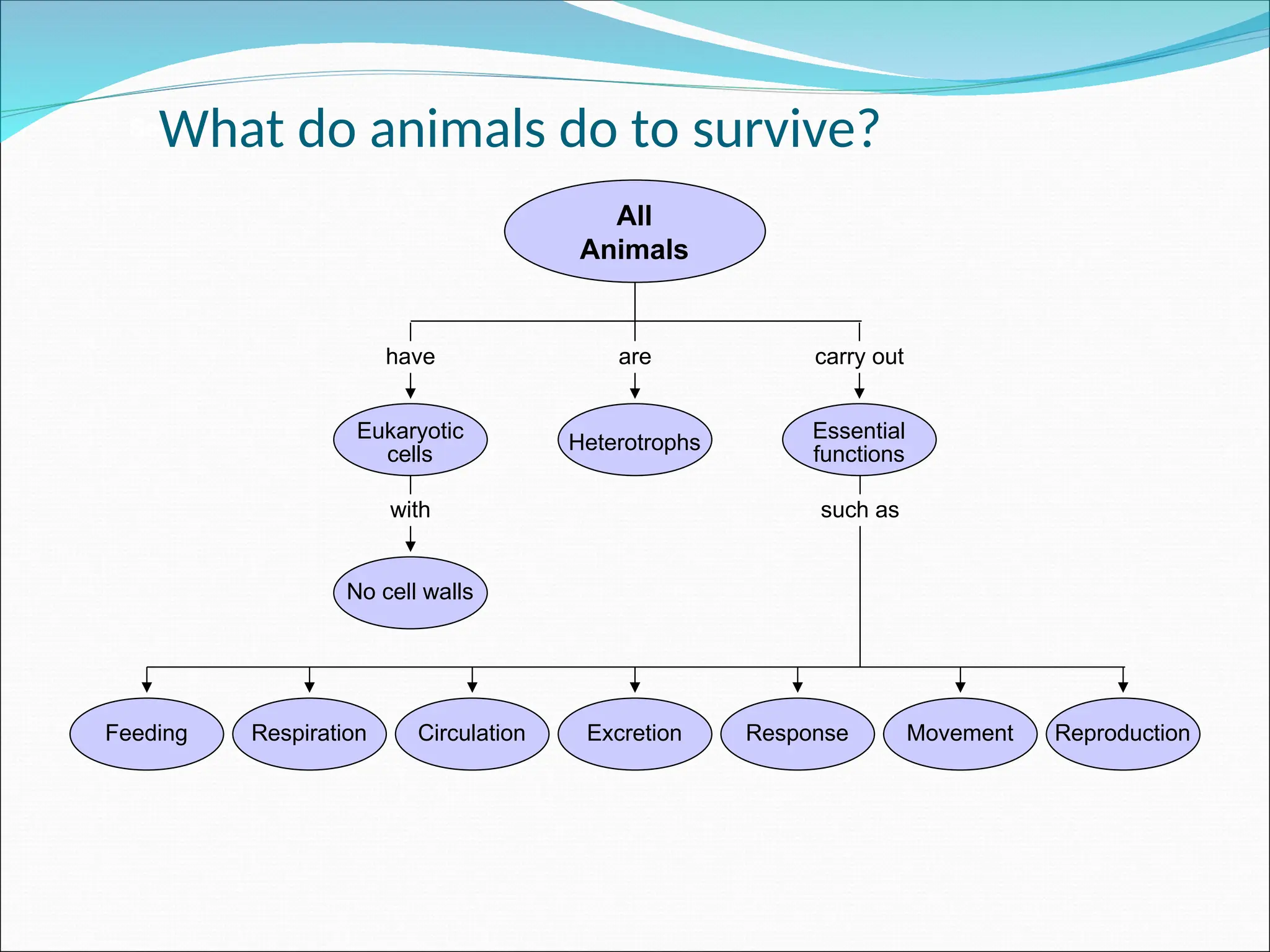
have arecarry out
with such as
What do animals do to survive?
All
Animals
Feeding Respiration Circulation Excretion Response Movement Reproduction
Eukaryotic
cells
Heterotrophs
Essential
functions
No cell walls
3.
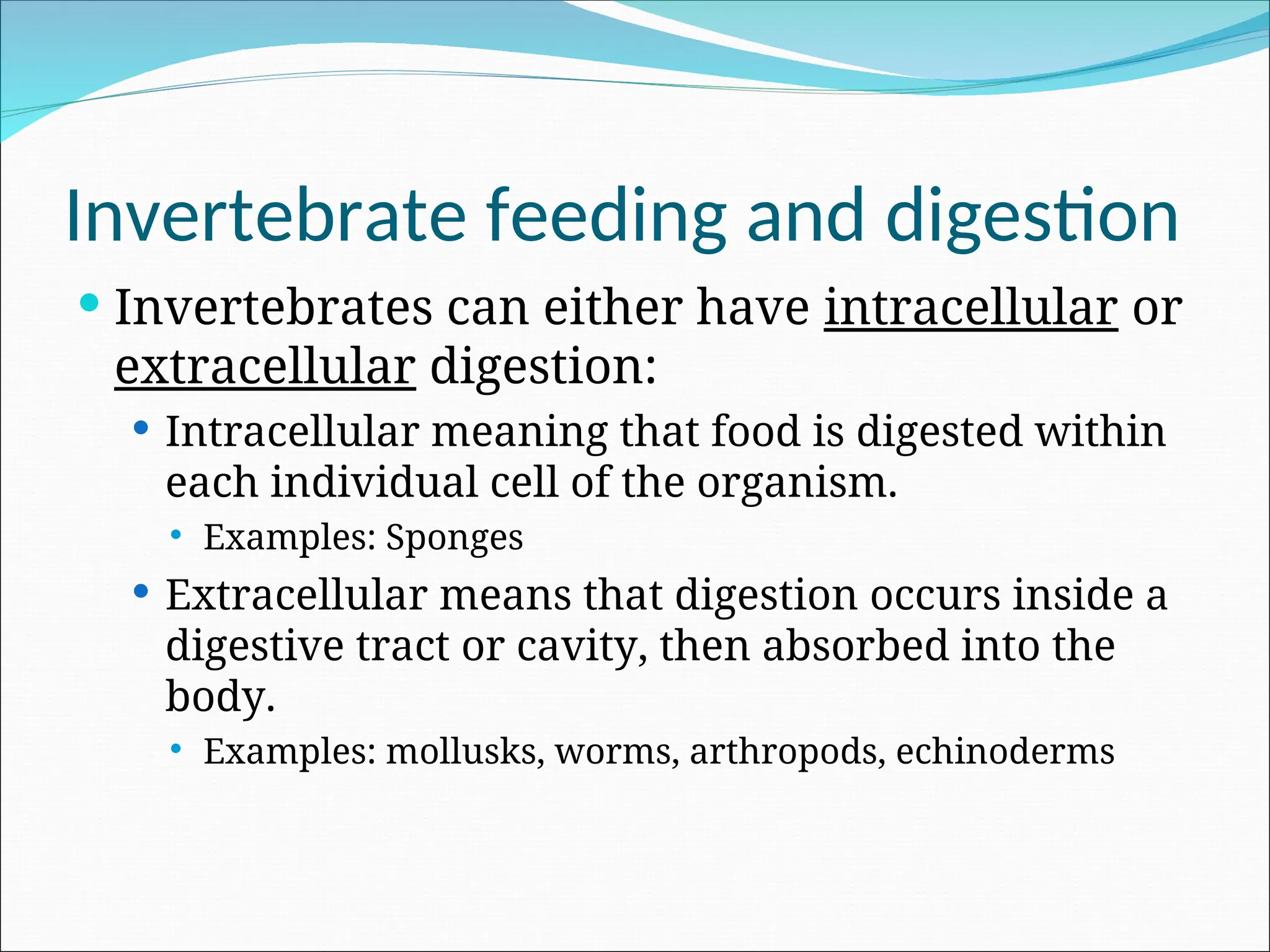
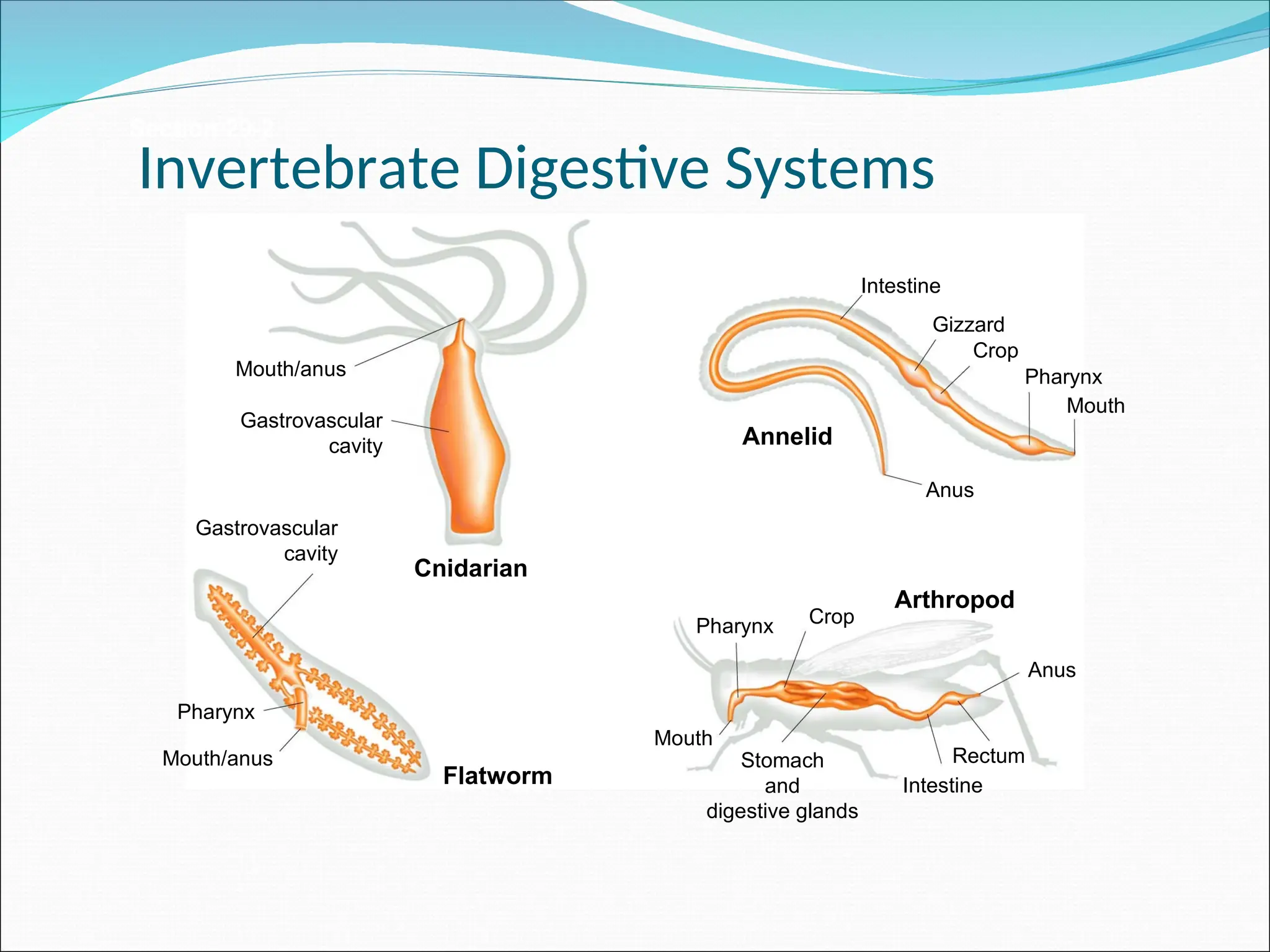
Invertebrate feeding anddigestion
Invertebrates can either have intracellular or
extracellular digestion:
Intracellular meaning that food is digested within
each individual cell of the organism.
Examples: Sponges
Extracellular means that digestion occurs inside a
digestive tract or cavity, then absorbed into the
body.
Examples: mollusks, worms, arthropods, echinoderms
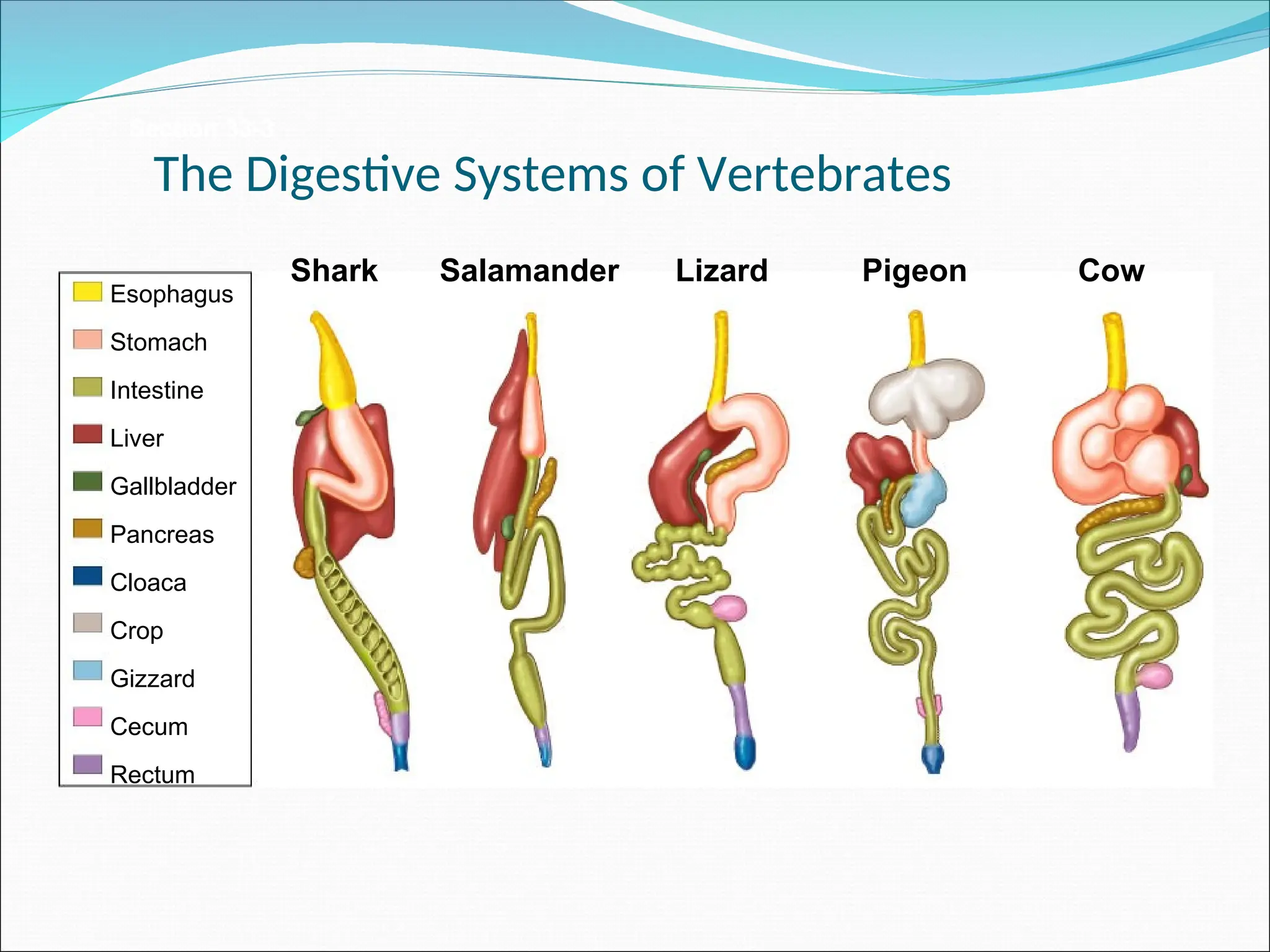
The digestivesystems of many vertebrates
have organs that are well adapted for
different feeding habits.
Carnivores, such as sharks have short
digestive tracts that produce fast-acting
digestive enzymes.
Herbivores have long intestines that have
large colonies of bacteria that help in
digesting the cellulose fibers in plant tissues.
Vertebrate Digestive Systems
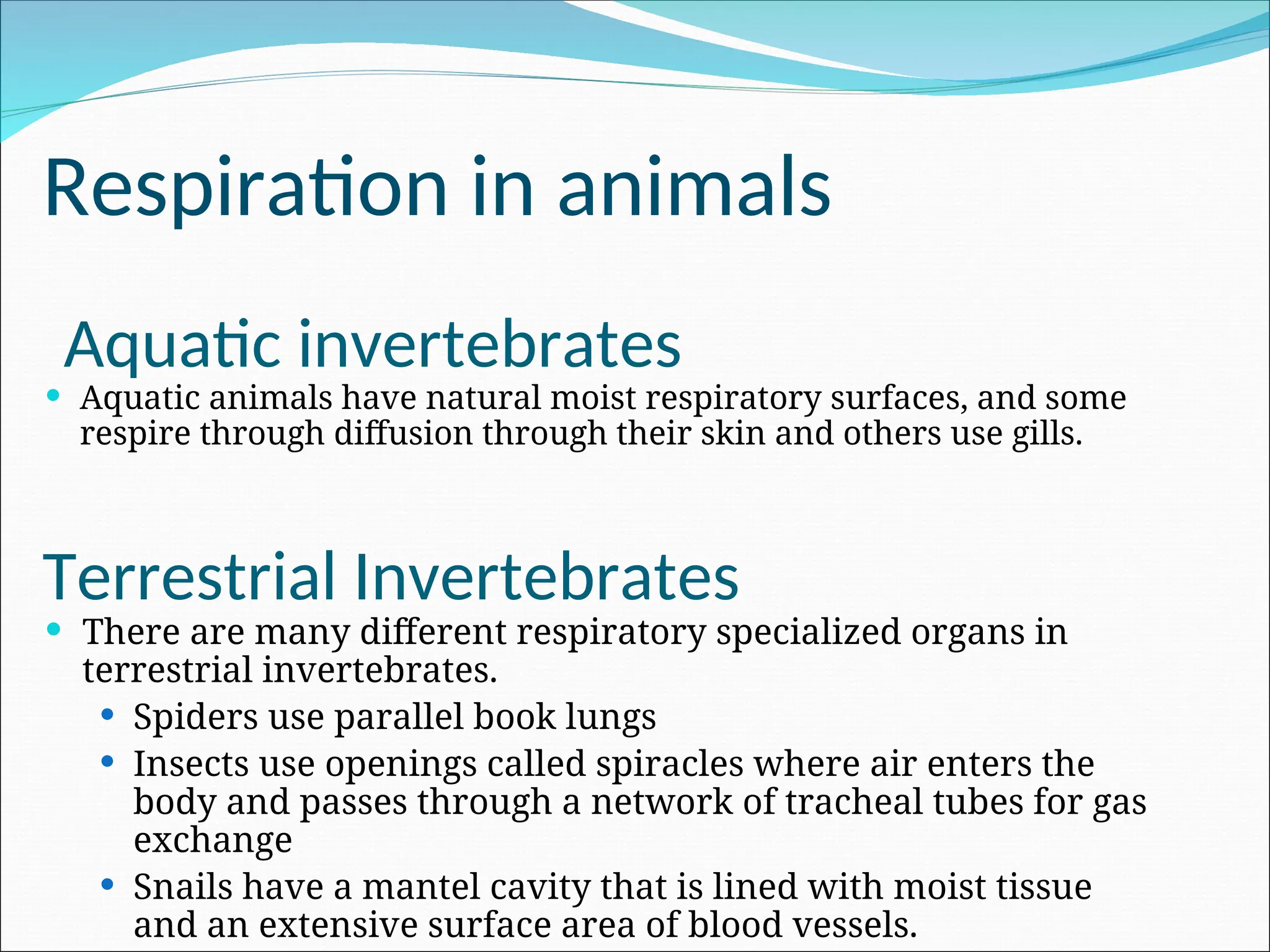
Aquatic invertebrates
Aquaticanimals have natural moist respiratory surfaces, and some
respire through diffusion through their skin and others use gills.
There are many different respiratory specialized organs in
terrestrial invertebrates.
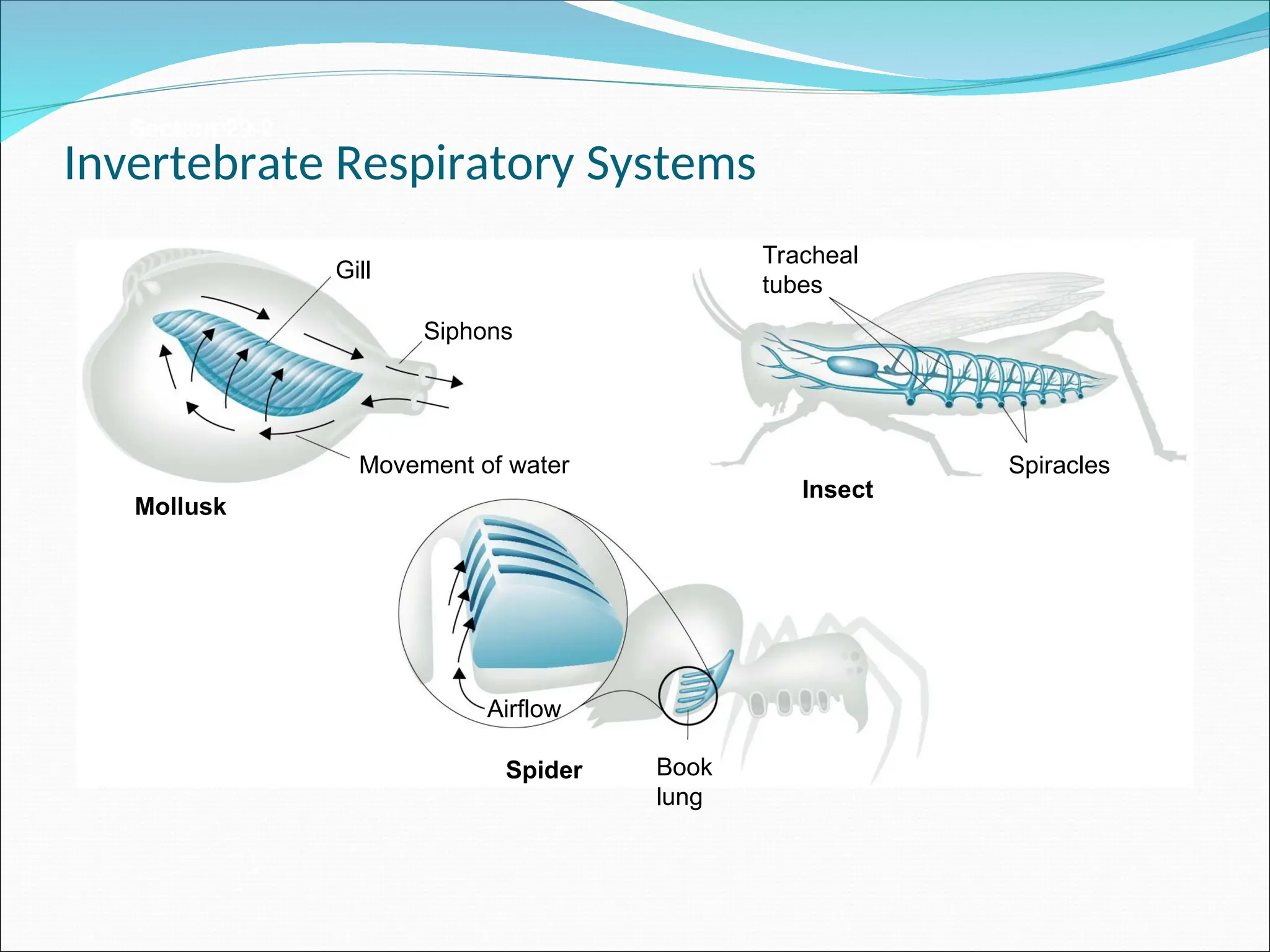
Spiders use parallel book lungs
Insects use openings called spiracles where air enters the
body and passes through a network of tracheal tubes for gas
exchange
Snails have a mantel cavity that is lined with moist tissue
and an extensive surface area of blood vessels.
Terrestrial Invertebrates
Respiration in animals
Vertebrate respiratory systems
Chordates have one of two basic structures for
respiration:
Gills – for aquatic chordates
Example: tunicates, fish and amphibians
Lungs - for terrestrial chordates
Examples: adult amphibians, reptiles, birds, and
mammals
10.
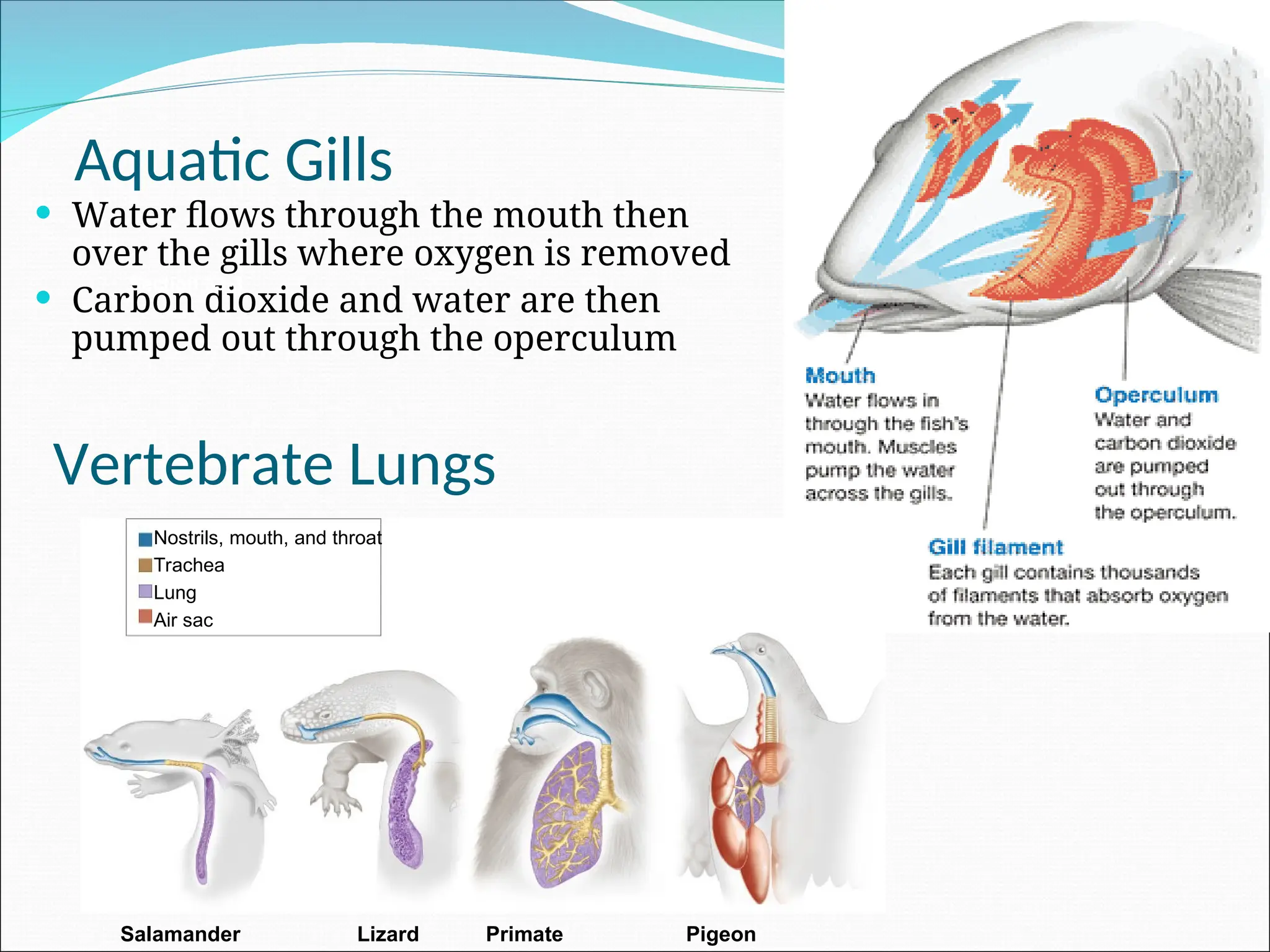
Aquatic Gills
Waterflows through the mouth then
over the gills where oxygen is removed
Carbon dioxide and water are then
pumped out through the operculum
Section 33-3
Salamander Lizard Pigeon
Primate
Nostrils, mouth, and throat
Trachea
Lung
Air sac
Vertebrate Lungs
11.
Open circulatory systems
Blood is pumped through a system of vessels BUT is only partially contained in
these vessels. Most of the time the blood is pumped through open cavities.
This system is beneficial to arthropods and mollusks because the blood comes into
direct contact organs and tissues.
A closed system forces blood through vessels that extend throughout
the body of the organism. Since the system is “closed” the blood never
leaves the vessels.
This system is beneficial to larger organisms because the blood is kept at a
higher pressure which allows for more efficient circulation within the
organism.
Closed circulatory systems
Invertebrate circulatory system can range from a
system where cells simply do diffusion to take in
oxygen or systems with many hearts and even
systems with one heart.
Invertebrate Circulatory systems
12.
Section 29-2
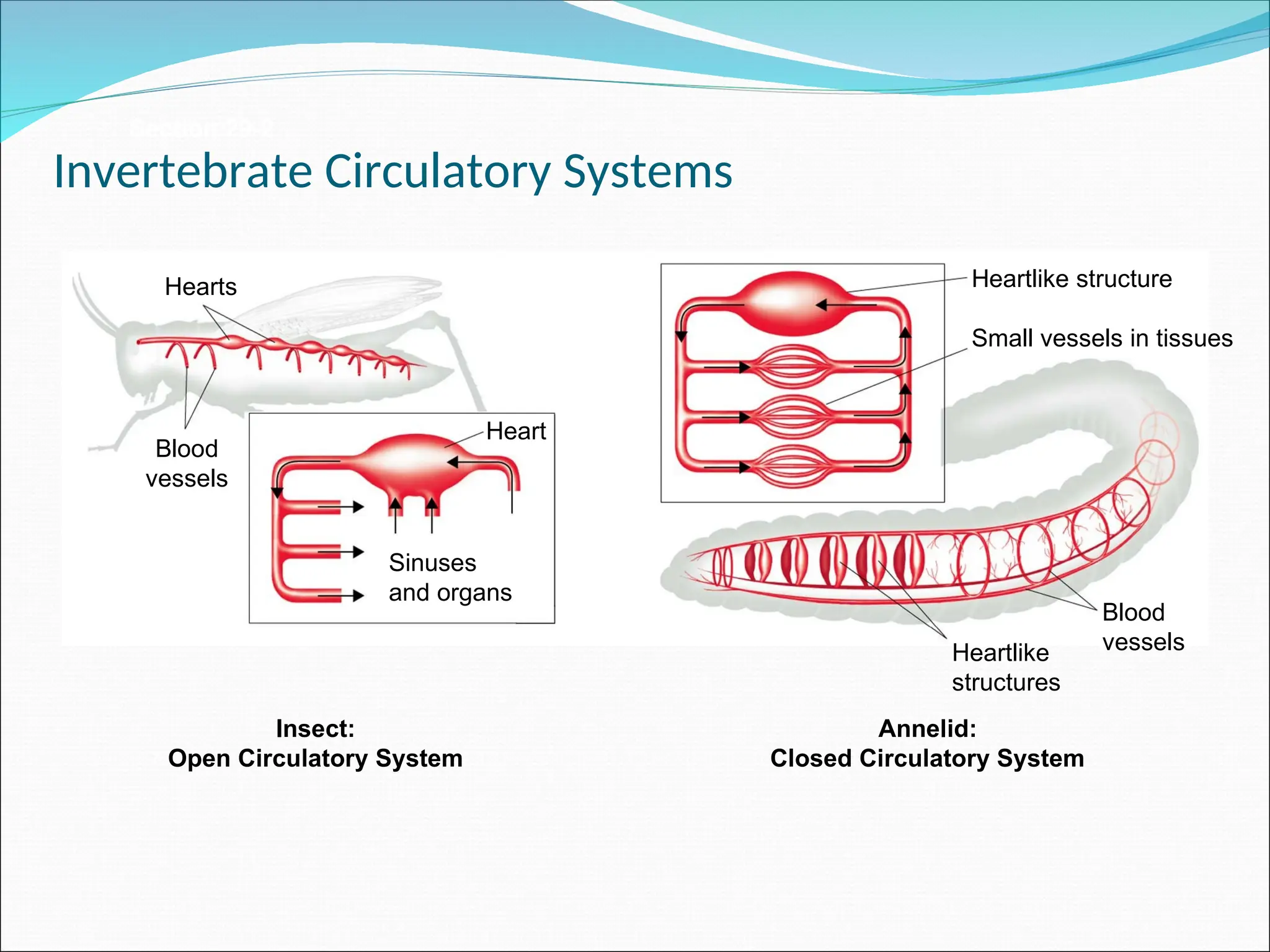
Insect:
Open CirculatorySystem
Annelid:
Closed Circulatory System
Heartlike
structures
Blood
vessels
Heartlike structure
Small vessels in tissues
Blood
vessels
Hearts
Heart
Sinuses
and organs
Invertebrate Circulatory Systems
13.
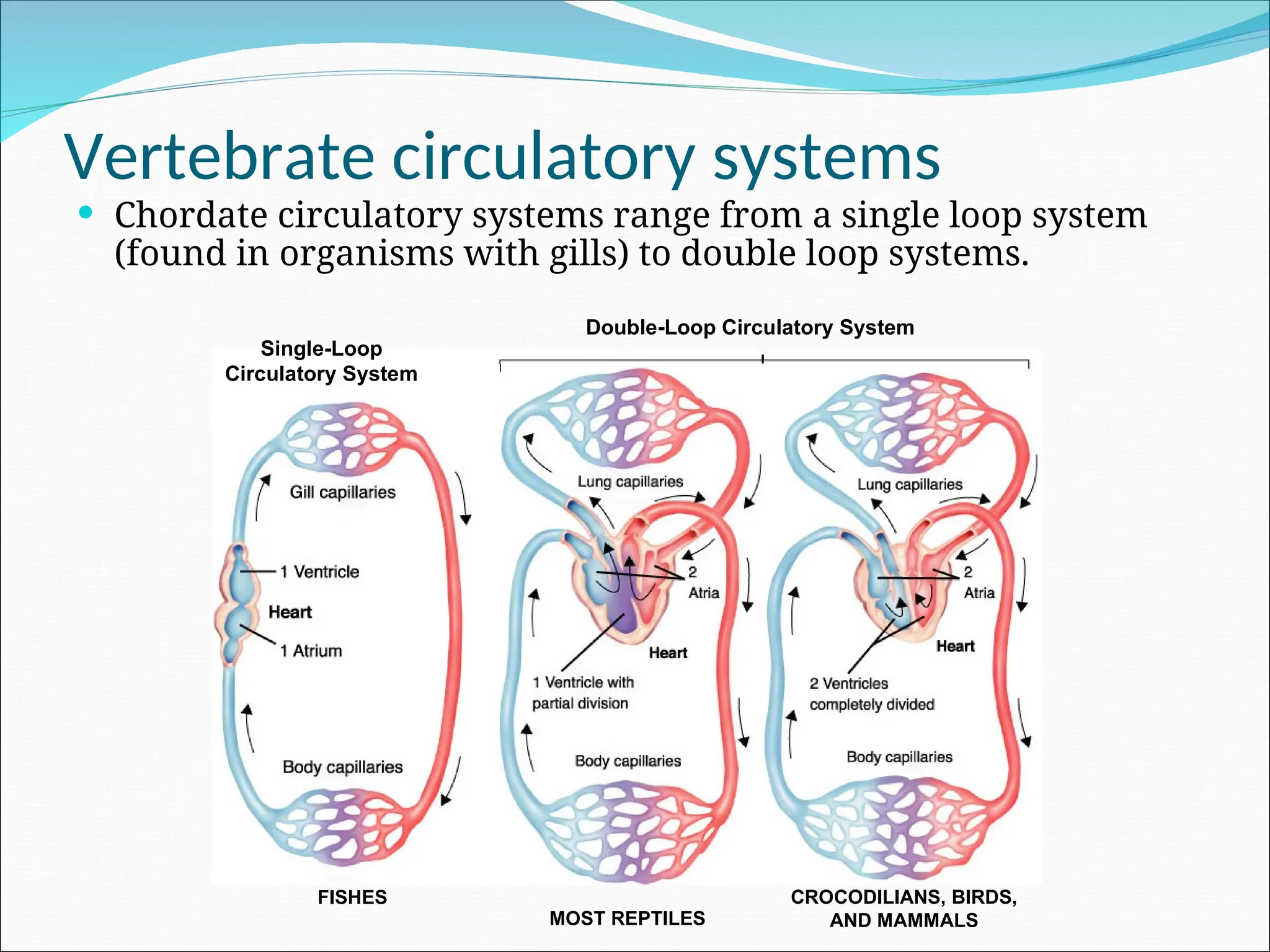
Vertebrate circulatory systems
Chordate circulatory systems range from a single loop system
(found in organisms with gills) to double loop systems.
Double-Loop Circulatory System
Single-Loop
Circulatory System
FISHES
MOST REPTILES
CROCODILIANS, BIRDS,
AND MAMMALS
14.
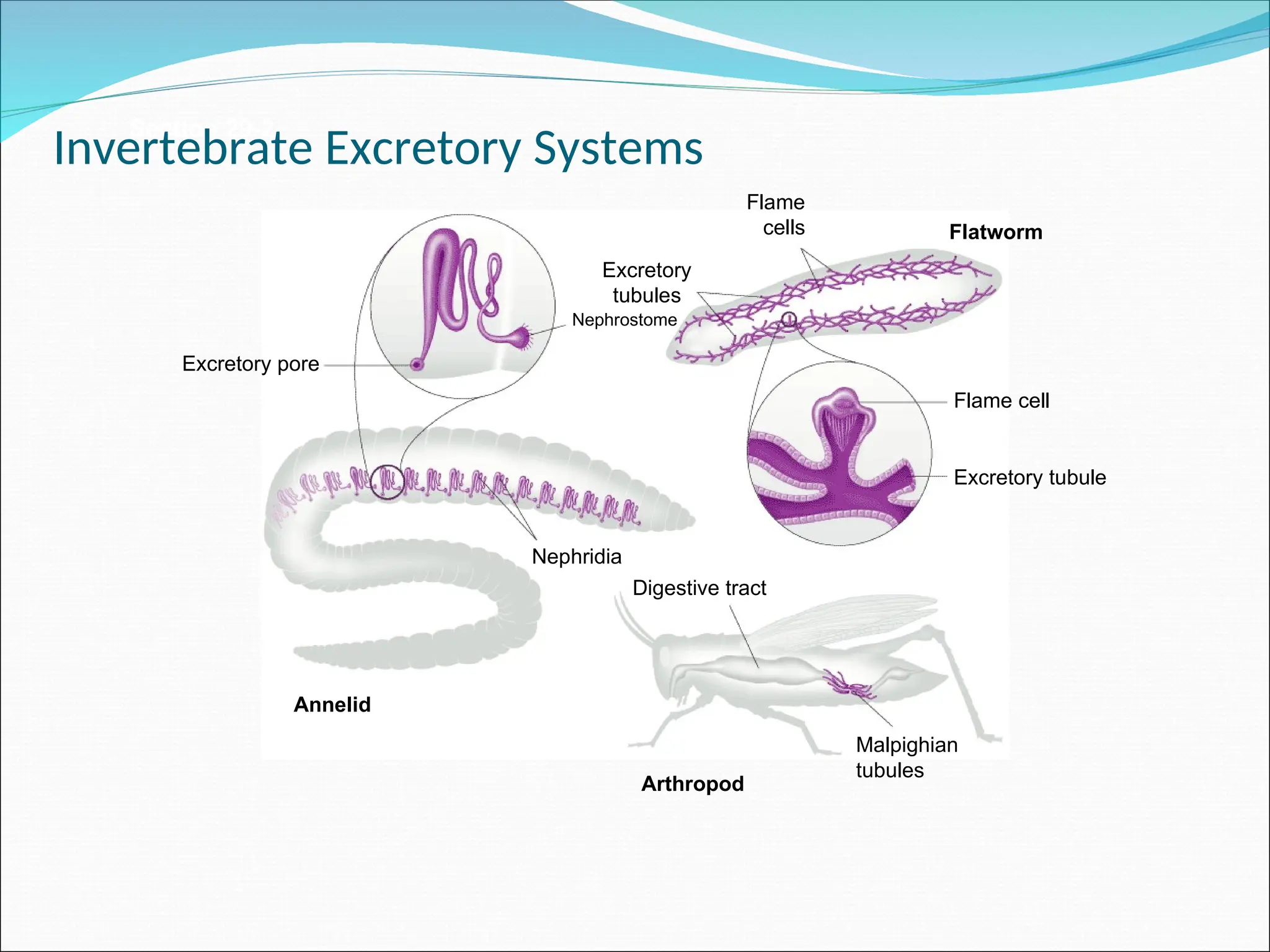
Aquatic Invertebrate excretion
Some aquatic invertebrates simply diffuse ammonia out their
bodies into the surrounding water where it is diluted and carried
away.
Example: sponges, cnidarians, and some round worms.
Other aquatic invertebrates swell up with water, dilute the wastes
and excrete the wastes through tiny pores in their skin.
Terrestrial Invertebrate excretion
Many terrestrial invertebrates convert ammonia into urea.
Urea is a simpler nitrogenous compound that is much less
toxic than ammonia.
This urea is eliminated from the body in urine
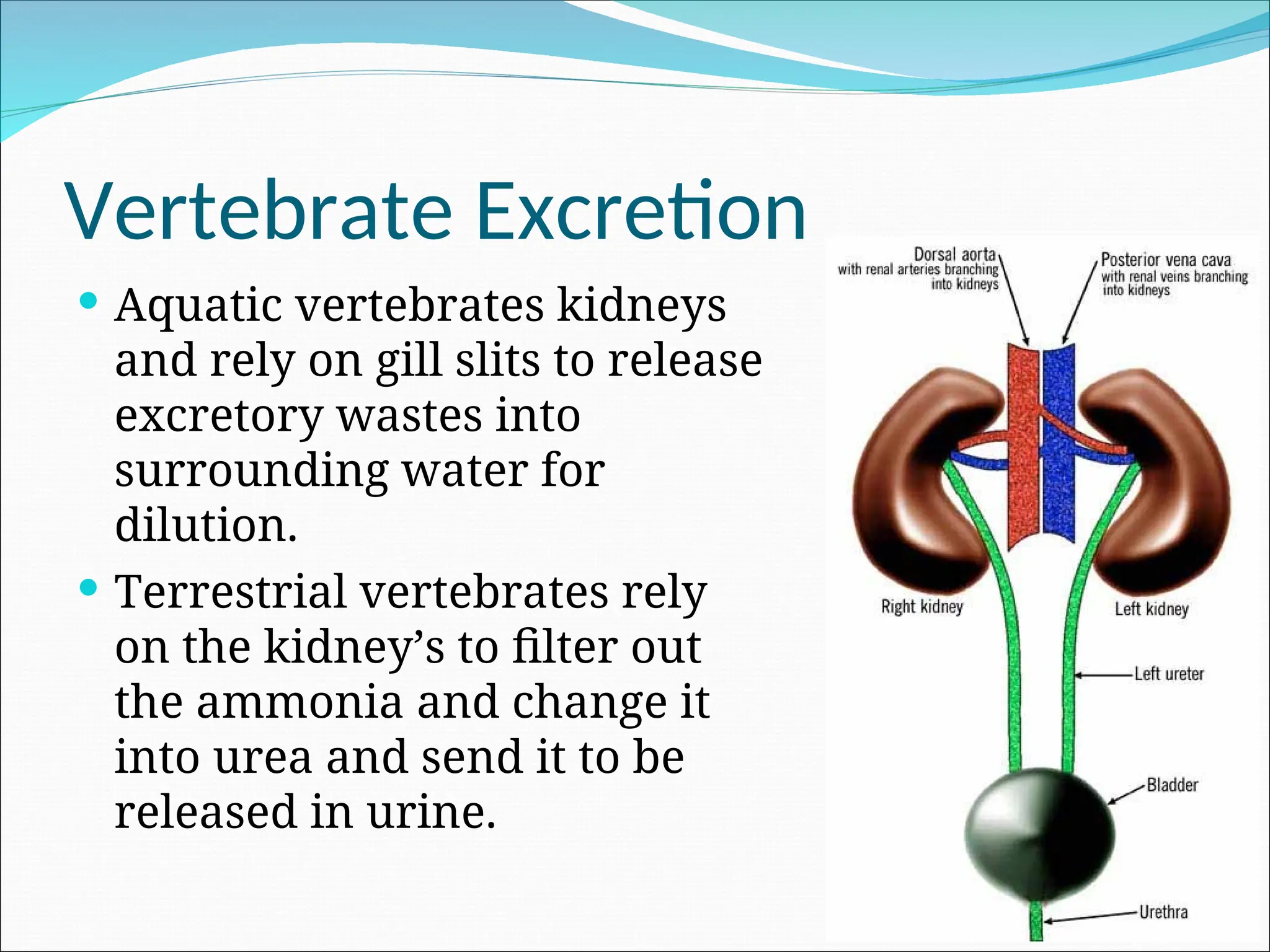
Vertebrate Excretion
Aquaticvertebrates kidneys
and rely on gill slits to release
excretory wastes into
surrounding water for
dilution.
Terrestrial vertebrates rely
on the kidney’s to filter out
the ammonia and change it
into urea and send it to be
released in urine.
17.
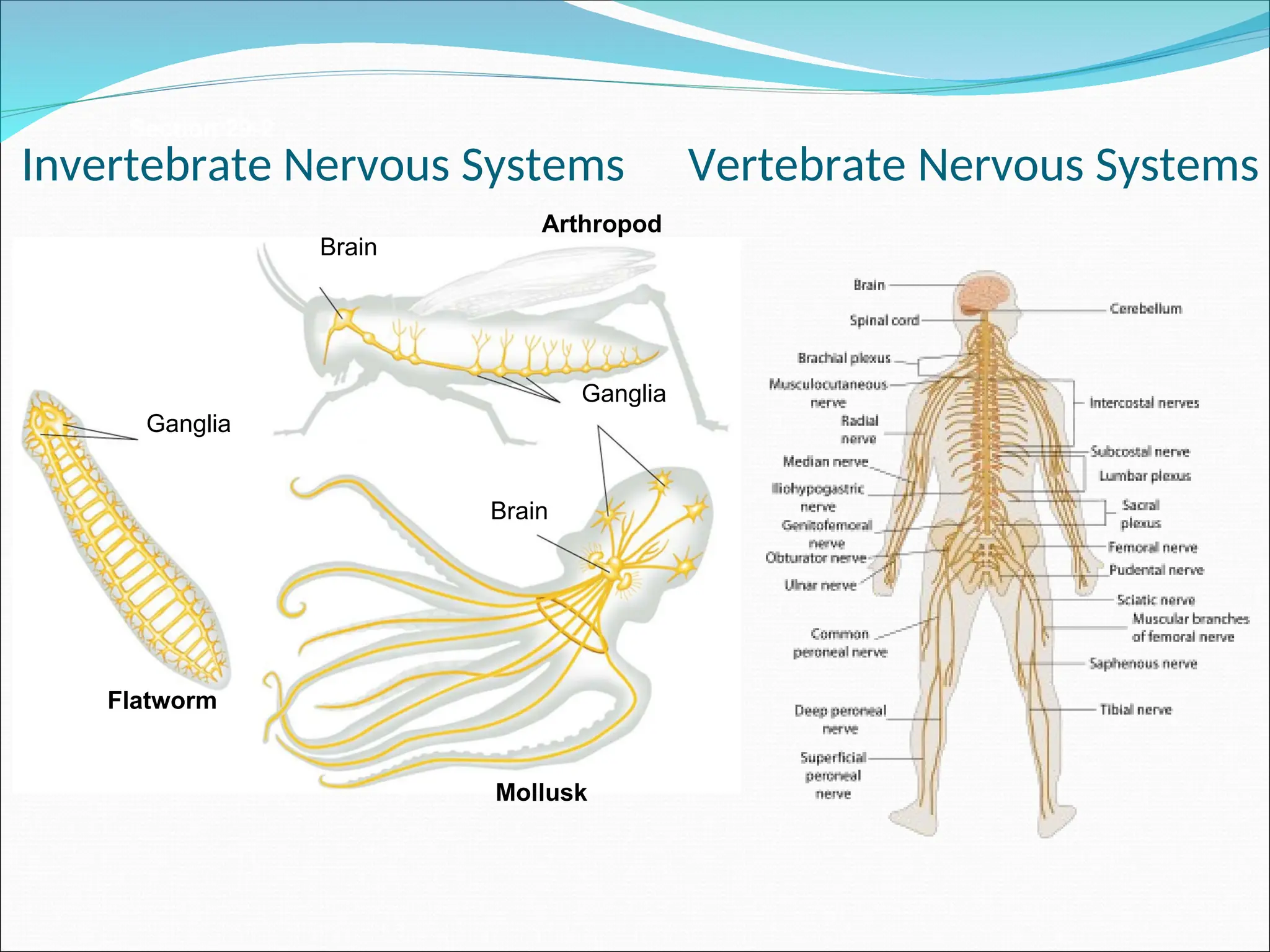
Nervous system
Allanimals respond to their environment
through specialized cells called nerve cells.
In most animals nerve cells hook together to
form the nervous system.
Nervous systems can range from fairly
simple to extremely complex.
The arrangement of nerve cells from phylum
to phylum can be dramatically different.


![The animal kingdom.pptxrb[1]](https://cdn.slidesharecdn.com/ss_thumbnails/theanimalkingdom-pptxrb1-121031071444-phpapp02-thumbnail.jpg?width=640&height=640&fit=bounds)


