‫االختصاص‬ ‫الصيدالني‬
‫مصطفى‬ ‫حبيب‬ ‫فريدون‬
Respiropharmacologist
Drug
can be defined as a chemical
substance of known structure,
other than a nutrient or an
essential dietary ingredient,
which, when administered to a
living organism, produces a
biological effect.
Pharmacology
 Can be defined as the study of the effects of drugs on
the function of living systems
 One of the basic tenets of pharmacology is that drug
molecules must exert some chemical influence on
one or more constituents of cells in order to
produce a pharmacological response.
 Pharmacological effects, therefore, require, in
general, the non-uniform distribution of the drug
molecule within the body or tissue.
 Most drug targets are protein molecules
PROTEIN TARGETS FOR DRUG
BINDING
 Four main kinds of regulatory protein are
commonly involved as primary drug targets,
namely:
 receptors
 enzymes
 carrier molecules (transporters)
 ion channels.
DRUG RECEPTORS
 Receptor (by the action of adrenaline
(epinephrine) on the heart. Adrenaline first
binds to a receptor protein (the β adrenoceptor,
that serves as a recognition site for adrenaline
and other catecholamines.
 When it binds to the receptor, a train of reactions
is initiated leading to an increase in force and
rate of the heartbeat. In the absence of
adrenaline, the receptor is functionally silent
 Drugs acting on receptors may be agonists or
antagonists.
 Agonists initiate changes in cell function,
producing effects of various types; antagonists
bind to receptors without initiating such
changes.
 Agonist potency depends on two parameters:
affinity (i.e. tendency to bind to receptors) and
efficacy (i.e. ability, once bound, to initiate
changes that lead to effects).
 For antagonists, efficacy is zero.
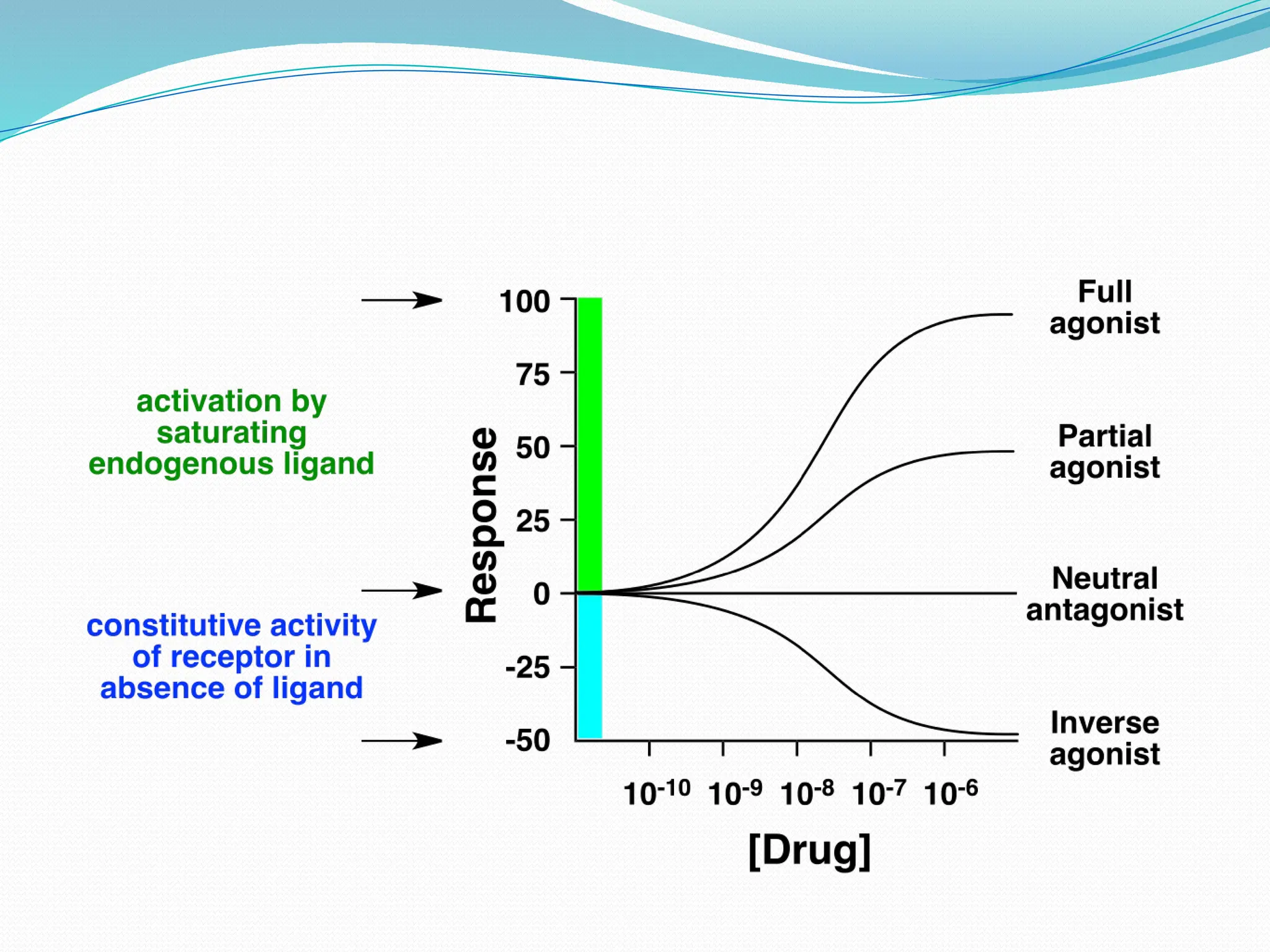
 Full agonists (which can produce maximal effects)
have high efficacy
 Partial agonists (which can produce only
submaximal effects) have intermediate efficacy.
 According to the two-state model, efficacy reflects
the relative affinity of the compound for the resting
and activated states of the receptor. Agonists show
selectivity for the activated state; antagonists show
no selectivity. This model, although helpful, fails to
account for the complexity of agonist action.
 Inverse agonists show selectivity for the resting
state of the receptor, this being of significance only
in unusual situations where the receptors show
constitutive activity
 Drug antagonism occurs by various mechanisms:
 Chemical antagonism (interaction in solution)
 Pharmacokinetic antagonism (one drug affecting
the absorption, metabolism or excretion of the
other)
 Competitive antagonism (both drugs binding to
the same receptors); the antagonism may be
reversible or irreversible
 Non-competitive antagonism (the antagonist
interrupts receptor-effector linkage)
 Physiological antagonism (two agents producing
opposing physiological effects).
Drug resistance
 is a term used to describe the loss of
effectiveness of antimicrobial or antitumor
drugs.
 Many different mechanisms can give rise
resistance
 Change in receptors
 Loss of receptors
 Exhaustion of mediators
 Increased metabolic degradation of the drug
 Physiological adaptation
 Active extrusion of drug from cells
 Mechanisms that operate mainly over a short
timescale (milliseconds to hours), particularly
excitation, contraction and secretion, which
account for many physiological response.

LECTURE ABDhjhvjhvuhvuhvugvugvugvugvuvhugv

  • 1.
  • 2.
    Drug can be definedas a chemical substance of known structure, other than a nutrient or an essential dietary ingredient, which, when administered to a living organism, produces a biological effect.
  • 3.
    Pharmacology  Can bedefined as the study of the effects of drugs on the function of living systems  One of the basic tenets of pharmacology is that drug molecules must exert some chemical influence on one or more constituents of cells in order to produce a pharmacological response.  Pharmacological effects, therefore, require, in general, the non-uniform distribution of the drug molecule within the body or tissue.  Most drug targets are protein molecules
  • 4.
    PROTEIN TARGETS FORDRUG BINDING  Four main kinds of regulatory protein are commonly involved as primary drug targets, namely:  receptors  enzymes  carrier molecules (transporters)  ion channels.
  • 5.
    DRUG RECEPTORS  Receptor(by the action of adrenaline (epinephrine) on the heart. Adrenaline first binds to a receptor protein (the β adrenoceptor, that serves as a recognition site for adrenaline and other catecholamines.  When it binds to the receptor, a train of reactions is initiated leading to an increase in force and rate of the heartbeat. In the absence of adrenaline, the receptor is functionally silent
  • 6.
     Drugs actingon receptors may be agonists or antagonists.  Agonists initiate changes in cell function, producing effects of various types; antagonists bind to receptors without initiating such changes.  Agonist potency depends on two parameters: affinity (i.e. tendency to bind to receptors) and efficacy (i.e. ability, once bound, to initiate changes that lead to effects).  For antagonists, efficacy is zero.
  • 7.
     Full agonists(which can produce maximal effects) have high efficacy  Partial agonists (which can produce only submaximal effects) have intermediate efficacy.  According to the two-state model, efficacy reflects the relative affinity of the compound for the resting and activated states of the receptor. Agonists show selectivity for the activated state; antagonists show no selectivity. This model, although helpful, fails to account for the complexity of agonist action.  Inverse agonists show selectivity for the resting state of the receptor, this being of significance only in unusual situations where the receptors show constitutive activity
  • 8.
     Drug antagonismoccurs by various mechanisms:  Chemical antagonism (interaction in solution)  Pharmacokinetic antagonism (one drug affecting the absorption, metabolism or excretion of the other)  Competitive antagonism (both drugs binding to the same receptors); the antagonism may be reversible or irreversible  Non-competitive antagonism (the antagonist interrupts receptor-effector linkage)  Physiological antagonism (two agents producing opposing physiological effects).
  • 10.
    Drug resistance  isa term used to describe the loss of effectiveness of antimicrobial or antitumor drugs.  Many different mechanisms can give rise resistance
  • 11.
     Change inreceptors  Loss of receptors  Exhaustion of mediators  Increased metabolic degradation of the drug  Physiological adaptation  Active extrusion of drug from cells
  • 12.
     Mechanisms thatoperate mainly over a short timescale (milliseconds to hours), particularly excitation, contraction and secretion, which account for many physiological response.