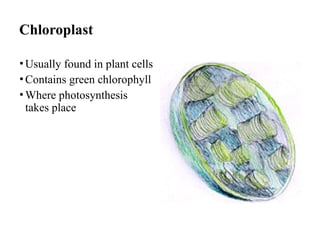
Cell Theory, Types
& Structure
Cells are the fundamental unit of life and capable of
performing life functions.
Cell Theory
Cell theory was proposed by German scientist Theodor Schwann,
Matthias Schleiden and Rudolf Virchow
The cell theory states that
• All living species on earth are composed of cells.
• A cell is basic unit of life.
• All cells arise from pre existing cells.
A modern version of cell theory states that
• Energy flows within the cells
• Genetic information is passed on from one cell to the other
• The chemical composition of all the cell is the same
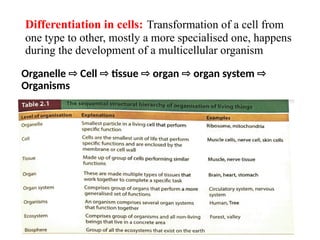
Differentiation in cells: Transformation of a cell from
one type to other, mostly a more specialised one, happens
during the development of a multicellular organism
Organelle Cell tissue organ organ system
⇨ ⇨ ⇨ ⇨ ⇨
Organisms
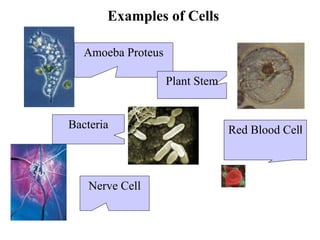
Examples of Cells
Amoeba Proteus
Plant Stem
Red Blood Cell
Nerve Cell
Bacteria
➢Prokaryotic
➢Eukaryotic
Two Types of Cells
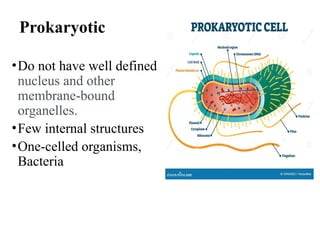
Prokaryotic
•Do not have well defined
nucleus and other
membrane-bound
organelles.
•Few internal structures
•One-celled organisms,
Bacteria
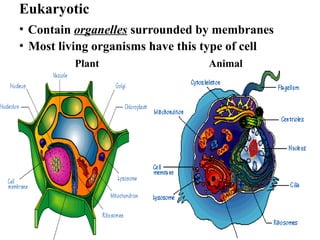
Eukaryotic
• Contain organelles surrounded by membranes
• Most living organisms have this type of cell
Plant Animal
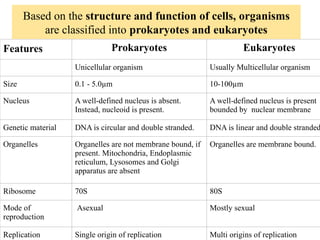
Features Prokaryotes Eukaryotes
Unicellular organism Usually Multicellular organism
Size 0.1 - 5.0µm 10-100µm
Nucleus A well-defined nucleus is absent.
Instead, nucleoid is present.
A well-defined nucleus is present
bounded by nuclear membrane
Genetic material DNA is circular and double stranded. DNA is linear and double stranded
Organelles Organelles are not membrane bound, if
present. Mitochondria, Endoplasmic
reticulum, Lysosomes and Golgi
apparatus are absent
Organelles are membrane bound.
Ribosome 70S 80S
Mode of
reproduction
Asexual Mostly sexual
Replication Single origin of replication Multi origins of replication
Based on the structure and function of cells, organisms
are classified into prokaryotes and eukaryotes
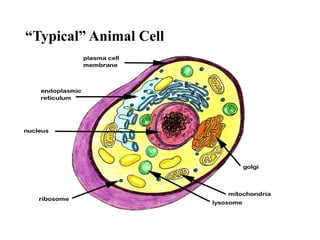
“Typical” Animal Cell
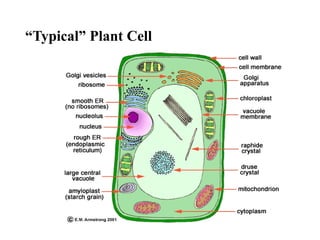
“Typical” Plant Cell
Cell Parts
Membrane and
Organelles
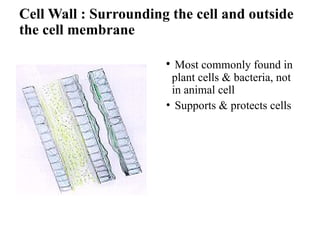
Cell Wall : Surrounding the cell and outside
the cell membrane
• Most commonly found in
plant cells & bacteria, not
in animal cell
• Supports & protects cells
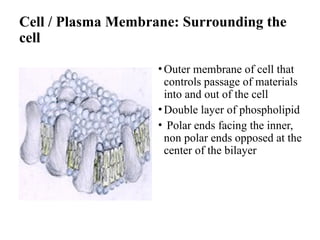
Cell / Plasma Membrane: Surrounding the
cell
• Outer membrane of cell that
controls passage of materials
into and out of the cell
• Double layer of phospholipid
• Polar ends facing the inner,
non polar ends opposed at the
center of the bilayer
Inside the Cell : Different
Organelles
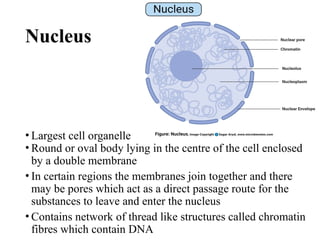
Nucleus
• Largest cell organelle
• Round or oval body lying in the centre of the cell enclosed
by a double membrane
• In certain regions the membranes join together and there
may be pores which act as a direct passage route for the
substances to leave and enter the nucleus
• Contains network of thread like structures called chromatin
fibres which contain DNA
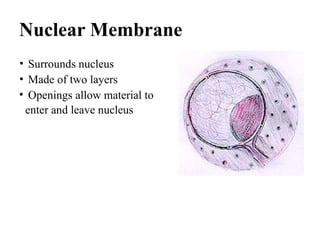
Nuclear Membrane
• Surrounds nucleus
• Made of two layers
• Openings allow material to
enter and leave nucleus
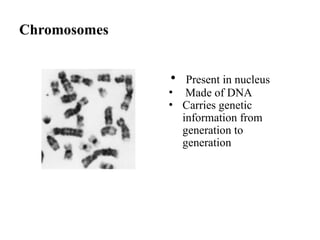
Chromosomes
• Present in nucleus
• Made of DNA
• Carries genetic
information from
generation to
generation
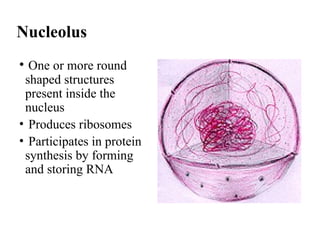
Nucleolus
• One or more round
shaped structures
present inside the
nucleus
• Produces ribosomes
• Participates in protein
synthesis by forming
and storing RNA
Cytoplasm
•All the parts together inside the plasma membrane
excluding nucleus
•Contains a mixture of water and soluble
compounds and various organelles
•All metabolic activities occur in it.
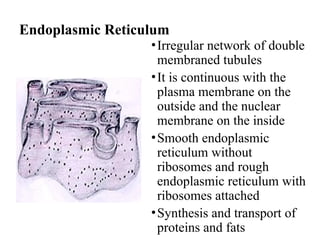
Endoplasmic Reticulum
•Irregular network of double
membraned tubules
•It is continuous with the
plasma membrane on the
outside and the nuclear
membrane on the inside
•Smooth endoplasmic
reticulum without
ribosomes and rough
endoplasmic reticulum with
ribosomes attached
•Synthesis and transport of
proteins and fats
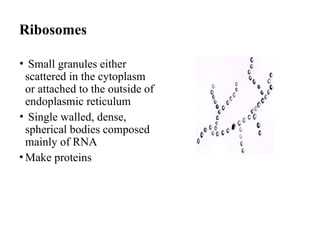
Ribosomes
• Small granules either
scattered in the cytoplasm
or attached to the outside of
endoplasmic reticulum
• Single walled, dense,
spherical bodies composed
mainly of RNA
• Make proteins
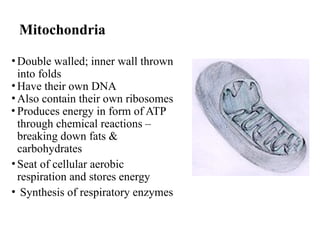
Mitochondria
•Double walled; inner wall thrown
into folds
•Have their own DNA
•Also contain their own ribosomes
• Produces energy in form of ATP
through chemical reactions –
breaking down fats &
carbohydrates
•Seat of cellular aerobic
respiration and stores energy
• Synthesis of respiratory enzymes
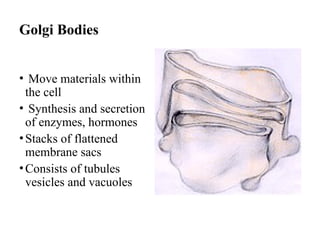
Golgi Bodies
• Move materials within
the cell
• Synthesis and secretion
of enzymes, hormones
•Stacks of flattened
membrane sacs
•Consists of tubules
vesicles and vacuoles
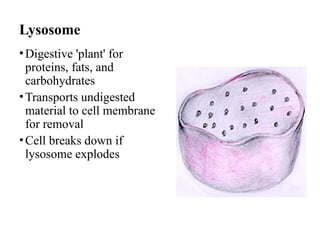
Lysosome
•Digestive 'plant' for
proteins, fats, and
carbohydrates
•Transports undigested
material to cell membrane
for removal
•Cell breaks down if
lysosome explodes
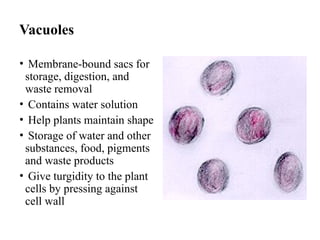
Vacuoles
• Membrane-bound sacs for
storage, digestion, and
waste removal
• Contains water solution
• Help plants maintain shape
• Storage of water and other
substances, food, pigments
and waste products
• Give turgidity to the plant
cells by pressing against
cell wall
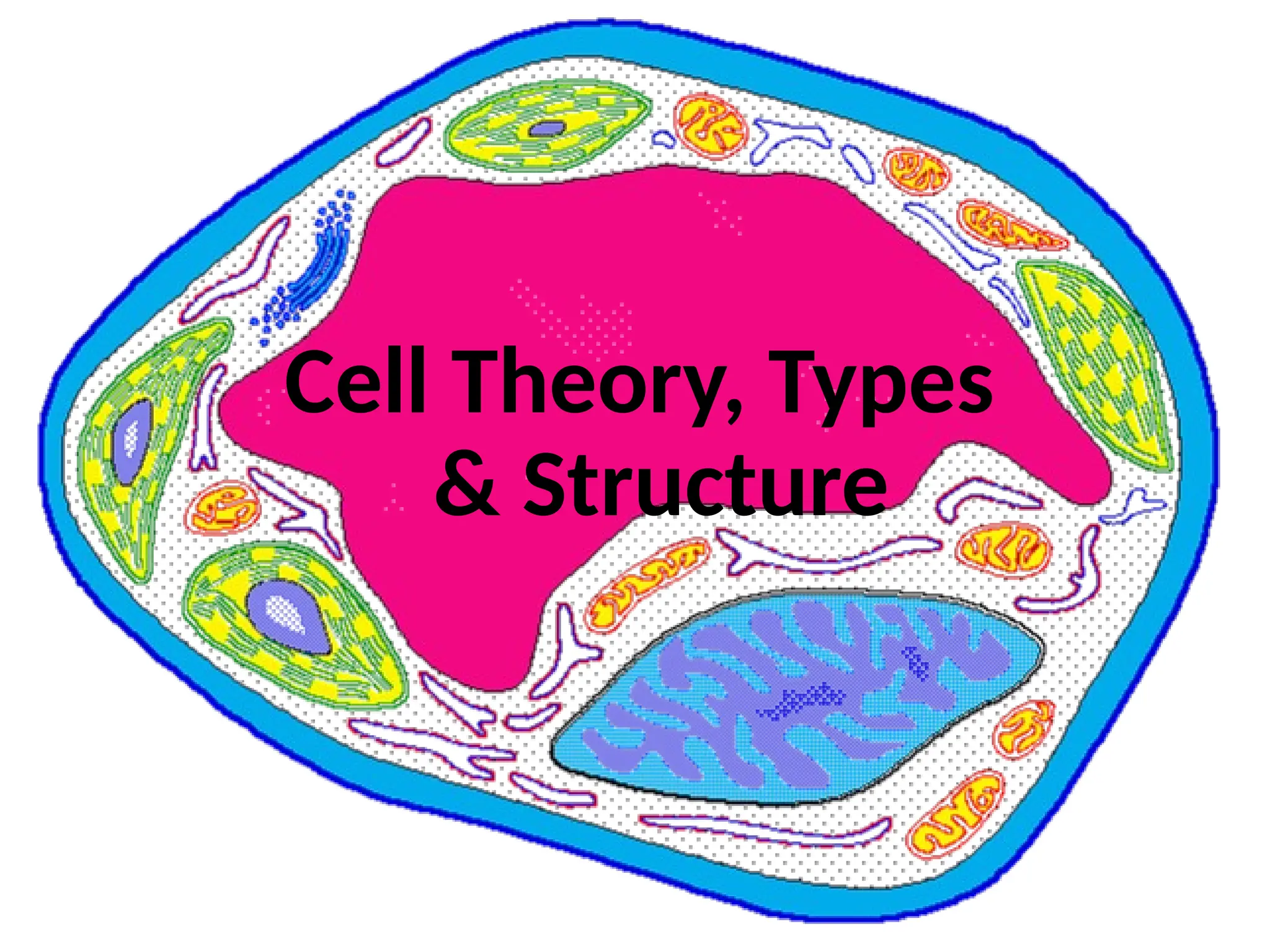
Chloroplast
•Usually found in plant cells
•Contains green chlorophyll
•Where photosynthesis
takes place

Lecture 2 Cell_structure_function.pptx.....

  • 1.
  • 2.
    Cells are thefundamental unit of life and capable of performing life functions. Cell Theory Cell theory was proposed by German scientist Theodor Schwann, Matthias Schleiden and Rudolf Virchow The cell theory states that • All living species on earth are composed of cells. • A cell is basic unit of life. • All cells arise from pre existing cells. A modern version of cell theory states that • Energy flows within the cells • Genetic information is passed on from one cell to the other • The chemical composition of all the cell is the same
  • 3.
    Differentiation in cells:Transformation of a cell from one type to other, mostly a more specialised one, happens during the development of a multicellular organism Organelle Cell tissue organ organ system ⇨ ⇨ ⇨ ⇨ ⇨ Organisms
  • 4.
    Examples of Cells AmoebaProteus Plant Stem Red Blood Cell Nerve Cell Bacteria
  • 5.
  • 6.
    Prokaryotic •Do not havewell defined nucleus and other membrane-bound organelles. •Few internal structures •One-celled organisms, Bacteria
  • 7.
    Eukaryotic • Contain organellessurrounded by membranes • Most living organisms have this type of cell Plant Animal
  • 8.
    Features Prokaryotes Eukaryotes Unicellularorganism Usually Multicellular organism Size 0.1 - 5.0µm 10-100µm Nucleus A well-defined nucleus is absent. Instead, nucleoid is present. A well-defined nucleus is present bounded by nuclear membrane Genetic material DNA is circular and double stranded. DNA is linear and double stranded Organelles Organelles are not membrane bound, if present. Mitochondria, Endoplasmic reticulum, Lysosomes and Golgi apparatus are absent Organelles are membrane bound. Ribosome 70S 80S Mode of reproduction Asexual Mostly sexual Replication Single origin of replication Multi origins of replication Based on the structure and function of cells, organisms are classified into prokaryotes and eukaryotes
  • 9.
  • 10.
  • 11.
  • 12.
    Cell Wall :Surrounding the cell and outside the cell membrane • Most commonly found in plant cells & bacteria, not in animal cell • Supports & protects cells
  • 13.
    Cell / PlasmaMembrane: Surrounding the cell • Outer membrane of cell that controls passage of materials into and out of the cell • Double layer of phospholipid • Polar ends facing the inner, non polar ends opposed at the center of the bilayer
  • 14.
    Inside the Cell: Different Organelles
  • 15.
    Nucleus • Largest cellorganelle • Round or oval body lying in the centre of the cell enclosed by a double membrane • In certain regions the membranes join together and there may be pores which act as a direct passage route for the substances to leave and enter the nucleus • Contains network of thread like structures called chromatin fibres which contain DNA
  • 16.
    Nuclear Membrane • Surroundsnucleus • Made of two layers • Openings allow material to enter and leave nucleus
  • 17.
    Chromosomes • Present innucleus • Made of DNA • Carries genetic information from generation to generation
  • 18.
    Nucleolus • One ormore round shaped structures present inside the nucleus • Produces ribosomes • Participates in protein synthesis by forming and storing RNA
  • 19.
    Cytoplasm •All the partstogether inside the plasma membrane excluding nucleus •Contains a mixture of water and soluble compounds and various organelles •All metabolic activities occur in it.
  • 20.
    Endoplasmic Reticulum •Irregular networkof double membraned tubules •It is continuous with the plasma membrane on the outside and the nuclear membrane on the inside •Smooth endoplasmic reticulum without ribosomes and rough endoplasmic reticulum with ribosomes attached •Synthesis and transport of proteins and fats
  • 21.
    Ribosomes • Small granuleseither scattered in the cytoplasm or attached to the outside of endoplasmic reticulum • Single walled, dense, spherical bodies composed mainly of RNA • Make proteins
  • 22.
    Mitochondria •Double walled; innerwall thrown into folds •Have their own DNA •Also contain their own ribosomes • Produces energy in form of ATP through chemical reactions – breaking down fats & carbohydrates •Seat of cellular aerobic respiration and stores energy • Synthesis of respiratory enzymes
  • 23.
    Golgi Bodies • Movematerials within the cell • Synthesis and secretion of enzymes, hormones •Stacks of flattened membrane sacs •Consists of tubules vesicles and vacuoles
  • 24.
    Lysosome •Digestive 'plant' for proteins,fats, and carbohydrates •Transports undigested material to cell membrane for removal •Cell breaks down if lysosome explodes
  • 25.
    Vacuoles • Membrane-bound sacsfor storage, digestion, and waste removal • Contains water solution • Help plants maintain shape • Storage of water and other substances, food, pigments and waste products • Give turgidity to the plant cells by pressing against cell wall
  • 26.
    Chloroplast •Usually found inplant cells •Contains green chlorophyll •Where photosynthesis takes place