Bioprocess Engineering
Dr. Muhammad Naseem Khan
MSc, MBA, PhD
Course Outline
COURSE CODE: BTC-4826
COURSE TITLE: Bioprocess Engineering
CREDIT HOURS: 3 + 0
MARKS: 100
03-Oct-23
BIOPROCESS ENGINEERING 2
Course Detail
03-Oct-23
BIOPROCESS ENGINEERING 3
Course Detail
• Overview of Bioprocess Engineer
• Biotechnology and bioprocess
Engineering
• Microbial kinetics during batch,
continuous and fed-batch processes
• The oxygen transfer rate and overall
volumetric oxygen transfer coefficient
• Design of batch thermal
sterilization/Sterilization of air and filter
design
• Fluid Rheology; Classification,
Newtonian & non-Newtonian factors
effecting Kla in Fermentation vessel
• Design of bioreactors, types and
application
• Choosing a cultivation method
• Solid state fermentation methods and
its application
• Metabolic Engineering of Industrial
Microorganisms
• Problem of chemostat with recycle and
fed batch culture
• Mass transfer in Bioreactor
• Bioreactor consideration for animal cell
culture
03-Oct-23
BIOPROCESS ENGINEERING 4
Recommended
Books
Doran PM, 2012. Bioprocess Engineering
Principles.2nd Edition; Academic Press.
03-Oct-23
BIOPROCESS ENGINEERING 5
Recommended
Books
McNeil B, 2008. Practical Fermentation
Technology. John Willey & Sons
03-Oct-23
BIOPROCESS ENGINEERING 6
Recommended
Books
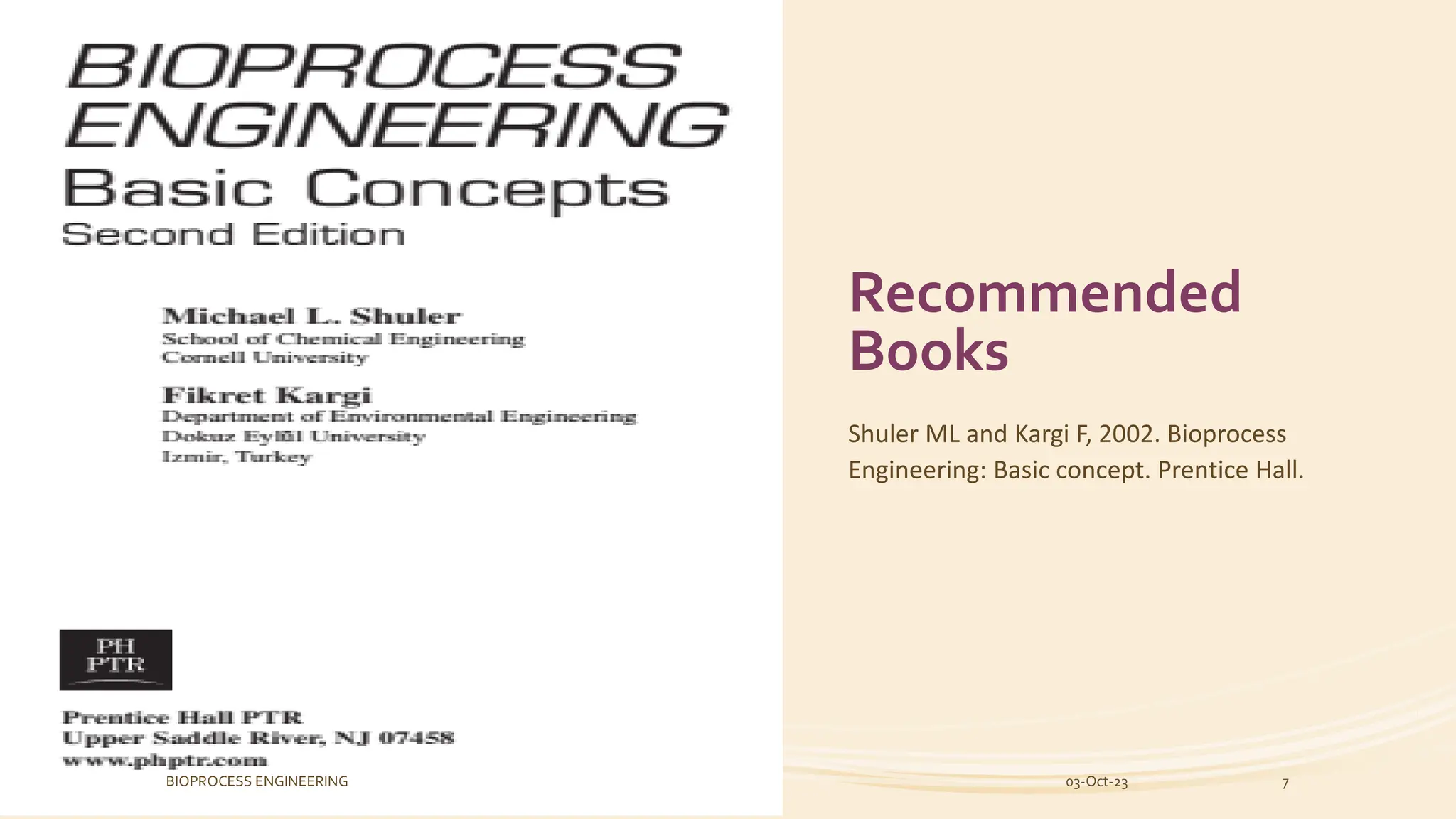
Shuler ML and Kargi F, 2002. Bioprocess
Engineering: Basic concept. Prentice Hall.
03-Oct-23
BIOPROCESS ENGINEERING 7
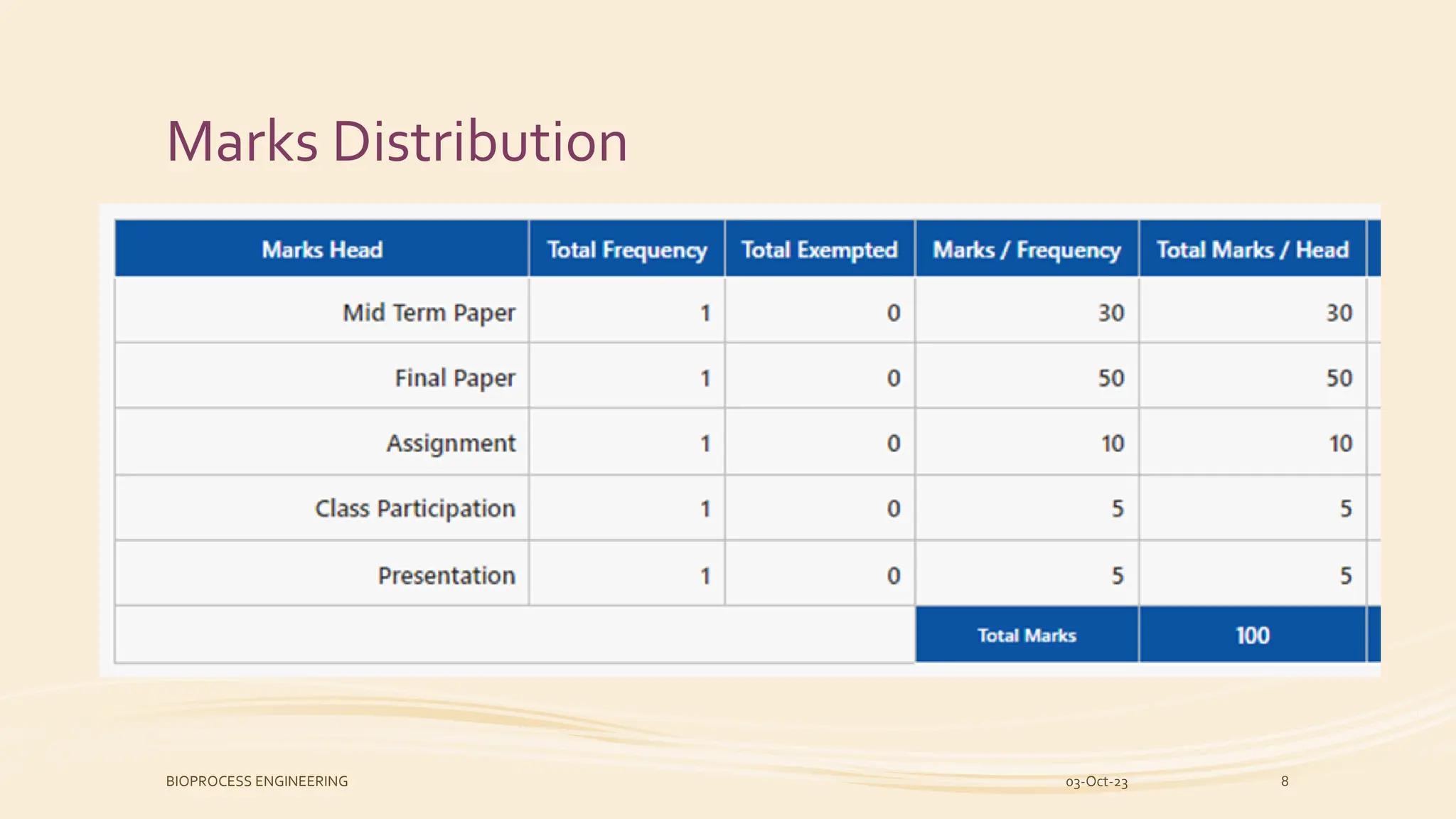
Marks Distribution
03-Oct-23
BIOPROCESS ENGINEERING 8
Google Classroom
03-Oct-23
BIOPROCESS ENGINEERING 9
Class Participation ( 5 Marks )
• All Students Can Get 5 Marks by Participating in Class and
answering the question on google classroom.
03-Oct-23
BIOPROCESS ENGINEERING 10
Assignments ( 10 Marks )
• Group Assignment
• Pakistan Based Issues and solution
• Practical approach
03-Oct-23
BIOPROCESS ENGINEERING 11
Presentations ( 5 Marks )
• Presentation will be start after 2 weeks
• Topic may be current challenges and solution based on
bioprocessing Engineering in Pakistan
03-Oct-23
BIOPROCESS ENGINEERING 12
Lets Start the Introduction
03-Oct-23
BIOPROCESS ENGINEERING 13
Overview of Bioprocess
Engineer
Introduction
• Definition of Bioprocess Engineering: Bioprocess engineering
is a field that applies engineering principles to design, develop,
and optimize biological processes for producing valuable
products.
• Importance in Biosciences: It plays a vital role in biosciences by
enabling the controlled production of biologically derived
products, from pharmaceuticals to biofuels.
03-Oct-23
BIOPROCESS ENGINEERING 15
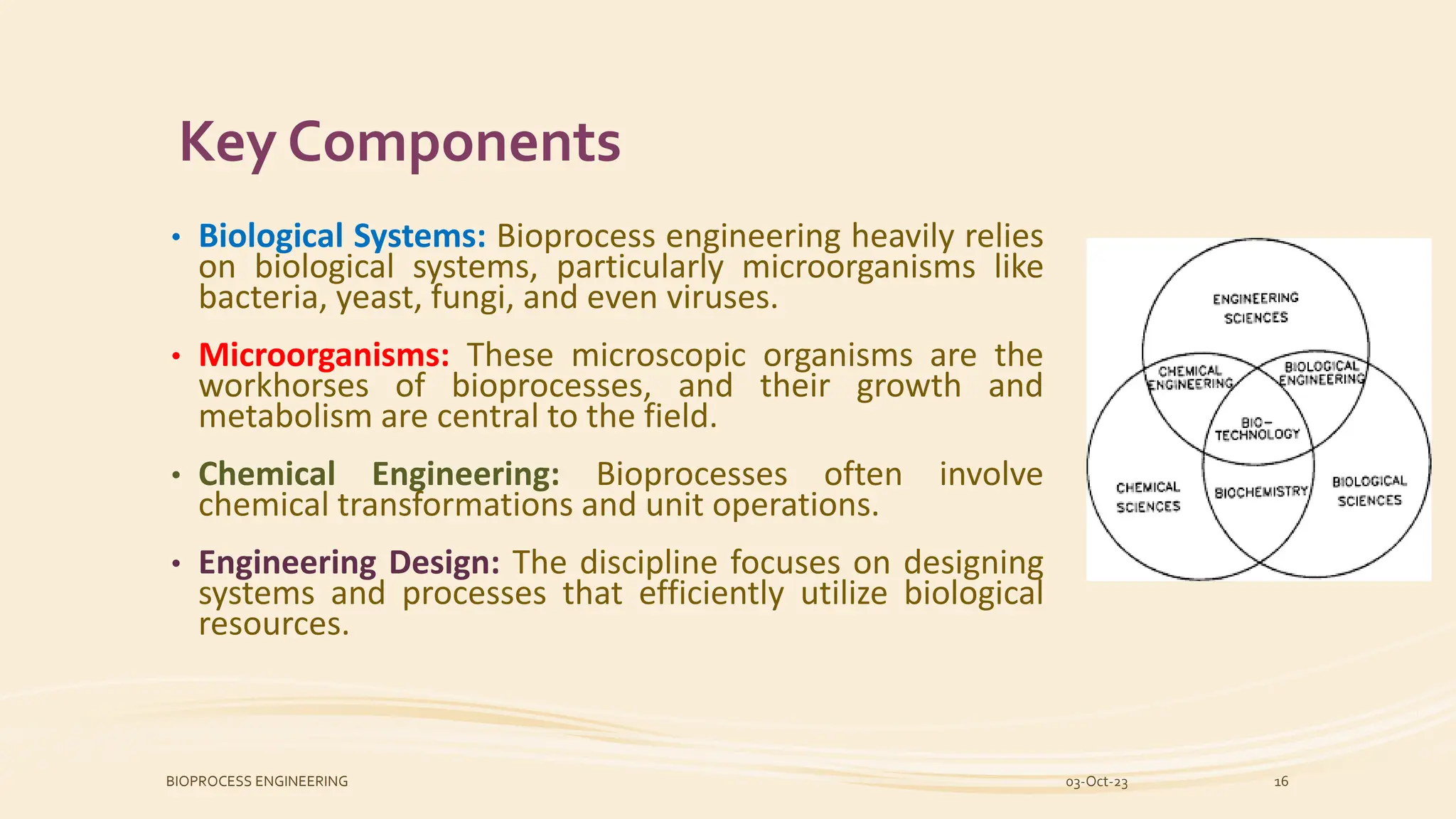
Key Components
• Biological Systems: Bioprocess engineering heavily relies
on biological systems, particularly microorganisms like
bacteria, yeast, fungi, and even viruses.
• Microorganisms: These microscopic organisms are the
workhorses of bioprocesses, and their growth and
metabolism are central to the field.
• Chemical Engineering: Bioprocesses often involve
chemical transformations and unit operations.
• Engineering Design: The discipline focuses on designing
systems and processes that efficiently utilize biological
resources.
03-Oct-23
BIOPROCESS ENGINEERING 16
Bioprocess Engineering in Biosciences
• Role in Pharmaceutical Research: Bioprocess engineering is
crucial for producing pharmaceuticals like vaccines, antibiotics,
and biologics.
• Applications in Microbiology: It finds applications in
microbiology research, enabling controlled experiments and
the production of microbial products.
03-Oct-23
BIOPROCESS ENGINEERING 17
Microbial World
• Diversity of Microorganisms: Microorganisms encompass a
wide variety of species with distinct characteristics.
• Types: This includes bacteria, yeast, fungi, and viruses, each
with its unique features and applications.
03-Oct-23
BIOPROCESS ENGINEERING 18
Microbial Growth
• Factors Influencing Growth: Microbial growth is influenced by
factors such as temperature, pH, nutrients, and oxygen
availability.
• Exponential Growth Curve: Microbial populations typically
grow exponentially when conditions are favorable.
03-Oct-23
BIOPROCESS ENGINEERING 19
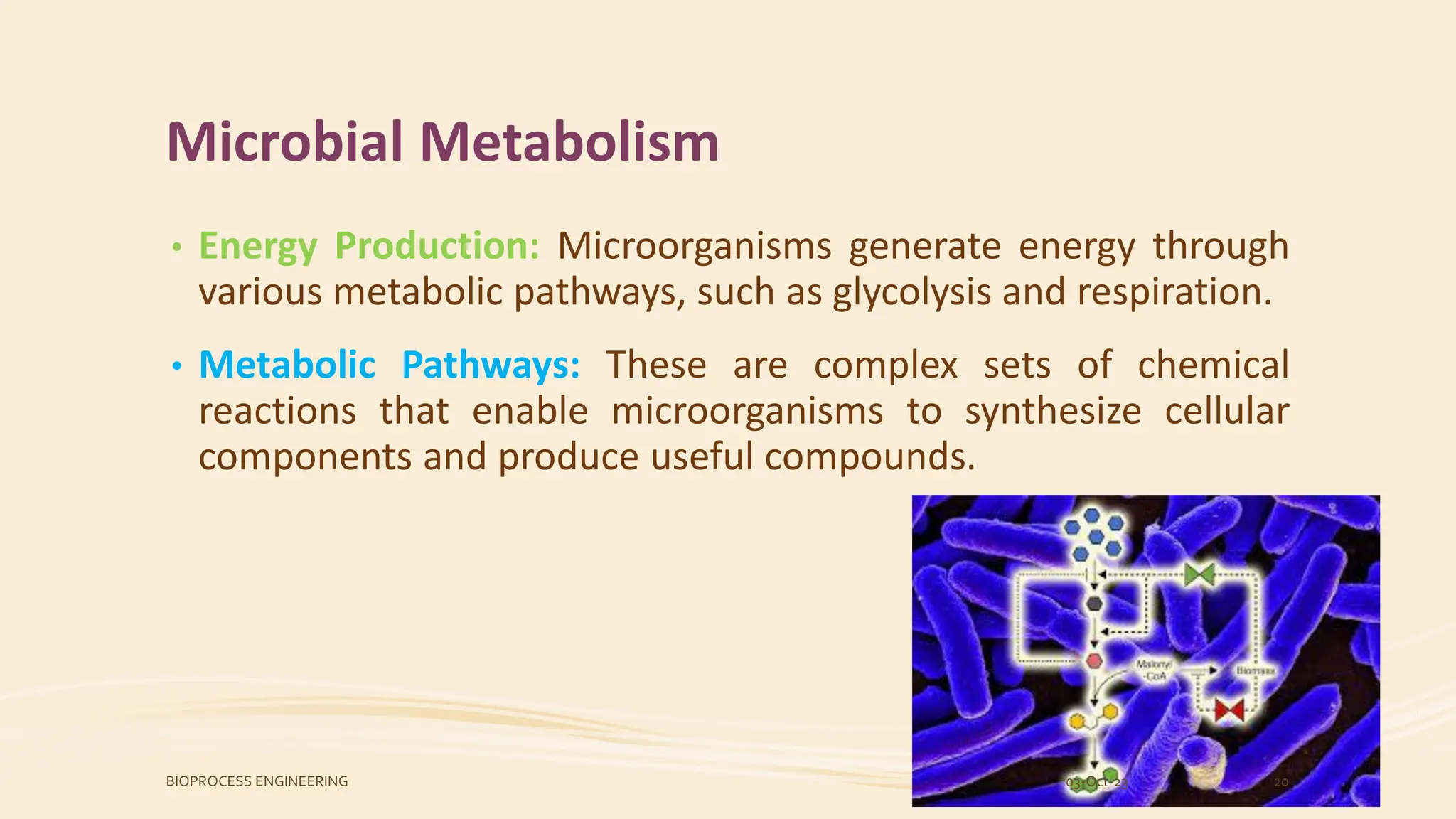
Microbial Metabolism
• Energy Production: Microorganisms generate energy through
various metabolic pathways, such as glycolysis and respiration.
• Metabolic Pathways: These are complex sets of chemical
reactions that enable microorganisms to synthesize cellular
components and produce useful compounds.
03-Oct-23
BIOPROCESS ENGINEERING 20
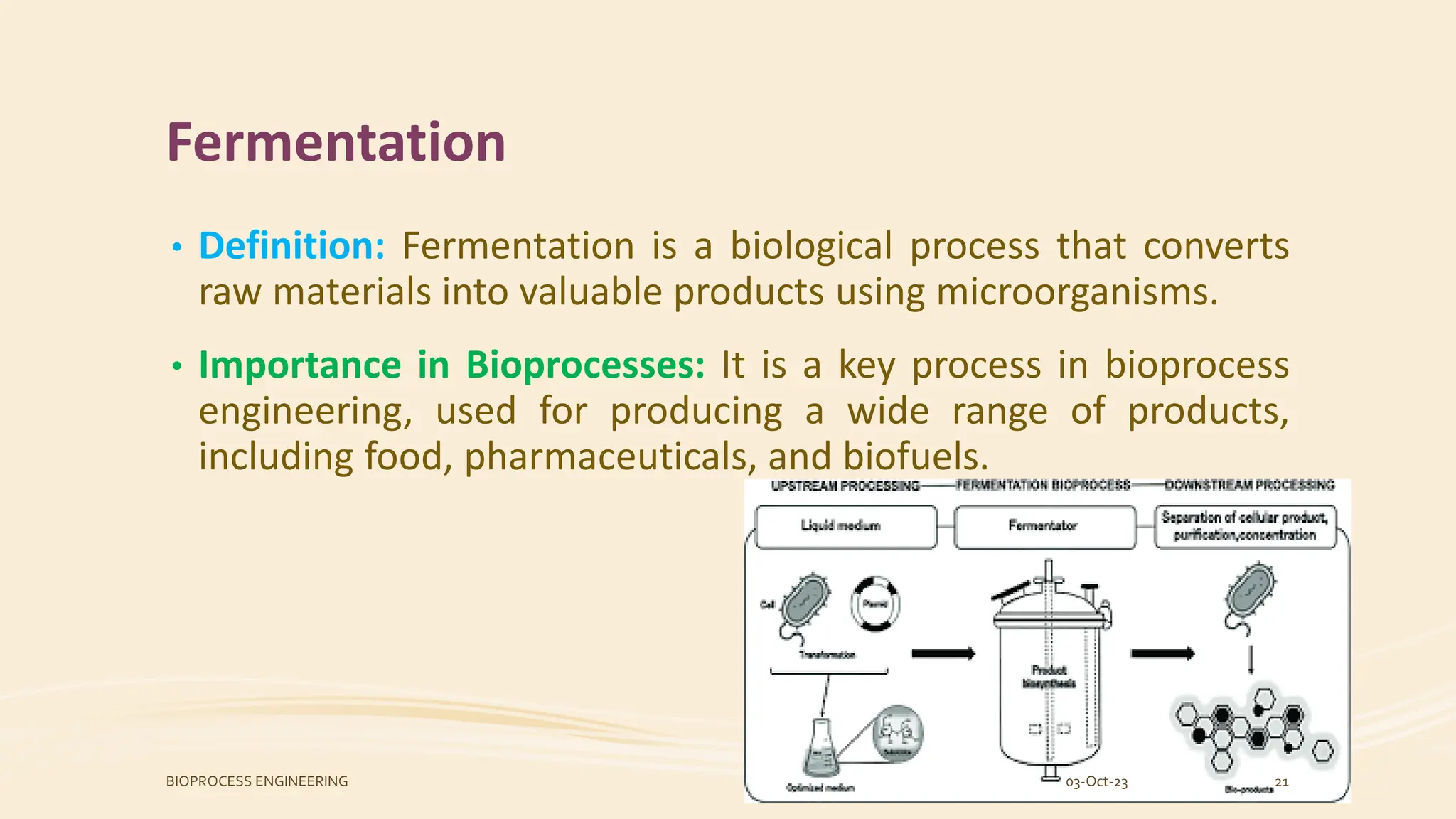
Fermentation
• Definition: Fermentation is a biological process that converts
raw materials into valuable products using microorganisms.
• Importance in Bioprocesses: It is a key process in bioprocess
engineering, used for producing a wide range of products,
including food, pharmaceuticals, and biofuels.
03-Oct-23
BIOPROCESS ENGINEERING 21
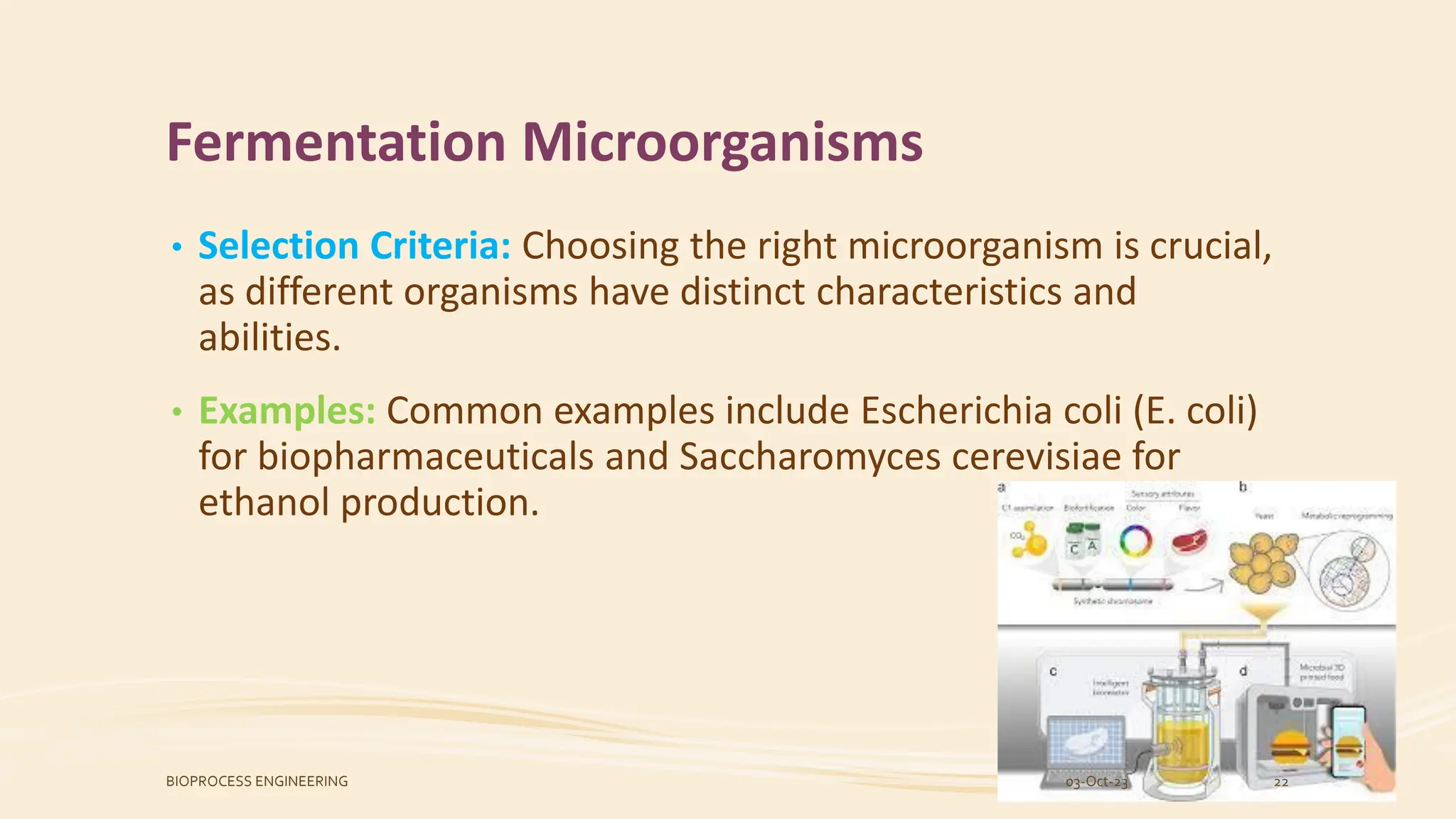
Fermentation Microorganisms
• Selection Criteria: Choosing the right microorganism is crucial,
as different organisms have distinct characteristics and
abilities.
• Examples: Common examples include Escherichia coli (E. coli)
for biopharmaceuticals and Saccharomyces cerevisiae for
ethanol production.
03-Oct-23
BIOPROCESS ENGINEERING 22
Bioreactors
• Definition: Bioreactors are specialized vessels designed to
provide a controlled environment for microbial growth and
product formation.
• Types: Various types of bioreactors, including stirred-tank,
packed bed, and airlift reactors, are used depending on the
application.

03-Oct-23
BIOPROCESS ENGINEERING 23
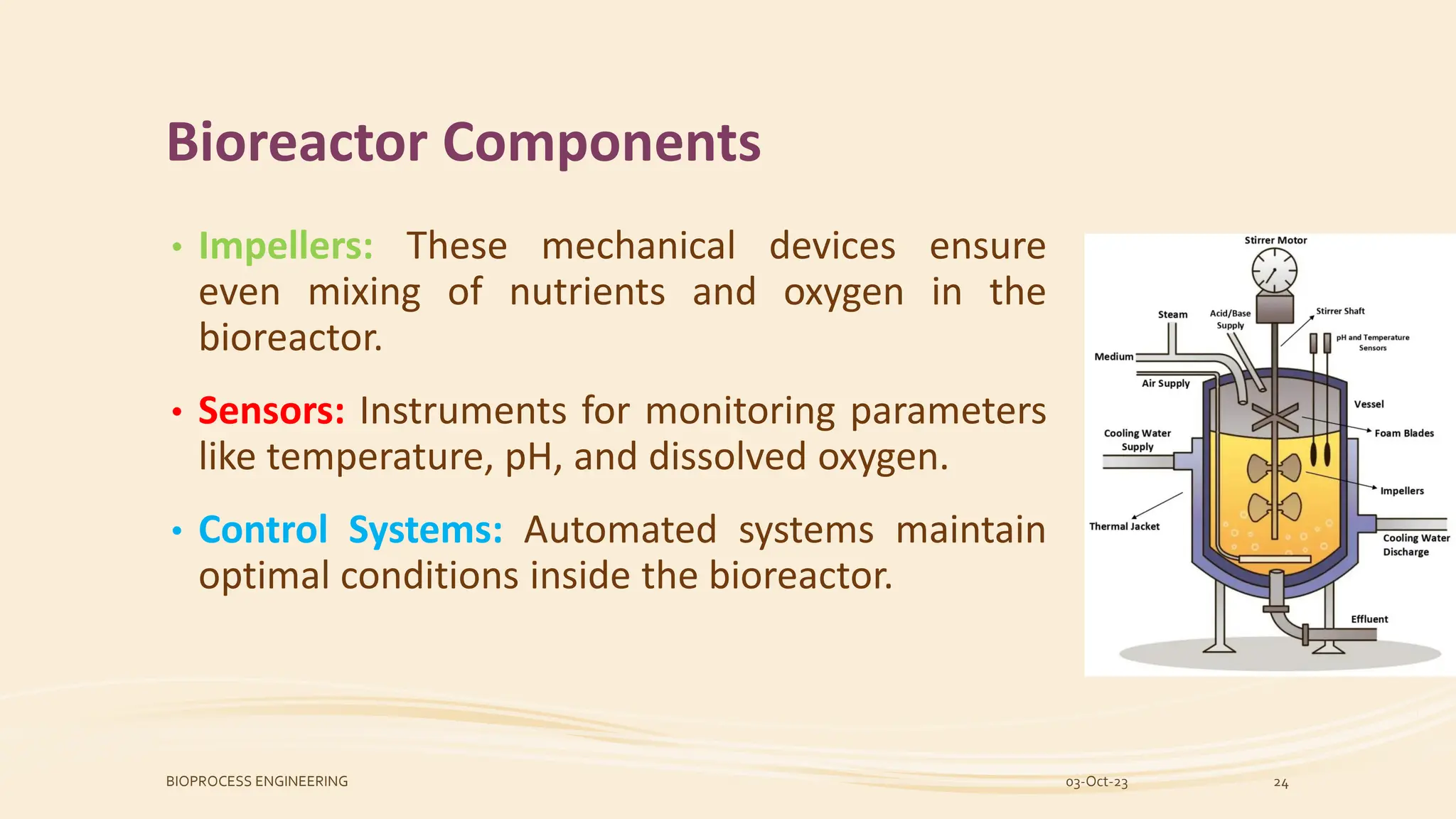
Bioreactor Components
• Impellers: These mechanical devices ensure
even mixing of nutrients and oxygen in the
bioreactor.
• Sensors: Instruments for monitoring parameters
like temperature, pH, and dissolved oxygen.
• Control Systems: Automated systems maintain
optimal conditions inside the bioreactor.
03-Oct-23
BIOPROCESS ENGINEERING 24
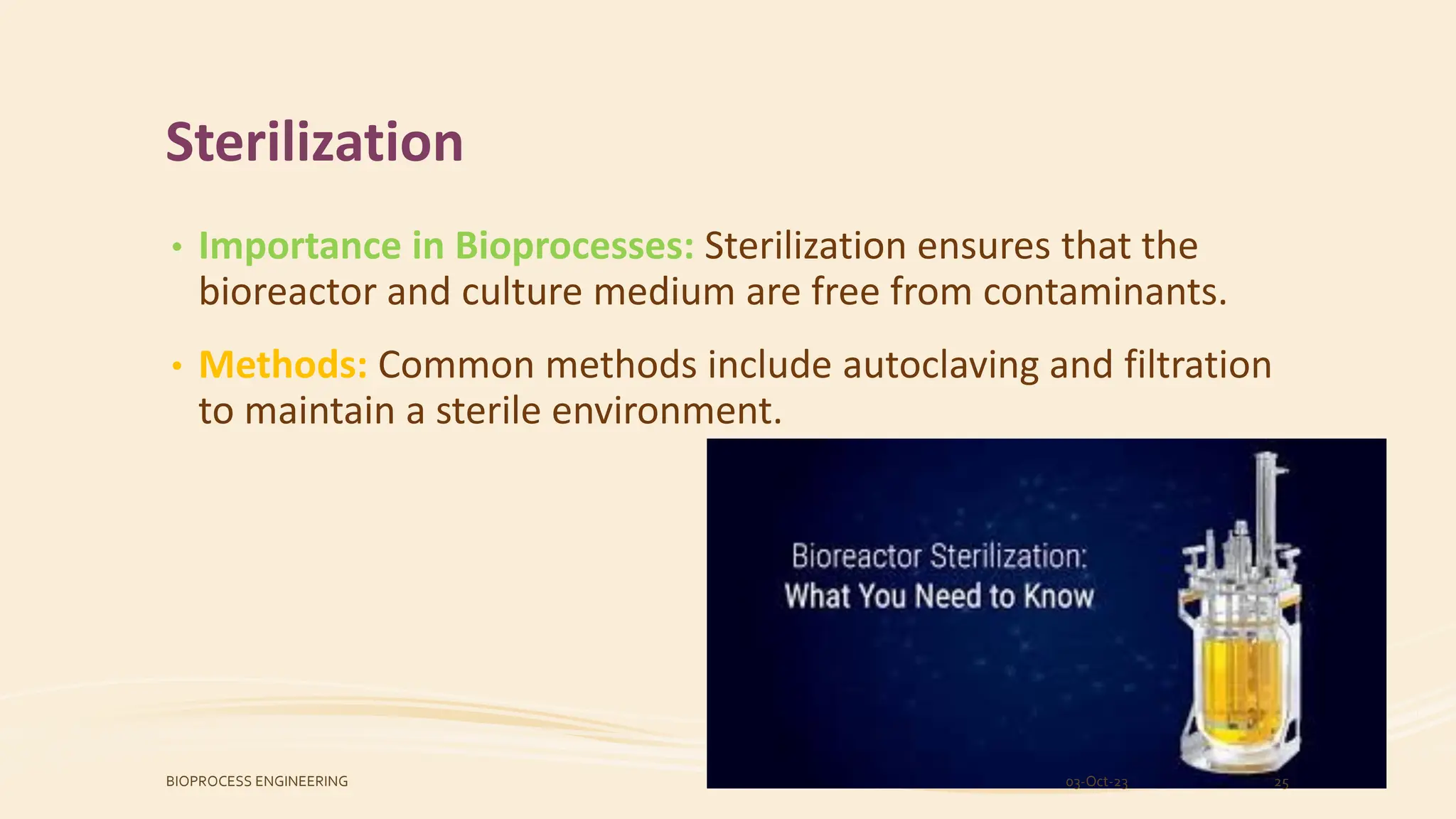
Sterilization
• Importance in Bioprocesses: Sterilization ensures that the
bioreactor and culture medium are free from contaminants.
• Methods: Common methods include autoclaving and filtration
to maintain a sterile environment.
03-Oct-23
BIOPROCESS ENGINEERING 25
Media Formulation
• Composition: The culture medium contains nutrients essential
for microbial growth, including carbon sources, nitrogen
sources, minerals, and vitamins.
• Optimization for Microbial Growth: Formulating the medium
optimally is critical for achieving high yields of desired
products.
03-Oct-23
BIOPROCESS ENGINEERING 26
Aseptic Techniques
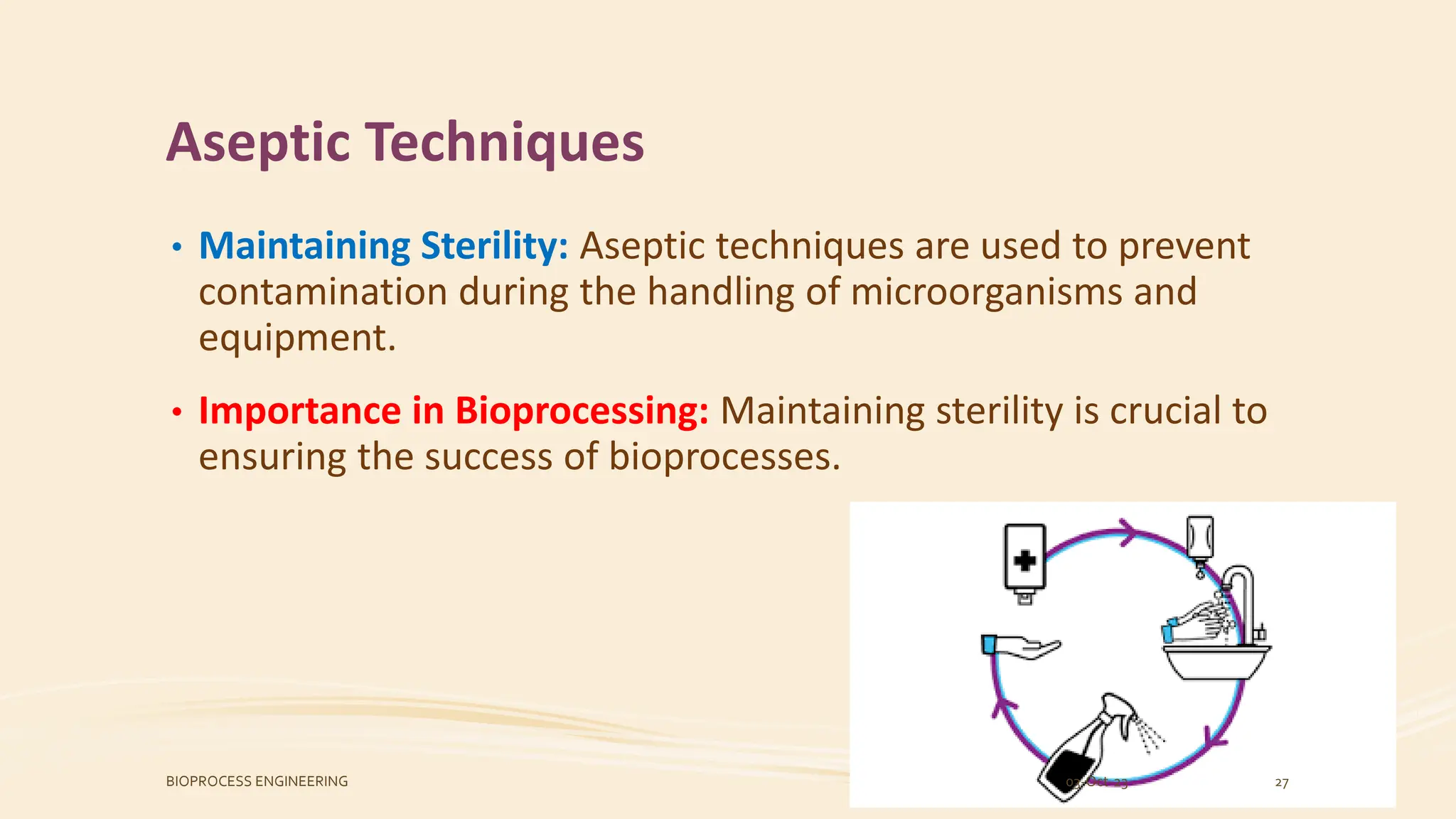
• Maintaining Sterility: Aseptic techniques are used to prevent
contamination during the handling of microorganisms and
equipment.
• Importance in Bioprocessing: Maintaining sterility is crucial to
ensuring the success of bioprocesses.
03-Oct-23
BIOPROCESS ENGINEERING 27
Downstream Processing
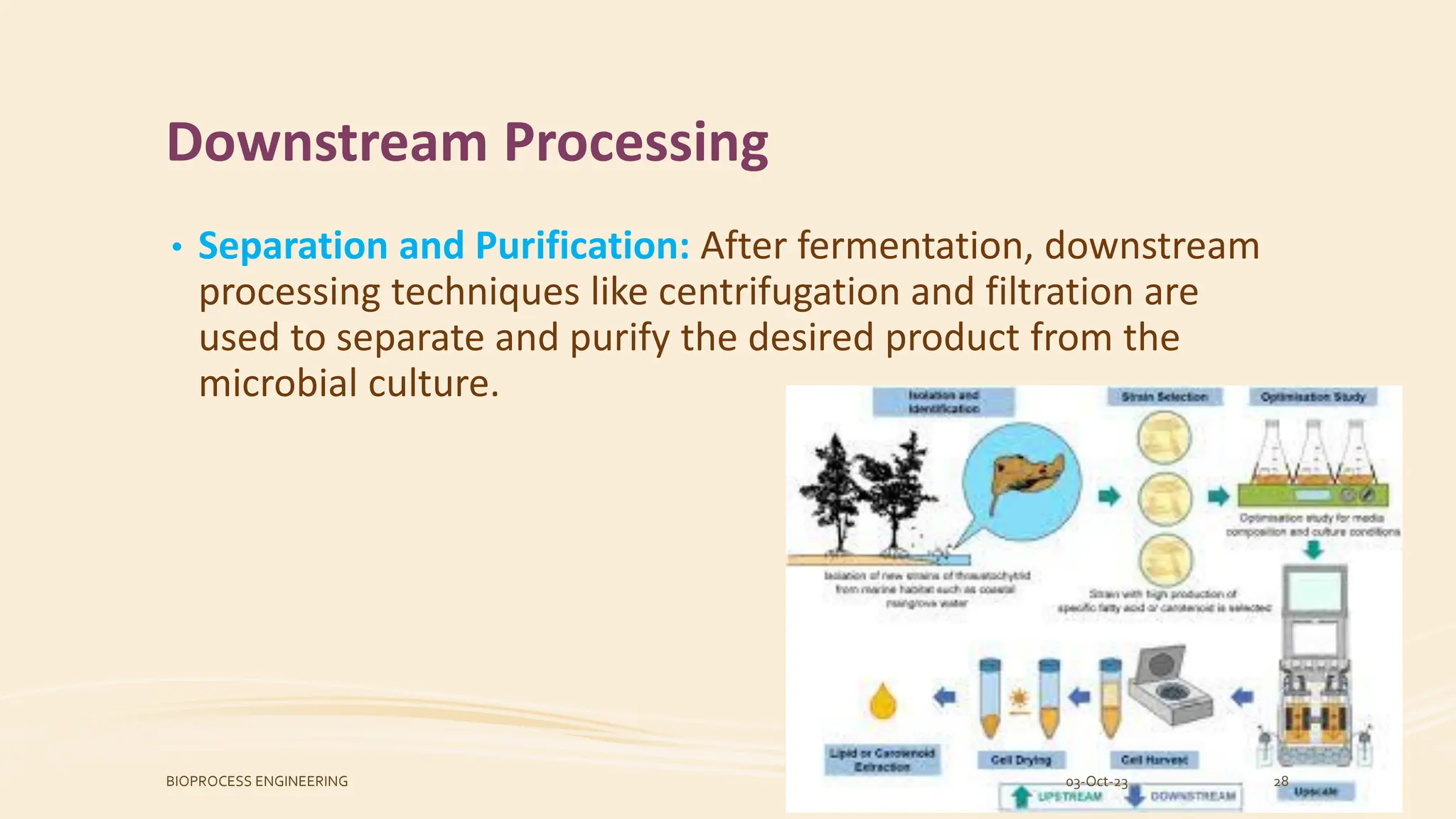
• Separation and Purification: After fermentation, downstream
processing techniques like centrifugation and filtration are
used to separate and purify the desired product from the
microbial culture.
03-Oct-23
BIOPROCESS ENGINEERING 28
Scale-Up and Scale-Down
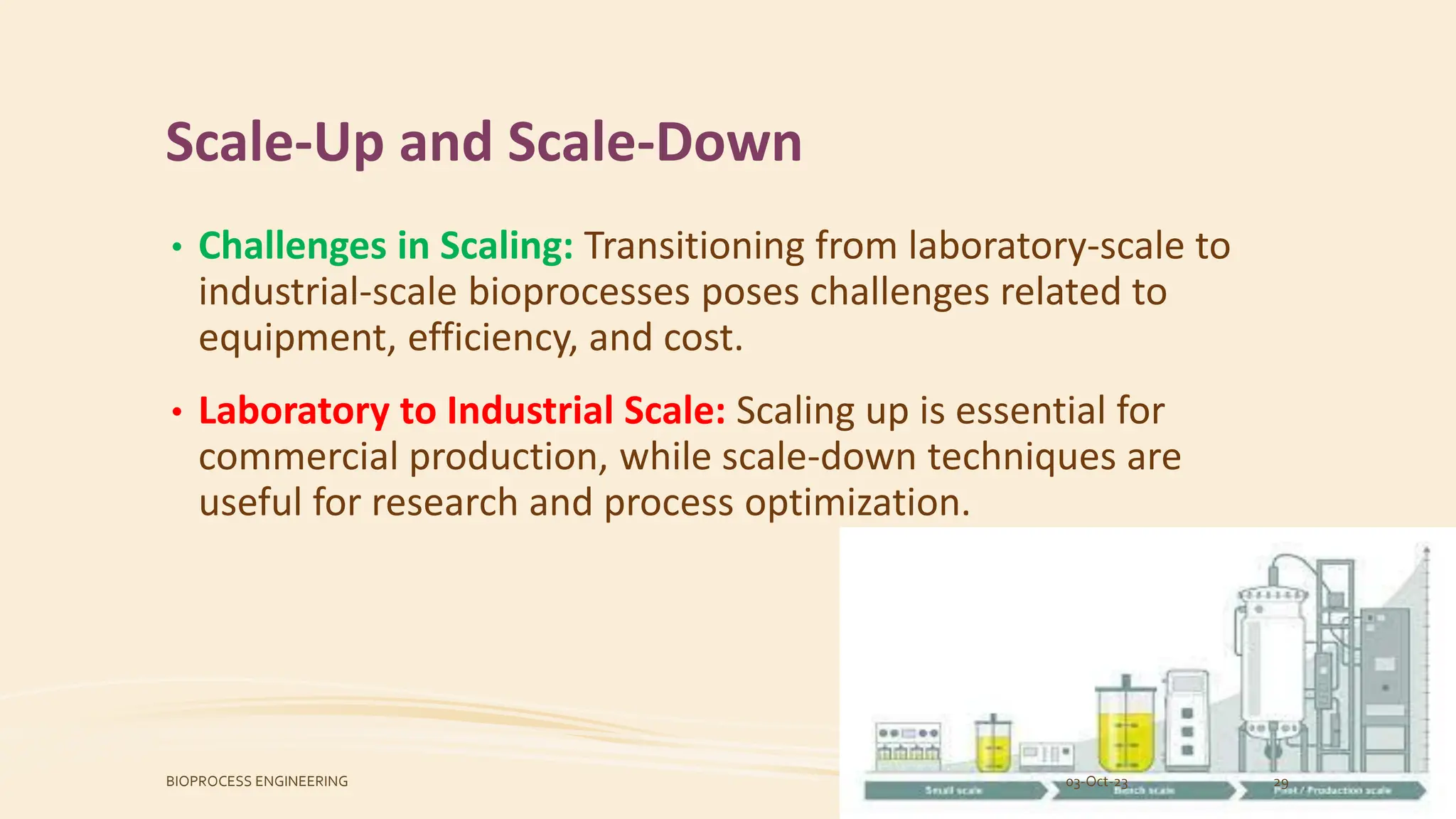
• Challenges in Scaling: Transitioning from laboratory-scale to
industrial-scale bioprocesses poses challenges related to
equipment, efficiency, and cost.
• Laboratory to Industrial Scale: Scaling up is essential for
commercial production, while scale-down techniques are
useful for research and process optimization.
03-Oct-23
BIOPROCESS ENGINEERING 29
Microbial Genetics
• Role in Bioprocess Engineering: Understanding microbial
genetics is vital for modifying and optimizing microorganisms
for specific applications.
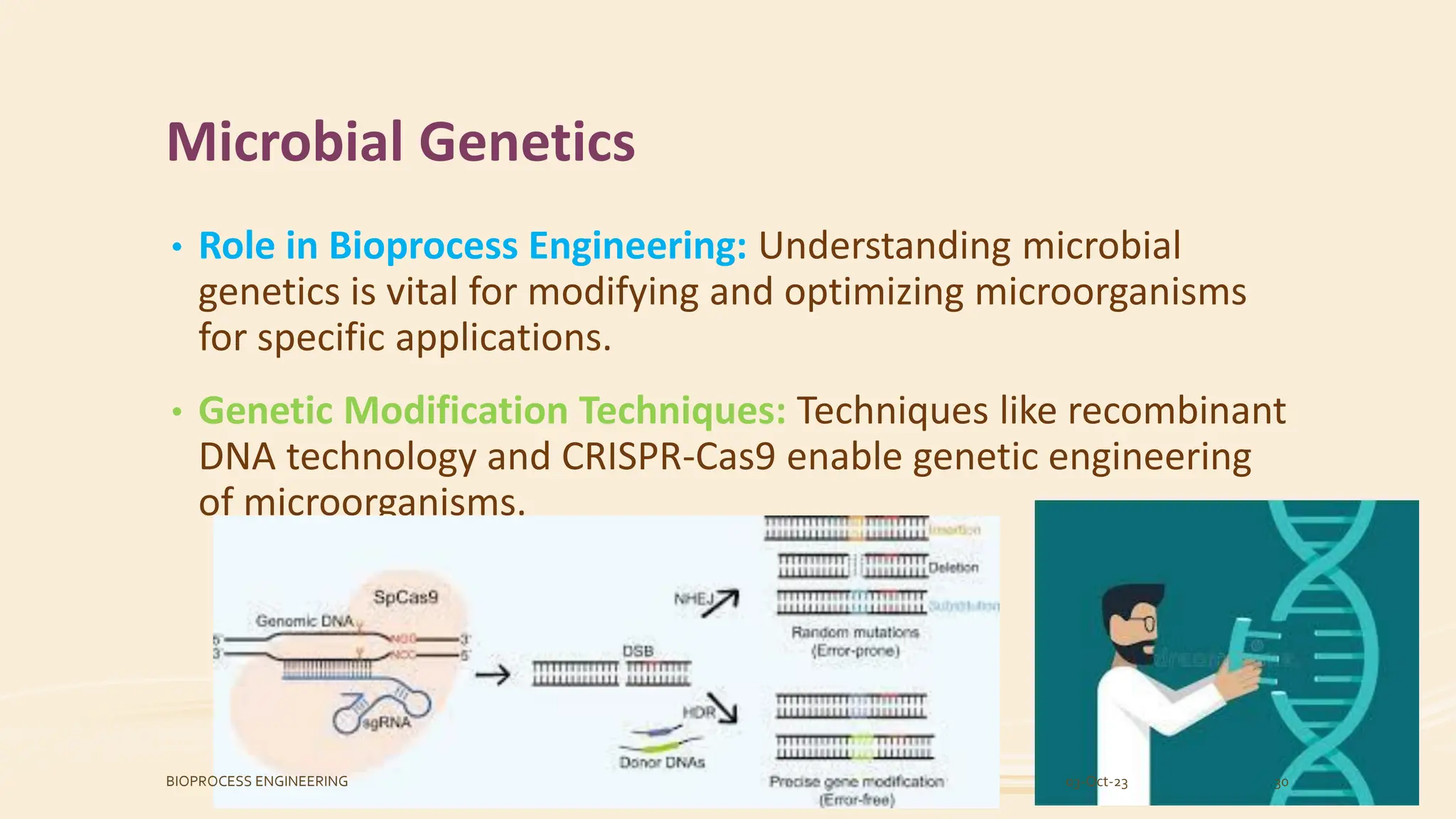
• Genetic Modification Techniques: Techniques like recombinant
DNA technology and CRISPR-Cas9 enable genetic engineering
of microorganisms.
03-Oct-23
BIOPROCESS ENGINEERING 30
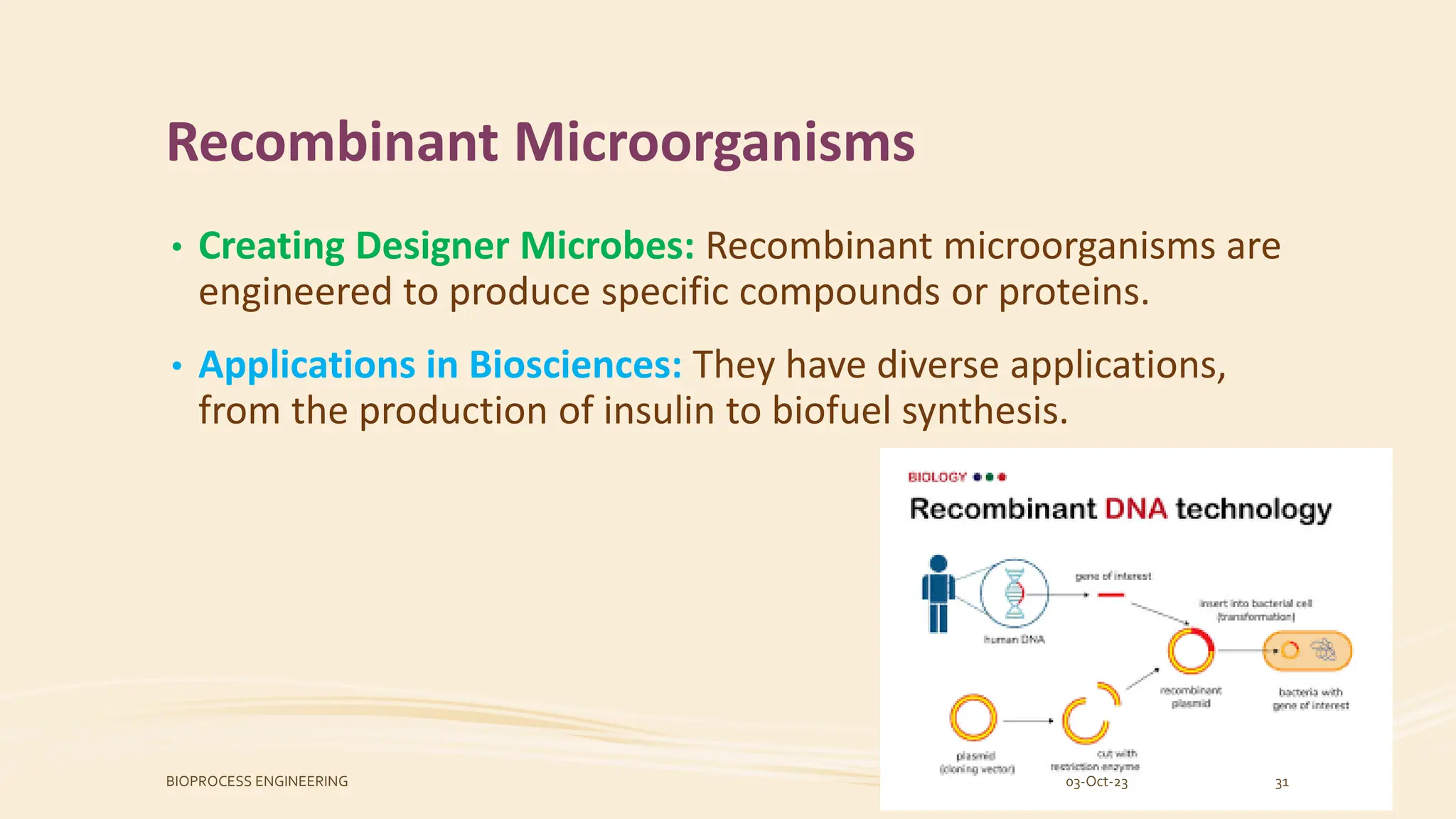
Recombinant Microorganisms
• Creating Designer Microbes: Recombinant microorganisms are
engineered to produce specific compounds or proteins.
• Applications in Biosciences: They have diverse applications,
from the production of insulin to biofuel synthesis.
03-Oct-23
BIOPROCESS ENGINEERING 31
03-Oct-23
BIOPROCESS ENGINEERING 32
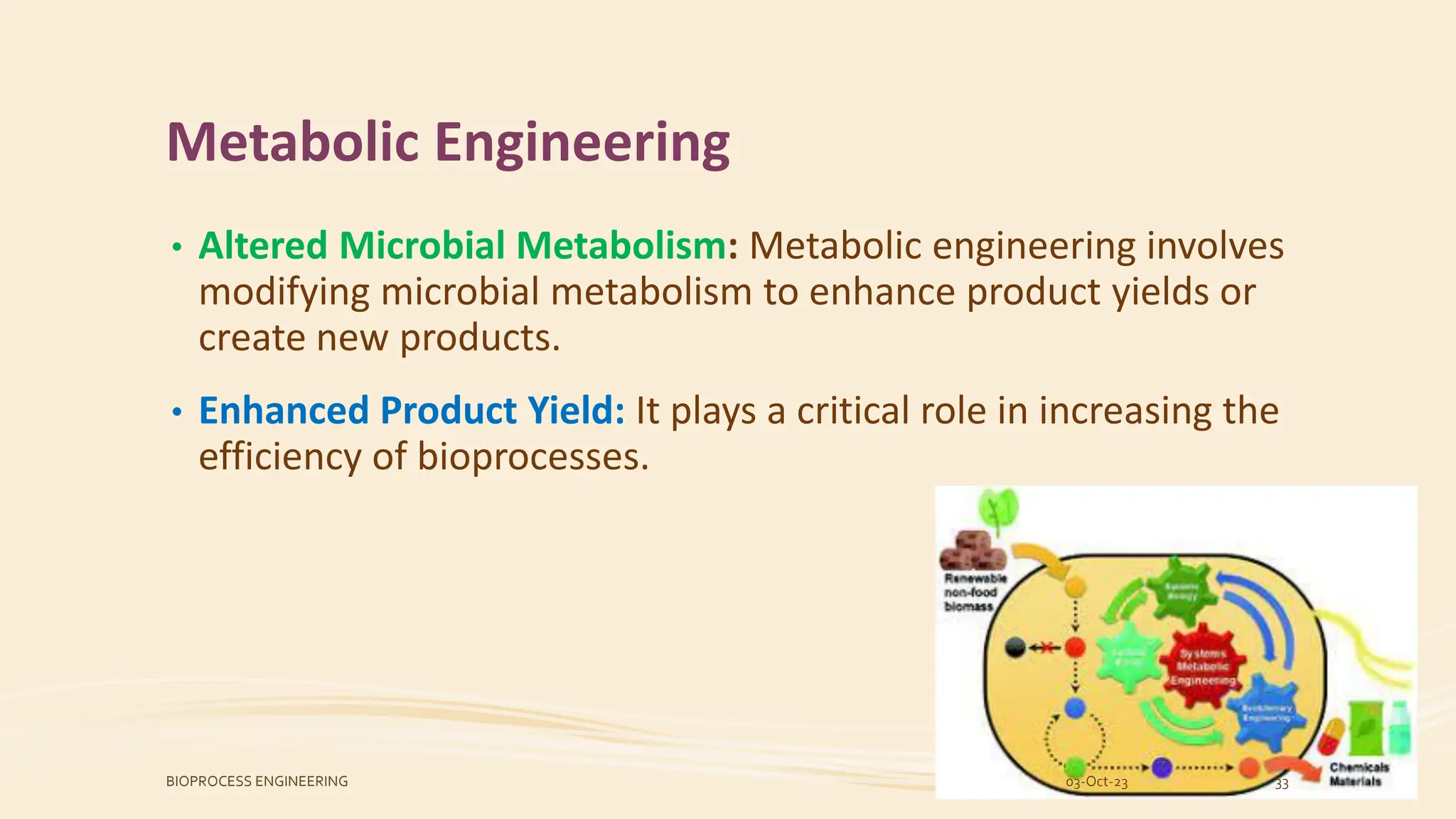
Metabolic Engineering
• Altered Microbial Metabolism: Metabolic engineering involves
modifying microbial metabolism to enhance product yields or
create new products.
• Enhanced Product Yield: It plays a critical role in increasing the
efficiency of bioprocesses.
03-Oct-23
BIOPROCESS ENGINEERING 33
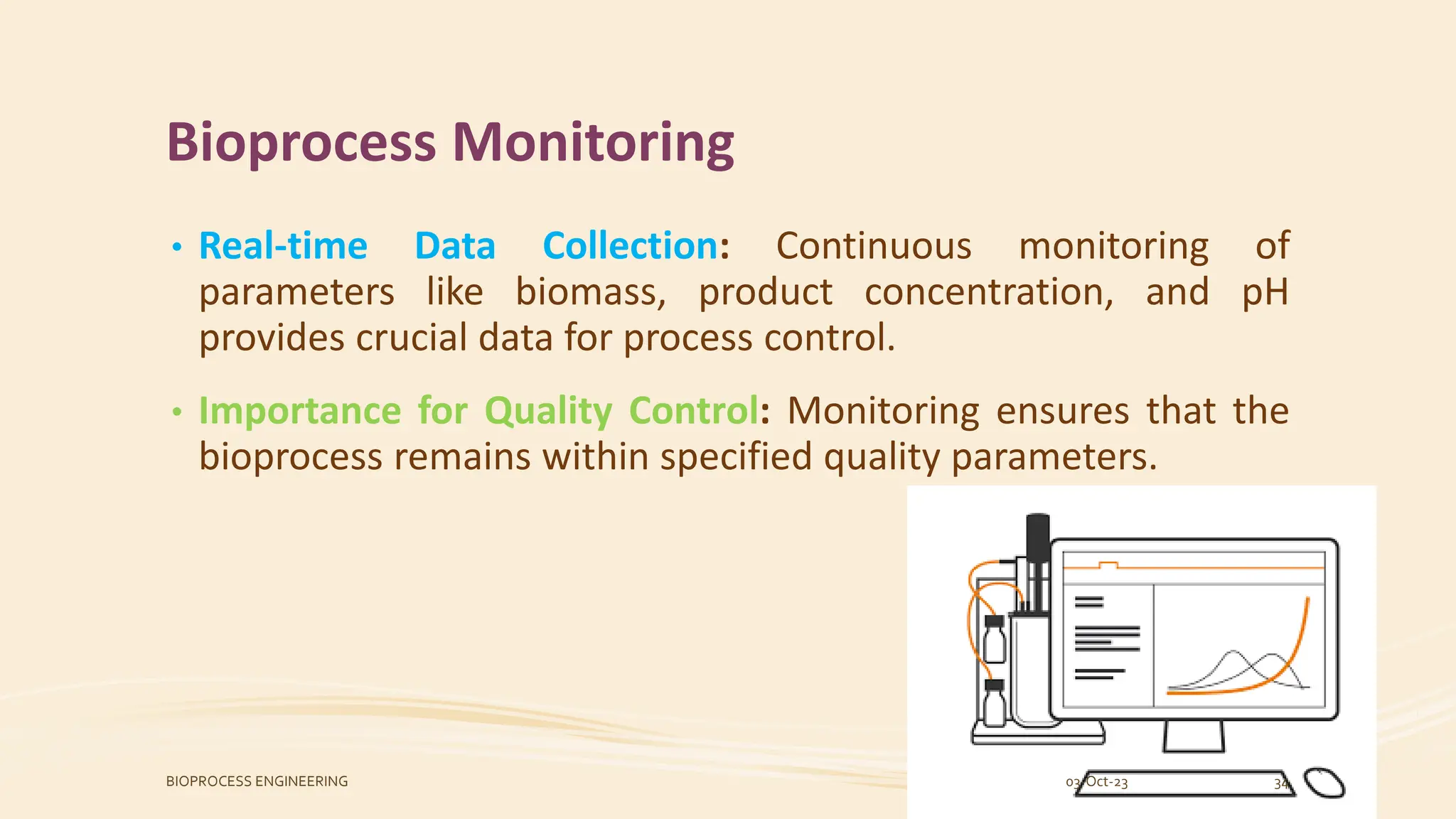
Bioprocess Monitoring
• Real-time Data Collection: Continuous monitoring of
parameters like biomass, product concentration, and pH
provides crucial data for process control.
• Importance for Quality Control: Monitoring ensures that the
bioprocess remains within specified quality parameters.
03-Oct-23
BIOPROCESS ENGINEERING 34
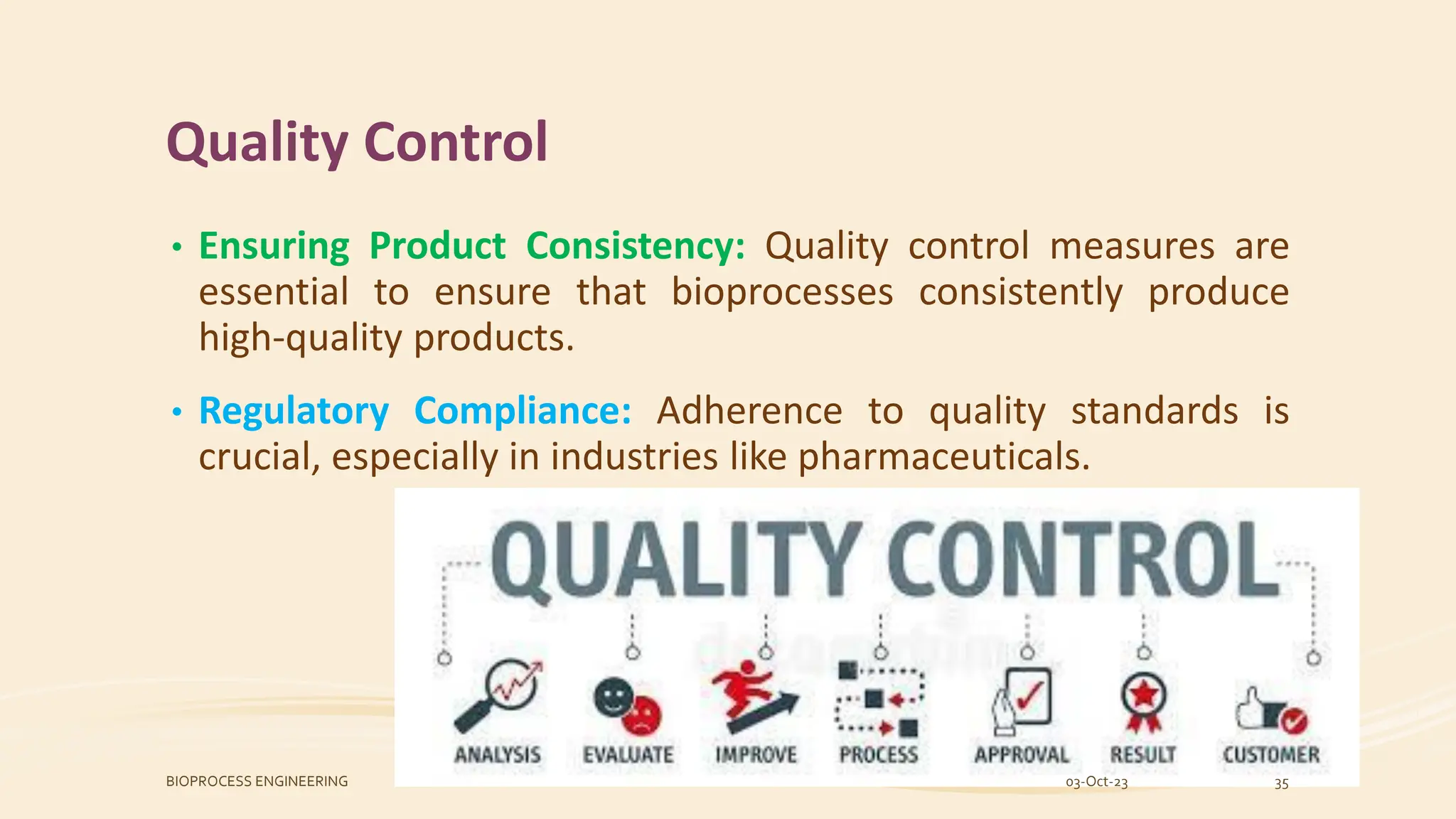
Quality Control
• Ensuring Product Consistency: Quality control measures are
essential to ensure that bioprocesses consistently produce
high-quality products.
• Regulatory Compliance: Adherence to quality standards is
crucial, especially in industries like pharmaceuticals.
03-Oct-23
BIOPROCESS ENGINEERING 35
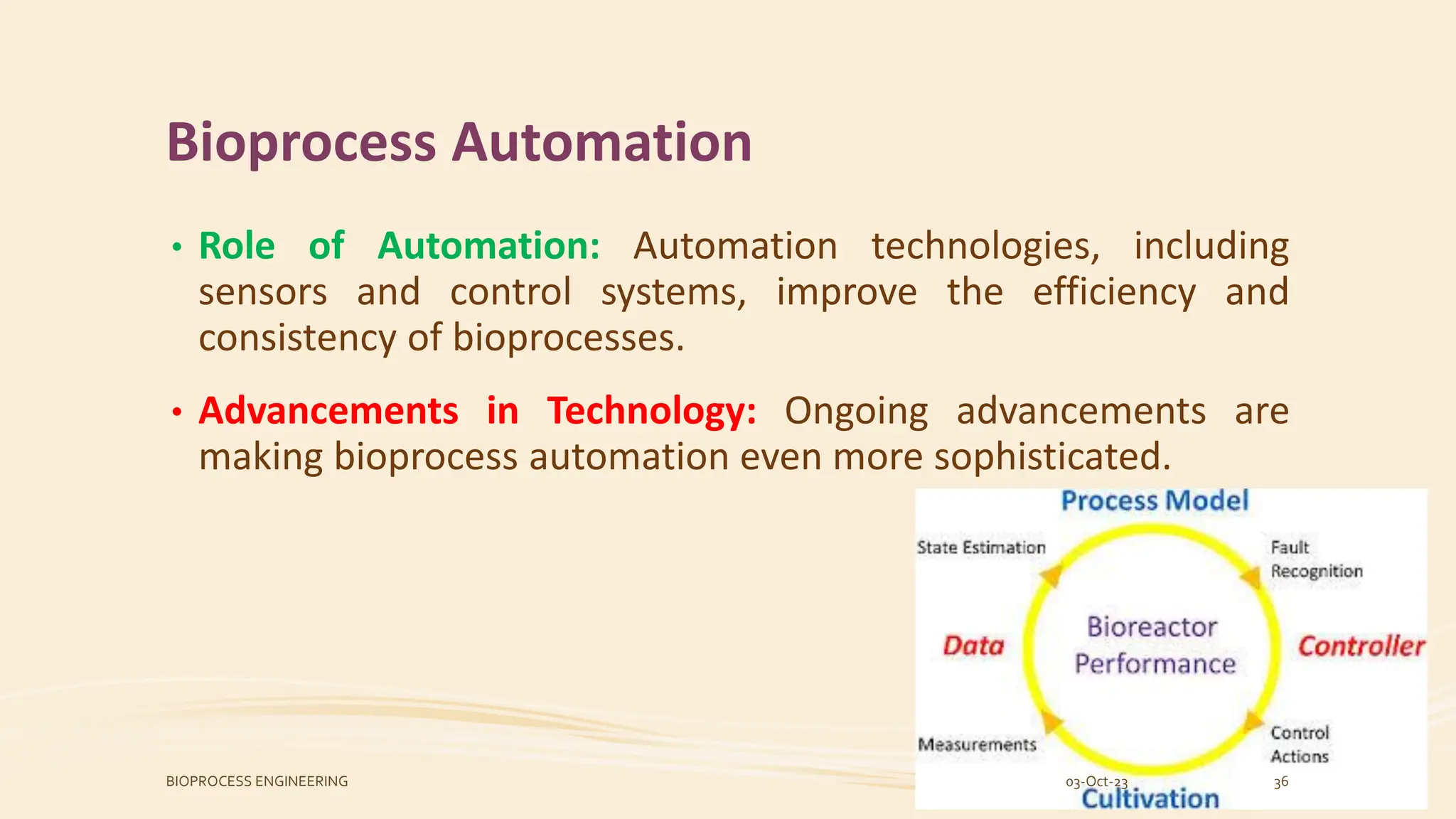
Bioprocess Automation
• Role of Automation: Automation technologies, including
sensors and control systems, improve the efficiency and
consistency of bioprocesses.
• Advancements in Technology: Ongoing advancements are
making bioprocess automation even more sophisticated.
03-Oct-23
BIOPROCESS ENGINEERING 36
03-Oct-23
BIOPROCESS ENGINEERING 37
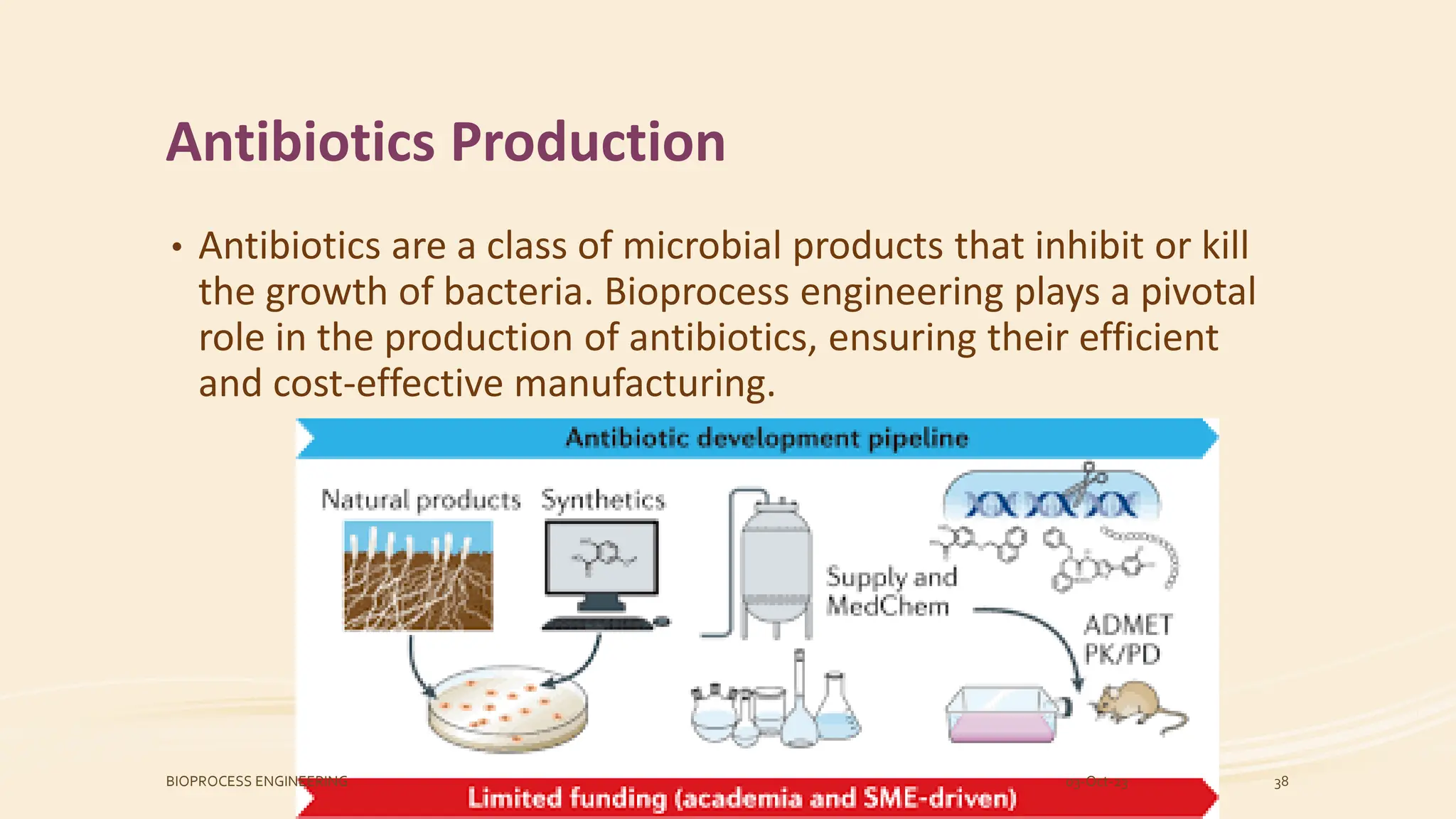
Antibiotics Production
• Antibiotics are a class of microbial products that inhibit or kill
the growth of bacteria. Bioprocess engineering plays a pivotal
role in the production of antibiotics, ensuring their efficient
and cost-effective manufacturing.
03-Oct-23
BIOPROCESS ENGINEERING 38
Antibiotics Production
Overview of Antibiotics:
1. Explanation: Antibiotics are natural or synthetic compounds
produced by microorganisms (e.g., bacteria or fungi) that
have the ability to inhibit the growth or destroy other
microorganisms.
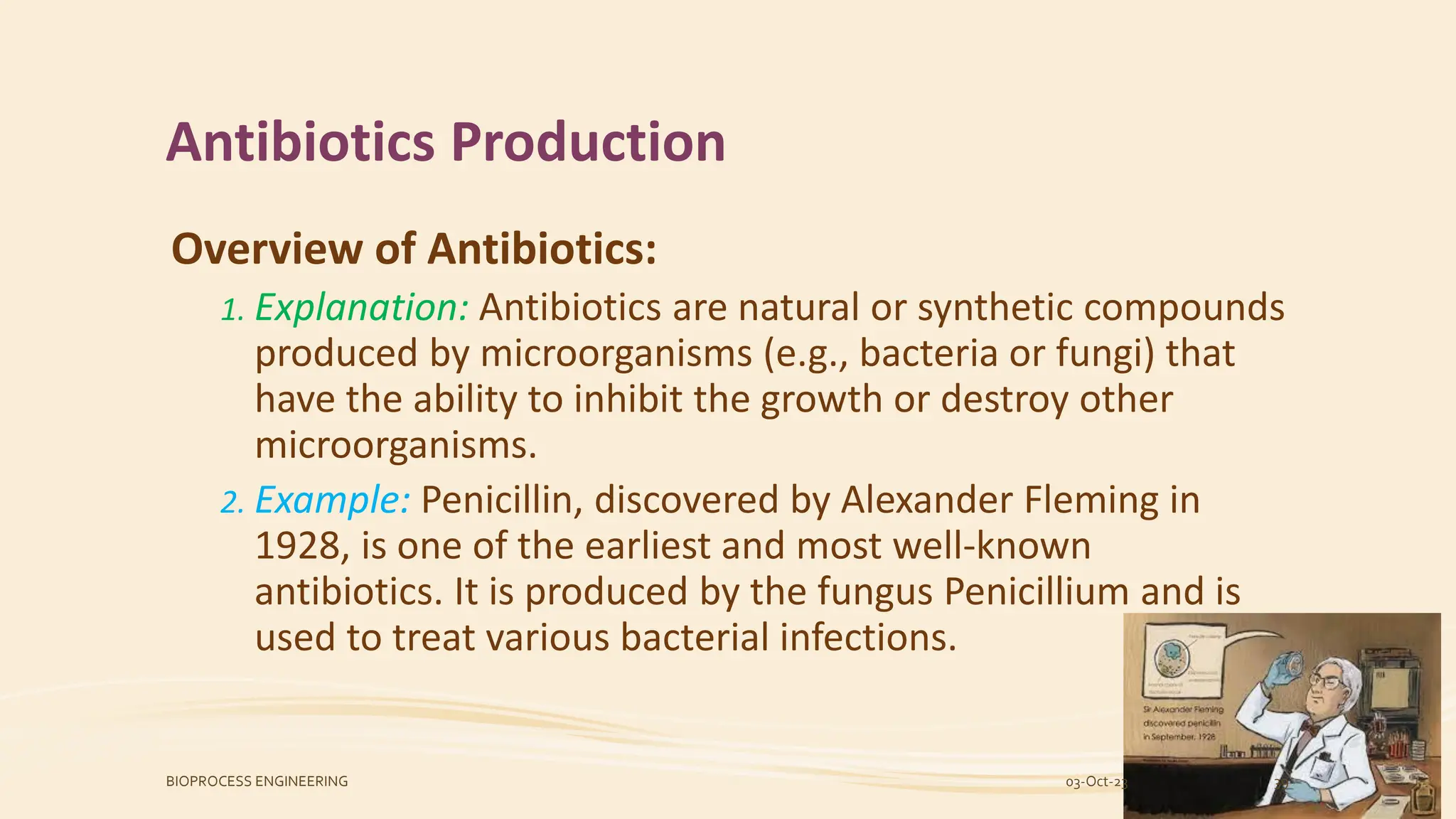
2. Example: Penicillin, discovered by Alexander Fleming in
1928, is one of the earliest and most well-known
antibiotics. It is produced by the fungus Penicillium and is
used to treat various bacterial infections.
03-Oct-23
BIOPROCESS ENGINEERING 39
Antibiotics Production
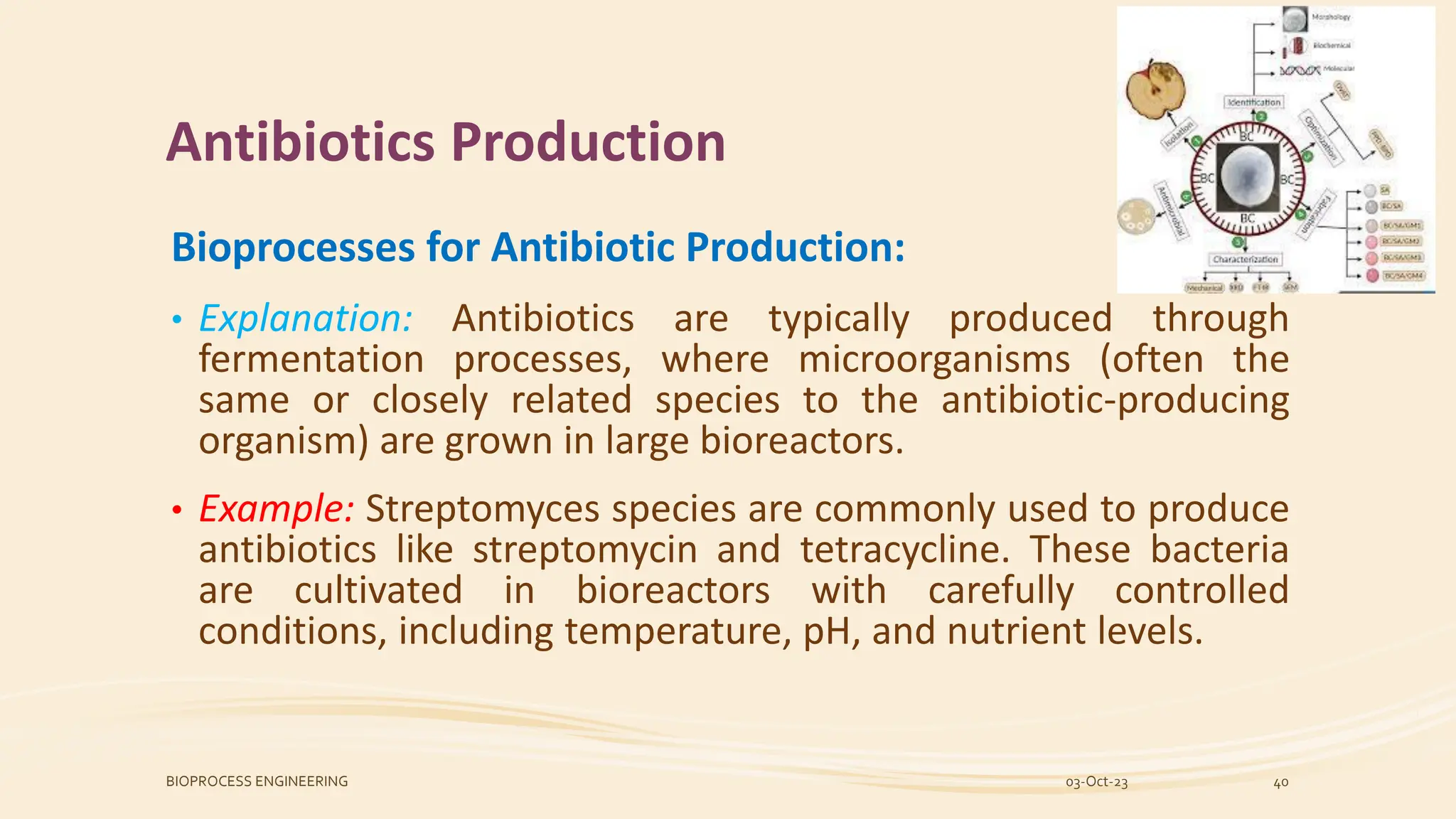
Bioprocesses for Antibiotic Production:
• Explanation: Antibiotics are typically produced through
fermentation processes, where microorganisms (often the
same or closely related species to the antibiotic-producing
organism) are grown in large bioreactors.
• Example: Streptomyces species are commonly used to produce
antibiotics like streptomycin and tetracycline. These bacteria
are cultivated in bioreactors with carefully controlled
conditions, including temperature, pH, and nutrient levels.
03-Oct-23
BIOPROCESS ENGINEERING 40
Antibiotics Production
Key Steps in Antibiotic Production:
• Explanation: The production of antibiotics involves several key
steps, including inoculation, fermentation, extraction, and
purification.
• Example: In the case of penicillin production, after
fermentation, the antibiotic is extracted from the culture broth
and then subjected to purification processes to remove
impurities.
03-Oct-23
BIOPROCESS ENGINEERING 41
Antibiotics Production
Challenges and Optimization:
• Explanation: Antibiotic production faces challenges related to
optimizing yield, reducing production costs, and maintaining
product purity. Bioprocess engineers work on optimizing these
processes.
• Example: Genetic engineering techniques can be applied to
improve antibiotic-producing strains, enhancing production
yields. Additionally, bioprocess optimization may involve
adjusting nutrient concentrations and fermentation conditions.
03-Oct-23
BIOPROCESS ENGINEERING 42
Antibiotics Production
Regulatory Aspects:
• Explanation: Antibiotics are highly regulated due to their
importance in healthcare. Bioprocesses must adhere to strict
quality and safety standards, often set by health authorities.
• Example: The U.S. Food and Drug Administration (FDA) sets
regulations for antibiotic production to ensure product quality,
safety, and efficacy.
03-Oct-23
BIOPROCESS ENGINEERING 43
Antibiotics Production
Future Directions:
• Explanation: Research in antibiotic production is ongoing to
address antibiotic resistance and discover novel antibiotics.
Bioprocess engineering continues to play a role in these
developments.
• Example: The use of synthetic biology and metabolic
engineering is being explored to create new antibiotic-
producing strains with improved properties.
03-Oct-23
BIOPROCESS ENGINEERING 44
ThankYou
03-Oct-23
BIOPROCESS ENGINEERING 45

Lecture 01-Overview of Bioprocess Engineering.pdf

  • 1.
    Bioprocess Engineering Dr. MuhammadNaseem Khan MSc, MBA, PhD
  • 2.
    Course Outline COURSE CODE:BTC-4826 COURSE TITLE: Bioprocess Engineering CREDIT HOURS: 3 + 0 MARKS: 100 03-Oct-23 BIOPROCESS ENGINEERING 2
  • 3.
  • 4.
    Course Detail • Overviewof Bioprocess Engineer • Biotechnology and bioprocess Engineering • Microbial kinetics during batch, continuous and fed-batch processes • The oxygen transfer rate and overall volumetric oxygen transfer coefficient • Design of batch thermal sterilization/Sterilization of air and filter design • Fluid Rheology; Classification, Newtonian & non-Newtonian factors effecting Kla in Fermentation vessel • Design of bioreactors, types and application • Choosing a cultivation method • Solid state fermentation methods and its application • Metabolic Engineering of Industrial Microorganisms • Problem of chemostat with recycle and fed batch culture • Mass transfer in Bioreactor • Bioreactor consideration for animal cell culture 03-Oct-23 BIOPROCESS ENGINEERING 4
  • 5.
    Recommended Books Doran PM, 2012.Bioprocess Engineering Principles.2nd Edition; Academic Press. 03-Oct-23 BIOPROCESS ENGINEERING 5
  • 6.
    Recommended Books McNeil B, 2008.Practical Fermentation Technology. John Willey & Sons 03-Oct-23 BIOPROCESS ENGINEERING 6
  • 7.
    Recommended Books Shuler ML andKargi F, 2002. Bioprocess Engineering: Basic concept. Prentice Hall. 03-Oct-23 BIOPROCESS ENGINEERING 7
  • 8.
  • 9.
  • 10.
    Class Participation (5 Marks ) • All Students Can Get 5 Marks by Participating in Class and answering the question on google classroom. 03-Oct-23 BIOPROCESS ENGINEERING 10
  • 11.
    Assignments ( 10Marks ) • Group Assignment • Pakistan Based Issues and solution • Practical approach 03-Oct-23 BIOPROCESS ENGINEERING 11
  • 12.
    Presentations ( 5Marks ) • Presentation will be start after 2 weeks • Topic may be current challenges and solution based on bioprocessing Engineering in Pakistan 03-Oct-23 BIOPROCESS ENGINEERING 12
  • 13.
    Lets Start theIntroduction 03-Oct-23 BIOPROCESS ENGINEERING 13
  • 14.
  • 15.
    Introduction • Definition ofBioprocess Engineering: Bioprocess engineering is a field that applies engineering principles to design, develop, and optimize biological processes for producing valuable products. • Importance in Biosciences: It plays a vital role in biosciences by enabling the controlled production of biologically derived products, from pharmaceuticals to biofuels. 03-Oct-23 BIOPROCESS ENGINEERING 15
  • 16.
    Key Components • BiologicalSystems: Bioprocess engineering heavily relies on biological systems, particularly microorganisms like bacteria, yeast, fungi, and even viruses. • Microorganisms: These microscopic organisms are the workhorses of bioprocesses, and their growth and metabolism are central to the field. • Chemical Engineering: Bioprocesses often involve chemical transformations and unit operations. • Engineering Design: The discipline focuses on designing systems and processes that efficiently utilize biological resources. 03-Oct-23 BIOPROCESS ENGINEERING 16
  • 17.
    Bioprocess Engineering inBiosciences • Role in Pharmaceutical Research: Bioprocess engineering is crucial for producing pharmaceuticals like vaccines, antibiotics, and biologics. • Applications in Microbiology: It finds applications in microbiology research, enabling controlled experiments and the production of microbial products. 03-Oct-23 BIOPROCESS ENGINEERING 17
  • 18.
    Microbial World • Diversityof Microorganisms: Microorganisms encompass a wide variety of species with distinct characteristics. • Types: This includes bacteria, yeast, fungi, and viruses, each with its unique features and applications. 03-Oct-23 BIOPROCESS ENGINEERING 18
  • 19.
    Microbial Growth • FactorsInfluencing Growth: Microbial growth is influenced by factors such as temperature, pH, nutrients, and oxygen availability. • Exponential Growth Curve: Microbial populations typically grow exponentially when conditions are favorable. 03-Oct-23 BIOPROCESS ENGINEERING 19
  • 20.
    Microbial Metabolism • EnergyProduction: Microorganisms generate energy through various metabolic pathways, such as glycolysis and respiration. • Metabolic Pathways: These are complex sets of chemical reactions that enable microorganisms to synthesize cellular components and produce useful compounds. 03-Oct-23 BIOPROCESS ENGINEERING 20
  • 21.
    Fermentation • Definition: Fermentationis a biological process that converts raw materials into valuable products using microorganisms. • Importance in Bioprocesses: It is a key process in bioprocess engineering, used for producing a wide range of products, including food, pharmaceuticals, and biofuels. 03-Oct-23 BIOPROCESS ENGINEERING 21
  • 22.
    Fermentation Microorganisms • SelectionCriteria: Choosing the right microorganism is crucial, as different organisms have distinct characteristics and abilities. • Examples: Common examples include Escherichia coli (E. coli) for biopharmaceuticals and Saccharomyces cerevisiae for ethanol production. 03-Oct-23 BIOPROCESS ENGINEERING 22
  • 23.
    Bioreactors • Definition: Bioreactorsare specialized vessels designed to provide a controlled environment for microbial growth and product formation. • Types: Various types of bioreactors, including stirred-tank, packed bed, and airlift reactors, are used depending on the application. 03-Oct-23 BIOPROCESS ENGINEERING 23
  • 24.
    Bioreactor Components • Impellers:These mechanical devices ensure even mixing of nutrients and oxygen in the bioreactor. • Sensors: Instruments for monitoring parameters like temperature, pH, and dissolved oxygen. • Control Systems: Automated systems maintain optimal conditions inside the bioreactor. 03-Oct-23 BIOPROCESS ENGINEERING 24
  • 25.
    Sterilization • Importance inBioprocesses: Sterilization ensures that the bioreactor and culture medium are free from contaminants. • Methods: Common methods include autoclaving and filtration to maintain a sterile environment. 03-Oct-23 BIOPROCESS ENGINEERING 25
  • 26.
    Media Formulation • Composition:The culture medium contains nutrients essential for microbial growth, including carbon sources, nitrogen sources, minerals, and vitamins. • Optimization for Microbial Growth: Formulating the medium optimally is critical for achieving high yields of desired products. 03-Oct-23 BIOPROCESS ENGINEERING 26
  • 27.
    Aseptic Techniques • MaintainingSterility: Aseptic techniques are used to prevent contamination during the handling of microorganisms and equipment. • Importance in Bioprocessing: Maintaining sterility is crucial to ensuring the success of bioprocesses. 03-Oct-23 BIOPROCESS ENGINEERING 27
  • 28.
    Downstream Processing • Separationand Purification: After fermentation, downstream processing techniques like centrifugation and filtration are used to separate and purify the desired product from the microbial culture. 03-Oct-23 BIOPROCESS ENGINEERING 28
  • 29.
    Scale-Up and Scale-Down •Challenges in Scaling: Transitioning from laboratory-scale to industrial-scale bioprocesses poses challenges related to equipment, efficiency, and cost. • Laboratory to Industrial Scale: Scaling up is essential for commercial production, while scale-down techniques are useful for research and process optimization. 03-Oct-23 BIOPROCESS ENGINEERING 29
  • 30.
    Microbial Genetics • Rolein Bioprocess Engineering: Understanding microbial genetics is vital for modifying and optimizing microorganisms for specific applications. • Genetic Modification Techniques: Techniques like recombinant DNA technology and CRISPR-Cas9 enable genetic engineering of microorganisms. 03-Oct-23 BIOPROCESS ENGINEERING 30
  • 31.
    Recombinant Microorganisms • CreatingDesigner Microbes: Recombinant microorganisms are engineered to produce specific compounds or proteins. • Applications in Biosciences: They have diverse applications, from the production of insulin to biofuel synthesis. 03-Oct-23 BIOPROCESS ENGINEERING 31
  • 32.
  • 33.
    Metabolic Engineering • AlteredMicrobial Metabolism: Metabolic engineering involves modifying microbial metabolism to enhance product yields or create new products. • Enhanced Product Yield: It plays a critical role in increasing the efficiency of bioprocesses. 03-Oct-23 BIOPROCESS ENGINEERING 33
  • 34.
    Bioprocess Monitoring • Real-timeData Collection: Continuous monitoring of parameters like biomass, product concentration, and pH provides crucial data for process control. • Importance for Quality Control: Monitoring ensures that the bioprocess remains within specified quality parameters. 03-Oct-23 BIOPROCESS ENGINEERING 34
  • 35.
    Quality Control • EnsuringProduct Consistency: Quality control measures are essential to ensure that bioprocesses consistently produce high-quality products. • Regulatory Compliance: Adherence to quality standards is crucial, especially in industries like pharmaceuticals. 03-Oct-23 BIOPROCESS ENGINEERING 35
  • 36.
    Bioprocess Automation • Roleof Automation: Automation technologies, including sensors and control systems, improve the efficiency and consistency of bioprocesses. • Advancements in Technology: Ongoing advancements are making bioprocess automation even more sophisticated. 03-Oct-23 BIOPROCESS ENGINEERING 36
  • 37.
  • 38.
    Antibiotics Production • Antibioticsare a class of microbial products that inhibit or kill the growth of bacteria. Bioprocess engineering plays a pivotal role in the production of antibiotics, ensuring their efficient and cost-effective manufacturing. 03-Oct-23 BIOPROCESS ENGINEERING 38
  • 39.
    Antibiotics Production Overview ofAntibiotics: 1. Explanation: Antibiotics are natural or synthetic compounds produced by microorganisms (e.g., bacteria or fungi) that have the ability to inhibit the growth or destroy other microorganisms. 2. Example: Penicillin, discovered by Alexander Fleming in 1928, is one of the earliest and most well-known antibiotics. It is produced by the fungus Penicillium and is used to treat various bacterial infections. 03-Oct-23 BIOPROCESS ENGINEERING 39
  • 40.
    Antibiotics Production Bioprocesses forAntibiotic Production: • Explanation: Antibiotics are typically produced through fermentation processes, where microorganisms (often the same or closely related species to the antibiotic-producing organism) are grown in large bioreactors. • Example: Streptomyces species are commonly used to produce antibiotics like streptomycin and tetracycline. These bacteria are cultivated in bioreactors with carefully controlled conditions, including temperature, pH, and nutrient levels. 03-Oct-23 BIOPROCESS ENGINEERING 40
  • 41.
    Antibiotics Production Key Stepsin Antibiotic Production: • Explanation: The production of antibiotics involves several key steps, including inoculation, fermentation, extraction, and purification. • Example: In the case of penicillin production, after fermentation, the antibiotic is extracted from the culture broth and then subjected to purification processes to remove impurities. 03-Oct-23 BIOPROCESS ENGINEERING 41
  • 42.
    Antibiotics Production Challenges andOptimization: • Explanation: Antibiotic production faces challenges related to optimizing yield, reducing production costs, and maintaining product purity. Bioprocess engineers work on optimizing these processes. • Example: Genetic engineering techniques can be applied to improve antibiotic-producing strains, enhancing production yields. Additionally, bioprocess optimization may involve adjusting nutrient concentrations and fermentation conditions. 03-Oct-23 BIOPROCESS ENGINEERING 42
  • 43.
    Antibiotics Production Regulatory Aspects: •Explanation: Antibiotics are highly regulated due to their importance in healthcare. Bioprocesses must adhere to strict quality and safety standards, often set by health authorities. • Example: The U.S. Food and Drug Administration (FDA) sets regulations for antibiotic production to ensure product quality, safety, and efficacy. 03-Oct-23 BIOPROCESS ENGINEERING 43
  • 44.
    Antibiotics Production Future Directions: •Explanation: Research in antibiotic production is ongoing to address antibiotic resistance and discover novel antibiotics. Bioprocess engineering continues to play a role in these developments. • Example: The use of synthetic biology and metabolic engineering is being explored to create new antibiotic- producing strains with improved properties. 03-Oct-23 BIOPROCESS ENGINEERING 44
  • 45.