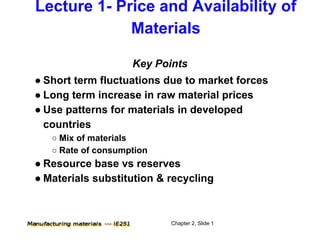
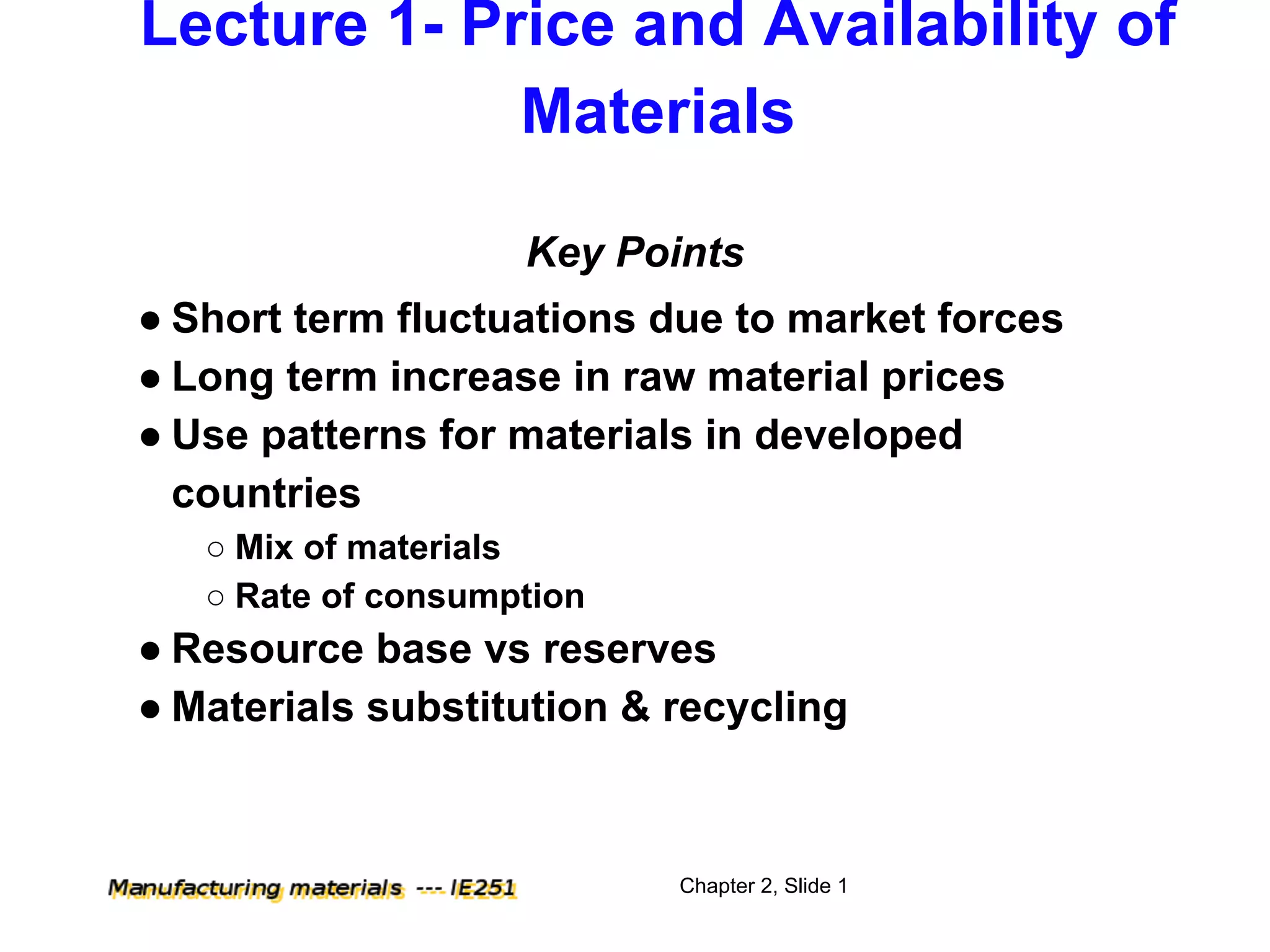
Lecture 1- Price and Availability of
             Materials

                    Key Points
● Short term fluctuations due to market forces
● Long term increase in raw material prices
● Use patterns for materials in developed
  countries
   ○ Mix of materials
   ○ Rate of consumption
● Resource base vs reserves
● Materials substitution & recycling


                           Chapter 2, Slide 1
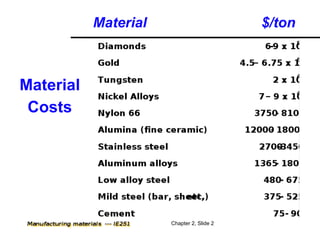
Material                        $/ton


Material
 Costs


                      Chapter 2, Slide 2
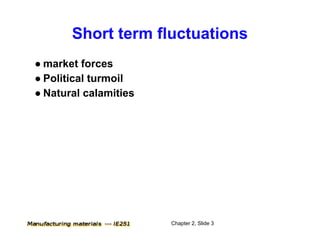
Short term fluctuations
● market forces
● Political turmoil
● Natural calamities


                       Chapter 2, Slide 3
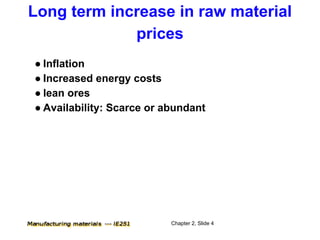
Long term increase in raw material
             prices
● Inflation
● Increased energy costs
● lean ores
● Availability: Scarce or abundant


                           Chapter 2, Slide 4
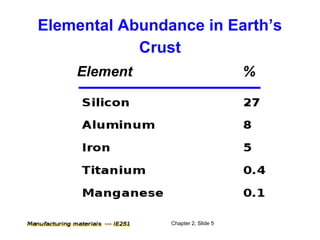
Elemental Abundance in Earth’s
            Crust
    Element                          %


                Chapter 2, Slide 5
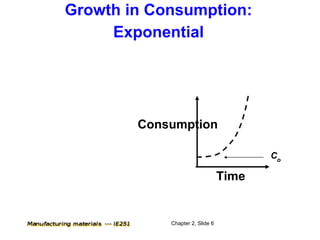
Growth in Consumption:
     Exponential


        Consumption

                                        Co

                                 Time


            Chapter 2, Slide 6
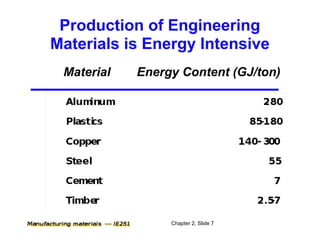
Production of Engineering
Materials is Energy Intensive
 Material   Energy Content (GJ/ton)


                 Chapter 2, Slide 7
How to cope future scarcity
● Material-efficient design
   ○ Thin surface film of the rare material bonded to a
     cheap plentiful substrate
● Substitution
● Recycling


                                Chapter 2, Slide 8
Substitution
     Properties, vs. the material itself
● New or alternative materials can replace
  scarce conventional materials
  ○ Bridges: Stone & wood --> concrete & steel
  ○ Plumbing: Copper --> polyethylene
● Replacement may involves new costs
  ○ Plant & equipment
  ○ Processing & manufacturing methods
  ○ Workforce training


                           Chapter 2, Slide 9
Recycling
● If energy costs, capital costs, or resource
  costs (e.g. through scarcity or depletion)
  are high, recycling can be an effective
  method for reducing material costs
● Problems of recycling:
    ○ Labor intensive
    ○ Requires design for recycling
    ○ May involve its own capital and
      training costs     Chapter 2, Slide 10
References
● Engineering Materials, Vol 1; 2nd Ed; Michael F.
  Ashby and David R. H. Jones; Butterworth-
  Heinemann.


                           Chapter 2, Slide 11

Lect 1- price andavailabilityofmaterials

  • 1.
    Lecture 1- Priceand Availability of Materials Key Points ● Short term fluctuations due to market forces ● Long term increase in raw material prices ● Use patterns for materials in developed countries ○ Mix of materials ○ Rate of consumption ● Resource base vs reserves ● Materials substitution & recycling Chapter 2, Slide 1
  • 2.
    Material $/ton Material Costs Chapter 2, Slide 2
  • 3.
    Short term fluctuations ●market forces ● Political turmoil ● Natural calamities Chapter 2, Slide 3
  • 4.
    Long term increasein raw material prices ● Inflation ● Increased energy costs ● lean ores ● Availability: Scarce or abundant Chapter 2, Slide 4
  • 5.
    Elemental Abundance inEarth’s Crust Element % Chapter 2, Slide 5
  • 6.
    Growth in Consumption: Exponential Consumption Co Time Chapter 2, Slide 6
  • 7.
    Production of Engineering Materialsis Energy Intensive Material Energy Content (GJ/ton) Chapter 2, Slide 7
  • 8.
    How to copefuture scarcity ● Material-efficient design ○ Thin surface film of the rare material bonded to a cheap plentiful substrate ● Substitution ● Recycling Chapter 2, Slide 8
  • 9.
    Substitution Properties, vs. the material itself ● New or alternative materials can replace scarce conventional materials ○ Bridges: Stone & wood --> concrete & steel ○ Plumbing: Copper --> polyethylene ● Replacement may involves new costs ○ Plant & equipment ○ Processing & manufacturing methods ○ Workforce training Chapter 2, Slide 9
  • 10.
    Recycling ● If energycosts, capital costs, or resource costs (e.g. through scarcity or depletion) are high, recycling can be an effective method for reducing material costs ● Problems of recycling: ○ Labor intensive ○ Requires design for recycling ○ May involve its own capital and training costs Chapter 2, Slide 10
  • 11.
    References ● Engineering Materials,Vol 1; 2nd Ed; Michael F. Ashby and David R. H. Jones; Butterworth- Heinemann. Chapter 2, Slide 11