Learners with Additional Needs
• Understanding, Supporting, and Empowering
Diverse Learners
Introduction
• - Every learner is unique and has individual
differences.
• - Some learners need special educational
provisions.
• - Recognizing their needs ensures equitable
education.
Categories of Learners with
Additional Needs
• 1. Learners with gifts and talents
• 2. Learners with difficulty seeing
• 3. Learners with difficulty hearing
• 4. Learners with difficulty communicating
• 5. Learners with difficulty learning
Learners with Gifts and Talents
• Definition: Learners with outstanding aptitude
or competence.
• Characteristics:
• - High curiosity and motivation
• - Advanced reasoning
• - Creativity and sensitivity
Supporting Gifted and Talented
Learners
• Strategies:
• - Challenging tasks
• - Independent projects
• - Mentorship
• Adaptations:
• - Differentiated instruction
• - Flexible pacing
• - Alternative assessments
Learners with Difficulty Seeing
• Definition: Learners with partial or total vision
loss.
• Characteristics:
• - Use Braille or assistive tech
• - Rely on auditory/tactile learning
General Classroom Adaptations
(Vision Difficulty)
• - Provide Braille or large print
• - Use audio/tactile aids
• - Describe visuals aloud
• - Ensure proper lighting
Learners with Difficulty Hearing
• Definition: Learners with partial or total
hearing loss.
• Characteristics:
• - Use sign language/lip reading
• - Prefer visual learning
General Classroom Adaptations
(Hearing Difficulty)
• - Face class while speaking
• - Use visuals and captions
• - Provide written instructions
• - Encourage peer assistance
Learners with Difficulty
Communicating
• Definition: Learners with challenges
expressing or understanding language.
• Characteristics:
• - Limited vocabulary
• - Difficulty articulating words
General Classroom Adaptations
(Communication Difficulty)
• - Simplify instructions
• - Use visuals and gestures
• - Allow extra time
• - Collaborate with specialists
Learners with Difficulty Learning
• Definition: Learners who struggle in academic
areas despite normal intelligence.
• Characteristics:
• - Slow progress
• - Difficulty with reading, writing, math
General Classroom Adaptations
(Learning Difficulty)
• - Step-by-step instructions
• - Multi-sensory teaching
• - Frequent feedback
• - Modify assessments
Inclusive Education and Teacher’s
Role
• - Foster acceptance of diversity
• - Collaborate with parents/specialists
• - Ensure equal opportunities
Reflection / Discussion
• 1. How can teachers identify learners who
need support?
• 2. What strategies promote inclusion?
• 3. Why is collaboration important?
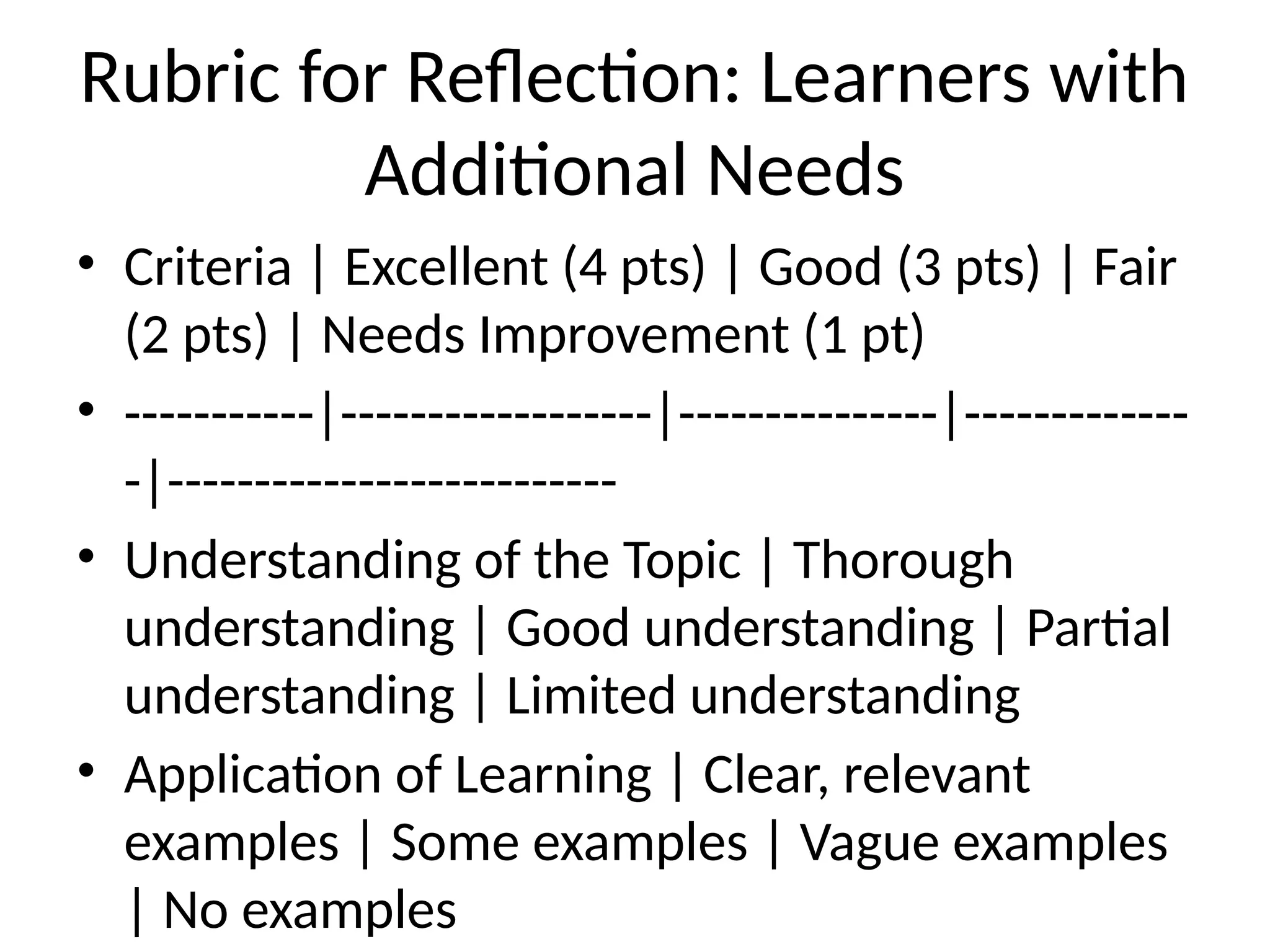
Rubric for Reflection: Learners with
Additional Needs
• Criteria | Excellent (4 pts) | Good (3 pts) | Fair
(2 pts) | Needs Improvement (1 pt)
• -----------|------------------|---------------|-------------
-|--------------------------
• Understanding of the Topic | Thorough
understanding | Good understanding | Partial
understanding | Limited understanding
• Application of Learning | Clear, relevant
examples | Some examples | Vague examples
| No examples
Learners_with_Additional_Needs_with_Rubric.pptx

  • 1.
    Learners with AdditionalNeeds • Understanding, Supporting, and Empowering Diverse Learners
  • 2.
    Introduction • - Everylearner is unique and has individual differences. • - Some learners need special educational provisions. • - Recognizing their needs ensures equitable education.
  • 3.
    Categories of Learnerswith Additional Needs • 1. Learners with gifts and talents • 2. Learners with difficulty seeing • 3. Learners with difficulty hearing • 4. Learners with difficulty communicating • 5. Learners with difficulty learning
  • 4.
    Learners with Giftsand Talents • Definition: Learners with outstanding aptitude or competence. • Characteristics: • - High curiosity and motivation • - Advanced reasoning • - Creativity and sensitivity
  • 5.
    Supporting Gifted andTalented Learners • Strategies: • - Challenging tasks • - Independent projects • - Mentorship • Adaptations: • - Differentiated instruction • - Flexible pacing • - Alternative assessments
  • 6.
    Learners with DifficultySeeing • Definition: Learners with partial or total vision loss. • Characteristics: • - Use Braille or assistive tech • - Rely on auditory/tactile learning
  • 7.
    General Classroom Adaptations (VisionDifficulty) • - Provide Braille or large print • - Use audio/tactile aids • - Describe visuals aloud • - Ensure proper lighting
  • 8.
    Learners with DifficultyHearing • Definition: Learners with partial or total hearing loss. • Characteristics: • - Use sign language/lip reading • - Prefer visual learning
  • 9.
    General Classroom Adaptations (HearingDifficulty) • - Face class while speaking • - Use visuals and captions • - Provide written instructions • - Encourage peer assistance
  • 10.
    Learners with Difficulty Communicating •Definition: Learners with challenges expressing or understanding language. • Characteristics: • - Limited vocabulary • - Difficulty articulating words
  • 11.
    General Classroom Adaptations (CommunicationDifficulty) • - Simplify instructions • - Use visuals and gestures • - Allow extra time • - Collaborate with specialists
  • 12.
    Learners with DifficultyLearning • Definition: Learners who struggle in academic areas despite normal intelligence. • Characteristics: • - Slow progress • - Difficulty with reading, writing, math
  • 13.
    General Classroom Adaptations (LearningDifficulty) • - Step-by-step instructions • - Multi-sensory teaching • - Frequent feedback • - Modify assessments
  • 14.
    Inclusive Education andTeacher’s Role • - Foster acceptance of diversity • - Collaborate with parents/specialists • - Ensure equal opportunities
  • 15.
    Reflection / Discussion •1. How can teachers identify learners who need support? • 2. What strategies promote inclusion? • 3. Why is collaboration important?
  • 16.
    Rubric for Reflection:Learners with Additional Needs • Criteria | Excellent (4 pts) | Good (3 pts) | Fair (2 pts) | Needs Improvement (1 pt) • -----------|------------------|---------------|------------- -|-------------------------- • Understanding of the Topic | Thorough understanding | Good understanding | Partial understanding | Limited understanding • Application of Learning | Clear, relevant examples | Some examples | Vague examples | No examples