Leading DevOps Tools for
2022
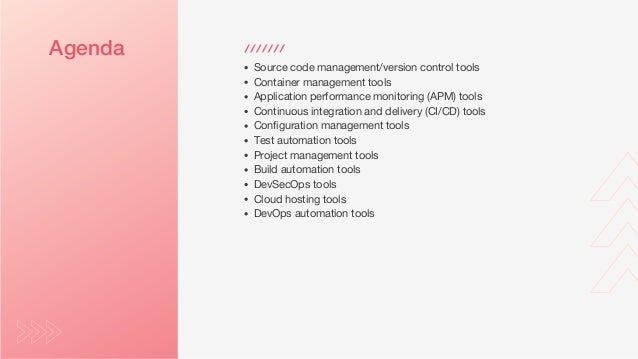
Agenda
Source code management/version control tools
Container management tools
Application performance monitoring (APM) tools
Continuous integration and delivery (CI/CD) tools
Configuration management tools
Test automation tools
Project management tools
Build automation tools
DevSecOps tools
Cloud hosting tools
DevOps automation tools
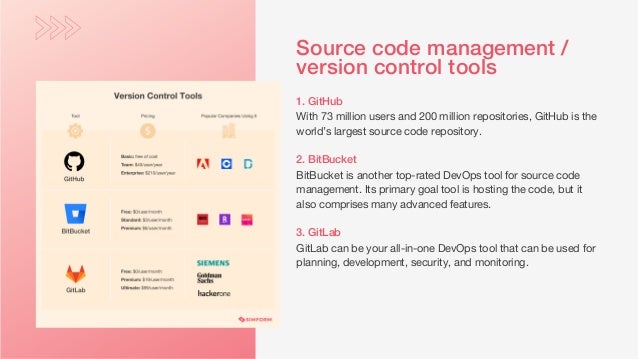
1. GitHub
With 73 million users and 200 million repositories, GitHub is the
world’s largest source code repository.
2. BitBucket
BitBucket is another top-rated DevOps tool for source code
management. Its primary goal tool is hosting the code, but it
also comprises many advanced features.
3. GitLab
GitLab can be your all-in-one DevOps tool that can be used for
planning, development, security, and monitoring.
Source code management /
version control tools
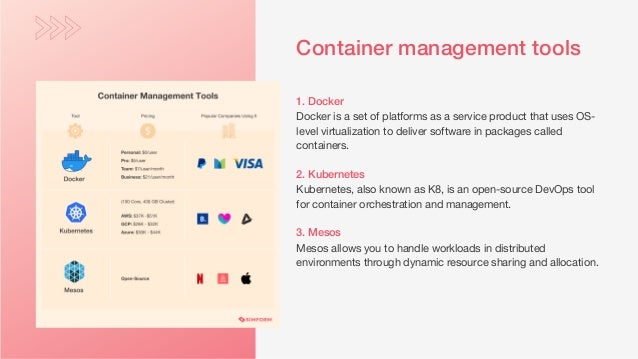
1. Docker
Docker is a set of platforms as a service product that uses OS-
level virtualization to deliver software in packages called
containers.
2. Kubernetes
Kubernetes, also known as K8, is an open-source DevOps tool
for container orchestration and management.
3. Mesos
Mesos allows you to handle workloads in distributed
environments through dynamic resource sharing and allocation.
Container management tools
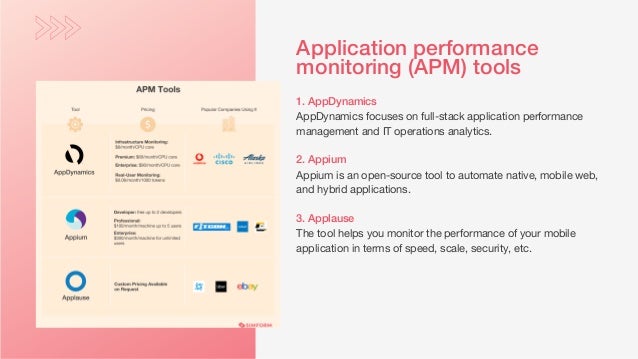
1. AppDynamics
AppDynamics focuses on full-stack application performance
management and IT operations analytics.
2. Appium
Appium is an open-source tool to automate native, mobile web,
and hybrid applications.
3. Applause
The tool helps you monitor the performance of your mobile
application in terms of speed, scale, security, etc.
Application performance
monitoring (APM) tools
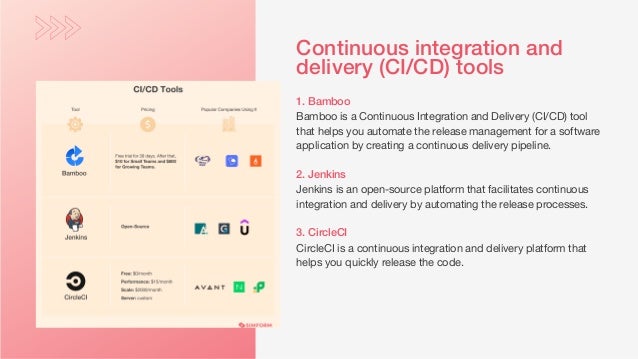
1. Bamboo
Bamboo is a Continuous Integration and Delivery (CI/CD) tool
that helps you automate the release management for a software
application by creating a continuous delivery pipeline.
2. Jenkins
Jenkins is an open-source platform that facilitates continuous
integration and delivery by automating the release processes.
3. CircleCI
CircleCI is a continuous integration and delivery platform that
helps you quickly release the code.
Continuous integration and
delivery (CI/CD) tools
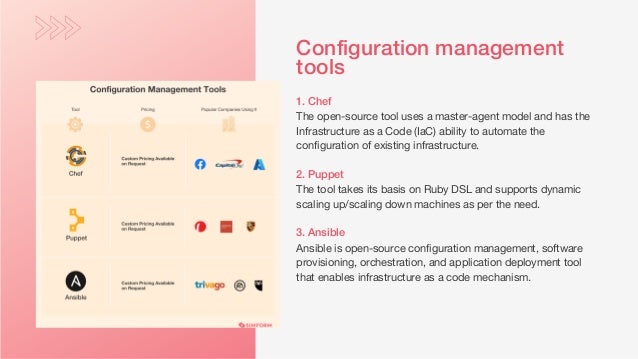
1. Chef
The open-source tool uses a master-agent model and has the
Infrastructure as a Code (IaC) ability to automate the
configuration of existing infrastructure.
2. Puppet
The tool takes its basis on Ruby DSL and supports dynamic
scaling up/scaling down machines as per the need.
3. Ansible
Ansible is open-source configuration management, software
provisioning, orchestration, and application deployment tool
that enables infrastructure as a code mechanism.
Configuration management
tools
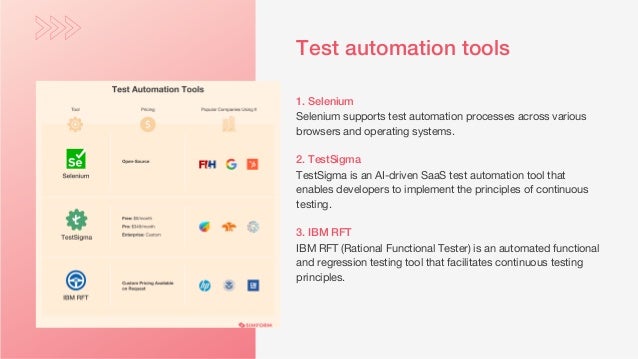
1. Selenium
Selenium supports test automation processes across various
browsers and operating systems.
2. TestSigma
TestSigma is an AI-driven SaaS test automation tool that
enables developers to implement the principles of continuous
testing.
3. IBM RFT
IBM RFT (Rational Functional Tester) is an automated functional
and regression testing tool that facilitates continuous testing
principles.
Test automation tools
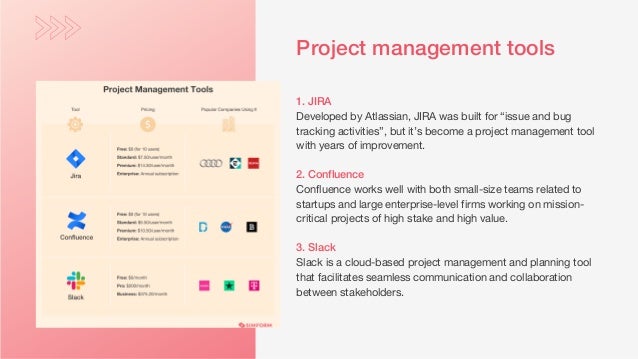
1. JIRA
Developed by Atlassian, JIRA was built for “issue and bug
tracking activities”, but it’s become a project management tool
with years of improvement.
2. Confluence
Confluence works well with both small-size teams related to
startups and large enterprise-level firms working on mission-
critical projects of high stake and high value.
3. Slack
Slack is a cloud-based project management and planning tool
that facilitates seamless communication and collaboration
between stakeholders.
Project management tools
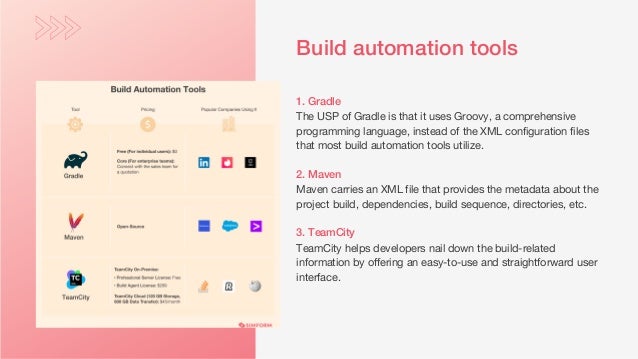
1. Gradle
The USP of Gradle is that it uses Groovy, a comprehensive
programming language, instead of the XML configuration files
that most build automation tools utilize.
2. Maven
Maven carries an XML file that provides the metadata about the
project build, dependencies, build sequence, directories, etc.
3. TeamCity
TeamCity helps developers nail down the build-related
information by offering an easy-to-use and straightforward user
interface.
Build automation tools
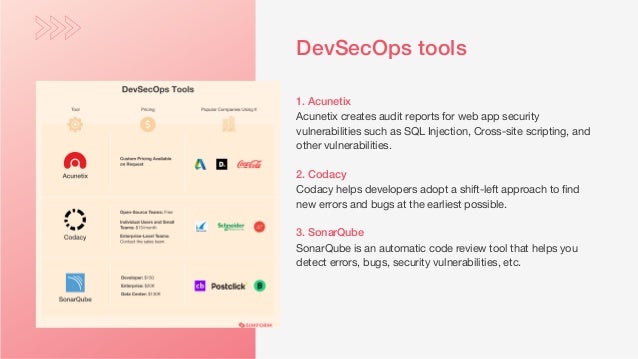
1. Acunetix
Acunetix creates audit reports for web app security
vulnerabilities such as SQL Injection, Cross-site scripting, and
other vulnerabilities.
2. Codacy
Codacy helps developers adopt a shift-left approach to find
new errors and bugs at the earliest possible.
3. SonarQube
SonarQube is an automatic code review tool that helps you
detect errors, bugs, security vulnerabilities, etc.
DevSecOps tools
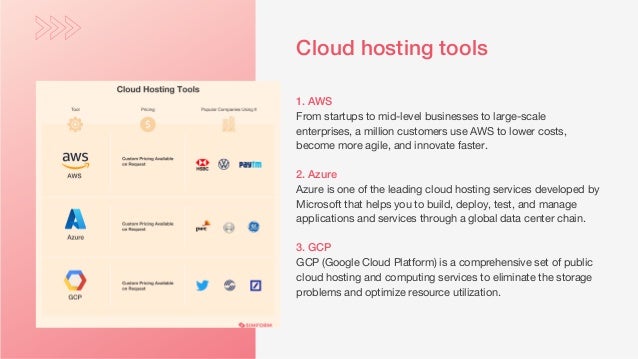
1. AWS
From startups to mid-level businesses to large-scale
enterprises, a million customers use AWS to lower costs,
become more agile, and innovate faster.
2. Azure
Azure is one of the leading cloud hosting services developed by
Microsoft that helps you to build, deploy, test, and manage
applications and services through a global data center chain.
3. GCP
GCP (Google Cloud Platform) is a comprehensive set of public
cloud hosting and computing services to eliminate the storage
problems and optimize resource utilization.
Cloud hosting tools
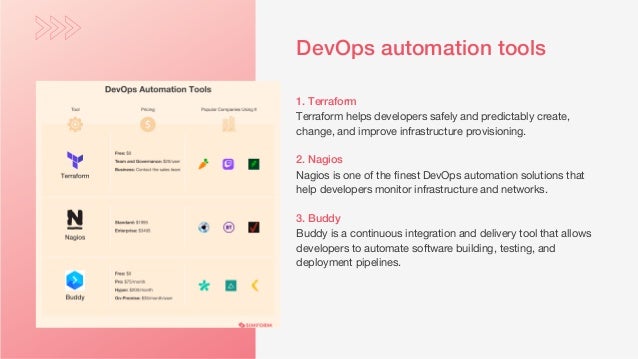
1. Terraform
Terraform helps developers safely and predictably create,
change, and improve infrastructure provisioning.
2. Nagios
Nagios is one of the finest DevOps automation solutions that
help developers monitor infrastructure and networks.
3. Buddy
Buddy is a continuous integration and delivery tool that allows
developers to automate software building, testing, and
deployment pipelines.
DevOps automation tools
Contact Us
Email Address
contactus@simform.com
Website
www.simform.com
Social Presence
twitter.com/simform
facebook.com/simform
linkedin.com/company/simform/

Leading DevOps Tools for 2022.pdf

  • 1.
  • 2.
    Agenda Source code management/versioncontrol tools Container management tools Application performance monitoring (APM) tools Continuous integration and delivery (CI/CD) tools Configuration management tools Test automation tools Project management tools Build automation tools DevSecOps tools Cloud hosting tools DevOps automation tools
  • 3.
    1. GitHub With 73million users and 200 million repositories, GitHub is the world’s largest source code repository. 2. BitBucket BitBucket is another top-rated DevOps tool for source code management. Its primary goal tool is hosting the code, but it also comprises many advanced features. 3. GitLab GitLab can be your all-in-one DevOps tool that can be used for planning, development, security, and monitoring. Source code management / version control tools
  • 4.
    1. Docker Docker isa set of platforms as a service product that uses OS- level virtualization to deliver software in packages called containers. 2. Kubernetes Kubernetes, also known as K8, is an open-source DevOps tool for container orchestration and management. 3. Mesos Mesos allows you to handle workloads in distributed environments through dynamic resource sharing and allocation. Container management tools
  • 5.
    1. AppDynamics AppDynamics focuseson full-stack application performance management and IT operations analytics. 2. Appium Appium is an open-source tool to automate native, mobile web, and hybrid applications. 3. Applause The tool helps you monitor the performance of your mobile application in terms of speed, scale, security, etc. Application performance monitoring (APM) tools
  • 6.
    1. Bamboo Bamboo isa Continuous Integration and Delivery (CI/CD) tool that helps you automate the release management for a software application by creating a continuous delivery pipeline. 2. Jenkins Jenkins is an open-source platform that facilitates continuous integration and delivery by automating the release processes. 3. CircleCI CircleCI is a continuous integration and delivery platform that helps you quickly release the code. Continuous integration and delivery (CI/CD) tools
  • 7.
    1. Chef The open-sourcetool uses a master-agent model and has the Infrastructure as a Code (IaC) ability to automate the configuration of existing infrastructure. 2. Puppet The tool takes its basis on Ruby DSL and supports dynamic scaling up/scaling down machines as per the need. 3. Ansible Ansible is open-source configuration management, software provisioning, orchestration, and application deployment tool that enables infrastructure as a code mechanism. Configuration management tools
  • 8.
    1. Selenium Selenium supportstest automation processes across various browsers and operating systems. 2. TestSigma TestSigma is an AI-driven SaaS test automation tool that enables developers to implement the principles of continuous testing. 3. IBM RFT IBM RFT (Rational Functional Tester) is an automated functional and regression testing tool that facilitates continuous testing principles. Test automation tools
  • 9.
    1. JIRA Developed byAtlassian, JIRA was built for “issue and bug tracking activities”, but it’s become a project management tool with years of improvement. 2. Confluence Confluence works well with both small-size teams related to startups and large enterprise-level firms working on mission- critical projects of high stake and high value. 3. Slack Slack is a cloud-based project management and planning tool that facilitates seamless communication and collaboration between stakeholders. Project management tools
  • 10.
    1. Gradle The USPof Gradle is that it uses Groovy, a comprehensive programming language, instead of the XML configuration files that most build automation tools utilize. 2. Maven Maven carries an XML file that provides the metadata about the project build, dependencies, build sequence, directories, etc. 3. TeamCity TeamCity helps developers nail down the build-related information by offering an easy-to-use and straightforward user interface. Build automation tools
  • 11.
    1. Acunetix Acunetix createsaudit reports for web app security vulnerabilities such as SQL Injection, Cross-site scripting, and other vulnerabilities. 2. Codacy Codacy helps developers adopt a shift-left approach to find new errors and bugs at the earliest possible. 3. SonarQube SonarQube is an automatic code review tool that helps you detect errors, bugs, security vulnerabilities, etc. DevSecOps tools
  • 12.
    1. AWS From startupsto mid-level businesses to large-scale enterprises, a million customers use AWS to lower costs, become more agile, and innovate faster. 2. Azure Azure is one of the leading cloud hosting services developed by Microsoft that helps you to build, deploy, test, and manage applications and services through a global data center chain. 3. GCP GCP (Google Cloud Platform) is a comprehensive set of public cloud hosting and computing services to eliminate the storage problems and optimize resource utilization. Cloud hosting tools
  • 13.
    1. Terraform Terraform helpsdevelopers safely and predictably create, change, and improve infrastructure provisioning. 2. Nagios Nagios is one of the finest DevOps automation solutions that help developers monitor infrastructure and networks. 3. Buddy Buddy is a continuous integration and delivery tool that allows developers to automate software building, testing, and deployment pipelines. DevOps automation tools
  • 14.
    Contact Us Email Address contactus@simform.com Website www.simform.com SocialPresence twitter.com/simform facebook.com/simform linkedin.com/company/simform/