Natural Justice and the Abuse of
Administrative Discretion
Administrative Law Project
Introduction
Today’s reality is based
on just one word that
‘s injustice.
Today we have many
protection laws but
indeed injustice is
the bitter reality of
the contemporary
world.
The law-making bodies
are continuously
indulged in making
new laws and
principles that not only
empower the people
but also protect their
rights.
Introduction
One prominent
effort of the law-
making bodies in
this regard is the
Principle of Natural
Justice.
This principle has not only
given the people the right to
raise the voice against
injustice, but also prove
their standing before the
court if they are entangled in
any legal issue.
Natural Justice
AUTHOUR
• Lord Evershed, in
Vionet V. Barrett
DEFINITION
“Natural Justice
is the natural
sense of what is
right and wrong.”
CASE LAW
A.K Kraipak v/s the Union
of India (AIR 1970 SC 150),
ORIGIN OF NATURAL JUSTICE
Term evolution
Roman and Greek
civilization
First parents Adam
& Eve
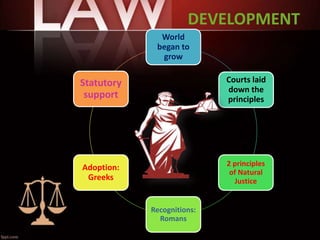
DEVELOPMENT
World
began to
grow
Courts laid
down the
principles
2 principles
of Natural
Justice
Recognitions:
Romans
Adoption:
Greeks
Statutory
support
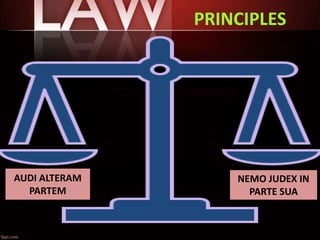
PRINCIPLES
AUDI ALTERAM
PARTEM
NEMO JUDEX IN
PARTE SUA
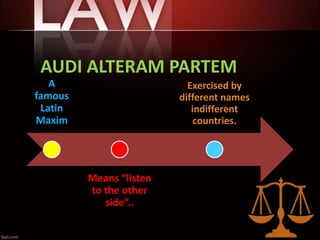
AUDI ALTERAM PARTEM
A
famous
Latin
Maxim
Means “listen
to the other
side”..
Exercised by
different names
indifferent
countries.
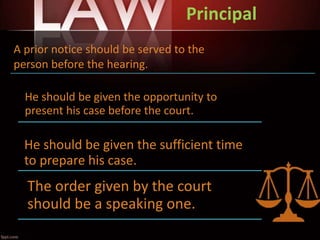
Principal
He should be given the opportunity to
present his case before the court.
He should be given the sufficient time
to prepare his case.
The order given by the court
should be a speaking one.
A prior notice should be served to the
person before the hearing. .
Case law
• Nagar Palika, Nataur
vs. U.P. Public Services
Tribunal, Lucknow,
1998 SCC (L&S) 567
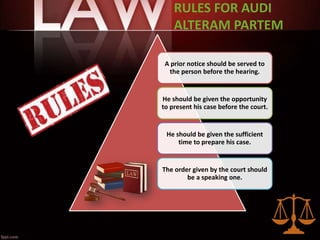
RULES FOR AUDI
ALTERAM PARTEM
A prior notice should be served to
the person before the hearing.
He should be given the opportunity
to present his case before the court.
He should be given the sufficient
time to prepare his case.
The order given by the court should
be a speaking one.
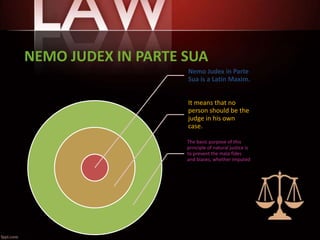
NEMO JUDEX IN PARTE SUA
Nemo Judex in Parte
Sua is a Latin Maxim.
It means that no
person should be the
judge in his own
case.
The basic purpose of this
principle of natural justice is
to prevent the mala fides
and biases, whether imputed
or apparent.
SIGNIFICANCE
History
 Like audi alteram partem, nemo judex in parte sua
is also an important part to many legal systems.
 It became an integral part of the English common
law as a result of the case law
“Frome United Breweries
C Co. v Bath”
Case law
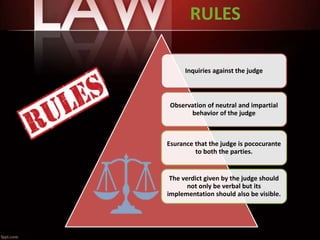
RULES
Inquiries against the judge
Observation of neutral and impartial
behavior of the judge
Esurance that the judge is pococurante
to both the parties.
The verdict given by the judge should
not only be verbal but its
implementation should also be visible.
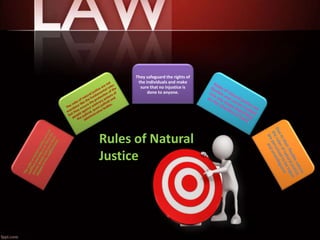
Rules of Natural
Justice
They safeguard the rights of
the individuals and make
sure that no injustice is
done to anyone.
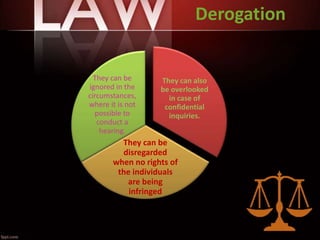
They can also
be overlooked
in case of
confidential
inquiries.
They can be
disregarded
when no rights of
the individuals
are being
infringed
They can be
ignored in the
circumstances,
where it is not
possible to
conduct a
hearing.
Derogation
According to Phillip Cooper:
“the powers of an administrator to make
significant decisions that have the force of law,
directly or indirectly, and that are not
specifically mandated by the Constitution,
statutes, or other sources of black letter law”.
Administrative Discretion
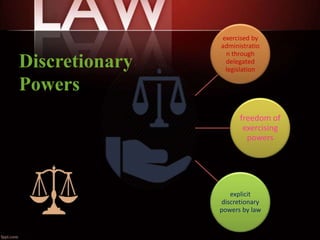
Discretionary
Powers
exercised by
administratio
n through
delegated
legislation
freedom of
exercising
powers
explicit
discretionary
powers by law
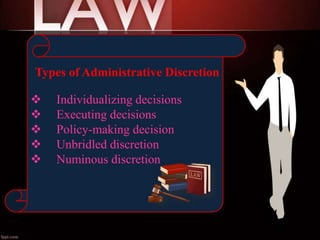
 Individualizing decisions
 Executing decisions
 Policy-making decision
 Unbridled discretion
 Numinous discretion
Types of Administrative Discretion
Need
• Where legal procedures are not being
followed
• reduces the burden n the judicial system
• for the better functioning of administrative
body
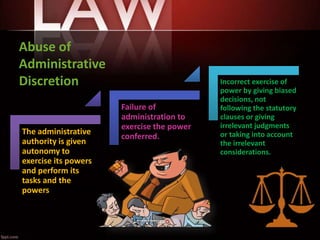
Abuse of
Administrative
Discretion
The administrative
authority is given
autonomy to
exercise its powers
and perform its
tasks and the
powers vested could
be infringed in case of;
Failure of
administration to
exercise the power
conferred.
Incorrect exercise of
power by giving biased
decisions, not
following the statutory
clauses or giving
irrelevant judgments
or taking into account
the irrelevant
considerations.
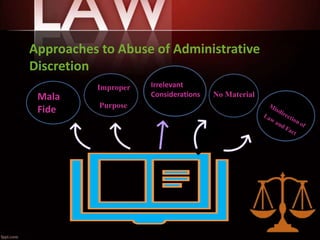
Approaches to Abuse of Administrative
Discretion
Mala
Fide
Improper
Purpose
Irrelevant
Considerations No Material
Case law
“Associated Provincial Picture Houses Ltd. v
Wednesbury Corporation [1948] 1 KB 223”
Natural justice and the Abuse of
Administrative Discretion:
 The abuse of administrative discretion is completely
opposite to the concept of natural justice. It takes
away an individual right to true and fair judgment
whereas, natural justice grants right to justice and
fairness.
Thank You

Law

  • 1.
    Natural Justice andthe Abuse of Administrative Discretion Administrative Law Project
  • 2.
    Introduction Today’s reality isbased on just one word that ‘s injustice. Today we have many protection laws but indeed injustice is the bitter reality of the contemporary world. The law-making bodies are continuously indulged in making new laws and principles that not only empower the people but also protect their rights.
  • 3.
    Introduction One prominent effort ofthe law- making bodies in this regard is the Principle of Natural Justice. This principle has not only given the people the right to raise the voice against injustice, but also prove their standing before the court if they are entangled in any legal issue.
  • 4.
    Natural Justice AUTHOUR • LordEvershed, in Vionet V. Barrett DEFINITION “Natural Justice is the natural sense of what is right and wrong.”
  • 5.
    CASE LAW A.K Kraipakv/s the Union of India (AIR 1970 SC 150),
  • 6.
    ORIGIN OF NATURALJUSTICE Term evolution Roman and Greek civilization First parents Adam & Eve
  • 7.
    DEVELOPMENT World began to grow Courts laid downthe principles 2 principles of Natural Justice Recognitions: Romans Adoption: Greeks Statutory support
  • 8.
  • 9.
    AUDI ALTERAM PARTEM A famous Latin Maxim Means“listen to the other side”.. Exercised by different names indifferent countries.
  • 10.
    Principal He should begiven the opportunity to present his case before the court. He should be given the sufficient time to prepare his case. The order given by the court should be a speaking one. A prior notice should be served to the person before the hearing. .
  • 11.
    Case law • NagarPalika, Nataur vs. U.P. Public Services Tribunal, Lucknow, 1998 SCC (L&S) 567
  • 12.
    RULES FOR AUDI ALTERAMPARTEM A prior notice should be served to the person before the hearing. He should be given the opportunity to present his case before the court. He should be given the sufficient time to prepare his case. The order given by the court should be a speaking one.
  • 13.
    NEMO JUDEX INPARTE SUA Nemo Judex in Parte Sua is a Latin Maxim. It means that no person should be the judge in his own case. The basic purpose of this principle of natural justice is to prevent the mala fides and biases, whether imputed or apparent.
  • 14.
  • 15.
    History  Like audialteram partem, nemo judex in parte sua is also an important part to many legal systems.  It became an integral part of the English common law as a result of the case law “Frome United Breweries C Co. v Bath”
  • 16.
  • 17.
    RULES Inquiries against thejudge Observation of neutral and impartial behavior of the judge Esurance that the judge is pococurante to both the parties. The verdict given by the judge should not only be verbal but its implementation should also be visible.
  • 18.
    Rules of Natural Justice Theysafeguard the rights of the individuals and make sure that no injustice is done to anyone.
  • 19.
    They can also beoverlooked in case of confidential inquiries. They can be disregarded when no rights of the individuals are being infringed They can be ignored in the circumstances, where it is not possible to conduct a hearing. Derogation
  • 20.
    According to PhillipCooper: “the powers of an administrator to make significant decisions that have the force of law, directly or indirectly, and that are not specifically mandated by the Constitution, statutes, or other sources of black letter law”. Administrative Discretion
  • 21.
    Discretionary Powers exercised by administratio n through delegated legislation freedomof exercising powers explicit discretionary powers by law
  • 22.
     Individualizing decisions Executing decisions  Policy-making decision  Unbridled discretion  Numinous discretion Types of Administrative Discretion
  • 23.
    Need • Where legalprocedures are not being followed • reduces the burden n the judicial system • for the better functioning of administrative body
  • 24.
    Abuse of Administrative Discretion The administrative authorityis given autonomy to exercise its powers and perform its tasks and the powers vested could be infringed in case of; Failure of administration to exercise the power conferred. Incorrect exercise of power by giving biased decisions, not following the statutory clauses or giving irrelevant judgments or taking into account the irrelevant considerations.
  • 25.
    Approaches to Abuseof Administrative Discretion Mala Fide Improper Purpose Irrelevant Considerations No Material
  • 26.
    Case law “Associated ProvincialPicture Houses Ltd. v Wednesbury Corporation [1948] 1 KB 223”
  • 27.
    Natural justice andthe Abuse of Administrative Discretion:  The abuse of administrative discretion is completely opposite to the concept of natural justice. It takes away an individual right to true and fair judgment whereas, natural justice grants right to justice and fairness.
  • 28.