BITS Pilani
Pilani|Dubai|Goa|Hyderabad
L4-2-2-Types of
Modularity of Prod Archi
Dr. Srinivasa Prakash Regalla, PhD
Professor of Mechanical Engineering
BITS Pilani, Deemed to be University under Section 3 of UGC Act, 1956
The scope of the discussion
is…
 Product Architectures - Introduction
 Architecture types
 Integral
 Modular
 Architecture Examples
 Product Modularity - Background
 Types of modularity
 Function based modularity
 Manufacturing based modularity
 Modular Design: Basic Clustering Method
 Modular Design: Advanced Functional Method
 Architecture Based Development Teams
 A method of forming module-based development teams
 Application of module-based development teams
BITS Pilani, Deemed to be University under Section 3 of UGC Act, 1956
Two macro types of modularity:
 Function based modularity
– Applied to partition of functionalities of a product and
how these functions are distributed
 Manufacturing based modularity
– Relates more to the manufacturing techniques and
assembly operations associate with a product
Types of Modularity
BITS Pilani, Deemed to be University under Section 3 of UGC Act, 1956
 Four classifications exist:
– Slot modularity
– Bus modularity
– Sectional modularity
– Mix modularity
Function-based Modularity
BITS Pilani, Deemed to be University under Section 3 of UGC Act, 1956
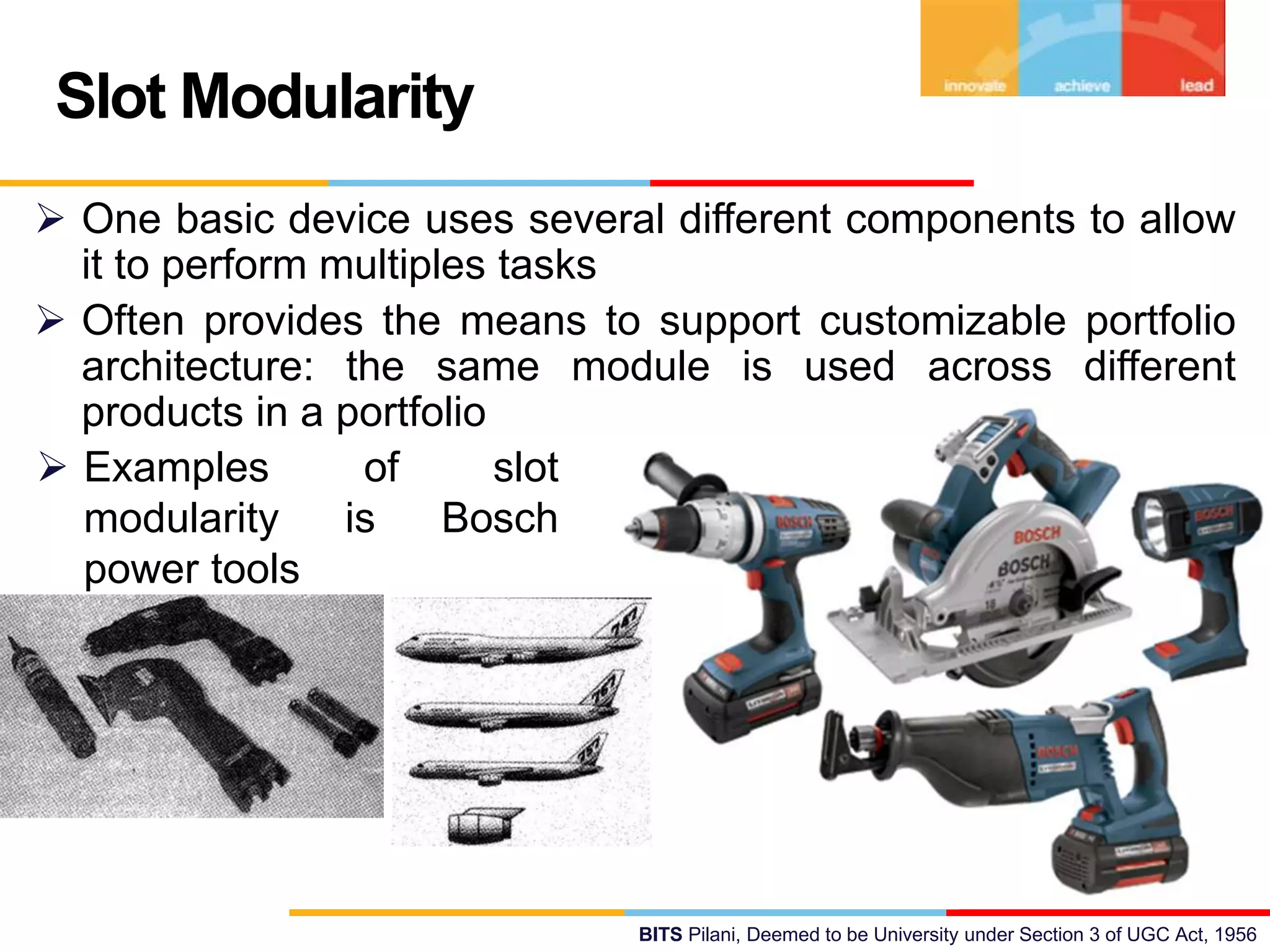
 One basic device uses several different components to allow
it to perform multiples tasks
 Often provides the means to support customizable portfolio
architecture: the same module is used across different
products in a portfolio
Slot Modularity
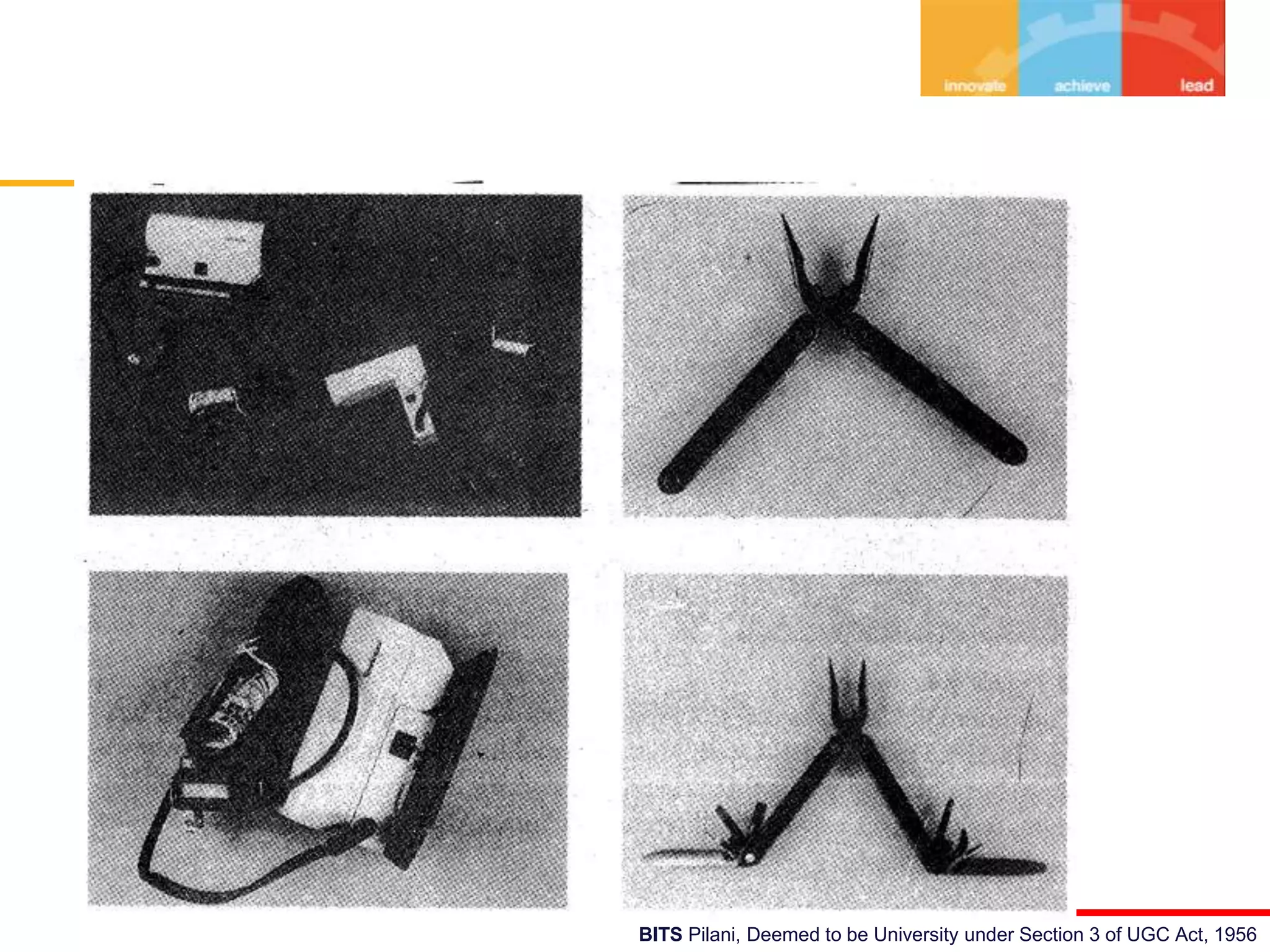
 Examples of slot
modularity is Bosch
power tools
BITS Pilani, Deemed to be University under Section 3 of UGC Act, 1956
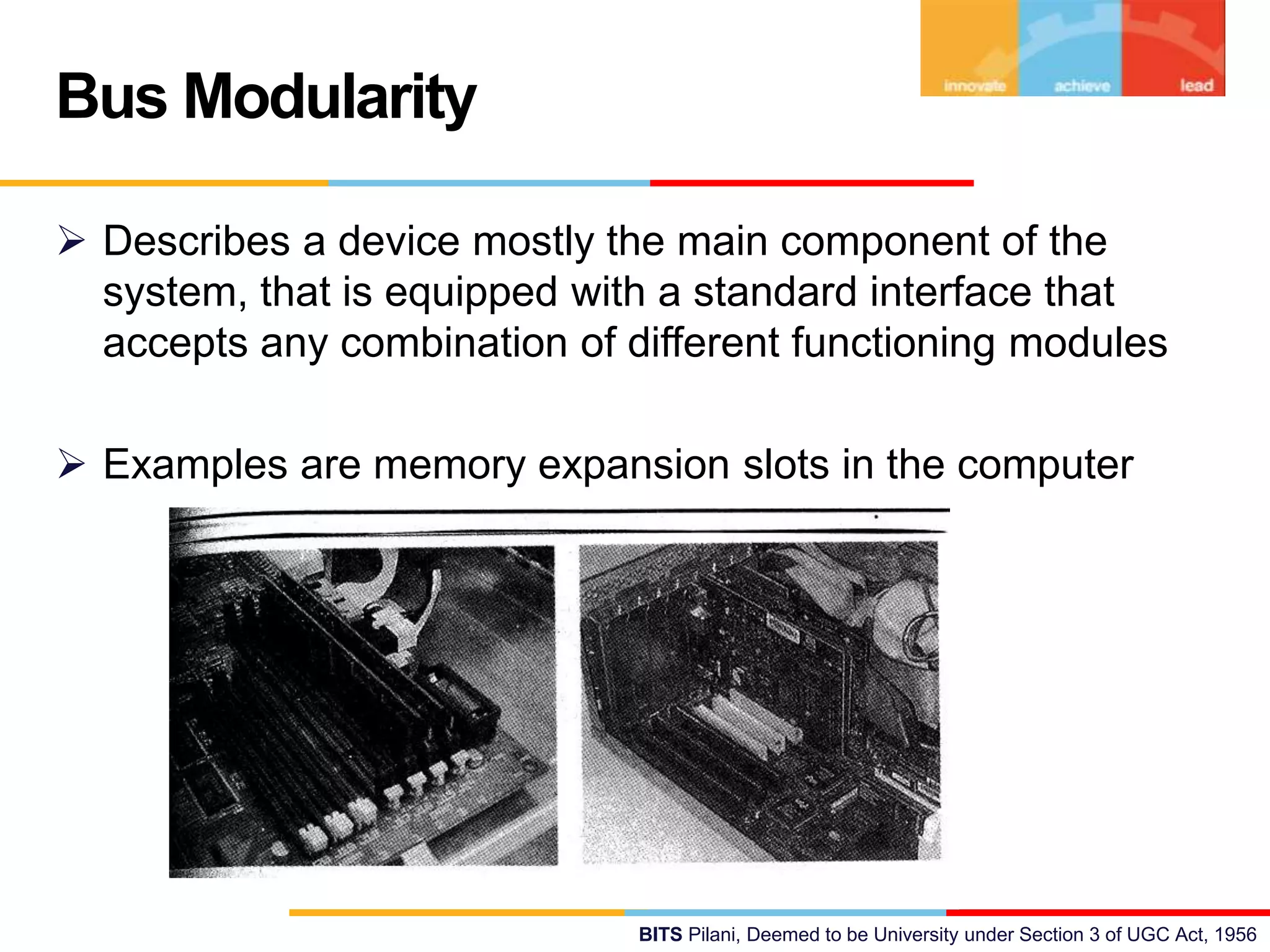
 Describes a device mostly the main component of the
system, that is equipped with a standard interface that
accepts any combination of different functioning modules
 Examples are memory expansion slots in the computer
Bus Modularity
BITS Pilani, Deemed to be University under Section 3 of UGC Act, 1956
 Exhibited by a chained inter-connection of modules
(called as sections), each equipped with a an identical
interface
 Office furniture is an example
 The modules can each individually accomplish different
product sub-functions
 Their recombination on the chain interface permits
different system (product) functions
 No one main module that can be called a device; rather
collection of modules is the product
Sectional Modularity
BITS Pilani, Deemed to be University under Section 3 of UGC Act, 1956
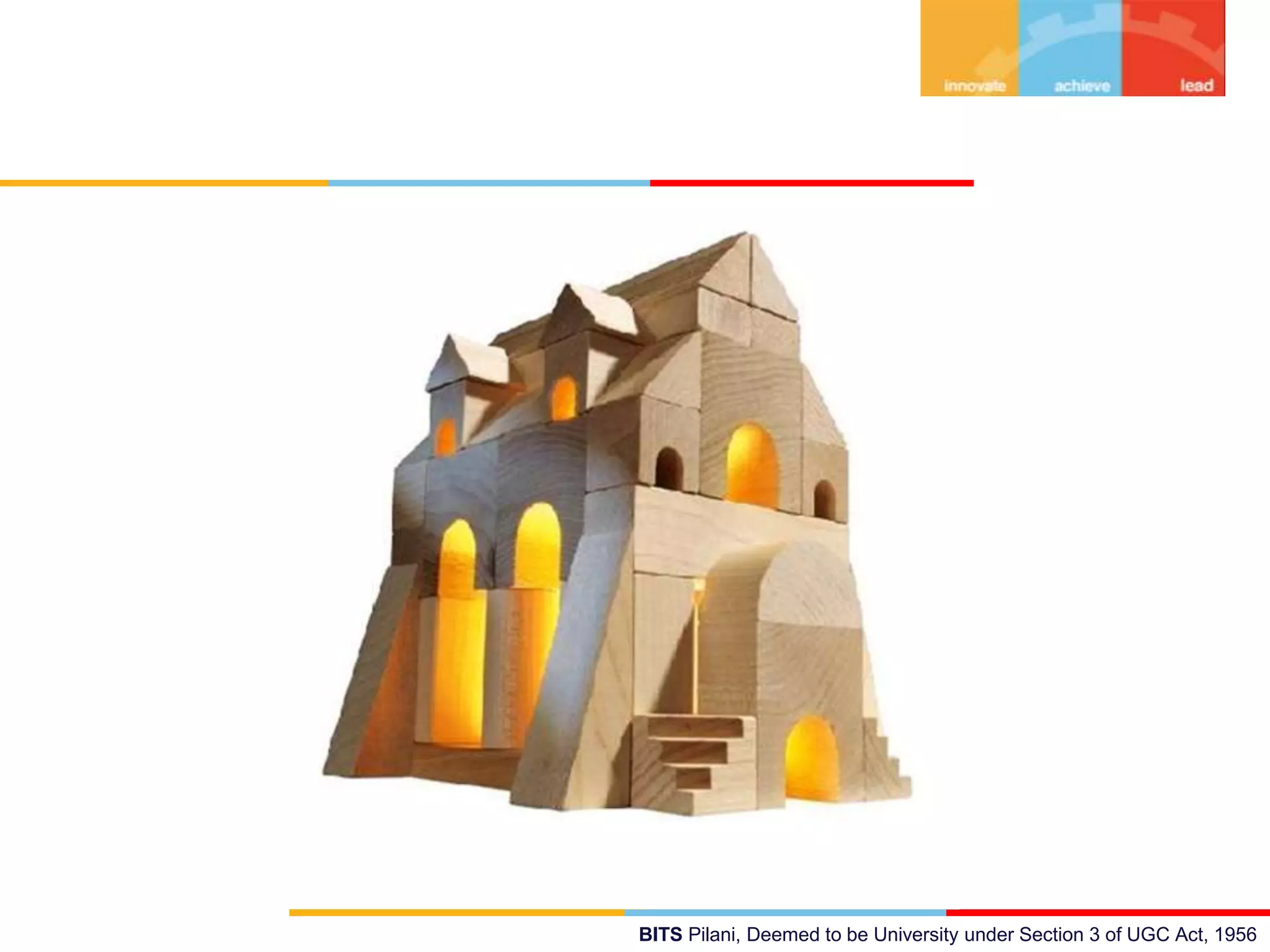
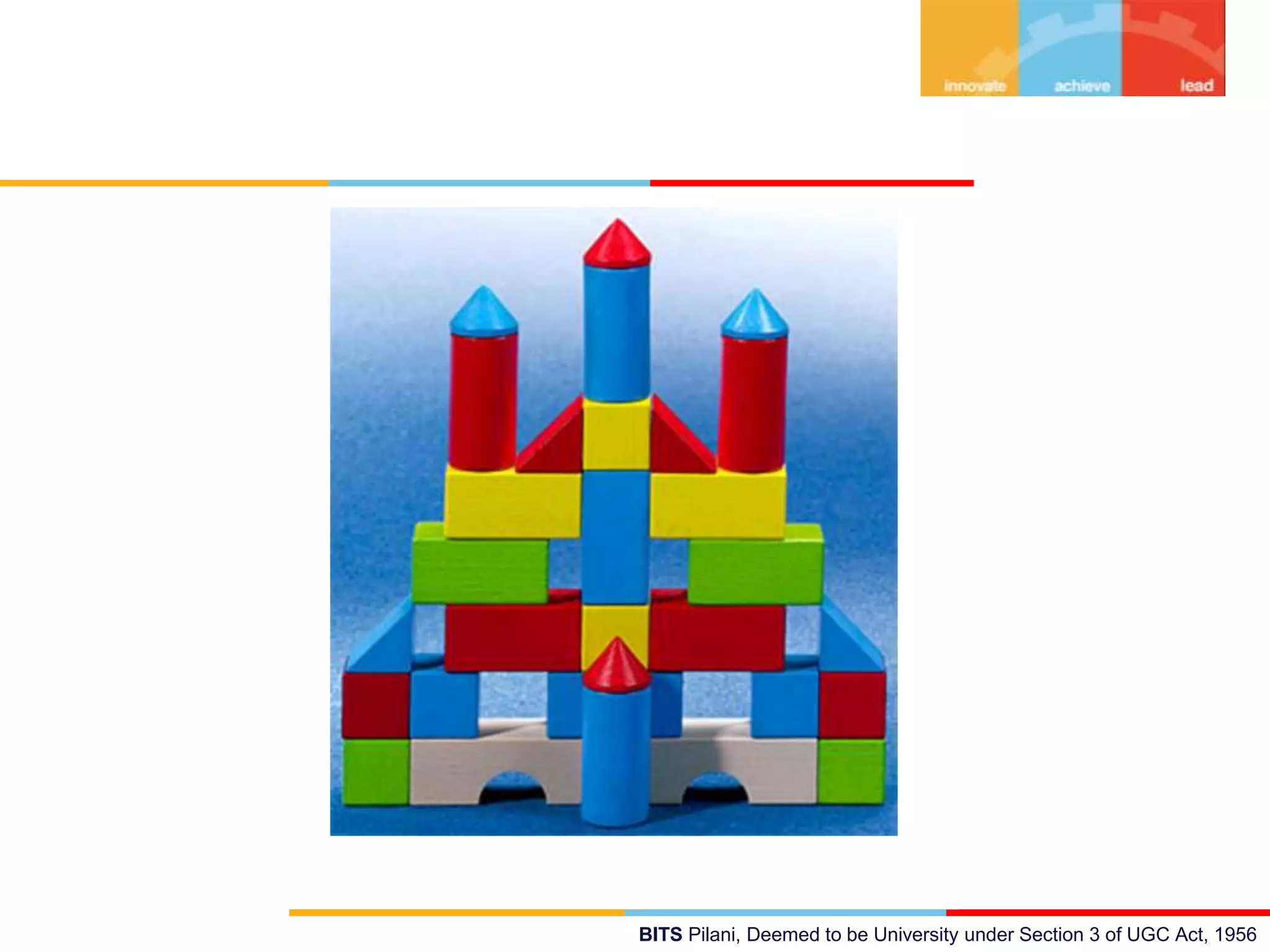
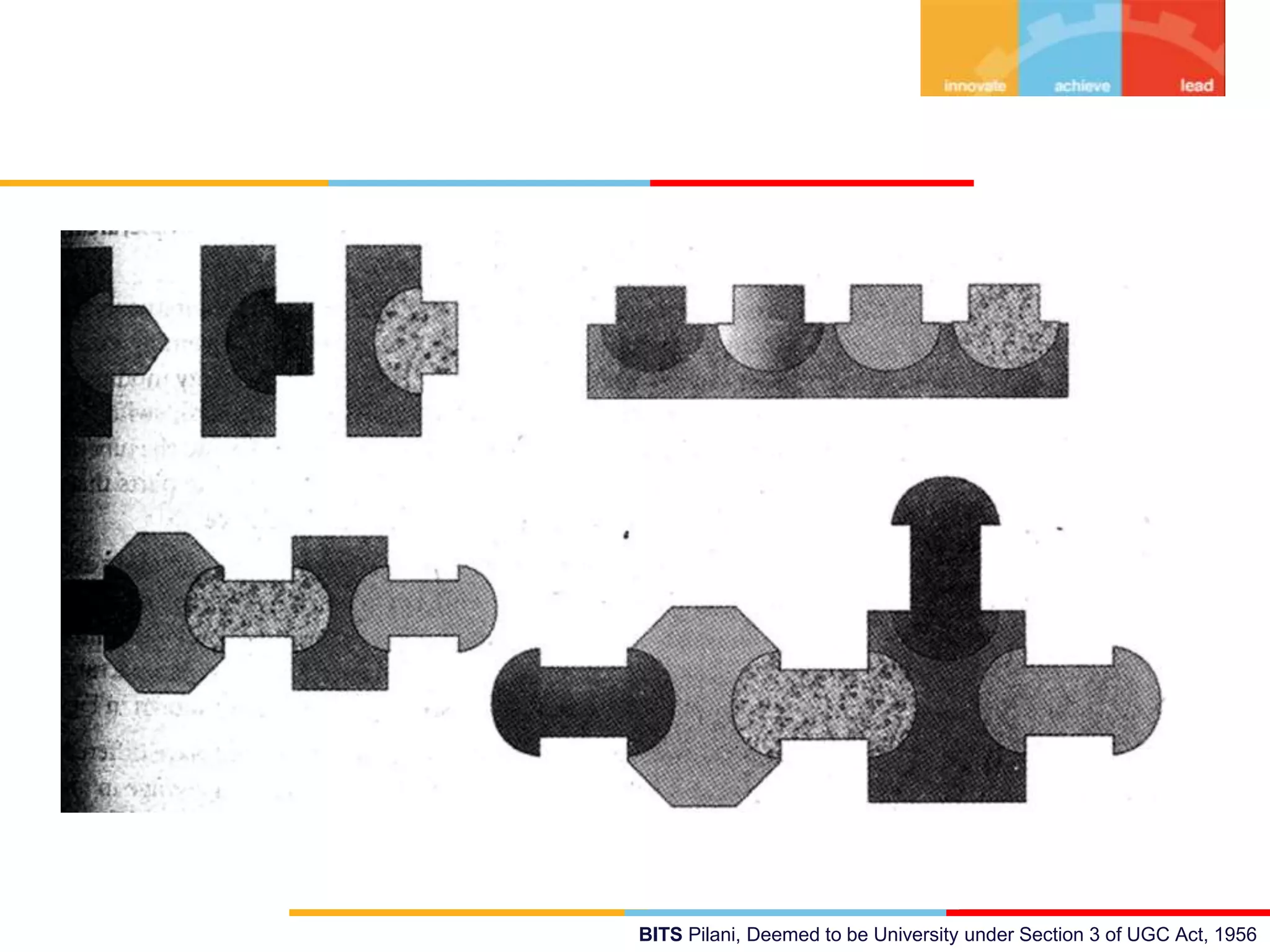
 Combines several standard components together through
web of modules, not through chain
 Must be equipped with at least two complimentary
interfaces to create a new device
 Building blocks set is an example
Mix Modularity
BITS Pilani, Deemed to be University under Section 3 of UGC Act, 1956
 Four classes exist
 They group subassemblies based on manufacturing
techniques and assembly operations
 Four classes are:
 OEM modules
 Assembly modules
 Sizable modules
 Conceptual modules
Manufacturing Based
Modularity
BITS Pilani, Deemed to be University under Section 3 of UGC Act, 1956
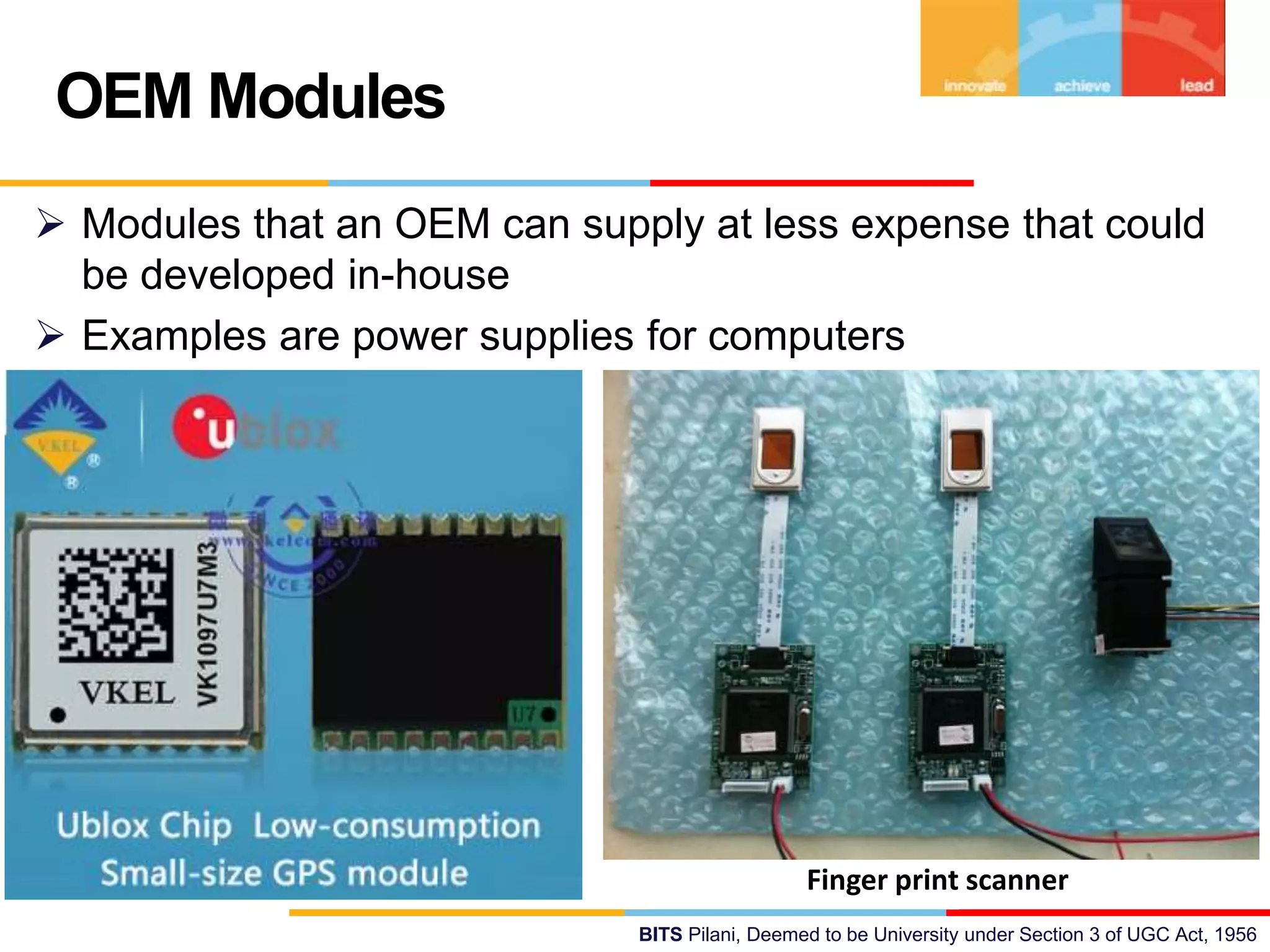
 Modules that an OEM can supply at less expense that could
be developed in-house
 Examples are power supplies for computers
OEM Modules
Finger print scanner
BITS Pilani, Deemed to be University under Section 3 of UGC Act, 1956
 Group of components that solve related functions but are
bundled to increase assembly ease
 Examples of such modularization are:
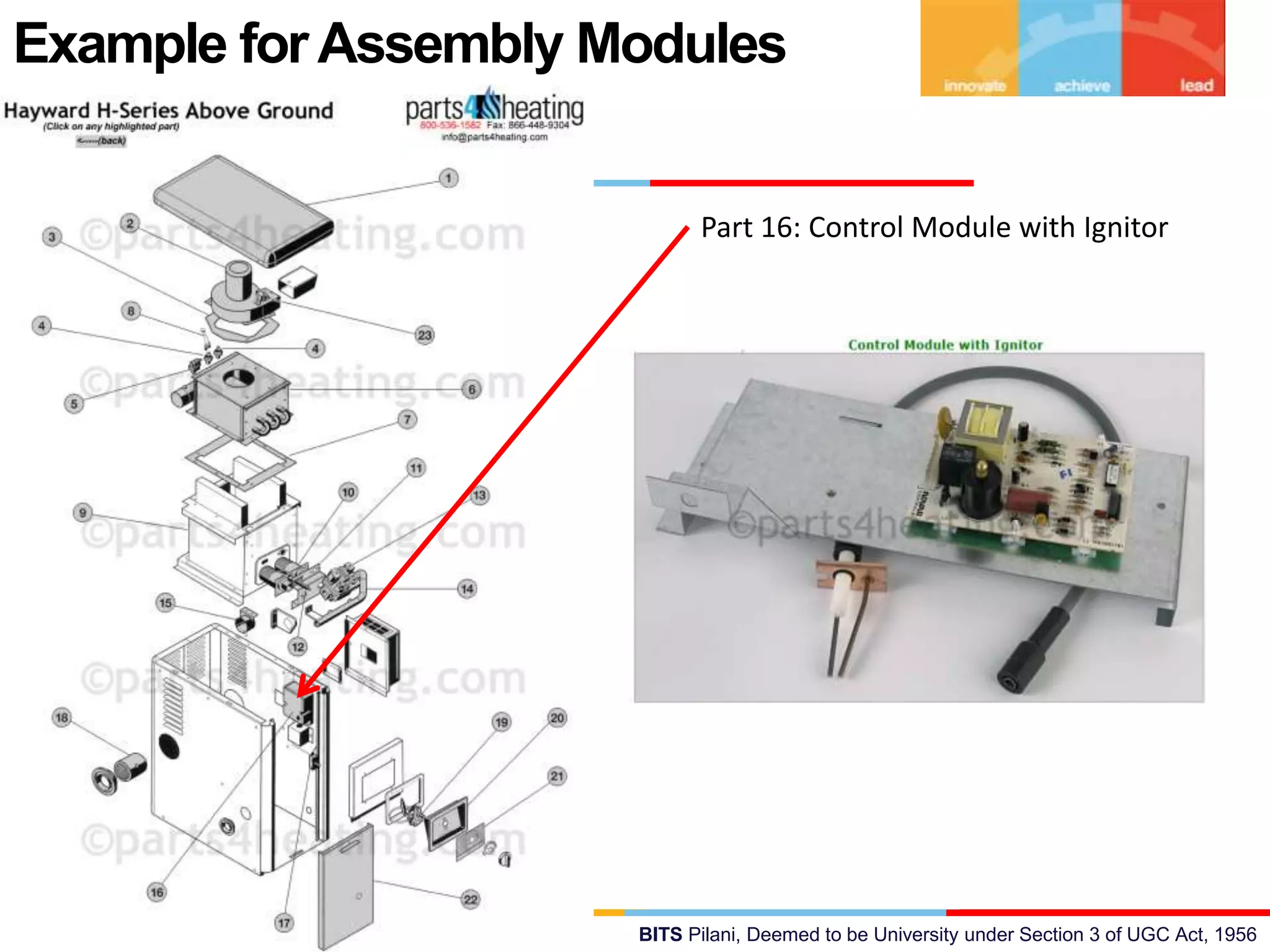
Heating sub-system for pools and bathtubs
Heating sub-system for bathtubs
Assembly Modules
BITS Pilani, Deemed to be University under Section 3 of UGC Act, 1956
Example forAssembly Modules
Part 16: Control Module with Ignitor
BITS Pilani, Deemed to be University under Section 3 of UGC Act, 1956
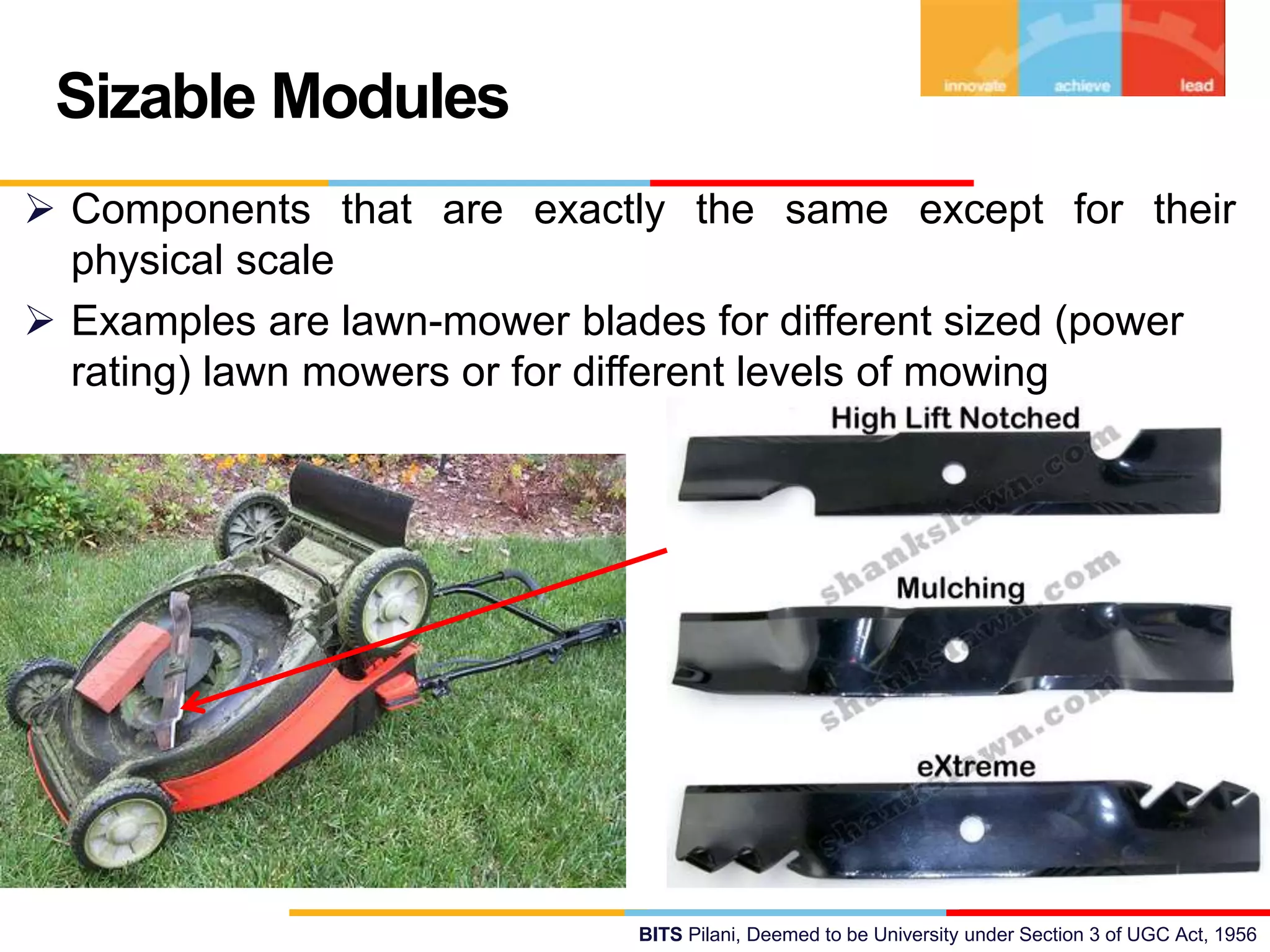
 Components that are exactly the same except for their
physical scale
 Examples are lawn-mower blades for different sized (power
rating) lawn mowers or for different levels of mowing
Sizable Modules
BITS Pilani, Deemed to be University under Section 3 of UGC Act, 1956
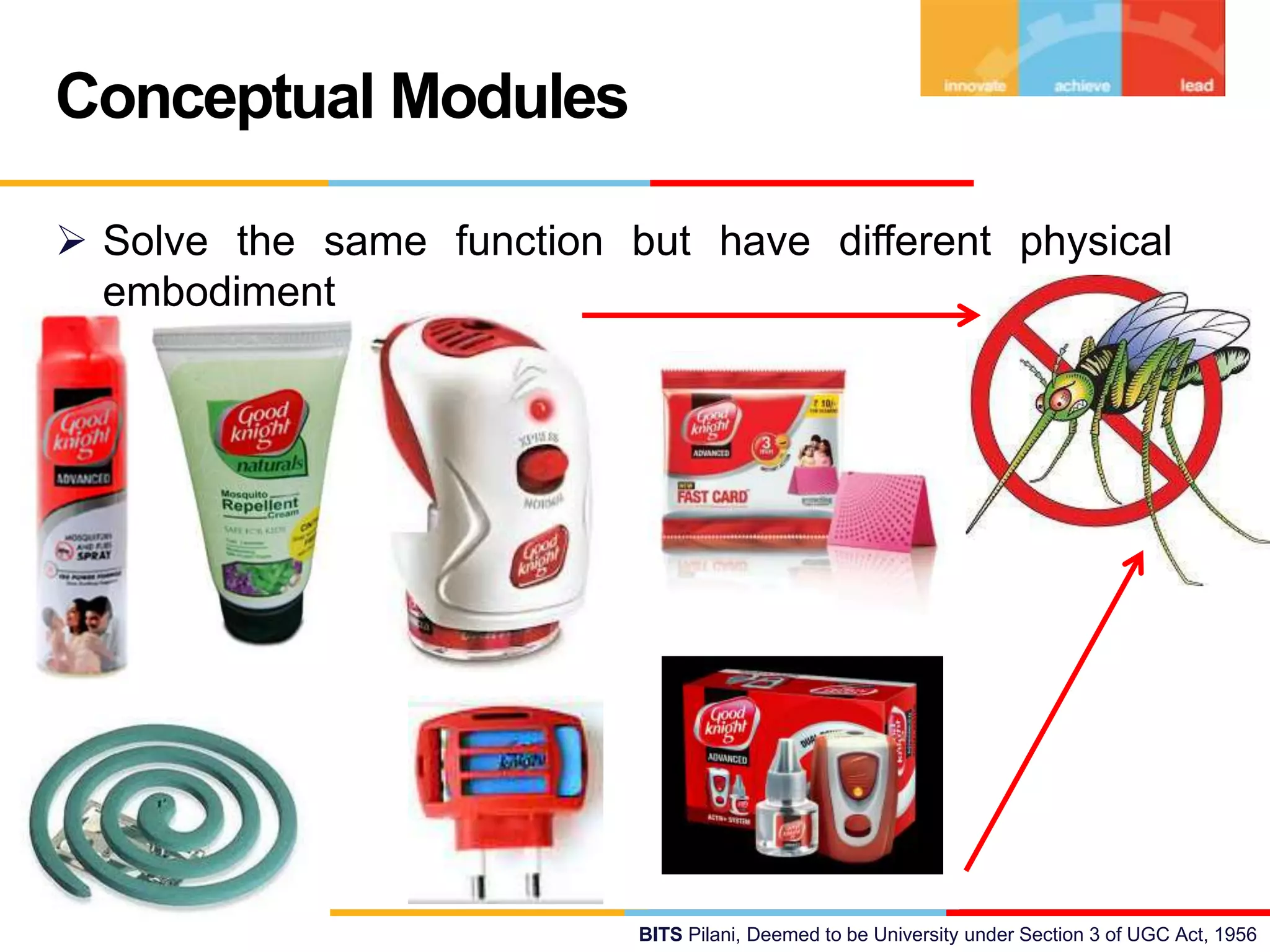
 Solve the same function but have different physical
embodiment
Conceptual Modules

L4 2-2-types of modularity of prod archi

  • 1.
    BITS Pilani Pilani|Dubai|Goa|Hyderabad L4-2-2-Types of Modularityof Prod Archi Dr. Srinivasa Prakash Regalla, PhD Professor of Mechanical Engineering
  • 2.
    BITS Pilani, Deemedto be University under Section 3 of UGC Act, 1956 The scope of the discussion is…  Product Architectures - Introduction  Architecture types  Integral  Modular  Architecture Examples  Product Modularity - Background  Types of modularity  Function based modularity  Manufacturing based modularity  Modular Design: Basic Clustering Method  Modular Design: Advanced Functional Method  Architecture Based Development Teams  A method of forming module-based development teams  Application of module-based development teams
  • 3.
    BITS Pilani, Deemedto be University under Section 3 of UGC Act, 1956 Two macro types of modularity:  Function based modularity – Applied to partition of functionalities of a product and how these functions are distributed  Manufacturing based modularity – Relates more to the manufacturing techniques and assembly operations associate with a product Types of Modularity
  • 4.
    BITS Pilani, Deemedto be University under Section 3 of UGC Act, 1956  Four classifications exist: – Slot modularity – Bus modularity – Sectional modularity – Mix modularity Function-based Modularity
  • 5.
    BITS Pilani, Deemedto be University under Section 3 of UGC Act, 1956  One basic device uses several different components to allow it to perform multiples tasks  Often provides the means to support customizable portfolio architecture: the same module is used across different products in a portfolio Slot Modularity  Examples of slot modularity is Bosch power tools
  • 6.
    BITS Pilani, Deemedto be University under Section 3 of UGC Act, 1956  Describes a device mostly the main component of the system, that is equipped with a standard interface that accepts any combination of different functioning modules  Examples are memory expansion slots in the computer Bus Modularity
  • 7.
    BITS Pilani, Deemedto be University under Section 3 of UGC Act, 1956  Exhibited by a chained inter-connection of modules (called as sections), each equipped with a an identical interface  Office furniture is an example  The modules can each individually accomplish different product sub-functions  Their recombination on the chain interface permits different system (product) functions  No one main module that can be called a device; rather collection of modules is the product Sectional Modularity
  • 8.
    BITS Pilani, Deemedto be University under Section 3 of UGC Act, 1956
  • 9.
    BITS Pilani, Deemedto be University under Section 3 of UGC Act, 1956  Combines several standard components together through web of modules, not through chain  Must be equipped with at least two complimentary interfaces to create a new device  Building blocks set is an example Mix Modularity
  • 10.
    BITS Pilani, Deemedto be University under Section 3 of UGC Act, 1956
  • 11.
    BITS Pilani, Deemedto be University under Section 3 of UGC Act, 1956
  • 12.
    BITS Pilani, Deemedto be University under Section 3 of UGC Act, 1956
  • 13.
    BITS Pilani, Deemedto be University under Section 3 of UGC Act, 1956  Four classes exist  They group subassemblies based on manufacturing techniques and assembly operations  Four classes are:  OEM modules  Assembly modules  Sizable modules  Conceptual modules Manufacturing Based Modularity
  • 14.
    BITS Pilani, Deemedto be University under Section 3 of UGC Act, 1956  Modules that an OEM can supply at less expense that could be developed in-house  Examples are power supplies for computers OEM Modules Finger print scanner
  • 15.
    BITS Pilani, Deemedto be University under Section 3 of UGC Act, 1956  Group of components that solve related functions but are bundled to increase assembly ease  Examples of such modularization are: Heating sub-system for pools and bathtubs Heating sub-system for bathtubs Assembly Modules
  • 16.
    BITS Pilani, Deemedto be University under Section 3 of UGC Act, 1956 Example forAssembly Modules Part 16: Control Module with Ignitor
  • 17.
    BITS Pilani, Deemedto be University under Section 3 of UGC Act, 1956  Components that are exactly the same except for their physical scale  Examples are lawn-mower blades for different sized (power rating) lawn mowers or for different levels of mowing Sizable Modules
  • 18.
    BITS Pilani, Deemedto be University under Section 3 of UGC Act, 1956  Solve the same function but have different physical embodiment Conceptual Modules