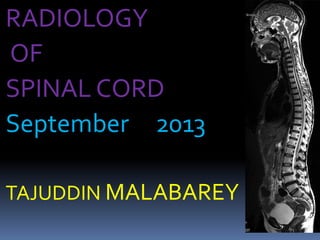
RADIOLOGY
OF
SPINAL CORD
September 2013
TAJUDDIN MALABAREY
 Welcome to the the Radiology Of Spinal
Cord (Imaging module).
 After completing this module you should be
able to:
 identify, and distinguish between, common
types of Radiographic Images
 including Plain X-rays, X-Ray Myelograms,
 CT, CT Myelograms, and MRI.
 You should also be able to recognize some
RADIOLOGICAL presentation of spinal cord
diseases.
Radiology Of Spinal Cord
 Outline of presentation:
 Anatomy of spinal cord.
 Anatomy of vertebral column.
 Radiological Investigations.
 Plain X-rays,
 X-Ray Myelograms,
 CT,
 CT Myelograms, and
 MRI.
 some RADIOLOGICAL presentation of spinal cord
diseases.

Spinal cord and Vertebral bone
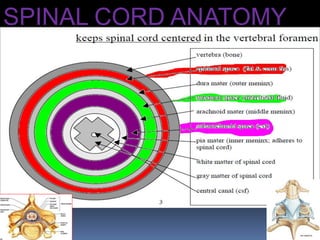
SPINAL CORD ANATOMY
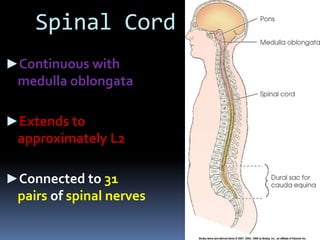
►Continuous with
medulla oblongata
►Extends to
approximately L2
►Connected to 31
pairs of spinal nerves
Spinal Cord
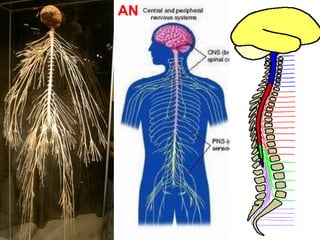
AN
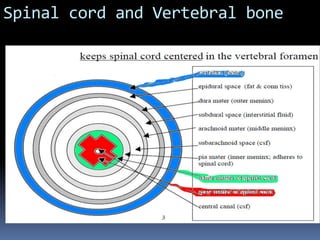
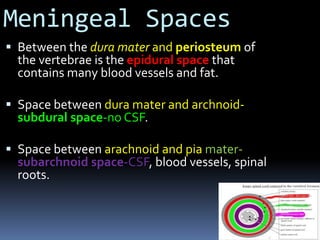
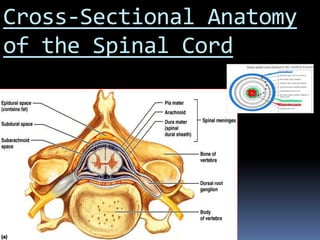
 Between the dura mater and periosteum of
the vertebrae is the epidural space that
contains many blood vessels and fat.
 Space between dura mater and archnoid-
subdural space-no CSF.
 Space between arachnoid and pia mater-
subarchnoid space-CSF, blood vessels, spinal
roots.
Meningeal Spaces
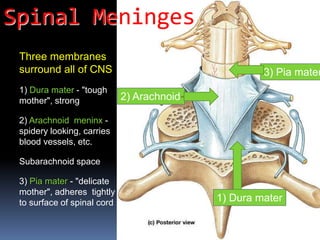
Three membranes
surround all of CNS
1) Dura mater - "tough
mother", strong
2) Arachnoid meninx -
spidery looking, carries
blood vessels, etc.
Subarachnoid space
3) Pia mater - "delicate
mother", adheres tightly
to surface of spinal cord
2) Arachnoid
3) Pia mater
1) Dura mater
Spinal Meninges
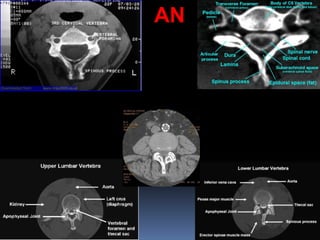
Cross-Sectional Anatomy
of the Spinal Cord
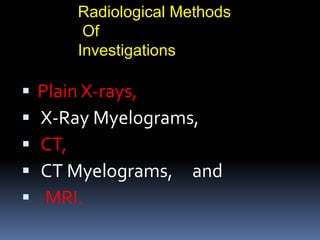
 Plain X-rays,
 X-Ray Myelograms,
 CT,
 CT Myelograms, and
 MRI.
Radiological Methods
Of
Investigations
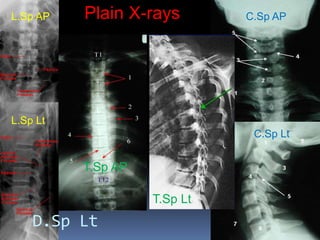
Plain X-rays
Plain X-rays
D.Sp Lt
L.Sp AP
L.Sp Lt
T.Sp Lt
T.Sp AP
C.Sp AP
C.Sp Lt
Myelogram
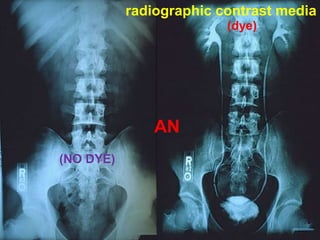
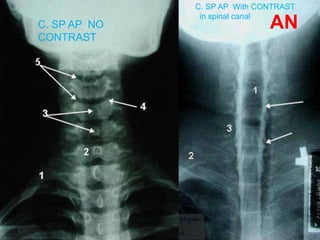
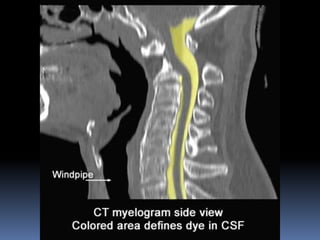
 A Myelogram
 (also known as myelography)
 is a diagnostic tool that uses radiographic
contrast media (dye) that is injected into the
spinal canal’s fluid (cerebrospinal fluid, CSF).
After the dye is injected, the contrast dye
serves to illuminate the spinal canal, cord,
and nerve roots during imaging.
(dye)
radiographic contrast media
AN
(NO DYE)
Puncture made at
L2-L3 or L3-L4 space
17
AN
AN
C. SP AP NO
CONTRAST
C. SP AP With CONTRAST
in spinal canal
1
7
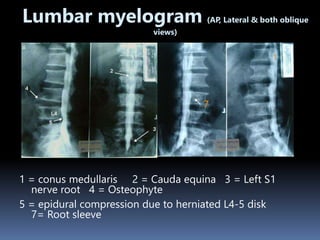
Lumbar myelogram (AP, Lateral & both oblique
views)
1 = conus medullaris 2 = Cauda equina 3 = Left S1
nerve root 4 = Osteophyte
5 = epidural compression due to herniated L4-5 disk
7= Root sleeve
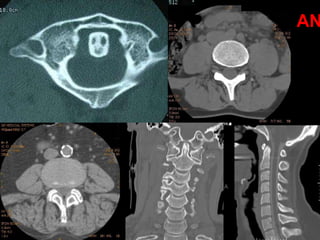
Computerized Tomographic
Imaging
CT
PHYSICAL PRINCIPLES OF COMPUTED TOMOGRAPHY
AN
AN
CT Myelograms
AN
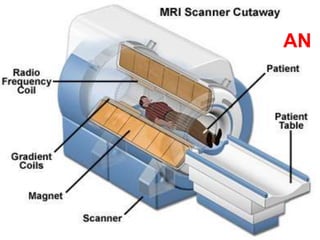
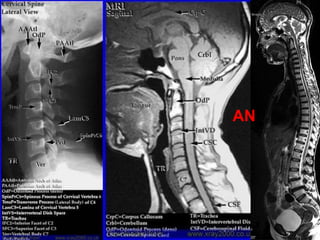
Magnetic resonance imaging
MRI
( study of choice )
AN
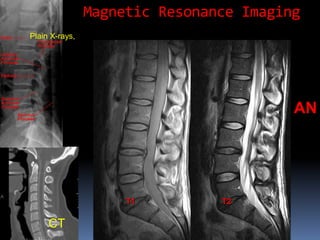
Magnetic Resonance Imaging
T1 T2
AN
Plain X-rays,
CT
AN
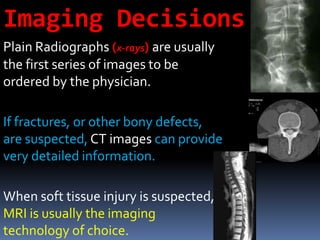
Imaging Decisions
Plain Radiographs (x-rays) are usually
the first series of images to be
ordered by the physician.
If fractures, or other bony defects,
are suspected, CT images can provide
very detailed information.
When soft tissue injury is suspected,
MRI is usually the imaging
technology of choice.
IMAGING DECISION
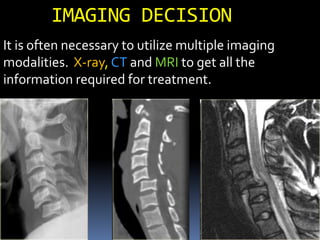
It is often necessary to utilize multiple imaging
modalities. X-ray, CT and MRI to get all the
information required for treatment.
SOME RADIOLOGICAL PRESENTATION
OF
SPINAL CORD DISEASES
Bilateral Interfacetal Dislocation
Bilateral interfacetal dislocation.
50% anteroposition C5C6 as a result of the
dislocation.
In unilateral dislocation the anteroposition is
usually only 25%.
Widened space between spinous processes C5
and C6 due to ligament rupture.
Ruptured disc space.
CT-images of the same patient, which
confirm the bilateral dislocation.
Near one of the facets there is a small fleck
of bone, but there is no major fracture, so
this is basically just a hyperflexion soft
tissue injury.
The MRI-findings are:
Soft tissue swelling anteriorly
Disruption of the disc
Non-hemorrhagic cord injury
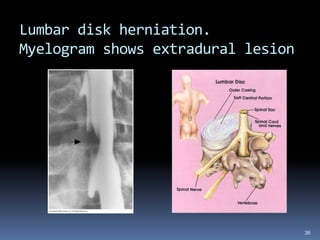
36
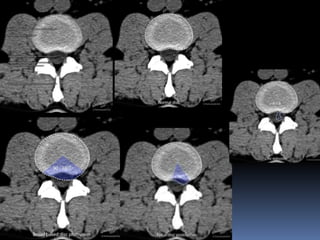
Lumbar disk herniation.
Myelogram shows extradural lesion
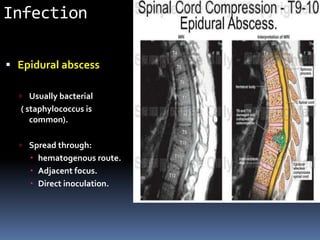
Infection
 Epidural abscess
 Usually bacterial
( staphylococcus is
common).
 Spread through:
 hematogenous route.
 Adjacent focus.
 Direct inoculation.
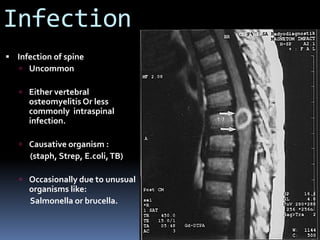
Infection
 Infection of spine
 Uncommon
 Either vertebral
osteomyelitis Or less
commonly intraspinal
infection.
 Causative organism :
(staph, Strep, E.coli,TB)
 Occasionally due to unusual
organisms like:
Salmonella or brucella.
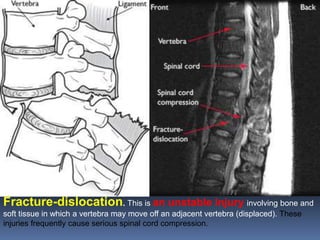
Fracture-dislocation. This is an unstable injury involving bone and
soft tissue in which a vertebra may move off an adjacent vertebra (displaced). These
injuries frequently cause serious spinal cord compression.
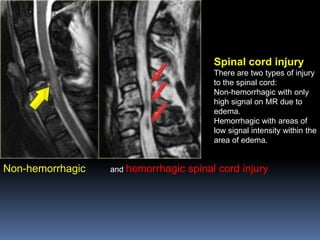
Spinal cord injury
There are two types of injury
to the spinal cord:
Non-hemorrhagic with only
high signal on MR due to
edema.
Hemorrhagic with areas of
low signal intensity within the
area of edema.
Non-hemorrhagic and hemorrhagic spinal cord injury
L1-Spinal Cord Sep 2013.ppt

L1-Spinal Cord Sep 2013.ppt

  • 2.
  • 3.
     Welcome tothe the Radiology Of Spinal Cord (Imaging module).  After completing this module you should be able to:  identify, and distinguish between, common types of Radiographic Images  including Plain X-rays, X-Ray Myelograms,  CT, CT Myelograms, and MRI.  You should also be able to recognize some RADIOLOGICAL presentation of spinal cord diseases. Radiology Of Spinal Cord
  • 4.
    Radiology Of SpinalCord  Outline of presentation:  Anatomy of spinal cord.  Anatomy of vertebral column.  Radiological Investigations.  Plain X-rays,  X-Ray Myelograms,  CT,  CT Myelograms, and  MRI.  some RADIOLOGICAL presentation of spinal cord diseases. 
  • 5.
    Spinal cord andVertebral bone
  • 6.
  • 7.
    ►Continuous with medulla oblongata ►Extendsto approximately L2 ►Connected to 31 pairs of spinal nerves Spinal Cord
  • 8.
  • 9.
     Between thedura mater and periosteum of the vertebrae is the epidural space that contains many blood vessels and fat.  Space between dura mater and archnoid- subdural space-no CSF.  Space between arachnoid and pia mater- subarchnoid space-CSF, blood vessels, spinal roots. Meningeal Spaces
  • 10.
    Three membranes surround allof CNS 1) Dura mater - "tough mother", strong 2) Arachnoid meninx - spidery looking, carries blood vessels, etc. Subarachnoid space 3) Pia mater - "delicate mother", adheres tightly to surface of spinal cord 2) Arachnoid 3) Pia mater 1) Dura mater Spinal Meninges
  • 11.
  • 12.
     Plain X-rays, X-Ray Myelograms,  CT,  CT Myelograms, and  MRI. Radiological Methods Of Investigations
  • 13.
  • 14.
    Plain X-rays D.Sp Lt L.SpAP L.Sp Lt T.Sp Lt T.Sp AP C.Sp AP C.Sp Lt
  • 15.
    Myelogram  A Myelogram (also known as myelography)  is a diagnostic tool that uses radiographic contrast media (dye) that is injected into the spinal canal’s fluid (cerebrospinal fluid, CSF). After the dye is injected, the contrast dye serves to illuminate the spinal canal, cord, and nerve roots during imaging.
  • 16.
  • 17.
    Puncture made at L2-L3or L3-L4 space 17 AN
  • 18.
    AN C. SP APNO CONTRAST C. SP AP With CONTRAST in spinal canal
  • 19.
    1 7 Lumbar myelogram (AP,Lateral & both oblique views) 1 = conus medullaris 2 = Cauda equina 3 = Left S1 nerve root 4 = Osteophyte 5 = epidural compression due to herniated L4-5 disk 7= Root sleeve
  • 20.
  • 21.
    PHYSICAL PRINCIPLES OFCOMPUTED TOMOGRAPHY AN
  • 22.
  • 23.
  • 24.
  • 26.
  • 27.
  • 28.
    Magnetic Resonance Imaging T1T2 AN Plain X-rays, CT
  • 29.
  • 30.
    Imaging Decisions Plain Radiographs(x-rays) are usually the first series of images to be ordered by the physician. If fractures, or other bony defects, are suspected, CT images can provide very detailed information. When soft tissue injury is suspected, MRI is usually the imaging technology of choice.
  • 31.
    IMAGING DECISION It isoften necessary to utilize multiple imaging modalities. X-ray, CT and MRI to get all the information required for treatment.
  • 32.
  • 34.
    Bilateral Interfacetal Dislocation Bilateralinterfacetal dislocation. 50% anteroposition C5C6 as a result of the dislocation. In unilateral dislocation the anteroposition is usually only 25%. Widened space between spinous processes C5 and C6 due to ligament rupture. Ruptured disc space. CT-images of the same patient, which confirm the bilateral dislocation. Near one of the facets there is a small fleck of bone, but there is no major fracture, so this is basically just a hyperflexion soft tissue injury. The MRI-findings are: Soft tissue swelling anteriorly Disruption of the disc Non-hemorrhagic cord injury
  • 36.
    36 Lumbar disk herniation. Myelogramshows extradural lesion
  • 40.
    Infection  Epidural abscess Usually bacterial ( staphylococcus is common).  Spread through:  hematogenous route.  Adjacent focus.  Direct inoculation.
  • 41.
    Infection  Infection ofspine  Uncommon  Either vertebral osteomyelitis Or less commonly intraspinal infection.  Causative organism : (staph, Strep, E.coli,TB)  Occasionally due to unusual organisms like: Salmonella or brucella.
  • 42.
    Fracture-dislocation. This isan unstable injury involving bone and soft tissue in which a vertebra may move off an adjacent vertebra (displaced). These injuries frequently cause serious spinal cord compression.
  • 43.
    Spinal cord injury Thereare two types of injury to the spinal cord: Non-hemorrhagic with only high signal on MR due to edema. Hemorrhagic with areas of low signal intensity within the area of edema. Non-hemorrhagic and hemorrhagic spinal cord injury