Download to read offline


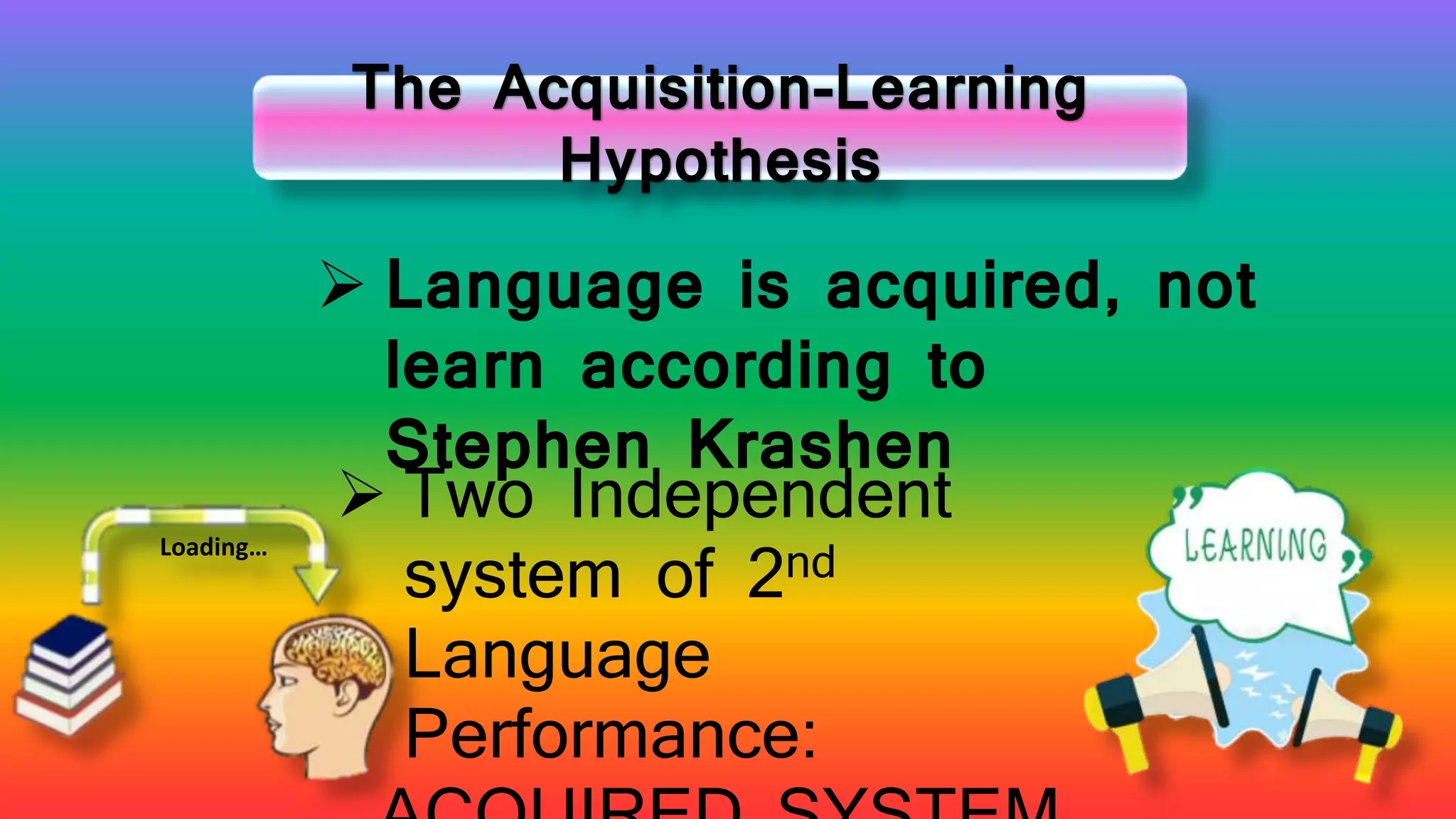
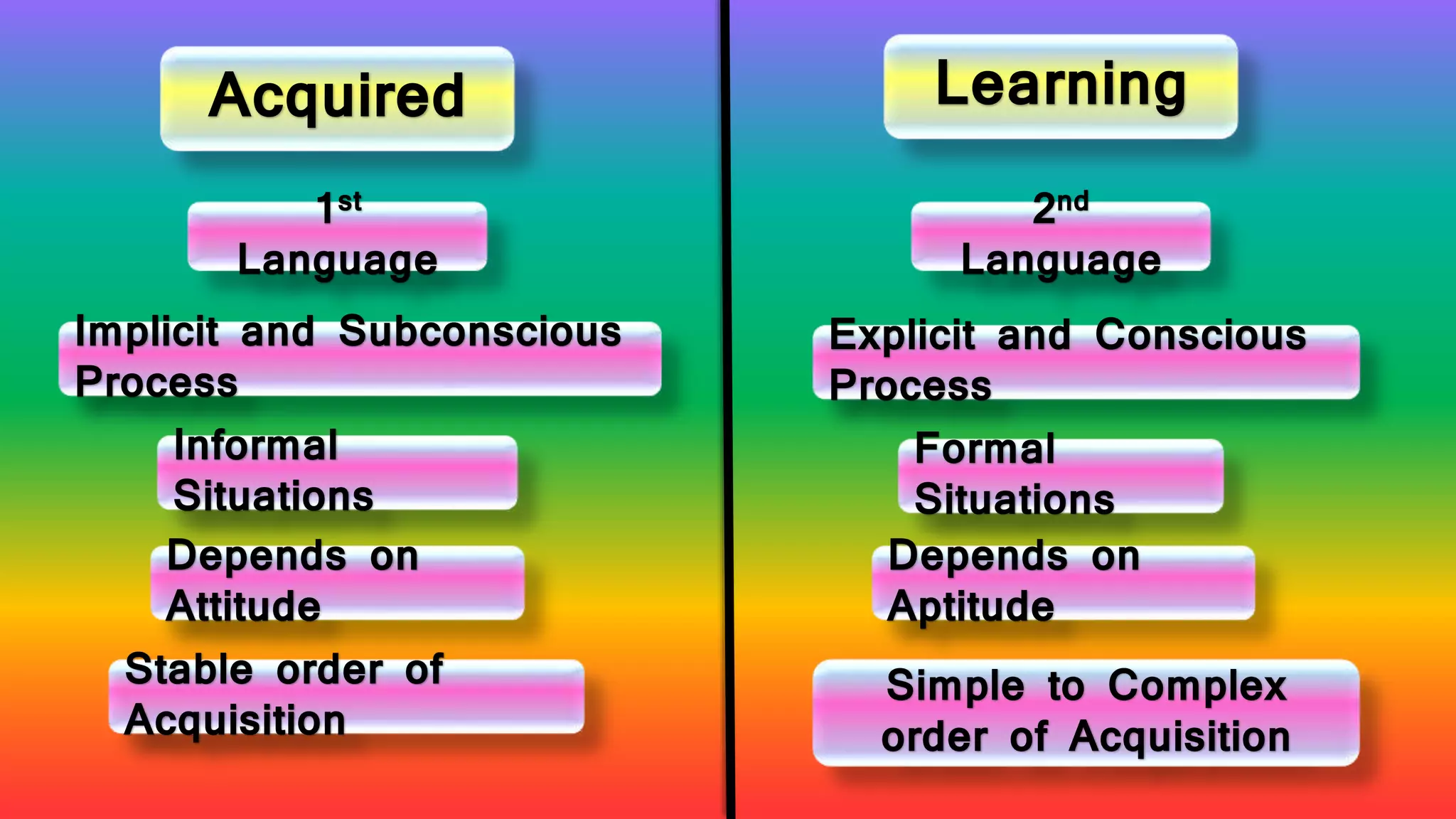
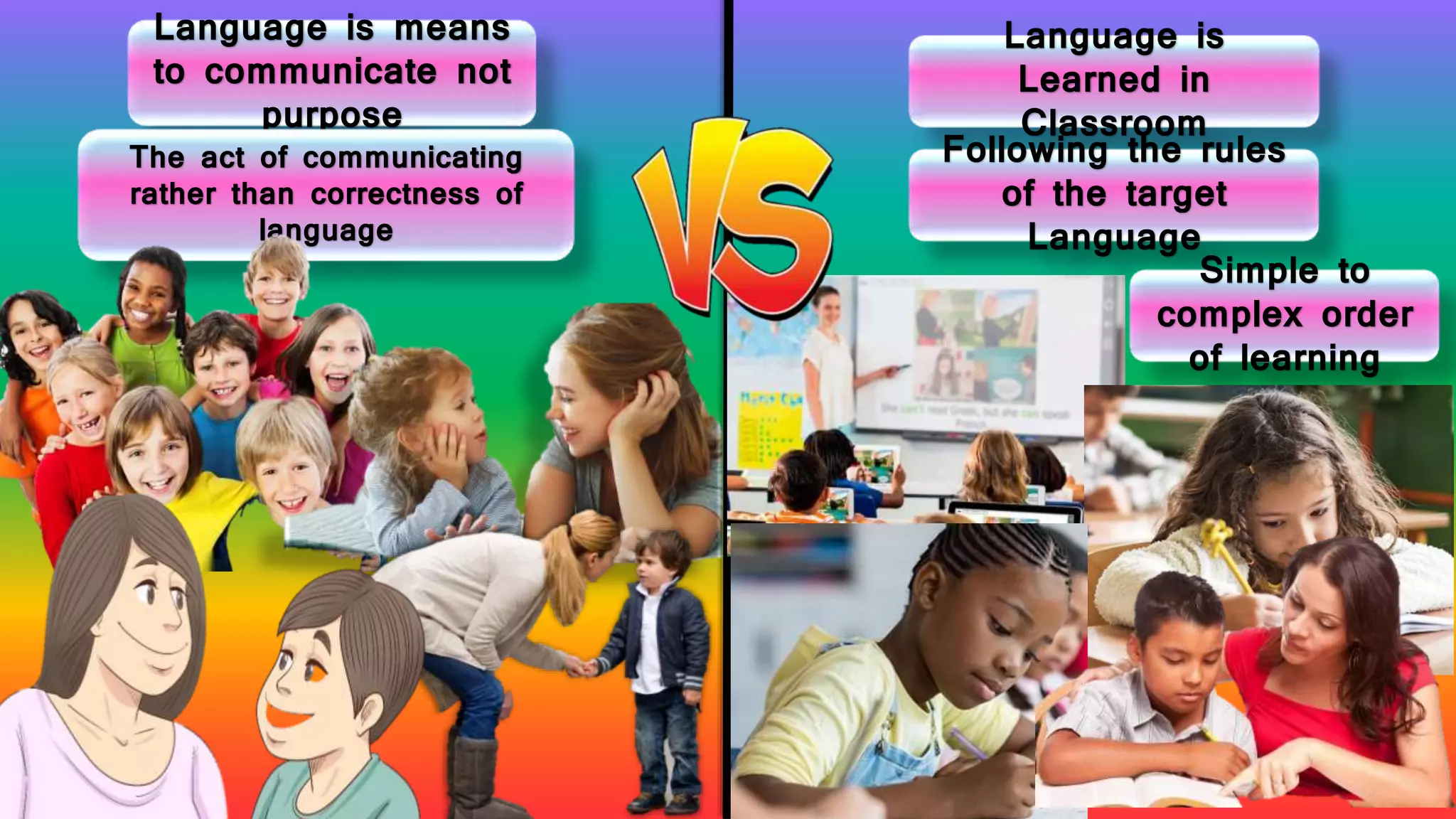
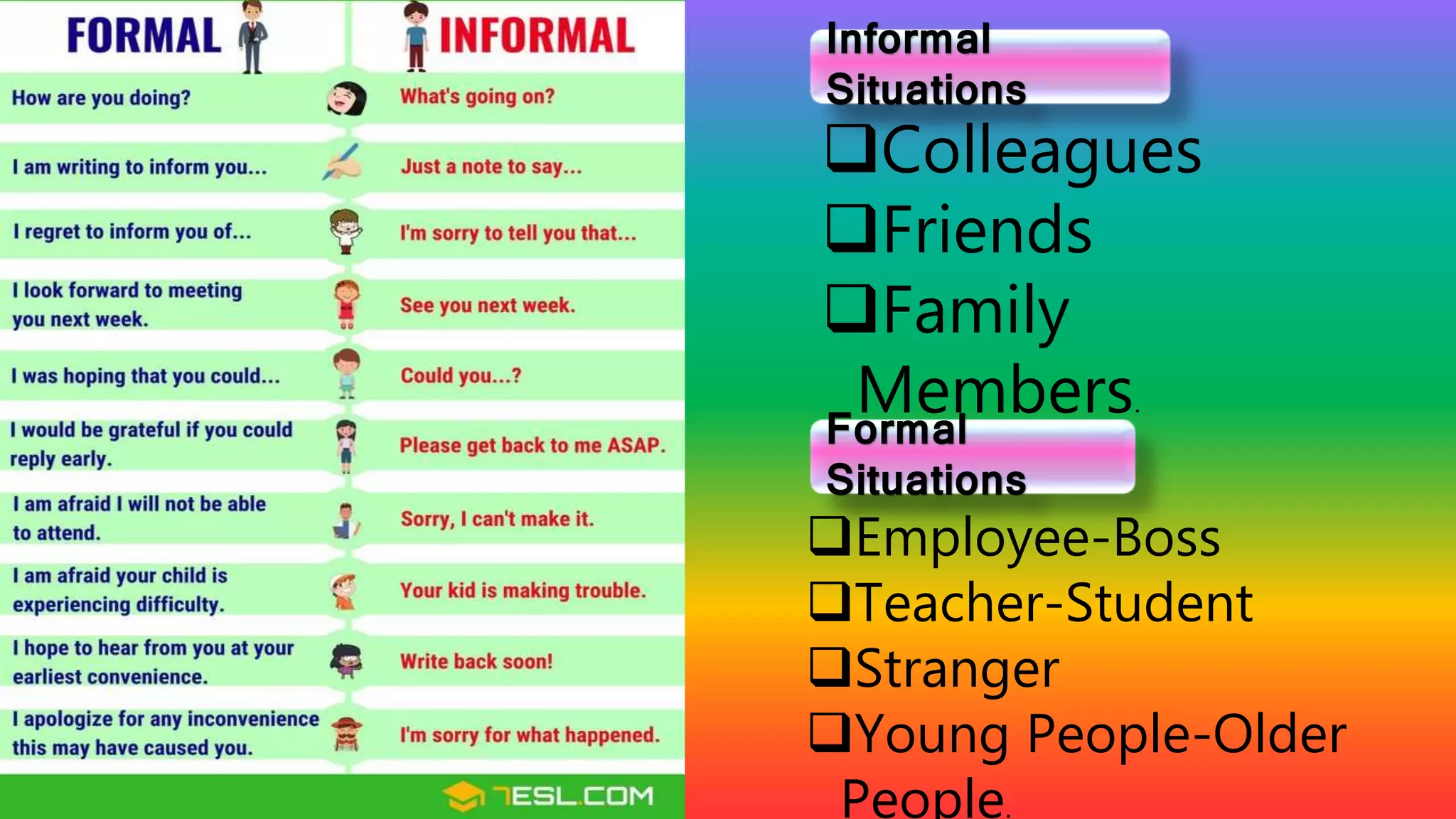
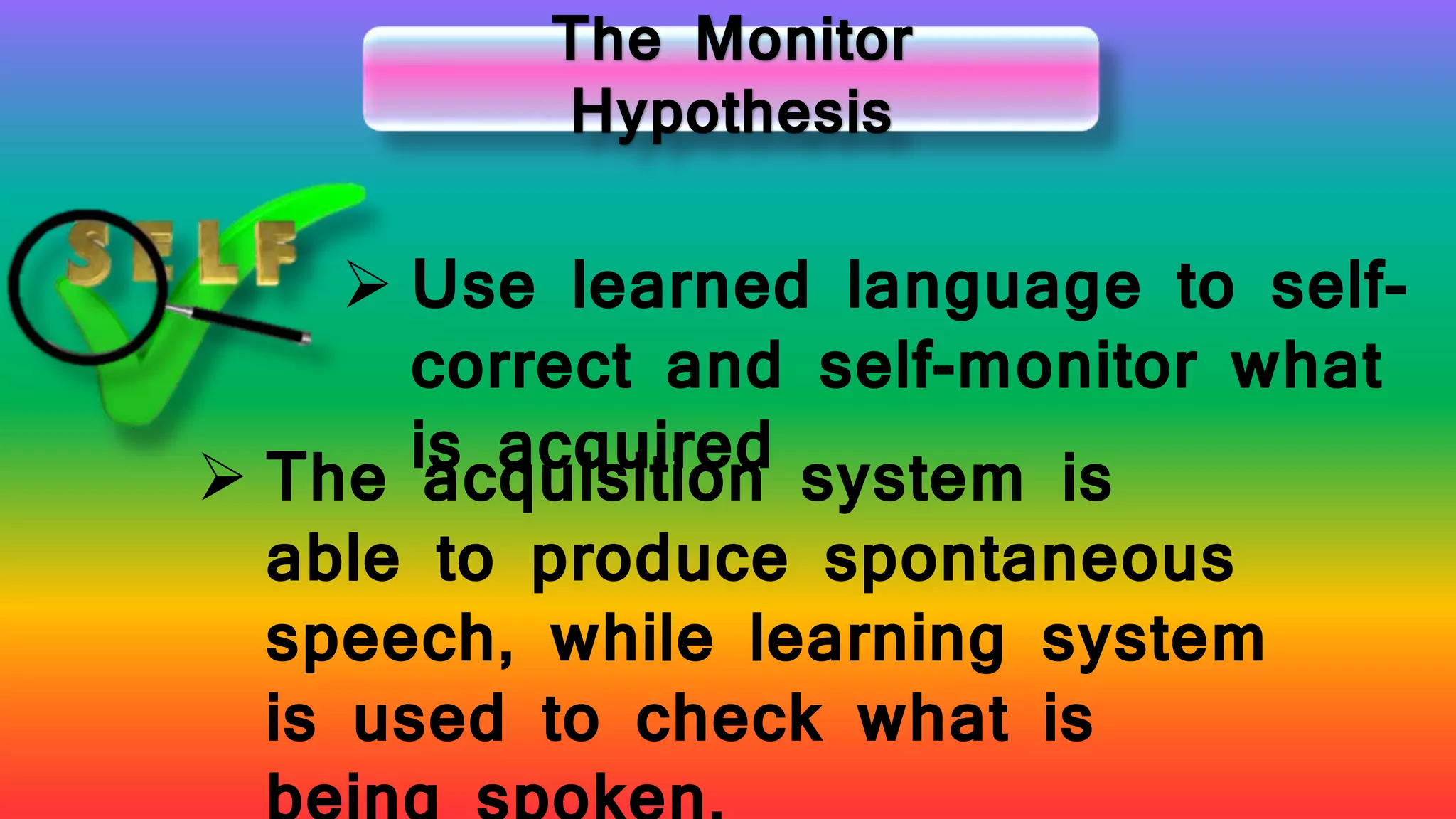
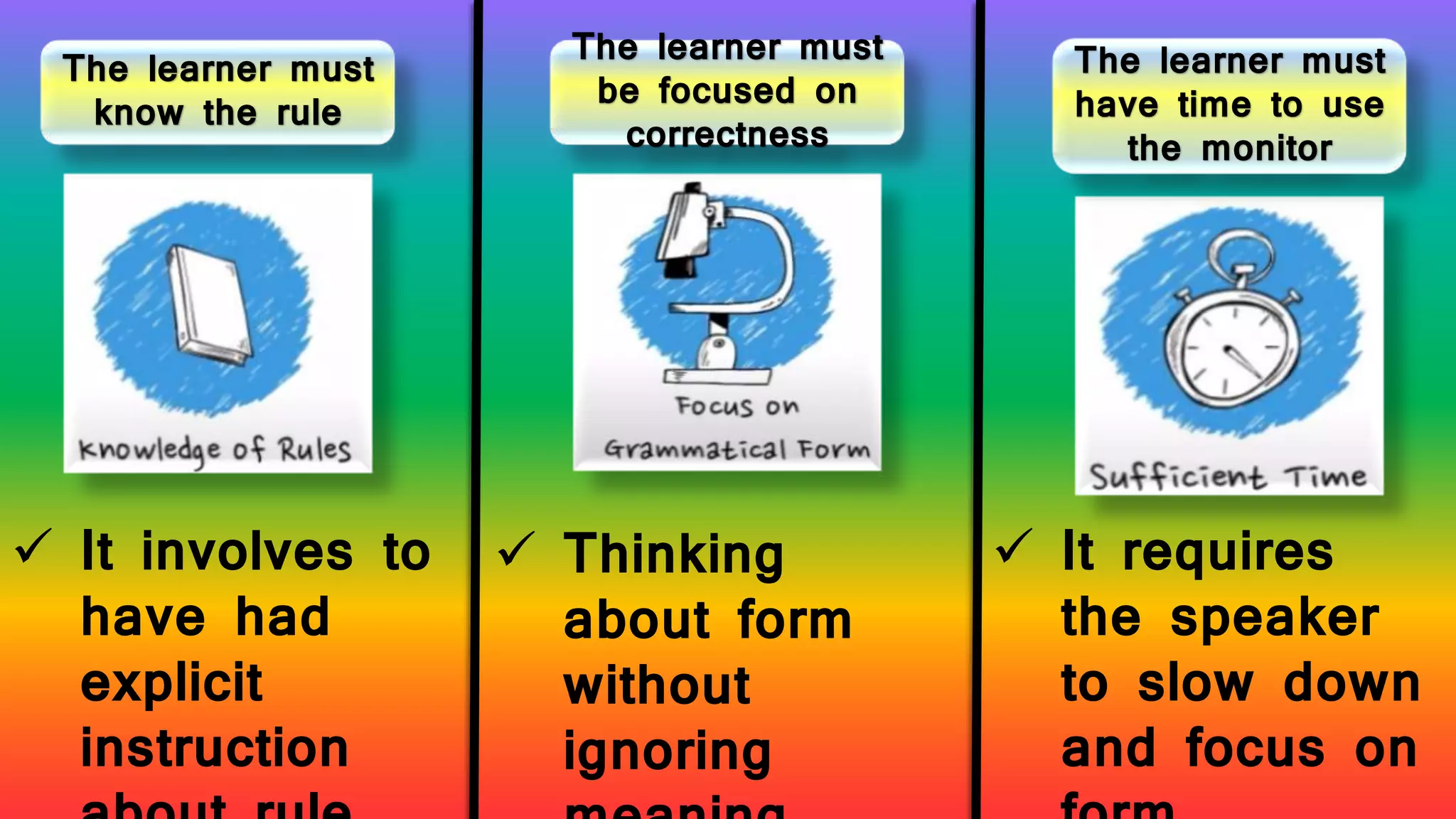
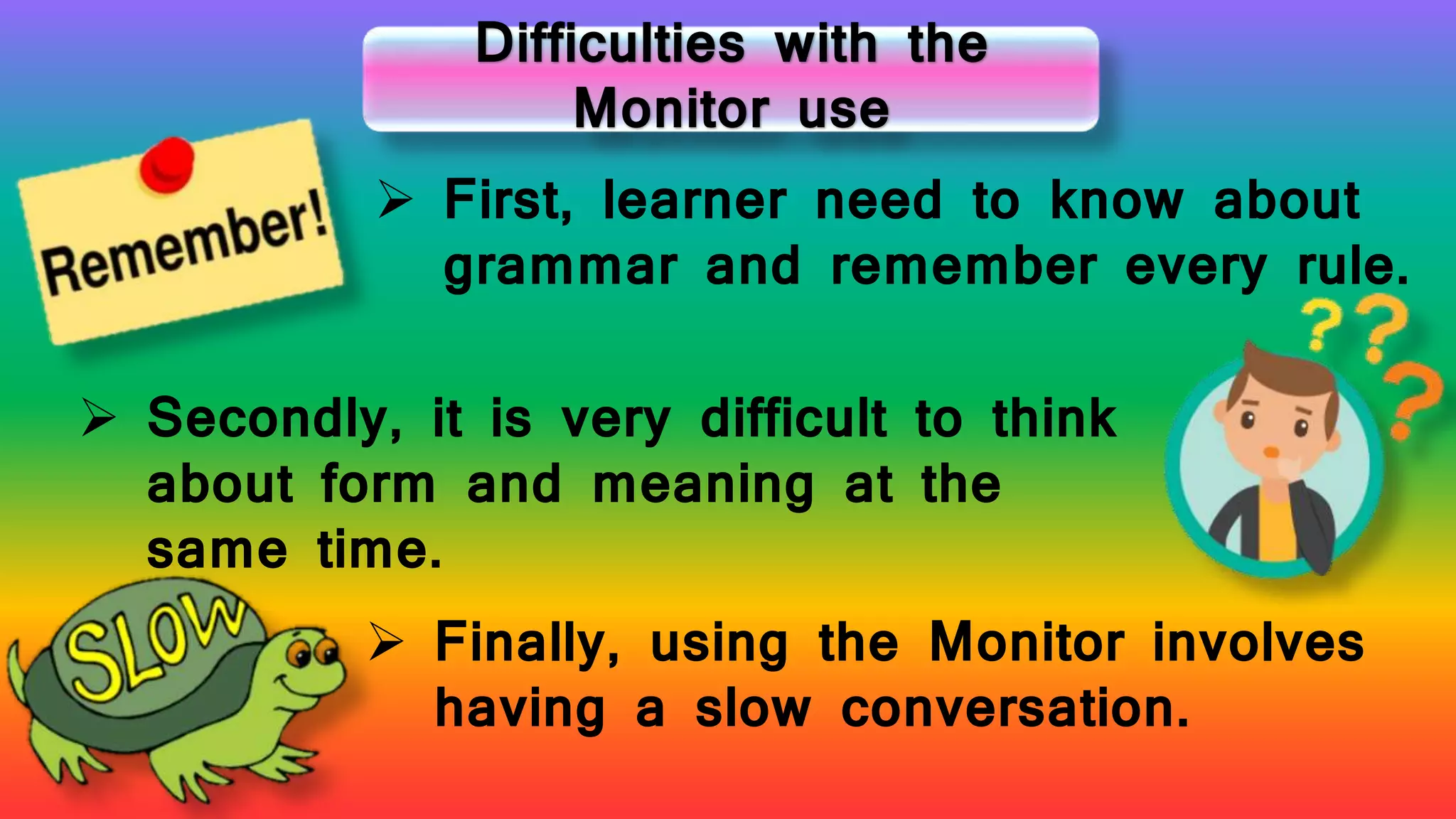
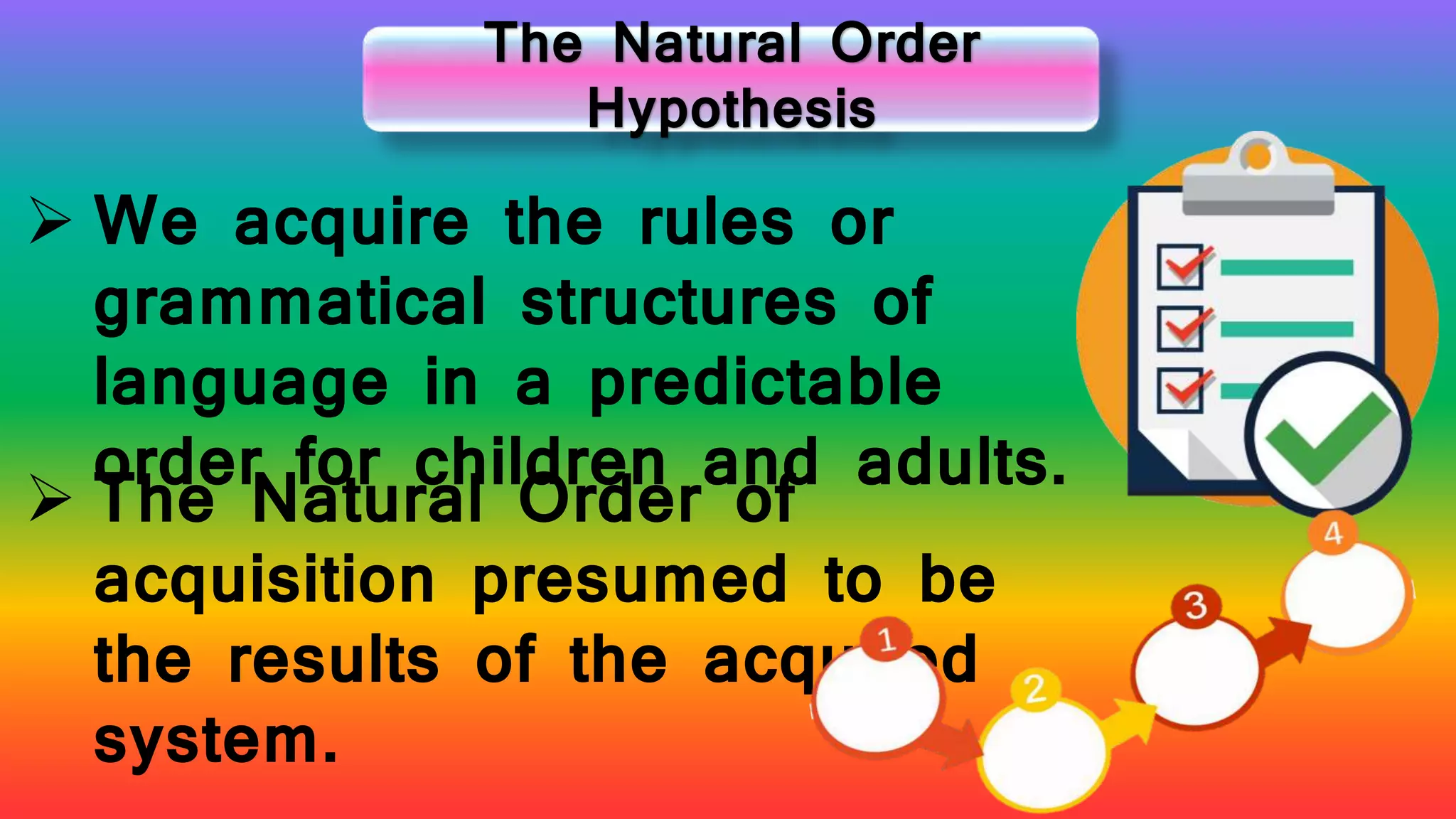
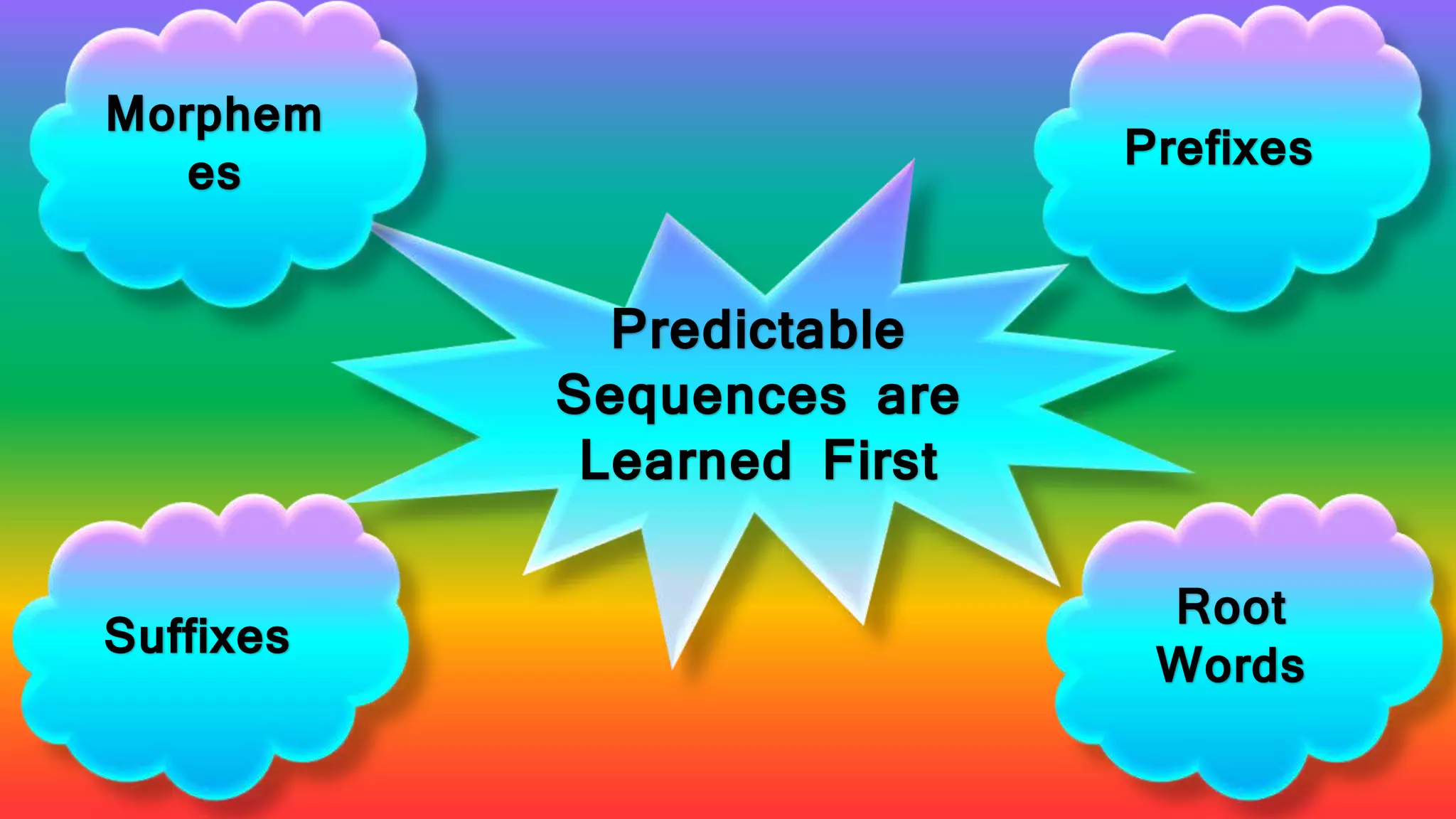
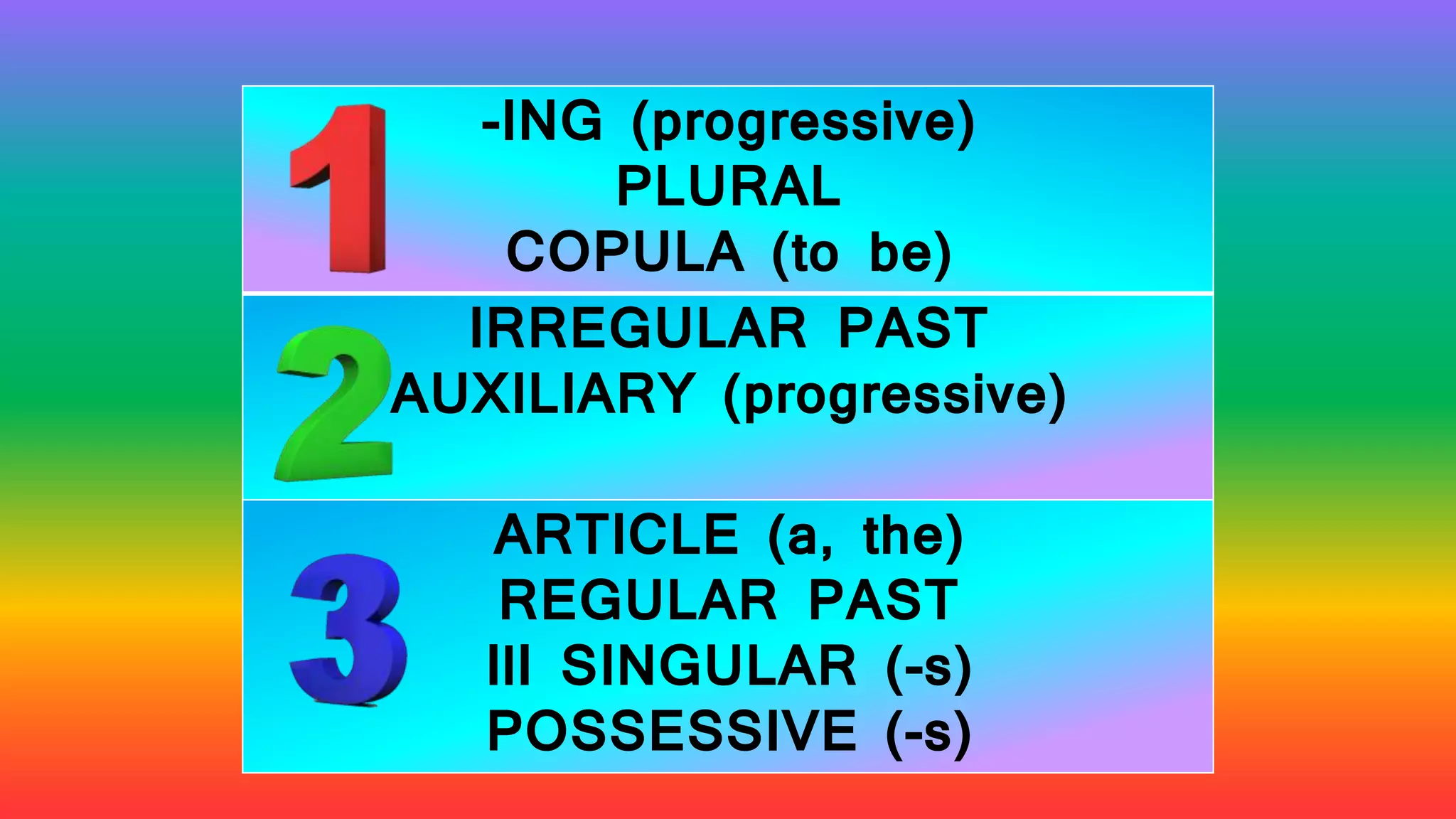
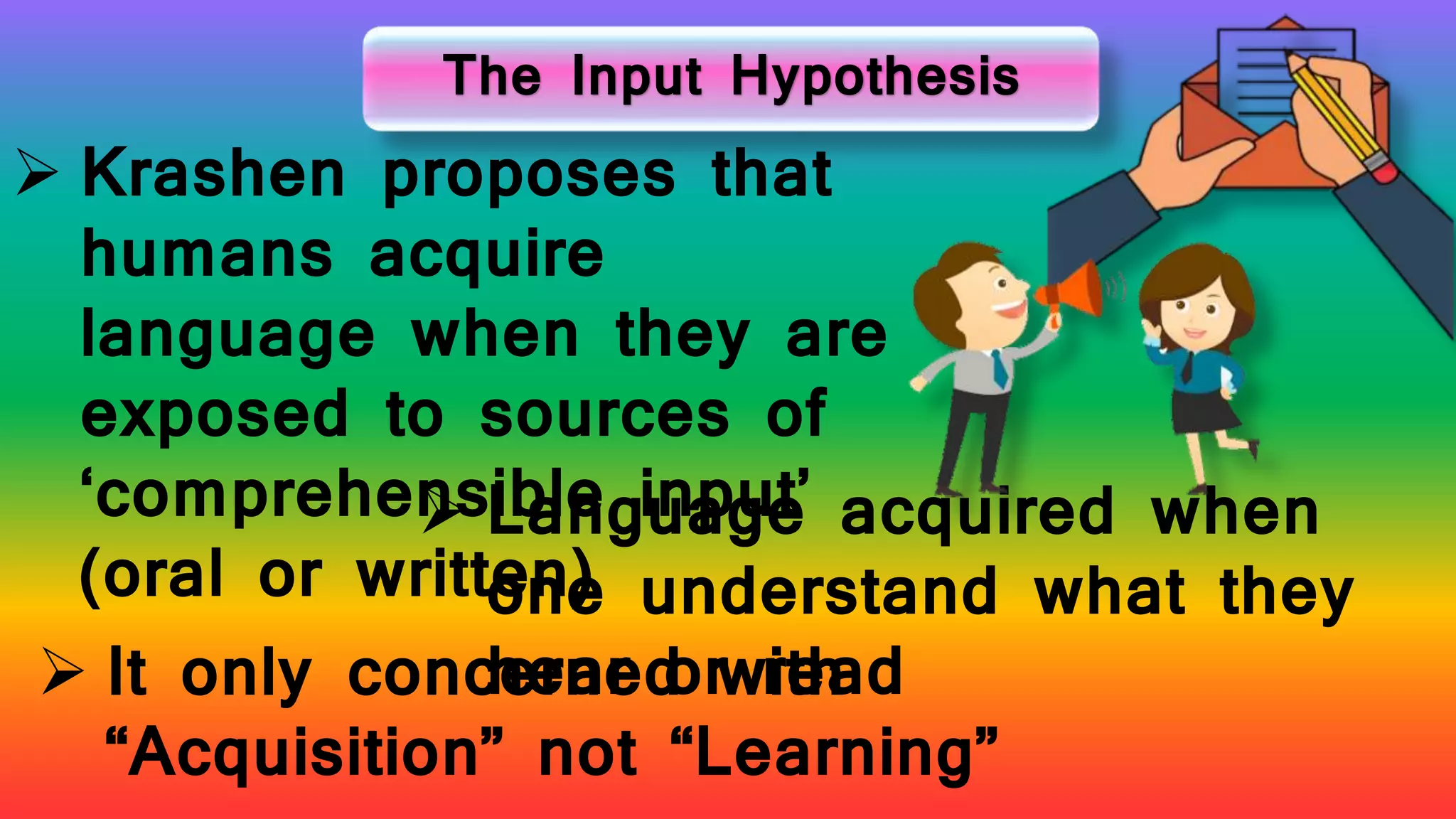
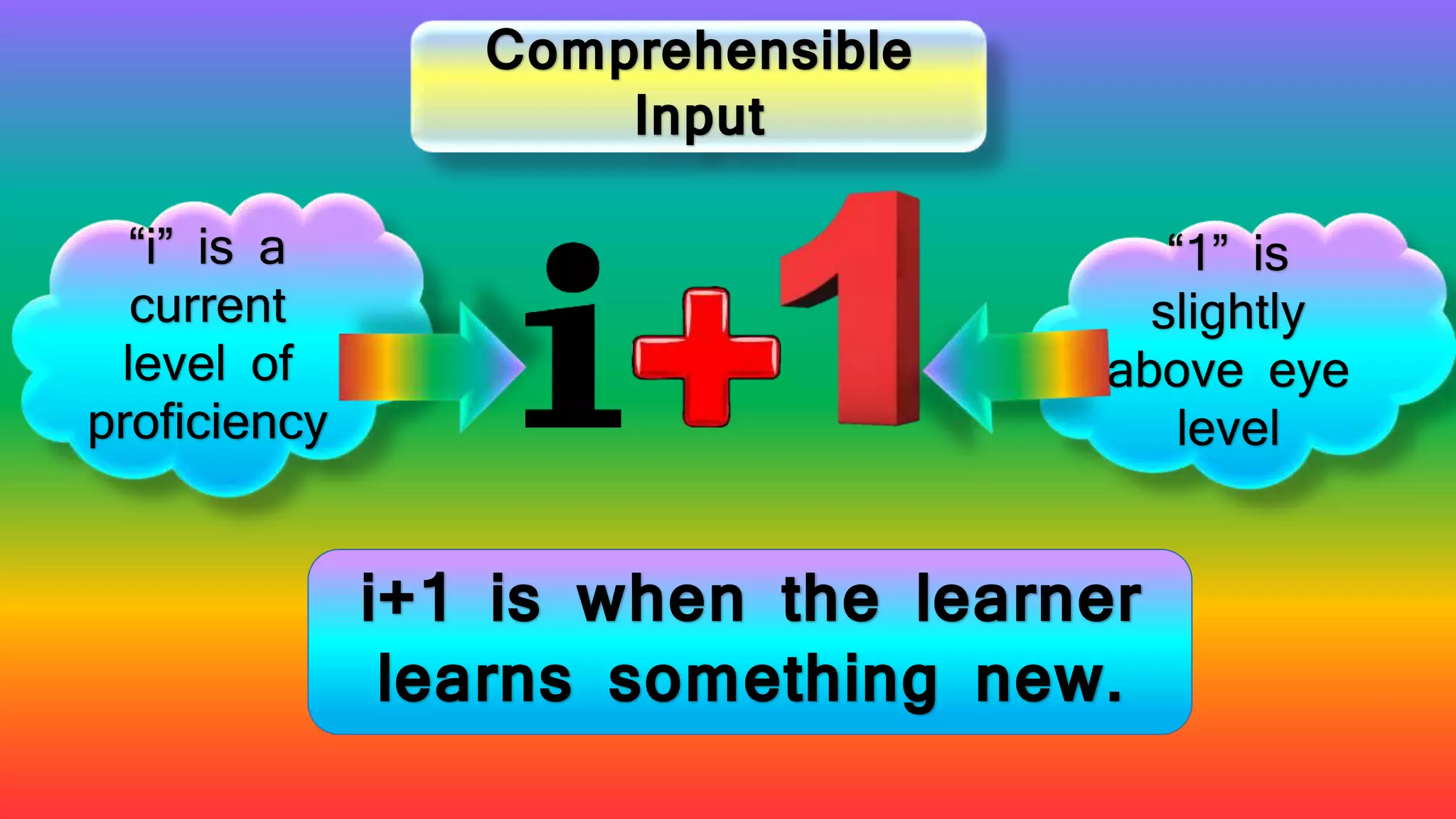

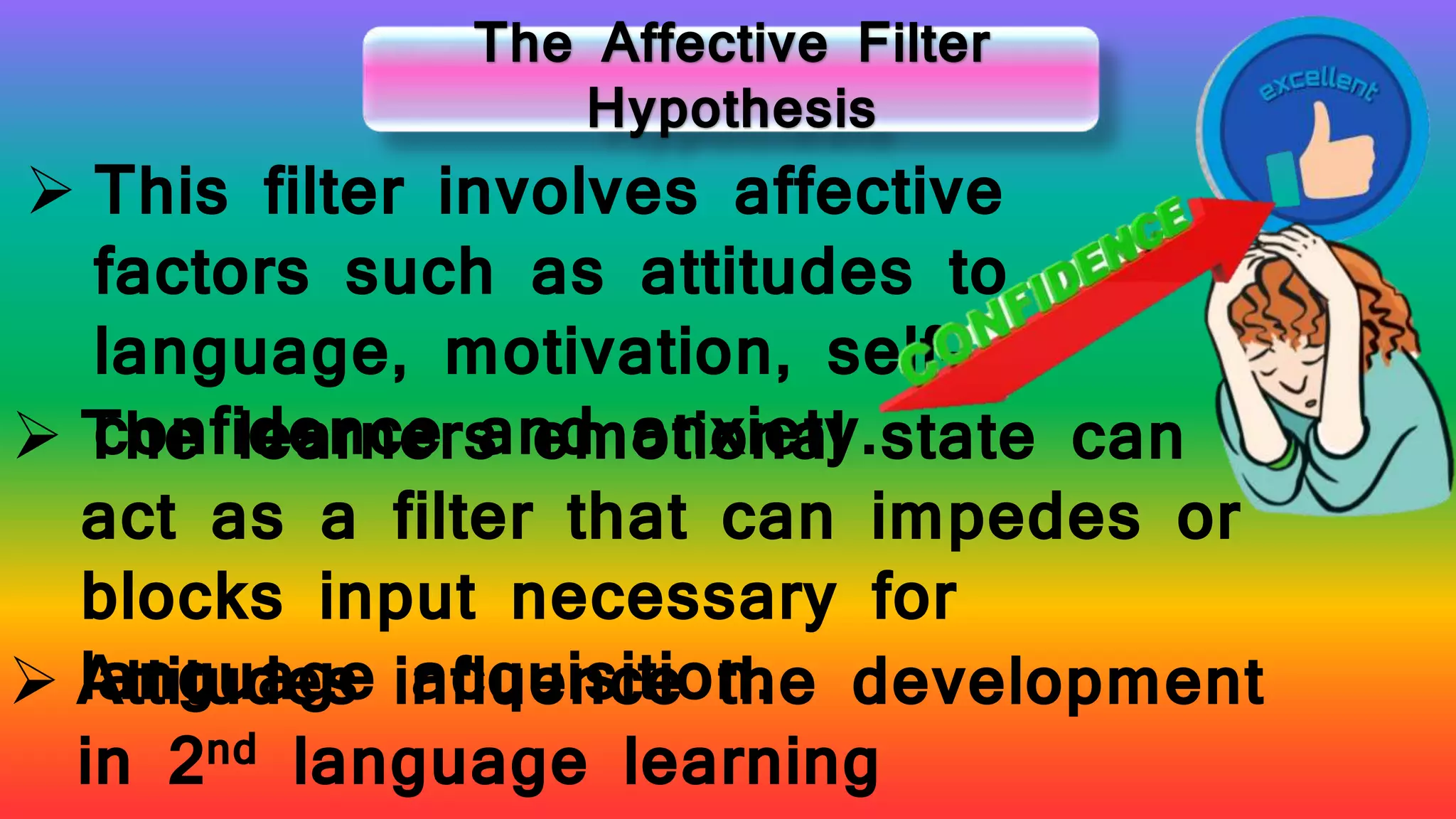
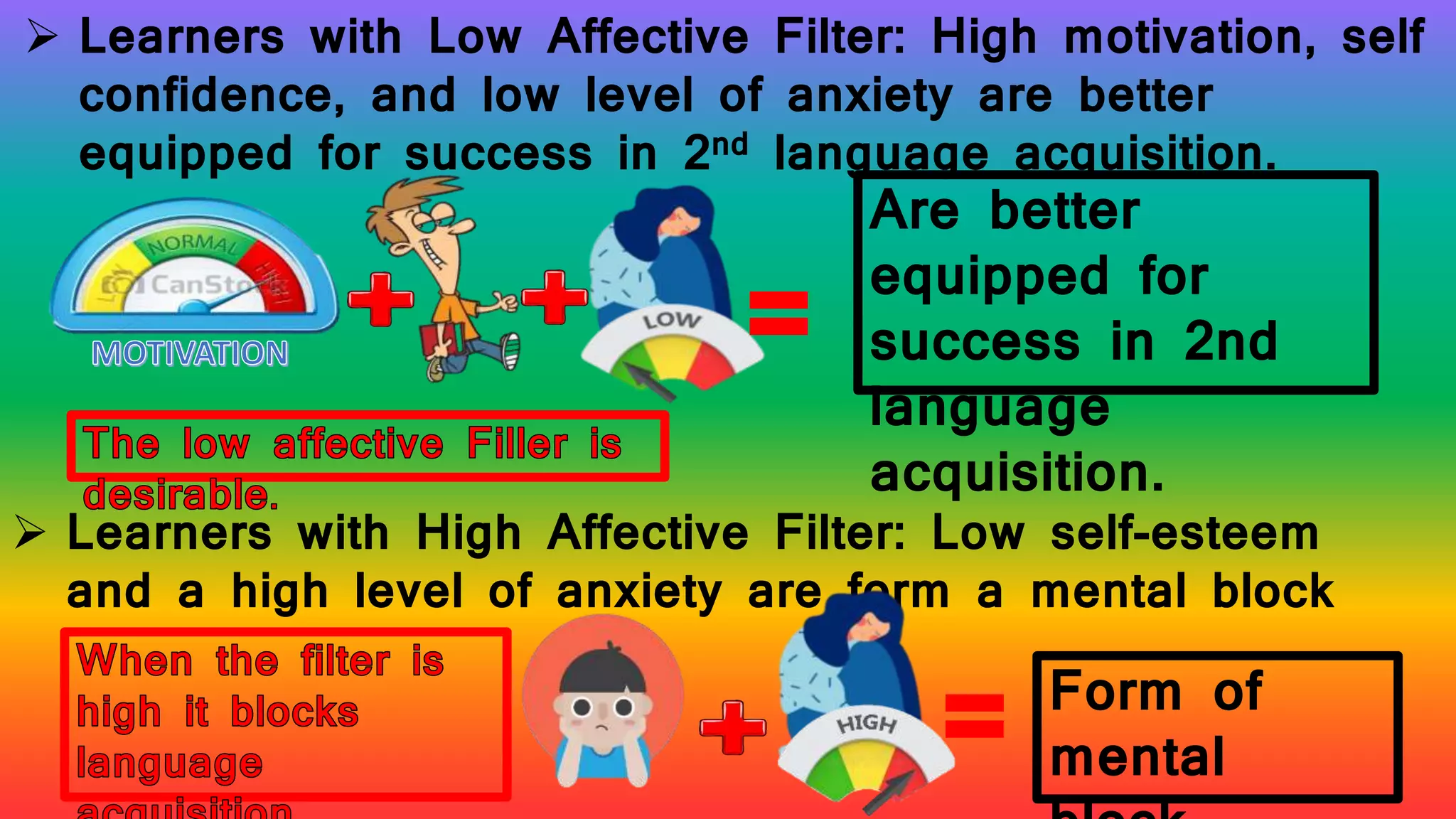


Krashen's Monitor Model has five main hypotheses about second language acquisition: 1) The Acquisition-Learning Hypothesis proposes there are two independent systems - acquired and learned language. Acquired language is subconscious while learned is conscious. 2) The Monitor Hypothesis states that learned language is used as an editor or monitor of acquired language only in formal situations when focusing on correctness. 3) The Natural Order Hypothesis claims the rules of a second language are acquired in a predictable order, not taught order. 4) The Input Hypothesis argues we acquire language by understanding messages a little beyond our current skills. 5) The Affective Filter Hypothesis refers to affective variables


