Downloaded 104 times



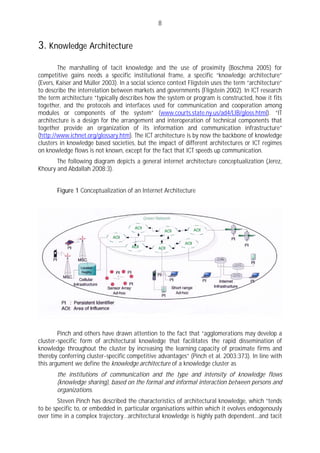




The document discusses the importance of knowledge hubs and clusters in fostering innovation and development in the context of globalization and knowledge-based production. It argues against the notion that digital communication negates the relevance of geographical location, emphasizing that proximity enhances knowledge sharing and the transfer of tacit knowledge, which is crucial for innovation. The paper provides empirical examples and theoretical frameworks to illustrate how localized production and collaboration among firms in close proximity result in competitive advantages despite advances in information communication technology.


