KNEE
PRESENTER : KEERTHANA KRISHNAN C.P
COURSE : BSc MIT 2nd
YEAR
MODERATOR : Mrs. SARANYA
DATE: 06-04-2024
CONTENTS
 Anatomy
 Knee PA axial
 Holmblad method
 Camp-Coventry method
 Knee AP axial
Beclere method
 Stress projection
ANATOMY
RADIOLOGICAL ANATOMY
PATIENT PREPARATION
 Ask about medical history
 Remove metal objects
 Wear proper clothing
 If patient is female ask about pregnancy
KNEE PA AXIAL
INDICATIONS
 Patellar fractures
 Patellofemoral joint disorders
 Chronic knee pain
 Trauma
CONTRAINDICATION
 Pregnancy
KNEE PA AXIAL
(HOLMBLAD METHOD)
PATIENT POSITIONING
place the patient in one of three positions:
1. Standing with the affected knee flexed and
resting on a stool at the side of radiographic
table
2. Standing at the side of radiographic table with
the affected knee flexed and placed in contact
with front of the IR
3. Kneeling on the radiographic table with the
affected knee over the IR
KNEE PA AXIAL
(CAMP-COVENTRY METHOD)
PATIENT POSITIONING
 Place the patient in the prone position
 Flex the patients knee to either a 40 or 50
degree angle, and rest the foot on a
suitable support
 Center the upper half of the IR to the
knee joint ; the central ray angulation
projects the joint to the centre of the
IR
 Adjust the leg so that the knee has no
medial or lateral rotation
KNEE PA AXIAL
CENTRAL RAY
 Perpendicular to the long axis of the leg, entering the knee
joint ½ inch below the patellar apex
COLLIMATION
 Collimation should be centered to the mid-knee joint area
 Includes the patellofemoral joint and the intercondylar area
KNEE PA AXIAL
TECHNICAL FACTORS
 Orientation : portrait
 IR size : 8x10 inch
 Exposure : 70-80 kVP, 15-20 mAs
 SID : 100cm
 Grid : No
KNEE PA AXIAL
(HOLMBLAD AND CAMP-COVENTRY METHOD)
ESSENTIAL IMAGE CHARACTERISTICS
 Open fossa
 Posteroinferior surface of the femoral condyles
 Intercondylar eminance and knee joint space
 Medial and lateral intercondylar tubercles
 Apex of the patella not superimposing the fossa
 Soft tissue in the fossa and interspaces
KNEE AP AXIAL
(BECLERE METHOD)
INDICATIONS
 Osteoarthritis
 Traumatic injuries
 Knee fracture
 Bone lesion and tumors
CONTRAINDICATION
 Pregnancy
KNEE AP AXIAL
PATIENT POSITIONING
 Place the patient in the supine position
 Flex the affected knee enough to place the
long axis of the femur at an angle of 60
degrees to the long axis of the tibia
 Support the knee on sandbags
 Place the IR under the knee, centered to
the mid-knee joint area
KNEE AP AXIAL
CENTRAL RAY
Perpendicular to the long axis of the leg, entering the knee joint
half inch below the patellar apex
COLLIMATION
 Superior to include the distal femur
 Inferior to include the proximal tibia or fibula
 Lateral to include the skin margin
 Medial to include the medial skin margin
KNEE AP AXIAL
TECHNICAL FACTORS
 Orientation :portrait
 IR size : 24x30 cm
 Exposure : 60-70 kVP, 7-10 mAs
 SID : 100cm
 Grid : no
KNEE AP AXIAL
ESSENTIAL IMAGE CHARACTERISTICS
 Open intercondylar fossa
 Posteroinferior surface of the femoral condyles
 Intercondylar eminance and knee joint space
 No superimposition of the fossa by the apex of
patella
 Soft tissue in the fossa and interspaces
STRESS PROJECTION OF KNEE
INDICATION
 Swelling or inflammation
 Subluxation due to the fracture
of collataral ligaments
 Pain or discomfort in knee joint
CONTRAINDICATION
 Pregnancy
STRESS PROJECTION OF KNEE
PATIENT POSITIONING
 It is taken with the knee bent 15
degrees and the thigh is supported by a
thigh rest
 The beam is angled parallel to the
jointline, while either a valgus Or varus
stress is produced
STRESS PROJECTION OF KNEE
CENTRAL RAY
 Apex of the patella
COLLIMATION
 Superior to include the distal femur
 Inferior to include the proximal tibia or fibula
STRESS PROJECTION OF KNEE
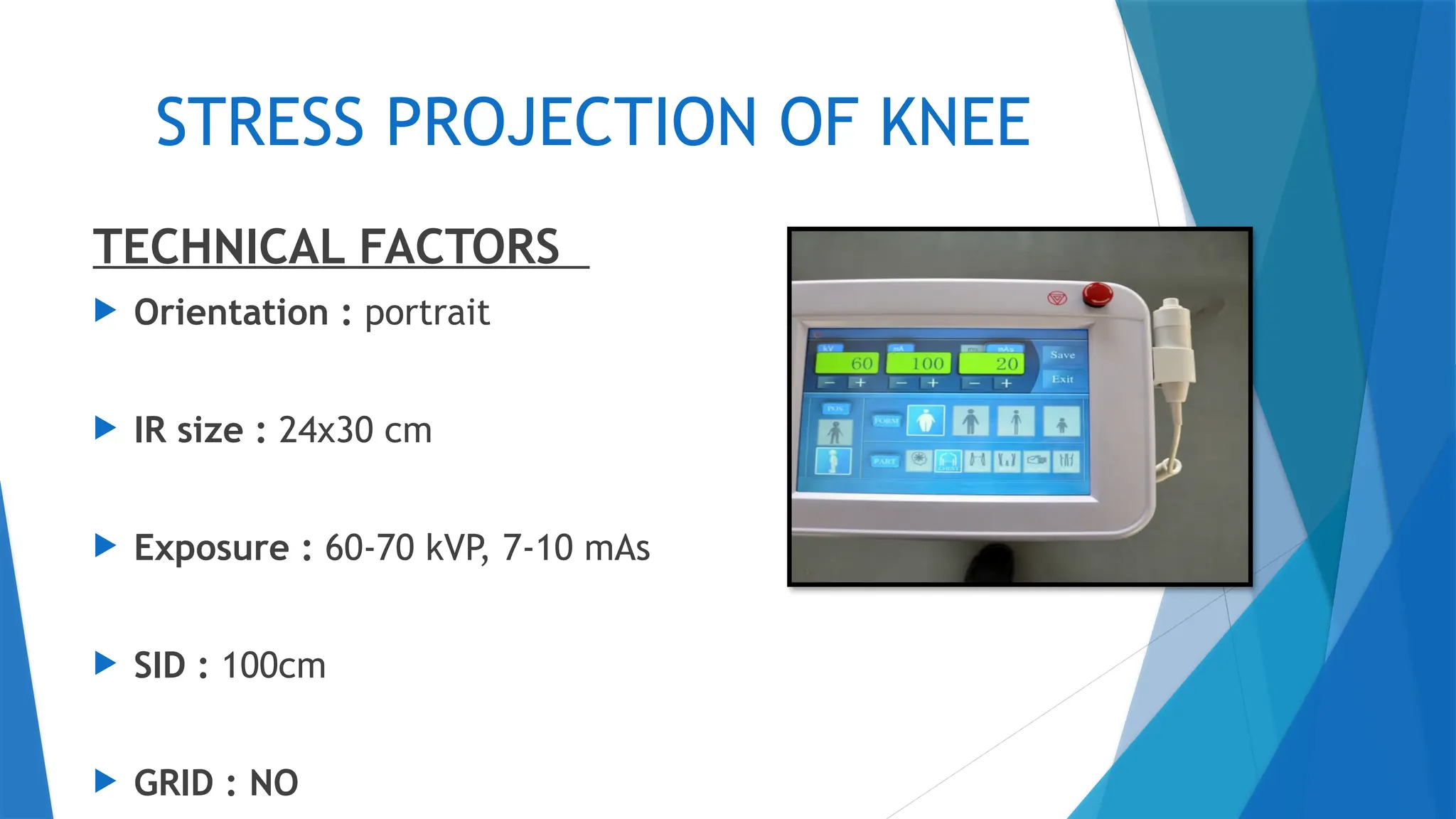
TECHNICAL FACTORS
 Orientation : portrait
 IR size : 24x30 cm
 Exposure : 60-70 kVP, 7-10 mAs
 SID : 100cm
 GRID : NO
STRESS PROJECTION OF KNEE
ESSENTIAL IMAGE CHARACTERISTICS
 Thigh bone and shin bone
 Articular cartilage
 Medial and lateral menisci
 Ligaments
 Muscles and tendons
RADIATION PROTECTION
 Lead apron
 Eye goggle
 Gonad shield
 Thyroid shield
 Leg guard
REFERENCE
 Clarks positioning in radiography
 Merrills atlas
 Radiopaedia website
THANK YOU

Knee radiographic positioning Keerthana knee[1].pptx

  • 1.
    KNEE PRESENTER : KEERTHANAKRISHNAN C.P COURSE : BSc MIT 2nd YEAR MODERATOR : Mrs. SARANYA DATE: 06-04-2024
  • 2.
    CONTENTS  Anatomy  KneePA axial  Holmblad method  Camp-Coventry method  Knee AP axial Beclere method  Stress projection
  • 3.
  • 4.
  • 5.
    PATIENT PREPARATION  Askabout medical history  Remove metal objects  Wear proper clothing  If patient is female ask about pregnancy
  • 6.
    KNEE PA AXIAL INDICATIONS Patellar fractures  Patellofemoral joint disorders  Chronic knee pain  Trauma CONTRAINDICATION  Pregnancy
  • 7.
    KNEE PA AXIAL (HOLMBLADMETHOD) PATIENT POSITIONING place the patient in one of three positions: 1. Standing with the affected knee flexed and resting on a stool at the side of radiographic table 2. Standing at the side of radiographic table with the affected knee flexed and placed in contact with front of the IR 3. Kneeling on the radiographic table with the affected knee over the IR
  • 8.
    KNEE PA AXIAL (CAMP-COVENTRYMETHOD) PATIENT POSITIONING  Place the patient in the prone position  Flex the patients knee to either a 40 or 50 degree angle, and rest the foot on a suitable support  Center the upper half of the IR to the knee joint ; the central ray angulation projects the joint to the centre of the IR  Adjust the leg so that the knee has no medial or lateral rotation
  • 9.
    KNEE PA AXIAL CENTRALRAY  Perpendicular to the long axis of the leg, entering the knee joint ½ inch below the patellar apex COLLIMATION  Collimation should be centered to the mid-knee joint area  Includes the patellofemoral joint and the intercondylar area
  • 10.
    KNEE PA AXIAL TECHNICALFACTORS  Orientation : portrait  IR size : 8x10 inch  Exposure : 70-80 kVP, 15-20 mAs  SID : 100cm  Grid : No
  • 11.
    KNEE PA AXIAL (HOLMBLADAND CAMP-COVENTRY METHOD) ESSENTIAL IMAGE CHARACTERISTICS  Open fossa  Posteroinferior surface of the femoral condyles  Intercondylar eminance and knee joint space  Medial and lateral intercondylar tubercles  Apex of the patella not superimposing the fossa  Soft tissue in the fossa and interspaces
  • 12.
    KNEE AP AXIAL (BECLEREMETHOD) INDICATIONS  Osteoarthritis  Traumatic injuries  Knee fracture  Bone lesion and tumors CONTRAINDICATION  Pregnancy
  • 13.
    KNEE AP AXIAL PATIENTPOSITIONING  Place the patient in the supine position  Flex the affected knee enough to place the long axis of the femur at an angle of 60 degrees to the long axis of the tibia  Support the knee on sandbags  Place the IR under the knee, centered to the mid-knee joint area
  • 14.
    KNEE AP AXIAL CENTRALRAY Perpendicular to the long axis of the leg, entering the knee joint half inch below the patellar apex COLLIMATION  Superior to include the distal femur  Inferior to include the proximal tibia or fibula  Lateral to include the skin margin  Medial to include the medial skin margin
  • 15.
    KNEE AP AXIAL TECHNICALFACTORS  Orientation :portrait  IR size : 24x30 cm  Exposure : 60-70 kVP, 7-10 mAs  SID : 100cm  Grid : no
  • 16.
    KNEE AP AXIAL ESSENTIALIMAGE CHARACTERISTICS  Open intercondylar fossa  Posteroinferior surface of the femoral condyles  Intercondylar eminance and knee joint space  No superimposition of the fossa by the apex of patella  Soft tissue in the fossa and interspaces
  • 17.
    STRESS PROJECTION OFKNEE INDICATION  Swelling or inflammation  Subluxation due to the fracture of collataral ligaments  Pain or discomfort in knee joint CONTRAINDICATION  Pregnancy
  • 18.
    STRESS PROJECTION OFKNEE PATIENT POSITIONING  It is taken with the knee bent 15 degrees and the thigh is supported by a thigh rest  The beam is angled parallel to the jointline, while either a valgus Or varus stress is produced
  • 19.
  • 20.
    STRESS PROJECTION OFKNEE CENTRAL RAY  Apex of the patella COLLIMATION  Superior to include the distal femur  Inferior to include the proximal tibia or fibula
  • 21.
    STRESS PROJECTION OFKNEE TECHNICAL FACTORS  Orientation : portrait  IR size : 24x30 cm  Exposure : 60-70 kVP, 7-10 mAs  SID : 100cm  GRID : NO
  • 22.
    STRESS PROJECTION OFKNEE ESSENTIAL IMAGE CHARACTERISTICS  Thigh bone and shin bone  Articular cartilage  Medial and lateral menisci  Ligaments  Muscles and tendons
  • 23.
    RADIATION PROTECTION  Leadapron  Eye goggle  Gonad shield  Thyroid shield  Leg guard
  • 24.
    REFERENCE  Clarks positioningin radiography  Merrills atlas  Radiopaedia website
  • 25.