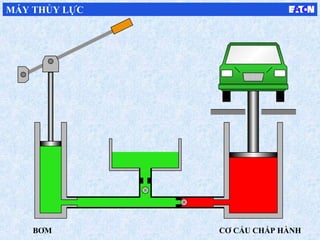
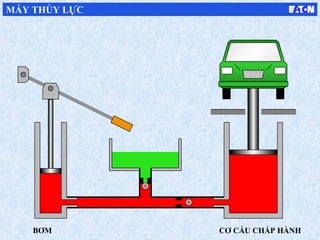
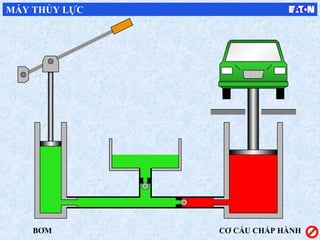
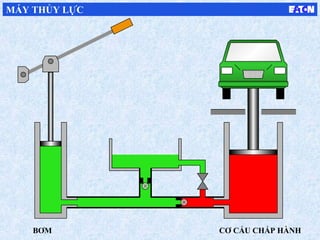
NGUYÊN LÝ CƠ BẢN
Copyright © Eaton Hydraulics 2000
Steve Skinner, Eaton Hydraulics, Havant, UK
NGUYÊN LÝ CƠ BẢN
Copyright © Eaton Hydraulics 2000
Steve Skinner, Eaton Hydraulics, Havant, UK
TRẢ LỜI:
Một hệ thống thủy lực là một phương tiện dùng áp suất
của lưu chất để truyền năng lượng giữa nơi này đến nơi
hoặc đến một điểm khác
CÂU HỎI:
Thế nào là một hệ thống điều khiển thủy lực ?
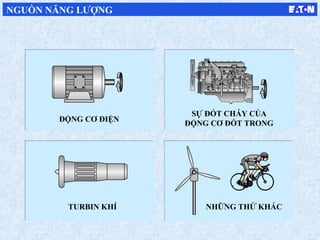
NHU CẦU CỦA NĂNG LƯỢNG
TURBIN KHÍ NHỮNG THỨ KHÁC
SỰ ĐỐT CHÁY CỦA
ĐỘNG CƠ ĐỐT TRONG
ĐỘNG CƠ ĐIỆN
NGUỒN NĂNG LƯỢNG
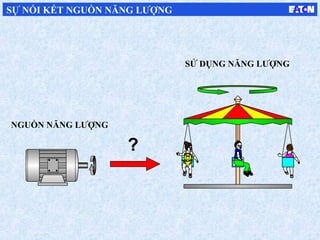
SỬ DỤNG NĂNG LƯỢNG
?
NGUỒN NĂNG LƯỢNG
SỰ NỐI KẾT NGUỒN NĂNG LƯỢNG
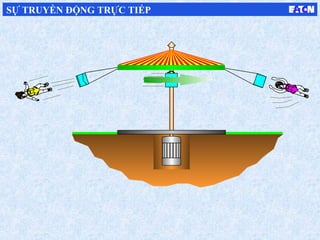
SỰ TRUYỀN ĐỘNG TRỰC TIẾP
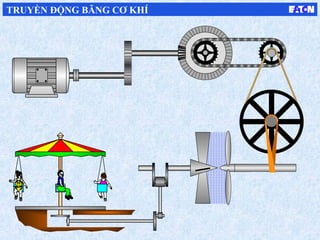
TRUYỀN ĐỘNG BĂNG CƠ KHÍ
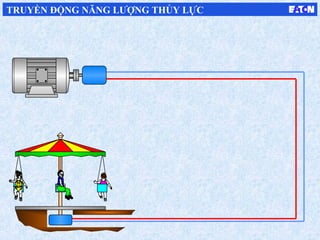
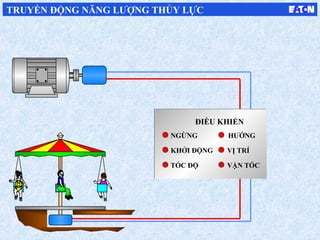
TRUYỀN ĐỘNG NĂNG LƯỢNG THỦY LỰC
NGỪNG
KHỞI ĐỘNG
TỐC ĐỘ
HƯỚNG
VỊ TRÍ
VẬN TỐC
ĐIỀU KHIỂN
TRUYỀN ĐỘNG NĂNG LƯỢNG THỦY LỰC
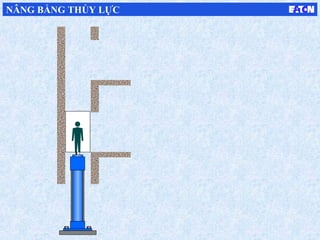
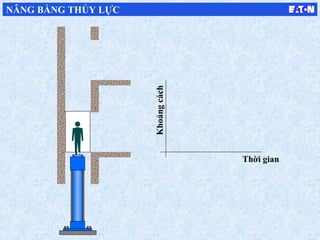
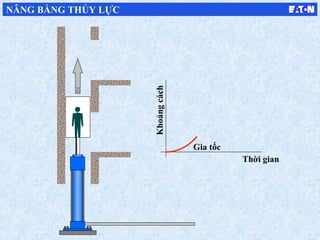
NÂNG BẰNG THỦY LỰC
Thời gianKhoảngcách
NÂNG BẰNG THỦY LỰC
Thời gian
Gia tốc
Khoảngcách
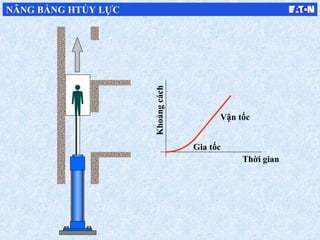
NÂNG BẰNG THỦY LỰC
Thời gian
Gia tốc
Vận tốc
Khoảngcách
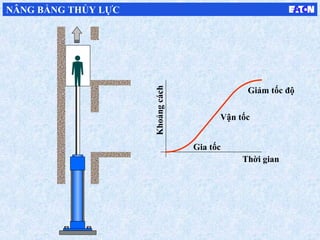
NÂNG BẰNG HTỦY LỰC
Thời gian
Gia tốc
Giảm tốc độ
Vận tốc
Khoảngcách
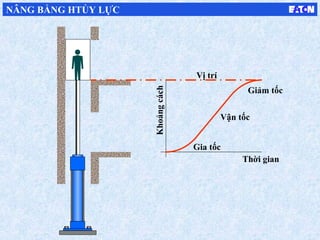
NÂNG BẰNG THỦY LỰC
Thời gian
Vị trí
Gia tốc
Giảm tốc
Vận tốc
Khoảngcách
NÂNG BẰNG HTỦY LỰC
MÁY ĐÀO KHÔNG DÙNG THỦY LỰC
MÁY ĐÀO THỦY LỰC
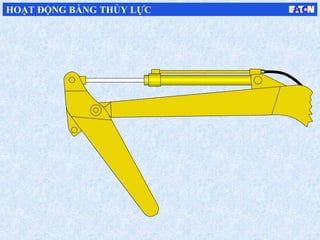
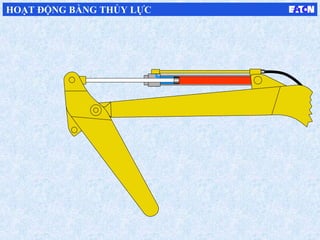
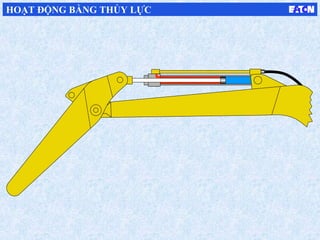
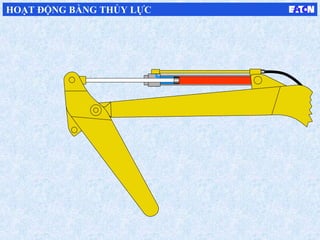
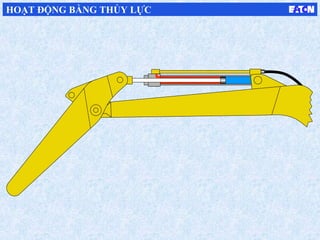
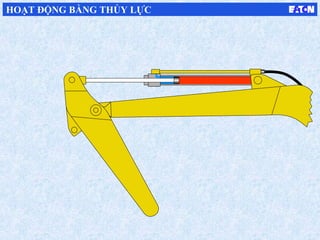
HOẠT ĐỘNG BẰNG THỦY LỰC
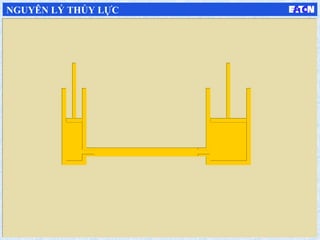
NGUYÊN LÝ THỦY LỰC
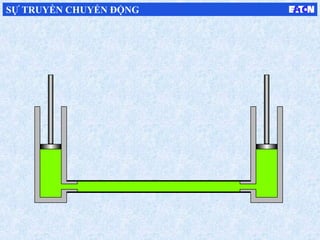
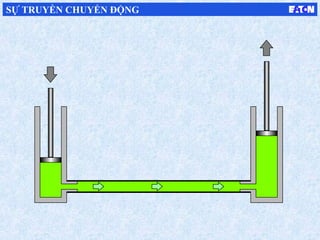
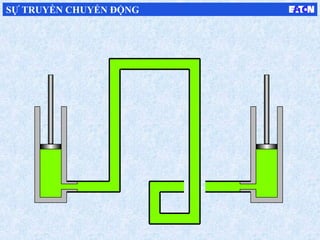
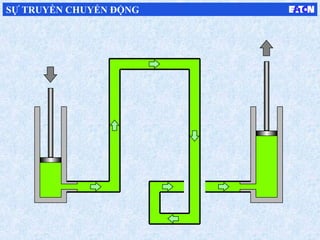
SỰ TRUYỀN CHUYỂN ĐỘNG
BƠM CƠ CẤU CHẤP HÀNH
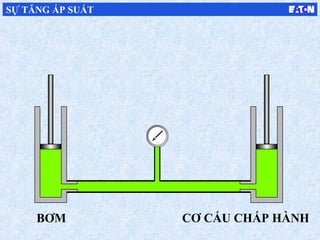
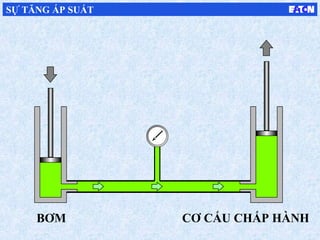
SỰ TĂNG ÁP SUẤT
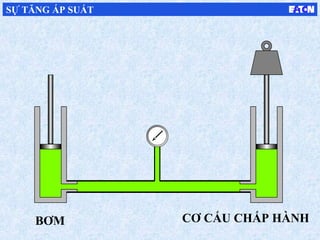
SỰ TĂNG ÁP SUẤT
CƠ CẤU CHẤP HÀNHBƠM
W
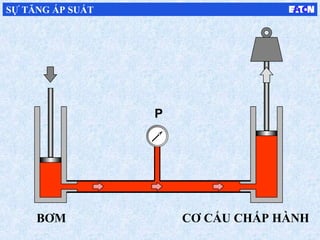
SỰ TĂNG ÁP SUẤT
BƠM CƠ CẤU CHẤP HÀNH
W
P
SỰ TĂNG ÁP SUẤT
CƠ CẤU CHẤP HÀNHBƠM
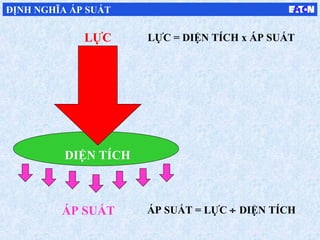
DIỆN TÍCH
ÁP SUẤT
LỰC
ÁP SUẤT = LỰC ÷ DIỆN TÍCH
LỰC = DIỆN TÍCH x ÁP SUẤT
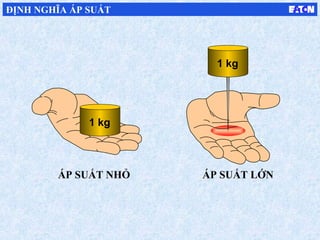
ĐỊNH NGHĨA ÁP SUẤT
1 kg
ÁP SUẤT NHỎ
1 kg
ÁP SUẤT LỚN
1 kg
ĐỊNH NGHĨA ÁP SUẤT
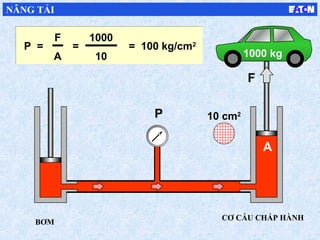
P
F
A
CƠ CẤU CHẤP HÀNH
1000 kg
10 cm2
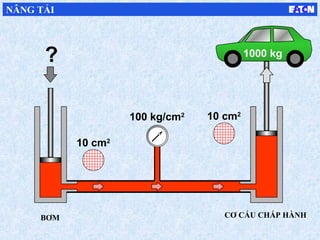
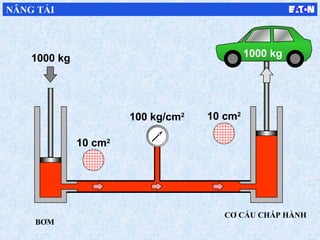
NÂNG TẢI
P =
F
A
P =
F
A
P =
F
A
P =
F
A
=
1000
10
= 100 kg/cm2
P =
F
A
BƠM
100 kg/cm2
CƠ CẤU CHẤP HÀNH
10 cm2
10 cm2
? 1000 kg
NÂNG TẢI
BƠM
CƠ CẤU CHẤP HÀNH
10 cm2
10 cm2
1000 kg 1000 kg
100 kg/cm2
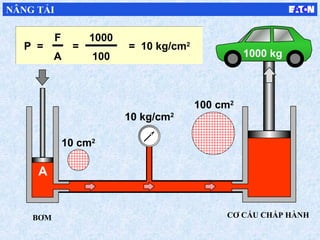
NÂNG TẢI
BƠM
A
CƠ CẤU CHẤP HÀNH
1000 kg
100 cm2
P =
F
A
10 cm2
10 kg/cm2
NÂNG TẢI
P =
F
A
=
1000
100
= 10 kg/cm2
BƠM
A
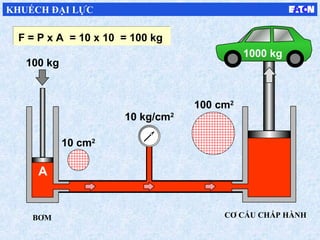
F = P x A = 10 x 10 = 100 kg
CƠ CẤU CHẤP HÀNH
1000 kg
100 cm2
10 cm2
10 kg/cm2
100 kg
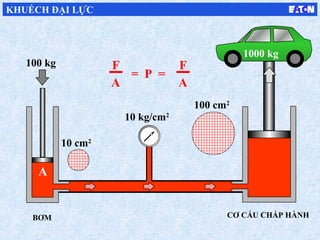
KHUẾCH ĐẠI LỰC
BƠM
A
CƠ CẤU CHẤP HÀNH
1000 kg
100 cm2
10 cm2
10 kg/cm2
100 kg
KHUẾCH ĐẠI LỰC
= P =
F
A
F
A
BƠM
W
CƠ CẤU CHẤP HÀNH
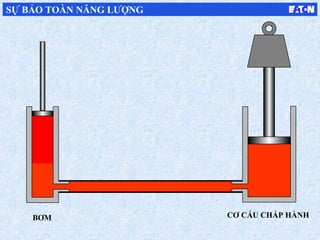
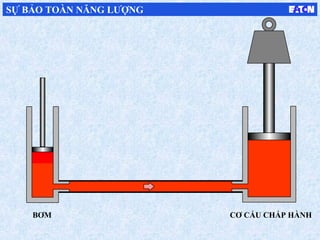
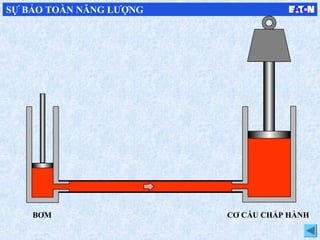
SỰ BẢO TOÀN NĂNG LƯỢNG
BƠM
W
CƠ CẤU CHẤP HÀNH
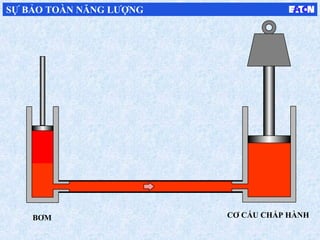
SỰ BẢO TOÀN NĂNG LƯỢNG
BƠM
W
CƠ CẤU CHẤP HÀNH
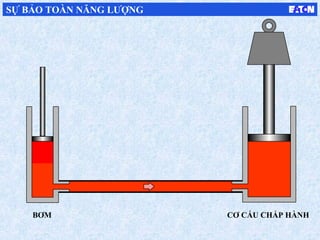
SỰ BẢO TOÀN NĂNG LƯỢNG
BƠM
W
CƠ CẤU CHẤP HÀNH
SỰ BẢO TOÀN NĂNG LƯỢNG
BƠM
W
CƠ CẤU CHẤP HÀNH
SỰ BẢO TOÀN NĂNG LƯỢNG
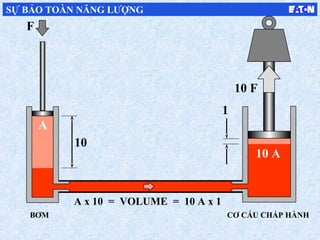
BƠM
W
10 A
10 F
A
F
10
1
A x 10 = VOLUME = 10 A x 1
CƠ CẤU CHẤP HÀNH
SỰ BẢO TOÀN NĂNG LƯỢNG
BƠM
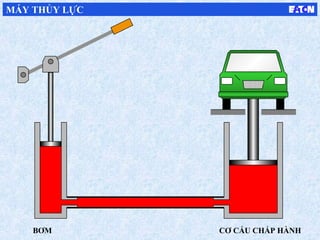
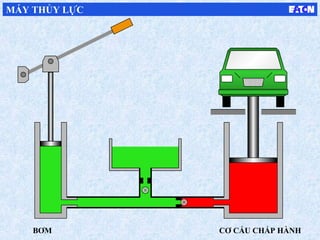
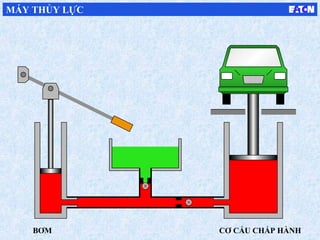
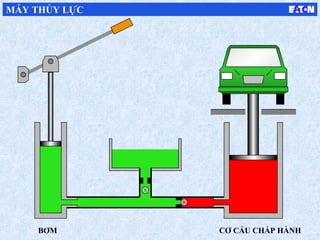
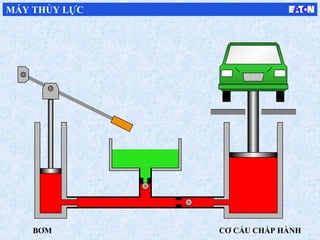
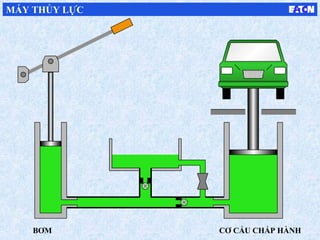
BƠM CƠ CẤU CHẤP HÀNH
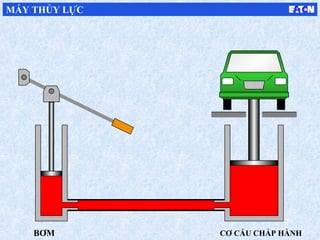
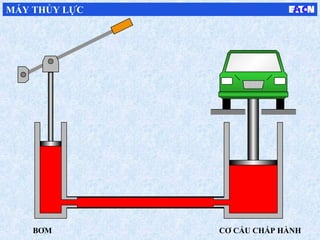
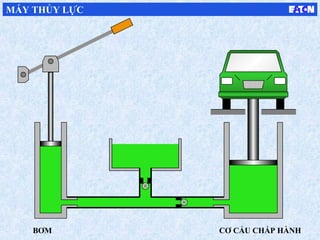
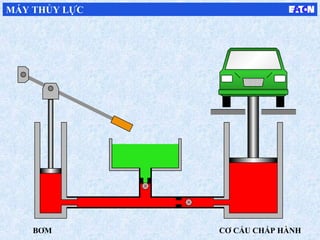
MÁY THỦY LỰC
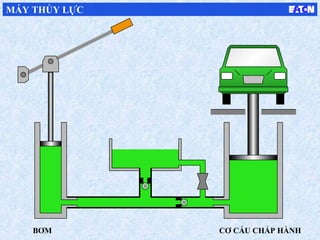
BƠM CƠ CẤU CHẤP HÀNH
MÁY THỦY LỰC
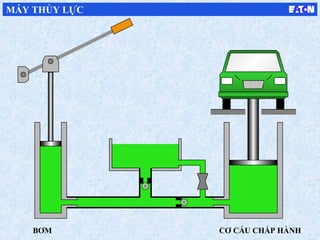
BƠM CƠ CẤU CHẤP HÀNH
MÁY THỦY LỰC
BƠM CƠ CẤU CHẤP HÀNH
MÁY THỦY LỰC
BƠM CƠ CẤU CHẤP HÀNH
MÁY THỦY LỰC
BƠM CƠ CẤU CHẤP HÀNH
MÁY THỦY LỰC
BƠM CƠ CẤU CHẤP HÀNH
MÁY THỦY LỰC
BƠM CƠ CẤU CHẤP HÀNH
MÁY THỦY LỰC
BƠM CƠ CẤU CHẤP HÀNH
MÁY THỦY LỰC
BƠM CƠ CẤU CHẤP HÀNH
MÁY THỦY LỰC
BƠM CƠ CẤU CHẤP HÀNH
MÁY THỦY LỰC
BƠM CƠ CẤU CHẤP HÀNH
MÁY THỦY LỰC
BƠM CƠ CẤU CHẤP HÀNH
MÁY THỦY LỰC
BƠM CƠ CẤU CHẤP HÀNH
MÁY THỦY LỰC
BƠM CƠ CẤU CHẤP HÀNH
MÁY THỦY LỰC
BƠM CƠ CẤU CHẤP HÀNH
MÁY THỦY LỰC
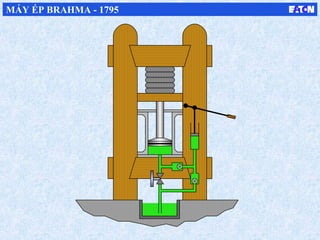
MÁY ÉP BRAHMA - 1795
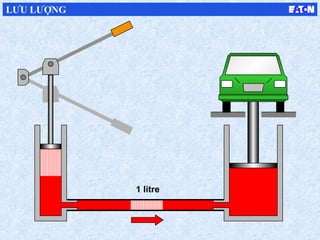
1 litre
LƯU LƯỢNG
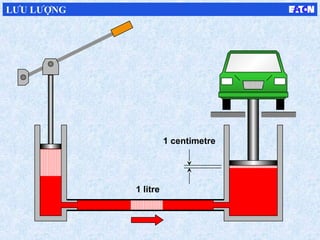
1 litre
1 centimetre
LƯU LƯỢNG
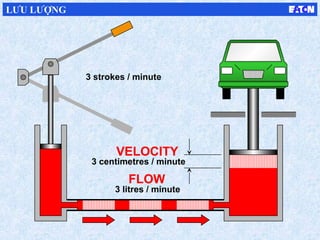
3 litres / minute
3 centimetres / minute
3 strokes / minute
FLOW
VELOCITY
LƯU LƯỢNG
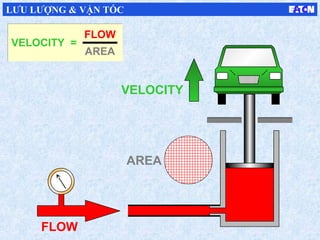
LƯU LƯỢNG & VẬN TỐC
AREA
VELOCITY
FLOW
VELOCITY =
AREA
FLOW
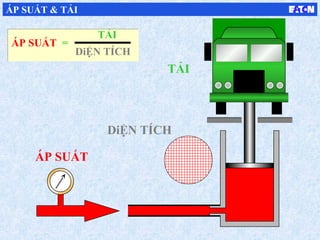
ÁP SUẤT
ÁP SUẤT & TẢI
TẢI
ÁP SUẤT =
DiỆN TÍCH
DiỆN TÍCH
TẢI
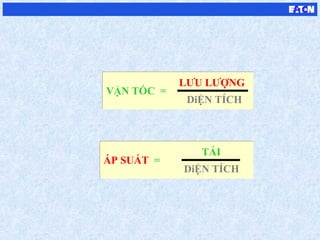
LƯU LƯỢNG
VẬN TỐC =
DiỆN TÍCH
TẢI
ÁP SUẤT =
DiỆN TÍCH
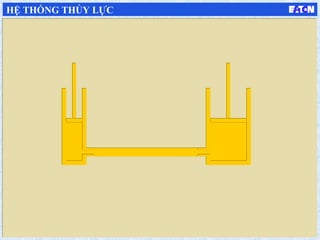
HỆ THỐNG THỦY LỰC
NHU CẦU
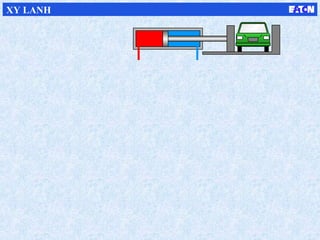
XY LANH
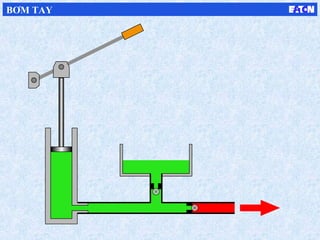
BƠM TAY
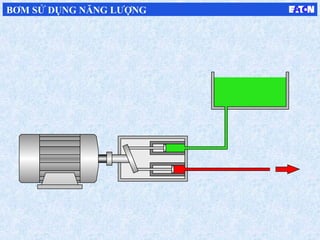
BƠM SỬ DỤNG NĂNG LƯỢNG
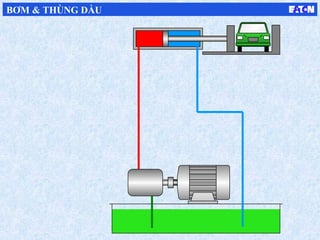
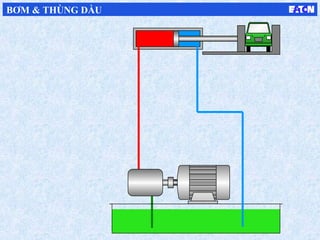
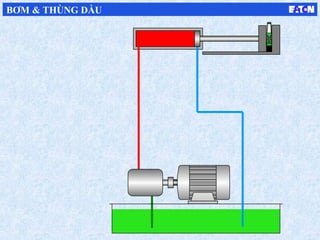
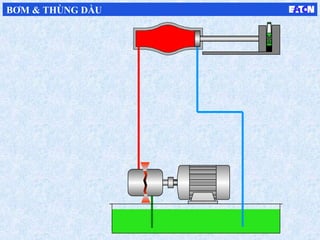
BƠM & THÙNG DẦU
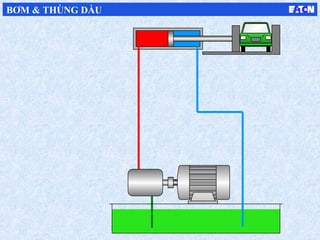
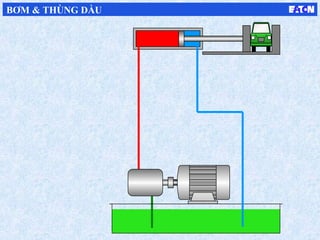
BƠM & THÙNG DẦU
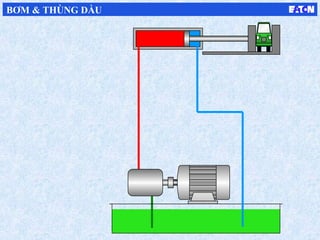
BƠM & THÙNG DẦU
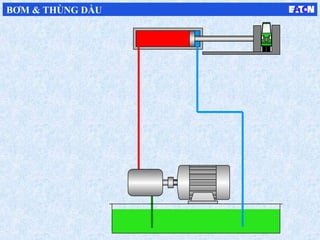
BƠM & THÙNG DẦU
BƠM & THÙNG DẦU
BƠM & THÙNG DẦU
BƠM & THÙNG DẦU
BƠM & THÙNG DẦU
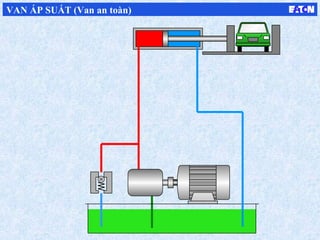
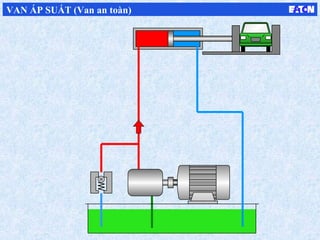
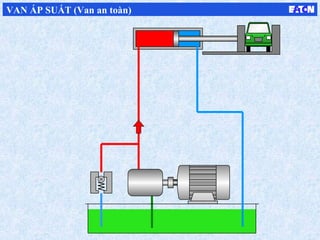
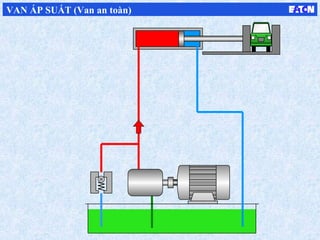
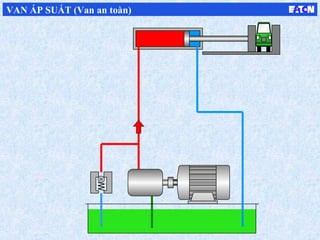
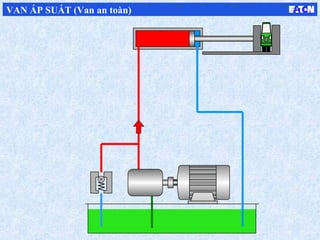
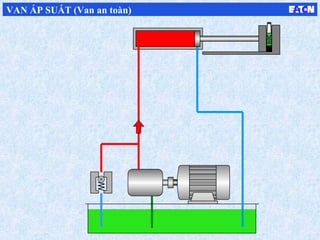
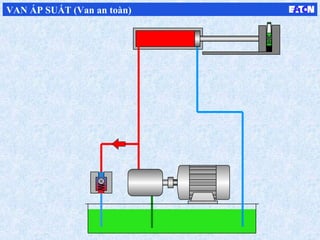
VAN ÁP SUẤT (Van an toàn)
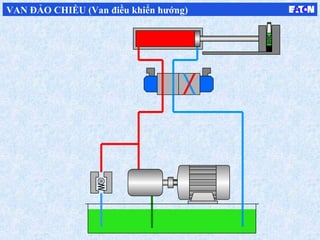
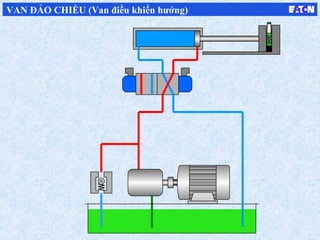
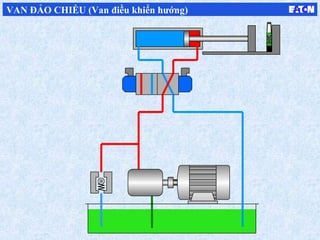
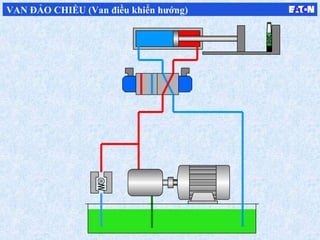
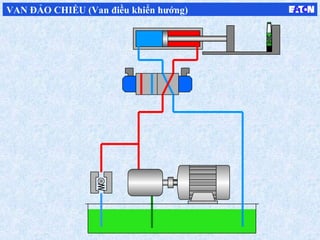
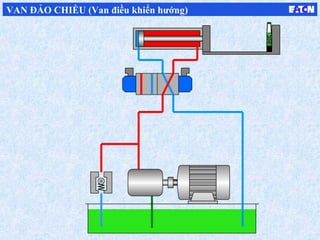
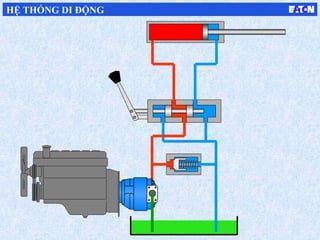
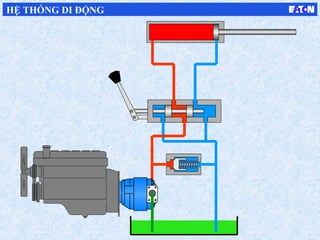
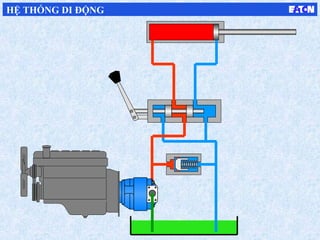
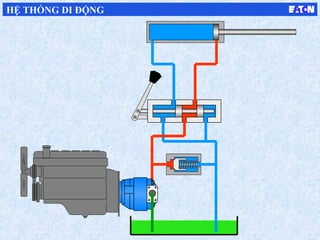
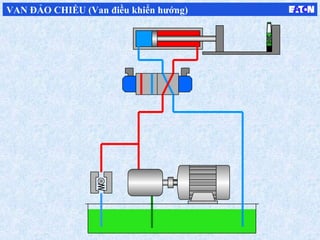
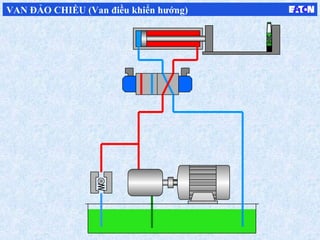
VAN ĐẢO CHIỀU (Van điều khiển hướng)
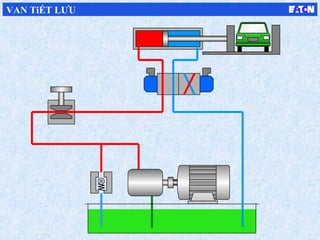
VAN TiẾT LƯU
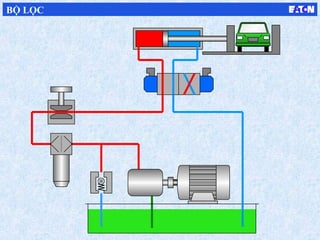
BỘ LỌC
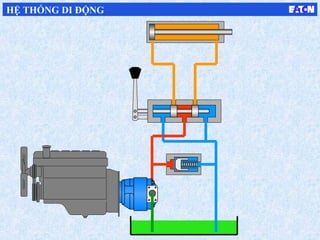
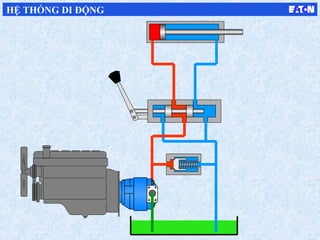
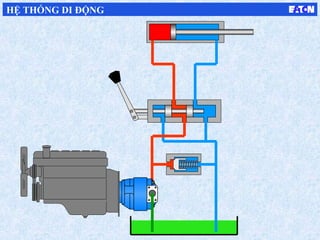
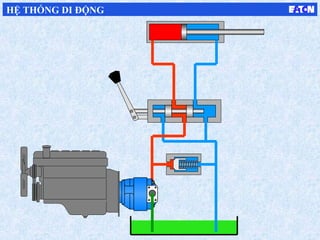
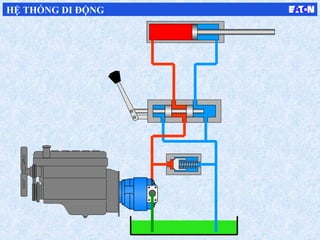
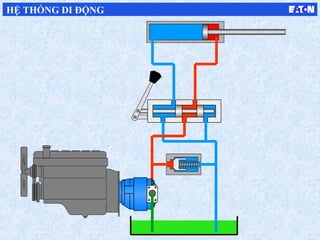
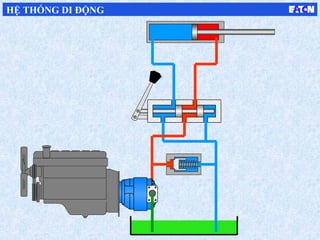
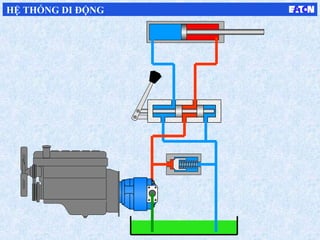
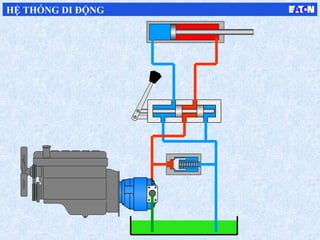
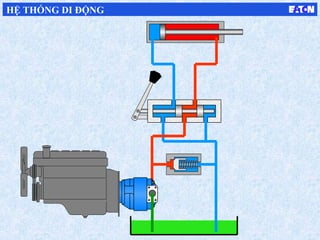
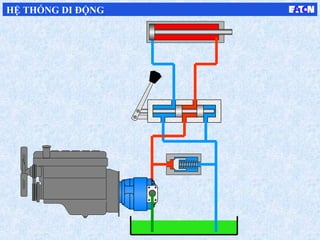
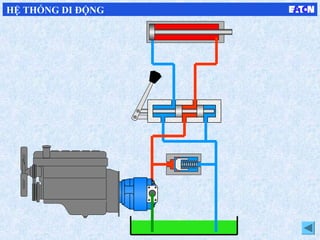
HỆ THỐNG DI ĐỘNG
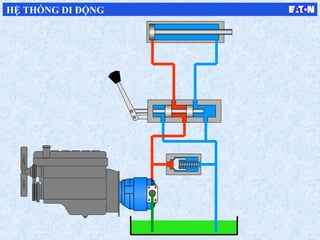
HỆ THỐNG DI ĐỘNG
HỆ THỐNG DI ĐỘNG
HỆ THỐNG DI ĐỘNG
HỆ THỐNG DI ĐỘNG
HỆ THỐNG DI ĐỘNG
HỆ THỐNG DI ĐỘNG
HỆ THỐNG DI ĐỘNG
HỆ THỐNG DI ĐỘNG
HỆ THỐNG DI ĐỘNG
HỆ THỐNG DI ĐỘNG
HỆ THỐNG DI ĐỘNG
HỆ THỐNG DI ĐỘNG
HỆ THỐNG DI ĐỘNG
HỆ THỐNG DI ĐỘNG
HỆ THỐNG DI ĐỘNG
HỆ THỐNG DI ĐỘNG
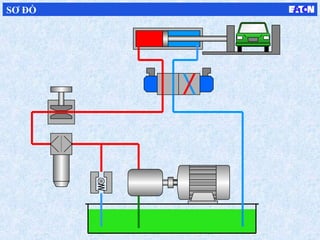
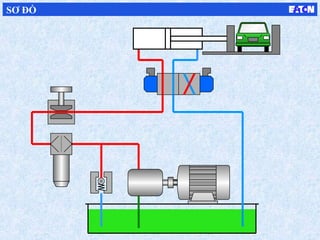
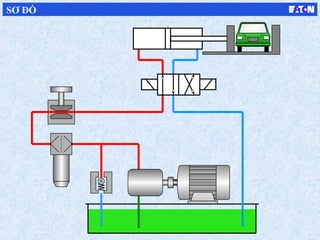
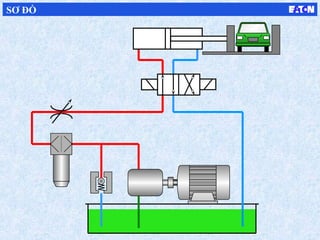
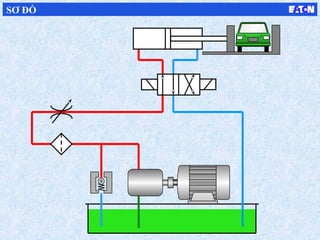
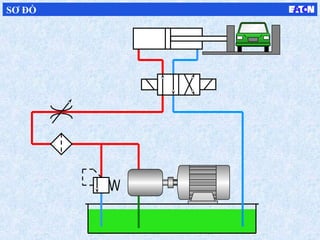
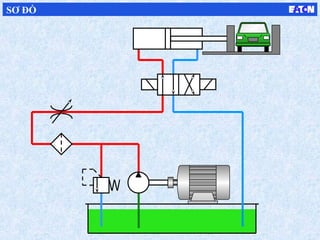
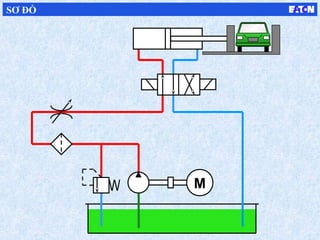
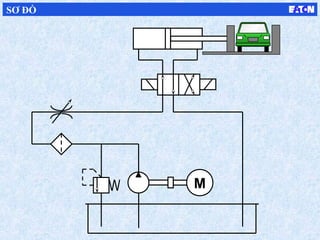
SƠ ĐỒ
SƠ ĐỒ
SƠ ĐỒ
SƠ ĐỒ
SƠ ĐỒ
SƠ ĐỒ
SƠ ĐỒ
SƠ ĐỒ
M
SƠ ĐỒ
M
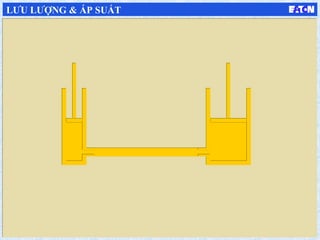
LƯU LƯỢNG & ÁP SUẤT
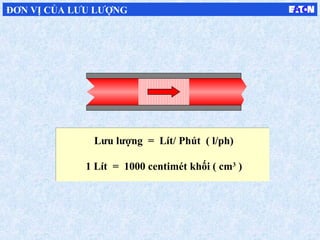
Lưu lượng = Lít/ Phút ( l/ph)
1 Lít = 1000 centimét khối ( cm3
)
ĐƠN VỊ CỦA LƯU LƯỢNG
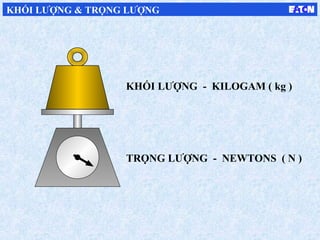
KHỐI LƯỢNG - KILOGAM ( kg )
TRỌNG LƯỢNG - NEWTONS ( N )
KHỐI LƯỢNG & TRỌNG LƯỢNG
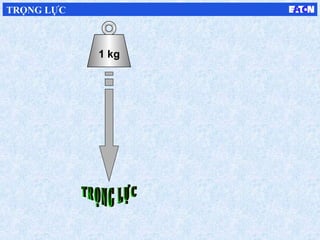
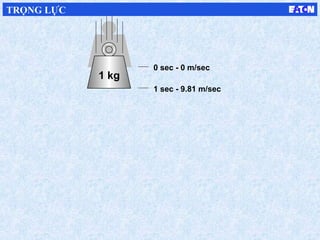
1 kg
TRỌNG LỰC
1 sec - 9.81 m/sec
0 sec - 0 m/sec
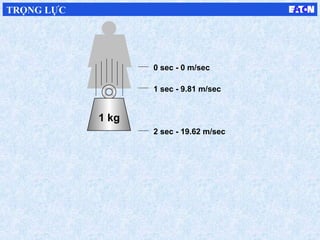
1 kg
TRỌNG LỰC
1 sec - 9.81 m/sec
2 sec - 19.62 m/sec
0 sec - 0 m/sec
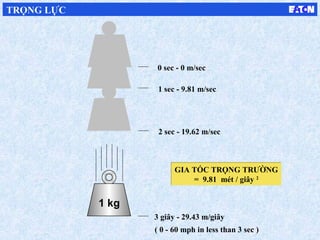
1 kg
TRỌNG LỰC
1 kg
1 sec - 9.81 m/sec
2 sec - 19.62 m/sec
3 giây - 29.43 m/giây
0 sec - 0 m/sec
( 0 - 60 mph in less than 3 sec )
GIA TỐC TRỌNG TRƯỜNG
= 9.81 mét / giây 2
GIA TỐC TRỌNG TRƯỜNG
= 9.81 mét / giây 2
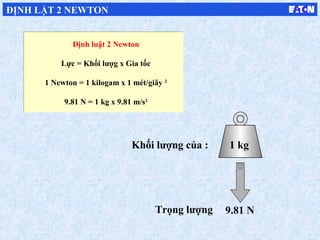
TRỌNG LỰC
Định luật 2 Newton
Lực = Khối lượg x Gia tốc
1 Newton = 1 kilogam x 1 mét/giây 2
9.81 N = 1 kg x 9.81 m/s2
1 kgKhối lượng của :
9.81 NTrọng lượng
ĐỊNH LẬT 2 NEWTON
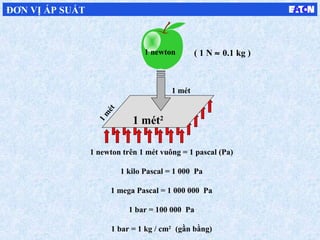
( 1 N ≈ 0.1 kg )
1m
ét
1 mét
1 mét2
1 newton trên 1 mét vuông = 1 pascal (Pa)
1 kilo Pascal = 1 000 Pa
1 mega Pascal = 1 000 000 Pa
1 bar = 100 000 Pa
1 bar = 1 kg / cm2
(gần bằng)
1 newton
ĐƠN VỊ ÁP SUẤT
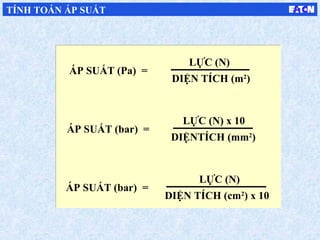
ÁP SUẤT (Pa) =
LỰC (N)
DIỆN TÍCH (m2
)
ÁP SUẤT (bar) =
LỰC (N) x 10
DIỆNTÍCH (mm2
)
ÁP SUẤT (bar) =
LỰC (N)
DIỆN TÍCH (cm2
) x 10
TÍNH TOÁN ÁP SUẤT
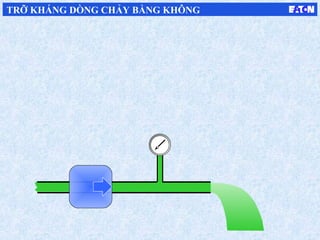
TRỠ KHÁNG DÒNG CHẢY BẰNG KHÔNG
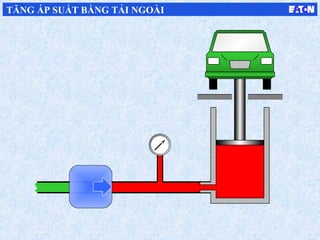
TĂNG ÁP SUẤT BẰNG TẢI NGOÀI
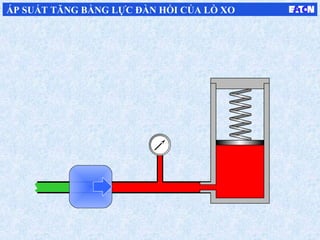
ÁP SUẤT TĂNG BẰNG LỰC ĐÀN HỒI CỦA LÒ XO
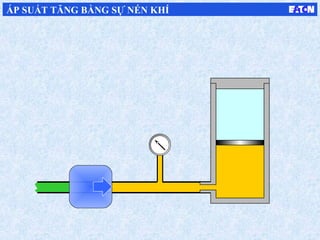
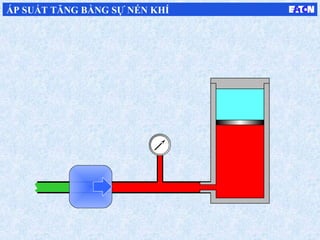
ÁP SUẤT TĂNG BẰNG SỰ NÉN KHÍ
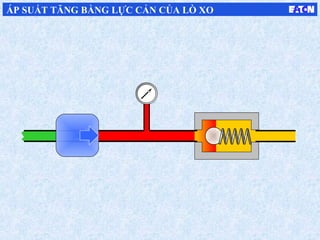
ÁP SUẤT TĂNG BẰNG LỰC CẢN CỦA LÒ XO
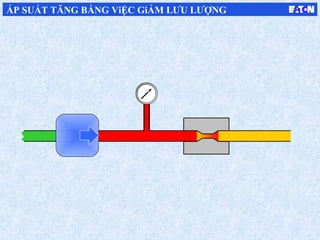
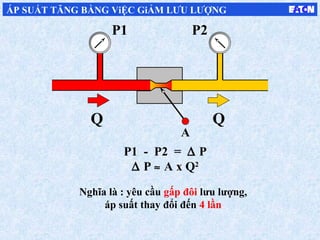
ÁP SUẤT TĂNG BẰNG ViỆC GiẢM LƯU LƯỢNG
P1 P2
Q Q
P1 - P2 = ∆ P
∆ P ≈ A x Q2
A
Nghĩa là : yêu cầu gấp đôi lưu lượng,
áp suất thay đổi đến 4 lần
ÁP SUẤT TĂNG BẰNG ViỆC GiẢM LƯU LƯỢNG
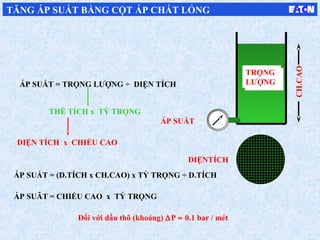
ÁP SUẤT = TRỌNG LƯỢNG ÷ DIỆN TÍCH
ÁP SUẤT = (D.TÍCH x CH.CAO) x TỶ TRỌNG ÷ D.TÍCH
THỂ TÍCH x TỶ TRỌNG
DIỆN TÍCH x CHIỀU CAO
ÁP SUÂT = CHIỀU CAO x TỶ TRỌNG
DIỆNTÍCH
TRỌNG
LƯỢNG
TRỌNG
LƯỢNG
ÁP SUẤT
CH.CAO
Đối với dầu thô (khoáng) ∆P ≈ 0.1 bar / mét
TĂNG ÁP SUẤT BẰNG CỘT ÁP CHẤT LỎNG
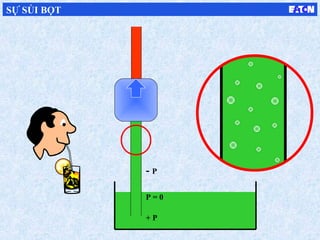
P = 0
+ P
- P
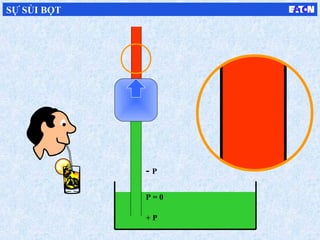
SỰ SỦI BỌT
P = 0
+ P
- P
SỰ SỦI BỌT
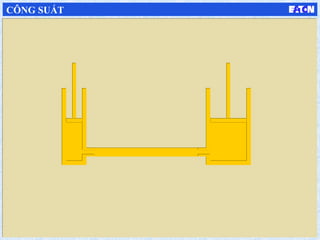
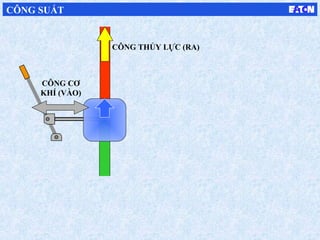
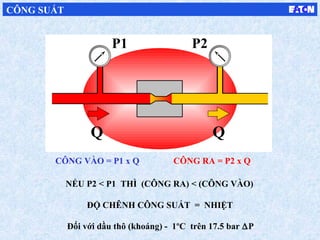
CÔNG SUẤT
CÔNG CƠ
KHÍ (VÀO)
CÔNG THỦY LỰC (RA)
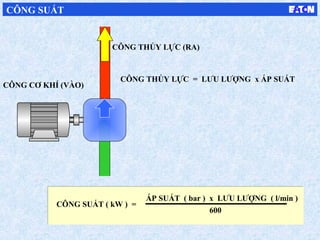
CÔNG SUẤT
CÔNG CƠ KHÍ (VÀO)
CÔNG THỦY LỰC (RA)
CÔNG THỦY LỰC = LƯU LƯỢNG x ÁP SUẤT
CÔNG SUẤT ( kW ) =
ÁP SUẤT ( bar ) x LƯU LƯỢNG ( l/min )
600
CÔNG SUẤT
P1 P2
Q Q
CÔNG VÀO = P1 x Q CÔNG RA = P2 x Q
NẾU P2 < P1 THÌ (CÔNG RA) < (CÔNG VÀO)
ĐỘ CHÊNH CÔNG SUẤT = NHIỆT
Đối với dầu thô (khoáng) - 1ºC trên 17.5 bar ∆P
CÔNG SUẤT
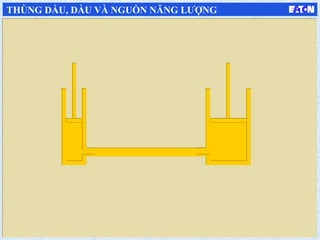
THÙNG DẦU, DẦU VÀ NGUỒN NĂNG LƯỢNG
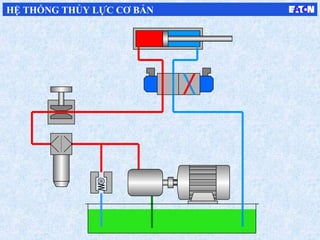
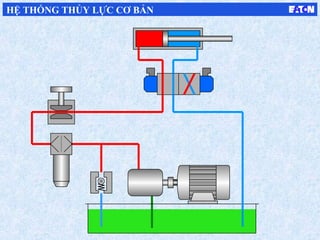
HỆ THỐNG THỦY LỰC CƠ BẢN
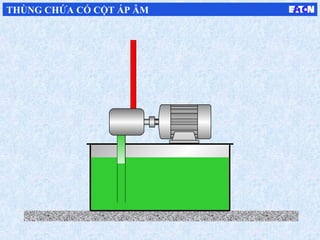
THÙNG CHỨA CÓ CỘT ÁP ÂM
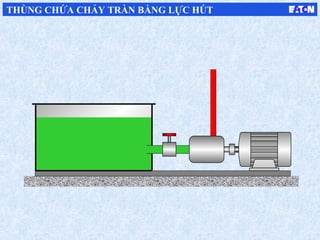
THÙNG CHỨA CHẢY TRÀN BẰNG LỰC HÚT
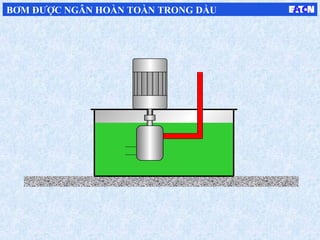
BƠM ĐƯỢC NGÂN HOÀN TOÀN TRONG DẦU
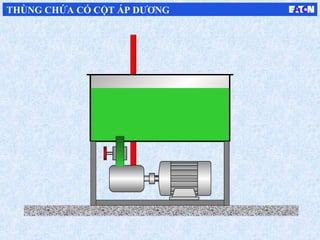
THÙNG CHỨA CÓ CỘT ÁP DƯƠNG
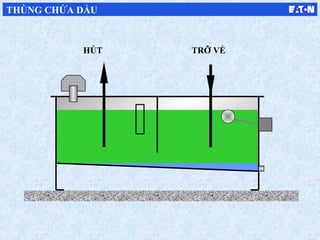
HÚT TRỠ VỀ
THÙNG CHỨA DẦU
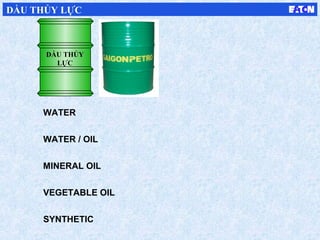
WATER
WATER / OIL
MINERAL OIL
VEGETABLE OIL
SYNTHETIC
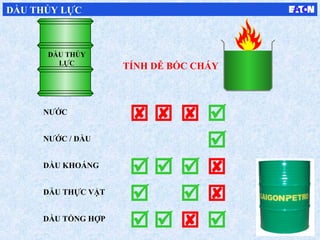
DẦU THỦY
LỰC
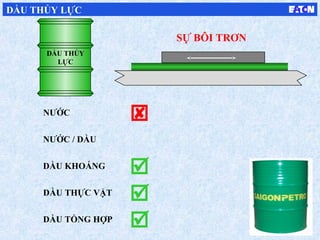
DẦU THỦY LỰC
NƯỚC
NƯỚC / DẦU
DẦU KHOÁNG
DẦU THỰC VẬT
DẦU TỔNG HỢP
SỰ BÔI TRƠN




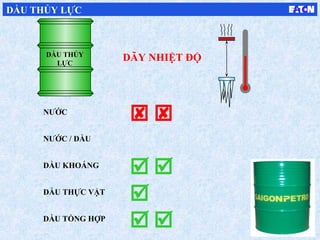
DẦU THỦY LỰC
DẦU THỦY
LỰC
NƯỚC
NƯỚC / DẦU
DẦU KHOÁNG
DẦU THỰC VẬT
DẦU TỔNG HỢP
DÃY NHIỆT ĐỘ







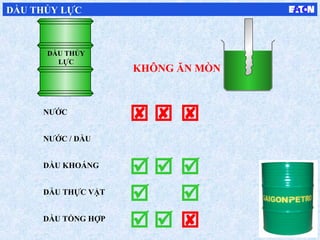
DẦU THỦY LỰC
DẦU THỦY
LỰC
NƯỚC
NƯỚC / DẦU
DẦU KHOÁNG
DẦU THỰC VẬT
DẦU TỔNG HỢP
KHÔNG ĂN MÒN











DẦU THỦY LỰC
DẦU THỦY
LỰC
NƯỚC
NƯỚC / DẦU
DẦU KHOÁNG
DẦU THỰC VẬT
DẦU TỔNG HỢP
TÍNH DỄ BỐC CHÁY
















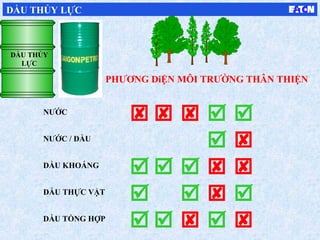
DẦU THỦY LỰC
DẦU THỦY
LỰC
NƯỚC
NƯỚC / DẦU
DẦU KHOÁNG
DẦU THỰC VẬT
DẦU TỔNG HỢP
PHƯƠNG DiỆN MÔI TRƯỜNG THÂN THIỆN





















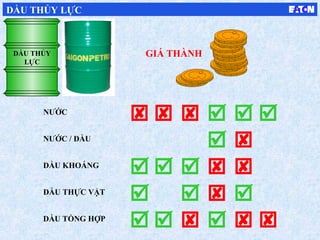
DẦU THỦY LỰC
DẦU THỦY
LỰC
NƯỚC
NƯỚC / DẦU
DẦU KHOÁNG
DẦU THỰC VẬT
DẦU TỔNG HỢP























GIÁ THÀNH
DẦU THỦY LỰC
DẦU THỦY
LỰC
NƯỚC
NƯỚC / DẦU
DẦU KHOÁNG
DẦU THỰC VẬT
DẦU TỔNG HỢP























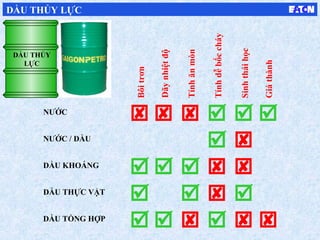
Bôitrơn
Dãynhiệtđộ
Tínhănmòn
Tínhdễbốccháy
Sinhtháihọc
Giáthành
DẦU THỦY LỰC
DẦU THỦY
LỰC
HỆ THỐNG THỦY LỰC CƠ BẢN
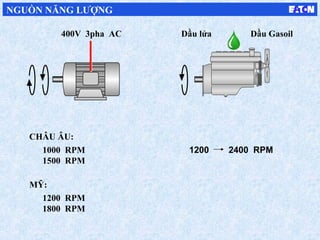
CHÂU ÂU:
1000 RPM
1500 RPM
MỸ:
1200 RPM
1800 RPM
400V 3pha AC Dầu lửa Dầu Gasoil
1200 2400 RPM
NGUỒN NĂNG LƯỢNG
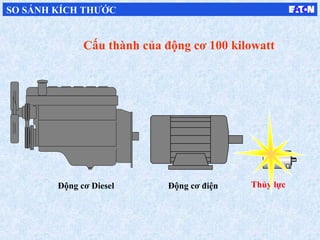
Cấu thành của động cơ 100 kilowatt
Động cơ Diesel Động cơ điện Thủy lực
SO SÁNH KÍCH THƯỚC
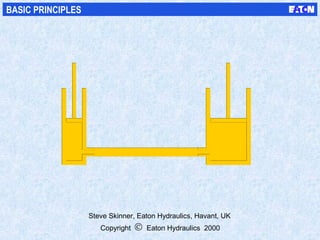
BASIC PRINCIPLES
Copyright © Eaton Hydraulics 2000
Steve Skinner, Eaton Hydraulics, Havant, UK
BASIC PRINCIPLES
Copyright © Eaton Hydraulics 2000
Steve Skinner, Eaton Hydraulics, Havant, UK

Kiến thức căn bản về hệ thống thủy lực

Editor's Notes

  • #20 Notes Hydraulic actuation includes both linear motion (cylinders) for the movement of an excavator bucket, arm and boom together with rotary motion (motors) used for swing and travel.
  • #21 Notes Double-acting cylinders mean that machine components can be powered in both directions.
  • #23 Notes Double-acting cylinders mean that machine components can be powered in both directions.
  • #25 Notes Double-acting cylinders mean that machine components can be powered in both directions.
  • #65 NOTES
  • #73 NOTES
  • #74 NOTES
  • #76 NOTES
  • #77 NOTES
  • #78 NOTES
  • #79 NOTES
  • #80 NOTES
  • #81 NOTES
  • #82 NOTES
  • #83 NOTES
  • #84 NOTES
  • #85 NOTES
  • #86 NOTES
  • #87 NOTES
  • #88 NOTES
  • #89 NOTES
  • #90 NOTES
  • #91 NOTES
  • #92 NOTES
  • #93 NOTES
  • #94 NOTES
  • #95 NOTES
  • #96 NOTES
  • #97 NOTES
  • #98 NOTES
  • #99 NOTES
  • #100 NOTES
  • #101 NOTES
  • #102 NOTES
  • #103 Notes In order to retract the cylinder once it has completed its stroke, a directional control valve is required to switch the fluid to either end of the cylinder (or to block it when no movement is required). Directional valves are most often sliding spool valves.
  • #104 Notes In order to retract the cylinder once it has completed its stroke, a directional control valve is required to switch the fluid to either end of the cylinder (or to block it when no movement is required). Directional valves are most often sliding spool valves.
  • #105 Notes In order to retract the cylinder once it has completed its stroke, a directional control valve is required to switch the fluid to either end of the cylinder (or to block it when no movement is required). Directional valves are most often sliding spool valves.
  • #106 Notes In order to retract the cylinder once it has completed its stroke, a directional control valve is required to switch the fluid to either end of the cylinder (or to block it when no movement is required). Directional valves are most often sliding spool valves.
  • #107 Notes In order to retract the cylinder once it has completed its stroke, a directional control valve is required to switch the fluid to either end of the cylinder (or to block it when no movement is required). Directional valves are most often sliding spool valves.
  • #108 Notes In order to retract the cylinder once it has completed its stroke, a directional control valve is required to switch the fluid to either end of the cylinder (or to block it when no movement is required). Directional valves are most often sliding spool valves.
  • #109 Notes In order to retract the cylinder once it has completed its stroke, a directional control valve is required to switch the fluid to either end of the cylinder (or to block it when no movement is required). Directional valves are most often sliding spool valves.
  • #110 Notes In order to retract the cylinder once it has completed its stroke, a directional control valve is required to switch the fluid to either end of the cylinder (or to block it when no movement is required). Directional valves are most often sliding spool valves.
  • #111 Notes In order to retract the cylinder once it has completed its stroke, a directional control valve is required to switch the fluid to either end of the cylinder (or to block it when no movement is required). Directional valves are most often sliding spool valves.
  • #112 Notes In order to retract the cylinder once it has completed its stroke, a directional control valve is required to switch the fluid to either end of the cylinder (or to block it when no movement is required). Directional valves are most often sliding spool valves.
  • #113 Notes In order to retract the cylinder once it has completed its stroke, a directional control valve is required to switch the fluid to either end of the cylinder (or to block it when no movement is required). Directional valves are most often sliding spool valves.
  • #114 Notes In order to retract the cylinder once it has completed its stroke, a directional control valve is required to switch the fluid to either end of the cylinder (or to block it when no movement is required). Directional valves are most often sliding spool valves.
  • #115 Notes In order to retract the cylinder once it has completed its stroke, a directional control valve is required to switch the fluid to either end of the cylinder (or to block it when no movement is required). Directional valves are most often sliding spool valves.
  • #116 Notes In order to retract the cylinder once it has completed its stroke, a directional control valve is required to switch the fluid to either end of the cylinder (or to block it when no movement is required). Directional valves are most often sliding spool valves.
  • #117 Notes In order to retract the cylinder once it has completed its stroke, a directional control valve is required to switch the fluid to either end of the cylinder (or to block it when no movement is required). Directional valves are most often sliding spool valves.
  • #118 Notes In order to retract the cylinder once it has completed its stroke, a directional control valve is required to switch the fluid to either end of the cylinder (or to block it when no movement is required). Directional valves are most often sliding spool valves.
  • #119 Notes In order to retract the cylinder once it has completed its stroke, a directional control valve is required to switch the fluid to either end of the cylinder (or to block it when no movement is required). Directional valves are most often sliding spool valves.
  • #120 NOTES
  • #121 NOTES
  • #122 NOTES
  • #123 NOTES
  • #124 NOTES
  • #125 NOTES
  • #126 NOTES
  • #127 NOTES
  • #128 NOTES
  • #155 NOTES
  • #156 NOTES
  • #157 NOTES
  • #158 NOTES
  • #159 NOTES
  • #160 NOTES
  • #167 NOTES
  • #168 NOTES
  • #169 NOTES
  • #170 NOTES