REVIEW
Wayang Kulit
Musical
Instruments
(GAMELAN)
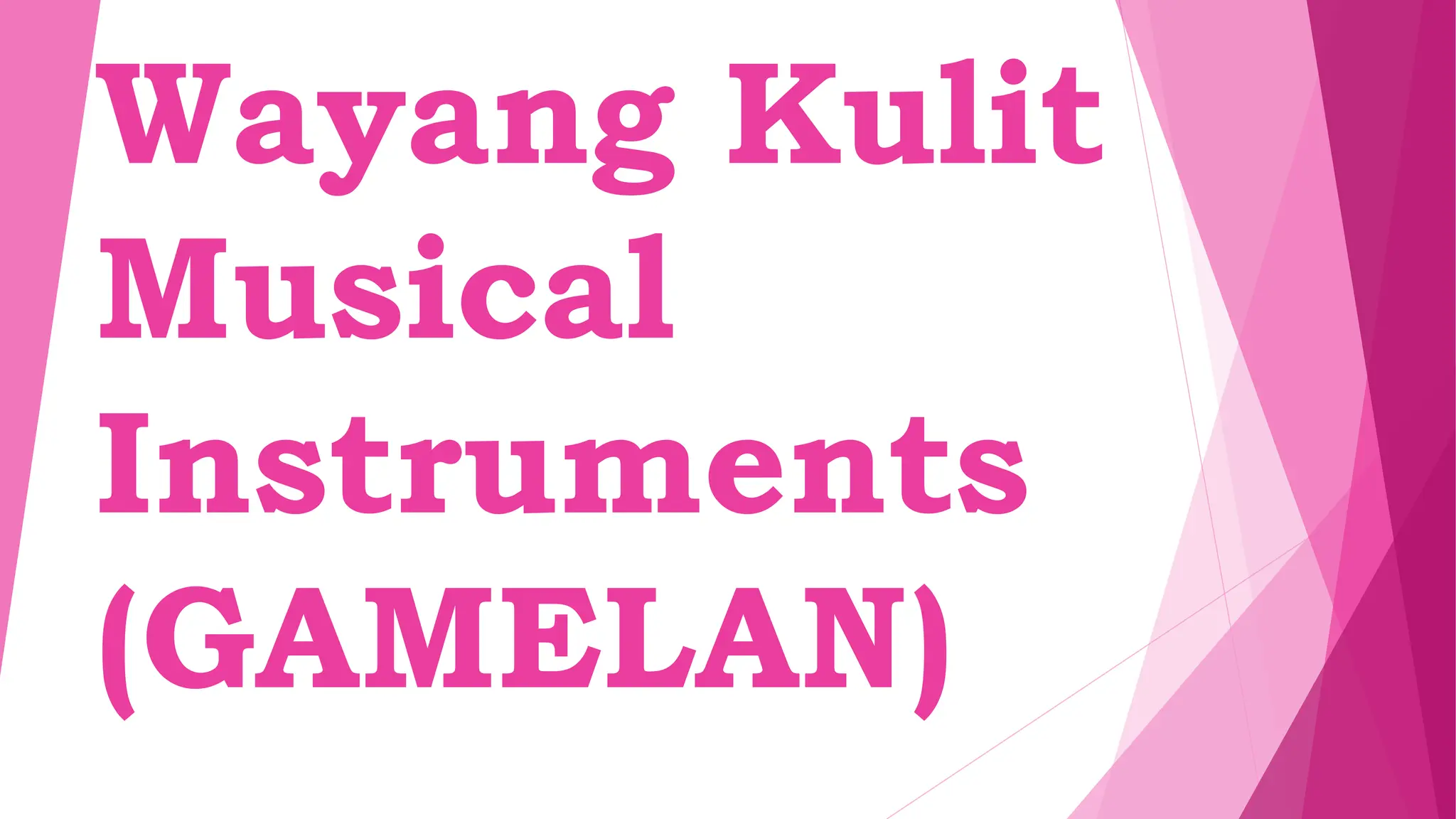
Saron - Idiophone
Gender -Idiophone
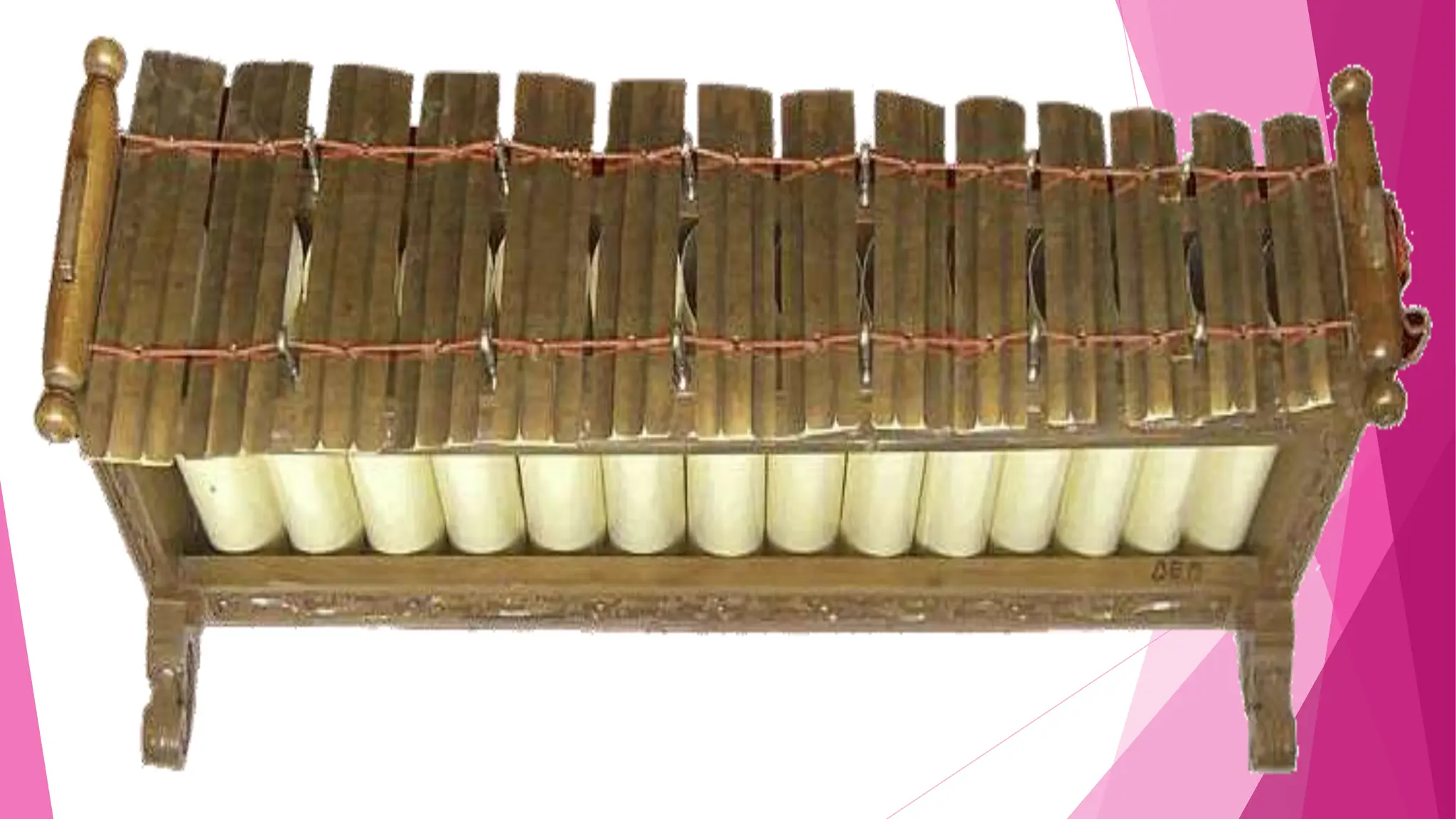
Bonang-Idiophone
Gong/ Kempul – Idiophone
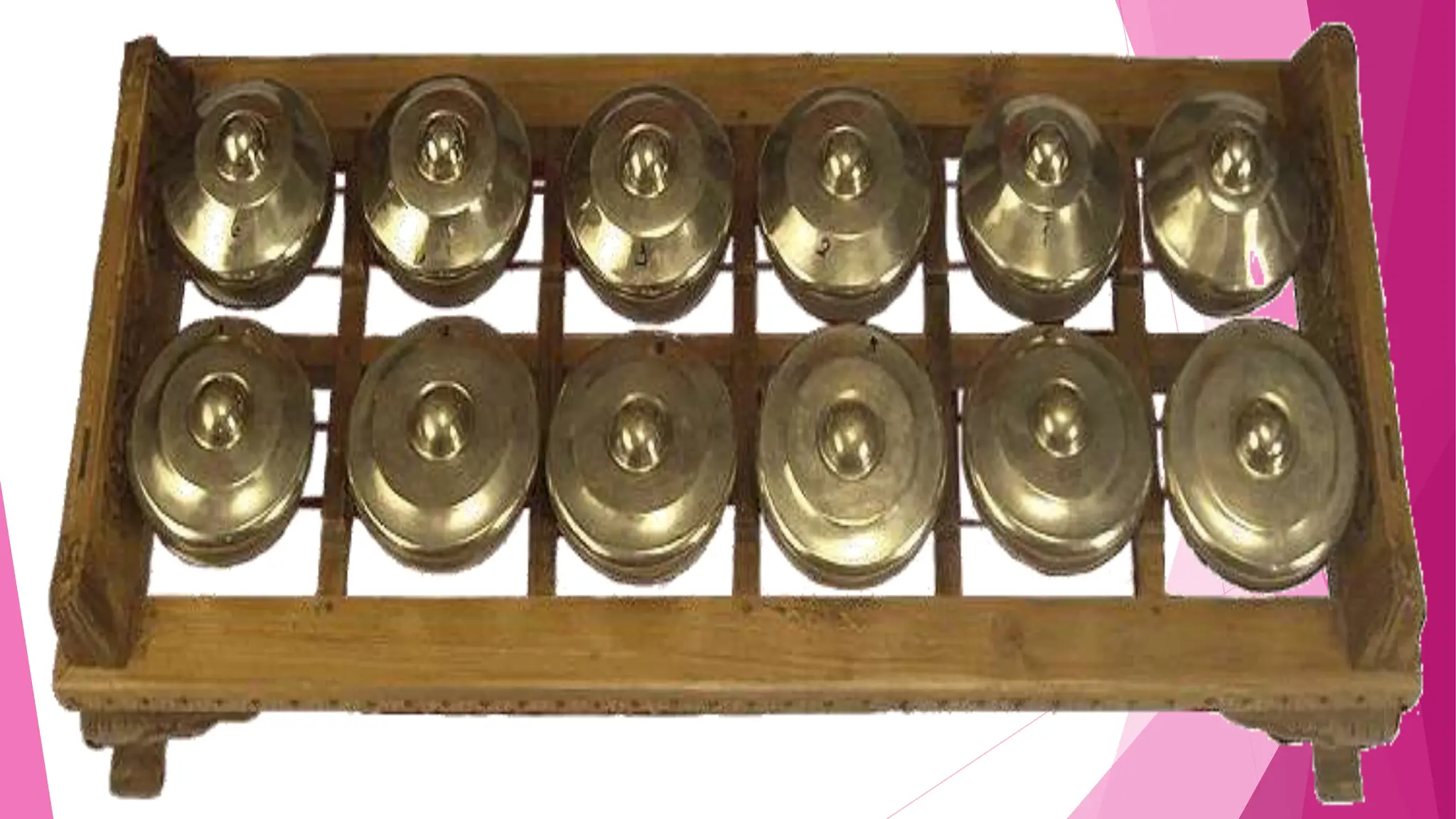
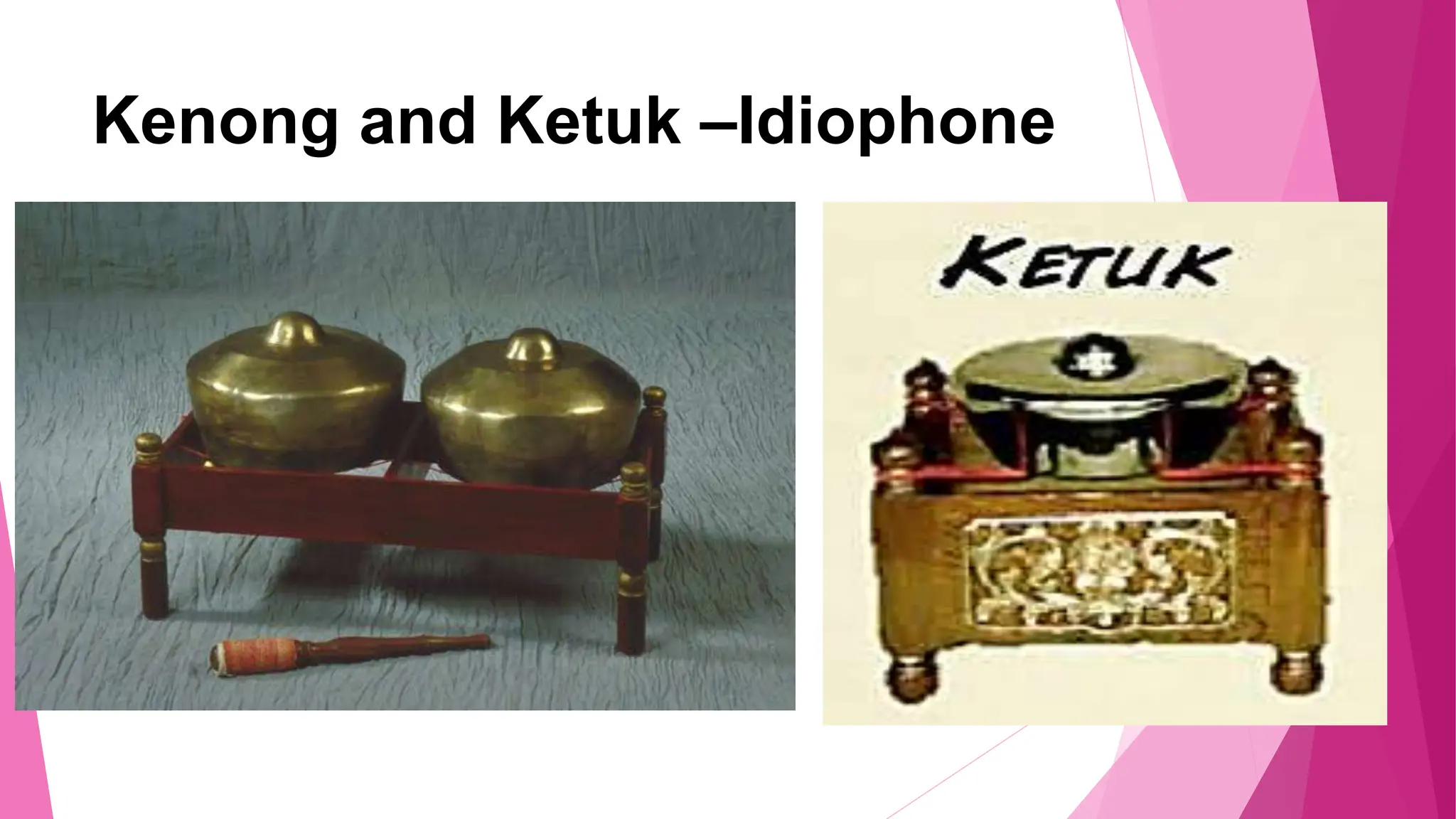
Kenong and Ketuk –Idiophone
Gambang – Idiophone
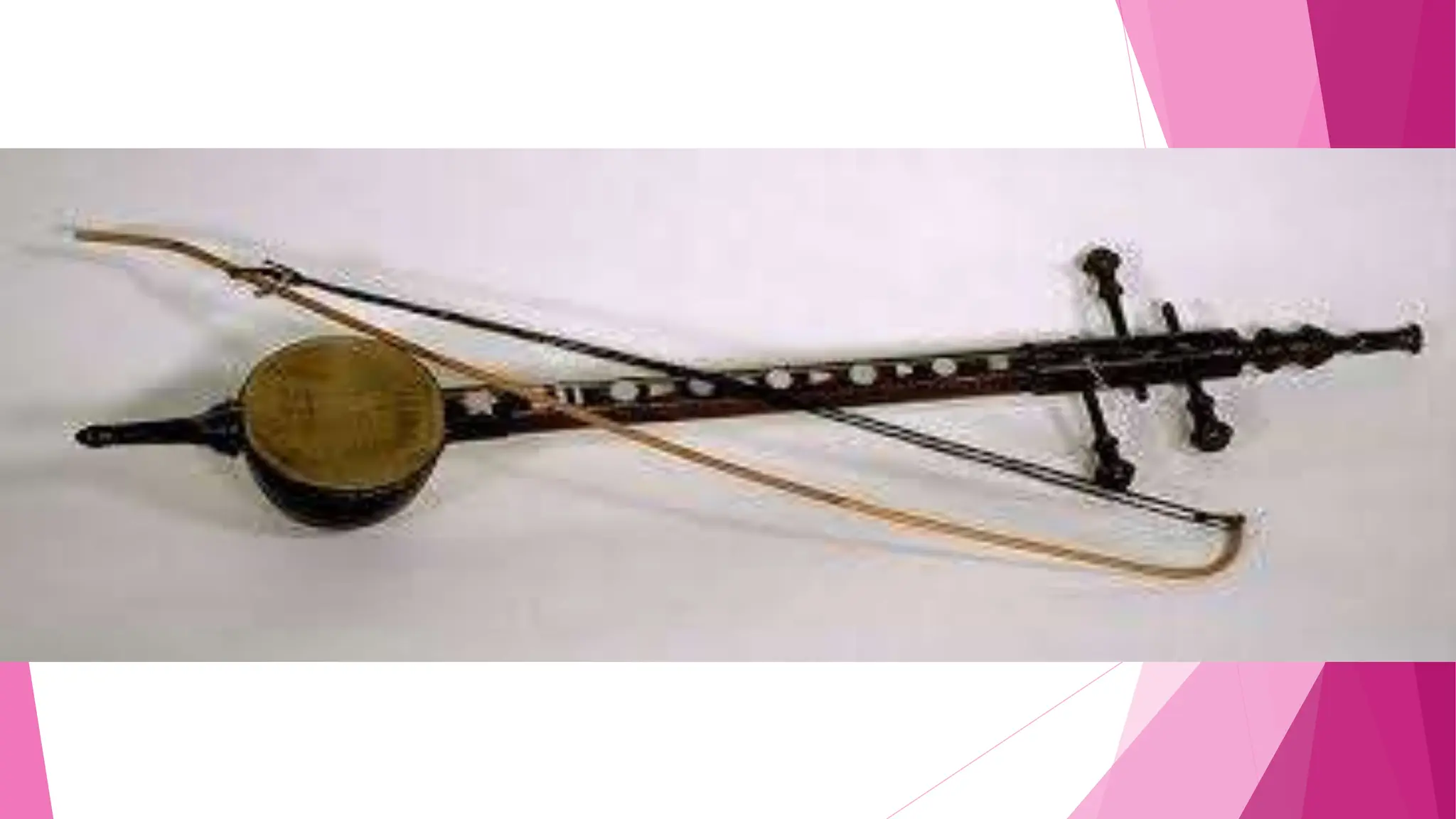
Rebab – Chordophone
Suling – Aerophone
Kendang – Membranophone
Tjelempung/celempung – Chordophone
KABUKI
BUNRAKU
NOH
KABUKI
CLASSIFY THE
KABUKI
MUSICAL
INSTRUMENTS
(How these instruments produce
sounds and what material it is
made of ? )
(Collaborative activity)
KABUKI MUSICAL
INSTRUMENT
KABUKI MUSICAL
INSTRUMENT
KOTO
KABUKI MUSICAL
INSTRUMENT
KABUKI MUSICAL
INSTRUMENT
KOTSUZUMI
KABUKI MUSICAL
INSTRUMENT
SHAMISEN
ODAIKO
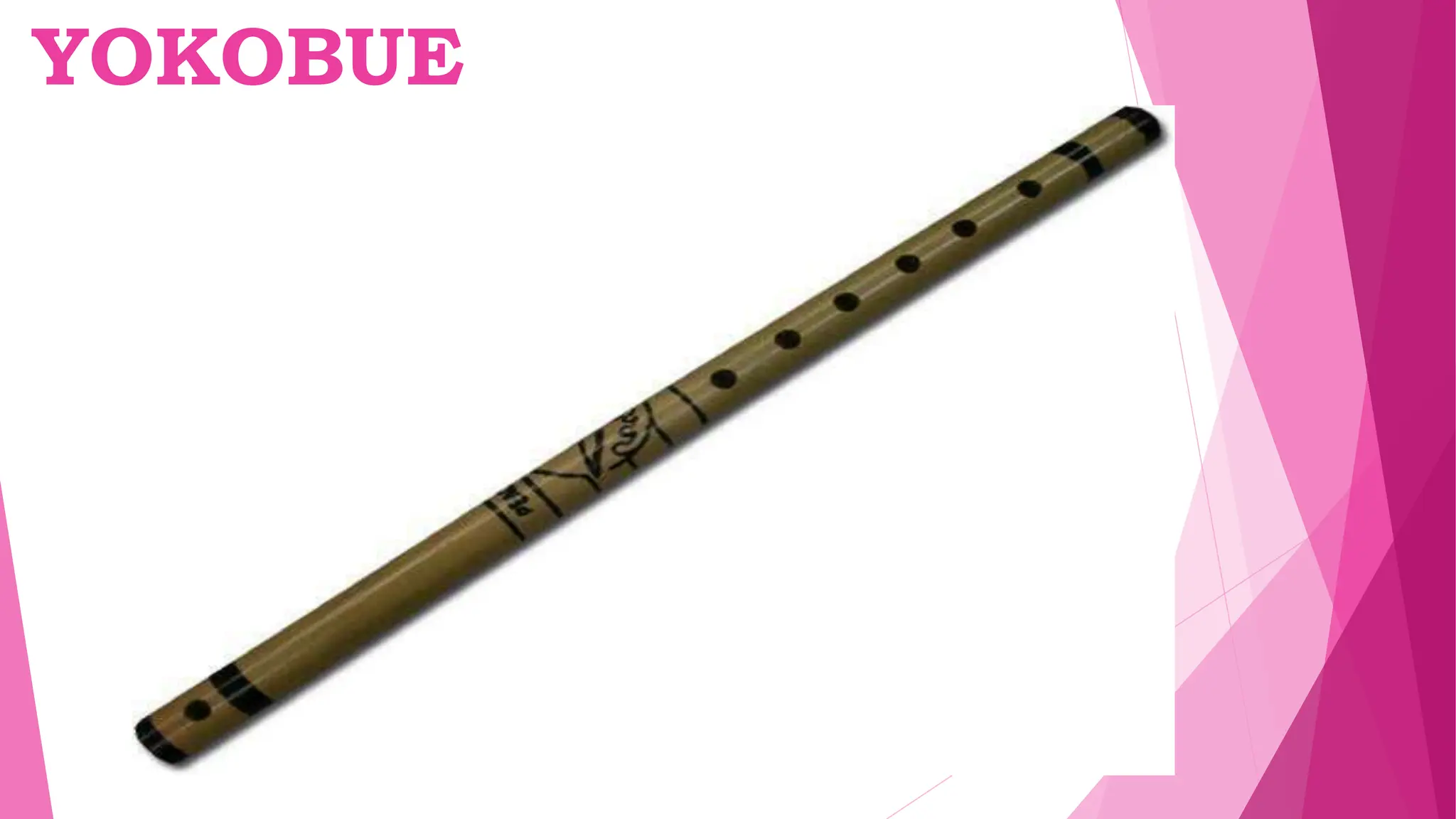
YOKOBUE
• Watch a video clip
of a Kabuki play..
• write your
observation..
• Share it to class..
Guide Questions
According to the video clip, what is Kabuki?
There are two classification of characters
which is the ARAGOTO and ONNAGATA,
define these two.
Why is it that there are no female actors?
What might be the reason behind it?
What is Mie?
What is the theme/plot of the Kabuki Play?
According to the video
clip, what is Kabuki?
There are two classification of
characters which is the
ARAGOTO and ONNAGATA, define
these two.
Why is it that there are no
female actors? What might be
the reason behind it?
What is Mie?
What is the theme/plot
of the Kabuki Play?
KABUKI
Is a traditional Japanese form of theatre
and is recognized as one of the three major
classical theaters of Japan along with Noh
and Bunraku.
(www.japan-guide.com/e/e2090.html)
KA -song
BU -dance
KI-skill
Vocal Pattern and Techniques:
 1) Ipponchōshi or the continuous pattern – used in speeches
building up to an explosive climax in the aragoto(oversize,
supernatural, rough hero) style, it requires an extraordinary
breath control that only few experts succeed in achieving
 2) Nori technique – adapted from the chanting of jōruri,
implies a very sensitive capacity of riding the rhythms of the
shamisen (string instrument), declaiming each
accompaniment
 3) Yakuharai technique - the subtle delivery of poetical text
written in the Japanese metrical form of alternating seven
and five syllables.
 Dances and movements are accompanied by shamisen music which
collected and popularized a number of aspects from all previous
forms of Japanese music, from
 gagaku (classic court music imported from China during the 18th
century),
 kagura (performed in Shinto shrines),
 nō (chant derives from shōmyō, the sophisticated and rich tradition
of Buddhist chanting), down to the folk songs and fashionable songs
of the day.
 The most popular shamisen music was called nagauta (long song)
which reached a golden age in the first half of the 19th century as
dance music for the henge mono or quick change pieces.
 YAKUHARAI—It is a technique which describes the subtle delivery of poetical
text written in the Japanese metrical form.
 GAGAKU—A Japanese classic court music imported from China during the 18th
century
 SHOMYO—It is a Japanese sophisticated Buddhist chanting.
 Ipponchoshi—A vocal technique used in singing characterized by continuous
pattern which is used in speeches building up to an explosive climax in the
aragoto style.
 Mie—one of the elements in kabuki in which the actor hold picturesque pose to
establish his character.
 ARAGOTO-Male role (hero) ragoto-rough style
 ONNAGATA-female role (feminine)
Performance Rubrics
1. 2. 3.
4. 5.
Identify
and
Classify
1. 2. 3.
4. 5.
Identify
and
Classify
1.KOTO-CHORDOPHONE 2.ODAIKO-MEMBRANOHONE 3.SHAMISEN-CHORDOPHONE
4.KOTSUZUMI-MEMBRANOPHONE 5.YOKOBUE-AEROPHONE
Identify
and
Classify
ASSIGNMENT
Performance Rubrics
PEKING
OPERA/
BEIJING
OPERA
 Peking opera also known as the Beijing opera still
follows traditional Chinese arts in stressing meaning,
rather than precise actions.
 The opera artists’ goal is to make every performance
exceptionally beautiful in every movement they will
make.
 The performer’s vocal techniques as well as rhythms and
melodies vary depending on his or her thoughts and
feelings adhering to basic, strict conventions that are
based on real life experiences presented in an artistic
and symbolic manner.
Performances are accompanied by
music - usually played on three
types of instruments:
 wind instruments
 string instruments
 percussion instruments
 The main instruments are Chinese in origin:
 1. jinghu - a two-stringed instrument played with a bow
 2. yueqin - a four-stringed instrument that is plucked
 3. sanxian - a three-stringed instrument which isalso
plucked
 4. variety of gongs and cymbals – creates rhythmic and
graceful melodies
 The melodies played by the accompaniment fall
mainly into three broad categories.
 The first is the aria.
 The arias of Beijing opera can be further divided
into those of the Erhuang and Xipi varieties.
 An example of an aria is wawadiao, an aria in the
Xipi style that is sung by a young Sheng to indicate
heightened emotion.
The second type of melody heard in Beijing
opera is the fixed-tune melody, or qupai.
These are instrumental tunes that serve a
wider range of purposes than arias.
Examples include the "Water Dragon Tune" (shui
long yin), which generally denotes the arrival
of an important person, and "Triple Thrust"(ji
san qiang), which may signal a feast or
banquet.
The final type of musical accompaniment
is the percussion pattern.
Such patterns provide context to the music
in ways similar to the fixed-tune melodies.
For example, there are as many as 48
different percussion patterns that
accompany stage entrances. Each one
identifies the entering character by his or
her individual rank and personality.
WAYANG
KULIT
In wayangkulit the dalang sings the mood songs
(suluk) at regular intervals during performance.
Suluk are never accompanied by the full gamelan
ensemble. Often a single instrument
accompanies the singer, never more than three
or four.
The major dramatic function of gamelan music is
to accompany stage action. Entrances, exits, and
fight scenes are executed in time to gamelan
music.
KABUKI POWERPOINT FOR EDUCATIONAL PURPOSES - Copy.pptx

KABUKI POWERPOINT FOR EDUCATIONAL PURPOSES - Copy.pptx

  • 2.
  • 3.
  • 5.
  • 7.
  • 9.
  • 11.
  • 13.
    Kenong and Ketuk–Idiophone
  • 15.
  • 17.
  • 19.
  • 21.
  • 23.
  • 26.
  • 27.
  • 28.
    CLASSIFY THE KABUKI MUSICAL INSTRUMENTS (How theseinstruments produce sounds and what material it is made of ? ) (Collaborative activity)
  • 29.
  • 30.
  • 31.
  • 32.
  • 33.
  • 34.
  • 35.
  • 37.
  • 38.
    • Watch avideo clip of a Kabuki play.. • write your observation.. • Share it to class..
  • 39.
    Guide Questions According tothe video clip, what is Kabuki? There are two classification of characters which is the ARAGOTO and ONNAGATA, define these two. Why is it that there are no female actors? What might be the reason behind it? What is Mie? What is the theme/plot of the Kabuki Play?
  • 41.
    According to thevideo clip, what is Kabuki?
  • 42.
    There are twoclassification of characters which is the ARAGOTO and ONNAGATA, define these two.
  • 43.
    Why is itthat there are no female actors? What might be the reason behind it?
  • 44.
  • 45.
    What is thetheme/plot of the Kabuki Play?
  • 46.
    KABUKI Is a traditionalJapanese form of theatre and is recognized as one of the three major classical theaters of Japan along with Noh and Bunraku. (www.japan-guide.com/e/e2090.html) KA -song BU -dance KI-skill
  • 47.
    Vocal Pattern andTechniques:  1) Ipponchōshi or the continuous pattern – used in speeches building up to an explosive climax in the aragoto(oversize, supernatural, rough hero) style, it requires an extraordinary breath control that only few experts succeed in achieving  2) Nori technique – adapted from the chanting of jōruri, implies a very sensitive capacity of riding the rhythms of the shamisen (string instrument), declaiming each accompaniment  3) Yakuharai technique - the subtle delivery of poetical text written in the Japanese metrical form of alternating seven and five syllables.
  • 48.
     Dances andmovements are accompanied by shamisen music which collected and popularized a number of aspects from all previous forms of Japanese music, from  gagaku (classic court music imported from China during the 18th century),  kagura (performed in Shinto shrines),  nō (chant derives from shōmyō, the sophisticated and rich tradition of Buddhist chanting), down to the folk songs and fashionable songs of the day.  The most popular shamisen music was called nagauta (long song) which reached a golden age in the first half of the 19th century as dance music for the henge mono or quick change pieces.
  • 49.
     YAKUHARAI—It isa technique which describes the subtle delivery of poetical text written in the Japanese metrical form.  GAGAKU—A Japanese classic court music imported from China during the 18th century  SHOMYO—It is a Japanese sophisticated Buddhist chanting.  Ipponchoshi—A vocal technique used in singing characterized by continuous pattern which is used in speeches building up to an explosive climax in the aragoto style.  Mie—one of the elements in kabuki in which the actor hold picturesque pose to establish his character.  ARAGOTO-Male role (hero) ragoto-rough style  ONNAGATA-female role (feminine)
  • 51.
  • 53.
    1. 2. 3. 4.5. Identify and Classify
  • 54.
    1. 2. 3. 4.5. Identify and Classify
  • 55.
  • 56.
  • 57.
  • 58.
  • 59.
     Peking operaalso known as the Beijing opera still follows traditional Chinese arts in stressing meaning, rather than precise actions.  The opera artists’ goal is to make every performance exceptionally beautiful in every movement they will make.  The performer’s vocal techniques as well as rhythms and melodies vary depending on his or her thoughts and feelings adhering to basic, strict conventions that are based on real life experiences presented in an artistic and symbolic manner.
  • 60.
    Performances are accompaniedby music - usually played on three types of instruments:  wind instruments  string instruments  percussion instruments
  • 61.
     The maininstruments are Chinese in origin:  1. jinghu - a two-stringed instrument played with a bow  2. yueqin - a four-stringed instrument that is plucked  3. sanxian - a three-stringed instrument which isalso plucked  4. variety of gongs and cymbals – creates rhythmic and graceful melodies
  • 62.
     The melodiesplayed by the accompaniment fall mainly into three broad categories.  The first is the aria.  The arias of Beijing opera can be further divided into those of the Erhuang and Xipi varieties.  An example of an aria is wawadiao, an aria in the Xipi style that is sung by a young Sheng to indicate heightened emotion.
  • 63.
    The second typeof melody heard in Beijing opera is the fixed-tune melody, or qupai. These are instrumental tunes that serve a wider range of purposes than arias. Examples include the "Water Dragon Tune" (shui long yin), which generally denotes the arrival of an important person, and "Triple Thrust"(ji san qiang), which may signal a feast or banquet.
  • 64.
    The final typeof musical accompaniment is the percussion pattern. Such patterns provide context to the music in ways similar to the fixed-tune melodies. For example, there are as many as 48 different percussion patterns that accompany stage entrances. Each one identifies the entering character by his or her individual rank and personality.
  • 66.
  • 67.
    In wayangkulit thedalang sings the mood songs (suluk) at regular intervals during performance. Suluk are never accompanied by the full gamelan ensemble. Often a single instrument accompanies the singer, never more than three or four. The major dramatic function of gamelan music is to accompany stage action. Entrances, exits, and fight scenes are executed in time to gamelan music.