K Workshop June 2023
www.ctsi.ucla.edu ▪ b r i ng i n g C T S I i n n o v a t i o ns t o t h e gr e a t e s t h ea l t h n e e ds i n L o s A n g e l es
K PROPOSAL - COMMON
PITFALLS
Ella Nemeth, PhD
K proposal pitfalls and advice
Research plan
Education plan
Candidate’s statement
Biosketch tips
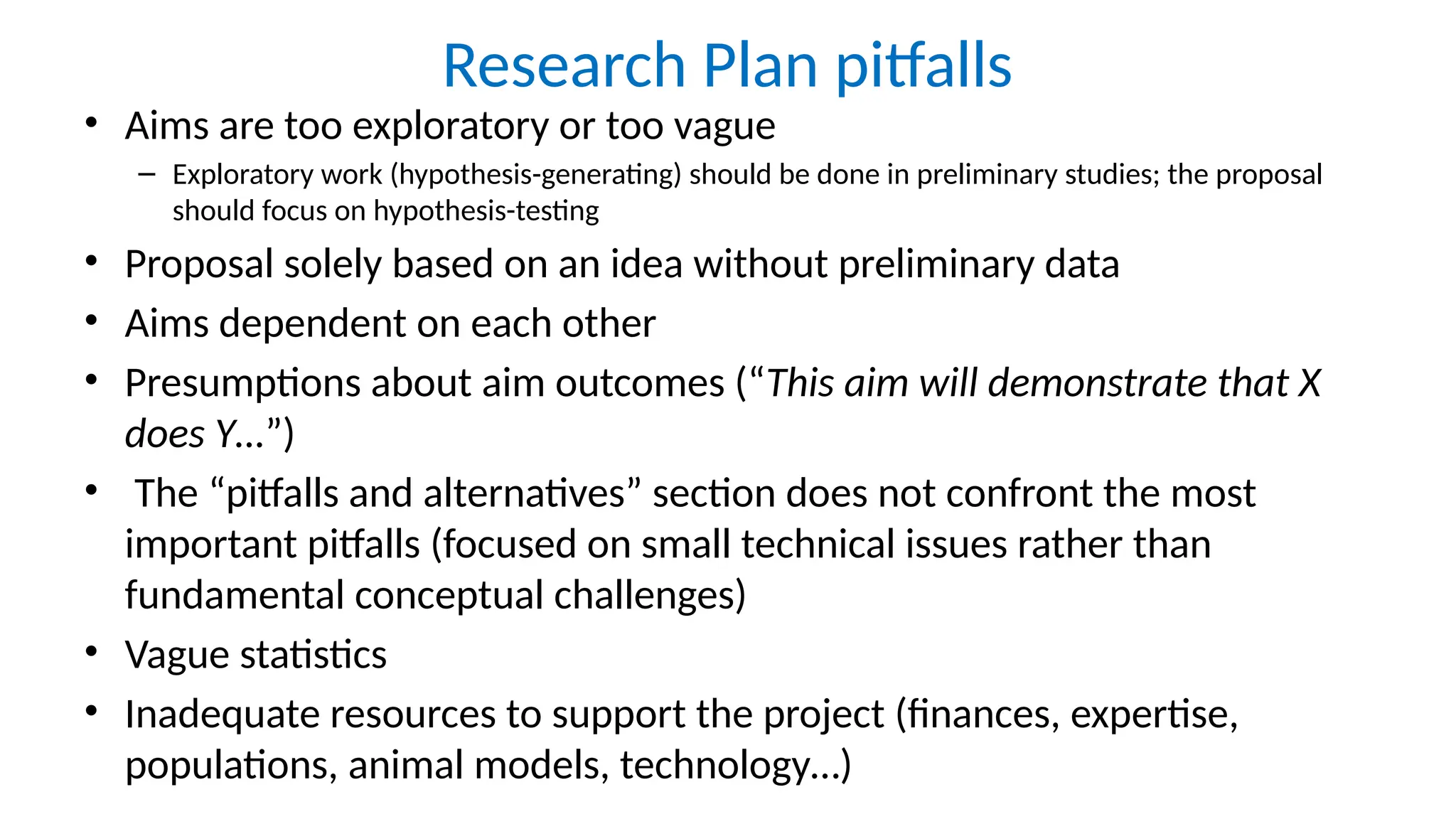
Research Plan pitfalls
• Aims are too exploratory or too vague
– Exploratory work (hypothesis-generating) should be done in preliminary studies; the proposal
should focus on hypothesis-testing
• Proposal solely based on an idea without preliminary data
• Aims dependent on each other
• Presumptions about aim outcomes (“This aim will demonstrate that X
does Y…”)
• The “pitfalls and alternatives” section does not confront the most
important pitfalls (focused on small technical issues rather than
fundamental conceptual challenges)
• Vague statistics
• Inadequate resources to support the project (finances, expertise,
populations, animal models, technology…)
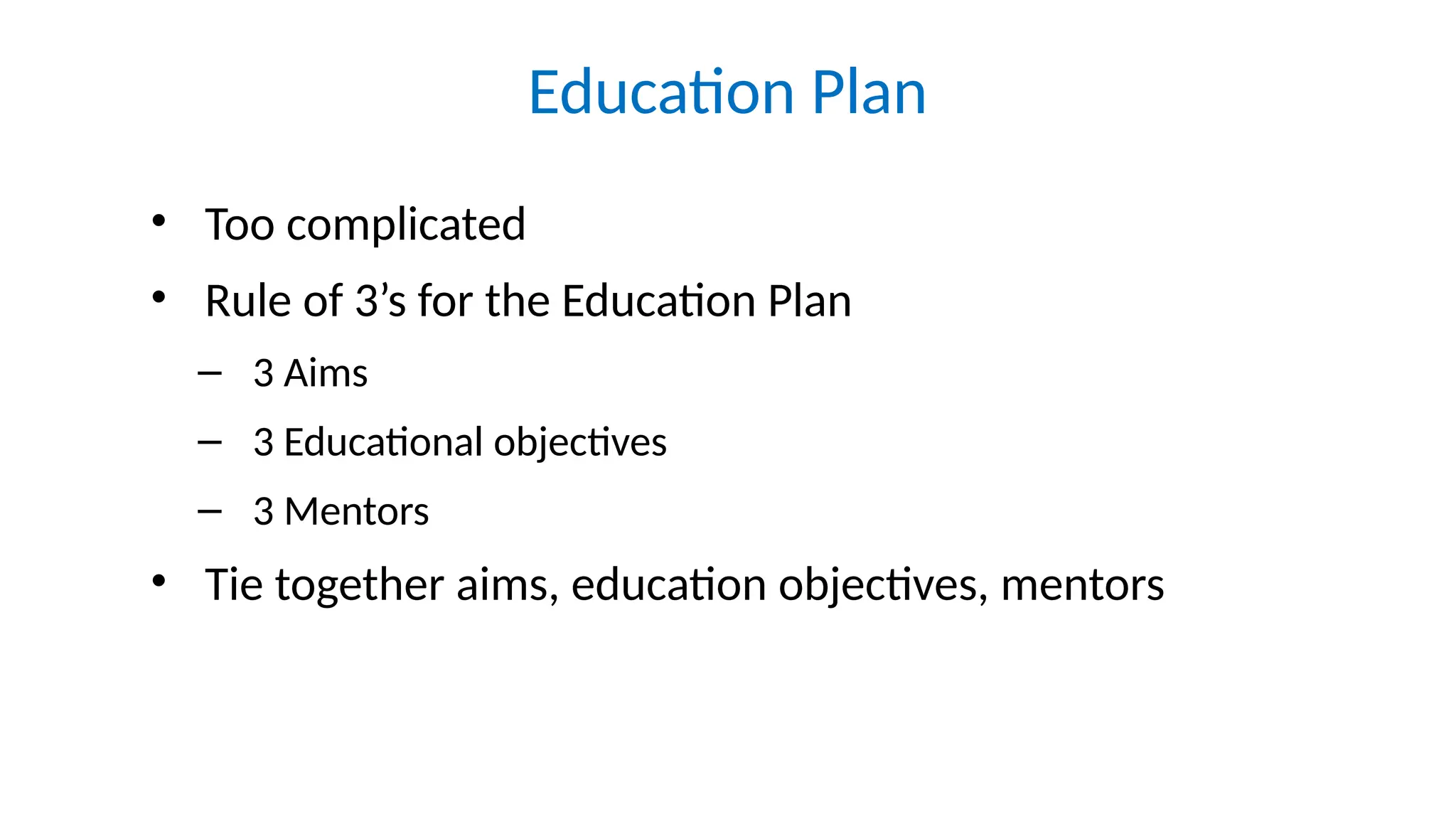
Education Plan
• Too complicated
• Rule of 3’s for the Education Plan
– 3 Aims
– 3 Educational objectives
– 3 Mentors
• Tie together aims, education objectives, mentors
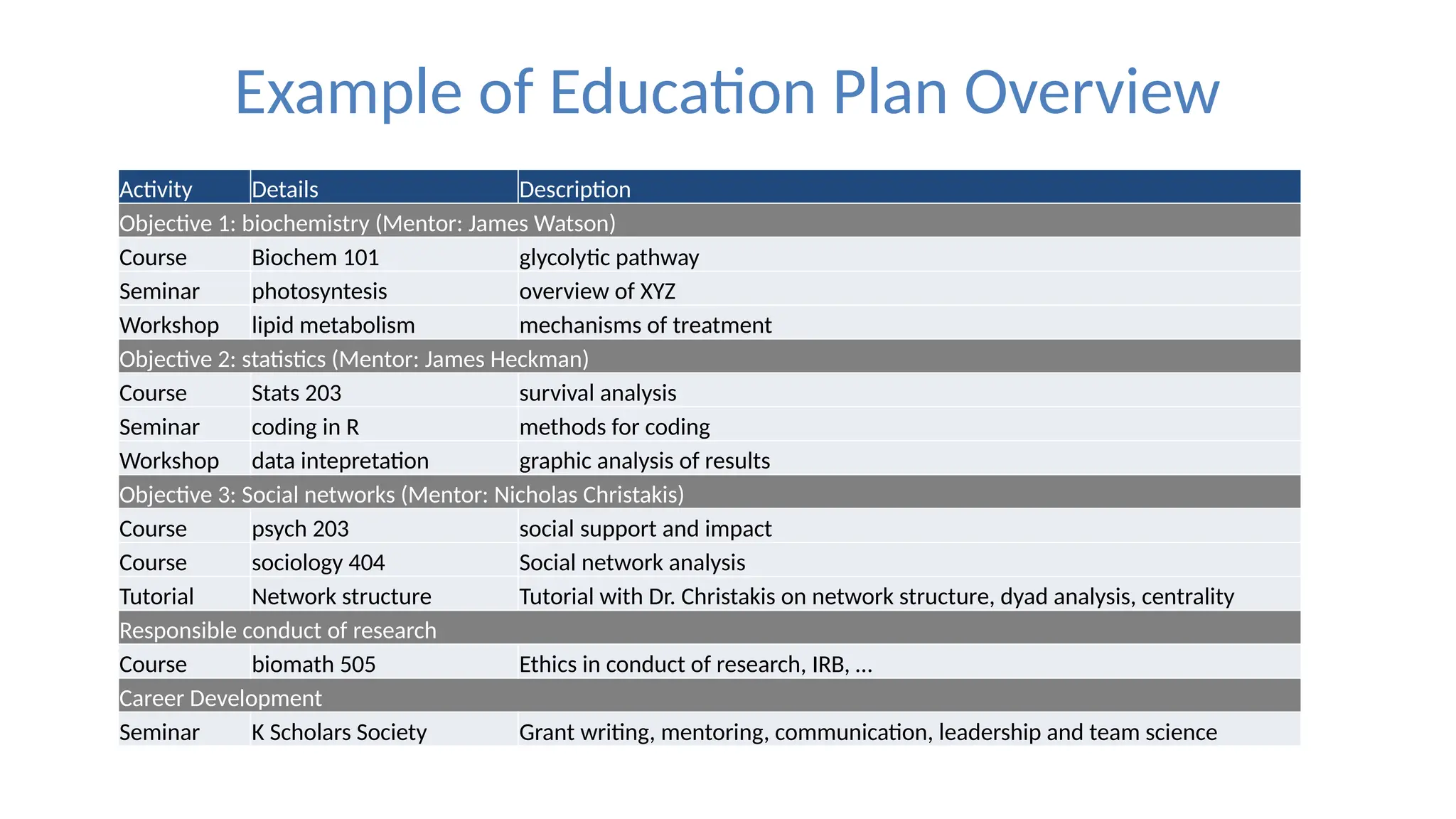
Example of Education Plan Overview
Activity Details Description
Objective 1: biochemistry (Mentor: James Watson)
Course Biochem 101 glycolytic pathway
Seminar photosyntesis overview of XYZ
Workshop lipid metabolism mechanisms of treatment
Objective 2: statistics (Mentor: James Heckman)
Course Stats 203 survival analysis
Seminar coding in R methods for coding
Workshop data intepretation graphic analysis of results
Objective 3: Social networks (Mentor: Nicholas Christakis)
Course psych 203 social support and impact
Course sociology 404 Social network analysis
Tutorial Network structure Tutorial with Dr. Christakis on network structure, dyad analysis, centrality
Responsible conduct of research
Course biomath 505 Ethics in conduct of research, IRB, …
Career Development
Seminar K Scholars Society Grant writing, mentoring, communication, leadership and team science
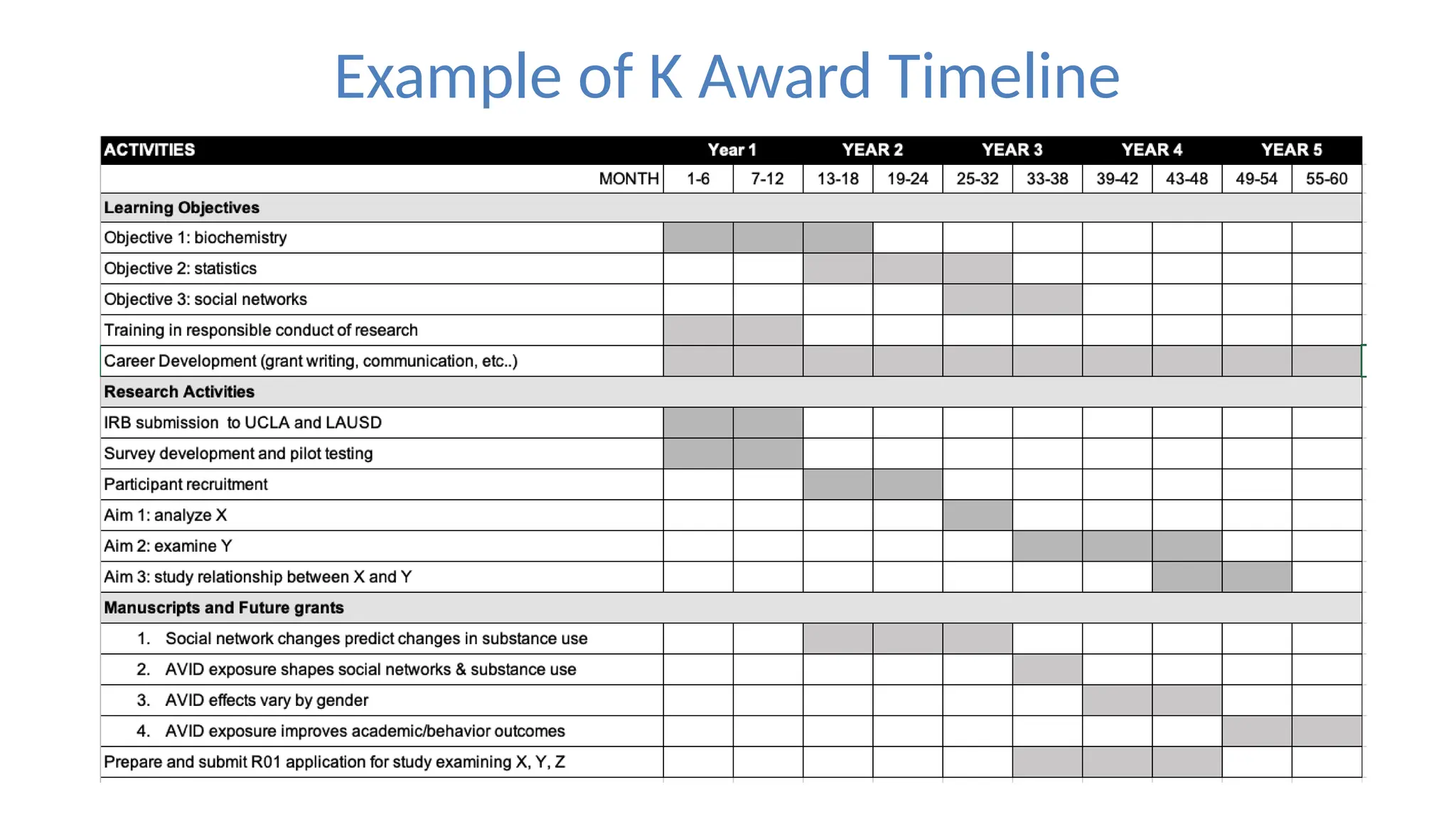
Example of K Award Timeline
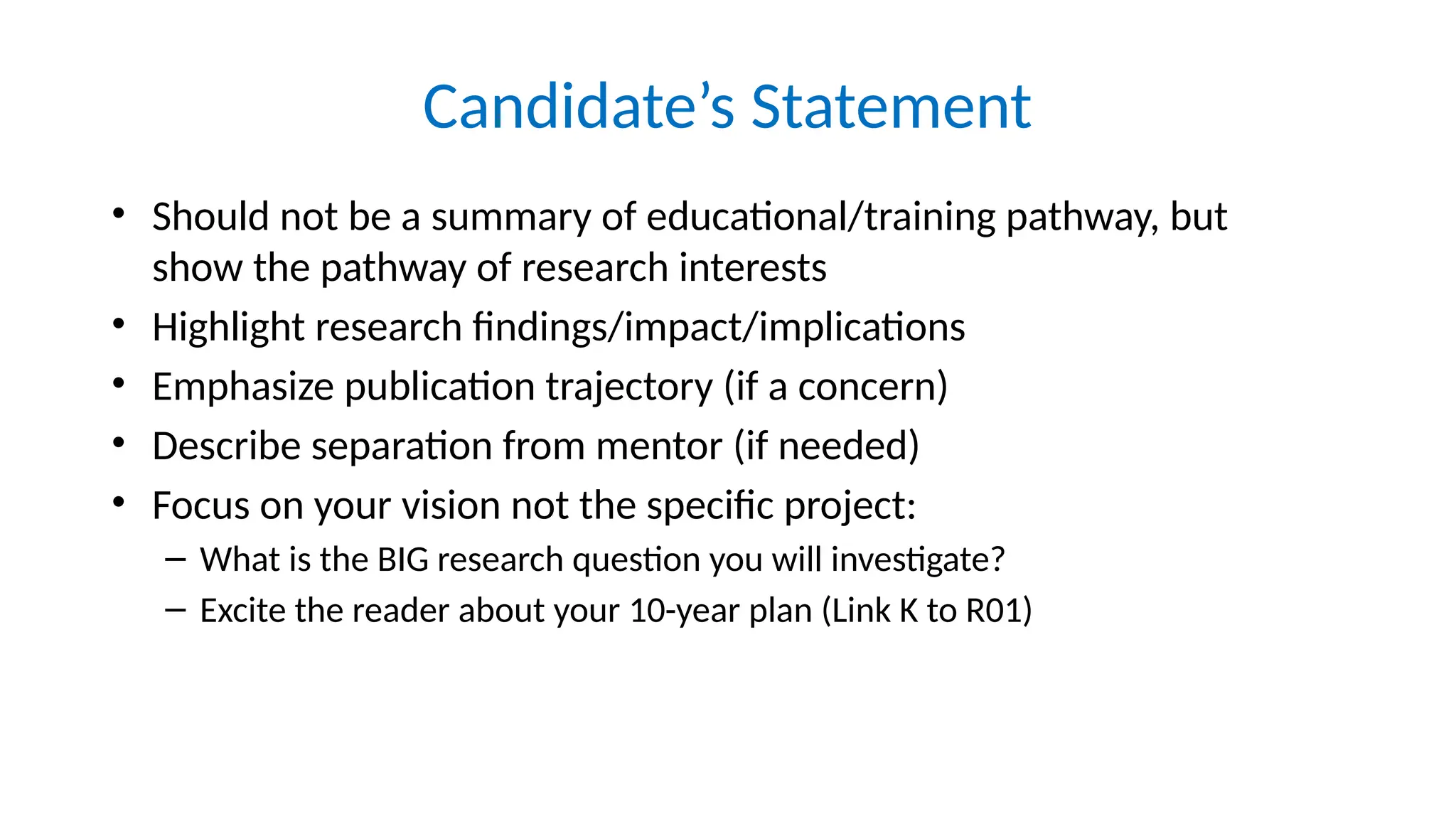
Candidate’s Statement
• Should not be a summary of educational/training pathway, but
show the pathway of research interests
• Highlight research findings/impact/implications
• Emphasize publication trajectory (if a concern)
• Describe separation from mentor (if needed)
• Focus on your vision not the specific project:
– What is the BIG research question you will investigate?
– Excite the reader about your 10-year plan (Link K to R01)
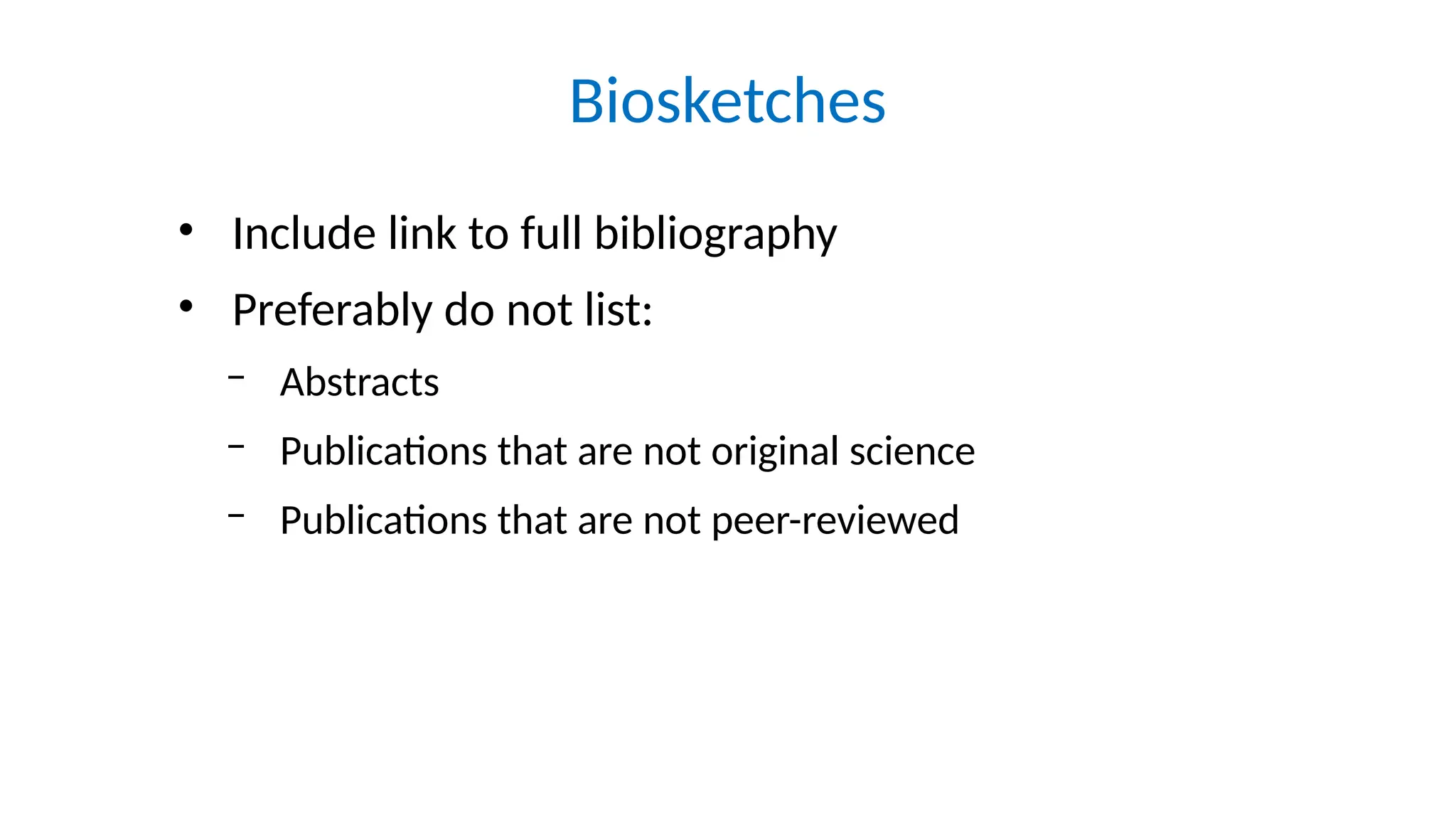
Biosketches
• Include link to full bibliography
• Preferably do not list:
‒ Abstracts
‒ Publications that are not original science
‒ Publications that are not peer-reviewed
K Workshop June 2023
www.ctsi.ucla.edu ▪ b r i ng i n g C T S I i n n o v a t i o ns t o t h e gr e a t e s t h ea l t h n e e ds i n L o s A n g e l es
CTSI KL2 PROGRAM AND
RESOURCES
Directors Mitchell Wong, MD, PhD
Ella Nemeth, PhD
Site Directors Chris Evans, PhD Victor Chaban, PhD Scott Filler, MD Denis Magoffin, PhD
UCLA CDU Lundquist Cedars
Overview of Resources
• KL2 awards
• K Scholars Society
• Grant studios (individuals)
• Grant writing bootcamp (groups)
• Career studios (proposed)
• CTSI grants library
• Virtual office hours
• K and R workshops
KL2 Award Overview
Career development support for junior faculty within the
UCLA CTSI Consortium
Interdisciplinary, translational science (basic, clinical and HSR)
Similar in structure to an NIH K CDA application
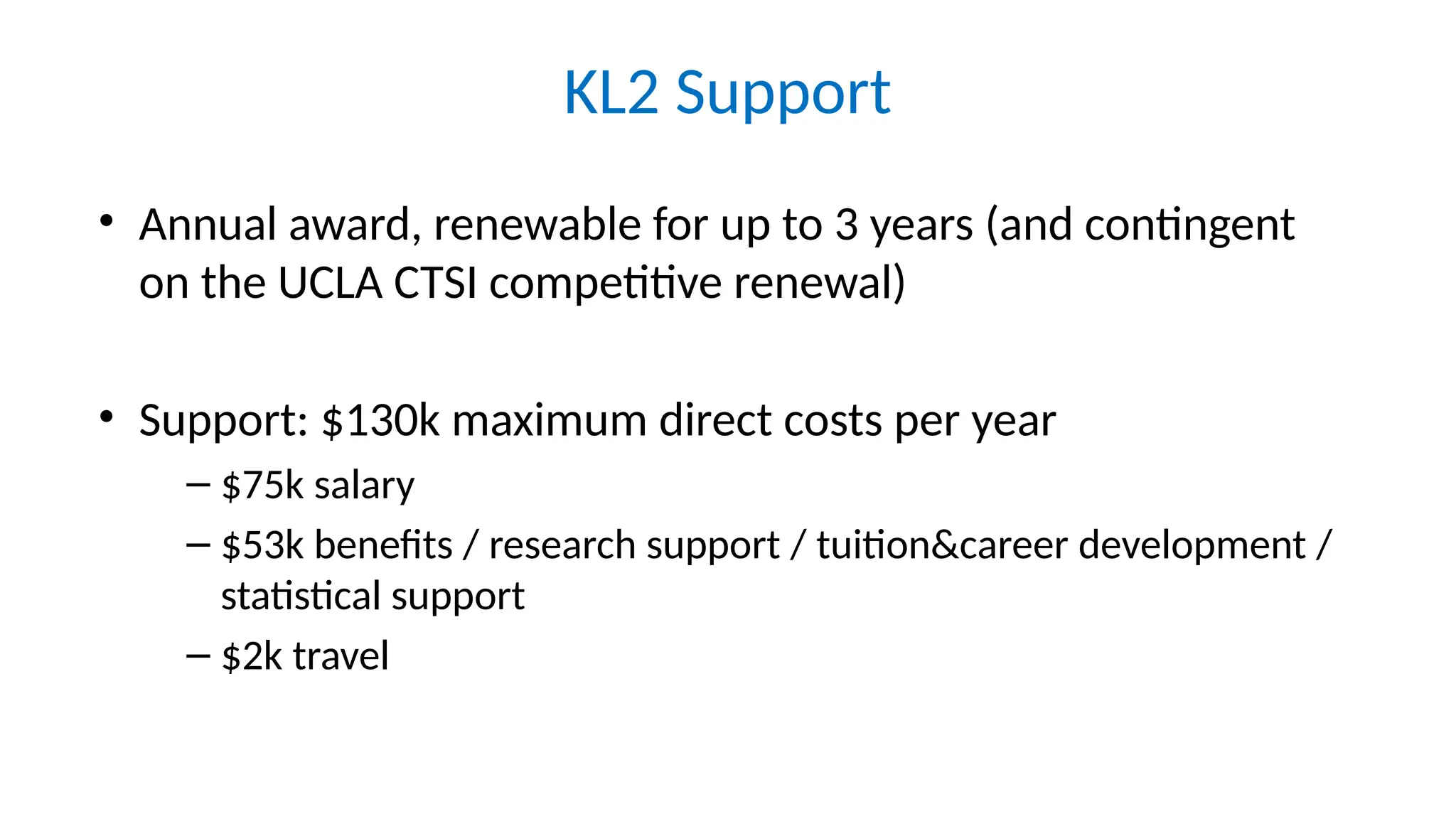
KL2 Support
• Annual award, renewable for up to 3 years (and contingent
on the UCLA CTSI competitive renewal)
• Support: $130k maximum direct costs per year
– $75k salary
– $53k benefits / research support / tuition&career development /
statistical support
– $2k travel
Eligibility
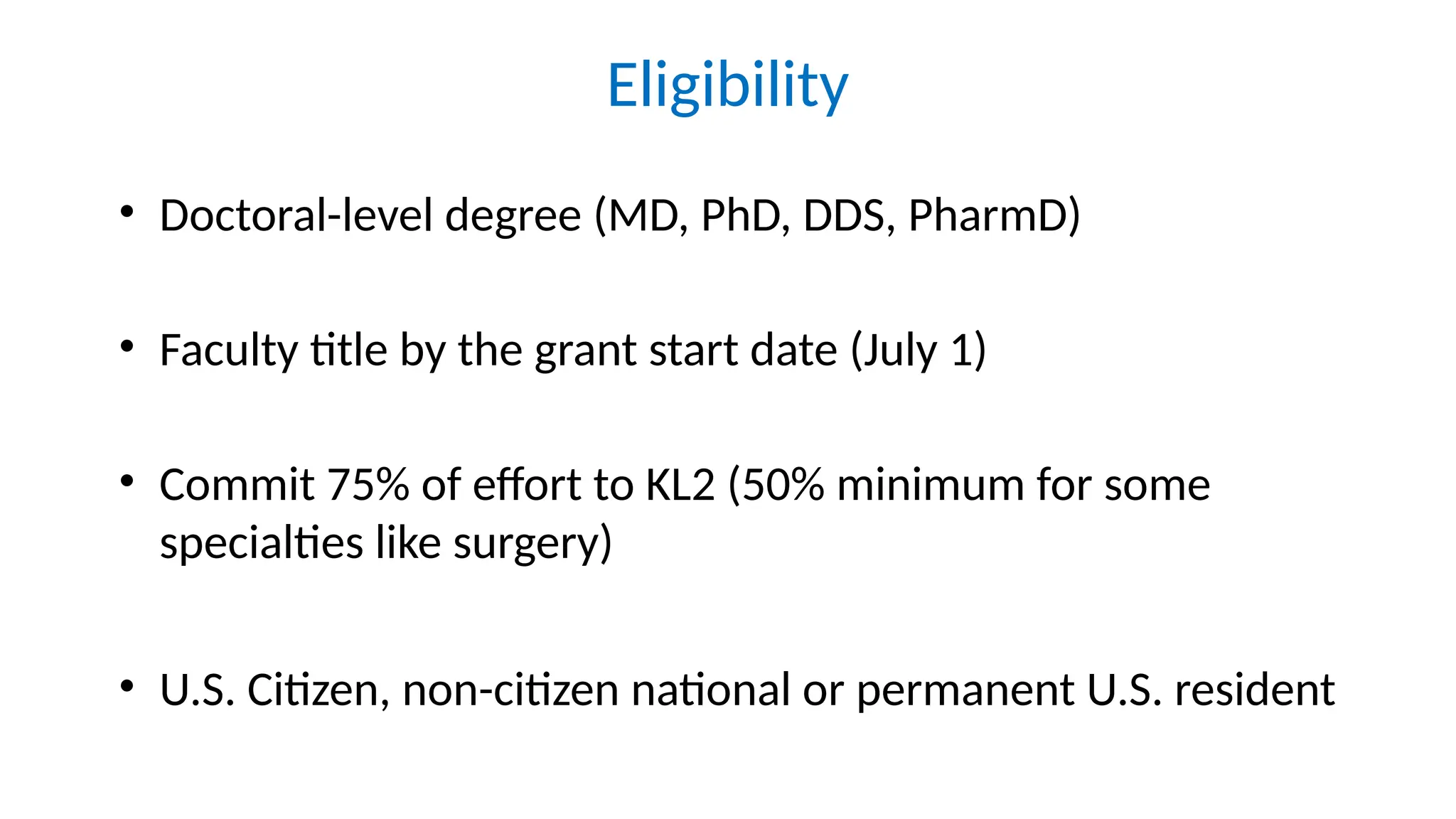
• Doctoral-level degree (MD, PhD, DDS, PharmD)
• Faculty title by the grant start date (July 1)
• Commit 75% of effort to KL2 (50% minimum for some
specialties like surgery)
• U.S. Citizen, non-citizen national or permanent U.S. resident
Eligibility (Prior/Pending Grants)
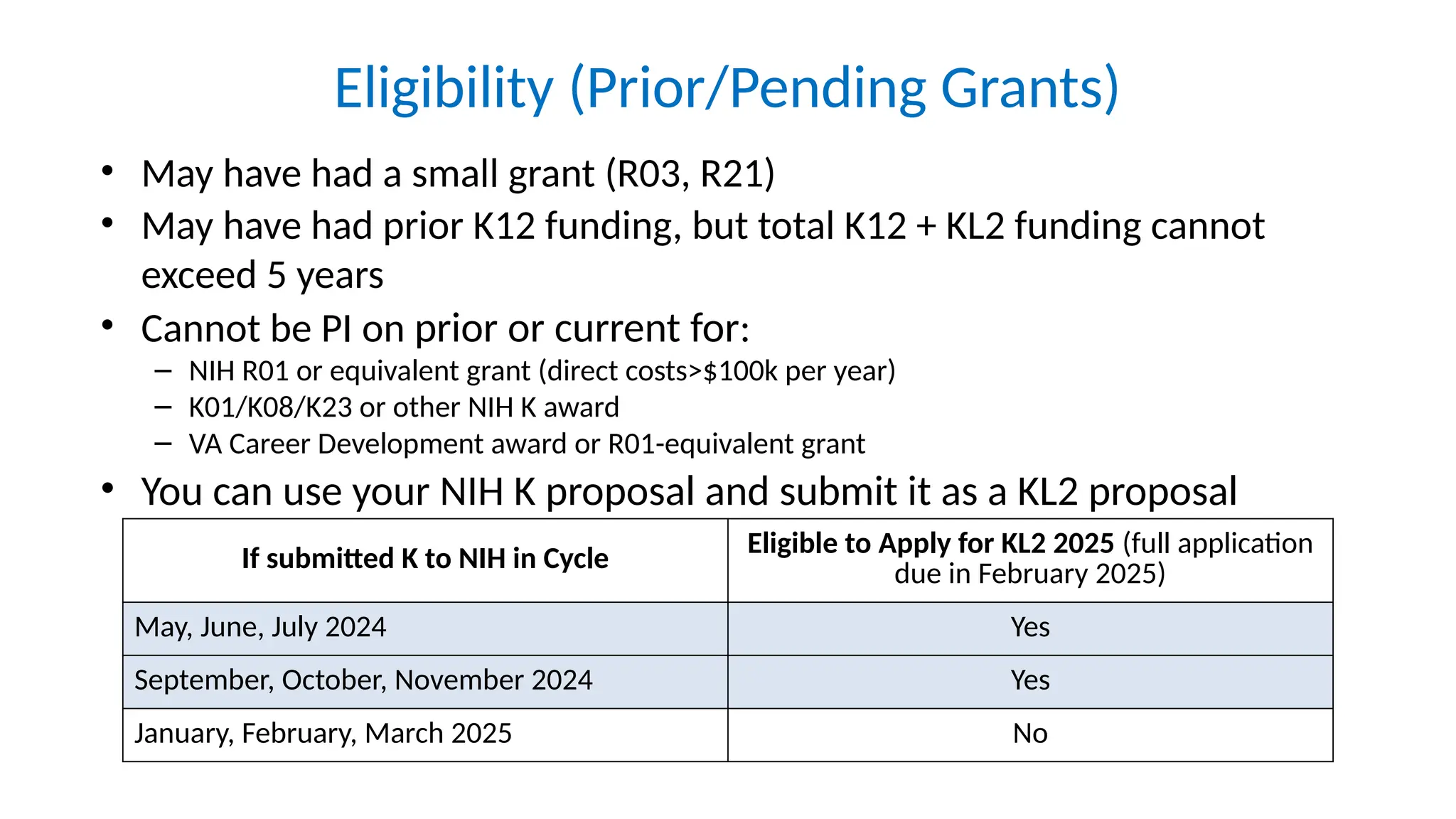
• May have had a small grant (R03, R21)
• May have had prior K12 funding, but total K12 + KL2 funding cannot
exceed 5 years
• Cannot be PI on prior or current for:
– NIH R01 or equivalent grant (direct costs>$100k per year)
– K01/K08/K23 or other NIH K award
– VA Career Development award or R01-equivalent grant
• You can use your NIH K proposal and submit it as a KL2 proposal
If submitted K to NIH in Cycle Eligible to Apply for KL2 2025 (full application
due in February 2025)
May, June, July 2024 Yes
September, October, November 2024 Yes
January, February, March 2025 No
Annual Application Timeline
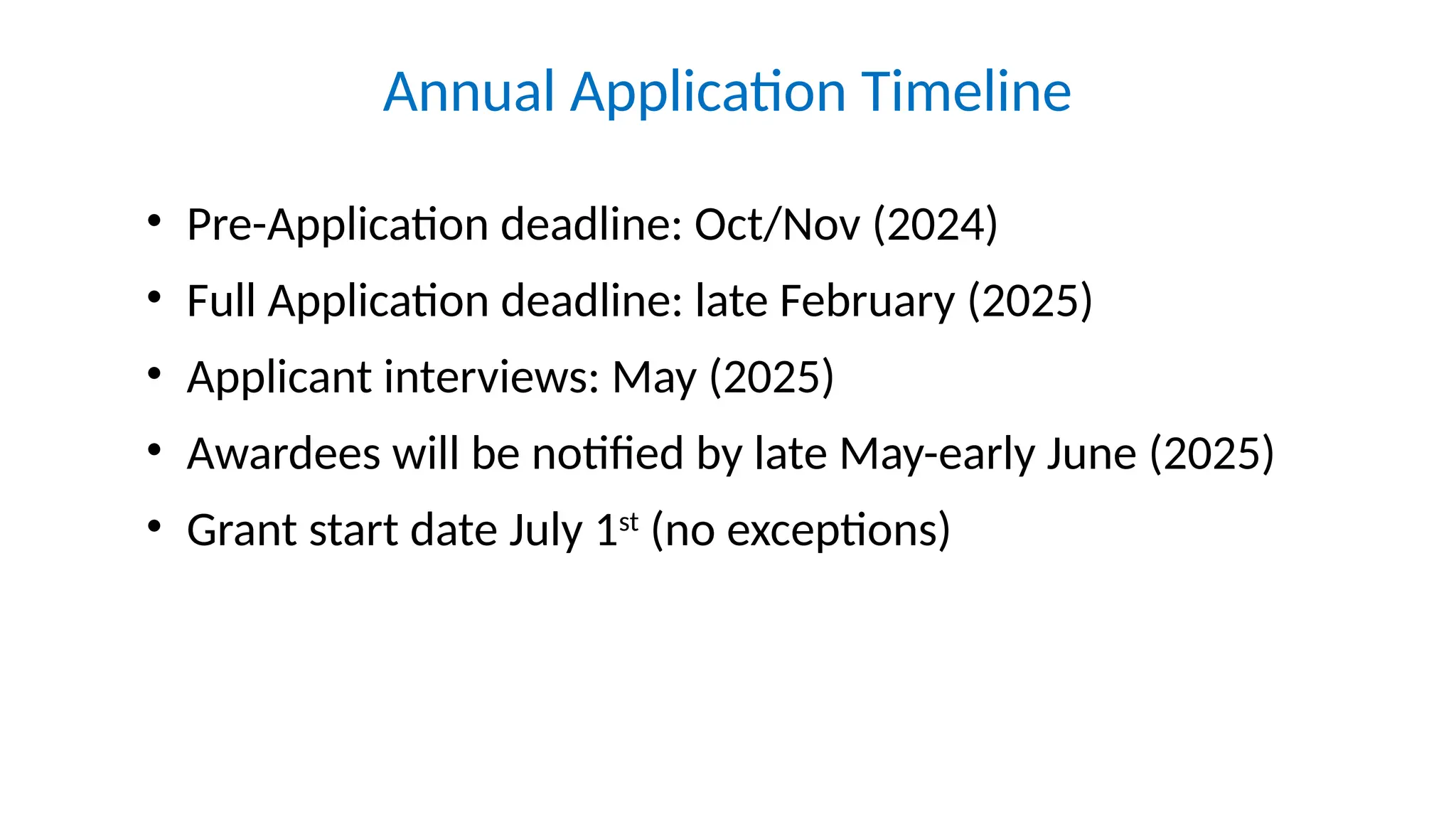
• Pre-Application deadline: Oct/Nov (2024)
• Full Application deadline: late February (2025)
• Applicant interviews: May (2025)
• Awardees will be notified by late May-early June (2025)
• Grant start date July 1st
(no exceptions)
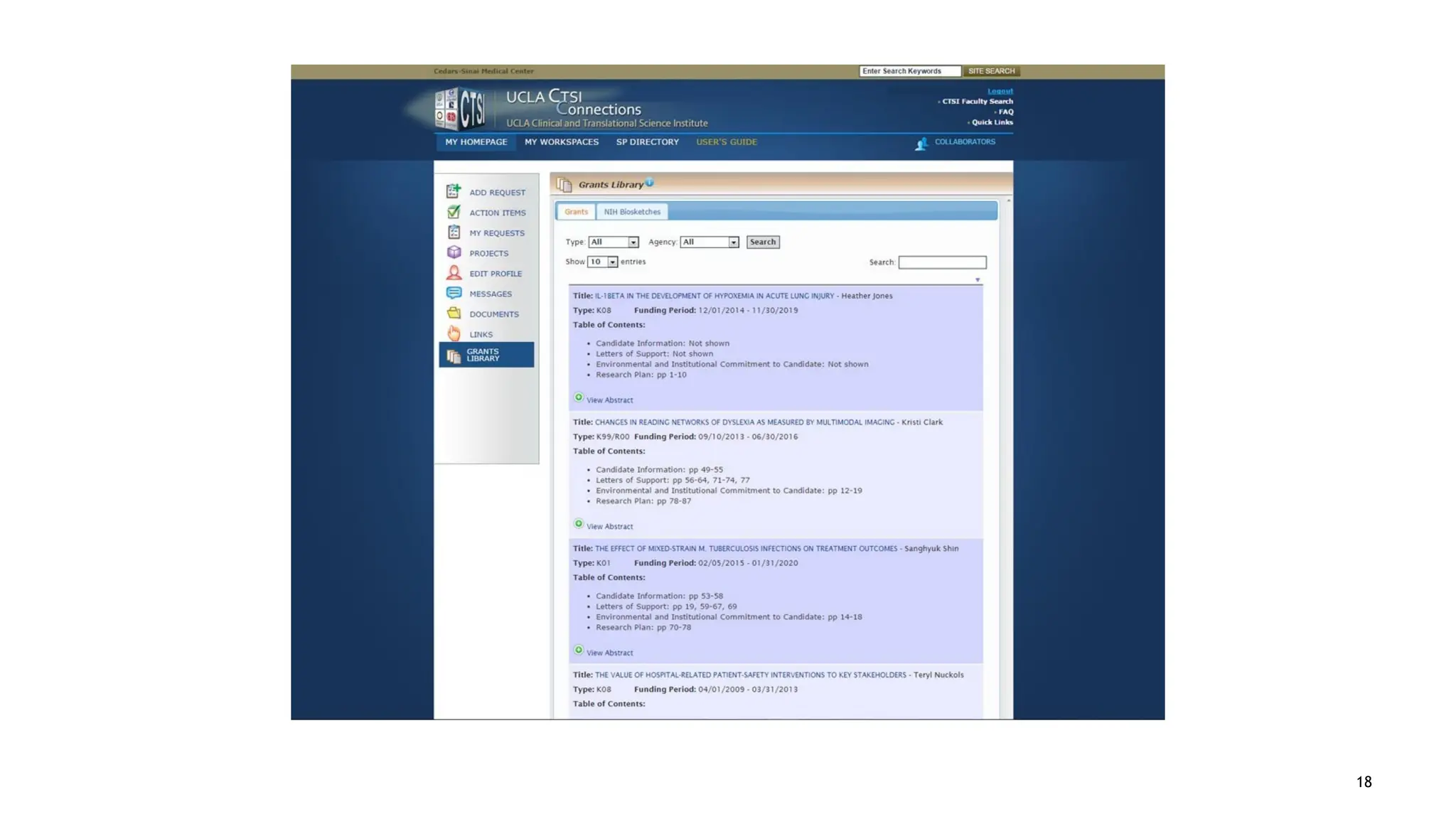
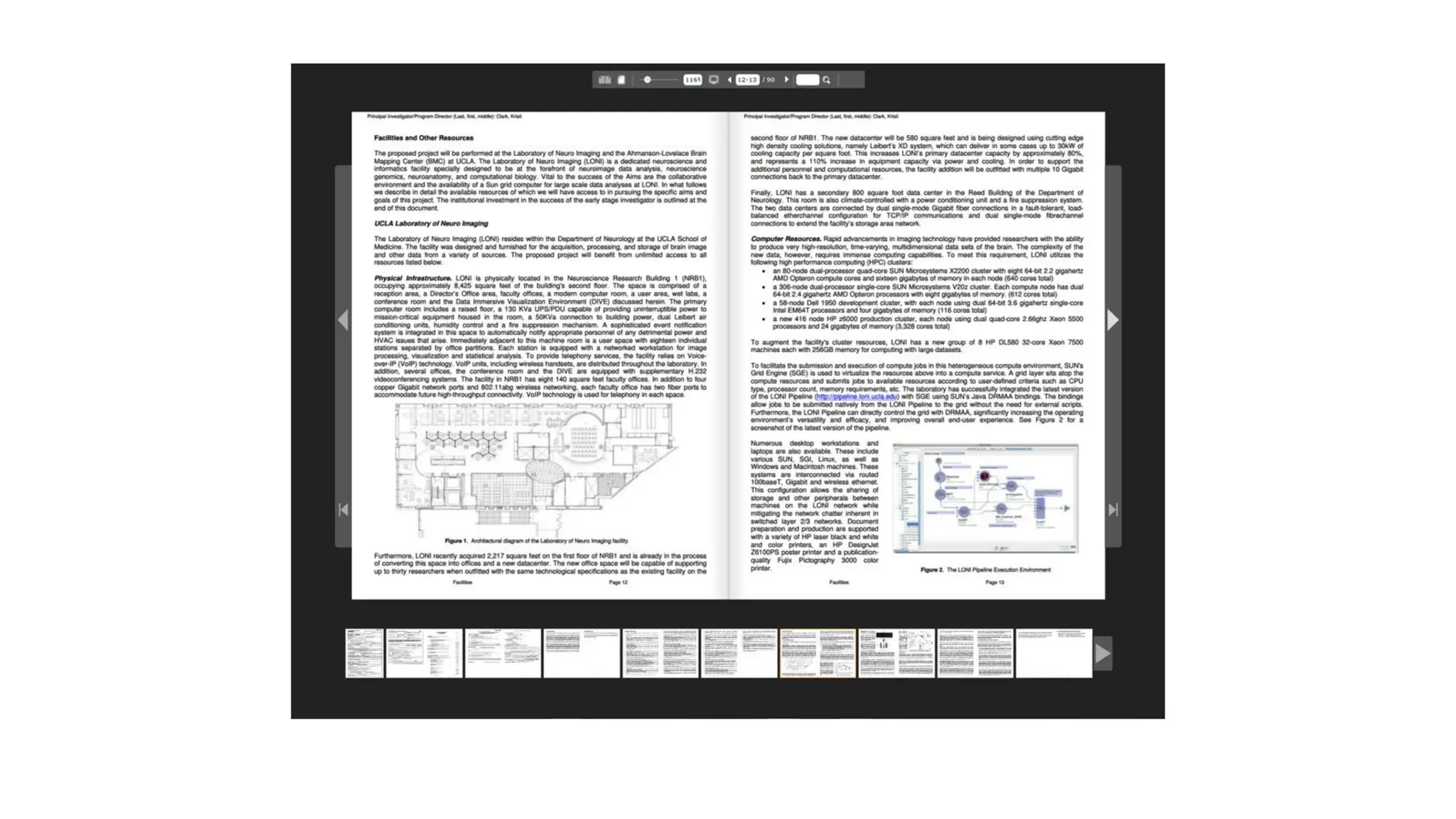
The Grant Library
• Successful (K, R, U) grants and new format NIH Biosketches
• Secure platform for sharing grants
• Video instructions on how to request access:
– http://ctsi.ucla.edu/funding/pages/sample
• To access:
– http://intranet.ctsi.ucla.edu
18
UCLA CTSI K Scholars Society
• For K/CDA awardees within UCLA CTSI institutions
• 2-year curriculum (monthly seminars):
- Training in grant writing, communication, team science, entrepreneurship and
leadership
- Work-in-progress presentations
- Mock study sections
- Open discussion sessions based on scholars’ interests and questions
- Pre- and post-grants management
- Equity, diversity and inclusion
• Professional grant writer consultations
• Open office hours with KL2 directors
• Recommend including K Scholars Society in CDA education plan
https://ctsi.ucla.edu/funding/pages/boilerplates
Grant Studios – Individual Scholars
• Longitudinal mentoring for K and R grant writing
• Priority for K Scholar Society and applicants to the KL2 grant program
• Studios:
- 3 Senior scientific/career/statistical studio mentors with expertise in K or R
grants
- Meet 3 times from concept to final product
- Participation in mock study section for final review
Grant Writing Bootcamp – groups of scholars
• Longitudinal group seminars, organized jointly by CTSI and DGSOM
OPSCD (Office for Physician-Scientist Career Development)
• K and R bootcamps
• ~4-8 scholars per bootcamp
• Meet bimonthly for ~4 months prior to each NIH cycle:
– Summer (June-Sept) for October deadline
– Fall (Oct-Jan) for Feb deadline
– Spring (Feb-May) for June deadline
•Format:
– In-person meetings, to prepare their first K or R application
– Peer feedback group; also feedback from faculty
– Between meetings, participants create document drafts and provide reciprocal feedback to peers
Summary of Resources
• KL2 Awards
• K Scholars Society (seminars, grant writer consultations,
virtual office hours)
• Grant studios (individual) or bootcamps (group)
• CTSI Grants Library
• K and R Workshops

K Awards – Common Pitfalls and UCLA CTSI KL2 Resources

  • 1.
    K Workshop June2023 www.ctsi.ucla.edu ▪ b r i ng i n g C T S I i n n o v a t i o ns t o t h e gr e a t e s t h ea l t h n e e ds i n L o s A n g e l es K PROPOSAL - COMMON PITFALLS Ella Nemeth, PhD
  • 2.
    K proposal pitfallsand advice Research plan Education plan Candidate’s statement Biosketch tips
  • 3.
    Research Plan pitfalls •Aims are too exploratory or too vague – Exploratory work (hypothesis-generating) should be done in preliminary studies; the proposal should focus on hypothesis-testing • Proposal solely based on an idea without preliminary data • Aims dependent on each other • Presumptions about aim outcomes (“This aim will demonstrate that X does Y…”) • The “pitfalls and alternatives” section does not confront the most important pitfalls (focused on small technical issues rather than fundamental conceptual challenges) • Vague statistics • Inadequate resources to support the project (finances, expertise, populations, animal models, technology…)
  • 4.
    Education Plan • Toocomplicated • Rule of 3’s for the Education Plan – 3 Aims – 3 Educational objectives – 3 Mentors • Tie together aims, education objectives, mentors
  • 5.
    Example of EducationPlan Overview Activity Details Description Objective 1: biochemistry (Mentor: James Watson) Course Biochem 101 glycolytic pathway Seminar photosyntesis overview of XYZ Workshop lipid metabolism mechanisms of treatment Objective 2: statistics (Mentor: James Heckman) Course Stats 203 survival analysis Seminar coding in R methods for coding Workshop data intepretation graphic analysis of results Objective 3: Social networks (Mentor: Nicholas Christakis) Course psych 203 social support and impact Course sociology 404 Social network analysis Tutorial Network structure Tutorial with Dr. Christakis on network structure, dyad analysis, centrality Responsible conduct of research Course biomath 505 Ethics in conduct of research, IRB, … Career Development Seminar K Scholars Society Grant writing, mentoring, communication, leadership and team science
  • 6.
    Example of KAward Timeline
  • 7.
    Candidate’s Statement • Shouldnot be a summary of educational/training pathway, but show the pathway of research interests • Highlight research findings/impact/implications • Emphasize publication trajectory (if a concern) • Describe separation from mentor (if needed) • Focus on your vision not the specific project: – What is the BIG research question you will investigate? – Excite the reader about your 10-year plan (Link K to R01)
  • 8.
    Biosketches • Include linkto full bibliography • Preferably do not list: ‒ Abstracts ‒ Publications that are not original science ‒ Publications that are not peer-reviewed
  • 9.
    K Workshop June2023 www.ctsi.ucla.edu ▪ b r i ng i n g C T S I i n n o v a t i o ns t o t h e gr e a t e s t h ea l t h n e e ds i n L o s A n g e l es CTSI KL2 PROGRAM AND RESOURCES Directors Mitchell Wong, MD, PhD Ella Nemeth, PhD Site Directors Chris Evans, PhD Victor Chaban, PhD Scott Filler, MD Denis Magoffin, PhD UCLA CDU Lundquist Cedars
  • 10.
    Overview of Resources •KL2 awards • K Scholars Society • Grant studios (individuals) • Grant writing bootcamp (groups) • Career studios (proposed) • CTSI grants library • Virtual office hours • K and R workshops
  • 11.
    KL2 Award Overview Careerdevelopment support for junior faculty within the UCLA CTSI Consortium Interdisciplinary, translational science (basic, clinical and HSR) Similar in structure to an NIH K CDA application
  • 12.
    KL2 Support • Annualaward, renewable for up to 3 years (and contingent on the UCLA CTSI competitive renewal) • Support: $130k maximum direct costs per year – $75k salary – $53k benefits / research support / tuition&career development / statistical support – $2k travel
  • 13.
    Eligibility • Doctoral-level degree(MD, PhD, DDS, PharmD) • Faculty title by the grant start date (July 1) • Commit 75% of effort to KL2 (50% minimum for some specialties like surgery) • U.S. Citizen, non-citizen national or permanent U.S. resident
  • 14.
    Eligibility (Prior/Pending Grants) •May have had a small grant (R03, R21) • May have had prior K12 funding, but total K12 + KL2 funding cannot exceed 5 years • Cannot be PI on prior or current for: – NIH R01 or equivalent grant (direct costs>$100k per year) – K01/K08/K23 or other NIH K award – VA Career Development award or R01-equivalent grant • You can use your NIH K proposal and submit it as a KL2 proposal If submitted K to NIH in Cycle Eligible to Apply for KL2 2025 (full application due in February 2025) May, June, July 2024 Yes September, October, November 2024 Yes January, February, March 2025 No
  • 15.
    Annual Application Timeline •Pre-Application deadline: Oct/Nov (2024) • Full Application deadline: late February (2025) • Applicant interviews: May (2025) • Awardees will be notified by late May-early June (2025) • Grant start date July 1st (no exceptions)
  • 17.
    The Grant Library •Successful (K, R, U) grants and new format NIH Biosketches • Secure platform for sharing grants • Video instructions on how to request access: – http://ctsi.ucla.edu/funding/pages/sample • To access: – http://intranet.ctsi.ucla.edu
  • 18.
  • 20.
    UCLA CTSI KScholars Society • For K/CDA awardees within UCLA CTSI institutions • 2-year curriculum (monthly seminars): - Training in grant writing, communication, team science, entrepreneurship and leadership - Work-in-progress presentations - Mock study sections - Open discussion sessions based on scholars’ interests and questions - Pre- and post-grants management - Equity, diversity and inclusion • Professional grant writer consultations • Open office hours with KL2 directors • Recommend including K Scholars Society in CDA education plan https://ctsi.ucla.edu/funding/pages/boilerplates
  • 21.
    Grant Studios –Individual Scholars • Longitudinal mentoring for K and R grant writing • Priority for K Scholar Society and applicants to the KL2 grant program • Studios: - 3 Senior scientific/career/statistical studio mentors with expertise in K or R grants - Meet 3 times from concept to final product - Participation in mock study section for final review
  • 22.
    Grant Writing Bootcamp– groups of scholars • Longitudinal group seminars, organized jointly by CTSI and DGSOM OPSCD (Office for Physician-Scientist Career Development) • K and R bootcamps • ~4-8 scholars per bootcamp • Meet bimonthly for ~4 months prior to each NIH cycle: – Summer (June-Sept) for October deadline – Fall (Oct-Jan) for Feb deadline – Spring (Feb-May) for June deadline •Format: – In-person meetings, to prepare their first K or R application – Peer feedback group; also feedback from faculty – Between meetings, participants create document drafts and provide reciprocal feedback to peers
  • 23.
    Summary of Resources •KL2 Awards • K Scholars Society (seminars, grant writer consultations, virtual office hours) • Grant studios (individual) or bootcamps (group) • CTSI Grants Library • K and R Workshops

Editor's Notes

  • #3 should be hypothesis-driven, specific and focused The Stephen I. Katz Early Stage Investigator Research Project Grant supports an innovative project in an area of science that represents a change in research direction for an  ESI and for which no preliminary data exist.
  • #14 12.2.5 Institutional Scientist Development Programs The institutional mentored research scientist development program (K12 and KL2) provides support to an institution for the development of independent basic or clinical scientists. The goal is to enhance research career development for individuals (known as ‘scholars') selected by the institution who are training for careers in specified research areas. A specified number of scholar positions are awarded in a K12. The K12 is solicited only by IC-specific FOAs. Although the K12 is subject to NIH Standard Terms of Award, the carryover of unobligated balances from one budget period to the next generally requires prior written approval. K12 awards are generally not transferable to another institution. When institutional mentored research development programs are incorporated as part of a Clinical and Translational Science Award Consortium the KL2 activity code is used. The Clinical Research Curriculum Award (K30) is awarded to an institution to stimulate the inclusion of high-quality, multidisciplinary, didactic training as part of the career development of clinical investigators. It supports the development and/or improvement of core courses designed as in-depth instruction in the fundamental skills, methodologies, and theories necessary for the well-trained, independent, clinical researcher.