Jaundice
By Lovepreet Singh Grewal
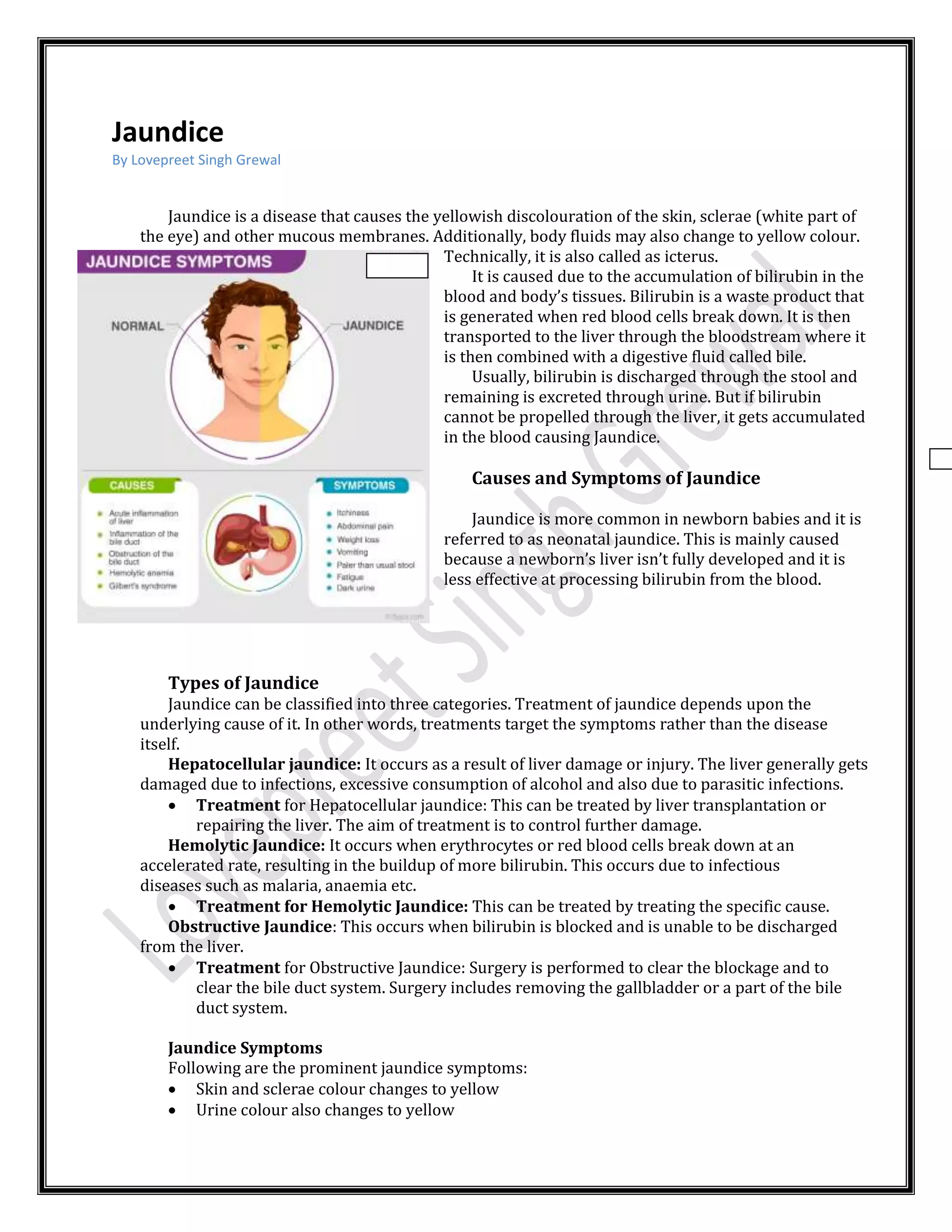
Jaundice is a disease that causes the yellowish discolouration of the skin, sclerae (white part of
the eye) and other mucous membranes. Additionally, body fluids may also change to yellow colour.
Technically, it is also called as icterus.
It is caused due to the accumulation of bilirubin in the
blood and body’s tissues. Bilirubin is a waste product that
is generated when red blood cells break down. It is then
transported to the liver through the bloodstream where it
is then combined with a digestive fluid called bile.
Usually, bilirubin is discharged through the stool and
remaining is excreted through urine. But if bilirubin
cannot be propelled through the liver, it gets accumulated
in the blood causing Jaundice.
Causes and Symptoms of Jaundice
Jaundice is more common in newborn babies and it is
referred to as neonatal jaundice. This is mainly caused
because a newborn’s liver isn’t fully developed and it is
less effective at processing bilirubin from the blood.
Types of Jaundice
Jaundice can be classified into three categories. Treatment of jaundice depends upon the
underlying cause of it. In other words, treatments target the symptoms rather than the disease
itself.
Hepatocellular jaundice: It occurs as a result of liver damage or injury. The liver generally gets
damaged due to infections, excessive consumption of alcohol and also due to parasitic infections.
 Treatment for Hepatocellular jaundice: This can be treated by liver transplantation or
repairing the liver. The aim of treatment is to control further damage.
Hemolytic Jaundice: It occurs when erythrocytes or red blood cells break down at an
accelerated rate, resulting in the buildup of more bilirubin. This occurs due to infectious
diseases such as malaria, anaemia etc.
 Treatment for Hemolytic Jaundice: This can be treated by treating the specific cause.
Obstructive Jaundice: This occurs when bilirubin is blocked and is unable to be discharged
from the liver.
 Treatment for Obstructive Jaundice: Surgery is performed to clear the blockage and to
clear the bile duct system. Surgery includes removing the gallbladder or a part of the bile
duct system.
Jaundice Symptoms
Following are the prominent jaundice symptoms:
 Skin and sclerae colour changes to yellow
 Urine colour also changes to yellow
ov
pr
et
Si
h
re
al
 Itching of the skin
Following symptoms may be observed in the initial stages of jaundice:
 Fever
 Abdominal pain
 Vomitings
 Weight loss
 Drowsiness, agitation, and confusion
The colour of the skin and sclera of the eyes turns yellow within one or two days. It is always
advisable to check whether the baby is suffering from jaundice by pressing lightly on the chin of the
baby. If the colour changes to yellow for a fraction of seconds, it is suspected that the child is
suffering from jaundice.
Additional jaundice symptoms that can be observed in infants are
 Crying loudly
 Change in skin tone
 Poor feeding
 Urine colour changes to yellow
 Sleepiness and lethargic

Jaundice.dotx

  • 1.
    Jaundice By Lovepreet SinghGrewal Jaundice is a disease that causes the yellowish discolouration of the skin, sclerae (white part of the eye) and other mucous membranes. Additionally, body fluids may also change to yellow colour. Technically, it is also called as icterus. It is caused due to the accumulation of bilirubin in the blood and body’s tissues. Bilirubin is a waste product that is generated when red blood cells break down. It is then transported to the liver through the bloodstream where it is then combined with a digestive fluid called bile. Usually, bilirubin is discharged through the stool and remaining is excreted through urine. But if bilirubin cannot be propelled through the liver, it gets accumulated in the blood causing Jaundice. Causes and Symptoms of Jaundice Jaundice is more common in newborn babies and it is referred to as neonatal jaundice. This is mainly caused because a newborn’s liver isn’t fully developed and it is less effective at processing bilirubin from the blood. Types of Jaundice Jaundice can be classified into three categories. Treatment of jaundice depends upon the underlying cause of it. In other words, treatments target the symptoms rather than the disease itself. Hepatocellular jaundice: It occurs as a result of liver damage or injury. The liver generally gets damaged due to infections, excessive consumption of alcohol and also due to parasitic infections.  Treatment for Hepatocellular jaundice: This can be treated by liver transplantation or repairing the liver. The aim of treatment is to control further damage. Hemolytic Jaundice: It occurs when erythrocytes or red blood cells break down at an accelerated rate, resulting in the buildup of more bilirubin. This occurs due to infectious diseases such as malaria, anaemia etc.  Treatment for Hemolytic Jaundice: This can be treated by treating the specific cause. Obstructive Jaundice: This occurs when bilirubin is blocked and is unable to be discharged from the liver.  Treatment for Obstructive Jaundice: Surgery is performed to clear the blockage and to clear the bile duct system. Surgery includes removing the gallbladder or a part of the bile duct system. Jaundice Symptoms Following are the prominent jaundice symptoms:  Skin and sclerae colour changes to yellow  Urine colour also changes to yellow ov pr et Si h re al
  • 2.
     Itching ofthe skin Following symptoms may be observed in the initial stages of jaundice:  Fever  Abdominal pain  Vomitings  Weight loss  Drowsiness, agitation, and confusion The colour of the skin and sclera of the eyes turns yellow within one or two days. It is always advisable to check whether the baby is suffering from jaundice by pressing lightly on the chin of the baby. If the colour changes to yellow for a fraction of seconds, it is suspected that the child is suffering from jaundice. Additional jaundice symptoms that can be observed in infants are  Crying loudly  Change in skin tone  Poor feeding  Urine colour changes to yellow  Sleepiness and lethargic