JAK STAT Signalling Methods and Protocols 1st Edition Jeremy A. Ross
JAK STAT Signalling Methods and Protocols 1st Edition Jeremy A. Ross
JAK STAT Signalling Methods and Protocols 1st Edition Jeremy A. Ross
JAK STAT Signalling Methods and Protocols 1st Edition Jeremy A. Ross
JAK STAT Signalling Methods and Protocols 1st Edition Jeremy A. Ross
1.
JAK STAT SignallingMethods and Protocols 1st
Edition Jeremy A. Ross download
https://ebookultra.com/download/jak-stat-signalling-methods-and-
protocols-1st-edition-jeremy-a-ross/
Explore and download more ebooks or textbooks
at ebookultra.com
2.
We have selectedsome products that you may be interested in
Click the link to download now or visit ebookultra.com
for more options!.
Plant Signalling Networks Methods and Protocols 2012th
Edition Zhi-Yong Wang
https://ebookultra.com/download/plant-signalling-networks-methods-and-
protocols-2012th-edition-zhi-yong-wang/
UGA Stat 2000 Lab Manual 1st Edition Uga Stat Dept
https://ebookultra.com/download/uga-stat-2000-lab-manual-1st-edition-
uga-stat-dept/
Nanoimaging Methods and Protocols 1st Edition Alioscka A.
Sousa
https://ebookultra.com/download/nanoimaging-methods-and-protocols-1st-
edition-alioscka-a-sousa/
Osteoporosis Methods and Protocols 1st Edition Thomas A.
Owen
https://ebookultra.com/download/osteoporosis-methods-and-
protocols-1st-edition-thomas-a-owen/
3.
Jasmonate Signaling Methodsand Protocols 1st Edition
Martin A. Seltmann
https://ebookultra.com/download/jasmonate-signaling-methods-and-
protocols-1st-edition-martin-a-seltmann/
A Handbook of Research Methods for Clinical and Health
Psychology Jeremy Miles
https://ebookultra.com/download/a-handbook-of-research-methods-for-
clinical-and-health-psychology-jeremy-miles/
Wound Healing Methods and Protocols Methods in Molecular
Medicine 1st Edition Luisa A. Dipietro
https://ebookultra.com/download/wound-healing-methods-and-protocols-
methods-in-molecular-medicine-1st-edition-luisa-a-dipietro/
Stat One 1st Edition Craig Messmer
https://ebookultra.com/download/stat-one-1st-edition-craig-messmer/
Plant Transposable Elements Methods and Protocols 1st
Edition Peter A. Peterson (Auth.)
https://ebookultra.com/download/plant-transposable-elements-methods-
and-protocols-1st-edition-peter-a-peterson-auth/
5.
JAK STAT SignallingMethods and Protocols 1st Edition
Jeremy A. Ross Digital Instant Download
Author(s): Jeremy A. Ross, Georgialina Rodriguez, Robert A. Kirken (auth.),
Sandra E. Nicholson, Nicos A. Nicola (eds.)
ISBN(s): 9781627032421, 1627032428
Edition: 1
File Details: PDF, 4.05 MB
Year: 2013
Language: english
6.
ME T HO D S I N MO L E C U L A R BI O L O G Y ™
Series Editor
John M. Walker
School of Life Sciences
University of Hertfordshire
Hatfield, Hertfordshire, AL10 9AB, UK
For further volumes:
http://www.springer.com/series/7651
8.
JAK-STAT Signalling
Methods andProtocols
Edited by
Sandra E. Nicholson and Nicos A. Nicola
WalterandElizaHallInstitute,Parkville,VIC,Australia
v
Preface
A series ofdiscoveries in the late 1980s and early 1990s described how the receptor-associated
JAK protein kinases and their substrates, the STAT transcriptional activators, transmitted
signals following cytokine and growth factor binding to receptors expressed on the cell sur-
face, to result in specific transcriptional and cellular responses. In the intervening two decades,
the JAK/STAT cascade of tyrosine phosphorylation, protein–protein interactions, and tran-
scriptional activation has been studied extensively. The field has progressed from identification
of the individual components through to an understanding of the activation and deactivation
mechanisms and the complex structural detail of the proteins involved. We now know that
these pathways are important in many biological processes, including growth and develop-
ment, hematopoiesis, and the innate and adaptive immune response. We have gained a greater
understanding of the role these proteins may have in human diseases such as cancer, with the
exciting prospect of pathway inhibitors being available for clinical use in the near future.
Protocols in JAK/STAT Signaling provide detailed methodology for examining many
aspects of the pathway, which we anticipate will be of use not only to those working in the
area but also to new investigators who are led to delve into the complexities of JAK and
STAT responses. For that reason, we have included methods for the simple analysis of activa-
tion status, as well as more complex protocols. It is divided into four sections: two sections
distinguish JAK- and STAT-specific approaches, a third section is dedicated to the negative
regulators of the pathway, the Suppressor of Cytokine Signaling (SOCS) proteins, while the
final section deals with the production and crystallization of JAK and STAT proteins. This
last, apart from underpinning our mechanistic understanding, has been critical to the devel-
opment of specific inhibitors for therapeutic use. The field continues to evolve and there is
still much to be learnt. We hope that this volume can in some way serve those involved in
such endeavors.
We would like to sincerely thank our many contributors who have generously shared
their time and expertise to provide such comprehensive protocols.
Parkville, VIC, Australia Sandra E. Nicholson
Nicos A. Nicola
12.
vii
Contents
Preface. . .. . . . . . . . . . . . . . . . . . . . . . . . . . . . . . . . . . . . . . . . . . . . . . . . . . . . . . . v
Contributors. . . . . . . . . . . . . . . . . . . . . . . . . . . . . . . . . . . . . . . . . . . . . . . . . . . . . . ix
PART I JAK PROTEIN TYROSINE KINASES
1 Analysis of Janus Tyrosine Kinase Phosphorylation and Activation. . . . . . . . . . 3
Jeremy A. Ross, Georgialina Rodriguez, and Robert A. Kirken
2 Co-immunoprecipitation Protocol to Investigate Cytokine Receptor-Associated
Proteins, e.g., Janus Kinases or Other Associated Signaling Proteins . . . . . . . . 21
Claude Haan and Serge Haan
3 In Vitro JAK Kinase Activity and Inhibition Assays . . . . . . . . . . . . . . . . . . . . . 39
Jeffrey J. Babon and James M. Murphy
4 Quantitative Analysis of JAK Binding Using Isothermal Titration Calorimetry
and Surface Plasmon Resonance . . . . . . . . . . . . . . . . . . . . . . . . . . . . . . . . . . . 57
Jeffrey J. Babon
5 Determination of Protein Turnover Rates in the JAK/STAT Pathway
Using a Radioactive Pulse-Chase Approach . . . . . . . . . . . . . . . . . . . . . . . . . . . 69
Anna Dittrich, Elmar Siewert, and Fred Schaper
6 Designing RNAi Screens to Identify JAK/STAT Pathway Components. . . . . . 81
Katherine H. Fisher, Stephen Brown, and Martin P. Zeidler
7 The Use of JAK-Specific Inhibitors as Chemical Biology Tools . . . . . . . . . . . . 99
Christopher J. Burns, David Segal, and Andrew F. Wilks
8 Methods for Detecting Mutations in the Human JAK2 Gene . . . . . . . . . . . . . 115
Anthony J. Bench, E. Joanna Baxter, and Anthony R. Green
PART II SIGNAL TRANSDUCERS AND ACTIVATORS OF TRANSCRIPTION
9 Detection of Activated STAT Proteins. . . . . . . . . . . . . . . . . . . . . . . . . . . . . . . 135
Jean-Patrick Parisien and Curt M. Horvath
10 Detection of Activated STAT Species Using Electrophoretic Mobility Shift
Assay (EMSA) and Potential Pitfalls Arising from the Use of Detergents . . . . . 147
Serge Haan and Claude Haan
11 Flow Cytometric Analysis of STAT Phosphorylation . . . . . . . . . . . . . . . . . . . . 161
Jane Murphy and Gabrielle L. Goldberg
12 Acetylation of Endogenous STAT Proteins . . . . . . . . . . . . . . . . . . . . . . . . . . . 167
Torsten Ginter, Thorsten Heinzel, and Oliver H. Krämer
13.
viii Contents
13 Detectionand Cellular Localization of Phospho-STAT2 in the Central
Nervous System by Immunohistochemical Staining. . . . . . . . . . . . . . . . . . . . . 179
Reza Khorooshi and Trevor Owens
14 Nuclear Trafficking of STAT Proteins Visualized by Live Cell Imaging . . . . . . 189
Velasco Cimica and Nancy C. Reich
15 Characterization of STAT Self-Association by Analytical Ultracentrifugation . . 203
Nikola Wenta and Uwe Vinkemeier
16 Constitutively Active STAT5 Constructs . . . . . . . . . . . . . . . . . . . . . . . . . . . . . 225
Lynn M. Heltemes-Harris and Michael A. Farrar
PART III SUPPRESSOR OF CYTOKINE SIGNALLING PROTEINS
17 Analysis of Suppressor of Cytokine Signalling (SOCS) Gene Expression
by Real-Time Quantitative PCR . . . . . . . . . . . . . . . . . . . . . . . . . . . . . . . . . . . 235
Tatiana B. Kolesnik and Sandra E. Nicholson
18 Detection of Endogenous SOCS1 and SOCS3 Proteins
by Immunoprecipitation and Western Blot Analysis. . . . . . . . . . . . . . . . . . . . . 249
Jian-Guo Zhang and Sandra E. Nicholson
19 In Vitro Ubiquitination of Cytokine Signaling Components . . . . . . . . . . . . . . 261
Jeffrey J. Babon, Artem Laktyushin, and Nadia J. Kershaw
PART IV STRUCTURAL ANALYSIS OF THE JAK/STAT PATHWAY
20 Production and Crystallization of Recombinant JAK Proteins . . . . . . . . . . . . . 275
Isabelle S. Lucet and Rebecca Bamert
21 Bacterial Expression, Purification, and Crystallization
of Tyrosine Phosphorylated STAT Proteins . . . . . . . . . . . . . . . . . . . . . . . . . . . 301
Florence Baudin and Christoph W. Müller
Index . . . . . . . . . . . . . . . . . . . . . . . . . . . . . . . . . . . . . . . . . . . . . . . . . . . . . . . . . . . . . . . 319
14.
ix
Contributors
JEFFREY J. BABON• Cancer and Haematology/Structural Biology Divisions, Walter and
Eliza Hall Institute of Medical Research, Parkville, VIC, Australia; University of Mel-
bourne, Parkville, VIC, Australia
REBECCA BAMERT • Department of Biochemistry and Molecular Biology,
School of Biomedical Sciences, Monash University, Clayton, VIC, Australia
FLORENCE BAUDIN • European Molecular Biology Laboratory, Heidelberg, Germany; Unit
of Virus Host-Cell Interactions, UJF-EMBL-CNRS UMI 3265,
Grenoble, France
E. JOANNA BAXTER • Cambridge Institute for Medical Research, Cambridge, UK;
Department of Hematology, University of Cambridge, Cambridge, UK
ANTHONY J. BENCH • Department of Hematology, Addenbrooke’s Hospital, Cambridge, UK
STEPHEN BROWN • Sheffield RNAi Screening Facility (SRSF), Department of Biomedical
Science, University of Sheffield, Western BankSheffield, UK
CHRISTOPHER J. BURNS • Chemical Biology Division, Walter and Eliza Hall Institute of
Medical Research, Parkville, VIC, Australia; University of Melbourne, Parkville, VIC,
Australia
VELASCO CIMICA • Department of Molecular Genetics and Microbiology, Stony Brook Uni-
versity, Stony Brook, NY, USA
ANNA DITTRICH • Department of Systems Biology, Institute of Biology,
Otto-von-Guericke-University, Magdeburg, Germany
MICHAEL A. FARRAR • Center for Immunology, Masonic Cancer Center,
University of Minnesota, Minneapolis, MN, USA; Department of Laboratory
Medicine and Pathology, University of Minnesota, Minneapolis, MN, USA
KATHERINE H. FISHER • MRC Centre of Developmental Biology and Genetics,
Department of Biomedical Science, University of Sheffield, Western BankSheffield, UK
GEORGIALINA RODRIGUEZ • Department of Biological Sciences, The University of Texas at El
Paso, El Paso, TX, USA; Border Biomedical Research Center, The University
of Texas at El Paso, El Paso, TX, USA
TORSTEN GINTER • Center for Molecular Biomedicine (CMB), Department of Biochemistry,
University of Jena, Jena, Germany
GABRIELLE L. GOLDBERG • Reid Rheumatology Laboratory, Inflammation Division, Walter
and Eliza Hall Institute, Parkville, VIC, Australia; University of Melbourne, Parkville,
VIC, Australia
ANTHONY R. GREEN • Department of Hematology, Addenbrooke’s Hospital,
Hills RoadCambridge, UK; Cambridge Institute for Medical Research, University of
Cambridge, Cambridge, UK; Department of Hematology, University of Cambridge,
Cambridge, UK
CLAUDE HAAN • Life Sciences Research Unit, University of Luxembourg, Luxembourg, UK
SERGE HAAN • Life Sciences Research Unit, University of Luxembourg, Luxembourg, UK
THORSTEN HEINZEL • Center for Molecular Biomedicine (CMB), Department of
Biochemistry, University of Jena, Jena, Germany
15.
x Contributors
LYNN M.HELTEMES-HARRIS • Center for Immunology, Masonic Cancer Center,
University of Minnesota, Minneapolis, MN, USA; Department of Laboratory
Medicine and Pathology, University of Minnesota,
Minneapolis, MN, USA
CURT M. HORVATH • Department of Molecular Biosciences, Northwestern University, Evan-
ston, IL, USA
NADIA J. KERSHAW • Cancer and Haematology/Structural Biology Divisions,
Walter and Eliza Hall Institute of Medical Research, Parkville, VIC, Australia; Univer-
sity of Melbourne, Parkville, VIC, Australia
REZA KHOROOSHI • Department of Neurobiology Research, Institute of Molecular
Medicine, University of Southern Denmark, Odense, Denmark
ROBERT A. KIRKEN • Department of Biological Sciences, The University of Texas
at El Paso, El Paso, TX, USA; Border Biomedical Research Center, The University
of Texas at El Paso, El Paso, TX, USA
TATIANA B. KOLESNIK • Inflammation Division, Walter and Eliza Hall Institute of Medical
Research, Parkville, VIC, Australia
OLIVER H. KRÄMER • Center for Molecular Biomedicine (CMB), Department of
Biochemistry, University of Jena, Jena, Germany
ARTEM LAKTYUSHIN • Cancer and Haematology/Structural Biology Divisions,
Walter and Eliza Hall Institute of Medical Research, Parkville, VIC, Australia
ISABELLE S. LUCET • Department of Biochemistry and Molecular Biology,
School of Biomedical Sciences, Monash University, Clayton, VIC, Australia
CHRISTOPH W. MÜLLER • European Molecular Biology Laboratory, Heidelberg,
Germany
JAMES M. MURPHY • Cancer and Haematology/Structural Biology Divisions,
Walter and Eliza Hall Institute of Medical Research, Parkville, VIC, Australia
JANE MURPHY • Reid Rheumatology Laboratory, Inflammation Division, Walter and Eliza
Hall Institute of Medical Research, Parkville, VIC, Australia
SANDRA E. NICHOLSON • Inflammation Division, Walter and Eliza Hall Institute
of Medical Research, Parkville, VIC, Australia; University of Melbourne, Parkville, VIC,
Australia
TREVOR OWENS • Department of Neurobiology Research, Institute of Molecular Medicine,
University of Southern Denmark, Odense, Denmark
JEAN-PATRICK PARISIEN • Department of Molecular Biosciences, Northwestern University,
Evanston, IL, USA
NANCY C. REICH • Department of Molecular Genetics and Microbiology, Stony Brook Uni-
versity, Stony Brook, NY, USA
JEREMY A. ROSS • Department of Biological Sciences, The University of Texas at El Paso, El
Paso, TX, USA; Border Biomedical Research Center, The University of Texas at El Paso,
El Paso, TX, USA
FRED SCHAPER • Department of Systems Biology, Institute of Biology, Otto-von-Guericke-
University, Magdeburg, Germany
DAVID SEGAL • Chemical Biology Division, Walter and Eliza Hall Institute of Medical Re-
search, Parkville, VIC, Australia; University of Melbourne, Parkville, VIC, Australia
ELMAR SIEWERT • Department of Systems Biology, Institute of Biology, Otto-von-Guericke-
University, Magdeburg, Germany
UWE VINKEMEIER • School of Biomedical Sciences, University of Nottingham Medical School,
Nottingham, UK
16.
xi
Contributors
NIKOLA WENTA •School of Biomedical Sciences, University of Nottingham Medical School,
Nottingham, UK
ANDREW F. WILKS • SYNthesis medchem, Parkville, Victoria, Australia
MARTIN P. ZEIDLER • MRC Centre of Developmental Biology and Genetics, Department of
Biomedical Science, University of Sheffield, Western BankSheffield, UK
JIAN-GUO ZHANG • Cancer and Haematology Division, Walter and Eliza Hall
Institute of Medical Research, Parkville, VIC, Australia; University of Melbourne,
Parkville, VIC, Australia
4 J.A. Rosset al.
cytokines or growth factors, the activation of Jaks occurs through
autophosphorylation of key tyrosine residues located within their
activation loop. Activated Jaks then phosphorylate tyrosine resi-
dues on the associated receptors to produce docking sites for SH2
or PTB containing proteins, including Signal transducers and acti-
vators of transcription (Stats) (3), leading to their tyrosine phos-
phorylation and subsequent activation. There are four Jak family
members in vertebrates: Jak1, Jak2, Jak3, and Tyk2. While Jak1,
Jak2, and Tyk2 are ubiquitously expressed, Jak3 is predominantly
expressed in hematopoietic cells (4–6). As hematopoietic cytokines
and growth factors primarily utilize Jaks for signal transduction,
Jaks are critical for cell growth, survival, development, and differ-
entiation of immune cells (7). Effective immune responses require
functional Jak signaling and mutations leading to their loss of
function make up some of the most common inherited immune
deficiencies(8).Conversely,Jak-activatingmutationshavebeenshown
to cause malignant transformation in a variety of cell types. Indeed,
activated Jaks have been identified in hematopoietic, breast, pros-
tate, neck, and ovarian cancers (9–13). Therefore, Jak kinases are
attractive therapeutic targets in a variety of disease settings.
Structurally, Jaks have seven regions of sequence similarity
named Janus homology (JH) domains (see Fig. 1). The tyrosine
kinase domain is localized to the C-terminus in the JH1 domain
Fig. 1. Schematic representation of Jak structure and location of known phosphorylation sites. Jak proteins share seven
regions of Jak homology (JH) domains denoted JH1–JH7. The JH1 domain harbors the tyrosine kinase and conserved Tyr-
Tyr (YY)-motif within the autoactivation loop.The JH2 domain contains the pseudokinase that regulates kinase activity and
binds substrates. The JH3–JH7 domains are critical for receptor association. FERM band 4.1, ezrin, radixin, moesin; SH2
Src homology 2.
here the variouscounts on which the miserable woman was tried
and condemned, the whole painful and revolting story having
already been amply told.[163] Great excitement prevailed throughout
the country, and those who hated Anne most were horror-struck at
the scanty show of justice that accompanied her trial. On the 17th
May, Cranmer declared Elizabeth illegitimate, pronouncing the
marriage of her parents null and void from the beginning. This was a
preliminary step to Anne’s execution, sentence of death having been
passed in the secular courts. If “the Concubine” had been really
proved guilty of the grave charges of immorality brought against her,
and if her marriage had been condemned on a sound judicial basis,
there would have been few to grieve for her fall; but Englishmen
have ever been advocates of fair play, and there was some
murmuring at the mode of procedure throughout her hurried trial.
Cranmer had shown himself terrified at the possible result to himself,
for his share in her advancement, and was suspiciously pliant in the
matter of the sentence of divorce. The evidence produced against
her in court was neither confirmed nor rebutted, but some was
suppressed, as it was alleged to be unfit for decent ears.[164]
Henry’s own hypocritical and heartless conduct during the
fortnight that elapsed between Anne’s arrest and execution
disgusted even his friends. On the day of her committal to the
Tower, the Duke of Richmond went as usual to ask his father’s
blessing, when Henry, with tears in his eyes, said that both he and
his sister Mary ought to thank God for having escaped from the
hands of that woman, who had planned their death by poison, “from
which I conclude,” added Chapuys, “that the King knew something
of her wicked intentions”.[165] Early in the course of events, Chapuys
wrote to the Emperor:—
“Already it sounds badly in the ears of the public, that the King,
after such ignominy and discredit as the Concubine has brought on
his head, should manifest more joy and pleasure now since her
arrest and trial, than he has ever done on other occasions; for he
has daily gone out to dine here and there with ladies, and
23.
sometimes has remainedwith them till after midnight. I hear that on
one occasion, returning by the river to Greenwich, the royal barge
was actually filled with minstrels and musicians of his chamber,
playing on all sorts of instruments or singing; which state of things
was by many a one compared to the joy and pleasure a man feels in
getting rid of a thin, old and vicious hack, in the hope of getting
soon a fine horse to ride—a very peculiarly agreeable task for this
King.”[166]
In the meanwhile, Jane Seymour had been sent to a house about
seven miles from London, where Henry could see her daily when he
was at Hampton Court, and on the 14th May she was lodged with
semi-royal magnificence, at a house on the Thames, in order to be
near him at Greenwich. None of these movements were lost on the
people, or on Chapuys, who expressed his opinion unreservedly that
“the little Bastard would be excluded from the succession,” and that
the King would “get himself requested by Parliament to marry”.
On the 15th, Henry sent a message to Jane, to the effect that she
would hear of Anne’s condemnation at three o’clock that afternoon,
and shortly after dinner, the words were verified. On the 19th, the
day of her execution, as soon as the news of her death was brought
to him, he entered his barge, and went to spend the day with Jane.
The following morning, they were betrothed, not married, as many
writers have stated, the marriage ceremony taking place ten days
later.
Anne had persisted to the last, in the declaration of her innocence;
but the often quoted letter, supposed to have been written by her to
Henry from the Tower, and which Burnet printed[167] as authentic,
because he had found it among Cromwell’s papers, must now be
considered spurious. That it should ever have been regarded as
genuine, is among the unaccountable beliefs that have obtained
concerning this much misrepresented woman. It proclaims itself a
forgery by the style of its composition and mode of expression,
entirely unlike any of Anne’s recognised and undisputed letters. The
24.
speeches also imputedto her before her execution must be taken
with extreme caution, the opportunity being favourable to romance
writers of every subsequent period, to invent sentiments which
neither would nor could have been uttered or recorded, so great was
the terror in which Henry was held by ministers, judges, courtiers,
and the people. On the other hand, doubt has been thrown on the
authenticity of words and actions which, viewed with their context,
are, to say the least, highly probable. Thus Mr. Friedmann, the able
biographer of Anne Boleyn, while he admits that the one thing that
preyed on her mind was her conduct towards the Princess, discredits
the story of her having thrown herself at the feet of Lady Kingston,
wife of the Lieutenant of the Tower, entreating her as a favour in like
manner to throw herself at the feet of the Lady Mary, and in her
name beseech her to forgive the many wrongs she had brought
upon her.[168] But there is evidence in a letter from Mary to
Cromwell, dated 26th May 1536, that Lady Kingston was then
present with her, and it is unlikely that she would have been sent to
announce Anne’s death, unless she had some special message to
deliver. In this letter, as if in response to Anne’s petition for pardon,
Mary in mentioning her fallen enemy adds, “whom I pray our Lord of
His great mercy to forgive”.[169] Moreover, Chapuys told Cardinal
Granvelle, that on her way to the scaffold, “the Concubine declared
that she did not consider herself condemned by divine judgment,
except for being the cause of the ill-treatment of the Princess, and
for having conspired her death”.[170]
Although Henry took no pains to conceal the satisfaction he felt at
his deliverance from Anne, he chose to pretend that he was heart-
broken at her wickedness, and Cranmer, whose safety depended on
a servile acquiescence in his master’s every whim, begged him
“somewhat to suppress the deep sorrows of his Grace’s heart, and
do violence to himself, by accepting with patience and cheerfulness
the decrees of Providence”.[171]
25.
In truth, notHenry alone, but the whole nation breathed more
freely, and the horror inspired by the injustice of Anne’s trial cannot
be said to have extended to any feeling of regret for her untimely
end. On the day of her execution, Chapuys, keenly observant of all
that went on at court, and of its effect upon the nation, wrote:—
“The joy shown by this people every day, not only at the ruin of
the Concubine, but at the hope of the Princess Mary’s restoration, is
inconceivable, but as yet, the King shows no great disposition
towards the latter; indeed he has twice shown himself obstinate,
when spoken to on the subject by his Council. I hear, that even
before the arrest of the Concubine, the King, speaking with Mistress
Jane Semel of their future marriage, the latter suggested that the
Princess should be replaced in her former position; and the King told
her she was a fool, and ought to solicit the advancement of the
children they would have between them, and not any others. She
replied, that by asking the restoration of the Princess, she conceived
she was seeking the rest and tranquillity of the King, herself, her
future children, and the whole realm; for without that, neither your
Majesty nor this people would ever be content. Such a wish,”
continues the ambassador, “on the part of the said lady, is very
commendable, and I purpose using all means in my power, in
keeping her to her good intentions. I also mean to go to the King
about it two or three days hence, and visit one by one, the members
of the Privy Council, and if I can personally, or by means of my
friends, influence some of the lords and gentlemen, who have been
summoned for the next Parliament, which is to meet on the 8th of
next month, I shall not fail to do so.”[172]
Chapuys did not exaggerate the nation’s joyful expectation that
Mary would be restored to favour, and that the people would be
allowed to enjoy the sight of her once more. His testimony is
corroborated in various ways, one of the most striking proofs of her
popularity being contained in a French poem, written and printed in
London in the beginning of June 1536. This poem, which gives a
singularly accurate description of Anne Boleyn’s life, promotion and
26.
disgrace, is highlyeulogistic of Mary’s goodness and charms. In
expressing the universal satisfaction displayed at the prospect of her
speedy return to court, the writer continues:—
Et n’eussiez veu jusque aux petits enfans
Que tous chantans, et d’aise triomphans.
Il n’y a cueur si triste qui ne rye
En attendant la princesse Marie.
It was impossible for Henry to ignore the immense popular
enthusiasm of which Mary was the object, and it hampered him
considerably, for he was not by any means prepared to acknowledge
himself in the wrong, by replacing her in his good graces
unconditionally. The desire of the nation, combined with Jane’s
influence and his own much-vaunted affection, did not equal his
obstinacy and vanity. Only, as the above-mentioned poem goes on to
relate, when the enthusiasm developed into impatience, and a
rumour was circulated that he had sent for her, and had shown her
kindness, did he realise that it might be prudent to reckon with the
Londoners. Fearing a disturbance, if he did not show some sign of
relenting, he sent them a condescending message, in which he
thanked them for their goodwill to him and his daughter, and held
out hopes of their speedy reconciliation.[173]
But Henry was still hedged in with difficulties, and he had far more
to consider than a mere peace-making with an eager, affectionate
daughter of twenty, whom all, except those whose interest it was to
keep them apart, agreed in praising. To give Mary back her rights
without terms, would be tantamount to submission to the Pope,
whose decree he had treated with open scorn and defiance, to
humbling himself before the Emperor, after the haughty tone he had
assumed in his letters to him, and to climbing down in the eyes of
his ally, the King of France. And while on the one hand, he would be
able to secure a powerful friend by bestowing her on a candidate of
the Emperor, he would on the other, cease to be an important factor
in the game of European politics. His strength, he knew, lay in
temporising, in being considered a valuable prize in petto to Francis
27.
and Charles alternately.If he definitely gave himself up to Charles,
he would but swell the importance of the empire, at the sacrifice of
his own pride. The Emperor, when it became known that Anne’s fall
was imminent, made decided advances, promising “to be a mean to
reconcile him with the Pope”. He begged Henry to legitimatise his
daughter, and to give her a place in the succession, and took the
opportunity to request his help against the Turk, slipping in a
solicitation for his support, in accordance with an existing treaty, in
the event of an invasion of the Duchy of Milan, by the French King.
Henry’s reply, through Chapuys, was lofty and cleverly worded.
The interruption of their friendship, he declared to Pate, his
ambassador at the imperial court, proceeded from the Emperor,
“who, although we made him King of Spain and afterwards Emperor,
when the empire was at our disposal, and afterwards lent him
money, so that he can thank only us for his present honor, has
showed us all the ingratitude he could devise, both in contemning
our friendship, when we have done more for his satisfaction in our
proceedings than needed, and in procuring injury and displeasure
against us at the hands of the Bishop of Rome; yet, if he will by his
express writings desire us to forget his unkind doings, or declare
that what we consider unkindness has been wrongly imputed to him,
we will gladly embrace the overture for the renewal of amity; but as
we have sustained the injury, we would not be a suitor for
reconciliation, nor treat of anything till our amity is simply and
without any conditions renewed. If he will first accomplish this, he
need not doubt that friendly and reasonable answers will be given to
all his reasonable desires. To his overtures touching the Bishop of
Rome, we answered that we have not proceeded upon such slight
grounds that we could revoke or alter any part of our doing, having
made our foundation upon the laws of God, nature and honesty, and
established our works thereon, by the consent of all the estates of
our realm, in open and high court of Parliament. A proposal has
been made to us by the Bishop of Rome himself, which we have not
yet embraced, and it would not be expedient to have it compassed
by any other means. We should not think the Emperor earnestly
28.
desired a reconciliationwith us, if he moved us to alter anything for
the satisfaction of the Bishop of Rome, our enemy. As to the
legitimatation of our daughter Mary, if she will submit to our grace,
without wrestling against the determination of our laws, we will
acknowledge her and use her as our daughter; but we would not be
directed or pressed herein, nor have any other order devised for her
entertainment, than should proceed from the inclination of our own
heart, being moved by her humility, and the gentle proceedings of
such as pretend to be her friends. God has not only made us King by
inheritance, but has given us wisdom, policy, and other graces in
most plentiful sort, necessary for a prince to direct his affairs by, to
his honor and glory; and we doubt not, the Emperor thinks it meet
for us to order things here without search of foreign advice, as for
him or any other prince to determine their affairs without our
counsel. We trust that we have proceeded in all that we have
enterprised with such circumspection, that no one who looks with an
indifferent eye upon our foundation, which is God’s law, shall have
cause to be miscontented, but rather judge of us as a most
Christian, prudent, victorious and politic prince. If princes, by reason
of foreign marriages should be directed in the ordering of their issue
by the parents or allies of their wives, and, as it were, controlled, as
if they had committed themselves by such marriages to other
princes’ ‘arbitres,’ who can by no means know the truth of their
proceedings, the servitude thereof would appear so great, that
wisdom would allow no prince to marry out of his realm.
Notwithstanding such marriages, princes have meddled but little in
foreign affairs, unless the title of inheritance has descended thereby
to them. We doubt not, that the Emperor will not intricate himself
with our affairs more than he honourably may, and agreeably to the
amity which should be between Christian princes.”[174]
To this the Emperor replied in a long letter, the conclusion of
which ran:—
“As to the Princess, our cousin, we also hold that the King will act
like a good and natural father, especially considering her great
29.
virtues and goodqualities; but our near relationship, and the great
worth of the said Princess, compel us to urge the King to have a
fatherly regard for her. Nor does it seem unreasonable that kinsmen
should intercede with fathers for their children; and we do so all the
more, because we have always thought, that if the King has in any
degree withheld his favour from her, it has not been of his own
motion, but by sinister reports of others. So we think he will take our
intercession in good part, as we would do in the case of our own
children, of whom, if he consolidate this amity, we shall consider him
another father.”[175]
The Emperor’s compliments with reference to Henry’s “fatherly
regard” for Mary were not altogether insincere. Her position had
been made less humiliating in various ways. In March, it was
observed that Cromwell, in speaking of her, put his hand to his cap,
and the secretary, Pate, emboldened by the turn affairs had taken,
expressed his ardent desire that the King “would not suffer that
redolent flower to be deprived of the sun’s warmth, and to wither
away”.[176]
The change was, no doubt, to be attributed to Jane Seymour’s
influence, as far as it went, but it was never very great, her power
never being equal to her will to help Mary, who was not slow to
perceive that a crisis was imminent; and buoyed up with hope, as
soon as an opportunity occurred, she wrote to Cromwell:—
“Master Secretary,
“I would have been a suter to you before this time, to have been
a mean for me to the King’s grace my father, to have obtained his Grace’s
blessing and favour; but I perceived that nobody durst speak for me, as
long as that woman lived which now is gone, whom I pray our Lord of his
great mercy to forgive. Wherefore, now she is gone, I am the bolder to
write to you, as she which taketh you for one of my chief friends. And,
therefore, I desire you, for the love of God, to be a suitor for me to the
King’s grace, to have his blessing, and licence to write unto his grace,
which shall be a great comfort for me, as God knoweth, who have you
evermore in his holy keeping. Moreover, I must desire you to accept mine
evil writing. For I have not done so much this two year and more, nor
30.
could not havefound the meanes to do it at this time, but by my Lady
Kingston’s being here.
“At Hounsdon, the 26 of May (1536).
“By your loving friend
“Marye.”[177]
The series of letters which follow on this simple, natural effusion
are of so painful a character, that were it not necessary for the clear
understanding of the impending crisis in Mary’s life, to print them
here entire, the temptation would be great to pass them over with a
general indication of their contents. But the matter is one that may
not be dealt with superficially, and the text of the somewhat
discursive correspondence which passed between Mary, Cromwell
and Henry is indispensable if we would estimate the extent of the
mental torture the Princess was called upon to undergo, at the very
time when she hoped that her worst trials were over. Her father’s
tyranny, far from having exhausted its resources, culminated in an
act so brutal, that it removes him for ever beyond the pale of
humanity. It is a question whether, in all Mary’s sad and troubled life,
the saddest moment was not now approaching. Gradually, the
bright, eager tone of her letters dies down, and, in place of the
hopeful strain, is one of abject grovelling at Henry’s feet. The later
letters of the series are, indeed, written either from Cromwell’s
dictation, or are copied from his drafts, but the pen is Mary’s; and
the fact that she was now brought to renounce, at least formally, her
birthright, her pious faith in her mother’s honour and dignity,
together with all that she held most dear, places her in a position
than which there could hardly be a more painful. But nothing short
of this total abandonment of herself to his despotic will would satisfy
the “most Christian, prudent, victorious and politic prince,” her
father.[178]
Cromwell’s answer to the above letter has not been preserved, but
its tenor may be inferred by another from the Princess Mary, dated
the 30th May:—
31.
“Master Secretary,
“In ashearty manner as I can devise, I recommend me unto
you, as she which thinketh her self much bound unto you, for the great
pain and labour that you have taken for me, and specially for obtaining of
the King my father’s blessing and licence to write unto his Grace; which
are two of the highest comforts that ever came to me: desiring you of
your gentle and friendly continuance in your suit for me, wherein (next
unto God) I trust you shall find me as obedient to the King’s grace as you
can reasonably require of me. Wherefore I have a great hope in your
goodness, that by your wisdom, help and means, his Grace shall not only
withdraw his displeasure, but also that it may like his Grace (if it may
stand with his gracious pleasure) to licence me to come into his presence,
for the which I pray you in the honour of God to be a continual suitor for
me, when your discretion shall think the time most convenient. For it is
the thing which I ever have and do desire above all worldly things. And in
all these things, good Mr. Secretary, for the love of him that all comfort
sendeth, I beseech you to be my most humble petitioner, and that in like
case (I take God to be my Judge) I would be for you, if the same did lie in
my power. And thus I must desire you to accept this short and evil written
letter. For the rheum in my head will suffer me to write no more at this
time. Wherefore I pray you in all things to give credence to this bearer;
and with this end I commit you to Almighty God, whom I shall pray to be
with you in everything that you go about. From Hounsden, the 30 day of
May (1536).
“By your bounden loving friend
Marye.”[179]
In accordance with the permission obtained, two days later Mary
wrote to her father:—
“In as humble and lowly a manner as is possible for a child to use to
her father and sovereign Lord, I beseech your Grace of your daily
blessing, which is my chief desire in this world. And in the same humble
wise knowledging all the offences that I have done to your Grace, since I
had first discretion to offend unto this hour, I pray your Grace, in the
honour of God, and for your fatherly pity to forgive me them; for the
which I am as sorry as any creature living; and next unto God, I do and
will submit me in all things to your goodness and pleasure, to do with me
whatsoever shall please your Grace, humbly beseeching your Highness to
consider that I am a woman and your child, who hath committed her soul
to God, and her body to be ordered in this world, as it shall stand with
32.
your pleasure; whoseorder and direction, whatsoever it shall please your
Highness to limit and direct to me I shall most humbly and willingly stand
content to follow, obey and accomplish in all points. And so in the lowliest
manner that I can, I beseech your Grace to accept me, your humble
daughter, which doth not a little rejoice to hear the comfortable tidings,
not only to me, but to all your Grace’s realm, concerning the marriage
which is between your Grace and the Queen, now being your Grace’s wife,
my mother-in-law. The hearing whereof caused nature to constrain me to
be an humble suitor to your Grace, to be so good and gracious Lord and
father to me, as to give me leave to wait upon the Queen, and to do her
Grace such service as shall please her to command me, which my heart
shall be as ready and obedient to fulfill (next unto your Grace) as the
most humble servant that she hath. Trusting in your Grace’s mercy to
come into your presence, which ever hath and shall be the greatest
comfort that I can have within this world; having also a full hope in your
Grace’s natural pity, which you have allwayes used as much or more than
any Prince christened, that your Grace will show the same upon me your
most humble and obedient daughter; who daily prayeth God to have your
Grace in his holy keeping, with a long life, and as much honour as ever
had king, and to send your Grace shortly a Prince, whereof no creature
living shall more rejoice or heartlier pray for continually than I, as my duty
bindeth me.
“From Hounsdon, the first day of June (1536).
“By your Grace’s most humble daughter and handmaid,
“Marye.”[180]
Humble as were these petitions, they elicited no reply from Henry,
and Mary waited in vain for a word of kindness. Gradually it was
borne in upon her, that the favour which she so earnestly implored,
and which seemed to her so simple and easy a thing for the King to
grant, would only be bestowed at the price of a sacrifice too heavy
for her conscience to bear. Her contrition for past offences must not
only be general, and such as any child might express to any father,
but circumstantial and precise, affecting the vital principles for which
she had struggled for four years. On the 6th June, Chapuys told the
Emperor, that in an interview with Cromwell, the Secretary had
declared it to be absolutely necessary that Mary should write a letter,
according to a draft which he (Cromwell) had prepared, “in the most
33.
honourable and reasonableform that could be”. He had, he said, by
the King’s command, sent a very confidential lady to solicit the
Princess to do this, and that to avoid scruple, he wished that
Chapuys would write to her, and send one of his principal servants to
persuade her to make no difficulties about writing the said letter,
which he intended to have translated from English into Latin, that
Chapuys might see that it was quite honourable. There was,
Chapuys thought, “some bird-catching attempted,” and he warned
Mary. But meanwhile Cromwell visited him at his lodging, and told
him that the King and Queen were wonderfully well pleased at the
letters which Mary had written, in which, however, the ambassador
told Charles that there was nothing corresponding to Cromwell’s
draft, nor anything that could prejudice her.
Mary’s next two letters, the one addressed to the chief Secretary,
the other to Henry, dated respectively the 7th and 8th June, were
evidently written in an agony of suspense, and of that hope deferred
which “afflicteth the soul”.
“Good Mr. Secretary,
“I think so long to hear some comfort from the King’s grace my
father, whereby I may perceive his Grace of his princely goodness and
fatherly pity to have accepted my letter, and withdrawn his displeasure
towards me, that nature moveth me to be so bold to send his Grace a
token, which my servant this bearer hath to deliver to you, or to any other
at your appointment, desiring you (for the love of God) to find some
meanes by your wisdom and goodness, that the King may be so good and
gracious Lord to me, as to send me a token; which I assure you, shall be
one of my greatest worldly comforts, till it shall please his Grace to license
me to come into his most desired presence; the sute whereof my full trust
is in you, that you will not forgett, when you shall see the time
convenient. And thus I commit you to God, whom I both do and shall
dayly pray to reward you, for your great paines and labours taken at all
times for me.
“From Hownsdon the 7 day of June (1536).
“By your assured and loving friend during my life,
“Marye.”[181]
34.
Her letter tothe King ran thus:—
“In as humble and lowly manner as is possible for me, I beseech your
Grace of your daily blessing, by the obtaining whereof, with licence also to
write unto your Grace, albeit I understand to mine inestimable comfort,
that your princely goodness and fatherly pity hath forgiven all mine
offences, and withdrawn your dreadful displeasure, long time conceived
against me, yet shall my joy never be full, nor my hope satisfied unto such
time as your Grace vouchsafe more sensibly to express your reconciled
heart, love and favour towards me, either by your gracious letters, or else
some token, till I may by your merciful calling and sufferance attain the
fruition of your most desired presence; for the which, I humbly desire
your Grace to pardon me, though I trouble you with my continual sute
and rude writing; for nature will suffer me to do none otherwise: and that
obtained, I shall have my chief worldly joy and desire, as I take Almighty
God to my record, whom I do and shall daily pray (as I am bound by my
duty) to preserve your Grace and the Queen with long life and much
honour, and shortly to send a Prince between you both. Which shall be
gladder tidings to me than I can express with writing.
“From Hownsdon the viii. day of June. By your Grace’s most humble and
obedient daughter and handmaid,
“Marye.”[182]
The above is the last of this series of letters which Mary wrote to
her father without help or suggestion from Cromwell. Abject as was
the tone of them all, Cromwell, anxious, for reasons of his own, to
make peace between Henry and his daughter, saw clearly that this
would not be effected, unless she could be brought categorically to
declare herself illegitimate. The King was determined on it, in order
that failing legitimate male issue, he might have some show of
reason for putting his natural son, the Duke of Richmond, forward as
his successor. This project could be furthered by nothing that she
had hitherto written, and the chief Secretary now began to give her
advice as to the wording of her appeals. The result of this advice
was a letter written on the 10th June, the beginning and end of
which were little else than repetitions of her former expressions of
sorrow for past offences, desire for forgiveness and admission into
the King’s “most noble presence”. But in the middle occurs this
35.
sentence: “Eftsoones therefore,most humbly prostrate before your
noble feet, your most obedient subject and humble child, that hath
not only repented her offences hitherto, but also decreed simply
from henceforth and wholly next to Almighty God, to put my state,
continuance and living in your gracious mercy, and likewise to accept
the condition of your disposition and appointment, whatsoever it
shall be”.[183]
This letter she sent to Cromwell with the following:—
“Good Master Secretary,
“I do send you by this bearer, my servant, both the King’s highness’
letter sealed, and the copy of the same again to you, whereby I trust you
shall perceive that I have followed your advice and counsell, and will do in
all things concerning my duty to the King’s Grace (God and my conscience
not offended) for I take you for one of my chief friends, next unto his
Grace and the Queen. Wherefore, I desire you, for the passion which
Christ suffered for you and me, and as my very trust is in you, that you
will find such meanes through your great wisdome, that I be not moved to
agree to any further entry in this matter than I have done. For I assure
you, by the faith that I owe to God, I have done the uttermost that my
conscience will suffer me; and I do neither desire nor intend to do less
than I have done. But if I be put to any more (I am plain with you as with
my great friend) my said conscience will in no wayes suffer me to consent
thereunto. And this point except, you nor any other shall be so much
desirous to have me obey the King, as I shall be ready to fulfill the same.
For I promise you (as I desire God to help me at my most need) I had
rather loose the life of my body, than displease the King’s Grace willingly.
Sir, I beseech you for the love of God to take in good worth this rude
letter. For I would not have troubled you so much at this time, but that
the end of your letter caused me a little to fear that I shall have more
business hereafter. And thus I commit you to God, whom I do and shall
dayly pray to be with you in everything that you go about. From
Hownsdon the x. of June.
“Your assured bounden loving friend during my life,
“Marye.”[184]
Mary’s surmises were correct. “More business” was pending, and
meanwhile her letters only gave dissatisfaction. The contents of
36.
Cromwell’s answer tothe above can be gathered from the Princess’s
letter of the 13th June.
“Good Mr. Secretary,
“I do thank you with all my heart, for the great pain and suit you have
had for me. For the which I think myself very much bound to you. And
whereas I do perceive by your letters, that you do mislike mine exception
in my letter to the King’s Grace, I assure you, I did not mean as you do
take it. For I do not mistrust that the King’s goodness will move me to do
anything which should offend God and my conscience. But that which I
did write was only by the reason of continual custome. For I have allwayes
used, both in writing and speaking, to except God in all things.
“Nevertheless, because you have exhorted me to write to his Grace
again, and I cannot devise what I should write more but your own last
copy, without adding or minishing; therefore I do send you by this bearer,
my servant, the same, word for word; and it is unsealed, because I cannot
endure to write another copy. For the pain in my head and teeth hath
troubled me so sore these two or three dayes, and doth yet so continue,
that I have very small rest, day or night. Wherefore I trust in your
goodness, that you will accept this, and find such meanes by your
wisdome, that the King’s Grace may do the same. Which thing I desire
you in the honour of God to procure, as my very trust is in you. For I
know none to make suit unto, nor to ask counsell of but only you, whom I
commit to God, desiring him to help you in all your business. From
Hounsdon the 13 day of June (1536).
“Your assured bounden loving friend during my life,
“Marye.”
Cromwell’s draft, which the Princess copied “word for word” ran:—
“In my most humble and lowly manner, beseeching your Graces dayly
blessing. Forasmuch as sithens it pleased your most gracious mercy upon
mine hearty repentance for mine offences and trespasses to your
Majestie, and mine humble and simple submission to the same, of my life,
state and condition, to be gladly received at your Highness hand and
appointment, whatsoever the same shall think convenient for me, without
the remainder of any will in myself, but such as shall be instilled from the
most noble mouth of your excellent Majestie, to grant me licence to write
unto you: albeit I have written twice unto your highness, trusting to have,
by some gracious letters, token or message, perceived sensibly the mercy,
37.
clemency and pityof your Grace, and upon the operation of the same, at
the last also to have attained the fruition of your most noble presence,
which above all worldly things I desire: yet I have not obtained my said
fervent and hearty desire, ne any peice of the same to my great and
intolerable discomfort I am enforced, by the compulsion of nature,
eftsones to cry unto your mercifull eares, and most humbly prostrate
before your feet, to beseech your Grace to have pity and compassion of
me, and in such wise to put apart your displeasure, justly conceived
against me, as I may feel some piece of your most abundant grace, that
hath never wanted to them that have inwardly repented their offences,
not committed by malice, but by yonghe frailty and ignorance. For yet I
remain almost void of all hope, saving the confidence I have in your
blessed nature recomforteth me. And therefore eftsones, prostrate at your
noble feet I beseech your Majestie to countervail my transgressions with
my repentance for the same, and thereupon to grant some little spark of
my most humble suit and desire, which (God is my judge) I desire for no
worldly respect, trusting in Almighty God, to use myself so from
henceforth as your Grace shall have cause to think your mercy and pity
well extended unto me. To whom I shall daily pray (as I am most
bounden) to preserve your Highness, with the Queen, and shortly to send
you issue, which shall be gladder tidings to me than I can express in
writing.
“From Hunsdon the xiii day of June.
“Your most humble and obedient daughter and handmaid,
“Marye.“[185]
It was clearly anticipated that Mary’s progress, by almost
imperceptible degrees, from vague expressions of repentance to a
definite surrender of her will for the future, would have prepared the
victim for the final coup. Immediately after receiving the above
transcript of Cromwell’s draft, Henry sent commissioners to
Hunsdon, summoning her to accept the new statute, and to affix her
signature to a statement, declaring her own illegitimacy, which had
been drawn up with the most ruthless and humiliating detail.
To Henry’s fury and Cromwell’s consternation Mary refused to sign.
The Chief Secretary had pledged himself to reduce her to
submission, and he knew by experience, that with his master, failure
spelt treason, and he trembled accordingly. His answer to Mary’s
38.
appeals was brutalin the extreme, yet knowing as we do by the light
of after events, that he was not only arrested, but condemned and
executed for far less than complicity in Mary’s disobedience, we can
scarcely wonder at his tone towards her. None, with the single
exception perhaps of Cranmer, knew Henry so well as his chief
minister, and to know him was with all time-servers to fear
exceedingly.
“Madam [he wrote],
“I have received your letters, whereby it appeareth you be in great
discomfort, and do desire that I should find the means to speak with you.
For answer whereunto, ye shall understand, that how great so ever your
discomfort is, it can be no greater than mine, who hath upon your letters
spoken so much of your repentance for your wilfull obstinacy against the
King’s Highness, and of your humble submission in all things, without
exception and qualification, to obey to his pleasure and laws, that
knowing how diversely and contrarily you proceeded at the late being of
his Majesty’s counsell with you, I am both ashamed of that I have said,
and likewise afraid of that I have done; in so much that what the sequel
thereof shall be God knoweth. Thus with your folly you undoe yourself,
and all that hath wished your good; and yet I will say unto you, as I have
said else where heretofore; that it were great pity ye should not be an
example in a punishment, if ye will make yourself an example in the
contempt of God, your natural father and his lawes, by your own only
fantasie, contrary to the judgements and determinations of all men, that
ye must confess do know and love God as well as you, except you will
show yourself presumption. [Hearne says: “Evidently a mistake for
presumptuous as in the margin of Dr. Smith’s copy”.] Wherefore, Madam,
to be plain with you, as God is my witnes, like as I think you the most
obstinate and obdurate woman all things considered, that ever was, and
one that so persevering, well deserveth the reward of malice in extremity
of mischief: so I dare not open my lips to name you, unless I may have
such a ground thereunto, that it may appear you were mistaken, or at
least that you be both repentant for your ingratitude and miserable
unkindness, and ready to do all things that ye be bound unto by your duty
of allegiance, if nature were secluded from you, and in a like degree
planted in the same, as it is in every other common subject. And
therefore, I have sent unto you a certain book of articles whereunto if you
will sett your name, you shall undoubtedly please God, being the same
conformable to his truth, so as you will in semblable manner conceive it in
your heart without dissimulation. Upon the receipt whereof again from
39.
you, with aletter declaring that you think in heart that you have
subscribed with hand, I shall eftsones adventure to speak for your
reconciliation. And if you will not with speed leave all your sinister
counsells, which have brought you to the point of utter undoing, without
remedy, and herein follow mine advice, I take my leave of you for ever,
and desire you never to write or make mean unto me hereafter. For I will
never think you other than the most ungrateful, unnatural and most
obstinate person living, both to God and your most dear and benign
father. And I advise you to nothing, but I beseech God never to help me,
if I know it not so certainly to be your bounden duty, by God’s laws and
man’s laws, that I must needs judge that person that shall refuse it, not
meet to live in a Christian congregation; to the witness whereof I take
Christ, whose mercy I refuse, if I write anything unto you that I have not
professed in my heart and know to be true.”[186]
We are indebted to Chapuys’ letter to the Emperor, dated 1st July
1536, for a detailed account of the matter that had excited
Cromwell’s ire.
“When the Princess, having written several good letters to the
King her father and to this Queen, expected to be out of her trouble,
trusting to the hope held out to her, she found herself in the most
extreme perplexity and danger she had ever been in, and not only
herself, but all her principal friends. The King, seven or eight days
after the departure of the man whom I sent to your Majesty, took a
fancy to insist that the Princess should consent to his statutes, or he
would proceed by rigour of law against her, and to induce her to
yield, sent to her the duke of Norfolk, the earl of Sussex, the bishop
of Chester and certain others, whom she confounded by her wise
and prudent answers, till they, seeing that they could not conquer
her in argument, told her that since she was so unnatural as to
oppose the King’s will so obstinately, they could scarcely believe she
was his bastard, and if she was their daughter, they would beat her
and knock her head so violently against the wall, that they would
make it as soft as baked apples, and that she was a traitress and
should be punished, and several other words. And her gouvernante
was commanded not to allow any one to speak to her, and that she
and another should never lose sight of her, day or night.
Nevertheless, the said Princess found means to send me immediate
40.
information of everything,begging me not to leave her without
counsel in her extreme necessity.
“On this I wrote to her very fully, telling her among other things,
that she must make up her mind, if the King persisted in his
obstinacy, or she found evidence that her life was in danger, either
by maltreatment or otherwise, to consent to her father’s wish,
assuring her that such was your advice, and that to save her life, on
which depended the peace of the realm, and the redress of the
great evils which prevail here, she must do everything, and
dissemble for some time, especially, as the protestations made, and
the cruel violence shown her, preserved her rights inviolate, and
likewise her conscience, seeing that nothing was required expressly
against God, or the articles of the Faith, and God regarded more the
intention than the act; and that now she had more occasion to do
thus than during the life of the Concubine, as it was proposed to
deprive the Bastard, and make her heiress; and I felt assured that if
she came to Court, she would by her wisdom set her father again in
the right road, to which the intercession of your Majesty through the
reconciliation and establishment of amity would conduce.”[187]
The King suspected that Mary was advised to hold out by certain
of her attendants, and made strict inquiries. Several of her ladies
were called before the Council, and made to swear to the statutes.
The wife of her Chamberlain, whom Chapuys designates as “one of
the most virtuous ladies in England,” was sent to the Tower, while
Mary’s chief confidential servant was detained for two days in
Cromwell’s house. The Council sat for six or seven days from
morning till night without intermission, deliberating on Mary’s fate.
Cromwell, suspected of having shown himself too favourable to the
Princess, was not free from danger. He told Chapuys that for four or
five days he looked upon himself as a lost man and dead. The
Marquis of Exeter and the Lord Treasurer, Fitzwilliam, were dismissed
from the Council as Mary’s friends, and the new Queen, Jane
Seymour, was rudely repulsed for speaking in her favour. Continuing
the above letter, Chapuys said:—
41.
“The judges, inspite of threats, refused to decide, and advised
that a writing should be sent to the Princess, and that if she refused
to sign it they should proceed against her. The Princess being
informed from various quarters how matters stood, signed the
document without reading it. For her better excuse, I had previously
sent her the form of the protestation she must make apart. I had
also warned her that she must in the first place secure the King’s
pardon, and, if possible, not give her approval to the said statutes,
except so far as she could do so agreeably to God and her
conscience, or that she should promise only not to infringe the said
statute, without expressing approval. I have not yet ascertained how
the thing has passed, but, in any case, she never made a better
day’s work, for if she had let this opportunity slip, there was no
remedy in the world for her. As soon as the news arrived of her
subscription, incredible joy was shown in all the Court, except by the
earl of Essex, who told the King that was a game that would cost
him his head, for the injurious language he had used against the
Princess. After the Princess had signed the document she was much
dejected, but I immediately relieved her of every doubt even of
conscience, assuring her that the Pope would not only not impute to
her any blame, but would hold it rightly done. Since the Princess
subscribed the said document, the King sent back the above
commissioners with others, among whom was Master Cromwell, who
was charged by the King to carry to her a most gracious letter, and
also, according to the custom of the country, another with the
paternal blessing, and they all offered her the highest possible
honour, addressing her almost continually kneeling upon the ground,
especially asking her pardon for their previous conduct. The Princess
remains very happy, especially on account of the goodwill Cromwell
bears her in the promotion of her affairs. She is only anxious as to
how your Majesty will be satisfied with what she has done. And now
that she has done it, on my assurance that it was the will of your
Majesty, yet it would be a marvellous consolation to her to know it
by letters from you. She has also desired me to write to your
Majesty’s ambassador at Rome, to procure a secret absolution from
42.
the Pope, otherwiseher conscience could not be at perfect
ease.”[188]
The document to which Henry finally summoned his daughter to
affix her signature was drawn up in the following terms:—
“The confession of me the Lady Mary, made upon certain points
and articles under written, in the which as I do now plainly and with
all mine heart confess and declare mine inward sentence, belief and
judgment, with a due conformity of obedience to the laws of the
realm; so minding for ever to persist and continue in this
determination, without change, alteration or varyance, I do most
humbly beseech the King’s Highness, my father, whom I have
obstinately and inobediently offended in the denyal of the same
heretofore, to forgive mine offences therein, and to take me to his
most gracious mercy. First, I confess and knowledge the King’s
Majesty to be my Soveraign Lord and King, in the imperial Crown of
this realme of England, and do submit myself to his Highness, and to
all and singular lawes and statutes of this realm, as becometh a true
and faithfull subject to do; which I shall also obey, keep, observe,
advance and maintain, according to my bounden duty, with all the
power, force and qualities that God hath induced me, during my life.
”Item.—I do recognize, accept, take, repute and knowledge the King’s
Highness to be supream head in earth under Christ of the Church of
England, and do utterly refuse the Bishop of Rome’s pretended authority,
power and jurisdiction within this Realm heretofore usurped, according to
the laws and statutes made in that behalf, and of all the King’s true
subjects, humbly received, admitted, obeyed, kept and observed. And also
do utterly renounce and forsake all manner of remedy, interest and
advantage which I may by any means claim by the Bishop of Rome’s laws,
process, jurisdiction or sentence, at this present time or in any wise
hereafter, by any manner, title, colour, mean or case that is, shall, or can
be devised for that purpose.
“Marye.
”Item.—I do freely, frankly and for the discharge of my duty towards
God, the King’s Highness and his laws, without other respect, recognize
and acknowledge that the marriage heretofore had between his Majesty
43.
and my mother,the late Princess dowager, was by God’s law and man’s
law incestuous and unlawfull.
“Marye.”[189]
Thus was the great renunciation made. It was probably the worst
thing that Mary did in her whole life, for there is nothing in her
history on record to compare with this violation of her conscience,
and of all that she held most sacred. To excuse her on the score that
she never gave interior consent to the sacrifice of her mother’s
honour and her own faith would be but a miserable apology. She
yielded indeed less to Cromwell’s threats, than to the Emperor’s
specious arguments, and to the wretchedness of her own forlorn
condition; but her intellect and mental and moral training were such
that she was able to appreciate to the full the extent of her fall, and
it would be doing her a poor service to attempt to palliate her guilt.
Cromwell prepared yet another letter for the hapless victim to
copy, for having drunk the bitter cup to the dregs, she was now
required to thank her father humbly for the boon. The passionless
utilitarian mind of the Chief Secretary was not bent on causing Mary
more pain than was necessary to bring about and perfect the
reconciliation which he had set himself to accomplish. He was not
wantonly cruel; but he understood Henry, and knew that neither his
own head nor Mary’s was safe, until the royal vanity was fed to
repletion. He therefore caused her to write the following letter to her
father on the 15th June, after having signed the articles:—
“Most humbly prostrate before the feet of your most excellent Majestie,
your most humble, faithfull and obedient subject, which hath so extremely
offended your most gracious Highness that mine heavy and fearfull heart
dare not presume to call you father, ne your Majesty hath any cause by
my deserts, saving the benignity of your most blessed nature doth
surmount all evils, offences and trespasses, and is ever mercifull and
ready to accept the penitent calling for grace in any convenient time.
Having received this thursday at night certain letters from Mr. Secretary,
as well advising me to make mine humble submission immediately to your
self, which because I durst not without your gracious licence presume to
do before I lately sent unto him, as signifying that your most mercifull
heart and fatherly pity had granted me your blessing, with condition that I
44.
should persevere inthat I had commenced and begun, and that I should
not eftsones offend your Majesty by the denyal or refusal of any such
articles and commandments as it may please your Highness to address
unto me for the perfect tryal of mine heart and inward affection. For the
perfect declaration of the bottom of my heart and stomack, first I
knowledge my self to have most unkindly and unnaturally offended your
most excellent Highness, in that I have not submitted myself to your most
just and vertuous laws, and for mine offence therein, which I must
confess were in me a thousand fold more grievous, than they could be in
any other living creature. I put my self wholly and entirely to your
gracious mercy, at whose hand I cannot receive that punishment for the
same that I have deserved. Secondly, to open mine heart to your Grace in
these things which I have hitherto refused to condescend unto, and have
now written with mine own hand sending the same to your Highness
herewith. I shall never beseech your Grace to have pity and compassion
of me, if ever you shall perceive that I shall prevyly or apertly vary or alter
from one peice of that I have written and subscribed, or refuse to confirm,
ratifie or declare the same where your Majesty shall appoint me. Thirdly,
as I have and shall, knowing your excellent learning, virtue, wisdom and
knowledge, put my soul into your direction, and by the same hath and will
in all things from henceforth direct my conscience, so my body I do wholly
commit to your mercy and fatherly pity; desiring no state, no condition
nor no manner degree of living, but such as your Grace shall appoint unto
me; knowledging and confessing that my state cannot be so vile as either
the extremity of justice would appoint unto me, or as my offences have
required and deserved; and whatsoever your Grace shall command me to
do, touching any of these points, either for things past, present or to
come, I shall as gladly do the same as your Majesty can command me.
Most humbly therefore, beseeching your mercy, most gracious soveraign
Lord and benign father, to have pity and compassion of your miserable
and sorrowfull child, and with the abundance of your inestimable
goodness to overcome mine iniquities towards God, your Grace, and your
whole realm, as I may feel some sensible token of reconciliation, which,
God is my Judge, I only desire without any respect. To whom I shall dayly
pray for the preservation of your Highness, with the Queen’s grace, and
that it may please him to send you issue. From Hownsdon at 11 of the
clock at night. Your grace’s most humble and obedient daughter and
handmaid,
“Marye.”[190]
Henry was now pleased to accept Mary’s holocaust, and intimated
to her his forgiveness. Cromwell’s hand is again evident in her reply.
45.
Even now, ifleft to her own expressions of affection, she might fail
to attain to the proper degree of servility. On the 26th June she
wrote:—
“Most humbly, obediently and gladly, lying at the feet of your most
excellent Majesty, my most dear and benigne soveraigne Lord. I have this
day perceived your gracious clemency and mercifull pity to have overcome
my most unkind and unnatural proceedings towards you and your most
just and vertuous lawes; the great and inestimable joy, whereof I cannot
express ne have any thing worthy to be again presented to your Majesty
for the same your fatherly pity extended towards me, most ingrately on
my part abandoned, as much as in me lay; but my poor heart, which I
send unto your Highness, to remain in your hand, to be for ever used,
directed and framed, whiles God shall suffer life to remain in it, at your
only pleasure; most humbly beseeching your Grace to accept and receive
the same, being all that I have to offer, which shall never alter, vary or
change from that confession and submission which I have made unto your
Highness in the presence of your council and others attending upon the
same; for whose preservation with my most gracious mother the Queen, I
shall daily pray to God, whom eftsones I beseech to send you issue, to his
honour and the comfort of your whole realm.
“From Hounsdon the 26 day of June.
“Your Grace’s most humble and obedient daughter and handmaid,
“Marye.”[191]
FOOTNOTES:
[150] Gairdner, Cal., x., 141.
46.
[151] Gairdner, Cal.,x., 141.
[152] Gayangos, Cal., vol. v., pt. ii., p. 33, Charles V. to the
Empress, Naples, 1st Feb. 1536.
[153] Gairdner, Cal., x., 901. “The said Semel” (Seymour), he
continues, “is not a woman of great wit, but she may have good
understanding.... She bears great love and reverence to the
Princess. I know not if honours will make her change hereafter.”
[154] Gairdner, Cal., x., 307. The original letter, in French, is in the
Vienna Archives.
[155] Gairdner, Cal., x., 351.
[156] Gayangos, Cal., vol. v., pt. ii., p. 39.
[157] Gairdner, Cal., x., 307.
[158] Ibid.
[159] Ibid.
[160] Anne Boleyn, vol. ii., p. 227.
[161] Gairdner, Cal., x., 601.
[162] Gairdner, Cal., x., 601. The ambassador refers here not to
Henry’s former connection with Anne’s sister Mary, but to the
intimacy which by common report had once existed between the
King and the mother of both.
[163] By Mr. Friedmann in his Anne Boleyn.
[164] Perhaps the most damning proof against her is the fact that
her daughter Elizabeth never made the least attempt to rehabilitate
her memory.
[165] Gairdner, Cal., x., 908.
[166] Gayangos, Cal., vol. v., pt. ii., p. 127.
[167] Cotton MS. Otho. C. x., Brit. Mus. Burnet, vol. iv., p. 291.
[168] Anne Boleyn, vol. ii., p. 293.
[169] Cotton MS. Otho C. x., f. 283; printed in Hearne’s Sylloge, p.
140.
47.
[170] Chapuys toGranvelle, 6th June 1536, Vienna Archives.
Gayangos, Cal., vol. v., pt. ii., p. 574.
[171] Cotton MS. Otho. C. x. f. 230. Burnet, i., 320.
[172] Chapuys to Charles V., Despatch of the 19th May 1536,
Vienna Archives. Gairdner, Cal., x., 908.
[173] Crapelet, Lettres de Henri VIII. p. 167.
[174] Gairdner, Cal., x., 726. Harl. MS. 282, f. 7, Brit. Mus.
[175] Gairdner, Cal., x., 887. Vienna Archives, dated 15th May
1536.
[176] Cotton MS. Vit. B. xiv., 177. This, and all the letters written
by Mary to her father and Cromwell at this time, are to be seen at
the British Museum; they are all written in her own firm, clear
hand, but many of them are much damaged by the fire at Cotton
House.
[177] Cotton MS. Otho C. x., f. 283; printed in Hearne’s Sylloge, p.
140.
[178] Vide his letter to Charles V., p. 111.
[179] Cotton MS. Otho C. x., f. 284. Hearne’s Sylloge, p. 146.
[180] Cotton MS. Otho C. x., f. 265. Hearne, p. 147.
[181] Cotton MS. Otho C. x., f. 286. Hearne, p. 148.
[182] Cotton MS. Otho C. x., f. 287. Hearne, p. 149.
[183] Cotton MS. Otho C. x., f. 271. Hearne, p. 124.
[184] Cotton MS. Otho C. x., f. 270. Hearne, p. 126.
[185] Cotton MS. Otho C. x., f. 272. Hearne, p. 127.
[186] Cotton MS. Otho C. x., f. 280. Hearne, p. 137.
[187] Gairdner, Cal., xi., 7.
[188] Gairdner, Cal., xi., 7.
[189] Harl. MS. 283, f. 114b, 112. Hearne, p. 142.
[190] Harl. MS. 283, f. 111b. Hearne, p. 140.
CHAPTER VI.
AFTER THESTORM.
1536-1537.
Amid all the fencing and diplomatic insincerities that went on
between Henry and Charles, concerning Mary’s status, his cousin’s
real welfare had but a small share in the policy of the Emperor.
Persecuted by her father, Mary had taken counsel with the powerful
kinsman who, she thought, had her interests, and the cause for
which she was suffering, at heart. But Charles was a much better
politician than kinsman, and had no cause so much at heart as his
own advantage, and that of the empire. He was anxious to be at
peace with Henry for more reasons than one, and cared little what
temporary concessions his cousin made, so long as they furthered
this object. He had not seen his way to make war, when she and her
mother had looked to him as their avenger, and now that the
principal cause of estrangement between himself and Henry had
been removed by death, he was eager to sacrifice Mary on the altar
of peace. Her eyes were never opened to the treacherous part he
had played, but Henry was not ignorant of the fact that she was
entirely influenced by the Emperor. If she had yielded, he knew that
she had done so with Charles’s approval, a circumstance that made
largely for political amity. The days of chivalry were done, and Mary’s
trust and confidence were ruthlessly employed to pave a way out of
the imperial difficulties.
Great stress was laid by Charles on the axiom, that concessions
extracted by force or fraud had no binding power, so long as formal
protests against the compulsion exercised were secretly made and
signed. This principle was frequently applied between the three chief
rulers of Europe at this period, and sometimes led to curious results.
50.
Welcome to ourwebsite – the ideal destination for book lovers and
knowledge seekers. With a mission to inspire endlessly, we offer a
vast collection of books, ranging from classic literary works to
specialized publications, self-development books, and children's
literature. Each book is a new journey of discovery, expanding
knowledge and enriching the soul of the reade
Our website is not just a platform for buying books, but a bridge
connecting readers to the timeless values of culture and wisdom. With
an elegant, user-friendly interface and an intelligent search system,
we are committed to providing a quick and convenient shopping
experience. Additionally, our special promotions and home delivery
services ensure that you save time and fully enjoy the joy of reading.
Let us accompany you on the journey of exploring knowledge and
personal growth!
ebookultra.com






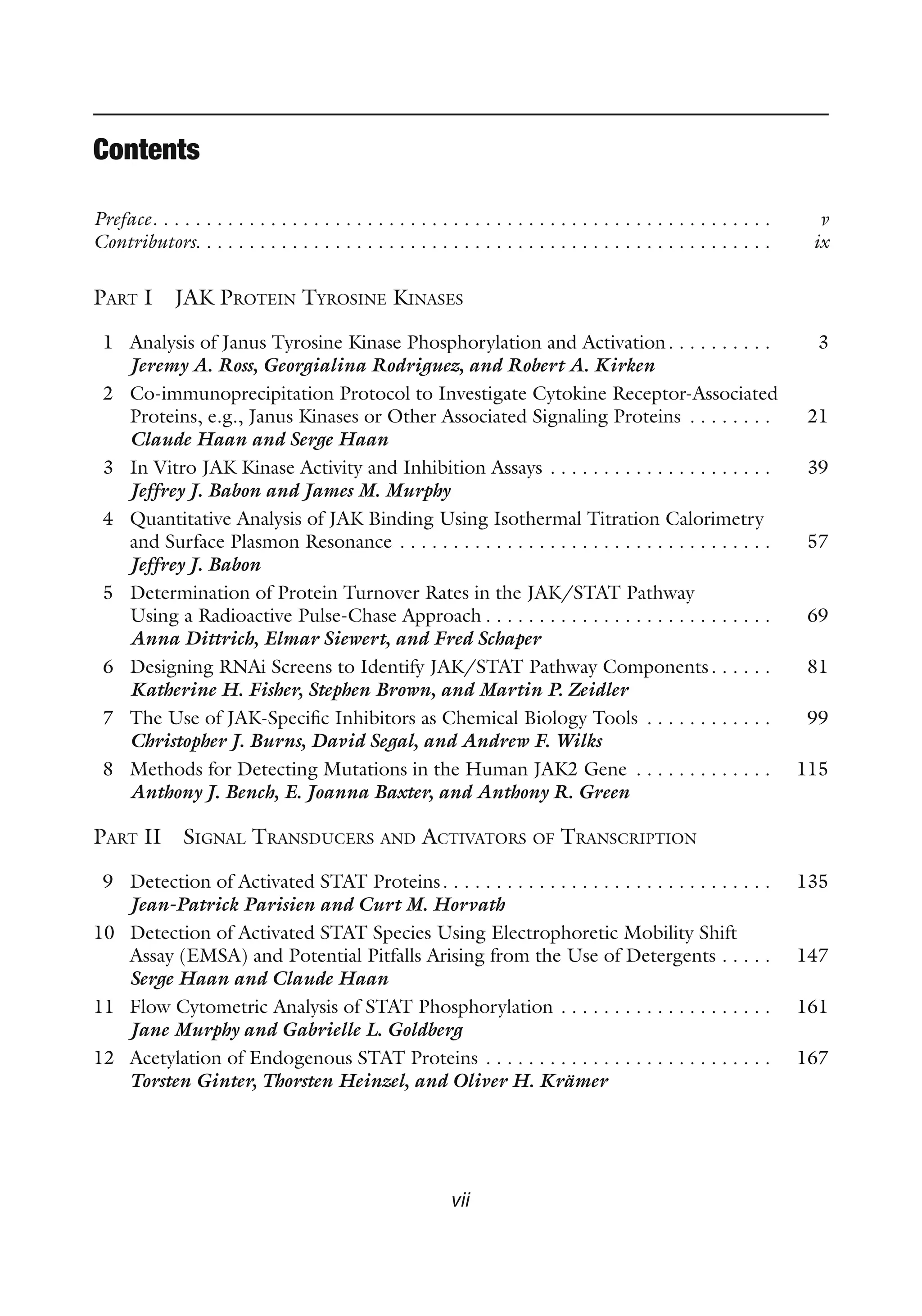
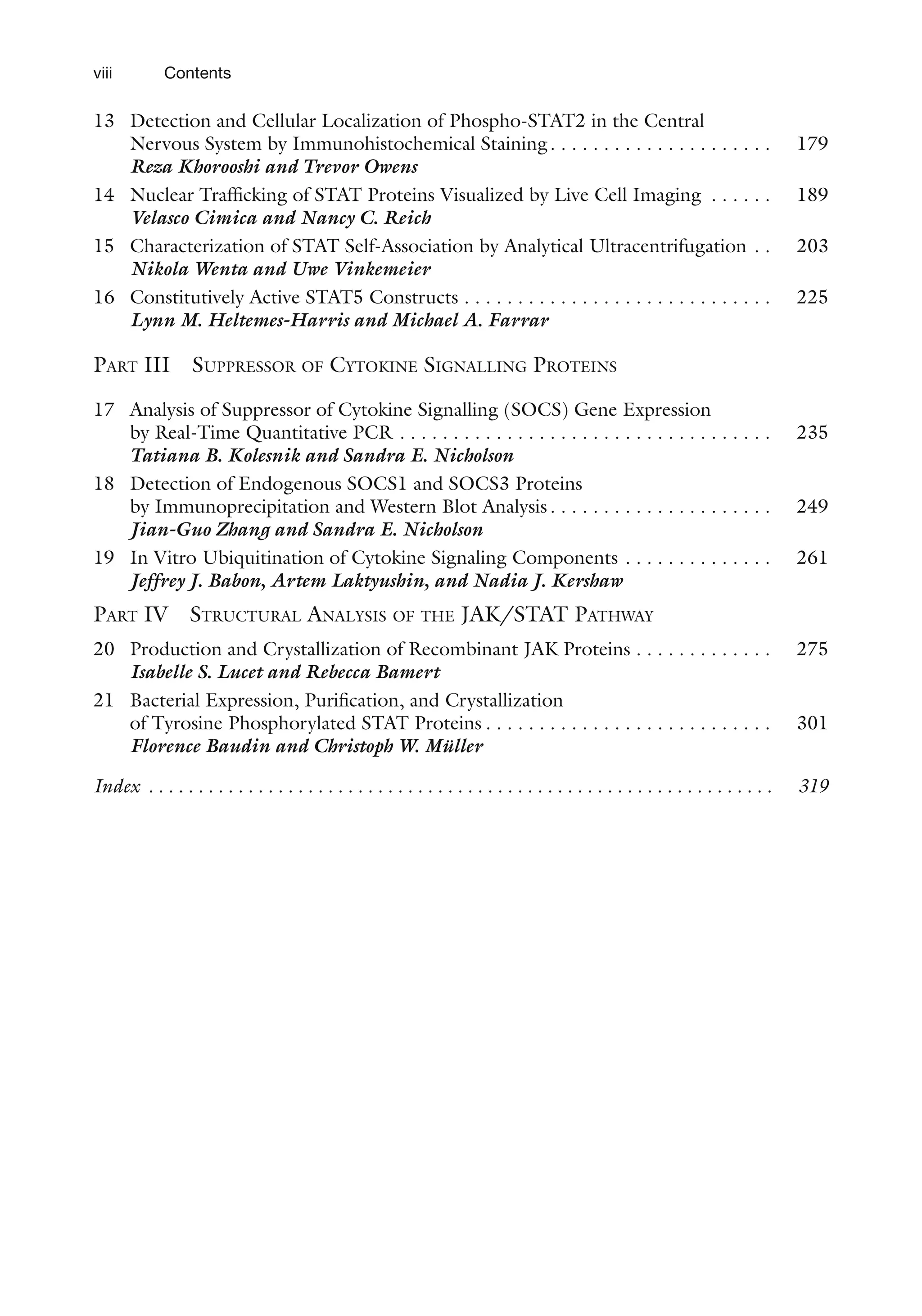



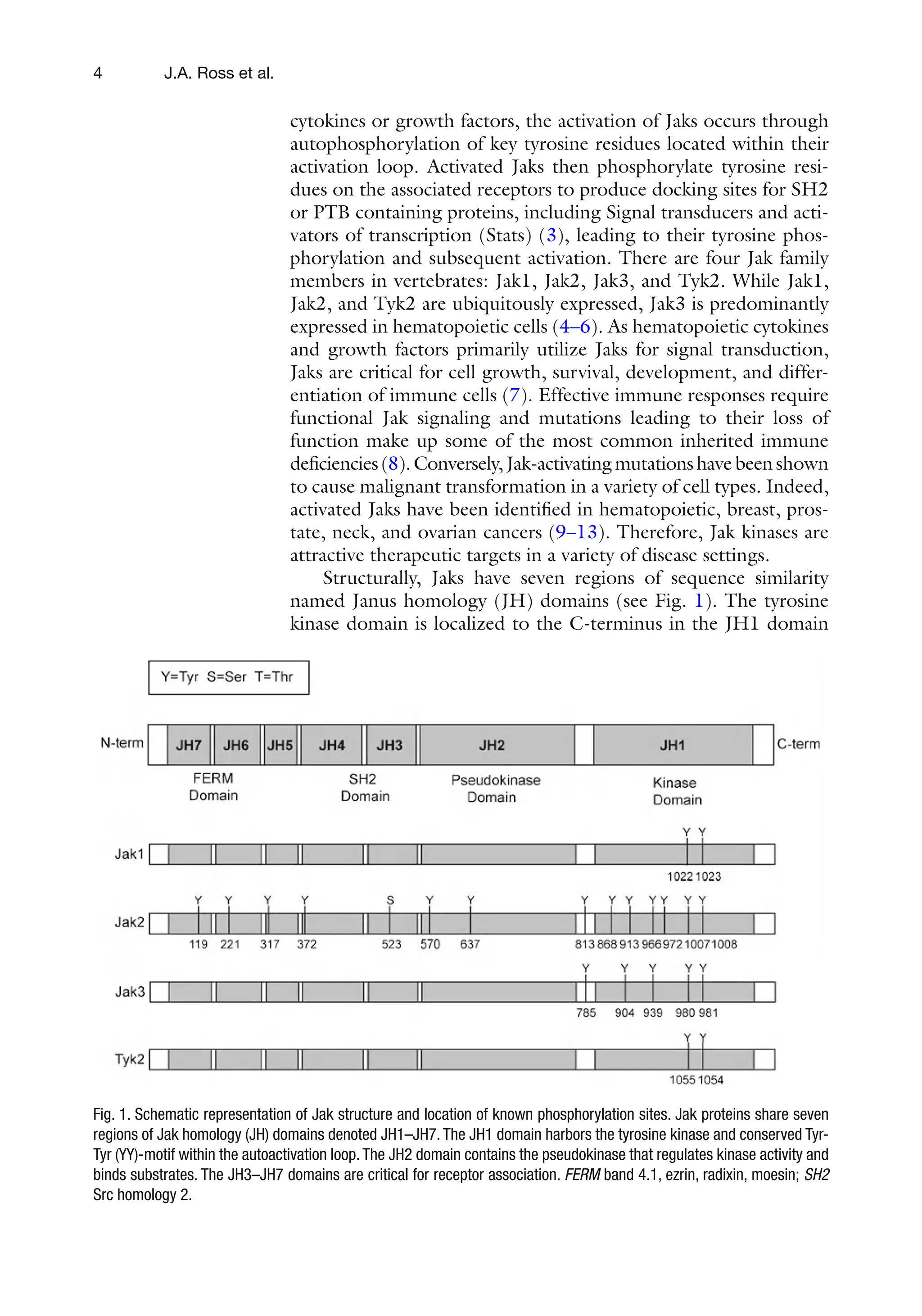

![here the various counts on which the miserable woman was tried
and condemned, the whole painful and revolting story having
already been amply told.[163] Great excitement prevailed throughout
the country, and those who hated Anne most were horror-struck at
the scanty show of justice that accompanied her trial. On the 17th
May, Cranmer declared Elizabeth illegitimate, pronouncing the
marriage of her parents null and void from the beginning. This was a
preliminary step to Anne’s execution, sentence of death having been
passed in the secular courts. If “the Concubine” had been really
proved guilty of the grave charges of immorality brought against her,
and if her marriage had been condemned on a sound judicial basis,
there would have been few to grieve for her fall; but Englishmen
have ever been advocates of fair play, and there was some
murmuring at the mode of procedure throughout her hurried trial.
Cranmer had shown himself terrified at the possible result to himself,
for his share in her advancement, and was suspiciously pliant in the
matter of the sentence of divorce. The evidence produced against
her in court was neither confirmed nor rebutted, but some was
suppressed, as it was alleged to be unfit for decent ears.[164]
Henry’s own hypocritical and heartless conduct during the
fortnight that elapsed between Anne’s arrest and execution
disgusted even his friends. On the day of her committal to the
Tower, the Duke of Richmond went as usual to ask his father’s
blessing, when Henry, with tears in his eyes, said that both he and
his sister Mary ought to thank God for having escaped from the
hands of that woman, who had planned their death by poison, “from
which I conclude,” added Chapuys, “that the King knew something
of her wicked intentions”.[165] Early in the course of events, Chapuys
wrote to the Emperor:—
“Already it sounds badly in the ears of the public, that the King,
after such ignominy and discredit as the Concubine has brought on
his head, should manifest more joy and pleasure now since her
arrest and trial, than he has ever done on other occasions; for he
has daily gone out to dine here and there with ladies, and](https://image.slidesharecdn.com/76798-250415034519-f79fed1c/75/JAK-STAT-Signalling-Methods-and-Protocols-1st-Edition-Jeremy-A-Ross-22-2048.jpg)
![sometimes has remained with them till after midnight. I hear that on
one occasion, returning by the river to Greenwich, the royal barge
was actually filled with minstrels and musicians of his chamber,
playing on all sorts of instruments or singing; which state of things
was by many a one compared to the joy and pleasure a man feels in
getting rid of a thin, old and vicious hack, in the hope of getting
soon a fine horse to ride—a very peculiarly agreeable task for this
King.”[166]
In the meanwhile, Jane Seymour had been sent to a house about
seven miles from London, where Henry could see her daily when he
was at Hampton Court, and on the 14th May she was lodged with
semi-royal magnificence, at a house on the Thames, in order to be
near him at Greenwich. None of these movements were lost on the
people, or on Chapuys, who expressed his opinion unreservedly that
“the little Bastard would be excluded from the succession,” and that
the King would “get himself requested by Parliament to marry”.
On the 15th, Henry sent a message to Jane, to the effect that she
would hear of Anne’s condemnation at three o’clock that afternoon,
and shortly after dinner, the words were verified. On the 19th, the
day of her execution, as soon as the news of her death was brought
to him, he entered his barge, and went to spend the day with Jane.
The following morning, they were betrothed, not married, as many
writers have stated, the marriage ceremony taking place ten days
later.
Anne had persisted to the last, in the declaration of her innocence;
but the often quoted letter, supposed to have been written by her to
Henry from the Tower, and which Burnet printed[167] as authentic,
because he had found it among Cromwell’s papers, must now be
considered spurious. That it should ever have been regarded as
genuine, is among the unaccountable beliefs that have obtained
concerning this much misrepresented woman. It proclaims itself a
forgery by the style of its composition and mode of expression,
entirely unlike any of Anne’s recognised and undisputed letters. The](https://image.slidesharecdn.com/76798-250415034519-f79fed1c/75/JAK-STAT-Signalling-Methods-and-Protocols-1st-Edition-Jeremy-A-Ross-23-2048.jpg)
![speeches also imputed to her before her execution must be taken
with extreme caution, the opportunity being favourable to romance
writers of every subsequent period, to invent sentiments which
neither would nor could have been uttered or recorded, so great was
the terror in which Henry was held by ministers, judges, courtiers,
and the people. On the other hand, doubt has been thrown on the
authenticity of words and actions which, viewed with their context,
are, to say the least, highly probable. Thus Mr. Friedmann, the able
biographer of Anne Boleyn, while he admits that the one thing that
preyed on her mind was her conduct towards the Princess, discredits
the story of her having thrown herself at the feet of Lady Kingston,
wife of the Lieutenant of the Tower, entreating her as a favour in like
manner to throw herself at the feet of the Lady Mary, and in her
name beseech her to forgive the many wrongs she had brought
upon her.[168] But there is evidence in a letter from Mary to
Cromwell, dated 26th May 1536, that Lady Kingston was then
present with her, and it is unlikely that she would have been sent to
announce Anne’s death, unless she had some special message to
deliver. In this letter, as if in response to Anne’s petition for pardon,
Mary in mentioning her fallen enemy adds, “whom I pray our Lord of
His great mercy to forgive”.[169] Moreover, Chapuys told Cardinal
Granvelle, that on her way to the scaffold, “the Concubine declared
that she did not consider herself condemned by divine judgment,
except for being the cause of the ill-treatment of the Princess, and
for having conspired her death”.[170]
Although Henry took no pains to conceal the satisfaction he felt at
his deliverance from Anne, he chose to pretend that he was heart-
broken at her wickedness, and Cranmer, whose safety depended on
a servile acquiescence in his master’s every whim, begged him
“somewhat to suppress the deep sorrows of his Grace’s heart, and
do violence to himself, by accepting with patience and cheerfulness
the decrees of Providence”.[171]](https://image.slidesharecdn.com/76798-250415034519-f79fed1c/75/JAK-STAT-Signalling-Methods-and-Protocols-1st-Edition-Jeremy-A-Ross-24-2048.jpg)
![In truth, not Henry alone, but the whole nation breathed more
freely, and the horror inspired by the injustice of Anne’s trial cannot
be said to have extended to any feeling of regret for her untimely
end. On the day of her execution, Chapuys, keenly observant of all
that went on at court, and of its effect upon the nation, wrote:—
“The joy shown by this people every day, not only at the ruin of
the Concubine, but at the hope of the Princess Mary’s restoration, is
inconceivable, but as yet, the King shows no great disposition
towards the latter; indeed he has twice shown himself obstinate,
when spoken to on the subject by his Council. I hear, that even
before the arrest of the Concubine, the King, speaking with Mistress
Jane Semel of their future marriage, the latter suggested that the
Princess should be replaced in her former position; and the King told
her she was a fool, and ought to solicit the advancement of the
children they would have between them, and not any others. She
replied, that by asking the restoration of the Princess, she conceived
she was seeking the rest and tranquillity of the King, herself, her
future children, and the whole realm; for without that, neither your
Majesty nor this people would ever be content. Such a wish,”
continues the ambassador, “on the part of the said lady, is very
commendable, and I purpose using all means in my power, in
keeping her to her good intentions. I also mean to go to the King
about it two or three days hence, and visit one by one, the members
of the Privy Council, and if I can personally, or by means of my
friends, influence some of the lords and gentlemen, who have been
summoned for the next Parliament, which is to meet on the 8th of
next month, I shall not fail to do so.”[172]
Chapuys did not exaggerate the nation’s joyful expectation that
Mary would be restored to favour, and that the people would be
allowed to enjoy the sight of her once more. His testimony is
corroborated in various ways, one of the most striking proofs of her
popularity being contained in a French poem, written and printed in
London in the beginning of June 1536. This poem, which gives a
singularly accurate description of Anne Boleyn’s life, promotion and](https://image.slidesharecdn.com/76798-250415034519-f79fed1c/75/JAK-STAT-Signalling-Methods-and-Protocols-1st-Edition-Jeremy-A-Ross-25-2048.jpg)
![disgrace, is highly eulogistic of Mary’s goodness and charms. In
expressing the universal satisfaction displayed at the prospect of her
speedy return to court, the writer continues:—
Et n’eussiez veu jusque aux petits enfans
Que tous chantans, et d’aise triomphans.
Il n’y a cueur si triste qui ne rye
En attendant la princesse Marie.
It was impossible for Henry to ignore the immense popular
enthusiasm of which Mary was the object, and it hampered him
considerably, for he was not by any means prepared to acknowledge
himself in the wrong, by replacing her in his good graces
unconditionally. The desire of the nation, combined with Jane’s
influence and his own much-vaunted affection, did not equal his
obstinacy and vanity. Only, as the above-mentioned poem goes on to
relate, when the enthusiasm developed into impatience, and a
rumour was circulated that he had sent for her, and had shown her
kindness, did he realise that it might be prudent to reckon with the
Londoners. Fearing a disturbance, if he did not show some sign of
relenting, he sent them a condescending message, in which he
thanked them for their goodwill to him and his daughter, and held
out hopes of their speedy reconciliation.[173]
But Henry was still hedged in with difficulties, and he had far more
to consider than a mere peace-making with an eager, affectionate
daughter of twenty, whom all, except those whose interest it was to
keep them apart, agreed in praising. To give Mary back her rights
without terms, would be tantamount to submission to the Pope,
whose decree he had treated with open scorn and defiance, to
humbling himself before the Emperor, after the haughty tone he had
assumed in his letters to him, and to climbing down in the eyes of
his ally, the King of France. And while on the one hand, he would be
able to secure a powerful friend by bestowing her on a candidate of
the Emperor, he would on the other, cease to be an important factor
in the game of European politics. His strength, he knew, lay in
temporising, in being considered a valuable prize in petto to Francis](https://image.slidesharecdn.com/76798-250415034519-f79fed1c/75/JAK-STAT-Signalling-Methods-and-Protocols-1st-Edition-Jeremy-A-Ross-26-2048.jpg)
![desired a reconciliation with us, if he moved us to alter anything for
the satisfaction of the Bishop of Rome, our enemy. As to the
legitimatation of our daughter Mary, if she will submit to our grace,
without wrestling against the determination of our laws, we will
acknowledge her and use her as our daughter; but we would not be
directed or pressed herein, nor have any other order devised for her
entertainment, than should proceed from the inclination of our own
heart, being moved by her humility, and the gentle proceedings of
such as pretend to be her friends. God has not only made us King by
inheritance, but has given us wisdom, policy, and other graces in
most plentiful sort, necessary for a prince to direct his affairs by, to
his honor and glory; and we doubt not, the Emperor thinks it meet
for us to order things here without search of foreign advice, as for
him or any other prince to determine their affairs without our
counsel. We trust that we have proceeded in all that we have
enterprised with such circumspection, that no one who looks with an
indifferent eye upon our foundation, which is God’s law, shall have
cause to be miscontented, but rather judge of us as a most
Christian, prudent, victorious and politic prince. If princes, by reason
of foreign marriages should be directed in the ordering of their issue
by the parents or allies of their wives, and, as it were, controlled, as
if they had committed themselves by such marriages to other
princes’ ‘arbitres,’ who can by no means know the truth of their
proceedings, the servitude thereof would appear so great, that
wisdom would allow no prince to marry out of his realm.
Notwithstanding such marriages, princes have meddled but little in
foreign affairs, unless the title of inheritance has descended thereby
to them. We doubt not, that the Emperor will not intricate himself
with our affairs more than he honourably may, and agreeably to the
amity which should be between Christian princes.”[174]
To this the Emperor replied in a long letter, the conclusion of
which ran:—
“As to the Princess, our cousin, we also hold that the King will act
like a good and natural father, especially considering her great](https://image.slidesharecdn.com/76798-250415034519-f79fed1c/75/JAK-STAT-Signalling-Methods-and-Protocols-1st-Edition-Jeremy-A-Ross-28-2048.jpg)
![virtues and good qualities; but our near relationship, and the great
worth of the said Princess, compel us to urge the King to have a
fatherly regard for her. Nor does it seem unreasonable that kinsmen
should intercede with fathers for their children; and we do so all the
more, because we have always thought, that if the King has in any
degree withheld his favour from her, it has not been of his own
motion, but by sinister reports of others. So we think he will take our
intercession in good part, as we would do in the case of our own
children, of whom, if he consolidate this amity, we shall consider him
another father.”[175]
The Emperor’s compliments with reference to Henry’s “fatherly
regard” for Mary were not altogether insincere. Her position had
been made less humiliating in various ways. In March, it was
observed that Cromwell, in speaking of her, put his hand to his cap,
and the secretary, Pate, emboldened by the turn affairs had taken,
expressed his ardent desire that the King “would not suffer that
redolent flower to be deprived of the sun’s warmth, and to wither
away”.[176]
The change was, no doubt, to be attributed to Jane Seymour’s
influence, as far as it went, but it was never very great, her power
never being equal to her will to help Mary, who was not slow to
perceive that a crisis was imminent; and buoyed up with hope, as
soon as an opportunity occurred, she wrote to Cromwell:—
“Master Secretary,
“I would have been a suter to you before this time, to have been
a mean for me to the King’s grace my father, to have obtained his Grace’s
blessing and favour; but I perceived that nobody durst speak for me, as
long as that woman lived which now is gone, whom I pray our Lord of his
great mercy to forgive. Wherefore, now she is gone, I am the bolder to
write to you, as she which taketh you for one of my chief friends. And,
therefore, I desire you, for the love of God, to be a suitor for me to the
King’s grace, to have his blessing, and licence to write unto his grace,
which shall be a great comfort for me, as God knoweth, who have you
evermore in his holy keeping. Moreover, I must desire you to accept mine
evil writing. For I have not done so much this two year and more, nor](https://image.slidesharecdn.com/76798-250415034519-f79fed1c/75/JAK-STAT-Signalling-Methods-and-Protocols-1st-Edition-Jeremy-A-Ross-29-2048.jpg)
![could not have found the meanes to do it at this time, but by my Lady
Kingston’s being here.
“At Hounsdon, the 26 of May (1536).
“By your loving friend
“Marye.”[177]
The series of letters which follow on this simple, natural effusion
are of so painful a character, that were it not necessary for the clear
understanding of the impending crisis in Mary’s life, to print them
here entire, the temptation would be great to pass them over with a
general indication of their contents. But the matter is one that may
not be dealt with superficially, and the text of the somewhat
discursive correspondence which passed between Mary, Cromwell
and Henry is indispensable if we would estimate the extent of the
mental torture the Princess was called upon to undergo, at the very
time when she hoped that her worst trials were over. Her father’s
tyranny, far from having exhausted its resources, culminated in an
act so brutal, that it removes him for ever beyond the pale of
humanity. It is a question whether, in all Mary’s sad and troubled life,
the saddest moment was not now approaching. Gradually, the
bright, eager tone of her letters dies down, and, in place of the
hopeful strain, is one of abject grovelling at Henry’s feet. The later
letters of the series are, indeed, written either from Cromwell’s
dictation, or are copied from his drafts, but the pen is Mary’s; and
the fact that she was now brought to renounce, at least formally, her
birthright, her pious faith in her mother’s honour and dignity,
together with all that she held most dear, places her in a position
than which there could hardly be a more painful. But nothing short
of this total abandonment of herself to his despotic will would satisfy
the “most Christian, prudent, victorious and politic prince,” her
father.[178]
Cromwell’s answer to the above letter has not been preserved, but
its tenor may be inferred by another from the Princess Mary, dated
the 30th May:—](https://image.slidesharecdn.com/76798-250415034519-f79fed1c/75/JAK-STAT-Signalling-Methods-and-Protocols-1st-Edition-Jeremy-A-Ross-30-2048.jpg)
![“Master Secretary,
“In as hearty manner as I can devise, I recommend me unto
you, as she which thinketh her self much bound unto you, for the great
pain and labour that you have taken for me, and specially for obtaining of
the King my father’s blessing and licence to write unto his Grace; which
are two of the highest comforts that ever came to me: desiring you of
your gentle and friendly continuance in your suit for me, wherein (next
unto God) I trust you shall find me as obedient to the King’s grace as you
can reasonably require of me. Wherefore I have a great hope in your
goodness, that by your wisdom, help and means, his Grace shall not only
withdraw his displeasure, but also that it may like his Grace (if it may
stand with his gracious pleasure) to licence me to come into his presence,
for the which I pray you in the honour of God to be a continual suitor for
me, when your discretion shall think the time most convenient. For it is
the thing which I ever have and do desire above all worldly things. And in
all these things, good Mr. Secretary, for the love of him that all comfort
sendeth, I beseech you to be my most humble petitioner, and that in like
case (I take God to be my Judge) I would be for you, if the same did lie in
my power. And thus I must desire you to accept this short and evil written
letter. For the rheum in my head will suffer me to write no more at this
time. Wherefore I pray you in all things to give credence to this bearer;
and with this end I commit you to Almighty God, whom I shall pray to be
with you in everything that you go about. From Hounsden, the 30 day of
May (1536).
“By your bounden loving friend
Marye.”[179]
In accordance with the permission obtained, two days later Mary
wrote to her father:—
“In as humble and lowly a manner as is possible for a child to use to
her father and sovereign Lord, I beseech your Grace of your daily
blessing, which is my chief desire in this world. And in the same humble
wise knowledging all the offences that I have done to your Grace, since I
had first discretion to offend unto this hour, I pray your Grace, in the
honour of God, and for your fatherly pity to forgive me them; for the
which I am as sorry as any creature living; and next unto God, I do and
will submit me in all things to your goodness and pleasure, to do with me
whatsoever shall please your Grace, humbly beseeching your Highness to
consider that I am a woman and your child, who hath committed her soul
to God, and her body to be ordered in this world, as it shall stand with](https://image.slidesharecdn.com/76798-250415034519-f79fed1c/75/JAK-STAT-Signalling-Methods-and-Protocols-1st-Edition-Jeremy-A-Ross-31-2048.jpg)
![your pleasure; whose order and direction, whatsoever it shall please your
Highness to limit and direct to me I shall most humbly and willingly stand
content to follow, obey and accomplish in all points. And so in the lowliest
manner that I can, I beseech your Grace to accept me, your humble
daughter, which doth not a little rejoice to hear the comfortable tidings,
not only to me, but to all your Grace’s realm, concerning the marriage
which is between your Grace and the Queen, now being your Grace’s wife,
my mother-in-law. The hearing whereof caused nature to constrain me to
be an humble suitor to your Grace, to be so good and gracious Lord and
father to me, as to give me leave to wait upon the Queen, and to do her
Grace such service as shall please her to command me, which my heart
shall be as ready and obedient to fulfill (next unto your Grace) as the
most humble servant that she hath. Trusting in your Grace’s mercy to
come into your presence, which ever hath and shall be the greatest
comfort that I can have within this world; having also a full hope in your
Grace’s natural pity, which you have allwayes used as much or more than
any Prince christened, that your Grace will show the same upon me your
most humble and obedient daughter; who daily prayeth God to have your
Grace in his holy keeping, with a long life, and as much honour as ever
had king, and to send your Grace shortly a Prince, whereof no creature
living shall more rejoice or heartlier pray for continually than I, as my duty
bindeth me.
“From Hounsdon, the first day of June (1536).
“By your Grace’s most humble daughter and handmaid,
“Marye.”[180]
Humble as were these petitions, they elicited no reply from Henry,
and Mary waited in vain for a word of kindness. Gradually it was
borne in upon her, that the favour which she so earnestly implored,
and which seemed to her so simple and easy a thing for the King to
grant, would only be bestowed at the price of a sacrifice too heavy
for her conscience to bear. Her contrition for past offences must not
only be general, and such as any child might express to any father,
but circumstantial and precise, affecting the vital principles for which
she had struggled for four years. On the 6th June, Chapuys told the
Emperor, that in an interview with Cromwell, the Secretary had
declared it to be absolutely necessary that Mary should write a letter,
according to a draft which he (Cromwell) had prepared, “in the most](https://image.slidesharecdn.com/76798-250415034519-f79fed1c/75/JAK-STAT-Signalling-Methods-and-Protocols-1st-Edition-Jeremy-A-Ross-32-2048.jpg)
![honourable and reasonable form that could be”. He had, he said, by
the King’s command, sent a very confidential lady to solicit the
Princess to do this, and that to avoid scruple, he wished that
Chapuys would write to her, and send one of his principal servants to
persuade her to make no difficulties about writing the said letter,
which he intended to have translated from English into Latin, that
Chapuys might see that it was quite honourable. There was,
Chapuys thought, “some bird-catching attempted,” and he warned
Mary. But meanwhile Cromwell visited him at his lodging, and told
him that the King and Queen were wonderfully well pleased at the
letters which Mary had written, in which, however, the ambassador
told Charles that there was nothing corresponding to Cromwell’s
draft, nor anything that could prejudice her.
Mary’s next two letters, the one addressed to the chief Secretary,
the other to Henry, dated respectively the 7th and 8th June, were
evidently written in an agony of suspense, and of that hope deferred
which “afflicteth the soul”.
“Good Mr. Secretary,
“I think so long to hear some comfort from the King’s grace my
father, whereby I may perceive his Grace of his princely goodness and
fatherly pity to have accepted my letter, and withdrawn his displeasure
towards me, that nature moveth me to be so bold to send his Grace a
token, which my servant this bearer hath to deliver to you, or to any other
at your appointment, desiring you (for the love of God) to find some
meanes by your wisdom and goodness, that the King may be so good and
gracious Lord to me, as to send me a token; which I assure you, shall be
one of my greatest worldly comforts, till it shall please his Grace to license
me to come into his most desired presence; the sute whereof my full trust
is in you, that you will not forgett, when you shall see the time
convenient. And thus I commit you to God, whom I both do and shall
dayly pray to reward you, for your great paines and labours taken at all
times for me.
“From Hownsdon the 7 day of June (1536).
“By your assured and loving friend during my life,
“Marye.”[181]](https://image.slidesharecdn.com/76798-250415034519-f79fed1c/75/JAK-STAT-Signalling-Methods-and-Protocols-1st-Edition-Jeremy-A-Ross-33-2048.jpg)
![Her letter to the King ran thus:—
“In as humble and lowly manner as is possible for me, I beseech your
Grace of your daily blessing, by the obtaining whereof, with licence also to
write unto your Grace, albeit I understand to mine inestimable comfort,
that your princely goodness and fatherly pity hath forgiven all mine
offences, and withdrawn your dreadful displeasure, long time conceived
against me, yet shall my joy never be full, nor my hope satisfied unto such
time as your Grace vouchsafe more sensibly to express your reconciled
heart, love and favour towards me, either by your gracious letters, or else
some token, till I may by your merciful calling and sufferance attain the
fruition of your most desired presence; for the which, I humbly desire
your Grace to pardon me, though I trouble you with my continual sute
and rude writing; for nature will suffer me to do none otherwise: and that
obtained, I shall have my chief worldly joy and desire, as I take Almighty
God to my record, whom I do and shall daily pray (as I am bound by my
duty) to preserve your Grace and the Queen with long life and much
honour, and shortly to send a Prince between you both. Which shall be
gladder tidings to me than I can express with writing.
“From Hownsdon the viii. day of June. By your Grace’s most humble and
obedient daughter and handmaid,
“Marye.”[182]
The above is the last of this series of letters which Mary wrote to
her father without help or suggestion from Cromwell. Abject as was
the tone of them all, Cromwell, anxious, for reasons of his own, to
make peace between Henry and his daughter, saw clearly that this
would not be effected, unless she could be brought categorically to
declare herself illegitimate. The King was determined on it, in order
that failing legitimate male issue, he might have some show of
reason for putting his natural son, the Duke of Richmond, forward as
his successor. This project could be furthered by nothing that she
had hitherto written, and the chief Secretary now began to give her
advice as to the wording of her appeals. The result of this advice
was a letter written on the 10th June, the beginning and end of
which were little else than repetitions of her former expressions of
sorrow for past offences, desire for forgiveness and admission into
the King’s “most noble presence”. But in the middle occurs this](https://image.slidesharecdn.com/76798-250415034519-f79fed1c/75/JAK-STAT-Signalling-Methods-and-Protocols-1st-Edition-Jeremy-A-Ross-34-2048.jpg)
![sentence: “Eftsoones therefore, most humbly prostrate before your
noble feet, your most obedient subject and humble child, that hath
not only repented her offences hitherto, but also decreed simply
from henceforth and wholly next to Almighty God, to put my state,
continuance and living in your gracious mercy, and likewise to accept
the condition of your disposition and appointment, whatsoever it
shall be”.[183]
This letter she sent to Cromwell with the following:—
“Good Master Secretary,
“I do send you by this bearer, my servant, both the King’s highness’
letter sealed, and the copy of the same again to you, whereby I trust you
shall perceive that I have followed your advice and counsell, and will do in
all things concerning my duty to the King’s Grace (God and my conscience
not offended) for I take you for one of my chief friends, next unto his
Grace and the Queen. Wherefore, I desire you, for the passion which
Christ suffered for you and me, and as my very trust is in you, that you
will find such meanes through your great wisdome, that I be not moved to
agree to any further entry in this matter than I have done. For I assure
you, by the faith that I owe to God, I have done the uttermost that my
conscience will suffer me; and I do neither desire nor intend to do less
than I have done. But if I be put to any more (I am plain with you as with
my great friend) my said conscience will in no wayes suffer me to consent
thereunto. And this point except, you nor any other shall be so much
desirous to have me obey the King, as I shall be ready to fulfill the same.
For I promise you (as I desire God to help me at my most need) I had
rather loose the life of my body, than displease the King’s Grace willingly.
Sir, I beseech you for the love of God to take in good worth this rude
letter. For I would not have troubled you so much at this time, but that
the end of your letter caused me a little to fear that I shall have more
business hereafter. And thus I commit you to God, whom I do and shall
dayly pray to be with you in everything that you go about. From
Hownsdon the x. of June.
“Your assured bounden loving friend during my life,
“Marye.”[184]
Mary’s surmises were correct. “More business” was pending, and
meanwhile her letters only gave dissatisfaction. The contents of](https://image.slidesharecdn.com/76798-250415034519-f79fed1c/75/JAK-STAT-Signalling-Methods-and-Protocols-1st-Edition-Jeremy-A-Ross-35-2048.jpg)
![clemency and pity of your Grace, and upon the operation of the same, at
the last also to have attained the fruition of your most noble presence,
which above all worldly things I desire: yet I have not obtained my said
fervent and hearty desire, ne any peice of the same to my great and
intolerable discomfort I am enforced, by the compulsion of nature,
eftsones to cry unto your mercifull eares, and most humbly prostrate
before your feet, to beseech your Grace to have pity and compassion of
me, and in such wise to put apart your displeasure, justly conceived
against me, as I may feel some piece of your most abundant grace, that
hath never wanted to them that have inwardly repented their offences,
not committed by malice, but by yonghe frailty and ignorance. For yet I
remain almost void of all hope, saving the confidence I have in your
blessed nature recomforteth me. And therefore eftsones, prostrate at your
noble feet I beseech your Majestie to countervail my transgressions with
my repentance for the same, and thereupon to grant some little spark of
my most humble suit and desire, which (God is my judge) I desire for no
worldly respect, trusting in Almighty God, to use myself so from
henceforth as your Grace shall have cause to think your mercy and pity
well extended unto me. To whom I shall daily pray (as I am most
bounden) to preserve your Highness, with the Queen, and shortly to send
you issue, which shall be gladder tidings to me than I can express in
writing.
“From Hunsdon the xiii day of June.
“Your most humble and obedient daughter and handmaid,
“Marye.“[185]
It was clearly anticipated that Mary’s progress, by almost
imperceptible degrees, from vague expressions of repentance to a
definite surrender of her will for the future, would have prepared the
victim for the final coup. Immediately after receiving the above
transcript of Cromwell’s draft, Henry sent commissioners to
Hunsdon, summoning her to accept the new statute, and to affix her
signature to a statement, declaring her own illegitimacy, which had
been drawn up with the most ruthless and humiliating detail.
To Henry’s fury and Cromwell’s consternation Mary refused to sign.
The Chief Secretary had pledged himself to reduce her to
submission, and he knew by experience, that with his master, failure
spelt treason, and he trembled accordingly. His answer to Mary’s](https://image.slidesharecdn.com/76798-250415034519-f79fed1c/75/JAK-STAT-Signalling-Methods-and-Protocols-1st-Edition-Jeremy-A-Ross-37-2048.jpg)
![appeals was brutal in the extreme, yet knowing as we do by the light
of after events, that he was not only arrested, but condemned and
executed for far less than complicity in Mary’s disobedience, we can
scarcely wonder at his tone towards her. None, with the single
exception perhaps of Cranmer, knew Henry so well as his chief
minister, and to know him was with all time-servers to fear
exceedingly.
“Madam [he wrote],
“I have received your letters, whereby it appeareth you be in great
discomfort, and do desire that I should find the means to speak with you.
For answer whereunto, ye shall understand, that how great so ever your
discomfort is, it can be no greater than mine, who hath upon your letters
spoken so much of your repentance for your wilfull obstinacy against the
King’s Highness, and of your humble submission in all things, without
exception and qualification, to obey to his pleasure and laws, that
knowing how diversely and contrarily you proceeded at the late being of
his Majesty’s counsell with you, I am both ashamed of that I have said,
and likewise afraid of that I have done; in so much that what the sequel
thereof shall be God knoweth. Thus with your folly you undoe yourself,
and all that hath wished your good; and yet I will say unto you, as I have
said else where heretofore; that it were great pity ye should not be an
example in a punishment, if ye will make yourself an example in the
contempt of God, your natural father and his lawes, by your own only
fantasie, contrary to the judgements and determinations of all men, that
ye must confess do know and love God as well as you, except you will
show yourself presumption. [Hearne says: “Evidently a mistake for
presumptuous as in the margin of Dr. Smith’s copy”.] Wherefore, Madam,
to be plain with you, as God is my witnes, like as I think you the most
obstinate and obdurate woman all things considered, that ever was, and
one that so persevering, well deserveth the reward of malice in extremity
of mischief: so I dare not open my lips to name you, unless I may have
such a ground thereunto, that it may appear you were mistaken, or at
least that you be both repentant for your ingratitude and miserable
unkindness, and ready to do all things that ye be bound unto by your duty
of allegiance, if nature were secluded from you, and in a like degree
planted in the same, as it is in every other common subject. And
therefore, I have sent unto you a certain book of articles whereunto if you
will sett your name, you shall undoubtedly please God, being the same
conformable to his truth, so as you will in semblable manner conceive it in
your heart without dissimulation. Upon the receipt whereof again from](https://image.slidesharecdn.com/76798-250415034519-f79fed1c/75/JAK-STAT-Signalling-Methods-and-Protocols-1st-Edition-Jeremy-A-Ross-38-2048.jpg)
![you, with a letter declaring that you think in heart that you have
subscribed with hand, I shall eftsones adventure to speak for your
reconciliation. And if you will not with speed leave all your sinister
counsells, which have brought you to the point of utter undoing, without
remedy, and herein follow mine advice, I take my leave of you for ever,
and desire you never to write or make mean unto me hereafter. For I will
never think you other than the most ungrateful, unnatural and most
obstinate person living, both to God and your most dear and benign
father. And I advise you to nothing, but I beseech God never to help me,
if I know it not so certainly to be your bounden duty, by God’s laws and
man’s laws, that I must needs judge that person that shall refuse it, not
meet to live in a Christian congregation; to the witness whereof I take
Christ, whose mercy I refuse, if I write anything unto you that I have not
professed in my heart and know to be true.”[186]
We are indebted to Chapuys’ letter to the Emperor, dated 1st July
1536, for a detailed account of the matter that had excited
Cromwell’s ire.
“When the Princess, having written several good letters to the
King her father and to this Queen, expected to be out of her trouble,
trusting to the hope held out to her, she found herself in the most
extreme perplexity and danger she had ever been in, and not only
herself, but all her principal friends. The King, seven or eight days
after the departure of the man whom I sent to your Majesty, took a
fancy to insist that the Princess should consent to his statutes, or he
would proceed by rigour of law against her, and to induce her to
yield, sent to her the duke of Norfolk, the earl of Sussex, the bishop
of Chester and certain others, whom she confounded by her wise
and prudent answers, till they, seeing that they could not conquer
her in argument, told her that since she was so unnatural as to
oppose the King’s will so obstinately, they could scarcely believe she
was his bastard, and if she was their daughter, they would beat her
and knock her head so violently against the wall, that they would
make it as soft as baked apples, and that she was a traitress and
should be punished, and several other words. And her gouvernante
was commanded not to allow any one to speak to her, and that she
and another should never lose sight of her, day or night.
Nevertheless, the said Princess found means to send me immediate](https://image.slidesharecdn.com/76798-250415034519-f79fed1c/75/JAK-STAT-Signalling-Methods-and-Protocols-1st-Edition-Jeremy-A-Ross-39-2048.jpg)
![information of everything, begging me not to leave her without
counsel in her extreme necessity.
“On this I wrote to her very fully, telling her among other things,
that she must make up her mind, if the King persisted in his
obstinacy, or she found evidence that her life was in danger, either
by maltreatment or otherwise, to consent to her father’s wish,
assuring her that such was your advice, and that to save her life, on
which depended the peace of the realm, and the redress of the
great evils which prevail here, she must do everything, and
dissemble for some time, especially, as the protestations made, and
the cruel violence shown her, preserved her rights inviolate, and
likewise her conscience, seeing that nothing was required expressly
against God, or the articles of the Faith, and God regarded more the
intention than the act; and that now she had more occasion to do
thus than during the life of the Concubine, as it was proposed to
deprive the Bastard, and make her heiress; and I felt assured that if
she came to Court, she would by her wisdom set her father again in
the right road, to which the intercession of your Majesty through the
reconciliation and establishment of amity would conduce.”[187]
The King suspected that Mary was advised to hold out by certain
of her attendants, and made strict inquiries. Several of her ladies
were called before the Council, and made to swear to the statutes.
The wife of her Chamberlain, whom Chapuys designates as “one of
the most virtuous ladies in England,” was sent to the Tower, while
Mary’s chief confidential servant was detained for two days in
Cromwell’s house. The Council sat for six or seven days from
morning till night without intermission, deliberating on Mary’s fate.
Cromwell, suspected of having shown himself too favourable to the
Princess, was not free from danger. He told Chapuys that for four or
five days he looked upon himself as a lost man and dead. The
Marquis of Exeter and the Lord Treasurer, Fitzwilliam, were dismissed
from the Council as Mary’s friends, and the new Queen, Jane
Seymour, was rudely repulsed for speaking in her favour. Continuing
the above letter, Chapuys said:—](https://image.slidesharecdn.com/76798-250415034519-f79fed1c/75/JAK-STAT-Signalling-Methods-and-Protocols-1st-Edition-Jeremy-A-Ross-40-2048.jpg)
![the Pope, otherwise her conscience could not be at perfect
ease.”[188]
The document to which Henry finally summoned his daughter to
affix her signature was drawn up in the following terms:—
“The confession of me the Lady Mary, made upon certain points
and articles under written, in the which as I do now plainly and with
all mine heart confess and declare mine inward sentence, belief and
judgment, with a due conformity of obedience to the laws of the
realm; so minding for ever to persist and continue in this
determination, without change, alteration or varyance, I do most
humbly beseech the King’s Highness, my father, whom I have
obstinately and inobediently offended in the denyal of the same
heretofore, to forgive mine offences therein, and to take me to his
most gracious mercy. First, I confess and knowledge the King’s
Majesty to be my Soveraign Lord and King, in the imperial Crown of
this realme of England, and do submit myself to his Highness, and to
all and singular lawes and statutes of this realm, as becometh a true
and faithfull subject to do; which I shall also obey, keep, observe,
advance and maintain, according to my bounden duty, with all the
power, force and qualities that God hath induced me, during my life.
”Item.—I do recognize, accept, take, repute and knowledge the King’s
Highness to be supream head in earth under Christ of the Church of
England, and do utterly refuse the Bishop of Rome’s pretended authority,
power and jurisdiction within this Realm heretofore usurped, according to
the laws and statutes made in that behalf, and of all the King’s true
subjects, humbly received, admitted, obeyed, kept and observed. And also
do utterly renounce and forsake all manner of remedy, interest and
advantage which I may by any means claim by the Bishop of Rome’s laws,
process, jurisdiction or sentence, at this present time or in any wise
hereafter, by any manner, title, colour, mean or case that is, shall, or can
be devised for that purpose.
“Marye.
”Item.—I do freely, frankly and for the discharge of my duty towards
God, the King’s Highness and his laws, without other respect, recognize
and acknowledge that the marriage heretofore had between his Majesty](https://image.slidesharecdn.com/76798-250415034519-f79fed1c/75/JAK-STAT-Signalling-Methods-and-Protocols-1st-Edition-Jeremy-A-Ross-42-2048.jpg)
![and my mother, the late Princess dowager, was by God’s law and man’s
law incestuous and unlawfull.
“Marye.”[189]
Thus was the great renunciation made. It was probably the worst
thing that Mary did in her whole life, for there is nothing in her
history on record to compare with this violation of her conscience,
and of all that she held most sacred. To excuse her on the score that
she never gave interior consent to the sacrifice of her mother’s
honour and her own faith would be but a miserable apology. She
yielded indeed less to Cromwell’s threats, than to the Emperor’s
specious arguments, and to the wretchedness of her own forlorn
condition; but her intellect and mental and moral training were such
that she was able to appreciate to the full the extent of her fall, and
it would be doing her a poor service to attempt to palliate her guilt.
Cromwell prepared yet another letter for the hapless victim to
copy, for having drunk the bitter cup to the dregs, she was now
required to thank her father humbly for the boon. The passionless
utilitarian mind of the Chief Secretary was not bent on causing Mary
more pain than was necessary to bring about and perfect the
reconciliation which he had set himself to accomplish. He was not
wantonly cruel; but he understood Henry, and knew that neither his
own head nor Mary’s was safe, until the royal vanity was fed to
repletion. He therefore caused her to write the following letter to her
father on the 15th June, after having signed the articles:—
“Most humbly prostrate before the feet of your most excellent Majestie,
your most humble, faithfull and obedient subject, which hath so extremely
offended your most gracious Highness that mine heavy and fearfull heart
dare not presume to call you father, ne your Majesty hath any cause by
my deserts, saving the benignity of your most blessed nature doth
surmount all evils, offences and trespasses, and is ever mercifull and
ready to accept the penitent calling for grace in any convenient time.
Having received this thursday at night certain letters from Mr. Secretary,
as well advising me to make mine humble submission immediately to your
self, which because I durst not without your gracious licence presume to
do before I lately sent unto him, as signifying that your most mercifull
heart and fatherly pity had granted me your blessing, with condition that I](https://image.slidesharecdn.com/76798-250415034519-f79fed1c/75/JAK-STAT-Signalling-Methods-and-Protocols-1st-Edition-Jeremy-A-Ross-43-2048.jpg)
![should persevere in that I had commenced and begun, and that I should
not eftsones offend your Majesty by the denyal or refusal of any such
articles and commandments as it may please your Highness to address
unto me for the perfect tryal of mine heart and inward affection. For the
perfect declaration of the bottom of my heart and stomack, first I
knowledge my self to have most unkindly and unnaturally offended your
most excellent Highness, in that I have not submitted myself to your most
just and vertuous laws, and for mine offence therein, which I must
confess were in me a thousand fold more grievous, than they could be in
any other living creature. I put my self wholly and entirely to your
gracious mercy, at whose hand I cannot receive that punishment for the
same that I have deserved. Secondly, to open mine heart to your Grace in
these things which I have hitherto refused to condescend unto, and have
now written with mine own hand sending the same to your Highness
herewith. I shall never beseech your Grace to have pity and compassion
of me, if ever you shall perceive that I shall prevyly or apertly vary or alter
from one peice of that I have written and subscribed, or refuse to confirm,
ratifie or declare the same where your Majesty shall appoint me. Thirdly,
as I have and shall, knowing your excellent learning, virtue, wisdom and
knowledge, put my soul into your direction, and by the same hath and will
in all things from henceforth direct my conscience, so my body I do wholly
commit to your mercy and fatherly pity; desiring no state, no condition
nor no manner degree of living, but such as your Grace shall appoint unto
me; knowledging and confessing that my state cannot be so vile as either
the extremity of justice would appoint unto me, or as my offences have
required and deserved; and whatsoever your Grace shall command me to
do, touching any of these points, either for things past, present or to
come, I shall as gladly do the same as your Majesty can command me.
Most humbly therefore, beseeching your mercy, most gracious soveraign
Lord and benign father, to have pity and compassion of your miserable
and sorrowfull child, and with the abundance of your inestimable
goodness to overcome mine iniquities towards God, your Grace, and your
whole realm, as I may feel some sensible token of reconciliation, which,
God is my Judge, I only desire without any respect. To whom I shall dayly
pray for the preservation of your Highness, with the Queen’s grace, and
that it may please him to send you issue. From Hownsdon at 11 of the
clock at night. Your grace’s most humble and obedient daughter and
handmaid,
“Marye.”[190]
Henry was now pleased to accept Mary’s holocaust, and intimated
to her his forgiveness. Cromwell’s hand is again evident in her reply.](https://image.slidesharecdn.com/76798-250415034519-f79fed1c/75/JAK-STAT-Signalling-Methods-and-Protocols-1st-Edition-Jeremy-A-Ross-44-2048.jpg)
![Even now, if left to her own expressions of affection, she might fail
to attain to the proper degree of servility. On the 26th June she
wrote:—
“Most humbly, obediently and gladly, lying at the feet of your most
excellent Majesty, my most dear and benigne soveraigne Lord. I have this
day perceived your gracious clemency and mercifull pity to have overcome
my most unkind and unnatural proceedings towards you and your most
just and vertuous lawes; the great and inestimable joy, whereof I cannot
express ne have any thing worthy to be again presented to your Majesty
for the same your fatherly pity extended towards me, most ingrately on
my part abandoned, as much as in me lay; but my poor heart, which I
send unto your Highness, to remain in your hand, to be for ever used,
directed and framed, whiles God shall suffer life to remain in it, at your
only pleasure; most humbly beseeching your Grace to accept and receive
the same, being all that I have to offer, which shall never alter, vary or
change from that confession and submission which I have made unto your
Highness in the presence of your council and others attending upon the
same; for whose preservation with my most gracious mother the Queen, I
shall daily pray to God, whom eftsones I beseech to send you issue, to his
honour and the comfort of your whole realm.
“From Hounsdon the 26 day of June.
“Your Grace’s most humble and obedient daughter and handmaid,
“Marye.”[191]
FOOTNOTES:
[150] Gairdner, Cal., x., 141.](https://image.slidesharecdn.com/76798-250415034519-f79fed1c/75/JAK-STAT-Signalling-Methods-and-Protocols-1st-Edition-Jeremy-A-Ross-45-2048.jpg)
![[151] Gairdner, Cal., x., 141.
[152] Gayangos, Cal., vol. v., pt. ii., p. 33, Charles V. to the
Empress, Naples, 1st Feb. 1536.
[153] Gairdner, Cal., x., 901. “The said Semel” (Seymour), he
continues, “is not a woman of great wit, but she may have good
understanding.... She bears great love and reverence to the
Princess. I know not if honours will make her change hereafter.”
[154] Gairdner, Cal., x., 307. The original letter, in French, is in the
Vienna Archives.
[155] Gairdner, Cal., x., 351.
[156] Gayangos, Cal., vol. v., pt. ii., p. 39.
[157] Gairdner, Cal., x., 307.
[158] Ibid.
[159] Ibid.
[160] Anne Boleyn, vol. ii., p. 227.
[161] Gairdner, Cal., x., 601.
[162] Gairdner, Cal., x., 601. The ambassador refers here not to
Henry’s former connection with Anne’s sister Mary, but to the
intimacy which by common report had once existed between the
King and the mother of both.
[163] By Mr. Friedmann in his Anne Boleyn.
[164] Perhaps the most damning proof against her is the fact that
her daughter Elizabeth never made the least attempt to rehabilitate
her memory.
[165] Gairdner, Cal., x., 908.
[166] Gayangos, Cal., vol. v., pt. ii., p. 127.
[167] Cotton MS. Otho. C. x., Brit. Mus. Burnet, vol. iv., p. 291.
[168] Anne Boleyn, vol. ii., p. 293.
[169] Cotton MS. Otho C. x., f. 283; printed in Hearne’s Sylloge, p.
140.](https://image.slidesharecdn.com/76798-250415034519-f79fed1c/75/JAK-STAT-Signalling-Methods-and-Protocols-1st-Edition-Jeremy-A-Ross-46-2048.jpg)
![[170] Chapuys to Granvelle, 6th June 1536, Vienna Archives.
Gayangos, Cal., vol. v., pt. ii., p. 574.
[171] Cotton MS. Otho. C. x. f. 230. Burnet, i., 320.
[172] Chapuys to Charles V., Despatch of the 19th May 1536,
Vienna Archives. Gairdner, Cal., x., 908.
[173] Crapelet, Lettres de Henri VIII. p. 167.
[174] Gairdner, Cal., x., 726. Harl. MS. 282, f. 7, Brit. Mus.
[175] Gairdner, Cal., x., 887. Vienna Archives, dated 15th May
1536.
[176] Cotton MS. Vit. B. xiv., 177. This, and all the letters written
by Mary to her father and Cromwell at this time, are to be seen at
the British Museum; they are all written in her own firm, clear
hand, but many of them are much damaged by the fire at Cotton
House.
[177] Cotton MS. Otho C. x., f. 283; printed in Hearne’s Sylloge, p.
140.
[178] Vide his letter to Charles V., p. 111.
[179] Cotton MS. Otho C. x., f. 284. Hearne’s Sylloge, p. 146.
[180] Cotton MS. Otho C. x., f. 265. Hearne, p. 147.
[181] Cotton MS. Otho C. x., f. 286. Hearne, p. 148.
[182] Cotton MS. Otho C. x., f. 287. Hearne, p. 149.
[183] Cotton MS. Otho C. x., f. 271. Hearne, p. 124.
[184] Cotton MS. Otho C. x., f. 270. Hearne, p. 126.
[185] Cotton MS. Otho C. x., f. 272. Hearne, p. 127.
[186] Cotton MS. Otho C. x., f. 280. Hearne, p. 137.
[187] Gairdner, Cal., xi., 7.
[188] Gairdner, Cal., xi., 7.
[189] Harl. MS. 283, f. 114b, 112. Hearne, p. 142.
[190] Harl. MS. 283, f. 111b. Hearne, p. 140.](https://image.slidesharecdn.com/76798-250415034519-f79fed1c/75/JAK-STAT-Signalling-Methods-and-Protocols-1st-Edition-Jeremy-A-Ross-47-2048.jpg)
![[191] Cotton MS. Otho C. x., f. 273, Brit. Mus. Hearne, p. 128.](https://image.slidesharecdn.com/76798-250415034519-f79fed1c/75/JAK-STAT-Signalling-Methods-and-Protocols-1st-Edition-Jeremy-A-Ross-48-2048.jpg)