Iterator	
  Design	
  Pa.ern	
  

      Stewart	
  Gleadow	
  
   University	
  of	
  Melbourne	
  
Intent	
  
•  “Provide	
  a	
  way	
  to	
  access	
  the	
  elements	
  of	
  an	
  
      aggregate	
  object	
  sequen>ally	
  without	
  
      exposing	
  its	
  underlying	
  representa>on”	


  –	
  GoF	
  
Mo3va3on	
  
•  Hide	
  implementa3on	
  details	
  

•  Allow	
  for	
  different	
  traversals	
  

•  Separate	
  traversal	
  code	
  from	
  the	
  list	
  itself	
  
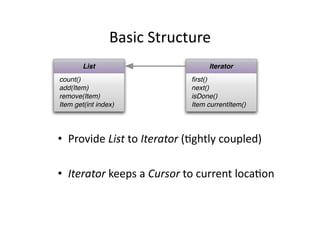
Basic	
  Structure	
  
        List                                  Iterator
count()                                 first()
add(Item)                               next()
remove(Item)                            isDone()
Item get(int index)                     Item currentItem()


•  Provide	
  List	
  to	
  Iterator	
  (3ghtly	
  coupled)	
  

•  Iterator	
  keeps	
  a	
  Cursor	
  to	
  current	
  loca3on	
  
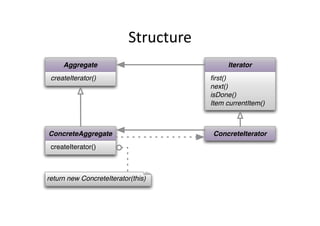
Structure	
  
     Aggregate                                  Iterator
 createIterator()                          first()
                                           next()
                                           isDone()
                                           Item currentItem()


ConcreteAggregate                           ConcreteIterator
 createIterator()


return new ConcreteIterator(this)
Types	
  of	
  Iterators	
  
•  External:	
  client	
  controls	
  the	
  itera3on	
  

•  Internal:	
  iterator	
  controls	
  itera3on	
  
        •  anonymous	
  func3ons	
  
        •  closures	
  /	
  blocks	
  
Applicability	
  
•  List	
  processing	
  &	
  selec3on	
  

•  Tree	
  traversals.	
  eg.	
  depth	
  first	
  

•  Syntax	
  trees	
  -­‐>	
  Interpreter?	
  
Concurrency	
  
•  hasNext()	
  or	
  !isDone()	
  implies	
  subsequent	
  call	
  
   to	
  currentItem()	
  will	
  pass	
  

•  Iterators	
  get	
  a	
  copy	
  of	
  the	
  data?	
  

•  Iterators	
  keep	
  track	
  of	
  modifica3ons?	
  
External	
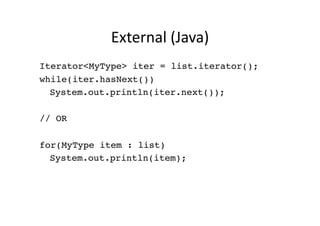
  (Java)	
  
Iterator<MyType> iter = list.iterator();!
while(iter.hasNext())!
 !System.out.println(iter.next());!

// OR!

for(MyType item : list)!
 !System.out.println(item);!
External	
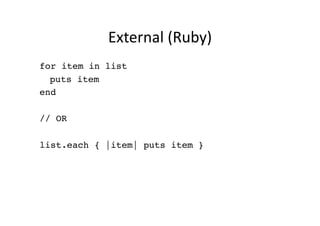
  (Ruby)	
  
for item in list!
 !puts item!
end!

// OR!

list.each { |item| puts item }!
Internal	
  (Java)	
  
public abstract class Internal<T> {!
 !private Iterator<T> iter;!

     public void traverse() {!
        for(T item : iter)!
          process(item);!
     }!

     protected abstract process(T item);!
}!
Internal	
  (Java)	
  
Iterator<T> iter = list.iterator();!
Internal<T> internal = new Internal<T>(iter)!
{!
 !protected void process(T item) {!
 ! ! !if(condition)!
 ! ! ! !System.out.println(item);!
 !}!
};!
Internal	
  (Ruby)	
  

list.each { |item| puts item if condition }!

Iterator Pattern

  • 1.
    Iterator  Design  Pa.ern   Stewart  Gleadow   University  of  Melbourne  
  • 2.
    Intent   •  “Provide  a  way  to  access  the  elements  of  an   aggregate  object  sequen>ally  without   exposing  its  underlying  representa>on”                  –  GoF  
  • 3.
    Mo3va3on   •  Hide  implementa3on  details   •  Allow  for  different  traversals   •  Separate  traversal  code  from  the  list  itself  
  • 4.
    Basic  Structure   List Iterator count() first() add(Item) next() remove(Item) isDone() Item get(int index) Item currentItem() •  Provide  List  to  Iterator  (3ghtly  coupled)   •  Iterator  keeps  a  Cursor  to  current  loca3on  
  • 5.
    Structure   Aggregate Iterator createIterator() first() next() isDone() Item currentItem() ConcreteAggregate ConcreteIterator createIterator() return new ConcreteIterator(this)
  • 6.
    Types  of  Iterators   •  External:  client  controls  the  itera3on   •  Internal:  iterator  controls  itera3on   •  anonymous  func3ons   •  closures  /  blocks  
  • 7.
    Applicability   •  List  processing  &  selec3on   •  Tree  traversals.  eg.  depth  first   •  Syntax  trees  -­‐>  Interpreter?  
  • 8.
    Concurrency   •  hasNext()  or  !isDone()  implies  subsequent  call   to  currentItem()  will  pass   •  Iterators  get  a  copy  of  the  data?   •  Iterators  keep  track  of  modifica3ons?  
  • 9.
    External  (Java)   Iterator<MyType>iter = list.iterator();! while(iter.hasNext())! !System.out.println(iter.next());! // OR! for(MyType item : list)! !System.out.println(item);!
  • 10.
    External  (Ruby)   foritem in list! !puts item! end! // OR! list.each { |item| puts item }!
  • 11.
    Internal  (Java)   publicabstract class Internal<T> {! !private Iterator<T> iter;! public void traverse() {! for(T item : iter)! process(item);! }! protected abstract process(T item);! }!
  • 12.
    Internal  (Java)   Iterator<T>iter = list.iterator();! Internal<T> internal = new Internal<T>(iter)! {! !protected void process(T item) {! ! ! !if(condition)! ! ! ! !System.out.println(item);! !}! };!
  • 13.
    Internal  (Ruby)   list.each{ |item| puts item if condition }!