IMPLEMENTATION PLAN FOR NATIONAL
PROFICIENCY TESTING
Khin Myo Thant
Soil and Plant Analysis Laboratory, Myanmar
24th September 2019
Soil and PlantAnalysis Laboratory (SPAL)
Reference Lab of Myanmar
• In 2008, SPAL was established for soil and plant analysis.
• During ACIAR project from 2013-2017, SPAL was
upgraded through hands on training given by UNE lab
expert and technician.
• Infrastructure and knowledge development was able to
improved.
• A quality manual for SPAL was developed after the project
activities.
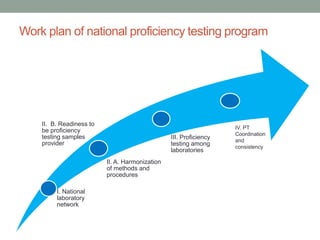
Work plan of national proficiency testing program
I. National
laboratory
network
II. A. Harmonization
of methods and
procedures
III. Proficiency
testing among
laboratories
II. B. Readiness to
be proficiency
testing samples
provider
IV. PT
Coordination
and
consistency
National laboratory network
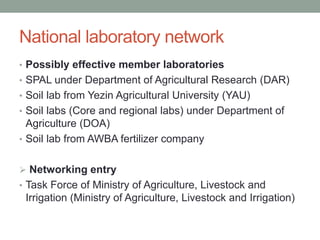
• Possibly effective member laboratories
• SPAL under Department of Agricultural Research (DAR)
• Soil lab from Yezin Agricultural University (YAU)
• Soil labs (Core and regional labs) under Department of
Agriculture (DOA)
• Soil lab from AWBA fertilizer company
 Networking entry
• Task Force of Ministry of Agriculture, Livestock and
Irrigation (Ministry of Agriculture, Livestock and Irrigation)
II. A. Harmonization of methods
and procedures
• Asessing fertility parameters for
PT
• Meeting and training for
facilitating harmonized
methods and procedures
II. B. Readiness to be proficiency
testing samples provider
• Fulfilling needs for PT
organizer (Knowledge and
infrastructure)
• Developing SOPs for PT
processes (Sample
preparation, Homogeneity
testing, Stability)
• Training staff for proficiency
testing
III. Proficiency testing among laboratories
• Distribution PT samples
• Analyzing results
• Deciding on assigned values
IV. PT Coordination and consistency
• Frequency of PT rounds (one or two years)
• Consistent networking
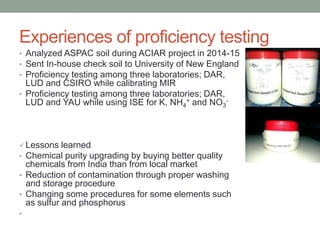
Experiences of proficiency testing
• Analyzed ASPAC soil during ACIAR project in 2014-15
• Sent In-house check soil to University of New England
• Proficiency testing among three laboratories; DAR,
LUD and CSIRO while calibrating MIR
• Proficiency testing among three laboratories; DAR,
LUD and YAU while using ISE for K, NH4
+ and NO3
-
Lessons learned
• Chemical purity upgrading by buying better quality
chemicals from India than from local market
• Reduction of contamination through proper washing
and storage procedure
• Changing some procedures for some elements such
as sulfur and phosphorus
•
Thank You!

Item 12: Presentation by Myanmar

  • 1.
    IMPLEMENTATION PLAN FORNATIONAL PROFICIENCY TESTING Khin Myo Thant Soil and Plant Analysis Laboratory, Myanmar 24th September 2019
  • 2.
    Soil and PlantAnalysisLaboratory (SPAL) Reference Lab of Myanmar • In 2008, SPAL was established for soil and plant analysis. • During ACIAR project from 2013-2017, SPAL was upgraded through hands on training given by UNE lab expert and technician. • Infrastructure and knowledge development was able to improved. • A quality manual for SPAL was developed after the project activities.
  • 3.
    Work plan ofnational proficiency testing program I. National laboratory network II. A. Harmonization of methods and procedures III. Proficiency testing among laboratories II. B. Readiness to be proficiency testing samples provider IV. PT Coordination and consistency
  • 4.
    National laboratory network •Possibly effective member laboratories • SPAL under Department of Agricultural Research (DAR) • Soil lab from Yezin Agricultural University (YAU) • Soil labs (Core and regional labs) under Department of Agriculture (DOA) • Soil lab from AWBA fertilizer company  Networking entry • Task Force of Ministry of Agriculture, Livestock and Irrigation (Ministry of Agriculture, Livestock and Irrigation)
  • 5.
    II. A. Harmonizationof methods and procedures • Asessing fertility parameters for PT • Meeting and training for facilitating harmonized methods and procedures II. B. Readiness to be proficiency testing samples provider • Fulfilling needs for PT organizer (Knowledge and infrastructure) • Developing SOPs for PT processes (Sample preparation, Homogeneity testing, Stability) • Training staff for proficiency testing
  • 6.
    III. Proficiency testingamong laboratories • Distribution PT samples • Analyzing results • Deciding on assigned values
  • 7.
    IV. PT Coordinationand consistency • Frequency of PT rounds (one or two years) • Consistent networking
  • 8.
    Experiences of proficiencytesting • Analyzed ASPAC soil during ACIAR project in 2014-15 • Sent In-house check soil to University of New England • Proficiency testing among three laboratories; DAR, LUD and CSIRO while calibrating MIR • Proficiency testing among three laboratories; DAR, LUD and YAU while using ISE for K, NH4 + and NO3 - Lessons learned • Chemical purity upgrading by buying better quality chemicals from India than from local market • Reduction of contamination through proper washing and storage procedure • Changing some procedures for some elements such as sulfur and phosphorus •
  • 9.