“It is something wonderful”
  the Biodiversity Heritage Library:
a Science Library for Global Learning
  Rebecca Morin
  User Services Librarian
  California Academy of Sciences
http://www.biodiversitylibrary.org
2
Members

                        American Museum of Natural History (New York)
                            Academy of Natural Sciences (Philadelphia)
                        California Academy of Sciences (San Francisco)
                                               Field Museum (Chicago)
                                      Natural History Museum (London)
                         Smithsonian Institution Libraries (Washington)
                                  Missouri Botanical Garden (St. Louis)
                                 New York Botanical Garden (New York)
                                            Royal Botanic Garden, Kew
                                   Botany Libraries, Harvard University
     Ernst Mayr Library of the Museum of Comparative Zoology, Harvard
                                                           University
    Marine Biological Laboratory / Woods Hole Oceanographic Institution
3
Global Reach / Global Impact


4
Why?


5
Who Uses It?

    Usage 2010
         • 837,000 Visits
         • 422,000 Unique Visitors
         • 4.2 Million Page Views
         • 221 Countries/Territories
    More than 80% of visitors seek
     information in
          • Systematics
          • Taxonomy

6
          • Nomenclature
Multiple Means of Access

              • BHL: 18.65%
              • Referring Sites: 38.13%
                   • EOL
                   • Wikipedia
                   • Tropicos
                   • Smithsonian
                   • BioOne
                   • Animal Base

              • Search Engines: 43.12%
                   Source: Google Analytics (Oct. 2010 – Jan. 2011)


7
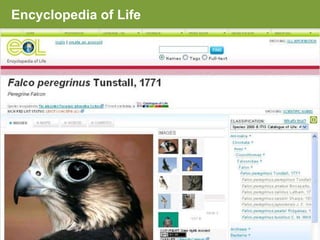
Encyclopedia of Life


8
Encyclopedia of Life/BHL Interface
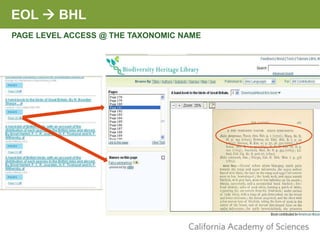
EOL  BHL
PAGE LEVEL ACCESS @ THE TAXONOMIC NAME
BHL & OCLC


11
BHL & OCLC


12
BHL & OCLC


13
What Does BHL Do For Me?

               • Bibliographies
               • Name Searching
                    • Taxonomic Intelligence

               • Complete Items
               • PDF Creation
               • APIs
               • Stable URLs


14
Connecting Content


15
A Ready Partnership


16
Connecting Content


17
Linking Field Notes & Specimens

     “Connecting Content” will help us gather information
      from here…


                                  &


18
Linking Field Notes & Specimens & Literature

 …And connect it to literature in BHL


19
What Have We Learned?

     Researchers want article-level access


20
What Have We Learned?

     Users want contact


21
User Feedback


22
What Have We Learned?

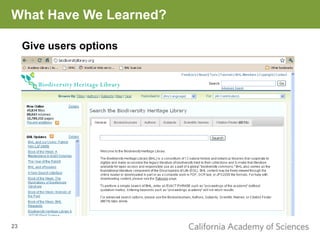
     Give users options


23
Pay Attention to Users

            Feedback
Nov. 2010 – Jan. 2011
  • 370 user issues recorded
      • 46% scan requests
      • 62% resolved
  63% of requests from 10 users

            BHL Use
Oct. 2010 – Jan. 2011
  • 292,304 visits
  • 1,586,562 pageviews
  • 137,900 unique visitors
  • 207 different countries/territories
 24
“…For a student like me who is from one
of the poorest countries on earth where
there are not enough libraries and even
the existing libraries do not have enough
literature, it is something wonderful.
Thanks to those people who created it.”

              Sajan Subedi
               BHL User
Thank You!

                Special Thanks To
 The Institute of Museum and Library Services
 Bianca Crowley, Martin Kalfatovic, Suzanne
    Pilsk & everyone else at BHL
 The “Connecting Content” Partners
 Danielle Castronovo


rmorin@calcademy.org       Twitter: @tiny_librarian

It is something wonderful

  • 1.
    “It is somethingwonderful” the Biodiversity Heritage Library: a Science Library for Global Learning Rebecca Morin User Services Librarian California Academy of Sciences
  • 2.
  • 3.
    Members American Museum of Natural History (New York) Academy of Natural Sciences (Philadelphia) California Academy of Sciences (San Francisco) Field Museum (Chicago) Natural History Museum (London) Smithsonian Institution Libraries (Washington) Missouri Botanical Garden (St. Louis) New York Botanical Garden (New York) Royal Botanic Garden, Kew Botany Libraries, Harvard University Ernst Mayr Library of the Museum of Comparative Zoology, Harvard University Marine Biological Laboratory / Woods Hole Oceanographic Institution 3
  • 4.
    Global Reach /Global Impact 4
  • 5.
  • 6.
    Who Uses It? Usage 2010 • 837,000 Visits • 422,000 Unique Visitors • 4.2 Million Page Views • 221 Countries/Territories More than 80% of visitors seek information in • Systematics • Taxonomy 6 • Nomenclature
  • 7.
    Multiple Means ofAccess • BHL: 18.65% • Referring Sites: 38.13% • EOL • Wikipedia • Tropicos • Smithsonian • BioOne • Animal Base • Search Engines: 43.12% Source: Google Analytics (Oct. 2010 – Jan. 2011) 7
  • 8.
  • 9.
  • 10.
    EOL  BHL PAGELEVEL ACCESS @ THE TAXONOMIC NAME
  • 11.
  • 12.
  • 13.
  • 14.
    What Does BHLDo For Me? • Bibliographies • Name Searching • Taxonomic Intelligence • Complete Items • PDF Creation • APIs • Stable URLs 14
  • 15.
  • 16.
  • 17.
  • 18.
    Linking Field Notes& Specimens “Connecting Content” will help us gather information from here… & 18
  • 19.
    Linking Field Notes& Specimens & Literature …And connect it to literature in BHL 19
  • 20.
    What Have WeLearned? Researchers want article-level access 20
  • 21.
    What Have WeLearned? Users want contact 21
  • 22.
  • 23.
    What Have WeLearned? Give users options 23
  • 24.
    Pay Attention toUsers Feedback Nov. 2010 – Jan. 2011 • 370 user issues recorded • 46% scan requests • 62% resolved 63% of requests from 10 users BHL Use Oct. 2010 – Jan. 2011 • 292,304 visits • 1,586,562 pageviews • 137,900 unique visitors • 207 different countries/territories 24
  • 25.
    “…For a studentlike me who is from one of the poorest countries on earth where there are not enough libraries and even the existing libraries do not have enough literature, it is something wonderful. Thanks to those people who created it.” Sajan Subedi BHL User
  • 26.
    Thank You! Special Thanks To The Institute of Museum and Library Services Bianca Crowley, Martin Kalfatovic, Suzanne Pilsk & everyone else at BHL The “Connecting Content” Partners Danielle Castronovo rmorin@calcademy.org Twitter: @tiny_librarian

Editor's Notes

  • #6 In other words, let’s think of EOL as a repository of natural history collections information. We can consider it our 21st century Wunderkammer.So, here’s the famous image of Ferrante Imperato’s 16th century cabinet (this is considered the first published image of such a thing, the genesis of the natural history museums where many of us work today)So, this is EOL– instead of a page for every species, let’s say there’s a place for every species…including some tiny dogs running around on the floor there.What we all know (and what Ferrante Imperato did as well) is that the study of these items involves more than just the objects themselvesSo, if this is EOL, Image from
  • #9 Concept of EOL(a web page for every species on earth)Image from
  • #26 The Biodiversity Heritage Library is a consortium of 12 natural history museum and botanical garden libraries, working together to digitize the legacy literature of biodiversity held in their collections.