Passing the ISTQB Foundation
Level - Performance Testing
exam from the Specialist
stream in Flex format in
wartime
Agenda
1. Introduction
2. ISTQB Specialist streams overview
3. ISTQB Foundation - Performance Testing Syllabus overview
4. Taking exam in Flex format
5. Practical experience of taking exam in wartime using Flex format
6. Questions & Answers
About speaker
Speaker: Ramella Basenko
Role: Lead QA Engineer at AgileEngine, ISTQB certified
Tester Full Advanced Level
8+ years of experience in QA area, 6 years of QA team
management experience.
Introduction
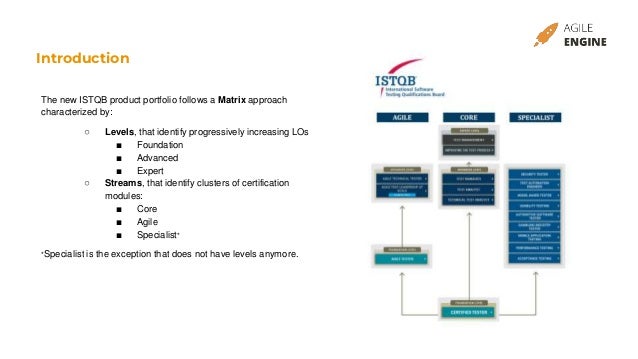
The new ISTQB product portfolio follows a Matrix approach
characterized by:
○ Levels, that identify progressively increasing LOs
■ Foundation
■ Advanced
■ Expert
○ Streams, that identify clusters of certification
modules:
■ Core
■ Agile
■ Specialist*
*Specialist is the exception that does not have levels anymore.
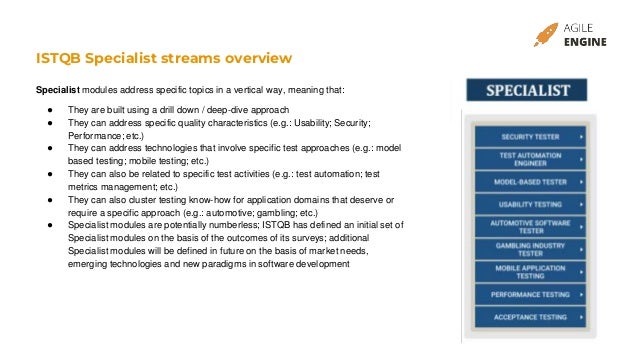
ISTQB Specialist streams overview
Specialist modules address specific topics in a vertical way, meaning that:
● They are built using a drill down / deep-dive approach
● They can address specific quality characteristics (e.g.: Usability; Security;
Performance; etc.)
● They can address technologies that involve specific test approaches (e.g.: model
based testing; mobile testing; etc.)
● They can also be related to specific test activities (e.g.: test automation; test
metrics management; etc.)
● They can also cluster testing know-how for application domains that deserve or
require a specific approach (e.g.: automotive; gambling; etc.)
● Specialist modules are potentially numberless; ISTQB has defined an initial set of
Specialist modules on the basis of the outcomes of its surveys; additional
Specialist modules will be defined in future on the basis of market needs,
emerging technologies and new paradigms in software development
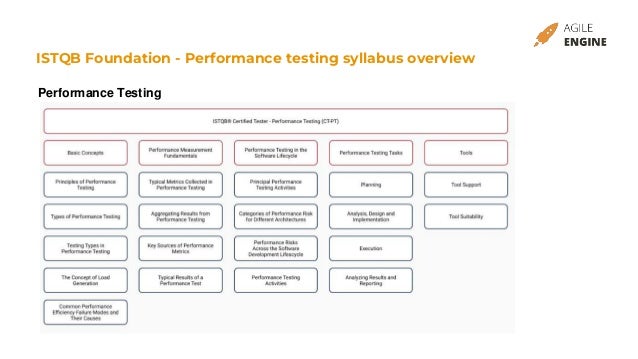
ISTQB Foundation - Performance testing syllabus overview
Performance Testing
ISTQB Foundation - Performance testing syllabus overview
Business Outcomes
● Understand the basic concepts of performance efficiency and performance testing;
● Define performance risks, goals, and requirements to meet stakeholder needs and expectations;
● Understand performance metrics and how to collect them;
● Develop a performance test plan for achieving stated goals and requirements;
● Conceptually design, implement, and execute basic performance tests;
● Analyze the results of a performance test and state implications to various stakeholders;
● Explain the process, rationale, results, and implications of performance testing to various stakeholders;
● Understand categories and uses for performance tools and criteria for their selection;
● Determine how performance testing activities align with the software lifecycle.
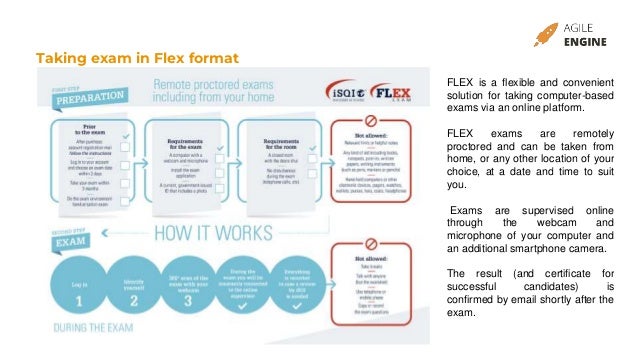
Taking exam in Flex format
FLEX is a flexible and convenient
solution for taking computer-based
exams via an online platform.
FLEX exams are remotely
proctored and can be taken from
home, or any other location of your
choice, at a date and time to suit
you.
Exams are supervised online
through the webcam and
microphone of your computer and
an additional smartphone camera.
The result (and certificate for
successful candidates) is
confirmed by email shortly after the
exam.
Taking exam in Flex format
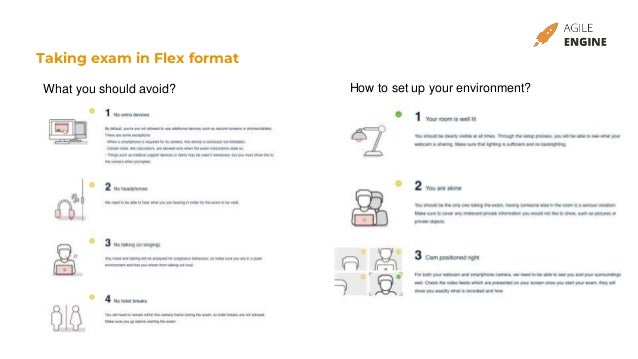
What you should avoid? How to set up your environment?
Taking exam in Flex format
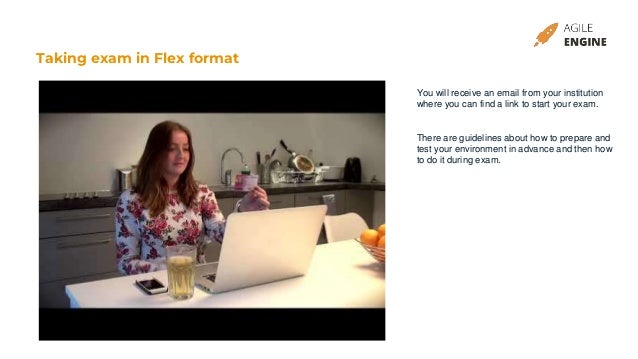
You will receive an email from your institution
where you can find a link to start your exam.
There are guidelines about how to prepare and
test your environment in advance and then how
to do it during exam.
Practical experience of taking exam in Flex format during wartime
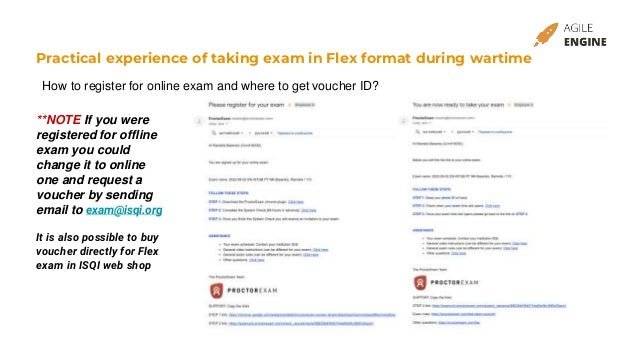
How to register for online exam and where to get voucher ID?
**NOTE If you were
registered for offline
exam you could
change it to online
one and request a
voucher by sending
email to exam@isqi.org
It is also possible to buy
voucher directly for Flex
exam in ISQI web shop
Practical experience of taking exam in Flex format during wartime
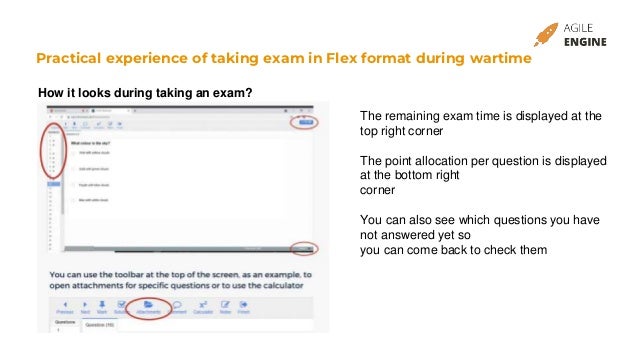
How it looks during taking an exam?
The remaining exam time is displayed at the
top right corner
The point allocation per question is displayed
at the bottom right
corner
You can also see which questions you have
not answered yet so
you can come back to check them
Useful references and tips to pass ISTQB exams
How to practice before exam effectively:
● Read Syllabus on direction you are interested in
● Go through exam sample questions and try to pass them, then check answers
● Nice to do is also to read books from references provided in ISTQB Syllabuses as per chosen specialty
● https://certificate.isqi.org/remote-exams_istqb - more details and FAQ on Flex format
● https://proctorexam.com/ - Proctorexam website to get more information about taking exam in remote format
● https://drive.google.com/file/d/1NmFcW0N3H7t5q2RcrNJpyMquvilu93Mu/view - ISQI guideline for taking remote exams
Q&A
Thanks for your
attention!

Рамелла Басенко - ISTQB FL - Performance Testing в умовах воєнного часу

  • 1.
    Passing the ISTQBFoundation Level - Performance Testing exam from the Specialist stream in Flex format in wartime
  • 2.
    Agenda 1. Introduction 2. ISTQBSpecialist streams overview 3. ISTQB Foundation - Performance Testing Syllabus overview 4. Taking exam in Flex format 5. Practical experience of taking exam in wartime using Flex format 6. Questions & Answers
  • 3.
    About speaker Speaker: RamellaBasenko Role: Lead QA Engineer at AgileEngine, ISTQB certified Tester Full Advanced Level 8+ years of experience in QA area, 6 years of QA team management experience.
  • 4.
    Introduction The new ISTQBproduct portfolio follows a Matrix approach characterized by: ○ Levels, that identify progressively increasing LOs ■ Foundation ■ Advanced ■ Expert ○ Streams, that identify clusters of certification modules: ■ Core ■ Agile ■ Specialist* *Specialist is the exception that does not have levels anymore.
  • 5.
    ISTQB Specialist streamsoverview Specialist modules address specific topics in a vertical way, meaning that: ● They are built using a drill down / deep-dive approach ● They can address specific quality characteristics (e.g.: Usability; Security; Performance; etc.) ● They can address technologies that involve specific test approaches (e.g.: model based testing; mobile testing; etc.) ● They can also be related to specific test activities (e.g.: test automation; test metrics management; etc.) ● They can also cluster testing know-how for application domains that deserve or require a specific approach (e.g.: automotive; gambling; etc.) ● Specialist modules are potentially numberless; ISTQB has defined an initial set of Specialist modules on the basis of the outcomes of its surveys; additional Specialist modules will be defined in future on the basis of market needs, emerging technologies and new paradigms in software development
  • 6.
    ISTQB Foundation -Performance testing syllabus overview Performance Testing
  • 7.
    ISTQB Foundation -Performance testing syllabus overview Business Outcomes ● Understand the basic concepts of performance efficiency and performance testing; ● Define performance risks, goals, and requirements to meet stakeholder needs and expectations; ● Understand performance metrics and how to collect them; ● Develop a performance test plan for achieving stated goals and requirements; ● Conceptually design, implement, and execute basic performance tests; ● Analyze the results of a performance test and state implications to various stakeholders; ● Explain the process, rationale, results, and implications of performance testing to various stakeholders; ● Understand categories and uses for performance tools and criteria for their selection; ● Determine how performance testing activities align with the software lifecycle.
  • 8.
    Taking exam inFlex format FLEX is a flexible and convenient solution for taking computer-based exams via an online platform. FLEX exams are remotely proctored and can be taken from home, or any other location of your choice, at a date and time to suit you. Exams are supervised online through the webcam and microphone of your computer and an additional smartphone camera. The result (and certificate for successful candidates) is confirmed by email shortly after the exam.
  • 9.
    Taking exam inFlex format What you should avoid? How to set up your environment?
  • 10.
    Taking exam inFlex format You will receive an email from your institution where you can find a link to start your exam. There are guidelines about how to prepare and test your environment in advance and then how to do it during exam.
  • 11.
    Practical experience oftaking exam in Flex format during wartime How to register for online exam and where to get voucher ID? **NOTE If you were registered for offline exam you could change it to online one and request a voucher by sending email to exam@isqi.org It is also possible to buy voucher directly for Flex exam in ISQI web shop
  • 12.
    Practical experience oftaking exam in Flex format during wartime How it looks during taking an exam? The remaining exam time is displayed at the top right corner The point allocation per question is displayed at the bottom right corner You can also see which questions you have not answered yet so you can come back to check them
  • 13.
    Useful references andtips to pass ISTQB exams How to practice before exam effectively: ● Read Syllabus on direction you are interested in ● Go through exam sample questions and try to pass them, then check answers ● Nice to do is also to read books from references provided in ISTQB Syllabuses as per chosen specialty ● https://certificate.isqi.org/remote-exams_istqb - more details and FAQ on Flex format ● https://proctorexam.com/ - Proctorexam website to get more information about taking exam in remote format ● https://drive.google.com/file/d/1NmFcW0N3H7t5q2RcrNJpyMquvilu93Mu/view - ISQI guideline for taking remote exams
  • 14.
  • 15.